EP2062944A1 - Water-soluble rylene dyes, methods for preparing the same and uses thereof as fluorescent labels for biomolecules - Google Patents

Water-soluble rylene dyes, methods for preparing the same and uses thereof as fluorescent labels for biomolecules Download PDF

Info

Publication number
EP2062944A1
EP2062944A1 EP07022521A EP07022521A EP2062944A1 EP 2062944 A1 EP2062944 A1 EP 2062944A1 EP 07022521 A EP07022521 A EP 07022521A EP 07022521 A EP07022521 A EP 07022521A EP 2062944 A1 EP2062944 A1 EP 2062944A1
Authority
EP
European Patent Office
Prior art keywords
group
formula
compound
rylene
dye
Prior art date
Legal status (The legal status is an assumption and is not a legal conclusion. Google has not performed a legal analysis and makes no representation as to the accuracy of the status listed.)
Withdrawn
Application number
EP07022521A
Other languages
German (de)
French (fr)
Inventor
Kalina Peneva
Andreas Dr. Herrmann
Klaus Prof. Dr. Müllen
Current Assignee (The listed assignees may be inaccurate. Google has not performed a legal analysis and makes no representation or warranty as to the accuracy of the list.)
Max Planck Gesellschaft zur Foerderung der Wissenschaften eV
Original Assignee
Max Planck Gesellschaft zur Foerderung der Wissenschaften eV
Priority date (The priority date is an assumption and is not a legal conclusion. Google has not performed a legal analysis and makes no representation as to the accuracy of the date listed.)
Filing date
Publication date
Application filed by Max Planck Gesellschaft zur Foerderung der Wissenschaften eV filed Critical Max Planck Gesellschaft zur Foerderung der Wissenschaften eV
Priority to EP07022521A priority Critical patent/EP2062944A1/en
Priority to PCT/EP2008/009465 priority patent/WO2009065508A2/en
Publication of EP2062944A1 publication Critical patent/EP2062944A1/en
Withdrawn legal-status Critical Current

Links

Images

Classifications

    • CCHEMISTRY; METALLURGY
    • C09DYES; PAINTS; POLISHES; NATURAL RESINS; ADHESIVES; COMPOSITIONS NOT OTHERWISE PROVIDED FOR; APPLICATIONS OF MATERIALS NOT OTHERWISE PROVIDED FOR
    • C09BORGANIC DYES OR CLOSELY-RELATED COMPOUNDS FOR PRODUCING DYES, e.g. PIGMENTS; MORDANTS; LAKES
    • C09B5/00Dyes with an anthracene nucleus condensed with one or more heterocyclic rings with or without carbocyclic rings
    • C09B5/62Cyclic imides or amidines of peri-dicarboxylic acids of the anthracene, benzanthrene, or perylene series
    • GPHYSICS
    • G01MEASURING; TESTING
    • G01NINVESTIGATING OR ANALYSING MATERIALS BY DETERMINING THEIR CHEMICAL OR PHYSICAL PROPERTIES
    • G01N33/00Investigating or analysing materials by specific methods not covered by groups G01N1/00 - G01N31/00
    • G01N33/48Biological material, e.g. blood, urine; Haemocytometers
    • G01N33/50Chemical analysis of biological material, e.g. blood, urine; Testing involving biospecific ligand binding methods; Immunological testing
    • G01N33/53Immunoassay; Biospecific binding assay; Materials therefor
    • G01N33/531Production of immunochemical test materials
    • G01N33/532Production of labelled immunochemicals
    • G01N33/533Production of labelled immunochemicals with fluorescent label
    • GPHYSICS
    • G01MEASURING; TESTING
    • G01NINVESTIGATING OR ANALYSING MATERIALS BY DETERMINING THEIR CHEMICAL OR PHYSICAL PROPERTIES
    • G01N33/00Investigating or analysing materials by specific methods not covered by groups G01N1/00 - G01N31/00
    • G01N33/48Biological material, e.g. blood, urine; Haemocytometers
    • G01N33/50Chemical analysis of biological material, e.g. blood, urine; Testing involving biospecific ligand binding methods; Immunological testing
    • G01N33/58Chemical analysis of biological material, e.g. blood, urine; Testing involving biospecific ligand binding methods; Immunological testing involving labelled substances
    • G01N33/582Chemical analysis of biological material, e.g. blood, urine; Testing involving biospecific ligand binding methods; Immunological testing involving labelled substances with fluorescent label

Definitions

  • Fluorescence microscopy is a widely used and effective tool for visualizing subcellular structures and for localizing proteins within cells. Fluorescence is ideally suited for observing the location of molecules and cells as it is non-invasive and can be detected with high sensitivity and signal specificity. The spectroscopic properties of fluorescence can be exploited to obtain information not only on the location of labeled macromolecules but also on the immediate molecular environment.
  • Single-molecule spectroscopy has gone beyond that and has revealed information about complex biological molecules and processes which are difficult to obtain from ensemble measurements.
  • Single proteins, variants, drugs or other single bioparticles were labelled and their pathway and interactions were followed inside living cells (e.g., G. Seisenberger, et al., Science 2001, 294, 1929 ).
  • the properties of the label are crucial. It should be water-soluble, highly fluorescent in aqueous environment, exhibiting high photochemical and thermal stability, enable scalable production and should have a reactive group for coupling to the biomolecule, e.g. protein or enzyme. Moreover, the attachment of the coupling group should not affect the biomolecule's structure or function, or in the case of an enzyme, its activity. In particular, an exceptional photostability of the label is needed to visualize or track the biomolecule for a sufficient period of time.
  • Rylene chromophores have proven to be a remarkable class of dyes characterized by an exceptional thermal and photochemical stability as well as fluorescence quantum yields close to unity in organic solvents ( A. Dubois et al., Appl. Opt. 1996, 35, 3193 ; 1, 303 ) and several members of the rylene family have been described and tested in single molecule molecule experiments (e.g. H. Uji-i et al., Polymer 2006, 47, 2511 ).
  • terrylene diimide dyes which are functionalized with a monocarboxylic acid for applications in single molecule studies and membrane labelling.
  • the disadvantage of these dyes is their low coupling efficiency to biomolecules and, thus, their low yield of labelling of said biomolecules.
  • an additional coupling reagent such as 1-ethyl-3-[3-dimethylaminopropyl]carbodiimide (EDC) is required. Due to their very high reactivity, these coupling reagents very often lead to the formation of undesired side products which are often difficult to remove, thus complicating the protein labelling procedure.
  • PDI dyes have a strong tendency to form aggregates in aqueous solution ( G. Schnurpfeil, J. Stark, D. Wöhrie, Dyes Pigm. 1995, 720, 339-350 ; H. Langhals, German Patent DE-37 035 13 , 1987 ) and the combination of good water solubility and high fluorescence quantum yields still represents a challenging goal.
  • a main object of the present invention is to provide novel water-soluble rylene diimide dyes with improved properties regarding reactivity with biomolecules such as higher reactivity and/or site-specifity, coupling efficiency and thus labelling yield of the biomolecules to be labeled, and outstanding photostability of the dyes associated with extended survival times under strong illumination conditions.
  • Such dyes would i.a. allow a tracking of single interfacial enzymes, such as phospholipases, with their complex catalytic pathways and modes of operation on their native substrate which has not been performed yet in the prior art.
  • a related, more specific object is to provide novel rylene dyes suitable for the site-specific labelling of proteins.
  • rylene dyes Prior to the present invention, such rylene dyes have not been described in the literature.
  • a further object is to provide improved synthetic strategies for preparing the novel rylene dyes.
  • a still further object is to provide the use of these dyes as improved labels for biomolecules and to provide a new and advantageous purification method for bioconjugates comprising such labels.
  • R 1 is an organic residue which is attached to the nitrogen atom via a carbon atom
  • n is an integer from 1 to 6, preferably from 2 to 4
  • R 2 is -(CH 2 ) m -A-(CH 2 ) o -B
  • m is an integer from 0 to 20, preferably from 1 to 10, e.g. 0, 1 to 3, 1 to 5, 5 to 10, 11 to 20,
  • o is an integer from 0 to 20, preferably from 0 to 10, e.g.
  • A is a linking group
  • B is a coupling group selected from the group consisting of isothiocyanate, activated ester, carbonyl azide, sulfonyl chloride, aldehyde, alkyl halide, haloacetamide, maleimide, nitrilotriacetic acid, disulfide, thiosulfate, thioester, and thiol
  • R 4 , R 5 , R 6 and R 7 are independently hydrogen or an organic residue, which carries at least one negatively or positively charged group in neutral medium or at least one hydrophilic uncharged group which is preferably selected from a hydroxyl group and polyoxy-C 2 -C 4 -alkyl groups, preferably polyethylene groups with 3 or more, e.g.
  • R 4 , R 5 , R 6 and R 7 are an organic residue, which carries at least one negatively or positively charged group in neutral medium or at least one hydrophilic uncharged group which is preferably selected from a hydroxyl group and polyoxy-C 2 -C 4 -alkyl groups, preferably polyethylene groups with 3 or more, e.g. up to 50 or 100 alkyloxide units. More preferably, at least two of R 4 , R 5 , R 6 and R 7 are an organic residue which carries at least one negatively or positively charged group in neutral medium.
  • R 2 being -(CH 2 ) m -A-(CH 2 ) o -B lies in the fact that R 2 has a high reactivity with biomolecules.
  • R 2 does not contain any phenyl group which might decrease the reactivity of the rylene diimide compounds.
  • Thhe rylene diimide compounds of formula (I) of the present invention having the coupling groups B as defined above, consequently show a high coupling efficiency to biomolecules and, thus, a high labelling yield.
  • Another advantage of the rylene diimide compounds of formula (I) of the present invention is that by using the coupling groups defined as B no additional coupling reagent is necessary in order to covalently attach the dye to the biomolecules to be labeled. This is advantageous in respect to time and costs of the labelling procedure of the biomolecules.
  • the coupling group is an activated ester, in particular an N-hydroxysuccinimide ester, or a maleimide.
  • an activated ester in particular an N-hydroxysuccinimide ester, or a maleimide.
  • a very high coupling efficiency, high absorption and fluorescence maxima as well as fluorescence quantum yields could be achieved; e.g. a fluorescence quantum yield of - 0.40 for compound 3 and 0.58 for 5 (cf. Table 1 in Example 1).
  • the maleimide coupling group may also be used for site-specific labelling of proteins.
  • the maleimide-functionalized chromophore can be covalently attached to the thiol residue from any cysteine of the protein via Michael adddition. A site-specific labelling is obtained if the protein does not comprise more than one cysteine residue in the molecule. If no cysteine residue is present in the native protein, it may be possible to introduce a non-native cysteine at a desired location.
  • a further advantage of an N-hydroxysuccinimide activated ester group is that the leaving group is non-toxic. This is an important fact with respect to the use of the dyes for in vivo labelling. Requirements for in vivo labelling such as non-toxicity limit the use of activated ester group functions for the labelling of biomolecules. Further, the N-hydroxysuccinimide activated ester group provides for a high labelling efficiency.
  • a further advantage of the reactive functionalities B used in the present invention is that the dyes can be attached to a variety of biomolecules, in particular proteins. Examples of precursors for preparing the reactive functionalities are carboxylic acid groups or amino groups which can be converted into reactive functionalities by methods known in the art.
  • the coupling group is a thioester or thiol.
  • the thioester group reacts specific with N-terminal cysteine residues and thus allows a site specific-labelling of proteins, e.g. enzymes, at the N-terminus.
  • the introduction of fluorescent reporters at specific sites of a target molecule is desirable or even necessary for a number of spectroscopic methods for investigating the structure and function of target molecules, in particular proteins such as enzymes. More specifically, it is a prerequisite for the application of fluorescence resonance energy transfer (FRET) techniques, an important tool for, e.g., studying conformational distributions and dynamics of biomacromolecules such as proteins.
  • FRET fluorescence resonance energy transfer
  • the thioester coupling group is represented by the formula -COSR, wherein R is C 1 -C 4 -alkyl, C 6 -C 10 -aryl or C 7 -C 15 -aralkyl, which may be optionally substituted with sulphonate, or the group -(CH 2 ) 2 -CONH 2 .
  • R is benzyl.
  • the thioester-functionalized rylene dyes of the present invention exhibit both an excellent water solubility and a high fluorecent quantum yield in aqueous medium (e.g. 54% for compound 9, compare Example 4). Moreover, after binding of a thioester-functionalized rylene dye to a protein (Example 5), the brightness of the rylene dye decreased only slightly. This indicates an almost independent fluorescence quantum yield from the local protein environment, which is a rather rare and desirable property for labelling dyes and makes the these dyes a very attractive new label for N-terminal cysteines in proteins.
  • thiol coupling group are a 1,2-aminothiol group and cysteine.
  • the use of a thiol coupling group is based on the same ligation reaction between a thioester group and a thiol group as outlined above. However, in this case the functionalities of dye and protein are reversed and this embodiment requires that the protein has a thioester group introduced to provide a coupling partner for the thiol group.
  • the coupling group is a nitrilotriacetic acid moiety.
  • This group in the presence of divalent metal ions such as Ni 2+ etc., is capable to form stable complexes with ligands from specific protein functionalities such as His tags.
  • ligands from specific protein functionalities such as His tags.
  • polyhistidin tags are the most widely used genetically encoded tags.
  • a polyhistidine tag usually consists of 2-6 consecutive histidine residues and was originally developed for the purification of recombinant proteins by immobilized metal-affinity chromatography. Different modifications of this molecular recognition technique have been exploited including target protein detection and protein structure studies.
  • This strategy has been also utilized to introduce a chromophore containing a nitrilotriacetic acid (NTA) moiety into His-tagged proteins ( Lata et al., J. Am. Soc. 2006, 128, 2365-2372 ; Kapanidis et al., J. Am. Soc. 2001, 123, 12123-12125 ). All of the reported chromophores, however, suffered from the same drawback - a severe loss of the fluorescence upon binding of the paramagnetic nickel ion. When Ni 2+ was complexed with the NTA moiety that was attached to commercial Cy3 and Cy5 dyes, the fluorescence quantum yield dropped by 75% (Kapanidis et al.).
  • NTA nitrilotriacetic acid
  • NTA-modified rylene dyes of the present invention it is possible to overcome the disadvantages of the prior art.
  • Examples 6 and 7 of the present specification clearly demonstrate that the photophysical properties of the inventive NTA-modified dyes remain unchanged upon Ni 2+ binding.
  • R 1 being a component of the imide group is bound to the nitrogen atom of the imide via a secondary or tertiary C atom, whereas also a binding via a primary C atom is possible, i.e. via a CH 2 group,
  • R 1 is a secondary or tertiary aliphatic residue or cyclic residue having 3 to 30 carbon atoms, in particular, mono- or bicyclic aromatic or heteroaromatic residues such as phenyl, pyridyl or naphthyl residues which optionally contain one or more substituents.
  • substituents are CN, NO 2 , halogen (e.g. F, Cl, Br or I), OH, OR 9 , OCOR 9 , SH, SR 9 , SCOR 9 , SO 2 R 9 , CHO, COR 9 , COOH, COOM, COOR 9 , CONH 2 , CONHR 9 , CON (R 9 ) 2 , SO 3 H, SO 3 M, SO 3 R 7 , NH 2 , NHR 9 or N(R 9 ) 2 , wherein M is a cation, e.g.
  • R 9 is an optionally halogen-substituted linear or branched chain C 1 -C 6 alkyl moiety.
  • Cyclic residues e.g. aromatic or heteroaromatic residues, may additionally be substituted by one or more residues R 9 .
  • At least two, preferably at least three and more preferably at least four of residues R 4 , R 5 , R 6 and R 7 are an organic residue which carries a charged group or a hydrophilic uncharged group which is preferably selected from a hydroxyl group and polyoxy-C 2 -C 4 -alkyl groups, preferably polyethylene groups with 3 or more, e.g. up to 50 or 100 alkyloxide units. More preferably, at least two, preferably at least three and more preferably at least four of residues R 4 , R 5 , R 6 and R 7 are an organic residue which carries at least one negatively or positively charged group in neutral medium.
  • the organic residue is an acyclic or cyclic residue of 1 to 30 carbon atoms, more preferably 6 to 20 carbon atoms, wherein the carbon atoms are optionally substituted with heteroatoms, preferably 1 to 4 heteratoms selected from the group consisting of oxygen, nitrogen and sulfur. More preferably, the heteratom is nitrogen.
  • all residues R 4 , R 5 , R 6 and R 7 which are not hydrogen, carry a charged group. More preferably, the charged group is a hydrophilic group.
  • the charged group is in neutral medium, e.g. at pH 7, a positively charged group.
  • a positively charged group e.g. a positively charged group.
  • Suitable, but non-limiting examples are amino or ammonium groups, such as a quaternary ammonium group or an alkylated heteroaromatic N atom, e.g. an N-alkyl-pyridinium, N-alkyl-quinolinium or N-alkyl-isoquinolinium group, wherein the alkyl residue preferably contains up to 6 carbon atoms and may be substituted as well.
  • the charged group is in neutral medium, e.g. at pH 7, a negatively charged group.
  • a negatively charged group examples include sulfonic acid and/or carboxylic acid groups, SO 3 H and COOH as well as the salts SO 3 M and COOM thereof, wherein M is a cation, e.g. an alkali metal ion such as potassium or sodium.
  • the positively charged groups or negatively charged groups, such as sulfonic acid and carboxylic acid groups, or hydrophilic uncharged groups are responsible for the water solubility of the rylene dyes.
  • many of the rylene dye molecules are still stacked, forming water-soluble aggregates.
  • the ambivalent nature of these molecules offers additional interesting properties, since the rylene core presents a strong affinity to, for example, lipid membranes. This property makes rylenes an exceptional label for artificial as well as biological membranes.
  • R 4 , R 5 , R 6 and R 7 comprise aromatic residues, in particular, monocyclic or bicyclic residues such as phenyl.
  • R 4 , R 5 , R 6 and R 7 are represented by the general formula (II) -O-Ar (II), wherein Ar is an aromatic residue which contains at least one charged group that is as defined above.
  • Ar is an aromatic residue which contains at least one charged group that is as defined above.
  • R 4 , R 5 , R 6 and R 7 have the general structural formula (III): wherein M is a cation and p is an integer from 1 to 3.
  • the rylene diimide compound of formula (I) is a perylene or terrylene dye and, most preferably, a terrylene dye.
  • the terrylene dyes absorb above the wavelength of 600 nm, whereas the absorption region of perylene dyes lies below 600 nm.
  • the wavelength of above 600 nm is ideal for single molecule and live-ell imaging experiments because autofluorescence of cellular components at that wavelength region is minimal and a better-signal-to-noise ratio is obtained.
  • terrylene is even more photostable than perylene.
  • water-soluble terrylene derivatives of the invention have a particularly high survival time (offering the possibility of studying biological processes which require longer observation periods), a longer fluorescent time, a high photostability and are thus very advantageous for biological applications and ideal fluorophosphores for single molecule and live-cell imaging experiments.
  • the linking group A is independently selected from wherein R 3 is independently selected from hydrogen, linear or branched-chain C 1 -C 10 alkyl.
  • R 3 is hydrogen.
  • the rylene diimide dyes of the present invention are selected from N-(2,6-diisopropylphenyl)-N'-(3-N-succinimidyl)carboxyethyl)-1,6,7,12-tetra(4-sulfophenoxy)-perylene-3,4:9,10-tetracarboxydiimide (compound 5 in Scheme 1 of Example 1), N-(2,6-diisopropylphenyl)-N'(5-(N-(2-(4-maleimidobutyryl)ethyl)-carboxypentyl)-1,6,9,14-tetra(4-sulfonylphenoxy)-terrylene-,3,4,11,12-tetracarboxydiimide (compound 8 in Scheme 1 of Example 1), N-(2,6-diisopropylphenyl)-N'-[N- ⁇ 4-(benzylthi
  • a further aspect of the invention relates to a rylene diimide compound of formula (I) wherein R 1 and R 2 are independently an organic residue which is attached to the nitrogen atom via a carbon atom, n is an integer from 3 to 4, wherein at least one of R 1 and R 2 contains a coupling group B selected from the group consisting of isothiocyanate, activated ester, carbonyl azide, sulfonyl chloride, aldehyde, alkyl halide, haloacetamide, maleimide, nitrilotriacetic acid, disulfide, thiosulfate, thiol and thioester, and R 4 , R 5 , R 6 and R 7 are independently hydrogen or an organic residue, which carries at least one negatively or positively charged group in neutral medium or at least one hydrophilic uncharged group which is preferably selected from a hydroxyl group and polyoxy-C 2 -C 4 -alkyl groups, preferably polyethylene groups with 3
  • R 4 , R 5 , R 6 and R 7 are an organic residue, which carries at least one negatively or positively charged group in neutral medium or at least one hydrohilic uncharged group which is prferably selected from a hydroxyl group and polyoxy-C 2 -C 4 -alkyl groups, preferably polyethylene groups with 3 or more, e.g. up to 50 or 100 alkyloxide units.
  • R 4 , R 5 , R 6 and R 7 are independently at each occurence hydrogen or an organic residue, which carries at least one negatively or positively charged group in neutral medium, wherein at least two of R 4 , R 5 , R 6 and R 7 are an organic residue, which carries at least one negatively or positively charged group in neutral medium.
  • a further embodiment of the invention relates to a method for preparing a rylene diimide compound of formula (I), comprising the steps:
  • step a) preferably comprises the saponification of the R x residue of formula (IV) under basic conditions, more preferably under strong basic conditions, and the removal of the imide group of R x , to give perylene monoimide monoanhydride compounds of formula (V).
  • step b) the monoanhydride group of the compound of formula (V) is removed by an imidization reaction with 1,2-alkylene diamine, e.g. 1,2-ethylene diamine, or 3-aminoalkanoic acid, e.g.
  • step c) at least two, more preferably, all of the residues R 4 , R 5 , R 6 and R 7 of the compound of formula (VI) are then provided with at least one charged group, e.g. by sulfonating under acidic conditions. Also in step c), the compound of formula (VI) is further functionalized with a coupling group, to give a compound of formula (I).
  • the coupling group is an activated ester group and the final product (I) is obtained by reacting compound (VI) as defined above or derivative thereof (e.g. a sulfonated derivative thereof) wherein R 4 , R 5 , R 6 and R 7 are as defined for formula (I) in claim 1, with a compound which provides the activated ester moiety, such as 4-maleimidobutyric acid N-succinimidyl ester (GMBS) in the case of an amino-functionalized compound (VI) or N,N,N'N'-tetramethyl-(succinimido) uronium tetrafluoroborate (TSTU) in the case of an carboxy-functionalized compound (VI).
  • GMBS 4-maleimidobutyric acid N-succinimidyl ester
  • TSTU N,N,N'N'-tetramethyl-(succinimido) uronium tetrafluoroborate
  • a compound of formula (VI) wherein R 4 , R 5 , R 6 and R 7 are as defined for formula (I) in claim 1 is reacted first with an activated thioester compound, e.g. thiolane-2,5-dione, and the resulting intermediate is reacted with an aryl or alkyl halide to give a compound of formula (I).
  • an activated thioester compound e.g. thiolane-2,5-dione
  • the coupling group is a nitrilotriacetic acid (NTA) group
  • the compound of formula (I), wherein B is an activated ester group is further reacted in solution with a compound providing a nitrilotriacetic acid moiety, e.g. t-butyl-protected NTA.
  • a compound providing a nitrilotriacetic acid moiety e.g. t-butyl-protected NTA.
  • the compound (I) wherein B is a NTA group is obtained (scheme 3a).
  • this NTA-functionalized dye may be prepared by a solid-phase-approach as outlined in reaction scheme 3b of Example 6.
  • a high solubility of the intermediate compound of formula (VI) in the organic solvent such as dichloromethane or dichloromethane/acetone is of importance with respect to the further purification of the intermediate.
  • This high solubility of the intermediate of formula (VI) is attained by the specific preparation process of the present invention, namely a first saponification step under strong basic conditions, wherein the imide group, which is attached to the residue R x is removed, to give a monoanhydride group, and by reacting the monoanhydride group in an imidization reaction to the intermediate compound of formula (VI).
  • a rylene dianhydride compound is reacted first in a statistic imidization reaction, to give a rylene diimide compound, wherein the linking group which is attached to the nitrogen atom of the imide contains a phenyl group.
  • this intermediate compound has a lower solubility in the organic solvent such as, e.g., toluene, and, thus, the degree of purification is lower (see DE 103 08 941 ).
  • the present terrylene dyes of formula (I) may be prepared analogous to the perylene dyes.
  • the starting compound may be a terrylene diimide compound such as Compound 6 in Scheme 1b which is functionalized with a monocarboxylic acid.
  • Compound 6 and similar compounds can be prepared analogous to the method disclosed in Jung et al. (J. Am. Chem. Soc. 2006, 128, 5283-5291 ).
  • the carboxylic acid function may than be converted into an activated ester group or other reactive functionalities using methods known in the art.
  • an activated ester group may be further reacted in an amidization reaction to a carboxylic acid amide group.
  • the present invention relates to the use of the above-described compounds of formula (I) as fluorescent label for biomolecules, in particular, as fluorescent label for proteins.
  • the biomolecules are enzymes.
  • the use of the inventive compounds as fluorescent label for biomolecules is preferably accomplished by coupling the monofunctionalized compounds of formula (I) carrying the variety of different reactive functionalities, defined as group B, covalently or, in the case of the NTA coupling group, non-covalently to a binding partner, e.g. a biomolecule.
  • a binding partner e.g. a biomolecule.
  • an N-hydroxysuccinimide perylene derivative targeting lysins may be used for the labelling of the enzyme phospholipase
  • a thioester derivative may be used for the labelling of plasminogen activator inhibitor-1
  • an NTA derivative may be used for the labelling of His 6 tagged ATP synthase.
  • the present invention also relates to conjugates of compounds of formula (I) with a binding partner, in particular, a biomolecule such as a protein, in particular an enzyme.
  • the compounds of the present invention may also suitable for the use in other technical fields wherein rylene diimide compounds have been successfully enployed, e.g. in dye lasers, as labelling groups in analytical processes, as tracer in scintillation counters, in fluorescence solar collectors, in liquid crystals, in cold light sources, in material testing, as photoconductors, in photographic processes, in illumination and display elements, as semiconductors, etc.
  • the compounds or the conjugates thereof e.g. covalent conjugates with biomolecules, such as enzymes, nucleic acids, proteins, peptides, saccharides, etc. can be dissolved in fluids, e.g. organic or/and aqueous solvents, or in solids, e.g. plastics.
  • the present invention is directed to a method for purifying bioconjugates.
  • the conventional purification methods of bioconjugates rely on size exclusion and/or affinity chromatography.
  • the separation principles are based on the size of the biomolecules and/or on intermolecular binding forces between the biomolecule to be separated and the ligand immobilized to an insoluble inert carrier.
  • the procedure of size exclusion or affinity chromatography is inconvenient and time-consuming.
  • the rylene dye used as label is a rylene diimide compound of formula (I) and, particularly preferably, a compound of formula (I), wherein n is 2 or 3.
  • the solid support is preferably a resin carrying polyethylene glycol with at least one terminal amino group.
  • the purification of the conjugates is accomplished by coupling the unreacted dye to the solid support being a resin.
  • the resin consists of a low crosslinked polystyrene matrix onto which polyethylene glycol was grafted containing free terminal amino groups.
  • the non-reacted dye is covalently captured after addition of the support to the labelling solution, and the labeled enzyme is isolated by filtration or centrifugation.
  • the resin which is functionalized with amino groups enables a chemical covalent reaction with the non-reacted dye.
  • the use of such a covalent chemical binding reaction for a purification method of biomolecules has not been described in the prior art before. This novel strategy allows convenient and fast separation of labeled enzymes without the need to perform time-consuming chromatographic or size exclusion purification steps.
  • Reagents, conditions and yields a) TSTU, DIPEA, DMF, water, 1,4-dioxane, 1 h, 80%; b) 1-(2-aminoethyl)pyrrol-2,5-dione, DMF, TEA, 5 h, 90%.
  • the solid was dissolved in acetic acid (100 mL) and refluxed at 80 °C for 30 min. Water (150 ml) was added; the precipitate was filtrated and purified over silica gel using dichloromethane as eluent. The product was obtained as a red solid in a yield of 24%.
  • DIPEA diisopropylethylamine
  • TSTU N,N,N',N'-tetramethyl (succinimido) uronium tetrafluoroborate
  • Phospholipase A1 (2.56 mg) in 10 mM succinic acid, 0,4M NH 4 SO 4 , pH 6 (400 ⁇ L) was reacted at 4 °C for one hour with 5 (1.5 mg) freshly dissolved in 0.01 M NaHCO 3 .
  • TentaGel HL NH 2 resin (Rapp Polymere GmbH) (20 mg) was added and the solution shaken for 5 min. The mixture containing the polymer resin was applied to a spin column and filtered. The colored solution containing the labeled enzyme was collected and quantified by 10% SDS-PAGE and by fluorescence correlation spectroscopy (FCS). The solution of the labeled phospholipase in 0.01 M NaHCO 3 was stored at -80°C.
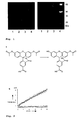
  • PLA1 catalyses the saponification of the acetate groups of the fluorescein derivative that is non-fluorescent (see Fig. 2a ).
  • the hydrolysis of the substrate can be followed via the increase in the fluorescence intensity due to the formation of the fluorescent product upon the enzymatic reaction.
  • Fig.2B shows fluorescence intensity changes of a similar solution of pro-fluorescent substrate as a function of time without the enzyme (0), after adding non-labeled enzyme (X), and after adding the labeled enzyme ( ⁇ ), respectively.
  • the rate constants of the hydrolysis were estimated to be 3001.3 ⁇ 29.1 (s -1 ) and 3083.1 ⁇ 38.1 (s -1 ) for the labeled enzyme and the non-labeled enzyme, respectively.
  • the autohydrolysis of 5-CFDA was measured as 110 ⁇ 17.9 (s -1 ). The result clearly shows that no activity was lost by the labelling.
  • the fluorescence intensity was measured using SPEX FLUOROLOG 1500 (Spex Industries, Metuchen, NJ). The time base scan experiments were performed with 1s integration time. The fluorescent product was excited at 500nm. The fluorescent emission was detected at 520nm.
  • N-(2,6-diisopropylphenyl)-N'-(4-aminoethyl)-1,6,7,12-tetra(4-sulfophenoxy)-perylene-3,4:9,10-tetracarboxydiimide 2 50 mg, 0.04 mmol
  • NMP N-methyl pyrrolidinone
  • DIPEA N,N-diisopropylethylamine
  • Benzyl bromide 14 mg, 0.08 mmol was added with thorough mixing and additionally react for 10 minutes.
  • the product was purified using a Sep-Pak C18 cartridge (Millipore; pre-washed with 10 mL acetonitrile and 10 mL water; washed with 20 mL water; eluted with 1 mL 60% methanol) and dried.
  • the product was isolated as red solid in 50 % yield.
  • the perylene thioester 9 shows high fluorescence quantum yield ( ⁇ f ) of 54 % in aqueous medium measured at room temperature using Cresyl Violet in methanol as a reference.
  • FCS analysis of perylene-thioester showed only half the molecular brightness compared to a single sulforhodamine B.
  • the extinction coefficient of the perylene is only one third of sulforhodamine B at laser excitation wavelength of 561 nm.
  • the molecular brightness of a single perylene-thioester as measured by FCS indicates a fluorescence quantum yield similar to sulforhodamine B.
  • PAI-1 Example 5
  • the brightness of the perylene dye slightly decreased by 15 percent. This indicates an almost independent fluorescence quantum yield from the local protein environment, which makes the perylene dye a very attractive new label for N-terminal cysteines in proteins.
  • PAI-1 plasminogen activator inhibitor-1
  • SERPINS SERine Protease Inhibitor superfamily
  • the N-terminal cysteine containing PAI-1 was chosen as model protein in this study.
  • the method and conditions applied for the labelling of the PAI-1 are the same as described by Dawson et al. (Science 266, 776-779; 1994 ), which are often referred to as "standard native chemical ligation conditions”.
  • the N-terminal cysteine PAI-1, stable mutant was dissolved in 100 mM phosphate buffer, containing 6 M Gn ⁇ HCl, 4% v/v thiophenol and 100 mM sodium phosphate at pH 7.6 to a final protein concentration of 2 mM. Equimolar amounts of the dye 9 were dissolved in the same buffer and added to the protein solution and the reaction mixture was allowed to react for 24 hours at room temperature. The reaction mixture was analyzed using SDS-PAGE electrophoresis.
  • Denatured Perylene-PAI-1 conjugate was refolded by dialysis (2 h, 4°C) in 20 mM Na-acetate, 1 M NaCl, 0.01% Tween-80 (v/v), pH 5,6 followed by a second dialysis step (overnight, 4°C).
  • the protein was subsequently concentrated using centrifugal filter devices.
  • FCS fluorescence correlation spectroscopy
  • the water-soluble perylene N-hydroxysuccinimide ester 5 was reacted with t-butyl protected nitrilotriacetic acid to give the intermediate 10a. After removal of the protective groups, the perylene dye 10 containing the NTA unit was obtained (Scheme 3a).
  • the second approach is based on a straightforward solid-phase synthesis of a nitrilotriacetic acid moiety as developed by Meredith et al. (Bioconjugate Chem. 2004, 15, 969-982 ).
  • the NTA unit was conveniently coupled to a carboxyl functionalized perylene derivative by amide bond formation (Scheme 3b).
  • water-soluble perylene NTA derivative 10 was purified by size exclusion chromatography and obtained in 70% and 15% yield for the solution and solid-phase synthesis, respectively.
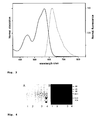
  • the emission maximum is located at 615 nm.
  • a fluorescence quantum yield of 15 % for 10 was determined by using Cresyl Violet in methanol as reference. When the same quantum yield measurement was carried out with the Ni 2+ complexes of 10 no decrease in the fluorescence was observed. In addition the absorption and emission maxima remained unchanged.
  • the above NTA-modified perylene dye 10 contains a much shorter spacer between the dye and the NTA (only two methylene groups). Remarkably, the photophysical properties of the chromophore remain unchanged upon Ni 2+ binding.
  • This new fluorescent reporter has a relatively low molecular weight (1555 g/mol), which makes it a good candidate for labelling proteins at the same time, avoiding the limitation of the large size of autofluorescent proteins or quantum dots. Protein labelling with the NTA functionalized perylene was successfully demonstrated using His-tagged ATP synthase (Example 7).
  • N-(2,6-diisopropylphenyl)-N'-[3-(N-succinimidyl)carboxyethyl]-1,6,7,12-tetra(4-sulfo phenoxy)-perylene-3,4:9,10-tetracarboxydiimide 50 mg, 0.035 mmol
  • DIPEA diisopropyl ethylamine
  • the reaction vessel was purged with argon and stirred for 16 hours at room temperature.
  • Ethylacetate (15 mL) was added to the reaction mixture to obtain a pink precipitate, which was filtered.
  • the precipitate was washed first with dichloromethane and then three times with ethyl acetate (3x 40 mL) and dried under vacuum to give the product as red solid in 70 % yield.
  • Fmoc deprotection was effected by six successive 15 min treatments of the resin with 20% piperidine in DCM. Afterwards the resin was washed extensively with DCM. To the washed resin was added a 20-fold excess of tert -butyl-bromoacetate (1.79 g, 9.2 mmol) with an equal amount of DIPEA (1.18 g, 9.2 mmol) and DCM (2 ml). The reaction vessel was shaken at 350 rpm at 45°C for 27 h. Fresh reagents were added and the vessel was further incubated at 45°C with shaking for 18 h. The beads were washed successively with DCM, ethyl acetate, and DCM again.
  • the Mtt group was removed by five 3-min treatments with 10 mL of 1% TFA, 5% triisopropyl silane (TIS) in DCM. The beads were again washed extensivly with DCM. N-(2,6-diisopropylphenyl)-N-(4-carboxyethyl)-1,6,7,12-tetrasulfophenoxy-perylene-3,4:9,10-tetracarboxydiimide (100 mg, 0.076 mmol), HOBt (10 mg, 0.076), HBTU (50 mg, 0.074) and DIPEA (10 mg, 0.076) in dry DMF (0.5 mL) were added to the beads (86 mg, 0.02 mmol) in 2 mL of DMF.
  • TFS triisopropyl silane
  • the beads were allowed to react with agitation for 24 h at 25°C. After washing of the sample, an equivalent amount of fresh reagents were added and allowed to react for 12 more hours. The beads were washed successively with DCM, ethyl acetate, methanol, DCM again, and dried briefly under vacuum. The product was cleaved from the resin with several 5-min treatments with 10 mL of 95% TFA in DCM. The material was reduced to dryness with rotary evaporation, precipitated with ice-cold diethyl ether, and dried under high vacuum.
  • the dried off-red material was dissolved in water and purified by size-exclusion chromatography using BioGel as stationary phase and water as eluent.
  • the yield, relative to the amount of Fmoc-Lys(Mtt)-OH was 15%.
  • NiCl 2 (30 ⁇ l, 2.5x10 -4 M/l solution in 0.01 N HCl) was added to Perylene NTA (1 ml, 5x10 -5 M/l in water), and the solution was brought to pH 7 by addition of 0.8 mL 50 mM sodium acetate (pH 7), 200 mM NaCl. Following reaction for 30 min at 25°C, the product was purified using a Sep-Pak C18 cartridge (Millipore; pre-wahsed with 10 mL acetonitrile and 10 mL water; washed with 20 mL water; eluted with 1 mL 60% methanol) and dried.
  • FCS Fluorescence correlation spectroscopy
  • FCS measurements were carried out on a confocal setup based on an Olympus IX71 inverted microscope.
  • a solid-state laser JIVE, Cobolt AB, Sweden
  • emission at 561 nm was used and attenuated to 150 ⁇ W before focussing into the buffer solution by a water immersion objective (40x, N.A. 1.15, Olympus).
  • the solution was placed on a microscope coverslide as a droplet of 25 to 50 ⁇ l.
  • Scattered laser light was blocked by a dichroic beam splitter (DCXR 575, AHF, Tübingen, Germany) and out-of-focus fluorescence was rejected by an 100 ⁇ m pinhole in the detection pathway.
  • DCXR 575 dichroic beam splitter
  • SPCM AQR-14 avalanche photodiode
  • TCSPC device PC card SPC-630, Becker & Hickl, Berlin, Germany
  • Fluorescence correlation spectroscopy measurements were used to monitor the binding of the perylene dye to F 1 -ATPase in solution. Confocal laser excitation at 561 nm was used to match the absorbance maximum of the perylene dye. Different concentrations of F 1 -ATPase were pre-mixed with 1 nM perylene-Ni-NTA. As a control, the dye was mixed with F 1 -ATPase in the absence of Ni 2+ . Increasing amounts of F 1 -ATPase resulted in increasing diffusion times of the perylene-Ni-NTA due to conjugate formation with the His tagged protein. In the absence of Ni 2+ , no evidence for binding of the perylene-NTA dye was found by FCS measurements.
  • FCS was also used to determine the mean photon count rate or 'molecular brightness' of a single perylene-NTA in the absence of Ni 2+ ( Figure 5 ).
  • the conventional dyes Rhodamine 101 and Atto-565 were used as references.
  • Rhodamine 101 a maximum fluorescence of about 145 000 counts/s per molecule saturated at an excitation power of 300 ⁇ W at the back aperture of the microscope objective was detected.
  • photobleaching and increased population of the non-fluorescent triplet state reduced the brightness per molecule. Similar saturation behaviour was observed for Atto-565 which was bound to bovine serum albumin (BSA).
  • BSA bovine serum albumin
  • the Ni-complex of the chromophore was incubated with His 6 -tagged F 1 complex of F o F 1 -ATP synthase from Escherichia coli .
  • the F 1 complex with subunit composition ⁇ 3 ⁇ 3 ⁇ contained three His 6 tags, one at the N-terminus of each of the ⁇ subunits.
  • fluorescence correlation spectroscopy experiments were carried out. Confocal laser excitation at 561 nm was used to match the absorbance maximum of the perylene dye. Different concentrations of F 1 -ATPase were pre-mixed with 1 nM perylene-Ni-NTA.
  • the dye was mixed with F 1 -ATPase in the absence of Ni 2+ .
  • Increasing amounts of F 1 -ATPase resulted in increasing diffusion times of the perylene-Ni-NTA due to conjugate formation with the His tagged protein.
  • a dissociation constant K D 3 ⁇ 1 ⁇ M was obtained for the perylene-Ni-NTA.
  • no evidence for binding of the perylene-NTA dye was found by FCS measurements.
  • the N-hydroxysuccinimide perylene derivative 5 was used for the labelling of phospholipase (PLAI) (Example 2).
  • the purification of the resulting conjugates was accomplished by coupling the unreacted dye to a solid support.
  • the resin consisted of a low crosslinked polystyrene matrix, onto which polyethylene glycol was grafted containing a free terminal amino group. Usually, such resins are employed for solid phase organic synthesis.
  • the non-reacted dye was covalently captured after addition of the support to the labelling solution, and the labeled enzyme was isolated by filtration.
  • the gel electrophoretic analysis ( Fig. 1 ) and fluorescence correlation spectroscopy measurements (data not shown) confirmed that the unreacted label was removed very efficiently. Similar results were obtained with TDI derivative 8.
  • This novel strategy allows convenient and fast separation of labeled enzymes without mthe need to perform time-consuming chromatographic or electrophoretic purification steps.
Landscapes

  • Health & Medical Sciences (AREA)
  • Life Sciences & Earth Sciences (AREA)
  • Immunology (AREA)
  • Engineering & Computer Science (AREA)
  • Chemical & Material Sciences (AREA)
  • Molecular Biology (AREA)
  • Biomedical Technology (AREA)
  • Hematology (AREA)
  • Urology & Nephrology (AREA)
  • Food Science & Technology (AREA)
  • Biochemistry (AREA)
  • Cell Biology (AREA)
  • Biotechnology (AREA)
  • Medicinal Chemistry (AREA)
  • Physics & Mathematics (AREA)
  • Analytical Chemistry (AREA)
  • Microbiology (AREA)
  • General Health & Medical Sciences (AREA)
  • General Physics & Mathematics (AREA)
  • Pathology (AREA)
  • Organic Chemistry (AREA)
  • Plural Heterocyclic Compounds (AREA)
  • Indole Compounds (AREA)
  • Nitrogen Condensed Heterocyclic Rings (AREA)
  • Pyrrole Compounds (AREA)

Abstract

The present invention relates to novel rylene diimide compounds, a method for preparing said compounds, the use of said compounds as fluorescent label for biomolecules as well as a method for purifying bioconjugates.

Description

  • Fluorescence microscopy is a widely used and effective tool for visualizing subcellular structures and for localizing proteins within cells. Fluorescence is ideally suited for observing the location of molecules and cells as it is non-invasive and can be detected with high sensitivity and signal specificity. The spectroscopic properties of fluorescence can be exploited to obtain information not only on the location of labeled macromolecules but also on the immediate molecular environment.
  • Single-molecule spectroscopy has gone beyond that and has revealed information about complex biological molecules and processes which are difficult to obtain from ensemble measurements. Single proteins, variants, drugs or other single bioparticles were labelled and their pathway and interactions were followed inside living cells (e.g., G. Seisenberger, et al., Science 2001, 294, 1929).
  • For observing biological entities on the single molecule level the properties of the label are crucial. It should be water-soluble, highly fluorescent in aqueous environment, exhibiting high photochemical and thermal stability, enable scalable production and should have a reactive group for coupling to the biomolecule, e.g. protein or enzyme. Moreover, the attachment of the coupling group should not affect the biomolecule's structure or function, or in the case of an enzyme, its activity. In particular, an exceptional photostability of the label is needed to visualize or track the biomolecule for a sufficient period of time.
  • Rylene chromophores have proven to be a remarkable class of dyes characterized by an exceptional thermal and photochemical stability as well as fluorescence quantum yields close to unity in organic solvents (A. Dubois et al., Appl. Opt. 1996, 35, 3193; 1, 303) and several members of the rylene family have been described and tested in single molecule molecule experiments (e.g. H. Uji-i et al., Polymer 2006, 47, 2511).
  • In Jung et al. (J. Am. Chem. Soc. 2006, 128, 5283-5291) terrylene diimide dyes are disclosed which are functionalized with a monocarboxylic acid for applications in single molecule studies and membrane labelling. However, the disadvantage of these dyes is their low coupling efficiency to biomolecules and, thus, their low yield of labelling of said biomolecules. Further, in order to covalently attach the monocarboxylic acid-functionalized terrylene diimide dye to biomolecules, the use of an additional coupling reagent such as 1-ethyl-3-[3-dimethylaminopropyl]carbodiimide (EDC) is required. Due to their very high reactivity, these coupling reagents very often lead to the formation of undesired side products which are often difficult to remove, thus complicating the protein labelling procedure.
  • DE 103 08 941 describes monofunctionalized perylene tetracarboxylic acid diimides (PDI), wherein the linking group, which carries the coupling group, is bound to the nitrogen atom of the imide group of the perylene via a phenyl group. However, due to the phenyl group, the perylene tetracarboxylic acid diimide has a decreased reactivity with the biomolecule to be labeled.
  • It should be also noted that PDI dyes have a strong tendency to form aggregates in aqueous solution (G. Schnurpfeil, J. Stark, D. Wöhrie, Dyes Pigm. 1995, 720, 339-350; H. Langhals, German Patent DE-37 035 13 , 1987 ) and the combination of good water solubility and high fluorescence quantum yields still represents a challenging goal.
  • Therefore, a main object of the present invention is to provide novel water-soluble rylene diimide dyes with improved properties regarding reactivity with biomolecules such as higher reactivity and/or site-specifity, coupling efficiency and thus labelling yield of the biomolecules to be labeled, and outstanding photostability of the dyes associated with extended survival times under strong illumination conditions. Such dyes would i.a. allow a tracking of single interfacial enzymes, such as phospholipases, with their complex catalytic pathways and modes of operation on their native substrate which has not been performed yet in the prior art.
  • A related, more specific object is to provide novel rylene dyes suitable for the site-specific labelling of proteins. Prior to the present invention, such rylene dyes have not been described in the literature.
  • A further object is to provide improved synthetic strategies for preparing the novel rylene dyes. A still further object is to provide the use of these dyes as improved labels for biomolecules and to provide a new and advantageous purification method for bioconjugates comprising such labels.
  • These objects have been achieved in accordance with the present invention by providing the rylene diimide compounds according to claims 1 and 12, the methods of preparation acording to claims 13, 17 and 18, the conjugates of claim 19, the uses of claims 21, 22, and the purification method of claim 25. Specific and/preferred embodiments are the subject of further claims.
  • Formula (I) as defined in claim 1:
    Figure imgb0001
    wherein R1 is an organic residue which is attached to the nitrogen atom via a carbon atom,
    n is an integer from 1 to 6, preferably from 2 to 4,
    R2 is -(CH2)m-A-(CH2)o-B,
    m is an integer from 0 to 20, preferably from 1 to 10, e.g.
    0, 1 to 3, 1 to 5, 5 to 10, 11 to 20,
    o is an integer from 0 to 20, preferably from 0 to 10, e.g.
    0, 1 to 3, 1 to 5, 1 to 10, 5 to 10, 11 to 20,
    A is a linking group,
    B is a coupling group selected from the group consisting of isothiocyanate, activated ester, carbonyl azide, sulfonyl chloride, aldehyde, alkyl halide, haloacetamide, maleimide, nitrilotriacetic acid, disulfide, thiosulfate, thioester, and thiol,
    and R4, R5, R6 and R7 are independently hydrogen or an organic residue, which carries at least one negatively or positively charged group in neutral medium or at least one hydrophilic uncharged group which is preferably selected from a hydroxyl group and polyoxy-C2-C4-alkyl groups, preferably polyethylene groups with 3 or more, e.g. up to 50 or 100 alkyloxide units, wherein at least two of R4, R5, R6 and R7 are an organic residue, which carries at least one negatively or positively charged group in neutral medium or at least one hydrophilic uncharged group which is preferably selected from a hydroxyl group and polyoxy-C2-C4-alkyl groups, preferably polyethylene groups with 3 or more, e.g. up to 50 or 100 alkyloxide units. More preferably, at least two of R4, R5, R6 and R7 are an organic residue which carries at least one negatively or positively charged group in neutral medium.
  • The advantage of R2 being -(CH2)m-A-(CH2)o-B lies in the fact that R2 has a high reactivity with biomolecules. In particular, R2 does not contain any phenyl group which might decrease the reactivity of the rylene diimide compounds.
  • Thhe rylene diimide compounds of formula (I) of the present invention having the coupling groups B as defined above, consequently show a high coupling efficiency to biomolecules and, thus, a high labelling yield. Another advantage of the rylene diimide compounds of formula (I) of the present invention is that by using the coupling groups defined as B no additional coupling reagent is necessary in order to covalently attach the dye to the biomolecules to be labeled. This is advantageous in respect to time and costs of the labelling procedure of the biomolecules.
  • In one preferred embodiment, the coupling group is an activated ester, in particular an N-hydroxysuccinimide ester, or a maleimide. For these coupling groups, a very high coupling efficiency, high absorption and fluorescence maxima as well as fluorescence quantum yields could be achieved; e.g. a fluorescence quantum yield of - 0.40 for compound 3 and 0.58 for 5 (cf. Table 1 in Example 1). The maleimide coupling group may also be used for site-specific labelling of proteins. The maleimide-functionalized chromophore can be covalently attached to the thiol residue from any cysteine of the protein via Michael adddition. A site-specific labelling is obtained if the protein does not comprise more than one cysteine residue in the molecule. If no cysteine residue is present in the native protein, it may be possible to introduce a non-native cysteine at a desired location.
  • A further advantage of an N-hydroxysuccinimide activated ester group is that the leaving group is non-toxic. This is an important fact with respect to the use of the dyes for in vivo labelling. Requirements for in vivo labelling such as non-toxicity limit the use of activated ester group functions for the labelling of biomolecules. Further, the N-hydroxysuccinimide activated ester group provides for a high labelling efficiency. A further advantage of the reactive functionalities B used in the present invention is that the dyes can be attached to a variety of biomolecules, in particular proteins. Examples of precursors for preparing the reactive functionalities are carboxylic acid groups or amino groups which can be converted into reactive functionalities by methods known in the art.
  • In another preferred embodiment, the coupling group is a thioester or thiol. The thioester group reacts specific with N-terminal cysteine residues and thus allows a site specific-labelling of proteins, e.g. enzymes, at the N-terminus. The introduction of fluorescent reporters at specific sites of a target molecule is desirable or even necessary for a number of spectroscopic methods for investigating the structure and function of target molecules, in particular proteins such as enzymes. More specifically, it is a prerequisite for the application of fluorescence resonance energy transfer (FRET) techniques, an important tool for, e.g., studying conformational distributions and dynamics of biomacromolecules such as proteins. Prior to the present invention, no fluorescent rylene derivative was available for covalently labelling either the N- or the C-terminus of proteins selectively.
  • Preferably, the thioester coupling group is represented by the formula -COSR, wherein R is C1-C4-alkyl, C6-C10-aryl or C7-C15-aralkyl, which may be optionally substituted with sulphonate, or the group -(CH2)2-CONH2. In one specific, but non-limiting example R is benzyl.
  • The thioester-functionalized rylene dyes of the present invention exhibit both an excellent water solubility and a high fluorecent quantum yield in aqueous medium (e.g. 54% for compound 9, compare Example 4). Moreover, after binding of a thioester-functionalized rylene dye to a protein (Example 5), the brightness of the rylene dye decreased only slightly. This indicates an almost independent fluorescence quantum yield from the local protein environment, which is a rather rare and desirable property for labelling dyes and makes the these dyes a very attractive new label for N-terminal cysteines in proteins.
  • Preferred, but non-limiting examples for the thiol coupling group are a 1,2-aminothiol group and cysteine. The use of a thiol coupling group is based on the same ligation reaction between a thioester group and a thiol group as outlined above. However, in this case the functionalities of dye and protein are reversed and this embodiment requires that the protein has a thioester group introduced to provide a coupling partner for the thiol group.
  • In a further preferred embodiment, the coupling group is a nitrilotriacetic acid moiety. This group, in the presence of divalent metal ions such as Ni2+ etc., is capable to form stable complexes with ligands from specific protein functionalities such as His tags. Thus, a specific labelling of proteins at the site of a previously introduced polyhistidin tag is possible. This option has great practical relevance since polyhistidin tags are the most widely used genetically encoded tags. A polyhistidine tag usually consists of 2-6 consecutive histidine residues and was originally developed for the purification of recombinant proteins by immobilized metal-affinity chromatography. Different modifications of this molecular recognition technique have been exploited including target protein detection and protein structure studies. This strategy has been also utilized to introduce a chromophore containing a nitrilotriacetic acid (NTA) moiety into His-tagged proteins (Lata et al., J. Am. Soc. 2006, 128, 2365-2372; Kapanidis et al., J. Am. Soc. 2001, 123, 12123-12125). All of the reported chromophores, however, suffered from the same drawback - a severe loss of the fluorescence upon binding of the paramagnetic nickel ion. When Ni2+ was complexed with the NTA moiety that was attached to commercial Cy3 and Cy5 dyes, the fluorescence quantum yield dropped by 75% (Kapanidis et al.). Although the quenching of the fluorescence is distance dependant, a 80% loss of the fluorescence of the dye ATTO 565 was measured, even when a longer spacer between the NTA moiety and the fluorophore was introduced (Lata et al.).
  • With the NTA-modified rylene dyes of the present invention, it is possible to overcome the disadvantages of the prior art. In particular, in contrast to the above findings, Examples 6 and 7 of the present specification clearly demonstrate that the photophysical properties of the inventive NTA-modified dyes remain unchanged upon Ni2+ binding.
  • In a preferred embodiment of the present invention, R1 being a component of the imide group is bound to the nitrogen atom of the imide via a secondary or tertiary C atom, whereas also a binding via a primary C atom is possible, i.e. via a CH2 group, Particularly preferably, R1 is a secondary or tertiary aliphatic residue or cyclic residue having 3 to 30 carbon atoms, in particular, mono- or bicyclic aromatic or heteroaromatic residues such as phenyl, pyridyl or naphthyl residues which optionally contain one or more substituents.
  • Examples of suitable substituents are CN, NO2, halogen (e.g. F, Cl, Br or I), OH, OR9, OCOR9, SH, SR9, SCOR9, SO2R9, CHO, COR9, COOH, COOM, COOR9, CONH2, CONHR9, CON (R9)2, SO3H, SO3M, SO3R7, NH2, NHR9 or N(R9)2, wherein M is a cation, e.g. an alkali metal ion such as sodium, potassium, etc.; and R9 is an optionally halogen-substituted linear or branched chain C1-C6 alkyl moiety. Cyclic residues, e.g. aromatic or heteroaromatic residues, may additionally be substituted by one or more residues R9.
  • At least two, preferably at least three and more preferably at least four of residues R4, R5, R6 and R7 are an organic residue which carries a charged group or a hydrophilic uncharged group which is preferably selected from a hydroxyl group and polyoxy-C2-C4-alkyl groups, preferably polyethylene groups with 3 or more, e.g. up to 50 or 100 alkyloxide units. More preferably, at least two, preferably at least three and more preferably at least four of residues R4, R5, R6 and R7 are an organic residue which carries at least one negatively or positively charged group in neutral medium.
  • Preferably, the organic residue is an acyclic or cyclic residue of 1 to 30 carbon atoms, more preferably 6 to 20 carbon atoms,
    wherein the carbon atoms are optionally substituted with heteroatoms, preferably 1 to 4 heteratoms selected from the group consisting of oxygen, nitrogen and sulfur. More preferably, the heteratom is nitrogen. Preferably, all residues R4, R5, R6 and R7, which are not hydrogen, carry a charged group. More preferably, the charged group is a hydrophilic group.
  • In one preferred embodiment, the charged group is in neutral medium, e.g. at pH 7, a positively charged group. Suitable, but non-limiting examples are amino or ammonium groups, such as a quaternary ammonium group or an alkylated heteroaromatic N atom, e.g. an N-alkyl-pyridinium, N-alkyl-quinolinium or N-alkyl-isoquinolinium group, wherein the alkyl residue preferably contains up to 6 carbon atoms and may be substituted as well.
  • In another preferred embodiment, the charged group is in neutral medium, e.g. at pH 7, a negatively charged group. Examples of suitable negatively charged groups are sulfonic acid and/or carboxylic acid groups, SO3H and COOH as well as the salts SO3M and COOM thereof, wherein M is a cation, e.g. an alkali metal ion such as potassium or sodium.
  • The positively charged groups or negatively charged groups, such as sulfonic acid and carboxylic acid groups, or hydrophilic uncharged groups are responsible for the water solubility of the rylene dyes. However, due to the large n-electron system of the rigid hydrophobic core, many of the rylene dye molecules are still stacked, forming water-soluble aggregates. The ambivalent nature of these molecules offers additional interesting properties, since the rylene core presents a strong affinity to, for example, lipid membranes. This property makes rylenes an exceptional label for artificial as well as biological membranes.
  • It is further preferred that at least two of R4, R5, R6 and R7 comprise aromatic residues, in particular, monocyclic or bicyclic residues such as phenyl.
  • In a particularly preferred embodiment, at least two of R4, R5, R6 and R7 are represented by the general formula (II)

             -O-Ar     (II),

    wherein Ar is an aromatic residue which contains at least one charged group that is as defined above. Particularly, at least two of R4, R5, R6 and R7 have the general structural formula (III):
    Figure imgb0002
    wherein M is a cation and p is an integer from 1 to 3.
  • The rylene diimide compounds of formula (I) comprise 1 to 6 units n, wherein n is defined as the structure of formula (I) in the brackets , i.e. n = 1 represents naphthylene, n = 2 represents perylene, n = 3 represents terrylene, n = 4 represents quaterrylene, n = 5 represents pentarylene, n = 6 represents hexarylene, and derivatives thereof, which may be substituted or unsubstituted. More specifically, the rylene compounds of formula (I) have 2 to 4 units n and, thus, comprise one of the following basic structures:
    Figure imgb0003
  • The above basic structures are more preferably substituted with residues R4, R5, R6 and R7 as follows, wherein R4, R5, R6 and R7 are most preferably not hydrogen:
    Figure imgb0004
  • More preferably, the rylene diimide compound of formula (I) is a perylene or terrylene dye and, most preferably, a terrylene dye. Advantageously, the terrylene dyes absorb above the wavelength of 600 nm, whereas the absorption region of perylene dyes lies below 600 nm. The wavelength of above 600 nm is ideal for single molecule and live-ell imaging experiments because autofluorescence of cellular components at that wavelength region is minimal and a better-signal-to-noise ratio is obtained. In addition, it has become evident that terrylene is even more photostable than perylene. Thus, water-soluble terrylene derivatives of the invention have a particularly high survival time (offering the possibility of studying biological processes which require longer observation periods), a longer fluorescent time, a high photostability and are thus very advantageous for biological applications and ideal fluorophosphores for single molecule and live-cell imaging experiments.
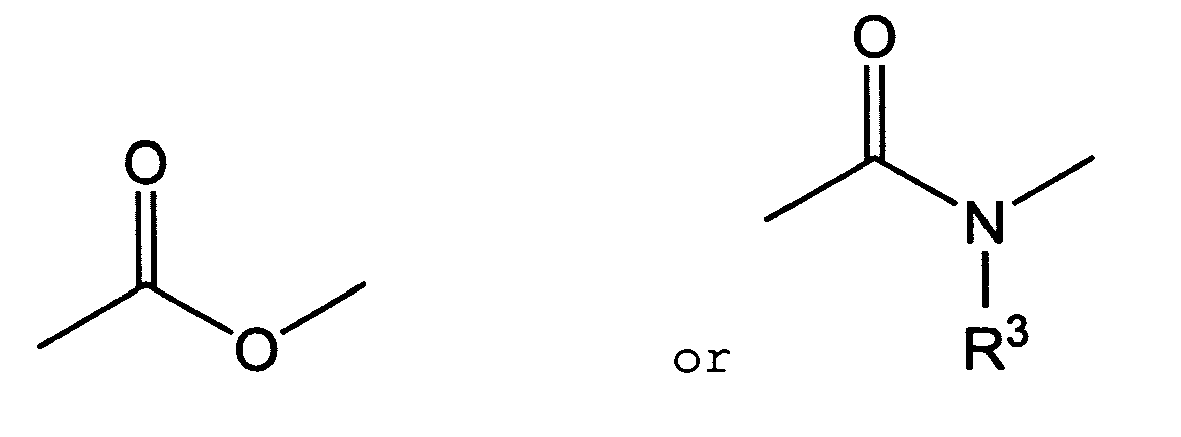
  • In a preferred embodiment of the present invention, the linking group A is independently selected from
    Figure imgb0005
    wherein R3 is independently selected from hydrogen, linear or branched-chain C1-C10 alkyl. Preferably, R3 is hydrogen.
  • Most preferably, the rylene diimide dyes of the present invention are selected from N-(2,6-diisopropylphenyl)-N'-(3-N-succinimidyl)carboxyethyl)-1,6,7,12-tetra(4-sulfophenoxy)-perylene-3,4:9,10-tetracarboxydiimide (compound 5 in Scheme 1 of Example 1), N-(2,6-diisopropylphenyl)-N'(5-(N-(2-(4-maleimidobutyryl)ethyl)-carboxypentyl)-1,6,9,14-tetra(4-sulfonylphenoxy)-terrylene-,3,4,11,12-tetracarboxydiimide (compound 8 in Scheme 1 of Example 1), N-(2,6-diisopropylphenyl)-N'-[N-{4-(benzylthio)-4-oxobutanoyl}aminoethyl]-1,6,7,12-tetra(4-sulfophenoxy)-perylene-3,4:9,10-tetracarboxydiimide (compound 9 in Scheme 2) or N-(2,6-diisopropylphenyl)-N'-[3-(N-(5-(amino-1-carboxypentyl)iminodiacetyl)carboxyethyl]-1,6,7,12-tetra(4-sulfophenoxy)-perylene-3,4:9,10-tetracarboxydiimide (compound 10 in Scheme 3).
  • A further aspect of the invention relates to a rylene diimide compound of formula (I)
    Figure imgb0006
    wherein R1 and R2 are independently an organic residue which is attached to the nitrogen atom via a carbon atom,
    n is an integer from 3 to 4,
    wherein at least one of R1 and R2 contains a coupling group B selected from the group consisting of isothiocyanate, activated ester, carbonyl azide, sulfonyl chloride, aldehyde, alkyl halide, haloacetamide, maleimide, nitrilotriacetic acid, disulfide, thiosulfate, thiol and thioester,
    and R4, R5, R6 and R7 are independently hydrogen or an organic residue, which carries at least one negatively or positively charged group in neutral medium or at least one hydrophilic uncharged group which is preferably selected from a hydroxyl group and polyoxy-C2-C4-alkyl groups, preferably polyethylene groups with 3 or more, e.g. up to 50 or 100 alkyloxide units, wherein at least two of R4, R5, R6 and R7 are an organic residue, which carries at least one negatively or positively charged group in neutral medium or at least one hydrohilic uncharged group which is prferably selected from a hydroxyl group and polyoxy-C2-C4-alkyl groups, preferably polyethylene groups with 3 or more, e.g. up to 50 or 100 alkyloxide units. More preferably, R4, R5, R6 and R7 are independently at each occurence hydrogen or an organic residue, which carries at least one negatively or positively charged group in neutral medium, wherein at least two of R4, R5, R6 and R7 are an organic residue, which carries at least one negatively or positively charged group in neutral medium.
  • A further embodiment of the invention relates to a method for preparing a rylene diimide compound of formula (I), comprising the steps:
    1. (a) optionally reacting a rylene diimide compound of formula (IV)
      Figure imgb0007
      wherein R1 and Rx are independently an organic residue which is attached to the nitrogen atom via a carbon atom and R4, R5, R6 and R7 are independently at each occurence hydrogen or an organic residue, to give a compound of formula (V),
      Figure imgb0008
    2. (b) reacting a compound of formula (V), to give a compound of formula (VI)
      Figure imgb0009
      wherein R2 is -(CH2)q-COOH or -(CH2)q-NHR8, wherein q is an integer from 0 to 20, preferably from 1 to 10, and R8 is selected from hydrogen, linear or branched-chain C1-C10 alkyl,
    3. (c) reacting a compound of formula (VI), to give a rylene diimide compound of the above formula (I), wherein R2 is -(CH2)m-A-(CH2)o-B, m is an integer from 0 to 20, preferably 1 to 10, e.g. 0, 1 to 3, 1 to 5 or 11 to 10, o is an integer from 0 to 20, preferably 0 to 10, e.g. 0, 1 to 3, 1 to 5 or 1 to 10, A is
      Figure imgb0010
      B is a coupling group selected from the group consisting of isothiocyanates, activated esters, carbonyl azides, sulfonyl chlorides, aldehydes, alkyl halides, haloacetamides, imides, nitriotriacetic acid, disulfides, thiosulfates, thiols and thioesters, and
    4. (d) optionally further reacting the compound of formula (I) from step(b), wherein A is
      Figure imgb0011
      to give a compound of formula (I), wherein A is
      Figure imgb0012
  • For the present perylene dyes, step a) preferably comprises the saponification of the Rx residue of formula (IV) under basic conditions, more preferably under strong basic conditions, and the removal of the imide group of Rx, to give perylene monoimide monoanhydride compounds of formula (V). Subsequently, in step b) the monoanhydride group of the compound of formula (V) is removed by an imidization reaction with 1,2-alkylene diamine, e.g. 1,2-ethylene diamine, or 3-aminoalkanoic acid, e.g. 3-aminopropanoic acid, respectively, to give monofunctionalized perylenes of formula (VI), wherein R2 is -(CH2)q-COOH or -(CH2)q-NHR8, respectively. In step c), at least two, more preferably, all of the residues R4, R5, R6 and R7 of the compound of formula (VI) are then provided with at least one charged group, e.g. by sulfonating under acidic conditions. Also in step c), the compound of formula (VI) is further functionalized with a coupling group, to give a compound of formula (I).
  • In one preferred embodiment, the coupling group is an activated ester group and the final product (I) is obtained by reacting compound (VI) as defined above or derivative thereof (e.g. a sulfonated derivative thereof) wherein R4, R5, R6 and R7 are as defined for formula (I) in claim 1, with a compound which provides the activated ester moiety, such as 4-maleimidobutyric acid N-succinimidyl ester (GMBS) in the case of an amino-functionalized compound (VI) or N,N,N'N'-tetramethyl-(succinimido) uronium tetrafluoroborate (TSTU) in the case of an carboxy-functionalized compound (VI).
  • In the specific embodiment of the present invention wherein the coupling group is a thioester, a compound of formula (VI)
    wherein R4, R5, R6 and R7 are as defined for formula (I) in claim 1 is reacted first with an activated thioester compound, e.g. thiolane-2,5-dione, and the resulting intermediate is reacted with an aryl or alkyl halide to give a compound of formula (I).
  • In an specific embodiment of the present invention wherein the coupling group is a nitrilotriacetic acid (NTA) group, the compound of formula (I), wherein B is an activated ester group, is further reacted in solution with a compound providing a nitrilotriacetic acid moiety, e.g. t-butyl-protected NTA. After removal of the protecting groups, the compound (I) wherein B is a NTA group is obtained (scheme 3a). Alternatively, this NTA-functionalized dye may be prepared by a solid-phase-approach as outlined in reaction scheme 3b of Example 6.
  • In the above preparation of the rylene, in particular perylene diimide compounds of the present invention, a high solubility of the intermediate compound of formula (VI) in the organic solvent such as dichloromethane or dichloromethane/acetone is of importance with respect to the further purification of the intermediate. This high solubility of the intermediate of formula (VI) is attained by the specific preparation process of the present invention, namely a first saponification step under strong basic conditions, wherein the imide group, which is attached to the residue Rx is removed, to give a monoanhydride group, and by reacting the monoanhydride group in an imidization reaction to the intermediate compound of formula (VI). In contrast, in the conventional preparation methods of rylene diimides, a rylene dianhydride compound is reacted first in a statistic imidization reaction, to give a rylene diimide compound, wherein the linking group which is attached to the nitrogen atom of the imide contains a phenyl group. However, this intermediate compound has a lower solubility in the organic solvent such as, e.g., toluene, and, thus, the degree of purification is lower (see DE 103 08 941 ).
  • Thus, there is a need in the art to provide a preparation process for rylene, in particular perylene, diimide compounds, wherein this problem is avoided and, in particular, wherein no intermediates are produced which have low solubility in the respective solvent.
  • This object is achieved in accordance with the present invention by the above preparation process, wherein, first, a saponification step is performed and, second, an imidization step, and wherein the intermediates in each step are better soluble in the organic solvents and thus the purification can be performed more easy and effective in each step. Also the overall yields of intermediates and final products are higher with the above process of the ivention.
  • The present terrylene dyes of formula (I) may be prepared analogous to the perylene dyes. Alternatively, the starting compound may be a terrylene diimide compound such as Compound 6 in Scheme 1b which is functionalized with a monocarboxylic acid. Compound 6 and similar compounds can be prepared analogous to the method disclosed in Jung et al. (J. Am. Chem. Soc. 2006, 128, 5283-5291). The carboxylic acid function may than be converted into an activated ester group or other reactive functionalities using methods known in the art. Optionally, an activated ester group may be further reacted in an amidization reaction to a carboxylic acid amide group.
  • In a further embodiment, the present invention relates to the use of the above-described compounds of formula (I) as fluorescent label for biomolecules, in particular, as fluorescent label for proteins. In a preferred embodiment, the biomolecules are enzymes.
  • The use of the inventive compounds as fluorescent label for biomolecules is preferably accomplished by coupling the monofunctionalized compounds of formula (I) carrying the variety of different reactive functionalities, defined as group B, covalently or, in the case of the NTA coupling group, non-covalently to a binding partner, e.g. a biomolecule. For example, an N-hydroxysuccinimide perylene derivative targeting lysins may be used for the labelling of the enzyme phospholipase, a thioester derivative may be used for the labelling of plasminogen activator inhibitor-1 and an NTA derivative may be used for the labelling of His6 tagged ATP synthase. Thus, the present invention also relates to conjugates of compounds of formula (I) with a binding partner, in particular, a biomolecule such as a protein, in particular an enzyme.
  • The compounds of the present invention may also suitable for the use in other technical fields wherein rylene diimide compounds have been successfully enployed, e.g. in dye lasers, as labelling groups in analytical processes, as tracer in scintillation counters, in fluorescence solar collectors, in liquid crystals, in cold light sources, in material testing, as photoconductors, in photographic processes, in illumination and display elements, as semiconductors, etc.
  • The compounds or the conjugates thereof, e.g. covalent conjugates with biomolecules, such as enzymes, nucleic acids, proteins, peptides, saccharides, etc. can be dissolved in fluids, e.g. organic or/and aqueous solvents, or in solids, e.g. plastics.
  • In another aspect, the present invention is directed to a method for purifying bioconjugates. The conventional purification methods of bioconjugates rely on size exclusion and/or affinity chromatography. The separation principles are based on the size of the biomolecules and/or on intermolecular binding forces between the biomolecule to be separated and the ligand immobilized to an insoluble inert carrier. However, the procedure of size exclusion or affinity chromatography is inconvenient and time-consuming. Thus, there is a need in the art to provide a purification method for bioconjugates which is easy and fast to perform.
  • This object is achieved by a purification method for bioconjugates which contain the biomolecule and a dye as label, comprising the steps:
    1. (a) providing a labelling solution comprising bioconjugates and non-reacted dye,
    2. (b) adding a solid support to the labelling solution, wherein the non-reacted dye covalently couples to the solid support, and
    3. (c) isolating the bioconjugates by separation, eg. by filtration or centrifugation.
  • In a preferred embodiment, the rylene dye used as label is a rylene diimide compound of formula (I) and, particularly preferably, a compound of formula (I), wherein n is 2 or 3. Further, the solid support is preferably a resin carrying polyethylene glycol with at least one terminal amino group.
  • The purification of the conjugates is accomplished by coupling the unreacted dye to the solid support being a resin. The resin consists of a low crosslinked polystyrene matrix onto which polyethylene glycol was grafted containing free terminal amino groups. Usually, such resins are employed for solid phase organic synthesis. Here, the non-reacted dye is covalently captured after addition of the support to the labelling solution, and the labeled enzyme is isolated by filtration or centrifugation. In contrast to the methods of the art using affinity chromatography, the resin which is functionalized with amino groups enables a chemical covalent reaction with the non-reacted dye. The use of such a covalent chemical binding reaction for a purification method of biomolecules has not been described in the prior art before. This novel strategy allows convenient and fast separation of labeled enzymes without the need to perform time-consuming chromatographic or size exclusion purification steps.
  • The invention is further illustrated by the following Figures and non-limiting Examples.
  • FIGURES
    • Fig. 1 . SDS-PAGE electrophoresis of PLA1 labeled with compound 5. Panel A corresponds to UV transillumination visualization and Panel B was stained with Coomassie Blue. Lane 4 is the protein molecular weight standard. Lane 2 contains compound 5. Lane 1 is the phospholipase and lane 3 the labeled phospholipase.
    • Fig. 2 . Relative PLA1 enzymatic activity in bulk. Using a pro-fluorescent substrate, it is possible to follow the reaction kinetics through the increase in the fluorescent intensity; (a) Scheme of the hydrolysis of non-fluorescent 5-carboxyfluorescein diacetate (5-CDFA) yielding the fluorescent product 5-carboxyfluorescein (5-FAM). (b) Fluorescence intensity of a 5-FAM as a function of time. For the activation of the surface enzyme in solution (e.g. in order to open the lid protecting the active site), Triton X-100 was added to the solution. 5-CDFA: 0.7 mM; Triton X-100: 0.5 mM (X) non-labeled PLA1 (3E-8M), 3001.3±29.1 s-1 (Δ) PLA1 labeled with N-hydroxysuccinimide perylene derivative 5 (cf. Scheme 1, Example 1) (3E-8M), 3083.1±38.1 s-1 (o) 5-CFDA autohydrolysis 110.54±17.9 s-1. From the Figure, it is shown that the labelling of the enzyme with NHS-PDI has no effect on its activity towards 5-CFDA.
    • Fig. 3 . Normalized absorption (solid line) and emission spectra of the perylene thioester 9 in aqueous medium
    • Fig. 4 . SDS-PAGE electrophoresis of the PAI-1 labeled with compound 9 of scheme 2. Panel A corresponds to UV-transillumination visualisation. Panel B was stained with Comassie Blue. Lane 1 is the labelled PAI-1. Lane 4 contains compound 9. Lane 3 is the N-terminal cysteine PAI-1 and lane 2 is a molecular weight marker.
    • Fig. 5 . Relative molecular brightness of the NTA-functionalized rylene dye 10 of scheme 3, rhodamine 101, a maleimide-functionalized perylene dye (compound 3) bound to BSA, and BSA-bound Atto 565
    EXAMPLE 1 Synthesis of N-hydroxysuccinimide ester-functionalized perylene and terrylene labels
  • The synthesis of compounds 2, 3, 4, 5, 7 and 8 is shown in Scheme 1.
    Figure imgb0013
    Figure imgb0014
  • Scheme 1. Synthesis of perylene and terrylene labels. 1a) Reagents, conditions and yields: a) KOH, isopropanol, 140°C, 12 h, 24%; b) ethylenediamine, toluene, 60°C, 3 h, 60%; c) H2SO4, 16 h, 97%; d) 3-aminopropanoic acid, propionic acid, 140°C°, 2 h, 65%; e) GMBS, triethylamine (TEA), DMF, 5 h, 95%; f) TSTU, DIPEA, DMF, water, 1,4-dioxane, 1 h, 85%. 1b) Reagents, conditions and yields: a) TSTU, DIPEA, DMF, water, 1,4-dioxane, 1 h, 80%; b) 1-(2-aminoethyl)pyrrol-2,5-dione, DMF, TEA, 5 h, 90%.
    Figure imgb0015
  • N-(2,6-diisopropylphenyl)-1,6,7,12-tetraphenoxyperylene-3,4:9,10-tetracarboxy-9,10-monoanhydride-3,4-monoimide 1a:
  • To a solution of N,N'-bis(2,6-diisopropylphenyl)-1,6,7,12-tetraphenoxyperylene-3,4:9,10-tetracarboxydiimide (7.56 g, 7.00 mmol) in 2-propanol (1 L) was added KOH (148 g, 2.64 mol) dissolved in water (130 mL). The reaction was refluxed under argon at 110°C for 12 h. After cooling to room temperature the solution was poured into HCl/H2O (60 mL/3.5 L). The precipitate was filtered and dried under vacuum at 60 °C. The solid was dissolved in acetic acid (100 mL) and refluxed at 80 °C for 30 min. Water (150 ml) was added; the precipitate was filtrated and purified over silica gel using dichloromethane as eluent. The product was obtained as a red solid in a yield of 24%. 1H-NMR (250 MHz, DCM-d2 , 300 K): δ = 8.16 (s, 2 H), 8.15(s, 2 H), 7.47 (t, J = 7,2 Hz, 1H), 7.35 (d , 2H), 7.33-7.28 (m, 8H), 7.21-7.13 (m, 4 H), 7.03 - 6.97(m, 8H), 2.73-2.62 (sept, J = 6,8 Hz, 2H), 1.08 (d, J = 6,9 Hz, 12H); 13C-NMR (300 MHz, DCM-d2, 300 K): δ = 163.54, 160.19, 156.17, 155.60, 146.33, 130.50, 130.42, 128.98, 125.29, 125.17, 124.38, 123.70, 122.49, 120.56, 120.39, 120.33, 118.79, 29.43, 24.04 ppm; UV-Vis (CHCl3) : λmax (ε) = 443 (14100), 539 (23400), 577 (37300) nm; MS (FD): m/z (rel.int.) 920 [M+H]+; elemental analysis calc'd (%) for C60H41NO9: C 78.33, H 4.49, N 1.52; found C 78.36, H 4.47, N 1.62
  • N-(2,6-diisopropylphenyl)-N'-(4-aminoethyl)-1,6,7,12-tetraphenoxyperylene-3,4:9,10-tetracarboxydiimide 1b:
  • 1a (200 mg, 0.2456 mmol) and 1,2-ethylenediamine (130 mg, 2.45 mol) were added to toluene (20 mL). The mixture was stirred under argon at 60°C for 3 h. Following the reduction of the solvent, the material was purified over silica gel using dichloromethane/acetone 9/1 and dichloromethane/ethanol 10/3 as eluent resulting in 1b as a red solid (60% yield). 1H-NMR (250 MHz, DCM-d2, 300 K): δ = 8.16 (s, 2 H), 8.15(s, 2 H), 7.47 (t, J = 12.5 Hz, 1H), 7.30 (m, 10H), 7.14 (m, 4 H), 6.98 (m, 8H), 4.16 (t, J = 12 Hz, 2H), 2.95 (t, J = 12.5 Hz, 2H), 2.65( m, 2H), 1.08 (d, J = Hz, 7.5H, 12H); 13C-NMR (300 MHz, DCM-d2, 300 K): δ = 163.94, 163.83, 156.32, 156.14, 155.96, 146.55, 133.57, 131.62, 130.52, 129.95, 125.11, 125.08, 124.54, 123.37, 121.44, 121.16, 120.76, 120.63, 120.48, 120.44, 40.66, 31.16, 29.59, 25.34, 24.23 ppm; UV-Vis (CHCl3): λmax (ε) = 450 (12 348), 538 (21 708), 580 (35 991); Fluorescence (CHCl3, excitation 566 nm) λmax = 620 nm; MS (FD): m/z (rel.int.) 962 (100 %) [M+]; elemental analysis calc'd (%) for C62H47N3O8 : C 77.33, H 4.88, N 4.36; found C 76.87, H 4.54, N 4.00
  • N-(2,6-diisopropylphenyl)-N'-(4-carboxyethyl)-1,6,7,12-tetraphenoxyperylene-3,4:9,10-tetracarboxydiimide 1c:
  • 1a (500 mg, 0.59 mmol) and 4-aminopropionic acid (532 mg, 5.9 mmol mol) were added to propionic acid (50 mL). The mixture was stirred under argon at 140 °C for 3 h. After cooling the reaction mixture to room temperature, the product was precipitated with water (250 mL). The precipitate was filtered, washed with water and dried under vacuum. Further purification was done by column chromatography on silica gel with dichloromethane/acetone 9/1 and dichloromethane/ethanol 10/3 as eluent to afford 1c in a yield of 65 %. 1H-NMR (250 MHz, DCM-d2, 300 K): δ = 8.06 (s, 4 H), 7.37 (t, J = 7.5 Hz, 1H), 7.19 (m, 10H), 7.03 (m, 4 H), 6.87 (d, J = 7.5 Hz, 8H), 4.26 (t, J = 10 Hz, 2H), 2.59 (m, 4H), 1.00 (d, J = 7.5 Hz, 12H); 13C-NMR (250 MHz, DCM-d2, 300 K): δ = 163.82, 156.37, 146.52, 130.50, 125.12, 125.06, 124.55, 123.35, 123.08, 121.33, 120.48, 31.99, 29.59, 24.22 ppm; UV-Vis (CHCl3): λmax (ε) = 450 (13 298), 536 (23 728), 580 (38 132); Fluorescence (CHCl3, excitation 566 nm) λmax = 620 nm; MS (FD): m/z (rel.int.) 990 (100 %) [M+]; elemental analysis calc' d (%) for C63H46N2O10xH2O: C 74.92, H 4.78, N 2.78; found C 74.38, H 4.78, N 2.58
  • N-(2,6-diisopropylphenyl)-N'-(4-aminoethyl)-1,6,7,12-tetra(4-sulfophenoxy)-perylene-3,4:9,10-tetracarboxydiimide 2:
  • 1b (100 mg, 0.1 mmol) was added to concentrated sulfuric acid (3 mL). The flask was sealed, and the mixture was stirred at room temperature for 16 h. Water was slowly added to the flask and the resulted solution was dialyzed in water. The solution was freeze dried to give the product as a red solid in 97 % yield. 1H-NMR (250 MHz, DMSO-d6, 300 K): δ = 7.97 (s, 2 H), 7.86 (s, 2 H), 7.67 (d, J = 7.5 Hz, 5H), 7.57 (d, J = 7.5 Hz, 5H), 7.41 (t, J = 12 Hz, 1H), 7.38 (d, J = 7.5, 2H), 7.01 (d, J = 7.5, 4H), 6.93 (d, J = 7.5, 4H), 3.08 (t, J = 7.5 Hz, 2H), 2.68 (sept, J = 10 Hz, 2H), 1.01 (d, J = 5 Hz, 12H) ;13C-NMR (250 MHz, DMSO-d6, 300 K): δ = 163.61, 163.34, 157.38, 157.22, 155.42, 155.07, 146.02, 141.20, 141.10, 132.84, 132.33, 130.59, 129.38, 128.15, 128.03, 123.79, 123.42, 123.19, 121.35, 121.08, 120.89, 120.36, 119.07, 38.80, 37.92, 29.07, 23.08 ppm; UV-vis (H2O): λmax (ε) = 450 (10 850), 534 (21 825), 560 (22 243) ; Fluorescence (H2O, excitation 566 nm) λmax = 620 nm; MS (MALDI-TOF): m/z (rel. int.) = 1283 (100 %) [M+]
  • N-(2,6-diisopropylphenyl)-N'-(3-carboxyethyl)-1,6,7,12-tetra(4-sulfophenoxy)-perylene-3,4:9,10-tetracarboxydiimide 4:
  • 1c (100 mg, 0.1 mmol) was added to concentrated sulfuric acid (3 mL). The flask was sealed, and the mixture was stirred at room temperature for 48 h. Water was slowly added to the flask and the resulting solution was dialyzed in water. The solution was freeze dried to give the product as a red solid in 97 % yield. 1H-NMR (300 MHz, DMSO-d6, 300 K): δ = 7.92 (s, 2 H), 7.88 (s, 2 H), 7.66 (m, 4H), 7.60 (m, 4H), 7.40 (t, J = 12 Hz, 1H), 7.27 (d, J = 9 Hz, 2H), 6.98 (m, 8H), 4.19 (t, J = 12 Hz, 2H), 2.68 (sept, J = 10 Hz, 2H), 1.00 (d, J = 9Hz, 12H); 13C-NMR (300 MHz, DMSO-d6, 300 K): δ = 172.25, 162.51, 162.14, 155.26, 155.07, 154.78, 145.43, 144.86, 132.33, 132.03, 130.45, 127.72, 127.69, 123.59, 122.48, 119.87, 119.08, 118.99, 118.88, 31.99, 28.19, 23.64 ppm; UV-Vis (H2O): λmax (ε) = 450 (11 454), 534 (22 510), 564 (25 059); Fluorescence (H2O, excitation 566 nm) λmax = 622 nm; MS (MALDI-TOF): m/z (rel. int.) = 1311 (100 %) [M+]
  • N-(2,6-diisopropylphenyl)-N'-[N-(4-maleimidobutyryl)-amino-ethyl]-1,6,7,12-1,6,7,12-tetra(4-sulfophenoxy)-perylene-3,4:9,10-tetracarboxydiimide 3:
  • To a solution of 2 (50 mg, 0.04 mmol) in dry DMF (3 mL) was added triethylamine (0.2 mL) and 4-maleimidobutyric acid N-succinimidyl ester (GMBS) (10 mg, 0.035 mmol). After 5 h the solvents were removed under vacuum. Dichloromethane (10 mL) was added and the solution filtered. The solvent was removed under vacuum and the product was obtained as a red solid in 95% yield. 1H-NMR (300 MHz, DCM-d2, 300 K): δ = 8.15 (s, 2 H), 8.13 (s, 2 H), 7.76 (m, 8H), 7.45 (t, J = 12 Hz, 1H), 7.48 (d, J = 12 H, 2H), 6.98 (m, 8H), 6.59 (s, 2H), 4.27 (t, J = 12 Hz, 2H), 3.53 (m, 2H), 3.41 (t, J = 15 Hz, 2H), 2.68 (sept, J = 15 Hz, 2H), 2.06 (t, J = 15 Hz, 2H), 1.74 (m, 2H), 1.07 (d, J = 9 Hz, 12H); 13C-NMR (Spinecho, 300 MHz, DCM-d2, 300 K): δ = 173.34, 173.05, 171.50, 163.81, 163.62, 157.14, 157.08, 155.95, 146.58, 142.97, 142.84, 134.66, 133.44, 133.31, 131.52, 129.96, 128.67, 128.57, 124.54, 123.62, 121.55, 121.06, 119.83, 40.43, 38.65, 37.65, 33.78, 29.58, 26.05, 25.00, 24.25 ppm; UV-Vis (H2O): λmax (ε) = 450 (8 367), 534 (16 199), 566 (16 569); Fluorescence (H2O, excitation 566 nm) λmax = 620 nm; MS (MALDI-TOF): (100 %) [M+] 1447
  • N-(2,6-diisopropylphenyl)-N'-[3-(N-succinimidyl)carboxyethyl]-1,6,7,12-tetra(4-sulfophenoxy)-perylene-3,4:9,10-tetra-carboxydiimide 5:
  • To a solution of 4 (50 mg, 0.038 mmol) in DMF (1 mL), dioxane (1 mL) and water (0.5 mL), was added diisopropylethylamine (DIPEA) (7.4 mg, 0.057 mmol) and N,N,N',N'-tetramethyl (succinimido) uronium tetrafluoroborate (TSTU) (14.3 mg, 0.0475 mmol). After 1 h the mixture was filtered, and the solvents removed under vacuum. Water (2 mL) was added and the solution freeze dried to give the product as red solid in 85% yield. 1H-NMR (300 MHz, DMSO-d6, 300K): δ = 7.92 (s, 2 H), 7.88 (s, 2 H), 7.66 (m, 4H), 7.60 (m, 4H), 7.40 (t, J = 12 Hz, 1H), 7.27 (d, J = 9 Hz, 2H), 6.98 (m, 8H), 4.30 (t, J = 12 Hz, 2H), 2.76 (m, 4H), 2.68 (sept, J = 10 Hz, 2H), 1.00 (d, J = 9Hz, 12H); 13C-NMR (300 MHz, DMSO-d6, 300 K): δ =169.95, 166.79, 162.58, 162.23, 154.87, 145.50, 144.90, 132.42, 132.10, 130.52, 127.78, 123.67, 123.04, 122.60, 119.96, 199.40, 119.28, 118.97, 53.49, 41.73, 28.28, 25.40, 25.18, 23.72, 18.04, 16.70, 12.35 ppm; UV-Vis (H2O): λmax (ε) = 450 (9 951), 534 (18 867), 566 (21 071); Fluorescence (H2O, excitation 566 nm) λmax = 620 nm; MS (MALDI-TOF): 1407 (100 %) [M+]
  • Scheme 1b N-(2,6-diisopropylphenyl)-N'-[5-(N-succinimidyl)carboxypentyl]-1,6,9,14-tetra(4-sulfonylphenoxy)-terrylene-3,4,11,12-tetracarboxidiimide 7:
  • To a solution of 6 (100 mg, 0.067 mmol) in DMF (1 mL), dioxane (1 mL) and water (0.5 mL), was added diisopropylethylamine (12 mg, 0.1 mmol) and TSTU (25 mg, 0.083). After 1 h the mixture was filtered, and the solvents removed under vacuum. Water (2 mL) was added and the solution was freeze dried to give the product 7 as a blue-green solid in 80% yield. 1H-NMR (700 MHz, DMSO-d6, 300 K): δ = 9.37 (s, 4H), 8.03 (s, 2H), 7.95 (s, 2H), 7.70 (d, J = 6.3 Hz, 4H), 7.67 (d, J = 6.3 Hz, 4H), 7.42 (t, J = 9 Hz, 1H), 7.29 (d, J = 9 Hz, 2H), 7.22 (m, 8H), 3.93 (m, 2H), 2.65 (sept., J = 13 Hz, 2H), 2.17 (t, J = 7.27 Hz, 2H), 1.58 (m, 2H), 1.50 (m, 2H), 1.29 (m, 2H), 1.01 (d, J = 6 Hz, 12H); 13C-NMR (500 MHz, DMSO-d6, 300 K): 174.03, 168.53, 166.25, 162.22, 155.03, 153.60, 145.32, 144.69, 144.61, 130.52, 128.35, 128.22, 127.76, 125.36, 124.35, 123.48, 122.70, 121.95, 121.53, 118.28, 118.13, 40.33, 33.24, 30.99, 30.96, 28.19, 26.83, 25.74, 23.93, 23.49 ppm; UV-Vis (H2O): λmax (ε) = 426 (4 569), 638 (24 468); MS (MALDI-TOF): 1575 (100 %) [M+]
  • N-(2,6-diisopropylphenyl)-N'-[5-(N-(2-(4-maleimidobutyryl)-ethyl)-carboxypentyl]-1,6,9,14-tetra(4-sulfonylphenoxy)-terrylene-3,4,11,12-tetracarboxidiimide 8:
  • To a solution of 7 (100 mg, 0.063 mmol) in dry DMF (3 mL) was added triethylamine (6.36 mg, 0.063 mmol) and 2-maleimidoethylamine trifluoroacetate salt (15 mg, 0.059 mmol). After 5 h the solvent was removed under vacuum. Dichloromethane (10 mL) was added and the solution filtered. The solvent was removed under vacuum and the product was obtained as a blue-green solid in 90% yield. 1H-NMR (700 MHz, DCM-d2, 300 K): 9.15 (s, 4H), 8.19 (s, 2H), 7.82 (m, 8H), 7.46 (t, J = 9 Hz, 1H), 7.31 (d, J = 9 Hz, 2H), 7.15 (m, 8H), 7.03 (s, 2H), 3.91 (m, 2H), 3.36 (m, 4H), 2.65 (sept., J = 13 Hz, 2H), 2.17 (t, J = 7.27 Hz, 2H), 1.58 (m, 2H), 1.50 (m, 2H), 1.29 (m, 2H), 1.08 (d, J = 6 Hz, 12H); 13C-NMR (700 MHz, DCM-d2, 300 K): 173.28, 171.53, 163.49, 162.89, 161.47, 161.28, 157.46, 157.42, 154.44, 154.42, 146.78, 143.21, 134.7, 129.03, 128.96, 128.94, 119.15, 116.86, 38.05, 37.98, 36.56, 30.29, 29.67, 26.08, 24.39 ppm; UV-Vis (H2O): λmax (ε) = 426 (2 782), 638 (16 633); MS (MALDI-TOF): 1665 (100 %) [M++ 3Na+]
    Figure imgb0016
  • EXAMPLE 2 Fluorescent labelling of phospholipase (PLA 1) with 5
  • Phospholipase A1 (2.56 mg) in 10 mM succinic acid, 0,4M NH4SO4, pH 6 (400 µL) was reacted at 4 °C for one hour with 5 (1.5 mg) freshly dissolved in 0.01 M NaHCO3. TentaGel HL NH2 resin (Rapp Polymere GmbH) (20 mg) was added and the solution shaken for 5 min. The mixture containing the polymer resin was applied to a spin column and filtered. The colored solution containing the labeled enzyme was collected and quantified by 10% SDS-PAGE and by fluorescence correlation spectroscopy (FCS). The solution of the labeled phospholipase in 0.01 M NaHCO3 was stored at -80°C.
  • EXAMPLE 3 Test of the bulk enzymatic activity of PLA1 labeled with 5
  • PLA1 catalyses the saponification of the acetate groups of the fluorescein derivative that is non-fluorescent (see Fig. 2a). The hydrolysis of the substrate can be followed via the increase in the fluorescence intensity due to the formation of the fluorescent product upon the enzymatic reaction. Fig.2B shows fluorescence intensity changes of a similar solution of pro-fluorescent substrate as a function of time without the enzyme (0), after adding non-labeled enzyme (X), and after adding the labeled enzyme (Δ), respectively. The rate constants of the hydrolysis were estimated to be 3001.3±29.1 (s-1) and 3083.1±38.1 (s-1) for the labeled enzyme and the non-labeled enzyme, respectively. The autohydrolysis of 5-CFDA was measured as 110±17.9 (s-1). The result clearly shows that no activity was lost by the labelling.
  • The fluorescence intensity was measured using SPEX FLUOROLOG 1500 (Spex Industries, Metuchen, NJ). The time base scan experiments were performed with 1s integration time. The fluorescent product was excited at 500nm. The fluorescent emission was detected at 520nm.
  • EXAMPLE 4 Synthesis of a water-soluble perylene dye functionalized with a thioester group
  • Figure imgb0017
  • To a solution of N-(2,6-diisopropylphenyl)-N'-(4-aminoethyl)-1,6,7,12-tetra(4-sulfophenoxy)-perylene-3,4:9,10-tetracarboxydiimide 2 (50 mg, 0.04 mmol) in N-methyl pyrrolidinone (NMP) was added thiolane-2,5-dione (6 mg, 0.052 mmol), followed by N,N-diisopropylethylamine (DIPEA) (10 mg, 0.08 mmol). After one hour, the reaction mixture was diluted with 100 mM NaOAc buffer (pH 5.2) and cooled to 4°C. Benzyl bromide (14 mg, 0.08 mmol) was added with thorough mixing and additionally react for 10 minutes. The product was purified using a Sep-Pak C18 cartridge (Millipore; pre-washed with 10 mL acetonitrile and 10 mL water; washed with 20 mL water; eluted with 1 mL 60% methanol) and dried. The product was isolated as red solid in 50 % yield. 1H-NMR (250 MHz, DMSO-d6, 300 K): δ = 7.95 (s, 2 H, ArH), 7.91 (s, 2 H, ArH), 7.62 (m, 8H, ArH), 7.40 (t, J = 7.5 Hz, 1H, ArH), 7.29 (d, J = 7.5, 6H, ArH), 6.99 (d, J = 7.5, 4H, ArH), 6.96 (d, J = 7.5, 4H, ArH), 4.16 (s, 2H, CH 2SCO), 3.58 (t, J = 12.5, 2H, CH 2N), 3.08 (t, J = 15 Hz, 2H, CH 2NH), 2.68 (sept, J = 12.5 Hz, 2H, CH(CH3)2), 2.28 (t, J = 12.5 Hz, 2H, CH 2CO), 2.14 (t, J = 12.5 Hz, 2H, CH 2CO), 1.00 (d, J = 5 Hz, 12H, CH 3); 13C-NMR (250 MHz, DMSO-d6, 300 K): δ = 178.14 (SC=O), 174.02 (NHC=O), 171.55 (C=O), 162.94 (C=O), 155.48, 155.27, 145.84, 145.24, 132.80, 132.43, 130.87, 128.14, 124.04, 123.69, 122.86, 120.33, 119.33, 53.75 (CH2S), 48.79 (CH2N), 42.07 (CH2N), 36.52 (CH2CO), 30.42 (CH2CO), 24.08 ppm. UV-vis (H2O): λmax (ε) = 452 (10 643), 536 (19 080), 568 (23 401); Fluorescence (H2O, excitation 568 nm) λmax = 622 nm;
  • In contrast to the above protocol, applying the procedure described by Schule and Pannel (Bioconjugate Chemistry 13, 1039-1043) for conversion of a succinimidyl ester of the chromophore via activation of benzyl mercaptane with trimethylaluminium did not lead to the formation of the target compound 9.
  • The obtained perylene thioester 9 is excellently soluble in water and exhibits an absorption maximum at 568 nm (ε = 23 400 M-1 cm-1) and an emission maximum at 622 nm. The perylene thioester 9 shows high fluorescence quantum yield (Φ f ) of 54 % in aqueous medium measured at room temperature using Cresyl Violet in methanol as a reference.
  • The FCS analysis of perylene-thioester showed only half the molecular brightness compared to a single sulforhodamine B. However the extinction coefficient of the perylene is only one third of sulforhodamine B at laser excitation wavelength of 561 nm. Accordingly the molecular brightness of a single perylene-thioester as measured by FCS indicates a fluorescence quantum yield similar to sulforhodamine B. After binding to PAI-1 (Example 5) the brightness of the perylene dye slightly decreased by 15 percent. This indicates an almost independent fluorescence quantum yield from the local protein environment, which makes the perylene dye a very attractive new label for N-terminal cysteines in proteins.
  • EXAMPLE 5 Site-specific-labelling of PAI-1 with 9
  • Figure imgb0018
  • To prove the suitability of 9 for protein labelling, the chromophore was attached to plasminogen activator inhibitor-1 (PAI-1) stable mutant, containing only one cysteine residue at the N-terminus. The PAI-1 is a member of the SERine Protease Inhibitor superfamily (SERPINS) and exhibits a molecular weight of 43 kDa. The N-terminal cysteine containing PAI-1 was chosen as model protein in this study. The method and conditions applied for the labelling of the PAI-1 are the same as described by Dawson et al. (Science 266, 776-779; 1994), which are often referred to as "standard native chemical ligation conditions". These strongly denaturing conditions ensure that the reactivity of the N-terminal cysteine is independent from the three-dimensional structure of the protein in its native state.
    Under these conditions transesterification of the thioester 9 with the cysteine thiol of the protein occurs, followed by an S-N acyl shift to generate the conjugate that exhibits a stable amide bond (Scheme 2b).
  • The N-terminal cysteine PAI-1, stable mutant was dissolved in 100 mM phosphate buffer, containing 6 M Gn·HCl, 4% v/v thiophenol and 100 mM sodium phosphate at pH 7.6 to a final protein concentration of 2 mM. Equimolar amounts of the dye 9 were dissolved in the same buffer and added to the protein solution and the reaction mixture was allowed to react for 24 hours at room temperature. The reaction mixture was analyzed using SDS-PAGE electrophoresis.
  • Refolding of conjugate
  • Denatured Perylene-PAI-1 conjugate was refolded by dialysis (2 h, 4°C) in 20 mM Na-acetate, 1 M NaCl, 0.01% Tween-80 (v/v), pH 5,6 followed by a second dialysis step (overnight, 4°C). The protein was subsequently concentrated using centrifugal filter devices. The successful refolding of the Perylene-PAI-1 conjugate was confirmed by fluorescence correlation spectroscopy (FCS) analysis of the protein solution.
  • EXAMPLE 6 Synthesis of a water-soluble perylene dye functionalized with a nitrilotriacetic acid group
  • Figure imgb0019
    Figure imgb0020
  • Two synthetic strategies were used to attach the NTA moiety to the perylene chromophore. One is based on solution phase synthesis while the other relies on a solid-phase approach.
  • In the first route, the water-soluble perylene N-hydroxysuccinimide ester 5 was reacted with t-butyl protected nitrilotriacetic acid to give the intermediate 10a. After removal of the protective groups, the perylene dye 10 containing the NTA unit was obtained (Scheme 3a).
  • The second approach is based on a straightforward solid-phase synthesis of a nitrilotriacetic acid moiety as developed by Meredith et al. (Bioconjugate Chem. 2004, 15, 969-982). The NTA unit was conveniently coupled to a carboxyl functionalized perylene derivative by amide bond formation (Scheme 3b).
  • For both routes water-soluble perylene NTA derivative 10 was purified by size exclusion chromatography and obtained in 70% and 15% yield for the solution and solid-phase synthesis, respectively. The new chromophore has an absorption maximum at 562 nm (ε = 35 000 M-1 cm-1). The emission maximum is located at 615 nm. A fluorescence quantum yield of 15 % for 10 was determined by using Cresyl Violet in methanol as reference. When the same quantum yield measurement was carried out with the Ni2+ complexes of 10 no decrease in the fluorescence was observed. In addition the absorption and emission maxima remained unchanged.
  • In contrast to all NTA-modified fluorophores of the prior art, the above NTA-modified perylene dye 10 contains a much shorter spacer between the dye and the NTA (only two methylene groups). Remarkably, the photophysical properties of the chromophore remain unchanged upon Ni2+ binding. This new fluorescent reporter has a relatively low molecular weight (1555 g/mol), which makes it a good candidate for labelling proteins at the same time, avoiding the limitation of the large size of autofluorescent proteins or quantum dots. Protein labelling with the NTA functionalized perylene was successfully demonstrated using His-tagged ATP synthase (Example 7).
  • Solution phase synthesis (Scheme 3a) N-(2,6-diisopropylphenyl)-N'-[3-(6-(tert-butyl 2,2'-(1-tert-butoxy-1-oxohexan-2-ylazanediyl)diacetate)carboxyethyl]-1,6,7,12-tetra(4-sulfophenoxy)-perylene-3,4:9,10-tetracarboxydiimide (10a)
  • N-(2,6-diisopropylphenyl)-N'-[3-(N-succinimidyl)carboxyethyl]-1,6,7,12-tetra(4-sulfo phenoxy)-perylene-3,4:9,10-tetracarboxydiimide (50 mg, 0.035 mmol) and diisopropyl ethylamine (DIPEA) (7.4 mg, 0.057 mmol) were added to a solution of N-(5-amino-1-carboxypentyl)iminodiacetic acid, tri-t-butylester (22.8 mg, 0.053 mmol) in dry DMF (3 mL). The reaction vessel was purged with argon and stirred for 16 hours at room temperature. Ethylacetate (15 mL) was added to the reaction mixture to obtain a pink precipitate, which was filtered. The precipitate was washed first with dichloromethane and then three times with ethyl acetate (3x 40 mL) and dried under vacuum to give the product as red solid in 70 % yield. 1H-NMR (300 MHz, DMSO-d6, 300K): δ = 7.90 (s, 2 H), 7.88 (s, 2 H), 7.63 (m, 8H), 7.39 (t, J = 15 Hz, 1H), 7.29 (d, J = 9, 2H), 6.97 (m, 8H), 4.14 (t, J = 15 Hz, 2H), 3.56 (m, 2H), 3.32 (m, 4H), 3.17 (m, 2H), 2.95 (m 2H), 2.77 (m, 4H), 2.72 (m, 2H), 2.64 (m, 2H),1.35 (s, 27H), 1.00 (d, J = 9Hz, 12H); 13C-NMR (300 MHz, DMSO-d6, 300 K, Spinecho): δ = 171.89, 170.39, 162.97, 162.55, 155.72, 155.27, 155.21, 145.46, 128.17, 123.55, 122.88, 119.37, 80.30, 40.52, 32.56, 28.07, 22.58 ppm;
  • N-(2,6-diisopropylphenyl)-N'-[3-(N-(5-amino-1-carboxypentyl)iminodiacetyl)carboxyethyl]-1,6,7,12-tetra(4-sulfophenoxy)-perylene-3,4:9,10-tetracarboxy diimide (10)
  • To a solution of 10a (40 mg, 0.023 mmol) in dry DMSO (2 mL) were added triisopropylsilane (1 mL) and trifluoroacetic acid (TFA). After stirring the reaction mixture for 3 hours at room temperature, the volatiles were evaporated under reduced pressure. Water (5 mL) was added and the solution applied on a column fill with Biogel P30. The product was eluted with water and freeze dried to give 10 as red solid in 95% yield. 1H-NMR (700 MHz, CD3OD, 300K): δ = 8.55 (s, 2 H), 8.53 (s, 2 H), 8.18 (m, 8H), 7.76 (t, J = 14 Hz, 1H), 7.64 (d, J = 7, 2H), 7.43 (m, 8H), 4.54 (t, J = 14 Hz, 1H), 3.87 (m, 4H), 3.49 (m, 3H), 3.32 (m, 4H), 2.70 (m, 2H), 2.28 (m, 2H), 1.83 (m, 2H), 1.68 (t, J = 14 Hz, 2H), 1.47 (d, J = 7,12H); 13C-NMR (700 MHz, CD3OD, 300K): δ = 168.33, 166.58, 158.54, 157.94, 156.52, 156.33, 152.51, 152.47, 149.49, 149.47, 141.82, 138.27, 138.26, 129.84, 124.08, 119.69, 114.20, 113.58, 111.91, 43.04, 38.03, 25.34, 24.71, 21.13, 19.44 ppm; UV-Vis (H2O): λmax (ε) = 448 nm (16 120), 534 nm (31 224), 562 nm (35 000) Fluorescence (H2O, excitation 562 nm) λmax = 614 nm ; MS (MALDI-TOF): 1599.51 (100 %) [M+2Na]
  • Solid phase synthesis of Perylene-NTA (Scheme 3b)
  • All amine deprotection and coupling steps were monitored with ninhydrine. In a 25 mL manual peptide synthesis reaction vessel, Tenta TGR resin (2 g, 0.64 mmol) was swollen in dichloromethane (DCM) for 1 h. Fmoc-Lys(Mtt)-OH (1.15 g, 1.84 mmol), 1-Hydroxybenzotriazole hydrate (HOBt) (248 mg, 1.84), O-(Benzotriazol-1-yl)-N,N,N',N'-tetramethyluronium hexafluorophosphate (HBTU) (683 mg, 1.80 mmol), diisopropylethylamine (DIPEA) (237 mg, 1.84 mmol) was dissolved in dry dimethylformamide (DMF) (6.5 mL) added and shaken at 350 rpm at 25°C. After 12 h the resin was washed extensively with DCM. Fmoc deprotection was effected by six successive 15 min treatments of the resin with 20% piperidine in DCM. Afterwards the resin was washed extensively with DCM. To the washed resin was added a 20-fold excess of tert-butyl-bromoacetate (1.79 g, 9.2 mmol) with an equal amount of DIPEA (1.18 g, 9.2 mmol) and DCM (2 ml). The reaction vessel was shaken at 350 rpm at 45°C for 27 h. Fresh reagents were added and the vessel was further incubated at 45°C with shaking for 18 h. The beads were washed successively with DCM, ethyl acetate, and DCM again. The Mtt group was removed by five 3-min treatments with 10 mL of 1% TFA, 5% triisopropyl silane (TIS) in DCM. The beads were again washed extensivly with DCM. N-(2,6-diisopropylphenyl)-N-(4-carboxyethyl)-1,6,7,12-tetrasulfophenoxy-perylene-3,4:9,10-tetracarboxydiimide (100 mg, 0.076 mmol), HOBt (10 mg, 0.076), HBTU (50 mg, 0.074) and DIPEA (10 mg, 0.076) in dry DMF (0.5 mL) were added to the beads (86 mg, 0.02 mmol) in 2 mL of DMF. The beads were allowed to react with agitation for 24 h at 25°C. After washing of the sample, an equivalent amount of fresh reagents were added and allowed to react for 12 more hours. The beads were washed successively with DCM, ethyl acetate, methanol, DCM again, and dried briefly under vacuum. The product was cleaved from the resin with several 5-min treatments with 10 mL of 95% TFA in DCM. The material was reduced to dryness with rotary evaporation, precipitated with ice-cold diethyl ether, and dried under high vacuum.
  • The dried off-red material was dissolved in water and purified by size-exclusion chromatography using BioGel as stationary phase and water as eluent. The yield, relative to the amount of Fmoc-Lys(Mtt)-OH was 15%.
  • Ni2+:NTA-Perylene
  • NiCl2 (30 µl, 2.5x10⁻⁴ M/l solution in 0.01 N HCl) was added to Perylene NTA (1 ml, 5x10⁻⁵ M/l in water), and the solution was brought to pH 7 by addition of 0.8 mL 50 mM sodium acetate (pH 7), 200 mM NaCl. Following reaction for 30 min at 25°C, the product was purified using a Sep-Pak C18 cartridge (Millipore; pre-wahsed with 10 mL acetonitrile and 10 mL water; washed with 20 mL water; eluted with 1 mL 60% methanol) and dried.
  • Fluorescence correlation spectroscopy (FCS)
  • FCS measurements were carried out on a confocal setup based on an Olympus IX71 inverted microscope. A solid-state laser (JIVE, Cobolt AB, Stockholm, Sweden) with emission at 561 nm was used and attenuated to 150 µW before focussing into the buffer solution by a water immersion objective (40x, N.A. 1.15, Olympus). The solution was placed on a microscope coverslide as a droplet of 25 to 50 µl. Scattered laser light was blocked by a dichroic beam splitter (DCXR 575, AHF, Tübingen, Germany) and out-of-focus fluorescence was rejected by an 100 µm pinhole in the detection pathway. Fluorescence was collected in the spectral range from 575 to 648 nm using an interference filter (AHF). Single photons were detected by an avalanche photodiode (SPCM AQR-14, Perkin Elmer) and registered by a TCSPC device (PC card SPC-630, Becker & Hickl, Berlin, Germany) for software calculation of the autocorrelation functions, g(2)(tc).
  • Fluorescence correlation spectroscopy measurements were used to monitor the binding of the perylene dye to F1-ATPase in solution. Confocal laser excitation at 561 nm was used to match the absorbance maximum of the perylene dye. Different concentrations of F1-ATPase were pre-mixed with 1 nM perylene-Ni-NTA. As a control, the dye was mixed with F1-ATPase in the absence of Ni2+. Increasing amounts of F1-ATPase resulted in increasing diffusion times of the perylene-Ni-NTA due to conjugate formation with the His tagged protein. In the absence of Ni2+, no evidence for binding of the perylene-NTA dye was found by FCS measurements.
  • FCS was also used to determine the mean photon count rate or 'molecular brightness' of a single perylene-NTA in the absence of Ni2+ (Figure 5). The conventional dyes Rhodamine 101 and Atto-565 were used as references. For Rhodamine 101, a maximum fluorescence of about 145 000 counts/s per molecule saturated at an excitation power of 300 µW at the back aperture of the microscope objective was detected. At higher excitation power, photobleaching and increased population of the non-fluorescent triplet state reduced the brightness per molecule. Similar saturation behaviour was observed for Atto-565 which was bound to bovine serum albumin (BSA). In contrast, the molecular brightness of the perylene-NTA steadily increased up to an excitation power of 1.2 mW reaching 120 kHz and supporting the high photostability of the perylene chromophore. At this high laser power, the triplett yield was only 11 percent compared to about 45 percent for Atto-565 bound to BSA. In the presence of Ni2+, the relative brightness of the perylene derivative was reduced to about 77 percent. Binding of the perylene-Ni-NTA to the His tags of F1-ATPase did not reduce the molecular brightness further but rather increased slightly. These results demonstrate the favourable properties of the new NTA-derivatized rylene dye and suggest its use for site-specific labelling of proteins.
  • EXAMPLE 7 Site-specific labelling of the His 6 tagged F 1 complex of ATP Synthase
  • To prove the suitability of 10 for protein labelling, the Ni-complex of the chromophore was incubated with His6-tagged F1 complex of FoF1-ATP synthase from Escherichia coli. The F1 complex with subunit composition α3β3γδε contained three His6 tags, one at the N-terminus of each of the β subunits. In order to detect the binding of the perylene dye to this protein in solution, fluorescence correlation spectroscopy experiments were carried out. Confocal laser excitation at 561 nm was used to match the absorbance maximum of the perylene dye. Different concentrations of F1-ATPase were pre-mixed with 1 nM perylene-Ni-NTA. As a control, the dye was mixed with F1-ATPase in the absence of Ni2+. Increasing amounts of F1-ATPase resulted in increasing diffusion times of the perylene-Ni-NTA due to conjugate formation with the His tagged protein. Using a two-component model for bound and un-bound dye to fit the autocorrelation functions of the FCS experiments, a dissociation constant KD = 3±1 µM was obtained for the perylene-Ni-NTA. In the absence of Ni2+, no evidence for binding of the perylene-NTA dye was found by FCS measurements.
  • EXAMPLE 8 Purification of biomolecules
  • The N-hydroxysuccinimide perylene derivative 5 was used for the labelling of phospholipase (PLAI) (Example 2). The purification of the resulting conjugates was accomplished by coupling the unreacted dye to a solid support. The resin consisted of a low crosslinked polystyrene matrix, onto which polyethylene glycol was grafted containing a free terminal amino group. Usually, such resins are employed for solid phase organic synthesis. Here, the non-reacted dye was covalently captured after addition of the support to the labelling solution, and the labeled enzyme was isolated by filtration. The gel electrophoretic analysis (Fig. 1) and fluorescence correlation spectroscopy measurements (data not shown) confirmed that the unreacted label was removed very efficiently. Similar results were obtained with TDI derivative 8. This novel strategy allows convenient and fast separation of labeled enzymes without mthe need to perform time-consuming chromatographic or electrophoretic purification steps.

Claims (28)

  1. A water-soluble rylene diimide dye of formula (I)
    Figure imgb0021
    wherein R1 is an organic residue which is attached to the nitrogen atom via a carbon atom,
    n is an integer from 1 to 6,
    R2 is -(CH2)m-A-(CH2)o-B,
    m is an integer from 0 to 20,
    o is an integer from 0 to 20,
    A is a linking group,
    B is a coupling group selected from the group consisting of isothiocyanate, activated ester, carbonyl azide, sulfonyl chloride, aldehyde, alkyl halide, haloacetamide, maleimide, nitrilotriacetic acid, disulfide, thiosulfate, thiol and thioester,
    and R4, R5, R6 and R7 are independently hydrogen or an organic residue, which carries at least one negatively or positively charged group in neutral medium or at least one hydrophilic uncharged group, wherein at least two of R4, R5, R6 and R7 are an organic residue, which carries at least one negatively or positively charged group in neutral medium or least one hydrophilic uncharged group.
  2. Water-soluble rylene dye acording to claim 1, wherein n is an integer from 2 to 4.
  3. Water-soluble rylene dye acording to claim 1 or 2, wherein the coupling group B is an activated ester, e.g. an N-hydroxysuccinimide ester.
  4. Water-soluble rylene dye according to any one claims 1-3,
    wherein the coupling group B is a maleimide, nitrilotriacetic acid or a thioester or thiol.
  5. Water-soluble rylene dye according to any one of claims 1-3, wherein R1 is an aliphatic residue or cyclic residue.
  6. Water-soluble rylene dye according to any one of claims 1-4, wherein R1 is an aromatic or heteroaromatic residue, in particular phenyl-, pyridyl- or naphthyl residue, which optionally contains one or more substituents.
  7. Water-soluble rylene dye according to any one of claims 1-6, wherein at least two of R4, R5, R6 and R7 are an organic residue which carries a group selected from a quaternary ammonium group, an N-alkyl-pyridinium, N-alkyl-quinolinium or N-alkyl-isoquinolinium group, or SO3H, COOH, SO3M and COOM, wherein M is a cation, or a hydroxyl group and polyoxy-C2-C4-alkyl groups.
  8. Water-soluble rylene dye according to any one of claims 1-7, wherein at least two of R4, R5, R6 and R7 comprise aromatic residues, in particular phenyl residues.
  9. Water-soluble rylene dye according to any one of claims 1-8, wherein at least two of R4, R5, R6 and R7 have the formula

             - O - Ar     (III)

    wherein Ar is an aromatic residue which contains at least one charged group.
  10. Water-soluble rylene dye according to claim 9 wherein at least two of R4, R5, R6 and R7 have the formula (III)
    Figure imgb0022
    wherein M is a cation and p is an integer from 1 to 3.
  11. Water-soluble rylene dye according to any one of claims 1 to 10, wherein the linking group A is independently selected from
    Figure imgb0023
    wherein R3 is independently selected from hydrogen, linear or branched-chain C1-C10 alkyl.
  12. A rylene diimide compound of formula (I)
    Figure imgb0024
    wherein R1 and R2 are independently an organic residue which is attached to the nitrogen atom via a carbon atom, n is an integer from 3 to 6,
    wherein at least one of R1 and R2 contains a coupling group B which is selected from the group consisting of isothiocyanate, activated ester, carbonyl azide, sulfonyl chloride, aldehyde, alkyl halide, haloacetamide, maleimide, nitrilotriacetic acid, disulfide, thiosulfate, thiol and thioester,
    and R4, R5, R6 and R7 are independently hydrogen or an organic residue, which carries at least one negatively or positively charged group in neutral medium or at least one hydrophilic uncharged group, wherein at least two of R4, R5, R6 and R7 are an organic residue, which carries at least one negatively or positively charged group in neutral medium or least one hydrophilic uncharged group.
  13. A method for preparing a rylene diimide compound of formula (I) as defined in any one of claims 1 to 12, comprising the steps
    (a) optionally reacting a rylene diimide compound of formula (IV)
    Figure imgb0025
    wherein R1 and Rx are independently an organic residue which is attached to the nitrogen atom via a carbon atom and R4, R5, R6 and R7 are independently at each occurence hydrogen or an organic residue, to give a compound of formula (V),
    Figure imgb0026
    (b) reacting a compound of formula (V), to give a compound of formula (VI)
    Figure imgb0027
    wherein R2 is -(CH2)qCOOH or -(CH2)qNHR8, wherein q is an integer from 1 to 20 and R8 is selected from hydrogen and linear or branched-chain C1-C10 alkyl,
    (c) reacting a compound of formula (VI), to give a rylene diimide compound of the following formula (I), wherein R2 is -(CH2)m-A-(CH2)o-B, m is an integer from 1 to 20, o is an integer from 0 to 20,
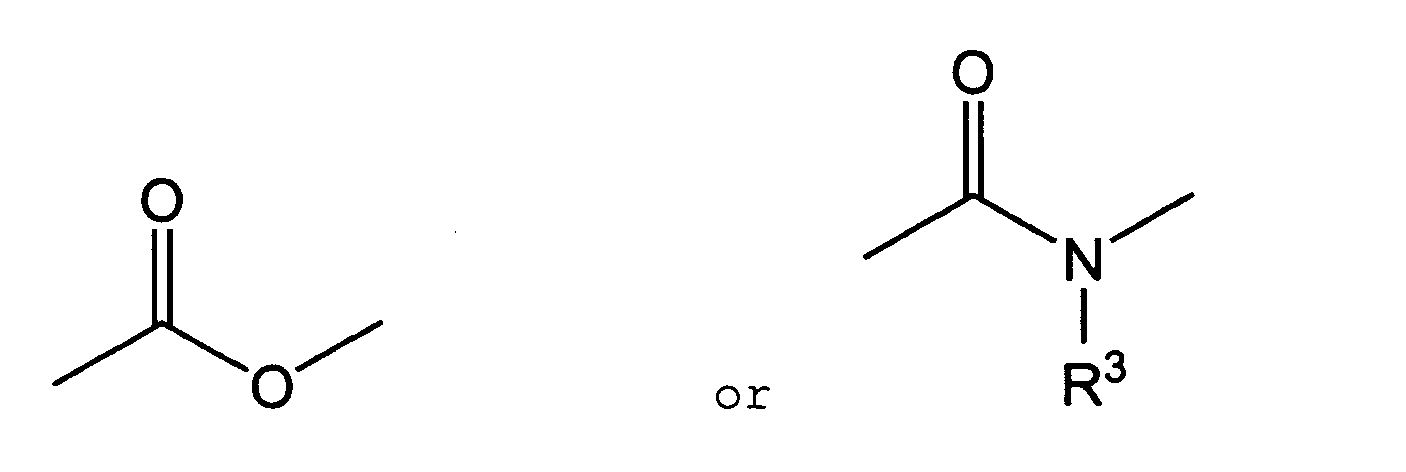
    A is
    Figure imgb0028
    B is a coupling group selected from the group consisting of isothiocyanates, activated esters, carbonyl azides, sulfonyl chlorides, aldehydes, alkyl halides, haloacetamides, imides, disulfides, thiosulfates, thiols and thioesters, and
    d) optionally further reacting the compound of formula (I) from step (b), wherein A is
    Figure imgb0029
    to give a compound of formula (I) wherein A is
    Figure imgb0030
  14. The method according to claim 13, comprising
    (a) saponification of the Rx residue of formula (IV) under basic conditions and removal of the imide group of Rx, to give perylene monoimide monoanhydride compounds of formula (V);
    (b) removal of the monoanhydride group of the compound of formula (V) by an imidization reaction with an 1,2-alkyl diamine or an 3-aminoalkanoic acid, respectively, to give monofunctionalized perylenes of formula (VI), wherein R2 is -(CH2)q-COOH or -(CH2)q-NHR8, respectively,
    (c1) reacting compound (VI) to give an intermediate product wherein at least two of R4, R5, R6 and R7 are an organic residue which carries at least one negatively or positively charged group in neutral medium;
    (c2) reacting the product of step c1) with a compound providing a coupling group B as defined in claim 13 to give a compound of formula (I) as defined in claim 1 or claim 12.
  15. The method according to claim 14, wherein step c1) comprises sulfonating the compound of formula (VI) under acidic conditions.
  16. The method according to any one of claims 13 to 15,
    wherein the coupling group B is an activated ester group, maleimide, thiol or thioester.
  17. A method for preparing a water-soluble nitrilotriacetic acid-functionalized rylene dye of the formula (I), comprising
    reacting a compound of formula (I) wherein the coupling group B is an activated ester group in solution with a compound providing a protected nitrilotriacetic acid group, and
    subsequently removing the protective groups to give a compound of formula (I) wherein the coupling group B is an nitrilotriacetic acid group.
  18. A method for preparing a water-soluble nitrilotriacetic acid-functionalized rylene dye of the formula (I), comprising coupling a carboxyl-functionalized rylene derivative with a nitrilotriacetic acid moity by amide bond formation in solid phase.
  19. Conjugates, comprising a compound according to any one of claims 1-12 and a binding partner.
  20. The conjugates according to claim 19, wherein the binding partner is a biomolecule.
  21. Use of a rylene dye according to any one of claims 1-12 as fluorescent label for biomolecules.
  22. Use of a rylene dye according to claim 4 as site-specific fluorescent label for proteins.
  23. The use according to claim 22, wherein the coupling group of the rylene dye is a thioester for specific N-terminal labelling of proteins.
  24. The use according to claim 22, wherein the coupling group of the rylene dye is a nitriotriacetic acid group for specific labelling of polyhistidin tagged proteins.
  25. A method for purifying bioconjugates which contain the biomolecule and a dye as label, comprising the steps:
    (a) providing a labelling solution comprising bioconjugates and non-reacted dye,
    (b) adding a solid support to the labelling solution, wherein the non-reacted dye covalently couples to the solid support, and
    (c) isolating the bioconjugates by removal of the solid support.
  26. The method according to claim 25, wherein the dye is a rylene dye, in particular a perylene dye or terrylene dye.
  27. The method according to claim 26, wherein the rylene dye is a rylene diimide dye according to any one of claims 1-12.
  28. The method according to any one of claims 25-27, wherein the solid support is a resin carrying polyethylene glycole with at least one terminal amino group.
EP07022521A 2007-11-20 2007-11-20 Water-soluble rylene dyes, methods for preparing the same and uses thereof as fluorescent labels for biomolecules Withdrawn EP2062944A1 (en)

Priority Applications (2)

Application Number Priority Date Filing Date Title
EP07022521A EP2062944A1 (en) 2007-11-20 2007-11-20 Water-soluble rylene dyes, methods for preparing the same and uses thereof as fluorescent labels for biomolecules
PCT/EP2008/009465 WO2009065508A2 (en) 2007-11-20 2008-11-10 Water-soluble rylene dyes, methods for preparing the same and uses thereof as fluorescent labels for biomolecules

Applications Claiming Priority (1)

Application Number Priority Date Filing Date Title
EP07022521A EP2062944A1 (en) 2007-11-20 2007-11-20 Water-soluble rylene dyes, methods for preparing the same and uses thereof as fluorescent labels for biomolecules

Publications (1)

Publication Number Publication Date
EP2062944A1 true EP2062944A1 (en) 2009-05-27

Family

ID=39884767

Family Applications (1)

Application Number Title Priority Date Filing Date
EP07022521A Withdrawn EP2062944A1 (en) 2007-11-20 2007-11-20 Water-soluble rylene dyes, methods for preparing the same and uses thereof as fluorescent labels for biomolecules

Country Status (2)

Country Link
EP (1) EP2062944A1 (en)
WO (1) WO2009065508A2 (en)

Cited By (16)

* Cited by examiner, † Cited by third party
Publication number Priority date Publication date Assignee Title
CN105467468A (en) * 2015-11-27 2016-04-06 徐州工程学院 Tracer for underground hydrological detection and preparation method and application of tracer
US20170233528A1 (en) * 2016-02-12 2017-08-17 Capacitor Sciences Incorporated Sharp polymer and capacitor
US9852846B2 (en) 2015-02-26 2017-12-26 Capacitor Sciences Incorporated Self-healing capacitor and methods of production thereof
US9899150B2 (en) 2014-05-12 2018-02-20 Capacitor Sciences Incorporated Energy storage device and method of production thereof
US9916931B2 (en) 2014-11-04 2018-03-13 Capacitor Science Incorporated Energy storage devices and methods of production thereof
US9932358B2 (en) 2015-05-21 2018-04-03 Capacitor Science Incorporated Energy storage molecular material, crystal dielectric layer and capacitor
US9941051B2 (en) 2015-06-26 2018-04-10 Capactor Sciences Incorporated Coiled capacitor
US9978517B2 (en) 2016-04-04 2018-05-22 Capacitor Sciences Incorporated Electro-polarizable compound and capacitor
US10026553B2 (en) 2015-10-21 2018-07-17 Capacitor Sciences Incorporated Organic compound, crystal dielectric layer and capacitor
US10153087B2 (en) 2016-04-04 2018-12-11 Capacitor Sciences Incorporated Electro-polarizable compound and capacitor
US10305295B2 (en) 2016-02-12 2019-05-28 Capacitor Sciences Incorporated Energy storage cell, capacitive energy storage module, and capacitive energy storage system
US10340082B2 (en) 2015-05-12 2019-07-02 Capacitor Sciences Incorporated Capacitor and method of production thereof
US10347423B2 (en) 2014-05-12 2019-07-09 Capacitor Sciences Incorporated Solid multilayer structure as semiproduct for meta-capacitor
US10395841B2 (en) 2016-12-02 2019-08-27 Capacitor Sciences Incorporated Multilayered electrode and film energy storage device
US10872733B2 (en) 2016-04-04 2020-12-22 Capacitor Sciences Incorporated YanLi material and dielectric and capacitor thereof
CN114380828A (en) * 2022-01-27 2022-04-22 北京理工大学 Synthetic method and application of perylene diimide-based bicyclic compound

Families Citing this family (2)

* Cited by examiner, † Cited by third party
Publication number Priority date Publication date Assignee Title
WO2014036361A2 (en) * 2012-08-31 2014-03-06 University Of Utah Research Foundation Soluble metal sensor compounds and methods for making and using the same
CN118359635A (en) * 2024-04-17 2024-07-19 天津大学 A type of small molecule compound based on triphenylene diimide structure, polymer, preparation method and application

Citations (14)

* Cited by examiner, † Cited by third party
Publication number Priority date Publication date Assignee Title
US4757141A (en) * 1985-08-26 1988-07-12 Applied Biosystems, Incorporated Amino-derivatized phosphite and phosphate linking agents, phosphoramidite precursors, and useful conjugates thereof
DE3703513A1 (en) 1987-02-05 1988-08-18 Langhals Heinz Water-soluble perylene fluorescent dyes
US4845223A (en) * 1985-12-19 1989-07-04 Basf Aktiengesellschaft Fluorescent aryloxy-substituted perylene-3,4,9,10-tetracarboxylic acid diimides
EP0422535A1 (en) * 1989-10-13 1991-04-17 BASF Aktiengesellschaft Polymerisable perylene-3,4,9,10-tetracarboxylic diimides and polymeric products thereof
US5811307A (en) * 1996-01-11 1998-09-22 Florida State University Dicationic perylene dye for precipitation and quantitation of DNA
WO1999031280A1 (en) * 1997-12-18 1999-06-24 Sepracor Inc. Screening assays for the detection and diagnosis of influenza virus
DE19805121A1 (en) * 1998-02-09 1999-08-12 Basf Ag Process for the preparation of dye-containing, aqueous polymer dispersions
WO2001069254A2 (en) 2000-03-14 2001-09-20 Genigma Corporation Visually detectable dye labelled biomolecules for analysis
WO2002014414A2 (en) 2000-08-14 2002-02-21 MAX-PLANCK-Gesellschaft zur Förderung der Wissenschaften e.V. Functionalized perylene tetracarboxylic acid diimides
US20030207248A1 (en) * 1995-06-07 2003-11-06 Tsien Roger Y. Detection of transmembrane potentials by optical methods
WO2004076562A1 (en) 2003-02-28 2004-09-10 MAX-PLANCK-Gesellschaft zur Förderung der Wissenschaften e.V. Water-soluble, fluorescent perylenetetracarboxylic acid bisimides
WO2004076563A1 (en) 2003-02-28 2004-09-10 MAX-PLANCK-Gesellschaft zur Förderung der Wissenschaften e.V. Monofunctionalized perylenetetracarboxylic acid bisimides
US20060160998A1 (en) * 2005-01-19 2006-07-20 Suk Roelf J Methods for isolation and purification of fluorochrome-antibody conjugates
WO2006084461A1 (en) * 2005-02-11 2006-08-17 Merck Patent Gmbh Solid-phase oligosaccharide tagging: a technique for manipulation of immobilized carbohydrates

Patent Citations (15)

* Cited by examiner, † Cited by third party
Publication number Priority date Publication date Assignee Title
US4757141A (en) * 1985-08-26 1988-07-12 Applied Biosystems, Incorporated Amino-derivatized phosphite and phosphate linking agents, phosphoramidite precursors, and useful conjugates thereof
US4845223A (en) * 1985-12-19 1989-07-04 Basf Aktiengesellschaft Fluorescent aryloxy-substituted perylene-3,4,9,10-tetracarboxylic acid diimides
DE3703513A1 (en) 1987-02-05 1988-08-18 Langhals Heinz Water-soluble perylene fluorescent dyes
EP0422535A1 (en) * 1989-10-13 1991-04-17 BASF Aktiengesellschaft Polymerisable perylene-3,4,9,10-tetracarboxylic diimides and polymeric products thereof
US20030207248A1 (en) * 1995-06-07 2003-11-06 Tsien Roger Y. Detection of transmembrane potentials by optical methods
US5811307A (en) * 1996-01-11 1998-09-22 Florida State University Dicationic perylene dye for precipitation and quantitation of DNA
WO1999031280A1 (en) * 1997-12-18 1999-06-24 Sepracor Inc. Screening assays for the detection and diagnosis of influenza virus
DE19805121A1 (en) * 1998-02-09 1999-08-12 Basf Ag Process for the preparation of dye-containing, aqueous polymer dispersions
WO2001069254A2 (en) 2000-03-14 2001-09-20 Genigma Corporation Visually detectable dye labelled biomolecules for analysis
WO2002014414A2 (en) 2000-08-14 2002-02-21 MAX-PLANCK-Gesellschaft zur Förderung der Wissenschaften e.V. Functionalized perylene tetracarboxylic acid diimides
WO2004076562A1 (en) 2003-02-28 2004-09-10 MAX-PLANCK-Gesellschaft zur Förderung der Wissenschaften e.V. Water-soluble, fluorescent perylenetetracarboxylic acid bisimides
WO2004076563A1 (en) 2003-02-28 2004-09-10 MAX-PLANCK-Gesellschaft zur Förderung der Wissenschaften e.V. Monofunctionalized perylenetetracarboxylic acid bisimides
DE10308941A1 (en) 2003-02-28 2004-09-23 MAX-PLANCK-Gesellschaft zur Förderung der Wissenschaften e.V. Monofunctionalized perylene tetracarboxylic acid bisimides
US20060160998A1 (en) * 2005-01-19 2006-07-20 Suk Roelf J Methods for isolation and purification of fluorochrome-antibody conjugates
WO2006084461A1 (en) * 2005-02-11 2006-08-17 Merck Patent Gmbh Solid-phase oligosaccharide tagging: a technique for manipulation of immobilized carbohydrates

Non-Patent Citations (14)

* Cited by examiner, † Cited by third party
Title
A. DUBOIS ET AL., APPL. OPT., vol. 35, 1996, pages 3193
CHRISTOPHE JUNG, BARBARA K. MÜLLER, DON C. LAMB, FABIAN NOLDE, KLAUS MÜLLEN, AND CHRISTOPH BRÄUCHLE*: "A New Photostable Terrylene Diimide Dye for Applications in Single Molecule Studies and Membrane Labeling", JOURNAL OF THE AMERICAN CHEMICAL SOCIETY, vol. 128, no. 15, 23 March 2006 (2006-03-23), pages 5283 - 5291, XP002503068 *
DAWSON ET AL., SCIENCE, vol. 266, 1994, pages 776 - 779
G. SCHNURPFEIL; J. STARK; D. WOHRIE, DYES PIGM., vol. 720, 1995, pages 339 - 350
G. SEISENBERGER ET AL., SCIENCE, vol. 294, 2001, pages 1929
H. UJI-I ET AL., POLYMER, vol. 47, 2006, pages 2511
JUNG ET AL., J. AM. CHEM. SOC., vol. 128, 2006, pages 5283 - 5291
KAPANIDIS ET AL., J. AM. SOC., vol. 123, 2001, pages 12123 - 12125
LATA ET AL., J. AM. SOC., vol. 128, 2006, pages 2365 - 2372
LISA HENKE, PAUL A. E. PIUNNO, ANDREA C. MCCLURE AND ULRICH J. KRULL, CORRESPONDING AUTHOR CONTACT INFORMATION: "Covalent immobilization of single-stranded DNA onto optical fibers using various linkers", ANALYTICA CHIMICA ACTA, vol. 344, no. 3, 10 June 1997 (1997-06-10), pages 201 - 213, XP002522219 *
MEREDITH ET AL., BIOCONJUGATE CHEM., vol. 15, 2004, pages 969 - 982
QUANTE H ET AL: "NOVEL PERYLENE-CONTAINING POLYMERS", MACROMOLECULAR CHEMISTRY AND PHYSICS, WILEY-VCH VERLAG, WEINHEIM, DE, vol. 197, 1 November 1996 (1996-11-01), pages 4029 - 4044, XP008017838, ISSN: 1022-1352 *
SCHULE; PANNEL, BIOCONJUGATE CHEMISTRY, vol. 13, pages 1039 - 1043
SUMAN LATA, MARTYNAS GAVUTIS, ROBERT TAMPÉ, AND JACOB PIEHLER: "Specific and Stable Fluorescence Labeling of Histidine-Tagged Proteins for Dissecting Multi-Protein Complex Formation", JOURNAL OF THE AMERICAN CHEMICAL SOCIETY, vol. 128, 2 February 2006 (2006-02-02), pages 2365 - 2372, XP002503069 *

Cited By (23)

* Cited by examiner, † Cited by third party
Publication number Priority date Publication date Assignee Title
US10347423B2 (en) 2014-05-12 2019-07-09 Capacitor Sciences Incorporated Solid multilayer structure as semiproduct for meta-capacitor
US10685782B2 (en) 2014-05-12 2020-06-16 Capacitor Sciences Incorporated Capacitor and method of production thereof
US9899150B2 (en) 2014-05-12 2018-02-20 Capacitor Sciences Incorporated Energy storage device and method of production thereof
US10347424B2 (en) 2014-05-12 2019-07-09 Capacitor Sciences Incorporated Energy storage device and method of production thereof
US9916931B2 (en) 2014-11-04 2018-03-13 Capacitor Science Incorporated Energy storage devices and methods of production thereof
US9852846B2 (en) 2015-02-26 2017-12-26 Capacitor Sciences Incorporated Self-healing capacitor and methods of production thereof
US10340082B2 (en) 2015-05-12 2019-07-02 Capacitor Sciences Incorporated Capacitor and method of production thereof
US9932358B2 (en) 2015-05-21 2018-04-03 Capacitor Science Incorporated Energy storage molecular material, crystal dielectric layer and capacitor
US10854386B2 (en) 2015-06-26 2020-12-01 Capacitor Sciences Incorporated Coiled capacitor
US10672561B2 (en) 2015-06-26 2020-06-02 Capacitor Sciences Incorporated Coiled capacitor
US9941051B2 (en) 2015-06-26 2018-04-10 Capactor Sciences Incorporated Coiled capacitor
US10026553B2 (en) 2015-10-21 2018-07-17 Capacitor Sciences Incorporated Organic compound, crystal dielectric layer and capacitor
CN105467468A (en) * 2015-11-27 2016-04-06 徐州工程学院 Tracer for underground hydrological detection and preparation method and application of tracer
TWI637005B (en) * 2016-02-12 2018-10-01 電容器科學公司 Sharp polymer and capacitor
US10305295B2 (en) 2016-02-12 2019-05-28 Capacitor Sciences Incorporated Energy storage cell, capacitive energy storage module, and capacitive energy storage system
US20170233528A1 (en) * 2016-02-12 2017-08-17 Capacitor Sciences Incorporated Sharp polymer and capacitor
US10153087B2 (en) 2016-04-04 2018-12-11 Capacitor Sciences Incorporated Electro-polarizable compound and capacitor
US10672560B2 (en) 2016-04-04 2020-06-02 Capacitor Sciences Incorporated Electro-polarizable compound and capacitor
US10707019B2 (en) 2016-04-04 2020-07-07 Capacitor Science Incorporated Electro-polarizable compound and capacitor
US9978517B2 (en) 2016-04-04 2018-05-22 Capacitor Sciences Incorporated Electro-polarizable compound and capacitor
US10872733B2 (en) 2016-04-04 2020-12-22 Capacitor Sciences Incorporated YanLi material and dielectric and capacitor thereof
US10395841B2 (en) 2016-12-02 2019-08-27 Capacitor Sciences Incorporated Multilayered electrode and film energy storage device
CN114380828A (en) * 2022-01-27 2022-04-22 北京理工大学 Synthetic method and application of perylene diimide-based bicyclic compound

Also Published As

Publication number Publication date
WO2009065508A3 (en) 2011-10-13
WO2009065508A2 (en) 2009-05-28

Similar Documents

Publication Publication Date Title
EP2062944A1 (en) Water-soluble rylene dyes, methods for preparing the same and uses thereof as fluorescent labels for biomolecules
Peneva et al. Water-soluble monofunctional perylene and terrylene dyes: powerful labels for single-enzyme tracking
CN106566532B (en) Amphiphilic shiner and its application with aggregation-induced emission characteristic
US7371745B2 (en) Bis-transition-metal-chelate probes
JP7344982B2 (en) Compounds and fluorescently labeled biological substances using them
CA2613386A1 (en) Cyanine dyes and methods of use in biological applications
KR20180136436A (en) Polifluoreno [4,5-cde] oxepin conjugates and their use in the method of analyte detection
Romieu et al. Postsynthetic derivatization of fluorophores with α-sulfo-β-alanine dipeptide linker. Application to the preparation of water-soluble cyanine and rhodamine dyes
Roubinet et al. New 3‐(Heteroaryl)‐2‐iminocoumarin‐based Borate Complexes: Synthesis, Photophysical Properties, and Rational Functionalization for Biosensing/Biolabeling Applications
EP2231198A2 (en) Imaging dyes and use thereof
CN102807588B (en) The compounds and methods of adjacent thiol protein in a kind of in situ detection organism
US5958673A (en) Fluorescent dye
CA3156567A1 (en) Polymeric compounds including an acceptor dye and donor luminophore
US11993618B2 (en) Water soluble mono-branched and di-branched complexing agents, and corresponding lanthanide complexes
Glymenaki et al. Design and synthesis of porphyrin–nitrilotriacetic acid dyads with potential applications in peptide labeling through metallochelate coupling
US7141655B2 (en) Reagents and procedures for high-specificity labeling
EP1322664B1 (en) Dye-labelled peptide and its diagnostic use
US7381572B2 (en) Reagents and procedures for multi-label high-specificity labeling
JP2010533291A (en) Trifunctional pseudopeptide reagents and their use and applications
WO2005029075A1 (en) Bis-transition-metal-chelate probes
WO2003091689A2 (en) Bis-transition-metal-chelate-probes
CN115043818B (en) A succinimidyl succinyl piperazine heptamethine cyanine salt fluorescent carrier and its preparation method and application
US11939345B2 (en) Physiologically stable fluorophore and performing fluorescence probing
JP2005534739A (en) Site-specific labeling of proteins using a cyanine dye reporter
WO2020120636A1 (en) Fluorescence dye

Legal Events

Date Code Title Description
PUAI Public reference made under article 153(3) epc to a published international application that has entered the european phase

Free format text: ORIGINAL CODE: 0009012

AK Designated contracting states

Kind code of ref document: A1

Designated state(s): AT BE BG CH CY CZ DE DK EE ES FI FR GB GR HU IE IS IT LI LT LU LV MC MT NL PL PT RO SE SI SK TR

AX Request for extension of the european patent

Extension state: AL BA HR MK RS

17P Request for examination filed

Effective date: 20090921

17Q First examination report despatched

Effective date: 20091022

AKX Designation fees paid

Designated state(s): AT BE BG CH CY CZ DE DK EE ES FI FR GB GR HU IE IS IT LI LT LU LV MC MT NL PL PT RO SE SI SK TR

STAA Information on the status of an ep patent application or granted ep patent

Free format text: STATUS: THE APPLICATION IS DEEMED TO BE WITHDRAWN

18D Application deemed to be withdrawn

Effective date: 20150602