EP2062156B1 - Systems and methods for providing secure communications for transactions - Google Patents
Systems and methods for providing secure communications for transactions Download PDFInfo
- Publication number
- EP2062156B1 EP2062156B1 EP07758916.6A EP07758916A EP2062156B1 EP 2062156 B1 EP2062156 B1 EP 2062156B1 EP 07758916 A EP07758916 A EP 07758916A EP 2062156 B1 EP2062156 B1 EP 2062156B1
- Authority
- EP
- European Patent Office
- Prior art keywords
- connection
- server
- client device
- remote server
- connection server
- Prior art date
- Legal status (The legal status is an assumption and is not a legal conclusion. Google has not performed a legal analysis and makes no representation as to the accuracy of the status listed.)
- Active
Links
Images


Classifications
-
- H—ELECTRICITY
- H04—ELECTRIC COMMUNICATION TECHNIQUE
- H04W—WIRELESS COMMUNICATION NETWORKS
- H04W12/00—Security arrangements; Authentication; Protecting privacy or anonymity
- H04W12/06—Authentication
-
- G—PHYSICS
- G06—COMPUTING OR CALCULATING; COUNTING
- G06F—ELECTRIC DIGITAL DATA PROCESSING
- G06F21/00—Security arrangements for protecting computers, components thereof, programs or data against unauthorised activity
- G06F21/30—Authentication, i.e. establishing the identity or authorisation of security principals
- G06F21/31—User authentication
- G06F21/33—User authentication using certificates
-
- G—PHYSICS
- G06—COMPUTING OR CALCULATING; COUNTING
- G06F—ELECTRIC DIGITAL DATA PROCESSING
- G06F21/00—Security arrangements for protecting computers, components thereof, programs or data against unauthorised activity
- G06F21/30—Authentication, i.e. establishing the identity or authorisation of security principals
- G06F21/31—User authentication
- G06F21/42—User authentication using separate channels for security data
-
- H—ELECTRICITY
- H04—ELECTRIC COMMUNICATION TECHNIQUE
- H04L—TRANSMISSION OF DIGITAL INFORMATION, e.g. TELEGRAPHIC COMMUNICATION
- H04L63/00—Network architectures or network communication protocols for network security
- H04L63/08—Network architectures or network communication protocols for network security for authentication of entities
Definitions
- the present invention relates generally to computer networking and, more particularly to systems and methods for providing secure communications for transactions.
- Electronic transactions can include electronic bill paying, Internet banking, electronic auctions, electronic funds transfer, and electronic securities trading. Additionally, people desire remote access to networks, such as their employers network. Currently, remote access, including remote access for electronic transactions, is performed via a client device, such as a personal computer, through a public-wide area network, such as the Internet. Similarly, there is an increasing amount of fraud occurring with respect to transactions and communications over the Internet.
- Internet fraud currently occurs essentially from two sources: 1) the Internet connection itself; and 2) operating-system based client devices, such as the Microsoft® operating system-based client devices. These sources make the typical online electronic transaction subject to fraud.
- the Internet connection the Internet is a public network, and, as such, many ports are available and accessible by the public.
- the direction and advancement and the use of Internet access network technology have resulted in the growth of available bandwidth for the user. The more bandwidth, the higher speed of Internet access. This direction encourages the "always on" use behaviour by the user, which is further exacerbated by fixed tariffs. This means that the user can just leave the Internet access connected continuously so that he/she does not have to undertake the cumbersome process of initiating the operating system and network connectivity.
- remote access solutions utilize the Internet to provide connectivity between a user on a client device and a server.
- Remote access solutions that utilize leased line or direct line connections are available, but are cost prohibitive for the average user.
- only senior members of an organization may have a direct line connection from a remote location, such as a residence, to the organization's network and servers.
- US2005025184 discloses apparatus and associated methods which allow a remote user to maintain a virtual session with a server.
- a virtual session allows a remote and possibly mobile user to maintain a virtual presence in an office environment without actually being present.
- a remote user can access a central application program such as an Internet service provider, a database system, an inventory system or billing system.
- the remote user can receive calls and other forms of communications as though he or she were present in an office environment.
- a virtual session does not require a physical connection to be continuously present in order to provide a virtual connectivity. This is especially important for mobile applications where the remote user may incur long distance and/or wireless toll charges.
- methods are presented to allow a remote unit to rapidly reconnect in a transparent and seamless way without burdening the user with the need to connect and reconnect or to upload and download information.
- US2002052968 discloses a messaging system including a client device having stored therein a client application, which is adapted to be executed by the client device, a server having stored therein a server application, which is adapted to be executed by the server, a plurality of wireless networks, each of which is adapted to communicate messages between the client device and the server, and support one or more wireless network protocols, a protocol gateway encapsulating a fundamental network protocol, which underlies each of the one or more wireless network protocols, means for communicating a message between the client application and the server application, over a selected wireless network protocol through the protocol gateway, independent of the selected wireless network protocol; and a message router for routing the message between the protocol gateway and the server, the message router including means for authenticating an origin of the message, wherein the authenticating means authenticates the origin before the message is routed by the message router, and a database, which is accessible by the message router and adapted to store information relating to routing and authentication of the message.
- US2003123446 discloses a system for the supply chain management of network services, such as virtual private network services, which provides hardware, processes and application tools useful in configuring and/or delivering substantially measurable virtual private network services.
- One aspect of an embodiment of the invention creates a virtual private connection to a remote server or network utilizing a wireless modem and at least one direct connection between a client device and the remote server, without utilizing the Internet.
- a client operating system is taken over by a vertical function operating system to service the communication with the remote server.
- Still another aspect of an embodiment of the present invention comprises a client device establishing a connection with a remote server through a wireless modem and at least one direct connection, shutting down a first operating system, starting up a second secure operating system, and launching an interface application with the second operating system to conduct electronic transactions with the remote server.
- Embodiments of the present invention provide systems and methods for providing secure communication for electronic transactions.
- the present invention provides a system and method for providing a private network through which a user on a client device can interface with a remote server.
- the remote service may be a financial transaction server associated with a financial institution or other financial intermediary, to conduct an electronic transaction or it may be a server associated with a private network.
- the client device accesses the remote server, such as on a private network, without accessing an unsecured public network.
- the client device may have a wireless modem and establish a connection via the wireless modem over a wireless network to a server at a telecommunication provider's data center.
- This telecommunication providers server may then be directly connected through, for example, a leased line connection to a connection server.
- the connection server may be connected to the remote server via a direct connection, such as a leased line connection. This creates a secure private network for the client device.
- the client device may then communicate securely with the remote server.
- the client device may then access and transact on the user's financial accounts if the remote server is associated with a financial institution, can submit payment for goods or services from an auction or retailer, or can access proprietary information on an organization's remote network.
- a capacity management application on the connection server controls information traffic between the remote server and the client device.
- an access engine on the client device shuts down all other applications when such a private network is established.
- the connection server may also authenticate the client device for only authorized applications on the remote server.
- the client device may be capable of switching operating systems from a Windows operating system before, during, or after the connection with the remote server has taken place in order to prevent any Windows-based spyware or other malware from obtaining sensitive information during the electronic transaction with the application server.
- the client device may also operate on a relatively more secure operating system, such as Linux, and not use a Windows operating system from Microsoft Corp.
- the client device operates on an unsecured Linux operating system.
- FIG. 1 shows one exemplary embodiment of a system of the present invention.
- the system 100 includes a client device 102 with a communications device, such as a modem 104.
- the modem 104 may be a wireless modem and can establish a connection over a wireless network to a telecommunications provider server 110.
- the telecommunications provider server 110 may be connected to a connection server 120 via a direct connection 112, such as a leased line connection.
- the connection server 120 may then be connected to a remote server 130 via a direct connection 114, such as a leased line connection.
- the system 100 does not include a connection server 120 and the provider server 110 is connected directly to the remote server 130 via a leased line connection.
- Figure 1 includes only a single client 102, provider server 110, connection server 120, and remote server 130
- an embodiment of the present invention includes a plurality of clients 102 and may include a plurality of provider servers 110, connection servers 120, and remote servers 130.
- client device 102 examples are personal computers, digital assistants, personal digital assistants, cellular phones, mobile phones, smart phones, pagers, digital tablets, laptop computers, Internet appliances, and other processor-based devices.
- a client device 102 may be any suitable type of processor-based platform that can transmit and receive data via a communications device, such as the modem 104, and that interacts with one or more application programs 106 and 107.
- the client device 102 can contain a processor 103 coupled to a computer-readable medium 105, such as RAM, which can contain the application programs 106.
- client device 102 contains an access engine application 107 and two operating systems 108 and 109.
- the client device 102 may mainly operate a Microsoft® Windows® operating system, but operate on a Linux operating system when connected to the remote server 130 during an electronic transaction.
- the second operating system 109 may be located in memory 105 as shown or may be an embedded operating system for a transaction interface application.
- the access engine 107 can control the set up and connection of the client device 102 with the provider server 110 and ultimately with the remote server 130.
- the access engine 107 can also control the switching from a first operating system 108 to a second operating system 109.
- the access engine 107 is part of an access system, such as the bAceessTM system from Japan Communications, Inc., as described in U.S. Patent Application Nos. 11/167,744 (filed June 27, 2005 ) ( US20060075472 ) and 11/168,847 (filed June 28, 2005 ) ( US20060026268 ).
- the access system may operate below the driver level of an operating system, but above the core of the operating system. For example, this can allow the access engine 107 to operate below the driver level of the Windows operating system to establish the connection of the client device 102 to the remote server 130 via the connection server 120 and provider server 110.
- a user 101 can interact with the client device 102 by, for example, a keyboard, pointing device, and display (not shown).
- the modem 104 can be, for example, a PCMCIA card with a cellular modem capable of communicating via a wireless communications network, such as, for example, Personal Handy-phone System (“PHS”) network or a Code Division Multiple Access (“CDMA”)-based network.
- PHS Personal Handy-phone System
- CDMA Code Division Multiple Access
- 3G third-generation mobile telephone technology
- the modem 104 is a wireless modem
- communications from the client device are passed through the modem 104 through a wireless network, such as a PHS or CDMA network, to the provider server 110 in the telecommunications provider's data center.
- Digital wireless communication provides a robust security standard that is hardware identification driven.
- wireless devices use electronic serial numbers that are in the device and drives an encryption.
- the modem may be a cable modem or a Digital Subscriber Line (“DSL”) modem and can be used to pass communications to and from the client device 102 to a server 110 at the user's Internet Service Provider (ISP).
- ISP Internet Service Provider
- the servers can also be processor-based server devices that contain a processor coupled to a computer-readable medium, such as RAM or other type of memory, which can contain one or more application programs.
- the connection server 120 can contain a processor 116 that can access a computer-readable medium 118.
- the computer-readable medium 118 can contain a session manager application program 122 that can facilitate establishing a connection through leased lines with the provider server 110 and the remote server 130.
- the session manager application 122 may also perform authentication functions for the user 101 and client device 102.
- the computer-readable medium 118 can contain a capacity management application 124 for controlling the information traffic between the remote server 130 and client device 102.
- the remote server 130 may interact with other server devices and databases and may contain application programs that allow interaction with a client device in order to perform electronic transactions.
- bAccessTM software may be utilized to restrict applications available on the client device to particular applications designed for the transaction and/or to optimize the interaction between the client device and the remote server 130. By restricting applications available to the client device, the interaction may also experience relatively enhanced performance and a relative decrease in the bandwidth needed for effective communication between the client device and remote server 130. Decreasing the bandwidth needed may decrease the cost of the communication between the client device and remote server 130.
- the electronic transactions can include, for example, electronic bill paying, electronic funds transfer, and securities or other financial instruments trading.
- the remote server 130 may be associated with a financial institution, such as a bank or brokerage.
- the remote server may also be associated with a financial intermediary, such as PayPal®.
- the remote server 130 authenticates the user 101, such as through user name, password, account number, and other authentication techniques.
- the client device 102 can run a Web browser application to interact with the remote server 130. While to the user it appears that the user is interacting with the financial institution's website, the connection is over a secure direct connection.
- the remote server may be associated with a private network, such as a corporate network.
- the user 101 in this embodiment, can communicate with the private network through the secure connection and can access sensitive information in a secure manner.
- the establishment of the secure connection as explained above enables the same capability heretofore only affordable for the senior most corporate executives (a direct connection to a remote server), to be available to the masses.
- Cost reduction is accomplished by making the transport application specific through an interface (such as a bAccess interface) and connection server, which will only authenticate the user for a specific application.
- the modem 104 such as a mobile data card wireless modem
- the access engine 107 and/or the connection server 120 may restrict applications running on the client device 102 to only those designated for access to the remote server 130.
- the communication path between the client device 102 and the remote server 130 may be controlled by one or more of the modem 104, the access engine 107, and the connection server 120. Further cost reduction and lower price may be achieved by managing the actual number of packets that flow through this private network.
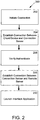
- Figure 2 illustrates an illustrative method 200 for providing secure communications that may be implemented by the session manager 122 or access engine 107, as shown in Figure 1 .
- This illustrative method is provided by way of example, as there are a variety of ways to carry out methods according to the present invention.
- the method 200 shown in Figure 2 can be executed or otherwise performed by one or a combination of various systems.
- the system shown in Figure 1 and described above is used for illustration purposes.
- a connection with a communications server is initiated.
- the initiation of the connection may be caused by the activation of the modem 104 of the client device 102.
- the modem 104 is a PCMCIA card, then connecting the modem 104 to the client device 102 initiates the connection with the connection server 120.
- a connection is established.
- the modem 104 connects to the provider server 110 via a wireless network, such as PHS or CDMA.
- the provider server 110 is connected to a connection server 120 via a leased line connection 112.
- the connection server 120 receives the initiated connection from the client device 102 via the provider server 110.
- the access engine 107 can operate below the driver level of an operating system to establish the connection. For example, in one embodiment, while a Windows operating system is running, the access engine 107 operates below the Windows operating system driver level and above the operating system core to establish the connection.
- the connection server 120 verifies and/or authenticates the client device 102 and the user.
- the connection server 120 may utilize the session manager application 122 to receive the connection from the client device 102 and verify and/or authenticate the client device 102 and the user. In some embodiments, the connection server 120 does not verify or authenticate the client device 102 and the user. In these embodiments, the connection server 120 establishes a connection with the remote server 130 after receiving the initiated connection from the client device 102 and then the remote server 130 may authenticate the client device 102 and the user.
- the communication server 120 utilizes the session manager application 122 to establish a direct connection with the remote server 130.
- the session manager application 122 can initiate a signal to the remote server 130 and receive signals from the remote server 130 indicating that a direct connection is established between the communication server 120 and the remote server 130.
- the signals may be packets of information such as identification of the connection server 120, request for establishing a direct connection, and/or identification of the client device 102.
- the connection server 120 is connected to the remote server 130 via a leased line connection 114.
- a transaction interface application is launched on the client device 102.
- the interface application is a Web browser application and may reside in memory 105 of the client device.
- the session manager application 122 can launch the transaction interface application on the client device 102.
- the remote server 130 can interface with the client device 102 via the interface application. For example, the remote server 130 can use an HTML Web page to interact with the user 101.
- the connection between the client device 102 and the remote server is a private, direct connection and does not utilize a public network, such as the Internet.
- the remote server 130 may transmit only the essential data to the client device 102 in order to reduce the amount of data transmitted over the wireless network, which can reduce the cost of the method of secure communication.
- the connection server 120 may utilize the capacity management application 124 to manage the packets transmitted over the connections in an effort to reduce the cost of communication.
- FIG. 3 illustrates another illustrative method 300 for providing secure communications that may be implemented by the session manager 122 or access engine 107, as shown in Figure 1 .
- a connection with the remote server is initiated.
- the initiation of the connection may be caused by the activation of the modem 104 of the client device 102.
- the modem 104 is a PCMCIA card
- connecting the modem 104 to the client device 102 initiates the connection with the remote server 130 through the connection server 120.
- a connection with the remote server 130 is established.
- the modem 104 connects to the provider server 110 via a wireless network, such as PHS or CDMA.
- the provider server 110 is connected to a connection server 120 via a leased line connection 112.
- the connection server 120 receives the initiated connection from the client device 102 and initiates a connection with the remote server 130.
- the first operating systems shuts down.
- the client device 102 runs a Windows® operating system and the connection with the remote server 130 is established while running the Windows® operating system.
- the connection server 120 can shut down the Windows® operating system.
- the access engine 107 can shut down the Windows® operating system.
- the connection to the remote server 130 can be maintained with the modem during the shut down of the Windows® operating system.
- the access engine 107 can begin shutting down the Windows® operating system at the same time it is establishing the connection with the remote server 130.
- the Windows® operating system is shut down before the connection with the remote server is established.
- the Windows® operating system shut down or put to sleep before the user 102 engages in any transactions with the remote server 130.
- any spyware or other malware that has embedded itself in the Windows operating system is rendered functionless.
- the first operating system such as a Windows® does not shut down and a second operating system, such as Linux, runs as a process of the first operating system.
- the second operating system runs on top of the first operating system. The second operating system can access at least a portion of memory and remove any spyware or malware.
- the first operating system is not completely shut down. Rather, the access engine 107 may allow only certain applications to run during the secure connection.
- the connection server 120 may further authenticate the client device 102 and user 101 and ensure that only appropriate applications are running on the client device 102 and that client device 102 is engaged in appropriate communications with the remote server 130
- the connection server 120 can start up the second operating system.
- a Linux operating system or other secure operating system can be started up. This can occur before, during or after the connection to the remote server 130 is made.
- the second operating system 109 can reside and be run from memory 105, as shown in Figure 1 .
- the second operating system can be an embedded operating system for a transaction interface application. Using an open source operating system, such as Linux, reduces the potential for harmful malware being resident on the computer that may obtain personal and confidential information during electronic transactions using the communication method 200.
- a transaction interface application is launched on the client device 102.
- the interface application is a Web browser application and may reside in memory 105 of the client device.
- the remote server 130 can interface with the client device 102 via the interface application.
- the remote server 130 can use an HTML Web page to interact with the user 101.
- the connection between the client device 102 and the remote server is a private, direct connection and does not utilize a public network, such as the Internet.
- the remote server 130 may transmit only the essential data to the client device 102 in order to reduce the amount of data transmitted over the wireless network, which can reduce the cost of the method of secure communication.
- the connection server 120 may utilize the capacity management application 124 to manage the packets transmitted over the connections in an effort to reduce the cost of communication.
Landscapes
- Engineering & Computer Science (AREA)
- Computer Security & Cryptography (AREA)
- Theoretical Computer Science (AREA)
- General Engineering & Computer Science (AREA)
- Computer Hardware Design (AREA)
- General Physics & Mathematics (AREA)
- Physics & Mathematics (AREA)
- Software Systems (AREA)
- Computer Networks & Wireless Communication (AREA)
- Signal Processing (AREA)
- Computing Systems (AREA)
- Data Exchanges In Wide-Area Networks (AREA)
- Telephonic Communication Services (AREA)
- Computer And Data Communications (AREA)
- Mobile Radio Communication Systems (AREA)
Description
- The present invention relates generally to computer networking and, more particularly to systems and methods for providing secure communications for transactions.
- Increasingly, people are engaging in financial and other sensitive electronic transactions on the Internet. Electronic transactions can include electronic bill paying, Internet banking, electronic auctions, electronic funds transfer, and electronic securities trading. Additionally, people desire remote access to networks, such as their employers network. Currently, remote access, including remote access for electronic transactions, is performed via a client device, such as a personal computer, through a public-wide area network, such as the Internet. Similarly, there is an increasing amount of fraud occurring with respect to transactions and communications over the Internet.
- Internet fraud currently occurs essentially from two sources: 1) the Internet connection itself; and 2) operating-system based client devices, such as the Microsoft® operating system-based client devices. These sources make the typical online electronic transaction subject to fraud. On the first source, the Internet connection, the Internet is a public network, and, as such, many ports are available and accessible by the public. The direction and advancement and the use of Internet access network technology have resulted in the growth of available bandwidth for the user. The more bandwidth, the higher speed of Internet access. This direction encourages the "always on" use behaviour by the user, which is further exacerbated by fixed tariffs. This means that the user can just leave the Internet access connected continuously so that he/she does not have to undertake the cumbersome process of initiating the operating system and network connectivity. While this situation may provide convenience, this also offers an optimal environment for intrusion of unwanted software into the client terminal through multiple open ports. While port protection technology is available, in most cases the technical challenge associated with its use mitigates against adoption by the masses. Description v(2)- informal tracked Additionally, the code on Web pages, such as a financial institution's Web page, is HTML code and is exposed to the public. Thus, hackers can exploit the accessibility of the Internet to obtain information in electronic transactions.
- Most conventional remote access solutions utilize the Internet to provide connectivity between a user on a client device and a server. Remote access solutions that utilize leased line or direct line connections are available, but are cost prohibitive for the average user. Generally, only senior members of an organization may have a direct line connection from a remote location, such as a residence, to the organization's network and servers.
- Second, given that most client devices utilize the Windows® operating system from Microsoft Corp., most perpetrators of fraud focus most of their attention on creating software for their purposes to reside on these devices. This type of software, which is generally classed as "spyware" or "malware," can lay in waiting on Windows® operating system-based devices. Then unbeknownst to its user such spyware can come alive in certain circumstances where fraudulent activity can be activated. Spyware is capable of recording keystrokes or otherwise capturing sensitive information of a user in order to facilitate unwanted access to "secure" sites. Therefore, a solution is needed to provide secure communications for electronic transactions.
- Document
US 2005/025184 A1 (DOWLING ERIC MORGAN [US] ET AL) 3 February 2005 discloses a method of establishing wireline telephonic modem communications in an ISP (Internet Service Provider) communication server, connecting to the Internet. -
US2005025184 discloses apparatus and associated methods which allow a remote user to maintain a virtual session with a server. A virtual session allows a remote and possibly mobile user to maintain a virtual presence in an office environment without actually being present. A remote user can access a central application program such as an Internet service provider, a database system, an inventory system or billing system. Likewise, the remote user can receive calls and other forms of communications as though he or she were present in an office environment. A virtual session does not require a physical connection to be continuously present in order to provide a virtual connectivity. This is especially important for mobile applications where the remote user may incur long distance and/or wireless toll charges. Also, methods are presented to allow a remote unit to rapidly reconnect in a transparent and seamless way without burdening the user with the need to connect and reconnect or to upload and download information. -
US2002052968 discloses a messaging system including a client device having stored therein a client application, which is adapted to be executed by the client device, a server having stored therein a server application, which is adapted to be executed by the server, a plurality of wireless networks, each of which is adapted to communicate messages between the client device and the server, and support one or more wireless network protocols, a protocol gateway encapsulating a fundamental network protocol, which underlies each of the one or more wireless network protocols, means for communicating a message between the client application and the server application, over a selected wireless network protocol through the protocol gateway, independent of the selected wireless network protocol; and a message router for routing the message between the protocol gateway and the server, the message router including means for authenticating an origin of the message, wherein the authenticating means authenticates the origin before the message is routed by the message router, and a database, which is accessible by the message router and adapted to store information relating to routing and authentication of the message. -
US2003123446 discloses a system for the supply chain management of network services, such as virtual private network services, which provides hardware, processes and application tools useful in configuring and/or delivering substantially measurable virtual private network services. - Systems and methods for providing secure communications are defined in the appended claims. One aspect of an embodiment of the invention creates a virtual private connection to a remote server or network utilizing a wireless modem and at least one direct connection between a client device and the remote server, without utilizing the Internet. In another aspect of an embodiment of the present invention, a client operating system is taken over by a vertical function operating system to service the communication with the remote server. Still another aspect of an embodiment of the present invention comprises a client device establishing a connection with a remote server through a wireless modem and at least one direct connection, shutting down a first operating system, starting up a second secure operating system, and launching an interface application with the second operating system to conduct electronic transactions with the remote server.
- These illustrative embodiments are mentioned not to limit or define the invention, but to provide an example to aid understanding thereof. Illustrative embodiments are discussed in the Detailed Description, and further description of the invention is provided there. Advantages offered by the various embodiments of the present invention may be further understood by examining this specification.
- These and other features, aspects, and advantages of the present invention are better understood when the following Detailed Description is read with reference to the accompanying drawings, wherein:
-
Figure 1 is a block diagram showing an illustrative environment for implementation of one embodiment of the present invention; -
Figure 2 is a flowchart illustrating a process for providing secure communications; and -
Figure 3 is a flowchart illustrating another embodiment of a process for providing secure communications. - Embodiments of the present invention provide systems and methods for providing secure communication for electronic transactions. There are multiple embodiments of the present invention. By way of introduction and example, one illustrative embodiment of the present invention provides a system and method for providing a private network through which a user on a client device can interface with a remote server. The remote service may be a financial transaction server associated with a financial institution or other financial intermediary, to conduct an electronic transaction or it may be a server associated with a private network.
- In one embodiment, the client device accesses the remote server, such as on a private network, without accessing an unsecured public network. The client device may have a wireless modem and establish a connection via the wireless modem over a wireless network to a server at a telecommunication provider's data center. This telecommunication providers server may then be directly connected through, for example, a leased line connection to a connection server. The connection server may be connected to the remote server via a direct connection, such as a leased line connection. This creates a secure private network for the client device. The client device may then communicate securely with the remote server. The client device may then access and transact on the user's financial accounts if the remote server is associated with a financial institution, can submit payment for goods or services from an auction or retailer, or can access proprietary information on an organization's remote network.
- In one embodiment, a capacity management application on the connection server controls information traffic between the remote server and the client device.
- In one embodiment, an access engine on the client device shuts down all other applications when such a private network is established. The connection server may also authenticate the client device for only authorized applications on the remote server.
- The client device may be capable of switching operating systems from a Windows operating system before, during, or after the connection with the remote server has taken place in order to prevent any Windows-based spyware or other malware from obtaining sensitive information during the electronic transaction with the application server. Alternatively, the client device may also operate on a relatively more secure operating system, such as Linux, and not use a Windows operating system from Microsoft Corp. In some embodiments, the client device operates on an unsecured Linux operating system.
- This introduction is given to introduce the reader to the general subject matter of the application. By no means is the invention limited to such subject matter. Illustrative embodiments are described below.
- Various systems in accordance with the present invention may be constructed. Referring now to the drawings,
Figure 1 shows one exemplary embodiment of a system of the present invention. Thesystem 100 includes aclient device 102 with a communications device, such as amodem 104. Themodem 104 may be a wireless modem and can establish a connection over a wireless network to atelecommunications provider server 110. Thetelecommunications provider server 110 may be connected to aconnection server 120 via adirect connection 112, such as a leased line connection. Theconnection server 120 may then be connected to aremote server 130 via adirect connection 114, such as a leased line connection. In another embodiment, thesystem 100 does not include aconnection server 120 and theprovider server 110 is connected directly to theremote server 130 via a leased line connection. - Although
Figure 1 includes only asingle client 102,provider server 110,connection server 120, andremote server 130, an embodiment of the present invention includes a plurality ofclients 102 and may include a plurality ofprovider servers 110,connection servers 120, andremote servers 130. - Examples of
client device 102 are personal computers, digital assistants, personal digital assistants, cellular phones, mobile phones, smart phones, pagers, digital tablets, laptop computers, Internet appliances, and other processor-based devices. In general, aclient device 102 may be any suitable type of processor-based platform that can transmit and receive data via a communications device, such as themodem 104, and that interacts with one ormore application programs 106 and 107. Theclient device 102 can contain aprocessor 103 coupled to a computer-readable medium 105, such as RAM, which can contain theapplication programs 106. In one embodiment,client device 102 contains an access engine application 107 and twooperating systems client device 102 may mainly operate a Microsoft® Windows® operating system, but operate on a Linux operating system when connected to theremote server 130 during an electronic transaction. Thesecond operating system 109 may be located inmemory 105 as shown or may be an embedded operating system for a transaction interface application. The access engine 107 can control the set up and connection of theclient device 102 with theprovider server 110 and ultimately with theremote server 130. The access engine 107 can also control the switching from afirst operating system 108 to asecond operating system 109. - In one embodiment, the access engine 107 is part of an access system, such as the bAceess™ system from Japan Communications, Inc., as described in
U.S. Patent Application Nos. 11/167,744 (filed June 27, 2005 US20060075472 ) and11/168,847 (filed June 28, 2005 US20060026268 ). The access system may operate below the driver level of an operating system, but above the core of the operating system. For example, this can allow the access engine 107 to operate below the driver level of the Windows operating system to establish the connection of theclient device 102 to theremote server 130 via theconnection server 120 andprovider server 110. - A
user 101 can interact with theclient device 102 by, for example, a keyboard, pointing device, and display (not shown). Themodem 104 can be, for example, a PCMCIA card with a cellular modem capable of communicating via a wireless communications network, such as, for example, Personal Handy-phone System ("PHS") network or a Code Division Multiple Access ("CDMA")-based network. In some embodiments, a third-generation mobile telephone technology ("3G") network may be used. - If the
modem 104 is a wireless modem, then communications from the client device are passed through themodem 104 through a wireless network, such as a PHS or CDMA network, to theprovider server 110 in the telecommunications provider's data center. Digital wireless communication provides a robust security standard that is hardware identification driven. For example, wireless devices use electronic serial numbers that are in the device and drives an encryption. In other embodiments, the modem may be a cable modem or a Digital Subscriber Line ("DSL") modem and can be used to pass communications to and from theclient device 102 to aserver 110 at the user's Internet Service Provider (ISP). - The servers can also be processor-based server devices that contain a processor coupled to a computer-readable medium, such as RAM or other type of memory, which can contain one or more application programs. For example, the
connection server 120 can contain aprocessor 116 that can access a computer-readable medium 118. The computer-readable medium 118 can contain a sessionmanager application program 122 that can facilitate establishing a connection through leased lines with theprovider server 110 and theremote server 130. Thesession manager application 122 may also perform authentication functions for theuser 101 andclient device 102. In addition, the computer-readable medium 118 can contain a capacity management application 124 for controlling the information traffic between theremote server 130 andclient device 102. - The
remote server 130 may interact with other server devices and databases and may contain application programs that allow interaction with a client device in order to perform electronic transactions. In some embodiments, bAccess™ software may be utilized to restrict applications available on the client device to particular applications designed for the transaction and/or to optimize the interaction between the client device and theremote server 130. By restricting applications available to the client device, the interaction may also experience relatively enhanced performance and a relative decrease in the bandwidth needed for effective communication between the client device andremote server 130. Decreasing the bandwidth needed may decrease the cost of the communication between the client device andremote server 130. The electronic transactions can include, for example, electronic bill paying, electronic funds transfer, and securities or other financial instruments trading. Theremote server 130 may be associated with a financial institution, such as a bank or brokerage. The remote server may also be associated with a financial intermediary, such as PayPal®. Theremote server 130 authenticates theuser 101, such as through user name, password, account number, and other authentication techniques. Theclient device 102 can run a Web browser application to interact with theremote server 130. While to the user it appears that the user is interacting with the financial institution's website, the connection is over a secure direct connection. - In other embodiments, the remote server may be associated with a private network, such as a corporate network. The
user 101, in this embodiment, can communicate with the private network through the secure connection and can access sensitive information in a secure manner. - The establishment of the secure connection as explained above enables the same capability heretofore only affordable for the senior most corporate executives (a direct connection to a remote server), to be available to the masses. Cost reduction is accomplished by making the transport application specific through an interface (such as a bAccess interface) and connection server, which will only authenticate the user for a specific application. When the modem 104 (such as a mobile data card wireless modem) is connected to the
client device 102 the access engine 107 and/or theconnection server 120 may restrict applications running on theclient device 102 to only those designated for access to theremote server 130. The communication path between theclient device 102 and theremote server 130 may be controlled by one or more of themodem 104, the access engine 107, and theconnection server 120. Further cost reduction and lower price may be achieved by managing the actual number of packets that flow through this private network. - Various methods in accordance with embodiments of the present invention may be carried out.
Figure 2 illustrates anillustrative method 200 for providing secure communications that may be implemented by thesession manager 122 or access engine 107, as shown inFigure 1 . This illustrative method is provided by way of example, as there are a variety of ways to carry out methods according to the present invention. Themethod 200 shown inFigure 2 can be executed or otherwise performed by one or a combination of various systems. The system shown inFigure 1 and described above is used for illustration purposes. - In
step 202, a connection with a communications server is initiated. In one embodiment, the initiation of the connection may be caused by the activation of themodem 104 of theclient device 102. For example, if themodem 104 is a PCMCIA card, then connecting themodem 104 to theclient device 102 initiates the connection with theconnection server 120. - In
step 204, a connection is established. In one embodiment, themodem 104 connects to theprovider server 110 via a wireless network, such as PHS or CDMA. Theprovider server 110 is connected to aconnection server 120 via a leasedline connection 112. In one embodiment, theconnection server 120 receives the initiated connection from theclient device 102 via theprovider server 110. As described above, the access engine 107 can operate below the driver level of an operating system to establish the connection. For example, in one embodiment, while a Windows operating system is running, the access engine 107 operates below the Windows operating system driver level and above the operating system core to establish the connection. - In
step 206, theconnection server 120 verifies and/or authenticates theclient device 102 and the user. Theconnection server 120 may utilize thesession manager application 122 to receive the connection from theclient device 102 and verify and/or authenticate theclient device 102 and the user. In some embodiments, theconnection server 120 does not verify or authenticate theclient device 102 and the user. In these embodiments, theconnection server 120 establishes a connection with theremote server 130 after receiving the initiated connection from theclient device 102 and then theremote server 130 may authenticate theclient device 102 and the user. - In
step 208, thecommunication server 120 utilizes thesession manager application 122 to establish a direct connection with theremote server 130. For example, thesession manager application 122 can initiate a signal to theremote server 130 and receive signals from theremote server 130 indicating that a direct connection is established between thecommunication server 120 and theremote server 130. The signals may be packets of information such as identification of theconnection server 120, request for establishing a direct connection, and/or identification of theclient device 102. In one embodiment, theconnection server 120 is connected to theremote server 130 via a leasedline connection 114. - In
step 210, a transaction interface application is launched on theclient device 102. In one embodiment, the interface application is a Web browser application and may reside inmemory 105 of the client device. In one embodiment, thesession manager application 122 can launch the transaction interface application on theclient device 102. Theremote server 130 can interface with theclient device 102 via the interface application. For example, theremote server 130 can use an HTML Web page to interact with theuser 101. The connection between theclient device 102 and the remote server is a private, direct connection and does not utilize a public network, such as the Internet. Theremote server 130 may transmit only the essential data to theclient device 102 in order to reduce the amount of data transmitted over the wireless network, which can reduce the cost of the method of secure communication. Theconnection server 120 may utilize the capacity management application 124 to manage the packets transmitted over the connections in an effort to reduce the cost of communication. -
Figure 3 illustrates anotherillustrative method 300 for providing secure communications that may be implemented by thesession manager 122 or access engine 107, as shown inFigure 1 . Instep 302, a connection with the remote server is initiated. In one embodiment, the initiation of the connection may be caused by the activation of themodem 104 of theclient device 102. For example, if themodem 104 is a PCMCIA card, then connecting themodem 104 to theclient device 102 initiates the connection with theremote server 130 through theconnection server 120. - In
step 304, a connection with theremote server 130 is established. In one embodiment, themodem 104 connects to theprovider server 110 via a wireless network, such as PHS or CDMA. Theprovider server 110 is connected to aconnection server 120 via a leasedline connection 112. Theconnection server 120 receives the initiated connection from theclient device 102 and initiates a connection with theremote server 130. - In
step 306, the first operating systems shuts down. In one embodiment, as described above, theclient device 102 runs a Windows® operating system and the connection with theremote server 130 is established while running the Windows® operating system. In this embodiment, theconnection server 120 can shut down the Windows® operating system. In another embodiment, the access engine 107 can shut down the Windows® operating system. The connection to theremote server 130 can be maintained with the modem during the shut down of the Windows® operating system. The access engine 107 can begin shutting down the Windows® operating system at the same time it is establishing the connection with theremote server 130. In another embodiment, the Windows® operating system is shut down before the connection with the remote server is established. It is desirable to have the Windows® operating system shut down or put to sleep before theuser 102 engages in any transactions with theremote server 130. This way, any spyware or other malware that has embedded itself in the Windows operating system is rendered functionless. In another embodiment, the first operating system, such as a Windows® does not shut down and a second operating system, such as Linux, runs as a process of the first operating system. In this embodiment, the second operating system runs on top of the first operating system. The second operating system can access at least a portion of memory and remove any spyware or malware. - In another embodiment, the first operating system is not completely shut down. Rather, the access engine 107 may allow only certain applications to run during the secure connection. The
connection server 120 may further authenticate theclient device 102 anduser 101 and ensure that only appropriate applications are running on theclient device 102 and thatclient device 102 is engaged in appropriate communications with theremote server 130 - Returning now to
Figure 1 , after the first operating system is shut down, the second operating system is started up atstep 308. In one embodiment, theconnection server 120 can start up the second operating system. For example, after the Windows operating system is shut down or put to sleep, a Linux operating system or other secure operating system can be started up. This can occur before, during or after the connection to theremote server 130 is made. Thesecond operating system 109 can reside and be run frommemory 105, as shown inFigure 1 . Alternatively, the second operating system can be an embedded operating system for a transaction interface application. Using an open source operating system, such as Linux, reduces the potential for harmful malware being resident on the computer that may obtain personal and confidential information during electronic transactions using thecommunication method 200. - In
step 310, a transaction interface application is launched on theclient device 102. In one embodiment, the interface application is a Web browser application and may reside inmemory 105 of the client device. Theremote server 130 can interface with theclient device 102 via the interface application. For example, theremote server 130 can use an HTML Web page to interact with theuser 101. The connection between theclient device 102 and the remote server is a private, direct connection and does not utilize a public network, such as the Internet. Theremote server 130 may transmit only the essential data to theclient device 102 in order to reduce the amount of data transmitted over the wireless network, which can reduce the cost of the method of secure communication. Theconnection server 120 may utilize the capacity management application 124 to manage the packets transmitted over the connections in an effort to reduce the cost of communication.
Claims (14)
- A method for providing secure communications for electronic transactions, the method comprising:i) receiving an initiating connection signal from a client device (102) at a connection server (120), the connection server comprising a session manager application (122);ii) establishing (204) a first communications link (104, 110) between the connection server and the client device through a first connection (112);iii) initiating (202) a connection signal from the connection server to a remote server (130) with the session manager application;iv) establishing (208) a second communications link between the connection server and the remote server through a second connection (114);v) creating a secure private network (100) between the client device (102) and the remote server (130) to perform electronic transactions over the first connection (112) through the connection server (120) and the second connection (114) both the first and second connections being direct, and not utilizing a public network.
- The method of claim 1, further comprising authenticating (206) the client device (102) and an identity of a client device user by the connection server (120).
- The method of claim 1 or claim 2, further comprising launching (310) a transaction interface application (106) on the client device (102) by the connection server (120).
- The method of any of claims 1 to 3, wherein;i) the connection server (120) further comprises a capacity management application (124); and the method further comprising:ii) controlling information traffic between the client device (102) and the remote server (130) using the capacity management application.
- The method of any of claims 1 to 4, wherein the first direct connection (112) between the connection server (120) and the telecommunications provider server (110) is a leased line connection.
- The method of any of claims 1 to 5, wherein the second direct connection (114) between the connection server (120) and the remote server (130) is a leased line connection.
- The method of any of claims 1 to 5, wherein the communications link (112, 110, 104) between the connection server (120) and the client device (102) includes a telecommunications provider server (110) and the first direct connection (112) is between the connection server and the telecommunications provider server.
- The method of claim 7, wherein the first direct connection (112) is over a wireless network.
- The method of claim 7 and claim 8, wherein the first direct connection includes a modem (104) to establish a connection over the wireless network from the client device (102) to the telecommunications provider server (110); that is connected to the connection server (120) via a direct, leased line connection (112)
- A connection server comprising a processor (116) for executing a session manager application (122);
characterised in that:the session manager application (122) is adapted by the method of any of claims 1 to 9. - The connection server of claim 10, wherein the session manager application (122) is executable code.
- The connection server of claim 10 or claim 11, wherein the connection server (120) restricts applications running on the client device (102) to only those designated for access to the remote server (130).
- The connection server of any of claims 10 to 12, wherein the session manager application (122) is adapted to authenticate the client device (102)and an identity of a client device user.
- The connection server of any of claims 10 to 13, wherein the processor (116) executes a capacity management application (124) to manage packets of information transmitted over the connections in an effort to reduce the cost of communication.
Applications Claiming Priority (3)
| Application Number | Priority Date | Filing Date | Title |
|---|---|---|---|
| US78418306P | 2006-03-21 | 2006-03-21 | |
| US11/517,167 US8533338B2 (en) | 2006-03-21 | 2006-09-07 | Systems and methods for providing secure communications for transactions |
| PCT/US2007/064412 WO2007109671A2 (en) | 2006-03-21 | 2007-03-20 | Systems and methods for providing secure communications for transactions |
Publications (3)
| Publication Number | Publication Date |
|---|---|
| EP2062156A2 EP2062156A2 (en) | 2009-05-27 |
| EP2062156A4 EP2062156A4 (en) | 2014-07-09 |
| EP2062156B1 true EP2062156B1 (en) | 2017-05-10 |
Family
ID=38523256
Family Applications (1)
| Application Number | Title | Priority Date | Filing Date |
|---|---|---|---|
| EP07758916.6A Active EP2062156B1 (en) | 2006-03-21 | 2007-03-20 | Systems and methods for providing secure communications for transactions |
Country Status (5)
| Country | Link |
|---|---|
| US (2) | US8533338B2 (en) |
| EP (1) | EP2062156B1 (en) |
| JP (1) | JP4813595B2 (en) |
| ES (1) | ES2629110T3 (en) |
| WO (1) | WO2007109671A2 (en) |
Families Citing this family (15)
| Publication number | Priority date | Publication date | Assignee | Title |
|---|---|---|---|---|
| WO2006012044A1 (en) | 2004-06-28 | 2006-02-02 | Japan Communications, Inc. | Methods and systems for encrypting, transmitting, and storing electronic information and files |
| US8533338B2 (en) | 2006-03-21 | 2013-09-10 | Japan Communications, Inc. | Systems and methods for providing secure communications for transactions |
| US8782414B2 (en) * | 2007-05-07 | 2014-07-15 | Microsoft Corporation | Mutually authenticated secure channel |
| CN101409719B (en) * | 2007-10-08 | 2013-06-05 | 联想(北京)有限公司 | Method and client terminal for implementing network safety payment |
| CN100565597C (en) * | 2007-11-16 | 2009-12-02 | 北京飞天诚信科技有限公司 | A system and method for self-service top-up |
| US10255609B2 (en) | 2008-02-21 | 2019-04-09 | Micronotes, Inc. | Interactive marketing system |
| US20090240567A1 (en) * | 2008-02-21 | 2009-09-24 | Micronotes, Llc | Interactive marketing system |
| FR2973185B1 (en) * | 2011-03-22 | 2013-03-29 | Sagem Defense Securite | METHOD AND DEVICE FOR CONNECTING TO A HIGH SECURITY NETWORK |
| KR20120117497A (en) * | 2011-04-15 | 2012-10-24 | 오준수 | Mobile device, data communication method and application installing method using the same |
| WO2013035141A1 (en) * | 2011-09-05 | 2013-03-14 | Suginaka Junko | Information processing device, startup control method for same, startup control program for same and external device |
| US9306905B2 (en) | 2011-12-20 | 2016-04-05 | Tata Consultancy Services Ltd. | Secure access to application servers using out-of-band communication |
| KR101947651B1 (en) * | 2012-03-21 | 2019-02-13 | 삼성전자주식회사 | Trusted Mobile Web Client and Web Server System |
| JP6055574B2 (en) * | 2013-03-14 | 2016-12-27 | インテル・コーポレーション | Context-based switching to a secure operating system environment |
| US20140282976A1 (en) | 2013-03-15 | 2014-09-18 | Netop Solutions A/S | System and method for secure application communication between networked processors |
| US9614816B2 (en) * | 2015-03-23 | 2017-04-04 | Oracle International Corporation | Dynamic encryption for tunneled real-time communications |
Family Cites Families (56)
| Publication number | Priority date | Publication date | Assignee | Title |
|---|---|---|---|---|
| IE872626L (en) | 1987-09-29 | 1988-04-01 | Smithkline Beckman Corp | Affinity adsorbents for glycopeptide antibiotics. |
| US5406261A (en) * | 1993-01-11 | 1995-04-11 | Glenn; James T. | Computer security apparatus and method |
| US6418324B1 (en) * | 1995-06-01 | 2002-07-09 | Padcom, Incorporated | Apparatus and method for transparent wireless communication between a remote device and host system |
| US6252869B1 (en) * | 1995-12-29 | 2001-06-26 | At&T Corp. | Data network security system and method |
| US5748084A (en) * | 1996-11-18 | 1998-05-05 | Isikoff; Jeremy M. | Device security system |
| US5974237A (en) | 1996-12-18 | 1999-10-26 | Northern Telecom Limited | Communications network monitoring |
| US6104716A (en) * | 1997-03-28 | 2000-08-15 | International Business Machines Corporation | Method and apparatus for lightweight secure communication tunneling over the internet |
| CA2295150A1 (en) | 1997-06-26 | 1999-01-07 | Michael John Kenning | Data communications |
| US6418533B2 (en) | 1997-08-29 | 2002-07-09 | Compaq Information Technologies Group, L.P. | “J” system for securing a portable computer which optionally requires an entry of an invalid power on password (POP), by forcing an entry of a valid POP |
| US5936526A (en) * | 1998-01-13 | 1999-08-10 | Micron Electronics, Inc. | Apparatus for generating an alarm in a portable computer system |
| WO2000005684A2 (en) | 1998-07-20 | 2000-02-03 | Easynet Access Inc. | Internet billing |
| US7025209B2 (en) * | 1998-05-29 | 2006-04-11 | Palmsource, Inc. | Method and apparatus for wireless internet access |
| US6253326B1 (en) * | 1998-05-29 | 2001-06-26 | Palm, Inc. | Method and system for secure communications |
| US6304973B1 (en) * | 1998-08-06 | 2001-10-16 | Cryptek Secure Communications, Llc | Multi-level security network system |
| US6574239B1 (en) * | 1998-10-07 | 2003-06-03 | Eric Morgan Dowling | Virtual connection of a remote unit to a server |
| US6546425B1 (en) * | 1998-10-09 | 2003-04-08 | Netmotion Wireless, Inc. | Method and apparatus for providing mobile and other intermittent connectivity in a computing environment |
| ATE350829T1 (en) | 1999-06-10 | 2007-01-15 | Alcatel Internetworking Inc | SYSTEM AND METHOD FOR UNIFORM RULES MANAGEMENT WITH INTEGRATED RULES CONVERTER |
| EP1059782A3 (en) | 1999-06-10 | 2004-02-04 | Lucent Technologies Inc. | Method and apparatus for dynamically allocating bandwidth utilization in a packet telephony network |
| US6965948B1 (en) | 1999-11-12 | 2005-11-15 | Telefonaktiebolaget Lm Ericsson (Publ) | Method and apparatus for selective network access |
| US7003571B1 (en) * | 2000-01-31 | 2006-02-21 | Telecommunication Systems Corporation Of Maryland | System and method for re-directing requests from browsers for communication over non-IP based networks |
| DE10024584A1 (en) | 2000-05-19 | 2002-01-17 | Deutsche Telekom Mobil | Method for operating a dual or multi-band mobile radio terminal and mobile radio terminal |
| CA2421609A1 (en) | 2000-09-12 | 2002-03-21 | Netmotion Wireless, Inc. | Method and apparatus for providing mobile and other intermittent connectivity in a computing environment |
| AU2001221501A1 (en) | 2000-11-14 | 2002-05-27 | Siemens Aktiengesellschaft | Device and method for selecting network accesses |
| US6865162B1 (en) * | 2000-12-06 | 2005-03-08 | Cisco Technology, Inc. | Elimination of clipping associated with VAD-directed silence suppression |
| US7003564B2 (en) * | 2001-01-17 | 2006-02-21 | Hewlett-Packard Development Company, L.P. | Method and apparatus for customizably calculating and displaying health of a computer network |
| US20020078135A1 (en) * | 2001-03-15 | 2002-06-20 | Ibm Corporation | Method and apparatus for improving the operation of an application layer proxy |
| WO2002077816A1 (en) | 2001-03-21 | 2002-10-03 | Bot, Inc. | Intelligent software agent system architecture |
| US6996841B2 (en) * | 2001-04-19 | 2006-02-07 | Microsoft Corporation | Negotiating secure connections through a proxy server |
| CA2446304C (en) | 2001-05-01 | 2012-03-20 | Vasco Data Security, Inc. | Use and generation of a session key in a secure socket layer connection |
| US20030056116A1 (en) * | 2001-05-18 | 2003-03-20 | Bunker Nelson Waldo | Reporter |
| US6988147B2 (en) * | 2001-05-31 | 2006-01-17 | Openwave Systems Inc. | Method of establishing a secure tunnel through a proxy server between a user device and a secure server |
| KR20030014020A (en) * | 2001-08-10 | 2003-02-15 | 한국전자통신연구원 | A wavelength converting apparatus using optical source having fixed wavelength and an optical cross connecting system adapting thereof |
| US8140845B2 (en) * | 2001-09-13 | 2012-03-20 | Alcatel Lucent | Scheme for authentication and dynamic key exchange |
| US7681034B1 (en) | 2001-12-12 | 2010-03-16 | Chang-Ping Lee | Method and apparatus for securing electronic data |
| US20040019786A1 (en) | 2001-12-14 | 2004-01-29 | Zorn Glen W. | Lightweight extensible authentication protocol password preprocessing |
| US7684321B2 (en) * | 2001-12-21 | 2010-03-23 | Hewlett-Packard Development Company, L.P. | System for supply chain management of virtual private network services |
| KR100909617B1 (en) | 2002-02-26 | 2009-07-27 | 노키아 코포레이션 | Method and apparatus for adapting configuration of an application of a mobile terminal to an accessible data connection |
| US20030191843A1 (en) * | 2002-04-04 | 2003-10-09 | Joel Balissat | Secure network connection for devices on a private network |
| SE0201287D0 (en) * | 2002-04-25 | 2002-04-25 | Ericsson Telefon Ab L M | Service Network Framework |
| US7072828B2 (en) * | 2002-05-13 | 2006-07-04 | Avaya Technology Corp. | Apparatus and method for improved voice activity detection |
| US7290064B2 (en) * | 2002-06-24 | 2007-10-30 | Cisco Technology, Inc. | Adaptive feedback technique implemented in mobile IP networks |
| AU2003242944A1 (en) | 2002-07-10 | 2004-02-02 | Koninklijke Philips Electronics N.V. | Interface selection from multiple networks |
| US6754193B2 (en) | 2002-08-01 | 2004-06-22 | Motorola, Inc. | Method and base station controller for operating in accordance with a wireless communication protocol |
| US20040078601A1 (en) * | 2002-08-02 | 2004-04-22 | Chris Tengwall | System and method for operating a wireless device network |
| US20040030887A1 (en) | 2002-08-07 | 2004-02-12 | Harrisville-Wolff Carol L. | System and method for providing secure communications between clients and service providers |
| EP1540446A2 (en) | 2002-08-27 | 2005-06-15 | TD Security, Inc., dba Trust Digital, LLC | Enterprise-wide security system for computer devices |
| US20040044739A1 (en) * | 2002-09-04 | 2004-03-04 | Robert Ziegler | System and methods for processing PIN-authenticated transactions |
| US7308703B2 (en) * | 2002-12-18 | 2007-12-11 | Novell, Inc. | Protection of data accessible by a mobile device |
| US20080130900A1 (en) * | 2003-10-20 | 2008-06-05 | Hsieh Vincent W | Method and apparatus for providing secure communication |
| US20050086533A1 (en) * | 2003-10-20 | 2005-04-21 | Hsieh Vincent W. | Method and apparatus for providing secure communication |
| JP3833652B2 (en) | 2003-12-17 | 2006-10-18 | 株式会社エヌ・エス・アイ | Network system, server device, and authentication method |
| WO2006012058A1 (en) | 2004-06-28 | 2006-02-02 | Japan Communications, Inc. | Systems and methods for mutual authentication of network |
| US20060026268A1 (en) | 2004-06-28 | 2006-02-02 | Sanda Frank S | Systems and methods for enhancing and optimizing a user's experience on an electronic device |
| KR20070045282A (en) * | 2004-07-23 | 2007-05-02 | 사이트릭스 시스템스, 인크. | System and method for optimizing communication between network nodes |
| US7903673B2 (en) * | 2006-02-02 | 2011-03-08 | International Business Machines Corporation | Intelligent application management strategy |
| US8533338B2 (en) | 2006-03-21 | 2013-09-10 | Japan Communications, Inc. | Systems and methods for providing secure communications for transactions |
-
2006
- 2006-09-07 US US11/517,167 patent/US8533338B2/en active Active
-
2007
- 2007-03-20 WO PCT/US2007/064412 patent/WO2007109671A2/en not_active Ceased
- 2007-03-20 ES ES07758916.6T patent/ES2629110T3/en active Active
- 2007-03-20 JP JP2009501699A patent/JP4813595B2/en active Active
- 2007-03-20 EP EP07758916.6A patent/EP2062156B1/en active Active
-
2013
- 2013-03-11 US US13/794,552 patent/US8886813B2/en active Active
Also Published As
| Publication number | Publication date |
|---|---|
| US20070226350A1 (en) | 2007-09-27 |
| EP2062156A2 (en) | 2009-05-27 |
| EP2062156A4 (en) | 2014-07-09 |
| ES2629110T3 (en) | 2017-08-07 |
| US8886813B2 (en) | 2014-11-11 |
| US20130276073A1 (en) | 2013-10-17 |
| WO2007109671A3 (en) | 2009-04-09 |
| JP4813595B2 (en) | 2011-11-09 |
| JP2009530991A (en) | 2009-08-27 |
| US8533338B2 (en) | 2013-09-10 |
| WO2007109671A2 (en) | 2007-09-27 |
Similar Documents
| Publication | Publication Date | Title |
|---|---|---|
| US8886813B2 (en) | Systems and methods for providing secure communications for transactions | |
| EP2564308B1 (en) | Secure and efficient login and transaction authentication using iphones and other smart mobile communication devices | |
| EP2859488B1 (en) | Enterprise triggered 2chk association | |
| CA2736582C (en) | Authorization of server operations | |
| JP5632489B2 (en) | New methods for secure user and transaction authentication and risk management | |
| RU2570838C2 (en) | Strong authentication by providing number | |
| US20090077637A1 (en) | Method and apparatus for preventing phishing attacks | |
| US20120240203A1 (en) | Method and apparatus for enhancing online transaction security via secondary confirmation | |
| WO2010098789A1 (en) | Multifactor authentication system and methodology | |
| KR102116587B1 (en) | Method and system using a cyber id to provide secure transactions | |
| US20070226484A1 (en) | Apparatus and method for managing and protecting information during use of semi-trusted interfaces | |
| JP2025054624A (en) | User authentication system and method | |
| Cao et al. | The infrastructure and security management of mobile banking system | |
| HK1209934B (en) | Method and system using a cyber id to provide secure transactions | |
| HK1175866B (en) | Secure and efficient login and transaction authentication using iphones and other smart mobile communication devices | |
| HK1207713B (en) | Enterprise triggered 2chk association | |
| HK1159829A (en) | System and method of secured payment |
Legal Events
| Date | Code | Title | Description |
|---|---|---|---|
| PUAI | Public reference made under article 153(3) epc to a published international application that has entered the european phase |
Free format text: ORIGINAL CODE: 0009012 |
|
| AK | Designated contracting states |
Kind code of ref document: A2 Designated state(s): AT BE BG CH CY CZ DE DK EE ES FI FR GB GR HU IE IS IT LI LT LU LV MC MT NL PL PT RO SE SI SK TR |
|
| AX | Request for extension of the european patent |
Extension state: AL BA HR MK RS |
|
| 17P | Request for examination filed |
Effective date: 20090921 |
|
| A4 | Supplementary search report drawn up and despatched |
Effective date: 20140606 |
|
| RIC1 | Information provided on ipc code assigned before grant |
Ipc: G06F 15/16 20060101AFI20140602BHEP Ipc: H04L 29/06 20060101ALI20140602BHEP |
|
| 17Q | First examination report despatched |
Effective date: 20150903 |
|
| GRAP | Despatch of communication of intention to grant a patent |
Free format text: ORIGINAL CODE: EPIDOSNIGR1 |
|
| INTG | Intention to grant announced |
Effective date: 20161202 |
|
| GRAS | Grant fee paid |
Free format text: ORIGINAL CODE: EPIDOSNIGR3 |
|
| GRAA | (expected) grant |
Free format text: ORIGINAL CODE: 0009210 |
|
| AK | Designated contracting states |
Kind code of ref document: B1 Designated state(s): AT BE BG CH CY CZ DE DK EE ES FI FR GB GR HU IE IS IT LI LT LU LV MC MT NL PL PT RO SE SI SK TR |
|
| AX | Request for extension of the european patent |
Extension state: AL BA HR MK RS |
|
| REG | Reference to a national code |
Ref country code: GB Ref legal event code: FG4D |
|
| REG | Reference to a national code |
Ref country code: AT Ref legal event code: REF Ref document number: 893013 Country of ref document: AT Kind code of ref document: T Effective date: 20170515 Ref country code: CH Ref legal event code: EP |
|
| REG | Reference to a national code |
Ref country code: IE Ref legal event code: FG4D |
|
| REG | Reference to a national code |
Ref country code: DE Ref legal event code: R096 Ref document number: 602007050944 Country of ref document: DE |
|
| REG | Reference to a national code |
Ref country code: ES Ref legal event code: FG2A Ref document number: 2629110 Country of ref document: ES Kind code of ref document: T3 Effective date: 20170807 |
|
| REG | Reference to a national code |
Ref country code: NL Ref legal event code: FP |
|
| REG | Reference to a national code |
Ref country code: SE Ref legal event code: TRGR |
|
| REG | Reference to a national code |
Ref country code: LT Ref legal event code: MG4D |
|
| REG | Reference to a national code |
Ref country code: AT Ref legal event code: MK05 Ref document number: 893013 Country of ref document: AT Kind code of ref document: T Effective date: 20170510 |
|
| PG25 | Lapsed in a contracting state [announced via postgrant information from national office to epo] |
Ref country code: GR Free format text: LAPSE BECAUSE OF FAILURE TO SUBMIT A TRANSLATION OF THE DESCRIPTION OR TO PAY THE FEE WITHIN THE PRESCRIBED TIME-LIMIT Effective date: 20170811 Ref country code: AT Free format text: LAPSE BECAUSE OF FAILURE TO SUBMIT A TRANSLATION OF THE DESCRIPTION OR TO PAY THE FEE WITHIN THE PRESCRIBED TIME-LIMIT Effective date: 20170510 Ref country code: LT Free format text: LAPSE BECAUSE OF FAILURE TO SUBMIT A TRANSLATION OF THE DESCRIPTION OR TO PAY THE FEE WITHIN THE PRESCRIBED TIME-LIMIT Effective date: 20170510 |
|
| PG25 | Lapsed in a contracting state [announced via postgrant information from national office to epo] |
Ref country code: LV Free format text: LAPSE BECAUSE OF FAILURE TO SUBMIT A TRANSLATION OF THE DESCRIPTION OR TO PAY THE FEE WITHIN THE PRESCRIBED TIME-LIMIT Effective date: 20170510 Ref country code: IS Free format text: LAPSE BECAUSE OF FAILURE TO SUBMIT A TRANSLATION OF THE DESCRIPTION OR TO PAY THE FEE WITHIN THE PRESCRIBED TIME-LIMIT Effective date: 20170910 Ref country code: BG Free format text: LAPSE BECAUSE OF FAILURE TO SUBMIT A TRANSLATION OF THE DESCRIPTION OR TO PAY THE FEE WITHIN THE PRESCRIBED TIME-LIMIT Effective date: 20170810 Ref country code: PL Free format text: LAPSE BECAUSE OF FAILURE TO SUBMIT A TRANSLATION OF THE DESCRIPTION OR TO PAY THE FEE WITHIN THE PRESCRIBED TIME-LIMIT Effective date: 20170510 |
|
| PG25 | Lapsed in a contracting state [announced via postgrant information from national office to epo] |
Ref country code: SK Free format text: LAPSE BECAUSE OF FAILURE TO SUBMIT A TRANSLATION OF THE DESCRIPTION OR TO PAY THE FEE WITHIN THE PRESCRIBED TIME-LIMIT Effective date: 20170510 Ref country code: CZ Free format text: LAPSE BECAUSE OF FAILURE TO SUBMIT A TRANSLATION OF THE DESCRIPTION OR TO PAY THE FEE WITHIN THE PRESCRIBED TIME-LIMIT Effective date: 20170510 Ref country code: DK Free format text: LAPSE BECAUSE OF FAILURE TO SUBMIT A TRANSLATION OF THE DESCRIPTION OR TO PAY THE FEE WITHIN THE PRESCRIBED TIME-LIMIT Effective date: 20170510 Ref country code: RO Free format text: LAPSE BECAUSE OF FAILURE TO SUBMIT A TRANSLATION OF THE DESCRIPTION OR TO PAY THE FEE WITHIN THE PRESCRIBED TIME-LIMIT Effective date: 20170510 Ref country code: EE Free format text: LAPSE BECAUSE OF FAILURE TO SUBMIT A TRANSLATION OF THE DESCRIPTION OR TO PAY THE FEE WITHIN THE PRESCRIBED TIME-LIMIT Effective date: 20170510 |
|
| REG | Reference to a national code |
Ref country code: DE Ref legal event code: R097 Ref document number: 602007050944 Country of ref document: DE |
|
| PLBE | No opposition filed within time limit |
Free format text: ORIGINAL CODE: 0009261 |
|
| STAA | Information on the status of an ep patent application or granted ep patent |
Free format text: STATUS: NO OPPOSITION FILED WITHIN TIME LIMIT |
|
| REG | Reference to a national code |
Ref country code: FR Ref legal event code: PLFP Year of fee payment: 12 |
|
| 26N | No opposition filed |
Effective date: 20180213 |
|
| PG25 | Lapsed in a contracting state [announced via postgrant information from national office to epo] |
Ref country code: SI Free format text: LAPSE BECAUSE OF FAILURE TO SUBMIT A TRANSLATION OF THE DESCRIPTION OR TO PAY THE FEE WITHIN THE PRESCRIBED TIME-LIMIT Effective date: 20170510 |
|
| PG25 | Lapsed in a contracting state [announced via postgrant information from national office to epo] |
Ref country code: MC Free format text: LAPSE BECAUSE OF FAILURE TO SUBMIT A TRANSLATION OF THE DESCRIPTION OR TO PAY THE FEE WITHIN THE PRESCRIBED TIME-LIMIT Effective date: 20170510 |
|
| PG25 | Lapsed in a contracting state [announced via postgrant information from national office to epo] |
Ref country code: MT Free format text: LAPSE BECAUSE OF NON-PAYMENT OF DUE FEES Effective date: 20180320 |
|
| PG25 | Lapsed in a contracting state [announced via postgrant information from national office to epo] |
Ref country code: TR Free format text: LAPSE BECAUSE OF FAILURE TO SUBMIT A TRANSLATION OF THE DESCRIPTION OR TO PAY THE FEE WITHIN THE PRESCRIBED TIME-LIMIT Effective date: 20170510 |
|
| PG25 | Lapsed in a contracting state [announced via postgrant information from national office to epo] |
Ref country code: PT Free format text: LAPSE BECAUSE OF FAILURE TO SUBMIT A TRANSLATION OF THE DESCRIPTION OR TO PAY THE FEE WITHIN THE PRESCRIBED TIME-LIMIT Effective date: 20170510 Ref country code: HU Free format text: LAPSE BECAUSE OF FAILURE TO SUBMIT A TRANSLATION OF THE DESCRIPTION OR TO PAY THE FEE WITHIN THE PRESCRIBED TIME-LIMIT; INVALID AB INITIO Effective date: 20070320 |
|
| PG25 | Lapsed in a contracting state [announced via postgrant information from national office to epo] |
Ref country code: CY Free format text: LAPSE BECAUSE OF FAILURE TO SUBMIT A TRANSLATION OF THE DESCRIPTION OR TO PAY THE FEE WITHIN THE PRESCRIBED TIME-LIMIT Effective date: 20170510 |
|
| REG | Reference to a national code |
Ref country code: DE Ref legal event code: R082 Ref document number: 602007050944 Country of ref document: DE Representative=s name: D YOUNG & CO LLP, DE |
|
| PGFP | Annual fee paid to national office [announced via postgrant information from national office to epo] |
Ref country code: ES Payment date: 20250409 Year of fee payment: 19 |
|
| PGFP | Annual fee paid to national office [announced via postgrant information from national office to epo] |
Ref country code: CH Payment date: 20250401 Year of fee payment: 19 |
|
| REG | Reference to a national code |
Ref country code: CH Ref legal event code: U11 Free format text: ST27 STATUS EVENT CODE: U-0-0-U10-U11 (AS PROVIDED BY THE NATIONAL OFFICE) Effective date: 20260401 |
|
| PGFP | Annual fee paid to national office [announced via postgrant information from national office to epo] |
Ref country code: SE Payment date: 20260323 Year of fee payment: 20 |
|
| PGFP | Annual fee paid to national office [announced via postgrant information from national office to epo] |
Ref country code: GB Payment date: 20260319 Year of fee payment: 20 |
|
| PGFP | Annual fee paid to national office [announced via postgrant information from national office to epo] |
Ref country code: DE Payment date: 20260320 Year of fee payment: 20 Ref country code: IE Payment date: 20260318 Year of fee payment: 20 |
|
| PGFP | Annual fee paid to national office [announced via postgrant information from national office to epo] |
Ref country code: LU Payment date: 20260323 Year of fee payment: 20 Ref country code: FI Payment date: 20260323 Year of fee payment: 20 Ref country code: BE Payment date: 20260323 Year of fee payment: 20 Ref country code: IT Payment date: 20260319 Year of fee payment: 20 |
|
| PGFP | Annual fee paid to national office [announced via postgrant information from national office to epo] |
Ref country code: NL Payment date: 20260323 Year of fee payment: 20 |
|
| PGFP | Annual fee paid to national office [announced via postgrant information from national office to epo] |
Ref country code: FR Payment date: 20260323 Year of fee payment: 20 |