EP2060778A2 - Capacitor discharge engine ignition device - Google Patents
Capacitor discharge engine ignition device Download PDFInfo
- Publication number
- EP2060778A2 EP2060778A2 EP08253727A EP08253727A EP2060778A2 EP 2060778 A2 EP2060778 A2 EP 2060778A2 EP 08253727 A EP08253727 A EP 08253727A EP 08253727 A EP08253727 A EP 08253727A EP 2060778 A2 EP2060778 A2 EP 2060778A2
- Authority
- EP
- European Patent Office
- Prior art keywords
- coil
- ignition
- exciter
- primary
- bobbin
- Prior art date
- Legal status (The legal status is an assumption and is not a legal conclusion. Google has not performed a legal analysis and makes no representation as to the accuracy of the status listed.)
- Granted
Links
Images



Classifications
-
- F—MECHANICAL ENGINEERING; LIGHTING; HEATING; WEAPONS; BLASTING
- F02—COMBUSTION ENGINES; HOT-GAS OR COMBUSTION-PRODUCT ENGINE PLANTS
- F02P—IGNITION, OTHER THAN COMPRESSION IGNITION, FOR INTERNAL-COMBUSTION ENGINES; TESTING OF IGNITION TIMING IN COMPRESSION-IGNITION ENGINES
- F02P1/00—Installations having electric ignition energy generated by magneto- or dynamo- electric generators without subsequent storage
- F02P1/08—Layout of circuits
- F02P1/086—Layout of circuits for generating sparks by discharging a capacitor into a coil circuit
-
- F—MECHANICAL ENGINEERING; LIGHTING; HEATING; WEAPONS; BLASTING
- F02—COMBUSTION ENGINES; HOT-GAS OR COMBUSTION-PRODUCT ENGINE PLANTS
- F02P—IGNITION, OTHER THAN COMPRESSION IGNITION, FOR INTERNAL-COMBUSTION ENGINES; TESTING OF IGNITION TIMING IN COMPRESSION-IGNITION ENGINES
- F02P1/00—Installations having electric ignition energy generated by magneto- or dynamo- electric generators without subsequent storage
- F02P1/005—Construction and fastening of elements of magnetos other than the magnetic circuit and the windings
-
- F—MECHANICAL ENGINEERING; LIGHTING; HEATING; WEAPONS; BLASTING
- F02—COMBUSTION ENGINES; HOT-GAS OR COMBUSTION-PRODUCT ENGINE PLANTS
- F02P—IGNITION, OTHER THAN COMPRESSION IGNITION, FOR INTERNAL-COMBUSTION ENGINES; TESTING OF IGNITION TIMING IN COMPRESSION-IGNITION ENGINES
- F02P3/00—Other installations
- F02P3/06—Other installations having capacitive energy storage
- F02P3/08—Layout of circuits
Definitions
- An ignition device of an engine is comprised of an ignition coil, and an ignition unit that controls a current to flow through a primary coil of the ignition coil so as to induce a high voltage for ignition in a secondary coil thereof at ignition timing of the engine.
- the ignition device of the engine needs to have weatherization, and generally, as disclosed in Japanese Patent Application Laid-Open Publication No. 2002-161843 , an ignition coil and an ignition unit are housed in a case and are molded with resin poured into the case.
- a capacitor discharge engine ignition device includes an ignition coil, an ignition power supply portion, an ignition capacitor provided on a primary side of the ignition coil, a capacitor charging circuit that charges the ignition capacitor with an output of the ignition power supply portion, a discharge circuit that conducts when receiving an ignition signal and discharges charges accumulated in the ignition capacitor through the primary coil of the ignition coil, and an ignition timing control circuit that controls timing for providing the ignition signal to the discharge circuit.
- the ignition capacitor and components of the capacitor charging circuit, the discharge circuit and the ignition timing control circuit are mounted to a circuit board to comprise an ignition unit.
- the ignition capacitor In the capacitor discharge ignition device, the ignition capacitor is charged to one polarity with an output of the ignition power supply portion.
- an ignition signal is provided from the ignition timing control circuit to the discharge circuit at ignition timing of the engine, charges in the ignition capacitor are discharged through the primary coil of the ignition coil, and the discharge causes a discharge current with a sharp leading edge to flow through the primary coil of the ignition coil.
- a significant change in magnetic flux that occurs in a core when the discharge current flows induces a high voltage for ignition in a secondary coil of the ignition coil.
- the high voltage for ignition is applied to an ignition plug mounted to a cylinder of the engine, and thus spark discharge occurs in a discharge gap of the ignition plug to ignite the engine.
- an exciter coil provided on a stator of a magneto generator mounted to the engine is often used.
- an inner magnet type magneto rotor having a permanent magnet mounted to an inner periphery of a flywheel is used as a rotor of the magneto generator mounted to the engine, the exciter coil is placed inside the rotor together with other armature coils of the magneto generator, and a unit having a structure in which the ignition coil and the ignition unit are housed in a case and molded with resin is placed outside the magneto generator.
- an exciter coil is wound around a core having at opposite ends thereof magnetic pole portions facing magnetic poles of the magnet rotor, and the exciter coil is placed outside the magneto rotor.
- the exciter coil and the ignition coil are wound around a common core and comprise a coil unit and the coil unit is housed in a case together with an ignition unit and molded with resin for a compact construction of the ignition device.
- a coil winding bobbin in which a coil winding portion around which a primary coil of an ignition coil is wound, and a coil winding portion around which an exciter coil is wound are provided axially in parallel is used, and the primary coil of the ignition coil and the exciter coil are wound axially in parallel, or as disclosed in Japanese Patent Application Laid-open Publication No. 2006-97525 (see FIG. 8), an ignition coil and an exciter coil wound around different bobbins are placed adjacent to each other axially in parallel, and mounted to a common leg of a core.
- a plurality of terminals drawn out from the exciter coil and the ignition coil are provided in different positions axially of the coil unit, which makes troublesome an operation of inserting the plurality of terminals into holes in a circuit board, and inevitably reduces assembly operation efficiency of the device. Also, when the plurality of terminals drawn out from the exciter coil and the ignition coil are placed in separate positions, a moving distance of a tool in successively soldering a series of soldering portions becomes long to reduce operation efficiency in a robotic or manual soldering operation between the terminals and a terminal pattern on the circuit board, thereby preventing a reduction in production costs.
- An object of the present invention is to provide a capacitor discharge engine ignition device in which a coil unit comprised of an ignition coil and an exciter coil wound around a common core, and an ignition unit including a circuit board to which components of an ignition circuit are mounted are housed in a common case and molded with resin, and prevent a reduction in high voltage for ignition induced in a secondary coil of the ignition coil by an influence of an induced voltage of the exciter coil.
- Another object of the present invention is to provide a capacitor discharge engine ignition device in which a coil unit and an ignition unit are housed in a common case and molded with resin, and facilitate connection between the coil unit and the ignition unit by collectively placing, in one position, terminals drawn out from the exciter coil and the ignition coil for connecting the coils to a circuit board of the ignition unit.
- the capacitor discharge ignition device includes: a coil unit; an ignition unit; and a case housing the coil unit and the ignition unit.
- the coil unit includes a core having a magnetic pole portion for being faced to a magnetic pole on a magneto rotor driven by an engine, an exciter coil that is wound around the core and induces an AC voltage in synchronization with rotation of the engine, and an ignition coil placed in parallel with the exciter coil and wound around the core.
- the coil unit is housed in the case with the magnetic pole portion of the core placed outside the case.
- the ignition unit includes an ignition capacitor, a capacitor charging circuit that charges the ignition capacitor with an output of the exciter coil, a discharge circuit that discharges charges accumulated in the ignition capacitor through a primary coil of the ignition coil when receiving an ignition signal, and an ignition timing control circuit that controls timing for providing the ignition signal to the discharge circuit, and the ignition capacitor and components of the capacitor charging circuit, the discharge circuit and the ignition timing control circuit are mounted to the circuit board.
- the ignition unit is placed on a lateral side of the coil unit in the case with a surface of the circuit board directed in parallel with an axis of the coil unit.
- the exciter coil and the ignition coil are placed axially with a spacing therebetween and a space is formed between the exciter coil and the ignition coil, a plurality of ignition coil connection terminals drawn out from the ignition coil for connecting the ignition coil to the circuit board and a plurality of exciter coil connection terminals drawn out from the exciter coil for connecting the exciter coil to the circuit board are drawn out toward the circuit board through the space between the ignition coil and the exciter coil and connected to the circuit board.
- the coil unit and the ignition unit are molded with resin poured into the case.
- the ignition coil and the exciter coil are placed with the spacing therebetween and the space is formed between the coils to prevent a reduction in high voltage for ignition induced in the secondary coil of the ignition coil.
- the high voltage for ignition induced in the secondary coil of the ignition coil is reduced when the ignition coil and the exciter coil are wound around the common core, probably because a change in magnetic flux that occurs in the core by discharge of the charges in the ignition capacitor induces a voltage for ignition in the secondary coil of the ignition coil and simultaneously induces a high voltage in the exciter coil to cause the exciter coil to generate magnetic flux, and the magnetic flux acts to prevent a change in magnetic flux interlinking with the secondary coil of the ignition coil.
- the ignition coil and the exciter coil are separately placed to reduce mutual inductance between the coils and prevent the magnetic flux generated from the exciter coil from interlinking with the ignition coil, thereby preventing a reduction in high voltage for ignition induced in the secondary coil of the ignition coil.
- a size of the space between the ignition coil and the exciter coil is experimentally determined so that the reduction in high voltage for ignition induced in the secondary coil of the ignition coil falls within an acceptable range in discharge of the ignition capacitor.
- the plurality of ignition coil connection terminals drawn out from the ignition coil and the exciter connection terminals drawn out from the exciter coil are all drawn out toward the circuit board through the space between the ignition coil and the exciter coil, and thus soldering portions between the coil unit and the circuit board of the ignition unit can be collectively placed in one position axially of the coil unit, thereby facilitating an operation of inserting the plurality of connection terminals drawn out from the coil unit into holes in the circuit board and increasing assembly operation efficiency.
- the plurality of ignition coil connection terminals and the exciter connection terminal are all drawn out toward the circuit board through the space between the ignition coil and the exciter coil, and thus the soldering portions between the coil unit and the circuit board of the ignition unit can be collectively placed in one position axially of the coil unit, thereby reducing a moving distance of a tool in soldering the series of soldering portions to increase soldering operation efficiency.
- the exciter coil is wound around an exciter winding bobbin including a first flange and a second flange at one and the other axial ends, and the exciter winding bobbin is mounted to an outer periphery of the core with the first flange placed on one end side of the core.
- a primary bobbin having first and second flange portions at one and the other ends is provided, the first flange portion having a larger diameter than the second flange portion, and the primary coil is wound around the primary bobbin.
- the primary bobbin is mounted to the outer periphery of the core together with the exciter winding bobbin, and the first flange portion faces the second flange of the exciter winding bobbin with a space therebetween.
- a secondary bobbin including a barrel surrounding the primary coil and the second flange portion of the primary bobbin, and one end side flange portion and the other end side flange portion formed at one and the other axial ends of the barrel is provided, and the secondary coil of the ignition coil is wound around the barrel of the secondary bobbin.
- the secondary bobbin is placed outside the primary coil, and one end side flange portion is abutted against the first flange portion of the primary bobbin.
- the plurality of ignition coil connection terminals and the plurality of exciter coil connection terminals are supported by the first flange portion of the primary bobbin and the second flange of the exciter winding bobbin, respectively.
- the plurality of exciter coil connection terminals and the plurality of ignition coil connection terminals are drawn out toward the circuit board through the space between the first flange portion of the primary bobbin and the second flange of the exciter winding bobbin and connected to the circuit board.
- the primary bobbin integrally includes a boss protruding from a portion closer to the core of the first flange portion toward the exciter winding bobbin, and the boss is abutted against the exciter winding bobbin to maintain the space between the first flange portion of the primary bobbin and the second flange of the exciter winding bobbin.
- the exciter winding bobbin integrally includes a boss protruding from a portion closer to the core of the second flange toward the primary bobbin, and the boss is abutted against the primary bobbin to maintain the space between the first flange portion of the primary bobbin and the second flange of the exciter winding bobbin.
- the plurality of exciter coil connection terminals and the plurality of ignition coil connection terminals are preferably drawn out toward the circuit board with tips thereof arranged in line on one plane perpendicular to an axis of the coil unit.
- the plurality of ignition coil connection terminals generally include a primary coil side ground terminal drawn out from one end on a ground side of the primary coil of the ignition coil and a secondary coil side ground terminal drawn out from one end on a ground side of the secondary coil of the ignition coil.
- the primary coil side ground terminal and the secondary coil side ground terminal are preferably placed adjacent to each other.
- the space is formed between the ignition coil and the exciter coil to reduce mutual inductance between the primary coil of the ignition coil and the exciter coil, and the magnetic flux generated from the exciter coil when the charges in the ignition capacitor discharge through the primary coil of the ignition coil is prevented from acting to prevent a change in magnetic flux interlinking with the ignition coil, thereby preventing a reduction in high voltage for ignition induced in the secondary coil of the ignition coil.
- the plurality of ignition coil connection terminals drawn out from the ignition coil and the exciter coil connection terminals drawn out from the exciter coil for connecting the exciter coil to the circuit board are all drawn out toward the circuit board through the space between the ignition coil and the exciter coil, and the soldering portions between the coil unit and the circuit board of the ignition unit are collectively placed in one position axially of the coil unit, thereby facilitating an operation of inserting the series of connection terminals into holes in the circuit board, and reducing a moving distance of a tool in a soldering operation therebetween to increase soldering operation efficiency.
- This can increase production efficiency of the ignition device and reduce costs thereof.
- a reference numeral 1 denotes an outer magnet type magneto rotor that is mounted to a crankshaft of an unshown engine and cooperates with an ignition device according to the present invention
- 2 denotes the ignition device according to the present invention.
- the magneto rotor 1 is comprised of a flywheel 101 made of ferromagnetic material such as iron and having a cylindrical outer peripheral surface 101a, and an arcuate permanent magnet 102 mounted in a recess 101b formed in the outer peripheral surface of the flywheel 101.
- the permanent magnet 102 is magnetized so that a magnetizing direction is a radial direction of the flywheel 101.
- a magnetic pole surface on a radially outer periphery of the permanent magnet 102 is a north pole, and south poles of the magnet are led out to outer peripheral surfaces 101a1 and 101a2 of the flywheel near opposite ends of the recess 101b facing circumferentially of the flywheel.
- a boss 101c is provided at an axis of the flywheel 101, and the boss is fitted to a crankshaft CS of the engine and thus the magneto rotor 1 is mounted to the crankshaft CS.
- the shown ignition device 2 is comprised of a core 3, a coil unit 4 wound around the core 3, an ignition unit 5 comprised by mounting a microprocessor MPU and an ignition capacitor C to a circuit board 501 (see FIG. 4 ), a resin case 6 housing the coil unit 4 and the ignition unit 5, and resin 7 poured into the case 6.
- the core 3 is formed of laminated steel sheets into a U-shape by an I-shaped coil winding portion 301 and a pair of legs 302 and 302 mounted to opposite ends of the coil winding portion 301 by dovetail connection, and magnetic pole portions 302a and 302a facing the magnetic pole of the magneto rotor are formed at tips of the legs 302 and 302.
- the pair of legs 302 and 302 have mounting holes 302b and 302b through which screws for securing the ignition device to the engine are passed.
- the coil unit 4 is comprised of an exciter coil EX and an ignition coil IG including a primary coil L1 and a secondary coil L2.
- the exciter coil EX and the ignition coil IG are placed axially with a spacing therebetween and wound around the coil winding portion 301 of the core 3, and a space SP is formed between the exciter coil EX and the ignition coil IG.
- the exciter coil EX is wound around a coil winding barrel 401a of an exciter winding bobbin 401, which integrally includes the coil winding barrel 401a and a first flange 401b and a second flange 401c formed at one and the other axial ends of the barrel.
- a cross-sectional outline of each of the barrel 401a and the flanges 401b and 401C of the exciter winding bobbin is square with four rounded corners, and the exciter coil EX is wound substantially in a shape of a rectangular parallelepiped.
- the exciter coil EX has four side surfaces directed in 90° different directions from each other, and one of the four side surfaces is an ignition unit facing surface Se that faces a main surface of a circuit board of the ignition unit.
- the bobbin 401 around which the exciter coil EX is wound is fitted and mounted to an outer periphery of the coil winding portion 301 of the core 3 with the first flange 401b positioned at one end 3A of the core 3.
- two exciter connection terminals ta and tb are connected to opposite ends of the exciter coil.
- the exciter connection terminals ta and tb are supported by a second flange 401c with parts thereof molded to the second flange 401c of the exciter winding bobbin.
- the exciter connection terminals ta and tb are bent along an outer surface of the second flange 401c of the exciter winding bobbin, and drawn out to the ignition unit facing surface Se of the exciter coil EX.
- a primary coil L1 of the ignition coil IG is wound around a primary bobbin 411.
- the primary bobbin 411 integrally includes a primary coil winding barrel 411a, a first flange portion 411b formed at one axial end of the barrel 411a, and a second flange portion 411c formed at the other axial end of the barrel 411a and having a smaller diameter than the first flange portion, and the primary coil L1 is wound around the barrel 411a.
- the primary bobbin 411 around which the primary coil L1 is wound is fitted and mounted to the outer periphery of the coil winding portion 301 of the core 3 with the first flange portion 411b directed toward the second flange 401c of the exciter winding bobbin 401.
- the first flange portion 411b of the primary bobbin 411 and the second flange 401c of the exciter winding bobbin 401 face each other with a set spacing therebetween, and the space SP is formed between the first flange portion 411b and the second flange 401c.
- bosses 411e and 411f protruding toward one end 3A (toward the second flange 401c of the exciter winding bobbin 401) and the other end 3B of the core 3 are formed at a portion closer to the core 3 of the first flange portion 411b of the primary bobbin 411 and a portion closer to the core of the second flange portion 411c, and when the exciter winding bobbin 401 and the primary bobbin 411 are fitted and mounted to the outer periphery of the coil winding portion 301 of the core 3, the boss 411e at one end 3A of the core 3 is abutted against the second flange 401c of the exciter winding bobbin 401 to form the space SP between the first flange portion 411b of the primary bobbin 411 and the second flange 401c of the exciter winding bobbin 401.
- the secondary coil L2 of the ignition coil is would around a secondary bobbin 421.
- the secondary bobbin 421 integrally includes a secondary coil winding barrel 421a placed to surround an outer periphery of the primary coil L1 and an outer periphery of the second flange portion 411c of the primary bobbin 411, one end side flange portion 421b and the other end side flange portion 421c formed at one and the other axial ends of the secondary coil winding barrel 421a, and a plurality of partition walls 421d, 421d, ... that partition between one end side flange portion 421b and the other end side flange portion 421c into a plurality of coil winding grooves axially arranged.
- Unit coils w, w, ... are wound around the plurality of coil winding grooves in the secondary bobbin 421 and connected in series, and the secondary coil L2 is comprised of the unit coils w, w, ... connected in series.
- the secondary bobbin 421 around which the secondary coil L2 is wound is placed outside the primary coil L1 with one end side flange portion 421b abutted against the first flange portion 411b of the primary bobbin 411.
- Barrels and flange portions of the primary bobbin 411 and the secondary bobbin 421 are formed so that a cross-section of each thereof is square with four rounded corners as in the exciter winding bobbin 401, and the primary coil L1 and the secondary coil L2 are each wound substantially in a shape of a rectangular parallelepiped.
- the secondary coil L2 has four side surfaces directed in 90° different directions from each other, and one of the four side surfaces is an ignition unit facing surface Si.
- a high-tension code holder 430 is secured to an outer surface of the other end side flange portion 421c of the secondary bobbin 421.
- the high-tension code holder 430 integrally includes a cylindrical portion 430a having one open end and a plate-shaped mounting portion 430b protruding radially outwardly from the other end of the cylindrical portion 430a, and a high-tension code connection terminal tf comprised of a screw is mounted through an end wall formed to block the other end of the cylindrical portion 430a.
- the high-tension code holder 430 is placed with the mounting portion 430b abutted against the other end side flange portion 421c of the secondary bobbin 421, a positioning protrusion 421e (see FIGS.
- the high-tension code connection terminal tf is connected to a winding end of the secondary coil L2 via connection terminal hardware 431.
- One end of the high-tension code 8 is press-fitted into the cylindrical portion 430a of the high-tension code holder 430, the high-tension code connection terminal tf is screwed into a core of the high-tension code, and thus the high-tension code 8 is connected to the winding end of the secondary coil L2.
- the secondary bobbin 421 around which the secondary coil L2 is wound is placed so as to surround the outer periphery of the primary coil L1 wound around the primary bobbin 411 and the outer periphery of the second flange portion 411c of the primary bobbin 411 to assemble the ignition coil IG, and the ignition coil IG and the exciter coil EX are mounted to the coil winding portion 301 of the core 3 to assemble the coil unit 4.
- An ignition coil connection terminal tc connecting to the winding end of the primary coil L1 of the ignition coil, and an ignition coil connection terminal td connecting to a winding start of the primary coil are held with parts thereof embedded in the first flange portion 411b of the primary bobbin 411.
- the ignition coil connection terminals tc and td are bent along the outer surface of the first flange portion 411b of the primary bobbin 411 and drawn out toward the ignition unit facing surface Si.
- An ignition coil connection terminal te connected to a winding start of the secondary coil L2 is provided with part thereof embedded in one end side flange portion 421b of the secondary bobbin 421, and the ignition coil connection terminal te passes through the first flange portion 411b of the primary bobbin 411 and is drawn out of the first flange portion 411b.
- the ignition coil connection terminal te drawn out of the first flange portion 411b is bent along the outer surface of the first flange portion 411b and drawn out toward the ignition unit facing surface Si.
- the exciter connection terminals ta and tb and the ignition coil connection terminals tc and te are provided so that tips (ends connected to the circuit board of the ignition unit) of the terminals are arranged in parallel on one plane perpendicular to the axis of the coil unit 4 with the coil unit 4 assembled, and drawn out in one direction (toward the circuit board of the ignition unit) through a space SP between the ignition coil and the exciter coil.
- the ignition coil connection terminals ta to te are ground side terminals of the primary coil and the secondary coil of the ignition coil, and the terminals are placed adjacent (close) to each other.
- the grounded connection terminals td and te are placed adjacent to each other to allow the connection terminals to be inserted into one large hole in the circuit board 501 and soldered to a ground pattern on the circuit board, thereby reducing the number of soldering portions.
- the circuit board 501 to which components of the ignition unit 5 are mounted is placed on a lateral side of the coil unit 4 with one main surface facing the ignition unit facing surfaces Se and Si.
- the exciter coil connection terminals ta and tb drawn out from the opposite ends of the exciter coil EX and the ignition coil connection terminals tc to te drawn out from the ignition coil IG are inserted into through holes provided in the circuit board 501, and soldered to a terminal pattern provided on the board.
- an ignition capacitor of a capacitor discharge ignition device, components of a capacitor charging circuit, components of a discharge circuit, and components of an ignition timing control circuit are mounted to the circuit board 501.
- the case 6 is formed of a cylindrical member of resin having one end closed by a bottom 6a and the other end opening.
- An expanding portion 6b that houses the high-tension code holder 430 is formed in part of a side wall close to the opening end, and a hole 6c through which the coil winding portion 301 of the core 3 is passed is formed at the center of the bottom 6a.
- the exciter winding bobbin 401 around which the exciter coil EX is wound, and the ignition coil IG comprised by placing the secondary bobbin 421 around which the secondary coil is wound outside the primary bobbin around which the primary coil L1 of the ignition coil is wound are mounted to the coil winding portion 301 of the core 3 with the ignition unit facing surfaces Se and Si directed in the same direction to assemble the coil unit 4.
- the connection terminals ta to te drawn out from between the flange 401a of the exciter winding bobbin 401 and the flange 411a of the bobbin 410 are inserted into the through holes in the circuit board 501, and soldered to the terminal pattern on the circuit board.
- the tips of the connection terminals ta to te are arranged in parallel on one plane perpendicular to the axis of the coil unit, and drawn out toward the circuit board through the space SP between the ignition coil and the exciter coil, thereby facilitating an operation of inserting the connection terminals drawn out from the coil unit into the through holes provided in the circuit board.
- soldering portions between the connection terminals drawn out from the coil unit and the circuit board are collectively placed in an axially intermediate portion of the coil unit, thereby reducing a moving distance of a tool in soldering thereof to increase soldering operation efficiency.
- the ground side terminals td and te of the ignition coil are placed adjacent to each other, and the terminals can be inserted into one hole provided in the circuit board and soldered to the ground pattern on the circuit board at one time, thereby reducing the number of soldering portions.
- the coil unit 4 together with the ignition unit 5 are housed in the case 6, and the opposite ends of the coil winding portion 301 of the core 3 are protruded outwardly from the case 6.
- resin 7 such as epoxy resin is poured into the case and cured.
- the coil unit 4 and the ignition unit 5 are resin molded, and the high-tension code holder 430 is secured to the secondary bobbin.
- the legs 302 and 302 are mounted to the opposite ends of the coil winding portion 301 of the core 3 to complete the ignition device 2.
- the ignition device is positioned so as to have a predetermined positional relationship with the magnetic pole of the magneto rotor 1 so that a phase of the voltage induced in the exciter coil is a phase suitable for an ignition operation in a predetermined ignition position, and secured to the case of the engine or the like by bolts passed through the mounting holes 302b and 302b provided in the legs 302 and 302 of the core, and the magnetic pole portions 302a and 302a provided at the tips of the legs 302 and 302 of the core face the outer peripheral surface of the magneto rotor 1 via a predetermined air gap.
- an example of an electrical construction of the ignition unit 5 is shown.
- one end of an ignition capacitor C1 is connected to a non-ground terminal of the primary coil L1 of the ignition coil IG, and a thyristor Th that functions as a discharge switch is connected between the other end of the ignition capacitor C1 and the ground with a cathode thereof directed to the ground.
- a diode D1 is connected between an anode and a cathode of the thyristor Th with an anode thereof directed to the ground, and a resistor R1 is connected between a gate and the cathode of the thyristor Th.
- a cathode of a diode D2 is connected to the other end of the ignition capacitor C1, and the exciter connection terminal ta drawn out from the exciter coil EX is connected to an anode of the diode D2.
- a diode D3 is connected between the anode of the diode D2 and the ground with an anode thereof directed to the ground.
- An input port of an ignition timing control circuit ICC including a microprocessor is connected to the other connection terminal tb drawn out from the exciter coil, and an ignition signal Si is inputted to the gate of the thyristor Th from an output port of the ignition timing control circuit ICC.
- a current feedback diode D4 is connected between the connection terminal tb drawn out from the exciter coil and the ground with an anode thereof directed to the ground.
- the connection terminal tb is connected to an input terminal of a power supply circuit PS, and a power supply voltage is supplied from the power supply circuit PS to the microprocessor of the ignition timing control circuit ICC.
- An output voltage (a high voltage for ignition) of the secondary coil L2 of the ignition coil IG is applied to an ignition plug PL provided in one cylinder of the engine through the high-tension code 8.
- the capacitor charging circuit that charges the ignition capacitor C1 with an output voltage of the exciter coil is comprised of a circuit of the exciter connection terminal ta - the diode D2- the ignition capacitor C1- the primary coil L1 of the ignition coil - the diode D4 - the exciter connection terminal tb
- the discharge circuit of the ignition capacitor C1 is comprised of a circuit of the ignition capacitor C1 - the thyristor Th - the primary coil L1 of the ignition coil - the thyristor Th.
- the ignition unit 5 is comprised of the capacitor charging circuit, the discharge circuit, the ignition timing control circuit ICC, and the power supply circuit PS, and the capacitor discharge engine ignition device is comprised of the ignition unit 5 and the coil unit 4.
- the capacitor discharge engine ignition device is comprised of the ignition unit 5 and the coil unit 4.
- an AC voltage Ve is generated in the exciter coil EX as shown in FIG. 6A .
- the AC voltage Ve is generated once per one turn of the crankshaft at a certain crank angle position determined by a placement position of the ignition device.
- the AC voltage Ve is a voltage having a waveform with a first negative half wave of a voltage Vn1, a positive half wave of a voltage Vp, and a second negative half wave of a voltage Vn2 appearing in order.
- the exciter coil EX generates the AC voltage Ve at the certain crank angle position, and thus the waveform of the AC voltage Ve includes crank angle information and rotational speed information of the engine.
- the voltages Vn1 and Vn2 of the negative half wave outputted by the exciter coil is converted into a certain DC voltage Vcc by the power supply circuit PS and applied to the microprocessor of the ignition timing control circuit ICC as a power supply voltage.
- a current flowing from the exciter coil into the power supply circuit PS during the negative half wave of the output of the exciter coil EX is fed back to the exciter coil through the ground circuit and the diode D3.
- the ignition timing control circuit ICC starts operating when the power supply voltage is applied from the power supply circuit PS.
- the ignition timing control circuit ICC uses the crank angle information and the rotational speed information of the engine obtained from the output voltage Ve of the exciter coil EX to arithmetically operate an ignition position (a crank angle position for an ignition operation) at each rotational speed of the engine, and provides an ignition signal Si to the thyristor Th when detecting that the crank angle position of the engine matches the arithmetically operated ignition position.
- the ignition capacitor C1 is charged with the voltage Vp to a shown polarity through the diode D2, the primary coil L1 of the ignition coil, and the diode D4, and a voltage Vc across the ignition capacitor C1 increases as shown in FIG. 6B .
- the ignition timing control circuit ICC generates the ignition signal Si in an ignition position ⁇ i1
- the thyristor Th is turned on.
- the thyristor Th is turned on, charges accumulated in the ignition capacitor C1 discharges through the thyristor Th and the primary coil L1 of the ignition coil.
- a significant change in magnetic flux occurs in the core 3 to induce a high voltage for ignition in the secondary coil L2 of the ignition coil.
- the high voltage is applied to the ignition plug PL, and thus spark discharge occurs in the ignition plug PL to ignite and start the engine.
- the ignition position of the engine is advanced with increase in rotational speed of the engine, and an ignition position at high speed is, for example, ⁇ i2 in FIG. 6B .
- the space SP is formed between the exciter coil EX and the ignition coil IG to properly set the size of the space SP, and thus the influence of the magnetic flux generated from the exciter coil on the change in magnetic flux interlinking with the secondary coil of the ignition coil can be reduced, thereby preventing a noticeable reduction in high voltage for ignition induced in the secondary coil of the ignition coil and a reduction in ignition performance.
- the boss 411e provided in the primary bobbin 411 is abutted against the second flange 401c of the exciter winding bobbin 401 to form the space SP between the second flange of the exciter winding bobbin and one end side flange portion of the primary bobbin.
- FIG. 1 the boss 411e provided in the primary bobbin 411 is abutted against the second flange 401c of the exciter winding bobbin 401 to form the space SP between the second flange of the exciter winding bobbin and one end side flange portion of the primary bobbin.
- a boss 401e protruding from a portion closer to the core of the second flange of the exciter winding bobbin 401 toward the first flange portion 411b of the primary bobbin 411 is integrally provided with the exciter winding bobbin 401, and the boss is abutted against the primary bobbin 411 to form a space SP between the first flange portion 411b of the primary bobbin and the second flange 401c of the exciter winding bobbin.
- the ⁇ -shaped core 3 is used, but the present invention may be applied to the case where an E-shaped three-leg core is used and an exciter coil and an ignition coil are wound in parallel around a middle leg of the core as disclosed in Japanese Patent Application Laid-open Publication No. 2006-97525 .
Landscapes
- Engineering & Computer Science (AREA)
- Chemical & Material Sciences (AREA)
- Combustion & Propulsion (AREA)
- Mechanical Engineering (AREA)
- General Engineering & Computer Science (AREA)
- Ignition Installations For Internal Combustion Engines (AREA)
Abstract
Description
- An ignition device of an engine is comprised of an ignition coil, and an ignition unit that controls a current to flow through a primary coil of the ignition coil so as to induce a high voltage for ignition in a secondary coil thereof at ignition timing of the engine. The ignition device of the engine needs to have weatherization, and generally, as disclosed in Japanese Patent Application Laid-Open Publication No.
2002-161843 - A capacitor discharge engine ignition device includes an ignition coil, an ignition power supply portion, an ignition capacitor provided on a primary side of the ignition coil, a capacitor charging circuit that charges the ignition capacitor with an output of the ignition power supply portion, a discharge circuit that conducts when receiving an ignition signal and discharges charges accumulated in the ignition capacitor through the primary coil of the ignition coil, and an ignition timing control circuit that controls timing for providing the ignition signal to the discharge circuit. In such an ignition device, the ignition capacitor and components of the capacitor charging circuit, the discharge circuit and the ignition timing control circuit are mounted to a circuit board to comprise an ignition unit.
- In the capacitor discharge ignition device, the ignition capacitor is charged to one polarity with an output of the ignition power supply portion. When an ignition signal is provided from the ignition timing control circuit to the discharge circuit at ignition timing of the engine, charges in the ignition capacitor are discharged through the primary coil of the ignition coil, and the discharge causes a discharge current with a sharp leading edge to flow through the primary coil of the ignition coil. A significant change in magnetic flux that occurs in a core when the discharge current flows induces a high voltage for ignition in a secondary coil of the ignition coil. The high voltage for ignition is applied to an ignition plug mounted to a cylinder of the engine, and thus spark discharge occurs in a discharge gap of the ignition plug to ignite the engine.
- As the ignition power supply portion, an exciter coil provided on a stator of a magneto generator mounted to the engine is often used. When an inner magnet type magneto rotor having a permanent magnet mounted to an inner periphery of a flywheel is used as a rotor of the magneto generator mounted to the engine, the exciter coil is placed inside the rotor together with other armature coils of the magneto generator, and a unit having a structure in which the ignition coil and the ignition unit are housed in a case and molded with resin is placed outside the magneto generator.
- On the other hand, when an outer magnet type magnet rotor having a permanent magnet on an outer periphery of the flywheel is used as the magneto generator mounted to the engine, an exciter coil is wound around a core having at opposite ends thereof magnetic pole portions facing magnetic poles of the magnet rotor, and the exciter coil is placed outside the magneto rotor. With such a construction, as disclosed in Japanese Patent Application Laid-open Publication No.
10-196503 - In a coil unit used in such a conventional ignition device, as disclosed in Japanese Patent Application Laid-open Publication No.
10-196503 2006-97525 - In the conventional ignition devices disclosed in Japanese Patent Application Laid-open Publication No.
10-196503 2006-97525 - In the conventional engine ignition device, a plurality of terminals drawn out from the exciter coil and the ignition coil are provided in different positions axially of the coil unit, which makes troublesome an operation of inserting the plurality of terminals into holes in a circuit board, and inevitably reduces assembly operation efficiency of the device. Also, when the plurality of terminals drawn out from the exciter coil and the ignition coil are placed in separate positions, a moving distance of a tool in successively soldering a series of soldering portions becomes long to reduce operation efficiency in a robotic or manual soldering operation between the terminals and a terminal pattern on the circuit board, thereby preventing a reduction in production costs.
- An object of the present invention is to provide a capacitor discharge engine ignition device in which a coil unit comprised of an ignition coil and an exciter coil wound around a common core, and an ignition unit including a circuit board to which components of an ignition circuit are mounted are housed in a common case and molded with resin, and prevent a reduction in high voltage for ignition induced in a secondary coil of the ignition coil by an influence of an induced voltage of the exciter coil.
- Another object of the present invention is to provide a capacitor discharge engine ignition device in which a coil unit and an ignition unit are housed in a common case and molded with resin, and facilitate connection between the coil unit and the ignition unit by collectively placing, in one position, terminals drawn out from the exciter coil and the ignition coil for connecting the coils to a circuit board of the ignition unit.
- The capacitor discharge ignition device according to the present invention includes: a coil unit; an ignition unit; and a case housing the coil unit and the ignition unit. The coil unit includes a core having a magnetic pole portion for being faced to a magnetic pole on a magneto rotor driven by an engine, an exciter coil that is wound around the core and induces an AC voltage in synchronization with rotation of the engine, and an ignition coil placed in parallel with the exciter coil and wound around the core. The coil unit is housed in the case with the magnetic pole portion of the core placed outside the case.
- The ignition unit includes an ignition capacitor, a capacitor charging circuit that charges the ignition capacitor with an output of the exciter coil, a discharge circuit that discharges charges accumulated in the ignition capacitor through a primary coil of the ignition coil when receiving an ignition signal, and an ignition timing control circuit that controls timing for providing the ignition signal to the discharge circuit, and the ignition capacitor and components of the capacitor charging circuit, the discharge circuit and the ignition timing control circuit are mounted to the circuit board. The ignition unit is placed on a lateral side of the coil unit in the case with a surface of the circuit board directed in parallel with an axis of the coil unit.
- In the present invention, the exciter coil and the ignition coil are placed axially with a spacing therebetween and a space is formed between the exciter coil and the ignition coil, a plurality of ignition coil connection terminals drawn out from the ignition coil for connecting the ignition coil to the circuit board and a plurality of exciter coil connection terminals drawn out from the exciter coil for connecting the exciter coil to the circuit board are drawn out toward the circuit board through the space between the ignition coil and the exciter coil and connected to the circuit board. The coil unit and the ignition unit are molded with resin poured into the case.
- As described above, it was confirmed that the ignition coil and the exciter coil are placed with the spacing therebetween and the space is formed between the coils to prevent a reduction in high voltage for ignition induced in the secondary coil of the ignition coil.
- The high voltage for ignition induced in the secondary coil of the ignition coil is reduced when the ignition coil and the exciter coil are wound around the common core, probably because a change in magnetic flux that occurs in the core by discharge of the charges in the ignition capacitor induces a voltage for ignition in the secondary coil of the ignition coil and simultaneously induces a high voltage in the exciter coil to cause the exciter coil to generate magnetic flux, and the magnetic flux acts to prevent a change in magnetic flux interlinking with the secondary coil of the ignition coil. According to the present invention, the ignition coil and the exciter coil are separately placed to reduce mutual inductance between the coils and prevent the magnetic flux generated from the exciter coil from interlinking with the ignition coil, thereby preventing a reduction in high voltage for ignition induced in the secondary coil of the ignition coil.
- A size of the space between the ignition coil and the exciter coil is experimentally determined so that the reduction in high voltage for ignition induced in the secondary coil of the ignition coil falls within an acceptable range in discharge of the ignition capacitor. Specifically, an experiment for calculating a relationship between a difference between the high voltage for ignition induced in the secondary coil of the ignition coil when the ignition coil and the exciter coil are wound around the common core and the high voltage for ignition induced in the secondary coil of the ignition coil when the ignition coil and the exciter coil are wound around different cores, and the size of the space between the ignition coil and the exciter coil is performed to determine the size of the space between the ignition coil and the exciter coil so that the difference in voltage calculated by the experiment falls within an acceptable range.
- As described above, the plurality of ignition coil connection terminals drawn out from the ignition coil and the exciter connection terminals drawn out from the exciter coil are all drawn out toward the circuit board through the space between the ignition coil and the exciter coil, and thus soldering portions between the coil unit and the circuit board of the ignition unit can be collectively placed in one position axially of the coil unit, thereby facilitating an operation of inserting the plurality of connection terminals drawn out from the coil unit into holes in the circuit board and increasing assembly operation efficiency.
- As described above, the plurality of ignition coil connection terminals and the exciter connection terminal are all drawn out toward the circuit board through the space between the ignition coil and the exciter coil, and thus the soldering portions between the coil unit and the circuit board of the ignition unit can be collectively placed in one position axially of the coil unit, thereby reducing a moving distance of a tool in soldering the series of soldering portions to increase soldering operation efficiency.
- In a preferred aspect of the present invention, the exciter coil is wound around an exciter winding bobbin including a first flange and a second flange at one and the other axial ends, and the exciter winding bobbin is mounted to an outer periphery of the core with the first flange placed on one end side of the core. A primary bobbin having first and second flange portions at one and the other ends is provided, the first flange portion having a larger diameter than the second flange portion, and the primary coil is wound around the primary bobbin. The primary bobbin is mounted to the outer periphery of the core together with the exciter winding bobbin, and the first flange portion faces the second flange of the exciter winding bobbin with a space therebetween.
- Further, a secondary bobbin including a barrel surrounding the primary coil and the second flange portion of the primary bobbin, and one end side flange portion and the other end side flange portion formed at one and the other axial ends of the barrel is provided, and the secondary coil of the ignition coil is wound around the barrel of the secondary bobbin. The secondary bobbin is placed outside the primary coil, and one end side flange portion is abutted against the first flange portion of the primary bobbin.
- The plurality of ignition coil connection terminals and the plurality of exciter coil connection terminals are supported by the first flange portion of the primary bobbin and the second flange of the exciter winding bobbin, respectively.
- The plurality of exciter coil connection terminals and the plurality of ignition coil connection terminals are drawn out toward the circuit board through the space between the first flange portion of the primary bobbin and the second flange of the exciter winding bobbin and connected to the circuit board.
- In a preferred aspect of the present invention, the primary bobbin integrally includes a boss protruding from a portion closer to the core of the first flange portion toward the exciter winding bobbin, and the boss is abutted against the exciter winding bobbin to maintain the space between the first flange portion of the primary bobbin and the second flange of the exciter winding bobbin.
- In another preferred aspect of the present invention, the exciter winding bobbin integrally includes a boss protruding from a portion closer to the core of the second flange toward the primary bobbin, and the boss is abutted against the primary bobbin to maintain the space between the first flange portion of the primary bobbin and the second flange of the exciter winding bobbin.
- The plurality of exciter coil connection terminals and the plurality of ignition coil connection terminals are preferably drawn out toward the circuit board with tips thereof arranged in line on one plane perpendicular to an axis of the coil unit.
- The plurality of ignition coil connection terminals generally include a primary coil side ground terminal drawn out from one end on a ground side of the primary coil of the ignition coil and a secondary coil side ground terminal drawn out from one end on a ground side of the secondary coil of the ignition coil. In this case, the primary coil side ground terminal and the secondary coil side ground terminal are preferably placed adjacent to each other.
- As described above, according to the present invention, the space is formed between the ignition coil and the exciter coil to reduce mutual inductance between the primary coil of the ignition coil and the exciter coil, and the magnetic flux generated from the exciter coil when the charges in the ignition capacitor discharge through the primary coil of the ignition coil is prevented from acting to prevent a change in magnetic flux interlinking with the ignition coil, thereby preventing a reduction in high voltage for ignition induced in the secondary coil of the ignition coil.
- Also according to the present invention, the plurality of ignition coil connection terminals drawn out from the ignition coil and the exciter coil connection terminals drawn out from the exciter coil for connecting the exciter coil to the circuit board are all drawn out toward the circuit board through the space between the ignition coil and the exciter coil, and the soldering portions between the coil unit and the circuit board of the ignition unit are collectively placed in one position axially of the coil unit, thereby facilitating an operation of inserting the series of connection terminals into holes in the circuit board, and reducing a moving distance of a tool in a soldering operation therebetween to increase soldering operation efficiency. This can increase production efficiency of the ignition device and reduce costs thereof.
-
-
FIG. 1 is a sectional view of a construction of essential portions of an embodiment of the present invention; -
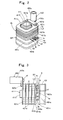
FIG. 2 is a perspective view of a coil unit used in the embodiment; -
FIG. 3 is a side view of the coil unit used in the embodiment; -
FIG. 4 is a front view, partially in section, of an ignition device according to the embodiment; -
FIG. 5 is a circuit diagram of an electrical construction of the ignition device according to the embodiment; -
FIGS. 6A and 6B are waveform charts showing waveforms of an induced voltage of an exciter coil of the ignition device inFIG. 5 and a charging voltage of an ignition capacitor; and -
FIG. 7 is a sectional view of a construction of essential portions of another embodiment of the present invention. - In
FIG. 1 , areference numeral 1 denotes an outer magnet type magneto rotor that is mounted to a crankshaft of an unshown engine and cooperates with an ignition device according to the present invention, and 2 denotes the ignition device according to the present invention. - The
magneto rotor 1 is comprised of aflywheel 101 made of ferromagnetic material such as iron and having a cylindrical outerperipheral surface 101a, and an arcuatepermanent magnet 102 mounted in arecess 101b formed in the outer peripheral surface of theflywheel 101. Thepermanent magnet 102 is magnetized so that a magnetizing direction is a radial direction of theflywheel 101. In the shown example, a magnetic pole surface on a radially outer periphery of thepermanent magnet 102 is a north pole, and south poles of the magnet are led out to outer peripheral surfaces 101a1 and 101a2 of the flywheel near opposite ends of therecess 101b facing circumferentially of the flywheel. The magnetic pole (north pole) on the outer periphery of thepermanent magnet 102 and two south poles led out to the outer peripheral surface of the flywheel near the opposite ends of therecess 101b produce a three-pole magnetic field. Aboss 101c is provided at an axis of theflywheel 101, and the boss is fitted to a crankshaft CS of the engine and thus themagneto rotor 1 is mounted to the crankshaft CS. - The shown
ignition device 2 is comprised of acore 3, acoil unit 4 wound around thecore 3, anignition unit 5 comprised by mounting a microprocessor MPU and an ignition capacitor C to a circuit board 501 (seeFIG. 4 ), aresin case 6 housing thecoil unit 4 and theignition unit 5, andresin 7 poured into thecase 6. - The
core 3 is formed of laminated steel sheets into a U-shape by an I-shapedcoil winding portion 301 and a pair oflegs coil winding portion 301 by dovetail connection, andmagnetic pole portions legs legs holes - The
coil unit 4 is comprised of an exciter coil EX and an ignition coil IG including a primary coil L1 and a secondary coil L2. The exciter coil EX and the ignition coil IG are placed axially with a spacing therebetween and wound around thecoil winding portion 301 of thecore 3, and a space SP is formed between the exciter coil EX and the ignition coil IG. - The exciter coil EX is wound around a
coil winding barrel 401a of anexciter winding bobbin 401, which integrally includes thecoil winding barrel 401a and afirst flange 401b and asecond flange 401c formed at one and the other axial ends of the barrel. In the embodiment, a cross-sectional outline of each of thebarrel 401a and theflanges 401b and 401C of the exciter winding bobbin is square with four rounded corners, and the exciter coil EX is wound substantially in a shape of a rectangular parallelepiped. Thus, the exciter coil EX has four side surfaces directed in 90° different directions from each other, and one of the four side surfaces is an ignition unit facing surface Se that faces a main surface of a circuit board of the ignition unit. - The
bobbin 401 around which the exciter coil EX is wound is fitted and mounted to an outer periphery of thecoil winding portion 301 of thecore 3 with thefirst flange 401b positioned at oneend 3A of thecore 3. To connect the exciter coil to acircuit board 501 of theignition unit 5, two exciter connection terminals ta and tb are connected to opposite ends of the exciter coil. The exciter connection terminals ta and tb are supported by asecond flange 401c with parts thereof molded to thesecond flange 401c of the exciter winding bobbin. The exciter connection terminals ta and tb are bent along an outer surface of thesecond flange 401c of the exciter winding bobbin, and drawn out to the ignition unit facing surface Se of the exciter coil EX. - A primary coil L1 of the ignition coil IG is wound around a
primary bobbin 411. Theprimary bobbin 411 integrally includes a primarycoil winding barrel 411a, afirst flange portion 411b formed at one axial end of thebarrel 411a, and asecond flange portion 411c formed at the other axial end of thebarrel 411a and having a smaller diameter than the first flange portion, and the primary coil L1 is wound around thebarrel 411a. Theprimary bobbin 411 around which the primary coil L1 is wound is fitted and mounted to the outer periphery of thecoil winding portion 301 of thecore 3 with thefirst flange portion 411b directed toward thesecond flange 401c of theexciter winding bobbin 401. Thefirst flange portion 411b of theprimary bobbin 411 and thesecond flange 401c of theexciter winding bobbin 401 face each other with a set spacing therebetween, and the space SP is formed between thefirst flange portion 411b and thesecond flange 401c. - In the embodiment,
bosses end 3A (toward thesecond flange 401c of the exciter winding bobbin 401) and theother end 3B of thecore 3 are formed at a portion closer to thecore 3 of thefirst flange portion 411b of theprimary bobbin 411 and a portion closer to the core of thesecond flange portion 411c, and when theexciter winding bobbin 401 and theprimary bobbin 411 are fitted and mounted to the outer periphery of thecoil winding portion 301 of thecore 3, theboss 411e at oneend 3A of thecore 3 is abutted against thesecond flange 401c of theexciter winding bobbin 401 to form the space SP between thefirst flange portion 411b of theprimary bobbin 411 and thesecond flange 401c of theexciter winding bobbin 401. - The secondary coil L2 of the ignition coil is would around a
secondary bobbin 421. Thesecondary bobbin 421 integrally includes a secondarycoil winding barrel 421a placed to surround an outer periphery of the primary coil L1 and an outer periphery of thesecond flange portion 411c of theprimary bobbin 411, one endside flange portion 421b and the other endside flange portion 421c formed at one and the other axial ends of the secondarycoil winding barrel 421a, and a plurality ofpartition walls side flange portion 421b and the other endside flange portion 421c into a plurality of coil winding grooves axially arranged. Unit coils w, w, ... are wound around the plurality of coil winding grooves in thesecondary bobbin 421 and connected in series, and the secondary coil L2 is comprised of the unit coils w, w, ... connected in series. Thesecondary bobbin 421 around which the secondary coil L2 is wound is placed outside the primary coil L1 with one endside flange portion 421b abutted against thefirst flange portion 411b of theprimary bobbin 411. - Barrels and flange portions of the
primary bobbin 411 and thesecondary bobbin 421 are formed so that a cross-section of each thereof is square with four rounded corners as in theexciter winding bobbin 401, and the primary coil L1 and the secondary coil L2 are each wound substantially in a shape of a rectangular parallelepiped. Thus, the secondary coil L2 has four side surfaces directed in 90° different directions from each other, and one of the four side surfaces is an ignition unit facing surface Si. - A high-
tension code holder 430 is secured to an outer surface of the other endside flange portion 421c of thesecondary bobbin 421. The high-tension code holder 430 integrally includes acylindrical portion 430a having one open end and a plate-shaped mountingportion 430b protruding radially outwardly from the other end of thecylindrical portion 430a, and a high-tension code connection terminal tf comprised of a screw is mounted through an end wall formed to block the other end of thecylindrical portion 430a. The high-tension code holder 430 is placed with the mountingportion 430b abutted against the other endside flange portion 421c of thesecondary bobbin 421, apositioning protrusion 421e (seeFIGS. 2 and4 ) formed on the other endside flange portion 421c of the secondary bobbin is press-fitted into a hole formed in the mountingportion 430b, and thus the high-tension code holder 430 is positioned in a predetermined position of the secondary bobbin with thecylindrical portion 430a directed axially of the coil unit. The high-tension code connection terminal tf is connected to a winding end of the secondary coil L2 viaconnection terminal hardware 431. One end of the high-tension code 8 is press-fitted into thecylindrical portion 430a of the high-tension code holder 430, the high-tension code connection terminal tf is screwed into a core of the high-tension code, and thus the high-tension code 8 is connected to the winding end of the secondary coil L2. - The
secondary bobbin 421 around which the secondary coil L2 is wound is placed so as to surround the outer periphery of the primary coil L1 wound around theprimary bobbin 411 and the outer periphery of thesecond flange portion 411c of theprimary bobbin 411 to assemble the ignition coil IG, and the ignition coil IG and the exciter coil EX are mounted to thecoil winding portion 301 of thecore 3 to assemble thecoil unit 4. - An ignition coil connection terminal tc connecting to the winding end of the primary coil L1 of the ignition coil, and an ignition coil connection terminal td connecting to a winding start of the primary coil are held with parts thereof embedded in the
first flange portion 411b of theprimary bobbin 411. The ignition coil connection terminals tc and td are bent along the outer surface of thefirst flange portion 411b of theprimary bobbin 411 and drawn out toward the ignition unit facing surface Si. An ignition coil connection terminal te connected to a winding start of the secondary coil L2 is provided with part thereof embedded in one endside flange portion 421b of thesecondary bobbin 421, and the ignition coil connection terminal te passes through thefirst flange portion 411b of theprimary bobbin 411 and is drawn out of thefirst flange portion 411b. The ignition coil connection terminal te drawn out of thefirst flange portion 411b is bent along the outer surface of thefirst flange portion 411b and drawn out toward the ignition unit facing surface Si. - As shown in
FIG. 2 , the exciter connection terminals ta and tb and the ignition coil connection terminals tc and te are provided so that tips (ends connected to the circuit board of the ignition unit) of the terminals are arranged in parallel on one plane perpendicular to the axis of thecoil unit 4 with thecoil unit 4 assembled, and drawn out in one direction (toward the circuit board of the ignition unit) through a space SP between the ignition coil and the exciter coil. Among the ignition coil connection terminals ta to te, the ignition coil connection terminals td and te are ground side terminals of the primary coil and the secondary coil of the ignition coil, and the terminals are placed adjacent (close) to each other. The grounded connection terminals td and te are placed adjacent to each other to allow the connection terminals to be inserted into one large hole in thecircuit board 501 and soldered to a ground pattern on the circuit board, thereby reducing the number of soldering portions. - As shown in
FIG. 4 , thecircuit board 501 to which components of theignition unit 5 are mounted is placed on a lateral side of thecoil unit 4 with one main surface facing the ignition unit facing surfaces Se and Si. The exciter coil connection terminals ta and tb drawn out from the opposite ends of the exciter coil EX and the ignition coil connection terminals tc to te drawn out from the ignition coil IG are inserted into through holes provided in thecircuit board 501, and soldered to a terminal pattern provided on the board. Though not shown in detail inFIG. 4 , to thecircuit board 501, an ignition capacitor of a capacitor discharge ignition device, components of a capacitor charging circuit, components of a discharge circuit, and components of an ignition timing control circuit are mounted. - The
case 6 is formed of a cylindrical member of resin having one end closed by a bottom 6a and the other end opening. An expandingportion 6b that houses the high-tension code holder 430 is formed in part of a side wall close to the opening end, and ahole 6c through which thecoil winding portion 301 of thecore 3 is passed is formed at the center of the bottom 6a. - In assembling the ignition device, the
exciter winding bobbin 401 around which the exciter coil EX is wound, and the ignition coil IG comprised by placing thesecondary bobbin 421 around which the secondary coil is wound outside the primary bobbin around which the primary coil L1 of the ignition coil is wound are mounted to thecoil winding portion 301 of thecore 3 with the ignition unit facing surfaces Se and Si directed in the same direction to assemble thecoil unit 4. Then, the connection terminals ta to te drawn out from between theflange 401a of theexciter winding bobbin 401 and theflange 411a of the bobbin 410 are inserted into the through holes in thecircuit board 501, and soldered to the terminal pattern on the circuit board. - In the embodiment, the tips of the connection terminals ta to te are arranged in parallel on one plane perpendicular to the axis of the coil unit, and drawn out toward the circuit board through the space SP between the ignition coil and the exciter coil, thereby facilitating an operation of inserting the connection terminals drawn out from the coil unit into the through holes provided in the circuit board.
- In the embodiment, the soldering portions between the connection terminals drawn out from the coil unit and the circuit board are collectively placed in an axially intermediate portion of the coil unit, thereby reducing a moving distance of a tool in soldering thereof to increase soldering operation efficiency.
- In the embodiment, the ground side terminals td and te of the ignition coil are placed adjacent to each other, and the terminals can be inserted into one hole provided in the circuit board and soldered to the ground pattern on the circuit board at one time, thereby reducing the number of soldering portions.
- After the
ignition unit 5 is connected to thecoil unit 4 as described above, thecoil unit 4 together with theignition unit 5 are housed in thecase 6, and the opposite ends of thecoil winding portion 301 of thecore 3 are protruded outwardly from thecase 6. In this state, with the opening of thecase 6 kept directed upwardly,resin 7 such as epoxy resin is poured into the case and cured. Thus, thecoil unit 4 and theignition unit 5 are resin molded, and the high-tension code holder 430 is secured to the secondary bobbin. Then, thelegs coil winding portion 301 of thecore 3 to complete theignition device 2. - The ignition device is positioned so as to have a predetermined positional relationship with the magnetic pole of the
magneto rotor 1 so that a phase of the voltage induced in the exciter coil is a phase suitable for an ignition operation in a predetermined ignition position, and secured to the case of the engine or the like by bolts passed through the mountingholes legs magnetic pole portions legs magneto rotor 1 via a predetermined air gap. - With reference to
FIG. 5 , an example of an electrical construction of theignition unit 5 is shown. In the shownignition unit 5, one end of an ignition capacitor C1 is connected to a non-ground terminal of the primary coil L1 of the ignition coil IG, and a thyristor Th that functions as a discharge switch is connected between the other end of the ignition capacitor C1 and the ground with a cathode thereof directed to the ground. A diode D1 is connected between an anode and a cathode of the thyristor Th with an anode thereof directed to the ground, and a resistor R1 is connected between a gate and the cathode of the thyristor Th. A cathode of a diode D2 is connected to the other end of the ignition capacitor C1, and the exciter connection terminal ta drawn out from the exciter coil EX is connected to an anode of the diode D2. A diode D3 is connected between the anode of the diode D2 and the ground with an anode thereof directed to the ground. An input port of an ignition timing control circuit ICC including a microprocessor is connected to the other connection terminal tb drawn out from the exciter coil, and an ignition signal Si is inputted to the gate of the thyristor Th from an output port of the ignition timing control circuit ICC. A current feedback diode D4 is connected between the connection terminal tb drawn out from the exciter coil and the ground with an anode thereof directed to the ground. The connection terminal tb is connected to an input terminal of a power supply circuit PS, and a power supply voltage is supplied from the power supply circuit PS to the microprocessor of the ignition timing control circuit ICC. An output voltage (a high voltage for ignition) of the secondary coil L2 of the ignition coil IG is applied to an ignition plug PL provided in one cylinder of the engine through the high-tension code 8. - In the shown example, the capacitor charging circuit that charges the ignition capacitor C1 with an output voltage of the exciter coil is comprised of a circuit of the exciter connection terminal ta - the diode D2- the ignition capacitor C1- the primary coil L1 of the ignition coil - the diode D4 - the exciter connection terminal tb, and the discharge circuit of the ignition capacitor C1 is comprised of a circuit of the ignition capacitor C1 - the thyristor Th - the primary coil L1 of the ignition coil - the thyristor Th.
- The
ignition unit 5 is comprised of the capacitor charging circuit, the discharge circuit, the ignition timing control circuit ICC, and the power supply circuit PS, and the capacitor discharge engine ignition device is comprised of theignition unit 5 and thecoil unit 4. When the engine includes two or more cylinders, similarly comprised ignition devices of the same number as the number of the cylinders are provided. - In the embodiment, when a crankshaft of the engine rotates, an AC voltage Ve is generated in the exciter coil EX as shown in
FIG. 6A . The AC voltage Ve is generated once per one turn of the crankshaft at a certain crank angle position determined by a placement position of the ignition device. The AC voltage Ve is a voltage having a waveform with a first negative half wave of a voltage Vn1, a positive half wave of a voltage Vp, and a second negative half wave of a voltage Vn2 appearing in order. The exciter coil EX generates the AC voltage Ve at the certain crank angle position, and thus the waveform of the AC voltage Ve includes crank angle information and rotational speed information of the engine. - The voltages Vn1 and Vn2 of the negative half wave outputted by the exciter coil is converted into a certain DC voltage Vcc by the power supply circuit PS and applied to the microprocessor of the ignition timing control circuit ICC as a power supply voltage. A current flowing from the exciter coil into the power supply circuit PS during the negative half wave of the output of the exciter coil EX is fed back to the exciter coil through the ground circuit and the diode D3.
- The ignition timing control circuit ICC starts operating when the power supply voltage is applied from the power supply circuit PS. The ignition timing control circuit ICC uses the crank angle information and the rotational speed information of the engine obtained from the output voltage Ve of the exciter coil EX to arithmetically operate an ignition position (a crank angle position for an ignition operation) at each rotational speed of the engine, and provides an ignition signal Si to the thyristor Th when detecting that the crank angle position of the engine matches the arithmetically operated ignition position.
- In the shown ignition unit, when the exciter coil EX outputs the voltage Vp of the positive half wave, the ignition capacitor C1 is charged with the voltage Vp to a shown polarity through the diode D2, the primary coil L1 of the ignition coil, and the diode D4, and a voltage Vc across the ignition capacitor C1 increases as shown in
FIG. 6B . Then, when the ignition timing control circuit ICC generates the ignition signal Si in an ignition position θi1, the thyristor Th is turned on. When the thyristor Th is turned on, charges accumulated in the ignition capacitor C1 discharges through the thyristor Th and the primary coil L1 of the ignition coil. Thus, a significant change in magnetic flux occurs in thecore 3 to induce a high voltage for ignition in the secondary coil L2 of the ignition coil. The high voltage is applied to the ignition plug PL, and thus spark discharge occurs in the ignition plug PL to ignite and start the engine. The ignition position of the engine is advanced with increase in rotational speed of the engine, and an ignition position at high speed is, for example, θi2 inFIG. 6B . - When the ignition capacitor C1 discharges in the ignition position, the voltage is also induced in the exciter coil EX, and magnetic flux generated from the exciter coil EX is about to prevent a change in magnetic flux interlinking with the secondary coil of the ignition coil. In the present invention, however, the space SP is formed between the exciter coil EX and the ignition coil IG to properly set the size of the space SP, and thus the influence of the magnetic flux generated from the exciter coil on the change in magnetic flux interlinking with the secondary coil of the ignition coil can be reduced, thereby preventing a noticeable reduction in high voltage for ignition induced in the secondary coil of the ignition coil and a reduction in ignition performance.
- In the embodiment, the
boss 411e provided in theprimary bobbin 411 is abutted against thesecond flange 401c of theexciter winding bobbin 401 to form the space SP between the second flange of the exciter winding bobbin and one end side flange portion of the primary bobbin. However, as shown inFIG. 7 , it may be allowed that aboss 401e protruding from a portion closer to the core of the second flange of theexciter winding bobbin 401 toward thefirst flange portion 411b of theprimary bobbin 411 is integrally provided with theexciter winding bobbin 401, and the boss is abutted against theprimary bobbin 411 to form a space SP between thefirst flange portion 411b of the primary bobbin and thesecond flange 401c of the exciter winding bobbin. - In the above described embodiment, the Π-shaped
core 3 is used, but the present invention may be applied to the case where an E-shaped three-leg core is used and an exciter coil and an ignition coil are wound in parallel around a middle leg of the core as disclosed in Japanese Patent Application Laid-open Publication No.2006-97525
Claims (12)
- A capacitor discharge engine ignition device (2) comprising a coil unit (4), an ignition unit (5) and a case (6) housing said coil unit (4) and said ignition unit (5),
wherein said coil unit (4) includes a core (3) having magnetic pole portion (302a) for being faced to a magnetic pole on a magneto rotor (1) driven by an engine, an exciter coil (EX) that is wound around said core (3) and induces an AC voltage in synchronization with rotation of said engine, and an ignition coil placed in parallel with said exciter coil (EX) and wound around said core (3),
said coil unit (4) is housed in said case (6) with the magnetic pole portion (302a) of said core (3) placed outside said case,
said ignition unit (5) includes an ignition capacitor (C), a capacitor charging circuit that charges said ignition capacitor (C) with an output of said exciter coil (EX), a discharge circuit that discharges charges accumulated in said ignition capacitor (C) through a primary coil (L1) of said ignition coil when receiving an ignition signal, and an ignition timing control circuit that controls timing for providing said ignition signal to said discharge circuit, and said ignition capacitor (C) and components of said capacitor charging circuit, said discharge circuit and said ignition timing control circuit are mounted to a circuit board (501), and
said coil unit (4) and said ignition unit (5) are molded with resin poured into said case,
characterized in that
a space (SP) is formed between said exciter coil (EX) and said ignition coil,
said ignition unit (5) is placed on a lateral side of said coil unit (4) in the case (6) with a surface of said circuit board (501) directed in parallel with an axis of said coil unit (4), and
a plurality of ignition coil connection terminals (tc, td, te) drawn out from said ignition coil for connecting said ignition coil to said circuit board (501) and a plurality of exciter coil connection terminals (ta and tb) drawn out from said exciter coil (EX) for connecting said exciter coil (EX) to said circuit board (501) are drawn out toward said circuit board (501) through the space (SP) between said ignition coil and said exciter coil (EX) and connected to said circuit board (501). - The capacitor discharge engine ignition device (2) according to claim 1, wherein the exciter coil (EX) is wound around an exciter winding bobbin (401) including a first flange (401b) and a second flange (401c) at one and the other axial ends, and said exciter winding bobbin (401) is mounted to an outer periphery of said core (3) with said first flange (401b) placed on one end (3A) side of said core (3),
a primary bobbin (411) having first and second flange portions (411b and 411c) at one and the other ends is provided, the first flange portion (411b) having a larger diameter than the second flange portion (411c), and said primary coil (L1) is wound around said primary bobbin (411),
said primary bobbin (411) is mounted to the outer periphery of said core (3) together with said exciter winding bobbin (401), and said first flange portion (411b) faces the second flange (401c) of said exciter winding bobbin (401) with a space therebetween,
a secondary bobbin (421) including a barrel (421a) surrounding said primary coil (L1) and the second flange portion (411c) of said primary bobbin (411), and one end side flange portion (421b) and the other end side flange portion (421c) formed at one and the other axial ends of said barrel is provided, and the secondary coil (L2) of the ignition coil is wound around the barrel of said secondary bobbin (421),
said secondary bobbin (421) is placed outside said primary coil (L1), and said one end side flange portion (421b) is abutted against the first flange portion (411b) of said primary bobbin (411),
said plurality of ignition coil connection terminals (tc, td, te) and said plurality of exciter coil connection terminals (ta and tb) are supported by the first flange portion (411b) of said primary bobbin (411) and the second flange (401c) of said exciter winding bobbin (401), respectively, and
said plurality of exciter coil connection terminals (ta and tb) and said plurality of ignition coil connection terminals (tc, td, te) are drawn out toward said circuit board (501) through the space between said first flange portion (411b) of said primary bobbin (411) and said second flange (401c) of said exciter winding bobbin (401) and connected to said circuit board (501). - The capacitor discharge engine ignition device (2) according to claim 2, wherein said primary bobbin (411) integrally includes a boss (411e) protruding from a portion closer to said core (3) of said first flange portion (411b) toward said exciter winding bobbin (401), and said boss (411e) is abutted against said exciter winding bobbin (401) to maintain the space between the first flange portion (411b) of said primary bobbin (411) and the second flange (401c) of said exciter winding bobbin (401).
- The capacitor discharge engine ignition device (2) according to claim 2, wherein said exciter winding bobbin (401) integrally includes a boss (401e) protruding from a portion closer to said core (3) of said second flange toward said primary bobbin (411), and said boss (401e) is abutted against said primary bobbin (411) to maintain the space between the first flange portion (411b) of said primary bobbin (411) and the second flange (401c) of said exciter winding bobbin (401).
- The capacitor discharge engine ignition device (2) according to claim 2, wherein said plurality of exciter coil connection terminals (ta and tb) and said plurality of ignition coil connection terminals (tc, td, te) are drawn out toward said circuit board (501) with tips thereof arranged in line on one plane perpendicular to an axis of said coil unit (4).
- The capacitor discharge engine ignition device (2) according to claim 3, wherein said plurality of exciter coil connection terminals (ta and tb) and said plurality of ignition coil connection terminals (tc, td, te) are drawn out toward said circuit board (501) with tips thereof arranged in line on one plane perpendicular to an axis of said coil unit (4).
- The capacitor discharge engine ignition device (2) according to claim 4, wherein said plurality of exciter coil connection terminals (ta and tb) and said plurality of ignition coil connection terminals (tc, td, te) are drawn out toward said circuit board (501) with tips thereof arranged in line on one plane perpendicular to an axis of said coil unit (4).
- The capacitor discharge engine ignition device (2) according to claim 1, wherein said plurality of ignition coil connection terminals (tc, td, te) include a primary coil side ground terminal drawn out from one end on a ground side of the primary coil (L1) of said ignition coil and a secondary coil side ground terminal drawn out from one end on a ground side of the secondary coil (L2) of said ignition coil, and said primary coil (L1) side ground terminal and said secondary coil side ground terminal are placed adjacent to each other.
- The capacitor discharge engine ignition device (2) according to claim 2, wherein said plurality of ignition coil connection terminals (tc, td, te) include a primary coil side ground terminal drawn out from one end on a ground side of the primary coil (L1) of said ignition coil and a secondary coil side ground terminal drawn out from one end on a ground side of the secondary coil (L2) of said ignition coil, and said primary coil side ground terminal and said secondary coil side ground terminal are placed adjacent to each other.
- The capacitor discharge engine ignition device (2) according to claim 3, wherein said plurality of ignition coil connection terminals (tc, td, te) include a primary coil side ground terminal drawn out from one end on a ground side of the primary coil (L1) of said ignition coil and a secondary coil side ground terminal drawn out from one end on a ground side of the secondary coil (L2) of said ignition coil, and said primary coil side ground terminal and said secondary coil side ground terminal are placed adjacent to each other.
- The capacitor discharge engine ignition device (2) according to claim 4, wherein said plurality of ignition coil connection terminals (tc, td, te) include a primary coil side ground terminal drawn out from one end on a ground side of the primary coil (L1) of said ignition coil and a secondary coil side ground terminal drawn out from one end on a ground side of the secondary coil (L2) of said ignition coil, and said primary coil side ground terminal and said secondary coil side ground terminal are placed adjacent to each other.
- The capacitor discharge engine ignition device (2) according to claim 5, wherein said plurality of ignition coil connection terminals (tc, td, te) include a primary coil side ground terminal drawn out from one end on a ground side of the primary coil (L1) of said ignition coil and a secondary coil side ground terminal drawn out from one end on a ground side of the secondary coil (L2) of said ignition coil, and said primary coil side ground terminal and said secondary coil side ground terminal are placed adjacent to each other.
Applications Claiming Priority (1)
| Application Number | Priority Date | Filing Date | Title |
|---|---|---|---|
| JP2007297496A JP4872888B2 (en) | 2007-11-16 | 2007-11-16 | Capacitor discharge engine ignition system |
Publications (3)
| Publication Number | Publication Date |
|---|---|
| EP2060778A2 true EP2060778A2 (en) | 2009-05-20 |
| EP2060778A3 EP2060778A3 (en) | 2015-07-29 |
| EP2060778B1 EP2060778B1 (en) | 2020-01-01 |
Family
ID=40342184
Family Applications (1)
| Application Number | Title | Priority Date | Filing Date |
|---|---|---|---|
| EP08253727.5A Active EP2060778B1 (en) | 2007-11-16 | 2008-11-14 | Capacitor discharge engine ignition device |
Country Status (3)
| Country | Link |
|---|---|
| US (1) | US7603982B2 (en) |
| EP (1) | EP2060778B1 (en) |
| JP (1) | JP4872888B2 (en) |
Cited By (2)
| Publication number | Priority date | Publication date | Assignee | Title |
|---|---|---|---|---|
| WO2017015420A1 (en) * | 2015-07-21 | 2017-01-26 | Walbro Llc | Ignition system for light-duty combustion engine |
| JPWO2014163071A1 (en) * | 2013-04-03 | 2017-02-16 | マーレエレクトリックドライブズジャパン株式会社 | Ignition device for internal combustion engine |
Families Citing this family (6)
| Publication number | Priority date | Publication date | Assignee | Title |
|---|---|---|---|---|
| WO2010044468A1 (en) | 2008-10-17 | 2010-04-22 | 公立大学法人横浜市立大学 | Construction and crystallization of expression system for rna polymerase pb1-pb2 protein derived from influenza virus |
| JP6184833B2 (en) * | 2013-10-22 | 2017-08-23 | マーレエレクトリックドライブズジャパン株式会社 | Ignition device for internal combustion engine |
| JP7144981B2 (en) | 2018-06-21 | 2022-09-30 | 東洋電装株式会社 | ignition device |
| US10785908B2 (en) | 2018-08-27 | 2020-09-29 | Honda Motor Co., Ltd. | Internal combustion engine with integrated connectivity device |
| US10819194B2 (en) * | 2018-08-27 | 2020-10-27 | Honda Motor Co., Ltd. | Internal combustion engine with integrated connectivity device |
| US10756603B2 (en) | 2018-08-27 | 2020-08-25 | Honda Motor Co., Ltd. | Internal combustion engine with wireless communications device |
Citations (3)
| Publication number | Priority date | Publication date | Assignee | Title |
|---|---|---|---|---|
| JPH10196503A (en) | 1997-01-07 | 1998-07-31 | Kokusan Denki Co Ltd | Capacitor discharge type internal combustion engine igniter |
| JP2002161843A (en) | 2000-11-24 | 2002-06-07 | Kokusan Denki Co Ltd | Ignition device for internal combustion engine |
| JP2006097525A (en) | 2004-09-29 | 2006-04-13 | Honda Motor Co Ltd | Engine ignition device |
Family Cites Families (15)
| Publication number | Priority date | Publication date | Assignee | Title |
|---|---|---|---|---|
| US4036201A (en) * | 1975-04-29 | 1977-07-19 | R. E. Phelon Company, Inc. | Single core condenser discharge ignition system |
| US4406271A (en) * | 1980-07-24 | 1983-09-27 | Wabash, Inc. | Capacitor discharge ignition system and method of manufacture thereof |
| US4982498A (en) * | 1987-12-03 | 1991-01-08 | Mitsubishi Denki Kabushiki Kaisha | Method of making a high-voltage transformer |
| JP3192170B2 (en) * | 1991-06-19 | 2001-07-23 | 愛三工業株式会社 | Ignition coil for internal combustion engine |
| US5931137A (en) * | 1997-05-30 | 1999-08-03 | R.E. Phelon Co., Inc. | Discharge ignition apparatus for internal combustion engine having automatic spark advance |
| US5829421A (en) * | 1997-06-27 | 1998-11-03 | R. E. Phelon Co., Inc. | Discharge ignition apparatus for internal combustion engine having shut-off feature |
| JP3714125B2 (en) * | 2000-06-29 | 2005-11-09 | 国産電機株式会社 | Ignition device for internal combustion engine |
| US6691689B2 (en) * | 2000-10-13 | 2004-02-17 | Prüfrex-Elektro-Apparatebau, Inh. Helga Müller. Geb Dutschke | Rotation direction detector in ignition equipment of an internal combustion engine |
| ITMI20012670A1 (en) * | 2001-12-18 | 2003-06-18 | Ducati Energia Spa | METHOD AND ELECTRONIC EQUIPMENT TO INVERT THE ROTATION OF AN INTERNAL COMBUSTION ENGINE WITH A TWO STROKE CYCLE |
| US6889677B2 (en) * | 2003-02-03 | 2005-05-10 | Honda Giken Kogyo Kabushiki Kaisha | Capacitor discharge ignition device for internal combustion engine |
| US6932064B1 (en) * | 2004-04-28 | 2005-08-23 | Walbro Engine Management, L.L.C. | Capacitor discharge ignition |
| US7069921B1 (en) * | 2005-02-09 | 2006-07-04 | Walbro Engine Management, L.L.C. | Control circuit for capacitor discharge ignition system |
| JP4187013B2 (en) * | 2006-06-06 | 2008-11-26 | 国産電機株式会社 | Ignition device for internal combustion engine |
| JP5250222B2 (en) * | 2006-08-16 | 2013-07-31 | アンドレアス シュティール アクチエンゲゼルシャフト ウント コンパニー コマンディートゲゼルシャフト | Ignition device for internal combustion engine and method for operating ignition device |
| US7546836B2 (en) * | 2007-01-26 | 2009-06-16 | Walbro Engine Management, L.L.C. | Ignition module for use with a light-duty internal combustion engine |
-
2007
- 2007-11-16 JP JP2007297496A patent/JP4872888B2/en active Active
-
2008
- 2008-11-14 US US12/271,470 patent/US7603982B2/en active Active
- 2008-11-14 EP EP08253727.5A patent/EP2060778B1/en active Active
Patent Citations (3)
| Publication number | Priority date | Publication date | Assignee | Title |
|---|---|---|---|---|
| JPH10196503A (en) | 1997-01-07 | 1998-07-31 | Kokusan Denki Co Ltd | Capacitor discharge type internal combustion engine igniter |
| JP2002161843A (en) | 2000-11-24 | 2002-06-07 | Kokusan Denki Co Ltd | Ignition device for internal combustion engine |
| JP2006097525A (en) | 2004-09-29 | 2006-04-13 | Honda Motor Co Ltd | Engine ignition device |
Cited By (4)
| Publication number | Priority date | Publication date | Assignee | Title |
|---|---|---|---|---|
| JPWO2014163071A1 (en) * | 2013-04-03 | 2017-02-16 | マーレエレクトリックドライブズジャパン株式会社 | Ignition device for internal combustion engine |
| EP2982857A4 (en) * | 2013-04-03 | 2017-04-26 | Kokusan Denki Co., Ltd. | Internal combustion engine ignition device |
| WO2017015420A1 (en) * | 2015-07-21 | 2017-01-26 | Walbro Llc | Ignition system for light-duty combustion engine |
| US10941745B2 (en) | 2015-07-21 | 2021-03-09 | Walbro Llc | Ignition system for light-duty combustion engine |
Also Published As
| Publication number | Publication date |
|---|---|
| US7603982B2 (en) | 2009-10-20 |
| US20090126686A1 (en) | 2009-05-21 |
| JP4872888B2 (en) | 2012-02-08 |
| EP2060778B1 (en) | 2020-01-01 |
| JP2009121376A (en) | 2009-06-04 |
| EP2060778A3 (en) | 2015-07-29 |
Similar Documents
| Publication | Publication Date | Title |
|---|---|---|
| EP2060778B1 (en) | Capacitor discharge engine ignition device | |
| KR900002075B1 (en) | Coil for making fine for a diesel engine | |
| JP2995763B2 (en) | Ignition coil | |
| CN1363129A (en) | Power generating installation that comprises a generator and a reciprocating internal combustion engine as drive | |
| EP0412678A1 (en) | Ignition coil | |
| US7239224B2 (en) | Ignition coil having center core | |
| US4418296A (en) | Magneto-generator for engine ignition systems | |
| US7098765B2 (en) | Ignition coil having magnetic flux reducing inner structure | |
| US5105794A (en) | Ignition system for internal combustion engine | |
| CN1312947A (en) | Spark ignition system having a capacitive discharge system and a magnetic core-coil assembly | |
| RU2117820C1 (en) | Ignition coil | |
| JP3707529B2 (en) | Internal combustion engine drive power generator | |
| US6550462B2 (en) | Engine ignition system | |
| CN110630423B (en) | Ignition device | |
| RU2123132C1 (en) | Ignition coil | |
| JP4179559B2 (en) | Magnet power generator | |
| US4435660A (en) | Magneto generator for a contactless ignition system | |
| JP2006101613A (en) | Flywheel magnet generator | |
| JP2769743B2 (en) | Ignition coil for internal combustion engine | |
| JP2006287089A (en) | Ignition coil for internal combustion engine | |
| JP2002013458A (en) | Igniter for internal combustion engine | |
| JP2517335Y2 (en) | Flywheel magnet generator | |
| JP2756600B2 (en) | Ignition coil for internal combustion engine | |
| JP2001095216A (en) | Outer rotor type engine generator | |
| JP2002359129A (en) | Method of manufacturing ignition coil for internal combustion engine |
Legal Events
| Date | Code | Title | Description |
|---|---|---|---|
| PUAI | Public reference made under article 153(3) epc to a published international application that has entered the european phase |
Free format text: ORIGINAL CODE: 0009012 |
|
| AK | Designated contracting states |
Kind code of ref document: A2 Designated state(s): AT BE BG CH CY CZ DE DK EE ES FI FR GB GR HR HU IE IS IT LI LT LU LV MC MT NL NO PL PT RO SE SI SK TR |
|
| AX | Request for extension of the european patent |
Extension state: AL BA MK RS |
|
| PUAL | Search report despatched |
Free format text: ORIGINAL CODE: 0009013 |
|
| AK | Designated contracting states |
Kind code of ref document: A3 Designated state(s): AT BE BG CH CY CZ DE DK EE ES FI FR GB GR HR HU IE IS IT LI LT LU LV MC MT NL NO PL PT RO SE SI SK TR |
|
| AX | Request for extension of the european patent |
Extension state: AL BA MK RS |
|
| RIC1 | Information provided on ipc code assigned before grant |
Ipc: F02P 1/00 20060101AFI20150623BHEP Ipc: F02P 3/08 20060101ALI20150623BHEP Ipc: F02P 1/08 20060101ALI20150623BHEP |
|
| 17P | Request for examination filed |
Effective date: 20160129 |
|
| RBV | Designated contracting states (corrected) |
Designated state(s): AT BE BG CH CY CZ DE DK EE ES FI FR GB GR HR HU IE IS IT LI LT LU LV MC MT NL NO PL PT RO SE SI SK TR |
|
| AKX | Designation fees paid |
Designated state(s): DE |
|
| AXX | Extension fees paid |
Extension state: AL Extension state: RS Extension state: MK Extension state: BA |
|
| RAP1 | Party data changed (applicant data changed or rights of an application transferred) |
Owner name: MAHLE ELECTRIC DRIVES JAPAN CORPORATION |
|
| GRAP | Despatch of communication of intention to grant a patent |
Free format text: ORIGINAL CODE: EPIDOSNIGR1 |
|
| STAA | Information on the status of an ep patent application or granted ep patent |
Free format text: STATUS: GRANT OF PATENT IS INTENDED |
|
| INTG | Intention to grant announced |
Effective date: 20190723 |
|
| GRAS | Grant fee paid |
Free format text: ORIGINAL CODE: EPIDOSNIGR3 |
|
| GRAA | (expected) grant |
Free format text: ORIGINAL CODE: 0009210 |
|
| STAA | Information on the status of an ep patent application or granted ep patent |
Free format text: STATUS: THE PATENT HAS BEEN GRANTED |
|
| AK | Designated contracting states |
Kind code of ref document: B1 Designated state(s): DE |
|
| REG | Reference to a national code |
Ref country code: DE Ref legal event code: R096 Ref document number: 602008061922 Country of ref document: DE |
|
| REG | Reference to a national code |
Ref country code: DE Ref legal event code: R097 Ref document number: 602008061922 Country of ref document: DE |
|
| PLBE | No opposition filed within time limit |
Free format text: ORIGINAL CODE: 0009261 |
|
| STAA | Information on the status of an ep patent application or granted ep patent |
Free format text: STATUS: NO OPPOSITION FILED WITHIN TIME LIMIT |
|
| 26N | No opposition filed |
Effective date: 20201002 |
|
| REG | Reference to a national code |
Ref country code: DE Ref legal event code: R081 Ref document number: 602008061922 Country of ref document: DE Owner name: MAHLE INTERNATIONAL GMBH, DE Free format text: FORMER OWNER: MAHLE ELECTRIC DRIVES JAPAN CORPORATION, NUMAZU-SHI, SHIZUOKA, JP Ref country code: DE Ref legal event code: R082 Ref document number: 602008061922 Country of ref document: DE Representative=s name: TETZNER & PARTNER MBB PATENT- UND RECHTSANWAEL, DE |
|
| P01 | Opt-out of the competence of the unified patent court (upc) registered |
Free format text: CASE NUMBER: UPC_APP_8059_2060778/2025 Effective date: 20250926 |
|
| PGFP | Annual fee paid to national office [announced via postgrant information from national office to epo] |
Ref country code: DE Payment date: 20251119 Year of fee payment: 18 |