EP2059074A1 - Method and apparatus for call handover in a telecommunications system - Google Patents
Method and apparatus for call handover in a telecommunications system Download PDFInfo
- Publication number
- EP2059074A1 EP2059074A1 EP07291635A EP07291635A EP2059074A1 EP 2059074 A1 EP2059074 A1 EP 2059074A1 EP 07291635 A EP07291635 A EP 07291635A EP 07291635 A EP07291635 A EP 07291635A EP 2059074 A1 EP2059074 A1 EP 2059074A1
- Authority
- EP
- European Patent Office
- Prior art keywords
- bts
- telecommunications system
- handover
- mgw
- rat
- Prior art date
- Legal status (The legal status is an assumption and is not a legal conclusion. Google has not performed a legal analysis and makes no representation as to the accuracy of the status listed.)
- Withdrawn
Links
- 238000000034 method Methods 0.000 title claims abstract description 19
- 230000011664 signaling Effects 0.000 claims description 7
- 241000700159 Rattus Species 0.000 description 16
- VNPRJHMMOKDEDZ-UHFFFAOYSA-L 6-methylheptyl 2-[dibutyl-[2-(6-methylheptoxy)-2-oxoethyl]sulfanylstannyl]sulfanylacetate Chemical compound CC(C)CCCCCOC(=O)CS[Sn](CCCC)(CCCC)SCC(=O)OCCCCCC(C)C VNPRJHMMOKDEDZ-UHFFFAOYSA-L 0.000 description 2
- 241001481798 Stochomys longicaudatus Species 0.000 description 1
- 238000004891 communication Methods 0.000 description 1
- 230000001934 delay Effects 0.000 description 1
- 238000005457 optimization Methods 0.000 description 1
Images
Classifications
-
- H—ELECTRICITY
- H04—ELECTRIC COMMUNICATION TECHNIQUE
- H04W—WIRELESS COMMUNICATION NETWORKS
- H04W36/00—Hand-off or reselection arrangements
- H04W36/02—Buffering or recovering information during reselection ; Modification of the traffic flow during hand-off
Definitions
- the present invention relates to a method and apparatus for call handover in a telecommunications system.
- the 3rd Generation Partnership Project (“3GPP”): Technical Specification Group GERAN, Release 8, is to introduce the transport of voice over IP on the A-interface ("AoIP").
- the A-interface is the user plane between a Base Station System (“BSS”) and a Media Gateway (“MGW”). It has been proposed that AoIP should use a protocol that is very similar to that of the Nb interface as defined in 3GPP specification TS 29.414 v7.2.0 (2007-03), incorporated herein by way of reference.
- the Nb interface is the interface used to transfer data, such as voice packets, between MGWs. From a user viewpoint, the AoIP interface between the BSS and the MGW will be almost Nb, that is, the BSS will behave as an MGW. Protocols for transmitting voice packets include Real time Transport Protocol ("RTP"), User Datagram Protocol (“UDP”) or Internet Protocol (“IP”), together with Real Time Transport Control Protocol (“RTCP”) for control purposes.
- RTP Real time Transport Protocol
- UDP
- HO handover
- a mobile terminal MS
- MS mobile terminal
- a new channel is set up in a target cell to which the call is to be transferred.
- a Y connection is set up in the BSC to multicast the speech towards both the source and target cells, so as to provide soft HO.
- An HO command is sent to the MS.
- the uplink data path is switched in the BSC to connect the target cell to the transcoder, which is included in the BSS. If HO fails, the BSC just re-establishes the speech path with the source cell, if it has been released, and releases the resources in the target cell.
- BTS Base Transceiver Station
- BSC Base Station Controller
- a Y connection is set up in the MGW 2, as shown at 6 in Figure 1 , with the source and target RATs 3 and 4, to multicast the speech towards the two cells.
- the HO command is sent to the MS (or User Equipment (“UE")).
- the Radio Network Controller (“RNC”) or BSC, sends a message to the Mobile Switching Center (“MSC”) server, indicating that the MS has accessed the target cell.
- the MSC server switches the uplink path from the source RAT 3 to the target RAT 5.
- AoIP intra HO is likely to incur similar delays as are experienced with inter, or external, HO, and hence a longer speech interruption time, due to the necessity to use signalling to switch the Radio Access Terminations. It will also require more transcoding resources than conventional internal BSC handover, and more MSC server processing, as all handovers are essentially external handovers.
- a method for call handover from a source cell associated with a first Base Transceiver Station, BTS, to a target cell associated with a second BTS in a telecommunications system, the first BTS and second BTS each including a respective different radio access termination, RAT, function includes the steps of: directly connecting the first and second BTS; and handing over from the first BTS to the second BTS using transcoder free operation, TRFO.
- TRFO transcoder free operation
- the MGW to which the BTSs are connected is not included in the data path. In one method in accordance with the invention, the MGW provides signaling for managing the handover.
- a method in accordance with the invention may be particularly applicable to networks implemented according to 3G/LTE standards, but may also be applicable to other types of network and other future specifications.
- signaling between the BTSs and the MGW uses Real time Transport Protocol, RTP.
- the telecommunications system may be in accordance with 3GPP A-interface over IP, AoIP, specifications.
- information from the reception of at least one good voice packet is used to set call parameters.
- the call parameters may include at least one of: which codec to use in the downlink direction; and which uplink connection should be used for the uplink voice generation.
- a telecommunications system operates in accordance with a method in accordance with first aspect the invention.
- a telecommunications system comprises: a first Base Transceiver Station, BTS; a second BTS, the first BTS and second BTS each including a respective different radio access termination, RAT, function; and, during handover, providing a direct connection between the first BTS and second BTS; so that handover is carried out using transcoder free operation, TRFO.
- the telecommunications system may further comprise an MGW connected so that it is not included in the data path between the first and second BTS.
- handover is required from a first, source, cell associated with a first BTS 7 to a second, target, cell associated with a second BTS 8.
- Each BTS 7 and 8 incorporates a RAT function, shown as 9 and 10 respectively, effectively avoiding the need to use additionally provided RATs.
- An MGW 11 is connected to the two BTS 7 and 8, as is a BSC 12.
- the MGW 11 is connected to a Mobile Switching Center (“MSC”) 13.
- MSC Mobile Switching Center
- a direct data connection 14 is set up between the BTS 7 for the source cell and the BTS 8 for the target cell, so that TRFO can be implemented.
- the connection 14 exists between the RATs 9 and 10.
- the MGW 11 is not included in the data path, but provides signalling together with the BSC 12.
- the MGW 11 indicates to the MSC 13 server that a handover is prepared, and includes information about the IP address and port of the target radio channel.
- the MSC 13 server configures the MGW 11 to indicate that the RAT 9 must manage the connection with RAT 10.
- the RAT 9 can select from the following possibilities: generate the same voice flow towards the source and target cells if they use the same codec; generate two different voice flows when the two channels use different codecs; and generate only one voice flow if the two codecs are different.
- the RAT 9 waits for the first valid speech block coming from the target cell.
- This valid speech block may be either a speech frame or a SID frame indicating that no speech is present.
- the RAT 9 receives the first valid speech block, it starts generating the speech flow corresponding to the target cell information. 9
- the handover process is terminated when the handover has been successfully accomplished or, in case of a handover failure, when information reporting the failure is received at the MSC 13 server from the MGW 11.
Landscapes
- Engineering & Computer Science (AREA)
- Computer Networks & Wireless Communication (AREA)
- Signal Processing (AREA)
- Mobile Radio Communication Systems (AREA)
Abstract
directly connecting the first BTS and second BTS; and
handing over from the first BTS to the second BTS using transcoder free operation, TRFO.
Description
- The present invention relates to a method and apparatus for call handover in a telecommunications system.
- The 3rd Generation Partnership Project ("3GPP"): Technical Specification Group GERAN,
Release 8, is to introduce the transport of voice over IP on the A-interface ("AoIP"). The A-interface is the user plane between a Base Station System ("BSS") and a Media Gateway ("MGW"). It has been proposed that AoIP should use a protocol that is very similar to that of the Nb interface as defined in 3GPP specification TS 29.414 v7.2.0 (2007-03), incorporated herein by way of reference. The Nb interface is the interface used to transfer data, such as voice packets, between MGWs. From a user viewpoint, the AoIP interface between the BSS and the MGW will be almost Nb, that is, the BSS will behave as an MGW. Protocols for transmitting voice packets include Real time Transport Protocol ("RTP"), User Datagram Protocol ("UDP") or Internet Protocol ("IP"), together with Real Time Transport Control Protocol ("RTCP") for control purposes. - In a GSM system, internal, or intra, handover is where handover ("HO") is from one BSS to another BSS and both are controlled by the same BSC. The term also includes handover between different sectors at the same BSS. In an example of internal handover, a mobile terminal ("MS") is currently in communication with a source cell, associated with the source BSS and it is required to transfer it to a target cell associated with a target BSS, which is different from the source BSS in this case. A new channel is set up in a target cell to which the call is to be transferred. Optionally, a Y connection is set up in the BSC to multicast the speech towards both the source and target cells, so as to provide soft HO. An HO command is sent to the MS. When the MS accesses the target cell with the HO access (or when the MS starts sending speech in the target cell), the uplink data path is switched in the BSC to connect the target cell to the transcoder, which is included in the BSS. If HO fails, the BSC just re-establishes the speech path with the source cell, if it has been released, and releases the resources in the target cell.
- The introduction of A user plane over IP introduces new network optimization opportunities where the transcoders are removed from the BSS. It then becomes technically feasible to connect the Base Transceiver Station ("BTS") user plane directly to the MGW, with the Base Station Controller ("BSC") acting only as a signalling server.
- As illustrated in
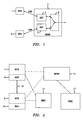
Figure 1 , where AoIP is implemented there is a direct connection between the BTS 1 and the MGW 2 (when the transcoders are removed from the BSS) with the BTS 1 having a Radio Access Termination ("RAT") 3 at theMGW 2. Internal HO from the source BTS 1 to atarget BTS 4 cannot be handled in the same manner as that set out above, because the twoBTSs 1 and 4 involved in the HO cannot share the same IP termination point. Instead, to achieve HO, a new channel is set up in the target cell associated with BTS 4. A new RAT 5 is set up in the MGW 2. Optionally, a Y connection is set up in theMGW 2, as shown at 6 inFigure 1 , with the source and targetRATs source RAT 3 to thetarget RAT 5. - Thus, AoIP intra HO is likely to incur similar delays as are experienced with inter, or external, HO, and hence a longer speech interruption time, due to the necessity to use signalling to switch the Radio Access Terminations. It will also require more transcoding resources than conventional internal BSC handover, and more MSC server processing, as all handovers are essentially external handovers.
- According to a first aspect of the invention, a method for call handover from a source cell associated with a first Base Transceiver Station, BTS, to a target cell associated with a second BTS in a telecommunications system, the first BTS and second BTS each including a respective different radio access termination, RAT, function, includes the steps of: directly connecting the first and second BTS; and handing over from the first BTS to the second BTS using transcoder free operation, TRFO. Thus, the BTS effectively acts as the RAT, and there is 'local routing', where there is no separately provided RAT used to connect the first BTS and second BTS. This is termed transcoder free operation ("TRFO"). The MGW to which the BTSs are connected is not included in the data path. In one method in accordance with the invention, the MGW provides signaling for managing the handover.
- A method in accordance with the invention may be particularly applicable to networks implemented according to 3G/LTE standards, but may also be applicable to other types of network and other future specifications.
- In one method in accordance with the invention, signaling between the BTSs and the MGW uses Real time Transport Protocol, RTP.
- The telecommunications system may be in accordance with 3GPP A-interface over IP, AoIP, specifications. By using the invention, the advantages of AoIP can be realised without the attendant difficulties with HO as previously described
- According to one method in accordance with the invention, information from the reception of at least one good voice packet is used to set call parameters. The call parameters may include at least one of: which codec to use in the downlink direction; and which uplink connection should be used for the uplink voice generation.
- According to a second aspect of the invention, a telecommunications system operates in accordance with a method in accordance with first aspect the invention.
- According to a third aspect of the invention, a telecommunications system comprises: a first Base Transceiver Station, BTS; a second BTS, the first BTS and second BTS each including a respective different radio access termination, RAT, function; and, during handover, providing a direct connection between the first BTS and second BTS; so that handover is carried out using transcoder free operation, TRFO. The telecommunications system may further comprise an MGW connected so that it is not included in the data path between the first and second BTS.
- Some methods and embodiments in accordance with the present invention are now described by way of example only, and with reference to the accompanying drawings, in which:
-
Figure 1 schematically illustrates a previous proposal; and -
Figure 2 schematically illustrates a system in accordance with the invention. - With reference to
Figure 2 , handover is required from a first, source, cell associated with afirst BTS 7 to a second, target, cell associated with asecond BTS 8. EachBTS BSC 12. The MGW 11 is connected to a Mobile Switching Center ("MSC") 13. - For handover, a
direct data connection 14 is set up between the BTS 7 for the source cell and theBTS 8 for the target cell, so that TRFO can be implemented. Theconnection 14 exists between theRATs 9 and 10. The MGW 11 is not included in the data path, but provides signalling together with theBSC 12. The MGW 11 indicates to the MSC 13 server that a handover is prepared, and includes information about the IP address and port of the target radio channel. The MSC 13 server configures the MGW 11 to indicate that the RAT 9 must manage the connection withRAT 10. - As an implementation choice, the RAT 9 can select from the following possibilities: generate the same voice flow towards the source and target cells if they use the same codec; generate two different voice flows when the two channels use different codecs; and generate only one voice flow if the two codecs are different.
- To switch from the old channel to the new channel, the RAT 9 waits for the first valid speech block coming from the target cell. This valid speech block may be either a speech frame or a SID frame indicating that no speech is present. As soon as the RAT 9 receives the first valid speech block, it starts generating the speech flow corresponding to the target cell information. 9 The handover process is terminated when the handover has been successfully accomplished or, in case of a handover failure, when information reporting the failure is received at the MSC 13 server from the MGW 11.
- The present invention may be embodied in other specific forms without departing from its spirit or essential characteristics. The described embodiments are to be considered in all respects only as illustrative and not restrictive. The scope of the invention is, therefore, indicated by the appended claims rather than by the foregoing description. All changes that come within the meaning and range of equivalency of the claims are to be embraced within their scope.
Claims (10)
- A method for call handover from a source cell associated with a first Base Transceiver Station, BTS, to a target cell associated with a second BTS in a telecommunications system, the first BTS and second BTS each including a respective different radio access termination, RAT, function, including the steps of:directly connecting the first BTS and second BTS; andhanding over from the first BTS to the second BTS using transcoder free operation, TRFO.
- The method as claimed in claim 1 and including providing signaling from a Media Gateway, MGW, for managing call handover.
- The method as claimed in claim 2 and including signaling between the BTSs and the MGW using Real time Transport Protocol, RTP.
- The method as claimed in claim 1, 2 or 3 wherein the telecommunications system is implemented according to 3G/LTE standards.
- The method as claimed in any preceding claim and wherein the telecommunications system is in accordance with 3GPP A-interface over IP, AoIP, specifications.
- The method as claimed in any preceding claim and including using information from the reception of at least one good voice packet to set call parameters.
- The method as claimed in claim 6 wherein the call parameters include at least one of: which codec to use in the downlink direction; and which uplink connection should be used for the uplink voice generation.
- A telecommunications system operating in accordance with a method as claimed in any preceding claim.
- A telecommunications system comprising: a first Base Transceiver Station, BTS; a second BTS, the first BTS and second BTS each including a respective different radio access termination, RAT, function; and, during handover, providing a direct connection between the first BTS and second BTS; so that handover is carried out using transcoder free operation, TRFO.
- The telecommunications system as claimed in claim 9 and comprising an MGW connected so that it is not included in the data path between the first and second BTS.
Priority Applications (1)
| Application Number | Priority Date | Filing Date | Title |
|---|---|---|---|
| EP07291635A EP2059074A1 (en) | 2007-11-06 | 2007-12-27 | Method and apparatus for call handover in a telecommunications system |
Applications Claiming Priority (2)
| Application Number | Priority Date | Filing Date | Title |
|---|---|---|---|
| EP07291330A EP2059073A1 (en) | 2007-11-06 | 2007-11-06 | Method and apparatus for call handover in a telecommunications system |
| EP07291635A EP2059074A1 (en) | 2007-11-06 | 2007-12-27 | Method and apparatus for call handover in a telecommunications system |
Publications (1)
| Publication Number | Publication Date |
|---|---|
| EP2059074A1 true EP2059074A1 (en) | 2009-05-13 |
Family
ID=39327010
Family Applications (2)
| Application Number | Title | Priority Date | Filing Date |
|---|---|---|---|
| EP07291330A Withdrawn EP2059073A1 (en) | 2007-11-06 | 2007-11-06 | Method and apparatus for call handover in a telecommunications system |
| EP07291635A Withdrawn EP2059074A1 (en) | 2007-11-06 | 2007-12-27 | Method and apparatus for call handover in a telecommunications system |
Family Applications Before (1)
| Application Number | Title | Priority Date | Filing Date |
|---|---|---|---|
| EP07291330A Withdrawn EP2059073A1 (en) | 2007-11-06 | 2007-11-06 | Method and apparatus for call handover in a telecommunications system |
Country Status (4)
| Country | Link |
|---|---|
| US (1) | US20090131058A1 (en) |
| EP (2) | EP2059073A1 (en) |
| CN (1) | CN101431740A (en) |
| WO (1) | WO2009059680A1 (en) |
Cited By (1)
| Publication number | Priority date | Publication date | Assignee | Title |
|---|---|---|---|---|
| WO2012089010A1 (en) * | 2010-12-28 | 2012-07-05 | 华为技术有限公司 | Rate adjustment method and apparatus applied to trfo voice call switching |
Families Citing this family (6)
| Publication number | Priority date | Publication date | Assignee | Title |
|---|---|---|---|---|
| US20110059739A1 (en) * | 2009-09-09 | 2011-03-10 | Chien-Jen Huang | Method of Radio Access Technology Selection and Related Communication Device |
| WO2011037649A1 (en) * | 2009-09-22 | 2011-03-31 | Qualcomm Incorporated | Method and apparatuses for returning the transmission of the uplink to a source cell during a baton handover |
| CN101877891A (en) * | 2010-06-18 | 2010-11-03 | 中兴通讯股份有限公司 | Method, system and device for gateway to obtain data information |
| WO2012023886A1 (en) * | 2010-08-17 | 2012-02-23 | Telefonaktiebolaget L M Ericsson (Publ) | NODE AND METHOD FOR AoIP ADDRESS CHANGE |
| US10524179B2 (en) * | 2015-04-10 | 2019-12-31 | Qualcomm Incorporated | Rate adaptation during handoffs |
| CN110635837B (en) * | 2019-09-23 | 2022-04-26 | 中电科航空电子有限公司 | System and method for supporting multiple networks to transmit ground-to-air data |
Citations (2)
| Publication number | Priority date | Publication date | Assignee | Title |
|---|---|---|---|---|
| WO1999007174A1 (en) * | 1997-07-28 | 1999-02-11 | Northern Telecom Limited | Soft handoff method and apparatus |
| US6967938B1 (en) * | 2000-04-25 | 2005-11-22 | Cisco Technology, Inc. | In-building code division multiple access wireless system and method |
Family Cites Families (7)
| Publication number | Priority date | Publication date | Assignee | Title |
|---|---|---|---|---|
| AU3065501A (en) * | 2000-01-31 | 2001-08-14 | Telefonaktiebolaget Lm Ericsson (Publ) | Base station system architecture |
| US6954441B2 (en) * | 2001-07-12 | 2005-10-11 | Telefonaktiebolaget Lm Ericsson (Publ) | IP-based GSM and UMTS system |
| US6889045B2 (en) * | 2002-06-26 | 2005-05-03 | Motorola, Inc. | Method and apparatus for implementing bi-directional soft handovers between wireless networks via media gateway control |
| US7181219B2 (en) * | 2003-05-22 | 2007-02-20 | Lucent Technologies Inc. | Wireless handover using anchor termination |
| US20060268900A1 (en) * | 2005-05-25 | 2006-11-30 | Telefonaktiebolaget Lm Ericsson (Publ) | Local switching of calls setup by multimedia core network |
| FI20065467A0 (en) * | 2006-06-30 | 2006-06-30 | Nokia Corp | Neighbor Cell Measurement and Reporting in a Multiple Radio Access Technology (RAT) environment |
| US7912004B2 (en) * | 2006-07-14 | 2011-03-22 | Kineto Wireless, Inc. | Generic access to the Iu interface |
-
2007
- 2007-11-06 EP EP07291330A patent/EP2059073A1/en not_active Withdrawn
- 2007-12-27 EP EP07291635A patent/EP2059074A1/en not_active Withdrawn
-
2008
- 2008-10-13 WO PCT/EP2008/008626 patent/WO2009059680A1/en not_active Ceased
- 2008-11-05 US US12/265,029 patent/US20090131058A1/en not_active Abandoned
- 2008-11-05 CN CNA2008101741782A patent/CN101431740A/en active Pending
Patent Citations (2)
| Publication number | Priority date | Publication date | Assignee | Title |
|---|---|---|---|---|
| WO1999007174A1 (en) * | 1997-07-28 | 1999-02-11 | Northern Telecom Limited | Soft handoff method and apparatus |
| US6967938B1 (en) * | 2000-04-25 | 2005-11-22 | Cisco Technology, Inc. | In-building code division multiple access wireless system and method |
Non-Patent Citations (3)
| Title |
|---|
| "AoIP Inter and Intra BSC Handover", 3GPP TSG GERAN2 MEETING #35BIS, G2-070307, 8 October 2007 (2007-10-08) - 12 October 2007 (2007-10-12), Sophia Antipolis, France, pages 1 - 5, XP002479267 * |
| SAMSUNG: "LTE Handover procedures, text proposal", 3RD GENERATION PARTNERSHIP PROJECT (3GPP); TECHNICALSPECIFICATION GROUP (TSG) RADIO ACCESS NETWORK (RAN); WORKINGGROUP 3 (WG3), XX, XX, no. 53, 8 May 2006 (2006-05-08), pages 1 - 13, XP002412652 * |
| TELEFON AB LM ERICSSON: "AoIP Call Control Signalling", 3GPP TSG GERAN2 MEETING #35BIS, 8 October 2007 (2007-10-08) - 12 October 2007 (2007-10-12), Sophia Antipolis, France, XP002476150 * |
Cited By (1)
| Publication number | Priority date | Publication date | Assignee | Title |
|---|---|---|---|---|
| WO2012089010A1 (en) * | 2010-12-28 | 2012-07-05 | 华为技术有限公司 | Rate adjustment method and apparatus applied to trfo voice call switching |
Also Published As
| Publication number | Publication date |
|---|---|
| EP2059073A1 (en) | 2009-05-13 |
| CN101431740A (en) | 2009-05-13 |
| WO2009059680A1 (en) | 2009-05-14 |
| US20090131058A1 (en) | 2009-05-21 |
Similar Documents
| Publication | Publication Date | Title |
|---|---|---|
| EP2056640B1 (en) | Voice synchronization during call handoff | |
| EP2255570B1 (en) | Methods of changing vocoder technology during voice-over-internet protocol handoff | |
| US7983679B2 (en) | Method and apparatus for inter-system active handoff of a hybrid subscriber unit | |
| US7697480B2 (en) | Method and apparatus for inter-system active handoff of a hybrid subscriber unit | |
| DK1989906T3 (en) | COMMUNICATION NETWORK SUPPLY | |
| US8165574B2 (en) | Method and apparatus for providing circuit switched domain services over a packet switched network | |
| US20060268781A1 (en) | System and method for call handoff from packet data wireless network to circuit switched wireless network | |
| KR20080041649A (en) | System-to-System Handover Using Legacy Interfaces | |
| JP2002118868A (en) | Handover of wireless call between systems supporting circuit call model and packet call model | |
| US8606276B2 (en) | Telecommunications apparatus and method | |
| WO2010022652A1 (en) | System and method for sr-vcc of ims emergency sessions | |
| EP2059074A1 (en) | Method and apparatus for call handover in a telecommunications system | |
| US20110110295A1 (en) | Enabling local switching in mobile radio networks | |
| CN101938801B (en) | Method and system for realizing relocation between networks | |
| US20040085923A1 (en) | Method and apparatus for cell reselection within a communications system | |
| KR101155298B1 (en) | Method and apparatus for communication between wireless telecommunications networks of different technology types | |
| KR20100126861A (en) | Method, apparatus and computer program product for handoff of terminals between packet-switched network and circuit-switched network | |
| WO2008157461A1 (en) | Method and apparatus for inter-technology handoff of a user equipment | |
| CN101472302A (en) | Method and device for switching business | |
| Abuhamoud | Analysis of Methods to Transmission Voice in LTE Networks |
Legal Events
| Date | Code | Title | Description |
|---|---|---|---|
| PUAI | Public reference made under article 153(3) epc to a published international application that has entered the european phase |
Free format text: ORIGINAL CODE: 0009012 |
|
| AK | Designated contracting states |
Kind code of ref document: A1 Designated state(s): AT BE BG CH CY CZ DE DK EE ES FI FR GB GR HU IE IS IT LI LT LU LV MC MT NL PL PT RO SE SI SK TR |
|
| AX | Request for extension of the european patent |
Extension state: AL BA HR MK RS |
|
| 17P | Request for examination filed |
Effective date: 20090518 |
|
| 17Q | First examination report despatched |
Effective date: 20090617 |
|
| AKX | Designation fees paid |
Designated state(s): AT BE BG CH CY CZ DE DK EE ES FI FR GB GR HU IE IS IT LI LT LU LV MC MT NL PL PT RO SE SI SK TR |
|
| STAA | Information on the status of an ep patent application or granted ep patent |
Free format text: STATUS: THE APPLICATION IS DEEMED TO BE WITHDRAWN |
|
| 18D | Application deemed to be withdrawn |
Effective date: 20091028 |