EP2056237B1 - Input-handwriting automatic transformation system and method - Google Patents
Input-handwriting automatic transformation system and method Download PDFInfo
- Publication number
- EP2056237B1 EP2056237B1 EP08019265A EP08019265A EP2056237B1 EP 2056237 B1 EP2056237 B1 EP 2056237B1 EP 08019265 A EP08019265 A EP 08019265A EP 08019265 A EP08019265 A EP 08019265A EP 2056237 B1 EP2056237 B1 EP 2056237B1
- Authority
- EP
- European Patent Office
- Prior art keywords
- input
- handwriting
- font
- similar
- transforming
- Prior art date
- Legal status (The legal status is an assumption and is not a legal conclusion. Google has not performed a legal analysis and makes no representation as to the accuracy of the status listed.)
- Ceased
Links
Images



Classifications
-
- G—PHYSICS
- G06—COMPUTING OR CALCULATING; COUNTING
- G06F—ELECTRIC DIGITAL DATA PROCESSING
- G06F3/00—Input arrangements for transferring data to be processed into a form capable of being handled by the computer; Output arrangements for transferring data from processing unit to output unit, e.g. interface arrangements
- G06F3/01—Input arrangements or combined input and output arrangements for interaction between user and computer
- G06F3/048—Interaction techniques based on graphical user interfaces [GUI]
- G06F3/0487—Interaction techniques based on graphical user interfaces [GUI] using specific features provided by the input device, e.g. functions controlled by the rotation of a mouse with dual sensing arrangements, or of the nature of the input device, e.g. tap gestures based on pressure sensed by a digitiser
- G06F3/0488—Interaction techniques based on graphical user interfaces [GUI] using specific features provided by the input device, e.g. functions controlled by the rotation of a mouse with dual sensing arrangements, or of the nature of the input device, e.g. tap gestures based on pressure sensed by a digitiser using a touch-screen or digitiser, e.g. input of commands through traced gestures
- G06F3/04883—Interaction techniques based on graphical user interfaces [GUI] using specific features provided by the input device, e.g. functions controlled by the rotation of a mouse with dual sensing arrangements, or of the nature of the input device, e.g. tap gestures based on pressure sensed by a digitiser using a touch-screen or digitiser, e.g. input of commands through traced gestures for inputting data by handwriting, e.g. gesture or text
-
- G—PHYSICS
- G06—COMPUTING OR CALCULATING; COUNTING
- G06V—IMAGE OR VIDEO RECOGNITION OR UNDERSTANDING
- G06V30/00—Character recognition; Recognising digital ink; Document-oriented image-based pattern recognition
- G06V30/10—Character recognition
- G06V30/14—Image acquisition
- G06V30/142—Image acquisition using hand-held instruments; Constructional details of the instruments
- G06V30/1423—Image acquisition using hand-held instruments; Constructional details of the instruments the instrument generating sequences of position coordinates corresponding to handwriting
-
- G—PHYSICS
- G06—COMPUTING OR CALCULATING; COUNTING
- G06F—ELECTRIC DIGITAL DATA PROCESSING
- G06F18/00—Pattern recognition
- G06F18/20—Analysing
- G06F18/28—Determining representative reference patterns, e.g. by averaging or distorting; Generating dictionaries
-
- G—PHYSICS
- G06—COMPUTING OR CALCULATING; COUNTING
- G06F—ELECTRIC DIGITAL DATA PROCESSING
- G06F3/00—Input arrangements for transferring data to be processed into a form capable of being handled by the computer; Output arrangements for transferring data from processing unit to output unit, e.g. interface arrangements
- G06F3/01—Input arrangements or combined input and output arrangements for interaction between user and computer
- G06F3/02—Input arrangements using manually operated switches, e.g. using keyboards or dials
- G06F3/023—Arrangements for converting discrete items of information into a coded form, e.g. arrangements for interpreting keyboard generated codes as alphanumeric codes, operand codes or instruction codes
- G06F3/0233—Character input methods
-
- G—PHYSICS
- G06—COMPUTING OR CALCULATING; COUNTING
- G06F—ELECTRIC DIGITAL DATA PROCESSING
- G06F3/00—Input arrangements for transferring data to be processed into a form capable of being handled by the computer; Output arrangements for transferring data from processing unit to output unit, e.g. interface arrangements
- G06F3/01—Input arrangements or combined input and output arrangements for interaction between user and computer
- G06F3/03—Arrangements for converting the position or the displacement of a member into a coded form
- G06F3/041—Digitisers, e.g. for touch screens or touch pads, characterised by the transducing means
Definitions
- An aspect of the present invention relates to a handwriting input system, and, more particularly, to an input-handwriting automatic transformation system and method capable of automatically transforming handwriting input via a touch pad to a specific font.
- handwriting input systems for example, touch pads (ink pad) have been included in PDAs, wireless terminals, and the like to enable a user to directly input handwriting.
- a handwriting input system recognizes the input handwriting and displays the input handwriting. That is, the handwriting input system displays the handwriting input by the user without a transformation process.
- the handwritten letters are aligned to have a standardized font size, and the user is unable to obtain feedback on the occurrence of an error during a data-conversion process.
- US 2005/0105799 A1 discloses a system for reproducing handwriting.
- An object of the invention is to provide an input-handwriting automatic transformation system and method capable of automatically transforming handwriting input by a user to a font most similar to the input handwriting.
- an input-handwriting automatic transformation system as defined by claim 1.
- an input-handwriting automatic transformation method as defined by claim 5.
- FIG. 2 is a block diagram illustrating a structure of an input-handwriting automatic transformation system according to an embodiment of the invention.
- an input-handwriting automatic transformation system (hereinafter, simply referred to as system) according to an embodiment of the invention includes a recognizing unit 10, an extracting unit 20, and a transforming unit 30.
- the recognizing unit 10 recognizes handwriting which a user inputs via an input pad 1, for example, a touch pad.
- the recognizing unit 10 collects predetermined data on the input handwriting, for example, data information of important reference points and the number of strokes of the input handwriting, and recognizes the type of letters written by the user on the basis of font data stored in a memory 11.
- the important reference points include start points, end points, and bent points of the input handwriting at the coordinates of the input pad 1.
- the extracting unit 20 acquires data information, such as fonts and important reference points corresponding to individual letters, stored in the memory 11, and extracts the font most similar to the data of the input handwriting from the fonts stored in the memory 11.
- the transforming unit 30 compares the reference points of the font extracted by the extracting unit 20 and the input handwriting recognized by the recognizing unit 10 and automatically transforms the shape of the extracted font to be most similar to the shape of the input handwriting.
- the transforming unit 30 includes a first transformer 31 and a second transformer 32.
- the first transformer 31 transforms the overall shape of the extracted font to be most similar to the overall shape of the input handwriting.
- the first transformer 31 transforms the entire size and slope of the extracted font to be most similar to the entire size and slope of the input handwriting.
- the second transformer 32 transforms the detailed shape of the extracted font to be most similar to the detailed shape of the input handwriting.
- the second transformer 32 transforms the length of each of strokes of the extracted font to be most similar to the length of each of strokes of the input handwriting.
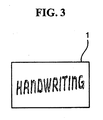
- FIG. 3 is an exemplary diagram illustrating one example of automatically transforming and displaying handwriting input to an ink pad by an input-handwriting automatic transformation system according to an embodiment of the invention.
- the system automatically transforms the font extracted from the memory 11 to have substantially the same size and slope as the input handwriting, and displays the corresponding letters in real time.
- FIGS. 4 , 5A to 5E , and 6A to 6D an input-handwriting automatic transformation method according to the present embodiment of the invention will be described in detail with reference to FIGS. 4 , 5A to 5E , and 6A to 6D .
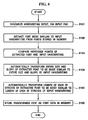
- FIG. 4 is a flowchart illustrating an input-handwriting automatic transformation method according to an embodiment of the invention.
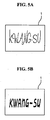
- FIGS. 5A to 5E are exemplary diagrams sequentially illustrating an example of a process of automatically transforming input handwriting by an input-handwriting automatic transformation method according to an embodiment of the invention.
- the recognizing unit 10 recognizes the input handwriting ( Fig. 4 , Step S101 and FIG. 5A ). Specifically, the recognizing unit 10 recognizes the handwriting as letters through data information on the important reference points and the number of strokes of the input handwriting. That is, the recognizing unit 10 recognizes the start points, the end points, and the bent points of the input handwriting at the coordinates of the input pad 1.
- the extracting unit 20 acquires data information, such as fonts and important reference points corresponding to individual letters, stored in the memory 11, and extracts the font most similar to the data of the input handwriting from the fonts stored in the memory 11 ( FIG. 4 , Step S102, and FIG. 5B ).
- the transforming unit 30 compares the reference points of the extracted font and the input handwriting (Step S103), and automatically transforms the shape of the extracted font in real time to be most similar to the shape of the input handwriting.
- the first transformer 31 transforms the overall shape of the extracted font to be most similar to the overall shape of the input handwriting. For example, the first transformer 31 transforms the entire size and slope of the extracted font to be most similar to the entire size and slope of the input handwriting ( FIG. 4 , Step S104, and FIG. 5C ).
- the second transformer 32 transforms the detailed shape of the extracted front to be most similar to that of the input handwriting. For example, the second transformer 32 transforms the length of each of the strokes of the extracted font to be most similar to the length of each of the strokes of the input handwriting ( FIG. 4 , Step S105, and FIG. 5D ).
- the transformed font ( FIG. 4 , Step S106 and FIG. 5E ) is stored in the memory 11 to enable using the font when creating a message using a mobile communication terminal or any other device in which handwriting is input, thereby constructing a database of fonts.
- FIGS. 6A to 6D are exemplary diagrams sequentially illustrating one example of a process of simultaneously transforming the entire input handwriting with a designated font using an input-handwriting automatic transformation method according to an embodiment of the invention.
- All letters of the input handwriting "BOOK" shown in FIG. 6A can be simultaneously transformed with a newly designated font, as shown in FIGS. 6B, 6C , and 6D .
- the handwriting is automatically transformed into the shape of the specific font in real time and displayed.
- the user can input handwriting using a specific font. Therefore, it is possible to improve the usefulness of the handwriting input.
- the handwriting input by the user is automatically transformed into the type of font most similar to the input handwriting.
- the user can input the handwriting using a popular font. Therefore, it is possible to improve handwritten input.
- the user can use a font that is similar to his or her handwriting without separate processes, such as planarizing and standardizing processes. Therefore, it is possible to improve the user friendliness of a device.
Landscapes
- Engineering & Computer Science (AREA)
- Theoretical Computer Science (AREA)
- Physics & Mathematics (AREA)
- General Physics & Mathematics (AREA)
- General Engineering & Computer Science (AREA)
- Computer Vision & Pattern Recognition (AREA)
- Data Mining & Analysis (AREA)
- Artificial Intelligence (AREA)
- Life Sciences & Earth Sciences (AREA)
- Bioinformatics & Cheminformatics (AREA)
- Bioinformatics & Computational Biology (AREA)
- Evolutionary Biology (AREA)
- Evolutionary Computation (AREA)
- Multimedia (AREA)
- Human Computer Interaction (AREA)
- Character Discrimination (AREA)
- User Interface Of Digital Computer (AREA)
- Position Input By Displaying (AREA)
Description
- This application claims priority from Korean Patent Application No.
2007-112113 filed on November 5, 2007 - An aspect of the present invention relates to a handwriting input system, and, more particularly, to an input-handwriting automatic transformation system and method capable of automatically transforming handwriting input via a touch pad to a specific font.
- In recent years, handwriting input systems, for example, touch pads (ink pad) have been included in PDAs, wireless terminals, and the like to enable a user to directly input handwriting.
- In general, if a user directly writes on a touch pad, a handwriting input system recognizes the input handwriting and displays the input handwriting. That is, the handwriting input system displays the handwriting input by the user without a transformation process.
- However, if a user's hands shake when inputting handwriting, as shown in
FIG. 1 , distorted letters are displayed. This lowers user satisfaction with the handwriting input system. - Moreover, when the user inputs handwriting via a touch pad and the input handwriting is transformed into text which is stored in a system, the handwritten letters are aligned to have a standardized font size, and the user is unable to obtain feedback on the occurrence of an error during a data-conversion process.
-
US 2005/0105799 A1 discloses a system for reproducing handwriting. - An object of the invention is to provide an input-handwriting automatic transformation system and method capable of automatically transforming handwriting input by a user to a font most similar to the input handwriting.
- Additional aspects and/or advantages of the invention will be set forth in the description which follows
- According to an aspect of the invention, there is provided an input-handwriting automatic transformation system as defined by
claim 1. - According to another aspect of the invention, there is provided an input-handwriting automatic transformation method as defined by claim 5.
- In addition to the example embodiments and aspects as described above, further aspects and embodiments will be apparent by reference to the drawings and by study of the following descriptions.
- A better understanding of the present invention will become apparent from the following detailed description of example embodiments and the claims when read in connection with the accompanying drawings, all forming a part of the disclosure of this invention. The scope of the present invention is limited only by the terms of the appended claims. The following represents brief descriptions of the drawings, wherein:
-
FIG. 1 is an exemplary diagram illustrating an example of displaying handwriting input to an ink pad of a handwriting input system; -
FIG. 2 is a block diagram illustrating a structure of an input-handwriting automatic transformation system according to an embodiment of the invention; -
FIG. 3 is an exemplary diagram illustrating one example of automatically transforming and displaying handwriting input to an ink pad by an input-handwriting automatic transformation system according to an embodiment of the invention; -
FIG. 4 is a flowchart illustrating an input-handwriting automatic transformation method according to an embodiment of the invention; -
FIGS. 5A to 5E are exemplary diagrams sequentially illustrating an example of a process of automatically transforming input handwriting by an input-handwriting automatic transformation method according to an embodiment of the invention; and -
FIGS. 6A to 6D are exemplary diagrams sequentially illustrating one example of a process of simultaneously transforming the entire input handwriting to a designated font using an input-handwriting automatic transformation method according to an embodiment of the invention. - Reference will now be made in detail to the present embodiments of the present invention, examples of which are illustrated in the accompanying drawings, wherein like reference numerals refer to the like elements throughout. The embodiments are described below in order to explain the present invention by referring to the figures.
- Hereinafter, an input-handwriting automatic transformation system and method according to an embodiment of the invention will be described in detail with reference to the accompanying drawings. In the embodiment of the invention, detailed description of known structures and functions incorporated herein will be omitted when it may make the subject matter of the invention unclear.
-
FIG. 2 is a block diagram illustrating a structure of an input-handwriting automatic transformation system according to an embodiment of the invention. - As shown in
FIG. 2 , an input-handwriting automatic transformation system (hereinafter, simply referred to as system) according to an embodiment of the invention includes a recognizingunit 10, an extractingunit 20, and a transformingunit 30. - The recognizing
unit 10 recognizes handwriting which a user inputs via aninput pad 1, for example, a touch pad. - Specifically, the recognizing
unit 10 collects predetermined data on the input handwriting, for example, data information of important reference points and the number of strokes of the input handwriting, and recognizes the type of letters written by the user on the basis of font data stored in amemory 11. In this case, the important reference points include start points, end points, and bent points of the input handwriting at the coordinates of theinput pad 1. - The extracting
unit 20 acquires data information, such as fonts and important reference points corresponding to individual letters, stored in thememory 11, and extracts the font most similar to the data of the input handwriting from the fonts stored in thememory 11. - The transforming
unit 30 compares the reference points of the font extracted by the extractingunit 20 and the input handwriting recognized by the recognizingunit 10 and automatically transforms the shape of the extracted font to be most similar to the shape of the input handwriting. - The transforming
unit 30 includes afirst transformer 31 and asecond transformer 32. - The
first transformer 31 transforms the overall shape of the extracted font to be most similar to the overall shape of the input handwriting. - Specifically, the
first transformer 31 transforms the entire size and slope of the extracted font to be most similar to the entire size and slope of the input handwriting. - The
second transformer 32 transforms the detailed shape of the extracted font to be most similar to the detailed shape of the input handwriting. - Specifically, the
second transformer 32 transforms the length of each of strokes of the extracted font to be most similar to the length of each of strokes of the input handwriting. -
FIG. 3 is an exemplary diagram illustrating one example of automatically transforming and displaying handwriting input to an ink pad by an input-handwriting automatic transformation system according to an embodiment of the invention. - As shown in
FIG. 3 , if the user writes on a touch pad, based on the size and slope of the input handwriting, the system automatically transforms the font extracted from thememory 11 to have substantially the same size and slope as the input handwriting, and displays the corresponding letters in real time. - Hereinafter, an input-handwriting automatic transformation method according to the present embodiment of the invention will be described in detail with reference to
FIGS. 4 ,5A to 5E , and6A to 6D . -
FIG. 4 is a flowchart illustrating an input-handwriting automatic transformation method according to an embodiment of the invention.FIGS. 5A to 5E are exemplary diagrams sequentially illustrating an example of a process of automatically transforming input handwriting by an input-handwriting automatic transformation method according to an embodiment of the invention. - As shown in
FIGS. 4 and5A to 5E , in the input-handwriting automatic transformation method, if a user writes letters "KWANG-SU" on theinput pad 1 in his/her own handwriting, the recognizingunit 10 recognizes the input handwriting (Fig. 4 , Step S101 andFIG. 5A ). Specifically, the recognizingunit 10 recognizes the handwriting as letters through data information on the important reference points and the number of strokes of the input handwriting. That is, the recognizingunit 10 recognizes the start points, the end points, and the bent points of the input handwriting at the coordinates of theinput pad 1. - Then, the extracting
unit 20 acquires data information, such as fonts and important reference points corresponding to individual letters, stored in thememory 11, and extracts the font most similar to the data of the input handwriting from the fonts stored in the memory 11 (FIG. 4 , Step S102, andFIG. 5B ). - Then, the transforming
unit 30 compares the reference points of the extracted font and the input handwriting (Step S103), and automatically transforms the shape of the extracted font in real time to be most similar to the shape of the input handwriting. - Specifically, the
first transformer 31 transforms the overall shape of the extracted font to be most similar to the overall shape of the input handwriting. For example, thefirst transformer 31 transforms the entire size and slope of the extracted font to be most similar to the entire size and slope of the input handwriting (FIG. 4 , Step S104, andFIG. 5C ). - Then, the
second transformer 32 transforms the detailed shape of the extracted front to be most similar to that of the input handwriting. For example, thesecond transformer 32 transforms the length of each of the strokes of the extracted font to be most similar to the length of each of the strokes of the input handwriting (FIG. 4 , Step S105, andFIG. 5D ). - Preferably, the transformed font (
FIG. 4 , Step S106 andFIG. 5E ) is stored in thememory 11 to enable using the font when creating a message using a mobile communication terminal or any other device in which handwriting is input, thereby constructing a database of fonts. -
FIGS. 6A to 6D are exemplary diagrams sequentially illustrating one example of a process of simultaneously transforming the entire input handwriting with a designated font using an input-handwriting automatic transformation method according to an embodiment of the invention. - All letters of the input handwriting "BOOK" shown in
FIG. 6A can be simultaneously transformed with a newly designated font, as shown inFIGS. 6B, 6C , and6D . - That is, according to the embodiment of the invention, if the user inputs handwriting through the touch pad, the handwriting is automatically transformed into the shape of the specific font in real time and displayed. As a result, the user can input handwriting using a specific font. Therefore, it is possible to improve the usefulness of the handwriting input.
- As described above, according to the input-handwriting automatic transformation system and method according to the embodiment of the invention, the following effects can be achieved.
- First, the handwriting input by the user is automatically transformed into the type of font most similar to the input handwriting. As a result, the user can input the handwriting using a popular font. Therefore, it is possible to improve handwritten input.
- Second, the user can use a font that is similar to his or her handwriting without separate processes, such as planarizing and standardizing processes. Therefore, it is possible to improve the user friendliness of a device.
- While there have been illustrated and described what are considered to be example embodiments of the present invention, it will be understood by those skilled in the art and as technology develops that various changes and modifications, may be made. Accordingly, it is intended, therefore, that the present invention not be limited to the various example embodiments disclosed, but that the present invention includes all embodiments falling within the scope of the appended claims.
Claims (9)
- An input-handwriting automatic transformation system comprising:a recognizing unit configured for recognizing handwriting input via an input pad, said handwriting comprising a hand-written multi-stroke character;an extracting unit extracting a font most similar to the input handwriting from fonts stored in a memory; anda transforming unit comparing the font extracted by the extracting unit and the input handwriting, and automatically transforming a shape of the extracted font to be most similar to a shape of the input handwriting, said transforming unit comprising a first transformer transforming an overall shape of the extracted font to be most similar to an overall shape of the input handwriting, and a second transformer transforming a detailed shape of the extracted font to be most similar to a detailed shape of the input handwriting, wherein said second transformer is arranged to transform a length of each of strokes of the extracted font to be most similar to a length of each of strokes of the input handwriting.
- The input-handwriting automatic transformation system of claim 1, wherein the recognizing unit recognizes the input handwriting as letters based on data information of important reference points and a number of strokes of the input handwriting.
- The input-handwriting automatic transformation system of claim 2, wherein the important reference points include start points, end points, and bend points of the input handwriting.
- The input-handwriting automatic transformation system of claim 1, wherein the first transformer transforms an entire size and slope of the extracted font to be most similar to an entire size and slope of the input handwriting
- An input-handwriting automatic transformation method comprising:recognizing handwriting input via an input pad, said handwriting comprising a hand-written multi-stroke character;extracting a font most similar to the input handwriting from fonts stored 10 in a memory; andcomparing the extracted font and the input handwriting and automatically transforming the extracted font to be most similar to the input handwriting;wherein the comparing of the extracted font and the input handwriting and the automatic transforming of the shape of the extracted font to be most similar to the shape of the input handwriting comprises transforming an overall shape of the extracted font to be most similar to an overall shape of the input handwriting, and transforming a detailed shape of the extracted font to be most similar to a detailed shape of the input handwriting, after transforming the overall shape of the extracted font, and wherein the transforming of the detailed shape of the extracted font to be most similar to the detailed shape of the input handwriting includes 25 transforming a length of each of strokes of the extracted font to be most similar to a length of each of strokes of the input handwriting.
- The input-handwriting automatic transformation method of claim 5, wherein the recognizing of the handwriting input via the input pad includes recognizing the input handwriting as letters based on data information on reference points and a number of strokes of the input handwriting.
- The input-handwriting automatic transformation method of claim 6, wherein the reference points include start points, end points, and bend points of the input handwriting.
- The input-handwriting automatic transformation method of claim 5, wherein the transforming of the overall shape of the extracted font to be most similar to the overall shape of the input handwriting comprises transforming an entire size and slope of the extracted font to be most similar to an entire size and slope of the input handwriting.
- The input-handwriting automatic transformation method of claim 5, further comprising: storing a transformed font as font data in the memory to allow use of the font when creating a message.
Applications Claiming Priority (1)
| Application Number | Priority Date | Filing Date | Title |
|---|---|---|---|
| KR1020070112113A KR20090046142A (en) | 2007-11-05 | 2007-11-05 | Input handwriting automatic conversion system and method |
Publications (2)
| Publication Number | Publication Date |
|---|---|
| EP2056237A1 EP2056237A1 (en) | 2009-05-06 |
| EP2056237B1 true EP2056237B1 (en) | 2011-05-25 |
Family
ID=40340611
Family Applications (1)
| Application Number | Title | Priority Date | Filing Date |
|---|---|---|---|
| EP08019265A Ceased EP2056237B1 (en) | 2007-11-05 | 2008-11-04 | Input-handwriting automatic transformation system and method |
Country Status (5)
| Country | Link |
|---|---|
| US (1) | US8503788B2 (en) |
| EP (1) | EP2056237B1 (en) |
| JP (2) | JP2009116877A (en) |
| KR (1) | KR20090046142A (en) |
| CN (1) | CN101430623B (en) |
Families Citing this family (26)
| Publication number | Priority date | Publication date | Assignee | Title |
|---|---|---|---|---|
| CN102081594B (en) * | 2009-11-27 | 2014-02-05 | 株式会社理光 | Equipment and method for extracting enclosing rectangles of characters from portable electronic documents |
| US8749800B2 (en) * | 2009-12-30 | 2014-06-10 | Eastman Kodak Company | System for generating personalized documents |
| JP5523973B2 (en) * | 2010-07-30 | 2014-06-18 | シャープ株式会社 | Network system and communication method |
| JP5834822B2 (en) * | 2011-11-24 | 2015-12-24 | 富士通株式会社 | Terminal device, font control method, and font control program |
| KR101338397B1 (en) * | 2011-11-28 | 2013-12-10 | 장경호 | Character Font Making System and Method thereof |
| KR102040851B1 (en) | 2012-08-06 | 2019-11-06 | 삼성전자주식회사 | Method for key inputting in a portable terminal |
| DE102012020610A1 (en) * | 2012-10-19 | 2014-04-24 | Audi Ag | Car with a handwriting recognition system |
| US9141588B2 (en) * | 2013-01-28 | 2015-09-22 | Empire Technology Development Llc | Communication using handwritten input |
| JP6100013B2 (en) * | 2013-02-07 | 2017-03-22 | 株式会社東芝 | Electronic device and handwritten document processing method |
| EP2767894A1 (en) * | 2013-02-15 | 2014-08-20 | BlackBerry Limited | Method and apparatus pertaining to adjusting textual graphic embellishments |
| US9880990B2 (en) * | 2013-03-14 | 2018-01-30 | Microsoft Technology Licensing, Llc | Leveraging previous instances of handwriting for handwriting beautification and other applications |
| KR101426875B1 (en) * | 2013-04-25 | 2014-09-23 | 심성규 | Mobile communication terminal, searching input typeface using the same |
| JP6094400B2 (en) * | 2013-06-25 | 2017-03-15 | ソニー株式会社 | Information processing apparatus, information processing method, and information processing program |
| KR102162836B1 (en) * | 2013-08-30 | 2020-10-07 | 삼성전자주식회사 | Apparatas and method for supplying content according to field attribute |
| JP6081606B2 (en) * | 2013-09-20 | 2017-02-15 | 株式会社東芝 | Electronic apparatus and method |
| KR20160043767A (en) * | 2014-10-14 | 2016-04-22 | 삼성전자주식회사 | Display apparatus and control method thereof |
| KR20160062566A (en) * | 2014-11-25 | 2016-06-02 | 삼성전자주식회사 | Device and method for amend hand-writing characters |
| US10489051B2 (en) * | 2014-11-28 | 2019-11-26 | Samsung Electronics Co., Ltd. | Handwriting input apparatus and control method thereof |
| US9824266B2 (en) | 2014-11-28 | 2017-11-21 | Samsung Electronics Co., Ltd. | Handwriting input apparatus and control method thereof |
| US9715623B2 (en) | 2015-06-10 | 2017-07-25 | Lenovo (Singapore) Pte. Ltd. | Reduced document stroke storage |
| US10210383B2 (en) | 2015-09-03 | 2019-02-19 | Microsoft Technology Licensing, Llc | Interacting with an assistant component based on captured stroke information |
| US10387034B2 (en) | 2015-09-03 | 2019-08-20 | Microsoft Technology Licensing, Llc | Modifying captured stroke information into an actionable form |
| US10970476B2 (en) * | 2017-05-17 | 2021-04-06 | Microsoft Technology Licensing, Llc | Augmenting digital ink strokes |
| CN108228069B (en) * | 2017-12-21 | 2020-05-26 | 北京壹人壹本信息科技有限公司 | Handwritten font input method, mobile terminal and device |
| KR102864050B1 (en) | 2020-08-04 | 2025-09-24 | 삼성전자주식회사 | Electronic device and method for processing handwriting input thereof |
| EP4057182A1 (en) * | 2021-03-09 | 2022-09-14 | Société BIC | Handwriting feedback |
Family Cites Families (15)
| Publication number | Priority date | Publication date | Assignee | Title |
|---|---|---|---|---|
| JPS60112187A (en) | 1983-11-24 | 1985-06-18 | Hitachi Ltd | Recognition system of online hand written character |
| KR200144818Y1 (en) | 1993-12-13 | 1999-06-15 | 최진호 | Cold air leak prevention device of freezing showcase |
| JPH0944596A (en) | 1995-07-28 | 1997-02-14 | Toshiba Corp | Document creation device and character recognition method used in the device |
| JPH0991380A (en) | 1995-09-21 | 1997-04-04 | Canon Inc | Information processing apparatus and method, and storage medium |
| US6094506A (en) * | 1995-10-25 | 2000-07-25 | Microsoft Corporation | Automatic generation of probability tables for handwriting recognition systems |
| WO2001044885A2 (en) | 1999-12-17 | 2001-06-21 | Koninklijke Philips Electronics N.V. | Apparatus and system for reproduction of handwritten input |
| KR100562421B1 (en) | 2001-03-28 | 2006-03-22 | 주식회사 디오텍 | Ink Data Processing Method of Ink Editor System Using Electronic Ink Method |
| KR100551557B1 (en) | 2003-07-21 | 2006-02-13 | 에스케이 텔레콤주식회사 | Mobile communication terminal and handwritten message service system and method using the same |
| US7369702B2 (en) * | 2003-11-07 | 2008-05-06 | Microsoft Corporation | Template-based cursive handwriting recognition |
| US7302099B2 (en) * | 2003-11-10 | 2007-11-27 | Microsoft Corporation | Stroke segmentation for template-based cursive handwriting recognition |
| US20050105799A1 (en) * | 2003-11-17 | 2005-05-19 | Media Lab Europe | Dynamic typography system |
| US7848573B2 (en) * | 2003-12-03 | 2010-12-07 | Microsoft Corporation | Scaled text replacement of ink |
| JP2008522984A (en) | 2004-12-06 | 2008-07-03 | ニューサウス イノベイションズ ピーティーワイ リミテッド | Cancer treatment |
| JP4823606B2 (en) | 2005-08-17 | 2011-11-24 | 富士フイルム株式会社 | Character output device and method, and program |
| US7454063B1 (en) * | 2005-09-22 | 2008-11-18 | The United States Of America As Represented By The Director National Security Agency | Method of optical character recognition using feature recognition and baseline estimation |
-
2007
- 2007-11-05 KR KR1020070112113A patent/KR20090046142A/en not_active Ceased
-
2008
- 2008-11-03 US US12/263,627 patent/US8503788B2/en not_active Expired - Fee Related
- 2008-11-04 EP EP08019265A patent/EP2056237B1/en not_active Ceased
- 2008-11-05 CN CN2008101728631A patent/CN101430623B/en not_active Expired - Fee Related
- 2008-11-05 JP JP2008284386A patent/JP2009116877A/en active Pending
-
2015
- 2015-12-08 JP JP2015239729A patent/JP2016076250A/en active Pending
Also Published As
| Publication number | Publication date |
|---|---|
| CN101430623B (en) | 2013-06-19 |
| JP2016076250A (en) | 2016-05-12 |
| JP2009116877A (en) | 2009-05-28 |
| CN101430623A (en) | 2009-05-13 |
| EP2056237A1 (en) | 2009-05-06 |
| US20090116744A1 (en) | 2009-05-07 |
| KR20090046142A (en) | 2009-05-11 |
| US8503788B2 (en) | 2013-08-06 |
Similar Documents
| Publication | Publication Date | Title |
|---|---|---|
| EP2056237A1 (en) | Input-handwriting automatic transformation system and method | |
| US8610672B2 (en) | Device and method for stroke based graphic input | |
| US20120256956A1 (en) | Display control device, display control method, and program | |
| KR20040062864A (en) | Pen tip language and language palette | |
| WO2015163675A1 (en) | Method of processing content and electronic device using the same | |
| US10152472B2 (en) | Apparatus and method for generating summary data of E-book or E-note | |
| US20210312679A1 (en) | Method for generating identification pattern and terminal device | |
| CN111353493A (en) | Text image direction correction method and device | |
| CN111949145A (en) | Intelligent pen image processing method and device and electronic equipment | |
| CN119785781A (en) | Voice control method, device, electronic device, storage medium and vehicle | |
| JP4212270B2 (en) | Character input device, character input method, and program for inputting characters | |
| TWI519997B (en) | Server, user device and terminal device | |
| KR101399401B1 (en) | Electronic signature system and method using touch screen device | |
| CN101118471B (en) | System and method for implementing function by user-defined hand-written symbol | |
| CN110377167B (en) | Font generation method and font generation device | |
| KR102367853B1 (en) | A method of building custom studio | |
| CN104182061A (en) | Multiword input method and equipment | |
| JP6582464B2 (en) | Information input device and program | |
| JP6155893B2 (en) | Image processing apparatus and program | |
| CN115826762A (en) | Text recognition method, device, equipment and storage medium applied to handwriting in the air | |
| CN116959000B (en) | Handwriting recognition method, device, computer equipment and storage medium | |
| CN106959772B (en) | Input method and electronic equipment | |
| JP5499994B2 (en) | CALENDAR DEVICE AND COMPUTER PROGRAM HAVING ELECTRONIC EXPANSION FOR MEMORY SPACE OF PAPER CALENDAR | |
| CN100416475C (en) | Method and communication device for displaying graphical objects | |
| CN113535017B (en) | A method, device and storage medium for processing and synchronous display of picture book files |
Legal Events
| Date | Code | Title | Description |
|---|---|---|---|
| PUAI | Public reference made under article 153(3) epc to a published international application that has entered the european phase |
Free format text: ORIGINAL CODE: 0009012 |
|
| AK | Designated contracting states |
Kind code of ref document: A1 Designated state(s): AT BE BG CH CY CZ DE DK EE ES FI FR GB GR HR HU IE IS IT LI LT LU LV MC MT NL NO PL PT RO SE SI SK TR |
|
| AX | Request for extension of the european patent |
Extension state: AL BA MK RS |
|
| 17Q | First examination report despatched |
Effective date: 20090922 |
|
| 17P | Request for examination filed |
Effective date: 20090831 |
|
| AKX | Designation fees paid |
Designated state(s): DE FR GB |
|
| GRAP | Despatch of communication of intention to grant a patent |
Free format text: ORIGINAL CODE: EPIDOSNIGR1 |
|
| RIC1 | Information provided on ipc code assigned before grant |
Ipc: G06K 9/62 20060101ALI20101202BHEP Ipc: G06K 9/22 20060101AFI20101202BHEP Ipc: G06K 9/00 20060101ALI20101202BHEP |
|
| GRAS | Grant fee paid |
Free format text: ORIGINAL CODE: EPIDOSNIGR3 |
|
| GRAA | (expected) grant |
Free format text: ORIGINAL CODE: 0009210 |
|
| AK | Designated contracting states |
Kind code of ref document: B1 Designated state(s): DE FR GB |
|
| REG | Reference to a national code |
Ref country code: GB Ref legal event code: FG4D |
|
| REG | Reference to a national code |
Ref country code: DE Ref legal event code: R096 Ref document number: 602008007154 Country of ref document: DE Effective date: 20110707 |
|
| PLBE | No opposition filed within time limit |
Free format text: ORIGINAL CODE: 0009261 |
|
| STAA | Information on the status of an ep patent application or granted ep patent |
Free format text: STATUS: NO OPPOSITION FILED WITHIN TIME LIMIT |
|
| 26N | No opposition filed |
Effective date: 20120228 |
|
| REG | Reference to a national code |
Ref country code: DE Ref legal event code: R097 Ref document number: 602008007154 Country of ref document: DE Effective date: 20120228 |
|
| REG | Reference to a national code |
Ref country code: FR Ref legal event code: PLFP Year of fee payment: 8 |
|
| REG | Reference to a national code |
Ref country code: FR Ref legal event code: PLFP Year of fee payment: 9 |
|
| REG | Reference to a national code |
Ref country code: FR Ref legal event code: PLFP Year of fee payment: 10 |
|
| REG | Reference to a national code |
Ref country code: FR Ref legal event code: PLFP Year of fee payment: 11 |
|
| PGFP | Annual fee paid to national office [announced via postgrant information from national office to epo] |
Ref country code: DE Payment date: 20181022 Year of fee payment: 11 |
|
| PGFP | Annual fee paid to national office [announced via postgrant information from national office to epo] |
Ref country code: GB Payment date: 20181023 Year of fee payment: 11 Ref country code: FR Payment date: 20181029 Year of fee payment: 11 |
|
| REG | Reference to a national code |
Ref country code: DE Ref legal event code: R119 Ref document number: 602008007154 Country of ref document: DE |
|
| GBPC | Gb: european patent ceased through non-payment of renewal fee |
Effective date: 20191104 |
|
| PG25 | Lapsed in a contracting state [announced via postgrant information from national office to epo] |
Ref country code: DE Free format text: LAPSE BECAUSE OF NON-PAYMENT OF DUE FEES Effective date: 20200603 Ref country code: FR Free format text: LAPSE BECAUSE OF NON-PAYMENT OF DUE FEES Effective date: 20191130 Ref country code: GB Free format text: LAPSE BECAUSE OF NON-PAYMENT OF DUE FEES Effective date: 20191104 |