EP2054489B1 - Method of blending high tan and high sbn crude oils and method of reducing particulate induced whole crude oil fouling and asphaltene induced whole crude oil fouling - Google Patents
Method of blending high tan and high sbn crude oils and method of reducing particulate induced whole crude oil fouling and asphaltene induced whole crude oil fouling Download PDFInfo
- Publication number
- EP2054489B1 EP2054489B1 EP07837083.0A EP07837083A EP2054489B1 EP 2054489 B1 EP2054489 B1 EP 2054489B1 EP 07837083 A EP07837083 A EP 07837083A EP 2054489 B1 EP2054489 B1 EP 2054489B1
- Authority
- EP
- European Patent Office
- Prior art keywords
- crude oil
- hsdp
- fouling
- crude
- blended
- Prior art date
- Legal status (The legal status is an assumption and is not a legal conclusion. Google has not performed a legal analysis and makes no representation as to the accuracy of the status listed.)
- Not-in-force
Links
Images




Classifications
-
- C—CHEMISTRY; METALLURGY
- C10—PETROLEUM, GAS OR COKE INDUSTRIES; TECHNICAL GASES CONTAINING CARBON MONOXIDE; FUELS; LUBRICANTS; PEAT
- C10G—CRACKING HYDROCARBON OILS; PRODUCTION OF LIQUID HYDROCARBON MIXTURES, e.g. BY DESTRUCTIVE HYDROGENATION, OLIGOMERISATION, POLYMERISATION; RECOVERY OF HYDROCARBON OILS FROM OIL-SHALE, OIL-SAND, OR GASES; REFINING MIXTURES MAINLY CONSISTING OF HYDROCARBONS; REFORMING OF NAPHTHA; MINERAL WAXES
- C10G31/00—Refining of hydrocarbon oils, in the absence of hydrogen, by methods not otherwise provided for
-
- C—CHEMISTRY; METALLURGY
- C10—PETROLEUM, GAS OR COKE INDUSTRIES; TECHNICAL GASES CONTAINING CARBON MONOXIDE; FUELS; LUBRICANTS; PEAT
- C10G—CRACKING HYDROCARBON OILS; PRODUCTION OF LIQUID HYDROCARBON MIXTURES, e.g. BY DESTRUCTIVE HYDROGENATION, OLIGOMERISATION, POLYMERISATION; RECOVERY OF HYDROCARBON OILS FROM OIL-SHALE, OIL-SAND, OR GASES; REFINING MIXTURES MAINLY CONSISTING OF HYDROCARBONS; REFORMING OF NAPHTHA; MINERAL WAXES
- C10G17/00—Refining of hydrocarbon oils in the absence of hydrogen, with acids, acid-forming compounds or acid-containing liquids, e.g. acid sludge
- C10G17/02—Refining of hydrocarbon oils in the absence of hydrogen, with acids, acid-forming compounds or acid-containing liquids, e.g. acid sludge with acids or acid-containing liquids, e.g. acid sludge
-
- C—CHEMISTRY; METALLURGY
- C10—PETROLEUM, GAS OR COKE INDUSTRIES; TECHNICAL GASES CONTAINING CARBON MONOXIDE; FUELS; LUBRICANTS; PEAT
- C10G—CRACKING HYDROCARBON OILS; PRODUCTION OF LIQUID HYDROCARBON MIXTURES, e.g. BY DESTRUCTIVE HYDROGENATION, OLIGOMERISATION, POLYMERISATION; RECOVERY OF HYDROCARBON OILS FROM OIL-SHALE, OIL-SAND, OR GASES; REFINING MIXTURES MAINLY CONSISTING OF HYDROCARBONS; REFORMING OF NAPHTHA; MINERAL WAXES
- C10G75/00—Inhibiting corrosion or fouling in apparatus for treatment or conversion of hydrocarbon oils, in general
- C10G75/04—Inhibiting corrosion or fouling in apparatus for treatment or conversion of hydrocarbon oils, in general by addition of antifouling agents
-
- C—CHEMISTRY; METALLURGY
- C10—PETROLEUM, GAS OR COKE INDUSTRIES; TECHNICAL GASES CONTAINING CARBON MONOXIDE; FUELS; LUBRICANTS; PEAT
- C10G—CRACKING HYDROCARBON OILS; PRODUCTION OF LIQUID HYDROCARBON MIXTURES, e.g. BY DESTRUCTIVE HYDROGENATION, OLIGOMERISATION, POLYMERISATION; RECOVERY OF HYDROCARBON OILS FROM OIL-SHALE, OIL-SAND, OR GASES; REFINING MIXTURES MAINLY CONSISTING OF HYDROCARBONS; REFORMING OF NAPHTHA; MINERAL WAXES
- C10G2300/00—Aspects relating to hydrocarbon processing covered by groups C10G1/00 - C10G99/00
- C10G2300/10—Feedstock materials
- C10G2300/1033—Oil well production fluids
-
- C—CHEMISTRY; METALLURGY
- C10—PETROLEUM, GAS OR COKE INDUSTRIES; TECHNICAL GASES CONTAINING CARBON MONOXIDE; FUELS; LUBRICANTS; PEAT
- C10G—CRACKING HYDROCARBON OILS; PRODUCTION OF LIQUID HYDROCARBON MIXTURES, e.g. BY DESTRUCTIVE HYDROGENATION, OLIGOMERISATION, POLYMERISATION; RECOVERY OF HYDROCARBON OILS FROM OIL-SHALE, OIL-SAND, OR GASES; REFINING MIXTURES MAINLY CONSISTING OF HYDROCARBONS; REFORMING OF NAPHTHA; MINERAL WAXES
- C10G2300/00—Aspects relating to hydrocarbon processing covered by groups C10G1/00 - C10G99/00
- C10G2300/20—Characteristics of the feedstock or the products
- C10G2300/201—Impurities
- C10G2300/202—Heteroatoms content, i.e. S, N, O, P
- C10G2300/203—Naphthenic acids, TAN
-
- C—CHEMISTRY; METALLURGY
- C10—PETROLEUM, GAS OR COKE INDUSTRIES; TECHNICAL GASES CONTAINING CARBON MONOXIDE; FUELS; LUBRICANTS; PEAT
- C10G—CRACKING HYDROCARBON OILS; PRODUCTION OF LIQUID HYDROCARBON MIXTURES, e.g. BY DESTRUCTIVE HYDROGENATION, OLIGOMERISATION, POLYMERISATION; RECOVERY OF HYDROCARBON OILS FROM OIL-SHALE, OIL-SAND, OR GASES; REFINING MIXTURES MAINLY CONSISTING OF HYDROCARBONS; REFORMING OF NAPHTHA; MINERAL WAXES
- C10G2300/00—Aspects relating to hydrocarbon processing covered by groups C10G1/00 - C10G99/00
- C10G2300/40—Characteristics of the process deviating from typical ways of processing
- C10G2300/4075—Limiting deterioration of equipment
Definitions
- the present invention relates to processing of whole crude oils, blends and fractions in refineries and petrochemical plants.
- the present invention relates to the reduction of particulate induced crude oil fouling and asphaltene induced crude oil fouling.
- the present invention relates to the blending of high total acid number (TAN) and high solubility blending number (S BN ) crude oils to reduce fouling in pre-heat train exchangers, furnaces, and other refinery process units.
- TAN total acid number
- S BN high solubility blending number
- Fouling is generally defined as the accumulation of unwanted materials on the surfaces of processing equipment.
- fouling is the accumulation of unwanted hydrocarbon-based deposits on heat exchanger surfaces. It has been recognized as a nearly universal problem in design and operation of refining and petrochemical processing systems, and affects the operation of equipment in two ways.
- the fouling layer has a low thermal conductivity. This increases the resistance to heat transfer and reduces the effectiveness of the heat exchangers.
- the cross-sectional area is reduced, which causes an increase in pressure drop across the apparatus and creates inefficient pressure and flow in the heat exchanger.
- Fouling in heat exchangers associated with petroleum type streams can result from a number of mechanisms including chemical reactions, corrosion, deposit of insoluble materials, and deposit of materials made insoluble by the temperature difference between the fluid and heat exchange wall.
- LSLA low-sulfur, low asphaltene
- HSHA high-sulfur, high asphaltene
- Blending of oils in refineries is common, but certain blends are incompatible and cause precipitation of asphaltenes that can rapidly foul process equipment. Improper mixing of crude oils can produce asphaltenic sediment that is known to reduce heat transfer efficiency. Although most blends of unprocessed crude oils are not potentially incompatible, once an incompatible blend is obtained, the rapid fouling and coking that results usually requires shutting down the refining process in a short time. To return the refinery to more profitable levels, the fouled heat exchangers need to be cleaned, which typically requires removal from service, as discussed below.
- Heat exchanger in-tube fouling costs petroleum refineries hundreds of millions of dollars each year due to lost efficiencies, throughput, and additional energy consumption. With the increased cost of energy, heat exchanger fouling has a greater impact on process profitability. Petroleum refineries and petrochemical plants also suffer high operating costs due to cleaning required as a result of fouling that occurs during thermal processing of whole crude oils, blends and fractions in heat transfer equipment. While many types of refinery equipment are affected by fouling, cost estimates have shown that the majority of profit losses occur due to the fouling of whole crude oils, blends and fractions in pre-heat train exchangers.
- most refineries practice off-line cleaning of heat exchanger tube bundles by bringing the heat exchanger out of service to perform chemical or mechanical cleaning. The cleaning can be based on scheduled time or usage or on actual monitored fouling conditions. Such conditions can be determined by evaluating the loss of heat exchange efficiency.
- off-line cleaning interrupts service. This can be particularly burdensome for small refineries because there will be periods of non-production.
- the coking mechanism requires both temperature and time. The time factor can be greatly reduced by keeping the particulates away from the surface and by keeping the asphaltenes in solution. Such reduction and/or elimination of fouling will lead to increased run lengths (less cleaning), improved performance and energy efficiency while also reducing the need for costly fouling mitigation options.
- S BN solubility blending number
- I n insolubility number
- U.S. Patent No. 5,871,634 discloses a method of blending that includes determining the insolubility number (I n ) for each feedstream and determining the solubility blending number (S BN ) for each stream and combining the feedstreams such that the S BN of the mixture is greater than the In of any component of the mix.
- U.S. Patent No. 5,997,723 uses a blending method in which petroleum oils are combined in certain proportions in order to keep the S BN of the mixture higher than 1.4 times the In of any oil in the mixture.
- One method associated with the present invention includes blending a base crude oil with a predetermined amount of a high solvency dispersive power (HSDP) crude oil.
- HSDP high solvency dispersive power
- the addition of HSDP crude oil has been found to be effective in mitigating both asphaltene induced fouling and particulate induced/promoted fouling.
- the base crude oil may consist of a whole crude oil, a blend of two or more crude oils or fractions thereof.
- the HSDP crude oil has a total acid number (TAN) of at least 0.3.
- HSDP crude oil can be used as the HSDP crude oil including but not limited to the examples described herein.
- Other HSDP crude oils are considered to be within the scope of the present invention and suitable for blending with the base crude oil provided such HSDP crude oil has a TAN of at least 0.3.
- the TAN for the HSDP crude oil is at least 0.5. More preferably, the TAN for the HSDP crude oil is at least 1.0. It is contemplated that the TAN for the HSDP crude oil may exceed 4.
- the most effective HSDP crude oils have higher molecular weights (e.g. wt. avg.).
- the blended crude oil is processed within the refinery with significant reductions in fouling. As such, the efficiency of the refinery operations is enhanced.
- the predetermined amount of HSDP crude oil is equal to at least five percent of the total volume of the blended base crude and HSDP crude oil.
- HSDP crude oil may make up at least ten percent of the total volume of the blended base crude and the HSDP crude.
- HSDP crude oil may make up at least twenty five percent of the total volume of the blended base crude and the HSDP crude. It is preferable that the content of HSDP crude oil not exceed fifty percent of the total volume of the blended base crude and the HSDP crude oil.
- the HSDP crude oil should have a solubility blending number (S BN ) of at least 75. It is preferable that the S BN is at least 100. It is more preferable that the S BN is at least 110.
- the method includes blending a base crude oil with a predetermined amount of a HSDP crude oil.
- the base crude oil may consist of a whole crude oil, a blend of two or more crude oils or fractions thereof.
- the HSDP crude oil has S BN of at least 85. It is preferable that the S BN is at least 100. It is more preferable that the S BN is at least 110.
- the predetermined amount of HSDP crude oil is equal to at least five percent to at most fifty percent of the total volume of the blended base crude and HSDP crude oil.
- the present invention aims to reduce fouling in heat exchangers located within a refinery.
- This aim is achieved by a blended base crude oil, which may consist of a whole crude oil, a blend of two or more crude oils or fractions thereof with a predetermined amount of a high solvency dispersive power (HSDP) crude oil.
- HSDP high solvency dispersive power
- the addition of HSDP crude oil mitigates both asphaltene induced fouling and particulate induced/promoted fouling.
- the high Sbn of these HSDP crude oils allows for the enhanced solubility of any asphaltenes in the rest of the crude oils and/or blends.
- the HSDP crude oil should have a total acid number (TAN) of at least 0.3. Higher TAN levels may result in improved fouling reduction and mitigation.
- the HSDP crude oil should have a solubility blending number (S BN ) of at least 75. Higher S BN levels may result in improved fouling reduction and mitigation.
- S BN solubility blending number
- the volume of HSDP crude oil necessary in the blended crude oil will vary based upon the TAN and/or S BN values of the HSDP crude oil.
- the higher TAN and/or S BN values of the HSDP crude oil the lower the volume of HSDP crude oil necessary to produce a blended crude oil that will reduce and/or mitigate both asphaltene induced fouling and particulate induced fouling and/or promotion in refinery components, including but not limited to heat exchangers and the like.
- the HSDP crude oil makes up between five percent and fifty percent of the total volume of the blended crude oil.
- the blended crude oil is then processed within the refinery.
- the blended crude oil exhibits improved characteristics over the base crude oil. Specifically, the blended crude oil exhibits a significant reduction in fouling over base crude which contain particulates. This results in improved heat transfer within the heat exchanger and a reduction in overall energy consumption.
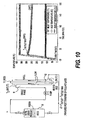
- Fig. 10 depicts an Alcor testing arrangement used to measure what the impact the addition of particulates to a crude oil has on fouling and what impact the addition of a HSDP crude oil has on the reduction and mitigation of fouling.
- the testing arrangement includes a reservoir 10 containing a feed supply of crude oil.
- the feed supply of crude oil may contain a base crude oil containing a whole crude or a blended crude containing two or more crude oils.
- the feed supply may also contain a HSDP crude oil.
- the feed supply is heated to a temperature of approximately 150°C/302°F and then fed into a shell 11 containing a vertically oriented heated rod 12.
- the heated rod 12 may be formed from a carbon steel.
- the heated rod 12 simulates a tube in a heat exchanger.
- the heated rod 12 is electrically heated to a predetermined temperature and maintained at such predetermined temperature during the trial. Typically rod surface temperatures are approximately 370°C/698°F and 400°C/ 752°F.
- the feed supply is pumped across the heated rod 12 at a flow rate of approximately 3.0 mL/minute.
- the spent feed supply is collected in the top section of the reservoir 10.
- the spent feed supply is separated from the untreated feed supply oil by a sealed piston, thereby allowing for once-through operation.
- the system is pressurized with nitrogen (400-500 psig) to ensure gases remain dissolved in the oil during the test. Thermocouple readings are recorded for the bulk fluid inlet and outlet temperatures and for surface of the rod 12.
- FIG. 1 and FIG. 2 illustrate the impact that the presence of particulates in a crude oil has on fouling of a refinery component or unit. There is an increase in fouling in the presence of iron oxide (Fe 2 O 3 ) particles when compared to similar crude oils which that do not contain particulates.
- the present invention will be described in connection with the use of a low-sulfur, low asphaltene or LSLA whole crude oil and a high-sulfur, high asphaltene or HSHA crude oil blend as base crude oil examples. These oils were selected as being representative of certain classifications of crude oil.
- the LSLA crude oil represents a low S BN , high reactive sulfur and low asphaltenes crude oil.
- the HSHA blend crude oil represents a crude oil that is both high in asphaltenes and reactive sulfur.
- the use of these crude oils is for illustrative purposes only, the present invention is not intended to be limited to application only with LSLA crude oil and HSHA crude oil. It is intended that the present invention has application with all whole and blended crude oils and formulations of the same that experience and/or produce fouling in refinery components including but not limited to heat exchangers.
- the presence of fouling reduces the heat transfer of the heating tubes or rods contained within a heat exchanger. As described above, the presence of fouling has an adverse impact of heat exchanger performance and efficiency.
- the present inventors have found that the addition of a crude oil having a high TAN and high S BN to the base crude oil reduces particulate-induced fouling.
- the degree of fouling reduction appears to be a function of the TAN level in the overall blend. This is believed to be due to the ability of the naphthenic acids to keep particulates present in the blends from wetting and adhering to the heated surface, where otherwise promoted and accelerated fouling/coking occur.
- Most high TAN crudes oils also have very high S BN levels, which have been shown to aid in dissolving asphaltenes and/or keeping them in solution more effectively which also reduces fouling that would otherwise occur due to the incompatibility and near-incompatibility of crude oils and blends.
- HSDP high solvency dispersive power
- FIG. 3 is a variation of FIG. 2 where the reduction in fouling associated with the addition of a predetermined amount of HSDP crude is blended with a base crude oil containing the HSHA crude oil.
- the base crude oil containing HSHA is blended with a HSDP crude oil, which accounts for twenty five percent (25%) of the total volume of the blended crude oil.
- the HSDP crude oil is labeled HSDP crude oil A having an approximate TAN of 4.8 and a S BN of 112. As shown in Fig.
- the base crude oil containing HSHA is blended with a HSDP crude oil, which accounts for fifty percent (50%) of the total volume of the blended crude oil.
- the HSDP crude oil is HSDP Crude Oil B having an approximate TAN of 1.1 and a S BN of 115. While the impact of the HSDP Crude Oil B on the fouling of the base crude oil is not as significant as the HSDP Crude Oil A, the HSDP Crude Oil B nonetheless produces a marked decrease in the fouling of a base crude oil containing particulates.
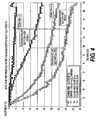
- FIG. 4 is a variation of FIG. 1 where the reduction in fouling associated with the addition of a predetermined amount of HSDP crude is blended with a base crude oil.
- the base crude oil is a LSLA crude oil and is blended with HSDP Crude Oil A, which accounts for twenty five percent (25%) of the total volume of the blended crude oil.
- HSDP Crude Oil A is blended with a significant reduction is fouling is achieved when compared to both base crude oil containing particulates and a base oil without particulates.
- the LSLA base crude oil is blended with HSDP Crude Oil B, which accounts for fifty percent (50%) of the total volume of the blended crude oil. While the impact of the HSDP Crude Oil B on the fouling of the base crude oil is not as significant as the HSDP Crude Oil A, the HSDP Crude Oil B again produces a marked decrease in the fouling of a base crude oil containing particulates.
- Sample tests were also performed to determine the effect the addition of the HSDP Crude Oil A to a base oil containing either LSLA whole crude oil or HSHA blended crude oil has on the fouling of the base oil.
- the HSDP A crude oil having an approximate TAN of 4.8 and a S BN of 112.
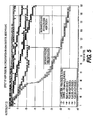
- the results associated with the impact of the HSDP A on the HSHA blend are illustrated in FIG. 5 .
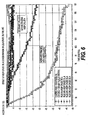
- the results associated with the impact of the HSDP A on the LSLA whole crude oil are illustrated in FIG. 6 .
- the addition of the HSDP A crude as the HSDP crude oil produced a reduction in fouling.
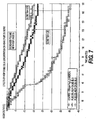
- the reduction in fouling increased as the predetermined amount of HSDP crude oil content in the blended crude oil increased.
- FIG. 9 illustrates the impact beneficial impact on fouling that the addition of various HSDP crude oils on a base oil of LSLA whole crude oil. As summarized in Table 1 below, the addition of HSDP crude oils resulted in a reduction in fouling when compared to base crude oil containing particulates.
- HSDP crude oil as described in connection with the present invention, may be combined with other techniques for reducing and/or mitigating fouling.
- Such techniques include, but are not limited to, (i) the provision of low energy surfaces and modified steel surfaces in heat exchanger tubes, as described in US Patent Application Nos. 11/436,602 and 11/436,802 , (ii) the use of controlled mechanical vibration, as described in US Patent Application No.
Landscapes
- Chemical & Material Sciences (AREA)
- Oil, Petroleum & Natural Gas (AREA)
- Engineering & Computer Science (AREA)
- Chemical Kinetics & Catalysis (AREA)
- General Chemical & Material Sciences (AREA)
- Organic Chemistry (AREA)
- Production Of Liquid Hydrocarbon Mixture For Refining Petroleum (AREA)
Description
- The present invention relates to processing of whole crude oils, blends and fractions in refineries and petrochemical plants. In particular, the present invention relates to the reduction of particulate induced crude oil fouling and asphaltene induced crude oil fouling. The present invention relates to the blending of high total acid number (TAN) and high solubility blending number (SBN) crude oils to reduce fouling in pre-heat train exchangers, furnaces, and other refinery process units.
- Fouling is generally defined as the accumulation of unwanted materials on the surfaces of processing equipment. In petroleum processing, fouling is the accumulation of unwanted hydrocarbon-based deposits on heat exchanger surfaces. It has been recognized as a nearly universal problem in design and operation of refining and petrochemical processing systems, and affects the operation of equipment in two ways. First, the fouling layer has a low thermal conductivity. This increases the resistance to heat transfer and reduces the effectiveness of the heat exchangers. Second, as deposition occurs, the cross-sectional area is reduced, which causes an increase in pressure drop across the apparatus and creates inefficient pressure and flow in the heat exchanger.
- Fouling in heat exchangers associated with petroleum type streams can result from a number of mechanisms including chemical reactions, corrosion, deposit of insoluble materials, and deposit of materials made insoluble by the temperature difference between the fluid and heat exchange wall. For example, the inventors have shown that a low-sulfur, low asphaltene (LSLA) crude oil and a high-sulfur, high asphaltene (HSHA) crude blend are subject to a significant increase in fouling when in the presence of iron oxide (rust) particulates, as shown for example in
Figs. 1 and2 . - One of the more common root causes of rapid fouling, in particular, is the formation of coke that occurs when crude oil asphaltenes are overexposed to heater tube surface temperatures. The liquids on the other side of the exchanger are much hotter than the whole crude oils and result in relatively high surface or skin temperatures. The asphaltenes can precipitate from the oil and adhere to these hot surfaces. Another common cause of rapid fouling is attributed to the presence of salts and particulates. Salts/particulates can precipitate from the crude oils and adhere to the hot surfaces of the heat exchanger. Inorganic contaminants play both an initiating and promoting role in the fouling of whole crude oils and blends. Iron oxide, calcium carbonate, silica, sodium and calcium chlorides have all been found to be attached directly to the surface of fouled heater rods and throughout the coke deposit.
- Prolonged exposure to such surface temperatures, especially in the late-train exchanger, allows for the thermal degradation of the organics and asphaltenes to coke. The coke then acts as an insulator and is responsible for heat transfer efficiency losses in the heat exchanger by preventing the surface from heating the oil passing through the unit. Salts, sediment and particulates have been shown to play a major role in the fouling of pre-heat train heat exchangers, furnaces and other downstream units. Desalter units are still the only opportunity refineries have to remove such contaminants and inefficiencies often result from the carryover of such materials with the crude oil feeds.
- Blending of oils in refineries is common, but certain blends are incompatible and cause precipitation of asphaltenes that can rapidly foul process equipment. Improper mixing of crude oils can produce asphaltenic sediment that is known to reduce heat transfer efficiency. Although most blends of unprocessed crude oils are not potentially incompatible, once an incompatible blend is obtained, the rapid fouling and coking that results usually requires shutting down the refining process in a short time. To return the refinery to more profitable levels, the fouled heat exchangers need to be cleaned, which typically requires removal from service, as discussed below.
- Heat exchanger in-tube fouling costs petroleum refineries hundreds of millions of dollars each year due to lost efficiencies, throughput, and additional energy consumption. With the increased cost of energy, heat exchanger fouling has a greater impact on process profitability. Petroleum refineries and petrochemical plants also suffer high operating costs due to cleaning required as a result of fouling that occurs during thermal processing of whole crude oils, blends and fractions in heat transfer equipment. While many types of refinery equipment are affected by fouling, cost estimates have shown that the majority of profit losses occur due to the fouling of whole crude oils, blends and fractions in pre-heat train exchangers.
- Heat exchanger fouling forces refineries to frequently employ costly shutdowns for the cleaning process. Currently, most refineries practice off-line cleaning of heat exchanger tube bundles by bringing the heat exchanger out of service to perform chemical or mechanical cleaning. The cleaning can be based on scheduled time or usage or on actual monitored fouling conditions. Such conditions can be determined by evaluating the loss of heat exchange efficiency. However, off-line cleaning interrupts service. This can be particularly burdensome for small refineries because there will be periods of non-production.
- The need exists to be able to prevent the precipitation / adherance of particulates and asphaltenes from the heated surfaces before the particulates can promote fouling and the asphaltenes become thermally degraded or coked. The coking mechanism requires both temperature and time. The time factor can be greatly reduced by keeping the particulates away from the surface and by keeping the asphaltenes in solution. Such reduction and/or elimination of fouling will lead to increased run lengths (less cleaning), improved performance and energy efficiency while also reducing the need for costly fouling mitigation options.
- Some refineries and crude schedulers currently follow blending guidelines to minimize asphaltene precipitation and the resultant fouling of pre-heat train equipment. Such guidelines suggest blending crude oils to achieve a certain relationship between the solubility blending number (SBN) (also symbolized by SBN) and insolubility number (In) of the blend. The SBN is a parameter relating to the compatibility of an oil with different proportions of a model solvent mixture, such as toluene/n-heptane. The SBN is related to the In, which is determined in a similar manner, as described in
U.S. Patent No. 5,871,634 . Some blending guidelines suggest a SBN /In blend ratio >1.3 and a delta (SBN -In) >10 to minimize asphaltene precipitation and fouling. However, these blends are designed for use as a passive approach to minimizing asphaltene precipitation. - Attempts have been made to improve the method of blending two or more petroleum oils that are potentially incompatible while maintaining compatibility to prevent the fouling and coking of refinery equipment.
U.S. Patent No. 5,871,634 discloses a method of blending that includes determining the insolubility number (In) for each feedstream and determining the solubility blending number (SBN) for each stream and combining the feedstreams such that the SBN of the mixture is greater than the In of any component of the mix. In another method,U.S. Patent No. 5,997,723 uses a blending method in which petroleum oils are combined in certain proportions in order to keep the SBN of the mixture higher than 1.4 times the In of any oil in the mixture. - These blends do not minimize both fouling associated with asphaltene and particulate induced/promoted fouling. There is a need for developing a proactive approach to addressing organic, inorganic and asphaltene precipitation and thereby minimize the associated foulant deposition and/or build up.
- It is an aspect of the present invention to provide a method for reducing asphaltene and particulate induced fouling associated with the processing of crude oil in refinery heat exchangers according to
claim 1. One method associated with the present invention includes blending a base crude oil with a predetermined amount of a high solvency dispersive power (HSDP) crude oil. The addition of HSDP crude oil has been found to be effective in mitigating both asphaltene induced fouling and particulate induced/promoted fouling. The base crude oil may consist of a whole crude oil, a blend of two or more crude oils or fractions thereof. The HSDP crude oil has a total acid number (TAN) of at least 0.3. It is contemplated that various crude oils can be used as the HSDP crude oil including but not limited to the examples described herein. Other HSDP crude oils are considered to be within the scope of the present invention and suitable for blending with the base crude oil provided such HSDP crude oil has a TAN of at least 0.3. Preferably, the TAN for the HSDP crude oil is at least 0.5. More preferably, the TAN for the HSDP crude oil is at least 1.0. It is contemplated that the TAN for the HSDP crude oil may exceed 4. It has also been determined that the most effective HSDP crude oils have higher molecular weights (e.g. wt. avg.). The blended crude oil is processed within the refinery with significant reductions in fouling. As such, the efficiency of the refinery operations is enhanced. - In accordance with the present invention, the predetermined amount of HSDP crude oil is equal to at least five percent of the total volume of the blended base crude and HSDP crude oil. HSDP crude oil may make up at least ten percent of the total volume of the blended base crude and the HSDP crude. HSDP crude oil may make up at least twenty five percent of the total volume of the blended base crude and the HSDP crude. It is preferable that the content of HSDP crude oil not exceed fifty percent of the total volume of the blended base crude and the HSDP crude oil.
- In accordance with the present invention for purposes of mitigating fouling, the HSDP crude oil should have a solubility blending number (SBN) of at least 75. It is preferable that the SBN is at least 100. It is more preferable that the SBN is at least 110.
- The method includes blending a base crude oil with a predetermined amount of a HSDP crude oil. The base crude oil may consist of a whole crude oil, a blend of two or more crude oils or fractions thereof. The HSDP crude oil has SBN of at least 85. It is preferable that the SBN is at least 100. It is more preferable that the SBN is at least 110. The predetermined amount of HSDP crude oil is equal to at least five percent to at most fifty percent of the total volume of the blended base crude and HSDP crude oil.
- The inventors have determined that the reductions in fouling associated with the present invention are due to prevention and are not the result of an in-situ foulant-formation and removal mechanism. These and other aspects of the invention will become apparent when taken in conjunction with the detailed description and appended drawings.
- The invention will now be described in conjunction with the accompanying drawings in which:
-
FIG. 1 is a graph illustrating the effects of particulates on fouling of a LSLA crude oil; -
FIG. 2 is a graph illustrating the effects of particulates on fouling of a HSHA crude oil blend; -
FIG. 3 is a graph illustrating test results showing reduced fouling associated with a HSHA crude oil blend when blended with a HSDP Crude Oil in accordance with this invention; -
FIG. 4 is a graph illustrating test results showing reduced fouling associated with a LSLA crude oil when blended with a HSDP Crude Oil in accordance with this invention; -
FIG. 5 is a graph illustrating test results showing reduced fouling associated with a HSHA crude oil blend when blended with HSDP Crude Oil A in accordance with this invention; -
FIG. 6 is a graph illustrating test results showing reduced fouling associated with a LSLA crude oil when blended with HSDP Crude Oil A in accordance with this invention; -
FIG. 7 is a graph illustrating test results showing reduced fouling associated with a HSHA crude oil when blended with HSDP Crude Oil B in accordance with this invention; -
FIG. 8 is a graph illustrating test results showing reduced fouling associated with a LSLA crude oil when blended with HSDP Crude Oil B in accordance with this invention; and -
FIG. 9 is a graph illustrating test results showing reduced fouling associated with a LSLA crude oil when blended with a various HSDP Crude Oils (A-G) in accordance with this invention; and -
FIG. 10 is a schematic of an Alcor fouling simulator used in accordance with the present invention. - In the drawings, like reference numerals indicate corresponding parts in the different figures.
- The present invention will now be described in greater detail in connection with the figures. The present invention aims to reduce fouling in heat exchangers located within a refinery. This aim is achieved by a blended base crude oil, which may consist of a whole crude oil, a blend of two or more crude oils or fractions thereof with a predetermined amount of a high solvency dispersive power (HSDP) crude oil. The addition of HSDP crude oil mitigates both asphaltene induced fouling and particulate induced/promoted fouling. The high Sbn of these HSDP crude oils allows for the enhanced solubility of any asphaltenes in the rest of the crude oils and/or blends. The presence of TAN is believed to help disperse the particulates in the crude oil blend which prevents them from adhering to the heated surface. In order to achieve the reduction in fouling, the HSDP crude oil should have a total acid number (TAN) of at least 0.3. Higher TAN levels may result in improved fouling reduction and mitigation. The HSDP crude oil should have a solubility blending number (SBN) of at least 75. Higher SBN levels may result in improved fouling reduction and mitigation. The volume of HSDP crude oil necessary in the blended crude oil will vary based upon the TAN and/or SBN values of the HSDP crude oil. The higher TAN and/or SBN values of the HSDP crude oil, the lower the volume of HSDP crude oil necessary to produce a blended crude oil that will reduce and/or mitigate both asphaltene induced fouling and particulate induced fouling and/or promotion in refinery components, including but not limited to heat exchangers and the like. The HSDP crude oil makes up between five percent and fifty percent of the total volume of the blended crude oil.
- The blended crude oil is then processed within the refinery. The blended crude oil exhibits improved characteristics over the base crude oil. Specifically, the blended crude oil exhibits a significant reduction in fouling over base crude which contain particulates. This results in improved heat transfer within the heat exchanger and a reduction in overall energy consumption.
-
Fig. 10 depicts an Alcor testing arrangement used to measure what the impact the addition of particulates to a crude oil has on fouling and what impact the addition of a HSDP crude oil has on the reduction and mitigation of fouling. The testing arrangement includes areservoir 10 containing a feed supply of crude oil. The feed supply of crude oil may contain a base crude oil containing a whole crude or a blended crude containing two or more crude oils. The feed supply may also contain a HSDP crude oil. The feed supply is heated to a temperature of approximately 150°C/302°F and then fed into ashell 11 containing a vertically orientedheated rod 12. Theheated rod 12 may be formed from a carbon steel. Theheated rod 12 simulates a tube in a heat exchanger. Theheated rod 12 is electrically heated to a predetermined temperature and maintained at such predetermined temperature during the trial. Typically rod surface temperatures are approximately 370°C/698°F and 400°C/ 752°F. The feed supply is pumped across theheated rod 12 at a flow rate of approximately 3.0 mL/minute. The spent feed supply is collected in the top section of thereservoir 10. The spent feed supply is separated from the untreated feed supply oil by a sealed piston, thereby allowing for once-through operation. The system is pressurized with nitrogen (400-500 psig) to ensure gases remain dissolved in the oil during the test. Thermocouple readings are recorded for the bulk fluid inlet and outlet temperatures and for surface of therod 12. - During the constant surface temperature testing, foulant deposits and builds up on the heated surface. The foulant deposits are thermally degraded to coke. The coke deposits cause an insulating effect that reduces the efficiency and/or ability of the surface to heat the oil passing over it. The resulting reduction in outlet bulk fluid temperature continues over time as fouling continues. This reduction in temperature is referred to as the outlet liquid ΔT or dT and can be dependent on the type of crude oil/blend, testing conditions and/or other effects, such as the presence of salts, sediment or other fouling promoting materials. A standard Alcor fouling test is carried out for 180 minutes. The total fouling, as measured by the total reduction in outlet liquid temperature is referred to as ΔT180 or dT180.
-
FIG. 1 andFIG. 2 . illustrate the impact that the presence of particulates in a crude oil has on fouling of a refinery component or unit. There is an increase in fouling in the presence of iron oxide (Fe2O3) particles when compared to similar crude oils which that do not contain particulates. The present invention will be described in connection with the use of a low-sulfur, low asphaltene or LSLA whole crude oil and a high-sulfur, high asphaltene or HSHA crude oil blend as base crude oil examples. These oils were selected as being representative of certain classifications of crude oil. The LSLA crude oil represents a low SBN, high reactive sulfur and low asphaltenes crude oil. The HSHA blend crude oil represents a crude oil that is both high in asphaltenes and reactive sulfur. The use of these crude oils is for illustrative purposes only, the present invention is not intended to be limited to application only with LSLA crude oil and HSHA crude oil. It is intended that the present invention has application with all whole and blended crude oils and formulations of the same that experience and/or produce fouling in refinery components including but not limited to heat exchangers. The presence of fouling reduces the heat transfer of the heating tubes or rods contained within a heat exchanger. As described above, the presence of fouling has an adverse impact of heat exchanger performance and efficiency. - The present inventors have found that the addition of a crude oil having a high TAN and high SBN to the base crude oil reduces particulate-induced fouling. The degree of fouling reduction appears to be a function of the TAN level in the overall blend. This is believed to be due to the ability of the naphthenic acids to keep particulates present in the blends from wetting and adhering to the heated surface, where otherwise promoted and accelerated fouling/coking occur. Most high TAN crudes oils also have very high SBN levels, which have been shown to aid in dissolving asphaltenes and/or keeping them in solution more effectively which also reduces fouling that would otherwise occur due to the incompatibility and near-incompatibility of crude oils and blends. These crude oils are classified as high solvency dispersive power (HSDP) crude oils. There is a notable reduction in fouling when a predetermined amount of HSDP crude oil is added to the base crude, where the HSDP crude oil has a TAN as low as 0.3 and a SBN as low as 75. The predetermined amount of HSDP crude oil make up as low as five percent (5%) of the total volume of the blended crude oil (i.e., base crude oil + HSDP crude oil).
- Sample tests were performed to determine the effect the addition of HSDP Crude Oils A and/or B to a HSHA base crude oil has on the fouling of the base oil. The results are illustrated in
FIG. 3. FIG. 3 is a variation ofFIG. 2 where the reduction in fouling associated with the addition of a predetermined amount of HSDP crude is blended with a base crude oil containing the HSHA crude oil. In one example, the base crude oil containing HSHA is blended with a HSDP crude oil, which accounts for twenty five percent (25%) of the total volume of the blended crude oil. The HSDP crude oil is labeled HSDP crude oil A having an approximate TAN of 4.8 and a SBN of 112. As shown inFig. 3 , a significant reduction is fouling is achieved when compared to both base crude oil containing particulates and a base oil without particulates. In another example, the base crude oil containing HSHA is blended with a HSDP crude oil, which accounts for fifty percent (50%) of the total volume of the blended crude oil. The HSDP crude oil is HSDP Crude Oil B having an approximate TAN of 1.1 and a SBN of 115. While the impact of the HSDP Crude Oil B on the fouling of the base crude oil is not as significant as the HSDP Crude Oil A, the HSDP Crude Oil B nonetheless produces a marked decrease in the fouling of a base crude oil containing particulates. - Sample tests were performed to determine the effect the addition of HSDP Crude Oils A and B on the fouling of the base oil. The results are illustrated in
FIG. 4. FIG. 4 is a variation ofFIG. 1 where the reduction in fouling associated with the addition of a predetermined amount of HSDP crude is blended with a base crude oil. In the illustrated examples, the base crude oil is a LSLA crude oil and is blended with HSDP Crude Oil A, which accounts for twenty five percent (25%) of the total volume of the blended crude oil. Like the addition of HSDP Crude Oil A to the HSHA crude oil, a significant reduction is fouling is achieved when compared to both base crude oil containing particulates and a base oil without particulates. In the other illustrated example, the LSLA base crude oil is blended with HSDP Crude Oil B, which accounts for fifty percent (50%) of the total volume of the blended crude oil. While the impact of the HSDP Crude Oil B on the fouling of the base crude oil is not as significant as the HSDP Crude Oil A, the HSDP Crude Oil B again produces a marked decrease in the fouling of a base crude oil containing particulates. - Sample tests were also performed to determine the effect the addition of the HSDP Crude Oil A to a base oil containing either LSLA whole crude oil or HSHA blended crude oil has on the fouling of the base oil. The HSDP A crude oil having an approximate TAN of 4.8 and a SBN of 112. The results associated with the impact of the HSDP A on the HSHA blend are illustrated in
FIG. 5 . The results associated with the impact of the HSDP A on the LSLA whole crude oil are illustrated inFIG. 6 . For both base oils, the addition of the HSDP A crude as the HSDP crude oil produced a reduction in fouling. - As shown in
FIGS. 5-8 , the reduction in fouling increased as the predetermined amount of HSDP crude oil content in the blended crude oil increased. - The above illustrative examples of the benefits of the present invention were based upon the use of examples A and B crude oils as the HSDP crude oil. The present invention is not intended to be limited to only these examples of HSDP crude oils. Other HSDP crude oils having an approximate TAN of at least 0.3 and a SBN of at least 75 will achieve reductions in fouling.
FIG. 9 illustrates the impact beneficial impact on fouling that the addition of various HSDP crude oils on a base oil of LSLA whole crude oil. As summarized in Table 1 below, the addition of HSDP crude oils resulted in a reduction in fouling when compared to base crude oil containing particulates.Table 1 Crude Mixture TAN SBN ΔT180 LSLA Crude (control) --- --- -23 + 200 ppm FeO --- --- - 47 + 25 % HSDP A 4.8 112 - 3 + 25 % HSDP B 1.6 115 -34 + 25 % HSDP C 1.6 158/127 -7 + 25 % HSDP D 1.7 93 - 8 + 25 % HSDP E 0.6 120/132 - 3 + 25 % HSDP F 2.5 76 - 25 + 25 % HSDP G 2.8 112 - 32 - It is intended that all matter contained in the accompanying specification shall be interpreted as illustrative only and not in a limiting sense. Furthermore, it is contemplated that the use of a HSDP crude oil, as described in connection with the present invention, may be combined with other techniques for reducing and/or mitigating fouling. Such techniques include, but are not limited to, (i) the provision of low energy surfaces and modified steel surfaces in heat exchanger tubes, as described in
US Patent Application Nos. 11/436,602 11/436,802 US Patent Application No. 11/436,802 US Provisional Patent Application No. 60/815,845, filed on June 23, 2006 US Provisional Patent Application No. 60/751,985 US Provisional Patent Application No. 60/815,844, filed on June 23, 2006
Claims (5)
- A method for reducing asphaltene and particulate induced fouling associated with the processing of crude oil in refinery heat exchangers, comprising:providing a base crude oil;blending the base crude oil with a predetermined amount of a high solvency dispersive power (HSDP) crude oil, andprocessing the blended crude oil within the refinery,characterized in that:the HSDP crude oil has a total acid number (TAN) of at least 0.3 and a solubility blending number (SBN) of at least 75, andthe predetermined amount of the HSDP crude oil is equal to at least five percent of the total volume of the blended base crude and HSDP crude oil.
- The method according to claim 1, wherein the predetermined amount is equal to at least ten percent of the total volume of the blended base crude and HSDP crude oil, or equal to at least twenty five percent of the total volume of the blended base crude and HSDP crude oil, or equal to at most fifty percent of the total volume of the blended base crude and HSDP crude oil.
- The method according to anyone of the preceding claims, wherein the HSDP crude oil has a SBN of at least 85, or a SBN of at least 100.
- The method according to anyone of the preceding claims, wherein the HSDP crude oil has a TAN of at least 2, or a TAN of at least 3, or a TAN of at least 4.
- The method according to anyone of the preceding claims, wherein the base crude oil is a whole crude oil or a blend of at least two crude oils.
Applications Claiming Priority (2)
| Application Number | Priority Date | Filing Date | Title |
|---|---|---|---|
| US11/506,901 US7833407B2 (en) | 2006-08-21 | 2006-08-21 | Method of blending high TAN and high SBN crude oils and method of reducing particulate induced whole crude oil fouling and asphaltene induced whole crude oil fouling |
| PCT/US2007/018403 WO2008024309A2 (en) | 2006-08-21 | 2007-08-20 | Method of blending high tan and high sbn crude oils and method of reducing particulate induced whole crude oil fouling and asphaltene induced whole crude oil fouling |
Publications (2)
| Publication Number | Publication Date |
|---|---|
| EP2054489A2 EP2054489A2 (en) | 2009-05-06 |
| EP2054489B1 true EP2054489B1 (en) | 2015-04-08 |
Family
ID=39100362
Family Applications (1)
| Application Number | Title | Priority Date | Filing Date |
|---|---|---|---|
| EP07837083.0A Not-in-force EP2054489B1 (en) | 2006-08-21 | 2007-08-20 | Method of blending high tan and high sbn crude oils and method of reducing particulate induced whole crude oil fouling and asphaltene induced whole crude oil fouling |
Country Status (6)
| Country | Link |
|---|---|
| US (1) | US7833407B2 (en) |
| EP (1) | EP2054489B1 (en) |
| JP (1) | JP5322938B2 (en) |
| AU (1) | AU2007288344B2 (en) |
| CA (1) | CA2661142C (en) |
| WO (1) | WO2008024309A2 (en) |
Families Citing this family (19)
| Publication number | Priority date | Publication date | Assignee | Title |
|---|---|---|---|---|
| US7837855B2 (en) * | 2006-08-21 | 2010-11-23 | Exxonmobil Research & Engineering Company | High-solvency-dispersive-power (HSDP) crude oil blending for fouling mitigation and on-line cleaning |
| US7901564B2 (en) * | 2006-08-21 | 2011-03-08 | Exxonmobil Research & Engineering Company | Mitigation of refinery process unit fouling using high-solvency-dispersive-power (HSDP) resid fractions |
| US8062504B2 (en) * | 2007-08-06 | 2011-11-22 | Exxonmobil Research & Engineering Company | Method for reducing oil fouling in heat transfer equipment |
| US8440069B2 (en) * | 2007-08-06 | 2013-05-14 | Exxonmobil Research And Engineering Company | Methods of isolating and using components from a high solvency dispersive power (HSDP) crude oil |
| JP5164542B2 (en) | 2007-12-04 | 2013-03-21 | ニチハ株式会社 | How to paint building materials |
| US20100163461A1 (en) * | 2008-10-09 | 2010-07-01 | Wright Chris A | Method and system for controlling the amount of anti-fouling additive for particulate-induced fouling mitigation in refining operations |
| US8425761B2 (en) * | 2008-12-11 | 2013-04-23 | Exxonmobil Research And Engineering Company | Non-high solvency dispersive power (non-HSDP) crude oil with increased fouling mitigation and on-line cleaning effects |
| US8663455B2 (en) * | 2008-12-11 | 2014-03-04 | Exxonmobil Research And Engineering Company | Addition of high molecular weight naphthenic tetra-acids to crude oils to reduce whole crude oil fouling |
| US9347009B2 (en) | 2010-12-28 | 2016-05-24 | Chevron U.S.A. Inc. | Processes and systems for characterizing and blending refinery feedstocks |
| US9140679B2 (en) | 2010-12-28 | 2015-09-22 | Chevron U.S.A. Inc. | Process for characterizing corrosivity of refinery feedstocks |
| US9103813B2 (en) | 2010-12-28 | 2015-08-11 | Chevron U.S.A. Inc. | Processes and systems for characterizing and blending refinery feedstocks |
| US9464242B2 (en) | 2010-12-28 | 2016-10-11 | Chevron U.S.A. Inc. | Processes and systems for characterizing and blending refinery feedstocks |
| US8916041B2 (en) | 2011-12-23 | 2014-12-23 | Shell Oil Company | Blending hydrocarbon streams to prevent fouling |
| US9476754B2 (en) * | 2013-02-28 | 2016-10-25 | Electrolab, Inc. | Method and kit for treatment of components utilized in a crude oil service operation |
| US9416325B2 (en) | 2013-03-14 | 2016-08-16 | Exxonmobil Research And Engineering Company | Methods and systems for predicting a need for introducing anti-fouling additives to a hydrocarbon stream to reduce fouling of crude hydrocarbon refinery components |
| GB2516126B (en) | 2013-12-09 | 2015-07-08 | Intertek Group Plc | Method and system for analysing a blend of two or more hydrocarbon feed streams |
| US10125306B2 (en) | 2014-10-02 | 2018-11-13 | Croda, Inc. | Asphaltene inhibition |
| US10717917B2 (en) | 2016-06-24 | 2020-07-21 | Croda, Inc. | Method and composition for asphaltene dispersion |
| US10414991B2 (en) | 2016-06-29 | 2019-09-17 | Exxonmobil Research And Engineering Company | Processing of heavy hydrocarbon feeds |
Family Cites Families (15)
| Publication number | Priority date | Publication date | Assignee | Title |
|---|---|---|---|---|
| US4853337A (en) | 1987-05-11 | 1989-08-01 | Exxon Chemicals Patents Inc. | Blending of hydrocarbon liquids |
| ES2192677T3 (en) * | 1996-05-30 | 2003-10-16 | Baker Hughes Inc | CORROSION CONTROL BY NAPTENIC ACID WITH THIOPHOSPHORUS COMPOUNDS. |
| US5871634A (en) | 1996-12-10 | 1999-02-16 | Exxon Research And Engineering Company | Process for blending potentially incompatible petroleum oils |
| US5997723A (en) | 1998-11-25 | 1999-12-07 | Exxon Research And Engineering Company | Process for blending petroleum oils to avoid being nearly incompatible |
| US6048904A (en) | 1998-12-01 | 2000-04-11 | Exxon Research And Engineering Co. | Branched alkyl-aromatic sulfonic acid dispersants for solublizing asphaltenes in petroleum oils |
| US6355159B1 (en) | 2000-08-04 | 2002-03-12 | Exxonmobil Research And Engineering Company | Dissolution and stabilization of thermally converted bitumen |
| US6706669B2 (en) | 2001-07-13 | 2004-03-16 | Exxonmobil Research And Engineering Company | Method for inhibiting corrosion using phosphorous acid |
| US20040072361A1 (en) | 2002-10-11 | 2004-04-15 | Exxonmobil Research And Engineering Company | Branched alkyl-aromatic sulfonic acid dispersants for dispersing asphaltenes in petroleum oils |
| US7261935B2 (en) * | 2002-12-19 | 2007-08-28 | E. I. Du Pont De Nemours And Company | Co-extrudable multi-layer polymer |
| US7618822B2 (en) | 2002-12-19 | 2009-11-17 | Bp Corporation North America Inc. | Predictive crude oil compatibility model |
| CN1894389B (en) * | 2003-10-17 | 2011-11-09 | 弗劳尔科技公司 | Compositions, apparatus and methods for mitigating the corrosivity of naphthenic acids |
| US7594989B2 (en) | 2004-05-14 | 2009-09-29 | Exxonmobile Research And Engineering Company | Enhanced thermal upgrading of heavy oil using aromatic polysulfonic acid salts |
| US20060042661A1 (en) * | 2004-08-31 | 2006-03-02 | Meyer Douglas S | Oil tank sludge removal method |
| US7976640B2 (en) | 2005-04-04 | 2011-07-12 | Exxonmobil Research & Engineering Company | On-line heat exchanger cleaning method |
| US8062504B2 (en) * | 2007-08-06 | 2011-11-22 | Exxonmobil Research & Engineering Company | Method for reducing oil fouling in heat transfer equipment |
-
2006
- 2006-08-21 US US11/506,901 patent/US7833407B2/en not_active Expired - Fee Related
-
2007
- 2007-08-20 EP EP07837083.0A patent/EP2054489B1/en not_active Not-in-force
- 2007-08-20 CA CA2661142A patent/CA2661142C/en not_active Expired - Fee Related
- 2007-08-20 AU AU2007288344A patent/AU2007288344B2/en not_active Ceased
- 2007-08-20 JP JP2009525590A patent/JP5322938B2/en not_active Expired - Fee Related
- 2007-08-20 WO PCT/US2007/018403 patent/WO2008024309A2/en not_active Ceased
Also Published As
| Publication number | Publication date |
|---|---|
| JP5322938B2 (en) | 2013-10-23 |
| WO2008024309A3 (en) | 2008-11-13 |
| CA2661142C (en) | 2014-02-04 |
| US20080041762A1 (en) | 2008-02-21 |
| US7833407B2 (en) | 2010-11-16 |
| WO2008024309A2 (en) | 2008-02-28 |
| CA2661142A1 (en) | 2008-02-28 |
| AU2007288344A1 (en) | 2008-02-28 |
| AU2007288344B2 (en) | 2012-03-15 |
| JP2010501665A (en) | 2010-01-21 |
| EP2054489A2 (en) | 2009-05-06 |
Similar Documents
| Publication | Publication Date | Title |
|---|---|---|
| AU2007288344B2 (en) | Method of blending high tan and high SBN crude oils and method of reducing particulate induced whole crude oil fouling and asphaltene induced whole crude oil fouling | |
| US7951340B2 (en) | Mitigation of refinery process unit fouling using high-solvency-dispersive-power (HSDP) resid fractions | |
| US7919058B2 (en) | High-solvency-dispersive-power (HSDP) crude oil blending for fouling mitigation and on-line cleaning | |
| US8663455B2 (en) | Addition of high molecular weight naphthenic tetra-acids to crude oils to reduce whole crude oil fouling | |
| CA2660533A1 (en) | Improved crude oil blending to reduce organic-based fouling of pre-heat train exchangers and furnaces | |
| US8425761B2 (en) | Non-high solvency dispersive power (non-HSDP) crude oil with increased fouling mitigation and on-line cleaning effects |
Legal Events
| Date | Code | Title | Description |
|---|---|---|---|
| PUAI | Public reference made under article 153(3) epc to a published international application that has entered the european phase |
Free format text: ORIGINAL CODE: 0009012 |
|
| 17P | Request for examination filed |
Effective date: 20090213 |
|
| AK | Designated contracting states |
Kind code of ref document: A2 Designated state(s): AT BE BG CH CY CZ DE DK EE ES FI FR GB GR HU IE IS IT LI LT LU LV MC MT NL PL PT RO SE SI SK TR |
|
| AX | Request for extension of the european patent |
Extension state: AL BA HR MK RS |
|
| DAX | Request for extension of the european patent (deleted) | ||
| 17Q | First examination report despatched |
Effective date: 20131114 |
|
| GRAP | Despatch of communication of intention to grant a patent |
Free format text: ORIGINAL CODE: EPIDOSNIGR1 |
|
| INTG | Intention to grant announced |
Effective date: 20141124 |
|
| GRAS | Grant fee paid |
Free format text: ORIGINAL CODE: EPIDOSNIGR3 |
|
| GRAA | (expected) grant |
Free format text: ORIGINAL CODE: 0009210 |
|
| AK | Designated contracting states |
Kind code of ref document: B1 Designated state(s): AT BE BG CH CY CZ DE DK EE ES FI FR GB GR HU IE IS IT LI LT LU LV MC MT NL PL PT RO SE SI SK TR |
|
| REG | Reference to a national code |
Ref country code: GB Ref legal event code: FG4D |
|
| REG | Reference to a national code |
Ref country code: CH Ref legal event code: EP |
|
| REG | Reference to a national code |
Ref country code: IE Ref legal event code: FG4D |
|
| REG | Reference to a national code |
Ref country code: AT Ref legal event code: REF Ref document number: 720569 Country of ref document: AT Kind code of ref document: T Effective date: 20150515 |
|
| REG | Reference to a national code |
Ref country code: DE Ref legal event code: R096 Ref document number: 602007040998 Country of ref document: DE Effective date: 20150521 |
|
| REG | Reference to a national code |
Ref country code: AT Ref legal event code: MK05 Ref document number: 720569 Country of ref document: AT Kind code of ref document: T Effective date: 20150408 |
|
| REG | Reference to a national code |
Ref country code: NL Ref legal event code: VDEP Effective date: 20150408 |
|
| REG | Reference to a national code |
Ref country code: LT Ref legal event code: MG4D |
|
| PG25 | Lapsed in a contracting state [announced via postgrant information from national office to epo] |
Ref country code: NL Free format text: LAPSE BECAUSE OF FAILURE TO SUBMIT A TRANSLATION OF THE DESCRIPTION OR TO PAY THE FEE WITHIN THE PRESCRIBED TIME-LIMIT Effective date: 20150408 |
|
| PG25 | Lapsed in a contracting state [announced via postgrant information from national office to epo] |
Ref country code: ES Free format text: LAPSE BECAUSE OF FAILURE TO SUBMIT A TRANSLATION OF THE DESCRIPTION OR TO PAY THE FEE WITHIN THE PRESCRIBED TIME-LIMIT Effective date: 20150408 Ref country code: PT Free format text: LAPSE BECAUSE OF FAILURE TO SUBMIT A TRANSLATION OF THE DESCRIPTION OR TO PAY THE FEE WITHIN THE PRESCRIBED TIME-LIMIT Effective date: 20150810 Ref country code: LT Free format text: LAPSE BECAUSE OF FAILURE TO SUBMIT A TRANSLATION OF THE DESCRIPTION OR TO PAY THE FEE WITHIN THE PRESCRIBED TIME-LIMIT Effective date: 20150408 Ref country code: FI Free format text: LAPSE BECAUSE OF FAILURE TO SUBMIT A TRANSLATION OF THE DESCRIPTION OR TO PAY THE FEE WITHIN THE PRESCRIBED TIME-LIMIT Effective date: 20150408 |
|
| PG25 | Lapsed in a contracting state [announced via postgrant information from national office to epo] |
Ref country code: LV Free format text: LAPSE BECAUSE OF FAILURE TO SUBMIT A TRANSLATION OF THE DESCRIPTION OR TO PAY THE FEE WITHIN THE PRESCRIBED TIME-LIMIT Effective date: 20150408 Ref country code: GR Free format text: LAPSE BECAUSE OF FAILURE TO SUBMIT A TRANSLATION OF THE DESCRIPTION OR TO PAY THE FEE WITHIN THE PRESCRIBED TIME-LIMIT Effective date: 20150709 Ref country code: AT Free format text: LAPSE BECAUSE OF FAILURE TO SUBMIT A TRANSLATION OF THE DESCRIPTION OR TO PAY THE FEE WITHIN THE PRESCRIBED TIME-LIMIT Effective date: 20150408 Ref country code: IS Free format text: LAPSE BECAUSE OF FAILURE TO SUBMIT A TRANSLATION OF THE DESCRIPTION OR TO PAY THE FEE WITHIN THE PRESCRIBED TIME-LIMIT Effective date: 20150808 |
|
| REG | Reference to a national code |
Ref country code: DE Ref legal event code: R097 Ref document number: 602007040998 Country of ref document: DE |
|
| PG25 | Lapsed in a contracting state [announced via postgrant information from national office to epo] |
Ref country code: DK Free format text: LAPSE BECAUSE OF FAILURE TO SUBMIT A TRANSLATION OF THE DESCRIPTION OR TO PAY THE FEE WITHIN THE PRESCRIBED TIME-LIMIT Effective date: 20150408 Ref country code: EE Free format text: LAPSE BECAUSE OF FAILURE TO SUBMIT A TRANSLATION OF THE DESCRIPTION OR TO PAY THE FEE WITHIN THE PRESCRIBED TIME-LIMIT Effective date: 20150408 |
|
| PLBE | No opposition filed within time limit |
Free format text: ORIGINAL CODE: 0009261 |
|
| STAA | Information on the status of an ep patent application or granted ep patent |
Free format text: STATUS: NO OPPOSITION FILED WITHIN TIME LIMIT |
|
| PG25 | Lapsed in a contracting state [announced via postgrant information from national office to epo] |
Ref country code: PL Free format text: LAPSE BECAUSE OF FAILURE TO SUBMIT A TRANSLATION OF THE DESCRIPTION OR TO PAY THE FEE WITHIN THE PRESCRIBED TIME-LIMIT Effective date: 20150408 Ref country code: SK Free format text: LAPSE BECAUSE OF FAILURE TO SUBMIT A TRANSLATION OF THE DESCRIPTION OR TO PAY THE FEE WITHIN THE PRESCRIBED TIME-LIMIT Effective date: 20150408 Ref country code: CZ Free format text: LAPSE BECAUSE OF FAILURE TO SUBMIT A TRANSLATION OF THE DESCRIPTION OR TO PAY THE FEE WITHIN THE PRESCRIBED TIME-LIMIT Effective date: 20150408 Ref country code: RO Free format text: LAPSE BECAUSE OF NON-PAYMENT OF DUE FEES Effective date: 20150408 |
|
| 26N | No opposition filed |
Effective date: 20160111 |
|
| PG25 | Lapsed in a contracting state [announced via postgrant information from national office to epo] |
Ref country code: LU Free format text: LAPSE BECAUSE OF FAILURE TO SUBMIT A TRANSLATION OF THE DESCRIPTION OR TO PAY THE FEE WITHIN THE PRESCRIBED TIME-LIMIT Effective date: 20150820 Ref country code: MC Free format text: LAPSE BECAUSE OF FAILURE TO SUBMIT A TRANSLATION OF THE DESCRIPTION OR TO PAY THE FEE WITHIN THE PRESCRIBED TIME-LIMIT Effective date: 20150408 |
|
| REG | Reference to a national code |
Ref country code: CH Ref legal event code: PL |
|
| GBPC | Gb: european patent ceased through non-payment of renewal fee |
Effective date: 20150820 |
|
| PG25 | Lapsed in a contracting state [announced via postgrant information from national office to epo] |
Ref country code: LI Free format text: LAPSE BECAUSE OF NON-PAYMENT OF DUE FEES Effective date: 20150831 Ref country code: CH Free format text: LAPSE BECAUSE OF NON-PAYMENT OF DUE FEES Effective date: 20150831 Ref country code: IT Free format text: LAPSE BECAUSE OF FAILURE TO SUBMIT A TRANSLATION OF THE DESCRIPTION OR TO PAY THE FEE WITHIN THE PRESCRIBED TIME-LIMIT Effective date: 20150408 |
|
| PG25 | Lapsed in a contracting state [announced via postgrant information from national office to epo] |
Ref country code: SI Free format text: LAPSE BECAUSE OF FAILURE TO SUBMIT A TRANSLATION OF THE DESCRIPTION OR TO PAY THE FEE WITHIN THE PRESCRIBED TIME-LIMIT Effective date: 20150408 |
|
| REG | Reference to a national code |
Ref country code: IE Ref legal event code: MM4A |
|
| REG | Reference to a national code |
Ref country code: FR Ref legal event code: ST Effective date: 20160429 |
|
| PG25 | Lapsed in a contracting state [announced via postgrant information from national office to epo] |
Ref country code: IE Free format text: LAPSE BECAUSE OF NON-PAYMENT OF DUE FEES Effective date: 20150820 Ref country code: GB Free format text: LAPSE BECAUSE OF NON-PAYMENT OF DUE FEES Effective date: 20150820 |
|
| PG25 | Lapsed in a contracting state [announced via postgrant information from national office to epo] |
Ref country code: BE Free format text: LAPSE BECAUSE OF FAILURE TO SUBMIT A TRANSLATION OF THE DESCRIPTION OR TO PAY THE FEE WITHIN THE PRESCRIBED TIME-LIMIT Effective date: 20150408 Ref country code: FR Free format text: LAPSE BECAUSE OF NON-PAYMENT OF DUE FEES Effective date: 20150831 |
|
| PG25 | Lapsed in a contracting state [announced via postgrant information from national office to epo] |
Ref country code: MT Free format text: LAPSE BECAUSE OF FAILURE TO SUBMIT A TRANSLATION OF THE DESCRIPTION OR TO PAY THE FEE WITHIN THE PRESCRIBED TIME-LIMIT Effective date: 20150408 |
|
| PG25 | Lapsed in a contracting state [announced via postgrant information from national office to epo] |
Ref country code: BG Free format text: LAPSE BECAUSE OF FAILURE TO SUBMIT A TRANSLATION OF THE DESCRIPTION OR TO PAY THE FEE WITHIN THE PRESCRIBED TIME-LIMIT Effective date: 20150408 Ref country code: HU Free format text: LAPSE BECAUSE OF FAILURE TO SUBMIT A TRANSLATION OF THE DESCRIPTION OR TO PAY THE FEE WITHIN THE PRESCRIBED TIME-LIMIT; INVALID AB INITIO Effective date: 20070820 |
|
| PG25 | Lapsed in a contracting state [announced via postgrant information from national office to epo] |
Ref country code: CY Free format text: LAPSE BECAUSE OF FAILURE TO SUBMIT A TRANSLATION OF THE DESCRIPTION OR TO PAY THE FEE WITHIN THE PRESCRIBED TIME-LIMIT Effective date: 20150408 Ref country code: SE Free format text: LAPSE BECAUSE OF FAILURE TO SUBMIT A TRANSLATION OF THE DESCRIPTION OR TO PAY THE FEE WITHIN THE PRESCRIBED TIME-LIMIT Effective date: 20150408 |
|
| PG25 | Lapsed in a contracting state [announced via postgrant information from national office to epo] |
Ref country code: TR Free format text: LAPSE BECAUSE OF FAILURE TO SUBMIT A TRANSLATION OF THE DESCRIPTION OR TO PAY THE FEE WITHIN THE PRESCRIBED TIME-LIMIT Effective date: 20150408 |
|
| PGFP | Annual fee paid to national office [announced via postgrant information from national office to epo] |
Ref country code: DE Payment date: 20170825 Year of fee payment: 11 |
|
| REG | Reference to a national code |
Ref country code: DE Ref legal event code: R119 Ref document number: 602007040998 Country of ref document: DE |
|
| PG25 | Lapsed in a contracting state [announced via postgrant information from national office to epo] |
Ref country code: DE Free format text: LAPSE BECAUSE OF NON-PAYMENT OF DUE FEES Effective date: 20190301 |