EP2054440B1 - Peptide derived from vascular endothelial growth factor receptor-1 binding integrin alpha5beta1, having proangiogenic activity - Google Patents
Peptide derived from vascular endothelial growth factor receptor-1 binding integrin alpha5beta1, having proangiogenic activity Download PDFInfo
- Publication number
- EP2054440B1 EP2054440B1 EP07805753A EP07805753A EP2054440B1 EP 2054440 B1 EP2054440 B1 EP 2054440B1 EP 07805753 A EP07805753 A EP 07805753A EP 07805753 A EP07805753 A EP 07805753A EP 2054440 B1 EP2054440 B1 EP 2054440B1
- Authority
- EP
- European Patent Office
- Prior art keywords
- peptide
- integrin
- vegfr
- ischemia
- adhesion
- Prior art date
- Legal status (The legal status is an assumption and is not a legal conclusion. Google has not performed a legal analysis and makes no representation as to the accuracy of the status listed.)
- Not-in-force
Links
- 108090000765 processed proteins & peptides Proteins 0.000 title claims abstract description 115
- 108010042918 Integrin alpha5beta1 Proteins 0.000 title claims abstract description 41
- 230000001023 pro-angiogenic effect Effects 0.000 title claims abstract description 9
- 108010053096 Vascular Endothelial Growth Factor Receptor-1 Proteins 0.000 title abstract description 63
- 102000016548 Vascular Endothelial Growth Factor Receptor-1 Human genes 0.000 title abstract 3
- 238000002360 preparation method Methods 0.000 claims abstract description 5
- 230000006439 vascular pathology Effects 0.000 claims description 12
- 208000028867 ischemia Diseases 0.000 claims description 11
- 230000033115 angiogenesis Effects 0.000 claims description 9
- 230000002093 peripheral effect Effects 0.000 claims description 6
- 230000002792 vascular Effects 0.000 claims description 6
- 238000000338 in vitro Methods 0.000 claims description 5
- 230000001419 dependent effect Effects 0.000 claims description 4
- 206010020772 Hypertension Diseases 0.000 claims description 3
- 125000000769 L-threonyl group Chemical group [H]N([H])[C@]([H])(C(=O)[*])[C@](O[H])(C([H])([H])[H])[H] 0.000 claims description 3
- 210000004556 brain Anatomy 0.000 claims description 3
- 206010012601 diabetes mellitus Diseases 0.000 claims description 3
- 210000002216 heart Anatomy 0.000 claims description 3
- 230000006698 induction Effects 0.000 claims description 3
- 210000003734 kidney Anatomy 0.000 claims description 3
- 210000003205 muscle Anatomy 0.000 claims description 3
- 230000000414 obstructive effect Effects 0.000 claims description 3
- 239000002245 particle Substances 0.000 claims description 3
- 230000007170 pathology Effects 0.000 claims description 3
- 239000008196 pharmacological composition Substances 0.000 claims description 3
- 230000002490 cerebral effect Effects 0.000 claims description 2
- 210000004351 coronary vessel Anatomy 0.000 claims description 2
- 201000010099 disease Diseases 0.000 claims description 2
- 208000037265 diseases, disorders, signs and symptoms Diseases 0.000 claims description 2
- 208000010125 myocardial infarction Diseases 0.000 claims description 2
- 230000003612 virological effect Effects 0.000 claims description 2
- 230000009278 visceral effect Effects 0.000 claims description 2
- 125000003275 alpha amino acid group Chemical group 0.000 claims 3
- 125000003338 L-glutaminyl group Chemical group O=C([*])[C@](N([H])[H])([H])C([H])([H])C([H])([H])C(=O)N([H])[H] 0.000 claims 2
- 125000003412 L-alanyl group Chemical group [H]N([H])[C@@](C([H])([H])[H])(C(=O)[*])[H] 0.000 claims 1
- 125000000570 L-alpha-aspartyl group Chemical group [H]OC(=O)C([H])([H])[C@]([H])(N([H])[H])C(*)=O 0.000 claims 1
- 125000002059 L-arginyl group Chemical group O=C([*])[C@](N([H])[H])([H])C([H])([H])C([H])([H])C([H])([H])N([H])C(=N[H])N([H])[H] 0.000 claims 1
- 125000000010 L-asparaginyl group Chemical group O=C([*])[C@](N([H])[H])([H])C([H])([H])C(=O)N([H])[H] 0.000 claims 1
- 125000000415 L-cysteinyl group Chemical group O=C([*])[C@@](N([H])[H])([H])C([H])([H])S[H] 0.000 claims 1
- 125000002061 L-isoleucyl group Chemical group [H]N([H])[C@]([H])(C(=O)[*])[C@](C([H])([H])[H])([H])C(C([H])([H])[H])([H])[H] 0.000 claims 1
- 125000003440 L-leucyl group Chemical group O=C([*])[C@](N([H])[H])([H])C([H])([H])C(C([H])([H])[H])([H])C([H])([H])[H] 0.000 claims 1
- 125000001176 L-lysyl group Chemical group [H]N([H])[C@]([H])(C(=O)[*])C([H])([H])C([H])([H])C([H])([H])C(N([H])[H])([H])[H] 0.000 claims 1
- 125000002435 L-phenylalanyl group Chemical group O=C([*])[C@](N([H])[H])([H])C([H])([H])C1=C([H])C([H])=C([H])C([H])=C1[H] 0.000 claims 1
- 125000000174 L-prolyl group Chemical group [H]N1C([H])([H])C([H])([H])C([H])([H])[C@@]1([H])C(*)=O 0.000 claims 1
- 125000002842 L-seryl group Chemical group O=C([*])[C@](N([H])[H])([H])C([H])([H])O[H] 0.000 claims 1
- 125000002707 L-tryptophyl group Chemical group [H]C1=C([H])C([H])=C2C(C([C@](N([H])[H])(C(=O)[*])[H])([H])[H])=C([H])N([H])C2=C1[H] 0.000 claims 1
- 125000003798 L-tyrosyl group Chemical group [H]N([H])[C@]([H])(C(=O)[*])C([H])([H])C1=C([H])C([H])=C(O[H])C([H])=C1[H] 0.000 claims 1
- 125000003580 L-valyl group Chemical group [H]N([H])[C@]([H])(C(=O)[*])C(C([H])([H])[H])(C([H])([H])[H])[H] 0.000 claims 1
- 206010052428 Wound Diseases 0.000 claims 1
- 208000027418 Wounds and injury Diseases 0.000 claims 1
- 125000003630 glycyl group Chemical group [H]N([H])C([H])([H])C(*)=O 0.000 claims 1
- 239000002831 pharmacologic agent Substances 0.000 abstract description 2
- 102100033178 Vascular endothelial growth factor receptor 1 Human genes 0.000 description 59
- 210000002889 endothelial cell Anatomy 0.000 description 45
- 102000004196 processed proteins & peptides Human genes 0.000 description 33
- 108010073929 Vascular Endothelial Growth Factor A Proteins 0.000 description 20
- 102000005789 Vascular Endothelial Growth Factors Human genes 0.000 description 20
- 108010019530 Vascular Endothelial Growth Factors Proteins 0.000 description 20
- 108010044426 integrins Proteins 0.000 description 20
- 102000006495 integrins Human genes 0.000 description 20
- 210000004027 cell Anatomy 0.000 description 16
- 238000012360 testing method Methods 0.000 description 15
- 102000016359 Fibronectins Human genes 0.000 description 14
- 108010067306 Fibronectins Proteins 0.000 description 14
- 230000003993 interaction Effects 0.000 description 14
- 108090000623 proteins and genes Proteins 0.000 description 13
- 230000001413 cellular effect Effects 0.000 description 12
- 102000004169 proteins and genes Human genes 0.000 description 12
- 230000015572 biosynthetic process Effects 0.000 description 11
- 235000018102 proteins Nutrition 0.000 description 11
- 108091003079 Bovine Serum Albumin Proteins 0.000 description 10
- 230000000694 effects Effects 0.000 description 10
- 230000005012 migration Effects 0.000 description 10
- 238000013508 migration Methods 0.000 description 10
- IYMAXBFPHPZYIK-BQBZGAKWSA-N Arg-Gly-Asp Chemical compound NC(N)=NCCC[C@H](N)C(=O)NCC(=O)N[C@@H](CC(O)=O)C(O)=O IYMAXBFPHPZYIK-BQBZGAKWSA-N 0.000 description 9
- 229940098773 bovine serum albumin Drugs 0.000 description 9
- 102000005962 receptors Human genes 0.000 description 9
- 108020003175 receptors Proteins 0.000 description 9
- OUYCCCASQSFEME-QMMMGPOBSA-N L-tyrosine Chemical compound OC(=O)[C@@H](N)CC1=CC=C(O)C=C1 OUYCCCASQSFEME-QMMMGPOBSA-N 0.000 description 8
- QNAYBMKLOCPYGJ-REOHCLBHSA-N L-alanine Chemical compound C[C@H](N)C(O)=O QNAYBMKLOCPYGJ-REOHCLBHSA-N 0.000 description 7
- 238000002835 absorbance Methods 0.000 description 7
- 235000004279 alanine Nutrition 0.000 description 7
- 230000001404 mediated effect Effects 0.000 description 7
- 150000001413 amino acids Chemical class 0.000 description 6
- 239000003102 growth factor Substances 0.000 description 6
- 230000005764 inhibitory process Effects 0.000 description 6
- 210000005239 tubule Anatomy 0.000 description 6
- OBMZMSLWNNWEJA-XNCRXQDQSA-N C1=CC=2C(C[C@@H]3NC(=O)[C@@H](NC(=O)[C@H](NC(=O)N(CC#CCN(CCCC[C@H](NC(=O)[C@@H](CC4=CC=CC=C4)NC3=O)C(=O)N)CC=C)NC(=O)[C@@H](N)C)CC3=CNC4=C3C=CC=C4)C)=CNC=2C=C1 Chemical compound C1=CC=2C(C[C@@H]3NC(=O)[C@@H](NC(=O)[C@H](NC(=O)N(CC#CCN(CCCC[C@H](NC(=O)[C@@H](CC4=CC=CC=C4)NC3=O)C(=O)N)CC=C)NC(=O)[C@@H](N)C)CC3=CNC4=C3C=CC=C4)C)=CNC=2C=C1 OBMZMSLWNNWEJA-XNCRXQDQSA-N 0.000 description 5
- 101710176384 Peptide 1 Proteins 0.000 description 5
- 102100035194 Placenta growth factor Human genes 0.000 description 5
- 108010029485 Protein Isoforms Proteins 0.000 description 5
- 102000001708 Protein Isoforms Human genes 0.000 description 5
- 108010008281 Recombinant Fusion Proteins Proteins 0.000 description 5
- 102000007056 Recombinant Fusion Proteins Human genes 0.000 description 5
- 241000256251 Spodoptera frugiperda Species 0.000 description 5
- 239000011324 bead Substances 0.000 description 5
- 150000001768 cations Chemical class 0.000 description 5
- 238000007398 colorimetric assay Methods 0.000 description 5
- 239000013642 negative control Substances 0.000 description 5
- 239000007790 solid phase Substances 0.000 description 5
- 108010082093 Placenta Growth Factor Proteins 0.000 description 4
- 210000004204 blood vessel Anatomy 0.000 description 4
- 238000005516 engineering process Methods 0.000 description 4
- 238000001727 in vivo Methods 0.000 description 4
- 239000003446 ligand Substances 0.000 description 4
- 239000013641 positive control Substances 0.000 description 4
- BJHCYTJNPVGSBZ-YXSASFKJSA-N 1-[4-[6-amino-5-[(Z)-methoxyiminomethyl]pyrimidin-4-yl]oxy-2-chlorophenyl]-3-ethylurea Chemical compound CCNC(=O)Nc1ccc(Oc2ncnc(N)c2\C=N/OC)cc1Cl BJHCYTJNPVGSBZ-YXSASFKJSA-N 0.000 description 3
- 102000012422 Collagen Type I Human genes 0.000 description 3
- 108010022452 Collagen Type I Proteins 0.000 description 3
- KCXVZYZYPLLWCC-UHFFFAOYSA-N EDTA Chemical compound OC(=O)CN(CC(O)=O)CCN(CC(O)=O)CC(O)=O KCXVZYZYPLLWCC-UHFFFAOYSA-N 0.000 description 3
- 102000010834 Extracellular Matrix Proteins Human genes 0.000 description 3
- 108010037362 Extracellular Matrix Proteins Proteins 0.000 description 3
- 108010053099 Vascular Endothelial Growth Factor Receptor-2 Proteins 0.000 description 3
- 102100033177 Vascular endothelial growth factor receptor 2 Human genes 0.000 description 3
- 239000002299 complementary DNA Substances 0.000 description 3
- DEFVIWRASFVYLL-UHFFFAOYSA-N ethylene glycol bis(2-aminoethyl)tetraacetic acid Chemical compound OC(=O)CN(CC(O)=O)CCOCCOCCN(CC(O)=O)CC(O)=O DEFVIWRASFVYLL-UHFFFAOYSA-N 0.000 description 3
- 238000002474 experimental method Methods 0.000 description 3
- 210000002744 extracellular matrix Anatomy 0.000 description 3
- 239000012634 fragment Substances 0.000 description 3
- 230000002401 inhibitory effect Effects 0.000 description 3
- 239000002904 solvent Substances 0.000 description 3
- 241000701447 unidentified baculovirus Species 0.000 description 3
- VZQHRKZCAZCACO-PYJNHQTQSA-N (2s)-2-[[(2s)-2-[2-[[(2s)-2-[[(2s)-2-amino-5-(diaminomethylideneamino)pentanoyl]amino]propanoyl]amino]prop-2-enoylamino]-3-methylbutanoyl]amino]propanoic acid Chemical compound OC(=O)[C@H](C)NC(=O)[C@H](C(C)C)NC(=O)C(=C)NC(=O)[C@H](C)NC(=O)[C@@H](N)CCCNC(N)=N VZQHRKZCAZCACO-PYJNHQTQSA-N 0.000 description 2
- 101100381481 Caenorhabditis elegans baz-2 gene Proteins 0.000 description 2
- 108050001049 Extracellular proteins Proteins 0.000 description 2
- 102000003839 Human Proteins Human genes 0.000 description 2
- 108090000144 Human Proteins Proteins 0.000 description 2
- 108060003951 Immunoglobulin Proteins 0.000 description 2
- 206010029113 Neovascularisation Diseases 0.000 description 2
- 108091034117 Oligonucleotide Proteins 0.000 description 2
- 108010076504 Protein Sorting Signals Proteins 0.000 description 2
- 102000004022 Protein-Tyrosine Kinases Human genes 0.000 description 2
- 108090000412 Protein-Tyrosine Kinases Proteins 0.000 description 2
- 101100372762 Rattus norvegicus Flt1 gene Proteins 0.000 description 2
- JLCPHMBAVCMARE-UHFFFAOYSA-N [3-[[3-[[3-[[3-[[3-[[3-[[3-[[3-[[3-[[3-[[3-[[5-(2-amino-6-oxo-1H-purin-9-yl)-3-[[3-[[3-[[3-[[3-[[3-[[5-(2-amino-6-oxo-1H-purin-9-yl)-3-[[5-(2-amino-6-oxo-1H-purin-9-yl)-3-hydroxyoxolan-2-yl]methoxy-hydroxyphosphoryl]oxyoxolan-2-yl]methoxy-hydroxyphosphoryl]oxy-5-(5-methyl-2,4-dioxopyrimidin-1-yl)oxolan-2-yl]methoxy-hydroxyphosphoryl]oxy-5-(6-aminopurin-9-yl)oxolan-2-yl]methoxy-hydroxyphosphoryl]oxy-5-(6-aminopurin-9-yl)oxolan-2-yl]methoxy-hydroxyphosphoryl]oxy-5-(6-aminopurin-9-yl)oxolan-2-yl]methoxy-hydroxyphosphoryl]oxy-5-(6-aminopurin-9-yl)oxolan-2-yl]methoxy-hydroxyphosphoryl]oxyoxolan-2-yl]methoxy-hydroxyphosphoryl]oxy-5-(5-methyl-2,4-dioxopyrimidin-1-yl)oxolan-2-yl]methoxy-hydroxyphosphoryl]oxy-5-(4-amino-2-oxopyrimidin-1-yl)oxolan-2-yl]methoxy-hydroxyphosphoryl]oxy-5-(5-methyl-2,4-dioxopyrimidin-1-yl)oxolan-2-yl]methoxy-hydroxyphosphoryl]oxy-5-(5-methyl-2,4-dioxopyrimidin-1-yl)oxolan-2-yl]methoxy-hydroxyphosphoryl]oxy-5-(6-aminopurin-9-yl)oxolan-2-yl]methoxy-hydroxyphosphoryl]oxy-5-(6-aminopurin-9-yl)oxolan-2-yl]methoxy-hydroxyphosphoryl]oxy-5-(4-amino-2-oxopyrimidin-1-yl)oxolan-2-yl]methoxy-hydroxyphosphoryl]oxy-5-(4-amino-2-oxopyrimidin-1-yl)oxolan-2-yl]methoxy-hydroxyphosphoryl]oxy-5-(4-amino-2-oxopyrimidin-1-yl)oxolan-2-yl]methoxy-hydroxyphosphoryl]oxy-5-(6-aminopurin-9-yl)oxolan-2-yl]methoxy-hydroxyphosphoryl]oxy-5-(4-amino-2-oxopyrimidin-1-yl)oxolan-2-yl]methyl [5-(6-aminopurin-9-yl)-2-(hydroxymethyl)oxolan-3-yl] hydrogen phosphate Polymers Cc1cn(C2CC(OP(O)(=O)OCC3OC(CC3OP(O)(=O)OCC3OC(CC3O)n3cnc4c3nc(N)[nH]c4=O)n3cnc4c3nc(N)[nH]c4=O)C(COP(O)(=O)OC3CC(OC3COP(O)(=O)OC3CC(OC3COP(O)(=O)OC3CC(OC3COP(O)(=O)OC3CC(OC3COP(O)(=O)OC3CC(OC3COP(O)(=O)OC3CC(OC3COP(O)(=O)OC3CC(OC3COP(O)(=O)OC3CC(OC3COP(O)(=O)OC3CC(OC3COP(O)(=O)OC3CC(OC3COP(O)(=O)OC3CC(OC3COP(O)(=O)OC3CC(OC3COP(O)(=O)OC3CC(OC3COP(O)(=O)OC3CC(OC3COP(O)(=O)OC3CC(OC3COP(O)(=O)OC3CC(OC3COP(O)(=O)OC3CC(OC3CO)n3cnc4c(N)ncnc34)n3ccc(N)nc3=O)n3cnc4c(N)ncnc34)n3ccc(N)nc3=O)n3ccc(N)nc3=O)n3ccc(N)nc3=O)n3cnc4c(N)ncnc34)n3cnc4c(N)ncnc34)n3cc(C)c(=O)[nH]c3=O)n3cc(C)c(=O)[nH]c3=O)n3ccc(N)nc3=O)n3cc(C)c(=O)[nH]c3=O)n3cnc4c3nc(N)[nH]c4=O)n3cnc4c(N)ncnc34)n3cnc4c(N)ncnc34)n3cnc4c(N)ncnc34)n3cnc4c(N)ncnc34)O2)c(=O)[nH]c1=O JLCPHMBAVCMARE-UHFFFAOYSA-N 0.000 description 2
- 230000001464 adherent effect Effects 0.000 description 2
- 238000001042 affinity chromatography Methods 0.000 description 2
- 230000002776 aggregation Effects 0.000 description 2
- 238000004220 aggregation Methods 0.000 description 2
- 235000001014 amino acid Nutrition 0.000 description 2
- 239000005557 antagonist Substances 0.000 description 2
- 230000004071 biological effect Effects 0.000 description 2
- 230000012292 cell migration Effects 0.000 description 2
- 238000004737 colorimetric analysis Methods 0.000 description 2
- 238000011161 development Methods 0.000 description 2
- 230000018109 developmental process Effects 0.000 description 2
- 230000003511 endothelial effect Effects 0.000 description 2
- 230000006870 function Effects 0.000 description 2
- 230000003394 haemopoietic effect Effects 0.000 description 2
- 125000001165 hydrophobic group Chemical group 0.000 description 2
- 102000018358 immunoglobulin Human genes 0.000 description 2
- 238000011534 incubation Methods 0.000 description 2
- 230000003834 intracellular effect Effects 0.000 description 2
- 239000002609 medium Substances 0.000 description 2
- 238000000034 method Methods 0.000 description 2
- 230000003278 mimic effect Effects 0.000 description 2
- 230000008569 process Effects 0.000 description 2
- 230000011664 signaling Effects 0.000 description 2
- 239000000758 substrate Substances 0.000 description 2
- OUYCCCASQSFEME-UHFFFAOYSA-N tyrosine Natural products OC(=O)C(N)CC1=CC=C(O)C=C1 OUYCCCASQSFEME-UHFFFAOYSA-N 0.000 description 2
- 238000002424 x-ray crystallography Methods 0.000 description 2
- VEEGZPWAAPPXRB-BJMVGYQFSA-N (3e)-3-(1h-imidazol-5-ylmethylidene)-1h-indol-2-one Chemical compound O=C1NC2=CC=CC=C2\C1=C/C1=CN=CN1 VEEGZPWAAPPXRB-BJMVGYQFSA-N 0.000 description 1
- OKTJSMMVPCPJKN-UHFFFAOYSA-N Carbon Chemical compound [C] OKTJSMMVPCPJKN-UHFFFAOYSA-N 0.000 description 1
- 108020004705 Codon Proteins 0.000 description 1
- HTTJABKRGRZYRN-UHFFFAOYSA-N Heparin Chemical compound OC1C(NC(=O)C)C(O)OC(COS(O)(=O)=O)C1OC1C(OS(O)(=O)=O)C(O)C(OC2C(C(OS(O)(=O)=O)C(OC3C(C(O)C(O)C(O3)C(O)=O)OS(O)(=O)=O)C(CO)O2)NS(O)(=O)=O)C(C(O)=O)O1 HTTJABKRGRZYRN-UHFFFAOYSA-N 0.000 description 1
- 241000238631 Hexapoda Species 0.000 description 1
- 206010061216 Infarction Diseases 0.000 description 1
- 108010041014 Integrin alpha5 Proteins 0.000 description 1
- 108010041100 Integrin alpha6 Proteins 0.000 description 1
- 102000000426 Integrin alpha6 Human genes 0.000 description 1
- 102000012355 Integrin beta1 Human genes 0.000 description 1
- 108010022222 Integrin beta1 Proteins 0.000 description 1
- 241000699670 Mus sp. Species 0.000 description 1
- 102100028762 Neuropilin-1 Human genes 0.000 description 1
- 108090000772 Neuropilin-1 Proteins 0.000 description 1
- 241000283973 Oryctolagus cuniculus Species 0.000 description 1
- 108091008606 PDGF receptors Proteins 0.000 description 1
- 101150062285 PGF gene Proteins 0.000 description 1
- 208000034038 Pathologic Neovascularization Diseases 0.000 description 1
- 108091000080 Phosphotransferase Proteins 0.000 description 1
- 102000011653 Platelet-Derived Growth Factor Receptors Human genes 0.000 description 1
- 102000001253 Protein Kinase Human genes 0.000 description 1
- 102000004278 Receptor Protein-Tyrosine Kinases Human genes 0.000 description 1
- 108090000873 Receptor Protein-Tyrosine Kinases Proteins 0.000 description 1
- 108091081024 Start codon Proteins 0.000 description 1
- 108010053100 Vascular Endothelial Growth Factor Receptor-3 Proteins 0.000 description 1
- 102100033179 Vascular endothelial growth factor receptor 3 Human genes 0.000 description 1
- 241000700605 Viruses Species 0.000 description 1
- 230000004913 activation Effects 0.000 description 1
- 238000012867 alanine scanning Methods 0.000 description 1
- 230000019552 anatomical structure morphogenesis Effects 0.000 description 1
- 229940121369 angiogenesis inhibitor Drugs 0.000 description 1
- 239000004037 angiogenesis inhibitor Substances 0.000 description 1
- 230000002491 angiogenic effect Effects 0.000 description 1
- 108010072041 arginyl-glycyl-aspartic acid Proteins 0.000 description 1
- 108010009111 arginyl-glycyl-glutamic acid Proteins 0.000 description 1
- 230000008901 benefit Effects 0.000 description 1
- 230000015624 blood vessel development Effects 0.000 description 1
- 210000004899 c-terminal region Anatomy 0.000 description 1
- 229910052799 carbon Inorganic materials 0.000 description 1
- 150000007942 carboxylates Chemical group 0.000 description 1
- 230000004663 cell proliferation Effects 0.000 description 1
- 239000002738 chelating agent Substances 0.000 description 1
- 239000003795 chemical substances by application Substances 0.000 description 1
- 230000003399 chemotactic effect Effects 0.000 description 1
- 238000010276 construction Methods 0.000 description 1
- 201000000159 corneal neovascularization Diseases 0.000 description 1
- 230000002950 deficient Effects 0.000 description 1
- 238000012217 deletion Methods 0.000 description 1
- 230000037430 deletion Effects 0.000 description 1
- 230000004069 differentiation Effects 0.000 description 1
- 230000000437 effect on angiogenesis Effects 0.000 description 1
- 239000012894 fetal calf serum Substances 0.000 description 1
- 210000001650 focal adhesion Anatomy 0.000 description 1
- 108020001507 fusion proteins Proteins 0.000 description 1
- 210000001035 gastrointestinal tract Anatomy 0.000 description 1
- 238000003209 gene knockout Methods 0.000 description 1
- 239000001963 growth medium Substances 0.000 description 1
- 210000003566 hemangioblast Anatomy 0.000 description 1
- 229960002897 heparin Drugs 0.000 description 1
- 229920000669 heparin Polymers 0.000 description 1
- 229940072221 immunoglobulins Drugs 0.000 description 1
- 238000002991 immunohistochemical analysis Methods 0.000 description 1
- 238000012744 immunostaining Methods 0.000 description 1
- 230000002779 inactivation Effects 0.000 description 1
- 230000007574 infarction Effects 0.000 description 1
- 208000015181 infectious disease Diseases 0.000 description 1
- 230000002452 interceptive effect Effects 0.000 description 1
- 210000000936 intestine Anatomy 0.000 description 1
- 238000011813 knockout mouse model Methods 0.000 description 1
- 230000004807 localization Effects 0.000 description 1
- 230000014759 maintenance of location Effects 0.000 description 1
- 238000004519 manufacturing process Methods 0.000 description 1
- 239000011159 matrix material Substances 0.000 description 1
- 230000010534 mechanism of action Effects 0.000 description 1
- 239000012528 membrane Substances 0.000 description 1
- 230000001617 migratory effect Effects 0.000 description 1
- 239000000203 mixture Substances 0.000 description 1
- 230000003387 muscular Effects 0.000 description 1
- 230000035772 mutation Effects 0.000 description 1
- 230000036961 partial effect Effects 0.000 description 1
- 239000008188 pellet Substances 0.000 description 1
- 238000012510 peptide mapping method Methods 0.000 description 1
- 102000020233 phosphotransferase Human genes 0.000 description 1
- 230000003389 potentiating effect Effects 0.000 description 1
- 238000011533 pre-incubation Methods 0.000 description 1
- 230000001737 promoting effect Effects 0.000 description 1
- 238000000159 protein binding assay Methods 0.000 description 1
- 230000006916 protein interaction Effects 0.000 description 1
- 108060006633 protein kinase Proteins 0.000 description 1
- 238000001742 protein purification Methods 0.000 description 1
- 230000012743 protein tagging Effects 0.000 description 1
- 230000009467 reduction Effects 0.000 description 1
- 238000011160 research Methods 0.000 description 1
- 230000004044 response Effects 0.000 description 1
- 230000009919 sequestration Effects 0.000 description 1
- 210000002966 serum Anatomy 0.000 description 1
- 230000019491 signal transduction Effects 0.000 description 1
- 238000010572 single replacement reaction Methods 0.000 description 1
- 210000002027 skeletal muscle Anatomy 0.000 description 1
- 238000002415 sodium dodecyl sulfate polyacrylamide gel electrophoresis Methods 0.000 description 1
- 210000000130 stem cell Anatomy 0.000 description 1
- 230000000638 stimulation Effects 0.000 description 1
- 239000000725 suspension Substances 0.000 description 1
- 230000001225 therapeutic effect Effects 0.000 description 1
- 210000001519 tissue Anatomy 0.000 description 1
- 102000027257 transmembrane receptors Human genes 0.000 description 1
- 108091008578 transmembrane receptors Proteins 0.000 description 1
- 125000001493 tyrosinyl group Chemical group [H]OC1=C([H])C([H])=C(C([H])=C1[H])C([H])([H])C([H])(N([H])[H])C(*)=O 0.000 description 1
- 210000003606 umbilical vein Anatomy 0.000 description 1
- 210000005166 vasculature Anatomy 0.000 description 1
- 230000004862 vasculogenesis Effects 0.000 description 1
- 230000007998 vessel formation Effects 0.000 description 1
Images




Classifications
-
- C—CHEMISTRY; METALLURGY
- C07—ORGANIC CHEMISTRY
- C07K—PEPTIDES
- C07K14/00—Peptides having more than 20 amino acids; Gastrins; Somatostatins; Melanotropins; Derivatives thereof
- C07K14/435—Peptides having more than 20 amino acids; Gastrins; Somatostatins; Melanotropins; Derivatives thereof from animals; from humans
- C07K14/705—Receptors; Cell surface antigens; Cell surface determinants
- C07K14/71—Receptors; Cell surface antigens; Cell surface determinants for growth factors; for growth regulators
Definitions
- the present invention refers to the field of molecular Biology and in particular to one peptide sequence isolated in domain II type-Ig of the VEGFR-1 able to bind and to activate the integrin ⁇ 5 ⁇ 1.
- the isolated sequence peptide, object of the present invention can favourably be employed for the preparation of pharmacologic agents having proangiogenic activities in the treatment of pathologies that benefit from the formation of new blood vessels.
- Vascular endothelial growth factor receptor-1 is a tyrosine kinase receptor for specific members of the vascular endothelial growth factor (VEGF) family.
- VEGFR-1 is closely related to the type III tyrosine kinase-Fms/Kit/platelet derived growth factor receptors, but it is classified, with VEGFR-2 and VEGFR-3, into a distinct class of receptors whose extracellular region is composed of seven immunoglobulin (Ig)-like domains.
- Ig-like domain II comprises the region involved in VEGF and placenta growth factor (P1GF) binding, whereas Ig-like domains III and IV are involved in heparin binding, and domain III is also responsible for interaction with neuropilin-1.
- the VEGFR-1 is expressed mainly from the endothelial and smooth muscular cells, but also from other cellular types of the haematopoietic lineage and from the cells of the skeletal muscle.
- the signal transduction in the cell from the VEGFR-1, as a result of the interaction with the growth factor, is not well known.
- VEGFR-1 is essential for the development and differentiation of embryonic vasculature, and that its inactivation results in increased hemangioblast commitment and disorganization of blood vessels.
- mice carrying a homozygous deletion of the intracellular kinase domain show a correct blood vessel development, this result suggests that the extracellular region of VEGFR-1 is sufficient to support embryonic angiogenesis.
- the tyrosine kinase activity of the VEGFR-1 is essential for the chemotactic signalling induced from VEGF and P1GF in monocyte-macrophage and in the haematopoietic stem cells.
- VEGFR-1 growth factors that bind the VEGFR-1 can induce the transphosphorylation of VEGFR-2 and that the stimulation of the angiogenesis can be obtained by the formation of heterodimeric complex VEGFR-1/VEGFR-2.
- VEGFR-1 Soluble VEGFR-1
- sVEGFR-1 comprises the first six Ig-like domains of the extracellular region of the receptor and a specific 30 amino acid tail at its C-terminus. Both isoforms bind VEGF with high affinity, and sVEGFR-1 acts as a potent antagonist of VEGF signalling by sequestering the growth factor and thereby inhibiting its interaction with the transmembrane receptors.
- sVEGFR-1 secreted by EC in culture becomes part of the extracellular matrix and is able to mediate EC adhesion through direct binding to ⁇ 5 ⁇ 1 integrin. (Orecchia A. et al 2003).
- Integrin binding to their ligands usually occurs through recognition of short amino acid sequences. Many integrins, including ⁇ 5 ⁇ 1, bind to arginine-glycine-aspartic acid (RGD) containing peptides, although other motifs have also been identified.
- RGD arginine-glycine-aspartic acid
- the peptide showed proangiogenic activity in vitro and in vivo.
- the replacement with alanine scanning mutagenesis of the peptide has, finally, made it possible to identify the residues of the peptide responsible for its biological activity, which represent a binding motif for the integrin ⁇ 5 ⁇ 1.
- object of the present invention is a peptide consisting of the amino acid sequence NYLTHRQ with same proangiogenic effect as well as the peptide consisting of the sequence YLXHR in which X can be an amino acid as defined in claim 1, but preferably is Thr/T.
- Another object of the present invention is the use of this peptides for the preparation of a pharmacological composition, suitable for the treatment of the clinical conditions that need the induction of the angiogenesis, such as: peripheral hypertension, vascular diabetes-dependent pathologies, wound, ischemia of the muscle, the brain, the kidney, the intestine, the heart or the limbs, serious occlusive or obstructive vascular pathologies, peripheral vascular pathologies, pericardic ischaemia, infarct whichever vascular pathologies
- Another object of the present invention is the use of peptides of the invetion to direct molecules or particles also viral particles towards integrin ⁇ 5 ⁇ 1 in vitro.
- the integrin ⁇ 5 ⁇ 1 binds the VEGFR-1/Fc protein, and as previously demonstrated by the same inventors, an antibody, able to recognize a peptide whose sequence is present in VEGFR-1 domain II, competes with the adhesion of the EC to the sVEGFR-1 mediated from the integrin ⁇ 5 ⁇ 1; the effect of the same antibody was analyzed (able to recognize a peptide whose sequence is present in VEGFR-1 domain II) on the direct interaction sVEGFR-1/integrin.
- the full cDNA of VEGFR-1 used for the production of the domain II recombinant was kindly provided by Dr. Shibuya (Institute of medical science, University of Tokyo, Japan).
- the cDNA was modified in the laboratory of Dr. Ballmer-Hofer (Paul-Scherrer Institut, Villigen-PSI, Switzerland) to introduce the site KPN I followed by a Kozak sequence, a start codon to the 5' end, a site BSI WI followed by an HA tags and a stop codon at the 3' end.
- the polylinker of the vector pFastBac 1 of Baculovirus (Invitrogen-Life Technologies) was replaced with a linker containing a site KPN I and a BSI WI together with a His tag.
- VEGFR-1 full cDNA of VEGFR-1 was cloned in pFastBac 1 using the sites KPN I and the BSI WI.
- the signal sequence of VEGFR-1 was amplified by PCR using the oligonucleotides:
- PCR fragment was cloned into the modified pFastBac vector carrying the VEGFR-1 signal sequence.
- Recombinant Baculovirus was obtained using the Bac-to-Bac system (Invitrogen-Life Technologies).
- SF9 (Spodoptera frugiperda) cell line was purchased from Invitrogen, and maintained in culture at 27°C in TC100 medium (Invitrogen-Life Technologies) containing 10% heat inactivated fetal calf serum.
- Infected SF9 cells were cultured in serum free SF-900 medium (Invitrogen-Life Technologies).
- For protein expression, SF9 cells were grown up to 60% confluence and infected with recombinant virus. Forty-eight hours post-infection cells were collected, and the recombinant protein was purified by affinity chromatography using the B-PER His Fusion Protein purification kit (PIERCE, Rockford, IL).
- the endothelial cells derived from human umbilical vein were used to examine ability of the domain II to support the adhesion of EC in plates covered with the recombinant protein.
- the HUVEC were incubated on plates covered with VEGFR-1 FC, with the domain II (dII) recombinant, with fibronectin (FN) or bovine serum albumin (BSA).
- VEGFR-1 FC domain II recombinant
- FN fibronectin
- BSA bovine serum albumin
- the cells assayed were coloured and the absorbance was measured.
- the dII recombinant supported the adhesion of the HUVEC ( figure 1B ) in analogous way to the VEGFR-1/Fc.
- the direct bind of the integrin ⁇ 5 ⁇ 1 to the domain had been determined also with binding test on solid phase.
- the purified integrin ⁇ 5 ⁇ 1 was added to plates covered with dII or with VEGFR-1/Fc like positive control and the integrin bound was measured using an antibody anti-integrin ⁇ 5 ⁇ 1 and a colorimetric test. As shown in figure 1C a similar amount of integrin interacted with the VEGFR-1/Fc and the dII recombinant.
- VEGFR-1 residue Cys 158 was replaced by Ala in peptide 4. Additionally, to explore whether the presence of two branched hydrophobic residues next to each other might cause solubility problems, the adjacent Ile 145 and Ile 146 were both replaced by Thr in peptide 3. The sequence of peptide 5 has been previously published and reported to act as an angiogenesis inhibitor without binding to VEGF or inhibiting VEGF binding to its receptors.
- every peptide was added to one suspension of HUVEC before plated on dishes covered with VEGFR-1/Fc or fibronectin (FN). The data were indicated as percentage of adhesion, calculated to the number of cells adhered on the substrate itself in absence of peptides.
- peptides 4, 5, 7, and 12 effectively blocked the adhesion of the EC to VEGFR-1/Fc. Moreover, peptides 4, 7 and 12 were able to partially inhibit the adhesion of the EC to the fibronectin, being suggested some interference with the binding site of the integrin ⁇ 5 ⁇ 1.
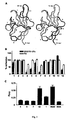
- FIG. 2A ribbon representation of the track of carbon determined by x-ray crystallography: peptide 4 nearly overlaps entire to the chain B inside of the first (ABED) beta sheet; peptide 12 is localized on the opposite beta sheet inside of the chain G to the C terminal of the domain; peptide 7 comprises part of chain C, chain C', and loop C' D, that connects the two beta sheets one to the other.
- the binding of proteins of the extracellular matrix to the integrins is generally dependent on the presence of the divalent cations, then it was investigated the interference of divalent cations with the adhesion of the EC to peptide 12.
- the peptide 12 or the BSA, as non-specific adhesion control, were linked on plates and the HUVEC added in the presence of chelating agents (EDTA or EGTA).
- integrin ⁇ 5 ⁇ 1 was the protein that mediated the adhesion of the EC to peptide 12
- anti-integrin antibody was tested.
- the HUVEC were pre-incubated with an antibody against the integrin ⁇ 5 ⁇ 1 or versus the integrinic subunit ⁇ 6 and left to adhere on plates covered with peptide 12 or BSA.
- the pre-incubation of the HUVEC with the antibody against the integrin ⁇ 5 ⁇ 1 inhibited the adhesion of the EC to peptide 12, while the antibody against ⁇ 6 was ineffective ( Figure 3A ).
- the integrins not linked are widely distributed on cellular membrane, but after the ligand binding and the activation merged in distinct structures called focal contacts and ECM contacts.
- the HUVEC were pre-incubated with peptide 12 and peptide 1 and placed in Boyden chambers in order to analyze the migration induced from VEGFR-1/Fc or fibronectin (FN).
- Data represent the average of 14 microscopic fields and are referred to as percentage of inhibition compared to the migration observed in the absence of peptides.
- the peptide 12 completely annulled the migratory response induced by VEGFR-1 Fc while the incubation of cells with a control peptide was completely ineffective.
- the inhibitory effect of the peptide 12 on cell migration was specific to the VEGFR-1, while no significant inhibition was observed on migration induced by fibronectin.
- HUVEC cells were plated on 24 wells plates previously covered with a mixture of gel Type I collagen, in the absence or presence of 500 ⁇ g/ml peptide 12 or peptide 1.
- a second layer of gel Type I collagen was placed on the adherent cells.
- VEGF 40 or 100 nM
- 20 ⁇ g/ml of protein VEGFR-1/ Fc 20 ⁇ g/ml of protein VEGFR-1/ Fc.
- the capacity of the peptide 12 to induce the formation of tubules in EC on the collagen I matrix was found similar to that of VEGF ( Figure 5 ).
- VEGFR-1 Fc that negatively regulate the function of VEGF through the sequestration of growth factor and the consequent inhibition of its interaction with the tyrosine kinase isoform of the receptor, was used as negative control and led to a strong inhibition of the constitution of tubules.
- peptide 12 In presence of VEGFR-1/Fc, peptide 12 partially maintained its ability to induce the formation of vascular structures suggesting that its mechanism of action is independent from that of VEGF (data not shown).
- pellets releasing peptide 12 were implanted into rabbit corneal tissue and neovascularization was monitored for 17 days. As shown in Figure 6A and Figure 7 peptide 12 strongly promoted neoangiogenesis.
- the integrin ⁇ 5 ⁇ 1 purified was added to plates covered with the various peptides and the amount bound was measured using an antibody anti-integrin ⁇ 5 ⁇ 1 with a colorimetric method. The data were expressed as percentage of protein linked observed on plates covered with the original peptide 12.
- the Tyr 220 is the residue more critical to the integrin binding and Leu 221 that His 223 are important in supporting the protein/protein interaction. Differently from cellular adhesion, Arg 224 also plays a role in mediating the binding of integrin with the peptide 12.
- the peptide 12 is located at the C terminus of the G chain of Domain II ( Figure 2A ). Its residues are accessible to solvent, with the exception of Tyr 222 whose side chain was close in the central core of the domain.
- the side chain of Tyr 220 is partially protected from the solvent by the carboxylate group of the Glu 144 in the side chain.
- the last residue is, however, highly flexible, as demonstrated by the high values of B factor in all crystalline structures of domains available, and from the conformational variability observed in the NMR structures.
- VEGFR-1 the biological effects of VEGFR-1 on the endothelial cells and the identification of molecules interfering the different functions of this receptor could be the basis for the development of more effective therapeutic products.
- the peptide consisting of the amino acid sequence YLXHR could be effectively used as a proangiogenic agent, in the treatment of clinical conditions that require triggering of cell angiogenesis.
Landscapes
- Health & Medical Sciences (AREA)
- Chemical & Material Sciences (AREA)
- Life Sciences & Earth Sciences (AREA)
- Organic Chemistry (AREA)
- Biochemistry (AREA)
- Genetics & Genomics (AREA)
- Gastroenterology & Hepatology (AREA)
- Toxicology (AREA)
- Immunology (AREA)
- Biophysics (AREA)
- General Health & Medical Sciences (AREA)
- Zoology (AREA)
- Medicinal Chemistry (AREA)
- Molecular Biology (AREA)
- Proteomics, Peptides & Aminoacids (AREA)
- Cell Biology (AREA)
- Medicines That Contain Protein Lipid Enzymes And Other Medicines (AREA)
- Peptides Or Proteins (AREA)
- Medicines Containing Antibodies Or Antigens For Use As Internal Diagnostic Agents (AREA)
Abstract
Description
- The present invention refers to the field of molecular Biology and in particular to one peptide sequence isolated in domain II type-Ig of the VEGFR-1 able to bind and to activate the integrin α5β1. In particular, the isolated sequence peptide, object of the present invention, can favourably be employed for the preparation of pharmacologic agents having proangiogenic activities in the treatment of pathologies that benefit from the formation of new blood vessels.
- Vascular endothelial growth factor receptor-1 (VEGFR-1) is a tyrosine kinase receptor for specific members of the vascular endothelial growth factor (VEGF) family. VEGFR-1 is closely related to the type III tyrosine kinase-Fms/Kit/platelet derived growth factor receptors, but it is classified, with VEGFR-2 and VEGFR-3, into a distinct class of receptors whose extracellular region is composed of seven immunoglobulin (Ig)-like domains. Ig-like domain II comprises the region involved in VEGF and placenta growth factor (P1GF) binding, whereas Ig-like domains III and IV are involved in heparin binding, and domain III is also responsible for interaction with neuropilin-1.
- The VEGFR-1 is expressed mainly from the endothelial and smooth muscular cells, but also from other cellular types of the haematopoietic lineage and from the cells of the skeletal muscle. The signal transduction in the cell from the VEGFR-1, as a result of the interaction with the growth factor, is not well known.
- Gene knockout studies demonstrated that VEGFR-1 is essential for the development and differentiation of embryonic vasculature, and that its inactivation results in increased hemangioblast commitment and disorganization of blood vessels. However, mice carrying a homozygous deletion of the intracellular kinase domain show a correct blood vessel development, this result suggests that the extracellular region of VEGFR-1 is sufficient to support embryonic angiogenesis.
- The tyrosine kinase activity of the VEGFR-1 is essential for the chemotactic signalling induced from VEGF and P1GF in monocyte-macrophage and in the haematopoietic stem cells.
- Studies on the P1GF, a specific ligand of the VEGFR-1, have demonstrated that this receptor is involved in the pathological angiogenesis in adults.
- More recently it has been demonstrated that growth factors that bind the VEGFR-1 can induce the transphosphorylation of VEGFR-2 and that the stimulation of the angiogenesis can be obtained by the formation of heterodimeric complex VEGFR-1/VEGFR-2.
- In addition to the transmembrane isoform of VEGFR-1, endothelial cells (EC) produce a soluble form of the receptor, arising from alternative splicing of the same gene. Soluble VEGFR-1 (sVEGFR-1) comprises the first six Ig-like domains of the extracellular region of the receptor and a specific 30 amino acid tail at its C-terminus. Both isoforms bind VEGF with high affinity, and sVEGFR-1 acts as a potent antagonist of VEGF signalling by sequestering the growth factor and thereby inhibiting its interaction with the transmembrane receptors.
- The inventors previously demonstrated that sVEGFR-1 secreted by EC in culture becomes part of the extracellular matrix and is able to mediate EC adhesion through direct binding to α5β1 integrin. (Orecchia A. et al 2003).
- A key role of this integrin in promoting vasculogenesis and angiogenesis has been previously highlighted by the defective vascular phenotype of α5 knockout mice and by the ability of either antibodies raised against this integrin or antagonist peptides to block in vitro and in vivo angiogenesis.
- Integrin binding to their ligands usually occurs through recognition of short amino acid sequences. Many integrins, including α5β1, bind to arginine-glycine-aspartic acid (RGD) containing peptides, although other motifs have also been identified.
- On the basis of what was known to the state of technical, and on the assumption that the sequence of sVEGFR-1 does not contains RGD motif, the inventors of this invention focused their intention on identification of the molecular determinants responsible for its interaction with integrin α5β1.
- Experiments, below detail described, were first revealed that an antibody against a peptide mapping on the domain II type-ig prevents the binding of VEGFR-1 with integrin α5β1. Therefore, the experimental efforts were focused on this domain II that supports both the adhesion of EC that the direct link with integrin α5β1.
- Subsequently, on the basis of the information available in the experimentally determined structures of this domain II, were developed twelve peptides putatively mimicking the whole surface of the domain, which were subsequently tested for the interaction with the integrin. Of these twelve peptides one was able both to support the adhesion of EC, that to compete with the adhesion of the to EC sVEGFR-1, and the migration of EC towards sVEGFR-1.
- Furthermore, the peptide showed proangiogenic activity in vitro and in vivo. The replacement with alanine scanning mutagenesis of the peptide has, finally, made it possible to identify the residues of the peptide responsible for its biological activity, which represent a binding motif for the integrin α5β1.
- Therefore, object of the present invention is a peptide consisting of the amino acid sequence NYLTHRQ with same proangiogenic effect as well as the peptide consisting of the sequence YLXHR in which X can be an amino acid as defined in
claim 1, but preferably is Thr/T. - Another object of the present invention is the use of this peptides for the preparation of a pharmacological composition, suitable for the treatment of the clinical conditions that need the induction of the angiogenesis, such as: peripheral hypertension, vascular diabetes-dependent pathologies, wound, ischemia of the muscle, the brain, the kidney, the intestine, the heart or the limbs, serious occlusive or obstructive vascular pathologies, peripheral vascular pathologies, pericardic ischaemia, infarct whichever vascular pathologies
- Another object of the present invention is the use of peptides of the invetion to direct molecules or particles also viral particles towards integrin α5β1 in vitro.
- Further features of the present invention will turn out clearer from the detailed description, equipped from the experiments, that it follows with reference to the attached figures in which:
-
Figure 1A shows the results of a solid-phase binding assay test of integrin α5β1 to sVEGFR-1 in the presence/absence of antibodies directed against specific regions of the sVEGFR-1 protein, the amount of bound protein was measure by colorimetric assay (absorbance at 405nm). -
Figure 1B shows the results of a test of adhesion of the endothelial cells (EC) incubated on plates covered with VEGFR-1 protein fusion with the FC domain of human immunoglobulins (VEGFR-1 Fc), with the domain II type-Ig recombinant (d II), with fibronectin (FN) or bovine serum albumin (BSA), followed by colorimetric assay (absorbance at 540nm). - The
figure 1C shows the results of an adhesion test on solid phase of integrin α5β1 on plates covered with the domain II type-Ig recombinant or with VEGFR-1 Fc, followed by colorimetric assay (absorbance at 405nm). -
Figure 2A shows in the right panel the location ofpeptides peptides - The
figure 2B shows the results of a test of adhesion of the EC on plates covered with VEGFR-1/Fc or fibronectin, in the presence of the twelve peptides, the result is expressed as percentage of EC adhesion on the same substrates in the absence of peptides. - The
figure 2C shows the results of a test of adhesion of EC on plates covered withpeptides -
Figure 3A shows the results of a test of adhesion of the EC on plates covered withpeptide 12 in the presence of EDTA, EGTA, an antibody against α5β1, α5, β1 and α6, integrin followed by colorimetric assay (absorbance at 540nm). - The
figure 3B shows, in panels a-e, the results of an immunostaining for integrin α5β1 of the EC incubated with magnetic beads coated with RGE peptide (panel a), RGD peptide (panel b, d) or with peptide 12 (panel c, e) -
Figure 3C shows the results of a test of migration of EC induced by VEGF-1/Fc or fibronectin (FN) in the presence of thepeptide - The
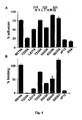
figure 4A shows the effect of the replacement with alanine of various aminoacidic residues inpeptide 12 on the cellular adhesion. - The
figure 4B shows the effect of the replacement with alanine of different aminoacidic residues in thepeptide 12 in binding the integrin α5β1. -
Figure 5 shows the results of a test of endothelial vessel formation in the presence or absence of peptide 12 (panels a g), Q225A (panel c), Y220A (panel d), and concentrations of VEGF (100 nM) (panels b, d), and 20 mg/ml VEGFR-1 Fc (panels e, f, g). - The
figures 6A and 6B show the effect on angiogenesis of thepeptide 12 or Y220 compare to VEGF at different times in vivo. -
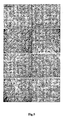
Figure 7 shows the results of histological and immunohistochemical analysis of corneal angiogenesis. - It is known that the integrin α5β1 binds the VEGFR-1/Fc protein, and as previously demonstrated by the same inventors, an antibody, able to recognize a peptide whose sequence is present in VEGFR-1 domain II, competes with the adhesion of the EC to the sVEGFR-1 mediated from the integrin α5β1; the effect of the same antibody was analyzed (able to recognize a peptide whose sequence is present in VEGFR-1 domain II) on the direct interaction sVEGFR-1/integrin.
- In a binding test on solid phase, dishes covered with VEGFR-1/Fc were treated with various anti-VEGFR-1 antibodies and incubated with the purified integrin α5β1, the amount of integrin bound was quantified by means of incubation with an anti-integrin α5β1 antibody and colorimetric identification of this last one. The capacity of the antibody to recognize a peptide whose sequence is present in domain II of VEGFR-1 (dII Ab) completely inhibited the binding of the integrin α5β1 with the VEGFR-1. A polyclonal antibody (Flt-1 H225) directed against a proteic fragment comprising the aminoacidic residual from 1 to 225 of the VEGFR-1, did not inhibit the VEGFR-1/integrin interaction. As expected the inhibition was not obtained with an antibody (Flt-1 C17) directed against the intracellular domain of VEGFR-1 (
Figure 1A ). - Based on the domain boundaries observed in the experimentally determined structures available from the PDB database (www.rcsb.org), was designed a recombinant protein corresponding to domain II (residues 129-229). The protein was produced in insect cell line SF9 using the system of expression mediated by baculovirus and purified by affinity chromatography. The recombinant protein had the molecular weight expected on SDS-PAGE and was recognized by a polyclonal antibody anti-VEGFR-1.
- The full cDNA of VEGFR-1 used for the production of the domain II recombinant was kindly provided by Dr. Shibuya (Institute of medical science, University of Tokyo, Japan). The cDNA was modified in the laboratory of Dr. Ballmer-Hofer (Paul-Scherrer Institut, Villigen-PSI, Switzerland) to introduce the site KPN I followed by a Kozak sequence, a start codon to the 5' end, a site BSI WI followed by an HA tags and a stop codon at the 3' end. The polylinker of the
vector pFastBac 1 of Baculovirus (Invitrogen-Life Technologies) was replaced with a linker containing a site KPN I and a BSI WI together with a His tag. - Firstly, the full cDNA of VEGFR-1 was cloned in pFastBac 1 using the sites KPN I and the BSI WI. To build the domain II Recombinant, the signal sequence of VEGFR-1 was amplified by PCR using the oligonucleotides:
- 5'- GCGCGGATCCGGTACCGC-3' and
- 5 ' - GTGATGCGTACGTGAACCTGAACTAGATCCTGTG-3'
and cloned into PFastBac previously modified. - Then the domain II was amplified with the oligonucleotides:
- 5'-GTGATGCGTACGAGTGATACAGGTAGACCTTTC-3' and
- 5'-GTGATGCGTACGTCCGATTGTATTGGTTTGTCGATG-3'.
- The PCR fragment was cloned into the modified pFastBac vector carrying the VEGFR-1 signal sequence. Recombinant Baculovirus was obtained using the Bac-to-Bac system (Invitrogen-Life Technologies). SF9 (Spodoptera frugiperda) cell line was purchased from Invitrogen, and maintained in culture at 27°C in TC100 medium (Invitrogen-Life Technologies) containing 10% heat inactivated fetal calf serum. Infected SF9 cells were cultured in serum free SF-900 medium (Invitrogen-Life Technologies). For protein expression, SF9 cells were grown up to 60% confluence and infected with recombinant virus. Forty-eight hours post-infection cells were collected, and the recombinant protein was purified by affinity chromatography using the B-PER His Fusion Protein purification kit (PIERCE, Rockford, IL).
- The endothelial cells derived from human umbilical vein (HUVEC) were used to examine ability of the domain II to support the adhesion of EC in plates covered with the recombinant protein.
- The HUVEC were incubated on plates covered with VEGFR-1 FC, with the domain II (dII) recombinant, with fibronectin (FN) or bovine serum albumin (BSA). The protein VEGFR-1/Fc, and the fibronectin were used as positive controls and BSA as negative control.
- The cells assayed were coloured and the absorbance was measured.
- The dII recombinant supported the adhesion of the HUVEC (
figure 1B ) in analogous way to the VEGFR-1/Fc. - The direct bind of the integrin α5β1 to the domain had been determined also with binding test on solid phase. The purified integrin α5β1 was added to plates covered with dII or with VEGFR-1/Fc like positive control and the integrin bound was measured using an antibody anti-integrin α5β1 and a colorimetric test. As shown in
figure 1C a similar amount of integrin interacted with the VEGFR-1/Fc and the dII recombinant. - In order to identify a region of domain II potentially interacting with the integrin α5β1, were employed the determined structures of the domain with X-ray crystallography available in the data bank PDB. The three-dimensional structures were examined in order to identify the contiguous aminoacidic sequences on the surface of the protein that could mimic all the exposed region of domain II.
- Twelve peptides (table I), were elaborate based on the following criteria:
- 1) they are on the protein surface and have high overall solvent accessible surface area;
- 2) they correspond to different regions of the domain surface, covering it almost entirely;
- 3) they are shorter than 15 residues;
- 4) they contain an high percentage of polar residues and, whenever possible, residues charged at physiological pH values (Asp, Glu, Lys and Arg);
- 5) they contain a low percentage of hydrophobic residues (i.e. Leu, Val, Ile, Met, Phe and Trp), to minimize solubility problems;
- 6) they do not contain Cys residues, which might lead to formation of dimeric peptides.
- To satisfy the
requirement 6, VEGFR-1 residue Cys 158 was replaced by Ala inpeptide 4. Additionally, to explore whether the presence of two branched hydrophobic residues next to each other might cause solubility problems, the adjacent Ile 145 and Ile 146 were both replaced by Thr inpeptide 3. The sequence ofpeptide 5 has been previously published and reported to act as an angiogenesis inhibitor without binding to VEGF or inhibiting VEGF binding to its receptors. - In order to test the ability of the twelve chosen peptides to inhibit the adhesion of the EC to VEGFR-1 mediated from the integrin α5β1, every peptide was added to one suspension of HUVEC before plated on dishes covered with VEGFR-1/Fc or fibronectin (FN). The data were indicated as percentage of adhesion, calculated to the number of cells adhered on the substrate itself in absence of peptides.
- Like shown in
figure 2B peptides peptides - Localization of
peptides figure 2A ( ribbon representation of the track of carbon determined by x-ray crystallography):peptide 4 nearly overlaps entire to the chain B inside of the first (ABED) beta sheet;peptide 12 is localized on the opposite beta sheet inside of the chain G to the C terminal of the domain;peptide 7 comprises part of chain C, chain C', and loop C' D, that connects the two beta sheets one to the other. - To establish whether the four peptides, were able to inhibit the adhesion of the EC to VEGFR-1, by supporting directly the adhesion of the EC, the peptides were linked covalently to plates and the HUVEC were incubated on plates for 1 hour. The
peptide 1 was used as negative control and the peptide RGD as the positive control. Unspecific adhesion was measured by absorbance in the plates covered with BSA. In this test onlypeptide 12 induced the adhesion of EC (Figure 2C ). - The binding of proteins of the extracellular matrix to the integrins is generally dependent on the presence of the divalent cations, then it was investigated the interference of divalent cations with the adhesion of the EC to
peptide 12. Thepeptide 12 or the BSA, as non-specific adhesion control, were linked on plates and the HUVEC added in the presence of chelating agents (EDTA or EGTA). - As shown ih
Figure 3A treatment with EDTA OR EGTA completely abolished adhesion of EC indicating that the adhesion of the EC topeptide 12 requires divalent cations. - In order to demonstrate that the integrin α5β1 was the protein that mediated the adhesion of the EC to
peptide 12, anti-integrin antibody was tested. The HUVEC were pre-incubated with an antibody against the integrin α5β1 or versus the integrinic subunit α6 and left to adhere on plates covered withpeptide 12 or BSA. The pre-incubation of the HUVEC with the antibody against the integrin α5β1 inhibited the adhesion of the EC topeptide 12, while the antibody against α6 was ineffective (Figure 3A ). - The integrins not linked are widely distributed on cellular membrane, but after the ligand binding and the activation merged in distinct structures called focal contacts and ECM contacts.
- It was examined whether the
peptide 12 was able to induce aggregation of integrin α5β1 after the binding. EC adherent cells were incubated with magnetic beads coated withpeptide 12, or peptide RGD or peptide RGE respectively as positive and negative controls, and immunostained with an antibody against integrin α5β1. - A different fluorescence for integrin α5β1 was observed around the beads covered with the peptide 12(
figure 3B , panels c, e) similar to that observed for the beads covered with the peptide RGD (figure 3B , panels b, d). No beads covered with the peptide RGE was attached with HUVEC in this test (Figure 3B , panel a). - In order to investigate the ability to
peptide 12 to influence the migration of the EC induced from VEGFR-1/Fc, a process mediated by the integrin α5β1, the HUVEC were pre-incubated withpeptide 12 andpeptide 1 and placed in Boyden chambers in order to analyze the migration induced from VEGFR-1/Fc or fibronectin (FN). Data represent the average of 14 microscopic fields and are referred to as percentage of inhibition compared to the migration observed in the absence of peptides. As shown inFigure 3C thepeptide 12 completely annulled the migratory response induced by VEGFR-1 Fc while the incubation of cells with a control peptide was completely ineffective. The inhibitory effect of thepeptide 12 on cell migration was specific to the VEGFR-1, while no significant inhibition was observed on migration induced by fibronectin. - It was tested the ability of the
peptide 12 to induce the formation of tubules of EC. HUVEC cells were plated on 24 wells plates previously covered with a mixture of gel Type I collagen, in the absence or presence of 500 µg/ml peptide 12 orpeptide 1. A second layer of gel Type I collagen was placed on the adherent cells. As shown, in the absence or presence of peptides, were added, in the culture medium, different concentrations of VEGF (40 or 100 nM), or 20 µg/ml of protein VEGFR-1/ Fc. The capacity of thepeptide 12 to induce the formation of tubules in EC on the collagen I matrix was found similar to that of VEGF (Figure 5 ). Furthermore, when the VEGF was used to low concentration (40nM) the simultaneous treatment with thepeptide 12 increased the formation of tubules induced by VEGF. On the contrary, thepeptide 1 did not induce the formation of tubules neither increased the effect of VEGF. The addition of VEGFR-1 Fc, that negatively regulate the function of VEGF through the sequestration of growth factor and the consequent inhibition of its interaction with the tyrosine kinase isoform of the receptor, was used as negative control and led to a strong inhibition of the constitution of tubules. - In presence of VEGFR-1/Fc,
peptide 12 partially maintained its ability to induce the formation of vascular structures suggesting that its mechanism of action is independent from that of VEGF (data not shown). - To address the angiogenic role, in vivo,
pellets releasing peptide 12 were implanted into rabbit corneal tissue and neovascularization was monitored for 17 days. As shown inFigure 6A andFigure 7 peptide 12 strongly promoted neoangiogenesis. - To determine which residues of the
peptide 12 had a role in the interaction with integrin α5β1, were synthesized ten different peptides, each having a single replacement with alanine (ALA). These peptides were tested for their ability to directly support the cellular adhesion. The ten peptides were covalently linked to plates, and were also tested, as negative controls, a peptide "scrambled" in which the amino acid sequence of thepeptide 12 was modified (see Table 1) (sP12) and BSA. The HUVEC were plated and allow to adhere. The results were expressed as percentage of the cellular adhesion observed on plates covered with thepeptide 12. - As shown in
Figure 4A , the replacement of only 3 residues with ALA influence the capacity of thepeptide 12 to support the adhesion of EC: the replacement of Tyr 220 with ALA completely abolished cellular adhesion to peptide, the mutation of Leu 221 in ALA resulted in a partial reduction in the cellular adhesion, comparable to that observed in His 223 peptide mutant in Ala. These results demonstrated that the residues which are important in mediate the binding of the cells are Tyr 220 Leu 221 and His 223. It was also assessed the direct binding to integrin α5β1 with mutant peptides by a binding test on solid phase. The integrin α5β1 purified was added to plates covered with the various peptides and the amount bound was measured using an antibody anti-integrin α5β1 with a colorimetric method. The data were expressed as percentage of protein linked observed on plates covered with theoriginal peptide 12. - As shown in
Figure 4B , the Tyr 220 is the residue more critical to the integrin binding and Leu 221 that His 223 are important in supporting the protein/protein interaction. Differently from cellular adhesion, Arg 224 also plays a role in mediating the binding of integrin with thepeptide 12. - The
peptide 12 is located at the C terminus of the G chain of Domain II (Figure 2A ). Its residues are accessible to solvent, with the exception ofTyr 222 whose side chain was close in the central core of the domain. The side chain of Tyr 220 is partially protected from the solvent by the carboxylate group of the Glu 144 in the side chain. The last residue is, however, highly flexible, as demonstrated by the high values of B factor in all crystalline structures of domains available, and from the conformational variability observed in the NMR structures. - Therefore, it is assumed that Tyr 220 was available for the binding with the ligand.
- In order to verify the specificity of residual YLXHR (X = whichever residual one) in extracellular proteins, the annotated human proteins from the UniProtKB/Swissprot consortium had been searched for its recurrence. The motif was found in 20 (0,2%) of 8,687 analyzed proteins, nobody of which was extracellular, suggesting that this sequence of binding for the integrin α5β1 is peculiar of the sVEGFR-1. On the contrary, the motif RGD was found again in 7,9% of all human proteins and was more frequent in extracellular proteins (9,7%).
- As stated in the experiments described detail here, the research have led to many important results, the following are summarised:
- the two isoforms, derived from alternative splicing of the VEGF receptor-1 play a different biological role during angiogenesis. In particular, the transmembrane isoform of the receptor is a tyrosine A kinase, while the soluble form acts as a molecule in extracellular matrix, involved in adhesion and cell migration, and as negative regulator of the activity of VEGF signal.
- an antibody against a peptide whose sequence is present in the domain II of VEGFR-1 inhibits cellular adhesion on sVEGFR-1 and blocks the interaction with integrin α5β1.
- a fragment of VEGFR-1, corresponding to the domain II, directly binds integrin α5β1 and is sufficient to support the adhesion of the endothelial cells (EC).
- of the twelve peptides, that mimic selected regions of the surface of the receptor, four peptides (4, 5, 7 and 12) inhibit cellular adhesion to sVEGFR-1.
- the
peptide 12 is the only one that directly supports the adhesion of EC, and therefore interacts directly with integrin α5β1. In fact, the binding EC/peptide 12 is sensitive to divalent cations and is inhibited by antibodies against integrin α5β1. - the direct interaction between the
peptide 12 and integrin α5β1 activate the integrin. -
Peptide 12 inhibits cellular migration towards VEGFR-1, process that is mediated by the integrin α5β1. -
Peptide 12 is able to induce in vitro the formation of vascular structures (tubules), suggesting that sVEGFR-1, whose domain II contains sequence ofpeptide 12, is involved in the formation of blood vessels, adhesion and migration of the endothelial cells and is a positive modulator of blood vessels morphogenesis. - three residues of the
peptide 12, Tyr 220, Leu 221 and His 223 if mutated, significantly reduce the capacity of the peptide support cellular adhesion. - the motif having sequence YLXHR, represents the region, in the domain II of the receptor VEGFR-1, strictly necessary for the interaction with integrin.
- This sequence does not interact with growth factors, VEGF and PLGF, therefore, although the residue responsible for the binding with the growth factors and integrin are close, the two interactions may be mutually exclusive.
- Finally the biological effects of VEGFR-1 on the endothelial cells and the identification of molecules interfering the different functions of this receptor could be the basis for the development of more effective therapeutic products.
- In fact, the peptide consisting of the amino acid sequence YLXHR could be effectively used as a proangiogenic agent, in the treatment of clinical conditions that require triggering of cell angiogenesis.
- These clinical conditions are included in group consisting of:
- Hypertension, peripheral vascular pathologies diabetes-dependent, wounded, ischaemia of : muscle, brain, kidney, gut, heart or the arts; vascular pathologies occlusive or obstructive serious, peripherals vascular pathologies, pericardial ischaemia, myocardial infarction, diseases of the coronary arteries, cerebral vascular pathologies, visceral vascular pathologies.
-
- Berman, H. M., Westbrook, J., Feng, Z., Gilliland, G., Bhat, T. N., Weissig, H., Shindyalov, I. N. & Bourne, P. E. (2000) Nucleic Acids Res 28, 235-242.
- Carmeliet, P., Moons, L., Luttun, A., Vincenti, V., Compernolle, V., De Mol, M., Wu, Y., Bono, F., Devy, L., Beck, H., Scholz, D., Acker, T. & DiPalma, T. (2001) .
- Christinger, H. W., Fuh, G., de Vos, A. M. & Wiesmann, C. (2004) J Biol Chem 279, 10382-10388.
- Davis-Smyth, T., Presta, L. G. & Ferrara, N. (1998) J Biol Chem 273, 3216-3222.
- Dayringer, H. E., Tramontano, A., Spang, S. R. & Fletterick, R. J. (1986) .
- Folkman, J. (1995) N Engl J Med 333, 1757-1763.
- Fong, G., Rossant, J., Gertsenstein, M. & Breitman, M. (1995) Nature 376, 66-70.
- Fong, G., Zhang, L., Bryce, D. & Peng, J. (1999) Development 126, 3015-3025.
- Francis, S. E., Goh, K. L., Hodivala-Dilke, K., Bader, B. L., Stark, M., Davidson, D. & Hynes, R. O. (2002) Arterioscler .
- Fuh, G., Garcia, K. C. & de Vos, A. M. (2000) J Biol Chem 275, 26690-26695.
- Germani, A., Di Carlo, A., Mangoni, A., Straino, S., Giacinti, C., Turrini, P., Turrini, P., Biglioli, P. & Capogrossi, M. C. (2003) Am J Pathol 163, 1417-28.
- Gimbrone, M. A. (1976) .
- Hiratsuka, S., Minowa, O., Kuno, J., Noda, T. & Shibuya, M. (1998) Proc Natl Acad Sci USA 95, 9349-9354.
- Humpries, M. J. (2000) Biochem Soc Trans 28, 311-229.
- Inoue, T., Kibata, K., Suzuki, M., Nakamura, S., Motoda, R. & Orita, K. (2000) FEBS Lett 469, 14-18.
- Ishida, A., Murray, J., Saito, Y., Kanthou, C., Benzakour, O., Shibuya, M. & Wijelath, E. (2001) J Cell Physiol 188, 359-68.
- Kearney, J. B., Kappas, N. C., Ellerstrom, C., DiPaola, F. W. & Bautch, V. L. (2004) Blood 103, 4527-4535.
- Kendall, R. L. & Thomas, K. A. (1993) Proc Natl Acad Sci USA 90, 10705-10709.
- Kim, S., Bell, K., Mausa, S. A. & Varner, J. A. (2000) Am J Pathol 156, 1345-1362.
- Koivunen, E., Gay, D. A. & Ruoslahti, E. (1993) J Biol Chem 268, 20205-20210.
- Koivunen, E., Wang, B. & Ruoslahti, E. (1994) J Cell Biol 124, 373-80.
- Korpelainen, E. & Alitalo, K. (1998) Curr .
- Leahy, D. J., Aukhil, I. & Erickson, H. P. (1996) Cell 84, 155-164.
- Leu, S., Lam, S. & Lau, L. (2002) J Biol Chem 277, 46248-55.
- Mould, A. P., Burrows, L. & Humphries, M. J. (1998) J Biol Chem 273, 25664-25672.
- O'Donovan, C., Apweiler, R. & Bairoch, A. (2001) Trends Biotechnol 19, 178-181.
- Orecchia, A., Lacal, P. M., Schietroma, C., Morea, V., Zambruno, G. & Failla, C. M. (2003) J Cell Sci 116, 3479-3489.
- Roberts, D. M., Kearney, J. B., Johnson, J. H., Rosenberg, M. P., Kumar, R. & Bautch, V. L. (2004) Am J Pathol 164, 1531-1535.
- Sawano, A., Iwai, S., Sakurai, Y., Ito, M., Shitara, K., Nakahata, T. & Shibuya, M. (2001) Blood 97, 785-791.
- Shibuya, M., Yamaguchi, S., Yamane, A., Ikeda, T., Tojo, A., Matsushime, H. & Sato, M. (1990) .
- Shimaoka, M. & Springer, T. A. (2003) Nat .
- Tan, D. C. W., Manjunatha Kini, R., Jois, S. D. S., Lim, D. K. F., Xin, L. & Ge, R. (2001) FEES Lett 494, 150-156.
- Wang, H. & Keiser, J. (1998) Circ Res 83, 832-840.
- Wiesmann, C., Fuh, G., Christinger, H. W., Eigenbrot, C., Wells, J. A. & de Vos, A. M. (1997) Cell 91, 695-704.
- Yamada, K. M. & Geiger, B. (1997) Curr .
| P1 | GRPFVEMYSE | 132-141 |
| P2 | YSEIPEIIH | 139-147 |
| P3 | ETTHMTEGR | 144-152 |
| P4 | TEGRELVIPARVT | 149-161 |
| P5 | NITVTLKKFPL | 164-174 |
| P6 | KKFPLD | 170-175 |
| P7 | KFPLDTLIPDG | 171-181 |
| P8 | DTLIPDGKRII | 175-185 |
| P9 | DSRKGFIISNAT | 187-198 |
| P10 | TYKEIGL | 198-204 |
| P11 | EATVNGHLYKT | 208-218 |
| P12 | NYLTHRQ | 219-225 |
| sP12 | LTQNYRH | - |
Claims (7)
- Peptide consisting of the amino acid sequence of YLXHR having proangiogenic effect characterized by the fact that X is selected in the group consisting of: Ala/A, Arg/R, Asn/N, Asp/D, Cys/C, Glu/E, Gln/Q, Gly/G, Ile/I, Leu/L, Lys/K, Met/M, Phe/F, Pro/P, Ser/S, Thr/T, Trp/W, Tyr/Y, Val/V.
- Peptide consisting of the amino acid sequence of YLXHR having proangiogenic effect according to the claim 1 characterized by the fact that X is Thr/T.
- Peptide consisting of the amino acid sequence of NYLTHRQ having proangiogenic effect.
- Use of the peptide by any of the claims from 1 to 3 for the preparation of a pharmacological composition.
- Use of the peptide by any of the claims from 1 to 3 for the preparation of a pharmacological composition usable for the treatment of clinical conditions that require induction of angiogenesis.
- Use according to the claim 5 characterized by the fact that the clinical condition requiring angiogenesis are choices in the group consisting of: hypertension, peripheral vascular diabetes-dependent, pathologies wounds, ischemia of the muscle, ischemia of the brain, ischemia of the kidney, ischemia of the gut, ischemia of the heart or ischemia of the limbs, vascular pathologies occlusive or serious obstructive, peripheral vascular pathologies, pericardial ischaemia, myocardial infarction, diseases of the coronary arteries, cerebral vascular pathologies, visceral vascular pathologies.
- Use of the peptide according to any of the claims from 1 to 3 to direct molecules or particles, also viral, to integrin α5β1 in vitro.
Applications Claiming Priority (2)
| Application Number | Priority Date | Filing Date | Title |
|---|---|---|---|
| IT000409A ITRM20060409A1 (en) | 2006-07-31 | 2006-07-31 | PRINCIPAL SEQUENCE ISOLATED IN THE DOMAIN THE IMMUNOGLOBULIN TYPE OF RECEIVER 1 OF THE VASCULAR END-PHYTOMIC GROWTH FACTOR AND BINDING THE INTEGRINE A5B1 TO PROANGIOGENIC ACTIVITY |
| PCT/IT2007/000551 WO2008015720A2 (en) | 2006-07-31 | 2007-07-31 | PEPTIDE DERIVED FROM VASCULAR ENDOTHELIAL GROWTH FACTOR RECEPTOR-1 BINDING INTEGRIN α5β1, HAVING PROANGIOGENIC ACTIVITY |
Publications (2)
| Publication Number | Publication Date |
|---|---|
| EP2054440A2 EP2054440A2 (en) | 2009-05-06 |
| EP2054440B1 true EP2054440B1 (en) | 2010-12-22 |
Family
ID=38896783
Family Applications (1)
| Application Number | Title | Priority Date | Filing Date |
|---|---|---|---|
| EP07805753A Not-in-force EP2054440B1 (en) | 2006-07-31 | 2007-07-31 | Peptide derived from vascular endothelial growth factor receptor-1 binding integrin alpha5beta1, having proangiogenic activity |
Country Status (10)
| Country | Link |
|---|---|
| US (1) | US8093218B2 (en) |
| EP (1) | EP2054440B1 (en) |
| AT (1) | ATE492560T1 (en) |
| AU (1) | AU2007279991A1 (en) |
| CA (1) | CA2659681A1 (en) |
| DE (1) | DE602007011460D1 (en) |
| DK (1) | DK2054440T3 (en) |
| ES (1) | ES2358370T3 (en) |
| IT (1) | ITRM20060409A1 (en) |
| WO (1) | WO2008015720A2 (en) |
Families Citing this family (1)
| Publication number | Priority date | Publication date | Assignee | Title |
|---|---|---|---|---|
| ITUA20162326A1 (en) * | 2016-04-05 | 2017-10-05 | Fond Luigi Maria Monti | ANTI-VEGFR-1 ANTIBODIES AND USES OF THEM |
Family Cites Families (2)
| Publication number | Priority date | Publication date | Assignee | Title |
|---|---|---|---|---|
| US5661127A (en) * | 1995-05-01 | 1997-08-26 | The Regents Of The University Of California | Peptide compositions with growth factor-like activity |
| GB0323609D0 (en) * | 2003-10-09 | 2003-11-12 | Univ Belfast | A peptide,and use of the peptide to assay for sflt-1 protein |
-
2006
- 2006-07-31 IT IT000409A patent/ITRM20060409A1/en unknown
-
2007
- 2007-07-31 EP EP07805753A patent/EP2054440B1/en not_active Not-in-force
- 2007-07-31 AU AU2007279991A patent/AU2007279991A1/en not_active Abandoned
- 2007-07-31 WO PCT/IT2007/000551 patent/WO2008015720A2/en not_active Ceased
- 2007-07-31 DK DK07805753.6T patent/DK2054440T3/en active
- 2007-07-31 ES ES07805753T patent/ES2358370T3/en active Active
- 2007-07-31 AT AT07805753T patent/ATE492560T1/en not_active IP Right Cessation
- 2007-07-31 CA CA002659681A patent/CA2659681A1/en not_active Abandoned
- 2007-07-31 DE DE602007011460T patent/DE602007011460D1/en active Active
- 2007-07-31 US US12/375,775 patent/US8093218B2/en not_active Expired - Fee Related
Also Published As
| Publication number | Publication date |
|---|---|
| AU2007279991A1 (en) | 2008-02-07 |
| ATE492560T1 (en) | 2011-01-15 |
| WO2008015720A2 (en) | 2008-02-07 |
| US20090312266A1 (en) | 2009-12-17 |
| DE602007011460D1 (en) | 2011-02-03 |
| WO2008015720A3 (en) | 2008-04-10 |
| CA2659681A1 (en) | 2008-02-07 |
| ES2358370T3 (en) | 2011-05-10 |
| EP2054440A2 (en) | 2009-05-06 |
| ITRM20060409A1 (en) | 2008-02-01 |
| US8093218B2 (en) | 2012-01-10 |
| DK2054440T3 (en) | 2011-04-04 |
Similar Documents
| Publication | Publication Date | Title |
|---|---|---|
| Orecchia et al. | Vascular endothelial growth factor receptor-1 is deposited in the extracellular matrix by endothelial cells and is a ligand for theα5β1 integrin | |
| US7855178B2 (en) | Growth factor binding constructs materials and methods | |
| Bikfalvi | Recent developments in the inhibition of angiogenesis: examples from studies on platelet factor-4 and the VEGF/VEGFR system | |
| RU2515063C2 (en) | Muteins of tear lipocalin, possessing affinity to human c-met receptor tyrosine kinase and methods of obtaining them | |
| Wu et al. | Isolation of a novel basic FGF‐binding peptide with potent antiangiogenetic activity | |
| US20080153756A1 (en) | Novel Peptides and Methods for the Treatment of Inflammatory Disorders | |
| EP0604603A1 (en) | Cadherin materials and methods | |
| Soro et al. | A proangiogenic peptide derived from vascular endothelial growth factor receptor-1 acts through α5β1 integrin | |
| JP5089397B2 (en) | Mutant netrin 4, fragments thereof and their use as drugs | |
| Stoletov et al. | Nck and Crk mediate distinct VEGF-induced signaling pathways that serve overlapping functions in focal adhesion turnover and integrin activation | |
| US8093218B2 (en) | Peptide derived from vascular endothelial growth factor receptor-1 binding integrin α5β1 having proangiogenic activity | |
| CA2421783A1 (en) | Receptor in the edb fibronectin domain | |
| US20190359653A1 (en) | Selective peptide inhibitors of frizzled | |
| TWI243852B (en) | Angiogenesis related molecules | |
| JPH02311498A (en) | Functional polypeptide | |
| EP2843048B1 (en) | NOVEL INTEGRIN alpha9beta1 LIGAND AND USES THEREOF | |
| Failla et al. | A proangiogenic peptide derived from vascular endothelial growth factor | |
| US20080280833A1 (en) | Therapeutic Peptides Derived from Urokinase Plasminogen Activator Receptor | |
| US20090118174A1 (en) | Novel peptides and methods for the treatment of inflammatory disorders | |
| EA015339B1 (en) | Fgf2-binding peptides and uses thereof | |
| Stoletov | Role of Nck and Crk adapter proteins in the VEGF promoted endothelial cell migration | |
| Leu | Angiogenic inducer CCN1 (CYR61): Pro-angiogenic activities and integrin-binding sites |
Legal Events
| Date | Code | Title | Description |
|---|---|---|---|
| PUAI | Public reference made under article 153(3) epc to a published international application that has entered the european phase |
Free format text: ORIGINAL CODE: 0009012 |
|
| 17P | Request for examination filed |
Effective date: 20090226 |
|
| AK | Designated contracting states |
Kind code of ref document: A2 Designated state(s): AT BE BG CH CY CZ DE DK EE ES FI FR GB GR HU IE IS IT LI LT LU LV MC MT NL PL PT RO SE SI SK TR |
|
| AX | Request for extension of the european patent |
Extension state: AL BA HR MK RS |
|
| RIN1 | Information on inventor provided before grant (corrected) |
Inventor name: FAILLA, CRISTINA MARIA Inventor name: ORECCHIA, ANGELA Inventor name: LACAL, PEDRO MIGUEL Inventor name: ZAMBRUNO, GIOVANNA Inventor name: SORO, SIMONETTA Inventor name: MOREA, VERONICA Inventor name: TRAMONTANO, ANNA Inventor name: D'ATRI, STEFANIA |
|
| 17Q | First examination report despatched |
Effective date: 20090702 |
|
| DAX | Request for extension of the european patent (deleted) | ||
| RTI1 | Title (correction) |
Free format text: PEPTIDE DERIVED FROM VASCULAR ENDOTHELIAL GROWTH FACTOR RECEPTOR-1 BINDING INTEGRIN ALPHA5BETA1, HAVING PROANGIOGENIC ACTIVITY |
|
| GRAP | Despatch of communication of intention to grant a patent |
Free format text: ORIGINAL CODE: EPIDOSNIGR1 |
|
| GRAS | Grant fee paid |
Free format text: ORIGINAL CODE: EPIDOSNIGR3 |
|
| GRAA | (expected) grant |
Free format text: ORIGINAL CODE: 0009210 |
|
| AK | Designated contracting states |
Kind code of ref document: B1 Designated state(s): AT BE BG CH CY CZ DE DK EE ES FI FR GB GR HU IE IS IT LI LT LU LV MC MT NL PL PT RO SE SI SK TR |
|
| REG | Reference to a national code |
Ref country code: GB Ref legal event code: FG4D |
|
| REG | Reference to a national code |
Ref country code: CH Ref legal event code: EP |
|
| REG | Reference to a national code |
Ref country code: IE Ref legal event code: FG4D |
|
| REF | Corresponds to: |
Ref document number: 602007011460 Country of ref document: DE Date of ref document: 20110203 Kind code of ref document: P |
|
| REG | Reference to a national code |
Ref country code: DE Ref legal event code: R096 Ref document number: 602007011460 Country of ref document: DE Effective date: 20110203 |
|
| REG | Reference to a national code |
Ref country code: CH Ref legal event code: NV Representative=s name: P&TS SA |
|
| REG | Reference to a national code |
Ref country code: NL Ref legal event code: T3 |
|
| REG | Reference to a national code |
Ref country code: SE Ref legal event code: TRGR |
|
| REG | Reference to a national code |
Ref country code: DK Ref legal event code: T3 |
|
| PG25 | Lapsed in a contracting state [announced via postgrant information from national office to epo] |
Ref country code: LT Free format text: LAPSE BECAUSE OF FAILURE TO SUBMIT A TRANSLATION OF THE DESCRIPTION OR TO PAY THE FEE WITHIN THE PRESCRIBED TIME-LIMIT Effective date: 20101222 |
|
| REG | Reference to a national code |
Ref country code: ES Ref legal event code: FG2A Ref document number: 2358370 Country of ref document: ES Kind code of ref document: T3 Effective date: 20110427 |
|
| LTIE | Lt: invalidation of european patent or patent extension |
Effective date: 20101222 |
|
| PG25 | Lapsed in a contracting state [announced via postgrant information from national office to epo] |
Ref country code: LV Free format text: LAPSE BECAUSE OF FAILURE TO SUBMIT A TRANSLATION OF THE DESCRIPTION OR TO PAY THE FEE WITHIN THE PRESCRIBED TIME-LIMIT Effective date: 20101222 Ref country code: BG Free format text: LAPSE BECAUSE OF FAILURE TO SUBMIT A TRANSLATION OF THE DESCRIPTION OR TO PAY THE FEE WITHIN THE PRESCRIBED TIME-LIMIT Effective date: 20110322 Ref country code: CY Free format text: LAPSE BECAUSE OF FAILURE TO SUBMIT A TRANSLATION OF THE DESCRIPTION OR TO PAY THE FEE WITHIN THE PRESCRIBED TIME-LIMIT Effective date: 20101222 Ref country code: SI Free format text: LAPSE BECAUSE OF FAILURE TO SUBMIT A TRANSLATION OF THE DESCRIPTION OR TO PAY THE FEE WITHIN THE PRESCRIBED TIME-LIMIT Effective date: 20101222 Ref country code: AT Free format text: LAPSE BECAUSE OF FAILURE TO SUBMIT A TRANSLATION OF THE DESCRIPTION OR TO PAY THE FEE WITHIN THE PRESCRIBED TIME-LIMIT Effective date: 20101222 |
|
| PG25 | Lapsed in a contracting state [announced via postgrant information from national office to epo] |
Ref country code: PT Free format text: LAPSE BECAUSE OF FAILURE TO SUBMIT A TRANSLATION OF THE DESCRIPTION OR TO PAY THE FEE WITHIN THE PRESCRIBED TIME-LIMIT Effective date: 20110422 Ref country code: EE Free format text: LAPSE BECAUSE OF FAILURE TO SUBMIT A TRANSLATION OF THE DESCRIPTION OR TO PAY THE FEE WITHIN THE PRESCRIBED TIME-LIMIT Effective date: 20101222 Ref country code: IS Free format text: LAPSE BECAUSE OF FAILURE TO SUBMIT A TRANSLATION OF THE DESCRIPTION OR TO PAY THE FEE WITHIN THE PRESCRIBED TIME-LIMIT Effective date: 20110422 Ref country code: CZ Free format text: LAPSE BECAUSE OF FAILURE TO SUBMIT A TRANSLATION OF THE DESCRIPTION OR TO PAY THE FEE WITHIN THE PRESCRIBED TIME-LIMIT Effective date: 20101222 Ref country code: GR Free format text: LAPSE BECAUSE OF FAILURE TO SUBMIT A TRANSLATION OF THE DESCRIPTION OR TO PAY THE FEE WITHIN THE PRESCRIBED TIME-LIMIT Effective date: 20110323 |
|
| PG25 | Lapsed in a contracting state [announced via postgrant information from national office to epo] |
Ref country code: RO Free format text: LAPSE BECAUSE OF FAILURE TO SUBMIT A TRANSLATION OF THE DESCRIPTION OR TO PAY THE FEE WITHIN THE PRESCRIBED TIME-LIMIT Effective date: 20101222 Ref country code: SK Free format text: LAPSE BECAUSE OF FAILURE TO SUBMIT A TRANSLATION OF THE DESCRIPTION OR TO PAY THE FEE WITHIN THE PRESCRIBED TIME-LIMIT Effective date: 20101222 Ref country code: PL Free format text: LAPSE BECAUSE OF FAILURE TO SUBMIT A TRANSLATION OF THE DESCRIPTION OR TO PAY THE FEE WITHIN THE PRESCRIBED TIME-LIMIT Effective date: 20101222 |
|
| PLBE | No opposition filed within time limit |
Free format text: ORIGINAL CODE: 0009261 |
|
| STAA | Information on the status of an ep patent application or granted ep patent |
Free format text: STATUS: NO OPPOSITION FILED WITHIN TIME LIMIT |
|
| 26N | No opposition filed |
Effective date: 20110923 |
|
| PG25 | Lapsed in a contracting state [announced via postgrant information from national office to epo] |
Ref country code: MT Free format text: LAPSE BECAUSE OF FAILURE TO SUBMIT A TRANSLATION OF THE DESCRIPTION OR TO PAY THE FEE WITHIN THE PRESCRIBED TIME-LIMIT Effective date: 20101222 |
|
| REG | Reference to a national code |
Ref country code: DE Ref legal event code: R097 Ref document number: 602007011460 Country of ref document: DE Effective date: 20110923 |
|
| PG25 | Lapsed in a contracting state [announced via postgrant information from national office to epo] |
Ref country code: MC Free format text: LAPSE BECAUSE OF NON-PAYMENT OF DUE FEES Effective date: 20110731 |
|
| PG25 | Lapsed in a contracting state [announced via postgrant information from national office to epo] |
Ref country code: LU Free format text: LAPSE BECAUSE OF NON-PAYMENT OF DUE FEES Effective date: 20110731 |
|
| PG25 | Lapsed in a contracting state [announced via postgrant information from national office to epo] |
Ref country code: TR Free format text: LAPSE BECAUSE OF FAILURE TO SUBMIT A TRANSLATION OF THE DESCRIPTION OR TO PAY THE FEE WITHIN THE PRESCRIBED TIME-LIMIT Effective date: 20101222 |
|
| PG25 | Lapsed in a contracting state [announced via postgrant information from national office to epo] |
Ref country code: HU Free format text: LAPSE BECAUSE OF FAILURE TO SUBMIT A TRANSLATION OF THE DESCRIPTION OR TO PAY THE FEE WITHIN THE PRESCRIBED TIME-LIMIT Effective date: 20101222 |
|
| PGFP | Annual fee paid to national office [announced via postgrant information from national office to epo] |
Ref country code: SE Payment date: 20130731 Year of fee payment: 7 Ref country code: BE Payment date: 20130731 Year of fee payment: 7 Ref country code: IE Payment date: 20130730 Year of fee payment: 7 Ref country code: DK Payment date: 20130731 Year of fee payment: 7 Ref country code: FI Payment date: 20130730 Year of fee payment: 7 Ref country code: NL Payment date: 20130731 Year of fee payment: 7 |
|
| PGFP | Annual fee paid to national office [announced via postgrant information from national office to epo] |
Ref country code: FR Payment date: 20140728 Year of fee payment: 8 Ref country code: ES Payment date: 20140730 Year of fee payment: 8 Ref country code: GB Payment date: 20140728 Year of fee payment: 8 |
|
| PGFP | Annual fee paid to national office [announced via postgrant information from national office to epo] |
Ref country code: IT Payment date: 20140730 Year of fee payment: 8 |
|
| PGFP | Annual fee paid to national office [announced via postgrant information from national office to epo] |
Ref country code: CH Payment date: 20141021 Year of fee payment: 8 Ref country code: DE Payment date: 20140929 Year of fee payment: 8 |
|
| REG | Reference to a national code |
Ref country code: DK Ref legal event code: EBP Effective date: 20140731 |
|
| REG | Reference to a national code |
Ref country code: NL Ref legal event code: V1 Effective date: 20150201 |
|
| PG25 | Lapsed in a contracting state [announced via postgrant information from national office to epo] |
Ref country code: NL Free format text: LAPSE BECAUSE OF NON-PAYMENT OF DUE FEES Effective date: 20150201 |
|
| REG | Reference to a national code |
Ref country code: SE Ref legal event code: EUG |
|
| REG | Reference to a national code |
Ref country code: IE Ref legal event code: MM4A |
|
| PG25 | Lapsed in a contracting state [announced via postgrant information from national office to epo] |
Ref country code: FI Free format text: LAPSE BECAUSE OF NON-PAYMENT OF DUE FEES Effective date: 20140731 |
|
| PG25 | Lapsed in a contracting state [announced via postgrant information from national office to epo] |
Ref country code: SE Free format text: LAPSE BECAUSE OF NON-PAYMENT OF DUE FEES Effective date: 20140801 |
|
| PG25 | Lapsed in a contracting state [announced via postgrant information from national office to epo] |
Ref country code: DK Free format text: LAPSE BECAUSE OF NON-PAYMENT OF DUE FEES Effective date: 20140731 |
|
| PG25 | Lapsed in a contracting state [announced via postgrant information from national office to epo] |
Ref country code: IE Free format text: LAPSE BECAUSE OF NON-PAYMENT OF DUE FEES Effective date: 20140731 |
|
| REG | Reference to a national code |
Ref country code: DE Ref legal event code: R119 Ref document number: 602007011460 Country of ref document: DE |
|
| REG | Reference to a national code |
Ref country code: CH Ref legal event code: PL |
|
| GBPC | Gb: european patent ceased through non-payment of renewal fee |
Effective date: 20150731 |
|
| PG25 | Lapsed in a contracting state [announced via postgrant information from national office to epo] |
Ref country code: IT Free format text: LAPSE BECAUSE OF NON-PAYMENT OF DUE FEES Effective date: 20150731 Ref country code: LI Free format text: LAPSE BECAUSE OF NON-PAYMENT OF DUE FEES Effective date: 20150731 Ref country code: GB Free format text: LAPSE BECAUSE OF NON-PAYMENT OF DUE FEES Effective date: 20150731 Ref country code: DE Free format text: LAPSE BECAUSE OF NON-PAYMENT OF DUE FEES Effective date: 20160202 Ref country code: CH Free format text: LAPSE BECAUSE OF NON-PAYMENT OF DUE FEES Effective date: 20150731 |
|
| REG | Reference to a national code |
Ref country code: FR Ref legal event code: ST Effective date: 20160331 |
|
| PG25 | Lapsed in a contracting state [announced via postgrant information from national office to epo] |
Ref country code: FR Free format text: LAPSE BECAUSE OF NON-PAYMENT OF DUE FEES Effective date: 20150731 |
|
| PG25 | Lapsed in a contracting state [announced via postgrant information from national office to epo] |
Ref country code: ES Free format text: LAPSE BECAUSE OF NON-PAYMENT OF DUE FEES Effective date: 20150801 |
|
| PG25 | Lapsed in a contracting state [announced via postgrant information from national office to epo] |
Ref country code: BE Free format text: LAPSE BECAUSE OF NON-PAYMENT OF DUE FEES Effective date: 20140731 |
|
| REG | Reference to a national code |
Ref country code: ES Ref legal event code: FD2A Effective date: 20180706 |