EP2053810A1 - Method for disambiguating email recipient fields in an electronic device - Google Patents
Method for disambiguating email recipient fields in an electronic device Download PDFInfo
- Publication number
- EP2053810A1 EP2053810A1 EP07119165A EP07119165A EP2053810A1 EP 2053810 A1 EP2053810 A1 EP 2053810A1 EP 07119165 A EP07119165 A EP 07119165A EP 07119165 A EP07119165 A EP 07119165A EP 2053810 A1 EP2053810 A1 EP 2053810A1
- Authority
- EP
- European Patent Office
- Prior art keywords
- recipient
- multiple addresses
- electronic device
- information
- Prior art date
- Legal status (The legal status is an assumption and is not a legal conclusion. Google has not performed a legal analysis and makes no representation as to the accuracy of the status listed.)
- Granted
Links
Images


Classifications
-
- H—ELECTRICITY
- H04—ELECTRIC COMMUNICATION TECHNIQUE
- H04L—TRANSMISSION OF DIGITAL INFORMATION, e.g. TELEGRAPHIC COMMUNICATION
- H04L51/00—User-to-user messaging in packet-switching networks, transmitted according to store-and-forward or real-time protocols, e.g. e-mail
- H04L51/48—Message addressing, e.g. address format or anonymous messages, aliases
Definitions
- the present disclosure relates generally to electronic devices, and in particular to a method for disambiguating email recipient fields in an electronic device.
- Address book applications may be used for storing names, addresses, telephone and mobile phone numbers, fax numbers, email addresses, etc. Also, multiple addresses may be provided for each address book entry, such as one or more home phone and email addresses and one or more business phone and email addresses. In addition, address book applications may prompt a user to select one from a multitude of phone and email addresses when placing a call or composing an email message.
- a method of disambiguating multiple addresses of an intended email recipient comprising parsing at least one of the multiple addresses in a recipient field of the email to extract information capable of distinguishing the at least one of the multiple addresses from at least another of the multiple addresses, and displaying the information in the recipient field of the email.
- a portable electronic device including a memory having recorded thereon statements and instructions for execution by a processor to carry out the foregoing method.
- Figure 1 is a schematic diagram of a wireless communication system
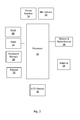
- Figure 2 is a block diagram of components of a portable electronic device
- Figures 3A- 3E are screen shot representations of a graphical user interface associated with disambiguating email recipient fields according to an exemplary embodiment.
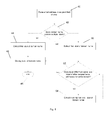
- Figure 4 is a flowchart showing a method for disambiguating email recipient fields according to an exemplary embodiment.
- Figure 1 shows an exemplary communication system 10 for a portable electronic device 12.
- the portable electronic device 12 is operable to effect communications over a radio communications channel and communicates with a base station (not shown) while located within a coverage area that is defined by the base station.
- the base station is part of a wireless network that is in communication with the Internet 14. Data is delivered to the portable electronic device 12 via wireless transmission from the base station. Similarly, data is sent from the portable electronic device 12 via wireless transmission to the base station.
- wireless networks include GSM/GPRS, CDPD, TDMA, iDEN, Mobitex, DataTAC networks, EDGE, EVDO or UMTS and broadband networks such as Bluetooth and variants of 802.11.
- a server 18 handles wireless client requests from the portable electronic device 12.
- a firewall, or proxy server, 16 is provided between the server 18 and the Internet 14.
- the server 18 further operates as a Mail Server, which communicates with an email client of the portable electronic device 12 to allow a user to send and receive email messages.
- FIG. 2 is a block diagram showing certain components within an exemplary embodiment of the portable electronic device 12.
- the portable electronic device 12 is based on the computing environment and functionality of a wireless personal digital assistant (PDA). It will be understood, however, that the portable electronic device 12 is not limited to wireless personal digital assistants. Other portable electronic devices are possible, such as smart telephones, and laptop computers.
- PDA personal digital assistant
- the portable electronic device 12 includes a processor 20 connected to a read-only-memory (ROM) 22 that contains a plurality of applications executable by the processor 20 for enabling each portable electronic device 12 to perform certain functions including, for example, PIN message functions, SMS message functions, address book and calendaring functions, and cellular telephone functions.
- the processor 20 is also connected to a random access memory unit (RAM) 24 and a persistent storage device 26 to facilitate various non-volatile storage functions of the portable electronic device 12.
- the processor 20 receives input from one or more input devices, including a keypad 28.
- the processor 20 outputs to one or more output devices, including an LCD display 30.
- a microphone 32 and phone speaker 34 are connected to the processor 20 for cellular telephone functions.
- the processor 20 is also connected to a modem and radio device 36.
- the modem and radio device 36 is used to connect to wireless networks and transmit and receive voice and data communications through an antenna 38.
- an address book application for storing names, addresses, telephone and mobile phone numbers, fax numbers, email addresses, etc.
- multiple addresses and phone numbers may be stored for each address book entry, such as a home phone (1-213-334-8848), home email address (mikejohnson@gmail.com), a business phone (1-800-GET-ACME) and business email address (mjohnson@acmelabs.com).
- address book applications it is also common for such address book applications to prompt a user to select one from a multitude of phone and email addresses to place a call or compose an email message, as shown in Figure 3B .
- the address book application conventional displays a 'short form' of the intended recipient's name.
- One possible solution is to include the intended recipient's full email address after the short form name (e.g. To: Mike Johnson (mjohnson@acmelabs.com) and To: Mike Johnson (mike.johnson@gmail.com).
- display of the intended recipient's full email address after the short form name is typically not feasible on a portable electronic 12 having only limited screen real estate.
- a flowchart is provided showing a method for disambiguating email recipient fields according to an exemplary embodiment.
- the email address in the recipient field e.g. mike.johnson@gmail.com
- the "second-level" domain directly to the left of the top level domain i.e. gmail
- the second-level domain is displayed adjacent the 'friendly' name (Mike Johnson) of the intended recipient, as shown in Figure 3D .
- the exemplary method of Figure 4 extracts the first label of the domain name (step 50). If the first label (e.g. "city” in the domain name “city.waterloo.on.ca”) is sufficient (i.e. a "YES” at step 52) to distinguish from the same level label (e.g. first) of any other recipient email addresses for the same domain (e.g. "suburbs” in "suburbs.waterloo.on.ca") then the first label is displayed (step 46). In one embodiment, the label is displayed adjacent the 'friendly' name of the intended recipient (e.g. "To: Mike Johnson (city)").
- the label is displayed adjacent the 'friendly' name of the intended recipient (e.g. "To: Mike Johnson (city)").
- step 54 the next highest level label is extracted (e.g. "waterloo” in "city.waterloo.on.ca") and step 52 is repeated.
- Mike Johnson's email address is mjohnson@city.works.waterloo.on.ca, and other users are allocated addresses that are distinguished via the second label (i.e. "works") then repetition of method steps 52 and 54 will distinguish “city.works.waterloo.on.ca” from “city.parks.waterloo.on.ca", as but one example.
Landscapes
- Engineering & Computer Science (AREA)
- Computer Networks & Wireless Communication (AREA)
- Signal Processing (AREA)
- Information Transfer Between Computers (AREA)
- Telephonic Communication Services (AREA)
- Telephone Function (AREA)
Abstract
Description
- The present disclosure relates generally to electronic devices, and in particular to a method for disambiguating email recipient fields in an electronic device.
- Address book applications may be used for storing names, addresses, telephone and mobile phone numbers, fax numbers, email addresses, etc. Also, multiple addresses may be provided for each address book entry, such as one or more home phone and email addresses and one or more business phone and email addresses. In addition, address book applications may prompt a user to select one from a multitude of phone and email addresses when placing a call or composing an email message.
- In the context of email, there are some circumstances in which a user may require a clear indication of which of a multitude of email addresses has been selected while composing an email. For example, if an email contains potentially sensitive company information it may be important for the user to be confident that the intended recipient's business email address has been selected, rather than a home or personal email address. Conversely, if the email contains potentially sensitive personal information it may be important for the user to be confident that the intended recipient's home or personal email address has been selected, rather than the recipient's business email address.
- Thus, in general, a problem exists in providing an indication to a user of which of a multitude of email addresses has been selected while composing an email.
- In one aspect there may be provided a method of disambiguating multiple addresses of an intended email recipient, comprising parsing at least one of the multiple addresses in a recipient field of the email to extract information capable of distinguishing the at least one of the multiple addresses from at least another of the multiple addresses, and displaying the information in the recipient field of the email.
- In another aspect there may be provided a portable electronic device including a memory having recorded thereon statements and instructions for execution by a processor to carry out the foregoing method.
- The embodiments will be better understood with reference to the following Figures in which like numerals denote like parts and in which:
-
Figure 1 is a schematic diagram of a wireless communication system; -
Figure 2 is a block diagram of components of a portable electronic device; -
Figures 3A- 3E are screen shot representations of a graphical user interface associated with disambiguating email recipient fields according to an exemplary embodiment; and -
Figure 4 is a flowchart showing a method for disambiguating email recipient fields according to an exemplary embodiment. -
Figure 1 shows anexemplary communication system 10 for a portableelectronic device 12. The portableelectronic device 12 is operable to effect communications over a radio communications channel and communicates with a base station (not shown) while located within a coverage area that is defined by the base station. The base station is part of a wireless network that is in communication with the Internet 14. Data is delivered to the portableelectronic device 12 via wireless transmission from the base station. Similarly, data is sent from the portableelectronic device 12 via wireless transmission to the base station. - It will be appreciated that the portable
electronic device 12 is movable within the coverage area and can be moved to coverage areas defined by other base stations. Further, as will be understood by one of ordinary skill in the art, wireless networks include GSM/GPRS, CDPD, TDMA, iDEN, Mobitex, DataTAC networks, EDGE, EVDO or UMTS and broadband networks such as Bluetooth and variants of 802.11. - A
server 18 handles wireless client requests from the portableelectronic device 12. A firewall, or proxy server, 16, is provided between theserver 18 and the Internet 14. Theserver 18 further operates as a Mail Server, which communicates with an email client of the portableelectronic device 12 to allow a user to send and receive email messages. -
Figure 2 is a block diagram showing certain components within an exemplary embodiment of the portableelectronic device 12. In this embodiment, the portableelectronic device 12 is based on the computing environment and functionality of a wireless personal digital assistant (PDA). It will be understood, however, that the portableelectronic device 12 is not limited to wireless personal digital assistants. Other portable electronic devices are possible, such as smart telephones, and laptop computers. - The portable
electronic device 12 includes aprocessor 20 connected to a read-only-memory (ROM) 22 that contains a plurality of applications executable by theprocessor 20 for enabling each portableelectronic device 12 to perform certain functions including, for example, PIN message functions, SMS message functions, address book and calendaring functions, and cellular telephone functions. Theprocessor 20 is also connected to a random access memory unit (RAM) 24 and apersistent storage device 26 to facilitate various non-volatile storage functions of the portableelectronic device 12.
Theprocessor 20 receives input from one or more input devices, including akeypad 28. Theprocessor 20 outputs to one or more output devices, including anLCD display 30. Amicrophone 32 andphone speaker 34 are connected to theprocessor 20 for cellular telephone functions. Theprocessor 20 is also connected to a modem andradio device 36. The modem andradio device 36 is used to connect to wireless networks and transmit and receive voice and data communications through anantenna 38. - As discussed above, it is common for
electronic device 12 to implement an address book application for storing names, addresses, telephone and mobile phone numbers, fax numbers, email addresses, etc. As shown inFigure 3A , multiple addresses and phone numbers may be stored for each address book entry, such as a home phone (1-213-334-8848), home email address (mikejohnson@gmail.com), a business phone (1-800-GET-ACME) and business email address (mjohnson@acmelabs.com). It is also common for such address book applications to prompt a user to select one from a multitude of phone and email addresses to place a call or compose an email message, as shown inFigure 3B . It will be noted that the address book application conventional displays a 'short form' of the intended recipient's name. Thus, inFigure 3B when mjohnson@acmelabs.com is selected, the address book application simply displays "Mike Johnson" in the "To:" field of the email message being composed. Accordingly, there is no way of distinguishing between the intended recipient's personal and business email addresses. - In the context of email, there are some circumstances in which a user may require a clear visual indication of which of a multitude of email addresses has been selected while composing an email. For example, if an email contains potentially sensitive company information it may be important for the user to be confident that the intended recipient's business email address has been selected, rather than a home or personal email address. Conversely, if the email contains potentially sensitive personal information it may be important for the user to be confident that the intended recipient's home or personal email address has been selected, rather than the recipient's business email address. Alternatively, if the user is uncertain as to whether the intended recipient (Mike Johnson) is at home or at the office on a given day at a given time, the user may specify both the personal and business email address, as shown in
Figure 3C . - If, for some reason, the user decides that the content of the email message being composed is not appropriate for the intended recipient's business email address the user may wish to delete the intended recipient's business email address from the "To:" field of the email message. However, there is no way to discern between the personal and business email addresses in the conventional display of
Figure 3C . - One possible solution is to include the intended recipient's full email address after the short form name (e.g. To: Mike Johnson (mjohnson@acmelabs.com) and To: Mike Johnson (mike.johnson@gmail.com). However, display of the intended recipient's full email address after the short form name is typically not feasible on a portable electronic 12 having only limited screen real estate.
- Therefore, in accordance with an aspect of an embodiment of a method for disambiguating email recipient fields in an electronic device sufficient information is extracted from the domain portion of an intended recipient's email address to disambiguate between a personal and a business email address. Thus, as shown in
Figure 3D , the first (i.e. left-most) label of the domain is displayed after the name of the intended recipient, thereby clearly distinguishing between the personal email address (gmail) and the business email address (acmelabs). - Referring to
Figure 4 , a flowchart is provided showing a method for disambiguating email recipient fields according to an exemplary embodiment. Atstep 40, the email address in the recipient field (e.g. mike.johnson@gmail.com) is parsed. The "second-level" domain directly to the left of the top level domain (i.e. gmail) is extracted (step 44) and then displayed (step 46). In one embodiment, the second-level domain (or "lowest level label" using the terminology of RFC 1034) is displayed adjacent the 'friendly' name (Mike Johnson) of the intended recipient, as shown inFigure 3D . - Although in many cases, the first label of the domain name will be sufficient to disambiguate the intended recipient's email address, where the domain name contains multiple labels (step 42), the exemplary method of
Figure 4 extracts the first label of the domain name (step 50). If the first label (e.g. "city" in the domain name "city.waterloo.on.ca") is sufficient (i.e. a "YES" at step 52) to distinguish from the same level label (e.g. first) of any other recipient email addresses for the same domain (e.g. "suburbs" in "suburbs.waterloo.on.ca") then the first label is displayed (step 46). In one embodiment, the label is displayed adjacent the 'friendly' name of the intended recipient (e.g. "To: Mike Johnson (city)"). - If the first label is not sufficient to disambiguate the intended recipient's email address, (i.e. a "NO" at step 52), then at
step 54 the next highest level label is extracted (e.g. "waterloo" in "city.waterloo.on.ca") andstep 52 is repeated. Thus, if Mike Johnson's email address is mjohnson@city.works.waterloo.on.ca, and other users are allocated addresses that are distinguished via the second label (i.e. "works") then repetition ofmethod steps - A person of ordinary skill in the art will understand that the exemplary method set forth in
Figure 4 may be repeated an additional one or more times to display distinguishing labels for additional recipients identified in additional "To:", "c.c.:" or "b.c.c." fields of the email being composed, or to display distinguishing labels for alternate email addresses for the intended recipient identified in additional "To:", "c.c.:" or "b.c.c." fields of the email being composed, as shown inFigure 3D .
A specific embodiment has been shown and described herein. However, modifications and variations may occur to those skilled in the art. For example, although the exemplary embodiment has been described in terms of an address book application on a portable handheld electronic device, the principles set forth herein may be applied to address book implementations on other devices such as desktop computers, etc. All such modifications and variations are believed to be within the sphere and scope of the present embodiment.
Claims (8)
- A method of disambiguating multiple addresses of an intended email recipient, comprising:parsing at least one of said multiple addresses in a recipient field of said email to extract information capable of distinguishing said at least one of said multiple addresses from at least another of said multiple addresses; anddisplaying said information in the recipient field of said email.
- A method as claimed in claim 1, further comprising displaying a name of said intended recipient adjacent said information.
- A method as claimed in claim 1 or claim 2, further comprising prompting selection of said at least one of said multiple addresses prior to said parsing and responsive to entry of said name for said intended recipient in the recipient field of said email.
- A method as claimed in any one of claims 1 to 3, wherein said parsing further includes extracting information from the domain name of said at least one of said multiple addresses.
- A method as claimed in claim 4, wherein said information comprises a lowest-level label of said domain name.
- A method as claimed in claim 4, wherein said information comprises a lowest-level label of said domain name differing from the lowest-level label of the domain name of said at least another one of said multiple addresses.
- A portable electronic device comprising a memory (22) having recorded thereon statements and instructions for execution by a processor (20) to carry out the method of any preceding claim.
- A computer readable medium storing instructions which when executed by a processor (20) of a computing device adapt said device to perform the method of any of claims 1 to 6.
Priority Applications (2)
| Application Number | Priority Date | Filing Date | Title |
|---|---|---|---|
| EP07119165.4A EP2053810B1 (en) | 2007-10-24 | 2007-10-24 | Method for disambiguating email recipient fields in an electronic device |
| CA2639176A CA2639176C (en) | 2007-10-24 | 2008-08-28 | Method for disambiguating email recipient fields in an electronic device |
Applications Claiming Priority (1)
| Application Number | Priority Date | Filing Date | Title |
|---|---|---|---|
| EP07119165.4A EP2053810B1 (en) | 2007-10-24 | 2007-10-24 | Method for disambiguating email recipient fields in an electronic device |
Publications (2)
| Publication Number | Publication Date |
|---|---|
| EP2053810A1 true EP2053810A1 (en) | 2009-04-29 |
| EP2053810B1 EP2053810B1 (en) | 2016-10-05 |
Family
ID=39330344
Family Applications (1)
| Application Number | Title | Priority Date | Filing Date |
|---|---|---|---|
| EP07119165.4A Active EP2053810B1 (en) | 2007-10-24 | 2007-10-24 | Method for disambiguating email recipient fields in an electronic device |
Country Status (2)
| Country | Link |
|---|---|
| EP (1) | EP2053810B1 (en) |
| CA (1) | CA2639176C (en) |
Citations (5)
| Publication number | Priority date | Publication date | Assignee | Title |
|---|---|---|---|---|
| EP1367522A1 (en) * | 2002-05-31 | 2003-12-03 | Mitel Knowledge Corporation | Best effort match email gateway extension |
| EP1469374A1 (en) * | 2002-01-22 | 2004-10-20 | Fujitsu Limited | Menu element selecting device and method |
| WO2005053279A1 (en) | 2003-11-27 | 2005-06-09 | Sony Ericsson Mobile Communications Ab | Interactive phone book |
| US20070143232A1 (en) | 2005-12-19 | 2007-06-21 | Pitney Bowes Incorporated | Mail markings with key encoding |
| WO2007143232A1 (en) * | 2006-06-09 | 2007-12-13 | Sony Ericsson Mobile Communications Ab | E-mail address inspection |
-
2007
- 2007-10-24 EP EP07119165.4A patent/EP2053810B1/en active Active
-
2008
- 2008-08-28 CA CA2639176A patent/CA2639176C/en active Active
Patent Citations (5)
| Publication number | Priority date | Publication date | Assignee | Title |
|---|---|---|---|---|
| EP1469374A1 (en) * | 2002-01-22 | 2004-10-20 | Fujitsu Limited | Menu element selecting device and method |
| EP1367522A1 (en) * | 2002-05-31 | 2003-12-03 | Mitel Knowledge Corporation | Best effort match email gateway extension |
| WO2005053279A1 (en) | 2003-11-27 | 2005-06-09 | Sony Ericsson Mobile Communications Ab | Interactive phone book |
| US20070143232A1 (en) | 2005-12-19 | 2007-06-21 | Pitney Bowes Incorporated | Mail markings with key encoding |
| WO2007143232A1 (en) * | 2006-06-09 | 2007-12-13 | Sony Ericsson Mobile Communications Ab | E-mail address inspection |
Also Published As
| Publication number | Publication date |
|---|---|
| EP2053810B1 (en) | 2016-10-05 |
| CA2639176A1 (en) | 2009-04-24 |
| CA2639176C (en) | 2013-12-31 |
Similar Documents
| Publication | Publication Date | Title |
|---|---|---|
| US7395313B2 (en) | Method and system for controlling multiple remote mailboxes simultaneously connected to a plurality of PDP connections of a GPRS system | |
| EP1924068A1 (en) | Method and apparatus for message management in portable communication system | |
| US8295867B2 (en) | Handheld electronic device including automatic mobile phone number management, and associated method | |
| US20050079861A1 (en) | Method of saving message contents in phone book in a mobile terminal | |
| US8949355B2 (en) | Method for disambiguating email recipient fields in an electronic device | |
| JP2004178294A (en) | Mobile terminal displaying related e-mail, method of displaying e-mail, and program | |
| US9398429B2 (en) | Communication device that permits a user to select any of multiple user-selectable communication types for a reply | |
| EP2355017A1 (en) | Method for advanced email thread management | |
| JP3789774B2 (en) | Mobile phone with mail transmission / reception function | |
| US20080091787A1 (en) | System and Method for Responding to Multiple Messages | |
| CA2639176C (en) | Method for disambiguating email recipient fields in an electronic device | |
| US8862669B2 (en) | Apparatus and method for improved electronic mail | |
| KR20090116268A (en) | Messenger communication system and method thereof, and mobile communication terminal with messenger information storage function | |
| JP2005141753A (en) | System and method for reducing size of electronic message on mobile communication device | |
| JP3662865B2 (en) | Mobile phone terminal and e-mail creation method | |
| JP4272089B2 (en) | Information terminal device, its e-mail management method and e-mail management program | |
| CN101340677B (en) | Method and apparatus for displaying name of information sender in mobile terminal | |
| KR20050038979A (en) | A mobile terminal and method of repeating sms notification | |
| US20070287429A1 (en) | Mobile communication terminal and a method for managing messages | |
| JP5263004B2 (en) | Information processing device | |
| KR100531945B1 (en) | Method for marking forwarded or replied SMS with icon | |
| JP2003052071A (en) | Portable telephone set and communication method | |
| CA2587160C (en) | Handheld electronic device including automatic mobile phone number management and associated method | |
| KR20040058732A (en) | E-mail response method in using mobile communication terminal | |
| JP2008181531A (en) | System and method for reducing size of electronic message on mobile communication device |
Legal Events
| Date | Code | Title | Description |
|---|---|---|---|
| PUAI | Public reference made under article 153(3) epc to a published international application that has entered the european phase |
Free format text: ORIGINAL CODE: 0009012 |
|
| 17P | Request for examination filed |
Effective date: 20071024 |
|
| AK | Designated contracting states |
Kind code of ref document: A1 Designated state(s): AT BE BG CH CY CZ DE DK EE ES FI FR GB GR HU IE IS IT LI LT LU LV MC MT NL PL PT RO SE SI SK TR |
|
| AX | Request for extension of the european patent |
Extension state: AL BA HR MK RS |
|
| AKX | Designation fees paid |
Designated state(s): AT BE BG CH CY CZ DE DK EE ES FI FR GB GR HU IE IS IT LI LT LU LV MC MT NL PL PT RO SE SI SK TR |
|
| AXX | Extension fees paid |
Extension state: MK Payment date: 20071024 Extension state: HR Payment date: 20071024 Extension state: AL Payment date: 20071024 Extension state: BA Payment date: 20071024 Extension state: RS Payment date: 20071024 |
|
| RAP1 | Party data changed (applicant data changed or rights of an application transferred) |
Owner name: BLACKBERRY LIMITED |
|
| RAP1 | Party data changed (applicant data changed or rights of an application transferred) |
Owner name: BLACKBERRY LIMITED |
|
| GRAP | Despatch of communication of intention to grant a patent |
Free format text: ORIGINAL CODE: EPIDOSNIGR1 |
|
| INTG | Intention to grant announced |
Effective date: 20160428 |
|
| GRAS | Grant fee paid |
Free format text: ORIGINAL CODE: EPIDOSNIGR3 |
|
| GRAA | (expected) grant |
Free format text: ORIGINAL CODE: 0009210 |
|
| AK | Designated contracting states |
Kind code of ref document: B1 Designated state(s): AT BE BG CH CY CZ DE DK EE ES FI FR GB GR HU IE IS IT LI LT LU LV MC MT NL PL PT RO SE SI SK TR |
|
| AX | Request for extension of the european patent |
Extension state: AL BA HR MK RS |
|
| REG | Reference to a national code |
Ref country code: GB Ref legal event code: FG4D |
|
| REG | Reference to a national code |
Ref country code: CH Ref legal event code: EP |
|
| REG | Reference to a national code |
Ref country code: AT Ref legal event code: REF Ref document number: 835439 Country of ref document: AT Kind code of ref document: T Effective date: 20161015 |
|
| REG | Reference to a national code |
Ref country code: FR Ref legal event code: PLFP Year of fee payment: 10 |
|
| REG | Reference to a national code |
Ref country code: IE Ref legal event code: FG4D |
|
| REG | Reference to a national code |
Ref country code: DE Ref legal event code: R096 Ref document number: 602007048173 Country of ref document: DE |
|
| REG | Reference to a national code |
Ref country code: NL Ref legal event code: MP Effective date: 20161005 |
|
| REG | Reference to a national code |
Ref country code: LT Ref legal event code: MG4D |
|
| PG25 | Lapsed in a contracting state [announced via postgrant information from national office to epo] |
Ref country code: BE Free format text: LAPSE BECAUSE OF NON-PAYMENT OF DUE FEES Effective date: 20161031 Ref country code: LV Free format text: LAPSE BECAUSE OF FAILURE TO SUBMIT A TRANSLATION OF THE DESCRIPTION OR TO PAY THE FEE WITHIN THE PRESCRIBED TIME-LIMIT Effective date: 20161005 |
|
| REG | Reference to a national code |
Ref country code: AT Ref legal event code: MK05 Ref document number: 835439 Country of ref document: AT Kind code of ref document: T Effective date: 20161005 |
|
| PG25 | Lapsed in a contracting state [announced via postgrant information from national office to epo] |
Ref country code: LT Free format text: LAPSE BECAUSE OF FAILURE TO SUBMIT A TRANSLATION OF THE DESCRIPTION OR TO PAY THE FEE WITHIN THE PRESCRIBED TIME-LIMIT Effective date: 20161005 Ref country code: GR Free format text: LAPSE BECAUSE OF FAILURE TO SUBMIT A TRANSLATION OF THE DESCRIPTION OR TO PAY THE FEE WITHIN THE PRESCRIBED TIME-LIMIT Effective date: 20170106 Ref country code: SE Free format text: LAPSE BECAUSE OF FAILURE TO SUBMIT A TRANSLATION OF THE DESCRIPTION OR TO PAY THE FEE WITHIN THE PRESCRIBED TIME-LIMIT Effective date: 20161005 |
|
| PG25 | Lapsed in a contracting state [announced via postgrant information from national office to epo] |
Ref country code: AT Free format text: LAPSE BECAUSE OF FAILURE TO SUBMIT A TRANSLATION OF THE DESCRIPTION OR TO PAY THE FEE WITHIN THE PRESCRIBED TIME-LIMIT Effective date: 20161005 Ref country code: ES Free format text: LAPSE BECAUSE OF FAILURE TO SUBMIT A TRANSLATION OF THE DESCRIPTION OR TO PAY THE FEE WITHIN THE PRESCRIBED TIME-LIMIT Effective date: 20161005 Ref country code: PL Free format text: LAPSE BECAUSE OF FAILURE TO SUBMIT A TRANSLATION OF THE DESCRIPTION OR TO PAY THE FEE WITHIN THE PRESCRIBED TIME-LIMIT Effective date: 20161005 Ref country code: BE Free format text: LAPSE BECAUSE OF FAILURE TO SUBMIT A TRANSLATION OF THE DESCRIPTION OR TO PAY THE FEE WITHIN THE PRESCRIBED TIME-LIMIT Effective date: 20161005 Ref country code: FI Free format text: LAPSE BECAUSE OF FAILURE TO SUBMIT A TRANSLATION OF THE DESCRIPTION OR TO PAY THE FEE WITHIN THE PRESCRIBED TIME-LIMIT Effective date: 20161005 Ref country code: NL Free format text: LAPSE BECAUSE OF FAILURE TO SUBMIT A TRANSLATION OF THE DESCRIPTION OR TO PAY THE FEE WITHIN THE PRESCRIBED TIME-LIMIT Effective date: 20161005 Ref country code: IS Free format text: LAPSE BECAUSE OF FAILURE TO SUBMIT A TRANSLATION OF THE DESCRIPTION OR TO PAY THE FEE WITHIN THE PRESCRIBED TIME-LIMIT Effective date: 20170205 Ref country code: PT Free format text: LAPSE BECAUSE OF FAILURE TO SUBMIT A TRANSLATION OF THE DESCRIPTION OR TO PAY THE FEE WITHIN THE PRESCRIBED TIME-LIMIT Effective date: 20170206 |
|
| REG | Reference to a national code |
Ref country code: CH Ref legal event code: PL |
|
| REG | Reference to a national code |
Ref country code: DE Ref legal event code: R097 Ref document number: 602007048173 Country of ref document: DE |
|
| REG | Reference to a national code |
Ref country code: IE Ref legal event code: MM4A |
|
| PG25 | Lapsed in a contracting state [announced via postgrant information from national office to epo] |
Ref country code: RO Free format text: LAPSE BECAUSE OF FAILURE TO SUBMIT A TRANSLATION OF THE DESCRIPTION OR TO PAY THE FEE WITHIN THE PRESCRIBED TIME-LIMIT Effective date: 20161005 Ref country code: DK Free format text: LAPSE BECAUSE OF FAILURE TO SUBMIT A TRANSLATION OF THE DESCRIPTION OR TO PAY THE FEE WITHIN THE PRESCRIBED TIME-LIMIT Effective date: 20161005 Ref country code: CZ Free format text: LAPSE BECAUSE OF FAILURE TO SUBMIT A TRANSLATION OF THE DESCRIPTION OR TO PAY THE FEE WITHIN THE PRESCRIBED TIME-LIMIT Effective date: 20161005 Ref country code: SK Free format text: LAPSE BECAUSE OF FAILURE TO SUBMIT A TRANSLATION OF THE DESCRIPTION OR TO PAY THE FEE WITHIN THE PRESCRIBED TIME-LIMIT Effective date: 20161005 Ref country code: LI Free format text: LAPSE BECAUSE OF NON-PAYMENT OF DUE FEES Effective date: 20161031 Ref country code: CH Free format text: LAPSE BECAUSE OF NON-PAYMENT OF DUE FEES Effective date: 20161031 Ref country code: MC Free format text: LAPSE BECAUSE OF FAILURE TO SUBMIT A TRANSLATION OF THE DESCRIPTION OR TO PAY THE FEE WITHIN THE PRESCRIBED TIME-LIMIT Effective date: 20161005 Ref country code: EE Free format text: LAPSE BECAUSE OF FAILURE TO SUBMIT A TRANSLATION OF THE DESCRIPTION OR TO PAY THE FEE WITHIN THE PRESCRIBED TIME-LIMIT Effective date: 20161005 |
|
| PLBE | No opposition filed within time limit |
Free format text: ORIGINAL CODE: 0009261 |
|
| STAA | Information on the status of an ep patent application or granted ep patent |
Free format text: STATUS: NO OPPOSITION FILED WITHIN TIME LIMIT |
|
| PG25 | Lapsed in a contracting state [announced via postgrant information from national office to epo] |
Ref country code: BG Free format text: LAPSE BECAUSE OF FAILURE TO SUBMIT A TRANSLATION OF THE DESCRIPTION OR TO PAY THE FEE WITHIN THE PRESCRIBED TIME-LIMIT Effective date: 20170105 Ref country code: LU Free format text: LAPSE BECAUSE OF NON-PAYMENT OF DUE FEES Effective date: 20161024 Ref country code: IT Free format text: LAPSE BECAUSE OF FAILURE TO SUBMIT A TRANSLATION OF THE DESCRIPTION OR TO PAY THE FEE WITHIN THE PRESCRIBED TIME-LIMIT Effective date: 20161005 |
|
| 26N | No opposition filed |
Effective date: 20170706 |
|
| REG | Reference to a national code |
Ref country code: FR Ref legal event code: PLFP Year of fee payment: 11 |
|
| PG25 | Lapsed in a contracting state [announced via postgrant information from national office to epo] |
Ref country code: SI Free format text: LAPSE BECAUSE OF FAILURE TO SUBMIT A TRANSLATION OF THE DESCRIPTION OR TO PAY THE FEE WITHIN THE PRESCRIBED TIME-LIMIT Effective date: 20161005 Ref country code: IE Free format text: LAPSE BECAUSE OF NON-PAYMENT OF DUE FEES Effective date: 20161024 |
|
| PG25 | Lapsed in a contracting state [announced via postgrant information from national office to epo] |
Ref country code: HU Free format text: LAPSE BECAUSE OF FAILURE TO SUBMIT A TRANSLATION OF THE DESCRIPTION OR TO PAY THE FEE WITHIN THE PRESCRIBED TIME-LIMIT; INVALID AB INITIO Effective date: 20071024 Ref country code: CY Free format text: LAPSE BECAUSE OF FAILURE TO SUBMIT A TRANSLATION OF THE DESCRIPTION OR TO PAY THE FEE WITHIN THE PRESCRIBED TIME-LIMIT Effective date: 20161005 |
|
| PG25 | Lapsed in a contracting state [announced via postgrant information from national office to epo] |
Ref country code: TR Free format text: LAPSE BECAUSE OF FAILURE TO SUBMIT A TRANSLATION OF THE DESCRIPTION OR TO PAY THE FEE WITHIN THE PRESCRIBED TIME-LIMIT Effective date: 20161005 Ref country code: MT Free format text: LAPSE BECAUSE OF NON-PAYMENT OF DUE FEES Effective date: 20161031 |
|
| REG | Reference to a national code |
Ref country code: FR Ref legal event code: PLFP Year of fee payment: 12 |
|
| REG | Reference to a national code |
Ref country code: DE Ref legal event code: R079 Ref document number: 602007048173 Country of ref document: DE Free format text: PREVIOUS MAIN CLASS: H04L0012580000 Ipc: H04L0051000000 |
|
| REG | Reference to a national code |
Ref country code: DE Ref legal event code: R082 Ref document number: 602007048173 Country of ref document: DE Ref country code: DE Ref legal event code: R081 Ref document number: 602007048173 Country of ref document: DE Owner name: MALIKIE INNOVATIONS LTD., IE Free format text: FORMER OWNER: BLACKBERRY LIMITED, WATERLOO, ONTARIO, CA |
|
| PGFP | Annual fee paid to national office [announced via postgrant information from national office to epo] |
Ref country code: DE Payment date: 20251028 Year of fee payment: 19 |
|
| PGFP | Annual fee paid to national office [announced via postgrant information from national office to epo] |
Ref country code: GB Payment date: 20251023 Year of fee payment: 19 |
|
| PGFP | Annual fee paid to national office [announced via postgrant information from national office to epo] |
Ref country code: FR Payment date: 20251027 Year of fee payment: 19 |