EP2050747A1 - Dimers of harmol or of its derivatives and uses thereof - Google Patents
Dimers of harmol or of its derivatives and uses thereof Download PDFInfo
- Publication number
- EP2050747A1 EP2050747A1 EP07291250A EP07291250A EP2050747A1 EP 2050747 A1 EP2050747 A1 EP 2050747A1 EP 07291250 A EP07291250 A EP 07291250A EP 07291250 A EP07291250 A EP 07291250A EP 2050747 A1 EP2050747 A1 EP 2050747A1
- Authority
- EP
- European Patent Office
- Prior art keywords
- group
- formula
- compound
- carbon atoms
- pharmaceutically acceptable
- Prior art date
- Legal status (The legal status is an assumption and is not a legal conclusion. Google has not performed a legal analysis and makes no representation as to the accuracy of the status listed.)
- Withdrawn
Links
- LBBJNGFCXDOYMQ-UHFFFAOYSA-N 1-methyl-2,9-dihydropyrido[3,4-b]indol-7-one Chemical compound C1=CC(=O)C=C2NC3=C(C)NC=CC3=C21 LBBJNGFCXDOYMQ-UHFFFAOYSA-N 0.000 title description 66
- 239000000539 dimer Substances 0.000 title description 18
- SATMZMMKDDTOSQ-UHFFFAOYSA-N Harmol Natural products C12=CC=C(O)C=C2NC2=C1C=CN=C2C SATMZMMKDDTOSQ-UHFFFAOYSA-N 0.000 title description 10
- 150000001875 compounds Chemical class 0.000 claims abstract description 60
- 125000004432 carbon atom Chemical group C* 0.000 claims abstract description 46
- 125000000217 alkyl group Chemical group 0.000 claims abstract description 34
- 206010028980 Neoplasm Diseases 0.000 claims abstract description 24
- 201000011510 cancer Diseases 0.000 claims abstract description 14
- 125000002496 methyl group Chemical group [H]C([H])([H])* 0.000 claims abstract description 14
- 238000011282 treatment Methods 0.000 claims abstract description 11
- 238000000034 method Methods 0.000 claims description 46
- LFQSCWFLJHTTHZ-UHFFFAOYSA-N Ethanol Chemical compound CCO LFQSCWFLJHTTHZ-UHFFFAOYSA-N 0.000 claims description 35
- 150000003839 salts Chemical class 0.000 claims description 33
- 210000004881 tumor cell Anatomy 0.000 claims description 24
- 238000002360 preparation method Methods 0.000 claims description 21
- 239000003795 chemical substances by application Substances 0.000 claims description 14
- 239000003814 drug Substances 0.000 claims description 13
- BWHMMNNQKKPAPP-UHFFFAOYSA-L potassium carbonate Chemical compound [K+].[K+].[O-]C([O-])=O BWHMMNNQKKPAPP-UHFFFAOYSA-L 0.000 claims description 12
- 125000002887 hydroxy group Chemical group [H]O* 0.000 claims description 11
- 125000003118 aryl group Chemical group 0.000 claims description 10
- 229910052736 halogen Inorganic materials 0.000 claims description 10
- 150000002367 halogens Chemical class 0.000 claims description 10
- 239000008194 pharmaceutical composition Substances 0.000 claims description 10
- QDRKDTQENPPHOJ-UHFFFAOYSA-N sodium ethoxide Chemical compound [Na+].CC[O-] QDRKDTQENPPHOJ-UHFFFAOYSA-N 0.000 claims description 9
- 238000006243 chemical reaction Methods 0.000 claims description 8
- 102000003728 Peroxisome Proliferator-Activated Receptors Human genes 0.000 claims description 7
- 108090000029 Peroxisome Proliferator-Activated Receptors Proteins 0.000 claims description 7
- 125000001797 benzyl group Chemical group [H]C1=C([H])C([H])=C(C([H])=C1[H])C([H])([H])* 0.000 claims description 6
- 125000004430 oxygen atom Chemical group O* 0.000 claims description 6
- 229910000027 potassium carbonate Inorganic materials 0.000 claims description 6
- IBODDUNKEPPBKW-UHFFFAOYSA-N 1,5-dibromopentane Chemical compound BrCCCCCBr IBODDUNKEPPBKW-UHFFFAOYSA-N 0.000 claims description 5
- NHNZOHJJFWCQNO-UHFFFAOYSA-N 4,5-bis(bromomethyl)-2,2-dimethyl-1,3-dioxolane Chemical compound CC1(C)OC(CBr)C(CBr)O1 NHNZOHJJFWCQNO-UHFFFAOYSA-N 0.000 claims description 5
- QYSXJUFSXHHAJI-XFEUOLMDSA-N Vitamin D3 Natural products C1(/[C@@H]2CC[C@@H]([C@]2(CCC1)C)[C@H](C)CCCC(C)C)=C/C=C1\C[C@@H](O)CCC1=C QYSXJUFSXHHAJI-XFEUOLMDSA-N 0.000 claims description 5
- 125000005843 halogen group Chemical group 0.000 claims description 5
- 238000010992 reflux Methods 0.000 claims description 5
- 229920006395 saturated elastomer Polymers 0.000 claims description 5
- 150000003710 vitamin D derivatives Chemical class 0.000 claims description 5
- WNXJIVFYUVYPPR-UHFFFAOYSA-N 1,3-dioxolane Chemical compound C1COCO1 WNXJIVFYUVYPPR-UHFFFAOYSA-N 0.000 claims description 4
- SIJBDWPVNAYVGY-UHFFFAOYSA-N 2,2-dimethyl-1,3-dioxolane Chemical compound CC1(C)OCCO1 SIJBDWPVNAYVGY-UHFFFAOYSA-N 0.000 claims description 4
- 101100132433 Arabidopsis thaliana VIII-1 gene Proteins 0.000 claims description 4
- AFVFQIVMOAPDHO-UHFFFAOYSA-N Methanesulfonic acid Chemical compound CS(O)(=O)=O AFVFQIVMOAPDHO-UHFFFAOYSA-N 0.000 claims description 4
- 229930003316 Vitamin D Natural products 0.000 claims description 4
- FJDQFPXHSGXQBY-UHFFFAOYSA-L caesium carbonate Chemical compound [Cs+].[Cs+].[O-]C([O-])=O FJDQFPXHSGXQBY-UHFFFAOYSA-L 0.000 claims description 4
- 239000003446 ligand Substances 0.000 claims description 4
- 239000000376 reactant Substances 0.000 claims description 4
- JOXIMZWYDAKGHI-UHFFFAOYSA-N toluene-4-sulfonic acid Chemical compound CC1=CC=C(S(O)(=O)=O)C=C1 JOXIMZWYDAKGHI-UHFFFAOYSA-N 0.000 claims description 4
- 235000019166 vitamin D Nutrition 0.000 claims description 4
- 239000011710 vitamin D Substances 0.000 claims description 4
- 229940046008 vitamin d Drugs 0.000 claims description 4
- FPIPGXGPPPQFEQ-UHFFFAOYSA-N 13-cis retinol Natural products OCC=C(C)C=CC=C(C)C=CC1=C(C)CCCC1(C)C FPIPGXGPPPQFEQ-UHFFFAOYSA-N 0.000 claims description 3
- FPIPGXGPPPQFEQ-BOOMUCAASA-N Vitamin A Natural products OC/C=C(/C)\C=C\C=C(\C)/C=C/C1=C(C)CCCC1(C)C FPIPGXGPPPQFEQ-BOOMUCAASA-N 0.000 claims description 3
- FPIPGXGPPPQFEQ-OVSJKPMPSA-N all-trans-retinol Chemical compound OC\C=C(/C)\C=C\C=C(/C)\C=C\C1=C(C)CCCC1(C)C FPIPGXGPPPQFEQ-OVSJKPMPSA-N 0.000 claims description 3
- 238000011393 cytotoxic chemotherapy Methods 0.000 claims description 3
- 235000019155 vitamin A Nutrition 0.000 claims description 3
- 239000011719 vitamin A Substances 0.000 claims description 3
- 229940045997 vitamin a Drugs 0.000 claims description 3
- 125000004176 4-fluorobenzyl group Chemical group [H]C1=C([H])C(=C([H])C([H])=C1F)C([H])([H])* 0.000 claims description 2
- 230000029936 alkylation Effects 0.000 claims description 2
- 238000005804 alkylation reaction Methods 0.000 claims description 2
- 229910000024 caesium carbonate Inorganic materials 0.000 claims description 2
- 125000002915 carbonyl group Chemical group [*:2]C([*:1])=O 0.000 claims description 2
- 239000003937 drug carrier Substances 0.000 claims description 2
- ZCSHNCUQKCANBX-UHFFFAOYSA-N lithium diisopropylamide Chemical compound [Li+].CC(C)[N-]C(C)C ZCSHNCUQKCANBX-UHFFFAOYSA-N 0.000 claims description 2
- 125000000999 tert-butyl group Chemical group [H]C([H])([H])C(*)(C([H])([H])[H])C([H])([H])[H] 0.000 claims description 2
- IUBQJLUDMLPAGT-UHFFFAOYSA-N potassium bis(trimethylsilyl)amide Chemical compound C[Si](C)(C)N([K])[Si](C)(C)C IUBQJLUDMLPAGT-UHFFFAOYSA-N 0.000 claims 1
- 230000002265 prevention Effects 0.000 claims 1
- 210000004027 cell Anatomy 0.000 description 85
- BXNJHAXVSOCGBA-UHFFFAOYSA-N Harmine Chemical compound N1=CC=C2C3=CC=C(OC)C=C3NC2=C1C BXNJHAXVSOCGBA-UHFFFAOYSA-N 0.000 description 46
- 102000007469 Actins Human genes 0.000 description 44
- 108010085238 Actins Proteins 0.000 description 44
- RERZNCLIYCABFS-UHFFFAOYSA-N Harmaline hydrochloride Natural products C1CN=C(C)C2=C1C1=CC=C(OC)C=C1N2 RERZNCLIYCABFS-UHFFFAOYSA-N 0.000 description 25
- VJHLDRVYTQNASM-UHFFFAOYSA-N harmine Natural products CC1=CN=CC=2NC3=CC(=CC=C3C=21)OC VJHLDRVYTQNASM-UHFFFAOYSA-N 0.000 description 23
- OKKJLVBELUTLKV-UHFFFAOYSA-N Methanol Chemical compound OC OKKJLVBELUTLKV-UHFFFAOYSA-N 0.000 description 21
- 230000008569 process Effects 0.000 description 21
- 239000007787 solid Substances 0.000 description 18
- 206010052428 Wound Diseases 0.000 description 15
- 208000027418 Wounds and injury Diseases 0.000 description 15
- 230000015572 biosynthetic process Effects 0.000 description 15
- 230000005757 colony formation Effects 0.000 description 15
- 230000000694 effects Effects 0.000 description 15
- 230000003211 malignant effect Effects 0.000 description 14
- 239000000203 mixture Substances 0.000 description 14
- 230000005764 inhibitory process Effects 0.000 description 13
- 231100000065 noncytotoxic Toxicity 0.000 description 13
- 230000002020 noncytotoxic effect Effects 0.000 description 13
- 230000001173 tumoral effect Effects 0.000 description 13
- RTZKZFJDLAIYFH-UHFFFAOYSA-N Diethyl ether Chemical compound CCOCC RTZKZFJDLAIYFH-UHFFFAOYSA-N 0.000 description 12
- IAZDPXIOMUYVGZ-WFGJKAKNSA-N Dimethyl sulfoxide Chemical compound [2H]C([2H])([2H])S(=O)C([2H])([2H])[2H] IAZDPXIOMUYVGZ-WFGJKAKNSA-N 0.000 description 12
- IAZDPXIOMUYVGZ-UHFFFAOYSA-N Dimethylsulphoxide Chemical compound CS(C)=O IAZDPXIOMUYVGZ-UHFFFAOYSA-N 0.000 description 12
- 210000004292 cytoskeleton Anatomy 0.000 description 12
- 229920000609 methyl cellulose Polymers 0.000 description 12
- 239000001923 methylcellulose Substances 0.000 description 12
- 238000003556 assay Methods 0.000 description 11
- 239000002609 medium Substances 0.000 description 11
- NESLWCLHZZISNB-UHFFFAOYSA-M sodium phenolate Chemical compound [Na+].[O-]C1=CC=CC=C1 NESLWCLHZZISNB-UHFFFAOYSA-M 0.000 description 11
- CSCPPACGZOOCGX-UHFFFAOYSA-N Acetone Chemical compound CC(C)=O CSCPPACGZOOCGX-UHFFFAOYSA-N 0.000 description 9
- HEDRZPFGACZZDS-UHFFFAOYSA-N Chloroform Chemical compound ClC(Cl)Cl HEDRZPFGACZZDS-UHFFFAOYSA-N 0.000 description 8
- 241000699670 Mus sp. Species 0.000 description 8
- 230000003833 cell viability Effects 0.000 description 8
- 230000002829 reductive effect Effects 0.000 description 8
- -1 unsaturated alkyl radical Chemical class 0.000 description 8
- WSFSSNUMVMOOMR-UHFFFAOYSA-N Formaldehyde Chemical compound O=C WSFSSNUMVMOOMR-UHFFFAOYSA-N 0.000 description 7
- 230000001086 cytosolic effect Effects 0.000 description 7
- YMWUJEATGCHHMB-UHFFFAOYSA-N Dichloromethane Chemical compound ClCCl YMWUJEATGCHHMB-UHFFFAOYSA-N 0.000 description 6
- PEDCQBHIVMGVHV-UHFFFAOYSA-N Glycerine Chemical compound OCC(O)CO PEDCQBHIVMGVHV-UHFFFAOYSA-N 0.000 description 6
- 239000000872 buffer Substances 0.000 description 6
- 230000012010 growth Effects 0.000 description 6
- 239000000463 material Substances 0.000 description 6
- 239000000178 monomer Substances 0.000 description 6
- 150000003254 radicals Chemical class 0.000 description 6
- 238000003786 synthesis reaction Methods 0.000 description 6
- 239000004480 active ingredient Substances 0.000 description 5
- 230000009087 cell motility Effects 0.000 description 5
- 208000037265 diseases, disorders, signs and symptoms Diseases 0.000 description 5
- 230000002401 inhibitory effect Effects 0.000 description 5
- 239000000047 product Substances 0.000 description 5
- 239000011734 sodium Substances 0.000 description 5
- 229910000104 sodium hydride Inorganic materials 0.000 description 5
- 239000000126 substance Substances 0.000 description 5
- XLYOFNOQVPJJNP-UHFFFAOYSA-N water Substances O XLYOFNOQVPJJNP-UHFFFAOYSA-N 0.000 description 5
- 238000001644 13C nuclear magnetic resonance spectroscopy Methods 0.000 description 4
- 238000005160 1H NMR spectroscopy Methods 0.000 description 4
- AOJJSUZBOXZQNB-TZSSRYMLSA-N Doxorubicin Chemical compound O([C@H]1C[C@@](O)(CC=2C(O)=C3C(=O)C=4C=CC=C(C=4C(=O)C3=C(O)C=21)OC)C(=O)CO)[C@H]1C[C@H](N)[C@H](O)[C@H](C)O1 AOJJSUZBOXZQNB-TZSSRYMLSA-N 0.000 description 4
- CSNNHWWHGAXBCP-UHFFFAOYSA-L Magnesium sulfate Chemical compound [Mg+2].[O-][S+2]([O-])([O-])[O-] CSNNHWWHGAXBCP-UHFFFAOYSA-L 0.000 description 4
- 241001465754 Metazoa Species 0.000 description 4
- 240000005523 Peganum harmala Species 0.000 description 4
- HEDRZPFGACZZDS-MICDWDOJSA-N Trichloro(2H)methane Chemical compound [2H]C(Cl)(Cl)Cl HEDRZPFGACZZDS-MICDWDOJSA-N 0.000 description 4
- 239000000556 agonist Substances 0.000 description 4
- 229930013930 alkaloid Natural products 0.000 description 4
- 230000004663 cell proliferation Effects 0.000 description 4
- 230000001413 cellular effect Effects 0.000 description 4
- 230000001472 cytotoxic effect Effects 0.000 description 4
- 229940079593 drug Drugs 0.000 description 4
- 239000000284 extract Substances 0.000 description 4
- 238000009472 formulation Methods 0.000 description 4
- 238000001727 in vivo Methods 0.000 description 4
- 230000001965 increasing effect Effects 0.000 description 4
- 238000005259 measurement Methods 0.000 description 4
- 210000003632 microfilament Anatomy 0.000 description 4
- 230000004899 motility Effects 0.000 description 4
- 239000011541 reaction mixture Substances 0.000 description 4
- 239000000243 solution Substances 0.000 description 4
- 231100000331 toxic Toxicity 0.000 description 4
- 230000002588 toxic effect Effects 0.000 description 4
- 230000029663 wound healing Effects 0.000 description 4
- VHUUQVKOLVNVRT-UHFFFAOYSA-N Ammonium hydroxide Chemical compound [NH4+].[OH-] VHUUQVKOLVNVRT-UHFFFAOYSA-N 0.000 description 3
- 108091007914 CDKs Proteins 0.000 description 3
- 102000003903 Cyclin-dependent kinases Human genes 0.000 description 3
- 108090000266 Cyclin-dependent kinases Proteins 0.000 description 3
- XEKOWRVHYACXOJ-UHFFFAOYSA-N Ethyl acetate Chemical compound CCOC(C)=O XEKOWRVHYACXOJ-UHFFFAOYSA-N 0.000 description 3
- LYCAIKOWRPUZTN-UHFFFAOYSA-N Ethylene glycol Chemical compound OCCO LYCAIKOWRPUZTN-UHFFFAOYSA-N 0.000 description 3
- 241000282412 Homo Species 0.000 description 3
- 241000283891 Kobus Species 0.000 description 3
- 102000000536 PPAR gamma Human genes 0.000 description 3
- 108010016731 PPAR gamma Proteins 0.000 description 3
- 235000005126 Peganum harmala Nutrition 0.000 description 3
- DNIAPMSPPWPWGF-UHFFFAOYSA-N Propylene glycol Chemical compound CC(O)CO DNIAPMSPPWPWGF-UHFFFAOYSA-N 0.000 description 3
- VYPSYNLAJGMNEJ-UHFFFAOYSA-N Silicium dioxide Chemical compound O=[Si]=O VYPSYNLAJGMNEJ-UHFFFAOYSA-N 0.000 description 3
- SHGAZHPCJJPHSC-YCNIQYBTSA-N all-trans-retinoic acid Chemical compound OC(=O)\C=C(/C)\C=C\C=C(/C)\C=C\C1=C(C)CCCC1(C)C SHGAZHPCJJPHSC-YCNIQYBTSA-N 0.000 description 3
- 230000000259 anti-tumor effect Effects 0.000 description 3
- 239000002246 antineoplastic agent Substances 0.000 description 3
- 229940041181 antineoplastic drug Drugs 0.000 description 3
- 239000000969 carrier Substances 0.000 description 3
- 238000004587 chromatography analysis Methods 0.000 description 3
- 239000012043 crude product Substances 0.000 description 3
- 239000000824 cytostatic agent Substances 0.000 description 3
- 231100000433 cytotoxic Toxicity 0.000 description 3
- 239000003085 diluting agent Substances 0.000 description 3
- 238000000198 fluorescence anisotropy Methods 0.000 description 3
- 239000011521 glass Substances 0.000 description 3
- 239000003112 inhibitor Substances 0.000 description 3
- 239000007788 liquid Substances 0.000 description 3
- 239000006166 lysate Substances 0.000 description 3
- 238000004519 manufacturing process Methods 0.000 description 3
- 150000007522 mineralic acids Chemical class 0.000 description 3
- 231100000252 nontoxic Toxicity 0.000 description 3
- 230000003000 nontoxic effect Effects 0.000 description 3
- 150000007524 organic acids Chemical class 0.000 description 3
- 235000005985 organic acids Nutrition 0.000 description 3
- 230000008520 organization Effects 0.000 description 3
- 239000012071 phase Substances 0.000 description 3
- 238000006116 polymerization reaction Methods 0.000 description 3
- 102000004169 proteins and genes Human genes 0.000 description 3
- 108090000623 proteins and genes Proteins 0.000 description 3
- 230000008707 rearrangement Effects 0.000 description 3
- 230000009467 reduction Effects 0.000 description 3
- 238000012552 review Methods 0.000 description 3
- 239000000741 silica gel Substances 0.000 description 3
- 229910002027 silica gel Inorganic materials 0.000 description 3
- 239000006228 supernatant Substances 0.000 description 3
- 239000000725 suspension Substances 0.000 description 3
- 238000012360 testing method Methods 0.000 description 3
- 230000001225 therapeutic effect Effects 0.000 description 3
- 239000003981 vehicle Substances 0.000 description 3
- VEFLKXRACNJHOV-UHFFFAOYSA-N 1,3-dibromopropane Chemical compound BrCCCBr VEFLKXRACNJHOV-UHFFFAOYSA-N 0.000 description 2
- LFUUGJQTPAZGOU-UHFFFAOYSA-N 1-methyl-7-[3-[(1-methyl-9h-pyrido[3,4-b]indol-7-yl)oxy]propoxy]-9h-pyrido[3,4-b]indole Chemical compound C1=C2NC3=C(C)N=CC=C3C2=CC=C1OCCCOC1=CC=C2C(C=CN=C3C)=C3NC2=C1 LFUUGJQTPAZGOU-UHFFFAOYSA-N 0.000 description 2
- IZJZYUYEQGPXDJ-UHFFFAOYSA-N 1-methyl-7-[5-[(1-methyl-9h-pyrido[3,4-b]indol-7-yl)oxy]pentoxy]-9h-pyrido[3,4-b]indole Chemical compound C1=C2NC3=C(C)N=CC=C3C2=CC=C1OCCCCCOC1=CC=C2C(C=CN=C3C)=C3NC2=C1 IZJZYUYEQGPXDJ-UHFFFAOYSA-N 0.000 description 2
- PGSMBZWEMRYTEU-UHFFFAOYSA-N 7-[[2,2-dimethyl-5-[(1-methyl-9h-pyrido[3,4-b]indol-7-yl)oxymethyl]-1,3-dioxolan-4-yl]methoxy]-1-methyl-9h-pyrido[3,4-b]indole Chemical compound C1=C2NC3=C(C)N=CC=C3C2=CC=C1OCC1OC(C)(C)OC1COC1=CC=C2C(C=CN=C3C)=C3NC2=C1 PGSMBZWEMRYTEU-UHFFFAOYSA-N 0.000 description 2
- KYBGKOWEMYZCTP-UHFFFAOYSA-N 7-methoxy-9-[5-(7-methoxy-1-methylpyrido[3,4-b]indol-9-yl)pentyl]-1-methylpyrido[3,4-b]indole Chemical compound C12=C(C)N=CC=C2C2=CC=C(OC)C=C2N1CCCCCN1C2=C(C)N=CC=C2C2=CC=C(OC)C=C21 KYBGKOWEMYZCTP-UHFFFAOYSA-N 0.000 description 2
- 102000010825 Actinin Human genes 0.000 description 2
- 108010063503 Actinin Proteins 0.000 description 2
- IJGRMHOSHXDMSA-UHFFFAOYSA-N Atomic nitrogen Chemical compound N#N IJGRMHOSHXDMSA-UHFFFAOYSA-N 0.000 description 2
- 0 C*c1c(*)c(*)c(*)c2c1[n](*)c1c(*)nc(*)c(*)c21 Chemical compound C*c1c(*)c(*)c(*)c2c1[n](*)c1c(*)nc(*)c(*)c21 0.000 description 2
- VTYYLEPIZMXCLO-UHFFFAOYSA-L Calcium carbonate Chemical compound [Ca+2].[O-]C([O-])=O VTYYLEPIZMXCLO-UHFFFAOYSA-L 0.000 description 2
- 241000196324 Embryophyta Species 0.000 description 2
- DGAQECJNVWCQMB-PUAWFVPOSA-M Ilexoside XXIX Chemical compound C[C@@H]1CC[C@@]2(CC[C@@]3(C(=CC[C@H]4[C@]3(CC[C@@H]5[C@@]4(CC[C@@H](C5(C)C)OS(=O)(=O)[O-])C)C)[C@@H]2[C@]1(C)O)C)C(=O)O[C@H]6[C@@H]([C@H]([C@@H]([C@H](O6)CO)O)O)O.[Na+] DGAQECJNVWCQMB-PUAWFVPOSA-M 0.000 description 2
- SHGAZHPCJJPHSC-NUEINMDLSA-N Isotretinoin Chemical compound OC(=O)C=C(C)/C=C/C=C(C)C=CC1=C(C)CCCC1(C)C SHGAZHPCJJPHSC-NUEINMDLSA-N 0.000 description 2
- GUBGYTABKSRVRQ-QKKXKWKRSA-N Lactose Natural products OC[C@H]1O[C@@H](O[C@H]2[C@H](O)[C@@H](O)C(O)O[C@@H]2CO)[C@H](O)[C@@H](O)[C@H]1O GUBGYTABKSRVRQ-QKKXKWKRSA-N 0.000 description 2
- TWRXJAOTZQYOKJ-UHFFFAOYSA-L Magnesium chloride Chemical compound [Mg+2].[Cl-].[Cl-] TWRXJAOTZQYOKJ-UHFFFAOYSA-L 0.000 description 2
- 241000124008 Mammalia Species 0.000 description 2
- 206010027476 Metastases Diseases 0.000 description 2
- 206010061309 Neoplasm progression Diseases 0.000 description 2
- 102000023984 PPAR alpha Human genes 0.000 description 2
- YASAKCUCGLMORW-UHFFFAOYSA-N Rosiglitazone Chemical compound C=1C=CC=NC=1N(C)CCOC(C=C1)=CC=C1CC1SC(=O)NC1=O YASAKCUCGLMORW-UHFFFAOYSA-N 0.000 description 2
- DBMJMQXJHONAFJ-UHFFFAOYSA-M Sodium laurylsulphate Chemical compound [Na+].CCCCCCCCCCCCOS([O-])(=O)=O DBMJMQXJHONAFJ-UHFFFAOYSA-M 0.000 description 2
- 239000002253 acid Substances 0.000 description 2
- RJURFGZVJUQBHK-UHFFFAOYSA-N actinomycin D Natural products CC1OC(=O)C(C(C)C)N(C)C(=O)CN(C)C(=O)C2CCCN2C(=O)C(C(C)C)NC(=O)C1NC(=O)C1=C(N)C(=O)C(C)=C2OC(C(C)=CC=C3C(=O)NC4C(=O)NC(C(N5CCCC5C(=O)N(C)CC(=O)N(C)C(C(C)C)C(=O)OC4C)=O)C(C)C)=C3N=C21 RJURFGZVJUQBHK-UHFFFAOYSA-N 0.000 description 2
- 230000001093 anti-cancer Effects 0.000 description 2
- 230000006907 apoptotic process Effects 0.000 description 2
- 239000012911 assay medium Substances 0.000 description 2
- 239000012298 atmosphere Substances 0.000 description 2
- 230000008901 benefit Effects 0.000 description 2
- 230000037396 body weight Effects 0.000 description 2
- 238000009835 boiling Methods 0.000 description 2
- 239000002775 capsule Substances 0.000 description 2
- 125000003178 carboxy group Chemical group [H]OC(*)=O 0.000 description 2
- 230000012292 cell migration Effects 0.000 description 2
- 238000002783 cell motility assay Methods 0.000 description 2
- 210000003169 central nervous system Anatomy 0.000 description 2
- 230000008859 change Effects 0.000 description 2
- 238000002512 chemotherapy Methods 0.000 description 2
- 238000002648 combination therapy Methods 0.000 description 2
- 230000003247 decreasing effect Effects 0.000 description 2
- 230000001419 dependent effect Effects 0.000 description 2
- 201000010099 disease Diseases 0.000 description 2
- 208000035475 disorder Diseases 0.000 description 2
- 230000005284 excitation Effects 0.000 description 2
- 238000002474 experimental method Methods 0.000 description 2
- 238000000799 fluorescence microscopy Methods 0.000 description 2
- 210000001650 focal adhesion Anatomy 0.000 description 2
- 230000009036 growth inhibition Effects 0.000 description 2
- RHVPEFQDYMMNSY-UHFFFAOYSA-N harmalol Chemical compound N1C2=CC(O)=CC=C2C2=C1C(C)=NCC2 RHVPEFQDYMMNSY-UHFFFAOYSA-N 0.000 description 2
- PSFDQSOCUJVVGF-UHFFFAOYSA-N harman Chemical compound C12=CC=CC=C2NC2=C1C=CN=C2C PSFDQSOCUJVVGF-UHFFFAOYSA-N 0.000 description 2
- 239000012456 homogeneous solution Substances 0.000 description 2
- 230000001939 inductive effect Effects 0.000 description 2
- 239000004615 ingredient Substances 0.000 description 2
- 150000007529 inorganic bases Chemical class 0.000 description 2
- 229960005280 isotretinoin Drugs 0.000 description 2
- 239000008101 lactose Substances 0.000 description 2
- 208000032839 leukemia Diseases 0.000 description 2
- HQKMJHAJHXVSDF-UHFFFAOYSA-L magnesium stearate Chemical compound [Mg+2].CCCCCCCCCCCCCCCCCC([O-])=O.CCCCCCCCCCCCCCCCCC([O-])=O HQKMJHAJHXVSDF-UHFFFAOYSA-L 0.000 description 2
- 229910052943 magnesium sulfate Inorganic materials 0.000 description 2
- 235000019341 magnesium sulphate Nutrition 0.000 description 2
- 230000001404 mediated effect Effects 0.000 description 2
- 201000001441 melanoma Diseases 0.000 description 2
- GLVAUDGFNGKCSF-UHFFFAOYSA-N mercaptopurine Chemical compound S=C1NC=NC2=C1NC=N2 GLVAUDGFNGKCSF-UHFFFAOYSA-N 0.000 description 2
- 239000002207 metabolite Substances 0.000 description 2
- 230000009401 metastasis Effects 0.000 description 2
- 206010061289 metastatic neoplasm Diseases 0.000 description 2
- 150000007530 organic bases Chemical class 0.000 description 2
- 239000012074 organic phase Substances 0.000 description 2
- 108091008725 peroxisome proliferator-activated receptors alpha Proteins 0.000 description 2
- HYAFETHFCAUJAY-UHFFFAOYSA-N pioglitazone Chemical compound N1=CC(CC)=CC=C1CCOC(C=C1)=CC=C1CC1C(=O)NC(=O)S1 HYAFETHFCAUJAY-UHFFFAOYSA-N 0.000 description 2
- 229920001223 polyethylene glycol Polymers 0.000 description 2
- 230000003389 potentiating effect Effects 0.000 description 2
- 125000002924 primary amino group Chemical group [H]N([H])* 0.000 description 2
- 230000035755 proliferation Effects 0.000 description 2
- 229930002330 retinoic acid Natural products 0.000 description 2
- 229910052708 sodium Inorganic materials 0.000 description 2
- 235000019333 sodium laurylsulphate Nutrition 0.000 description 2
- 238000007920 subcutaneous administration Methods 0.000 description 2
- 230000004083 survival effect Effects 0.000 description 2
- 239000003826 tablet Substances 0.000 description 2
- 238000002560 therapeutic procedure Methods 0.000 description 2
- 230000000699 topical effect Effects 0.000 description 2
- 230000001988 toxicity Effects 0.000 description 2
- 231100000419 toxicity Toxicity 0.000 description 2
- 230000005751 tumor progression Effects 0.000 description 2
- 239000011647 vitamin D3 Substances 0.000 description 2
- 229940021056 vitamin d3 Drugs 0.000 description 2
- AIFRHYZBTHREPW-UHFFFAOYSA-N β-carboline Chemical class N1=CC=C2C3=CC=CC=C3NC2=C1 AIFRHYZBTHREPW-UHFFFAOYSA-N 0.000 description 2
- NWFOBODUYTUMNC-VPSCEVSQSA-N (1r,3s,5z)-5-[(2e)-2-[(1r,3as,7ar)-1-[(2r,5r)-5-ethyl-6-methylheptan-2-yl]-7a-methyl-2,3,3a,5,6,7-hexahydro-1h-inden-4-ylidene]ethylidene]-4-methylidenecyclohexane-1,3-diol Chemical compound C1(/[C@@H]2CC[C@@H]([C@]2(CCC1)C)[C@H](C)CC[C@@H](CC)C(C)C)=C\C=C1\C[C@@H](O)C[C@H](O)C1=C NWFOBODUYTUMNC-VPSCEVSQSA-N 0.000 description 1
- CRDAMVZIKSXKFV-FBXUGWQNSA-N (2-cis,6-cis)-farnesol Chemical compound CC(C)=CCC\C(C)=C/CC\C(C)=C/CO CRDAMVZIKSXKFV-FBXUGWQNSA-N 0.000 description 1
- HFVMEOPYDLEHBR-UHFFFAOYSA-N (2-fluorophenyl)-phenylmethanol Chemical compound C=1C=CC=C(F)C=1C(O)C1=CC=CC=C1 HFVMEOPYDLEHBR-UHFFFAOYSA-N 0.000 description 1
- 239000000260 (2E,6E)-3,7,11-trimethyldodeca-2,6,10-trien-1-ol Substances 0.000 description 1
- BLWKWOVOFWHFLD-FQEVSTJZSA-N (2s)-2-(2-benzoylanilino)-3-(4-hydroxyphenyl)propanoic acid Chemical class C([C@@H](C(=O)O)NC=1C(=CC=CC=1)C(=O)C=1C=CC=CC=1)C1=CC=C(O)C=C1 BLWKWOVOFWHFLD-FQEVSTJZSA-N 0.000 description 1
- BJEPYKJPYRNKOW-REOHCLBHSA-N (S)-malic acid Chemical compound OC(=O)[C@@H](O)CC(O)=O BJEPYKJPYRNKOW-REOHCLBHSA-N 0.000 description 1
- UWYVPFMHMJIBHE-OWOJBTEDSA-N (e)-2-hydroxybut-2-enedioic acid Chemical compound OC(=O)\C=C(\O)C(O)=O UWYVPFMHMJIBHE-OWOJBTEDSA-N 0.000 description 1
- GMRQFYUYWCNGIN-ZVUFCXRFSA-N 1,25-dihydroxy vitamin D3 Chemical compound C1([C@@H]2CC[C@@H]([C@]2(CCC1)C)[C@@H](CCCC(C)(C)O)C)=CC=C1C[C@@H](O)C[C@H](O)C1=C GMRQFYUYWCNGIN-ZVUFCXRFSA-N 0.000 description 1
- NVNPLEPBDPJYRZ-UHFFFAOYSA-N 1-(bromomethyl)-4-fluorobenzene Chemical compound FC1=CC=C(CBr)C=C1 NVNPLEPBDPJYRZ-UHFFFAOYSA-N 0.000 description 1
- DHRNRLRLVMRNCB-UHFFFAOYSA-N 1-methyl-7-[2-[2-[2-[(1-methyl-9h-pyrido[3,4-b]indol-7-yl)oxy]ethoxy]ethoxy]ethoxy]-9h-pyrido[3,4-b]indole Chemical compound C1=C2NC3=C(C)N=CC=C3C2=CC=C1OCCOCCOCCOC1=CC=C2C(C=CN=C3C)=C3NC2=C1 DHRNRLRLVMRNCB-UHFFFAOYSA-N 0.000 description 1
- LBLYYCQCTBFVLH-UHFFFAOYSA-N 2-Methylbenzenesulfonic acid Chemical compound CC1=CC=CC=C1S(O)(=O)=O LBLYYCQCTBFVLH-UHFFFAOYSA-N 0.000 description 1
- OZDAOHVKBFBBMZ-UHFFFAOYSA-N 2-aminopentanedioic acid;hydrate Chemical compound O.OC(=O)C(N)CCC(O)=O OZDAOHVKBFBBMZ-UHFFFAOYSA-N 0.000 description 1
- 125000003903 2-propenyl group Chemical group [H]C([*])([H])C([H])=C([H])[H] 0.000 description 1
- FWBHETKCLVMNFS-UHFFFAOYSA-N 4',6-Diamino-2-phenylindol Chemical compound C1=CC(C(=N)N)=CC=C1C1=CC2=CC=C(C(N)=N)C=C2N1 FWBHETKCLVMNFS-UHFFFAOYSA-N 0.000 description 1
- AKJHMTWEGVYYSE-AIRMAKDCSA-N 4-HPR Chemical compound C=1C=C(O)C=CC=1NC(=O)/C=C(\C)/C=C/C=C(C)C=CC1=C(C)CCCC1(C)C AKJHMTWEGVYYSE-AIRMAKDCSA-N 0.000 description 1
- HVBSAKJJOYLTQU-UHFFFAOYSA-N 4-aminobenzenesulfonic acid Chemical compound NC1=CC=C(S(O)(=O)=O)C=C1 HVBSAKJJOYLTQU-UHFFFAOYSA-N 0.000 description 1
- QISOBCMNUJQOJU-UHFFFAOYSA-N 4-bromo-1h-pyrazole-5-carboxylic acid Chemical compound OC(=O)C=1NN=CC=1Br QISOBCMNUJQOJU-UHFFFAOYSA-N 0.000 description 1
- PXRKCOCTEMYUEG-UHFFFAOYSA-N 5-aminoisoindole-1,3-dione Chemical compound NC1=CC=C2C(=O)NC(=O)C2=C1 PXRKCOCTEMYUEG-UHFFFAOYSA-N 0.000 description 1
- IYANXZDDTQJOFU-UHFFFAOYSA-N 9-[(4-fluorophenyl)methyl]-7-[5-[9-[(4-fluorophenyl)methyl]-1-methylpyrido[3,4-b]indol-7-yl]oxypentoxy]-1-methylpyrido[3,4-b]indole Chemical compound C1=C2N(CC=3C=CC(F)=CC=3)C=3C(C)=NC=CC=3C2=CC=C1OCCCCCOC(C=1)=CC=C(C2=CC=NC(C)=C22)C=1N2CC1=CC=C(F)C=C1 IYANXZDDTQJOFU-UHFFFAOYSA-N 0.000 description 1
- QTBSBXVTEAMEQO-UHFFFAOYSA-N Acetic acid Chemical compound CC(O)=O QTBSBXVTEAMEQO-UHFFFAOYSA-N 0.000 description 1
- 208000024893 Acute lymphoblastic leukemia Diseases 0.000 description 1
- 208000014697 Acute lymphocytic leukaemia Diseases 0.000 description 1
- GUBGYTABKSRVRQ-XLOQQCSPSA-N Alpha-Lactose Chemical compound O[C@@H]1[C@@H](O)[C@@H](O)[C@@H](CO)O[C@H]1O[C@@H]1[C@@H](CO)O[C@H](O)[C@H](O)[C@H]1O GUBGYTABKSRVRQ-XLOQQCSPSA-N 0.000 description 1
- NLXLAEXVIDQMFP-UHFFFAOYSA-N Ammonia chloride Chemical compound [NH4+].[Cl-] NLXLAEXVIDQMFP-UHFFFAOYSA-N 0.000 description 1
- CIWBSHSKHKDKBQ-JLAZNSOCSA-N Ascorbic acid Chemical compound OC[C@H](O)[C@H]1OC(=O)C(O)=C1O CIWBSHSKHKDKBQ-JLAZNSOCSA-N 0.000 description 1
- 108060000903 Beta-catenin Proteins 0.000 description 1
- 102000015735 Beta-catenin Human genes 0.000 description 1
- 206010005003 Bladder cancer Diseases 0.000 description 1
- 206010005949 Bone cancer Diseases 0.000 description 1
- 208000018084 Bone neoplasm Diseases 0.000 description 1
- 108091003079 Bovine Serum Albumin Proteins 0.000 description 1
- 208000003174 Brain Neoplasms Diseases 0.000 description 1
- 206010006187 Breast cancer Diseases 0.000 description 1
- 208000026310 Breast neoplasm Diseases 0.000 description 1
- COVZYZSDYWQREU-UHFFFAOYSA-N Busulfan Chemical compound CS(=O)(=O)OCCCCOS(C)(=O)=O COVZYZSDYWQREU-UHFFFAOYSA-N 0.000 description 1
- UXVMQQNJUSDDNG-UHFFFAOYSA-L Calcium chloride Chemical compound [Cl-].[Cl-].[Ca+2] UXVMQQNJUSDDNG-UHFFFAOYSA-L 0.000 description 1
- 241000282465 Canis Species 0.000 description 1
- 208000005623 Carcinogenesis Diseases 0.000 description 1
- 206010008342 Cervix carcinoma Diseases 0.000 description 1
- 206010009944 Colon cancer Diseases 0.000 description 1
- 208000001333 Colorectal Neoplasms Diseases 0.000 description 1
- CMSMOCZEIVJLDB-UHFFFAOYSA-N Cyclophosphamide Chemical compound ClCCN(CCCl)P1(=O)NCCCO1 CMSMOCZEIVJLDB-UHFFFAOYSA-N 0.000 description 1
- 229940127399 DNA Polymerase Inhibitors Drugs 0.000 description 1
- 102000003915 DNA Topoisomerases Human genes 0.000 description 1
- 108090000323 DNA Topoisomerases Proteins 0.000 description 1
- 230000004543 DNA replication Effects 0.000 description 1
- 230000004568 DNA-binding Effects 0.000 description 1
- 108010092160 Dactinomycin Proteins 0.000 description 1
- 235000019739 Dicalciumphosphate Nutrition 0.000 description 1
- 206010014733 Endometrial cancer Diseases 0.000 description 1
- 206010014759 Endometrial neoplasm Diseases 0.000 description 1
- 208000001382 Experimental Melanoma Diseases 0.000 description 1
- 102000010834 Extracellular Matrix Proteins Human genes 0.000 description 1
- 108010037362 Extracellular Matrix Proteins Proteins 0.000 description 1
- 241000282324 Felis Species 0.000 description 1
- GHASVSINZRGABV-UHFFFAOYSA-N Fluorouracil Chemical compound FC1=CNC(=O)NC1=O GHASVSINZRGABV-UHFFFAOYSA-N 0.000 description 1
- AEMRFAOFKBGASW-UHFFFAOYSA-N Glycolic acid Chemical compound OCC(O)=O AEMRFAOFKBGASW-UHFFFAOYSA-N 0.000 description 1
- 239000004705 High-molecular-weight polyethylene Substances 0.000 description 1
- UFHFLCQGNIYNRP-UHFFFAOYSA-N Hydrogen Chemical compound [H][H] UFHFLCQGNIYNRP-UHFFFAOYSA-N 0.000 description 1
- 208000008839 Kidney Neoplasms Diseases 0.000 description 1
- FBOZXECLQNJBKD-ZDUSSCGKSA-N L-methotrexate Chemical compound C=1N=C2N=C(N)N=C(N)C2=NC=1CN(C)C1=CC=C(C(=O)N[C@@H](CCC(O)=O)C(O)=O)C=C1 FBOZXECLQNJBKD-ZDUSSCGKSA-N 0.000 description 1
- YIICVSCAKJMMDJ-UHFFFAOYSA-N L-vasicine Natural products C1=CC=C2N=C3C(O)CCN3CC2=C1 YIICVSCAKJMMDJ-UHFFFAOYSA-N 0.000 description 1
- SDIVYZXRQHWCKF-UHFFFAOYSA-N L-vasicinone Natural products C1=CC=C2C(=O)N3CCC(O)C3=NC2=C1 SDIVYZXRQHWCKF-UHFFFAOYSA-N 0.000 description 1
- 206010058467 Lung neoplasm malignant Diseases 0.000 description 1
- 208000028018 Lymphocytic leukaemia Diseases 0.000 description 1
- 208000030289 Lymphoproliferative disease Diseases 0.000 description 1
- 231100000002 MTT assay Toxicity 0.000 description 1
- 238000000134 MTT assay Methods 0.000 description 1
- 102000002151 Microfilament Proteins Human genes 0.000 description 1
- 241001529936 Murinae Species 0.000 description 1
- 201000003793 Myelodysplastic syndrome Diseases 0.000 description 1
- 201000007224 Myeloproliferative neoplasm Diseases 0.000 description 1
- ZDZOTLJHXYCWBA-VCVYQWHSSA-N N-debenzoyl-N-(tert-butoxycarbonyl)-10-deacetyltaxol Chemical compound O([C@H]1[C@H]2[C@@](C([C@H](O)C3=C(C)[C@@H](OC(=O)[C@H](O)[C@@H](NC(=O)OC(C)(C)C)C=4C=CC=CC=4)C[C@]1(O)C3(C)C)=O)(C)[C@@H](O)C[C@H]1OC[C@]12OC(=O)C)C(=O)C1=CC=CC=C1 ZDZOTLJHXYCWBA-VCVYQWHSSA-N 0.000 description 1
- 206010028813 Nausea Diseases 0.000 description 1
- 206010029350 Neurotoxicity Diseases 0.000 description 1
- 102000043276 Oncogene Human genes 0.000 description 1
- 108700020796 Oncogene Proteins 0.000 description 1
- 206010033128 Ovarian cancer Diseases 0.000 description 1
- 206010061535 Ovarian neoplasm Diseases 0.000 description 1
- 229910019142 PO4 Inorganic materials 0.000 description 1
- 229930012538 Paclitaxel Natural products 0.000 description 1
- YIICVSCAKJMMDJ-SNVBAGLBSA-N Peganine Chemical compound C1=CC=C2N=C3[C@H](O)CCN3CC2=C1 YIICVSCAKJMMDJ-SNVBAGLBSA-N 0.000 description 1
- YIICVSCAKJMMDJ-JTQLQIEISA-N Peganine Natural products C1=CC=C2N=C3[C@@H](O)CCN3CC2=C1 YIICVSCAKJMMDJ-JTQLQIEISA-N 0.000 description 1
- 229940080774 Peroxisome proliferator-activated receptor gamma agonist Drugs 0.000 description 1
- 239000002202 Polyethylene glycol Substances 0.000 description 1
- 241000288906 Primates Species 0.000 description 1
- 102000011195 Profilin Human genes 0.000 description 1
- 108050001408 Profilin Proteins 0.000 description 1
- 206010060862 Prostate cancer Diseases 0.000 description 1
- 208000000236 Prostatic Neoplasms Diseases 0.000 description 1
- 206010038389 Renal cancer Diseases 0.000 description 1
- 241000283984 Rodentia Species 0.000 description 1
- 206010039491 Sarcoma Diseases 0.000 description 1
- 229940124639 Selective inhibitor Drugs 0.000 description 1
- 208000000453 Skin Neoplasms Diseases 0.000 description 1
- KEAYESYHFKHZAL-UHFFFAOYSA-N Sodium Chemical compound [Na] KEAYESYHFKHZAL-UHFFFAOYSA-N 0.000 description 1
- FAPWRFPIFSIZLT-UHFFFAOYSA-M Sodium chloride Chemical compound [Na+].[Cl-] FAPWRFPIFSIZLT-UHFFFAOYSA-M 0.000 description 1
- 239000004141 Sodium laurylsulphate Substances 0.000 description 1
- 206010068771 Soft tissue neoplasm Diseases 0.000 description 1
- 229920002472 Starch Polymers 0.000 description 1
- CZMRCDWAGMRECN-UGDNZRGBSA-N Sucrose Chemical compound O[C@H]1[C@H](O)[C@@H](CO)O[C@@]1(CO)O[C@@H]1[C@H](O)[C@@H](O)[C@H](O)[C@@H](CO)O1 CZMRCDWAGMRECN-UGDNZRGBSA-N 0.000 description 1
- 229930006000 Sucrose Natural products 0.000 description 1
- 208000029052 T-cell acute lymphoblastic leukemia Diseases 0.000 description 1
- 208000027585 T-cell non-Hodgkin lymphoma Diseases 0.000 description 1
- FEWJPZIEWOKRBE-UHFFFAOYSA-N Tartaric Acid Chemical compound [H+].[H+].[O-]C(=O)C(O)C(O)C([O-])=O FEWJPZIEWOKRBE-UHFFFAOYSA-N 0.000 description 1
- 208000024313 Testicular Neoplasms Diseases 0.000 description 1
- 206010057644 Testis cancer Diseases 0.000 description 1
- 208000024770 Thyroid neoplasm Diseases 0.000 description 1
- 206010044221 Toxic encephalopathy Diseases 0.000 description 1
- 206010044565 Tremor Diseases 0.000 description 1
- 239000007983 Tris buffer Substances 0.000 description 1
- 229920004890 Triton X-100 Polymers 0.000 description 1
- 239000013504 Triton X-100 Substances 0.000 description 1
- 102000005937 Tropomyosin Human genes 0.000 description 1
- 108010030743 Tropomyosin Proteins 0.000 description 1
- 102000007537 Type II DNA Topoisomerases Human genes 0.000 description 1
- 108010046308 Type II DNA Topoisomerases Proteins 0.000 description 1
- 208000007097 Urinary Bladder Neoplasms Diseases 0.000 description 1
- 208000006105 Uterine Cervical Neoplasms Diseases 0.000 description 1
- 208000002495 Uterine Neoplasms Diseases 0.000 description 1
- SDIVYZXRQHWCKF-VIFPVBQESA-N Vasicinone Chemical compound C1=CC=C2C(=O)N3CC[C@H](O)C3=NC2=C1 SDIVYZXRQHWCKF-VIFPVBQESA-N 0.000 description 1
- SDIVYZXRQHWCKF-SECBINFHSA-N Vasicinone Natural products C1=CC=C2C(=O)N3CC[C@@H](O)C3=NC2=C1 SDIVYZXRQHWCKF-SECBINFHSA-N 0.000 description 1
- JXLYSJRDGCGARV-WWYNWVTFSA-N Vinblastine Natural products O=C(O[C@H]1[C@](O)(C(=O)OC)[C@@H]2N(C)c3c(cc(c(OC)c3)[C@]3(C(=O)OC)c4[nH]c5c(c4CCN4C[C@](O)(CC)C[C@H](C3)C4)cccc5)[C@@]32[C@H]2[C@@]1(CC)C=CCN2CC3)C JXLYSJRDGCGARV-WWYNWVTFSA-N 0.000 description 1
- 108090000384 Vinculin Proteins 0.000 description 1
- 102000003970 Vinculin Human genes 0.000 description 1
- 241000159213 Zygophyllaceae Species 0.000 description 1
- 108010023249 Zyxin Proteins 0.000 description 1
- 102000011177 Zyxin Human genes 0.000 description 1
- FYJKEHKQUPSJDH-UHFFFAOYSA-N [dimethyl-(trimethylsilylamino)silyl]methane;potassium Chemical compound [K].C[Si](C)(C)N[Si](C)(C)C FYJKEHKQUPSJDH-UHFFFAOYSA-N 0.000 description 1
- 238000002835 absorbance Methods 0.000 description 1
- 238000010521 absorption reaction Methods 0.000 description 1
- 150000001241 acetals Chemical class 0.000 description 1
- 108091000387 actin binding proteins Proteins 0.000 description 1
- RJURFGZVJUQBHK-IIXSONLDSA-N actinomycin D Chemical compound C[C@H]1OC(=O)[C@H](C(C)C)N(C)C(=O)CN(C)C(=O)[C@@H]2CCCN2C(=O)[C@@H](C(C)C)NC(=O)[C@H]1NC(=O)C1=C(N)C(=O)C(C)=C2OC(C(C)=CC=C3C(=O)N[C@@H]4C(=O)N[C@@H](C(N5CCC[C@H]5C(=O)N(C)CC(=O)N(C)[C@@H](C(C)C)C(=O)O[C@@H]4C)=O)C(C)C)=C3N=C21 RJURFGZVJUQBHK-IIXSONLDSA-N 0.000 description 1
- 239000012190 activator Substances 0.000 description 1
- 239000013543 active substance Substances 0.000 description 1
- 230000001154 acute effect Effects 0.000 description 1
- 230000007059 acute toxicity Effects 0.000 description 1
- 231100000403 acute toxicity Toxicity 0.000 description 1
- 125000004442 acylamino group Chemical group 0.000 description 1
- 239000000654 additive Substances 0.000 description 1
- 230000000996 additive effect Effects 0.000 description 1
- 239000000853 adhesive Substances 0.000 description 1
- 230000001070 adhesive effect Effects 0.000 description 1
- 229940009456 adriamycin Drugs 0.000 description 1
- 229920000615 alginic acid Polymers 0.000 description 1
- 235000010443 alginic acid Nutrition 0.000 description 1
- 150000004781 alginic acids Chemical class 0.000 description 1
- 125000001931 aliphatic group Chemical group 0.000 description 1
- 150000003797 alkaloid derivatives Chemical class 0.000 description 1
- 125000003545 alkoxy group Chemical group 0.000 description 1
- 230000002152 alkylating effect Effects 0.000 description 1
- 208000026935 allergic disease Diseases 0.000 description 1
- 150000001408 amides Chemical class 0.000 description 1
- 235000019270 ammonium chloride Nutrition 0.000 description 1
- 230000001740 anti-invasion Effects 0.000 description 1
- 230000001621 anti-mitogenic effect Effects 0.000 description 1
- 230000001028 anti-proliverative effect Effects 0.000 description 1
- 239000002256 antimetabolite Substances 0.000 description 1
- 239000007900 aqueous suspension Substances 0.000 description 1
- 125000005239 aroylamino group Chemical group 0.000 description 1
- VSRXQHXAPYXROS-UHFFFAOYSA-N azanide;cyclobutane-1,1-dicarboxylic acid;platinum(2+) Chemical compound [NH2-].[NH2-].[Pt+2].OC(=O)C1(C(O)=O)CCC1 VSRXQHXAPYXROS-UHFFFAOYSA-N 0.000 description 1
- 210000003719 b-lymphocyte Anatomy 0.000 description 1
- WPYMKLBDIGXBTP-UHFFFAOYSA-N benzoic acid Chemical compound OC(=O)C1=CC=CC=C1 WPYMKLBDIGXBTP-UHFFFAOYSA-N 0.000 description 1
- 239000011230 binding agent Substances 0.000 description 1
- OYVAGSVQBOHSSS-WXFSZRTFSA-O bleomycin Chemical compound N([C@H](C(=O)N[C@H](C)[C@@H](O)[C@H](C)C(=O)N[C@@H]([C@H](O)C)C(=O)NCCC=1SC=C(N=1)C=1SC=C(N=1)C(=O)NCCC[S+](C)C)[C@@H](OC1C(C(O)C(O)C(CO)O1)OC1C(C(OC(N)=O)C(O)C(CO)O1)O)C=1NC=NC=1)C(=O)C1=NC([C@H](CC(N)=O)NC[C@H](N)C(N)=O)=NC(N)=C1C OYVAGSVQBOHSSS-WXFSZRTFSA-O 0.000 description 1
- 230000000903 blocking effect Effects 0.000 description 1
- 210000000988 bone and bone Anatomy 0.000 description 1
- 229940098773 bovine serum albumin Drugs 0.000 description 1
- 210000004556 brain Anatomy 0.000 description 1
- 210000000481 breast Anatomy 0.000 description 1
- 229960005084 calcitriol Drugs 0.000 description 1
- 229910000019 calcium carbonate Inorganic materials 0.000 description 1
- 239000001110 calcium chloride Substances 0.000 description 1
- 235000011148 calcium chloride Nutrition 0.000 description 1
- 229910001628 calcium chloride Inorganic materials 0.000 description 1
- 239000001506 calcium phosphate Substances 0.000 description 1
- 230000036952 cancer formation Effects 0.000 description 1
- 229960004562 carboplatin Drugs 0.000 description 1
- 231100000504 carcinogenesis Toxicity 0.000 description 1
- 230000015556 catabolic process Effects 0.000 description 1
- 230000021164 cell adhesion Effects 0.000 description 1
- 230000022131 cell cycle Effects 0.000 description 1
- 230000030833 cell death Effects 0.000 description 1
- 230000032823 cell division Effects 0.000 description 1
- 230000006037 cell lysis Effects 0.000 description 1
- 230000010307 cell transformation Effects 0.000 description 1
- 230000017455 cell-cell adhesion Effects 0.000 description 1
- 201000010881 cervical cancer Diseases 0.000 description 1
- 239000003153 chemical reaction reagent Substances 0.000 description 1
- JCKYGMPEJWAADB-UHFFFAOYSA-N chlorambucil Chemical compound OC(=O)CCCC1=CC=C(N(CCCl)CCCl)C=C1 JCKYGMPEJWAADB-UHFFFAOYSA-N 0.000 description 1
- 229960004630 chlorambucil Drugs 0.000 description 1
- 230000001684 chronic effect Effects 0.000 description 1
- YZFWTZACSRHJQD-UHFFFAOYSA-N ciglitazone Chemical compound C=1C=C(CC2C(NC(=O)S2)=O)C=CC=1OCC1(C)CCCCC1 YZFWTZACSRHJQD-UHFFFAOYSA-N 0.000 description 1
- DQLATGHUWYMOKM-UHFFFAOYSA-L cisplatin Chemical compound N[Pt](N)(Cl)Cl DQLATGHUWYMOKM-UHFFFAOYSA-L 0.000 description 1
- 229960004316 cisplatin Drugs 0.000 description 1
- 238000010367 cloning Methods 0.000 description 1
- 238000007398 colorimetric assay Methods 0.000 description 1
- 238000009096 combination chemotherapy Methods 0.000 description 1
- 238000011229 conventional cytotoxic chemotherapy Methods 0.000 description 1
- 230000036461 convulsion Effects 0.000 description 1
- 238000001816 cooling Methods 0.000 description 1
- 125000000753 cycloalkyl group Chemical group 0.000 description 1
- 229960004397 cyclophosphamide Drugs 0.000 description 1
- 230000003436 cytoskeletal effect Effects 0.000 description 1
- 230000001085 cytostatic effect Effects 0.000 description 1
- 230000003013 cytotoxicity Effects 0.000 description 1
- 231100000135 cytotoxicity Toxicity 0.000 description 1
- 229960000640 dactinomycin Drugs 0.000 description 1
- 230000034994 death Effects 0.000 description 1
- 230000003111 delayed effect Effects 0.000 description 1
- 238000011161 development Methods 0.000 description 1
- 230000018109 developmental process Effects 0.000 description 1
- 239000012973 diazabicyclooctane Substances 0.000 description 1
- NEFBYIFKOOEVPA-UHFFFAOYSA-K dicalcium phosphate Chemical compound [Ca+2].[Ca+2].[O-]P([O-])([O-])=O NEFBYIFKOOEVPA-UHFFFAOYSA-K 0.000 description 1
- 229940038472 dicalcium phosphate Drugs 0.000 description 1
- 229910000390 dicalcium phosphate Inorganic materials 0.000 description 1
- 235000005911 diet Nutrition 0.000 description 1
- 230000037213 diet Effects 0.000 description 1
- 230000004069 differentiation Effects 0.000 description 1
- 208000002173 dizziness Diseases 0.000 description 1
- 239000002552 dosage form Substances 0.000 description 1
- 229960004679 doxorubicin Drugs 0.000 description 1
- 239000008298 dragée Substances 0.000 description 1
- 238000001647 drug administration Methods 0.000 description 1
- 239000003995 emulsifying agent Substances 0.000 description 1
- 230000002357 endometrial effect Effects 0.000 description 1
- 150000002148 esters Chemical class 0.000 description 1
- 150000002170 ethers Chemical class 0.000 description 1
- 125000001495 ethyl group Chemical group [H]C([H])([H])C([H])([H])* 0.000 description 1
- 229940093476 ethylene glycol Drugs 0.000 description 1
- 229960005420 etoposide Drugs 0.000 description 1
- VJJPUSNTGOMMGY-MRVIYFEKSA-N etoposide Chemical compound COC1=C(O)C(OC)=CC([C@@H]2C3=CC=4OCOC=4C=C3[C@@H](O[C@H]3[C@@H]([C@@H](O)[C@@H]4O[C@H](C)OC[C@H]4O3)O)[C@@H]3[C@@H]2C(OC3)=O)=C1 VJJPUSNTGOMMGY-MRVIYFEKSA-N 0.000 description 1
- 230000029142 excretion Effects 0.000 description 1
- 210000002744 extracellular matrix Anatomy 0.000 description 1
- 229940043259 farnesol Drugs 0.000 description 1
- 229930002886 farnesol Natural products 0.000 description 1
- 229950003662 fenretinide Drugs 0.000 description 1
- 239000000835 fiber Substances 0.000 description 1
- 229940125753 fibrate Drugs 0.000 description 1
- 229960002949 fluorouracil Drugs 0.000 description 1
- 235000013305 food Nutrition 0.000 description 1
- 239000008098 formaldehyde solution Substances 0.000 description 1
- 230000002496 gastric effect Effects 0.000 description 1
- 239000008187 granular material Substances 0.000 description 1
- 239000001963 growth medium Substances 0.000 description 1
- 230000003400 hallucinatory effect Effects 0.000 description 1
- 230000035876 healing Effects 0.000 description 1
- 230000036541 health Effects 0.000 description 1
- 238000010438 heat treatment Methods 0.000 description 1
- 230000002962 histologic effect Effects 0.000 description 1
- 239000001257 hydrogen Substances 0.000 description 1
- 229910052739 hydrogen Inorganic materials 0.000 description 1
- 230000028993 immune response Effects 0.000 description 1
- 238000009169 immunotherapy Methods 0.000 description 1
- 238000011534 incubation Methods 0.000 description 1
- 238000011081 inoculation Methods 0.000 description 1
- 230000003993 interaction Effects 0.000 description 1
- 238000009830 intercalation Methods 0.000 description 1
- 238000001361 intraarterial administration Methods 0.000 description 1
- 238000007918 intramuscular administration Methods 0.000 description 1
- 238000007912 intraperitoneal administration Methods 0.000 description 1
- 238000007913 intrathecal administration Methods 0.000 description 1
- 238000001990 intravenous administration Methods 0.000 description 1
- 230000007794 irritation Effects 0.000 description 1
- YAORRSXETYGIGC-UHFFFAOYSA-N isovasicinone Natural products C1=CC=C2C(=O)N3C(O)CCC3=NC2=C1 YAORRSXETYGIGC-UHFFFAOYSA-N 0.000 description 1
- 230000009191 jumping Effects 0.000 description 1
- 210000003734 kidney Anatomy 0.000 description 1
- 201000010982 kidney cancer Diseases 0.000 description 1
- 238000002372 labelling Methods 0.000 description 1
- JVTAAEKCZFNVCJ-UHFFFAOYSA-N lactic acid Chemical compound CC(O)C(O)=O JVTAAEKCZFNVCJ-UHFFFAOYSA-N 0.000 description 1
- 239000006193 liquid solution Substances 0.000 description 1
- 239000006194 liquid suspension Substances 0.000 description 1
- 210000004185 liver Anatomy 0.000 description 1
- 201000007270 liver cancer Diseases 0.000 description 1
- 208000014018 liver neoplasm Diseases 0.000 description 1
- 239000000314 lubricant Substances 0.000 description 1
- 210000004072 lung Anatomy 0.000 description 1
- 201000005202 lung cancer Diseases 0.000 description 1
- 208000020816 lung neoplasm Diseases 0.000 description 1
- 208000003747 lymphoid leukemia Diseases 0.000 description 1
- 230000002934 lysing effect Effects 0.000 description 1
- 239000012139 lysis buffer Substances 0.000 description 1
- 229910001629 magnesium chloride Inorganic materials 0.000 description 1
- 235000019359 magnesium stearate Nutrition 0.000 description 1
- VZCYOOQTPOCHFL-UPHRSURJSA-N maleic acid Chemical compound OC(=O)\C=C/C(O)=O VZCYOOQTPOCHFL-UPHRSURJSA-N 0.000 description 1
- 230000007246 mechanism Effects 0.000 description 1
- SGDBTWWWUNNDEQ-LBPRGKRZSA-N melphalan Chemical compound OC(=O)[C@@H](N)CC1=CC=C(N(CCCl)CCCl)C=C1 SGDBTWWWUNNDEQ-LBPRGKRZSA-N 0.000 description 1
- 229960001924 melphalan Drugs 0.000 description 1
- 229960001428 mercaptopurine Drugs 0.000 description 1
- 230000001394 metastastic effect Effects 0.000 description 1
- 229960000485 methotrexate Drugs 0.000 description 1
- YLGXILFCIXHCMC-JHGZEJCSSA-N methyl cellulose Chemical compound COC1C(OC)C(OC)C(COC)O[C@H]1O[C@H]1C(OC)C(OC)C(OC)OC1COC YLGXILFCIXHCMC-JHGZEJCSSA-N 0.000 description 1
- 238000000386 microscopy Methods 0.000 description 1
- 230000005012 migration Effects 0.000 description 1
- 238000013508 migration Methods 0.000 description 1
- 239000002480 mineral oil Substances 0.000 description 1
- 235000010446 mineral oil Nutrition 0.000 description 1
- 239000003226 mitogen Substances 0.000 description 1
- 230000004048 modification Effects 0.000 description 1
- 238000012986 modification Methods 0.000 description 1
- 230000009456 molecular mechanism Effects 0.000 description 1
- 239000003068 molecular probe Substances 0.000 description 1
- 238000012544 monitoring process Methods 0.000 description 1
- 230000004660 morphological change Effects 0.000 description 1
- 230000008693 nausea Effects 0.000 description 1
- 230000034724 negative regulation of cellular component movement Effects 0.000 description 1
- 210000000653 nervous system Anatomy 0.000 description 1
- 201000011682 nervous system cancer Diseases 0.000 description 1
- 230000007135 neurotoxicity Effects 0.000 description 1
- 231100000228 neurotoxicity Toxicity 0.000 description 1
- 229910052757 nitrogen Inorganic materials 0.000 description 1
- QIQXTHQIDYTFRH-UHFFFAOYSA-N octadecanoic acid Chemical compound CCCCCCCCCCCCCCCCCC(O)=O QIQXTHQIDYTFRH-UHFFFAOYSA-N 0.000 description 1
- 230000006548 oncogenic transformation Effects 0.000 description 1
- 230000003287 optical effect Effects 0.000 description 1
- 230000002611 ovarian Effects 0.000 description 1
- 230000003647 oxidation Effects 0.000 description 1
- 238000007254 oxidation reaction Methods 0.000 description 1
- 229960001592 paclitaxel Drugs 0.000 description 1
- WLJNZVDCPSBLRP-UHFFFAOYSA-N pamoic acid Chemical compound C1=CC=C2C(CC=3C4=CC=CC=C4C=C(C=3O)C(=O)O)=C(O)C(C(O)=O)=CC2=C1 WLJNZVDCPSBLRP-UHFFFAOYSA-N 0.000 description 1
- 239000008188 pellet Substances 0.000 description 1
- 239000000546 pharmaceutical excipient Substances 0.000 description 1
- 230000000144 pharmacologic effect Effects 0.000 description 1
- 239000008196 pharmacological composition Substances 0.000 description 1
- WLJVXDMOQOGPHL-UHFFFAOYSA-N phenylacetic acid Chemical compound OC(=O)CC1=CC=CC=C1 WLJVXDMOQOGPHL-UHFFFAOYSA-N 0.000 description 1
- NBIIXXVUZAFLBC-UHFFFAOYSA-K phosphate Chemical compound [O-]P([O-])([O-])=O NBIIXXVUZAFLBC-UHFFFAOYSA-K 0.000 description 1
- 239000010452 phosphate Substances 0.000 description 1
- 239000008363 phosphate buffer Substances 0.000 description 1
- 230000001766 physiological effect Effects 0.000 description 1
- 239000006187 pill Substances 0.000 description 1
- 229960005095 pioglitazone Drugs 0.000 description 1
- 229920000642 polymer Polymers 0.000 description 1
- 239000000843 powder Substances 0.000 description 1
- 238000011321 prophylaxis Methods 0.000 description 1
- 125000001436 propyl group Chemical group [H]C([*])([H])C([H])([H])C([H])([H])[H] 0.000 description 1
- 210000002307 prostate Anatomy 0.000 description 1
- 125000002294 quinazolinyl group Chemical class N1=C(N=CC2=CC=CC=C12)* 0.000 description 1
- IUVKMZGDUIUOCP-BTNSXGMBSA-N quinbolone Chemical compound O([C@H]1CC[C@H]2[C@H]3[C@@H]([C@]4(C=CC(=O)C=C4CC3)C)CC[C@@]21C)C1=CCCC1 IUVKMZGDUIUOCP-BTNSXGMBSA-N 0.000 description 1
- 238000011084 recovery Methods 0.000 description 1
- 230000001105 regulatory effect Effects 0.000 description 1
- 238000007634 remodeling Methods 0.000 description 1
- 230000002441 reversible effect Effects 0.000 description 1
- 229960004586 rosiglitazone Drugs 0.000 description 1
- YGSDEFSMJLZEOE-UHFFFAOYSA-N salicylic acid Chemical compound OC(=O)C1=CC=CC=C1O YGSDEFSMJLZEOE-UHFFFAOYSA-N 0.000 description 1
- 239000013049 sediment Substances 0.000 description 1
- 238000007493 shaping process Methods 0.000 description 1
- 238000010898 silica gel chromatography Methods 0.000 description 1
- 150000004760 silicates Chemical class 0.000 description 1
- 238000009097 single-agent therapy Methods 0.000 description 1
- 201000000849 skin cancer Diseases 0.000 description 1
- 239000011780 sodium chloride Substances 0.000 description 1
- 239000001509 sodium citrate Substances 0.000 description 1
- NLJMYIDDQXHKNR-UHFFFAOYSA-K sodium citrate Chemical compound O.O.[Na+].[Na+].[Na+].[O-]C(=O)CC(O)(CC([O-])=O)C([O-])=O NLJMYIDDQXHKNR-UHFFFAOYSA-K 0.000 description 1
- 239000012312 sodium hydride Substances 0.000 description 1
- 239000007909 solid dosage form Substances 0.000 description 1
- 230000007480 spreading Effects 0.000 description 1
- 238000003892 spreading Methods 0.000 description 1
- 238000010561 standard procedure Methods 0.000 description 1
- 239000008107 starch Substances 0.000 description 1
- 235000019698 starch Nutrition 0.000 description 1
- 239000011550 stock solution Substances 0.000 description 1
- 210000003518 stress fiber Anatomy 0.000 description 1
- 125000001424 substituent group Chemical group 0.000 description 1
- 239000005720 sucrose Substances 0.000 description 1
- 238000001356 surgical procedure Methods 0.000 description 1
- 208000024891 symptom Diseases 0.000 description 1
- 238000007910 systemic administration Methods 0.000 description 1
- 239000000454 talc Substances 0.000 description 1
- 229910052623 talc Inorganic materials 0.000 description 1
- 235000012222 talc Nutrition 0.000 description 1
- RCINICONZNJXQF-MZXODVADSA-N taxol Chemical compound O([C@@H]1[C@@]2(C[C@@H](C(C)=C(C2(C)C)[C@H](C([C@]2(C)[C@@H](O)C[C@H]3OC[C@]3([C@H]21)OC(C)=O)=O)OC(=O)C)OC(=O)[C@H](O)[C@@H](NC(=O)C=1C=CC=CC=1)C=1C=CC=CC=1)O)C(=O)C1=CC=CC=C1 RCINICONZNJXQF-MZXODVADSA-N 0.000 description 1
- 229940063683 taxotere Drugs 0.000 description 1
- 230000002381 testicular Effects 0.000 description 1
- 201000003120 testicular cancer Diseases 0.000 description 1
- 201000002510 thyroid cancer Diseases 0.000 description 1
- 210000001685 thyroid gland Anatomy 0.000 description 1
- 238000011200 topical administration Methods 0.000 description 1
- CRDAMVZIKSXKFV-UHFFFAOYSA-N trans-Farnesol Natural products CC(C)=CCCC(C)=CCCC(C)=CCO CRDAMVZIKSXKFV-UHFFFAOYSA-N 0.000 description 1
- 230000007704 transition Effects 0.000 description 1
- 102000027257 transmembrane receptors Human genes 0.000 description 1
- 108091008578 transmembrane receptors Proteins 0.000 description 1
- IMNIMPAHZVJRPE-UHFFFAOYSA-N triethylenediamine Chemical compound C1CN2CCN1CC2 IMNIMPAHZVJRPE-UHFFFAOYSA-N 0.000 description 1
- LENZDBCJOHFCAS-UHFFFAOYSA-N tris Chemical compound OCC(N)(CO)CO LENZDBCJOHFCAS-UHFFFAOYSA-N 0.000 description 1
- GXPHKUHSUJUWKP-UHFFFAOYSA-N troglitazone Chemical compound C1CC=2C(C)=C(O)C(C)=C(C)C=2OC1(C)COC(C=C1)=CC=C1CC1SC(=O)NC1=O GXPHKUHSUJUWKP-UHFFFAOYSA-N 0.000 description 1
- 229960001641 troglitazone Drugs 0.000 description 1
- GXPHKUHSUJUWKP-NTKDMRAZSA-N troglitazone Natural products C([C@@]1(OC=2C(C)=C(C(=C(C)C=2CC1)O)C)C)OC(C=C1)=CC=C1C[C@H]1SC(=O)NC1=O GXPHKUHSUJUWKP-NTKDMRAZSA-N 0.000 description 1
- 230000005748 tumor development Effects 0.000 description 1
- 230000004614 tumor growth Effects 0.000 description 1
- 230000004222 uncontrolled growth Effects 0.000 description 1
- 210000003932 urinary bladder Anatomy 0.000 description 1
- 201000005112 urinary bladder cancer Diseases 0.000 description 1
- 206010046766 uterine cancer Diseases 0.000 description 1
- 210000004291 uterus Anatomy 0.000 description 1
- 229960003048 vinblastine Drugs 0.000 description 1
- JXLYSJRDGCGARV-XQKSVPLYSA-N vincaleukoblastine Chemical compound C([C@@H](C[C@]1(C(=O)OC)C=2C(=CC3=C([C@]45[C@H]([C@@]([C@H](OC(C)=O)[C@]6(CC)C=CCN([C@H]56)CC4)(O)C(=O)OC)N3C)C=2)OC)C[C@@](C2)(O)CC)N2CCC2=C1NC1=CC=CC=C21 JXLYSJRDGCGARV-XQKSVPLYSA-N 0.000 description 1
- 229960004528 vincristine Drugs 0.000 description 1
- OGWKCGZFUXNPDA-XQKSVPLYSA-N vincristine Chemical compound C([N@]1C[C@@H](C[C@]2(C(=O)OC)C=3C(=CC4=C([C@]56[C@H]([C@@]([C@H](OC(C)=O)[C@]7(CC)C=CCN([C@H]67)CC5)(O)C(=O)OC)N4C=O)C=3)OC)C[C@@](C1)(O)CC)CC1=C2NC2=CC=CC=C12 OGWKCGZFUXNPDA-XQKSVPLYSA-N 0.000 description 1
- OGWKCGZFUXNPDA-UHFFFAOYSA-N vincristine Natural products C1C(CC)(O)CC(CC2(C(=O)OC)C=3C(=CC4=C(C56C(C(C(OC(C)=O)C7(CC)C=CCN(C67)CC5)(O)C(=O)OC)N4C=O)C=3)OC)CN1CCC1=C2NC2=CC=CC=C12 OGWKCGZFUXNPDA-UHFFFAOYSA-N 0.000 description 1
- 238000012800 visualization Methods 0.000 description 1
- 235000005282 vitamin D3 Nutrition 0.000 description 1
- QYSXJUFSXHHAJI-YRZJJWOYSA-N vitamin D3 Chemical compound C1(/[C@@H]2CC[C@@H]([C@]2(CCC1)C)[C@H](C)CCCC(C)C)=C\C=C1\C[C@@H](O)CCC1=C QYSXJUFSXHHAJI-YRZJJWOYSA-N 0.000 description 1
Images


Classifications
-
- C—CHEMISTRY; METALLURGY
- C07—ORGANIC CHEMISTRY
- C07D—HETEROCYCLIC COMPOUNDS
- C07D471/00—Heterocyclic compounds containing nitrogen atoms as the only ring hetero atoms in the condensed system, at least one ring being a six-membered ring with one nitrogen atom, not provided for by groups C07D451/00 - C07D463/00
- C07D471/02—Heterocyclic compounds containing nitrogen atoms as the only ring hetero atoms in the condensed system, at least one ring being a six-membered ring with one nitrogen atom, not provided for by groups C07D451/00 - C07D463/00 in which the condensed system contains two hetero rings
- C07D471/04—Ortho-condensed systems
-
- A—HUMAN NECESSITIES
- A61—MEDICAL OR VETERINARY SCIENCE; HYGIENE
- A61P—SPECIFIC THERAPEUTIC ACTIVITY OF CHEMICAL COMPOUNDS OR MEDICINAL PREPARATIONS
- A61P35/00—Antineoplastic agents
Definitions
- This invention relates to the syntheses of dimers of harmol or of its derivatives such as harmine and ⁇ -carbolines, and to the use of such dimers for the treatment of cancer.
- Cancer is a disease of humans and animals which is for the most part fatal and which is caused by the uncontrolled growth of endogenous cells.
- the possibilities for treating malignant tumors include radiological therapy, immunotherapy and chemotherapy.
- the substances of chemotherapy interfere specifically in certain processes in cell division.
- Different cytostatic drugs have been developed.
- all these agents suffer from severe disadvantages, such that the death of the affected patient is only delayed and not averted.
- the degenerate (cancer) cells develop resistances to the agents which are used; while the medicaments which are being used at the time then no longer have any cytostatic effect, they are still toxic as a consequence of the side-effects.
- Adhesive interactions involve specialized transmembrane receptors that are linked to the cytoskeleton through junctional plaque proteins (for a review, see Nagafuchi, Curr. Opin. Cell Biol. 13 (2001), pp. 600-603 ).
- the synthesis of several actin-binding proteins, including ⁇ -actinin, vinculin, tropomyosin and profilin, is down-regulated in transformed cells and overexpressing these proteins in tumor cells suppresses the transformed phenotype, which allows them to be considered as tumor suppressors.
- Harmine is a natural plant alkaloid product which was isolated from the Peganum harmala seeds.
- Peganum harmala (Zygophyllaceae) is a plant widely distributed in semi arid rangelands in the Central Asia, North Africa, Middle East and Australia.
- the pharmacologically active compounds of P.harmala are several alkaloids that are found especially in the seeds and the roots.
- These incude ⁇ -carbolines such as harmine, harmaline, harmol, harmalol and harman, and quinazoline derivatives: vasicine and vasicinone.
- Peganum harmala alkaloids were found to possess significant antitumour potential ( Lamchouri and al., Therapie, 1999, 54(6):753-8 ). Proliferation of tumoral cells lines was significantly reduced at all tested concentrations (20-120 micrograms/ml) during the first 24 h of contact. A cell lysis effect occurred after 24 h and increased thereafter to complete cell death within 48-72 h, depending on tested concentration ( Lamchouri and al, Fitorick, 2000, 71(1):50-4 ).
- Harmine was reported to exhibit strong cytotoxicity against a number of human tumor cell lines ( Ishida and al, Bioorg Mad Chem Lett, 1999, 9(23):3319-24 ).
- harmine is a selective inhibitor of cyclin-dependent kinases (CDKs) that regulate the cell division cycle and cell proliferation ( Song et al., Biochem Biophys Res Commun., 2004. 317(1):128-32 ).
- CDKs cyclin-dependent kinases
- mice despite an antitumor effect, an acute toxicity was described: tremble, twitch and jumping (Qi Chen and al, International Journal of cancer, 2005).
- harmine is monoamine oxydase inhibitor and has hallucinogenic properties.
- harmol dimers have anticancer activity which is mediated by a non-cytotoxic process.
- the inventors have shown that harmol dimers increase actin network rearrangement, thereby inducing phenotypic reversion of tumor cells thanks to the rescue of adhesion and motility control, and are less cytotoxic than harmine.
- phenotypic reversion is obtained with non-cytotoxic concentrations, i.e. concentrations which have no significant effect on both cell proliferation and cell survival.
- harmol dimers provide anticancer drugs with a better efficacy than harmine acting mainly through a non-cytotoxic process and are consequently suitable to be used for the treatment and/or prophylaxis of cancer diseases.
- the harmol dimers tested orally are active without neurotoxicity.
- the new actin chain target concept identified with harmol dimers is pharmacologically with less cytotoxic activity.
- the compound identified by the inventors as inducing malignant phenotypic reversion at non-cytotoxic concentrations is a dimer of formula (II): A-X-A (II) wherein:
- the dimers of the invention have the formula (III): wherein:
- the dimers of the invention have the formula (III) as mentioned above wherein X is selected from the group consisting of the following groups:
- the dimers of the invention have the formula (V-1): n being an integer varying from 1 to 10, and preferably equal to 3, 4, 5, or 6.
- the harmol dimers of the invention have the formula (IV): wherein:
- the harmol dimers of the invention have the formula (VIII-1): n varying from 2 to 10, preferably from 3 to 5.
- the present invention furthermore relates to all obvious chemical equivalents of the compounds of the formula (I) according to the invention.
- These equivalents are compounds which exhibit only a slight chemical difference, and have the same pharmacological effect, or which are converted into the compounds according to the invention under mild conditions.
- Said equivalents also include, for example, pharmaceutically acceptable salts, reduction products, oxidation products, esters, ethers, acetals or amides of the compounds of the formula (II) as well as equivalents which the skilled person can prepare using standard methods and, in addition to this, all the optical antipodes and diastereomers and all the stereoisomeric forms.
- dimer means a molecule composed of two identical subunits linked together. The molecules in a dimer are connected with a covalent bond or covalent link (X).
- alkyl means a saturated or unsaturated aliphatic hydrocarbon group which may be straight or branched having about 1 to about 20 carbon atoms in the chain. Preferred alkyl groups have 1 to about 12 carbon atoms in the chain, still preferably 1 to 6 carbon atoms. Branched means that one or lower alkyl groups such as methyl, ethyl or propyl are attached to a linear alkyl chain. «Lower alkyl» means about 1 to about 4 carbon atoms in the chain which may be straight or branched.
- the alkyl may be substituted with one or more «alkyl group substituants» which may be the same or different, and include for instance halo, cycloalkyl, hydroxy, alkoxy, amino, acylamino, aroylamino, carboxy.
- “Pharmaceutically acceptable” means it is, within the scope of sound medical judgment, suitable for use in contact with the cells of humans and lower animals without undue toxicity, irritation, allergic response and the like, and are commensurate with a reasonable benefit/risk ratio.
- pharmaceutically acceptable salt refers to salts which retain the biological effectiveness and properties of the compounds of this invention and which are not biologically or otherwise undesirable.
- the compounds of this invention are capable of forming acid and/or base salts by virtue of the presence of amino and/or carboxyl groups or groups similar thereto.
- Pharmaceutically acceptable acid addition salts may be prepared from inorganic and organic acids, while pharmaceutically acceptable base addition salts can be prepared from inorganic and organic bases.
- non-toxic pharmaceutically acceptable salts refers to non-toxic salts formed with nontoxic, pharmaceutically acceptable inorganic or organic acids or inorganic or organic bases.
- the salts include those derived from inorganic acids such as hydrochloric, hydrobromic, sulfuric, sulfamic, phosphoric, nitric, and the like, as well as salts prepared from organic acids such as acetic, propionic, succinic, glycolic, stearic, lactic, malic, tartaric, citric, ascorbic, pamoic, maleic, hydroxymaleic, phenylacetic, glutamic, benzoic, salicyclic, sulfanilic, fumaric, methanesulfonic, and toluenesulfonic acid and the like.
- preferred dimers are:
- the invention also relates to processes for preparing the dimers as mentioned above.
- the invention provides a process for the preparation of the dimers of formula (V-1), and its pharmaceutically acceptable salts which comprises:
- the invention also provides a process for the preparation of the compound of formula (V), and its pharmaceutically acceptable salts, which comprises the reaction of the phenate of formula (XII) with a compound of formula Hal-(CH 2 ) 3 -Hal, Hal representing a halogen atom, in particular Br.
- the invention provides a process for the preparation of the harmol dimers of formula (V) and its pharmaceutically acceptable salts, which comprises:
- the invention also provides a process for the preparation of the compound of formula (VI), and its pharmaceutically acceptable salts, which comprises the reaction of the phenate of formula (XII) with a compound of formula Hal-(CH 2 ) 5 -Hal, Hal representing a halogen atom, in particular Br.
- the invention provides a process for the preparation of the harmol dimers of formula (VI) and its pharmaceutically acceptable salts which comprises:
- the invention also provides a process for the preparation of the harmol dimers of formula (VII) and its pharmaceutically acceptable salts which comprises the alkylation of the compound of formula (XI) with 4,5-bis-bromomethyl-2,2-dimethyl-[1,3]dioxolane, using in particular K 2 CO 3 as base in DMF.
- the invention also provides a process for the preparation of a compound of formula (VIII-1), and its pharmaceutically acceptable salts, which comprises the reaction of the compound of formula (I) with a strong base in particular selected from the group consisting of: KH, iPr 2 NLi, potassium hexamethyldisilazane (KHMDS), and NaH, said base being preferably NaH, and a compound of formula (XIV): L-(CH 2 ) n -L, L representing a leaving group selected in particular from the group consisting of tosylate (OTs), mesylate (OMs), and halogen, in particular I or Br, and n varying from 2 to 10, preferably from 3 to 5.
- a strong base in particular selected from the group consisting of: KH, iPr 2 NLi, potassium hexamethyldisilazane (KHMDS), and NaH, said base being preferably NaH
- the invention provides a process for the preparation of the harmol dimers of formula (VIII) and its pharmaceutically acceptable salts which comprises reacting the compound of formula (I) with NaH, and 1,5-dibromopentane.
- the invention provides a process for the preparation of the harmol dimers of formula (IX) and its pharmaceutically acceptable salts which comprises:
- the invention also provides a process for the preparation of the harmol dimers of formula (X) and its pharmaceutically acceptable salts which comprises reacting the compound of formula (VI) with 4-fluorobenzyl bromide.
- This process can also be carried out by reacting the compound of formula (VI) with activated benzyl halides (Ar-CH 2 -Hal), or allyl derivatives, or progargyl, and derivatives thereof.
- activated benzyl halides Ar-CH 2 -Hal
- allyl derivatives or progargyl, and derivatives thereof.
- the above harmol dimers induce remodeling of the actin cytoskeleton in tumor cells, thereby leading to decreased cell motility and recovery of cell adhesion. This process leads in vivo to selective apoptosis of tumor cells resulting from various mechanisms including eventually from an immune response of the host possibly involving TCL toxic effect.
- the invention relates to the use of a dimer as defined above, and in particular of formula (II) to (X) for the manufacture of a medicament intended for the treatment of cancer.
- the invention also relates to a method of treating cancer, by reversing the transformed phenotype of a tumor cell, comprising administering to a subject in need thereof a therapeutically effective amount of a harmol dimer as defined above.
- the invention further relates to the use of a dimer of formula (II) to (X) for the manufacture of a medicament intended for reversing the transformed phenotype of a tumor cell.
- the invention also relates to a method of reversing the transformed phenotype of a tumor cell, comprising administering to a subject in need thereof a therapeutically effective amount of an harmol dimer as defined above.
- the term "subject” denotes a mammal, such as a rodent, a feline, a canine, and a primate.
- a subject according to the invention is a human.
- treating means reversing, alleviating, inhibiting the progress of, or preventing the disorder or condition to which such term applies, or one or more symptoms of such disorder or condition.
- transformed phenotype denotes a change which may occur (i) in cell morphology, and/or (ii) in the organization of the cytoskeleton, and/or (iii) in cell motility and/or (iv) in growth factor- or adhesion-dependent cell proliferation. Said transformed phenotype is a hallmark of tumor cells.
- Examples of changes in cell morphology include cells displaying a more rounded shape, fewer cytoplasmic extensions, reduced spreading area, and reduced cell/cell contacts.
- a change in the organization of the cytoskeleton may be in particular a disruption of the actin cytoskeleton, which is typically associated with a concomitant reduction in the number of focal adhesions.
- Reversing the transformed phenotype of tumor cells means making the tumor cells to recover the phenotype of a normal (i.e. non-tumoral) cell. Reversal of the transformed phenotype by harmol dimers is in particular induced by actin network rearrangement.
- Reversal of the transformed phenotype may be assessed by the one skilled using methods of assay readily known in the art.
- the medicament or method according to the invention induces selective apoptosis of tumor cells and thereby provides a non-cytotoxic method of treatment of cancer.
- the tumor cell may be a cell originating from any tumor, e.g. a primary or metastatic tumor, a solid tumor or soft tissue tumor, or a leukemia.
- solid or soft tumor cells include bladder, breast, bone, brain, cervical, colorectal, endometrial, kidney, liver, lung, nervous system, ovarian, prostate, testicular, thyroid, uterus, and skin cancer cells.
- Leukaemias include for instance chronic myeloproliferative diseases, myelodysplastic syndromes, acute non lymphocytic leukaemias, B-cell acute lymphocytic leukaemias, T-cell acute lymphocytic leukaemias, non Hodgkin lymphomas, and chronic lymphoproliferative diseases.
- Tumor cells which are expected to be most responsive to the harmol dimers are those characterized by an invasive phenotype associated with cytoskeleton breakdown, increased cell motility and/or decreased cell-cell adhesion, as may be observed in aggressive sarcoma and during epithelium-mesenchymal transition occurring in early step of metastasis.
- the harmol dimers as described herein constitute true anti-invasive agents.
- the tumor cell is a metastatic cell. Accordingly, the medicament or method according to the invention may be intended for the treatment of metastasis.
- harmol dimers as defined herein have anticancer activity which is mediated by a non cytotoxic process.
- These compounds may advantageously be administered to treat cancer in a subject escaping conventional cytotoxic chemotherapies with inhibitors of DNA replication such as DNA binding agents in particular alkylating or intercalating drugs, antimetabolite agents such as DNA polymerase inhibitors, or topoisomerase I or II inhibitors, or with anti-mitogenic agents such as alkaloids.
- cytotoxic compounds include for instance actinomycin D, adriamycin, bleomycine, carboplatin, cisplatin, chlorambucil, cyclophosphamide, doxorubicin, etoposide, 5-fluorouracil, 6-mercaptopurine melphalan, methotrexate, paclitaxel, taxotere, vinblastine, and vincristine.
- the term "subject escaping cytotoxic chemotherapy” denotes in particular subjects in which cytotoxic chemotherapy does not modify tumor progression.
- One or more harmol dimers may be administered simultaneously or consecutively to the subject to be treated.
- the harmol dimers may be administered in combination (i.e. simultaneously or consecutively) with a differentiating agent, in particular with vitamin A, its synthetic analogues, and metabolites (retinoids), vitamin D or its analogues, or peroxisome proliferator-activated receptors (PPAR) ligands.
- a differentiating agent in particular with vitamin A, its synthetic analogues, and metabolites (retinoids), vitamin D or its analogues, or peroxisome proliferator-activated receptors (PPAR) ligands.
- Retinoids may be for instance all-transretinoic acid (ATRA), N-(4-hydroxyphenyl) retinamide (4HPR), 13-cis-retinoic acid (13-CRA), or 9-cis-retinoic acid (9-CRA).
- ATRA all-transretinoic acid
- 4HPR N-(4-hydroxyphenyl) retinamide
- 13-cis-retinoic acid 13-CRA
- 9-cis-retinoic acid 9-cis-retinoic acid (9-CRA).
- Vitamin D or its analogues include in particular 25-dihydroxyvitamin D3 (1,25-(OH)2 D3), which is the dihydroxylated metabolite normally formed from vitamin D3, or 1alpha.-hydroxy-vitamin D3, 1alpha.-hydroxyvitamin D2, 1alpha-hydroxyvitamin D5, fluorinated vitamin D derivatives.
- PPAR ligands are in particular PPAR ⁇ or PPAR ⁇ activators.
- Selective PPAR ⁇ agonists include classic TZDs (troglitazone, rosiglitazone, pioglitazone, and ciglitizone; see Forman et al., 1995, Cell, 83:803-812 ; Lehmann et al., 1995, J. Biol. Chem. 270:12953 -12956 ) and non-TZD-type agonists.
- N-(2-benzoylphenyl)-L-tyrosine derivatives such as GW 1929, GI 262570, and GW 7845, which are among the most potent and selective PPAR ⁇ agonists identified to date (see Henke et al., 1998, J. Med. Chem., 41:5020-5036 ; Cobb et al., 1998, J. Med. Chem., 41:5055 -5069 ).
- GW 0207 a 2,3-disubstituted indole-5-carboxylic acid, is also a potent and selective PPAR ⁇ agonist ( Henke et al., 1999, Bioorg. Med. Chem. Lett., 9:3329-3334 ).
- Fibrates or farnesol are examples of PPAR ⁇ agonists.
- the harmol dimers useful according to the invention may also be mixed with another therapeutic compound to form pharmaceutical compositions (with or without diluent or carrier) which, when administered, provide simultaneous administration of a combination of active ingredients resulting in the combination therapy of the invention.
- pharmaceutical compositions comprising an harmol dimer of formula (II) to (X) and a differentiating agent, as are defined above.
- the harmol dimers useful according to the invention may also be administered separately or sequentially with another therapeutic compound, in particular a differentiating agent as defined above.
- the invention further provides a product comprising an harmol dimer of formula (II) to (X), and a differentiating agent, as a combined preparation for simultaneous, use for reversing the transformed phenotype of a tumor cell.
- the pharmaceutical compositions both for veterinary and for human use, useful according to the present invention comprise at least one harmol dimer, as above defined, together with one or more pharmaceutically acceptable carriers and optionally other therapeutic ingredients.
- active ingredients necessary in combination therapy may be combined in a single pharmaceutical composition for simultaneous administration.
- compositions, carriers, diluents and reagents are used interchangeably and represent that the materials are capable of administration to or upon a mammal without the production of undesirable physiological effects such as nausea, dizziness, gastric upset and the like.
- compositions that contains active ingredients dissolved or dispersed therein are well understood in the art and need not be limited based on formulation.
- compositions are prepared as injectables either as liquid solutions or suspensions; however, solid forms suitable for solution, or suspensions, in liquid prior to use can also be prepared.
- the preparation can also be emulsified.
- the pharmaceutical compositions may be formulated in solid dosage form, for example capsules, tablets, pills, powders, dragees or granules.
- excipients such as lactose, sodium citrate, calcium carbonate, dicalcium phosphate and disintegrating agents such as starch, alginic acids and certain complex silicates combined with lubricants such as magnesium stearate, sodium lauryl sulphate and talc may be used for preparing tablets.
- lactose and high molecular weight polyethylene glycols When aqueous suspensions are used they can contain emulsifying agents or agents which facilitate suspension.
- Diluents such as sucrose, ethanol, polyethylene glycol, propylene glycol, glycerol and chloroform or mixtures thereof may also be used.
- compositions can be administered in a suitable formulation to humans and animals by topical or systemic administration, including oral, rectal, nasal, buccal, ocular, sublingual, transdermal, rectal, topical, vaginal, parenteral (including subcutaneous, intra-arterial, intramuscular, intravenous, intradermal, intrathecal and epidural), intracisternal and intraperitoneal. It will be appreciated that the preferred route may vary with for example the condition of the recipient.
- the formulations can be prepared in unit dosage form by any of the methods well known in the art of pharmacy. Such methods include the step of bringing into association the active ingredient with the carrier which constitutes one or more accessory ingredients. In general the formulations are prepared by uniformly and intimately bringing into association the active ingredient with liquid carriers or finely divided solid carriers or both, and then, if necessary, shaping the product.
- Total daily dose of the harmol dimers administered to a subject in single or divided doses may be in amounts, for example, of from about 0.001 to about 100 mg/kg body weight daily and preferably 0.01 to 10 mg/kg/day. Dosage unit compositions may contain such amounts of such submultiples thereof as may be used to make up the daily dose. It will be understood, however, that the specific dose level for any particular patient will depend upon a variety of factors including the body weight, general health, sex, diet, time and route of administration, rates of absorption and excretion, combination with other drugs and the severity of the particular disease being treated.
- Figure 1 represents the time course of actin polymerization in the presence of harmol dimers in NIH 3T3 EF extract. Harmol dimer was added at zero time with polymerization buffer and NIH 3T3 EF extract. Reaction mixtures contained 10 ⁇ M of different harmol dimers symbolized as follows: BA016DD1172 harmol dimer (7,7'-[Pentane-1,5-diylbis(oxy)]bis(1-methyl-9H- ⁇ -carboline) - compound of formula (VI)) ( ⁇ ); BA016DD1183 harmol dimer (7,7'-[(2,2-dimethyl-1,3-dioxolane-4,5-diyl)bis(methyleneoxy)]bis(1-methyl-9H- ⁇ -carboline) - compound of formula (VII) ( ⁇ ); BA016FZ518 harmol dimer (9,9'-pentane-1,5-diylbis(7-methoxy-1-methyl-9H-
- Figure 2 represents inhibition of NIH 3T3 EF colony formation in semi solid medium by BA016DD1183, BA016DD1172, BA016FZ518, and BA016FZ527.
- Figure 3 represents inhibition of B16F10 colony formation in semi solid medium by BA016DD1183, BA016DD1172, BA016FZ518, and BA016FZ527.
- Figure 4 is a fluorescence microscopy examination of actin fibers in NIH 3T3 EF cells, treated or not with the different harmol dimers, and compared with control normal NIH 3T3 cells. Normal and malignant NIH 3T3 cells were analyzed using FITC-phalloidin to visualize the actin filaments and DAPI to visualize the nucleus.
- A Control normal NIH 3T3 cells;
- B Control malignant NIH 3T3 EF cells;
- C Malignant NIH 3T3 EF cells treated with 100 nM harmol dimer BA016DD1183;
- D Malignant NIH 3T3 EF cells treated with 100 nM harmol dimer BA016DD1172;
- E Malignant NIH 3T3 EF cells treated with 100 nM harmol dimer BA016FZ527 and
- F Malignant NIH 3T3 EF cells treated with 100 nM harmol dimer BA016FZ518.
- Figure 5 represents wound healing assay performed on control NIH 3T3 EF and NIH 3T3 EF cells treated by the different harmol dimers after 10 h of cell migration into a 1 mm wound at the surface of a 6-well culture plate.
- Figure 6 represents wound healing assay performed on control B16F10 and B16F10 cells treated by the different harmol dimers after 24 h of cell migration into a 1mm wound at the surface of a 6-well culture plate.
- Figure 7 represents subcutaneous B16F10 tumor growth monitoring of female C57BU6 mice treated or not by BA016DD1172 harmol dimer. Control group ( ⁇ ); mice treated by 100 mg/Kg of harmine during 5 days ( ⁇ ).
- Actin dynamics have been quantified in tumor cell cytosolic fraction using the fluorescence anisotropy assay which gains access to rate constant of F-actin elongation (kobs) and steady state concentration of F-actin ( ⁇ mA max).
- Alexa 488 actin (Molecular Probes) was centrifuged at 35 000 rpm for 2 h at 4°C to sediment residual actin polymers in a Beckman L5-50B ultracentrifuge. The fluorescence remaining in the supernatant was considered to be likely due to monomers or small actin filaments (5-10 monomers) that do not pellet under conditions described previously. 80% of the supernatant was withdrawn; the concentration was defined through fluorescence measurements (excitation at 490 nm and signal recovering at 520 nm). The ultracentrifuged actin concentration was calculated using the non ultracentrifuged Alexa 488 actin as a standard. The supernatant was aliquoted, frozen in liquid nitrogen and stored at -80°C.
- Alexa 488 actin 3 ⁇ l of diluted Alexa 488 actin was mixed in 168 ⁇ l of G buffer and actin monomers anisotropy was measured before the addition of 4 ⁇ l of polymerisation buffer (2.5 M KCI, 50 mM MgCl2, 25 mM ATP), 5 ⁇ l of G buffer in the presence or in the absence of the chemical molecule and 20 ⁇ l cellular extract of normal NIH 3T3 cells or malignant NIH 3T3 EF cells at 2 mg/ml.
- the final concentration of Alexa 488 actin was 4 nM.
- the ratio of unlabelled to labelled actin was about 140/4 nM. Measurements were made each 10 sec for 200 sec.
- Actin monomers anisotropy value was subtracted, yielding the anisotropy enhancement ( ⁇ mA).
- the curves start at zero and ascend to Ymax that corresponds to the steady state anisotropy value ( ⁇ mA eq), with a rate constant K.
- Y is anisotropy values of which monomers anisotropy is substracted and X is the time ( Assessment of cellular actin dynamics by measurement of fluorescence anisotropy. Anal Biochem. 2007 Aug 1;367(1):95-103. Epub 2007 Apr 5. Spitz et al.).
- harmol dimers BA016DD1172, BA016DD1183, BA016FZ527, and BA016FZ518 increased the F actin elongation rate constant (Kobs) and the F actin steady state value ( ⁇ mA max).
- Figure 1 showed typical kinetics observed following the addition of these different harmol dimers.
- the actin polymerisation kinetics of the tumoral NIH 3T3 EF cytosolic fractions was similar to those observed using normal NIH 3T3 cytosolic fraction.
- Cells were embedded in complete culture medium supplemented with 0,8% methylcellulose (Methocel MC4000, Sigma), seeded in triplicate into 35-mm dishes (Greiner Bio-one Ref 627102, Miguel Dutscher) and incubated at 37 °C in a humidified 5% CO 2 atmosphere.
- the number of cells seeded was 1000 cells per dish. After one week (B16F10 cell line) to 3 weeks (NIH 3T3 EF cell line), macroscopic clones were counted.
- NIH 3T3 EF cells Malignant NIH 3T3 EF cells were seeded onto glass cover slips at a density of 2000 cells per cm 2 . The next day, tested molecules were applied to NIH 3T3 EF cells at various non cytotoxic concentrations. Three days later, cells were fixed for 10 min in PBS containing 3.7 % formaldehyde at 4°C before examination with a fluorescence microscope. The formaldehyde solution was neutralized with 50 mM NH4Cl. Permeabilisation was carried out for 4 min with 0.4% Triton X-100 in PBS.
- the drugs BA016DD1172, BA016DD1183, BA016FZ527, and BA016FZ518 were able to reorganise the actin network in tumor cells at a non cytotoxic concentration (100 nM) as shown in Figure 4 .
- Harmol dimers have been tested in a cell motility assay: the behaviour of tumoral cells treated by these dimers was compared with non-treated tumoral cells in a wound healing assay.
- Wound healing assay was performed to evaluate the effect of tested molecules on motility of malignant NIH 3T3 EF cells and melanoma cell line B16F10. About 100 000-200 000 cells were seeded in a 6-well culture plate and the tested molecule was added 24 hours later. Cells were grown for 3 days to confluence about 90-95% and small scratch-wounds (1 mm width) were made with a pipette tip. Cell debris were removed, then the cultures were incubated in complete medium for 10 h in the presence of the same concentration of the tested molecule. Then, the cells were fixed for 10 min in PBS containing 3.7% formaldehyde at 4°C. The healing was observed with a phase contrast light microscope using Zeiss software.
- Murine melanoma cells B16F10 and tumoral NIH 3T3 EF cells displayed a high motility phenotype.
- the non treated tumoral cells NIH 3T3 EF and B16F10 migrate beyond the border of the wound into its whole area.
- the malignant cells treated by harmol dimers did not migrate at all into the wound.
- mice Female 6-8 week-old C57BU6 mice were provided by Harlan (Gannat, France).
- mice Animals were housed in air-conditioned atmosphere, given food and water in standard conditions. One million B16F10 cells in 0.1 ml PBS were injected subcutaneously into the right flank of mice. Seven days after cells inoculation, it was possible to measure tumor volume (day 0). Thereafter, before drug administration, female C57BU6 mice were randomized to form 2 groups.
- the BA016DD1172 treatment consisted of a daily per os administration at 100 mg/kg for five days (day 0 to day 5).
- V 2W(U2)2 , where L and W were respectively the length and the width of tumor.
- harmol did not display an inhibitory activity on B16F10 colony formation in methylcellulose semi-solid medium at 3 ⁇ M (non-cytotoxic concentration as measured by MTT test) whereas harmol dimers inhibit B16F10 colony formation for nanomolar concentrations.
- Tumoral NIH 3T3 EF cells treated by harmine at a higher concentration presented a lower inhibition of migration than those treated with BA016DD1183, BA016DD1172, BA016FZ518, and BA016FZ527.
- In vivo tumorigenicity assay was studied with harmine.
- the treatment with harmine consisted in a daily per os administration at 100 mg/kg (2 x 50 mg/kg) and 200 mg/Kg (2 x 100 mg/kg) for 15 days (day 0 to day 14).
- control mice were treated by one daily oral route administration of the vehicle. Any tumoral growth inhibition was observed in mice group treated by harmine with daily oral administrations at 100 mg/kg and 200 mg/kg during 15 days.
Landscapes
- Chemical & Material Sciences (AREA)
- Organic Chemistry (AREA)
- Health & Medical Sciences (AREA)
- Chemical Kinetics & Catalysis (AREA)
- General Chemical & Material Sciences (AREA)
- Medicinal Chemistry (AREA)
- Nuclear Medicine, Radiotherapy & Molecular Imaging (AREA)
- Pharmacology & Pharmacy (AREA)
- Life Sciences & Earth Sciences (AREA)
- Animal Behavior & Ethology (AREA)
- General Health & Medical Sciences (AREA)
- Public Health (AREA)
- Veterinary Medicine (AREA)
- Pharmaceuticals Containing Other Organic And Inorganic Compounds (AREA)
- Acyclic And Carbocyclic Compounds In Medicinal Compositions (AREA)
- Organic Low-Molecular-Weight Compounds And Preparation Thereof (AREA)
Abstract
The present invention relates to a compound of formula (II):
A-X-A (II)
wherein:
- A represents in particular a radical of formula (1): 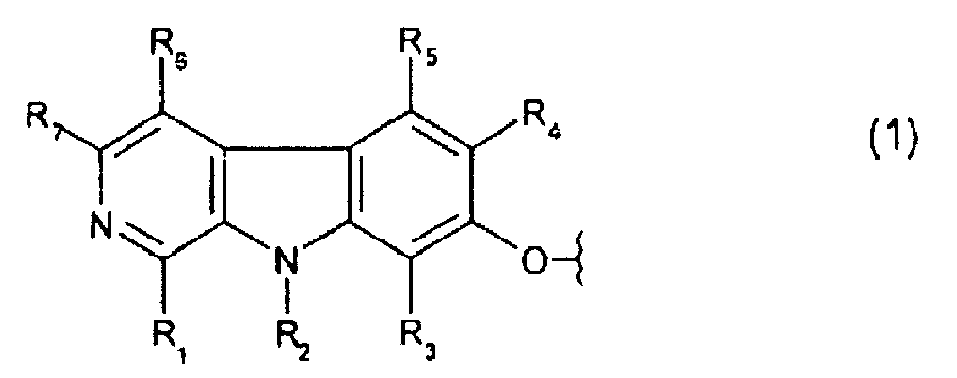
wherein R1 represents in particular a methyl group, R2 represents in particular an alkyl group of 1 to 10 carbon atoms, and R3 to R7 represent preferably H,
- X represents in particular an alkyl radical having 1 to 10 carbon atoms for the treatment of cancer.
A-X-A (II)
wherein:
- A represents in particular a radical of formula (1):
- X represents in particular an alkyl radical having 1 to 10 carbon atoms for the treatment of cancer.
Description
- This invention relates to the syntheses of dimers of harmol or of its derivatives such as harmine and β-carbolines, and to the use of such dimers for the treatment of cancer.
- Cancer is a disease of humans and animals which is for the most part fatal and which is caused by the uncontrolled growth of endogenous cells.
- Aside from the, if possible radical, surgical removal of the tumor, the possibilities for treating malignant tumors include radiological therapy, immunotherapy and chemotherapy. The substances of chemotherapy interfere specifically in certain processes in cell division. Different cytostatic drugs have been developed. However, due to massive side-effects, all these agents suffer from severe disadvantages, such that the death of the affected patient is only delayed and not averted. Furthermore, the degenerate (cancer) cells develop resistances to the agents which are used; while the medicaments which are being used at the time then no longer have any cytostatic effect, they are still toxic as a consequence of the side-effects. In addition, it has been found that the efficacy achieved by using cytostatic agents in combination or in sequence exceeds that achieved by using a single cytostatic agent (monotherapy) and, as a result, it is possible that the substantial side-effects are not additive in connection with polychemotherapy.
- In non cancer cells, adhesion to the extracellular matrix and to neighbouring cells plays a central role in the control of cell survival, growth, differentiation and motility (K.A. Beningo et al., J. Cell Biol. 153 (2001), pp. 881-888; S.M. Frisch and R.A. Screaton, Curr. Opin. Cell Biol. 13 (2001), pp. 555-562 and F.M. Watt, EMBO J. 21 (2002), pp. 3919-3926). Upon oncogenic transformation, profound changes occur in cell morphology and the organization of the cytoskeleton, in cell motility and in growth factor- or adhesion-dependent cell proliferation (for a review, see G. Pawlak and D.M. Helfman, Curr. Opin. Genet. Dev. 11 (2001), pp. 41-47). Disruption of the actin cytoskeleton and a concomitant reduction in the number of focal adhesions are common features accompanying cell transformation induced by various oncogenes. That the actin cytoskeleton plays a fundamental role in oncogenesis is suggested by the association of anchorage-independent growth and tumorigenicity with the rearrangements of the actin filament network observed in transformed cells (P. Kahn et al., Cytogenet. Cell Genet. 36 (1983), pp. 605-611). Adhesive interactions involve specialized transmembrane receptors that are linked to the cytoskeleton through junctional plaque proteins (for a review, see Nagafuchi, Curr. Opin. Cell Biol. 13 (2001), pp. 600-603). The synthesis of several actin-binding proteins, including α-actinin, vinculin, tropomyosin and profilin, is down-regulated in transformed cells and overexpressing these proteins in tumor cells suppresses the transformed phenotype, which allows them to be considered as tumor suppressors.
- Harmine is a natural plant alkaloid product which was isolated from the Peganum harmala seeds. Peganum harmala (Zygophyllaceae) is a plant widely distributed in semi arid rangelands in the Central Asia, North Africa, Middle East and Australia. The pharmacologically active compounds of P.harmala are several alkaloids that are found especially in the seeds and the roots. These incude β-carbolines such as harmine, harmaline, harmol, harmalol and harman, and quinazoline derivatives: vasicine and vasicinone.
- Peganum harmala alkaloids were found to possess significant antitumour potential (Lamchouri and al., Therapie, 1999, 54(6):753-8). Proliferation of tumoral cells lines was significantly reduced at all tested concentrations (20-120 micrograms/ml) during the first 24 h of contact. A cell lysis effect occurred after 24 h and increased thereafter to complete cell death within 48-72 h, depending on tested concentration (Lamchouri and al, Fitoterapia, 2000, 71(1):50-4).
- Harmine was reported to exhibit strong cytotoxicity against a number of human tumor cell lines (Ishida and al, Bioorg Mad Chem Lett, 1999, 9(23):3319-24).
- Furthermore it was shown that harmine is a selective inhibitor of cyclin-dependent kinases (CDKs) that regulate the cell division cycle and cell proliferation (Song et al., Biochem Biophys Res Commun., 2004. 317(1):128-32).
- The degree of aromaticity of the tricyclic ring and the positioning of substituents of harmine are important for inhibitory CDKs activity (Song et al., Bioorg Med Chem Lett, 2002, 12(7):1129-32)
- However, histologic study showed experimental toxicity of harmine on the central nervous system (CNS) (Lamchouri and al, Ann Pharm Fr, 2002, 60(2):123-9)
- Furthermore, in vivo in mice, despite an antitumor effect, an acute toxicity was described: tremble, twitch and jumping (Qi Chen and al, International Journal of cancer, 2005).
- It was demonstrated that harmine is monoamine oxydase inhibitor and has hallucinogenic properties.
- For all these reasons, the development of drugs effective against human cancers and having limited toxic side effects remains a critical need. The challenge is in particular to succeed in identifying anticancer drugs acting mainly through a non-cytotoxic process and with limited toxic side effect.
- The inventors hypothesized to identify compound able to transform tumour cell phenotype with less cytotoxic effect with as original target an actin chain as the inventors have demonstrated that changes in cell phenotype, and more specifically in the cytoskeletal architecture, which is one of the main molecular mechanisms underlying tumor progression, could be a pertinent target process to identify new active anticancer drugs (
WO2004/057337 ). - The inventors have unexpectedly demonstrated that harmol dimers have anticancer activity which is mediated by a non-cytotoxic process. The inventors have shown that harmol dimers increase actin network rearrangement, thereby inducing phenotypic reversion of tumor cells thanks to the rescue of adhesion and motility control, and are less cytotoxic than harmine. Moreover, phenotypic reversion is obtained with non-cytotoxic concentrations, i.e. concentrations which have no significant effect on both cell proliferation and cell survival.
- Thus, it has now been found that harmol dimers provide anticancer drugs with a better efficacy than harmine acting mainly through a non-cytotoxic process and are consequently suitable to be used for the treatment and/or prophylaxis of cancer diseases. Surprisingly, the harmol dimers tested orally are active without neurotoxicity. The new actin chain target concept identified with harmol dimers is pharmacologically with less cytotoxic activity.
- The compound identified by the inventors as inducing malignant phenotypic reversion at non-cytotoxic concentrations is a dimer of formula (II):
A-X-A (II)
wherein: - A represents:
- a radical of formula (1):

- a radical of formula (1):
- * R1 is chosen from the group consisting of:
- an alkyl group of 1 to 20 carbon atoms, in particular a methyl group,
- a COOR group, wherein R represents an alkyl group of 1 to 20 carbon atoms, and
- a COR group, wherein R represents an alkyl group of 1 to 20 carbon atoms, preferably a methyl group,
- * R2 is chosen from the group consisting of:
- . H,
- . an alkyl group of 1 to 20 carbon atoms,
- . an aryl group of 6 to 30 carbon atoms, in particular a benzyl group, if appropriate substituted with a halogen such as F, said aryl group being preferably p-fluorobenzyl,
- . a COOR group, wherein R represents H or an alkyl group of 1 to 20 carbon atoms, R being in particular a t-butyl group, and
- . a COR group, wherein R represents an alkyl group of 1 to 20 carbon atoms, preferably a methyl group,
- . a SO2Ar group, wherein Ar represents an aryl group of 6 to 30 carbon atoms,
- * R3, R5, R6, and R7 represent, independently from each other, a group selected from:
- . H,
- . an alkyl group of 1 to 20 carbon atoms, and
- . an aryl group of 6 to 30 carbon atoms, in particular a benzyl group, if appropriate substituted with a halogen,
- * R4 represent, independently from each other, a group selected from:
- . H,
- . an alkyl group of 1 to 20 carbon atoms,
- . an aryl group of 6 to 30 carbon atoms, in particular a benzyl group, if appropriate substituted with a halogen,
- . NO2, and
- . a NRR' group, wherein R and R' represent, independently from each other, H or an alkyl group of 1 to 20 carbon atoms,
- or a radical of formula (2):

- or a radical of formula (2):
- * R1, R3, R4, R5, R6, and R7 are as defined above for formula (1),
- * R8 represents a group selected from:
- . H,
- . an alkyl group of 1 to 20 carbon atoms, and
- . a COR group, wherein R represents an alkyl group of 1 to 20 carbon atoms,
- or a radical of formula (3):

- or a radical of formula (3):
- X represents a saturated or unsaturated alkyl radical having 1 to 20 carbon atoms, eventually substituted with at least 1 oxygen atom, and preferably with at least 2 oxygen atoms, or a radical having the formula -(CH2CH2O)nCH2CH2- where n is a whole number ranging from 1 to 10, said alkyl radical being eventually substituted with at least one hydroxyl group, in particular with two hydroxyl groups, eventually engaged in a 5-membered ring to form a 1,3-dioxolane cycle, which is if appropriate substituted with at least one alkyl group of 1 to 10 carbon atoms, said 5-membered ring being in particular 2,2-dimethyl-1,3-dioxolane.
- According to an embodiment, the dimers of the invention have the formula (III):

- X is a saturated or unsaturated alkyl radical having 1 to 20, preferably 3 to 10, carbon atoms, or a radical having the formula -(CH2CH2O)nCH2CH2-, where n is a whole number ranging from 1 to 10,
said alkyl radical being if appropriate substituted with at least one carbonyl, or peptidic bond, or at least one oxygen atom, or with at least one hydroxyl group, in particular with two hydroxyl groups, said hydroxyl groups being eventually engaged in a 5-membered ring to form a 1,3-dioxolane cycle, which is if appropriate substituted with at least one alkyl group of 1 to 10 carbon atoms, said 5-membered ring being in particular 2,2-dimethyl-1,3-dioxolane, and - R2 is as defined above.
- According to a particular embodiment, the dimers of the invention have the formula (III) as mentioned above wherein X is selected from the group consisting of the following groups:
- a group of formula (3):
-(CH2)n- (3)
n being an integer varying from 1 to 10, and preferably equal to 3, 4, 5, or 6, - a group of formula (4):
-(CH2)m-O-(CH2)p-O-(CH2)q- (4)
m, p, and q being integers varying from 1 to 4, and preferably equal to 2, - a group of formula (5):

- a group of formula (6):

- According to another embodiment, the dimers of the invention have the formula (V-1):

- According to an embodiment, the harmol dimers of the invention have the formula (IV):

- X is an alkyl radical having 2 to 10, preferably 3 to 5, carbon atoms, and
- R3 is as defined above.
- According to a particular embodiment, the harmol dimers of the invention have the formula (VIII-1):

- The present invention furthermore relates to all obvious chemical equivalents of the compounds of the formula (I) according to the invention. These equivalents are compounds which exhibit only a slight chemical difference, and have the same pharmacological effect, or which are converted into the compounds according to the invention under mild conditions. Said equivalents also include, for example, pharmaceutically acceptable salts, reduction products, oxidation products, esters, ethers, acetals or amides of the compounds of the formula (II) as well as equivalents which the skilled person can prepare using standard methods and, in addition to this, all the optical antipodes and diastereomers and all the stereoisomeric forms.
- As used herein, "dimer" means a molecule composed of two identical subunits linked together. The molecules in a dimer are connected with a covalent bond or covalent link (X).
- The term "alkyl" means a saturated or unsaturated aliphatic hydrocarbon group which may be straight or branched having about 1 to about 20 carbon atoms in the chain. Preferred alkyl groups have 1 to about 12 carbon atoms in the chain, still preferably 1 to 6 carbon atoms. Branched means that one or lower alkyl groups such as methyl, ethyl or propyl are attached to a linear alkyl chain. «Lower alkyl» means about 1 to about 4 carbon atoms in the chain which may be straight or branched. The alkyl may be substituted with one or more «alkyl group substituants» which may be the same or different, and include for instance halo, cycloalkyl, hydroxy, alkoxy, amino, acylamino, aroylamino, carboxy.
- "Pharmaceutically acceptable" means it is, within the scope of sound medical judgment, suitable for use in contact with the cells of humans and lower animals without undue toxicity, irritation, allergic response and the like, and are commensurate with a reasonable benefit/risk ratio.
- The term "pharmaceutically acceptable salt" refers to salts which retain the biological effectiveness and properties of the compounds of this invention and which are not biologically or otherwise undesirable. In many cases, the compounds of this invention are capable of forming acid and/or base salts by virtue of the presence of amino and/or carboxyl groups or groups similar thereto. Pharmaceutically acceptable acid addition salts may be prepared from inorganic and organic acids, while pharmaceutically acceptable base addition salts can be prepared from inorganic and organic bases. For a review of pharmaceutically acceptable salts see Berge, et al. ((1977) J. Pharm. Sd, vol. 66, 1). The expression "non-toxic pharmaceutically acceptable salts" refers to non-toxic salts formed with nontoxic, pharmaceutically acceptable inorganic or organic acids or inorganic or organic bases. For example, the salts include those derived from inorganic acids such as hydrochloric, hydrobromic, sulfuric, sulfamic, phosphoric, nitric, and the like, as well as salts prepared from organic acids such as acetic, propionic, succinic, glycolic, stearic, lactic, malic, tartaric, citric, ascorbic, pamoic, maleic, hydroxymaleic, phenylacetic, glutamic, benzoic, salicyclic, sulfanilic, fumaric, methanesulfonic, and toluenesulfonic acid and the like.
- More specifically, for the use of the invention, preferred dimers are:
- 7,7'-[Propane-1,3-diylbis(oxy)] bis(1-methyl-9H-β-carboline) of formula (V)
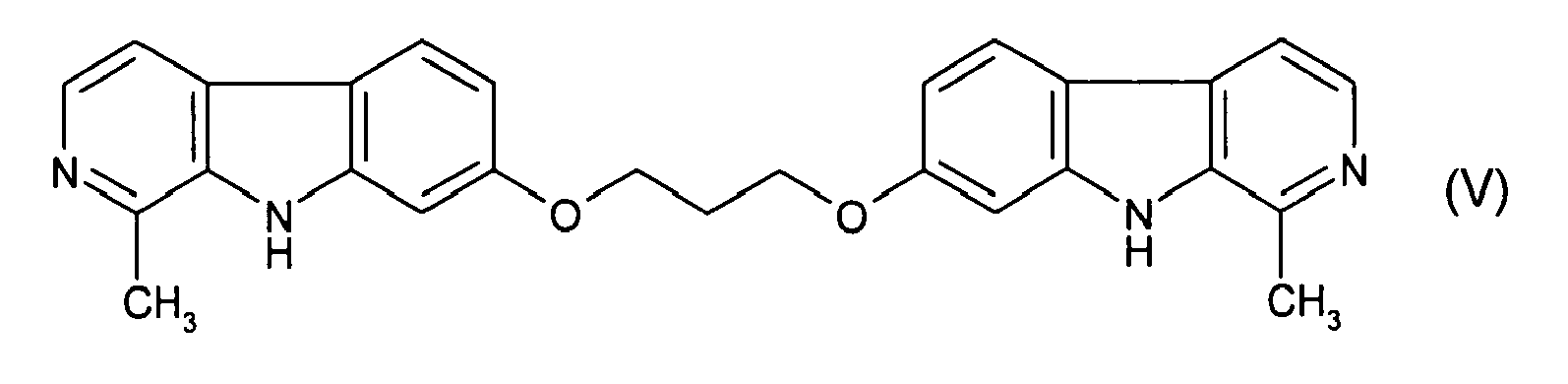
- 7,7'-[Pentane-1,5-diylbis(oxy)]bis(1-methyl-9H-β-carboline) of formula (VI):

- 7,7'-[(2,2-dimethyl-1,3-dioxolane-4,5-diyl)bis(methyleneoxy)]bis(1-methyl-9H-β-carboline) of formula (VII)

- 9,9'-pentane-1,5-diylbis(7-methoxy-1-methyl-9H-β-carboline) of formula (VIII)

- 7,7'-[ethane-1,2-diylbis(oxyethane-2,1-diyloxy)]bis(1-methyl-9H-β-carboline) of formula (IX)

- 7,7'-[Pentane-1,5-diylbis(oxy)]bis(1-methyl-9-(4-fluorobenzyl)-9H-β-carboline) of formula (X)

- The invention also relates to processes for preparing the dimers as mentioned above.
- Accordingly, the invention provides a process for the preparation of the dimers of formula (V-1), and its pharmaceutically acceptable salts which comprises:
- (i) reacting the compound of formula (XI)

in particular in refluxing ethanol, to obtain a phenate of formula (XII):
- (ii) and reacting the phenate of formula (XII) with a compound of formula (XIII): L-(CH2)n-L, L representing a leaving group selected in particular from the group consisting of tosylate (OTs), mesylate (OMs), and halogen, in particular I or Br, n being as defined above in formula (V-1).
- The invention also provides a process for the preparation of the compound of formula (V), and its pharmaceutically acceptable salts, which comprises the reaction of the phenate of formula (XII) with a compound of formula Hal-(CH2)3-Hal, Hal representing a halogen atom, in particular Br.
- Thus, the invention provides a process for the preparation of the harmol dimers of formula (V) and its pharmaceutically acceptable salts, which comprises:
- (i) reacting the compound of formula (XI) with sodium ethoxide in refluxing ethanol to get the sodium phenate of formula (XII), and
- (ii) reacting said sodium phenate (XII) with 1,3-dibromopropane.
- The invention also provides a process for the preparation of the compound of formula (VI), and its pharmaceutically acceptable salts, which comprises the reaction of the phenate of formula (XII) with a compound of formula Hal-(CH2)5-Hal, Hal representing a halogen atom, in particular Br.
- Thus, the invention provides a process for the preparation of the harmol dimers of formula (VI) and its pharmaceutically acceptable salts which comprises:
- (i) reacting the compound of formula (XI) with sodium ethoxide in refluxing ethanol to get the sodium phenate of formula (XII), and
- (ii) reacting the sodium phenate with 1,5-dibromopentane.
- The invention also provides a process for the preparation of the harmol dimers of formula (VII) and its pharmaceutically acceptable salts which comprises the alkylation of the compound of formula (XI) with 4,5-bis-bromomethyl-2,2-dimethyl-[1,3]dioxolane, using in particular K2CO3 as base in DMF.
- The invention also provides a process for the preparation of a compound of formula (VIII-1), and its pharmaceutically acceptable salts, which comprises the reaction of the compound of formula (I)

- Thus, the invention provides a process for the preparation of the harmol dimers of formula (VIII) and its pharmaceutically acceptable salts which comprises reacting the compound of formula (I) with NaH, and 1,5-dibromopentane.
- The invention provides a process for the preparation of the harmol dimers of formula (IX) and its pharmaceutically acceptable salts which comprises:
- (i) reacting the compound of formula (XI) with sodium ethoxide in refluxing ethanol to get the sodium phenate of formula (XII), and
- (ii) reacting the sodium phenate with tri(ethyleneglycol)di-p-tosylate.
- The invention also provides a process for the preparation of the harmol dimers of formula (X) and its pharmaceutically acceptable salts which comprises reacting the compound of formula (VI) with 4-fluorobenzyl bromide.
- This process can also be carried out by reacting the compound of formula (VI) with activated benzyl halides (Ar-CH2-Hal), or allyl derivatives, or progargyl, and derivatives thereof.
- The above harmol dimers induce remodeling of the actin cytoskeleton in tumor cells, thereby leading to decreased cell motility and recovery of cell adhesion. This process leads in vivo to selective apoptosis of tumor cells resulting from various mechanisms including eventually from an immune response of the host possibly involving TCL toxic effect.
- Thus, the invention relates to the use of a dimer as defined above, and in particular of formula (II) to (X) for the manufacture of a medicament intended for the treatment of cancer. The invention also relates to a method of treating cancer, by reversing the transformed phenotype of a tumor cell, comprising administering to a subject in need thereof a therapeutically effective amount of a harmol dimer as defined above.
- The invention further relates to the use of a dimer of formula (II) to (X) for the manufacture of a medicament intended for reversing the transformed phenotype of a tumor cell. The invention also relates to a method of reversing the transformed phenotype of a tumor cell, comprising administering to a subject in need thereof a therapeutically effective amount of an harmol dimer as defined above.
- As used herein, the term "subject" denotes a mammal, such as a rodent, a feline, a canine, and a primate. Preferably a subject according to the invention is a human.
- In the context of the invention, the term "treating" or "treatment", as used herein, means reversing, alleviating, inhibiting the progress of, or preventing the disorder or condition to which such term applies, or one or more symptoms of such disorder or condition.
- As used herein, the term "transformed phenotype" denotes a change which may occur (i) in cell morphology, and/or (ii) in the organization of the cytoskeleton, and/or (iii) in cell motility and/or (iv) in growth factor- or adhesion-dependent cell proliferation. Said transformed phenotype is a hallmark of tumor cells.
- Examples of changes in cell morphology include cells displaying a more rounded shape, fewer cytoplasmic extensions, reduced spreading area, and reduced cell/cell contacts. A change in the organization of the cytoskeleton may be in particular a disruption of the actin cytoskeleton, which is typically associated with a concomitant reduction in the number of focal adhesions.
- "Reversing the transformed phenotype of tumor cells" means making the tumor cells to recover the phenotype of a normal (i.e. non-tumoral) cell. Reversal of the transformed phenotype by harmol dimers is in particular induced by actin network rearrangement.
- Reversal of the transformed phenotype may be assessed by the one skilled using methods of assay readily known in the art.
- These methods include for instance:
- a semi-solid or methylcellulose growth assay (clonogenicity assay)
- a cell motility assay
- a method of measurement of stationary polymerized actin in a cellular lysate, as described in the international patent application
WO 2004/057337 . This method comprises of an index of tumor aggressivity. Briefly the method comprises lysing cells under non denaturing conditions, adjusting the total proteins concentration of the lysate, adding fluorescently labelled actin monomers and components necessary for polymerization of endogenous actin (e.g. ATP), and measuring polymerised actin; - an assessment of morphological changes and cytoskeleton organisation of cells by actin, zyxin, actinin, or β-catenin labelling following microscopy observation according to conventional procedures.
- The medicament or method according to the invention induces selective apoptosis of tumor cells and thereby provides a non-cytotoxic method of treatment of cancer.
- According to the invention, the tumor cell may be a cell originating from any tumor, e.g. a primary or metastatic tumor, a solid tumor or soft tissue tumor, or a leukemia. Examples of solid or soft tumor cells include bladder, breast, bone, brain, cervical, colorectal, endometrial, kidney, liver, lung, nervous system, ovarian, prostate, testicular, thyroid, uterus, and skin cancer cells. Leukaemias include for instance chronic myeloproliferative diseases, myelodysplastic syndromes, acute non lymphocytic leukaemias, B-cell acute lymphocytic leukaemias, T-cell acute lymphocytic leukaemias, non Hodgkin lymphomas, and chronic lymphoproliferative diseases.
- Tumor cells which are expected to be most responsive to the harmol dimers are those characterized by an invasive phenotype associated with cytoskeleton breakdown, increased cell motility and/or decreased cell-cell adhesion, as may be observed in aggressive sarcoma and during epithelium-mesenchymal transition occurring in early step of metastasis.
- It is an advantage of the invention that pursuant to their capacity to reverse the malignant phenotype of a cell, the harmol dimers as described herein constitute true anti-invasive agents. Hence, according to an embodiment, the tumor cell is a metastatic cell. Accordingly, the medicament or method according to the invention may be intended for the treatment of metastasis.
- Furthermore, the harmol dimers as defined herein have anticancer activity which is mediated by a non cytotoxic process. These compounds may advantageously be administered to treat cancer in a subject escaping conventional cytotoxic chemotherapies with inhibitors of DNA replication such as DNA binding agents in particular alkylating or intercalating drugs, antimetabolite agents such as DNA polymerase inhibitors, or topoisomerase I or II inhibitors, or with anti-mitogenic agents such as alkaloids. These cytotoxic compounds include for instance actinomycin D, adriamycin, bleomycine, carboplatin, cisplatin, chlorambucil, cyclophosphamide, doxorubicin, etoposide, 5-fluorouracil, 6-mercaptopurine melphalan, methotrexate, paclitaxel, taxotere, vinblastine, and vincristine.
- As used herein, the term "subject escaping cytotoxic chemotherapy" denotes in particular subjects in which cytotoxic chemotherapy does not modify tumor progression.
- One or more harmol dimers, as defined herein, may be administered simultaneously or consecutively to the subject to be treated.
- Moreover, the harmol dimers may be administered in combination (i.e. simultaneously or consecutively) with a differentiating agent, in particular with vitamin A, its synthetic analogues, and metabolites (retinoids), vitamin D or its analogues, or peroxisome proliferator-activated receptors (PPAR) ligands.
- Retinoids may be for instance all-transretinoic acid (ATRA), N-(4-hydroxyphenyl) retinamide (4HPR), 13-cis-retinoic acid (13-CRA), or 9-cis-retinoic acid (9-CRA).
- Vitamin D or its analogues include in particular 25-dihydroxyvitamin D3 (1,25-(OH)2 D3), which is the dihydroxylated metabolite normally formed from vitamin D3, or 1alpha.-hydroxy-vitamin D3, 1alpha.-hydroxyvitamin D2, 1alpha-hydroxyvitamin D5, fluorinated vitamin D derivatives.
- PPAR ligands are in particular PPARα or PPARγ activators. Selective PPARγ agonists include classic TZDs (troglitazone, rosiglitazone, pioglitazone, and ciglitizone; see Forman et al., 1995, Cell, 83:803-812; Lehmann et al., 1995, J. Biol. Chem. 270:12953 -12956) and non-TZD-type agonists. Representatives of the latter include N-(2-benzoylphenyl)-L-tyrosine derivatives, such as GW 1929, GI 262570, and GW 7845, which are among the most potent and selective PPARγ agonists identified to date (see Henke et al., 1998, J. Med. Chem., 41:5020-5036; Cobb et al., 1998, J. Med. Chem., 41:5055 -5069). GW 0207, a 2,3-disubstituted indole-5-carboxylic acid, is also a potent and selective PPARγ agonist (Henke et al., 1999, Bioorg. Med. Chem. Lett., 9:3329-3334). Fibrates or farnesol are examples of PPARα agonists.
- Therefore, the harmol dimers useful according to the invention may also be mixed with another therapeutic compound to form pharmaceutical compositions (with or without diluent or carrier) which, when administered, provide simultaneous administration of a combination of active ingredients resulting in the combination therapy of the invention. In particular the invention provides a pharmaceutical composition comprising an harmol dimer of formula (II) to (X) and a differentiating agent, as are defined above.
- Further to a simultaneous administration, the harmol dimers useful according to the invention may also be administered separately or sequentially with another therapeutic compound, in particular a differentiating agent as defined above. Thus the invention further provides a product comprising an harmol dimer of formula (II) to (X), and a differentiating agent, as a combined preparation for simultaneous, use for reversing the transformed phenotype of a tumor cell.
- While it is possible for the harmol dimers to be administered alone it is preferably to present them as pharmaceutical compositions. The pharmaceutical compositions, both for veterinary and for human use, useful according to the present invention comprise at least one harmol dimer, as above defined, together with one or more pharmaceutically acceptable carriers and optionally other therapeutic ingredients.
- In certain preferred embodiments, active ingredients necessary in combination therapy may be combined in a single pharmaceutical composition for simultaneous administration.
- As used herein, the term "pharmaceutically acceptable" and grammatical variations thereof, as they refer to compositions, carriers, diluents and reagents, are used interchangeably and represent that the materials are capable of administration to or upon a mammal without the production of undesirable physiological effects such as nausea, dizziness, gastric upset and the like.
- The preparation of a pharmacological composition that contains active ingredients dissolved or dispersed therein is well understood in the art and need not be limited based on formulation. Typically such compositions are prepared as injectables either as liquid solutions or suspensions; however, solid forms suitable for solution, or suspensions, in liquid prior to use can also be prepared. The preparation can also be emulsified. In particular, the pharmaceutical compositions may be formulated in solid dosage form, for example capsules, tablets, pills, powders, dragees or granules.
- The choice of vehicle and the content of active substance in the vehicle are generally determined in accordance with the solubility and chemical properties of the active compound, the particular mode of administration and the provisions to be observed in pharmaceutical practice. For example, excipients such as lactose, sodium citrate, calcium carbonate, dicalcium phosphate and disintegrating agents such as starch, alginic acids and certain complex silicates combined with lubricants such as magnesium stearate, sodium lauryl sulphate and talc may be used for preparing tablets. To prepare a capsule, it is advantageous to use lactose and high molecular weight polyethylene glycols. When aqueous suspensions are used they can contain emulsifying agents or agents which facilitate suspension. Diluents such as sucrose, ethanol, polyethylene glycol, propylene glycol, glycerol and chloroform or mixtures thereof may also be used.
- The pharmaceutical compositions can be administered in a suitable formulation to humans and animals by topical or systemic administration, including oral, rectal, nasal, buccal, ocular, sublingual, transdermal, rectal, topical, vaginal, parenteral (including subcutaneous, intra-arterial, intramuscular, intravenous, intradermal, intrathecal and epidural), intracisternal and intraperitoneal. It will be appreciated that the preferred route may vary with for example the condition of the recipient.
- The formulations can be prepared in unit dosage form by any of the methods well known in the art of pharmacy. Such methods include the step of bringing into association the active ingredient with the carrier which constitutes one or more accessory ingredients. In general the formulations are prepared by uniformly and intimately bringing into association the active ingredient with liquid carriers or finely divided solid carriers or both, and then, if necessary, shaping the product.
- Total daily dose of the harmol dimers administered to a subject in single or divided doses may be in amounts, for example, of from about 0.001 to about 100 mg/kg body weight daily and preferably 0.01 to 10 mg/kg/day. Dosage unit compositions may contain such amounts of such submultiples thereof as may be used to make up the daily dose. It will be understood, however, that the specific dose level for any particular patient will depend upon a variety of factors including the body weight, general health, sex, diet, time and route of administration, rates of absorption and excretion, combination with other drugs and the severity of the particular disease being treated.
- The invention will be further illustrated in view of the following examples.
-
Figure 1 represents the time course of actin polymerization in the presence of harmol dimers in NIH 3T3 EF extract. Harmol dimer was added at zero time with polymerization buffer and NIH 3T3 EF extract. Reaction mixtures contained 10 µM of different harmol dimers symbolized as follows: BA016DD1172 harmol dimer (7,7'-[Pentane-1,5-diylbis(oxy)]bis(1-methyl-9H-β-carboline) - compound of formula (VI)) (▼); BA016DD1183 harmol dimer (7,7'-[(2,2-dimethyl-1,3-dioxolane-4,5-diyl)bis(methyleneoxy)]bis(1-methyl-9H-β-carboline) - compound of formula (VII) (◆); BA016FZ518 harmol dimer (9,9'-pentane-1,5-diylbis(7-methoxy-1-methyl-9H-β-carboline) - compound of formula (VIII) (0), BA016FZ527 harmol dimer (7,7'-[Propane-1,3-diylbis(oxy)]bis(1-methyl-9H-β-carboline) - compound of formula (V) (•), control malignant NIH 3T3 EF cells (○), control normal NIH 3T3 cells (▲). Data represent mean standard deviation; n = 3. -
Figure 2 represents inhibition of NIH 3T3 EF colony formation in semi solid medium by BA016DD1183, BA016DD1172, BA016FZ518, and BA016FZ527. -
Figure 3 represents inhibition of B16F10 colony formation in semi solid medium by BA016DD1183, BA016DD1172, BA016FZ518, and BA016FZ527. -
Figure 4 is a fluorescence microscopy examination of actin fibers in NIH 3T3 EF cells, treated or not with the different harmol dimers, and compared with control normal NIH 3T3 cells. Normal and malignant NIH 3T3 cells were analyzed using FITC-phalloidin to visualize the actin filaments and DAPI to visualize the nucleus. (A) Control normal NIH 3T3 cells; (B) Control malignant NIH 3T3 EF cells; (C) Malignant NIH 3T3 EF cells treated with 100 nM harmol dimer BA016DD1183; (D) Malignant NIH 3T3 EF cells treated with 100 nM harmol dimer BA016DD1172; (E) Malignant NIH 3T3 EF cells treated with 100 nM harmol dimer BA016FZ527 and (F) Malignant NIH 3T3 EF cells treated with 100 nM harmol dimer BA016FZ518. -
Figure 5 represents wound healing assay performed on control NIH 3T3 EF and NIH 3T3 EF cells treated by the different harmol dimers after 10 h of cell migration into a 1 mm wound at the surface of a 6-well culture plate. - Phase contrast photographs of NIH 3T3 EF at t = 0 (A), control NIH 3T3 EF cells 10 h after wound formation (B), treated NIH 3T3 EF cells by 100 nM BA016DD1183 10 h after wound formation (C), treated NIH 3T3 EF cells by 25 nM BA016DD1172 10 h after wound formation (D), treated NIH 3T3 EF cells by 50 nM BA016FZ527 10 h after wound formation (E), and treated NIH 3T3 EF cells by 50 nM BA016FZ518 10 h after wound formation (F).
-
Figure 6 represents wound healing assay performed on control B16F10 and B16F10 cells treated by the different harmol dimers after 24 h of cell migration into a 1mm wound at the surface of a 6-well culture plate. - Phase contrast photographs of B16F10 at t = 0 (A), control B16F10 cells 24 h after wound formation (B), treated B16F10 cells by 100 nM BA016DD1183 24 h after wound formation (C), treated B16F10 cells by 25 nM BA016DD1172 24 h after wound formation (D), treated B16F10 cells by 100 nM BA016FZ527 24 h after wound formation (E), and treated B16F10 cells by 25 nM BA016FZ518 24 h after wound formation (F).
-
Figure 7 represents subcutaneous B16F10 tumor growth monitoring of female C57BU6 mice treated or not by BA016DD1172 harmol dimer. Control group (■); mice treated by 100 mg/Kg of harmine during 5 days (◆). - To a solution of sodium ethoxide (265 mg, 3.91 mmol) in ethanol (prepared by adding 90 mg of sodium into 6 mL of ethanol) was added in one
portion 600 mg of harmol (3.03 mmol). After being stirred 5 min at 20 °C, the dibromoalkyl or bis-tosylate derivative (1.5 mmol) was added to the homogeneous solution. The reaction mixture was heated at 80 °C for 6 h. The flask was cooled to 0 °C, and the solid formed was filtered on a sintered glass funnel, and sequentially washed with a small amount of cold ethanol and diethyl ether. The crude product was taken up into water (4 mL) and heated to boiling five minutes. The solid was filtered, washed with a small amount of acetone, diethyl ether and dried under reduced pressure. When necessary, the crude mixture was purified by chromatography over silica gel eluting with CHCl3/MeOH/NH4OH, 100:15:2. - This process using 1,5-dibromopentane gave harmol dimerBA016DD1172 in 49 % yield. Mp = 240 - 245 °C (dec); IR (neat): n = 3500 - 2900 (broad), 2928, 2860, 1626, 1573, 1436, 1054, 1025 cm-1; 1H NMR (DMSO-d6 , 300 MHz): δ = 11.40 (s, 2 H), 8.14 (d, J = 5.0 Hz, 2 H), 8.03 (d, J = 8.5 Hz, 2 H), 7.79 (d, J = 5.0 Hz, 2 H), 7.02 (d, J = 2.0 Hz, 2 H), 6.84 (dd, J = 8.5, 2.0 Hz, 2 H), 4.12 (t, J = 6.2 Hz, 4 H), 2.71 (s, 6 H), 1.95 - 1.90 (m, 4 H), 1.85 - 1.80 (m, 2 H); 13C NMR (DMSO-d6 , 75 MHz): d = 159.4 (2 C), 141.9 (2 C), 141.1 (2 C), 137.6 (2 CH), 134.5 (2 C), 127.2 (2 C), 122.5 (2 CH), 114.7 (2 C), 111.8 (2 CH), 109.4 (2 CH), 95.2 (2 CH), 67.6 (2 CH2), 28.5 (2 CH2), 22.4 (CH2), 20.0 (2 CH3); MS (ESI+, MeOH/DMSO): m/z (%): 487 (35) [M + Na]+, 465 (100) [M + H]+; Anal. C29H28N4O2 (464.5): calcd. C 74.98, H 6.08, N 12.06; found C 74.79, H 6.23, N 11.92.
- A mixture of harmol (364 mg, 1.84 mmol), 4,5-bis-bromomethyl-2,2-dimethyl-[1,3]dioxolane (5) (397 mg, 1.38 mmol), K2CO3 (508 mg, 3.68 mmol), in DMF (4 mL) and acetone (6 mL) was heated at 60 °C. Further amounts of 5 (397 mg, 1.38 mmol) and K2CO3 (508 mg, 3.68 mmol), were added after 24 h and 48 h, and the heating was pursued for 3 days. After cooling, the reaction mixture was concentrated under reduced pressure. The residue was taken up into water (5 mL) and the mixture was extracted with dichloromethane (5 x 10 mL). The combined organic phases were dried over magnesium sulfate and concentrated under reduced pressure. The crude product was purified by silica gel chromatography (CHCl3/MeOH/NH4OH: 100:15:2) to furnish 75 mg (16% yield) of
dimer 8 as a white solid. Mp = 178 - 179 °C (dec); IR (neat): ν = 3400 - 2800 (broad), 2921, 2871, 1628, 1568, 1484, 1447, 1181 cm-1; 1H NMR (DMSO-d6, 300 MHz): δ = 11.47 (s, 2 H), 8.13 (d, J = 5.4 Hz, 2 H), 8.05 (d, J = 8.7 Hz, 2 H), 7.80 (d, J = 5.4 Hz, 2 H), 7.07 (d, J = 1.8 Hz, 2 H), 6.89 (dd, J = 8.7, 1.8 Hz, 2 H), 4.50 - 4.25 (m, 6 H), 2.71 (s, 6 H), 1.45 (s, 6 H), 13C NMR (DMSO-d6, 75 MHz): δ 159.0 (2 C), 141.8 (2 C), 141.3 (2 C), 137.7 (2 CH), 134.6 (2 C), 127.1 (2 C), 122.6 (2 CH), 115.2 (2 C), 111.9 (2 CH), 109.5 (C), 109.1 (2 CH), 95.6 (2 CH), 76.0 (2 CH), 68.4 (2 CH2), 26.9 (2 CH3), 20.3 (2 CH3); MS (ESI-, MeOH/DMSO): m/z (%): 521 (100) [M - H]-. - To a solution of sodium ethoxide (265 mg, 3.91 mmol) in ethanol (prepared by adding 90 mg of sodium into 6 mL of ethanol) was added in one
portion 600 mg of harmol (3.03 mmol). After being stirred 5 min at 20 °C, the dibromoalkyl or bis-tosylate derivative (1.5 mmol) was added to the homogeneous solution. The reaction mixture was heated at 80 °C for 6 h. The flask was cooled to 0 °C, and the solid formed was filtered on a sintered glass funnel, and sequentially washed with a small amount of cold ethanol and diethyl ether. The crude product was taken up into water (4 mL) and heated to boiling five minutes. The solid was filtered, washed with a small amount of acetone, diethyl ether and dried under reduced pressure. When necessary, the crude mixture was purified by chromatography over silica gel eluting with CHCl3/MeOH/NH4OH, 100:15:2. - This process using 1,3-dibromopropane gave harmol dimer BA016FZ527 in 35 % yield. Mp = 280 - 282 °C (dec); IR (neat): n = 3400-2700 (broad), 3071, 2965, 2876, 1627, 1568, 1486, 1446 cm-1; 1H NMR (DMSO-d6 , 200 MHz): δ = 11.30 (s, 2 H), 8.14 (d, J = 5.4 Hz, 2 H), 8.05 (d, J = 8.7 Hz, 2 H), 7.79 (d, J = 5.4 Hz, 2 H), 7.06 (d, J = 2.0 Hz, 2 H), 6.90 (dd, J = 8.7, 2.0 Hz, 2 H), 4.32 (t, J = 6.2 Hz, 4 H), 2.71 (s, 6 H), 2.33 (m, 2 H); 13C NMR (DMSO-d6 , 50 MHz): d = 159.2 (2 C), 141.8 (2 C), 141.2 (2 C), 137.7 (2 CH), 134.5 (2 C), 127.2 (2 C), 122.6 (2 CH), 114.9 (2 C), 111.8 (2 CH), 109.3 (2 CH), 95.4 (2 CH), 64.6 (2 CH2), 28.7 (CH2), 20.2 (2 CH3); MS (ESI+, MeOH/DMSO): m/z (%): 459 (90) [M + Na]+, 437 (100) [M + H]+, 359 (85); Anal. C27H24N4O2.5/4H2O (459.0): calcd. C 70.65 , H 5.82, N 12.21; found C 70.87, H 5.62, N 12.19.
- To a suspension of sodium hydride (115 mg, 60% in mineral oil, 2.8 mmol) in DMF (4 mL) was added harmine 12 (500 mg, 2.35 mmol). When the vigorous hydrogen evolution was over, 1,5-dibromopentane (230 mg, 1.0 mmol) was added. The resulting mixture was stirred at 25 °C for 24 h. Water was added and the mixture was extracted with dichloromethane (3 x 15 mL). The combined organic phases were dried over magnesium sulfate and concentrated under reduced pressure. The residue was purified by chromatography on silica gel eluting with ethyl acetate to give
dimer 14 as a white solid (360 mg, 74% yield). Mp = 168 -169 °C; IR (neat) ν = 2989, 2926, 1620, 1561, 1441, 1402, 1340, 1251, 1203 cm-1; 1H NMR (CDCl3, 300 MHz) δ 8.27 (d, J = 5.4 Hz, 2 H), 7.96 (d, J = 8.5 Hz, 2 H), 7.72 (d, J = 5.4 Hz, 2 H), 6.88 (dd, J = 8.5, 2.1 Hz, 2 H), 6.74 (d, J = 2.1 Hz, 2 H), 4.41 (t, J = 7.5 Hz, 4 H), 3.87 (s, 6 H), 2.95 (s, 6 H), 1.88 - 1.80 (quint, J = 7.5 Hz, 4 H), 1.45 - 1.40 (m, 2 H); 13C NMR (CDCl3, 75 MHz): δ 160.9 (2 C), 143.1 (2 C), 140.3 (2 C), 138.2 (2 CH), 135.2 (2 C), 129.6 (2 C), 122.5 (2 CH), 115.2 (2 C), 112.3 (2 CH), 108.7 (2 CH), 93.5 (2 CH), 55.7 (2 CH3), 44.6 (2 CH2), 30.6 (2 CH2), 24.4 (CH2), 23.3 (2 CH3); MS (ESI+, MeOH/DMSO): m/z (%): 515 (15) [M + Na]+, 493 (50) [M + H]+, 479 (100); Anal. C31H32N4O2. H2O (510.6): calcd. C 72.92, H 6.71, N 10.97; found C 72.84, H 6.51, N 11.02. - Actin dynamics have been quantified in tumor cell cytosolic fraction using the fluorescence anisotropy assay which gains access to rate constant of F-actin elongation (kobs) and steady state concentration of F-actin (Δ mA max).
- All reactions were carried out at 22°C and fluorescence anisotropy signal was recovered at 520 nm with excitation at 490 nm in a Beacon 2000 (Panvera). Alexa 488 actin (Molecular Probes) was centrifuged at 35 000 rpm for 2 h at 4°C to sediment residual actin polymers in a Beckman L5-50B ultracentrifuge. The fluorescence remaining in the supernatant was considered to be likely due to monomers or small actin filaments (5-10 monomers) that do not pellet under conditions described previously. 80% of the supernatant was withdrawn; the concentration was defined through fluorescence measurements (excitation at 490 nm and signal recovering at 520 nm). The ultracentrifuged actin concentration was calculated using the non ultracentrifuged Alexa 488 actin as a standard. The supernatant was aliquoted, frozen in liquid nitrogen and stored at -80°C.
- Before experiment, an aliquot of ultracentrifuged Alexa 488 actin was diluted to a concentration of 1 mg/ml in G buffer (5 mM Tris pH 8.1, 2 mM CaCl2, 0.2 mM DTT, 0.2 mM ATP). 3 µl of diluted Alexa 488 actin was mixed in 168 µl of G buffer and actin monomers anisotropy was measured before the addition of 4 µl of polymerisation buffer (2.5 M KCI, 50 mM MgCl2, 25 mM ATP), 5 µl of G buffer in the presence or in the absence of the chemical molecule and 20 µl cellular extract of normal NIH 3T3 cells or malignant NIH 3T3 EF cells at 2 mg/ml. The final concentration of Alexa 488 actin was 4 nM. The ratio of unlabelled to labelled actin was about 140/4 nM. Measurements were made each 10 sec for 200 sec. Actin monomers anisotropy value was subtracted, yielding the anisotropy enhancement (Δ mA). The data were fitted with the equation Y= Ymax . [1- exp(- K.X)]. The curves start at zero and ascend to Ymax that corresponds to the steady state anisotropy value (Δ mA eq), with a rate constant K. Y is anisotropy values of which monomers anisotropy is substracted and X is the time (Assessment of cellular actin dynamics by measurement of fluorescence anisotropy. Anal Biochem. 2007 Aug 1;367(1):95-103. Epub 2007 Apr 5. Spitz et al.).
- The effects of BA016DD1172, BA016DD1183, BA016FZ527, and BA016FZ518 on these parameters were as follows:
Table 1: Effects of 10 µM of the different harmol dimers on anisotropy enhancement in NIH 3T3 EF extracts. NIH 3T3 NIH 3T3 EF EF + 10 µM BA016DD1172 EF + 10 µM BA016DD1183 EF + 10 µM BA016 FZ518 EF + 10 µM BA016 FZ527 Kobs 0,122 0,120 0,179 0,158 0,104 0,132 Δ mA max 59 38 62 61 59 83 - When added to assay medium, harmol dimers BA016DD1172, BA016DD1183, BA016FZ527, and BA016FZ518 increased the F actin elongation rate constant (Kobs) and the F actin steady state value (Δ mA max).
Figure 1 showed typical kinetics observed following the addition of these different harmol dimers. In the presence of 10 µM of BA016DD1172, BA016DD1183, and BA016FZ518, the actin polymerisation kinetics of the tumoral NIH 3T3 EF cytosolic fractions was similar to those observed using normal NIH 3T3 cytosolic fraction. - Moreover, in the presence of 10 µM BA016FZ527, the F actin elongation rate constant and the F actin steady state value were higher to those observed in NIH 3T3 cytosolic fraction.
- Growth studies were performed using the [3-(4,5 dimethylthiazol-2-yl)-2,5-diphenyl-2H-tetrazolium bromide] (Sigma) colorimetric assay.
- About 1500 cells were seeded in a 96-well culture plate 24 hours before adding increasing concentrations of tested molecule. The plate was incubated at 37°C for 3 days. 10 µl MTT stock solution (5 mg/ml in phosphate buffer saline) was added to 90 µl of complete medium in each well, the incubation was continued for 3 h at 37°C. 100 µl of lysis buffer (10 % sodium dodecyl sulfate, 1% HCl 1N; pH 4.7) was added to each well, and the plate was incubated overnight. The absorbance was determined using an Integrated EIA Management System (Labsystem) at a wavelength of 570 nm. The proliferation rates were calculated from the OD readings using the untreated cells as 100%.
- Cells were embedded in complete culture medium supplemented with 0,8% methylcellulose (Methocel MC4000, Sigma), seeded in triplicate into 35-mm dishes (Greiner Bio-one Ref 627102, Dominique Dutscher) and incubated at 37 °C in a humidified 5% CO2 atmosphere.
- The number of cells seeded was 1000 cells per dish. After one week (B16F10 cell line) to 3 weeks (NIH 3T3 EF cell line), macroscopic clones were counted.
- Inhibition of colony formation occurred at non-cytotoxic concentrations as measured using the MTT test.
Table 3: effect of BA016DD1172 on NIH 3T3 EF and B16F10 cellular viability and inhibition of colony formation in semi solid medium (methylcellulose). Cellular viability (MTT) Inhibition of colony formation (methylcellulose) NIH 3T3 EF IC50 = 300 nM IC50 = 50 nM B16F10 IC50 = 400 nM IC50 = 30 nM Table 4: effect of BA016FZ518 on NIH 3T3 EF and B16F10 cellular viability and inhibition of colony formation in semi solid medium (methylcellulose). Cellular viability (MTT) Inhibition of colony formation (methylcellulose) NIH 3T3 EF IC50 = 750 nM IC50 = 250 nM B16F10 IC50 = 3 µM IC50 = 40 nM Table 5: effect of BA016FZ527 on NIH 3T3 EF and B16F10 cellular viability and inhibition of colony formation in semi solid medium (methylcellulose). Cellular viability (MTT) Inhibition of colony formation (methylcellulose) NIH 3T3 EF IC50 = 1 µM IC50 = 500 nM B16F10 IC50 = 1,5 µM IC50 = 175 nM Table 6: effect of BA016DD1183 on NIH 3T3 EF and B16F10 cellular viability and inhibition of colony formation in semi solid medium (methylcellulose). Cellular viability (MTT) Inhibition of colony formation (methylcellulose) NIH 3T3 EF IC50 = 1 µM IC50 = 300 nM B16F10 IC50 = 750 nM IC50 = 125 nM Figure 2 ), and B16F10 (Figure 3 ) colony formation in methylcellulose semi-solid medium - Malignant NIH 3T3 EF cells were seeded onto glass cover slips at a density of 2000 cells per cm2. The next day, tested molecules were applied to NIH 3T3 EF cells at various non cytotoxic concentrations. Three days later, cells were fixed for 10 min in PBS containing 3.7 % formaldehyde at 4°C before examination with a fluorescence microscope. The formaldehyde solution was neutralized with 50 mM NH4Cl. Permeabilisation was carried out for 4 min with 0.4% Triton X-100 in PBS. Cells were incubated for 1 h at room temperature with blocking buffer (3% bovine serum albumin in PBS) and then for 1 h with FITC-phalloidin (Sigma) which stabilizes structures by inhibiting phosphate release from ADP-Pi-actin filaments and allows visualization of actin filaments by fluorescence microscopy. The cover slips were mounted on microscope slides using a solution of
glycerol 50%, DABCO 2.5% in PBS as embedding medium. - The drugs BA016DD1172, BA016DD1183, BA016FZ527, and BA016FZ518 were able to reorganise the actin network in tumor cells at a non cytotoxic concentration (100 nM) as shown in
Figure 4 . Tumoral NIH 3T3 EF cells, treated with a non cytotoxic concentration of these harmol dimers, recovered a morphology close to that of normal NIH 3T3 cell : cells was spread, present numerous intercellular contacts and actin cytoskeleton was well organized in a stress fibres network. - Harmol dimers have been tested in a cell motility assay: the behaviour of tumoral cells treated by these dimers was compared with non-treated tumoral cells in a wound healing assay. Wound healing assay was performed to evaluate the effect of tested molecules on motility of malignant NIH 3T3 EF cells and melanoma cell line B16F10. About 100 000-200 000 cells were seeded in a 6-well culture plate and the tested molecule was added 24 hours later. Cells were grown for 3 days to confluence about 90-95% and small scratch-wounds (1 mm width) were made with a pipette tip. Cell debris were removed, then the cultures were incubated in complete medium for 10 h in the presence of the same concentration of the tested molecule. Then, the cells were fixed for 10 min in PBS containing 3.7% formaldehyde at 4°C. The healing was observed with a phase contrast light microscope using Zeiss software.
- Murine melanoma cells B16F10 and tumoral NIH 3T3 EF cells displayed a high motility phenotype. The non treated tumoral cells NIH 3T3 EF and B16F10 migrate beyond the border of the wound into its whole area. At the opposite, the malignant cells treated by harmol dimers did not migrate at all into the wound.
- BA016DD1183, BA016DD1172, BA016FZ518 and BA016FZ527 inhibited the malignant cell motility at a non cytotoxic concentration (
Figures 5 and6 ). - Female 6-8 week-old C57BU6 mice were provided by Harlan (Gannat, France).
- Animals were housed in air-conditioned atmosphere, given food and water in standard conditions. One million B16F10 cells in 0.1 ml PBS were injected subcutaneously into the right flank of mice. Seven days after cells inoculation, it was possible to measure tumor volume (day 0). Thereafter, before drug administration, female C57BU6 mice were randomized to form 2 groups. The BA016DD1172 treatment consisted of a daily per os administration at 100 mg/kg for five days (
day 0 to day 5). - B16F10 tumor development was monitored for 2 weeks. The tumor size was estimated every fourth day by measuring the diameters of the tumors in two perpendicular dimensions using callipers. The volume of tumor (V) was calculated using the formula, V = 2W(U2)2 , where L and W were respectively the length and the width of tumor.
- BA016DD1172 exhibited a marked antitumor activity against B16 melanoma (
Figure 7 ). At day 7, the tumoral growth inhibition of the treated group was 48,5% of the value observed for the control group (p = 0,0020). - The same experiments are done with harmine in order to compare with the efficacy of the harmol dimers.
- The modulation of actin dynamics was measured in tumoral NIH3T3 EF cellular lysate incubated with harmol at 10 µM. No increase of the value of the F actin steady state was observed (Δ mA max = 42 mA).
- Furthermore, harmol did not display an inhibitory activity on B16F10 colony formation in methylcellulose semi-solid medium at 3 µM (non-cytotoxic concentration as measured by MTT test) whereas harmol dimers inhibit B16F10 colony formation for nanomolar concentrations.
- When harmine is added to assay medium, an increase of F actin elongation rate constant and F actin steady state value is observed as well, but the F actin elongation rate is lower than in normal NIH 3T3 cytosolic fraction and tumoral NIH 3T3 EF cytosolic fractions incubated with BA016DD1172, BA016DD1183, BA016FZ527, and BA016FZ518 dimers.
- In the case of harmine an inhibition of NIH 3T3 EF and B16F10 colony formation was observed but for higher concentrations than BA016DD1172, BA016DD1183, BA016FZ527 and BA016FZ518 concentrations (micromolar concentration for harmine versus nanomolar concentrations for the others harmol dimers in the case of NIH 3T3 EF colonies; about 1 µM concentration for harmine versus nanomolar concentrations for the others harmol dimers in the case of B16F10 colonies).
- When NIH 3T3 EF cells were incubated with harmine, modification in actin cytoskeleton network was observed for higher concentrations than those used in harmol dimers test.
- Tumoral NIH 3T3 EF cells treated by harmine at a higher concentration (i.e, 5 µM) presented a lower inhibition of migration than those treated with BA016DD1183, BA016DD1172, BA016FZ518, and BA016FZ527.
- In vivo tumorigenicity assay was studied with harmine. The treatment with harmine consisted in a daily per os administration at 100 mg/kg (2 x 50 mg/kg) and 200 mg/Kg (2 x 100 mg/kg) for 15 days (
day 0 to day 14). In parallel, control mice were treated by one daily oral route administration of the vehicle. Any tumoral growth inhibition was observed in mice group treated by harmine with daily oral administrations at 100 mg/kg and 200 mg/kg during 15 days.
Claims (23)
- A compound of formula (II):
A-X-A (II)
wherein:• A represents:wherein:- a radical of formula (1): * R1 is chosen from the group consisting of:. an alkyl group of 1 to 20 carbon atoms, in particular a methyl group,. a COOR group, wherein R represents H or an alkyl group of 1 to 20 carbon atoms, and. a COR group, wherein R represents an alkyl group of 1 to 20 carbon atoms, preferably a methyl group,* R2 is chosen from the group consisting of:. H,. an alkyl group of 1 to 20 carbon atoms,. an aryl group of 6 to 30 carbon atoms, in particular a benzyl group, if appropriate substituted with a halogen such as F, said aryl group being preferably p-fluorobenzyl,. a COOR group, wherein R represents H or an alkyl group of 1 to 20 carbon atoms, R being in particular a t-butyl group, and. a COR group, wherein R represents an alkyl group of 1 to 20 carbon atoms, preferably a methyl group,. a SO2Ar group, wherein Ar represents an aryl group of 6 to 30 carbon atoms,* R3, R5, R6, and R7 represent, independently from each other, a group selected from:. H,. an alkyl group of 1 to 20 carbon atoms, and. an aryl group of 6 to 30 carbon atoms, in particular a benzyl group, if appropriate substituted with a halogen,* R4 represent, independently from each other, a group selected from:wherein:. H,. an alkyl group of 1 to 20 carbon atoms,. an aryl group of 6 to 30 carbon atoms, in particular a benzyl group, if appropriate substituted with a halogen,. NO2, and. a NRR' group, wherein R and R' represent, independently from each other, H or an alkyl group of 1 to 20 carbon atoms,- or a radical of formula (2):
 * R1, R3, R4, R5, R6, and R7 are as defined above for formula (1),* R8 represents a group selected from:wherein R1 to R8 are as defined above for formula (2),. H,. an alkyl group of 1 to 20 carbon atoms, and. a COR group, wherein R represents an alkyl group of 1 to 20 carbon atoms,- or a radical of formula (3):
 • X represents a saturated or unsaturated alkyl radical having 1 to 20 carbon atoms, eventually substituted with at least 1 oxygen atom, and preferably with at least 2 oxygen atoms, or a radical having the formula -(CH2CH2O)nCH2CH2-, where n is a whole number ranging from 1 to 10, said alkyl radical being eventually substituted with at least one hydroxyl group, in particular with two hydroxyl groups, eventually engaged in a 5-membered ring to form a 1,3-dioxolane cycle, which is if appropriate substituted with at least one alkyl group of 1 to 10 carbon atoms, said 5-membered ring being in particular 2,2-dimethyl-1,3-dioxolane,or a pharmaceutically acceptable salt thereof.
 - The compound of claim 1, of formula (III):

wherein:- X is a saturated or unsaturated alkyl radical having 1 to 20, preferably 3 to 10, carbon atoms, or a radical having the formula -(CH2CH2O)nCH2CH2-, where n is a whole number ranging from 1 to 10,
said alkyl radical being if appropriate substituted with at least one carbonyl, or peptidic bond, or at least one oxygen atom, or with at least one hydroxyl group, in particular with two hydroxyl groups, said hydroxyl groups being eventually engaged in a 5-membered ring to form a 1,3-dioxolane cycle, which is if appropriate substituted with at least one alkyl group of 1 to 10 carbon atoms, said 5-membered ring being in particular 2,2-dimethyl-1,3-dioxolane,
R2 is as defined in claim 1. - The compound of claim 2, wherein X is selected from the group consisting of the following groups:- a group of formula (3):
-(CH2)n- (3)
n being an integer varying from 1 to 10, and preferably equal to 3, 4, 5, or 6,- a group of formula (4):
-(CH2)m-O-(CH2)p-O-(CH2)q- (4)
m, p, and q being integers varying from 1 to 4, and preferably equal to 2,- a group of formula (5): - a group of formula (6):
- The compound of claim 2 or 3, or a pharmaceutically acceptable salt thereof, of one of the following formulae (V-1), (V), (VI) or (VII):


- The compound of claim 1, of formula (IV):
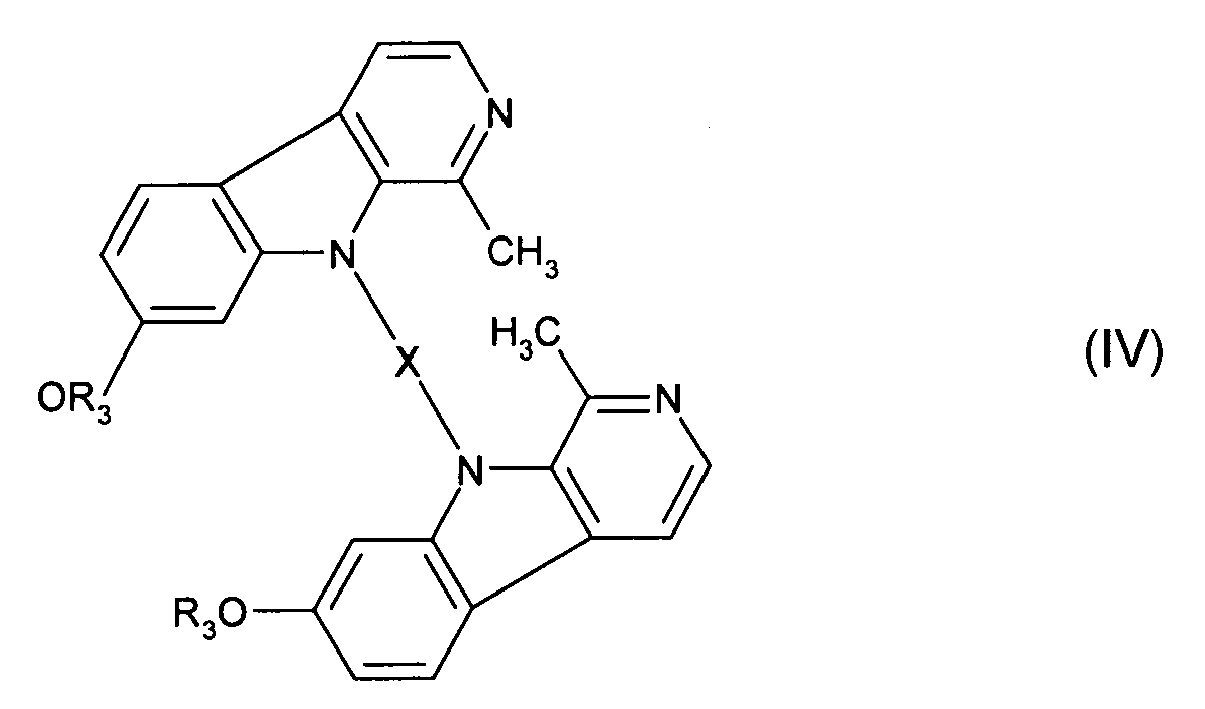
wherein:- X is an alkyl radical having 2 to 10, preferably 3 to 5, carbon atoms, and- R3 is as defined in claim 1. - The compound of claim 5, or a pharmaceutically acceptable salt thereof, of formula (VIII-1):

- The compound of claim 5 or 6, or a pharmaceutically acceptable salt thereof, of formula (VIII):

- A pharmaceutical composition comprising a compound according to any of claims 1 to 7, in a pharmaceutically acceptable carrier.
- The pharmaceutical composition according to claim 8, further comprising a differentiating agent.
- The pharmaceutical composition according to claim 9, wherein said differentiating agent is selected from the group consisting of vitamin A and its synthetic analogues, retinoids, vitamin D and its analogues, and peroxisome proliferator-activated receptors (PPAR) ligands.
- A product comprising a compound as defined in any of claims 1 to 7, and a differentiating agent, as a combined preparation for simultaneous, separate or sequential use for reversing the transformed phenotype of a tumor cell.
- The product according to claim 11, wherein said differentiating agent is selected from the group consisting of vitamin A and its synthetic analogues, retinoids, vitamin D and its analogues, and peroxisome proliferator-activated receptors (PPAR) ligands.
- A method for the preparation of the compound of formula (V-1) of claim 4, and its pharmaceutically acceptable salts which comprises:(iii) reacting the compound of formula (XI)

in particular in refluxing ethanol, to obtain a phenate of formula (XII): (iv) and reacting the phenate of formula (XII) with a compound of formula (XIII): L-(CH2)n-L, L representing a leaving group selected in particular from the group consisting of tosylate (OTs), mesylate (OMs), and halogen, in particular I or Br, n being as defined above in formula (V-1).
 - The method according to claim 13, for the preparation of the compound of formula (V) of claim 4, and its pharmaceutically acceptable salts, which comprises the reaction of the phenate of formula (XII) with a compound of formula Hal-(CH2)3-Hal, Hal representing a halogen atom, in particular Br.
- The method according to claim 13, for the preparation of the compound of formula (VI) of claim 4, and its pharmaceutically acceptable salts, which comprises the reaction of the phenate of formula (XII) with a compound of formula Hal-(CH2)5-Hal, Hal representing a halogen atom, in particular Br.
- A method for the preparation of the compound of formula (VII) of claim 4 and its pharmaceutically acceptable salts, said method comprising the alkylation of the compound of formula (XI) as defined in claim 12 with 4,5-bis-bromomethyl-2,2-dimethyl-[1,3]dioxolane, using in particular K2CO3 as base in DMF.
- A method for the preparation of a compound of formula (VIII-1) of claim 6, and its pharmaceutically acceptable salts, which comprises the reaction of the compound of formula (I)

- A method for the preparation of the compound of formula (VIII) of claim 7, and its pharmaceutically acceptable salts, which comprises the reaction of the compound of formula (I) as defined in claim 17 with NaH and 1,5-dibromopentane.
- The use of a compound according to any claims 1 to 7 for the preparation of a medicament intended for the prevention or treatment of cancer.
- The use of a compound according to any of claims 1 to 7, wherein the medicament is intended for reversing the transformed phenotype of a tumor cell.
- The use according to claims 19 or 20, wherein said tumor cell is characterized by an invasive phenotype.
- The use according to any of claims 19 to 21, wherein said medicament is intended for the treatment of cancer in a subject escaping cytotoxic chemotherapy.
- The use according to any of claims 19 to 22, wherein said medicament is administered in combination with a differentiating agent.
Priority Applications (2)
| Application Number | Priority Date | Filing Date | Title |
|---|---|---|---|
| EP07291250A EP2050747A1 (en) | 2007-10-12 | 2007-10-12 | Dimers of harmol or of its derivatives and uses thereof |
| PCT/EP2008/063546 WO2009047298A2 (en) | 2007-10-12 | 2008-10-09 | Dimers of harmol or of its derivatives and uses thereof |
Applications Claiming Priority (1)
| Application Number | Priority Date | Filing Date | Title |
|---|---|---|---|
| EP07291250A EP2050747A1 (en) | 2007-10-12 | 2007-10-12 | Dimers of harmol or of its derivatives and uses thereof |
Publications (1)
| Publication Number | Publication Date |
|---|---|
| EP2050747A1 true EP2050747A1 (en) | 2009-04-22 |
Family
ID=39099830
Family Applications (1)
| Application Number | Title | Priority Date | Filing Date |
|---|---|---|---|
| EP07291250A Withdrawn EP2050747A1 (en) | 2007-10-12 | 2007-10-12 | Dimers of harmol or of its derivatives and uses thereof |
Country Status (2)
| Country | Link |
|---|---|
| EP (1) | EP2050747A1 (en) |
| WO (1) | WO2009047298A2 (en) |
Cited By (6)
| Publication number | Priority date | Publication date | Assignee | Title |
|---|---|---|---|---|
| CN102241693A (en) * | 2010-05-10 | 2011-11-16 | 首都医科大学 | N,N'-di-(1-methyl-beta-carboline-3-formyl)-lysly aminoacid benzyl esters, synthetic method thereof and application thereof |
| CN103417536A (en) * | 2012-05-17 | 2013-12-04 | 复旦大学 | Applications of harmol in preparation of antitumor drugs |
| EP2924042A4 (en) * | 2012-11-26 | 2016-08-17 | Xinjiang Huashidan Pharmaceutical Res Co Ltd | Bis- -carboline compound and preparation method, pharmaceutical composition and use thereof |
| EP3714883A1 (en) * | 2019-03-25 | 2020-09-30 | AC BioScience SA | Indole containing small chemical compounds and use thereof for the non-cytotoxic and immunological treatment of cancer |
| US10947253B2 (en) | 2019-08-05 | 2021-03-16 | Ankh Life Sciences Limited | Fused polycyclic dimers |
| US12129265B2 (en) | 2020-07-21 | 2024-10-29 | Ankh Life Sciences Limited | Therapeutic agents and uses thereof |
Families Citing this family (8)
| Publication number | Priority date | Publication date | Assignee | Title |
|---|---|---|---|---|
| FR2953410B1 (en) | 2009-12-09 | 2012-02-24 | Univ Claude Bernard Lyon | PHARMACEUTICAL OR VETERINARY ANTIVIRAL COMPOSITIONS |
| CA2803697A1 (en) * | 2010-06-25 | 2011-12-29 | Facultes Universitaires Notre Dame De La Paix | Beta carboline derivatives useful in the treatment of proliferative disorders |
| PL2508207T3 (en) | 2011-03-31 | 2013-09-30 | Bioalliance Pharma | Nanoparticles loaded with chemotherapeutic antitumoral Drug |
| CN102796124B (en) * | 2011-05-26 | 2017-06-06 | 新疆华世丹药物研究有限责任公司 | Double β carbolines alkaloid compounds, its preparation method and its pharmaceutical composition and purposes |
| CN104744494A (en) * | 2013-12-27 | 2015-07-01 | 新疆华世丹药物研究有限责任公司 | 7 site-connected bis(beta-carboline alkaloid) compound and its preparation method, pharmaceutical composition and use |
| EP4185288A4 (en) * | 2020-07-21 | 2024-04-24 | Ankh Life Sciences Limited | THERAPEUTIC AGENTS AND USES THEREOF |
| CN115417887B (en) * | 2022-09-19 | 2024-02-13 | 延安大学 | A kind of 9-alkyl bidehydrocameline derivative and its preparation method and application |
| CN118530259B (en) * | 2024-05-31 | 2025-02-14 | 山东第二医科大学 | Quaternized β-carboline compound, pharmaceutical composition and antibacterial use thereof |
Citations (2)
| Publication number | Priority date | Publication date | Assignee | Title |
|---|---|---|---|---|
| EP1020446A1 (en) * | 1998-07-03 | 2000-07-19 | Taiho Pharmaceutical Co., Ltd. | Naphthalimidobenzamide derivatives |
| WO2005070930A2 (en) * | 2004-01-23 | 2005-08-04 | Chiron Corporation | Tetrahydrocarboline compounds as anticancer agents |
-
2007
- 2007-10-12 EP EP07291250A patent/EP2050747A1/en not_active Withdrawn
-
2008
- 2008-10-09 WO PCT/EP2008/063546 patent/WO2009047298A2/en not_active Ceased
Patent Citations (2)
| Publication number | Priority date | Publication date | Assignee | Title |
|---|---|---|---|---|
| EP1020446A1 (en) * | 1998-07-03 | 2000-07-19 | Taiho Pharmaceutical Co., Ltd. | Naphthalimidobenzamide derivatives |
| WO2005070930A2 (en) * | 2004-01-23 | 2005-08-04 | Chiron Corporation | Tetrahydrocarboline compounds as anticancer agents |
Non-Patent Citations (5)
| Title |
|---|
| BALSELLS R E ET AL: "Photochemical dimerization of [beta]-carboline alkaloids", TETRAHEDRON 1983 GB, vol. 39, no. 1, 1983, pages 33 - 39, XP002487312, ISSN: 0040-4020 * |
| ISHIDA J ET AL: "Antitumor Agents 201. Cytotoxicity of Harmine and beta-Carboline Analogs", BIOORGANIC & MEDICINAL CHEMISTRY LETTERS, OXFORD, GB, vol. 9, no. 23, 6 December 1999 (1999-12-06), pages 3319 - 3324, XP004183731, ISSN: 0960-894X * |
| JIANG W-Q ET AL: "Cytotoxic bis-3,4-dihydro-[beta]-carbolines and bis-[beta]-carbolines", JOURNAL OF ENZYME INHIBITION AND MEDICINAL CHEMISTRY 2002 UNITED KINGDOM, vol. 17, no. 6, 2002, pages 369 - 374, XP009096614, ISSN: 1475-6366 * |
| PONCE M A ET AL: "Synthesis and isolation of nitro-[beta]-carbolines obtained by nitration of commercial [beta]-carboline alkaloids", JOURNAL OF HETEROCYCLIC CHEMISTRY 2001 UNITED STATES, vol. 38, no. 5, 2001, pages 1071 - 1082, XP002471034, ISSN: 0022-152X * |
| SONG Y ET AL: "beta-Carbolines as specific inhibitors of cyclin-dependent kinases", BIOORGANIC & MEDICINAL CHEMISTRY LETTERS, OXFORD, GB, vol. 12, no. 7, 8 April 2002 (2002-04-08), pages 1129 - 1132, XP002330760, ISSN: 0960-894X * |
Cited By (8)
| Publication number | Priority date | Publication date | Assignee | Title |
|---|---|---|---|---|
| CN102241693A (en) * | 2010-05-10 | 2011-11-16 | 首都医科大学 | N,N'-di-(1-methyl-beta-carboline-3-formyl)-lysly aminoacid benzyl esters, synthetic method thereof and application thereof |
| CN103417536A (en) * | 2012-05-17 | 2013-12-04 | 复旦大学 | Applications of harmol in preparation of antitumor drugs |
| CN103417536B (en) * | 2012-05-17 | 2015-08-26 | 复旦大学 | The application in antitumor drug prepared by harmol |
| EP2924042A4 (en) * | 2012-11-26 | 2016-08-17 | Xinjiang Huashidan Pharmaceutical Res Co Ltd | Bis- -carboline compound and preparation method, pharmaceutical composition and use thereof |
| EP3714883A1 (en) * | 2019-03-25 | 2020-09-30 | AC BioScience SA | Indole containing small chemical compounds and use thereof for the non-cytotoxic and immunological treatment of cancer |
| WO2020193502A1 (en) * | 2019-03-25 | 2020-10-01 | Ac Bioscience Sa | Beta-carboline compounds and use thereof for the non-cytotoxic and immunological treatment of cancer |
| US10947253B2 (en) | 2019-08-05 | 2021-03-16 | Ankh Life Sciences Limited | Fused polycyclic dimers |
| US12129265B2 (en) | 2020-07-21 | 2024-10-29 | Ankh Life Sciences Limited | Therapeutic agents and uses thereof |
Also Published As
| Publication number | Publication date |
|---|---|
| WO2009047298A3 (en) | 2009-07-30 |
| WO2009047298A2 (en) | 2009-04-16 |
Similar Documents
| Publication | Publication Date | Title |
|---|---|---|
| EP2050747A1 (en) | Dimers of harmol or of its derivatives and uses thereof | |
| US11414401B2 (en) | Substituted 2-anilinopyrimidine derivatives as EGFR modulators | |
| CA3160899C (en) | Spiro compound serving as erk inhibitor, and application thereof | |
| JP4094950B2 (en) | Indole derivatives and their use as 5-HT2B and 5-HT2C receptor ligands | |
| US20130109688A1 (en) | Naphthridine derivatives as PI3K inhibitors for the treatment of cancer and immune-inflammatory disease | |
| KR20110110297A (en) | Fluorine-containing compound and its use | |
| KR101698283B1 (en) | Process for making thienopyrimidine compounds | |
| JP2004517843A (en) | Pyrrolo [2.1-a] dihydroisoquinoline and its use as phosphodiesterase 10a inhibitor | |
| CA2806051A1 (en) | Cyclic n,n'-diarylthioureas and n,n'-diarylureas - androgen receptor antagonists, anticancer agent, method for preparation and use thereof | |
| EP2477496B1 (en) | Novel compounds and therapeutic use thereof for protein kinase inhibition | |
| JP2020504139A (en) | Substituted fused heteroaryl compounds as kinase inhibitors and uses thereof | |
| AU2007252982B2 (en) | Reversion of malignant phenotype with 9-hydroxy ellipticine derivatives | |
| WO2018084321A1 (en) | Novel compound useful for both egfr inhibition and tumor therapy | |
| KR20210039228A (en) | Pyrimidina-1,5(1,3)-dibenzenacycloheptaphane derivative as mutant epidermal growth factor receptor inhibitor | |
| CN110357858B (en) | 5-substituted difluoropiperidine compounds having blood-brain barrier crossing capability | |
| JP2017137323A (en) | Novel anti-cancer agents | |
| CN113214275B (en) | Pyranocarbazole alkaloid derivatives and their use in treating neurological diseases | |
| US12180209B1 (en) | Pyrrolo[3,2-c][2,6]naphthyridine-2-carboxylic acid compounds as CK2 inhibitors | |
| US8778948B2 (en) | Substituted phenylpiperazinyl aralkylalcohol derivatives, pharmaceutical compositions containing such derivatives and uses thereof | |
| KR20190003242A (en) | Fused pyrimidine derivative as a mutant Epidermal Growth Factor Receptor kinase inhibitor | |
| WO2016086022A2 (en) | Heteroaromatic imidazolyl compounds and methods for treating cancer | |
| JPH01233284A (en) | Novel condensed diazepinones, their production process and pharmaceutical compositions containing these compounds | |
| JP2008247878A (en) | Imidazopyridine or imidazopyrimidine compound and narcotic or sedative composition containing the same | |
| KR101263263B1 (en) | 2,4-Diaminoquinazoline compounds having anticancer activity | |
| HU184705B (en) | Process for preparing 9-/3-/3,5-cys-dimethyl-piperazino/-propyl/-carbazole further salts or solvates of salts of this compound |
Legal Events
| Date | Code | Title | Description |
|---|---|---|---|
| PUAI | Public reference made under article 153(3) epc to a published international application that has entered the european phase |
Free format text: ORIGINAL CODE: 0009012 |
|
| AK | Designated contracting states |
Kind code of ref document: A1 Designated state(s): AT BE BG CH CY CZ DE DK EE ES FI FR GB GR HU IE IS IT LI LT LU LV MC MT NL PL PT RO SE SI SK TR |
|
| AX | Request for extension of the european patent |
Extension state: AL BA HR MK RS |
|
| AKX | Designation fees paid | ||
| REG | Reference to a national code |
Ref country code: DE Ref legal event code: 8566 |
|
| STAA | Information on the status of an ep patent application or granted ep patent |
Free format text: STATUS: THE APPLICATION IS DEEMED TO BE WITHDRAWN |
|
| 18D | Application deemed to be withdrawn |
Effective date: 20091023 |