EP2050446A1 - Sulfonamide compound or salt thereof - Google Patents
Sulfonamide compound or salt thereof Download PDFInfo
- Publication number
- EP2050446A1 EP2050446A1 EP07792264A EP07792264A EP2050446A1 EP 2050446 A1 EP2050446 A1 EP 2050446A1 EP 07792264 A EP07792264 A EP 07792264A EP 07792264 A EP07792264 A EP 07792264A EP 2050446 A1 EP2050446 A1 EP 2050446A1
- Authority
- EP
- European Patent Office
- Prior art keywords
- methylphenyl
- methyl
- sulfonyl
- lower alkyl
- amino
- Prior art date
- Legal status (The legal status is an assumption and is not a legal conclusion. Google has not performed a legal analysis and makes no representation as to the accuracy of the status listed.)
- Granted
Links
- 0 CS(N(*)C(*)*)(=O)=O Chemical compound CS(N(*)C(*)*)(=O)=O 0.000 description 19
- JMWKGDMDVWFIPY-UHFFFAOYSA-N CBc1ccc(CCC(CN(c2cccc(Cl)c2C)S(c2ccc(C)cc2)(=O)=O)=O)cc1 Chemical compound CBc1ccc(CCC(CN(c2cccc(Cl)c2C)S(c2ccc(C)cc2)(=O)=O)=O)cc1 JMWKGDMDVWFIPY-UHFFFAOYSA-N 0.000 description 1
- ALHBWLLFDCBKAD-UHFFFAOYSA-N CC(C)(C)OC(N(Cc1cncc(C(OC)=O)n1)C(OC(C)(C)C)=O)=O Chemical compound CC(C)(C)OC(N(Cc1cncc(C(OC)=O)n1)C(OC(C)(C)C)=O)=O ALHBWLLFDCBKAD-UHFFFAOYSA-N 0.000 description 1
- VEUVRRNIYGURLC-NTCAYCPXSA-N CCc(cc1)ccc1S(N(CC(NCc1cccc(/C=C/C(O)=O)c1)=O)c1c(C)c(Cl)ccc1)(=O)=O Chemical compound CCc(cc1)ccc1S(N(CC(NCc1cccc(/C=C/C(O)=O)c1)=O)c1c(C)c(Cl)ccc1)(=O)=O VEUVRRNIYGURLC-NTCAYCPXSA-N 0.000 description 1
- GWYXFIJQYPQBJS-UHFFFAOYSA-N CCc(cccc1)c1N(CC(NCc1cccc(C(O)=O)c1)=O)S(c1ccc(C)cc1)(=O)=O Chemical compound CCc(cccc1)c1N(CC(NCc1cccc(C(O)=O)c1)=O)S(c1ccc(C)cc1)(=O)=O GWYXFIJQYPQBJS-UHFFFAOYSA-N 0.000 description 1
- GHUHVSDGEXCCKY-UHFFFAOYSA-N COc1ccc(CNC(CBr)=O)cc1 Chemical compound COc1ccc(CNC(CBr)=O)cc1 GHUHVSDGEXCCKY-UHFFFAOYSA-N 0.000 description 1
- OEJFJBDRPFJUAD-UHFFFAOYSA-N Cc(c(Cl)ccc1)c1N(CC(NCc1cccc(C(O)=O)c1)=O)S(c1cc(Oc2ccccc2)ccc1)(=O)=[O]C Chemical compound Cc(c(Cl)ccc1)c1N(CC(NCc1cccc(C(O)=O)c1)=O)S(c1cc(Oc2ccccc2)ccc1)(=O)=[O]C OEJFJBDRPFJUAD-UHFFFAOYSA-N 0.000 description 1
- PCVPTTNVSXXMGW-UHFFFAOYSA-N Cc(c(Cl)ccc1)c1N(CC(NCc1cccc(C(O)=O)c1)=O)S(c1ccc(C2CCCCC2)cc1)(=O)=O Chemical compound Cc(c(Cl)ccc1)c1N(CC(NCc1cccc(C(O)=O)c1)=O)S(c1ccc(C2CCCCC2)cc1)(=O)=O PCVPTTNVSXXMGW-UHFFFAOYSA-N 0.000 description 1
- FVUJOOAYTMUPID-UHFFFAOYSA-N Cc(cc1)ccc1S(N(CC(NCc(cc1)ccc1Cl)=O)c1c(C)c(Cl)ccc1)(=O)=O Chemical compound Cc(cc1)ccc1S(N(CC(NCc(cc1)ccc1Cl)=O)c1c(C)c(Cl)ccc1)(=O)=O FVUJOOAYTMUPID-UHFFFAOYSA-N 0.000 description 1
- WBHFDUUHVGURFX-UHFFFAOYSA-N Cc(cc1)ccc1S(N(CC(NCc(cc1)ccc1OC)=O)c1c(C)cccc1)(=O)=O Chemical compound Cc(cc1)ccc1S(N(CC(NCc(cc1)ccc1OC)=O)c1c(C)cccc1)(=O)=O WBHFDUUHVGURFX-UHFFFAOYSA-N 0.000 description 1
- VGPZXOLNYHKIBD-UHFFFAOYSA-N Cc(cc1)ccc1S(N(CC(NCc1ccc2[s]ccc2c1)=O)c1c(C)c(C)ccc1)(=O)=O Chemical compound Cc(cc1)ccc1S(N(CC(NCc1ccc2[s]ccc2c1)=O)c1c(C)c(C)ccc1)(=O)=O VGPZXOLNYHKIBD-UHFFFAOYSA-N 0.000 description 1
- KNLZJJPOQAKUHP-UHFFFAOYSA-N Cc(cc1)ccc1S(N(CC(NCc1cccc(C(O)=O)c1)=O)c(cccc1)c1N1CCCCC1)(=O)=O Chemical compound Cc(cc1)ccc1S(N(CC(NCc1cccc(C(O)=O)c1)=O)c(cccc1)c1N1CCCCC1)(=O)=O KNLZJJPOQAKUHP-UHFFFAOYSA-N 0.000 description 1
- BQXBUFPYHHWIFX-UHFFFAOYSA-N Cc(cc1)ccc1S(NCc1cccc(Cl)c1C)(=O)=O Chemical compound Cc(cc1)ccc1S(NCc1cccc(Cl)c1C)(=O)=O BQXBUFPYHHWIFX-UHFFFAOYSA-N 0.000 description 1
- ITEVYRBFXYRTBP-UHFFFAOYSA-N Cc(cc1)ccc1S(Nc1c(C)c(Br)ccc1)(=O)=O Chemical compound Cc(cc1)ccc1S(Nc1c(C)c(Br)ccc1)(=O)=O ITEVYRBFXYRTBP-UHFFFAOYSA-N 0.000 description 1
- BKERQYMALMMCLY-UHFFFAOYSA-N Cc1c[s]c(S(Nc2c(C)c(C)ccc2)(=O)=O)n1 Chemical compound Cc1c[s]c(S(Nc2c(C)c(C)ccc2)(=O)=O)n1 BKERQYMALMMCLY-UHFFFAOYSA-N 0.000 description 1
- FICJKIIQQSCXFT-UHFFFAOYSA-N N#Cc1cc(S(NCCO)(=O)=O)ccc1 Chemical compound N#Cc1cc(S(NCCO)(=O)=O)ccc1 FICJKIIQQSCXFT-UHFFFAOYSA-N 0.000 description 1
Classifications
-
- C—CHEMISTRY; METALLURGY
- C07—ORGANIC CHEMISTRY
- C07C—ACYCLIC OR CARBOCYCLIC COMPOUNDS
- C07C311/00—Amides of sulfonic acids, i.e. compounds having singly-bound oxygen atoms of sulfo groups replaced by nitrogen atoms, not being part of nitro or nitroso groups
- C07C311/22—Sulfonamides, the carbon skeleton of the acid part being further substituted by singly-bound oxygen atoms
- C07C311/29—Sulfonamides, the carbon skeleton of the acid part being further substituted by singly-bound oxygen atoms having the sulfur atom of at least one of the sulfonamide groups bound to a carbon atom of a six-membered aromatic ring
-
- A—HUMAN NECESSITIES
- A61—MEDICAL OR VETERINARY SCIENCE; HYGIENE
- A61K—PREPARATIONS FOR MEDICAL, DENTAL OR TOILETRY PURPOSES
- A61K31/00—Medicinal preparations containing organic active ingredients
- A61K31/16—Amides, e.g. hydroxamic acids
- A61K31/18—Sulfonamides
-
- A—HUMAN NECESSITIES
- A61—MEDICAL OR VETERINARY SCIENCE; HYGIENE
- A61K—PREPARATIONS FOR MEDICAL, DENTAL OR TOILETRY PURPOSES
- A61K31/00—Medicinal preparations containing organic active ingredients
- A61K31/185—Acids; Anhydrides, halides or salts thereof, e.g. sulfur acids, imidic, hydrazonic or hydroximic acids
- A61K31/19—Carboxylic acids, e.g. valproic acid
- A61K31/195—Carboxylic acids, e.g. valproic acid having an amino group
-
- A—HUMAN NECESSITIES
- A61—MEDICAL OR VETERINARY SCIENCE; HYGIENE
- A61K—PREPARATIONS FOR MEDICAL, DENTAL OR TOILETRY PURPOSES
- A61K31/00—Medicinal preparations containing organic active ingredients
- A61K31/185—Acids; Anhydrides, halides or salts thereof, e.g. sulfur acids, imidic, hydrazonic or hydroximic acids
- A61K31/19—Carboxylic acids, e.g. valproic acid
- A61K31/195—Carboxylic acids, e.g. valproic acid having an amino group
- A61K31/197—Carboxylic acids, e.g. valproic acid having an amino group the amino and the carboxyl groups being attached to the same acyclic carbon chain, e.g. gamma-aminobutyric acid [GABA], beta-alanine, epsilon-aminocaproic acid or pantothenic acid
-
- A—HUMAN NECESSITIES
- A61—MEDICAL OR VETERINARY SCIENCE; HYGIENE
- A61K—PREPARATIONS FOR MEDICAL, DENTAL OR TOILETRY PURPOSES
- A61K31/00—Medicinal preparations containing organic active ingredients
- A61K31/185—Acids; Anhydrides, halides or salts thereof, e.g. sulfur acids, imidic, hydrazonic or hydroximic acids
- A61K31/19—Carboxylic acids, e.g. valproic acid
- A61K31/195—Carboxylic acids, e.g. valproic acid having an amino group
- A61K31/197—Carboxylic acids, e.g. valproic acid having an amino group the amino and the carboxyl groups being attached to the same acyclic carbon chain, e.g. gamma-aminobutyric acid [GABA], beta-alanine, epsilon-aminocaproic acid or pantothenic acid
- A61K31/198—Alpha-amino acids, e.g. alanine or edetic acid [EDTA]
-
- A—HUMAN NECESSITIES
- A61—MEDICAL OR VETERINARY SCIENCE; HYGIENE
- A61K—PREPARATIONS FOR MEDICAL, DENTAL OR TOILETRY PURPOSES
- A61K31/00—Medicinal preparations containing organic active ingredients
- A61K31/21—Esters, e.g. nitroglycerine, selenocyanates
- A61K31/215—Esters, e.g. nitroglycerine, selenocyanates of carboxylic acids
- A61K31/216—Esters, e.g. nitroglycerine, selenocyanates of carboxylic acids of acids having aromatic rings, e.g. benactizyne, clofibrate
-
- A—HUMAN NECESSITIES
- A61—MEDICAL OR VETERINARY SCIENCE; HYGIENE
- A61K—PREPARATIONS FOR MEDICAL, DENTAL OR TOILETRY PURPOSES
- A61K31/00—Medicinal preparations containing organic active ingredients
- A61K31/21—Esters, e.g. nitroglycerine, selenocyanates
- A61K31/215—Esters, e.g. nitroglycerine, selenocyanates of carboxylic acids
- A61K31/235—Esters, e.g. nitroglycerine, selenocyanates of carboxylic acids having an aromatic ring attached to a carboxyl group
-
- A—HUMAN NECESSITIES
- A61—MEDICAL OR VETERINARY SCIENCE; HYGIENE
- A61K—PREPARATIONS FOR MEDICAL, DENTAL OR TOILETRY PURPOSES
- A61K31/00—Medicinal preparations containing organic active ingredients
- A61K31/21—Esters, e.g. nitroglycerine, selenocyanates
- A61K31/215—Esters, e.g. nitroglycerine, selenocyanates of carboxylic acids
- A61K31/235—Esters, e.g. nitroglycerine, selenocyanates of carboxylic acids having an aromatic ring attached to a carboxyl group
- A61K31/24—Esters, e.g. nitroglycerine, selenocyanates of carboxylic acids having an aromatic ring attached to a carboxyl group having an amino or nitro group
-
- A—HUMAN NECESSITIES
- A61—MEDICAL OR VETERINARY SCIENCE; HYGIENE
- A61K—PREPARATIONS FOR MEDICAL, DENTAL OR TOILETRY PURPOSES
- A61K31/00—Medicinal preparations containing organic active ingredients
- A61K31/275—Nitriles; Isonitriles
-
- A—HUMAN NECESSITIES
- A61—MEDICAL OR VETERINARY SCIENCE; HYGIENE
- A61K—PREPARATIONS FOR MEDICAL, DENTAL OR TOILETRY PURPOSES
- A61K31/00—Medicinal preparations containing organic active ingredients
- A61K31/33—Heterocyclic compounds
- A61K31/335—Heterocyclic compounds having oxygen as the only ring hetero atom, e.g. fungichromin
- A61K31/34—Heterocyclic compounds having oxygen as the only ring hetero atom, e.g. fungichromin having five-membered rings with one oxygen as the only ring hetero atom, e.g. isosorbide
- A61K31/341—Heterocyclic compounds having oxygen as the only ring hetero atom, e.g. fungichromin having five-membered rings with one oxygen as the only ring hetero atom, e.g. isosorbide not condensed with another ring, e.g. ranitidine, furosemide, bufetolol, muscarine
-
- A—HUMAN NECESSITIES
- A61—MEDICAL OR VETERINARY SCIENCE; HYGIENE
- A61K—PREPARATIONS FOR MEDICAL, DENTAL OR TOILETRY PURPOSES
- A61K31/00—Medicinal preparations containing organic active ingredients
- A61K31/33—Heterocyclic compounds
- A61K31/335—Heterocyclic compounds having oxygen as the only ring hetero atom, e.g. fungichromin
- A61K31/34—Heterocyclic compounds having oxygen as the only ring hetero atom, e.g. fungichromin having five-membered rings with one oxygen as the only ring hetero atom, e.g. isosorbide
- A61K31/343—Heterocyclic compounds having oxygen as the only ring hetero atom, e.g. fungichromin having five-membered rings with one oxygen as the only ring hetero atom, e.g. isosorbide condensed with a carbocyclic ring, e.g. coumaran, bufuralol, befunolol, clobenfurol, amiodarone
-
- A—HUMAN NECESSITIES
- A61—MEDICAL OR VETERINARY SCIENCE; HYGIENE
- A61K—PREPARATIONS FOR MEDICAL, DENTAL OR TOILETRY PURPOSES
- A61K31/00—Medicinal preparations containing organic active ingredients
- A61K31/33—Heterocyclic compounds
- A61K31/38—Heterocyclic compounds having sulfur as a ring hetero atom
- A61K31/381—Heterocyclic compounds having sulfur as a ring hetero atom having five-membered rings
-
- A—HUMAN NECESSITIES
- A61—MEDICAL OR VETERINARY SCIENCE; HYGIENE
- A61K—PREPARATIONS FOR MEDICAL, DENTAL OR TOILETRY PURPOSES
- A61K31/00—Medicinal preparations containing organic active ingredients
- A61K31/33—Heterocyclic compounds
- A61K31/395—Heterocyclic compounds having nitrogen as a ring hetero atom, e.g. guanethidine or rifamycins
- A61K31/40—Heterocyclic compounds having nitrogen as a ring hetero atom, e.g. guanethidine or rifamycins having five-membered rings with one nitrogen as the only ring hetero atom, e.g. sulpiride, succinimide, tolmetin, buflomedil
-
- A—HUMAN NECESSITIES
- A61—MEDICAL OR VETERINARY SCIENCE; HYGIENE
- A61K—PREPARATIONS FOR MEDICAL, DENTAL OR TOILETRY PURPOSES
- A61K31/00—Medicinal preparations containing organic active ingredients
- A61K31/33—Heterocyclic compounds
- A61K31/395—Heterocyclic compounds having nitrogen as a ring hetero atom, e.g. guanethidine or rifamycins
- A61K31/40—Heterocyclic compounds having nitrogen as a ring hetero atom, e.g. guanethidine or rifamycins having five-membered rings with one nitrogen as the only ring hetero atom, e.g. sulpiride, succinimide, tolmetin, buflomedil
- A61K31/4015—Heterocyclic compounds having nitrogen as a ring hetero atom, e.g. guanethidine or rifamycins having five-membered rings with one nitrogen as the only ring hetero atom, e.g. sulpiride, succinimide, tolmetin, buflomedil having oxo groups directly attached to the heterocyclic ring, e.g. piracetam, ethosuximide
-
- A—HUMAN NECESSITIES
- A61—MEDICAL OR VETERINARY SCIENCE; HYGIENE
- A61K—PREPARATIONS FOR MEDICAL, DENTAL OR TOILETRY PURPOSES
- A61K31/00—Medicinal preparations containing organic active ingredients
- A61K31/33—Heterocyclic compounds
- A61K31/395—Heterocyclic compounds having nitrogen as a ring hetero atom, e.g. guanethidine or rifamycins
- A61K31/40—Heterocyclic compounds having nitrogen as a ring hetero atom, e.g. guanethidine or rifamycins having five-membered rings with one nitrogen as the only ring hetero atom, e.g. sulpiride, succinimide, tolmetin, buflomedil
- A61K31/403—Heterocyclic compounds having nitrogen as a ring hetero atom, e.g. guanethidine or rifamycins having five-membered rings with one nitrogen as the only ring hetero atom, e.g. sulpiride, succinimide, tolmetin, buflomedil condensed with carbocyclic rings, e.g. carbazole
- A61K31/404—Indoles, e.g. pindolol
-
- A—HUMAN NECESSITIES
- A61—MEDICAL OR VETERINARY SCIENCE; HYGIENE
- A61K—PREPARATIONS FOR MEDICAL, DENTAL OR TOILETRY PURPOSES
- A61K31/00—Medicinal preparations containing organic active ingredients
- A61K31/33—Heterocyclic compounds
- A61K31/395—Heterocyclic compounds having nitrogen as a ring hetero atom, e.g. guanethidine or rifamycins
- A61K31/41—Heterocyclic compounds having nitrogen as a ring hetero atom, e.g. guanethidine or rifamycins having five-membered rings with two or more ring hetero atoms, at least one of which being nitrogen, e.g. tetrazole
- A61K31/415—1,2-Diazoles
-
- A—HUMAN NECESSITIES
- A61—MEDICAL OR VETERINARY SCIENCE; HYGIENE
- A61K—PREPARATIONS FOR MEDICAL, DENTAL OR TOILETRY PURPOSES
- A61K31/00—Medicinal preparations containing organic active ingredients
- A61K31/33—Heterocyclic compounds
- A61K31/395—Heterocyclic compounds having nitrogen as a ring hetero atom, e.g. guanethidine or rifamycins
- A61K31/41—Heterocyclic compounds having nitrogen as a ring hetero atom, e.g. guanethidine or rifamycins having five-membered rings with two or more ring hetero atoms, at least one of which being nitrogen, e.g. tetrazole
- A61K31/4196—1,2,4-Triazoles
-
- A—HUMAN NECESSITIES
- A61—MEDICAL OR VETERINARY SCIENCE; HYGIENE
- A61K—PREPARATIONS FOR MEDICAL, DENTAL OR TOILETRY PURPOSES
- A61K31/00—Medicinal preparations containing organic active ingredients
- A61K31/33—Heterocyclic compounds
- A61K31/395—Heterocyclic compounds having nitrogen as a ring hetero atom, e.g. guanethidine or rifamycins
- A61K31/41—Heterocyclic compounds having nitrogen as a ring hetero atom, e.g. guanethidine or rifamycins having five-membered rings with two or more ring hetero atoms, at least one of which being nitrogen, e.g. tetrazole
- A61K31/42—Oxazoles
- A61K31/423—Oxazoles condensed with carbocyclic rings
-
- A—HUMAN NECESSITIES
- A61—MEDICAL OR VETERINARY SCIENCE; HYGIENE
- A61K—PREPARATIONS FOR MEDICAL, DENTAL OR TOILETRY PURPOSES
- A61K31/00—Medicinal preparations containing organic active ingredients
- A61K31/33—Heterocyclic compounds
- A61K31/395—Heterocyclic compounds having nitrogen as a ring hetero atom, e.g. guanethidine or rifamycins
- A61K31/41—Heterocyclic compounds having nitrogen as a ring hetero atom, e.g. guanethidine or rifamycins having five-membered rings with two or more ring hetero atoms, at least one of which being nitrogen, e.g. tetrazole
- A61K31/425—Thiazoles
- A61K31/426—1,3-Thiazoles
-
- A—HUMAN NECESSITIES
- A61—MEDICAL OR VETERINARY SCIENCE; HYGIENE
- A61K—PREPARATIONS FOR MEDICAL, DENTAL OR TOILETRY PURPOSES
- A61K31/00—Medicinal preparations containing organic active ingredients
- A61K31/33—Heterocyclic compounds
- A61K31/395—Heterocyclic compounds having nitrogen as a ring hetero atom, e.g. guanethidine or rifamycins
- A61K31/435—Heterocyclic compounds having nitrogen as a ring hetero atom, e.g. guanethidine or rifamycins having six-membered rings with one nitrogen as the only ring hetero atom
- A61K31/44—Non condensed pyridines; Hydrogenated derivatives thereof
-
- A—HUMAN NECESSITIES
- A61—MEDICAL OR VETERINARY SCIENCE; HYGIENE
- A61K—PREPARATIONS FOR MEDICAL, DENTAL OR TOILETRY PURPOSES
- A61K31/00—Medicinal preparations containing organic active ingredients
- A61K31/33—Heterocyclic compounds
- A61K31/395—Heterocyclic compounds having nitrogen as a ring hetero atom, e.g. guanethidine or rifamycins
- A61K31/435—Heterocyclic compounds having nitrogen as a ring hetero atom, e.g. guanethidine or rifamycins having six-membered rings with one nitrogen as the only ring hetero atom
- A61K31/44—Non condensed pyridines; Hydrogenated derivatives thereof
- A61K31/4402—Non condensed pyridines; Hydrogenated derivatives thereof only substituted in position 2, e.g. pheniramine, bisacodyl
-
- A—HUMAN NECESSITIES
- A61—MEDICAL OR VETERINARY SCIENCE; HYGIENE
- A61K—PREPARATIONS FOR MEDICAL, DENTAL OR TOILETRY PURPOSES
- A61K31/00—Medicinal preparations containing organic active ingredients
- A61K31/33—Heterocyclic compounds
- A61K31/395—Heterocyclic compounds having nitrogen as a ring hetero atom, e.g. guanethidine or rifamycins
- A61K31/435—Heterocyclic compounds having nitrogen as a ring hetero atom, e.g. guanethidine or rifamycins having six-membered rings with one nitrogen as the only ring hetero atom
- A61K31/44—Non condensed pyridines; Hydrogenated derivatives thereof
- A61K31/4406—Non condensed pyridines; Hydrogenated derivatives thereof only substituted in position 3, e.g. zimeldine
-
- A—HUMAN NECESSITIES
- A61—MEDICAL OR VETERINARY SCIENCE; HYGIENE
- A61P—SPECIFIC THERAPEUTIC ACTIVITY OF CHEMICAL COMPOUNDS OR MEDICINAL PREPARATIONS
- A61P13/00—Drugs for disorders of the urinary system
-
- A—HUMAN NECESSITIES
- A61—MEDICAL OR VETERINARY SCIENCE; HYGIENE
- A61P—SPECIFIC THERAPEUTIC ACTIVITY OF CHEMICAL COMPOUNDS OR MEDICINAL PREPARATIONS
- A61P13/00—Drugs for disorders of the urinary system
- A61P13/02—Drugs for disorders of the urinary system of urine or of the urinary tract, e.g. urine acidifiers
-
- A—HUMAN NECESSITIES
- A61—MEDICAL OR VETERINARY SCIENCE; HYGIENE
- A61P—SPECIFIC THERAPEUTIC ACTIVITY OF CHEMICAL COMPOUNDS OR MEDICINAL PREPARATIONS
- A61P13/00—Drugs for disorders of the urinary system
- A61P13/08—Drugs for disorders of the urinary system of the prostate
-
- A—HUMAN NECESSITIES
- A61—MEDICAL OR VETERINARY SCIENCE; HYGIENE
- A61P—SPECIFIC THERAPEUTIC ACTIVITY OF CHEMICAL COMPOUNDS OR MEDICINAL PREPARATIONS
- A61P13/00—Drugs for disorders of the urinary system
- A61P13/10—Drugs for disorders of the urinary system of the bladder
-
- A—HUMAN NECESSITIES
- A61—MEDICAL OR VETERINARY SCIENCE; HYGIENE
- A61P—SPECIFIC THERAPEUTIC ACTIVITY OF CHEMICAL COMPOUNDS OR MEDICINAL PREPARATIONS
- A61P25/00—Drugs for disorders of the nervous system
- A61P25/04—Centrally acting analgesics, e.g. opioids
-
- A—HUMAN NECESSITIES
- A61—MEDICAL OR VETERINARY SCIENCE; HYGIENE
- A61P—SPECIFIC THERAPEUTIC ACTIVITY OF CHEMICAL COMPOUNDS OR MEDICINAL PREPARATIONS
- A61P29/00—Non-central analgesic, antipyretic or antiinflammatory agents, e.g. antirheumatic agents; Non-steroidal antiinflammatory drugs [NSAID]
-
- A—HUMAN NECESSITIES
- A61—MEDICAL OR VETERINARY SCIENCE; HYGIENE
- A61P—SPECIFIC THERAPEUTIC ACTIVITY OF CHEMICAL COMPOUNDS OR MEDICINAL PREPARATIONS
- A61P35/00—Antineoplastic agents
-
- A—HUMAN NECESSITIES
- A61—MEDICAL OR VETERINARY SCIENCE; HYGIENE
- A61P—SPECIFIC THERAPEUTIC ACTIVITY OF CHEMICAL COMPOUNDS OR MEDICINAL PREPARATIONS
- A61P43/00—Drugs for specific purposes, not provided for in groups A61P1/00-A61P41/00
-
- C—CHEMISTRY; METALLURGY
- C07—ORGANIC CHEMISTRY
- C07C—ACYCLIC OR CARBOCYCLIC COMPOUNDS
- C07C311/00—Amides of sulfonic acids, i.e. compounds having singly-bound oxygen atoms of sulfo groups replaced by nitrogen atoms, not being part of nitro or nitroso groups
- C07C311/14—Sulfonamides having sulfur atoms of sulfonamide groups bound to carbon atoms of rings other than six-membered aromatic rings
-
- C—CHEMISTRY; METALLURGY
- C07—ORGANIC CHEMISTRY
- C07C—ACYCLIC OR CARBOCYCLIC COMPOUNDS
- C07C311/00—Amides of sulfonic acids, i.e. compounds having singly-bound oxygen atoms of sulfo groups replaced by nitrogen atoms, not being part of nitro or nitroso groups
- C07C311/15—Sulfonamides having sulfur atoms of sulfonamide groups bound to carbon atoms of six-membered aromatic rings
- C07C311/16—Sulfonamides having sulfur atoms of sulfonamide groups bound to carbon atoms of six-membered aromatic rings having the nitrogen atom of at least one of the sulfonamide groups bound to hydrogen atoms or to an acyclic carbon atom
- C07C311/19—Sulfonamides having sulfur atoms of sulfonamide groups bound to carbon atoms of six-membered aromatic rings having the nitrogen atom of at least one of the sulfonamide groups bound to hydrogen atoms or to an acyclic carbon atom to an acyclic carbon atom of a hydrocarbon radical substituted by carboxyl groups
-
- C—CHEMISTRY; METALLURGY
- C07—ORGANIC CHEMISTRY
- C07C—ACYCLIC OR CARBOCYCLIC COMPOUNDS
- C07C311/00—Amides of sulfonic acids, i.e. compounds having singly-bound oxygen atoms of sulfo groups replaced by nitrogen atoms, not being part of nitro or nitroso groups
- C07C311/15—Sulfonamides having sulfur atoms of sulfonamide groups bound to carbon atoms of six-membered aromatic rings
- C07C311/21—Sulfonamides having sulfur atoms of sulfonamide groups bound to carbon atoms of six-membered aromatic rings having the nitrogen atom of at least one of the sulfonamide groups bound to a carbon atom of a six-membered aromatic ring
-
- C—CHEMISTRY; METALLURGY
- C07—ORGANIC CHEMISTRY
- C07C—ACYCLIC OR CARBOCYCLIC COMPOUNDS
- C07C311/00—Amides of sulfonic acids, i.e. compounds having singly-bound oxygen atoms of sulfo groups replaced by nitrogen atoms, not being part of nitro or nitroso groups
- C07C311/30—Sulfonamides, the carbon skeleton of the acid part being further substituted by singly-bound nitrogen atoms, not being part of nitro or nitroso groups
- C07C311/45—Sulfonamides, the carbon skeleton of the acid part being further substituted by singly-bound nitrogen atoms, not being part of nitro or nitroso groups at least one of the singly-bound nitrogen atoms being part of any of the groups, X being a hetero atom, Y being any atom, e.g. N-acylaminosulfonamides
- C07C311/47—Y being a hetero atom
-
- C—CHEMISTRY; METALLURGY
- C07—ORGANIC CHEMISTRY
- C07C—ACYCLIC OR CARBOCYCLIC COMPOUNDS
- C07C311/00—Amides of sulfonic acids, i.e. compounds having singly-bound oxygen atoms of sulfo groups replaced by nitrogen atoms, not being part of nitro or nitroso groups
- C07C311/50—Compounds containing any of the groups, X being a hetero atom, Y being any atom
- C07C311/51—Y being a hydrogen or a carbon atom
-
- C—CHEMISTRY; METALLURGY
- C07—ORGANIC CHEMISTRY
- C07C—ACYCLIC OR CARBOCYCLIC COMPOUNDS
- C07C323/00—Thiols, sulfides, hydropolysulfides or polysulfides substituted by halogen, oxygen or nitrogen atoms, or by sulfur atoms not being part of thio groups
- C07C323/23—Thiols, sulfides, hydropolysulfides or polysulfides substituted by halogen, oxygen or nitrogen atoms, or by sulfur atoms not being part of thio groups containing thio groups and nitrogen atoms, not being part of nitro or nitroso groups, bound to the same carbon skeleton
- C07C323/46—Thiols, sulfides, hydropolysulfides or polysulfides substituted by halogen, oxygen or nitrogen atoms, or by sulfur atoms not being part of thio groups containing thio groups and nitrogen atoms, not being part of nitro or nitroso groups, bound to the same carbon skeleton having at least one of the nitrogen atoms, not being part of nitro or nitroso groups, further bound to other hetero atoms
- C07C323/49—Thiols, sulfides, hydropolysulfides or polysulfides substituted by halogen, oxygen or nitrogen atoms, or by sulfur atoms not being part of thio groups containing thio groups and nitrogen atoms, not being part of nitro or nitroso groups, bound to the same carbon skeleton having at least one of the nitrogen atoms, not being part of nitro or nitroso groups, further bound to other hetero atoms to sulfur atoms
-
- C—CHEMISTRY; METALLURGY
- C07—ORGANIC CHEMISTRY
- C07D—HETEROCYCLIC COMPOUNDS
- C07D207/00—Heterocyclic compounds containing five-membered rings not condensed with other rings, with one nitrogen atom as the only ring hetero atom
- C07D207/02—Heterocyclic compounds containing five-membered rings not condensed with other rings, with one nitrogen atom as the only ring hetero atom with only hydrogen or carbon atoms directly attached to the ring nitrogen atom
- C07D207/18—Heterocyclic compounds containing five-membered rings not condensed with other rings, with one nitrogen atom as the only ring hetero atom with only hydrogen or carbon atoms directly attached to the ring nitrogen atom having one double bond between ring members or between a ring member and a non-ring member
- C07D207/22—Heterocyclic compounds containing five-membered rings not condensed with other rings, with one nitrogen atom as the only ring hetero atom with only hydrogen or carbon atoms directly attached to the ring nitrogen atom having one double bond between ring members or between a ring member and a non-ring member with hetero atoms or with carbon atoms having three bonds to hetero atoms with at the most one bond to halogen, e.g. ester or nitrile radicals, directly attached to ring carbon atoms
- C07D207/24—Oxygen or sulfur atoms
- C07D207/26—2-Pyrrolidones
- C07D207/263—2-Pyrrolidones with only hydrogen atoms or radicals containing only hydrogen and carbon atoms directly attached to other ring carbon atoms
- C07D207/27—2-Pyrrolidones with only hydrogen atoms or radicals containing only hydrogen and carbon atoms directly attached to other ring carbon atoms with substituted hydrocarbon radicals directly attached to the ring nitrogen atom
-
- C—CHEMISTRY; METALLURGY
- C07—ORGANIC CHEMISTRY
- C07D—HETEROCYCLIC COMPOUNDS
- C07D207/00—Heterocyclic compounds containing five-membered rings not condensed with other rings, with one nitrogen atom as the only ring hetero atom
- C07D207/02—Heterocyclic compounds containing five-membered rings not condensed with other rings, with one nitrogen atom as the only ring hetero atom with only hydrogen or carbon atoms directly attached to the ring nitrogen atom
- C07D207/30—Heterocyclic compounds containing five-membered rings not condensed with other rings, with one nitrogen atom as the only ring hetero atom with only hydrogen or carbon atoms directly attached to the ring nitrogen atom having two double bonds between ring members or between ring members and non-ring members
- C07D207/32—Heterocyclic compounds containing five-membered rings not condensed with other rings, with one nitrogen atom as the only ring hetero atom with only hydrogen or carbon atoms directly attached to the ring nitrogen atom having two double bonds between ring members or between ring members and non-ring members with only hydrogen atoms, hydrocarbon or substituted hydrocarbon radicals, directly attached to ring carbon atoms
- C07D207/325—Heterocyclic compounds containing five-membered rings not condensed with other rings, with one nitrogen atom as the only ring hetero atom with only hydrogen or carbon atoms directly attached to the ring nitrogen atom having two double bonds between ring members or between ring members and non-ring members with only hydrogen atoms, hydrocarbon or substituted hydrocarbon radicals, directly attached to ring carbon atoms with substituted hydrocarbon radicals directly attached to the ring nitrogen atom
-
- C—CHEMISTRY; METALLURGY
- C07—ORGANIC CHEMISTRY
- C07D—HETEROCYCLIC COMPOUNDS
- C07D209/00—Heterocyclic compounds containing five-membered rings, condensed with other rings, with one nitrogen atom as the only ring hetero atom
- C07D209/02—Heterocyclic compounds containing five-membered rings, condensed with other rings, with one nitrogen atom as the only ring hetero atom condensed with one carbocyclic ring
- C07D209/04—Indoles; Hydrogenated indoles
- C07D209/08—Indoles; Hydrogenated indoles with only hydrogen atoms or radicals containing only hydrogen and carbon atoms, directly attached to carbon atoms of the hetero ring
-
- C—CHEMISTRY; METALLURGY
- C07—ORGANIC CHEMISTRY
- C07D—HETEROCYCLIC COMPOUNDS
- C07D213/00—Heterocyclic compounds containing six-membered rings, not condensed with other rings, with one nitrogen atom as the only ring hetero atom and three or more double bonds between ring members or between ring members and non-ring members
- C07D213/02—Heterocyclic compounds containing six-membered rings, not condensed with other rings, with one nitrogen atom as the only ring hetero atom and three or more double bonds between ring members or between ring members and non-ring members having three double bonds between ring members or between ring members and non-ring members
- C07D213/04—Heterocyclic compounds containing six-membered rings, not condensed with other rings, with one nitrogen atom as the only ring hetero atom and three or more double bonds between ring members or between ring members and non-ring members having three double bonds between ring members or between ring members and non-ring members having no bond between the ring nitrogen atom and a non-ring member or having only hydrogen or carbon atoms directly attached to the ring nitrogen atom
- C07D213/24—Heterocyclic compounds containing six-membered rings, not condensed with other rings, with one nitrogen atom as the only ring hetero atom and three or more double bonds between ring members or between ring members and non-ring members having three double bonds between ring members or between ring members and non-ring members having no bond between the ring nitrogen atom and a non-ring member or having only hydrogen or carbon atoms directly attached to the ring nitrogen atom with substituted hydrocarbon radicals attached to ring carbon atoms
- C07D213/36—Radicals substituted by singly-bound nitrogen atoms
- C07D213/40—Acylated substituent nitrogen atom
-
- C—CHEMISTRY; METALLURGY
- C07—ORGANIC CHEMISTRY
- C07D—HETEROCYCLIC COMPOUNDS
- C07D213/00—Heterocyclic compounds containing six-membered rings, not condensed with other rings, with one nitrogen atom as the only ring hetero atom and three or more double bonds between ring members or between ring members and non-ring members
- C07D213/02—Heterocyclic compounds containing six-membered rings, not condensed with other rings, with one nitrogen atom as the only ring hetero atom and three or more double bonds between ring members or between ring members and non-ring members having three double bonds between ring members or between ring members and non-ring members
- C07D213/04—Heterocyclic compounds containing six-membered rings, not condensed with other rings, with one nitrogen atom as the only ring hetero atom and three or more double bonds between ring members or between ring members and non-ring members having three double bonds between ring members or between ring members and non-ring members having no bond between the ring nitrogen atom and a non-ring member or having only hydrogen or carbon atoms directly attached to the ring nitrogen atom
- C07D213/60—Heterocyclic compounds containing six-membered rings, not condensed with other rings, with one nitrogen atom as the only ring hetero atom and three or more double bonds between ring members or between ring members and non-ring members having three double bonds between ring members or between ring members and non-ring members having no bond between the ring nitrogen atom and a non-ring member or having only hydrogen or carbon atoms directly attached to the ring nitrogen atom with hetero atoms or with carbon atoms having three bonds to hetero atoms with at the most one bond to halogen, e.g. ester or nitrile radicals, directly attached to ring carbon atoms
- C07D213/62—Oxygen or sulfur atoms
- C07D213/63—One oxygen atom
- C07D213/68—One oxygen atom attached in position 4
-
- C—CHEMISTRY; METALLURGY
- C07—ORGANIC CHEMISTRY
- C07D—HETEROCYCLIC COMPOUNDS
- C07D213/00—Heterocyclic compounds containing six-membered rings, not condensed with other rings, with one nitrogen atom as the only ring hetero atom and three or more double bonds between ring members or between ring members and non-ring members
- C07D213/02—Heterocyclic compounds containing six-membered rings, not condensed with other rings, with one nitrogen atom as the only ring hetero atom and three or more double bonds between ring members or between ring members and non-ring members having three double bonds between ring members or between ring members and non-ring members
- C07D213/04—Heterocyclic compounds containing six-membered rings, not condensed with other rings, with one nitrogen atom as the only ring hetero atom and three or more double bonds between ring members or between ring members and non-ring members having three double bonds between ring members or between ring members and non-ring members having no bond between the ring nitrogen atom and a non-ring member or having only hydrogen or carbon atoms directly attached to the ring nitrogen atom
- C07D213/60—Heterocyclic compounds containing six-membered rings, not condensed with other rings, with one nitrogen atom as the only ring hetero atom and three or more double bonds between ring members or between ring members and non-ring members having three double bonds between ring members or between ring members and non-ring members having no bond between the ring nitrogen atom and a non-ring member or having only hydrogen or carbon atoms directly attached to the ring nitrogen atom with hetero atoms or with carbon atoms having three bonds to hetero atoms with at the most one bond to halogen, e.g. ester or nitrile radicals, directly attached to ring carbon atoms
- C07D213/62—Oxygen or sulfur atoms
- C07D213/70—Sulfur atoms
-
- C—CHEMISTRY; METALLURGY
- C07—ORGANIC CHEMISTRY
- C07D—HETEROCYCLIC COMPOUNDS
- C07D213/00—Heterocyclic compounds containing six-membered rings, not condensed with other rings, with one nitrogen atom as the only ring hetero atom and three or more double bonds between ring members or between ring members and non-ring members
- C07D213/02—Heterocyclic compounds containing six-membered rings, not condensed with other rings, with one nitrogen atom as the only ring hetero atom and three or more double bonds between ring members or between ring members and non-ring members having three double bonds between ring members or between ring members and non-ring members
- C07D213/04—Heterocyclic compounds containing six-membered rings, not condensed with other rings, with one nitrogen atom as the only ring hetero atom and three or more double bonds between ring members or between ring members and non-ring members having three double bonds between ring members or between ring members and non-ring members having no bond between the ring nitrogen atom and a non-ring member or having only hydrogen or carbon atoms directly attached to the ring nitrogen atom
- C07D213/60—Heterocyclic compounds containing six-membered rings, not condensed with other rings, with one nitrogen atom as the only ring hetero atom and three or more double bonds between ring members or between ring members and non-ring members having three double bonds between ring members or between ring members and non-ring members having no bond between the ring nitrogen atom and a non-ring member or having only hydrogen or carbon atoms directly attached to the ring nitrogen atom with hetero atoms or with carbon atoms having three bonds to hetero atoms with at the most one bond to halogen, e.g. ester or nitrile radicals, directly attached to ring carbon atoms
- C07D213/78—Carbon atoms having three bonds to hetero atoms, with at the most one bond to halogen, e.g. ester or nitrile radicals
- C07D213/79—Acids; Esters
-
- C—CHEMISTRY; METALLURGY
- C07—ORGANIC CHEMISTRY
- C07D—HETEROCYCLIC COMPOUNDS
- C07D213/00—Heterocyclic compounds containing six-membered rings, not condensed with other rings, with one nitrogen atom as the only ring hetero atom and three or more double bonds between ring members or between ring members and non-ring members
- C07D213/02—Heterocyclic compounds containing six-membered rings, not condensed with other rings, with one nitrogen atom as the only ring hetero atom and three or more double bonds between ring members or between ring members and non-ring members having three double bonds between ring members or between ring members and non-ring members
- C07D213/89—Heterocyclic compounds containing six-membered rings, not condensed with other rings, with one nitrogen atom as the only ring hetero atom and three or more double bonds between ring members or between ring members and non-ring members having three double bonds between ring members or between ring members and non-ring members with hetero atoms directly attached to the ring nitrogen atom
-
- C—CHEMISTRY; METALLURGY
- C07—ORGANIC CHEMISTRY
- C07D—HETEROCYCLIC COMPOUNDS
- C07D215/00—Heterocyclic compounds containing quinoline or hydrogenated quinoline ring systems
- C07D215/02—Heterocyclic compounds containing quinoline or hydrogenated quinoline ring systems having no bond between the ring nitrogen atom and a non-ring member or having only hydrogen atoms or carbon atoms directly attached to the ring nitrogen atom
- C07D215/12—Heterocyclic compounds containing quinoline or hydrogenated quinoline ring systems having no bond between the ring nitrogen atom and a non-ring member or having only hydrogen atoms or carbon atoms directly attached to the ring nitrogen atom with substituted hydrocarbon radicals attached to ring carbon atoms
-
- C—CHEMISTRY; METALLURGY
- C07—ORGANIC CHEMISTRY
- C07D—HETEROCYCLIC COMPOUNDS
- C07D217/00—Heterocyclic compounds containing isoquinoline or hydrogenated isoquinoline ring systems
- C07D217/02—Heterocyclic compounds containing isoquinoline or hydrogenated isoquinoline ring systems with only hydrogen atoms or radicals containing only carbon and hydrogen atoms, directly attached to carbon atoms of the nitrogen-containing ring; Alkylene-bis-isoquinolines
- C07D217/06—Heterocyclic compounds containing isoquinoline or hydrogenated isoquinoline ring systems with only hydrogen atoms or radicals containing only carbon and hydrogen atoms, directly attached to carbon atoms of the nitrogen-containing ring; Alkylene-bis-isoquinolines with the ring nitrogen atom acylated by carboxylic or carbonic acids, or with sulfur or nitrogen analogues thereof, e.g. carbamates
-
- C—CHEMISTRY; METALLURGY
- C07—ORGANIC CHEMISTRY
- C07D—HETEROCYCLIC COMPOUNDS
- C07D231/00—Heterocyclic compounds containing 1,2-diazole or hydrogenated 1,2-diazole rings
- C07D231/02—Heterocyclic compounds containing 1,2-diazole or hydrogenated 1,2-diazole rings not condensed with other rings
- C07D231/10—Heterocyclic compounds containing 1,2-diazole or hydrogenated 1,2-diazole rings not condensed with other rings having two or three double bonds between ring members or between ring members and non-ring members
- C07D231/12—Heterocyclic compounds containing 1,2-diazole or hydrogenated 1,2-diazole rings not condensed with other rings having two or three double bonds between ring members or between ring members and non-ring members with only hydrogen atoms, hydrocarbon or substituted hydrocarbon radicals, directly attached to ring carbon atoms
-
- C—CHEMISTRY; METALLURGY
- C07—ORGANIC CHEMISTRY
- C07D—HETEROCYCLIC COMPOUNDS
- C07D237/00—Heterocyclic compounds containing 1,2-diazine or hydrogenated 1,2-diazine rings
- C07D237/02—Heterocyclic compounds containing 1,2-diazine or hydrogenated 1,2-diazine rings not condensed with other rings
- C07D237/06—Heterocyclic compounds containing 1,2-diazine or hydrogenated 1,2-diazine rings not condensed with other rings having three double bonds between ring members or between ring members and non-ring members
- C07D237/08—Heterocyclic compounds containing 1,2-diazine or hydrogenated 1,2-diazine rings not condensed with other rings having three double bonds between ring members or between ring members and non-ring members with only hydrogen atoms, hydrocarbon or substituted hydrocarbon radicals, directly attached to ring carbon atoms
-
- C—CHEMISTRY; METALLURGY
- C07—ORGANIC CHEMISTRY
- C07D—HETEROCYCLIC COMPOUNDS
- C07D239/00—Heterocyclic compounds containing 1,3-diazine or hydrogenated 1,3-diazine rings
- C07D239/02—Heterocyclic compounds containing 1,3-diazine or hydrogenated 1,3-diazine rings not condensed with other rings
- C07D239/24—Heterocyclic compounds containing 1,3-diazine or hydrogenated 1,3-diazine rings not condensed with other rings having three or more double bonds between ring members or between ring members and non-ring members
- C07D239/26—Heterocyclic compounds containing 1,3-diazine or hydrogenated 1,3-diazine rings not condensed with other rings having three or more double bonds between ring members or between ring members and non-ring members with only hydrogen atoms, hydrocarbon or substituted hydrocarbon radicals, directly attached to ring carbon atoms
-
- C—CHEMISTRY; METALLURGY
- C07—ORGANIC CHEMISTRY
- C07D—HETEROCYCLIC COMPOUNDS
- C07D241/00—Heterocyclic compounds containing 1,4-diazine or hydrogenated 1,4-diazine rings
- C07D241/02—Heterocyclic compounds containing 1,4-diazine or hydrogenated 1,4-diazine rings not condensed with other rings
- C07D241/10—Heterocyclic compounds containing 1,4-diazine or hydrogenated 1,4-diazine rings not condensed with other rings having three double bonds between ring members or between ring members and non-ring members
- C07D241/12—Heterocyclic compounds containing 1,4-diazine or hydrogenated 1,4-diazine rings not condensed with other rings having three double bonds between ring members or between ring members and non-ring members with only hydrogen atoms, hydrocarbon or substituted hydrocarbon radicals, directly attached to ring carbon atoms
-
- C—CHEMISTRY; METALLURGY
- C07—ORGANIC CHEMISTRY
- C07D—HETEROCYCLIC COMPOUNDS
- C07D249/00—Heterocyclic compounds containing five-membered rings having three nitrogen atoms as the only ring hetero atoms
- C07D249/02—Heterocyclic compounds containing five-membered rings having three nitrogen atoms as the only ring hetero atoms not condensed with other rings
- C07D249/08—1,2,4-Triazoles; Hydrogenated 1,2,4-triazoles
-
- C—CHEMISTRY; METALLURGY
- C07—ORGANIC CHEMISTRY
- C07D—HETEROCYCLIC COMPOUNDS
- C07D263/00—Heterocyclic compounds containing 1,3-oxazole or hydrogenated 1,3-oxazole rings
- C07D263/02—Heterocyclic compounds containing 1,3-oxazole or hydrogenated 1,3-oxazole rings not condensed with other rings
- C07D263/30—Heterocyclic compounds containing 1,3-oxazole or hydrogenated 1,3-oxazole rings not condensed with other rings having two or three double bonds between ring members or between ring members and non-ring members
- C07D263/32—Heterocyclic compounds containing 1,3-oxazole or hydrogenated 1,3-oxazole rings not condensed with other rings having two or three double bonds between ring members or between ring members and non-ring members with only hydrogen atoms, hydrocarbon or substituted hydrocarbon radicals, directly attached to ring carbon atoms
-
- C—CHEMISTRY; METALLURGY
- C07—ORGANIC CHEMISTRY
- C07D—HETEROCYCLIC COMPOUNDS
- C07D263/00—Heterocyclic compounds containing 1,3-oxazole or hydrogenated 1,3-oxazole rings
- C07D263/52—Heterocyclic compounds containing 1,3-oxazole or hydrogenated 1,3-oxazole rings condensed with carbocyclic rings or ring systems
- C07D263/54—Benzoxazoles; Hydrogenated benzoxazoles
- C07D263/58—Benzoxazoles; Hydrogenated benzoxazoles with hetero atoms or with carbon atoms having three bonds to hetero atoms with at the most one bond to halogen, e.g. ester or nitrile radicals, directly attached in position 2
-
- C—CHEMISTRY; METALLURGY
- C07—ORGANIC CHEMISTRY
- C07D—HETEROCYCLIC COMPOUNDS
- C07D277/00—Heterocyclic compounds containing 1,3-thiazole or hydrogenated 1,3-thiazole rings
- C07D277/02—Heterocyclic compounds containing 1,3-thiazole or hydrogenated 1,3-thiazole rings not condensed with other rings
- C07D277/20—Heterocyclic compounds containing 1,3-thiazole or hydrogenated 1,3-thiazole rings not condensed with other rings having two or three double bonds between ring members or between ring members and non-ring members
-
- C—CHEMISTRY; METALLURGY
- C07—ORGANIC CHEMISTRY
- C07D—HETEROCYCLIC COMPOUNDS
- C07D277/00—Heterocyclic compounds containing 1,3-thiazole or hydrogenated 1,3-thiazole rings
- C07D277/02—Heterocyclic compounds containing 1,3-thiazole or hydrogenated 1,3-thiazole rings not condensed with other rings
- C07D277/20—Heterocyclic compounds containing 1,3-thiazole or hydrogenated 1,3-thiazole rings not condensed with other rings having two or three double bonds between ring members or between ring members and non-ring members
- C07D277/22—Heterocyclic compounds containing 1,3-thiazole or hydrogenated 1,3-thiazole rings not condensed with other rings having two or three double bonds between ring members or between ring members and non-ring members with only hydrogen atoms, hydrocarbon or substituted hydrocarbon radicals, directly attached to ring carbon atoms
- C07D277/28—Radicals substituted by nitrogen atoms
-
- C—CHEMISTRY; METALLURGY
- C07—ORGANIC CHEMISTRY
- C07D—HETEROCYCLIC COMPOUNDS
- C07D277/00—Heterocyclic compounds containing 1,3-thiazole or hydrogenated 1,3-thiazole rings
- C07D277/02—Heterocyclic compounds containing 1,3-thiazole or hydrogenated 1,3-thiazole rings not condensed with other rings
- C07D277/20—Heterocyclic compounds containing 1,3-thiazole or hydrogenated 1,3-thiazole rings not condensed with other rings having two or three double bonds between ring members or between ring members and non-ring members
- C07D277/32—Heterocyclic compounds containing 1,3-thiazole or hydrogenated 1,3-thiazole rings not condensed with other rings having two or three double bonds between ring members or between ring members and non-ring members with hetero atoms or with carbon atoms having three bonds to hetero atoms with at the most one bond to halogen, e.g. ester or nitrile radicals, directly attached to ring carbon atoms
- C07D277/36—Sulfur atoms
-
- C—CHEMISTRY; METALLURGY
- C07—ORGANIC CHEMISTRY
- C07D—HETEROCYCLIC COMPOUNDS
- C07D295/00—Heterocyclic compounds containing polymethylene-imine rings with at least five ring members, 3-azabicyclo [3.2.2] nonane, piperazine, morpholine or thiomorpholine rings, having only hydrogen atoms directly attached to the ring carbon atoms
- C07D295/04—Heterocyclic compounds containing polymethylene-imine rings with at least five ring members, 3-azabicyclo [3.2.2] nonane, piperazine, morpholine or thiomorpholine rings, having only hydrogen atoms directly attached to the ring carbon atoms with substituted hydrocarbon radicals attached to ring nitrogen atoms
- C07D295/12—Heterocyclic compounds containing polymethylene-imine rings with at least five ring members, 3-azabicyclo [3.2.2] nonane, piperazine, morpholine or thiomorpholine rings, having only hydrogen atoms directly attached to the ring carbon atoms with substituted hydrocarbon radicals attached to ring nitrogen atoms substituted by singly or doubly bound nitrogen atoms
-
- C—CHEMISTRY; METALLURGY
- C07—ORGANIC CHEMISTRY
- C07D—HETEROCYCLIC COMPOUNDS
- C07D307/00—Heterocyclic compounds containing five-membered rings having one oxygen atom as the only ring hetero atom
- C07D307/02—Heterocyclic compounds containing five-membered rings having one oxygen atom as the only ring hetero atom not condensed with other rings
- C07D307/34—Heterocyclic compounds containing five-membered rings having one oxygen atom as the only ring hetero atom not condensed with other rings having two or three double bonds between ring members or between ring members and non-ring members
- C07D307/38—Heterocyclic compounds containing five-membered rings having one oxygen atom as the only ring hetero atom not condensed with other rings having two or three double bonds between ring members or between ring members and non-ring members with substituted hydrocarbon radicals attached to ring carbon atoms
- C07D307/52—Radicals substituted by nitrogen atoms not forming part of a nitro radical
-
- C—CHEMISTRY; METALLURGY
- C07—ORGANIC CHEMISTRY
- C07D—HETEROCYCLIC COMPOUNDS
- C07D307/00—Heterocyclic compounds containing five-membered rings having one oxygen atom as the only ring hetero atom
- C07D307/77—Heterocyclic compounds containing five-membered rings having one oxygen atom as the only ring hetero atom ortho- or peri-condensed with carbocyclic rings or ring systems
- C07D307/78—Benzo [b] furans; Hydrogenated benzo [b] furans
- C07D307/79—Benzo [b] furans; Hydrogenated benzo [b] furans with only hydrogen atoms, hydrocarbon or substituted hydrocarbon radicals, directly attached to carbon atoms of the hetero ring
- C07D307/81—Radicals substituted by nitrogen atoms not forming part of a nitro radical
-
- C—CHEMISTRY; METALLURGY
- C07—ORGANIC CHEMISTRY
- C07D—HETEROCYCLIC COMPOUNDS
- C07D333/00—Heterocyclic compounds containing five-membered rings having one sulfur atom as the only ring hetero atom
- C07D333/02—Heterocyclic compounds containing five-membered rings having one sulfur atom as the only ring hetero atom not condensed with other rings
- C07D333/04—Heterocyclic compounds containing five-membered rings having one sulfur atom as the only ring hetero atom not condensed with other rings not substituted on the ring sulphur atom
- C07D333/06—Heterocyclic compounds containing five-membered rings having one sulfur atom as the only ring hetero atom not condensed with other rings not substituted on the ring sulphur atom with only hydrogen atoms, hydrocarbon or substituted hydrocarbon radicals, directly attached to the ring carbon atoms
- C07D333/14—Radicals substituted by singly bound hetero atoms other than halogen
- C07D333/20—Radicals substituted by singly bound hetero atoms other than halogen by nitrogen atoms
-
- C—CHEMISTRY; METALLURGY
- C07—ORGANIC CHEMISTRY
- C07D—HETEROCYCLIC COMPOUNDS
- C07D333/00—Heterocyclic compounds containing five-membered rings having one sulfur atom as the only ring hetero atom
- C07D333/02—Heterocyclic compounds containing five-membered rings having one sulfur atom as the only ring hetero atom not condensed with other rings
- C07D333/04—Heterocyclic compounds containing five-membered rings having one sulfur atom as the only ring hetero atom not condensed with other rings not substituted on the ring sulphur atom
- C07D333/26—Heterocyclic compounds containing five-membered rings having one sulfur atom as the only ring hetero atom not condensed with other rings not substituted on the ring sulphur atom with hetero atoms or with carbon atoms having three bonds to hetero atoms with at the most one bond to halogen, e.g. ester or nitrile radicals, directly attached to ring carbon atoms
- C07D333/30—Hetero atoms other than halogen
- C07D333/34—Sulfur atoms
-
- C—CHEMISTRY; METALLURGY
- C07—ORGANIC CHEMISTRY
- C07D—HETEROCYCLIC COMPOUNDS
- C07D333/00—Heterocyclic compounds containing five-membered rings having one sulfur atom as the only ring hetero atom
- C07D333/02—Heterocyclic compounds containing five-membered rings having one sulfur atom as the only ring hetero atom not condensed with other rings
- C07D333/04—Heterocyclic compounds containing five-membered rings having one sulfur atom as the only ring hetero atom not condensed with other rings not substituted on the ring sulphur atom
- C07D333/26—Heterocyclic compounds containing five-membered rings having one sulfur atom as the only ring hetero atom not condensed with other rings not substituted on the ring sulphur atom with hetero atoms or with carbon atoms having three bonds to hetero atoms with at the most one bond to halogen, e.g. ester or nitrile radicals, directly attached to ring carbon atoms
- C07D333/38—Carbon atoms having three bonds to hetero atoms with at the most one bond to halogen, e.g. ester or nitrile radicals
-
- C—CHEMISTRY; METALLURGY
- C07—ORGANIC CHEMISTRY
- C07D—HETEROCYCLIC COMPOUNDS
- C07D333/00—Heterocyclic compounds containing five-membered rings having one sulfur atom as the only ring hetero atom
- C07D333/02—Heterocyclic compounds containing five-membered rings having one sulfur atom as the only ring hetero atom not condensed with other rings
- C07D333/04—Heterocyclic compounds containing five-membered rings having one sulfur atom as the only ring hetero atom not condensed with other rings not substituted on the ring sulphur atom
- C07D333/26—Heterocyclic compounds containing five-membered rings having one sulfur atom as the only ring hetero atom not condensed with other rings not substituted on the ring sulphur atom with hetero atoms or with carbon atoms having three bonds to hetero atoms with at the most one bond to halogen, e.g. ester or nitrile radicals, directly attached to ring carbon atoms
- C07D333/38—Carbon atoms having three bonds to hetero atoms with at the most one bond to halogen, e.g. ester or nitrile radicals
- C07D333/40—Thiophene-2-carboxylic acid
-
- C—CHEMISTRY; METALLURGY
- C07—ORGANIC CHEMISTRY
- C07D—HETEROCYCLIC COMPOUNDS
- C07D333/00—Heterocyclic compounds containing five-membered rings having one sulfur atom as the only ring hetero atom
- C07D333/50—Heterocyclic compounds containing five-membered rings having one sulfur atom as the only ring hetero atom condensed with carbocyclic rings or ring systems
- C07D333/52—Benzo[b]thiophenes; Hydrogenated benzo[b]thiophenes
- C07D333/54—Benzo[b]thiophenes; Hydrogenated benzo[b]thiophenes with only hydrogen atoms, hydrocarbon or substituted hydrocarbon radicals, directly attached to carbon atoms of the hetero ring
- C07D333/58—Radicals substituted by nitrogen atoms
-
- C—CHEMISTRY; METALLURGY
- C07—ORGANIC CHEMISTRY
- C07C—ACYCLIC OR CARBOCYCLIC COMPOUNDS
- C07C2601/00—Systems containing only non-condensed rings
- C07C2601/02—Systems containing only non-condensed rings with a three-membered ring
-
- C—CHEMISTRY; METALLURGY
- C07—ORGANIC CHEMISTRY
- C07C—ACYCLIC OR CARBOCYCLIC COMPOUNDS
- C07C2601/00—Systems containing only non-condensed rings
- C07C2601/06—Systems containing only non-condensed rings with a five-membered ring
- C07C2601/08—Systems containing only non-condensed rings with a five-membered ring the ring being saturated
-
- C—CHEMISTRY; METALLURGY
- C07—ORGANIC CHEMISTRY
- C07C—ACYCLIC OR CARBOCYCLIC COMPOUNDS
- C07C2601/00—Systems containing only non-condensed rings
- C07C2601/12—Systems containing only non-condensed rings with a six-membered ring
- C07C2601/14—The ring being saturated
-
- C—CHEMISTRY; METALLURGY
- C07—ORGANIC CHEMISTRY
- C07C—ACYCLIC OR CARBOCYCLIC COMPOUNDS
- C07C2602/00—Systems containing two condensed rings
- C07C2602/02—Systems containing two condensed rings the rings having only two atoms in common
- C07C2602/04—One of the condensed rings being a six-membered aromatic ring
- C07C2602/08—One of the condensed rings being a six-membered aromatic ring the other ring being five-membered, e.g. indane
-
- C—CHEMISTRY; METALLURGY
- C07—ORGANIC CHEMISTRY
- C07C—ACYCLIC OR CARBOCYCLIC COMPOUNDS
- C07C2602/00—Systems containing two condensed rings
- C07C2602/02—Systems containing two condensed rings the rings having only two atoms in common
- C07C2602/04—One of the condensed rings being a six-membered aromatic ring
- C07C2602/10—One of the condensed rings being a six-membered aromatic ring the other ring being six-membered, e.g. tetraline
Definitions
- the present invention relates to an EP1 receptor antagonist useful as a therapeutic agent for a lower urinary tract symptom. Furthermore, the present invention relates to a sulfonamide compound or a pharmaceutically acceptable salt thereof useful as an EP 1 receptor antagonist.
- Overactive bladder that is one of the diseases leading to a lower urinary tract symptom refers to a clinical condition showing an urinary urgency regardless of the presence or absence of incontinence, which is usually accompanied by a urinary frequency and nocturnal urinary frequency (Non-Patent Document 1).
- an anticholinergic agent is mainly used, and constant treatment results are given.
- the anticholinergic agent is difficult to be used for patients with prostatic hypertrophy or elderly patients because it is known to cause side-effects such as dry mouth, constipation and blurred vision, as well as a risk of urinary retention.
- Prostaglandin E 2 is a bioactive substance, a precursor of which is arachidonic acid, and is known to participate in regulating functions of the body through 4 subtypes of G-protein coupled receptors, i.e., EP1, EP2, EP3, and EP4. It has been known that intravesical instillation of PGE 2 results in strong urinary urgency and reduction in the bladder capacity in humans (Non-Patent Document 2), and that it results in reduction in the bladder capacity of a rat (Non-Patent Document 3). Accordingly, it has been suggested that there is a possibility that PGE 2 influences the function of lower urinary tract.
- Non-Patent Document 4 administration of an EP1 receptor antagonist to a model rat with spinal cord injury is useful in improving the urination function
- Non-Patent Document 4 administration of an EP1 receptor antagonist to a model rat with spinal cord injury is useful in improving the urination function
- Patent Document 1 administration of an EP1 receptor antagonist to a model rat with spinal cord injury is useful in improving the urination function
- Patent Document 1 administration of an EP1 receptor antagonist to a model rat with spinal cord injury is useful in improving the urination function
- Patent Document 1 Intravesical instillation of PGE 2 shows hyperactivity of the abnormal urination function
- the EP1 receptor antagonist has such a mechanism that particular side effects caused by an anticholinergic agent are expected to be avoided, and an effect on patients whom showed no improvement with the anticholinergic agent is also expected.
- this agent is expected to improve certain symptoms further by acting on sensory nerves.
- this agent has been reported to exhibit an effect of improving clinical condition without lowering the urination efficiency in a model rat with spinal cord injury (Non-Patent Document 5), and thus it is expected to be administered safely to patients with prostatic hypertrophy or elderly patients.
- PGE 2 is produced locally due to inflammation or tissue damage, and enhances the inflammation reaction as well as participating in giving pain or fever.
- an EP1 receptor antagonist shows efficacy in the model animals with pains of various types such as inflammatory pain (Non-Patent Document 6), postoperative pain (Non-Patent Document 7), and neuropathic pain (Non-Patent Document 8).
- Non-Patent Document 9 There is also a report on the clinical effect of administering an EP1 receptor antagonist on visceral pain caused by hydrochloric acid (Non-Patent Document 9). From these, it is believed that the EP 1 receptor antagonist is also useful as a remedy for various pains.
- the EP1 receptor antagonist has an inhibitory effect on aberrant crypt foci of the colonic mucosa and on intestinal polyp formation (Patent Document 2), thus it is believed to be useful as a remedy for colon cancer, bladder cancer, prostate cancer, or the like.
- Patent Document 3 discloses a compound represented by the formula (A): (wherein A and B each independently represents a C5 to 15 carbon ring or a 5- to 7-membered heterocycle, Z 3 represents a single bond or C1 to 4 alkylene, Z 4 represents SO 2 or CO, R 2 represents an amide bond, -O-C1 to 4 alkylene, or the like, R 4 represents (1) hydrogen, (2) C1 to 8 alkyl, C2 to 8 alkenyl, or C2 to 8 alkynyl, (3) C1 to 6 alkyl substituted with 1 or 2 substituents selected from the group consisting of COOZ 8 , CONZ 9 Z 10 , OZ 8 , and C1 to 4 alkoxy, (4) C3 to 7 cycloalkyl, or (5) C1 to 4 alkyl, C2 to 4 alkenyl, or C2 to 4 alkoxy
- Patent Document 4 discloses a compound represented by the formula (B). (wherein R 5 represents isopropyl, isobutyl, 2-methyl-2-propenyl, cyclopropyl methyl, methyl, ethyl, propyl, 2-propenyl, or 2-hydroxy-2-methyl propyl. As the other symbols, reference can be made to the publication.) However, it has a basic structure different from that of the active ingredient represented by the formula (I) that is an active ingredient of the present invention, since R 5 has no amide structure.
- Patent Document 5 discloses that a compound represented by the formula (C) including a wide variety of compounds has an inhibitory activity against the production of an amyloid ⁇ protein, and is useful for treating or preventing Alzheimer's disease, or the like. (for the symbols in the formula, see the publication) However, there is no description on an EP1 receptor antagonistic activity of the compound, and also no specific disclosure of the compound (II) of the present invention.
- Patent Document 6 discloses that a compound represented by the formula (D) including a wide variety of compounds has farnesoid-X receptor (FXR) antagonistic activity, and is useful for treating diseases related to cholesterol abnormality, obesity, diabetes, or the like.
- FXR farnesoid-X receptor
- Patent Document 7 discloses that a compound represented by the formula (E) has orexin receptor antagonistic activity, and is useful for treating sleep disorders, stress-related disorders, or the like. (for the symbols in the formula, see the publication) However, there is no description on an EP1 receptor antagonistic activity of the compound, and also no specific disclosure of the compound (II) of the present invention.
- Patent Document 8 discloses that a compound represented by the formula (F) has diacylglycerol acyl transferase (DGAT) inhibitory activity, and is useful for treating or preventing obesity, hyperlipidemia, diabetes, or the like. (for the symbols in the formula, see the publication) However, there is no description on an EP1 receptor antagonistic activity of the compound, and also no specific disclosure of the compound (II) of the present invention.
- DGAT diacylglycerol acyl transferase
- the conventional remedy for a lower urinary tract symptom are not satisfactory in the points of efficacy, safety, or the like, and thus there is a strong need of a very effective and safe remedy for a lower urinary tract symptom.
- an EP1 receptor antagonist is expected to be a very safe remedy for a lower urinary tract symptom with few side effects such as dry mouth and urinary retention. Therefore, the present inventors have studied extensively on a compound having an EP1 receptor antagonistic activity, aiming at providing a compound that is useful for the treatment of a lower urinary tract symptom, or the like. As a result, they have found that a compound represented by the formula (I) as an active ingredient of the present invention has a potent EP1 receptor antagonistic activity, thereby completing the present invention.
- the present invention relates to the followings.
- the compound represented by the formula (I) which is an active ingredient of the present invention or a pharmaceutically acceptable salt thereof has a potent EP1 receptor antagonistic activity, and accordingly, it is useful as a remedy for diseases associated with an EP 1 receptor, in particular, a lower urinary tract symptom.
- the present invention will be described in more detail. Since the compounds represented by the formula (II), the formula (II-A), the formula (I-A), and the formula (II-B) are included in the compound represented by the formula (I) that is an active ingredient of the present invention, these compounds may be sometimes collectively referred to as the "compound of the present invention".
- the term “lower” means a linear or branched hydrocarbon chain having 1 to 6 carbon atoms (hereinafter simply referred to as C 1-6 ), unless otherwise specifically mentioned.
- the "lower alkyl” means C 1-6 alkyl. Specifically, examples thereof include methyl, ethyl, n-propyl, isopropyl, n-butyl, isobutyl, sec-butyl, tert-butyl, n-pentyl, and n-hexyl. It is preferably alkyl having 1 to 3 carbon atoms, and more preferably methyl, ethyl, or isopropyl.
- the "lower alkylene” means a divalent group in which one hydrogen at any position of C 1-6 alkyl is removed. Specifically, examples thereof include methylene, ethylene, methylmethylene, dimethylmethylene, and trimethylene.
- methylene ethylene
- trimethylene ethylene
- methylene or ethylene ethylene
- lower alkenylene means C 2-6 lower alkylene having double bonds at any position. Specifically, examples thereof include vinylene, propenylene, 1-butenylene, and 2-butenylene. Preferred is vinylene.
- the "cycloalkane ring” means a C 3-10 saturated hydrocarbon ring, or it may form a bridged ring. Specifically, examples thereof include cyclopropane, cyclobutane, cyclopentane, cyclohexane, cycloheptane, cyclooctane, adamantane, and norbornane. Preferred is cyclopentane or cyclohexane.
- the "cycloalkyl” means a ring group consisting of the cycloalkane ring.
- the "5- to 7-membered cycloalkene ring” means a C 5-7 hydrocarbon ring having one double bond. Specifically, examples thereof include cyclopentene, cyclohexene, and cycloheptene. Preferred is cyclopentene or cyclohexene, and more preferred is cyclopentene.
- halogen means F, Cl, Br, and I. Preferred is F, Cl, or Br.
- halogeno-lower alkyl means the “lower alkyl” as defined above in which any one or more hydrogen atoms are substituted with the same or different one or more "halogen” as defined above. Specifically, examples thereof include fluoromethyl, difluoromethyl, trifluoromethyl, 2,2,2-trifluoroethyl, and pentafluoroethyl. Preferred is trifluoromethyl.
- the "aryl” is a C 6-14 mono-, bi-, and tricyclic aromatic hydrocarbon ring group, and examples thereof include a ring group that is condensed with a C 5-7 cyclolalkene ring group. However, if the C 5-7 cycloalkene ring is condensed, a bonding arm is positioned on the aromatic ring. Specifically, examples thereof include phenyl, naphthyl, indanyl, tetrahydronaphthyl, and fluorenyl. Preferred is phenyl.
- hetero ring is a 4- to 12-membered, mono- or bicyclic saturated or unsaturated ring containing 1 to 4 hetero atoms selected from O, S and N.
- the unsaturated ring include an aromatic hetero ring.
- the ring atom, S or N may be oxidized to form an oxide or a dioxide.
- examples of the monocyclic ring include azetidine, pyrrolidine, piperidine, piperazine, morpholine, thiomorpholine, azepane, diazepane, oxetane, tetrahydrofuran, tetrahydropyran, 1,3-dioxole, 2,3-dihydro-1,4-dioxine, pyrazolidine, furan, thiophene, pyrrole, imidazole, pyrazole, thiazole, oxazole, isothiazole, isoxazole, triazole, tetrazole, thiadiazole, oxadiazole, pyridine, pyrazine, pyrimidine, pyridazine, triazine, and 2,3-dihydro-1,3-oxazole, and examples of the bicyclic ring include 1,3-benzodioxole, 2,3-
- aromatic hetero ring means, among the above-mentioned “hetero rings", a ring selected from i) a monocyclic, 5- or 6-membered aromatic hetero ring containing 1 to 4 hetero atoms selected from O, S and N, ii) a bicyclic hetero ring in which the aromatic hetero ring in the above-described i) is condensed (provided that the two aromatic hetero rings to be condensed may be the same as or different from each other), and iii) a bicyclic hetero ring in which the aromatic hetero ring in the above-described i) and a benzene ring or 5- to 7-membered cycloalkane is fused.
- examples thereof include i) pyridine, pyrazine, pyrimidine, pyridazine, triazine, pyrrole, furan, thiophene, imidazole, pyrazole, triazole, tetrazole, oxazole, isoxazole, oxadiazole, thiazole, isothiazole, and thiadiazole, ii) naphthylidine, imidazopyridine, pyrrolopyrimidine, thienopyridine, and thienopyrroline, and iii) benzimidazole, benzofuran, benzothiophene, benzothiadiazole, benzothiazole, benzisothiazole, benzoxazole, benzisoxazole, quinoline, isoquinoline, 5,6,7,8-tetrahydroquinoline, 5,6,7,8-tetrahydroisoquinoline, quinazoline, quinazo
- heteroaryl means a ring group consisting of the above-mentioned aromatic hetero ring.
- the "nitrogen-containing hetero ring” means a hetero ring containing at least one N as a ring-constituting element in the "hetero ring".
- examples thereof include pyrrolidine, piperidine, piperazine, morpholine, thiomorpholine, azepane, diazepane, 1,2,3,4-tetrahydroquinoline, 1,2,3,4-tetrahydroisoquinoline, pyridine, pyrazine, pyrimidine, pyridazine, triazine, pyrrole, imidazole, pyrazole, triazole, tetrazole, oxazole, isoxazole, oxadiazole, thiazole, isothiazole, thiadiazole, benzimidazole, benzothiadiazole, benzothiazole, benzisothiazole, benzoxazole, benzisoxazole, quinoline, isoquinoline,
- the "-CO 2 H or a biological equivalent” is a carboxylic acid, or the atom or moiety having an electrically or sterically equivalent configuration and having a common biological property thereto.
- carboxylic acid bioisostere that is usually used by a skilled person in the art, a protected carboxyl group, and a prodrug of a carboxylic acid, including, for example, a carboxylic acid, a carboxylic acid ester, hydroxamic acid (-CO-NH-OH), acylcyanamide (-CO-NH-CN), acylsulfonamide (-CO-NH-SO 2 -R or -SO 2 -NH-CO-R), or tetrazole, 5-oxo-1,2,4-oxadiazole, 3-hydroxyisoxazole, 5-oxo-1,2,4-thiadiazole, 3-hydroxy-1,2,5-thiadiazole, and 3-hydroxy- ⁇ -pyrone.
- acyl sulfonamide Preferred is carboxylic acid, acyl sulfonamide, tetrazole, or 5-oxo-1,2,4-oxadiazole, and more preferred is carboxylic acid or acyl sulfonamide.
- R in acyl sulfonamide include lower alkyl which may be substituted with a substituent selected from the group consisting of -OH, -O-lower alkyl, and -O-CO-lower alkyl.
- each group may be substituted in a case where a plurality of the groups exist as in R 0 in -N(R 0 ) 2 , or the like, each group (R 0 in this case) may be the same as or different from each other.
- Examples of the substituent that is acceptable for the "aryl” and the “heteroaryl” in the “aryl which may be substituted", the “heteroaryl which may be substituted", the “-O-aryl which may be substituted", and the “-O-heteroaryl which may be substituted” of R 1 to R 4 include a group selected from the following Group G 3 .
- Group G 3 halogen, lower alkyl, halogeno-lower alkyl, -OR 0 , -O-halogeno-lower alkyl, -NO 2 , and -CN.
- Examples of the substituent that is acceptable for the "aryl” and the “heteroaryl” in the "-lower alkylene-aryl which may be substituted", the "-lower alkylene-heteroaryl which may be substituted", the "-lower alkylene-O-aryl which may be substituted", and the "-lower alkylene-O-heteroaryl which may be substituted” of R B include a group selected from the Group G 3 , -O-benzyl, -N(R 0 ) 2 , -N(R 0 )-CO-lower alkyl, -N(R 0 )-SO 2 -lower alkyl, -S(O) n -lower alkyl, -SO 2 -N(R 0 ) 2 , phenyl which may be substituted with a group selected from the Group G 3 , -lower alkylene-OR 0 , or -Y-Z.
- Preferred embodiments in the active ingredient (I) of the present invention are as follows.
- the compound of the present invention may sometimes exist in the form of a geometrical isomer or a tautomer, depending on the kind of the substituents.
- the present invention includes an isolated form and a mixture of these isomers.
- the compound of the present invention may have asymmetric carbons, and correspondingly, exist in the form of optical isomers such as an (R)-form and an (S)-form.
- the compound of the present invention includes both of a mixture and an isolated form of these optical isomers.
- the compound of the present invention includes a "pharmaceutically acceptable prodrugs".
- the “pharmaceutically acceptable prodrug” is a compound having a group which is converted into NH 2 , OH, CO 2 H, or the like of the present invention by solvolysis or under a physiological condition.
- Examples of the group capable of forming a prodrug include the groups as described in " Progress in Medicine", Life Science Medical, vol. 5, 2157-2161 (1985 ), and “ Iyakuhin no Kaihatsu (Development of Drugs) (Hirokawa Shoten, vol. 7), Bunshi Sekkei (Molecular Design)", 163-198 (1990 ).
- the compound of the present invention may form a salt with an acid or a base, depending on the kind of substituents.
- These salts are the pharmaceutically acceptable salts, and specific examples thereof include acid addition salts with inorganic acids such as hydrochloric acid, hydrobromic acid, hydroiodic acid, sulfuric acid, nitric acid, and phosphoric acid; with organic acids such as formic acid, acetic acid, propionic acid, oxalic acid, malonic acid, succinic acid, fumaric acid, maleic acid, lactic acid, malic acid, tartaric acid, citric acid, methanesulfonic acid, ethanesulfonic acid, aspartic acid, and glutamic acid; with inorganic bases such as sodium, potassium, magnesium, calcium, and aluminum; and with organic bases such as methylamine, ethylamine, ethanolamine, lysine, and ornithine, and ammonium salts.
- the present invention also includes various hydrates, solvates
- the compound of the present invention and a pharmaceutically acceptable salt thereof can be prepared by applying various known synthetic methods, by the use of the characteristics based on their basic skeltons or the kind of the substituents. Further, depending on the kind of the functional groups, it is sometimes effective from the viewpoint of the preparation techniques to protect the functional group with an appropriate protecting group, or to replace it by a group which may be easily converted into the functional group, during the steps of from starting materials to intermediates.
- a functional group include an amino group, a hydroxyl group, and a carboxyl group
- examples of such a protecting group include those as described in " Protective Groups in Organic Synthesis", edited by T.W. Greene and P.G.M.
- a desired compound can be obtained by introducing the protecting group to carry out the reaction, and then, if desired, removing the protecting group or converting it into a desired group.
- a prodrug of the compound of the present invention can be prepared by introducing a specific group during the steps for from starting materials to intermediates, in a similar way to the aforementioned protecting groups, or by carrying out the reaction with the obtained compound of the present invention.
- the reaction may be carried out by employing a method known to a skilled person in the art, such as common esterification, amidation, and dehydration.
- This step is a process for preparing the compound (I) of the present invention by reacting a compound (IV) with a compound (III) or a reactive derivative thereof.
- the reactive derivative include an acid halide (acid chloride, acid bromide or the like), an acid anhydride (mixed acid anhydrides obtained by the reaction with ethyl chlorocarbonate, benzyl chlorocarbonate, phenyl chlorocarbonate, p-toluenesulfonic acid, isovaleric acid or the like, or symmetric acid anhydrides), an active ester (an ester which may be prepared using a phenol which may be substituted with an electron-withdrawing group (e.g., a nitro group, a fluorine atom or the like), 1-hydroxybenzotriazole (HOBt), N-hydroxysuccinimide (HONSu) or the like), a lower alkyl ester, and an acid azide.
- an acid halide acid chloride, acid bromid
- reaction can be carried out using equimolar of the carboxylic acid compound (III) or a reactive derivative thereof and the compound (IV), or one of them in excess amount, from under cooling to heating in a reaction-inert solvent such as aromatic hydrocarbons, halogenated hydrocarbons, ethers, N,N-dimethylformamide (DMF), N,N-dimethylacetamide (DMA), N-methylpyrrolidone (NMP), ethyl acetate, and acetonitrile.
- a reaction-inert solvent such as aromatic hydrocarbons, halogenated hydrocarbons, ethers, N,N-dimethylformamide (DMF), N,N-dimethylacetamide (DMA), N-methylpyrrolidone (NMP), ethyl acetate, and acetonitrile.
- a base preferably, triethylamine, diisopropylethylamine, N-methylmorpholine, pyridine, 4-(N,N-dimethylamino)pyridine, or the like.
- Pyridine can also serve as a solvent.
- a condensing agent N,N'-dicyclohexylcarbodiimide (DCC), 1-[3-(dimethylamino)propyl]-3-ethylcarbodiimide (WSC), 1,1'-carbonyldiimidazole (CDI), N,N'-disuccinimidyl carbonate, a Bop reagent (manufactured by Aldrich , USA), 2-(1H-benzotriazol-1-yl)-1,1,3,3-tetramethyluronium tetrafluoroborate (TBTU), 2-(1H-benzotriazol-1-yl)-1,1,3,3-tetramethyluronium hexafluorophosphate (HBTU), diphenylphosphoric acid azide (DPPA), phosphorus oxychloride, phosphorus trichloride, triphenylphosphine/N-bromos
- DCC dimethylamino)propyl]-3-
- This step is a process for preparing the compound (I) of the present invention by alkylating a compound (VI) to a compound (V) with a leaving group.
- the leaving group represented by Lv 2 may be any leaving group which is generally used in the nucleophilic substitution reaction, and, as for this, halogen such as chloro and bromo; sulfonyloxy such as methanesulfonyloxy, p-toluenesulfonyloxy, and trifluoromethanesulfonyloxy; sulfonyl such as lower alkylsulfonyl and arylsulfonyl; and the like may be suitably used.
- the alkylation reaction of this step the alkylation generally used by those skilled in the art may be employed.
- this may be carried out from at room temperature to heat under reflux without solvent or in a reaction-inert solvent such as the aforementioned aromatic hydrocarbons such as benzene, toluene, and xylene, esters such as ethyl acetate, ethers such as diethyl ether, tetrahydrofuran (THF), and dioxane, halogenated hydrocarbons such as dichloromethane, 1,2-dichloroethane, and chloroform, DMF, DMA, NMP, dimethyl sulfoxide (DMSO), and acetonitrile, or in a solvent such as alcohols or the like.
- a reaction-inert solvent such as the aforementioned aromatic hydrocarbons such as benzene, toluene, and xylene, esters such as ethyl acetate, ethers such as diethyl
- an organic base triethylamine, diisopropylethylamine, N-methylmorpholine, pyridine, 4-(N,N-dimethylamino)pyridine or the like is suitably used
- a metal salt base potassium carbonate, cesium carbonate, sodium hydroxide, potassium hydroxide, sodium hydride, potassium tert-butoxide or the like is suitably used.
- This step is a process for preparing the compound (I) of the present invention by sulfonylating the compound (VII) by a compound (VIII).
- halogen such as chloro and bromo is suitably used.
- the reaction can be carried out, for example, by employing the sulfonylation condition described in the aforementioned "Protective Groups in Organic Synthesis".
- reaction can be carried out without a solvent, or in a solvent such as THF, methylene chloride, and acetonitrile, in the presence of a base such as triethylamine and pyridine if necessary, from under cooling to heat under reflux.
- a solvent such as THF, methylene chloride, and acetonitrile
- This step is a process for preparing the compound (II-b) of the present invention in which Z is carboxyl, by hydrolysis of the compound (II-a) of the present invention in which Z is an ester.
- the hydrolysis reaction of this step can be carried out, for example, in accordance with the deprotection reaction described in the aforementioned "Protective Groups in Organic Synthesis".
- the starting material compounds used in the preparation of the compounds of the present invention can be prepared, for example, by using the methods as described below, well-known methods, or variations thereof.
- This step is a process for preparing a compound (VI) by sulfonylating the compound (IX) by a compound (VIII). The sulfonylation of this step can be carried out in the same manner as the sulfonylation in Production Process 3.
- Second step This step is a process for preparing a compound (XI) by alkylating the compound (VI) by a compound (X) containing a leaving group. The alkylation of this step can be carried out in the same manner as the alkylation in Production Process 2.
- Third step This step is a process for preparing a compound (III) from a compound (XI) by hydrolysis. The hydrolysis reaction of this step can be carried out in the same manner as the hydrolysis reaction in Production Process 4.
- This step is a process for preparing a compound (V) by acylating the compound (IV) by a compound (XII) containing a leaving group.
- a leaving group of Lv 3 halogen such as chloro and bromo is suitably used.
- the reaction can be carried out by employing the acylation condition described in the aforementioned "Protective Groups in Organic Synthesis". Specifically, it can be carried out without a solvent, or in a solvent such as THF, methylene chloride, and acetonitrile, in the presence of a base such as triethylamine and pyridine if necessary, from under cooling to heat under reflux.
- This step is a process for preparing a compound (VII) by alkylating the compound (IX) by the compound (V) containing a leaving group.
- the alkylation of this step can be carried out in the same manner as the alkylation in Production Process 2.
- the reaction products obtained by each of Production Processes can be isolated and purified as their free compounds, or salts or various solvates thereof, such as hydrates.
- the salts can be prepared after carrying out a conventional salt formation treatment.
- the isolation and purification can be carried out by employing common chemical operations such as extraction, concentration, removal by distillation, crystallization, filtration, recrystallization, and various chromatography techniques.
- Various isomers can be isolated by conventional method making use of the differences in physicochemical properties among the isomers.
- the optical isomers can be separated by general optical resolutions, for example, by fractional crystallization, chromatography, or the like.
- the optical isomers can also be prepared from appropriate starting material compounds that are optically active.
- HEK293 cells American Type Culture Collection
- stably expressed rat EP1 receptors were dispensed onto a 96-well poly-D-lysine-coated plate (Product Name: Biocoat, PDL96W black/clear, Nippon Becton Dickinson) to a 2 ⁇ 10 4 cells/well at the day before the experiment, and incubated overnight at 37°C under 5% carbon dioxide (CO 2 ) in a culture medium containing 10% fetal bovine serum (FBS) (Product Name: DMEM, Invitrogen Corporation). The culture medium was replaced by a loading buffer (a washing solution containing a 4 ⁇ M fluorescent indicator (Product Name: Fluo3-AM, Tong Ren Tang Technologies Co.
- HBSS Hank's balanced salt solution
- HEPES 2-[4-(2-hydroxyethyl)-1-piperazinyl]ethanesulfonic acid
- NaOH 2-[4-(2-hydroxyethyl)-1-piperazinyl]ethanesulfonic acid
- NaOH 2-[4-(2-hydroxyethyl)-1-piperazinyl]ethanesulfonic acid
- NaOH 2-[4-(2-hydroxyethyl)-1-piperazinyl]ethanesulfonic acid
- NaOH 2-[4-(2-hydroxyethyl)-1-piperazinyl]ethanesulfonic acid
- NaOH 2-[4-(2-hydroxyethyl)-1-piperazinyl]ethanesulfonic acid
- NaOH sodium hydroxide
- BSA bovine serum albumin
- a signal peptide (MKTIIALSYIFCLVFA: Sequence 1) and a FLAG sequence (DYKDDDDK: Sequence 2) were introduced at the N-terminus of a rat EP1 receptor, followed by subcloning into an expression vector (Product Name: pCEP4, Invitrogen Corporation).
- An HEK293EBNA cell (American Type Culture Collection) was transfected with the rat EP1 expression vector using a transfection regent (Product Name: Fugene-6, Roche-Diagnostics, K.K), and then cultured for 2 days in a medium containing 10% FBS (Product Name: DMEM, Invitrogen Corporation) at 37°C under 5% CO 2 .
- the cells were recovered, treated with a cell lysate (20mM Tris(hydroxymethyl)aminomethane (Tris)buffer pH7.5, 5mM ethylene diaminetetraacetic acid(EDTA)), and ultracentrifuged (23,000 revolution, 25 minutes ⁇ 2) for a rough preparation of a membrane sample.
- Tris Tris(hydroxymethyl)aminomethane
- EDTA ethylene diaminetetraacetic acid
- MES 2-(N-morpholino)ethanesulfonic acid
- KOH potassium hydroxide
- MgCl 2 magnesium chloride
- CHAPS 3-[(3-Cholamidopropyl)dimethylammonio] propanesulfonate
- the reaction was terminated with an ice-cooled buffer, and suction-filtered under reduced pressure to trap the bound 3 H-PGE 2 to a glass fiber filter (Product Name: UNIFILTER-96, GF/B, PerkinElmer Japan Co., Ltd.), so as to measure the radioactivity of the binding with a microplate scintillation counter (Product Name: TopCount, Packard) using Microscinti (Product Name: Microscinti 20, PerkElmer Japan Co., Ltd.).
- the dissociation constant (Kd) and the maximum binding (Bmax) were determined using Scatchard plot ( Annals of the New York Academy of Science, US, volume 51, page 660, 1949 ).
- Nonspecific bindings were determined as bindings in the presence of an excessive amount (2.5 ⁇ M) of label-free PGE 2 .
- the assessment of inhibitory effect on 3 H-PGE 2 binding by the compound was carried out by adding 2.5 nM 3 H-PGE 2 and the compound.
- the anti-pollakiuria action of the compound was assessed using a pathological model. It has been reported that applying acetic acid to rat urinary bladder damages the bladder mucosa, thereby activating the nociceptive stimulus transmittance afferent ( The Journal of Neuroscience, US, 12 (12): p.4878-89 ). Since urinary frequency is induced by treating intra-bladder with acetic acid, it is possible to assess remedial effects of the compound against the symptoms. For the experiment, male Wistar rats (Charles River Laboratories) weighing between 200 and 450g were used.
- the urinary bladder was exteriorized by median abdominal incision under pentobarbital anesthesia (50mg/kg, i.p.), and residual urine in the urinary bladder was removed with a syringe equipped with a 27G needle. Thereafter, 0.5 to 0.7 mL of a 1% acetic acid solution was injected into the bladder and the wound was closed. 2 days after, further experiment was carried out. Rats were placed in metabolic cages for acclimation for 1 hour, and then the test drug was injected. Immediately thereafter, change in the amount of urine output was sequentially measured for 6 hours. Total urine output was divided by total urination incidents to calculate the effective bladder capacity.
- the effective bladder capacity of the group the bladder of which had been treated with acetic acid was decreased as compared to that of the sham-operated group, and thus showed symptoms of urinary frequency.
- the compound of the invention highly improved the urinary frequency symptom. From the test results (1) to (3), it was confirmed that the compound of the present invention has a potent EP1 receptor antagonistic activity, and that it greatly improves the urinary frequency symptom.
- the compound of the present invention is effective as a remedy for EP1 receptor-related diseases, especially for a lower urinary tract symptom.
- Examples of diseases that cause 'a lower urinary tract symptom' in the present invention include overactive bladder, BPH (benign prostatic hyperplasia), bladder neck contracture, cystitis, prostatitis and the like.
- the 'a lower urinary tract symptom' in the present invention include urinary storage symptoms such as diurnal urinary frequency, nocturnal urinary frequency, urinary urgency, and urinary urge incontinence; voiding symptoms such as weak urination, interrupted urine flow, and delayed urination; post-urination symptoms such as residual urine sensation; and genital/lower abdominal pain such as bladder pain, urethral pain, perineal pain, scrotal pain, and pelvic pain.
- urinary storage symptoms, voiding symptoms and post-urination symptoms include urinary storage symptoms, voiding symptoms and post-urination symptoms associated with benign prostatic hyperplasia.
- urinary storage symptoms include urinary storage symptoms associated with overactive bladder, cystitis and prostatitis.
- the pharmaceutical composition containing at least one or more kinds of the compound or a salt thereof of the present invention as an active ingredient is prepared by using pharmaceutical carriers, excipients, other additives and the like, usually used in the field according to a usual method.
- Therapeutic administration may be made in any one form for either oral administration via tablets, pills, capsules, granules, powders, liquids, etc., or for parenteral administration via injections for intravenous injection and intramuscular injection, suppositories, transdermal preparations, transnasal preparations, inhalers, or the like.
- the dose is appropriately decided in response to an individual case by taking the symptoms, the age and sex of the subject, and the like into consideration, but is usually from about 0.001 mg/kg to about 100 mg/kg per day per adult in the case of oral administration, and this is administered in one portion or dividing it into 2 to 4 portions.
- this is administered usually within the range of from 0.0001 mg/kg to 10 mg/kg per day per adult, once a day or two or more times a day.
- transnasal administration this is administered usually within the range of from 0.0001 mg/kg to 10 mg/kg per day per adult, once a day or two or more times a day.
- this is administered usually within the range of from 0.0001 mg/kg to 1 mg/kg per adult, once a day or several times a day.
- the solid composition according to the present invention for oral administration, tablets, powders, granules, or the like are used.
- one or more active substances are mixed with at least one inactive excipient such as lactose, mannitol, glucose, hydroxypropylcellulose, microcrystalline cellulose, starch, polyvinyl pyrrolidone, and magnesium alminometasilicate.
- the composition may contain inactive additives such as lubricants such as magnesium stearate, disintegrating agents such as carboxymethylstarch sodium, and solubilization assisting agents.
- tablets or pills may be coated with sugar, or a gastric or enteric coating agent, if necessary.
- the liquid composition for oral administration includes pharmaceutically acceptable emulsions, solutions, suspensions, syrups, elixirs, and the like, and contains commonly used inert solvents such as purified water or ethanol.
- this composition may contain auxiliary agents such as solubilization assisting agents, moistening agents, and suspending agents, sweeteners, correctives, aromatics and antiseptics.
- Injections for parenteral administration include aseptic aqueous or non-aqueous solutions, suspensions and emulsions.
- As the aqueous solvent for example, distilled water for injection and physiological saline are included.
- non-aqueous solvent examples include propylene glycol, polyethylene glycol, plant oils such as olive oil, alcohols such as ethanol, and Polysorbate 80 (Pharmacopeia).
- a composition may further contain tonicity agents, antiseptics, moistening agents, emulsifying agents, dispersing agents, stabilizing agents, and solubilization assisting agents. These are sterilized, for example, by filtration through a bacteria retaining filter, blending of germicides or irradiation.
- these can also be used by producing a sterile solid composition, and dissolving or suspending it in sterile water or a sterile solvent for injection prior to their use.
- the drug for external use may include ointments, plasters, creams, jellies, patches, sprays, lotions, eye-drops, eye ointments, and the like.
- the drug contains generally used ointment bases, lotion bases, aqueous or non-aqueous solutions, suspensions, emulsions, and the like
- ointment bases or lotion bases include polyethylene glycol, propylene glycol, white vaseline, bleached bee wax, polyoxyethylene hydrogenated castor oil, glyceryl monostearate, stearyl alcohol, cetyl alcohol, lauromacrogol, and sorbitan sesquioleate.
- transmucosal agents such as inhalers and transnasal agents
- those in the form of solid, liquid or semi-solid state are used, and may be produced in accordance with a conventionally known method.
- excipients such as lactose and starch, and also pH adjusting agents, antiseptics, surfactants, lubricants, stabilizers, thickeners, and the like may be optionally added thereto, if necessary.
- appropriate devices for inhalation or insufflation may be used.
- a compound may be administered alone or as a powder of formulated mixture, or as solutions or suspensions by combining it with pharmaceutically acceptable carriers, using conventionally known devices or sprayers, such as measured-dose inhalers.
- dry powder inhalers or the like may be for single or multiple administration use, and dry powders or powder-containing capsules may be used. Alternatively, these may be in the form such as a high pressure aerosol spray or the like which uses an appropriate propellant, for example, a suitable gas such as chlorofluoroalkane, hydrofluoroalkane, and carbon dioxide.
- a suitable gas such as chlorofluoroalkane, hydrofluoroalkane, and carbon dioxide.
- Reference Example Compounds 1 to 104 shown in Tables 3 to 10 later were prepared in the same manner as the methods of Reference Examples 1 to 22, 96, and 97, using each corresponding starting material.
- the structures, the synthetic methods, and the physiochemical data of Reference Example compounds are shown in Tables 3 to 10.
- the reaction liquid was acidified with addition of 8.0 mL of 1 M hydrochloric acid, and then extracted with a mixed solvent of chloroform/methanol (5/1), and the organic layer was dried over anhydrous sodium sulfate.
- reaction liquid was ice-cooled, acidified by addition of 2.60 mL of 1 M hydrochloric acid, and then extracted with a mixed solvent of chloroform/methanol (5/1), and the organic layer was dried over anhydrous sodium sulfate.
- the reaction liquid was acidified by addition of 2.50 mL of 1 M hydrochloric acid, and then extracted with a mixed solvent of chloroform/methanol (5/1), and the organic layer was dried over anhydrous sodium sulfate.
- the obtained residue was dissolved in 5.00 mL of DMF, and 88 mg of pyridine and 167 mg of 2-ethylhexyl chloroformate were added thereto under ice-cooling, followed by stirring at 5°C for 1 hour.
- the reaction liquid was diluted with water, and then extracted with ethyl acetate, and the organic layer was washed with water and saturated brine, and then dried over anhydrous magnesium sulfate.
- the solvent was evaporated under reduced pressure, and the obtained residue was dissolved in 8.54 mL of xylene, followed by heating under reflux for 13 hours.
- the reaction liquid was concentrated under reduced pressure, and to the obtained residue were added chloroform and hexane, and the resulting precipitate was collected by filtration.
- Preparative Example Compounds 1 to 122 shown in Tables 11 to 22, and Example compounds 1 to 231 shown in Tables 23 to 45 were prepared in the same manner as the methods of Preparative Examples 1 to 6, 25, and 33, and Examples 1 to 4, 230, and 231, using each corresponding starting material.
- the production processes and the physiochemical data of Preparative Example compounds are shown in Tables 46 to 48, and the production processes and the physiochemical data of Example compounds are shown in Tables 49 to 56.
- the sulfonamide compound of the present invention or a pharmaceutically acceptable salt thereof has a potent EP 1 receptor antagonistic activity, and thus it is useful as a remedy for diseases associated with an EP1 receptor, in particular for a lower urinary tract symptom.
- the amino acid sequence of SEQ ID NO. 1 in the sequence listing is an artificially synthesized signal peptide sequence.
- amino acid sequence of SEQ ID NO. 2 in the sequence listing is an artificially synthesized FLAG sequence.
Landscapes
- Chemical & Material Sciences (AREA)
- Organic Chemistry (AREA)
- Health & Medical Sciences (AREA)
- Life Sciences & Earth Sciences (AREA)
- General Health & Medical Sciences (AREA)
- Veterinary Medicine (AREA)
- Public Health (AREA)
- Pharmacology & Pharmacy (AREA)
- Medicinal Chemistry (AREA)
- Animal Behavior & Ethology (AREA)
- Epidemiology (AREA)
- General Chemical & Material Sciences (AREA)
- Nuclear Medicine, Radiotherapy & Molecular Imaging (AREA)
- Chemical Kinetics & Catalysis (AREA)
- Emergency Medicine (AREA)
- Engineering & Computer Science (AREA)
- Bioinformatics & Cheminformatics (AREA)
- Urology & Nephrology (AREA)
- Pain & Pain Management (AREA)
- Neurology (AREA)
- Neurosurgery (AREA)
- Biomedical Technology (AREA)
- Rheumatology (AREA)
- Pharmaceuticals Containing Other Organic And Inorganic Compounds (AREA)
- Acyclic And Carbocyclic Compounds In Medicinal Compositions (AREA)
- Heterocyclic Compounds Containing Sulfur Atoms (AREA)
- Plural Heterocyclic Compounds (AREA)
- Organic Low-Molecular-Weight Compounds And Preparation Thereof (AREA)
- Pyrane Compounds (AREA)
- Thiazole And Isothizaole Compounds (AREA)
- Furan Compounds (AREA)
- Hydrogenated Pyridines (AREA)
- Pyridine Compounds (AREA)
- Pyrrole Compounds (AREA)
- Peptides Or Proteins (AREA)
- Heterocyclic Carbon Compounds Containing A Hetero Ring Having Nitrogen And Oxygen As The Only Ring Hetero Atoms (AREA)
Abstract
Description
- The present invention relates to an EP1 receptor antagonist useful as a therapeutic agent for a lower urinary tract symptom. Furthermore, the present invention relates to a sulfonamide compound or a pharmaceutically acceptable salt thereof useful as an EP 1 receptor antagonist.
- Overactive bladder that is one of the diseases leading to a lower urinary tract symptom refers to a clinical condition showing an urinary urgency regardless of the presence or absence of incontinence, which is usually accompanied by a urinary frequency and nocturnal urinary frequency (Non-Patent Document 1). For a treatment of the disease, currently an anticholinergic agent is mainly used, and constant treatment results are given. However, it has been reported that the anticholinergic agent is difficult to be used for patients with prostatic hypertrophy or elderly patients because it is known to cause side-effects such as dry mouth, constipation and blurred vision, as well as a risk of urinary retention. In addition, there are patients showing no improvement with the anticholinergic agent. From the above facts, there is a great expectation about a drug with a new mechanism of action for overactive bladder.
Prostaglandin E2 (PGE2) is a bioactive substance, a precursor of which is arachidonic acid, and is known to participate in regulating functions of the body through 4 subtypes of G-protein coupled receptors, i.e., EP1, EP2, EP3, and EP4.
It has been known that intravesical instillation of PGE2 results in strong urinary urgency and reduction in the bladder capacity in humans (Non-Patent Document 2), and that it results in reduction in the bladder capacity of a rat (Non-Patent Document 3). Accordingly, it has been suggested that there is a possibility that PGE2 influences the function of lower urinary tract. Recently, there has been reported that administration of an EP1 receptor antagonist to a model rat with spinal cord injury is useful in improving the urination function (Non-Patent Document 4), and suggested that the abnormal urination function of a model mouse with urethral stricture is lost in EP1 receptor knock-out mice, and that intravesical instillation of PGE2 shows hyperactivity of the abnormal urination function (Patent Document 1). From these, it is believed that the EP1 receptor antagonist is useful as a remedy for a lower urinary tract symptom. - Moreover, the EP1 receptor antagonist has such a mechanism that particular side effects caused by an anticholinergic agent are expected to be avoided, and an effect on patients whom showed no improvement with the anticholinergic agent is also expected. In addition, this agent is expected to improve certain symptoms further by acting on sensory nerves. Furthermore, this agent has been reported to exhibit an effect of improving clinical condition without lowering the urination efficiency in a model rat with spinal cord injury (Non-Patent Document 5), and thus it is expected to be administered safely to patients with prostatic hypertrophy or elderly patients.
In addition, it has been widely known that PGE2 is produced locally due to inflammation or tissue damage, and enhances the inflammation reaction as well as participating in giving pain or fever. Recently, it has been known that an EP1 receptor antagonist shows efficacy in the model animals with pains of various types such as inflammatory pain (Non-Patent Document 6), postoperative pain (Non-Patent Document 7), and neuropathic pain (Non-Patent Document 8). There is also a report on the clinical effect of administering an EP1 receptor antagonist on visceral pain caused by hydrochloric acid (Non-Patent Document 9). From these, it is believed that the EP 1 receptor antagonist is also useful as a remedy for various pains. - Moreover, it has been known that the EP1 receptor antagonist has an inhibitory effect on aberrant crypt foci of the colonic mucosa and on intestinal polyp formation (Patent Document 2), thus it is believed to be useful as a remedy for colon cancer, bladder cancer, prostate cancer, or the like.
- As a sulfonamide compound having an EP 1 receptor antagonistic activity, for example, compounds mentioned in Patent Documents 3 and 4 have been reported.
Patent Document 3 discloses a compound represented by the formula (A):
However, there is no specific disclosure of the active ingredient represented by the formula (I) that is an active ingredient of the present invention. - Further, Patent Document 4 discloses a compound represented by the formula (B).
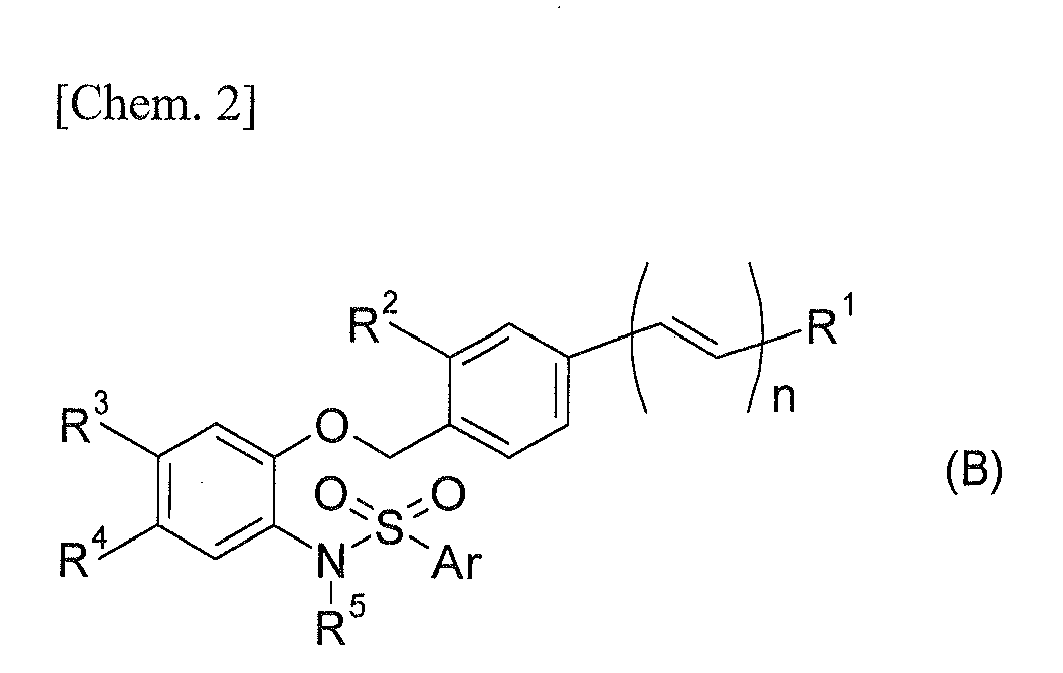
However, it has a basic structure different from that of the active ingredient represented by the formula (I) that is an active ingredient of the present invention, since R5 has no amide structure. - In addition, as the sulfonamide compound, for example, compounds mentioned in Patent Documents 5 to 8 have been reported.
Patent Document 5 discloses that a compound represented by the formula (C) including a wide variety of compounds has an inhibitory activity against the production of an amyloid β protein, and is useful for treating or preventing Alzheimer's disease, or the like.
However, there is no description on an EP1 receptor antagonistic activity of the compound, and also no specific disclosure of the compound (II) of the present invention. - Moreover, Patent Document 6 discloses that a compound represented by the formula (D) including a wide variety of compounds has farnesoid-X receptor (FXR) antagonistic activity, and is useful for treating diseases related to cholesterol abnormality, obesity, diabetes, or the like.
[Chem. 4] B1-L1-A1-L2-B2 (D)
(for the symbols in the formula, see the publication)
However, there is no description on an EP1 receptor antagonistic activity of the compound, and also no specific disclosure of the compound (II) of the present invention. - Furthermore, Patent Document 7 discloses that a compound represented by the formula (E) has orexin receptor antagonistic activity, and is useful for treating sleep disorders, stress-related disorders, or the like.

However, there is no description on an EP1 receptor antagonistic activity of the compound, and also no specific disclosure of the compound (II) of the present invention. - Furthermore, Patent Document 8 discloses that a compound represented by the formula (F) has diacylglycerol acyl transferase (DGAT) inhibitory activity, and is useful for treating or preventing obesity, hyperlipidemia, diabetes, or the like.

However, there is no description on an EP1 receptor antagonistic activity of the compound, and also no specific disclosure of the compound (II) of the present invention. - In addition, methyl 4-({[N-[(4-fluorophenyl)sulfonyl]-N-(2-methoxyphenyl)glycyl]amino}methyl)benzoate (Registry Number: 851172-09-3; for example, Catalogue name: Aurora Screening Library, Order No. kend-0100022), and N2-[(4-chlorophenyl)sulfonyl]-N2-(2,5-difluorophenyl)-N-[4-(1,2,3-thiadiazol-4-yl)benzyl]-D-alaninamide (Patent Document 5, Example 635) having amyloid β protein-production inhibitory activity have been known.
However, there are no reports on the EP 1 receptor antagonistic activity of these compounds. -
- [Non-Patent Document 1] "Neurourology and Urodynamics", (England), 2002, Vol. 21, p. 167-78
- [Non-Patent Document 2] "Urological Research", (USA), 1990, Vol. 18, No. 5, p. 349-52
- [Non-Patent Document 3] "The Journal of Urology", (USA), June 1995, Vol. 153, No. 6, p. 2034-8
- [Non-Patent Document 4] "Journal of The Japanese Urological Association", February 2001, Vol. 92, No. 2, p. 304
- [Non-Patent Document 5] "The 89th Annual Meeting of The Japanese Urological Association", Kobe, 2001, MP-305
- [Non-Patent Document 6] "Anesthesiology", (USA), November 2002, Vol. 97, No. 5, p. 1254-62
- [Non-Patent Document 7] "Anesthesia and Analgesia", (USA), December 2002, Vol. 95, No. 6, p. 1708-12
- [Non-Patent Document 8] "Anesthesia and Analgesia", (USA), October 2001, Vol. 93, No. 4, p. 1012-7
- [Non-Patent Document 9] "Gastroenterology", January 2003, Vol. 124, No. 1, p. 18-25
- [Patent Document 1]
US2005/0020646 - [Patent Document 2]
WO00/069465 - [Patent Document 3]
WO98/027053 - [Patent Document 4]
WO02/072564 - [Patent Document 5]
WO 00/050391 - [Patent Document 6]
WO 02/020463 - [Patent Document 7]
WO 04/033418 - [Patent Document 8] Japanese Patent Application Publication No.
2005-206492 - As described above, the conventional remedy for a lower urinary tract symptom are not satisfactory in the points of efficacy, safety, or the like, and thus there is a strong need of a very effective and safe remedy for a lower urinary tract symptom.
- As described above, an EP1 receptor antagonist is expected to be a very safe remedy for a lower urinary tract symptom with few side effects such as dry mouth and urinary retention. Therefore, the present inventors have studied extensively on a compound having an EP1 receptor antagonistic activity, aiming at providing a compound that is useful for the treatment of a lower urinary tract symptom, or the like. As a result, they have found that a compound represented by the formula (I) as an active ingredient of the present invention has a potent EP1 receptor antagonistic activity, thereby completing the present invention.
- That is, the present invention relates to the followings.
- [1] An EP1 receptor antagonist comprising, as an active ingredient, a sulfonamide compound represented by the formula (I) or a pharmaceutically acceptable salt thereof.

- Ring A: a benzene ring, a cycloalkane ring, or an aromatic hetero ring,
- L1: a single bond or lower alkylene,
- L2: lower alkylene,
- R1 to R4: the same as or different from each other, each representing R0, halogen, halogeno-lower alkyl, -OR0, -O-halogeno-lower alkyl, -S(O)n-lower alkyl, -CN, -NO2, nitrogen-containing heterocyclic group, cycloalkyl, -NH-CO-lower alkyl, -NH-CO-N(R00)2, -NH-CO-nitrogen-containing heterocyclic group, -CO2R0, -CON(R0)2, -CO-lower alkyl, -lower alkylene-OR0, -lower alkylene-CO2R0, aryl which may be substituted, heteroaryl which may be substituted, -O-aryl which may be substituted, -O-benzyl, or -O-heteroaryl which may be substituted, or
- when R1 and R2, and R3 and R4 are each positioned on the adjacent carbon atoms of a benzene ring or a ring A, they may be taken together with a ring atom to which they bond to form a 5- to 7-membered cycloalkene ring, a benzene ring, or a hetero ring which may be substituted with a group selected from the following G1 group,
- Group G1: lower alkyl, oxo, -OR0, -lower alkylene-OR0, and -CO-lower alkyl,
- R0: the same as or different from each other, each representing H or lower alkyl,
- R00: H or lower alkyl which may be substituted with -OR0,
- n: 0, 1, or 2,
- RA: R0,
- RB: R0, -lower alkylene-aryl which may be substituted, -lower alkylene-heteroaryl which may be substituted, -lower alkylene-O-aryl which may be substituted, or -lower alkylene-O-heteroaryl which may be substituted, or
- RA and RB may be taken together with a nitrogen atom to which they bonded to form a nitrogen-containing hetero ring. The same shall apply hereinafter.]
- [2] The EP receptor antagonist as described in [1], wherein RA is H, and RB is -lower alkylene-aryl which may be substituted, -lower alkylene-heteroaryl which may be substituted, -lower alkylene-O-aryl which may be substituted, or -lower alkylene-O-heteroaryl which may be substituted.
- [3] A sulfonamide compound represented by the formula (II) or a pharmaceutically acceptable salt thereof.

- Ring A: a benzene ring, a cycloalkane ring, or an aromatic hetero ring,
- L1: a single bond or lower alkylene,
- L2: lower alkylene,
- R1 to R4: the same as or different from each other, each representing R0, halogen, halogeno-lower alkyl, -OR0, -O-halogeno-lower alkyl, -S(O)n-lower alkyl, -CN, -NO2, nitrogen-containing heterocyclic group, cycloalkyl, -NH-CO-lower alkyl, -NH-CO-N(R00)2, -NH-CO-nitrogen-containing heterocyclic group, -CO2R0, -CON(R0)2, -CO-lower alkyl, -lower alkylene-OR0, -lower alkylene-CO2R0, aryl which may be substituted, heteroaryl which may be substituted, -O-aryl which may be substituted, -O-benzyl, or -O-heteroaryl which may be substituted, or
- when R1 and R2, and R3 and R4 are each positioned on the adjacent carbon atoms of a benzene ring or a ring A, they may be taken together with a ring atom to which they bond to form a 5- to 7-membered cycloalkene ring, a benzene ring, or a hetero ring which may be substituted with a group selected from the following G1 group,
- Group G1: lower alkyl, oxo, -OR0, -lower alkylene-OR0, and -CO-lower alkyl,
- R0: the same as or different from each other, each representing H or lower alkyl,
- R00: H or lower alkyl which may be substituted with -OR0,
- n: 0, 1, or 2,
- L3: lower alkylene,
- X: a single bond or -O-,
- Ring B: a benzene ring or an aromatic hetero ring,
- R5 and R6: the same as or different from each other, each representing R0, halogen, halogeno-lower alkyl, -OR0, -O-halogeno-lower alkyl, -CN, or -NO2,
- Y: a single bond, lower alkylene, lower alkenylene, or -O-lower alkylene-,
- Z: -CO2H or a biological equivalent, -CONR7R8, or a nitrogen-containing heterocyclic group which may be substituted with a group selected from the G1 group,
- R7 and R8: the same as or different from each other, each representing H or lower alkyl which may be substituted with a group selected from the following G2 group, and
- Group G2: -OR0, -N(R0)2, -CO2R0, and a nitrogen-containing heterocyclic group,
- provided that methyl 4-({[N-[(4-fluorophenyl)sulfonyl]-N-(2-methoxyphenyl)glycyl]amino}methyl)benzoate and N2-[(4-chlorophenyl)sulfonyl]-N2-(2,5-difluorophenyl)-N-[4-(1,2,3-thiadiazol-4-yl)benzyl]-D-alaninamide are excluded. The same shall apply hereinafter.]
- [4] The compound or a pharmaceutically acceptable salt thereof as described in [3], wherein L1 is a single bond.
- [5] The compound or a pharmaceutically acceptable salt thereof as described in [4], wherein the ring A is a benzene ring.
- [6] The compound or a pharmaceutically acceptable salt thereof as described in [5], wherein X is a single bond.
- [7] The compound or a pharmaceutically acceptable salt thereof as described in [6], wherein L2 and L3 are both methylene.
- [8] The compound or a pharmaceutically acceptable salt thereof as described in [7], wherein Z is -CO2H or a biological equivalent.
- [9] A sulfonamide compound represented by the formula (II-A) or a pharmaceutically acceptable salt thereof.

- R10 to R12: the same as or different from each other, each representing halogen, lower alkyl, halogeno-lower alkyl, -OR0, -O-halogeno-lower alkyl, or -CN,
- R13: R0, halogen, halogeno-lower alkyl, -OR0, -O-halogeno-lower alkyl, or -CN,
- Ring B: a benzene ring or an aromatic hetero ring,
- R14: R0, halogen, or -OR0,
- R0: the same as or different from each other, each representing H or lower alkyl,
- Y1: a single bond, lower alkylene, lower alkenylene, or -O-lower alkylene-, and
- Z1: -CO2H or a biological equivalent. The same shall apply hereinafter]
- [10] The compound or a pharmaceutically acceptable salt thereof as described in [3], which is selected from the group consisting of
4-[({N-(3-chloro-2-methylphenyl)-N-[(4-methylphenyl)sulfonyl]glycyl}amino)methyl]benzoic acid,
3-[({N-(3-chloro-2-methylphenyl)-N-[(4-methylphenyl)sulfonyl]glycyl}amino)methyl]benzoic acid,
3-[({N-(3-chloro-2-methylphenyl)-N-[(4-chlorophenyl)sulfonyl]glycyl}amino)methyl]benzoic acid,
3-[({N-(3-chloro-2-methylphenyl)-N-[(4-methylphenyl)sulfonyl]glycyl}amino)methyl]phenoxyacetic acid,
4-[({N-(3-chloro-2-methylphenyl)-N-[(4-methylphenyl)sulfonyl]glycylamino)methyl]-N-(methylsulfonyl)benzamide,
3-[({N-(3-chloro-2-methylphenyl)-N-[(4-cyanophenyl)sulfonyl]glycyl}amino)methyl]benzoic acid,
3-{[(N-(3-chloro-2-methylphenyl)-N-{[4-(trifluoromethyl)phenyl]sulfonyl}glycyl)amino]methyl}benzoic acid,
4-[({N-(3-chloro-2-methylphenyl)-N-[(4-methylphenyl)sulfonyl]glycyl}amino)methyl]-2-methoxy-N-(methylsulfonyl)benzamide,
3-[({N-(2,3-dichlorophenyl)-N-[(4-methylphenyl)sulfonyl]glycyl}amino)methyl]benzoic acid,
3-[({N-(3-chloro-2-methoxyphenyl)-N-[(4-methylphenyl)sulfonyl]glycyl}amino)methyl]benzoic acid,
3-[({N-(3-bromo-2-methylphenyl)-N-[(4-methylphenyl)sulfonyl]glycyl}amino)methyl]benzoic acid,
3-[({N-(3-chloro-2-methylphenyl)-N-[(4-ethylphenyl)sulfonyl]glycyl}amino)methyl]benzoic acid,
3-[({N-(3-chloro-2-ethylphenyl)-N-[(4-methylphenyl)sulfonyl]glycyl}amino)methyl]benzoic acid,
3-[({N-(3-chloro-2-methylphenyl)-N-[(4-methylphenyl)sulfonyl]glycyl}amino)methyl]cinnamic acid,
3-{3-[({N-(3-chloro-2-methylphenyl)-N-[(4-methylphenyl)sulfonyl]glycyl}amino)methyl]phenyl}propionic acid,
5-[({N-(3-chloro-2-methylphenyl)-N-[(4-methylphenyl)sulfonyl]glycyl}amino)methyl]thiophene-3-carboxylic acid,
3-[({N-(3-chloro-2-ethylphenyl)-N-[(4-methylphenyl)sulfonyl]glycyl}amino)methyl]cinnamic acid,
3-{[(N-(3-chloro-2-methylphenyl)-N-{[4-(trifluoromethyl)phenyl]sulfonyl}glycyl)amino]methyl}cinnamic acid,
3-[({N-(3-chloro-2-methylphenyl)-N-[(4-chlorophenyl)sulfonyl]glycyl}amino)methyl]cinnamic acid,
3-(3-{[(N-(3-chloro-2-methylphenyl)-N-{[4-(trifluoromethyl)phenyl]sulfonyl}glycyl)amino]methyl}phenyl)propionic acid,
3-[({N-(3-chloro-2-methylphenyl)-N-[(2-fluoro-4-methylphenyl)sulfonyl]glycyl}amino)methyl]benzoic acid,
2-[({N-(3-chloro-2-methylphenyl)-N-[(4-methylphenyl)sulfonyl]glycyl}amino)methyl]-1,3-oxazole-4-carboxylic acid,
4-[({N-(3-chloro-2-methylphenyl)-N-[(4-methylphenyl)sulfonyl]glycyl}amino)methyl]thiophene-2-carboxylic acid,
(2S)-2-{3-[({N-(3-chloro-2-methylphenyl)-N-[(4-methylphenyl)sulfonyl]glycyl}amino)methyl]phenoxy}propionic acid, and
(2R)-2-{3-[({N-(3-chloro-2-methylphenyl)-N-[(4-methylphenyl)sulfonyl]glycyl}amino)methyl]phenoxy}propionic acid. - [11] A pharmaceutical composition comprising the compound or a pharmaceutically acceptable salt thereof described in [3] as an active ingredient.
- [12] The pharmaceutical composition as described in [11], which is an EP1 receptor antagonist.
- [13] The pharmaceutical composition as described in [11], which is a therapeutic agent for a lower urinary tract symptom.
- [14] The pharmaceutical composition as described in [13], wherein the disease leading to a lower urinary tract symptom is overactive bladder, benign prostatic hyperplasia, bladder neck contracture, cystitis, or prostatitis.
- [15] A use of the compound or a pharmaceutically acceptable salt thereof as described in [3], for the manufacture of an agent for treating a lower urinary tract symptom.
- [16] The use as described in [15], wherein the disease leading to a lower urinary tract symptom is overactive bladder, benign prostatic hyperplasia, bladder neck contracture, cystitis, or prostatitis.
- [17] A method for treating a lower urinary tract symptom, comprising administering a therapeutically effective amount of the compound or a pharmaceutically acceptable salt thereof as described in [3] to a patient.
- [18] The method as described in [17], wherein the disease leading to a lower urinary tract symptom is overactive bladder, benign prostatic hyperplasia, bladder neck contracture, cystitis, or prostatitis.
The present invention further relates to the followings. - [19] An EP1 receptor antagonist comprising, an as an active ingredient, a sulfonamide derivative or a pharmaceutically acceptable salt thereof represented by the formula (I-A).

- Ring A: a benzene ring, a cycloalkane ring, or an aromatic hetero ring,
- L1: a single bond or lower alkylene,
- L2: lower alkylene,
- R1 to R4: the same as or different from each other, each representing H, halogen, lower alkyl, halogeno-lower alkyl, -OR0, -O-halogeno-lower alkyl, -CN, -NO2, -CO2R0, -CO-lower alkyl, -lower alkylene-OR0, -lower alkylene-CO2R0, aryl which may be substituted, heteroaryl which may be substituted, -O-aryl which may be substituted, -O-benzyl, or -O-heteroaryl which may be substituted, or
- if R1 and R2, and R3 and R4 are each adjacently positioned on a benzene ring or a ring A, they may be taken together with a carbon atom on the ring to which they are bonded, so as to form a 5- to 7-membered cycloalkene ring or a hetero ring which may be substituted with a group selected from the following G1 group,
- Group G1: lower alkyl and oxo,
- R0: H or lower alkyl,
- RA: H or lower alkyl,
- RB: H, lower alkyl, -lower alkylene-aryl which may be substituted, -lower alkylene-heteroaryl which may be substituted, -lower alkylene-O-aryl which may be substituted, or -lower alkylene-O-heteroaryl which may be substituted, or
- RA and RB may be taken together with a nitrogen atom to which they bonded to form a nitrogen-containing hetero ring. The same shall apply hereinafter.]
- [20] A sulfonamide derivative represented by the formula (II-B) or a pharmaceutically acceptable salt thereof.
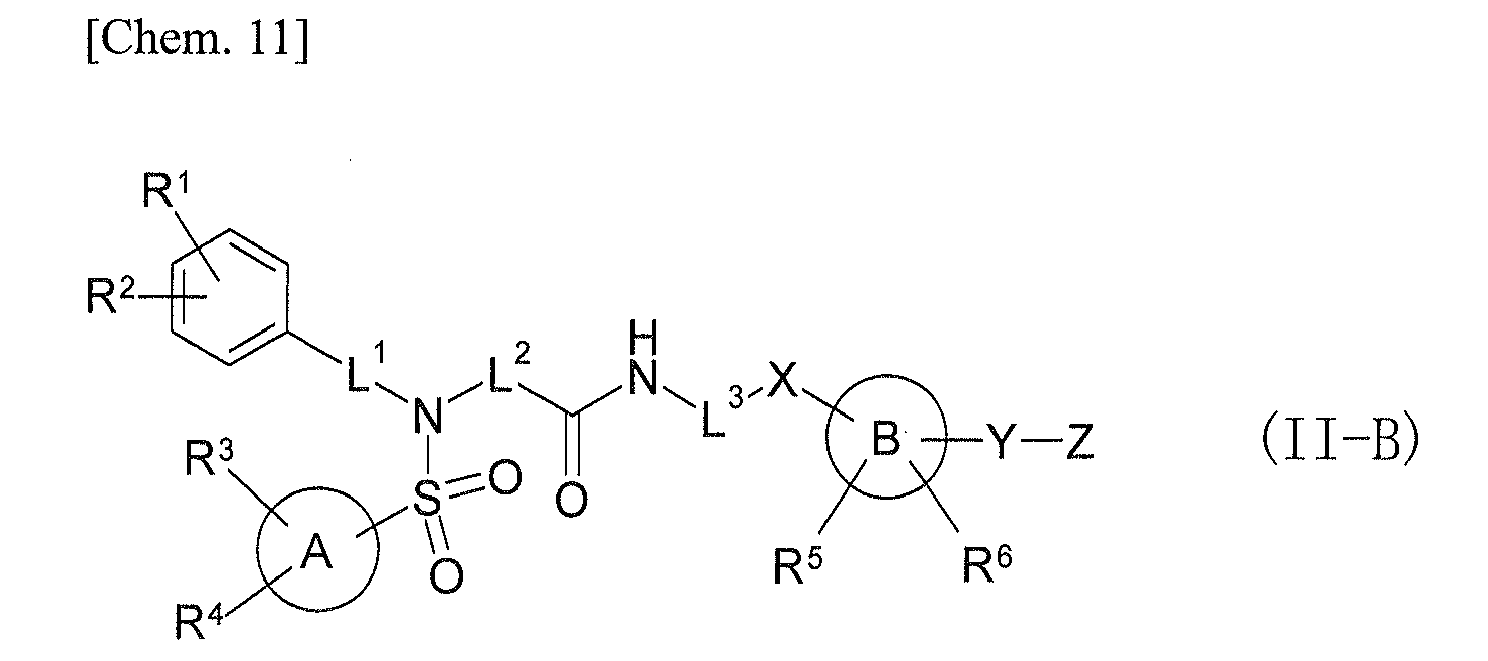
- Ring A: a benzene ring, a cycloalkane ring, or an aromatic hetero ring,
- L1: a single bond or lower alkylene,
- L2: lower alkylene,
- R1 to R4: the same as or different from each other, each representing H, halogen, lower alkyl, halogeno-lower alkyl, -OR0, -O-halogeno-lower alkyl, -CN, -NO2, -CO2R0, -CO-lower alkyl, -lower alkylene-OR0, -lower alkylene-CO2R0, aryl which may be substituted, heteroaryl which may be substituted, -O-aryl which may be substituted, -O-benzyl, or -O-heteroaryl which may be substituted, or
- if R1 and R2, and R3 and R4 are each adjacently positioned on a benzene ring or a ring A, they may be taken together with a carbon atom on the ring to which they are bonded, so as to form a 5- to 7-membered cycloalkene ring or a hetero ring which may be substituted with a group selected from the following G1 group,
- Group G1: lower alkyl and oxo,
- R0: H or lower alkyl,
- L3: lower alkylene,
- X: a single bond or -O-,
- B: a benzene ring or an aromatic hetero ring,
- R5 and R6: the same as or different from each other, each representing H, halogen, lower alkyl, halogeno-lower alkyl, -OR0, -O-halogeno-lower alkyl, -CN, or -NO2,
- Y: a single bond, lower alkylene, lower alkenylene, or -O-lower alkylene-,
- Z: -CO2R0, -CONR7R8, -CONH-SO2-R9, or a nitrogen-containing heterocyclic group which may be substituted with a group selected from the G1 group,
- R7 and R8: the same as or different from each other, each representing H or lower alkyl which may be substituted with a group selected from the following G2 group,
- Group G2: -OR0, -N(R0)2, and a nitrogen-containing heterocyclic group, and
- R9: lower alkyl which may be substituted with a group selected from -OR0 and -O-CO-lower alkyl,
- The compound represented by the formula (I) which is an active ingredient of the present invention or a pharmaceutically acceptable salt thereof has a potent EP1 receptor antagonistic activity, and accordingly, it is useful as a remedy for diseases associated with an EP 1 receptor, in particular, a lower urinary tract symptom.
- Hereinafter, the present invention will be described in more detail.
Since the compounds represented by the formula (II), the formula (II-A), the formula (I-A), and the formula (II-B) are included in the compound represented by the formula (I) that is an active ingredient of the present invention, these compounds may be sometimes collectively referred to as the "compound of the present invention".
In the specification, the term "lower" means a linear or branched hydrocarbon chain having 1 to 6 carbon atoms (hereinafter simply referred to as C1-6), unless otherwise specifically mentioned. - The "lower alkyl" means C1-6 alkyl. Specifically, examples thereof include methyl, ethyl, n-propyl, isopropyl, n-butyl, isobutyl, sec-butyl, tert-butyl, n-pentyl, and n-hexyl. It is preferably alkyl having 1 to 3 carbon atoms, and more preferably methyl, ethyl, or isopropyl.
The "lower alkylene" means a divalent group in which one hydrogen at any position of C1-6 alkyl is removed. Specifically, examples thereof include methylene, ethylene, methylmethylene, dimethylmethylene, and trimethylene. Preferred is methylene, ethylene, or trimethylene, and more preferred is methylene or ethylene.
The "lower alkenylene" means C2-6 lower alkylene having double bonds at any position. Specifically, examples thereof include vinylene, propenylene, 1-butenylene, and 2-butenylene. Preferred is vinylene. - The "cycloalkane ring" means a C3-10 saturated hydrocarbon ring, or it may form a bridged ring. Specifically, examples thereof include cyclopropane, cyclobutane, cyclopentane, cyclohexane, cycloheptane, cyclooctane, adamantane, and norbornane. Preferred is cyclopentane or cyclohexane. The "cycloalkyl" means a ring group consisting of the cycloalkane ring.
The "5- to 7-membered cycloalkene ring" means a C5-7 hydrocarbon ring having one double bond. Specifically, examples thereof include cyclopentene, cyclohexene, and cycloheptene. Preferred is cyclopentene or cyclohexene, and more preferred is cyclopentene. - The "halogen" means F, Cl, Br, and I. Preferred is F, Cl, or Br.
The "halogeno-lower alkyl" means the "lower alkyl" as defined above in which any one or more hydrogen atoms are substituted with the same or different one or more "halogen" as defined above. Specifically, examples thereof include fluoromethyl, difluoromethyl, trifluoromethyl, 2,2,2-trifluoroethyl, and pentafluoroethyl. Preferred is trifluoromethyl.
The "aryl" is a C6-14 mono-, bi-, and tricyclic aromatic hydrocarbon ring group, and examples thereof include a ring group that is condensed with a C5-7 cyclolalkene ring group. However, if the C5-7 cycloalkene ring is condensed, a bonding arm is positioned on the aromatic ring. Specifically, examples thereof include phenyl, naphthyl, indanyl, tetrahydronaphthyl, and fluorenyl. Preferred is phenyl. - The "hetero ring" is a 4- to 12-membered, mono- or bicyclic saturated or unsaturated ring containing 1 to 4 hetero atoms selected from O, S and N. Examples of the unsaturated ring include an aromatic hetero ring. Furthermore, the ring atom, S or N, may be oxidized to form an oxide or a dioxide. Specifically, examples of the monocyclic ring include azetidine, pyrrolidine, piperidine, piperazine, morpholine, thiomorpholine, azepane, diazepane, oxetane, tetrahydrofuran, tetrahydropyran, 1,3-dioxole, 2,3-dihydro-1,4-dioxine, pyrazolidine, furan, thiophene, pyrrole, imidazole, pyrazole, thiazole, oxazole, isothiazole, isoxazole, triazole, tetrazole, thiadiazole, oxadiazole, pyridine, pyrazine, pyrimidine, pyridazine, triazine, and 2,3-dihydro-1,3-oxazole, and examples of the bicyclic ring include 1,3-benzodioxole, 2,3-dihydro-1,4-benzodioxine, indole, benzofuran, benzothiophene, benzoxazole, benzisoxazole, benzothiazole, benzisothiazole, benzimidazole, indazole, benzotriazole, quinoline, isoquinoline, 1,2,3,4-tetrahydroquinoline, 1,2,3,4-tetrahydroisoquinoline, quinoxaline, quinazoline, and phthalazine. Preferred is a monocyclic hetero ring. The "heterocyclic group" means a ring group consisting of the above-mentioned hetero ring.
- The "aromatic hetero ring" means, among the above-mentioned "hetero rings", a ring selected from i) a monocyclic, 5- or 6-membered aromatic hetero ring containing 1 to 4 hetero atoms selected from O, S and N, ii) a bicyclic hetero ring in which the aromatic hetero ring in the above-described i) is condensed (provided that the two aromatic hetero rings to be condensed may be the same as or different from each other), and iii) a bicyclic hetero ring in which the aromatic hetero ring in the above-described i) and a benzene ring or 5- to 7-membered cycloalkane is fused. Specifically, examples thereof include i) pyridine, pyrazine, pyrimidine, pyridazine, triazine, pyrrole, furan, thiophene, imidazole, pyrazole, triazole, tetrazole, oxazole, isoxazole, oxadiazole, thiazole, isothiazole, and thiadiazole, ii) naphthylidine, imidazopyridine, pyrrolopyrimidine, thienopyridine, and thienopyrroline, and iii) benzimidazole, benzofuran, benzothiophene, benzothiadiazole, benzothiazole, benzisothiazole, benzoxazole, benzisoxazole, quinoline, isoquinoline, 5,6,7,8-tetrahydroquinoline, 5,6,7,8-tetrahydroisoquinoline, quinazoline, quinoxaline, phthalazine, indole, isoindole, tetrahydrobenzimidazole, chromane, and indazole. Preferred is the above-described the i) or iii), and more preferred is i) the monocyclic, 5 or 6-membered aromatic hetero ring. The "heteroaryl" means a ring group consisting of the above-mentioned aromatic hetero ring.
- The "nitrogen-containing hetero ring" means a hetero ring containing at least one N as a ring-constituting element in the "hetero ring". Specifically, examples thereof include pyrrolidine, piperidine, piperazine, morpholine, thiomorpholine, azepane, diazepane, 1,2,3,4-tetrahydroquinoline, 1,2,3,4-tetrahydroisoquinoline, pyridine, pyrazine, pyrimidine, pyridazine, triazine, pyrrole, imidazole, pyrazole, triazole, tetrazole, oxazole, isoxazole, oxadiazole, thiazole, isothiazole, thiadiazole, benzimidazole, benzothiadiazole, benzothiazole, benzisothiazole, benzoxazole, benzisoxazole, quinoline, isoquinoline, 5,6,7,8-tetrahydroquinoline, 5,6,7,8-tetrahydroisoquinoline, quinazoline, quinoxaline, phthalazine, indole, isoindole, tetrahydrobenzimidazole, and indazole. The "nitrogen-containing heterocyclic group" means a ring group consisting of the above-mentioned nitrogen-containing hetero ring.
- The "-CO2H or a biological equivalent" is a carboxylic acid, or the atom or moiety having an electrically or sterically equivalent configuration and having a common biological property thereto. These include a so-called carboxylic acid bioisostere that is usually used by a skilled person in the art, a protected carboxyl group, and a prodrug of a carboxylic acid, including, for example, a carboxylic acid, a carboxylic acid ester, hydroxamic acid (-CO-NH-OH), acylcyanamide (-CO-NH-CN), acylsulfonamide (-CO-NH-SO2-R or -SO2-NH-CO-R), or tetrazole, 5-oxo-1,2,4-oxadiazole, 3-hydroxyisoxazole, 5-oxo-1,2,4-thiadiazole, 3-hydroxy-1,2,5-thiadiazole, and 3-hydroxy-γ-pyrone. Preferred is carboxylic acid, acyl sulfonamide, tetrazole, or 5-oxo-1,2,4-oxadiazole, and more preferred is carboxylic acid or acyl sulfonamide.
In addition, examples of the R in acyl sulfonamide (-CO-NH-SO2-R or -SO2-NH-CO-R) include lower alkyl which may be substituted with a substituent selected from the group consisting of -OH, -O-lower alkyl, and -O-CO-lower alkyl. - The expression "may be substituted" means that "is not substituted", or "is substituted with the same or different 1 to 5 substituents, preferably 1 to 2 substituents".
Furthermore, in a case where a plurality of the groups exist as in R0 in -N(R0)2, or the like, each group (R0 in this case) may be the same as or different from each other. - Examples of the substituent that is acceptable for the "aryl" and the "heteroaryl" in the "aryl which may be substituted", the "heteroaryl which may be substituted", the "-O-aryl which may be substituted", and the "-O-heteroaryl which may be substituted" of R1 to R4 include a group selected from the following Group G3.
Group G3: halogen, lower alkyl, halogeno-lower alkyl, -OR0, -O-halogeno-lower alkyl, -NO2, and -CN.
Examples of the substituent that is acceptable for the "aryl" and the "heteroaryl" in the "-lower alkylene-aryl which may be substituted", the "-lower alkylene-heteroaryl which may be substituted", the "-lower alkylene-O-aryl which may be substituted", and the "-lower alkylene-O-heteroaryl which may be substituted" of RB include a group selected from the Group G3, -O-benzyl, -N(R0)2, -N(R0)-CO-lower alkyl, -N(R0)-SO2-lower alkyl, -S(O)n-lower alkyl, -SO2-N(R0)2, phenyl which may be substituted with a group selected from the Group G3, -lower alkylene-OR0, or -Y-Z. - Preferred embodiments in the active ingredient (I) of the present invention are as follows.
- (1-a) L1 is preferably a single bond.
- (2-a) L2 is preferably methylene.
- (3-a) Ring A is preferably a benzene ring.
- (4-a) R1 and R2 are preferably the same as or different from each other, and are each halogen, lower alkyl, halogeno-lower alkyl, -OR0, -O-halogeno-lower alkyl, -CN, or -NO2, more preferably, halogen, lower alkyl, or -OR0, and even more preferably, Cl, Br, methyl, ethyl, or methoxy. Furthermore, a position to be substituted on a benzene ring of R1 and R2, preferably, a 2- or 3-position, relative to a position to which L1 is bonded to, is substituted with the same or different groups as described above.
- (5-a) R3 and R4 are preferably the same as or different from each other, and are each R0, halogen, -CN, halogeno-lower alkyl, -CO-lower alkyl, or -lower alkylene-OR0, more preferably, R0, halogen, -CN, or halogeno-lower alkyl, and even more preferably, H, methyl, ethyl, Br, Cl, F, -CN, or trifluoromethyl.
Even more preferably, either of R3 and R4 is H or F, and the other is the group as described above, which is other than H and F. - (6-a) RA is preferably H.
- (7-a) RB is preferably -lower alkylene-aryl which may be substituted, or -lower alkylene-heteroaryl which may be substituted, and more preferably, -methylene-aryl which may be substituted, or -methylene-heteroaryl which may be substituted. Here, the aryl is preferably phenyl, and the heteroaryl is preferably thienyl, furyl, pyridyl, or pyrimidinyl. Furthermore, the aryl which may be substituted and the heteroaryl which may be substituted is preferably aryl and heteroaryl that are each not substituted, or aryl and heteroaryl that are each substituted with a group selected from the group consisting of halogen, -OR0, -O-halogeno-lower alkyl, -CN, -lower alkylene-OR0, -N(R0)CO-lower alkyl, and -Y-Z, and more preferably, aryl and heteroaryl that are each not substituted, or aryl and heteroaryl that are each substituted with a group selected from the group consisting of -OR0 and -Y-Z.
- The preferred embodiments in the compound (II) of the present invention are as follows.
- (1-b) L1 is preferably a single bond.
- (2-b) L2 is preferably methylene.
- (3-b) Ring A is preferably a benzene ring.
- (4-b) R1 and R2 are preferably the same as or different from each other, and are each halogen, lower alkyl, halogeno-lower alkyl, -OR0, -O-halogeno-lower alkyl, or -CN, more preferably, halogen, lower alkyl, or -OR0, and even more preferably, Cl, Br, methyl, ethyl, or methoxy. Furthermore, a position to be substituted on a benzene ring of R1 and R2, preferably, a 2- or 3-position, relative to a position to which L1 is bonded to, is substituted with the same or different groups as described above.
- (5-b) R3 and R4 are preferably the same as or different from each other, and are each R0, halogen, halogeno-lower alkyl, -OR0, -O-halogeno-lower alkyl, or -CN, more preferably, R0, halogen, halogeno-lower alkyl, or -CN, and even more preferably, H, methyl, ethyl, Br, Cl, F, -CN, or trifluoromethyl.
Even more preferably, either of R3 and R4 is H or F, and the other is the group as described above, which is other than H and F. - (6-b) L3 is preferably methylene or ethylene, and more preferably, methylene.
- (7-b) X is preferably a single bond.
- (8-b) Ring B is preferably a benzene ring, a thiophene ring, a furan ring, an oxazole ring, a pyridine ring, or a pyrimidine ring, and more preferably, a benzene ring, a thiophene ring, or an oxazole ring.
- (9-b) R5 and R6 are preferably the same as or different from each other, and are each R0, halogen, or -OR0, more preferably H or halogen, and even more preferably, both of R5 and R6 are H, or either of R5 and R6 is H, and the other is F.
- (10-b) Y is preferably i) a single bond, ethylene, vinylene, propenylene, -O-methylene, or -O-methylmethylene in a case where Z is -CO2H or a biological equivalent, or -CONR7R8; or ii) a single bond in a case where Z is a nitrogen-containing heterocyclic group which may be substituted with a substituent selected from the group G1.
- (11-b) Z is preferably -CO2H or a biological equivalent, more preferably, -CO2H, acyl sulfonamide, tetrazole, or 5-oxo-1,2,4-oxadiazole, and even more preferably, -CO2H or -CONH-SO2Me.
- Moreover, the preferred embodiments in the compound (II-B) of the present invention are as follows.
- (1) L1 is preferably a single bond.
- (2) L2 is preferably methylene.
- (3) Ring A is preferably a benzene ring.
- (4) R1 and R2 are preferably the same as or different from each other, and are each halogen, lower alkyl, halogeno-lower alkyl, -OR0, -O-halogeno-lower alkyl, -CN, or -NO2, and more preferably, halogen, lower alkyl, or -OR0. Furthermore, a position to be substituted on a benzene ring of R1 and R2, preferably, an ortho- or meta-position, relative to a position to which L1 is bonded to, is substituted with the same or different groups as described above.
- (5) R3 and R4 are preferably the same as or different from each other, and are each H, lower alkyl, halogen, -CN, halogeno-lower alkyl, -CO-lower alkyl, or -lower alkylene-OR0, and more preferably, methyl, ethyl, Br, Cl, -CN, trifluoromethyl, acetyl, or hydroxymethyl. Even more preferably, either of R3 and R4 is H, and the other is the group as described above, which is other than H.
- (6) L3 is preferably methylene or ethylene, and more preferably methylene.
- (7) X is preferably a single bond.
- (8) Ring B is preferably a benzene ring, a thiophene ring, or a pyridine ring, and more preferably, a benzene ring.
- (9) R5 and R6 are preferably the same as or different from each other, and are each H or -O-lower alkyl, and more preferably, both of R5 and R6 are H, or either of R5 and R6 is H, and the other is -O-lower alkyl.
- (10) Y is preferably i) a single bond, ethylene, vinylene or -O-methylene in a case where Z is -CO2R0, -CONR7R8, or -CONH-SO2-R9; or ii) a single bond in a case where Z is a nitrogen-containing heterocyclic group which may be substituted with a substituent selected from the group G1.
- (11) Z is preferably CO2H, -CONH-(CH2)2OH, -CONH-(CH2)2NMe2, -CONH-SO2Me, or -CONH-SO2-(CH2)3OH.
A particularly preferred embodiment of the active ingredient (II) of the present invention is a compound obtained by the combination of each preferable group as described in (1) to (11) as above. - The compound of the present invention may sometimes exist in the form of a geometrical isomer or a tautomer, depending on the kind of the substituents. The present invention includes an isolated form and a mixture of these isomers.
The compound of the present invention may have asymmetric carbons, and correspondingly, exist in the form of optical isomers such as an (R)-form and an (S)-form. The compound of the present invention includes both of a mixture and an isolated form of these optical isomers. - Furthermore, the compound of the present invention includes a "pharmaceutically acceptable prodrugs". The "pharmaceutically acceptable prodrug" is a compound having a group which is converted into NH2, OH, CO2H, or the like of the present invention by solvolysis or under a physiological condition. Examples of the group capable of forming a prodrug include the groups as described in "Progress in Medicine", Life Science Medical, vol. 5, 2157-2161 (1985), and "Iyakuhin no Kaihatsu (Development of Drugs) (Hirokawa Shoten, vol. 7), Bunshi Sekkei (Molecular Design)", 163-198 (1990).
- The compound of the present invention may form a salt with an acid or a base, depending on the kind of substituents. These salts are the pharmaceutically acceptable salts, and specific examples thereof include acid addition salts with inorganic acids such as hydrochloric acid, hydrobromic acid, hydroiodic acid, sulfuric acid, nitric acid, and phosphoric acid; with organic acids such as formic acid, acetic acid, propionic acid, oxalic acid, malonic acid, succinic acid, fumaric acid, maleic acid, lactic acid, malic acid, tartaric acid, citric acid, methanesulfonic acid, ethanesulfonic acid, aspartic acid, and glutamic acid; with inorganic bases such as sodium, potassium, magnesium, calcium, and aluminum; and with organic bases such as methylamine, ethylamine, ethanolamine, lysine, and ornithine, and ammonium salts.
In addition, the present invention also includes various hydrates, solvates, and polymorphic substances of the compound or a salt thereof of the present invention. - The compound of the present invention and a pharmaceutically acceptable salt thereof can be prepared by applying various known synthetic methods, by the use of the characteristics based on their basic skeltons or the kind of the substituents. Further, depending on the kind of the functional groups, it is sometimes effective from the viewpoint of the preparation techniques to protect the functional group with an appropriate protecting group, or to replace it by a group which may be easily converted into the functional group, during the steps of from starting materials to intermediates. Examples of such a functional group include an amino group, a hydroxyl group, and a carboxyl group, and examples of such a protecting group include those as described in "Protective Groups in Organic Synthesis", edited by T.W. Greene and P.G.M. Wuts, (USA), 3rd edition, John Wiley & Sons, 1999, which may be optionally selected and used in response to the reaction conditions. By such a method, a desired compound can be obtained by introducing the protecting group to carry out the reaction, and then, if desired, removing the protecting group or converting it into a desired group.
In addition, a prodrug of the compound of the present invention can be prepared by introducing a specific group during the steps for from starting materials to intermediates, in a similar way to the aforementioned protecting groups, or by carrying out the reaction with the obtained compound of the present invention. The reaction may be carried out by employing a method known to a skilled person in the art, such as common esterification, amidation, and dehydration. - Hereinbelow, the representative production processes of the compounds of the present invention are described. Further, the production processes of the present invention are not limited to the examples as shown below.
-

- This step is a process for preparing the compound (I) of the present invention by reacting a compound (IV) with a compound (III) or a reactive derivative thereof. Examples of the reactive derivative include an acid halide (acid chloride, acid bromide or the like), an acid anhydride (mixed acid anhydrides obtained by the reaction with ethyl chlorocarbonate, benzyl chlorocarbonate, phenyl chlorocarbonate, p-toluenesulfonic acid, isovaleric acid or the like, or symmetric acid anhydrides), an active ester (an ester which may be prepared using a phenol which may be substituted with an electron-withdrawing group (e.g., a nitro group, a fluorine atom or the like), 1-hydroxybenzotriazole (HOBt), N-hydroxysuccinimide (HONSu) or the like), a lower alkyl ester, and an acid azide. These reactive derivatives can be produced by conventional methods. The reaction can be carried out using equimolar of the carboxylic acid compound (III) or a reactive derivative thereof and the compound (IV), or one of them in excess amount, from under cooling to heating in a reaction-inert solvent such as aromatic hydrocarbons, halogenated hydrocarbons, ethers, N,N-dimethylformamide (DMF), N,N-dimethylacetamide (DMA), N-methylpyrrolidone (NMP), ethyl acetate, and acetonitrile. Depending on the kind of the reactive derivatives, it is sometimes advantageous in advancing the reaction smoothly to carry out the reaction in the presence of a base (preferably, triethylamine, diisopropylethylamine, N-methylmorpholine, pyridine, 4-(N,N-dimethylamino)pyridine, or the like). Pyridine can also serve as a solvent.
When a free carboxylic acid is used, it is desirable to use a condensing agent (N,N'-dicyclohexylcarbodiimide (DCC), 1-[3-(dimethylamino)propyl]-3-ethylcarbodiimide (WSC), 1,1'-carbonyldiimidazole (CDI), N,N'-disuccinimidyl carbonate, a Bop reagent (manufactured by Aldrich , USA), 2-(1H-benzotriazol-1-yl)-1,1,3,3-tetramethyluronium tetrafluoroborate (TBTU), 2-(1H-benzotriazol-1-yl)-1,1,3,3-tetramethyluronium hexafluorophosphate (HBTU), diphenylphosphoric acid azide (DPPA), phosphorus oxychloride, phosphorus trichloride, triphenylphosphine/N-bromosuccinimide or the like), and if desired, an additive (for example, HONSu and HOBt). -

This step is a process for preparing the compound (I) of the present invention by alkylating a compound (VI) to a compound (V) with a leaving group. The leaving group represented by Lv2 may be any leaving group which is generally used in the nucleophilic substitution reaction, and, as for this, halogen such as chloro and bromo; sulfonyloxy such as methanesulfonyloxy, p-toluenesulfonyloxy, and trifluoromethanesulfonyloxy; sulfonyl such as lower alkylsulfonyl and arylsulfonyl; and the like may be suitably used. As the alkylation reaction of this step, the alkylation generally used by those skilled in the art may be employed. For example, this may be carried out from at room temperature to heat under reflux without solvent or in a reaction-inert solvent such as the aforementioned aromatic hydrocarbons such as benzene, toluene, and xylene, esters such as ethyl acetate, ethers such as diethyl ether, tetrahydrofuran (THF), and dioxane, halogenated hydrocarbons such as dichloromethane, 1,2-dichloroethane, and chloroform, DMF, DMA, NMP, dimethyl sulfoxide (DMSO), and acetonitrile, or in a solvent such as alcohols or the like.
Depending on the compounds, it is sometimes advantageous for smoothly advancing the reaction to carry out the reaction in the presence of an organic base (triethylamine, diisopropylethylamine, N-methylmorpholine, pyridine, 4-(N,N-dimethylamino)pyridine or the like is suitably used), or a metal salt base (potassium carbonate, cesium carbonate, sodium hydroxide, potassium hydroxide, sodium hydride, potassium tert-butoxide or the like is suitably used). -

This step is a process for preparing the compound (I) of the present invention by sulfonylating the compound (VII) by a compound (VIII). As the leaving group of Lv1, halogen such as chloro and bromo is suitably used. The reaction can be carried out, for example, by employing the sulfonylation condition described in the aforementioned "Protective Groups in Organic Synthesis". Specifically, the reaction can be carried out without a solvent, or in a solvent such as THF, methylene chloride, and acetonitrile, in the presence of a base such as triethylamine and pyridine if necessary, from under cooling to heat under reflux. -

This step is a process for preparing the compound (II-b) of the present invention in which Z is carboxyl, by hydrolysis of the compound (II-a) of the present invention in which Z is an ester. The hydrolysis reaction of this step can be carried out, for example, in accordance with the deprotection reaction described in the aforementioned "Protective Groups in Organic Synthesis". - In addition, some compounds represented by the formulae (I) and (II) can be prepared from the compounds of the present invention obtained by the aforementioned methods and variations thereof, or by any combination of well-known processes that can be usually employed by a skilled person in the art, such as alkylation, acylation, substitution reaction, oxidation, reduction, hydrolysis, and deprotection.
- The starting material compounds used in the preparation of the compounds of the present invention can be prepared, for example, by using the methods as described below, well-known methods, or variations thereof.
-

- This step is a process for preparing a compound (VI) by sulfonylating the compound (IX) by a compound (VIII). The sulfonylation of this step can be carried out in the same manner as the sulfonylation in Production Process 3. Second step
This step is a process for preparing a compound (XI) by alkylating the compound (VI) by a compound (X) containing a leaving group. The alkylation of this step can be carried out in the same manner as the alkylation in Production Process 2. Third step
This step is a process for preparing a compound (III) from a compound (XI) by hydrolysis. The hydrolysis reaction of this step can be carried out in the same manner as the hydrolysis reaction in Production Process 4. -

This step is a process for preparing a compound (V) by acylating the compound (IV) by a compound (XII) containing a leaving group. As the leaving group of Lv3, halogen such as chloro and bromo is suitably used. For example, the reaction can be carried out by employing the acylation condition described in the aforementioned "Protective Groups in Organic Synthesis". Specifically, it can be carried out without a solvent, or in a solvent such as THF, methylene chloride, and acetonitrile, in the presence of a base such as triethylamine and pyridine if necessary, from under cooling to heat under reflux. -

- The reaction products obtained by each of Production Processes can be isolated and purified as their free compounds, or salts or various solvates thereof, such as hydrates. The salts can be prepared after carrying out a conventional salt formation treatment.
The isolation and purification can be carried out by employing common chemical operations such as extraction, concentration, removal by distillation, crystallization, filtration, recrystallization, and various chromatography techniques.
Various isomers can be isolated by conventional method making use of the differences in physicochemical properties among the isomers. For example, the optical isomers can be separated by general optical resolutions, for example, by fractional crystallization, chromatography, or the like. In addition, the optical isomers can also be prepared from appropriate starting material compounds that are optically active. - The effects of the compounds of the present invention were confirmed by the following tests.
- HEK293 cells (American Type Culture Collection) that stably expressed rat EP1 receptors were dispensed onto a 96-well poly-D-lysine-coated plate (Product Name: Biocoat, PDL96W black/clear, Nippon Becton Dickinson) to a 2×10⁴ cells/well at the day before the experiment, and incubated overnight at 37°C under 5% carbon dioxide (CO2) in a culture medium containing 10% fetal bovine serum (FBS) (Product Name: DMEM, Invitrogen Corporation). The culture medium was replaced by a loading buffer (a washing solution containing a 4 µM fluorescent indicator (Product Name: Fluo3-AM, Tong Ren Tang Technologies Co. Ltd.):a Hank's balanced salt solution)(HBSS), 20 mM 2-[4-(2-hydroxyethyl)-1-piperazinyl]ethanesulfonic acid (HEPES)-sodium hydroxide (NaOH), 2.5 mM Probenecid, 0.1% bovine serum albumin (BSA)), and left to stand at room temperature for 3 hours, and the cells were washed using a plate washer in which a washing solution had been set up (Product Name: ELx405, BIO-TEK instrument Corporation). The compound that had been preliminarily dissolved and diluted in a washing solution was added thereto, and set up in a system for measuring a calcium (Ca) concentration in a cell (Product Name: FLIPR, Molecular Devices Corporation). After 5 minutes, PGE2 was added to a final concentration of 100 nM, and the change in Ca concentrations in cells was measured. A difference between a maximum value and a minimum value in Ca concentrations in cells was determined, and kept as measurement data. With a response upon addition of 100 nM PGE2 being set at 0%, and a response upon addition of a buffer being set at 100%, the concentration causing 50% inhibition was determined as an IC50 value.
The results are shown in the following Table 1. In the table, Pre represents Preparative Example No. as described later, and Ex represent Example No. as described later. -
[Table 1] Compound IC50 (nM) Pre1 16 Pre15 12 Ex7 1.6 Ex16 2.4 Ex20 1.4 Ex24 1.0 Ex26 2.5 Ex38 1.5 Ex40 0.72 Ex74 1.0 - A signal peptide (MKTIIALSYIFCLVFA: Sequence 1) and a FLAG sequence (DYKDDDDK: Sequence 2) were introduced at the N-terminus of a rat EP1 receptor, followed by subcloning into an expression vector (Product Name: pCEP4, Invitrogen Corporation). An HEK293EBNA cell (American Type Culture Collection) was transfected with the rat EP1 expression vector using a transfection regent (Product Name: Fugene-6, Roche-Diagnostics, K.K), and then cultured for 2 days in a medium containing 10% FBS (Product Name: DMEM, Invitrogen Corporation) at 37°C under 5% CO2. After culturing, the cells were recovered, treated with a cell lysate (20mM Tris(hydroxymethyl)aminomethane (Tris)buffer pH7.5, 5mM ethylene diaminetetraacetic acid(EDTA)), and ultracentrifuged (23,000 revolution, 25 minutes × 2) for a rough preparation of a membrane sample.
A reaction solution containing the prepared membrane sample (15µg) and 3H-PGE2 (150 µl, composition: 10mM 2-(N-morpholino)ethanesulfonic acid (MES)/potassium hydroxide(KOH) pH6.0, 1 mM EDTA, 10mM magnesium chloride (MgCl2), 0.02% 3-[(3-Cholamidopropyl)dimethylammonio] propanesulfonate (CHAPS)) was incubated at room temperature for 1 hour. The reaction was terminated with an ice-cooled buffer, and suction-filtered under reduced pressure to trap the bound 3H-PGE2 to a glass fiber filter (Product Name: UNIFILTER-96, GF/B, PerkinElmer Japan Co., Ltd.), so as to measure the radioactivity of the binding with a microplate scintillation counter (Product Name: TopCount, Packard) using Microscinti (Product Name: Microscinti 20, PerkElmer Japan Co., Ltd.).
The dissociation constant (Kd) and the maximum binding (Bmax) were determined using Scatchard plot (Annals of the New York Academy of Science, US, volume 51, page 660, 1949). Nonspecific bindings were determined as bindings in the presence of an excessive amount (2.5 µM) of label-free PGE2. The assessment of inhibitory effect on 3H-PGE2 binding by the compound was carried out by adding 2.5 nM 3H-PGE2 and the compound.
The inhibition constant Ki(nM) for each compound was obtained using the following formula:
wherein [C] represents the concentration of 3H-PGE2 employed in a reaction system.
The results are shown in Table 2. -
[Table 2] Compound Ki (nM) Pre1 0.68 Ex7 0.57 Ex16 1.00 Ex20 0.74 Ex38 0.48 Ex40 0.33 Ex74 0.35 - The anti-pollakiuria action of the compound was assessed using a pathological model. It has been reported that applying acetic acid to rat urinary bladder damages the bladder mucosa, thereby activating the nociceptive stimulus transmittance afferent (The Journal of Neuroscience, US, 12 (12): p.4878-89). Since urinary frequency is induced by treating intra-bladder with acetic acid, it is possible to assess remedial effects of the compound against the symptoms.
For the experiment, male Wistar rats (Charles River Laboratories) weighing between 200 and 450g were used. The urinary bladder was exteriorized by median abdominal incision under pentobarbital anesthesia (50mg/kg, i.p.), and residual urine in the urinary bladder was removed with a syringe equipped with a 27G needle. Thereafter, 0.5 to 0.7 mL of a 1% acetic acid solution was injected into the bladder and the wound was closed. 2 days after, further experiment was carried out. Rats were placed in metabolic cages for acclimation for 1 hour, and then the test drug was injected. Immediately thereafter, change in the amount of urine output was sequentially measured for 6 hours. Total urine output was divided by total urination incidents to calculate the effective bladder capacity. As a result, it was noted that the effective bladder capacity of the group the bladder of which had been treated with acetic acid was decreased as compared to that of the sham-operated group, and thus showed symptoms of urinary frequency. On the other hand, the compound of the invention highly improved the urinary frequency symptom.
From the test results (1) to (3), it was confirmed that the compound of the present invention has a potent EP1 receptor antagonistic activity, and that it greatly improves the urinary frequency symptom.
Thus, the compound of the present invention is effective as a remedy for EP1 receptor-related diseases, especially for a lower urinary tract symptom. - Examples of diseases that cause 'a lower urinary tract symptom' in the present invention include overactive bladder, BPH (benign prostatic hyperplasia), bladder neck contracture, cystitis, prostatitis and the like.
The 'a lower urinary tract symptom' in the present invention include urinary storage symptoms such as diurnal urinary frequency, nocturnal urinary frequency, urinary urgency, and urinary urge incontinence; voiding symptoms such as weak urination, interrupted urine flow, and delayed urination; post-urination symptoms such as residual urine sensation; and genital/lower abdominal pain such as bladder pain, urethral pain, perineal pain, scrotal pain, and pelvic pain. Furthermore, urinary storage symptoms, voiding symptoms and post-urination symptoms include urinary storage symptoms, voiding symptoms and post-urination symptoms associated with benign prostatic hyperplasia. In addition, urinary storage symptoms include urinary storage symptoms associated with overactive bladder, cystitis and prostatitis. - The pharmaceutical composition containing at least one or more kinds of the compound or a salt thereof of the present invention as an active ingredient is prepared by using pharmaceutical carriers, excipients, other additives and the like, usually used in the field according to a usual method.
Therapeutic administration may be made in any one form for either oral administration via tablets, pills, capsules, granules, powders, liquids, etc., or for parenteral administration via injections for intravenous injection and intramuscular injection, suppositories, transdermal preparations, transnasal preparations, inhalers, or the like. The dose is appropriately decided in response to an individual case by taking the symptoms, the age and sex of the subject, and the like into consideration, but is usually from about 0.001 mg/kg to about 100 mg/kg per day per adult in the case of oral administration, and this is administered in one portion or dividing it into 2 to 4 portions. Also, in the case of intravenous administration, this is administered usually within the range of from 0.0001 mg/kg to 10 mg/kg per day per adult, once a day or two or more times a day. In the case of transnasal administration, this is administered usually within the range of from 0.0001 mg/kg to 10 mg/kg per day per adult, once a day or two or more times a day. In addition, in the case of inhaler, this is administered usually within the range of from 0.0001 mg/kg to 1 mg/kg per adult, once a day or several times a day. - Regarding the solid composition according to the present invention for oral administration, tablets, powders, granules, or the like are used. In such a solid composition, one or more active substances are mixed with at least one inactive excipient such as lactose, mannitol, glucose, hydroxypropylcellulose, microcrystalline cellulose, starch, polyvinyl pyrrolidone, and magnesium alminometasilicate. In a conventional method, the composition may contain inactive additives such as lubricants such as magnesium stearate, disintegrating agents such as carboxymethylstarch sodium, and solubilization assisting agents. As occasion demands, tablets or pills may be coated with sugar, or a gastric or enteric coating agent, if necessary.
- The liquid composition for oral administration includes pharmaceutically acceptable emulsions, solutions, suspensions, syrups, elixirs, and the like, and contains commonly used inert solvents such as purified water or ethanol. In addition to the inert solvent, this composition may contain auxiliary agents such as solubilization assisting agents, moistening agents, and suspending agents, sweeteners, correctives, aromatics and antiseptics.
Injections for parenteral administration include aseptic aqueous or non-aqueous solutions, suspensions and emulsions. As the aqueous solvent, for example, distilled water for injection and physiological saline are included. Examples of the non-aqueous solvent include propylene glycol, polyethylene glycol, plant oils such as olive oil, alcohols such as ethanol, and Polysorbate 80 (Pharmacopeia). Such a composition may further contain tonicity agents, antiseptics, moistening agents, emulsifying agents, dispersing agents, stabilizing agents, and solubilization assisting agents. These are sterilized, for example, by filtration through a bacteria retaining filter, blending of germicides or irradiation. In addition, these can also be used by producing a sterile solid composition, and dissolving or suspending it in sterile water or a sterile solvent for injection prior to their use.
The drug for external use may include ointments, plasters, creams, jellies, patches, sprays, lotions, eye-drops, eye ointments, and the like. The drug contains generally used ointment bases, lotion bases, aqueous or non-aqueous solutions, suspensions, emulsions, and the like Examples of the ointment bases or lotion bases include polyethylene glycol, propylene glycol, white vaseline, bleached bee wax, polyoxyethylene hydrogenated castor oil, glyceryl monostearate, stearyl alcohol, cetyl alcohol, lauromacrogol, and sorbitan sesquioleate.
Regarding transmucosal agents such as inhalers and transnasal agents, those in the form of solid, liquid or semi-solid state are used, and may be produced in accordance with a conventionally known method. For example, excipients such as lactose and starch, and also pH adjusting agents, antiseptics, surfactants, lubricants, stabilizers, thickeners, and the like may be optionally added thereto, if necessary. For their administration, appropriate devices for inhalation or insufflation may be used. For example, a compound may be administered alone or as a powder of formulated mixture, or as solutions or suspensions by combining it with pharmaceutically acceptable carriers, using conventionally known devices or sprayers, such as measured-dose inhalers. The dry powder inhalers or the like may be for single or multiple administration use, and dry powders or powder-containing capsules may be used. Alternatively, these may be in the form such as a high pressure aerosol spray or the like which uses an appropriate propellant, for example, a suitable gas such as chlorofluoroalkane, hydrofluoroalkane, and carbon dioxide. - Hereinbelow, the methods for preparing the compound of the present invention will be described in more detail with reference to Preparative Examples and Examples of the compound of the present invention, but the present invention is not limited to these Preparative Examples and Examples. Furthermore, the methods for preparing the starting material compounds for the compound of the present invention will be described in Reference Examples.
- In this regard, the symbols in Reference Examples, Preparative Examples, and Examples have the following meanings (the same shall apply hereinafter.).
Rf: Reference Example No., Pre: Preparative Example No., Ex: Example No., Str: structural formula, Syn: production process (the numeral shows that it was produced using a corresponding starting material, similar to the case of an Example compound having its number as the Example No. In a case where R is attached before the number, the numeral shows that it was produced using a corresponding starting material, similar to the case of a Reference Example compound having its number as the Reference Example No., and in a case where P is attached before the number, the numeral shows that it was produced using a corresponding starting material, similar to the case of a Preparative Example compound having its number as the Preparative Example No. A case where a plurality of production processes are described, for example, by using * as in P 1*1, indicates that it was produced by carrying out the reactions in those order starting from the left one or the upper one, using a corresponding starting material), Dat: Physicochemical data (EI: EI-MS([M]+); EP: ESI-MS (Pos) (in a case of no description, [M+H]+); EN: ESI-MS(Neg)([M-H]-); API: API-MS (Pos) (in a case of no description, [M+H]+); FP: FAB-MS (Pos) (in a case of no description, [M+H]+); FN: FAB-MS (Neg) (in a case of no description, [M-H]-); NMR1: δ (ppm) of the peaks in 1H-NMR using DMSO-d6; Me: methyl, Et: ethyl, nPr: n-propyl, iPr: isopropyl, Bn: benzyl, Ac: acetyl, Ms: methanesulfonyl. - 18.7 g of 3-chloro-2-methylaniline was dissolved in 120 mL of pyridine, and 22.9 g of p-toluene sulfonylchloride was added portionwise thereto over 30 minutes, followed by stirring at room temperature overnight. The reaction liquid was concentrated under reduced pressure, and to the obtained residue was added water, followed by extraction with ethyl acetate. The organic layer was washed with 1 M hydrochloric acid, saturated brine, an aqueous saturated sodium hydrogen carbonate solution, and saturated brine, and then dried over anhydrous sodium sulfate. The solvent was evaporated under reduced pressure to obtain 34.6 g of N-(3-chloro-2-methylphenyl)-4-methylbenzenesulfonamide.
- 34.5 g of N-(3-chloro-2-methylphenyl)-4-methylbenzenesulfonamide was dissolved in 232 mL of DMF, and 21.4 g of ethyl bromoacetate and 19.3 g of potassium carbonate were added thereto, followed by stirring at 100°C for 1 hour. The reaction liquid was cooled to room temperature, and then water was added, followed by extraction with ethyl acetate. The organic layer was washed with brine, and then dried over anhydrous sodium sulfate. The solvent was evaporated under reduced pressure, and the obtained residue was purified by silica gel column chromatography (hexane:ethyl acetate=80:20) to obtain 34.6 g of ethyl N-(3-chloro-2-methylphenyl)-N-[(4-methylphenyl)sulfonyl]glycine.
- 35.8 g of ethyl N-(3-chloro-2-methylphenyl)-N-[(4-methylphenyl)sulfonyl]glycine was dissolved in 157 mL of ethanol and 157 mL of 1,4-dioxane, and 157 mL of a 1 M aqueous sodium hydroxide solution was added thereto, followed by stirring at 60°C overnight. The reaction liquid was cooled to room temperature, and then concentrated under reduced pressure. The residue was dissolved in water, acidified by addition of 1 M hydrochloric acid, and then extracted with ethyl acetate. The organic layer was washed with saturated brine, and then dried over anhydrous sodium sulfate. The solvent was evaporated under reduced pressure to obtain 29.3 g of N-(3-chloro-2-methylphenyl)-N-[(4-methylphenyl)sulfonyl]glycine.
- 7.42 g of 4-methoxybenzylamine was dissolved in 70 mL of methylene chloride, and a solution (10 mL) of 23.2 g of bromoacetyl bromide in methylene chloride was added thereto at -10°C. To the reaction liquid was added dropwise a solution (10 mL) of 8.0 mL of triethylamine in methylene chloride at 0°C, followed by stirring at room temperature for 30 minutes. To the reaction liquid was added water under ice-cooling, followed by extraction with methylene chloride. The organic layer was washed with an aqueous saturated sodium hydrogen carbonate solution, and then dried over anhydrous magnesium sulfate. The solvent was evaporated under reduced pressure, and the obtained residue was purified by silica gel column chromatography (hexane:ethyl acetate=90:10 to 0:100) to obtain a product, which was recrystallized from ethyl acetate to obtain 6.11 g of 2-bromo-N-(4-methoxybenzyl)acetamide.
- 3.93 g of 3-chloro-2-methylaniline was dissolved in 10 mL of DMF, and 2.00 g of potassium carbonate was added thereto, followed by portionwise addition of 3.55 g of 2-bromo-N-(4-methoxybenzyl)acetamide over 1 hour. The mixture was stirred at room temperature overnight, and ice water was added thereto, followed by extraction with ethyl acetate. The organic layer was washed with brine, and then dried over anhydrous sodium sulfate. The solvent was evaporated under reduced pressure, and the obtained residue was purified by silica gel column chromatography (hexane:ethyl acetate=70:30 to 30:70) to obtain 2.89 g of N2-(3-chloro-2-methylphenyl)-N-(4-methoxybenzyl)glycinamide.
- 1.00 g of 3-chloro-2-methylaniline was dissolved in 10 mL of hexamethylphosphoramide, and 1.80 g of sodium hydrogen carbonate and 1.19 g of methyl 3-bromopropionate sequentially were added thereto, followed by stirring at room temperature for 4 hours. To the reaction liquid was added water, followed by extraction with diisopropyl ether. The organic layer was washed with saturated brine, and then dried over anhydrous magnesium sulfate. The solvent was evaporated under reduced pressure, and the obtained residue was purified by silica gel column chromatography (hexane:ethyl acetate=95:5 to 85:25) to obtain 0.92 g of methyl N-(3-chloro-2-methylphenyl)-β-alanine.
- 0.92 g of methyl N-(3-chloro-2-methylphenyl)-β-alanine was dissolved in 5 mL of pyridine, and 1.19 g of p-toluene sulfonylchloride was added thereto under ice-cooling, followed by stirring at room temperature overnight. To the reaction liquid was added water, followed by extraction with diisopropyl ether. The organic layer was washed with 1 M hydrochloric acid, brine, and an aqueous saturated sodium hydrogen carbonate solution, and then dried over anhydrous magnesium sulfate. The solvent was evaporated under reduced pressure, and the obtained residue was purified by silica gel column chromatography (hexane:ethyl acetate=90:10 to 70:30) to obtain 0.92 g of methyl N-(3-chloro-2-methylphenyl)-N-[(4-methylphenyl)sulfonyl]-β-alanine.
- 652 mg of 4-{[(3-chloro-2-methylphenyl)amino]sulfonyl}benzoic acid was dissolved in 10.0 mL of THF, and 6.00 mL of a 1 M borane-THF complex was added thereto under an argon atmosphere, followed by stirring at room temperature for 4 hours. To the reaction liquid was added 1.00 mL of a mixed solution of water-acetic acid (1:1) and added water, followed by extraction with ethyl acetate. The organic layer was washed with an aqueous saturated sodium hydrogen carbonate solution and saturated brine, and then dried over anhydrous sodium sulfate. The solvent was evaporated under reduced pressure to obtain 467 mg of N-(3-chloro-2-methylphenyl)-4-(hydroxymethyl)benzenesulfonamide.
- 830 mg of methyl 4-cyanopyridine-2-carboxylate was dissolved in 20.0 mL of ethanol and 20.0 mL of aqueous ammonia, and 160 mg of Raney nickel was added thereto, followed by stirring at room temperature for 4 hours under a hydrogen atmosphere. The reaction liquid was filtered through Celite, the filtrate was concentrated under reduced pressure, and the obtained residue was purified by silica gel column chromatography (chloroform:methanol=10:1) to obtain 410 mg of 4-(aminomethyl)pyridine-2-carboxamide.
- 20.0 g of ethyl (3-cyanophenoxy)acetate was dissolved in 100 mL of ethanol, and 5.58 mL of acetic acid and 4.00 g of 10% Pd-C (Kawaken, AD type, water content 54%) were added thereto, followed by stirring at room temperature overnight under a hydrogen atmosphere. The reaction liquid was filtered through Celite, the filtrate was concentrated under reduced pressure, and the obtained residue was purified by silica gel column chromatography (chloroform:methanol=10:1). The obtained product was dissolved in ethyl acetate, and 10.0 mL of a 4 M hydrogen chloride/ethyl acetate solution was added thereto, followed by stirring at room temperature for 1 hour. The precipitated crystal was collected by filtration, washed with ethyl acetate, and dried under reduced pressure to obtain 6.49 g of [3-(aminomethyl)phenoxy]ethyl acetate hydrochloride.
- To a mixture of 41 mg of copper iodide, 1.82 g of tripotassium phosphate, 38 mg of N,N'-dimethylethylenediamine, 1.00 g of 1-(4-iodophenyl)methyl amine, and 510 mg of 2-piperidone was added 4.29 mL of toluene, followed by stirring at 80°C overnight under an argon atmosphere. The reaction liquid was filtered through Celite, the filtrate was then concentrated under reduced pressure, and the obtained residue was purified by silica gel column chromatography (chloroform:methanol=10:1) to obtain 552 mg of 1-[4-(aminomethyl)phenyl]piperidine-2-one.
- 5.00 g of 4-fluoro-3-methylbenzoic acid was dissolved in 100 mL of ethanol, and 2.59 mL of concentrated sulfuric acid was added thereto, followed by heating under reflux overnight. The reaction liquid was cooled to room temperature, and then concentrated under reduced pressure, and the obtained residue was alkalified (pH=8) by addition of an aqueous saturated sodium hydrogen carbonate solution under ice-cooling, followed by extraction with ethyl acetate. The organic layer was washed with brine, and then dried over anhydrous sodium sulfate. The solvent was evaporated under reduced pressure to obtain 5.86 g of ethyl 4-fluoro-3-methylbenzoate.
- 3.00 g of ethyl 4-fluoro-3-methylbenzoate was dissolved in 50.0 mL of carbon tetrachloride, and 4.40 g of N-bromosuccinimide and 1.35 g of 2,2'-azobisisobutyronitrile were added thereto, followed by heating under reflux for 4 hours. The reaction liquid was cooled to room temperature, and then concentrated under reduced pressure, and the obtained residue was purified by silica gel column chromatography (hexane:ethyl acetate=7:3) to obtain 1.73 g of ethyl 3-(bromomethyl)-4-fluorobenzoate.
- 1.56 g of di-tert-butyl iminodicarboxylate was dissolved in 20.0 mL of DMF, and 804 mg of potassium tert-butoxide was added under ice-cooling, followed by stirring at room temperature for 1 hour. To the reaction liquid was added dropwise a solution (10.0 mL) of 1.70 g of ethyl 3-(bromomethyl)-4-fluorobenzoate in DMF, followed by stirring at room temperature overnight. The reaction liquid was poured to water, followed by extraction with ethyl acetate, and the organic layer was washed with brine, and then dried over anhydrous sodium sulfate. The solvent was evaporated under reduced pressure to obtain 2.59 g of 3-{[bis(tert-butoxycarbonyl)amino]methyl}-4-fluorobenzoic acid.
- 2.59 g of 3-{[bis(tert-butoxycarbonyl)amino]methyl}-4-fluorobenzoic acid was dissolved in 10.0 mL of ethyl acetate, and 10.0 mL of a 4 M hydrogen chloride/ethyl acetate solution was added thereto, followed by stirring at room temperature for 4 hours. The reaction liquid was concentrated under reduced pressure, and the obtained residue was crystallized by addition of ethyl acetate and hexane to obtain 2.59 g of ethyl 3-(aminomethyl)-4-fluorobenzoate hydrochloride.
- 374 mg of 60% sodium hydride was suspended in 20.0 mL of dimethoxyethane, and 1.91 g of ethyl diethylphosphonoacetate was added dropwise thereto at -5°C, followed by stirring at room temperature for 10 minutes. To the reaction liquid was added dropwise a solution of tert-butyl (3-formylbenzyl)carbamate in dimethoxyethane (5.00 mL), followed by stirring at 60°C for 4 hours. The reaction liquid was cooled to room temperature, followed by addition of water and extraction with ethyl acetate. The organic layer was washed with brine, and then dried over anhydrous sodium sulfate. The solvent was evaporated under reduced pressure to obtain ethyl 3-{[(tert-butoxycarbonyl)amino]methyl}cinnamate. This was dissolved in 5.00 mL of ethyl acetate, and 8.50 mL of a 4 M hydrogen chloride/ethyl acetate solution was added thereto, followed by stirring at room temperature for 6 hours. The resulting precipitate was collected by filtration, washed with ethyl acetate, and then dried under reduced pressure to obtain 1.71 g of ethyl 3-(aminomethyl)cinnamate hydrochloride.
- 779 mg of ethyl 3-(aminomethyl)cinnamte was dissolved in 5.00 mL of ethanol, and 80 mg of 10% Pd-C (Kawaken, AD type) was added thereto, followed by stirring at room temperature for 3 hours under a hydrogen atmosphere. The reaction liquidn was filtered through Celite, and the filtrate was concentrated under reduced pressure to obtain 773 mg of ethyl 3-[3-(aminomethyl)phenyl]propionate.
- 670 mg of methyl 5-formyl-1-methyl-1H-pyrrole-2-carboxylate was dissolved in 10.0 mL of THF, and 303 mg of sodium borohydride was added thereto at -20°C, followed by stirring at -20°C for 30 minutes, and then at 0°C for further 1 hour. To the reaction liquid was added an aqueous saturated ammonium chloride solution, followed by extraction with ethyl acetate. The organic layer was washed with an aqueous saturated sodium hydrogen carbonate solution and brine, and then dried over anhydrous sodium sulfate. The solvent was evaporated under reduced pressure to obtain 592 mg of methyl 5-(hydroxymethyl)-1-methyl-1 H-pyrrole-2-carboxylate.
- 590 mg of methyl 5-(hydroxymethyl)-1-methyl-1H-pyrrole-2-carboxylate, 770 mg of phthalimide, and 1.83 g of triphenylphosphine were dissolved in 10.0 mL of THF, and 2.75 mL of diethyl azodicarboxylate was added thereto under ice-cooling, followed by stirring at room temperature overnight. The reaction liquid was concentrated under reduced pressure, and the obtained residue was purified by silica gel column chromatography (hexane:ethyl acetate=3:1 to 1:1) to obtain 650 mg of methyl 5-[(1,3-dioxo-1,3-dihydro-2H-isoindol-2-yl)methyl]-1-methyl-1H-pyrrole-2-carboxylate.
- 650 mg of methyl 5-[(1,3-dioxo-1,3-dihydro-2H-isoindole-2-yl)methyl]-1-methyl-1H-pyrrole-2-carboxylate was dissolved in 20.0 mL of methanol, and 109 mg of hydrazine monohydrate was added thereto, followed by stirring at room temperature overnight. The reaction liquid was concentrated under reduced pressure, to the obtained residue was added chloroform, and the insolubles were filtered off. Then, the filtrate was concentrated under reduced pressure to obtain 294 mg of methyl 5-(aminomethyl)-1-methyl-1H-pyrrole-2-carboxylate.
- 4.86 g of methyl 5-(hydroxymethyl)thiophene-3-carboxylate was dissolved in 50.0 mL of dichloromethane, and 4.12 mL of thionyl chloride was added thereto under ice-cooling, followed by stirring at room temperature for 15 hours. The reaction liquid was concentrated under reduced pressure, and to the obtained residue was added ethyl acetate, and then washed with an aqueous saturated sodium hydrogen carbonate solution and saturated brine. It was dried over anhydrous magnesium sulfate, and then the solvent was evaporated to obtain 4.90 g of methyl 5-(chloromethyl)thiophene-3-carboxylate.
- 3.57 g of 3-cyanophenol was dissolved in 60.0 mL of acetonitrile, and 5.81 mL of ethyl 2-bromo-2-methylpropionate and 14.6 g of cesium carbonate were added thereto, followed by heating under reflux overnight. The reaction liquid was cooled to room temperature, followed by addition of water and extraction with ethyl acetate. The organic layer was washed with saturated brine. It was dried over anhydrous magnesium sulfate, the solvent was then evaporated, and the residue was purified by silica gel column chromatography (hexane:ethyl acetate=9:1) to obtain 6.75 g of ethyl 2-(3-cyanophenoxy)-2-methyl propionate.
- 2.50 g of 3-hydroxybenzaldehyde, 2.77 g of methyl L-(-)-lactate, and 6.44 g of triphenylphosphine were dissolved in 25.0 mL of THF, and 22.2 mL of a 2.2 M diethyl azodicarboxylate/toluene solution was added thereto under ice-cooling, followed by stirring at room temperature overnight. To the reaction liquid was added an aqueous saturated sodium hydrogen carbonate solution, followed by extraction with ethyl acetate. The organic layer was washed with saturated brine, and then dried over anhydrous magnesium sulfate. The solvent was evaporated under reduced pressure, and the obtained residue was purified by silica gel column chromatography (hexane:ethyl acetate=7:3 to 1:1) to obtain 1.67 g of methyl (2R)-2-(3-formylphenoxy)propionate. The obtained methyl (2R)-2-(3-formylphenoxy)propionate was dissolved in 33.3 mL of methanol, and 394 mg of sodium borohydride was added thereto under ice-cooling, followed by stirring for 30 minutes. To the reaction liquid were added ethyl acetate and water, followed by extraction with ethyl acetate. The organic layer was washed with saturated brine, and then dried over anhydrous magnesium sulfate. The solvent was evaporated under reduced pressure to obtain 1.68 g of methyl (2R)-2-[3-(hydroxymethyl)phenoxy]propionate.
- 300 mg of methyl (2R)-2-[3-(hydroxymethyl)phenoxy]propionate, 465 mg of di-tert-butyl iminodicarboxylate, and 543 mg of triphenylphosphine were dissolved in 3.00 mL of toluene, and 445 mg of diisopropyl azodicarboxylate was added thereto under ice-cooling, followed by stirring at room temperature overnight. The reaction liquid was concentrated under reduced pressure, and the obtained residue was purified by silica gel column chromatography (hexane:ethyl acetate=95:5 to 0:100) to obtain 584 mg of methyl (2R)-2-(3-{[bis(tert-butoxycarbonyl)amino]methyl}phenoxy)propionate.
- Reference Example Compounds 1 to 104 shown in Tables 3 to 10 later were prepared in the same manner as the methods of Reference Examples 1 to 22, 96, and 97, using each corresponding starting material. In addition, the structures, the synthetic methods, and the physiochemical data of Reference Example compounds are shown in Tables 3 to 10.
- 707 mg of N-(3-chloro-2-methylphenyl)-N-[(4-methylphenyl)sulfonyl]glycine was dissolved in 8.00 mL of DMF, and 302 mg of 4-methoxybenzylamine, 324 mg of HOBt, and 460 mg of WSC were added thereto, followed by stirring at room temperature overnight. To the reaction liquid was added water, followed by extraction with ethyl acetate, and the organic layer was washed with saturated brine, and then dried over anhydrous sodium sulfate. The solvent was evaporated under reduced pressure, and the obtained residue was purified by silica gel column chromatography (hexane:ethyl acetate=4:1) to obtain 881 mg of N2-(3-chloro-2-methylphenyl)-N-(4-methoxybenzyl)-N2-[(4-methylphenyl)sulfonyl]glycinamide.
- 449 mg of N-(3-chloro-2-methylphenyl)-4-fluorobenzenesulfonamide was dissolved in 3.00 mL of DMF, and 387 mg of 2-bromo-N-(4-methoxybenzyl)acetamide and 207 mg of potassium carbonate were added thereto, followed by stirring at room temperature overnight. To the reaction liquid was added an aqueous sodium hydrogen carbonate solution, followed by extraction with chloroform, and the organic layer was washed with brine, and then dried over anhydrous sodium sulfate. The solvent was evaporated under reduced pressure, and the obtained residue was purified by silica gel column chromatography (hexane:ethyl acetate) to obtain a product, which was crystallized from hexane/ethyl acetate to obtain 466 mg of N2-(3-chloro-2-methylphenyl)-N-(4-methoxybenzyl)-N2-[(4-fluorophenyl)sulfonyl]glycinamide.
- 200 mg of N2-(3-chloro-2-methylphenyl)-N-(4-methoxybenzyl)glycinamide was dissolved in 2.0 mL of pyridine, and a solution (2.0 mL) of 200 mg of 4-hydroxybenzenesulfonamide in dichloroethane was added thereto, followed by stirring at 80°C overnight. The reaction liquid was concentrated under reduced pressure, to the residue was added water, followed by extraction with ethyl acetate, and the organic layer was washed with 1 M hydrochloric acid and water, and then dried over anhydrous sodium sulfate. The solvent was evaporated under reduced pressure, and the obtained residue was purified by silica gel column chromatography (hexane:ethyl acetate=70:30 to 30:70), and further purified by silica gel column chromatography (chloroform:methanol=100:0 to 97:3), and the obtained residue was crystallized from diisopropyl ether to obtain 68 mg of N2-(3-chloro-2-methylphenyl)-N2-[(4-hydroxyphenyl)sulfonyl]-N-(4-methoxybenzyl)glycinamide.
- 668 mg of N-[4-(benzyloxy)benzyl]-N2-(3-chloro-2-methylphenyl)-N2-[(4-methylphenyl)sulfonyl]glycinamide was dissolved in 5.00 mL of methanol and 2.00 mL of THF, and 70 mg of 10% Pd-C (Kawaken, AD type, water content 54%) was added thereto, followed by stirring at room temperature for 6.5 hours under a hydrogen atmosphere. The reaction liquid was filtered through Celite, the filtrate was evaporated under reduced pressure, and the obtained residue was purified by silica gel column chromatography (hexane:ethyl acetate=50:50 to 30:70) to obtain a product, which was recrystallized from ethanol/water to obtain 373 mg of N2-(3-chloro-2-methylphenyl)-N-(4-hydroxybenzyl)-N2-[(4-methylphenyl)sulfonyl]glycinamide.
- 300 mg of 4-[((3-chloro-2-methylphenyl){2-[(4-methoxybenzyl)amino]-2-oxoethyl}amino)sulfonyl]benzoic acid was dissolved in 5.00 mL of THF, and 340 mg of ethyl chloroformate and 326 mg of triethylamine were added thereto, followed by stirring at room temperature for 1 hour. To the reaction liquid was added dropwise an aqueous solution (0.80 mL) of 360 mg of sodium borohydride over 30 minutes, followed by stirring at room temperature for 2 hours. The reaction liquid was acidified with addition of 8.0 mL of 1 M hydrochloric acid, and then extracted with a mixed solvent of chloroform/methanol (5/1), and the organic layer was dried over anhydrous sodium sulfate. The solvent was evaporated under reduced pressure, and the obtained residue was purified by silica gel column chromatography (chloroform:methanol=100:0 to 90:10) to obtain a product, which was crystallized from diisopropyl ether to obtain 118 mg of N2-(3-chloro-2-methylphenyl)-N2-{[4-(hydroxymethyl)phenyl]sulfonyl}-N-(4-methoxybenzyl)glycinamide.
- 330 mg of N2-(3-chloro-2-methylphenyl)-N2-[(4-methylphenyl)sulfonyl]-N-(pyridine-4-yl methyl)glycinamide was dissolved in 5.0 mL of methylene chloride, and 166 mg of m-chloroperbenzoic acid was added thereto, followed by stirring at room temperature for 4 hours. To the reaction liquid was added an aqueous saturated sodium hydrogen carbonate solution, and then extracted with chloroform. The organic layer was concentrated under reduced pressure, the obtained residue was purified by silica gel column chromatography (chloroform:methanol=99:1), and the obtained residue was crystallized from hexane/ethyl acetate to obtain 179 mg of N2-(3-chloro-2-methylphenyl)-N2-[(4-methylphenyl)sulfonyl]-N-[(1-oxidopyridine-4-yl)methyl]glycinamide.
- 220 mg of methyl 4-{[(3-chloro-2-methylphenyl)amino]sulfonyl}benzoate was dissolved in 1.10 mL of DMF, and 168 mg of 2-bromo-N-(4-methoxybenzyl)acetamide and 100 mg of potassium carbonate were added thereto, followed by stirring at room temperature for 7 hours. To the reaction liquid was added water, followed by extraction with ethyl acetate, and the organic layer was washed with brine, and then dried over anhydrous sodium sulfate. The solvent was evaporated under reduced pressure, and the obtained residue was purified by silica gel column chromatography (hexane:ethyl acetate=7:3 to 4:6) to obtain 270 mg of methyl 4-[((3-chloro-2-methylphenyl)-{2-[(4-methoxybenzyl)amino]-2-oxoethyl}amino)sulfonyl]benzoate. The obtained methyl 4-[((3-chloro-2-methylphenyl)-{2-[(4-methoxybenzyl)amino]-2-oxoethyl}amino)sulfonyl]benzoate was dissolved in 2.00 mL of methanol and 1.50 mL of THF, and 1.05 mL of a 1 M aqueous sodium hydroxide solution was added thereto, followed by stirring at room temperature for 2 days. The reaction liquid was acidified by addition of 1 M hydrochloric acid, and then extracted with a mixed solvent of chloroform/methanol (5/1), and the organic layer was dried over anhydrous magnesium sulfate. The solvent was evaporated under reduced pressure, and the obtained residue was purified by silica gel chromatography (chloroform:methanol=100:0 to 90:10) to obtain 204 mg of 4-[((3-chloro-2-methylphenyl){2-[(4-methoxybenzyl)amino]-2-oxoethyl}amino)sulfonyl]benzoic acid.
- 100 mg of N2-(3-chloro-2-methylphenyl)-N-[3-(hydroxymethyl)benzyl]-N2-[(4-methylphenyl)sulfonyl]glycinamide was obtained from 240 mg of 3-[({N-(3-chloro-2-methylphenyl)-N-[(4-methylphenyl)sulfonyl]glycyl}amino)methyl]benzoic acid in the same manner as in Preparative Example 5.
- 308 mg of methyl 4-[({N-(3-chloro-2-methylphenyl)-N-[(4-methylphenyl)sulfonyl]glycyl}amino)methyl]benzoate was dissolved in 5.00 mL of methanol and 2.00 mL of THF, and 2.40 mL of a 1 M aqueous sodium hydroxide solution was added thereto, followed by stirring at room temperature overnight. Then, to the reaction liquid was added 3.00 mL of THF, followed by stirring at 60°C for 4 hours. The reaction liquid was ice-cooled, acidified by addition of 2.60 mL of 1 M hydrochloric acid, and then extracted with a mixed solvent of chloroform/methanol (5/1), and the organic layer was dried over anhydrous sodium sulfate. The solvent was evaporated under reduced pressure, and the obtained residue was purified by silica gel column chromatography (chloroform:methanol=100:0 to 90:10) to obtain 601 mg of 4-[({N-(3-chloro-2-methylphenyl)-N-[(4-methylphenyl)sulfonyl]glycyl}amino)methyl]benzoic acid.
- 185 mg of 4-[({N-(3-chloro-2-methylphenyl)-N-[(4-methylphenyl)sulfonyl]glycyl}amino)methyl]benzoic acid, 25 mg of ammonium chloride, and 62 mg of HOBt were dissolved in 2.00 mL of DMF, and 78 mg of WSC was added thereto, followed by stirring at room temperature overnight. To the reaction liquid was added water, followed by extraction with ethyl acetate, and the organic layer was washed with water, an aqueous sodium hydrogen carbonate solution, and water, and then dried over anhydrous sodium sulfate. The solvent was evaporated under reduced pressure, and the obtained residue was purified by silica gel column chromatography (hexane:ethyl acetate=20:80 to 0:100) to obtain a product, which was recrystallized from ethanol/water (95:5) to obtain 89 mg of 4-[({N-(3-chloro-2-methylphenyl)-N-[(4-methylphenyl)sulfonyl]glycyl}amino)methyl]benzoic acid amide.
- 300 mg of N2-(3-chloro-2-methylphenyl)-N-(4-hydroxybenzyl)-N2-[(4-methylphenyl)sulfonyl]glycinamide was dissolved in 2.00 mL of DMF, and 110 mg of potassium carbonate and 133 mg of ethyl bromoacetate were added thereto, followed by stirring at room temperature overnight. To the reaction liquid was added water, followed by extraction with ethyl acetate, and the organic layer was washed with saturated brine, and then dried over anhydrous sodium sulfate. The solvent was evaporated under reduced pressure, and the obtained residue was purified by silica gel column chromatography (hexane:ethyl acetate=60:40 to 30:70) to obtain 370 mg of ethyl 4-[({N-(3-chloro-2-methylphenyl)-N-[(4-methylphenyl)sulfonyl]glycyl}amino)methyl]phenoxyacetate.
- 182 mg of 3-[({N-(3-chloro-2-methylphenyl)-N-[(4-methylphenyl)sulfonyl]glycyl}amino)methyl]benzoic acid was dissolved in 0.50 mL of DMF, and 75 mg of 1,1'-carbonyldiimidazole was added thereto, followed by stirring at room temperature for 1 hour. To the reaction liquid were added 40 mg of methane sulfonamide and 66 mg of DBU, followed by stirring at 50°C for 8 hours. The reaction liquid was acidified by addition of 2.50 mL of 1 M hydrochloric acid, and then extracted with a mixed solvent of chloroform/methanol (5/1), and the organic layer was dried over anhydrous sodium sulfate. The solvent was evaporated under reduced pressure, and the obtained residue was purified by silica gel column chromatography (chloroform:methanol=100:0 to 95:5) to obtain 207 mg of 3-[({N-(3-chloro-2-methylphenyl)-N-[(4-methylphenyl)sulfonyl]glycyl}amino)methyl]-N-(methylsulfonyl)benzamide.
- 404 mg of N2-(3-chloro-2-methylphenyl)-N-(3-cyanobenzyl)-N2-[(4-methylphenyl)sulfonyl]glycinamide was dissolved in 8.08 mL of ethanol, and 120 mg of hydroxylamine hydrochloride and 0.241 mL of triethylamine were added thereto, followed by heating under reflux for 6 hours. The reaction liquid was cooled to room temperature, and then extracted with ethyl acetate, and the organic layer was washed with water and saturated brine, and then concentrated under reduced pressure. The obtained residue was dissolved in 5.00 mL of DMF, and 88 mg of pyridine and 167 mg of 2-ethylhexyl chloroformate were added thereto under ice-cooling, followed by stirring at 5°C for 1 hour. The reaction liquid was diluted with water, and then extracted with ethyl acetate, and the organic layer was washed with water and saturated brine, and then dried over anhydrous magnesium sulfate. The solvent was evaporated under reduced pressure, and the obtained residue was dissolved in 8.54 mL of xylene, followed by heating under reflux for 13 hours. The reaction liquid was concentrated under reduced pressure, and to the obtained residue were added chloroform and hexane, and the resulting precipitate was collected by filtration. The obtained product was recrystallized from ethanol/diisopropyl ether to obtain 298 mg of N2-(3-chloro-2-methylphenyl)-N2-[(4-methylphenyl)sulfonyl]-N-[3-(5-oxo-4,5-dihydro-1,2,4-oxadiazole-3-yl)benzyl]glycinamide.
- 300 mg of N2-(3-chloro-2-methylphenyl)-N-(3-cyanobenzyl)-N2-[(4-methylphenyl)sulfonyl]glycinamide was dissolved in 5.00 mL of DMF, and 125 mg of sodium azide and 103 mg of ammonium chloride were added thereto, followed by stirring at 100°C for 6 hours. The reaction liquid was concentrated under reduced pressure, and to the obtained residue was added water, followed by extraction with chloroform. The organic layer was washed with saturated brine, and then dried over anhydrous magnesium sulfate. The solvent was evaporated under reduced pressure, and the obtained residue was purified by preparative thin layer chromatography (chloroform:methanol=80:20). The obtained product was recrystallized from ethanol/diisopropyl ether to obtain 82.6 mg of N2-(3-chloro-2-methylphenyl)-N2-[(4-methylphenyl)sulfonyl]-N-[3-(2H-tetrazol-5-yl)benzyl] glycinamide.
- Preparative Example Compounds 1 to 122 shown in Tables 11 to 22, and Example compounds 1 to 231 shown in Tables 23 to 45 were prepared in the same manner as the methods of Preparative Examples 1 to 6, 25, and 33, and Examples 1 to 4, 230, and 231, using each corresponding starting material. In addition, the production processes and the physiochemical data of Preparative Example compounds are shown in Tables 46 to 48, and the production processes and the physiochemical data of Example compounds are shown in Tables 49 to 56.
-
[Table 3] Rf Syn Str Dat Rf Syn Str Dat 1 R1 
FP: 296 2 R2 
FP: 382 3 R3 
FP: 354 4 R4 
FP: 258, 260 5 R5 
EP: 319 6 R6 
EP: 228 7 R7 
EP: 403 [M+Na]+ 8 R8 
EI: 311 9 R9 
EP: 152 10 R10 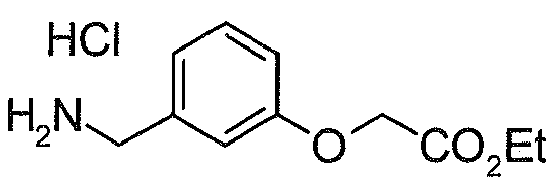
FP: 210 11 R11 
EI: 204 12 R12 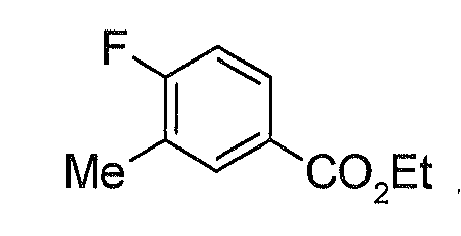
EI: 182 13 R13 
EI: 260 14 R14 
FP: 398 -
[Table 4] Rf Syn Str Dat Rf Syn Str Dat 15 R15 
FP: 198 16 R16 
FP: 206 17 R17 
EI: 207 18 R18 
EI: 169 19 R19 
FP: 298 [M]+ 20 R20 
EI: 168 21 R21 
EI: 190 22 R22 
EI: 233 23 R1 
FP: 297 24 R1 
FP: 303 25 R1 
EN: 308 26 R1 
EN: 274 27 R1 
EN: 338 28 R1 
EN: 338 -
[Table 5] Rf Syn Str Dat Rf Syn Str Dat 29 R1 
EN: 305 30 R1 
FP: 350 31 R1 
EN: 322 32 R1 
EP: 353 33 R2 * R3 
EP: 361 [M]+ 34 R2 * R3 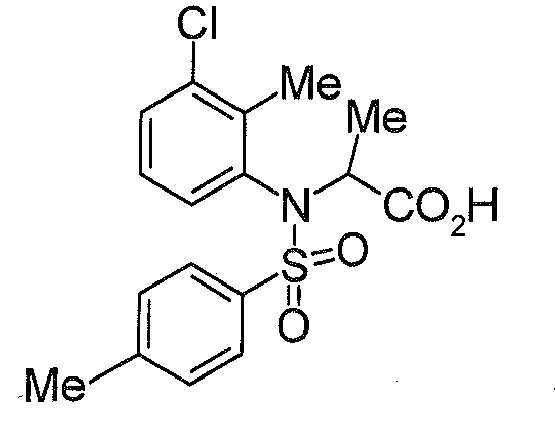
EN: 365 35 R2 * R3 
EN: 380 36 R1 * R2 * R3 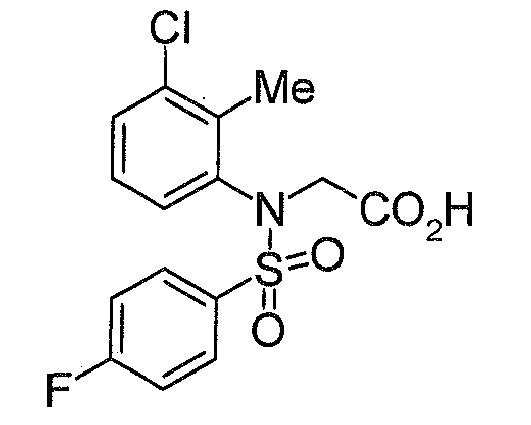
EN: 355 37 R3 
EP: 395 [M+Na]+ 38 R4 
FP: 286 -
[Table 6] Rf Syn Str Dat Rf Syn Str Dat 39 R3 
EN: 366 40 R6 
EP: 256 41 R7 * R3 
EN: 380 42 R1 
FN: 324 43 R1 
FP: 314 44 R2 
FP: 400 45 R3 
FP: 372 46 R14 
EP: 367 47 R15 
EP: 167 48 R11 
EI: 219 49 R9 
EI: 191 50 R13 
EI: 260 -
[Table 7] Rf Syn Str Dat Rf Syn Str Dat 51 R14 
FP: 398 52 R15 
FP: 198 53 R13 
EI: 260 54 R14 
FP: 398 55 R15 
FP: 198 56 R18 
EI: 172 57 R14 
FP: 372 58 R15 
FP: 172 59 R11 
EI: 216 60 R9 
EI: 221 [M+H]+ 61 R11 
EI: 203 62 R9 
FP: 208 63 R1 
EN: 225 64 R9 
FP: 231 65 R1 
EI: 254 [M+H]+ 66 R9 
FP: 258 67 R14 
FP: 357 68 R15 
FP:157 -
[Table 8] Rf Syn Str Dat Rf Syn Str Dat 69 R12 
EI: 170 70 R13 
EI: 248 71 R14 
FP: 386 72 R15 
FP: 186 73 R16 
FN: 318 74 R16 
FP: 220 75 R17 
FP: 322 76 R16 
FP: 222 77 R13 
EP: 231 78 R14 
FP:368 79 R15 
FP: 168 80 R11 
FP: 207 81 R10 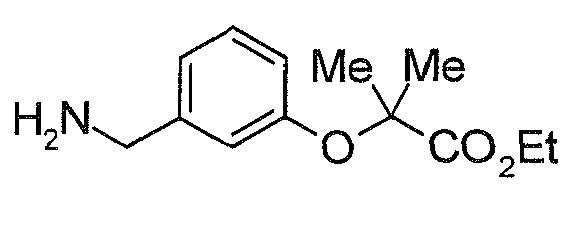
EI: 237 82 R1 
FP: 310 83 R1 
EN: 338 84 R1 
FP:296 -
[Table 9] Rf Syn Str Dat Rf Syn Str Dat 85 R1 
FP: 366 86 R1 
FP: 310 87 R2 
FP: 402 88 R2 
FP:396 89 R3 
EN: 366 90 R2 
FP: 393 91 R3 
EN: 363 92 R2 
FP: 436 93 R3 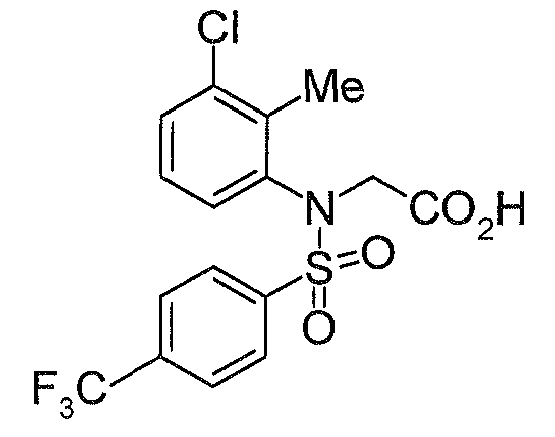
EN: 406 94 R2 
FP: 396 -
[Table 10] Rf Syn Str Dat Rf Syn Str Dat 95 R3 
FP: 368 96 R96 
EP: 233 [M+Na]+ 97 R97 
EP: 432 [M+Na]+ 98 R15 
EP: 210 99 R1 
EN: 312 100 R2 * R3 
EN: 370 101 R2 * R3 
EN: 396 102 R2 * R3 
EN: 372 103 R1 
EI: 311 104 R2 * R3 
EN: 368 -
[Table 11] Pre Str Pre Str 1 
2 
3 
4 
5 
6 
7 
8 
9 
10 
-
[Table 12] Pre Str Pre Str 11 
12 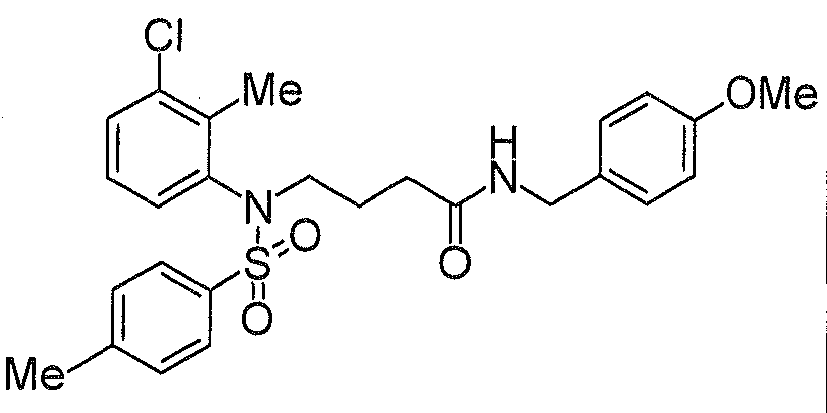
13 
14 
15 
16 
17 
18 
19 
20 
-
[Table 13] Pre Str Pre Str 21 
22 
23 
24 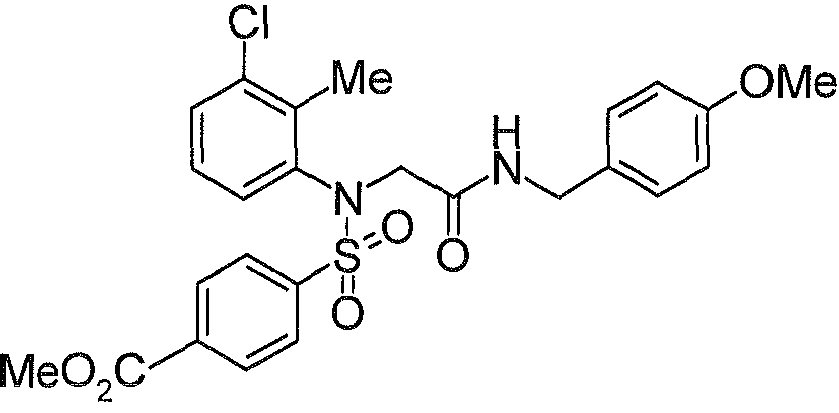
25 
26 
27 
28 
29 
30 
-
[Table 14] Pre Str Pre Str 31 
32 
33 
34 
35 
36 
37 
38 
39 
40 
-
[Table 15] Pre Str Pre Str 41 
42 
43 
44 
45 
46 
47 
48 
49 
50 
-
[Table 16] Pre Str Pre Str 51 
52 
53 
54 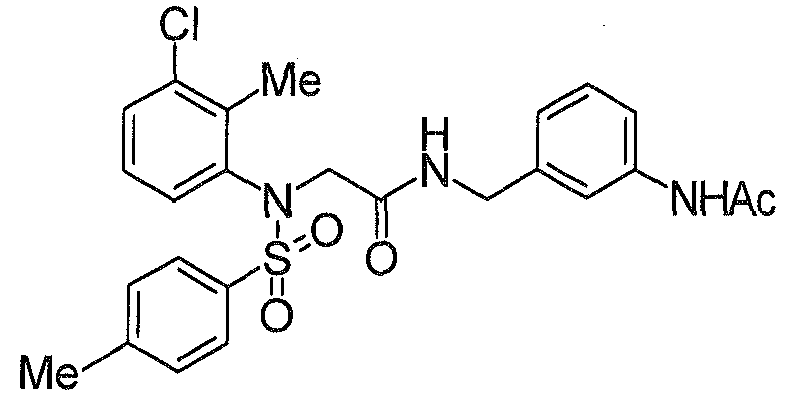
55 
56 
57 
58 
59 
60 
-
[Table 17] Pre Str Pre Str 61 
62 
63 
64 
65 
66 
67 
68 
69 
70 
-
[Table 18] Pre Str Pre Str 71 
72 
73 
74 
75 
76 
77 
78 
79 
80 
-
[Table 19] Pre Str Pre Str 81 
82 
83 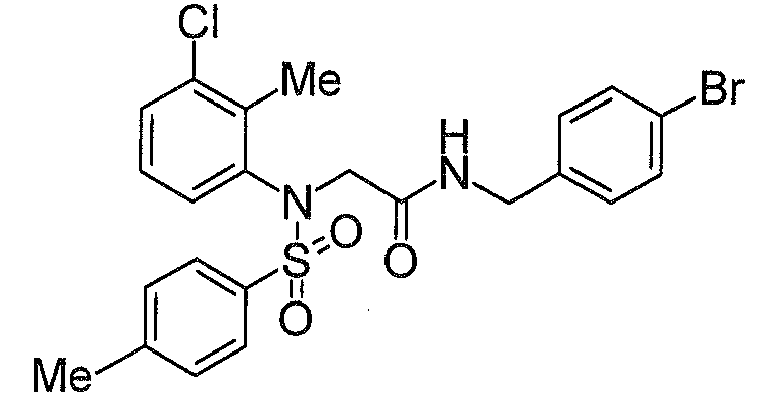
84 
85 
86 
87 
88 
89 
90 
-
[Table 20] Pre Str Pre Str 91 
92 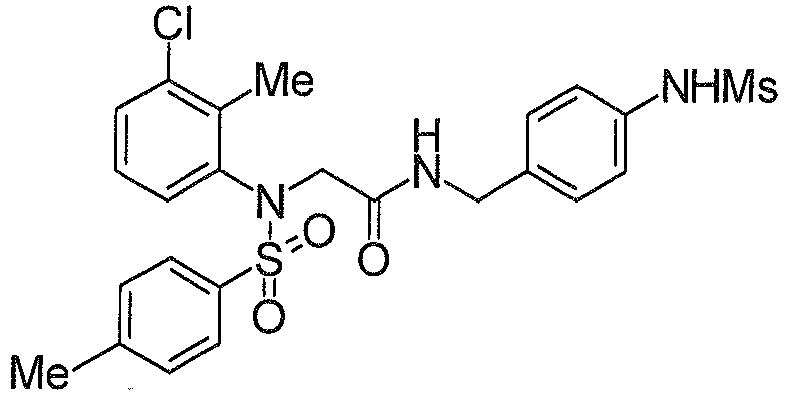
93 
94 
95 
96 
97 
98 
99 
100 
-
[Table 21] Pre Str Pre Str 101 
102 
103 
104 
105 
106 
107 
108 
109 
110 
-
[Table 22] Pre Str Pre Str 111 
112 
113 
114 
115 
116 
117 
118 
119 
120 
121 
122 
-
[Table 23] Ex Str Ex Str 1 
2 
3 
4 
5 
6 
7 
8 
9 
10 
-
[Table 24] Ex Str Ex Str 11 
12 
13 
14 
15 
16 
17 
18 
19 
20 
-
[Table 25] Ex Str Ex Str 21 
22 
23 
24 
25 
26 
27 
28 
29 
30 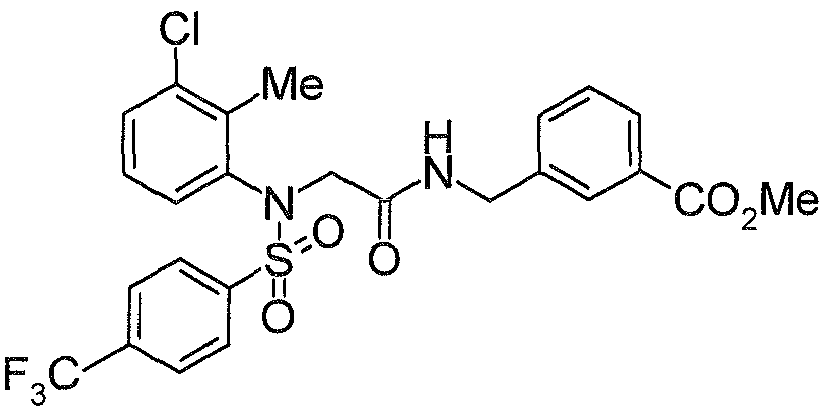
-
[Table 26] Ex Str Ex Str 31 
32 
33 34 
35 
36 
37 
38 
39 
40 
-
[Table 27] Ex Str Ex Str 41 
42 
43 
44 
45 
46 
47 
48 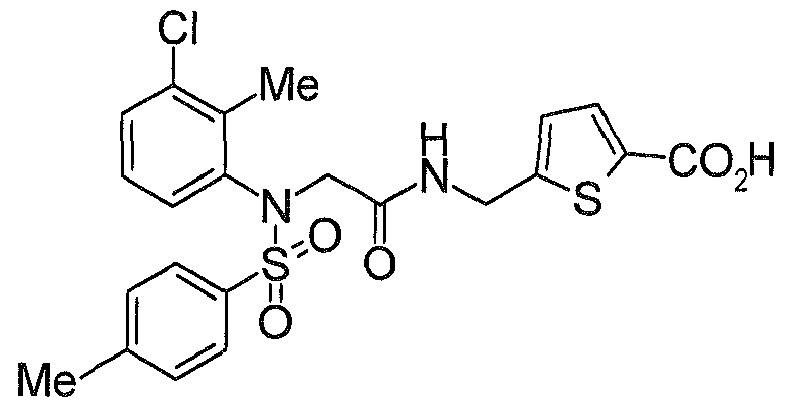
49 
50 
-
[Table 28] Ex Str Ex Str 51 
52 
53 
54 
55 
56 
57 
58 
59 
60 
-
[Table 29] Ex Str Ex Str 61 
62 
63 
64 
65 
66 
67 
68 
69 
70 
-
[Table 30] Ex Str Ex Str 71 
72 
73 
74 
75 
76 
77 
78 
79 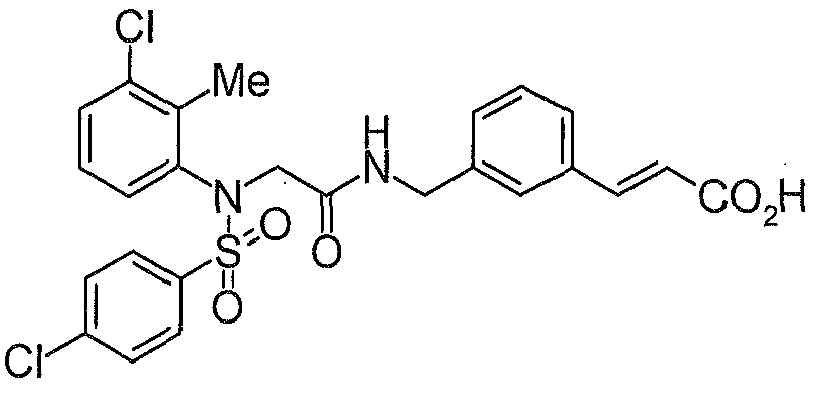
80 
-
[Table 31] Ex Str Ex Str 81 
82 
83 
84 
85 
86 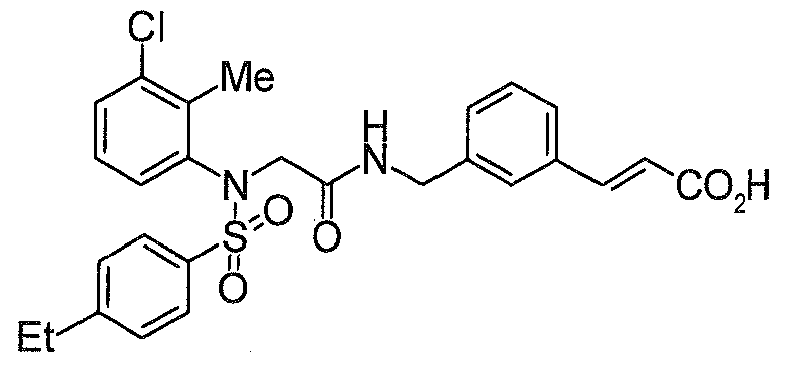
87 
88 
89 
90 
-
[Table 32] Ex Str Ex Str 91 
92 
93 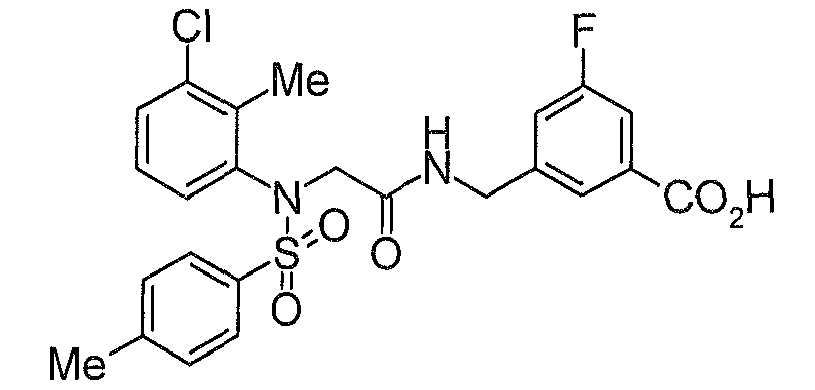
94 
95 
96 
97 
98 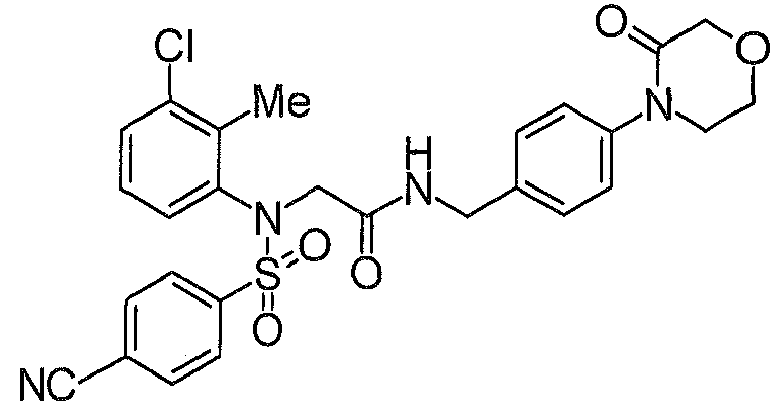
99 
100 
-
[Table 33] Ex Str Ex Str 101 
102 
103 
104 
105 
106 
107 
108 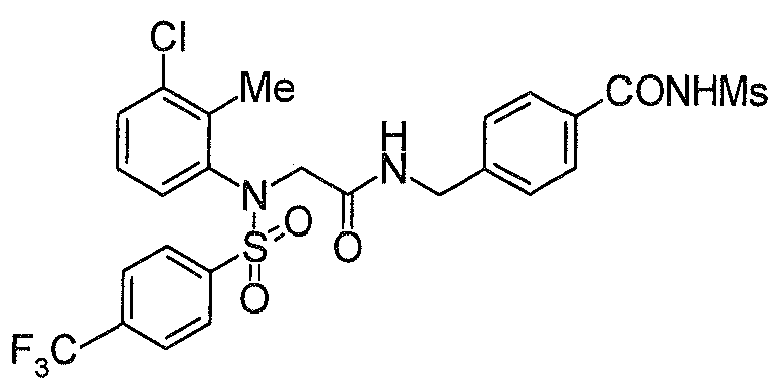
109 
110 
-
[Table 34] Ex Str Ex Str 111 
112 
113 
114 
115 
116 
117 
118 
119 
120 
-
[Table 35] Ex Str Ex Str 121 
122 
123 
124 
125 
126 
127 
128 
129 
130 
-
[Table 36] Ex Str Ex Str 131 
132 
133 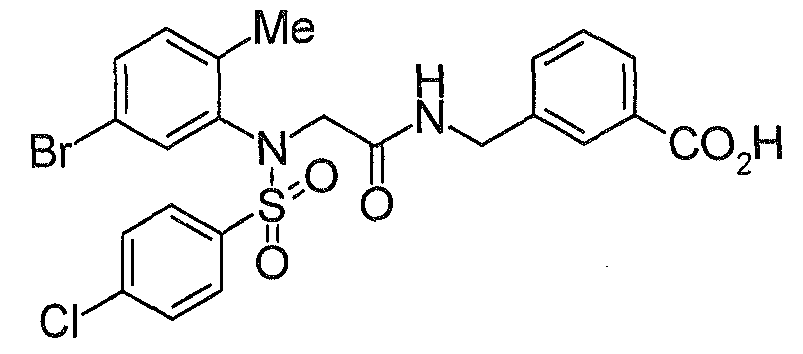
134 
135 
136 
137 
138 
139 
140 
-
[Table 37] Ex Str Ex Str 141 
142 
143 
144 
145 
146 
147 
148 
149 
150 
-
[Table 38] Ex Str Ex Str 151 
152 
153 
154 155 
156 
157 
158 
159 
160 
-
[Table 39] Ex Str Ex Str 161 
162 
163 
164 
165 
166 
167 
168 
169 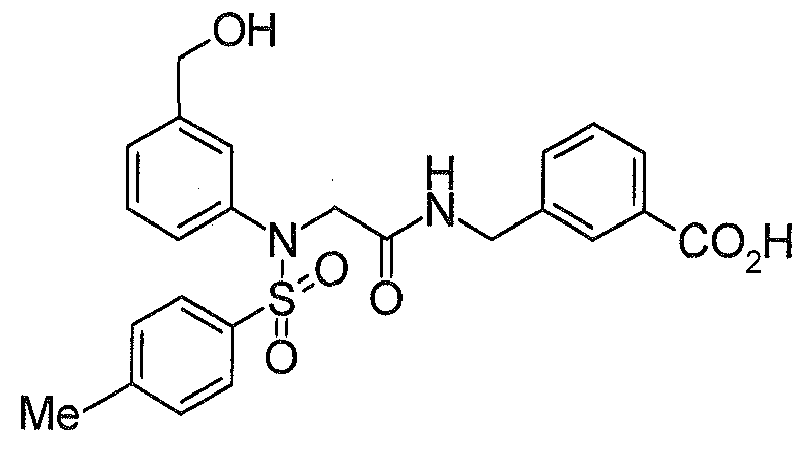
170 
-
[Table 40] Ex Str Ex Str 171 
172 
173 
174 
175 
176 
177 
178 
179 
180 
-
[Table 41] Ex Str Ex Str 181 
182 
183 
184 
185 
186 
187 
188 
189 
190 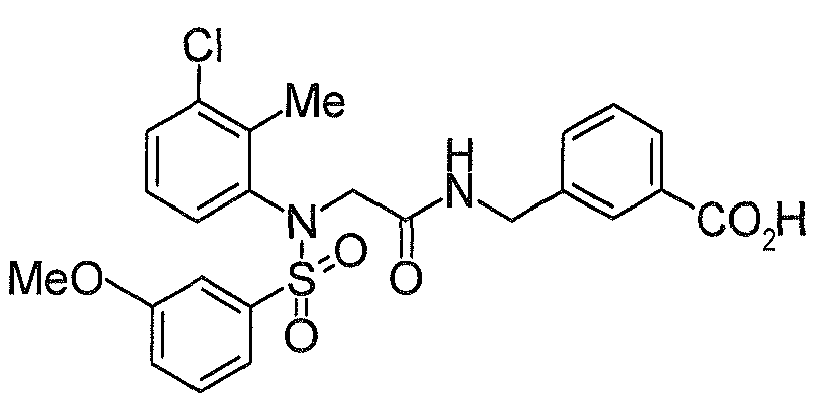
-
[Table 42] Ex Str Ex Str 191 
192 
193 
194 
195 
196 
197 
198 
199 
200 
-
[Table 43] Ex Str Ex Str 201 
202 
203 
204 
205 
206 
207 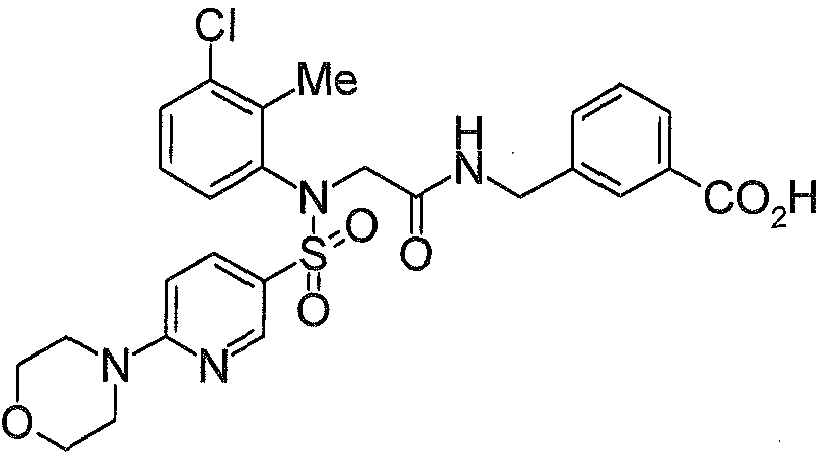
208 
209 
210 
-
[Table 44] Ex Str Ex Str 211 
212 
213 
214 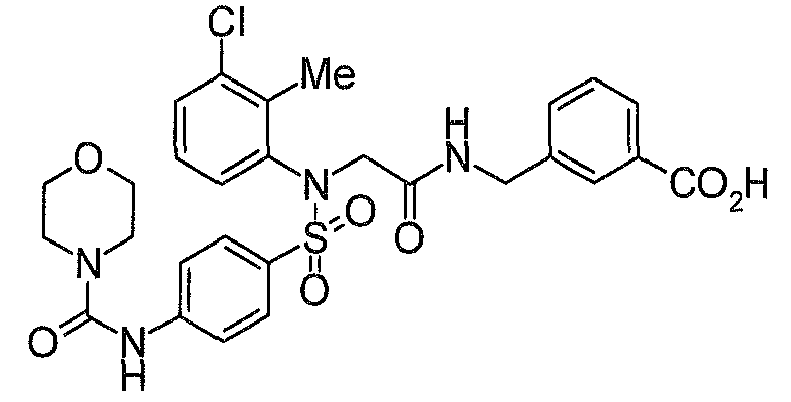
215 
216 
217 
218 
219 
220 
-
[Table 45] Ex Str Ex Str 221 
222 
223 
224 
225 
226 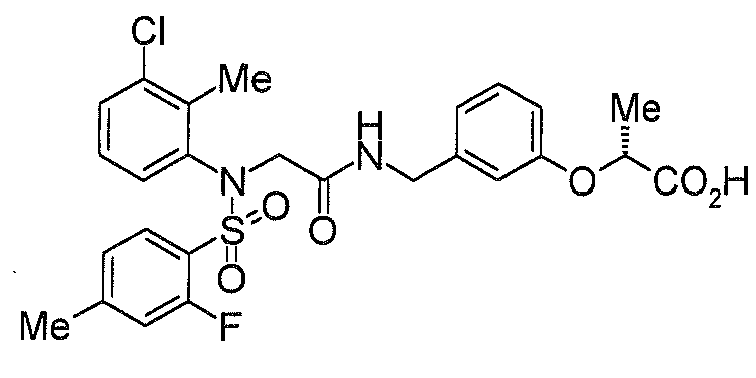
227 
228 
229 
230 
231 
-
[Table 46] Pre Syn Dat Pre Syn Dat 1 P1 FP:473 31 P2 FP:501 2 P2 FP:477 32 R1*P2 FP:545[M]+ 3 P3 FP:475 33 P33 FP:473 4 P4 FP:459[M]+ 34 P1 FP:469 5 P5 FP:489 35 P1 EP:444[M]+ 6 P6 EP:460 36 P1 EP:445 7 P1 FP:444 37 P1 EP:445 8 P1 FP:473 38 P2 EP:517 9 P1 FP:473 39 P25 FP:503 10 P1 FP:487[M]+ 40 P1 FP:549 11 P1 FP:487[M]+ 41 R1*P2 FP:457 12 P1 EP:523 [M+Na]+ 42 P2 FP:517,519 13 P1 FP:480[M]+ 43 P2 FP:493 14 P1 FP:445 44 P2 FP:453 15 P1 FP:445 45 P2 FP:484 16 P1 EP:549[M]+ 46 P2 FP:517, 519 17 P1 FP:353 47 R1*P2 FP:465 18 P1 EP:443 48 P5 FP:489 19 P2 FP:487[M]+ 49 P4 FP:459 20 P2 FP:453 50 P1 FP:501 21 P1 FP:487[M]+ 51 P1 FP:461 22 P1 FP:487[M]+ 52 P1 FP:433 23 P1 FP:473 53 P1 FP:501 24 P2 FP:539[M+Na]+ 54 P1 FP:500 25 P25 EN:501 55 P2 FP:530 26 P2 FP:493[M]+ 56 P1 EP:468 27 P2 FP:484 57 P1 FP:509 28 P2 FP:527 58 P1 FP:527 29 R1*P2 FP:489 59 R1*P2 EP:459 30 P2 FP:487[M]+ 60 R1*P2 EP:465 -
[Table 47] Pre Syn Dat Pre Syn Dat 61 R1*P2 EP:473 92 P1 EP:536 62 R1*P2 EP:473 93 P1 EP:522 63 R1*P2 EP:493 94 P1 EP:489 64 R1*P2 EP:499 95 P1 EP:445 65 R1*P2 EP:499 96 P1 EP:433 66 R1*P2 EP:504 97 P1 EP:434 67 R1*P2 EP:535 98 P1 EP:450 68 R1*P2 EP:551 99 P1 EP:449 69 R1*P2 EP:552 100 P1 EP:449 70 R1*P2 EP:565 101 P1 EP:447 71 R1*P2 EP:552 102 P1 EP:483 72 P1 EP:457 103 P1 EP:499 73 P1 EP:457 104 P1 EP:494 74 P1 EP:457 105 P1 EP:457 75 P1 EP:501 106 P1 EP:471 76 P1 EP:459 107 P1 EP:475 77 P1 EP:461 108 P1 EP:535 78 P1 EP:461 109 P1 EP:528 79 P1 EP:477 110 P1 EP:535 80 P1 EP:477 111 P1 EP:447 81 P1 EP:477 112 P1 EP:463 82 P1 EP:521 113 P1 EP:458 83 P1 EP:521 114 R1*P2 EP:489 84 P1 EP:458 115 R1*P2 EP:464 85 P1 EP:486 116 R1*P2 EP:439 86 P1 EP:488 117 P1 EP:423 87 P1 EP:488 118 P1 EP:446 88 P1 EP:488 119 P1 FP:522 89 P1 EP:519 120 P1 FP:566 90 P1 EP:521 121 P1 FP:593 91 P1 EP:521 122 P1 EP:468 -
[Table 48] Pre Dat 1 NMR1:2.31(3H,s),2.42(3H,s),3.71(3H,s),4.05-4.32(4H,m),6.72(1H,d,J=8.1Hz),6.78(2H,d,J=8.2Hz),6.91(2H,d,J=8.1Hz),7.13(1H,t,J=8.1Hz),7.38-7.48(3H,m),7.54(2H,d,J=7.7Hz),8.33(1H,brs) 2 NMR1:2.31(3H,s),3.71(3H,s),4.1(2H,d,J=4.0Hz),4.17(1H,d,J=16Hz),4.27(1H,d,J=16Hz),6.76-6.8(3H,m),6.93(2H,d,J=8.0Hz),7.15(1H,t,J=8.0Hz),7.43-7.48(3H,m),7.72-7.76(2H,m),8.35(1H,t,J=6.0Hz) 3 NMR1:2.32(3H,s),3.70(3H,s),4.02(1H,d,J=15.4Hz),4.07-4.14(2H,m),4.25(1H,d,J=15.3Hz),6.72(1H,d,J=7.9Hz),6.78(2H,d,J=8.6Hz),6.8 9-6.92(4H,m),7.13(1H,t,J=8.0Hz),7.43(1H,d,J=8.0Hz),7.47(2H,d,J=8.7Hz),8.31( 1H,t,J=5.8Hz),10.58(1H,s) 4 NMR1:2.28(3H,s),2.42(3H,s),4.02-4.04(2H,m),4.08(1H,d,J=15.5Hz),4.26(1H,d,J=15.4Hz),6.61(2H,d,J=8.5Hz),6.72(1H,d,J=7.1Hz),6.78(2H,d,J=8.6Hz),7.13(1H,t,J=8.0Hz),7.40-7.42(3H,m),7.54(2H,d,J=8.3Hz),8.26(1H,t,J=5.8Hz),9.25(1H,s) 5 NMR1:2.31(3H,s),3.71(3H,s),4.08-4.12(3H,m),4.28(1H,d,J=15.4Hz),4.62(2H,d,J=5.7Hz),5.47(1H,t,J=5.7Hz),6.72(1H,d,J=7.8Hz),6.78(2H,d,J=8.7Hz),6.91(2H,d,J=8.5Hz),7.13(1H,t,J=8.0Hz), 7.45(1H,d,J=7.9Hz),7.53(2H,d,J=8.4Hz),7.62(2H,d,J=8.3Hz), 8.34(1H,t,J=5.8 Hz) 6 NMR1:2.29(3H,s),2.42(3H,s),4.1-4.16(3H,m),4.32(1H,d,J=8.0Hz),6.74(1H,d,J=4.0Hz),6.98(2H,d,J=3.5Hz),7.15(1H,t,J=4.0Hz),7.41-7.46(3H,m),7.54(2H,d,J=4.1Hz), 8.06(2H,d,J=3.5Hz),8.54(1H,t,J=3Hz) 15 NMR1:2.29(3H,s),2.42(3H,s),4.19(1H,d,J=15.7Hz),4.25-4.27(2H,m),4.37(1H,d,J=15.7Hz),6.76(1H,d,J=7.6Hz),6.96(1H,d,J=5.2Hz),7.1 5(1H,t,J=8.1Hz),7.42(2H,d,J=8.1Hz),7.46(1H,d,J=8.3Hz),7.56(2H,d,J=8.3Hz), 8.61-8.66(2H,m),9.04(1H,d,J=1.4Hz) 19 NMR1:2.28(3H,s),2.41(3H,s),3.7(2H,s),3.73(3H,s),4.01(2H,d,J=5.7Hz),4.46(2H,s),6.85(2H,d,J=8.7Hz),7.03(2H,d,J=8.7Hz),7.12-7.14(1H,m),7.2(1H,d,J=6.8Hz),7.36-7.37(3H,m),7.73(2H,d,J=8.2Hz),8.08(1H,t,J=5.8Hz) -
[Table 49] Ex Syn Dat Ex Syn Dat 1 1 EP:487 31 P1 FP:529 2 2 EP:486 32 P1 EP:520 3 3 EP:567[M+Na]+ 33 P1 EP:510 4 4 FP:564 34 P1 EP:528 5 1 EP:539[M+Na]+ 35 P1 EP:526 6 1 EP:501 36 P1 EP:517 7 1 FP:487 37 P2*1 FP:506 8 P1*1 FN:488 38 R1*P2*1 FP:503 9 P1*1 FN:504 39 P2*1 FP:533 10 2 FP:486 40 P2*1 FP:501 11 P1*1 FP:501 41 P2*1 FP:487 12 P1*1 FP:501 42 P2*1 FP:501 13 P1* 1 FP:501 43 R1*P2* 1 FP:502 14 P1* 1 FP:515 44 P2*1 EP:557 15 P2*1 EP:501 45 R1*P2*1 FP:513 16 3*1 EN:514 46 P2*1 EN:486 17 P1 EN:499 47 P1*1 EP:488 18 P1*1 EN:515 48 P1*1 EP:493 19 P1*1 FP:501 49 P1*1 EP:493 20 4 FP:564 50 P1* 1 EP:513 21 1 FP:497 51 P1*1 EN:513 22 1 EN:539 52 P1*1 EP:513 23 1 FP:515 53 P1*1 EN:513 24 P1 FP:501 54 4 EP:608 25 P1 EP:508 55 2 FP:530 26 P1 FP:509 56 2 EP:557 27 P1 EP:516 57 2 EP:530 28 4 FP:594 58 2 FP:557 29 P2 FP:512 59 P2*1 FP:494 30 P2 FP:555 60 P1 FP:487 -
[Table 50] Ex Syn Dat Ex Syn Dat 61 P1*1 EP537 91 2 EP:560 62 P1*1 EP:531 92 2 EP:560 63 P1*1 FP:521 93 P1*1 EP:505 64 P1*1 EP:528 94 P1*1 EP:505 65 P1*1 FP:571 95 P1*1 FP:547 66 P1*1 EP:488 96 P1*1 FP:513 67 P1*1 EP:494 97 P1 FP:542 68 P1 EP:540 98 P1 EP:553 69 P1 EP:555 99 P1 FP:542 70 P2*1 EN:501 [M]- 100 P1 FP:556 71 P2*1 FP:488 101 4 FP:578 72 P1*1 FP:505 102 4 FP:592 73 P1*1 FP:529 103 4 FP:608 74 P1*1 FP:527 104 P1 FN:552[M]- 75 P1*1 EN:529 105 P1*1*4 FP:575 76 P1*1 EN:488 106 P1*1*4 FP:578 77 P1 FP:527 107 P1*1*4 FP:584 78 P1*1 EP:567 108 P1*1*4 FP:618 79 P1*1 EN:531 109 P1 EP:538 80 2*1 EP:544 110 P1 FP:581 81 P1*1 EP:505 111 P1 FP:543 82 P1*1 EP:569 112 P1 EP:554 83 P1*1 EP:535 113 P1 FP:596 84 P1*1 FP:529 114 P1*1 EP:478 85 P2*1 FP:505 115 P1*1 EP:477 86 P1*1 EP:527 116 P1*1 EP:493 87 P2*1 FP:505 117 P1*1 EP:527 88 P1*1 EP:505 118 P1*1 EP:529 89 2 FP:560 119 3*1 EP:531 90 2 EP:560 120 3*1 EP:531 -
[Table 51] Ex Syn Dat Ex Syn Dat 121 P1*1 EP:489 151 R1*P2*1 EP:479 122 P1*1 EP:545 152 R1*P2*1 EP:493 123 R1*P2*1 EP:439 153 R1*P2*1 EP:522 124 R1*P2*1 EP:471 154 R1*P2*1 EP:478 125 R1*P2* EP:471 155 R1*P2*1 EP:478 126 R1*P2*1 EP:471 156 R1*P2*1 EP:453 127 R1*P2*1 EP:487 157 R1*P2*1 EP:467 128 R1*P2*1 EP:487 158 R1*P2*1 EP:467 129 R1*P2*1 EP:487 159 R1*P2*1 EP:457 130 R1*P2*1 EP:487 160 R1*P2* EP:457 131 R1*P2*1 EP:487 161 R1*P2*1 EP:473 132 R1*P2*1 EP:531 162 R1*P2*1 EP:473 133 R1*P2*1 EP:531 163 R1*P2*1 EP:517 134 R1*P2*1 EP:531 164 R1*P2*1 EP:469 135 R1*P2*1 EP:491 165 R1*P2*1 EP:469 136 R1*P2*1 EP:517 166 R1*P2*1 EP:455 137 R1*P2*1 EP:467 167 R1*P2*1 EP:483 138 R1*P2*1 EP:469 168 R1*P2*1 EP:469 139 R1*P2*1 EP:483 169 R1*P2*1 EP:469 140 R1*P2*1 EP:483 170 R1*P2*1 EP:497 141 R1*P2*1 EP:483 171 R1*P2*1 EP:464 142 R1*P2*1 EP:521 172 R1*P2*1 EP:485 143 R1*P2*1 EP:497 173 R1*P2*1 EP:485 144 R1*P2*1 EP:483 174 R1*P2*1 EP:482 145 R1*P2*1 EP:498 175 R1*P2*1 EP:496 146 R1*P2*1 EP:518 176 R1*P2*1 EP:496 147 R1*P2*1 EP:475 177 R1*P2*1 EP:482 148 R1*P2*1 EP:531 178 R1*P2*1 EP:481 149 R1*P2*1 EP:499 179 R1*P2*1 EP:522 150 R1*P2*1 EP:496 180 R1*P2*1 EP:524 -
[Table 52] Ex Syn Dat Ex Syn Dat 181 R1*P2*1 EP:437 207 R1*P2*1 EP:559 182 R1*P2*1 EP:465 208 R1*P2*1 EP:559 183 R1*P2*1 EP;:473 209 R1*P2*1 EP:565 184 R1*P2*1 EP:477 210 R1*P2*1 EP:565 185 R1*P2*1 EP:479 211 R1*P2*1 EP:565 186 R1*P2*1 EP:479 212 R1*P2*1 EP:579 187 R1*P2*1 EP:479 213 R1*P2*1 EP:589 188 R1*P2*1 EP:487 214 R1*P2*1 EP:601 189 R1*P2*1 EP:493 215 R1*P2*1 EP:566 190 R1*P2*1 EP:503 216 P1*1 EP:513 191 R1*P2*1 EP:503 217 P1*1 EP:547 192 R1*P2*1 EP:474 218 P1*1 EP:507 193 R1*P2*1 EP:515 219 P1*1 EP:511 194 R1*P2*1 EP:517 220 P1*1 EP:513 195 R1*P2*1 EP:517 221 P1*1 EP:509 196 R1*P2*1 EP:523 222 P1*1 EP:539 197 R1*P2*1 EP:527 223 P1*1 EP:551 198 R1*P2*1 EP:529 224 P1*1 EP:585 199 R1*P2*1 EP:541 225 P1*1 EP:545 200 R1*P2*1 EP:544 226 P1*1 EP:549 201 R1*P2*1 EP:545 227 P1*1 EP:551 202 R1*P2*1 EP:545 228 P1*1 EP:547 203 R1*P2*1 EP:549 229 P1*1 EP:575 204 R1*P2*1 EP:551 230 230 EP:527 205 R1*P2*1 EP:555 231 231 EP:511 206 R1*P2*1 EP:559 -
[Table 53] Ex Dat 1 NMR1:2.31(3H,s),2.42(3H,s),4.12(1H,d,J=15.4Hz),4.18-4.19(2H,m),4.33(1H,d,J=15.4Hz),6.73(1H,d,J=7.8Hz),7.06(2H,d,J=8.2Hz),7.1 5(1H,t,J=8.0Hz),7.42(2H,d,J=8.2Hz),7.45(1H,d,J=8.2Hz),7.55(2H,d,J=8.3Hz), 7.79(2H,d,J=8.2Hz),8.50(1H,t,J=6.0Hz),12.74(1H,b r s) 2 NMR1:2.31(3H,s),2.42(3H,s),4.12-4.15(4H,m),6.75(1H,d,J=7.7Hz),7.05(2H,d,J=8.2Hz),7.14(1H,t,J=8.0Hz),7.3(1H,brs),7.41(2H,d,J=8.2Hz),7.46(1H,d,J=7.8Hz),7.55(2H,d,J=8.3Hz),7.73(2H,d ,J=8.2Hz),7.9(1H,brs),8.47(1H,t,J=5.9Hz) 4 NMR1:2.30(3H,s),2.42(3H,s),3.36(3H,s),4.13(1H,d,J=15.6Hz),4.23(2H,d,J=5.9Hz),4.30(1H,d,J=15.6Hz),6.74(1H,d,J=8.0Hz),7.12(1H,t,J=8.0Hz),7.2(1H,d,J =7.7Hz),7.36(1H,d,J=7.6Hz),7.39-7.44(3H,m),7.54(2H,d,J=8.3Hz),7.72(1H,s),7.77(1H,d,J=7.8Hz),8.5(1H,t,J=5. 9Hz),12.11 (1H,brs) 5 NMR1:2.32(3H,s),2.41(3H,s),4.03-4.04(4H,m),4.26(1H,d,J=15.4Hz),4.37(1H,d,J=3.8Hz),6.65(2H,d,J=8.7Hz),6.72(1H,d,J=7.8Hz),6.83(2H,d,J=8.5Hz),7.12(1H,t,J=8.0Hz),7.40-7.42(3H,m),7.54(2H,d,J=8.3Hz),8.36(1H,t,J=5.7Hz) 7 NMR1:2.30(3H,s),2.41(3H,s),4.13(1H,d,J=15.6Hz),4.23(2H,d,J=5.9Hz),4.29(1H,d,J=15.6Hz),6.74(1H,d,J=7.2Hz),7.11(1H,t,J=8.0Hz),7.20(1H,d,J=7.8Hz), 7.35(1H,t,J=7.7Hz),7.39-7.40(3H,m),7.54(2H,d,J=8.4Hz),7.755(1H,s),7.78(1H,d,J=7.8Hz),8.49(1H,t,J=5 .9Hz),12.9(1H,brs) 9 NMR1:2.30(1H,s),4.23-4.31(4H,m),6.82(2H,d,J=7.8Hz),7.14(1H,t,J=8.0Hz),7.22(1H,d,J=7.7Hz),7.36(1H,t,J=7.6Hz),7.44(1H,d,J=7.8Hz),7.67(4H,brs),7.75(1H,s),7.79(1H,d,J=7.8H z),8.51(1H,t,J=5.9Hz),12.94(1H,brs) 16 NMR1:2.31(3H,s),2.42(3H,s),4.11-4.15(3H,m),4.29(1H,d,J=15.6Hz),4.61(2H,s),6.55(1H,d,J=7.6Hz),6.68(1H,s),6.72-6.75(2H,m),7.11-7.15(2H,m),7.4-7.44(3H,m),7.55(2H,d,J=8.2Hz),8.4(1H,t,J=5.9Hz),12.97(1H,brs) -
[Table 54] Ex Dat 20 NMR1:2.30(3H,s),2.42(3H,s),3.37(3H,s),4.14(1H,d,J=15.6Hz),4.25(2H,t,J=5.7Hz),4.32(1H,d,J=15.6Hz),6.75(1H,d,J=7.2Hz),7.11(2H,d,J=8.3Hz),7.16(1H,d,J=8.1Hz),7.42(2H,d,J=8.3Hz),7.46(1H,d,J=7.2Hz),7.55(2H,d,J=8.3Hz),7.81(2H,d,J=8.3Hz),8.52(1H,t,J=6.0Hz),12.07(1H,brs) 21 NMR1:2.29(3H,s),4.24(2H,d,J=5.6Hz),4.30(2H,d,J=6.8Hz),6.83(1H,d,J=8.0Hz),7.14(1H,t,J=8.0Hz),7.19-7.29(1H,m),7.37(1H,t,J=8.0Hz),7.46(1H,d,J=8.0Hz),7.70-7.90(4H,m),8.03-8.15(2H,m),8.46-8.58(1H,m),12.94(1H,brs) 22 NMR1:2.29(3H,s),4.23(2H,d,J=5.6Hz),4.30(2H,d,J=4.0Hz),6.84(1H,d,J=8.0Hz),7.15(1H,t,J=8.0Hz),7.22(1H,d,J=7.6Hz),7.36(1H,t,J=8.0Hz),7.46(1H,d,J=8. 0Hz),7.71-7.82(2H,m),7.88(2H,d,J=8.4Hz),7.98(2H,d,J=8.4Hz),8.47-8.58(1H,m) 24 NMR1:2.30(3H,s),2.42(3H,s),3.83(3H,s),4.09-4.35(4H,m),6.73(1H,d,J=8.0Hz),7.1(2H,d,J=8.0Hz),7.15(1H,t,J=8.2Hz),7.41-7.46(3H,m),7.55(2H,d,J=8.0Hz),7.81(2H,d,J=8.0Hz),8.53(1H,t,J=5.9Hz) 26 NMR1;2.31(3H,s),2.42(3H,s),4.11-4.33(4H,m),6.53(1H,t,J=2.0Hz),6.75(1H,d,J=7.8Hz),7.11(2H,d,J=8.5Hz),7.16(1H,d,J=8.0Hz),7.41-7.46(3H,m),7.56(2H,d,J=8.2Hz),7.68-7.72(3H,m),8.44-8.46(2H,m) 28 NMR1:2.30(3H,s),2.42(3H,s),3.33(3H,s),4.15(1H,d,J=15.8Hz),4.25(2H,d,J=5.8Hz),4.32(1H,d,J=15.7Hz),6.64(1H,d,J=8.0Hz),6.76(1H,d,J=8.0Hz),6.95(1H,s ),7.14(1H,t,J=8.0Hz),7.41-7.47(4H,m),7.55(2H,d,J=8.2Hz),8.52(1H,t,J=6.0Hz),11.29(1H,brs) 37 NMR1:2.40(3H,s),4.14(1H,brs),4.25(2H,d,J=6.0Hz),4.50(1H,brs),7.22-7.43(6H,m),7.54-7.68(3H,m),7.73-7.83(2H,m),8.48-8.58(1H,m),12.95(1H,brs) 38 NMR1:2.39(3H,s),3.71(3H,s),4.23(2H,d,J=6.0Hz),4.32(2H,s),7.05(1H,t,J=8.0Hz),7.11(1H,dd,J=8.0Hz,2.0Hz),7.26(1H,d,J=7.6Hz),7.32-7.41(3H,m),7.46(1H,dd,J=8.0Hz,2.0Hz),7.66(2H,d,J=8.4Hz),7.75(1H,brs),7.7 9(1H,d,J=8.0Hz),8.45-8.58(1H,m),12.93(1H,brs) -
[Table 55] Ex Dat 39 NMR1:2.33(3H,s),2.41(3H,s),4.07-4.35(4H,m),6.77(1H,d,J=7.6Hz),7.04(1H,t,J=8.0Hz),7.19(1H,d,J=8.0Hz),7.35(1H,t,J=8.0Hz),7.40(2H,d,J=8.0Hz),7.53(2H,d,J=8.0Hz),7.58(1H,d,J=8.0Hz),7.74(1H,brs),7.78(1H,d,J=8.0Hz),8.41-8.56(1H,m),12.93(1H,brs) 40 NMR1:1.16(3H,t,J=8.0Hz),2.41(3H,s),2.82(2H,d,J=8.0Hz),4.14-4.29(4H,m),6.76(1H,dd,J=8.0Hz,0.8Hz),7.11(1H,t,J=8.0Hz),7.21(1H,d,J=8.0H z),7.33-7.44(4H,m),7.56(2H,d,J=8.0Hz),7.72-7.82(2H,m),8.46-8.55(1H,m),12.93(1H,brs) 42 NMR1:1.21(3H,t,J=7.6Hz),2.28(3H,s),2.71(2H,q,J=7.6Hz),4.07-4.35(4H,m),6.75(1H,d,J=8.0Hz),7.11(1H,t,J=8.0Hz),7.19(1H,d,J=8.0Hz),7.35( 1H,t,J=8.0Hz),7.39-7.47(3H,m),7.56(2H,d,J=8.0Hz),7.74(1H,brs),7.78(1H,d,J=8.0Hz),8.44-8.55(1H,m),12.93(1H,brs) 49 NMR1:2.30(3H,s),2.41(3H,s),4.11(1H,d,J=15.9Hz),4.26(1H,d,J=15.9Hz),4.32(2H,d,J=5.8Hz),6.75(1H,d,J=7.1Hz),7.10(1H,t,J=7.9Hz),7.17(1H;d,J=1.0Hz),7 .38-7.42(3H,m),7.54(2H,d,J=8.3Hz),8.05(1H,d,J=1.4Hz),8.57(1H,t,J=5.8Hz),12.5 0-12.70(1H,br) 50 NMR1:2.30(3H,s),2.42(3H,s),4.07-4.37(4H,m),6.47(1H,d,J=16.0Hz),6.75(1H,d,J=8.0Hz),7.01(1H,d,J=8.0Hz),7.13(1H,t,J=8.0Hz),7.27(1H,t,J=8.0Hz),7.34-7.59(8H,m),8.39-8.49(1H,m),12.42(1H,brs) 51 NMR1:2.31(3H,s),2.41(3H,s),2.47(2H,t,J=8.0Hz),2.74(2H,t,J=8.0Hz),4.05-4.34(4H,m),6.74(1H,d,J=8.0Hz),6.78(1H,d,J=8.0Hz),6.92(1H,s),7.05(1H,d,J= 8.0Hz),7.13(2H,tJ=8.0Hz),7.36-7.47(3H,m),7.55(2H,d,J=8.0Hz),8.33-8.43(1H,m),12.12(1H,s) 74 NMR1:1.16(3H,t,J=7.6Hz),2.41(3H,s),2.84(2H,q,J=7.6Hz),4.11-4.31(4H,m),6.47(1H,d,J=16.0Hz),6.76(1H,d,J=8.0Hz),7.02(1H,d,J=8.0Hz),7.1 2(1H,t,J=8.0Hz),7.28(1H,t,J=8.0Hz),7.36-7.46(4H,m),7.51(1H,d,J=16.0Hz),7.52(1H,d,J=8.0Hz),7.57(2H,d,J=8.0Hz),8.3 8-8.52(1H,m),12.40(1H,brs) -
[Table 56] Ex Dat 78 NMR1:2.30(3H,s),4.21(2H,d,J=5.6Hz),4.31(2H,s),6.46(1H,d,J=16.0Hz),6.84(1H,d,J=8.0Hz),7.04(1H,d,J=8.0Hz),7.17(1H,t,J=8.0Hz),7.29(1H,t,J=8.0Hz),7. 38(1H,s),7.43-7.57(3H,m),7.89(2H,d,J=8.4Hz),7.99(2H,d,J=8.4Hz),8.44-8.50(1H,m) 79 NMR1:2.31(3H,s),4.17-4.355(4H,m),6.46(1H,d,J=16.0Hz),6.82(1H,d,J=8.0Hz),7.03(1H,d,J=8.0Hz),7.16(1H,t,J=8.0Hz),7.28(1H,t,J=8.0Hz),7.38(1H,s),7.43-7.56(3H,m),7.68(4H,s),8.41-8.51(1H,m) 82 NMR1:2.32(3H,s),2.47(2H,t,J=8.0Hz),2.74(2H,t,J=8.0Hz),4.15(2H,d,J=5.6Hz),4.24-4.36(2H,m),6.77-6.87(2H,m),6.93(1H,s),7.06(1H,d,J=8.0Hz),7.11-7.21(2H,m),7.47(2H,d,J=8.0Hz),7.90(2H,d,J=8.0Hz),7.99(2H,d,J=8.0Hz),8.36 -8.45(1H,m),12.12(1H,s) 85 NMR1:2.25(3H,s),2.40(3H,s),4.17-4.44(4H,m),7.05(1H,d,J=8.0Hz),7.11-7.18(2H,m),7.23(1H,d,J=8.0Hz),7.31(1H,d,J=12.0Hz),7.36(1H,t,J=8.0Hz),7.4 2(1H,d,J=8.0Hz),7.49(1H,t,J=8.0Hz),7.74(1H,brs),7.75(1H,s),7.79(1H,d,J=8.0 Hz),8.46-8.55(1H,m),12.93(1H,brs) 114 NMR1:2.29(3H,s),2.41(3H,s),4.16-4.34(4H,m),6.77(1H,d,J=7.6Hz),7.12(1H,t,J=8.0Hz),7.39-7.42(3H,m),7.53(2H,d,J=8.4Hz),8.63(1H,s),8.67(1H,t,J=6.0Hz) 116 NMR1:2.29(3H,s),2.45(3H,s),4.09-4.29(4H,m),6.77(1H,d,J=8.0Hz),7.12(1H,t,J=7.6Hz),7.31(1H,s),7.34-7.49(3H,m),7.50(1H,s),7.56(2H,d,J=7.6Hz),8.42(1H,t,J=6.0Hz) 119 NMR1:1.44(3H,d,J=6.8Hz),2.31(3H,s),2.42(3H,s),4.10-4.30(4H,m),4.65-4.67(1H,m),6.51(1H,d,J=7.6Hz),6.61-6.67(2H,m),6.74(1H,d,J=8.0Hz),7.08-7.15(2H,m),7.39-7.44(3H,m),7.55(2H,d,J=8.0Hz),8.38(1H,t,J=5.2Hz) 120 NMR1:1.45(3H,d,J=6.8Hz),2.31(3H,s),2.42(3H,s),4.11-4.30(4H,m),4.66-4.68(1H,m),6.52(1H,d,J=7.2Hz),6.61-6.68(2H,m),6.75(1H,d,J=8.0Hz),7.08-7.15(2H,m),7.39-7.44(3H,m),7.55(1H,d,J=8.0Hz),8.38(1H,t,J=5.6Hz) - The sulfonamide compound of the present invention or a pharmaceutically acceptable salt thereof has a potent EP 1 receptor antagonistic activity, and thus it is useful as a remedy for diseases associated with an EP1 receptor, in particular for a lower urinary tract symptom.
- Under the number title <223> in the following sequence listing, description on "Artificial Sequence" is given. Specifically, the amino acid sequence of SEQ ID NO. 1 in the sequence listing is an artificially synthesized signal peptide sequence. Furthermore, the amino acid sequence of SEQ ID NO. 2 in the sequence listing is an artificially synthesized FLAG sequence.

Claims (18)
- An EP1 receptor antagonist comprising a sulfonamide compound represented by the formula (I) or a pharmaceutically acceptable salt thereof as an active ingredient:
 Ring A: a benzene ring, a cycloalkane ring, or an aromatic hetero ring,L1: a single bond or lower alkylene,L2: lower alkylene,R1 to R4: the same as or different from each other, each representing R0, halogen, halogeno-lower alkyl, -OR0, -O-halogeno-lower alkyl, -S(O)n-lower alkyl, -CN, -NO2, nitrogen-containing heterocyclic group, cycloalkyl, -NH-CO-lower alkyl, -NH-CO-N(R00)2, -NH-CO-nitrogen-containing heterocyclic group, -CO2R0, -CON(R0)2, -CO-lower alkyl, -lower alkylene-OR0, -lower alkylene-CO2R0, aryl which may be substituted, heteroaryl which may be substituted, -O-aryl which may be substituted, -O-benzyl, or -O-heteroaryl which may be substituted, orwhen R1 and R2, and R3 and R4 are each positioned on the adjacent carbon atoms of a benzene ring or a ring A, they may be taken together with a ring atom to which they bond to form a 5- to 7-membered cycloalkene ring, a benzene ring, or a hetero ring which may be substituted with a group selected from the following G1 group,Group G1: lower alkyl, oxo, -OR0, -lower alkylene-OR0, and -CO-lower alkyl,R0: the same as or different from each other, each representing H or lower alkyl,R00: H or lower alkyl which may be substituted with -OR0,n: 0, 1, or 2,RA: R0,RB: R0, -lower alkylene-aryl which may be substituted, -lower alkylene-heteroaryl which may be substituted, -lower alkylene-O-aryl which may be substituted, or -lower alkylene-O-heteroaryl which may be substituted, orRA and RB may be taken together with a nitrogen atom to which they bonded to form a nitrogen-containing hetero ring.]
 - The EP1 receptor antagonist according to claim 1, wherein RA is H, and RB is -lower alkylene-aryl which may be substituted, -lower alkylene-heteroaryl which may be substituted, -lower alkylene-O-aryl which may be substituted, or -lower alkylene-O-heteroaryl which may be substituted.
- A sulfonamide compound represented by the formula (II) or a pharmaceutically acceptable salt thereof:
 Ring A: a benzene ring, a cycloalkane ring, or an aromatic hetero ring,L1: a single bond or lower alkylene,L2: lower alkylene,R1 to R4: the same as or different from each other, each representing R0, halogen, halogeno-lower alkyl, -OR0, -O-halogeno-lower alkyl, -S(O)n-lower alkyl, -CN, -NO2, nitrogen-containing heterocyclic group, cycloalkyl, -NH-CO-lower alkyl, -NH-CO-N(R00)2, -NH-CO-nitrogen-containing heterocyclic group, -CO2R0, -CON(R0)2, -CO-lower alkyl, -lower alkylene-OR0, -lower alkylene-CO2R0, aryl which may be substituted, heteroaryl which may be substituted, -O-aryl which may be substituted, -O-benzyl, or -O-heteroaryl which may be substituted, orwhen R1 and R2, and R3 and R4 are each positioned on the adjacent carbon atoms of a benzene ring or a ring A, they may be taken together with a ring atom to which they bond to form a 5- to 7-membered cycloalkene ring, a benzene ring, or a hetero ring which may be substituted with a group selected from the following G1 group,Group G1: lower alkyl, oxo, -OR0, -lower alkylene-OR0, and -CO-lower alkyl,R0: the same as or different from each other, each representing H or lower alkyl,R00: H or lower alkyl which may be substituted with -OR0,n: 0, 1, or 2,L3: lower alkylene,X: a single bond or -O-,Ring B: a benzene ring or an aromatic hetero ring,R5 and R6: the same as or different from each other, each representing R0, halogen, halogeno-lower alkyl, -OR0, -O-halogeno-lower alkyl, -CN, or -NO2,Y: a single bond, lower alkylene, lower alkenylene, or -O-lower alkylene-,Z: -CO2H or a biological equivalent, -CONR7R8, or a nitrogen-containing heterocyclic group which may be substituted with a group selected from the G1 group above,R7 and R8: the same as or different from each other, each representing H or lower alkyl which may be substituted with a group selected from the following G2 group, andGroup G2: -OR0, -N(R0)2, -CO2R0, and a nitrogen-containing heterocyclic group,provided that methyl 4-({[N-[(4-fluorophenyl)sulfonyl]-N-(2-methoxyphenyl)glycyl]amino}methyl)benzoate and N2--[(4-chlorophenyl)sulfonyl]-N2-(2,5-difluorophenyl)-N-[4-(1,2,3-thiadiazol-4-yl)benzyl]-D-alaninamide are excluded]
 - The compound or a pharmaceutically acceptable salt thereof according to claim 3, wherein L1 is a single bond.
- The compound or a pharmaceutically acceptable salt thereof according to claim 4, wherein the ring A is a benzene ring.
- The compound or a pharmaceutically acceptable salt thereof according to claim 5, wherein X is a single bond.
- The compound or a pharmaceutically acceptable salt thereof according to claim 6, wherein L2 and L3 are both methylene.
- The compound or a pharmaceutically acceptable salt thereof according to claim 7, wherein Z is -CO2H or a biological equivalent.
- A sulfonamide compound represented by the formula (II-A) or a pharmaceutically acceptable salt thereof:
 R10 to R12: the same as or different from each other, each representing halogen, lower alkyl, halogeno-lower alkyl, -OR0, -O-halogeno-lower alkyl, or -CN,R13: R0, halogen, halogeno-lower alkyl, -OR0, -O-halogeno-lower alkyl, or -CN,Ring B: a benzene ring or an aromatic hetero ring,R14: R0, halogen, or -OR0,R0: the same as or different from each other, each representing H or lower alkyl,Y1: a single bond, lower alkylene, lower alkenylene, or -O-lower alkylene-, andZ1: -CO2H or a biological equivalent.]
 - The compound or a pharmaceutically acceptable salt thereof according to claim 3, which is selected from the group consisting of:4-[({N-(3-chloro-2-methylphenyl)-N-[(4-methylphenyl)sulfonyl]glycyl}amino)methyl]benzoic acid,3-[({N-(3-chloro-2-methylphenyl)-N-[(4-methylphenyl)sulfonyl]glycyl}amino)methyl]benzoic acid,3-[({N-(3-chloro-2-methylphenyl)-N-[(4-chlorophenyl)sulfonyl]glycyl}amino)methyl]benzoic acid,3-[({N-(3-chloro-2-methylphenyl)-N-[(4-methylphenyl)sulfonyl]glycyl}amino)methyl]phenoxyacetic acid,4-[({N-(3-chloro-2-methylphenyl)-N-[(4-methylphenyl)sulfonyl]glycyl}amino)methyl]-N-(methylsulfonyl)benzamide,3-[({N-(3-chloro-2-methylphenyl)-N-[(4-cyanophenyl)sulfonyl]glycyl}amino)methyl]benzoic acid,3- {[(N-(3-chloro-2-methylphenyl)-N-{[4-(trifluoromethyl)phenyl]sulfonyl}glycyl)amino]methyl}benzoic acid,4-[({N-(3-chloro-2-methylphenyl)-N-[(4-methylphenyl)sulfonyl]glycyl}amino)methyl]-2-methoxy-N-(methylsulfonyl)benzamide,3-[({N-(2,3-dichlorophenyl)-N-[(4-methylphenyl)sulfonyl]glycyl}amino)methyl]benzoic acid,3-[({N-(3-chloro-2-methoxyphenyl)-N-[(4-methylphenyl)sulfonyl]glycyl}amino)methyl]benzoic acid,3-[({N-(3-bromo-2-methylphenyl)-N-[(4-methylphenyl)sulfonyl]glycyl}amino)methyl]benzoic acid,3-[({N-(3-chloro-2-methylphenyl)-N-[(4-ethylphenyl)sulfonyl]glycyl}amino)methyl]benzoic acid,3-[({N-(3-chloro-2-ethylphenyl)-N-[(4-methylphenyl)sulfonyl]glycyl}amino)methyl]benzoic acid,3-[({N-(3-chloro-2-methylphenyl)-N-[(4-methylphenyl)sulfonyl]glycyl}amino)methyl]cinnamic acid,3-{3-[({N-(3-chloro-2-methylphenyl)-N-[(4-methylphenyl)sulfonyl]glycyl}amino)methyl]phenyl}propionic acid,5-[({N-(3-chloro-2-methylphenyl)-N-[(4-methylphenyl)sulfonyl]glycyl}amino)methyl]thiophene-3-carboxylic acid,3-[({N-(3-chloro-2-ethylphenyl)-N-[(4-methylphenyl)sulfonyl]glycyl}amino)methyl]cinnamic acid,3-{[(N-(3-chloro-2-methylphenyl)-N-{[4-(trifluoromethyl)phenyl]sulfonyl}glycyl)amino]methyl}cinnamic acid,3-[({N-(3-chloro-2-methylphenyl)-N-[(4-chlorophenyl)sulfonyl]glycyl}amino)methyl]cinnamic acid,3 -(3 - {[(N-(3-chloro-2-methylphenyl)-N-{[4-(trifluoromethyl)phenyl]sulfonyl}glycyl)amino]methyl}phenyl)propionic acid,3-[({N-(3-chloro-2-methylphenyl)-N-[(2-fluoro-4-methylphenyl)sulfonyl]glycyl}amino)methyl]benzoic acid,2-[({N-(3-chloro-2-methylphenyl)-N-[(4-methylphenyl)sulfonyl]glycyl}amino)methyl]-1,3-oxazole-4-carboxylic acid,4-[({N-(3-chloro-2-methylphenyl)-N-[(4-methylphenyl)sulfonyl]glycyl}amino)methyl]thiophene-2-carboxylic acid,(2S)-2-{3-[({N-(3-chloro-2-methylphenyl)-N-[(4-methylphenyl)sulfonyl]glycyl}amino)methyl]phenoxy}propionic acid, and(2R)-2-{3-[({N-(3-chloro-2-methylphenyl)-N-[(4-methylphenyl)sulfonyl]glycyl}amino)methyl]phenoxy}propionic acid.
- A pharmaceutical composition comprising the compound or a pharmaceutically acceptable salt thereof according to claim 3 as an active ingredient.
- The pharmaceutical composition according to claim 11, which is an EP1 receptor antagonist.
- The pharmaceutical composition according to claim 11, which is a therapeutic agent for a lower urinary tract symptom.
- The pharmaceutical composition according to claim 13, wherein the disease leading to a lower urinary tract symptom is overactive bladder, benign prostatic hyperplasia, bladder neck contracture, cystitis, or prostatitis
- A use of the compound or a pharmaceutically acceptable salt thereof according to claim 3, for the manufacture of an agent for treating a lower urinary tract symptom.
- The use according to claim 15, wherein the disease leading to a lower urinary tract symptom is overactive bladder, benign prostatic hyperplasia, bladder neck contracture, cystitis, or prostatitis.
- A method for treating a lower urinary tract symptom, comprising administering a therapeutically effective amount of the compound or a pharmaceutically acceptable salt thereof according to claim 3 to a patient.
- The method according to claim 17, wherein the disease leading to a lower urinary tract symptom is overactive bladder, benign prostatic hyperplasia,, bladder neck contracture, cystitis, or prostatitis.
Priority Applications (1)
| Application Number | Priority Date | Filing Date | Title |
|---|---|---|---|
| PL07792264T PL2050446T3 (en) | 2006-08-10 | 2007-08-09 | Sulfonamide compound or salt thereof |
Applications Claiming Priority (2)
| Application Number | Priority Date | Filing Date | Title |
|---|---|---|---|
| JP2006218923 | 2006-08-10 | ||
| PCT/JP2007/065613 WO2008018544A1 (en) | 2006-08-10 | 2007-08-09 | Sulfonamide compound or salt thereof |
Publications (3)
| Publication Number | Publication Date |
|---|---|
| EP2050446A1 true EP2050446A1 (en) | 2009-04-22 |
| EP2050446A4 EP2050446A4 (en) | 2011-02-16 |
| EP2050446B1 EP2050446B1 (en) | 2014-05-07 |
Family
ID=39033073
Family Applications (1)
| Application Number | Title | Priority Date | Filing Date |
|---|---|---|---|
| EP07792264.9A Active EP2050446B1 (en) | 2006-08-10 | 2007-08-09 | Sulfonamide compound or salt thereof |
Country Status (18)
| Country | Link |
|---|---|
| US (1) | US7973078B2 (en) |
| EP (1) | EP2050446B1 (en) |
| JP (1) | JP5029970B2 (en) |
| KR (1) | KR101352217B1 (en) |
| CN (1) | CN101500554B (en) |
| AU (1) | AU2007282465C1 (en) |
| BR (1) | BRPI0716491A2 (en) |
| CA (1) | CA2660424C (en) |
| ES (1) | ES2467097T3 (en) |
| IL (1) | IL196656A (en) |
| MX (1) | MX2009001512A (en) |
| NO (1) | NO20091058L (en) |
| PL (1) | PL2050446T3 (en) |
| PT (1) | PT2050446E (en) |
| RU (1) | RU2425029C2 (en) |
| TW (1) | TW200817319A (en) |
| WO (1) | WO2008018544A1 (en) |
| ZA (1) | ZA200900549B (en) |
Cited By (3)
| Publication number | Priority date | Publication date | Assignee | Title |
|---|---|---|---|---|
| EP2280601A4 (en) * | 2008-02-21 | 2012-08-29 | Sequoia Pharmaceuticals Inc | Amino acid inhibitors of cytochrome p450 |
| WO2014049047A1 (en) * | 2012-09-27 | 2014-04-03 | F. Hoffmann-La Roche Ag | Substituted sulfonamide compounds |
| US9181187B2 (en) | 2007-02-16 | 2015-11-10 | Ono Pharmaceutical Co., Ltd. | Therapeutic agent for urinary excretion disorder |
Families Citing this family (8)
| Publication number | Priority date | Publication date | Assignee | Title |
|---|---|---|---|---|
| JP2571156B2 (en) | 1989-04-20 | 1997-01-16 | 金子農機株式会社 | Plant cultivation equipment |
| US20130109672A1 (en) | 2010-04-29 | 2013-05-02 | The United States Of America,As Represented By The Secretary, Department Of Health And Human Service | Activators of human pyruvate kinase |
| NZ631419A (en) * | 2012-02-29 | 2017-03-31 | Baruch S Blumberg Inst | Inhibitors of hepatitis b virus covalently closed circular dna formation and their method of use |
| JP2015535251A (en) * | 2012-10-26 | 2015-12-10 | メルク・シャープ・アンド・ドーム・コーポレーションMerck Sharp & Dohme Corp. | Benzoxazolinone compounds with selective activity in voltage-gated sodium channels |
| EP2774919A1 (en) * | 2013-03-06 | 2014-09-10 | Pharmeste S.R.L. In Liquidazione | Novel sulfonamide TRPA1 receptor antagonists |
| CN109843855B (en) * | 2016-11-08 | 2021-06-25 | 正大天晴药业集团股份有限公司 | Sulfonamides as cccDNA inhibitors |
| WO2020199683A1 (en) * | 2019-04-04 | 2020-10-08 | 上海海雁医药科技有限公司 | Nitrogen heterocycle substituted sulfonylbenzamide derivative, preparation method therefor and use thereof in medicine |
| CN110698420B (en) * | 2019-10-25 | 2022-10-14 | 上海阿拉丁生化科技股份有限公司 | Preparation method of 2-oxazole methylamine heterocyclic compound |
Family Cites Families (21)
| Publication number | Priority date | Publication date | Assignee | Title |
|---|---|---|---|---|
| WO1997036583A1 (en) | 1996-04-03 | 1997-10-09 | Merck & Co., Inc. | Inhibitors of farnesyl-protein transferase |
| TW523506B (en) | 1996-12-18 | 2003-03-11 | Ono Pharmaceutical Co | Sulfonamide or carbamide derivatives and drugs containing the same as active ingredients |
| ZA984040B (en) * | 1997-05-15 | 1998-11-20 | Ono Pharmaceutical Co | Benzenesulfonamide compounds |
| US6211197B1 (en) | 1998-10-07 | 2001-04-03 | Merck Frosst Canada & Co. | Prostaglandin receptor ligands |
| WO2000026197A1 (en) | 1998-10-29 | 2000-05-11 | Bristol-Myers Squibb Company | Novel inhibitors of impdh enzyme |
| CN1348442A (en) | 1999-02-26 | 2002-05-08 | 默克公司 | Novel sulfonamide compounds and uses thereof |
| WO2000069465A1 (en) | 1999-05-12 | 2000-11-23 | Ono Pharmaceutical Co., Ltd. | Anticancer agents containing ep1 antagonists as the active ingredient |
| WO2001002363A2 (en) | 1999-07-06 | 2001-01-11 | Vertex Pharmaceuticals Incorporated | N-substituted glycine derivatives |
| ES2270868T3 (en) | 1999-08-13 | 2007-04-16 | Biogen Idec Ma Inc. | INHIBITORS OF CELL ADHESION. |
| US6777446B2 (en) | 2000-09-05 | 2004-08-17 | Tularik, Inc. | FXR modulators |
| AU1401902A (en) | 2000-10-17 | 2002-04-29 | Applied Research Systems | Pharmaceutically active sulfanilide derivatives |
| JP3555620B2 (en) | 2001-03-12 | 2004-08-18 | 小野薬品工業株式会社 | N-phenyl-arylsulfonamide compound, drug containing the compound as active ingredient, synthetic intermediate of the compound, and method for producing the same |
| SE0100873D0 (en) | 2001-03-13 | 2001-03-13 | Astrazeneca Ab | Method of treatment |
| US7335776B2 (en) | 2001-03-14 | 2008-02-26 | Ono Pharmaceutical Co., Ltd. | Remedies for depression containing EP1 antagonist as the active ingredient |
| AU2002354056A1 (en) | 2001-11-19 | 2003-06-10 | Ono Pharmaceutical Co., Ltd. | Remedies for urinary frequency |
| NZ538749A (en) | 2002-10-11 | 2006-11-30 | Actelion Pharmaceuticals Ltd | Sulfonylamino-acetic acid derivatives and their use as orexin receptor antagonists |
| US20050020646A1 (en) | 2003-06-25 | 2005-01-27 | Pfizer Inc. | Treatment of BPH |
| WO2005000356A1 (en) * | 2003-06-27 | 2005-01-06 | Ono Pharmaceutical Co., Ltd. | Remedy for urinary tract diseases |
| JP2005206492A (en) | 2004-01-21 | 2005-08-04 | Sankyo Co Ltd | Sulfonamide compound |
| US7504431B2 (en) | 2004-04-16 | 2009-03-17 | Bristol-Myers Squibb Company | Sulfonyl amide inhibitors of calcium channel function |
| DE102005013967A1 (en) | 2004-11-05 | 2006-10-05 | Boehringer Ingelheim Pharma Gmbh & Co. Kg | New imidazole or pyrimidine derivatives are bradykinin B1 antagonists used for treating e.g. pain, stroke, peptic ulcers and other inflammatory disorders |
-
2007
- 2007-08-07 TW TW096129052A patent/TW200817319A/en unknown
- 2007-08-09 ZA ZA200900549A patent/ZA200900549B/en unknown
- 2007-08-09 MX MX2009001512A patent/MX2009001512A/en active IP Right Grant
- 2007-08-09 WO PCT/JP2007/065613 patent/WO2008018544A1/en not_active Ceased
- 2007-08-09 JP JP2008528874A patent/JP5029970B2/en not_active Expired - Fee Related
- 2007-08-09 BR BRPI0716491-2A2A patent/BRPI0716491A2/en not_active IP Right Cessation
- 2007-08-09 KR KR1020087031380A patent/KR101352217B1/en not_active Expired - Fee Related
- 2007-08-09 AU AU2007282465A patent/AU2007282465C1/en not_active Ceased
- 2007-08-09 PT PT77922649T patent/PT2050446E/en unknown
- 2007-08-09 PL PL07792264T patent/PL2050446T3/en unknown
- 2007-08-09 RU RU2009108275/04A patent/RU2425029C2/en not_active IP Right Cessation
- 2007-08-09 EP EP07792264.9A patent/EP2050446B1/en active Active
- 2007-08-09 US US12/297,445 patent/US7973078B2/en not_active Expired - Fee Related
- 2007-08-09 CA CA2660424A patent/CA2660424C/en not_active Expired - Fee Related
- 2007-08-09 CN CN2007800297302A patent/CN101500554B/en not_active Expired - Fee Related
- 2007-08-09 ES ES07792264.9T patent/ES2467097T3/en active Active
-
2009
- 2009-01-22 IL IL196656A patent/IL196656A/en not_active IP Right Cessation
- 2009-03-09 NO NO20091058A patent/NO20091058L/en not_active Application Discontinuation
Non-Patent Citations (8)
| Title |
|---|
| ANNA QUATTROPANI ET AL: "Discovery and development of a new class of potent, selective,orally active oxytocin receptor antagonists", J. MED. CHEM., vol. 48, 2005, pages 7882-7905, XP002614377, * |
| DATABASE BEILSTEIN [Online] BEILSTEIN INSTITUTE FOR ORGANIC CHEMISTRY, FRANKFURT-MAIN, DE; 1950, XP002614372, Database accession no. 3473782 & JOURNAL OF THE CHEMICAL SOCIETY, 1950, pages 1542-1548, * |
| DATABASE BEILSTEIN [Online] BEILSTEIN INSTITUTE FOR ORGANIC CHEMISTRY, FRANKFURT-MAIN, DE; 1962, XP002614374, Database accession no. 2786699,2773408 & J. GEN.CHEM., vol. 32, 1962, page 723, * |
| DATABASE BEILSTEIN [Online] BEILSTEIN INSTITUTE FOR ORGANIC CHEMISTRY, FRANKFURT-MAIN, DE; 1963, XP002614373, Database accession no. 2769102 & UKRAINSKII KHIMICHESKII ZHURNAL (RUSSIAN EDITION), vol. 29, 1963, page 519, * |
| DATABASE BEILSTEIN [Online] BEILSTEIN INSTITUTE FOR ORGANIC CHEMISTRY, FRANKFURT-MAIN, DE; 1963, XP002614388, Database accession no. 2817880 & UKRAINSKII KHIMICHESKII ZHURNAL (RUSSIAN EDITION), vol. 29, 1963, page 1062, * |
| DATABASE BEILSTEIN [Online] BEILSTEIN INSTITUTE FOR ORGANIC CHEMISTRY, FRANKFURT-MAIN, DE; 1964, XP002614375, Database accession no. 2782596,2676969,2764955 & UKRAINSKII KHIMICHESKII ZHURNAL (RUSSIAN EDITION), vol. 30, 1964, page 1324, * |
| DATABASE BEILSTEIN [Online] BEILSTEIN INSTITUTE FOR ORGANIC CHEMISTRY, FRANKFURT-MAIN, DE; 1964, XP002614376, Database accession no. 2767615 & J.GEN.CHEM., vol. 34, 1964, page 2408, * |
| See also references of WO2008018544A1 * |
Cited By (5)
| Publication number | Priority date | Publication date | Assignee | Title |
|---|---|---|---|---|
| US9181187B2 (en) | 2007-02-16 | 2015-11-10 | Ono Pharmaceutical Co., Ltd. | Therapeutic agent for urinary excretion disorder |
| EP2280601A4 (en) * | 2008-02-21 | 2012-08-29 | Sequoia Pharmaceuticals Inc | Amino acid inhibitors of cytochrome p450 |
| US9403789B2 (en) | 2008-02-21 | 2016-08-02 | Sequoia Pharmaceuticals, Inc. | Benzofuran-containing amino acid inhibitors of cytochrome P450 |
| WO2014049047A1 (en) * | 2012-09-27 | 2014-04-03 | F. Hoffmann-La Roche Ag | Substituted sulfonamide compounds |
| US9580411B2 (en) | 2012-09-27 | 2017-02-28 | Hoffmann-La Roche Inc. | Substituted sulfonamide compounds |
Also Published As
| Publication number | Publication date |
|---|---|
| WO2008018544A1 (en) | 2008-02-14 |
| PT2050446E (en) | 2014-07-18 |
| AU2007282465C1 (en) | 2012-05-10 |
| CN101500554A (en) | 2009-08-05 |
| CN101500554B (en) | 2012-06-27 |
| ZA200900549B (en) | 2010-03-31 |
| CA2660424C (en) | 2014-01-07 |
| IL196656A (en) | 2013-11-28 |
| US20090312328A1 (en) | 2009-12-17 |
| EP2050446A4 (en) | 2011-02-16 |
| BRPI0716491A2 (en) | 2014-03-11 |
| US7973078B2 (en) | 2011-07-05 |
| IL196656A0 (en) | 2009-11-18 |
| CA2660424A1 (en) | 2008-02-14 |
| NO20091058L (en) | 2009-04-24 |
| KR20090048401A (en) | 2009-05-13 |
| TW200817319A (en) | 2008-04-16 |
| RU2009108275A (en) | 2010-09-20 |
| KR101352217B1 (en) | 2014-01-15 |
| EP2050446B1 (en) | 2014-05-07 |
| MX2009001512A (en) | 2009-02-18 |
| AU2007282465A1 (en) | 2008-02-14 |
| AU2007282465B2 (en) | 2011-12-01 |
| JPWO2008018544A1 (en) | 2010-01-07 |
| ES2467097T3 (en) | 2014-06-11 |
| PL2050446T3 (en) | 2014-10-31 |
| RU2425029C2 (en) | 2011-07-27 |
| JP5029970B2 (en) | 2012-09-19 |
Similar Documents
| Publication | Publication Date | Title |
|---|---|---|
| US7973078B2 (en) | Sulfonamide compound or salt thereof | |
| JP5304785B2 (en) | Sulfonamide compound or salt thereof | |
| CA2780433C (en) | Sphingosine 1 phosphate receptor modulators and methods of chiral synthesis | |
| CA2793856C (en) | Tetrahydrobenzothiophene compound | |
| CA2986521A1 (en) | Selective sphingosine 1 phosphate receptor modulators and methods of chiral synthesis | |
| JP2008189549A (en) | Carboxylic acid derivative or salt thereof | |
| JPWO2013039187A1 (en) | Guanidinobenzoic acid compounds | |
| US20110212973A1 (en) | Carbamate compound or salt thereof | |
| EP2975023B1 (en) | Guanidinobenzoic acid ester compound | |
| JP2009057282A (en) | Carboxylic acid derivative or salt thereof | |
| HK1216246B (en) | Guanidinobenzoic acid ester compound |
Legal Events
| Date | Code | Title | Description |
|---|---|---|---|
| PUAI | Public reference made under article 153(3) epc to a published international application that has entered the european phase |
Free format text: ORIGINAL CODE: 0009012 |
|
| 17P | Request for examination filed |
Effective date: 20090206 |
|
| AK | Designated contracting states |
Kind code of ref document: A1 Designated state(s): AT BE BG CH CY CZ DE DK EE ES FI FR GB GR HU IE IS IT LI LT LU LV MC MT NL PL PT RO SE SI SK TR |
|
| AX | Request for extension of the european patent |
Extension state: AL BA HR MK RS |
|
| A4 | Supplementary search report drawn up and despatched |
Effective date: 20110113 |
|
| RAX | Requested extension states of the european patent have changed |
Extension state: RS Payment date: 20090218 Extension state: HR Payment date: 20090218 |
|
| 17Q | First examination report despatched |
Effective date: 20130507 |
|
| REG | Reference to a national code |
Ref country code: DE Ref legal event code: R079 Ref document number: 602007036564 Country of ref document: DE Free format text: PREVIOUS MAIN CLASS: A61K0031216000 Ipc: A61K0031180000 |
|
| GRAP | Despatch of communication of intention to grant a patent |
Free format text: ORIGINAL CODE: EPIDOSNIGR1 |
|
| INTG | Intention to grant announced |
Effective date: 20131206 |
|
| RIC1 | Information provided on ipc code assigned before grant |
Ipc: A61K 31/18 20060101AFI20131128BHEP Ipc: C07C 311/14 20060101ALI20131128BHEP Ipc: C07C 311/47 20060101ALI20131128BHEP Ipc: C07C 311/19 20060101ALI20131128BHEP Ipc: C07C 311/29 20060101ALI20131128BHEP Ipc: C07C 311/21 20060101ALI20131128BHEP Ipc: C07C 311/51 20060101ALI20131128BHEP |
|
| GRAS | Grant fee paid |
Free format text: ORIGINAL CODE: EPIDOSNIGR3 |
|
| GRAA | (expected) grant |
Free format text: ORIGINAL CODE: 0009210 |
|
| AK | Designated contracting states |
Kind code of ref document: B1 Designated state(s): AT BE BG CH CY CZ DE DK EE ES FI FR GB GR HU IE IS IT LI LT LU LV MC MT NL PL PT RO SE SI SK TR |
|
| AX | Request for extension of the european patent |
Extension state: HR RS |
|
| REG | Reference to a national code |
Ref country code: GB Ref legal event code: FG4D |
|
| REG | Reference to a national code |
Ref country code: AT Ref legal event code: REF Ref document number: 666046 Country of ref document: AT Kind code of ref document: T Effective date: 20140515 |
|
| REG | Reference to a national code |
Ref country code: IE Ref legal event code: FG4D |
|
| REG | Reference to a national code |
Ref country code: NL Ref legal event code: T3 Ref country code: ES Ref legal event code: FG2A Ref document number: 2467097 Country of ref document: ES Kind code of ref document: T3 Effective date: 20140611 |
|
| REG | Reference to a national code |
Ref country code: DE Ref legal event code: R096 Ref document number: 602007036564 Country of ref document: DE Effective date: 20140618 |
|
| REG | Reference to a national code |
Ref country code: CH Ref legal event code: NV Representative=s name: BOVARD AG, CH |
|
| REG | Reference to a national code |
Ref country code: PT Ref legal event code: SC4A Free format text: AVAILABILITY OF NATIONAL TRANSLATION Effective date: 20140709 |
|
| REG | Reference to a national code |
Ref country code: SE Ref legal event code: TRGR |
|
| REG | Reference to a national code |
Ref country code: GR Ref legal event code: EP Ref document number: 20140401420 Country of ref document: GR Effective date: 20140901 |
|
| REG | Reference to a national code |
Ref country code: LT Ref legal event code: MG4D |
|
| PG25 | Lapsed in a contracting state [announced via postgrant information from national office to epo] |
Ref country code: CY Free format text: LAPSE BECAUSE OF FAILURE TO SUBMIT A TRANSLATION OF THE DESCRIPTION OR TO PAY THE FEE WITHIN THE PRESCRIBED TIME-LIMIT Effective date: 20140507 Ref country code: IS Free format text: LAPSE BECAUSE OF FAILURE TO SUBMIT A TRANSLATION OF THE DESCRIPTION OR TO PAY THE FEE WITHIN THE PRESCRIBED TIME-LIMIT Effective date: 20140907 Ref country code: FI Free format text: LAPSE BECAUSE OF FAILURE TO SUBMIT A TRANSLATION OF THE DESCRIPTION OR TO PAY THE FEE WITHIN THE PRESCRIBED TIME-LIMIT Effective date: 20140507 Ref country code: LT Free format text: LAPSE BECAUSE OF FAILURE TO SUBMIT A TRANSLATION OF THE DESCRIPTION OR TO PAY THE FEE WITHIN THE PRESCRIBED TIME-LIMIT Effective date: 20140507 |
|
| REG | Reference to a national code |
Ref country code: PL Ref legal event code: T3 |
|
| PG25 | Lapsed in a contracting state [announced via postgrant information from national office to epo] |
Ref country code: LV Free format text: LAPSE BECAUSE OF FAILURE TO SUBMIT A TRANSLATION OF THE DESCRIPTION OR TO PAY THE FEE WITHIN THE PRESCRIBED TIME-LIMIT Effective date: 20140507 |
|
| PG25 | Lapsed in a contracting state [announced via postgrant information from national office to epo] |
Ref country code: EE Free format text: LAPSE BECAUSE OF FAILURE TO SUBMIT A TRANSLATION OF THE DESCRIPTION OR TO PAY THE FEE WITHIN THE PRESCRIBED TIME-LIMIT Effective date: 20140507 Ref country code: DK Free format text: LAPSE BECAUSE OF FAILURE TO SUBMIT A TRANSLATION OF THE DESCRIPTION OR TO PAY THE FEE WITHIN THE PRESCRIBED TIME-LIMIT Effective date: 20140507 Ref country code: CZ Free format text: LAPSE BECAUSE OF FAILURE TO SUBMIT A TRANSLATION OF THE DESCRIPTION OR TO PAY THE FEE WITHIN THE PRESCRIBED TIME-LIMIT Effective date: 20140507 Ref country code: RO Free format text: LAPSE BECAUSE OF FAILURE TO SUBMIT A TRANSLATION OF THE DESCRIPTION OR TO PAY THE FEE WITHIN THE PRESCRIBED TIME-LIMIT Effective date: 20140507 Ref country code: SK Free format text: LAPSE BECAUSE OF FAILURE TO SUBMIT A TRANSLATION OF THE DESCRIPTION OR TO PAY THE FEE WITHIN THE PRESCRIBED TIME-LIMIT Effective date: 20140507 |
|
| REG | Reference to a national code |
Ref country code: DE Ref legal event code: R097 Ref document number: 602007036564 Country of ref document: DE |
|
| PLBE | No opposition filed within time limit |
Free format text: ORIGINAL CODE: 0009261 |
|
| STAA | Information on the status of an ep patent application or granted ep patent |
Free format text: STATUS: NO OPPOSITION FILED WITHIN TIME LIMIT |
|
| PG25 | Lapsed in a contracting state [announced via postgrant information from national office to epo] |
Ref country code: LU Free format text: LAPSE BECAUSE OF FAILURE TO SUBMIT A TRANSLATION OF THE DESCRIPTION OR TO PAY THE FEE WITHIN THE PRESCRIBED TIME-LIMIT Effective date: 20140809 Ref country code: MC Free format text: LAPSE BECAUSE OF FAILURE TO SUBMIT A TRANSLATION OF THE DESCRIPTION OR TO PAY THE FEE WITHIN THE PRESCRIBED TIME-LIMIT Effective date: 20140507 |
|
| 26N | No opposition filed |
Effective date: 20150210 |
|
| REG | Reference to a national code |
Ref country code: DE Ref legal event code: R097 Ref document number: 602007036564 Country of ref document: DE Effective date: 20150210 |
|
| PG25 | Lapsed in a contracting state [announced via postgrant information from national office to epo] |
Ref country code: SI Free format text: LAPSE BECAUSE OF FAILURE TO SUBMIT A TRANSLATION OF THE DESCRIPTION OR TO PAY THE FEE WITHIN THE PRESCRIBED TIME-LIMIT Effective date: 20140507 |
|
| PG25 | Lapsed in a contracting state [announced via postgrant information from national office to epo] |
Ref country code: BG Free format text: LAPSE BECAUSE OF FAILURE TO SUBMIT A TRANSLATION OF THE DESCRIPTION OR TO PAY THE FEE WITHIN THE PRESCRIBED TIME-LIMIT Effective date: 20140507 |
|
| PG25 | Lapsed in a contracting state [announced via postgrant information from national office to epo] |
Ref country code: MT Free format text: LAPSE BECAUSE OF FAILURE TO SUBMIT A TRANSLATION OF THE DESCRIPTION OR TO PAY THE FEE WITHIN THE PRESCRIBED TIME-LIMIT Effective date: 20140507 |
|
| REG | Reference to a national code |
Ref country code: FR Ref legal event code: PLFP Year of fee payment: 10 |
|
| PG25 | Lapsed in a contracting state [announced via postgrant information from national office to epo] |
Ref country code: HU Free format text: LAPSE BECAUSE OF FAILURE TO SUBMIT A TRANSLATION OF THE DESCRIPTION OR TO PAY THE FEE WITHIN THE PRESCRIBED TIME-LIMIT; INVALID AB INITIO Effective date: 20070809 |
|
| REG | Reference to a national code |
Ref country code: FR Ref legal event code: PLFP Year of fee payment: 11 |
|
| REG | Reference to a national code |
Ref country code: FR Ref legal event code: PLFP Year of fee payment: 12 |
|
| PGFP | Annual fee paid to national office [announced via postgrant information from national office to epo] |
Ref country code: NL Payment date: 20200715 Year of fee payment: 14 |
|
| PGFP | Annual fee paid to national office [announced via postgrant information from national office to epo] |
Ref country code: GB Payment date: 20200729 Year of fee payment: 14 Ref country code: PT Payment date: 20200811 Year of fee payment: 14 Ref country code: FR Payment date: 20200715 Year of fee payment: 14 Ref country code: IE Payment date: 20200811 Year of fee payment: 14 Ref country code: GR Payment date: 20200715 Year of fee payment: 14 Ref country code: ES Payment date: 20200901 Year of fee payment: 14 Ref country code: TR Payment date: 20200806 Year of fee payment: 14 Ref country code: DE Payment date: 20200729 Year of fee payment: 14 |
|
| PGFP | Annual fee paid to national office [announced via postgrant information from national office to epo] |
Ref country code: PL Payment date: 20200717 Year of fee payment: 14 Ref country code: BE Payment date: 20200715 Year of fee payment: 14 Ref country code: SE Payment date: 20200811 Year of fee payment: 14 Ref country code: AT Payment date: 20200728 Year of fee payment: 14 Ref country code: CH Payment date: 20200814 Year of fee payment: 14 Ref country code: IT Payment date: 20200713 Year of fee payment: 14 |
|
| REG | Reference to a national code |
Ref country code: DE Ref legal event code: R119 Ref document number: 602007036564 Country of ref document: DE |
|
| REG | Reference to a national code |
Ref country code: SE Ref legal event code: EUG |
|
| REG | Reference to a national code |
Ref country code: CH Ref legal event code: PL |
|
| REG | Reference to a national code |
Ref country code: NL Ref legal event code: MM Effective date: 20210901 |
|
| REG | Reference to a national code |
Ref country code: AT Ref legal event code: MM01 Ref document number: 666046 Country of ref document: AT Kind code of ref document: T Effective date: 20210809 |
|
| REG | Reference to a national code |
Ref country code: BE Ref legal event code: MM Effective date: 20210831 |
|
| GBPC | Gb: european patent ceased through non-payment of renewal fee |
Effective date: 20210809 |
|
| PG25 | Lapsed in a contracting state [announced via postgrant information from national office to epo] |
Ref country code: LI Free format text: LAPSE BECAUSE OF NON-PAYMENT OF DUE FEES Effective date: 20210831 Ref country code: CH Free format text: LAPSE BECAUSE OF NON-PAYMENT OF DUE FEES Effective date: 20210831 Ref country code: AT Free format text: LAPSE BECAUSE OF NON-PAYMENT OF DUE FEES Effective date: 20210809 |
|
| PG25 | Lapsed in a contracting state [announced via postgrant information from national office to epo] |
Ref country code: SE Free format text: LAPSE BECAUSE OF NON-PAYMENT OF DUE FEES Effective date: 20210810 Ref country code: PT Free format text: LAPSE BECAUSE OF NON-PAYMENT OF DUE FEES Effective date: 20220209 Ref country code: GR Free format text: LAPSE BECAUSE OF NON-PAYMENT OF DUE FEES Effective date: 20220308 |
|
| PG25 | Lapsed in a contracting state [announced via postgrant information from national office to epo] |
Ref country code: NL Free format text: LAPSE BECAUSE OF NON-PAYMENT OF DUE FEES Effective date: 20210901 |
|
| PG25 | Lapsed in a contracting state [announced via postgrant information from national office to epo] |
Ref country code: IT Free format text: LAPSE BECAUSE OF NON-PAYMENT OF DUE FEES Effective date: 20210809 Ref country code: IE Free format text: LAPSE BECAUSE OF NON-PAYMENT OF DUE FEES Effective date: 20210809 Ref country code: GB Free format text: LAPSE BECAUSE OF NON-PAYMENT OF DUE FEES Effective date: 20210809 Ref country code: FR Free format text: LAPSE BECAUSE OF NON-PAYMENT OF DUE FEES Effective date: 20210831 Ref country code: DE Free format text: LAPSE BECAUSE OF NON-PAYMENT OF DUE FEES Effective date: 20220301 Ref country code: BE Free format text: LAPSE BECAUSE OF NON-PAYMENT OF DUE FEES Effective date: 20210831 |
|
| REG | Reference to a national code |
Ref country code: ES Ref legal event code: FD2A Effective date: 20220930 |
|
| PG25 | Lapsed in a contracting state [announced via postgrant information from national office to epo] |
Ref country code: ES Free format text: LAPSE BECAUSE OF NON-PAYMENT OF DUE FEES Effective date: 20210810 |
|
| PG25 | Lapsed in a contracting state [announced via postgrant information from national office to epo] |
Ref country code: PL Free format text: LAPSE BECAUSE OF NON-PAYMENT OF DUE FEES Effective date: 20210809 |
|
| PG25 | Lapsed in a contracting state [announced via postgrant information from national office to epo] |
Ref country code: TR Free format text: LAPSE BECAUSE OF NON-PAYMENT OF DUE FEES Effective date: 20210809 |