EP2049562B1 - Peptides having pharmacological activity for treating disorders associated with altered cell migration, such as cancer - Google Patents
Peptides having pharmacological activity for treating disorders associated with altered cell migration, such as cancer Download PDFInfo
- Publication number
- EP2049562B1 EP2049562B1 EP07786192A EP07786192A EP2049562B1 EP 2049562 B1 EP2049562 B1 EP 2049562B1 EP 07786192 A EP07786192 A EP 07786192A EP 07786192 A EP07786192 A EP 07786192A EP 2049562 B1 EP2049562 B1 EP 2049562B1
- Authority
- EP
- European Patent Office
- Prior art keywords
- arg
- res
- ace
- mod
- aib
- Prior art date
- Legal status (The legal status is an assumption and is not a legal conclusion. Google has not performed a legal analysis and makes no representation as to the accuracy of the status listed.)
- Active
Links
Classifications
-
- A—HUMAN NECESSITIES
- A61—MEDICAL OR VETERINARY SCIENCE; HYGIENE
- A61K—PREPARATIONS FOR MEDICAL, DENTAL OR TOILETRY PURPOSES
- A61K38/00—Medicinal preparations containing peptides
- A61K38/03—Peptides having up to 20 amino acids in an undefined or only partially defined sequence; Derivatives thereof
-
- C—CHEMISTRY; METALLURGY
- C07—ORGANIC CHEMISTRY
- C07K—PEPTIDES
- C07K5/00—Peptides containing up to four amino acids in a fully defined sequence; Derivatives thereof
- C07K5/04—Peptides containing up to four amino acids in a fully defined sequence; Derivatives thereof containing only normal peptide links
- C07K5/10—Tetrapeptides
- C07K5/1019—Tetrapeptides with the first amino acid being basic
-
- A—HUMAN NECESSITIES
- A61—MEDICAL OR VETERINARY SCIENCE; HYGIENE
- A61P—SPECIFIC THERAPEUTIC ACTIVITY OF CHEMICAL COMPOUNDS OR MEDICINAL PREPARATIONS
- A61P17/00—Drugs for dermatological disorders
- A61P17/06—Antipsoriatics
-
- A—HUMAN NECESSITIES
- A61—MEDICAL OR VETERINARY SCIENCE; HYGIENE
- A61P—SPECIFIC THERAPEUTIC ACTIVITY OF CHEMICAL COMPOUNDS OR MEDICINAL PREPARATIONS
- A61P19/00—Drugs for skeletal disorders
- A61P19/02—Drugs for skeletal disorders for joint disorders, e.g. arthritis, arthrosis
-
- A—HUMAN NECESSITIES
- A61—MEDICAL OR VETERINARY SCIENCE; HYGIENE
- A61P—SPECIFIC THERAPEUTIC ACTIVITY OF CHEMICAL COMPOUNDS OR MEDICINAL PREPARATIONS
- A61P27/00—Drugs for disorders of the senses
- A61P27/02—Ophthalmic agents
-
- A—HUMAN NECESSITIES
- A61—MEDICAL OR VETERINARY SCIENCE; HYGIENE
- A61P—SPECIFIC THERAPEUTIC ACTIVITY OF CHEMICAL COMPOUNDS OR MEDICINAL PREPARATIONS
- A61P29/00—Non-central analgesic, antipyretic or antiinflammatory agents, e.g. antirheumatic agents; Non-steroidal antiinflammatory drugs [NSAID]
-
- A—HUMAN NECESSITIES
- A61—MEDICAL OR VETERINARY SCIENCE; HYGIENE
- A61P—SPECIFIC THERAPEUTIC ACTIVITY OF CHEMICAL COMPOUNDS OR MEDICINAL PREPARATIONS
- A61P31/00—Antiinfectives, i.e. antibiotics, antiseptics, chemotherapeutics
- A61P31/12—Antivirals
- A61P31/20—Antivirals for DNA viruses
- A61P31/22—Antivirals for DNA viruses for herpes viruses
-
- A—HUMAN NECESSITIES
- A61—MEDICAL OR VETERINARY SCIENCE; HYGIENE
- A61P—SPECIFIC THERAPEUTIC ACTIVITY OF CHEMICAL COMPOUNDS OR MEDICINAL PREPARATIONS
- A61P35/00—Antineoplastic agents
-
- A—HUMAN NECESSITIES
- A61—MEDICAL OR VETERINARY SCIENCE; HYGIENE
- A61P—SPECIFIC THERAPEUTIC ACTIVITY OF CHEMICAL COMPOUNDS OR MEDICINAL PREPARATIONS
- A61P35/00—Antineoplastic agents
- A61P35/04—Antineoplastic agents specific for metastasis
-
- A—HUMAN NECESSITIES
- A61—MEDICAL OR VETERINARY SCIENCE; HYGIENE
- A61P—SPECIFIC THERAPEUTIC ACTIVITY OF CHEMICAL COMPOUNDS OR MEDICINAL PREPARATIONS
- A61P37/00—Drugs for immunological or allergic disorders
- A61P37/02—Immunomodulators
- A61P37/06—Immunosuppressants, e.g. drugs for graft rejection
-
- A—HUMAN NECESSITIES
- A61—MEDICAL OR VETERINARY SCIENCE; HYGIENE
- A61P—SPECIFIC THERAPEUTIC ACTIVITY OF CHEMICAL COMPOUNDS OR MEDICINAL PREPARATIONS
- A61P43/00—Drugs for specific purposes, not provided for in groups A61P1/00-A61P41/00
-
- A—HUMAN NECESSITIES
- A61—MEDICAL OR VETERINARY SCIENCE; HYGIENE
- A61P—SPECIFIC THERAPEUTIC ACTIVITY OF CHEMICAL COMPOUNDS OR MEDICINAL PREPARATIONS
- A61P9/00—Drugs for disorders of the cardiovascular system
-
- A—HUMAN NECESSITIES
- A61—MEDICAL OR VETERINARY SCIENCE; HYGIENE
- A61P—SPECIFIC THERAPEUTIC ACTIVITY OF CHEMICAL COMPOUNDS OR MEDICINAL PREPARATIONS
- A61P9/00—Drugs for disorders of the cardiovascular system
- A61P9/10—Drugs for disorders of the cardiovascular system for treating ischaemic or atherosclerotic diseases, e.g. antianginal drugs, coronary vasodilators, drugs for myocardial infarction, retinopathy, cerebrovascula insufficiency, renal arteriosclerosis
-
- C—CHEMISTRY; METALLURGY
- C07—ORGANIC CHEMISTRY
- C07K—PEPTIDES
- C07K4/00—Peptides having up to 20 amino acids in an undefined or only partially defined sequence; Derivatives thereof
- C07K4/12—Peptides having up to 20 amino acids in an undefined or only partially defined sequence; Derivatives thereof from animals; from humans
-
- C—CHEMISTRY; METALLURGY
- C07—ORGANIC CHEMISTRY
- C07K—PEPTIDES
- C07K7/00—Peptides having 5 to 20 amino acids in a fully defined sequence; Derivatives thereof
- C07K7/04—Linear peptides containing only normal peptide links
- C07K7/06—Linear peptides containing only normal peptide links having 5 to 11 amino acids
-
- A—HUMAN NECESSITIES
- A61—MEDICAL OR VETERINARY SCIENCE; HYGIENE
- A61K—PREPARATIONS FOR MEDICAL, DENTAL OR TOILETRY PURPOSES
- A61K38/00—Medicinal preparations containing peptides
Definitions
- This invention relates to linear peptides and their functionally equivalent derivatives, whether salified or unsalified, containing four or five amino acid residues, at least one of which is hydrophobic and at least two of which are basic, hereinafter called "PICM” (Peptide Inhibitors of Cell Motility) and the pharmaceutical compositions containing them as active ingredients.
- PICM Peptide Inhibitors of Cell Motility
- the compounds according to the invention are effective in the treatment and prevention of tumours, especially those which are highly invasive and/or liable to metastatise, and in the treatment of disorders connected with neo-angiogenesis and neo-vascularisation, and those associated with altered cell motility such as autoimmune diseases and chronic inflammatory disorders like rheumatoid arthritis and psoriasis, chronic granulomatous disorders, retinopathies, macular degeneration and oedema, Kaposi's sarcoma and diseases associated with herpes virus infection.
- WO 06/001499 which relates to Metastin and its derivatives, claims a very broad series of compounds, estimated at over 10 10 different structures, containing 4 to 54 amino acid residues, natural and non-natural, for which a very wide variety of biological activity is reported, such as inhibition of metastatic spread and growth of tumours, control of the pancreatic function and prevention of acute and chronic pancreatitis, control of the placental function and use in the treatment of foetal hypoplasia, abnormal glucose metabolism, abnormalities in the lipid metabolism, infertility, endometriosis, premature puberty, Alzheimer's disease, disorders affecting the cognitive sphere, obesity, hyperlipidaemia, diabetes mellitus type II, hyperglycaemia, hypertension, diabetic neuropathies, diabetic nephropathies, diabetic retinopathies, oedema, urinary disorders, insulin resistance, unstable diabetes, fatty atrophy, insulin allergies, atherosclerosis, thrombotic disorders, lipotoxicity, and use in treatments to improve
- WO 06/001499 reports a modest activity, limited to experimental animal models, at the dose of 70-140 ⁇ g/kg, which reduces the tumour mass by not more than 20%. It has also been demonstrated that long-term administration of Kisspeptin-54, one of the analogues of Metastin, causes the adverse effect of atrophy of the gonads in the rat ( E.L. Thomson et al., Am. J. Physiol. Endocrinol. Metab. 291, 1074-1082, 2006 ).
- This invention concerns tetra-peptides and penta-peptides and their functionally equivalent derivatives, in salified or unsalified form, containing at least two basic and at least one hydrophobic amino acids (hereinafter indicated by the code PICM), which inhibit cell migration in vitro at aM concentrations (10 -18 M), and have a powerful antitumoral action in vivo, reducing the tumour mass from 30 to 70% at the dose as low as 15 ⁇ g/kg. They are effective in all disorders associated with neo-angiogenesis and neo-vascularisation, and do not present any acute or sub-acute toxicity up to doses approx. 1000 times higher than the therapeutic dose.
- PICM basic and at least one hydrophobic amino acids
- the activity of the peptides according to the invention is not correlated with cell receptor GPR54, but is strictly correlated with their specific interaction with the FPR cell receptors.
- FPR receptor antagonists are known ( Edwards et al. Mol Pharmacol. 68:1301-10, 2005 ; Karisson et al. Biochem Pharmacol. 71:1488-96, 2006 ), all of which are chemically distinct from the PICMs.
- the PICMs therefore represent a new class of active constituents which possess biological and pharmacological activities that are far more potent than and different from those of Metastin and its derivatives and the FPR receptor antagonists.
- PICMs are effective against a large number of tumours, act at low doses, and do not present any systemic toxicity or adverse effects.
- the PICMs are also effective in the treatment of disorders connected with neo-angiogenesis and neo-vascularisation, and those associated with altered cell motility such as autoimmune diseases and chronic inflammatory disorders like rheumatoid arthritis and psoriasis, chronic granulomatous disorders, retinopathies, macular degeneration and oedema, Kaposi's sarcoma and diseases associated with herpes virus infection.
- L 1 is H, or acyl, or any natural or non-natural amino acid, optionally N-acylated or N-alkylated and/or C ⁇ -alkylated; preferably, L 1 is H, or acyl, or Glu, Gln, optionally N-acylated or N-alkylated and/or C ⁇ -alkylated, Pro, hydroxy-Pro, thio-Pro, Azt, Pip, pGlu, optionally N-acylated and/or C ⁇ -alkylated, Aib, Ac3c, Ac4c, Ac5c, Ac6c, optionally N-acylated or N-alkylated; even more preferably L 1 is H or acyl, Aib, Ac3c, Ac4c, Ac5c or Ac6c,
- Natural amino acids refers to the amino acids constituting the protein of living organisms.
- Non-natural amino acids refers to : ⁇ -amino acids in the D series or ⁇ -amino acids; dehydro-amino acids; amino acids di-substituted on the ⁇ carbon atom with alkyl or aryl groups containing up to 11 carbon atoms; natural amino acids, as defined above, containing, on the side chain, hydroxy, amino or thio groups functionalised with alkyls, acyls, aryls or acylaryls containing 1 to 11 carbon atoms; natural amino acids, as defined above, containing, on the side chain, carboxy groups functionalised with primary or secondary amines or aliphatic or aromatic alcohols containing up to 11 carbon atoms; cyclic amino acids such as Azt, thio-Pro, Ac3c, Ac4c, Ac5c, Ac6c, and pGlu acid; homo-amino acids; amino acids substituted by cycloalkyl or aryl groups such as ⁇ -1-naphthy
- any basic amino acid refers to any natural or non-natural amino acid as defined above, containing at least one imidazole, amino, guanidino, pyridinium or urea group in the side chain.
- any hydrophobic amino acid refers to ⁇ -, ⁇ - and dehydro-amino acids in the series: Leu, n-Leu, Ile, allo-Ile, Val, n-Val, Phe, h-Phe, Tyr, Trp, 1-Nal, 2-Nal, h-1-Nal, h-2-Nal, Cha, Chg and Phg; natural and non-natural amino acids as defined above, containing on the side chain hydroxy, amino or thio groups functionalised with alkyls, acyls, aryls or acylaryls containing 1 to 11 carbon atoms; natural and non-natural amino acids, as defined above, containing on the side chain carboxy groups functionalised with primary or secondary amines or aliphatic or aromatic alcohols containing up to 11 carbon atoms; phenylalanines mono- and di-substituted in the ortho, meta and para positions of the aromatic ring with halogens or with alkyl, O-alkyl
- any hydrophobic amino alcohol refers to "any hydrophobic amino acid” as defined above, wherein the carboxyl function is substituted with an OH group.
- any hydrophobic gem-diamine refers to "any hydrophobic amino acid” as defined above, wherein the carboxyl function is substituted with an NH 2 group.
- acyl means an acyl group containing 1 to 9 carbon atoms.
- N-acylated means the introduction of an acyl, as defined above, onto the terminal amino nitrogen.
- N-alkylated means the introduction of an alkyl residue containing 1 to 9 carbon atoms onto the amide nitrogen.
- amidation means the amidation of the C-terminal carboxyl with a primary or secondary amine containing a total of 0 to 14 carbon atoms.
- C ⁇ -alkylated means the introduction onto the ⁇ carbon atom of an alkyl residue containing 1 to 9 carbon atoms.
- the term "functionally equivalent derivatives” means derivatives of the compounds with general formula I characterised by structural modifications conventionally used in peptide chemistry to modulate their pharmacodynamic or pharmacokinetic properties. These include pseudo-peptides wherein one or more peptide bonds are substituted by -CH 2 -NH- ( Guichard G, et al., J Biol Chem.;270:26057-9 1995 ), derivatives with one or more inverted peptide bonds ( Carotti A., et al. Biopolymers 60, 322-332, 2001 ; Chorev, M., et al. Science 204, 1210-1212 1979 ; Pallai, P., et al. Biochemistry 24, 1933-1941. 1985 ; Rodriguez M. E.
- L1 is acetyl, Glu, pGlu, acetyl-Aib
- X1 is Arg or N(Me)Arg
- X2 is Glu, Aib, Ac5c
- X3 is Arg, N(Me)Arg
- X4 is Phe-NH 2 , Tyr-NH 2 , Trp-NH 2 , ⁇ (Me)Phe- NH 2 , Phe-OH, Tyr-OH, Trp-OH.
- the particularly preferred peptides according to the invention are chosen from among: Ace-Arg-Glu-Arg-Phe-NH 2 ; Ace-Arg-Glu-N(Me)Arg-Phe-NH 2 ; Ace-Arg-Aib-Arg-Phe-NHz; Ace-Arg-Aib-N(Me)Arg-Phe-NH 2 ; Ace-Arg-Ac5c-Arg-Phe-NH 2 ; Ace-Arg-Ac5c-N(Me)Arg-Phe-NH 2 ; Ace-N(Me)Arg-Aib-Arg-Phe-NH 2 ; Ace-N(Me)Arg-Aib-N(Me)Arg-Phe-NH 2 ; Ace-Arg-Aib-N(Me)Arg-Phe-NH 2 ; Ace-Arg-Aib-N(Me)Arg-Phe-NH 2 ; Ace-Arg-Aib-Arg- ⁇ (Me)Phe-NH 2 ; Ace-N(Me)Arg-
- the peptides according to the invention can be synthesised with the various techniques reported in the literature; see, for example, Schroeder et al. "The Peptides” vol 1, Academic Press, 1965 ; Bodanszky et al. "Peptide Synthesis Interscience Publisher, 1966 ; Barany & Merrifield, "The peptides; Analysis, Synthesis, Biology", 2, Chapter 1, Academic Press, 1980 .
- These techniques include solid-phase peptide synthesis, peptide synthesis in solution, organic chemistry synthesis methods, or any combination thereof.
- the synthesis method chosen will obviously depend on the composition of the particular peptide.
- the methods used will be based on appropriate combinations of solid-phase techniques and classic methods in solution, which involve low manufacturing costs, especially on an industrial scale.
- these methods involve: i) synthesis in solution of fragments of the peptide chain through successive coupling of suitably activated N-protected amino acids to an amino acid or a C-protected peptide chain, with isolation of the intermediates, subsequent selective deprotection of the N and C-terminal ends of said fragments and, where necessary, of the side chains, until the desired peptide is obtained; ii) solid-phase synthesis of the peptide chain from the C-terminal to the N-terminal end on an insoluble polymer medium.
- the peptide is removed from the resin by hydrolysis with anhydrous hydrofluoric acid or trifluoroacetic acid in the presence of suitable scavengers.
- the peptides according to the invention are active on many types of human and animal tumours, preventing their growth and metastatic spread.
- the compounds according to the invention are advantageous, especially compared with Metastin and the correlated peptides reported in WO 06/001499 , in terms of anti-tumoral effect and effective doses.
- the peptides according to the invention induce a far more effective response in reducing tumours (20% reduction by Metastin derivatives, 70% reduction by the products according to the invention), at lower concentrations.
- the peptides according to the invention can be formulated as such, or in the form of salts, in pharmaceutical compositions for oral, parenteral, topical, spray or transdermal administration, possibly in association with other active ingredients.
- the unit doses in humans can vary within a wide range, typically from 0.1 ⁇ g to 1 g per dose, and preferably between 0.1 mg and 100 mg, which can easily be determined by one skilled in the art according to the disorder to be treated, its severity, and the weight, sex and age of the patient.
- PICM1 a compound with formula I wherein: L1 is Ace, X 1 and X3 are Arg, X 2 is Glu, and X 4 is Phe-NH 2 .
- the % formula of PICM1 is therefore Ace-Arg-Glu-Arg-Phe-NH 2 .
- the duration of the acylations is 1h; the resin is then washed and the reaction tested with the Kaiser ninhydrin assay. If the response is negative, the Fmoc group is hydrolysed as described above before the next amino acid is coupled. All the amino acids are coupled by dissolving 1.5 mmol of amino acid in 4 ml of DMF, and added to the deprotected resin with a mixture of activators consisting of a solution of 0.780 g of PyBop in 2 ml of DMF, 0.230 g of HOBT in 2 ml of DMF, and 250 ml of DIEA.
- the dry resin is placed in a reactor to which 20 ml of a solution of TFA, thioanisole, mercaptoethanol and anisole, in the ratio of 9 : 0.5 : 0.3 : 0.2 in weight, is added.
- the reaction mixture is kept under agitation for 2h.
- the filtrate is reduced to a small volume and the peptide is extracted by precipitation with ether.
- the precipitate is dissolved with water and freeze-dried.
- FAB-MS: (MH) + 650.
- PICM2 a compound with formula I wherein L1 is pGlu, X 1 and X3 are Arg, X 2 is Glu and X 4 is Tyr.
- the % formula of PICM2 is therefore pGlu-Arg-Glu-Arg-Tyr-OH.
- the duration of the acylations is 1h; the resin is then washed and the reaction tested with the Kaiser ninhydrin assay. If the response is negative, the Fmoc group is hydrolysed as described above before the next amino acid is coupled. All the amino acids are coupled by dissolving 1.5 mmol of amino acid in 4 ml of DMF and added to the deprotected resin with a mixture of activators consisting of a solution of 0.780 g of PyBop in 2 ml of DMF, 0.230 g of HOBT in 2 ml of DMF, and 250 ml of DIEA.
- the dry resin is placed in a reactor to which 20 ml of a solution of TFA, thioanisole, mercaptoethanol and anisole, in the ratio of 9 : 0.5 : 0.3 : 0.2 in weight, is added.
- the reaction mixture is kept under agitation for 2h.
- the filtrate is reduced to a small volume and the peptide is extracted by precipitation with ether.
- the precipitate is dissolved with water and freeze-dried.
- FAB-MS: (MH) + 589.
- Table 1 shows the sequences and characterisation data of a series of peptides synthesised with the methods described in example 1, consisting of PICM15 to PICM33 and PICM54 to PICM60, and in example 2, consisting of PICM46 to PICM51, suitably adapted to the specific sequences according to the common peptide synthesis methodologies.
- PICM57 described in example 3 was tested.
- the lower chamber was packed with DMEM containing 10% FBS (Foetal Bovine Serum) as a source of chemotactics, in the presence of increasing concentrations of PICM57.
- the cells were incubated for 4h at 37°C in humidified air containing 5% CO 2 . After incubation, the cells adhering to the upper surface of the filter were mechanically removed, and the migrated cells adhering to the lower surface of the filter were fixed in ethanol, stained with haematoxylin, and counted at 200x in 10 fields/filter chosen at random.
- the directional migration in response to FBS in the absence of PICM57 was taken as 100% and the effect of PICM57 on cell migration was evaluated in percentage terms.
- the data represent the average of three independent experiments conducted in duplicate.
- the antagonistic effect of PICM57 on migration of HT1080 cells towards FBS is dose-dependent (Table 2). It begins at concentrations of 1 aM, reaches 50% of its maximum value at concentrations of 1 fM, and reaches the maximum effect at concentrations of 10 fM (66% of inhibition).
- Table 2 Inhibiting effect of PICM57 on the directional migration of human fibrosarcoma HT1080 cells induced by 10% FBS, calculated as a percentage of the migrated cells toward 10% FBS alone (considered 100%) PICM57 concentration 0 1 aM 10 aM 100 aM 1 fM 10 fM 100 fM 1 pM 10 pM 100 pM 1 nM 10 nM 100 nM Cell Migration towards 10% FBS (%) 100 69 54 63 43 39 35 37 41 33 37 32 34 Table 3 - Comparison of the inhibiting effects of PICM57 and Metastin [45-54] on the directional migration of HT1080 cells induced by 10% FBS, expressed as a percentage of the migrated cells compared with the control (10% FBS). Concentration Metastin[45-54] PICM57 0 100 100 1aM 100 70 10aM 83 54 10fM 73 39 10pM 53 36 10nM 56 32
- Human fibrosarcoma HT1080 cells were incubated with DMEM, or with DMEM containing 100pM PICM57, for 0, 15, 30, 60, or 120 min.
- the cells were: a) washed with PBS (Phosphate Buffered Saline); b) washed for 5 minutes at 23°C with 50mM glycine-HCl buffer pH 3.0 to remove the peptides from the cell surface ( Carriero. et al. Clin. Cancer Res. 8,1299-1308,1997 ), and then with PBS.
- the cells were re-suspended in DMEM and subjected to cell migration tests in Boyden chambers as described in example 4, using 10% FBS as chemoattractant.
- the inhibition exerted by PICM57 on cell motility is mediated by FPR, the receptor with high affinity for fMLP.
- peptide PICM57 was tested in a Boyden chamber as described in example 4, using rat basophilic leukaemia cells RBL-2H3 lacking the receptor with high affinity for the formylated peptide of bacterial origin fMLP (N-formyl-Met-Leu-Phe) ( Le, Y., Gong, W., Tiffany, H.L., Tumanov, A., Nedospasov, S., Shen, W., Dunlop, N.M., Gao, J.L., Murphy, P.M., Oppenheim, J.J., Wang, J.M.
- fMLP N-formyl-Met-Leu-Phe
- Amyloid (beta)42 activates a G-protein-coupled chemoattractant receptor, FPR-like-1. J. Neurosci. 21, RC123, 2001 ) 50 ⁇ g/ml fibronectin or 10 nM fMLP was used as chemoattractant. The results are expressed as the percentage of cells that migrated in the absence of FBS (basal migration), taken as 100%. The data represent the average of two independent experiments conducted in duplicate. In agreement with the findings reported in the literature, RBL-2H3 cells migrate towards fibronectin but not towards fMLP. The addition of 100 pM PICM57 to the chemotactic gradient does not reduce the fibronectin-dependent cell migration (Table 5).
- RBL-2H3 cells stably transfected with the cDNA of FPR acquire the ability to migrate in a gradient constituted by 10 nM fMLP.
- the addition to the chemotactic gradient of 100 pM PICM57 does not reduce the fibronectin-dependent cell migration, but reduces cell migration towards fMLP to basal levels (Table 6).
- the definitive demonstration that the target of PICM57 is FPR derives from the observation that in binding assays, the binding of the fluoresceinated peptide formyl-Nle-Leu-Phe-Nle-Tyr-Lys (Molecular Probes) to the surface of the RBL-2H3/ETFR cells is specifically reduced by 60% by pre-incubating the cells with 10 ⁇ M PICM57. Pre-incubation of the cells with 10 ⁇ M Metastin[45-54] does not modify the bond of the fluoresceinated derivative formyl-Nle-Leu-Phe-Nle-Tyr-Lys peptide to the surface of the RBL-2H3/ETFR cells.
- Human fibrosarcoma HT1080 cells (1 x 10 3 cells/well) were plated in DMEM 10% FBS using 96-well plates in the presence/absence of 100 pM or 100nM PICM57. At times 24, 48, 72 or 96h the non-adhering cells were removed, and after repeated rinses with PBS, the cells adhering to the plate were fixed and then stained with a sterile solution containing 1 mg/ml of MTT (3-(4,5-dimethylthiazolyl-2)-2,5-diphenyltetrazolium bromide, Sigma) for 4h at 37°C.
- MTT 3-(4,5-dimethylthiazolyl-2)-2,5-diphenyltetrazolium bromide
- the in vitro neo-angiogenesis tests were conducted by exploiting the ability of endothelial cells to form, in the presence of pro-angiogenic factors, cords which extend to form a network of microtubules on a layer of polymerised matrigel.
- 5x10 4 HUVEC cells Human Umbilical Vein Endothelial Cells
- VEGF Vascular Endothelial Growth Factor
- Tubule formation was evaluated after 18 hours' incubation at 37°C in 5% CO 2 , by counting the number of tubular structures in at least 5 fields, chosen at random, with an inverted microscope.
- the effect of the peptides on VEGF-dependent tubule-forming activity is calculated as a percentage of the number of tubular structures counted in the presence of VEGF (taken as 100%).
- the data represent the average of two experiments conducted in duplicate.
- the antagonistic effect of PICM57 on neo-angiogenesis in vitro is dose-dependent. This effect begins at concentrations of aM and reaches the peak action at a concentration of pM (20% of the number of tubular structures counted); 50% of the maximum effect is reached at concentrations of fM.
- Acute toxicity tests of PICM57 on the mouse demonstrate an LD50 of 30 mg/Kg, clustered in the interval between 28 mg/Kg (all animals alive) and 32mg/Kg (all animals dead).
- Acute toxicity tests of PICM57 on the rat demonstrate an LD50 of 65mg/Kg, clustered in the interval between 58 mg/Kg (all animals alive) and 70 mg/Kg (all animals dead).
Landscapes
- Health & Medical Sciences (AREA)
- Chemical & Material Sciences (AREA)
- Organic Chemistry (AREA)
- Life Sciences & Earth Sciences (AREA)
- General Health & Medical Sciences (AREA)
- Medicinal Chemistry (AREA)
- Veterinary Medicine (AREA)
- Public Health (AREA)
- Animal Behavior & Ethology (AREA)
- Pharmacology & Pharmacy (AREA)
- Chemical Kinetics & Catalysis (AREA)
- General Chemical & Material Sciences (AREA)
- Engineering & Computer Science (AREA)
- Nuclear Medicine, Radiotherapy & Molecular Imaging (AREA)
- Bioinformatics & Cheminformatics (AREA)
- Proteomics, Peptides & Aminoacids (AREA)
- Molecular Biology (AREA)
- Immunology (AREA)
- Genetics & Genomics (AREA)
- Biophysics (AREA)
- Biochemistry (AREA)
- Virology (AREA)
- Cardiology (AREA)
- Heart & Thoracic Surgery (AREA)
- Oncology (AREA)
- Rheumatology (AREA)
- Urology & Nephrology (AREA)
- Pain & Pain Management (AREA)
- Ophthalmology & Optometry (AREA)
- Orthopedic Medicine & Surgery (AREA)
- Physical Education & Sports Medicine (AREA)
- Dermatology (AREA)
- Communicable Diseases (AREA)
- Biotechnology (AREA)
- Vascular Medicine (AREA)
- Transplantation (AREA)
- Toxicology (AREA)
- Epidemiology (AREA)
- Medicines That Contain Protein Lipid Enzymes And Other Medicines (AREA)
- Peptides Or Proteins (AREA)
Abstract
Description
- This invention relates to linear peptides and their functionally equivalent derivatives, whether salified or unsalified, containing four or five amino acid residues, at least one of which is hydrophobic and at least two of which are basic, hereinafter called "PICM" (Peptide Inhibitors of Cell Motility) and the pharmaceutical compositions containing them as active ingredients. The compounds according to the invention are effective in the treatment and prevention of tumours, especially those which are highly invasive and/or liable to metastatise, and in the treatment of disorders connected with neo-angiogenesis and neo-vascularisation, and those associated with altered cell motility such as autoimmune diseases and chronic inflammatory disorders like rheumatoid arthritis and psoriasis, chronic granulomatous disorders, retinopathies, macular degeneration and oedema, Kaposi's sarcoma and diseases associated with herpes virus infection.
- Current tumour treatments are limited by the existence of highly malignant cell types, which intrinsically fail to respond to conventional treatments (gliomas, sarcomas, etc.), or by the onset of selective advantages, which promote the selection and consequent proliferation of resistant tumour clones during treatment (Woodhouse, E.C., et al., Cancer 80:1529-1537, 1997). Conventional treatments are mainly designed to inhibit the growth of the tumour rather than preventing its metastatic spread, which is still the main cause of treatment failures (Shevde LA et al. Cancer Lett, 198:1-20, 2003). The general characteristic of current tumour treatments is the use of highly cytotoxic compounds which, although they act selectively on malignant cells, inevitably have devastating systemic effects on the body. The result is that current treatments generally involve very high social, human and financial costs.
- This overall picture demonstrates that: a) there is a pressing need to develop effective treatments for currently untreatable tumours; b) there is a strong need to reduce the side effects which make patients' quality of life unacceptable when they are treated with current anti-tumour drugs, and can even cause death in debilitated patients; c) the efficacy of treatments needs to be improved by using drugs that interfere both with the growth process and with the metastatic spread of the tumour; d) the cost of tumour treatments needs to be made more acceptable.
- It was recently reported that the numerous biological actions of the peptide Metastin, of human and murine derivation (
WO 00/24890 WO 01/75104 WO 02/85399 WO 06/001499 - As regards the anti-tumoral activity of Metastin and its derivatives,
WO 06/001499 - This invention concerns tetra-peptides and penta-peptides and their functionally equivalent derivatives, in salified or unsalified form, containing at least two basic and at least one hydrophobic amino acids (hereinafter indicated by the code PICM), which inhibit cell migration in vitro at aM concentrations (10-18M), and have a powerful antitumoral action in vivo, reducing the tumour mass from 30 to 70% at the dose as low as 15 µg/kg. They are effective in all disorders associated with neo-angiogenesis and neo-vascularisation, and do not present any acute or sub-acute toxicity up to doses approx. 1000 times higher than the therapeutic dose.
- Unlike Metastin and its derivatives, the activity of the peptides according to the invention is not correlated with cell receptor GPR54, but is strictly correlated with their specific interaction with the FPR cell receptors.
- Some FPR receptor antagonists are known (Edwards et al. Mol Pharmacol. 68:1301-10, 2005; Karisson et al. Biochem Pharmacol. 71:1488-96, 2006), all of which are chemically distinct from the PICMs.
- The PICMs therefore represent a new class of active constituents which possess biological and pharmacological activities that are far more potent than and different from those of Metastin and its derivatives and the FPR receptor antagonists.
- In clinical practice, PICMs are effective against a large number of tumours, act at low doses, and do not present any systemic toxicity or adverse effects.
- The PICMs are also effective in the treatment of disorders connected with neo-angiogenesis and neo-vascularisation, and those associated with altered cell motility such as autoimmune diseases and chronic inflammatory disorders like rheumatoid arthritis and psoriasis, chronic granulomatous disorders, retinopathies, macular degeneration and oedema, Kaposi's sarcoma and diseases associated with herpes virus infection.
- The peptides according to the invention and their functionally equivalent derivatives, in salified or non-salified form, have the general formula L1-X1-X2-X3-X4, wherein: L1 is H, or acyl, or any natural or non-natural amino acid, optionally N-acylated or N-alkylated and/or Cα-alkylated; preferably, L1 is H, or acyl, or Glu, Gln, optionally N-acylated or N-alkylated and/or Cα-alkylated, Pro, hydroxy-Pro, thio-Pro, Azt, Pip, pGlu, optionally N-acylated and/or Cα-alkylated, Aib, Ac3c, Ac4c, Ac5c, Ac6c, optionally N-acylated or N-alkylated; even more preferably L1 is H or acyl, Aib, Ac3c, Ac4c, Ac5c or Ac6c, optionally N-acylated or N-alkylated;
X1 and X3, which are equal or different, are any natural or non-natural basic amino acid, optionally N-alkylated and/or Cα-alkylated; preferably, X1 and X3, which are equal or different, optionally N-alkylated and/or Cα-alkylated, are chosen from among Arg, Orn, Lys, optionally guadinylated, and phenylalanine substituted in the meta or para positions with an amine or guanidine group;
X2 is any natural or non-natural amino acid, optionally N-alkylated and/or Cα-alkylated, with the proviso that it is not glycine and amino acids mono-substituted on the α carbon atom with a linear or cyclic alkyl group, from 1 to 10 carbon atoms, or of amino acids mono substituted on the α carbon atom with a linear or cyclic alkyl group containing 4 to 10 carbon atoms, or amino acids mono-substituted on the α carbon atom with an alkyl group containing 1 to 8 carbon atoms, optionally substituted with a carbamoyl, hydroxyl or aromatic group; X2 is preferably chosen from among Glu, Lys, optionally N-alkylated and/or Cα-alkylated, Aib, Ac3c, Ac4c, Ac5c, and Ac6c, optionally N-alkylated; more preferably, X2 is chosen from among Aib, Ac3c, Ac4c, Ac5c and Ac6c, optionally N-alkylated;
X4 is any hydrophobic amino acid, optionally Cα-alkylated and/or amidated at the C-terminal end, or any hydrophobic amino alcohol or any hydrophobic gem-diamine, optionally N'-alkylated or N'-acylated; X4 is preferably chosen from among Phe, h-Phe, Tyr, Trp, 1-Nal, 2-Nal, h-1-Nal, h-2-Nal, Cha, Chg and Phg, optionally Cα-alkylated and/or amidated at the C-terminal end. - "Natural amino acids" refers to the amino acids constituting the protein of living organisms.
- "Non-natural amino acids" refers to : α-amino acids in the D series or β-amino acids; dehydro-amino acids; amino acids di-substituted on the α carbon atom with alkyl or aryl groups containing up to 11 carbon atoms; natural amino acids, as defined above, containing, on the side chain, hydroxy, amino or thio groups functionalised with alkyls, acyls, aryls or acylaryls containing 1 to 11 carbon atoms; natural amino acids, as defined above, containing, on the side chain, carboxy groups functionalised with primary or secondary amines or aliphatic or aromatic alcohols containing up to 11 carbon atoms; cyclic amino acids such as Azt, thio-Pro, Ac3c, Ac4c, Ac5c, Ac6c, and pGlu acid; homo-amino acids; amino acids substituted by cycloalkyl or aryl groups such as β-1-naphthyl-alanine, β-2-naphthyl-alanine, homo- β-1-naphthyl-alanine, homo-β-2-naphthyl-alanine, cyclohexyl-alanine, cyclohexyl-glycine, and phenyl-glycine. Other non-natural amino acids are those reported in: "Diversity of synthetic peptides", Konishi et al. First International Peptide Symposium, Kyoto, Japan, 1997.
- The term "any basic amino acid" refers to any natural or non-natural amino acid as defined above, containing at least one imidazole, amino, guanidino, pyridinium or urea group in the side chain.
- The term "any hydrophobic amino acid" refers to α-, β- and dehydro-amino acids in the series: Leu, n-Leu, Ile, allo-Ile, Val, n-Val, Phe, h-Phe, Tyr, Trp, 1-Nal, 2-Nal, h-1-Nal, h-2-Nal, Cha, Chg and Phg; natural and non-natural amino acids as defined above, containing on the side chain hydroxy, amino or thio groups functionalised with alkyls, acyls, aryls or acylaryls containing 1 to 11 carbon atoms; natural and non-natural amino acids, as defined above, containing on the side chain carboxy groups functionalised with primary or secondary amines or aliphatic or aromatic alcohols containing up to 11 carbon atoms; phenylalanines mono- and di-substituted in the ortho, meta and para positions of the aromatic ring with halogens or with alkyl, O-alkyl or S-alkyl groups; β-2- and β-3-thienylalanine, β-2- and β-3-furanylalanine; derivatives of 2,3 di-amino propionic acid and 2,4 di-amino butyric acid functionalised with alkyls, acyls, aryls or acylaryls containing up to 11 carbon atoms.
- The term "any hydrophobic amino alcohol" refers to "any hydrophobic amino acid" as defined above, wherein the carboxyl function is substituted with an OH group.
- The term "any hydrophobic gem-diamine" refers to "any hydrophobic amino acid" as defined above, wherein the carboxyl function is substituted with an NH2 group.
- The term "acyl" means an acyl group containing 1 to 9 carbon atoms.
- The term "N-acylated" means the introduction of an acyl, as defined above, onto the terminal amino nitrogen.
- The term "N-alkylated" means the introduction of an alkyl residue containing 1 to 9 carbon atoms onto the amide nitrogen.
- The term "amidated" means the amidation of the C-terminal carboxyl with a primary or secondary amine containing a total of 0 to 14 carbon atoms.
- The term "Cα-alkylated" means the introduction onto the α carbon atom of an alkyl residue containing 1 to 9 carbon atoms.
- The term "functionally equivalent derivatives" means derivatives of the compounds with general formula I characterised by structural modifications conventionally used in peptide chemistry to modulate their pharmacodynamic or pharmacokinetic properties. These include pseudo-peptides wherein one or more peptide bonds are substituted by -CH2-NH- (Guichard G, et al., J Biol Chem.;270:26057-9 1995), derivatives with one or more inverted peptide bonds (Carotti A., et al. Biopolymers 60, 322-332, 2001; Chorev, M., et al. Science 204, 1210-1212 1979; Pallai, P., et al. Biochemistry 24, 1933-1941. 1985; Rodriguez M. E. et al. J. Med. Chem. 30, 758-763 1987), β-peptide derivatives (Horne W.S. et al. J. Am. Chem. Soc. 129 4178-4180 2007), wherein one or more peptide bonds are formed by at least one β-amino acid, and derivatives containing one or more dehydro-amino acids (Busetti V. et al. Int. J. Biol. Macromol. 14, 23-28 1992). Derivatives with elongation of the chain from the N-terminal side are also functionally equivalent derivatives.
- The following are the conventional abbreviations used for some of the non-natural amino acids which can be included in the formulas of the peptides according to the invention:
- Azt = azetidinic acid, Pip = pipecolic acid, Aib = α-amino-isobutyric acid, Ac3c = 1-aminocyclopropan-1-carboxylic acid, Ac4c = 1-aminocyclobutan-1-carboxylic acid, Ac5c = 1-aminocyclopentan-1-carboxylic acid, Ac6c = 1-aminocyclohexan-1-carboxylic acid, Abu = α-amino-n-butyric acid, n-Leu = norleucine, n-Val = norvaline, h-Phe = homo-phenylalanine, 1-Nal = β-1-naphthyl-alanine, 2-Nal = β-2- naphthyl-alanine, h-1-Nal = homo-β-1-naphthyl-alanine, h-2-Nal = homo- β-2-naphthyl-alanine, Cha = cyclohexyl-alanine, Chg = cyclohexyl-glycine, Phg = phenyl-glycine, pGlu = pyroglutamic acid, Dap = 2,3 di-amino-propionic acid, Dab = 2,4 diaminobutyric acid, N(Me)Arg = N-methyl-arginine, α(Me)Phe = C-alphamethyl-phenylalanine.
- Preferably, L1 is acetyl, Glu, pGlu, acetyl-Aib, X1 is Arg or N(Me)Arg, X2 is Glu, Aib, Ac5c, X3 is Arg, N(Me)Arg, and X4 is Phe-NH2, Tyr-NH2, Trp-NH2, α(Me)Phe- NH2, Phe-OH, Tyr-OH, Trp-OH.
- The particularly preferred peptides according to the invention are chosen from among: Ace-Arg-Glu-Arg-Phe-NH2; Ace-Arg-Glu-N(Me)Arg-Phe-NH2; Ace-Arg-Aib-Arg-Phe-NHz; Ace-Arg-Aib-N(Me)Arg-Phe-NH2; Ace-Arg-Ac5c-Arg-Phe-NH2; Ace-Arg-Ac5c-N(Me)Arg-Phe-NH2; Ace-N(Me)Arg-Aib-Arg-Phe-NH2; Ace-N(Me)Arg-Aib-N(Me)Arg-Phe-NH2; Ace-Arg-Aib-N(Me)Arg-Phe-NH2; Ace-Arg-Aib-Arg- α(Me)Phe-NH2; Ace-N(Me)Arg-Aib-Arg-α(Me)Phe-NH2; Ace-N(Me)Arg-Aib-N(Me)Arg-α(Me)Phe-NH2; Ace-Arg-Aib-N(Me)Arg- α(Me)Phe-NH2.
- The peptides according to the invention can be synthesised with the various techniques reported in the literature; see, for example, Schroeder et al. "The Peptides" vol 1, Academic Press, 1965; Bodanszky et al. "Peptide Synthesis Interscience Publisher, 1966; Barany & Merrifield, "The peptides; Analysis, Synthesis, Biology", 2, Chapter 1, Academic Press, 1980. These techniques include solid-phase peptide synthesis, peptide synthesis in solution, organic chemistry synthesis methods, or any combination thereof. The synthesis method chosen will obviously depend on the composition of the particular peptide. Preferably, the methods used will be based on appropriate combinations of solid-phase techniques and classic methods in solution, which involve low manufacturing costs, especially on an industrial scale. In detail, these methods involve: i) synthesis in solution of fragments of the peptide chain through successive coupling of suitably activated N-protected amino acids to an amino acid or a C-protected peptide chain, with isolation of the intermediates, subsequent selective deprotection of the N and C-terminal ends of said fragments and, where necessary, of the side chains, until the desired peptide is obtained; ii) solid-phase synthesis of the peptide chain from the C-terminal to the N-terminal end on an insoluble polymer medium. The peptide is removed from the resin by hydrolysis with anhydrous hydrofluoric acid or trifluoroacetic acid in the presence of suitable scavengers.
- The peptides according to the invention are active on many types of human and animal tumours, preventing their growth and metastatic spread.
- The compounds according to the invention are advantageous, especially compared with Metastin and the correlated peptides reported in
WO 06/001499 - For the proposed therapeutic uses, the peptides according to the invention can be formulated as such, or in the form of salts, in pharmaceutical compositions for oral, parenteral, topical, spray or transdermal administration, possibly in association with other active ingredients. The unit doses in humans can vary within a wide range, typically from 0.1 µg to 1 g per dose, and preferably between 0.1 mg and 100 mg, which can easily be determined by one skilled in the art according to the disorder to be treated, its severity, and the weight, sex and age of the patient.
- The following examples illustrate the invention in greater detail.
- Preparation of PICM1, a compound with formula I wherein: L1 is Ace, X1 and X3 are Arg, X2 is Glu, and X4 is Phe-NH2. The % formula of PICM1 is therefore Ace-Arg-Glu-Arg-Phe-NH2.
- An automatic peptide synthesiser starting with 2.5 g of Rink-amide resin (0.2 meq/g) equal to 0.5 mmol of amine groups is used for the synthesis. The Fmoc group is hydrolysed in two successive phases with 30% piperidine in DMF for 3 min. and 7 min. The following compounds are then reacted, in the order listed: Fmoc-Phe-OH (0.581 g), Fmoc-Arg(Pbf)-OH (0.974 g), Fmoc-Glu(OtBu)-OH (0.638 g), Fmoc-Arg(Pbf)-OH (0.974 g) and acetic acid (0.090 g).
- The duration of the acylations is 1h; the resin is then washed and the reaction tested with the Kaiser ninhydrin assay. If the response is negative, the Fmoc group is hydrolysed as described above before the next amino acid is coupled. All the amino acids are coupled by dissolving 1.5 mmol of amino acid in 4 ml of DMF, and added to the deprotected resin with a mixture of activators consisting of a solution of 0.780 g of PyBop in 2 ml of DMF, 0.230 g of HOBT in 2 ml of DMF, and 250 ml of DIEA. For the detachment of the peptide from the resin and the concomitant deprotection of the side chains, the dry resin is placed in a reactor to which 20 ml of a solution of TFA, thioanisole, mercaptoethanol and anisole, in the ratio of 9 : 0.5 : 0.3 : 0.2 in weight, is added. The reaction mixture is kept under agitation for 2h. The filtrate is reduced to a small volume and the peptide is extracted by precipitation with ether. The precipitate is dissolved with water and freeze-dried. Finally, the peptide is purified by reverse-phase chromatography and characterised by analytical HPLC, using a Vydac C18 0.46 x 25 cm column eluted with a linear gradient in acetonitrile containing 0.1% (v/v) of trifluoroacetic acid (phase B) against 0.1% (v/v) aqueous trifluoroacetic acid (Phase A), from 5 to 70% in B in 35 min at a flow rate of 1ml/min, with UV detection at 210 nm. Retention time (Rt) = 11.8 min.; chromatographic purity > 99%. FAB-MS: (MH)+ = 650.
- Preparation of PICM2, a compound with formula I wherein L1 is pGlu, X1 and X3 are Arg, X2 is Glu and X4 is Tyr. The % formula of PICM2 is therefore pGlu-Arg-Glu-Arg-Tyr-OH.
- An automatic peptide synthesiser starting with 2.5 g of Fmoc-Tyr(tBu)-Novasyn-TGA resin (0.2 meq/g), equal to 0.5 mmol of amine groups, is used for the synthesis. The Fmoc group is hydrolysed in two successive phases with 30% piperidine in DMF for 3 min and 7 min. The following amino acids are then reacted in the order listed: Fmoc-Arg(Pbf)-OH (0.974 g), Fmoc-Glu(OtBu)-OH (0.638 g), Fmoc-Arg(Pbf)-OH (0.974 g) and Fmoc-pGlu-OH (0.638 g).
- The duration of the acylations is 1h; the resin is then washed and the reaction tested with the Kaiser ninhydrin assay. If the response is negative, the Fmoc group is hydrolysed as described above before the next amino acid is coupled. All the amino acids are coupled by dissolving 1.5 mmol of amino acid in 4 ml of DMF and added to the deprotected resin with a mixture of activators consisting of a solution of 0.780 g of PyBop in 2 ml of DMF, 0.230 g of HOBT in 2 ml of DMF, and 250 ml of DIEA. For the detachment of the peptide from the resin and the concomitant deprotection of the side chains, the dry resin is placed in a reactor to which 20 ml of a solution of TFA, thioanisole, mercaptoethanol and anisole, in the ratio of 9 : 0.5 : 0.3 : 0.2 in weight, is added. The reaction mixture is kept under agitation for 2h. The filtrate is reduced to a small volume and the peptide is extracted by precipitation with ether. The precipitate is dissolved with water and freeze-dried. Finally, the peptide is purified by reverse-phase chromatography and characterised by analytical HPLC, using a Vydac C18 0.46 x 25 cm column eluted with a linear gradient in acetonitrile containing 0.1% (v/v) trifluoroacetic acid (phase B) against 0.1% (v/v) aqueous trifluoroacetic acid (Phase A), from 5 to 70% in B in 35 min at a flow rate of 1ml/min, with UV detection at 210 nm. Retention time (Rt) = 12.8 min; chromatographic purity > 99%. FAB-MS: (MH)+ = 589.
- Sequences and characterisation data of peptides synthesised with the methods described in examples 1 and 2.
- Table 1 shows the sequences and characterisation data of a series of peptides synthesised with the methods described in example 1, consisting of PICM15 to PICM33 and PICM54 to PICM60, and in example 2, consisting of PICM46 to PICM51, suitably adapted to the specific sequences according to the common peptide synthesis methodologies.
Table 1 - Examples of the peptide sequences according to the invention and their characterisation Name L1 X1 X2 X3 X4 Rt(min) MH+ PICM15 Ace Arg Aib Arg Phe-NH2 15.5 606 PICM16 Ace Arg Aib Arg Tyr-NH2 15.2 622 PICM17 Ace Arg Aib Arg Trp-NH2 16.4 645 PICM19 Ace Arg Aib N(Me)Arg Phe-NH2 18.3 620 PICM20 Ace Arg Aib N(Me)Arg Tyr-NH2 18.1 636 PICM21 Ace Arg Aib N(Me)Arg Trp-NH2 19.3 659 PICM28 Ace Arg Ac5c Arg Phe-NH2 18.5 632 PICM29 Ace Arg Ac5c Arg Tyr-NH2 18.2 648 PICM30 Ace Arg Ac5c Arg Trp-NH2 19.4 671 PICM31 Ace Arg Ac5c N(Me)Arg Phe-NH2 19.3 646 PICM32 Ace Arg Ac5c N(Me)Arg Tyr-NH2 19.1 662 PICM33 Ace Arg Ac5c N(Me)Arg Trp-NH2 20.7 685 PICM46 Ace Arg Aib Arg Phe-OH 15.7 607 PICM47 Ace Arg Aib Arg(Me) Phe-OH 16.6 621 PICM50 Ace Arg Ac5c Arg Phe-OH 19.1 633 PICM51 Ace Arg Ac5c Arg(Me) Tyr-OH 18.9 663 PICM54 Ace N(Me)Arg Aib Arg Phe-NH2 16.5 618 PICM55 Ace N(Me)Arg Aib N(Me)Arg Phe-NH2 21.2 632 PICM56 Ace Arg Aib N(Me)Arg Phe-NH2 16.6 618 PICM57 Ace Arg Aib Arg α(Me)Phe-NH2 14.3 618 PICM58 Ace N(Me)Arg Aib Arg α(Me)Phe-NH2 15.2 632 PICM59 Ace N(Me)Arg Aib N(Me)Arg α(Me)Phe-NH2 18.3 646 PICM60 Ace Arg Aib N(Me)Arg α(Me)Phe-NH2 19.1 632 - Dose-dependent inhibition of cell migration exerted by PICM57.
- The effect of PICM57 described in example 3 on the cell migration of human fibrosarcoma HT1080 cells was tested. A Boyden chamber equipped with polycarbonate filters, having pores with a diameter of 8 µm (Nucleopore), free of polyvinylpyrrolidone and coated with 5 µg/ml of vitronectin (Promega), was used, as reported in the literature (Carriero et al., Cancer Res. 59,5307, 1999). 3 x 10⁴ cells, in serum-free DMEM (Dulbecco Modified Eagle Medium), were deposited in the upper compartment of the Boyden chamber. The lower chamber was packed with DMEM containing 10% FBS (Foetal Bovine Serum) as a source of chemotactics, in the presence of increasing concentrations of PICM57. The cells were incubated for 4h at 37°C in humidified air containing 5% CO2. After incubation, the cells adhering to the upper surface of the filter were mechanically removed, and the migrated cells adhering to the lower surface of the filter were fixed in ethanol, stained with haematoxylin, and counted at 200x in 10 fields/filter chosen at random. The directional migration in response to FBS in the absence of PICM57 was taken as 100% and the effect of PICM57 on cell migration was evaluated in percentage terms. The data represent the average of three independent experiments conducted in duplicate. The antagonistic effect of PICM57 on migration of HT1080 cells towards FBS is dose-dependent (Table 2). It begins at concentrations of 1 aM, reaches 50% of its maximum value at concentrations of 1 fM, and reaches the maximum effect at concentrations of 10 fM (66% of inhibition).
- The mobility induced by FBS in the presence of Metastin[45-54] was evaluated under the same experimental conditions (Table 3). The data demonstrate that Metastin[45-54] concentrations 1,000 times greater than PICM57 (10 nM Metastin[45-54] vs. 10 fM PICM57 are required to obtain comparable levels of inhibition of directional migration towards FBS.
Table 2 - Inhibiting effect of PICM57 on the directional migration of human fibrosarcoma HT1080 cells induced by 10% FBS, calculated as a percentage of the migrated cells toward 10% FBS alone (considered 100%) PICM57 concentration 0 1 aM 10 aM 100 aM 1 fM 10 fM 100 fM 1 pM 10 pM 100 pM 1 nM 10 nM 100 nM Cell Migration towards 10% FBS (%) 100 69 54 63 43 39 35 37 41 33 37 32 34 Table 3 - Comparison of the inhibiting effects of PICM57 and Metastin [45-54] on the directional migration of HT1080 cells induced by 10% FBS, expressed as a percentage of the migrated cells compared with the control (10% FBS). Concentration Metastin[45-54] PICM57 0 100 100 1aM 100 70 10aM 83 54 10fM 73 39 10pM 53 36 10nM 56 32 - Inhibition of motility of cells pre-incubated with PICM57.
- Human fibrosarcoma HT1080 cells were incubated with DMEM, or with DMEM containing 100pM PICM57, for 0, 15, 30, 60, or 120 min. The cells were: a) washed with PBS (Phosphate Buffered Saline); b) washed for 5 minutes at 23°C with 50mM glycine-HCl buffer pH 3.0 to remove the peptides from the cell surface (Carriero. et al. Clin. Cancer Res. 8,1299-1308,1997), and then with PBS. The cells were re-suspended in DMEM and subjected to cell migration tests in Boyden chambers as described in example 4, using 10% FBS as chemoattractant. The results (Table 4) are expressed as a percentage of the cells that migrated in the absence of FBS (basal migration), taken as 100%. The data represent the average of two independent experiments conducted in duplicate. Simple pre-incubation of the cells at PICM57 drastically reduces their ability to migrate towards FBS. 15 minutes' exposure is enough for the inhibition to become comparable with that described in example 4. Acid treatment after exposure of the cells to 100 pM PICM57 for 15 or 30 min entirely abolishes the inhibiting effects of PICM57 on cell motility.
Table 4 - Inhibiting effect of peptide PICM57 on the motility of human fibrosarcoma HT1080 cells pre-incubated with PICM57 and exposed to a gradient of 10% FBS. Pre-incubation (min) Cell Migration (% of basal migration) Without Acid Washing With Acid Washing 0 100 100 0 393 362 15 98 367 30 103 350 60 112 ND 120 120 ND - The inhibition exerted by PICM57 on cell motility is mediated by FPR, the receptor with high affinity for fMLP.
- The effect of peptide PICM57 on cell migration was tested in a Boyden chamber as described in example 4, using rat basophilic leukaemia cells RBL-2H3 lacking the receptor with high affinity for the formylated peptide of bacterial origin fMLP (N-formyl-Met-Leu-Phe) (Le, Y., Gong, W., Tiffany, H.L., Tumanov, A., Nedospasov, S., Shen, W., Dunlop, N.M., Gao, J.L., Murphy, P.M., Oppenheim, J.J., Wang, J.M. Amyloid (beta)42 activates a G-protein-coupled chemoattractant receptor, FPR-like-1. J. Neurosci. 21, RC123, 2001) 50 µg/ml fibronectin or 10 nM fMLP was used as chemoattractant. The results are expressed as the percentage of cells that migrated in the absence of FBS (basal migration), taken as 100%. The data represent the average of two independent experiments conducted in duplicate. In agreement with the findings reported in the literature, RBL-2H3 cells migrate towards fibronectin but not towards fMLP. The addition of 100 pM PICM57 to the chemotactic gradient does not reduce the fibronectin-dependent cell migration (Table 5). Conversely, RBL-2H3 cells stably transfected with the cDNA of FPR (RBL-2H3/ETFR) acquire the ability to migrate in a gradient constituted by 10 nM fMLP. The addition to the chemotactic gradient of 100 pM PICM57 does not reduce the fibronectin-dependent cell migration, but reduces cell migration towards fMLP to basal levels (Table 6). The definitive demonstration that the target of PICM57 is FPR derives from the observation that in binding assays, the binding of the fluoresceinated peptide formyl-Nle-Leu-Phe-Nle-Tyr-Lys (Molecular Probes) to the surface of the RBL-2H3/ETFR cells is specifically reduced by 60% by pre-incubating the cells with 10 µM PICM57. Pre-incubation of the cells with 10 µM Metastin[45-54] does not modify the bond of the fluoresceinated derivative formyl-Nle-Leu-Phe-Nle-Tyr-Lys peptide to the surface of the RBL-2H3/ETFR cells.
Table 5 - Inhibition exerted by PICM57 on fMLP-dependent cell motility of RBL-2H3/ETFR cells. Cell migration (% of basal migration) Chemotactic RBL-2H3 RBL-2H3 PICM57 RBL-2H3/ETFR RBL-2H3/ETFR PICM57 ---- 100 100 100 100 10 nM fMLP 103 102 270 99 50 µg/ml fibronectin 272 275 220 215 - Effect of PICM57 on cell proliferation.
- Human fibrosarcoma HT1080 cells (1 x 10³ cells/well) were plated in DMEM 10% FBS using 96-well plates in the presence/absence of 100 pM or 100nM PICM57. At times 24, 48, 72 or 96h the non-adhering cells were removed, and after repeated rinses with PBS, the cells adhering to the plate were fixed and then stained with a sterile solution containing 1 mg/ml of MTT (3-(4,5-dimethylthiazolyl-2)-2,5-diphenyltetrazolium bromide, Sigma) for 4h at 37°C. The stain was then removed with 100 µl of dimethyl sulphoxide and the corresponding optical density was read spectrophotometrically at 540 nm. The presence of PICM57 at both concentrations did not modify the proliferation index (duplication time approx. 18h) of the HT1080 cells at any of the times examined (Table 6). The same result was obtained in parallel experiments, when the medium was removed and fresh solutions of 10% FBS/PICM57 were added to the cells every day for 4 consecutive days.
Table 6 - Effect of peptide PICM57 on FBS-dependent proliferation of human fibrosarcoma HT1080 cells, evaluated by spectrophotometric optical density reading (λ: 540 nm). Time (h) FBS (OD) FBS/100pM PICM57 (OD) FBS/100pM PICM57 reached every 24h (OD) FBS/100nM PICM57 (OD) FBS/100nM PICM57 reached every 24 hours (OD) 48 0.5 0.45 0.51 0.53 0.56 72 0.94 0.92 1.07 1.05 1 96 2.1 2.02 2.3 2.18 2.2 - Effect of PICM57 on the invasiveness of human fibrosarcoma HT1080 cells.
- The in vitro cell invasion tests were conducted with Boyden chambers, using polyvinylpyrrolidone free filters, having pores with a diameter of 8 µm (Nucleopore), coated with 70 µg/filter of matrigel and DMEM containing 10% FBS as chemoattractant (Silvestri et al. Int. J. Cancer 102, 562-571, 2002). Human fibrosarcoma HT1080 cells (2 x 10⁵ cells/sample) were deposited in the upper compartment of the chamber in a serum-free culture medium. The lower compartment of the chamber contained DMEM with the addition of 10% FBS as chemotactic source, and the peptides to be assayed, tested at the concentration indicated. The chambers, thus assembled, were placed at 37°C in a humidified environment containing 5% CO2. After 18 hrs, the cells which had crossed the matrigel and adhered to the lower surface of the filters were fixed, stained and counted. The data represent the average of two independent experiments conducted in duplicate. The results, set out in Table 8, are expressed as the percentage of cells that invade the matrigel in the presence of FBS, but in the absence of peptide (100%). The inhibiting effect of PICM57 on the invasiveness of HT1080 cells is dose-dependent.
Table 7 - Dose-response inhibiting effect of PICM1 and PICM57 on invasion by human fibrosarcoma HT1080 cells induced by 10% FBS. Cell invasion towards 10% FBS (%) Peptide concentration PICM57 0 100 1 aM 69 10 aM 59 10 fM 41 10 pM 37 10 nM 31 - The in vitro neo-angiogenesis tests were conducted by exploiting the ability of endothelial cells to form, in the presence of pro-angiogenic factors, cords which extend to form a network of microtubules on a layer of polymerised matrigel. For this type of assay, 5x10⁴ HUVEC cells (Human Umbilical Vein Endothelial Cells) per well were plated in 24-well plates, in which 300 µl of matrigel was left to polymerise in the presence of 40 ng/ml of VEGF (Vascular Endothelial Growth Factor), used as pro-angiogenic agent, and the peptides indicated, at different concentrations. Tubule formation was evaluated after 18 hours' incubation at 37°C in 5% CO2, by counting the number of tubular structures in at least 5 fields, chosen at random, with an inverted microscope. The effect of the peptides on VEGF-dependent tubule-forming activity is calculated as a percentage of the number of tubular structures counted in the presence of VEGF (taken as 100%). The data (Table 8) represent the average of two experiments conducted in duplicate. The antagonistic effect of PICM57 on neo-angiogenesis in vitro is dose-dependent. This effect begins at concentrations of aM and reaches the peak action at a concentration of pM (20% of the number of tubular structures counted); 50% of the maximum effect is reached at concentrations of fM. The anti-angiogenic effect exerted by 50 nM of endostatin and the low inhibitory effect exerted by metastin[45-54] are shown by way of comparison.
Table 8 - Dose-dependent inhibiting effect of PICM57 on the VEGF-dependent tubule-forming activity of HUVEC endothelial cells. VEGF-dependent tubule-forming activity (%) Peptide concentration PICM57 Endostatin Metastin[45-54] 0 100 ND 100 1 aM 96 ND ND 10 aM 75 ND ND 10 fM 53 ND 90 10 pM 23 ND 63 10 nM 19 30 65 - Acute toxicity tests of PICM57 on the mouse demonstrate an LD50 of 30 mg/Kg, clustered in the interval between 28 mg/Kg (all animals alive) and 32mg/Kg (all animals dead). Acute toxicity tests of PICM57 on the rat demonstrate an LD50 of 65mg/Kg, clustered in the interval between 58 mg/Kg (all animals alive) and 70 mg/Kg (all animals dead).
-
- <110> carriero, maria vincenza de rosa, mario pavone, vincenzo
- <120> peptides having pharmacological activity
- <130> 1066PCT
- <160> 65
- <170> Patent In version 3.3
- <210> 1
<211> 5
<212> PRT
<213> synthetic peptide - <220>
<221> MOD_RES
<222> (5)..(5)
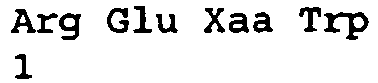
<223> AMIDATION - <400> 1

- <210> 2
<211> 4
<212> PRT
<213> synthetic peptide - <220>
<221> MOD_RES
<222> (1)..(1)
<223> ACETYLATION - <220>
<221> MOD_RES
<222> (4)..(4)
<223> AMIDATION - <400> 2

- <210> 3
<211> 4
<212> PRT
<213> synthetic peptide - <220>
<221> MOD_RES
<222> (1)..(1)
<223> ACETYLATION - <220>
<221> MOD_RES
<222> (4)..(4)
<223> AMIDATION - <400> 3

- <210> 4
<211> 4
<212> PRT
<213> synthetic peptide - <220>
<221> MOD_RES
<222> (1)..(1)
<223> ACETYLATION - <220>
<221> MOD_RES
<222> (3)..(3)
<223> X is N(Me) Arg - <220>
<221> MOD_RES
<222> (4)..(4)
<223> AMIDATION - <400> 4

- <210> 5
<211> 4
<212> PRT
<213> peptide - <220>
<221> MOD_RES
<222> (1)..(1)
<223> ACETYLATION - <220>
<221> MOD_RES
<222> (3)..(3)
<223> X is N(Me)Arg - <220>
<221> MOD_RES
<222> (4)..(4)
<223> AMIDATION - <400> 5

- <210> 6
<211> 4
<212> PRT
<213> peptide - <220>
<221> MOD_RES
<222> (1)..(1)
<223> ACETYLATION - <220>
<221> MOD_RES
<222> (3)..(3)
<223> X is N(Me)Arg - <220>
<221> MOD_RES
<222> (4)..(4)
<223> AMIDATION - <400> 6
- <210> 7
<211> 5
<212> PRT
<213> peptide - <220>
<221> MOD_RES
<222> (1)..(1)
<223> X is pGlu - <220>
<221> MOD_RES
<222> (3)..(3)
<223> X is N(Me)Arg - <220>
<221> misc_feature
<222> (4)..(4)
<223> Xaa can be any naturally occurring amino acid - <220>
<221> MOD_RES
<222> (5)..(5)
<223> AMIDATION - <400> 7

- <210> 8
<211> 5
<212> PRT
<213> peptide - <220>
<221> MOD_RES
<222> (1)..(1)
<223> X is pGlu - <220>
<221> MOD_RES
<222> (3)..(3)
<223> X is N(Me)Arg - <220>
<221> misc_feature
<222> (4)..(4)
<223> Xaa can be any naturally occurring amino acid - <220>
<221> MOD_RES
<222> (5)..(5)
<223> AMIDATION - <400> 8

- <210> 9
<211> 5
<212> PRT
<213> peptide - <220>
<221> MOD_RES
<222> (1)..(1)
<223> X is pGlu - <220>
<221> MOD_RES
<222> (3)..(3)
<223> X is N(Me)Arg - <220>
<221> misc_feature
<222> (4)..(4)
<223> Xaa can be any naturally occurring amino acid - <220>
<221> MOD_RES
<222> (5)..(5)
<223> AMIDATION - <400> 9

- <210> 10
<211> 5
<212> PRT
<213> peptide - <220>
<221> MOD_RES
<222> (1)..(1)
<223> X is pGlu - <220>
<221> misc_feature
<222> (4)..(4)
<223> Xaa can be any naturally occurring amino acid - <220>
<221> MOD_RES
<222> (5)..(5)
<223> AMIDATION - <400> 10

- <210> 11
<211> 5
<212> PRT
<213> peptide - <220>
<221> MOD_RES
<222> (1)..(1)
<223> X is pGlu - <220>
<221> MOD_RES
<222> (5)..(5)
<223> AMIDATION - <400> 11

- <210> 12
<211> 5
<212> PRT
<213> peptide - <220>
<221> MOD_RES
<222> (1)..(1)
<223> X is pGlu - <220>
<221> MOD_RES
<222> (5)..(5)
<223> AMIDATION - <400> 12

- <210> 13
<211> 4
<212> PRT
<213> peptide - <220>
<221> MOD_RES
<222> (1)..(1)
<223> ACETYLATION - <220>
<221> MOD_RES
<222> (2)..(2)
<223> Aib - <220>
<221> MOD_RES
<222> (4)..(4)
<223> Aib - <400> 13

- <210> 14
<211> 4
<212> PRT
<213> peptide - <220>
<221> MOD_RES
<222> (1)..(1)
<223> ACETYLATION - <220>
<221> MOD_RES
<222> (2)..(2)
<223> Aib - <220>
<221> MOD_RES
<222> (4)..(4)
<223> AMIDATION - <400> 14

- <210> 15
<211> 4
<212> PRT
<213> peptide - <220>
<221> MOD_RES
<222> (1)..(1)
<223> ACETYLATION - <220>
<221> MOD_RES
<222> (2)..(2)
<223> Aib - <220>
<221> MOD_RES
<222> (4)..(4)
<223> AMIDATION - <400> 15

- <210> 16
<211> 5
<212> PRT
<213> peptide - <220>
<221> MOD_RES
<222> (1)..(1)
<223> ACETYLATION - <220>
<221> MOD_RES
<222> (1)..(1)
<223> Aib - <220>
<221> MOD_RES
<222> (3)..(3)
<223> Aib - <220>
<221> MOD_RES
<222> (5)..(5)
<223> AMIDATION - <400> 16

- <210> 17
<211> 4
<212> PRT
<213> peptide - <220>
<221> MOD_RES
<222> (1)..(1)
<223> ACETYLATION - <220>
<221> MOD_RES
<222> (2)..(2)
<223> Aib - <220>
<221> MOD_RES
<222> (3)..(3)
<223> X is N(Me)Arg - <220>
<221> MOD_RES
<222> (4)..(4)
<223> AMIDATION - <400> 17

- <210> 18
<211> 4
<212> PRT
<213> peptide - <220>
<221> MOD_RES
<222> (1)..(1)
<223> ACETYLATION - <220>
<221> MOD_RES
<222> (2)..(2)
<223> Aib - <220>
<221> MOD_RES
<222> (3)..(3)
<223> X is N(Me)Arg - <220>
<221> MOD_RES
<222> (4)..(4)
<223> AMIDATION - <400> 18

- <210> 19
<211> 4
<212> PRT
<213> peptide - <220>
<221> MOD_RES
<222> (1)..(1)
<223> ACETYLATION - <220>
<221> MOD_RES
<222> (2)..(2)
<223> Aib - <220>
<221> MOD_RES
<222> (3)..(3)
<223> X is N(Me)Arg - <220>
<221> MOD_RES
<222> (4)..(4)
<223> AMIDATION - <400> 19

- <210> 20.
<211> 5
<212> PRT
<213> peptide - <220>
<221> MOD_RES
<222> (1)..(1)
<223> X is pGlu - <220>
<221> MOD_RES
<222> (3)..(3)
<223> Aib - <220>
<221> MOD_RES
<222> (4)..(4)
<223> X is N(Me)Arg - <220>
<221> MOD_RES
<222> (5)..(5)
<223> AMIDATION - <400> 20

- <210> 21
<211> 5
<212> PRT
<213> peptide - <220>
<221> MOD_RES
<222> (1)..(1)
<223> X is pGlu - <220>
<221> MOD_RES
<222> (3)..(3)
<223> Aib - <220>
<221> MOD_RES
<222> (4)..(4)
<223> X is N(Me)Arg - <220>
<221> MOD_RES
<222> (5)..(5)
<223> AMIDATION - <400> 21

- <210> 22
<211> 5
<212> PRT
<213> peptide - <220>
<221> MOD_RES
<222> (1)..(1)
<223> X is pGlu - <220>
<221> MOD_RES
<222> (3)..(3)
<223> Aib - <220>
<221> MOD_RES
<222> (4)..(4)
<223> X is N(Me)Aeg - <220>
<221> MOD_RES
<222> (5)..(5)
<223> AMIDATION - <400> 22

- <210> 23
<211> 5
<212> PRT
<213> peptide - <220>
<221> MOD_RES
<222> (1)..(1)
<223> pGlu - <220>
<221> MOD_RES
<222> (3)..(3)
<223> Aib - <220>
<221> MOD_RES
<222> (5)..(5)
<223> AMIDATION - <400> 23

- <210> 24
<211> 5
<212> PRT
<213> peptide - <220>
<221> MOD_RES
<222> (1)..(1)
<223> pGlu - <220>
<221> MOD_RES
<222> (3)..(3)
<223> Aib - <220>
<221> MOD_RES
<222> (5)..(5)
<223> AMIDATION - <400> 24

- <210> 25
<211> 5
<212> PRT
<213> peptide - <220>
<221> MOD_RES
<222> (1)..(1)
<223> pGlu - <220>
<221> MOD_RES
<222> (3)..(3)
<223> Aib - <220>
<221> MOD_RES
<222> (5)..(5)
<223> AMIDATION - <400> 25

- <210> 26
<211> 4
<212> PRT
<213> peptide - <220>
<221> MOD_RES
<222> (1).. (1)
<223> ACETYLATION - <220>
<221> MOD_RES
<222> (2).. (2)
<223> Ac5c - <220>
<221> MOD_RES
<222> (4)..(4)
<223> AMIDATION - <400> 26

- <210> 27
<211> 4
<212> PRT
<213> peptide - <220>
<221> MOD_RES
<222> (1)..(1)
<223> ACETYLATION - <220>
<221> MOD_RES
<222> (2)..(2)
<223> Ac5c - <220>
<221> MOD_RES
<222> (4)..(4)
<223> AMIDATION - <400> 27

- <210> 28
<211> 4
<212> PRT
<213> peptide - <220>
<221> MOD_RES
<222> (1)..(1)
<223> ACETYLATION - <220>
<221> MOD_RES
<222> (2)..(2)
<223> Ac5c - <220>
<221> MOD_RES
<222> (4)..(4)
<223> AMIDATION - <400> 28

- <210> 29
<211> 4
<212> PRT
<213> peptide - <220>
<221> MOD_RES
<222> (1)..(1)
<223> ACETYLATION - <220>
<221> MOD_RES
<222> (2)..(2)
<223> Ac5c - <220>
<221> MOD_RES
<222> (3)..(3)
<223> N(Me)Arg - <220>
<221> MOD_RES
<222> (4)..(4)
<223> AMIDATION - <400> 29

- <210> 30
<211> 4
<212> PRT
<213> peptide - <220>
<221> MOD_RES
<222> (1).. (1)
<223> ACETYLATION - <220>
<221> MOD_RES
<222> (2)..(2)
<223> Ac5c - <220>
<221> MOD_RES
<222> (3)..(3)
<223> N(Me)Arg - <220>
<221> MOD_RES
<222> (4)..(4)
<223> AMIDATION - <400> 30

- <210> 31
<211> 4
<212> PRT
<213> peptide - <220>
<221> MOD_RES
<222> (1).. (1)
<223> ACETYLATION - <220>
<221> MOD_RES
<222> (2)..(2)
<223> Ac5c - <220>
<221> MOD_RES
<222> (3)..(3)
<223> N(Me)Arg - <220>
<221> MOD_RES
<222> (4)..(4)
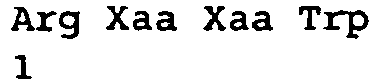
<223> AMIDATION - <400> 31
- <210> 32
<211> 5
<212> PRT
<213> peptide - <220>
<221> MOD_RES
<222> (1)..(1)
<223> pGlu - <220>
<221> MOD_RES
<222> (3)..(3)
<223> Ac5c - <220>
<221> MOD_RES
<222> (4)..(4)
<223> N(Me)Arg - <220>
<221> MOD_RES
<222> (5)..(5)
<223> AMIDATION - <400> 32

- <210> 33
<211> 5
<212> PRT
<213> peptide - <220>
<221> MOD_RES
<222> (1)..(1)
<223> ACETYLATION - <220>
<221> MOD_RES
<222> (3)..(3)
<223> Ac5c - <220>
<221> MOD_RES
<222> (4)..(4)
<223> N(Me)Arg - <220>
<221> MOD_RES
<222> (5)..(5)
<223> AMIDATION - <400> 33

- <210> 34
<211> 5
<212> PRT
<213> peptide - <220>
<221> MOD_RES
<222> (1).. (1)
<223> pGlu - <220>
<221> MOD_RES
<222> (3)..(3)
<223> Ac5c - <220>
<221> MOD_RES
<222> (4)..(4)
<223> N(Me)Arg - <220>
<221> MOD_RES
<222> (5)..(5)
<223> AMIDATION - <400> 34

- <210> 35
<211> 5
<212> PRT
<213> peptide - <220>
<221> MOD_RES
<222> (1)..(1)
<223> pGlu - <220>
<221> MOD_RES
<222> (3)..(3)
<223> Ac5c - <220>
<221> MOD_RES
<222> (5)..(5)
<223> AMIDATION - <400> 35

- <210> 36
<211> 5
<212> PRT
<213> peptide - <220>
<221> MOD_RES
<222> (1)..(1)
<223> pGlu - <220>
<221> MOD_RES
<222> (3)..(3)
<223> Ac5c - <220>
<221> MOD_RES
<222> (5)..(5)
<223> AMIDATION - <400> 36

- <210> 37
<211> 5
<212> PRT
<213> peptide - <220>
<221> MOD_RES
<222> (1).. (1)
<223> pGlu - <220>
<221> MOD_RES
<222> (3)..(3)
<223> Ac5c - <220>
<221> MOD_RES
<222> (5)..(5)
<223> AMIDATION - <400> 37

- <210> 38
<211> 4
<212> PRT
<213> peptide - <220>
<221> MOD_RES
<222> (1)..(1)
<223> ACETYLATION - <400> 38

- <210> 39
<211> 4
<212> PRT
<213> peptide - <220>
<221> MOD_RES
<222> (1).. (1)
<223> ACETYLATION - <400> 39

- <210> 40
<211> 4
<212> PRT
<213> peptide - <220>
<221> MOD_RES
<222> (1).. (1)
<223> ACETYLATION - <400> 40

- <210> 41
<211> 4
<212> PRT
<213> peptide - <220>
<221> MOD_RES
<222> (1).. (1)
<223> ACETYLATION - <220>
<221> MOD_RES
<222> (3)..(3)
<223> N(Me)Arg - <400> 41

- <210> 42
<211> 5
<212> PRT
<213> peptide - <220>
<221> MOD_RES
<222> (1).. (1)
<223> pGlu - <220>
<221> MOD_RES
<222> (4)..(4)
<223> Arg(Me) - <400> 42

- <210> 43
<211> 5
<212> PRT
<213> peptide - <220>
<221> MOD_RES
<222> (1).. (1)
<223> pGlu - <400> 43

- <210> 44
<211> 4
<212> PRT
<213> peptide - <220>
<221> MOD_RES
<222> (1)..(1)
<223> ACETYLATION - <220>
<221> MOD_RES
<222> (2)..(2)
<223> Aib - <220>
<221> MOD_RES
<222> (3)..(3)
<223> Arg(Me) - <400> 44

- <210> 45
<211> 4
<212> PRT
<213> peptide - <220>
<221> MOD_RES
<222> (1)..(1)
<223> ACETYLATION - <220>
<221> MOD_RES
<222> (2)..(2)
<223> Aib - <220>
<221> MOD_RES
<222> (3)..(3)
<223> Arg(Me) - <400> 45

- <210> 46
<211> 5
<212> PRT
<213> peptide - <220>
<221> MOD_RES
<222> (1)..(1)
<223> pGlu - <220>
<221> MOD_RES
<222> (3)..(3)
<223> Aib - <220>
<221> MOD_RES
<222> (4)..(4)
<223> Arg(Me) - <400> 46

- <210> 47
<211> 5
<212> PRT
<213> peptide - <220>
<221> MOD_RES
<222> (1)..(1)
<223> pGlu - <220>
<221> MOD_RES
<222> (3)..(3)
<223> Aib - <400> 47

- <210> 48
<211> 4
<212> PRT
<213> peptide - <220>
<221> MOD_RES
<222> (1)..(1)
<223> ACETYLATION - <220>
<221> MOD_RES
<222> (2)..(2)
<223> Ac5c - <400> 48

- <210> 49
<211> 4
<212> PRT
<213> peptide - <220>
<221> MOD_RES
<222> (1)..(1)
<223> ACETYLATION - <220>
<221> MOD_RES
<222> (2)..(2)
<223> Ac5c - <220>
<221> MOD_RES
<222> (3)..(3)
<223> Arg(Me) - <400> 49

- <210> 50
<211> 5
<212> PRT
<213> peptide - <220>
<221> MOD_RES
<222> (1)..(1)
<223> pGlu - <220>
<221> MOD_RES
<222> (3)..(3)
<223> Ac5c - <220>
<221> MOD_RES
<222> (4)..(4)
<223> Arg(Me) - <400> 50

- <210> 51
<211> 5
<212> PRT
<213> peptide - <220>
<221> MOD_RES
<222> (1)..(1)
<223> pGlu - <220>
<221> MOD_RES
<222> (3)..(3)
<223> Ac5c - <400> 51

- <210> 52
<211> 4
<212> PRT
<213> peptide - <220>
<221> MOD_RES
<222> (1)..(1)
<223> ACETYLATION - <220>
<221> MOD_RES
<222> (1)..(1)
<223> N(Me)Arg - <220>
<221> MOD_RES
<222> (2)..(2)
<223> Aib - <220>
<221> MOD_RES
<222> (4)..(4)
<223> AMIDATION - <400> 52

- <210> 53
<211> 4
<212> PRT
<213> peptide - <220>
<221> MOD_RES
<222> (1)..(1)
<223> ACETYLATION - <220>
<221> MOD_RES
<222> (1)..(1)
<223> N(Me)Arg - <220>
<221> MOD_RES
<222> (2)..(2)
<223> Aib - <220>
<221> MOD_RES
<222> (3)..(3)
<223> N(Me)Arg - <220>
<221> MOD_RES
<222> (4)..(4)
<223> AMIDATION - <400> 53


- <210> 54
<211> 4
<212> PRT
<213> peptide - <220>
<221> MOD_RES
<222> (1).. (1)
<223> ACETYLATION - <220>
<221> MOD_RES
<222> (2)..(2)
<223> Aib - <220>
<221> MOD_RES
<222> (3)..(3)
<223> N(Me)Arg - <220>
<221> MOD_RES
<222> (4)..(4)
<223> AMIDATION - <400> 54

- <210> 55
<211> 4
<212> PRT
<213> peptide - <220>
<221> MOD_RES
<222> (1).. (1)
<223> ACETYLATION - <220>
<221> MOD_RES
<222> (2)..(2)
<223> Aib - <220>
<221> MOD_RES
<222> (4)..(4)
<223> alpha(Me)Phe - <220>
<221> MOD_RES
<222> (4)..(4)
<223> AMIDATION - <400> 55

- <210> 56
<211> 4
<212> PRT
<213> peptide - <220>
<221> MOD_RES
<222> (1)..(1)
<223> ACETYLATION - <220>
<221> MOD_RES
<222> (1).. (1)
<223> N(Me)Arg - <220>
<221> MOD_RES
<222> (2)..(2)
<223> Aib - <220>
<221> MOD_RES
<222> (3)..(3)
<223> N(Me)Arg - <220>
<221> MOD_RES
<222> (4)..(4)
<223> alpha.(Me)Phe - <220>
<221> MOD_RES
<222> (4)..(4)
<223> AMIDATION - <400> 56

- <210> 57
<211> 4
<212> PRT
<213> peptide - <220>
<221> MOD_RES
<222> (1)..(1)
<223> ACETYLATION - <220>
<221> MOD_RES
<222> (1)..(1)
<223> N(Me)Arg - <220>
<221> MOD_RES
<222> (2)..(2)
<223> Aib - <220>
<221> MOD_RES
<222> (3)..(3)
<223> N(Me)Arg - <220>
<221> MOD_RES
<222> (4)..(4)
<223> alpha(Me)Phe - <220>
<221> MOD_RES
<222> (4).. (4)
<223> AMIDATION - <400> 57
- <210> 58
<211> 4
<212> PRT
<213> peptide - <220>
<221> MOD_RES
<222> (1)..(1)
<223> ACETYLATION - <220>
<221> MOD_RES
<222> (2)..(2)
<223> Aib - <220>
<221> MOD_RES
<222> (3)..(3)
<223> N(Me)Arg - <220>
<221> MOD_RES
<222> (4)..(4)
<223> alpha(Me)Phe - <220>
<221> MOD_RES
<222> (4)..(4)
<223> AMIDATION - <400> 58

- <210> 59
<211> 5
<212> PRT
<213> peptide - <220>
<221> MOD_RES
<222> (1).. (1)
<223> ACETYLATION - <220>
<221> MOD_RES
<222> (1)..(1)
<223> Aib - <220>
<221> MOD_RES
<222> (2)..(2)
<223> N(Me)Arg - <220>
<221> MOD_RES
<222> (3)..(3)
<223> Aib - <220>
<221> MOD_RES
<222> (4)..(4)
<223> AMIDATION - <400> 59

- <210> 60
<211> 5
<212> PRT
<213> peptide - <220>
<221> MOD_RES
<222> (1)..(1)
<223> ACETYLATION - <220>
<221> MOD_RES
<222> (1)..(1)
<223> Aib - <220>
<221> MOD_RES
<222> (2)..(2)
<223> N(Me)Arg - <220>
<221> MOD_RES
<222> (3)..(3)
<223> Aib - <220>
<221> MOD_RES
<222> (4)..(4)
<223> N(Me)Arg - <220>
<221> MOD_RES
<222> (5)..(5)
<223> AMIDATION - <400> 60

- <210> 61
<211> 5
<212> PRT
<213> peptide - <220>
<221> MOD_RES
<222> (1)..(1)
<223> ACETYLATION - <220>
<221> MOD_RES
<222> (1)..(1)
<223> Aib - <220>
<221> MOD_RES
<222> (3)..(3)
<223> Aib - <220>
<221> MOD_RES
<222> (4)..(4)
<223> N(Me)Arg - <220>
<221> MOD_RES
<222> (5)..(5)
<223> AMIDATION - <400> 61

- <210> 62
<211> 5
<212> PRT
<213> peptide - <220>
<221> MOD_RES
<222> (1)..(1)
<223> ACETYLATION - <220>
<221> MOD_RES
<222> (1)..(1)
<223> Aib - <220>
<221> MOD_RES
<222> (3)..(3)
<223> Aib - <220>
<221> MOD_RES
<222> (4)..(4)
<223> alpha(Me)Phe - <220>
<221> MOD_RES
<222> (4)..(4)
<223> AMIDATION - <220>
<221> misc_feature
<222> (5)..(5)
<223> Xaa can be any naturally occurring amino acid - <400> 62

- <210> 63
<211> 5
<212> PRT
<213> peptide - <220>
<221> MOD_RES
<222> (1)..(1)
<223> ACETYLATION - <220>
<221> MOD_RES
<222> (1)..(1)
<223> Aib - <220>
<221> MOD_RES
<222> (2)..(2)
<223> N(Me)Arg - <220>
<221> MOD_RES
<222> (3)..(3)
<223> Aib - <220>
<221> MOD_RES
<222> (5)..(5)
<223> alpha(Me)Phe - <220>
<221> MOD_RES
<222> (5)..(5)
<223> AMIDATION - <400> 63

- <210> 64
<211> 5
<212> PRT
<213> peptide - <220>
<221> MOD_RES
<222> (1)..(1)
<223> ACETYLATION - <220>
<221> MOD_RES
<222> (1)..(1)
<223> Aib - <220>
<221> MOD_RES
<222> (2)..(2)
<223> N(Me)Arg - <220>
<221> MOD_RES
<222> (3)..(3)
<223> Aib - <220>
<221> MOD_RES
<222> (4)..(4)
<223> N(Me)Arg - <220>
<221> MOD_RES
<222> (5)..(5)
<223> alpha(Me)Phe - <220>
<221> MOD_RES
<222> (5)..(5)
<223> AMIDATION - <400> 64

- <210> 65
<211> 5
<212> PRT
<213> peptide - <220>
<221> MOD_RES
<222> (1)..(1)
<223> ACETYLATION - <220>
<221> MOD_RES
<222> (1)..(1)
<223> Aib - <220>
<221> MOD_RES
<222> (3)..(3)
<223> Aib - <220>
<221> MOD_RES
<222> (4)..(4)
<223> N(Me)Arg - <220>
<221> MOD_RES
<222> (5)..(5)
<223> alpha(Me)Phe - <220>
<221> MOD_RES
<222> (5)..(5)
<223> AMIDATION - <400> 65

Claims (9)
- Peptides and their functionally equivalent derivatives, in salified or non-salified form, with the general formula L1-X1-X2-X3-X4, wherein:L1 is H, or acyl;X1 and X3, which are equal or different, optionally N-alkylated and/or Cα-alkylated, are selected from Arg, Orn and Lys, optionally guanidinylated, and phenylalanine substituted in the meta or para positions with an amine or guanidine group;X2 is chosen from Aib, Ac3c, Ac4c, Ac5c and Ac6c, optionally N-alkylated;X4 is chosen from among Phe, h-Phe, Tyr, Trp, 1-Nal, 2-Nal, h-1-Nal, h-2-Nal, Cha, Chg and Phg, optionally amidated and/or Cα-alkylated.
- Peptides as claimed in claim 1, wherein the acylating and alkylating residues contain 1 to 9 carbon atoms, the amidating C-terminal residue contains 0 to 14 carbon atoms, and the Cα-alkylating residue contains 1 to 9 carbon atoms.
- Peptides as claimed in claim 1, wherein the acylating and alkylating residues contain 1 or 2 carbon atoms, and the amidating C-terminal residue contains 0 to 5 carbon atoms.
- Peptides as claimed in claims 1 to 3 with the sequence: Ace-Arg-Aib-Arg-Phe-NH2; Ace-Arg-Aib-Arg-Tyr-NH2; Ace-Arg-Aib-Arg-Trp-NH2; Ace-Arg-Aib-N(Me)Arg-Phe-NH2; Ace-Arg-Aib-N(Me)Arg-Tyr-NH2; Ace-Arg-Aib-N(Me)Arg-Trp-NH2; Ace-Arg-Ac5c-Arg-Phe-NH2; Ace-Arg-Ac5c-Arg-Tyr-NH2: Ace-Arg-Ac5c-Arg-Trp-NH2; Ace-Arg-Ac5c-N(Me)Arg-Phe-NH2; Ace-Arg-Ac5c-N(Me)Arg-Tyr-NH2; Ace-Arg-Ac5c-N(Me)Arg-Trp-NH2; Ace-Arg-Aib-Arg-Phe-OH; Ace-Arg-Aib-N(Me)Arg-Phe-OH; Ace-Arg-Ac5c-Arg-Phe-OH; Ace-Arg-Ac5c-N(Me)Arg-Tyr-OH; Ace-N(Me)Arg-Aib-Arg-Phe-NH2; Ace-N(Me)Arg-Aib-N(Me)Arg-Phe-NH2; Ace-Arg-Aib-N(Me)Arg-Phe-NH2; Ace-Arg-Aib-Arg-α(Me)Phe-NH2; Ace-N(Me)Arg-Aib-Arg-α(Me)Phe-NH2; Ace-N(Me)Arg-Aib-N(Me)Arg-α(Me)Phe-NH2; Ace-Arg-Aib-N(Me)Arg-α(Me)Phe-NH2.
- Pharmaceutical compositions comprising one of the compounds claimed in claims 1 to 4, in association with suitable vehicles or excipients.
- Use of a compound as claimed in claims 1 to 4, for the manufacture of a medicament for prevention and treatment of local and metastatic invasion by malignant tumours.
- Use of a compound as claimed in claims 1 to 4, for the manufacture of a medicament for prevention and treatment of retinal vasculopathies, retinopathies, macular degeneration and oedema, and Kaposi's sarcoma.
- Use of a compound as claimed in claims 1 to 4, for the manufacture of a medicament for prevention and treatment of autoimmune diseases, rheumatoid arthritis, psoriasis, and chronic granulomatous disorders.
- Use of a compound as claimed in claims 1 to 4, for the manufacture of a medicament for prevention and treatment of herpes virus infection.
Priority Applications (8)
| Application Number | Priority Date | Filing Date | Title |
|---|---|---|---|
| EP10156125A EP2230245B1 (en) | 2006-08-09 | 2007-07-19 | Peptides having pharmacological activity for treating disorders associated with altered cell migration, such as cancer |
| MEP-2016-16A ME02425B (en) | 2006-08-09 | 2007-07-19 | Peptides having pharmacological activity for treating disorders associated with altered cell migration, such as cancer |
| DK10156101.7T DK2213680T3 (en) | 2006-08-09 | 2007-07-19 | Peptides with pharmacological activity to treat disorders associated with altered cell migration such as cancer |
| EP10156101A EP2213680B1 (en) | 2006-08-09 | 2007-07-19 | Peptides having pharmacological activity for treating disorders associated with altered cell migration, such as cancer |
| PL10156101T PL2213680T3 (en) | 2006-08-09 | 2007-07-19 | Peptides having pharmacological activity for treating disorders associated with altered cell migration, such as cancer |
| SI200731228T SI2049562T1 (en) | 2006-08-09 | 2007-07-19 | Peptides having pharmacological activity for treating disorders associated with altered cell migration, such as cancer |
| PL07786192T PL2049562T3 (en) | 2006-08-09 | 2007-07-19 | Peptides having pharmacological activity for treating disorders associated with altered cell migration, such as cancer |
| CY20131100329T CY1113941T1 (en) | 2006-08-09 | 2013-04-23 | Peptides that have pharmacological activity for the therapeutic treatment of diseases, which are associated with the transformed cells |
Applications Claiming Priority (2)
| Application Number | Priority Date | Filing Date | Title |
|---|---|---|---|
| IT001607A ITMI20061607A1 (en) | 2006-08-09 | 2006-08-09 | PEPTIDES WITH PHARMACOLOGICAL ACTIVITY |
| PCT/EP2007/006424 WO2008017372A1 (en) | 2006-08-09 | 2007-07-19 | Peptides having pharmacological activity for treating disorders associated with altered cell migration, such as cancer |
Related Child Applications (2)
| Application Number | Title | Priority Date | Filing Date |
|---|---|---|---|
| EP10156101.7 Division-Into | 2010-03-10 | ||
| EP10156125.6 Division-Into | 2010-03-10 |
Publications (2)
| Publication Number | Publication Date |
|---|---|
| EP2049562A1 EP2049562A1 (en) | 2009-04-22 |
| EP2049562B1 true EP2049562B1 (en) | 2013-02-27 |
Family
ID=38776401
Family Applications (3)
| Application Number | Title | Priority Date | Filing Date |
|---|---|---|---|
| EP10156125A Active EP2230245B1 (en) | 2006-08-09 | 2007-07-19 | Peptides having pharmacological activity for treating disorders associated with altered cell migration, such as cancer |
| EP10156101A Not-in-force EP2213680B1 (en) | 2006-08-09 | 2007-07-19 | Peptides having pharmacological activity for treating disorders associated with altered cell migration, such as cancer |
| EP07786192A Active EP2049562B1 (en) | 2006-08-09 | 2007-07-19 | Peptides having pharmacological activity for treating disorders associated with altered cell migration, such as cancer |
Family Applications Before (2)
| Application Number | Title | Priority Date | Filing Date |
|---|---|---|---|
| EP10156125A Active EP2230245B1 (en) | 2006-08-09 | 2007-07-19 | Peptides having pharmacological activity for treating disorders associated with altered cell migration, such as cancer |
| EP10156101A Not-in-force EP2213680B1 (en) | 2006-08-09 | 2007-07-19 | Peptides having pharmacological activity for treating disorders associated with altered cell migration, such as cancer |
Country Status (22)
| Country | Link |
|---|---|
| US (1) | US8354374B2 (en) |
| EP (3) | EP2230245B1 (en) |
| JP (1) | JP5384342B2 (en) |
| KR (1) | KR101464576B1 (en) |
| CN (1) | CN101501060B (en) |
| AT (1) | ATE544775T1 (en) |
| AU (1) | AU2007283150B2 (en) |
| BR (1) | BRPI0715407A2 (en) |
| CA (1) | CA2660183C (en) |
| CY (2) | CY1113941T1 (en) |
| DK (2) | DK2213680T3 (en) |
| ES (2) | ES2404052T3 (en) |
| HR (1) | HRP20130331T1 (en) |
| IL (1) | IL196929A (en) |
| IT (1) | ITMI20061607A1 (en) |
| ME (1) | ME02425B (en) |
| MX (1) | MX2009001452A (en) |
| PL (2) | PL2049562T3 (en) |
| PT (2) | PT2049562E (en) |
| RS (1) | RS52786B (en) |
| SI (2) | SI2213680T1 (en) |
| WO (1) | WO2008017372A1 (en) |
Families Citing this family (18)
| Publication number | Priority date | Publication date | Assignee | Title |
|---|---|---|---|---|
| AP3329A (en) | 2009-07-13 | 2015-06-30 | Zealand Pharma As | Acylated glucagon analogues |
| SG181797A1 (en) | 2009-12-18 | 2012-07-30 | Idenix Pharmaceuticals Inc | 5,5-fused arylene or heteroarylene hepatitis c virus inhibitors |
| WO2013044500A1 (en) * | 2011-09-30 | 2013-04-04 | Cheng Yun | Use of hepatitis c virus (hcv) immunogenic peptide or its derivatives in prevention or treatment of arthritis |
| NZ702333A (en) | 2012-05-03 | 2017-06-30 | Zealand Pharma As | Gip-glp-1 dual agonist compounds and methods |
| MX356957B (en) | 2012-07-23 | 2018-06-20 | Zealand Pharma As | Glucagon analogues. |
| TWI608013B (en) | 2012-09-17 | 2017-12-11 | 西蘭製藥公司 | Glucagon analog |
| US9988429B2 (en) | 2013-10-17 | 2018-06-05 | Zealand Pharma A/S | Glucagon analogues |
| LT3057984T (en) | 2013-10-17 | 2018-12-27 | Zealand Pharma A/S | Acylated glucagon analogues |
| KR102310392B1 (en) | 2013-11-06 | 2021-10-13 | 질랜드 파마 에이/에스 | Glucagon-glp-1-gip triple agonist compounds |
| AU2014345569B2 (en) | 2013-11-06 | 2020-08-13 | Zealand Pharma A/S | GIP-GLP-1 dual agonist compounds and methods |
| RU2716985C2 (en) | 2014-10-29 | 2020-03-17 | Зилэнд Фарма А/С | Gip agonist compounds and methods |
| JP6989385B2 (en) | 2015-04-16 | 2022-01-05 | ジーランド ファーマ アクティーゼルスカブ | Acylated glucagon analog |
| ITUB20169928A1 (en) * | 2016-01-12 | 2017-07-12 | Medical And Biotechnological Services In Sigla M B S Srl | PHARMACEUTICAL FORMULATIONS FOR THE TREATMENT OF DIABETES |
| ITUB20169937A1 (en) * | 2016-01-12 | 2017-07-12 | Medical And Biotechnological Services In Sigla M B S Srl | PHARMACEUTICAL FORMULATIONS AND THEIR USE FOR THE TREATMENT OF PIGMENTAL RETINITIS |
| EP3231811A1 (en) | 2016-04-11 | 2017-10-18 | Istituto Nazionale Tumori Irccs "Fondazione G. Pascale" | Retro-inverso peptide inhibitors of cell migration, extracellular matrix and endothelial invasion by tumor cells |
| WO2017179647A1 (en) * | 2016-04-14 | 2017-10-19 | Taoヘルスライフファーマ株式会社 | Peptide for inhibiting binding of amylospheroids (aspd), and evaluation and screening method |
| US20210324002A1 (en) | 2018-09-28 | 2021-10-21 | Nutcracker Therapeutics, Inc. | Tertiary amino lipidated cationic peptides for nucleic acid delivery |
| IT202200007754A1 (en) | 2022-04-19 | 2023-10-19 | Iridea S R L | NEW COMPOUNDS WITH PHARMACOLOGICAL ACTIVITY |
Family Cites Families (18)
| Publication number | Priority date | Publication date | Assignee | Title |
|---|---|---|---|---|
| ES8202788A1 (en) * | 1981-04-23 | 1982-02-16 | Jorba Puigsubira Jose Ma | A process for the preparation of lysine-tryptophan oligopeptides and of their physiologically-useful derivatives and salts |
| CA2094785A1 (en) * | 1992-05-08 | 1993-11-09 | Jean Gariepy | Metal chelating peptide |
| US20030009022A1 (en) * | 1993-03-31 | 2003-01-09 | Cadus Pharmaceutical Corporation | Methods and compositions for identifying receptor effectors |
| US6046167A (en) | 1998-03-25 | 2000-04-04 | University Of Cincinnati | Peptide YY analogs |
| US6388054B1 (en) | 1998-08-20 | 2002-05-14 | John M. Stewart | Anti-cancer compounds |
| JP4486187B2 (en) | 1998-10-27 | 2010-06-23 | 武田薬品工業株式会社 | Novel G protein-coupled receptor protein, its DNA and its ligand |
| DK174549B1 (en) * | 2000-02-01 | 2003-05-26 | Raaco Internat A S | Device for recording and retaining tools |
| WO2001071342A2 (en) * | 2000-03-23 | 2001-09-27 | Novartis Ag | Identification of mast cell/basophil activation inhibitors |
| CA2404257A1 (en) | 2000-03-30 | 2001-10-11 | Takeda Chemical Industries, Ltd. | Novel protein, dna thereof and process for producing the same |
| US6689938B2 (en) * | 2000-09-13 | 2004-02-10 | Oklajoma Medical Research Foundation | Method for treatment of insulin resistance in obesity and diabetes |
| EP1365797B1 (en) * | 2001-01-25 | 2007-05-02 | Fondazione Centro San Raffaele Del Monte Tabor | Antibodies modulating the upa/upar interaction and uses thereof |
| US6815426B2 (en) * | 2001-02-16 | 2004-11-09 | E. I. Du Pont De Nemours And Company | Angiogenesis-inhibitory tripeptides, compositions and their methods of use |
| WO2002085399A1 (en) | 2001-04-20 | 2002-10-31 | Takeda Chemical Industries, Ltd. | Peptide-containing preparations |
| EP1414849B1 (en) * | 2002-01-29 | 2009-04-29 | Posco | Immune-modulating peptide |
| US7267942B2 (en) * | 2003-03-24 | 2007-09-11 | The University Of Hong Kong | Diagnostic assay for the human virus causing severe acute respiratory syndrome (SARS) |
| MXPA06014206A (en) * | 2004-06-25 | 2007-02-14 | Takeda Pharmaceutical | Metastin derivatives and use thereof. |
| US8143228B2 (en) * | 2004-07-12 | 2012-03-27 | Medical Research Fund Of Tel Aviv Sourasky Medical Center | Agents capable of downregulating an MSF-A dependent HIF-1α and use thereof in cancer treatment |
| EP2799449A1 (en) * | 2006-05-25 | 2014-11-05 | Bayer Intellectual Property GmbH | Dimeric molecular complexes |
-
2006
- 2006-08-09 IT IT001607A patent/ITMI20061607A1/en unknown
-
2007
- 2007-07-19 EP EP10156125A patent/EP2230245B1/en active Active
- 2007-07-19 ME MEP-2016-16A patent/ME02425B/en unknown
- 2007-07-19 US US12/376,465 patent/US8354374B2/en not_active Expired - Fee Related
- 2007-07-19 PT PT77861920T patent/PT2049562E/en unknown
- 2007-07-19 JP JP2009523170A patent/JP5384342B2/en not_active Expired - Fee Related
- 2007-07-19 SI SI200731220T patent/SI2213680T1/en unknown
- 2007-07-19 BR BRPI0715407-0A patent/BRPI0715407A2/en not_active IP Right Cessation
- 2007-07-19 CA CA2660183A patent/CA2660183C/en not_active Expired - Fee Related
- 2007-07-19 EP EP10156101A patent/EP2213680B1/en not_active Not-in-force
- 2007-07-19 PT PT101561017T patent/PT2213680E/en unknown
- 2007-07-19 ES ES07786192T patent/ES2404052T3/en active Active
- 2007-07-19 HR HRP20130331TT patent/HRP20130331T1/en unknown
- 2007-07-19 RS RS20130195A patent/RS52786B/en unknown
- 2007-07-19 DK DK10156101.7T patent/DK2213680T3/en active
- 2007-07-19 DK DK07786192.0T patent/DK2049562T3/en active
- 2007-07-19 EP EP07786192A patent/EP2049562B1/en active Active
- 2007-07-19 MX MX2009001452A patent/MX2009001452A/en active IP Right Grant
- 2007-07-19 CN CN2007800292667A patent/CN101501060B/en not_active Expired - Fee Related
- 2007-07-19 WO PCT/EP2007/006424 patent/WO2008017372A1/en not_active Ceased
- 2007-07-19 AT AT10156125T patent/ATE544775T1/en active
- 2007-07-19 KR KR1020097002560A patent/KR101464576B1/en not_active Expired - Fee Related
- 2007-07-19 PL PL07786192T patent/PL2049562T3/en unknown
- 2007-07-19 PL PL10156101T patent/PL2213680T3/en unknown
- 2007-07-19 SI SI200731228T patent/SI2049562T1/en unknown
- 2007-07-19 AU AU2007283150A patent/AU2007283150B2/en not_active Ceased
- 2007-07-19 ES ES10156101T patent/ES2406090T3/en active Active
-
2009
- 2009-02-05 IL IL196929A patent/IL196929A/en active IP Right Grant
-
2013
- 2013-04-23 CY CY20131100329T patent/CY1113941T1/en unknown
- 2013-05-29 CY CY20131100426T patent/CY1114014T1/en unknown
Also Published As
Similar Documents
| Publication | Publication Date | Title |
|---|---|---|
| EP2230245B1 (en) | Peptides having pharmacological activity for treating disorders associated with altered cell migration, such as cancer | |
| EP2409988B1 (en) | Peptide fragments for inducing synthesis of extracellular matrix proteins | |
| EP1263471B1 (en) | Antimicrobial compounds and formulations | |
| DK2496596T3 (en) | THERAPEUTIC PEPTIDES | |
| EP3559020B1 (en) | New stapled-peptides and uses thereof | |
| EP3647319B1 (en) | Peptide compound, application thereof and composition containing same | |
| US7655629B2 (en) | Peptides and their use for the treatment of HIV infections | |
| WO2017093897A1 (en) | Aromatic-cationic peptides conjugated to antioxidants and their use in treating complex regional pain syndrome | |
| HK1136304B (en) | Peptides having pharmacological activity for treating disorders associated with altered cell migration, such as cancer | |
| HK1161599B (en) | Peptide fragments for inducing synthesis of extracellular matrix proteins | |
| HK1217346B (en) | Peptide fragments for inducing synthesis of extracellular matrix proteins | |
| HK1161600B (en) | Peptide fragments for inducing synthesis of extracellular matrix proteins |
Legal Events
| Date | Code | Title | Description |
|---|---|---|---|
| PUAI | Public reference made under article 153(3) epc to a published international application that has entered the european phase |
Free format text: ORIGINAL CODE: 0009012 |
|
| 17P | Request for examination filed |
Effective date: 20090217 |
|
| AK | Designated contracting states |
Kind code of ref document: A1 Designated state(s): AT BE BG CH CY CZ DE DK EE ES FI FR GB GR HU IE IS IT LI LT LU LV MC MT NL PL PT RO SE SI SK TR |
|
| AX | Request for extension of the european patent |
Extension state: AL BA HR MK RS |
|
| 17Q | First examination report despatched |
Effective date: 20090804 |
|
| RAP1 | Party data changed (applicant data changed or rights of an application transferred) |
Owner name: PHARMAPHELIX S.R.L |
|
| RIN1 | Information on inventor provided before grant (corrected) |
Inventor name: DE ROSE, MARIO Inventor name: CARRIERO, MARIA VINCENZA Inventor name: PAVONE, VINCENZO |
|
| GRAP | Despatch of communication of intention to grant a patent |
Free format text: ORIGINAL CODE: EPIDOSNIGR1 |
|
| RIN1 | Information on inventor provided before grant (corrected) |
Inventor name: PAVONE, VINCENZO Inventor name: DE ROSA, MARIO Inventor name: CARRIERO, MARIA VINCENZA |
|
| GRAS | Grant fee paid |
Free format text: ORIGINAL CODE: EPIDOSNIGR3 |
|
| GRAA | (expected) grant |
Free format text: ORIGINAL CODE: 0009210 |
|
| AK | Designated contracting states |
Kind code of ref document: B1 Designated state(s): AT BE BG CH CY CZ DE DK EE ES FI FR GB GR HU IE IS IT LI LT LU LV MC MT NL PL PT RO SE SI SK TR |
|
| AX | Request for extension of the european patent |
Extension state: AL BA HR MK RS |
|
| REG | Reference to a national code |
Ref country code: GB Ref legal event code: FG4D |
|
| REG | Reference to a national code |
Ref country code: CH Ref legal event code: EP |
|
| REG | Reference to a national code |
Ref country code: AT Ref legal event code: REF Ref document number: 598477 Country of ref document: AT Kind code of ref document: T Effective date: 20130315 |
|
| REG | Reference to a national code |
Ref country code: IE Ref legal event code: FG4D |
|
| REG | Reference to a national code |
Ref country code: HR Ref legal event code: TUEP Ref document number: P20130331 Country of ref document: HR |
|
| REG | Reference to a national code |
Ref country code: CH Ref legal event code: NV Representative=s name: ISLER AND PEDRAZZINI AG, CH Ref country code: DK Ref legal event code: T3 |
|
| REG | Reference to a national code |
Ref country code: PT Ref legal event code: SC4A Free format text: AVAILABILITY OF NATIONAL TRANSLATION Effective date: 20130418 |
|
| REG | Reference to a national code |
Ref country code: DE Ref legal event code: R096 Ref document number: 602007028744 Country of ref document: DE Effective date: 20130425 |
|
| REG | Reference to a national code |
Ref country code: RO Ref legal event code: EPE |
|
| REG | Reference to a national code |
Ref country code: ES Ref legal event code: FG2A Ref document number: 2404052 Country of ref document: ES Kind code of ref document: T3 Effective date: 20130523 |
|
| REG | Reference to a national code |
Ref country code: HR Ref legal event code: T1PR Ref document number: P20130331 Country of ref document: HR |
|
| REG | Reference to a national code |
Ref country code: SE Ref legal event code: TRGR |
|
| REG | Reference to a national code |
Ref country code: EE Ref legal event code: FG4A Ref document number: E007871 Country of ref document: EE Effective date: 20130402 |
|
| REG | Reference to a national code |
Ref country code: NL Ref legal event code: T3 |
|
| REG | Reference to a national code |
Ref country code: PL Ref legal event code: T3 |
|
| REG | Reference to a national code |
Ref country code: SK Ref legal event code: T3 Ref document number: E 14011 Country of ref document: SK |
|
| REG | Reference to a national code |
Ref country code: GR Ref legal event code: EP Ref document number: 20130400891 Country of ref document: GR Effective date: 20130614 |
|
| REG | Reference to a national code |
Ref country code: HU Ref legal event code: AG4A Ref document number: E017890 Country of ref document: HU |
|
| PLBE | No opposition filed within time limit |
Free format text: ORIGINAL CODE: 0009261 |
|
| STAA | Information on the status of an ep patent application or granted ep patent |
Free format text: STATUS: NO OPPOSITION FILED WITHIN TIME LIMIT |
|
| 26N | No opposition filed |
Effective date: 20131128 |
|
| REG | Reference to a national code |
Ref country code: DE Ref legal event code: R097 Ref document number: 602007028744 Country of ref document: DE Effective date: 20131128 |
|
| PG25 | Lapsed in a contracting state [announced via postgrant information from national office to epo] |
Ref country code: MT Free format text: LAPSE BECAUSE OF FAILURE TO SUBMIT A TRANSLATION OF THE DESCRIPTION OR TO PAY THE FEE WITHIN THE PRESCRIBED TIME-LIMIT Effective date: 20130227 |
|
| REG | Reference to a national code |
Ref country code: FR Ref legal event code: PLFP Year of fee payment: 10 |
|
| REG | Reference to a national code |
Ref country code: CH Ref legal event code: PUE Owner name: KALEYDE PHARMACEUTICALS AG, CH Free format text: FORMER OWNER: PHARMAPHELIX S.R.L, IT |
|
| REG | Reference to a national code |
Ref country code: DE Ref legal event code: R082 Ref document number: 602007028744 Country of ref document: DE Representative=s name: KRAUS & WEISERT PATENTANWAELTE PARTGMBB, DE Ref country code: DE Ref legal event code: R081 Ref document number: 602007028744 Country of ref document: DE Owner name: KALEYDE PHARMACEUTICALS AG, CH Free format text: FORMER OWNER: PHARMAPHELIX S.R.L, CERCOLA (NA), IT |
|
| REG | Reference to a national code |
Ref country code: EE Ref legal event code: GB1A Ref document number: E007871 Country of ref document: EE |
|
| REG | Reference to a national code |
Ref country code: HU Ref legal event code: FH1C Free format text: FORMER REPRESENTATIVE(S): SCHLAEFER LASZLO, DANUBIA SZABADALMI ES JOGI IRODA KFT., HU Representative=s name: DANUBIA SZABADALMI ES JOGI IRODA KFT., HU Ref country code: HU Ref legal event code: GB9C Owner name: KALEYDE PHARMACEUTICALS AG, CH Free format text: FORMER OWNER(S): PHARMAPHELIX S.R.L, IT |
|
| REG | Reference to a national code |
Ref country code: SI Ref legal event code: SP73 Owner name: KALEYDE PHARMACEUTICALS AG; CH Effective date: 20170526 |
|
| REG | Reference to a national code |
Ref country code: FR Ref legal event code: PLFP Year of fee payment: 11 |
|
| REG | Reference to a national code |
Ref country code: GB Ref legal event code: 732E Free format text: REGISTERED BETWEEN 20170706 AND 20170715 |
|
| REG | Reference to a national code |
Ref country code: LU Ref legal event code: PD Owner name: KALEYDE PHARMACEUTICALS AG; CH Free format text: FORMER OWNER: PHARMAPHELIX S.R.L Effective date: 20170719 |
|
| REG | Reference to a national code |
Ref country code: AT Ref legal event code: PC Ref document number: 598477 Country of ref document: AT Kind code of ref document: T Owner name: KALEYDE PHARMACEUTICALS AG, CH Effective date: 20170706 |
|
| REG | Reference to a national code |
Ref country code: SK Ref legal event code: PC4A Ref document number: E 14011 Country of ref document: SK Owner name: KALEYDE PHARMACEUTICALS AG, FREIENWILL, CH Free format text: FORMER OWNER: PHARMAPHELIX S.R.L, CERCOLA (NA), IT Effective date: 20170504 |
|
| REG | Reference to a national code |
Ref country code: HR Ref legal event code: PPPP Ref document number: P20130331 Country of ref document: HR Owner name: KALEYDE PHARMACEUTICALS AG, CH |
|
| REG | Reference to a national code |
Ref country code: NL Ref legal event code: PD Owner name: KALEYDE PHARMACEUTICALS AG; CH Free format text: DETAILS ASSIGNMENT: CHANGE OF OWNER(S), ASSIGNMENT; FORMER OWNER NAME: PHARMAPHELIX S.R.L Effective date: 20170621 |
|
| REG | Reference to a national code |
Ref country code: ES Ref legal event code: PC2A Owner name: KALEYDE PHARMACEUTICALS, AG Effective date: 20171010 |
|
| REG | Reference to a national code |
Ref country code: BE Ref legal event code: PD Owner name: KALEYDE PHARMACEUTICALS AG; CH Free format text: DETAILS ASSIGNMENT: CHANGE OF OWNER(S), AFFECTATION / CESSION; FORMER OWNER NAME: PHARMAPHELIX S.R.L Effective date: 20170724 |
|
| REG | Reference to a national code |
Ref country code: FR Ref legal event code: TP Owner name: KALEYDE PHARMACEUTICALS AG, CH Effective date: 20171020 |
|
| REG | Reference to a national code |
Ref country code: FR Ref legal event code: PLFP Year of fee payment: 12 |
|
| REG | Reference to a national code |
Ref country code: HR Ref legal event code: ODRP Ref document number: P20130331 Country of ref document: HR Payment date: 20190701 Year of fee payment: 13 |
|
| PGFP | Annual fee paid to national office [announced via postgrant information from national office to epo] |
Ref country code: LU Payment date: 20190717 Year of fee payment: 13 Ref country code: NL Payment date: 20190723 Year of fee payment: 13 |
|
| PGFP | Annual fee paid to national office [announced via postgrant information from national office to epo] |
Ref country code: MC Payment date: 20190702 Year of fee payment: 13 Ref country code: DE Payment date: 20190731 Year of fee payment: 13 Ref country code: CZ Payment date: 20190702 Year of fee payment: 13 Ref country code: SI Payment date: 20190703 Year of fee payment: 13 Ref country code: EE Payment date: 20190701 Year of fee payment: 13 Ref country code: RO Payment date: 20190716 Year of fee payment: 13 Ref country code: SK Payment date: 20190701 Year of fee payment: 13 Ref country code: TR Payment date: 20190702 Year of fee payment: 13 Ref country code: FR Payment date: 20190731 Year of fee payment: 13 Ref country code: SE Payment date: 20190722 Year of fee payment: 13 Ref country code: ES Payment date: 20190806 Year of fee payment: 13 Ref country code: FI Payment date: 20190722 Year of fee payment: 13 Ref country code: IE Payment date: 20190701 Year of fee payment: 13 Ref country code: PT Payment date: 20190701 Year of fee payment: 13 Ref country code: IT Payment date: 20190712 Year of fee payment: 13 Ref country code: DK Payment date: 20190722 Year of fee payment: 13 Ref country code: LT Payment date: 20190710 Year of fee payment: 13 Ref country code: CY Payment date: 20190702 Year of fee payment: 13 |
|
| PGFP | Annual fee paid to national office [announced via postgrant information from national office to epo] |
Ref country code: BE Payment date: 20190711 Year of fee payment: 13 Ref country code: GR Payment date: 20190731 Year of fee payment: 13 Ref country code: PL Payment date: 20190701 Year of fee payment: 13 Ref country code: BG Payment date: 20190716 Year of fee payment: 13 Ref country code: LV Payment date: 20190731 Year of fee payment: 13 Ref country code: HU Payment date: 20190703 Year of fee payment: 13 |
|
| PGFP | Annual fee paid to national office [announced via postgrant information from national office to epo] |
Ref country code: AT Payment date: 20190725 Year of fee payment: 13 Ref country code: IS Payment date: 20190703 Year of fee payment: 13 Ref country code: GB Payment date: 20190729 Year of fee payment: 13 |
|
| PGFP | Annual fee paid to national office [announced via postgrant information from national office to epo] |
Ref country code: CH Payment date: 20190712 Year of fee payment: 13 |
|
| REG | Reference to a national code |
Ref country code: HR Ref legal event code: PBON Ref document number: P20130331 Country of ref document: HR Effective date: 20200719 Ref country code: DE Ref legal event code: R119 Ref document number: 602007028744 Country of ref document: DE |
|
| REG | Reference to a national code |
Ref country code: EE Ref legal event code: MM4A Ref document number: E007871 Country of ref document: EE Effective date: 20200731 |
|
| REG | Reference to a national code |
Ref country code: FI Ref legal event code: MAE |
|
| PG25 | Lapsed in a contracting state [announced via postgrant information from national office to epo] |
Ref country code: MC Free format text: LAPSE BECAUSE OF NON-PAYMENT OF DUE FEES Effective date: 20200731 |
|
| REG | Reference to a national code |
Ref country code: CH Ref legal event code: PL |
|
| REG | Reference to a national code |
Ref country code: DK Ref legal event code: EBP Effective date: 20200731 |
|
| REG | Reference to a national code |
Ref country code: SE Ref legal event code: EUG |
|
| REG | Reference to a national code |
Ref country code: NL Ref legal event code: MM Effective date: 20200801 |
|
| REG | Reference to a national code |
Ref country code: AT Ref legal event code: MM01 Ref document number: 598477 Country of ref document: AT Kind code of ref document: T Effective date: 20200719 |
|
| REG | Reference to a national code |
Ref country code: SK Ref legal event code: MM4A Ref document number: E 14011 Country of ref document: SK Effective date: 20200719 |
|
| GBPC | Gb: european patent ceased through non-payment of renewal fee |
Effective date: 20200719 |
|
| REG | Reference to a national code |
Ref country code: BE Ref legal event code: MM Effective date: 20200731 |
|
| PG25 | Lapsed in a contracting state [announced via postgrant information from national office to epo] |
Ref country code: FI Free format text: LAPSE BECAUSE OF NON-PAYMENT OF DUE FEES Effective date: 20200719 Ref country code: GB Free format text: LAPSE BECAUSE OF NON-PAYMENT OF DUE FEES Effective date: 20200719 Ref country code: FR Free format text: LAPSE BECAUSE OF NON-PAYMENT OF DUE FEES Effective date: 20200731 Ref country code: RO Free format text: LAPSE BECAUSE OF NON-PAYMENT OF DUE FEES Effective date: 20200719 Ref country code: LU Free format text: LAPSE BECAUSE OF NON-PAYMENT OF DUE FEES Effective date: 20200719 Ref country code: NL Free format text: LAPSE BECAUSE OF NON-PAYMENT OF DUE FEES Effective date: 20200801 Ref country code: PT Free format text: LAPSE BECAUSE OF NON-PAYMENT OF DUE FEES Effective date: 20210222 Ref country code: CY Free format text: LAPSE BECAUSE OF NON-PAYMENT OF DUE FEES Effective date: 20200719 Ref country code: CZ Free format text: LAPSE BECAUSE OF NON-PAYMENT OF DUE FEES Effective date: 20200719 Ref country code: EE Free format text: LAPSE BECAUSE OF NON-PAYMENT OF DUE FEES Effective date: 20200731 Ref country code: CH Free format text: LAPSE BECAUSE OF NON-PAYMENT OF DUE FEES Effective date: 20200731 Ref country code: HU Free format text: LAPSE BECAUSE OF NON-PAYMENT OF DUE FEES Effective date: 20200720 Ref country code: GR Free format text: LAPSE BECAUSE OF NON-PAYMENT OF DUE FEES Effective date: 20210210 Ref country code: LI Free format text: LAPSE BECAUSE OF NON-PAYMENT OF DUE FEES Effective date: 20200731 |
|
| REG | Reference to a national code |
Ref country code: LT Ref legal event code: MM4D Effective date: 20200719 |
|
| PG25 | Lapsed in a contracting state [announced via postgrant information from national office to epo] |
Ref country code: AT Free format text: LAPSE BECAUSE OF NON-PAYMENT OF DUE FEES Effective date: 20200719 Ref country code: BE Free format text: LAPSE BECAUSE OF NON-PAYMENT OF DUE FEES Effective date: 20200731 Ref country code: BG Free format text: LAPSE BECAUSE OF NON-PAYMENT OF DUE FEES Effective date: 20210131 Ref country code: DE Free format text: LAPSE BECAUSE OF NON-PAYMENT OF DUE FEES Effective date: 20210202 Ref country code: SE Free format text: LAPSE BECAUSE OF NON-PAYMENT OF DUE FEES Effective date: 20200720 Ref country code: LV Free format text: LAPSE BECAUSE OF NON-PAYMENT OF DUE FEES Effective date: 20200719 |
|
| PG25 | Lapsed in a contracting state [announced via postgrant information from national office to epo] |
Ref country code: SK Free format text: LAPSE BECAUSE OF NON-PAYMENT OF DUE FEES Effective date: 20200719 |
|
| PG25 | Lapsed in a contracting state [announced via postgrant information from national office to epo] |
Ref country code: LT Free format text: LAPSE BECAUSE OF NON-PAYMENT OF DUE FEES Effective date: 20200719 |
|
| PG25 | Lapsed in a contracting state [announced via postgrant information from national office to epo] |
Ref country code: DK Free format text: LAPSE BECAUSE OF NON-PAYMENT OF DUE FEES Effective date: 20200731 Ref country code: IE Free format text: LAPSE BECAUSE OF NON-PAYMENT OF DUE FEES Effective date: 20200719 Ref country code: SI Free format text: LAPSE BECAUSE OF NON-PAYMENT OF DUE FEES Effective date: 20200720 |
|
| REG | Reference to a national code |
Ref country code: SI Ref legal event code: KO00 Effective date: 20210810 |
|
| PG25 | Lapsed in a contracting state [announced via postgrant information from national office to epo] |
Ref country code: IT Free format text: LAPSE BECAUSE OF NON-PAYMENT OF DUE FEES Effective date: 20200719 |
|
| REG | Reference to a national code |
Ref country code: ES Ref legal event code: FD2A Effective date: 20211230 |
|
| PG25 | Lapsed in a contracting state [announced via postgrant information from national office to epo] |
Ref country code: ES Free format text: LAPSE BECAUSE OF NON-PAYMENT OF DUE FEES Effective date: 20200720 |
|
| PG25 | Lapsed in a contracting state [announced via postgrant information from national office to epo] |
Ref country code: PL Free format text: LAPSE BECAUSE OF NON-PAYMENT OF DUE FEES Effective date: 20200719 |
|
| PG25 | Lapsed in a contracting state [announced via postgrant information from national office to epo] |
Ref country code: TR Free format text: LAPSE BECAUSE OF NON-PAYMENT OF DUE FEES Effective date: 20200719 |
|
| PG25 | Lapsed in a contracting state [announced via postgrant information from national office to epo] |
Ref country code: IS Free format text: LAPSE BECAUSE OF NON-PAYMENT OF DUE FEES Effective date: 20210205 |