EP2045753A1 - Application associating based on cryptographic identification - Google Patents
Application associating based on cryptographic identification Download PDFInfo
- Publication number
- EP2045753A1 EP2045753A1 EP07117683A EP07117683A EP2045753A1 EP 2045753 A1 EP2045753 A1 EP 2045753A1 EP 07117683 A EP07117683 A EP 07117683A EP 07117683 A EP07117683 A EP 07117683A EP 2045753 A1 EP2045753 A1 EP 2045753A1
- Authority
- EP
- European Patent Office
- Prior art keywords
- application
- relativity
- message
- verifying
- metric
- Prior art date
- Legal status (The legal status is an assumption and is not a legal conclusion. Google has not performed a legal analysis and makes no representation as to the accuracy of the status listed.)
- Granted
Links
Images


Classifications
-
- G—PHYSICS
- G06—COMPUTING OR CALCULATING; COUNTING
- G06F—ELECTRIC DIGITAL DATA PROCESSING
- G06F21/00—Security arrangements for protecting computers, components thereof, programs or data against unauthorised activity
- G06F21/50—Monitoring users, programs or devices to maintain the integrity of platforms, e.g. of processors, firmware or operating systems
- G06F21/52—Monitoring users, programs or devices to maintain the integrity of platforms, e.g. of processors, firmware or operating systems during program execution, e.g. stack integrity ; Preventing unwanted data erasure; Buffer overflow
- G06F21/53—Monitoring users, programs or devices to maintain the integrity of platforms, e.g. of processors, firmware or operating systems during program execution, e.g. stack integrity ; Preventing unwanted data erasure; Buffer overflow by executing in a restricted environment, e.g. sandbox or secure virtual machine
-
- G—PHYSICS
- G06—COMPUTING OR CALCULATING; COUNTING
- G06F—ELECTRIC DIGITAL DATA PROCESSING
- G06F21/00—Security arrangements for protecting computers, components thereof, programs or data against unauthorised activity
- G06F21/50—Monitoring users, programs or devices to maintain the integrity of platforms, e.g. of processors, firmware or operating systems
- G06F21/51—Monitoring users, programs or devices to maintain the integrity of platforms, e.g. of processors, firmware or operating systems at application loading time, e.g. accepting, rejecting, starting or inhibiting executable software based on integrity or source reliability
-
- G—PHYSICS
- G06—COMPUTING OR CALCULATING; COUNTING
- G06F—ELECTRIC DIGITAL DATA PROCESSING
- G06F21/00—Security arrangements for protecting computers, components thereof, programs or data against unauthorised activity
- G06F21/60—Protecting data
- G06F21/606—Protecting data by securing the transmission between two devices or processes
-
- G—PHYSICS
- G06—COMPUTING OR CALCULATING; COUNTING
- G06F—ELECTRIC DIGITAL DATA PROCESSING
- G06F2221/00—Indexing scheme relating to security arrangements for protecting computers, components thereof, programs or data against unauthorised activity
- G06F2221/21—Indexing scheme relating to G06F21/00 and subgroups addressing additional information or applications relating to security arrangements for protecting computers, components thereof, programs or data against unauthorised activity
- G06F2221/2141—Access rights, e.g. capability lists, access control lists, access tables, access matrices
Definitions
- FIG. 9 schematically illustrates handling, by a message handler, of global interprocess message passing between an origin process and multiple destination processes, where execution of the origin process and the multiple destination processes is supported by an operating system, where the processes are associated with different privilege levels.
- a manufacturer of a computing product that is a mobile communication and computing device provides an operating system to facilitate operation of the product.
- the manufacturer includes, in the product, proprietary applications that are designed to be executed on the operating system.
- the manufacturer makes available details about the workings of the operating system, thereby allowing third parties to develop applications that are also designed to executed on the operating system.
- Such workings of the operating system may include, for instance, Application Programming Interfaces (APIs).
- APIs Application Programming Interfaces
- the communication subsystem 302 of the mobile communication device 300 may be designed to operate with the Mobitex TM , DataTAC TM or General Packet Radio Service (GPRS) mobile data communication networks and also designed to operate with any of a variety of voice communication networks, such as Advanced Mobile Phone Service (AMPS), Time Division Multiple Access (TDMA), Code Division Multiple Access (CDMA), Personal Communications Service (PCS), Global System for Mobile Communications (GSM), Enhanced Data rates for GSM Evolution (EDGE), Universal Mobile Telecommunications System (UMTS), Wideband Code Division Multiple Access (W-CDMA), etc.
- AMPS Advanced Mobile Phone Service
- TDMA Time Division Multiple Access
- CDMA Code Division Multiple Access
- PCS Personal Communications Service
- GSM Global System for Mobile Communications
- EDGE Enhanced Data rates for GSM Evolution
- UMTS Universal Mobile Telecommunications System
- W-CDMA Wideband Code Division Multiple Access
- the message handler 906 determines (step 510) that the origin and destination processes are in the same tier and forwards the message to the tier 2 process B 904B.
Landscapes
- Engineering & Computer Science (AREA)
- Computer Security & Cryptography (AREA)
- Theoretical Computer Science (AREA)
- Software Systems (AREA)
- General Physics & Mathematics (AREA)
- General Engineering & Computer Science (AREA)
- Physics & Mathematics (AREA)
- Computer Hardware Design (AREA)
- Health & Medical Sciences (AREA)
- Bioethics (AREA)
- General Health & Medical Sciences (AREA)
- Storage Device Security (AREA)
- Mobile Radio Communication Systems (AREA)
Abstract
Description
- The present invention relates generally to applications executed on a processor and, more specifically, to associating applications with relativity metrics based on cryptographic identification.
- "Message passing" generally refers to a form of communication used in concurrent computing, parallel computing, object-oriented programming and interprocess communication. Communication is accomplished by the sending of messages to recipients. Forms of messages include function invocations, signals and data packets. Message-passing-model-based programming languages typically define messaging as the (usually asynchronous) sending (usually by copy) of a data item to a communication endpoint (actor, process, thread, socket, etc.). Messages are also commonly used in the same sense as a means of interprocess communication; the other common technique of interprocess communication being streams or pipes, in which data are sent as a sequence of elementary data items instead.
- In consideration of message passing for interprocess communication, a message from an origin process to a destination process typically passes, first, to the operating system supporting the execution of the origin process and the destination process. The operating system then handles the passing of the message to the destination process. In some instances, execution of the origin process and the destination process is supported by a virtual machine, where execution of the virtual machine is supported by the operating system. An example virtual machine is the well-known Java™ virtual machine, i.e., the Java™ Runtime Environment. Where a virtual machine is interposed between the processes and the operating system, a message from the origin process is first received by the virtual machine and passed by the virtual machine to the operating system. The operating system then handles the passing of the message to the destination process via the virtual machine.
- It would be desirable to improve the manner in which messages are handled by the operating system.
- Where the operating system has defined relativity metrics allowing for grouping of applications, as each application is loaded for use by an operating system, a message handling application within the operating system may associate the applications with relativity metrics for later use in handling interprocess messages. A cryptographic identifier associated with each application may be verified and, based on the verifying, each application is associated with a relativity metric. A message handling function of the operating system may pass a message from an origin process associated with a grouping "x" to a destination process associated with a grouping "y" so long as the message handling function has previously been determined that, based on the relativity metric of grouping x and the relativity metric of grouping y, messages from processes from grouping x are allowed to be passed to processes from grouping y.
- According to one aspect of the present invention, there may be provided a method of associating applications with relativity metrics for later use in handling interprocess messages. The method may include receiving a first executable file for a first application, the first executable file including a first cryptographic identifier, verifying the first cryptographic identifier and associating, based on the verifying, the first application with a first relativity metric. In other aspects of the present invention, an apparatus is provided for carrying out this method and a computer readable medium is provided for adapting a processor to carry out this method.
- According to another aspect of the present invention, there may be provided a method of associating applications with relativity metrics and handling interprocess messages. The method may include receiving a first executable file for a first application, the first executable file including a first cryptographic identifier, verifying the first cryptographic identifier, where the verifying involves use of a first public cryptographic key, where the first public cryptographic key is associated with a first relativity metric, and associating, based on the verifying, the first application with the first relativity metric. The method may further include receiving a second executable file for a second application, the second executable file including a second cryptographic identifier, verifying the second cryptographic identifier, where the verifying the second cryptographic identifier involves use of a second public cryptographic key, where the second public cryptographic key is associated with a second relativity metric, and associating, based on the verifying the second cryptographic identifier, the second application with the second relativity metric. The method may also include receiving a message from an origin process, the origin process associated with the first application, determining a destination process for the message, the destination process associated with the second application, determining that the first relativity metric is associated with the origin process and determining that the second relativity metric is associated with the destination process. The method may also include analyzing whether, based on the first relativity metric and the second relativity metric, messages from the origin process are allowed to be passed to the destination process and passing the message to the destination process only if allowed based on the analyzing. In another aspect of the present invention, an apparatus is provided for carrying out this method.
- Other aspects and features of the present invention will become apparent to those of ordinary skill in the art upon review of the following description of specific embodiments of the invention in conjunction with the accompanying figures.
- Reference will now be made to the drawings, which show by way of example, embodiments of the invention, and in which:
-
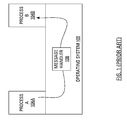
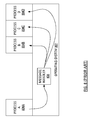
FIG. 1 schematically illustrates interprocess message passing between two processes, where execution of the two processes is supported by an operating system; -
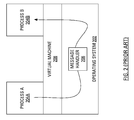
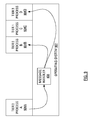
FIG. 2 schematically illustrates interprocess message passing between two processes, where execution of the two processes is supported by a virtual machine, where execution of the virtual machine is supported by an operating system; -
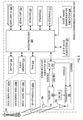
FIG. 3 illustrates a block diagram of a mobile communication device as an example of a device that may carry out a novel method of message passing as presented herein; -
FIG. 4 schematically illustrates handling, by a message handler, of interprocess message passing between two processes, where execution of the two processes is supported by an operating system; -
FIG. 5 illustrates example steps in a method of handling message passing in an operating system; -
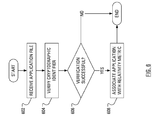
FIG. 6 illustrates example steps in a method of associating applications with relativity metrics; -
FIG. 7 schematically illustrates associating, by a message handler, of applications with relativity metrics; -
FIG. 8 schematically illustrates handling, by a message handler, of global interprocess message passing between an origin process and three destination processes, where execution of the origin process and the three destination processes is supported by an operating system; and -
FIG. 9 schematically illustrates handling, by a message handler, of global interprocess message passing between an origin process and multiple destination processes, where execution of the origin process and the multiple destination processes is supported by an operating system, where the processes are associated with different privilege levels. - Modern operating systems handle the passing of messages from one process to one or more other processes. The message can take the form of a targeted message, which has a single destination process, or can take the form of a global message, which has multiple destination processes (e.g., all processes).
- In an example scheme, a manufacturer of a computing product that is a mobile communication and computing device provides an operating system to facilitate operation of the product. The manufacturer includes, in the product, proprietary applications that are designed to be executed on the operating system. Furthermore, the manufacturer makes available details about the workings of the operating system, thereby allowing third parties to develop applications that are also designed to executed on the operating system. Such workings of the operating system may include, for instance, Application Programming Interfaces (APIs).
- To facilitate third party application development, the manufacturer can arrange the product so that the operating system executes a known virtual machine. Consequently, third parties develop applications that are executed by the virtual machine.
- When both the proprietary applications and the third party applications are executed on the same operating system on the same device, the operating system handles the passing of messages from processes based on the third party applications to processes based on the proprietary applications. Additionally, the operating system handles the passing of messages from processes based on the proprietary applications to processes based on the third party applications. This message exchange availability opens numerous attack vectors for a nefarious third party application. For example, a nefarious third party application can send messages to proprietary applications, which messages may modify system state.
-
FIG. 1 illustrates interprocess message passing in a schematic, simplified form. In particular, the schematic diagram ofFIG. 1 includes a representation of anoperating system 102. Theoperating system 102 supports the execution of two processes: aprocess A 104A; and aprocess B 104B. The schematic diagram ofFIG. 1 also illustrates amessage handler 106, as an element of theoperating system 102, and a path of a message passing from an origin process, processA 104A, to a destination process,process B 104B. -
FIG. 2 illustrates interprocess message passing in a form similar to that used inFIG. 1 . In particular, the schematic diagram ofFIG. 2 includes a representation of anoperating system 202. Theoperating system 202 supports the execution of avirtual machine 208. Thevirtual machine 208 supports the execution of two processes: aprocess A 204A; and aprocess B 204B. The schematic diagram ofFIG. 2 also illustrates amessage handler 206, as an element of theoperating system 202, and a path of a message passing from an origin process, processA 204A, to a destination process,process B 204B. -
FIG. 3 illustrates amobile communication device 300 as an example of a device that may carry out a novel method of message passing as presented herein. Themobile communication device 300 includes a housing, an input device (e.g., akeyboard 324 having a plurality of keys which may be implemented as a physical keyboard or implemented as a soft keyboard using a touch screen) and an output device (e.g., a display 326), which may be a full graphic, or full color, Liquid Crystal Display (LCD). Other types of output devices may alternatively be utilized. A processing device (a microprocessor 328) is shown schematically inFIG. 3 as coupled between thekeyboard 324 and thedisplay 326. Themicroprocessor 328 controls the operation of thedisplay 326, as well as the overall operation of themobile communication device 300, in part, responsive to actuation of the keys on thekeyboard 324 by a user. - The housing may be elongated vertically, or may take on other sizes and shapes (including clamshell housing structures). Where the
keyboard 324 includes keys that are associated with at least one alphabetic character and at least one numeric character, thekeyboard 324 may include a mode selection key, or other hardware or software, for switching between alphabetic entry and numeric entry. - In addition to the
microprocessor 328, other parts of themobile communication device 300 are shown schematically inFIG. 3 . These include: acommunications subsystem 302; a short-range communications subsystem 304; thekeyboard 324 and thedisplay 326, along with other input/output devices including a set of auxiliary I/O devices 306, aserial port 308, a speaker 310 and amicrophone 312; as well as memory devices including aflash memory 316 and a Random Access Memory (RAM) 318; and variousother device subsystems 320. Themobile communication device 300 may be a two-way radio frequency (RF) communication device having voice and data communication capabilities. In addition, themobile communication device 300 may have the capability to communicate with other computer systems via the Internet. - Operating system software executed by the
microprocessor 328 may be stored in a computer readable medium, such as theflash memory 316, but may be stored in other types of memory devices, such as a read only memory (ROM) or similar storage element. In addition, system software, specific device applications, or parts thereof, may be temporarily loaded into a volatile store, such as theRAM 318. Communication signals received by the mobile device may also be stored to theRAM 318. - The
microprocessor 328, in addition to its operating system functions, enables execution of software applications on themobile communication device 300. A predetermined set of software applications that control basic device operations, such as avoice communications module 330A and adata communications module 330B, may be installed on themobile communication device 300 during manufacture. Amessage handling module 330C may also be installed on themobile communication device 300 during manufacture, to implement aspects of the present invention. As well, additional software modules, illustrated as another software module 330N, which may be, for instance, a PIM application, may be installed during manufacture. The PIM application may be capable of organizing and managing data items, such as e-mail messages, calendar events, voice mail messages, appointments and task items. The PIM application may also be capable of sending and receiving data items via awireless carrier network 370 represented by a radio tower. The data items managed by the PIM application may be seamlessly integrated, synchronized and updated via thewireless carrier network 370 with the device user's corresponding data items stored or associated with a host computer system. - Communication functions, including data and voice communications, are performed through the
communication subsystem 302 and, possibly, through the short-range communications subsystem 304. Thecommunication subsystem 302 includes areceiver 350, atransmitter 352 and one or more antennas, illustrated as a receiveantenna 354 and a transmitantenna 356. In addition, thecommunication subsystem 302 also includes a processing module, such as a digital signal processor (DSP) 358, and local oscillators (LOs) 360. The specific design and implementation of thecommunication subsystem 302 is dependent upon the communication network in which themobile communication device 300 is intended to operate. For example, thecommunication subsystem 302 of themobile communication device 300 may be designed to operate with the Mobitex™, DataTAC™ or General Packet Radio Service (GPRS) mobile data communication networks and also designed to operate with any of a variety of voice communication networks, such as Advanced Mobile Phone Service (AMPS), Time Division Multiple Access (TDMA), Code Division Multiple Access (CDMA), Personal Communications Service (PCS), Global System for Mobile Communications (GSM), Enhanced Data rates for GSM Evolution (EDGE), Universal Mobile Telecommunications System (UMTS), Wideband Code Division Multiple Access (W-CDMA), etc. Other types of data and voice networks, both separate and integrated, may also be utilized with themobile communication device 300. - Network access requirements vary depending upon the type of communication system. Typically, an identifier is associated with each mobile device that uniquely identifies the mobile device or subscriber to which the mobile device has been assigned. The identifier is unique within a specific network or network technology. For example, in Mobitex™ networks, mobile devices are registered on the network using a Mobitex Access Number (MAN) associated with each device and in DataTAC™ networks, mobile devices are registered on the network using a Logical Link Identifier (LLI) associated with each device. In GPRS networks, however, network access is associated with a subscriber or user of a device. A GPRS device therefore requires a subscriber identity module, commonly referred to as a Subscriber Identity Module (SIM) card, in order to operate on a GPRS network. Despite identifying a subscriber by SIM, mobile devices within GSM/GPRS networks are uniquely identified using an International Mobile Equipment Identity (IMEI) number.
- When required network registration or activation procedures have been completed, the
mobile communication device 300 may send and receive communication signals over thewireless carrier network 370. Signals received from thewireless carrier network 370 by the receiveantenna 354 are routed to thereceiver 350, which provides for signal amplification, frequency down conversion, filtering, channel selection, etc., and may also provide analog to digital conversion. Analog-to-digital conversion of the received signal allows theDSP 358 to perform more complex communication functions, such as demodulation and decoding. In a similar manner, signals to be transmitted to thewireless carrier network 370 are processed (e.g., modulated and encoded) by theDSP 358 and are then provided to thetransmitter 352 for digital to analog conversion, frequency up conversion, filtering, amplification and transmission to the wireless carrier network 370 (or networks) via the transmitantenna 356. - In addition to processing communication signals, the
DSP 358 provides for control of thereceiver 350 and thetransmitter 352. For example, gains applied to communication signals in thereceiver 350 and thetransmitter 352 may be adaptively controlled through automatic gain control algorithms implemented in theDSP 358. - In a data communication mode, a received signal, such as a text message or web page download, is processed by the
communication subsystem 302 and is input to themicroprocessor 328. The received signal is then further processed by themicroprocessor 328 for output to thedisplay 326, or alternatively to some auxiliary I/O devices 306. A device user may also compose data items, such as e-mail messages, using thekeyboard 324 and/or some other auxiliary I/O device 306, such as a touchpad, a rocker switch, a thumb-wheel, a trackball, a touchscreen, or some other type of input device. The composed data items may then be transmitted over thewireless carrier network 370 via thecommunication subsystem 302. - In a voice communication mode, overall operation of the device is substantially similar to the data communication mode, except that received signals are output to a speaker 310, and signals for transmission are generated by a
microphone 312. Alternative voice or audio I/O subsystems, such as a voice message recording subsystem, may also be implemented on themobile communication device 300. In addition, thedisplay 326 may also be utilized in voice communication mode, for example, to display the identity of a calling party, the duration of a voice call, or other voice call related information. - The short-range communications subsystem 304 enables communication between the
mobile communication device 300 and other proximate systems or devices, which need not necessarily be similar devices. For example, the short-range communications subsystem may include an infrared device and associated circuits and components, or a Bluetooth™ communication module to provide for communication with similarly-enabled systems and devices. - In overview, as each application is loaded for use by an operating system, a message handling application within the operating system associates the applications with relativity metrics for later use in handling interprocess messages. A cryptographic identifier associated with each application is verified and, based on the verifying, each application is associated with a relativity metric. A message handling application of an operating system analyses relativity metrics associated with origin and destination processes for a given message and determines, based on the analysis, whether to pass the given message to the destination process.
- In view of
FIG. 4 , anoperating system 402, more particularly, amessage handler 406, has access to predefined application groupings. As theoperating system 402 loads a given application file into a memory (such as theflash memory 316 or the RAM 318) for execution by themicroprocessor 328 that executes theoperating system 402, theoperating system 402 associates the given application, in a relativity-metric correlation record accessible by themessage handler 406, with one of the predefined application groupings. Consequently, upon execution of a process associated with the given application, the process is also associated with the predefined application grouping. - Each predefined application grouping may be associated with a relativity metric. In one embodiment, the relativity metrics may be defined as tiers, which may be said to be representative of "privilege". A process may be considered to have a higher privilege when associated with a comparatively lower valued tier than a tier with which another process is associated. For example, a
process A 404A inFIG. 4 is associated with a Tier "2" while aprocess B 404B is associated with a Tier "1". Accordingly, theprocess B 404B has a higher privilege than theprocess A 404A. - The
message handler 406 of theoperating system 402 may be configured to only pass messages to destination processes with equal or higher tier values, i.e., equal or lower privilege. Themessage handler 406 will pass a message from an origin process associated with a grouping "x" to a destination process associated with a grouping "y" so long as it has previously been determined that, based on the relativity metric of grouping x and the relativity metric of grouping y, messages from processes from grouping x are to be forwarded to processes from grouping y. - In the example of
FIG. 4 , theprocess A 404A has transmitted a message with theprocess B 404B as the destination process. Themessage handler 406 may execute a message handling method, example steps of which are illustrated inFIG. 5 . Initially, themessage handler 406 receives (step 502) the message from the origin process (theprocess A 404A). Themessage handler 406 then determines (step 504) that theprocess B 404B is the destination process for the message. Themessage handler 406 determines (step 506) a relativity metric of theprocess A 404A. That is, themessage handler 406 determines (step 506) that theprocess A 404A is associated with a tier with a value of "2". Themessage handler 406 determines (step 508) a relativity metric of theprocess B 404B. That is, themessage handler 406 determines (step 508) that theprocess B 404B is associated with a tier with a value of "1". Themessage handler 406 analyzes (step 510) whether, based on the tier value (2) of theprocess A 404A and the tier value (1) of theprocess B 404B, messages from theprocess A 404A are to be forwarded to theprocess B 404B. Since the tier value of theprocess A 404A is lower than the tier value of theprocess B 404B, themessage handler 406 does not pass the message to theprocess B 404B and the method is complete. - Notably, in the case wherein the
process B 404B has transmitted a message with theprocess A 404A as the destination process, when themessage handler 406 analyzes (step 510) the relativity metrics, themessage handler 406 determines that the tier value of theprocess B 404B (the origin process) is higher than the tier value of theprocess A 404A. Accordingly, themessage handler 406 forwards the message to theprocess A 404A and the method is complete. - So that the
message handler 406 may determine the relativity metric of a given process (steps 506, 508), a relativity-metric correlation record may be maintained with a correlation between processes and relativity metrics. Accordingly, determining the relativity metric of a given process (steps 506, 508) may involve themessage handler 406 performing a table lookup in the relativity-metric correlation record, with a process identification as a key. - Alternatively, the relativity-metric correlation record may merely maintain a correlation between applications and relativity metrics. It is anticipated that the application with which a given process is associated will be known by the
message handler 406. In this case determining the relativity metric of a given process (steps 506, 508) may involve themessage handler 406 determining the application with which the given process is associated and then performing a table lookup in the relativity-metric correlation record, with an application identification as a key. - Population of the relativity-metric correlation record may be accomplished by the
message handler 406 as each application is loaded. It is known that loading an application can involve providing a computer readable file, e.g., an ".exe" file or, in the Java™ context, a ".jar" file. In other contexts, a computer readable file containing an executable application is referred to as a ".cod" file. It is also known that such files typically include both compiled, executable code and variable declarations. - It is known that executable files for applications can be cryptographically signed so that the applications may not be executed unless the processor that is to execute the application has access to a specific key. For proprietary applications, a manufacturer may provide the
message handler 406 with a public cryptographic key and maintain a private cryptographic key as a trade secret. Subsequently, the manufacturer can sign all proprietary applications with the private key. By selecting the correct public key, themessage handler 406 may verify the cryptographic identifier on a given proprietary application and associate the given proprietary application with a privileged relativity metric. - For third parties, the manufacturer may provide a second public key to the
message handler 406 and a second private key to the third party application developers. Subsequently, the third party application developers can sign all third party applications with the second private key. By selecting the second public key, the product may verify the cryptographic identifier on a given third party application and associate the given third party application with a relativity metric less privileged than the relativity metric associated with the proprietary applications. - Cryptographically signing an application may involve, first, providing the application code as input to a hash function to obtain a digital signature. Subsequently, the digital signature may be encoded using the private key provided by the manufacturer. The encoded digital signature, which may be called a cryptographic signature or identifier ("ID"), may then be appended to the application file.
- Loading and sorting applications may be considered in view of
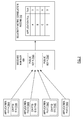
FIG. 6 andFIG. 7 . Steps of an example method of loading and sorting applications are illustrated inFIG. 6 as beginning with themessage handler 406 receiving (step 602) an application file, for example, an application file A 704A is illustrated inFIG. 7 . More particularly, the application file A 704A is illustrated as including acryptographic ID A 714A. Themessage handler 406 then acts to verify (step 604) thecryptographic ID A 714A associated with the application file A 704A. - To verify the
cryptographic ID A 714A, themessage handler 406 may provide the application code as input to the same hash function used by the third party. As a result of providing the application code to the hash function, themessage handler 406 obtains a local digital signature. Themessage handler 406 also decodes thecryptographic ID A 714A using a locally-stored public key (e.g., apublic key X 716X,FIG. 7 ) to obtain a test digital signature. In an example case, thepublic key X 716X is associated with a Tier "2". - The
message handler 406 then determines (step 606) whether the verification has been successful. In particular, if themessage handler 406 determines that the local digital signature and the test digital signature are equivalent, then thecryptographic ID A 714A associated with the application file A 704A is considered to have been verified. However, if themessage handler 406 determines that the local digital signature and the test digital signature are not equivalent, then the verification is considered to have been unsuccessful. - Where the verification is considered to have been successful, the
message handler 406 associates (step 608) the application with a relativity metric. As illustrated inFIG. 7 , the application A whose executable code is in the application file A 704A is associated in a relativitymetric correlation record 710 with Tier "2". As mentioned above, thepublic key X 716X is associated withTier 2 and, since thecryptographic ID A 714A was successfully verified using thepublic key X 716X, then the application A associated with the application file A 704A is associated with Tier "2". - Subsequently, as an
application file B 704B is loaded, themessage handler 406 may execute the method ofFIG. 6 . If acryptographic ID B 714B, which is associated with theapplication file B 704B, is successfully verified using thepublic key X 716X, then themessage handler 406 may associate an application B, whose executable code is in theapplication file B 704B, in the relativitymetric correlation record 710 with Tier "2". - Similarly, as an
application file C 704C is loaded, themessage handler 406 may execute the method ofFIG. 6 . Assume that acryptographic ID C 714C, which is associated with theapplication file C 704C, is successfully verified using apublic key Y 716Y. Assume also that thepublic key Y 716Y is associated with a Tier "1". Accordingly, themessage handler 406 may associate an application C, whose executable code is in theapplication file C 704C, in the relativitymetric correlation record 710 with Tier "1 ". - Similarly, as an application file D 704D is loaded, the
message handler 406 may execute the method ofFIG. 6 . Assume that the application file D 704D is not associated with a cryptographic ID. It may be that a lack of a cryptographic ID is associated with a Tier "3". Accordingly, themessage handler 406 may associate an application D, whose executable code is in the application file D 704D, in the relativitymetric correlation record 710 with Tier "3". - Where cryptographic signing of application files has been used in the past, the cryptographic signature has been used to identify those applications that are to be allowed to access certain APIs in the
operating system 402. As proposed herein, various processes associated with signed applications may continue to access certain APIs, such as those associated with message passing, but as discussed herein, a given message may not be passed to the intended destination, based on determinations made by themessage handler 406. -
FIG. 8 illustrates an example of typical global message handling. InFIG. 8 , anoperating system 802 supports the execution of aprocess A 804A, aprocess B 804B, aprocess C 804C and aprocess D 804D. Additionally, theoperating system 802 includes amessage handler 806. In one scenario, theprocess A 804A sends a global message. Themessage handler 806 receives the global message and distributes a copy to each of theprocess B 804B, theprocess C 804C and theprocess D 804D. -
FIG. 9 illustrates an example of global message handling filtered according to an aspect of the present invention. InFIG. 9 , anoperating system 902 supports the execution of atier 2 process A 904A, atier 2process B 904B, atier 1process C 904C and atier 3process D 904D. Additionally, theoperating system 902 includes amessage handler 906. In one scenario, theprocess A 904A sends a global message. Themessage handler 906 receives the global message and, in view of each of the potential destination processes, may execute the method as shown and described in connection withFIG. 5 . - In consideration of the
tier 2process B 904B as a destination, themessage handler 906 determines (step 510) that the origin and destination processes are in the same tier and forwards the message to thetier 2process B 904B. - In consideration of the
tier 1process C 904C as a destination, themessage handler 906 determines (step 510) that the destination process has a higher privilege than the origin process and completes the method without forwarding the message to thetier 1process C 904C. - In consideration of the
tier 3process D 904D as a destination, themessage handler 906 determines (step 510) that the origin process has a higher privilege than the destination process and forwards the message to thetier 3process D 904D. - Notably, the relativity metrics need not distinguish processes in a hierarchical manner. Instead, the relativity metrics may distinguish processes by way of sets. Such sets may defined such that: a message handler passes messages from processes of a first set to processes of a second set, but not to processes of a third set; the message handler passes messages from processes of the second set to processes of the third set, but not to processes of the first set; and the message handler passes messages from processes of the third set to processes of the first set, but not to processes of the second set.
- Conveniently, aspects of the present invention allow for binding permissions to applications automatically and at the time that the applications are loaded, where the permissions are based on cryptographic identifiers associated with the applications. In contrast, some known systems bind permissions to a given application manually (by an administrator) and handle message passing from the given application to another application based on disparity between permission levels associated with the account associated with the given application and the account associated with the other application.
- Furthermore, aspects of the present invention establish a scheme though which proprietary processes, execution of which is supported on an operating system, may be relieved from receiving messages from process related to lesser privileged applications that are also executing on the same operating system.
- The above-described embodiments of the present invention are intended to be examples only. Alterations, modifications and variations may be effected to the particular embodiments by those skilled in the art without departing from the scope of the application, which is defined by the claims appended hereto.
Claims (13)
- A method of associating applications with relativity metrics for later use in handling interprocess messages, said method comprising:receiving (602) a first executable file for a first application, said first executable file including a first cryptographic identifier;verifying (604) said first cryptographic identifier; andassociating (608), based on said verifying, said first application with a first relativity metric.
- The method of claim 1 wherein said verifying involves use of a first public cryptographic key, and wherein said first public cryptographic key is associated with said first relativity metric.
- The method of claim 1 or claim 2 wherein said associating comprises recording an association between said first application and said first relativity metric in a relativity metric correlation record.
- The method of any one of claims 1 to 3 further comprising:receiving a second executable file for a second application, said second executable file including a second cryptographic identifier;verifying said second cryptographic identifier; andassociating, based on said verifying said second cryptographic identifier, said second application with a second relativity metric.
- The method of claim 4 wherein said verifying said second cryptographic identifier involves use of a second public cryptographic key, and wherein said second public cryptographic key is associated with said second relativity metric.
- The method of claim 4 or claim 5 further comprising:receiving a message from an origin process, said origin process associated with said first application;determining a destination process for said message, said destination process associated with said second application;determining that said first relativity metric is associated with said origin process;determining that said second relativity metric is associated with said destination process;analyzing whether, based on said first relativity metric and said second relativity metric, messages from said origin process are allowed to be passed to said destination process; andpassing said message to said destination process only if allowed based on said analyzing.
- The method of claim 6 wherein said determining that said first relativity metric is associated with said origin process comprises:determining that said origin process is associated with said first application; anddetermining that said first application is associated with said first relativity metric.
- The method of any one of claims 1 to 7 wherein said verifying comprises:providing said first application as input to a hash function to obtain a local digital signature;decrypting said first cryptographic identifier to obtain a test digital signature; comparing said local digital signature to said test digital signature; andif said comparing indicates an equivalence, considering said first cryptographic identifier to have been verified.
- A method of associating applications with relativity metrics and handling interprocess messages, said method comprising:receiving (602) a first executable file for a first application, said first executable file including a first cryptographic identifier;verifying (604) said first cryptographic identifier, wherein said verifying involves use of a first public cryptographic key, and wherein said first public cryptographic key is associated with a first relativity metric;associating (608), based on said verifying, said first application with said first relativity metric;receiving (602) a second executable file for a second application, said second executable file including a second cryptographic identifier; verifying (604) said second cryptographic identifier, wherein said verifying said second cryptographic identifier involves use of a second public cryptographic key, and wherein said second public cryptographic key is associated with a second relativity metric;associating (608), based on said verifying said second cryptographic identifier, said second application with said second relativity metric, receiving (502) a message from an origin process, said origin process associated with said first application;determining (504) a destination process for said message, said destination process associated with said second application;determining (506) that said first relativity metric is associated with said origin process;determining (508) that said second relativity metric is associated with said destination process;analyzing (510) whether, based on said first relativity metric and said second relativity metric, messages from said origin process are allowed to be passed to said destination process; andpassing (512) said message to said destination process only if allowed based on said analyzing.
- An apparatus comprising:a processor (328) for executing a message handling application as part of an operating system, said message handling application (406) adapted to associate applications with relativity metrics for later use in handling interprocess messages according to the method of any preceding claim.
- A computer readable medium (316) containing computer-executable instructions that, when performed by a processor, cause said processor to execute a message handling application as part of an operating system, said message handling application being adapted to associate applications with relativity metrics for later use in handling interprocess messages according to the method of any of claims 1 to 9.
- A mobile communication device comprising apparatus as claimed in claim 10.
- A mobile communication device (300) comprising:a processor (328) for executing a message handling application as part of an operating system, said message handling application being adapted to:receive a first executable file for a first application, said first executable file including a first cryptographic identifier;verify said first cryptographic identifier, wherein said verifying involves use of a first public cryptographic key, and wherein said first public cryptographic key is associated with a first relativity metric;associate, based on said verifying, said first application with said first relativity metric;receive a second executable file for a second application, said second executable file including a second cryptographic identifier;verify said second cryptographic identifier, wherein said verifying said second cryptographic identifier involves use of a second public cryptographic key, and wherein said second public cryptographic key is associated with a second relativity metric;associate, based on said verifying said second cryptographic identifier, said second application with said second relativity metric, receive a message from an origin process, said origin process associated with said first application;determine a destination process for said message, said destination process associated with said second application;determine that said first relativity metric is associated with said origin process;determine that said second relativity metric is associated with said destination process;analyze whether, based on said first relativity metric and said second relativity metric, messages from said origin process are allowed to be passed to said destination process; andpass said message to said destination process only if allowed based on said analyzing.
Priority Applications (2)
| Application Number | Priority Date | Filing Date | Title |
|---|---|---|---|
| EP20070117683 EP2045753B1 (en) | 2007-10-01 | 2007-10-01 | Application associating based on cryptographic identification |
| CA2640198A CA2640198C (en) | 2007-10-01 | 2008-09-29 | Application associating based on cryptographic identification |
Applications Claiming Priority (1)
| Application Number | Priority Date | Filing Date | Title |
|---|---|---|---|
| EP20070117683 EP2045753B1 (en) | 2007-10-01 | 2007-10-01 | Application associating based on cryptographic identification |
Publications (2)
| Publication Number | Publication Date |
|---|---|
| EP2045753A1 true EP2045753A1 (en) | 2009-04-08 |
| EP2045753B1 EP2045753B1 (en) | 2015-04-22 |
Family
ID=39111565
Family Applications (1)
| Application Number | Title | Priority Date | Filing Date |
|---|---|---|---|
| EP20070117683 Active EP2045753B1 (en) | 2007-10-01 | 2007-10-01 | Application associating based on cryptographic identification |
Country Status (2)
| Country | Link |
|---|---|
| EP (1) | EP2045753B1 (en) |
| CA (1) | CA2640198C (en) |
Cited By (9)
| Publication number | Priority date | Publication date | Assignee | Title |
|---|---|---|---|---|
| GB2470880B (en) * | 2008-04-16 | 2013-04-10 | Lenovo Singapore Pte Ltd | Apparatus and method for enabling applications on a security processor |
| US8561083B2 (en) | 2007-10-01 | 2013-10-15 | Blackberry Limited | Application associating based on cryptographic identification |
| US20130283353A1 (en) * | 2012-04-20 | 2013-10-24 | Sergey Ignatchenko | Secure zone for secure purchases |
| US9742735B2 (en) | 2012-04-13 | 2017-08-22 | Ologn Technologies Ag | Secure zone for digital communications |
| US9948640B2 (en) | 2013-08-02 | 2018-04-17 | Ologn Technologies Ag | Secure server on a system with virtual machines |
| US10108953B2 (en) | 2012-04-13 | 2018-10-23 | Ologn Technologies Ag | Apparatuses, methods and systems for computer-based secure transactions |
| CN110520861A (en) * | 2017-04-19 | 2019-11-29 | 大陆汽车系统公司 | Method and apparatus for carrying out rapid authentication program by using safety element |
| US11176546B2 (en) | 2013-03-15 | 2021-11-16 | Ologn Technologies Ag | Systems, methods and apparatuses for securely storing and providing payment information |
| US12228805B2 (en) | 2020-04-30 | 2025-02-18 | Coopervision International Limited | Multifocal ophthalmic lens and related methods |
Citations (3)
| Publication number | Priority date | Publication date | Assignee | Title |
|---|---|---|---|---|
| EP1225513A1 (en) | 2001-01-19 | 2002-07-24 | Eyal Dotan | Method for protecting computer programs and data from hostile code |
| US20070094260A1 (en) * | 2005-10-21 | 2007-04-26 | Microsoft Corporation | Authenticating third party products via a secure extensibility model |
| US20070226798A1 (en) | 1999-07-29 | 2007-09-27 | Intertrust Technologies Corporation | Systems and methods for using cryptography to protect secure and insecure computing environments |
Family Cites Families (3)
| Publication number | Priority date | Publication date | Assignee | Title |
|---|---|---|---|---|
| US8136155B2 (en) * | 2003-04-01 | 2012-03-13 | Check Point Software Technologies, Inc. | Security system with methodology for interprocess communication control |
| US20050182966A1 (en) * | 2004-02-17 | 2005-08-18 | Duc Pham | Secure interprocess communications binding system and methods |
| US20050278790A1 (en) * | 2004-06-10 | 2005-12-15 | International Business Machines Corporation | System and method for using security levels to simplify security policy management |
-
2007
- 2007-10-01 EP EP20070117683 patent/EP2045753B1/en active Active
-
2008
- 2008-09-29 CA CA2640198A patent/CA2640198C/en active Active
Patent Citations (3)
| Publication number | Priority date | Publication date | Assignee | Title |
|---|---|---|---|---|
| US20070226798A1 (en) | 1999-07-29 | 2007-09-27 | Intertrust Technologies Corporation | Systems and methods for using cryptography to protect secure and insecure computing environments |
| EP1225513A1 (en) | 2001-01-19 | 2002-07-24 | Eyal Dotan | Method for protecting computer programs and data from hostile code |
| US20070094260A1 (en) * | 2005-10-21 | 2007-04-26 | Microsoft Corporation | Authenticating third party products via a secure extensibility model |
Cited By (25)
| Publication number | Priority date | Publication date | Assignee | Title |
|---|---|---|---|---|
| US8561083B2 (en) | 2007-10-01 | 2013-10-15 | Blackberry Limited | Application associating based on cryptographic identification |
| GB2470880B (en) * | 2008-04-16 | 2013-04-10 | Lenovo Singapore Pte Ltd | Apparatus and method for enabling applications on a security processor |
| DE112008003806B4 (en) | 2008-04-16 | 2025-11-06 | Lenovo (Singapore) Pte. Ltd. | Device and method for releasing applications on a security processor |
| US10027630B2 (en) | 2012-04-13 | 2018-07-17 | Ologn Technologies Ag | Secure zone for digital communications |
| US10904222B2 (en) | 2012-04-13 | 2021-01-26 | Ologn Technologies Ag | Secure zone for digital communications |
| US10484338B2 (en) | 2012-04-13 | 2019-11-19 | Ologn Technologies Ag | Secure zone for digital communications |
| US10108953B2 (en) | 2012-04-13 | 2018-10-23 | Ologn Technologies Ag | Apparatuses, methods and systems for computer-based secure transactions |
| US9742735B2 (en) | 2012-04-13 | 2017-08-22 | Ologn Technologies Ag | Secure zone for digital communications |
| US9432348B2 (en) | 2012-04-20 | 2016-08-30 | Ologn Technologies Ag | Secure zone for secure purchases |
| US20160366139A1 (en) * | 2012-04-20 | 2016-12-15 | Ologn Technologies Ag | Secure Zone for Secure Purchases |
| US10270776B2 (en) | 2012-04-20 | 2019-04-23 | Ologn Technologies Ag | Secure zone for secure transactions |
| US11201869B2 (en) | 2012-04-20 | 2021-12-14 | Ologn Technologies Ag | Secure zone for secure purchases |
| EP4498270A1 (en) | 2012-04-20 | 2025-01-29 | Fingon LLC | Secure zone for secure purchases |
| WO2013156847A3 (en) * | 2012-04-20 | 2014-02-20 | Ologn Technilogies Ag | Secure zone for secure purchases |
| EP3805966A1 (en) | 2012-04-20 | 2021-04-14 | OLogN Technologies AG | Secure zone for secure purchases |
| US20130283353A1 (en) * | 2012-04-20 | 2013-10-24 | Sergey Ignatchenko | Secure zone for secure purchases |
| US11763301B2 (en) | 2013-03-15 | 2023-09-19 | Ologn Technologies Ag | Systems, methods and apparatuses for securely storing and providing payment information |
| US11176546B2 (en) | 2013-03-15 | 2021-11-16 | Ologn Technologies Ag | Systems, methods and apparatuses for securely storing and providing payment information |
| US12141799B2 (en) | 2013-03-15 | 2024-11-12 | Fingon Llc | Systems, methods and apparatuses for securely storing and providing payment information |
| US12288208B2 (en) | 2013-03-15 | 2025-04-29 | Fingon Llc | Electronic device for securely storing and providing payment information |
| US12307448B2 (en) | 2013-03-15 | 2025-05-20 | Fingon Llc | Methods and electronic devices for securely storing and providing payment information |
| US9948640B2 (en) | 2013-08-02 | 2018-04-17 | Ologn Technologies Ag | Secure server on a system with virtual machines |
| CN110520861B (en) * | 2017-04-19 | 2023-04-25 | 大陆汽车系统公司 | Method and apparatus for rapid authentication of a program by using a secure element |
| CN110520861A (en) * | 2017-04-19 | 2019-11-29 | 大陆汽车系统公司 | Method and apparatus for carrying out rapid authentication program by using safety element |
| US12228805B2 (en) | 2020-04-30 | 2025-02-18 | Coopervision International Limited | Multifocal ophthalmic lens and related methods |
Also Published As
| Publication number | Publication date |
|---|---|
| CA2640198C (en) | 2014-02-11 |
| CA2640198A1 (en) | 2009-04-01 |
| EP2045753B1 (en) | 2015-04-22 |
Similar Documents
| Publication | Publication Date | Title |
|---|---|---|
| CA2640198C (en) | Application associating based on cryptographic identification | |
| US8977862B2 (en) | Low-level code signing mechanism | |
| EP1626326B1 (en) | Software code signing system and method | |
| US9066226B2 (en) | Initialization of embedded secure elements | |
| EP2453689B1 (en) | Handling receipts in cross component message processing | |
| US20130346758A1 (en) | Managing use of a field programmable gate array with isolated components | |
| US9501646B2 (en) | Program verification apparatus, program verification method, and computer readable medium | |
| US8296563B2 (en) | Method of handling a certification request | |
| US8561083B2 (en) | Application associating based on cryptographic identification | |
| CN107103211A (en) | SDK is sent, using issue, using operation method and device | |
| WO2023059570A1 (en) | Policy-governed cryptographic selection system | |
| US8255685B2 (en) | System and method for validating certificate issuance notification messages | |
| Braga et al. | Portability evaluation of cryptographic libraries on android smartphones | |
| EP2591437B1 (en) | Microcode-based challenge/response process | |
| CN111163102B (en) | Data processing method and apparatus, network device, and readable storage medium | |
| CN105975624B (en) | A kind of data transmission method, equipment and system | |
| CA2694506C (en) | Low-level code signing mechanism | |
| US8538022B2 (en) | System and method of cross-component message processing | |
| US10459722B2 (en) | Device, system, and method for secure supervisor system calls | |
| CN116719618A (en) | A cluster machine process automation task processing system based on RPA | |
| EP2230792B1 (en) | Validation of certificate issuance notification messages | |
| CN112732665A (en) | Log processing method, system and storage medium based on Linux platform | |
| HK1091667B (en) | Software code signing system and method | |
| HK1091666B (en) | Software code signing system and method |
Legal Events
| Date | Code | Title | Description |
|---|---|---|---|
| PUAI | Public reference made under article 153(3) epc to a published international application that has entered the european phase |
Free format text: ORIGINAL CODE: 0009012 |
|
| 17P | Request for examination filed |
Effective date: 20071001 |
|
| AK | Designated contracting states |
Kind code of ref document: A1 Designated state(s): AT BE BG CH CY CZ DE DK EE ES FI FR GB GR HU IE IS IT LI LT LU LV MC MT NL PL PT RO SE SI SK TR |
|
| AX | Request for extension of the european patent |
Extension state: AL BA HR MK RS |
|
| AKX | Designation fees paid |
Designated state(s): AT BE BG CH CY CZ DE DK EE ES FI FR GB GR HU IE IS IT LI LT LU LV MC MT NL PL PT RO SE SI SK TR |
|
| AXX | Extension fees paid |
Extension state: RS Payment date: 20071001 Extension state: MK Payment date: 20071001 Extension state: AL Payment date: 20071001 Extension state: BA Payment date: 20071001 Extension state: HR Payment date: 20071001 |
|
| 17Q | First examination report despatched |
Effective date: 20100422 |
|
| RAP1 | Party data changed (applicant data changed or rights of an application transferred) |
Owner name: BLACKBERRY LIMITED |
|
| RAP1 | Party data changed (applicant data changed or rights of an application transferred) |
Owner name: BLACKBERRY LIMITED |
|
| REG | Reference to a national code |
Ref country code: DE Ref legal event code: R079 Ref document number: 602007041132 Country of ref document: DE Free format text: PREVIOUS MAIN CLASS: G06F0021200000 Ipc: G06F0021510000 |
|
| GRAP | Despatch of communication of intention to grant a patent |
Free format text: ORIGINAL CODE: EPIDOSNIGR1 |
|
| RIC1 | Information provided on ipc code assigned before grant |
Ipc: G06F 21/51 20130101AFI20141031BHEP Ipc: G06F 21/53 20130101ALI20141031BHEP Ipc: G06F 21/60 20130101ALI20141031BHEP |
|
| INTG | Intention to grant announced |
Effective date: 20141118 |
|
| GRAS | Grant fee paid |
Free format text: ORIGINAL CODE: EPIDOSNIGR3 |
|
| GRAA | (expected) grant |
Free format text: ORIGINAL CODE: 0009210 |
|
| AK | Designated contracting states |
Kind code of ref document: B1 Designated state(s): AT BE BG CH CY CZ DE DK EE ES FI FR GB GR HU IE IS IT LI LT LU LV MC MT NL PL PT RO SE SI SK TR |
|
| AX | Request for extension of the european patent |
Extension state: AL BA HR MK RS |
|
| REG | Reference to a national code |
Ref country code: GB Ref legal event code: FG4D |
|
| REG | Reference to a national code |
Ref country code: CH Ref legal event code: EP |
|
| REG | Reference to a national code |
Ref country code: AT Ref legal event code: REF Ref document number: 723610 Country of ref document: AT Kind code of ref document: T Effective date: 20150515 |
|
| REG | Reference to a national code |
Ref country code: IE Ref legal event code: FG4D |
|
| REG | Reference to a national code |
Ref country code: DE Ref legal event code: R096 Ref document number: 602007041132 Country of ref document: DE Effective date: 20150603 |
|
| REG | Reference to a national code |
Ref country code: NL Ref legal event code: VDEP Effective date: 20150422 |
|
| REG | Reference to a national code |
Ref country code: AT Ref legal event code: MK05 Ref document number: 723610 Country of ref document: AT Kind code of ref document: T Effective date: 20150422 |
|
| REG | Reference to a national code |
Ref country code: LT Ref legal event code: MG4D |
|
| PG25 | Lapsed in a contracting state [announced via postgrant information from national office to epo] |
Ref country code: NL Free format text: LAPSE BECAUSE OF FAILURE TO SUBMIT A TRANSLATION OF THE DESCRIPTION OR TO PAY THE FEE WITHIN THE PRESCRIBED TIME-LIMIT Effective date: 20150422 |
|
| REG | Reference to a national code |
Ref country code: FR Ref legal event code: PLFP Year of fee payment: 9 |
|
| PG25 | Lapsed in a contracting state [announced via postgrant information from national office to epo] |
Ref country code: ES Free format text: LAPSE BECAUSE OF FAILURE TO SUBMIT A TRANSLATION OF THE DESCRIPTION OR TO PAY THE FEE WITHIN THE PRESCRIBED TIME-LIMIT Effective date: 20150422 Ref country code: LT Free format text: LAPSE BECAUSE OF FAILURE TO SUBMIT A TRANSLATION OF THE DESCRIPTION OR TO PAY THE FEE WITHIN THE PRESCRIBED TIME-LIMIT Effective date: 20150422 Ref country code: FI Free format text: LAPSE BECAUSE OF FAILURE TO SUBMIT A TRANSLATION OF THE DESCRIPTION OR TO PAY THE FEE WITHIN THE PRESCRIBED TIME-LIMIT Effective date: 20150422 Ref country code: PT Free format text: LAPSE BECAUSE OF FAILURE TO SUBMIT A TRANSLATION OF THE DESCRIPTION OR TO PAY THE FEE WITHIN THE PRESCRIBED TIME-LIMIT Effective date: 20150824 |
|
| PG25 | Lapsed in a contracting state [announced via postgrant information from national office to epo] |
Ref country code: AT Free format text: LAPSE BECAUSE OF FAILURE TO SUBMIT A TRANSLATION OF THE DESCRIPTION OR TO PAY THE FEE WITHIN THE PRESCRIBED TIME-LIMIT Effective date: 20150422 Ref country code: LV Free format text: LAPSE BECAUSE OF FAILURE TO SUBMIT A TRANSLATION OF THE DESCRIPTION OR TO PAY THE FEE WITHIN THE PRESCRIBED TIME-LIMIT Effective date: 20150422 Ref country code: GR Free format text: LAPSE BECAUSE OF FAILURE TO SUBMIT A TRANSLATION OF THE DESCRIPTION OR TO PAY THE FEE WITHIN THE PRESCRIBED TIME-LIMIT Effective date: 20150723 Ref country code: IS Free format text: LAPSE BECAUSE OF FAILURE TO SUBMIT A TRANSLATION OF THE DESCRIPTION OR TO PAY THE FEE WITHIN THE PRESCRIBED TIME-LIMIT Effective date: 20150822 |
|
| REG | Reference to a national code |
Ref country code: DE Ref legal event code: R097 Ref document number: 602007041132 Country of ref document: DE |
|
| PG25 | Lapsed in a contracting state [announced via postgrant information from national office to epo] |
Ref country code: DK Free format text: LAPSE BECAUSE OF FAILURE TO SUBMIT A TRANSLATION OF THE DESCRIPTION OR TO PAY THE FEE WITHIN THE PRESCRIBED TIME-LIMIT Effective date: 20150422 Ref country code: EE Free format text: LAPSE BECAUSE OF FAILURE TO SUBMIT A TRANSLATION OF THE DESCRIPTION OR TO PAY THE FEE WITHIN THE PRESCRIBED TIME-LIMIT Effective date: 20150422 |
|
| PLBE | No opposition filed within time limit |
Free format text: ORIGINAL CODE: 0009261 |
|
| STAA | Information on the status of an ep patent application or granted ep patent |
Free format text: STATUS: NO OPPOSITION FILED WITHIN TIME LIMIT |
|
| PG25 | Lapsed in a contracting state [announced via postgrant information from national office to epo] |
Ref country code: CZ Free format text: LAPSE BECAUSE OF FAILURE TO SUBMIT A TRANSLATION OF THE DESCRIPTION OR TO PAY THE FEE WITHIN THE PRESCRIBED TIME-LIMIT Effective date: 20150422 Ref country code: PL Free format text: LAPSE BECAUSE OF FAILURE TO SUBMIT A TRANSLATION OF THE DESCRIPTION OR TO PAY THE FEE WITHIN THE PRESCRIBED TIME-LIMIT Effective date: 20150422 Ref country code: RO Free format text: LAPSE BECAUSE OF NON-PAYMENT OF DUE FEES Effective date: 20150422 Ref country code: SK Free format text: LAPSE BECAUSE OF FAILURE TO SUBMIT A TRANSLATION OF THE DESCRIPTION OR TO PAY THE FEE WITHIN THE PRESCRIBED TIME-LIMIT Effective date: 20150422 |
|
| 26N | No opposition filed |
Effective date: 20160125 |
|
| PG25 | Lapsed in a contracting state [announced via postgrant information from national office to epo] |
Ref country code: IT Free format text: LAPSE BECAUSE OF FAILURE TO SUBMIT A TRANSLATION OF THE DESCRIPTION OR TO PAY THE FEE WITHIN THE PRESCRIBED TIME-LIMIT Effective date: 20150422 |
|
| PG25 | Lapsed in a contracting state [announced via postgrant information from national office to epo] |
Ref country code: SI Free format text: LAPSE BECAUSE OF FAILURE TO SUBMIT A TRANSLATION OF THE DESCRIPTION OR TO PAY THE FEE WITHIN THE PRESCRIBED TIME-LIMIT Effective date: 20150422 Ref country code: LU Free format text: LAPSE BECAUSE OF FAILURE TO SUBMIT A TRANSLATION OF THE DESCRIPTION OR TO PAY THE FEE WITHIN THE PRESCRIBED TIME-LIMIT Effective date: 20151001 |
|
| REG | Reference to a national code |
Ref country code: CH Ref legal event code: PL |
|
| PG25 | Lapsed in a contracting state [announced via postgrant information from national office to epo] |
Ref country code: MC Free format text: LAPSE BECAUSE OF FAILURE TO SUBMIT A TRANSLATION OF THE DESCRIPTION OR TO PAY THE FEE WITHIN THE PRESCRIBED TIME-LIMIT Effective date: 20150422 |
|
| REG | Reference to a national code |
Ref country code: IE Ref legal event code: MM4A |
|
| PG25 | Lapsed in a contracting state [announced via postgrant information from national office to epo] |
Ref country code: CH Free format text: LAPSE BECAUSE OF NON-PAYMENT OF DUE FEES Effective date: 20151031 Ref country code: LI Free format text: LAPSE BECAUSE OF NON-PAYMENT OF DUE FEES Effective date: 20151031 |
|
| PG25 | Lapsed in a contracting state [announced via postgrant information from national office to epo] |
Ref country code: BE Free format text: LAPSE BECAUSE OF FAILURE TO SUBMIT A TRANSLATION OF THE DESCRIPTION OR TO PAY THE FEE WITHIN THE PRESCRIBED TIME-LIMIT Effective date: 20150422 |
|
| REG | Reference to a national code |
Ref country code: FR Ref legal event code: PLFP Year of fee payment: 10 |
|
| PG25 | Lapsed in a contracting state [announced via postgrant information from national office to epo] |
Ref country code: IE Free format text: LAPSE BECAUSE OF NON-PAYMENT OF DUE FEES Effective date: 20151001 |
|
| PG25 | Lapsed in a contracting state [announced via postgrant information from national office to epo] |
Ref country code: HU Free format text: LAPSE BECAUSE OF FAILURE TO SUBMIT A TRANSLATION OF THE DESCRIPTION OR TO PAY THE FEE WITHIN THE PRESCRIBED TIME-LIMIT; INVALID AB INITIO Effective date: 20071001 Ref country code: BG Free format text: LAPSE BECAUSE OF FAILURE TO SUBMIT A TRANSLATION OF THE DESCRIPTION OR TO PAY THE FEE WITHIN THE PRESCRIBED TIME-LIMIT Effective date: 20150422 |
|
| PG25 | Lapsed in a contracting state [announced via postgrant information from national office to epo] |
Ref country code: SE Free format text: LAPSE BECAUSE OF FAILURE TO SUBMIT A TRANSLATION OF THE DESCRIPTION OR TO PAY THE FEE WITHIN THE PRESCRIBED TIME-LIMIT Effective date: 20150422 Ref country code: CY Free format text: LAPSE BECAUSE OF FAILURE TO SUBMIT A TRANSLATION OF THE DESCRIPTION OR TO PAY THE FEE WITHIN THE PRESCRIBED TIME-LIMIT Effective date: 20150422 |
|
| PG25 | Lapsed in a contracting state [announced via postgrant information from national office to epo] |
Ref country code: MT Free format text: LAPSE BECAUSE OF FAILURE TO SUBMIT A TRANSLATION OF THE DESCRIPTION OR TO PAY THE FEE WITHIN THE PRESCRIBED TIME-LIMIT Effective date: 20150422 Ref country code: TR Free format text: LAPSE BECAUSE OF FAILURE TO SUBMIT A TRANSLATION OF THE DESCRIPTION OR TO PAY THE FEE WITHIN THE PRESCRIBED TIME-LIMIT Effective date: 20150422 |
|
| REG | Reference to a national code |
Ref country code: FR Ref legal event code: PLFP Year of fee payment: 11 |
|
| REG | Reference to a national code |
Ref country code: FR Ref legal event code: PLFP Year of fee payment: 12 |
|
| REG | Reference to a national code |
Ref country code: DE Ref legal event code: R082 Ref document number: 602007041132 Country of ref document: DE Ref country code: DE Ref legal event code: R081 Ref document number: 602007041132 Country of ref document: DE Owner name: MALIKIE INNOVATIONS LTD., IE Free format text: FORMER OWNER: BLACKBERRY LTD., WATERLOO, ONTARIO, CA |
|
| PGFP | Annual fee paid to national office [announced via postgrant information from national office to epo] |
Ref country code: DE Payment date: 20251028 Year of fee payment: 19 |
|
| PGFP | Annual fee paid to national office [announced via postgrant information from national office to epo] |
Ref country code: GB Payment date: 20251023 Year of fee payment: 19 |
|
| PGFP | Annual fee paid to national office [announced via postgrant information from national office to epo] |
Ref country code: FR Payment date: 20251027 Year of fee payment: 19 |