EP2045283A1 - High refractive index material - Google Patents
High refractive index material Download PDFInfo
- Publication number
- EP2045283A1 EP2045283A1 EP07768122A EP07768122A EP2045283A1 EP 2045283 A1 EP2045283 A1 EP 2045283A1 EP 07768122 A EP07768122 A EP 07768122A EP 07768122 A EP07768122 A EP 07768122A EP 2045283 A1 EP2045283 A1 EP 2045283A1
- Authority
- EP
- European Patent Office
- Prior art keywords
- refractive index
- high refractive
- index material
- group
- hydrocarbon group
- Prior art date
- Legal status (The legal status is an assumption and is not a legal conclusion. Google has not performed a legal analysis and makes no representation as to the accuracy of the status listed.)
- Granted
Links
- 0 CC(C)(C)[*+]*c(cc1)ccc1O Chemical compound CC(C)(C)[*+]*c(cc1)ccc1O 0.000 description 1
Images


Classifications
-
- C—CHEMISTRY; METALLURGY
- C08—ORGANIC MACROMOLECULAR COMPOUNDS; THEIR PREPARATION OR CHEMICAL WORKING-UP; COMPOSITIONS BASED THEREON
- C08G—MACROMOLECULAR COMPOUNDS OBTAINED OTHERWISE THAN BY REACTIONS ONLY INVOLVING UNSATURATED CARBON-TO-CARBON BONDS
- C08G77/00—Macromolecular compounds obtained by reactions forming a linkage containing silicon with or without sulfur, nitrogen, oxygen or carbon in the main chain of the macromolecule
- C08G77/04—Polysiloxanes
-
- G—PHYSICS
- G02—OPTICS
- G02B—OPTICAL ELEMENTS, SYSTEMS OR APPARATUS
- G02B6/00—Light guides; Structural details of arrangements comprising light guides and other optical elements, e.g. couplings
- G02B6/10—Light guides; Structural details of arrangements comprising light guides and other optical elements, e.g. couplings of the optical waveguide type
- G02B6/12—Light guides; Structural details of arrangements comprising light guides and other optical elements, e.g. couplings of the optical waveguide type of the integrated circuit kind
- G02B6/13—Integrated optical circuits characterised by the manufacturing method
-
- C—CHEMISTRY; METALLURGY
- C08—ORGANIC MACROMOLECULAR COMPOUNDS; THEIR PREPARATION OR CHEMICAL WORKING-UP; COMPOSITIONS BASED THEREON
- C08G—MACROMOLECULAR COMPOUNDS OBTAINED OTHERWISE THAN BY REACTIONS ONLY INVOLVING UNSATURATED CARBON-TO-CARBON BONDS
- C08G77/00—Macromolecular compounds obtained by reactions forming a linkage containing silicon with or without sulfur, nitrogen, oxygen or carbon in the main chain of the macromolecule
- C08G77/04—Polysiloxanes
- C08G77/20—Polysiloxanes containing silicon bound to unsaturated aliphatic groups
-
- C—CHEMISTRY; METALLURGY
- C08—ORGANIC MACROMOLECULAR COMPOUNDS; THEIR PREPARATION OR CHEMICAL WORKING-UP; COMPOSITIONS BASED THEREON
- C08L—COMPOSITIONS OF MACROMOLECULAR COMPOUNDS
- C08L83/00—Compositions of macromolecular compounds obtained by reactions forming in the main chain of the macromolecule a linkage containing silicon with or without sulfur, nitrogen, oxygen or carbon only; Compositions of derivatives of such polymers
- C08L83/04—Polysiloxanes
-
- G—PHYSICS
- G02—OPTICS
- G02B—OPTICAL ELEMENTS, SYSTEMS OR APPARATUS
- G02B6/00—Light guides; Structural details of arrangements comprising light guides and other optical elements, e.g. couplings
- G02B6/10—Light guides; Structural details of arrangements comprising light guides and other optical elements, e.g. couplings of the optical waveguide type
- G02B6/12—Light guides; Structural details of arrangements comprising light guides and other optical elements, e.g. couplings of the optical waveguide type of the integrated circuit kind
- G02B6/122—Basic optical elements, e.g. light-guiding paths
- G02B6/1221—Basic optical elements, e.g. light-guiding paths made from organic materials
Definitions
- the present invention relates to a high refractive index material, in particular a high refractive index material having a high ability to be filled into grooves and holes and capable of forming high refractive index members.
- siloxane resins have been employed for high refractive index materials used for optical elements such as photoelectric integrated circuits, optical integrated circuits, CCD (Charge Coupled Device) sensors, and CMOS (Complementary Metal Oxide Semiconductor) (see Patent Documents 1 to 3).
- optical waveguides are formed by way of embedding a high refractive index material into pre-formed grooves, holes, etc. and processing their surface by etching, CMP, etc. That is, the high refractive index material is required to enable embedding into grooves, holes, etc.
- Patent Documents 1 to 3 described above do not consider this embedding property.
- the present inventors have found that higher refractive indices can be induced and embedding property into fine spaces can be enhanced by use of a siloxane compound having a certain structural unit, thereby achieving the present invention.
- the present invention is a high refractive index material to be filled into fine spaces and to form a high refractive index member, in which the high refractive index material contains a siloxane compound (A) that has a structural unit expressed by General Formula (a-1) shown below and includes at least two carbon atoms per silicon atom.
- a-1 siloxane compound
- R 1 is a hydrocarbon group
- R 2 is a hydrogen atom or a hydrocarbon group
- m is an integer of 0 or 1
- the present invention provides a high refractive index member formed from the high refractive index material described above and an image sensor with the high refractive index member.
- a high refractive index material can be provided that has a high refractive index and possesses a high embedding property. Consequently, high refractive index members such as light guide paths can be formed by filling the high refractive index material into fine spaces by simpler processes thereby production steps can be simplified.
- image sensors can be provided such as CCD sensors and CMOS sensors with high sensitivity and high resolution by use of the high refractive index material of the present invention.
- the high refractive index material according to the present invention contains a siloxane compound (A).
- high refractive index refers to a refractive index that is higher than 1.45, preferably at least 1.5, and more preferably at least 1.6.
- the upper limit of the refractive index which is not particularly limited, is preferably no higher than 2.0, and more preferably no higher than 1.8.
- the siloxane compound (A) has a structural unit expressed by General Formula (a-1) shown below and includes at least two carbon atoms per silicon atom.
- R 1 is a hydrocarbon group
- R 2 is a hydrogen atom or a hydrocarbon group
- m is an integer of 0 or 1
- hydrocarbon group in R 1 and R 2 is exemplified by linear, branched or cyclic alkyl groups having 1 to 12 carbon atoms, and aromatic hydrocarbon groups. These hydrocarbon groups may have a substituent.
- the substituent is exemplified by a hydroxyl group and alkoxy groups having 1 to 5 carbon atoms.
- the refractive index of the resulting member can be raised by use of a resin having a hydrocarbon group.
- the refractive index of the resulting member can be further raised by use of a resin having an aromatic hydrocarbon group in particular.
- the high refractive index material can be enhanced with respect to the embedding property into fine spaces.
- fine space in the present invention refers to grooves having a width of less than 2 ⁇ m, holes having a diameter of less than 2 ⁇ m, etc.
- aspect ratio (depth : width or diameter) of the fine spaces is 8:1 to 4:2, the embedding property is particularly enhanced in regards to the high refractive index material of the present invention.
- the hydrocarbon group described above is preferably alkyl groups having 1 to 5 carbon atoms, examples thereof include methyl group, ethyl group, n-propyl group, i-propyl group, n-butyl group, and tert-butyl group. Decrease of heat resistance can be prevented by use of the alkyl groups having 1 to 5 carbon atoms.
- aromatic hydrocarbon group examples include benzyl group, phenethyl group, phenyl group, naphthyl group, anthracenyl group, phenanthryl group, biphenyl group, fluorenyl group, and pyrenyl group.
- the number of benzene ring is preferably 1 to 3 in the aromatic hydrocarbon group. By setting the number of benzene ring to 1 to 3, productivity of the siloxane compound (A) can be enhanced, and the high refractive index member can be easily generated by way of raising the polymerization degree thereby to suppress volatilization at the time of calcination.
- the aromatic hydrocarbon group contains a group having a hydroxyl group as a substituent.
- the high refractive index member can be provided with a smaller grain and a higher density, thus the higher refractive index and the embedding property can be effectively enhanced.
- aromatic hydrocarbon group is specifically those having structures shown below.
- R 3 is a hydrogen atom; hydroxyl group; alkoxy groups such as methoxy group, ethoxy group, butoxy group, and propoxy group; or hydrocarbon groups such as methyl group, ethyl group, butyl group, and propyl group; R 4 is an oxygen atom; or alkylene groups such as methylene group, ethylene group, propylene group, and butylene group. It is enough that the aromatic hydrocarbon group has R 3 in at least one aromatic ring in the aromatic hydrocarbon group and a plurality thereof is allowable. When a plurality of R 3 exists, these R 3 may be identical or different.
- R 1 is those having a structure of (R 1 -a) or (R 1 -b) shown below, in particular (R 1 -b).
- siloxane compound (A) has a silsesquioxane skeleton in the case.
- siloxane compound described above is a ladder-type silsesquioxane.
- the structural unit (unit skeleton) expressed by General Formula (a-1) it is preferred that the atomic ratio of carbon atoms to silicon atoms is two or greater and 15 or less. By setting such atomic ratio, the refractive index of the high refractive index material can be easily made to be at least 1.5.
- the siloxane compound (A) may be a compound having two or more kinds of structural units (a-1). In addition, the siloxane compound (A) may be a mixture of siloxane compounds having different structural units (a-1).
- siloxane compound described above is specifically exemplified by the siloxane compounds expressed by the structural formulas (A-1-1) to (A-1-3).
- Mass-average molecular weight (Mw) of the siloxane compound (A), which is not specifically limited, is preferably 2,000 to 30,000, more preferably 2,500 to 20,000, and most preferably 3,000 to 15,000.
- Mw mass-average molecular weight
- the high refractive index material can be enhanced with respect to the embedding property.
- the high refractive index member can be easily formed through suppressing volatilization at the time of calcination.
- the siloxane compound (A) can be produced by hydrolyzing and polycondensing the respective monomers that constitute the respective structural units.
- the high refractive index material according to the present invention may contain an organic solvent (B).
- the organic solvent (B) is specifically exemplified by alcohols such as methanol, ethanol, propanol, and n-butanol; polyhydric alcohols such as ethylene glycol, diethylene glycol, propylene glycol, and dipropylene glycol; ketones such as acetone, methyl ethyl ketone, cyclohexanone, methyl-n-amyl ketone, methyl isoamyl ketone, and 2-heptanone; compounds having an ester linkage, such as ethylene glycol monoacetate, diethylene glycol monoacetate, propylene glycol monoacetate, and dipropylene glycol monoacetate; derivatives of polyhydric alcohols, such as compounds having an ether linkage including monoalkyl ethers (e.g., monomethyl ethers, monoethylethers, monopropyl ethers and monobutyl ethers) and monophenyl ethers of the polyhydric alcohols described above or the
- organic solvents may be used alone or in combination of two or more.
- propylene glycol monomethyl ether acetate (PGMEA), propylene glycol monomethyl ether (PGME), and n-butanol are preferably used.
- the amount used of the organic solvent which is not particularly limited, is preferably such that solid content concentration of the high refractive index material is 2% by mass to 50% by mass, more preferably 5% by mass to 40% by mass.
- the high refractive index material according to the present invention may contain a surfactant (C).
- the high refractive index material according to the present invention can be enhanced with respect to the embedding property by containing the surfactant (C).
- the surfactant (C) can be publicly known ingredients without particular limitation.
- the high refractive index material of the present invention can be appropriately embedded into fine spaces.
- the high refractive index member according to the present invention is exemplified by light guide paths applied to optical fiber, optical interconnection substrates, etc., parts, optical lenses, etc. of various devices such as image sensors, cameras, copiers, etc.
- the high refractive index material according to the present invention is coated on a substrate 10, to which a groove 101 (fine space) has been formed, to form a film 20 of the high refractive index material.
- the resulting film 20 of the high refractive index material is calcinated at a given temperature.
- the film 20 of the high refractive index material formed in areas other than the groove 101 is removed by CMP, etching, etc. Thereby a light guide path (core portion) is formed.
- a light confining portion 30 is formed on an upside portion as an optional step as shown in Fig. 1D .
- the light confining portion 30 can be easily formed by coating a material having a refractive index lower than that of the core portion formed from the high refractive index material described above (e.g., resin composition described in Comparative Example 1 described later) and calcinating thereof.
- a material having a refractive index lower than that of the core portion formed from the high refractive index material described above e.g., resin composition described in Comparative Example 1 described later
- a resin composition was prepared using a resin (mass-average molecular weight: 6,000) having a structural unit (a-1-1) shown below and adjusting the resin concentration to 20% by mass by PGMEA.
- the resin composition described above was evaluated with respect to refractive index and embedding property.
- the resin composition was coated on a glass substrate by a spin coating process, and was baked at 80°C, 150°C, 200°C for 1 minute respectively using a hot plate. Then a member having a film thickness of 1 ⁇ m was obtained by calcinating at 400°C for 30 minutes under a nitrogen atmosphere.
- the refractive index of the member was measured at 633 nm using a spectroscopic ellipsometer (produced by Woollam Co.). Results are shown in TABLE 1.
- the resin composition described above was coated on a substrate, on which a hole of 1 ⁇ m diameter and 4 ⁇ m deep had been formed, and baked at 80°C, 150°C, 200°C for 1 minute respectively using a hot plate, then was calcinated at 400°C for 30 minutes under a nitrogen atmosphere to obtain an embedded member. Then the cross section of the embedded member was captured using a scanning electron microscope (SEM) to evaluate the embedding property.
- SEM scanning electron microscope
- a resin composition was prepared using a resin (mass-average molecular weight: 2,500) having a structural unit (a-1-2) shown below and adjusting the resin concentration to 30% by mass by PGMEA.
- the resin composition was evaluated with respect to refractive index and embedding property similarly as Example 1. Results are shown in TABLE 1.
- the resin composition was evaluated with respect to refractive index and embedding property similarly as Example 1. Results are shown in TABLE 1.
- the resin composition was evaluated with respect to refractive index and embedding property similarly as Example 1. Results are shown in TABLE 1.
- the resin composition was evaluated with respect to refractive index and embedding property similarly as Example 1. Results are shown in TABLE 1.
- a resin composition was prepared using a resin (mass-average molecular weight: 1,500) having a structural unit (a-1-6) shown below and adjusting the resin concentration to 30% by mass by PGMEA.
- Example 1 The resin composition was evaluated with respect to refractive index and embedding property similarly as Example 1. Results are shown in TABLE 1. Table 1 Example 1 Example 2 Example 3 Example 4 Example 5 Comparative Example 1 Refractive Index 1.54 1.53 1.54 1.54 1.63 1.40 Embedding Property ⁇ ⁇ ⁇ ⁇ ⁇ ⁇
Landscapes
- Physics & Mathematics (AREA)
- Chemical & Material Sciences (AREA)
- General Physics & Mathematics (AREA)
- Engineering & Computer Science (AREA)
- Optics & Photonics (AREA)
- Microelectronics & Electronic Packaging (AREA)
- Health & Medical Sciences (AREA)
- Chemical Kinetics & Catalysis (AREA)
- Medicinal Chemistry (AREA)
- Polymers & Plastics (AREA)
- Organic Chemistry (AREA)
- Optical Integrated Circuits (AREA)
- Silicon Polymers (AREA)
- Compositions Of Macromolecular Compounds (AREA)
- Solid State Image Pick-Up Elements (AREA)
Abstract


Description
- The present invention relates to a high refractive index material, in particular a high refractive index material having a high ability to be filled into grooves and holes and capable of forming high refractive index members.
- In recent years, siloxane resins have been employed for high refractive index materials used for optical elements such as photoelectric integrated circuits, optical integrated circuits, CCD (Charge Coupled Device) sensors, and CMOS (Complementary Metal Oxide Semiconductor) (see Patent Documents 1 to 3).
- [Patent Document 1] Japanese Patent Application Laid-open No.
2000-39529 A - [Patent Document 2] Japanese Patent Application Laid-open No.
H5-66301 A - [Patent Document 3] Japanese Patent Application Laid-open No.
2000-235103 A - However, photolithography is typically performed to form optical waveguides as described in Patent Document 1. The methods, employing such photolithography, have a problem that processing is complicated and production efficiency is lower due to the steps of forming, patterning, removing of resist films, etc.
- Accordingly, it has been investigated that optical waveguides are formed by way of embedding a high refractive index material into pre-formed grooves, holes, etc. and processing their surface by etching, CMP, etc. That is, the high refractive index material is required to enable embedding into grooves, holes, etc. Patent Documents 1 to 3 described above do not consider this embedding property.
- In view of the problems described above, it is an object of the present invention to provide a high refractive index material that enables the formation of a high refractive index member having a high refractive index and exhibits an appropriate embedding property, a high refractive index member made from the high refractive index material, and an image sensor.
- The present inventors have found that higher refractive indices can be induced and embedding property into fine spaces can be enhanced by use of a siloxane compound having a certain structural unit, thereby achieving the present invention.
- The present invention is a high refractive index material to be filled into fine spaces and to form a high refractive index member, in which the high refractive index material contains a siloxane compound (A) that has a structural unit expressed by General Formula (a-1) shown below and includes at least two carbon atoms per silicon atom.

- In addition, the present invention provides a high refractive index member formed from the high refractive index material described above and an image sensor with the high refractive index member.
- In accordance with the present invention, a high refractive index material can be provided that has a high refractive index and possesses a high embedding property. Consequently, high refractive index members such as light guide paths can be formed by filling the high refractive index material into fine spaces by simpler processes thereby production steps can be simplified.
- In addition, image sensors can be provided such as CCD sensors and CMOS sensors with high sensitivity and high resolution by use of the high refractive index material of the present invention.
-
-
FIG. 1A - 1D is a view to show production steps of the high refractive index member according to the present invention; -
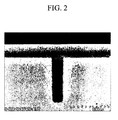
FIG. 2 is a SEM image of an embedded member formed from the resin composition of Example 1; and -
FIG. 3 is a SEM image of an embedded member formed from the resin composition of Comparative Example 1. - Hereinafter, embodiments of the present invention will be explained.
- The high refractive index material according to the present invention contains a siloxane compound (A).
- Here, the term "high refractive index" refers to a refractive index that is higher than 1.45, preferably at least 1.5, and more preferably at least 1.6. The upper limit of the refractive index, which is not particularly limited, is preferably no higher than 2.0, and more preferably no higher than 1.8.
- The siloxane compound (A) has a structural unit expressed by General Formula (a-1) shown below and includes at least two carbon atoms per silicon atom.

- Here, the "hydrocarbon group" in R1 and R2 is exemplified by linear, branched or cyclic alkyl groups having 1 to 12 carbon atoms, and aromatic hydrocarbon groups. These hydrocarbon groups may have a substituent. The substituent is exemplified by a hydroxyl group and alkoxy groups having 1 to 5 carbon atoms.
- As described above, the refractive index of the resulting member can be raised by use of a resin having a hydrocarbon group. The refractive index of the resulting member can be further raised by use of a resin having an aromatic hydrocarbon group in particular.
- Furthermore, the high refractive index material can be enhanced with respect to the embedding property into fine spaces. Here, the term "fine space" in the present invention refers to grooves having a width of less than 2 µm, holes having a diameter of less than 2 µm, etc. When aspect ratio (depth : width or diameter) of the fine spaces is 8:1 to 4:2, the embedding property is particularly enhanced in regards to the high refractive index material of the present invention.
- The hydrocarbon group described above is preferably alkyl groups having 1 to 5 carbon atoms, examples thereof include methyl group, ethyl group, n-propyl group, i-propyl group, n-butyl group, and tert-butyl group. Decrease of heat resistance can be prevented by use of the alkyl groups having 1 to 5 carbon atoms.
- Examples of the aromatic hydrocarbon group include benzyl group, phenethyl group, phenyl group, naphthyl group, anthracenyl group, phenanthryl group, biphenyl group, fluorenyl group, and pyrenyl group. The number of benzene ring is preferably 1 to 3 in the aromatic hydrocarbon group. By setting the number of benzene ring to 1 to 3, productivity of the siloxane compound (A) can be enhanced, and the high refractive index member can be easily generated by way of raising the polymerization degree thereby to suppress volatilization at the time of calcination.
- Furthermore, production cost can be reduced. It is also preferred that the aromatic hydrocarbon group contains a group having a hydroxyl group as a substituent. Thereby the high refractive index member can be provided with a smaller grain and a higher density, thus the higher refractive index and the embedding property can be effectively enhanced.
- It is preferred that the aromatic hydrocarbon group is specifically those having structures shown below.


- In the formulas described above, R3 is a hydrogen atom; hydroxyl group; alkoxy groups such as methoxy group, ethoxy group, butoxy group, and propoxy group; or hydrocarbon groups such as methyl group, ethyl group, butyl group, and propyl group; R4 is an oxygen atom; or alkylene groups such as methylene group, ethylene group, propylene group, and butylene group. It is enough that the aromatic hydrocarbon group has R3 in at least one aromatic ring in the aromatic hydrocarbon group and a plurality thereof is allowable. When a plurality of R3 exists, these R3 may be identical or different.
- When the embedding property is considered, particularly preferable R1 is those having a structure of (R1-a) or (R1-b) shown below, in particular (R1-b).

- It is also preferred that m is 0 in Formula (a-1), and the siloxane compound (A) has a silsesquioxane skeleton in the case. Furthermore, it is more preferred that the siloxane compound described above is a ladder-type silsesquioxane.
- Furthermore, it is preferred in the structural unit (unit skeleton) expressed by General Formula (a-1) that the atomic ratio of carbon atoms to silicon atoms is two or greater and 15 or less. By setting such atomic ratio, the refractive index of the high refractive index material can be easily made to be at least 1.5.
- The siloxane compound (A) may be a compound having two or more kinds of structural units (a-1). In addition, the siloxane compound (A) may be a mixture of siloxane compounds having different structural units (a-1).
- The siloxane compound described above is specifically exemplified by the siloxane compounds expressed by the structural formulas (A-1-1) to (A-1-3).


- Mass-average molecular weight (Mw) of the siloxane compound (A), which is not specifically limited, is preferably 2,000 to 30,000, more preferably 2,500 to 20,000, and most preferably 3,000 to 15,000. By setting the molecular weight to this range, solubility in organic solvents can be improved. In addition, the high refractive index material can be enhanced with respect to the embedding property. Furthermore, the high refractive index member can be easily formed through suppressing volatilization at the time of calcination.
- The siloxane compound (A) can be produced by hydrolyzing and polycondensing the respective monomers that constitute the respective structural units.
- The high refractive index material according to the present invention may contain an organic solvent (B).
- The organic solvent (B) is specifically exemplified by alcohols such as methanol, ethanol, propanol, and n-butanol; polyhydric alcohols such as ethylene glycol, diethylene glycol, propylene glycol, and dipropylene glycol; ketones such as acetone, methyl ethyl ketone, cyclohexanone, methyl-n-amyl ketone, methyl isoamyl ketone, and 2-heptanone; compounds having an ester linkage, such as ethylene glycol monoacetate, diethylene glycol monoacetate, propylene glycol monoacetate, and dipropylene glycol monoacetate; derivatives of polyhydric alcohols, such as compounds having an ether linkage including monoalkyl ethers (e.g., monomethyl ethers, monoethylethers, monopropyl ethers and monobutyl ethers) and monophenyl ethers of the polyhydric alcohols described above or the compounds having an ester linkage described above; cyclic ethers such as dioxane; esters such as methyl lactate, ethyl lactate, methyl acetate, ethyl acetate, butyl acetate, methyl pyruvate, ethyl pyruvate, methyl methoxypropionate, and ethyl ethoxypropionate; and aromatic organic solvents such as anisole, ethyl benzyl ether, cresyl methyl ether, diphenyl ether, dibenzyl ether, phenetol, butyl phenyl ether, ethylbenzene, diethylbenzene, amylbenzene, isopropylbenzene, toluene, xylene, cymene, and mesitylene.
- These organic solvents may be used alone or in combination of two or more.
- Among others, propylene glycol monomethyl ether acetate (PGMEA), propylene glycol monomethyl ether (PGME), and n-butanol are preferably used.
- The amount used of the organic solvent, which is not particularly limited, is preferably such that solid content concentration of the high refractive index material is 2% by mass to 50% by mass, more preferably 5% by mass to 40% by mass. Surfactant
- The high refractive index material according to the present invention may contain a surfactant (C). The high refractive index material according to the present invention can be enhanced with respect to the embedding property by containing the surfactant (C).
- The surfactant (C) can be publicly known ingredients without particular limitation.
- The high refractive index material of the present invention can be appropriately embedded into fine spaces. Method of Producing High Refractive Index Member
- The high refractive index member according to the present invention is exemplified by light guide paths applied to optical fiber, optical interconnection substrates, etc., parts, optical lenses, etc. of various devices such as image sensors, cameras, copiers, etc.
- Here, a case to form a light guide path is explained with reference to
FIG. 1A - 1D . - Initially, as shown in
FIG. 1A, 1B , the high refractive index material according to the present invention is coated on asubstrate 10, to which a groove 101 (fine space) has been formed, to form afilm 20 of the high refractive index material. The resultingfilm 20 of the high refractive index material is calcinated at a given temperature. Subsequently, as shown inFig. 1C , thefilm 20 of the high refractive index material formed in areas other than thegroove 101 is removed by CMP, etching, etc. Thereby a light guide path (core portion) is formed. Subsequently, alight confining portion 30 is formed on an upside portion as an optional step as shown inFig. 1D . Thelight confining portion 30 can be easily formed by coating a material having a refractive index lower than that of the core portion formed from the high refractive index material described above (e.g., resin composition described in Comparative Example 1 described later) and calcinating thereof. - A resin composition was prepared using a resin (mass-average molecular weight: 6,000) having a structural unit (a-1-1) shown below and adjusting the resin concentration to 20% by mass by PGMEA.

- The resin composition described above was evaluated with respect to refractive index and embedding property.
- The resin composition was coated on a glass substrate by a spin coating process, and was baked at 80°C, 150°C, 200°C for 1 minute respectively using a hot plate. Then a member having a film thickness of 1 µm was obtained by calcinating at 400°C for 30 minutes under a nitrogen atmosphere.
- The refractive index of the member was measured at 633 nm using a spectroscopic ellipsometer (produced by Woollam Co.). Results are shown in TABLE 1.
- The resin composition described above was coated on a substrate, on which a hole of 1 µm diameter and 4 µm deep had been formed, and baked at 80°C, 150°C, 200°C for 1 minute respectively using a hot plate, then was calcinated at 400°C for 30 minutes under a nitrogen atmosphere to obtain an embedded member. Then the cross section of the embedded member was captured using a scanning electron microscope (SEM) to evaluate the embedding property. In regards to the resulting embedded members, those having generated voids, peeling from the substrate, etc. were indicated as "×" and those that did not have these characteristics were indicated as "o".
- A resin composition was prepared using a resin (mass-average molecular weight: 2,500) having a structural unit (a-1-2) shown below and adjusting the resin concentration to 30% by mass by PGMEA.

- The resin composition was evaluated with respect to refractive index and embedding property similarly as Example 1. Results are shown in TABLE 1.
- A resin composition was prepared using a resin (mass-average molecular weight: 8,500, p:q=7:3 (mole ratio)) having a structural unit (a-1-3) shown below and adjusting the resin concentration to 20% by mass by n-butanol.

- The resin composition was evaluated with respect to refractive index and embedding property similarly as Example 1. Results are shown in TABLE 1.
- A resin composition was prepared using a resin (mass-average molecular weight: 2,800, p:q=7:3 (mole ratio)) having a structural unit (a-1-4) shown below and adjusting the resin concentration to 20% by mass by n-butanol.

- The resin composition was evaluated with respect to refractive index and embedding property similarly as Example 1. Results are shown in TABLE 1.
- A resin composition was prepared using a resin (mass-average molecular weight: 3,000, p:q=7:3 (mole ratio)) having a structural unit (a-1-5) shown below and adjusting the resin concentration to 25% by mass by n-butanol.

- The resin composition was evaluated with respect to refractive index and embedding property similarly as Example 1. Results are shown in TABLE 1.
- A resin composition was prepared using a resin (mass-average molecular weight: 1,500) having a structural unit (a-1-6) shown below and adjusting the resin concentration to 30% by mass by PGMEA.

- The resin composition was evaluated with respect to refractive index and embedding property similarly as Example 1. Results are shown in TABLE 1.
Table 1 Example 1 Example 2 Example 3 Example 4 Example 5 Comparative Example 1 Refractive Index 1.54 1.53 1.54 1.54 1.63 1.40 Embedding Property ○ ○ ○ ○ ○ ×
Claims (6)
- A high refractive index material to be filled into a fine space and to form a high refractive index member,
the high refractive index material comprising: a siloxane compound (A) that has a structural unit expressed by General Formula (a-1) shown below and includes at least two carbon atoms per silicon atom.
- The high refractive index material according to claim 1, wherein R1 is an aromatic hydrocarbon group.
- The high refractive index material according to claim 1 or 2, wherein R1 is a group containing a hydroxyl group.
- The high refractive index material according to any one of claims 1 to 3, wherein mass-average molecular weight of the siloxane compound (A) is 2,000 to 30,000.
- A high refractive index member, formed from the high refractive index material according to any one of claims 1 to 4.
- An image sensor, comprising the high refractive index member according to claim 5.
Applications Claiming Priority (2)
| Application Number | Priority Date | Filing Date | Title |
|---|---|---|---|
| JP2006199237A JP5586820B2 (en) | 2006-07-21 | 2006-07-21 | High refractive index material |
| PCT/JP2007/063364 WO2008010415A1 (en) | 2006-07-21 | 2007-07-04 | High refractive index material |
Publications (3)
| Publication Number | Publication Date |
|---|---|
| EP2045283A1 true EP2045283A1 (en) | 2009-04-08 |
| EP2045283A4 EP2045283A4 (en) | 2010-12-01 |
| EP2045283B1 EP2045283B1 (en) | 2015-10-14 |
Family
ID=38956749
Family Applications (1)
| Application Number | Title | Priority Date | Filing Date |
|---|---|---|---|
| EP07768122.9A Active EP2045283B1 (en) | 2006-07-21 | 2007-07-04 | High refractive index material |
Country Status (7)
| Country | Link |
|---|---|
| US (1) | US8760763B2 (en) |
| EP (1) | EP2045283B1 (en) |
| JP (1) | JP5586820B2 (en) |
| KR (1) | KR101102798B1 (en) |
| CN (1) | CN101484503B (en) |
| TW (1) | TWI420133B (en) |
| WO (1) | WO2008010415A1 (en) |
Families Citing this family (28)
| Publication number | Priority date | Publication date | Assignee | Title |
|---|---|---|---|---|
| JP5376210B2 (en) * | 2008-01-31 | 2013-12-25 | 東レ・ファインケミカル株式会社 | Silicone copolymer having condensed polycyclic hydrocarbon group and process for producing the same |
| EP2428529B1 (en) | 2009-05-07 | 2019-03-06 | Nissan Chemical Corporation | Triazine ring-containing polymer and film-forming composition comprising same |
| WO2011040248A1 (en) | 2009-09-29 | 2011-04-07 | 東レ株式会社 | Positive photosensitive resin composition, cured film obtained using same, and optical device |
| EP2558775B1 (en) | 2010-04-16 | 2019-11-13 | FLEx Lighting II, LLC | Illumination device comprising a film-based lightguide |
| US9028123B2 (en) | 2010-04-16 | 2015-05-12 | Flex Lighting Ii, Llc | Display illumination device with a film-based lightguide having stacked incident surfaces |
| WO2012026451A1 (en) | 2010-08-25 | 2012-03-01 | 日産化学工業株式会社 | Film-forming composition |
| WO2012026452A1 (en) | 2010-08-25 | 2012-03-01 | 日産化学工業株式会社 | Triazine ring-containing polymer and membrane-forming composition containing the same |
| CN103189419B (en) * | 2010-09-22 | 2015-05-27 | 道康宁公司 | High refractive index compositions containing resin-linear organosiloxane block copolymers |
| US8957147B2 (en) | 2010-09-22 | 2015-02-17 | Dow Corning Corporation | Resin-linear organosiloxane block copolymers |
| US9045668B2 (en) | 2010-09-22 | 2015-06-02 | Dow Corning Corporation | Organosiloxane block copolymer |
| CN103201317B (en) | 2010-09-22 | 2015-05-27 | 道康宁公司 | Thermally stable compositions containing resin-linear organosiloxane block copolymers |
| EP2636697B1 (en) | 2010-11-01 | 2018-08-15 | Nissan Chemical Industries, Ltd. | Triazine ring-containing polymer and film-forming composition containing same |
| KR101849397B1 (en) | 2010-11-02 | 2018-04-17 | 닛산 가가쿠 고교 가부시키 가이샤 | Film-forming composition |
| JP5880452B2 (en) | 2011-02-15 | 2016-03-09 | 日産化学工業株式会社 | Photocurable film-forming composition and method for producing cured film |
| CN103781824A (en) | 2011-07-07 | 2014-05-07 | 道康宁东丽株式会社 | Organo polysiloxane, and method for producing same |
| WO2013005858A1 (en) | 2011-07-07 | 2013-01-10 | 東レ・ダウコーニング株式会社 | Curable silicon composition, cured product thereof, and optical semiconductor device |
| US10174164B2 (en) | 2011-12-20 | 2019-01-08 | Nissan Chemical Industries, Ltd. | Triazine ring-containing polymer and composition for film formation comprising same |
| KR102067384B1 (en) * | 2011-12-30 | 2020-01-17 | 다우 실리콘즈 코포레이션 | Solid state light and method of forming |
| JP6094579B2 (en) | 2012-05-11 | 2017-03-15 | 日産化学工業株式会社 | Film forming composition and embedding material |
| JP6065003B2 (en) | 2012-05-11 | 2017-01-25 | 日産化学工業株式会社 | Film forming composition |
| JP6022236B2 (en) * | 2012-06-28 | 2016-11-09 | 東レ・ダウコーニング株式会社 | Coating agent, electrical / electronic device, and method for protecting metal part of electrical / electronic device |
| JP2014062198A (en) | 2012-09-21 | 2014-04-10 | Dow Corning Toray Co Ltd | Curable silicone composition, and semiconductor sealing material and optical semiconductor device using the same |
| US9989852B2 (en) | 2013-07-02 | 2018-06-05 | Toray Industries, Inc. | Positive photosensitive resin composition, cured film formed by curing same, and optical device equipped with same |
| JP2015017195A (en) * | 2013-07-11 | 2015-01-29 | 日産化学工業株式会社 | Composition for forming reflow-type high refractive index film for solid-state imaging device |
| JP6439699B2 (en) | 2013-11-13 | 2018-12-19 | 日産化学株式会社 | Organic electroluminescence device |
| WO2015093508A1 (en) | 2013-12-17 | 2015-06-25 | 日産化学工業株式会社 | Composition for film formation |
| KR102300782B1 (en) | 2014-01-24 | 2021-09-13 | 도레이 카부시키가이샤 | Negative photosensitive resin composition, cured film obtained by curing same, method for producing cured film, optical device provided with cured film, and backside-illuminated cmos image sensor |
| CN115968450A (en) * | 2020-07-31 | 2023-04-14 | 国立研究开发法人情报通信研究机构 | Method for manufacturing nonlinear optical device |
Family Cites Families (17)
| Publication number | Priority date | Publication date | Assignee | Title |
|---|---|---|---|---|
| US5046634A (en) * | 1990-01-16 | 1991-09-10 | Scholle Corporation | Drum liner assembly |
| JP3110814B2 (en) | 1991-09-10 | 2000-11-20 | 日本電信電話株式会社 | Siloxane polymer and optical material |
| JPH08176444A (en) * | 1994-10-26 | 1996-07-09 | Nippon Telegr & Teleph Corp <Ntt> | Polymer optical material and optical waveguide using the same |
| JPH08327842A (en) * | 1995-05-29 | 1996-12-13 | Nippon Telegr & Teleph Corp <Ntt> | Optical waveguide |
| JPH09329721A (en) * | 1996-06-12 | 1997-12-22 | Sharp Corp | Polymer optical waveguide and method for manufacturing the same |
| US5991493A (en) | 1996-12-13 | 1999-11-23 | Corning Incorporated | Optically transmissive bonding material |
| US6144795A (en) * | 1996-12-13 | 2000-11-07 | Corning Incorporated | Hybrid organic-inorganic planar optical waveguide device |
| JP2000039529A (en) | 1998-07-24 | 2000-02-08 | Kyocera Corp | Metal-containing siloxane-based polymer and optical waveguide |
| US6087064A (en) * | 1998-09-03 | 2000-07-11 | International Business Machines Corporation | Silsesquioxane polymers, method of synthesis, photoresist composition, and multilayer lithographic method |
| JP2000235103A (en) | 1999-02-16 | 2000-08-29 | Konica Corp | Optical device, optical lens and optical hardening resin composition having high refractive index |
| US6731857B2 (en) | 2001-03-29 | 2004-05-04 | Shipley Company, L.L.C. | Photodefinable composition, method of manufacturing an optical waveguide with the photodefinable composition, and optical waveguide formed therefrom |
| KR20040052206A (en) * | 2001-10-23 | 2004-06-22 | 니혼 이타가라스 가부시키가이샤 | Process for producing optical element |
| JP2005017940A (en) * | 2003-06-27 | 2005-01-20 | Sekisui Chem Co Ltd | Manufacturing method of optical waveguide |
| JP4294521B2 (en) | 2004-03-19 | 2009-07-15 | 東京応化工業株式会社 | Negative resist composition and pattern forming method using the same |
| KR100644521B1 (en) * | 2004-07-29 | 2006-11-10 | 매그나칩 반도체 유한회사 | Image sensor with improved apparent size of microlens and its manufacturing method |
| JP2006119472A (en) * | 2004-10-22 | 2006-05-11 | Hitachi Chem Co Ltd | Polymeric optical waveguide and manufacturing method therefor |
| JP5296297B2 (en) * | 2005-04-04 | 2013-09-25 | 東レ・ファインケミカル株式会社 | Silicone copolymer having condensed polycyclic hydrocarbon group and process for producing the same |
-
2006
- 2006-07-21 JP JP2006199237A patent/JP5586820B2/en not_active Expired - Fee Related
-
2007
- 2007-07-04 CN CN2007800253605A patent/CN101484503B/en active Active
- 2007-07-04 US US12/307,555 patent/US8760763B2/en active Active
- 2007-07-04 WO PCT/JP2007/063364 patent/WO2008010415A1/en not_active Ceased
- 2007-07-04 KR KR1020087031906A patent/KR101102798B1/en active Active
- 2007-07-04 EP EP07768122.9A patent/EP2045283B1/en active Active
- 2007-07-19 TW TW096126433A patent/TWI420133B/en active
Also Published As
| Publication number | Publication date |
|---|---|
| EP2045283A4 (en) | 2010-12-01 |
| CN101484503B (en) | 2012-01-11 |
| JP5586820B2 (en) | 2014-09-10 |
| EP2045283B1 (en) | 2015-10-14 |
| KR101102798B1 (en) | 2012-01-05 |
| CN101484503A (en) | 2009-07-15 |
| US20090318725A1 (en) | 2009-12-24 |
| JP2008024832A (en) | 2008-02-07 |
| TWI420133B (en) | 2013-12-21 |
| US8760763B2 (en) | 2014-06-24 |
| TW200813468A (en) | 2008-03-16 |
| WO2008010415A1 (en) | 2008-01-24 |
| KR20090014405A (en) | 2009-02-10 |
Similar Documents
| Publication | Publication Date | Title |
|---|---|---|
| EP2045283B1 (en) | High refractive index material | |
| EP3257069B1 (en) | Metal hardmask composition and processes for forming fine patterns on semiconductor substrates | |
| KR102132509B1 (en) | Stable metal compounds as hardmasks and filling materials, their compositions and methods of use | |
| JP4133968B2 (en) | Anti-reflective hard mask composition and method for manufacturing semiconductor device using the same | |
| US7666794B2 (en) | Multiple patterning using patternable low-k dielectric materials | |
| KR101156200B1 (en) | Siloxane resin-based anti-reflective coating composition having high wet etch rate | |
| US20110117746A1 (en) | Coating composition and pattern forming method | |
| US20230236509A1 (en) | A spin coating composition comprising a carbon material, a metal organic compound, and solvent, and a manufacturing method of a metal oxide film above a substrate | |
| US8133965B2 (en) | High silicon content siloxane polymers for integrated circuits | |
| KR102307612B1 (en) | Hardmask | |
| KR101322045B1 (en) | Silsesquioxane-Titania Hybrid Polymers | |
| US11042091B2 (en) | Spin-on inorganic oxide containing composition useful as hard masks and filling materials with improved thermal stability | |
| KR20150135298A (en) | Composition, method for producing substrate having pattern formed thereon, film and method for producing same, and compound | |
| KR101366792B1 (en) | Polysilane compound-containing lower layer film forming composition for lithography | |
| KR101400182B1 (en) | Photoresist underlayer composition and method of manufacturing semiconductor device by using the same | |
| JPH0527444A (en) | Silica-based non-reflective planarizing layer | |
| US20090029287A1 (en) | Photosensitive resin composition | |
| KR102407313B1 (en) | Composition for black matrix and method for producing black matrix using same | |
| US11059974B2 (en) | Silicon carbonaceous film forming composition comprising polycarbosilane and method for manufacturing silicon carbonaceous film using the same | |
| US20240242967A1 (en) | Polymer For Forming Metal-Containing Film, Composition For Forming Metal-Containing Film, And Patterning Process | |
| KR20240154004A (en) | Resin composition | |
| US20100159217A1 (en) | Negative-type photosensitive resin composition, method for forming patterns, and electronic parts | |
| CN113412533B (en) | Spin-coating compositions containing inorganic oxide components and alkynyloxy-substituted spin-coating carbon components | |
| KR20100073676A (en) | Resin composition for overcoating and image sensor manufactured by using the same | |
| Kim et al. | Controlling etch properties of silicon-based antireflective spin-on hardmask materials |
Legal Events
| Date | Code | Title | Description |
|---|---|---|---|
| PUAI | Public reference made under article 153(3) epc to a published international application that has entered the european phase |
Free format text: ORIGINAL CODE: 0009012 |
|
| 17P | Request for examination filed |
Effective date: 20090108 |
|
| AK | Designated contracting states |
Kind code of ref document: A1 Designated state(s): AT BE BG CH CY CZ DE DK EE ES FI FR GB GR HU IE IS IT LI LT LU LV MC MT NL PL PT RO SE SI SK TR |
|
| AX | Request for extension of the european patent |
Extension state: AL BA HR MK RS |
|
| DAX | Request for extension of the european patent (deleted) | ||
| RBV | Designated contracting states (corrected) |
Designated state(s): FR |
|
| REG | Reference to a national code |
Ref country code: DE Ref legal event code: 8566 |
|
| A4 | Supplementary search report drawn up and despatched |
Effective date: 20101029 |
|
| 17Q | First examination report despatched |
Effective date: 20120514 |
|
| GRAP | Despatch of communication of intention to grant a patent |
Free format text: ORIGINAL CODE: EPIDOSNIGR1 |
|
| INTG | Intention to grant announced |
Effective date: 20150601 |
|
| GRAS | Grant fee paid |
Free format text: ORIGINAL CODE: EPIDOSNIGR3 |
|
| GRAA | (expected) grant |
Free format text: ORIGINAL CODE: 0009210 |
|
| AK | Designated contracting states |
Kind code of ref document: B1 Designated state(s): FR |
|
| REG | Reference to a national code |
Ref country code: FR Ref legal event code: PLFP Year of fee payment: 10 |
|
| PLBE | No opposition filed within time limit |
Free format text: ORIGINAL CODE: 0009261 |
|
| STAA | Information on the status of an ep patent application or granted ep patent |
Free format text: STATUS: NO OPPOSITION FILED WITHIN TIME LIMIT |
|
| 26N | No opposition filed |
Effective date: 20160715 |
|
| REG | Reference to a national code |
Ref country code: FR Ref legal event code: PLFP Year of fee payment: 11 |
|
| REG | Reference to a national code |
Ref country code: FR Ref legal event code: PLFP Year of fee payment: 12 |
|
| PGFP | Annual fee paid to national office [announced via postgrant information from national office to epo] |
Ref country code: FR Payment date: 20250620 Year of fee payment: 19 |