EP2043972B1 - Biodiesel production using composite catalysts - Google Patents
Biodiesel production using composite catalysts Download PDFInfo
- Publication number
- EP2043972B1 EP2043972B1 EP06813569.8A EP06813569A EP2043972B1 EP 2043972 B1 EP2043972 B1 EP 2043972B1 EP 06813569 A EP06813569 A EP 06813569A EP 2043972 B1 EP2043972 B1 EP 2043972B1
- Authority
- EP
- European Patent Office
- Prior art keywords
- catalyst
- mcs
- fatty acid
- catalysts
- ester
- Prior art date
- Legal status (The legal status is an assumption and is not a legal conclusion. Google has not performed a legal analysis and makes no representation as to the accuracy of the status listed.)
- Expired - Lifetime
Links
Images



Classifications
-
- C—CHEMISTRY; METALLURGY
- C11—ANIMAL OR VEGETABLE OILS, FATS, FATTY SUBSTANCES OR WAXES; FATTY ACIDS THEREFROM; DETERGENTS; CANDLES
- C11C—FATTY ACIDS FROM FATS, OILS OR WAXES; CANDLES; FATS, OILS OR FATTY ACIDS BY CHEMICAL MODIFICATION OF FATS, OILS, OR FATTY ACIDS OBTAINED THEREFROM
- C11C3/00—Fats, oils, or fatty acids by chemical modification of fats, oils, or fatty acids obtained therefrom
- C11C3/003—Fats, oils, or fatty acids by chemical modification of fats, oils, or fatty acids obtained therefrom by esterification of fatty acids with alcohols
-
- B—PERFORMING OPERATIONS; TRANSPORTING
- B01—PHYSICAL OR CHEMICAL PROCESSES OR APPARATUS IN GENERAL
- B01J—CHEMICAL OR PHYSICAL PROCESSES, e.g. CATALYSIS OR COLLOID CHEMISTRY; THEIR RELEVANT APPARATUS
- B01J29/00—Catalysts comprising molecular sieves
- B01J29/03—Catalysts comprising molecular sieves not having base-exchange properties
- B01J29/0308—Mesoporous materials not having base exchange properties, e.g. Si-MCM-41
-
- B—PERFORMING OPERATIONS; TRANSPORTING
- B01—PHYSICAL OR CHEMICAL PROCESSES OR APPARATUS IN GENERAL
- B01J—CHEMICAL OR PHYSICAL PROCESSES, e.g. CATALYSIS OR COLLOID CHEMISTRY; THEIR RELEVANT APPARATUS
- B01J29/00—Catalysts comprising molecular sieves
- B01J29/04—Catalysts comprising molecular sieves having base-exchange properties, e.g. crystalline zeolites
- B01J29/041—Mesoporous materials having base exchange properties, e.g. Si/Al-MCM-41
-
- C—CHEMISTRY; METALLURGY
- C07—ORGANIC CHEMISTRY
- C07C—ACYCLIC OR CARBOCYCLIC COMPOUNDS
- C07C67/00—Preparation of carboxylic acid esters
- C07C67/03—Preparation of carboxylic acid esters by reacting an ester group with a hydroxy group
-
- C—CHEMISTRY; METALLURGY
- C10—PETROLEUM, GAS OR COKE INDUSTRIES; TECHNICAL GASES CONTAINING CARBON MONOXIDE; FUELS; LUBRICANTS; PEAT
- C10L—FUELS NOT OTHERWISE PROVIDED FOR; NATURAL GAS; SYNTHETIC NATURAL GAS OBTAINED BY PROCESSES NOT COVERED BY SUBCLASSES C10G OR C10K; LIQUIFIED PETROLEUM GAS; USE OF ADDITIVES TO FUELS OR FIRES; FIRE-LIGHTERS
- C10L1/00—Liquid carbonaceous fuels
- C10L1/02—Liquid carbonaceous fuels essentially based on components consisting of carbon, hydrogen, and oxygen only
- C10L1/026—Liquid carbonaceous fuels essentially based on components consisting of carbon, hydrogen, and oxygen only for compression ignition
-
- C—CHEMISTRY; METALLURGY
- C10—PETROLEUM, GAS OR COKE INDUSTRIES; TECHNICAL GASES CONTAINING CARBON MONOXIDE; FUELS; LUBRICANTS; PEAT
- C10G—CRACKING HYDROCARBON OILS; PRODUCTION OF LIQUID HYDROCARBON MIXTURES, e.g. BY DESTRUCTIVE HYDROGENATION, OLIGOMERISATION, POLYMERISATION; RECOVERY OF HYDROCARBON OILS FROM OIL-SHALE, OIL-SAND, OR GASES; REFINING MIXTURES MAINLY CONSISTING OF HYDROCARBONS; REFORMING OF NAPHTHA; MINERAL WAXES
- C10G2300/00—Aspects relating to hydrocarbon processing covered by groups C10G1/00 - C10G99/00
- C10G2300/10—Feedstock materials
- C10G2300/1011—Biomass
- C10G2300/1014—Biomass of vegetal origin
-
- C—CHEMISTRY; METALLURGY
- C10—PETROLEUM, GAS OR COKE INDUSTRIES; TECHNICAL GASES CONTAINING CARBON MONOXIDE; FUELS; LUBRICANTS; PEAT
- C10G—CRACKING HYDROCARBON OILS; PRODUCTION OF LIQUID HYDROCARBON MIXTURES, e.g. BY DESTRUCTIVE HYDROGENATION, OLIGOMERISATION, POLYMERISATION; RECOVERY OF HYDROCARBON OILS FROM OIL-SHALE, OIL-SAND, OR GASES; REFINING MIXTURES MAINLY CONSISTING OF HYDROCARBONS; REFORMING OF NAPHTHA; MINERAL WAXES
- C10G2300/00—Aspects relating to hydrocarbon processing covered by groups C10G1/00 - C10G99/00
- C10G2300/10—Feedstock materials
- C10G2300/1011—Biomass
- C10G2300/1018—Biomass of animal origin
-
- Y—GENERAL TAGGING OF NEW TECHNOLOGICAL DEVELOPMENTS; GENERAL TAGGING OF CROSS-SECTIONAL TECHNOLOGIES SPANNING OVER SEVERAL SECTIONS OF THE IPC; TECHNICAL SUBJECTS COVERED BY FORMER USPC CROSS-REFERENCE ART COLLECTIONS [XRACs] AND DIGESTS
- Y02—TECHNOLOGIES OR APPLICATIONS FOR MITIGATION OR ADAPTATION AGAINST CLIMATE CHANGE
- Y02E—REDUCTION OF GREENHOUSE GAS [GHG] EMISSIONS, RELATED TO ENERGY GENERATION, TRANSMISSION OR DISTRIBUTION
- Y02E50/00—Technologies for the production of fuel of non-fossil origin
- Y02E50/10—Biofuels, e.g. bio-diesel
-
- Y—GENERAL TAGGING OF NEW TECHNOLOGICAL DEVELOPMENTS; GENERAL TAGGING OF CROSS-SECTIONAL TECHNOLOGIES SPANNING OVER SEVERAL SECTIONS OF THE IPC; TECHNICAL SUBJECTS COVERED BY FORMER USPC CROSS-REFERENCE ART COLLECTIONS [XRACs] AND DIGESTS
- Y02—TECHNOLOGIES OR APPLICATIONS FOR MITIGATION OR ADAPTATION AGAINST CLIMATE CHANGE
- Y02P—CLIMATE CHANGE MITIGATION TECHNOLOGIES IN THE PRODUCTION OR PROCESSING OF GOODS
- Y02P20/00—Technologies relating to chemical industry
- Y02P20/50—Improvements relating to the production of bulk chemicals
- Y02P20/584—Recycling of catalysts
-
- Y—GENERAL TAGGING OF NEW TECHNOLOGICAL DEVELOPMENTS; GENERAL TAGGING OF CROSS-SECTIONAL TECHNOLOGIES SPANNING OVER SEVERAL SECTIONS OF THE IPC; TECHNICAL SUBJECTS COVERED BY FORMER USPC CROSS-REFERENCE ART COLLECTIONS [XRACs] AND DIGESTS
- Y02—TECHNOLOGIES OR APPLICATIONS FOR MITIGATION OR ADAPTATION AGAINST CLIMATE CHANGE
- Y02P—CLIMATE CHANGE MITIGATION TECHNOLOGIES IN THE PRODUCTION OR PROCESSING OF GOODS
- Y02P30/00—Technologies relating to oil refining and petrochemical industry
- Y02P30/20—Technologies relating to oil refining and petrochemical industry using bio-feedstock
-
- Y—GENERAL TAGGING OF NEW TECHNOLOGICAL DEVELOPMENTS; GENERAL TAGGING OF CROSS-SECTIONAL TECHNOLOGIES SPANNING OVER SEVERAL SECTIONS OF THE IPC; TECHNICAL SUBJECTS COVERED BY FORMER USPC CROSS-REFERENCE ART COLLECTIONS [XRACs] AND DIGESTS
- Y02—TECHNOLOGIES OR APPLICATIONS FOR MITIGATION OR ADAPTATION AGAINST CLIMATE CHANGE
- Y02T—CLIMATE CHANGE MITIGATION TECHNOLOGIES RELATED TO TRANSPORTATION
- Y02T50/00—Aeronautics or air transport
- Y02T50/60—Efficient propulsion technologies, e.g. for aircraft
- Y02T50/678—Aviation using fuels of non-fossil origin
-
- Y—GENERAL TAGGING OF NEW TECHNOLOGICAL DEVELOPMENTS; GENERAL TAGGING OF CROSS-SECTIONAL TECHNOLOGIES SPANNING OVER SEVERAL SECTIONS OF THE IPC; TECHNICAL SUBJECTS COVERED BY FORMER USPC CROSS-REFERENCE ART COLLECTIONS [XRACs] AND DIGESTS
- Y10—TECHNICAL SUBJECTS COVERED BY FORMER USPC
- Y10S—TECHNICAL SUBJECTS COVERED BY FORMER USPC CROSS-REFERENCE ART COLLECTIONS [XRACs] AND DIGESTS
- Y10S977/00—Nanotechnology
- Y10S977/84—Manufacture, treatment, or detection of nanostructure
- Y10S977/90—Manufacture, treatment, or detection of nanostructure having step or means utilizing mechanical or thermal property, e.g. pressure, heat
Definitions
- This invention provides a method for esterifying a fatty acid to provide a fatty acid (C 1 -C 4 )alkyl ester or transesterifying an ester to provide a (C 1 -C 4 )alkyl ester.
- Biodiesel such as soy diesel (methyl soyate), is becoming increasingly useful as a "green fuel”.
- Biodiesel is a biodegradable and nontoxic alternative to diesel fuel. It is made from renewable biological sources such as vegetable oils and animal fats ( Bioresource Technology 1999, 70, 1-15 ).
- Biodiesel fatty acid methyl esters have been recently accepted as a viable alternative to traditional petroleum-derived solvents, which are of environmental concern and are under legislative pressure to be replaced by biodegradable substitutes.
- interest in biodiesel is rapidly increasing, the process by which biodiesel is synthesized has not changed much in recent years.
- soy diesel methyl soyate
- soybean oil is reacted with methanol at 140-150 °F (about 60-65 °C), often under pressure, in the presence of sodium methoxide to yield fatty acid methyl esters and glycerol.
- This process is called "transesterification”.
- Isolation of the desired methyl soyate from the highly caustic (toxic) catalyst and other products, such as glycerol, involves a precise neutralization process with strong acids, such as hydrochloric acid (HCl), and extensive washes with water to remove the resulting sodium chloride (NaCl) salt.
- HCl hydrochloric acid
- the glycerol must be separated from the sodium chloride salt by vacuum distillation in an energy intensive operation for this high-boiling product ( Bioresource Technology 1999, 70, 81 ; Fuel 1998, 77, 1297 ; J. Am. Oil Chem. Soc. 1985, 62, 331 ; J. Am. Oil Chem. Soc. 2001, 78, 139 ).
- the invention provides a method for esterifying a fatty acid to provide a fatty acid (C 1 -C 4 )alkyl ester or transesterifying an ester to provide a (C 1 -C 4 )alkyl ester, the method comprising: combining the fatty acid or ester, a (C 1 -C 4 )alcohol, and a silicate calcium oxide esterification or transesterification catalyst under conditions wherein the catalyst catalyzes the formation of the fatty acid (C 1 -C 4 )alkyl ester or the (C 1 -C 4 )alkyl ester, the catalyst comprising one or more porous particles that have a composite matrix of silicate and calcium oxide moieties in which a portion of the silicon atoms in the silicate matrix is replaced by calcium atoms; wherein the catalyst has a silicon to calcium mole ratio of 1:1 to 6:1; the catalyst contains both acidic and basic sites and has a BET surface area of greater than 200 m 2 per gram
- the silicate calcium oxide esterification or transesterification catalyst may comprise said porous particles and separate calcium oxide particles. It may be the result of (a) combining a (C 10 -C 24 )alkyl-tri(C 1 -C 3 )alkylammonium halide, a solvent, and a base, to form a first mixture; (b) heating the first mixture; (c) combining the first mixture with a tetra(C 1 -C 4 )alkylorthosilicate and calcium oxide or hydroxide, to provide the catalyst in a second mixture as particles; (d) recovering the catalyst from the second mixture; and (e) heating the catalyst at a temperature of from 450°C to 650°C.
- the porous silica-calcium oxide composite-based catalyst used in the above method offers several advantages over known catalysts.
- the resulting catalysts are solids that function as heterogeneous catalysts that can be easily separated from a reaction mixture.
- the catalysts are easily recycled for use in subsequent catalytic reactions.
- the catalysts may also incorporate calcium oxide into porous silica supports. The synthesis of the catalysts is significantly economical and commercially available resources are employed.
- the catalysts are stable, even after repeated usage. They have very high surface areas due to their porosity. Additionally, the pores are sufficiently large to allow passage of vegetable and animal oils and alcohols used in the transesterification process. Furthermore, the pores can be chemically modified to allow more rapid passage of certain large molecules.
- the catalysts rapidly and under mild conditions convert vegetable and animal oils to (C 10 -C 30 )alkyl methyl esters and glycerin, which are easily mechanically separable. Glycerin has a variety of cosmetic and food uses, and is also under investigation as a biodegradable alternative to petroleum-based ethylene glycol and propylene glycol in aviation di-icing formulations.
- the ester may be a fatty acid glycerol ester, and the (C 1 -C 4 )alkyl ester may be a fatty acid (C 1 -C 4 )alkyl ester.
- the ester may be a glyceride-containing vegetable or animal oil, the (C 1 -C 4 )alkyl ester may be a fatty acid (C 1 -C 4 )alkyl ester, and the catalyst may catalyze the production of glycerol.
- the ester may be soybean oil
- the (C 1 -C 4 )alcohol may be methanol
- the (C 1 -C 4 )alkyl ester may be methyl soyate
- the catalyst may catalyze the production of glycerol.
- the formation of the ester may be carried out without added solvent.
- fatty acid (C 1 -C 4 )alkyl esters may be prepared from a feedstock that comprises one or more fatty acid glycerol esters and one or more fatty acids by combining the feedstock, a (C 1 -C 4 )alcohol, and the above mentioned catalyst under conditions wherein the catalyst catalyzes the formation of the corresponding fatty acid (C 1 -C 4 )alkyl esters.
- the invention further provides a method for producing a fatty acid (C 1 -C 4 )alkyl ester comprising: combining a glyceride-containing vegetable or animal oil, a (C 1 -C 4 )alcohol, and the above mentioned catalyst under conditions wherein the catalyst catalyzes formation of the corresponding fatty acid (C 1 -C 4 )alkyl ester and glycerol.
- the invention also provides a method for preparing a fatty acid (C 1 -C 4 )alkyl ester from a fatty acid comprising: combining a fatty acid, a (C 1 -C 4 )alcohol, and the above mentioned catalyst under conditions wherein the mesoporous silicate catalyzes formation of the corresponding fatty acid (C 1 -C 4 )alkyl ester.
- the invention provides a method for producing methyl soyate comprising: combining soybean oil, methanol, and the above mentioned catalyst under conditions wherein the mesoporous silicate catalyzes formation of glycerol and the methyl soyate.
- the invention provides a co-condensation method, which generates a series of mixed metal oxide mesoporous material that can effectively catalyze both the esterification of FF As as well as the transesterification of an oil to biodiesel.
- the catalytic performance of three mesoporous calcium silicate (MCS) catalysts of varying calcium oxide content, a mesoporous magnesium silicate (MMS) (reference), and a mesoporous barium silicate (MBS) (reference) have been evaluated and described herein.
- mesoporous particle refers to a particle that is about 1 nm to about 50 nm in diameter, e.g., about 1 nm to about 20 nm in diameter.
- composite matrix refers to a matrix of silicon and oxygen atoms, wherein a portion of silicon atoms have been replaced by metal oxide atoms, and the coordination environment is a combination of at least tetrahedral and octahedral.
- a composite matrix can be illustrated as: or as shown in Figure 8 .
- silicates refers to a matrix of silicon and oxygen atoms, wherein the coordination environment is typically tetrahedral.
- alkaline earth metal refers to beryllium (Be), magnesium (Mg), calcium (Ca), strontium (Sr), barium (Ba), and radium (Ra).
- alkaline earth metal oxide refers to an oxide of an alkaline earth metal, including BeO, MgO, CaO, SrO, and BaO.
- alkaline earth metal hydroxide refers to a hydroxide of an alkaline earth metal, including Mg(OH) 2 , Ca(OH) 2 , Sr(OH) 2 , and Ba(OH) 2 , and their various hydrated forms.
- bridging silicate tetrahedral refers to layers of tobermorite as illustrated in Figure 8(d) .
- to transesterify refers to the alcoholysis of the glyceryl esters of a fat or oil with an alcohol, such as a (C 1 -C 4 )alkanol, to form newly formed esters and glycerol.
- an alcohol such as a (C 1 -C 4 )alkanol
- the alkanol of the newly formed ester is derived from the alcohol used in the transesterification reaction.
- the glycerol portion of the glyceride is preplaced by a (C 1 -C 4 )alcohol, thus liberating glycerol from the mono-, di-, or triglyceride.
- glycerol can be separated from biodiesel by gravitational settling, centrifugation, distillation, or combinations thereof.
- esters should be read in the context in which they are presented.
- ester will typically refer to the starting material ester, such as from a vegetable oil, an animal oil, or other feedstock oil, and the corresponding “(C 1 -C 4 )alkyl ester” refers to the product of a transesterification of the oil.
- fatty acid (C 1 -C 4 )alkyl ester refers to a (C 1 -C 4 )alkyl ester of a starting material fatty acid or starting material fatty acid glyceryl ester.
- Fatty acids can vary in carbon chain length and in the number of unsaturated bonds.
- Vegetable oils are typically made of a combination of fatty acids. Common vegetable oils include canola, coconut, corn, cottonseed, crambe, palm, peanut, rapeseed, soybean, and sunflower oils. These oils contain varying amounts of fatty acids, including combinations of C 16 -C 24 fatty acids, typically with 0 to 3 sites of unsaturation in the carbon chain. Some examples of these fatty acids include lauric, myristic, palmitic, stearic, oleic, linoleic, and linolenic acids. Animal fats and oils are typically made of a combinations of fatty acids as well. Animal oils can be provided in various forms, including lard and tallow.
- free alcohol of an/the ester refers to the alkanol moiety of an ester after the alkanol portion has been hydrolyzed, alcoholyzed, or otherwise freed from the carboxyl moiety of the ester.
- (C 1 -C 4 )alcohol or "(C 1 -C 4 )alkanol” refers to methanol, ethanol, propanol, iso-propanol, butanol, iso-butanol, sec-butanol, or a combination thereof.
- methyl soyate refers to methyl esters of the fatty acids or fatty acid moieties in soybean oil.
- feedstock refers to a large quantity, typically kilogram scale, of one or more fatty acid glycerol esters, one or more fatty acids, and optionally other substances. Feedstocks include vegetable oils and animal oils, such as animal fats and restaurant waste oils.
- fatty acid (C 1 -C 4 )alkyl ester refers to a fatty acid that has been esterified with a (C 1 -C 4 )alkanol.
- glycolide-containing vegetable or animal oil refers to a vegetable or animal oil that contains mono-, di-, or tri-esters of glycerol.
- C 10 -C 24 fatty acid ester refers to the ester of a C 10 -C 24 fatty acid wherein the fatty acid portion of the molecule can be saturated or can have one or more sites of unsaturation, epoxidation, hydroxylation, or a combination thereof.
- the fatty acid ester has 1, 2, 3, 4, or more sites of unsaturation, epoxidation, hydroxylation, or a combination thereof.
- glycerol refers to a glycerol molecule wherein one, two, or three hydroxyl groups of the glycerol have lost a hydrogen atom and have formed an ester linkage with an appropriate number of organic acids.
- the catalyst is a esterification or transesterification catalyst comprising one or more porous particles that have a composite matrix of mesoporous silicates and alkaline earth meta oxides.
- the catalyst contains both acidic and basic sites and has a surface area of greater than 200 m 2 per gram. The catalyst can be recycled.
- the alkaline earth metal is calcium.
- the catalyst can have a surface area of greater than about 400 m 2 per gram, or greater than about 800 m 2 per gram. In certain embodiments, the catalyst can have a surface area of about 200 to about 1,000 m 2 per gram. In other embodiments, the catalyst can have a surface area of about 250 to about 900 m 2 per gram. In certain specific embodiments, the catalyst has a surface area of about 250 to about 300 m 2 per gram, of greater than 200 to about 500 m 2 per gram, or 800 to about 950 m 2 per gram.
- the pores of the catalyst particle are 1 nm in diameter to 10 nm in diameter. In certain specific embodiments, the pores of the particle are about 1 nm to about 2 nm in diameter, about 2 nm to about 3 nm, or about 8 nm to about 10 nm.
- the silicate metal oxide catalyst can be made from a variety of ratios of silicon-containing starting materials and metal oxide-containing starting materials.
- the catalyst has a silicon to alkaline earth metal ratio of about 1 to 1, to about 6 to 1.
- the alkaline earth metal is calcium.
- the alkaline earth metal is barium, or magnesium.
- the alkaline earth metal of the particle is calcium, bridging silicate tetrahedra are connected to form Q 3 -type silicon atom geometry, and the catalyst exhibits spherical or sheet-like particle morphology with worm-like or channel-like mesopores.
- the spherical particles can have worm-like mesopores channel-like mesopores, or both.
- the sheet-like particles can also have worm-like mesopores channel-like mesopores, or both.
- the silicon metal oxide composite catalyst can be used to catalyze a variety of esterification and transesterification reactions.
- the catalyst can be used in a method for transesterifying an ester to provide a (C 1 -C 4 )alkyl ester comprising: combining the ester, a (C 1 -C 4 )alcohol, and the catalyst under conditions wherein the catalyst catalyzes the formation of the (C 1 -C 4 )alkyl ester of the acid portion of the ester and the corresponding free alcohol of the ester.
- the catalyst can be used in a method for preparing fatty acid (C 1 -C 4 )alkyl esters from a feedstock that comprises one or more fatty acid glycerol esters and one or more fatty acids comprising: combining the feedstock, a (C 1 -C 4 )alcohol, and the catalyst under conditions wherein the catalyst catalyzes the formation of the corresponding fatty acid (C 1 -C 4 )alkyl esters.
- the catalyst can be used in a method for producing a fatty acid (C 1 -C 4 )alkyl ester comprising: combining a glyceride-containing vegetable or animal oil, a (C 1 -C 4 )alcohol, and the catalyst under conditions wherein the catalyst catalyzes formation of the corresponding fatty acid (C 1 -C 4 )alkyl ester and glycerol.
- the catalyst can be used in a method for preparing a fatty acid (C 1 -C 4 )alkyl ester from a fatty acid comprising: combining a fatty acid, a (C 1 -C 4 )alcohol, and the catalyst under conditions wherein the mesoporous silicate catalyzes formation of the corresponding fatty acid (C 1 -C 4 )alkyl ester.
- the catalyst can be used in a method for producing methyl soyate comprising: combining soybean oil, methanol, and the catalyst under conditions wherein the mesoporous silicate catalyzes formation of glycerol and the methyl soyate.
- the ester can be a C 10 -C 24 fatty acid ester. In another embodiment, the ester can be a C 16 -C 24 fatty acid ester.
- the alkyl chain of the C 10 -C 24 fatty acid ester or C 16 -C 24 fatty acid ester can be saturated or it can have one or more sites of unsaturation or epoxidation. In another embodiment, the fatty acid ester has 1, 2, 3, or 4 sites of unsaturation, epoxidation, or a combination thereof.
- esters can be transesterified with the catalyst of the invention.
- the catalyst works well at transesterifying glyceride esters.
- the glyceride ester can be a mono-, di-, or tri-ester of glycerol. In one specific embodiment, the ester is a triglyceride.
- the alcohol is a (C 1 -C 4 )alcohol.
- the (C 1 -C 4 )alcohol can be methanol or ethanol.
- the (C 1 -C 4 )alcohol can be propanol, iso-propanol, butanol, iso-butanol, sec-butanol, or a combination thereof.
- the esterification or transesterification can be carried out under mild conditions.
- the formation of the ester can be carried out at a temperature of less than about 100 °C.
- the formation of the ester can be carried out at a temperature of less than about 90 °C.
- the formation of the ester can be carried out at a temperature of about 20 °C to about 100 °C.
- the formation of the ester can be carried out at a temperature of about 30 °C to about 90 °C, about 40 °C to about 85 °C, or about 50 °C to about 80 °C.
- One advantage of the catalyst described herein is that besides the alcohol used to esterify or transesterify a compound, no other solvent is required. Thus, the formation of the product ester can be carried out without added solvent.
- an organic solvent can be added to alter the solubility, viscosity, or other properties of the starting oil.
- solvents include ethereal solvents such as ethyl ether, tetrahydrofuran, or dioxane; hydrocarbon solvents such as pentane or hexane; ketones such as acetone or t-butyl methyl ketone; or a combination thereof.
- the mesoporous silicate alkaline earth metal oxide composite-based catalyst can be combined with metal oxide particles prior to carrying out an esterification, transesterification, or other biodiesel production reaction.
- the metal oxide particles are calcium oxide particles, magnesium oxide particles and barium oxide particles being mentioned by way of reference.
- the composite-based catalyst can be calicined (e.g., heated to above about 100 °C, or to about 500 °C to about 600 °C) before being combined with metal oxide (calcium oxide) particles, or the composite-based catalyst can be calcined together with the metal oxide particles.
- a method for preparing a mesoporous silicate alkaline earth metal oxide composite-based catalysts includes:
- the method includes heating or calcinating the catalyst recovered from the second mixture.
- the recovered catalyst is heated to 450 °C to 650 °C.
- the (C 10 -C 24 )alkyl-tri(C 1 -C 3 )alkylammonium halide can be a (C 10 -C 24 )alkyl-trimethylammonium halide.
- the tri(C 1 -C 3 )alkyl groups can be methyl, ethyl, or propyl groups.
- the (C 10 -C 24 )alkyl-tri(C 1 -C 3 )alkylammonium halide can be a cetyltrimethylammonium halide.
- the halide can be chloride, bromide, iodide, or a combination thereof.
- the solvent used to prepare the catalysts can be water.
- the solvent can also be a 'solvent system' wherein one or more other solvents are added to the water to alter or modify the properties of the particles prepared.
- the base used to prepare the catalysts can be an alkali metal hydroxide.
- the base can be lithium hydroxide, sodium hydroxide, potassium hydroxide, or a combination thereof.
- the first mixture can be heated to greater than about 30 °C, greater than about 50 °C, greater than about 60 °C, or greater than about 75 °C.
- the first mixture can be heated to about 60 °C to about 100 °C, about 70 °C to about 90 °C, or to about 80 °C.
- the silicate template of the catalyst particles can be prepared from a variety of orthosilicates.
- the tetra(C 1 -C 4 )alkylorthosilicate is tetraethylorthosilicate.
- other orthosilicates can be employed, such as tetramethylorthosilicate or other related materials.
- the alkali metal oxide used to prepare the catalyst particle is CaO.
- the alkali metal hydroxide used to prepare the catalyst particle is Ca(OH) 2 .
- the catalyst contains both acidic and basic sites.
- the acidic sites can be Lewis acidic or Bronsted acidic.
- the basic sites can be Lewis basic or Bronsted basic.
- the particles can be recovered from the reaction mixture by a variety of techniques, including decanting or filtering, such as through a sintered glass funnel.
- the catalyst can maintain catalytic activity after more than five times of using and recovering the catalyst. In certain embodiments, the can maintain catalytic activity after more than ten times, or more than twenty times of using and recovering the catalyst.
- the preparation of mesoporous metal oxide silicate catalysts can be prepared by a co-condensation reaction to create a mixed metal oxide system.
- a first mixture is formed by preparing (C 10 -C 24 )alkyl-tri(C 1 -C 3 )alkylammonium halide surfactant micelles, which template the formation of the mixed metal oxide material in an alkali metal hydroxide-catalyzed condensation reaction of tetra(C 1 -C 4 )alkylorthosilicates.
- the catalysts can be synthesized by first dissolving a (C 10 -C 24 )alkyl-tri(C 1 -C 3 )alkylammonium halide (about 2-3 mmol) in about 400 mL to about 600 mL of approximately 15 mM aqueous alkali metal hydroxide. This solution can then be heated to about 70 °C to about 90 °C, followed by a dropwise addition of a tetra(C 1 -C 4 )alkylorthosilicate (about 20-24 mmol). White solids can be observed in the initially opaque emulsion in about 1-3 minutes after such addition with mixing.
- An alkaline earth metal oxide or hydroxide can then be added slowly to the stirring solution during the tetra(C 1 -C 4 )alkylorthosilicate addition process.
- the reaction can then be vigorously stirred at about 70 °C to about 90 °C for about one to about four hours, followed by hot filtration of the as-synthesized catalyst product.
- the as-synthesized material can be washed with copious amounts of water and methanol and freeze dried.
- Surfactant removed catalysts can be obtained via calcination in air at about 100 °C to about 700 °C for about one hour to about twelve hours.
- metal oxides can be employed, within the silicon to calcium mole ratio of claim 1, depending on the desired properties of the final catalyst.
- Catalysts of different properties can be prepared, for example, by using different amount of alkaline earth metal (calcium) oxides in the above procedure, e.g., about 15-20 mmol of alkaline earth metal oxide, about 6-10 mmol of alkaline earth metal oxide, or about 2-5 mmol of alkaline earth metal oxide.
- the biodiesel production process can be illustrated as below in Scheme 1.
- alkaline catalysts such as sodium hydroxide
- the catalysts described herein avoid this problem because the catalysts are not negatively affected by the free fatty acids and in fact can be used to esterify such free fatty acids prior to transesterification of the animal or vegetable oils.
- porous silica-calcium oxide composite-based catalyst is more easily separated from a biodiesel reaction mixture than calcium oxide itself, so in turn the recyclability of the catalyst is significantly greater.
- Calcium oxide (CaO), magnesium oxide (MgO), barium oxide (BaO), and methanol were purchased from Fisher, tetraethylorthosilicate (TEOS) and n -cetyltrimethylammonium bromide (CTAB) were purchased from Aldrich. Degummed soybean oil and poultry fat were obtained from West Central. The Portland Cement is Holcim, Type 1, Type GU. All chemicals were used as received, without further purification. Nanopure water (18.1 MHz) prepared from a Barnstead E-pure water purification system was employed throughout.
- TEOS tetraethylorthosilicate
- CTAB n -cetyltrimethylammonium bromide
- CCS mesoporous calcium silicate
- TEOS tetraethoxysilane
- CTAB cetyltrimethylammonium bromide
- the catalysts were synthesized by first dissolving n -cetyltrimethylammonium bromide (CTAB, 2.74 mmol) in 480 mL of 15 mM NaOH(aq). This solution was heated to 80 °C, followed by a dropwise addition of tetraethylorthosilicate (TEOS, 22.4 mmol).
- MCS-1 catalyst was prepared by the above co-condensation method utilizing 17.8 mmol CaO
- MCS-2 was prepared with 8.9 mmol CaO
- MCS-3 was prepared with 4.45 mmol CaO.
- CTAB (1.0 g) was dissolved in nanopure water (465 mL) at room temperature. An aqueous solution of NaOH (2.0M, 3.5 mL) was added. The temperature was then increased to 80 °C.
- TEOS (5.0 mL) was added dropwise, under stirring, followed by an aqueous suspension of Mg(OH) 2 just prepared by adding NH 4 OH (30%, 7.5 mL) to an aqueous solution of MgCl 2 ⁇ 6H 2 O (3.63 g, 5.5 mL). The system was kept under reflux for 2 hours. The solid was filtered out of the solution and washed with copious amount of water, then methanol, and dried overnight under vacuum. The as-synthesized material was then calcined at 500 °C (after a temperature increase of 4°/minute) for 10 hours.
- CTAB (1.0 g) was dissolved in nanopure water (480 mL) at room temperature. An aqueous solution of NaOH (2.0M, 3.5 mL) was added. The temperature was then increased to 80 °C. TEOS (5.0 mL) was added dropwise, under stirring, followed by a solid BaO (2.741 g). The system was kept under reflux for 2 hours. The solid was filtered out of the solution and washed with copious amount of water and methanol and dried overnight under vacuum. The as-synthesized material was then calcined at 550 °C (after a temperature increase of 2°/minute) for 6 hours.
- Methanol (0.3 mol) was added to 100 mg of the calcined MCS catalyst, and the resulting solution was stirred 15-20 minutes at room temperature to uniformly disperse the catalyst.
- the soybean oil (0.5 g) was added to the catalyst solution, and the reaction mixture was stirred under reflux at 80 °C for 26 hours. After 26 hours, the reaction mixture was filtered on a glass frit and rinsed with minimal methanol for transfer. The filtrate was evaporated under vacuum and analyzed by 1 H NMR.
- the MCS-2 and MCS-3 catalysts required 48 hour reaction times with the above procedure to complete conversion, due to lower calcium oxide loading.
- Methanol (0.86 mol) was added to 350 mg of the calcined MCS catalyst, and like above, the resulting solution was stirred 15-20 minutes at room temperature to uniformly disperse the catalyst in a suspension.
- poultry fat 0.5 g was added to the catalyst solution, and the reaction mixture was stirred under reflux at 80 °C for 26 hours. The reaction mixture was separated and analyzed as detailed above. Again, the MCS-2 and MCS-3 catalysts necessitated longer reaction times of 48 hours to complete conversion.
- the esterification conversion percentage was determined via 1 H NMR analysis. As mentioned above, the filtrate was evaporated, and an NMR spectrum was obtained in CDCl 3 . The conversion was calculated by determining the ratio of methylene hydrogens, positioned at approximately 2.3 ppm, to methyl protons, positioned at approximately 3.6 ppm. As conversion proceeded, the characteristic peaks ( ⁇ 3.7-4.2 ppm) of the triglyceride backbone disappeared.
- Hydrocal required the use of a higher amount of catalyst, 1 g in 15 mL methanol, to reach complete conversion. Once the Hydrocal was suspended, 0.5 mL soybean oil was added to the methanolic solution. The reaction was stirred under reflux at 80 °C for 30 hours. Like the Portland cement, the catalyst necessitated centrifugation for removal from the reaction mixture.
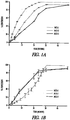
- Catalytic activity The MCS catalysts proved to be effective in the esterification of biomass feedstocks to biodiesel methyl esters. As mentioned above, current technologies require the use of pretreatment methods to remove FFAs from feedstocks prior to catalysis. The cooperative acid-base characteristics of the mixed oxide MCS catalysts eliminate the need for pretreatment measures. Both soybean oil and poultry fat sources can be utilized in esterification reactions without additional processes to remove FFAs. Shown in Figure 1a is the catalytic activity of MCS-1, MCS-2, and MCS-3 for the esterification of soybean oil in methanol. Reaction completion was achieved within 24 hours for the MCS-1 catalyst (catalyst with the highest calcium oxide loading) at 80 °C.
- FIG. 1b shows the catalytic activity of the three catalysts for the esterification of poultry fat in methanol. Reaction completion is reached within 30 hours at 80 °C for the MCS-1 catalyst. Again, due to the lower calcium oxide loading, the MCS-2 and MCS-3 catalysts required a longer reaction time of 48 hours to reach completion.
- MgO magnesium oxide
- the catalytic performance of magnesium oxide (MgO) has been evaluated and is capable of converting soybean oil to biodiesel. Unlike calcium oxide, the rate of the reaction is much slower, and it takes 125 hours to reach 98.3% yield. Magnesium oxide, like calcium oxide, is quite soluble in methanol. Therefore, it cannot be recycled and it also would require purification of biodiesel by neutralization with acid and washes with water.
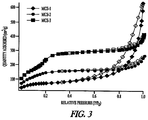
- Table 3 illustrates that all three MSC catalysts have higher surface areas than both Portland Cement and Hydrocal. As is evident from the BET isotherms ( Figure 3 ) of the three catalysts, the hysteresis is shown to increase in size with higher calcium oxide content, possibly indicating the formation of micropores, or interconnecting pores with higher calcium oxide loading.
- Powder X-Ray Diffraction Low angle powder X-Ray Diffraction spectra were obtained for the three MSC catalysts to measure the degree of order present in the materials. As can be seen in Figure 4a , the order decreases with the loading of calcium oxide.
- the X-Ray diffraction pattern at higher angles, Figure 4b showed the characteristic peaks of amorphous silica ( ⁇ 30 degrees 2 ⁇ ).
- the MCS-2 and MCS-3 catalysts showed no further peaks; however, the MCS-1 catalyst possesses further peaks around 30°, 43°, and 50° 2 ⁇ .
- the high angle XRD analysis surprisingly showed the absence of peaks characteristic to calcium oxide.
- Electron Microscopy Scanning electron and transmission electron microscopy (SEM and TEM, respectively) were performed on the MCS catalysts to determine the morphology and give more information regarding the porous structure of the catalysts.
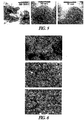
- the TEM analysis supports the nitrogen adsorption and XRD results in that the highest loaded catalyst appears to possess a disordered pore structure, while the lower loaded catalysts appear to have wormhole porous structures, as can be seen in Figure 5 .
- the SEM spectra, Figure 6 establish that the highest calcium oxide loaded MCS-1 yielded a sponge-like amorphous structure, whereas the lower loaded samples exhibited more ordered, spherical morphologies.
- the catalysts are made from commercially available sources and provide a means to complete the esterification of biomass feedstocks without the use of harsh chemicals, or catalyst neutralization.
- the biodiesel methyl ester product is desirable in that it is environmentally friendly and can be synthesized from bio-renewable feedstock.
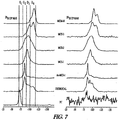
- FIG. 7 illustrates the 29 Si DPMAS and 1 H- 29 Si CPMAS spectra of MCM-41, calcined MCS catalysts (denoted as MCS-1, MCS-2, MCS-3, respectively), as-synthesized MCS-1 (denoted as As-MCS-1), Hydrocal, and Portland cement (PC).
- the corresponding spectra of Hydrocal (HC, not shown) are identical to those of the Portland cement.
- the Ca/Si ratios in these samples are listed in Table 4. They were estimated using two different methods: 1) Spin counting: for each sample the total integrated intensity of 29 Si DPMAS spectrum was compared with a reference (using all usual precautions in such measurements); and 2) the 29 Si DPMAS spectra were deconvoluted into peaks representing separate Q n groups; the Ca/Si ratios were then calculated in similar manner as Si/Al ratio in zeolites. Table 4. Ca/Si ratios calculated form 29 Si spin counting results. Sample MCS-3 MCS-2 MCS-1 As-MCS-1 PC HC Spin counting 0.2 1.0 1.7 1.8 Deconvolution 0.1 1.0 1.7 1.6 2.0 2.0
- the values of the MCS catalysts described herein obtained by spin counting and deconvolution methods are in good agreement, which suggests that calcium forms an intimate and homogeneous mixture with silicon.
- the calcium silicate catalyst contains a structural unit that is similar to a crystalline calcium silicate, 1.4 nm tobermorite ( Cement and Concrete Research 2004, 34, (9), 1499-1519 ), which is a composite layer composed of a distorted central Ca-O sheet that is ribbed on either side with single dreierketten, i.e., silicate chains that repeat at intervals of three silicate tetrahedra as depicted in Figure 8a and b.
- the bridging silicate tetrahedra (Q 2 Silicons) of the MSC catalyst material are connected and formed Q 3 -type Si atoms ( Figure 8d ) (see J. Physical Chemistry B 2004, 108, (40), 15,494-15,502 ).
- the overall material exhibits a spherical particle morphology with wormhole-like mesopores.
- Portland cement shows minimal catalytic reactivity for the conversion of poultry fat to biodiesel methyl esters.
- conversion of 0.5 g poultry fat (in 35 mL methanol) only reached 7.3% within 26 hours. The catalyst gummed up and was thus difficult to recover and/or recycle.
- Hydrocal also proved to be an active catalyst for the esterification of soybean oil to biodiesel. In 30 hours, 1 g of Hydrocal facilitated the conversion of 0.5 mL soybean oil (in 15 mL methanol). Hydrocal, like Portland Cement, was difficult to recover and thus was not able to be reused in successive reactions.
- Acid-base mesoporous calcium oxide-silica nanoparticles have been prepared and have been shown to catalyze the esterification of fatty acids to methyl esters.
- the catalysts have proven to be effective in the conversion of both soybean oil and the higher FFA containing poultry fat biomass feedstocks to biodiesel methyl esters.
- the catalysts can be used for successive reactions, without neutralization steps, and with minimal yield loss.
- the MCS catalysts which facilitate the conversion of bio-renewable feedstocks to biodiesel methyl esters, can be easily recycled, thus proving to be both environmentally and economically friendly.
- a new cooperative catalytic system comprised of a series of bifunctional mesoporous mixed oxide materials. These materials contain both Lewis acidic and Lewis basic sites for the synthesis of biodiesel from various free fatty acid (FFA)-containing oil feedstocks, such as animal fats and restaurant waste oils. It has been demonstrated that the acid and base functionalities can cooperatively catalyze both the esterification of FFAs and the transesterification of oils with short-chain alcohols (e.g. methanol and ethanol) to form alkyl esters (biodiesel). The reactivity and recyclability of these heterogeneous solid catalysts have been investigated. In the case of soybean oil, the catalyst can be recycled 20 times without any decrease in reactivity. It is envisioned that that these nanoporous mixed oxides can serve as new selective catalysts for many other important reactions involving carbonyl activation.
- FFA free fatty acid
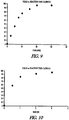
- Solid Blend of CaO with MCS-2 By following the aforementioned procedures, a solid blend of CaO (50 mg) and calcined MCS-2 (50 mg) was found to be able to catalytically convert soybean oil (2.5 mL) to biodiesel within 2 hours as shown in Figure 10 .
- the mixture of as-synthesized MCS catalysts and CaO prior to calcination also resulted in an active catalyst for transesterification of oils to biodiesel.
- the dry powders were blended in a 1 MCS: 1 CaO weight ratio and then calcined at 600 °C for 6 hours.
- the reactivity and recyclability of the resulting catalyst was evaluated according to the conditions stated above for the blend CaO/MCS catalysts.
Landscapes
- Chemical & Material Sciences (AREA)
- Organic Chemistry (AREA)
- Chemical Kinetics & Catalysis (AREA)
- Engineering & Computer Science (AREA)
- Oil, Petroleum & Natural Gas (AREA)
- Materials Engineering (AREA)
- Dispersion Chemistry (AREA)
- General Chemical & Material Sciences (AREA)
- Crystallography & Structural Chemistry (AREA)
- Life Sciences & Earth Sciences (AREA)
- Wood Science & Technology (AREA)
- Organic Low-Molecular-Weight Compounds And Preparation Thereof (AREA)
- Catalysts (AREA)
- Fats And Perfumes (AREA)
- Low-Molecular Organic Synthesis Reactions Using Catalysts (AREA)
Description
- This invention provides a method for esterifying a fatty acid to provide a fatty acid (C1-C4)alkyl ester or transesterifying an ester to provide a (C1-C4)alkyl ester.
- Biodiesel, such as soy diesel (methyl soyate), is becoming increasingly useful as a "green fuel". Biodiesel is a biodegradable and nontoxic alternative to diesel fuel. It is made from renewable biological sources such as vegetable oils and animal fats (Bioresource Technology 1999, 70, 1-15). Biodiesel fatty acid methyl esters have been recently accepted as a viable alternative to traditional petroleum-derived solvents, which are of environmental concern and are under legislative pressure to be replaced by biodegradable substitutes. Although interest in biodiesel is rapidly increasing, the process by which biodiesel is synthesized has not changed much in recent years.
- Currently, soy diesel (methyl soyate) is made commercially by an energy and labor-intensive process wherein soybean oil is reacted with methanol at 140-150 °F (about 60-65 °C), often under pressure, in the presence of sodium methoxide to yield fatty acid methyl esters and glycerol. This process is called "transesterification". Isolation of the desired methyl soyate from the highly caustic (toxic) catalyst and other products, such as glycerol, involves a precise neutralization process with strong acids, such as hydrochloric acid (HCl), and extensive washes with water to remove the resulting sodium chloride (NaCl) salt. Also, the glycerol must be separated from the sodium chloride salt by vacuum distillation in an energy intensive operation for this high-boiling product (Bioresource Technology 1999, 70, 81; Fuel 1998, 77, 1297; J. Am. Oil Chem. Soc. 1985, 62, 331; J. Am. Oil Chem. Soc. 2001, 78, 139).
- Researchers worldwide have been developing solid catalysts for the transesterification of oils to biodiesel. For example, various basic metal oxides, such as magnesium methoxide, calcium oxide, calcium alkoxide, and barium hydroxide (Applied Catalysis, A: General 2000, 192, (1), 23-28), have been demonstrated to be active catalysts for transesterification. However, the recyclability of these solid base catalysts is poor. This is because of the moderate solubility of some of these solid metal oxides and hydroxides in methanol (Bioresource Technology 1999, 70, (3), 249-253). Furthermore, these base catalysts are not suitable for feedstocks other than soybean oil, such as waste restaurant oils and rendered animal fats. The large amount (5-15 wt.%) of free fatty acids (FFAs) contained in these feedstocks significantly shortens the lifespan of base catalysts because of the saponification.
- Currently, sulfuric acid, a homogeneous strong acid, is used as a pretreatment catalyst for converting FFAs to biodiesel. However, the need for neutralization before the transesterification reaction again creates economical and environmental concerns. While several solid acids, such as zeolite, ionexchange resins, and sulfated zirconia, have been tested for FFA esterification (Advanced Synthesis & Catalysis 2006, 348, 75-81; Accounts of Chemical Research 2002, 35, (9), 791-797), it would be desirable to develop an integrated, acid-base cooperative system that can catalyze both esterification and transesterification reactions.
- Wei et al., In-Situ coating of SBA-15 with MgO: Direct Synthesis of Mesoporous Solid Bases from Strong Acidic Systems, Adv Mater., 2003, 15, No. 22, 1943 - 1945 discloses that mesoporous materials are in demand for catalysts, separation and nanoscience. SPA-15 is a well-ordered hexagonal mesoporous silica which attracted special attention. Synthesis of MgO-SBA-15 composites was reported with good dispersion of MgO in amounts of 10-30 wt% on the mesoporous silicate as determined by transmission electron microscopy and with BET surface areas of 336-629m2/g.
- Glacens et al., Selective etherification of glycerol to polyglycerols over impregnated basic MCM-41 type mesoporous catalysts, Applied Catalysis A: General, 227 (2002) 181-190. In these catalysts, magnesium is incorporated into a mesoporous silica framework. Specific surface areas of 42.20-184.63m2/g are reported (Table 5).
- Sarapavan et al., Mesoporous calcium silicate glasses II. Textual Characterization, Journal of Non-Crystalline Solids, 318 (2003), 14-26 discloses crack-free homogeneous monolith gel-glasses in the binary Cao-SiO2 system whose structure consists of a three-dimensional network of cavities (pores) connected by constrictions (throats) in the mesopore range, calcium atoms being incorporated into the silica network. The mesoporous bioactive glasses (MPGs) were expected to have excellent biodegradability in body fluid which was important for prospective bio-applications such as bone defect epair and bone tissue engineering.
-
US patent 6,946,109 (Pinavalla ) discloses mesoporous lamellar silica compositions having functional elements such as calcium incorporated into a silica framework, exemplified materials having BET surface areas of 380-650 m2/g. - Barrault et al., Selective glycerol transesterification over mesoporous basic catalysts, C.R. Chimie, 7 (2004), 593-599 discloses the use of MCM-41 magnesium-containing catalysts having a specific surface area of about 800 m2/g for the transformation of glycerol into monoesters which have applications in the food, pharmaceutical and cosmetics industries and in detergent chemistry. The reactivity of glycerol with lauric (C12), myristic (C14) and stearic (C18) methyl esters over these catalysts is reported.
- Yan et al., Mesopororous bioactive glasses I. Synthesis and Structural Characterization, Journal of Non-Crystalline Solids, discloses a series of ternary MPGs (CaO-P2O5-SiO2) whose BAT surface areas (apart from one sample) ranged from 79 to 351 m2/g. Again, the MPGs are said to be biodegradable in bodily fluid and potentially applicable to bone defect repair and bone tissue bioengineering.
- What is needed is a process for biodiesel production that does not require aqueous washes and neutralization steps, and a catalyst for that process that can be easily separated from the biodiesel products. An economical and recyclable catalyst for the conversion of oils to biodiesel is also needed. A catalyst that can economically catalyze both the esterification of free fatty acids and transesterify oils to biodiesel is further desired.
- The invention provides a method for esterifying a fatty acid to provide a fatty acid (C1-C4)alkyl ester or transesterifying an ester to provide a (C1-C4)alkyl ester, the method comprising: combining the fatty acid or ester, a (C1-C4)alcohol, and a silicate calcium oxide esterification or transesterification catalyst under conditions wherein the catalyst catalyzes the formation of the fatty acid (C1-C4)alkyl ester or the (C1-C4)alkyl ester, the catalyst comprising one or more porous particles that have a composite matrix of silicate and calcium oxide moieties in which a portion of the silicon atoms in the silicate matrix is replaced by calcium atoms; wherein the catalyst has a silicon to calcium mole ratio of 1:1 to 6:1; the catalyst contains both acidic and basic sites and has a BET surface area of greater than 200 m2 per gram; and the pores of the catalyst particles have pore sizes in the range of 1 nm in diameter to 10 nm in diameter, as determined using the BJH model.
- The silicate calcium oxide esterification or transesterification catalyst may comprise said porous particles and separate calcium oxide particles. It may be the result of (a) combining a (C10-C24)alkyl-tri(C1-C3)alkylammonium halide, a solvent, and a base, to form a first mixture; (b) heating the first mixture; (c) combining the first mixture with a tetra(C1-C4)alkylorthosilicate and calcium oxide or hydroxide, to provide the catalyst in a second mixture as particles; (d) recovering the catalyst from the second mixture; and (e) heating the catalyst at a temperature of from 450°C to 650°C.
- The porous silica-calcium oxide composite-based catalyst used in the above method offers several advantages over known catalysts. The resulting catalysts are solids that function as heterogeneous catalysts that can be easily separated from a reaction mixture. The catalysts are easily recycled for use in subsequent catalytic reactions. The catalysts may also incorporate calcium oxide into porous silica supports. The synthesis of the catalysts is significantly economical and commercially available resources are employed.
- The catalysts are stable, even after repeated usage. They have very high surface areas due to their porosity. Additionally, the pores are sufficiently large to allow passage of vegetable and animal oils and alcohols used in the transesterification process. Furthermore, the pores can be chemically modified to allow more rapid passage of certain large molecules. The catalysts rapidly and under mild conditions convert vegetable and animal oils to (C10-C30)alkyl methyl esters and glycerin, which are easily mechanically separable. Glycerin has a variety of cosmetic and food uses, and is also under investigation as a biodegradable alternative to petroleum-based ethylene glycol and propylene glycol in aviation di-icing formulations.
- In the above esterifying method, the ester may be a fatty acid glycerol ester, and the (C1-C4)alkyl ester may be a fatty acid (C1-C4)alkyl ester. The ester may be a glyceride-containing vegetable or animal oil, the (C1-C4)alkyl ester may be a fatty acid (C1-C4)alkyl ester, and the catalyst may catalyze the production of glycerol. The ester may be soybean oil, the (C1-C4)alcohol may be methanol, the (C1-C4)alkyl ester may be methyl soyate, and the catalyst may catalyze the production of glycerol. The formation of the ester may be carried out without added solvent.
- Thus fatty acid (C1-C4)alkyl esters may be prepared from a feedstock that comprises one or more fatty acid glycerol esters and one or more fatty acids by combining the feedstock, a (C1-C4)alcohol, and the above mentioned catalyst under conditions wherein the catalyst catalyzes the formation of the corresponding fatty acid (C1-C4)alkyl esters. The invention further provides a method for producing a fatty acid (C1-C4)alkyl ester comprising: combining a glyceride-containing vegetable or animal oil, a (C1-C4)alcohol, and the above mentioned catalyst under conditions wherein the catalyst catalyzes formation of the corresponding fatty acid (C1-C4)alkyl ester and glycerol. The invention also provides a method for preparing a fatty acid (C1-C4)alkyl ester from a fatty acid comprising: combining a fatty acid, a (C1-C4)alcohol, and the above mentioned catalyst under conditions wherein the mesoporous silicate catalyzes formation of the corresponding fatty acid (C1-C4)alkyl ester. Additionally, the invention provides a method for producing methyl soyate comprising: combining soybean oil, methanol, and the above mentioned catalyst under conditions wherein the mesoporous silicate catalyzes formation of glycerol and the methyl soyate.
-
-
Figure 1 illustrates the catalytic conversion of soybean oil (A) and poultry fat (B) into biodiesel by MCS catalysts. MCS-1 shows complete conversion within 24 hours for soybean oil, and 30 hours for poultry fat. MCS-2 and MCS-3 convert both soybean oil and poultry fat to biodiesel within 48 hours. -
Figure 2 . Recyclability tests for the MCS-1 catalyst. Experiments show that the MCS-1 catalyst can facilitate the conversion of soybean oil tobiodiesel 20 times with negligible yield loss, as seen in (A). The conversion of poultry fat to biodiesel can be seen for 8 successive reactions with minimal yield loss, as shown in (B). -
Figure 3 . Nitrogen sorption analysis: the surface area is shown to decrease with increasing calcium oxide loading. -
Figure 4 . Powder X-ray diffraction patterns of the MCS catalysts. The lower calcium oxide loaded samples show higher order, as evident in (A). The MCS-1 catalyst demonstrates peaks at high angles, as seen in (B). -
Figure 5 . TEM spectra of MCS-1, MCS-2, and MCS-3. An amorphous, disordered structure is observed with the highest calcium oxide loaded MCS-1 sample, and more spherical morphologies with wormhole pores are demonstrated for the lower calcium oxide loaded samples. -
Figure 6 . Scanning electron micrographs show the increase in monodispersity as the calcium oxide content is lowered. The structure of MCS-1 appears sponge-like and amorphous, whereas the MCS-2 and MCS-3 catalysts are semi-spherical morphologies which are fairly uniform in size. -
Figure 7 . 29Si DPMAS (left column) and 1H-29Si CPMAS (right column) spectra of MCM-41, calcinated MCS-1, 2, and 3, as synthesized MCS-1, Hydrocal, and Portland cement. -
Figure 8 . Single layer of 1.4 nm tobermorite seen along (a) [210] illustrating the Ca-O main layer (light gray) with attached dreierketten (dark gray). (b) Layers of tobermorite in which a central Ca-O sheet is flanked on both sides by rows of single dreierketten, together with interlayer Ca atoms and water molecules. Water molecules and Ca atoms present in the interlayer spaces are omitted. Schematic representation of the difference in interlayer spacing of tobermorite between common calcium silicate hydrate gels (c) and an acid-base mixed oxide catalyst of the invention (d). -
Figure 9 . A plot of yield versus reaction time for a solid blend catalyst of CaO/MCS-1 (first run) for the conversion of soybean oil to biodiesel. -
Figure 10 . A plot of yield versus reaction time for a solid blend catalyst of CaO/MCS-2 (first run) for the conversion of soybean oil to biodiesel. - The invention provides a co-condensation method, which generates a series of mixed metal oxide mesoporous material that can effectively catalyze both the esterification of FF As as well as the transesterification of an oil to biodiesel. The catalytic performance of three mesoporous calcium silicate (MCS) catalysts of varying calcium oxide content, a mesoporous magnesium silicate (MMS) (reference), and a mesoporous barium silicate (MBS) (reference) have been evaluated and described herein. By forming a mixed oxide from a strongly basic alkaline-earth metal oxide and a weakly acidic silica, it has been demonstrated that the acidity of silica can be significantly enhanced, thereby creating a cooperative acid-base mixed oxide catalyst. For example, in the case of calcium silicate mixed oxide, substituting Ca atoms with Si atoms at the high coordination environment (octahedral) of calcium oxide (strong base) sites create a 'positive' charge difference in comparison with the pure CaO material. Therefore, the silica sites of this type of mixed oxide materials are Lewis acidic, whereas the calcia sites are basic. The hydroxyl groups on the surface of the materials are also acidic and can be classified as Bronsted acids. Thus, these catalysts are able to efficiently facilitate the conversion of both vegetable oils and the higher FFA containing animal fats to biodiesel alkyl ester products.
- The term "mesoporous particle" refers to a particle that is about 1 nm to about 50 nm in diameter, e.g., about 1 nm to about 20 nm in diameter.
- The term "composite matrix" refers to a matrix of silicon and oxygen atoms, wherein a portion of silicon atoms have been replaced by metal oxide atoms, and the coordination environment is a combination of at least tetrahedral and octahedral. A composite matrix can be illustrated as:

Figure 8 . - The term "silicates" refers to a matrix of silicon and oxygen atoms, wherein the coordination environment is typically tetrahedral.
- The term "alkaline earth metal" refers to beryllium (Be), magnesium (Mg), calcium (Ca), strontium (Sr), barium (Ba), and radium (Ra).
- The term "alkaline earth metal oxide" refers to an oxide of an alkaline earth metal, including BeO, MgO, CaO, SrO, and BaO.
- The term "alkaline earth metal hydroxide" refers to a hydroxide of an alkaline earth metal, including Mg(OH)2, Ca(OH)2, Sr(OH)2, and Ba(OH)2, and their various hydrated forms.
- The term "bridging silicate tetrahedral" refers to layers of tobermorite as illustrated in
Figure 8(d) . - The term "Q3-type silicon geometry" refers to a silicon atom with a chemical bonding environment of Si(OSi)3(OX), where X = H, Ca, or other alkaline earth metals. Such silicon geometry is further described by Brunet at al. in J. Physical Chemistry B 2004, 108, (40), 15,494-15,502, which is incorporated herein by reference.
- The terms "to transesterify", "transesterifying", and "transesterification" refer to the alcoholysis of the glyceryl esters of a fat or oil with an alcohol, such as a (C1-C4)alkanol, to form newly formed esters and glycerol. The alkanol of the newly formed ester is derived from the alcohol used in the transesterification reaction. With respect to the transesterification of a mono-, di-, or triglyceride to provide the corresponding (C1-C4)alkyl ester and glycerol, the glycerol portion of the glyceride is preplaced by a (C1-C4)alcohol, thus liberating glycerol from the mono-, di-, or triglyceride. In biodiesel production, glycerol can be separated from biodiesel by gravitational settling, centrifugation, distillation, or combinations thereof.
- The terms "ester", "(C1-C4)alkyl ester" and "fatty acid (C1-C4)alkyl ester" should be read in the context in which they are presented. One skilled in the art will readily recognize that the term "ester" will typically refer to the starting material ester, such as from a vegetable oil, an animal oil, or other feedstock oil, and the corresponding "(C1-C4)alkyl ester" refers to the product of a transesterification of the oil. Likewise, the term "fatty acid (C1-C4)alkyl ester" refers to a (C1-C4)alkyl ester of a starting material fatty acid or starting material fatty acid glyceryl ester.
- Fatty acids can vary in carbon chain length and in the number of unsaturated bonds. Vegetable oils are typically made of a combination of fatty acids. Common vegetable oils include canola, coconut, corn, cottonseed, crambe, palm, peanut, rapeseed, soybean, and sunflower oils. These oils contain varying amounts of fatty acids, including combinations of C16-C24 fatty acids, typically with 0 to 3 sites of unsaturation in the carbon chain. Some examples of these fatty acids include lauric, myristic, palmitic, stearic, oleic, linoleic, and linolenic acids. Animal fats and oils are typically made of a combinations of fatty acids as well. Animal oils can be provided in various forms, including lard and tallow.
- The term "acid portion of the ester" refers to the carboxyl (-C(=O)-O-) moiety of the ester.
- The term "free alcohol of an/the ester" refers to the alkanol moiety of an ester after the alkanol portion has been hydrolyzed, alcoholyzed, or otherwise freed from the carboxyl moiety of the ester.
- The term "(C1-C4)alcohol" or "(C1-C4)alkanol" refers to methanol, ethanol, propanol, iso-propanol, butanol, iso-butanol, sec-butanol, or a combination thereof.
- The term "methyl soyate" refers to methyl esters of the fatty acids or fatty acid moieties in soybean oil.
- The term "feedstock" refers to a large quantity, typically kilogram scale, of one or more fatty acid glycerol esters, one or more fatty acids, and optionally other substances. Feedstocks include vegetable oils and animal oils, such as animal fats and restaurant waste oils.
- The term "fatty acid (C1-C4)alkyl ester" refers to a fatty acid that has been esterified with a (C1-C4)alkanol.
- The term "glyceride-containing vegetable or animal oil" refers to a vegetable or animal oil that contains mono-, di-, or tri-esters of glycerol.
- The term "C10-C24 fatty acid ester" refers to the ester of a C10-C24 fatty acid wherein the fatty acid portion of the molecule can be saturated or can have one or more sites of unsaturation, epoxidation, hydroxylation, or a combination thereof. For example, the fatty acid ester has 1, 2, 3, 4, or more sites of unsaturation, epoxidation, hydroxylation, or a combination thereof.
- The terms "mono-, di-, or tri-ester of glycerol" refer to a glycerol molecule wherein one, two, or three hydroxyl groups of the glycerol have lost a hydrogen atom and have formed an ester linkage with an appropriate number of organic acids.
- The catalyst is a esterification or transesterification catalyst comprising one or more porous particles that have a composite matrix of mesoporous silicates and alkaline earth meta oxides. The catalyst contains both acidic and basic sites and has a surface area of greater than 200 m2 per gram. The catalyst can be recycled. The alkaline earth metal is calcium.
- The catalyst can have a surface area of greater than about 400 m2 per gram, or greater than about 800 m2 per gram. In certain embodiments, the catalyst can have a surface area of about 200 to about 1,000 m2 per gram. In other embodiments, the catalyst can have a surface area of about 250 to about 900 m2 per gram. In certain specific embodiments, the catalyst has a surface area of about 250 to about 300 m2 per gram, of greater than 200 to about 500 m2 per gram, or 800 to about 950 m2 per gram.
- The pores of the catalyst particle are 1 nm in diameter to 10 nm in diameter. In certain specific embodiments, the pores of the particle are about 1 nm to about 2 nm in diameter, about 2 nm to about 3 nm, or about 8 nm to about 10 nm.
- The silicate metal oxide catalyst can be made from a variety of ratios of silicon-containing starting materials and metal oxide-containing starting materials. The catalyst has a silicon to alkaline earth metal ratio of about 1 to 1, to about 6 to 1. The alkaline earth metal is calcium.
In reference embodiments, the alkaline earth metal is barium, or magnesium. - According to the invention, the alkaline earth metal of the particle is calcium, bridging silicate tetrahedra are connected to form Q3-type silicon atom geometry, and the catalyst exhibits spherical or sheet-like particle morphology with worm-like or channel-like mesopores. The spherical particles can have worm-like mesopores channel-like mesopores, or both. The sheet-like particles can also have worm-like mesopores channel-like mesopores, or both.
- The silicon metal oxide composite catalyst can be used to catalyze a variety of esterification and transesterification reactions. The catalyst can be used in a method for transesterifying an ester to provide a (C1-C4)alkyl ester comprising: combining the ester, a (C1-C4)alcohol, and the catalyst under conditions wherein the catalyst catalyzes the formation of the (C1-C4)alkyl ester of the acid portion of the ester and the corresponding free alcohol of the ester.
- The catalyst can be used in a method for preparing fatty acid (C1-C4)alkyl esters from a feedstock that comprises one or more fatty acid glycerol esters and one or more fatty acids comprising: combining the feedstock, a (C1-C4)alcohol, and the catalyst under conditions wherein the catalyst catalyzes the formation of the corresponding fatty acid (C1-C4)alkyl esters.
- The catalyst can be used in a method for producing a fatty acid (C1-C4)alkyl ester comprising: combining a glyceride-containing vegetable or animal oil, a (C1-C4)alcohol, and the catalyst under conditions wherein the catalyst catalyzes formation of the corresponding fatty acid (C1-C4)alkyl ester and glycerol.
- The catalyst can be used in a method for preparing a fatty acid (C1-C4)alkyl ester from a fatty acid comprising: combining a fatty acid, a (C1-C4)alcohol, and the catalyst under conditions wherein the mesoporous silicate catalyzes formation of the corresponding fatty acid (C1-C4)alkyl ester.
- The catalyst can be used in a method for producing methyl soyate comprising: combining soybean oil, methanol, and the catalyst under conditions wherein the mesoporous silicate catalyzes formation of glycerol and the methyl soyate.
- The ester can be a C10-C24 fatty acid ester. In another embodiment, the ester can be a C16-C24 fatty acid ester. The alkyl chain of the C10-C24 fatty acid ester or C16-C24 fatty acid ester can be saturated or it can have one or more sites of unsaturation or epoxidation. In another embodiment, the fatty acid ester has 1, 2, 3, or 4 sites of unsaturation, epoxidation, or a combination thereof.
- Any variety of esters can be transesterified with the catalyst of the invention. The catalyst works well at transesterifying glyceride esters. The glyceride ester can be a mono-, di-, or tri-ester of glycerol. In one specific embodiment, the ester is a triglyceride.
- Any variety of alcohols can be used to replace the alkanol portion of the ester that is transesterified. The alcohol is a (C1-C4)alcohol. The (C1-C4)alcohol can be methanol or ethanol. In other embodiments, the (C1-C4)alcohol can be propanol, iso-propanol, butanol, iso-butanol, sec-butanol, or a combination thereof.
- The esterification or transesterification can be carried out under mild conditions. The formation of the ester can be carried out at a temperature of less than about 100 °C. In another embodiment, the formation of the ester can be carried out at a temperature of less than about 90 °C. In other embodiments, the formation of the ester can be carried out at a temperature of about 20 °C to about 100 °C. In yet another embodiment, the formation of the ester can be carried out at a temperature of about 30 °C to about 90 °C, about 40 °C to about 85 °C, or about 50 °C to about 80 °C.
- One advantage of the catalyst described herein is that besides the alcohol used to esterify or transesterify a compound, no other solvent is required. Thus, the formation of the product ester can be carried out without added solvent. In other embodiments, an organic solvent can be added to alter the solubility, viscosity, or other properties of the starting oil. Such solvents include ethereal solvents such as ethyl ether, tetrahydrofuran, or dioxane; hydrocarbon solvents such as pentane or hexane; ketones such as acetone or t-butyl methyl ketone; or a combination thereof.
- In another embodiment, the mesoporous silicate alkaline earth metal oxide composite-based catalyst can be combined with metal oxide particles prior to carrying out an esterification, transesterification, or other biodiesel production reaction. The metal oxide particles are calcium oxide particles, magnesium oxide particles and barium oxide particles being mentioned by way of reference. The composite-based catalyst can be calicined (e.g., heated to above about 100 °C, or to about 500 °C to about 600 °C) before being combined with metal oxide (calcium oxide) particles, or the composite-based catalyst can be calcined together with the metal oxide particles.
- A method for preparing a mesoporous silicate alkaline earth metal oxide composite-based catalysts is provided herein. The method includes:
- a) combining a (C10-C24)alkyl-tri(C1-C3)alkylammonium halide, a solvent, and a base, to form a first mixture;
- b) heating the first mixture;
- c) combining the first mixture with a tetra(C1-C4)alkylorthosilicate and an alkali metal oxide or alkali metal hydroxide, to provide the catalyst in a second mixture; and
- d) recovering the catalyst from the second mixture.
- The method includes heating or calcinating the catalyst recovered from the second mixture. The recovered catalyst is heated to 450 °C to 650 °C.
- A variety of tetraalkyl ammonium compounds can be used to prepare the catalysts. The (C10-C24)alkyl-tri(C1-C3)alkylammonium halide can be a (C10-C24)alkyl-trimethylammonium halide. The tri(C1-C3)alkyl groups can be methyl, ethyl, or propyl groups. The (C10-C24)alkyl-tri(C1-C3)alkylammonium halide can be a cetyltrimethylammonium halide. The halide can be chloride, bromide, iodide, or a combination thereof.
- The solvent used to prepare the catalysts can be water. The solvent can also be a 'solvent system' wherein one or more other solvents are added to the water to alter or modify the properties of the particles prepared.
- The base used to prepare the catalysts can be an alkali metal hydroxide. For example, the base can be lithium hydroxide, sodium hydroxide, potassium hydroxide, or a combination thereof.
- In preparing the first mixture in the catalyst preparation, heating is often advantageous. The first mixture can be heated to greater than about 30 °C, greater than about 50 °C, greater than about 60 °C, or greater than about 75 °C. The first mixture can be heated to about 60 °C to about 100 °C, about 70 °C to about 90 °C, or to about 80 °C.
- The silicate template of the catalyst particles can be prepared from a variety of orthosilicates. In one embodiment, the tetra(C1-C4)alkylorthosilicate is tetraethylorthosilicate. In other embodiments, other orthosilicates can be employed, such as tetramethylorthosilicate or other related materials.
- The alkali metal oxide used to prepare the catalyst particle is CaO. The alkali metal hydroxide used to prepare the catalyst particle is Ca(OH)2.
- As described above, the catalyst contains both acidic and basic sites. The acidic sites can be Lewis acidic or Bronsted acidic. The basic sites can be Lewis basic or Bronsted basic.
- After the catalyst is prepared, the particles can be recovered from the reaction mixture by a variety of techniques, including decanting or filtering, such as through a sintered glass funnel. The catalyst can maintain catalytic activity after more than five times of using and recovering the catalyst. In certain embodiments, the can maintain catalytic activity after more than ten times, or more than twenty times of using and recovering the catalyst.
- For example, the preparation of mesoporous metal oxide silicate catalysts can be prepared by a co-condensation reaction to create a mixed metal oxide system. A first mixture is formed by preparing (C10-C24)alkyl-tri(C1-C3)alkylammonium halide surfactant micelles, which template the formation of the mixed metal oxide material in an alkali metal hydroxide-catalyzed condensation reaction of tetra(C1-C4)alkylorthosilicates. The catalysts can be synthesized by first dissolving a (C10-C24)alkyl-tri(C1-C3)alkylammonium halide (about 2-3 mmol) in about 400 mL to about 600 mL of approximately 15 mM aqueous alkali metal hydroxide. This solution can then be heated to about 70 °C to about 90 °C, followed by a dropwise addition of a tetra(C1-C4)alkylorthosilicate (about 20-24 mmol). White solids can be observed in the initially opaque emulsion in about 1-3 minutes after such addition with mixing. An alkaline earth metal oxide or hydroxide can then be added slowly to the stirring solution during the tetra(C1-C4)alkylorthosilicate addition process. The reaction can then be vigorously stirred at about 70 °C to about 90 °C for about one to about four hours, followed by hot filtration of the as-synthesized catalyst product. The as-synthesized material can be washed with copious amounts of water and methanol and freeze dried. Surfactant removed catalysts can be obtained via calcination in air at about 100 °C to about 700 °C for about one hour to about twelve hours.
- Various amounts of metal oxides can be employed, within the silicon to calcium mole ratio of
claim 1, depending on the desired properties of the final catalyst. Catalysts of different properties can be prepared, for example, by using different amount of alkaline earth metal (calcium) oxides in the above procedure, e.g., about 15-20 mmol of alkaline earth metal oxide, about 6-10 mmol of alkaline earth metal oxide, or about 2-5 mmol of alkaline earth metal oxide. - The biodiesel production process can be illustrated as below in
Scheme 1.

- For the transesterification of animal and vegetable oils with high free fatty acid content, the use of alkaline catalysts such as sodium hydroxide is undesirable because of the formation of relatively large amounts of soaps, leading to product loss and difficulty in the separation and purification of the biodiesel produced. The catalysts described herein avoid this problem because the catalysts are not negatively affected by the free fatty acids and in fact can be used to esterify such free fatty acids prior to transesterification of the animal or vegetable oils.
- The porous silica-calcium oxide composite-based catalyst is more easily separated from a biodiesel reaction mixture than calcium oxide itself, so in turn the recyclability of the catalyst is significantly greater.
- The following Examples are intended to illustrate the above invention.
- General Experimental Details: Calcium oxide (CaO), magnesium oxide (MgO), barium oxide (BaO), and methanol were purchased from Fisher, tetraethylorthosilicate (TEOS) and n-cetyltrimethylammonium bromide (CTAB) were purchased from Aldrich. Degummed soybean oil and poultry fat were obtained from West Central. The Portland Cement is Holcim,
Type 1, Type GU. All chemicals were used as received, without further purification. Nanopure water (18.1 MHz) prepared from a Barnstead E-pure water purification system was employed throughout. - The preparation of mesoporous calcium silicate (MCS) catalysts involves a co-condensation reaction to create a mixed metal oxide system. Cetyltrimethylammonium bromide (CTAB) surfactant micelles template the formation of the mixed metal oxide material, in a NaOH-catalyzed condensation reaction of tetraethoxysilane (TEOS). The catalysts were synthesized by first dissolving n-cetyltrimethylammonium bromide (CTAB, 2.74 mmol) in 480 mL of 15 mM NaOH(aq). This solution was heated to 80 °C, followed by a dropwise addition of tetraethylorthosilicate (TEOS, 22.4 mmol). White solids were observed in the initially
opaque emulsion 90 seconds upon mixing. CaO was added slowly to the stirring solution during the TEOS addition process. The reaction was vigorously stirred at 80 °C for 2 hours, followed by hot filtration of the as-synthesized MCS product. The as-synthesized material was washed with copious amounts of water and methanol and freeze dried. Surfactant removed catalysts were obtained via calcination in air at 600 °C for 6 hours. - Three catalysts, with varying calcium oxide loading, were synthesized. MCS-1 catalyst was prepared by the above co-condensation method utilizing 17.8 mmol CaO, MCS-2 was prepared with 8.9 mmol CaO, and MCS-3 was prepared with 4.45 mmol CaO.
- CTAB (1.0 g) was dissolved in nanopure water (465 mL) at room temperature. An aqueous solution of NaOH (2.0M, 3.5 mL) was added. The temperature was then increased to 80 °C. TEOS (5.0 mL) was added dropwise, under stirring, followed by an aqueous suspension of Mg(OH)2 just prepared by adding NH4OH (30%, 7.5 mL) to an aqueous solution of MgCl2·6H2O (3.63 g, 5.5 mL). The system was kept under reflux for 2 hours. The solid was filtered out of the solution and washed with copious amount of water, then methanol, and dried overnight under vacuum. The as-synthesized material was then calcined at 500 °C (after a temperature increase of 4°/minute) for 10 hours.
- CTAB (1.0 g) was dissolved in nanopure water (480 mL) at room temperature. An aqueous solution of NaOH (2.0M, 3.5 mL) was added. The temperature was then increased to 80 °C. TEOS (5.0 mL) was added dropwise, under stirring, followed by a solid BaO (2.741 g). The system was kept under reflux for 2 hours. The solid was filtered out of the solution and washed with copious amount of water and methanol and dried overnight under vacuum. The as-synthesized material was then calcined at 550 °C (after a temperature increase of 2°/minute) for 6 hours.
- Methanol (0.3 mol) was added to 100 mg of the calcined MCS catalyst, and the resulting solution was stirred 15-20 minutes at room temperature to uniformly disperse the catalyst. Utilizing the MCS-1 catalyst, the soybean oil (0.5 g) was added to the catalyst solution, and the reaction mixture was stirred under reflux at 80 °C for 26 hours. After 26 hours, the reaction mixture was filtered on a glass frit and rinsed with minimal methanol for transfer. The filtrate was evaporated under vacuum and analyzed by 1H NMR. The MCS-2 and MCS-3 catalysts required 48 hour reaction times with the above procedure to complete conversion, due to lower calcium oxide loading.
- After further investigation, it was determined that a lower catalyst loading could likewise result in complete conversion to methyl esters. Merely 25 mg of the calcined MCS-1 catalyst can be employed to convert 0.5 mL of soybean oil to methyl esters in 12 mL of methanol, under the above conditions. Utilizing 10 mg of the calcined MCS-1 catalyst afforded 77% conversion of 0.5 mL soybean oil to methyl esters.
- Methanol (0.86 mol) was added to 350 mg of the calcined MCS catalyst, and like above, the resulting solution was stirred 15-20 minutes at room temperature to uniformly disperse the catalyst in a suspension. For esterification utilizing the MCS-1 catalyst, poultry fat (0.5 g) was added to the catalyst solution, and the reaction mixture was stirred under reflux at 80 °C for 26 hours. The reaction mixture was separated and analyzed as detailed above. Again, the MCS-2 and MCS-3 catalysts necessitated longer reaction times of 48 hours to complete conversion.
- The esterification conversion percentage was determined via 1H NMR analysis. As mentioned above, the filtrate was evaporated, and an NMR spectrum was obtained in CDCl3. The conversion was calculated by determining the ratio of methylene hydrogens, positioned at approximately 2.3 ppm, to methyl protons, positioned at approximately 3.6 ppm. As conversion proceeded, the characteristic peaks (∼3.7-4.2 ppm) of the triglyceride backbone disappeared.
- A similar procedure was utilized for Portland cement reactivity experiments. The reaction flask was charged with 500 mg Portland cement and 15 mL methanol, and this solution was allowed to stir 15-20 minutes to create an even suspension. Portland cement is denser than the MCS catalysts, so stirring was even more essential to ensure dispersion. Soybean oil (0.5 mL) was added and the reaction was stirred under reflux at 80 °C for 12 hours. When utilized for poultry fat esterification, 350 mg of catalyst was suspended in 35 mL methanol. This was likewise stirred to create a suspension, and 0.5 g poultry fat was added. The reaction was stirred under reflux at 80 °C for 26 hours. The catalyst was separated from the reaction mixture via centrifugation.
- Hydrocal required the use of a higher amount of catalyst, 1 g in 15 mL methanol, to reach complete conversion. Once the Hydrocal was suspended, 0.5 mL soybean oil was added to the methanolic solution. The reaction was stirred under reflux at 80 °C for 30 hours. Like the Portland cement, the catalyst necessitated centrifugation for removal from the reaction mixture.
- Utilization of a heterogeneous solid acid-base catalyst for the synthesis of biodiesel can circumvent the catalyst separation problem and convert free fatty acids in crude FFA-containing feedstocks to biodiesel, so that the saponification during the transesterification reaction is prevented. To test the feasibility of using these mixed oxide solids as synergistic catalysts, the catalytic properties of the mesoporous calcium silicates (MCS) materials was examined for both the conversions of degummed soybean oil and poultry fat to biodiesel.
- Catalytic activity: The MCS catalysts proved to be effective in the esterification of biomass feedstocks to biodiesel methyl esters. As mentioned above, current technologies require the use of pretreatment methods to remove FFAs from feedstocks prior to catalysis. The cooperative acid-base characteristics of the mixed oxide MCS catalysts eliminate the need for pretreatment measures. Both soybean oil and poultry fat sources can be utilized in esterification reactions without additional processes to remove FFAs. Shown in
Figure 1a is the catalytic activity of MCS-1, MCS-2, and MCS-3 for the esterification of soybean oil in methanol. Reaction completion was achieved within 24 hours for the MCS-1 catalyst (catalyst with the highest calcium oxide loading) at 80 °C. The lower calcium oxide loaded MCS-2 and MCS-3 catalysts required 48 hours for quantitative conversion.Figure 1b shows the catalytic activity of the three catalysts for the esterification of poultry fat in methanol. Reaction completion is reached within 30 hours at 80 °C for the MCS-1 catalyst. Again, due to the lower calcium oxide loading, the MCS-2 and MCS-3 catalysts required a longer reaction time of 48 hours to reach completion. - Recyclability: An important advantage of utilizing heterogeneous materials as catalysts is the possibility of recycling these solids. In this work, catalyst recycling was achieved by simple filtration of the mixture at the end of the reaction. The recovered catalyst was used again under the same reaction conditions. The catalyst MCS-1 was reused up to 20 times for soybean oil transesterification reaction (
Figure 2a ) and up to 8 times for poultry fat transesterification reaction as shown inFigure 2b . Remarkably, there was no significant loss of activity in each case. Initial results show also that the MCS-2 and MCS-3 catalysts can be reused up to 5 times for both poultry fat and soybean oil transesterification reactions with negligible loss of activity. The excellent recyclability of these catalysts indicates that they are stable and there is no leaching of calcium. This is most likely due to the unique structure obtained via co-condensation reaction, which yields a very stable and structurally homogenous calcium silicate mixed oxide material. - As summarized in Table 1, the catalytic performances and the recyclability of the MCS materials described herein are better in comparison with those of many other solid metal oxide catalysts. For example, calcium oxide (CaO) and calcium hydroxide (Ca(OH)2) are efficient catalysts for the transesterification reaction of soybean oil. However, traces of free fatty acids in the raw material would allow for saponification of biodiesel when employing these strong bases. Moreover, CaO and Ca(OH)2 are quite soluable in methanol (
Bioresource Technology 1999, 70, (3), 249-253Table 1. Reactivity and Recyclability results of MCS catalysts, and comparisons to Portland Cement. Catalyst Soybean Oil Poultry Fat Esterification Recyclability Esterification Recyclability Conversion (%) (Cycles) Conversion (%) (Cycles) MCS-1 100a 20 100e 8 MCS-2 95b 5 93f 5 MCS-3 94b 5 94f 5 Hydrocal 100c 1 N/A N/A Portland Cement 97d 1 7e 1 a100 mg catalyst converted 0.5 mL soybean oil in 26 hours at 80 °C in 12 mL MeOH; b100 mg catalyst converted 0.5 mL soybean oil in 48 hours at 80 °C in 12 mL MeOH; c1 g catalyst converted 0.5 mL soybean oil in 30 hours at 80 °C in 15 mL MeOH; d500 mg catalyst converted 0.5 mL soybean oil in 12 hours at 80 °C in 15 mL MeOH; e350 mg catalyst converted 0.5 g poultry fat in 26 hours at 80 °C in 35 mL MeOH; f350 mg catalyst converted 0.5 g poultry fat in 48 hours at 80 °C in 35 mL MeOH. - The catalytic performance of magnesium oxide (MgO) has been evaluated and is capable of converting soybean oil to biodiesel. Unlike calcium oxide, the rate of the reaction is much slower, and it takes 125 hours to reach 98.3% yield. Magnesium oxide, like calcium oxide, is quite soluble in methanol. Therefore, it cannot be recycled and it also would require purification of biodiesel by neutralization with acid and washes with water.
- In addition, the results herein indicate that CaO-fumed silica is an effective catalyst for converting soybean oil to biodiesel. Quantitative conversion was observed in 6 hours. However, the attempt to recycle and reuse this catalyst resulted in a significant loss of reactivity. After a few cycles, the conversion is reduced to below 30%. This result suggests that CaO gradually dissolved in methanolic solution, which caused the aforementioned saponification and neutralization issues. The catalytic performances of these alkaline earth metal-containing materials are summarized in Table 2.
Table 2. Reactivity results for some other alkaline earth metal containing catalysts. Catalyst Yield, methyl esters (%) Reaction Time (hours) Bulk CaO 100a 2 h Bulk Ca(OH)2 100a 0.5 h CaO-fumed silica 100b 6h Bulk MgO 98.3c 125 h Mg- MSN 100b 125 h Ba-MSN 56b 48 h a300 mg converted 1.5 mL soybean oil at 80 °C in 36 mL MeOH;
b100 mg converted 0.5 mL soybean oil at 80 °C in 12 mL MeOH;
c35 mg converted 0.5 mL soybean oil at 80 °C in 12 mL MeOH. - Nitrogen Adsorption Analysis: The mesoporous structures of the MCS materials were determined by nitrogen adsorption-desorption surface analysis. The surface area of the MCS catalysts decreases with increasing calcium oxide loading, as shown in Table 3.
Table 3. Nitrogen sorption analysis of the MCS catalysts. The surface area is shown to decrease as the calcium oxide loading increases. Catalyst BET Surface Area (m2/g) BJH Pore Size Distribution (nm) MCS-1 262 9.2 MCS-2 443 < 2 MCS-3 890 2.5 Hydrocal 1 < 2 Portland Cement 1 < 2 - Table 3 illustrates that all three MSC catalysts have higher surface areas than both Portland Cement and Hydrocal. As is evident from the BET isotherms (
Figure 3 ) of the three catalysts, the hysteresis is shown to increase in size with higher calcium oxide content, possibly indicating the formation of micropores, or interconnecting pores with higher calcium oxide loading. - Powder X-Ray Diffraction: Low angle powder X-Ray Diffraction spectra were obtained for the three MSC catalysts to measure the degree of order present in the materials. As can be seen in
Figure 4a , the order decreases with the loading of calcium oxide. The MCS-3 catalyst, with the lowest calcium oxide loading, possesses d100, d110, and d200 peaks characteristic of hexagonally ordered MCM-41 materials. The absence of these peaks at higher calcium oxide loading confirms the electron microscopy results, which indicate an increase in disorder with increasing calcium oxide loading. - The X-Ray diffraction pattern at higher angles,
Figure 4b , showed the characteristic peaks of amorphous silica (∼30 degrees 2θ). The MCS-2 and MCS-3 catalysts showed no further peaks; however, the MCS-1 catalyst possesses further peaks around 30°, 43°, and 50° 2θ. The high angle XRD analysis surprisingly showed the absence of peaks characteristic to calcium oxide. These results may indicate that there are not discrete crystalline calcium oxide sites present, but a structure in which calcium is incorporated into the matrix of the material. - Electron Microscopy: Scanning electron and transmission electron microscopy (SEM and TEM, respectively) were performed on the MCS catalysts to determine the morphology and give more information regarding the porous structure of the catalysts. The TEM analysis supports the nitrogen adsorption and XRD results in that the highest loaded catalyst appears to possess a disordered pore structure, while the lower loaded catalysts appear to have wormhole porous structures, as can be seen in
Figure 5 . The SEM spectra,Figure 6 , establish that the highest calcium oxide loaded MCS-1 yielded a sponge-like amorphous structure, whereas the lower loaded samples exhibited more ordered, spherical morphologies. - The catalysts are made from commercially available sources and provide a means to complete the esterification of biomass feedstocks without the use of harsh chemicals, or catalyst neutralization. The biodiesel methyl ester product is desirable in that it is environmentally friendly and can be synthesized from bio-renewable feedstock.
- Solid State NMR Results.
Figure 7 illustrates the 29Si DPMAS and 1H-29Si CPMAS spectra of MCM-41, calcined MCS catalysts (denoted as MCS-1, MCS-2, MCS-3, respectively), as-synthesized MCS-1 (denoted as As-MCS-1), Hydrocal, and Portland cement (PC). The corresponding spectra of Hydrocal (HC, not shown) are identical to those of the Portland cement. The fact that the DP- and CP-MAS NMR spectra of the MCS materials are similar indicated that there is no bulk silica present in these mixed oxide materials. - The Ca/Si ratios in these samples are listed in Table 4. They were estimated using two different methods: 1) Spin counting: for each sample the total integrated intensity of 29Si DPMAS spectrum was compared with a reference (using all usual precautions in such measurements); and 2) the 29Si DPMAS spectra were deconvoluted into peaks representing separate Q n groups; the Ca/Si ratios were then calculated in similar manner as Si/Al ratio in zeolites.
Table 4. Ca/Si ratios calculated form 29Si spin counting results. Sample MCS-3 MCS-2 MCS-1 As-MCS-1 PC HC Spin counting 0.2 1.0 1.7 1.8 Deconvolution 0.1 1.0 1.7 1.6 2.0 2.0 - In contrast to other literature-reported mixed oxides, where the different oxides are usually distributed in domains and separated from each other, the values of the MCS catalysts described herein obtained by spin counting and deconvolution methods are in good agreement, which suggests that calcium forms an intimate and homogeneous mixture with silicon. In fact, the calcium silicate catalyst contains a structural unit that is similar to a crystalline calcium silicate, 1.4 nm tobermorite (Cement and Concrete Research 2004, 34, (9), 1499-1519), which is a composite layer composed of a distorted central Ca-O sheet that is ribbed on either side with single dreierketten, i.e., silicate chains that repeat at intervals of three silicate tetrahedra as depicted in
Figure 8a and b. Unlike other calcium silicate hydrate gels, where water and calcium cations exist between layers of 1.4 nm tobermorites (Figure 8b and c ), the bridging silicate tetrahedra (Q2 Silicons) of the MSC catalyst material are connected and formed Q3-type Si atoms (Figure 8d ) (see J. Physical Chemistry B 2004, 108, (40), 15,494-15,502). The overall material exhibits a spherical particle morphology with wormhole-like mesopores. As determined by the spin counting of 29Si NMR spectroscopy, this unique structure gives rise to a high Ca/Si ratio of 1.8, which is very different from the value (0.83) of tobermorite in common calcium silicate hydrate gels (Cement and Concrete Research 2004, 34, (9), 1499-1519). The observed high Ca/Si ratio further supports a "Charge Difference" hypothesis (see Korean Journal of Chemical Engineering 1997, 14, (3), 192-197) that the enhanced Lewis acidity can be attributed to the replacement of Ca atoms with silicon atoms at sites with high coordination numbers of oxygen atoms. - Portland Cement and Hydrocal as Esterification Catalysts: Through structural analysis, it was determined that the MSC catalysts are similar in some respects to calcium silicate hydrates. This investigation led to conducting catalytic comparisons with Portland cement and other calcium silicates hydrates. Commercially available Portland cement showed catalytic reactivity for the conversion of soybean oil to biodiesel methyl esters. Conversion of 0.5 mL soybean oil (in 15 mL methanol) could be completed within 12 hours at 80 °C when utilizing 500 mg of Portland cement. The Portland cement thus proved to be a viable catalyst for soybean oil esterification. Catalyst recovery however proved to be more difficult than with MCS catalysts, so the Portland cement was not able to be recycled for further reactions.
- Though successful as a catalyst for the esterification of soybean oil, Portland cement shows minimal catalytic reactivity for the conversion of poultry fat to biodiesel methyl esters. When charged with 350 mg of Portland cement catalyst, conversion of 0.5 g poultry fat (in 35 mL methanol) only reached 7.3% within 26 hours. The catalyst gummed up and was thus difficult to recover and/or recycle.
- Hydrocal also proved to be an active catalyst for the esterification of soybean oil to biodiesel. In 30 hours, 1 g of Hydrocal facilitated the conversion of 0.5 mL soybean oil (in 15 mL methanol). Hydrocal, like Portland Cement, was difficult to recover and thus was not able to be reused in successive reactions.
- Conclusions: Acid-base mesoporous calcium oxide-silica nanoparticles have been prepared and have been shown to catalyze the esterification of fatty acids to methyl esters. The catalysts have proven to be effective in the conversion of both soybean oil and the higher FFA containing poultry fat biomass feedstocks to biodiesel methyl esters. The catalysts can be used for successive reactions, without neutralization steps, and with minimal yield loss. The MCS catalysts, which facilitate the conversion of bio-renewable feedstocks to biodiesel methyl esters, can be easily recycled, thus proving to be both environmentally and economically friendly.
- Hydrocal, Portland cement, and other calcium silicate hydrates prove to be efficient catalysts for the esterification of soybean oil. However, due to the inability to recover the catalyst, they offer limited use. Portland cement is unable to catalyze the esterification of poultry fat to biodiesel without gumming up the catalyst.
- Thus, a new cooperative catalytic system comprised of a series of bifunctional mesoporous mixed oxide materials has been developed. These materials contain both Lewis acidic and Lewis basic sites for the synthesis of biodiesel from various free fatty acid (FFA)-containing oil feedstocks, such as animal fats and restaurant waste oils. It has been demonstrated that the acid and base functionalities can cooperatively catalyze both the esterification of FFAs and the transesterification of oils with short-chain alcohols (e.g. methanol and ethanol) to form alkyl esters (biodiesel). The reactivity and recyclability of these heterogeneous solid catalysts have been investigated. In the case of soybean oil, the catalyst can be recycled 20 times without any decrease in reactivity. It is envisioned that that these nanoporous mixed oxides can serve as new selective catalysts for many other important reactions involving carbonyl activation.
- Solid Blend of CaO with MCS-1: Methanol (0.3 mol) was added to a solid blend consisting of 50 mg of CaO and 50 mg of calcined MCS-1 catalyst. The resulting mixture was stirred at 80 °C to uniformly disperse the catalyst. After stirring for 30 minutes, soybean oil (2.5 mL) was introduced and the reaction mixture was stirred at 80 °C. The complete conversion of soybean oil to biodiesel took 40 minutes as depicted in
Figure 9 . The crude product mixture was filtered through a glass-fritted funnel. The product-containing filtrate was evaporated under vacuum to remove methanol. The yield of methyl esters (biodiesel) was analyzed by 1H NMR - Solid Blend of CaO with MCS-2: By following the aforementioned procedures, a solid blend of CaO (50 mg) and calcined MCS-2 (50 mg) was found to be able to catalytically convert soybean oil (2.5 mL) to biodiesel within 2 hours as shown in
Figure 10 . - Recyclability: The catalysts were recycled by simple filtration of the reaction mixture upon the completion of the transesterification reaction. The recovered catalyst was reused without any purification under the same reaction conditions, with the exception of a longer reaction time. For the blend of CaO/MCS-2, the complete conversion of soybean oil to biodiesel took 2 hours for the first run and 6 hours for the subsequent runs (Table 5). This catalyst was reused up to 7 times for soybean oil transesterification reaction with no loss of reactivity after the second run. For the blend of CaO/MCS-1, the complete conversion of soybean oil to biodiesel took 40 minutes for the first run and 6 hours for additional runs (Table 6).
Table 5. Recyclability of the blend CaO/MCS-2 catalyst. Yield (%) Run 2 h 6 h 1 92.1% 96.5% 2 41.1% 92.7% 3 50.5% 92.5% 4 37.8% 93.9% 5 10.4% 93.5% 6 13.2% 94.6% 7 and on similar reactivity Table 6. Recyclability of the blend CaO/MCS-1 catalyst. Run Time (h) Yield (%) 1 0.67 93.4 2 7 94.1 3 12 92.5 - The mixture of as-synthesized MCS catalysts and CaO prior to calcination also resulted in an active catalyst for transesterification of oils to biodiesel. The dry powders were blended in a 1 MCS: 1 CaO weight ratio and then calcined at 600 °C for 6 hours. The reactivity and recyclability of the resulting catalyst was evaluated according to the conditions stated above for the blend CaO/MCS catalysts.
Claims (7)
- A method for esterifying a fatty acid to provide a fatty acid (C1-C4)alkyl ester or transesterifying an ester to provide a (C1-C4)alkyl ester, the method comprising:combining the fatty acid or ester, a (C1-C4)alcohol, and a silicate calcium oxide esterification or transesterification catalyst under conditions wherein the catalyst catalyzes the formation of the fatty acid (C1-C4)alkyl ester or the (C1-C4)alkyl ester,the catalyst comprising one or more porous particles that have a composite matrix of silicate and calcium oxide moieties in which a portion of the silicon atoms in the silicate matrix is replaced by calcium atoms;wherein the catalyst has a silicon to calcium mole ratio of 1:1 to 6:1;the catalyst contains both acidic and basic sites and has a BET surface area of greater than 200 m2 per gram; andthe pores of the catalyst particles have pore sizes in the range of 1 nm in diameter to 10 nm in diameter, as determined using the BJH model.
- The method of claim 1, wherein the silicate calcium oxide esterification or transesterification catalyst comprises said porous particles and separate calcium oxide particles.
- The method of claim 1, wherein the silicate calcium oxide esterification or transesterification catalyst is the result of:(a) combining a (C10-C24)alkyl-tri(C1-C3)alkylammonium halide, a solvent, and a base, to form a first mixture;(b) heating the first mixture;(c) combining the first mixture with a tetra(C1-C4)alkylorthosilicate and calcium oxide or hydroxide, to provide the catalyst in a second mixture as particles;(d) recovering the catalyst from the second mixture; and(e) heating the catalyst at a temperature of from 450°C to 650°C.
- The method of claim 1 or 2, comprising combining a feedstock comprising one or more fatty acid glycerol esters and one or more fatty acids, a (C1-C4) alcohol, and the catalyst under conditions wherein the catalyst catalyzes the formation of the corresponding fatty acid (C1-C4) alkyl ester.
- The method of claim 1 or 2, comprising combining a glyceride-containing vegetable or animal oil, a (C1-C4) alcohol, and the catalyst under conditions wherein the catalyst catalyzes the formation of the corresponding fatty acid (C1-C4) alkyl ester and glycerol.
- The method of claim 1 or 2, comprising combining soybean oil, methanol and the catalyst under conditions wherein the catalyst catalyzes the formation of glycerol and methyl soyate.
- The method of claim 1 or 2, wherein the formation of the ester is carried out without added solvent.
Applications Claiming Priority (2)
| Application Number | Priority Date | Filing Date | Title |
|---|---|---|---|
| US83284906P | 2006-07-23 | 2006-07-23 | |
| PCT/US2006/032482 WO2008013551A1 (en) | 2006-07-23 | 2006-08-18 | New composite-based catalysts for biodiesel production |
Publications (4)
| Publication Number | Publication Date |
|---|---|
| EP2043972A1 EP2043972A1 (en) | 2009-04-08 |
| EP2043972A4 EP2043972A4 (en) | 2012-10-24 |
| EP2043972B1 true EP2043972B1 (en) | 2020-04-29 |
| EP2043972B8 EP2043972B8 (en) | 2020-06-10 |
Family
ID=38981761
Family Applications (1)
| Application Number | Title | Priority Date | Filing Date |
|---|---|---|---|
| EP06813569.8A Expired - Lifetime EP2043972B8 (en) | 2006-07-23 | 2006-08-18 | Biodiesel production using composite catalysts |
Country Status (6)
| Country | Link |
|---|---|
| US (1) | US7790651B2 (en) |
| EP (1) | EP2043972B8 (en) |
| DK (1) | DK2043972T3 (en) |
| ES (1) | ES2798023T3 (en) |
| HU (1) | HUE051542T2 (en) |
| WO (1) | WO2008013551A1 (en) |
Families Citing this family (63)
| Publication number | Priority date | Publication date | Assignee | Title |
|---|---|---|---|---|
| US8871960B2 (en) | 2005-04-26 | 2014-10-28 | Battelle Memorial Institute | Preparation of esters and polyols by initial oxidative cleavage of fatty acids followed by esterification reactions |
| WO2010078491A1 (en) | 2008-12-31 | 2010-07-08 | Battelle Memorial Institute | Pre-esterification of primary polyols to improve solubility in solvents used in polyol process |
| WO2007092569A1 (en) | 2006-02-07 | 2007-08-16 | Battelle Memorial Institute | Esters of 5 -hydroxymethylfurfural and methods for their preparation |
| US8445709B2 (en) * | 2006-08-04 | 2013-05-21 | Mcneff Research Consultants, Inc. | Systems and methods for refining alkyl ester compositions |
| US7897798B2 (en) * | 2006-08-04 | 2011-03-01 | Mcneff Research Consultants, Inc. | Methods and apparatus for producing alkyl esters from lipid feed stocks and systems including same |
| US8017796B2 (en) * | 2007-02-13 | 2011-09-13 | Mcneff Research Consultants, Inc. | Systems for selective removal of contaminants from a composition and methods of regenerating the same |
| CA2678519A1 (en) * | 2007-02-13 | 2008-08-21 | Mcneff Research Consultants, Inc. | Devices and methods for selective removal of contaminants from a composition |
| WO2009015358A2 (en) * | 2007-07-26 | 2009-01-29 | The Board Of Regents Of The Nevada System Of Higher Education, On Behalf Of The University Of Nevada, Reno | Methods, systems, and apparatus for obtaining biofuel from coffee and fuels produced therefrom |
| US7943791B2 (en) * | 2007-09-28 | 2011-05-17 | Mcneff Research Consultants, Inc. | Methods and compositions for refining lipid feed stocks |
| CN101126032A (en) * | 2007-09-29 | 2008-02-20 | 华中农业大学 | A method for preparing biodiesel with solid acid-base bifunctional catalyst |
| US7906665B2 (en) * | 2007-10-30 | 2011-03-15 | Iowa State University Research Foundation, Inc. | Solid catalyst system for biodiesel production |
| PH12010501172A1 (en) * | 2007-12-19 | 2009-06-25 | Bayer Technology Services Gmbh | Method for producing fatty acid alkyl esters |
| KR100959417B1 (en) * | 2008-08-13 | 2010-05-24 | 한국생산기술연구원 | Method for preparing biodiesel using the exhaust and methanol control of methanol and glycerol by porous materials |
| CA2770524A1 (en) * | 2008-08-21 | 2010-02-25 | Sbi Fine Chemicals Inc. | Solid, heterogeneous catalysts and methods of use |
| FR2935983B1 (en) * | 2008-09-15 | 2010-09-17 | Inst Francais Du Petrole | PROCESS FOR THE PREPARATION OF ALCOHOLIC ESTERS FROM TRIGLYCERIDES AND ALCOHOLS USING A HETEROGENEOUS CATALYST BASED ON A ZINC-CONTAINING SILICIC MESOSTRUCTURE SOLID |
| US8361174B2 (en) * | 2008-10-07 | 2013-01-29 | Sartec Corporation | Catalysts, systems, and methods for producing fuels and fuel additives from polyols |
| US9102877B2 (en) * | 2008-11-12 | 2015-08-11 | Sartec Corporation | Systems and methods for producing fuels from biomass |
| US8192696B2 (en) * | 2008-11-18 | 2012-06-05 | Stephanie Marie Gurski | System and process of biodiesel production |
| KR101654955B1 (en) | 2008-11-26 | 2016-09-06 | 엘레반스 리뉴어블 사이언시즈, 인코포레이티드 | Methods of producing jet fuel from natural oil feedstocks through metathesis reactions |
| MX2011005525A (en) | 2008-11-26 | 2011-06-06 | Elevance Renewable Sciences | Methods of producing jet fuel from natural oil feedstocks through oxygen-cleaved reactions. |
| US20100139152A1 (en) * | 2008-12-08 | 2010-06-10 | Dennis Hucul | Heterogeneous catalysts for mono-alkyl ester production, method of making, and method of using same |
| BRPI0805625A2 (en) * | 2008-12-29 | 2010-09-14 | Petroleo Brasileiro Sa | heterogeneous catalysts for triglyceride transesterification and preparative methods |
| MX2011006961A (en) | 2008-12-31 | 2011-09-27 | Battelle Memorial Institute | Use of fatty acids as feed material in polyol process. |
| CA2748618C (en) | 2008-12-31 | 2016-06-07 | Battelle Memorial Institute | Solvent-less preparation of polyols by ozonolysis |
| WO2010088001A2 (en) | 2009-02-02 | 2010-08-05 | Victor Shang-Yi Lin | Sequestration of compounds from microorganisms |
| EP2406357B1 (en) | 2009-03-13 | 2016-04-27 | Battelle Memorial Institute | Process for producing modified vegetable oil lubricants |
| WO2011007362A1 (en) * | 2009-07-14 | 2011-01-20 | Tata Chemicals Ltd. | Catalysed production of fatty acid alkyl esters from fatty acid glycerol esters and alkanols |
| US9000246B2 (en) | 2009-10-12 | 2015-04-07 | Elevance Renewable Sciences, Inc. | Methods of refining and producing dibasic esters and acids from natural oil feedstocks |
| US9382502B2 (en) | 2009-10-12 | 2016-07-05 | Elevance Renewable Sciences, Inc. | Methods of refining and producing isomerized fatty acid esters and fatty acids from natural oil feedstocks |
| US9051519B2 (en) | 2009-10-12 | 2015-06-09 | Elevance Renewable Sciences, Inc. | Diene-selective hydrogenation of metathesis derived olefins and unsaturated esters |
| US9365487B2 (en) | 2009-10-12 | 2016-06-14 | Elevance Renewable Sciences, Inc. | Methods of refining and producing dibasic esters and acids from natural oil feedstocks |
| US9222056B2 (en) | 2009-10-12 | 2015-12-29 | Elevance Renewable Sciences, Inc. | Methods of refining natural oils, and methods of producing fuel compositions |
| US9175231B2 (en) | 2009-10-12 | 2015-11-03 | Elevance Renewable Sciences, Inc. | Methods of refining natural oils and methods of producing fuel compositions |
| MX2012004257A (en) | 2009-10-12 | 2012-05-22 | Elevance Renewable Sciences | Methods of refining and producing fuel from natural oil feedstocks. |
| US9169447B2 (en) | 2009-10-12 | 2015-10-27 | Elevance Renewable Sciences, Inc. | Methods of refining natural oils, and methods of producing fuel compositions |
| US8735640B2 (en) | 2009-10-12 | 2014-05-27 | Elevance Renewable Sciences, Inc. | Methods of refining and producing fuel and specialty chemicals from natural oil feedstocks |
| US9222044B2 (en) | 2010-07-26 | 2015-12-29 | Uop Llc | Methods for producing low oxygen biomass-derived pyrolysis oils |
| US8828705B1 (en) | 2010-11-18 | 2014-09-09 | Iowa State University Research Foundation, Inc. | Magnetic mesoporous material for the sequestration of algae |
| KR101364062B1 (en) * | 2011-08-26 | 2014-02-21 | 재단법인 포항산업과학연구원 | Process for producing biodiesel |
| CN102430400B (en) * | 2011-09-05 | 2013-01-30 | 贵州大学 | Preparation method of natural calcium-based porous solid base catalyst for transesterification catalysis |
| GB201119871D0 (en) | 2011-11-17 | 2011-12-28 | Davy Process Techn Ltd | Process |
| US9169174B2 (en) | 2011-12-22 | 2015-10-27 | Elevance Renewable Sciences, Inc. | Methods for suppressing isomerization of olefin metathesis products |
| US9139493B2 (en) | 2011-12-22 | 2015-09-22 | Elevance Renewable Sciences, Inc. | Methods for suppressing isomerization of olefin metathesis products |
| US9133416B2 (en) | 2011-12-22 | 2015-09-15 | Elevance Renewable Sciences, Inc. | Methods for suppressing isomerization of olefin metathesis products |
| US9388098B2 (en) | 2012-10-09 | 2016-07-12 | Elevance Renewable Sciences, Inc. | Methods of making high-weight esters, acids, and derivatives thereof |
| GB201218078D0 (en) | 2012-10-09 | 2012-11-21 | Davy Process Techn Ltd | Process |
| SG2013023585A (en) * | 2012-11-01 | 2014-06-27 | Agency Science Tech & Res | Methanation catalyst |
| US9567265B2 (en) | 2012-11-30 | 2017-02-14 | Iowa State University Research Foundation, Inc. | Catalysts and methods of using the same |
| US9556088B2 (en) | 2012-11-30 | 2017-01-31 | Iowa State University Research Foundation, Inc. | Adsorbent catalytic nanoparticles and methods of using the same |
| US9328054B1 (en) | 2013-09-27 | 2016-05-03 | Travis Danner | Method of alcoholisis of fatty acids and fatty acid gyicerides |
| TWI496882B (en) * | 2013-12-27 | 2015-08-21 | 國立成功大學 | Method for generating biodiesel |
| US9643163B2 (en) * | 2014-10-10 | 2017-05-09 | Crystaphase Products, Inc. | Heterogeneous catalyst for transesterification and method of preparing same |
| CN104525241B (en) * | 2014-12-18 | 2017-05-10 | 复旦大学 | Solid alkali catalyst as well as preparation method and application thereof in glycerinum alcoholysis reaction |
| US10072231B2 (en) * | 2016-12-02 | 2018-09-11 | Ag Chem, Llc | Process for the conversion of free fatty acids to glycerol esters and production of novel catalyst systems |
| US10239812B2 (en) | 2017-04-27 | 2019-03-26 | Sartec Corporation | Systems and methods for synthesis of phenolics and ketones |
| EP3485971A1 (en) * | 2017-11-21 | 2019-05-22 | SO.G.I.S. Industria Chimica S.P.A. | Catalyst and process for the synthesis of fatty acid esters |
| US10696923B2 (en) | 2018-02-07 | 2020-06-30 | Sartec Corporation | Methods and apparatus for producing alkyl esters from lipid feed stocks, alcohol feedstocks, and acids |
| US10544381B2 (en) | 2018-02-07 | 2020-01-28 | Sartec Corporation | Methods and apparatus for producing alkyl esters from a reaction mixture containing acidified soap stock, alcohol feedstock, and acid |
| CN108726901A (en) * | 2018-05-29 | 2018-11-02 | 丁嘉鹏 | A kind of preparation method of eggshell base porous solid alkali |
| CN110152058B (en) * | 2019-05-31 | 2021-03-23 | 北京幸福益生再生医学科技有限公司 | Regenerative medical material and preparation method thereof |
| CN112206808B (en) * | 2020-09-30 | 2022-12-23 | 润泰化学(泰兴)有限公司 | Catalyst for synthesizing isobutyl isobutyrate and preparation method and application thereof |
| CN116037164B (en) * | 2023-01-28 | 2023-06-30 | 山东鲁控电力设备有限公司 | Preparation method and application of solid acid-base catalyst for producing transformer insulating oil |
| CN116139911B (en) * | 2023-04-20 | 2023-06-30 | 山东鲁控电力设备有限公司 | Application of mesoporous molecular sieve-based solid acid-base catalyst in synthesis of transformer insulating oil |
Family Cites Families (8)
| Publication number | Priority date | Publication date | Assignee | Title |
|---|---|---|---|---|
| US3751275A (en) | 1971-01-26 | 1973-08-07 | A Oken | Inorganic protective coatings |
| US5134242A (en) * | 1991-06-21 | 1992-07-28 | Mobil Oil Corporation | Catalytic olefin upgrading process using synthetic mesoporous crystalline material |
| GB9316167D0 (en) | 1992-08-07 | 1993-09-22 | British Petroleum Co Plc | Silica product and processes |
| DE19602035C2 (en) | 1996-01-20 | 1998-04-02 | Roehm Gmbh | Process for the preparation of alkoxypolyglycol (meth) acrylates |
| DE19857314A1 (en) | 1997-12-12 | 2000-02-03 | Sec Dep Of Science And Technol | Highly acidic mesoporous synergistic solid state catalyst and use thereof |
| US6528034B1 (en) | 1999-11-09 | 2003-03-04 | Board Of Trustees Of Michigan State University | Ultra-stable lamellar mesoporous silica compositions and process for the prepration thereof |
| ATE481166T1 (en) | 2001-03-30 | 2010-10-15 | Revo Internat Inc | METHOD FOR PRODUCING FATTY ACID ALKYL ESTER USING A COMPOSITE METAL OXIDE CATALYST |
| US7906665B2 (en) | 2007-10-30 | 2011-03-15 | Iowa State University Research Foundation, Inc. | Solid catalyst system for biodiesel production |
-
2006
- 2006-08-18 US US11/506,417 patent/US7790651B2/en active Active
- 2006-08-18 HU HUE06813569A patent/HUE051542T2/en unknown
- 2006-08-18 ES ES06813569T patent/ES2798023T3/en not_active Expired - Lifetime
- 2006-08-18 EP EP06813569.8A patent/EP2043972B8/en not_active Expired - Lifetime
- 2006-08-18 WO PCT/US2006/032482 patent/WO2008013551A1/en not_active Ceased
- 2006-08-18 DK DK06813569.8T patent/DK2043972T3/en active
Non-Patent Citations (1)
| Title |
|---|
| None * |
Also Published As
| Publication number | Publication date |
|---|---|
| HUE051542T2 (en) | 2021-03-01 |
| ES2798023T3 (en) | 2020-12-04 |
| WO2008013551A1 (en) | 2008-01-31 |
| DK2043972T3 (en) | 2020-06-22 |
| EP2043972A4 (en) | 2012-10-24 |
| US7790651B2 (en) | 2010-09-07 |
| EP2043972A1 (en) | 2009-04-08 |
| EP2043972B8 (en) | 2020-06-10 |
| US20080021232A1 (en) | 2008-01-24 |
Similar Documents
| Publication | Publication Date | Title |
|---|---|---|
| US7790651B2 (en) | Porous silica and metal oxide composite-based catalysts for conversion of fatty acids and oils to biodiesel | |
| AU2008319334B2 (en) | Solid catalyst system for biodiesel production | |
| Zhao et al. | Biodiesel production by a highly effective renewable catalyst from pyrolytic rice husk | |
| Al-Jammal et al. | Manufacturing of zeolite based catalyst from zeolite tuft for biodiesel production from waste sunflower oil | |
| Lani et al. | New route for the synthesis of silica-supported calcium oxide catalyst in biodiesel production | |
| Chakraborty et al. | Transesterification of soybean oil catalyzed by fly ash and egg shell derived solid catalysts | |
| Taufiq-Yap et al. | Biodiesel production via transesterification of palm oil using NaOH/Al2O3 catalysts | |
| Ngomade et al. | Catalytic performances of CeO2@ SBA-15 as nanostructured material for biodiesel production from Podocarpus falcatus oil | |
| Hegde et al. | Sulfonic acid-functionalized mesoporous silica catalyst with different morphology for biodiesel production | |
| Borges et al. | Use of 3D printing for biofuel production: efficient catalyst for sustainable biodiesel production from wastes | |
| Siregar et al. | Synthesis and characterization of sodium silicate produced from corncobs as a heterogeneous catalyst in biodiesel production | |
| Buasri et al. | Application of waste materials as a heterogeneous catalyst for biodiesel production from Jatropha Curcas oil via microwave irradiation | |
| Yusuff et al. | Optimization of biodiesel production from waste frying oil over alumina supported chicken eggshell catalyst using experimental design tool | |
| Pampararo et al. | Sodium aluminate-catalyzed biodiesel synthesis | |
| Tariq et al. | Alkaline earth metal oxides supported on WO3@ MCM-41; bifunctional catalysts for biodiesel production from corn and waste cooking oil | |
| Pan et al. | Functional nanomaterials-catalyzed production of biodiesel | |
| Rajeswary et al. | A novel template for the AlPO4-Tridymite fabrication and its high catalytic activity on biodiesel synthesis at room temperature | |
| Kolo et al. | Selectivity of the new catalyst ZnO-MCM-48-CaO in esterification of calophyllum inophyllum oil | |
| WO2010113011A2 (en) | Novel catalyst composition for biodiesel production and process for preparing the same | |
| Modiba et al. | The use of impregnated perlite as a heterogeneous catalyst for biodiesel production from marula oil | |
| WO2012059323A1 (en) | Process for preparation of supported catalysts and use of the catalyst for the esterification of free fatty acids in vegetable oil | |
| Harreh et al. | Production of karanja methyl ester from crude karanja oil using meretrix lyrata synthesised active cao catalyst | |
| Ibrahim et al. | Synthesis, characterization and formation of KNO3 treated CaO-MgO composite catalysts for biodiesel production using neem seed oil | |
| Asri et al. | Development of heterogeneous alumina supported base catalyst for biodiesel production | |
| Kenechi et al. | Kinetic Modeling of Shea Butter Transesterification Catalyzed by Barium Chloride Doped Clay Catalyst |
Legal Events
| Date | Code | Title | Description |
|---|---|---|---|
| PUAI | Public reference made under article 153(3) epc to a published international application that has entered the european phase |
Free format text: ORIGINAL CODE: 0009012 |
|
| 17P | Request for examination filed |
Effective date: 20090121 |
|
| AK | Designated contracting states |
Kind code of ref document: A1 Designated state(s): AT BE BG CH CY CZ DE DK EE ES FI FR GB GR HU IE IS IT LI LT LU LV MC NL PL PT RO SE SI SK TR |
|
| AX | Request for extension of the european patent |
Extension state: AL BA HR MK RS |
|
| RIN1 | Information on inventor provided before grant (corrected) |
Inventor name: KERN, CARLA Inventor name: VENKAT REDDY, CHINTA REDDY Inventor name: VERKADE, JOHN G. Inventor name: NIEWEG, JENNIFER A. Inventor name: LIN, VICTOR SHANG-YI |
|
| DAX | Request for extension of the european patent (deleted) | ||
| A4 | Supplementary search report drawn up and despatched |
Effective date: 20120924 |
|
| RIC1 | Information provided on ipc code assigned before grant |
Ipc: C07C 2/02 20060101AFI20120914BHEP |
|
| STAA | Information on the status of an ep patent application or granted ep patent |
Free format text: STATUS: EXAMINATION IS IN PROGRESS |
|
| 17Q | First examination report despatched |
Effective date: 20170714 |
|
| GRAP | Despatch of communication of intention to grant a patent |
Free format text: ORIGINAL CODE: EPIDOSNIGR1 |
|
| STAA | Information on the status of an ep patent application or granted ep patent |
Free format text: STATUS: GRANT OF PATENT IS INTENDED |
|
| INTG | Intention to grant announced |
Effective date: 20191210 |
|
| GRAS | Grant fee paid |
Free format text: ORIGINAL CODE: EPIDOSNIGR3 |
|
| GRAA | (expected) grant |
Free format text: ORIGINAL CODE: 0009210 |
|
| STAA | Information on the status of an ep patent application or granted ep patent |
Free format text: STATUS: THE PATENT HAS BEEN GRANTED |
|
| AK | Designated contracting states |
Kind code of ref document: B1 Designated state(s): AT BE BG CH CY CZ DE DK EE ES FI FR GB GR HU IE IS IT LI LT LU LV MC NL PL PT RO SE SI SK TR |
|
| REG | Reference to a national code |
Ref country code: GB Ref legal event code: FG4D |
|
| REG | Reference to a national code |
Ref country code: CH Ref legal event code: EP |
|
| RAP2 | Party data changed (patent owner data changed or rights of a patent transferred) |
Owner name: IOWA STATE UNIVERSITY RESEARCH FOUNDATION, INC. |
|
| REG | Reference to a national code |
Ref country code: AT Ref legal event code: REF Ref document number: 1263071 Country of ref document: AT Kind code of ref document: T Effective date: 20200515 Ref country code: CH Ref legal event code: PK Free format text: BERICHTIGUNG B8 |
|
| REG | Reference to a national code |
Ref country code: DE Ref legal event code: R096 Ref document number: 602006059370 Country of ref document: DE |
|
| REG | Reference to a national code |
Ref country code: IE Ref legal event code: FG4D |
|
| REG | Reference to a national code |
Ref country code: DK Ref legal event code: T3 Effective date: 20200615 |
|
| REG | Reference to a national code |
Ref country code: NL Ref legal event code: FP |
|
| REG | Reference to a national code |
Ref country code: LT Ref legal event code: MG4D |
|
| PG25 | Lapsed in a contracting state [announced via postgrant information from national office to epo] |
Ref country code: LT Free format text: LAPSE BECAUSE OF FAILURE TO SUBMIT A TRANSLATION OF THE DESCRIPTION OR TO PAY THE FEE WITHIN THE PRESCRIBED TIME-LIMIT Effective date: 20200429 Ref country code: PT Free format text: LAPSE BECAUSE OF FAILURE TO SUBMIT A TRANSLATION OF THE DESCRIPTION OR TO PAY THE FEE WITHIN THE PRESCRIBED TIME-LIMIT Effective date: 20200831 Ref country code: GR Free format text: LAPSE BECAUSE OF FAILURE TO SUBMIT A TRANSLATION OF THE DESCRIPTION OR TO PAY THE FEE WITHIN THE PRESCRIBED TIME-LIMIT Effective date: 20200730 Ref country code: FI Free format text: LAPSE BECAUSE OF FAILURE TO SUBMIT A TRANSLATION OF THE DESCRIPTION OR TO PAY THE FEE WITHIN THE PRESCRIBED TIME-LIMIT Effective date: 20200429 Ref country code: IS Free format text: LAPSE BECAUSE OF FAILURE TO SUBMIT A TRANSLATION OF THE DESCRIPTION OR TO PAY THE FEE WITHIN THE PRESCRIBED TIME-LIMIT Effective date: 20200829 Ref country code: SE Free format text: LAPSE BECAUSE OF FAILURE TO SUBMIT A TRANSLATION OF THE DESCRIPTION OR TO PAY THE FEE WITHIN THE PRESCRIBED TIME-LIMIT Effective date: 20200429 |
|
| REG | Reference to a national code |
Ref country code: AT Ref legal event code: MK05 Ref document number: 1263071 Country of ref document: AT Kind code of ref document: T Effective date: 20200429 |
|
| PG25 | Lapsed in a contracting state [announced via postgrant information from national office to epo] |
Ref country code: BG Free format text: LAPSE BECAUSE OF FAILURE TO SUBMIT A TRANSLATION OF THE DESCRIPTION OR TO PAY THE FEE WITHIN THE PRESCRIBED TIME-LIMIT Effective date: 20200729 Ref country code: LV Free format text: LAPSE BECAUSE OF FAILURE TO SUBMIT A TRANSLATION OF THE DESCRIPTION OR TO PAY THE FEE WITHIN THE PRESCRIBED TIME-LIMIT Effective date: 20200429 |
|
| REG | Reference to a national code |
Ref country code: ES Ref legal event code: FG2A Ref document number: 2798023 Country of ref document: ES Kind code of ref document: T3 Effective date: 20201204 |
|
| REG | Reference to a national code |
Ref country code: HU Ref legal event code: HC9C Owner name: IOWA STATE UNIVERSITY RESEARCH FOUNDATION, INC, US Free format text: FORMER OWNER(S): IOWA STATE UNIVERSITY RESEARCH FOUNDATION, INC., US |
|
| PG25 | Lapsed in a contracting state [announced via postgrant information from national office to epo] |
Ref country code: RO Free format text: LAPSE BECAUSE OF FAILURE TO SUBMIT A TRANSLATION OF THE DESCRIPTION OR TO PAY THE FEE WITHIN THE PRESCRIBED TIME-LIMIT Effective date: 20200429 Ref country code: EE Free format text: LAPSE BECAUSE OF FAILURE TO SUBMIT A TRANSLATION OF THE DESCRIPTION OR TO PAY THE FEE WITHIN THE PRESCRIBED TIME-LIMIT Effective date: 20200429 Ref country code: AT Free format text: LAPSE BECAUSE OF FAILURE TO SUBMIT A TRANSLATION OF THE DESCRIPTION OR TO PAY THE FEE WITHIN THE PRESCRIBED TIME-LIMIT Effective date: 20200429 |
|
| REG | Reference to a national code |
Ref country code: DE Ref legal event code: R097 Ref document number: 602006059370 Country of ref document: DE |
|
| PG25 | Lapsed in a contracting state [announced via postgrant information from national office to epo] |
Ref country code: PL Free format text: LAPSE BECAUSE OF FAILURE TO SUBMIT A TRANSLATION OF THE DESCRIPTION OR TO PAY THE FEE WITHIN THE PRESCRIBED TIME-LIMIT Effective date: 20200429 Ref country code: SK Free format text: LAPSE BECAUSE OF FAILURE TO SUBMIT A TRANSLATION OF THE DESCRIPTION OR TO PAY THE FEE WITHIN THE PRESCRIBED TIME-LIMIT Effective date: 20200429 |
|
| REG | Reference to a national code |
Ref country code: HU Ref legal event code: AG4A Ref document number: E051542 Country of ref document: HU |
|
| PLBE | No opposition filed within time limit |
Free format text: ORIGINAL CODE: 0009261 |
|
| STAA | Information on the status of an ep patent application or granted ep patent |
Free format text: STATUS: NO OPPOSITION FILED WITHIN TIME LIMIT |
|
| PG25 | Lapsed in a contracting state [announced via postgrant information from national office to epo] |
Ref country code: MC Free format text: LAPSE BECAUSE OF FAILURE TO SUBMIT A TRANSLATION OF THE DESCRIPTION OR TO PAY THE FEE WITHIN THE PRESCRIBED TIME-LIMIT Effective date: 20200429 |
|
| REG | Reference to a national code |
Ref country code: CH Ref legal event code: PL |
|
| 26N | No opposition filed |
Effective date: 20210201 |
|
| GBPC | Gb: european patent ceased through non-payment of renewal fee |
Effective date: 20200818 |
|
| PG25 | Lapsed in a contracting state [announced via postgrant information from national office to epo] |
Ref country code: LI Free format text: LAPSE BECAUSE OF NON-PAYMENT OF DUE FEES Effective date: 20200831 Ref country code: CH Free format text: LAPSE BECAUSE OF NON-PAYMENT OF DUE FEES Effective date: 20200831 Ref country code: LU Free format text: LAPSE BECAUSE OF NON-PAYMENT OF DUE FEES Effective date: 20200818 |
|
| PG25 | Lapsed in a contracting state [announced via postgrant information from national office to epo] |
Ref country code: SI Free format text: LAPSE BECAUSE OF FAILURE TO SUBMIT A TRANSLATION OF THE DESCRIPTION OR TO PAY THE FEE WITHIN THE PRESCRIBED TIME-LIMIT Effective date: 20200429 |
|
| PG25 | Lapsed in a contracting state [announced via postgrant information from national office to epo] |
Ref country code: IE Free format text: LAPSE BECAUSE OF NON-PAYMENT OF DUE FEES Effective date: 20200818 Ref country code: GB Free format text: LAPSE BECAUSE OF NON-PAYMENT OF DUE FEES Effective date: 20200818 |
|
| PG25 | Lapsed in a contracting state [announced via postgrant information from national office to epo] |
Ref country code: TR Free format text: LAPSE BECAUSE OF FAILURE TO SUBMIT A TRANSLATION OF THE DESCRIPTION OR TO PAY THE FEE WITHIN THE PRESCRIBED TIME-LIMIT Effective date: 20200429 Ref country code: CY Free format text: LAPSE BECAUSE OF FAILURE TO SUBMIT A TRANSLATION OF THE DESCRIPTION OR TO PAY THE FEE WITHIN THE PRESCRIBED TIME-LIMIT Effective date: 20200429 |
|
| P01 | Opt-out of the competence of the unified patent court (upc) registered |
Effective date: 20230519 |
|
| PGFP | Annual fee paid to national office [announced via postgrant information from national office to epo] |
Ref country code: NL Payment date: 20240826 Year of fee payment: 19 |
|
| PGFP | Annual fee paid to national office [announced via postgrant information from national office to epo] |
Ref country code: DE Payment date: 20240828 Year of fee payment: 19 |
|
| PGFP | Annual fee paid to national office [announced via postgrant information from national office to epo] |
Ref country code: DK Payment date: 20240826 Year of fee payment: 19 |
|
| PGFP | Annual fee paid to national office [announced via postgrant information from national office to epo] |
Ref country code: BE Payment date: 20240827 Year of fee payment: 19 |
|
| PGFP | Annual fee paid to national office [announced via postgrant information from national office to epo] |
Ref country code: FR Payment date: 20240826 Year of fee payment: 19 |
|
| PGFP | Annual fee paid to national office [announced via postgrant information from national office to epo] |
Ref country code: ES Payment date: 20240902 Year of fee payment: 19 |
|
| PGFP | Annual fee paid to national office [announced via postgrant information from national office to epo] |
Ref country code: CZ Payment date: 20240806 Year of fee payment: 19 |
|
| PGFP | Annual fee paid to national office [announced via postgrant information from national office to epo] |
Ref country code: HU Payment date: 20240805 Year of fee payment: 19 |
|
| PGFP | Annual fee paid to national office [announced via postgrant information from national office to epo] |
Ref country code: IT Payment date: 20240822 Year of fee payment: 19 |
|
| REG | Reference to a national code |
Ref country code: DE Ref legal event code: R119 Ref document number: 602006059370 Country of ref document: DE |
|
| REG | Reference to a national code |
Ref country code: DK Ref legal event code: EBP Effective date: 20250831 |
|
| REG | Reference to a national code |
Ref country code: NL Ref legal event code: MM Effective date: 20250901 |
|
| PG25 | Lapsed in a contracting state [announced via postgrant information from national office to epo] |
Ref country code: HU Free format text: LAPSE BECAUSE OF NON-PAYMENT OF DUE FEES Effective date: 20250819 |
|
| PG25 | Lapsed in a contracting state [announced via postgrant information from national office to epo] |
Ref country code: CZ Free format text: LAPSE BECAUSE OF NON-PAYMENT OF DUE FEES Effective date: 20250818 |
|
| REG | Reference to a national code |
Ref country code: BE Ref legal event code: MM Effective date: 20250831 |
|
| PG25 | Lapsed in a contracting state [announced via postgrant information from national office to epo] |
Ref country code: NL Free format text: LAPSE BECAUSE OF NON-PAYMENT OF DUE FEES Effective date: 20250901 |
|
| PG25 | Lapsed in a contracting state [announced via postgrant information from national office to epo] |
Ref country code: DK Free format text: LAPSE BECAUSE OF NON-PAYMENT OF DUE FEES Effective date: 20250831 |
|
| PG25 | Lapsed in a contracting state [announced via postgrant information from national office to epo] |
Ref country code: IT Free format text: LAPSE BECAUSE OF NON-PAYMENT OF DUE FEES Effective date: 20250818 |
|
| PG25 | Lapsed in a contracting state [announced via postgrant information from national office to epo] |
Ref country code: DE Free format text: LAPSE BECAUSE OF NON-PAYMENT OF DUE FEES Effective date: 20260303 |
|
| PG25 | Lapsed in a contracting state [announced via postgrant information from national office to epo] |
Ref country code: BE Free format text: LAPSE BECAUSE OF NON-PAYMENT OF DUE FEES Effective date: 20250831 |
|
| PG25 | Lapsed in a contracting state [announced via postgrant information from national office to epo] |
Ref country code: FR Free format text: LAPSE BECAUSE OF NON-PAYMENT OF DUE FEES Effective date: 20250831 |