EP2043349A2 - Multi-conferencing capability - Google Patents
Multi-conferencing capability Download PDFInfo
- Publication number
- EP2043349A2 EP2043349A2 EP08165226A EP08165226A EP2043349A2 EP 2043349 A2 EP2043349 A2 EP 2043349A2 EP 08165226 A EP08165226 A EP 08165226A EP 08165226 A EP08165226 A EP 08165226A EP 2043349 A2 EP2043349 A2 EP 2043349A2
- Authority
- EP
- European Patent Office
- Prior art keywords
- conference
- module
- participants
- host
- participant
- Prior art date
- Legal status (The legal status is an assumption and is not a legal conclusion. Google has not performed a legal analysis and makes no representation as to the accuracy of the status listed.)
- Withdrawn
Links
Images



Classifications
-
- H—ELECTRICITY
- H04—ELECTRIC COMMUNICATION TECHNIQUE
- H04M—TELEPHONIC COMMUNICATION
- H04M3/00—Automatic or semi-automatic exchanges
- H04M3/42—Systems providing special services or facilities to subscribers
- H04M3/56—Arrangements for connecting several subscribers to a common circuit, i.e. affording conference facilities
-
- H—ELECTRICITY
- H04—ELECTRIC COMMUNICATION TECHNIQUE
- H04L—TRANSMISSION OF DIGITAL INFORMATION, e.g. TELEGRAPHIC COMMUNICATION
- H04L12/00—Data switching networks
- H04L12/02—Details
- H04L12/16—Arrangements for providing special services to substations
- H04L12/18—Arrangements for providing special services to substations for broadcast or conference, e.g. multicast
- H04L12/1813—Arrangements for providing special services to substations for broadcast or conference, e.g. multicast for computer conferences, e.g. chat rooms
- H04L12/1822—Conducting the conference, e.g. admission, detection, selection or grouping of participants, correlating users to one or more conference sessions, prioritising transmission
-
- H—ELECTRICITY
- H04—ELECTRIC COMMUNICATION TECHNIQUE
- H04M—TELEPHONIC COMMUNICATION
- H04M1/00—Substation equipment, e.g. for use by subscribers
- H04M1/57—Arrangements for indicating or recording the number of the calling subscriber at the called subscriber's set
- H04M1/575—Means for retrieving and displaying personal data about calling party
- H04M1/576—Means for retrieving and displaying personal data about calling party associated with a pictorial or graphical representation
-
- H—ELECTRICITY
- H04—ELECTRIC COMMUNICATION TECHNIQUE
- H04M—TELEPHONIC COMMUNICATION
- H04M3/00—Automatic or semi-automatic exchanges
- H04M3/42—Systems providing special services or facilities to subscribers
- H04M3/56—Arrangements for connecting several subscribers to a common circuit, i.e. affording conference facilities
- H04M3/563—User guidance or feature selection
-
- H—ELECTRICITY
- H04—ELECTRIC COMMUNICATION TECHNIQUE
- H04M—TELEPHONIC COMMUNICATION
- H04M3/00—Automatic or semi-automatic exchanges
- H04M3/42—Systems providing special services or facilities to subscribers
- H04M3/56—Arrangements for connecting several subscribers to a common circuit, i.e. affording conference facilities
- H04M3/563—User guidance or feature selection
- H04M3/564—User guidance or feature selection whereby the feature is a sub-conference
-
- H—ELECTRICITY
- H04—ELECTRIC COMMUNICATION TECHNIQUE
- H04M—TELEPHONIC COMMUNICATION
- H04M2201/00—Electronic components, circuits, software, systems or apparatus used in telephone systems
- H04M2201/38—Displays
-
- H—ELECTRICITY
- H04—ELECTRIC COMMUNICATION TECHNIQUE
- H04M—TELEPHONIC COMMUNICATION
- H04M2201/00—Electronic components, circuits, software, systems or apparatus used in telephone systems
- H04M2201/42—Graphical user interfaces
-
- H—ELECTRICITY
- H04—ELECTRIC COMMUNICATION TECHNIQUE
- H04M—TELEPHONIC COMMUNICATION
- H04M2203/00—Aspects of automatic or semi-automatic exchanges
- H04M2203/50—Aspects of automatic or semi-automatic exchanges related to audio conference
- H04M2203/5018—Initiating a conference during a two-party conversation, i.e. three-party service or three-way call
-
- H—ELECTRICITY
- H04—ELECTRIC COMMUNICATION TECHNIQUE
- H04M—TELEPHONIC COMMUNICATION
- H04M2250/00—Details of telephonic subscriber devices
- H04M2250/62—Details of telephonic subscriber devices user interface aspects of conference calls
Definitions
- the present invention generally relates to the field of teleconferencing and, more particularly, to a method for permitting conference call participants to simultaneously manage multiple conference calls.
- a group of people individually call the conference bridge assigned to the specific conference for a particular time slot and add themselves to the initial conference call.
- a specific participant can remove themselves from the conference bridge, and new participants are able to join the conference call that is currently in progress.
- the new participant will not be informed about who is currently at the bridge, i.e., the new participant will not be provided with the identity of the participants in the conference call.
- the conference call participants will not be provided with automatic updates with respect to who is currently participating in the ongoing conference call, i.e., who has joined or left the conference.
- the only notification that is currently provided is a nondescript audible alert.
- each call has a well-defined "life cycle", which involves a number of steps.
- the conference call is scheduled by a specific person, who then distributes the dial-in information to others who wish to participate in the conference call.
- conference call participants call and add themselves to the conference bridge to participate in the conference call, and then add themselves to the conference call using the dial-in information provided in the distribution.
- the user places the call.
- the participants in the conference call drop from the call or the allotted time for the call expires. In any event, the end of the conference call does eventually occur. In such a scenario, it is not possible to spontaneously extend the duration of the conference, split up and create a sidebar conference between a subset of participants without having reserved an additional conference bridge prior to attempting to establish the sidebar conference or without needing to call the bridge operator for assistance with setting up the additional conference calls.
- a caller is able to conference with several people by using his or her calling device as a local conference bridge.
- the number of participants in such a system is typically limited to no more than approximately six participants, where each participant must be added to the conference one after the other.
- the conference call itself is still "anchored" to a single, controlling calling device, i.e., the calling device being used as the bridge.
- a system and method are disclosed for providing the capability to simultaneously manage multiple conference calls, move participants in the conference calls from one conference call to another and subdivide or join multiple conference calls together.
- the proposed system and method provide a multi-conferencing capability that allow one or more teleconferencing participants to manage multiple teleconferences simultaneously from their endpoints.
- a participant seeking to initiate a conference call does so at his or her endpoint by selecting a conference call identifier, where the identifier identifies a conference call to be created.
- the initiating participant selects the participants to be associated with the particular call and confirms the selection.
- the conference call among the selected participants is established.
- the method of the invention provides symmetric control, in that any participant has at least some control over how the creation and evolution of the conference call progresses.
- each participant is permitted to move freely from one conference call to another. That is, each participant at his or her endpoint has the ability to "shape" their conference calls to suit their changing needs during the calls. In other words, each participant may split, merge, add, and delete one or more conference calls that may be in progress.
- the method of the invention has no constraints with respect to splitting and merging conferences. For example, conferences can be split recursively and the "life-cycle" of a conference that was split-up can continue even though the original conference has ended. In addition, each participant may re-add, re-drop, and remove participants of conferences calls to suit the needs of each of the participants.
- the multi-conferencing capability of the present invention permits the management of multiple conferences simultaneously, as well as the splitting and merging of conference calls.
- symmetric control at the various participating endpoints is provided, as well as a smooth transition of conference participants from one call to another.
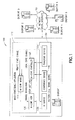
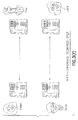
- FIG. 1 is a schematic block diagram of an exemplary multi-conferencing system in accordance with an embodiment of the invention
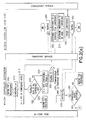
- FIGS. 2(a) and 2(b) is an exemplary flow chart illustrating the steps of the method in accordance with an embodiment of the invention.
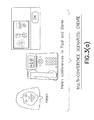
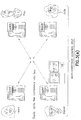
- FIGS. 3(a) thru 3(h) are exemplary block diagrams of an embodiment of the method for conference call participants to simultaneously manage multiple conference calls in accordance with an embodiment of the invention.
- a system and method are disclosed for providing the capability to simultaneously manage multiple conference calls, move participants in the conference calls from one conference call to another and subdivide or join multiple conference calls together.
- the proposed system and method provide a multi-conferencing capability that allow one or more teleconferencing participants to manage multiple teleconferences simultaneously.
- the multi-conferencing capability provided by the system and method in accordance with an embodiment of the invention departs from the rigid conference bridge paradigm associated with such conventional systems.
- the multi-conferencing of the present invention provides conference call participants with the ability to manage multiple conferences simultaneously.
- a participant seeking to initiate a conference call does so at his or her endpoint by selecting a conference call identifier, where the identifier identifies a conference call to be created.
- the initiating participant selects the participants to be associated with the particular call and confirms the selection.
- the conference call among the selected participants is established.
- the method in accordance with an embodiment of the invention provides symmetric control, in that any participant has at least some control over how the creation and evolution of the conference calls progresses.
- each participant is permitted to move freely from one conference call to another. That is, each participant at his or her endpoint has the ability to "shape" their conference calls to suit their changing needs during the calls. In other words, each participant may split, merge, add, and delete one or more conference calls that may be in progress.
- each participant may re-add, re-drop, and remove participants of conferences calls to suit the needs of each of the participants. It should be readily appreciated that additional access control options may limit this symmetric control, in a manner appropriate for the situation. However, in accordance with the contemplated embodiments full symmetric control is generally supported.
- FIG. 1 is a schematic block diagram of a multi-conferencing system 100 in accordance with an embodiment of the invention.
- the system includes a multi-conference application 110 that comprises an M-Conf Model module 115, an M-Conf View module 120 and an M-Conf Controller module 125.
- the M-Conf Model module 115 encapsulates or provides a summary of the current state or configuration of the multi-conference topology/model, i.e., who should be part of what call, and notifies the M-Conf View module 120 of changes that occur in the state of the model or topology.
- the M-Conf View module 120 renders the model and provides a display on the user interface located at an endpoint, such as Endpoint 1 shown in FIG. 1 . It should be readily appreciated that different views are possible, which would change based on the specific device or user interface implemented at each endpoint.
- the M-Conf View module 120 also provides user inputs or gesture notifications to the M-Conf Controller 125.
- the M-Conf View module 120 utilities a user interface (UI) service 135 module of an underlying platform module 130.
- UI user interface
- Such an underlying platform can be either a desk set environment, such as a SIP-based or Skype-based environment, which is implemented in a peer-to-peer environment to provide interactive communication with the user device or interface located at an endpoint of the system.
- M-Conf Controller 125 uses transport service module 140 to communicate with at least one remote endpoint, such as endpoint 2 thru endpoint N. As shown in FIG. 1 , communication with the at least one remote endpoint occurs via a network 150, such as the Internet or a public switched telephone network (PSTN).
- a network 150 such as the Internet or a public switched telephone network (PSTN).
- PSTN public switched telephone network
- the M-Conf Controller 125 is internally divided into two sub-components, i.e., a distribution module and a conference host module (not shown).
- the distribution module processes changes to the view provided on the user device or interface located at an endpoint of the system, such as indicating which conferences to add or delete, and the like.
- the distribution module also delegates changes to a single conference to the host of the conference (i.e., Conf Host).
- the Conf Host may be local, i.e., at the same endpoint as the distribution module, or remotely located.
- the distribution module accumulates all change results from all conference hosts and updates the models of all local and remote conference participants.
- the conference host module updates the conference resources.
- the conference resources comprise at least start conference, add participants, drop participants and change participant parameters.
- the conference host module utilizes conference services 145 pursuant to communicating with the user device at the endpoint.
- the conference services may be provided by conventional telephone, telephone private branch exchange (PBX), conference server or the like.
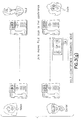
- FIGS. 2(a) and 2(b) is an exemplary flow chart illustrating the steps of the method in accordance with the invention.
- the system is in an idle state and awaits the receipt of requests to initiate a multi-conference (i.e., a MConRequest), as indicated in step 200.
- MConRequests are received at the distribution module of the M-Conf controller module 125 from the M-Conf View module 120, as indicated in step 210, where H denotes the set of conference hosts (step 215).
- a check is performed to determine whether Host Requests (HostReq's) are sent to all conference hosts yet, as indicated in step 220. If HostReq's are sent to all conference hosts, then the system begins waiting for responses from the host (HostRes), as indicated in step 225. As shown in FIG. 2(a) , host responses for non-local hosts are received at the distribution module of the M-Conf controller module 125 via the transport service module 140, as indicated in step 230. Upon receipt of host responses, a check is performed to determined whether all conference hosts have responded to the HostReq's that were sent to all conference hosts, as indicated in step 235. If all the responses were not received, then the system returns to waiting for HostRes's (step 225).
- HostReq's Host Requests
- step 240 With P denoting the set of all multi-conference participants (step 240), a check is then performed to determine whether all participants in the set P of multi-conference participants have been notified about the new topology/model, as indicated in step 245. If all participants within the set P of all multi-conference participants have been notified about the new topology/model, then the system returns to waiting for MConfRequests (step 200).
- HostReq's Host Requests
- the next conference host h is selected from the set of conference hosts H, as indicated in step 250.
- a HostReq is then sent to the next conference host via a local communication path if the host is local, or via the transport service module 140 in the case of a remote host, as indicated in step 255.
- the HostReq sent to the next conference host is received and processed by the Conf Host of M-Conf controller 125 during the idle state of the Conf Host, as indicated in step 260.
- a check is made by the Conf Host to determine which participant to drop from the conference, as indicated in step 265.
- a check is made by the Conf Host to determine which participant to add to the conference, as indicated in step 270.
- the conference resources are then updated via the conference services module, as indicated in step 280.
- a Host Res is then sent (via the transport service or via a local communication path), as indicated in step 290 and a return to the idle state occurs.
- the next participant p is selected from the set P of multi-conference participants, as indicated in step 295.
- the notification of the next participant p is forwarded from the distribution module of the M-Conf controller 125 to the M-Conf model 115 via the transport service for use in updating remote user interfaces of the conference participants or directly to the M-Conf model at the same endpoint for local updating of the M-Conf view module of the participant, as indicated in step 300.
- the M-Conf model module receives the notification from the transport service module 140 during idle states, as indicated in step 305.
- the view shown to the conference participant on the user device or interface is updated via the M-Conf view module, as indicated in step 310, and a return to the idle state occurs.
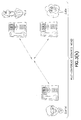
- FIGS. 3(a) thru 3(h) is an exemplary block diagram of an embodiment of the method for conference call participants to simultaneously manage multiple conference calls in accordance with the invention.
- a conference call is established among a team of employees of a company, for example.
- a first participant H at a first endpoint seeks to create a first conference call that involves a second participant P and a third participant D to discuss a new product, for example.
- GUI Graphical User Interface
- participant H selects the first conference call and participants P and D, and creates the call with the push of a single button.
- FIG. 3(b) all participants in the conference call are displayed on the GUI unit at each endpoint. As a result, all of the participants are able to see who is currently participating in the conference on their respective GUI.
- participant P can then add a fourth participant J to the first conference call from his endpoint.
- One reason for P being the participant to add participant J to the conference call is based on convenience, such as because participant J is located in the contact list of participant P.
- the GUIs of participant H and participant D become updated to show that participant J is an additional participant in the conference call, as shown in FIG. 3(d) .
- participant H could just as easily be the person to initiate the addition of participants to the conference call.
- participant D can split the first conference call into a pair of calls by using his endpoint device when he wishes to conduct a "sidebar" conversation with participant J, as shown in FIG. 3(e) .
- the GUI of participant D shows that participants H and P are grouped together and that participants D and J are grouped together to indicate that a split of the first conference call between the participants has occurred.
- the split of the conference call involves a first call involving participant H and participant P and a second call involving participant D and participant J.
- the GUIs of all four participants will show the two conference calls with corresponding participants.
- participant P who is involved in the conference call with participant H
- participant J is involved in by selecting the image of participant P (or any other representation of P such as his or her name) shown on the GUI of participant J, as shown in FIG. 3(g) .
- the movement of participant P into her call occurs without having to move participant H into the conference call, who is leaving the conference call to attend a meeting, and does so, as indicated in FIG. 3(h) ).
- participant H was the original initiator of the conference call.
- it is possible for a conference call to continue even though the originator of the conference call may leave the group.
- the details associated with the apparatus or endpoint device are described in U.S. Application Serial No. 11/XXX,XXX, titled Telecommunications Endpoint for Managing Multi-Conferencing, filed September 28, 2007, (Attorney Docket No. 5123-59) the contents of which are incorporated herein in its entirety.
- the simultaneous management of multiple conferences is permitted, as well as the splitting and merging of conference calls.
- symmetric control at the various participating endpoints and a smooth transition of conference participants from one call to another is achieved.
Landscapes
- Engineering & Computer Science (AREA)
- Signal Processing (AREA)
- Multimedia (AREA)
- Computer Vision & Pattern Recognition (AREA)
- General Engineering & Computer Science (AREA)
- Computer Networks & Wireless Communication (AREA)
- Telephonic Communication Services (AREA)
- Data Exchanges In Wide-Area Networks (AREA)
- Two-Way Televisions, Distribution Of Moving Picture Or The Like (AREA)
Abstract
Description
- The present invention generally relates to the field of teleconferencing and, more particularly, to a method for permitting conference call participants to simultaneously manage multiple conference calls.
- In a conventional teleconferencing system that utilizes a conference bridge, a group of people individually call the conference bridge assigned to the specific conference for a particular time slot and add themselves to the initial conference call. During the call, a specific participant can remove themselves from the conference bridge, and new participants are able to join the conference call that is currently in progress. When a new participant wishes to join a conference, the new participant will not be informed about who is currently at the bridge, i.e., the new participant will not be provided with the identity of the participants in the conference call. In addition, the conference call participants will not be provided with automatic updates with respect to who is currently participating in the ongoing conference call, i.e., who has joined or left the conference. The only notification that is currently provided is a nondescript audible alert.
- If a participant wants to participate in a second conference call, the participant is required to "drop" from the first call and dial into the second conference call. Alternatively, the participant may switch to a second call via their phone (i.e., utilize the conventional call waiting feature) to access the second conference call, while remaining connected to the original conference. However, through all of the foregoing connection cycles, each call has a well-defined "life cycle", which involves a number of steps. First, the conference call is scheduled by a specific person, who then distributes the dial-in information to others who wish to participate in the conference call. Second, conference call participants call and add themselves to the conference bridge to participate in the conference call, and then add themselves to the conference call using the dial-in information provided in the distribution. Next, the user places the call. Finally, the participants in the conference call drop from the call or the allotted time for the call expires. In any event, the end of the conference call does eventually occur. In such a scenario, it is not possible to spontaneously extend the duration of the conference, split up and create a sidebar conference between a subset of participants without having reserved an additional conference bridge prior to attempting to establish the sidebar conference or without needing to call the bridge operator for assistance with setting up the additional conference calls.
- In other conventional systems, a caller is able to conference with several people by using his or her calling device as a local conference bridge. However, the number of participants in such a system is typically limited to no more than approximately six participants, where each participant must be added to the conference one after the other. In addition, the conference call itself is still "anchored" to a single, controlling calling device, i.e., the calling device being used as the bridge.
- There are no known products or devices that provide features and the ability to control conference calls that would overcome the foregoing limitations of the above-described conventional systems. Accordingly, there is a need for a system and method that provides the capability to simultaneously manage multiple conference calls from the endpoint, move participants in the conference calls from one conference call to another and subdivide or join multiple conference calls together.
- A system and method are disclosed for providing the capability to simultaneously manage multiple conference calls, move participants in the conference calls from one conference call to another and subdivide or join multiple conference calls together. In particular, the proposed system and method provide a multi-conferencing capability that allow one or more teleconferencing participants to manage multiple teleconferences simultaneously from their endpoints.
- A participant seeking to initiate a conference call does so at his or her endpoint by selecting a conference call identifier, where the identifier identifies a conference call to be created. The initiating participant then selects the participants to be associated with the particular call and confirms the selection. Upon confirmation of the selection, the conference call among the selected participants is established.
- The method of the invention provides symmetric control, in that any participant has at least some control over how the creation and evolution of the conference call progresses. By providing each participant with the capability to control the creation and evolution of a conference call, each participant is permitted to move freely from one conference call to another. That is, each participant at his or her endpoint has the ability to "shape" their conference calls to suit their changing needs during the calls. In other words, each participant may split, merge, add, and delete one or more conference calls that may be in progress. In contrast to traditional sub-conferences, the method of the invention has no constraints with respect to splitting and merging conferences. For example, conferences can be split recursively and the "life-cycle" of a conference that was split-up can continue even though the original conference has ended. In addition, each participant may re-add, re-drop, and remove participants of conferences calls to suit the needs of each of the participants.
- The multi-conferencing capability of the present invention permits the management of multiple conferences simultaneously, as well as the splitting and merging of conference calls. In addition, symmetric control at the various participating endpoints is provided, as well as a smooth transition of conference participants from one call to another.
- Other objects and features of the present invention will become apparent from the following detailed description considered in conjunction with the accompanying drawings. It is to be understood, however, that the drawings are exemplary and designed solely for purposes of illustration and not as a definition of the limits of the invention, for which reference should be made to the appended claims. It should be further understood that the drawings are not necessarily drawn to scale and that, unless otherwise indicated, they are merely intended to conceptually illustrate the structures and procedures described herein.
- The foregoing and other advantages and features of the invention will become more apparent from the detailed description of the preferred embodiments of the invention given below with reference to the accompanying drawings in which:
-
FIG. 1 is a schematic block diagram of an exemplary multi-conferencing system in accordance with an embodiment of the invention; -
FIGS. 2(a) and2(b) is an exemplary flow chart illustrating the steps of the method in accordance with an embodiment of the invention; and -
FIGS. 3(a) thru 3(h) are exemplary block diagrams of an embodiment of the method for conference call participants to simultaneously manage multiple conference calls in accordance with an embodiment of the invention. - A system and method are disclosed for providing the capability to simultaneously manage multiple conference calls, move participants in the conference calls from one conference call to another and subdivide or join multiple conference calls together. In particular, the proposed system and method provide a multi-conferencing capability that allow one or more teleconferencing participants to manage multiple teleconferences simultaneously.
- In contrast to the previously discussed conventional systems for providing teleconferencing, the multi-conferencing capability provided by the system and method in accordance with an embodiment of the invention, departs from the rigid conference bridge paradigm associated with such conventional systems. Instead, the multi-conferencing of the present invention provides conference call participants with the ability to manage multiple conferences simultaneously. Here, a participant seeking to initiate a conference call does so at his or her endpoint by selecting a conference call identifier, where the identifier identifies a conference call to be created. The initiating participant then selects the participants to be associated with the particular call and confirms the selection. Upon confirmation of the selection, the conference call among the selected participants is established.
- The method in accordance with an embodiment of the invention provides symmetric control, in that any participant has at least some control over how the creation and evolution of the conference calls progresses. By providing each participant with the capability to control the creation and evolution of a conference call, each participant is permitted to move freely from one conference call to another. That is, each participant at his or her endpoint has the ability to "shape" their conference calls to suit their changing needs during the calls. In other words, each participant may split, merge, add, and delete one or more conference calls that may be in progress. In addition, each participant may re-add, re-drop, and remove participants of conferences calls to suit the needs of each of the participants. It should be readily appreciated that additional access control options may limit this symmetric control, in a manner appropriate for the situation. However, in accordance with the contemplated embodiments full symmetric control is generally supported.
-
FIG. 1 is a schematic block diagram of amulti-conferencing system 100 in accordance with an embodiment of the invention. With reference toFIG. 1 , the system includes amulti-conference application 110 that comprises an M-Conf Model module 115, an M-Conf View module 120 and an M-Conf Controller module 125. The M-ConfModel module 115 encapsulates or provides a summary of the current state or configuration of the multi-conference topology/model, i.e., who should be part of what call, and notifies the M-Conf View module 120 of changes that occur in the state of the model or topology. - The M-
Conf View module 120 renders the model and provides a display on the user interface located at an endpoint, such asEndpoint 1 shown inFIG. 1 . It should be readily appreciated that different views are possible, which would change based on the specific device or user interface implemented at each endpoint. The M-Conf View module 120 also provides user inputs or gesture notifications to the M-Conf Controller 125. In addition, the M-Conf View module 120 utilities a user interface (UI)service 135 module of anunderlying platform module 130. Such an underlying platform can be either a desk set environment, such as a SIP-based or Skype-based environment, which is implemented in a peer-to-peer environment to provide interactive communication with the user device or interface located at an endpoint of the system. The configuration of the multi-conferencing system of the invention is in accordance with design principles and techniques as described inU.S. Application Serial No. 10/955,915 andU.S. Serial Application No. 10/955,916 , the contents of which are incorporated herein in their entirety. - With additional reference to
FIG. 1 , M-Conf Controller 125 usestransport service module 140 to communicate with at least one remote endpoint, such asendpoint 2 thru endpoint N. As shown inFIG. 1 , communication with the at least one remote endpoint occurs via anetwork 150, such as the Internet or a public switched telephone network (PSTN). It should be appreciated that even though the PSTN and Internet are shown as one entity, it is also possible for the PSTN network and the Internet to exist separately, where each network would interface to the other. Therefore, it is not the intention of the present invention to be limited to embodiments where the network is comprised solely of the Internet and the PSTN. - Functionally, the M-
Conf Controller 125 is internally divided into two sub-components, i.e., a distribution module and a conference host module (not shown). The distribution module processes changes to the view provided on the user device or interface located at an endpoint of the system, such as indicating which conferences to add or delete, and the like. The distribution module also delegates changes to a single conference to the host of the conference (i.e., Conf Host). In accordance with the invention, the Conf Host may be local, i.e., at the same endpoint as the distribution module, or remotely located. In addition, the distribution module accumulates all change results from all conference hosts and updates the models of all local and remote conference participants. - The conference host module updates the conference resources. In the preferred embodiment, the conference resources comprise at least start conference, add participants, drop participants and change participant parameters. The conference host module utilizes
conference services 145 pursuant to communicating with the user device at the endpoint. Here, the conference services may be provided by conventional telephone, telephone private branch exchange (PBX), conference server or the like. -
FIGS. 2(a) and2(b) is an exemplary flow chart illustrating the steps of the method in accordance with the invention. The system is in an idle state and awaits the receipt of requests to initiate a multi-conference (i.e., a MConRequest), as indicated instep 200. During the idle state, MConRequests are received at the distribution module of the M-Conf controller module 125 from the M-Conf View module 120, as indicated instep 210, where H denotes the set of conference hosts (step 215). - Next, a check is performed to determine whether Host Requests (HostReq's) are sent to all conference hosts yet, as indicated in
step 220. If HostReq's are sent to all conference hosts, then the system begins waiting for responses from the host (HostRes), as indicated instep 225. As shown inFIG. 2(a) , host responses for non-local hosts are received at the distribution module of the M-Conf controller module 125 via thetransport service module 140, as indicated instep 230. Upon receipt of host responses, a check is performed to determined whether all conference hosts have responded to the HostReq's that were sent to all conference hosts, as indicated instep 235. If all the responses were not received, then the system returns to waiting for HostRes's (step 225). - With P denoting the set of all multi-conference participants (step 240), a check is then performed to determine whether all participants in the set P of multi-conference participants have been notified about the new topology/model, as indicated in
step 245. If all participants within the set P of all multi-conference participants have been notified about the new topology/model, then the system returns to waiting for MConfRequests (step 200). - With reference to the check that was performed at
step 220 to determine whether Host Requests (HostReq's) are sent to all conference hosts, if HostReq's were not sent to all conference hosts, then the next conference host h is selected from the set of conference hosts H, as indicated instep 250. A HostReq is then sent to the next conference host via a local communication path if the host is local, or via thetransport service module 140 in the case of a remote host, as indicated instep 255. - The HostReq sent to the next conference host is received and processed by the Conf Host of M-
Conf controller 125 during the idle state of the Conf Host, as indicated instep 260. Next, a check is made by the Conf Host to determine which participant to drop from the conference, as indicated instep 265. Next, a check is made by the Conf Host to determine which participant to add to the conference, as indicated instep 270. The conference resources are then updated via the conference services module, as indicated instep 280. A Host Res is then sent (via the transport service or via a local communication path), as indicated instep 290 and a return to the idle state occurs. - With reference to the check that was performed at
step 245 to determine whether participants in the set P of multi-conference participants have been notified about the new topology/model, if all participants within the set P of all multi-conference participants have not been notified about the new topology/model, then the next participant p is selected from the set P of multi-conference participants, as indicated instep 295. The notification of the next participant p is forwarded from the distribution module of the M-Conf controller 125 to the M-Conf model 115 via the transport service for use in updating remote user interfaces of the conference participants or directly to the M-Conf model at the same endpoint for local updating of the M-Conf view module of the participant, as indicated instep 300. The M-Conf model module receives the notification from thetransport service module 140 during idle states, as indicated instep 305. Next, the view shown to the conference participant on the user device or interface is updated via the M-Conf view module, as indicated instep 310, and a return to the idle state occurs. -
FIGS. 3(a) thru 3(h) is an exemplary block diagram of an embodiment of the method for conference call participants to simultaneously manage multiple conference calls in accordance with the invention. In accordance with the exemplary embodiment, a conference call is established among a team of employees of a company, for example. With reference toFIG. 3(a) , a first participant H at a first endpoint seeks to create a first conference call that involves a second participant P and a third participant D to discuss a new product, for example. Using her endpoint Graphical User Interface (GUI), which shows potential participants P and D, participant H selects the first conference call and participants P and D, and creates the call with the push of a single button. As shown inFIG. 3(b) , all participants in the conference call are displayed on the GUI unit at each endpoint. As a result, all of the participants are able to see who is currently participating in the conference on their respective GUI. - Naturally, it will be appreciated that H, P and D converse during the teleconference. In accordance with the exemplary embodiment, a decision is made during the conference call to add an additional participant J to the conference call, as shown in
FIG. 3(c) . Here, participant P can then add a fourth participant J to the first conference call from his endpoint. One reason for P being the participant to add participant J to the conference call is based on convenience, such as because participant J is located in the contact list of participant P. Upon addition of participant J to the conference call, the GUIs of participant H and participant D become updated to show that participant J is an additional participant in the conference call, as shown inFIG. 3(d) . It should be readily understood that participant H could just as easily be the person to initiate the addition of participants to the conference call. - During the conference call, participant D can split the first conference call into a pair of calls by using his endpoint device when he wishes to conduct a "sidebar" conversation with participant J, as shown in
FIG. 3(e) . Here, the GUI of participant D shows that participants H and P are grouped together and that participants D and J are grouped together to indicate that a split of the first conference call between the participants has occurred. As shown inFIG. 3(f) , the split of the conference call involves a first call involving participant H and participant P and a second call involving participant D and participant J. In addition, the GUIs of all four participants will show the two conference calls with corresponding participants. - Finally, it is possible to move participant P, who is involved in the conference call with participant H, into the conference call that participant J is involved in by selecting the image of participant P (or any other representation of P such as his or her name) shown on the GUI of participant J, as shown in
FIG. 3(g) . The movement of participant P into her call (e.g., the second conference call) occurs without having to move participant H into the conference call, who is leaving the conference call to attend a meeting, and does so, as indicated inFIG. 3(h) ). It should be appreciated that participant H was the original initiator of the conference call. However, it is possible for a conference call to continue even though the originator of the conference call may leave the group. The details associated with the apparatus or endpoint device are described in U.S. Application Serial No. 11/XXX,XXX, titled Telecommunications Endpoint for Managing Multi-Conferencing, filed September 28, 2007, (Attorney Docket No. 5123-59) the contents of which are incorporated herein in its entirety. - Using the multi-conferencing capability of the present invention, the simultaneous management of multiple conferences is permitted, as well as the splitting and merging of conference calls. In addition, symmetric control at the various participating endpoints and a smooth transition of conference participants from one call to another is achieved.
- Thus, while we have shown and described and pointed out fundamental novel features of the invention as applied to a preferred embodiment thereof, it will be understood that various omissions and substitutions and changes in the form and details of the devices illustrated, and in their operation, may be made by those skilled in the art without departing from the spirit of the invention. For example, it is expressly intended that aii combinations of those elements and/or method steps which perform substantially the same function in substantially the same way to achieve the same results are within the scope of the invention. Moreover, it should be recognized that structures and/or elements and/or method steps shown and/or described in connection with any disclosed form or embodiment of the invention may be incorporated in any other disclosed or described or suggested form or embodiment as a general matter of design choice. It is the intention, therefore, to be limited only as indicated by the scope of the claims appended hereto.
Claims (15)
- A method for providing simultaneous management of multiple conference calls, comprising the steps of:selecting a conference call identifier on a user interface located at an endpoint of a system;selecting on the user interface participants to be associated with the selected conference call;confirming on the user interface the selection of each participant to be associated with the selected conference calls; andestablishing the conference calls among the confirmed participants.
- The method of claim 1, said establishing step comprising:waiting for receipt of requests to initiate conference calls during an idle state;establishing a set of conference hosts upon receipt of a request to initiate the conference calls;checking to determine whether host requests are sent to all conference hosts;waiting for responses from a conference host if host requests are sent to all the conference hosts;checking to determine whether all conference hosts have responded to the host requests;establishing a set of all conference call participants;checking to determine whether all participants in the set of conference call participants have been notified about a new topology; continuing to await additional receipt of the requests to initiate conference calls.
- The method of claim 2, further comprising returning to said waiting for receipt of requests if all participants within the set of all conference call participants have been notified about the new topology.
- The method of claim 2, further comprising the steps of:selecting a next conference host from the set of conference hosts if the host requests were not sent to all of the conference hosts; andsending the host request to the next conference host via a transport service module or locally.
- The method of claim 4, further comprising the steps of:receiving and processing the host request sent to the next conference host during the idle state of the controller module;checking to determine which participant to drop from the conference call;checking to determine which participant to add to the conference call;updating the conference call via a conference services module;sending a host response to the distributor module of the controller module via the transport service module or locally; andreturning to the idle state.
- The method of claim 2, further comprising the steps of:selecting a next participant from the set of conference call participants if all participants within the set of conference call participants have not been notified about the new topology; andforwarding a notification of the next participant from the distribution module of the controller module for use in updating remote user interfaces of the conference call participants.
- The method of claim 6, further comprising the steps of:receiving the notification from the transport service module during the idle state or locally;updating a display shown to a conference call participant on the user device via the view module; andreturning to the idle state.
- A system for providing simultaneous management of multiple conference calls over a network, comprising:a conference call application, comprising:a first module;a second module which encapsulates or provides a summary of a current state or configuration of the conference call topology; anda third module which renders and provides display on the user interface;a platform module operatively coupled to the multi-conference application; anda user interface operatively coupled to the platform.
- The system of claim 8, wherein the first module comprises a Controller module, the second module comprises a Model module and the third module comprises a View module.
- The system of claim 8, wherein the platform module comprises a user interface service module, a conference service module and a transport service module.
- The system of claim 10, wherein the platform module is a desk set environment.
- The system of claim 10, wherein the desk set environment is a Sip-based or Skype-based environment, which is implemented in a peer-to-peer environment to provide interactive communication with the user device located at the endpoint of the system.
- The system of claim 9, wherein the Controller module comprises a distribution module and a conference host module.
- The system of claim 13, wherein the distribution module at least one of processes changes to a viewed display provided on the user device located at the endpoint of the system, delegates changes to a single conference to the host of the conference, accumulates all change results from all conference hosts and updates topologies of all local and remote conference participants.
- The system of claim 13, wherein the conference host module updates the conference resources and utilizes a conference services module pursuant to communicating with the user device at the endpoint.
Applications Claiming Priority (1)
| Application Number | Priority Date | Filing Date | Title |
|---|---|---|---|
| US11/904,716 US8204195B2 (en) | 2007-09-28 | 2007-09-28 | Multi-conferencing capability |
Publications (2)
| Publication Number | Publication Date |
|---|---|
| EP2043349A2 true EP2043349A2 (en) | 2009-04-01 |
| EP2043349A3 EP2043349A3 (en) | 2009-04-22 |
Family
ID=40289154
Family Applications (1)
| Application Number | Title | Priority Date | Filing Date |
|---|---|---|---|
| EP08165226A Withdrawn EP2043349A3 (en) | 2007-09-28 | 2008-09-26 | Multi-conferencing capability |
Country Status (2)
| Country | Link |
|---|---|
| US (2) | US8204195B2 (en) |
| EP (1) | EP2043349A3 (en) |
Cited By (1)
| Publication number | Priority date | Publication date | Assignee | Title |
|---|---|---|---|---|
| EP2642734A1 (en) * | 2012-03-21 | 2013-09-25 | Avaya Inc. | Beaming To The Next Conference Or Between Concurrent Conferences |
Families Citing this family (14)
| Publication number | Priority date | Publication date | Assignee | Title |
|---|---|---|---|---|
| US8824341B2 (en) * | 2009-02-13 | 2014-09-02 | Blackberry Limited | Method of joining a conference call |
| US8300790B2 (en) * | 2010-12-27 | 2012-10-30 | Avaya Inc. | Method and system for automatic conference call session migration |
| US8694587B2 (en) * | 2011-05-17 | 2014-04-08 | Damaka, Inc. | System and method for transferring a call bridge between communication devices |
| US9020119B2 (en) * | 2011-10-31 | 2015-04-28 | Blackberry Limited | Moderation control method for participants in a heterogeneous conference call |
| WO2014062509A1 (en) | 2012-10-18 | 2014-04-24 | Dolby Laboratories Licensing Corporation | Systems and methods for initiating conferences using external devices |
| US9660824B2 (en) * | 2013-09-25 | 2017-05-23 | Cisco Technology, Inc. | Renewing an in-process meeting without interruption in a network environment |
| JP6503654B2 (en) * | 2013-09-30 | 2019-04-24 | 株式会社リコー | Communication management system, communication system, and communication method |
| US9706164B2 (en) * | 2015-03-31 | 2017-07-11 | Ricoh Company, Ltd. | Communication management system, communication terminal, communication system, communication control method, and recording medium |
| US10075482B2 (en) | 2015-09-25 | 2018-09-11 | International Business Machines Corporation | Multiplexed, multimodal conferencing |
| US20180097858A1 (en) * | 2016-10-04 | 2018-04-05 | International Business Machines Corporation | Embedded side call sub-channel used in a telecommunication session |
| US10992904B2 (en) * | 2019-07-19 | 2021-04-27 | Nextiva, Inc. | Always-on teleconference communication hub |
| US11570297B2 (en) | 2020-08-13 | 2023-01-31 | First Orion Corp. | Conditional communication forwarding based on origination and destination attributes |
| US11722861B2 (en) | 2020-08-13 | 2023-08-08 | First Orion Corp. | Conditional communication forwarding based on origination and destination attributes |
| US20230064462A1 (en) * | 2021-08-24 | 2023-03-02 | International Business Machines Corporation | Cognitive core network selection for conference calling |
Citations (2)
| Publication number | Priority date | Publication date | Assignee | Title |
|---|---|---|---|---|
| US20060075129A1 (en) | 2004-09-30 | 2006-04-06 | Geppert Birgit A | Method and apparatus for specifying web service interfaces and processing web service messages using protocol multiplexing |
| US20060095544A1 (en) | 2004-09-30 | 2006-05-04 | Geppert Birgit A | Method and apparatus for designing web services using a sequence and multiplex architectural pattern |
Family Cites Families (11)
| Publication number | Priority date | Publication date | Assignee | Title |
|---|---|---|---|---|
| US7185054B1 (en) * | 1993-10-01 | 2007-02-27 | Collaboration Properties, Inc. | Participant display and selection in video conference calls |
| US6496201B1 (en) * | 1999-09-30 | 2002-12-17 | International Business Machines Corporation | System and user interface for multiparty conferencing |
| US6704769B1 (en) * | 2000-04-24 | 2004-03-09 | Polycom, Inc. | Media role management in a video conferencing network |
| US20020078153A1 (en) * | 2000-11-02 | 2002-06-20 | Chit Chung | Providing secure, instantaneous, directory-integrated, multiparty, communications services |
| US8467502B2 (en) * | 2001-02-27 | 2013-06-18 | Verizon Data Services Llc | Interactive assistant for managing telephone communications |
| US7206808B2 (en) * | 2001-07-31 | 2007-04-17 | Tandberg Telecom As | System and method for managing diverse video network devices via application and interface objects |
| US7346912B2 (en) * | 2002-08-05 | 2008-03-18 | Tandberg Telecom As | Method and system for managing video devices |
| US7480259B2 (en) * | 2003-10-09 | 2009-01-20 | Hewlett-Packard Development Company, L.P. | System and method for establishing a parallel conversation thread during a remote collaboration |
| US7676033B2 (en) * | 2005-08-31 | 2010-03-09 | Broadsoft M6, Llc | Methods, systems, and computer program products for automatically establishing a conference call having a plurality of different subscriber participation classes |
| US20070133436A1 (en) * | 2005-12-09 | 2007-06-14 | Sun Microsystems, Inc. | Audio bridge for network conferencing |
| US8243903B1 (en) * | 2008-12-27 | 2012-08-14 | Avaya Inc. | Method and apparatus for implementing a secure side conversation on a telephone conference call |
-
2007
- 2007-09-28 US US11/904,716 patent/US8204195B2/en active Active
-
2008
- 2008-09-26 EP EP08165226A patent/EP2043349A3/en not_active Withdrawn
-
2011
- 2011-08-25 US US13/218,332 patent/US20110305332A1/en not_active Abandoned
Patent Citations (2)
| Publication number | Priority date | Publication date | Assignee | Title |
|---|---|---|---|---|
| US20060075129A1 (en) | 2004-09-30 | 2006-04-06 | Geppert Birgit A | Method and apparatus for specifying web service interfaces and processing web service messages using protocol multiplexing |
| US20060095544A1 (en) | 2004-09-30 | 2006-05-04 | Geppert Birgit A | Method and apparatus for designing web services using a sequence and multiplex architectural pattern |
Cited By (2)
| Publication number | Priority date | Publication date | Assignee | Title |
|---|---|---|---|---|
| EP2642734A1 (en) * | 2012-03-21 | 2013-09-25 | Avaya Inc. | Beaming To The Next Conference Or Between Concurrent Conferences |
| US8908843B2 (en) | 2012-03-21 | 2014-12-09 | Avaya Inc. | Beaming to the next conference or between concurrent conferences |
Also Published As
| Publication number | Publication date |
|---|---|
| US8204195B2 (en) | 2012-06-19 |
| EP2043349A3 (en) | 2009-04-22 |
| US20110305332A1 (en) | 2011-12-15 |
| US20090086952A1 (en) | 2009-04-02 |
Similar Documents
| Publication | Publication Date | Title |
|---|---|---|
| US8204195B2 (en) | Multi-conferencing capability | |
| US7995733B2 (en) | Telecommunications endpoint for managing multi-conferencing | |
| CN1934860B (en) | A system and method for accommodating participants in a conference call | |
| US7492730B2 (en) | Multi-site conferencing system and method | |
| CN1889609B (en) | A Method for Implementing Teleconferencing | |
| US7676033B2 (en) | Methods, systems, and computer program products for automatically establishing a conference call having a plurality of different subscriber participation classes | |
| US20030158900A1 (en) | Method of and apparatus for teleconferencing | |
| EP1751965B1 (en) | Method and System for establishing conference calls using user lists | |
| CN105306757B (en) | A kind of multiside calling method and system of synchronisation | |
| US20090040948A1 (en) | Speed conferencing | |
| US20040125933A1 (en) | Managing and initiating conference calls | |
| US20070286101A1 (en) | System and method for providing conferencing capabilities | |
| US9571533B2 (en) | Graphical environment for adding liaison agents to a communication session | |
| GB2365671A (en) | Teleconferencing system and method | |
| US20060010200A1 (en) | Handling an audio conference related to a text-based message | |
| US20130058472A1 (en) | Digital Network-Based Telephone Systems and Functionality | |
| US9357164B2 (en) | Establishing a remotely hosted conference initiated with one button push | |
| US20150029901A1 (en) | Method and Apparatus for Providing Bridgeless Conferencing Services | |
| US9160549B2 (en) | Method and apparatus for providing bridgeless conferencing services | |
| CN101719903B (en) | Method and system for realizing multi-point control unit cascading of IP multimedia subsystem | |
| CN102387154B (en) | Method for realizing multi-party multimedia communication | |
| CN1848881B (en) | Implementation method and device for processing calling number display during communication | |
| CN202334590U (en) | Application server of multiparty multi-media communication system | |
| JP2003067316A (en) | Conference system, communication terminal, conference center device, program, storage device, conference system | |
| US20150029900A1 (en) | Method and Apparatus for Providing Bridgeless Conferencing Services |
Legal Events
| Date | Code | Title | Description |
|---|---|---|---|
| PUAI | Public reference made under article 153(3) epc to a published international application that has entered the european phase |
Free format text: ORIGINAL CODE: 0009012 |
|
| PUAL | Search report despatched |
Free format text: ORIGINAL CODE: 0009013 |
|
| AK | Designated contracting states |
Kind code of ref document: A2 Designated state(s): AT BE BG CH CY CZ DE DK EE ES FI FR GB GR HR HU IE IS IT LI LT LU LV MC MT NL NO PL PT RO SE SI SK TR |
|
| AX | Request for extension of the european patent |
Extension state: AL BA MK RS |
|
| AK | Designated contracting states |
Kind code of ref document: A3 Designated state(s): AT BE BG CH CY CZ DE DK EE ES FI FR GB GR HR HU IE IS IT LI LT LU LV MC MT NL NO PL PT RO SE SI SK TR |
|
| AX | Request for extension of the european patent |
Extension state: AL BA MK RS |
|
| RIC1 | Information provided on ipc code assigned before grant |
Ipc: H04M 3/56 20060101AFI20090202BHEP |
|
| 17P | Request for examination filed |
Effective date: 20091021 |
|
| 17Q | First examination report despatched |
Effective date: 20091112 |
|
| AKX | Designation fees paid |
Designated state(s): DE FR GB |
|
| STAA | Information on the status of an ep patent application or granted ep patent |
Free format text: STATUS: THE APPLICATION IS DEEMED TO BE WITHDRAWN |
|
| 18D | Application deemed to be withdrawn |
Effective date: 20150401 |