EP2043035A1 - Methods and apparatus for providing customer treatment information over a network - Google Patents
Methods and apparatus for providing customer treatment information over a network Download PDFInfo
- Publication number
- EP2043035A1 EP2043035A1 EP08163845A EP08163845A EP2043035A1 EP 2043035 A1 EP2043035 A1 EP 2043035A1 EP 08163845 A EP08163845 A EP 08163845A EP 08163845 A EP08163845 A EP 08163845A EP 2043035 A1 EP2043035 A1 EP 2043035A1
- Authority
- EP
- European Patent Office
- Prior art keywords
- enterprise
- information
- customer
- access
- transaction
- Prior art date
- Legal status (The legal status is an assumption and is not a legal conclusion. Google has not performed a legal analysis and makes no representation as to the accuracy of the status listed.)
- Ceased
Links
Images


Classifications
-
- G—PHYSICS
- G06—COMPUTING OR CALCULATING; COUNTING
- G06Q—INFORMATION AND COMMUNICATION TECHNOLOGY [ICT] SPECIALLY ADAPTED FOR ADMINISTRATIVE, COMMERCIAL, FINANCIAL, MANAGERIAL OR SUPERVISORY PURPOSES; SYSTEMS OR METHODS SPECIALLY ADAPTED FOR ADMINISTRATIVE, COMMERCIAL, FINANCIAL, MANAGERIAL OR SUPERVISORY PURPOSES, NOT OTHERWISE PROVIDED FOR
- G06Q10/00—Administration; Management
-
- G—PHYSICS
- G06—COMPUTING OR CALCULATING; COUNTING
- G06Q—INFORMATION AND COMMUNICATION TECHNOLOGY [ICT] SPECIALLY ADAPTED FOR ADMINISTRATIVE, COMMERCIAL, FINANCIAL, MANAGERIAL OR SUPERVISORY PURPOSES; SYSTEMS OR METHODS SPECIALLY ADAPTED FOR ADMINISTRATIVE, COMMERCIAL, FINANCIAL, MANAGERIAL OR SUPERVISORY PURPOSES, NOT OTHERWISE PROVIDED FOR
- G06Q10/00—Administration; Management
- G06Q10/06—Resources, workflows, human or project management; Enterprise or organisation planning; Enterprise or organisation modelling
-
- G—PHYSICS
- G06—COMPUTING OR CALCULATING; COUNTING
- G06F—ELECTRIC DIGITAL DATA PROCESSING
- G06F16/00—Information retrieval; Database structures therefor; File system structures therefor
Definitions
- the present invention relates generally to call centers and other types of communication processing systems, and more particularly to methods and systems for processing customer treatment information.
- Call centers and other customer service centers typically distribute telephone calls and other types of communications to available service agents in accordance with various predetermined criteria, such as an arrival order, the nature of the call, a predefined quality of service status or another customer rating. It is becoming increasingly important that call centers be able to provide an appropriate level of customer contact treatment based upon the relationship and value a particular customer has to the business. Many customers choose alternate forms of contact into a business, particularly web-based contact over the Internet or another Internet Protocol (IP) network. Businesses are looking to support their customer segmentation strategies regardless of the form of contact a customer may choose to obtain service. Thus, companies should be able to provide the best agent resource for a given customer regardless of how the customer chooses to access the call center.
- IP Internet Protocol
- a call center In order to determine an appropriate customer treatment for received communications, a call center typically identifies the caller and then and accesses information about the identified caller, for example, from a call center database. For example, a first business might have a priority relationship with a second business, whereby customers within the first business are accorded preferential treatment by the second business. The second business must automatically identify calls associated with the first business to determine an appropriate priority customer treatment.
- customer information must often be passed to additional entities, such as supply chain partners, trading partners or subcontractors that handle customer service or technical support on behalf of another entity.
- additional entities such as supply chain partners, trading partners or subcontractors that handle customer service or technical support on behalf of another entity.
- Many businesses are often reluctant to have their proprietary data transmitted over a network, especially when the ultimate recipient does not have an established relationship with the original customer.
- a transaction communication is established between a first enterprise and a second enterprise by receiving a request from a user associated with the first enterprise to establish the transaction communication; determining if the second enterprise is authorized to access enterprise information of the first enterprise; obtaining enterprise information from an enterprise database of the first enterprise; and providing the obtained information to the second enterprise as part of the establishment of the transaction communication if the second enterprise is authorized to access the enterprise information of the first enterprise.
- the enterprise information is typically related to the transaction and may comprise one or more of customer priority information and a transaction history.
- the enterprise information can be based, for example, on an identity of the user or an identity of the second enterprise.
- the second enterprise can determine if a third enterprise is authorized to access enterprise information of the first enterprise.
- the second enterprise can optionally forward the transaction communication to a third enterprise with the obtained information as part of the establishment of the transaction communication with the third enterprise if the third enterprise is authorized to access the enterprise information of the first enterprise.
- the second enterprise can optionally forward the transaction communication to a third enterprise with information about the second enterprise as part of the establishment of the transaction communication with the third enterprise if the third enterprise is authorized to access the enterprise information of the second enterprise.
- the present invention provides improved methods and apparatus for providing customer information to a call center or another entity.
- the disclosed system allows tagging of calls based on vendor relationships or business partner relationships.
- an outgoing call is tagged at its origination with customer priority information.
- the tags allow the recipient to process the call according to the appropriate customer treatment.
- FIG. 1 illustrates an exemplary network environment 100 in which the present invention can operate.
- the network environment 100 may comprise any combination of public or private, wired or wireless network.
- a first business referred to as enterprise A
- enterprise A provides one or more enterprise A communication server(s) 110-A, for connecting one or more internal users, such as employees, that each employ an employee communication device 120-A, to the network 100.
- enterprise A manages an enterprise-level database 130-A, discussed further below in conjunction with FIG. 2 , that contains enterprise information, in a known manner.
- a second business referred to as enterprise B, provides one or more enterprise B communication server(s) 110-B, employee communication devices 120-B and an enterprise-level database 130-B.
- a third business referred to as enterprise C, provides one or more enterprise C communication server(s) 110-C, employee communication devices 120-C and an enterprise-level database 130-C.
- the communication server(s) 110-A of enterprise A automatically attaches a priority code or additional customer information to an outgoing communication for further processing by enterprise B and/or C.
- the enterprise B communication server(s) 110-B will receive the call, process the attached customer information and handle the call in an appropriate manner. If enterprise B needs to forward the call to another entity, such as enterprise C, enterprise B will append additional information or pass along the original customer information to enterprise C as part of the communication. In this manner, enterprise C can handle the call with an appropriate customer treatment.
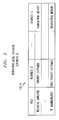
- FIG. 2 is a sample table for an exemplary enterprise-level database 130-A for enterprise A of FIG. 1 .
- the enterprise-level database 130-A comprises a record for each type of role within enterprise A.
- the enterprise-level database 130-A indicates the corresponding customer information that should be sent to each business partner of enterprise A. For example, a Technical Employee of enterprise A might have a priority status with enterprise B, while an IT Administrator of enterprise A might have a high priority status with enterprise B.
- the appropriate customer information for the employees of enterprise A that are Technical Employee or IT Administrators might comprise the individual's transaction history with enterprise C.
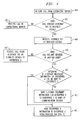
- FIG. 3 is a flow chart describing an exemplary implementation of an outgoing server process 300 incorporating features of the present invention.
- the outgoing server process 300 is executed by a server associated with the originating enterprise associated with a call.
- the outgoing server process 300 initially receives a call during step 310 from an internal user, such as user 1, that is destined for enterprise B. Thereafter, the outgoing server process 300 accesses the enterprise-level database 130-A ( FIG. 2 ) during step 320 to obtain the appropriate customer information treatment for user 1 and enterprise B. For example, if user 1 is a technical employee and the destination is enterprise B, then a priority status will be attached to the call.
- a test is performed during step 330 to determine if enterprise B is authorized to access the customer information of user 1 and enterprise A. If it is determined during step 330 that enterprise B can access the customer information, then a further test is performed during step 350 to determine if the obtained customer treatment information for user 1 should be sent to enterprise B. If it is determined during step 350 that the obtained customer treatment information for user 1 should be sent to enterprise B, then the customer information treatment for user 1 is sent to enterprise B as part of the communication session during step 360. Program control then proceeds to step 370.
- step 350 If, however, it is determined during step 350 that the obtained customer treatment information for user 1 should not be sent to enterprise B (or following execution of step 360), then the information for enterprise A is sent to enterprise B during step 370.
- step 330 If it was determined during step 330 that enterprise B cannot access the customer information (or following execution of step 370), then the communication is forwarded to enterprise B during step 380, for example, with an automatic number identification (ANI) or with user-to-user information (UUI).
- ANI automatic number identification
- UUI user-to-user information
- FIG. 4 is a flow chart describing an exemplary implementation of an intermediate server process 400 incorporating features of the present invention.
- the intermediate server process 400 is executed by a server associated with an intermediate enterprise associated with a call, such as enterprise B and/or C in the example of FIG. 1 .
- the intermediate server process 400 initially receives a call from the originating server, such as enterprise A communication server(s) 110-A, during step 410. Thereafter, a test is performed during step 420 to determine if the call contains a customer tag or business details of enterprise A.
- step 420 If it is determined during step 420 that call does not contain a customer tag or business details of enterprise A, then the call is processed in conventional manner during step 430. If, however, it is determined during step 420 that call contains a customer tag or business details of enterprise A, then the received customer tag or business details of enterprise A are processed during step 440.
- step 450 a further test is performed during step 450 to determine if the call requires the services of another entity. If it is determined during step 450 that the call does not require the services of another entity, then the call is processed during step 460 using the received customer tag or business details of enterprise A.
- step 470 determines if the customer treatment information of enterprise A can be sent to enterprise C. If it is determined during step 470 that the customer treatment information of enterprise A can be sent to enterprise C, then the customer treatment information for enterprise A is sent to enterprise C as part of the communication session during step 480. If, however, it is determined during step 470 that the customer treatment information of enterprise A cannot be sent to enterprise C (or following execution of step 480), then the customer information of enterprise B is sent to enterprise C using process 300 ( FIG. 3 ) during step 490.
- the functions of the present invention can be embodied in the form of methods and apparatuses for practicing those methods.
- One or more aspects of the present invention can be embodied in the form of program code, for example, whether stored in a storage medium, loaded into and/or executed by a machine, or transmitted over some transmission medium, wherein, when the program code is loaded into and executed by a machine, such as a computer, the machine becomes an apparatus for practicing the invention.
- the program code segments combine with the processor to provide a device that operates analogously to specific logic circuits.
- the invention can also be implemented in one or more of an integrated circuit, a digital signal processor, a microprocessor, and a micro-controller.
- the methods and apparatus discussed herein may be distributed as an article of manufacture that itself comprises a computer readable medium having computer readable code means embodied thereon.
- the computer readable program code means is operable, in conjunction with a computer system, to carry out all or some of the steps to perform the methods or create the apparatuses discussed herein.
- the computer readable medium may be a recordable medium (e.g., floppy disks, hard drives, compact disks, memory cards, semiconductor devices, chips, application specific integrated circuits (ASICs)) or may be a transmission medium (e.g., a network comprising fiber-optics, the world-wide web, cables, or a wireless channel using time-division multiple access, code-division multiple access, or other radiofrequency channel). Any medium known or developed that can store information suitable for use with a computer system may be used.
- the computer-readable code means is any mechanism for allowing a computer to read instructions and data, such as magnetic variations on a magnetic media or height variations on the surface of a compact disk.
- the computer systems and servers described herein each contain a memory that will configure associated processors to implement the methods, steps, and functions disclosed herein.
- the memories could be distributed or local and the processors could be distributed or singular.
- the memories could be implemented as an electrical, magnetic or optical memory, or any combination of these or other types of storage devices.
- the term "memory" should be construed broadly enough to encompass any information able to be read from or written to an address in the addressable space accessed by an associated processor. With this definition, information on a network is still within a memory because the associated processor can retrieve the information from the network.
Landscapes
- Engineering & Computer Science (AREA)
- Business, Economics & Management (AREA)
- Theoretical Computer Science (AREA)
- Economics (AREA)
- Strategic Management (AREA)
- Physics & Mathematics (AREA)
- Human Resources & Organizations (AREA)
- General Physics & Mathematics (AREA)
- Entrepreneurship & Innovation (AREA)
- Marketing (AREA)
- General Business, Economics & Management (AREA)
- Tourism & Hospitality (AREA)
- Quality & Reliability (AREA)
- Operations Research (AREA)
- Databases & Information Systems (AREA)
- Data Mining & Analysis (AREA)
- General Engineering & Computer Science (AREA)
- Game Theory and Decision Science (AREA)
- Development Economics (AREA)
- Educational Administration (AREA)
- Mobile Radio Communication Systems (AREA)
- Telephonic Communication Services (AREA)
- Management, Administration, Business Operations System, And Electronic Commerce (AREA)
Abstract
Description
- The present invention relates generally to call centers and other types of communication processing systems, and more particularly to methods and systems for processing customer treatment information.
- Call centers and other customer service centers typically distribute telephone calls and other types of communications to available service agents in accordance with various predetermined criteria, such as an arrival order, the nature of the call, a predefined quality of service status or another customer rating. It is becoming increasingly important that call centers be able to provide an appropriate level of customer contact treatment based upon the relationship and value a particular customer has to the business. Many customers choose alternate forms of contact into a business, particularly web-based contact over the Internet or another Internet Protocol (IP) network. Businesses are looking to support their customer segmentation strategies regardless of the form of contact a customer may choose to obtain service. Thus, companies should be able to provide the best agent resource for a given customer regardless of how the customer chooses to access the call center.
- In order to determine an appropriate customer treatment for received communications, a call center typically identifies the caller and then and accesses information about the identified caller, for example, from a call center database. For example, a first business might have a priority relationship with a second business, whereby customers within the first business are accorded preferential treatment by the second business. The second business must automatically identify calls associated with the first business to determine an appropriate priority customer treatment.
- In addition, for many business-to-business communications, customer information must often be passed to additional entities, such as supply chain partners, trading partners or subcontractors that handle customer service or technical support on behalf of another entity. Many businesses, however, are often reluctant to have their proprietary data transmitted over a network, especially when the ultimate recipient does not have an established relationship with the original customer.
- A need therefore exists for improved methods and apparatus for providing customer information over a network to a call center or another entity.
- Generally, methods and apparatus are disclosed for providing customer treatment information over a network. According to one aspect of the invention, a transaction communication is established between a first enterprise and a second enterprise by receiving a request from a user associated with the first enterprise to establish the transaction communication; determining if the second enterprise is authorized to access enterprise information of the first enterprise; obtaining enterprise information from an enterprise database of the first enterprise; and providing the obtained information to the second enterprise as part of the establishment of the transaction communication if the second enterprise is authorized to access the enterprise information of the first enterprise. The enterprise information is typically related to the transaction and may comprise one or more of customer priority information and a transaction history. The enterprise information can be based, for example, on an identity of the user or an identity of the second enterprise.
- According to another aspect of the invention, after the second enterprise receives the obtained information from the first enterprise, the second enterprise can determine if a third enterprise is authorized to access enterprise information of the first enterprise. The second enterprise can optionally forward the transaction communication to a third enterprise with the obtained information as part of the establishment of the transaction communication with the third enterprise if the third enterprise is authorized to access the enterprise information of the first enterprise. The second enterprise can optionally forward the transaction communication to a third enterprise with information about the second enterprise as part of the establishment of the transaction communication with the third enterprise if the third enterprise is authorized to access the enterprise information of the second enterprise.
- A more complete understanding of the present invention, as well as further features and advantages of the present invention, will be obtained by reference to the following detailed description and drawings.
-
-
FIG. 1 illustrates anexemplary network environment 100 in which the present invention can operate; -
FIG. 2 is a sample table for an exemplary enterprise-level database for enterprise A ofFIG. 1 ; -
FIG. 3 is a flow chart describing an exemplary implementation of an outgoing server process incorporating features of the present invention; and -
FIG. 4 is a flow chart describing an exemplary implementation of an intermediate server process incorporating features of the present invention. - The present invention provides improved methods and apparatus for providing customer information to a call center or another entity. For example, the disclosed system allows tagging of calls based on vendor relationships or business partner relationships. In one exemplary implementation, an outgoing call is tagged at its origination with customer priority information. The tags allow the recipient to process the call according to the appropriate customer treatment.
-
FIG. 1 illustrates anexemplary network environment 100 in which the present invention can operate. It is noted that thenetwork environment 100 may comprise any combination of public or private, wired or wireless network. As shown inFIG. 1 , a first business, referred to as enterprise A, provides one or more enterprise A communication server(s) 110-A, for connecting one or more internal users, such as employees, that each employ an employee communication device 120-A, to thenetwork 100. In addition, enterprise A manages an enterprise-level database 130-A, discussed further below in conjunction withFIG. 2 , that contains enterprise information, in a known manner. Similarly, a second business, referred to as enterprise B, provides one or more enterprise B communication server(s) 110-B, employee communication devices 120-B and an enterprise-level database 130-B. A third business, referred to as enterprise C, provides one or more enterprise C communication server(s) 110-C, employee communication devices 120-C and an enterprise-level database 130-C. - Assume that calls from employees of enterprise A should receive preferential treatment from enterprise B and its partners, such as enterprise C. However, the data for the employees of enterprise A is typically embedded and protected in the enterprise-level database 130-A, which is generally inaccessible to the partners of enterprise A. According to one aspect of the present invention, the communication server(s) 110-A of enterprise A automatically attaches a priority code or additional customer information to an outgoing communication for further processing by enterprise B and/or C. The enterprise B communication server(s) 110-B will receive the call, process the attached customer information and handle the call in an appropriate manner. If enterprise B needs to forward the call to another entity, such as enterprise C, enterprise B will append additional information or pass along the original customer information to enterprise C as part of the communication. In this manner, enterprise C can handle the call with an appropriate customer treatment.
-
FIG. 2 is a sample table for an exemplary enterprise-level database 130-A for enterprise A ofFIG. 1 . As shown inFIG. 2 , the enterprise-level database 130-A comprises a record for each type of role within enterprise A. For each role, the enterprise-level database 130-A indicates the corresponding customer information that should be sent to each business partner of enterprise A. For example, a Technical Employee of enterprise A might have a priority status with enterprise B, while an IT Administrator of enterprise A might have a high priority status with enterprise B. Likewise, when dealing with enterprise C, the appropriate customer information for the employees of enterprise A that are Technical Employee or IT Administrators might comprise the individual's transaction history with enterprise C. -
FIG. 3 is a flow chart describing an exemplary implementation of anoutgoing server process 300 incorporating features of the present invention. Generally, theoutgoing server process 300 is executed by a server associated with the originating enterprise associated with a call. As shown inFIG. 3 , theoutgoing server process 300 initially receives a call duringstep 310 from an internal user, such as user 1, that is destined for enterprise B. Thereafter, theoutgoing server process 300 accesses the enterprise-level database 130-A (FIG. 2 ) duringstep 320 to obtain the appropriate customer information treatment for user 1 and enterprise B. For example, if user 1 is a technical employee and the destination is enterprise B, then a priority status will be attached to the call. - A test is performed during
step 330 to determine if enterprise B is authorized to access the customer information of user 1 and enterprise A. If it is determined duringstep 330 that enterprise B can access the customer information, then a further test is performed duringstep 350 to determine if the obtained customer treatment information for user 1 should be sent to enterprise B. If it is determined duringstep 350 that the obtained customer treatment information for user 1 should be sent to enterprise B, then the customer information treatment for user 1 is sent to enterprise B as part of the communication session duringstep 360. Program control then proceeds tostep 370. - If, however, it is determined during
step 350 that the obtained customer treatment information for user 1 should not be sent to enterprise B (or following execution of step 360), then the information for enterprise A is sent to enterprise B duringstep 370. - If it was determined during
step 330 that enterprise B cannot access the customer information (or following execution of step 370), then the communication is forwarded to enterprise B duringstep 380, for example, with an automatic number identification (ANI) or with user-to-user information (UUI). -
FIG. 4 is a flow chart describing an exemplary implementation of an intermediate server process 400 incorporating features of the present invention. Generally, the intermediate server process 400 is executed by a server associated with an intermediate enterprise associated with a call, such as enterprise B and/or C in the example ofFIG. 1 . As shown inFIG. 4 , the intermediate server process 400 initially receives a call from the originating server, such as enterprise A communication server(s) 110-A, duringstep 410. Thereafter, a test is performed duringstep 420 to determine if the call contains a customer tag or business details of enterprise A. - If it is determined during
step 420 that call does not contain a customer tag or business details of enterprise A, then the call is processed in conventional manner duringstep 430. If, however, it is determined duringstep 420 that call contains a customer tag or business details of enterprise A, then the received customer tag or business details of enterprise A are processed duringstep 440. - Thereafter, a further test is performed during
step 450 to determine if the call requires the services of another entity. If it is determined duringstep 450 that the call does not require the services of another entity, then the call is processed duringstep 460 using the received customer tag or business details of enterprise A. - If, however, it is determined during
step 450 that the call requires the services of another entity, then a further test is performed duringstep 470 determine if the customer treatment information of enterprise A can be sent to enterprise C. If it is determined duringstep 470 that the customer treatment information of enterprise A can be sent to enterprise C, then the customer treatment information for enterprise A is sent to enterprise C as part of the communication session duringstep 480. If, however, it is determined duringstep 470 that the customer treatment information of enterprise A cannot be sent to enterprise C (or following execution of step 480), then the customer information of enterprise B is sent to enterprise C using process 300 (FIG. 3 ) duringstep 490. - While the figures herein show an exemplary sequence of steps, it is also an embodiment of the present invention that the sequence may be varied. Various permutations of the algorithm are contemplated as alternate embodiments of the invention. In addition, while exemplary embodiments of the present invention have been described with respect to processing steps in a software program, as would be apparent to one skilled in the art, various functions may be implemented in the digital domain as processing steps in a software program, in hardware by circuit elements or state machines, or in combination of both software and hardware. Such software may be employed in, for example, a digital signal processor, micro-controller, or general-purpose computer. Such hardware and software may be embodied within circuits implemented within an integrated circuit.
- Thus, the functions of the present invention can be embodied in the form of methods and apparatuses for practicing those methods. One or more aspects of the present invention can be embodied in the form of program code, for example, whether stored in a storage medium, loaded into and/or executed by a machine, or transmitted over some transmission medium, wherein, when the program code is loaded into and executed by a machine, such as a computer, the machine becomes an apparatus for practicing the invention. When implemented on a general-purpose processor, the program code segments combine with the processor to provide a device that operates analogously to specific logic circuits. The invention can also be implemented in one or more of an integrated circuit, a digital signal processor, a microprocessor, and a micro-controller.
- As is known in the art, the methods and apparatus discussed herein may be distributed as an article of manufacture that itself comprises a computer readable medium having computer readable code means embodied thereon. The computer readable program code means is operable, in conjunction with a computer system, to carry out all or some of the steps to perform the methods or create the apparatuses discussed herein. The computer readable medium may be a recordable medium (e.g., floppy disks, hard drives, compact disks, memory cards, semiconductor devices, chips, application specific integrated circuits (ASICs)) or may be a transmission medium (e.g., a network comprising fiber-optics, the world-wide web, cables, or a wireless channel using time-division multiple access, code-division multiple access, or other radiofrequency channel). Any medium known or developed that can store information suitable for use with a computer system may be used. The computer-readable code means is any mechanism for allowing a computer to read instructions and data, such as magnetic variations on a magnetic media or height variations on the surface of a compact disk.
- The computer systems and servers described herein each contain a memory that will configure associated processors to implement the methods, steps, and functions disclosed herein. The memories could be distributed or local and the processors could be distributed or singular. The memories could be implemented as an electrical, magnetic or optical memory, or any combination of these or other types of storage devices. Moreover, the term "memory" should be construed broadly enough to encompass any information able to be read from or written to an address in the addressable space accessed by an associated processor. With this definition, information on a network is still within a memory because the associated processor can retrieve the information from the network.
- It is to be understood that the embodiments and variations shown and described herein are merely illustrative of the principles of this invention and that various modifications may be implemented by those skilled in the art without departing from the scope and spirit of the invention.
Claims (10)
- A method for establishing a transaction communication between a first enterprise and a second enterprise, comprising:receiving a request from a user associated with said first enterprise to establish said transaction communication;determining if said second enterprise is authorized to access enterprise information of said first enterprise;obtaining enterprise information from an enterprise database of said first enterprise; andproviding said obtained information to said second enterprise as part of said establishment of said transaction communication if said second enterprise is authorized to access said enterprise information of said first enterprise.
- The method of claim 1, wherein said enterprise information is related to said transaction.
- The method of claim 1, wherein said enterprise information comprises one or more of customer priority information and a transaction history.
- The method of claim 1, wherein said enterprise information is based on one or more of an identity of said user and an identity of said second enterprise.
- The method of claim 1, wherein said method is performed by a server of said first enterprise.
- The method of claim 1, further comprising the steps of receiving said obtained information at said second enterprise from said first enterprise and determining if a third enterprise is authorized to access enterprise information of said first enterprise.
- The method of claim 1, further comprising the step of forwarding said transaction communication to a third enterprise with said obtained information as part of said establishment of said transaction communication with said third enterprise if said third enterprise is authorized to access said enterprise information of said first enterprise.
- The method of claim 1, further comprising the step of forwarding said transaction communication to a third enterprise with information about said second enterprise as part of said establishment of said transaction communication with said third enterprise if said third enterprise is authorized to access said enterprise information of said second enterprise.
- A system for establishing a transaction communication between a first enterprise and a second enterprise, comprising:a memory; andat least one processor, coupled to the memory, operative to:receive a request from a user associated with said first enterprise to establish said transaction communication;determine if said second enterprise is authorized to access enterprise information of said first enterprise;obtain enterprise information from an enterprise database of said first enterprise; andprovide said obtained information to said second enterprise as part of said establishment of said transaction communication if said second enterprise is authorized to access said enterprise information of said first enterprise.
- The system of claim 9, wherein said enterprise information comprises one or more of customer priority information and a transaction history.
Applications Claiming Priority (1)
| Application Number | Priority Date | Filing Date | Title |
|---|---|---|---|
| US11/863,879 US8600964B2 (en) | 2007-09-28 | 2007-09-28 | Methods and apparatus for providing customer treatment information over a network |
Publications (1)
| Publication Number | Publication Date |
|---|---|
| EP2043035A1 true EP2043035A1 (en) | 2009-04-01 |
Family
ID=39926612
Family Applications (1)
| Application Number | Title | Priority Date | Filing Date |
|---|---|---|---|
| EP08163845A Ceased EP2043035A1 (en) | 2007-09-28 | 2008-09-08 | Methods and apparatus for providing customer treatment information over a network |
Country Status (4)
| Country | Link |
|---|---|
| US (1) | US8600964B2 (en) |
| EP (1) | EP2043035A1 (en) |
| JP (1) | JP2009087341A (en) |
| KR (1) | KR20090033028A (en) |
Family Cites Families (16)
| Publication number | Priority date | Publication date | Assignee | Title |
|---|---|---|---|---|
| US6115690A (en) | 1997-12-22 | 2000-09-05 | Wong; Charles | Integrated business-to-business Web commerce and business automation system |
| JP3427030B2 (en) * | 2000-01-31 | 2003-07-14 | あいおい損害保険株式会社 | Call center device and call transfer method |
| JP2001265981A (en) * | 2000-03-23 | 2001-09-28 | Nec Corp | System and method for exchanging commercial transaction information utilizing electronic catalog and system and method for collection and storing market information |
| US8005755B2 (en) * | 2000-04-25 | 2011-08-23 | Yodlee.Com, Inc. | System and method for syndicated transactions |
| JP2002092278A (en) * | 2000-09-18 | 2002-03-29 | Toshiba Corp | Workflow search system |
| JP2002149873A (en) | 2000-11-06 | 2002-05-24 | Oki Electric Ind Co Ltd | Specialist call center system |
| KR100401935B1 (en) | 2001-06-07 | 2003-10-22 | 주식회사 파수닷컴 | System and method for protecting of information in information offering system |
| US20070208574A1 (en) * | 2002-06-27 | 2007-09-06 | Zhiyu Zheng | System and method for managing master data information in an enterprise system |
| US7069244B2 (en) * | 2002-09-17 | 2006-06-27 | First Data Corporation | Method and system for merchant processing of purchase card transactions with expanded card type acceptance |
| JP2005227985A (en) * | 2004-02-12 | 2005-08-25 | Hitachi Ltd | Inventory management system in a joint warehouse, inventory management method in a joint warehouse, inventory management program in a joint warehouse |
| WO2006012058A1 (en) * | 2004-06-28 | 2006-02-02 | Japan Communications, Inc. | Systems and methods for mutual authentication of network |
| US7865521B2 (en) * | 2005-12-12 | 2011-01-04 | International Business Machines Corporation | Access control for elements in a database object |
| US7805529B2 (en) * | 2006-07-14 | 2010-09-28 | International Business Machines Corporation | Method and system for dynamically changing user session behavior based on user and/or group classification in response to application server demand |
| JP4351263B2 (en) * | 2007-03-05 | 2009-10-28 | 東芝テック株式会社 | Purchase transaction support system and store management device of this system |
| US8141143B2 (en) * | 2007-05-31 | 2012-03-20 | Imera Systems, Inc. | Method and system for providing remote access to resources in a secure data center over a network |
| US8224873B1 (en) * | 2008-05-22 | 2012-07-17 | Informatica Corporation | System and method for flexible security access management in an enterprise |
-
2007
- 2007-09-28 US US11/863,879 patent/US8600964B2/en active Active
-
2008
- 2008-09-08 EP EP08163845A patent/EP2043035A1/en not_active Ceased
- 2008-09-24 KR KR1020080093676A patent/KR20090033028A/en not_active Ceased
- 2008-09-26 JP JP2008246997A patent/JP2009087341A/en active Pending
Non-Patent Citations (1)
| Title |
|---|
| The technical aspects identified in the present application (Art. 92 EPC) are considered part of common general knowledge. Due to their notoriety no documentary evidence is found to be required. For further details see the accompanying Opinion and the reference below. * |
Also Published As
| Publication number | Publication date |
|---|---|
| JP2009087341A (en) | 2009-04-23 |
| KR20090033028A (en) | 2009-04-01 |
| US8600964B2 (en) | 2013-12-03 |
| US20090089289A1 (en) | 2009-04-02 |
Similar Documents
| Publication | Publication Date | Title |
|---|---|---|
| JP3787275B2 (en) | Providing customer actions based on the network source address of the request source at the call center | |
| US6611590B1 (en) | Enterprise-wide intelligent call center routing | |
| US20080120164A1 (en) | Contact center agent work awareness algorithm | |
| US9948783B1 (en) | Publishing contacts to opt-in users | |
| US8140635B2 (en) | Data processing environment change management methods and apparatuses | |
| US8798254B2 (en) | System and method for recording and distributing customer interactions | |
| US8369509B2 (en) | System and method for search-based work assignments in a contact center | |
| JP5823984B2 (en) | Portable continuity object | |
| US9955004B2 (en) | System and method for utilizing customer data in a communication system | |
| US9641687B2 (en) | Customer-enabled evaluation and control of communication center agent contact | |
| KR20100136906A (en) | Pluggable Contact Decision | |
| CN106529851B (en) | Order data processing method, communication data query method and server | |
| CN1855139A (en) | Method for processing calling | |
| US8024401B1 (en) | Customer relationship management system with network contact center server configured to control automated web and voice dialogues | |
| US7532615B2 (en) | Universal agent log-in using a SIP registrar | |
| US6961419B2 (en) | Contact center data integration with enterprise applications | |
| US8600964B2 (en) | Methods and apparatus for providing customer treatment information over a network | |
| US20140250072A1 (en) | System and method for in-memory indexing of data | |
| US7729342B1 (en) | Privacy preservation for voice over internet protocol calling | |
| US8412817B1 (en) | Load balancing voicemail server system | |
| US20230130152A1 (en) | Identifying caller details for promotional voice communication | |
| US20150363736A1 (en) | System and method for enhancing information flow in an enterprise | |
| US20060008070A1 (en) | Method of providing a screen-pop via SIP | |
| CN119991135A (en) | Complaint information processing method, device, medium and equipment | |
| CN1943219A (en) | Method for establishing collaborative service in computer system |
Legal Events
| Date | Code | Title | Description |
|---|---|---|---|
| PUAI | Public reference made under article 153(3) epc to a published international application that has entered the european phase |
Free format text: ORIGINAL CODE: 0009012 |
|
| AK | Designated contracting states |
Kind code of ref document: A1 Designated state(s): AT BE BG CH CY CZ DE DK EE ES FI FR GB GR HR HU IE IS IT LI LT LU LV MC MT NL NO PL PT RO SE SI SK TR |
|
| AX | Request for extension of the european patent |
Extension state: AL BA MK RS |
|
| 17P | Request for examination filed |
Effective date: 20090924 |
|
| 17Q | First examination report despatched |
Effective date: 20091020 |
|
| AKX | Designation fees paid |
Designated state(s): DE FR GB |
|
| STAA | Information on the status of an ep patent application or granted ep patent |
Free format text: STATUS: THE APPLICATION HAS BEEN REFUSED |
|
| 18R | Application refused |
Effective date: 20101208 |