EP2042595A1 - Permanent inactivation of nucleases - Google Patents
Permanent inactivation of nucleases Download PDFInfo
- Publication number
- EP2042595A1 EP2042595A1 EP07019047A EP07019047A EP2042595A1 EP 2042595 A1 EP2042595 A1 EP 2042595A1 EP 07019047 A EP07019047 A EP 07019047A EP 07019047 A EP07019047 A EP 07019047A EP 2042595 A1 EP2042595 A1 EP 2042595A1
- Authority
- EP
- European Patent Office
- Prior art keywords
- reagent
- nucleases
- volume
- reagent according
- preferred
- Prior art date
- Legal status (The legal status is an assumption and is not a legal conclusion. Google has not performed a legal analysis and makes no representation as to the accuracy of the status listed.)
- Withdrawn
Links
- 101710163270 Nuclease Proteins 0.000 title claims abstract description 32
- 230000002779 inactivation Effects 0.000 title description 4
- 239000003153 chemical reaction reagent Substances 0.000 claims abstract description 37
- 238000000034 method Methods 0.000 claims abstract description 13
- 102000004169 proteins and genes Human genes 0.000 claims abstract description 13
- 108090000623 proteins and genes Proteins 0.000 claims abstract description 13
- 239000007800 oxidant agent Substances 0.000 claims abstract description 12
- 239000003398 denaturant Substances 0.000 claims abstract description 8
- 230000000415 inactivating effect Effects 0.000 claims abstract description 7
- MHAJPDPJQMAIIY-UHFFFAOYSA-N Hydrogen peroxide Chemical group OO MHAJPDPJQMAIIY-UHFFFAOYSA-N 0.000 claims description 22
- DBMJMQXJHONAFJ-UHFFFAOYSA-M Sodium laurylsulphate Chemical group [Na+].CCCCCCCCCCCCOS([O-])(=O)=O DBMJMQXJHONAFJ-UHFFFAOYSA-M 0.000 claims description 19
- 235000019333 sodium laurylsulphate Nutrition 0.000 claims description 17
- 150000001875 compounds Chemical class 0.000 claims description 6
- KFSLWBXXFJQRDL-UHFFFAOYSA-N Peracetic acid Chemical compound CC(=O)OO KFSLWBXXFJQRDL-UHFFFAOYSA-N 0.000 claims description 5
- 239000003599 detergent Substances 0.000 claims description 5
- XTEGARKTQYYJKE-UHFFFAOYSA-M Chlorate Chemical compound [O-]Cl(=O)=O XTEGARKTQYYJKE-UHFFFAOYSA-M 0.000 claims description 4
- WQYVRQLZKVEZGA-UHFFFAOYSA-N hypochlorite Chemical compound Cl[O-] WQYVRQLZKVEZGA-UHFFFAOYSA-N 0.000 claims description 4
- 150000002978 peroxides Chemical class 0.000 claims description 3
- 239000004094 surface-active agent Substances 0.000 claims description 3
- CBENFWSGALASAD-UHFFFAOYSA-N Ozone Chemical compound [O-][O+]=O CBENFWSGALASAD-UHFFFAOYSA-N 0.000 claims description 2
- 125000000129 anionic group Chemical group 0.000 claims description 2
- 125000002091 cationic group Chemical group 0.000 claims description 2
- 229910052736 halogen Inorganic materials 0.000 claims description 2
- 150000002367 halogens Chemical class 0.000 claims description 2
- VLTRZXGMWDSKGL-UHFFFAOYSA-M perchlorate Inorganic materials [O-]Cl(=O)(=O)=O VLTRZXGMWDSKGL-UHFFFAOYSA-M 0.000 claims description 2
- VLTRZXGMWDSKGL-UHFFFAOYSA-N perchloric acid Chemical compound OCl(=O)(=O)=O VLTRZXGMWDSKGL-UHFFFAOYSA-N 0.000 claims description 2
- 150000004965 peroxy acids Chemical class 0.000 claims description 2
- 102000006382 Ribonucleases Human genes 0.000 description 17
- 108010083644 Ribonucleases Proteins 0.000 description 17
- 239000000203 mixture Substances 0.000 description 14
- 239000000243 solution Substances 0.000 description 13
- 108020004414 DNA Proteins 0.000 description 11
- 238000006243 chemical reaction Methods 0.000 description 10
- 230000000694 effects Effects 0.000 description 10
- HEMHJVSKTPXQMS-UHFFFAOYSA-M Sodium hydroxide Chemical compound [OH-].[Na+] HEMHJVSKTPXQMS-UHFFFAOYSA-M 0.000 description 9
- KCXVZYZYPLLWCC-UHFFFAOYSA-N EDTA Chemical compound OC(=O)CN(CC(O)=O)CCN(CC(O)=O)CC(O)=O KCXVZYZYPLLWCC-UHFFFAOYSA-N 0.000 description 8
- 238000011109 contamination Methods 0.000 description 8
- 229960001484 edetic acid Drugs 0.000 description 7
- 244000005700 microbiome Species 0.000 description 7
- XLYOFNOQVPJJNP-UHFFFAOYSA-N water Substances O XLYOFNOQVPJJNP-UHFFFAOYSA-N 0.000 description 7
- WSFSSNUMVMOOMR-UHFFFAOYSA-N Formaldehyde Chemical compound O=C WSFSSNUMVMOOMR-UHFFFAOYSA-N 0.000 description 6
- 230000006378 damage Effects 0.000 description 5
- FFYPMLJYZAEMQB-UHFFFAOYSA-N diethyl pyrocarbonate Chemical compound CCOC(=O)OC(=O)OCC FFYPMLJYZAEMQB-UHFFFAOYSA-N 0.000 description 5
- 238000004140 cleaning Methods 0.000 description 4
- 239000013641 positive control Substances 0.000 description 4
- 239000003381 stabilizer Substances 0.000 description 4
- QTBSBXVTEAMEQO-UHFFFAOYSA-N Acetic acid Chemical compound CC(O)=O QTBSBXVTEAMEQO-UHFFFAOYSA-N 0.000 description 3
- MUBZPKHOEPUJKR-UHFFFAOYSA-N Oxalic acid Chemical compound OC(=O)C(O)=O MUBZPKHOEPUJKR-UHFFFAOYSA-N 0.000 description 3
- 238000013459 approach Methods 0.000 description 3
- 239000002738 chelating agent Substances 0.000 description 3
- KRKNYBCHXYNGOX-UHFFFAOYSA-N citric acid Chemical compound OC(=O)CC(O)(C(O)=O)CC(O)=O KRKNYBCHXYNGOX-UHFFFAOYSA-N 0.000 description 3
- 150000002500 ions Chemical class 0.000 description 3
- 108020004707 nucleic acids Proteins 0.000 description 3
- 102000039446 nucleic acids Human genes 0.000 description 3
- 150000007523 nucleic acids Chemical class 0.000 description 3
- 239000000126 substance Substances 0.000 description 3
- 241000894006 Bacteria Species 0.000 description 2
- ROFVEXUMMXZLPA-UHFFFAOYSA-N Bipyridyl Chemical compound N1=CC=CC=C1C1=CC=CC=N1 ROFVEXUMMXZLPA-UHFFFAOYSA-N 0.000 description 2
- HEDRZPFGACZZDS-UHFFFAOYSA-N Chloroform Chemical compound ClC(Cl)Cl HEDRZPFGACZZDS-UHFFFAOYSA-N 0.000 description 2
- 102000053602 DNA Human genes 0.000 description 2
- 102000016911 Deoxyribonucleases Human genes 0.000 description 2
- 108010053770 Deoxyribonucleases Proteins 0.000 description 2
- RPNUMPOLZDHAAY-UHFFFAOYSA-N Diethylenetriamine Chemical compound NCCNCCN RPNUMPOLZDHAAY-UHFFFAOYSA-N 0.000 description 2
- NBIIXXVUZAFLBC-UHFFFAOYSA-N Phosphoric acid Chemical compound OP(O)(O)=O NBIIXXVUZAFLBC-UHFFFAOYSA-N 0.000 description 2
- XSQUKJJJFZCRTK-UHFFFAOYSA-N Urea Chemical compound NC(N)=O XSQUKJJJFZCRTK-UHFFFAOYSA-N 0.000 description 2
- 239000002253 acid Substances 0.000 description 2
- 150000007513 acids Chemical class 0.000 description 2
- 230000015556 catabolic process Effects 0.000 description 2
- 210000000170 cell membrane Anatomy 0.000 description 2
- 230000001413 cellular effect Effects 0.000 description 2
- 238000000354 decomposition reaction Methods 0.000 description 2
- 238000006731 degradation reaction Methods 0.000 description 2
- 229940119679 deoxyribonucleases Drugs 0.000 description 2
- DEFVIWRASFVYLL-UHFFFAOYSA-N ethylene glycol bis(2-aminoethyl)tetraacetic acid Chemical compound OC(=O)CN(CC(O)=O)CCOCCOCCN(CC(O)=O)CC(O)=O DEFVIWRASFVYLL-UHFFFAOYSA-N 0.000 description 2
- 231100001261 hazardous Toxicity 0.000 description 2
- 238000011534 incubation Methods 0.000 description 2
- 239000003112 inhibitor Substances 0.000 description 2
- 230000002401 inhibitory effect Effects 0.000 description 2
- 230000002427 irreversible effect Effects 0.000 description 2
- BJEPYKJPYRNKOW-UHFFFAOYSA-N malic acid Chemical compound OC(=O)C(O)CC(O)=O BJEPYKJPYRNKOW-UHFFFAOYSA-N 0.000 description 2
- 239000003550 marker Substances 0.000 description 2
- 239000013642 negative control Substances 0.000 description 2
- XNGIFLGASWRNHJ-UHFFFAOYSA-N phthalic acid Chemical compound OC(=O)C1=CC=CC=C1C(O)=O XNGIFLGASWRNHJ-UHFFFAOYSA-N 0.000 description 2
- 239000004033 plastic Substances 0.000 description 2
- 229920000642 polymer Polymers 0.000 description 2
- 238000003757 reverse transcription PCR Methods 0.000 description 2
- 239000003161 ribonuclease inhibitor Substances 0.000 description 2
- 229920002477 rna polymer Polymers 0.000 description 2
- 238000011282 treatment Methods 0.000 description 2
- OFLNEVYCAMVQJS-UHFFFAOYSA-N 2-n,2-n-diethylethane-1,1,1,2-tetramine Chemical compound CCN(CC)CC(N)(N)N OFLNEVYCAMVQJS-UHFFFAOYSA-N 0.000 description 1
- 239000005725 8-Hydroxyquinoline Substances 0.000 description 1
- 102000016938 Catalase Human genes 0.000 description 1
- 108010053835 Catalase Proteins 0.000 description 1
- 241000195493 Cryptophyta Species 0.000 description 1
- FEWJPZIEWOKRBE-JCYAYHJZSA-N Dextrotartaric acid Chemical compound OC(=O)[C@H](O)[C@@H](O)C(O)=O FEWJPZIEWOKRBE-JCYAYHJZSA-N 0.000 description 1
- 102000004190 Enzymes Human genes 0.000 description 1
- 108090000790 Enzymes Proteins 0.000 description 1
- PIICEJLVQHRZGT-UHFFFAOYSA-N Ethylenediamine Chemical compound NCCN PIICEJLVQHRZGT-UHFFFAOYSA-N 0.000 description 1
- 238000000636 Northern blotting Methods 0.000 description 1
- YNPNZTXNASCQKK-UHFFFAOYSA-N Phenanthrene Natural products C1=CC=C2C3=CC=CC=C3C=CC2=C1 YNPNZTXNASCQKK-UHFFFAOYSA-N 0.000 description 1
- 108020004518 RNA Probes Proteins 0.000 description 1
- 239000003391 RNA probe Substances 0.000 description 1
- 101710141795 Ribonuclease inhibitor Proteins 0.000 description 1
- 229940122208 Ribonuclease inhibitor Drugs 0.000 description 1
- 102100037968 Ribonuclease inhibitor Human genes 0.000 description 1
- 238000002105 Southern blotting Methods 0.000 description 1
- KDYFGRWQOYBRFD-UHFFFAOYSA-N Succinic acid Natural products OC(=O)CCC(O)=O KDYFGRWQOYBRFD-UHFFFAOYSA-N 0.000 description 1
- FEWJPZIEWOKRBE-UHFFFAOYSA-N Tartaric acid Natural products [H+].[H+].[O-]C(=O)C(O)C(O)C([O-])=O FEWJPZIEWOKRBE-UHFFFAOYSA-N 0.000 description 1
- DGEZNRSVGBDHLK-UHFFFAOYSA-N [1,10]phenanthroline Chemical compound C1=CN=C2C3=NC=CC=C3C=CC2=C1 DGEZNRSVGBDHLK-UHFFFAOYSA-N 0.000 description 1
- 230000002378 acidificating effect Effects 0.000 description 1
- 229910000147 aluminium phosphate Inorganic materials 0.000 description 1
- 239000007864 aqueous solution Substances 0.000 description 1
- 238000003556 assay Methods 0.000 description 1
- 239000002585 base Chemical class 0.000 description 1
- 230000003115 biocidal effect Effects 0.000 description 1
- 239000003139 biocide Substances 0.000 description 1
- 230000032770 biofilm formation Effects 0.000 description 1
- 239000012620 biological material Substances 0.000 description 1
- 239000000872 buffer Substances 0.000 description 1
- 239000006172 buffering agent Substances 0.000 description 1
- KDYFGRWQOYBRFD-NUQCWPJISA-N butanedioic acid Chemical compound O[14C](=O)CC[14C](O)=O KDYFGRWQOYBRFD-NUQCWPJISA-N 0.000 description 1
- 230000000711 cancerogenic effect Effects 0.000 description 1
- 239000004202 carbamide Substances 0.000 description 1
- 231100000315 carcinogenic Toxicity 0.000 description 1
- 238000003421 catalytic decomposition reaction Methods 0.000 description 1
- 210000004027 cell Anatomy 0.000 description 1
- 239000003795 chemical substances by application Substances 0.000 description 1
- 210000000349 chromosome Anatomy 0.000 description 1
- 239000003086 colorant Substances 0.000 description 1
- 238000005202 decontamination Methods 0.000 description 1
- 230000003588 decontaminative effect Effects 0.000 description 1
- 230000003297 denaturating effect Effects 0.000 description 1
- 238000004925 denaturation Methods 0.000 description 1
- 230000036425 denaturation Effects 0.000 description 1
- 239000000645 desinfectant Substances 0.000 description 1
- 239000000428 dust Substances 0.000 description 1
- 229940088598 enzyme Drugs 0.000 description 1
- 229940071106 ethylenediaminetetraacetate Drugs 0.000 description 1
- 150000004676 glycans Chemical class 0.000 description 1
- 238000010438 heat treatment Methods 0.000 description 1
- NBZBKCUXIYYUSX-UHFFFAOYSA-N iminodiacetic acid Chemical compound OC(=O)CNCC(O)=O NBZBKCUXIYYUSX-UHFFFAOYSA-N 0.000 description 1
- 239000004615 ingredient Substances 0.000 description 1
- 150000007529 inorganic bases Chemical class 0.000 description 1
- 229910052500 inorganic mineral Inorganic materials 0.000 description 1
- 150000002632 lipids Chemical class 0.000 description 1
- 238000004519 manufacturing process Methods 0.000 description 1
- 239000011159 matrix material Substances 0.000 description 1
- 239000012528 membrane Substances 0.000 description 1
- 229910021645 metal ion Inorganic materials 0.000 description 1
- 239000011707 mineral Substances 0.000 description 1
- 238000001823 molecular biology technique Methods 0.000 description 1
- 150000007524 organic acids Chemical class 0.000 description 1
- 235000005985 organic acids Nutrition 0.000 description 1
- 150000007530 organic bases Chemical class 0.000 description 1
- 239000003960 organic solvent Substances 0.000 description 1
- 235000006408 oxalic acid Nutrition 0.000 description 1
- 230000003647 oxidation Effects 0.000 description 1
- 238000007254 oxidation reaction Methods 0.000 description 1
- 229960003540 oxyquinoline Drugs 0.000 description 1
- 239000002245 particle Substances 0.000 description 1
- 239000013612 plasmid Substances 0.000 description 1
- 229920001282 polysaccharide Polymers 0.000 description 1
- 239000005017 polysaccharide Substances 0.000 description 1
- 238000002360 preparation method Methods 0.000 description 1
- MCJGNVYPOGVAJF-UHFFFAOYSA-N quinolin-8-ol Chemical compound C1=CN=C2C(O)=CC=CC2=C1 MCJGNVYPOGVAJF-UHFFFAOYSA-N 0.000 description 1
- 239000011541 reaction mixture Substances 0.000 description 1
- 230000002441 reversible effect Effects 0.000 description 1
- 150000003839 salts Chemical class 0.000 description 1
- 230000028327 secretion Effects 0.000 description 1
- 230000000087 stabilizing effect Effects 0.000 description 1
- ACTRVOBWPAIOHC-UHFFFAOYSA-N succimer Chemical compound OC(=O)C(S)C(S)C(O)=O ACTRVOBWPAIOHC-UHFFFAOYSA-N 0.000 description 1
- 235000002906 tartaric acid Nutrition 0.000 description 1
- 239000011975 tartaric acid Substances 0.000 description 1
- 210000001519 tissue Anatomy 0.000 description 1
- 235000021122 unsaturated fatty acids Nutrition 0.000 description 1
- 150000004670 unsaturated fatty acids Chemical class 0.000 description 1
Images

Classifications
-
- C—CHEMISTRY; METALLURGY
- C12—BIOCHEMISTRY; BEER; SPIRITS; WINE; VINEGAR; MICROBIOLOGY; ENZYMOLOGY; MUTATION OR GENETIC ENGINEERING
- C12N—MICROORGANISMS OR ENZYMES; COMPOSITIONS THEREOF; PROPAGATING, PRESERVING, OR MAINTAINING MICROORGANISMS; MUTATION OR GENETIC ENGINEERING; CULTURE MEDIA
- C12N15/00—Mutation or genetic engineering; DNA or RNA concerning genetic engineering, vectors, e.g. plasmids, or their isolation, preparation or purification; Use of hosts therefor
- C12N15/09—Recombinant DNA-technology
- C12N15/10—Processes for the isolation, preparation or purification of DNA or RNA
- C12N15/1003—Extracting or separating nucleic acids from biological samples, e.g. pure separation or isolation methods; Conditions, buffers or apparatuses therefor
Definitions
- the present invention generally relates to the field of molecular biology. More particularly, it concerns the permanent inactivation of nucleases, comprising ribonucleases (RNases) which can degrade RNA and deoxyribonucleases (DNases), which can degrade DNA.
- RNases ribonucleases
- DNases deoxyribonucleases
- the quality of an RNA or DNA preparation greatly affects the results obtained when analyzing RNA or DNA by a number of different molecular biology techniques such as northern- or southern-blotting, ribonuclease protection assays, PCR and RT-PCR (Reverse Transcription-Polymerase Chain Reaction). Degraded RNA or DNA leads to lower signals compared to equivalent intact RNA or DNA samples. Compared to DNA, RNA is much more susceptible to degradation (Sambrock 1989).
- nucleases not only contaminate the manual working space but are also a common contamination in molecular biology instruments like the biorobot systems, especially in systems used infrequently.
- the appearance of nucleases in automated systems may be ascribed to the development of biofilms inside the tubing and gaskets of the systems. Microorganisms contained in these biofilm formations may produce nucleases next to other bio-molecules.
- DEPC diethyl pyrocarbonate
- ribonuclease inhibitors used during RNA handling ( WO-A-01/21830 , US-A-2005/0214839 , WO-A-2005/083081 ) but none of these describes a complete and permanent, irreversible, destruction of ribonucleases, which would be more convenient than just an inhibitory effect.
- pure ribonuclease inhibitor solutions will not permanently remove ribonucleases from a system, they will not have any effect on ribonucleases, once the inhibitor solution was removed from the system. Proteinaceous nuclease inhibitors are also prohibitively expensive to be widely used for workplace decontamination.
- ribonucleases e.g. LTK-008TM from Biodelta, pH ⁇ 11; ExitusplusTM from AppliChem, pH ⁇ 2.
- LTK-008TM from Biodelta, pH ⁇ 11
- ExitusplusTM from AppliChem, pH ⁇ 2
- Some nucleases even withstand autoclaving, extreme pH values or the protein denaturant urea (Spackman 1960).
- EDTA ethylenediamine tetra-acetic acid
- SDS sodium dodecyl sulphate
- SDS denatures proteins at room temperature, allowing a shorter incubation time.
- NaOH in combination with SDS is also used to denature chromosomes, plasmid DNA and proteins, and to lyse micororganisms.
- EDTA is a chelating agent, it can on one hand be used to inhibit enzymes which are depended on divalent ions for their activity and on the other hand help to destroy the cell membrane. SDS and EDTA, however, only lead to an inhibitory effect but not to an irreversible destruction of the ribonucleases since denaturation by SDS is reversible ( Weber, K. & Kuter, D. J. (1971). J. Biol. Chem. 248 (14): 4504-4509 ).
- nucleases especially ribonucleases
- EDTA is not always helpful for inactivation, since not all nucleases (especially ribonucleases) need divalent ions for their activity.
- an intense nuclease contamination e.g. due to the development of a biofilm, consisting of an extra cellular polymer substance which, in combination with water, builds a mucous matrix
- cleaning with an NaOH/EDTA solution is insufficient in most cases.
- Bacteria or other organisms e.g. algae
- H 2 O 2 since it attacks the unsaturated fatty acids embedded in the membrane structure.
- H 2 O 2 is a common biocide contained in several commercially available disinfectant products, e.g. Proxitane ® (Solvay PAA, Cheshire, UK) or Accepta 8101 (AcceptaTM, Manchester, UK). Nevertheless H 2 O 2 is sensible to catalyse activity, which is very high in gram negative bacteria.
- Several publications indicate that catalase activity complicates the destruction of a biofilm because of its ability to decompose H 2 O 2 .
- the technical problem underlying the present invention is to provide a method for permanent inactivation of nucleases, suitable for the entire working environment including the manual working space as well as molecular biology instruments or systems like biorobots. It is a further objective of the present invention to be able to kill microorganisms, which are a source of nuclease production, no matter if they appear individually or are organised in a biofilm. It is a further aim underlying the present invention that ribonucleic acids or deoxyribonucleic acids are not degraded or destroyed and that the reagent is not hazardous for the exposed user.
- a preferably aqueous reagent (composition) which comprises an oxidizing agent and a protein denaturant for permanently inactivating nucleases.
- the oxidizing agent is selected from peroxides, preferably from a group consisting of H 2 O 2 , alkaliperoxides, peroxosulfates, peroxophosphates, peracids, preferably peracetic acid or ozone, oxoanions like permanganate or dichlorate, hypochloride (hypochlorite), chlorate and corresponding compounds of other halogens, perchlorate and mixtures thereof, and the protein denaturant is selected from surfactants.
- the surfactants should exhibit protein denaturing properties and can be exemplified by detergents, in particular anionic, cationic, amphoteric or nonionic detergents.
- said oxidizing agent is H 2 O 2 .
- This compound has the additional advantage that it does not leave any residues after reaction, except water.
- the protein denaturating agent is represented by SDS.
- the reagent/composition of the present invention comprises a combination of H 2 O 2 and SDS.
- the concentration of the oxidizing agent - for example H 2 O 2 - is in the range of 1 % to 40% by volume. In an even more preferred embodiment concentration of H 2 O 2 is in the range of 1.5 to 16% by volume. In the most preferred embodiment H 2 O 2 is present in the reagent in a concentration of 2% by volume.
- said protein denaturant - for example SDS - is present in the reagent with a concentration in the range of 0.5% to 15% by volume.
- SDS is present in a concentration in the range of 1% to 6% by volume.
- SDS is present with a concentration of 5% by volume.
- the reagent comprises a mixture of H 2 O 2 with a concentration of 2% by volume and SDS with a concentration of 5% by volume.
- the pH of the mixture In order to ensure a high oxidation potential of the oxidizing agent it is recommended to adapt the pH of the mixture accordingly. For example, a low pH value is recommended if H 2 O 2 is supposed to function as the oxidizing agent, i.e. the pH is adjusted to ⁇ 11. In a more preferred embodiment, the pH is adjusted to ⁇ 7 and in an even more preferred embodiment the pH is adjusted to ⁇ 5. Moreover, it might have advantages to adjust the pH value such that it is not too low. In particular the less acidic the mixture is the less hazardous and corrosive it is supposed to be. Therefore, in a preferred embodiment the pH value is ⁇ 2, more preferred ⁇ 3 and most preferred ⁇ 4.
- the pH of the reagent can be adjusted with any chemical compound - pH-adjustor - which is capable for changing the pH value of aqueous solutions and which does not negatively influence the activity of the oxidizing agent and the protein denaturant.
- Examples are well known in the art and encompass inorganic (mineral acids) or organic acids, inorganic or organic bases, salts of the above mentioned acids and bases as well as mixtures of these in buffer systems. It is particularly advantageous to select compounds which may function as buffering agents as well as chelating agents.
- suitable pH adjusters are citric acid, tartaric acid, acetic acid, phthalic acid, phosphoric acid, succinic acid, hydroxysuccinic acid, oxalic acid and mixtures thereof.
- the reagent comprises water. However, it is also possible that it comprises in addition to or instead of water one or more organic solvents which also are suitable for the intended purpose.
- the composition may additionally contain other ingredients like colorants, stabilizing agents, scents and other components which might provide properties desired for treating, cleaning and/or decontaminating surfaces or compositions or mixtures of any of those compounds. It is particularly preferred to add stabilizing agents which prevent the decomposition of the oxidizing agent.
- a suitable stabilizing agent might be able to complex ions supporting the catalytic decomposition of H 2 O 2 .
- stabilizing a gents examples include chelating agents like ethylenediamine (en), diethylenetriamine (dien), iminodiacetate (ida), diethylenetetraamine, triaminotriethylamine, ethylenediaminotriacetate, ethylenediaminetetraacetate EDTA), [ethylenebis(oxyethylenenitrilo)]tetraacetic acid (EGTA), dimethylglyooxime (dmg), 8-hydroxyquinoline, 2,2'-bipyridine (bpy), 1,20-phenanthroline (phen), dimercaptosuccinic acid and mixtures thereof.
- chelating agents like ethylenediamine (en), diethylenetriamine (dien), iminodiacetate (ida), diethylenetetraamine, triaminotriethylamine, ethylenediaminotriacetate, ethylenediaminetetraacetate EDTA), [ethylenebis(oxyethylenenitrilo)]tetraacetic acid (EGTA),
- the stabilizing agents are contained in the composition in a total amount of from 0,5 to 100 mmol/l, more preferred from 1 to 50 mmol/l, further preferred from 2 to 10 mmol/I and most preferred from 4 to 6 mmol/I based on the complete composition.
- the method according to the invention is carried out at room temperature (RT), which covers a temperature range of about 15°C to about 30°C.
- RT room temperature
- the method according to the invention is carried out with an incubation time of the reaction mixture in a range of about 1 to about 20 min.
- the reagent in a preferred embodiment comprising 5% by volume SDS and 2% by volume H 2 O 2 with pH ⁇ 4, is at the same time safe enough for handling and does not pose a threat to the exposed user.
- RNA probes contacted thereafter with the cleaned equipment are no more decomposed.
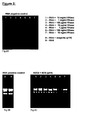
- FIG 1A a control gel is displayed, wherein step a) was left out so that no ribonuclease solution was added (positive control).
- FIG 1B a control gel is displayed, wherein step c) was left out so that no reagent according to the invention was applied (negative control).
- FIG 1C the bands resulting after applying all protocol steps a) to f) are displayed. This result demonstrates the efficiency of the disclosed method, since the quality of all bands in every lane is comparable to the quality of the bands of the positive control displayed in figure 1A.
- Figs.1D - 1G show the effects of other concentrations of SDS.
- RNA and the reagent according to the invention are added to reaction tubes. Subsequent RNase contamination of the RNA and reagent does not lead to the decomposition of the RNA. Detailed protocol:
- FIG 2A a control gel is displayed, wherein step b) was left out so that no reagent according to the invention was applied (negative control).
- step b) a control gel is displayed, wherein step c) was left out so that no ribonuclease solution was added (positive control).
- step c) was left out so that no ribonuclease solution was added (positive control).
- step 2C the resulting bands after applying all steps a) to d) are displayed. Since the quality of all bands in every lane is comparable to the quality of the bands of the positive control displayed in figure 2A , the efficiency of the disclosed reagent for the indicated use is confirmed.
Landscapes
- Chemical & Material Sciences (AREA)
- Engineering & Computer Science (AREA)
- Health & Medical Sciences (AREA)
- Biomedical Technology (AREA)
- Life Sciences & Earth Sciences (AREA)
- Genetics & Genomics (AREA)
- Bioinformatics & Cheminformatics (AREA)
- Organic Chemistry (AREA)
- Zoology (AREA)
- Wood Science & Technology (AREA)
- Biotechnology (AREA)
- General Engineering & Computer Science (AREA)
- Crystallography & Structural Chemistry (AREA)
- Plant Pathology (AREA)
- Molecular Biology (AREA)
- Microbiology (AREA)
- Biophysics (AREA)
- Physics & Mathematics (AREA)
- Biochemistry (AREA)
- General Health & Medical Sciences (AREA)
- Analytical Chemistry (AREA)
- Enzymes And Modification Thereof (AREA)
Abstract
The present invention relates to the use of reagent for permanently inactivating nucleases wherein the reagent comprises an oxidizing agent, a protein denaturant and optionally a pH adjustor and to a method for permanently inactivating nucleases using said reagent.
Description
- The present invention generally relates to the field of molecular biology. More particularly, it concerns the permanent inactivation of nucleases, comprising ribonucleases (RNases) which can degrade RNA and deoxyribonucleases (DNases), which can degrade DNA.
The quality of an RNA or DNA preparation greatly affects the results obtained when analyzing RNA or DNA by a number of different molecular biology techniques such as northern- or southern-blotting, ribonuclease protection assays, PCR and RT-PCR (Reverse Transcription-Polymerase Chain Reaction). Degraded RNA or DNA leads to lower signals compared to equivalent intact RNA or DNA samples. Compared to DNA, RNA is much more susceptible to degradation (Sambrock 1989). It is readily decomposed when exposed to conditions of extreme pH or in the presence of metal ions and high temperatures. The principal reason for nucleic acid degradation, however, is given by the impact of nucleases. Therefore an adequate guard against nucleases during handling of RNA or DNA is of great importance. Nuclease contamination can derive from cell and tissue samples, skin secretions or microorganisms transmitted by airborne dust particles. Reasonable precautions must be followed to obtain a nuclease-free environment during working with RNA and DNA (Blumberg (1987), Methods Enzymol., 152:20-24). Nucleases not only contaminate the manual working space but are also a common contamination in molecular biology instruments like the biorobot systems, especially in systems used infrequently. The appearance of nucleases in automated systems may be ascribed to the development of biofilms inside the tubing and gaskets of the systems. Microorganisms contained in these biofilm formations may produce nucleases next to other bio-molecules. - Several, mostly inefficient approaches to inactivate nucleases exist. Since some nucleases show low activity at high temperature, heating is used as an approach to inactivate nucleases. However, subsequent reduction of the temperature typically leads to a fully restored nuclease activity. For cleaning of glassware, baking at 180°C for 8 hours or more or for plastic ware rinsing with chloroform is recommended.
- Another approach is to incubate glass- or plastic ware for 2 hours at 37°C in a 0.1 % solution of diethyl pyrocarbonate (DEPC), rinse afterwards several times with DEPC treated water and autoclave for 15 min (Blumberg (1987), Methods Enzymol., 152:20-24 Working with DEPC, however, is not recommendable since it is expensive and probably carcinogenic. Furthermore baking of instruments and/or treatment with DEPC is time consuming and not always possible.
Some prior art uses ribonuclease inhibitors during RNA handling (WO-A-01/21830 US-A-2005/0214839 ,WO-A-2005/083081 ) but none of these describes a complete and permanent, irreversible, destruction of ribonucleases, which would be more convenient than just an inhibitory effect. In addition to the fact that pure ribonuclease inhibitor solutions will not permanently remove ribonucleases from a system, they will not have any effect on ribonucleases, once the inhibitor solution was removed from the system. Proteinaceous nuclease inhibitors are also prohibitively expensive to be widely used for workplace decontamination. Some prior art uses the denaturing effects of extreme pH to permanently inactivate and destroy ribonucleases (e.g. LTK-008™ from Biodelta, pH≈11; Exitusplus™ from AppliChem, pH ≈ 2). On the other hand, such treatments necessarily lead to the destruction of ribonucleic acids and deoxyribonucleic acids as well. Some nucleases even withstand autoclaving, extreme pH values or the protein denaturant urea (Spackman 1960).A combination of NaOH and ethylenediamine tetra-acetic acid (EDTA) or sodium dodecyl sulphate (SDS) is commonly used for cleaning, e.g. of biorobot systems. SDS denatures proteins at room temperature, allowing a shorter incubation time. NaOH in combination with SDS is also used to denature chromosomes, plasmid DNA and proteins, and to lyse micororganisms. Since EDTA is a chelating agent, it can on one hand be used to inhibit enzymes which are depended on divalent ions for their activity and on the other hand help to destroy the cell membrane. SDS and EDTA, however, only lead to an inhibitory effect but not to an irreversible destruction of the ribonucleases since denaturation by SDS is reversible (Weber, K. & Kuter, D. J. (1971). J. Biol. Chem. 248 (14): 4504-4509). Furthermore, EDTA is not always helpful for inactivation, since not all nucleases (especially ribonucleases) need divalent ions for their activity. In case of an intense nuclease contamination, e.g. due to the development of a biofilm, consisting of an extra cellular polymer substance which, in combination with water, builds a mucous matrix, cleaning with an NaOH/EDTA solution is insufficient in most cases. Bacteria or other organisms (e.g. algae), existing in these biofilms, are able to produce nucleases and release them into the system, leading to degraded nucleic acids. This source of nuclease contamination is not easy to remove since the extra cellular polymer substance of the biofilm consists of polysaccharides, proteins, lipids and nucleic acids, which protect the microorganisms accommodated inside fromchemicals 10 to 10000 times more compared to planktonic microorganisms (Gilbert, P., Das, J. R., Jones, M V., & Allison, D. G. (2001). J. Appl. Microbiol., 91: 248-254.). Accordingly, to clear all nuclease contamination from the systems, a complete removal of possible biofilms is necessary.
SDS can dissolve the cell membrane of microorganisms, making destruction of nuclease-releasing organisms possible. The same is true for H2O2 since it attacks the unsaturated fatty acids embedded in the membrane structure. H2O2 is a common biocide contained in several commercially available disinfectant products, e.g.
Proxitane® (Solvay PAA, Cheshire, UK) or Accepta 8101 (Accepta™, Manchester, UK). Nevertheless H2O2 is sensible to catalyse activity, which is very high in gram negative bacteria. Several publications indicate that catalase activity complicates the destruction of a biofilm because of its ability to decompose H2O2. - The technical problem underlying the present invention is to provide a method for permanent inactivation of nucleases, suitable for the entire working environment including the manual working space as well as molecular biology instruments or systems like biorobots. It is a further objective of the present invention to be able to kill microorganisms, which are a source of nuclease production, no matter if they appear individually or are organised in a biofilm. It is a further aim underlying the present invention that ribonucleic acids or deoxyribonucleic acids are not degraded or destroyed and that the reagent is not hazardous for the exposed user.
- The above mentioned problems are solved by using a preferably aqueous reagent (composition) according to the invention which comprises an oxidizing agent and a protein denaturant for permanently inactivating nucleases. In a preferred embodiment the oxidizing agent is selected from peroxides, preferably from a group consisting of H2O2, alkaliperoxides, peroxosulfates, peroxophosphates, peracids, preferably peracetic acid or ozone, oxoanions like permanganate or dichlorate, hypochloride (hypochlorite), chlorate and corresponding compounds of other halogens, perchlorate and mixtures thereof, and the protein denaturant is selected from surfactants. The surfactants should exhibit protein denaturing properties and can be exemplified by detergents, in particular anionic, cationic, amphoteric or nonionic detergents. In a preferred embodiment, said oxidizing agent is H2O2. This compound has the additional advantage that it does not leave any residues after reaction, except water. In a further preferred embodiment the protein denaturating agent is represented by SDS.
- Particularly, the reagent/composition of the present invention comprises a combination of H2O2 and SDS.
- According to a more preferred embodiment of the present invention the concentration of the oxidizing agent - for example H2O2 - is in the range of 1 % to 40% by volume.
In an even more preferred embodiment concentration of H2O2 is in the range of 1.5 to 16% by volume. In the most preferred embodiment H2O2 is present in the reagent in a concentration of 2% by volume. - In another embodiment said protein denaturant - for example SDS - is present in the reagent with a concentration in the range of 0.5% to 15% by volume. In a more preferred embodiment SDS is present in a concentration in the range of 1% to 6% by volume. In an even more preferred embodiment SDS is present with a concentration of 5% by volume.
- In an utmost preferred embodiment the reagent comprises a mixture of H2O2 with a concentration of 2% by volume and SDS with a concentration of 5% by volume.
- In order to ensure a high oxidation potential of the oxidizing agent it is recommended to adapt the pH of the mixture accordingly. For example, a low pH value is recommended if H2O2 is supposed to function as the oxidizing agent, i.e. the pH is adjusted to ≤ 11. In a more preferred embodiment, the pH is adjusted to ≤7 and in an even more preferred embodiment the pH is adjusted to ≤5. Moreover, it might have advantages to adjust the pH value such that it is not too low. In particular the less acidic the mixture is the less hazardous and corrosive it is supposed to be. Therefore, in a preferred embodiment the pH value is ≥ 2, more preferred ≥ 3 and most preferred ≥ 4. The pH of the reagent can be adjusted with any chemical compound - pH-adjustor - which is capable for changing the pH value of aqueous solutions and which does not negatively influence the activity of the oxidizing agent and the protein denaturant. Examples are well known in the art and encompass inorganic (mineral acids) or organic acids, inorganic or organic bases, salts of the above mentioned acids and bases as well as mixtures of these in buffer systems. It is particularly advantageous to select compounds which may function as buffering agents as well as chelating agents. Examples for suitable pH adjusters are citric acid, tartaric acid, acetic acid, phthalic acid, phosphoric acid, succinic acid, hydroxysuccinic acid, oxalic acid and mixtures thereof.
- It is preferred that the reagent comprises water. However, it is also possible that it comprises in addition to or instead of water one or more organic solvents which also are suitable for the intended purpose.
- The composition may additionally contain other ingredients like colorants, stabilizing agents, scents and other components which might provide properties desired for treating, cleaning and/or decontaminating surfaces or compositions or mixtures of any of those compounds. It is particularly preferred to add stabilizing agents which prevent the decomposition of the oxidizing agent. When the oxidizing agent is realized by H2O2 a suitable stabilizing agent might be able to complex ions supporting the catalytic decomposition of H2O2. Examples for such stabilizing a gents are chelating agents like ethylenediamine (en), diethylenetriamine (dien), iminodiacetate (ida), diethylenetetraamine, triaminotriethylamine, ethylenediaminotriacetate, ethylenediaminetetraacetate EDTA), [ethylenebis(oxyethylenenitrilo)]tetraacetic acid (EGTA), dimethylglyooxime (dmg), 8-hydroxyquinoline, 2,2'-bipyridine (bpy), 1,20-phenanthroline (phen), dimercaptosuccinic acid and mixtures thereof. Preferably the stabilizing agents are contained in the composition in a total amount of from 0,5 to 100 mmol/l, more preferred from 1 to 50 mmol/l, further preferred from 2 to 10 mmol/I and most preferred from 4 to 6 mmol/I based on the complete composition.
- The method according to the invention is carried out at room temperature (RT), which covers a temperature range of about 15°C to about 30°C.
The method according to the invention is carried out with an incubation time of the reaction mixture in a range of about 1 to about 20 min. - While being efficient in permanently inactivating nucleases and microorganisms, the reagent in a preferred embodiment, comprising 5% by volume SDS and 2% by volume H2O2 with pH ≥ 4, is at the same time safe enough for handling and does not pose a threat to the exposed user.
- The following example is adequate for testing the efficiency of the disclosed method. Briefly, after contamination with ribonucleases the reagent according to the invention is applied to the contaminated equipment. RNA probes contacted thereafter with the cleaned equipment are no more decomposed. Detailed protocol:
- a) At first, a ribonuclease contamination is intentionally effected by adding 20 µl of differently concentrated ribonuclease solutions [10mg/ml, 1mg/ml, 100µg/ml, 10µg/ml, 1µg/ml, 100ng/ml, 10ng/ml] to different reaction tubes and incubating the tubes for 15 min at RT.
- b) Subsequently, the ribonuclease solutions are removed and the reaction tubes -are air-dried.
- c) 30 µl of the reagent according to the invention, comprising 2% H2O2 and different amounts of SDS (0,5-10%)
pH 4, are added to each reaction tube and incubated for 5 min at RT. - d) Subsequently, the reagent is removed and the reaction tubes are air-dried.
- e) 10 µl of a 0.3µg/µl RNA solution (prepared in ribonuclease-free water) are added to each reaction tube and incubated for 15 min at RT.
- f) After adding 3µl of a blue RNA marker to each reaction tube, the solutions are tested on a 1.2% formaldehyde gel.
- In
figure 1A , a control gel is displayed, wherein step a) was left out so that no ribonuclease solution was added (positive control). - In
figure 1B , a control gel is displayed, wherein step c) was left out so that no reagent according to the invention was applied (negative control).
Infigure 1C , the bands resulting after applying all protocol steps a) to f) are displayed. This result demonstrates the efficiency of the disclosed method, since the quality of all bands in every lane is comparable to the quality of the bands of the positive control displayed infigure 1A. Figs.1D - 1G show the effects of other concentrations of SDS. - The following example provides another way for testing the efficiency of the disclosed method. Briefly, RNA and the reagent according to the invention are added to reaction tubes. Subsequent RNase contamination of the RNA and reagent does not lead to the decomposition of the RNA. Detailed protocol:
- a) 4 µl of a 4µg/µl RNA solution (prepared in ribonuclease-free water) are added to different reaction tubes
- b) 4 µl of a reagent according to the invention, comprising 10% SDS and 30% H2O2, pH=4, is added to the reaction tubes and incubated for 5 min at RT.
- c) Subsequently, 1 µl of differently concentrated ribonuclease solutions [10mg/ml, 1mg/ml, 100µg/ml, 10µg/ml, 1µg/ml, 100ng/ml, 10ng/ml] are added and incubated for 15 min at RT.
- d) After adding 3µl of a blue RNA marker, the solutions are tested on a 1.2% formaldehyde gel.
- In
figure 2A , a control gel is displayed, wherein step b) was left out so that no reagent according to the invention was applied (negative control).
Infigure 2B , a control gel is displayed, wherein step c) was left out so that no ribonuclease solution was added (positive control).
Infigure 2C , the resulting bands after applying all steps a) to d) are displayed. Since the quality of all bands in every lane is comparable to the quality of the bands of the positive control displayed infigure 2A , the efficiency of the disclosed reagent for the indicated use is confirmed.
Claims (13)
- Use of a reagent for permanently inactivating nucleases wherein the reagent comprises an oxidizing agent, a protein denaturant and optionally a pH adjustor.
- Use of a reagent according to claim 1, wherein said oxidizing agent is selected from the group comprising peroxides, alkaliperoxides peroxosulfates, peroxophosphates, peracids, preferably peracetic acid or ozone, oxoanions preferably permanganate or dichlorate, hypochloride, chlorate and corresponding compounds of other halogens, perchlorate, and combinations thereof.
- Use of a reagent according to claim 2, wherein said peroxide is hydrogen peroxide (H2O2).
- Use of a reagent according to claim 3, wherein said H2O2 is present in a concentration in the range of 1 to 40% by volume, preferably of 1.5 to 16% by volume and more preferred of 2% by volume.
- Use of a reagent according to any of the preceding claims, wherein said protein denaturant is selected from the group comprising surfactants, preferably denaturing detergents, more preferred anionic, cationic, amphoteric and or non-ionic detergents and combinations thereof.
- Use of a reagent according to claim 5, wherein said anionic detergent is sodium-dodecyl-sulphate (SDS).
- Use of a reagent according to claim 6, wherein said SDS is present in a concentration in the range of 0.5 to 15% by volume, preferably of 1 to 10% by volume, more preferred of 5% by volume.
- Use of a reagent according to any of the preceding claims, wherein said H2O2 and SDS are both present with 2% and 5% by volume, respectively.
- Use of a reagent according to any of the preceding claims, wherein the pH of said reagent is adjusted to ≤ 11, preferably ≤ 7, more preferred ≤ 5.
- A method for permanently inactivating nucleases comprising the following stepsa) providing a reagent according to any of claims 1 to 9b) bringing the nucleases into contact with said reagentc) contacting said nucleases and said reagent for a time and a temperature sufficient to inactivate the nucleases.
- The method according to claim 10, wherein said reagent is applied for a time in a range of about 1 to about 20 min.
- The method according to claim 10, wherein the method is performed at a temperature in a range of 15°C to 30°C.
- A kit for permanently inactivating nucleases comprising the reagent according to any of claims 1 to 9.
Priority Applications (4)
| Application Number | Priority Date | Filing Date | Title |
|---|---|---|---|
| EP07019047A EP2042595A1 (en) | 2007-09-27 | 2007-09-27 | Permanent inactivation of nucleases |
| US12/680,515 US8563262B2 (en) | 2007-09-27 | 2008-09-26 | Permanent inactivation of nucleases |
| EP08832800.0A EP2201114B1 (en) | 2007-09-27 | 2008-09-26 | Permanent inactivation of nucleases |
| PCT/EP2008/062977 WO2009040431A1 (en) | 2007-09-27 | 2008-09-26 | Permanent inactivation of nucleases |
Applications Claiming Priority (1)
| Application Number | Priority Date | Filing Date | Title |
|---|---|---|---|
| EP07019047A EP2042595A1 (en) | 2007-09-27 | 2007-09-27 | Permanent inactivation of nucleases |
Publications (1)
| Publication Number | Publication Date |
|---|---|
| EP2042595A1 true EP2042595A1 (en) | 2009-04-01 |
Family
ID=38694812
Family Applications (2)
| Application Number | Title | Priority Date | Filing Date |
|---|---|---|---|
| EP07019047A Withdrawn EP2042595A1 (en) | 2007-09-27 | 2007-09-27 | Permanent inactivation of nucleases |
| EP08832800.0A Not-in-force EP2201114B1 (en) | 2007-09-27 | 2008-09-26 | Permanent inactivation of nucleases |
Family Applications After (1)
| Application Number | Title | Priority Date | Filing Date |
|---|---|---|---|
| EP08832800.0A Not-in-force EP2201114B1 (en) | 2007-09-27 | 2008-09-26 | Permanent inactivation of nucleases |
Country Status (3)
| Country | Link |
|---|---|
| US (1) | US8563262B2 (en) |
| EP (2) | EP2042595A1 (en) |
| WO (1) | WO2009040431A1 (en) |
Families Citing this family (2)
| Publication number | Priority date | Publication date | Assignee | Title |
|---|---|---|---|---|
| CN111792712A (en) * | 2020-08-11 | 2020-10-20 | 华侨大学 | A kind of method and application of inactivating enteritis virus in water |
| CN112812901A (en) * | 2021-01-29 | 2021-05-18 | 北京华瑞康源生物科技发展有限公司 | Reagent capable of efficiently removing nucleic acid pollution in normal-temperature and low-temperature environments and application |
Citations (3)
| Publication number | Priority date | Publication date | Assignee | Title |
|---|---|---|---|---|
| EP1016420A1 (en) * | 1994-12-30 | 2000-07-05 | Universite De Montreal | Synergistic detergent and disinfectant combinations for decontaminating biofilm-coated surfaces |
| US6281349B1 (en) * | 1999-08-18 | 2001-08-28 | David E. Pulleyblank | Method for nucleic acid purification using iodine |
| WO2003104251A2 (en) * | 2002-06-07 | 2003-12-18 | Dna Genotek Inc. | Composition and methods for obtaining nucleic acids from sputum |
-
2007
- 2007-09-27 EP EP07019047A patent/EP2042595A1/en not_active Withdrawn
-
2008
- 2008-09-26 WO PCT/EP2008/062977 patent/WO2009040431A1/en not_active Ceased
- 2008-09-26 EP EP08832800.0A patent/EP2201114B1/en not_active Not-in-force
- 2008-09-26 US US12/680,515 patent/US8563262B2/en not_active Expired - Fee Related
Patent Citations (3)
| Publication number | Priority date | Publication date | Assignee | Title |
|---|---|---|---|---|
| EP1016420A1 (en) * | 1994-12-30 | 2000-07-05 | Universite De Montreal | Synergistic detergent and disinfectant combinations for decontaminating biofilm-coated surfaces |
| US6281349B1 (en) * | 1999-08-18 | 2001-08-28 | David E. Pulleyblank | Method for nucleic acid purification using iodine |
| WO2003104251A2 (en) * | 2002-06-07 | 2003-12-18 | Dna Genotek Inc. | Composition and methods for obtaining nucleic acids from sputum |
Non-Patent Citations (3)
| Title |
|---|
| AHMAD F ET AL: "THE DENATURATION OF RIBONUCLEASE A BY COMBINATIONS OF UREA AND SALTDENATURANTS", JOURNAL OF MOLECULAR BIOLOGY, LONDON, GB, vol. 131, no. 3, 5 July 1979 (1979-07-05), pages 607 - 617, XP001055679, ISSN: 0022-2836 * |
| CHIO K S ET AL: "INACTIVATION OF RNASE AND OTHER ENZYMES BY PER OXIDIZING LIPIDS AND BY MALONALDEHYDE", BIOCHEMISTRY, vol. 8, no. 7, 1969, pages 2827 - 2832, XP002459808, ISSN: 0006-2960 * |
| SCHOLTZ J MARTIN ET AL: "Perchlorate-induced denaturation of ribonuclease A: Investigation of possible folding intermediates", BIOCHEMISTRY, vol. 32, no. 17, 1993, pages 4604 - 4608, XP002459807, ISSN: 0006-2960 * |
Also Published As
| Publication number | Publication date |
|---|---|
| EP2201114A1 (en) | 2010-06-30 |
| US8563262B2 (en) | 2013-10-22 |
| EP2201114B1 (en) | 2015-09-16 |
| WO2009040431A1 (en) | 2009-04-02 |
| US20100209993A1 (en) | 2010-08-19 |
Similar Documents
| Publication | Publication Date | Title |
|---|---|---|
| CN113166744B (en) | Novel CRISPR-Cas system for genome editing | |
| US11293019B2 (en) | Chimeric genome engineering molecules and methods | |
| CN110072999B (en) | Nucleic acid preservation solution and methods of making and using the same | |
| US6762027B2 (en) | Compositions, methods, and kits for isolating nucleic acids using surfactants and proteases | |
| CA2971205A1 (en) | Compositions of and methods for in vitro viral genome engineering | |
| AU2001297835A1 (en) | Compositions, methods, and kits for isolating nucleic acids using surfactants and proteases | |
| NO338200B1 (en) | Decontamination solutions and their use for denaturation, modification, degradation, solubilization and removal of proteins, nucleic acid molecules and microorganisms | |
| DE60335543D1 (en) | COMPOSITION AND METHOD FOR THE PREPARATION OF NUCLEIC ACIDS FROM SPUTUM | |
| CN112812901A (en) | Reagent capable of efficiently removing nucleic acid pollution in normal-temperature and low-temperature environments and application | |
| EP2201114B1 (en) | Permanent inactivation of nucleases | |
| Quick et al. | DNA extraction strategies for nanopore sequencing | |
| Amin et al. | Direct transformation of site-saturation libraries in Bacillus subtilis | |
| WO2005093065A1 (en) | Improved method of isolating nucleic acids | |
| WO2008068923A1 (en) | Nucleic acid-degrading agent and method for degradation of nucleic acid | |
| WO2022015953A2 (en) | Rapid removal of a self-replicating fungal plasmid for efficient marker cycling | |
| WO2016163466A1 (en) | Method for producing transformed cell | |
| Schelling et al. | CRISPR-Cas effector specificity and target mismatches determine phage escape outcomes | |
| CN102586233B (en) | Method for rapidly extracting total RNA (ribonucleic acid) in yeast | |
| CN118421404A (en) | Nucleic acid and nuclease pollution scavenger and preparation method and application thereof | |
| Martinson et al. | Plasmids weaponize conjugation to eliminate non-permissive recipients | |
| Rieder et al. | A guide to DNA extraction protocols for ecologists, conservation managers, and environmental DNA researchers | |
| KR100572721B1 (en) | NRNA storage solution containing a reduced ionizing water and NRNA storage method using the same | |
| Pandey et al. | Oligonucleotide genetics for Pseudomonas aeruginosa enables high throughput hypomorph screening | |
| SCINCES et al. | ISOLATION AND CHARACTERIZATION OF ANTIBIOFILM ENZYMES FROM BACTERIA ASSOCIATED WITH SOFT CORAL | |
| FR2782325A1 (en) | Method for determining the function of nucleic acid fragments involves in vitro transcription of fragment-vector constructs and testing transcripts or proteins translated from them |
Legal Events
| Date | Code | Title | Description |
|---|---|---|---|
| PUAI | Public reference made under article 153(3) epc to a published international application that has entered the european phase |
Free format text: ORIGINAL CODE: 0009012 |
|
| AK | Designated contracting states |
Kind code of ref document: A1 Designated state(s): AT BE BG CH CY CZ DE DK EE ES FI FR GB GR HU IE IS IT LI LT LU LV MC MT NL PL PT RO SE SI SK TR |
|
| AX | Request for extension of the european patent |
Extension state: AL BA HR MK RS |
|
| AKX | Designation fees paid | ||
| STAA | Information on the status of an ep patent application or granted ep patent |
Free format text: STATUS: THE APPLICATION IS DEEMED TO BE WITHDRAWN |
|
| 18D | Application deemed to be withdrawn |
Effective date: 20091002 |
|
| REG | Reference to a national code |
Ref country code: DE Ref legal event code: 8566 |