EP2040481A1 - Handover control device, method and program - Google Patents
Handover control device, method and program Download PDFInfo
- Publication number
- EP2040481A1 EP2040481A1 EP08799816A EP08799816A EP2040481A1 EP 2040481 A1 EP2040481 A1 EP 2040481A1 EP 08799816 A EP08799816 A EP 08799816A EP 08799816 A EP08799816 A EP 08799816A EP 2040481 A1 EP2040481 A1 EP 2040481A1
- Authority
- EP
- European Patent Office
- Prior art keywords
- base station
- mobile station
- service level
- handover control
- control device
- Prior art date
- Legal status (The legal status is an assumption and is not a legal conclusion. Google has not performed a legal analysis and makes no representation as to the accuracy of the status listed.)
- Granted
Links
Images


Classifications
-
- H—ELECTRICITY
- H04—ELECTRIC COMMUNICATION TECHNIQUE
- H04W—WIRELESS COMMUNICATION NETWORKS
- H04W36/00—Hand-off or reselection arrangements
- H04W36/0005—Control or signalling for completing the hand-off
- H04W36/0055—Transmission or use of information for re-establishing the radio link
- H04W36/0061—Transmission or use of information for re-establishing the radio link of neighbour cell information
-
- H—ELECTRICITY
- H04—ELECTRIC COMMUNICATION TECHNIQUE
- H04W—WIRELESS COMMUNICATION NETWORKS
- H04W36/00—Hand-off or reselection arrangements
- H04W36/24—Reselection being triggered by specific parameters
- H04W36/30—Reselection being triggered by specific parameters by measured or perceived connection quality data
- H04W36/304—Reselection being triggered by specific parameters by measured or perceived connection quality data due to measured or perceived resources with higher communication quality
-
- H—ELECTRICITY
- H04—ELECTRIC COMMUNICATION TECHNIQUE
- H04W—WIRELESS COMMUNICATION NETWORKS
- H04W24/00—Supervisory, monitoring or testing arrangements
- H04W24/10—Scheduling measurement reports ; Arrangements for measurement reports
-
- H—ELECTRICITY
- H04—ELECTRIC COMMUNICATION TECHNIQUE
- H04W—WIRELESS COMMUNICATION NETWORKS
- H04W36/00—Hand-off or reselection arrangements
- H04W36/0005—Control or signalling for completing the hand-off
- H04W36/0011—Control or signalling for completing the hand-off for data sessions of end-to-end connection
- H04W36/0016—Hand-off preparation specially adapted for end-to-end data sessions
-
- H—ELECTRICITY
- H04—ELECTRIC COMMUNICATION TECHNIQUE
- H04W—WIRELESS COMMUNICATION NETWORKS
- H04W36/00—Hand-off or reselection arrangements
- H04W36/0005—Control or signalling for completing the hand-off
- H04W36/0083—Determination of parameters used for hand-off, e.g. generation or modification of neighbour cell lists
-
- H—ELECTRICITY
- H04—ELECTRIC COMMUNICATION TECHNIQUE
- H04W—WIRELESS COMMUNICATION NETWORKS
- H04W36/00—Hand-off or reselection arrangements
- H04W36/34—Reselection control
- H04W36/38—Reselection control by fixed network equipment
Definitions
- the present invention relates to a handover control device, method, and program.
- WiMAX Worldwide Interoperability for Microwave Access
- the WiMAX system covers a radius of about 50Km with one wireless LAN access point and allows for a maximum communication speed of 70Mbps.
- FIG. 1 is a diagram showing the configuration of a WiMAX system.
- the WiMAX system comprises mobile stations 11 1 , ..., 1N Q , base stations 11, ..., 1N, an ASN-GW(Access Service Network Gateway) 30, and an AAA(Authentication Authorization, Accounting) server 40.
- the ASN-GW 30 manages and controls the hierarchically lower base stations 11, ..., 1N and mobile stations 11 1 , ..., 1N Q that are connected to it.
- the AAA server 40 performs authentication, authorization, and accounting of the mobile stations 11 1 , ..., 1N Q .
- the mobile stations 11 1 , ..., 11 p represent the mobile stations that are in the range of the base station 11, and mobile stations 1N 1 , ..., 1N Q represent the mobile stations that are under entry to (i.e., in the range of) the base station 1N.
- the ASN-GW 30 requests the AAA server 40 to authenticate a mobile station that attempts an entry to (i.e., to enter the range of) a base station.
- the ASN-GW 30 also sends the base station information, collected from the hierarchically lower base stations 11, ..., 1N, to the base stations 11, ..., 1N as the neighboring base station information at a fixed time interval.
- Patent Document 1 discloses a technology that allows a base station device to monitor the reception status of mobile stations, to detect a mobile station on which a call-loss or quality degradation occurs, and to cause the mobile station to handover to another base station device that has a carrier frequency different from that of the current base station device.
- Patent Document 1 WO2004/112419
- Patent Document 1 The entire disclosure of Patent Document 1 is incorporated herein by reference thereto. The following analysis has been given according to the present invention.
- a gateway server such as the ASN-GW 30 described above monitors not only the base stations but also the link status of mobile stations, the processing load of the gateway server is increased and the performance of the whole WiMAX system is degraded.
- the gateway server sends data in the unicast mode to acquire the link status of mobile stations, the gateway server's processing load involved in acquiring the link status of mobile stations is increased as the number of monitored mobile stations is increased.
- the load of a base station device involved in monitoring mobile stations is also increased as the number of mobile stations is increased.
- gateway server or base station device
- the gateway server does not monitor the link status of mobile stations to avoid this condition, a mobile station cannot acquire the latest neighboring base station information immediately before a handover and, as a result, handover quality is degraded.
- the problem to be solved is to increase handover quality while preventing an increase in the processing load of the gateway server.
- a handover control device in accordance with a first aspect of the present invention is a handover control device that switches-over base station(s), with which mobile station(s) communicates, from one base station to another (for example, neighboring) base station wherein the handover control device comprises a gateway server configured to monitor communication quality of the mobile station at a frequency according to a service level assigned to the mobile station and, if the communication quality falls below a predetermined quality, to send information on the another base station to the mobile station.
- a handover control method in accordance with a second aspect of the present invention is a handover control method for switching-over base station(s), with which mobile station(s) communicates, from one base station to another base station (for example, a neighboring base station), comprising the steps of: monitoring communication quality of the mobile station at a frequency according to a service level assigned to the mobile station; and, if the communication quality falls below a predetermined quality, sending information on the another base station to the mobile station.
- a handover control program in accordance with a third aspect of the present invention is a handover control program that causes a computer to perform processing for switching-over base station(s), with which mobile station(s) communicates, from one base station to another base station (for example, a neighboring base station), the program causing the computer to perform processing for monitoring a communication quality of the mobile station at a frequency according to a service level assigned to the mobile station; and, if the communication quality falls below a predetermined quality, processing for sending information on the another base station to the mobile station.
- the handover control device of the present invention allows a mobile station to acquire neighboring base station information at a time that is closer to the timing of a handover than in the conventional system, thus increasing handover quality.
- the handover processing [sic. control] device of the present invention monitors mobile stations at a frequency according to a service level assigned to each mobile station. So, the processing load of the gateway server is reduced as compared to the case where all mobile stations are monitored at a fixed frequency.
- the communication quality is preferably at least one of an uplink CINR and a downlink CINR.
- a handover control device in a second development mode in the handover control device in the first aspect described above it is preferred to comprise an authentication server configured to store the service level and to send the stored service level to the gateway server.
- the handover control device is preferably configured to send the service level in an access accept packet when the authentication server sends the service level to the gateway server.
- a handover control device in a fourth development mode in the handover control device in the first aspect described above it is preferred to comprise a storage device in which records each including an identifier of the mobile station and the service level assigned to the mobile station are stored.
- a handover control device in an exemplary embodiment of the present invention which is a handover control device for controlling the mobile stations and the base stations making up the WiMAX system, comprises an ASN-GW(Gateway Server) 30 and an AAA server (Authentication Server) 40 that performs authentication, authorization, and accounting.
- ASN-GW(Gateway Server) 30 and an AAA server (Authentication Server) 40 that performs authentication, authorization, and accounting.
- AAA server Authentication Server
- the AAA server 40 stores a service level for each of the mobile stations and embeds the service level of a mobile station in an access accept packet, generated after the successful authentication of the mobile station, as its attribute value to notify the service level to the ASN-GW 30.
- the service level means the quality of service provided to an end user, for example, the quality of a handover provided to the user of a terminal station.
- Good handover quality means that a momentary communication interruption will less likely to occur during a handover.
- the ASN-GW 30 changes the monitoring frequency of a mobile station according to the service level. It is preferable that the ASN-GW 30 delivers the neighboring base station information at a time interval shorter than the interval at which the neighboring base station information is delivered regularly in the conventional system. This is because providing the neighboring base station information, generated at a time closer to the timing of a handover, to a mobile station as a handover candidate increases handover quality.
- the ASN-GW 30 stores the service level of each of the mobile stations received from the AAA server 40.
- the ASN-GW 30 acquires the link status of a mobile station at a time interval that depends on (i.e., is specified according to) the service level.
- a concrete example of the link status is an uplink CINR(Carrier-to-Interference-Noise Ratio) or a downlink CINR.
- the ASN-GW 30 references the link status and determines if sufficient communication quality is ensured. If sufficient communication quality is not ensured, the ASN-GW 30 sends base station information indicating a handover candidate managed by the ASN-GW 30 as latest neighboring base station information to a base station to which the mobile station belongs.
- the mobile station that is going to make a handover can receive the neighboring base station information, which indicates a handover candidate, via the base station to which the mobile station currently belongs.
- the method of the present invention provides handover quality higher than that of the conventional method in which the neighboring base station information is received regularly from the ASN-GW 30.
- the service level be allocated to each of the mobile stations and that the ASN-GW 30 ask a mobile station(s) with a higher service level about its link status more frequently.
- the method described above reduces the processing load of the ASN-GW 30 as compared with the method in which the link status is acquired equally from all mobile stations.
- assigning a service level of a handover to each mobile station allows for more diversified services to the end users.
- an AAA server 40 stores a user ID, a password, and a service level, which is allocated to the user, as user information required to participate in the WiMAX system.
- the AAA server 40 authenticates mobile stations 11 1 , ..., 1N Q and sends access accept packets to an ASN-GW 30 as a notification indicating successful authentication.
- the service level of a mobile station that has been successfully authenticated can be embedded into an access accept packet as an attribute value as defined in RFC3580.
- FIG. 2 is a diagram showing a configuration of the ASN-GW 30 that is included in a handover control device in a first exemplary embodiment of the present invention.
- the ASN-GW 30 comprises a service level management unit 301, a link status acquisition unit 302, a neighboring base station information sending/receiving unit 303, a base station side sending/receiving unit 304, and an AAA server side sending/receiving unit 305.
- the service level management unit 301 included in the ASN-GW 30 integrally manages the service levels, received from the AAA server 40 via the AAA server side sending/receiving unit 305, as well as the MAC addresses of mobile stations.
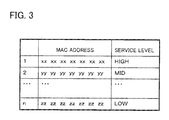
- FIG. 3 is a diagram showing an example of the data format of service levels stored in the service level management unit 301. As shown in FIG. 3 , HIGH is assigned to a user with a highest service level, MID is assigned to a user with a second highest service level, and LOW is assigned to a user with a third highest service level.
- the AAA server side sending/receiving unit 305 is an interface with the AAA server 40.
- the service level management unit 301 When a service level is received from the AAA server 40, the service level management unit 301 notifies the service level to the link status acquisition unit 302.
- the link status acquisition unit 302 stores in advance a link status acquisition interval and a link status threshold corresponding to a service level and, when a service level is received, acquires the link status regularly based on the link status acquisition interval.
- the link status acquisition unit 302 references the acquired link status and, when it is determined that the link status of the mobile station is smaller than a predetermined threshold, requests the neighboring base station information sending/receiving unit 303 to send the latest neighboring base station information to the base station to which the mobile station belongs.
- the neighboring base station information sending/receiving unit 303 sends the neighboring base station information to the base station via the base station side sending/receiving unit 304.
- the neighboring base station information sending/receiving unit 303 collects radio resource information from the hierarchically lower base stations, regularly sends the collected information to those base stations and, when an instruction is received from the link status acquisition unit 302, sends the neighboring base station information to the hierarchically lower base station.
- the base station side sending/receiving unit 304 is an interface for communicating with the base stations 11, ..., 1N.
- the following describes the processing from a time the mobile station 11 1 enters the range of the base station 11 to a time a service level is assigned by the AAA server 40.
- the AAA server 40 stores a user ID and a password for authenticating a user who will participate in the system.
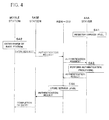
- the AAA server 40 registers the correspondence between user IDs and service levels of the users (step S41). For example, HIGH may be assigned to users with the highest service level, MID may be assigned to users with the second highest service level, and LOW may be assigned to users with the third highest service level (see FIG. 3 ).
- the mobile station 11 1 enters the range of the base station 11 (step S42).
- the base station 11 receives an entry request from the mobile station 11 1 and sends an authentication request to the ASN-GW 30.
- the ASN-GW 30 receives the authentication request and transfers it to the AAA server 40.
- the AAA server 40 receives the authentication request issued from the mobile station 11 1 and performs authentication processing (step S43).
- the AAA server 40 After the authentication processing, the AAA server 40 embeds the service level of the mobile station 11 1 into an access accept packet and sends it to the ASN-GW 30.
- the service level management unit 301 included in the ASN-GW 30 stores the service level along with the correspondence between the MAC address of the mobile station 11 1 and the service level as shown in FIG. 3 (step S44).
- the ASN-GW 30 notifies the authentication result to the base station 11, and the base station 11 notifies the mobile station 11 1 that the entry has been completed.
- the ASN-GW 30 transfers information (neighboring base station information) on an appropriate handover candidate to the mobile station 11 1 .
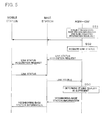
- the neighboring base station information sending/receiving unit 303 of the ASN-GW 30 collects base station information from the hierarchically lower base stations 11, ..., 1N and sends the collected base station information to the base stations 11, ..., 1N at a fixed time interval as the neighboring base station information (step S51).
- This method corresponds to the conventional method of sending the neighboring base station information.
- the link status acquisition unit 302 of the ASN-GW 30 acquires the link status of the mobile station 11) at a fixed time interval according to the service level of the mobile station 11 1 notified by the service level management unit 301 (step S52).
- the link status acquisition request is sent to the mobile station 11 1 via the base station 11, and the mobile station 11 1 sends the link status to the ASN-GW 30 via the base station 11.
- the time interval is 30 seconds when the service level is HIGH, 300 seconds (five minutes) when the service level is MID, and 600 seconds (ten minutes) when the service level is LOW.
- the link status acquisition unit 302 determines if the quality of the link status of the mobile station 11 1 , acquired in step S52, is sufficiently high (step S53).
- the link status acquisition unit 302 requests the neighboring base station information sending/receiving unit 303 to send neighboring base station information to the mobile station 11 1 .
- the mobile station 11 1 receives the latest neighboring base station information immediately before the handover so that it can select a handover candidate base station correctly and smoothly.
- the ASN-GW 30 used to send the neighboring base station information to the mobile station regularly step S51.
- the ASN-GW 30 could get information on the link status of each of the mobile stations in the unicast mode in the conventional WiMAX system. However, if the link status is acquired from all hierarchically lower mobile stations in the unicast mode, there is a possibility that the load of the ASN-GW 30 becomes too heavy and, in addition, the communication load of the whole system is increased.
- this exemplary embodiment introduces the service level of handover into each of the mobile stations to vary the time interval at which the link status is to be acquired from each mobile station, thereby suppressing an increase in the load of the ASN-GW 30 and in the communication amount of the whole system.
- the handover processing device in this exemplary embodiment allows a mobile station to acquire the base station information on a handover candidate at a time closer to the timing of the handover than in the conventional system.
- the function of the AAA server 40 in the WiMAX system may also be used as a method for introducing service levels on a mobile station basis.
- the handover device in the exemplary embodiment of the present invention may be implemented based only on the device configuration of the conventional WiMAX system without introducing an additional device.
- this method since this method requires the user only to perform ordinary AAA authentication, it doesn't need a special application or device.
- ASN-GW 30 Although only one ASN-GW 30 is used in the above exemplary embodiment, two or more ASN-GWs may also be used.
- Introducing a service level into each of the mobile stations also allows the ASN-GW 30 to monitor and control the link status of the mobile stations. That is, it is also possible that the ASN-GW 30 issues a handover request to a mobile station that cannot acquire sufficient communication quality instead of issuing a handover request by the mobile station as an initiating station.
- the exemplary embodiment or the examples may be changed or adjusted within the scope of all disclosures (including claims) of the present invention and based on its basic technological concept.
- the disclosed elements may be combined or selected in various ways within the scope of the claims of the present invention.
Landscapes
- Engineering & Computer Science (AREA)
- Computer Networks & Wireless Communication (AREA)
- Signal Processing (AREA)
- Mobile Radio Communication Systems (AREA)
Abstract
Description
- This application is based upon and claims the benefit of the priority of Japanese patent application No.
2007-135694 filed on May 22, 2007
The present invention relates to a handover control device, method, and program. - Recently, attention has been paid to a WiMAX(Worldwide Interoperability for Microwave Access) system as a mobile communication system. The WiMAX system covers a radius of about 50Km with one wireless LAN access point and allows for a maximum communication speed of 70Mbps.
-
FIG. 1 is a diagram showing the configuration of a WiMAX system. The WiMAX system comprisesmobile stations 111, ..., 1NQ,base stations 11, ..., 1N, an ASN-GW(Access Service Network Gateway) 30, and an AAA(Authentication Authorization, Accounting)server 40. - The ASN-GW 30 manages and controls the hierarchically
lower base stations 11, ..., 1N andmobile stations 111, ..., 1NQ that are connected to it. - The
AAA server 40 performs authentication, authorization, and accounting of themobile stations 111, ..., 1NQ. - The
mobile stations 111, ..., 11p represent the mobile stations that are in the range of thebase station 11, andmobile stations 1N1, ..., 1NQ represent the mobile stations that are under entry to (i.e., in the range of) thebase station 1N. - In the conventional WiMAX system, the ASN-GW 30 requests the
AAA server 40 to authenticate a mobile station that attempts an entry to (i.e., to enter the range of) a base station. The ASN-GW 30 also sends the base station information, collected from the hierarchicallylower base stations 11, ..., 1N, to thebase stations 11, ..., 1N as the neighboring base station information at a fixed time interval. -
Patent Document 1 discloses a technology that allows a base station device to monitor the reception status of mobile stations, to detect a mobile station on which a call-loss or quality degradation occurs, and to cause the mobile station to handover to another base station device that has a carrier frequency different from that of the current base station device. - Patent Document 1:
WO2004/112419 - The entire disclosure of
Patent Document 1 is incorporated herein by reference thereto.
The following analysis has been given according to the present invention.
When a gateway server such as the ASN-GW 30 described above monitors not only the base stations but also the link status of mobile stations, the processing load of the gateway server is increased and the performance of the whole WiMAX system is degraded. In fact, because the gateway server sends data in the unicast mode to acquire the link status of mobile stations, the gateway server's processing load involved in acquiring the link status of mobile stations is increased as the number of monitored mobile stations is increased. - According to the technology disclosed in
Patent Document 1, the load of a base station device involved in monitoring mobile stations is also increased as the number of mobile stations is increased. - However, if the gateway server (or base station device) does not monitor the link status of mobile stations to avoid this condition, a mobile station cannot acquire the latest neighboring base station information immediately before a handover and, as a result, handover quality is degraded.
- Therefore, the problem to be solved is to increase handover quality while preventing an increase in the processing load of the gateway server.
- A handover control device in accordance with a first aspect of the present invention is a handover control device that switches-over base station(s), with which mobile station(s) communicates, from one base station to another (for example, neighboring) base station wherein the handover control device comprises a gateway server configured to monitor communication quality of the mobile station at a frequency according to a service level assigned to the mobile station and, if the communication quality falls below a predetermined quality, to send information on the another base station to the mobile station.
- A handover control method in accordance with a second aspect of the present invention is a handover control method for switching-over base station(s), with which mobile station(s) communicates, from one base station to another base station (for example, a neighboring base station), comprising the steps of: monitoring communication quality of the mobile station at a frequency according to a service level assigned to the mobile station; and, if the communication quality falls below a predetermined quality, sending information on the another base station to the mobile station.
- A handover control program in accordance with a third aspect of the present invention is a handover control program that causes a computer to perform processing for switching-over base station(s), with which mobile station(s) communicates, from one base station to another base station (for example, a neighboring base station), the program causing the computer to perform processing for monitoring a communication quality of the mobile station at a frequency according to a service level assigned to the mobile station; and, if the communication quality falls below a predetermined quality, processing for sending information on the another base station to the mobile station.
- The handover control device of the present invention allows a mobile station to acquire neighboring base station information at a time that is closer to the timing of a handover than in the conventional system, thus increasing handover quality.
- In addition, the handover processing [sic. control] device of the present invention monitors mobile stations at a frequency according to a service level assigned to each mobile station. So, the processing load of the gateway server is reduced as compared to the case where all mobile stations are monitored at a fixed frequency.
-
-
FIG. 1 is a diagram showing a configuration of a handover control system. -
FIG. 2 is a diagram showing a configuration of an ASN-GW in a handover control device in an exemplary embodiment of the present invention. -
FIG. 3 is a diagram showing service levels stored in a service level management unit in a handover control device in an exemplary embodiment of the present invention. -
FIG. 4 is a diagram showing a sequence of a handover control method in an exemplary embodiment of the present invention. -
FIG. 5 is a diagram showing the sequence of a handover control method in an exemplary embodiment of the present invention. -
- 11,...,1N Base station
- 111,...,11P,1N1...1NQ Mobile station
- 30 ASN-GW(gateway server)
- 40 AAA server(authentication server)
- 301 Service level management unit
- 302 Link status acquisition unit
- 303 Neighboring base station information sending/receiving unit
- 304 Base station side sending/receiving unit
- 305 AAA server side sending/receiving unit
- As for a handover control device in a first development mode in the handover control device in the first aspect described above, the communication quality is preferably at least one of an uplink CINR and a downlink CINR.
- As for a handover control device in a second development mode in the handover control device in the first aspect described above, it is preferred to comprise an authentication server configured to store the service level and to send the stored service level to the gateway server.
- As for a handover control device in a third development mode in the handover control device in the first aspect described above, the handover control device is preferably configured to send the service level in an access accept packet when the authentication server sends the service level to the gateway server.
- As for a handover control device in a fourth development mode in the handover control device in the first aspect described above, it is preferred to comprise a storage device in which records each including an identifier of the mobile station and the service level assigned to the mobile station are stored.
- Referring to
FIG. 1 , a handover control device in an exemplary embodiment of the present invention, which is a handover control device for controlling the mobile stations and the base stations making up the WiMAX system, comprises an ASN-GW(Gateway Server) 30 and an AAA server (Authentication Server) 40 that performs authentication, authorization, and accounting. - The AAA
server 40 stores a service level for each of the mobile stations and embeds the service level of a mobile station in an access accept packet, generated after the successful authentication of the mobile station, as its attribute value to notify the service level to the ASN-GW 30. - The service level means the quality of service provided to an end user, for example, the quality of a handover provided to the user of a terminal station. Good handover quality means that a momentary communication interruption will less likely to occur during a handover.
- The ASN-GW 30 changes the monitoring frequency of a mobile station according to the service level. It is preferable that the ASN-GW 30 delivers the neighboring base station information at a time interval shorter than the interval at which the neighboring base station information is delivered regularly in the conventional system. This is because providing the neighboring base station information, generated at a time closer to the timing of a handover, to a mobile station as a handover candidate increases handover quality.
- The ASN-GW 30 stores the service level of each of the mobile stations received from the AAA
server 40. The ASN-GW 30 acquires the link status of a mobile station at a time interval that depends on (i.e., is specified according to) the service level. A concrete example of the link status is an uplink CINR(Carrier-to-Interference-Noise Ratio) or a downlink CINR. - The ASN-
GW 30 references the link status and determines if sufficient communication quality is ensured. If sufficient communication quality is not ensured, the ASN-GW 30 sends base station information indicating a handover candidate managed by the ASN-GW 30 as latest neighboring base station information to a base station to which the mobile station belongs. - The mobile station that is going to make a handover can receive the neighboring base station information, which indicates a handover candidate, via the base station to which the mobile station currently belongs.
- Therefore, the method of the present invention provides handover quality higher than that of the conventional method in which the neighboring base station information is received regularly from the ASN-
GW 30. - It is preferable that the service level be allocated to each of the mobile stations and that the ASN-
GW 30 ask a mobile station(s) with a higher service level about its link status more frequently. - The method described above reduces the processing load of the ASN-
GW 30 as compared with the method in which the link status is acquired equally from all mobile stations. - In addition, assigning a service level of a handover to each mobile station allows for more diversified services to the end users.
- Referring to
FIG. 1 , anAAA server 40 stores a user ID, a password, and a service level, which is allocated to the user, as user information required to participate in the WiMAX system. TheAAA server 40 authenticatesmobile stations 111, ..., 1NQ and sends access accept packets to an ASN-GW 30 as a notification indicating successful authentication. - At this time, the service level of a mobile station that has been successfully authenticated can be embedded into an access accept packet as an attribute value as defined in RFC3580.
-
FIG. 2 is a diagram showing a configuration of the ASN-GW 30 that is included in a handover control device in a first exemplary embodiment of the present invention. - The ASN-
GW 30 comprises a servicelevel management unit 301, a linkstatus acquisition unit 302, a neighboring base station information sending/receiving unit 303, a base station side sending/receivingunit 304, and an AAA server side sending/receivingunit 305. - Referring to
FIG. 2 , the servicelevel management unit 301 included in the ASN-GW 30 integrally manages the service levels, received from theAAA server 40 via the AAA server side sending/receivingunit 305, as well as the MAC addresses of mobile stations. -
FIG. 3 is a diagram showing an example of the data format of service levels stored in the servicelevel management unit 301. As shown inFIG. 3 , HIGH is assigned to a user with a highest service level, MID is assigned to a user with a second highest service level, and LOW is assigned to a user with a third highest service level. - The AAA server side sending/receiving
unit 305 is an interface with theAAA server 40. - When a service level is received from the
AAA server 40, the servicelevel management unit 301 notifies the service level to the linkstatus acquisition unit 302. - The link
status acquisition unit 302 stores in advance a link status acquisition interval and a link status threshold corresponding to a service level and, when a service level is received, acquires the link status regularly based on the link status acquisition interval. - The link
status acquisition unit 302 references the acquired link status and, when it is determined that the link status of the mobile station is smaller than a predetermined threshold, requests the neighboring base station information sending/receiving unit 303 to send the latest neighboring base station information to the base station to which the mobile station belongs. - The neighboring base station information sending/receiving unit 303 sends the neighboring base station information to the base station via the base station side sending/receiving
unit 304. - The neighboring base station information sending/receiving unit 303 collects radio resource information from the hierarchically lower base stations, regularly sends the collected information to those base stations and, when an instruction is received from the link
status acquisition unit 302, sends the neighboring base station information to the hierarchically lower base station. - The base station side sending/receiving
unit 304 is an interface for communicating with thebase stations 11, ..., 1N. - Referring to the sequence diagram shown in
FIG. 4 , the following describes the processing from a time themobile station 111 enters the range of thebase station 11 to a time a service level is assigned by theAAA server 40. - The
AAA server 40 stores a user ID and a password for authenticating a user who will participate in the system. In addition, theAAA server 40 registers the correspondence between user IDs and service levels of the users (step S41). For example, HIGH may be assigned to users with the highest service level, MID may be assigned to users with the second highest service level, and LOW may be assigned to users with the third highest service level (seeFIG. 3 ). - The
mobile station 111 enters the range of the base station 11 (step S42). Thebase station 11 receives an entry request from themobile station 111 and sends an authentication request to the ASN-GW 30. - The ASN-
GW 30 receives the authentication request and transfers it to theAAA server 40. - The
AAA server 40 receives the authentication request issued from themobile station 111 and performs authentication processing (step S43). - After the authentication processing, the
AAA server 40 embeds the service level of themobile station 111 into an access accept packet and sends it to the ASN-GW 30. - The service
level management unit 301 included in the ASN-GW 30 stores the service level along with the correspondence between the MAC address of themobile station 111 and the service level as shown inFIG. 3 (step S44). - The ASN-
GW 30 notifies the authentication result to thebase station 11, and thebase station 11 notifies themobile station 111 that the entry has been completed. - Next, referring to the sequence diagram in
FIG. 5 , the following describes the flow of the processing in which, after themobile station 111 has completed the entering into (i.e., entered the range of) thebase station 11, the ASN-GW 30 transfers information (neighboring base station information) on an appropriate handover candidate to themobile station 111. - The neighboring base station information sending/receiving unit 303 of the ASN-
GW 30 collects base station information from the hierarchicallylower base stations 11, ..., 1N and sends the collected base station information to thebase stations 11, ..., 1N at a fixed time interval as the neighboring base station information (step S51). This method corresponds to the conventional method of sending the neighboring base station information. - The link
status acquisition unit 302 of the ASN-GW 30 acquires the link status of the mobile station 11) at a fixed time interval according to the service level of themobile station 111 notified by the service level management unit 301 (step S52). - The link status acquisition request is sent to the
mobile station 111 via thebase station 11, and themobile station 111 sends the link status to the ASN-GW 30 via thebase station 11. - For example, the time interval is 30 seconds when the service level is HIGH, 300 seconds (five minutes) when the service level is MID, and 600 seconds (ten minutes) when the service level is LOW.
- The link
status acquisition unit 302 determines if the quality of the link status of themobile station 111, acquired in step S52, is sufficiently high (step S53). - If it is determined that the link quality is not sufficient, the link
status acquisition unit 302 requests the neighboring base station information sending/receiving unit 303 to send neighboring base station information to themobile station 111. - The
mobile station 111 receives the latest neighboring base station information immediately before the handover so that it can select a handover candidate base station correctly and smoothly. - When neighboring base station information on a handover candidate is sent to a mobile station in the conventional WiMAX system, the ASN-
GW 30 used to send the neighboring base station information to the mobile station regularly (step S51). - This means that, when the mobile station moves and the link quality is degraded, the mobile station cannot acquire the neighboring base station information generated immediately before a handover.
- The ASN-
GW 30 could get information on the link status of each of the mobile stations in the unicast mode in the conventional WiMAX system. However, if the link status is acquired from all hierarchically lower mobile stations in the unicast mode, there is a possibility that the load of the ASN-GW 30 becomes too heavy and, in addition, the communication load of the whole system is increased. - In contrast, this exemplary embodiment introduces the service level of handover into each of the mobile stations to vary the time interval at which the link status is to be acquired from each mobile station, thereby suppressing an increase in the load of the ASN-
GW 30 and in the communication amount of the whole system. - The handover processing device in this exemplary embodiment allows a mobile station to acquire the base station information on a handover candidate at a time closer to the timing of the handover than in the conventional system.
- For example, the function of the
AAA server 40 in the WiMAX system may also be used as a method for introducing service levels on a mobile station basis. To do so, the handover device in the exemplary embodiment of the present invention may be implemented based only on the device configuration of the conventional WiMAX system without introducing an additional device. In addition, since this method requires the user only to perform ordinary AAA authentication, it doesn't need a special application or device. - Although only one ASN-
GW 30 is used in the above exemplary embodiment, two or more ASN-GWs may also be used. - Introducing a service level into each of the mobile stations also allows the ASN-
GW 30 to monitor and control the link status of the mobile stations. That is, it is also possible that the ASN-GW 30 issues a handover request to a mobile station that cannot acquire sufficient communication quality instead of issuing a handover request by the mobile station as an initiating station.
The exemplary embodiment or the examples may be changed or adjusted within the scope of all disclosures (including claims) of the present invention and based on its basic technological concept. In addition, the disclosed elements may be combined or selected in various ways within the scope of the claims of the present invention.
Claims (9)
- A handover control device that switches-over base station(s), with which mobile station(s) communicates, from one base station to another base station wherein
said handover control device monitors communication quality of a mobile station at a frequency according to a service level assigned to said mobile station and, if the communication quality falls below a predetermined quality, sends information on said another base station to said mobile station as a candidate for a handover. - The handover control device as defined by claim 1 wherein the communication quality is an uplink and/or downlink CINR(Carrier-to-Interference-Noise Ratio).
- The handover control device as defined by claim 1 or 2 comprising a gateway server configured to monitor the communication quality of said mobile station and to send information on said another base station to said mobile station.
- The handover control device as defined by claim 3 further comprising an authentication server configured to store the service level and to send the stored service level to said gateway server.
- The handover control device as defined by claim 4 wherein the service level is sent in an access accept packet when said authentication server sends the service level to said gateway server.
- The handover control device as defined by one of claims 1-5 further comprising a storage device in which records each including an identifier of said mobile station and the service level assigned to said mobile station are stored.
- A mobile communication system comprising said handover control device as defined by one of claims 1-6 and said base stations.
- A handover control method for switching-over base station(s), with which mobile station(s) communicates, from one base station to another base station, comprising the steps of:monitoring communication quality of said mobile station at a frequency according to a service level assigned to said mobile station by a handover control device; andif the communication quality falls below a predetermined quality, sending information on said another base station to said mobile station by said handover control device as a candidate for a handover.
- A handover control program that causes a computer to perform processing for switching-over base station(s), with which mobile station(s) communicates, from one base station to another base station, said program causing said computer to perform:processing of monitoring a communication quality of said mobile station at a frequency according to a service level assigned to said mobile station; andif the communication quality falls below a predetermined quality, processing for sending information on said another base station to said mobile station as a candidate for a handover.
Applications Claiming Priority (2)
| Application Number | Priority Date | Filing Date | Title |
|---|---|---|---|
| JP2007135694 | 2007-05-22 | ||
| PCT/JP2008/059335 WO2008143282A1 (en) | 2007-05-22 | 2008-05-21 | Handover control device, method and program |
Publications (3)
| Publication Number | Publication Date |
|---|---|
| EP2040481A1 true EP2040481A1 (en) | 2009-03-25 |
| EP2040481A4 EP2040481A4 (en) | 2013-04-17 |
| EP2040481B1 EP2040481B1 (en) | 2014-07-16 |
Family
ID=40031977
Family Applications (1)
| Application Number | Title | Priority Date | Filing Date |
|---|---|---|---|
| EP08799816.7A Ceased EP2040481B1 (en) | 2007-05-22 | 2008-05-21 | Handover control device, method and program |
Country Status (6)
| Country | Link |
|---|---|
| US (1) | US8767678B2 (en) |
| EP (1) | EP2040481B1 (en) |
| JP (1) | JP4760980B2 (en) |
| CN (1) | CN101569219B (en) |
| TW (1) | TW200908760A (en) |
| WO (1) | WO2008143282A1 (en) |
Cited By (1)
| Publication number | Priority date | Publication date | Assignee | Title |
|---|---|---|---|---|
| US20120002659A1 (en) * | 2009-04-20 | 2012-01-05 | Kenji Kawaguchi | Gateway apparatus, communication control method, and non-transitory computer readable medium storing communication control program |
Families Citing this family (20)
| Publication number | Priority date | Publication date | Assignee | Title |
|---|---|---|---|---|
| US9198084B2 (en) | 2006-05-26 | 2015-11-24 | Qualcomm Incorporated | Wireless architecture for a traditional wire-based protocol |
| US8667144B2 (en) | 2007-07-25 | 2014-03-04 | Qualcomm Incorporated | Wireless architecture for traditional wire based protocol |
| US8811294B2 (en) | 2008-04-04 | 2014-08-19 | Qualcomm Incorporated | Apparatus and methods for establishing client-host associations within a wireless network |
| US9398089B2 (en) | 2008-12-11 | 2016-07-19 | Qualcomm Incorporated | Dynamic resource sharing among multiple wireless devices |
| US8102849B2 (en) | 2009-02-12 | 2012-01-24 | Qualcomm, Incorporated | Association procedure to enable multiple multicast streams |
| US20100205321A1 (en) * | 2009-02-12 | 2010-08-12 | Qualcomm Incorporated | Negotiable and adaptable periodic link status monitoring |
| US9264248B2 (en) * | 2009-07-02 | 2016-02-16 | Qualcomm Incorporated | System and method for avoiding and resolving conflicts in a wireless mobile display digital interface multicast environment |
| WO2011031891A1 (en) | 2009-09-09 | 2011-03-17 | Abbott Diabetes Care Inc. | Analyzing wireless communication degradation through comparison of communication links |
| US9582238B2 (en) | 2009-12-14 | 2017-02-28 | Qualcomm Incorporated | Decomposed multi-stream (DMS) techniques for video display systems |
| KR20120071881A (en) * | 2010-12-23 | 2012-07-03 | 한국전자통신연구원 | Apparatus and method for group commutication |
| US20130013318A1 (en) | 2011-01-21 | 2013-01-10 | Qualcomm Incorporated | User input back channel for wireless displays |
| US9413803B2 (en) | 2011-01-21 | 2016-08-09 | Qualcomm Incorporated | User input back channel for wireless displays |
| US8964783B2 (en) | 2011-01-21 | 2015-02-24 | Qualcomm Incorporated | User input back channel for wireless displays |
| US10135900B2 (en) | 2011-01-21 | 2018-11-20 | Qualcomm Incorporated | User input back channel for wireless displays |
| US9065876B2 (en) | 2011-01-21 | 2015-06-23 | Qualcomm Incorporated | User input back channel from a wireless sink device to a wireless source device for multi-touch gesture wireless displays |
| US9787725B2 (en) | 2011-01-21 | 2017-10-10 | Qualcomm Incorporated | User input back channel for wireless displays |
| US8674957B2 (en) | 2011-02-04 | 2014-03-18 | Qualcomm Incorporated | User input device for wireless back channel |
| US10108386B2 (en) | 2011-02-04 | 2018-10-23 | Qualcomm Incorporated | Content provisioning for wireless back channel |
| US9503771B2 (en) | 2011-02-04 | 2016-11-22 | Qualcomm Incorporated | Low latency wireless display for graphics |
| US9525998B2 (en) | 2012-01-06 | 2016-12-20 | Qualcomm Incorporated | Wireless display with multiscreen service |
Family Cites Families (11)
| Publication number | Priority date | Publication date | Assignee | Title |
|---|---|---|---|---|
| US6259915B1 (en) | 1993-02-05 | 2001-07-10 | Telefonaktiebolaget Lm Ericsson (Publ) | Multiple hyperband mobile and base stations |
| US6044272A (en) * | 1997-02-25 | 2000-03-28 | Sbc Technology Resources, Inc. | Mobile assisted handoff system and method |
| US6970708B1 (en) | 2000-02-05 | 2005-11-29 | Ericsson Inc. | System and method for improving channel monitoring in a cellular system |
| US6950660B1 (en) | 2002-05-10 | 2005-09-27 | Qualcomm, Incorporated | Provisioning a mobile device in a wireless communication system |
| JP2004179835A (en) * | 2002-11-26 | 2004-06-24 | Fujitsu Ltd | Communication device |
| JP4223039B2 (en) | 2003-06-12 | 2009-02-12 | 富士通株式会社 | Base station equipment |
| CN100584069C (en) * | 2003-09-30 | 2010-01-20 | 艾利森电话股份有限公司 | System and method for reporting measurement results in a communication system |
| KR101119101B1 (en) | 2005-02-16 | 2012-03-19 | 엘지전자 주식회사 | Method for Allocating IP Address in Broadband Wireless Access System |
| KR20060103106A (en) | 2005-03-24 | 2006-09-28 | 엘지전자 주식회사 | Handover Method in Broadband Wireless Access System |
| CN100499861C (en) * | 2005-10-27 | 2009-06-10 | 中兴通讯股份有限公司 | Downlink switching method of mobile communication system |
| KR100868948B1 (en) * | 2005-12-10 | 2008-11-17 | 삼성전자주식회사 | Apparatus and method for hard handover in a wireless communication system |
-
2008
- 2008-05-05 TW TW097116469A patent/TW200908760A/en not_active IP Right Cessation
- 2008-05-21 JP JP2009515254A patent/JP4760980B2/en not_active Expired - Fee Related
- 2008-05-21 EP EP08799816.7A patent/EP2040481B1/en not_active Ceased
- 2008-05-21 CN CN2008800002283A patent/CN101569219B/en not_active Expired - Fee Related
- 2008-05-21 WO PCT/JP2008/059335 patent/WO2008143282A1/en not_active Ceased
- 2008-05-21 US US12/300,587 patent/US8767678B2/en not_active Expired - Fee Related
Cited By (3)
| Publication number | Priority date | Publication date | Assignee | Title |
|---|---|---|---|---|
| US20120002659A1 (en) * | 2009-04-20 | 2012-01-05 | Kenji Kawaguchi | Gateway apparatus, communication control method, and non-transitory computer readable medium storing communication control program |
| US9860793B2 (en) * | 2009-04-20 | 2018-01-02 | Nec Corporation | Gateway apparatus, communication control method, and non-transitory computer readable medium storing communication control program |
| US10299170B2 (en) | 2009-04-20 | 2019-05-21 | Nec Corporation | Gateway apparatus, communication control method, and non-transitory computer readable medium storing communication control program |
Also Published As
| Publication number | Publication date |
|---|---|
| EP2040481A4 (en) | 2013-04-17 |
| CN101569219B (en) | 2013-07-17 |
| JP4760980B2 (en) | 2011-08-31 |
| EP2040481B1 (en) | 2014-07-16 |
| TW200908760A (en) | 2009-02-16 |
| US20100172320A1 (en) | 2010-07-08 |
| CN101569219A (en) | 2009-10-28 |
| TWI379606B (en) | 2012-12-11 |
| JPWO2008143282A1 (en) | 2010-08-12 |
| US8767678B2 (en) | 2014-07-01 |
| WO2008143282A1 (en) | 2008-11-27 |
Similar Documents
| Publication | Publication Date | Title |
|---|---|---|
| US8767678B2 (en) | Handover control device, method, and program | |
| EP3669591B1 (en) | Network entity, user equipment and method for the control and use of network slices | |
| EP2031923B1 (en) | Mobile broadband wireless access system for transferring service information during handover | |
| US7738427B1 (en) | Method and system for data rate based vertical handoff | |
| US9100874B2 (en) | Quality of service provisioning through adaptable and network regulated channel access parameters | |
| US20070121539A1 (en) | Wireless line sharing network system, and administrative apparatus and method thereof | |
| CN110267343B (en) | Paging management method, network data analysis function and network side equipment | |
| US20070217387A1 (en) | Method And Telecommunication System For Appointing Frequency Assignment Mode And/Or Broadcast/Multicast Service Assignment Ration For Providing Broadcast/Multicast Service | |
| JP2006513644A (en) | Method and apparatus for re-establishing communication for a wireless communication device after communication loss in a wireless communication network | |
| US8548518B2 (en) | Method of controlling user equipment in wireless telecommunications network | |
| WO2012079242A1 (en) | Method device and system for controlling handoff | |
| KR20150106258A (en) | Method and apparatus for operating a bitrate of bearer dynamically in wireless communication system | |
| CN118339918A (en) | Business processing method for QUIC application | |
| CN101911797A (en) | Method and apparatus for providing cell reselection | |
| CN102197674B (en) | Wireless communication system, gateway apparatus, terminal allocating method, and program | |
| CN113519185B (en) | Method for operating user equipment using a cellular network base station | |
| EP1890504A1 (en) | Apparatus and Method of Providing Packet Service Status Using Access Class Barred List in Mobile Communication System | |
| US8467783B2 (en) | Method and device for determining mobility of roaming user terminal | |
| US12273767B2 (en) | Methods and systems to support wireless local area network (WLAN) quality of service (QoS) | |
| KR100947603B1 (en) | Handover Method of Mobile Terminal or Multiple Interface Mobile Terminal Using Receive Sensitivity | |
| KR20210051255A (en) | Method and Apparatus for Controlling Session Modification of Terminal | |
| US20090117913A1 (en) | Mobile communication system, radio channel controller, mobile station, mobile switching center, and radio channel controlling method | |
| CN117641439A (en) | Information transmission method, network system and storage medium | |
| WO2025236209A1 (en) | Method of energy saving subscription information delivery and related devices | |
| RU2252486C2 (en) | Method and device for varying data transfer speed in communication channels |
Legal Events
| Date | Code | Title | Description |
|---|---|---|---|
| PUAI | Public reference made under article 153(3) epc to a published international application that has entered the european phase |
Free format text: ORIGINAL CODE: 0009012 |
|
| 17P | Request for examination filed |
Effective date: 20081027 |
|
| AK | Designated contracting states |
Kind code of ref document: A1 Designated state(s): AT BE BG CH CY CZ DE DK EE ES FI FR GB GR HR HU IE IS IT LI LT LU LV MC MT NL NO PL PT RO SE SI SK TR |
|
| AX | Request for extension of the european patent |
Extension state: AL BA MK RS |
|
| RIC1 | Information provided on ipc code assigned before grant |
Ipc: H04W 4/00 20090101AFI20090225BHEP Ipc: H04L 12/28 20060101ALI20090225BHEP |
|
| RBV | Designated contracting states (corrected) |
Designated state(s): DE FR GB |
|
| DAX | Request for extension of the european patent (deleted) | ||
| A4 | Supplementary search report drawn up and despatched |
Effective date: 20130320 |
|
| RIC1 | Information provided on ipc code assigned before grant |
Ipc: H04W 36/30 20090101AFI20130314BHEP |
|
| 17Q | First examination report despatched |
Effective date: 20130405 |
|
| REG | Reference to a national code |
Ref country code: DE Ref legal event code: R079 Ref document number: 602008033353 Country of ref document: DE Free format text: PREVIOUS MAIN CLASS: H04W0004000000 Ipc: H04W0036300000 |
|
| RIC1 | Information provided on ipc code assigned before grant |
Ipc: H04W 36/30 20090101AFI20131203BHEP |
|
| GRAP | Despatch of communication of intention to grant a patent |
Free format text: ORIGINAL CODE: EPIDOSNIGR1 |
|
| INTG | Intention to grant announced |
Effective date: 20140224 |
|
| GRAS | Grant fee paid |
Free format text: ORIGINAL CODE: EPIDOSNIGR3 |
|
| GRAA | (expected) grant |
Free format text: ORIGINAL CODE: 0009210 |
|
| AK | Designated contracting states |
Kind code of ref document: B1 Designated state(s): DE FR GB |
|
| REG | Reference to a national code |
Ref country code: GB Ref legal event code: FG4D |
|
| REG | Reference to a national code |
Ref country code: DE Ref legal event code: R096 Ref document number: 602008033353 Country of ref document: DE Effective date: 20140828 |
|
| REG | Reference to a national code |
Ref country code: DE Ref legal event code: R097 Ref document number: 602008033353 Country of ref document: DE |
|
| PLBE | No opposition filed within time limit |
Free format text: ORIGINAL CODE: 0009261 |
|
| STAA | Information on the status of an ep patent application or granted ep patent |
Free format text: STATUS: NO OPPOSITION FILED WITHIN TIME LIMIT |
|
| 26N | No opposition filed |
Effective date: 20150417 |
|
| REG | Reference to a national code |
Ref country code: FR Ref legal event code: PLFP Year of fee payment: 9 |
|
| REG | Reference to a national code |
Ref country code: FR Ref legal event code: PLFP Year of fee payment: 10 |
|
| PGFP | Annual fee paid to national office [announced via postgrant information from national office to epo] |
Ref country code: GB Payment date: 20170517 Year of fee payment: 10 Ref country code: DE Payment date: 20170516 Year of fee payment: 10 Ref country code: FR Payment date: 20170413 Year of fee payment: 10 |
|
| REG | Reference to a national code |
Ref country code: DE Ref legal event code: R119 Ref document number: 602008033353 Country of ref document: DE |
|
| GBPC | Gb: european patent ceased through non-payment of renewal fee |
Effective date: 20180521 |
|
| PG25 | Lapsed in a contracting state [announced via postgrant information from national office to epo] |
Ref country code: DE Free format text: LAPSE BECAUSE OF NON-PAYMENT OF DUE FEES Effective date: 20181201 Ref country code: FR Free format text: LAPSE BECAUSE OF NON-PAYMENT OF DUE FEES Effective date: 20180531 Ref country code: GB Free format text: LAPSE BECAUSE OF NON-PAYMENT OF DUE FEES Effective date: 20180521 |