EP2038614B1 - Viseur tete haute a affichage securise - Google Patents
Viseur tete haute a affichage securise Download PDFInfo
- Publication number
- EP2038614B1 EP2038614B1 EP07765820.1A EP07765820A EP2038614B1 EP 2038614 B1 EP2038614 B1 EP 2038614B1 EP 07765820 A EP07765820 A EP 07765820A EP 2038614 B1 EP2038614 B1 EP 2038614B1
- Authority
- EP
- European Patent Office
- Prior art keywords
- display
- head
- symbols
- aircraft
- altitude
- Prior art date
- Legal status (The legal status is an assumption and is not a legal conclusion. Google has not performed a legal analysis and makes no representation as to the accuracy of the status listed.)
- Not-in-force
Links
- 239000000779 smoke Substances 0.000 claims description 8
- 238000001514 detection method Methods 0.000 claims 1
- 238000012800 visualization Methods 0.000 description 17
- 230000008901 benefit Effects 0.000 description 7
- 230000000007 visual effect Effects 0.000 description 4
- QVGXLLKOCUKJST-UHFFFAOYSA-N atomic oxygen Chemical compound [O] QVGXLLKOCUKJST-UHFFFAOYSA-N 0.000 description 2
- 229940082150 encore Drugs 0.000 description 2
- 230000003287 optical effect Effects 0.000 description 2
- 229910052760 oxygen Inorganic materials 0.000 description 2
- 239000001301 oxygen Substances 0.000 description 2
- 230000001010 compromised effect Effects 0.000 description 1
- 239000003517 fume Substances 0.000 description 1
- 239000004973 liquid crystal related substance Substances 0.000 description 1
- 238000012986 modification Methods 0.000 description 1
- 230000004048 modification Effects 0.000 description 1
Images


Classifications
-
- G—PHYSICS
- G01—MEASURING; TESTING
- G01C—MEASURING DISTANCES, LEVELS OR BEARINGS; SURVEYING; NAVIGATION; GYROSCOPIC INSTRUMENTS; PHOTOGRAMMETRY OR VIDEOGRAMMETRY
- G01C23/00—Combined instruments indicating more than one navigational value, e.g. for aircraft; Combined measuring devices for measuring two or more variables of movement, e.g. distance, speed or acceleration
- G01C23/005—Flight directors
-
- G—PHYSICS
- G02—OPTICS
- G02B—OPTICAL ELEMENTS, SYSTEMS OR APPARATUS
- G02B27/00—Optical systems or apparatus not provided for by any of the groups G02B1/00 - G02B26/00, G02B30/00
- G02B27/01—Head-up displays
-
- G—PHYSICS
- G02—OPTICS
- G02B—OPTICAL ELEMENTS, SYSTEMS OR APPARATUS
- G02B27/00—Optical systems or apparatus not provided for by any of the groups G02B1/00 - G02B26/00, G02B30/00
- G02B27/01—Head-up displays
- G02B27/0101—Head-up displays characterised by optical features
- G02B2027/0141—Head-up displays characterised by optical features characterised by the informative content of the display
Definitions
- the field of the invention is that of securing information necessary for piloting aircraft cockpits.
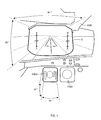
- FIG. 1 which represents in part an aircraft dashboard seen from the pilot, have been shown in bold bold lines these different visualizations HDD and HUD.
- dashboards or HDD consist essentially of large screens, usually LCDs providing the crew with the various information necessary for piloting, navigation and control of the aircraft.
- the visualization displaying the information necessary for piloting is also called PFD, an acronym for "Primary Flight Display”.
- PFD Primary Flight Display
- patent applications US 2003/0030911 and WO 00/28281 propose to integrate the function of presentation of the critical information in the oxygen mask.
- This solution has many disadvantages. It can be implemented only when the pilot wears his mask, that is to say in conditions where the safety of the flight is seriously compromised. It is, of course, impossible to ensure a superposition of the information presented on the external landscape. Finally, it is a complex solution to implement and necessarily expensive insofar as the system used must be small, perfectly secure and operational in extreme conditions.
- Head High also called in English terminology “Head-Up Displays” and also known under the acronym “HUD” were first used on weapon planes to generalize then in the 1980s to all types of devices. They present the pilot with visual information collimated in his field of vision and superimposed on the external landscape. This visual information relates more particularly to the piloting and serves in particular for take-off and landing. It is thus possible to present to the pilot a synthetic track superimposed on the landscape as indicated in figure 1 .
- One of the main interests of the "HUD” is that it allows to present a so-called “conform” image, that is to say perfectly corresponding to a real image.
- the object of the invention is to display, in the event of fire or the presence of fumes, the vital information concerning the piloting on the head-up viewfinder.
- the subject of the invention is a head-up viewfinder for an aircraft, characterized in that it comprises means for calculating a "PFD" type symbology comprising at least the information of speed, altitude and altitude. the attitude of the aircraft, the head-up viewfinder being an integrated visualization instrument fixed in the cockpit and presenting a collimated image.
- a "PFD" type symbology comprising at least the information of speed, altitude and altitude. the attitude of the aircraft
- the head-up viewfinder being an integrated visualization instrument fixed in the cockpit and presenting a collimated image.
- the computing means make it possible to generate several possible modes of presentation of the symbology, at least one of the modes generating a simplified symbology comprising only the information of speed, altitude and attitude.
- the calculation means generate plots whose angular width is between 5 milliradians and 10 milliradians.
- the computing means generates so-called "compliant" symbols, that is to say representative of the exterior landscape and drawn so that they have an apparent size on the same scale as said external landscape.
- the luminance of the displayed symbols is equal to the maximum luminance allowed by the display.
- the technical implementation of the invention does not pose any particular technical problem. In fact, it is sufficient to connect either the dedicated computer to the Heads-Up head, or the head-up viewfinder itself to the data bus conveying the information necessary for the establishment of the "PFD" symbology.
- the creation of the "PFD" symbology specifically adapted to a collimated information presentation does not pose particular problems insofar as it does not require specific calculation or storage means. As will be seen in the following description, it can be specifically adapted to improve the legibility of the information in case of presence of smoke in the cockpit.
- Headshots have a large field of view that typically reaches 35 degrees in the field and 26 degrees in the field.
- the field of view of a Dashboard Head-down display does not exceed 6 degrees in site and field. As a result, it is possible to display much larger characters in a Header viewfinder, which increases their readability.
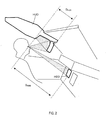
- the distance D HDD separating the pilot's eye from the display of a Head-down display is of the order of one meter whereas the distance D HUD separating the pilot's eye from the display of a High Head visualization is much lower, of the order of 0.5 meters. Therefore, on average, the presence of smoke between the pilot and a visualization will be greater if it is a Head-down display than if it is a head-up display. The readability of the information coming from a head-up display will be better.
- the "HUD” are designed so that the collimated information can be read even in case of strong sunlight. Therefore, the maximum possible luminance and contrast in this type of display are very high, much higher than those of an HDD display that does not suffer the same constraints. Generally, the maximum luminance and contrast of a HUD visualization are ten times higher than those of an HDD.
- the readability of the essential information in case of smoke in the cockpit can be improved significantly and at the cost of minor modifications by presenting them in the head-up viewfinder.
Landscapes
- Physics & Mathematics (AREA)
- General Physics & Mathematics (AREA)
- Engineering & Computer Science (AREA)
- Radar, Positioning & Navigation (AREA)
- Remote Sensing (AREA)
- Optics & Photonics (AREA)
- Aviation & Aerospace Engineering (AREA)
- Instrument Panels (AREA)
Description
- Le domaine de l'invention est celui de la sécurisation des informations nécessaires au pilotage pour les cockpits d'aéronefs.
- Généralement, les visualisations présentes dans un cockpit d'aéronef sont de deux types. On distingue :
- ● les visualisations de planches de bord encore appelées visualisations « Tête Basse » ou HDD, acronyme signifiant « Head Down Display » et
- ● les visualisation dites « Tête Haute » encore appelées HUD, acronyme signifiant « Head Up Display ». Le brevet
US 4 145 952 décrit un HUD dans une configuration de symbologie particulière qui est l'aide au tir. - Sur la
figure 1 , qui représente en partie une planche de bord d'aéronef vue du pilote, ont été représentés en traits continus gras ces différentes visualisations HDD et HUD. - Il existe également des visualisations intégrées au casque du pilote permettant de présenter des symbologies voisines de celles des HDDs ou des HUDs. Le brevet
EP 0 511 154 décrit un exemple de ce type de symbologie. - Les visualisations de planches de bord ou HDD sont constituées essentiellement de grands écrans, généralement à cristaux liquides fournissant à l'équipage les différentes informations nécessaires au pilotage, à la navigation et au contrôle de l'appareil. La visualisation affichant les informations nécessaires au pilotage est encore appelée PFD, acronyme signifiant « Primary Flight Display ». Ces visualisations sont reliées au moyen de bus de données à des calculateurs électroniques de bord qui génèrent, à partir d'informations venant de différents senseurs, les données nécessaires à l'affichage.
- Bien entendu, les présentations d'informations sont vitales pour la sécurité de l'appareil. L'incendie ou l'apparition de fumées dans le cockpit font partie des incidents extrêmement graves susceptibles de perturber la lisibilité des informations fournies par les visualisations de planche de bord. S'il est, en effet, possible de protéger en partie l'équipage de la fumée au moyen de masques à oxygène, il n'existe que peu de solutions permettant de fournir à l'équipage les informations visuelles nécessaires au pilotage lorsque la fumée envahit le cockpit. En cas de défaillance des systèmes de ventilation, Une première solution consiste en l'emploi de systèmes gonflables intercalés entre les écrans de visualisation et le visage du pilote. Cette solution qui n'est pas généralisée présente de nombreux inconvénients. Elle est très encombrante, difficile à mettre en oeuvre et limite considérablement les mouvements de l'équipage.
- Pour pallier aux inconvénients précédents, les demandes de brevet
US 2003/0030911 etWO 00/28281 - Les visualisations dites « Tête Haute », encore appelées en terminologie anglo-saxonne « Head-Up Displays » et également connues sous l'acronyme « HUD » ont d'abord été utilisés sur avions d'arme pour se généraliser ensuite dans les années 1980 à tous types d'appareils. Ils présentent au pilote une information visuelle collimatée dans son champ de vision et en superposition sur le paysage extérieur. Cette information visuelle concerne plus particulièrement le pilotage et sert notamment au décollage et à l'atterrissage. On peut ainsi présenter au pilote une piste synthétique en superposition sur le paysage comme indiqué en
figure 1 . Un des grands intérêts du « HUD » est qu'il permet de présenter une image dite « conforme », c'est-à-dire correspondant parfaitement à une image réelle. - Un « HUD » comporte donc trois parties principales :
- ● Un calculateur électronique relié aux bus de données avion ;
- ● Un afficheur à haute luminosité qui peut être un tube cathodique ou un écran à cristaux liquides ;
- ● Un système optique de collimation et de superposition d'images sur le paysage extérieur. La superposition sur le paysage est assurée généralement par une lame optique C appelée « combineur », comme on peut le voir sur la
figure 1 . - L'objet de l'invention est d'afficher, en cas d'incendie ou de présence de fumées, les informations vitales concernant le pilotage sur le viseur Tête Haute.
- Plus précisément, l'invention a pour objet un viseur Tête Haute pour aéronef, caractérisé en ce qu'il comporte des moyens de calcul d'une symbologie de type « PFD » comprenant au moins les informations de vitesse, d'altitude et d'attitude de l'aéronef, le viseur Tête Haute étant un instrument de visualisation intégré et fixé dans le cockpit et présentant une image collimatée.
- Avantageusement, les moyens de calcul permettent de générer plusieurs modes possibles de présentation de la symbologie, au moins un des modes générant une symbologie simplifiée comportant uniquement les informations de vitesse, d'altitude et d'attitude.
- Avantageusement, les moyens de calcul génèrent des tracés dont la largeur angulaire vaut entre 5 milliradians et 10 milliradians.
- Avantageusement, les moyens de calcul génèrent des symboles dits « conformes », c'est-à-dire représentatifs du paysage extérieur et dessinés de façon qu'ils aient une taille apparente à la même échelle que ledit paysage extérieur.
- Avantageusement, la luminance des symboles affichés est égale à la luminance maximale permise par l'afficheur.
- L'invention sera mieux comprise et d'autres avantages apparaîtront à la lecture de la description qui va suivre donnée à titre non limitatif et grâce aux figures annexées parmi lesquelles :
- ● La
figure 1 représente une vue partielle d'une planche de bord d'aéronef vue du pilote ; - ● La
figure 2 représente une vue partielle d'une planche de bord d'aéronef vue de profil ; - ● La
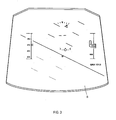
figure 3 représente un premier exemple d'une symbologie de type PFD générée dans un viseur Tête Haute ; - ● La
figure 4 représente un second exemple d'une symbologie de type PFD générée dans un viseur Tête Haute ; - ● La
figure 5 représente un troisième exemple d'une symbologie de type PFD générée dans un viseur Tête Haute. - La réalisation technique de l'invention ne pose aucun problème technique particulier. Il suffit, en effet, de relier soit le calculateur dédié au viseut Tête Haute, soit le viseur Tête Haute lui-même au bus de données transportant les informations nécessaires à l'établissement de la symbologie « PFD ». La création de la symbologie « PFD » spécifiquement adaptée à une présentation d'informations collimatée ne pose pas de problèmes particuliers dans la mesure où elle ne nécessite pas de moyens de calculs ou de mémorisation spécifiques. Comme on le verra dans la suite de la description, elle peut être spécifiquement adaptée pour améliorer la lisibilité des informations en cas de présence de fumée dans le cockpit.
- Les avantages d'une présentation des informations essentielles nécessaires au pilotage dans le viseur Tête Haute plutôt que sur une visualisation de planche de bord sont importants et sont détaillés ci-dessous.
- Comme on peut le voir sur la
figure 1 , les viseurs Tête Haute présentent un champ de vision important qui atteint classiquement 35 degrés en gisement et 26 degrés en site. Le champ de vision d'une visualisation Tête Basse de planche de bord ne passe pas 6 degrés en site et en gisement. Par conséquent, il est possible d'afficher des caractères de beaucoup plus grande taille apparente dans un viseur Tête Haute, ce qui accroît leur lisibilité. - Comme on peut le voir sur la
figure 2 , la distance DHDD séparant l'oeil du pilote de l'afficheur d'une visualisation Tête Basse est de l'ordre du mètre alors que la distance DHUD séparant l'oeil du pilote de l'afficheur d'une visualisation Tête Haute est bien inférieure, de l'ordre de 0,5 mètre. Par conséquent, en moyenne, la présence de fumée entre le pilote et une visualisation sera plus importante s'il s'agit d'une visualisation Tête Basse que s'il s'agit d'une visualisation Tête Haute. La lisibilité des informations venant d'une visualisation Tête Haute sera donc meilleure. - Par principe, les « HUD » sont conçus pour que l'information collimatée puisse être lu même en cas de fort ensoleillement. Par conséquent, la luminance maximale possible et le contraste dans ce type de visualisation sont très élevés, bien supérieurs à ceux d'un afficheur HDD qui ne subit pas les mêmes contraintes. Généralement, la luminance maximale et le contraste d'une visualisation HUD sont dix fois supérieurs à ceux d'un HDD.
- Il est possible d'adapter la symbologie pour la rendre la plus lisible possible en cas de présence de fumée. On peut jouer facilement sur deux paramètres qui sont :
- ● La largeur de tracé. Typiquement, la largeur de tracé de la symbologie d'un viseur tête haute est de l'ordre du milliradian ; Il est possible d'élargir de façon importante cette largeur pour améliorer la lisibilité. Les
figures 3 et4 présentent ainsi deux symbologies S, la première avec une tracé normal, la seconde avec un tracé dont la largeur a été multiplié par deux ; - ● L'allégement et la simplification de la symbologie. Ainsi, sur la
figure 5 , les échelles indicatrices des vitesses S1 à gauche et de l'altitude S2 à droite de la symbologie S de lafigure 5 ont été remplacées par des simples indications de vitesse et d'altitude écrites dans des caractères plus importants. - Il est possible de conserver certaines fonctions d'affichage du viseur HUD. Ces symboles dits « conformes » sont représentatifs du paysage extérieur et dessinés de façon qu'ils aient une taille apparente à la même échelle que ledit paysage extérieur et se superposent à lui.
- Ainsi, on peut améliorer de façon sensible et au prix de modifications mineures la lisibilité des informations essentielles en cas de fumée dans le cockpit en les présentant dans le viseur tête Haute.
Claims (4)
- Viseur Tête Haute pour aéronef, caractérisé en ce qu'il comporte des moyens de calcul d'une symbologie de type « PFD » comprenant au moins les informations de vitesse, d'altitude et d'attitude de l'aéronef, le viseur Tête Haute étant un instrument de visualisation intégré et fixé dans le cockpit et présentant une image collimatée, caractérisé en ce que, en cas de détection d'incendie ou de fumée, la luminance des symboles affichés est la luminance maximale permise par l'afficheur.
- Viseur Tête Haute pour aéronef selon la revendication 1, caractérisé en ce que les moyens de calcul permettent de générer plusieurs modes possibles de présentation de la symbologie, au moins un des modes générant une symbologie simplifiée comportant uniquement les informations de vitesse, d'altitude et d'attitude.
- Viseur Tête Haute pour aéronef selon l'une des revendications 1 ou 2, caractérisé en ce que les moyens de calcul génèrent des tracés dont la largeur angulaire vaut entre 5 milliradians et 10 milliradians.
- Viseur Tête Haute pour aéronef selon l'une des revendications précédentes, caractérisé en ce que les moyens de calcul génèrent des symboles dits « conformes », c'est-à-dire représentatifs du paysage extérieur et dessinés de façon qu'ils aient une taille apparente à la même échelle que ledit paysage extérieur.
Applications Claiming Priority (2)
| Application Number | Priority Date | Filing Date | Title |
|---|---|---|---|
| FR0606308A FR2903788B1 (fr) | 2006-07-11 | 2006-07-11 | Viseur tete haute a affichage securise |
| PCT/EP2007/056951 WO2008006798A2 (fr) | 2006-07-11 | 2007-07-09 | Viseur tete haute a affichage securise |
Publications (2)
| Publication Number | Publication Date |
|---|---|
| EP2038614A2 EP2038614A2 (fr) | 2009-03-25 |
| EP2038614B1 true EP2038614B1 (fr) | 2013-06-12 |
Family
ID=37989145
Family Applications (1)
| Application Number | Title | Priority Date | Filing Date |
|---|---|---|---|
| EP07765820.1A Not-in-force EP2038614B1 (fr) | 2006-07-11 | 2007-07-09 | Viseur tete haute a affichage securise |
Country Status (5)
| Country | Link |
|---|---|
| US (1) | US20090201177A1 (fr) |
| EP (1) | EP2038614B1 (fr) |
| FR (1) | FR2903788B1 (fr) |
| IL (1) | IL196248A0 (fr) |
| WO (1) | WO2008006798A2 (fr) |
Families Citing this family (12)
| Publication number | Priority date | Publication date | Assignee | Title |
|---|---|---|---|---|
| JP5232922B2 (ja) * | 2009-11-04 | 2013-07-10 | 本田技研工業株式会社 | 車両用表示装置 |
| FR2952466B1 (fr) * | 2009-11-10 | 2012-08-17 | Airbus Operations Sas | Procede d'adaptation de parametres d'affichage d'un dispositif d'affichage, notamment embarque dans un aeronef |
| US8400330B2 (en) | 2010-09-07 | 2013-03-19 | Honeywell International Inc. | System for displaying multiple overlaid images to a pilot of an aircraft during flight |
| US8665120B2 (en) * | 2011-05-25 | 2014-03-04 | The Boeing Company | Primary flight display pitch- and power-based unreliable airspeed symbology |
| US9058510B1 (en) * | 2011-07-29 | 2015-06-16 | Rockwell Collins, Inc. | System for and method of controlling display characteristics including brightness and contrast |
| US9108741B2 (en) | 2013-09-09 | 2015-08-18 | Honeywell International Inc. | Helicopter system and method for integrating collective flight director cues |
| FR3013495B1 (fr) * | 2013-11-15 | 2021-05-07 | Airbus Operations Sas | Procede et dispositif de guidage automatique d'un aeronef roulant au sol. |
| US9659412B2 (en) * | 2015-07-30 | 2017-05-23 | Honeywell International Inc. | Methods and systems for displaying information on a heads-up display |
| FR3068481B1 (fr) * | 2017-06-29 | 2019-07-26 | Airbus Operations (S.A.S.) | Systeme et procede d'affichage pour un aeronef |
| US10883851B2 (en) | 2018-09-17 | 2021-01-05 | Honeywell International Inc. | Systems and methods for dynamic readouts for primary flight displays |
| FR3098932B1 (fr) * | 2019-07-15 | 2023-12-22 | Airbus Helicopters | Procédé et système d’assistance au pilotage d’un aéronef par affichage adaptatif sur un écran |
| US12510753B1 (en) | 2025-02-18 | 2025-12-30 | John C. Kroack | Aircraft heads up display |
Family Cites Families (10)
| Publication number | Priority date | Publication date | Assignee | Title |
|---|---|---|---|---|
| US4145952A (en) * | 1977-02-03 | 1979-03-27 | Gene Tye | Aircraft gun sight system and method for high angle-off attacks |
| CA2060406C (fr) * | 1991-04-22 | 1998-12-01 | Bruce Edward Hamilton | Systeme d'affichage d'images virtuelles a contours structurels |
| US5148146A (en) * | 1991-06-17 | 1992-09-15 | Delco Electronics Corporation | High brightness telltale for a head-up display |
| US6297749B1 (en) * | 1998-11-06 | 2001-10-02 | Eric S. Smith | Emergency operating system for piloting an aircraft in a smoke filled cockpit |
| US20030030911A1 (en) * | 2001-08-13 | 2003-02-13 | Brooks Michael H. | Flight crew emergency vision system |
| US6879886B2 (en) * | 2001-10-11 | 2005-04-12 | The Boeing Company | Flight guidance system providing perspective flight guidance symbology |
| US7312725B2 (en) * | 2003-07-08 | 2007-12-25 | Supersonic Aerospace International, Llc | Display system for operating a device with reduced out-the-window visibility |
| US7564372B1 (en) * | 2004-06-30 | 2009-07-21 | Rockwell Collins, Inc. | Display of hold lines on head-up display |
| US7463954B1 (en) * | 2004-11-29 | 2008-12-09 | Honeywell International Inc. | Terrain augmented display symbology |
| FR2903787B1 (fr) * | 2006-07-11 | 2008-11-14 | Thales Sa | Dispositif de generation de la fonction de secours dans un viseur tete haute |
-
2006
- 2006-07-11 FR FR0606308A patent/FR2903788B1/fr not_active Expired - Fee Related
-
2007
- 2007-07-09 WO PCT/EP2007/056951 patent/WO2008006798A2/fr not_active Ceased
- 2007-07-09 EP EP07765820.1A patent/EP2038614B1/fr not_active Not-in-force
- 2007-07-09 US US12/307,296 patent/US20090201177A1/en not_active Abandoned
-
2008
- 2008-12-28 IL IL196248A patent/IL196248A0/en unknown
Also Published As
| Publication number | Publication date |
|---|---|
| FR2903788B1 (fr) | 2008-11-14 |
| US20090201177A1 (en) | 2009-08-13 |
| FR2903788A1 (fr) | 2008-01-18 |
| IL196248A0 (en) | 2009-09-22 |
| WO2008006798A3 (fr) | 2008-02-28 |
| WO2008006798A2 (fr) | 2008-01-17 |
| EP2038614A2 (fr) | 2009-03-25 |
Similar Documents
| Publication | Publication Date | Title |
|---|---|---|
| WO2008006798A2 (fr) | Viseur tete haute a affichage securise | |
| EP1884816A2 (fr) | Dispositif de génération de la fonction de secours dans un viseur tete haute | |
| EP2793070B1 (fr) | Systeme de visualisation hybride affichant des informations en superposition sur l'exterieur | |
| US9766465B1 (en) | Near eye display system and method for display enhancement or redundancy | |
| CN106275467B (zh) | 用于整合平视显示器和下视显示器的系统和方法 | |
| EP2187172A1 (fr) | Systèmes d'affichage dotés d'une symbologie améliorée | |
| FR2921190A1 (fr) | Dispositif de presentation et de selection de donnees sur un ecran de visualisation | |
| EP2703295B1 (fr) | Ecran de visualisation transparent double-face | |
| EP2465003A2 (fr) | Systèmes d'affichage à optique de fourier | |
| US10464688B2 (en) | Method for graphic representation of the relative position of the sky and the earth in an onboard display system for aircraft | |
| US9244649B2 (en) | Piloting assistance system and an aircraft | |
| FR2974938A1 (fr) | Systeme avionique a trois ecrans de visualisation pour aeronef | |
| US7418318B2 (en) | Method and HUD system for displaying unusual attitude | |
| EP2161540B1 (fr) | Système de visualisation pour aéronef comprenant des moyens d'affichage de la destination finale et procédé d'affichage associé | |
| FR2939951A1 (fr) | Systeme de securisation de l'affichage des consignes provenant du control aerien | |
| FR2999312A1 (fr) | Systeme de visualisation comportant un dispositif de visualisation semi-transparent affichant des symboles a contour contraste | |
| US8774986B1 (en) | Method, system, and apparatus for takeoff rotation guidance | |
| WO2014083103A1 (fr) | Dispositif de visualisation comprenant un ecran de visualisation a transparence controlee | |
| CN103625648A (zh) | 特别用于航空器的具有透明屏幕和周边符号的可视化系统 | |
| EP2801903A1 (fr) | Dispositif d'aide au pilotage propre à afficher une animation, et procédé associé | |
| EP3137937A1 (fr) | Système de visualisation de tête comportant des moyens de sélection de cap et procédé de sélection associé | |
| EP3521765A1 (fr) | Procédé de visualisation de l'attitude d'un aéronef, produit programme d'ordinateur et système de visualisation associés | |
| Lueken et al. | Helmet mounted display supporting helicopter missions during en route flight and landing | |
| FR3060740A1 (fr) | Procede de gestion graphique d'une echelle de tangage dans un systeme de visualisation de bord pour aeronef | |
| FR3143776A1 (fr) | Procédé de gestion d’un afficheur tête-haute, produit programme d’ordinateur associé et afficheur tête-haute associé |
Legal Events
| Date | Code | Title | Description |
|---|---|---|---|
| PUAI | Public reference made under article 153(3) epc to a published international application that has entered the european phase |
Free format text: ORIGINAL CODE: 0009012 |
|
| 17P | Request for examination filed |
Effective date: 20090107 |
|
| AK | Designated contracting states |
Kind code of ref document: A2 Designated state(s): AT BE BG CH CY CZ DE DK EE ES FI FR GB GR HU IE IS IT LI LT LU LV MC MT NL PL PT RO SE SI SK TR |
|
| AX | Request for extension of the european patent |
Extension state: AL BA HR MK RS |
|
| DAX | Request for extension of the european patent (deleted) | ||
| 17Q | First examination report despatched |
Effective date: 20120727 |
|
| RIC1 | Information provided on ipc code assigned before grant |
Ipc: G02B 27/01 20060101ALI20121212BHEP Ipc: G01C 23/00 20060101AFI20121212BHEP |
|
| GRAP | Despatch of communication of intention to grant a patent |
Free format text: ORIGINAL CODE: EPIDOSNIGR1 |
|
| GRAS | Grant fee paid |
Free format text: ORIGINAL CODE: EPIDOSNIGR3 |
|
| GRAA | (expected) grant |
Free format text: ORIGINAL CODE: 0009210 |
|
| AK | Designated contracting states |
Kind code of ref document: B1 Designated state(s): AT BE BG CH CY CZ DE DK EE ES FI FR GB GR HU IE IS IT LI LT LU LV MC MT NL PL PT RO SE SI SK TR |
|
| REG | Reference to a national code |
Ref country code: GB Ref legal event code: FG4D Free format text: NOT ENGLISH |
|
| REG | Reference to a national code |
Ref country code: CH Ref legal event code: EP |
|
| REG | Reference to a national code |
Ref country code: AT Ref legal event code: REF Ref document number: 616852 Country of ref document: AT Kind code of ref document: T Effective date: 20130615 |
|
| REG | Reference to a national code |
Ref country code: IE Ref legal event code: FG4D Free format text: LANGUAGE OF EP DOCUMENT: FRENCH |
|
| REG | Reference to a national code |
Ref country code: DE Ref legal event code: R096 Ref document number: 602007031029 Country of ref document: DE Effective date: 20130801 |
|
| PG25 | Lapsed in a contracting state [announced via postgrant information from national office to epo] |
Ref country code: FI Free format text: LAPSE BECAUSE OF FAILURE TO SUBMIT A TRANSLATION OF THE DESCRIPTION OR TO PAY THE FEE WITHIN THE PRESCRIBED TIME-LIMIT Effective date: 20130612 Ref country code: LT Free format text: LAPSE BECAUSE OF FAILURE TO SUBMIT A TRANSLATION OF THE DESCRIPTION OR TO PAY THE FEE WITHIN THE PRESCRIBED TIME-LIMIT Effective date: 20130612 Ref country code: ES Free format text: LAPSE BECAUSE OF FAILURE TO SUBMIT A TRANSLATION OF THE DESCRIPTION OR TO PAY THE FEE WITHIN THE PRESCRIBED TIME-LIMIT Effective date: 20130923 Ref country code: SE Free format text: LAPSE BECAUSE OF FAILURE TO SUBMIT A TRANSLATION OF THE DESCRIPTION OR TO PAY THE FEE WITHIN THE PRESCRIBED TIME-LIMIT Effective date: 20130612 Ref country code: SI Free format text: LAPSE BECAUSE OF FAILURE TO SUBMIT A TRANSLATION OF THE DESCRIPTION OR TO PAY THE FEE WITHIN THE PRESCRIBED TIME-LIMIT Effective date: 20130612 |
|
| REG | Reference to a national code |
Ref country code: AT Ref legal event code: MK05 Ref document number: 616852 Country of ref document: AT Kind code of ref document: T Effective date: 20130612 |
|
| REG | Reference to a national code |
Ref country code: NL Ref legal event code: VDEP Effective date: 20130612 |
|
| REG | Reference to a national code |
Ref country code: LT Ref legal event code: MG4D |
|
| PG25 | Lapsed in a contracting state [announced via postgrant information from national office to epo] |
Ref country code: BG Free format text: LAPSE BECAUSE OF FAILURE TO SUBMIT A TRANSLATION OF THE DESCRIPTION OR TO PAY THE FEE WITHIN THE PRESCRIBED TIME-LIMIT Effective date: 20130912 |
|
| PG25 | Lapsed in a contracting state [announced via postgrant information from national office to epo] |
Ref country code: LV Free format text: LAPSE BECAUSE OF FAILURE TO SUBMIT A TRANSLATION OF THE DESCRIPTION OR TO PAY THE FEE WITHIN THE PRESCRIBED TIME-LIMIT Effective date: 20130612 |
|
| BERE | Be: lapsed |
Owner name: THALES Effective date: 20130731 |
|
| PG25 | Lapsed in a contracting state [announced via postgrant information from national office to epo] |
Ref country code: IS Free format text: LAPSE BECAUSE OF FAILURE TO SUBMIT A TRANSLATION OF THE DESCRIPTION OR TO PAY THE FEE WITHIN THE PRESCRIBED TIME-LIMIT Effective date: 20131012 Ref country code: EE Free format text: LAPSE BECAUSE OF FAILURE TO SUBMIT A TRANSLATION OF THE DESCRIPTION OR TO PAY THE FEE WITHIN THE PRESCRIBED TIME-LIMIT Effective date: 20130612 Ref country code: CZ Free format text: LAPSE BECAUSE OF FAILURE TO SUBMIT A TRANSLATION OF THE DESCRIPTION OR TO PAY THE FEE WITHIN THE PRESCRIBED TIME-LIMIT Effective date: 20130612 Ref country code: AT Free format text: LAPSE BECAUSE OF FAILURE TO SUBMIT A TRANSLATION OF THE DESCRIPTION OR TO PAY THE FEE WITHIN THE PRESCRIBED TIME-LIMIT Effective date: 20130612 Ref country code: SK Free format text: LAPSE BECAUSE OF FAILURE TO SUBMIT A TRANSLATION OF THE DESCRIPTION OR TO PAY THE FEE WITHIN THE PRESCRIBED TIME-LIMIT Effective date: 20130612 Ref country code: PT Free format text: LAPSE BECAUSE OF FAILURE TO SUBMIT A TRANSLATION OF THE DESCRIPTION OR TO PAY THE FEE WITHIN THE PRESCRIBED TIME-LIMIT Effective date: 20131014 |
|
| PG25 | Lapsed in a contracting state [announced via postgrant information from national office to epo] |
Ref country code: NL Free format text: LAPSE BECAUSE OF FAILURE TO SUBMIT A TRANSLATION OF THE DESCRIPTION OR TO PAY THE FEE WITHIN THE PRESCRIBED TIME-LIMIT Effective date: 20130612 Ref country code: PL Free format text: LAPSE BECAUSE OF FAILURE TO SUBMIT A TRANSLATION OF THE DESCRIPTION OR TO PAY THE FEE WITHIN THE PRESCRIBED TIME-LIMIT Effective date: 20130612 Ref country code: RO Free format text: LAPSE BECAUSE OF FAILURE TO SUBMIT A TRANSLATION OF THE DESCRIPTION OR TO PAY THE FEE WITHIN THE PRESCRIBED TIME-LIMIT Effective date: 20130612 |
|
| REG | Reference to a national code |
Ref country code: CH Ref legal event code: PL |
|
| PG25 | Lapsed in a contracting state [announced via postgrant information from national office to epo] |
Ref country code: MC Free format text: LAPSE BECAUSE OF FAILURE TO SUBMIT A TRANSLATION OF THE DESCRIPTION OR TO PAY THE FEE WITHIN THE PRESCRIBED TIME-LIMIT Effective date: 20130612 |
|
| PLBE | No opposition filed within time limit |
Free format text: ORIGINAL CODE: 0009261 |
|
| STAA | Information on the status of an ep patent application or granted ep patent |
Free format text: STATUS: NO OPPOSITION FILED WITHIN TIME LIMIT |
|
| REG | Reference to a national code |
Ref country code: IE Ref legal event code: MM4A |
|
| PG25 | Lapsed in a contracting state [announced via postgrant information from national office to epo] |
Ref country code: LI Free format text: LAPSE BECAUSE OF NON-PAYMENT OF DUE FEES Effective date: 20130731 Ref country code: DE Free format text: LAPSE BECAUSE OF NON-PAYMENT OF DUE FEES Effective date: 20140201 Ref country code: BE Free format text: LAPSE BECAUSE OF NON-PAYMENT OF DUE FEES Effective date: 20130731 Ref country code: CH Free format text: LAPSE BECAUSE OF NON-PAYMENT OF DUE FEES Effective date: 20130731 Ref country code: DK Free format text: LAPSE BECAUSE OF FAILURE TO SUBMIT A TRANSLATION OF THE DESCRIPTION OR TO PAY THE FEE WITHIN THE PRESCRIBED TIME-LIMIT Effective date: 20130612 |
|
| REG | Reference to a national code |
Ref country code: DE Ref legal event code: R119 Ref document number: 602007031029 Country of ref document: DE Effective date: 20140201 |
|
| 26N | No opposition filed |
Effective date: 20140313 |
|
| PG25 | Lapsed in a contracting state [announced via postgrant information from national office to epo] |
Ref country code: IE Free format text: LAPSE BECAUSE OF NON-PAYMENT OF DUE FEES Effective date: 20130709 |
|
| REG | Reference to a national code |
Ref country code: FR Ref legal event code: PLFP Year of fee payment: 9 |
|
| PG25 | Lapsed in a contracting state [announced via postgrant information from national office to epo] |
Ref country code: CY Free format text: LAPSE BECAUSE OF FAILURE TO SUBMIT A TRANSLATION OF THE DESCRIPTION OR TO PAY THE FEE WITHIN THE PRESCRIBED TIME-LIMIT Effective date: 20130612 Ref country code: MT Free format text: LAPSE BECAUSE OF FAILURE TO SUBMIT A TRANSLATION OF THE DESCRIPTION OR TO PAY THE FEE WITHIN THE PRESCRIBED TIME-LIMIT Effective date: 20130612 Ref country code: TR Free format text: LAPSE BECAUSE OF FAILURE TO SUBMIT A TRANSLATION OF THE DESCRIPTION OR TO PAY THE FEE WITHIN THE PRESCRIBED TIME-LIMIT Effective date: 20130612 |
|
| PG25 | Lapsed in a contracting state [announced via postgrant information from national office to epo] |
Ref country code: HU Free format text: LAPSE BECAUSE OF FAILURE TO SUBMIT A TRANSLATION OF THE DESCRIPTION OR TO PAY THE FEE WITHIN THE PRESCRIBED TIME-LIMIT; INVALID AB INITIO Effective date: 20070709 Ref country code: LU Free format text: LAPSE BECAUSE OF NON-PAYMENT OF DUE FEES Effective date: 20130709 |
|
| PG25 | Lapsed in a contracting state [announced via postgrant information from national office to epo] |
Ref country code: GR Free format text: LAPSE BECAUSE OF NON-PAYMENT OF DUE FEES Effective date: 20130612 |
|
| PGFP | Annual fee paid to national office [announced via postgrant information from national office to epo] |
Ref country code: GB Payment date: 20150708 Year of fee payment: 9 |
|
| PGFP | Annual fee paid to national office [announced via postgrant information from national office to epo] |
Ref country code: FR Payment date: 20150629 Year of fee payment: 9 |
|
| PGFP | Annual fee paid to national office [announced via postgrant information from national office to epo] |
Ref country code: IT Payment date: 20150727 Year of fee payment: 9 |
|
| GBPC | Gb: european patent ceased through non-payment of renewal fee |
Effective date: 20160709 |
|
| PG25 | Lapsed in a contracting state [announced via postgrant information from national office to epo] |
Ref country code: FR Free format text: LAPSE BECAUSE OF NON-PAYMENT OF DUE FEES Effective date: 20160801 |
|
| REG | Reference to a national code |
Ref country code: FR Ref legal event code: ST Effective date: 20170331 |
|
| PG25 | Lapsed in a contracting state [announced via postgrant information from national office to epo] |
Ref country code: GB Free format text: LAPSE BECAUSE OF NON-PAYMENT OF DUE FEES Effective date: 20160709 |
|
| PG25 | Lapsed in a contracting state [announced via postgrant information from national office to epo] |
Ref country code: IT Free format text: LAPSE BECAUSE OF NON-PAYMENT OF DUE FEES Effective date: 20160709 |