EP2037386A1 - Method and apparatus for a community-based trust - Google Patents
Method and apparatus for a community-based trust Download PDFInfo
- Publication number
- EP2037386A1 EP2037386A1 EP08252569A EP08252569A EP2037386A1 EP 2037386 A1 EP2037386 A1 EP 2037386A1 EP 08252569 A EP08252569 A EP 08252569A EP 08252569 A EP08252569 A EP 08252569A EP 2037386 A1 EP2037386 A1 EP 2037386A1
- Authority
- EP
- European Patent Office
- Prior art keywords
- node
- trust
- trust level
- targeting
- requesting
- Prior art date
- Legal status (The legal status is an assumption and is not a legal conclusion. Google has not performed a legal analysis and makes no representation as to the accuracy of the status listed.)
- Ceased
Links
Images

Classifications
-
- H—ELECTRICITY
- H04—ELECTRIC COMMUNICATION TECHNIQUE
- H04L—TRANSMISSION OF DIGITAL INFORMATION, e.g. TELEGRAPHIC COMMUNICATION
- H04L63/00—Network architectures or network communication protocols for network security
- H04L63/10—Network architectures or network communication protocols for network security for controlling access to devices or network resources
- H04L63/105—Multiple levels of security
-
- G—PHYSICS
- G06—COMPUTING OR CALCULATING; COUNTING
- G06F—ELECTRIC DIGITAL DATA PROCESSING
- G06F21/00—Security arrangements for protecting computers, components thereof, programs or data against unauthorised activity
- G06F21/50—Monitoring users, programs or devices to maintain the integrity of platforms, e.g. of processors, firmware or operating systems
- G06F21/55—Detecting local intrusion or implementing counter-measures
-
- G—PHYSICS
- G06—COMPUTING OR CALCULATING; COUNTING
- G06Q—INFORMATION AND COMMUNICATION TECHNOLOGY [ICT] SPECIALLY ADAPTED FOR ADMINISTRATIVE, COMMERCIAL, FINANCIAL, MANAGERIAL OR SUPERVISORY PURPOSES; SYSTEMS OR METHODS SPECIALLY ADAPTED FOR ADMINISTRATIVE, COMMERCIAL, FINANCIAL, MANAGERIAL OR SUPERVISORY PURPOSES, NOT OTHERWISE PROVIDED FOR
- G06Q10/00—Administration; Management
- G06Q10/10—Office automation; Time management
Definitions
- Web of trust may be a mechanism for determining the validity of public keys, particularly for pretty good privacy (PGP) users.
- PGP pretty good privacy
- Users posting new public keys typically have a trusted intermediary sign the new key. Once the intermediary verifies the identity of the person with the new key, the signature then verifies that the new key is genuine.
- the intermediary Before signing, the intermediary makes certain that the key contains the correct key fingerprint (actual code). After signing, other users who trust the signer can decide to trust all the keys signed by that person.
- references in the specification to "one embodiment”, “an embodiment”, “an example embodiment”, etc., indicate that the embodiment described may include a particular feature, structure, or characteristic, but every embodiment may not necessarily include the particular feature, structure, or characteristic. Moreover, such phrases are not necessarily referring to the same embodiment. Further, when a particular feature, structure, or characteristic is described in connection with an embodiment, it is submitted that it is within the knowledge of one skilled in the art to affect such feature, structure, or characteristic in connection with other embodiments whether or not explicitly described.
- Embodiments of the invention may be implemented in hardware, firmware, software, or any combination thereof. Embodiments of the invention may also be implemented as instructions stored on a machine-readable medium that may be read and executed by one or more processors.
- a machine-readable medium may include any mechanism for storing or transmitting information in a form readable by a machine (e.g., a computing device).
- a machine-readable medium may include read only memory (ROM); random access memory (RAM); magnetic disk storage media; optical storage media; flash memory devices; electrical, optical, acoustical or other forms of propagated signals (e.g., carrier waves, infrared signals, digital signals, etc.) and others.
- Fig. 1 shows an embodiment of a network 10.
- Network 10 may adopt mechanism of community-based trust to build trust between two nodes within the network.
- Network 10 may comprise different types of clusters, for example, a cluster including node A and node B (individual trust cluster), a cluster including nodes H, I, S, E, G, D, F and C (random network cluster) and a cluster including nodes L, J, K, M and N (mesh network cluster).
- Each solid line in Fig. 1 indicates that trust has been established between the two connected nodes.
- trust may include positive trust, negative trust (i.e., mistrust), and neutral (neither positive trust nor negative trust). Further, trust may be directional. If node A trusts node B, it does not necessarily mean that node B trusts node A.
- a requesting node may obtain trust from a targeting node (e.g., node A) via one or more trust routes.
- a trust route there may be one or more intermediate nodes, which have already established trust with the targeting node, to endorse the requesting node to the targeting node.
- node F may get trust from node A through an endorsement from node S or node I which has already established trust with node A, or through an endorsement from node D which, in turn, can obtain an endorsement from node B for node A.
- Trust endorsements from those intermediate nodes may also be referred to as "vouchers”.
- node A may have a high degree of trust for node S, while trusting node I less, but may not trust node D at all.
- Trust levels may be given to each node that has established trust with node A to indicate how much node A trusts the other node.
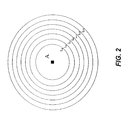
- Fig. 2 illustrates an embodiment of trust level rings from a node's perspective, for example, from node A's perspective.
- node A may build the trust level rings around it representing its ranges of trust.
- Node A may place the nodes that it trusts the most in the first layer (ring L 3 ), and place its "friends" in the next layer (ring L 2 ), and so on.
- the middle layer (ring L 0 ) may denote a neutral state of neither trust nor mistrust.
- the outer layers (rings L -1 through L -3 ) may represent mistrust. The further a node is placed on the rings, the lower its trust level is.
- weight may indicate how much the node trusts or values what the voucher says about other nodes. For example, both node S and node I endorse node F to node A, and node A may trust node S's endorsement more than node I's endorsement.
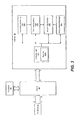
- Fig. 3 illustrates an embodiment of a node (e.g., node A) within the network 10.
- the node may comprise mainframe computers, mini-computers, personal computers, workstations, portable computers, laptop computers, mobile phones or personal data assistants (PDA), or other device capable for data transceiving and processing.
- PDA personal data assistants
- the node may comprise one or more processors 31, memory 32, chipset 33, I/O devices 34 and possibly other components for data transceiving and processing.
- Processors 31 are communicatively coupled to various components (e.g., the memory 32) via one or more buses such as a processor bus.
- Processors 31 may be implemented as an integrated circuit (IC) with one or more processing cores that may execute codes under a suitable architecture, for example, including Intel® XeonTM, Intel® PentiumTM, Intel® ItaniumTM architectures, available from Intel Corporation of Santa Clara, California.
- Memory 32 may store codes to be executed by processor 31.
- memory 32 may store analyzing logic 321, trust level determining logic 322, trust level updating logic 323, weight determining logic 324 and weight updating logic 325.
- Analyzing logic 321 may analyze one or more trust routes for a requesting node (e.g., node F) to get trust from a targeting node (i.e., the node as shown in Fig. 3 ) (e.g., node A). For example, the analyzing logic 321 may analyze a trust route for node A on node F via trust reference on node S, trust route for node A on node F via trust reference on nodes B and D, and trust route for node A on node F via trust reference on node I.
- a requesting node e.g., node F
- a targeting node i.e., the node as shown in Fig. 3
- the analyzing logic 321 may analyze a trust route for node A on node F via trust reference on node S, trust route for node A on node F via trust reference on nodes B and D, and trust route for node A on node F via trust reference on node I.
- Analyzing logic 321 may determine a set of first intermediate trust levels, each of which corresponds to an intermediate node (e.g., nodes S, B or I), which has established a trust relationship with the targeting node as well as a trust relationship with the requesting node.
- the first intermediate trust level may represent how much the targeting node trusts the intermediate node, e.g., how much node A trusts node S (or node B or node I).
- Analyzing logic 321 may further determine a set of second intermediate trust levels, each of which corresponds to the intermediate node (e.g., nodes S, B or I).
- the second intermediate trust level may represent how much the intermediate node trusts the requesting node, e.g., how much node I (or node S or node B) trusts F.
- analyzing logic 321 may determine a set of intermediate weights, each of which corresponds to the intermediate node (e.g., nodes S, B or I).
- the intermediate weight may represent how much the targeting node trusts or values the endorsement from the intermediate node, e.g., how much node A believes the endorsement form the node S (or node B or node I).
- Analyzing logic 321 may determine the trust levels and weights in various ways. For example, analyzing logic 321 may retrieve the trust levels and weights from a trust list 3210 maintained for the targeting node, which may record the trust levels and the weights associated to the nodes that have established trust relationships with the targeting node, as well as any updates of the trust levels and the weights. For the trust levels and weights not available from the trust list, analyzing logic 321 may send a request for the data on the network.
- trust may comprise positive trust, negative trust or neutral. Therefore, value of the trust level may reflect whether the trust is positive, negative, or neutral. For example, a positive value may represent a positive trust, zero may represent neutral, and a negative value may represent a negative trust. From the above equation, it can be seen that a negative endorsement may weaken the level of trust that the requesting node may receive from the targeting node.
- Trust level updating logic 323 may determine whether an event that may trigger the targeting node to update a trust level associated with a node that has established trust relationship with the targeting node occurs, and may update the trust level if the event occurs.
- the trust level may be the above-stated intermediate trust level, the new trust level, or any other trust levels as shown in Fig. 2 .
- the trust level may be updated if one or more vouchers provide positive or negative comments about the associated node, or if a positive or negative feedback from an application monitoring the activities of the associated node is received.
- the trust level may also be updated if a timer (not shown in Fig. 3 ) indicates that a predetermined period of time during which the trust level may remain in force expires.
- the trust level may be changed through increasing or decreasing its value.
- Weight determining logic 324 may determine a weight for an endorsement from the requesting node, in which the weight may indicate how much the targeting node believes the endorsement of the requesting node. In one embodiment, the weight may be determined based upon the corresponding trust level. Namely, if the trust level indicates that the targeting node trusts the requesting node at a high degree, the weight determining logic 324 may assign a heavy weight to the requesting node which may indicate that the targeting node has a high degree of trust in the endorsement from the requesting node.
- the weight determining logic 324 may assign a small or even zero weight to the requesting node, which may indicate that the targeting node does not trust the endorsement from the requesting node.
- the weight determining logic 324 may determine the weight not only depending on the trust level, but also depending on the purpose of the endorsement, social status of the requesting node, and the like. For example, a super node, a community leader, or a teacher of a network of students may carry more weight.
- the super node of a cluster (e.g., a random cluster) may be the node with the most connections or the node with the highest number of trust references established with other nodes on the same cluster or a selected authority for trust references.
- Weight updating logic 325 may determine if an event that may trigger the targeting node to update a weight of a node that has established a trust relationship with the targeting node occurs, and may update the weight if the event occurs.
- Various types of events may trigger the update of the weight, for example, updating the associated trust level, changing the purpose of the endorsement, or changing the social status of the node.
- Chipset 33 may provide one or more communicative path among processors 31, memory 32, I/O devices 34, and possibly other components.
- I/O devices 34 may input or output data to or from the targeting node, such as trust levels and weights.
- Examples for the I/O devices 34 may comprise a network card, a blue-tooth device, an antenna, and possibly other devices for transceiving data.
- the targeting node may determine the new trust level based upon the intermediate trust levels, but not based upon the intermediate weights.
- the targeting node may determine the new trust level based upon the first intermediate trust level between the targeting node and the intermediate node, but not based upon the second intermediate trust level between the intermediate node and the requesting node.
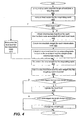
- Fig. 4 illustrates an embodiment of a method of building a trust between two nodes (e.g., node A and node F) within the network 10.
- a requesting node e.g., node F
- the targeting node may analyze one or more trust routes for the requesting code to get the trust from the targeting node, for example, trust from A to F through S, trust from A to F through I, and trust from A to F through B and D.
- the targeting node may determine whether the trust route is a direct trust route. Such a scenario may occur for a node that is newly added into the network 10 and has not established a trust relationship with any existing nodes in the network 10, in which case, the targeting node may establish a direct trust relationship with the targeting node via a direct trust route.
- the targeting node may determine the trust level for the requesting node based upon various factors, such as reputation of the requesting node, social status of the requesting node, purpose of the trust.
- the targeting node may obtain intermediate trust levels for the intermediate node (e.g., nodes I, S or B), e.g., the intermediate trust level between the targeting node and the intermediate node and the intermediate trust level between the intermediate node and the requesting node.
- intermediate trust levels for the intermediate node e.g., nodes I, S or B
- the targeting node may obtain the trust levels via trust lists respectively maintained for the targeting node and the intermediate node.
- the targeting node may obtain an intermediate weight for the intermediate node. If there are more than one indirect trust routes, the targeting node may obtain the intermediate trust levels and weight for each intermediate node on each trust route.
- the targeting node may calculate a new trust level for the requesting node based upon the intermediate trust levels and the weights of the intermediate node(s).
- the targeting node may determine a new weight for the requesting node, and in block 408, the targeting node may add the new trust level and the new weight to the targeting node's trust list.
- the targeting node may determine whether an event occurs that may trigger an update of a trust level associated with a node that has established a trust relationship with the targeting node.
- the targeting node may update the trust level for the affected node(s) and record the update in its trust list in block 410. Then, in block 411, the targeting node may determine whether an event occurs that may trigger to update a weight associated with a node that has established a trust relationship with the targeting node. In response to the event, the targeting node may update the weight for the affected node(s) and record the update in its trust list in block 412.
Landscapes
- Engineering & Computer Science (AREA)
- Computer Security & Cryptography (AREA)
- Theoretical Computer Science (AREA)
- Business, Economics & Management (AREA)
- Computer Hardware Design (AREA)
- Software Systems (AREA)
- General Engineering & Computer Science (AREA)
- General Physics & Mathematics (AREA)
- Physics & Mathematics (AREA)
- Entrepreneurship & Innovation (AREA)
- Human Resources & Organizations (AREA)
- Strategic Management (AREA)
- Economics (AREA)
- Marketing (AREA)
- Operations Research (AREA)
- Quality & Reliability (AREA)
- Tourism & Hospitality (AREA)
- Data Mining & Analysis (AREA)
- General Business, Economics & Management (AREA)
- Signal Processing (AREA)
- Computer Networks & Wireless Communication (AREA)
- Computing Systems (AREA)
- Mobile Radio Communication Systems (AREA)
- Information Transfer Between Computers (AREA)
- Management, Administration, Business Operations System, And Electronic Commerce (AREA)
Abstract
Description
- Web of trust may be a mechanism for determining the validity of public keys, particularly for pretty good privacy (PGP) users. Users posting new public keys typically have a trusted intermediary sign the new key. Once the intermediary verifies the identity of the person with the new key, the signature then verifies that the new key is genuine.
- Before signing, the intermediary makes certain that the key contains the correct key fingerprint (actual code). After signing, other users who trust the signer can decide to trust all the keys signed by that person.
- The invention described herein is illustrated by way of example and not by way of limitation in the accompanying figures. For simplicity and clarity of illustration, elements illustrated in the figures are not necessarily drawn to scale. For example, the dimensions of some elements may be exaggerated relative to other elements for clarity. Further, where considered appropriate, reference labels have been repeated among the figures to indicate corresponding or analogous elements.
-
Fig. 1 illustrates an embodiment of a network adopting community-based trust mechanism. -
Fig. 2 illustrates an embodiment of trust level rings. -
Fig. 3 illustrates an embodiment of a node within the network. -
Fig. 4 illustrates an embodiment of a method of building a trust between two nodes within the network. - The following description describes techniques for a community-based trust. In the following description, numerous specific details such as logic implementations, pseudocode, means to specify operands, resource partitioning/sharing/duplication implementations, types and interrelationships of system components, and logic partitioning/integration choices are set forth in order to provide a more thorough understanding of the current invention. However, the invention may be practiced without such specific details. In other instances, control structures, gate level circuits and full software instruction sequences have not been shown in detail in order not to obscure the invention. Those of ordinary skill in the art, with the included descriptions, will be able to implement appropriate functionality without undue experimentation.
- References in the specification to "one embodiment", "an embodiment", "an example embodiment", etc., indicate that the embodiment described may include a particular feature, structure, or characteristic, but every embodiment may not necessarily include the particular feature, structure, or characteristic. Moreover, such phrases are not necessarily referring to the same embodiment. Further, when a particular feature, structure, or characteristic is described in connection with an embodiment, it is submitted that it is within the knowledge of one skilled in the art to affect such feature, structure, or characteristic in connection with other embodiments whether or not explicitly described.
- Embodiments of the invention may be implemented in hardware, firmware, software, or any combination thereof. Embodiments of the invention may also be implemented as instructions stored on a machine-readable medium that may be read and executed by one or more processors. A machine-readable medium may include any mechanism for storing or transmitting information in a form readable by a machine (e.g., a computing device). For example, a machine-readable medium may include read only memory (ROM); random access memory (RAM); magnetic disk storage media; optical storage media; flash memory devices; electrical, optical, acoustical or other forms of propagated signals (e.g., carrier waves, infrared signals, digital signals, etc.) and others.
-
Fig. 1 shows an embodiment of anetwork 10.Network 10 may adopt mechanism of community-based trust to build trust between two nodes within the network.Network 10 may comprise different types of clusters, for example, a cluster including node A and node B (individual trust cluster), a cluster including nodes H, I, S, E, G, D, F and C (random network cluster) and a cluster including nodes L, J, K, M and N (mesh network cluster). Each solid line inFig. 1 indicates that trust has been established between the two connected nodes. Here, trust may include positive trust, negative trust (i.e., mistrust), and neutral (neither positive trust nor negative trust). Further, trust may be directional. If node A trusts node B, it does not necessarily mean that node B trusts node A. - According to the community-based trust, a requesting node (e.g., node F) may obtain trust from a targeting node (e.g., node A) via one or more trust routes. On a trust route, there may be one or more intermediate nodes, which have already established trust with the targeting node, to endorse the requesting node to the targeting node.
- For example, node F may get trust from node A through an endorsement from node S or node I which has already established trust with node A, or through an endorsement from node D which, in turn, can obtain an endorsement from node B for node A. Trust endorsements from those intermediate nodes may also be referred to as "vouchers".
- According to the community-based trust, from a node's perspective, other nodes that have established trust relationships with the node may not be treated equally. For example, node A may have a high degree of trust for node S, while trusting node I less, but may not trust node D at all. Trust levels may be given to each node that has established trust with node A to indicate how much node A trusts the other node.
-
Fig. 2 illustrates an embodiment of trust level rings from a node's perspective, for example, from node A's perspective. As illustrated, node A may build the trust level rings around it representing its ranges of trust. Node A may place the nodes that it trusts the most in the first layer (ring L3), and place its "friends" in the next layer (ring L2), and so on. The middle layer (ring L0) may denote a neutral state of neither trust nor mistrust. The outer layers (rings L-1 through L-3) may represent mistrust. The further a node is placed on the rings, the lower its trust level is. - Referring back to
Fig. 2 , according to the community-based trust, from a node's perspective, different vouchers may be given different weight for their endorsements to other nodes. In other words, weight may indicate how much the node trusts or values what the voucher says about other nodes. For example, both node S and node I endorse node F to node A, and node A may trust node S's endorsement more than node I's endorsement. -
Fig. 3 illustrates an embodiment of a node (e.g., node A) within thenetwork 10. Examples of the node may comprise mainframe computers, mini-computers, personal computers, workstations, portable computers, laptop computers, mobile phones or personal data assistants (PDA), or other device capable for data transceiving and processing. - The node may comprise one or
more processors 31,memory 32,chipset 33, I/O devices 34 and possibly other components for data transceiving and processing. -
Processors 31 are communicatively coupled to various components (e.g., the memory 32) via one or more buses such as a processor bus.Processors 31 may be implemented as an integrated circuit (IC) with one or more processing cores that may execute codes under a suitable architecture, for example, including Intel® XeonTM, Intel® PentiumTM, Intel® ItaniumTM architectures, available from Intel Corporation of Santa Clara, California. -
Memory 32 may store codes to be executed byprocessor 31. In an embodiment,memory 32 may store analyzinglogic 321, trust level determining logic 322, trustlevel updating logic 323,weight determining logic 324 andweight updating logic 325. - Analyzing
logic 321 may analyze one or more trust routes for a requesting node (e.g., node F) to get trust from a targeting node (i.e., the node as shown inFig. 3 ) (e.g., node A). For example, theanalyzing logic 321 may analyze a trust route for node A on node F via trust reference on node S, trust route for node A on node F via trust reference on nodes B and D, and trust route for node A on node F via trust reference on node I. - Analyzing
logic 321 may determine a set of first intermediate trust levels, each of which corresponds to an intermediate node (e.g., nodes S, B or I), which has established a trust relationship with the targeting node as well as a trust relationship with the requesting node. The first intermediate trust level may represent how much the targeting node trusts the intermediate node, e.g., how much node A trusts node S (or node B or node I). - Analyzing
logic 321 may further determine a set of second intermediate trust levels, each of which corresponds to the intermediate node (e.g., nodes S, B or I). The second intermediate trust level may represent how much the intermediate node trusts the requesting node, e.g., how much node I (or node S or node B) trusts F. - Moreover, analyzing
logic 321 may determine a set of intermediate weights, each of which corresponds to the intermediate node (e.g., nodes S, B or I). The intermediate weight may represent how much the targeting node trusts or values the endorsement from the intermediate node, e.g., how much node A believes the endorsement form the node S (or node B or node I). - Analyzing
logic 321 may determine the trust levels and weights in various ways. For example, analyzinglogic 321 may retrieve the trust levels and weights from a trust list 3210 maintained for the targeting node, which may record the trust levels and the weights associated to the nodes that have established trust relationships with the targeting node, as well as any updates of the trust levels and the weights. For the trust levels and weights not available from the trust list, analyzinglogic 321 may send a request for the data on the network. - Trust level determining logic 322 may determine a new trust level for the requesting node based upon the set of first intermediate trust levels, the set of second intermediate trust levels, and the set of the intermediate weights. For example, the trust level determining logic 322 may determine the new trust level according to the following equation:

wherein, τ ax represents a new trust level between a targeting node (e.g., node a) and a requesting node (e.g., node x), namely, how much the targeting node trusts the requesting node; i is an integer between 1 and n that represents the number of trust routes for the requesting node to get trust from the targeting node; α yi represents an intermediate weight for an intermediate node (e.g., node yi ) on a trust route i, namely how much the targeting node believes an endorsement from the intermediate node; τ ayi represents an intermediate trust level between the targeting node and the intermediate node, namely, how much the targeting node trusts the intermediate node; τ yi x represents the intermediate trust level between the intermediate node and the requesting node, namely, how much the intermediate node trusts the requesting node. - As stated above, "trust" may comprise positive trust, negative trust or neutral. Therefore, value of the trust level may reflect whether the trust is positive, negative, or neutral. For example, a positive value may represent a positive trust, zero may represent neutral, and a negative value may represent a negative trust. From the above equation, it can be seen that a negative endorsement may weaken the level of trust that the requesting node may receive from the targeting node.
- Trust
level updating logic 323 may determine whether an event that may trigger the targeting node to update a trust level associated with a node that has established trust relationship with the targeting node occurs, and may update the trust level if the event occurs. The trust level may be the above-stated intermediate trust level, the new trust level, or any other trust levels as shown inFig. 2 . - Various events may trigger the update of the trust level. For example, the trust level may be updated if one or more vouchers provide positive or negative comments about the associated node, or if a positive or negative feedback from an application monitoring the activities of the associated node is received. The trust level may also be updated if a timer (not shown in
Fig. 3 ) indicates that a predetermined period of time during which the trust level may remain in force expires. The trust level may be changed through increasing or decreasing its value. -
Weight determining logic 324 may determine a weight for an endorsement from the requesting node, in which the weight may indicate how much the targeting node believes the endorsement of the requesting node. In one embodiment, the weight may be determined based upon the corresponding trust level. Namely, if the trust level indicates that the targeting node trusts the requesting node at a high degree, theweight determining logic 324 may assign a heavy weight to the requesting node which may indicate that the targeting node has a high degree of trust in the endorsement from the requesting node. However, if the trust level indicates that the targeting node mistrusts the requesting node, theweight determining logic 324 may assign a small or even zero weight to the requesting node, which may indicate that the targeting node does not trust the endorsement from the requesting node. - In another embodiment, the
weight determining logic 324 may determine the weight not only depending on the trust level, but also depending on the purpose of the endorsement, social status of the requesting node, and the like. For example, a super node, a community leader, or a teacher of a network of students may carry more weight. The super node of a cluster (e.g., a random cluster) may be the node with the most connections or the node with the highest number of trust references established with other nodes on the same cluster or a selected authority for trust references. -
Weight updating logic 325 may determine if an event that may trigger the targeting node to update a weight of a node that has established a trust relationship with the targeting node occurs, and may update the weight if the event occurs. Various types of events may trigger the update of the weight, for example, updating the associated trust level, changing the purpose of the endorsement, or changing the social status of the node. -
Chipset 33 may provide one or more communicative path amongprocessors 31,memory 32, I/O devices 34, and possibly other components. I/O devices 34 may input or output data to or from the targeting node, such as trust levels and weights. Examples for the I/O devices 34 may comprise a network card, a blue-tooth device, an antenna, and possibly other devices for transceiving data. - Other embodiments may implement other technologies for the structure of the node as shown in
Fig. 3 . For example, the targeting node may determine the new trust level based upon the intermediate trust levels, but not based upon the intermediate weights. In another example, the targeting node may determine the new trust level based upon the first intermediate trust level between the targeting node and the intermediate node, but not based upon the second intermediate trust level between the intermediate node and the requesting node. -
Fig. 4 illustrates an embodiment of a method of building a trust between two nodes (e.g., node A and node F) within thenetwork 10. Inblock 401, a requesting node (e.g., node F) may request a trust from a targeting node (e.g., node A). Inblock 402, the targeting node may analyze one or more trust routes for the requesting code to get the trust from the targeting node, for example, trust from A to F through S, trust from A to F through I, and trust from A to F through B and D. - In
block 403, the targeting node may determine whether the trust route is a direct trust route. Such a scenario may occur for a node that is newly added into thenetwork 10 and has not established a trust relationship with any existing nodes in thenetwork 10, in which case, the targeting node may establish a direct trust relationship with the targeting node via a direct trust route. - If the trust route is a direct trust route, the targeting node may determine the trust level for the requesting node based upon various factors, such as reputation of the requesting node, social status of the requesting node, purpose of the trust.
- If the trust route is an indirect trust route, namely, that the requesting node receives trust from the targeting node through an endorsement from an intermediate node, then in block 404, the targeting node may obtain intermediate trust levels for the intermediate node (e.g., nodes I, S or B), e.g., the intermediate trust level between the targeting node and the intermediate node and the intermediate trust level between the intermediate node and the requesting node.
- The targeting node may obtain the trust levels via trust lists respectively maintained for the targeting node and the intermediate node. In
block 405, the targeting node may obtain an intermediate weight for the intermediate node. If there are more than one indirect trust routes, the targeting node may obtain the intermediate trust levels and weight for each intermediate node on each trust route. - In block 406, the targeting node may calculate a new trust level for the requesting node based upon the intermediate trust levels and the weights of the intermediate node(s). In
block 407, the targeting node may determine a new weight for the requesting node, and in block 408, the targeting node may add the new trust level and the new weight to the targeting node's trust list. Inblock 409, the targeting node may determine whether an event occurs that may trigger an update of a trust level associated with a node that has established a trust relationship with the targeting node. - In response to the event, the targeting node may update the trust level for the affected node(s) and record the update in its trust list in
block 410. Then, inblock 411, the targeting node may determine whether an event occurs that may trigger to update a weight associated with a node that has established a trust relationship with the targeting node. In response to the event, the targeting node may update the weight for the affected node(s) and record the update in its trust list inblock 412. - Although the current invention has been described in conjunction with certain embodiments, it shall be understood that modifications and variations may be resorted to without departing from the spirit and scope of the invention as those skilled in the art readily understand. Such modifications and variations are considered to be within the scope of the invention and the appended claims.
Claims (14)
- A method, comprising:determining whether a requesting node obtains a trust from a targeting node through an endorsement from an intermediate node;if the requesting node obtains the trust through the endorsement from the intermediate node, then
obtaining an intermediate trust level that indicates how much the targeting node trusts the intermediate node; and
calculating a new trust level based upon the intermediate trust level, wherein the new trust level indicates how much the targeting node trusts the requesting node. - The method of claim 1, further comprising: if the requesting node obtains the trust through the endorsement from the intermediate node, obtaining another intermediate trust level that indicates how much the intermediate node trusts the requesting node, and wherein the calculating further comprises calculating the new trust level further based upon the another intermediate level.
- The method of claim 1, further comprising obtaining an intermediate weight associated with the intermediate node, wherein the intermediate weight indicates how much the targeting node believes the endorsement from the intermediate node, and wherein the calculating further comprises calculating the new trust level further based upon the intermediate weight.
- The method of claim 1, wherein the new trust level reflects one of a group comprising how much the targeting node positively trusts the requesting node, how much the targeting node negatively trusts the requesting node, and whether the targeting node is neutral to the requesting node.
- The method of claim 3, wherein the intermediate weight is determined based upon a factor selected from a group comprising the intermediate trust level, purpose of the endorsement, and social status of the intermediate node.
- The method of claim 1, further comprising:if the trust route indicates that the requesting node obtains the trust from the targeting node without the endorsement from the intermediate node, then determining the new trust level based upon a factor selected from a group comprising reputation of the requesting node, social status of the requesting node and purpose of the trust.
- The method of claim 1, further comprising:determining whether an event that triggers to update the new trust level occurs, wherein the event is selected from a group comprising whether a predetermined period expires; whether a comment about the requesting node is received from other nodes; and, whether a feedback about the requesting node is received from an application which monitors activities of the requesting node; andupdating the new trust level if the event occurs.
- An apparatus, comprising:an analyzing logic to analyze a network to determine whether a requesting node of the network obtains a trust from a targeting node of the network through an endorsement from an intermediate node of the network; and, to obtain an intermediate trust level that indicates how much the targeting node trusts the intermediate node, if the requesting node obtains the trust through the endorsement from the intermediate node; anda trust level logic to calculate a new trust level based upon the intermediate trust level, wherein the new trust level indicates how much the targeting node trusts the requesting node, if the requesting node obtains the trust through the endorsement from the intermediate node.
- The apparatus of claim 8, wherein if the requesting node obtains the trust through the endorsement from the intermediate node, the analyzing logic is further to obtain another intermediate trust level that indicates how much the intermediate node trusts the requesting node, and the trust level logic is further to calculate the new trust level further based upon the another intermediate trust level.
- The apparatus of claim 8, wherein if the requesting node obtains the trust through the endorsement from the intermediate node, the analyzing logic is further to obtain an intermediate weight associated with the intermediate node, wherein the intermediate weight indicates how much the targeting node believes the endorsement from the intermediate node, and the trust level logic is further to calculate the new trust level further based upon the intermediate weight.
- The apparatus of claim 8, wherein the new trust level reflects one from a group comprising how much the targeting node positively trusts the requesting node, how much the targeting node negatively trusts the requesting node and whether the targeting node is neutral to the requesting node.
- The apparatus of claim 8, wherein the intermediate weight is determined based upon a factor selected from a group comprising the intermediate trust level, purpose of the endorsement, and social status of the intermediate node.
- The apparatus of claim 8, wherein if the analyzing logic determines that the requesting node obtains the trust without the endorsement from the intermediate node, the trust level logic is further to determine the new trust level based upon a factor selected from a group comprising reputation of the requesting node, network status of the requesting node and purpose of the trust.
- The apparatus of claim 8, wherein the trust level logic is further to determine whether an event that triggers to update the new trust level occurs; and update the new trust level if the event occurs, wherein the event is selected from a group comprising whether a predetermined period expires; whether a comment about the requesting node is received from other nodes; and, whether a feedback about the requesting node is received from an application which monitors activities of the requesting node.
Applications Claiming Priority (1)
| Application Number | Priority Date | Filing Date | Title |
|---|---|---|---|
| US11/850,542 US8255975B2 (en) | 2007-09-05 | 2007-09-05 | Method and apparatus for a community-based trust |
Publications (1)
| Publication Number | Publication Date |
|---|---|
| EP2037386A1 true EP2037386A1 (en) | 2009-03-18 |
Family
ID=39942872
Family Applications (1)
| Application Number | Title | Priority Date | Filing Date |
|---|---|---|---|
| EP08252569A Ceased EP2037386A1 (en) | 2007-09-05 | 2008-07-29 | Method and apparatus for a community-based trust |
Country Status (4)
| Country | Link |
|---|---|
| US (1) | US8255975B2 (en) |
| EP (1) | EP2037386A1 (en) |
| JP (1) | JP4846772B2 (en) |
| CN (1) | CN101383695B (en) |
Cited By (1)
| Publication number | Priority date | Publication date | Assignee | Title |
|---|---|---|---|---|
| WO2014030102A1 (en) * | 2012-08-22 | 2014-02-27 | International Business Machines Corporation | Node validation in a network |
Families Citing this family (31)
| Publication number | Priority date | Publication date | Assignee | Title |
|---|---|---|---|---|
| US9384345B2 (en) | 2005-05-03 | 2016-07-05 | Mcafee, Inc. | Providing alternative web content based on website reputation assessment |
| US20090106364A1 (en) * | 2007-10-17 | 2009-04-23 | Nokia Corporation | Method and apparatus for peer-to-peer network traffic analysis |
| US8250639B2 (en) * | 2007-11-20 | 2012-08-21 | Intel Corporation | Micro and macro trust in a decentralized environment |
| US8635662B2 (en) * | 2008-01-31 | 2014-01-21 | Intuit Inc. | Dynamic trust model for authenticating a user |
| KR100970385B1 (en) * | 2008-06-09 | 2010-07-15 | 한국전자통신연구원 | Method and apparatus for routing a wireless network |
| US20110145327A1 (en) * | 2009-06-19 | 2011-06-16 | Moment Usa, Inc. | Systems and methods of contextualizing and linking media items |
| CN106097107B (en) * | 2009-09-30 | 2020-10-16 | 柯蔼文 | System and method for social graph data analysis to determine connectivity within a community |
| US20110099164A1 (en) | 2009-10-23 | 2011-04-28 | Haim Zvi Melman | Apparatus and method for search and retrieval of documents and advertising targeting |
| US20170358027A1 (en) | 2010-01-14 | 2017-12-14 | Www.Trustscience.Com Inc. | Scoring trustworthiness, competence, and/or compatibility of any entity for activities including recruiting or hiring decisions, composing a team, insurance underwriting, credit decisions, or shortening or improving sales cycles |
| US9264329B2 (en) | 2010-03-05 | 2016-02-16 | Evan V Chrapko | Calculating trust scores based on social graph statistics |
| WO2011134086A1 (en) | 2010-04-30 | 2011-11-03 | Evan V Chrapko | Systems and methods for conducting reliable assessments with connectivity information |
| US12574307B2 (en) | 2010-09-16 | 2026-03-10 | Www.Trustscience.Com Inc. | Computing cluster for providing virtual markers based upon network connectivity |
| US9369285B2 (en) | 2011-04-28 | 2016-06-14 | Qualcomm Incorporated | Social network based PKI authentication |
| US9519682B1 (en) * | 2011-05-26 | 2016-12-13 | Yahoo! Inc. | User trustworthiness |
| US9092491B2 (en) * | 2011-07-11 | 2015-07-28 | International Business Machines Corporation | Searching documentation across interconnected nodes in a distributed network |
| US10311106B2 (en) | 2011-12-28 | 2019-06-04 | Www.Trustscience.Com Inc. | Social graph visualization and user interface |
| US9390243B2 (en) * | 2012-02-28 | 2016-07-12 | Disney Enterprises, Inc. | Dynamic trust score for evaluating ongoing online relationships |
| US9524505B2 (en) * | 2013-04-01 | 2016-12-20 | International Business Machines Corporation | End-to-end effective citizen engagement via advanced analytics and sensor-based personal assistant capability (EECEASPA) |
| US20150350038A1 (en) * | 2014-05-27 | 2015-12-03 | Telefonaktiebolaget L M Ericsson (Publ) | Methods of generating community trust values for communities of nodes in a network and related systems |
| US9578043B2 (en) | 2015-03-20 | 2017-02-21 | Ashif Mawji | Calculating a trust score |
| WO2017102099A1 (en) * | 2015-12-19 | 2017-06-22 | Telefonaktiebolaget Lm Ericsson (Publ) | A method and apparatus for trust based authentication in sdn clustering |
| US20170235792A1 (en) | 2016-02-17 | 2017-08-17 | Www.Trustscience.Com Inc. | Searching for entities based on trust score and geography |
| US9679254B1 (en) | 2016-02-29 | 2017-06-13 | Www.Trustscience.Com Inc. | Extrapolating trends in trust scores |
| US9438619B1 (en) * | 2016-02-29 | 2016-09-06 | Leo M. Chan | Crowdsourcing of trustworthiness indicators |
| US9721296B1 (en) | 2016-03-24 | 2017-08-01 | Www.Trustscience.Com Inc. | Learning an entity's trust model and risk tolerance to calculate a risk score |
| US10180969B2 (en) | 2017-03-22 | 2019-01-15 | Www.Trustscience.Com Inc. | Entity resolution and identity management in big, noisy, and/or unstructured data |
| US10607074B2 (en) * | 2017-11-22 | 2020-03-31 | International Business Machines Corporation | Rationalizing network predictions using similarity to known connections |
| US11438369B2 (en) | 2018-04-09 | 2022-09-06 | Winn Schwartau | Information security |
| US11375009B1 (en) * | 2020-12-07 | 2022-06-28 | International Business Machines Corporation | Minimizing the impact of malfunctioning peers on blockchain |
| CN113591075B (en) * | 2021-07-26 | 2023-11-07 | 深信服科技股份有限公司 | Terminal security management and control method, device and storage medium |
| CN121399982A (en) | 2023-06-27 | 2026-01-23 | 乐天交响乐株式会社 | Determining authentication status information for an O-RAN radio |
Citations (5)
| Publication number | Priority date | Publication date | Assignee | Title |
|---|---|---|---|---|
| EP1067457A1 (en) * | 1999-07-05 | 2001-01-10 | Sony International (Europe) GmbH | Management of a communication network and the migragtion of mobile agents |
| WO2001031836A2 (en) * | 1999-10-27 | 2001-05-03 | Telefonaktiebolaget Lm Ericsson (Publ) | Secured ad hoc network and method for providing the same |
| EP1528498A2 (en) * | 2003-10-29 | 2005-05-04 | Hewlett-Packard Development Company, L.P. | Method and device for calculating trust values on purchase |
| US20050149728A1 (en) * | 2002-03-28 | 2005-07-07 | British Telecommunications Public Limited Company | Method and apparatus for network security |
| US20070203781A1 (en) | 2006-02-24 | 2007-08-30 | Sap Ag | Method and system for providing a trust-based reputation service for virtual organization formation |
Family Cites Families (12)
| Publication number | Priority date | Publication date | Assignee | Title |
|---|---|---|---|---|
| GB0117429D0 (en) * | 2001-07-17 | 2001-09-12 | Trustis Ltd | Trust management |
| JP2003132220A (en) | 2001-10-26 | 2003-05-09 | Hitachi Ltd | Electronic bill management system and method |
| US7155738B2 (en) * | 2003-11-04 | 2006-12-26 | Yahoo! Inc. | System and method for managing a trusted email datastore |
| JP4797120B2 (en) | 2003-11-11 | 2011-10-19 | 株式会社エブリデイ・プランニング | Transaction system and method |
| US8788492B2 (en) * | 2004-03-15 | 2014-07-22 | Yahoo!, Inc. | Search system and methods with integration of user annotations from a trust network |
| US20070011236A1 (en) * | 2004-09-13 | 2007-01-11 | Relgo Networks, Inc. | Relationship definition and processing system and method |
| US20060212930A1 (en) * | 2005-03-02 | 2006-09-21 | Markmonitor, Inc. | Distribution of trust data |
| WO2007002820A2 (en) * | 2005-06-28 | 2007-01-04 | Yahoo! Inc. | Search engine with augmented relevance ranking by community participation |
| US7881969B2 (en) * | 2005-12-13 | 2011-02-01 | Microsoft Corporation | Trust based architecture for listing service |
| US20070260520A1 (en) * | 2006-01-18 | 2007-11-08 | Teracent Corporation | System, method and computer program product for selecting internet-based advertising |
| US8015484B2 (en) * | 2006-02-09 | 2011-09-06 | Alejandro Backer | Reputation system for web pages and online entities |
| US20080133747A1 (en) * | 2006-11-21 | 2008-06-05 | Fish Russell H | System to self organize and manage computer users |
-
2007
- 2007-09-05 US US11/850,542 patent/US8255975B2/en not_active Expired - Fee Related
-
2008
- 2008-07-29 EP EP08252569A patent/EP2037386A1/en not_active Ceased
- 2008-08-27 JP JP2008217466A patent/JP4846772B2/en not_active Expired - Fee Related
- 2008-09-05 CN CN2008102158832A patent/CN101383695B/en not_active Expired - Fee Related
Patent Citations (5)
| Publication number | Priority date | Publication date | Assignee | Title |
|---|---|---|---|---|
| EP1067457A1 (en) * | 1999-07-05 | 2001-01-10 | Sony International (Europe) GmbH | Management of a communication network and the migragtion of mobile agents |
| WO2001031836A2 (en) * | 1999-10-27 | 2001-05-03 | Telefonaktiebolaget Lm Ericsson (Publ) | Secured ad hoc network and method for providing the same |
| US20050149728A1 (en) * | 2002-03-28 | 2005-07-07 | British Telecommunications Public Limited Company | Method and apparatus for network security |
| EP1528498A2 (en) * | 2003-10-29 | 2005-05-04 | Hewlett-Packard Development Company, L.P. | Method and device for calculating trust values on purchase |
| US20070203781A1 (en) | 2006-02-24 | 2007-08-30 | Sap Ag | Method and system for providing a trust-based reputation service for virtual organization formation |
Cited By (2)
| Publication number | Priority date | Publication date | Assignee | Title |
|---|---|---|---|---|
| WO2014030102A1 (en) * | 2012-08-22 | 2014-02-27 | International Business Machines Corporation | Node validation in a network |
| US9342560B2 (en) | 2012-08-22 | 2016-05-17 | International Business Machines Corporation | Node validation in a network |
Also Published As
| Publication number | Publication date |
|---|---|
| JP4846772B2 (en) | 2011-12-28 |
| US8255975B2 (en) | 2012-08-28 |
| JP2009064433A (en) | 2009-03-26 |
| CN101383695B (en) | 2011-09-07 |
| CN101383695A (en) | 2009-03-11 |
| US20090064293A1 (en) | 2009-03-05 |
Similar Documents
| Publication | Publication Date | Title |
|---|---|---|
| US8255975B2 (en) | Method and apparatus for a community-based trust | |
| US11405181B2 (en) | Lightweight blockchain based on split-trust | |
| Zheng et al. | Research on the design of analytical communication and information model for teaching resources with cloud‐sharing platform | |
| EP3659292B1 (en) | Secure multi-party computation with no trusted initializer | |
| CN112396521B (en) | Method and system for reducing risk of intelligent contracts in blockchain | |
| Mahmoud et al. | Research challenges and opportunities in blockchain and cryptocurrencies | |
| KR20200054131A (en) | Blockchain data protection based on account note model with zero-knowledge proof | |
| US8881275B2 (en) | Verifying work performed by untrusted computing nodes | |
| Chu et al. | Optimization of transportation-infrastructure-system protection considering weighted connectivity reliability | |
| US20190289433A1 (en) | Mobile device location proofing | |
| CN119443317B (en) | Multiparty federal learning method, system, device, storage medium and program product | |
| Zou et al. | Linear time algorithm for computing min‐max movement of sink‐based mobile sensors for line barrier coverage | |
| CN111475853A (en) | Model training method and system based on distributed data | |
| Krundyshev et al. | The security risk analysis methodology for smart network environments | |
| CN110796450A (en) | Trusted relationship processing method and device | |
| CN114760308A (en) | Edge computing offloading method and device | |
| CN112419060A (en) | Asset hosting system, asset management method, node, and medium | |
| Wu et al. | Robust reputation management mechanism in cooperative spectrum sensing | |
| CN117196065A (en) | Abnormal monitoring methods and devices | |
| US20230084573A1 (en) | Reliability reference model for topology configuration | |
| CN116258498A (en) | Target object set identification method, device, medium and electronic equipment | |
| Zhang et al. | Structural balance of social internet of things networks with ambiguous relationships | |
| Prodanović et al. | Classification as an approach to public key infrastructure requirements analysis | |
| Lagesse et al. | ReSCo: A middleware component for Reliable Service Composition in pervasive systems | |
| US20250168658A1 (en) | Method, apparatus and computer program |
Legal Events
| Date | Code | Title | Description |
|---|---|---|---|
| PUAI | Public reference made under article 153(3) epc to a published international application that has entered the european phase |
Free format text: ORIGINAL CODE: 0009012 |
|
| 17P | Request for examination filed |
Effective date: 20080902 |
|
| AK | Designated contracting states |
Kind code of ref document: A1 Designated state(s): AT BE BG CH CY CZ DE DK EE ES FI FR GB GR HR HU IE IS IT LI LT LU LV MC MT NL NO PL PT RO SE SI SK TR |
|
| AX | Request for extension of the european patent |
Extension state: AL BA MK RS |
|
| 17Q | First examination report despatched |
Effective date: 20090423 |
|
| AKX | Designation fees paid |
Designated state(s): AT BE BG CH CY CZ DE DK EE ES FI FR GB GR HR HU IE IS IT LI LT LU LV MC MT NL NO PL PT RO SE SI SK TR |
|
| STAA | Information on the status of an ep patent application or granted ep patent |
Free format text: STATUS: THE APPLICATION HAS BEEN REFUSED |
|
| 18R | Application refused |
Effective date: 20130304 |