EP2036922B1 - Antihypertensive peptide and use thereof - Google Patents
Antihypertensive peptide and use thereof Download PDFInfo
- Publication number
- EP2036922B1 EP2036922B1 EP08164286.0A EP08164286A EP2036922B1 EP 2036922 B1 EP2036922 B1 EP 2036922B1 EP 08164286 A EP08164286 A EP 08164286A EP 2036922 B1 EP2036922 B1 EP 2036922B1
- Authority
- EP
- European Patent Office
- Prior art keywords
- pro
- val
- leu
- seq
- gln
- Prior art date
- Legal status (The legal status is an assumption and is not a legal conclusion. Google has not performed a legal analysis and makes no representation as to the accuracy of the status listed.)
- Active
Links
Images





Classifications
-
- C—CHEMISTRY; METALLURGY
- C07—ORGANIC CHEMISTRY
- C07K—PEPTIDES
- C07K14/00—Peptides having more than 20 amino acids; Gastrins; Somatostatins; Melanotropins; Derivatives thereof
- C07K14/435—Peptides having more than 20 amino acids; Gastrins; Somatostatins; Melanotropins; Derivatives thereof from animals; from humans
- C07K14/46—Peptides having more than 20 amino acids; Gastrins; Somatostatins; Melanotropins; Derivatives thereof from animals; from humans from vertebrates
- C07K14/47—Peptides having more than 20 amino acids; Gastrins; Somatostatins; Melanotropins; Derivatives thereof from animals; from humans from vertebrates from mammals
- C07K14/4701—Peptides having more than 20 amino acids; Gastrins; Somatostatins; Melanotropins; Derivatives thereof from animals; from humans from vertebrates from mammals not used
- C07K14/4732—Casein
-
- A—HUMAN NECESSITIES
- A23—FOODS OR FOODSTUFFS; TREATMENT THEREOF, NOT COVERED BY OTHER CLASSES
- A23C—DAIRY PRODUCTS, e.g. MILK, BUTTER OR CHEESE; MILK OR CHEESE SUBSTITUTES; PREPARATION THEREOF
- A23C9/00—Milk preparations; Milk powder or milk powder preparations
- A23C9/12—Fermented milk preparations; Treatment using microorganisms or enzymes
- A23C9/127—Fermented milk preparations; Treatment using microorganisms or enzymes using microorganisms of the genus lactobacteriaceae and other microorganisms or enzymes, e.g. kefir, koumiss
-
- A—HUMAN NECESSITIES
- A23—FOODS OR FOODSTUFFS; TREATMENT THEREOF, NOT COVERED BY OTHER CLASSES
- A23L—FOODS, FOODSTUFFS OR NON-ALCOHOLIC BEVERAGES, NOT OTHERWISE PROVIDED FOR; PREPARATION OR TREATMENT THEREOF
- A23L33/00—Modifying nutritive qualities of foods; Dietetic products; Preparation or treatment thereof
- A23L33/10—Modifying nutritive qualities of foods; Dietetic products; Preparation or treatment thereof using additives
- A23L33/17—Amino acids, peptides or proteins
- A23L33/18—Peptides; Protein hydrolysates
-
- A—HUMAN NECESSITIES
- A61—MEDICAL OR VETERINARY SCIENCE; HYGIENE
- A61P—SPECIFIC THERAPEUTIC ACTIVITY OF CHEMICAL COMPOUNDS OR MEDICINAL PREPARATIONS
- A61P9/00—Drugs for disorders of the cardiovascular system
-
- A—HUMAN NECESSITIES
- A61—MEDICAL OR VETERINARY SCIENCE; HYGIENE
- A61P—SPECIFIC THERAPEUTIC ACTIVITY OF CHEMICAL COMPOUNDS OR MEDICINAL PREPARATIONS
- A61P9/00—Drugs for disorders of the cardiovascular system
- A61P9/12—Antihypertensives
-
- A—HUMAN NECESSITIES
- A61—MEDICAL OR VETERINARY SCIENCE; HYGIENE
- A61K—PREPARATIONS FOR MEDICAL, DENTAL OR TOILETRY PURPOSES
- A61K38/00—Medicinal preparations containing peptides
Definitions
- the present invention pertains to the antihypertensive peptide of SEQ ID NO:1.
- Hypertension which affected around 26.4% of the global adult population in 2000 and was projected to affect 29.2% by 2025 ( Kearney et al., 2005, Lancet. 365:217-223 ), is the major controllable risk factor associated with cardiovascular disease (CVD) events such as myocardial infraction, stroke, heart failure, and end-stage diabetes.
- CVD cardiovascular disease
- a 5-mmHg reduction in blood pressure has been equated with around 16% reduction in CVD ( FitzGerald et al., 2004, J. Nutr. 134: 980S-988S ).
- JNC 7 Joint National Committee (JNC 7) reported the risk of heart disease and stroke increases at blood pressure above systolic blood pressure (SBP)/diastolic blood pressure (DBP) values of 115/75 mmHg. JNC 7 recommended that the pre-hypertensive individuals (SBP 120-139 mmHg or DBP 80-89 mmHg) adopt health-promoting lifestyle modifications to prevent the progressive rise in blood pressure and CVD. Therefore, the awareness of and demand for functional food ingredients or nutraceuticals for controlling blood pressure have been raised globally.
- SBP systolic blood pressure
- DBP 80-89 mmHg diastolic blood pressure
- bioactive peptides derived from milk proteins have been found to have health-enhancing nutraceutical potential. These peptides directly influence numerous biological processes, exhibiting antimicrobial, antithrombotic, immunomodulatory, mineral carrier, opioid-like, or angiotensin 1-converting enzyme (ACE) inhibitory activities ( Clare and Swaisgood, 2000, J. Dairy Sci. 83: 1187-1195 ).
- ACE inhibitory peptides have attracted particular attention and have been studied most comprehensively for their applications to prevent hypertension, an independent risk factor for CVD ( Li et al., 2004, Nutr. Res. 24: 469-486 ).
- ACE is a multifunctional ectoenzyme located in different tissues and plays a key physiological role in renin-angiotensin, kallikrein-kinin, and immune systems.
- the enzyme is responsible for the increase in blood pressure by converting angiotensin-I to the potent vasoconstrictor, angiotensin-II, and by degrading bradykinin, a vasodilatory peptide, and enkephalins.
- Inhibition of ACE is considered to be a useful therapeutic approach in the treatment of hypertension.
- several adverse side effects such as hypotension, increased potassium levels, reduced renal function, cough, angioedema, skin rashes, and fetal abnormalities have been associated with the ACE inhibitory drugs.
- the ACE inhibitory peptides naturally derived from food protein sources are considered to be milder and safer without the side effects associated with the drugs.
- JP2003327543 (19.11.2003 ) discloses the provision of the 18 amino acid long peptide PPQSVLSLSQSKVLPVPE being a hypotensive agent for reducing blood pressure ,obtained by degradation of milk casein by proteinase derived from Lactobacillus helveticus.
- the aim of the present invention is to provide a novel antihypertensive peptide with significant blood pressure-reducing effect in vivo.
- This novel peptide whether derived from a naturally occurring protein or prepared by chemical synthesis/recombinant technology, can be included in food preparations, nutraceutical preparations, and pharmaceutical preparations for controlling blood pressure or reducing the risk of CVD.
- the present invention features an isolated antihypertensive peptide, named herein "Anti-hypertension Peptide 1" (“AP1").
- AP1 has the amino acid sequence of Val-Leu-Ser-Leu-Ser-Gln-Pro-Lys-Val-Leu-Pro-Val-Pro-Gln-Lys-Ala-Val-Pro-Gln (SEQ ID NO: 1).
- isolated herein, as used in “isolated antihypertensive peptide,” refers to an attribute of the peptide, i.e., substantially free from its naturally associated molecules.
- peptide used herein refers to a short polymer of amino acids (i.e., 50 or less), which are linked one by one via the peptide bond.
- the present invention also features a pharmaceutical composition that contains the isolated antihypertensive peptide mentioned above and a pharmaceutically acceptable carrier.
- This pharmaceutical composition can be administered orally.
- This invention further features a food preparation containing antihypertensive peptide, AP1.
- a food preparation is a fermented dairy product.
- the present invention features a method for treating hypertension or CVD by administering (e.g., orally) to a subject in need of this treatment an effective amount of a composition containing the just-mentioned antihypertensive peptide.
- treating refers to administering a composition containing an antihypertensive peptide to a subject that has either hypertension or CVD, or has a symptom of either disease, or has a predisposition toward either disease, with the purpose to cure, heal, alleviate, relieve, alter, remedy, ameliorate, improve, or affect either disease, the symptoms of either disease, or the predisposition toward either disease.
- an effective amount refers to the amount of the antihypertensive peptide that is required to confer the intended therapeutic effect in the subject. Effective amounts may vary, as recognized by those skilled in the art, depending on route of administration, excipient usage, and the possibility of co-usage with other agents.
- Fig. 1 is a diagram showing the change of SBP in SHRs and WKYs measured during the first 10 h after a single oral administration of supernatant powder of the fermented dairy product obtained in Example 1.
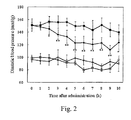
- Fig. 2 is a diagram showing the change of DBP in SHRs and WKYs measured during the first 10 h after a single oral administration of supernatant powder of the fermented dairy product obtained in Example 1.
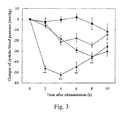
- Fig. 3 is a diagram showing the change of SBP in SHRs measured during the first 10 h after a single oral administration of Fraction A and Fraction B obtained in Example 2.
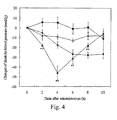
- Fig. 4 is a diagram showing the change of DBP in SHRs measured during the first 10 h after a single oral administration of Fraction A and Fraction B obtained in Example 2.
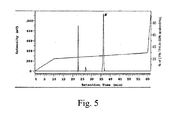
- Fig. 5 is an HPLC spectrum showing the fractionation of Fraction A obtained in Example 2 by RP-HPLC. The two major peaks were collected for further identification by a 2-D electrophoresis system. The arrow indicates the peak containing the peptide with the value of isoelectric point (pI) being about 10 and the molecular weight (Mw) being about 2 kDa.
- pI isoelectric point
- Mw molecular weight
- Fig. 6 is a diagram showing the change of SBP in SHRs measured during the first 10 h after a single oral administration of the synthetic antihypertensive peptide Val-Leu-Ser-Leu-Ser-Gln-Pro-Lys-Val-Leu-Pro-Val-Pro-Gln-Lys-Ala-Val-Pro-Gln (SEQ ID NO: 1) identified from Fraction A and the tripeptide Val-Pro-Pro (SEQ ID NO: 2).
- Fig. 7 is a diagram showing the change of DBP in SHRs measured during the first 10 h after a single oral administration of the synthetic antihypertensive peptide Val-Leu-Ser-Leu-Ser-Gln-Pro-Lys-Val-Leu-Pro-Val-Pro-Gln-Lys-Ala-Val-Pro-Gln (SEQ ID NO: 1) identified from Fraction A and the tripeptide Val-Pro-Pro (SEQ ID NO: 2).
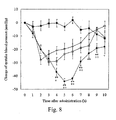
- Fig. 8 is a diagram showing the change of SBP in SHRs measured during the first 10 h after a single oral administration of synthetic peptides Val-Leu-Ser-Leu-Ser-Gln-Pro-Lys-Val-Leu-Pro-Val-Pro-Gln-Lys-Ala-Val-Pro-Gln (SEQ ID NO: 1), Lys-Val-Leu-Pro-Val-Pro (SEQ ID NO: 3), and Lys-Val-Leu-Pro-Val-Pro-Gln (SEQ ID NO: 4).
- Asterisks indicate the level of significant difference from Lys-Val-Leu-Pro-Val-Pro (SEQ ID NO: 3) at each time interval: * indicating P ⁇ 0.05 and ** indicating P ⁇ 0.01. Plus signs indicate the level of significant difference from Lys-Val-Leu-Pro-Val-Pro-Gln (SEQ ID NO: 4) at each time interval: + indicating P ⁇ 0.05 and ++ indicating P ⁇ 0.01.
- Fig. 9 is a diagram showing the change of DBP in SHRs measured during the first 10 h after a single oral administration of synthetic peptides Val-Leu-Ser-Leu-Ser-Gln-Pro-Lys-Val-Leu-Pro-Val-Pro-Gln-Lys-Ala-Val-Pro-Gln (SEQ ID NO: 1), Lys-Val-Leu-Pro-Val-Pro (SEQ ID NO: 3), and Lys-Val-Leu-Pro-Val-Pro-Gln (SEQ ID NO: 4).
- Asterisks indicate the level of significant difference from Lys-Val-Leu-Pro-Val-Pro (SEQ ID NO: 3) at each time interval: * indicating P ⁇ 0.05 and ** indicating P ⁇ 0.01. Plus signs indicate the level of significant difference from and Lys-Val-Leu-Pro-Val-Pro-Gln (SEQ ID NO: 4) at each time interval: + indicating P ⁇ 0.05 and ++ indicating P ⁇ 0.01.
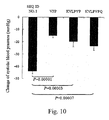
- Fig. 10 is a diagram showing the significant differences in SBP change in SHRs between the synthetic peptide Val-Leu-Ser-Leu-Ser-Gln-Pro-Lys-Val-Leu-Pro-Val-Pro-Gln-Lys-Ala-Val-Pro-Gln (SEQ ID NO: 1) and the other peptides, Val-Pro-Pro (SEQ ID NO: 2), Lys-Val-Leu-Pro-Val-Pro (SEQ ID NO: 3) and Lys-Val-Leu-Pro-Val-Pro-Gln (SEQ ID NO: 4), measured at 5 h after a single oral administration of the respective peptides.
- the treatment groups were all fed at the same dosage of 1 mg/kg BW. Data are shown as mean ⁇ S. E. The P values between two groups are shown.
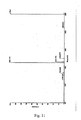
- Fig. 11 is a MALDI-TOF-MS spectrum of the synthetic peptide Val-Leu-Ser-Leu-Ser-Gln-Pro-Lys-Val-Leu-Pro-Val-Pro-Gln-Lys-Ala-Val-Pro-Gln (SEQ ID NO: 1).
- Fig. 12 is a MALDI-TOF-MS spectrum showing peptide fragments derived from the synthetic peptide Val-Leu-Ser-Leu-Ser-Gln-Pro-Lys-Val-Leu-Pro-Val-Pro-Gln-Lys-Ala-Val-Pro-GIn (SEQ ID NO: 1) after simulated gastro-intestinal digestion.
- the present invention provides an antihypertensive peptide consisting of the amino acid sequence of Anti-hypertension Peptide 1 (AP 1).
- AP 1 Anti-hypertension Peptide 1
- Anti-hypertension Peptide 1 or “AP1” refers to a peptide having the amino acid sequence of SEQ ID NO:1
- the peptide of the invention can be isolated from a natural source, such as fermented dairy products, produced by the expression of a recombinant nucleic acid molecule, or can be chemically synthesized.
- fermentation can be conducted with one or more of the following microorganisms: lactic acid bacteria, such as those of genus Lactobacillus, Lactococcus, Strepiococcus, Leuconostoc, and Bifidobacterium; and yeast, such as genus Saccharomyces, Candida, Kluyveromyces, and Pichia.
- Pasteurized whole or defatted mammalian milk, whey, or casein may be used as milk protein-based fermentation substrates.
- the fermentation temperature is preferably between 15 and 45°C, and fermentation time is preferably between 8 and 180 h.
- the fermented dairy products containing the antihypertensive peptide of the present invention, or functional variant thereof may be directly used as material for manufacturing functional foods or nutraceuticals.
- Milk for preparing the fermented dairy product described above can be obtained from a wild-type cow, goat, sheep, pig, or horse, i.e., expressing wild-type ⁇ -casein. It also can be obtained from a genetically engineered cow, goat, sheep, horse, pig or horse, i.e., expressing modified ⁇ -casein such that through fermentation a peptide of SEQ ID NO:1 is produced.
- the antihypertensive peptide of the present invention can also be produced by traditional methods of enzymatic hydrolysis of milk protein-based material, or by way of conventional organochemical synthetic methods. These methods are well known in the art and can be practiced by persons of ordinary skills in the art without undue experimentation.
- the peptide of the present invention can be used as an active ingredient in pharmaceutical compositions for preventing or treating hypertension and/or CVD.
- the fermented dairy product comprising the antihypertensive peptide or functional variant thereof may be directly employed as the active ingredient of the pharmaceutical composition. However, it may also be purified by column chromatography or any of a variety of biochemical methods to eliminate some or all components other than the antihypertensive peptide.
- composition of the present invention can be manufactured by conventionally known methods with one or more pharmaceutically acceptable carriers.
- pharmaceutically acceptable carrier encompasses any of the standard pharmaceutical carriers. Such carriers may include, but are not limited to: saline, buffered saline, dextrose, water, glycerol, ethanol and combinations thereof.
- compositions suitable for oral administration include solid forms, such as pills, capsules, granules, tablets, and powders, and liquid forms, such as solutions, syrups, elixirs, and suspensions.
- forms useful for parenteral administration include sterile solutions, emulsions, and suspensions.
- an oral pharmaceutical composition of the present invention may be supplemented with one or more excipients that are normally employed in oral formulations, such as surfactants, solubilizers, stabilizers, emulsifiers, thickeners, coloring agents, sweetening agents, flavoring agents, and preservatives.
- excipients are well known to those skilled in the art.
- the pharmaceutical composition is a food preparation comprising the antihypertensive peptide of the present invention, at an amount effective for reducing blood pressure.
- the food preparation include but not limited to fermented dairy products, soft drinks, sport drinks, elder food, candies, and gum.
- the present invention also provides a method for reducing blood pressure in a subject and composition thereof, said method comprising administering to the subject the antihypertensive peptide of the present invention, at an amount effective for reducing blood pressure.
- the present invention provides a method for prophylactic or therapeutic treatment of CVD in a subject and composition thereof, said method comprising administering to the subject the antihypertensive peptide of the present invention, at an amount effective for reducing blood pressure.
- the actual amount of the peptide to be administered can vary in accordance with the age, size, and condition of the subject to be treated, depending on the discretion of medical professionals.
- Example 1 Preparation of fermented dairy product and confirmation of the antihypertensive activity thereof.
- the fermented dairy product 100g of defatted skim milk powder were dissolved in 900 g of ddH 2 O. The obtained skim milk solution was pasteurized at 63°C for 30 min, then cooled for inoculation. A 2% starter containing 10 8 CFU/mL bacteria identified from kefir grain including Lactobacillus acidophilus, Lactobacillus helveticus and Saccharomyces cerevisiae was added to the pasteurized skim milk. The cultivation temperature and time are 38°C and 20 h. The fermented dairy product (1 L) was centrifuged at 12,000 ⁇ g for 10min, and the supernatants were freeze-dried and kept at -20°C until use.
- Both the supernatant and the freeze-dried powder of the supernatant were enriched with antihypertensive peptides, and the amount of the peptides were determined to be 50 to 500 mg/L supernatant and 1.5-15 mg/g supernatant powder, respectively, depending on the fermentation condition (data not shown).
- the inhibitory potencies of peptides on ACE activity do not always correlate with their antihypertensive effects, because some peptides with potent ACE inhibitory activities in vitro are inactive after oral administration. Therefore, the antihypertensive activity of the aforementioned supernatant powder of the fermented dairy product were measured in SHRs and normotensive rats (Wistar-Kyoto rats, WKYs) to evaluate its potential applications to functional food for preventing hypertension.
- the male SHRs and male WKYs used in the present and following examples were purchased from National Laboratory Animal Center (Taipei, Taiwan) and fed with laboratory chow (Rodent laboratory chow 5001, Purina Co., USA).
- Blood pressures including SBP and DBP of 8- to 18-wk-old SHRs (body weight, 330-360 g) and 8- to 18-wk-old WKYs (body weight, 350-380g) were measured by the tail-cuff method employing a tail-cuff detection system (Softron BP16; Softron, Tokyo, Japan).
- the antihypertensive activities of the test samples were evaluated by measuring the changes in SBP and DBP of SHRs and WKYs during 0-10 h after oral administration of respective samples.
- Example 2 Fractionation of the supernatant of fermented dairy product and confirmation of the antihypertensive activity of "Fraction A.”
- RP-HPLC reverse-phase HPLC
- RP-C18 Vydac ® HPLC Column
- Solvent A 1% trifluoroacetic acid in acetonitrile
- solvent B ddH2O
- the peptides were eluted by a gradient from 100 % solvent B to 10% solvent B during 0-10 min, 10% solvent B to 30% solvent B during 10-120min, then 30% solvent B to 100% solvent B during 120-150 min at a flow rate of 1 mL/min. The absorbance was detected at 215 nm. The fractions were collected by min and used for the following measurement of ACE inhibitory activity.
- ACE inhibitory activity was assayed by the method of Cushman and Cheung as described in Biochem. Pharmacol. 20: 1637-1648 (1971 ). The method is based on the liberation of hippuric acid from hippuryl-L-histidyl-L-leucine, catalyzed by ACE. Briefly, 30 ⁇ L of each sample solution was added to 200 ⁇ L of 50 mM sodium tetraborate buffer (pH8.3) containing 300 mM NaCl and 5 mM hippuryl-L- histidyl-L- leucine (Sigma Chemical Co., St. Louis, MO).
- ACE (2 mU, EC 3.4.15.1, 100 mU/mL, Sigma) was added, and the reaction mixture was incubated at 37°C for 35 min. The reaction was terminated by the addition of 250 ⁇ L of 1 M HCl.
- the hippuric acid formed by the action of ACE was extracted with ethyl acetate, and the amount of hippuric acid was measured spectrophotometrically at 228 nm after removal of ethyl acetate by heat evaporation.
- the concentration of ACE inhibitor was defined as that needed to inhibit 50% of the ACE activity (IC50).
- Fraction A Two groups of fractions eluted from 13-16 min (the pooled mixture named as Fraction A) and from 32-33 min (the pooled mixture named as Fraction B) exhibited higher ACE inhibitory activity (over 80%).
- Fraction A and Fraction B were collected from several more HPLC runs for further determination of antihypertensive activity in vivo by measuring the change of blood pressure in SHRs after oral administration of these two fractions as described in Example 1.
- Example 3 Identification of antihypertensive peptides and synthesis of the peptide of interest.
- Fraction A which exhibited significant antihypertensive activity in vivo, was collected from 20 HPLC runs and used for further purification by RP-HPLC. The elution condition for the further purification was different from the aforementioned. Solvent A' (1% trifluoroacetic acid in 50% acetonitrile) and solvent B (ddH2O) were used as mobile phase. The peptides were eluted by a gradient from 100 % solvent B to 20% solvent B during 0-10 min, 20% solvent B to 30% solvent B during 10-60min at a flow rate of 1 mL/min.
- the sequence of the identified peptide derived from Fraction A consisted of 19 amino acids: Val-Leu-Ser-Leu-Ser-Gln-Pro-Lys-Val-Leu-Pro-Val-Pro-Gln-Lys-Ala-Val-Pro-Gln (SEQ ID NO: 1). This peptide was found in the primary structure of ⁇ -casein and seemed to be liberated from casein molecule during fermentation. The amino acid sequence of SEQ ID NO: 1 was then synthesized by Protech Technology Enterprise Co., Ltd. (Taipei, Taiwan) and tested for its antihypertensive activity in SHRs in the following example.
- Example 4 Confirmation of the antihypertensive activity of the peptide of interest.
- Val-Pro-Pro (SEQ ID NO: 2) derived from ⁇ -casein has been reported to decrease SBP in SHRs with a dose of 1.6 mg/kg BW by 20 mmHg at 6 h after oral administration ( Nakamura et al., 1995, J. Dairy Sci. 78: 1253-1257 ; Nakamura et al., 1995, J. Dairy Sci. 78: 777-783 ).
- VPP is labeled as one of the two key components in Calpis sour milk drink, a popular functional food on market for controlling blood pressure. As shown in Fig. 6 and Fig.
- Val-Pro-Pro (SEQ ID NO: 2) had a maximal decrease of 26.3 ⁇ 3.2 mmHg in SBP and 18.0 ⁇ 2.1 mmHg in DBP at 4 h after oral administration with a dose of 1 mg/ kg BW.
- the maximal decrease of SBP and DBP were up to 44.0 ⁇ 2.1 mmHg at 5 h and 23.0 ⁇ 2.9 mmHg at 6 h, respectively.
- the maximal decrease in SBP and DBP were up to 44.0 ⁇ 2.1 mmHg at 5 h and 23.0 ⁇ 2.9 mmHg at 6 h, respectively.
- the maximal decrease in SBP and DBP were up to 27.8 ⁇ 3.3mmHg at 2 h and 17.5 ⁇ 4.2mmHg at 5 h, respectively.
- Lys-Val-Leu-Pro-Val-Pro-Gln SEQ ID NO: 4
- the maximal decreases in SBP and DBP were up to 29.2 ⁇ 4.0 mmHg at 3 h and 14.4 ⁇ 3.2mmHg at 4 h, respectively.
- Val-Leu-Ser-Leu-Ser-Gln-Pro-Lys-Val-Leu-Pro-Val-Pro-Gln-Lys-Ala-Val-Pro-Gln SEQ ID NO: 1
- Val-Pro-Pro SEQ ID NO: 2
- P 0.00001
- Lys-Val-Leu-Pro-Val-Pro SEQ ID NO: 3
- Lys-Val-Leu-Pro-Val-Pro-Gln SEQ ID NO: 4
- the peptide was digested with a pepsin solution (pH 2.5) (EC 3.4.23.1; 1:10000; Sigma, USA) for 1.5 h at 37°C, followed by digestion with Corolase PP (pH 7.5) (pancreatic protease; Rohm, Darmstadt, German) for 2.5 h at 37°C.
- Corolase PP pH 7.5
- the digested peptide solution was filtered through a 3 kDa cut-off centrifugal filter (Microcon YM-3, 3 kDa NMWL, Millipore Co., USA) by centrifugation at 1,000 ⁇ g for 10 min.
- the filtrate was then used in the analysis for peptide fragments by MALDI-TOF-MS (matrix-assisted laser desorption ionization-time of flight mass spectrometry).
- the peptide fragments derived from the 19-a.a. peptide, Val-Leu-Ser-Leu-Ser-Gln-Pro-Lys-Val-Leu-Pro-Val-Pro-Gln-Lys-Ala-Val-Pro-Gln SEQ ID NO: 1 as identified in Example 3 after simulating gastro-intestinal digestion did not contain Lys-Val-Leu-Pro-Val-Pro (SEQ ID NO: 3) or Lys-Val-Leu-Pro-Val-Pro-Gln (SEQ ID NO: 4).
- Val-Leu-Ser-Leu-Ser-Gln-Pro-Lys-Val-Leu-Pro-Val-Pro-Gln-Lys-Ala-Val-Pro-Gln provided an significantly higher antihypertensive activity than either of the known peptides, Lys-Val-Leu-Pro-Val-Pro (SEQ ID NO: 3) and Lys-Val-Leu-Pro-Val-Pro-Gln (SEQ ID NO: 4).
Landscapes
- Life Sciences & Earth Sciences (AREA)
- Health & Medical Sciences (AREA)
- Chemical & Material Sciences (AREA)
- Engineering & Computer Science (AREA)
- Organic Chemistry (AREA)
- Proteomics, Peptides & Aminoacids (AREA)
- General Health & Medical Sciences (AREA)
- Polymers & Plastics (AREA)
- Medicinal Chemistry (AREA)
- Food Science & Technology (AREA)
- Molecular Biology (AREA)
- Zoology (AREA)
- Genetics & Genomics (AREA)
- Animal Behavior & Ethology (AREA)
- Pharmacology & Pharmacy (AREA)
- Public Health (AREA)
- Veterinary Medicine (AREA)
- Toxicology (AREA)
- Chemical Kinetics & Catalysis (AREA)
- Gastroenterology & Hepatology (AREA)
- Biochemistry (AREA)
- Biophysics (AREA)
- Cardiology (AREA)
- Heart & Thoracic Surgery (AREA)
- Bioinformatics & Cheminformatics (AREA)
- Mycology (AREA)
- Nutrition Science (AREA)
- Nuclear Medicine, Radiotherapy & Molecular Imaging (AREA)
- General Chemical & Material Sciences (AREA)
- Microbiology (AREA)
- Medicines That Contain Protein Lipid Enzymes And Other Medicines (AREA)
- Peptides Or Proteins (AREA)
Description
- The present invention pertains to the antihypertensive peptide of SEQ ID NO:1.
- Hypertension, which affected around 26.4% of the global adult population in 2000 and was projected to affect 29.2% by 2025 (Kearney et al., 2005, Lancet. 365:217-223), is the major controllable risk factor associated with cardiovascular disease (CVD) events such as myocardial infraction, stroke, heart failure, and end-stage diabetes. A 5-mmHg reduction in blood pressure has been equated with around 16% reduction in CVD (FitzGerald et al., 2004, J. Nutr. 134: 980S-988S). The seventh Joint National Committee (JNC 7) reported the risk of heart disease and stroke increases at blood pressure above systolic blood pressure (SBP)/diastolic blood pressure (DBP) values of 115/75 mmHg. JNC 7 recommended that the pre-hypertensive individuals (SBP 120-139 mmHg or DBP 80-89 mmHg) adopt health-promoting lifestyle modifications to prevent the progressive rise in blood pressure and CVD. Therefore, the awareness of and demand for functional food ingredients or nutraceuticals for controlling blood pressure have been raised globally.
- Many bioactive peptides derived from milk proteins have been found to have health-enhancing nutraceutical potential. These peptides directly influence numerous biological processes, exhibiting antimicrobial, antithrombotic, immunomodulatory, mineral carrier, opioid-like, or angiotensin 1-converting enzyme (ACE) inhibitory activities (Clare and Swaisgood, 2000, J. Dairy Sci. 83: 1187-1195). Among the bioactive peptides, ACE inhibitory peptides have attracted particular attention and have been studied most comprehensively for their applications to prevent hypertension, an independent risk factor for CVD (Li et al., 2004, Nutr. Res. 24: 469-486). ACE is a multifunctional ectoenzyme located in different tissues and plays a key physiological role in renin-angiotensin, kallikrein-kinin, and immune systems. The enzyme is responsible for the increase in blood pressure by converting angiotensin-I to the potent vasoconstrictor, angiotensin-II, and by degrading bradykinin, a vasodilatory peptide, and enkephalins. Inhibition of ACE is considered to be a useful therapeutic approach in the treatment of hypertension. To date, several adverse side effects such as hypotension, increased potassium levels, reduced renal function, cough, angioedema, skin rashes, and fetal abnormalities have been associated with the ACE inhibitory drugs. However, the ACE inhibitory peptides naturally derived from food protein sources are considered to be milder and safer without the side effects associated with the drugs.
-
JP2003327543 (19.11.2003 - In the development of novel functional food for controlling pressure, many ACE inhibitory peptides derived from milk proteins have been found (Yamamoto et al., 1994, J. Dairy Sci. 77: 917-922; Maeno et al., 1996, J. Dairy Sci. 79: 1316-1321; Yamamoto, 1997, Biopoly. 43: 129-134; Pihlanto-Leppälä et al. 1998, Int. Dairy J. 8: 325-331; Yamamoto and Takano, 1999, Nahrung 43: 159-164; Clare and Swaisgood, 2000, ut supra; Minervini et al., 2003, Appl. Environ. Microbiol. 69: 5297-5305; Li et al., 2004, ut supra; Robert et al., 2004, J. Agric. Food Chem. 52: 6923-6931; and Quirós et al., 2005, J. Dairy Sci. 88: 3480-3487). However, most of these peptides have not yet been confirmed in vivo. Only some of the ACE inhibitory peptides have been shown to exhibit antihypertensive activities in spontaneously hypertensive rats (SHRs) (FitzGerald et al., 2004, ut supra). To date, there are several products, such as Calpis sour milk drink (Calpis Co., Japan) and C 12 peptide (DMV International, The Netherlands), on the market in the form of fermented milk or milk protein hydrolysates. In these cases, the active antihypertensive peptides including IPP, VPP, and FFVAPFEVFGK have been identified. However, there is still a great demand for antihypertensive peptides that may be administered orally in a minor dosage.
- The aim of the present invention is to provide a novel antihypertensive peptide with significant blood pressure-reducing effect in vivo. This novel peptide, whether derived from a naturally occurring protein or prepared by chemical synthesis/recombinant technology, can be included in food preparations, nutraceutical preparations, and pharmaceutical preparations for controlling blood pressure or reducing the risk of CVD.
- Accordingly, the present invention features an isolated antihypertensive peptide, named herein "
Anti-hypertension Peptide 1" ("AP1"). AP1 has the amino acid sequence of Val-Leu-Ser-Leu-Ser-Gln-Pro-Lys-Val-Leu-Pro-Val-Pro-Gln-Lys-Ala-Val-Pro-Gln (SEQ ID NO: 1). The term "isolated" herein, as used in "isolated antihypertensive peptide," refers to an attribute of the peptide, i.e., substantially free from its naturally associated molecules. The term "peptide" used herein refers to a short polymer of amino acids (i.e., 50 or less), which are linked one by one via the peptide bond. - The present invention also features a pharmaceutical composition that contains the isolated antihypertensive peptide mentioned above and a pharmaceutically acceptable carrier. This pharmaceutical composition can be administered orally.
- This invention further features a food preparation containing antihypertensive peptide, AP1. An example of such a food preparation is a fermented dairy product.
- In another aspect, the present invention features a method for treating hypertension or CVD by administering (e.g., orally) to a subject in need of this treatment an effective amount of a composition containing the just-mentioned antihypertensive peptide.
- As used herein, the term "treating" refers to administering a composition containing an antihypertensive peptide to a subject that has either hypertension or CVD, or has a symptom of either disease, or has a predisposition toward either disease, with the purpose to cure, heal, alleviate, relieve, alter, remedy, ameliorate, improve, or affect either disease, the symptoms of either disease, or the predisposition toward either disease. The term "an effective amount" refers to the amount of the antihypertensive peptide that is required to confer the intended therapeutic effect in the subject. Effective amounts may vary, as recognized by those skilled in the art, depending on route of administration, excipient usage, and the possibility of co-usage with other agents.
- The foregoing summary, as well as the following detailed description of the invention, will be better understood when read in conjunction with the appended drawings. For the purpose of illustrating the invention, there are shown in the drawings embodiments which are presently preferred. It should be understood, however, that the invention is not limited to the precise arrangements and instrumentalities shown.
- In the drawings:
-
Fig. 1 is a diagram showing the change of SBP in SHRs and WKYs measured during the first 10 h after a single oral administration of supernatant powder of the fermented dairy product obtained in Example 1. The treatment groups were SHRs (n=9, ◆) or WKYs (n=6, ◇) fed with a dose of 35 mg/kg BW of supernatant powder of the fermented dairy product. The control groups were SHRs (n=6, ■) or WKYs (n=6, □) fed with a dose of 35 mg/kg BW of supernatant powder of milk. Data are shown as mean ± S.E. Asterisks indicate the level of significant difference from the control in SHRs at each time interval: * indicating P < 0.05 and ** indicating P < 0.01. -
Fig. 2 is a diagram showing the change of DBP in SHRs and WKYs measured during the first 10 h after a single oral administration of supernatant powder of the fermented dairy product obtained in Example 1. The treatment groups were SHRs (n=9, ◆) or WKYs (n=6, ◇) fed with a dose of 35 mg/kg BW of supernatant powder of the fermented dairy product. The control groups were SHRs (n=6, ■) or WKYs (n=6, □) fed with a dose of 35 mg/kg BW of supernatant powder of milk. Data are shown as mean ± S.E. Asterisks indicate the level of significant difference from the control in SHRs at each time interval: * indicating P < 0.05 and ** indicating P < 0.01. -
Fig. 3 is a diagram showing the change of SBP in SHRs measured during the first 10 h after a single oral administration of Fraction A and Fraction B obtained in Example 2. The treatment groups were fed with a dose of 35 mg/kg BW of supernatant powder of the fermented dairy product of Example 1 (n=9, ◆), with a dose of 1 mg/kg BW of Fraction A (n=9, ▲), or with a dose of 1 mg/kg BW of Fraction B (n=6, △). The control group was fed with a dose of 35 mg/kg BW of supernatant powder of milk (n=6, ■). Data are shown as mean ± S.E. Asterisks indicate the level of significant difference from the control at each time interval: * indicating P < 0.05 and ** indicating P < 0.01. -
Fig. 4 is a diagram showing the change of DBP in SHRs measured during the first 10 h after a single oral administration of Fraction A and Fraction B obtained in Example 2. The treatment groups were fed with a dose of 35 mg/kg BW of supernatant powder of the fermented dairy product of Example 1 (n=9, ◆), with a dose of 1 mg/kg BW of Fraction A (n=9, ▲), or with a dose of 1 mg/kg BW of Fraction B (n=6, △). The control group was fed with a dose of 35 mg/kg BW of supernatant powder of milk (n=6, ■). Data are shown as mean ± S.E. Asterisks indicate the level of significant difference from the control at each time interval: ** indicating P < 0.01. -
Fig. 5 is an HPLC spectrum showing the fractionation of Fraction A obtained in Example 2 by RP-HPLC. The two major peaks were collected for further identification by a 2-D electrophoresis system. The arrow indicates the peak containing the peptide with the value of isoelectric point (pI) being about 10 and the molecular weight (Mw) being about 2 kDa. -
Fig. 6 is a diagram showing the change of SBP in SHRs measured during the first 10 h after a single oral administration of the synthetic antihypertensive peptide Val-Leu-Ser-Leu-Ser-Gln-Pro-Lys-Val-Leu-Pro-Val-Pro-Gln-Lys-Ala-Val-Pro-Gln (SEQ ID NO: 1) identified from Fraction A and the tripeptide Val-Pro-Pro (SEQ ID NO: 2). The treatment groups were fed with a dose of 1 mg/kg BW of Val-Leu-Ser-Leu-Ser-Gln-Pro-Lys-Val-Leu-Pro-Val-Pro-Gln-Lys-Ala-Val-Pro-GIn (SEQ ID NO: 1) (n=9, •) or with a dose of 1 mg/kg BW of Val-Pro-Pro (SEQ ID NO: 2) (n=6, ×). The control group was fed with a dose of 35 mg/kg BW of supernatant powder of milk (n=6, ■). Data are shown as mean ± S.E. Asterisks indicate the level of significant difference from Val-Pro-Pro (SEQ ID NO: 2)at each time interval: * indicating P < 0.05 and ** indicating P < 0.01. -
Fig. 7 is a diagram showing the change of DBP in SHRs measured during the first 10 h after a single oral administration of the synthetic antihypertensive peptide Val-Leu-Ser-Leu-Ser-Gln-Pro-Lys-Val-Leu-Pro-Val-Pro-Gln-Lys-Ala-Val-Pro-Gln (SEQ ID NO: 1) identified from Fraction A and the tripeptide Val-Pro-Pro (SEQ ID NO: 2). The treatment groups were fed with a dose of 1 mg/kg BW of Val-Leu-Ser-Leu-Ser-Gln-Pro-Lys-Val-Leu-Pro-Val-Pro-Gln-Lys-Ala-Val-Pro-GIn (SEQ ID NO: 1) (n=9, •) or with a dose of 1 mg/kg BW of Val-Pro-Pro (SEQ ID NO: 2) (n=6, ×). The control group was fed with a dose of 35 mg/kg BW of supernatant powder of milk (n=6, ■). Data are shown as mean ± S.E. Asterisks indicate the level of significant difference from Val-Pro-Pro (SEQ ID NO: 2) at each time interval: * indicating P < 0.05 and ** indicating P < 0.01. -
Fig. 8 is a diagram showing the change of SBP in SHRs measured during the first 10 h after a single oral administration of synthetic peptides Val-Leu-Ser-Leu-Ser-Gln-Pro-Lys-Val-Leu-Pro-Val-Pro-Gln-Lys-Ala-Val-Pro-Gln (SEQ ID NO: 1), Lys-Val-Leu-Pro-Val-Pro (SEQ ID NO: 3), and Lys-Val-Leu-Pro-Val-Pro-Gln (SEQ ID NO: 4). The treatment groups were fed with a dose of 1 mg/kg BW of Val-Leu-Ser-Leu-Ser-Gln-Pro-Lys-Val-Leu-Pro-Val-Pro-Gln-Lys-Ala-Val-Pro-GIn (SEQ ID NO: 1) (n=9, •), with a dose of 1 mg/kg of Lys-Val-Leu-Pro-Val-Pro (SEQ ID NO: 3) (n=6, ), or with a dose of 1 mg/kg of, and Lys-Val-Leu-Pro-Val-Pro-Gln (SEQ ID NO: 4) (n=6, □). The control group was fed with a dose of 35 mg/kg BW of supernatant powder of milk (n=6, ■). Data are shown as mean ± S.E. Asterisks indicate the level of significant difference from Lys-Val-Leu-Pro-Val-Pro (SEQ ID NO: 3) at each time interval: * indicating P < 0.05 and ** indicating P < 0.01. Plus signs indicate the level of significant difference from Lys-Val-Leu-Pro-Val-Pro-Gln (SEQ ID NO: 4) at each time interval: + indicating P < 0.05 and ++ indicating P < 0.01. -
Fig. 9 is a diagram showing the change of DBP in SHRs measured during the first 10 h after a single oral administration of synthetic peptides Val-Leu-Ser-Leu-Ser-Gln-Pro-Lys-Val-Leu-Pro-Val-Pro-Gln-Lys-Ala-Val-Pro-Gln (SEQ ID NO: 1), Lys-Val-Leu-Pro-Val-Pro (SEQ ID NO: 3), and Lys-Val-Leu-Pro-Val-Pro-Gln (SEQ ID NO: 4). The treatment groups were fed with a dose of 1 mg/kg BW of Val-Leu-Ser-Leu-Ser-Gln-Pro-Lys-Val-Leu-Pro-Val-Pro-Gln-Lys-Ala-Val-Pro-GIn (SEQ ID NO: 1) (n=9, •), with a dose of 1 mg/kg of Lys-Val-Leu-Pro-Val-Pro (SEQ ID NO: 3) (n=6, ), or with a dose of 1 mg/kg of Lys-Val-Leu-Pro-Val-Pro-Gln (SEQ ID NO: 4) (n=6, □). The control group was fed with a dose of 35 mg/kg BW of supernatant powder of milk (n=6, ■). Data are shown as mean ± S.E. Asterisks indicate the level of significant difference from Lys-Val-Leu-Pro-Val-Pro (SEQ ID NO: 3) at each time interval: * indicating P < 0.05 and ** indicating P < 0.01. Plus signs indicate the level of significant difference from and Lys-Val-Leu-Pro-Val-Pro-Gln (SEQ ID NO: 4) at each time interval: + indicating P < 0.05 and ++ indicating P < 0.01. -
Fig. 10 is a diagram showing the significant differences in SBP change in SHRs between the synthetic peptide Val-Leu-Ser-Leu-Ser-Gln-Pro-Lys-Val-Leu-Pro-Val-Pro-Gln-Lys-Ala-Val-Pro-Gln (SEQ ID NO: 1) and the other peptides, Val-Pro-Pro (SEQ ID NO: 2), Lys-Val-Leu-Pro-Val-Pro (SEQ ID NO: 3) and Lys-Val-Leu-Pro-Val-Pro-Gln (SEQ ID NO: 4), measured at 5 h after a single oral administration of the respective peptides. The treatment groups were all fed at the same dosage of 1 mg/kg BW. Data are shown as mean ± S. E. The P values between two groups are shown. -
Fig. 11 is a MALDI-TOF-MS spectrum of the synthetic peptide Val-Leu-Ser-Leu-Ser-Gln-Pro-Lys-Val-Leu-Pro-Val-Pro-Gln-Lys-Ala-Val-Pro-Gln (SEQ ID NO: 1). -
Fig. 12 is a MALDI-TOF-MS spectrum showing peptide fragments derived from the synthetic peptide Val-Leu-Ser-Leu-Ser-Gln-Pro-Lys-Val-Leu-Pro-Val-Pro-Gln-Lys-Ala-Val-Pro-GIn (SEQ ID NO: 1) after simulated gastro-intestinal digestion. - The following abbreviations are used throughout the present invention:
- ACE, angiotensin 1-converting enzyme;
- BW, body weight
- CVD, cardiovascular disease;
- DBP, diastolic blood pressure;
- SBP, systolic blood pressure;
- SHR, spontaneously hypertensive rat;
- WKY, Wistar-Kyoto rat;
- HPLC, High Performance Liquid Chromatography; and
- AP1,
Anti-hypertension Peptide 1 - The present invention provides an antihypertensive peptide consisting of the amino acid sequence of Anti-hypertension Peptide 1 (AP 1). The term "
Anti-hypertension Peptide 1" or "AP1" refers to a peptide having the amino acid sequence of SEQ ID NO:1 - The peptide of the invention can be isolated from a natural source, such as fermented dairy products, produced by the expression of a recombinant nucleic acid molecule, or can be chemically synthesized.
- To obtain the fermented dairy product of the present invention, fermentation can be conducted with one or more of the following microorganisms: lactic acid bacteria, such as those of genus Lactobacillus, Lactococcus, Strepiococcus, Leuconostoc, and Bifidobacterium; and yeast, such as genus Saccharomyces, Candida, Kluyveromyces, and Pichia. Pasteurized whole or defatted mammalian milk, whey, or casein may be used as milk protein-based fermentation substrates. The fermentation temperature is preferably between 15 and 45°C, and fermentation time is preferably between 8 and 180 h. The fermented dairy products containing the antihypertensive peptide of the present invention, or functional variant thereof may be directly used as material for manufacturing functional foods or nutraceuticals.
- Milk for preparing the fermented dairy product described above can be obtained from a wild-type cow, goat, sheep, pig, or horse, i.e., expressing wild-type β-casein. It also can be obtained from a genetically engineered cow, goat, sheep, horse, pig or horse, i.e., expressing modified β-casein such that through fermentation a peptide of SEQ ID NO:1 is produced.
- The antihypertensive peptide of the present invention can also be produced by traditional methods of enzymatic hydrolysis of milk protein-based material, or by way of conventional organochemical synthetic methods. These methods are well known in the art and can be practiced by persons of ordinary skills in the art without undue experimentation.
- Due to its excellent antihypertensive activity in vivo, the peptide of the present invention, or functional variant thereof can be used as an active ingredient in pharmaceutical compositions for preventing or treating hypertension and/or CVD.
- When the antihypertensive peptide of the present invention is produced by fermentation or enzymatic hydrolysis, the fermented dairy product comprising the antihypertensive peptide or functional variant thereof may be directly employed as the active ingredient of the pharmaceutical composition. However, it may also be purified by column chromatography or any of a variety of biochemical methods to eliminate some or all components other than the antihypertensive peptide.
- The pharmaceutical composition of the present invention can be manufactured by conventionally known methods with one or more pharmaceutically acceptable carriers. The term "pharmaceutically acceptable carrier" as used herein encompasses any of the standard pharmaceutical carriers. Such carriers may include, but are not limited to: saline, buffered saline, dextrose, water, glycerol, ethanol and combinations thereof.
- The pharmaceutical composition of the present invention may be constituted into any form suitable for the mode of administration selected. For example, compositions suitable for oral administration include solid forms, such as pills, capsules, granules, tablets, and powders, and liquid forms, such as solutions, syrups, elixirs, and suspensions. Forms useful for parenteral administration include sterile solutions, emulsions, and suspensions.
- In addition to standard carriers, an oral pharmaceutical composition of the present invention may be supplemented with one or more excipients that are normally employed in oral formulations, such as surfactants, solubilizers, stabilizers, emulsifiers, thickeners, coloring agents, sweetening agents, flavoring agents, and preservatives. Such excipients are well known to those skilled in the art.
- In an embodiment of the present invention, the pharmaceutical composition is a food preparation comprising the antihypertensive peptide of the present invention, at an amount effective for reducing blood pressure. Examples of the food preparation include but not limited to fermented dairy products, soft drinks, sport drinks, elder food, candies, and gum.
- The present invention also provides a method for reducing blood pressure in a subject and composition thereof, said method comprising administering to the subject the antihypertensive peptide of the present invention, at an amount effective for reducing blood pressure.
- In another embodiment, the present invention provides a method for prophylactic or therapeutic treatment of CVD in a subject and composition thereof, said method comprising administering to the subject the antihypertensive peptide of the present invention, at an amount effective for reducing blood pressure.
- In the method of the present invention, the actual amount of the peptide to be administered can vary in accordance with the age, size, and condition of the subject to be treated, depending on the discretion of medical professionals.
- The present invention is further illustrated by the following examples, which are provided for the purpose of demonstration rather than limitation.
- Example 1: Preparation of fermented dairy product and confirmation of the antihypertensive activity thereof.
- To prepare the fermented dairy product, 100g of defatted skim milk powder were dissolved in 900 g of ddH2O. The obtained skim milk solution was pasteurized at 63°C for 30 min, then cooled for inoculation. A 2% starter containing 108 CFU/mL bacteria identified from kefir grain including Lactobacillus acidophilus, Lactobacillus helveticus and Saccharomyces cerevisiae was added to the pasteurized skim milk. The cultivation temperature and time are 38°C and 20 h.
The fermented dairy product (1 L) was centrifuged at 12,000 × g for 10min, and the supernatants were freeze-dried and kept at -20°C until use. Both the supernatant and the freeze-dried powder of the supernatant were enriched with antihypertensive peptides, and the amount of the peptides were determined to be 50 to 500 mg/L supernatant and 1.5-15 mg/g supernatant powder, respectively, depending on the fermentation condition (data not shown). - The inhibitory potencies of peptides on ACE activity do not always correlate with their antihypertensive effects, because some peptides with potent ACE inhibitory activities in vitro are inactive after oral administration. Therefore, the antihypertensive activity of the aforementioned supernatant powder of the fermented dairy product were measured in SHRs and normotensive rats (Wistar-Kyoto rats, WKYs) to evaluate its potential applications to functional food for preventing hypertension. The male SHRs and male WKYs used in the present and following examples were purchased from National Laboratory Animal Center (Taipei, Taiwan) and fed with laboratory chow (Rodent laboratory chow 5001, Purina Co., USA). Blood pressures including SBP and DBP of 8- to 18-wk-old SHRs (body weight, 330-360 g) and 8- to 18-wk-old WKYs (body weight, 350-380g) were measured by the tail-cuff method employing a tail-cuff detection system (Softron BP16; Softron, Tokyo, Japan). The antihypertensive activities of the test samples were evaluated by measuring the changes in SBP and DBP of SHRs and WKYs during 0-10 h after oral administration of respective samples.
- The results of SBP and DBP observed during the first 10 h after a single oral administration with a dose of 35 mg/kg BW supernatant powder of the fermented dairy product (the treatment groups) or with the same dose of supernatant powder of ordinary milk (the control groups) are shown in
Fig. 1 andFig. 2 . In SHRs fed with supernatant powder of the fermented dairy product, the mean SBP was 194.3 ± 3.9 mmHg before administration and significantly decreased between 3 and 10 h after administration compared with the control groups (at 3, 4, 5, 6, 7, 8, 9 h, P < 0.01; at 10 h, P < 0.05). As to DBP, the mean value was 150.6 ± 4.3 mmHg before administration and significantly decreased between 2 and 10 h after administration (at 2h, P < 0.05; at 3, 4, 5, 6, 7, 8, 9 h, P < 0.01; at 10 h, P < 0.05). The maximal decrease of SBP and DBP was 42.2 ± 2.9 mmHg and 37.3 ± 3.1 mmHg, respectively, observed at 9 h after administration. In WKYs, neither SBP nor DBP was significantly different between the treatment groups and the control groups. These data suggest that the supernatant powder of the fermented dairy product exhibits an antihypertensive effect only in subjects with hypertension. - Example 2: Fractionation of the supernatant of fermented dairy product and confirmation of the antihypertensive activity of "Fraction A."
- The aforementioned supernatant powder was re-dissolved in ddH2O, and the resulting solution was subjected to fractionation. One milliliter of the re-dissolved solution (total peptide conc. 20 mg/mL) was subjected to reverse-phase HPLC (RP-HPLC) (UV-VIS detector L-7420; Pump L-7100, Hitachi Ltd., Japan) with RP-C18 column (Vydac ® HPLC Column, and Solvent A (1% trifluoroacetic acid in acetonitrile) and solvent B (ddH2O) were used as mobile phase. The peptides were eluted by a gradient from 100 % solvent B to 10% solvent B during 0-10 min, 10% solvent B to 30% solvent B during 10-120min, then 30% solvent B to 100% solvent B during 120-150 min at a flow rate of 1 mL/min. The absorbance was detected at 215 nm. The fractions were collected by min and used for the following measurement of ACE inhibitory activity.
- ACE inhibitory activity was assayed by the method of Cushman and Cheung as described in Biochem. Pharmacol. 20: 1637-1648 (1971). The method is based on the liberation of hippuric acid from hippuryl-L-histidyl-L-leucine, catalyzed by ACE. Briefly, 30 µL of each sample solution was added to 200 µL of 50 mM sodium tetraborate buffer (pH8.3) containing 300 mM NaCl and 5 mM hippuryl-L- histidyl-L- leucine (Sigma Chemical Co., St. Louis, MO). ACE (2 mU, EC 3.4.15.1, 100 mU/mL, Sigma) was added, and the reaction mixture was incubated at 37°C for 35 min. The reaction was terminated by the addition of 250 µL of 1 M HCl. The hippuric acid formed by the action of ACE was extracted with ethyl acetate, and the amount of hippuric acid was measured spectrophotometrically at 228 nm after removal of ethyl acetate by heat evaporation. The ACE inhibiting percentage was calculated by the following equation: Inhibiting percentage = (A-B)/(A-C) x 100%, where A is the absorbance at 228 nm of hippuric acid free of sample, B is the absorbance at 228 nm of hippuric acid with sample, and C is the absorbance at 228 nm of hippuric acid free of ACE and sample. The concentration of ACE inhibitor was defined as that needed to inhibit 50% of the ACE activity (IC50).
- Two groups of fractions eluted from 13-16 min (the pooled mixture named as Fraction A) and from 32-33 min (the pooled mixture named as Fraction B) exhibited higher ACE inhibitory activity (over 80%). Fraction A and Fraction B were collected from several more HPLC runs for further determination of antihypertensive activity in vivo by measuring the change of blood pressure in SHRs after oral administration of these two fractions as described in Example 1.
- The change of SBP and DBP in SHRs during the first 10 h after administration of a dose of 1mg/kg BW of Fraction A and Fraction B were shown in
Fig. 3 andFig. 4 . The change of blood pressure in SHRs administered with the supernatant of the fermented dairy product and of milk was used as references. Fraction A exhibited potent antihypertensive activity with the maximal SBP decrease up to 52.5 ± 2.4 mmHg and DBP decrease up to 45.9 ± 7.0 mmHg at 4 h. Fraction B exhibited high ACE inhibitory activity in vitro but low antihypertensive activity in vivo. Therefore, Fraction A was chosen for further identification of the peptides effective for reducing blood pressure. - Example 3: Identification of antihypertensive peptides and synthesis of the peptide of interest.
- Fraction A, which exhibited significant antihypertensive activity in vivo, was collected from 20 HPLC runs and used for further purification by RP-HPLC. The elution condition for the further purification was different from the aforementioned. Solvent A' (1% trifluoroacetic acid in 50% acetonitrile) and solvent B (ddH2O) were used as mobile phase. The peptides were eluted by a gradient from 100 % solvent B to 20% solvent B during 0-10 min, 20% solvent B to 30% solvent B during 10-60min at a flow rate of 1 mL/min.
- The two major peaks resulted from the further purification were shown in
Fig. 5 . The elution of each major peak was further separated and characterized using 2-D electrophoresis system (PROTEAN IEF for the first-dimension and Mini-PROTEAN 3 for the second-dimension, Bio-Rad Laboratories, Inc., USA). Results show that there was a predominant spot with pI ≒ 10 and Mw ≒ 2 kD in the elution at 36 min of retention time. In the other major peak, the peptides could not be clearly separated. Therefore, only the spot with pI ≒ 10 and Mw ≒ 2 kD was subjected to amino acid sequencing by a protein sequencer (Perkin Elmer ABI Model 491, USA). - The sequence of the identified peptide derived from Fraction A consisted of 19 amino acids: Val-Leu-Ser-Leu-Ser-Gln-Pro-Lys-Val-Leu-Pro-Val-Pro-Gln-Lys-Ala-Val-Pro-Gln (SEQ ID NO: 1). This peptide was found in the primary structure of β-casein and seemed to be liberated from casein molecule during fermentation. The amino acid sequence of SEQ ID NO: 1 was then synthesized by Protech Technology Enterprise Co., Ltd. (Taipei, Taiwan) and tested for its antihypertensive activity in SHRs in the following example.
- Example 4: Confirmation of the antihypertensive activity of the peptide of interest.
- The synthetic peptide with the same sequence as the identified peptide of SEQ ID NO: 1, was used to confirm the antihypertensive effect in vivo by the same procedure as described in Example 1. As shown in
Fig. 6 andFig. 7 , a single oral administration of this peptide to SHRs with a dose of 1mg/kg BW exhibited a potent antihypertensive effect both in SBP and DBP. In addition, the tripeptide VPP was synthesized and tested in SHRs as the positive control group. Val-Pro-Pro (SEQ ID NO: 2) derived from β-casein has been reported to decrease SBP in SHRs with a dose of 1.6 mg/kg BW by 20 mmHg at 6 h after oral administration (Nakamura et al., 1995, J. Dairy Sci. 78: 1253-1257; Nakamura et al., 1995, J. Dairy Sci. 78: 777-783). Besides, VPP is labeled as one of the two key components in Calpis sour milk drink, a popular functional food on market for controlling blood pressure. As shown inFig. 6 andFig. 7 , Val-Pro-Pro (SEQ ID NO: 2) had a maximal decrease of 26.3 ± 3.2 mmHg in SBP and 18.0 ± 2.1 mmHg in DBP at 4 h after oral administration with a dose of 1 mg/ kg BW. As to the identified peptide of 19 a.a.: Val-Leu-Ser-Leu-Ser-Gln-Pro-Lys-Val-Leu-Pro-Val-Pro-Gln-Lys-Ala-Val-Pro-Gln (SEQ ID NO: 1), the maximal decrease of SBP and DBP were up to 44.0 ± 2.1 mmHg at 5 h and 23.0 ± 2.9 mmHg at 6 h, respectively. These data show that the peptide identified in the Example 3 had a potent antihypertensive effect in vivo. - In 1996, Maeno et al. reported that two peptides, Lys-Val-Leu-Pro-Val-Pro (SEQ ID NO: 3) and Lys-Val-Leu-Pro-Val-Pro-Gln (SEQ ID NO: 4), derived from the casein hydrolysate exhibited antihypertensive activity in SHRs (Maeno et al., 1996, ut supra). According to Maeno et al., Lys-Val-Leu-Pro-Val-Pro-Gln (SEQ ID NO: 4) decreased SBP up to 31.5 ± 5.6 mmHg at 6 h after a single oral administration of 2mg/kg BW. Since our identified peptide of 19 a.a., Val-Leu-Ser-Leu-Ser-Gln-Pro-Lys-Val-Leu-Pro-Val-Pro-Gln-Lys-Ala-Val-Pro-Gln (SEQ ID NO: 1), contained both of the sequences Lys-Val-Leu-Pro-Val-Pro (SEQ ID NO: 3) and Lys-Val-Leu-Pro-Val-Pro-Gln (SEQ ID NO: 4), it was compared with these two peptides (synthetic) for their antihypertensive activities at the same dosage of 1 mg/kg BW. As shown in
Fig. 8 andFig. 9 , for the 19 a.a. peptide, the maximal decrease in SBP and DBP were up to 44.0 ± 2.1 mmHg at 5 h and 23.0 ± 2.9 mmHg at 6 h, respectively. However, for Lys-Val-Leu-Pro-Val-Pro (SEQ ID NO: 3), the maximal decrease in SBP and DBP were up to 27.8 ± 3.3mmHg at 2 h and 17.5 ± 4.2mmHg at 5 h, respectively. For Lys-Val-Leu-Pro-Val-Pro-Gln (SEQ ID NO: 4), the maximal decreases in SBP and DBP were up to 29.2 ± 4.0 mmHg at 3 h and 14.4 ± 3.2mmHg at 4 h, respectively.Fig. 10 shows that Val-Leu-Ser-Leu-Ser-Gln-Pro-Lys-Val-Leu-Pro-Val-Pro-Gln-Lys-Ala-Val-Pro-Gln (SEQ ID NO: 1) exhibited extremely significantly higher antihypertensive activity than Val-Pro-Pro (SEQ ID NO: 2) (P = 0.00001), Lys-Val-Leu-Pro-Val-Pro (SEQ ID NO: 3) (P = 0.00003) and Lys-Val-Leu-Pro-Val-Pro-Gln (SEQ ID NO: 4) (P = 0.00007). - Furthermore, to verify that the high antihypertensive activity exhibited in vivo by our 19-a.a. peptide was not provided by either Lys-Val-Leu-Pro-Val-Pro (SEQ ID NO: 3) or Lys-Val-Leu-Pro-Val-Pro-Gln (SEQ ID NO: 4) as a result of digestion, the synthesized peptide Val-Leu-Ser-Leu-Ser-Gln-Pro-Lys-Val-Leu-Pro-Val-Pro-Gln-Lys-Ala-Val-Pro-Gln (SEQ ID NO: 1) was digested under simulated gastro-intestinal condition as described by Alting et al. in Diabetes Care 20: 875-880 (1997). Briefly, the peptide was digested with a pepsin solution (pH 2.5) (EC 3.4.23.1; 1:10000; Sigma, USA) for 1.5 h at 37°C, followed by digestion with Corolase PP (pH 7.5) (pancreatic protease; Rohm, Darmstadt, German) for 2.5 h at 37°C. To remove the enzyme added, the digested peptide solution was filtered through a 3 kDa cut-off centrifugal filter (Microcon YM-3, 3 kDa NMWL, Millipore Co., USA) by centrifugation at 1,000 × g for 10 min. The filtrate was then used in the analysis for peptide fragments by MALDI-TOF-MS (matrix-assisted laser desorption ionization-time of flight mass spectrometry).
- As shown in
Fig. 11 ,Fig. 12 and Table 1 below, the peptide fragments derived from the 19-a.a. peptide, Val-Leu-Ser-Leu-Ser-Gln-Pro-Lys-Val-Leu-Pro-Val-Pro-Gln-Lys-Ala-Val-Pro-Gln (SEQ ID NO: 1) as identified in Example 3 after simulating gastro-intestinal digestion did not contain Lys-Val-Leu-Pro-Val-Pro (SEQ ID NO: 3) or Lys-Val-Leu-Pro-Val-Pro-Gln (SEQ ID NO: 4). Furthermore, the 19-a.a. peptide, Val-Leu-Ser-Leu-Ser-Gln-Pro-Lys-Val-Leu-Pro-Val-Pro-Gln-Lys-Ala-Val-Pro-Gln (SEQ ID NO: 1) provided an significantly higher antihypertensive activity than either of the known peptides, Lys-Val-Leu-Pro-Val-Pro (SEQ ID NO: 3) and Lys-Val-Leu-Pro-Val-Pro-Gln (SEQ ID NO: 4). -
Table 1, amino acid sequences of peptide fragments derived from the synthetic peptide Val-Leu-Ser-Leu-Ser-Gln-Pro-Lys-Val-Leu-Pro-Val-Pro-Gln-Lys-Ala-Val-Pro-Gln (VLSLSQPKVLPVPQKAVPQ) of SEQ ID NO: 1 after simulated gastro-intestinal digestion. No. m/z (mi) m/z (av) Start End Missed Cleavages Sequence 1 414.2347 414.4845 16 19 0 (K) AVPQ (-) (SEQ ID NO: 5) 1 780.4978 780.9917 9 15 0 (K) VLPVPQK (A) (SEQ ID NO: 6) 1 871.5247 872.0586 1 8 0 (-) VLSLSQPK (V) (SEQ ID NO: 7) 1 1175.7147 1176.4534 9 19 1 (K) VLPVPQKAVPQ (-) (SEQ ID NO: 8) 1 1633.0047 1634.0276 1 15 1 (-) VLSLSOPKVLPVPQK (A) (SEQ ID NO: 9) 1 2028.2216 2029.4893 1 19 2 (-) VLSLSQPKVLPVPQKAVPQ (SEQ ID NO: 1) - Statistical Analysis:
- All data in the above examples were analyzed using statistical software package SAS version 9.1 (SAS Institute, Cary, NC) and the significances of differences among groups were evaluated using the Mann Whitney U test. A P value < 0.05 was considered as significant.
-
- <110> Dayeh University National Chung Hsing University
- <120> Novel Antihypertensive Peptide And Use Thereof
- <130> DYU0001-US
- <150>
US 11/856,262
<151> 2007-09-17 - <160> 9
- <170> PatentIn version 3.3
- <210> 1
<211> 19
<212> PRT
<213> Artificial - <220>
<223> Synthetic peptide - <400> 1

- <210> 2
<211> 3
<212> PRT
<213> Artificial - <220>
<223> Peptide derived from casein - <400> 2

- <210> 3
<211> 6
<212> PRT
<213> Artificial - <220>
<223> Peptide derived from casein - <400> 3

- <210> 4
<211> 7
<212> PRT
<213> Artificial - <220>
<223> Peptide derived from casein - <400> 4

- <210> 5
<211> 4
<212> PRT
<213> Artificial - <220>
<223> Pepsin-digested fragment of SEQ ID NO: 1 - <400> 5

- <210> 6
<211> 7
<212> PRT
<213> Artificial - <220>
<223> Pepsin-digested fragment of SEQ ID NO: 1 - <400> 6

- <210> 7
<211> 8
<212> PRT
<213> Artificial - <220>
<223> Pepsin-digested fragment of SEQ ID NO: 1 - <400> 7

- <210> 8
<211> 11
<212> PRT
<213> Artificial - <220>
<223> Pepsin-digested fragment of SEQ ID NO: 1 - <400> 8

- <210> 9
<211> 15
<212> PRT
<213> Artificial - <220>
<223> Pepsin-digested fragment of SEQ ID NO: 1 - <400> 9

Claims (10)
- An isolated antihypertensive peptide consisting of the amino acid sequence SEQ ID NO: 1.
- A pharmaceutical composition comprising the peptide according to claim 1 and a pharmaceutically acceptable carrier.
- The pharmaceutical composition of claim 2, wherein the composition is for oral administration.
- A food product comprising an antihypertensive peptide according to claim 1 and a food substance.
- The food product of claim 4, being a fermented dairy product.
- A composition comprising an effective amount of a composition comprising an antihypertensive peptide according to claim 1, for use in treating hypertension.
- The composition of claim 6, wherein the composition is a fermented dairy product.
- A composition comprising an effective amount of a composition comprising an antihypertensive peptide according to claim 1, for use in treating cardiovascular disease.
- The composition of claim 8, wherein the composition is a fermented dairy product.
- Antihypertensive peptide according to claim 1 for use as a medicament.
Applications Claiming Priority (1)
| Application Number | Priority Date | Filing Date | Title |
|---|---|---|---|
| US11/856,262 US7763281B2 (en) | 2007-09-17 | 2007-09-17 | Antihypertensive peptide and use thereof |
Publications (2)
| Publication Number | Publication Date |
|---|---|
| EP2036922A1 EP2036922A1 (en) | 2009-03-18 |
| EP2036922B1 true EP2036922B1 (en) | 2013-06-12 |
Family
ID=40011091
Family Applications (1)
| Application Number | Title | Priority Date | Filing Date |
|---|---|---|---|
| EP08164286.0A Active EP2036922B1 (en) | 2007-09-17 | 2008-09-12 | Antihypertensive peptide and use thereof |
Country Status (3)
| Country | Link |
|---|---|
| US (1) | US7763281B2 (en) |
| EP (1) | EP2036922B1 (en) |
| CN (1) | CN101508722B (en) |
Families Citing this family (3)
| Publication number | Priority date | Publication date | Assignee | Title |
|---|---|---|---|---|
| EP2262514B8 (en) * | 2008-03-07 | 2019-12-18 | Megmilk Snow Brand Co., Ltd. | Agents for promoting secretion and/or suppressing decrease of adiponectin |
| CN115944709B (en) * | 2021-12-28 | 2024-07-02 | 四川好医生攀西药业有限责任公司 | Application of tripeptide in preparation of medicine for repairing mucous membrane or skin injury |
| CN118388596B (en) * | 2024-06-21 | 2024-08-30 | 云南农业大学 | Antibacterial peptide FGM7 and application thereof |
Family Cites Families (4)
| Publication number | Priority date | Publication date | Assignee | Title |
|---|---|---|---|---|
| JP3949613B2 (en) * | 1992-03-04 | 2007-07-25 | カルピス株式会社 | Antihypertensive agent and method for producing the same |
| US5843705A (en) * | 1995-02-21 | 1998-12-01 | Genzyme Transgenic Corporation | Transgenically produced antithrombin III |
| US6500798B1 (en) * | 1999-08-17 | 2002-12-31 | Board Of Regents, The University Of Texas System | Use of colostrinin, constituent peptides thereof, and analogs thereof, as oxidative stress regulators |
| WO2007096855A2 (en) * | 2006-02-24 | 2007-08-30 | Teagasc, The Agriculture And Food Development Authority | Angiotensin-i-converting enzyme inhibitory |
-
2007
- 2007-09-17 US US11/856,262 patent/US7763281B2/en active Active
-
2008
- 2008-09-08 CN CN2008102123176A patent/CN101508722B/en active Active
- 2008-09-12 EP EP08164286.0A patent/EP2036922B1/en active Active
Also Published As
| Publication number | Publication date |
|---|---|
| US7763281B2 (en) | 2010-07-27 |
| US20090075896A1 (en) | 2009-03-19 |
| EP2036922A1 (en) | 2009-03-18 |
| CN101508722A (en) | 2009-08-19 |
| CN101508722B (en) | 2012-07-25 |
Similar Documents
| Publication | Publication Date | Title |
|---|---|---|
| Sharma et al. | Bioactive peptides: a review | |
| Meisel | Biochemical properties of peptides encrypted in bovine milk proteins | |
| Suetsuna et al. | Identification of an antihypertensive peptide from peptic digest of wakame (Undaria pinnatifida) | |
| US8354502B2 (en) | Bioactive peptides identified in enzymatic hydrolyzates of milk caseins and method of obtaining same | |
| KR101533308B1 (en) | Pharmaceutical composition containing Peptide with angiotensin-I Converting Enzyme inhibitory activity for preventing or treating cardiovascular disease | |
| JP3488722B2 (en) | Calcium absorption promoting activator and method for producing the same | |
| US11925672B2 (en) | Peptide having antioxidant activity and composition containing same | |
| JP2007523940A (en) | Antihypertensive peptide | |
| CN102030817B (en) | Peptide for inhibiting angiontensin converting enzyme | |
| JP2001112470A (en) | Angiotensin converting enzyme inhibitor | |
| KR101048663B1 (en) | Atherosclerosis preventive agents, thickening inhibitors of vascular lining and vascular endothelial function improvers | |
| US7763281B2 (en) | Antihypertensive peptide and use thereof | |
| JP5292632B2 (en) | Heart failure preventive agent | |
| JP2003327543A (en) | Blood pressure lowering active agent and method for producing the same | |
| JP6826726B2 (en) | Oral composition for promoting sugar uptake | |
| TWI343260B (en) | Novel antihypertensive peptide and use thereof | |
| TWI412372B (en) | Agents for preventing cardiac failure |
Legal Events
| Date | Code | Title | Description |
|---|---|---|---|
| PUAI | Public reference made under article 153(3) epc to a published international application that has entered the european phase |
Free format text: ORIGINAL CODE: 0009012 |
|
| AK | Designated contracting states |
Kind code of ref document: A1 Designated state(s): AT BE BG CH CY CZ DE DK EE ES FI FR GB GR HR HU IE IS IT LI LT LU LV MC MT NL NO PL PT RO SE SI SK TR |
|
| AX | Request for extension of the european patent |
Extension state: AL BA MK RS |
|
| 17P | Request for examination filed |
Effective date: 20090402 |
|
| AKX | Designation fees paid |
Designated state(s): AT BE BG CH CY CZ DE DK EE ES FI FR GB GR HR HU IE IS IT LI LT LU LV MC MT NL NO PL PT RO SE SI SK TR |
|
| 17Q | First examination report despatched |
Effective date: 20091222 |
|
| GRAP | Despatch of communication of intention to grant a patent |
Free format text: ORIGINAL CODE: EPIDOSNIGR1 |
|
| GRAS | Grant fee paid |
Free format text: ORIGINAL CODE: EPIDOSNIGR3 |
|
| GRAA | (expected) grant |
Free format text: ORIGINAL CODE: 0009210 |
|
| AK | Designated contracting states |
Kind code of ref document: B1 Designated state(s): AT BE BG CH CY CZ DE DK EE ES FI FR GB GR HR HU IE IS IT LI LT LU LV MC MT NL NO PL PT RO SE SI SK TR |
|
| REG | Reference to a national code |
Ref country code: GB Ref legal event code: FG4D |
|
| REG | Reference to a national code |
Ref country code: CH Ref legal event code: EP |
|
| REG | Reference to a national code |
Ref country code: AT Ref legal event code: REF Ref document number: 616656 Country of ref document: AT Kind code of ref document: T Effective date: 20130615 |
|
| REG | Reference to a national code |
Ref country code: IE Ref legal event code: FG4D |
|
| REG | Reference to a national code |
Ref country code: DE Ref legal event code: R096 Ref document number: 602008025257 Country of ref document: DE Effective date: 20130808 |
|
| REG | Reference to a national code |
Ref country code: CH Ref legal event code: NV Representative=s name: MICHELI AND CIE SA, CH |
|
| REG | Reference to a national code |
Ref country code: NL Ref legal event code: T3 |
|
| PG25 | Lapsed in a contracting state [announced via postgrant information from national office to epo] |
Ref country code: ES Free format text: LAPSE BECAUSE OF FAILURE TO SUBMIT A TRANSLATION OF THE DESCRIPTION OR TO PAY THE FEE WITHIN THE PRESCRIBED TIME-LIMIT Effective date: 20130923 Ref country code: FI Free format text: LAPSE BECAUSE OF FAILURE TO SUBMIT A TRANSLATION OF THE DESCRIPTION OR TO PAY THE FEE WITHIN THE PRESCRIBED TIME-LIMIT Effective date: 20130612 Ref country code: NO Free format text: LAPSE BECAUSE OF FAILURE TO SUBMIT A TRANSLATION OF THE DESCRIPTION OR TO PAY THE FEE WITHIN THE PRESCRIBED TIME-LIMIT Effective date: 20130912 Ref country code: GR Free format text: LAPSE BECAUSE OF FAILURE TO SUBMIT A TRANSLATION OF THE DESCRIPTION OR TO PAY THE FEE WITHIN THE PRESCRIBED TIME-LIMIT Effective date: 20130913 Ref country code: SE Free format text: LAPSE BECAUSE OF FAILURE TO SUBMIT A TRANSLATION OF THE DESCRIPTION OR TO PAY THE FEE WITHIN THE PRESCRIBED TIME-LIMIT Effective date: 20130612 Ref country code: LT Free format text: LAPSE BECAUSE OF FAILURE TO SUBMIT A TRANSLATION OF THE DESCRIPTION OR TO PAY THE FEE WITHIN THE PRESCRIBED TIME-LIMIT Effective date: 20130612 Ref country code: SI Free format text: LAPSE BECAUSE OF FAILURE TO SUBMIT A TRANSLATION OF THE DESCRIPTION OR TO PAY THE FEE WITHIN THE PRESCRIBED TIME-LIMIT Effective date: 20130612 |
|
| REG | Reference to a national code |
Ref country code: AT Ref legal event code: MK05 Ref document number: 616656 Country of ref document: AT Kind code of ref document: T Effective date: 20130612 |
|
| REG | Reference to a national code |
Ref country code: LT Ref legal event code: MG4D |
|
| PG25 | Lapsed in a contracting state [announced via postgrant information from national office to epo] |
Ref country code: BG Free format text: LAPSE BECAUSE OF FAILURE TO SUBMIT A TRANSLATION OF THE DESCRIPTION OR TO PAY THE FEE WITHIN THE PRESCRIBED TIME-LIMIT Effective date: 20130912 Ref country code: HR Free format text: LAPSE BECAUSE OF FAILURE TO SUBMIT A TRANSLATION OF THE DESCRIPTION OR TO PAY THE FEE WITHIN THE PRESCRIBED TIME-LIMIT Effective date: 20130612 |
|
| PG25 | Lapsed in a contracting state [announced via postgrant information from national office to epo] |
Ref country code: LV Free format text: LAPSE BECAUSE OF FAILURE TO SUBMIT A TRANSLATION OF THE DESCRIPTION OR TO PAY THE FEE WITHIN THE PRESCRIBED TIME-LIMIT Effective date: 20130612 |
|
| PG25 | Lapsed in a contracting state [announced via postgrant information from national office to epo] |
Ref country code: AT Free format text: LAPSE BECAUSE OF FAILURE TO SUBMIT A TRANSLATION OF THE DESCRIPTION OR TO PAY THE FEE WITHIN THE PRESCRIBED TIME-LIMIT Effective date: 20130612 Ref country code: EE Free format text: LAPSE BECAUSE OF FAILURE TO SUBMIT A TRANSLATION OF THE DESCRIPTION OR TO PAY THE FEE WITHIN THE PRESCRIBED TIME-LIMIT Effective date: 20130612 Ref country code: BE Free format text: LAPSE BECAUSE OF FAILURE TO SUBMIT A TRANSLATION OF THE DESCRIPTION OR TO PAY THE FEE WITHIN THE PRESCRIBED TIME-LIMIT Effective date: 20130612 Ref country code: PT Free format text: LAPSE BECAUSE OF FAILURE TO SUBMIT A TRANSLATION OF THE DESCRIPTION OR TO PAY THE FEE WITHIN THE PRESCRIBED TIME-LIMIT Effective date: 20131014 Ref country code: CZ Free format text: LAPSE BECAUSE OF FAILURE TO SUBMIT A TRANSLATION OF THE DESCRIPTION OR TO PAY THE FEE WITHIN THE PRESCRIBED TIME-LIMIT Effective date: 20130612 Ref country code: SK Free format text: LAPSE BECAUSE OF FAILURE TO SUBMIT A TRANSLATION OF THE DESCRIPTION OR TO PAY THE FEE WITHIN THE PRESCRIBED TIME-LIMIT Effective date: 20130612 Ref country code: IS Free format text: LAPSE BECAUSE OF FAILURE TO SUBMIT A TRANSLATION OF THE DESCRIPTION OR TO PAY THE FEE WITHIN THE PRESCRIBED TIME-LIMIT Effective date: 20131012 |
|
| PG25 | Lapsed in a contracting state [announced via postgrant information from national office to epo] |
Ref country code: RO Free format text: LAPSE BECAUSE OF FAILURE TO SUBMIT A TRANSLATION OF THE DESCRIPTION OR TO PAY THE FEE WITHIN THE PRESCRIBED TIME-LIMIT Effective date: 20130612 Ref country code: PL Free format text: LAPSE BECAUSE OF FAILURE TO SUBMIT A TRANSLATION OF THE DESCRIPTION OR TO PAY THE FEE WITHIN THE PRESCRIBED TIME-LIMIT Effective date: 20130612 |
|
| PLBE | No opposition filed within time limit |
Free format text: ORIGINAL CODE: 0009261 |
|
| STAA | Information on the status of an ep patent application or granted ep patent |
Free format text: STATUS: NO OPPOSITION FILED WITHIN TIME LIMIT |
|
| PG25 | Lapsed in a contracting state [announced via postgrant information from national office to epo] |
Ref country code: DK Free format text: LAPSE BECAUSE OF FAILURE TO SUBMIT A TRANSLATION OF THE DESCRIPTION OR TO PAY THE FEE WITHIN THE PRESCRIBED TIME-LIMIT Effective date: 20130612 Ref country code: MC Free format text: LAPSE BECAUSE OF FAILURE TO SUBMIT A TRANSLATION OF THE DESCRIPTION OR TO PAY THE FEE WITHIN THE PRESCRIBED TIME-LIMIT Effective date: 20130612 |
|
| 26N | No opposition filed |
Effective date: 20140313 |
|
| PG25 | Lapsed in a contracting state [announced via postgrant information from national office to epo] |
Ref country code: IT Free format text: LAPSE BECAUSE OF FAILURE TO SUBMIT A TRANSLATION OF THE DESCRIPTION OR TO PAY THE FEE WITHIN THE PRESCRIBED TIME-LIMIT Effective date: 20130612 |
|
| REG | Reference to a national code |
Ref country code: DE Ref legal event code: R097 Ref document number: 602008025257 Country of ref document: DE Effective date: 20140313 |
|
| REG | Reference to a national code |
Ref country code: IE Ref legal event code: MM4A |
|
| PG25 | Lapsed in a contracting state [announced via postgrant information from national office to epo] |
Ref country code: IE Free format text: LAPSE BECAUSE OF NON-PAYMENT OF DUE FEES Effective date: 20130912 |
|
| PG25 | Lapsed in a contracting state [announced via postgrant information from national office to epo] |
Ref country code: MT Free format text: LAPSE BECAUSE OF FAILURE TO SUBMIT A TRANSLATION OF THE DESCRIPTION OR TO PAY THE FEE WITHIN THE PRESCRIBED TIME-LIMIT Effective date: 20130612 Ref country code: TR Free format text: LAPSE BECAUSE OF FAILURE TO SUBMIT A TRANSLATION OF THE DESCRIPTION OR TO PAY THE FEE WITHIN THE PRESCRIBED TIME-LIMIT Effective date: 20130612 Ref country code: CY Free format text: LAPSE BECAUSE OF FAILURE TO SUBMIT A TRANSLATION OF THE DESCRIPTION OR TO PAY THE FEE WITHIN THE PRESCRIBED TIME-LIMIT Effective date: 20130612 |
|
| PG25 | Lapsed in a contracting state [announced via postgrant information from national office to epo] |
Ref country code: HU Free format text: LAPSE BECAUSE OF FAILURE TO SUBMIT A TRANSLATION OF THE DESCRIPTION OR TO PAY THE FEE WITHIN THE PRESCRIBED TIME-LIMIT; INVALID AB INITIO Effective date: 20080912 |
|
| REG | Reference to a national code |
Ref country code: FR Ref legal event code: PLFP Year of fee payment: 9 |
|
| REG | Reference to a national code |
Ref country code: FR Ref legal event code: PLFP Year of fee payment: 10 |
|
| REG | Reference to a national code |
Ref country code: FR Ref legal event code: PLFP Year of fee payment: 11 |
|
| REG | Reference to a national code |
Ref country code: CH Ref legal event code: NV Representative=s name: LANGPATENT ANWALTSKANZLEI IP LAW FIRM, CH Ref country code: CH Ref legal event code: PUE Owner name: CHINA CHEMICAL AND PHARMACEUTICAL CO., LTD., TW Free format text: FORMER OWNER: DAYEH UNIVERSITY, TW |
|
| REG | Reference to a national code |
Ref country code: LU Ref legal event code: PD Owner name: CHINA CHEMICAL & PHARMACEUTICAL CO., LTD.; TW Free format text: FORMER OWNER: NATIONAL CHUNG-HSING UNIVERSITY Effective date: 20181114 |
|
| REG | Reference to a national code |
Ref country code: DE Ref legal event code: R081 Ref document number: 602008025257 Country of ref document: DE Owner name: PHERMPEP CO., LTD., TW Free format text: FORMER OWNERS: DAYEH UNIVERSITY, CHANGHUA, TW; NATIONAL CHUNG HSING UNIVERSITY, TAICHUNG, TW Ref country code: DE Ref legal event code: R082 Ref document number: 602008025257 Country of ref document: DE Representative=s name: LANGPATENT ANWALTSKANZLEI IP LAW FIRM, DE Ref country code: DE Ref legal event code: R081 Ref document number: 602008025257 Country of ref document: DE Owner name: CHINA CHEMICAL & PHARMACEUTICAL CO., LTD., TW Free format text: FORMER OWNERS: DAYEH UNIVERSITY, CHANGHUA, TW; NATIONAL CHUNG HSING UNIVERSITY, TAICHUNG, TW |
|
| REG | Reference to a national code |
Ref country code: GB Ref legal event code: 732E Free format text: REGISTERED BETWEEN 20181206 AND 20181212 |
|
| REG | Reference to a national code |
Ref country code: NL Ref legal event code: PD Owner name: CHINA CHEMICAL & PHARMACEUTICAL CO., LTD; TW Free format text: DETAILS ASSIGNMENT: CHANGE OF OWNER(S), ASSIGNMENT; FORMER OWNER NAME: NATIONAL CHUNG-HSING UNIVERSITY Effective date: 20190128 |
|
| REG | Reference to a national code |
Ref country code: DE Ref legal event code: R081 Ref document number: 602008025257 Country of ref document: DE Owner name: PHERMPEP CO., LTD., TW Free format text: FORMER OWNER: CHINA CHEMICAL & PHARMACEUTICAL CO., LTD., TAIPEI, TW |
|
| REG | Reference to a national code |
Ref country code: LU Ref legal event code: PD Owner name: PHERMPEP CO., LTD.; TW Free format text: FORMER OWNER: CHINA CHEMICAL & PHARMACEUTICAL CO., LTD. Effective date: 20220916 |
|
| REG | Reference to a national code |
Ref country code: GB Ref legal event code: 732E Free format text: REGISTERED BETWEEN 20220915 AND 20220921 |
|
| REG | Reference to a national code |
Ref country code: NL Ref legal event code: PD Owner name: PHERMPEP CO., LTD.; TW Free format text: DETAILS ASSIGNMENT: CHANGE OF OWNER(S), ASSIGNMENT; FORMER OWNER NAME: NATIONAL CHUNG-HSING UNIVERSITY Effective date: 20221103 |
|
| PGFP | Annual fee paid to national office [announced via postgrant information from national office to epo] |
Ref country code: DE Payment date: 20250924 Year of fee payment: 18 |
|
| PGFP | Annual fee paid to national office [announced via postgrant information from national office to epo] |
Ref country code: NL Payment date: 20250922 Year of fee payment: 18 Ref country code: LU Payment date: 20250922 Year of fee payment: 18 |
|
| PGFP | Annual fee paid to national office [announced via postgrant information from national office to epo] |
Ref country code: GB Payment date: 20250930 Year of fee payment: 18 |
|
| PGFP | Annual fee paid to national office [announced via postgrant information from national office to epo] |
Ref country code: FR Payment date: 20250924 Year of fee payment: 18 |
|
| REG | Reference to a national code |
Ref country code: CH Ref legal event code: U11 Free format text: ST27 STATUS EVENT CODE: U-0-0-U10-U11 (AS PROVIDED BY THE NATIONAL OFFICE) Effective date: 20251230 |
|
| PGFP | Annual fee paid to national office [announced via postgrant information from national office to epo] |
Ref country code: CH Payment date: 20251230 Year of fee payment: 18 |