EP2036549B1 - Novel Composition - Google Patents
Novel Composition Download PDFInfo
- Publication number
- EP2036549B1 EP2036549B1 EP08166881A EP08166881A EP2036549B1 EP 2036549 B1 EP2036549 B1 EP 2036549B1 EP 08166881 A EP08166881 A EP 08166881A EP 08166881 A EP08166881 A EP 08166881A EP 2036549 B1 EP2036549 B1 EP 2036549B1
- Authority
- EP
- European Patent Office
- Prior art keywords
- pharmaceutical composition
- pvp
- formoterol
- composition according
- budesonide
- Prior art date
- Legal status (The legal status is an assumption and is not a legal conclusion. Google has not performed a legal analysis and makes no representation as to the accuracy of the status listed.)
- Expired - Lifetime
Links
Images








Classifications
-
- A—HUMAN NECESSITIES
- A61—MEDICAL OR VETERINARY SCIENCE; HYGIENE
- A61K—PREPARATIONS FOR MEDICAL, DENTAL OR TOILETRY PURPOSES
- A61K9/00—Medicinal preparations characterised by special physical form
-
- A—HUMAN NECESSITIES
- A61—MEDICAL OR VETERINARY SCIENCE; HYGIENE
- A61K—PREPARATIONS FOR MEDICAL, DENTAL OR TOILETRY PURPOSES
- A61K31/00—Medicinal preparations containing organic active ingredients
- A61K31/56—Compounds containing cyclopenta[a]hydrophenanthrene ring systems; Derivatives thereof, e.g. steroids
- A61K31/58—Compounds containing cyclopenta[a]hydrophenanthrene ring systems; Derivatives thereof, e.g. steroids containing heterocyclic rings, e.g. danazol, stanozolol, pancuronium or digitogenin
-
- A—HUMAN NECESSITIES
- A61—MEDICAL OR VETERINARY SCIENCE; HYGIENE
- A61K—PREPARATIONS FOR MEDICAL, DENTAL OR TOILETRY PURPOSES
- A61K31/00—Medicinal preparations containing organic active ingredients
- A61K31/16—Amides, e.g. hydroxamic acids
- A61K31/165—Amides, e.g. hydroxamic acids having aromatic rings, e.g. colchicine, atenolol, progabide
- A61K31/167—Amides, e.g. hydroxamic acids having aromatic rings, e.g. colchicine, atenolol, progabide having the nitrogen of a carboxamide group directly attached to the aromatic ring, e.g. lidocaine, paracetamol
-
- A—HUMAN NECESSITIES
- A61—MEDICAL OR VETERINARY SCIENCE; HYGIENE
- A61K—PREPARATIONS FOR MEDICAL, DENTAL OR TOILETRY PURPOSES
- A61K31/00—Medicinal preparations containing organic active ingredients
- A61K31/185—Acids; Anhydrides, halides or salts thereof, e.g. sulfur acids, imidic, hydrazonic or hydroximic acids
- A61K31/19—Carboxylic acids, e.g. valproic acid
- A61K31/194—Carboxylic acids, e.g. valproic acid having two or more carboxyl groups, e.g. succinic, maleic or phthalic acid
-
- A—HUMAN NECESSITIES
- A61—MEDICAL OR VETERINARY SCIENCE; HYGIENE
- A61K—PREPARATIONS FOR MEDICAL, DENTAL OR TOILETRY PURPOSES
- A61K31/00—Medicinal preparations containing organic active ingredients
- A61K31/56—Compounds containing cyclopenta[a]hydrophenanthrene ring systems; Derivatives thereof, e.g. steroids
- A61K31/57—Compounds containing cyclopenta[a]hydrophenanthrene ring systems; Derivatives thereof, e.g. steroids substituted in position 17 beta by a chain of two carbon atoms, e.g. pregnane or progesterone
- A61K31/573—Compounds containing cyclopenta[a]hydrophenanthrene ring systems; Derivatives thereof, e.g. steroids substituted in position 17 beta by a chain of two carbon atoms, e.g. pregnane or progesterone substituted in position 21, e.g. cortisone, dexamethasone, prednisone or aldosterone
-
- A—HUMAN NECESSITIES
- A61—MEDICAL OR VETERINARY SCIENCE; HYGIENE
- A61K—PREPARATIONS FOR MEDICAL, DENTAL OR TOILETRY PURPOSES
- A61K47/00—Medicinal preparations characterised by the non-active ingredients used, e.g. carriers or inert additives; Targeting or modifying agents chemically bound to the active ingredient
- A61K47/30—Macromolecular organic or inorganic compounds, e.g. inorganic polyphosphates
- A61K47/32—Macromolecular compounds obtained by reactions only involving carbon-to-carbon unsaturated bonds, e.g. carbomers, poly(meth)acrylates, or polyvinyl pyrrolidone
-
- A—HUMAN NECESSITIES
- A61—MEDICAL OR VETERINARY SCIENCE; HYGIENE
- A61K—PREPARATIONS FOR MEDICAL, DENTAL OR TOILETRY PURPOSES
- A61K47/00—Medicinal preparations characterised by the non-active ingredients used, e.g. carriers or inert additives; Targeting or modifying agents chemically bound to the active ingredient
- A61K47/30—Macromolecular organic or inorganic compounds, e.g. inorganic polyphosphates
- A61K47/34—Macromolecular compounds obtained otherwise than by reactions only involving carbon-to-carbon unsaturated bonds, e.g. polyesters, polyamino acids, polysiloxanes, polyphosphazines, copolymers of polyalkylene glycol or poloxamers
-
- A—HUMAN NECESSITIES
- A61—MEDICAL OR VETERINARY SCIENCE; HYGIENE
- A61K—PREPARATIONS FOR MEDICAL, DENTAL OR TOILETRY PURPOSES
- A61K9/00—Medicinal preparations characterised by special physical form
- A61K9/0012—Galenical forms characterised by the site of application
- A61K9/007—Pulmonary tract; Aromatherapy
- A61K9/0073—Sprays or powders for inhalation; Aerolised or nebulised preparations generated by other means than thermal energy
- A61K9/008—Sprays or powders for inhalation; Aerolised or nebulised preparations generated by other means than thermal energy comprising drug dissolved or suspended in liquid propellant for inhalation via a pressurized metered dose inhaler [MDI]
-
- A—HUMAN NECESSITIES
- A61—MEDICAL OR VETERINARY SCIENCE; HYGIENE
- A61P—SPECIFIC THERAPEUTIC ACTIVITY OF CHEMICAL COMPOUNDS OR MEDICINAL PREPARATIONS
- A61P11/00—Drugs for disorders of the respiratory system
-
- A—HUMAN NECESSITIES
- A61—MEDICAL OR VETERINARY SCIENCE; HYGIENE
- A61P—SPECIFIC THERAPEUTIC ACTIVITY OF CHEMICAL COMPOUNDS OR MEDICINAL PREPARATIONS
- A61P11/00—Drugs for disorders of the respiratory system
- A61P11/02—Nasal agents, e.g. decongestants
-
- A—HUMAN NECESSITIES
- A61—MEDICAL OR VETERINARY SCIENCE; HYGIENE
- A61P—SPECIFIC THERAPEUTIC ACTIVITY OF CHEMICAL COMPOUNDS OR MEDICINAL PREPARATIONS
- A61P11/00—Drugs for disorders of the respiratory system
- A61P11/06—Antiasthmatics
-
- A—HUMAN NECESSITIES
- A61—MEDICAL OR VETERINARY SCIENCE; HYGIENE
- A61P—SPECIFIC THERAPEUTIC ACTIVITY OF CHEMICAL COMPOUNDS OR MEDICINAL PREPARATIONS
- A61P11/00—Drugs for disorders of the respiratory system
- A61P11/08—Bronchodilators
Definitions
- the present invention relates to a formulation comprising formoterol and budesonide for use in the treatment of inflammatory conditions/disorders, especially respiratory diseases such as asthma, COPD and rhinitis.
- Stability is one of the most important factors which determines whether a compound or a mixture of compounds can be developed into a therapeutically useful pharmaceutical product.
- EP 0 534 731 discloses pressurised aerosol compositions comprising a liquefied hydrofluoroalkane, a powdered medicament dispersible therein and a polymer soluble in the liquefied hydrofluoroalkane, wherein the polymer includes recurring structural units, the units being selected from amides containing units and carboxylic acid ester containing units.
- US 6,004,537 discloses aerosol formulations containing budesonide, formoterol, at least one fluoroalkane propellant, and a cosolvent present in an amount that dissolves or solubilizes the budesonide, formoterol in the mixture of cosolvent and propellant.
- WO 01/78693 discloses dry powder compositions containing one or more active ingredients in micronised form selected from budesonide, formoterol and TA 2005.
- WO 02/03958 discloses an aerosol formulation suitable for inhalation comprising an active substance, an aerosol propellant, a polar fluorinated molecule and an excipient.
- WO 98/21175 discloses a method for the preparation of optically pure isomers of formoterol.
- a pharmaceutical composition comprising formoterol, budesonide, HFA 227, PVP and PEG characterised in that the PVP is present from about 0.0005 to about 0.03 %w/w and the PEG is present from about 0.05 to about 0.3 5% w/w.
- the PVP is present in an amount of 0.001 % w/w.
- the PVP is PVP K25.
- the PEG is present in an amount of 0.3 % w/w.
- the PEG is PEG 1000.
- concentrations of formoterol/budesonide are such that the formulation delivers formoterol/budesonide at 4.5/40 mcg, 4.5/80 mcg, 4.5/160 mcg or 4.5/320mcg per actuation.
- the formoterol can be in the form of a mixture of enantiomers.
- the formoterol is in the form of a single enantiomer, preferably the R, R enantiomer.
- the formoterol can be in the form of the free base, salt or solvate, or a solvate of a salt, preferably the formoterol is in the form of its fumarate dihydrate salt.
- physiologically salts that can be used include chloride, bromide, sulphate, phosphate, maleate, tartrate, citrate, benzoate, 4-methoxybenzoate, 2- or 4-hydroxybenzoate, 4-chlorobenzoate, p-toluenesulphonate, benzenesulphonate, ascorbate, acetate, succinate, lactate, glutarate, gluconate, tricaballate, hydroxynapaphthalenecarboxylate or oleate.
- the second active ingredient is budesonide, including epimers, esters, salts and solvates thereof. More preferably the second active ingredient is budesonide or an epimer thereof, such as the 22R-epimer of budesonide.
- compositions according to the invention can be used for the treatment or prophylaxis of a respiratory disorder, in particular the treatment or prophylaxis of asthma, rhinitis or COPD.
- the invention provides a method of treating a respiratory disorder, in particular asthma, rhinitis or COPD, in a mammal, which comprises administering to a patient a pharmaceutical composition as herein defined.
- a respiratory disorder in particular asthma, rhinitis or COPD
- compositions of the invention can be inhaled from any suitable MDI device. Doses will be dependent on the severity of the disease and the type of patient, but are preferably 4.5/80 mcg or 4.5/160 mcg per actuation as defined above.
- the concentration of PVP (0.001 %w/w) used in this formulation has been found to give consistently stable formulations over the required dose range, incorporating a wide range of concentrations of the active components, and at a much lower concentration than indicated in the prior art.
- OSCAR Optical suspension characterisation
- TURBISCAN Optical suspension characterisation
- Optical Suspension Characterisation (OSCAR) equipment is custom designed for the rapid and reproducible semi-quantification of metered dose inhaler suspension characteristics.
- the OSCAR equipment utilises changes in light transmission with time, to characterise a pre-agitated suspension formulation (a schematic diagram of the equipment is shown in Figure 1 ).
- the equipment consists of a twin headed test assembly. The head on the left side of the equipment is used with dilute suspensions and the right for concentrated suspensions.
- the selector switch mounted between the two test heads is used to alternate concentration choice.
- the output from the selected test head is directed to the equipment mounted voltage display and to the computer for data logging.
- the analogue signals from photodetectors are digitised and the values collected in data files, these are then processed using a suitable software package.
- the upper and lower photodetectors are height adjustable and a position readout display is provided to indicate the set height for each test run.
- the Reagecon Turbidity standards (2500-4000 NTU) are used to calibrate the sensitivity of the OSCAR equipment.
- the 3000 NTU turbidity calibration standard is used as a standard calibration check.
- any of the turbidity standards can be used to adjust the sensitivity of the probes to a specific voltage appropriate to the formulation.
- Turbiscan MA 2000 is a concentrated dispersion and emulsion stability and instability analyser, or a vertical scan macroscopic analyser. It consists of a reading head moving along a flat-bottomed, 5ml cylindrical glass cell, which takes readings of transmitted and backscattered light every 40 ⁇ m on a maximum sample height of 80mm. The scan can be repeated with a programmable frequency to obtain a macroscopic fingerprint of the sample.
- the profile obtained characterises the samples homogenieity, concentration and mean particle diameter. It allows for quantification of the physical processes the sample is undergoing. As well as detecting destabilisation, Turbiscan allows comparison of, for example, the sedimentaion rate of different suspensions.
- Turbiscan may be used in several modes, eg transmitted or backscattering modes. Turbiscan has been used here in these examples to measure the transmitted light as a funtion of time
- Dispersion instability is the result of two physical processes: a) particle size increases as a result of the formation of aggregates, due to flocculation b) particle migration resulting in creaming or sedimentation.
- a product is stable (ie no flocculation, creaming or sedimentation)
- the transmitted and backscattered light will remain constant i.e. scans of these will show a constant level profile. If the product undergoes changes in particle size, variations in the transmitted/ backscattered light show as change in the direction of the scan from horizontal or steady state profile.
- a cell capable of handling pressurised samples is required. Such a cell was used for the evaluations of these HFA formulations. The scans were performed in the AUTO mode. The % transmission averages shown in the figure (see later) were taken from a zone around the middle of the suspension sample.
- Formulations containing formoterol fumarate dihydrate, budesonide, 0.001% w/w PVP K25 and either 0.1 % w/w or 0.3% PEG 1000 in HFA-227 were prepared in polyethylene terephlate (PET) bottles crimped with a continuous valve.
- PET polyethylene terephlate
- the formoterol fumurate dihydrate concentration remained constant at 0.09mg/ml (equivalent to 4.5 mcg formoterol fumurate dihydrate per actuation) and the budesonide concentration varied between approximately 1mg/ml to 8 mg/ml (equivalent to 40 mcg to 320 mcg per actuation).
- OSCAR analysis of these formulations gave relatively low light transmittance values at the lower sensor, which is indicative of stable suspensions with low flocculation characteristics. Early indications were that the 0.001% w/w PVP with 0.3% PEG 1000 would give the best suspension.
- FURTHER EVALUATION various concentrations of PVP K25 with a constant PEG 1000 concentration of 0.3% w/w.
- OSCAR, Turbiscan and photographic methods were used to evaluate the formulations. OSCAR and Turbiscan techniques have been described earlier. Samples with varying concentrations of PVP were analysed to determine suspension stability over time.
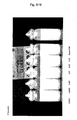
- Figures 9 , 10 and 11 show Budesonide 160 ⁇ g/shot, Formoterol 4.5 ⁇ g/shot with various PVP K25 concentrations and 0.3% PEG 1000 at 0, 15, 30, and 60 seconds standing time.
- Figures 12 , 13 and 14 shows Budesonide 80 ⁇ g/shot, Formoterol 4.5 ⁇ g/shot with various PVP K25 concentrations and 0.3% PEG 1000 at 0, 30, and 60 seconds standing time.
- OSCAR DATA Graphs of light transmission versus time
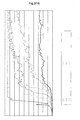
- FIG. 2 shows the average OSCAR transmission readings (lower sensor only) for various concentrations of PVP K25.
- a low transmission reading indicates that the suspension is dispersed preventing light being transmitted. Hence, it can be seen that the lowest line is the most stable formulation. This is the 0.001% PVP sample.
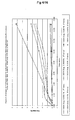
- Figures 5 and 6 show that the suspension with 0.001% w/w PVP is the most stable (bottom bold line) with the lowest % transmission.
- FURTHER EVALUATION Determination of the optimum PEG 1000 concentration.
- Force to fire testing was performed using the Lloyd LRX testing machine.
- the pMDI unit to be tested was placed valve down in a can holder on the lower platform of the unit.
- the upper crosshead was then moved to just above the base of the can.
- Can actuations were performed using a standard protocol.
- force data is captured by means of the load cell located at the top of the upper crosshead.
- This program was designed to output the return force at 0.5mm stem return as this is the point at which the metering chamber is considered to refill.
- a low return force is indicative of high friction and potential sticking problems. It also suggests there may be a problem with low actuation weights as the propellant enters the metering chamber more slowly and has time to vaporise.
- Force to fire testing was performed at preset actuations.
- Figure 7 shows the effect of PEG 1000 concentration on stem return force for the 4.5/160 ⁇ g formoterol/budesonide formulation
- the Turbiscan data shows that there is little difference between the stability of suspensions made with varying levels of PEG 1000 except for the 0.005% w/w level which was unsatisfactory.
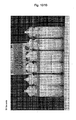
- Figures 15 and 16 show Budesonide 80 ⁇ g/shot, Formoterol 4.5 ⁇ g/shot with 0.001% PVP K25 and various concentrations of PEG 1000 at 0 (1) and 10 minutes (2) standing time
Landscapes
- Health & Medical Sciences (AREA)
- Chemical & Material Sciences (AREA)
- Life Sciences & Earth Sciences (AREA)
- Veterinary Medicine (AREA)
- Public Health (AREA)
- General Health & Medical Sciences (AREA)
- Medicinal Chemistry (AREA)
- Pharmacology & Pharmacy (AREA)
- Animal Behavior & Ethology (AREA)
- Epidemiology (AREA)
- Bioinformatics & Cheminformatics (AREA)
- Engineering & Computer Science (AREA)
- Pulmonology (AREA)
- Chemical Kinetics & Catalysis (AREA)
- Organic Chemistry (AREA)
- Nuclear Medicine, Radiotherapy & Molecular Imaging (AREA)
- General Chemical & Material Sciences (AREA)
- Pain & Pain Management (AREA)
- Otolaryngology (AREA)
- Inorganic Chemistry (AREA)
- Proteomics, Peptides & Aminoacids (AREA)
- Pharmaceuticals Containing Other Organic And Inorganic Compounds (AREA)
- Medicinal Preparation (AREA)
- Organic Low-Molecular-Weight Compounds And Preparation Thereof (AREA)
- Acyclic And Carbocyclic Compounds In Medicinal Compositions (AREA)
- Pyrane Compounds (AREA)
- Stabilization Of Oscillater, Synchronisation, Frequency Synthesizers (AREA)
- Networks Using Active Elements (AREA)
Abstract
Description
- The present invention relates to a formulation comprising formoterol and budesonide for use in the treatment of inflammatory conditions/disorders, especially respiratory diseases such as asthma, COPD and rhinitis.
- Stability is one of the most important factors which determines whether a compound or a mixture of compounds can be developed into a therapeutically useful pharmaceutical product.
- Combinations of formoterol and budesonide are known in the art, see for example
WO 93/11773 WO 93/05765 -
EP 0 534 731 -
US 6,004,537 discloses aerosol formulations containing budesonide, formoterol, at least one fluoroalkane propellant, and a cosolvent present in an amount that dissolves or solubilizes the budesonide, formoterol in the mixture of cosolvent and propellant. -
WO 01/78693 WO 02/03958 -
WO 98/21175 - It has now been found that certain HFA formulations comprising formoterol and budesonide together with polyvinylpyrrolidone (PVP) and polyethylene glycol (PEG) exhibit excellent physical suspension stability.
- In accordance with the present invention, there is provided a pharmaceutical composition comprising formoterol, budesonide,
HFA 227, PVP and PEG characterised in that the PVP is present from about 0.0005 to about 0.03 %w/w and the PEG is present from about 0.05 to about 0.3 5% w/w. - Preferably the PVP is present in an amount of 0.001 % w/w. Preferably the PVP is PVP K25.
- Preferably the PEG is present in an amount of 0.3 % w/w. Preferably the PEG is PEG 1000.
- Preferably the concentrations of formoterol/budesonide are such that the formulation delivers formoterol/budesonide at 4.5/40 mcg, 4.5/80 mcg, 4.5/160 mcg or 4.5/320mcg per actuation.
- The formoterol can be in the form of a mixture of enantiomers. Preferably the formoterol is in the form of a single enantiomer, preferably the R, R enantiomer. The formoterol can be in the form of the free base, salt or solvate, or a solvate of a salt, preferably the formoterol is in the form of its fumarate dihydrate salt. Other suitable physiologically salts that can be used include chloride, bromide, sulphate, phosphate, maleate, tartrate, citrate, benzoate, 4-methoxybenzoate, 2- or 4-hydroxybenzoate, 4-chlorobenzoate, p-toluenesulphonate, benzenesulphonate, ascorbate, acetate, succinate, lactate, glutarate, gluconate, tricaballate, hydroxynapaphthalenecarboxylate or oleate.
Preferably the second active ingredient is budesonide, including epimers, esters, salts and solvates thereof. More preferably the second active ingredient is budesonide or an epimer thereof, such as the 22R-epimer of budesonide. - The pharmaceutical compositions according to the invention can be used for the treatment or prophylaxis of a respiratory disorder, in particular the treatment or prophylaxis of asthma, rhinitis or COPD.
- In a further aspect the invention provides a method of treating a respiratory disorder, in particular asthma, rhinitis or COPD, in a mammal, which comprises administering to a patient a pharmaceutical composition as herein defined.
- The compositions of the invention can be inhaled from any suitable MDI device. Doses will be dependent on the severity of the disease and the type of patient, but are preferably 4.5/80 mcg or 4.5/160 mcg per actuation as defined above.
- The concentration of PVP (0.001 %w/w) used in this formulation has been found to give consistently stable formulations over the required dose range, incorporating a wide range of concentrations of the active components, and at a much lower concentration than indicated in the prior art.
- The invention is illustrated by the following examples.
- Two methods can be used to evaluate physical suspension stability: Optical suspension characterisation (OSCAR), and TURBISCAN. Both methods are used to semi-quantify sedimentation/creaming rates. OSCAR measurements are performed using the PET bottles directly. For TURBISCAN analysis, the suspensions are transferred to custom designed pressure cells for measurement of light transmittance and backscattering.
- Optical Suspension Characterisation (OSCAR) equipment is custom designed for the rapid and reproducible semi-quantification of metered dose inhaler suspension characteristics.
- The OSCAR equipment utilises changes in light transmission with time, to characterise a pre-agitated suspension formulation (a schematic diagram of the equipment is shown in
Figure 1 ). The equipment consists of a twin headed test assembly. The head on the left side of the equipment is used with dilute suspensions and the right for concentrated suspensions. The selector switch mounted between the two test heads is used to alternate concentration choice. The output from the selected test head is directed to the equipment mounted voltage display and to the computer for data logging. The analogue signals from photodetectors are digitised and the values collected in data files, these are then processed using a suitable software package. There are two equipment mounted voltage displays, one each for the upper and lower photodetectors. The upper and lower photodetectors are height adjustable and a position readout display is provided to indicate the set height for each test run. - The Reagecon Turbidity standards (2500-4000 NTU) are used to calibrate the sensitivity of the OSCAR equipment. In this case, the 3000 NTU turbidity calibration standard is used as a standard calibration check. However any of the turbidity standards can be used to adjust the sensitivity of the probes to a specific voltage appropriate to the formulation.
- Samples for test on the OSCAR equipment are presented in PET bottles crimped with non-metering valves.
- For background information and prior art for this method refer to papers from Drug Delivery to the Lungs 1X, 1997, Method Development of the OSCAR technique for the characterization of metered dose inhaler formulations, Authors N. Govind, P. Lambert And Drug delivery to the Lungs VI, 1995, A Rapid Technique for Characterisation of the Suspension Dynamics of metered Dose Inhaler Formulations, Author, PA Jinks (3M Healthcare Ltd)
- Turbiscan MA 2000 is a concentrated dispersion and emulsion stability and instability analyser, or a vertical scan macroscopic analyser. It consists of a reading head moving along a flat-bottomed, 5ml cylindrical glass cell, which takes readings of transmitted and backscattered light every 40 µm on a maximum sample height of 80mm. The scan can be repeated with a programmable frequency to obtain a macroscopic fingerprint of the sample.
- The reading head uses a pulsed near infrared light source (wavelength = 850 nm) and two synchronous detectors:
- Transmission detector: Picks up light transmitted through the solution in the tube, at 0°
- Backscattering detector: Receives the light back scattered by the product at 135°.
- The profile obtained characterises the samples homogenieity, concentration and mean particle diameter. It allows for quantification of the physical processes the sample is undergoing. As well as detecting destabilisation, Turbiscan allows comparison of, for example, the sedimentaion rate of different suspensions.
- Turbiscan may be used in several modes, eg transmitted or backscattering modes. Turbiscan has been used here in these examples to measure the transmitted light as a funtion of time
- Dispersion instability is the result of two physical processes: a) particle size increases as a result of the formation of aggregates, due to flocculation b) particle migration resulting in creaming or sedimentation. When a product is stable (ie no flocculation, creaming or sedimentation), the transmitted and backscattered light will remain constant i.e. scans of these will show a constant level profile. If the product undergoes changes in particle size, variations in the transmitted/ backscattered light show as change in the direction of the scan from horizontal or steady state profile.
For pressurised systems a cell capable of handling pressurised samples is required. Such a cell was used for the evaluations of these HFA formulations. The scans were performed in the AUTO mode.
The % transmission averages shown in the figure (see later) were taken from a zone around the middle of the suspension sample. - For the initial evaluation, only OSCAR was used.
- Formulations containing formoterol fumarate dihydrate, budesonide, 0.001% w/w PVP K25 and either 0.1 % w/w or 0.3
% PEG 1000 in HFA-227 were prepared in polyethylene terephlate (PET) bottles crimped with a continuous valve. For all formulations, the formoterol fumurate dihydrate concentration remained constant at 0.09mg/ml (equivalent to 4.5 mcg formoterol fumurate dihydrate per actuation) and the budesonide concentration varied between approximately 1mg/ml to 8 mg/ml (equivalent to 40 mcg to 320 mcg per actuation). -

- OSCAR analysis of these formulations gave relatively low light transmittance values at the lower sensor, which is indicative of stable suspensions with low flocculation characteristics. Early indications were that the 0.001% w/w PVP with 0.3
% PEG 1000 would give the best suspension. - FURTHER EVALUATION: various concentrations of PVP K25 with a
constant PEG 1000 concentration of 0.3% w/w. - OSCAR, Turbiscan and photographic methods were used to evaluate the formulations. OSCAR and Turbiscan techniques have been described earlier. Samples with varying concentrations of PVP were analysed to determine suspension stability over time.
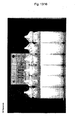
- For the photographic analysis, samples were prepared in PET bottles and photographed digitally over time, using a black background. These photographs (some of which are shown here) show the behaviour of the suspension over time and allow easy comparison of the effectiveness of the various concentrations of PVP. The concentration of PVP varied from 0.0001 to 0.05 % w/w. From left to right on the photographs the concentration of PVP is as follows:
0.0001 far left 0.0005 0.001 0.01 0.03 0.05 far right -
Figures 9 ,10 and11 show Budesonide 160µg/shot, Formoterol 4.5µg/shot with various PVP K25 concentrations and 0.3% PEG 1000 at 0, 15, 30, and 60 seconds standing time. -
Figures 12 ,13 and14 shows Budesonide 80µg/shot, Formoterol 4.5µg/shot with various PVP K25 concentrations and 0.3% PEG 1000 at 0, 30, and 60 seconds standing time. - Photographs were taken of all doses (320µg/4.5µg to 40µg/4.5µg) at 0, 15, 30, 60, 90 seconds, and 2, 5 and 10 minutes. As this produced too many photographs to reproduce here, a chart has been constructed to give a reprentation of the degree of dispersion over time.
If the sample was fully suspended, the sample was rated 0 e.g. at 0 minutes they were fully dispersed. From there, the samples have been rated in increments of I-5 at 20% intervals to express the degree of dispersion i.e. 0 was fully suspended and 5 fully creamed. This allows some comparison across the whole dose range and PVP concentration range used.
(Note concentration of Formoterol is 4.5µg/shot in all the samples)
(Samples are all fully dispersed at 0 seconds and therefore all have a score of 0) Fully dispersed - 0
More than 80% dispersed ie less than 20% clear liquid present 1
More than 60% dispersed ie less than 40% clear liquid present 2
Less than 40% dispersed ie more than 60% clear liquid present 3
Less than 20% dispersed ie more than 80% clear liquid present 4
Fully creamed 5TABLE OF DEGREEE OF DISPERSION OF SUSPENSIONS OVER TIME: ALL SAMPLES Dose Time PVP concentration (% w/w) µg/shot Budesonide Sec/mins 0.0001 0.0005 0.001 0.01 0.03 0.05 320 15 2 1 0-1 0-1 0-1 0-1 30 3 3 2 1-2 2 2 60 4 4 3-4 2 3 3-4 90 4 5 5 3 5 5 2 5 5 4-5 4-5 5 5 5 5 5 5 5 5 5 10 5 5 5 5 5 5 160 15 3 2 0-1 0-1 2 2 30 3 2 1 1 2 2 60 5 4 1 2 4 5 90 5 5 1 2 5 5 2 5 5 1 2 5 5 5 5 5 2 4 5 5 10 5 5 2 4 5 5 80 15 2 1 0 0 1 1 30 3 2 1 1 2 2 60 4 2 1 1-2 3 3 90 5 3 1-2 1-2 4 3 2 5 3-4 1 1 5 4 5 5 4 2 2 5 5 10 5 5 3 3 5 5 40 15 1 1 0 0 1 2 30 2 1 1 2 2 3 60 1-2 1 1 2 2 3 90 1-2 1-2 1-2 2 2-3 4 2 2 2 2 3 4 5 5 3 2 2 3 4 5 10 4-5 3 2 4 5 5 - Suspensions considered excellent are highlighted in bold.
It can be seen that the formulations with 0.001% w/w PVP gave the best suspension stability overall. -
Figure 2 shows the average OSCAR transmission readings (lower sensor only) for various concentrations of PVP K25. A low transmission reading indicates that the suspension is dispersed preventing light being transmitted. Hence, it can be seen that the lowest line is the most stable formulation. This is the 0.001% PVP sample. - In
Figure 3 , the bottom line, again with low transmission readings, clearly shows that the formulation containing 0.001% PVP is the most stable. - Data from the Turbiscan can be intepretated in a similar vein to the OSCAR data in that a low percentage (%) transmission indicates the suspension is dispersed . The % transmission averages quoted here were taken from a zone around the middle of the suspension sample. In
Figure 4 the most stable formulation is the lowest line with the lowest % transmission, i.e. the bold black line with 0.001%w/w PVP -
Figures 5 and6 show that the suspension with 0.001% w/w PVP is the most stable (bottom bold line) with the lowest % transmission. - For this evaluation, photography, turbiscan and force to fire data (valve performance) was used to determine the optimum PEG concentration.
- Force to fire testing was performed using the Lloyd LRX testing machine. The pMDI unit to be tested was placed valve down in a can holder on the lower platform of the unit. The upper crosshead was then moved to just above the base of the can. Can actuations were performed using a standard protocol. During measurement, force data is captured by means of the load cell located at the top of the upper crosshead. This program was designed to output the return force at 0.5mm stem return as this is the point at which the metering chamber is considered to refill.
A low return force is indicative of high friction and potential sticking problems. It also suggests there may be a problem with low actuation weights as the propellant enters the metering chamber more slowly and has time to vaporise. Force to fire testing was performed at preset actuations. -
Figure 7 shows the effect ofPEG 1000 concentration on stem return force for the 4.5/160 µg formoterol/budesonide formulation - This shows that at 120 actuations, the return force is greater for the 0.3% w/
w PEG 1000 concentration than for the other concentrations of 0.5% and 0.1 %. In general, the higher the return force the lesser the chance of the valve stem sticking. The above data shows that in this case 0.3% would be preferred. - The Turbiscan data (
figure 8 ) shows that there is little difference between the stability of suspensions made with varying levels ofPEG 1000 except for the 0.005% w/w level which was unsatisfactory. - Digital photographs of suspensions containing Budesonide, Formoterol,
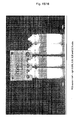
HFA 227, 0.001%w/w PVP and varying levels ofPEG 1000 show little variation in suspension stability over time (0 seconds to 10 minutes) except for the 0.005% w/w PEG level (in agreement with the Turbiscan data). -
Figures 15 and16 show Budesonide 80µg/shot, Formoterol 4.5µg/shot with 0.001% PVP K25 and various concentrations ofPEG 1000 at 0 (1) and 10 minutes (2) standing time - In addition to the above, product performance data for formulations containing formoterol fumurate dihydrate/budesonide at the following strengths, 4.5/80 mcg per actuation and 4.5/160 mcg per actuation, with 0.001% PVP K25 and either 0.1% or 0.3
% PEG 1000 were stable for up to 12 months at 25°C/60% RH. -
Product strength (µg) (FFD/budesonide) Fine particle fraction (% cumulative undersize for 4.7 µm cut-off) Drug Initial 25°C/60 % RH 6 months25°C/60 % RH 12 months4.5/80 Budesonide 51.3 52.8 62.0 FFD 55.4 53.5 59.7 4.5/160 Budesonide 50.0 48.8 47.0 FFD 54.2 52.1 51.3 -
Product strength (µg) (FFD/budesonide) Fine particle fraction (% cumulative undersize for 4.7 µm cut-off) Drug Initial 23°C/60 %RH 6 months25°C/60 % RH 12 months4.5/80 Budesonide 55.8 50.6 51.3 FFD 64.2 57.6 58.7 4.5/160 Budesonide 48.7 50.2 52.3 FFD 55.6 59.1 61.2
Claims (13)
- A pharmaceutical composition comprising formoterol, budesonide, HFA 227, PVP and PEG, in which the PVP is present in an amount of 0.001% w/w.
- A pharmaceutical composition according to claim 1 in which the PVP is PVP K25.
- A pharmaceutical composition according to claim 1 or claim 2 in which the PEG is PEG 1000.
- A pharmaceutical composition according to any one of claims 1 to 3 in which formoterol is in the form of its fumarate dihydrate salt
- A pharmaceutical composition according to any one of claims 1 to 4 in which the formoterol is in the form of the single R, R-enantiomer.
- A pharmaceutical composition according to any one of claims 1 to 5 in which the second active ingredient is the 22R-epimer of budesonide.
- A pharmaceutical composition according to any one of claims 1 to 6 for use for the treatment or prophylaxis of a respiratory disorder.
- A pharmaceutical composition according to any one of claims 1 to 6 for use for the treatment or prophylaxis of asthma, rhinitis or COPD.
- Use of a pharmaceutical composition according to any one of claims 1 to 6 in the manufacture of a medicament for the treatment of a respiratory disorder in a mammal.
- Use of a pharmaceutical composition according to any one of claims 1 to 6 in the manufacture of a medicament for the treatment of asthma, rhinitis or COPD.
- Use of a pharmaceutical composition according to any one of claims 1 to 6 in the manufacture of a medicament for inhalation from a MDI device, for the treatment of asthma, rhinitis or COPD.
- A metered dose inhaler device containing a pharmaceutical composition according to any one of claims 1 to 6.
- The metered dose inhaler device according to claim 12 which delivers the formoterol/budesonide at 4.5/80 mcg or 4.5/160 mcg per actuation.
Priority Applications (2)
| Application Number | Priority Date | Filing Date | Title |
|---|---|---|---|
| SI200331805T SI2036549T1 (en) | 2002-02-01 | 2003-01-29 | Novel Composition |
| CY20101100546T CY1110081T1 (en) | 2002-02-01 | 2010-06-14 | new composition |
Applications Claiming Priority (2)
| Application Number | Priority Date | Filing Date | Title |
|---|---|---|---|
| SE0200312A SE0200312D0 (en) | 2002-02-01 | 2002-02-01 | Novel composition |
| EP03703575A EP1474117B1 (en) | 2002-02-01 | 2003-01-29 | Composition for inhalation |
Related Parent Applications (2)
| Application Number | Title | Priority Date | Filing Date |
|---|---|---|---|
| EP03703575.5 Division | 2003-01-29 | ||
| EP03703575A Division EP1474117B1 (en) | 2002-02-01 | 2003-01-29 | Composition for inhalation |
Publications (2)
| Publication Number | Publication Date |
|---|---|
| EP2036549A1 EP2036549A1 (en) | 2009-03-18 |
| EP2036549B1 true EP2036549B1 (en) | 2010-04-07 |
Family
ID=20286853
Family Applications (2)
| Application Number | Title | Priority Date | Filing Date |
|---|---|---|---|
| EP03703575A Revoked EP1474117B1 (en) | 2002-02-01 | 2003-01-29 | Composition for inhalation |
| EP08166881A Expired - Lifetime EP2036549B1 (en) | 2002-02-01 | 2003-01-29 | Novel Composition |
Family Applications Before (1)
| Application Number | Title | Priority Date | Filing Date |
|---|---|---|---|
| EP03703575A Revoked EP1474117B1 (en) | 2002-02-01 | 2003-01-29 | Composition for inhalation |
Country Status (27)
| Country | Link |
|---|---|
| US (8) | US7759328B2 (en) |
| EP (2) | EP1474117B1 (en) |
| JP (2) | JP2005521663A (en) |
| KR (2) | KR100947168B1 (en) |
| CN (1) | CN1287774C (en) |
| AT (2) | ATE423552T1 (en) |
| AU (1) | AU2003206289B2 (en) |
| BR (1) | BR0307193A (en) |
| CA (1) | CA2474479C (en) |
| CO (1) | CO5611098A2 (en) |
| CY (2) | CY1109030T1 (en) |
| DE (2) | DE60326320D1 (en) |
| DK (2) | DK2036549T3 (en) |
| ES (2) | ES2321180T3 (en) |
| IL (1) | IL163160A (en) |
| IS (2) | IS7360A (en) |
| MX (1) | MXPA04007295A (en) |
| NO (1) | NO337006B1 (en) |
| NZ (1) | NZ534452A (en) |
| PL (1) | PL211836B1 (en) |
| PT (2) | PT1474117E (en) |
| RU (1) | RU2301673C2 (en) |
| SE (1) | SE0200312D0 (en) |
| SI (2) | SI2036549T1 (en) |
| UA (1) | UA79445C2 (en) |
| WO (1) | WO2003063842A1 (en) |
| ZA (1) | ZA200406086B (en) |
Families Citing this family (41)
| Publication number | Priority date | Publication date | Assignee | Title |
|---|---|---|---|---|
| SE0200312D0 (en) * | 2002-02-01 | 2002-02-01 | Astrazeneca Ab | Novel composition |
| MX2007009698A (en) * | 2005-02-11 | 2007-09-26 | Argenta Discovery Ltd | Combination of methylxanthine compounds and steroids to treat chronic respiratory diseases. |
| US9084799B2 (en) | 2005-02-11 | 2015-07-21 | Pulmagen Therapeutics (Synergy) Limited | Inhaled combination therapy |
| DE102006053374A1 (en) * | 2006-02-09 | 2007-08-16 | Boehringer Ingelheim Pharma Gmbh & Co. Kg | Pharmaceutical formulation for aerosols with two or more active substances and at least one surface-active substance |
| GB0604141D0 (en) * | 2006-03-01 | 2006-04-12 | Arrow Int Ltd | Nebulizer formulation |
| GB0712454D0 (en) * | 2007-06-27 | 2007-08-08 | Generics Uk Ltd | Pharmaceutical compositions |
| EP2077132A1 (en) | 2008-01-02 | 2009-07-08 | Boehringer Ingelheim Pharma GmbH & Co. KG | Dispensing device, storage device and method for dispensing a formulation |
| US20130160761A1 (en) * | 2008-11-04 | 2013-06-27 | Cipla Limited | Pharmaceutical Aerosol Composition |
| NZ574666A (en) | 2009-02-05 | 2009-04-30 | Nexus6 Ltd | A medicament inhaler holder that uses optical means to count and display the number of doses used |
| EP2414560B1 (en) | 2009-03-31 | 2013-10-23 | Boehringer Ingelheim International GmbH | Method for coating a surface of a component |
| EP3508239B1 (en) | 2009-05-18 | 2020-12-23 | Boehringer Ingelheim International GmbH | Adapter, inhalant apparatus and atomizer |
| US10016568B2 (en) | 2009-11-25 | 2018-07-10 | Boehringer Ingelheim International Gmbh | Nebulizer |
| MX2012005961A (en) | 2009-11-25 | 2012-06-14 | Boehringer Ingelheim Int | Nebulizer. |
| JP5658268B2 (en) | 2009-11-25 | 2015-01-21 | ベーリンガー インゲルハイム インターナショナル ゲゼルシャフト ミット ベシュレンクテル ハフツング | Nebulizer |
| JP5874724B2 (en) | 2010-06-24 | 2016-03-02 | ベーリンガー インゲルハイム インターナショナル ゲゼルシャフト ミット ベシュレンクテル ハフツング | Nebulizer |
| JP2013531056A (en) * | 2010-07-16 | 2013-08-01 | シプラ・リミテッド | A pharmaceutical composition comprising R (+) budesonide and one or more bronchodilators |
| EP3143987A1 (en) * | 2010-08-03 | 2017-03-22 | CHIESI FARMACEUTICI S.p.A. | Pharmaceutical formulation comprising a phosphodiesterase inhibitor |
| EP2618816A4 (en) * | 2010-09-22 | 2014-10-29 | Map Pharmaceuticals Ltd | Aerosol composition for administering drugs |
| US20120204871A1 (en) | 2011-02-10 | 2012-08-16 | Julio Cesar Vega | Stable, non-corrosive formulations for pressurized metered dose inhalers |
| TWI399202B (en) * | 2011-03-17 | 2013-06-21 | Intech Biopharm Ltd | The preparation for formulation composition and manufacturing processes of metered dose inhalers treated respiratory diseases |
| WO2012130757A1 (en) | 2011-04-01 | 2012-10-04 | Boehringer Ingelheim International Gmbh | Medical device comprising a container |
| US9827384B2 (en) | 2011-05-23 | 2017-11-28 | Boehringer Ingelheim International Gmbh | Nebulizer |
| BR112014003907A2 (en) | 2011-08-19 | 2017-06-13 | Intech Biopharm Ltd. | Method for preparing metered dose powdered inhaler to treat respiratory disease |
| WO2013152894A1 (en) | 2012-04-13 | 2013-10-17 | Boehringer Ingelheim International Gmbh | Atomiser with coding means |
| WO2015018904A1 (en) | 2013-08-09 | 2015-02-12 | Boehringer Ingelheim International Gmbh | Nebulizer |
| EP2835146B1 (en) | 2013-08-09 | 2020-09-30 | Boehringer Ingelheim International GmbH | Nebulizer |
| GB201321712D0 (en) | 2013-12-09 | 2014-01-22 | Pharmachemie Bv | Dry Powder Inhaler |
| GB201321717D0 (en) | 2013-12-09 | 2014-01-22 | Pharmachemie Bv | Inhalable Medicaments |
| BR122022010094B1 (en) | 2014-05-07 | 2023-10-03 | Boehringer Ingelheim International Gmbh | INDICATING DEVICE AND CONTAINER |
| WO2015169430A1 (en) | 2014-05-07 | 2015-11-12 | Boehringer Ingelheim International Gmbh | Nebulizer |
| MX383195B (en) | 2014-05-07 | 2025-03-13 | Boehringer Ingelheim Int | CONTAINER, NEBULIZER AND USE. |
| EP3174522A1 (en) | 2014-07-29 | 2017-06-07 | 3M Innovative Properties Company | Method of preparing a pharmaceutical composition |
| EP3701940B1 (en) | 2015-12-04 | 2025-11-12 | Mexichem Fluor S.A. de C.V. | Pharmaceutical composition |
| CN106581010B (en) * | 2016-12-28 | 2019-03-05 | 四川普锐特医药科技有限责任公司 | A kind of aerosol preparation and metered dose inhalation aerosol |
| CA3073195A1 (en) | 2017-08-15 | 2019-02-21 | Nephron Pharmaceuticals Corporation | Aqueous nebulization composition |
| JP7470646B2 (en) | 2018-06-14 | 2024-04-18 | アストラゼネカ・ユーケイ・リミテッド | Methods for treating and preventing asthma symptoms with corticosteroid pharmaceutical compositions - Patents.com |
| JP7402631B2 (en) | 2018-08-27 | 2023-12-21 | 帝人株式会社 | Ultrafine carbon fiber mixture, manufacturing method thereof, and carbon-based conductive aid |
| CN109464429B (en) * | 2018-12-13 | 2021-04-27 | 上海方予健康医药科技有限公司 | Inhalation pressure quantitative aerosol pharmaceutical composition and preparation method thereof |
| CN112137957B (en) | 2019-06-26 | 2022-07-29 | 长风药业股份有限公司 | Medicinal inhalation aerosol and preparation method thereof |
| CN112972384B (en) * | 2019-12-02 | 2022-03-18 | 长风药业股份有限公司 | Preparation method of glycopyrronium bromide and indacaterol bulk drug micro-powder mixture |
| CN117357485B (en) * | 2023-11-01 | 2024-09-24 | 山东京卫制药有限公司 | Improved inhalable carrier particles and use thereof |
Family Cites Families (18)
| Publication number | Priority date | Publication date | Assignee | Title |
|---|---|---|---|---|
| IL103238A (en) | 1991-09-25 | 1995-07-31 | Fisons Plc | Pressurised aerosol compositions |
| US6123924A (en) * | 1991-09-25 | 2000-09-26 | Fisons Plc | Pressurized aerosol inhalation compositions |
| SG48301A1 (en) * | 1991-12-18 | 1998-04-17 | Astra Ab | New combination |
| DE19536902A1 (en) * | 1995-10-04 | 1997-04-10 | Boehringer Ingelheim Int | Miniature fluid pressure generating device |
| SE9603669D0 (en) | 1996-10-08 | 1996-10-08 | Astra Ab | New combination |
| EP0938467B1 (en) * | 1996-11-11 | 2002-06-12 | Sepracor, Inc. | Process for the preparation of optically pure isomers of formoterol |
| SE9703407D0 (en) | 1997-09-19 | 1997-09-19 | Astra Ab | New use |
| US6309623B1 (en) * | 1997-09-29 | 2001-10-30 | Inhale Therapeutic Systems, Inc. | Stabilized preparations for use in metered dose inhalers |
| SE9802073D0 (en) * | 1998-06-11 | 1998-06-11 | Astra Ab | New use |
| ATE283033T1 (en) | 1998-07-24 | 2004-12-15 | Jago Res Ag | MEDICAL AEROSOL FORMULATIONS |
| US6004537A (en) | 1998-12-18 | 1999-12-21 | Baker Norton Pharmaceuticals, Inc. | Pharmaceutical solution aerosol formulations containing fluoroalkanes, budesonide and formoterol |
| SE9900834D0 (en) | 1999-03-09 | 1999-03-09 | Astra Ab | Novel combination |
| PE20011227A1 (en) * | 2000-04-17 | 2002-01-07 | Chiesi Farma Spa | PHARMACEUTICAL FORMULATIONS FOR DRY POWDER INHALERS IN THE FORM OF HARD AGGLOMERATES |
| GB0009584D0 (en) | 2000-04-18 | 2000-06-07 | Glaxo Group Ltd | Pharmaceutical compositions |
| GB0012260D0 (en) * | 2000-05-19 | 2000-07-12 | Astrazeneca Ab | Novel composition |
| GB0016876D0 (en) * | 2000-07-11 | 2000-08-30 | Astrazeneca Ab | Novel formulation |
| US20030018019A1 (en) * | 2001-06-23 | 2003-01-23 | Boehringer Ingelheim Pharma Kg | Pharmaceutical compositions based on anticholinergics, corticosteroids and betamimetics |
| SE0200312D0 (en) * | 2002-02-01 | 2002-02-01 | Astrazeneca Ab | Novel composition |
-
2002
- 2002-02-01 SE SE0200312A patent/SE0200312D0/en unknown
-
2003
- 2003-01-29 AT AT03703575T patent/ATE423552T1/en active
- 2003-01-29 AT AT08166881T patent/ATE463241T1/en active
- 2003-01-29 DK DK08166881.6T patent/DK2036549T3/en active
- 2003-01-29 DK DK03703575T patent/DK1474117T3/en active
- 2003-01-29 PT PT03703575T patent/PT1474117E/en unknown
- 2003-01-29 RU RU2004122921/15A patent/RU2301673C2/en active
- 2003-01-29 NZ NZ534452A patent/NZ534452A/en not_active IP Right Cessation
- 2003-01-29 KR KR1020047011787A patent/KR100947168B1/en not_active Expired - Lifetime
- 2003-01-29 PL PL372118A patent/PL211836B1/en unknown
- 2003-01-29 BR BR0307193-6A patent/BR0307193A/en not_active Application Discontinuation
- 2003-01-29 KR KR1020097024298A patent/KR20090125857A/en not_active Ceased
- 2003-01-29 US US10/502,685 patent/US7759328B2/en not_active Expired - Lifetime
- 2003-01-29 DE DE60326320T patent/DE60326320D1/en not_active Expired - Lifetime
- 2003-01-29 EP EP03703575A patent/EP1474117B1/en not_active Revoked
- 2003-01-29 ES ES03703575T patent/ES2321180T3/en not_active Expired - Lifetime
- 2003-01-29 ES ES08166881T patent/ES2342509T3/en not_active Expired - Lifetime
- 2003-01-29 PT PT08166881T patent/PT2036549E/en unknown
- 2003-01-29 AU AU2003206289A patent/AU2003206289B2/en not_active Expired
- 2003-01-29 SI SI200331805T patent/SI2036549T1/en unknown
- 2003-01-29 DE DE60332067T patent/DE60332067D1/en not_active Expired - Lifetime
- 2003-01-29 CN CNB038031221A patent/CN1287774C/en not_active Expired - Lifetime
- 2003-01-29 CA CA2474479A patent/CA2474479C/en not_active Expired - Lifetime
- 2003-01-29 EP EP08166881A patent/EP2036549B1/en not_active Expired - Lifetime
- 2003-01-29 JP JP2003563536A patent/JP2005521663A/en not_active Withdrawn
- 2003-01-29 UA UA20040806416A patent/UA79445C2/en unknown
- 2003-01-29 WO PCT/SE2003/000156 patent/WO2003063842A1/en not_active Ceased
- 2003-01-29 SI SI200331563T patent/SI1474117T1/en unknown
-
2004
- 2004-07-21 IS IS7360A patent/IS7360A/en unknown
- 2004-07-22 IL IL163160A patent/IL163160A/en active IP Right Grant
- 2004-07-27 CO CO04071996A patent/CO5611098A2/en not_active Application Discontinuation
- 2004-07-28 MX MXPA04007295A patent/MXPA04007295A/en active IP Right Grant
- 2004-07-29 ZA ZA2004/06086A patent/ZA200406086B/en unknown
- 2004-08-19 NO NO20043458A patent/NO337006B1/en not_active IP Right Cessation
-
2009
- 2009-04-29 CY CY20091100471T patent/CY1109030T1/en unknown
-
2010
- 2010-02-26 JP JP2010041992A patent/JP5259636B2/en not_active Expired - Lifetime
- 2010-05-28 US US12/790,196 patent/US8143239B2/en not_active Expired - Fee Related
- 2010-06-14 CY CY20101100546T patent/CY1110081T1/en unknown
-
2012
- 2012-03-05 US US13/411,939 patent/US8575137B2/en not_active Expired - Fee Related
-
2013
- 2013-04-16 IS IS9028A patent/IS2960B/en unknown
- 2013-10-18 US US14/057,548 patent/US20140286878A1/en not_active Abandoned
-
2015
- 2015-03-02 US US14/635,550 patent/US20160022703A1/en not_active Abandoned
-
2017
- 2017-02-08 US US15/427,425 patent/US10166247B2/en not_active Expired - Lifetime
-
2018
- 2018-08-22 US US16/108,368 patent/US20190216828A1/en not_active Abandoned
-
2020
- 2020-03-27 US US16/832,590 patent/US11311558B2/en not_active Expired - Lifetime
Also Published As
Similar Documents
| Publication | Publication Date | Title |
|---|---|---|
| US11311558B2 (en) | Composition for inhalation | |
| AU2003206289A1 (en) | Composition for inhalation | |
| EP2488157B1 (en) | Improved formulations | |
| HK1126684B (en) | Novel composition | |
| AU2013203244B2 (en) | Improved formulations | |
| HK1173076B (en) | Improved formulations | |
| HK1173076A (en) | Improved formulations |
Legal Events
| Date | Code | Title | Description |
|---|---|---|---|
| PUAI | Public reference made under article 153(3) epc to a published international application that has entered the european phase |
Free format text: ORIGINAL CODE: 0009012 |
|
| 17P | Request for examination filed |
Effective date: 20081017 |
|
| AC | Divisional application: reference to earlier application |
Ref document number: 1474117 Country of ref document: EP Kind code of ref document: P |
|
| AK | Designated contracting states |
Kind code of ref document: A1 Designated state(s): AT BE BG CH CY CZ DE DK EE ES FI FR GB GR HU IE IT LI LU MC NL PT SE SI SK TR |
|
| AX | Request for extension of the european patent |
Extension state: AL LT LV MK RO |
|
| 17Q | First examination report despatched |
Effective date: 20090427 |
|
| REG | Reference to a national code |
Ref country code: HK Ref legal event code: DE Ref document number: 1126684 Country of ref document: HK |
|
| GRAP | Despatch of communication of intention to grant a patent |
Free format text: ORIGINAL CODE: EPIDOSNIGR1 |
|
| AKX | Designation fees paid |
Designated state(s): AT BE BG CH CY CZ DE DK EE ES FI FR GB GR HU IE IT LI LU MC NL PT SE SI SK TR |
|
| AXX | Extension fees paid |
Extension state: LT Payment date: 20081017 Extension state: AL Payment date: 20081017 Extension state: RO Payment date: 20081017 Extension state: MK Payment date: 20081017 Extension state: LV Payment date: 20081017 |
|
| GRAS | Grant fee paid |
Free format text: ORIGINAL CODE: EPIDOSNIGR3 |
|
| GRAA | (expected) grant |
Free format text: ORIGINAL CODE: 0009210 |
|
| AC | Divisional application: reference to earlier application |
Ref document number: 1474117 Country of ref document: EP Kind code of ref document: P |
|
| AK | Designated contracting states |
Kind code of ref document: B1 Designated state(s): AT BE BG CH CY CZ DE DK EE ES FI FR GB GR HU IE IT LI LU MC NL PT SE SI SK TR |
|
| AX | Request for extension of the european patent |
Extension state: AL LT LV MK RO |
|
| REG | Reference to a national code |
Ref country code: GB Ref legal event code: FG4D |
|
| REG | Reference to a national code |
Ref country code: CH Ref legal event code: EP |
|
| REG | Reference to a national code |
Ref country code: IE Ref legal event code: FG4D |
|
| REF | Corresponds to: |
Ref document number: 60332067 Country of ref document: DE Date of ref document: 20100520 Kind code of ref document: P |
|
| REG | Reference to a national code |
Ref country code: PT Ref legal event code: SC4A Free format text: AVAILABILITY OF NATIONAL TRANSLATION Effective date: 20100614 |
|
| REG | Reference to a national code |
Ref country code: NL Ref legal event code: T3 |
|
| REG | Reference to a national code |
Ref country code: SE Ref legal event code: TRGR |
|
| REG | Reference to a national code |
Ref country code: ES Ref legal event code: FG2A Ref document number: 2342509 Country of ref document: ES Kind code of ref document: T3 |
|
| REG | Reference to a national code |
Ref country code: DK Ref legal event code: T3 |
|
| REG | Reference to a national code |
Ref country code: GR Ref legal event code: EP Ref document number: 20100401359 Country of ref document: GR |
|
| REG | Reference to a national code |
Ref country code: EE Ref legal event code: FG4A Ref document number: E004291 Country of ref document: EE Effective date: 20100610 |
|
| REG | Reference to a national code |
Ref country code: SK Ref legal event code: T3 Ref document number: E 7365 Country of ref document: SK |
|
| REG | Reference to a national code |
Ref country code: HK Ref legal event code: GR Ref document number: 1126684 Country of ref document: HK |
|
| PLBE | No opposition filed within time limit |
Free format text: ORIGINAL CODE: 0009261 |
|
| STAA | Information on the status of an ep patent application or granted ep patent |
Free format text: STATUS: NO OPPOSITION FILED WITHIN TIME LIMIT |
|
| 26N | No opposition filed |
Effective date: 20110110 |
|
| REG | Reference to a national code |
Ref country code: HU Ref legal event code: AG4A Ref document number: E009233 Country of ref document: HU |
|
| REG | Reference to a national code |
Ref country code: FR Ref legal event code: PLFP Year of fee payment: 14 |
|
| PGFP | Annual fee paid to national office [announced via postgrant information from national office to epo] |
Ref country code: MC Payment date: 20151209 Year of fee payment: 14 |
|
| REG | Reference to a national code |
Ref country code: FR Ref legal event code: PLFP Year of fee payment: 15 |
|
| PG25 | Lapsed in a contracting state [announced via postgrant information from national office to epo] |
Ref country code: MC Free format text: LAPSE BECAUSE OF NON-PAYMENT OF DUE FEES Effective date: 20170131 |
|
| REG | Reference to a national code |
Ref country code: FR Ref legal event code: PLFP Year of fee payment: 16 |
|
| PGFP | Annual fee paid to national office [announced via postgrant information from national office to epo] |
Ref country code: BG Payment date: 20211214 Year of fee payment: 20 Ref country code: SK Payment date: 20211214 Year of fee payment: 20 Ref country code: SE Payment date: 20211210 Year of fee payment: 20 Ref country code: IE Payment date: 20211209 Year of fee payment: 20 Ref country code: GB Payment date: 20211209 Year of fee payment: 20 Ref country code: FR Payment date: 20211217 Year of fee payment: 20 Ref country code: EE Payment date: 20211227 Year of fee payment: 20 |
|
| PGFP | Annual fee paid to national office [announced via postgrant information from national office to epo] |
Ref country code: GR Payment date: 20211217 Year of fee payment: 20 Ref country code: CH Payment date: 20211216 Year of fee payment: 20 Ref country code: BE Payment date: 20211221 Year of fee payment: 20 |
|
| PGFP | Annual fee paid to national office [announced via postgrant information from national office to epo] |
Ref country code: NL Payment date: 20211216 Year of fee payment: 20 Ref country code: LU Payment date: 20220110 Year of fee payment: 20 |
|
| PGFP | Annual fee paid to national office [announced via postgrant information from national office to epo] |
Ref country code: HU Payment date: 20211212 Year of fee payment: 20 Ref country code: FI Payment date: 20220110 Year of fee payment: 20 Ref country code: DK Payment date: 20220110 Year of fee payment: 20 Ref country code: DE Payment date: 20211207 Year of fee payment: 20 Ref country code: AT Payment date: 20211229 Year of fee payment: 20 |
|
| PGFP | Annual fee paid to national office [announced via postgrant information from national office to epo] |
Ref country code: TR Payment date: 20220127 Year of fee payment: 20 Ref country code: PT Payment date: 20220128 Year of fee payment: 20 Ref country code: IT Payment date: 20211213 Year of fee payment: 20 Ref country code: ES Payment date: 20220203 Year of fee payment: 20 Ref country code: CZ Payment date: 20220114 Year of fee payment: 20 Ref country code: CY Payment date: 20220128 Year of fee payment: 20 |
|
| PGFP | Annual fee paid to national office [announced via postgrant information from national office to epo] |
Ref country code: SI Payment date: 20211216 Year of fee payment: 20 |
|
| REG | Reference to a national code |
Ref country code: DE Ref legal event code: R071 Ref document number: 60332067 Country of ref document: DE |
|
| REG | Reference to a national code |
Ref country code: DK Ref legal event code: EUP Expiry date: 20230129 |
|
| REG | Reference to a national code |
Ref country code: CH Ref legal event code: PL |
|
| REG | Reference to a national code |
Ref country code: NL Ref legal event code: MK Effective date: 20230128 |
|
| REG | Reference to a national code |
Ref country code: BE Ref legal event code: MK Effective date: 20230129 |
|
| REG | Reference to a national code |
Ref country code: LT Ref legal event code: MM9A Effective date: 20230129 |
|
| REG | Reference to a national code |
Ref country code: GB Ref legal event code: PE20 Expiry date: 20230128 Ref country code: SK Ref legal event code: MK4A Ref document number: E 7365 Country of ref document: SK Expiry date: 20230129 |
|
| REG | Reference to a national code |
Ref country code: SE Ref legal event code: EUG |
|
| REG | Reference to a national code |
Ref country code: AT Ref legal event code: MK07 Ref document number: 463241 Country of ref document: AT Kind code of ref document: T Effective date: 20230129 |
|
| REG | Reference to a national code |
Ref country code: ES Ref legal event code: FD2A Effective date: 20230426 |
|
| PG25 | Lapsed in a contracting state [announced via postgrant information from national office to epo] |
Ref country code: PT Free format text: LAPSE BECAUSE OF EXPIRATION OF PROTECTION Effective date: 20230208 Ref country code: IE Free format text: LAPSE BECAUSE OF EXPIRATION OF PROTECTION Effective date: 20230129 Ref country code: CZ Free format text: LAPSE BECAUSE OF EXPIRATION OF PROTECTION Effective date: 20230129 |
|
| PG25 | Lapsed in a contracting state [announced via postgrant information from national office to epo] |
Ref country code: SK Free format text: LAPSE BECAUSE OF EXPIRATION OF PROTECTION Effective date: 20230129 Ref country code: SI Free format text: LAPSE BECAUSE OF EXPIRATION OF PROTECTION Effective date: 20230130 Ref country code: GB Free format text: LAPSE BECAUSE OF EXPIRATION OF PROTECTION Effective date: 20230128 |
|
| REG | Reference to a national code |
Ref country code: EE Ref legal event code: HC1A Ref document number: E004291 Country of ref document: EE |
|
| PG25 | Lapsed in a contracting state [announced via postgrant information from national office to epo] |
Ref country code: ES Free format text: LAPSE BECAUSE OF EXPIRATION OF PROTECTION Effective date: 20230130 |