EP2035029B1 - Peptide compounds for treating refractory status epilepticus - Google Patents
Peptide compounds for treating refractory status epilepticus Download PDFInfo
- Publication number
- EP2035029B1 EP2035029B1 EP07764678.4A EP07764678A EP2035029B1 EP 2035029 B1 EP2035029 B1 EP 2035029B1 EP 07764678 A EP07764678 A EP 07764678A EP 2035029 B1 EP2035029 B1 EP 2035029B1
- Authority
- EP
- European Patent Office
- Prior art keywords
- pharmaceutical composition
- seizures
- refractory
- status epilepticus
- use according
- Prior art date
- Legal status (The legal status is an assumption and is not a legal conclusion. Google has not performed a legal analysis and makes no representation as to the accuracy of the status listed.)
- Revoked
Links
Images


Classifications
-
- A—HUMAN NECESSITIES
- A61—MEDICAL OR VETERINARY SCIENCE; HYGIENE
- A61K—PREPARATIONS FOR MEDICAL, DENTAL OR TOILETRY PURPOSES
- A61K31/00—Medicinal preparations containing organic active ingredients
- A61K31/33—Heterocyclic compounds
- A61K31/395—Heterocyclic compounds having nitrogen as a ring hetero atom, e.g. guanethidine or rifamycins
- A61K31/55—Heterocyclic compounds having nitrogen as a ring hetero atom, e.g. guanethidine or rifamycins having seven-membered rings, e.g. azelastine, pentylenetetrazole
-
- A—HUMAN NECESSITIES
- A61—MEDICAL OR VETERINARY SCIENCE; HYGIENE
- A61K—PREPARATIONS FOR MEDICAL, DENTAL OR TOILETRY PURPOSES
- A61K31/00—Medicinal preparations containing organic active ingredients
- A61K31/16—Amides, e.g. hydroxamic acids
- A61K31/165—Amides, e.g. hydroxamic acids having aromatic rings, e.g. colchicine, atenolol, progabide
-
- A—HUMAN NECESSITIES
- A61—MEDICAL OR VETERINARY SCIENCE; HYGIENE
- A61K—PREPARATIONS FOR MEDICAL, DENTAL OR TOILETRY PURPOSES
- A61K31/00—Medicinal preparations containing organic active ingredients
- A61K31/33—Heterocyclic compounds
- A61K31/395—Heterocyclic compounds having nitrogen as a ring hetero atom, e.g. guanethidine or rifamycins
- A61K31/40—Heterocyclic compounds having nitrogen as a ring hetero atom, e.g. guanethidine or rifamycins having five-membered rings with one nitrogen as the only ring hetero atom, e.g. sulpiride, succinimide, tolmetin, buflomedil
- A61K31/4015—Heterocyclic compounds having nitrogen as a ring hetero atom, e.g. guanethidine or rifamycins having five-membered rings with one nitrogen as the only ring hetero atom, e.g. sulpiride, succinimide, tolmetin, buflomedil having oxo groups directly attached to the heterocyclic ring, e.g. piracetam, ethosuximide
-
- A—HUMAN NECESSITIES
- A61—MEDICAL OR VETERINARY SCIENCE; HYGIENE
- A61K—PREPARATIONS FOR MEDICAL, DENTAL OR TOILETRY PURPOSES
- A61K31/00—Medicinal preparations containing organic active ingredients
- A61K31/33—Heterocyclic compounds
- A61K31/395—Heterocyclic compounds having nitrogen as a ring hetero atom, e.g. guanethidine or rifamycins
- A61K31/55—Heterocyclic compounds having nitrogen as a ring hetero atom, e.g. guanethidine or rifamycins having seven-membered rings, e.g. azelastine, pentylenetetrazole
- A61K31/551—Heterocyclic compounds having nitrogen as a ring hetero atom, e.g. guanethidine or rifamycins having seven-membered rings, e.g. azelastine, pentylenetetrazole having two nitrogen atoms, e.g. dilazep
- A61K31/5513—1,4-Benzodiazepines, e.g. diazepam or clozapine
-
- A—HUMAN NECESSITIES
- A61—MEDICAL OR VETERINARY SCIENCE; HYGIENE
- A61K—PREPARATIONS FOR MEDICAL, DENTAL OR TOILETRY PURPOSES
- A61K38/00—Medicinal preparations containing peptides
- A61K38/04—Peptides having up to 20 amino acids in a fully defined sequence; Derivatives thereof
-
- A—HUMAN NECESSITIES
- A61—MEDICAL OR VETERINARY SCIENCE; HYGIENE
- A61K—PREPARATIONS FOR MEDICAL, DENTAL OR TOILETRY PURPOSES
- A61K45/00—Medicinal preparations containing active ingredients not provided for in groups A61K31/00 - A61K41/00
- A61K45/06—Mixtures of active ingredients without chemical characterisation, e.g. antiphlogistics and cardiaca
-
- A—HUMAN NECESSITIES
- A61—MEDICAL OR VETERINARY SCIENCE; HYGIENE
- A61K—PREPARATIONS FOR MEDICAL, DENTAL OR TOILETRY PURPOSES
- A61K9/00—Medicinal preparations characterised by special physical form
- A61K9/0012—Galenical forms characterised by the site of application
- A61K9/0053—Mouth and digestive tract, i.e. intraoral and peroral administration
-
- A—HUMAN NECESSITIES
- A61—MEDICAL OR VETERINARY SCIENCE; HYGIENE
- A61P—SPECIFIC THERAPEUTIC ACTIVITY OF CHEMICAL COMPOUNDS OR MEDICINAL PREPARATIONS
- A61P25/00—Drugs for disorders of the nervous system
-
- A—HUMAN NECESSITIES
- A61—MEDICAL OR VETERINARY SCIENCE; HYGIENE
- A61P—SPECIFIC THERAPEUTIC ACTIVITY OF CHEMICAL COMPOUNDS OR MEDICINAL PREPARATIONS
- A61P25/00—Drugs for disorders of the nervous system
- A61P25/08—Antiepileptics; Anticonvulsants
-
- A—HUMAN NECESSITIES
- A61—MEDICAL OR VETERINARY SCIENCE; HYGIENE
- A61P—SPECIFIC THERAPEUTIC ACTIVITY OF CHEMICAL COMPOUNDS OR MEDICINAL PREPARATIONS
- A61P25/00—Drugs for disorders of the nervous system
- A61P25/08—Antiepileptics; Anticonvulsants
- A61P25/12—Antiepileptics; Anticonvulsants for grand-mal
-
- G—PHYSICS
- G01—MEASURING; TESTING
- G01N—INVESTIGATING OR ANALYSING MATERIALS BY DETERMINING THEIR CHEMICAL OR PHYSICAL PROPERTIES
- G01N33/00—Investigating or analysing materials by specific methods not covered by groups G01N1/00 - G01N31/00
- G01N33/48—Biological material, e.g. blood, urine; Haemocytometers
- G01N33/50—Chemical analysis of biological material, e.g. blood, urine; Testing involving biospecific ligand binding methods; Immunological testing
- G01N33/68—Chemical analysis of biological material, e.g. blood, urine; Testing involving biospecific ligand binding methods; Immunological testing involving proteins, peptides or amino acids
- G01N33/6893—Chemical analysis of biological material, e.g. blood, urine; Testing involving biospecific ligand binding methods; Immunological testing involving proteins, peptides or amino acids related to diseases not provided for elsewhere
-
- A—HUMAN NECESSITIES
- A61—MEDICAL OR VETERINARY SCIENCE; HYGIENE
- A61K—PREPARATIONS FOR MEDICAL, DENTAL OR TOILETRY PURPOSES
- A61K2300/00—Mixtures or combinations of active ingredients, wherein at least one active ingredient is fully defined in groups A61K31/00 - A61K41/00
Definitions
- the present invention is directed to a class of peptide compounds for use in the treatment of refractory status epilepticus (SE) or a related condition.
- SE refractory status epilepticus
- the present invention is directed to a combination of a class of peptide compounds and a drug used in the treatment of SE, such as benzodiazepines, anticonvulsants, or barbiturates, in particular a benzodiazepine for use in the treatment of refractory status epilepticus or/and a condition related to refractory status epilepticus, such as epileptogenesis or epileptogenesis caused by refractory status epilepticus.
- SE benzodiazepines
- anticonvulsants or barbiturates
- a benzodiazepine for use in the treatment of refractory status epilepticus or/and a condition related to refractory status epilepticus, such as epileptogenesis or epileptogenesis caused by refractory status epilepticus.
- U.S. Patent No. 5,387,729 describes peptide compounds exhibiting central nervous system (CNS) activity and are useful in the treatment of epilepsy, nervous anxiety, psychosis and insomnia.
- EP 1 541 138 describes peptide compounds useful for treatment of status epilepticus.
- Stoehr et al., Epilepsia 46, Suppl. 6 (2005):373-374 describe Lacosamide (SPM927) belonging to a class of anticonvulsant agents, and describe experiments in rodent models of partial and generalised epilepsy designed to describe its anticonvulsant profile..
- neither of these documents describes these compounds for use in the treatment of refractory status epilepticus or/and a related condition, such as epileptogenesis or epileptogenesis caused by refractory status epilepticus.
- Seizures are the consequence of a paroxsymal brain dysfunction related to excessive neuronal activity that leads to an alteration of behaviour or consciousness.
- Epilepsy represents the recurrence of two or more unprovoked seizures and represents a chronic brain disease. About 0.5% of the population suffers epilepsy, and up to 10% of the population will suffer at least one seizure during their life-time.
- Partial seizures are manifested in multiple ways (confusion, automatic body movements, hallucinations, etc.) depending on the area of the brain that is affected, and if they spread in the brain can end up in a generalized tonic-clonic event (a convulsion).
- a complex partial seizure is a type of partial seizure originating in the temporal lobe and characterized by impairment of consciousness, often preceded by a hallucinatory aura.
- a generalized seizure for example a tonic-clonic convulsion
- convulsive tonic-clonic, tonic, clonic, myoclonic
- non-convulsive absences, atonic
- all kinds of seizures last up to a few minutes, generally less than five minutes.
- Status epilepticus is currently defined as a seizure that lasts for 30 or more minutes, or a series of consecutive seizures that occur for 30 or more minutes during which the subject does not completely recover consciousness. Many clinicians and many recent major research articles, however, consider a patient to be in status if seizures last more than 5 minutes.
- SE will be understood to mean any epileptic event in which a generalized or partial seizure lasts longer than 5 minutes, or in which a series of generalized or partial seizures occur during a period longer than 5 minutes without full recovery of consciousness between seizures.
- status epilepticus There are two main types of status epilepticus: generalized (convulsive and non-convulsive) and focal.
- the generalized convulsive status is the most severe type and is associated with high morbidity and mortality.
- Status epilepticus can occur in patients with prior epilepsy diagnosis. However, the onset of status is more frequent in subjects without previous epilepsy and is often related to a severe and acute brain disease (for example, an encephalitis or a stroke).
- a variety of conditions including hypoglycemia, hyperthermia, drug overdose and alcohol or drug withdrawal can be a cause of SE.
- anticonvulsant activity of a compound or combination for example in models for or patients with complex partial seizures, is not necessarily predictive for activity against SE.
- SE is not only a life threatening disease but also causes neuronal cell loss and epileptogenesis.
- Status epilepticus or related conditions represent an emergency and pharmacological treatment should preferably be carried out using intravenous medication.
- Drugs currently used for initial treatment include intravenous benzodiazepines (for example diazepam or lorazepam), anticonvulsants (for example phenytoin, fosphenytoin or valproic acid) and barbiturates (for example phenobarbital).
- Intravenous valproic acid has also been used. Rectal or intramuscular administration routes may also be used. Despite these first line treatments, over 40% of the subjects will not respond. Under these circumstances, pharmacological coma, induced for example by pentobarbital, thiopental, propofol, high dose of midazolam or other benzodiazepines is needed to treat status.
- seizures are the common symptom for both epilepsy and status epilepticus
- status epilepticus frequently occurs in subjects not suffering from epilepsy.
- a variety of other diseases such as stroke, brain trauma or encephalitis or a variety of conditions like hypoglycaemia, hyperthermia, drug overdose or alcohol or drug withdrawal can be the cause of status epilepticus.
- hypoglycaemia a variety of conditions like hypoglycaemia, hyperthermia, drug overdose or alcohol or drug withdrawal
- the anticonvulsant activity in models for or patients with complex partial seizures is not necessarily predictive for an activity against status epilepticus.
- GABA gamma-aminobutyric acid
- lacosamide previously called SPM 927 or harkoseride
- lacosamide is a functionalized amino acid initially synthesized as an anticonvulsant.
- Lacosamide appears to be more potent and effective as compared to other clinically effective anticonvulsant drugs (phenytoin, carbamazepine) when it was evaluated in several anticonvulsant animal models.
- the present composition can be advantageous.
- the present invention concerns the compounds of Formula (II) for use in the prevention, alleviation or/and treatment of refractory epileptic condition, particularly refractory status epilepticus, or/and a condition related to refractory status epilepticus.
- status epilepticus including refractory status epilepticus are neuronal damage e.g. cell loss in the hippocampus and epileptogenesis i.e. the occurrence of spontaneous seizures at several months to years following the first status epilepticus event.
- Condition related to status epilepticus or “condition related to refractory status epilepticus” as used herein includes a condition caused by status epilepticus, for example epileptogenesis or neuronal cell loss.
- Epileptogenesis as used herein includes the development of epilepsy, such as chronic epilepsy, or an epileptic condition as described herein.
- Literature data indicate that the self sustaining status epilepticus in this model is responsive to treatment with benzodiazepines or hydantoins (phenytoin and fosphenytoin) within the first 10 min of status epilepticus but later becomes refractory to those agents ( Mazarati et al. 1999, Neurosci. Lett. 265:187-190 ).
- the compounds of the present invention in particular lacosamide, or a combination of the compounds of the present invention, in particular of lacosamide, with a further drug used in the treatment of SE, such as benzodiazepines, anticon-vulsants or barbiturates, in particular a benzodiazepine such as diazepam, lorazepam, midazolam, clonazepam, clorazepate or/and clobazan are suitable for the treatment of a long-lasting status epilepticus which has become refractory or which is or becomes refractory in the course of its duration.
- a further drug used in the treatment of SE such as benzodiazepines, anticon-vulsants or barbiturates
- a benzodiazepine such as diazepam, lorazepam, midazolam, clonazepam, clorazepate or/and clobazan are suitable for the treatment of a long-lasting status epi
- the compounds of the present invention of Formula (II) are well tolerated, which is an advantage over other commonly used therapeutics for treatment of refractory epileptic conditions such as refractory status epilepticus.
- the mode of action of the compounds of Formula (II) differs from that of common antiepileptic drugs.
- Ion channels are not affected by the compounds of the present invention in a manner comparable to other known antiepileptic drugs, whereas GABA-induced currents are potentiated, but no direct interaction with any known GABA receptor subtype is observed.
- Glutamate induced currents are attenuated but the compounds do not directly interact with any know glutamate receptor subtype.
- epileptic condition refers to a disease state including status epilepticus, an epileptic seizure, a repetitive seizure or/and a seizure cluster.
- refractory epileptic condition refers to a disease state including status epilepticus, an epileptic seizure, a repetitive seizure or/and a seizure cluster which is at least partially resistant or substantially resistant against one or more drugs employed in the treatment of status epileptics or/and epilepsy.
- these drugs are different from the compounds of Formula II as defined herein.
- a disease state which is at least partially refractory or substantially refractory against at least one drug selected from benzodiazepines, barbiturates, and anticonvulsants different from the compounds of Formula II as defined herein, particularly selected from diazepam, lorazepam, midazolam, phenobarbital, carbamazepine, phenytoin, fosphenytoin, oxcarbazepine, lamotrigine, gabapentin, pregabalin, valproic acid, pentobarbital, thiopental, propofol and pharmaceutically acceptable salts thereof.
- a refractory status epilepticus or a related condition in a particular patient may be present a priori, or may be caused by the duration of status epilepticus.
- a refractory epileptic condition comprises status epilepticus, an epileptic seizure, a repetitive seizure or/and a seizure cluster, which has become at least partially refractory due to its duration for at least about 10 min, at least about 15 min, at least about 20 min, at least about 30 min, at least about 45 min, or at least about 60 min, preferably at least about 30 min, at least about 45 min, or at least about 60 min.
- SE treated by a composition of the present invention is initially responsive to treatment with one or more drugs employed in the treatment of status epilepticus or/and epilepsy as described herein, but becomes at least partially refractory when it lasts for at least about 10 minutes, for example at least about 15 minutes, at least about 20 minutes, at least about 30 minutes, at least about 45 minutes or at least about 60 minutes.
- the compounds of the present invention in particular lacosamide, may be used in a first line treatment of a refractory condition considered to be refractory due to the duration of the disease state as defined above. More particularly, the pharmaceutical composition of the present invention is suitable for a first line treatment of refractory status epilepticus or a related condition.
- the compounds of the present invention may also be used in a second line treatment of a refractory condition, wherein therapy resistance has already become apparent in a preceding treatment, in particular in a treatment with benzodiazepines, barbiturates, and anticonvulsants different from the compounds of the present invention, in particular phenytoin, phosphenytoin, and valproate.
- the pharmaceutical composition of the present invention is suitable for a second line treatment of refractory status epilepticus or a related condition.
- the seizures in refractory status epilepticus may be focal seizures or/and may be generalized seizures.
- the generalized seizures may be convulsive generalized seizures, such as tonic-clonic, tonic, clonic, or myoclonic seizures, or may be non-convulsive seizures, such as absences or atonic seizures.
- the refractory status epilepticus involves at least partial loss of conciousness.
- the refractory status epilepticus or a related condition comprises focal seizures or/and generalized seizures.
- the refractory status epilepticus or a related condition comprises convulsive seizures, such as tonic-clonic, tonic, clonic, or myoclonic seizures, or/and non-convulsive seizures, such as absences or atonic seizures.
- the refractory status epilepticus or a related condition comprises acute repetitive seizures or/and seizure clusters.
- Yet another aspect of the present invention is a pharmaceutical composition
- a pharmaceutical composition comprising at least one compound of Formula II as defined herein, preferably lacosamide, for use in the prevention, alleviation or/and treatment of refractory epileptic condition such as refractory status epilepticus or a related condition.
- the compounds of Formula II may also be administered together with a further active agent, e.g. an antiepileptic drug, particularly a benzodiazepine drug.
- a further aspect of the present invention is a pharmaceutical composition
- a pharmaceutical composition comprising
- the further active agent is an anti-epileptic agent, for example comprising at least one benzodiazepine, barbiturate, and/or anticonvulsive other than a compound of Formula (II).
- a pharmaceutical composition comprises one of the specific combinations lacosamide and diazepam, lacosamide and lorazepam, or lacosamide and midazolam.
- the compound of (a) is lacosamide and the compound of (b) is diazepam, lorazepam or midazolam.
- benzodiazepine includes any benzodiazepine employed for treatment of status epilepticus, including diazepam, lorazepam, midazolam, clonazepam, clorazepate and clobazan.
- Preferred benzodiazepines are diazepam, lorazepam, or/and midazolam.
- Further antiepileptic drugs also include anticonvulsants or/and barbiturates.
- composition comprising the combination of agents (a) and (b) as defined above is beneficial for the prevention, alleviation or/and treatment of any epileptic condition, particularly a refractory condition as defined above.
- Refractory epileptic conditions treatable by the composition of the present embodiment include not only refractory SE as defined above, but also epileptic seizures, repetitive seizures and seizure clusters that are at least partially resistant or substantially resistant to treatment with anti-epileptic drugs such as benzodiazepines, barbiturates and/or anticonvulsants other than compounds of Formula (II), including seizures that do not necessarily involve loss of consciousness.
- anti-epileptic drugs such as benzodiazepines, barbiturates and/or anticonvulsants other than compounds of Formula (II)
- Yet another aspect of the present invention is at least one compound of Formula II as defined herein, in particular lacosamide, for use in the prevention, alleviation or/and treatment of epileptogenesis.
- epileptogenesis includes all embodiments of epileptogenesis as described herein.
- epileptogenesis includes all aspects of epileptogenesis as described herein.
- epileptogenesis is related to status epilepticus, such as refractory status epilepticus.
- the method for the prevention, alleviation or/and treatment of epileptogenesis of the present invention comprises administering a further active agent, particularly a benzodiazepine such as diazepam, lorazepam, or/and midazolam.
- a further active agent particularly a benzodiazepine such as diazepam, lorazepam, or/and midazolam.
- the at least one compound of Formula II as defined herein, in particular lacosamide is administered after onset of status epilepticus.
- the at least one compound of Formula II may be administered at least about 10 minutes or at least 30 min after onset of status epilepticus.
- the compound of Formula II in particular lacosamide may be administered at a dose of about 50 to about 500 mg.
- the compound of Formula II, in particular lacosamide may be administered intravenously.
- the compound of Formula II and the further active agent, e.g. the benzodiazepine may be formulated in one pharmaceutical preparation (single dosage form) for administration at the same time or may be formulated in two or more distinct preparations (separate dosage forms) for simultaneous or/and subsequent administration.
- the two distinct preparations in the separate dosage forms may be administered by the same route or by different routes.
- Separate dosage forms can optionally be co-packaged, for example in a single container or in a plurality of containers within a single outer package, or co-presented in separate packaging ("common presentation,").
- a kit is contemplated comprising, in separate containers, compound of Formula II and the benzodiazepine.
- the compound of Formula II and the further active agent, e.g. the benzodiazepine are separately packaged and available for sale independently of one another, but are co-marketed or co-promoted for use according to the invention.
- the separate dose forms may also be presented to a subject separately and independently, for use according to the invention.
- the pharmaceutical composition comprises a single dosage form comprising at least one compound of Formula II and at least one further active agent, e.g. a benzodiazepine.
- composition comprising at least one compound of Formula II at least one benzodiazepine, and at least one pharmaceutically acceptable excipient.
- composition of the present invention comprises separate dosage forms comprising
- the second composition (ii) comprising the at least one further active agent may be a commercially available composition.
- the pharmaceutical composition of the present invention is in one embodiment prepared for administration in mammals, preferably in humans.
- composition of the present invention in particular the composition comprising at least one compound of the present invention and at least one benzodiazepine may be prepared for administration at least about 10 min, at least about 15 min, at least about 20 min, at least about 40 min, at least about 45 min, or at least about 60 min, preferably at least about 30 min, at least about 45 min, or at least about 60 min after the onset of a status epilepticus or a related condition.
- composition of the present invention in particular the composition comprising at least one compound of the present invention and at least one benzodiazepine may be prepared for administration to patients suffering from refractory status epilepticus, which is at least partially or substantially resistant against drugs employed in the treatment of status epilepticus, particularly selected from diazepam, lorazepam, midazolam, phenobarbital, carbamazepine, phenytoin, fosphenytoin, oxcarbazepine, lamotrigine, gabapentin, pregabalin, valproic acid, pentobarbital, thiopental, propofol and pharmaceutically acceptable salts thereof.
- drugs employed in the treatment of status epilepticus particularly selected from diazepam, lorazepam, midazolam, phenobarbital, carbamazepine, phenytoin, fosphenytoin, oxcarbazepine, lamotrigine, gabapentin, pregab
- composition of the present invention comprising (a) at least one compound of Formula (II) and (b) at least one further active agent, e.g. a benzodiazepine may be prepared for the prevention, alleviation or/and treatment of a status epilepticus (including refractory and non-refractory status epilepticus) or / and epilepsy.
- a status epilepticus including refractory and non-refractory status epilepticus
- epilepsy e.g. a benzodiazepine
- Yet another aspect described herein is a method for the prevention, alleviation or/and treatment of a refractory epileptic condition, wherein the method comprises administering to a subject in need thereof at least one compound of Formula II, in particular lacosamide, optionally together with a further active agent, e.g. a benzodiazepine.
- a further active agent e.g. a benzodiazepine.
- the method further comprises administering a second active agent, in particular an anti-epileptic agent selected from benzodiazepines, barbiturates and anticonvulsive agents other than a compound of Formula (II).
- a second active agent in particular an anti-epileptic agent selected from benzodiazepines, barbiturates and anticonvulsive agents other than a compound of Formula (II).
- a further aspect described herein is a method for the prevention, alleviation or/and treatment of an epileptic condition, wherein the method comprises co-administering to a subject in need thereof at least one compound of Formula II in particular lacosamide, and a benzodiazepine, in particular diazepam, lorazepam, or/and midazolam, in therapeutically effective amounts.
- One aspect comprises the co-administration of one of the specific combinations lacosamide and diazepam, lacosamide and lorazepam, or lacosamide and midazolam.
- an illustrative compound of Formula (II) is lacosamide, (R)-2-acetamido-N-benzyl-3-methoxypropionamide.
- the at least one compound of the present invention is preferably administered to a subject in need thereof after the onset of the condition, e.g. about 10 min, about 15 min, about 20 min, about 30 min, about 40 min, about 45 min, about 60 min or more after the onset of the condition.
- co-administration refers to a plurality of agents that, when administered to a subject together or separately, are co-active in bringing therapeutic benefit to the subject. Such co-administration is also referred to as “combination”, “combination therapy,” “co-therapy,” “adjunctive therapy” or “add-on therapy.”
- one agent can potentiate or enhance the therapeutic effect of another, or reduce an adverse side effect of another, or one or more agents can be effectively administered at a lower dose than when used alone, or can provide greater therapeutic benefit than when used alone, or can complementarily address different aspects, symptoms or etiological factors of a disease or condition.
- Co-administration comprises administration of the combination of the agents in amounts sufficient to achieve or/and maintain therapeutically effective concentrations, e.g. plasma concentrations, in the subject in need thereof
- Co-administration comprises simultaneous or/and subsequent administration.
- Simultaneous administration comprises administration of the agents as a single or as different compositions.
- Sequential administration normally comprises administration of the compound of Formula (II), for example lacosamide, and the second active agent within an interval of up to about 90 minutes, for example up to about 60, up to about 45, up to about 40, up to about 30, up to about 20, up to about 10 or up to about 5 minutes.
- the administration interval can depend on the dosage forms and routes of administration of the agents.
- the compound of Formula (II) for example lacosamide may be administered first, or the second active agent may be administered first.
- the compound of Formula (II), for example lacosamide, and the second active agent, e.g., a benzodiazepine may be formulated in one pharmaceutical preparation (single dosage form) for administration at the same time, or alternatively may be formulated in two or more distinct preparations (separate dosage forms) for simultaneous and/or sequential administration. Separate dosage forms may be administered by the same route or by different routes.
- Separate dosage forms can optionally be co-packaged, for example in a single container or in a plurality of containers within a single outer package, or co-presented in separate packaging ("common presentation").
- a kit is contemplated comprising, in separate containers, a compound of Formula (II) and a benzodiazepine.
- a compound of Formula (II) and a benzodiazepine are separately packaged and available for sale independently of one another, but are co-marketed or co-promoted for use according to the invention.
- Separate dosage forms may also be presented to a subject separately and independently, for use according to the invention.
- a therapeutic combination comprises at least one compound of Formula (II) for example lacosamide, and at least one benzodiazepine.
- the combination can be used for treatment of any medical condition responsive thereto, including without limitation epileptic conditions such as SE, for example where such conditions are or become refractory as described above.
- Any benzodiazepine can be used in the combination, particularly a benzodiazepine having anti-epileptic activity such as one or more of diazepam, lorazepam, midazolam, clonazepam, clorazepate and clobazan.
- the compound of Formula (II) for example lacosamide, and the benzodiazepines, for example diazepam, lorazepam or midazolam, are present in the combination in therapeutically effective total and relative amounts.
- lacosamide in a combination comprising lacosamide and diazepam, lacosamide can be present in an amount providing a dose of about 50 to about 500 mg and diazepam in an amount providing a dose of about 10 to about 100 mg.
- Each of the components of the therapeutic combination can be provided in a pharmaceutical composition adapted for the desired route of delivery, for example as an injectable composition where the components are to be administered intravenously.
- Each pharmaceutical composition comprises one or more excipient ingredients as more fully described above.
- the benzodiazepine for example, can be provide in the form of a commercially available pharmaceutical composition.
- the compound of Formula (II), for example lacosamide, and the benzodiazepine can be provided in a single pharmaceutical composition adapted for a particular route of administration.
- a pharmaceutical composition comprises
- pharmaceutically acceptable excipients includes any and all such materials mentioned above, and any and all solvents, dispersion media, coatings, antibacterial and antifungal agents, isotonic and absorption delaying agents for pharmaceutically active substances known in the art. Except insofar as any conventional excipient is incompatible with one or both active ingredients, its use in a pharmaceutical composition of the present embodiment is contemplated. One or more further active agents, in addition to those specified above, can optionally be present..
- a further active agent e.g. a benzodiazepine
- Subsequent administration comprises administration of the compound of Formula II and the further active agent within an interval of up to 5 min, up to 10 min, up to 20 min, up to 30 min, up to 40 min, up to 60 min, or up to 90 min.
- the administration interval of the compound of Formula II and the further active agent may depend on the dosage forms.
- the compound of Formula II may be administered first, or the further active agent may be administered first.
- the compound of the present invention has the general Formula (II), wherein
- the compounds utilized in the present invention may contain one or more asymmetric carbons and may exist in racemic and optically active forms.
- the configuration around each asymmetric carbon can be either the D or L form. It is well known in the art that the configuration around a chiral carbon atoms can also be described as R or S in the Cahn-Prelog-Ingold nomenclature system. All of the various configurations around each asymmetric carbon, including the various enantiomers and diastereomers as well as racemic mixtures and mixtures of enantiomers, diastereomers or both are contemplated by the present invention.
- the term configuration particularly refers to the configuration around the carbon atom to which H and R 3 are attached, even though other chiral centers may be present in the molecule. Therefore, when referring to a particular configuration, such as D or L, it is to be understood to mean the D or L stereoisomer at the carbon atom to which H and R 3 are attached. However, it also includes all possible enantiomers and diastereomers at other chiral centers, if any, present in the compound.
- the compounds of the present invention are directed to all the optical isomers, i.e., the compounds of the present invention are either the L-stereoisomer or the D-stereoisomer (at the carbon atom to which H and R 3 are attached). These stereoisomers may be found in mixtures of the L and D stereoisomer, e.g., racemic mixtures. The D stereoisomer is preferred.
- the compounds of Formula (II) in the R configuration are substantially enantiopure.
- substantially enantiopure refers to a content of the R enantiomer of at least 99.5%. This corresponds to an enantiomeric excess (ee) of 99%.
- the respective quantities of R and S enantiomer may be determined by chiral column chromatography, e.g. by HPLC with "ChiralPak” as chiral, stationary phase.
- the compound for example lacosamide, is substantially enantiopure.
- substantially enantiopure means having at least 88%, preferably at 90%, more preferably at least 95, 96, 97, 98, or 99% enantiomeric purity.
- alkyl (alone or in combination with another term(s)) means a straight- or branched-chain saturated hydrocarbyl substituent preferably containing from 1 to about 20 carbon atoms (C 1 -C 20 -alkyl), more preferably from 1 to about 8 carbon atoms (C 1 -C 8 -alkyl), even more preferably from 1 to about 6 carbon atoms (C 1 -C 5 -alkyl), and most preferably from 1 to 3 carbon atoms (C 1 -C 3 -alkyl).
- alkyl groups include methyl, ethyl, propyl, isopropyl, butyl, isobutyl, tertiary butyl, amyl, hexyl, and the like. Further, alkyl groups also include halogenated alkyl groups up to perhalogenation, e.g. trifluoromethyl, if not indicated otherwise.
- alkoxy refers to -O-alkyl and means a straight- or branched-chain alkoxy substituent preferably containing from 1 to about 20 carbon atoms (C 1 -C 20 )-alkoxy), more preferably from 1 to about 8 carbon atoms (C 1 -C 8 -alkoxy), even more preferably from 1 to about 6 carbon atoms (C 1 -C 6 -alkoxy), and most preferably from 1 to 3 carbon atoms (C 1 -C 3 -alkoxy).
- alkoxy groups include methoxy, ethoxy, propoxy, butoxy, isobutoxy, tert-butoxy, pentoxy, hexoxy and the like. Further, alkoxy groups include halogenated alkoxy groups up to perhalogenation, if not indicated otherwise.
- halo or halogen includes fluoro, chloro, bromo, and iodo.
- haloalkyl means an alkyl substituent wherein at least one hydrogen radical is replaced with a halogen radical.
- haloalkyls include chloromethyl, 1-bromoethyl, fluoromethyl, difluoromethyl, trifluoromethyl, 1,1,1-trifluoroethyl, and the like.
- haloalkoxy means an alkoxy substituent wherein at least one hydrogen radical is replaced by a halogen radical.
- haloalkoxy substituents include chloromethoxy, 1-bromoethoxy, fluoromethoxy, difluoromethoxy, trifluoromethoxy (also known as "perfluoromethyloxy"), 1,1,1,-trifluoroethoxy, and the like. It should be recognized that if a substituent is substituted by more than one halogen radical, those halogen radicals may be identical or different (unless otherwise stated).
- Q is ethoxy or methoxy.
- Ar is phenyl unsubstituted or substituted with at least one halo, preferably with at least one fluoro. More preferably Ar in Formula (II) is unsubstituted phenyl.
- the most preferred compounds of the present invention include:
- R 1 and R 3 are contemplated to be within the scope of the present invention.
- the present invention also encompasses compounds and compositions which contain one or more elements of each of the Markush groupings in R 1 and R 3 and the various combinations thereof.
- R 1 may be one or more of the substituents listed hereinabove in combination with any and all of the substituents of R 3 .
- R is benzyl which is unsubstituted with at least one halo group, wherein R 3 is CH 2 -Q, wherein Q is alkoxy containing 1-3 carbon atoms and wherein R 1 is methyl.
- R is unsubstituted benzyl or benzyl substituted with at least one halo group which is a fluoro group.
- the compounds may form addition salts as well. All of these forms are contemplated to be within the scope of this invention including mixtures of the stereoisomeric forms.
- the compounds utilized in the present invention are useful as such as depicted in the Formula (II) or can be employed in the form of salts in view of its basic nature by the presence of the free amino group.
- the compounds of Formula (II) form salts with a wide variety of acids, inorganic and organic, including pharmaceutically acceptable acids.
- the salts with therapeutically acceptable acids are of course useful in the preparation of formulation where enhanced water solubility is most advantageous.
- These pharmaceutically acceptable salts have also therapeutic efficacy.
- These salts include salts of inorganic acids such as hydrochloric, hydroiodic, hydrobromic, phosphoric , metaphosphoric, nitric acid and sulfuric acids as well as salts of organic acids, such as tartaric, acetic, citric, malic, benzoic, perchloric, glycolic, gluconic, succinic, aryl sulfonic, (e.g., p-toluene sulfonic acids, benzenesulfonic), phosphoric, malonic, and the like.
- inorganic acids such as hydrochloric, hydroiodic, hydrobromic, phosphoric , metaphosphoric, nitric acid and sulfuric acids
- organic acids such as tartaric, acetic, citric, malic, benzoic, perchloric, glycolic, gluconic, succinic, aryl sulfonic, (e.g., p
- the SE treated by a method described herein is at least partially refractory or substantially refractory against at least one anti-epileptic drug, for example a benzodiazepine, barbiturate or anticonvulsive other than a compound of Formula (II).
- at least one anti-epileptic drug for example a benzodiazepine, barbiturate or anticonvulsive other than a compound of Formula (II).
- the at least one anti-epileptic drug to which the SE is refractory is selected from the group consisting of diazepam, lorazepam, midazolam, phenobarbital, carbamazepine, phenytoin, fosphenytoin, oxcarbazepine, lamotrigine, gabapentin, pregabalin, valproic acid, pentobarbital, thiopental, propofol and pharmaceutically acceptable salts thereof.
- a compound of Formula (II), for example lacosamide, can be used in a therapeutically effective amount.
- the physician will determine the dosage of the present therapeutic agents which will be most suitable and it will vary with the form of administration and the particular compound chosen, and furthermore, it will vary with the patient under treatment, the age of the patient, the type of malady being treated. He will generally wish to initiate treatment with small dosages substantially less than the optimum dose of the compound and increase the dosage by small increments until the optimum effect under the circumstances is reached.
- the composition is administered orally, larger quantities of the active agent will be required to produce the same effect as a smaller quantity given parenterally.
- the compounds are useful in the same manner as comparable therapeutic agents and the dosage.level is of the same order of magnitude as.is generally employed with these other therapeutic agents.
- the compounds of the present invention are administered in amounts ranging from about 1 mg to about 100 mg per kilogram of body weight per day, more preferably in amounts ranging from about 1 mg to about 10 mg per kilogram of body weight per day.
- This dosage regimen may be adjusted by the physician to provide the optimum therapeutic response.
- Patients in need thereof may be treated with doses of the compound of the present invention of at least 50 mg/day, preferably of at least 200 mg/day, more preferably of at least 300 mg/day, still more preferably of at least 400 mg/day and most preferably of at least 600 mg/day.
- a patient in need thereof may be treated with doses at a maximum of 6 g/day, more preferably a maximum of 1 g/day, still more preferably a maximum of 600 mg/day, and most preferably a maximum of 800 mg/day. In some cases, however, higher or lower doses may be needed.
- the daily doses are increased until a predetermined daily dose is reached which is maintained during the further treatment.
- Doses expressed herein on a daily basis are not to be interpreted as requiring a once-a-day frequency of administration.
- a dose of 300 mg/day can be given as 100 mg three times a day, or as 600 mg every second day.
- a compound of Formula (II) for example lacosamide is administered not on a daily basis but pro re nata (p.r.n.), typically after onset of SE.
- a typical single dose of lacosamide for example, is an amount of about 50 to about 500 mg.
- Such administration can occur, for example, at any time from immediately after onset until about 60 minutes after onset or even later. In various embodiments administration occurs about 10, about 15, about 20, about 30, about 45 or about 60 minutes after onset.
- Refractory SE especially where the SE is of the generalized convulsive type, is an emergency situation and it is generally important to administer medication as soon as possible after onset.
- a compound of Formula (II) for example lacosamide is administered immediately after onset of SE or as soon as possible the-reafter.
- a compound of Formula (II), for example lacosamide, can be used in first line treatment of refractory SE, for example where prior SE episodes have proven refractory to other treatments.
- a compound of Formula (II) for example lacosami-de; can be used in second line treatment of refractory SE, wherein resistance has already become apparent following a preceding first line treatment, such as with one or more benzodiazepines, barbiturates or anticonvulsants other than compounds of Formula (II), in particular phenytoin, fosphenytoin or valproic acid.
- a compound of Formula (II) is administered at least about 10 minutes, for example at least about 15, at least about 20, at least about 30, at least about 45 or at least about 60 minutes, after onset of SE.
- This administration can occur independently of the time when a seizure or seizure cluster becomes refractory to a first line treatment, but in one embodiment occurs immediately or as soon as possible after resistance becomes apparent to the first line treatment.
- several divided doses may be administered daily.
- three doses per day may be administered, preferably two doses per day. It is more preferred to administer a single dose per day.
- an amount of the compounds of the present invention may be administered which results in a plasma concentration of 0.1 to 15 ⁇ g/ml (trough) and 5 to 18.5 ⁇ g/ml (peak), calculated as an average over a plurality of treated subjects, intravenous administration in emergency treatment might result in peak plasmid levels of up to 30 ⁇ g/ml.
- the compounds of Formula (II) may be administered in a convenient manner, such as by oral, intravenous (where water soluble), intramuscular, intrathecal, rectal (e.g. suppository, gel, liquid, etc.) or subcutaneous routes. Oral, rectal or/and intravenous (i.v.) administration is preferred. In emergency treatment, i.v. administration is most preferred.
- composition of the present invention may be prepared for the treatment regimen as described above, in particular for the treatment with doses as described above, to effect plasma concentrations as described above, for administration periods or/and administration routes as specified in the embodiments of the present invention as described above.
- the compounds of Formula (II) may be orally administered, for example, with an inert diluent or with an assimilable edible carrier, or it may be enclosed in hard or soft shell gelatin capsules, or it may be compressed into tablets, or it may be incorporated directly into the food of the diet.
- the active compound of Formula (II) may be incorporated with excipients and used in the form of ingestible tablets, buccal tablets, troches, capsules, elixirs, suspensions, syrups, wafers, and the like.
- Such compositions and preparations should contain at least 1 % of active compound of Formula (II).
- compositions and preparations may, of course, be varied and may conveniently be between about 5 to about 80 % of the weight of the unit.
- the amount of active compound of Formula (II) in such therapeutically useful compositions is such that a suitable dosage will be obtrained.
- Preferred compositions or preparations according to the present invention contains between about 10 mg and 6 g active compound of Formula (II) for example about 50 to about 1000 mg, or about 100 to about 800 mg, of the compound.
- the tabtets, troches, pills,' capsules and the like may also contain the following: A binder such as gum tragacanth, acacia, corn starch or gelatin; excipients such as dicalcium phosphate; a disintegrating agent such as corn starch, potato starch, alginic acid and the like; a lubricant such as magnesium stearate; and a sweetening agent such as sucrose, lactose or saccharin may be added or a flavoring agent such as peppermint, oil of wintergreen, or cherry flavoring.
- a binder such as gum tragacanth, acacia, corn starch or gelatin
- excipients such as dicalcium phosphate
- a disintegrating agent such as corn starch, potato starch, alginic acid and the like
- a lubricant such as magnesium stearate
- a sweetening agent such as sucrose, lactose or saccharin may be added or a flavoring agent such
- any material used in preparing any dosage unit form should be pharmaceutically pure and substantially non-toxic in the amounts employed.
- the active compound may be incorporated into sustained-release preparations and formulations.
- sustained release dosage forms are contemplated wherein the active ingredient is bound to an ion exchange resin which, optionally, can be coated with a diffusion barrier coating to modify the release properties of the resin.
- the active compound may also be administered parenterally or intraperitoneally.
- Dispersions can also be prepared in glycerol, liquid, polyethylene glycols, and mixtures thereof and in oils. Under ordinary conditions of storage and use, these preparations contain a preservative to prevent the growth of microorganisms.
- the pharmaceutical forms suitable for injectable use include sterile aqueous solutions (where water soluble) or dispersions and sterile powders for the extemporaneous preparation of sterile injectable solutions or dispersions.
- the form must be sterile and must be fluid to the extent that easy syringability exists. It must be stable under the conditions of manufacture and storage and must be preserved against the contaminating action of microorganisms such as bacteria and fungi.
- the carrier can be a solvent or dispersion medium containing, for example, water, ethanol, polyol (for example, glycerol, propylene glycol, and liquid polyethylene glycol, and the like), suitable mixtures thereof, and vegetable oils.
- the proper fluidity can be maintained, for example, by the use of a coating such as lecithin, by the maintenance of the required particle size in the case of dispersions and by the use of surfactants.
- the prevention of the action of microorganisms can be brought about by various antibacterial and antifungal agents, for example, parabens, chlorobutanol, phenol, sorbic acid, thimerosal, and the like. In many cases, it will be preferable to include isotonic agents, for example, sugars or sodium chloride.
- Prolonged absorption of the injectable compositions can be brought about by the use in the compositions of agents delaying absorption, for example, aluminium monostearate and gelatin.
- Sterile injectable solutions are prepared by incorporating the active compound in the required amount in the appropriate solvent with various of the other ingredients enumerated above, as required, followed by filtered sterilization.
- dispersions are prepared by incorporating the various sterilized active ingredient into a sterile vehicle which contains the basic dispersion medium and the required other ingredients from those enumerated above.
- the preferred methods of preparation are vacuum drying, or freeze-drying optionally together with any additional desired ingredient.
- pharmaceutically acceptable carrier includes any and all solvents, dispersion media, coatings, antibacterial and antifungal agent, isotonic and absorption delaying agents for pharmaceutical active substances as well known in the art. Except insofar as any conventional media or agent is incompatible with the active ingredient, its use in the therapeutic compositions is contemplated. Supplementary active ingredients can also be incorporated into the compositions.
- Dosage unit form refers to physically discrete units suited as unitary dosages for the mammalian subjects to be treated; each unit containing a predetermined quantity of active material calculated to produce the desired therapeutic effect in association with the required pharmaceutical carrier.
- the specifics for the novel dosage unit forms of the invention are dictated by and directly dependent on (a) the unique characteristics of the active material an the particular therapeutic effect to be achieved, and (b) the limitations inherent in the art of compounding such as active material for the treatment of disease in living subjects having a diseased condition in which bodily health is impaired as herein disclosed in detail.
- the principal active ingredient is compounded for convenient and effective administration in effective amounts with a suitable pharmaceutically acceptable carrier in dosage unit form as hereinbefore described.
- a unit dosage form can, for example, contain the principal active compound in amounts ranging from about 10 mg to about 6 g. Expressed in proportions, the active compound is generally present in from about 1 to about 750 mg/ml of carrier. In the case of compositions containing supplementary active ingredients, the dosages are determined by reference to the usual dose and manner of administration of the said ingredients.
- patient refers to a warm blooded animal, and preferably mammals, such as, for example, cats, dogs, horses, cows, pigs, mice, rats and primates, including humans.
- mammals such as, for example, cats, dogs, horses, cows, pigs, mice, rats and primates, including humans.
- the preferred patient is a human.
- treat refers to either relieving the pain associated with a disease or condition, to providing partial to complete relieve of the patient's disease or condition, or alleviating the patient's disease or condition. More specifically, unless the context demands otherwise, the term “treat,” “treating” or “treatment” herein includes preventive or prophylactic use of a medication in a subject at risk of, or having a prognosis including, a refractory epileptic condition, as well as use of such a compound in a subject already experiencing a refractory epileptic condition, as a therapy to alleviate, relieve, reduce intensity of or eliminate such a condition or an underlying cause thereof.
- administration of a medication according to a method of the invention is post-onset of SE.
- the SE may already be refractory or, based on prior episodes or on the duration of the seizures, may have a prognosis of becoming refractory.
- the compounds of the present invention are administered to a patient suffering from the aforementioned type of disorder in an effective amount. These amounts are equivalent to the therapeutically effective amounts described hereinabove.
- Lacosamide was studied in the perforant path stimulation model and the lithium/pilocarpin model of status epilepticus. Lacosamide was studied in these two models for treatment of refractory status epilepticus, wherein lacosamide is administered at a defined period after onset of the experimentally induced status epilepticus, at which time the standard drugs have a reduced efficacy or are even inactive.
- Perforant path stimulation was delivered for 30 or 60 minutes with the following parameters: 10 s, 20 Hz trains of 1 ms, 30 V pulses delivered every minute together with continuous 2 Hz stimulation with the same parameters.
- Lacosamide was injected intraperitoneally 40 minutes after the end of PPS at a dose of 50 mg/kg.
- the following indices were used to quantify seizure activity: cumulative seizure time (duration of SSSE, subtracting interictal time) and the number of seizure episodes.
- the number of spontaneous seizures was measured 6 months following induction of SSSE in order to assess status epilepticus induced epileptogenesis.
- Lacosamide treatment was initiated after 10 minutes of high amplitude rapid continuous spiking on EEG. This is a time that has previously been demonstrated to be refractory to treatment with standard clinical anti-SE drugs in this model (see, for example, a study of response to diazepam by Walton & Treiman (1988) Exp. Neurol. 101:267-275 ).
- the compounds of the present invention in particular lacosamide, or a combination of the compounds of the present invention, in particular of lacosamide, with one or more further drug used in the treatment of SE, such as benzodiazepines, anticonvulsants or barbiturates, preferably a benzodiazepine, in particular diazepam, is suitable for the treatment of refractory status epilepticus or for the treatment of a long-lasting SE which is or becomes refractory in the course of its duration.
- SE further drug used in the treatment of SE
- SSSE was induced in rats as described in Example 1. After SSSE induction, and at least 6 months wait ("silent period") the animals were placed in EEG/telemetry/videotape continuously for two weeks for chronic EEG and video monitoring, but the second week, which was more remote from anaesthesia and surgery, was used to calculate seizure frequency (24 hours/day x 7). Electrographic seizures were captured by the Harmony software, and were confirmed by offline manual review of the EEG and videotapes. The following indices were counted: total number of spikes of seizures for 7 days of observation, mean seizure duration, light/dark distribution.
- SRSs spontaneous recurrent seizures
- Treatment 40 min after perforant path stimulation reduced the number of animals showing spontaneous recurrent seizures from 6/6 to 3/9 in the two higher dosage treatment groups combined (p ⁇ 0.05).
- the two highest treatment groups were combined, they reduced seizure numbers from 110 ⁇ 8 to 55 ⁇ 32 seizures per week.
- the number of seizures per week went from 110 ⁇ 8 to 100 ⁇ 7 (lacosamide 10 mg/kg), 67 ⁇ 67 (lacosamide 30 mg/kg) and 45 ⁇ 29 (lacosamide 50 mg/kg), but these changes were not statistically significant ( Figure 3 ).
- Lacosamide was effective as an anticonvulsant when given 10 min after perforant path stimulation in the development of status epilepticus, and at doses 10 mg/kg and above, it reduced the number of seizures, as well as the cumulative time spent seizing after treatment.
Landscapes
- Health & Medical Sciences (AREA)
- Life Sciences & Earth Sciences (AREA)
- Chemical & Material Sciences (AREA)
- Medicinal Chemistry (AREA)
- General Health & Medical Sciences (AREA)
- Pharmacology & Pharmacy (AREA)
- Animal Behavior & Ethology (AREA)
- Public Health (AREA)
- Veterinary Medicine (AREA)
- Engineering & Computer Science (AREA)
- Epidemiology (AREA)
- Biomedical Technology (AREA)
- Immunology (AREA)
- Bioinformatics & Cheminformatics (AREA)
- Proteomics, Peptides & Aminoacids (AREA)
- Urology & Nephrology (AREA)
- Molecular Biology (AREA)
- Hematology (AREA)
- Organic Chemistry (AREA)
- Neurology (AREA)
- General Chemical & Material Sciences (AREA)
- Nuclear Medicine, Radiotherapy & Molecular Imaging (AREA)
- Neurosurgery (AREA)
- Chemical Kinetics & Catalysis (AREA)
- Analytical Chemistry (AREA)
- Cell Biology (AREA)
- Microbiology (AREA)
- Pain & Pain Management (AREA)
- Gastroenterology & Hepatology (AREA)
- Food Science & Technology (AREA)
- Physics & Mathematics (AREA)
- Biotechnology (AREA)
- Biochemistry (AREA)
- General Physics & Mathematics (AREA)
- Pathology (AREA)
- Nutrition Science (AREA)
- Physiology (AREA)
- Pharmaceuticals Containing Other Organic And Inorganic Compounds (AREA)
- Acyclic And Carbocyclic Compounds In Medicinal Compositions (AREA)
- Medicines That Contain Protein Lipid Enzymes And Other Medicines (AREA)
Description
- The present application claims the priority of the US provisional application
US 60/813,967 of 15 June 2006 EP 06013 655.3 of 30 June 2006 - The present invention is directed to a class of peptide compounds for use in the treatment of refractory status epilepticus (SE) or a related condition.
- In particular, the present invention is directed to a combination of a class of peptide compounds and a drug used in the treatment of SE, such as benzodiazepines, anticonvulsants, or barbiturates, in particular a benzodiazepine for use in the treatment of refractory status epilepticus or/and a condition related to refractory status epilepticus, such as epileptogenesis or epileptogenesis caused by refractory status epilepticus.
-
U.S. Patent No. 5,387,729 describes peptide compounds exhibiting central nervous system (CNS) activity and are useful in the treatment of epilepsy, nervous anxiety, psychosis and insomnia.EP 1 541 138 describes peptide compounds useful for treatment of status epilepticus. Stoehr et al., Epilepsia 46, Suppl. 6 (2005):373-374 describe Lacosamide (SPM927) belonging to a class of anticonvulsant agents, and describe experiments in rodent models of partial and generalised epilepsy designed to describe its anticonvulsant profile.. However, neither of these documents describes these compounds for use in the treatment of refractory status epilepticus or/and a related condition, such as epileptogenesis or epileptogenesis caused by refractory status epilepticus. - Seizures are the consequence of a paroxsymal brain dysfunction related to excessive neuronal activity that leads to an alteration of behaviour or consciousness. Epilepsy represents the recurrence of two or more unprovoked seizures and represents a chronic brain disease. About 0.5% of the population suffers epilepsy, and up to 10% of the population will suffer at least one seizure during their life-time.
- There are two major types of seizures: partial or focal seizures, which originate in a location in the brain, but can spread in the course of the event; and generalized seizures, which can affect both hemispheres simultaneously. Partial seizures are manifested in multiple ways (confusion, automatic body movements, hallucinations, etc.) depending on the area of the brain that is affected, and if they spread in the brain can end up in a generalized tonic-clonic event (a convulsion). A complex partial seizure is a type of partial seizure originating in the temporal lobe and characterized by impairment of consciousness, often preceded by a hallucinatory aura. If a partial seizure spreads in the brain it can end up as a generalized seizure, for example a tonic-clonic convulsion There are several types of generalized seizures: convulsive (tonic-clonic, tonic, clonic, myoclonic) and non-convulsive (absences, atonic). Typically all kinds of seizures last up to a few minutes, generally less than five minutes. Convulsive seizures, particularly tonic-clonic events, typically result in impairment of consciousness.
- Status epilepticus is currently defined as a seizure that lasts for 30 or more minutes, or a series of consecutive seizures that occur for 30 or more minutes during which the subject does not completely recover consciousness. Many clinicians and many recent major research articles, however, consider a patient to be in status if seizures last more than 5 minutes.
- For purposes of the present application, SE will be understood to mean any epileptic event in which a generalized or partial seizure lasts longer than 5 minutes, or in which a series of generalized or partial seizures occur during a period longer than 5 minutes without full recovery of consciousness between seizures.
- There are two main types of status epilepticus: generalized (convulsive and non-convulsive) and focal. The generalized convulsive status is the most severe type and is associated with high morbidity and mortality. Status epilepticus can occur in patients with prior epilepsy diagnosis. However, the onset of status is more frequent in subjects without previous epilepsy and is often related to a severe and acute brain disease (for example, an encephalitis or a stroke). In addition to these, a variety of conditions including hypoglycemia, hyperthermia, drug overdose and alcohol or drug withdrawal can be a cause of SE. Thus, anticonvulsant activity of a compound or combination, for example in models for or patients with complex partial seizures, is not necessarily predictive for activity against SE. SE is not only a life threatening disease but also causes neuronal cell loss and epileptogenesis.
- Status epilepticus or related conditions represent an emergency and pharmacological treatment should preferably be carried out using intravenous medication. Drugs currently used for initial treatment include intravenous benzodiazepines (for example diazepam or lorazepam), anticonvulsants (for example phenytoin, fosphenytoin or valproic acid) and barbiturates (for example phenobarbital). Intravenous valproic acid has also been used. Rectal or intramuscular administration routes may also be used. Despite these first line treatments, over 40% of the subjects will not respond. Under these circumstances, pharmacological coma, induced for example by pentobarbital, thiopental, propofol, high dose of midazolam or other benzodiazepines is needed to treat status.
- Recent population-based studies indicate that status epilepticus still carries an acute mortality of 27% in adults, and there is a general consensus that standard drugs used are unsatisfactory. While they work relatively well if given very early in the course of status epilepticus, they lose their efficacy quickly if seizures continue for more than half an hour. Barbiturates and other GABAergic drugs never become totally inactive, but can require such high doses that toxic side effects prevent a fully effective treatment. In animal models for instance, the potency of benzodiazepines can decrease 20 times within 30 min of self-sustaining status epilepticus. Other anticonvulsants, such as phenytoin, also lose potency, but more slowly.
- Thus, early initiation of anticonvulsants is crucial in current treatment of status epilepticus and to prevent its long-term consequences, e.g. neuronal cell loss and epileptogenesis (for review, see Chen JW, Wasterlain CG, Lancet Neurol 2006, 5:246-56).
- Optimal treatment of refractory SE and the prevention of its consequences as defined herein have not been established.
- The prevalence of epilepsy following status epilepticus is three time higher than following a single 'normal' seizure indicating the status epilepticus is highly epileptogenic (for review see Chen and Wasterlain Lancet Neurology 2006). So far no drug has shown inhibition of epileptogenesis induced by status epilepticus in humans.
- Most frequently used is e.g. administration of midazolam (see Claassen et al., Neurology 57 (2001), 1036-1042), propofol, or pentobarbital (Stecker et al., Epilepsia 39 (1998), 18-26). A meta-analysis based on a literature review by Claassen et al. (Epilepsia 43 (2002), 146-153) of the response of patients in refractory SE to treatment with midazolam, propofol or pentobarbital revealed low treatment failure but high incidence of hypotension for pentobarbital, a high number of breakthrough seizures for midazolam and similar high numbers of withdrawal seizures for all therapies. Thus, there is an unmet need for further therapy options of refractory SE.
- While seizures are the common symptom for both epilepsy and status epilepticus, status epilepticus frequently occurs in subjects not suffering from epilepsy. A variety of other diseases such as stroke, brain trauma or encephalitis or a variety of conditions like hypoglycaemia, hyperthermia, drug overdose or alcohol or drug withdrawal can be the cause of status epilepticus. Thus, the anticonvulsant activity in models for or patients with complex partial seizures is not necessarily predictive for an activity against status epilepticus.
- Current anti-epileptic drugs are believed to work through diverse mechanisms of action, including for example altering neuronal impulse propagation via interaction with voltage-gated sodium, calcium or potassium channels, or affecting neural transmission either by potentiating inhibitory GABA (gamma-aminobutyric acid) systems or by inhibition of excitatory glutamate systems.
- (R)-2-acetamido-N-benzyl-3-methoxypropionamide (lacosamide, previously called SPM 927 or harkoseride) is a functionalized amino acid initially synthesized as an anticonvulsant. Lacosamide appears to be more potent and effective as compared to other clinically effective anticonvulsant drugs (phenytoin, carbamazepine) when it was evaluated in several anticonvulsant animal models.
- Especially where the refractory nature of SE cannot be overcome by increasing the dose of a standard anti-epileptic drug because of the risk of unacceptable adverse side effects, the present composition can be advantageous.
- The use of compounds of Formula (II) for treatment of refractory status epilepticus has not been reported. Thus, the present invention concerns the compounds of Formula (II) for use in the prevention, alleviation or/and treatment of refractory epileptic condition, particularly refractory status epilepticus, or/and a condition related to refractory status epilepticus.
- The present invention is defined by the claims.
- Furthermore there is described a method for treating refractory status epilepticus or/and a related condition in a subject, comprising administering to the subject at least one compound of Formula (II).
- Long-term consequences of status epilepticus including refractory status epilepticus are neuronal damage e.g. cell loss in the hippocampus and epileptogenesis i.e. the occurrence of spontaneous seizures at several months to years following the first status epilepticus event.
- "Condition related to status epilepticus" or "condition related to refractory status epilepticus" as used herein includes a condition caused by status epilepticus, for example epileptogenesis or neuronal cell loss. "Epileptogenesis" as used herein includes the development of epilepsy, such as chronic epilepsy, or an epileptic condition as described herein.
- Surprisingly, it was found that lacosamide (50 mg/kg) administered 40 min after onset of self sustaining status epilepticus (SSSE) in perforant path stimulated rats effected a 40% reduction in seizure frequency and cumulative seizure duration. The percentage of rats developing chronic epilepsy following 6 months was reduced from 100% to 30%. Similarly the number of seizures per week after six months was reduced by 60%. 6 months after induction of
SSSE 100% of vehicle treated animals developed spontaneous recurrent seizures with an average of 110 seizures per week. Following treatment with lacosamide (30-50 mg/kg) only 30% of rats developed spontaneous recurrent seizures and seizure frequency reduced by 60%. Literature data indicate that the self sustaining status epilepticus in this model is responsive to treatment with benzodiazepines or hydantoins (phenytoin and fosphenytoin) within the first 10 min of status epilepticus but later becomes refractory to those agents (Mazarati et al. 1999, Neurosci. Lett. 265:187-190). - In the rat lithium/pilocarpine model of SE, lacosamide treatment (50 mg/kg) 10 minutes after onset of status epilepticus still resulted in reduced motor seizure symptoms while standard anti-status drugs were completely ineffective. Although standard anti-status drugs e.g. benzodiazepines were ineffective, a combination of 50 mg/kg lacosamide administered 10 min after onset of status epilepticus and 20 mg/kg diazepam administered 15 min after onset of status epilepticus was surprisingly superior over lacosamide alone, since full seizures control was achieved in all rats by this combination treatment.
- From these experimental findings, it is concluded that the compounds of the present invention, in particular lacosamide, or a combination of the compounds of the present invention, in particular of lacosamide, with a further drug used in the treatment of SE, such as benzodiazepines, anticon-vulsants or barbiturates, in particular a benzodiazepine such as diazepam, lorazepam, midazolam, clonazepam, clorazepate or/and clobazan are suitable for the treatment of a long-lasting status epilepticus which has become refractory or which is or becomes refractory in the course of its duration.
- The compounds of the present invention of Formula (II) ,in particular lacosamide, are well tolerated, which is an advantage over other commonly used therapeutics for treatment of refractory epileptic conditions such as refractory status epilepticus.
- Without being bound by theory, the mode of action of the compounds of Formula (II) differs from that of common antiepileptic drugs. Ion channels are not affected by the compounds of the present invention in a manner comparable to other known antiepileptic drugs, whereas GABA-induced currents are potentiated, but no direct interaction with any known GABA receptor subtype is observed. Glutamate induced currents are attenuated but the compounds do not directly interact with any know glutamate receptor subtype.
- As used herein, "epileptic condition" refers to a disease state including status epilepticus, an epileptic seizure, a repetitive seizure or/and a seizure cluster.
- As used herein, "refractory epileptic condition" refers to a disease state including status epilepticus, an epileptic seizure, a repetitive seizure or/and a seizure cluster which is at least partially resistant or substantially resistant against one or more drugs employed in the treatment of status epileptics or/and epilepsy. In particular, these drugs are different from the compounds of Formula II as defined herein. More particular, it refers to a disease state which is at least partially refractory or substantially refractory against at least one drug selected from benzodiazepines, barbiturates, and anticonvulsants different from the compounds of Formula II as defined herein, particularly selected from diazepam, lorazepam, midazolam, phenobarbital, carbamazepine, phenytoin, fosphenytoin, oxcarbazepine, lamotrigine, gabapentin, pregabalin, valproic acid, pentobarbital, thiopental, propofol and pharmaceutically acceptable salts thereof.
- A refractory status epilepticus or a related condition in a particular patient may be present a priori, or may be caused by the duration of status epilepticus.
- In certain embodiments of the present invention, a refractory epileptic condition comprises status epilepticus, an epileptic seizure, a repetitive seizure or/and a seizure cluster, which has become at least partially refractory due to its duration for at least about 10 min, at least about 15 min, at least about 20 min, at least about 30 min, at least about 45 min, or at least about 60 min, preferably at least about 30 min, at least about 45 min, or at least about 60 min.
- In certain embodiments, SE treated by a composition of the present invention is initially responsive to treatment with one or more drugs employed in the treatment of status epilepticus or/and epilepsy as described herein, but becomes at least partially refractory when it lasts for at least about 10 minutes, for example at least about 15 minutes, at least about 20 minutes, at least about 30 minutes, at least about 45 minutes or at least about 60 minutes.
- The compounds of the present invention, in particular lacosamide, may be used in a first line treatment of a refractory condition considered to be refractory due to the duration of the disease state as defined above. More particularly, the pharmaceutical composition of the present invention is suitable for a first line treatment of refractory status epilepticus or a related condition.
- The compounds of the present invention may also be used in a second line treatment of a refractory condition, wherein therapy resistance has already become apparent in a preceding treatment, in particular in a treatment with benzodiazepines, barbiturates, and anticonvulsants different from the compounds of the present invention, in particular phenytoin, phosphenytoin, and valproate. More particularly, the pharmaceutical composition of the present invention is suitable for a second line treatment of refractory status epilepticus or a related condition.
- The seizures in refractory status epilepticus may be focal seizures or/and may be generalized seizures. The generalized seizures may be convulsive generalized seizures, such as tonic-clonic, tonic, clonic, or myoclonic seizures, or may be non-convulsive seizures, such as absences or atonic seizures. Typically, the refractory status epilepticus involves at least partial loss of conciousness.
- Thus, in one embodiment, the refractory status epilepticus or a related condition comprises focal seizures or/and generalized seizures. In another embodiment, the refractory status epilepticus or a related condition comprises convulsive seizures, such as tonic-clonic, tonic, clonic, or myoclonic seizures, or/and non-convulsive seizures, such as absences or atonic seizures.
- In yet another embodiment, the refractory status epilepticus or a related condition comprises acute repetitive seizures or/and seizure clusters.
- Yet another aspect of the present invention is a pharmaceutical composition comprising at least one compound of Formula II as defined herein, preferably lacosamide, for use in the prevention, alleviation or/and treatment of refractory epileptic condition such as refractory status epilepticus or a related condition.
- As discussed above, a combination of lacosamide and diazepam administered 15 min after onset of status epilepticus was surprisingly found to be superior to lacosamide alone in an animal model of status epilepticus, since full seizures control was achieved in all rats by this combination treatment. Diazepam, alone administered at this point in time was found to be ineffective. Thus, the compounds of Formula II may also be administered together with a further active agent, e.g. an antiepileptic drug, particularly a benzodiazepine drug.
- A further aspect of the present invention is a pharmaceutical composition comprising
- (a) at least one compound of Formula II as defined herein, preferably lacosamide, and
- (b) at least one further active agent, e.g. a benzodiazepine, preferably diazepam, lorazepam, midazolam, clonazepam, clorazepate or/and clobazan.
- In a particular embodiment, the further active agent is an anti-epileptic agent, for example comprising at least one benzodiazepine, barbiturate, and/or anticonvulsive other than a compound of Formula (II).
- In one embodiment a pharmaceutical composition comprises one of the specific combinations lacosamide and diazepam, lacosamide and lorazepam, or lacosamide and midazolam. In this embodiment, the compound of (a) is lacosamide and the compound of (b) is diazepam, lorazepam or midazolam.
- As used herein, "benzodiazepine" includes any benzodiazepine employed for treatment of status epilepticus, including diazepam, lorazepam, midazolam, clonazepam, clorazepate and clobazan. Preferred benzodiazepines are diazepam, lorazepam, or/and midazolam. Further antiepileptic drugs also include anticonvulsants or/and barbiturates.
- The pharmaceutical composition comprising the combination of agents (a) and (b) as defined above is beneficial for the prevention, alleviation or/and treatment of any epileptic condition, particularly a refractory condition as defined above.
- Refractory epileptic conditions treatable by the composition of the present embodiment include not only refractory SE as defined above, but also epileptic seizures, repetitive seizures and seizure clusters that are at least partially resistant or substantially resistant to treatment with anti-epileptic drugs such as benzodiazepines, barbiturates and/or anticonvulsants other than compounds of Formula (II), including seizures that do not necessarily involve loss of consciousness.
- Yet another aspect of the present invention is at least one compound of Formula II as defined herein, in particular lacosamide, for use in the prevention, alleviation or/and treatment of epileptogenesis. In this use, "epileptogenesis" includes all embodiments of epileptogenesis as described herein.
- Yet another aspect described herein is a method for the prevention, alleviation or/and treatment of epileptogenesis comprising administering to a subject in need thereof at least one compound of Formula II as defined herein, in particular lacosamide. In this method, "epileptogenesis" includes all aspects of epileptogenesis as described herein. In one aspect, epileptogenesis is related to status epilepticus, such as refractory status epilepticus.
- In one aspect, the method for the prevention, alleviation or/and treatment of epileptogenesis of the present invention comprises administering a further active agent, particularly a benzodiazepine such as diazepam, lorazepam, or/and midazolam.
- In another aspect, in the method for the prevention, alleviation or/and treatment of epileptogenesis described herein, the at least one compound of Formula II as defined herein, in particular lacosamide, is administered after onset of status epilepticus. In the method for the prevention, alleviation or/and treatment of epileptogenesis described herein, the at least one compound of Formula II may be administered at least about 10 minutes or at least 30 min after onset of status epilepticus. The compound of Formula II in particular lacosamide, may be administered at a dose of about 50 to about 500 mg. The compound of Formula II, in particular lacosamide, may be administered intravenously.
- The compound of Formula II and the further active agent, e.g. the benzodiazepine may be formulated in one pharmaceutical preparation (single dosage form) for administration at the same time or may be formulated in two or more distinct preparations (separate dosage forms) for simultaneous or/and subsequent administration. The two distinct preparations in the separate dosage forms may be administered by the same route or by different routes.
- Separate dosage forms can optionally be co-packaged, for example in a single container or in a plurality of containers within a single outer package, or co-presented in separate packaging ("common presentation,"). As an example of co-packaging or common presentation, a kit is contemplated comprising, in separate containers, compound of Formula II and the benzodiazepine. In another example, the compound of Formula II
and the further active agent, e.g. the benzodiazepine are separately packaged and available for sale independently of one another, but are co-marketed or co-promoted for use according to the invention. The separate dose forms may also be presented to a subject separately and independently, for use according to the invention. - In a further embodiment, the pharmaceutical composition comprises a single dosage form comprising at least one compound of Formula II and at least one further active agent, e.g. a benzodiazepine.
- There is still further provided a pharmaceutical composition comprising at least one compound of Formula II at least one benzodiazepine, and at least one pharmaceutically acceptable excipient.
- In another embodiment, the pharmaceutical composition of the present invention comprises separate dosage forms comprising
- (i) a first composition comprising at least one compound of Formula II, and
- (ii) a second composition comprising at least one further active agent, e.g. a benzodiazepine.
- In yet another embodiment of the present invention, the second composition (ii) comprising the at least one further active agent may be a commercially available composition.
- The pharmaceutical composition of the present invention is in one embodiment prepared for administration in mammals, preferably in humans.
- The pharmaceutical composition of the present invention, in particular the composition comprising at least one compound of the present invention and at least one benzodiazepine may be prepared for administration at least about 10 min, at least about 15 min, at least about 20 min, at least about 40 min, at least about 45 min, or at least about 60 min, preferably at least about 30 min, at least about 45 min, or at least about 60 min after the onset of a status epilepticus or a related condition.
- The pharmaceutical composition of the present invention, in particular the composition comprising at least one compound of the present invention and at least one benzodiazepine may be prepared for administration to patients suffering from refractory status epilepticus, which is at least partially or substantially resistant against drugs employed in the treatment of status epilepticus, particularly selected from diazepam, lorazepam, midazolam, phenobarbital, carbamazepine, phenytoin, fosphenytoin, oxcarbazepine, lamotrigine, gabapentin, pregabalin, valproic acid, pentobarbital, thiopental, propofol and pharmaceutically acceptable salts thereof.
- The pharmaceutical composition of the present invention comprising (a) at least one compound of Formula (II) and (b) at least one further active agent, e.g. a benzodiazepine may be prepared for the prevention, alleviation or/and treatment of a status epilepticus (including refractory and non-refractory status epilepticus) or/and epilepsy.
- Yet another aspect described herein is a method for the prevention, alleviation or/and treatment of a refractory epileptic condition, wherein the method comprises administering to a subject in need thereof at least one compound of Formula II, in particular lacosamide, optionally together with a further active agent, e.g. a benzodiazepine.
- In one embodiment, the method further comprises administering a second active agent, in particular an anti-epileptic agent selected from benzodiazepines, barbiturates and anticonvulsive agents other than a compound of Formula (II).
- A further aspect described herein is a method for the prevention, alleviation or/and treatment of an epileptic condition, wherein the method comprises co-administering to a subject in need thereof at least one compound of Formula II in particular lacosamide, and a benzodiazepine, in particular diazepam, lorazepam, or/and midazolam, in therapeutically effective amounts. One aspect comprises the co-administration of one of the specific combinations lacosamide and diazepam, lacosamide and lorazepam, or lacosamide and midazolam.
- According to any of the above embodiments, an illustrative compound of Formula (II) is lacosamide, (R)-2-acetamido-N-benzyl-3-methoxypropionamide.
- In the method of-the present invention, the at least one compound of the present invention, alone or in combination with at least one further compound, e.g. a benzodiazepine, is preferably administered to a subject in need thereof after the onset of the condition, e.g. about 10 min, about 15 min, about 20 min, about 30 min, about 40 min, about 45 min, about 60 min or more after the onset of the condition.
- The term "co-administration" refers to a plurality of agents that, when administered to a subject together or separately, are co-active in bringing therapeutic benefit to the subject. Such co-administration is also referred to as "combination", "combination therapy," "co-therapy," "adjunctive therapy" or "add-on therapy." For example, one agent can potentiate or enhance the therapeutic effect of another, or reduce an adverse side effect of another, or one or more agents can be effectively administered at a lower dose than when used alone, or can provide greater therapeutic benefit than when used alone, or can complementarily address different aspects, symptoms or etiological factors of a disease or condition.
- Co-administration comprises administration of the combination of the agents in amounts sufficient to achieve or/and maintain therapeutically effective concentrations, e.g. plasma concentrations, in the subject in need thereof Co-administration comprises simultaneous or/and subsequent administration. Simultaneous administration comprises administration of the agents as a single or as different compositions.
- Sequential administration normally comprises administration of the compound of Formula (II), for example lacosamide, and the second active agent within an interval of up to about 90 minutes, for example up to about 60, up to about 45, up to about 40, up to about 30, up to about 20, up to about 10 or up to about 5 minutes. The administration interval can depend on the dosage forms and routes of administration of the agents. The compound of Formula (II) for example lacosamide, may be administered first, or the second active agent may be administered first.
- When the method further comprises administration of a second active agent, as described herein, the compound of Formula (II), for example lacosamide, and the second active agent, e.g., a benzodiazepine, may be formulated in one pharmaceutical preparation (single dosage form) for administration at the same time, or alternatively may be formulated in two or more distinct preparations (separate dosage forms) for simultaneous and/or sequential administration. Separate dosage forms may be administered by the same route or by different routes.
- Separate dosage forms can optionally be co-packaged, for example in a single container or in a plurality of containers within a single outer package, or co-presented in separate packaging ("common presentation"). As an example of co-packaging or common presentation, a kit is contemplated comprising, in separate containers, a compound of Formula (II) and a benzodiazepine. In another example, a compound of Formula (II) and a benzodiazepine are separately packaged and available for sale independently of one another, but are co-marketed or co-promoted for use according to the invention. Separate dosage forms may also be presented to a subject separately and independently, for use according to the invention.
- In yet another embodiment of the present invention, a therapeutic combination comprises at least one compound of Formula (II) for example lacosamide, and at least one benzodiazepine. The combination can be used for treatment of any medical condition responsive thereto, including without limitation epileptic conditions such as SE, for example where such conditions are or become refractory as described above.
- Any benzodiazepine can be used in the combination, particularly a benzodiazepine having anti-epileptic activity such as one or more of diazepam, lorazepam, midazolam, clonazepam, clorazepate and clobazan.
- The compound of Formula (II) for example lacosamide, and the benzodiazepines, for example diazepam, lorazepam or midazolam, are present in the combination in therapeutically effective total and relative amounts. For example, in a combination comprising lacosamide and diazepam, lacosamide can be present in an amount providing a dose of about 50 to about 500 mg and diazepam in an amount providing a dose of about 10 to about 100 mg.
- Each of the components of the therapeutic combination can be provided in a pharmaceutical composition adapted for the desired route of delivery, for example as an injectable composition where the components are to be administered intravenously. Each pharmaceutical composition comprises one or more excipient ingredients as more fully described above. The benzodiazepine, for example, can be provide in the form of a commercially available pharmaceutical composition.
- Alternatively, the compound of Formula (II), for example lacosamide, and the benzodiazepine can be provided in a single pharmaceutical composition adapted for a particular route of administration.
- Accordingly, in yet another embodiment of the present invention, a pharmaceutical composition comprises
- (a) at least one compound of Formula (II), for example lacosamide:
- (b) at least one benzodiazepine, for example diazepam, lorazepam, midazolam, clonazepam, clorazepate and/or clobazan; and
- (c) at least one pharmaceutically acceptable excipient.
- As used herein, "pharmaceutically acceptable excipients" includes any and all such materials mentioned above, and any and all solvents, dispersion media, coatings, antibacterial and antifungal agents, isotonic and absorption delaying agents for pharmaceutically active substances known in the art. Except insofar as any conventional excipient is incompatible with one or both active ingredients, its use in a pharmaceutical composition of the present embodiment is contemplated. One or more further active agents, in addition to those specified above, can optionally be present..
- Since status epilepticus is an emergency situation, immediate administration of the compound of Formula II and optionally a further active agent, e.g. a benzodiazepine is required. Subsequent administration comprises administration of the compound of Formula II and the further active agent within an interval of up to 5 min, up to 10 min, up to 20 min, up to 30 min, up to 40 min, up to 60 min, or up to 90 min. The administration interval of the compound of Formula II and the further active agent may depend on the dosage forms. The compound of Formula II may be administered first, or the further active agent may be administered first.
- The compound of the present invention has the general Formula (II),

- Ar is phenyl, which is unsubstituted or substituted with at least one halo group;
- R1 is alkyl containing 1-3 carbon atoms, preferably methyl; and
- R3 is -CH2-Q, wherein Q is alkoxy containing 1 to 3 carbon atoms; or a pharmaceutically acceptable salt thereof.
- The compounds utilized in the present invention may contain one or more asymmetric carbons and may exist in racemic and optically active forms. The configuration around each asymmetric carbon can be either the D or L form. It is well known in the art that the configuration around a chiral carbon atoms can also be described as R or S in the Cahn-Prelog-Ingold nomenclature system. All of the various configurations around each asymmetric carbon, including the various enantiomers and diastereomers as well as racemic mixtures and mixtures of enantiomers, diastereomers or both are contemplated by the present invention.
- As used herein, the term configuration particularly refers to the configuration around the carbon atom to which H and R3 are attached, even though other chiral centers may be present in the molecule. Therefore, when referring to a particular configuration, such as D or L, it is to be understood to mean the D or L stereoisomer at the carbon atom to which H and R3 are attached. However, it also includes all possible enantiomers and diastereomers at other chiral centers, if any, present in the compound.
- The compounds of the present invention are directed to all the optical isomers, i.e., the compounds of the present invention are either the L-stereoisomer or the D-stereoisomer (at the carbon atom to which H and R3 are attached). These stereoisomers may be found in mixtures of the L and D stereoisomer, e.g., racemic mixtures. The D stereoisomer is preferred.
- It is preferred that the compounds of Formula (II) are in the R configuration configuration.
- It is preferred that the compounds of Formula (II) in the R configuration are substantially enantiopure. As used herein, the term "substantially enantiopure" refers to a content of the R enantiomer of at least 99.5%. This corresponds to an enantiomeric excess (ee) of 99%. The respective quantities of R and S enantiomer may be determined by chiral column chromatography, e.g. by HPLC with "ChiralPak" as chiral, stationary phase.
- In one embodiment the compound, for example lacosamide, is substantially enantiopure.
- As used herein, the term "substantially enantiopure" means having at least 88%, preferably at 90%, more preferably at least 95, 96, 97, 98, or 99% enantiomeric purity.
- The term "alkyl" (alone or in combination with another term(s)) means a straight- or branched-chain saturated hydrocarbyl substituent preferably containing from 1 to about 20 carbon atoms (C1-C20-alkyl), more preferably from 1 to about 8 carbon atoms (C1-C8-alkyl), even more preferably from 1 to about 6 carbon atoms (C1-C5-alkyl), and most preferably from 1 to 3 carbon atoms (C1-C3-alkyl). The alkyl groups include methyl, ethyl, propyl, isopropyl, butyl, isobutyl, tertiary butyl, amyl, hexyl, and the like. Further, alkyl groups also include halogenated alkyl groups up to perhalogenation, e.g. trifluoromethyl, if not indicated otherwise.
- The term "alkoxy" (alone or in combination with another term(s)) refers to -O-alkyl and means a straight- or branched-chain alkoxy substituent preferably containing from 1 to about 20 carbon atoms (C1-C20)-alkoxy), more preferably from 1 to about 8 carbon atoms (C1-C8-alkoxy), even more preferably from 1 to about 6 carbon atoms (C1-C6-alkoxy), and most preferably from 1 to 3 carbon atoms (C1-C3-alkoxy). The alkoxy groups include methoxy, ethoxy, propoxy, butoxy, isobutoxy, tert-butoxy, pentoxy, hexoxy and the like. Further, alkoxy groups include halogenated alkoxy groups up to perhalogenation, if not indicated otherwise.
- The term "halo" or "halogen" includes fluoro, chloro, bromo, and iodo.
- The prefix "halo" indicates that the substituent to which the prefix is attached is substituted with one or more independently selected halogen radicals. For example, haloalkyl means an alkyl substituent wherein at least one hydrogen radical is replaced with a halogen radical. Examples of haloalkyls include chloromethyl, 1-bromoethyl, fluoromethyl, difluoromethyl, trifluoromethyl, 1,1,1-trifluoroethyl, and the like. Illustrating further, "haloalkoxy" means an alkoxy substituent wherein at least one hydrogen radical is replaced by a halogen radical. Examples of haloalkoxy substituents include chloromethoxy, 1-bromoethoxy, fluoromethoxy, difluoromethoxy, trifluoromethoxy (also known as "perfluoromethyloxy"), 1,1,1,-trifluoroethoxy, and the like. It should be recognized that if a substituent is substituted by more than one halogen radical, those halogen radicals may be identical or different (unless otherwise stated).
- Preferably Q is ethoxy or methoxy.
- In the compounds of Formula (II), Ar is phenyl unsubstituted or substituted with at least one halo, preferably with at least one fluoro. More preferably Ar in Formula (II) is unsubstituted phenyl.
- The most preferred compounds of the present invention include:
- (R)-2-acetamido-N-benzyl-3-methoxy-propionamide;
- (R)-2-acetamido-N-benzyl-3-ethoxy-propionamide;
- O-methyl-N-acetyl-D-serine-m-fluorobenzyl-amide; and
- O-methyl-N-acetyl-D-serine-p-fluorobenzyl-amide.
- Other compounds described herein are:
- N-acetyl-D-phenylglycine benzylamide;
- D-1,2-(N,O-dimethylhydroxylamino)-2-acetamide acetic acid benzylamide;
- D-1,2-(O-methylhydroxylamino)-2-acetamido acetic acid benzylamide;
- D-α-acetamido-N-(2-fluorobenzyl)-2-furanacetamide; and
- D-α-acetamido-N-(3-fluorobenzyl)-2-furanacetamide.
- It is to be understood that the various combinations and permutations of the Markush groups of R1 and R3 described herein are contemplated to be within the scope of the present invention. Moreover, the present invention also encompasses compounds and compositions which contain one or more elements of each of the Markush groupings in R1 and R3 and the various combinations thereof. Thus, for example, the present invention contemplates that R1 may be one or more of the substituents listed hereinabove in combination with any and all of the substituents of R3.
- More preferred is a compound of Formula (II) in the R configuration, preferably substantially enantiopure, wherein the substituent R is benzyl which is unsubstituted with at least one halo group, wherein R3 is CH2-Q, wherein Q is alkoxy containing 1-3 carbon atoms and wherein R1 is methyl. Preferably R is unsubstituted benzyl or benzyl substituted with at least one halo group which is a fluoro group.
- Depending upon the substituents, the compounds may form addition salts as well. All of these forms are contemplated to be within the scope of this invention including mixtures of the stereoisomeric forms.
- The manufacture of compounds utilized in the present invention is described in
U.S. Patent Nos. 5,378,729 and5,773,475 , and in the international applicationPCT/EP 2005/010603 - The compounds utilized in the present invention are useful as such as depicted in the Formula (II) or can be employed in the form of salts in view of its basic nature by the presence of the free amino group. Thus, the compounds of Formula (II) form salts with a wide variety of acids, inorganic and organic, including pharmaceutically acceptable acids. The salts with therapeutically acceptable acids are of course useful in the preparation of formulation where enhanced water solubility is most advantageous.
- These pharmaceutically acceptable salts have also therapeutic efficacy. These salts include salts of inorganic acids such as hydrochloric, hydroiodic, hydrobromic, phosphoric, metaphosphoric, nitric acid and sulfuric acids as well as salts of organic acids, such as tartaric, acetic, citric, malic, benzoic, perchloric, glycolic, gluconic, succinic, aryl sulfonic, (e.g., p-toluene sulfonic acids, benzenesulfonic), phosphoric, malonic, and the like.
- The SE treated by a method described herein is at least partially refractory or substantially refractory against at least one anti-epileptic drug, for example a benzodiazepine, barbiturate or anticonvulsive other than a compound of Formula (II). In a particular embodiment, the at least one anti-epileptic drug to which the SE is refractory is selected from the group consisting of diazepam, lorazepam, midazolam, phenobarbital, carbamazepine, phenytoin, fosphenytoin, oxcarbazepine, lamotrigine, gabapentin, pregabalin, valproic acid, pentobarbital, thiopental, propofol and pharmaceutically acceptable salts thereof.
- A compound of Formula (II), for example lacosamide, can be used in a therapeutically effective amount.
- The physician will determine the dosage of the present therapeutic agents which will be most suitable and it will vary with the form of administration and the particular compound chosen, and furthermore, it will vary with the patient under treatment, the age of the patient, the type of malady being treated. He will generally wish to initiate treatment with small dosages substantially less than the optimum dose of the compound and increase the dosage by small increments until the optimum effect under the circumstances is reached. When the composition is administered orally, larger quantities of the active agent will be required to produce the same effect as a smaller quantity given parenterally. The compounds are useful in the same manner as comparable therapeutic agents and the dosage.level is of the same order of magnitude as.is generally employed with these other therapeutic agents.
- In one embodiment, the compounds of the present invention are administered in amounts ranging from about 1 mg to about 100 mg per kilogram of body weight per day, more preferably in amounts ranging from about 1 mg to about 10 mg per kilogram of body weight per day. This dosage regimen may be adjusted by the physician to provide the optimum therapeutic response. Patients in need thereof may be treated with doses of the compound of the present invention of at least 50 mg/day, preferably of at least 200 mg/day, more preferably of at least 300 mg/day, still more preferably of at least 400 mg/day and most preferably of at least 600 mg/day. Generally, a patient in need thereof may be treated with doses at a maximum of 6 g/day, more preferably a maximum of 1 g/day, still more preferably a maximum of 600 mg/day, and most preferably a maximum of 800 mg/day. In some cases, however, higher or lower doses may be needed.
- In another preferred embodiment, the daily doses are increased until a predetermined daily dose is reached which is maintained during the further treatment.
- Doses expressed herein on a daily basis, for example in mg/day, are not to be interpreted as requiring a once-a-day frequency of administration. For example, a dose of 300 mg/day can be given as 100 mg three times a day, or as 600 mg every second day.
- More typically, in an emergency situation, a compound of Formula (II)
for example lacosamide, is administered not on a daily basis but pro re nata (p.r.n.), typically after onset of SE. A typical single dose of lacosamide, for example, is an amount of about 50 to about 500 mg. Such administration can occur, for example, at any time from immediately after onset until about 60 minutes after onset or even later. In various embodiments administration occurs about 10, about 15, about 20, about 30, about 45 or about 60 minutes after onset. - Refractory SE, especially where the SE is of the generalized convulsive type, is an emergency situation and it is generally important to administer medication as soon as possible after onset. Thus in a particular embodiment a compound of Formula (II) for example lacosamide, is administered immediately after onset of SE or as soon as possible the-reafter.
- A compound of Formula (II), for example lacosamide, can be used in first line treatment of refractory SE, for example where prior SE episodes have proven refractory to other treatments.
- Alternatively, a compound of Formula (II), for example lacosami-de; can be used in second line treatment of refractory SE, wherein resistance has already become apparent following a preceding first line treatment, such as with one or more benzodiazepines, barbiturates or anticonvulsants other than compounds of Formula (II), in particular phenytoin, fosphenytoin or valproic acid.
- Typically in second line treatment, a compound of Formula (II) is administered at least about 10 minutes, for example at least about 15, at least about 20, at least about 30, at least about 45 or at least about 60 minutes, after onset of SE. This administration can occur independently of the time when a seizure or seizure cluster becomes refractory to a first line treatment, but in one embodiment occurs immediately or as soon as possible after resistance becomes apparent to the first line treatment.
- In yet another embodiment, several divided doses may be administered daily. For example, three doses per day may be administered, preferably two doses per day. It is more preferred to administer a single dose per day.
- In yet another preferred embodiment, an amount of the compounds of the present invention may be administered which results in a plasma concentration of 0.1 to 15 µg/ml (trough) and 5 to 18.5 µg/ml (peak), calculated as an average over a plurality of treated subjects, intravenous administration in emergency treatment might result in peak plasmid levels of up to 30 µg/ml.
- The compounds of Formula (II) may be administered in a convenient manner, such as by oral, intravenous (where water soluble), intramuscular, intrathecal, rectal (e.g. suppository, gel, liquid, etc.) or subcutaneous routes. Oral, rectal or/and intravenous (i.v.) administration is preferred. In emergency treatment, i.v. administration is most preferred.
- The pharmaceutical composition of the present invention may be prepared for the treatment regimen as described above, in particular for the treatment with doses as described above, to effect plasma concentrations as described above, for administration periods or/and administration routes as specified in the embodiments of the present invention as described above.
- The compounds of Formula (II) may be orally administered, for example, with an inert diluent or with an assimilable edible carrier, or it may be enclosed in hard or soft shell gelatin capsules, or it may be compressed into tablets, or it may be incorporated directly into the food of the diet. For oral therapeutic administration, the active compound of Formula
(II) may be incorporated with excipients and used in the form of ingestible tablets, buccal tablets, troches, capsules, elixirs, suspensions, syrups, wafers, and the like. Such compositions and preparations should contain at least 1 % of active compound of Formula (II). The percentage of the compositions and preparations may, of course, be varied and may conveniently be between about 5 to about 80 % of the weight of the unit. The amount of active compound of Formula (II) in such therapeutically useful compositions is such that a suitable dosage will be obtrained. Preferred compositions or preparations according to the present invention contains between about 10 mg and 6 g active compound of Formula (II) for example about 50 to about 1000 mg, or about 100 to about 800 mg, of the compound. - The tabtets, troches, pills,' capsules and the like may also contain the following: A binder such as gum tragacanth, acacia, corn starch or gelatin; excipients such as dicalcium phosphate; a disintegrating agent such as corn starch, potato starch, alginic acid and the like; a lubricant such as magnesium stearate; and a sweetening agent such as sucrose, lactose or saccharin may be added or a flavoring agent such as peppermint, oil of wintergreen, or cherry flavoring. When the dosage unit form is a capsule, it may contain, in addition to materials of the above type, a liquid carrier.
- Various other materials may be present as coatings or otherwise modify the physical form of the dosage unit. For instance, tablets, pills, or capsules may be coated with shellac, sugar or both. A syrup or elixir may contain the active compound, sucrose as a sweetening agent, methyl and propylparabens as preservatives, a dye and flavoring such as cherry or orange flavor. Of course, any material used in preparing any dosage unit form should be pharmaceutically pure and substantially non-toxic in the amounts employed. In addition, the active compound may be incorporated into sustained-release preparations and formulations. For example, sustained release dosage forms are contemplated wherein the active ingredient is bound to an ion exchange resin which, optionally, can be coated with a diffusion barrier coating to modify the release properties of the resin.
- The active compound may also be administered parenterally or intraperitoneally. Dispersions can also be prepared in glycerol, liquid, polyethylene glycols, and mixtures thereof and in oils. Under ordinary conditions of storage and use, these preparations contain a preservative to prevent the growth of microorganisms.
- The pharmaceutical forms suitable for injectable use include sterile aqueous solutions (where water soluble) or dispersions and sterile powders for the extemporaneous preparation of sterile injectable solutions or dispersions. In all cases the form must be sterile and must be fluid to the extent that easy syringability exists. It must be stable under the conditions of manufacture and storage and must be preserved against the contaminating action of microorganisms such as bacteria and fungi. The carrier can be a solvent or dispersion medium containing, for example, water, ethanol, polyol (for example, glycerol, propylene glycol, and liquid polyethylene glycol, and the like), suitable mixtures thereof, and vegetable oils. The proper fluidity can be maintained, for example, by the use of a coating such as lecithin, by the maintenance of the required particle size in the case of dispersions and by the use of surfactants. The prevention of the action of microorganisms can be brought about by various antibacterial and antifungal agents, for example, parabens, chlorobutanol, phenol, sorbic acid, thimerosal, and the like. In many cases, it will be preferable to include isotonic agents, for example, sugars or sodium chloride. Prolonged absorption of the injectable compositions can be brought about by the use in the compositions of agents delaying absorption, for example, aluminium monostearate and gelatin.
- Sterile injectable solutions are prepared by incorporating the active compound in the required amount in the appropriate solvent with various of the other ingredients enumerated above, as required, followed by filtered sterilization. Generally, dispersions are prepared by incorporating the various sterilized active ingredient into a sterile vehicle which contains the basic dispersion medium and the required other ingredients from those enumerated above. In the case of preparing sterile powders for the manufacture of sterile injectable solutions, the preferred methods of preparation are vacuum drying, or freeze-drying optionally together with any additional desired ingredient.
- As used herein, "pharmaceutically acceptable carrier" includes any and all solvents, dispersion media, coatings, antibacterial and antifungal agent, isotonic and absorption delaying agents for pharmaceutical active substances as well known in the art. Except insofar as any conventional media or agent is incompatible with the active ingredient, its use in the therapeutic compositions is contemplated. Supplementary active ingredients can also be incorporated into the compositions.
- It is especially advantageous to formulate parenteral compositions in dosage unit form or ease of administration and uniformity of dosage. Dosage unit form as used herein refers to physically discrete units suited as unitary dosages for the mammalian subjects to be treated; each unit containing a predetermined quantity of active material calculated to produce the desired therapeutic effect in association with the required pharmaceutical carrier. The specifics for the novel dosage unit forms of the invention are dictated by and directly dependent on (a) the unique characteristics of the active material an the particular therapeutic effect to be achieved, and (b) the limitations inherent in the art of compounding such as active material for the treatment of disease in living subjects having a diseased condition in which bodily health is impaired as herein disclosed in detail.
- The principal active ingredient is compounded for convenient and effective administration in effective amounts with a suitable pharmaceutically acceptable carrier in dosage unit form as hereinbefore described. A unit dosage form can, for example, contain the principal active compound in amounts ranging from about 10 mg to about 6 g. Expressed in proportions, the active compound is generally present in from about 1 to about 750 mg/ml of carrier. In the case of compositions containing supplementary active ingredients, the dosages are determined by reference to the usual dose and manner of administration of the said ingredients.
- As used herein the term "patient" or "subject" refers to a warm blooded animal, and preferably mammals, such as, for example, cats, dogs, horses, cows, pigs, mice, rats and primates, including humans. The preferred patient is a human.
- The term "treat" refers to either relieving the pain associated with a disease or condition, to providing partial to complete relieve of the patient's disease or condition, or alleviating the patient's disease or condition. More specifically, unless the context demands otherwise, the term "treat," "treating" or "treatment" herein includes preventive or prophylactic use of a medication in a subject at risk of, or having a prognosis including, a refractory epileptic condition, as well as use of such a compound in a subject already experiencing a refractory epileptic condition, as a therapy to alleviate, relieve, reduce intensity of or eliminate such a condition or an underlying cause thereof. In a particular aspect, administration of a medication according to a method of the invention is post-onset of SE. At the time of administration the SE may already be refractory or, based on prior episodes or on the duration of the seizures, may have a prognosis of becoming refractory.
- The compounds of the present invention are administered to a patient suffering from the aforementioned type of disorder in an effective amount. These amounts are equivalent to the therapeutically effective amounts described hereinabove.
- The invention is further illustrated by the following figure and example.
-
-
Figure 1 : The effects of lacosamide in the self-sustained status epilepticus model for treatment-resistant status epilepticus. -
Figure 2 : Effect of early treatment on number of SRS/week. -
Figure 3 : Effect of late treatment on number of seizures/week. - While standard anti-epileptic drugs can work relatively well if given very early in the course of SE, they typically lose their efficacy as seizures continue, especially if seizures continue for more than about 30 minutes.
- These clinical features can be reproduced experimentally, using the perforant path stimulation model and the lithium/pilocarpine model of status epilepticus. Lacosamide was studied in these two models by administration at a defined time after onset of experimentally induced SE, at which time the standard drugs have a reduced efficacy or are even inactive. For example, Mazarati et al. (1999, Neurosci Lett. 265:187-190) stated that during the course of self-sustaining status epilepticus (SSSE) in the perforant paths stimulation (PPS) model, resistance to standard anticonvulsants developed progressively: diazepam and phenytoin were highly effective when given before or a onset of SSSE, but lost their effectiveness when administration was delayed.
- Lacosamide was studied in the perforant path stimulation model and the lithium/pilocarpin model of status epilepticus. Lacosamide was studied in these two models for treatment of refractory status epilepticus, wherein lacosamide is administered at a defined period after onset of the experimentally induced status epilepticus, at which time the standard drugs have a reduced efficacy or are even inactive.
- The following examples illustrate anticonvulsive efficacy of lacosamide, alone and in combination with diazepam, in models for refractory SE.
- Male Wistar rats were implanted with a stimulating electrode into the angular bundle of the perforant path and a recording electrode into the granule cell layer of the dentate gyrus. Perforant path stimulation (PPS) was delivered for 30 or 60 minutes with the following parameters: 10 s, 20 Hz trains of 1 ms, 30 V pulses delivered every minute together with continuous 2 Hz stimulation with the same parameters.
- Lacosamide was injected intraperitoneally 40 minutes after the end of PPS at a dose of 50 mg/kg. The following indices were used to quantify seizure activity: cumulative seizure time (duration of SSSE, subtracting interictal time) and the number of seizure episodes. In addition the number of spontaneous seizures was measured 6 months following induction of SSSE in order to assess status epilepticus induced epileptogenesis.
- When lacosamide treatment was initiated 40 minutes after PPS, a substantial reduction in both seizure frequency and cumulative seizure duration was obtained, as shown in
Fig. 1 . - Rats received 3 mmol/kg lithium 20-24 hours prior to administration of 40 mg/kg pilocarpine. Lacosamide treatment was initiated after 10 minutes of high amplitude rapid continuous spiking on EEG. This is a time that has previously been demonstrated to be refractory to treatment with standard clinical anti-SE drugs in this model (see, for example, a study of response to diazepam by Walton & Treiman (1988) Exp. Neurol. 101:267-275).
- Treatment with lacosamide (50 mg/kg) reduced motor seizure symptoms under conditions where standard anti-status drugs were completely inactive.
- Another group of rats received 50 mg/kg lacosamide followed 5 minutes later by 20 mg/kg diazepam. Full control of seizures was achieved in all rats by this combination treatment.
- It is concluded that the compounds of the present invention, in particular lacosamide, or a combination of the compounds of the present invention, in particular of lacosamide, with one or more further drug used in the treatment of SE, such as benzodiazepines, anticonvulsants or barbiturates, preferably a benzodiazepine, in particular diazepam, is suitable for the treatment of refractory status epilepticus or for the treatment of a long-lasting SE which is or becomes refractory in the course of its duration.
- SSSE was induced in rats as described in Example 1. After SSSE induction, and at least 6 months wait ("silent period") the animals were placed in EEG/telemetry/videotape continuously for two weeks for chronic EEG and video monitoring, but the second week, which was more remote from anaesthesia and surgery, was used to calculate seizure frequency (24 hours/day x 7). Electrographic seizures were captured by the Harmony software, and were confirmed by offline manual review of the EEG and videotapes. The following indices were counted: total number of spikes of seizures for 7 days of observation, mean seizure duration, light/dark distribution.
- Treatment of status epilepticus 10 min after perforant path stimulation with lacosamide had significant effects on several of the long-term consequences of status epilepticus. The number of spontaneous recurrent seizures (SRSs) per week (
Figure 2 ) was reduced from 110 ± 8 in vehicle-treated animals to 85 ± 5 in rats receiving 3 mg/kg of lacosamide, and in animals treated with 10 mg/kg, 30 mg/kg or 50 mg/kg respectively, it was 66 ± 8, 42 ± 8 and 34 ± 6. - This disease-modifying effect of small doses of lacosamide was also observed when looking at spike frequency, which was reduced from 9534 ± 1114 spikes/week in controls to 7557 ± 1945 spikes/week in the 3 mg/kg group, and to 3536 ± 380, 2969 ± 542, and 2588 ± 370 spikes/week in the 10 mg/kg, 30 mg/kg and 50 mg/kg groups, respectively.
-
Treatment 40 min after perforant path stimulation reduced the number of animals showing spontaneous recurrent seizures from 6/6 to 3/9 in the two higher dosage treatment groups combined (p<0.05). When the two highest treatment groups were combined, they reduced seizure numbers from 110 ± 8 to 55 ± 32 seizures per week. When individual treatments were analysed, the number of seizures per week went from 110 ± 8 to 100 ± 7 (lacosamide 10 mg/kg), 67 ± 67 (lacosamide 30 mg/kg) and 45 ± 29 (lacosamide 50 mg/kg), but these changes were not statistically significant (Figure 3 ). - However, the median number of seizures in the 30 mg/kg and 50 mg/kg groups was 0, reflecting the fact that the majority of animals had no SRSs.
- Lacosamide was effective as an anticonvulsant when given 10 min after perforant path stimulation in the development of status epilepticus, and at
doses 10 mg/kg and above, it reduced the number of seizures, as well as the cumulative time spent seizing after treatment. - Chronically, early lacosamide treatment (10 min after perforant path stimulation) reduced the frequency of spontaneous recurrent seizures and reduce spike frequency.
- Treatment of established, self-sustaining
status epilepticus 40 min after perforant path stimulation (late treatment) produced a non-significant reduction in the number of seizures. - Treatment with lacosamide at high dose (30-50 mg/kg) reduced the incidence of chronic SRSs, and the frequency of those SRSs, suggesting a disease-modifying effect on chronic epileptogenesis.
- Early treatment reduced the severity of the subsequent chronic epilepsy, a disease-modifying effect. After late treatment, a disease-modifying effect was observed when the two high-dose groups were combined for analysis.
Claims (22)
- Pharmaceutical composition for use in the prevention, alleviation or/and treatment of a refractory epileptic condition, said pharmaceutical composition comprising a compound having the Formula (II)
 Ar is phenyl, which is unsubstituted or substituted with at least one halo group;R1 is alkyl containing 1 to 3 carbon atoms, andR3 is -CH2-Q, wherein Q is alkoxy containing 1 to 3 carbon atoms,or a pharmaceutically acceptable salt thereof.
 - The pharmaceutical composition for use of claim 1, wherein the refractory epileptic condition is a refractory status epilepticus, or/and a condition related to refractory status epilepticus.
- The pharmaceutical composition for use according to claim 1 or 2, wherein R1 is methyl.
- The pharmaceutical composition for use according to any one of claims 1 to 3, wherein Ar is phenyl substituted with at least one fluoro group.
- The pharmaceutical composition for use according to any one of claims 1 to 3, wherein Ar is unsubstituted phenyl.
- The pharmaceutical composition for use according to claim 1 or 2, wherein the compound is(R)-2-acetamido-N-benzyl-3-methoxy-propionamide;(R)-2-acetamido-N-benzyl-3-ethoxy-propionamide;O-methyl-N-acetyl-D-serine-m-fluorobenzylamide; orO-methyl-N-acetyl-D-serine-p-fluorobenzylamide.
- The pharmaceutical composition for use according to any one of the preceding claims wherein the compound is in the R configuration.
- The pharmaceutical composition for use according to any one of the claims 1 to 7, wherein the compound of Formula (II) is (R)-2-Acetamido-N-benzyl-3-methoxypropionamide or a pharmaceutically acceptable salt thereof.
- The pharmaceutical composition for use according to claim 8, wherein the compound is (R)-2-Acetamido-N-benzyl-3-methoxy-propionamide.
- The pharmaceutical composition for use according to any one of the preceding claims, wherein the refractory epileptic condition is a status epilepticus, an epileptic seizure, a repetitive seizure or/and a seizure cluster continuing for at least about 10 min.
- The pharmaceutical composition for use according to any one of the preceding claims, wherein the refractory epileptic condition is at least partially refractory or substantially refractory against drugs employed in the treatment of status epilepticus or/and epilepsy, more particular against at least one drug selected from benzodiazepines, barbiturates, and anti-epileptic drugs different from the compounds as defined in claim 1, preferably selected from diazepam, lorazepam, midazolam, phenobarbital, carbamazepine, phenytoin, fosphenytoin, oxcarbazepine, lamotrigine, gabapentin, pregabalin, valproic acid, pentobarbital, thiopental, propofol and pharmaceutically acceptable salts thereof.
- The pharmaceutical composition for use according to any one of the preceding claims, wherein the refractory epileptic condition comprises focal seizures or/and generalized seizures and/or wherein the refractory epileptic condition comprises convulsive seizures, such as tonic-clonic, tonic, clonic, or myoclonic seizures, or/and non-convulsive seizures, such as absences or atonic seizures and/or wherein the refractory epileptic condition or a related condition comprises acute repetitive seizures or/and seizure clusters.
- The pharmaceutical composition for use according to any one of the preceding claims, wherein the refractory epileptic condition or a related condition comprises acute repetitive seizures.
- The pharmaceutical composition for use according to any one of the preceding claims, wherein the condition related to refractory status epilepticus is epileptogenesis.
- A pharmaceutical composition comprising(a) at least one compound of Formula (II) as defined in any one of the claims 1 and 3 to 9, preferably lacosamide, and (b) at least one benzodiazepine, preferably diazepam, lorazepam or/and midazolam.
- Pharmaceutical composition of claim 15 for use in the prevention, alleviation or/and treatment of an epileptic disorder.
- A pharmaceutical composition for use in the prevention, alleviation or/and treatment of epileptogenesis, said composition comprising at least one compound having the Formula (II)
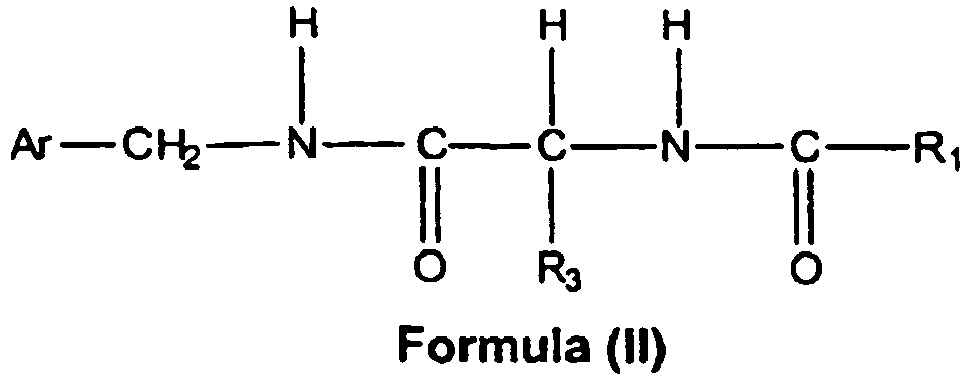 Ar is phenyl, which is unsubstituted or substituted with at least one halo group;R1 is alkyl containing 1 to 3 carbon atoms, andR3 is -CH2-Q, wherein Q is alkoxy containing 1 to 3 carbon atoms,or a pharmaceutically acceptable salt thereof.
 - The pharmaceutical composition for use according to claim 17, wherein epileptogenesis is related to status epilepticus, such as refractory status epilepticus.
- The pharmaceutical composition for use according to claim 17 or 18, wherein the epileptogenesis includes the development of epilepsy, such as chronic epilepsy, or an epileptic condition selected from status epilepticus, an epileptic seizure, a repetitive seizure or/and a seizure cluster continuing for at least about 10 min.
- The pharmaceutical composition for use according to claim 19, wherein the epileptic condition comprises focal seizures or/and generalized seizures and/or wherein the epileptic condition comprises convulsive seizures, such as tonic-clonic, tonic, clonic, or myoclonic seizures, or/and non-convulsive seizures, such as absences or atonic seizures or/and wherein the epileptic condition or a related condition comprises acute repetitive seizures or/and seizure clusters.
- The pharmaceutical composition for use according to claim 19 or 20, wherein the epileptic condition or a related condition comprises acute repetitive seizures.
- The pharmaceutical composition for use according to any one of the claims 17 to 21, wherein the compound of Formula (II) is lacosamide.
Priority Applications (4)
| Application Number | Priority Date | Filing Date | Title |
|---|---|---|---|
| PL07764678T PL2035029T3 (en) | 2006-06-15 | 2007-06-15 | Peptide compounds for treating refractory status epilepticus |
| EP07764678.4A EP2035029B1 (en) | 2006-06-15 | 2007-06-15 | Peptide compounds for treating refractory status epilepticus |
| SI200731890A SI2035029T1 (en) | 2006-06-15 | 2007-06-15 | Peptide compounds for treating refractory status epilepticus |
| CY20171100123T CY1118523T1 (en) | 2006-06-15 | 2017-01-26 | Peptide compounds for the treatment of refractory STATUS EPILEPTICUS |
Applications Claiming Priority (4)
| Application Number | Priority Date | Filing Date | Title |
|---|---|---|---|
| US81396706P | 2006-06-15 | 2006-06-15 | |
| EP06013655A EP1873527A1 (en) | 2006-06-30 | 2006-06-30 | Method for identifying CRMP modulators |
| EP07764678.4A EP2035029B1 (en) | 2006-06-15 | 2007-06-15 | Peptide compounds for treating refractory status epilepticus |
| PCT/EP2007/005306 WO2007144196A2 (en) | 2006-06-15 | 2007-06-15 | Peptide compounds for treating refractory status epilepticus |
Publications (2)
| Publication Number | Publication Date |
|---|---|
| EP2035029A2 EP2035029A2 (en) | 2009-03-18 |
| EP2035029B1 true EP2035029B1 (en) | 2016-11-30 |
Family
ID=36889233
Family Applications (2)
| Application Number | Title | Priority Date | Filing Date |
|---|---|---|---|
| EP06013655A Withdrawn EP1873527A1 (en) | 2006-06-15 | 2006-06-30 | Method for identifying CRMP modulators |
| EP07764678.4A Revoked EP2035029B1 (en) | 2006-06-15 | 2007-06-15 | Peptide compounds for treating refractory status epilepticus |
Family Applications Before (1)
| Application Number | Title | Priority Date | Filing Date |
|---|---|---|---|
| EP06013655A Withdrawn EP1873527A1 (en) | 2006-06-15 | 2006-06-30 | Method for identifying CRMP modulators |
Country Status (21)
| Country | Link |
|---|---|
| US (3) | US20100273714A1 (en) |
| EP (2) | EP1873527A1 (en) |
| JP (1) | JP5795145B2 (en) |
| KR (2) | KR20090030307A (en) |
| CN (3) | CN101636180B (en) |
| AR (1) | AR061475A1 (en) |
| AU (1) | AU2007260208B2 (en) |
| BR (1) | BRPI0713702A2 (en) |
| CA (1) | CA2651684C (en) |
| CY (1) | CY1118523T1 (en) |
| DK (1) | DK2035029T3 (en) |
| EA (1) | EA018607B1 (en) |
| ES (1) | ES2613931T3 (en) |
| HU (1) | HUE033180T2 (en) |
| LT (1) | LT2035029T (en) |
| MX (1) | MX2008015951A (en) |
| PL (1) | PL2035029T3 (en) |
| PT (1) | PT2035029T (en) |
| SI (1) | SI2035029T1 (en) |
| TW (1) | TWI422384B (en) |
| WO (1) | WO2007144196A2 (en) |
Families Citing this family (24)
| Publication number | Priority date | Publication date | Assignee | Title |
|---|---|---|---|---|
| DE60100055T2 (en) * | 2001-03-21 | 2003-07-24 | Schwarz Pharma Ag | New use of a class of peptide compounds for the treatment of allodynia or other types of chronic or phantom pain |
| US20100256179A1 (en) * | 2004-03-26 | 2010-10-07 | Ucb Pharma Gmbh | Combination therapy for pain in painful diabetic neuropathy |
| KR20070007931A (en) * | 2004-04-16 | 2007-01-16 | 쉬바르츠파르마에이지 | Use of Peptide Compounds for the Prevention and Treatment of Chronic Headaches |
| EP1604655A1 (en) | 2004-06-09 | 2005-12-14 | Schwarz Pharma Ag | Novel use of peptide compounds for treating pain in trigeminal neuralgia |
| WO2006021412A2 (en) * | 2004-08-27 | 2006-03-02 | Schwarz Pharma Ag | Use of peptide compounds for treating bone cancer pain, chemotherapy-and nucleoside-induced pain |
| EP1642889A1 (en) * | 2004-10-02 | 2006-04-05 | Schwarz Pharma Ag | Improved synthesis scheme for lacosamide |
| EP1754476A1 (en) * | 2005-08-18 | 2007-02-21 | Schwarz Pharma Ag | Lacosamide (SPM 927) for treating myalgia, e.g. fibromyalgia |
| CN101466390B (en) | 2006-06-15 | 2014-03-12 | 优时比制药有限公司 | Peptide compounds for the treatment of refractory status epilepticus |
| US8735356B2 (en) | 2006-06-15 | 2014-05-27 | Ucb Pharma Gmbh | Anticonvulsant combination therapy |
| EP1873527A1 (en) | 2006-06-30 | 2008-01-02 | Schwarz Pharma Ag | Method for identifying CRMP modulators |
| US20100260716A1 (en) * | 2007-10-23 | 2010-10-14 | Ucb Pharma Gmbh | Compounds for treating demyelination conditions |
| WO2011037833A2 (en) * | 2009-09-23 | 2011-03-31 | The University Of North Carolina At Chapel Hill | Novel n-benzylamide substituted derivatives of 2-(acylamido)acetic acid and 2-(acylamido)propionic acids: potent neurological agents |
| EP2378291A1 (en) | 2010-04-15 | 2011-10-19 | UCB Pharma GmbH | Lacosamide detection assay |
| EP2468261A1 (en) | 2010-12-02 | 2012-06-27 | UCB Pharma GmbH | Formulation of lacosamide |
| JP6027539B2 (en) | 2010-12-02 | 2016-11-16 | ウーツェーベー ファルマ ゲーエムベーハーUcb Pharma Gmbh | Formulation of lacosamide once a day |
| CA2846625A1 (en) * | 2011-09-14 | 2013-03-21 | The Henry M. Jackson Foundation For The Advancement Of Military Medicine, Inc. | Processes and kits to detect and monitor for diagnostic biomarkers for post traumatic stress disorder (ptsd) and to differentiate between suicidal and non-suicidal form of the disorder |
| PL2887944T3 (en) * | 2012-08-21 | 2022-02-21 | Sage Therapeutics, Inc. | Allopregnanolone for treating refractory status epilepticus |
| MX376740B (en) * | 2015-12-11 | 2025-03-07 | Univ Aarhus | RUFINAMIDE FOR USE IN THE TREATMENT OF MYOTONIA |
| EP3397253A1 (en) | 2015-12-30 | 2018-11-07 | Adamas Pharmaceuticals, Inc. | Methods and compositions for the treatment of seizure-related disorders |
| HRP20220479T1 (en) | 2016-06-01 | 2022-05-27 | Athira Pharma, Inc. | Compounds |
| US11278634B1 (en) | 2021-02-12 | 2022-03-22 | Extrovis Ag | Stable parenteral composition of lacosamide |
| US12545716B2 (en) | 2021-07-19 | 2026-02-10 | Immunome, Inc. | Immunoconjugates and methods |
| US11806405B1 (en) | 2021-07-19 | 2023-11-07 | Zeno Management, Inc. | Immunoconjugates and methods |
| WO2023178250A1 (en) * | 2022-03-17 | 2023-09-21 | SpringWorks Therapeutics Inc. | Treatment of tuberous sclerosis with mirdametinib |
Citations (6)
| Publication number | Priority date | Publication date | Assignee | Title |
|---|---|---|---|---|
| US813967A (en) | 1905-07-27 | 1906-02-27 | John W Hart | Self-igniting match-safe. |
| US5378729A (en) | 1985-02-15 | 1995-01-03 | Research Corporation Technologies, Inc. | Amino acid derivative anticonvulsant |
| WO1997033861A1 (en) | 1996-03-15 | 1997-09-18 | Research Corporation Technologies, Inc. | Anticonvulsant enantiomeric amino acid derivatives |
| EP1541138A1 (en) | 2003-12-05 | 2005-06-15 | Schwarz Pharma Ag | Novel use of peptide compounds for treating status epilepticus or related conditions |
| WO2006079547A2 (en) | 2005-01-28 | 2006-08-03 | Schwarz Pharma Ag | Spm 927 for add-on therapy of schizophrenia |
| WO2007144196A2 (en) | 2006-06-15 | 2007-12-21 | Schwarz Pharma Ag | Peptide compounds for treating refractory status epilepticus |
Family Cites Families (29)
| Publication number | Priority date | Publication date | Assignee | Title |
|---|---|---|---|---|
| US4736866B1 (en) * | 1984-06-22 | 1988-04-12 | Transgenic non-human mammals | |
| US5585358A (en) * | 1993-07-06 | 1996-12-17 | Yissum Research Development Corporation Of The Hebrew University Of Jerusalem | Derivatives of valproic acid amides and 2-valproenoic acid amides, method of making and use thereof as anticonvulsant agents |
| DE60006618T2 (en) * | 1999-08-06 | 2004-09-23 | F. Hoffmann-La Roche Ag | Tetrahydrobenzo (d) azepines and their use as metabotropic glutamate receptor antagonists |
| GB9926898D0 (en) * | 1999-11-12 | 2000-01-12 | School Of Earth & Environmenta | Calcium silicate sorbents |
| WO2002013766A2 (en) * | 2000-08-17 | 2002-02-21 | Teva Pharmaceutical Industries, Ltd. | Valproic acid derivatives for the treatment of pain |
| US20020119944A1 (en) * | 2000-11-09 | 2002-08-29 | Michelle Aguera | Use of Ulip-and/or Ulip2 in the treatment of myelin disorders |
| EP1243262B1 (en) * | 2001-03-20 | 2006-05-31 | Schwarz Pharma Ag | Novel use of a peptide class of compound for treating non-neuropathic inflammatory pain |
| DE60100055T2 (en) * | 2001-03-21 | 2003-07-24 | Schwarz Pharma Ag | New use of a class of peptide compounds for the treatment of allodynia or other types of chronic or phantom pain |
| WO2003022298A2 (en) * | 2001-09-07 | 2003-03-20 | Institut National De La Sante Et De La Recherche Medicale (Inserm) | Use of a protein of the crmp family for treating diseases related to the immune system |
| WO2005053667A1 (en) * | 2003-12-02 | 2005-06-16 | Schwarz Pharma Ag | Novel use of peptide compounds for treating central neuropathic pain |
| US20060009384A1 (en) * | 2003-12-05 | 2006-01-12 | David Rudd | Novel use of peptide compounds for treating status epilepticus or related conditions |
| EP1579858A1 (en) * | 2004-03-26 | 2005-09-28 | Schwarz Pharma Ag | Novel use of peptide compounds for treating pain in painful diabetic neuropathy |
| US20100256179A1 (en) * | 2004-03-26 | 2010-10-07 | Ucb Pharma Gmbh | Combination therapy for pain in painful diabetic neuropathy |
| US20070042969A1 (en) * | 2004-03-26 | 2007-02-22 | Srz Properties, Inc. | Combination therapy for pain in painful diabetic neuropathy |
| KR20070007931A (en) * | 2004-04-16 | 2007-01-16 | 쉬바르츠파르마에이지 | Use of Peptide Compounds for the Prevention and Treatment of Chronic Headaches |
| EP1604654A1 (en) * | 2004-05-18 | 2005-12-14 | Schwarz Pharma Ag | Novel use of peptide compounds for treating dyskinesia |
| EP1604656A1 (en) * | 2004-06-09 | 2005-12-14 | Schwarz Pharma Ag | Novel use of peptide compounds for treating amyotrophic lateral sclerosis (ALS) |
| EP1604655A1 (en) * | 2004-06-09 | 2005-12-14 | Schwarz Pharma Ag | Novel use of peptide compounds for treating pain in trigeminal neuralgia |
| WO2006021412A2 (en) * | 2004-08-27 | 2006-03-02 | Schwarz Pharma Ag | Use of peptide compounds for treating bone cancer pain, chemotherapy-and nucleoside-induced pain |
| EP1642889A1 (en) * | 2004-10-02 | 2006-04-05 | Schwarz Pharma Ag | Improved synthesis scheme for lacosamide |
| US20060252749A1 (en) * | 2005-01-28 | 2006-11-09 | Srz Properties, Inc. | Lacosamide for add-on therapy of psychosis |
| EP1754476A1 (en) * | 2005-08-18 | 2007-02-21 | Schwarz Pharma Ag | Lacosamide (SPM 927) for treating myalgia, e.g. fibromyalgia |
| US20070043120A1 (en) * | 2005-08-18 | 2007-02-22 | Bettina Beyreuther | Therapeutic combination for painful medical conditions |
| US20070048372A1 (en) * | 2005-08-18 | 2007-03-01 | Srz Properties, Inc. | Method for treating non-inflammatory osteoarthritic pain |
| CN101466390B (en) * | 2006-06-15 | 2014-03-12 | 优时比制药有限公司 | Peptide compounds for the treatment of refractory status epilepticus |
| US8735356B2 (en) * | 2006-06-15 | 2014-05-27 | Ucb Pharma Gmbh | Anticonvulsant combination therapy |
| US20100260716A1 (en) * | 2007-10-23 | 2010-10-14 | Ucb Pharma Gmbh | Compounds for treating demyelination conditions |
| EP2468261A1 (en) * | 2010-12-02 | 2012-06-27 | UCB Pharma GmbH | Formulation of lacosamide |
| JP6027539B2 (en) * | 2010-12-02 | 2016-11-16 | ウーツェーベー ファルマ ゲーエムベーハーUcb Pharma Gmbh | Formulation of lacosamide once a day |
-
2006
- 2006-06-30 EP EP06013655A patent/EP1873527A1/en not_active Withdrawn
-
2007
- 2007-06-15 WO PCT/EP2007/005306 patent/WO2007144196A2/en not_active Ceased
- 2007-06-15 TW TW096121856A patent/TWI422384B/en not_active IP Right Cessation
- 2007-06-15 BR BRPI0713702-8A patent/BRPI0713702A2/en not_active Application Discontinuation
- 2007-06-15 KR KR1020097000667A patent/KR20090030307A/en not_active Ceased
- 2007-06-15 DK DK07764678.4T patent/DK2035029T3/en active
- 2007-06-15 CN CN200780022314XA patent/CN101636180B/en not_active Expired - Fee Related
- 2007-06-15 EA EA200900021A patent/EA018607B1/en not_active IP Right Cessation
- 2007-06-15 MX MX2008015951A patent/MX2008015951A/en active IP Right Grant
- 2007-06-15 HU HUE07764678A patent/HUE033180T2/en unknown
- 2007-06-15 PL PL07764678T patent/PL2035029T3/en unknown
- 2007-06-15 AU AU2007260208A patent/AU2007260208B2/en not_active Ceased
- 2007-06-15 ES ES07764678.4T patent/ES2613931T3/en active Active
- 2007-06-15 EP EP07764678.4A patent/EP2035029B1/en not_active Revoked
- 2007-06-15 JP JP2009514712A patent/JP5795145B2/en active Active
- 2007-06-15 US US12/304,012 patent/US20100273714A1/en not_active Abandoned
- 2007-06-15 KR KR1020147006001A patent/KR101517133B1/en not_active Expired - Fee Related
- 2007-06-15 CN CN201410040413.2A patent/CN103751157A/en active Pending
- 2007-06-15 SI SI200731890A patent/SI2035029T1/en unknown
- 2007-06-15 PT PT77646784T patent/PT2035029T/en unknown
- 2007-06-15 LT LTEP07764678.4T patent/LT2035029T/en unknown
- 2007-06-15 CA CA2651684A patent/CA2651684C/en not_active Expired - Fee Related
- 2007-06-15 AR ARP070102635A patent/AR061475A1/en not_active Application Discontinuation
- 2007-06-29 CN CN2007800245172A patent/CN101489591B/en not_active Expired - Fee Related
-
2014
- 2014-01-14 US US14/154,409 patent/US20140128377A1/en not_active Abandoned
- 2014-01-14 US US14/154,410 patent/US20140128378A1/en not_active Abandoned
-
2017
- 2017-01-26 CY CY20171100123T patent/CY1118523T1/en unknown
Patent Citations (6)
| Publication number | Priority date | Publication date | Assignee | Title |
|---|---|---|---|---|
| US813967A (en) | 1905-07-27 | 1906-02-27 | John W Hart | Self-igniting match-safe. |
| US5378729A (en) | 1985-02-15 | 1995-01-03 | Research Corporation Technologies, Inc. | Amino acid derivative anticonvulsant |
| WO1997033861A1 (en) | 1996-03-15 | 1997-09-18 | Research Corporation Technologies, Inc. | Anticonvulsant enantiomeric amino acid derivatives |
| EP1541138A1 (en) | 2003-12-05 | 2005-06-15 | Schwarz Pharma Ag | Novel use of peptide compounds for treating status epilepticus or related conditions |
| WO2006079547A2 (en) | 2005-01-28 | 2006-08-03 | Schwarz Pharma Ag | Spm 927 for add-on therapy of schizophrenia |
| WO2007144196A2 (en) | 2006-06-15 | 2007-12-21 | Schwarz Pharma Ag | Peptide compounds for treating refractory status epilepticus |
Non-Patent Citations (37)
| Title |
|---|
| "ICD-10 Classification for Epilepsy (G40) and Status epilepticus (G41", WORLD HEALTH ORGANISATION, 2007, Retrieved from the Internet <URL:http://apps.who.int/ classifications/apps/icd/icd10 online 2007/index.htm?gg40.htm+> [retrieved on 20170819] |
| "The Theory and Practice of Industrial Pharmacy", article LACHMAN/LIEBERMAN: "Controlled Delivery", pages: 233 - 234, XP055522497 |
| A.M. MAZARATI ET AL.: "N-methyl-D-asparate receptor antagonists abolish the maintenance phase of self-sustaining status epilepticus in rats", NEUROSCIENCE LETTERS, vol. 265, 1999, pages 187 - 190, XP055522502 |
| ANONYMOUS: "Lacosamide", DRUGS NEWS PERSPECT, vol. 17, no. 10, December 2004 (2004-12-01), pages 689, XP055417744 |
| BIALER M ET AL.: "Progress report on new antiepileptic drugs: a summary of the Fifth Eilat Conference (EILAT V", EPILEPSY RESEARCH, vol. 43, 2001, pages 11 - 58, XP002267163 |
| BIALER, M ET AL.: "Progress report on new antiepileptic drugs: a summary of the Fifth Eilat Conference", EPILEPSY RESEARCH, vol. 43, 2001, pages 11 - 58, XP002267163 |
| C. A. HOVINGA: "SPM-927", IDRUGS, vol. 6, no. 5, 2003, pages 479 - 485, XP001180322 |
| CONLEY ET AL.: "Functionalized DL-amino acid derivatives. Potent new agents for the treatment of epilepsy", J OURNAL OF MEDICINAL CHEMISTRY, vol. 30, no. 3, 1987, pages 567 - 574, XP002106737 |
| CONLEY, J. ET AL.: "Functionalized DL-amino acid derivatives. Potent new agents for the treatment of epilepsy", JOURNAL OF MEDICINAL CHEMISTRY, vol. 30, no. 3, 1 January 1987 (1987-01-01), Washington, pages 567 - 574, XP002458219 |
| DECKERS C. L ET AL.: "Selection of antiepileptic drug polytherapy based on mechanisms of action: the evidence reviewed", EPILEPSIA, November 2000 (2000-11-01), pages 1364 - 74, XP009035157 |
| DUNCAN EG ET AL.: "The novel antiepileptic drug lacosamide blocks behavioral and brain metabolic manifestations of seizure activity in the 6Hz psychomo- tor seizure model", EPILEPSY RESEARCH, vol. 67, 2005, pages 81 - 87, XP005151214 |
| E. BEN-MENACHEM, V. BITON, D. JATUZIS, B. ABOU-KHALIL, P. DOTY, D. RUDD, S.P. 667 STUDY GROUP: "Abstract 030: Efficacy and Safety of Adjunctive Oral Lacosamide for the Treatment of Partial Onset Seizures in Patients with Epilepsy", EPILEPSIA, vol. 46, no. Suppl.6, 2005, pages 57, XP055417749 |
| E.H. REYNOLDS ET AL.: "Single drug or combination therapy of epilepsy?", DRUGS, vol. 21, no. 5, 1981, pages 374 - 382, XP009029147 |
| FOUNTAIN ET AL.: "(Abst. G.12), 2000 HARKOSERIDE: SAFETY AND TOLERABILITY OF A NEW ANTIEPILEPTIC DRUG (AED) IN PATIENTS WITH REFRACTORY PARTIAL SEIZURES.", ANNUAL MEETING ABSTRACTS, 2000, XP055522526 |
| FOUNTAIN N ET AL.: "Absence of effect of adjunctive SPM 927 on concomitant AED plasma concentrations in subjects with partial seizures", EPILEPSIA, vol. 44, no. Suppl. 9, 2005, pages 96, XP009028153 |
| FOUNTAIN N. B. ET AL.: "Absence of effect of adjunctive SPM-927 on concomitant AED plasma concentrations in subjects with partial seizures", EPILEPSIA, vol. 44, 9 December 2003 (2003-12-09), Elmsford, NY, US, pages 96, XP009028153 |
| HORSTMANN R ET AL.: "SPM 927 does not interact with valproic acid and car- bamazepine", EPILEPSIA, vol. 44, no. Suppl. 9, 2003, pages 97, XP009028152 |
| HORSTMANN R ET AL.: "SPM-927 does not interact with valproic acid and carbamazepine", EPILEPSIA, vol. 44, no. 9, 5 September 2003 (2003-09-05), Elmsford, NY, US, pages 97, XP009028152 |
| HOVINGA C A: "SPM-927", IDRUGS, vol. 6, no. 5, May 2003 (2003-05-01), pages 479 - 485, XP001180322 |
| HOVINGA CA: "SPM-927", IDRUGS, vol. 6, no. 5, 2003, pages 479 - 485, XP001180322 |
| HOVINGA, C. A. ET AL.: "APM-927", IDRUGS, vol. 6, 1 May 2003 (2003-05-01), GB, pages 479 - 485, XP055414646 |
| J R PROUS: "Annual Update 2003/2004 - Treatment of Neurological Disorders", DRUGS OF THE FUTURE, vol. 29, no. 3, March 2004 (2004-03-01), pages 253 - 317, XP055417716 |
| J.A. MCINTYRE ET AL.: "Lacosamide", DRUGS OF THE FUTURE, vol. 29, 2004, pages 992 - 997, XP055077503 |
| KLITGAARD, H. ET AL.: "Antiepileptogenesis, neuroprotection, and disease modification in the treatment of epilepsy: focus on levetiracetam", EPILEPTIC DISORDERS, vol. 5, 1 May 2003 (2003-05-01), pages S9 - S1 1, XP055414652 |
| LIU ET AL.: "Nicotinamide adenine dinucleotide suppresses epileptogenesis at an early stage", SCIENTIFIC REPORTS, vol. 7, December 2017 (2017-12-01), pages 1 - 10, XP055523119 |
| N. B. FOUNTAIN ET AL.: "1.269 Absence of effect of adjunctive SPM-927 on concomitant AED plasma concentrations in subjects with partial seizures", EPILEPSIA, vol. 44, no. 9, 9 December 2003 (2003-12-09), pages 96, XP009028153 |
| N.Y. WALTON ET AL.: "Motor and electroencephalographic response of refractory experimental status epilepticus in rats to treatment with MK-801, diazepam, or MK-801 plus diazepam", BRAIN RESEARCH, vol. 553, 1991, pages 97 - 104, XP024264536 |
| NATHAN B FOUNTAIN, JACQUELINE A FRENCH, MICHAEL D PRIVITERA: "G.12: HARKOSERIDE: SAFETY AND TOLERABILITY OF A NEW ANTIEPILEPTIC DRUG (AED) IN PATIENTS WITH REFRACTORY PARTIAL SEIZURES", EPILEPSIA, vol. 41, no. Suppl.7, 2000, pages 169 - 170, XP055417736 |
| RENÉ H. LEVY, RICHARD H. MATTSON, BRIAN S. MELDRUM, EMILIO PERUCCA: "Antiepileptic Drugs Fifth Edition", 2002, LIPPINCOTT WILLIAMS AND WILKINS, article ASLA PITKÄNEN: "Chapter 15- General Principles Prevention of Epileptogenesis", pages: 3pp, XP055417774 |
| REYNOLDS E. H. ET AL.: "Single drug or combination therapy of epilepsy?", DRUGS, vol. 21, no. 5, 1 January 1981 (1981-01-01), pages 374 - 382, XP009029147 |
| REYNOLDS EH ET AL.: "Single Drug or combination therapy of epilepsy?", DRUGS, vol. 21, no. 5, 1981, pages 374 - 382, XP009029147 |
| ROSENFELD W ET AL.: "Long-term safety and efficacy of SPM 927 as adjunctive therapy in subjects with partial seizures: 24-week follow-up", EPILEPSIA, vol. 44, no. Suppl. 9, 2003, pages 262, XP009028150 |
| SACHDEO R; ET AL: "AN OPEN-LABEL, MAXIMUM TOLERATED DOSE TRIAL TO EVALUATE ORAL SPM 927 AS ADJUNCTIVE THERAPY IN PATIENTS WITH PARTIAL SEIZURES", EUROPEAN JOURNAL OF NEUROLOGY, vol. 10, no. 1, 30 August 2003 (2003-08-30), pages 142, XP009028154, ISSN: 1351-5101 |
| SIMON SHORVON: "Handbook of Epilepsy Treatment", 2000, BLACKWELL SCIENCE LTD,, ISBN: 0-632-04849-2, article "Emergency Treatment of Epilepsy: Acute Seizures, Serial Seizures, Seizure Clusters and Status Epilepticus", pages: 3pp, 173 - 194, XP055417768 |
| STOEHR T ET AL.: "The pre-clinical profile of the novel anticonvulsant lacosamide", EPILEPSIA, vol. 46, no. Suppl. 6, pages 373 - 374, XP009092396 |
| STOEHR, T. ET AL.: "The pre-clinical profile of the novel anti-convulsant lacosamide", EPILEPSIA, vol. 46, no. 6, 1 September 2005 (2005-09-01), New York, pages 373 - 374, XP055414542 |
| T. STÖHR ET AL.: "Lacosamide, a novel anti-convulsant drug, shows efficacy with a wide safety margin in rodent models for epilepsy", EPILEPSY RESEARCH, vol. 74, 29 April 2007 (2007-04-29), pages 147 - 154, XP022052001 |
Also Published As
Similar Documents
| Publication | Publication Date | Title |
|---|---|---|
| DK2035029T3 (en) | PEPTID RELATIONS FOR TREATMENT OF REFRACTOR STATUS EPILEPTICUS. | |
| CN101466390B (en) | Peptide compounds for the treatment of refractory status epilepticus | |
| TWI397417B (en) | Pharmaceutical composition with synergistic anticonvulsant effect | |
| US6417184B1 (en) | Triple drug therapy for the treatment and prevention of acute or chronic pain | |
| US5902815A (en) | Use of 5HT-2A serotonin agonists to prevent adverse effects of NMDA receptor hypofunction | |
| CN1938010B (en) | Novel use of peptide compounds for treating pain in painful diabetic neuropathy | |
| JP2019536788A (en) | Pharmaceutical combination containing T-type calcium channel blocker | |
| KR20080110776A (en) | Co-administration of adenosine A receptor antagonists and anticonvulsants | |
| EP1434588B1 (en) | 2-(amino-3,4-dioxo-1cyclobuten-1-yl)amino alkyl -acid derivatives for the treatment of pain | |
| EP1138332B1 (en) | Treatment of poriomania | |
| EP1541138A1 (en) | Novel use of peptide compounds for treating status epilepticus or related conditions | |
| PL217743B1 (en) | Treating seizures using ice inhibitors | |
| CA2521274A1 (en) | Combinations comprising anti-epileptic drugs for the treatment of neurological disorders | |
| WO2006121919A2 (en) | Methods of treating obsessive compulsive disorder | |
| BR112019011208B1 (en) | PHARMACEUTICAL COMBINATION AND ITS USE | |
| HK1064609B (en) | 2-(amino-3,4-dioxo-1cyclobuten-1-yl)amino alkyl -acid derivatives for the treatment of pain | |
| WO2005049039A1 (en) | Combinations comprising ampa receptors antagonists for the treatment of affective and attention deficit disorders | |
| HK1072556A (en) | Novel use of peptide compounds for treating status epilepticus or related conditions | |
| KR20010071780A (en) | The Treatment of Renal Colic with GABA Analogs |
Legal Events
| Date | Code | Title | Description |
|---|---|---|---|
| PUAI | Public reference made under article 153(3) epc to a published international application that has entered the european phase |
Free format text: ORIGINAL CODE: 0009012 |
|
| 17P | Request for examination filed |
Effective date: 20081215 |
|
| AK | Designated contracting states |
Kind code of ref document: A2 Designated state(s): AT BE BG CH CY CZ DE DK EE ES FI FR GB GR HU IE IS IT LI LT LU LV MC MT NL PL PT RO SE SI SK TR |
|
| AX | Request for extension of the european patent |
Extension state: AL BA HR MK RS |
|
| DAX | Request for extension of the european patent (deleted) | ||
| REG | Reference to a national code |
Ref country code: HK Ref legal event code: DE Ref document number: 1127550 Country of ref document: HK |
|
| RAP1 | Party data changed (applicant data changed or rights of an application transferred) |
Owner name: UCB PHARMA GMBH |
|
| 17Q | First examination report despatched |
Effective date: 20130715 |
|
| REG | Reference to a national code |
Ref country code: HK Ref legal event code: WD Ref document number: 1127550 Country of ref document: HK |
|
| GRAP | Despatch of communication of intention to grant a patent |
Free format text: ORIGINAL CODE: EPIDOSNIGR1 |
|
| INTG | Intention to grant announced |
Effective date: 20160610 |
|
| GRAS | Grant fee paid |
Free format text: ORIGINAL CODE: EPIDOSNIGR3 |
|
| GRAJ | Information related to disapproval of communication of intention to grant by the applicant or resumption of examination proceedings by the epo deleted |
Free format text: ORIGINAL CODE: EPIDOSDIGR1 |
|
| GRAL | Information related to payment of fee for publishing/printing deleted |
Free format text: ORIGINAL CODE: EPIDOSDIGR3 |
|
| GRAR | Information related to intention to grant a patent recorded |
Free format text: ORIGINAL CODE: EPIDOSNIGR71 |
|
| GRAA | (expected) grant |
Free format text: ORIGINAL CODE: 0009210 |
|
| INTC | Intention to grant announced (deleted) | ||
| INTG | Intention to grant announced |
Effective date: 20161019 |
|
| AK | Designated contracting states |
Kind code of ref document: B1 Designated state(s): AT BE BG CH CY CZ DE DK EE ES FI FR GB GR HU IE IS IT LI LT LU LV MC MT NL PL PT RO SE SI SK TR |
|
| REG | Reference to a national code |
Ref country code: CH Ref legal event code: EP Ref country code: GB Ref legal event code: FG4D |
|
| REG | Reference to a national code |
Ref country code: AT Ref legal event code: REF Ref document number: 849172 Country of ref document: AT Kind code of ref document: T Effective date: 20161215 |
|
| REG | Reference to a national code |
Ref country code: IE Ref legal event code: FG4D |
|
| REG | Reference to a national code |
Ref country code: DE Ref legal event code: R096 Ref document number: 602007048965 Country of ref document: DE |
|
| REG | Reference to a national code |
Ref country code: DK Ref legal event code: T3 Effective date: 20170119 |
|
| REG | Reference to a national code |
Ref country code: PT Ref legal event code: SC4A Ref document number: 2035029 Country of ref document: PT Date of ref document: 20170203 Kind code of ref document: T Free format text: AVAILABILITY OF NATIONAL TRANSLATION Effective date: 20170123 |
|
| REG | Reference to a national code |
Ref country code: RO Ref legal event code: EPE |
|
| REG | Reference to a national code |
Ref country code: EE Ref legal event code: FG4A Ref document number: E012949 Country of ref document: EE Effective date: 20161227 |
|
| REG | Reference to a national code |
Ref country code: SE Ref legal event code: TRGR |
|
| REG | Reference to a national code |
Ref country code: NL Ref legal event code: FP |
|
| REG | Reference to a national code |
Ref country code: FR Ref legal event code: PLFP Year of fee payment: 11 |
|
| REG | Reference to a national code |
Ref country code: ES Ref legal event code: FG2A Ref document number: 2613931 Country of ref document: ES Kind code of ref document: T3 Effective date: 20170529 |
|
| REG | Reference to a national code |
Ref country code: SK Ref legal event code: T3 Ref document number: E 23191 Country of ref document: SK |
|
| REG | Reference to a national code |
Ref country code: DE Ref legal event code: R026 Ref document number: 602007048965 Country of ref document: DE |
|
| PLBI | Opposition filed |
Free format text: ORIGINAL CODE: 0009260 |
|
| PLBI | Opposition filed |
Free format text: ORIGINAL CODE: 0009260 |
|
| 26 | Opposition filed |
Opponent name: STADA ARZNEIMITTEL AG Effective date: 20170830 Opponent name: ACCORD HEALTHCARE LTD Effective date: 20170830 Opponent name: COOKE, RICHARD Effective date: 20170829 Opponent name: HEXAL AG Effective date: 20170828 |
|
| 26 | Opposition filed |
Opponent name: PENTAFARMA, SOCIEDADE TECNICO-MEDICINAL, SA Effective date: 20170830 |
|
| PLAX | Notice of opposition and request to file observation + time limit sent |
Free format text: ORIGINAL CODE: EPIDOSNOBS2 |
|
| REG | Reference to a national code |
Ref country code: HU Ref legal event code: AG4A Ref document number: E033180 Country of ref document: HU |
|
| PLAF | Information modified related to communication of a notice of opposition and request to file observations + time limit |
Free format text: ORIGINAL CODE: EPIDOSCOBS2 |
|
| PLBB | Reply of patent proprietor to notice(s) of opposition received |
Free format text: ORIGINAL CODE: EPIDOSNOBS3 |
|
| PLAS | Information related to reply of patent proprietor to notice(s) of opposition deleted |
Free format text: ORIGINAL CODE: EPIDOSDOBS3 |
|
| PLBB | Reply of patent proprietor to notice(s) of opposition received |
Free format text: ORIGINAL CODE: EPIDOSNOBS3 |
|
| REG | Reference to a national code |
Ref country code: FR Ref legal event code: PLFP Year of fee payment: 12 |
|
| PLAB | Opposition data, opponent's data or that of the opponent's representative modified |
Free format text: ORIGINAL CODE: 0009299OPPO |
|
| R26 | Opposition filed (corrected) |
Opponent name: COOKE, RICHARD Effective date: 20170829 |
|
| REG | Reference to a national code |
Ref country code: DE Ref legal event code: R064 Ref document number: 602007048965 Country of ref document: DE Ref country code: DE Ref legal event code: R103 Ref document number: 602007048965 Country of ref document: DE |
|
| REG | Reference to a national code |
Ref country code: AT Ref legal event code: UEP Ref document number: 849172 Country of ref document: AT Kind code of ref document: T Effective date: 20161130 |
|
| RDAF | Communication despatched that patent is revoked |
Free format text: ORIGINAL CODE: EPIDOSNREV1 |
|
| RDAG | Patent revoked |
Free format text: ORIGINAL CODE: 0009271 |
|
| STAA | Information on the status of an ep patent application or granted ep patent |
Free format text: STATUS: PATENT REVOKED |
|
| PGFP | Annual fee paid to national office [announced via postgrant information from national office to epo] |
Ref country code: MC Payment date: 20190529 Year of fee payment: 13 Ref country code: LU Payment date: 20190610 Year of fee payment: 13 Ref country code: CY Payment date: 20190529 Year of fee payment: 13 Ref country code: PT Payment date: 20190614 Year of fee payment: 13 Ref country code: PL Payment date: 20190403 Year of fee payment: 13 Ref country code: LT Payment date: 20190531 Year of fee payment: 13 Ref country code: NL Payment date: 20190612 Year of fee payment: 13 Ref country code: IT Payment date: 20190620 Year of fee payment: 13 Ref country code: DK Payment date: 20190613 Year of fee payment: 13 Ref country code: IE Payment date: 20190610 Year of fee payment: 13 Ref country code: FI Payment date: 20190610 Year of fee payment: 13 Ref country code: CZ Payment date: 20190529 Year of fee payment: 13 Ref country code: DE Payment date: 20190604 Year of fee payment: 13 |
|
| REG | Reference to a national code |
Ref country code: CH Ref legal event code: PL |
|
| 27W | Patent revoked |
Effective date: 20190131 |
|
| GBPR | Gb: patent revoked under art. 102 of the ep convention designating the uk as contracting state |
Effective date: 20190131 |
|
| PGFP | Annual fee paid to national office [announced via postgrant information from national office to epo] |
Ref country code: BG Payment date: 20190416 Year of fee payment: 13 Ref country code: GR Payment date: 20190514 Year of fee payment: 13 Ref country code: EE Payment date: 20190530 Year of fee payment: 13 Ref country code: FR Payment date: 20190510 Year of fee payment: 13 Ref country code: HU Payment date: 20190506 Year of fee payment: 13 Ref country code: RO Payment date: 20190513 Year of fee payment: 13 Ref country code: BE Payment date: 20190417 Year of fee payment: 13 Ref country code: MT Payment date: 20190620 Year of fee payment: 13 Ref country code: SI Payment date: 20190513 Year of fee payment: 13 Ref country code: TR Payment date: 20190612 Year of fee payment: 13 Ref country code: LV Payment date: 20190529 Year of fee payment: 13 Ref country code: SE Payment date: 20190611 Year of fee payment: 13 |
|
| REG | Reference to a national code |
Ref country code: SK Ref legal event code: MC4A Ref document number: E 23191 Country of ref document: SK Effective date: 20190131 |
|
| REG | Reference to a national code |
Ref country code: SE Ref legal event code: ECNC |
|
| REG | Reference to a national code |
Ref country code: GR Ref legal event code: NF Ref document number: 20170400382 Country of ref document: GR Effective date: 20190906 |
|
| PGFP | Annual fee paid to national office [announced via postgrant information from national office to epo] |
Ref country code: SK Payment date: 20190513 Year of fee payment: 13 Ref country code: CH Payment date: 20190614 Year of fee payment: 13 Ref country code: IS Payment date: 20190508 Year of fee payment: 13 |
|
| PGFP | Annual fee paid to national office [announced via postgrant information from national office to epo] |
Ref country code: AT Payment date: 20190528 Year of fee payment: 13 Ref country code: ES Payment date: 20190701 Year of fee payment: 13 Ref country code: GB Payment date: 20190612 Year of fee payment: 13 |
|
| REG | Reference to a national code |
Ref country code: EE Ref legal event code: MF4A Ref document number: E012949 Country of ref document: EE Effective date: 20190813 |
|
| REG | Reference to a national code |
Ref country code: AT Ref legal event code: MA03 Ref document number: 849172 Country of ref document: AT Kind code of ref document: T Effective date: 20190131 |
|
| REG | Reference to a national code |
Ref country code: SI Ref legal event code: KO00 Effective date: 20210317 |
|
| PG25 | Lapsed in a contracting state [announced via postgrant information from national office to epo] |
Ref country code: AT Free format text: LAPSE BECAUSE OF THE APPLICANT RENOUNCES Effective date: 20190131 |
|
| PG25 | Lapsed in a contracting state [announced via postgrant information from national office to epo] |
Ref country code: AT Free format text: LAPSE BECAUSE OF THE APPLICANT RENOUNCES Effective date: 20190131 |