EP2033654A1 - Macrocyclic isoquinoline peptide inhibitors of hepatitis c virus - Google Patents
Macrocyclic isoquinoline peptide inhibitors of hepatitis c virus Download PDFInfo
- Publication number
- EP2033654A1 EP2033654A1 EP08075882A EP08075882A EP2033654A1 EP 2033654 A1 EP2033654 A1 EP 2033654A1 EP 08075882 A EP08075882 A EP 08075882A EP 08075882 A EP08075882 A EP 08075882A EP 2033654 A1 EP2033654 A1 EP 2033654A1
- Authority
- EP
- European Patent Office
- Prior art keywords
- mmol
- tert
- nmr
- compound
- mixture
- Prior art date
- Legal status (The legal status is an assumption and is not a legal conclusion. Google has not performed a legal analysis and makes no representation as to the accuracy of the status listed.)
- Granted
Links
- 241000711549 Hepacivirus C Species 0.000 title description 96
- AWJUIBRHMBBTKR-UHFFFAOYSA-N isoquinoline Chemical compound C1=NC=CC2=CC=CC=C21 AWJUIBRHMBBTKR-UHFFFAOYSA-N 0.000 title description 18
- 108090000765 processed proteins & peptides Proteins 0.000 title description 16
- 239000003112 inhibitor Substances 0.000 title description 11
- 238000000034 method Methods 0.000 claims abstract description 213
- 239000000203 mixture Substances 0.000 claims abstract description 169
- 239000000872 buffer Substances 0.000 claims abstract description 36
- 230000008569 process Effects 0.000 claims abstract description 31
- 102000004190 Enzymes Human genes 0.000 claims abstract description 21
- 108090000790 Enzymes Proteins 0.000 claims abstract description 21
- 230000007062 hydrolysis Effects 0.000 claims abstract description 12
- 238000006460 hydrolysis reaction Methods 0.000 claims abstract description 12
- 125000005907 alkyl ester group Chemical group 0.000 claims abstract description 8
- 108091005804 Peptidases Proteins 0.000 claims description 30
- 239000004365 Protease Substances 0.000 claims description 30
- 125000002877 alkyl aryl group Chemical group 0.000 claims description 18
- 125000005119 alkyl cycloalkyl group Chemical group 0.000 claims description 14
- HBAQYPYDRFILMT-UHFFFAOYSA-N 8-[3-(1-cyclopropylpyrazol-4-yl)-1H-pyrazolo[4,3-d]pyrimidin-5-yl]-3-methyl-3,8-diazabicyclo[3.2.1]octan-2-one Chemical class C1(CC1)N1N=CC(=C1)C1=NNC2=C1N=C(N=C2)N1C2C(N(CC1CC2)C)=O HBAQYPYDRFILMT-UHFFFAOYSA-N 0.000 claims description 10
- 125000002924 primary amino group Chemical group [H]N([H])* 0.000 claims description 10
- 125000006239 protecting group Chemical group 0.000 claims description 6
- 108090000787 Subtilisin Proteins 0.000 claims description 5
- 108010056079 Subtilisins Proteins 0.000 claims description 5
- 102000005158 Subtilisins Human genes 0.000 claims description 5
- 108010020132 microbial serine proteinases Proteins 0.000 claims description 4
- 241001328122 Bacillus clausii Species 0.000 claims description 3
- 241000006382 Bacillus halodurans Species 0.000 claims description 3
- 244000063299 Bacillus subtilis Species 0.000 claims description 3
- 235000014469 Bacillus subtilis Nutrition 0.000 claims description 3
- 229910019142 PO4 Inorganic materials 0.000 claims description 3
- 235000021317 phosphate Nutrition 0.000 claims description 3
- 125000000008 (C1-C10) alkyl group Chemical group 0.000 claims description 2
- 241000194108 Bacillus licheniformis Species 0.000 claims description 2
- 125000005915 C6-C14 aryl group Chemical group 0.000 claims description 2
- 150000001642 boronic acid derivatives Chemical class 0.000 claims description 2
- 150000004649 carbonic acid derivatives Chemical class 0.000 claims description 2
- 230000002538 fungal effect Effects 0.000 claims description 2
- 108010003855 mesentericopeptidase Proteins 0.000 claims description 2
- 150000003013 phosphoric acid derivatives Chemical class 0.000 claims description 2
- 102100037486 Reverse transcriptase/ribonuclease H Human genes 0.000 claims 3
- 241000228212 Aspergillus Species 0.000 claims 1
- 125000000956 methoxy group Chemical group [H]C([H])([H])O* 0.000 description 328
- XEKOWRVHYACXOJ-UHFFFAOYSA-N Ethyl acetate Chemical compound CCOC(C)=O XEKOWRVHYACXOJ-UHFFFAOYSA-N 0.000 description 270
- 150000001875 compounds Chemical class 0.000 description 261
- 229910052739 hydrogen Inorganic materials 0.000 description 193
- VLKZOEOYAKHREP-UHFFFAOYSA-N n-Hexane Chemical compound CCCCCC VLKZOEOYAKHREP-UHFFFAOYSA-N 0.000 description 172
- OKKJLVBELUTLKV-UHFFFAOYSA-N Methanol Chemical class OC OKKJLVBELUTLKV-UHFFFAOYSA-N 0.000 description 169
- CSNNHWWHGAXBCP-UHFFFAOYSA-L Magnesium sulfate Chemical compound [Mg+2].[O-][S+2]([O-])([O-])[O-] CSNNHWWHGAXBCP-UHFFFAOYSA-L 0.000 description 145
- 238000002360 preparation method Methods 0.000 description 144
- 239000000243 solution Substances 0.000 description 143
- 239000000047 product Substances 0.000 description 137
- 238000004949 mass spectrometry Methods 0.000 description 136
- 238000005160 1H NMR spectroscopy Methods 0.000 description 135
- WYURNTSHIVDZCO-UHFFFAOYSA-N Tetrahydrofuran Chemical compound C1CCOC1 WYURNTSHIVDZCO-UHFFFAOYSA-N 0.000 description 122
- YMWUJEATGCHHMB-UHFFFAOYSA-N Dichloromethane Chemical compound ClCCl YMWUJEATGCHHMB-UHFFFAOYSA-N 0.000 description 119
- OKKJLVBELUTLKV-MZCSYVLQSA-N Deuterated methanol Chemical compound [2H]OC([2H])([2H])[2H] OKKJLVBELUTLKV-MZCSYVLQSA-N 0.000 description 113
- 238000004895 liquid chromatography mass spectrometry Methods 0.000 description 112
- 230000014759 maintenance of location Effects 0.000 description 107
- RTZKZFJDLAIYFH-UHFFFAOYSA-N Diethyl ether Chemical compound CCOCC RTZKZFJDLAIYFH-UHFFFAOYSA-N 0.000 description 103
- XLYOFNOQVPJJNP-UHFFFAOYSA-N water Substances O XLYOFNOQVPJJNP-UHFFFAOYSA-N 0.000 description 102
- 235000019439 ethyl acetate Nutrition 0.000 description 99
- 229910001868 water Inorganic materials 0.000 description 93
- 239000007787 solid Substances 0.000 description 87
- 239000011541 reaction mixture Substances 0.000 description 76
- 229910052943 magnesium sulfate Inorganic materials 0.000 description 72
- HEMHJVSKTPXQMS-UHFFFAOYSA-M Sodium hydroxide Chemical compound [OH-].[Na+] HEMHJVSKTPXQMS-UHFFFAOYSA-M 0.000 description 69
- 238000006243 chemical reaction Methods 0.000 description 63
- -1 cycloalkyl amine Chemical class 0.000 description 63
- 239000000543 intermediate Substances 0.000 description 62
- 125000004169 (C1-C6) alkyl group Chemical group 0.000 description 58
- IAZDPXIOMUYVGZ-UHFFFAOYSA-N Dimethylsulphoxide Chemical compound CS(C)=O IAZDPXIOMUYVGZ-UHFFFAOYSA-N 0.000 description 56
- 239000002904 solvent Substances 0.000 description 52
- VEXZGXHMUGYJMC-UHFFFAOYSA-N Hydrochloric acid Chemical compound Cl VEXZGXHMUGYJMC-UHFFFAOYSA-N 0.000 description 45
- 230000004048 modification Effects 0.000 description 45
- 238000012986 modification Methods 0.000 description 45
- ZMXDDKWLCZADIW-UHFFFAOYSA-N N,N-Dimethylformamide Chemical compound CN(C)C=O ZMXDDKWLCZADIW-UHFFFAOYSA-N 0.000 description 43
- 125000005843 halogen group Chemical group 0.000 description 41
- 238000003818 flash chromatography Methods 0.000 description 34
- XHXFXVLFKHQFAL-UHFFFAOYSA-N phosphoryl trichloride Chemical compound ClP(Cl)(Cl)=O XHXFXVLFKHQFAL-UHFFFAOYSA-N 0.000 description 33
- 230000015572 biosynthetic process Effects 0.000 description 31
- 239000012043 crude product Substances 0.000 description 30
- FAPWRFPIFSIZLT-UHFFFAOYSA-M Sodium chloride Chemical compound [Na+].[Cl-] FAPWRFPIFSIZLT-UHFFFAOYSA-M 0.000 description 29
- 150000003839 salts Chemical class 0.000 description 29
- LFQSCWFLJHTTHZ-UHFFFAOYSA-N Ethanol Chemical compound CCO LFQSCWFLJHTTHZ-UHFFFAOYSA-N 0.000 description 28
- 239000002253 acid Substances 0.000 description 28
- 102000035195 Peptidases Human genes 0.000 description 27
- VYPSYNLAJGMNEJ-UHFFFAOYSA-N Silicium dioxide Chemical compound O=[Si]=O VYPSYNLAJGMNEJ-UHFFFAOYSA-N 0.000 description 26
- UIIMBOGNXHQVGW-UHFFFAOYSA-M Sodium bicarbonate Chemical class [Na+].OC([O-])=O UIIMBOGNXHQVGW-UHFFFAOYSA-M 0.000 description 26
- 239000012267 brine Substances 0.000 description 26
- HPALAKNZSZLMCH-UHFFFAOYSA-M sodium;chloride;hydrate Chemical compound O.[Na+].[Cl-] HPALAKNZSZLMCH-UHFFFAOYSA-M 0.000 description 26
- JGFZNNIVVJXRND-UHFFFAOYSA-N N,N-Diisopropylethylamine (DIPEA) Chemical compound CCN(C(C)C)C(C)C JGFZNNIVVJXRND-UHFFFAOYSA-N 0.000 description 25
- 238000003556 assay Methods 0.000 description 25
- 239000012044 organic layer Substances 0.000 description 25
- 125000006272 (C3-C7) cycloalkyl group Chemical group 0.000 description 24
- 101710144111 Non-structural protein 3 Proteins 0.000 description 24
- YXFVVABEGXRONW-UHFFFAOYSA-N Toluene Chemical compound CC1=CC=CC=C1 YXFVVABEGXRONW-UHFFFAOYSA-N 0.000 description 24
- 239000003921 oil Substances 0.000 description 24
- 235000019198 oils Nutrition 0.000 description 24
- 239000012074 organic phase Substances 0.000 description 24
- IAZDPXIOMUYVGZ-WFGJKAKNSA-N Dimethyl sulfoxide Chemical compound [2H]C([2H])([2H])S(=O)C([2H])([2H])[2H] IAZDPXIOMUYVGZ-WFGJKAKNSA-N 0.000 description 23
- 125000003118 aryl group Chemical group 0.000 description 23
- 230000000694 effects Effects 0.000 description 23
- 150000002148 esters Chemical class 0.000 description 23
- 238000010992 reflux Methods 0.000 description 23
- 239000012453 solvate Substances 0.000 description 23
- 238000011282 treatment Methods 0.000 description 23
- SJRJJKPEHAURKC-UHFFFAOYSA-N N-Methylmorpholine Chemical compound CN1CCOCC1 SJRJJKPEHAURKC-UHFFFAOYSA-N 0.000 description 22
- 210000004027 cell Anatomy 0.000 description 22
- RAXXELZNTBOGNW-UHFFFAOYSA-N imidazole Chemical group C1=CNC=N1 RAXXELZNTBOGNW-UHFFFAOYSA-N 0.000 description 21
- 238000003786 synthesis reaction Methods 0.000 description 21
- 125000006274 (C1-C3)alkoxy group Chemical group 0.000 description 20
- GQHTUMJGOHRCHB-UHFFFAOYSA-N 2,3,4,6,7,8,9,10-octahydropyrimido[1,2-a]azepine Chemical compound C1CCCCN2CCCN=C21 GQHTUMJGOHRCHB-UHFFFAOYSA-N 0.000 description 20
- BZLVMXJERCGZMT-UHFFFAOYSA-N Methyl tert-butyl ether Chemical compound COC(C)(C)C BZLVMXJERCGZMT-UHFFFAOYSA-N 0.000 description 20
- 125000000753 cycloalkyl group Chemical group 0.000 description 20
- 238000002953 preparative HPLC Methods 0.000 description 20
- 125000000217 alkyl group Chemical group 0.000 description 19
- 125000004093 cyano group Chemical group *C#N 0.000 description 19
- 235000019419 proteases Nutrition 0.000 description 19
- 125000006273 (C1-C3) alkyl group Chemical group 0.000 description 18
- 125000004191 (C1-C6) alkoxy group Chemical group 0.000 description 18
- UHOVQNZJYSORNB-UHFFFAOYSA-N Benzene Chemical compound C1=CC=CC=C1 UHOVQNZJYSORNB-UHFFFAOYSA-N 0.000 description 18
- PEDCQBHIVMGVHV-UHFFFAOYSA-N Glycerine Chemical compound OCC(O)CO PEDCQBHIVMGVHV-UHFFFAOYSA-N 0.000 description 18
- 101800001838 Serine protease/helicase NS3 Proteins 0.000 description 18
- ZMANZCXQSJIPKH-UHFFFAOYSA-N Triethylamine Chemical compound CCN(CC)CC ZMANZCXQSJIPKH-UHFFFAOYSA-N 0.000 description 18
- KRKNYBCHXYNGOX-UHFFFAOYSA-N citric acid Chemical compound OC(=O)CC(O)(C(O)=O)CC(O)=O KRKNYBCHXYNGOX-UHFFFAOYSA-N 0.000 description 18
- 229940002612 prodrug Drugs 0.000 description 18
- 239000000651 prodrug Substances 0.000 description 18
- 239000003814 drug Substances 0.000 description 17
- 239000000284 extract Substances 0.000 description 17
- IJGRMHOSHXDMSA-UHFFFAOYSA-N nitrogen Substances N#N IJGRMHOSHXDMSA-UHFFFAOYSA-N 0.000 description 17
- 206010012812 Diffuse cutaneous mastocytosis Diseases 0.000 description 16
- 229940088598 enzyme Drugs 0.000 description 16
- 238000003756 stirring Methods 0.000 description 16
- DTQVDTLACAAQTR-UHFFFAOYSA-N trifluoroacetic acid Substances OC(=O)C(F)(F)F DTQVDTLACAAQTR-UHFFFAOYSA-N 0.000 description 16
- 125000000041 C6-C10 aryl group Chemical group 0.000 description 15
- 229910019213 POCl3 Inorganic materials 0.000 description 15
- 239000002585 base Substances 0.000 description 15
- 125000004432 carbon atom Chemical group C* 0.000 description 15
- PFKFTWBEEFSNDU-UHFFFAOYSA-N carbonyldiimidazole Chemical compound C1=CN=CN1C(=O)N1C=CN=C1 PFKFTWBEEFSNDU-UHFFFAOYSA-N 0.000 description 15
- 150000002537 isoquinolines Chemical class 0.000 description 15
- 239000000741 silica gel Substances 0.000 description 15
- 229910002027 silica gel Inorganic materials 0.000 description 15
- 125000001424 substituent group Chemical group 0.000 description 15
- 239000008346 aqueous phase Substances 0.000 description 14
- 125000000623 heterocyclic group Chemical group 0.000 description 14
- 235000019341 magnesium sulphate Nutrition 0.000 description 14
- 239000000843 powder Substances 0.000 description 14
- 229920006395 saturated elastomer Polymers 0.000 description 14
- 239000011780 sodium chloride Substances 0.000 description 14
- 239000000758 substrate Substances 0.000 description 14
- HEDRZPFGACZZDS-UHFFFAOYSA-N Chloroform Chemical compound ClC(Cl)Cl HEDRZPFGACZZDS-UHFFFAOYSA-N 0.000 description 13
- WMFOQBRAJBCJND-UHFFFAOYSA-M Lithium hydroxide Chemical compound [Li+].[OH-] WMFOQBRAJBCJND-UHFFFAOYSA-M 0.000 description 13
- 238000005481 NMR spectroscopy Methods 0.000 description 13
- OFBQJSOFQDEBGM-UHFFFAOYSA-N Pentane Chemical compound CCCCC OFBQJSOFQDEBGM-UHFFFAOYSA-N 0.000 description 13
- IWUCXVSUMQZMFG-AFCXAGJDSA-N Ribavirin Chemical compound N1=C(C(=O)N)N=CN1[C@H]1[C@H](O)[C@H](O)[C@@H](CO)O1 IWUCXVSUMQZMFG-AFCXAGJDSA-N 0.000 description 13
- 235000001014 amino acid Nutrition 0.000 description 13
- 125000003178 carboxy group Chemical group [H]OC(*)=O 0.000 description 13
- 239000003153 chemical reaction reagent Substances 0.000 description 13
- 125000004438 haloalkoxy group Chemical group 0.000 description 13
- 238000004128 high performance liquid chromatography Methods 0.000 description 13
- 125000002183 isoquinolinyl group Chemical group C1(=NC=CC2=CC=CC=C12)* 0.000 description 13
- 229910052757 nitrogen Inorganic materials 0.000 description 13
- UWSLQXIVJUYAIV-UHFFFAOYSA-N 3-bromo-1-chloroisoquinoline Chemical compound C1=CC=C2C(Cl)=NC(Br)=CC2=C1 UWSLQXIVJUYAIV-UHFFFAOYSA-N 0.000 description 12
- WEVYAHXRMPXWCK-UHFFFAOYSA-N Acetonitrile Chemical compound CC#N WEVYAHXRMPXWCK-UHFFFAOYSA-N 0.000 description 12
- KDLHZDBZIXYQEI-UHFFFAOYSA-N Palladium Chemical compound [Pd] KDLHZDBZIXYQEI-UHFFFAOYSA-N 0.000 description 12
- 229940024606 amino acid Drugs 0.000 description 12
- 150000001413 amino acids Chemical class 0.000 description 12
- 125000001589 carboacyl group Chemical group 0.000 description 12
- 238000003776 cleavage reaction Methods 0.000 description 12
- WMSPXQIQBQAWLL-UHFFFAOYSA-N cyclopropanesulfonamide Chemical compound NS(=O)(=O)C1CC1 WMSPXQIQBQAWLL-UHFFFAOYSA-N 0.000 description 12
- 208000037265 diseases, disorders, signs and symptoms Diseases 0.000 description 12
- VDBNYAPERZTOOF-UHFFFAOYSA-N isoquinolin-1(2H)-one Chemical compound C1=CC=C2C(=O)NC=CC2=C1 VDBNYAPERZTOOF-UHFFFAOYSA-N 0.000 description 12
- 125000002911 monocyclic heterocycle group Chemical group 0.000 description 12
- 229960000329 ribavirin Drugs 0.000 description 12
- HZCAHMRRMINHDJ-DBRKOABJSA-N ribavirin Natural products O[C@@H]1[C@H](O)[C@@H](CO)O[C@H]1N1N=CN=C1 HZCAHMRRMINHDJ-DBRKOABJSA-N 0.000 description 12
- 230000007017 scission Effects 0.000 description 12
- 229910000030 sodium bicarbonate Inorganic materials 0.000 description 12
- BRGZEQXWZWBPJH-UHFFFAOYSA-N 1,3-dichloroisoquinoline Chemical compound C1=CC=C2C(Cl)=NC(Cl)=CC2=C1 BRGZEQXWZWBPJH-UHFFFAOYSA-N 0.000 description 11
- GPKDGVXBXQTHRY-UHFFFAOYSA-N 3-chloropropane-1-sulfonyl chloride Chemical compound ClCCCS(Cl)(=O)=O GPKDGVXBXQTHRY-UHFFFAOYSA-N 0.000 description 11
- PMZURENOXWZQFD-UHFFFAOYSA-L Sodium Sulfate Chemical compound [Na+].[Na+].[O-]S([O-])(=O)=O PMZURENOXWZQFD-UHFFFAOYSA-L 0.000 description 11
- KPLXXWHGAQYTID-UHFFFAOYSA-N benzylidene-[1,3-bis(2,4,6-trimethylphenyl)imidazolidin-2-ylidene]ruthenium;tricyclohexylphosphane Chemical compound C1CCCCC1P(C1CCCCC1)C1CCCCC1.CC1=CC(C)=CC(C)=C1N(CCN1C=2C(=CC(C)=CC=2C)C)C1=[Ru]=CC1=CC=CC=C1 KPLXXWHGAQYTID-UHFFFAOYSA-N 0.000 description 11
- 125000001309 chloro group Chemical group Cl* 0.000 description 11
- 238000005859 coupling reaction Methods 0.000 description 11
- 125000005842 heteroatom Chemical group 0.000 description 11
- 239000002002 slurry Substances 0.000 description 11
- 125000006583 (C1-C3) haloalkyl group Chemical group 0.000 description 10
- TWHJNQILIZXLPP-UHFFFAOYSA-N 14-tert-butoxycarbonylamino-18-(isoquinolin-1-yloxy)-2,15-dioxo-3,16-diaza-tricyclo[14.3.0.04,6]-nonadec-7-ene-4-carboxylic acid Chemical compound O=C1C(NC(=O)OC(C)(C)C)CCCCCC=CC2CC2(C(O)=O)NC(=O)C2CC(OC=3C4=CC=CC=C4C=CN=3)CN21 TWHJNQILIZXLPP-UHFFFAOYSA-N 0.000 description 10
- VHYFNPMBLIVWCW-UHFFFAOYSA-N 4-Dimethylaminopyridine Chemical compound CN(C)C1=CC=NC=C1 VHYFNPMBLIVWCW-UHFFFAOYSA-N 0.000 description 10
- NLXLAEXVIDQMFP-UHFFFAOYSA-N Ammonia chloride Chemical class [NH4+].[Cl-] NLXLAEXVIDQMFP-UHFFFAOYSA-N 0.000 description 10
- HEDRZPFGACZZDS-MICDWDOJSA-N Trichloro(2H)methane Chemical compound [2H]C(Cl)(Cl)Cl HEDRZPFGACZZDS-MICDWDOJSA-N 0.000 description 10
- 150000001412 amines Chemical class 0.000 description 10
- 238000010168 coupling process Methods 0.000 description 10
- 239000013078 crystal Substances 0.000 description 10
- 125000000000 cycloalkoxy group Chemical group 0.000 description 10
- NBJXCTLFPNBZSG-XPUUQOCRSA-N ethyl (1s,2r)-1-amino-2-ethenylcyclopropane-1-carboxylate Chemical compound CCOC(=O)[C@]1(N)C[C@@H]1C=C NBJXCTLFPNBZSG-XPUUQOCRSA-N 0.000 description 10
- 125000002887 hydroxy group Chemical group [H]O* 0.000 description 10
- GLXDVVHUTZTUQK-UHFFFAOYSA-M lithium;hydroxide;hydrate Chemical compound [Li+].O.[OH-] GLXDVVHUTZTUQK-UHFFFAOYSA-M 0.000 description 10
- 229910052760 oxygen Inorganic materials 0.000 description 10
- BWHMMNNQKKPAPP-UHFFFAOYSA-L potassium carbonate Chemical compound [K+].[K+].[O-]C([O-])=O BWHMMNNQKKPAPP-UHFFFAOYSA-L 0.000 description 10
- 238000000746 purification Methods 0.000 description 10
- 229910052717 sulfur Inorganic materials 0.000 description 10
- DYHSDKLCOJIUFX-UHFFFAOYSA-N Di-tert-butyl dicarbonate Substances CC(C)(C)OC(=O)OC(=O)OC(C)(C)C DYHSDKLCOJIUFX-UHFFFAOYSA-N 0.000 description 9
- 150000001732 carboxylic acid derivatives Chemical class 0.000 description 9
- 230000008878 coupling Effects 0.000 description 9
- 125000001559 cyclopropyl group Chemical group [H]C1([H])C([H])([H])C1([H])* 0.000 description 9
- UAOMVDZJSHZZME-UHFFFAOYSA-N diisopropylamine Chemical compound CC(C)NC(C)C UAOMVDZJSHZZME-UHFFFAOYSA-N 0.000 description 9
- 208000015181 infectious disease Diseases 0.000 description 9
- 230000002401 inhibitory effect Effects 0.000 description 9
- UBJFKNSINUCEAL-UHFFFAOYSA-N lithium;2-methylpropane Chemical compound [Li+].C[C-](C)C UBJFKNSINUCEAL-UHFFFAOYSA-N 0.000 description 9
- 239000000463 material Substances 0.000 description 9
- 239000012071 phase Substances 0.000 description 9
- LPNYRYFBWFDTMA-UHFFFAOYSA-N potassium tert-butoxide Chemical compound [K+].CC(C)(C)[O-] LPNYRYFBWFDTMA-UHFFFAOYSA-N 0.000 description 9
- 239000011734 sodium Substances 0.000 description 9
- MSQCQINLJMEVNJ-UHFFFAOYSA-N 1-chloroisoquinoline Chemical class C1=CC=C2C(Cl)=NC=CC2=C1 MSQCQINLJMEVNJ-UHFFFAOYSA-N 0.000 description 8
- ATJVVVCODTXRAE-UHFFFAOYSA-N 1-methylcyclopropane-1-sulfonamide Chemical compound NS(=O)(=O)C1(C)CC1 ATJVVVCODTXRAE-UHFFFAOYSA-N 0.000 description 8
- JKMHFZQWWAIEOD-UHFFFAOYSA-N 2-[4-(2-hydroxyethyl)piperazin-1-yl]ethanesulfonic acid Chemical compound OCC[NH+]1CCN(CCS([O-])(=O)=O)CC1 JKMHFZQWWAIEOD-UHFFFAOYSA-N 0.000 description 8
- QTBSBXVTEAMEQO-UHFFFAOYSA-N Acetic acid Chemical compound CC(O)=O QTBSBXVTEAMEQO-UHFFFAOYSA-N 0.000 description 8
- OKTJSMMVPCPJKN-UHFFFAOYSA-N Carbon Chemical compound [C] OKTJSMMVPCPJKN-UHFFFAOYSA-N 0.000 description 8
- JUJWROOIHBZHMG-UHFFFAOYSA-N Pyridine Chemical group C1=CC=NC=C1 JUJWROOIHBZHMG-UHFFFAOYSA-N 0.000 description 8
- 102000012479 Serine Proteases Human genes 0.000 description 8
- 108010022999 Serine Proteases Proteins 0.000 description 8
- 239000004480 active ingredient Substances 0.000 description 8
- 150000001408 amides Chemical class 0.000 description 8
- 125000002618 bicyclic heterocycle group Chemical group 0.000 description 8
- 239000012230 colorless oil Substances 0.000 description 8
- WUIHSZVPKGRAQB-UHFFFAOYSA-N cyclopropanesulfonic acid [14-amino-18-(isoquinolin-1-yloxy)-2,15-dioxo-3,16-diaza-tricyclo[14.3.0.04,6]nonadec-7-ene-4-carbonyl]-amide bis hydrochloride Chemical compound Cl.Cl.N1C(=O)C2CC(OC=3C4=CC=CC=C4C=CN=3)CN2C(=O)C(N)CCCCCC=CC2CC21C(=O)NS(=O)(=O)C1CC1 WUIHSZVPKGRAQB-UHFFFAOYSA-N 0.000 description 8
- 239000003937 drug carrier Substances 0.000 description 8
- 238000001704 evaporation Methods 0.000 description 8
- 230000008020 evaporation Effects 0.000 description 8
- 239000010410 layer Substances 0.000 description 8
- RSKGUMXMXFYNFJ-UHFFFAOYSA-N n,n-diethyl-4-methoxy-2-methylbenzamide Chemical compound CCN(CC)C(=O)C1=CC=C(OC)C=C1C RSKGUMXMXFYNFJ-UHFFFAOYSA-N 0.000 description 8
- 239000008194 pharmaceutical composition Substances 0.000 description 8
- 150000003254 radicals Chemical class 0.000 description 8
- 239000000126 substance Substances 0.000 description 8
- 125000004737 (C1-C6) haloalkoxy group Chemical group 0.000 description 7
- 238000001644 13C nuclear magnetic resonance spectroscopy Methods 0.000 description 7
- GXRLOEPSSUXBSD-UHFFFAOYSA-N 14-tert-butoxycarbonylamino-18-(tert-butyl-dimethyl-silanyloxy)-2,15-dioxo-3,16-diaza-tricyclo[14.3.0.04,6]nonadec-7-ene-4-carboxylic acid Chemical compound O=C1C(NC(=O)OC(C)(C)C)CCCCCC=CC2CC2(C(O)=O)NC(=O)C2CC(O[Si](C)(C)C(C)(C)C)CN21 GXRLOEPSSUXBSD-UHFFFAOYSA-N 0.000 description 7
- QGZKDVFQNNGYKY-UHFFFAOYSA-N Ammonia Chemical compound N QGZKDVFQNNGYKY-UHFFFAOYSA-N 0.000 description 7
- BGGALFIXXQOTPY-NRFANRHFSA-N C1(=C(C2=C(C=C1)N(C(C#N)=C2)C[C@@H](N1CCN(CC1)S(=O)(=O)C)C)C)CN1CCC(CC1)NC1=NC(=NC2=C1C=C(S2)CC(F)(F)F)NC Chemical compound C1(=C(C2=C(C=C1)N(C(C#N)=C2)C[C@@H](N1CCN(CC1)S(=O)(=O)C)C)C)CN1CCC(CC1)NC1=NC(=NC2=C1C=C(S2)CC(F)(F)F)NC BGGALFIXXQOTPY-NRFANRHFSA-N 0.000 description 7
- 239000007821 HATU Substances 0.000 description 7
- 239000007995 HEPES buffer Substances 0.000 description 7
- 108010047761 Interferon-alpha Proteins 0.000 description 7
- 102000006992 Interferon-alpha Human genes 0.000 description 7
- 108010079944 Interferon-alpha2b Proteins 0.000 description 7
- MZRVEZGGRBJDDB-UHFFFAOYSA-N N-Butyllithium Chemical compound [Li]CCCC MZRVEZGGRBJDDB-UHFFFAOYSA-N 0.000 description 7
- 101800001020 Non-structural protein 4A Proteins 0.000 description 7
- 239000003929 acidic solution Substances 0.000 description 7
- 150000003973 alkyl amines Chemical class 0.000 description 7
- 125000002915 carbonyl group Chemical group [*:2]C([*:1])=O 0.000 description 7
- 238000004587 chromatography analysis Methods 0.000 description 7
- 125000001995 cyclobutyl group Chemical group [H]C1([H])C([H])([H])C([H])(*)C1([H])[H] 0.000 description 7
- 201000010099 disease Diseases 0.000 description 7
- 239000002024 ethyl acetate extract Substances 0.000 description 7
- 238000002866 fluorescence resonance energy transfer Methods 0.000 description 7
- 239000006260 foam Substances 0.000 description 7
- FVVKCIUZDXQPKF-UHFFFAOYSA-N n-tert-butyl-1-methylcyclopropane-1-sulfonamide Chemical compound CC(C)(C)NS(=O)(=O)C1(C)CC1 FVVKCIUZDXQPKF-UHFFFAOYSA-N 0.000 description 7
- 229920002477 rna polymer Polymers 0.000 description 7
- CONNHVMPKSPHQS-AWEZNQCLSA-N (2s)-3-[(2-methylpropan-2-yl)oxy]-2-[[(2-nitrophenyl)sulfonyl-pent-4-enylamino]methyl]-3-oxopropanoic acid Chemical compound CC(C)(C)OC(=O)[C@H](C(O)=O)CN(CCCC=C)S(=O)(=O)C1=CC=CC=C1[N+]([O-])=O CONNHVMPKSPHQS-AWEZNQCLSA-N 0.000 description 6
- 125000004178 (C1-C4) alkyl group Chemical group 0.000 description 6
- JBNSBSVFECLLEA-HNNXBMFYSA-N 3-o-tert-butyl 1-o-methyl (2s)-2-[[(2-nitrophenyl)sulfonyl-pent-4-enylamino]methyl]propanedioate Chemical compound CC(C)(C)OC(=O)[C@H](C(=O)OC)CN(CCCC=C)S(=O)(=O)C1=CC=CC=C1[N+]([O-])=O JBNSBSVFECLLEA-HNNXBMFYSA-N 0.000 description 6
- XFJBGINZIMNZBW-CRAIPNDOSA-N 5-chloro-2-[4-[(1r,2s)-2-[2-(5-methylsulfonylpyridin-2-yl)oxyethyl]cyclopropyl]piperidin-1-yl]pyrimidine Chemical compound N1=CC(S(=O)(=O)C)=CC=C1OCC[C@H]1[C@@H](C2CCN(CC2)C=2N=CC(Cl)=CN=2)C1 XFJBGINZIMNZBW-CRAIPNDOSA-N 0.000 description 6
- USFZMSVCRYTOJT-UHFFFAOYSA-N Ammonium acetate Chemical compound N.CC(O)=O USFZMSVCRYTOJT-UHFFFAOYSA-N 0.000 description 6
- 108090000371 Esterases Proteins 0.000 description 6
- 101710200424 Inosine-5'-monophosphate dehydrogenase Proteins 0.000 description 6
- YNAVUWVOSKDBBP-UHFFFAOYSA-N Morpholine Chemical group C1COCCN1 YNAVUWVOSKDBBP-UHFFFAOYSA-N 0.000 description 6
- PXIPVTKHYLBLMZ-UHFFFAOYSA-N Sodium azide Chemical compound [Na+].[N-]=[N+]=[N-] PXIPVTKHYLBLMZ-UHFFFAOYSA-N 0.000 description 6
- LMKSOEVCVLXTAT-UHFFFAOYSA-N [18-(tert-butyl-dimethyl-silanyloxy)-4-cyclopropanesulfonylaminocarbonyl-2,15-dioxo-3,16-diaza-tricyclo[14.3.0.04,6]nonadec-7-en-14-yl]-carbamic acid tert-butyl ester Chemical compound N1C(=O)C2CC(O[Si](C)(C)C(C)(C)C)CN2C(=O)C(NC(=O)OC(C)(C)C)CCCCCC=CC2CC21C(=O)NS(=O)(=O)C1CC1 LMKSOEVCVLXTAT-UHFFFAOYSA-N 0.000 description 6
- 125000004422 alkyl sulphonamide group Chemical group 0.000 description 6
- 125000004104 aryloxy group Chemical group 0.000 description 6
- 239000012131 assay buffer Substances 0.000 description 6
- 229910052799 carbon Inorganic materials 0.000 description 6
- 239000003054 catalyst Substances 0.000 description 6
- 238000010276 construction Methods 0.000 description 6
- MKRTXPORKIRPDG-UHFFFAOYSA-N diphenylphosphoryl azide Chemical compound C=1C=CC=CC=1P(=O)(N=[N+]=[N-])C1=CC=CC=C1 MKRTXPORKIRPDG-UHFFFAOYSA-N 0.000 description 6
- CWGRRIGQUHCSQB-UHFFFAOYSA-N ethyl 1-[[4-[tert-butyl(dimethyl)silyl]oxy-1-[2-[(2-methylpropan-2-yl)oxycarbonylamino]non-8-enoyl]pyrrolidine-2-carbonyl]amino]-2-ethenylcyclopropane-1-carboxylate Chemical compound C1C(O[Si](C)(C)C(C)(C)C)CN(C(=O)C(CCCCCC=C)NC(=O)OC(C)(C)C)C1C(=O)NC1(C(=O)OCC)CC1C=C CWGRRIGQUHCSQB-UHFFFAOYSA-N 0.000 description 6
- 230000006870 function Effects 0.000 description 6
- QJGQUHMNIGDVPM-UHFFFAOYSA-N nitrogen group Chemical group [N] QJGQUHMNIGDVPM-UHFFFAOYSA-N 0.000 description 6
- 108090000623 proteins and genes Proteins 0.000 description 6
- 238000002390 rotary evaporation Methods 0.000 description 6
- 229910000104 sodium hydride Inorganic materials 0.000 description 6
- 239000007858 starting material Substances 0.000 description 6
- 239000006228 supernatant Substances 0.000 description 6
- 239000000725 suspension Substances 0.000 description 6
- FPGGTKZVZWFYPV-UHFFFAOYSA-M tetrabutylammonium fluoride Chemical compound [F-].CCCC[N+](CCCC)(CCCC)CCCC FPGGTKZVZWFYPV-UHFFFAOYSA-M 0.000 description 6
- MXGKXZHTCMUVEE-UHFFFAOYSA-N (4-cyclopropanesulfonylaminocarbonyl-18-hydroxy-2,15-dioxo-3,16-diaza-tricyclo[14.3.0.04,6]nonadec-7-en-14-yl)-carbamic acid tert-butyl ester Chemical compound N1C(=O)C2CC(O)CN2C(=O)C(NC(=O)OC(C)(C)C)CCCCCC=CC2CC21C(=O)NS(=O)(=O)C1CC1 MXGKXZHTCMUVEE-UHFFFAOYSA-N 0.000 description 5
- 125000000171 (C1-C6) haloalkyl group Chemical group 0.000 description 5
- MHSLDASSAFCCDO-UHFFFAOYSA-N 1-(5-tert-butyl-2-methylpyrazol-3-yl)-3-(4-pyridin-4-yloxyphenyl)urea Chemical compound CN1N=C(C(C)(C)C)C=C1NC(=O)NC(C=C1)=CC=C1OC1=CC=NC=C1 MHSLDASSAFCCDO-UHFFFAOYSA-N 0.000 description 5
- FYOBBQJPKMRXSZ-JTQLQIEISA-N 3-o-tert-butyl 1-o-methyl (2s)-2-[[(2-nitrophenyl)sulfonylamino]methyl]propanedioate Chemical compound CC(C)(C)OC(=O)[C@H](C(=O)OC)CNS(=O)(=O)C1=CC=CC=C1[N+]([O-])=O FYOBBQJPKMRXSZ-JTQLQIEISA-N 0.000 description 5
- LPNANKDXVBMDKE-UHFFFAOYSA-N 5-bromopent-1-ene Chemical compound BrCCCC=C LPNANKDXVBMDKE-UHFFFAOYSA-N 0.000 description 5
- 239000005695 Ammonium acetate Substances 0.000 description 5
- 108091003079 Bovine Serum Albumin Proteins 0.000 description 5
- 108020004414 DNA Proteins 0.000 description 5
- 101800001019 Non-structural protein 4B Proteins 0.000 description 5
- 101800001014 Non-structural protein 5A Proteins 0.000 description 5
- GLUUGHFHXGJENI-UHFFFAOYSA-N Piperazine Chemical group C1CNCCN1 GLUUGHFHXGJENI-UHFFFAOYSA-N 0.000 description 5
- KEAYESYHFKHZAL-UHFFFAOYSA-N Sodium Chemical compound [Na] KEAYESYHFKHZAL-UHFFFAOYSA-N 0.000 description 5
- 229920004890 Triton X-100 Polymers 0.000 description 5
- 235000019257 ammonium acetate Nutrition 0.000 description 5
- 229940043376 ammonium acetate Drugs 0.000 description 5
- 239000007864 aqueous solution Substances 0.000 description 5
- 125000004429 atom Chemical group 0.000 description 5
- 239000003795 chemical substances by application Substances 0.000 description 5
- 229910052681 coesite Inorganic materials 0.000 description 5
- 238000001816 cooling Methods 0.000 description 5
- 229910052906 cristobalite Inorganic materials 0.000 description 5
- 125000004122 cyclic group Chemical group 0.000 description 5
- 208000035475 disorder Diseases 0.000 description 5
- 150000002466 imines Chemical class 0.000 description 5
- 230000005764 inhibitory process Effects 0.000 description 5
- INQOMBQAUSQDDS-UHFFFAOYSA-N iodomethane Chemical compound IC INQOMBQAUSQDDS-UHFFFAOYSA-N 0.000 description 5
- 125000005647 linker group Chemical group 0.000 description 5
- DLEDOFVPSDKWEF-UHFFFAOYSA-N lithium butane Chemical compound [Li+].CCC[CH2-] DLEDOFVPSDKWEF-UHFFFAOYSA-N 0.000 description 5
- 239000012046 mixed solvent Substances 0.000 description 5
- 239000012299 nitrogen atmosphere Substances 0.000 description 5
- 229910052763 palladium Inorganic materials 0.000 description 5
- 229910000027 potassium carbonate Inorganic materials 0.000 description 5
- 238000001953 recrystallisation Methods 0.000 description 5
- 238000002165 resonance energy transfer Methods 0.000 description 5
- 239000000377 silicon dioxide Substances 0.000 description 5
- 239000012312 sodium hydride Substances 0.000 description 5
- 229910052682 stishovite Inorganic materials 0.000 description 5
- 229940124530 sulfonamide Drugs 0.000 description 5
- 239000006188 syrup Substances 0.000 description 5
- 235000020357 syrup Nutrition 0.000 description 5
- 125000004001 thioalkyl group Chemical group 0.000 description 5
- 229910052905 tridymite Inorganic materials 0.000 description 5
- 125000002023 trifluoromethyl group Chemical group FC(F)(F)* 0.000 description 5
- OQDJMUGWAONIPU-LLVKDONJSA-N (2r)-3-methyl-2-[(2-methylpropan-2-yl)oxycarbonylamino]-3-pent-4-enylsulfanylbutanoic acid Chemical compound CC(C)(C)OC(=O)N[C@H](C(O)=O)C(C)(C)SCCCC=C OQDJMUGWAONIPU-LLVKDONJSA-N 0.000 description 4
- RYHBNJHYFVUHQT-UHFFFAOYSA-N 1,4-Dioxane Chemical compound C1COCCO1 RYHBNJHYFVUHQT-UHFFFAOYSA-N 0.000 description 4
- NVRIOSDKORWDLE-UHFFFAOYSA-N 1-benzylcyclopropane-1-sulfonamide Chemical compound C=1C=CC=CC=1CC1(S(=O)(=O)N)CC1 NVRIOSDKORWDLE-UHFFFAOYSA-N 0.000 description 4
- IHMRTYCCALPKQB-UHFFFAOYSA-N 14-tert-butoxycarbonylamino-18-(tert-butyl-dimethyl-silanyloxy)-2,15-dioxo-3,16-diaza-tricyclo[14.3.0.04,6]nonadec-7-ene-4-carboxylic acid ethyl ester Chemical compound C1=CCCCCCC(NC(=O)OC(C)(C)C)C(=O)N2CC(O[Si](C)(C)C(C)(C)C)CC2C(=O)NC2(C(=O)OCC)CC21 IHMRTYCCALPKQB-UHFFFAOYSA-N 0.000 description 4
- RJOWHSCYOJGFGK-LURJTMIESA-N 3-o-tert-butyl 1-o-methyl (2s)-2-(aminomethyl)propanedioate Chemical compound COC(=O)[C@H](CN)C(=O)OC(C)(C)C RJOWHSCYOJGFGK-LURJTMIESA-N 0.000 description 4
- 108091005658 Basic proteases Proteins 0.000 description 4
- 101000851058 Homo sapiens Neutrophil elastase Proteins 0.000 description 4
- 102000014150 Interferons Human genes 0.000 description 4
- 108010050904 Interferons Proteins 0.000 description 4
- 108060001084 Luciferase Proteins 0.000 description 4
- 239000005089 Luciferase Substances 0.000 description 4
- 108060004795 Methyltransferase Proteins 0.000 description 4
- 235000019502 Orange oil Nutrition 0.000 description 4
- 101800001554 RNA-directed RNA polymerase Proteins 0.000 description 4
- WUBVIQWTMTZPFD-UHFFFAOYSA-N [4-cyclopropane-sulfonylaminocarbonyl-18-(isoquinolin 1-yloxy)-2,15-dioxo-3,16-diaza-tricyclo[14.3.0.04,6]nonadec-7-en-14-yl]-carbamic acid tert-butyl ester Chemical compound N1C(=O)C2CC(OC=3C4=CC=CC=C4C=CN=3)CN2C(=O)C(NC(=O)OC(C)(C)C)CCCCCC=CC2CC21C(=O)NS(=O)(=O)C1CC1 WUBVIQWTMTZPFD-UHFFFAOYSA-N 0.000 description 4
- 229960000583 acetic acid Drugs 0.000 description 4
- 150000004703 alkoxides Chemical class 0.000 description 4
- 125000005360 alkyl sulfoxide group Chemical group 0.000 description 4
- 125000003275 alpha amino acid group Chemical group 0.000 description 4
- 125000003710 aryl alkyl group Chemical group 0.000 description 4
- HUMNYLRZRPPJDN-UHFFFAOYSA-N benzaldehyde Chemical compound O=CC1=CC=CC=C1 HUMNYLRZRPPJDN-UHFFFAOYSA-N 0.000 description 4
- 238000005119 centrifugation Methods 0.000 description 4
- 239000012707 chemical precursor Substances 0.000 description 4
- 238000004296 chiral HPLC Methods 0.000 description 4
- 238000002648 combination therapy Methods 0.000 description 4
- 239000003085 diluting agent Substances 0.000 description 4
- 239000002552 dosage form Substances 0.000 description 4
- 238000000119 electrospray ionisation mass spectrum Methods 0.000 description 4
- NYXRMVJWESWKLG-UHFFFAOYSA-N ethyl 2-ethenyl-1-[(4-isoquinolin-1-yloxypyrrolidine-2-carbonyl)amino]cyclopropane-1-carboxylate Chemical compound C1C(OC=2C3=CC=CC=C3C=CN=2)CNC1C(=O)NC1(C(=O)OCC)CC1C=C NYXRMVJWESWKLG-UHFFFAOYSA-N 0.000 description 4
- 125000004494 ethyl ester group Chemical group 0.000 description 4
- PQVSTLUFSYVLTO-UHFFFAOYSA-N ethyl n-ethoxycarbonylcarbamate Chemical compound CCOC(=O)NC(=O)OCC PQVSTLUFSYVLTO-UHFFFAOYSA-N 0.000 description 4
- 239000000706 filtrate Substances 0.000 description 4
- 125000001153 fluoro group Chemical group F* 0.000 description 4
- 239000012634 fragment Substances 0.000 description 4
- BRZYSWJRSDMWLG-CAXSIQPQSA-N geneticin Natural products O1C[C@@](O)(C)[C@H](NC)[C@@H](O)[C@H]1O[C@@H]1[C@@H](O)[C@H](O[C@@H]2[C@@H]([C@@H](O)[C@H](O)[C@@H](C(C)O)O2)N)[C@@H](N)C[C@H]1N BRZYSWJRSDMWLG-CAXSIQPQSA-N 0.000 description 4
- 239000012362 glacial acetic acid Substances 0.000 description 4
- 125000001072 heteroaryl group Chemical group 0.000 description 4
- 239000012456 homogeneous solution Substances 0.000 description 4
- 102000052502 human ELANE Human genes 0.000 description 4
- 229940079322 interferon Drugs 0.000 description 4
- 229940065638 intron a Drugs 0.000 description 4
- 238000004811 liquid chromatography Methods 0.000 description 4
- 229940040692 lithium hydroxide monohydrate Drugs 0.000 description 4
- 238000001819 mass spectrum Methods 0.000 description 4
- 230000001404 mediated effect Effects 0.000 description 4
- SPGDRXRIVPMUCK-UHFFFAOYSA-N n-tert-butyl-3-chloropropane-1-sulfonamide Chemical compound CC(C)(C)NS(=O)(=O)CCCCl SPGDRXRIVPMUCK-UHFFFAOYSA-N 0.000 description 4
- 239000010502 orange oil Substances 0.000 description 4
- 230000036515 potency Effects 0.000 description 4
- 235000018102 proteins Nutrition 0.000 description 4
- 102000004169 proteins and genes Human genes 0.000 description 4
- UMJSCPRVCHMLSP-UHFFFAOYSA-N pyridine Natural products COC1=CC=CN=C1 UMJSCPRVCHMLSP-UHFFFAOYSA-N 0.000 description 4
- 230000010076 replication Effects 0.000 description 4
- 238000009097 single-agent therapy Methods 0.000 description 4
- 229910052938 sodium sulfate Inorganic materials 0.000 description 4
- 241000894007 species Species 0.000 description 4
- 239000011550 stock solution Substances 0.000 description 4
- 150000003456 sulfonamides Chemical class 0.000 description 4
- YBBRCQOCSYXUOC-UHFFFAOYSA-N sulfuryl dichloride Chemical compound ClS(Cl)(=O)=O YBBRCQOCSYXUOC-UHFFFAOYSA-N 0.000 description 4
- 230000002459 sustained effect Effects 0.000 description 4
- 125000000999 tert-butyl group Chemical group [H]C([H])([H])C(*)(C([H])([H])[H])C([H])([H])[H] 0.000 description 4
- WLPUWLXVBWGYMZ-UHFFFAOYSA-N tricyclohexylphosphine Chemical compound C1CCCCC1P(C1CCCCC1)C1CCCCC1 WLPUWLXVBWGYMZ-UHFFFAOYSA-N 0.000 description 4
- 230000003612 virological effect Effects 0.000 description 4
- MTCFGRXMJLQNBG-REOHCLBHSA-N (2S)-2-Amino-3-hydroxypropansäure Chemical compound OC[C@H](N)C(O)=O MTCFGRXMJLQNBG-REOHCLBHSA-N 0.000 description 3
- QFLWZFQWSBQYPS-AWRAUJHKSA-N (3S)-3-[[(2S)-2-[[(2S)-2-[5-[(3aS,6aR)-2-oxo-1,3,3a,4,6,6a-hexahydrothieno[3,4-d]imidazol-4-yl]pentanoylamino]-3-methylbutanoyl]amino]-3-(4-hydroxyphenyl)propanoyl]amino]-4-[1-bis(4-chlorophenoxy)phosphorylbutylamino]-4-oxobutanoic acid Chemical compound CCCC(NC(=O)[C@H](CC(O)=O)NC(=O)[C@H](Cc1ccc(O)cc1)NC(=O)[C@@H](NC(=O)CCCCC1SC[C@@H]2NC(=O)N[C@H]12)C(C)C)P(=O)(Oc1ccc(Cl)cc1)Oc1ccc(Cl)cc1 QFLWZFQWSBQYPS-AWRAUJHKSA-N 0.000 description 3
- 125000004890 (C1-C6) alkylamino group Chemical group 0.000 description 3
- WSLDOOZREJYCGB-UHFFFAOYSA-N 1,2-Dichloroethane Chemical compound ClCCCl WSLDOOZREJYCGB-UHFFFAOYSA-N 0.000 description 3
- XOKBDPXLOWCJHH-UHFFFAOYSA-N 1-benzyl-n-tert-butylcyclopropane-1-sulfonamide Chemical compound C=1C=CC=CC=1CC1(S(=O)(=O)NC(C)(C)C)CC1 XOKBDPXLOWCJHH-UHFFFAOYSA-N 0.000 description 3
- QZBWBBHQRLUOTM-UHFFFAOYSA-N 1-chloro-6-fluoroisoquinoline Chemical compound ClC1=NC=CC2=CC(F)=CC=C21 QZBWBBHQRLUOTM-UHFFFAOYSA-N 0.000 description 3
- DQWVUKFABWSFJD-UHFFFAOYSA-N 1-methylcyclobutan-1-ol Chemical compound CC1(O)CCC1 DQWVUKFABWSFJD-UHFFFAOYSA-N 0.000 description 3
- NCTCZGRRDXIGIY-UHFFFAOYSA-N 1-methylcyclopropan-1-ol Chemical compound CC1(O)CC1 NCTCZGRRDXIGIY-UHFFFAOYSA-N 0.000 description 3
- RAZOKBMVTWZIHY-VIFPVBQESA-N 1-o-tert-butyl 2-o-propan-2-yl (2s)-5-oxopyrrolidine-1,2-dicarboxylate Chemical compound CC(C)OC(=O)[C@@H]1CCC(=O)N1C(=O)OC(C)(C)C RAZOKBMVTWZIHY-VIFPVBQESA-N 0.000 description 3
- XRBNINWQTMBBIE-UHFFFAOYSA-N 14-tert-butoxycarbonylamino-18-(6-methoxy-isoquinolin-1-yloxy)-2,15-dioxo-10-oxa-3,16-diaza-tricyclo[14.3.0.04,6]nonadec-7-ene-4-carboxylic acid Chemical compound C1N2C(=O)C(NC(=O)OC(C)(C)C)CCCOCC=CC3CC3(C(O)=O)NC(=O)C2CC1OC1=NC=CC2=CC(OC)=CC=C21 XRBNINWQTMBBIE-UHFFFAOYSA-N 0.000 description 3
- FQPSWDZVRLHFGT-UHFFFAOYSA-N 14-tert-butoxycarbonylamino-18-(isoquinolin-1-yloxy)-2,15-dioxo-3,16-diaza-tricyclo[14.3.0.04,6]-nonadec-7-ene-4-carboxylic acid ethyl ester Chemical compound C1=CCCCCCC(NC(=O)OC(C)(C)C)C(=O)N2CC(OC=3C4=CC=CC=C4C=CN=3)CC2C(=O)NC2(C(=O)OCC)CC21 FQPSWDZVRLHFGT-UHFFFAOYSA-N 0.000 description 3
- DFRAKBCRUYUFNT-UHFFFAOYSA-N 3,8-dicyclohexyl-2,4,7,9-tetrahydro-[1,3]oxazino[5,6-h][1,3]benzoxazine Chemical compound C1CCCCC1N1CC(C=CC2=C3OCN(C2)C2CCCCC2)=C3OC1 DFRAKBCRUYUFNT-UHFFFAOYSA-N 0.000 description 3
- NHQDETIJWKXCTC-UHFFFAOYSA-N 3-chloroperbenzoic acid Chemical compound OOC(=O)C1=CC=CC(Cl)=C1 NHQDETIJWKXCTC-UHFFFAOYSA-N 0.000 description 3
- PMMYEEVYMWASQN-BKLSDQPFSA-N 4-hydroxy-L-proline Chemical group OC1C[NH2+][C@H](C([O-])=O)C1 PMMYEEVYMWASQN-BKLSDQPFSA-N 0.000 description 3
- WFDIJRYMOXRFFG-UHFFFAOYSA-N Acetic anhydride Chemical compound CC(=O)OC(C)=O WFDIJRYMOXRFFG-UHFFFAOYSA-N 0.000 description 3
- CSCPPACGZOOCGX-UHFFFAOYSA-N Acetone Chemical compound CC(C)=O CSCPPACGZOOCGX-UHFFFAOYSA-N 0.000 description 3
- CURLTUGMZLYLDI-UHFFFAOYSA-N Carbon dioxide Chemical group O=C=O CURLTUGMZLYLDI-UHFFFAOYSA-N 0.000 description 3
- 108090000712 Cathepsin B Proteins 0.000 description 3
- 102000004225 Cathepsin B Human genes 0.000 description 3
- 108090000317 Chymotrypsin Proteins 0.000 description 3
- KCXVZYZYPLLWCC-UHFFFAOYSA-N EDTA Chemical compound OC(=O)CN(CC(O)=O)CCN(CC(O)=O)CC(O)=O KCXVZYZYPLLWCC-UHFFFAOYSA-N 0.000 description 3
- DGAQECJNVWCQMB-PUAWFVPOSA-M Ilexoside XXIX Chemical compound C[C@@H]1CC[C@@]2(CC[C@@]3(C(=CC[C@H]4[C@]3(CC[C@@H]5[C@@]4(CC[C@@H](C5(C)C)OS(=O)(=O)[O-])C)C)[C@@H]2[C@]1(C)O)C)C(=O)O[C@H]6[C@@H]([C@H]([C@@H]([C@H](O6)CO)O)O)O.[Na+] DGAQECJNVWCQMB-PUAWFVPOSA-M 0.000 description 3
- KFZMGEQAYNKOFK-UHFFFAOYSA-N Isopropanol Chemical class CC(C)O KFZMGEQAYNKOFK-UHFFFAOYSA-N 0.000 description 3
- 108090001060 Lipase Proteins 0.000 description 3
- 102000004882 Lipase Human genes 0.000 description 3
- 239000004367 Lipase Substances 0.000 description 3
- 239000004472 Lysine Substances 0.000 description 3
- 108010006035 Metalloproteases Proteins 0.000 description 3
- 102000005741 Metalloproteases Human genes 0.000 description 3
- 239000007832 Na2SO4 Substances 0.000 description 3
- 108700026244 Open Reading Frames Proteins 0.000 description 3
- YGYAWVDWMABLBF-UHFFFAOYSA-N Phosgene Chemical compound ClC(Cl)=O YGYAWVDWMABLBF-UHFFFAOYSA-N 0.000 description 3
- RWRDLPDLKQPQOW-UHFFFAOYSA-N Pyrrolidine Chemical group C1CCNC1 RWRDLPDLKQPQOW-UHFFFAOYSA-N 0.000 description 3
- MTCFGRXMJLQNBG-UHFFFAOYSA-N Serine Natural products OCC(N)C(O)=O MTCFGRXMJLQNBG-UHFFFAOYSA-N 0.000 description 3
- NINIDFKCEFEMDL-UHFFFAOYSA-N Sulfur Chemical group [S] NINIDFKCEFEMDL-UHFFFAOYSA-N 0.000 description 3
- QAOWNCQODCNURD-UHFFFAOYSA-N Sulfuric acid Chemical compound OS(O)(=O)=O QAOWNCQODCNURD-UHFFFAOYSA-N 0.000 description 3
- KPGVBBSYOCYGAC-UHFFFAOYSA-N [18-(isoquinolin-1-yloxy)-4-(1-methyl-cyclopropanesulfonylaminocarbonyl)-2,15-dioxo-3,16-diaza-tricyclo[14.3.0.04,6]nonadec-7-en-14-yl]-carbamic acid tert-butyl ester Chemical compound N1C(=O)C2CC(OC=3C4=CC=CC=C4C=CN=3)CN2C(=O)C(NC(=O)OC(C)(C)C)CCCCCC=CC2CC21C(=O)NS(=O)(=O)C1(C)CC1 KPGVBBSYOCYGAC-UHFFFAOYSA-N 0.000 description 3
- 150000007513 acids Chemical class 0.000 description 3
- 125000003545 alkoxy group Chemical group 0.000 description 3
- 238000004458 analytical method Methods 0.000 description 3
- 150000001450 anions Chemical class 0.000 description 3
- 230000000840 anti-viral effect Effects 0.000 description 3
- QVGXLLKOCUKJST-UHFFFAOYSA-N atomic oxygen Chemical group [O] QVGXLLKOCUKJST-UHFFFAOYSA-N 0.000 description 3
- 230000008901 benefit Effects 0.000 description 3
- 125000001797 benzyl group Chemical group [H]C1=C([H])C([H])=C(C([H])=C1[H])C([H])([H])* 0.000 description 3
- 229960000074 biopharmaceutical Drugs 0.000 description 3
- 230000037396 body weight Effects 0.000 description 3
- 239000002775 capsule Substances 0.000 description 3
- AOGYCOYQMAVAFD-UHFFFAOYSA-N chlorocarbonic acid Chemical class OC(Cl)=O AOGYCOYQMAVAFD-UHFFFAOYSA-N 0.000 description 3
- 229960002376 chymotrypsin Drugs 0.000 description 3
- 150000001851 cinnamic acid derivatives Chemical class 0.000 description 3
- 238000004440 column chromatography Methods 0.000 description 3
- 238000009833 condensation Methods 0.000 description 3
- 230000005494 condensation Effects 0.000 description 3
- HYMXQESPSIAYCN-UHFFFAOYSA-N cyclobutanesulfonamide Chemical compound NS(=O)(=O)C1CCC1 HYMXQESPSIAYCN-UHFFFAOYSA-N 0.000 description 3
- 125000000113 cyclohexyl group Chemical group [H]C1([H])C([H])([H])C([H])([H])C([H])(*)C([H])([H])C1([H])[H] 0.000 description 3
- 230000005595 deprotonation Effects 0.000 description 3
- 238000010537 deprotonation reaction Methods 0.000 description 3
- 238000011161 development Methods 0.000 description 3
- SWIOGPHKKZUDIC-UHFFFAOYSA-L dichlororuthenium(2+) Chemical compound Cl[Ru+2]Cl SWIOGPHKKZUDIC-UHFFFAOYSA-L 0.000 description 3
- 229940043279 diisopropylamine Drugs 0.000 description 3
- 238000006073 displacement reaction Methods 0.000 description 3
- 239000003480 eluent Substances 0.000 description 3
- 239000012259 ether extract Substances 0.000 description 3
- RSBFMCGEQFBZBE-QMGYSKNISA-N ethyl (1s,2r)-1-amino-2-ethenylcyclopropane-1-carboxylate;hydrochloride Chemical compound Cl.CCOC(=O)[C@]1(N)C[C@@H]1C=C RSBFMCGEQFBZBE-QMGYSKNISA-N 0.000 description 3
- ORWUWCBYIMYHEO-UHFFFAOYSA-N ethyl 2-ethenyl-1-[[4-isoquinolin-1-yloxy-1-[2-[(2-methylpropan-2-yl)oxycarbonylamino]non-8-enoyl]pyrrolidine-2-carbonyl]amino]cyclopropane-1-carboxylate Chemical compound C1C(OC=2C3=CC=CC=C3C=CN=2)CN(C(=O)C(CCCCCC=C)NC(=O)OC(C)(C)C)C1C(=O)NC1(C(=O)OCC)CC1C=C ORWUWCBYIMYHEO-UHFFFAOYSA-N 0.000 description 3
- AXVPZCXEMXVIHQ-UHFFFAOYSA-N ethyl 2-propylhexadec-5-enoate Chemical compound CCCCCCCCCCC=CCCC(CCC)C(=O)OCC AXVPZCXEMXVIHQ-UHFFFAOYSA-N 0.000 description 3
- 230000005284 excitation Effects 0.000 description 3
- 238000000605 extraction Methods 0.000 description 3
- 239000012894 fetal calf serum Substances 0.000 description 3
- 238000001914 filtration Methods 0.000 description 3
- 238000007429 general method Methods 0.000 description 3
- 150000004677 hydrates Chemical class 0.000 description 3
- 150000002430 hydrocarbons Chemical class 0.000 description 3
- 239000001257 hydrogen Substances 0.000 description 3
- 239000004615 ingredient Substances 0.000 description 3
- 125000001449 isopropyl group Chemical group [H]C([H])([H])C([H])(*)C([H])([H])[H] 0.000 description 3
- 235000019421 lipase Nutrition 0.000 description 3
- 239000007788 liquid Substances 0.000 description 3
- 210000004185 liver Anatomy 0.000 description 3
- 238000003468 luciferase reporter gene assay Methods 0.000 description 3
- 150000002678 macrocyclic compounds Chemical class 0.000 description 3
- RFBGCLJPWWZJFY-PMPSAXMXSA-N methyl (2s,4r)-4-hydroxy-1-[(2s)-2-[(2-methylpropan-2-yl)oxycarbonylamino]non-8-enoyl]pyrrolidine-2-carboxylate Chemical compound COC(=O)[C@@H]1C[C@@H](O)CN1C(=O)[C@H](CCCCCC=C)NC(=O)OC(C)(C)C RFBGCLJPWWZJFY-PMPSAXMXSA-N 0.000 description 3
- 125000002496 methyl group Chemical group [H]C([H])([H])* 0.000 description 3
- 239000002480 mineral oil Substances 0.000 description 3
- 235000010446 mineral oil Nutrition 0.000 description 3
- ZLTSXSSISAWHIK-UHFFFAOYSA-N n-tert-butyl-1-prop-2-enylcyclopropane-1-sulfonamide Chemical compound CC(C)(C)NS(=O)(=O)C1(CC=C)CC1 ZLTSXSSISAWHIK-UHFFFAOYSA-N 0.000 description 3
- 239000006225 natural substrate Substances 0.000 description 3
- 239000002777 nucleoside Substances 0.000 description 3
- 150000003833 nucleoside derivatives Chemical class 0.000 description 3
- 239000001301 oxygen Chemical group 0.000 description 3
- 229940002988 pegasys Drugs 0.000 description 3
- 108010092853 peginterferon alfa-2a Proteins 0.000 description 3
- 239000000546 pharmaceutical excipient Substances 0.000 description 3
- 125000001997 phenyl group Chemical group [H]C1=C([H])C([H])=C(*)C([H])=C1[H] 0.000 description 3
- 229910052700 potassium Inorganic materials 0.000 description 3
- 239000011591 potassium Substances 0.000 description 3
- 239000002244 precipitate Substances 0.000 description 3
- AFQFVGHBZWKLIF-ZDUSSCGKSA-N propan-2-yl (2s)-2-[(2-methylpropan-2-yl)oxycarbonylamino]-5-prop-2-enoxypentanoate Chemical compound CC(C)(C)OC(=O)N[C@H](C(=O)OC(C)C)CCCOCC=C AFQFVGHBZWKLIF-ZDUSSCGKSA-N 0.000 description 3
- UMUZWHKOBOCJTP-JTQLQIEISA-N propan-2-yl (2s)-5-hydroxy-2-[(2-methylpropan-2-yl)oxycarbonylamino]pentanoate Chemical compound CC(C)OC(=O)[C@H](CCCO)NC(=O)OC(C)(C)C UMUZWHKOBOCJTP-JTQLQIEISA-N 0.000 description 3
- IZHXNBPKBCUDOZ-LURJTMIESA-N propan-2-yl (2s)-5-oxopyrrolidine-2-carboxylate Chemical compound CC(C)OC(=O)[C@@H]1CCC(=O)N1 IZHXNBPKBCUDOZ-LURJTMIESA-N 0.000 description 3
- 229960001153 serine Drugs 0.000 description 3
- 239000003001 serine protease inhibitor Substances 0.000 description 3
- 210000002966 serum Anatomy 0.000 description 3
- 229910052708 sodium Inorganic materials 0.000 description 3
- 239000012064 sodium phosphate buffer Substances 0.000 description 3
- 239000011593 sulfur Chemical group 0.000 description 3
- 239000003826 tablet Substances 0.000 description 3
- JNWWPOHFORLQOZ-UHFFFAOYSA-N tert-butyl 2-[(2-ethenyl-1-ethoxycarbonylcyclopropyl)carbamoyl]-4-isoquinolin-1-yloxypyrrolidine-1-carboxylate Chemical compound C1C(OC=2C3=CC=CC=C3C=CN=2)CN(C(=O)OC(C)(C)C)C1C(=O)NC1(C(=O)OCC)CC1C=C JNWWPOHFORLQOZ-UHFFFAOYSA-N 0.000 description 3
- LFKDJXLFVYVEFG-UHFFFAOYSA-N tert-butyl carbamate Chemical compound CC(C)(C)OC(N)=O LFKDJXLFVYVEFG-UHFFFAOYSA-N 0.000 description 3
- HJBZFPLBRXFZNE-UHFFFAOYSA-M tetrabutylphosphanium fluoride hydrofluoride Chemical compound F.[F-].CCCC[P+](CCCC)(CCCC)CCCC HJBZFPLBRXFZNE-UHFFFAOYSA-M 0.000 description 3
- YLQBMQCUIZJEEH-UHFFFAOYSA-N tetrahydrofuran Natural products C=1C=COC=1 YLQBMQCUIZJEEH-UHFFFAOYSA-N 0.000 description 3
- 238000002560 therapeutic procedure Methods 0.000 description 3
- 150000003573 thiols Chemical class 0.000 description 3
- RMVRSNDYEFQCLF-UHFFFAOYSA-N thiophenol Chemical compound SC1=CC=CC=C1 RMVRSNDYEFQCLF-UHFFFAOYSA-N 0.000 description 3
- XSQUKJJJFZCRTK-UHFFFAOYSA-N urea group Chemical group NC(=O)N XSQUKJJJFZCRTK-UHFFFAOYSA-N 0.000 description 3
- 239000003981 vehicle Substances 0.000 description 3
- 125000000391 vinyl group Chemical group [H]C([*])=C([H])[H] 0.000 description 3
- 230000009385 viral infection Effects 0.000 description 3
- HBCRGUUTZSVQGL-UHFFFAOYSA-N (1-methylcyclobutyl) pyridin-2-yl carbonate Chemical compound C=1C=CC=NC=1OC(=O)OC1(C)CCC1 HBCRGUUTZSVQGL-UHFFFAOYSA-N 0.000 description 2
- UAOUIVVJBYDFKD-XKCDOFEDSA-N (1R,9R,10S,11R,12R,15S,18S,21R)-10,11,21-trihydroxy-8,8-dimethyl-14-methylidene-4-(prop-2-enylamino)-20-oxa-5-thia-3-azahexacyclo[9.7.2.112,15.01,9.02,6.012,18]henicosa-2(6),3-dien-13-one Chemical compound C([C@@H]1[C@@H](O)[C@@]23C(C1=C)=O)C[C@H]2[C@]12C(N=C(NCC=C)S4)=C4CC(C)(C)[C@H]1[C@H](O)[C@]3(O)OC2 UAOUIVVJBYDFKD-XKCDOFEDSA-N 0.000 description 2
- NSZYYJYXHMDGJA-JTQLQIEISA-N (2s)-2-[(2-methylpropan-2-yl)oxycarbonylamino]-3-pent-4-enoxypropanoic acid Chemical compound CC(C)(C)OC(=O)N[C@H](C(O)=O)COCCCC=C NSZYYJYXHMDGJA-JTQLQIEISA-N 0.000 description 2
- OIPJOPQMQSWPMQ-VIFPVBQESA-N (2s)-2-[(2-methylpropan-2-yl)oxycarbonylamino]-4-prop-2-enoxybutanoic acid Chemical compound CC(C)(C)OC(=O)N[C@H](C(O)=O)CCOCC=C OIPJOPQMQSWPMQ-VIFPVBQESA-N 0.000 description 2
- SZUMVPSUEFJEDR-JTQLQIEISA-N (2s)-2-[(2-methylpropan-2-yl)oxycarbonylamino]-5-prop-2-enoxypentanoic acid Chemical compound CC(C)(C)OC(=O)N[C@H](C(O)=O)CCCOCC=C SZUMVPSUEFJEDR-JTQLQIEISA-N 0.000 description 2
- ZVCMWNFQYIQWSY-NSHDSACASA-N (2s)-2-[(2-methylpropan-2-yl)oxycarbonylamino]non-8-enoic acid Chemical compound CC(C)(C)OC(=O)N[C@H](C(O)=O)CCCCCC=C ZVCMWNFQYIQWSY-NSHDSACASA-N 0.000 description 2
- JLDHXHPQMBNKMC-RQJHMYQMSA-N (2s,3r)-3-hydroxy-1-[(2-methylpropan-2-yl)oxycarbonyl]pyrrolidine-2-carboxylic acid Chemical compound CC(C)(C)OC(=O)N1CC[C@@H](O)[C@H]1C(O)=O JLDHXHPQMBNKMC-RQJHMYQMSA-N 0.000 description 2
- 125000004209 (C1-C8) alkyl group Chemical group 0.000 description 2
- 125000006645 (C3-C4) cycloalkyl group Chemical group 0.000 description 2
- RMXLHIUHKIVPAB-OWOJBTEDSA-N (e)-1,4-dibromobut-2-ene Chemical compound BrC\C=C\CBr RMXLHIUHKIVPAB-OWOJBTEDSA-N 0.000 description 2
- 108091032973 (ribonucleotides)n+m Proteins 0.000 description 2
- 102000040650 (ribonucleotides)n+m Human genes 0.000 description 2
- SFRBRCGHCPIOKB-UHFFFAOYSA-N 1,1-difluoro-2-methylpropan-2-ol Chemical compound CC(C)(O)C(F)F SFRBRCGHCPIOKB-UHFFFAOYSA-N 0.000 description 2
- KKHFRAFPESRGGD-UHFFFAOYSA-N 1,3-dimethyl-7-[3-(n-methylanilino)propyl]purine-2,6-dione Chemical compound C1=NC=2N(C)C(=O)N(C)C(=O)C=2N1CCCN(C)C1=CC=CC=C1 KKHFRAFPESRGGD-UHFFFAOYSA-N 0.000 description 2
- WORJRXHJTUTINR-UHFFFAOYSA-N 1,4-dioxane;hydron;chloride Chemical compound Cl.C1COCCO1 WORJRXHJTUTINR-UHFFFAOYSA-N 0.000 description 2
- RTKFCGMFEQPEMU-UHFFFAOYSA-N 1-(cyclohexen-1-yl)cyclopropane-1-sulfonamide Chemical compound C=1CCCCC=1C1(S(=O)(=O)N)CC1 RTKFCGMFEQPEMU-UHFFFAOYSA-N 0.000 description 2
- IWUCXVSUMQZMFG-RGDLXGNYSA-N 1-[(2s,3s,4r,5s)-3,4-dihydroxy-5-(hydroxymethyl)oxolan-2-yl]-1,2,4-triazole-3-carboxamide Chemical compound N1=C(C(=O)N)N=CN1[C@@H]1[C@@H](O)[C@@H](O)[C@H](CO)O1 IWUCXVSUMQZMFG-RGDLXGNYSA-N 0.000 description 2
- UUDBYAVEFMEVSI-UHFFFAOYSA-N 1-benzoyl-n-tert-butylcyclopropane-1-sulfonamide Chemical compound C=1C=CC=CC=1C(=O)C1(S(=O)(=O)NC(C)(C)C)CC1 UUDBYAVEFMEVSI-UHFFFAOYSA-N 0.000 description 2
- FYWDEEUCCVRSPL-UHFFFAOYSA-N 1-chloro-2h-quinoline Chemical class C1=CC=C2N(Cl)CC=CC2=C1 FYWDEEUCCVRSPL-UHFFFAOYSA-N 0.000 description 2
- FERPDCPDPHIFFD-UHFFFAOYSA-N 1-chloro-3-phenylisoquinoline Chemical compound C=1C2=CC=CC=C2C(Cl)=NC=1C1=CC=CC=C1 FERPDCPDPHIFFD-UHFFFAOYSA-N 0.000 description 2
- UTZJYSXOFHCSGZ-UHFFFAOYSA-N 1-chloro-6-methoxyisoquinoline Chemical compound ClC1=NC=CC2=CC(OC)=CC=C21 UTZJYSXOFHCSGZ-UHFFFAOYSA-N 0.000 description 2
- LMDZBCPBFSXMTL-UHFFFAOYSA-N 1-ethyl-3-(3-dimethylaminopropyl)carbodiimide Chemical compound CCN=C=NCCCN(C)C LMDZBCPBFSXMTL-UHFFFAOYSA-N 0.000 description 2
- FPIRBHDGWMWJEP-UHFFFAOYSA-N 1-hydroxy-7-azabenzotriazole Chemical compound C1=CN=C2N(O)N=NC2=C1 FPIRBHDGWMWJEP-UHFFFAOYSA-N 0.000 description 2
- NCIMAYPZWJQYGN-UHFFFAOYSA-N 1-methoxy-n,n,n',n'-tetramethylmethanediamine Chemical compound COC(N(C)C)N(C)C NCIMAYPZWJQYGN-UHFFFAOYSA-N 0.000 description 2
- JQLQQPTXRBSHPF-UHFFFAOYSA-N 1-prop-2-enylcyclopropane-1-sulfonamide Chemical compound C=CCC1(S(=O)(=O)N)CC1 JQLQQPTXRBSHPF-UHFFFAOYSA-N 0.000 description 2
- JDVZQFKEWTYPPG-UHFFFAOYSA-N 1-propylcyclopropane-1-sulfonamide Chemical compound CCCC1(S(N)(=O)=O)CC1 JDVZQFKEWTYPPG-UHFFFAOYSA-N 0.000 description 2
- ABEXEQSGABRUHS-UHFFFAOYSA-N 16-methylheptadecyl 16-methylheptadecanoate Chemical compound CC(C)CCCCCCCCCCCCCCCOC(=O)CCCCCCCCCCCCCCC(C)C ABEXEQSGABRUHS-UHFFFAOYSA-N 0.000 description 2
- SWPLDRGOIDIKQH-UHFFFAOYSA-N 2-(1-chloro-6-methoxyisoquinolin-3-yl)-1,3-thiazole Chemical compound C=1C2=CC(OC)=CC=C2C(Cl)=NC=1C1=NC=CS1 SWPLDRGOIDIKQH-UHFFFAOYSA-N 0.000 description 2
- YEDUAINPPJYDJZ-UHFFFAOYSA-N 2-hydroxybenzothiazole Chemical compound C1=CC=C2SC(O)=NC2=C1 YEDUAINPPJYDJZ-UHFFFAOYSA-N 0.000 description 2
- MGOLNIXAPIAKFM-UHFFFAOYSA-N 2-isocyanato-2-methylpropane Chemical compound CC(C)(C)N=C=O MGOLNIXAPIAKFM-UHFFFAOYSA-N 0.000 description 2
- BNDRWEVUODOUDW-UHFFFAOYSA-N 3-Hydroxy-3-methylbutan-2-one Chemical compound CC(=O)C(C)(C)O BNDRWEVUODOUDW-UHFFFAOYSA-N 0.000 description 2
- WTFOPHARNCFKMF-UHFFFAOYSA-N 4-(6-methoxyisoquinolin-1-yl)oxy-1-[(2-methylpropan-2-yl)oxycarbonyl]pyrrolidine-2-carboxylic acid Chemical compound N=1C=CC2=CC(OC)=CC=C2C=1OC1CC(C(O)=O)N(C(=O)OC(C)(C)C)C1 WTFOPHARNCFKMF-UHFFFAOYSA-N 0.000 description 2
- QTMDNWRHSMJECC-UHFFFAOYSA-N 4-methyl-2h-isoquinolin-1-one Chemical compound C1=CC=C2C(C)=CN=C(O)C2=C1 QTMDNWRHSMJECC-UHFFFAOYSA-N 0.000 description 2
- TYMLOMAKGOJONV-UHFFFAOYSA-N 4-nitroaniline Chemical compound NC1=CC=C([N+]([O-])=O)C=C1 TYMLOMAKGOJONV-UHFFFAOYSA-N 0.000 description 2
- DDLJWWYULDUBGA-UHFFFAOYSA-N 6-methoxy-2h-isoquinolin-1-one Chemical compound OC1=NC=CC2=CC(OC)=CC=C21 DDLJWWYULDUBGA-UHFFFAOYSA-N 0.000 description 2
- IOOPJUSFEGJUCF-UHFFFAOYSA-N 6-methoxy-3-(3-methoxy-1,2-oxazol-5-yl)-2h-isoquinolin-1-one Chemical compound O1N=C(OC)C=C1C1=CC2=CC(OC)=CC=C2C(=O)N1 IOOPJUSFEGJUCF-UHFFFAOYSA-N 0.000 description 2
- HCGHBBNAIGUPJG-UHFFFAOYSA-N 6-methoxy-3-(5-methoxy-1,3-oxazol-2-yl)-2h-isoquinolin-1-one Chemical compound O1C(OC)=CN=C1C1=CC2=CC(OC)=CC=C2C(=O)N1 HCGHBBNAIGUPJG-UHFFFAOYSA-N 0.000 description 2
- XKRFYHLGVUSROY-UHFFFAOYSA-N Argon Chemical compound [Ar] XKRFYHLGVUSROY-UHFFFAOYSA-N 0.000 description 2
- 101150041968 CDC13 gene Proteins 0.000 description 2
- VEXZGXHMUGYJMC-UHFFFAOYSA-M Chloride anion Chemical compound [Cl-] VEXZGXHMUGYJMC-UHFFFAOYSA-M 0.000 description 2
- 229920002261 Corn starch Polymers 0.000 description 2
- XZMCDFZZKTWFGF-UHFFFAOYSA-N Cyanamide Chemical group NC#N XZMCDFZZKTWFGF-UHFFFAOYSA-N 0.000 description 2
- 108010005843 Cysteine Proteases Proteins 0.000 description 2
- 102000005927 Cysteine Proteases Human genes 0.000 description 2
- QOSSAOTZNIDXMA-UHFFFAOYSA-N Dicylcohexylcarbodiimide Chemical compound C1CCCCC1N=C=NC1CCCCC1 QOSSAOTZNIDXMA-UHFFFAOYSA-N 0.000 description 2
- 241000710188 Encephalomyocarditis virus Species 0.000 description 2
- 241000710781 Flaviviridae Species 0.000 description 2
- DHMQDGOQFOQNFH-UHFFFAOYSA-N Glycine Chemical compound NCC(O)=O DHMQDGOQFOQNFH-UHFFFAOYSA-N 0.000 description 2
- 108010078049 Interferon alpha-2 Proteins 0.000 description 2
- 102100026720 Interferon beta Human genes 0.000 description 2
- 108090000467 Interferon-beta Proteins 0.000 description 2
- 241000764238 Isis Species 0.000 description 2
- KDXKERNSBIXSRK-YFKPBYRVSA-N L-lysine Chemical compound NCCCC[C@H](N)C(O)=O KDXKERNSBIXSRK-YFKPBYRVSA-N 0.000 description 2
- GUBGYTABKSRVRQ-QKKXKWKRSA-N Lactose Natural products OC[C@H]1O[C@@H](O[C@H]2[C@H](O)[C@@H](O)C(O)O[C@@H]2CO)[C@H](O)[C@@H](O)[C@H]1O GUBGYTABKSRVRQ-QKKXKWKRSA-N 0.000 description 2
- KDXKERNSBIXSRK-UHFFFAOYSA-N Lysine Natural products NCCCCC(N)C(O)=O KDXKERNSBIXSRK-UHFFFAOYSA-N 0.000 description 2
- OFOBLEOULBTSOW-UHFFFAOYSA-N Malonic acid Chemical compound OC(=O)CC(O)=O OFOBLEOULBTSOW-UHFFFAOYSA-N 0.000 description 2
- 241000124008 Mammalia Species 0.000 description 2
- LIMFPAAAIVQRRD-BCGVJQADSA-N N-[2-[(3S,4R)-3-fluoro-4-methoxypiperidin-1-yl]pyrimidin-4-yl]-8-[(2R,3S)-2-methyl-3-(methylsulfonylmethyl)azetidin-1-yl]-5-propan-2-ylisoquinolin-3-amine Chemical compound F[C@H]1CN(CC[C@H]1OC)C1=NC=CC(=N1)NC=1N=CC2=C(C=CC(=C2C=1)C(C)C)N1[C@@H]([C@H](C1)CS(=O)(=O)C)C LIMFPAAAIVQRRD-BCGVJQADSA-N 0.000 description 2
- AHVYPIQETPWLSZ-UHFFFAOYSA-N N-methyl-pyrrolidine Natural products CN1CC=CC1 AHVYPIQETPWLSZ-UHFFFAOYSA-N 0.000 description 2
- 150000001204 N-oxides Chemical class 0.000 description 2
- SEQKRHFRPICQDD-UHFFFAOYSA-N N-tris(hydroxymethyl)methylglycine Chemical compound OCC(CO)(CO)[NH2+]CC([O-])=O SEQKRHFRPICQDD-UHFFFAOYSA-N 0.000 description 2
- JCXJVPUVTGWSNB-UHFFFAOYSA-N Nitrogen dioxide Chemical compound O=[N]=O JCXJVPUVTGWSNB-UHFFFAOYSA-N 0.000 description 2
- 229930182555 Penicillin Natural products 0.000 description 2
- JGSARLDLIJGVTE-MBNYWOFBSA-N Penicillin G Chemical compound N([C@H]1[C@H]2SC([C@@H](N2C1=O)C(O)=O)(C)C)C(=O)CC1=CC=CC=C1 JGSARLDLIJGVTE-MBNYWOFBSA-N 0.000 description 2
- NBIIXXVUZAFLBC-UHFFFAOYSA-N Phosphoric acid Chemical compound OP(O)(O)=O NBIIXXVUZAFLBC-UHFFFAOYSA-N 0.000 description 2
- NQRYJNQNLNOLGT-UHFFFAOYSA-N Piperidine Chemical compound C1CCNCC1 NQRYJNQNLNOLGT-UHFFFAOYSA-N 0.000 description 2
- 108010076039 Polyproteins Proteins 0.000 description 2
- 229920001213 Polysorbate 20 Polymers 0.000 description 2
- 229940124158 Protease/peptidase inhibitor Drugs 0.000 description 2
- KAESVJOAVNADME-UHFFFAOYSA-N Pyrrole Chemical group C=1C=CNC=1 KAESVJOAVNADME-UHFFFAOYSA-N 0.000 description 2
- LOUPRKONTZGTKE-WZBLMQSHSA-N Quinine Chemical compound C([C@H]([C@H](C1)C=C)C2)C[N@@]1[C@@H]2[C@H](O)C1=CC=NC2=CC=C(OC)C=C21 LOUPRKONTZGTKE-WZBLMQSHSA-N 0.000 description 2
- SMWDFEZZVXVKRB-UHFFFAOYSA-N Quinoline Chemical compound N1=CC=CC2=CC=CC=C21 SMWDFEZZVXVKRB-UHFFFAOYSA-N 0.000 description 2
- 108010052090 Renilla Luciferases Proteins 0.000 description 2
- PLXBWHJQWKZRKG-UHFFFAOYSA-N Resazurin Chemical compound C1=CC(=O)C=C2OC3=CC(O)=CC=C3[N+]([O-])=C21 PLXBWHJQWKZRKG-UHFFFAOYSA-N 0.000 description 2
- 229940122055 Serine protease inhibitor Drugs 0.000 description 2
- 101710102218 Serine protease inhibitor Proteins 0.000 description 2
- 238000006069 Suzuki reaction reaction Methods 0.000 description 2
- PZBFGYYEXUXCOF-UHFFFAOYSA-N TCEP Chemical compound OC(=O)CCP(CCC(O)=O)CCC(O)=O PZBFGYYEXUXCOF-UHFFFAOYSA-N 0.000 description 2
- FZWLAAWBMGSTSO-UHFFFAOYSA-N Thiazole Chemical group C1=CSC=N1 FZWLAAWBMGSTSO-UHFFFAOYSA-N 0.000 description 2
- 108010078233 Thymalfasin Proteins 0.000 description 2
- OKJPEAGHQZHRQV-UHFFFAOYSA-N Triiodomethane Natural products IC(I)I OKJPEAGHQZHRQV-UHFFFAOYSA-N 0.000 description 2
- 239000007983 Tris buffer Substances 0.000 description 2
- 108700022715 Viral Proteases Proteins 0.000 description 2
- 208000036142 Viral infection Diseases 0.000 description 2
- RSBFMCGEQFBZBE-CIRBGYJCSA-N [(1r,2s)-2-ethenyl-1-ethoxycarbonylcyclopropyl]azanium;chloride Chemical compound Cl.CCOC(=O)[C@@]1(N)C[C@H]1C=C RSBFMCGEQFBZBE-CIRBGYJCSA-N 0.000 description 2
- LNUFLCYMSVYYNW-ZPJMAFJPSA-N [(2r,3r,4s,5r,6r)-2-[(2r,3r,4s,5r,6r)-6-[(2r,3r,4s,5r,6r)-6-[(2r,3r,4s,5r,6r)-6-[[(3s,5s,8r,9s,10s,13r,14s,17r)-10,13-dimethyl-17-[(2r)-6-methylheptan-2-yl]-2,3,4,5,6,7,8,9,11,12,14,15,16,17-tetradecahydro-1h-cyclopenta[a]phenanthren-3-yl]oxy]-4,5-disulfo Chemical compound O([C@@H]1[C@@H](COS(O)(=O)=O)O[C@@H]([C@@H]([C@H]1OS(O)(=O)=O)OS(O)(=O)=O)O[C@@H]1[C@@H](COS(O)(=O)=O)O[C@@H]([C@@H]([C@H]1OS(O)(=O)=O)OS(O)(=O)=O)O[C@@H]1[C@@H](COS(O)(=O)=O)O[C@H]([C@@H]([C@H]1OS(O)(=O)=O)OS(O)(=O)=O)O[C@@H]1C[C@@H]2CC[C@H]3[C@@H]4CC[C@@H]([C@]4(CC[C@@H]3[C@@]2(C)CC1)C)[C@H](C)CCCC(C)C)[C@H]1O[C@H](COS(O)(=O)=O)[C@@H](OS(O)(=O)=O)[C@H](OS(O)(=O)=O)[C@H]1OS(O)(=O)=O LNUFLCYMSVYYNW-ZPJMAFJPSA-N 0.000 description 2
- QCHDIMRLHMCIBM-UHFFFAOYSA-N [18-(isoquinolin-1-yloxy)-2,15-dioxo-4-(propane-2-sulfonylaminocarbonyl)-3,16-diaza-tricyclo-[14.3.0.04,6]nonadec-7-en-14-yl]-carbamic acid tert-butyl ester Chemical compound C1=CCCCCCC(NC(=O)OC(C)(C)C)C(=O)N2CC(OC=3C4=CC=CC=C4C=CN=3)CC2C(=O)NC2(C(=O)NS(=O)(=O)C(C)C)CC21 QCHDIMRLHMCIBM-UHFFFAOYSA-N 0.000 description 2
- MPDYFWMSJQOYRP-UHFFFAOYSA-N [18-(isoquinolin-1-yloxy)-4-methanesulfonylaminocarbonyl-2,15-dioxo-3,16-diaza-tricyclo[14.3.0.04,6]nonadec-7-en-14-yl]-carbamic acid tert-butyl ester Chemical compound O=C1C(NC(=O)OC(C)(C)C)CCCCCC=CC2CC2(C(=O)NS(C)(=O)=O)NC(=O)C2CC(OC=3C4=CC=CC=C4C=CN=3)CN21 MPDYFWMSJQOYRP-UHFFFAOYSA-N 0.000 description 2
- 238000010521 absorption reaction Methods 0.000 description 2
- 230000002378 acidificating effect Effects 0.000 description 2
- 125000003342 alkenyl group Chemical group 0.000 description 2
- 125000005248 alkyl aryloxy group Chemical group 0.000 description 2
- BHELZAPQIKSEDF-UHFFFAOYSA-N allyl bromide Chemical compound BrCC=C BHELZAPQIKSEDF-UHFFFAOYSA-N 0.000 description 2
- 125000003277 amino group Chemical group 0.000 description 2
- 229910021529 ammonia Inorganic materials 0.000 description 2
- 239000000010 aprotic solvent Substances 0.000 description 2
- 239000007900 aqueous suspension Substances 0.000 description 2
- 150000001543 aryl boronic acids Chemical class 0.000 description 2
- 150000005840 aryl radicals Chemical class 0.000 description 2
- 125000000649 benzylidene group Chemical group [H]C(=[*])C1=C([H])C([H])=C([H])C([H])=C1[H] 0.000 description 2
- 210000004369 blood Anatomy 0.000 description 2
- 239000008280 blood Substances 0.000 description 2
- 238000009835 boiling Methods 0.000 description 2
- 229940098773 bovine serum albumin Drugs 0.000 description 2
- 150000007942 carboxylates Chemical class 0.000 description 2
- 239000000969 carrier Substances 0.000 description 2
- 230000008859 change Effects 0.000 description 2
- 235000013985 cinnamic acid Nutrition 0.000 description 2
- WBYWAXJHAXSJNI-UHFFFAOYSA-N cinnamic acid group Chemical class C(C=CC1=CC=CC=C1)(=O)O WBYWAXJHAXSJNI-UHFFFAOYSA-N 0.000 description 2
- 229940125904 compound 1 Drugs 0.000 description 2
- 229940125782 compound 2 Drugs 0.000 description 2
- 239000008120 corn starch Substances 0.000 description 2
- 238000002425 crystallisation Methods 0.000 description 2
- 230000008025 crystallization Effects 0.000 description 2
- AAYHAFZXFMIUSN-UHFFFAOYSA-N cyclohexanesulfonamide Chemical compound NS(=O)(=O)C1CCCCC1 AAYHAFZXFMIUSN-UHFFFAOYSA-N 0.000 description 2
- JHIVVAPYMSGYDF-UHFFFAOYSA-N cyclohexanone Chemical compound O=C1CCCCC1 JHIVVAPYMSGYDF-UHFFFAOYSA-N 0.000 description 2
- OPASRWWZEIMSOZ-UHFFFAOYSA-N cyclopentanesulfonamide Chemical compound NS(=O)(=O)C1CCCC1 OPASRWWZEIMSOZ-UHFFFAOYSA-N 0.000 description 2
- 235000018417 cysteine Nutrition 0.000 description 2
- XUJNEKJLAYXESH-UHFFFAOYSA-N cysteine Natural products SCC(N)C(O)=O XUJNEKJLAYXESH-UHFFFAOYSA-N 0.000 description 2
- 230000009089 cytolysis Effects 0.000 description 2
- 230000003013 cytotoxicity Effects 0.000 description 2
- 231100000135 cytotoxicity Toxicity 0.000 description 2
- 238000007257 deesterification reaction Methods 0.000 description 2
- 230000003111 delayed effect Effects 0.000 description 2
- 238000013461 design Methods 0.000 description 2
- ZBCBWPMODOFKDW-UHFFFAOYSA-N diethanolamine Chemical compound OCCNCCO ZBCBWPMODOFKDW-UHFFFAOYSA-N 0.000 description 2
- FAMRKDQNMBBFBR-BQYQJAHWSA-N diethyl azodicarboxylate Substances CCOC(=O)\N=N\C(=O)OCC FAMRKDQNMBBFBR-BQYQJAHWSA-N 0.000 description 2
- HPNMFZURTQLUMO-UHFFFAOYSA-N diethylamine Chemical compound CCNCC HPNMFZURTQLUMO-UHFFFAOYSA-N 0.000 description 2
- 238000010790 dilution Methods 0.000 description 2
- 239000012895 dilution Substances 0.000 description 2
- CZZYITDELCSZES-UHFFFAOYSA-N diphenylmethane Chemical compound C=1C=CC=CC=1CC1=CC=CC=C1 CZZYITDELCSZES-UHFFFAOYSA-N 0.000 description 2
- LOKCTEFSRHRXRJ-UHFFFAOYSA-I dipotassium trisodium dihydrogen phosphate hydrogen phosphate dichloride Chemical compound P(=O)(O)(O)[O-].[K+].P(=O)(O)([O-])[O-].[Na+].[Na+].[Cl-].[K+].[Cl-].[Na+] LOKCTEFSRHRXRJ-UHFFFAOYSA-I 0.000 description 2
- 239000012039 electrophile Substances 0.000 description 2
- 238000010828 elution Methods 0.000 description 2
- 239000003995 emulsifying agent Substances 0.000 description 2
- 238000005516 engineering process Methods 0.000 description 2
- 238000001952 enzyme assay Methods 0.000 description 2
- 125000004185 ester group Chemical group 0.000 description 2
- NTNZTEQNFHNYBC-UHFFFAOYSA-N ethyl 2-aminoacetate Chemical compound CCOC(=O)CN NTNZTEQNFHNYBC-UHFFFAOYSA-N 0.000 description 2
- OAYLNYINCPYISS-UHFFFAOYSA-N ethyl acetate;hexane Chemical compound CCCCCC.CCOC(C)=O OAYLNYINCPYISS-UHFFFAOYSA-N 0.000 description 2
- RIFGWPKJUGCATF-UHFFFAOYSA-N ethyl chloroformate Chemical compound CCOC(Cl)=O RIFGWPKJUGCATF-UHFFFAOYSA-N 0.000 description 2
- 125000001495 ethyl group Chemical group [H]C([H])([H])C([H])([H])* 0.000 description 2
- 239000000796 flavoring agent Substances 0.000 description 2
- 125000000524 functional group Chemical group 0.000 description 2
- 230000014509 gene expression Effects 0.000 description 2
- 230000008570 general process Effects 0.000 description 2
- YMAWOPBAYDPSLA-UHFFFAOYSA-N glycylglycine Chemical compound [NH3+]CC(=O)NCC([O-])=O YMAWOPBAYDPSLA-UHFFFAOYSA-N 0.000 description 2
- 230000036541 health Effects 0.000 description 2
- 238000010438 heat treatment Methods 0.000 description 2
- 229960001340 histamine Drugs 0.000 description 2
- PPZMYIBUHIPZOS-UHFFFAOYSA-N histamine dihydrochloride Chemical compound Cl.Cl.NCCC1=CN=CN1 PPZMYIBUHIPZOS-UHFFFAOYSA-N 0.000 description 2
- 229930195733 hydrocarbon Natural products 0.000 description 2
- XMBWDFGMSWQBCA-UHFFFAOYSA-N hydrogen iodide Chemical compound I XMBWDFGMSWQBCA-UHFFFAOYSA-N 0.000 description 2
- NPZTUJOABDZTLV-UHFFFAOYSA-N hydroxybenzotriazole Substances O=C1C=CC=C2NNN=C12 NPZTUJOABDZTLV-UHFFFAOYSA-N 0.000 description 2
- 238000005417 image-selected in vivo spectroscopy Methods 0.000 description 2
- 229960003444 immunosuppressant agent Drugs 0.000 description 2
- 230000001861 immunosuppressant effect Effects 0.000 description 2
- 239000003018 immunosuppressive agent Substances 0.000 description 2
- 238000001727 in vivo Methods 0.000 description 2
- 238000010348 incorporation Methods 0.000 description 2
- 238000001802 infusion Methods 0.000 description 2
- 238000002347 injection Methods 0.000 description 2
- 239000007924 injection Substances 0.000 description 2
- 238000012739 integrated shape imaging system Methods 0.000 description 2
- BPHPUYQFMNQIOC-NXRLNHOXSA-N isopropyl beta-D-thiogalactopyranoside Chemical compound CC(C)S[C@@H]1O[C@H](CO)[C@H](O)[C@H](O)[C@H]1O BPHPUYQFMNQIOC-NXRLNHOXSA-N 0.000 description 2
- 239000008101 lactose Substances 0.000 description 2
- 230000000670 limiting effect Effects 0.000 description 2
- 239000000314 lubricant Substances 0.000 description 2
- 238000003670 luciferase enzyme activity assay Methods 0.000 description 2
- 108010026228 mRNA guanylyltransferase Proteins 0.000 description 2
- HQKMJHAJHXVSDF-UHFFFAOYSA-L magnesium stearate Chemical compound [Mg+2].CCCCCCCCCCCCCCCCCC([O-])=O.CCCCCCCCCCCCCCCCCC([O-])=O HQKMJHAJHXVSDF-UHFFFAOYSA-L 0.000 description 2
- 238000004519 manufacturing process Methods 0.000 description 2
- 239000002609 medium Substances 0.000 description 2
- LULAYUGMBFYYEX-UHFFFAOYSA-N metachloroperbenzoic acid Natural products OC(=O)C1=CC=CC(Cl)=C1 LULAYUGMBFYYEX-UHFFFAOYSA-N 0.000 description 2
- WBYNWOFWGJKOIG-GFCCVEGCSA-N methyl (2r)-3-methyl-2-[(2-methylpropan-2-yl)oxycarbonylamino]-3-pent-4-enylsulfanylbutanoate Chemical compound CC(C)(C)OC(=O)N[C@H](C(=O)OC)C(C)(C)SCCCC=C WBYNWOFWGJKOIG-GFCCVEGCSA-N 0.000 description 2
- KMSVLDATEWKNNN-NSHDSACASA-N methyl (2s)-2-[(2-methylpropan-2-yl)oxycarbonylamino]-3-pent-4-enoxypropanoate Chemical compound CC(C)(C)OC(=O)N[C@H](C(=O)OC)COCCCC=C KMSVLDATEWKNNN-NSHDSACASA-N 0.000 description 2
- QPJVMBTYPHYUOC-UHFFFAOYSA-N methyl benzoate Chemical compound COC(=O)C1=CC=CC=C1 QPJVMBTYPHYUOC-UHFFFAOYSA-N 0.000 description 2
- XMJHPCRAQCTCFT-UHFFFAOYSA-N methyl chloroformate Chemical compound COC(Cl)=O XMJHPCRAQCTCFT-UHFFFAOYSA-N 0.000 description 2
- YNBADRVTZLEFNH-UHFFFAOYSA-N methyl nicotinate Chemical compound COC(=O)C1=CC=CN=C1 YNBADRVTZLEFNH-UHFFFAOYSA-N 0.000 description 2
- 230000035772 mutation Effects 0.000 description 2
- AIXCRDXMJBSTKT-UHFFFAOYSA-N n,n-diethyl-4-methoxy-2-[2-(5-methoxy-1,3-oxazol-2-yl)-2-oxoethyl]benzamide Chemical compound CCN(CC)C(=O)C1=CC=C(OC)C=C1CC(=O)C1=NC=C(OC)O1 AIXCRDXMJBSTKT-UHFFFAOYSA-N 0.000 description 2
- JTZIZFSBVOHJQD-UHFFFAOYSA-N n-tert-butylcyclopropanesulfonamide Chemical compound CC(C)(C)NS(=O)(=O)C1CC1 JTZIZFSBVOHJQD-UHFFFAOYSA-N 0.000 description 2
- 125000000449 nitro group Chemical group [O-][N+](*)=O 0.000 description 2
- 239000002773 nucleotide Substances 0.000 description 2
- 125000003729 nucleotide group Chemical group 0.000 description 2
- 150000002894 organic compounds Chemical class 0.000 description 2
- 125000004430 oxygen atom Chemical group O* 0.000 description 2
- NFHFRUOZVGFOOS-UHFFFAOYSA-N palladium;triphenylphosphane Chemical compound [Pd].C1=CC=CC=C1P(C=1C=CC=CC=1)C1=CC=CC=C1.C1=CC=CC=C1P(C=1C=CC=CC=1)C1=CC=CC=C1.C1=CC=CC=C1P(C=1C=CC=CC=1)C1=CC=CC=C1.C1=CC=CC=C1P(C=1C=CC=CC=1)C1=CC=CC=C1 NFHFRUOZVGFOOS-UHFFFAOYSA-N 0.000 description 2
- QNGNSVIICDLXHT-UHFFFAOYSA-N para-ethylbenzaldehyde Natural products CCC1=CC=C(C=O)C=C1 QNGNSVIICDLXHT-UHFFFAOYSA-N 0.000 description 2
- 108010092851 peginterferon alfa-2b Proteins 0.000 description 2
- 229940106366 pegintron Drugs 0.000 description 2
- 229940049954 penicillin Drugs 0.000 description 2
- 239000000137 peptide hydrolase inhibitor Substances 0.000 description 2
- HXITXNWTGFUOAU-UHFFFAOYSA-N phenylboronic acid Chemical compound OB(O)C1=CC=CC=C1 HXITXNWTGFUOAU-UHFFFAOYSA-N 0.000 description 2
- 239000002953 phosphate buffered saline Substances 0.000 description 2
- 239000013612 plasmid Substances 0.000 description 2
- 239000000256 polyoxyethylene sorbitan monolaurate Substances 0.000 description 2
- 235000010486 polyoxyethylene sorbitan monolaurate Nutrition 0.000 description 2
- 125000001436 propyl group Chemical group [H]C([*])([H])C([H])([H])C([H])([H])[H] 0.000 description 2
- 230000006337 proteolytic cleavage Effects 0.000 description 2
- LISFMEBWQUVKPJ-UHFFFAOYSA-N quinolin-2-ol Chemical compound C1=CC=C2NC(=O)C=CC2=C1 LISFMEBWQUVKPJ-UHFFFAOYSA-N 0.000 description 2
- 230000009467 reduction Effects 0.000 description 2
- 238000011160 research Methods 0.000 description 2
- 238000003757 reverse transcription PCR Methods 0.000 description 2
- 238000000926 separation method Methods 0.000 description 2
- MFRIHAYPQRLWNB-UHFFFAOYSA-N sodium tert-butoxide Chemical compound [Na+].CC(C)(C)[O-] MFRIHAYPQRLWNB-UHFFFAOYSA-N 0.000 description 2
- WBQTXTBONIWRGK-UHFFFAOYSA-N sodium;propan-2-olate Chemical compound [Na+].CC(C)[O-] WBQTXTBONIWRGK-UHFFFAOYSA-N 0.000 description 2
- UCSJYZPVAKXKNQ-HZYVHMACSA-N streptomycin Chemical compound CN[C@H]1[C@H](O)[C@@H](O)[C@H](CO)O[C@H]1O[C@@H]1[C@](C=O)(O)[C@H](C)O[C@H]1O[C@@H]1[C@@H](NC(N)=N)[C@H](O)[C@@H](NC(N)=N)[C@H](O)[C@H]1O UCSJYZPVAKXKNQ-HZYVHMACSA-N 0.000 description 2
- 238000006467 substitution reaction Methods 0.000 description 2
- 239000000375 suspending agent Substances 0.000 description 2
- BBAWEDCPNXPBQM-GDEBMMAJSA-N telaprevir Chemical compound N([C@H](C(=O)N[C@H](C(=O)N1C[C@@H]2CCC[C@@H]2[C@H]1C(=O)N[C@@H](CCC)C(=O)C(=O)NC1CC1)C(C)(C)C)C1CCCCC1)C(=O)C1=CN=CC=N1 BBAWEDCPNXPBQM-GDEBMMAJSA-N 0.000 description 2
- YBRBMKDOPFTVDT-UHFFFAOYSA-N tert-butylamine Chemical compound CC(C)(C)N YBRBMKDOPFTVDT-UHFFFAOYSA-N 0.000 description 2
- BCNZYOJHNLTNEZ-UHFFFAOYSA-N tert-butyldimethylsilyl chloride Chemical compound CC(C)(C)[Si](C)(C)Cl BCNZYOJHNLTNEZ-UHFFFAOYSA-N 0.000 description 2
- 125000005931 tert-butyloxycarbonyl group Chemical group [H]C([H])([H])C(OC(*)=O)(C([H])([H])[H])C([H])([H])[H] 0.000 description 2
- WGTYBPLFGIVFAS-UHFFFAOYSA-M tetramethylammonium hydroxide Chemical compound [OH-].C[N+](C)(C)C WGTYBPLFGIVFAS-UHFFFAOYSA-M 0.000 description 2
- 230000001225 therapeutic effect Effects 0.000 description 2
- 150000003568 thioethers Chemical class 0.000 description 2
- FYSNRJHAOHDILO-UHFFFAOYSA-N thionyl chloride Chemical compound ClS(Cl)=O FYSNRJHAOHDILO-UHFFFAOYSA-N 0.000 description 2
- NZVYCXVTEHPMHE-ZSUJOUNUSA-N thymalfasin Chemical compound CC(=O)N[C@@H](CO)C(=O)N[C@@H](CC(O)=O)C(=O)N[C@@H](C)C(=O)N[C@@H](C)C(=O)N[C@@H](C(C)C)C(=O)N[C@@H](CC(O)=O)C(=O)N[C@@H]([C@@H](C)O)C(=O)N[C@@H](CO)C(=O)N[C@@H](CO)C(=O)N[C@@H](CCC(O)=O)C(=O)N[C@@H]([C@@H](C)CC)C(=O)N[C@@H]([C@@H](C)O)C(=O)N[C@@H]([C@@H](C)O)C(=O)N[C@@H](CCCCN)C(=O)N[C@@H](CC(O)=O)C(=O)N[C@@H](CC(C)C)C(=O)N[C@@H](CCCCN)C(=O)N[C@@H](CCC(O)=O)C(=O)N[C@@H](CCCCN)C(=O)N[C@@H](CCCCN)C(=O)N[C@@H](CCC(O)=O)C(=O)N[C@@H](C(C)C)C(=O)N[C@@H](C(C)C)C(=O)N[C@@H](CCC(O)=O)C(=O)N[C@@H](CCC(O)=O)C(=O)N[C@@H](C)C(=O)N[C@@H](CCC(O)=O)C(=O)N[C@@H](CC(N)=O)C(O)=O NZVYCXVTEHPMHE-ZSUJOUNUSA-N 0.000 description 2
- 230000001988 toxicity Effects 0.000 description 2
- 231100000419 toxicity Toxicity 0.000 description 2
- 125000000876 trifluoromethoxy group Chemical group FC(F)(F)O* 0.000 description 2
- GETQZCLCWQTVFV-UHFFFAOYSA-N trimethylamine Chemical compound CN(C)C GETQZCLCWQTVFV-UHFFFAOYSA-N 0.000 description 2
- ONDSBJMLAHVLMI-UHFFFAOYSA-N trimethylsilyldiazomethane Chemical compound C[Si](C)(C)[CH-][N+]#N ONDSBJMLAHVLMI-UHFFFAOYSA-N 0.000 description 2
- RIOQSEWOXXDEQQ-UHFFFAOYSA-N triphenylphosphine Chemical compound C1=CC=CC=C1P(C=1C=CC=CC=1)C1=CC=CC=C1 RIOQSEWOXXDEQQ-UHFFFAOYSA-N 0.000 description 2
- 238000001665 trituration Methods 0.000 description 2
- 238000000825 ultraviolet detection Methods 0.000 description 2
- 239000003039 volatile agent Substances 0.000 description 2
- 238000005406 washing Methods 0.000 description 2
- DGVVWUTYPXICAM-UHFFFAOYSA-N β‐Mercaptoethanol Chemical compound OCCS DGVVWUTYPXICAM-UHFFFAOYSA-N 0.000 description 2
- IYDGTYRHXWMCFJ-UHFFFAOYSA-N (1-methylcyclopropyl) pyridin-2-yl carbonate Chemical compound C=1C=CC=NC=1OC(=O)OC1(C)CC1 IYDGTYRHXWMCFJ-UHFFFAOYSA-N 0.000 description 1
- AOSZTAHDEDLTLQ-AZKQZHLXSA-N (1S,2S,4R,8S,9S,11S,12R,13S,19S)-6-[(3-chlorophenyl)methyl]-12,19-difluoro-11-hydroxy-8-(2-hydroxyacetyl)-9,13-dimethyl-6-azapentacyclo[10.8.0.02,9.04,8.013,18]icosa-14,17-dien-16-one Chemical compound C([C@@H]1C[C@H]2[C@H]3[C@]([C@]4(C=CC(=O)C=C4[C@@H](F)C3)C)(F)[C@@H](O)C[C@@]2([C@@]1(C1)C(=O)CO)C)N1CC1=CC=CC(Cl)=C1 AOSZTAHDEDLTLQ-AZKQZHLXSA-N 0.000 description 1
- GALLMPFNVWUCGD-NJGYIYPDSA-N (1s,2r)-1-azaniumyl-2-ethenylcyclopropane-1-carboxylate Chemical compound OC(=O)[C@]1(N)C[C@@H]1C=C GALLMPFNVWUCGD-NJGYIYPDSA-N 0.000 description 1
- SZUVGFMDDVSKSI-WIFOCOSTSA-N (1s,2s,3s,5r)-1-(carboxymethyl)-3,5-bis[(4-phenoxyphenyl)methyl-propylcarbamoyl]cyclopentane-1,2-dicarboxylic acid Chemical compound O=C([C@@H]1[C@@H]([C@](CC(O)=O)([C@H](C(=O)N(CCC)CC=2C=CC(OC=3C=CC=CC=3)=CC=2)C1)C(O)=O)C(O)=O)N(CCC)CC(C=C1)=CC=C1OC1=CC=CC=C1 SZUVGFMDDVSKSI-WIFOCOSTSA-N 0.000 description 1
- TXTWXQXDMWILOF-UHFFFAOYSA-N (2-ethoxy-2-oxoethyl)azanium;chloride Chemical compound [Cl-].CCOC(=O)C[NH3+] TXTWXQXDMWILOF-UHFFFAOYSA-N 0.000 description 1
- GHYOCDFICYLMRF-UTIIJYGPSA-N (2S,3R)-N-[(2S)-3-(cyclopenten-1-yl)-1-[(2R)-2-methyloxiran-2-yl]-1-oxopropan-2-yl]-3-hydroxy-3-(4-methoxyphenyl)-2-[[(2S)-2-[(2-morpholin-4-ylacetyl)amino]propanoyl]amino]propanamide Chemical compound C1(=CCCC1)C[C@@H](C(=O)[C@@]1(OC1)C)NC([C@H]([C@@H](C1=CC=C(C=C1)OC)O)NC([C@H](C)NC(CN1CCOCC1)=O)=O)=O GHYOCDFICYLMRF-UTIIJYGPSA-N 0.000 description 1
- GCTFTMWXZFLTRR-GFCCVEGCSA-N (2r)-2-amino-n-[3-(difluoromethoxy)-4-(1,3-oxazol-5-yl)phenyl]-4-methylpentanamide Chemical compound FC(F)OC1=CC(NC(=O)[C@H](N)CC(C)C)=CC=C1C1=CN=CO1 GCTFTMWXZFLTRR-GFCCVEGCSA-N 0.000 description 1
- FHOAKXBXYSJBGX-YFKPBYRVSA-N (2s)-3-hydroxy-2-[(2-methylpropan-2-yl)oxycarbonylamino]propanoic acid Chemical compound CC(C)(C)OC(=O)N[C@@H](CO)C(O)=O FHOAKXBXYSJBGX-YFKPBYRVSA-N 0.000 description 1
- BENKAPCDIOILGV-MLWJPKLSSA-N (2s)-4-hydroxy-1-[(2-methylpropan-2-yl)oxycarbonyl]pyrrolidine-2-carboxylic acid Chemical compound CC(C)(C)OC(=O)N1CC(O)C[C@H]1C(O)=O BENKAPCDIOILGV-MLWJPKLSSA-N 0.000 description 1
- PZEMWPDUXBZKJN-LURJTMIESA-N (2s)-4-hydroxy-2-[(2-methylpropan-2-yl)oxycarbonylamino]butanoic acid Chemical compound CC(C)(C)OC(=O)N[C@H](C(O)=O)CCO PZEMWPDUXBZKJN-LURJTMIESA-N 0.000 description 1
- OMMAVELVJUFTFD-ILXRZTDVSA-N (2s,4r)-4-hydroxy-1-[(2s)-2-[(2-methylpropan-2-yl)oxycarbonylamino]non-8-enoyl]pyrrolidine-2-carboxylic acid Chemical compound C=CCCCCC[C@H](NC(=O)OC(C)(C)C)C(=O)N1C[C@H](O)C[C@H]1C(O)=O OMMAVELVJUFTFD-ILXRZTDVSA-N 0.000 description 1
- IWZSHWBGHQBIML-ZGGLMWTQSA-N (3S,8S,10R,13S,14S,17S)-17-isoquinolin-7-yl-N,N,10,13-tetramethyl-2,3,4,7,8,9,11,12,14,15,16,17-dodecahydro-1H-cyclopenta[a]phenanthren-3-amine Chemical compound CN(C)[C@H]1CC[C@]2(C)C3CC[C@@]4(C)[C@@H](CC[C@@H]4c4ccc5ccncc5c4)[C@@H]3CC=C2C1 IWZSHWBGHQBIML-ZGGLMWTQSA-N 0.000 description 1
- MPDDTAJMJCESGV-CTUHWIOQSA-M (3r,5r)-7-[2-(4-fluorophenyl)-5-[methyl-[(1r)-1-phenylethyl]carbamoyl]-4-propan-2-ylpyrazol-3-yl]-3,5-dihydroxyheptanoate Chemical compound C1([C@@H](C)N(C)C(=O)C2=NN(C(CC[C@@H](O)C[C@@H](O)CC([O-])=O)=C2C(C)C)C=2C=CC(F)=CC=2)=CC=CC=C1 MPDDTAJMJCESGV-CTUHWIOQSA-M 0.000 description 1
- SCVHJVCATBPIHN-SJCJKPOMSA-N (3s)-3-[[(2s)-2-[[2-(2-tert-butylanilino)-2-oxoacetyl]amino]propanoyl]amino]-4-oxo-5-(2,3,5,6-tetrafluorophenoxy)pentanoic acid Chemical compound N([C@@H](C)C(=O)N[C@@H](CC(O)=O)C(=O)COC=1C(=C(F)C=C(F)C=1F)F)C(=O)C(=O)NC1=CC=CC=C1C(C)(C)C SCVHJVCATBPIHN-SJCJKPOMSA-N 0.000 description 1
- JXDNUMOTWHZSCB-XMTZKCFKSA-N (3s)-3-acetamido-4-[[(2s)-3-carboxy-1-[[(2s,3s)-1-[[(2s)-1-[(2s)-2-[[(1r)-1-carboxy-2-sulfanylethyl]carbamoyl]pyrrolidin-1-yl]-3-methyl-1-oxobutan-2-yl]amino]-3-methyl-1-oxopentan-2-yl]amino]-1-oxopropan-2-yl]amino]-4-oxobutanoic acid Chemical compound OC(=O)C[C@H](NC(C)=O)C(=O)N[C@@H](CC(O)=O)C(=O)N[C@@H]([C@@H](C)CC)C(=O)N[C@@H](C(C)C)C(=O)N1CCC[C@H]1C(=O)N[C@@H](CS)C(O)=O JXDNUMOTWHZSCB-XMTZKCFKSA-N 0.000 description 1
- XDPCNPCKDGQBAN-BYPYZUCNSA-N (3s)-oxolan-3-ol Chemical compound O[C@H]1CCOC1 XDPCNPCKDGQBAN-BYPYZUCNSA-N 0.000 description 1
- VOAAEKKFGLPLLU-UHFFFAOYSA-N (4-methoxyphenyl)boronic acid Chemical compound COC1=CC=C(B(O)O)C=C1 VOAAEKKFGLPLLU-UHFFFAOYSA-N 0.000 description 1
- ZQPUAEXPMCFKMC-UHFFFAOYSA-N (4-nitrophenyl) tert-butylsulfanylformate Chemical compound CC(C)(C)SC(=O)OC1=CC=C([N+]([O-])=O)C=C1 ZQPUAEXPMCFKMC-UHFFFAOYSA-N 0.000 description 1
- OIIOPWHTJZYKIL-PMACEKPBSA-N (5S)-5-[[[5-[2-chloro-3-[2-chloro-3-[6-methoxy-5-[[[(2S)-5-oxopyrrolidin-2-yl]methylamino]methyl]pyrazin-2-yl]phenyl]phenyl]-3-methoxypyrazin-2-yl]methylamino]methyl]pyrrolidin-2-one Chemical compound C1(=C(N=C(C2=C(C(C3=CC=CC(=C3Cl)C3=NC(OC)=C(N=C3)CNC[C@H]3NC(=O)CC3)=CC=C2)Cl)C=N1)OC)CNC[C@H]1NC(=O)CC1 OIIOPWHTJZYKIL-PMACEKPBSA-N 0.000 description 1
- VUEGYUOUAAVYAS-JGGQBBKZSA-N (6ar,9s,10ar)-9-(dimethylsulfamoylamino)-7-methyl-6,6a,8,9,10,10a-hexahydro-4h-indolo[4,3-fg]quinoline Chemical compound C1=CC([C@H]2C[C@@H](CN(C)[C@@H]2C2)NS(=O)(=O)N(C)C)=C3C2=CNC3=C1 VUEGYUOUAAVYAS-JGGQBBKZSA-N 0.000 description 1
- 125000006705 (C5-C7) cycloalkyl group Chemical group 0.000 description 1
- AFDXODALSZRGIH-QPJJXVBHSA-N (E)-3-(4-methoxyphenyl)prop-2-enoic acid Chemical compound COC1=CC=C(\C=C\C(O)=O)C=C1 AFDXODALSZRGIH-QPJJXVBHSA-N 0.000 description 1
- IMQBFRAZTGRJBA-VOTSOKGWSA-N (E)-4-oxo-4-(2,3,4,5,6-pentamethylphenyl)but-2-enoic acid Chemical compound CC1=C(C)C(C)=C(C(=O)\C=C\C(O)=O)C(C)=C1C IMQBFRAZTGRJBA-VOTSOKGWSA-N 0.000 description 1
- FHTSAGOARGRHBB-SNAWJCMRSA-N (e)-3-(2,3-dihydro-1-benzofuran-4-yl)prop-2-enoic acid Chemical compound OC(=O)\C=C\C1=CC=CC2=C1CCO2 FHTSAGOARGRHBB-SNAWJCMRSA-N 0.000 description 1
- KJRRTHHNKJBVBO-AATRIKPKSA-N (e)-3-(2-chlorophenyl)prop-2-enoic acid Chemical compound OC(=O)\C=C\C1=CC=CC=C1Cl KJRRTHHNKJBVBO-AATRIKPKSA-N 0.000 description 1
- NVEDFCULNXTLOA-HWKANZROSA-N (e)-3-(4-fluoro-3-methoxyphenyl)prop-2-enoic acid Chemical compound COC1=CC(\C=C\C(O)=O)=CC=C1F NVEDFCULNXTLOA-HWKANZROSA-N 0.000 description 1
- DEVSOMFAQLZNKR-RJRFIUFISA-N (z)-3-[3-[3,5-bis(trifluoromethyl)phenyl]-1,2,4-triazol-1-yl]-n'-pyrazin-2-ylprop-2-enehydrazide Chemical compound FC(F)(F)C1=CC(C(F)(F)F)=CC(C2=NN(\C=C/C(=O)NNC=3N=CC=NC=3)C=N2)=C1 DEVSOMFAQLZNKR-RJRFIUFISA-N 0.000 description 1
- WBYWAXJHAXSJNI-VOTSOKGWSA-M .beta-Phenylacrylic acid Natural products [O-]C(=O)\C=C\C1=CC=CC=C1 WBYWAXJHAXSJNI-VOTSOKGWSA-M 0.000 description 1
- OCGWWLDZAFOHGD-UHFFFAOYSA-N 1,1,1-trifluoro-2-methylpropan-2-ol Chemical compound CC(C)(O)C(F)(F)F OCGWWLDZAFOHGD-UHFFFAOYSA-N 0.000 description 1
- SCYULBFZEHDVBN-UHFFFAOYSA-N 1,1-Dichloroethane Chemical compound CC(Cl)Cl SCYULBFZEHDVBN-UHFFFAOYSA-N 0.000 description 1
- LSMWOQFDLBIYPM-UHFFFAOYSA-N 1,3-bis(2,4,6-trimethylphenyl)-4,5-dihydro-2h-imidazol-1-ium-2-ide Chemical group CC1=CC(C)=CC(C)=C1N1[C-]=[N+](C=2C(=CC(C)=CC=2C)C)CC1 LSMWOQFDLBIYPM-UHFFFAOYSA-N 0.000 description 1
- 238000007115 1,4-cycloaddition reaction Methods 0.000 description 1
- IKLNCVLTIQMRDB-UHFFFAOYSA-N 1,5-dichloroisoquinoline Chemical compound N1=CC=C2C(Cl)=CC=CC2=C1Cl IKLNCVLTIQMRDB-UHFFFAOYSA-N 0.000 description 1
- UBCHPRBFMUDMNC-UHFFFAOYSA-N 1-(1-adamantyl)ethanamine Chemical compound C1C(C2)CC3CC2CC1(C(N)C)C3 UBCHPRBFMUDMNC-UHFFFAOYSA-N 0.000 description 1
- ASOKPJOREAFHNY-UHFFFAOYSA-N 1-Hydroxybenzotriazole Chemical compound C1=CC=C2N(O)N=NC2=C1 ASOKPJOREAFHNY-UHFFFAOYSA-N 0.000 description 1
- ONBQEOIKXPHGMB-VBSBHUPXSA-N 1-[2-[(2s,3r,4s,5r)-3,4-dihydroxy-5-(hydroxymethyl)oxolan-2-yl]oxy-4,6-dihydroxyphenyl]-3-(4-hydroxyphenyl)propan-1-one Chemical compound O[C@@H]1[C@H](O)[C@@H](CO)O[C@H]1OC1=CC(O)=CC(O)=C1C(=O)CCC1=CC=C(O)C=C1 ONBQEOIKXPHGMB-VBSBHUPXSA-N 0.000 description 1
- UNILWMWFPHPYOR-KXEYIPSPSA-M 1-[6-[2-[3-[3-[3-[2-[2-[3-[[2-[2-[[(2r)-1-[[2-[[(2r)-1-[3-[2-[2-[3-[[2-(2-amino-2-oxoethoxy)acetyl]amino]propoxy]ethoxy]ethoxy]propylamino]-3-hydroxy-1-oxopropan-2-yl]amino]-2-oxoethyl]amino]-3-[(2r)-2,3-di(hexadecanoyloxy)propyl]sulfanyl-1-oxopropan-2-yl Chemical compound O=C1C(SCCC(=O)NCCCOCCOCCOCCCNC(=O)COCC(=O)N[C@@H](CSC[C@@H](COC(=O)CCCCCCCCCCCCCCC)OC(=O)CCCCCCCCCCCCCCC)C(=O)NCC(=O)N[C@H](CO)C(=O)NCCCOCCOCCOCCCNC(=O)COCC(N)=O)CC(=O)N1CCNC(=O)CCCCCN\1C2=CC=C(S([O-])(=O)=O)C=C2CC/1=C/C=C/C=C/C1=[N+](CC)C2=CC=C(S([O-])(=O)=O)C=C2C1 UNILWMWFPHPYOR-KXEYIPSPSA-M 0.000 description 1
- MBPOCCJQWRVSEE-UHFFFAOYSA-N 1-benzoylcyclopropane-1-sulfonamide Chemical compound C=1C=CC=CC=1C(=O)C1(S(=O)(=O)N)CC1 MBPOCCJQWRVSEE-UHFFFAOYSA-N 0.000 description 1
- VEEPGIBHWRABJA-UHFFFAOYSA-N 1-benzyl-3,5-dimethylpyrazol-4-amine Chemical compound CC1=C(N)C(C)=NN1CC1=CC=CC=C1 VEEPGIBHWRABJA-UHFFFAOYSA-N 0.000 description 1
- RMSGQZDGSZOJMU-UHFFFAOYSA-N 1-butyl-2-phenylbenzene Chemical group CCCCC1=CC=CC=C1C1=CC=CC=C1 RMSGQZDGSZOJMU-UHFFFAOYSA-N 0.000 description 1
- JNOZGFXJZQXOSU-UHFFFAOYSA-N 1-chloro-2-methylpropan-2-ol Chemical compound CC(C)(O)CCl JNOZGFXJZQXOSU-UHFFFAOYSA-N 0.000 description 1
- MZWRTCSTQRDWGM-UHFFFAOYSA-N 1-chloro-4-methoxyisoquinoline Chemical compound C1=CC=C2C(OC)=CN=C(Cl)C2=C1 MZWRTCSTQRDWGM-UHFFFAOYSA-N 0.000 description 1
- HPKPOKQSRYDGAM-UHFFFAOYSA-N 1-chloro-5-fluoroisoquinoline Chemical compound N1=CC=C2C(F)=CC=CC2=C1Cl HPKPOKQSRYDGAM-UHFFFAOYSA-N 0.000 description 1
- DVHOIKSDQCZHOV-UHFFFAOYSA-N 1-chloro-5-methoxyisoquinoline Chemical compound N1=CC=C2C(OC)=CC=CC2=C1Cl DVHOIKSDQCZHOV-UHFFFAOYSA-N 0.000 description 1
- DPAPEFZCOKWLDM-UHFFFAOYSA-N 1-chloro-5-methylisoquinoline Chemical compound N1=CC=C2C(C)=CC=CC2=C1Cl DPAPEFZCOKWLDM-UHFFFAOYSA-N 0.000 description 1
- PQEAKIMPAGSEDA-UHFFFAOYSA-N 1-chloro-6-[(2-methylpropan-2-yl)oxy]isoquinoline Chemical class ClC1=NC=CC2=CC(OC(C)(C)C)=CC=C21 PQEAKIMPAGSEDA-UHFFFAOYSA-N 0.000 description 1
- GKXYJQAAJBELRD-UHFFFAOYSA-N 1-chloro-6-methoxy-2h-quinoline Chemical compound ClN1CC=CC2=CC(OC)=CC=C21 GKXYJQAAJBELRD-UHFFFAOYSA-N 0.000 description 1
- NMELUDFGEPJVMP-UHFFFAOYSA-N 1-chloro-6-methoxy-3-phenylisoquinoline Chemical compound C=1C2=CC(OC)=CC=C2C(Cl)=NC=1C1=CC=CC=C1 NMELUDFGEPJVMP-UHFFFAOYSA-N 0.000 description 1
- PKGOAHVKZIEDOX-UHFFFAOYSA-N 1-chloro-7-fluoro-6-methoxyisoquinoline Chemical compound C1=NC(Cl)=C2C=C(F)C(OC)=CC2=C1 PKGOAHVKZIEDOX-UHFFFAOYSA-N 0.000 description 1
- WZJWWTFRSPUCDG-UHFFFAOYSA-N 1-chloro-7-fluoroisoquinoline Chemical compound C1=CN=C(Cl)C2=CC(F)=CC=C21 WZJWWTFRSPUCDG-UHFFFAOYSA-N 0.000 description 1
- SSBMOLGNIQJGPF-UHFFFAOYSA-N 1-chloro-7-methoxyisoquinoline Chemical compound C1=CN=C(Cl)C2=CC(OC)=CC=C21 SSBMOLGNIQJGPF-UHFFFAOYSA-N 0.000 description 1
- FBQJSTRRHBTMMQ-UHFFFAOYSA-N 1-chloro-7-methylisoquinoline Chemical compound C1=CN=C(Cl)C2=CC(C)=CC=C21 FBQJSTRRHBTMMQ-UHFFFAOYSA-N 0.000 description 1
- CAKWRXVKWGUISE-UHFFFAOYSA-N 1-methylcyclopentan-1-ol Chemical compound CC1(O)CCCC1 CAKWRXVKWGUISE-UHFFFAOYSA-N 0.000 description 1
- AVFZOVWCLRSYKC-UHFFFAOYSA-N 1-methylpyrrolidine Chemical compound CN1CCCC1 AVFZOVWCLRSYKC-UHFFFAOYSA-N 0.000 description 1
- QZTKDVCDBIDYMD-UHFFFAOYSA-N 2,2'-[(2-amino-2-oxoethyl)imino]diacetic acid Chemical compound NC(=O)CN(CC(O)=O)CC(O)=O QZTKDVCDBIDYMD-UHFFFAOYSA-N 0.000 description 1
- LTMRRSWNXVJMBA-UHFFFAOYSA-N 2,2-diethylpropanedioic acid Chemical compound CCC(CC)(C(O)=O)C(O)=O LTMRRSWNXVJMBA-UHFFFAOYSA-N 0.000 description 1
- JUUBFHLPTCPVBO-UHFFFAOYSA-N 2,2-dimethylpropyl carbonochloridate Chemical compound CC(C)(C)COC(Cl)=O JUUBFHLPTCPVBO-UHFFFAOYSA-N 0.000 description 1
- WGFNXGPBPIJYLI-UHFFFAOYSA-N 2,6-difluoro-3-[(3-fluorophenyl)sulfonylamino]-n-(3-methoxy-1h-pyrazolo[3,4-b]pyridin-5-yl)benzamide Chemical compound C1=C2C(OC)=NNC2=NC=C1NC(=O)C(C=1F)=C(F)C=CC=1NS(=O)(=O)C1=CC=CC(F)=C1 WGFNXGPBPIJYLI-UHFFFAOYSA-N 0.000 description 1
- WKCRTQPANFLWRL-UHFFFAOYSA-N 2,7-dihydro-1h-furo[3,2-f]isoquinolin-6-one Chemical compound C1=C2C(=O)NC=CC2=C2CCOC2=C1 WKCRTQPANFLWRL-UHFFFAOYSA-N 0.000 description 1
- PIFHDRWGZPRUNS-UHFFFAOYSA-N 2-(1-chloro-6-methoxyisoquinolin-3-yl)-5-methoxy-1,3-oxazole Chemical compound O1C(OC)=CN=C1C1=CC2=CC(OC)=CC=C2C(Cl)=N1 PIFHDRWGZPRUNS-UHFFFAOYSA-N 0.000 description 1
- JXXZWHNIPVJQKN-UHFFFAOYSA-N 2-(1-chloro-6-methoxyisoquinolin-3-yl)-n,n-dimethylaniline Chemical compound C=1C2=CC(OC)=CC=C2C(Cl)=NC=1C1=CC=CC=C1N(C)C JXXZWHNIPVJQKN-UHFFFAOYSA-N 0.000 description 1
- HZAXFHJVJLSVMW-UHFFFAOYSA-N 2-Aminoethan-1-ol Chemical compound NCCO HZAXFHJVJLSVMW-UHFFFAOYSA-N 0.000 description 1
- RSWBWHPZXKLUEX-VOTSOKGWSA-N 2-Methylcinnamic Acid Chemical compound CC1=CC=CC=C1\C=C\C(O)=O RSWBWHPZXKLUEX-VOTSOKGWSA-N 0.000 description 1
- NGNBDVOYPDDBFK-UHFFFAOYSA-N 2-[2,4-di(pentan-2-yl)phenoxy]acetyl chloride Chemical compound CCCC(C)C1=CC=C(OCC(Cl)=O)C(C(C)CCC)=C1 NGNBDVOYPDDBFK-UHFFFAOYSA-N 0.000 description 1
- PXRQZYBUPNXGKW-UHFFFAOYSA-N 2-[2-[2-(dimethylamino)phenyl]-2-oxoethyl]-n,n-diethyl-4-methoxybenzamide Chemical compound CCN(CC)C(=O)C1=CC=C(OC)C=C1CC(=O)C1=CC=CC=C1N(C)C PXRQZYBUPNXGKW-UHFFFAOYSA-N 0.000 description 1
- YZRYKWQXHOIGQA-UHFFFAOYSA-N 2-[2-[3-(dimethylamino)phenyl]-2-oxoethyl]-n,n-diethyl-4-methoxybenzamide Chemical compound CCN(CC)C(=O)C1=CC=C(OC)C=C1CC(=O)C1=CC=CC(N(C)C)=C1 YZRYKWQXHOIGQA-UHFFFAOYSA-N 0.000 description 1
- FMYBFLOWKQRBST-UHFFFAOYSA-N 2-[bis(carboxymethyl)amino]acetic acid;nickel Chemical compound [Ni].OC(=O)CN(CC(O)=O)CC(O)=O FMYBFLOWKQRBST-UHFFFAOYSA-N 0.000 description 1
- QKNYBSVHEMOAJP-UHFFFAOYSA-N 2-amino-2-(hydroxymethyl)propane-1,3-diol;hydron;chloride Chemical compound Cl.OCC(N)(CO)CO QKNYBSVHEMOAJP-UHFFFAOYSA-N 0.000 description 1
- TVTJUIAKQFIXCE-HUKYDQBMSA-N 2-amino-9-[(2R,3S,4S,5R)-4-fluoro-3-hydroxy-5-(hydroxymethyl)oxolan-2-yl]-7-prop-2-ynyl-1H-purine-6,8-dione Chemical compound NC=1NC(C=2N(C(N(C=2N=1)[C@@H]1O[C@@H]([C@H]([C@H]1O)F)CO)=O)CC#C)=O TVTJUIAKQFIXCE-HUKYDQBMSA-N 0.000 description 1
- OFUFXTHGZWIDDB-UHFFFAOYSA-N 2-chloroquinoline Chemical class C1=CC=CC2=NC(Cl)=CC=C21 OFUFXTHGZWIDDB-UHFFFAOYSA-N 0.000 description 1
- FFNVQNRYTPFDDP-UHFFFAOYSA-N 2-cyanopyridine Chemical compound N#CC1=CC=CC=N1 FFNVQNRYTPFDDP-UHFFFAOYSA-N 0.000 description 1
- LVQFQZZGTZFUNF-UHFFFAOYSA-N 2-hydroxy-3-[4-(2-hydroxy-3-sulfonatopropyl)piperazine-1,4-diium-1-yl]propane-1-sulfonate Chemical compound OS(=O)(=O)CC(O)CN1CCN(CC(O)CS(O)(=O)=O)CC1 LVQFQZZGTZFUNF-UHFFFAOYSA-N 0.000 description 1
- FEGVSPGUHMGGBO-UHFFFAOYSA-N 2-methoxy cinnamic acid Natural products COC1=CC=CC=C1C=CC(O)=O FEGVSPGUHMGGBO-UHFFFAOYSA-N 0.000 description 1
- BSKHPKMHTQYZBB-UHFFFAOYSA-N 2-methylpyridine Chemical compound CC1=CC=CC=N1 BSKHPKMHTQYZBB-UHFFFAOYSA-N 0.000 description 1
- WPHUUIODWRNJLO-UHFFFAOYSA-N 2-nitrobenzenesulfonyl chloride Chemical compound [O-][N+](=O)C1=CC=CC=C1S(Cl)(=O)=O WPHUUIODWRNJLO-UHFFFAOYSA-N 0.000 description 1
- 125000003903 2-propenyl group Chemical group [H]C([*])([H])C([H])=C([H])[H] 0.000 description 1
- 108020005345 3' Untranslated Regions Proteins 0.000 description 1
- MEPNEIYJSRZVTE-UHFFFAOYSA-N 3,7-dihydro-2h-furo[2,3-f]isoquinolin-6-one Chemical compound C1=C2C(=O)NC=CC2=C2OCCC2=C1 MEPNEIYJSRZVTE-UHFFFAOYSA-N 0.000 description 1
- XACBXDBJRCRASE-UHFFFAOYSA-N 3-(1-chloro-6-methoxyisoquinolin-3-yl)-n,n-dimethylaniline Chemical compound C=1C2=CC(OC)=CC=C2C(Cl)=NC=1C1=CC=CC(N(C)C)=C1 XACBXDBJRCRASE-UHFFFAOYSA-N 0.000 description 1
- KDOYLWCEHVDCEO-UHFFFAOYSA-N 3-(2,3-dihydro-1-benzofuran-7-yl)prop-2-enoic acid Chemical compound OC(=O)C=CC1=CC=CC2=C1OCC2 KDOYLWCEHVDCEO-UHFFFAOYSA-N 0.000 description 1
- DVLFYONBTKHTER-UHFFFAOYSA-N 3-(N-morpholino)propanesulfonic acid Chemical compound OS(=O)(=O)CCCN1CCOCC1 DVLFYONBTKHTER-UHFFFAOYSA-N 0.000 description 1
- VFQOFJQVKVEXIY-UHFFFAOYSA-N 3-(phenylmethoxycarbonylamino)-3-piperidin-3-ylpropanoic acid Chemical compound C1CCNCC1C(CC(=O)O)NC(=O)OCC1=CC=CC=C1 VFQOFJQVKVEXIY-UHFFFAOYSA-N 0.000 description 1
- LZPNXAULYJPXEH-AATRIKPKSA-N 3-Methoxycinnamic acid Chemical compound COC1=CC=CC(\C=C\C(O)=O)=C1 LZPNXAULYJPXEH-AATRIKPKSA-N 0.000 description 1
- PXPCUFZHFSUWLD-UHFFFAOYSA-N 3-[2-(dimethylamino)phenyl]-6-methoxy-2h-isoquinolin-1-one Chemical compound C=1C(OC)=CC=C(C(N2)=O)C=1C=C2C1=CC=CC=C1N(C)C PXPCUFZHFSUWLD-UHFFFAOYSA-N 0.000 description 1
- KSPWFKXYCHOOMV-UHFFFAOYSA-N 3-[3-(dimethylamino)phenyl]-6-methoxy-2h-isoquinolin-1-one Chemical compound C=1C(OC)=CC=C(C(N2)=O)C=1C=C2C1=CC=CC(N(C)C)=C1 KSPWFKXYCHOOMV-UHFFFAOYSA-N 0.000 description 1
- WZMQJMYURIXXNN-UHFFFAOYSA-N 3-[4-(dimethylamino)phenyl]-6-methoxy-2h-isoquinolin-1-one Chemical compound C=1C(OC)=CC=C(C(N2)=O)C=1C=C2C1=CC=C(N(C)C)C=C1 WZMQJMYURIXXNN-UHFFFAOYSA-N 0.000 description 1
- PBVAJRFEEOIAGW-UHFFFAOYSA-N 3-[bis(2-carboxyethyl)phosphanyl]propanoic acid;hydrochloride Chemical compound Cl.OC(=O)CCP(CCC(O)=O)CCC(O)=O PBVAJRFEEOIAGW-UHFFFAOYSA-N 0.000 description 1
- BMYNFMYTOJXKLE-UHFFFAOYSA-N 3-azaniumyl-2-hydroxypropanoate Chemical compound NCC(O)C(O)=O BMYNFMYTOJXKLE-UHFFFAOYSA-N 0.000 description 1
- MCSXGCZMEPXKIW-UHFFFAOYSA-N 3-hydroxy-4-[(4-methyl-2-nitrophenyl)diazenyl]-N-(3-nitrophenyl)naphthalene-2-carboxamide Chemical compound Cc1ccc(N=Nc2c(O)c(cc3ccccc23)C(=O)Nc2cccc(c2)[N+]([O-])=O)c(c1)[N+]([O-])=O MCSXGCZMEPXKIW-UHFFFAOYSA-N 0.000 description 1
- XDPCNPCKDGQBAN-UHFFFAOYSA-N 3-hydroxytetrahydrofuran Chemical compound OC1CCOC1 XDPCNPCKDGQBAN-UHFFFAOYSA-N 0.000 description 1
- UIRIEYQANOVIMH-UHFFFAOYSA-N 3-methoxy-3-phenylprop-2-enoic acid Chemical compound OC(=O)C=C(OC)C1=CC=CC=C1 UIRIEYQANOVIMH-UHFFFAOYSA-N 0.000 description 1
- IYTJRMRETHPZAC-UHFFFAOYSA-N 4,4-dibenzylpiperidine Chemical compound C1CNCCC1(CC=1C=CC=CC=1)CC1=CC=CC=C1 IYTJRMRETHPZAC-UHFFFAOYSA-N 0.000 description 1
- IVTWLMSFYBSYLA-UHFFFAOYSA-N 4-(1-chloro-6-methoxyisoquinolin-3-yl)-n,n-dimethylaniline Chemical compound C=1C2=CC(OC)=CC=C2C(Cl)=NC=1C1=CC=C(N(C)C)C=C1 IVTWLMSFYBSYLA-UHFFFAOYSA-N 0.000 description 1
- HMLXMUOBBRKDQS-UHFFFAOYSA-N 4-(1-chloro-6-methoxyisoquinolin-3-yl)morpholine Chemical compound C=1C2=CC(OC)=CC=C2C(Cl)=NC=1N1CCOCC1 HMLXMUOBBRKDQS-UHFFFAOYSA-N 0.000 description 1
- JYMNQRQQBJIMCV-UHFFFAOYSA-N 4-(dimethylamino)benzonitrile Chemical compound CN(C)C1=CC=C(C#N)C=C1 JYMNQRQQBJIMCV-UHFFFAOYSA-N 0.000 description 1
- RURHILYUWQEGOS-VOTSOKGWSA-N 4-Methylcinnamic acid Chemical compound CC1=CC=C(\C=C\C(O)=O)C=C1 RURHILYUWQEGOS-VOTSOKGWSA-N 0.000 description 1
- WYFCZWSWFGJODV-MIANJLSGSA-N 4-[[(1s)-2-[(e)-3-[3-chloro-2-fluoro-6-(tetrazol-1-yl)phenyl]prop-2-enoyl]-5-(4-methyl-2-oxopiperazin-1-yl)-3,4-dihydro-1h-isoquinoline-1-carbonyl]amino]benzoic acid Chemical compound O=C1CN(C)CCN1C1=CC=CC2=C1CCN(C(=O)\C=C\C=1C(=CC=C(Cl)C=1F)N1N=NN=C1)[C@@H]2C(=O)NC1=CC=C(C(O)=O)C=C1 WYFCZWSWFGJODV-MIANJLSGSA-N 0.000 description 1
- QCQCHGYLTSGIGX-GHXANHINSA-N 4-[[(3ar,5ar,5br,7ar,9s,11ar,11br,13as)-5a,5b,8,8,11a-pentamethyl-3a-[(5-methylpyridine-3-carbonyl)amino]-2-oxo-1-propan-2-yl-4,5,6,7,7a,9,10,11,11b,12,13,13a-dodecahydro-3h-cyclopenta[a]chrysen-9-yl]oxy]-2,2-dimethyl-4-oxobutanoic acid Chemical compound N([C@@]12CC[C@@]3(C)[C@]4(C)CC[C@H]5C(C)(C)[C@@H](OC(=O)CC(C)(C)C(O)=O)CC[C@]5(C)[C@H]4CC[C@@H]3C1=C(C(C2)=O)C(C)C)C(=O)C1=CN=CC(C)=C1 QCQCHGYLTSGIGX-GHXANHINSA-N 0.000 description 1
- WCKQPPQRFNHPRJ-UHFFFAOYSA-N 4-[[4-(dimethylamino)phenyl]diazenyl]benzoic acid Chemical compound C1=CC(N(C)C)=CC=C1N=NC1=CC=C(C(O)=O)C=C1 WCKQPPQRFNHPRJ-UHFFFAOYSA-N 0.000 description 1
- JPJRYKRJPPWZCK-UHFFFAOYSA-N 4-chloro-6-methoxy-2h-isoquinolin-1-one Chemical compound ClC1=CNC(=O)C=2C1=CC(OC)=CC=2 JPJRYKRJPPWZCK-UHFFFAOYSA-N 0.000 description 1
- GXLIFJYFGMHYDY-ZZXKWVIFSA-N 4-chlorocinnamic acid Chemical compound OC(=O)\C=C\C1=CC=C(Cl)C=C1 GXLIFJYFGMHYDY-ZZXKWVIFSA-N 0.000 description 1
- 229960000549 4-dimethylaminophenol Drugs 0.000 description 1
- GZOGTVZVNPLKSI-UHFFFAOYSA-N 4-isoquinolin-1-yloxy-1-[(2-methylpropan-2-yl)oxycarbonyl]pyrrolidine-2-carboxylic acid Chemical compound C1C(C(O)=O)N(C(=O)OC(C)(C)C)CC1OC1=NC=CC2=CC=CC=C12 GZOGTVZVNPLKSI-UHFFFAOYSA-N 0.000 description 1
- MSVRGYOYISBGTH-UHFFFAOYSA-N 4-methoxy-2-methylbenzoic acid Chemical compound COC1=CC=C(C(O)=O)C(C)=C1 MSVRGYOYISBGTH-UHFFFAOYSA-N 0.000 description 1
- OPLXJLGRDDNPOW-UHFFFAOYSA-N 4-methoxy-2-methylbenzoyl chloride Chemical compound COC1=CC=C(C(Cl)=O)C(C)=C1 OPLXJLGRDDNPOW-UHFFFAOYSA-N 0.000 description 1
- ITVVDKFBWYVGPV-UHFFFAOYSA-N 4-methoxy-2h-isoquinolin-1-one Chemical compound C1=CC=C2C(OC)=CNC(=O)C2=C1 ITVVDKFBWYVGPV-UHFFFAOYSA-N 0.000 description 1
- 108020003589 5' Untranslated Regions Proteins 0.000 description 1
- AJFZHHUJEXIRGR-UHFFFAOYSA-N 5-(1-chloro-6-methoxyisoquinolin-3-yl)-3-methoxy-1,2-oxazole Chemical compound O1N=C(OC)C=C1C1=CC2=CC(OC)=CC=C2C(Cl)=N1 AJFZHHUJEXIRGR-UHFFFAOYSA-N 0.000 description 1
- SJQRQOKXQKVJGJ-UHFFFAOYSA-N 5-(2-aminoethylamino)naphthalene-1-sulfonic acid Chemical compound C1=CC=C2C(NCCN)=CC=CC2=C1S(O)(=O)=O SJQRQOKXQKVJGJ-UHFFFAOYSA-N 0.000 description 1
- GICPXUYMHMNYAJ-UHFFFAOYSA-N 5-chloro-2h-isoquinolin-1-one Chemical compound C1=CNC(=O)C2=C1C(Cl)=CC=C2 GICPXUYMHMNYAJ-UHFFFAOYSA-N 0.000 description 1
- OIWXBOQZFZCUPA-UHFFFAOYSA-N 5-fluoro-2h-isoquinolin-1-one Chemical compound C1=CNC(=O)C2=C1C(F)=CC=C2 OIWXBOQZFZCUPA-UHFFFAOYSA-N 0.000 description 1
- JTIMZAUBSBUCNK-UHFFFAOYSA-N 5-methoxy-2h-isoquinolin-1-one Chemical compound N1=CC=C2C(OC)=CC=CC2=C1O JTIMZAUBSBUCNK-UHFFFAOYSA-N 0.000 description 1
- WSXOURRQDMFDRD-UHFFFAOYSA-N 5-methyl-2h-isoquinolin-1-one Chemical compound N1=CC=C2C(C)=CC=CC2=C1O WSXOURRQDMFDRD-UHFFFAOYSA-N 0.000 description 1
- ODHCTXKNWHHXJC-VKHMYHEASA-N 5-oxo-L-proline Chemical compound OC(=O)[C@@H]1CCC(=O)N1 ODHCTXKNWHHXJC-VKHMYHEASA-N 0.000 description 1
- RSIWALKZYXPAGW-NSHDSACASA-N 6-(3-fluorophenyl)-3-methyl-7-[(1s)-1-(7h-purin-6-ylamino)ethyl]-[1,3]thiazolo[3,2-a]pyrimidin-5-one Chemical compound C=1([C@@H](NC=2C=3N=CNC=3N=CN=2)C)N=C2SC=C(C)N2C(=O)C=1C1=CC=CC(F)=C1 RSIWALKZYXPAGW-NSHDSACASA-N 0.000 description 1
- IDQKEYCPGYSBOG-UHFFFAOYSA-N 6-[(2-methylpropan-2-yl)oxy]isoquinoline Chemical compound C1=NC=CC2=CC(OC(C)(C)C)=CC=C21 IDQKEYCPGYSBOG-UHFFFAOYSA-N 0.000 description 1
- BRUZRVQYSFKFMJ-UHFFFAOYSA-N 6-chloro-1,2-dihydrofuro[3,2-f]isoquinoline Chemical compound C1=C2C(Cl)=NC=CC2=C2CCOC2=C1 BRUZRVQYSFKFMJ-UHFFFAOYSA-N 0.000 description 1
- KPHNFJOZNNJUHW-UHFFFAOYSA-N 6-chloro-2,3-dihydrofuro[2,3-f]isoquinoline Chemical compound C1=C2C(Cl)=NC=CC2=C2OCCC2=C1 KPHNFJOZNNJUHW-UHFFFAOYSA-N 0.000 description 1
- ALLJCJZVQMDEHE-UHFFFAOYSA-N 6-fluoroisoquinoline Chemical compound C1=NC=CC2=CC(F)=CC=C21 ALLJCJZVQMDEHE-UHFFFAOYSA-N 0.000 description 1
- DYCYYPQEWJTIIK-UHFFFAOYSA-N 6-methoxy-3-(1,3-thiazol-2-yl)-2h-isoquinolin-1-one Chemical compound C=1C(OC)=CC=C(C(N2)=O)C=1C=C2C1=NC=CS1 DYCYYPQEWJTIIK-UHFFFAOYSA-N 0.000 description 1
- DHFQQMCTPNILCR-UHFFFAOYSA-N 6-methoxy-3-morpholin-4-yl-2h-isoquinolin-1-one Chemical compound C=1C2=CC(OC)=CC=C2C(O)=NC=1N1CCOCC1 DHFQQMCTPNILCR-UHFFFAOYSA-N 0.000 description 1
- DKVJZAHLAXFKPV-UHFFFAOYSA-N 6-methoxy-3-phenyl-2h-isoquinolin-1-one Chemical compound C=1C2=CC(OC)=CC=C2C(O)=NC=1C1=CC=CC=C1 DKVJZAHLAXFKPV-UHFFFAOYSA-N 0.000 description 1
- JXGPCOPEEJHDEJ-UHFFFAOYSA-N 6-methoxy-3-pyridin-3-yl-2h-isoquinolin-1-one Chemical compound C=1C(OC)=CC=C(C(N2)=O)C=1C=C2C1=CC=CN=C1 JXGPCOPEEJHDEJ-UHFFFAOYSA-N 0.000 description 1
- VFUXRCBWVRNLAE-UHFFFAOYSA-N 6-methoxy-3-pyridin-4-yl-2h-isoquinolin-1-one Chemical compound C=1C(OC)=CC=C(C(N2)=O)C=1C=C2C1=CC=NC=C1 VFUXRCBWVRNLAE-UHFFFAOYSA-N 0.000 description 1
- YWUCOQGBXQHOJM-UHFFFAOYSA-N 7-chloro-2h-isoquinolin-1-one Chemical compound C1=C(Cl)C=C2C(O)=NC=CC2=C1 YWUCOQGBXQHOJM-UHFFFAOYSA-N 0.000 description 1
- FUOKJYPVIFOPQF-UHFFFAOYSA-N 7-fluoro-2h-isoquinolin-1-one Chemical compound C1=CNC(=O)C2=CC(F)=CC=C21 FUOKJYPVIFOPQF-UHFFFAOYSA-N 0.000 description 1
- MNYLLSMVYDGHNO-UHFFFAOYSA-N 7-fluoro-6-methoxy-2h-isoquinolin-1-one Chemical compound C1=CNC(=O)C2=C1C=C(OC)C(F)=C2 MNYLLSMVYDGHNO-UHFFFAOYSA-N 0.000 description 1
- UXAZFUABINHWGY-UHFFFAOYSA-N 7-methoxy-2h-isoquinolin-1-one Chemical compound C1=CNC(=O)C2=CC(OC)=CC=C21 UXAZFUABINHWGY-UHFFFAOYSA-N 0.000 description 1
- ZLTCEYHTNOZGIS-UHFFFAOYSA-N 7-methyl-2h-isoquinolin-1-one Chemical compound C1=CN=C(O)C2=CC(C)=CC=C21 ZLTCEYHTNOZGIS-UHFFFAOYSA-N 0.000 description 1
- QTBSBXVTEAMEQO-UHFFFAOYSA-M Acetate Chemical compound CC([O-])=O QTBSBXVTEAMEQO-UHFFFAOYSA-M 0.000 description 1
- 102100036774 Afamin Human genes 0.000 description 1
- 108020005544 Antisense RNA Proteins 0.000 description 1
- 239000004475 Arginine Substances 0.000 description 1
- 102100024630 Asc-type amino acid transporter 1 Human genes 0.000 description 1
- 241000228245 Aspergillus niger Species 0.000 description 1
- 240000006439 Aspergillus oryzae Species 0.000 description 1
- 235000002247 Aspergillus oryzae Nutrition 0.000 description 1
- 241000228257 Aspergillus sp. Species 0.000 description 1
- 241000194110 Bacillus sp. (in: Bacteria) Species 0.000 description 1
- KLYCPFXDDDMZNQ-UHFFFAOYSA-N Benzyne Chemical compound C1=CC#CC=C1 KLYCPFXDDDMZNQ-UHFFFAOYSA-N 0.000 description 1
- 229940096888 Beta tubulin inhibitor Drugs 0.000 description 1
- CPELXLSAUQHCOX-UHFFFAOYSA-M Bromide Chemical compound [Br-] CPELXLSAUQHCOX-UHFFFAOYSA-M 0.000 description 1
- COVZYZSDYWQREU-UHFFFAOYSA-N Busulfan Chemical compound CS(=O)(=O)OCCCCOS(C)(=O)=O COVZYZSDYWQREU-UHFFFAOYSA-N 0.000 description 1
- OYPRJOBELJOOCE-UHFFFAOYSA-N Calcium Chemical compound [Ca] OYPRJOBELJOOCE-UHFFFAOYSA-N 0.000 description 1
- 108090000565 Capsid Proteins Proteins 0.000 description 1
- KXDHJXZQYSOELW-UHFFFAOYSA-M Carbamate Chemical compound NC([O-])=O KXDHJXZQYSOELW-UHFFFAOYSA-M 0.000 description 1
- 108010051152 Carboxylesterase Proteins 0.000 description 1
- 102000013392 Carboxylesterase Human genes 0.000 description 1
- 229940123169 Caspase inhibitor Drugs 0.000 description 1
- 108090000994 Catalytic RNA Proteins 0.000 description 1
- 102000053642 Catalytic RNA Human genes 0.000 description 1
- 102100023321 Ceruloplasmin Human genes 0.000 description 1
- 235000001258 Cinchona calisaya Nutrition 0.000 description 1
- WBYWAXJHAXSJNI-SREVYHEPSA-N Cinnamic acid Chemical compound OC(=O)\C=C/C1=CC=CC=C1 WBYWAXJHAXSJNI-SREVYHEPSA-N 0.000 description 1
- KRKNYBCHXYNGOX-UHFFFAOYSA-K Citrate Chemical compound [O-]C(=O)CC(O)(CC([O-])=O)C([O-])=O KRKNYBCHXYNGOX-UHFFFAOYSA-K 0.000 description 1
- 108091026890 Coding region Proteins 0.000 description 1
- 229940126657 Compound 17 Drugs 0.000 description 1
- 235000019750 Crude protein Nutrition 0.000 description 1
- 102000053602 DNA Human genes 0.000 description 1
- 101710118188 DNA-binding protein HU-alpha Proteins 0.000 description 1
- 101710088194 Dehydrogenase Proteins 0.000 description 1
- 229940124186 Dehydrogenase inhibitor Drugs 0.000 description 1
- 108010002156 Depsipeptides Proteins 0.000 description 1
- FEWJPZIEWOKRBE-JCYAYHJZSA-N Dextrotartaric acid Chemical compound OC(=O)[C@H](O)[C@@H](O)C(O)=O FEWJPZIEWOKRBE-JCYAYHJZSA-N 0.000 description 1
- 101100364969 Dictyostelium discoideum scai gene Proteins 0.000 description 1
- XBPCUCUWBYBCDP-UHFFFAOYSA-N Dicyclohexylamine Chemical compound C1CCCCC1NC1CCCCC1 XBPCUCUWBYBCDP-UHFFFAOYSA-N 0.000 description 1
- 108010016626 Dipeptides Proteins 0.000 description 1
- 241000222175 Diutina rugosa Species 0.000 description 1
- 206010059866 Drug resistance Diseases 0.000 description 1
- 241000588722 Escherichia Species 0.000 description 1
- PIICEJLVQHRZGT-UHFFFAOYSA-N Ethylenediamine Chemical compound NCCN PIICEJLVQHRZGT-UHFFFAOYSA-N 0.000 description 1
- 206010016654 Fibrosis Diseases 0.000 description 1
- VZCYOOQTPOCHFL-OWOJBTEDSA-N Fumaric acid Chemical compound OC(=O)\C=C\C(O)=O VZCYOOQTPOCHFL-OWOJBTEDSA-N 0.000 description 1
- 239000004471 Glycine Substances 0.000 description 1
- 108010008488 Glycylglycine Proteins 0.000 description 1
- 101000600434 Homo sapiens Putative uncharacterized protein encoded by MIR7-3HG Proteins 0.000 description 1
- 241000713772 Human immunodeficiency virus 1 Species 0.000 description 1
- 241000223198 Humicola Species 0.000 description 1
- OAKJQQAXSVQMHS-UHFFFAOYSA-N Hydrazine Chemical compound NN OAKJQQAXSVQMHS-UHFFFAOYSA-N 0.000 description 1
- CPELXLSAUQHCOX-UHFFFAOYSA-N Hydrogen bromide Chemical class Br CPELXLSAUQHCOX-UHFFFAOYSA-N 0.000 description 1
- 102000004157 Hydrolases Human genes 0.000 description 1
- 108090000604 Hydrolases Proteins 0.000 description 1
- PMMYEEVYMWASQN-DMTCNVIQSA-N Hydroxyproline Chemical compound O[C@H]1CN[C@H](C(O)=O)C1 PMMYEEVYMWASQN-DMTCNVIQSA-N 0.000 description 1
- HAEJPQIATWHALX-KQYNXXCUSA-N ITP Chemical compound O[C@@H]1[C@H](O)[C@@H](COP(O)(=O)OP(O)(=O)OP(O)(O)=O)O[C@H]1N1C(N=CNC2=O)=C2N=C1 HAEJPQIATWHALX-KQYNXXCUSA-N 0.000 description 1
- 229930010555 Inosine Natural products 0.000 description 1
- UGQMRVRMYYASKQ-KQYNXXCUSA-N Inosine Chemical compound O[C@@H]1[C@H](O)[C@@H](CO)O[C@H]1N1C2=NC=NC(O)=C2N=C1 UGQMRVRMYYASKQ-KQYNXXCUSA-N 0.000 description 1
- 102100040018 Interferon alpha-2 Human genes 0.000 description 1
- 108010005716 Interferon beta-1a Proteins 0.000 description 1
- 102000013462 Interleukin-12 Human genes 0.000 description 1
- 108010065805 Interleukin-12 Proteins 0.000 description 1
- 102000000588 Interleukin-2 Human genes 0.000 description 1
- 108010002350 Interleukin-2 Proteins 0.000 description 1
- 102000004889 Interleukin-6 Human genes 0.000 description 1
- 108090001005 Interleukin-6 Proteins 0.000 description 1
- RZIAABRFQASVSW-UHFFFAOYSA-N Isoquinoline N-oxide Chemical compound C1=CC=CC2=C[N+]([O-])=CC=C21 RZIAABRFQASVSW-UHFFFAOYSA-N 0.000 description 1
- 108010025815 Kanamycin Kinase Proteins 0.000 description 1
- 229930194542 Keto Natural products 0.000 description 1
- AHLPHDHHMVZTML-BYPYZUCNSA-N L-Ornithine Chemical compound NCCC[C@H](N)C(O)=O AHLPHDHHMVZTML-BYPYZUCNSA-N 0.000 description 1
- QNAYBMKLOCPYGJ-REOHCLBHSA-N L-alanine Chemical compound C[C@H](N)C(O)=O QNAYBMKLOCPYGJ-REOHCLBHSA-N 0.000 description 1
- ZGUNAGUHMKGQNY-ZETCQYMHSA-N L-alpha-phenylglycine zwitterion Chemical compound OC(=O)[C@@H](N)C1=CC=CC=C1 ZGUNAGUHMKGQNY-ZETCQYMHSA-N 0.000 description 1
- ODKSFYDXXFIFQN-BYPYZUCNSA-P L-argininium(2+) Chemical compound NC(=[NH2+])NCCC[C@H]([NH3+])C(O)=O ODKSFYDXXFIFQN-BYPYZUCNSA-P 0.000 description 1
- ZDXPYRJPNDTMRX-VKHMYHEASA-N L-glutamine Chemical compound OC(=O)[C@@H](N)CCC(N)=O ZDXPYRJPNDTMRX-VKHMYHEASA-N 0.000 description 1
- 229930182816 L-glutamine Natural products 0.000 description 1
- AGPKZVBTJJNPAG-WHFBIAKZSA-N L-isoleucine Chemical compound CC[C@H](C)[C@H](N)C(O)=O AGPKZVBTJJNPAG-WHFBIAKZSA-N 0.000 description 1
- VVNCNSJFMMFHPL-GSVOUGTGSA-N L-penicillamine Chemical compound CC(C)(S)[C@H](N)C(O)=O VVNCNSJFMMFHPL-GSVOUGTGSA-N 0.000 description 1
- KZSNJWFQEVHDMF-BYPYZUCNSA-N L-valine Chemical compound CC(C)[C@H](N)C(O)=O KZSNJWFQEVHDMF-BYPYZUCNSA-N 0.000 description 1
- 108091026898 Leader sequence (mRNA) Proteins 0.000 description 1
- FYYHWMGAXLPEAU-UHFFFAOYSA-N Magnesium Chemical compound [Mg] FYYHWMGAXLPEAU-UHFFFAOYSA-N 0.000 description 1
- TWRXJAOTZQYOKJ-UHFFFAOYSA-L Magnesium chloride Chemical compound [Mg+2].[Cl-].[Cl-] TWRXJAOTZQYOKJ-UHFFFAOYSA-L 0.000 description 1
- OFOBLEOULBTSOW-UHFFFAOYSA-L Malonate Chemical compound [O-]C(=O)CC([O-])=O OFOBLEOULBTSOW-UHFFFAOYSA-L 0.000 description 1
- 241001465754 Metazoa Species 0.000 description 1
- AFVFQIVMOAPDHO-UHFFFAOYSA-N Methanesulfonic acid Chemical compound CS(O)(=O)=O AFVFQIVMOAPDHO-UHFFFAOYSA-N 0.000 description 1
- 239000012359 Methanesulfonyl chloride Substances 0.000 description 1
- BAVYZALUXZFZLV-UHFFFAOYSA-N Methylamine Chemical compound NC BAVYZALUXZFZLV-UHFFFAOYSA-N 0.000 description 1
- 241001661345 Moesziomyces antarcticus Species 0.000 description 1
- 241000498617 Mucor javanicus Species 0.000 description 1
- 102000016943 Muramidase Human genes 0.000 description 1
- 108010014251 Muramidase Proteins 0.000 description 1
- 101100364971 Mus musculus Scai gene Proteins 0.000 description 1
- RTGDFNSFWBGLEC-UHFFFAOYSA-N Mycophenolate mofetil Chemical compound COC1=C(C)C=2COC(=O)C=2C(O)=C1CC=C(C)CCC(=O)OCCN1CCOCC1 RTGDFNSFWBGLEC-UHFFFAOYSA-N 0.000 description 1
- ONXPDKGXOOORHB-BYPYZUCNSA-N N(5)-methyl-L-glutamine Chemical compound CNC(=O)CC[C@H](N)C(O)=O ONXPDKGXOOORHB-BYPYZUCNSA-N 0.000 description 1
- FSVCELGFZIQNCK-UHFFFAOYSA-N N,N-bis(2-hydroxyethyl)glycine Chemical compound OCCN(CCO)CC(O)=O FSVCELGFZIQNCK-UHFFFAOYSA-N 0.000 description 1
- DBXNUXBLKRLWFA-UHFFFAOYSA-N N-(2-acetamido)-2-aminoethanesulfonic acid Chemical compound NC(=O)CNCCS(O)(=O)=O DBXNUXBLKRLWFA-UHFFFAOYSA-N 0.000 description 1
- 108010062010 N-Acetylmuramoyl-L-alanine Amidase Proteins 0.000 description 1
- YNLCVAQJIKOXER-UHFFFAOYSA-N N-[tris(hydroxymethyl)methyl]-3-aminopropanesulfonic acid Chemical compound OCC(CO)(CO)NCCCS(O)(=O)=O YNLCVAQJIKOXER-UHFFFAOYSA-N 0.000 description 1
- MKWKNSIESPFAQN-UHFFFAOYSA-N N-cyclohexyl-2-aminoethanesulfonic acid Chemical compound OS(=O)(=O)CCNC1CCCCC1 MKWKNSIESPFAQN-UHFFFAOYSA-N 0.000 description 1
- GMEHFXXZSWDEDB-UHFFFAOYSA-N N-ethylthiourea Chemical compound CCNC(N)=S GMEHFXXZSWDEDB-UHFFFAOYSA-N 0.000 description 1
- MBBZMMPHUWSWHV-BDVNFPICSA-N N-methylglucamine Chemical compound CNC[C@H](O)[C@@H](O)[C@H](O)[C@H](O)CO MBBZMMPHUWSWHV-BDVNFPICSA-N 0.000 description 1
- 229910003844 NSO2 Inorganic materials 0.000 description 1
- QOVYHDHLFPKQQG-NDEPHWFRSA-N N[C@@H](CCC(=O)N1CCC(CC1)NC1=C2C=CC=CC2=NC(NCC2=CN(CCCNCCCNC3CCCCC3)N=N2)=N1)C(O)=O Chemical compound N[C@@H](CCC(=O)N1CCC(CC1)NC1=C2C=CC=CC2=NC(NCC2=CN(CCCNCCCNC3CCCCC3)N=N2)=N1)C(O)=O QOVYHDHLFPKQQG-NDEPHWFRSA-N 0.000 description 1
- 229930193140 Neomycin Natural products 0.000 description 1
- 244000061176 Nicotiana tabacum Species 0.000 description 1
- 235000002637 Nicotiana tabacum Nutrition 0.000 description 1
- 101710144128 Non-structural protein 2 Proteins 0.000 description 1
- 101710199667 Nuclear export protein Proteins 0.000 description 1
- 102000008021 Nucleoside-Triphosphatase Human genes 0.000 description 1
- 108010075285 Nucleoside-Triphosphatase Proteins 0.000 description 1
- AHLPHDHHMVZTML-UHFFFAOYSA-N Orn-delta-NH2 Natural products NCCCC(N)C(O)=O AHLPHDHHMVZTML-UHFFFAOYSA-N 0.000 description 1
- UTJLXEIPEHZYQJ-UHFFFAOYSA-N Ornithine Natural products OC(=O)C(C)CCCN UTJLXEIPEHZYQJ-UHFFFAOYSA-N 0.000 description 1
- ZCQWOFVYLHDMMC-UHFFFAOYSA-N Oxazole Chemical group C1=COC=N1 ZCQWOFVYLHDMMC-UHFFFAOYSA-N 0.000 description 1
- 108010067372 Pancreatic elastase Proteins 0.000 description 1
- 102000016387 Pancreatic elastase Human genes 0.000 description 1
- 108090000526 Papain Proteins 0.000 description 1
- 229910002666 PdCl2 Inorganic materials 0.000 description 1
- 239000004793 Polystyrene Substances 0.000 description 1
- 238000006796 Pomeranz-Fritsch reaction Methods 0.000 description 1
- ZLMJMSJWJFRBEC-UHFFFAOYSA-N Potassium Chemical compound [K] ZLMJMSJWJFRBEC-UHFFFAOYSA-N 0.000 description 1
- 101150096292 Ppme1 gene Proteins 0.000 description 1
- XBDQKXXYIPTUBI-UHFFFAOYSA-M Propionate Chemical compound CCC([O-])=O XBDQKXXYIPTUBI-UHFFFAOYSA-M 0.000 description 1
- 241000589516 Pseudomonas Species 0.000 description 1
- 102100037401 Putative uncharacterized protein encoded by MIR7-3HG Human genes 0.000 description 1
- WTKZEGDFNFYCGP-UHFFFAOYSA-N Pyrazole Chemical group C=1C=NNC=1 WTKZEGDFNFYCGP-UHFFFAOYSA-N 0.000 description 1
- 108090000944 RNA Helicases Proteins 0.000 description 1
- 102000004409 RNA Helicases Human genes 0.000 description 1
- 101710118046 RNA-directed RNA polymerase Proteins 0.000 description 1
- 108010012770 Rebetron Proteins 0.000 description 1
- 241000235403 Rhizomucor miehei Species 0.000 description 1
- 240000005384 Rhizopus oryzae Species 0.000 description 1
- 235000013752 Rhizopus oryzae Nutrition 0.000 description 1
- 241000952054 Rhizopus sp. Species 0.000 description 1
- KJTLSVCANCCWHF-UHFFFAOYSA-N Ruthenium Chemical compound [Ru] KJTLSVCANCCWHF-UHFFFAOYSA-N 0.000 description 1
- 229910006074 SO2NH2 Inorganic materials 0.000 description 1
- XUIMIQQOPSSXEZ-UHFFFAOYSA-N Silicon Chemical compound [Si] XUIMIQQOPSSXEZ-UHFFFAOYSA-N 0.000 description 1
- 101150081875 Slc7a10 gene Proteins 0.000 description 1
- UIIMBOGNXHQVGW-DEQYMQKBSA-M Sodium bicarbonate-14C Chemical compound [Na+].O[14C]([O-])=O UIIMBOGNXHQVGW-DEQYMQKBSA-M 0.000 description 1
- 108010055297 Sterol Esterase Proteins 0.000 description 1
- 102000000019 Sterol Esterase Human genes 0.000 description 1
- 238000006619 Stille reaction Methods 0.000 description 1
- 241000187392 Streptomyces griseus Species 0.000 description 1
- 101710172711 Structural protein Proteins 0.000 description 1
- QAOWNCQODCNURD-UHFFFAOYSA-L Sulfate Chemical compound [O-]S([O-])(=O)=O QAOWNCQODCNURD-UHFFFAOYSA-L 0.000 description 1
- 230000005867 T cell response Effects 0.000 description 1
- 108090001109 Thermolysin Proteins 0.000 description 1
- AYFVYJQAPQTCCC-UHFFFAOYSA-N Threonine Natural products CC(O)C(N)C(O)=O AYFVYJQAPQTCCC-UHFFFAOYSA-N 0.000 description 1
- 239000004473 Threonine Substances 0.000 description 1
- GSEJCLTVZPLZKY-UHFFFAOYSA-N Triethanolamine Chemical compound OCCN(CCO)CCO GSEJCLTVZPLZKY-UHFFFAOYSA-N 0.000 description 1
- 241000209140 Triticum Species 0.000 description 1
- 235000021307 Triticum Nutrition 0.000 description 1
- KZSNJWFQEVHDMF-UHFFFAOYSA-N Valine Natural products CC(C)C(N)C(O)=O KZSNJWFQEVHDMF-UHFFFAOYSA-N 0.000 description 1
- 241000700605 Viruses Species 0.000 description 1
- 238000007239 Wittig reaction Methods 0.000 description 1
- 241000235015 Yarrowia lipolytica Species 0.000 description 1
- JVVXZOOGOGPDRZ-SLFFLAALSA-N [(1R,4aS,10aR)-1,4a-dimethyl-7-propan-2-yl-2,3,4,9,10,10a-hexahydrophenanthren-1-yl]methanamine Chemical compound NC[C@]1(C)CCC[C@]2(C)C3=CC=C(C(C)C)C=C3CC[C@H]21 JVVXZOOGOGPDRZ-SLFFLAALSA-N 0.000 description 1
- QAGMBTAACMQRSS-MTULOOOASA-N [(2r,3s)-3,5-diacetyloxyoxolan-2-yl]methyl acetate Chemical compound CC(=O)OC[C@H]1OC(OC(C)=O)C[C@@H]1OC(C)=O QAGMBTAACMQRSS-MTULOOOASA-N 0.000 description 1
- SIIRIWJLQULBHI-UHFFFAOYSA-N [18-(isoquinolin-1-yloxy)-2,15-dioxo-4-(1-propyl-cyclopropanesulfonylaminocarbonyl)-3,16-diaza-tricyclo[14.3.0.04,6]nonadec-14-yl]-carbamic acid tert-butyl ester Chemical compound C1C(CCCCCCCC(NC(=O)OC(C)(C)C)C(=O)N2C(CC(C2)OC=2C3=CC=CC=C3C=CN=2)C(=O)N2)C12C(=O)NS(=O)(=O)C1(CCC)CC1 SIIRIWJLQULBHI-UHFFFAOYSA-N 0.000 description 1
- FFCOGOBTCLVBAS-UHFFFAOYSA-N [18-(isoquinolin-1-yloxy)-2,15-dioxo-4-(1-propyl-cyclopropanesulfonylaminocarbonyl)-3,16-diaza-tricyclo[14.3.0.04,6]nonadec-7-en-14-yl]-carbamic acid tert-butyl ester Chemical compound C1C(C=CCCCCCC(NC(=O)OC(C)(C)C)C(=O)N2C(CC(C2)OC=2C3=CC=CC=C3C=CN=2)C(=O)N2)C12C(=O)NS(=O)(=O)C1(CCC)CC1 FFCOGOBTCLVBAS-UHFFFAOYSA-N 0.000 description 1
- XESCWLGWRSUYMO-UHFFFAOYSA-N [4-(1-benzyl-cyclopropanesulfonylaminocarbonyl)-18-(isoquinolin-1-yloxy)-2,15-dioxo-3,16-diaza-tricyclo[14.3.0.04,6]nonadec-7-en-14-yl]-carbamic acid tert-butyl ester Chemical compound N1C(=O)C2CC(OC=3C4=CC=CC=C4C=CN=3)CN2C(=O)C(NC(=O)OC(C)(C)C)CCCCCC=CC2CC21C(=O)NS(=O)(=O)C1(CC=2C=CC=CC=2)CC1 XESCWLGWRSUYMO-UHFFFAOYSA-N 0.000 description 1
- WPJJDPQEKYNMRH-UHFFFAOYSA-N [4-cyclopropanesulfonylaminocarbonyl-18-(isoquinolin-1-yloxy)-2,15-dioxo-3,16-diaza-tricyclo[14.3.0.04,6]nonadec-14-yl]-carbamic acid tert-butyl ester Chemical compound N1C(=O)C2CC(OC=3C4=CC=CC=C4C=CN=3)CN2C(=O)C(NC(=O)OC(C)(C)C)CCCCCCCC2CC21C(=O)NS(=O)(=O)C1CC1 WPJJDPQEKYNMRH-UHFFFAOYSA-N 0.000 description 1
- QGVDIIBIXYPFHB-UHFFFAOYSA-N [4-cyclopropanesulfonylaminocarbonyl-18-(isoquinolin-1-yloxy)-2,15-dioxo-3,16-diaza-tricyclo[14.3.0.04,6]nonadec-7-en-14-yl]-carbamic acid 2,2-dimethyl-propyl ester Chemical compound N1C(=O)C2CC(OC=3C4=CC=CC=C4C=CN=3)CN2C(=O)C(NC(=O)OCC(C)(C)C)CCCCCC=CC2CC21C(=O)NS(=O)(=O)C1CC1 QGVDIIBIXYPFHB-UHFFFAOYSA-N 0.000 description 1
- DYHOEEIQWOPMKP-UHFFFAOYSA-N [4-cyclopropanesulfonylaminocarbonyl-18-(isoquinolin-1-yloxy)-2,15-dioxo-3,16-diaza-tricyclo[14.3.0.04,6]nonadec-7-en-14-yl]-carbamic acid methyl ester Chemical compound N1C(=O)C2CC(OC=3C4=CC=CC=C4C=CN=3)CN2C(=O)C(NC(=O)OC)CCCCCC=CC2CC21C(=O)NS(=O)(=O)C1CC1 DYHOEEIQWOPMKP-UHFFFAOYSA-N 0.000 description 1
- MRVCYVPHONFWTG-UHFFFAOYSA-N [4-cyclopropanesulfonylaminocarbonyl-18-(isoquinolin-1-yloxy)-2,15-dioxo-3,16-diaza-tricyclo[14.3.0.04,6]nonadec-7-en-14-yl]-carbamic acid tetrahydro-pyran-4-yl ester Chemical compound C1COCCC1OC(=O)NC(C(N1CC(CC1C(=O)N1)OC=2C3=CC=CC=C3C=CN=2)=O)CCCCCC=CC2CC21C(=O)NS(=O)(=O)C1CC1 MRVCYVPHONFWTG-UHFFFAOYSA-N 0.000 description 1
- WMJMABVHDMRMJA-UHFFFAOYSA-M [Cl-].[Mg+]C1CCCCC1 Chemical compound [Cl-].[Mg+]C1CCCCC1 WMJMABVHDMRMJA-UHFFFAOYSA-M 0.000 description 1
- WREOTYWODABZMH-DTZQCDIJSA-N [[(2r,3s,4r,5r)-3,4-dihydroxy-5-[2-oxo-4-(2-phenylethoxyamino)pyrimidin-1-yl]oxolan-2-yl]methoxy-hydroxyphosphoryl] phosphono hydrogen phosphate Chemical compound O[C@@H]1[C@H](O)[C@@H](COP(O)(=O)OP(O)(=O)OP(O)(O)=O)O[C@H]1N(C=C\1)C(=O)NC/1=N\OCCC1=CC=CC=C1 WREOTYWODABZMH-DTZQCDIJSA-N 0.000 description 1
- CLZISMQKJZCZDN-UHFFFAOYSA-N [benzotriazol-1-yloxy(dimethylamino)methylidene]-dimethylazanium Chemical compound C1=CC=C2N(OC(N(C)C)=[N+](C)C)N=NC2=C1 CLZISMQKJZCZDN-UHFFFAOYSA-N 0.000 description 1
- WXIONIWNXBAHRU-UHFFFAOYSA-N [dimethylamino(triazolo[4,5-b]pyridin-3-yloxy)methylidene]-dimethylazanium Chemical compound C1=CN=C2N(OC(N(C)C)=[N+](C)C)N=NC2=C1 WXIONIWNXBAHRU-UHFFFAOYSA-N 0.000 description 1
- KXKVLQRXCPHEJC-UHFFFAOYSA-N acetic acid trimethyl ester Natural products COC(C)=O KXKVLQRXCPHEJC-UHFFFAOYSA-N 0.000 description 1
- PQLVXDKIJBQVDF-UHFFFAOYSA-N acetic acid;hydrate Chemical compound O.CC(O)=O PQLVXDKIJBQVDF-UHFFFAOYSA-N 0.000 description 1
- 125000002777 acetyl group Chemical group [H]C([H])([H])C(*)=O 0.000 description 1
- OIPILFWXSMYKGL-UHFFFAOYSA-N acetylcholine Chemical compound CC(=O)OCC[N+](C)(C)C OIPILFWXSMYKGL-UHFFFAOYSA-N 0.000 description 1
- 229960004373 acetylcholine Drugs 0.000 description 1
- 238000005903 acid hydrolysis reaction Methods 0.000 description 1
- ODHCTXKNWHHXJC-UHFFFAOYSA-N acide pyroglutamique Natural products OC(=O)C1CCC(=O)N1 ODHCTXKNWHHXJC-UHFFFAOYSA-N 0.000 description 1
- 229940099550 actimmune Drugs 0.000 description 1
- 239000012042 active reagent Substances 0.000 description 1
- 230000001154 acute effect Effects 0.000 description 1
- 125000002015 acyclic group Chemical group 0.000 description 1
- 230000003044 adaptive effect Effects 0.000 description 1
- 238000007259 addition reaction Methods 0.000 description 1
- 239000000654 additive Substances 0.000 description 1
- 230000000996 additive effect Effects 0.000 description 1
- 239000002671 adjuvant Substances 0.000 description 1
- 239000000443 aerosol Substances 0.000 description 1
- 235000004279 alanine Nutrition 0.000 description 1
- 108010080374 albuferon Proteins 0.000 description 1
- 150000001298 alcohols Chemical class 0.000 description 1
- 229910052783 alkali metal Inorganic materials 0.000 description 1
- 229910052784 alkaline earth metal Inorganic materials 0.000 description 1
- 238000005865 alkene metathesis reaction Methods 0.000 description 1
- 125000004453 alkoxycarbonyl group Chemical group 0.000 description 1
- 125000003282 alkyl amino group Chemical group 0.000 description 1
- 125000004390 alkyl sulfonyl group Chemical group 0.000 description 1
- 230000029936 alkylation Effects 0.000 description 1
- 238000005804 alkylation reaction Methods 0.000 description 1
- 125000000304 alkynyl group Chemical group 0.000 description 1
- 208000026935 allergic disease Diseases 0.000 description 1
- 150000001370 alpha-amino acid derivatives Chemical class 0.000 description 1
- 235000008206 alpha-amino acids Nutrition 0.000 description 1
- 108010027597 alpha-chymotrypsin Proteins 0.000 description 1
- AZDRQVAHHNSJOQ-UHFFFAOYSA-N alumane Chemical class [AlH3] AZDRQVAHHNSJOQ-UHFFFAOYSA-N 0.000 description 1
- DKNWSYNQZKUICI-UHFFFAOYSA-N amantadine Chemical compound C1C(C2)CC3CC2CC1(N)C3 DKNWSYNQZKUICI-UHFFFAOYSA-N 0.000 description 1
- 229960003805 amantadine Drugs 0.000 description 1
- 125000003368 amide group Chemical group 0.000 description 1
- 150000003862 amino acid derivatives Chemical class 0.000 description 1
- 125000000539 amino acid group Chemical group 0.000 description 1
- 150000003863 ammonium salts Chemical class 0.000 description 1
- 150000008064 anhydrides Chemical class 0.000 description 1
- HOPRXXXSABQWAV-UHFFFAOYSA-N anhydrous collidine Natural products CC1=CC=NC(C)=C1C HOPRXXXSABQWAV-UHFFFAOYSA-N 0.000 description 1
- 230000003042 antagnostic effect Effects 0.000 description 1
- 239000003242 anti bacterial agent Substances 0.000 description 1
- 230000003510 anti-fibrotic effect Effects 0.000 description 1
- 230000000692 anti-sense effect Effects 0.000 description 1
- 239000003429 antifungal agent Substances 0.000 description 1
- 229940121375 antifungal agent Drugs 0.000 description 1
- 239000003443 antiviral agent Substances 0.000 description 1
- 229940121357 antivirals Drugs 0.000 description 1
- 239000012223 aqueous fraction Substances 0.000 description 1
- ODKSFYDXXFIFQN-UHFFFAOYSA-N arginine Natural products OC(=O)C(N)CCCNC(N)=N ODKSFYDXXFIFQN-UHFFFAOYSA-N 0.000 description 1
- 229910052786 argon Inorganic materials 0.000 description 1
- 238000011914 asymmetric synthesis Methods 0.000 description 1
- 230000002358 autolytic effect Effects 0.000 description 1
- 238000010533 azeotropic distillation Methods 0.000 description 1
- 230000001580 bacterial effect Effects 0.000 description 1
- UPABQMWFWCMOFV-UHFFFAOYSA-N benethamine Chemical compound C=1C=CC=CC=1CNCCC1=CC=CC=C1 UPABQMWFWCMOFV-UHFFFAOYSA-N 0.000 description 1
- 150000003935 benzaldehydes Chemical class 0.000 description 1
- JUHORIMYRDESRB-UHFFFAOYSA-N benzathine Chemical compound C=1C=CC=CC=1CNCCNCC1=CC=CC=C1 JUHORIMYRDESRB-UHFFFAOYSA-N 0.000 description 1
- WPYMKLBDIGXBTP-UHFFFAOYSA-N benzoic acid group Chemical group C(C1=CC=CC=C1)(=O)O WPYMKLBDIGXBTP-UHFFFAOYSA-N 0.000 description 1
- FFBHFFJDDLITSX-UHFFFAOYSA-N benzyl N-[2-hydroxy-4-(3-oxomorpholin-4-yl)phenyl]carbamate Chemical compound OC1=C(NC(=O)OCC2=CC=CC=C2)C=CC(=C1)N1CCOCC1=O FFBHFFJDDLITSX-UHFFFAOYSA-N 0.000 description 1
- AGEZXYOZHKGVCM-UHFFFAOYSA-N benzyl bromide Chemical compound BrCC1=CC=CC=C1 AGEZXYOZHKGVCM-UHFFFAOYSA-N 0.000 description 1
- PNPBGYBHLCEVMK-UHFFFAOYSA-N benzylidene(dichloro)ruthenium;tricyclohexylphosphanium Chemical compound Cl[Ru](Cl)=CC1=CC=CC=C1.C1CCCCC1[PH+](C1CCCCC1)C1CCCCC1.C1CCCCC1[PH+](C1CCCCC1)C1CCCCC1 PNPBGYBHLCEVMK-UHFFFAOYSA-N 0.000 description 1
- FCDPQMAOJARMTG-UHFFFAOYSA-M benzylidene-[1,3-bis(2,4,6-trimethylphenyl)imidazolidin-2-ylidene]-dichlororuthenium;tricyclohexylphosphanium Chemical compound C1CCCCC1[PH+](C1CCCCC1)C1CCCCC1.CC1=CC(C)=CC(C)=C1N(CCN1C=2C(=CC(C)=CC=2C)C)C1=[Ru](Cl)(Cl)=CC1=CC=CC=C1 FCDPQMAOJARMTG-UHFFFAOYSA-M 0.000 description 1
- 125000002619 bicyclic group Chemical group 0.000 description 1
- MUALRAIOVNYAIW-UHFFFAOYSA-N binap Chemical compound C1=CC=CC=C1P(C=1C(=C2C=CC=CC2=CC=1)C=1C2=CC=CC=C2C=CC=1P(C=1C=CC=CC=1)C=1C=CC=CC=1)C1=CC=CC=C1 MUALRAIOVNYAIW-UHFFFAOYSA-N 0.000 description 1
- 239000012455 biphasic mixture Substances 0.000 description 1
- HHKZCCWKTZRCCL-UHFFFAOYSA-N bis-tris propane Chemical compound OCC(CO)(CO)NCCCNC(CO)(CO)CO HHKZCCWKTZRCCL-UHFFFAOYSA-N 0.000 description 1
- 229930189065 blasticidin Natural products 0.000 description 1
- 229910021538 borax Inorganic materials 0.000 description 1
- 239000004327 boric acid Substances 0.000 description 1
- 125000001246 bromo group Chemical group Br* 0.000 description 1
- KXVUSQIDCZRUKF-UHFFFAOYSA-N bromocyclobutane Chemical compound BrC1CCC1 KXVUSQIDCZRUKF-UHFFFAOYSA-N 0.000 description 1
- 239000007853 buffer solution Substances 0.000 description 1
- 125000000484 butyl group Chemical group [H]C([*])([H])C([H])([H])C([H])([H])C([H])([H])[H] 0.000 description 1
- FJDQFPXHSGXQBY-UHFFFAOYSA-L caesium carbonate Chemical compound [Cs+].[Cs+].[O-]C([O-])=O FJDQFPXHSGXQBY-UHFFFAOYSA-L 0.000 description 1
- 229910000024 caesium carbonate Inorganic materials 0.000 description 1
- 239000011575 calcium Substances 0.000 description 1
- 229910052791 calcium Inorganic materials 0.000 description 1
- 244000309466 calf Species 0.000 description 1
- 150000004657 carbamic acid derivatives Chemical class 0.000 description 1
- 239000004202 carbamide Substances 0.000 description 1
- 150000001721 carbon Chemical group 0.000 description 1
- 235000011089 carbon dioxide Nutrition 0.000 description 1
- BVKZGUZCCUSVTD-UHFFFAOYSA-N carbonic acid Chemical compound OC(O)=O BVKZGUZCCUSVTD-UHFFFAOYSA-N 0.000 description 1
- DNBASDSRFRZPQT-UHFFFAOYSA-N carbonochloridic acid;oxane Chemical compound OC(Cl)=O.C1CCOCC1 DNBASDSRFRZPQT-UHFFFAOYSA-N 0.000 description 1
- 150000001735 carboxylic acids Chemical class 0.000 description 1
- 239000012876 carrier material Substances 0.000 description 1
- 230000015556 catabolic process Effects 0.000 description 1
- 238000000423 cell based assay Methods 0.000 description 1
- 238000004113 cell culture Methods 0.000 description 1
- 229940107810 cellcept Drugs 0.000 description 1
- 230000001413 cellular effect Effects 0.000 description 1
- 150000005829 chemical entities Chemical class 0.000 description 1
- 239000007795 chemical reaction product Substances 0.000 description 1
- FZFAMSAMCHXGEF-UHFFFAOYSA-N chloro formate Chemical compound ClOC=O FZFAMSAMCHXGEF-UHFFFAOYSA-N 0.000 description 1
- OSASVXMJTNOKOY-UHFFFAOYSA-N chlorobutanol Chemical compound CC(C)(O)C(Cl)(Cl)Cl OSASVXMJTNOKOY-UHFFFAOYSA-N 0.000 description 1
- VDANGULDQQJODZ-UHFFFAOYSA-N chloroprocaine Chemical compound CCN(CC)CCOC(=O)C1=CC=C(N)C=C1Cl VDANGULDQQJODZ-UHFFFAOYSA-N 0.000 description 1
- 229960002023 chloroprocaine Drugs 0.000 description 1
- OEYIOHPDSNJKLS-UHFFFAOYSA-N choline Chemical compound C[N+](C)(C)CCO OEYIOHPDSNJKLS-UHFFFAOYSA-N 0.000 description 1
- 229960001231 choline Drugs 0.000 description 1
- 230000001684 chronic effect Effects 0.000 description 1
- PJZPDFUUXKKDNB-KNINVFKUSA-N ciluprevir Chemical compound N([C@@H]1C(=O)N2[C@H](C(N[C@@]3(C[C@H]3\C=C/CCCCC1)C(O)=O)=O)C[C@H](C2)OC=1C2=CC=C(C=C2N=C(C=1)C=1N=C(NC(C)C)SC=1)OC)C(=O)OC1CCCC1 PJZPDFUUXKKDNB-KNINVFKUSA-N 0.000 description 1
- LOUPRKONTZGTKE-UHFFFAOYSA-N cinchonine Natural products C1C(C(C2)C=C)CCN2C1C(O)C1=CC=NC2=CC=C(OC)C=C21 LOUPRKONTZGTKE-UHFFFAOYSA-N 0.000 description 1
- 229930016911 cinnamic acid Natural products 0.000 description 1
- 230000007882 cirrhosis Effects 0.000 description 1
- 208000019425 cirrhosis of liver Diseases 0.000 description 1
- 229940121657 clinical drug Drugs 0.000 description 1
- UTBIMNXEDGNJFE-UHFFFAOYSA-N collidine Natural products CC1=CC=C(C)C(C)=N1 UTBIMNXEDGNJFE-UHFFFAOYSA-N 0.000 description 1
- 239000003086 colorant Substances 0.000 description 1
- 230000006957 competitive inhibition Effects 0.000 description 1
- 239000003184 complementary RNA Substances 0.000 description 1
- 230000009918 complex formation Effects 0.000 description 1
- 229940125773 compound 10 Drugs 0.000 description 1
- 229940125797 compound 12 Drugs 0.000 description 1
- 229940126543 compound 14 Drugs 0.000 description 1
- 229940125758 compound 15 Drugs 0.000 description 1
- 229940126142 compound 16 Drugs 0.000 description 1
- 229940125851 compound 27 Drugs 0.000 description 1
- 229940126214 compound 3 Drugs 0.000 description 1
- 229940125900 compound 59 Drugs 0.000 description 1
- 238000011109 contamination Methods 0.000 description 1
- 238000012937 correction Methods 0.000 description 1
- 239000007822 coupling agent Substances 0.000 description 1
- 239000013058 crude material Substances 0.000 description 1
- 238000006352 cycloaddition reaction Methods 0.000 description 1
- 125000005144 cycloalkylsulfonyl group Chemical group 0.000 description 1
- SHQSVMDWKBRBGB-UHFFFAOYSA-N cyclobutanone Chemical compound O=C1CCC1 SHQSVMDWKBRBGB-UHFFFAOYSA-N 0.000 description 1
- 125000001352 cyclobutyloxy group Chemical group C1(CCC1)O* 0.000 description 1
- 125000000582 cycloheptyl group Chemical group [H]C1([H])C([H])([H])C([H])([H])C([H])([H])C([H])(*)C([H])([H])C1([H])[H] 0.000 description 1
- 125000001511 cyclopentyl group Chemical group [H]C1([H])C([H])([H])C([H])([H])C([H])(*)C1([H])[H] 0.000 description 1
- PFWWSGFPICCWGU-UHFFFAOYSA-N cyclopropanesulfonyl chloride Chemical compound ClS(=O)(=O)C1CC1 PFWWSGFPICCWGU-UHFFFAOYSA-N 0.000 description 1
- 125000004186 cyclopropylmethyl group Chemical group [H]C([H])(*)C1([H])C([H])([H])C1([H])[H] 0.000 description 1
- 125000000131 cyclopropyloxy group Chemical group C1(CC1)O* 0.000 description 1
- 238000013480 data collection Methods 0.000 description 1
- 238000006731 degradation reaction Methods 0.000 description 1
- 230000002939 deleterious effect Effects 0.000 description 1
- 238000011033 desalting Methods 0.000 description 1
- 235000005911 diet Nutrition 0.000 description 1
- 230000037213 diet Effects 0.000 description 1
- GCSAXWHQFYOIFE-UHFFFAOYSA-N dipyridin-2-yl carbonate Chemical compound C=1C=CC=NC=1OC(=O)OC1=CC=CC=N1 GCSAXWHQFYOIFE-UHFFFAOYSA-N 0.000 description 1
- 230000008034 disappearance Effects 0.000 description 1
- 235000021186 dishes Nutrition 0.000 description 1
- BNIILDVGGAEEIG-UHFFFAOYSA-L disodium hydrogen phosphate Chemical compound [Na+].[Na+].OP([O-])([O-])=O BNIILDVGGAEEIG-UHFFFAOYSA-L 0.000 description 1
- 229910000397 disodium phosphate Inorganic materials 0.000 description 1
- 235000019800 disodium phosphate Nutrition 0.000 description 1
- 239000012153 distilled water Substances 0.000 description 1
- 238000009826 distribution Methods 0.000 description 1
- 229940079593 drug Drugs 0.000 description 1
- 239000000890 drug combination Substances 0.000 description 1
- 241001493065 dsRNA viruses Species 0.000 description 1
- 238000001962 electrophoresis Methods 0.000 description 1
- 238000004520 electroporation Methods 0.000 description 1
- 229950000234 emricasan Drugs 0.000 description 1
- 230000001804 emulsifying effect Effects 0.000 description 1
- 239000000839 emulsion Substances 0.000 description 1
- 230000002255 enzymatic effect Effects 0.000 description 1
- 238000006911 enzymatic reaction Methods 0.000 description 1
- 239000002532 enzyme inhibitor Substances 0.000 description 1
- 229940125532 enzyme inhibitor Drugs 0.000 description 1
- 238000010931 ester hydrolysis Methods 0.000 description 1
- CCIVGXIOQKPBKL-UHFFFAOYSA-N ethanesulfonic acid Chemical compound CCS(O)(=O)=O CCIVGXIOQKPBKL-UHFFFAOYSA-N 0.000 description 1
- HHFAWKCIHAUFRX-UHFFFAOYSA-N ethoxide Chemical compound CC[O-] HHFAWKCIHAUFRX-UHFFFAOYSA-N 0.000 description 1
- NBJXCTLFPNBZSG-HTRCEHHLSA-N ethyl (1r,2s)-1-amino-2-ethenylcyclopropane-1-carboxylate Chemical compound CCOC(=O)[C@@]1(N)C[C@H]1C=C NBJXCTLFPNBZSG-HTRCEHHLSA-N 0.000 description 1
- MUWAMLYKLZSGPE-NOZJJQNGSA-N ethyl (1r,2s)-2-ethenyl-1-[(2-methylpropan-2-yl)oxycarbonylamino]cyclopropane-1-carboxylate Chemical compound CC(C)(C)OC(=O)N[C@]1(C(=O)OCC)C[C@H]1C=C MUWAMLYKLZSGPE-NOZJJQNGSA-N 0.000 description 1
- UILFBLPXWJLUBY-SYBHWHFNSA-N ethyl (1r,2s)-2-ethenyl-1-[[(2s,4r)-4-isoquinolin-1-yloxy-1-[(2s)-3-[(2-methylpropan-2-yl)oxy]-2-[[(2-nitrophenyl)sulfonyl-pent-4-enylamino]methyl]-3-oxopropanoyl]pyrrolidine-2-carbonyl]amino]cyclopropane-1-carboxylate Chemical compound O=C([C@H]1N(C[C@@H](C1)OC=1C2=CC=CC=C2C=CN=1)C(=O)[C@H](CN(CCCC=C)S(=O)(=O)C=1C(=CC=CC=1)[N+]([O-])=O)C(=O)OC(C)(C)C)N[C@]1(C(=O)OCC)C[C@H]1C=C UILFBLPXWJLUBY-SYBHWHFNSA-N 0.000 description 1
- MUWAMLYKLZSGPE-RNCFNFMXSA-N ethyl (1s,2s)-2-ethenyl-1-[(2-methylpropan-2-yl)oxycarbonylamino]cyclopropane-1-carboxylate Chemical compound CC(C)(C)OC(=O)N[C@@]1(C(=O)OCC)C[C@H]1C=C MUWAMLYKLZSGPE-RNCFNFMXSA-N 0.000 description 1
- MVMPKHJUPNWMDZ-UHFFFAOYSA-N ethyl 1,3-thiazole-2-carboxylate Chemical compound CCOC(=O)C1=NC=CS1 MVMPKHJUPNWMDZ-UHFFFAOYSA-N 0.000 description 1
- BLFQYRGPMLHTEC-UHFFFAOYSA-N ethyl 2-(diethylamino)-1,3-thiazole-4-carboxylate Chemical compound CCOC(=O)C1=CSC(N(CC)CC)=N1 BLFQYRGPMLHTEC-UHFFFAOYSA-N 0.000 description 1
- LBGHMAYKYDOTSC-UHFFFAOYSA-N ethyl 2-(ethylamino)-1,3-thiazole-4-carboxylate Chemical compound CCNC1=NC(C(=O)OCC)=CS1 LBGHMAYKYDOTSC-UHFFFAOYSA-N 0.000 description 1
- FXVMZAHNIFTBBN-UHFFFAOYSA-N ethyl 2-ethenyl-1-[(2-methylpropan-2-yl)oxycarbonylamino]cyclopropane-1-carboxylate;hydrochloride Chemical compound Cl.CC(C)(C)OC(=O)NC1(C(=O)OCC)CC1C=C FXVMZAHNIFTBBN-UHFFFAOYSA-N 0.000 description 1
- MICHVNVQEWGJKQ-UHFFFAOYSA-N ethyl 2-ethenyl-1-[[4-(6-methoxyisoquinolin-1-yl)oxypyrrolidine-2-carbonyl]amino]cyclopropane-1-carboxylate Chemical compound C1C(OC=2C3=CC=C(OC)C=C3C=CN=2)CNC1C(=O)NC1(C(=O)OCC)CC1C=C MICHVNVQEWGJKQ-UHFFFAOYSA-N 0.000 description 1
- GORZVEDZXCVOCM-UHFFFAOYSA-N ethyl 2-ethenyl-1-[[4-(6-methoxyisoquinolin-1-yl)oxypyrrolidine-2-carbonyl]amino]cyclopropane-1-carboxylate;dihydrochloride Chemical compound Cl.Cl.C1C(OC=2C3=CC=C(OC)C=C3C=CN=2)CNC1C(=O)NC1(C(=O)OCC)CC1C=C GORZVEDZXCVOCM-UHFFFAOYSA-N 0.000 description 1
- VICYTAYPKBLQFB-UHFFFAOYSA-N ethyl 3-bromo-2-oxopropanoate Chemical compound CCOC(=O)C(=O)CBr VICYTAYPKBLQFB-UHFFFAOYSA-N 0.000 description 1
- BBWMASBANDIFMV-UHFFFAOYSA-N ethyl 4-phenylpiperidine-4-carboxylate;hydrochloride Chemical compound [Cl-].C=1C=CC=CC=1C1(C(=O)OCC)CC[NH2+]CC1 BBWMASBANDIFMV-UHFFFAOYSA-N 0.000 description 1
- KOFUNICPEPAKSH-UHFFFAOYSA-N ethyl 5-methoxy-1,3-oxazole-2-carboxylate Chemical compound CCOC(=O)C1=NC=C(OC)O1 KOFUNICPEPAKSH-UHFFFAOYSA-N 0.000 description 1
- FAMRKDQNMBBFBR-UHFFFAOYSA-N ethyl n-ethoxycarbonyliminocarbamate Chemical compound CCOC(=O)N=NC(=O)OCC FAMRKDQNMBBFBR-UHFFFAOYSA-N 0.000 description 1
- 229940012017 ethylenediamine Drugs 0.000 description 1
- 230000029142 excretion Effects 0.000 description 1
- 239000013604 expression vector Substances 0.000 description 1
- 238000000855 fermentation Methods 0.000 description 1
- 230000004151 fermentation Effects 0.000 description 1
- 239000000945 filler Substances 0.000 description 1
- 125000001207 fluorophenyl group Chemical group 0.000 description 1
- 235000013355 food flavoring agent Nutrition 0.000 description 1
- 235000003599 food sweetener Nutrition 0.000 description 1
- 238000009472 formulation Methods 0.000 description 1
- 125000002485 formyl group Chemical group [H]C(*)=O 0.000 description 1
- 238000007306 functionalization reaction Methods 0.000 description 1
- 239000007789 gas Substances 0.000 description 1
- 238000001030 gas--liquid chromatography Methods 0.000 description 1
- 239000000499 gel Substances 0.000 description 1
- 239000007903 gelatin capsule Substances 0.000 description 1
- 230000002068 genetic effect Effects 0.000 description 1
- 229940043257 glycylglycine Drugs 0.000 description 1
- PCHJSUWPFVWCPO-UHFFFAOYSA-N gold Chemical compound [Au] PCHJSUWPFVWCPO-UHFFFAOYSA-N 0.000 description 1
- 239000010931 gold Substances 0.000 description 1
- 229910052737 gold Inorganic materials 0.000 description 1
- 125000001188 haloalkyl group Chemical group 0.000 description 1
- 125000003106 haloaryl group Chemical group 0.000 description 1
- 229910052736 halogen Inorganic materials 0.000 description 1
- 150000002367 halogens Chemical class 0.000 description 1
- 230000003862 health status Effects 0.000 description 1
- 210000002443 helper t lymphocyte Anatomy 0.000 description 1
- 206010073071 hepatocellular carcinoma Diseases 0.000 description 1
- 231100000844 hepatocellular carcinoma Toxicity 0.000 description 1
- 239000008241 heterogeneous mixture Substances 0.000 description 1
- 125000004051 hexyl group Chemical group [H]C([H])([H])C([H])([H])C([H])([H])C([H])([H])C([H])([H])C([H])([H])* 0.000 description 1
- 102000011749 human hepatitis C immune globulin Human genes 0.000 description 1
- 108010062138 human hepatitis C immune globulin Proteins 0.000 description 1
- 244000052637 human pathogen Species 0.000 description 1
- 150000003840 hydrochlorides Chemical class 0.000 description 1
- 239000005457 ice water Substances 0.000 description 1
- 239000012535 impurity Substances 0.000 description 1
- 238000000338 in vitro Methods 0.000 description 1
- 238000000099 in vitro assay Methods 0.000 description 1
- 238000011534 incubation Methods 0.000 description 1
- 125000003392 indanyl group Chemical group C1(CCC2=CC=CC=C12)* 0.000 description 1
- 230000002458 infectious effect Effects 0.000 description 1
- 229940090438 infergen Drugs 0.000 description 1
- 230000000977 initiatory effect Effects 0.000 description 1
- 150000007529 inorganic bases Chemical class 0.000 description 1
- 229960003786 inosine Drugs 0.000 description 1
- 230000010354 integration Effects 0.000 description 1
- 230000002452 interceptive effect Effects 0.000 description 1
- 229960003507 interferon alfa-2b Drugs 0.000 description 1
- 108010006088 interferon alfa-n1 Proteins 0.000 description 1
- 108010010648 interferon alfacon-1 Proteins 0.000 description 1
- 108010042414 interferon gamma-1b Proteins 0.000 description 1
- 108700027921 interferon tau Proteins 0.000 description 1
- 229940117681 interleukin-12 Drugs 0.000 description 1
- 229940100601 interleukin-6 Drugs 0.000 description 1
- 238000007918 intramuscular administration Methods 0.000 description 1
- 238000007919 intrasynovial administration Methods 0.000 description 1
- 238000007913 intrathecal administration Methods 0.000 description 1
- 238000001990 intravenous administration Methods 0.000 description 1
- 125000002346 iodo group Chemical group I* 0.000 description 1
- 230000007794 irritation Effects 0.000 description 1
- 239000012948 isocyanate Substances 0.000 description 1
- 150000002513 isocyanates Chemical class 0.000 description 1
- 238000002955 isolation Methods 0.000 description 1
- 229960000310 isoleucine Drugs 0.000 description 1
- AGPKZVBTJJNPAG-UHFFFAOYSA-N isoleucine Natural products CCC(C)C(N)C(O)=O AGPKZVBTJJNPAG-UHFFFAOYSA-N 0.000 description 1
- CTAPFRYPJLPFDF-UHFFFAOYSA-N isoxazole Chemical group C=1C=NOC=1 CTAPFRYPJLPFDF-UHFFFAOYSA-N 0.000 description 1
- ZLVXBBHTMQJRSX-VMGNSXQWSA-N jdtic Chemical compound C1([C@]2(C)CCN(C[C@@H]2C)C[C@H](C(C)C)NC(=O)[C@@H]2NCC3=CC(O)=CC=C3C2)=CC=CC(O)=C1 ZLVXBBHTMQJRSX-VMGNSXQWSA-N 0.000 description 1
- 150000002576 ketones Chemical class 0.000 description 1
- ICAKDTKJOYSXGC-UHFFFAOYSA-K lanthanum(iii) chloride Chemical compound Cl[La](Cl)Cl ICAKDTKJOYSXGC-UHFFFAOYSA-K 0.000 description 1
- 239000011344 liquid material Substances 0.000 description 1
- LZWQNOHZMQIFBX-UHFFFAOYSA-N lithium;2-methylpropan-2-olate Chemical compound [Li+].CC(C)(C)[O-] LZWQNOHZMQIFBX-UHFFFAOYSA-N 0.000 description 1
- WGOPGODQLGJZGL-UHFFFAOYSA-N lithium;butane Chemical compound [Li+].CC[CH-]C WGOPGODQLGJZGL-UHFFFAOYSA-N 0.000 description 1
- 208000019423 liver disease Diseases 0.000 description 1
- 230000004807 localization Effects 0.000 description 1
- 239000007937 lozenge Substances 0.000 description 1
- 239000012139 lysis buffer Substances 0.000 description 1
- 239000004325 lysozyme Substances 0.000 description 1
- 229960000274 lysozyme Drugs 0.000 description 1
- 235000010335 lysozyme Nutrition 0.000 description 1
- 239000011777 magnesium Substances 0.000 description 1
- 229910052749 magnesium Inorganic materials 0.000 description 1
- 235000019359 magnesium stearate Nutrition 0.000 description 1
- VXWPONVCMVLXBW-UHFFFAOYSA-M magnesium;carbanide;iodide Chemical compound [CH3-].[Mg+2].[I-] VXWPONVCMVLXBW-UHFFFAOYSA-M 0.000 description 1
- FRIJBUGBVQZNTB-UHFFFAOYSA-M magnesium;ethane;bromide Chemical compound [Mg+2].[Br-].[CH2-]C FRIJBUGBVQZNTB-UHFFFAOYSA-M 0.000 description 1
- 230000007246 mechanism Effects 0.000 description 1
- 238000002844 melting Methods 0.000 description 1
- 230000008018 melting Effects 0.000 description 1
- 239000012528 membrane Substances 0.000 description 1
- 229910021645 metal ion Inorganic materials 0.000 description 1
- HNQIVZYLYMDVSB-UHFFFAOYSA-N methanesulfonimidic acid Chemical compound CS(N)(=O)=O HNQIVZYLYMDVSB-UHFFFAOYSA-N 0.000 description 1
- QARBMVPHQWIHKH-UHFFFAOYSA-N methanesulfonyl chloride Chemical compound CS(Cl)(=O)=O QARBMVPHQWIHKH-UHFFFAOYSA-N 0.000 description 1
- NBTOZLQBSIZIKS-UHFFFAOYSA-N methoxide Chemical compound [O-]C NBTOZLQBSIZIKS-UHFFFAOYSA-N 0.000 description 1
- NJGIAKIPSDCYAC-LURJTMIESA-N methyl (2r)-2-[(2-methylpropan-2-yl)oxycarbonylamino]-3-sulfanylpropanoate Chemical compound COC(=O)[C@H](CS)NC(=O)OC(C)(C)C NJGIAKIPSDCYAC-LURJTMIESA-N 0.000 description 1
- NITFSZRXVSCESO-UHFFFAOYSA-N methyl 2-(cyanomethyl)-4-methoxybenzoate Chemical compound COC(=O)C1=CC=C(OC)C=C1CC#N NITFSZRXVSCESO-UHFFFAOYSA-N 0.000 description 1
- RUZLIIJDZBWWSA-INIZCTEOSA-N methyl 2-[[(1s)-1-(7-methyl-2-morpholin-4-yl-4-oxopyrido[1,2-a]pyrimidin-9-yl)ethyl]amino]benzoate Chemical group COC(=O)C1=CC=CC=C1N[C@@H](C)C1=CC(C)=CN2C(=O)C=C(N3CCOCC3)N=C12 RUZLIIJDZBWWSA-INIZCTEOSA-N 0.000 description 1
- CABFTHPIDKWPNQ-UHFFFAOYSA-N methyl 3-(dimethylamino)benzoate Chemical compound COC(=O)C1=CC=CC(N(C)C)=C1 CABFTHPIDKWPNQ-UHFFFAOYSA-N 0.000 description 1
- 229940095102 methyl benzoate Drugs 0.000 description 1
- 150000004702 methyl esters Chemical class 0.000 description 1
- YHLVIDQQTOMBGN-UHFFFAOYSA-N methyl prop-2-enyl carbonate Chemical compound COC(=O)OCC=C YHLVIDQQTOMBGN-UHFFFAOYSA-N 0.000 description 1
- 125000001570 methylene group Chemical group [H]C([H])([*:1])[*:2] 0.000 description 1
- 229960001238 methylnicotinate Drugs 0.000 description 1
- 125000002816 methylsulfanyl group Chemical group [H]C([H])([H])S[*] 0.000 description 1
- HPNSFSBZBAHARI-UHFFFAOYSA-N micophenolic acid Natural products OC1=C(CC=C(C)CCC(O)=O)C(OC)=C(C)C2=C1C(=O)OC2 HPNSFSBZBAHARI-UHFFFAOYSA-N 0.000 description 1
- 150000007522 mineralic acids Chemical class 0.000 description 1
- 238000001823 molecular biology technique Methods 0.000 description 1
- 239000002808 molecular sieve Substances 0.000 description 1
- 125000002950 monocyclic group Chemical group 0.000 description 1
- 239000012452 mother liquor Substances 0.000 description 1
- YMECBQGZJUOELK-UHFFFAOYSA-N n,n-diethyl-4-methoxy-2-(2-oxo-2-pyridin-3-ylethyl)benzamide Chemical compound CCN(CC)C(=O)C1=CC=C(OC)C=C1CC(=O)C1=CC=CN=C1 YMECBQGZJUOELK-UHFFFAOYSA-N 0.000 description 1
- YAZVTPDIWBGTGS-UHFFFAOYSA-N n,n-diethyl-4-methoxy-2-[2-(3-methoxy-1,2-oxazol-5-yl)-2-oxoethyl]benzamide Chemical compound CCN(CC)C(=O)C1=CC=C(OC)C=C1CC(=O)C1=CC(OC)=NO1 YAZVTPDIWBGTGS-UHFFFAOYSA-N 0.000 description 1
- OHDXDNUPVVYWOV-UHFFFAOYSA-N n-methyl-1-(2-naphthalen-1-ylsulfanylphenyl)methanamine Chemical compound CNCC1=CC=CC=C1SC1=CC=CC2=CC=CC=C12 OHDXDNUPVVYWOV-UHFFFAOYSA-N 0.000 description 1
- 210000004897 n-terminal region Anatomy 0.000 description 1
- 125000001624 naphthyl group Chemical group 0.000 description 1
- 229960004927 neomycin Drugs 0.000 description 1
- 150000002825 nitriles Chemical class 0.000 description 1
- 238000010899 nucleation Methods 0.000 description 1
- 230000000269 nucleophilic effect Effects 0.000 description 1
- 238000005580 one pot reaction Methods 0.000 description 1
- 230000003287 optical effect Effects 0.000 description 1
- 150000007524 organic acids Chemical class 0.000 description 1
- 150000007530 organic bases Chemical class 0.000 description 1
- 125000000962 organic group Chemical group 0.000 description 1
- 239000003960 organic solvent Substances 0.000 description 1
- 229960003104 ornithine Drugs 0.000 description 1
- LMYJGUNNJIDROI-UHFFFAOYSA-N oxan-4-ol Chemical compound OC1CCOCC1 LMYJGUNNJIDROI-UHFFFAOYSA-N 0.000 description 1
- BULSKJQNVXVGHX-UHFFFAOYSA-N oxolan-3-yl carbonochloridate Chemical compound ClC(=O)OC1CCOC1 BULSKJQNVXVGHX-UHFFFAOYSA-N 0.000 description 1
- AFDXODALSZRGIH-UHFFFAOYSA-N p-coumaric acid methyl ether Natural products COC1=CC=C(C=CC(O)=O)C=C1 AFDXODALSZRGIH-UHFFFAOYSA-N 0.000 description 1
- 210000000496 pancreas Anatomy 0.000 description 1
- 229940055729 papain Drugs 0.000 description 1
- 235000019834 papain Nutrition 0.000 description 1
- 230000008506 pathogenesis Effects 0.000 description 1
- 238000005897 peptide coupling reaction Methods 0.000 description 1
- 230000007030 peptide scission Effects 0.000 description 1
- 238000003359 percent control normalization Methods 0.000 description 1
- VLTRZXGMWDSKGL-UHFFFAOYSA-N perchloric acid Chemical compound OCl(=O)(=O)=O VLTRZXGMWDSKGL-UHFFFAOYSA-N 0.000 description 1
- 239000002304 perfume Substances 0.000 description 1
- DGTNSSLYPYDJGL-UHFFFAOYSA-N phenyl isocyanate Chemical compound O=C=NC1=CC=CC=C1 DGTNSSLYPYDJGL-UHFFFAOYSA-N 0.000 description 1
- NBIIXXVUZAFLBC-UHFFFAOYSA-K phosphate Chemical compound [O-]P([O-])([O-])=O NBIIXXVUZAFLBC-UHFFFAOYSA-K 0.000 description 1
- 239000010452 phosphate Substances 0.000 description 1
- 230000000704 physical effect Effects 0.000 description 1
- 230000004962 physiological condition Effects 0.000 description 1
- 239000006187 pill Substances 0.000 description 1
- 150000004885 piperazines Chemical group 0.000 description 1
- 229920000137 polyphosphoric acid Polymers 0.000 description 1
- 229920002223 polystyrene Polymers 0.000 description 1
- 238000011533 pre-incubation Methods 0.000 description 1
- 239000003755 preservative agent Substances 0.000 description 1
- 230000002265 prevention Effects 0.000 description 1
- MFDFERRIHVXMIY-UHFFFAOYSA-N procaine Chemical compound CCN(CC)CCOC(=O)C1=CC=C(N)C=C1 MFDFERRIHVXMIY-UHFFFAOYSA-N 0.000 description 1
- 229960004919 procaine Drugs 0.000 description 1
- 230000000750 progressive effect Effects 0.000 description 1
- UFUASNAHBMBJIX-UHFFFAOYSA-N propan-1-one Chemical group CC[C]=O UFUASNAHBMBJIX-UHFFFAOYSA-N 0.000 description 1
- VVWRJUBEIPHGQF-MDZDMXLPSA-N propan-2-yl (ne)-n-propan-2-yloxycarbonyliminocarbamate Chemical compound CC(C)OC(=O)\N=N\C(=O)OC(C)C VVWRJUBEIPHGQF-MDZDMXLPSA-N 0.000 description 1
- IVRIRQXJSNCSPQ-UHFFFAOYSA-N propan-2-yl carbonochloridate Chemical compound CC(C)OC(Cl)=O IVRIRQXJSNCSPQ-UHFFFAOYSA-N 0.000 description 1
- VVWRJUBEIPHGQF-UHFFFAOYSA-N propan-2-yl n-propan-2-yloxycarbonyliminocarbamate Chemical compound CC(C)OC(=O)N=NC(=O)OC(C)C VVWRJUBEIPHGQF-UHFFFAOYSA-N 0.000 description 1
- SJMCLWCCNYAWRQ-UHFFFAOYSA-N propane-2-sulfonamide Chemical compound CC(C)S(N)(=O)=O SJMCLWCCNYAWRQ-UHFFFAOYSA-N 0.000 description 1
- 230000000069 prophylactic effect Effects 0.000 description 1
- 125000001501 propionyl group Chemical group O=C([*])C([H])([H])C([H])([H])[H] 0.000 description 1
- 235000019833 protease Nutrition 0.000 description 1
- 108010043393 protease N Proteins 0.000 description 1
- 230000002797 proteolythic effect Effects 0.000 description 1
- 238000005086 pumping Methods 0.000 description 1
- 239000012264 purified product Substances 0.000 description 1
- QLULGIRFKAWHOJ-UHFFFAOYSA-N pyridin-4-ylboronic acid Chemical compound OB(O)C1=CC=NC=C1 QLULGIRFKAWHOJ-UHFFFAOYSA-N 0.000 description 1
- GPHQHTOMRSGBNZ-UHFFFAOYSA-N pyridine-4-carbonitrile Chemical compound N#CC1=CC=NC=C1 GPHQHTOMRSGBNZ-UHFFFAOYSA-N 0.000 description 1
- 150000003242 quaternary ammonium salts Chemical class 0.000 description 1
- 238000010791 quenching Methods 0.000 description 1
- 230000000171 quenching effect Effects 0.000 description 1
- 229960000948 quinine Drugs 0.000 description 1
- 230000009257 reactivity Effects 0.000 description 1
- 229940038850 rebif Drugs 0.000 description 1
- 230000002829 reductive effect Effects 0.000 description 1
- 230000001105 regulatory effect Effects 0.000 description 1
- 108091092562 ribozyme Proteins 0.000 description 1
- 229960000888 rimantadine Drugs 0.000 description 1
- 125000006413 ring segment Chemical group 0.000 description 1
- OHRURASPPZQGQM-GCCNXGTGSA-N romidepsin Chemical compound O1C(=O)[C@H](C(C)C)NC(=O)C(=C/C)/NC(=O)[C@H]2CSSCC\C=C\[C@@H]1CC(=O)N[C@H](C(C)C)C(=O)N2 OHRURASPPZQGQM-GCCNXGTGSA-N 0.000 description 1
- 229910052707 ruthenium Inorganic materials 0.000 description 1
- 125000002914 sec-butyl group Chemical group [H]C([H])([H])C([H])([H])C([H])(*)C([H])([H])[H] 0.000 description 1
- 238000002805 secondary assay Methods 0.000 description 1
- 239000006152 selective media Substances 0.000 description 1
- 239000012056 semi-solid material Substances 0.000 description 1
- 238000010898 silica gel chromatography Methods 0.000 description 1
- 229910052710 silicon Inorganic materials 0.000 description 1
- 239000010703 silicon Substances 0.000 description 1
- 238000004467 single crystal X-ray diffraction Methods 0.000 description 1
- URGAHOPLAPQHLN-UHFFFAOYSA-N sodium aluminosilicate Chemical compound [Na+].[Al+3].[O-][Si]([O-])=O.[O-][Si]([O-])=O URGAHOPLAPQHLN-UHFFFAOYSA-N 0.000 description 1
- 235000017557 sodium bicarbonate Nutrition 0.000 description 1
- 229910000033 sodium borohydride Inorganic materials 0.000 description 1
- 239000012279 sodium borohydride Substances 0.000 description 1
- 238000002415 sodium dodecyl sulfate polyacrylamide gel electrophoresis Methods 0.000 description 1
- 235000011152 sodium sulphate Nutrition 0.000 description 1
- 235000010339 sodium tetraborate Nutrition 0.000 description 1
- MIXCUJKCXRNYFM-UHFFFAOYSA-M sodium;diiodomethanesulfonate;n-propyl-n-[2-(2,4,6-trichlorophenoxy)ethyl]imidazole-1-carboxamide Chemical compound [Na+].[O-]S(=O)(=O)C(I)I.C1=CN=CN1C(=O)N(CCC)CCOC1=C(Cl)C=C(Cl)C=C1Cl MIXCUJKCXRNYFM-UHFFFAOYSA-M 0.000 description 1
- 239000011343 solid material Substances 0.000 description 1
- 230000003381 solubilizing effect Effects 0.000 description 1
- 238000003797 solvolysis reaction Methods 0.000 description 1
- 238000001179 sorption measurement Methods 0.000 description 1
- 230000003595 spectral effect Effects 0.000 description 1
- 238000001228 spectrum Methods 0.000 description 1
- 125000003003 spiro group Chemical group 0.000 description 1
- 239000012058 sterile packaged powder Substances 0.000 description 1
- 239000012258 stirred mixture Substances 0.000 description 1
- 229960005322 streptomycin Drugs 0.000 description 1
- 238000007920 subcutaneous administration Methods 0.000 description 1
- IIACRCGMVDHOTQ-UHFFFAOYSA-M sulfamate Chemical compound NS([O-])(=O)=O IIACRCGMVDHOTQ-UHFFFAOYSA-M 0.000 description 1
- 150000003457 sulfones Chemical class 0.000 description 1
- 239000000829 suppository Substances 0.000 description 1
- 239000003765 sweetening agent Substances 0.000 description 1
- GFYHSKONPJXCDE-UHFFFAOYSA-N sym-collidine Natural products CC1=CN=C(C)C(C)=C1 GFYHSKONPJXCDE-UHFFFAOYSA-N 0.000 description 1
- 230000002195 synergetic effect Effects 0.000 description 1
- 230000008685 targeting Effects 0.000 description 1
- 229940095064 tartrate Drugs 0.000 description 1
- LMBFAGIMSUYTBN-MPZNNTNKSA-N teixobactin Chemical compound C([C@H](C(=O)N[C@@H]([C@@H](C)CC)C(=O)N[C@@H](CO)C(=O)N[C@H](CCC(N)=O)C(=O)N[C@H]([C@@H](C)CC)C(=O)N[C@@H]([C@@H](C)CC)C(=O)N[C@@H](CO)C(=O)N[C@H]1C(N[C@@H](C)C(=O)N[C@@H](C[C@@H]2NC(=N)NC2)C(=O)N[C@H](C(=O)O[C@H]1C)[C@@H](C)CC)=O)NC)C1=CC=CC=C1 LMBFAGIMSUYTBN-MPZNNTNKSA-N 0.000 description 1
- 125000004213 tert-butoxy group Chemical group [H]C([H])([H])C(O*)(C([H])([H])[H])C([H])([H])[H] 0.000 description 1
- 150000003509 tertiary alcohols Chemical class 0.000 description 1
- 238000011285 therapeutic regimen Methods 0.000 description 1
- 229960004231 thymalfasin Drugs 0.000 description 1
- 239000010936 titanium Substances 0.000 description 1
- XJDNKRIXUMDJCW-UHFFFAOYSA-J titanium tetrachloride Chemical compound Cl[Ti](Cl)(Cl)Cl XJDNKRIXUMDJCW-UHFFFAOYSA-J 0.000 description 1
- JOXIMZWYDAKGHI-UHFFFAOYSA-N toluene-4-sulfonic acid Chemical compound CC1=CC=C(S(O)(=O)=O)C=C1 JOXIMZWYDAKGHI-UHFFFAOYSA-N 0.000 description 1
- VZCYOOQTPOCHFL-UHFFFAOYSA-N trans-butenedioic acid Natural products OC(=O)C=CC(O)=O VZCYOOQTPOCHFL-UHFFFAOYSA-N 0.000 description 1
- 238000013518 transcription Methods 0.000 description 1
- 230000035897 transcription Effects 0.000 description 1
- 230000009466 transformation Effects 0.000 description 1
- 230000007704 transition Effects 0.000 description 1
- 238000013519 translation Methods 0.000 description 1
- 238000011269 treatment regimen Methods 0.000 description 1
- IMFACGCPASFAPR-UHFFFAOYSA-N tributylamine Chemical compound CCCCN(CCCC)CCCC IMFACGCPASFAPR-UHFFFAOYSA-N 0.000 description 1
- CYTQBVOFDCPGCX-UHFFFAOYSA-N trimethyl phosphite Chemical compound COP(OC)OC CYTQBVOFDCPGCX-UHFFFAOYSA-N 0.000 description 1
- LENZDBCJOHFCAS-UHFFFAOYSA-N tris Chemical compound OCC(N)(CO)CO LENZDBCJOHFCAS-UHFFFAOYSA-N 0.000 description 1
- BSVBQGMMJUBVOD-UHFFFAOYSA-N trisodium borate Chemical compound [Na+].[Na+].[Na+].[O-]B([O-])[O-] BSVBQGMMJUBVOD-UHFFFAOYSA-N 0.000 description 1
- GPRLSGONYQIRFK-MNYXATJNSA-N triton Chemical compound [3H+] GPRLSGONYQIRFK-MNYXATJNSA-N 0.000 description 1
- 238000005199 ultracentrifugation Methods 0.000 description 1
- 238000010200 validation analysis Methods 0.000 description 1
- 229960004295 valine Drugs 0.000 description 1
- 239000004474 valine Substances 0.000 description 1
- 229920002554 vinyl polymer Polymers 0.000 description 1
- 230000029812 viral genome replication Effects 0.000 description 1
- 210000002845 virion Anatomy 0.000 description 1
- 239000000080 wetting agent Substances 0.000 description 1
Classifications
-
- C—CHEMISTRY; METALLURGY
- C07—ORGANIC CHEMISTRY
- C07K—PEPTIDES
- C07K5/00—Peptides containing up to four amino acids in a fully defined sequence; Derivatives thereof
- C07K5/04—Peptides containing up to four amino acids in a fully defined sequence; Derivatives thereof containing only normal peptide links
- C07K5/08—Tripeptides
- C07K5/0802—Tripeptides with the first amino acid being neutral
- C07K5/0804—Tripeptides with the first amino acid being neutral and aliphatic
-
- C—CHEMISTRY; METALLURGY
- C12—BIOCHEMISTRY; BEER; SPIRITS; WINE; VINEGAR; MICROBIOLOGY; ENZYMOLOGY; MUTATION OR GENETIC ENGINEERING
- C12P—FERMENTATION OR ENZYME-USING PROCESSES TO SYNTHESISE A DESIRED CHEMICAL COMPOUND OR COMPOSITION OR TO SEPARATE OPTICAL ISOMERS FROM A RACEMIC MIXTURE
- C12P41/00—Processes using enzymes or microorganisms to separate optical isomers from a racemic mixture
- C12P41/003—Processes using enzymes or microorganisms to separate optical isomers from a racemic mixture by ester formation, lactone formation or the inverse reactions
- C12P41/005—Processes using enzymes or microorganisms to separate optical isomers from a racemic mixture by ester formation, lactone formation or the inverse reactions by esterification of carboxylic acid groups in the enantiomers or the inverse reaction
-
- A—HUMAN NECESSITIES
- A61—MEDICAL OR VETERINARY SCIENCE; HYGIENE
- A61P—SPECIFIC THERAPEUTIC ACTIVITY OF CHEMICAL COMPOUNDS OR MEDICINAL PREPARATIONS
- A61P1/00—Drugs for disorders of the alimentary tract or the digestive system
- A61P1/16—Drugs for disorders of the alimentary tract or the digestive system for liver or gallbladder disorders, e.g. hepatoprotective agents, cholagogues, litholytics
-
- A—HUMAN NECESSITIES
- A61—MEDICAL OR VETERINARY SCIENCE; HYGIENE
- A61P—SPECIFIC THERAPEUTIC ACTIVITY OF CHEMICAL COMPOUNDS OR MEDICINAL PREPARATIONS
- A61P31/00—Antiinfectives, i.e. antibiotics, antiseptics, chemotherapeutics
- A61P31/12—Antivirals
- A61P31/14—Antivirals for RNA viruses
-
- A—HUMAN NECESSITIES
- A61—MEDICAL OR VETERINARY SCIENCE; HYGIENE
- A61P—SPECIFIC THERAPEUTIC ACTIVITY OF CHEMICAL COMPOUNDS OR MEDICINAL PREPARATIONS
- A61P31/00—Antiinfectives, i.e. antibiotics, antiseptics, chemotherapeutics
- A61P31/12—Antivirals
- A61P31/20—Antivirals for DNA viruses
- A61P31/22—Antivirals for DNA viruses for herpes viruses
-
- A—HUMAN NECESSITIES
- A61—MEDICAL OR VETERINARY SCIENCE; HYGIENE
- A61P—SPECIFIC THERAPEUTIC ACTIVITY OF CHEMICAL COMPOUNDS OR MEDICINAL PREPARATIONS
- A61P43/00—Drugs for specific purposes, not provided for in groups A61P1/00-A61P41/00
-
- C—CHEMISTRY; METALLURGY
- C12—BIOCHEMISTRY; BEER; SPIRITS; WINE; VINEGAR; MICROBIOLOGY; ENZYMOLOGY; MUTATION OR GENETIC ENGINEERING
- C12P—FERMENTATION OR ENZYME-USING PROCESSES TO SYNTHESISE A DESIRED CHEMICAL COMPOUND OR COMPOSITION OR TO SEPARATE OPTICAL ISOMERS FROM A RACEMIC MIXTURE
- C12P13/00—Preparation of nitrogen-containing organic compounds
- C12P13/04—Alpha- or beta- amino acids
-
- C—CHEMISTRY; METALLURGY
- C12—BIOCHEMISTRY; BEER; SPIRITS; WINE; VINEGAR; MICROBIOLOGY; ENZYMOLOGY; MUTATION OR GENETIC ENGINEERING
- C12P—FERMENTATION OR ENZYME-USING PROCESSES TO SYNTHESISE A DESIRED CHEMICAL COMPOUND OR COMPOSITION OR TO SEPARATE OPTICAL ISOMERS FROM A RACEMIC MIXTURE
- C12P7/00—Preparation of oxygen-containing organic compounds
- C12P7/62—Carboxylic acid esters
-
- A—HUMAN NECESSITIES
- A61—MEDICAL OR VETERINARY SCIENCE; HYGIENE
- A61K—PREPARATIONS FOR MEDICAL, DENTAL OR TOILETRY PURPOSES
- A61K38/00—Medicinal preparations containing peptides
Definitions
- the present invention is generally directed to antiviral compounds, and more specifically directed to compounds which inhibit the functioning of the NS3 protease (also referred to herein as "serine protease") encoded by Hepatitis C virus (HCV), compositions comprising such compounds, and methods for inhibiting the functioning of the NS3 protease.
- NS3 protease also referred to herein as "serine protease”
- HCV Hepatitis C virus
- HCV is a major human pathogen, infecting an estimated 170 million persons worldwide - roughly five times the number infected by human immunodeficiency virus type 1. A substantial fraction of these HCV infected individuals develop serious progressive liver disease, including cirrhosis and hepatocellular carcinoma. ( Lauer, G. M.; Walker, B. D. N. Engl. J. Med. (2001), 345, 41-52 ).
- HCV is a positive-stranded RNA virus. Based on a comparison of the deduced amino acid sequence and the extensive similarity in the 5' untranslated region, HCV has been classified as a separate genus in the Flaviviridae family. All members of the Flaviviridae family have enveloped virions that contain a positive stranded RNA genome encoding all known virus-specific proteins via translation of a single, uninterrupted, open reading frame.
- the single strand HCV RNA genome is approximately 9500 nucleotides in length and has a single open reading frame (ORF) encoding a single large polyprotein of about 3000 amino acids. In infected cells, this polyprotein is cleaved at multiple sites by cellular and viral proteases to produce the structural and non-structural (NS) proteins. In the case of HCV, the generation of mature non-structural proteins (NS2, NS3, NS4A, NS4B, NS5A, and NS5B) is effected by two viral proteases.
- ORF open reading frame
- the first one cleaves at the NS2-NS3 junction; the second one is a serine protease contained within the N-terminal region of NS3 and mediates all the subsequent cleavages downstream of NS3, both in cis, at the NS3-NS4A cleavage site, and in trans, for the remaining NS4A-NS4B, NS4B-NS5A, NS5A-NS5B sites.
- the NS4A protein appears to serve multiple functions, acting as a cofactor for the NS3 protease and possibly assisting in the membrane localization of NS3 and other viral replicase components.
- NS3 protease domain Complex formation between the NS3 protease domain and its cofactor, NS4A, is essential for efficient proteolytic cleavage of the four respective sites.
- the NS3 protein also exhibits nucleoside triphosphatase and RNA helicase activities.
- NS5B is a RNA-dependent RNA polymerase that is involved in the replication of HCV.
- the present invention provides macrocyclic isoquinoline compounds of the following formula: A compound of formula I: wherein:
- the present invention also provides compositions comprising the compounds or pharmaceutically acceptable salts, solvates or prodrugs thereof and a pharmaceutically acceptable carrier.
- the present invention provides pharmaceutical compositions useful for inhibiting HCV NS3 protease comprising a therapeutically effective amount of a compound of the present invention, or a pharmaceutically acceptable salt, solvate or prodrug thereof, and a pharmaceutically acceptable carrier.
- the present invention further provides methods for treating patients infected with HCV, comprising administering to the patient a therapeutically effective amount of a compound of the present invention, or a pharmaceutically acceptable salt, solvate or prodrug thereof. Additionally, the present invention provides methods of inhibiting HCV NS3 protease by contacting the NS3 protease with a compound of the present invention.
- the present invention provides peptide compounds that can inhibit the functioning of the NS3 protease, e.g., in combination with the NS4A protease.
- the present invention makes it possible to administer combination therapy to a patient whereby a compound in accordance with the present invention, which is effective to inhibit the HCV NS3 protease, can be administered with another compound having anti-HCV activity, e.g., a compound which is effective to inhibit the function of a target selected from the group consisting of HCV metalloprotease, HCV serine protease, HCV polymerase, HCV helicase, HCV NS4B protein, HCV entry, HCV assembly, HCV egress, HCV NS5A protein, IMPDH and a nucleoside analog for the treatment of an HCV infection.
- a target selected from the group consisting of HCV metalloprotease, HCV serine protease, HCV polymerase, HCV helicase, HCV NS4B protein, HCV entry, HCV assembly, HCV egress, HCV NS5A protein, IMPDH and a nucleoside analog for the treatment of an HCV infection.
- d and 1 or (+) and (-) are employed to designate the sign of rotation of plane-polarized light by the compound, with (-) or 1 meaning that the compound is levorotatory and (+) or d, meaning the compound, is dextrorotatory.
- these compounds called stereoisomers, are identical except that they are mirror images of one another.
- a specific stereoisomer of a mirror image pair may also be referred to as an enantiomer, and a mixture of such isomers is often called an enantiomeric mixture.
- (R) or (S) it is to designate the absolute configuration of a substituent in context to the whole compound and not in context to the substituent alone.
- racemic mixture and “racemate” refer to an equimolar mixture of two enantiomeric species, devoid of optical activity.
- chiral refers to molecules which have the property of non-superimposability of the mirror image partner, while the term “achiral” refers to molecules which are superimposable on their mirror image partner.
- stereoisomers refers to compounds which have identical chemical composition, but differ with regard to the arrangement of the atoms or groups in space.
- diastereomer refers to a stereoisomer which is not an enantiomer, e.g., a stereoisomer with two or more centers of chirality and whose molecules are not mirror images of one another.
- Diastereomers have different physical properties, e.g. melting points, boiling points, spectral properties, and reactivities. Mixtures of diastereomers may separate under high resolution analytical procedures such as electrophoresis and chromatography.
- enantiomers refers to two stereoisomers of a compound which are non-superimposable mirror images of one another.
- terapéuticaally effective amount means the total amount of each active component that is sufficient to show a meaningful patient benefit, e.g., a sustained reduction in viral load.
- a meaningful patient benefit e.g., a sustained reduction in viral load.
- the term refers to that ingredient alone.
- the term refers to combined amounts of the active ingredients that result in the therapeutic effect, whether administered in combination, serially or simultaneously.
- derivative means a chemically modified compound wherein the modification is considered routine by the ordinary skilled chemist, such as an ester or an amide of an acid, protecting groups, such as a benzyl group for an alcohol or thiol, and tert-butoxycarbonyl group for an amine.
- solvate means a physical association of a compound of this invention with one or more solvent molecules, whether organic or inorganic. This physical association includes hydrogen bonding. In certain instances the solvate will be capable of isolation, for example when one or more solvent molecules are incorporated in the crystal lattice of the crystalline solid.
- solvent encompasses both solution-phase and isolable solvates. Exemplary solvates include hydrates, ethanolates, methanolates, isopropanolates and the like.
- prodrug means derivatives of the compounds of the invention which have chemically or metabolically cleavable groups and become, by solvolysis or under physiological conditions, the compounds of the invention which are pharmaceutically active in vivo.
- a prodrug of a compound may be formed in a conventional manner with a functional group of the compounds such as with an amino, hydroxy or carboxy group when present.
- the prodrug derivative form often offers advantages of solubility, tissue compatibility, or delayed release in a mammalian organism (see, Bundgard, H., Design of Prodrugs, pp. 7-9, 21-24, Elsevier, Amsterdam 1985 ).
- Prodrugs include acid derivatives well known to practitioners of the art, such as, for example, esters prepared by reaction of the parent acidic compound with a suitable alcohol, or amides prepared by reaction of the parent acid compound with a suitable amine.
- patient includes both human and other mammals.
- composition means a composition comprising a compound of the invention in combination with at least one additional pharmaceutical carrier, i.e., adjuvant, excipient or vehicle, such as diluents, preserving agents, fillers, flow regulating agents, disintegrating agents, wetting agents, emulsifying agents, suspending agents, sweetening agents, flavoring agents, perfuming agents, antibacterial agents, antifungal agents, lubricating agents and dispensing agents, depending on the nature of the mode of administration and dosage forms.
- additional pharmaceutical carrier i.e., adjuvant, excipient or vehicle, such as diluents, preserving agents, fillers, flow regulating agents, disintegrating agents, wetting agents, emulsifying agents, suspending agents, sweetening agents, flavoring agents, perfuming agents, antibacterial agents, antifungal agents, lubricating agents and dispensing agents, depending on the nature of the mode of administration and dosage forms.
- additional pharmaceutical carrier i.e., adjuvant, excipient
- phrases "pharmaceutically acceptable” is employed herein to refer to those compounds, materials, compositions, e.g., the compounds and their enantiomers, diastereomers, salts, solvates or prodrugs, and/or dosage forms which are, within the scope of sound medical judgment, suitable for use in contact with the tissues of patients for treatment without excessive toxicity, irritation, allergic response, or other problem or complication commensurate with a reasonable risk/benefit ratio.
- treating refers to: (i) preventing a disease, disorder or condition from occurring in a patient which may be predisposed to the disease, disorder and/or condition but has not yet been diagnosed as having it; (ii) inhibiting the disease, disorder or condition, i.e., arresting its development; and (iii) reliving the disease, disorder or condition, i.e., causing regression of the disease, disorder and/or condition.
- substituted includes substitution at from one to the maximum number of possible binding sites on the core, e.g., organic radical, to which the subsitutent is bonded, e.g., mono-, di-, tri- or tetra- substituted, unless otherwise specifically stated.
- organic radicals e.g., hydrocarbons and substituted hydrocarbons
- groups e.g., alkylalkoxyamine or arylalkyl
- alkylaryl substituent can be bonded to a core segment by either the alkyl portion or the aryl portion of the alkylaryl substituent, provided the resulting compound is stable.
- halo as used herein means a halogen substituent selected from bromo, chloro, fluoro or iodo.
- haloalkyl means an alkyl group that in substituted with one or more halo substituents.
- alkyl as used herein means acyclic, straight or branched chain hydrocarbon substituents having the specified number of carbon atoms and includes, for example, methyl, ethyl, propyl, butyl, tert-butyl, hexyl, 1-methylethyl, 1-methylpropyl, 2-methypropyl, 1,1-dimethylethyl.
- C 1-6 allyl refers to an alkyl group having from one to six carbon atoms.
- lower alkyl means an alkyl group having from one to six, preferably from one to four carbon atoms.
- alkylester means an alkyl group additionally containing on ester group. Generally, a stated carbon number range, e.g., C 2-6 alkylester, includes all of the carbon atoms in the radical.
- alkenyl as used herein means an alkyl radical containing at least one double bond, e.g., ethenyl (vinyl) and alkyl.
- alkoxy as used herein means an alkyl group with the indicated number of carbon atoms attached to an oxygen atom. Alkoxy includes, for example, methoxy, ethoxy, propoxy, 1-methylethoxy, butoxy and 1,1-dimethylethoxy. The latter radical is referred to in the art as tert-butoxy.
- alkoxycarbonyl means an alkoxy group additionally containing a carbonyl group.
- cycloalkyl as used herein means a cyclic hydrocarbon substituent containing the indicated number of carbon atoms and includes, for example, cyclopropyl, cyclobutyl, cyclopentyl, cyclohexyl, cycloheptyl and spiro cyclic groups such as spirocyclopropyl and spirocyclobutyl.
- cycloalkoxy as used herein means a cycloalkyl group linked to an oxygen atom, such as, for example, cyclobutyloxy or cyclopropyloxy.
- alkylcycloalkyl means a cycloalkyl group linked to an alkyl group.
- the stated carbon number range includes the total number of carbons in the radical, unless otherwise specfically stated.
- a C 4-10 alkylcycloalkyl may contain from 1-7 carbon atoms in the alkyl group and from 3-9 carbon atoms in the ring, e.g., cyclopropylmethyl or cyclohexylethyl.
- aryl as used herein means an aromatic moiety containing the indicated number of carbon atoms, such as, but not limited to phenyl, indanyl or naphthyl.
- C 6-10 aryl refers to an aromatic moiety having from six to ten carbon atoms which may be in the form of a monocyclic or bicyclic structure.
- haloaryl refers to an aryl mono, di or tri substituted with one or more halogen atoms.
- alkylaryl arylalkyl
- aralkyl mean an aryl group substituted with one or more alkyl groups. Unless the carbon range of each group is specified, the stated range applies to the entire substituent.
- a C 7-14 alkylaryl group many have from 1-8 carbon atoms in the alkyl group for a monocyclic aromatic and from 1-4 carbon atoms in the alkyl group for a fused aromatic.
- the attachment of the group to bonding site on the molecule can be either at the aryl group or the alkyl group.
- the aryl radicals include those substituted with typical substituents known to those skilled in the art, e.g., halogen, hydroxy, carboxy, carbonyl, nitro, sulfo, amino, cyano, dialkylamino haloalkyl, CF 3 , haloalkoxy, thioalkyl, alkanoyl, SH, alkylamino, alkylamide, dialkylamide, carboxyester, alkylsulfone, alkylsulfonamide and alkyl(alkoxy)amine.
- alkylaryl groups include benzyl, butylphenyl and 1-naphthylmethyl.
- alkanoyl as used herein means straight or branched 1-oxoalkyl radicals containing the indicated number of carbon atoms and includes, for example, formyl, acetyl, 1-oxopropyl (propionyl), 2-methyl-1-oxopropyl, 1-oxohexyl and the like.
- alkylamide as used herein means an amide mono-substituted with an alkyl, such as
- heterocycle also referred to as “Het”, as used herein means 7-12 membered bicyclic heterocycles and 4-7 membered monocyclic heterocycles.
- Preferred bicyclic heterocycles are 7-12 membered fused bicyclic ring systems (both rings share an adjacent pair of atoms) containing from one to four heteroatoms selected from nitrogen, oxygen and sulfur, wherein both rings of the heterocycle are fully unsaturated.
- the nitrogen and sulfur heteroatoms atoms may be optionally oxidized.
- the bicyclic heterocycle may contain the heteroatoms in one or both rings. Unless a specific heterocycle is specified, e.g., a fluorinated 7-12 membered bicyclic heterocycle, or the heterocycle is stated to be unsubstituted, the heterocycles include those substituted with typical substituents known to those skilled in the art.
- the bicyclic heterocycle may also contain substituents on any of the ring carbon atoms, e.g., one to three substituents.
- suitable substituents include C 1-6 alkyl, C 3-7 cycloalkyl, C 1-6 alkoxy, C 3-7 cycloalkoxy, halo-C 1 - 6 alkyl, CF 3 , mono-or di- halo-C 1-6 alkoxy, cyano, halo, thioalkyl, hydroxy, alkanoyl, NO 2 , SH, , amino, C 1-6 alkylamino, di (C 1-6 ) alkylamino, di (C 1-6 ) alkylamide, carboxyl, (C 1-6 ) carboxyester, C 1-6 alkylsulfone, C 1-6 alkylsulfonamide, C 1-6 alkylsulfoxide, di (C 1-6 ) alkyl(alkoxy)amine, C 6-10 aryl,
- bicyclic heterocycle When two substituents are attached to vicinal carbon atoms of the bicyclic heterocycle, they can join to form a ring, e.g., a five, six or seven membered ring system containing up to two heteroatoms selecting from oxygen and nitrogen.
- the bicyclic heterocycle may be attached to the molecule, e.g. R 1 in formula I, at any atom in the ring and preferably carbon.
- bicyclic heterocycles include, but are not limited to, the following ring systems:
- Preferred monocyclic heterocycles are 4-7 membered saturated, partially saturated or fully unsaturated ring system (this latter subset also herein referred to as unsaturated heteroaromatic) containing in the ring from one to four heteroatoms selected from nitrogen, oxygen and sulfur, wherein the sulfur and nitrogen heteroatoms may be optionally oxidized.
- unsaturated heteroaromatic unsaturated heteroaromatic
- the heterocycles include those substituted with typical substituents known to those skilled in the art.
- the monocyclic heterocycle may also contain substituents on any of the ring atoms, e.g., one to three substituents.
- suitable substituents include C 1-6 alkyl, C 3-7 cycloalkyl, C 1-6 alkoxy, C 3-7 cycloalkoxy, halo-C 1-6 alkyl, CF 3 , mono-or di- halo-C 1-6 alkoxy, cyano, halo, thioalkyl, hydroxy, alkanoyl, NO 2 , SH, , amino, C 1-6 alkylamino, di (C 1-6 ) akylamino, di (C 1-6 ) alkylamide, carboxyl, (C 1-6 ) carboxyester, C 1-6 alkylsulfone, C 1-6 alkylsulfoxide, C 1-6 alkylsulfonamide, di (C 1-6 ) alkyl(alkoxy)amine, C 6-10 aryl, C 7
- monocyclic heterocycles include, but are not limited to, the following (and their tautomers):
- heterocycles used in the compounds of the present invention should be stable.
- stable compounds are those which can be synthesized, isolated and formulated using techniques known the those skilled in the art without degradation of the compound.
- substituted with reference to an amino acid or amino acid derivative means a radical derived from the corresponding ⁇ -amino acid.
- substituents methyl, iso-propyl, and phenyl represent the amino acids alanine, valine, and phenyl glycine, respectively.
- P1', P1, P2, P3 and P4" map the relative positions of the amino acid residues of a protease inhibitor binding relative to the binding of the natural peptide cleavage substrate.
- Cleavage occurs in the natural substrate between P1 and P1' where the nonprime positions designate amino acids starting from the C-terminus end of the peptide natural cleavage site extending towards the N-terminus; whereas, the prime positions emanate from the N-terminus end of the cleavage site designation and extend towards the C-terminus.
- P1' refers to the first position away from the right hand end of the C-terminus of the cleavage site (ie.
- R 1 is bonded to the C 3 position and is selected from H; C 1-6 alkyl; C 3-7 cycloalkyl; C 1-6 alkoxy; C 3-7 cycloalkoxy; halo-C 1-6 alkoxy; halo-C 1-6 alkyl; cyano; halo; C 1-6 alkanoyl; mono or di-(C 1-6 ) alkyl amine; mono or di-C 1-6 alkylamide; carboxyl; C 6-10 aryl optionally substituted with Het; C 7-14 alkylaryl; C 6-10 aryloxy or Het
- R 2 , R 3 , and R 4 are bonded to the C 4 , C 5 and C 6 positions, respectively, and are each independently selected from H; C 1-6 alkyl; C 3-7 cycloalkyl; C 1-6 alkoxy; C 3-7 cycloalkoxy; halo-C 1-6 alkoxy; halo-C 1-6 alkyl;
- R 5 and R 6 are bonded to the C 7 and C 8 positions, respectively, and are each independently selected from H; C 1-3 alkyl; C 3-4 cycloalkyl; C 1-3 alkoxy; C 3-4 cycloalkoxy; halo-C 1-3 alkoxy; halo-C 1-3 alkyl; cyano; halo; hydroxyl; C 1-3 alkanoyl; mono or di-(C 1-3 ) alkyl amine; mono or di-(C 3-4 ) cycloalkyl amine; mono or di-C 1-3 alkylamide; mono or di-(C 3-4 ) cycloalkyl amide; or carboxyl.
- R 1 R 2 , R 3 , R 4 , R 5 and R 6 substituents can be attached to the isoquinoline group by a C 1-6 alkyl linking group, e.g., a methylene group.
- Q is a C 3-9 saturated or unsaturated chain optionally containing one to three heteroatoms independently selected from O, S(O) m ; wherein m is 0, 1 or 2, or NR 17 , wherein R 17 is H; C 1-6 alkyl, C 1-6 cycloalkyl, -C(O)-R 18 , C(O)-OR 19 , C(O)-NR 20 R 21 or -SO 2 R 22.
- R 18 , R 20 ,and R 21 are each independently H; C 1-6 alkyl or C 1-6 cycloalkyl; R 19 is C 1-6 alkyl or C 1-6 cycloalkyl; and R 22 is aryl, C 1-6 alkyl or C 1-6 cycloalkyl, each optionally substituted with halo.
- W is OH, - NH-SO n -R 23 , or NH-SO n - R 24 wherein n is 1 or 2, R 23 is unsubstituted C 3-7 cycloalkyl, cyclopropyl, or cyclobutyl optionally substituted with C 7-9 alkylaryl or C 1-4 alkyl; and R 24 is C 6-10 aryl or Het.
- R 1 is H; C 1-3 alkoxy; mono or di-(C 1-6 ) alkyl amine; a 5 or 6 membered monocyclic heterocycle; or C 6-10 aryl optionally substituted with a 5 or 6 membered monocyclic heterocycle.
- R 2 , R 3 , R 4 and R 5 are each independently H; C 1-6 alkoxy; halo-C 1-6 alkoxy; hydroxyl; or mono or di-(C 1-6 ) alkyl amine.
- R 7 is NH 2 or -NHR 10 ; wherein R 10 is C(O)-N R 12 R 13 ,or C(O)-OR 14 ; and R 12 and R 13 are C 1-6 alkyl optionally substituted with halo; and R 14 is C 1-6 alkyl or C 3-7 cycloalkyl optionally substituted with halo .
- Q is a C 5-7 membered chain having one double bond optionally containing one heteroatom independently selected from O, S(O) m ; wherein m is 0, 1 or 2, or NR 17 , wherein R 17 is H; C 1-6 alkyl or C 1-6 cycloalkyl.
- Q has the following structure: wherein P is a C 3 saturated chain optionally containing one heteroatom independently selected from O, S(O) m ; wherein m is 0, 1 or 2, or NR 17 (as defined in the compound of Formula II).
- W is preferably - NH-SO n -R 23 , wherein n is 1 or 2 and R 23 is unsubstituted C 3-7 cyloalkyl, or cyclopropyl or cyclobutyl optionally substituted with C 7-9 alkylaryl or C 1-4 alkyl.
- W is NH-SO n - R 24 , wherein n is 1 or 2 and R 24 is Het.
- the Het is selected from the group consisting of:
- R 1 is selected from the group consisting of pyridine, pyrrolidine, morpholine, piperazine, oxazole, isoxazole, thiazole, imidazole, pyrrole and pyrazole.
- R 1 is phenyl optionally substituted with one or more members selected from the group consisting of selected from the group consisting of C 1-3 alkoxy, halo, carboxyl, di-(C 1-3 ) alkyl amine, C 1-3 haloalkyl, trifluoromethyl, trifluoromethoxy and hydroxy.
- R 1 is di-(C 1-3 ) alkyl amine.
- R 1 is piperazine substituted with one or more members selected from the group consisting of C 1-3 alkyl, C 5-7 cycloalkyl or pyridine.
- R 2 is chloro or fluoro.
- R 2 is di-(C 1-3 ) alkyl amine or methoxy.
- Q has a structure selected from the following:
- Q has a structure selected from the following:
- the compounds of the present invention which contain a basic moiety, can form salts by the addition of a pharmaceutically acceptable acid.
- the acid addition salts are formed from a compound of Formula I and a pharmaceutically acceptable inorganic acid, including but not limited to hydrochloric, hydrobromic, hydroiodic, sulfuric, phosphoric, or organic acid such as p -toluenesulfonic, methanesulfonic, acetic, benzoic, citric, malonic, fumaric, maleic, oxalic, succinic, sulfamic, or tartaric.
- a pharmaceutically acceptable inorganic acid including but not limited to hydrochloric, hydrobromic, hydroiodic, sulfuric, phosphoric, or organic acid such as p -toluenesulfonic, methanesulfonic, acetic, benzoic, citric, malonic, fumaric, maleic, oxalic, succinic, sulfamic,
- examples of such pharmaceutically acceptable salts include chloride, bromide, iodide, sulfate, phosphate, methanesulfonate, citrate, acetate, malonate, fumarate, sulfamate, and tartrate.
- Salts of an amine group may also comprise quaternary ammonium salts in which the amino nitrogen carries a suitable organic group such as an alkyl, alkenyl, alkynyl or aralkyl moiety.
- Base addition salts include those derived from inorganic bases which include, for example, alkali metal salts (e.g. sodium and potassium), alkaline earth metal salts (e.g. calcium and magnesium), aluminum salts and ammonium salts.
- alkali metal salts e.g. sodium and potassium
- alkaline earth metal salts e.g. calcium and magnesium
- aluminum salts e.g. aluminum salts and ammonium salts.
- suitable base addition salts include salts of physiologically acceptable organic bases such as trimethylamine, triethylamine, morpholine, pyridine, piperidine, picoline, dicyclohexylamine, N,N'-dibenzylethylenediamine, 2-hydroxyethylamine, bis-(2-hydroxyethyl)amine, tri-(2-hydroxyethyl)amine, procaine, dibenzylpiperidine, N-benzyl- ⁇ -phenethylamine, dehydroabietylamine, N,N'-bishydroabietylamine, glucamine, N-methylglucamine, collidine, quinine, quinoline, ethylenediamine, ornithine, choline, N,N'-benzylphenethylamine, chloroprocaine, diethanolamine, diethylamine, piperazine, tris(hydroxymethyl)aminomethane and tetramethylammonium hydroxide and basic amino acids such
- Certain compounds of the present invention, and their salts may also exist in the form of solvates with water, for example hydrates, or with organic solvents such as methanol, ethanol or acetonitrile to form, respectively, a methanolate, ethanolate or acetonitrilate.
- the present invention includes each solvate and mixtures thereof.
- compounds of the present invention may exhibit polymorphism.
- the present invention also encompasses any such polymorphic form.
- Compounds of the present invention also contain two or more chiral centers and exist in different optically active forms.
- compounds of Formula I may include a cyclopropyl group as represented in the P1 fragment below: wherein C 1 and C 2 each represent an asymmetric carbon atom at positions 1 and 2 of the cyclopropyl ring.
- C 1 and C 2 each represent an asymmetric carbon atom at positions 1 and 2 of the cyclopropyl ring.
- the presence of these two asymetric centers means that the compounds can exist as mixtures of diastereomers, such as the diastereomers of compounds of Formula III wherein Q is configured either syn to the amide or syn to the carbonyl as shown below.
- the present invention includes both enantiomers and mixtures of enantiomers of the compunds, such as racemic mixtures.
- the enantiomers may be resolved by methods known to those skilled in the art, for example, by formation of diastereoisomeric salts which may be separated by crystallization, gas-liquid or liquid chromatography, selective reaction of one enantiomer with an enantiomer-specific reagent. It will be appreciated that where the desired enantiomer is converted into another chemical entity by a separation technique, then an additional step is required to form the desired enantiomeric form. Alternatively, specific enantiomers may be synthesized by asymmetric synthesis using optically active reagents, substrates, catalysts or solvents, or by converting one enantiomer into the other by asymmetric transformation.
- Certain compounds of the present invention may also exist in different stable conformational forms which may be separable. Torsional asymmetry due to restricted rotation about an asymmetric single bond, for example because of steric hindrance or ring strain, may permit separation of different conformers.
- the present invention includes each conformational isomer of these compounds and mixtures thereof.
- Certain compounds of the present invention may exist in zwitterionic form and the present invention includes each zwitterionic form of these compounds and mixtures thereof.
- the starting materials useful to synthesize the compounds of the present invention are known to those skilled in the art and can be readily manufactured or are commercially available.
- the compounds of the present invention can be manufactured by methods known to those skilled in the art. The following methods set forth below are provided for illustrative purposes and are not intended to limit the scope of the claimed invention.
- compounds of the present invention having the structure of Formula I, II or III can be synthesized, as shown in the following scheme, from compounds of Formula IV, Formula VIIA or VIIB. It will be recognized that it may be preferred or necessary to prepare such a compound in which a functional group is protected using a conventional protecting group then to remove the protecting group to provide a compound of the present invention.
- the details concerning the use of protecting groups in accordance with the present invention are known to those skilled in the art.
- the ⁇ -carboxylic acid of a compound of Formula VIIA or VIIB is coupled with R 23 SO 2 NH 2 (R 23 as defined above) in the presence of peptide coupling agent, such as CDI or EDAC, and in the presence of a base, such as 4-dimethylaminopyridine (4-DMAP) and/or 1,8-diazabicyclo [5.4.0]undec-7-ene (DBU), to form a compound of Formula I, II or III.
- peptide coupling agent such as CDI or EDAC
- a base such as 4-dimethylaminopyridine (4-DMAP) and/or 1,8-diazabicyclo [5.4.0]undec-7-ene (DBU)
- the P1' elements that is the cycloalkylsulfonamides, alkyl sulfonamides or heteroarylsulfonamides are commercially available or can be prepared from the corresponding alkyl- or cycloalkyl-sulfonyl chloride by treating said sulfonyl chloride with ammonia.
- these sulfonamides can be synthesized using the general process outline in the following Scheme. Therein commercially available 3-chloro-propylsulfonyl chloride (1) is converted to a suitable protected sulfonamide as for example by treatment with tert-butyl amine.
- the sulfonamide obtained (2) is then converted to the corresponding cycloalkylsulfonamide by treatment with two equivalents of a base such as butyl lithium in a solvent such as THF at low temperature.
- the resulting cycloalkylsulfonamide can be deprotected by treatment with an acid to provide the desired unprotected cycloalkylsulfoamide.
- Said P1' fragment can be incorporated into compounds of Formula I.
- Compounds having the structure of Formula IV, VI, VIIA or VIIB can be prepared, for example, as described herein, and in International Application Number PCT/US01/45145 , Publication No. WO 02/060926, published August 8, 2002 ; International Application Number PCT/CA00/00353 , Publication No. WO 00/59929, published October 12, 2000 ; and U.S. Patent 6,323,180 granted November 27, 2001 .
- Compounds having the structure of Formula IV can also be prepared by coupling chemical precursor A with chemical precursor B as shown below.
- Chemical precursor B which is also shown above, may for example, be synthesized as follows.
- this reaction is selective in that one of the enantiomers B4 (1S, 2R) undergoes the reaction at a much greater rate than its mirror image B4 (1R, 2S) providing for a kinetic resolution of the intermediate racemate.
- the more preferred stereoisomer for integration into the tripeptdes is B4(1R, 2S). In the presence of the enzyme, this enantiomer does not undergo ester cleavage and thereby this enantiomer B5 is recovered from the reaction mixture.
- ester cleavage i.e., enzyme catalyzed hydrolysis
- the ester (B5) can be separated from the acid product (B6) by rountine methods such as, for example, aqueous extraction methods or chromatography.
- Compounds of Formula 1 can also be converted into other compounds of Formula I as described herein.
- An example of such a process is the Scheme below, wherein a compound of Formula I(1) which bears a Boc group at the P4 position is converted into a compound of Formula I (3) wherein said compound bears a urea group at the P4 position.
- the conversion of (1) to (3) can be carried out in a two step process the first of which is the conversion of (1) to amine (2) by treatment of (1) with an acid such as TFA in a solvent such as methylene chloride.
- the resulting amine TFA salt can be treated with an isocyanate in the presence of one equivalent of base to provide a compound of Formula I (3) wherein the P3 moiety is capped with a urea.
- intermediate (2) can be used as starting materials for the preparation of compounds of Formula I wherein the P3 group is capped with an amide or a carbamate.
- the construction of said compounds of Formula I can be achieved using standard conditions for the formation of said P4 functionalities from amines.
- isoquinolines are incorporated into the final compounds and specifically into the P2 region of said compounds.
- One skilled in the art would recognize that a number of general methods are available for the synthesis of isoquinolines. Moreoever, said isoquinolines generated by these methods can be readily incorporated into final compounds of Formula I using the processes described herein.
- One general methodology for the synthesis of isoquinolines is shown in the scheme below, wherein cinnamic acid derivatives, shown in general form as structure (2) are
- acylazides from carboxylic acids as for example said carboxylic acid can be treated with diphenylphosphorylazide (DPPA) in an aprotic solvent such as methylene chloride in the presence of a base.
- DPPA diphenylphosphorylazide
- an aprotic solvent such as methylene chloride
- the acylazide (3) is coverted to the corresponding isoquinolone (4) as shown in the Scheme.
- the acylazide is heated to a temperature of approximately 190 degress celcius in a high boiling solvent such a diphenylmethane.
- This reaction is general and provides moderate to good yields of substituted isoquinolone from the corresponding cinnamic acid derivatives.
- said cinnamic acid derivatives are available commercially or can be obtained from the corresponding benzaldehyde (1) derivative by direct condensation with malonic acid or derivatives thereof and also by employing a Wittig reaction.
- the intermediate isoquinolones (4) can be converted to the corresponding 1-chloroisoquinoline by treatment with phosphorous oxychloride. This reaction is general and can be applied to any of the isoquinolones shown herein to covert a hydroxy substituent to the corresponding chloro compound.
- An alternative method for the synthesis of the isoquinoline ring system is the Pomeranz-Fritsh procedure.
- This general method is outlined below. The process begins with the conversion of a benzaldehyde derivative (1) to a functionalized imine (2). Said imine is then converted to the isoquinoline ring system by treatment with acid at elevated temperature.
- This isoquinoline synthesis as outlined above is general, and it should be noted that this process is particularly useful in procuring isoquinoline intermediates that are substituted at the C8 position (note: in intermediate (3) of the above Scheme the C8 position of the isoquinoline ring is substituted with substutuent R 6 ).
- the intermediate isoquinolines (3) can be converted to the corresponding 1-chloroquinolines (5) in a two step process as shown.
- the first step in this sequence is the formation of the isoquinoline N-oxide(4) by treatment of isoquinoline (3) with meta-chloroperbenzoic acid in an aprotic solvent such as dichloromethane.
- Intermediate (4) can be converted to the corresponding 1-chloroisoquinoline by treatment with phosphorous oxychloride in refluxing chloroform.
- the isoquinolines described herein, and which are incorporated into the compounds of Formula I can be further functionalized. It is obvious to one skilled in the art that additional functionalization of said heterocycles can be done either before or after incorporation of these functionalities into compounds of Formula I.
- the following schemes illustrate this point. For example the scheme below shows the conversion of a 1-chloro- 6-fluoro-isoquinoline to the corresponding 1-chloro-6-alkoxy-isoquinoline species, by treatment of (1) of (eq.1) with a sodium or potassium alkoxide species in the alcohol solvent from which the alkoxide is derived at room temperature. In some cases it may be necessary to heat the reaction to drive it to completion.
- Intermediate (2) of equation 1 can be incorporated into compounds of Formula I by the teachings herein.
- the analogous reaction can also be conducted on a substrate wherein the 6-fluoro-isoquinoline element has been incorporated into the macrocycle.
- treatment of intermediate 2 of equation 2 with a sodium or potassium alkoxide species in the alcohol solvent from which the alkoxide is derived can provide compounds of Formula 1.
- the scheme below provides a general example for the modification of isoquinolines as defined herein by employing palladium mediated coupling reactions.
- Said couplings can be employed to functionalize an isoquinoline at each position of the ring system providing said ring is suitably activated or functionalized, as for example with a chloride as shown in the scheme.
- This sequence begins with 1-chloroisoquinoline (1) which upon treatment with metachloroperbenzoic acid can be converted to the corresponding N-oxide (2).
- Said intermediate (2) can be converted to the corresponding 1,3-dichloroisoquinoline (3) by treatment with phosphorous oxychloride in refluxing chloroform.
- Intermediate (3) can be coupled with N-Boc-4-hydroxyproline by the methods described herein to provide intermediate (5) as shown in the Scheme.
- Intermediate (5) can undergo a Suzuki coupling with an aryl boronic acid, in the presence of a palladium reagent and base, and in a solvent such as THF or toluene or DMF to provide the C3-arylisoquinoline intermediate (6).
- Heteroarylboronic acids can also be employed in this Pd mediated coupling process to provide C3-heteroarylisoquinolines.
- Intermediate (6) can be converted into final compounds of Formula I by the methods described herein.
- Palladium mediated couplings of heteroaryl systems with aryl or heteroaryl elements can also be employed at a later synthetic stage in the construction of compounds of Formula I as shown below.
- macrocycle tripeptide acylsulfonamide intermediate (1) is coupled to a 1-chloro-3-bromoisoquinoline (2) using the previously described process of alkoxide displacement of an heteroarylhalo moiety to provide intermediate (3).
- the coupling of (1) and (2) can be executed in the presence of a catalyst such as lanthanum chloride.
- the isoquinoline ring system of intermediate (3) can be further functionalized by employing either Suzuki couplings (Process 1: subjecting (3) to heteroaryl or aryl boronic acids in the presence of a palladium catalyst such as palladium tetrakis(triphenylphosphine) and a base such as cesium carbonate in solvents such as DMF) or Stille couplings (Process 2: subjecting (3) to heteraryl or aryl tin dervatives in the presence of palladium catalyst such as palladium tetrakis(triphenylphosphine in solvents such as toluene).
- compositions comprising a compound of the present invention, or a pharmaceutically acceptable enantiomer, diastereomer, salt, solvate or prodrug thereof, and a pharmaceutically acceptable carrier.
- Pharmaceutical compositions of the present invention comprise a therapeutically effective amount of a compound of the invention, or a pharmaceutically acceptable enantiomer, diastereomer, salt, solvate or prodrug thereof, and a pharmaceutically acceptable carrier, with a pharmaceutically acceptable carrier, e.g., excipient, or vehicle diluent.
- the active ingredient, i.e., compound, in such compositions typically comprises from 0.1 weight percent to 99.9 percent by weight of the composition, and often comprises from about 5 to 95 weight percent.
- a composition comprising the compound of formula 1 and a pharmaceutically acceptable carrier.
- the composition further comprises a compound having anti-HCV activity.
- anti-HCV activity means the compound is effective to inhibit the function of a target selected from the group consisting of HCV metalloprotease, HCV serine protease, HCV polymerase, HCV helicase, HCV NS4B protein, HCV entry, HCV assembly, HCV egress, HCV NS5A protein, IMPDH and a nucleoside analog for the treatment of an HCV infection.
- the other compound having anti-HCV activity is effective to inhibit the function of target in the HCV life cycle other than the HCV NS3 protease protein.
- the compound having anti-HCV activity is an interferon.
- the interferon is selected from the group consisting of interferon alpha 2B, pegylated interferon alpha, consensus interferon, interferon alpha 2A, lymphoblastiod interferon tau.
- the compound having anti-HCV activity is selected from the group consisting of interleukin 2, interleukin 6, interleukin 12, a compound that enhances the development of a type 1 helper T cell response, interfering RNA, anti-sense RNA, Imiqimod, ribavirin, an inosine 5'-monophospate dehydrogenase inhibitor, amantadine, and rimantadine.
- the composition comprises a compound of the invention, an interferon and ribavirin.
- the compound having anti-HCV activity is a small molecule compound.
- small molecule compound means a compound having a molecular weight of less than 1,500 daltons, preferably less than 1000 daltons.
- the small molecule compound is effective to inhibit the function of a target selected from the group consisting of HCV metalloprotease, HCV serine protease, HCV polymerase, HCV helicase, HCV NS4B protein, HCV entry, HCV assembly, HCV egress, HCV NS5A protein, inosine monophophate dehydrogenase ("IMPDH”) and a nucleoside analog for the treatment of an HCV infection.
- IMPDH inosine monophophate dehydrogenase
- Table 1 below lists some illustrative examples of compounds that can be administered with the compounds of this invention.
- the compounds of the invention can be administered with other anti-HCV activity compounds in combination therapy, either jointly or separately, or by combining the compounds into a composition.
- compositions of this invention may be administered orally, parenterally or via an implanted reservoir. Oral administration or administration by injection are preferred. In some cases, the pH of the formulation may be adjusted with pharmaceutically acceptable acids, bases or buffers to enhance the stability of the formulated compound or its delivery form.
- parenteral as used herein includes subcutaneous, intracutaneous, intravenous, intramuscular, intra-articular, intrasynovial, intrasternal, intrathecal, and intralesional injection or infusion techniques.
- the pharmaceutical compositions of this invention may be administered in any orally acceptable dosage form including, but not limited to, capsules, tablets, and aqueous suspensions and solutions.
- carriers which are commonly used include lactose and corn starch.
- Lubricating agents, such as magnesium stearate, are also typically added.
- useful diluents include lactose and dried corn starch.
- aqueous suspensions are administered orally, the active ingredient is combined with emulsifying and suspending agents. If desired, certain sweetening and/or flavoring and/or coloring agents may be added.
- suitable carriers for the above noted compositions can be found in standard pharmaceutical texts, e.g. in " Remington's Pharmaceutical Sciences", 19th ed., Mack Publishing Company, Easton, Penn., 1995 .
- compositions of this invention can be prepared by known procedures using well-known and readily available ingredients.
- the compositions of this invention may be formulated so as to provide quick, sustained or delayed release of the active ingredient after administration to the patient by employing procedures well known in the art.
- the active ingredient will usually be admixed with a carrier, or diluted by a carrier, or enclosed within a carrier which may be in the form of a capsule, sachet, paper or other container.
- the carrier serves as a diluent, it may be a solid, semi-solid or liquid material which acts as a vehicle, excipient or medium for the active ingredient.
- compositions can be in the form of tablets, pills, powders, beadlets, lozenges, sachets, elixirs, suspensions, emulsions, solutions, syrups, aerosols, (as a solid or in a liquid medium), soft and hard gelatin capsules, suppositories, sterile injectable solutions, sterile packaged powders and the like. Further details concerning the design and preparation of suitable delivery forms of the pharmaceutical compositions of the invention are known to those skilled in the art.
- Dosage levels of between about 0.01 and about 1000 milligram per kilogram (“mg/kg”) body weight per day, preferably between about 0.5 and about 250 mg/kg body weight per day of the compounds of the invention are typical in a monotherapy for the prevention and treatment of HCV mediated disease.
- the pharmaceutical compositions of this invention will be administered from about 1 to about 5 times per day or alternatively, as a continuous infusion. Such administration can be used as a chronic or acute therapy.
- the amount of active ingredient that may be combined with the carrier materials to produce a single dosage form will vary depending upon the host treated and the particular mode of administration.
- compositions of this invention comprise a combination of a compound of the invention and one or more additional therapeutic or prophylactic agent
- both the compound and the additional agent are usually present at dosage levels of between about 10 to 100%, and more preferably between about 10 and 80% of the dosage normally administered in a monotherapy regimen.
- the resulting composition may be administered in vivo to mammals, such as man, to inhibit HCV NS3 protease or to treat or prevent HCV virus infection.
- another aspect of this invention provides methods of inhibiting HCV NS3 protease activity in patients by administering a compound of the present invention or a pharmaceutically acceptable enantiomer, diastereomer, salt or solvate thereof.
- a method of treating an HCV infection in a patient comprising administering to the patient a therapeutically effective amount of the compound of the invention, or a pharmaceutically acceptable enantiomer, diastereomer, solvate, prodrug or salt thereof.
- the method of administering the compound is effective to inhibit the function of the HCV NS3 protease protein.
- the method further comprises administering another compound having anti-HCV activity (as described above) prior to, after or concurrently with a compound of the invention.
- the compounds of the invention may also be used as laboratory reagents.
- Compounds may be instrumental in providing research tools for designing of viral replication assays, validation of animal assay systems and structural biology studies to further enhance knowledge of the HCV disease mechanisms. Further, the compounds of the present invention are useful in establishing or determining the binding site of other antiviral compounds, for example, by competitive inhibition.
- the compounds of this invention may also be used to treat or prevent viral contamination of materials and therefore reduce the risk of viral infection of laboratory or medical personnel or patients who come in contact with such materials, e.g., blood, tissue, surgical instruments and garments, laboratory instruments and garments, and blood collection or transfusion apparatuses and materials.
- materials e.g., blood, tissue, surgical instruments and garments, laboratory instruments and garments, and blood collection or transfusion apparatuses and materials.
- the compounds and compositions of the invention can be used for the manufacture of a medicament for treating HCV infection in a patient.
- the present invention also provides processes for resolving a mixture of alkyl ester enantiomers comprising contacting the mixture with an enzyme effective to preferentially promote the hydrolysis of one of the enantiomers; characterized in that the contacting is conducted in the presence of a buffer.
- a mixture of alkyl ester enantiomers can result from the preparation of chemical precursor B, described above.
- the alkyl ester has the following Formula
- R 25 is an amino protecting group, such as, for example carbamates, e.g., BOC imines, or amides
- R 26 is selected from the group consisting of C 1-10 alkyl, C 6-14 aryl, C 7-16 alkylaryl, C 3-7 cycloalkyl or C 3-10 alkyl cycloalkyl.
- the particular buffer used in the processes of the present invention is not critical.
- the buffer will have a pKa of ⁇ 1 of the pH at which the hydrolysis is conducted, e.g., pH from about 7.0 to 11.
- a buffer with a pKa of from about 7.0 to 9.0 can be used.
- Preferred buffers are phosphates, borates and carbonates.
- buffers examples include: 2-[(2-amino-2-oxoethyl)amino]ethanesulphonic acid, N-(2-acetamido)-2-iminodiacetic acid, n,n-bis(2-hydroxyethyl)glycine, 1,3-bis[tris(hydroxymethyl)methylamino]propane, o-Boric acid, carbonic acid, 2-(cyclohexylamino)ethanesulphonic acid, Diethylmalonic acid, Glycylglycine, N-2-hydroxyethylpiperazine-N'-2-ethane-sulphonic acid (HEPES), N-2-hydroxycthylpipcrazine-N'-3-propane-sulphonic acid, imidazole, 3-(N-morpholino)propanesulphonic acid, o-phosphoric acid, piperazine-N-N'-bis(2-ethanesulphonic acid), piperazine-1,4-bis(2-bis
- Any enzyme effective to preferentially hydrolyze the desired alkyl estes enantiomer can be used in accordance with the present invention.
- Proteases, lipases and esterases are often used for hydrolysis of carboxylic ester bonds.
- the enzymes suitable for use in accordance with the present invention regardless of origin or purity, may be employed in the free state, either liquid or dry forms, or immobilized on a support such as, for example, by physical adsorption or entrapment.
- lipases examples include lipases from Candida rugosa, Wheat Germ, Porcine Pancreas, Rhizopus arrhizus, Candida antarctica, Mucor miehei, Aspergillus niger, Pseudomonas species, Candida lipolytica, Humicola langinosa and Mucor javanicus.
- esterase examples include pig liver esterase (PLE), horse liver esterase (HLE), acetylcholine esterase (ACE), cholesterol esterase, esterase from Bacillus subtilis (carboxyl esterase NP).
- proteases are generally defined as hydrolases acting on peptide bonds as their natural substrates, but they are capable of cleaving a carboxylic ester bond since an ester bond is much weaker than a peptide (amide) bond.
- proteases include ⁇ -chymotrypsin, thermolysin, papain, proteases from Aspergillus sp., Bacillus sp., Rhizopus sp., Penicillum sp., Streptomyces griseus.
- ester of Formula VIII the chiral center in the acid moiety is fully substituted. This represents a difficult target for hydralitic enzymes since their natural substrates (such as natural amino acids) usually contain at least one ⁇ -hydrogen. Quite surprisingly, it was found in accordance with the present invention that certain proteases were highly effective for the enantioselective hydrolysis of ester VIII.
- Preferred proteases include proteases from strains selected from the group consisting of Bacillus globigii, Bacillus licheniformis, Bacillus halodurans, Bacillus clausii and Aspergillus oryzae.
- suitable enzymes include those selected from the group consisting of Alcalase ® (subtilisin, alkaline protease, Novozymes North America Inc., Franklington, NC), Savinase ® (substilisin, alkaline protease, Novozymes), ChiroCLECTM- BL (subtilisin, alkaline protease, Altus Biologics, Inc.,), Protease N (subtilisin, alkaline protease, Amano) and FlavourzymeTM (fungal protease/peptidase, Novozymes). Further details of such enzymes are known in the art. Such enzymes are commercially available. These enzymes can be employed alone or used as mixtures thereof.
- ester hydrolysis leads to the release of an alcohol and a carboxylic acid, which can lower the pH significantly if no buffer is present.
- including buffer in the reaction mixture can stabilize the pH in the course of hydrolysis, thus contributing to higher enzyme activity and stability.
- Futhermore by virtue of the present invention, it is possible to conduct the hydrolysis at elevated temperatures, preferably about 30 to 60°C, and for short time periods, preferably less than about seven days, more preferably from about two hours to three days.
- Solution percentages express a weight to volume relationship, and solution ratios express a volume to volume relationship, unless stated otherwise.
- Nuclear magnetic resonance (NMR) spectra were recorded either on a Bruker 300, 400 or 500 megahertz (MHz) spectrometer; the chemical shifts ( ⁇ ) are reported in parts per million. Flash chromatography was carried out on silica gel (SiO 2 ) evident to one skilled in the art. All Liquid Chromatography (LC) data were recorded on a Shimadzu LC-10AS liquid chromatograph using a SPD-10AV UV-Vis detector and Mass Spectrometry (MS) data were determined with a Micromass Platform for LC in electrospray mode (ES+).
- LC Liquid Chromatography
- each compound was analyzed, by LC/MS, using one of three methodologies, having the following conditions.
- Solvent B 10% H 2 O / 90% MeOH / 0.1% TFA.
- Step 2 Modifications: 1.87 g 2,3-dihydro- 7H -furo[2,3-f]isoquinolin-6-one used, 1.84 g product obtained ( 90% yield).
- Step 2 (Scheme 3, Step 1): 6-Methoxy-3-pyridin-2-yl-2H-isoquinolin-1-one TFA salt (85 mg, 0.232 mmol) was heated under reflux with POCl 3 (3.0 mL) for 2 days. Then POCl 3 was distilled off and the residue was quenched with ice. It was then neutralized with 10 N NaOH solution and the brown solid was collected as pure product. (62 mg, 99% yield) LC-MS (retention time: 2.063 min.), MS m/z 271 (MH + ).
- Step 2 6-Methoxy-3-pyridin-4-yl-2H-isoquinolin-1-one (134 mg, 0.531 mmol) was heated under reflux with POCl 3 (6.0 mL) for 5 days. Then POCl 3 was distilled off and the residue was quenched with ice. It was then neutralized with saturated NaHCO 3 solution and the brown solid was collected as pure product.
- N-BOC-3-( R )-hydroxy-L-proline (6.22 g, 26.9 mmol) in DMF (250 mL) at 0°C was added NaH (60%, 3.23 g, 80.8 mmol) by several portions. The formed suspension was stirred at this temperature for 30 min. 1,3-dichloro-isoquinoline (5.33 g, 26.9 mmol) was added as solid in one portion and the final mixture was stirred at the ambient temperature for 12 h. Quenched with iced 5% citric acid (aq), extracted with EtOAC (300 mL). The aqueous phase was extracted with EtOAC again.
- 6-methoxy-3-(5-methoxy-oxazol-2-yl)-2H-isoquinolin-1-one was prepared using N,N-diethyl-4-methoxy-2-[2-(5-methoxy-oxazol-2-yl)-2-oxo-ethyl]-benzamide.
- 6-fluoro and 6-alkyl isoquinolines used in the preparation of compounds of Formula 1 were prepared via a Pomeranz-Fritsch synthesis ( Typical procedure: Preparation of optically active 8,8-disubstituted 1,1-biisoquinoline, K. Hirao, R. Tsuchiya, Y. Yano, H. Tsue, Heterocycles 42(1) 1996, 415-422 ) as outlined below. The products were converted into the 1-chloro derivatives via N-oxide intermediates.
- Reagents and reaction conditions (a) reflux in benzene, azeotropic removal of water; (b) first step: ethyl chloroformate, trimethyl phosphite in THF, second step: titanium tetrachloride in chloroform; (c) MCPBA in CH 2 Cl 2 ; (d) POCl 3 in benzene R Isoquinoline, Yield 1-Chloride, combined yield F 20 43 Et 76 65 i-Pr 14 18 t-Bu 47 55
- 6-alkoxy-1-chloro isoquinolines were prepared by a direct, ipso displacement of the 6-fluoro-1-chloroisoquinoline with the corresponding alkoxide metal ions such as potassium tert -butoxide (53%) and sodium isopropoxide (54%).
- Step d The named compound was made (Step d) racemic by each of the following methods A and B. This racemate could also be resolved to afford chiral Boc-(1 R , 2 S )-1-amino-2-vinylcyclopropyl carboxylic acid ester which was deprotected under acid conditions to afford (1 R , 2 S )-1-amino-2-vinylcyclopropane carboxylic acid ester hydrochloride (Method C).
- Glycine ethyl ester hydrochloride (303.8 g, 2.16 mole) was suspended in tert- butylmethyl ether (1.6 L). Benzaldehyde (231 g, 2.16 mole) and anhydrous sodium sulfate (154.6 g, 1.09 mole) were added and the mixture cooled to 0 °C using an ice-water bath. Triethylamine (455 mL, 3.26 mole) was added dropwise over 30 min and the mixture stirred for 48 h at rt. The reaction was then quenched by addition of ice-cold water (1 L) and the organic layer was separated.
- N -Boc-(1 R ,2 S )/(1 S , 2 R ) -1-amino-2-vinycyclopropane carboxylic acid ethyl ether 9.39 g, 36.8 mmol
- 4 N HCI/dioxane 90 ml, 360 mmol
- the reaction mixture was concentrated to supply (1 R ,2 S )/(1 S ,2 R )-1-amino-2-vinylcyclopropane carboxylic acid ethyl ester hydrochloride in quanitative yield (7 g, 100%).
- the enantio-excess of the ester was determined to be 97.2%, and the reaction was cooled to room temperature (26°C) and stirred overnight (16h) after which the enantio-excess of the ester was determined to be 100%.
- the pH of the reaction mixture was then adjusted to 8.5 with 50% NaOH and the resulting mixture was extracted with MTBE (2 x 2 L).
- the combined MTBE extract was then washed with 5% NaHCO 3 (3 x 100 mL), water (3 x 100 mL), and evaporated in vacuo to give the enantiomerically pure N -Boc-(1 R ,2 S )/-1-amino-2-vinylcyclopropane carboxylic acid ethyl ester as light yellow solid (42.55 g; purity: 97% @ 210 nm, containing no acid; 100% enantiomeric excess ("ee").
- the aqueous layer from the extraction process was then acidified to pH 2 with 50% H 2 SO 4 and extracted with MTBE (2 x 2 L).
- enantio-excess of the ester was determined to be 44.3% as following: 0.1 mL of the reaction mixture was removed and mixed well with 1 mL ethanol; after centrifugation, 10 microliter (" ⁇ l") of the supernatant was analyzed with the chiral HPLC. To the remaining reaction mixture, 0.1 mL of DMSO was added, and the plate was incubated for additional 3 days at 250 rpm at 40°C, after which four mL of ethanol was added to the well. After centrifugation, 10 ⁇ l of the supernatant was analyzed with the chiral HPLC and enantio-excess of the ester was determined to be 100%.
- enantio-excess of the ester was determined to be 39.6% as following: 0.1 mL of the reaction mixture was removed and mixed well with 1 mL ethanol; after cenrifugation,10 ⁇ l of the supernatant was analyzed with the chiral HPLC. To the remaining reaction mixture, 0.1 mL of DMSO was added, and the plate was incubated for additional 3 days at 250 rpm at 40°C, after which four mL of ethanol was added to the well. After centrifugation, 10 ⁇ l of the supernatant was analyzed with the chiral HPLC and enantio-excess of the ester was determined to be 100%.
- reaction temperature was then adjusted to 48°C. After 21 hours, enantio-excess of the ester reached 99.3%. Heating was stopped at 24 hour and the reaction was slowly cooled down to room temperature (about 25°C) and stirred overnight. pH of the reaction mixture was adjusted to 8.5 with 10 N NaOH and the mixture was extracted with MTBE (2 x 4 L).
- the oil was set at room temperature under house vacuum and gave enantiomerically pure N -Boc-(1 R ,2 S )/-1-amino-2-vinylcyclopropane carboxylic acid ethyl ester as colorless long rod crystal (101 g; purity: 97.9% @ 210 nm, containing no acid; 100%ee).
- the crystal structure enantiomerically pure N -Boc-(1 R ,2 S )/-1-amino-2-vinylcyclopropane carboxylic acid ethyl ester has been characterized by single crystal analysis (X-ray NB#: 52795-093, refcode: 634592N1).
- the absolute configuration is not established for lack of a known chiral center or heavier atom(s).
- a chain structure along the crystallographic a -axis is formed via intermolecular hydrogen bonding between the amide group and the carbonyl oxygen atom (N...O 3.159 ⁇ ).
- reaction temperature was then adjusted to 48°C. After 2 hours, pH was adjusted to pH 9.0 with 10 N NaOH. At 18 hour, enantio-excess of the ester reached 72%, pH was adjusted to 9.0 with 10 N NaOH. At 24 hour, temperature was lowered to 35°C. At 42 hour, temperature was raised to 48°C and pH was adjusted to 9.0 with 10 N NaOH. Heating was stopped at 48 hour and the reaction was slowly cooled down to room temperature (about 25°C) and stirred overnight. At 66 hour, pH of the reaction mixture was 8.6. The mixture was extracted with MTBE (2 x 4 L).
- N -BOC-( 1R , 2S )-1-amino-2-vinylcyclopropanecarboxylic acid ethyl ester (8.5 g, 33.3 mmol) was stirred under an N 2 atmosphere with 200 mL of 4N HCl/dioxane (Aldrich) at rt for 3h. The solvent was removed under reduced pressure keeping the temperature below 40 C. This gave 6.57 g ( ⁇ 100%) of ( 1R , 2S )-1-ammo-2-vinylcyclopropanecarboxylic acid ethyl ester hydrochloride as a light tan solid.
- Step 2A Preparation of 2-(1-Ethoxycarbonyl-2-vinyl-cyclopropylcarbamoyl)-4-(isoquinolin-1-yloxy)-pyrrolidine-1-carboxylic acid tert-butyl ester
- Step 2B Preparation of 1- ⁇ [4-(Isoquinolin-1-yloxy)-pyrrolidin-2-carbonyl]-amino ⁇ -2-vinyl-cyclopropanecarboxylic acid ethyl ester, bis hydrochloride
- Step 2C Preparation of 1- ⁇ [1-(2-tert-Butoxycarbonylamino-non-8-enoyl)-4-(isoquinolin-1-yloxy)-pyrrolidine-2-carbonyl]-amino ⁇ -2-vinyl-cyclopropanecarboxylic acid ethyl ester
- Step 2D Preparation of 14-tert-Butoxycarbonylamino-18-(isoquinolin-1-yloxy)-2,15-dioxo-3,16-diaza-tricyclo[14.3.0.0 4,6 ] nonadec-7-ene-4-carboxylic acid ethyl ester
- Step 2E Preparation of Compound 1, 14-tert-Butoxycarbonylamino-18-(isoquinolin-1-yloxy)-2,15-dioxo-3,16-diaza-tricyclo[14.3.0.0 4,6 ] nonadec-7-ene-4-carboxylic acid
- tert-Butylamine (3.0 mol, 315.3 mL) was dissolved in THF (2.5 L). The solution was cooled to - 20°C. 3-Chloropropanesulfonyl chloride (1.5 mol, 182.4 mL) was added slowly. The reaction mixture was allowed to warm to rt and stirred for 24 h. The mixture was filtered, and the filtrate was concentrated in vacuo. The residue was dissolved in CH 2 Cl 2 (2.0 L). The resulting solution was washed with 1 N HCl (1.0 L), water (1.0 L), brine (1.0 L) and dried over Na 2 SO 4 .
- Step 3 preparation of cyclopropylsulfonamide A solution of cyclopropanesulfonic acid tert-butylamide (110.0 g, 0.62 mol) in TFA (500 mL) was stirred at room temperature for 16 h. The volatile was removed in vacuo.
- Step 1a Preparation of N - tert -butyl-(3-chloro)propylsulfonamide.
- Step 1b Preparation of N - tert -Butyl-methyl)cyclopropyl-sulfonamide.
- N - tert -butyl-(3-chloro)propylsulfonamide (4.3 g, 20 mmol) was dissolved in dry THF (100 mL) and cooled to - 78 °C.
- n- BuLi 17.6 mL, 44 mmol, 2.5 M in hexane
- the dry ice bath was removed and the reaction mixture was allowed to warm to rt over a period of 1.5h. This mixture was then cooled to - 78°C, and a solution of n -BuLi (20 mmol, 8 mL, 2.5 M in hexane) was added.
- reaction mixture was warmed to rt, recooled to -78 °C over a period of 2 h and a neat solution of methyl iodide (5.68 g, 40 mmol) added.
- the reaction mixture was allowed to warm to rt overnight, quenched with saturated NH 4 Cl (100 mL) at rt. It was extracted with EtOAc (100 mL).
- Steps 1b Preparation of N - tert -Butyl-(1-benzyl)cyclopropyl-sulfonamide.
- Steps 1b Preparation of N - tert -Butyl-(1-benzyl)cyclopropyl-sulfonamide. This compound was prepared using the process desribed for the preparation of 1-methylcyclopropylsulfonamide except propyl halide was utilized in place of methyl iodide in the second step of this process.
- the resulting oil was dissolved in methanol and purified by preparative HPLC ( YMC ODS-A, S5, 20x100 mm, gradient:80% B to 85% B, 15 min, hold 2 min, flow rate 25 mL/min) to isolate the product as a white powder (25 mg, 34%).
- Example 18 Preparation of Compound 15, [4-Cyclopropanesulfonylaminocarbonyl-18-(isoquinolin-1-yloxy)-2,15-dioxo-3,16-diaza-tricyclo[14.3.0. 0 4,6 ]nonadec-7-en-14-yl]-carbamic acid tetrahydro-furan-3-yl ester
- Example 19 Preparation of Compound 16 [4-Cyclopropanesulfonylaminocarbonyl-18-(isoquinolin-1-yloxy)-2,15-dioxo-3,16-diaza-tricyclo[14.3.0. 0 4,6 ]nonadec-7-en-14-yl]-carbamic acid isopropyl ester
- Example 20 Preparation of (1 S ,4 R ,6 S ,14 S ,18 R )-7- cis -14- tert -butoxycarbonylamino-18-hydroxy-2,15-dioxo-3,16-diazatricyclo[14.3.0.0 4,6 ]nonadec-7-ene-4-carboxylic acid for use in the preparation of Compound 17 of Example 21
- Step 20 A Preparation of 1-(2( S )-tert-Butoxycarbonylamino-non-8-enoyl)-4( R )-hydroxy-pyrrolidine-2( S )-carboxylic acid methyl ester
- Step 20 B Preparation of 1- ⁇ [1-(2( S )- tert -Butoxycarbonylamino-non-8-enoyl)-4( R )-hydroxy-pyrrolidine-2( S )carbonyl]-(1 R )-amino ⁇ -2( S )-vinyl-cyclopropanecarboxylic acid ethyl ester
- Step 20C Preparation of (1 S ,4 R ,6 S ,14 S ,18 R )-7- cis -14- tert -butoxycarbonylamino-18-hydroxy-2,15-dioxo-3,16-diazatricyclo[14.3.0.0 4,6 ]nonadec-7-ene-4-carboxylic acid ehtyl ester
- Step 20 D (1 S ,4 R ,6 S ,14 S ,18 R )-7- cis -14- tert -butoxycarbonylamino-18-hydroxy-2,15-dioxo-3,16-diazatricyclo[14.3.0.0 4,6 ]-nonadec-7-ene-4-carboxylic acid
- Example 26 (1 S ,4 R ,6 S ,14 S ,18 R )-7- cis -14- tert -butoxycarbonylamino-18-hydroxy-2,15-dioxo-3,16-diazatricyclo[14.3.0.0 4,6 ]-nonadec-7-ene-4-carboxylic acid as a gray solid.
- Example 22 Preparation of 1- ⁇ [4-(6-Methoxy-isoquinolin-1-yloxy)-pyrrolidine-2-carbonyl]-amino ⁇ -2-vinyl-cyclopropanecarboxylic acid ethyl ester (as bis HCl salt) use in Example 24
- Example 23 Preparation of Example 23 , 2( S )- tert -butoxycarbonylamino-3-pent-4-enylsulfanylpropionic acid for use in Example 24.
- Step 1 To a solution of N -Boc-cysteine methyl ester (3.36 g, 0.014 mol) in methanol (166 mL) at RT was added triethylamine (10.8 mL) and 1-bromopent-4-ene (3.19 g, 21 mmol, 1.5 equivalents) and the resulting solution was stirred at room temperature overnight. The mixture was then concentrated in vacuo and the resulting residual mixture was purified using flash chromatography (hexane, ethyl acetate gradient) to provide 1.76 g (41 %) of the desired thioether.
- Step 2 The thioether product of step 1 (9.51 g, 31.4 mmol) was added to a mixture of 1M LiOH in water (200mL) and THF (200mL) and the resulting mixture was stirred at room temperature overnight. The reaction mixture was then acidified using 1N hydrochloric acid and the resulting mixture was extracted several times with ethyl acetate. The extracts were combined, dried over magnesium sulfate, and concentrated in vacuo to provide the desired acid which was used as is in the next reaction.
- Example 24 Preparation of Compound 18B,[4-Cyclopropanesulfonylaminocarbonyl-18-(6-methoxy-isoquinolin-1-yloxy)-2,15-dioxo-12-thia-3,16-diaz a-tricyclo[14.3.0.0 4,6 ]nonadec-7-en-14-yl]-carbamic acid tert-butyl ester
- Step 24 A Preparation of 1- ⁇ [1-(2-tert-Butoxycarbonylamino-3-pent-4-enylsulfanyl-propionyl)-4-(6-methoxy-isoquinolin-1-ylox y)-pyrrolidine-2-carbonyl)-amino ⁇ -2-vinyl-cyclopropanecarboxylic acid ethyl ester
- Example 23 To a solution of the carboxylic acid of Example 23 (289 mg, 1.00 mmol, 1 eq) in DMF (9 mL) was added sequentially the dipeptide product of Example 22 (498 mg, 1.00 mmol, 1 eq), HATU (456 mg, 1.20 mmol, 1.2 eq), and N-methyl morpholine (385 ⁇ L, 3.50 mmol, 3.5 eq). The solution was allowed to stir at room temperature overnight, at which time LC/MS indicated the formation of product and disappearance of starting material 2. A pH 4 buffer solution was added, and the mixture extracted three times with ethyl acetate. The organic layers were washed with brine, dried over magnesium sulfate, and concentrated in vacuo .
- Step 24 B Preparation of 14-tert-Butoxycarbonylamino-18-(6-methoxy-isoquinolin-1-yloxy)-2,15-dioxo-12-thia-3,16-diaza-tricy clo[14.3.0.0 4,6 ]nonadec-7-ene-4-carboxylic acid ethyl ester
- Step 24 C Preparation of 18A, 14-tert-Butoxycarbonylamino-18-(6-methoxy-isoquinolin-1-yloxy)-2,15-dioxo-12-thia-3,16-diaza-tricyclo[14.3.0.0 4,6 ]nonadec-7-ene-4-carboxylic acid
- Step 24D Preparation of Compound 18B, [4-Cyclopropanesulfonylaminocarbonyl-18-(6-methoxy-isoquinolin-1-yloxy)-2,15-dioxo-12-thia-3,16-diaz a-tricyclo[14.3.0.0 4,6 ]nonadec-7-en-14-yl]-carbamic acid tert-butyl ester
- Example 25 Preparation of Compound 19 4-Cyclopropanesulfonylaminocarbonyl-18-(6-methoxy-isoquinolin-1-yloxy)-2,12,12,15-tetraoxo-12-thia-3,16-diaza-tricyclo[14.3.0.0 4,6 ]nonadec-7-en-14-yl]-carbamic acid tert-butyl ester
- Step 26A Preparation of Isopropyl pyrrolidin-5-one-2(S)-carboxylate
- Step 26B Preparation of Isopropyl 1-(tert-butoxycarbonyl)-pyrrolidin-5-one-2(S)-carboxylate
- Step 26C Preparation of Isopropyl 2(S)-(tert-butoxycarbonylamino)-5-hydroxypentanoate
- Step 26D Preparation of Isopropyl-5-allyloxy-2(S)-(tert-butoxycarbonylamino)pentanoate
- Step 26F Preparation of 1- ⁇ [1-(5-Allyloxy-2-tert-butoxycarbonylamino-pentanoyl)-4-(6-methoxy-isoquinolin-1-yloxy)-pyrrolidine-2-carbonyl]-amino ⁇ -2-vinylcyclopropanecarboxylic acid ethyl ester
- Step 26G Preparation of 14-tert-Butoxycarbonylamino-18-(6-methoxy-isoquinolin-1-yloxy)-2,15-dioxo-10-oxa-3,16-diaza-tricyclo[14.3.0.0 4,6 ]nonadec-7-ene-4-carboxylic acid ethyl ester
- Step 26H Preparation of Compound 27,14-tert-Butoxycarbonylamino-18-(6-methoxy-isoquinolin-1-yloxy)-2,15-dioxo-10-oxa-3,16-diaza-tricyclo[14.3.0.0 4,6 ]nonadec-7-ene-4-carboxylic acid
- Step 26I Preparation of Compound 28, [4-Cyclopropanesulfonylaminocarbonyl-18 (6-methoxy-isoquinolin-1-yloxy)-2,15-dioxo-10-oxa-3,16-diaza-tricyclo[14.3.0.0 4,6 ]nonadec-7-en-14-yl]-carbamic acid tert-butyl ester
- Example 28 was prepared by adding a DMF solution of N-trityl protected threonine to a DMF solution of sodium hydride cooled to -15 C. The reaction mixture was stirred for 30 minutes at -15 C after which 5-bromo-1-pentene was added and the resulting mixture was warmed to -5 C. The reaction mixture was maintained at -5 C for 3 days after which time the reaction was quenched by the addition of 1N aqueous HCl and worked up using standard extraction procedures as described above. Example 28 was obtained in pure form by standard chromatography procedures.
- Example 29 was prepared by coupling Example 28 with Example 22 as shown in the scheme using the general procedure described above for the preparation of structurally related Compounds and Examples.
- Example 30 was prepared from Example 29 as shown in the scheme using procedures described above for the preparation of structurally related Compounds and Examples.
- Example 31 was prepared from Example 30 as shown in the scheme. In the event 100 mg of Example 30 was dissolved in 2 ml of DCM and the resulting solution was treated with 82 microliters of a 4:1 solution of water and trifluoroacetic acid. The resulting mixture was stirred at room temperature for several hours after which the reaction mixture was concentrated and the resulting crude product mixture was purified by chromatography to provide Example 31.
- Compound 61 was prepared from Example 31 as shown in the scheme and using procedures described above for the preparation of related Compounds and Examples.
- Compound 62 was prepared from Compound 61 as shown in the scheme, and by using the procedures decribed above for the preparation of related compounds and Examples.
- Step 36A Preparation of N-t-Butoxycarbonyl-3-(4-pentenylthio)-L-valine, methyl ester
- the mixture was concentrated under vacuum, and the residue was dissolved in water.
- the aqueous mixture was washed with diethyl ether, adjusted to pH 3 employing 1N hydrochloric acid, and then extracted with ethyl acetate.
- the combined extracts were washed with brine, dried over anhydrous magnesium sulfate, filtered, and concentrated under vacuum.
- the crude product (12.20g) was dissolved in 120mL of anhydrous dimethylsulfoxide. To this solution was added 10.50g (76 mmol) of potassium carbonate and 4.70mL (76 mmol) of iodomethane, and the resulting mixture was stirred at room temperature for 24 hours. The reaction mixture was diluted with water and extracted with ethyl acetate. The combined extracts were washed with water (2X) and brine, dried over anhydrous sodium sulfate, filtered, and concentrated under vacuum.
- Step 36C Preparation of (1 S , 4 R , 6 S , 14 R , 18 R )-7- cis -14-tert-Butoxycarbonylamino-13,13-dimethyl-18-(6-methoxy-isoquinolin-1-yloxy)-2,15-dioxo-12-thia-3,16-diazatricyclo[14.3.0.0 4,6 ]nonadec-7-ene-4-carboxylic acid (Compound 79)
- Step 36D Preparation of (1 S , 4 R , 6 S , 14 R , 18 R )- [7- cis -4-Cyclopropanesulfonylaminocarbonyl-13,13-dimethyl-18-(6-methoxyisoquinolin-1-yloxy)-2,15-dioxo-12-thia-3,16-diaza-tricyclo[14.3.0.0 4,6 ]nonadec-7-en-14-yl]carbamic acid, tert-butyl ester (Compound 80)
- Step 37A Preparation of N-tert-Butoxvcarbonyl-O-(4-pentenyl)-L-serine, methyl ester
- the mixture was diluted with 2000mL of water, adjusted to pH 3-4 by the addition of 50mL of 1.00N hydrochloric acid, and extracted with ethyl acetate.
- the organic phase was washed with water (2X) and brine, dried over anhydrous sodium sulfate, filtered, and concentrated under vacuum.
- To remove the residual mineral oil the resulting material was dissolved in a dilute aqueous sodium hydroxide solution. This aqueous solution was washed with hexane and then adjusted to pH 4 employing hydrochloric acid, and extracted with ethyl acetate.
- the extract was washed with water (2X) and brine, dried over anhydrous sodium sulfate, filtered, and concentrated under vacuum.
- the crude product (7.70g) was dissolved in 100mL of anhydrous dimethylsulfoxide. To this solution was added 7.80g (56 mmol) of potassium carbonate and 3.50mL (56 mmol) of iodomethane, and the resulting mixture was stirred at room temperature for 24 hours. The reaction mixture was diluted with water and extracted with ethyl acetate. The combined extracts were washed with water (2X) and brine, dried over anhydrous sodium sulfate, filtered, and concentrated under vacuum.
- Step 37B Preparation of N-tert-Butoxycarbonyl-O-(4-pentenyl)-L-serine
- Step 37C Preparation of (1 S , 4 R , 6 S , 14 S , 18 R )-7- cis -14-tert-Butoxycarbonylamino-18-(6-methoxyisoquinolin-1-yloxy)-2,15-dioxo-12-oxa-3,16-diazatricyclo[14.3.0.0 4,6 ]-nonadec-7-ene-4-carboxylic acid (Compound 84)
- Step 37D Preparation of (1 S , 4 R , 6 S , 14 S , 18 R )- [7- cis -4-Cyclopropanesulfonylaminocarbonyl-18-(6-methoxy-isoquinolin-1-yloxy)-2,15-dioxo-12-oxa-3,16-diaza-tricyclo[14.3.0.0 4,6 ]nonadec-7-en-14-yl]-carbamic acid, tert-butyl ester (Compound 85)
- Step 38a Preparation of 1- ⁇ [1-(2-tert-Butoxycarbonylamino-non-8-enoyl)-4-(tert-butyl-dimethyl-silanyloxy)-pyrrolidine-2-carbonyl]-amino ⁇ -2-vinylcyclopropanecarboxylic acid ethyl ester
- Step 38b Preparation of 14-tert-Butoxycarbonylamino-18-(tert-butyl-dimethyl-silanyloxy)-2,15-dioxo-3,16-diaza-tricyclo[14.3.0.0 4,6 ]nonadec-7-ene-4-carboxylic acid, ethyl ester
- Step 38c Preparation of 14-tert-butoxycarbonylamino-18-(tert-butyl-dimethyl-silanyloxy)-2,15-dioxo-3,16-diaza-tricyclo[14.3.0.0 4,6 ]nonadec-7-ene-4-carboxylic acid
- Step 38d Preparation of [18-(tert-butyl-dimethyl-silanyloxy)-4-cyclopropanesulfonylaminocarbonyl-2,15-dioxo-3,16-diaza-tricyclo[14.3.0.0 4,6 ]nonadec-7-en-14-yl]-carbamic acid tert-butyl ester
- Step 38e (4-Cyclopropanesulfonylaminocarbonyl-18-hydroxy-2,15-dioxo-3,16-diaza-tricyclor[14.3.0.0 4,6 ]nonadec-7-en-14-yl)-carbamic acid tert-butyl ester
- Step 38f Preparation of compound 58: [(Z)-(1S,4R,14S,18R)-4-cyclopropanesulfonylaminocarbonyl-2,15-dioxo-18-(3-phenyl-isoquinolin-1-yloxy)-3,16-diaza-tricyclo[14.3.0.0 4,6 ]nonadec-7-en-14-yl]-carbamic acid tert-butyl ester
- Step 39a Preparation of (S)-2-(tert-butoxycarbonyl)-3-(2-nitro-N-(pent-4-enyl)phenylsulfonamido)propanoic acid v
- Step 39b Preparation of (1R,2S)-ethyl 1-((3R,5S)-1-((S)-2-(tert-butoxycarbonyl)-3-(2-nitro-N-(pent-4-enyl)phmylsulfonamido)propanoyl-)-3-(isoquinolin-1-yloxy)pyrrolidine-5-carboxamido)-2-vinylcyclopropanecarboxylate
- Step 39d Preparation of compound 144
- the ethyl ester prepared in step 39c (1.1 g, 1.3 mmol) was dissolved in the mixed solvent system: THF (16mL), methanol (4 mL), and water (8 mL). Powdered lithium hydroxide hydrate (540 mg, 13.2 mmol) was added. The light yellow slurry was stirred at rt for 15 h, and then concentrated in vacuo. The residue was partitioned between ether and water. The ether phase was discarded, and the aqueous phase was treated with 1 N HCl until the pH was 4. This acidic solution was extracted with ethyl acetate four times.
- Step 39e Preparation of compound 145
- Example 46 Preparation of compound 141: [(Z)-(1S,4R,13S,17R)-4-cyclopropanesulfonylaminocarbonyl-17-(6-methoxy-isoquinolin-1-yloxy)-2,14-dioxo-10-oxa-3,15-diaza-tricyclo[13.3.0.0 4,6 ]octadec-7-en-13-yl]-carbamic acid tert- butyl ester
- Step 46a Preparation of (S)-4-allyloxy-2-( tert -butoxycarbonylamino)butyric acid
- N-t-Boc-L-homoserine (2 g, 9.13 mmoL). This reaction mixture was stirred at 0°C for 15 min, and then allyl bromide (1.38 g, 11.4 mmoL) was added. The mixture was warmed up to rt, and stirred for 2 h. It was then concentrated in vacuo. The residue was diluted with water, and sequentially washed with hexane and ether. The organic layers were discarded, and the aqueous layer was carefully adjusted to pH 3 with 1 N HCl.
- Step 46b Preparation of (Z)-(1S,4R,13S,17R)-13- tert -butoxycarbonylamino-17-(6-methoxy-isoquinolin-1-yloxy)-2,14-dioxo-10-oxec-3,15-diaza-tricyclo[13.3.0.0 4,6 ]octadec-7-ene-4-carboxylic acid ethyl ester
- the light orange homogeneous solution was refluxed for 3 h to give a dark orange solution.
- another portion of the ruthenium catalyst 13 mg, 0.016 mmoL was added, and refluxing was continued for another 2 h.
- the reaction mixture was cooled to rt, and concentrated in vacuo to give an orange oil.
- Step 46c Preparation of compounds 140 and 141:
- Compound 140 was converted to compound 141, [(Z)-(1S,4R,13S,17R)-4-cyclopropanesulfonylaminocarbonyl-17-(6-methoxy-isoquinolin-1-yloxy)-2,14-dioxo-10-oxa-3,15-diaza-tricyclo[13.3.0.0 4,6 ]octadec-7-en-13-yl]-carbamic acid tert- butyl ester, according to Example 7.
- LC-MS Methodhod A, retention time: 3.51min), MS m / z 714(M + +1).
- Example 47 General procedure for preparing P4-carbamates from tertiary alcohols. Preparation of compound 56: [(Z)-(1S,4R,14S,18R)-4-cycloropanesulfonylaminocarbonyl-18-(isoquinolin-1-yloxy)-2,15-dioxo-3,16-diaza-tricyclo[14.3.0.0 4,6 ]nonadec-7-en-14-yl]-carbamic acid 1-methyl-cyclobutyl ester
- Step 47b Preparation of [(Z)-(1S,4R,14S,18R)-4-cyclopropanesulfonylaminocarbonyl-18-(isoquinolin-1-yloxy)-2,15-dioxo-3,16-diaza-tricyclo[14.3.0.0 4,6 ]nonadec-7-en-14-yl]-carbamic acid 1-methyl-cyclobutyl ester
- Compound 59 was prepared by the general method used for compound 56 (example 47): 1-methylcyclopropanol was converted to the reagent carbonic acid 1-methyl-cyclopropyl ester pyridin-2-yl ester was prepared according to the method above (example 47). 1-Methyl-1-cyclopropanol was prepared by a slight modification of the procedure described by Kulinkovich, O.G.; Sviridov, S.V.; and Vasilevski, D.A.
- compound 50 was prepared from 1-methylcyclopentanol
- compounds 39 and 51 were prepared from 1,1,1-trifluoro-2-methylpropan-2-ol
- compound 55 was prepared from 1,1-difluoro-2-methylpropan-2-ol
- 1,1-difluoro-2-methylpropan-2-ol was prepared according to the procedure described by Dickey, J. B.and Towne, E. B.
- Step 49a Preparation of 1- ⁇ [1-(2-tert-Butoxycarbonylamino-non-8-enoyl)-4-(tert-butyl-dimethylsilanyloxy)-pyrrolidine-2-carbonyl]-amino ⁇ -2-vinylcyclopropanecarboxylic acid ethyl ester
- Step 49b Preparation of 14-tert-butoxycarbonylamino-18-(tert-butyldimethyl-silanyloxy)-2,15-dioxo-3,16-diaza-tricyclo[14.3.0.0 4,6 ]nonadec-7-ene-4-carboxylic acid ethyl ester
- Step 49c Preparation of 14-tert-butoxycarbonylamino-18-(tert-butyl-dimethyl-silanyloxy)-2,15-dioxo-3,16-diaza-tricyclo[14.3.0.0 4,6 ]nonadec-7-ene-4-carboxylic acid
- Step 49d Preparation of [18-(tert-butyl-dimethyl-silanyloxy)-4-cyclopropanesulfonylaminocarbonyl-2,15-dioxo-3,16-diaza-tricyclo[14.3.0.0 4,6 ]nonadec-7-en-14-yl]-carbamic acid tert-butyl ester
- Step 49e (4-Cyclopropanesulfonylaminocarbonyl-18-hydroxy-2,15-dioxo-3,16-diaza-tricyclo[14.3.0.0 4,6 ]nonadec-7-en-14-yl)-carbamic acid tert-butyl ester
- Step 49f Preparation of compound 58: [(Z)-(1S,4R,14S,18R)-4-cyclopropanesulfonylaminocarbonyl-2,15-dioxo-18-(3-phenyl-isoquinolin-1-yloxy)-3,16-diaza-tricyclo[14.3.0.0 4,6 ]nonadec-7-en-14-yl]-carbamic acid tert -butyl ester
- This in vitro assay was to measure the inhibition of HCV NS3 protease complexes, derived from the BMS strain, H77C strain or J416S strain, as described below, by compounds of the present invention. This assay provides an indication of how effective compounds of the present invention would be in inhibiting HCV proteolytic activity.
- Serum from an HCV-infected patient was obtained from Dr. T. Wright, San Francisco Hospital.
- An engineered full-length cDNA (compliment deoxyribonucleic acid) template of the HCV genome was constructed from DNA fragments obtained by reverse transcription-PCR (RT-PCR) of serum RNA (ribonucleic acid) and using primers selected on the basis of homology between other genotype 1a strains. From the determination of the entire genome sequence, a genotype 1a was assigned to the HCV isolate according to the classification of Simmonds et al. (See P Simmonds, KA Rose, S Graham, SW Chan, F McOmish, BC Dow, EA Follett, PL Yap and H Marsden, J. Clin.
- the amino acid sequence of the nonstructural region, NS2-5B was shown to be >97% identical to HCV genotype 1a (H77C) and 87% identical to genotype 1b (J4L6S).
- the infectious clones, H77C (1a genotype) and J4L6S (1b genotype) were obtained from R. Purcell (NIH) and the sequences are published in Genbank (AAB67036, see Yanagi,M., Purcell,R.H., Emerson,S.U. and Bukh,J. Proc. Natl. Acad. Sci. U.S.A.
- the H77C and J4L6S strains were used for production of recombinant NS3/4A protease complexes.
- DNA encoding the recombinant HCV NS3/4A protease complex (amino acids 1027 to 1711) for these strains were manipulated as described by P. Gallinari et al. (see Gallinari P, Paolini C, Brennan D, Nardi C, Steinkuhler C, De Francesco R. Biochemistry. 38(17):5620-32, (1999 )). Briefly, a three-lysine solubilizing tail was added at the 3'-end of the NS4A coding region.
- the cysteine in the P1 position of the NS4A-NS4B cleavage site (amino acid 1711) was changed to a glycine to avoid the proteolytic cleavage of the lysine tag. Furthermore, a cysteine to serine mutation was introduced by PCR at amino acid position 1454 to prevent the autolytic cleavage in the NS3 helicase domain.
- the variant DNA fragment was cloned in the pET21b bacterial expression vector (Novagen)and the NS3/4A complex was expressed in Escherichia. coli strain BL21 (DE3) (Invitrogen) following the protocol described by P. Gallinari et al.
- NS3/4A expression was induced with 0.5mM Isopropyl ⁇ -D-1-thiogalactopyranoside (IPTG) for 22hr at 20°C.
- IPTG Isopropyl ⁇ -D-1-thiogalactopyranoside
- lysis buffer 10mL/g
- HEPES N-(2-Hydroxyethyl)Piperazine-N'-(2-Ethane Sulfonic acid)
- pH7.5 20% glycerol
- NaCl Sodium Chloride
- Triton-X100 Imicrogram/milliliter
- ⁇ g/mL Imicrogram/milliliter
- lug/ml DnaseI 5mM ⁇ -Mercaptoethanol ( ⁇ ME)
- EDTA Protease inhibitor - Ethylenediamine Tetraacetic acid
- the homogenate was sonicated and clarified by ultra-centrifugation at 235000g for 1hr at 4°C. Imidazole was added to the supernatant to a final concentration of 15mM and the pH adjusted to 8.0.
- the crude protein extract was loaded on a Nickel - Nitrilotriacetic acid (Ni-NTA) column pre-equilibrated with buffer B (25mM HEPES, pH8.0, 20% glycerol, 500mM NaCl, 0.5% Triton-X100, 15mM imidazole, 5mM ⁇ ME). The sample was loaded at a flow rate of 1mL/min. The column was washed with 15 column volumes of buffer C (same as buffer B except with 0.2% Triton-X100). The protein was eluted with 5 column volumes of buffer D (same as buffer C except with 200mM Imidazole).
- NS3/4A protease complex-containing fractions were pooled and loaded on a desalting column Superdex-S200 pre-equilibrated with buffer D (25mM HEPES, pH7.5, 20% glycerol, 300mM NaCl, 0.2% Triton-X100, 10mM ⁇ ME). Sample was loaded at a flow rate of 1mL/min. NS3/4A protease complex-containing fractions were pooled and concentrated to approximately 0.5mg/ml. The purity of the NS3/4A protease complexes, derived from the BMS, H77C and J4L6S strains, were judged to be greater than 90% by SDS-PAGE and mass spectrometry analyses.
- the enzyme was stored at -80°C, thawed on ice and diluted prior to use in assay buffer.
- the substrate used for the NS3/4A protease assay was RET S 1 (Resonance Energy Transfer Depsipeptide Substrate; AnaSpec, Inc. cat # 22991)(FRET peptide), described by Taliani et al. in Anal. Biochem. 240(2):60-67 (1996 ).
- the sequence of this peptide is loosely based on the NS4A/NS4B natural cleavage site except there is an ester linkage rather than an amide bond at the cleavage site.
- the peptide substrate was incubated with one of the three recombinant NS3/4A complexes, in the absence or presence of a compound of the present invention, and the formation of fluorescent reaction product was followed in real time using a Cytofluor Series 4000.
- HEPES and Glycerol were obtained from GIBCO-BRL.
- Dimethyl Sulfoxide (DMSO) was obtained from Sigma.
- ⁇ -Mercaptoethanol was obtained from Bio Rad.
- Assay buffer 50mM HEPES, pH7.5; 0.15M NaCl; 0.1% Triton; 15% Glycerol; 10mM ⁇ ME.
- Substrate 2 ⁇ M final concentration (from a 2mM stock solution in DMSO stored at -20°C).
- HCV NS3/4A type 1a (1b), 2-3 nM final concentration (from a 5 ⁇ M stock solution in 25mM HEPES, pH7.5, 20% glycerol, 300mM NaCl, 0.2% Triton-X100, 10mM ⁇ ME).
- the assay was made more sensitive by adding 50 ⁇ g/ml Bovine Serum Albumin (Sigma) to the assay buffer and reducing the end protease concentration to 300 pM.
- the assay was performed in a 96-well polystyrene black plate from Falcon. Each well contained 25 microliter (" ⁇ l") NS3/4A protease complex in assay buffer, 50 ⁇ l of a compound of the present invention in 10% DMSO/assay buffer and 25 ⁇ l substrate in assay buffer. A control (no compound) was also prepared on the same assay plate. The enzyme complex was mixed with compound or control solution for 1 min before initiating the enzymatic reaction by the addition of substrate. The assay plate was read immediately using the Cytofluor Series 4000 (Perspective Biosystems). The instrument was set to read an emission of 340nm and excitation of 490nm at 25°C. Reactions were generally followed for approximately 15 minutes.
- the specificity assays were performed to demonstrate the selectivity of the compounds of the present invention in inhibiting HCV NS3/4A protease as compared to other serine or cysteine proteases.
- the specificities of compounds of the present invention were determined against a variety of serine proteases: human neutrophil elastase (HNE), porcine pancreatic elastase (PPE) and human pancreatic chymotrypsin and one cysteine protease: human liver cathepsin B.
- HNE human neutrophil elastase
- PPE porcine pancreatic elastase
- chymotrypsin human liver cathepsin B.
- pNA colorimetric p-nitroaniline
- Each assay included a 2hr enzyme-inhibitor pre-incubation at room temperature followed by addition of substrate and hydrolysis to ⁇ 30% conversion as measured on a Spectramax Pro microplate reader.
- Compound concentrations varied from 100 to 0.4 micromolar (“ ⁇ M”) depending on their potency.
- HCV Replion assays were utilized in the present invention, and were prepared, conducted and validated as follows:
- HCV replicon whole cell system was established as described by Lohmann V, Komer F, Koch J, Herian U, Theilmann L, Bartenschlager R., Science 285(5424):110-3 (1999 ). This system enabled us to evaluate the effects of our HCV Protease compounds on HCV RNA replication. Briefly, using the HCV strain 1B sequence described in the Lohmann paper (Assession number:AJ238799), an HCV cDNA was synthesized by Operon Technologies, Inc. (Alameda, CA), and the full-length replicon was then assembled in plasmid pGem9zf(+) (Promega, Madison, WI) using standard molecular biology techniques.
- the replicon consists of (i) the HCV 5' UTR fused to the first 12 amino acids of the capsid protein, (ii) the neomycin phosphotransferase gene (neo), (iii) the IRES from encephalomyocarditis virus (EMCV), and (iv) HCV NS3 to NS5B genes and the HCV 3' UTR. Plasmid DNAs were linearized with Sca I and RNA transcripts were synthesized in vitro using the T7 MegaScript transcription kit (Ambion, Austin, TX) according to manufacturer's directions. To generate cell lines, 4 x 10 6 Huh-7 cells (kindly provided by R.
- Huh7 cells constitutively expressing the HCV replicon, were grown in Dulbecco's Modified Eagle Media (DMEM) containing 10% Fetal calf serum (FCS) and 1mg/ml G418 (Gibco-BRL). Cells were seeded the night before (1.5 x 10 4 cells/well) in 96-well tissue-culture sterile plates. Compound and no compound controls were prepared in DMEM containing 4% FCS, 1:100 Penicillin /Streptomysin, 1:100 L-glutamine and 5% DMSO in the dilution plate (0.5% DMSO final concentration in the assay). Compound / DMSO mixes were added to the cells and incubated for 4 days at 37°C.
- DMEM Dulbecco's Modified Eagle Media
- FCS Fetal calf serum
- G418 Gibco-BRL
- the cells were lysed with 25 ⁇ l of a lysis assay reagent containing an HCV protease substrate (5X cell Luciferase cell culture lysis reagent (Promega #E153A) diluted to 1X with distilled water, NaCl added to 150 mM final, the FRET peptide diluted to 10 ⁇ M final from a 2 mM stock in 100% DMSO).
- the HCV protease substrate FRET peptide; AnaSpec, Inc. cat # 22991, described by Taliani et al. in Anal. Biochem. 240(2):60-67 (1996 )
- the fluorescence of the peptide is quenched by intermolecular resonance energy transfer (RET) between the donor and the acceptor, but as the NS3 protease cleaves the peptide the products are released from RET quenching and the fluorescence of the donor becomes apparent.
- RET intermolecular resonance energy transfer
- the plate was then placed into the Cytofluor 4000 instrument which had been set to 340 nm excitation / 490 nm emission, automatic mode for 21 cycles and the plate read in a kinetic mode at 25°C. Reactions were generally followed for approximately 15 minutes.
- the percent inhibition for both efficacy and cytotoxicity were calculated with the following equation: 100 - ⁇ ⁇ F inh / ⁇ ⁇ F con ⁇ 100 where ⁇ F is the change in fluorescence over the linear range of the curve.
- EC 50 determinations from the replicon FRET assay were confirmed in a luciferase reporter assay. Utilization of a replicon luciferase reporter assay was first described by Krieger et al ( Krieger N, Lohmann V, and Bartenschlager R, J. Virol. 75(10):4614-4624 (2001 )).
- the replicon construct described for our FRET assay was modified by replacing the resistance gene neomycin with a cassette containing Renilla Luciferase gene fused to a sequence representing an NS3 cleavage site (NS4A/B site), followed by the Blasicidin resistance gene (restriction sites Asc1 / Pme1 used for the subcloning).
- the adaptive mutation at position 1179 was also introduced ( Blight KJ, Kolykhalov, AA, Rice, CM, Science 290(5498):1972-1974 ).
- a cell line containing the replicon was selected and maintained in 1.25 ⁇ g/ml Blasticidin.
- the luciferase reporter assay was set up by seeding the replicon cells the night before at a density of 7000 cells/well in 96-well plates. One day later, media was changed to fresh DMEM containing 4% FBS and compound dilutions were prepared and added to a final concentration of 0.5% DMSO (final media volume of 150 ⁇ l). Following an additional 4-day incubation in a 37°C / 5% C0 2 incubator, cells were analyzed for Renilla luciferase activity using the Promega Dual-Glo Luciferase Assay System. Media (100 ⁇ l) was removed from each well.
- Dual-Glo Luciferase Reagent was added, and plates rocked for 10 minutes to 2 hours at room temperature. Dual-Glo Stop & Glo Reagent (50 ⁇ l) was then added to each well, and plates were rocked again for an additional 10 minutes to 2 hours at room temperature. Plates were read on a Packard TopCount NXT using a luminescence program.
- % control average luciferase signal in experimental wells + compound average luciferase signal in DMSO control wells - compound
- Representative compounds of the invention were assessed in the HCV NS3/4A protease recombinant enzyme assay, the HCV replicon cell-based assay and/or in several of the outlined specificity assays.
- Compound 2 was found to have an IC 50 of 26 nM against the BMS strain NS3/4A protease in the enzyme assay. Similar potency values were obtained with the published H77C (IC 50 of 4.2 nM) and J4L6S (IC 50 of 1.9 nM) strains.
- the EC 50 value in the replicon assay was 146 nM.
- HNE > 100 ⁇ M
- PPE > 100 ⁇ M
- Chymotrypsin > 100 ⁇ M
- Cathepsin B > 100 ⁇ M.
- IC50 Activity Ranges (NS3/4A BMS Strain): A is ⁇ 50 ⁇ M; B is ⁇ 5 ⁇ M; C is ⁇ 0.5 ⁇ M; D is ⁇ 0.05 ⁇ M EC50 Activity Range (for compounds tested): A is ⁇ 50 ⁇ M; B is ⁇ 5 ⁇ M; C is ⁇ 0.5 ⁇ M; D is ⁇ 0.05 ⁇ M
- inhibitors were tested at eleven concentrations each. 200x stock solutions of each inhibitor concentration were prepared by 2- or 3-fold dilution in DMSO prior to addition to cells/media. The drugs were tested as monotherapies and in combination with the NS3 protease inhibitor at various concentration ratios. Cells were exposed to compounds for 4 days and the amount of HCV inhibition was then determined using the FRET assay. The potential cytotoxicities of these combined agents were also analyzed in parallel by Alamar Blue staining. The CC 50 values for the compounds presented were greater than the highest tested inhibitor concentration.
- the degree of antagonism, additivity, or synergy was determined over a range of drug concentrations, and combination response curves were fit to assess the antiviral effects of the drug treatment combinations.
- the concentration ratios were analyzed using the method of Chou ( Chou, Ting-Chao, and Rideout (Editors), (1991) Synergism and Antagonism in Chemotherapy, P. 61-101, Academic Press, New York ).
- Tables 8 and 9 report the estimated EC 50 values for the compounds tested, as well as the combination indices (CI). All estimates were computed using SAS Proc NLIN, and a two-parameter logistic. All combination indices were tested for departure from additivity using isobologram methods.
- Asymptotic confidence intervals were also calculated for each of the combination indices. These intervals are used to test for departure from additivity by comparing the bounds to one - a lower bound of the interval greater than 1 indicates antagonism, an upper bound of less than 1 indicates synergism, and a value of 1 contained in the interval indicates additivity.
- the Universal Response Surface Approach (URSA) was also used to assess the antiviral effects of combinations of NS5A or NS5B inhibitors with the NS3 protease inhibitor. The experiments were conducted in a matrixed format with 8 concentrations of NS3 protease inhibitor crossed against 10 concentrations of NS5A or NS5B inhibitor on each of three plates.
- This interval is used to test for departure from additivity by comparing the bounds to zero - a lower bound of the interval greater than zero indicates synergy, an upper bound of less than zero indicates antagonism, and a value of zero contained in the interval indicates additivity.
- Table 8 summarizes data from combinations of compound 28 with Intron A. EC 50 values for each monotherapy are also presented. In two experiments, combination of compound 28 with Intron-A yielded either synergistic or additivity effects at the 75%, 90, and 95% effective doses.
- the matrix format was also used to examine the activity of combinations of the HCV NS5B inhibitor, with compound 28 (Table 11). In two experiments, overall additivity was observed.
- Compound 28 was also tested in 3-drug combination experiments with the NS5A inhibitor and the NS5B inhibitor (Table 12).
- the starting concentrations for the mono-therapies consisted of a 0.667 ⁇ M solution of the NS5A inhibitor, a 0.3 ⁇ M solution of compound 28, and a 2.5 ⁇ M solution of the NS5B inhibitor.
- the starting concentration for the triple combination contained a mixture of 1/3 of each of the above concentrations.
- Dose response curves for all three mono-therapies and the triple combination therapy were obtained using 3-fold dilutions, and data analysis was carried out as described above for combination index experiments. Synergistic effects were observed using the triple combination. No drug antagonism was observed at the 75, 90, or 95% effective doses with the 3-drug combination.
Landscapes
- Chemical & Material Sciences (AREA)
- Organic Chemistry (AREA)
- Life Sciences & Earth Sciences (AREA)
- Health & Medical Sciences (AREA)
- Engineering & Computer Science (AREA)
- Zoology (AREA)
- Wood Science & Technology (AREA)
- General Health & Medical Sciences (AREA)
- General Chemical & Material Sciences (AREA)
- Chemical Kinetics & Catalysis (AREA)
- Bioinformatics & Cheminformatics (AREA)
- Genetics & Genomics (AREA)
- Biochemistry (AREA)
- Biotechnology (AREA)
- General Engineering & Computer Science (AREA)
- Microbiology (AREA)
- Medicinal Chemistry (AREA)
- Virology (AREA)
- Veterinary Medicine (AREA)
- Nuclear Medicine, Radiotherapy & Molecular Imaging (AREA)
- Molecular Biology (AREA)
- Public Health (AREA)
- Animal Behavior & Ethology (AREA)
- Pharmacology & Pharmacy (AREA)
- Analytical Chemistry (AREA)
- Oncology (AREA)
- Communicable Diseases (AREA)
- Biophysics (AREA)
- Proteomics, Peptides & Aminoacids (AREA)
- Gastroenterology & Hepatology (AREA)
- Pharmaceuticals Containing Other Organic And Inorganic Compounds (AREA)
- Peptides Or Proteins (AREA)
- Medicines That Contain Protein Lipid Enzymes And Other Medicines (AREA)
- Preparation Of Compounds By Using Micro-Organisms (AREA)
- Acyclic And Carbocyclic Compounds In Medicinal Compositions (AREA)
- Organic Low-Molecular-Weight Compounds And Preparation Thereof (AREA)
Abstract
Description
- The present invention is generally directed to antiviral compounds, and more specifically directed to compounds which inhibit the functioning of the NS3 protease (also referred to herein as "serine protease") encoded by Hepatitis C virus (HCV), compositions comprising such compounds, and methods for inhibiting the functioning of the NS3 protease.
- HCV is a major human pathogen, infecting an estimated 170 million persons worldwide - roughly five times the number infected by human immunodeficiency virus type 1. A substantial fraction of these HCV infected individuals develop serious progressive liver disease, including cirrhosis and hepatocellular carcinoma. (Lauer, G. M.; Walker, B. D. N. Engl. J. Med. (2001), 345, 41-52).
- Presently, the most effective HCV therapy employs a combination of alpha-interferon and ribavirin, leading to sustained efficacy in 40% of patients. (Poynard, T. et al. Lancet (1998), 352, 1426-1432). Recent clinical results demonstrate that pegylated alpha-interferon is superior to unmodified alpha-interferon as monotherapy (Zeuzem, S. et al. N. Engl. J. Med. (2000), 343, 1666-1672). However, even with experimental therapeutic regimens involving combinations of pegylated alpha-interferon and ribavirin, a substantial fraction of patients do not have a sustained reduction in viral load. Thus, there is a clear and unmet medical need to develop effective therapeutics for treatment of HCV infection.
- HCV is a positive-stranded RNA virus. Based on a comparison of the deduced amino acid sequence and the extensive similarity in the 5' untranslated region, HCV has been classified as a separate genus in the Flaviviridae family. All members of the Flaviviridae family have enveloped virions that contain a positive stranded RNA genome encoding all known virus-specific proteins via translation of a single, uninterrupted, open reading frame.
- Considerable heterogeneity is found within the nucleotide and encoded amino acid sequence throughout the HCV genome. At least six major genotypes have been characterized, and more than 50 subtypes have been described. The major genotypes of HCV differ in their distribution worldwide, and the clinical significance of the genetic heterogeneity of HCV remains elusive despite numerous studies of the possible effect of genotypes on pathogenesis and therapy.
- The single strand HCV RNA genome is approximately 9500 nucleotides in length and has a single open reading frame (ORF) encoding a single large polyprotein of about 3000 amino acids. In infected cells, this polyprotein is cleaved at multiple sites by cellular and viral proteases to produce the structural and non-structural (NS) proteins. In the case of HCV, the generation of mature non-structural proteins (NS2, NS3, NS4A, NS4B, NS5A, and NS5B) is effected by two viral proteases. The first one cleaves at the NS2-NS3 junction; the second one is a serine protease contained within the N-terminal region of NS3 and mediates all the subsequent cleavages downstream of NS3, both in cis, at the NS3-NS4A cleavage site, and in trans, for the remaining NS4A-NS4B, NS4B-NS5A, NS5A-NS5B sites. The NS4A protein appears to serve multiple functions, acting as a cofactor for the NS3 protease and possibly assisting in the membrane localization of NS3 and other viral replicase components. Complex formation between the NS3 protease domain and its cofactor, NS4A, is essential for efficient proteolytic cleavage of the four respective sites. The NS3 protein also exhibits nucleoside triphosphatase and RNA helicase activities. NS5B is a RNA-dependent RNA polymerase that is involved in the replication of HCV.
- Among the compounds that have demonstrated efficacy in inhibiting HCV replication, as selective HCV serine protease inhibitors, are the macrocyclic peptide compounds disclosed in International Application
PCT/CA00/00353 (Publication No.WO 00/59929 - The present invention provides macrocyclic isoquinoline compounds of the following formula: A compound of formula I:

- (a) R1, R2, R3, R4, R5 and R6 are each independently H; C1-6 alkyl; C3-7 cycloalkyl; C1-6 alkoxy; C3-7 cycloalkoxy; halo-C1-6 alkoxy; halo-C1-6 alkyl; cyano; halo; hydroxyl; C1-6 alkanoyl; nitro; amino; mono or di-(C1-6) alkyl amine; mono or di-(C3-7) cycloalkyl amine; mono or di-C1-6 alkylamide; mono or di-(C3-7) cycloalkyl amide; carboxyl; (C1-6) carboxyester; thiol; C1-6 thioalkyl ; C1-6 alkylsulfoxide;C1-6 alkylsulfone; C1-6 alkylsulfonamide; C6-10 aryl optionally substituted with Het; C7-14 alkylaryl; C6-10 aryloxy; C7-14 alkylaryloxy; 5-7 membered monocyclic heteroaryloxy; or Het; said R1 to R6 optionally attached to the isoquinoline group by a C1-6 alkyl linking group;
- (b) R7 is NH2 or -NR10R11; wherein R10 is C1-6 alkyl, C1-6 haloalkyl, C(O)-NR12R13, C(O)-OR14, C(O)-SR15, or -C(O)-R16; R11 is H, C1-6 alkyl or C1-6 haloalkyl, provided that if either R12 or R13 is H then R11 is H; R12 and R13 are each independently H; C1-6 alkyl, C3-7 cycloalkyl or C4-10 alkylcycloalkyl, each optionally substituted with halo, C1-3 alkoxy, C1-3 haloalkoxy, C1-3 alkyl or C1-3 haloalkyl; or aryl; and wherein R12 and R13 together with the nitrogen to which they are bonded can form a 4-7 membered heterocycle; R14 and R15 are each independently C1-6 alkyl, C3-7 cycloalkyl or C4-10 alkylcycloalkyl, each optionally substituted with halo, C1-3 alkoxy, C1-3 haloalkoxy, C1-3 alkyl or C1-3 haloalkyl; aryl or Het; R16 is H; C1-6 alkyl, C3-7 cycloalkyl or C4-10 alkylcycloalkyl, each optionally substituted with halo, C1-3 alkoxy, C1-3 haloalkoxy, C1-3 alkyl or C1-3 haloalkyl; aryl or Het;
- (c) R8 and R9 are each independently H or C1-3 alkyl optionally substituted with halo, or C1-3 alkoxy, or C1-3 haloalkoxy;
- (d) Q is a C3-9 saturated or unsaturated chain optionally containing one to three heteroatoms independently selected from O, S(O)m; wherein m is 0, 1 or 2, or NR17, wherein R17 is H; C1-6 alkyl or C1-6 cycloalkyl, each optionally substituted with halo, C1-6 alkoxy, cyano or C1-6 haloakoxy; -C(O)-R18, C(O)-OR19, C(O)-NR20R21 or -SO2R22; R18,R20,and R21 are each independently H; C1-6 alkyl or C1-6 cycloalkyl, each optionally substituted with halo, C1-6 alkoxy, cyano or C1-6 haloalkoxy; R19 is C1-6 alkyl or C1-6 cycloalkyl, each optionally substituted with halo, C1-6 alkoxy, cyano or C1-6 haloalkoxy; R22 is aryl, C1-6 alkyl or C1-6 cycloalkyl, each optionally substituted with halo, C1-6 alkoxy, cyano or C1-6 haloalkoxy; and
- (e) W is OH, - NH-SOn-R23, or NH-SOn- R24; wherein n is 1 or 2, R23 is C1-8 alkyl, C4-10 alkyloycloalkyl, unsubstituted C3-7 cycloalkyl, or cyclopropyl or cyclobutyl optionally substituted with C7-9 alkylaryl or C1-4 alkyl optionally substituted with halo, C1-3 alkoxy, cyano, amine, mono or di-C1-6 alkylamine, mono or di-C1-6 alkylamide or carboxylate; and R24 is C6-10 aryl or Het;
- The present invention also provides compositions comprising the compounds or pharmaceutically acceptable salts, solvates or prodrugs thereof and a pharmaceutically acceptable carrier. In particular, the present invention provides pharmaceutical compositions useful for inhibiting HCV NS3 protease comprising a therapeutically effective amount of a compound of the present invention, or a pharmaceutically acceptable salt, solvate or prodrug thereof, and a pharmaceutically acceptable carrier.
- The present invention further provides methods for treating patients infected with HCV, comprising administering to the patient a therapeutically effective amount of a compound of the present invention, or a pharmaceutically acceptable salt, solvate or prodrug thereof. Additionally, the present invention provides methods of inhibiting HCV NS3 protease by contacting the NS3 protease with a compound of the present invention.
- By virtue of the present invention, it is now possible to provide improved drugs comprising the compounds of the invention which can be effective in the treatment of patients infected with HCV. Specifically, the present invention provides peptide compounds that can inhibit the functioning of the NS3 protease, e.g., in combination with the NS4A protease. Further, the present invention makes it possible to administer combination therapy to a patient whereby a compound in accordance with the present invention, which is effective to inhibit the HCV NS3 protease, can be administered with another compound having anti-HCV activity, e.g., a compound which is effective to inhibit the function of a target selected from the group consisting of HCV metalloprotease, HCV serine protease, HCV polymerase, HCV helicase, HCV NS4B protein, HCV entry, HCV assembly, HCV egress, HCV NS5A protein, IMPDH and a nucleoside analog for the treatment of an HCV infection.
- Stereochemical definitions and conventions used herein generally follow McGraw-Hill Dictionary of Chemical Terms, S. P. Parker, Ed., McGraw-Hill Book Company, New York (1984) and Stereochemistry of Organic Compounds, Eliel, E. and Wilen, S., John Wiley & Sons, Inc., New York (1994). Many organic compounds exist in optically active forms, i.e., they have the ability to rotate the plane of plane-polarized light. In describing an optically active compound, the prefixes D and L or R and S are used to denote the absolute configuration of the molecule about its chiral center(s). The prefixes d and 1 or (+) and (-) are employed to designate the sign of rotation of plane-polarized light by the compound, with (-) or 1 meaning that the compound is levorotatory and (+) or d, meaning the compound, is dextrorotatory. For a given chemical structure, these compounds, called stereoisomers, are identical except that they are mirror images of one another. A specific stereoisomer of a mirror image pair may also be referred to as an enantiomer, and a mixture of such isomers is often called an enantiomeric mixture. With reference to the instances where (R) or (S) is used, it is to designate the absolute configuration of a substituent in context to the whole compound and not in context to the substituent alone.
- Unless otherwise specifically noted herein, the terms set forth below will have the following definitions.
- The terms "racemic mixture" and "racemate" refer to an equimolar mixture of two enantiomeric species, devoid of optical activity.
- The term "chiral" refers to molecules which have the property of non-superimposability of the mirror image partner, while the term "achiral" refers to molecules which are superimposable on their mirror image partner.
- The term "stereoisomers" refers to compounds which have identical chemical composition, but differ with regard to the arrangement of the atoms or groups in space.
- The term "diastereomer" refers to a stereoisomer which is not an enantiomer, e.g., a stereoisomer with two or more centers of chirality and whose molecules are not mirror images of one another. Diastereomers have different physical properties, e.g. melting points, boiling points, spectral properties, and reactivities. Mixtures of diastereomers may separate under high resolution analytical procedures such as electrophoresis and chromatography.
- The term "enantiomers" refers to two stereoisomers of a compound which are non-superimposable mirror images of one another.
- The term "therapeutically effective amount" means the total amount of each active component that is sufficient to show a meaningful patient benefit, e.g., a sustained reduction in viral load. When applied to an individual active ingredient, administered alone, the term refers to that ingredient alone. When applied to a combination, the term refers to combined amounts of the active ingredients that result in the therapeutic effect, whether administered in combination, serially or simultaneously.
- The term "compounds of the invention", and equivalent expressions, are meant to embrace compounds of formula I, and pharmaceutically acceptable enantiomer, diastereomer salts, and solvates, e.g. hydrates and prodrugs. Similarly, references to intermediates, are meant to embrace their salts, and solvates, where the context so permits. References to the compound of the invention also include the preferred compounds, e.g. formula II and A-M.
- The term "derivative" means a chemically modified compound wherein the modification is considered routine by the ordinary skilled chemist, such as an ester or an amide of an acid, protecting groups, such as a benzyl group for an alcohol or thiol, and tert-butoxycarbonyl group for an amine.
- The term "solvate" means a physical association of a compound of this invention with one or more solvent molecules, whether organic or inorganic. This physical association includes hydrogen bonding. In certain instances the solvate will be capable of isolation, for example when one or more solvent molecules are incorporated in the crystal lattice of the crystalline solid. "Solvate" encompasses both solution-phase and isolable solvates. Exemplary solvates include hydrates, ethanolates, methanolates, isopropanolates and the like.
- The term "prodrug" as used herein means derivatives of the compounds of the invention which have chemically or metabolically cleavable groups and become, by solvolysis or under physiological conditions, the compounds of the invention which are pharmaceutically active in vivo. A prodrug of a compound may be formed in a conventional manner with a functional group of the compounds such as with an amino, hydroxy or carboxy group when present. The prodrug derivative form often offers advantages of solubility, tissue compatibility, or delayed release in a mammalian organism (see, Bundgard, H., Design of Prodrugs, pp. 7-9, 21-24, Elsevier, Amsterdam 1985). Prodrugs include acid derivatives well known to practitioners of the art, such as, for example, esters prepared by reaction of the parent acidic compound with a suitable alcohol, or amides prepared by reaction of the parent acid compound with a suitable amine.
- The term "patient" includes both human and other mammals.
- The term "pharmaceutical composition" means a composition comprising a compound of the invention in combination with at least one additional pharmaceutical carrier, i.e., adjuvant, excipient or vehicle, such as diluents, preserving agents, fillers, flow regulating agents, disintegrating agents, wetting agents, emulsifying agents, suspending agents, sweetening agents, flavoring agents, perfuming agents, antibacterial agents, antifungal agents, lubricating agents and dispensing agents, depending on the nature of the mode of administration and dosage forms. Ingredients listed in Remington's Pharmaceutical Sciences, 18th ed., Mack Publishing Company, Easton, PA (1999) for example, may be used.
- The phrase "pharmaceutically acceptable" is employed herein to refer to those compounds, materials, compositions, e.g., the compounds and their enantiomers, diastereomers, salts, solvates or prodrugs, and/or dosage forms which are, within the scope of sound medical judgment, suitable for use in contact with the tissues of patients for treatment without excessive toxicity, irritation, allergic response, or other problem or complication commensurate with a reasonable risk/benefit ratio.
- The term "treating" refers to: (i) preventing a disease, disorder or condition from occurring in a patient which may be predisposed to the disease, disorder and/or condition but has not yet been diagnosed as having it; (ii) inhibiting the disease, disorder or condition, i.e., arresting its development; and (iii) reliving the disease, disorder or condition, i.e., causing regression of the disease, disorder and/or condition.
- The term "substituted" as used herein includes substitution at from one to the maximum number of possible binding sites on the core, e.g., organic radical, to which the subsitutent is bonded, e.g., mono-, di-, tri- or tetra- substituted, unless otherwise specifically stated.
- The nomenclature used to describe organic radicals, e.g., hydrocarbons and substituted hydrocarbons, generally follows standard nomenclature known in the art, unless otherwise specifically defined. Combinations of groups, e.g., alkylalkoxyamine or arylalkyl, include all possible stable configurations, unless otherwise specifically stated. Thus, an alkylaryl substituent can be bonded to a core segment by either the alkyl portion or the aryl portion of the alkylaryl substituent, provided the resulting compound is stable. Certain radicals and combinations are defined below for purposes of illustration.
- The term "halo" as used herein means a halogen substituent selected from bromo, chloro, fluoro or iodo. The term "haloalkyl" means an alkyl group that in substituted with one or more halo substituents.
- The term "alkyl" as used herein means acyclic, straight or branched chain hydrocarbon substituents having the specified number of carbon atoms and includes, for example, methyl, ethyl, propyl, butyl, tert-butyl, hexyl, 1-methylethyl, 1-methylpropyl, 2-methypropyl, 1,1-dimethylethyl. Thus, C1-6 allyl refers to an alkyl group having from one to six carbon atoms. The term "lower alkyl" means an alkyl group having from one to six, preferably from one to four carbon atoms. The term "alkylester" means an alkyl group additionally containing on ester group. Generally, a stated carbon number range, e.g., C2-6 alkylester, includes all of the carbon atoms in the radical.
- The term "alkenyl" as used herein means an alkyl radical containing at least one double bond, e.g., ethenyl (vinyl) and alkyl.
- The term "alkoxy" as used herein means an alkyl group with the indicated number of carbon atoms attached to an oxygen atom. Alkoxy includes, for example, methoxy, ethoxy, propoxy, 1-methylethoxy, butoxy and 1,1-dimethylethoxy. The latter radical is referred to in the art as tert-butoxy. The term "alkoxycarbonyl" means an alkoxy group additionally containing a carbonyl group.
- The term "cycloalkyl" as used herein means a cyclic hydrocarbon substituent containing the indicated number of carbon atoms and includes, for example, cyclopropyl, cyclobutyl, cyclopentyl, cyclohexyl, cycloheptyl and spiro cyclic groups such as spirocyclopropyl and spirocyclobutyl. The term "cycloalkoxy" as used herein means a cycloalkyl group linked to an oxygen atom, such as, for example, cyclobutyloxy or cyclopropyloxy. The term "alkylcycloalkyl" means a cycloalkyl group linked to an alkyl group. The stated carbon number range includes the total number of carbons in the radical, unless otherwise specfically stated. Thus a C4-10 alkylcycloalkyl may contain from 1-7 carbon atoms in the alkyl group and from 3-9 carbon atoms in the ring, e.g., cyclopropylmethyl or cyclohexylethyl.
- The term "aryl" as used herein means an aromatic moiety containing the indicated number of carbon atoms, such as, but not limited to phenyl, indanyl or naphthyl. For example, C6-10 aryl refers to an aromatic moiety having from six to ten carbon atoms which may be in the form of a monocyclic or bicyclic structure. The term "haloaryl" as used herein refers to an aryl mono, di or tri substituted with one or more halogen atoms. The terms "alkylaryl", "arylalkyl" and "aralkyl" mean an aryl group substituted with one or more alkyl groups. Unless the carbon range of each group is specified, the stated range applies to the entire substituent. Thus, a C7-14 alkylaryl group many have from 1-8 carbon atoms in the alkyl group for a monocyclic aromatic and from 1-4 carbon atoms in the alkyl group for a fused aromatic. The attachment of the group to bonding site on the molecule can be either at the aryl group or the alkyl group. Unless a specific aryl radical is specified, e.g., fluoro-phenyl, or the radical is stated to be unsubstituted, the aryl radicals, e.g., in an aryl substituent or an alkylaryl substituent, include those substituted with typical substituents known to those skilled in the art, e.g., halogen, hydroxy, carboxy, carbonyl, nitro, sulfo, amino, cyano, dialkylamino haloalkyl, CF3, haloalkoxy, thioalkyl, alkanoyl, SH, alkylamino, alkylamide, dialkylamide, carboxyester, alkylsulfone, alkylsulfonamide and alkyl(alkoxy)amine. Examples of alkylaryl groups include benzyl, butylphenyl and 1-naphthylmethyl.
- The term "alkanoyl" as used herein means straight or branched 1-oxoalkyl radicals containing the indicated number of carbon atoms and includes, for example, formyl, acetyl, 1-oxopropyl (propionyl), 2-methyl-1-oxopropyl, 1-oxohexyl and the like.
- The term "alkylamide" as used herein means an amide mono-substituted with an alkyl, such as

- The term "heterocycle" , also referred to as "Het", as used herein means 7-12 membered bicyclic heterocycles and 4-7 membered monocyclic heterocycles.
- Preferred bicyclic heterocycles are 7-12 membered fused bicyclic ring systems (both rings share an adjacent pair of atoms) containing from one to four heteroatoms selected from nitrogen, oxygen and sulfur, wherein both rings of the heterocycle are fully unsaturated. The nitrogen and sulfur heteroatoms atoms may be optionally oxidized. The bicyclic heterocycle may contain the heteroatoms in one or both rings. Unless a specific heterocycle is specified, e.g., a fluorinated 7-12 membered bicyclic heterocycle, or the heterocycle is stated to be unsubstituted, the heterocycles include those substituted with typical substituents known to those skilled in the art. For example, the bicyclic heterocycle may also contain substituents on any of the ring carbon atoms, e.g., one to three substituents. Examples of suitable substituents include C1-6 alkyl, C3-7 cycloalkyl, C1-6 alkoxy, C3-7 cycloalkoxy, halo-C1-6 alkyl, CF3, mono-or di- halo-C1-6 alkoxy, cyano, halo, thioalkyl, hydroxy, alkanoyl, NO2, SH, , amino, C1-6alkylamino, di (C1-6) alkylamino, di (C1-6) alkylamide, carboxyl, (C1-6) carboxyester, C1-6 alkylsulfone, C1-6 alkylsulfonamide, C1-6 alkylsulfoxide, di (C1-6) alkyl(alkoxy)amine, C6-10 aryl, C7-14 alkylaryl, and a 4-7 membered monocyclic heterocycle. When two substituents are attached to vicinal carbon atoms of the bicyclic heterocycle, they can join to form a ring, e.g., a five, six or seven membered ring system containing up to two heteroatoms selecting from oxygen and nitrogen. The bicyclic heterocycle may be attached to the molecule, e.g. R1 in formula I, at any atom in the ring and preferably carbon.
- Examples of bicyclic heterocycles include, but are not limited to, the following ring systems:


- Preferred monocyclic heterocycles are 4-7 membered saturated, partially saturated or fully unsaturated ring system (this latter subset also herein referred to as unsaturated heteroaromatic) containing in the ring from one to four heteroatoms selected from nitrogen, oxygen and sulfur, wherein the sulfur and nitrogen heteroatoms may be optionally oxidized. Unless a specific heterocycle is specified, e.g., a C1-6 alkoxy substituted 4-7 membered monocyclic heterocycle, or the heterocycle is stated to be unsubstituted, the heterocycles include those substituted with typical substituents known to those skilled in the art. For example, the monocyclic heterocycle may also contain substituents on any of the ring atoms, e.g., one to three substituents. Examples of suitable substituents include C1-6 alkyl, C3-7 cycloalkyl, C1-6 alkoxy, C3-7 cycloalkoxy, halo-C1-6 alkyl, CF3, mono-or di- halo-C1-6 alkoxy, cyano, halo, thioalkyl, hydroxy, alkanoyl, NO2, SH, , amino, C1-6 alkylamino, di (C1-6) akylamino, di (C1-6) alkylamide, carboxyl, (C1-6) carboxyester, C1-6 alkylsulfone, C1-6 alkylsulfoxide, C1-6 alkylsulfonamide, di (C1-6) alkyl(alkoxy)amine, C6-10 aryl, C7-14 alkylaryl, and an additional 4-7 membered monocyclic heterocycle. The monocyclic heterocycle may be attached to the molecule, e.g. R1 in formula I, at any atom in the ring.
- Examples of monocyclic heterocycles include, but are not limited to, the following (and their tautomers):


- Those skilled in the art will recognize that the heterocycles used in the compounds of the present invention should be stable. Generally, stable compounds are those which can be synthesized, isolated and formulated using techniques known the those skilled in the art without degradation of the compound.
- The term "substituent" with reference to an amino acid or amino acid derivative means a radical derived from the corresponding α-amino acid. For instance, the substituents methyl, iso-propyl, and phenyl represent the amino acids alanine, valine, and phenyl glycine, respectively.
- Where used in naming compounds of the present invention, the designations "P1', P1, P2, P3 and P4", as used herein, map the relative positions of the amino acid residues of a protease inhibitor binding relative to the binding of the natural peptide cleavage substrate. Cleavage occurs in the natural substrate between P1 and P1' where the nonprime positions designate amino acids starting from the C-terminus end of the peptide natural cleavage site extending towards the N-terminus; whereas, the prime positions emanate from the N-terminus end of the cleavage site designation and extend towards the C-terminus. For example, P1' refers to the first position away from the right hand end of the C-terminus of the cleavage site (ie. N-terminus first position); whereas P1 starts the numbering from the left hand side of the C-terminus cleavage site, P2: second position from the C-terminus, etc.)[see Berger A. & Schechter I., Transactions of the Royal Society London series (1970), B257, 249-264].
- In accordance with the present invention, there are provided compounds of formula I:

- (a) R1, R2, R3, R4, R5 and R6 are each independently H; C1-6 alkyl; C3-7 cycloalkyl; C1-6 alkoxy; C3-7 cycloalkoxy; halo-C1-6 alkoxy; halo-C1-6 alkyl; cyano; halo; hydroxyl; C1-6 alkanoyl; nitro; amino; mono or di-(C1-6) alkyl amine; mono or di-(C3-7) cycloalkyl amine; mono or di-C1-6 alkylamide; mono or di-(C3-7) cycloalkyl amide; carboxyl; (C1-6) carboxyester; thiol; C1-6 thioalkyl ; C1-6 alkylsulfoxide;C1-6 alkylsulfone; C1-6 alkylsulfonamide; C6-10 aryl optionally substituted with Het; C7-14 alkylaryl; C6-10 aryloxy; C7-14 alkylaryloxy; 4-7 membered monocyclic heteroaryloxy; or Het; said R1 to R6 optionally attached to the isoquinoline group by a C1-6 alkyl linking group;
- (b) R7 is NH2 or -NR10R11; wherein R10 is C1-6 alkyl, C1-6 haloalkyl, C(O)-NR12R13, C(O)-OR14, C(O)-SR15, or -C(O)-R16; R11 is H, C1-6 alkyl or C1-6 haloalkyl, provided that if either R12 or R13 is H then R11 is H; R12 and R13 are each independently H; C1-6 alkyl, C3-7 cycloalkyl or C4-10 alkylcycloalkyl, each optionally substituted with halo, C1-3 alkoxy, C1-3 haloalkoxy, C1-3 alkyl or C1-3 haloalkyl; or aryl; and wherein R12 and R13 together with the nitrogen to which they are bonded can form a 4-7 membered heterocycle; R14 and R15 are each independently C1-6 alkyl, C3-7 cycloalkyl or C4-10 alkylcycloalkyl, each optionally substituted with halo, C1-3 alkoxy, C1-3 haloalkoxy, C1-3 alkyl or C1-3 haloalkyl; aryl or Het; R16 is H; C1-6 alkyl, C3-7 cycloalkyl or C4-10 alkylcycloalkyl, each optionally substituted with halo, C1-3 alkoxy, C1-3 haloalkoxy, C1-3 alkyl or C1-3 haloalkyl; aryl or Het;
- (c) R8 and R9 are each independently H or C1-3 alkyl optionally substituted with halo, or C1-3 alkoxy, or C1-3 haloalkoxy;
- (d) Q is a C3-9 saturated or unsaturated chain optionally containing one to three heteroatoms independently selected from O, S(O)m; wherein m is 0, 1 or 2, or NR17, wherein R17 is H; C1-6 alkyl or C1-6 cycloalkyl, each optionally substituted with halo, C1-6 alkoxy, cyano or C1-6 haloalkoxy; -C(O)-R18, C(O)-OR19, C(O)-NR20R21 or -SO2R22; R18, R20,and R21 are each independently H; C1-6 alkyl or C1-6 cycloalkyl, each optionally substituted with halo, C1-6 alkoxy, cyano or C1-6 haloalkoxy; R19 is C1-6 alkyl or C1-6 cycloalkyl, each optionally substituted with halo, C1-6 alkoxy, cyano or C1-6 haloalkoxy; R22 is aryl, C1-6 alkyl or C1-6 cycloalkyl, each optionally substituted with halo, C1-6 alkoxy, cyano or C1-6 haloalkoxy; and
- (e) W is OH, - NH-SOn-R23, or NH-SOn- R24; wherein n is 1 or 2, R23 is C1-8 alkyl, C4-10 alkylcycloalkyl, unsubstituted C3-7 cycloalkyl, or cyclopropyl or cyclobutyl optionally substituted with C7-9 alkylaryl or C1-4 alkyl optionally substituted with halo, C1-3 alkoxy, cyano, amine, mono or di-C1-6 alkylamine, mono or di-C1-6 alkylamide or carboxylate; and R24 is C6-10 aryl or Het; or a pharmaceutically acceptable enantiomer, diastereomer, salt, solvate or prodrug thereof.
- Preferably, R1 is bonded to the C3 position and is selected from H; C1-6 alkyl; C3-7 cycloalkyl; C1-6 alkoxy; C3-7 cycloalkoxy; halo-C1-6 alkoxy; halo-C1-6 alkyl; cyano; halo; C1-6 alkanoyl; mono or di-(C1-6) alkyl amine; mono or di-C1-6 alkylamide; carboxyl; C6-10 aryl optionally substituted with Het; C7-14 alkylaryl; C6-10 aryloxy or Het Preferably, R2, R3, and R4 are bonded to the C4, C5 and C6 positions, respectively, and are each independently selected from H; C1-6 alkyl; C3-7 cycloalkyl; C1-6 alkoxy; C3-7 cycloalkoxy; halo-C1-6 alkoxy; halo-C1-6 alkyl; cyano; halo; hydroxyl; C1-6 alkanoyl; mono or di-(C1-6) alkyl amine; mono or di-(C3-7) cycloalkyl amine; mono or di-C1-6 alkylamide; mono or di-(C3-7) cycloalkyl amide; carboxyl; C6-10 aryl optionally substituted with Het; C7-14 alkylaryl; C6-10 aryloxy; or Het. Preferably, R5 and R6 are bonded to the C7 and C8 positions, respectively, and are each independently selected from H; C1-3 alkyl; C3-4 cycloalkyl; C1-3 alkoxy; C3-4 cycloalkoxy; halo-C1-3 alkoxy; halo-C1-3 alkyl; cyano; halo; hydroxyl; C1-3 alkanoyl; mono or di-(C1-3) alkyl amine; mono or di-(C3-4) cycloalkyl amine; mono or di-C1-3 alkylamide; mono or di-(C3-4) cycloalkyl amide; or carboxyl. If desired, one or more of the R1 R2, R3, R4, R5 and R6 substituents can be attached to the isoquinoline group by a C1-6 alkyl linking group, e.g., a methylene group.
- Preferably, Q is a C3-9 saturated or unsaturated chain optionally containing one to three heteroatoms independently selected from O, S(O)m; wherein m is 0, 1 or 2, or NR17, wherein R17 is H; C1-6 alkyl, C1-6 cycloalkyl, -C(O)-R18, C(O)-OR19, C(O)-NR20R21 or -SO2R22. Preferably, R18, R20,and R21 are each independently H; C1-6 alkyl or C1-6 cycloalkyl; R19 is C1-6 alkyl or C1-6 cycloalkyl; and R22 is aryl, C1-6 alkyl or C1-6 cycloalkyl, each optionally substituted with halo.
- Preferably, W is OH, - NH-SOn-R23, or NH-SOn- R24 wherein n is 1 or 2, R23 is unsubstituted C3-7 cycloalkyl, cyclopropyl, or cyclobutyl optionally substituted with C7-9 alkylaryl or C1-4 alkyl; and R24 is C6-10 aryl or Het.
- In accordance with one aspect of the present invention, there are provided compounds of formula II:
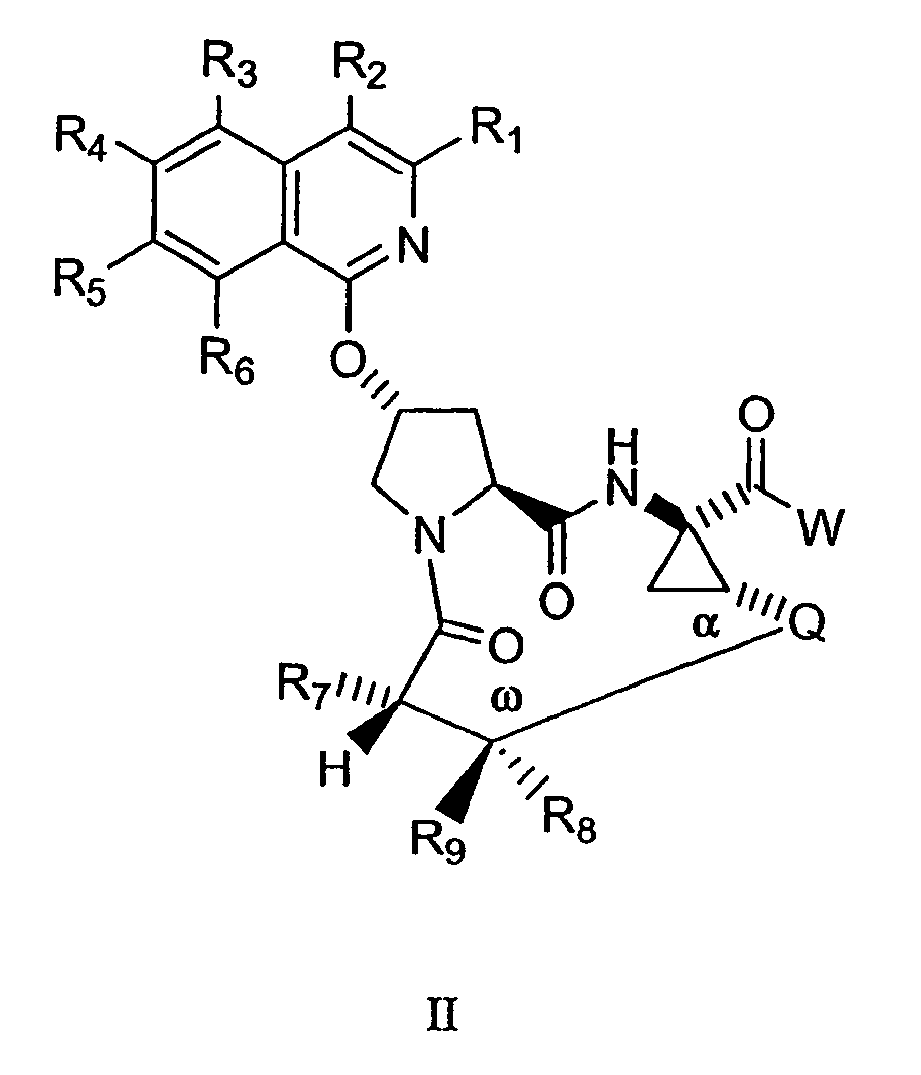
- (a) R1 is H; C1-6 alkyl; C3-7 cycloalkyl; C1-6 alkoxy; C3-7 cycloallcoxy; halo-C1-6 alkoxy; halo-C1-6 alkyl; cyano; halo; C1-6 alkanoyl; mono or di-(C1-6) alkyl amine; mono or di-C1-6 alkylamide; carboxyl; C6-10 aryl optionally substituted with Het; C7-14 alkylaryl; C6-10 aryloxy or Het; said R1 optionally attached to the isoquinoline group by a C1-6 alkyl linking group; R2, R3, and R4 are each independently H; C1-6 alkyl; C3-7 cycloalkyl; C1-6 alkoxy; C3-7 cycloalkoxy; halo-C1-6 alkoxy; halo-C1-6 alkyl; cyano; halo; hydroxyl; C1-6 alkanoyl; mono or di-(C1-6) alkyl amine; mono or di-(C3-7) cycloalkyl amine; mono or di-C1-6 alkylamide; mono or di-(C3-7) cycloalkyl amide; carboxyl; C6-10 aryl optionally substituted with Het; C7-14 alkylaryl; C6-10 aryloxy; or Het; said R2 to R4 optionally attached to the isoquinoline group by a C1-3 alkyl linking group; R5 and R6 are each independently H; C1-3 alkyl; C3-4 cycloalkyl; C1-3 alkoxy; C3-4 cycloalkoxy; halo-C1-3 alkoxy; halo-C1-3 alkyl; cyano; halo; hydroxyl; C1-3 alkanoyl; mono or di-(C1-3) alkyl amine; mono or di-(C3-4) cycloalkyl amine; mono or di-C1-3 alkylamide; mono or di-(C3-4) cycloalkyl amide; or carboxyl;
- (b) R7 is NH2 or -NR10R11; wherein R10 is C1-6 alkyl, C1-6 haloakyl, C(O)-NR12R13, C(O)-OR14, or -C(O)-R16; R11 is H, C1-6 alkyl or C1-6 haloalkyl, provided that if either R12 or R13 is H then R11 is H; R12 and R13 are each independently H; C1-6 alkyl, C3-7 cycloalkyl or C4-10 alkylcycloalkyl, each optionally substituted with halo, C1-3 alkoxy, C1-3 haloalkoxy, C1-3 alkyl or C1-3 haloalkyl; and wherein R12 and R13 together with the nitrogen to which they are bonded can form a 4-7 membered heterocycle; R14 and R15 are each independently C1-6 alkyl, C3-7 cycloalkyl or C4-10 alkylcycloalkyl, each optionally substituted with halo, C1-3 alkoxy, C1-3 haloalkoxy, C1-3 alkyl or C1-3 haloalkyl; R16 is H; C1-6 alkyl, C3-7 cycloalkyl or C4-10 alkylcycloalkyl, each optionally substituted with halo, C1-3 alkoxy, C1-3 haloalkoxy, C1-3 alkyl or C1-3 haloalkyl; aryl or Het;
- (c) R8 and R9 are each independently H or C1-3 alkyl optionally substituted with halo, or C1-3 alkoxy, or C1-3 haloalkoxy;
- (d) Q is a C3-9 saturated or unsaturated chain optionally containing one to three heteroatoms independently selected from O, S(O)m; wherein m is 0, 1 or 2, or NR17, wherein R17 is H; C1-6 alkyl, C1-6 cycloakyl, -C(O)-R18, C(O)-OR19, C(O)-NR20R21 or -SO2R22; R18, R20,and R21 are each independently H; C1-6 alkyl or C1-6 cycloalkyl; R19 is C1-6 alkyl or C1-6 cycloalkyl; R22 is aryl, C1-6 alkyl or C1-6 cycloalkyl, each optionally substituted with halo; and
- (e) W is OH, - NH-SOn-R23 or NH-SOn- R24, wherein n is 1 or 2, R23 is unsubstituted C3-7 cycloalkyl, or cyclopropyl or cyclobutyl optionally substituted with C7-9 akylaryl or C1-4 alkyl; and R24 is C6-10 aryl or Het; or a pharmaceutically acceptable enantiomer, diastereomer, salt, solvate or prodrug thereof.
- Preferably, R1 is H; C1-3 alkoxy; mono or di-(C1-6) alkyl amine; a 5 or 6 membered monocyclic heterocycle; or C6-10 aryl optionally substituted with a 5 or 6 membered monocyclic heterocycle. Preferably, R2, R3, R4 and R5 are each independently H; C1-6 alkoxy; halo-C1-6 alkoxy; hydroxyl; or mono or di-(C1-6) alkyl amine.
- Preferably, R7 is NH2 or -NHR10; wherein R10 is C(O)-N R12R13,or C(O)-OR14; and R12 and R13 are C1-6 alkyl optionally substituted with halo; and R14 is C1-6 alkyl or C3-7 cycloalkyl optionally substituted with halo .
- Preferably, Q is a C5-7 membered chain having one double bond optionally containing one heteroatom independently selected from O, S(O)m; wherein m is 0, 1 or 2, or NR17, wherein R17 is H; C1-6 alkyl or C1-6 cycloalkyl. In a preferred aspect of the invention, Q has the following structure:

- In one aspect of the invention, W is preferably - NH-SOn-R23, wherein n is 1 or 2 and R23 is unsubstituted C3-7 cyloalkyl, or cyclopropyl or cyclobutyl optionally substituted with C7-9 alkylaryl or C1-4 alkyl. In another aspect of the invention, W is NH-SOn- R24, wherein n is 1 or 2 and R24 is Het.
-


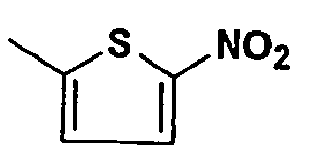


- In accordance with another aspect of the present invention, there are provided compounds of formula III:

- (a) R1 is H; C1-3 alkoxy; di-(C1-6) alkyl amine; a 5 or 6 membered monocyclic heterocycle; or C6-10 aryl optionally substituted with a 5 or 6 membered monocyclic heterocycle; R2, R3, R4 and R5 are each independently H; C1-3 alkoxy; halo; or di-(C1-6) alkyl amine;
- (b) R7 is -NHR10; wherein R10 is C(O)-NHR13,or C(O)-OR14; R13 and R14 are C1-6 alkyl;
- (c) Q is a C5-7 membered chain having one double bond optionally containing one heteroatom independently selected from O, S(O)m; wherein m is 0, 1 or 2, or NR17, wherein R17 is H; C1-6 alkyl or C1-6 cycloalkyl; and
- (d) R23 is unsubstituted C3-7 cycloalkyl, or cyclopropyl or cyclobutyl optionally substituted with C7-9 alkylaryl or C1-4 alkyl; or a pharmaceutically acceptable enantiomer, diastereomer, salt, solvate or prodrug thereof.
- Preferably, R1 is selected from the group consisting of pyridine, pyrrolidine, morpholine, piperazine, oxazole, isoxazole, thiazole, imidazole, pyrrole and pyrazole. In one preferred aspect, R1 is phenyl optionally substituted with one or more members selected from the group consisting of selected from the group consisting of C1-3 alkoxy, halo, carboxyl, di-(C1-3) alkyl amine, C1-3 haloalkyl, trifluoromethyl, trifluoromethoxy and hydroxy. In another preferred aspect, R1 is di-(C1-3) alkyl amine. In another preferred aspect, R1 is piperazine substituted with one or more members selected from the group consisting of C1-3 alkyl, C5-7 cycloalkyl or pyridine. Preferably, R2 is chloro or fluoro. In one preferred aspect, R2 is di-(C1-3) alkyl amine or methoxy.
-
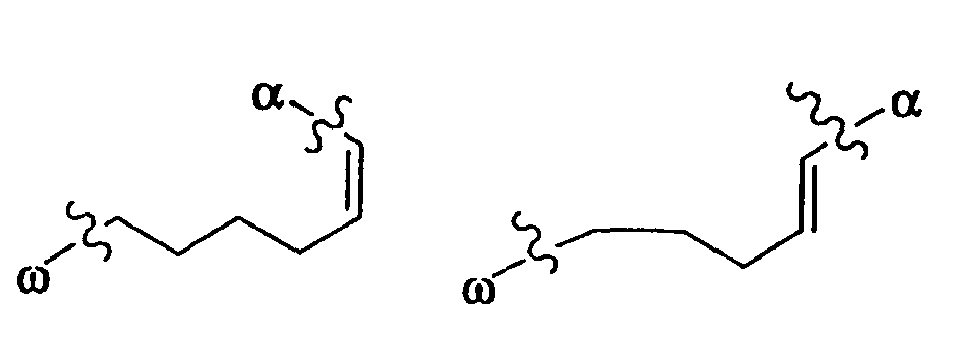


-


- Examples of preferred compounds in accordance with the invention are selected from the group consisting of


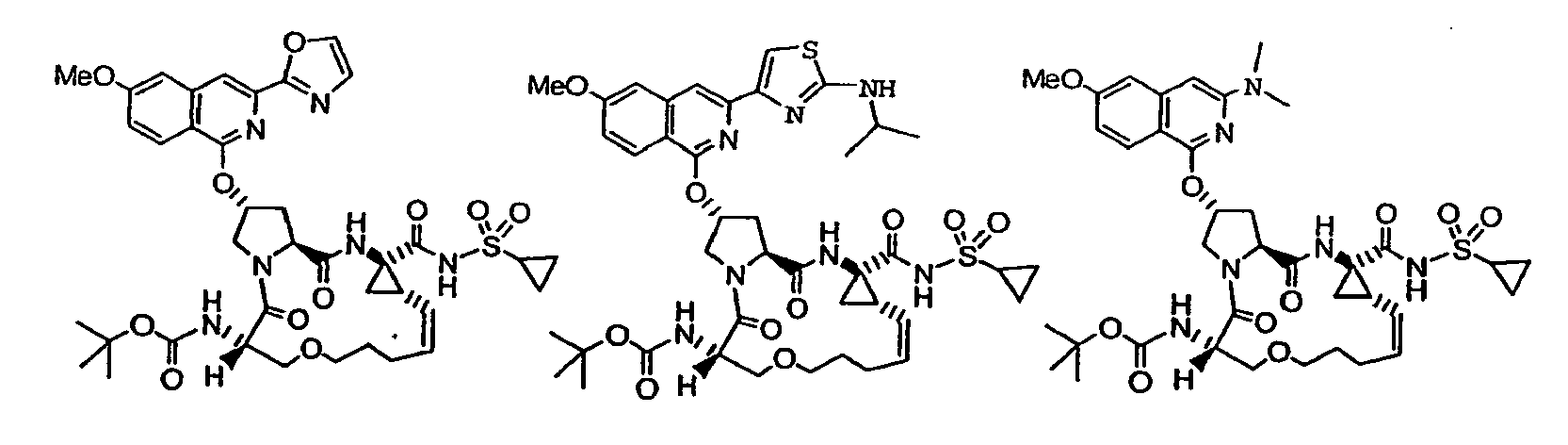


- The compounds of the present invention, which contain a basic moiety, can form salts by the addition of a pharmaceutically acceptable acid. The acid addition salts are formed from a compound of Formula I and a pharmaceutically acceptable inorganic acid, including but not limited to hydrochloric, hydrobromic, hydroiodic, sulfuric, phosphoric, or organic acid such as p-toluenesulfonic, methanesulfonic, acetic, benzoic, citric, malonic, fumaric, maleic, oxalic, succinic, sulfamic, or tartaric. Thus, examples of such pharmaceutically acceptable salts include chloride, bromide, iodide, sulfate, phosphate, methanesulfonate, citrate, acetate, malonate, fumarate, sulfamate, and tartrate.
- Salts of an amine group may also comprise quaternary ammonium salts in which the amino nitrogen carries a suitable organic group such as an alkyl, alkenyl, alkynyl or aralkyl moiety.
- Compounds of the present invention, which are substituted with an acidic group, may exist as salts formed through base addition. Such base addition salts include those derived from inorganic bases which include, for example, alkali metal salts (e.g. sodium and potassium), alkaline earth metal salts (e.g. calcium and magnesium), aluminum salts and ammonium salts. In addition, suitable base addition salts include salts of physiologically acceptable organic bases such as trimethylamine, triethylamine, morpholine, pyridine, piperidine, picoline, dicyclohexylamine, N,N'-dibenzylethylenediamine, 2-hydroxyethylamine, bis-(2-hydroxyethyl)amine, tri-(2-hydroxyethyl)amine, procaine, dibenzylpiperidine, N-benzyl-β-phenethylamine, dehydroabietylamine, N,N'-bishydroabietylamine, glucamine, N-methylglucamine, collidine, quinine, quinoline, ethylenediamine, ornithine, choline, N,N'-benzylphenethylamine, chloroprocaine, diethanolamine, diethylamine, piperazine, tris(hydroxymethyl)aminomethane and tetramethylammonium hydroxide and basic amino acids such as lysine, arginine and N-methylglutamine. These salts may be prepared by methods known to those skilled in the art.
- Lists of suitable salts are found, for example, in Remington's Pharmaceutical Sciences, 18th ed., Mack Publishing Company, Easton, PA, 1990, p. 1445.
- Certain compounds of the present invention, and their salts, may also exist in the form of solvates with water, for example hydrates, or with organic solvents such as methanol, ethanol or acetonitrile to form, respectively, a methanolate, ethanolate or acetonitrilate. The present invention includes each solvate and mixtures thereof.
- In addition, compounds of the present invention, or a salt or solvate thereof, may exhibit polymorphism. The present invention also encompasses any such polymorphic form.
- Compounds of the present invention (Formula I, II or III) also contain two or more chiral centers and exist in different optically active forms. For example, compounds of Formula I may include a cyclopropyl group as represented in the P1 fragment below:


- The present invention includes both enantiomers and mixtures of enantiomers of the compunds, such as racemic mixtures.
- The enantiomers may be resolved by methods known to those skilled in the art, for example, by formation of diastereoisomeric salts which may be separated by crystallization, gas-liquid or liquid chromatography, selective reaction of one enantiomer with an enantiomer-specific reagent. It will be appreciated that where the desired enantiomer is converted into another chemical entity by a separation technique, then an additional step is required to form the desired enantiomeric form. Alternatively, specific enantiomers may be synthesized by asymmetric synthesis using optically active reagents, substrates, catalysts or solvents, or by converting one enantiomer into the other by asymmetric transformation.
- Certain compounds of the present invention may also exist in different stable conformational forms which may be separable. Torsional asymmetry due to restricted rotation about an asymmetric single bond, for example because of steric hindrance or ring strain, may permit separation of different conformers. The present invention includes each conformational isomer of these compounds and mixtures thereof Certain compounds of the present invention may exist in zwitterionic form and the present invention includes each zwitterionic form of these compounds and mixtures thereof.
- The starting materials useful to synthesize the compounds of the present invention are known to those skilled in the art and can be readily manufactured or are commercially available.
- The compounds of the present invention can be manufactured by methods known to those skilled in the art. The following methods set forth below are provided for illustrative purposes and are not intended to limit the scope of the claimed invention. For example, compounds of the present invention having the structure of Formula I, II or III can be synthesized, as shown in the following scheme, from compounds of Formula IV, Formula VIIA or VIIB. It will be recognized that it may be preferred or necessary to prepare such a compound in which a functional group is protected using a conventional protecting group then to remove the protecting group to provide a compound of the present invention. The details concerning the use of protecting groups in accordance with the present invention are known to those skilled in the art.

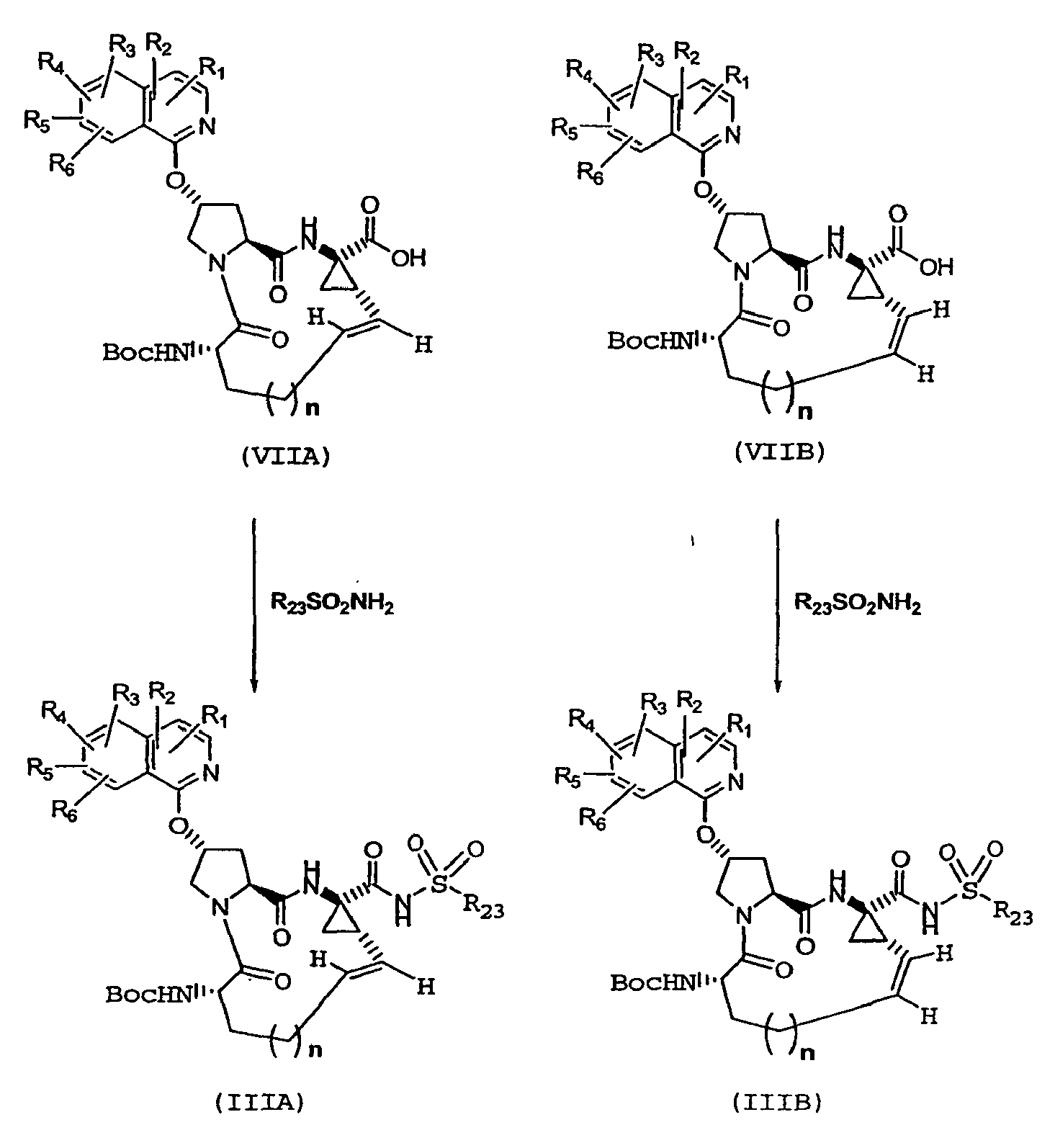
- The α-carboxylic acid of a compound of Formula VIIA or VIIB is coupled with R23SO2NH2 (R23 as defined above) in the presence of peptide coupling agent, such as CDI or EDAC, and in the presence of a base, such as 4-dimethylaminopyridine (4-DMAP) and/or 1,8-diazabicyclo [5.4.0]undec-7-ene (DBU), to form a compound of Formula I, II or III. In the construction of compounds of Formula I, the P1' terminus is incorporated into the molecules using one of the general processes outlined above and described in more detail below. In some examples the P1' elements, that is the cycloalkylsulfonamides, alkyl sulfonamides or heteroarylsulfonamides are commercially available or can be prepared from the corresponding alkyl- or cycloalkyl-sulfonyl chloride by treating said sulfonyl chloride with ammonia. Alternatively, these sulfonamides can be synthesized using the general process outline in the following Scheme. Therein commercially available 3-chloro-propylsulfonyl chloride (1) is converted to a suitable protected sulfonamide as for example by treatment with tert-butyl amine. The sulfonamide obtained (2) is then converted to the corresponding cycloalkylsulfonamide by treatment with two equivalents of a base such as butyl lithium in a solvent such as THF at low temperature. The resulting cycloalkylsulfonamide can be deprotected by treatment with an acid to provide the desired unprotected cycloalkylsulfoamide. Said P1' fragment can be incorporated into compounds of Formula I.

- Compounds having the structure of Formula IV, VI, VIIA or VIIB can be prepared, for example, as described herein, and in International Application Number
PCT/US01/45145 , Publication No.WO 02/060926, published August 8, 2002 PCT/CA00/00353 , Publication No.WO 00/59929, published October 12, 2000 U.S. Patent 6,323,180 granted November 27, 2001 . - Compounds having the structure of Formula IV can also be prepared by coupling chemical precursor A with chemical precursor B as shown below.

- Chemical precursor B, which is also shown above, may for example, be synthesized as follows.

- Treatment of commercially available or readily synthesized imine (B1) with 1,4-dihalobutene (B2) in presence of a base provides the imine (B3). Acid hydrolysis of B3 then provides B, which has a vinyl substituent syn to the carboxyl group. It is preferred that for compounds B3 and B that the vinyl group is syn to the ester. The amine moiety of B can protected using a Boc group to provide the fully protected amino acid B4. This intermediate is a racemate which can be resolved by an enzymatic process wherein the ester moiety of B4 is cleaved to provide the corresponding carboxylic acid. Without being bound to any particular theory, it is believed that this reaction is selective in that one of the enantiomers B4 (1S, 2R) undergoes the reaction at a much greater rate than its mirror image B4 (1R, 2S) providing for a kinetic resolution of the intermediate racemate. In the example cited above, the more preferred stereoisomer for integration into the tripeptdes is B4(1R, 2S). In the presence of the enzyme, this enantiomer does not undergo ester cleavage and thereby this enantiomer B5 is recovered from the reaction mixture. However, the less preferred enantiomer B4(1S, 2R) undergoes ester cleavage, i.e., enzyme catalyzed hydrolysis, to provide the free acid B6. The ester (B5) can be separated from the acid product (B6) by rountine methods such as, for example, aqueous extraction methods or chromatography.
- Compounds of Formula 1 can also be converted into other compounds of Formula I as described herein. An example of such a process is the Scheme below, wherein a compound of Formula I(1) which bears a Boc group at the P4 position is converted into a compound of Formula I (3) wherein said compound bears a urea group at the P4 position. The conversion of (1) to (3) can be carried out in a two step process the first of which is the conversion of (1) to amine (2) by treatment of (1) with an acid such as TFA in a solvent such as methylene chloride. The resulting amine TFA salt can be treated with an isocyanate in the presence of one equivalent of base to provide a compound of Formula I (3) wherein the P3 moiety is capped with a urea. As previously noted one skilled in the art will recognize that intermediate (2) can be used as starting materials for the preparation of compounds of Formula I wherein the P3 group is capped with an amide or a carbamate. The construction of said compounds of Formula I can be achieved using standard conditions for the formation of said P4 functionalities from amines.
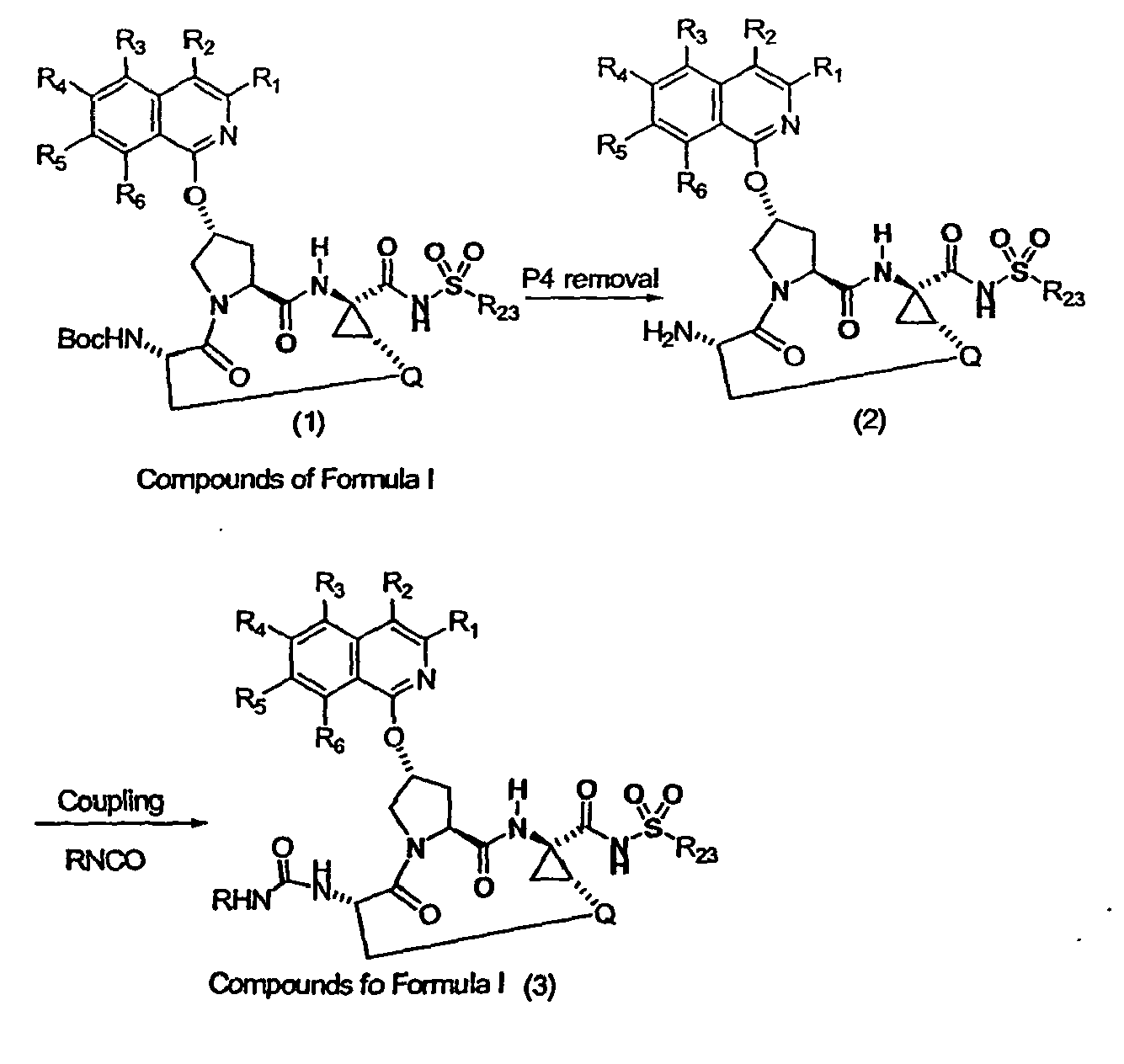
- Procedures for making P2 intermediates and compounds of Formula I are shown in the Schemes below. It should be noted that in many cases reactions are depicted for only one position of an intermediate. However, it is to be understood that such reactions could be used to impart modifications to other positions within this intermediate. Moreover, said intermediates, reaction conditions and methods given in the specific examples are broadly applicable to compounds with other substitution patterns. The general Schemes outlined below are followed with examples herein. Both general and specific examples are non-limiting.

- The above Scheme shows the coupling of an N-protected C4-hydroxyproline moiety with an isoquinoline heterocycle to form intermediate (4) and the subsequent modification of said intermediate (4) to a compound of Formula I by the process of peptide elongation and a ring-closing olefin metathesis reaction as described herein. It should be noted that in the first step, that is the coupling of the C4-hydroxy proline group with the isoquinoline element, a base is employed. One skilled in the art would recognize that this coupling can be done using bases such as potassium tert-butoxide, or sodium hydride, in solvent such as DMF or DMSO or THF. This coupling to the isoquinoline ring system occurs at the C1 position (numbering for isoquinoline ring system shown in intermediate 2) and is directed by the chloro group which is displaced in this process. It should be noted that alternative leaving groups can be utilized at this position such as a fluoro as shown in the Scheme. Said fluoro intermediates (3) are available from the corresponding chloro compound using literature procedures described herein.
- In a subset of examples herein, isoquinolines are incorporated into the final compounds and specifically into the P2 region of said compounds. One skilled in the art would recognize that a number of general methods are available for the synthesis of isoquinolines. Moreoever, said isoquinolines generated by these methods can be readily incorporated into final compounds of Formula I using the processes described herein. One general methodology for the synthesis of isoquinolines is shown in the scheme below, wherein cinnamic acid derivatives, shown in general form as structure (2) are

- Reference: N. Briet at al, Tetrahedron, 2002, 5761 converted to 1-chloroisoquinolines in a four step process. Said chloroisoquinolines can be subsequently used in coupling reactions to C4-hydroxyproline derivatives as described herein. The conversion of cinnamic acids to chloroquinolines begins with the treatment of cinnamic acid with an alkylcholorformate in the presence of a base. The resulting anhydride is then treated with sodium azide which results in the formation of an acylazide (3) as shown in the Scheme. Alternate methods are available for the formation of acylazides from carboxylic acids as for example said carboxylic acid can be treated with diphenylphosphorylazide (DPPA) in an aprotic solvent such as methylene chloride in the presence of a base. In the next step of the reaction sequence the acylazide (3) is coverted to the corresponding isoquinolone (4) as shown in the Scheme. In the event the acylazide is heated to a temperature of approximately 190 degress celcius in a high boiling solvent such a diphenylmethane. This reaction is general and provides moderate to good yields of substituted isoquinolone from the corresponding cinnamic acid derivatives. It should be noted that said cinnamic acid derivatives are available commercially or can be obtained from the corresponding benzaldehyde (1) derivative by direct condensation with malonic acid or derivatives thereof and also by employing a Wittig reaction. The intermediate isoquinolones (4) can be converted to the corresponding 1-chloroisoquinoline by treatment with phosphorous oxychloride. This reaction is general and can be applied to any of the isoquinolones shown herein to covert a hydroxy substituent to the corresponding chloro compound.
- An alternative method for the synthesis of the isoquinoline ring system is the Pomeranz-Fritsh procedure. This general method is outlined below. The process begins with the conversion of a benzaldehyde derivative (1) to a functionalized imine (2). Said imine is then converted to the isoquinoline ring system by treatment with acid at elevated

- Another method for the synthesis of the isoquinoline ring system is shown below. In this process an ortho-alkylbenzamide derivative (1) is treated with a strong


- L Flippin, J. Muchowski, JOC, 1993, 2631-2632 the addition of an activated carboxylic acid derivative such as a Weinreb amide. The resulting keto imine (2) can be converted to the corresponding isoquinoline by condensation with ammonium acetate at elevated temperatures. This method is general and can be used for the synthesis of substituted isoquinolines. Said isoquinolines can be converted to the corresponding 1-chloroisoquinoline by the methods described herein. The construction of functionalized isoquinoline ring systems is also possible employing [4+2] cycloaddition reactions. For example as shown below the use of vinyl isocyantes (1) in cycloaddition reactions with benzyne precusors (2) provides functionalized isoquinolones (3). Said isoquinolines can be incorporated into compounds of Formula I using the methods described herein.
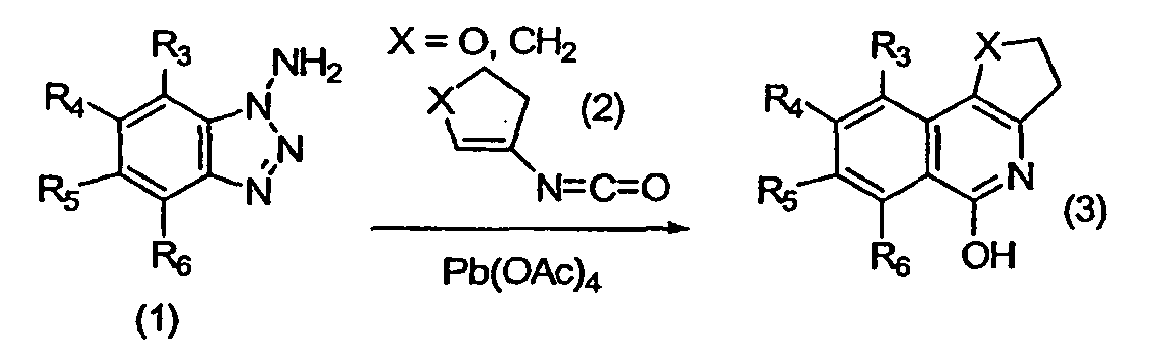
- The isoquinolines described herein, and which are incorporated into the compounds of Formula I can be further functionalized. It is obvious to one skilled in the art that additional functionalization of said heterocycles can be done either before or after incorporation of these functionalities into compounds of Formula I. The following schemes illustrate this point. For example the scheme below shows the conversion of a 1-chloro-


- The scheme below provides a general example for the modification of isoquinolines as defined herein by employing palladium mediated coupling reactions. Said couplings can be employed to functionalize an isoquinoline at each position of the ring system providing said ring is suitably activated or functionalized, as for example with a chloride as shown in the scheme. This sequence begins with 1-chloroisoquinoline (1) which upon treatment with metachloroperbenzoic acid can be converted to the corresponding N-oxide (2). Said intermediate (2) can be converted to the corresponding 1,3-dichloroisoquinoline (3) by treatment with phosphorous oxychloride in refluxing chloroform. Intermediate (3) can be coupled with N-Boc-4-hydroxyproline by the methods described herein to provide intermediate (5) as shown in the Scheme. Intermediate (5) can undergo a Suzuki coupling with an aryl boronic acid, in the presence of a palladium reagent and base, and in a solvent such as THF or toluene or DMF to provide the C3-arylisoquinoline intermediate (6). Heteroarylboronic acids can also be employed in this Pd mediated coupling process to provide C3-heteroarylisoquinolines. Intermediate (6) can be converted into final compounds of Formula I by the methods described herein.

- Palladium mediated couplings of heteroaryl systems with aryl or heteroaryl elements can also be employed at a later synthetic stage in the construction of compounds of Formula I as shown below. Therein macrocycle tripeptide acylsulfonamide intermediate (1) is coupled to a 1-chloro-3-bromoisoquinoline (2) using the previously described process of alkoxide displacement of an heteroarylhalo moiety to provide intermediate (3). The coupling of (1) and (2) can be executed in the presence of a catalyst such as lanthanum chloride. The isoquinoline ring system of intermediate (3) can be further functionalized by employing either Suzuki couplings (Process 1: subjecting (3) to heteroaryl or aryl boronic acids in the presence of a palladium catalyst such as palladium tetrakis(triphenylphosphine) and a base such as cesium carbonate in solvents such as DMF) or Stille couplings (Process 2: subjecting (3) to heteraryl or aryl tin dervatives in the presence of palladium catalyst such as palladium tetrakis(triphenylphosphine in solvents such as toluene).

- The present invention also provides compositions comprising a compound of the present invention, or a pharmaceutically acceptable enantiomer, diastereomer, salt, solvate or prodrug thereof, and a pharmaceutically acceptable carrier. Pharmaceutical compositions of the present invention comprise a therapeutically effective amount of a compound of the invention, or a pharmaceutically acceptable enantiomer, diastereomer, salt, solvate or prodrug thereof, and a pharmaceutically acceptable carrier, with a pharmaceutically acceptable carrier, e.g., excipient, or vehicle diluent.
- The active ingredient, i.e., compound, in such compositions typically comprises from 0.1 weight percent to 99.9 percent by weight of the composition, and often comprises from about 5 to 95 weight percent.
- Thus, in one aspect of the invention, there is provided a composition comprising the compound of formula 1 and a pharmaceutically acceptable carrier. Preferably, the composition further comprises a compound having anti-HCV activity. As used herein, the term "anti-HCV activity" means the compound is effective to inhibit the function of a target selected from the group consisting of HCV metalloprotease, HCV serine protease, HCV polymerase, HCV helicase, HCV NS4B protein, HCV entry, HCV assembly, HCV egress, HCV NS5A protein, IMPDH and a nucleoside analog for the treatment of an HCV infection. Often, the other compound having anti-HCV activity is effective to inhibit the function of target in the HCV life cycle other than the HCV NS3 protease protein.
- In one preferred aspect, the compound having anti-HCV activity is an interferon. Preferably, the interferon is selected from the group consisting of interferon alpha 2B, pegylated interferon alpha, consensus interferon, interferon alpha 2A, lymphoblastiod interferon tau.
- In another aspect of the invention, the compound having anti-HCV activity is selected from the group consisting of interleukin 2, interleukin 6, interleukin 12, a compound that enhances the development of a type 1 helper T cell response, interfering RNA, anti-sense RNA, Imiqimod, ribavirin, an inosine 5'-monophospate dehydrogenase inhibitor, amantadine, and rimantadine.
- In one preferred aspect of the invention, the composition comprises a compound of the invention, an interferon and ribavirin.
- In another preferred aspect of the invention, the compound having anti-HCV activity is a small molecule compound. As used herein, the term "small molecule compound" means a compound having a molecular weight of less than 1,500 daltons, preferably less than 1000 daltons. Preferably, the small molecule compound is effective to inhibit the function of a target selected from the group consisting of HCV metalloprotease, HCV serine protease, HCV polymerase, HCV helicase, HCV NS4B protein, HCV entry, HCV assembly, HCV egress, HCV NS5A protein, inosine monophophate dehydrogenase ("IMPDH") and a nucleoside analog for the treatment of an HCV infection.
- Certain illustrative HCV inhibitor compounds which can be administered with the compounds of the present invention include those disclosed in the following publications:
WO 02/04425 A2 published January 17, 2002 WO 03/007945 A1 published January 30, 2003 WO 03/010141 A2 published February 6, 2003 WO 03/010142 A2 published February 6, 2003 WO 03/010143 A1 published February 6, 2003 WO 03/000254 A1 published January 3, 2003 WO 01/32153 A2 published May 10,2001 WO 00/06529 published February 10, 2000 WO 00/18231 published April 6, 2000 WO 00/10573 published March 2, 2000 WO 00/13708 published March 16,2000 WO 01/85172 A1 published November 15,2001 WO 03/037893 A1 published May 8, 2003 WO 03/037894 A1 published May 8, 2003 WO 03/037895 A1 published May 8, 2003 WO 02/100851 A2 published December 19, 2002 WO 02/100846 A1 published December 19, 2002 EP 1256628 A2 published November 13, 2002 ,WO 99/01582 published January 14, 1999 WO 00/09543 published February 24, 2000 - Table 1 below lists some illustrative examples of compounds that can be administered with the compounds of this invention. The compounds of the invention can be administered with other anti-HCV activity compounds in combination therapy, either jointly or separately, or by combining the compounds into a composition.
TABLE 1 Brand Name Type of Inhibitor or Target Source Company Omega IFN IFN-ω BioMedicines Inc., Emeryville, CA BILN-2061 serine protease inhibitor Boehringer Ingelheim Pharma KG, Ingelheim, Germany Summetrel antiviral Endo Pharmaceuticals Holdings Inc., Chadds Ford, PA Roferon A IFN-α2a F. Hoffmann-La Roche LTD, Basel, Switzerland Pegasys PEGylated IFN-α2a F. Hoffmann-La Roche LTD, Basel, Switzerland Pegasys and Ribavirin PEGylated IFN-α2a/ribavirin F. Hoffmann-La Roche LTD, Basel, Switzerland CellCept HCV IgG immunosuppressant F. Hoffmann-La Roche LTD, Basel, Switzerland Wellferon lymphoblastoid IFN-αn1 GlaxoSmithKline plc, Uxbridge, UK Albuferon - α albumin IFN-α2b Human Genome Sciences Inc., Rockville, MD Levovirin ribavirin ICN Pharmaceuticals, Costa Mesa, CA IDN-6556 caspase inhibitor Idun Pharmaceuticals Inc., San Diego, CA IP-501 antifibrotic Indevus Pharmaceuticals Inc., Lexington, MA Actimmune INF-γ InterMune Inc., Brisbane, CA Infergen A IFN alfacon-1 InterMune Pharmaceuticals Inc., Brisbane, CA ISIS 14803 antisense ISIS Pharmaceuticals Inc, Carlsbad, CA/Elan Phamaceuticals Inc., New York, NY JTK-003 RdRp inhibitor Japan Tobacco Inc., Tokyo, Japan Pegasys and Ceplene PEGylated IFN-α2a/ immune modulator Maxim Pharmaceuticals Inc., San Diego, CA Ceplene immune modulator Maxim Pharmaceuticals Inc., San Diego, CA Civacir HCV IgG immunosuppressant Nabi Biopharmaceuticals Inc., Boca Raton, FL Intron A and Zadaxin IFN-α2b/α1-thymosin RegeneRx Biopharmiceuticals Inc., Bethesda, MD/ SciClone Pharmaceuticals Inc, San Mateo, CA Levovirin IMPDH inhibitor Ribapharm Inc., Costa Mesa, CA Viramidme IMPDH inhibitor Ribapharm Inc., Costa Mesa, CA Heptazyme ribozyme Ribozyme Pharmaceuticals Inc., Boulder, CO Intron A IFN-α2b Schering-Plough Corporation, Kenilworth, NJ PEG-Intron PEGylated IFN-α2b Schering-Plough Corporation, Kenilworth, NJ Rebetron IFN-α2b/ribavirin Schering-Plough Corporation, Kenilworth, NJ Ribavirin ribavirin Schering-Plough Corporation, Kenilworth, NJ PEG-Intron / Ribavirin PEGylated IFN-α2b/ribavirin Schering-Plough Corporation, Kenilworth, NJ Zadazim immune modulator SciClone Pharmaceuticals Inc., San Mateo, CA Rebif IFN-β1a Serono, Geneva, Switzerland IFN-β and EMZ701 IFN-β and EMZ701 Transition Therapeutics Inc., Ontario, Canada T67 β-tubulin inhibitor Tularik Inc., South San Francisco, CA VX-497 IMPDH inhibitor Vertex Pharmaceuticals Inc., Cambridge, MA VX-950/LY-570310 serine protease inhibitor Vertex Pharmaceuticals Inc., Cambridge, MA/ Eli Lilly and Co. Inc., Indianapolis, IN Omniferon natural IFN-α Viragen Inc., Plantation, FL XTL-002 monoclonal antibody XTL Biopharmaceuticals Ltd., Rehovot, Isreal - The pharmaceutical compositions of this invention may be administered orally, parenterally or via an implanted reservoir. Oral administration or administration by injection are preferred. In some cases, the pH of the formulation may be adjusted with pharmaceutically acceptable acids, bases or buffers to enhance the stability of the formulated compound or its delivery form. The term parenteral as used herein includes subcutaneous, intracutaneous, intravenous, intramuscular, intra-articular, intrasynovial, intrasternal, intrathecal, and intralesional injection or infusion techniques.
- When orally administered, the pharmaceutical compositions of this invention may be administered in any orally acceptable dosage form including, but not limited to, capsules, tablets, and aqueous suspensions and solutions. In the case of tablets for oral use, carriers which are commonly used include lactose and corn starch. Lubricating agents, such as magnesium stearate, are also typically added. For oral administration in a capsule form, useful diluents include lactose and dried corn starch. When aqueous suspensions are administered orally, the active ingredient is combined with emulsifying and suspending agents. If desired, certain sweetening and/or flavoring and/or coloring agents may be added. Other suitable carriers for the above noted compositions can be found in standard pharmaceutical texts, e.g. in "Remington's Pharmaceutical Sciences", 19th ed., Mack Publishing Company, Easton, Penn., 1995.
- The pharmaceutical compositions can be prepared by known procedures using well-known and readily available ingredients. The compositions of this invention may be formulated so as to provide quick, sustained or delayed release of the active ingredient after administration to the patient by employing procedures well known in the art. In making the compositions of the present invention, the active ingredient will usually be admixed with a carrier, or diluted by a carrier, or enclosed within a carrier which may be in the form of a capsule, sachet, paper or other container. When the carrier serves as a diluent, it may be a solid, semi-solid or liquid material which acts as a vehicle, excipient or medium for the active ingredient. Thus, the compositions can be in the form of tablets, pills, powders, beadlets, lozenges, sachets, elixirs, suspensions, emulsions, solutions, syrups, aerosols, (as a solid or in a liquid medium), soft and hard gelatin capsules, suppositories, sterile injectable solutions, sterile packaged powders and the like. Further details concerning the design and preparation of suitable delivery forms of the pharmaceutical compositions of the invention are known to those skilled in the art.
- Dosage levels of between about 0.01 and about 1000 milligram per kilogram ("mg/kg") body weight per day, preferably between about 0.5 and about 250 mg/kg body weight per day of the compounds of the invention are typical in a monotherapy for the prevention and treatment of HCV mediated disease. Typically, the pharmaceutical compositions of this invention will be administered from about 1 to about 5 times per day or alternatively, as a continuous infusion. Such administration can be used as a chronic or acute therapy. The amount of active ingredient that may be combined with the carrier materials to produce a single dosage form will vary depending upon the host treated and the particular mode of administration.
- As the skilled artisan will appreciate, lower or higher doses than those recited above may be required. Specific dosage and treatment regimens for any particular patient will depend upon a variety of factors, including the activity of the specific compound employed, the age, body weight, general health status, sex, diet, time of administration, rate of excretion, drug combination, the severity and course of the infection, the patient's disposition to the infection and the judgment of the treating physician. Generally, treatment is initiated with small dosages substantially less than the optimum dose of the peptide. Thereafter, the dosage is increased by small increments until the optimum effect under the circumstances is reached. In general, the compound is most desirably administered at a concentration level that will generally afford antivirally effective results without causing any harmful or deleterious side effects.
- When the compositions of this invention comprise a combination of a compound of the invention and one or more additional therapeutic or prophylactic agent, both the compound and the additional agent are usually present at dosage levels of between about 10 to 100%, and more preferably between about 10 and 80% of the dosage normally administered in a monotherapy regimen.
- When these compounds or their pharmaceutically acceptable enantiomers, diastereomers, salts, solvates or prodrugs are formulated together with a pharmaceutically acceptable carrier, the resulting composition may be administered in vivo to mammals, such as man, to inhibit HCV NS3 protease or to treat or prevent HCV virus infection.
- Accordingly, another aspect of this invention provides methods of inhibiting HCV NS3 protease activity in patients by administering a compound of the present invention or a pharmaceutically acceptable enantiomer, diastereomer, salt or solvate thereof.
- In one aspect of the invention, there is provided a method of treating an HCV infection in a patient, comprising administering to the patient a therapeutically effective amount of the compound of the invention, or a pharmaceutically acceptable enantiomer, diastereomer, solvate, prodrug or salt thereof.
- Preferably, the method of administering the compound is effective to inhibit the function of the HCV NS3 protease protein. In a preferred aspect, the method further comprises administering another compound having anti-HCV activity (as described above) prior to, after or concurrently with a compound of the invention.
- The compounds of the invention may also be used as laboratory reagents. Compounds may be instrumental in providing research tools for designing of viral replication assays, validation of animal assay systems and structural biology studies to further enhance knowledge of the HCV disease mechanisms. Further, the compounds of the present invention are useful in establishing or determining the binding site of other antiviral compounds, for example, by competitive inhibition.
- The compounds of this invention may also be used to treat or prevent viral contamination of materials and therefore reduce the risk of viral infection of laboratory or medical personnel or patients who come in contact with such materials, e.g., blood, tissue, surgical instruments and garments, laboratory instruments and garments, and blood collection or transfusion apparatuses and materials.
- Further, the compounds and compositions of the invention can be used for the manufacture of a medicament for treating HCV infection in a patient.
- The present invention also provides processes for resolving a mixture of alkyl ester enantiomers comprising contacting the mixture with an enzyme effective to preferentially promote the hydrolysis of one of the enantiomers; characterized in that the contacting is conducted in the presence of a buffer. Such a mixture of alkyl ester enantiomers can result from the preparation of chemical precursor B, described above.
-
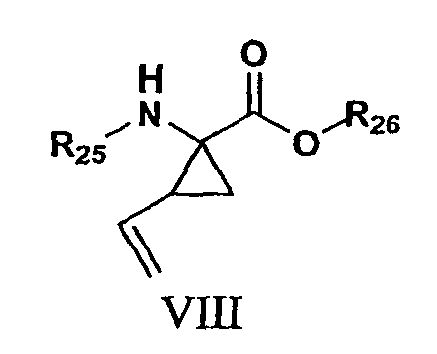
- The particular buffer used in the processes of the present invention is not critical. Typically, the buffer will have a pKa of ±1 of the pH at which the hydrolysis is conducted, e.g., pH from about 7.0 to 11. Thus, if the hydrolysis is conducted, e.g., at a pH of 8.0, a buffer with a pKa of from about 7.0 to 9.0 can be used. Preferred buffers are phosphates, borates and carbonates. Examples of suitable buffers include: 2-[(2-amino-2-oxoethyl)amino]ethanesulphonic acid, N-(2-acetamido)-2-iminodiacetic acid, n,n-bis(2-hydroxyethyl)glycine, 1,3-bis[tris(hydroxymethyl)methylamino]propane, o-Boric acid, carbonic acid, 2-(cyclohexylamino)ethanesulphonic acid, Diethylmalonic acid, Glycylglycine, N-2-hydroxyethylpiperazine-N'-2-ethane-sulphonic acid (HEPES), N-2-hydroxycthylpipcrazine-N'-3-propane-sulphonic acid, imidazole, 3-(N-morpholino)propanesulphonic acid, o-phosphoric acid, piperazine-N-N'-bis(2-ethanesulphonic acid), piperazine-1,4-bis(2-hydroxypropanesulfonic acid), 3-[tris(hydroxymethyl)methyl]amino propanesulphonic acid, 2-[tris(hydroxymothyl)methyl]amino ethanesulphonic acid, N-[tris (hydroxymethyl)methyl]glycine, and tris(hydroxylmethyl)aminomethane.
- Any enzyme effective to preferentially hydrolyze the desired alkyl estes enantiomer can be used in accordance with the present invention. Proteases, lipases and esterases are often used for hydrolysis of carboxylic ester bonds. The enzymes suitable for use in accordance with the present invention, regardless of origin or purity, may be employed in the free state, either liquid or dry forms, or immobilized on a support such as, for example, by physical adsorption or entrapment. Examples of lipases include lipases from Candida rugosa, Wheat Germ, Porcine Pancreas, Rhizopus arrhizus, Candida antarctica, Mucor miehei, Aspergillus niger, Pseudomonas species, Candida lipolytica, Humicola langinosa and Mucor javanicus. Examples of esterase include pig liver esterase (PLE), horse liver esterase (HLE), acetylcholine esterase (ACE), cholesterol esterase, esterase from Bacillus subtilis (carboxyl esterase NP). Proteases are generally defined as hydrolases acting on peptide bonds as their natural substrates, but they are capable of cleaving a carboxylic ester bond since an ester bond is much weaker than a peptide (amide) bond. Examples of proteases include α-chymotrypsin, thermolysin, papain, proteases from Aspergillus sp., Bacillus sp., Rhizopus sp., Penicillum sp., Streptomyces griseus.
- In the ester of Formula VIII, the chiral center in the acid moiety is fully substituted. This represents a difficult target for hydralitic enzymes since their natural substrates (such as natural amino acids) usually contain at least one α-hydrogen. Quite surprisingly, it was found in accordance with the present invention that certain proteases were highly effective for the enantioselective hydrolysis of ester VIII. Preferred proteases include proteases from strains selected from the group consisting of Bacillus globigii, Bacillus licheniformis, Bacillus halodurans, Bacillus clausii and Aspergillus oryzae. Examples of suitable enzymes include those selected from the group consisting of Alcalase® (subtilisin, alkaline protease, Novozymes North America Inc., Franklington, NC), Savinase® (substilisin, alkaline protease, Novozymes), ChiroCLEC™- BL (subtilisin, alkaline protease, Altus Biologics, Inc.,), Protease N (subtilisin, alkaline protease, Amano) and Flavourzyme™ (fungal protease/peptidase, Novozymes). Further details of such enzymes are known in the art. Such enzymes are commercially available. These enzymes can be employed alone or used as mixtures thereof.
- The ester hydrolysis leads to the release of an alcohol and a carboxylic acid, which can lower the pH significantly if no buffer is present. In accordance with the present invention, it has been found that including buffer in the reaction mixture can stabilize the pH in the course of hydrolysis, thus contributing to higher enzyme activity and stability.
- Futhermore, by virtue of the present invention, it is possible to conduct the hydrolysis at elevated temperatures, preferably about 30 to 60°C, and for short time periods, preferably less than about seven days, more preferably from about two hours to three days.
- The specific examples that follow illustrate the syntheses of the compounds of the present invention, and are not to be construed as limiting the scope of the claims which follow. The methods may be adapted to variations in order to produce compounds embraced by this invention but not specifically disclosed. Further, variations of the methods to produce the same compounds in somewhat different manner will also be evident to one skilled in the art.
- Chemical abbreviations commonly used to identify chemical compounds disclosed herein include Bn: benzyl; Boc: tert-butyloxycarbonyl {Me3COC(O)}; BSA: bovine serum albumin; CDI: carbonyldiimidazole; DBU: 1,8-diazabicyclo[5.4.0]-undec-7-ene; CH2Cl2=DCM: methylene chloride; TBME: tert-butyl methyl ether; DEAD: diethylazodicarboxylate; DIAD: diisopropylazodicarboxylate; DIEA: diisopropylethylamine; DIPEA: diisopropylethylamine; 4-DMAP: 4-dimethylaminopyridine; DCC: 1,3-dicyclohexylcarbodiimide; DMF: dimethylformamide; DMSO: dimethylsulfoxide; DPPA: diphenylphosphoryl azide; Et: ethyl; EtOH: ethanol; EtOAc: ethyl acetate; Et2O: diethyl ether; Grubb's Catalyst: bis(tricyclohexylphosphine)benzylidene ruthenium (IV) dichloride; Grubb's 2nd Generation Catalyst: tricyclohexylphosphine[1,3- bis(2,4,6-trimethylphenyl)-4,5-dihydroimidazol-2-ylidene][benzylidene]ruthenium (IV) dichloride; HATU: [O-(7-azabenzotriazol-1-yl)-N,N,N',N'-tetramethyluronium hexafluorophosphate; HBTU: [O-(1H-benzotriazol-1-yl)-N,N,N',N'-tetramethyluronium hexafluorophosphate; HOBT, 1-hydroxybenzotriazole; HOAT, 1-hydroxy-7-azabenzotriazole; HPLC: high performance liquid chromatography; MS: mass spectrometry; Me: methyl; MeOH: methanol; NMM: N-methylmorpholine; NMP: N-methylpyrrolidine; Pr: propyl; PPA: polyphosphoric acid; TBAF: tetra-n-butylammonium fluoride; 1,2-DCE or DCE: 1,2-dichloroethane; TFA: trifluoroacetic acid; THF: tetrahydrofuran.
- Solution percentages express a weight to volume relationship, and solution ratios express a volume to volume relationship, unless stated otherwise. Nuclear magnetic resonance (NMR) spectra were recorded either on a Bruker 300, 400 or 500 megahertz (MHz) spectrometer; the chemical shifts (δ) are reported in parts per million. Flash chromatography was carried out on silica gel (SiO2) evident to one skilled in the art. All Liquid Chromatography (LC) data were recorded on a Shimadzu LC-10AS liquid chromatograph using a SPD-10AV UV-Vis detector and Mass Spectrometry (MS) data were determined with a Micromass Platform for LC in electrospray mode (ES+).
- Unless otherwise noted, each compound was analyzed, by LC/MS, using one of three methodologies, having the following conditions.
Columns: Method A) - YMC Xterra ODS S7 micrometer ("µm") 3.0x50 millimeter ("mm") i.e., 3.0 mm diameter by 50 mm length.
Gradient: 100% Solvent A/0% Solvent B to 0% Solvent A/100% Solvent B
Gradient time: 4 min (A)
Hold time: 1 min (A); 2 min
Flow rate: 4 mL/min
Detector Wavelength: 220 nanometer ("nm")
Solvent A: 10% MeOH / 90% H2O / 0.1% TFA
Solvent B: 10% H2O / 90% MeOH / 0.1% TFA.
Columns: Method B) - YMC Xterra ODS S7 3.0x50 mm Gradient: 100%
Solvent A/0% Solvent B to 0% Solvent A/100% Solvent B
Gradient time: 2 min
Hold time: 1 min
Flow rate: 5 mL/min
Detector Wavelength: 220 nm
Solvent A: 10% MeOH / 90% H2O / 0.1% TFA
Solvent B: 10% H2O / 90% MeOH / 0.1% TFA.
Columns: Method D) - YMC Xterra C18 5 µM 3.0x50 mm Gradient: 100% Solvent A/0%Solvent B to 0% Solvent A/100% Solvent B
Gradient time: 3 min
Hold time: 1 min
Flow rate: 5 mL/min
Detector Wavelength: 220 nm
Solvent A: 10% MeOH / 90% H2O / 0.1% TFA
Solvent B: 10% H2O / 90% MeOH / 0.1 % TFA.
Unless otherwise noted, preparative HPLC was carried out under the following conditions.
Gradient time: 10 min
Hold time: 2 min
Flow rate: 25 mL/min
Detector wavelength: 220 nM
Solvent A: 10% MeOH / 90% H2O / 0.1% TFA
Solvent B: 10% H2O / 90% MeOH / 0.1% TFA - The pure fractions were combined and 0.1N NaOH was used to bring the pH up to 7. The solution was concentrated in vacuo, and then the pH was carefully lowered to pH 3-4 using 0.1N HCl. The mixture was quickly extracted with ethyl acetate (3x). The combined extracts were dried (MgSO4) and concentrated in vacuo to give the purified products.
- The compounds and chemical intermediates of the present invention, described in the following examples, were prepared according to the following methods.
- Preparation of P2 isoquinoline intermediates for incorporation into compounds of Formula 1
-

- To a solution of 3-methoxy cinnamic acid (11.04 g, 62 mmol) and triethylamine (12.52 g, 124 mmol) in acetone (80 mL) was added ethyl chloroformate (approximately 1.5 equivalents) dropwise at 0°C. After stirring at this temperature for 1 h, aqueous NaN3 (6.40 g, 100 mmol in 35 mL H2O; appropriate precautions must be taken when using sodium azide) was added dropwise and the reaction mixture was stirred for 16 h at the ambient temperature. Water (100 mL) was added to the mixture and the volatile was removed in vacuo. The resulting slurry was extracted with toluene (3X50 mL) and the combined organic layers were dried over MgSO4. This dried solution was added dropwise to a heated solution of diplienylmethane (50 mL) and tributylamine (30 mL) at 190°C. The toluene was distilled off as added. After complete addition, the reaction temperature was raised to 210°C for 2 h. After cooling, the precipitated product was collected by filtration, washed with hexane (2X50 mL), and dried to yield the desired product as a white solid (5.53 g, 51 %) (Nicolas Briet at el, Tetrahedron, 2002, 5761-5766). LC-MS (retention time: 0.82 min, method B), MS m/z 176 (M++H).
- An altenative procedure to the above employs diphenylphosphoryl azide for the conversion of the carboxylic acid to the corresponding acylazide. In a one pot procedure then the acid is converted to the corresponding quinolone. The process is described below for the prepapration of 4-methyl-2H-isoquinolin-1-one from 3-phenyl-but-2-enoic acid: A solution of 3-phenyl-but-2-enoic acid (16.2 g), diphenylphosphoryl azide (27.5 g), and triethylamine (10.1 g) in benzene (100 mL) was stirred for 1 h. After filtration through a silica gel plug washing with benzene and concentration, the residue was dissolved in diphenylmethane (80 mL) and refluxed for 3 h. After cooling to rt, solids were collected through a plug washing with benzene and dried to give 10 g (63%) of the desired 4-methyl-2H-isoquinolin-1-one as a solid. 1H NMR (400 MHz, CD3OD) δ ppm 2.30 (s, 3 H), 7.00 (s, 1 H), 7.54 (m, 1 H), 7.77 (m, 2 H), 8.33 (d, J=7.34 Hz, 1 H).
- 6-Methoxy-2H-isoquinolin-1-one (5.0 g, 28.4 mmol) in POCl3 (10 mL) was heated to gentle reflux for 3 h the evaporated in vacuo (Nicolas Briet at el, Tetrahedron, 2002, 5761-5766). The residue was poured into iced water (20 mL) and neutralized to pH 10 with 10 M NaOH. Extracted with CHCl3. The organic layer was washed with brine, dried over MgSO4, filtered, evaporated. The residue was purified by flash chromatography (1:1 hexane-EtOAc) to afford 4.41 g (80%) of the desired product as a white solid. 1H NMR (CD3OD) δ 3.98 (s, 3H), 7.34-7.38 (m, 2 H), 7.69 (d, J=5.5 Hz, 1H), 8.10 (d, J=6.0 Hz, 1H), 8.23 (d, J=9.5 Hz, 1H); LC-MS (retention time: 1.42 min, method B), MS m/z 194 (M++H).
- To a solution of N-BOC-3-(R)-hydroxy-L-proline (892 mg, 3.89 mmol) in DMSO (40 mL) at the ambient temperature was added potassium tert-butoxide (1.34 g, 12.0 mmol) in one portion. The formed suspension was stirred at this temperature for 30 min before being cooled to 10°C. 1-chloro-6-methoxy-isoquinoline (example 11, Step 2) (785 mg, 4.05 mmol) was added as solid in one portion and the final mixture was stirred at the ambient temperature for 12 h. Quenched with iced 5% citric acid (aq), extracted with EtOAC (140 mL). The aqueous phase was extracted with EtOAC again. The combined organic layers were washed with 5% citric acid (aq) and brine respectively, dried over MgSO4, filtered. The filtrate was evaporated in vacuo to dryness to yield 1.49 g (99%) of the desired product as an off-white foam. This material was used in the next step reaction as crude without further purification. 1H NMR (CD3OD) δ 1.42, 1.44 (rotamers, 9H), 2.38-2.43 (m, 1H), 2.66-2.72 (m, 1H), 3.80-3.87 (m, 2H), 3.92 (s, 3H), 4.44-4.52 (m, 1H), 5.73 (b, 1H), 7.16-7.18 (m, 2H), 7.24-7.25 (m, 1H), 7.87-7.88 (m, 1H), 8.07 (d, J=8.5 Hz, 1H); LC-MS (retention time: 1.62 min, method B), MS m/z 389 (M++H). The following intermediates were prepared as described herein and can be incorporated into compounds of Formula 1

- Modifications: 15 g 3-methoxy-3-phenyl-acrylic acid used, 250 mg product obtained (2% yield). Product:

- Modifications: 200 mg 4-methoxy-2H-isoquinolin-1-one used, 150 mg product obtained (68% yield). Product:

- Modifications: 122 mg 1-chloro-4-methoxy-isoquinoline used, 218 mg product obtained (89% yield). Product:


- Modifications: 20 g 2-methylcinnamic acid used, 14.3 g product obtained (72% yield) Product:

- Modifications: 14.4 g 5-methyl-2H-isoquinolin-1-one used, 10.6 g product obtained (66% yield). Product:
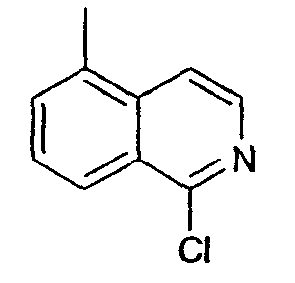
- Modifications: 533 mg 1-chloro-5-methyl-isoquinoline used, 1116 mg product obtained (100% yield). Product:
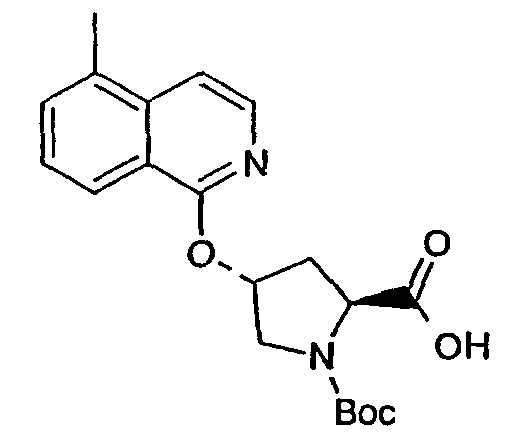
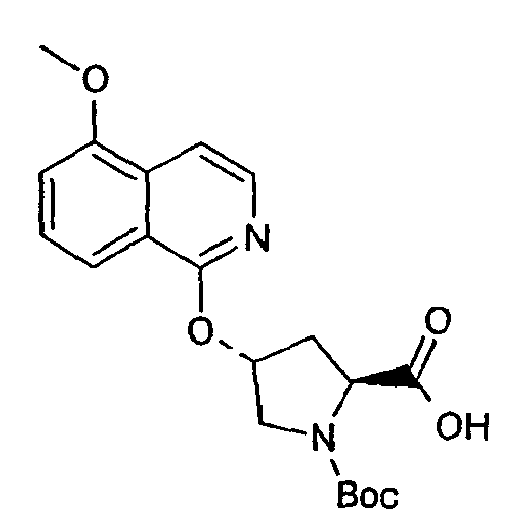
- Modifications: 10 g 2-methoxy cinnamic acid used, 5.3 g product obtained (53% yield). Product:

- Modifications: 5.3 g 5-methoxy-2H-isoquinolin-1-one used, 5.38 g product obtained (92% yield). Product:

- Modifications: 581 mg 1-chloro-5-methoxy-isoquinoline used, 1163 mg product obtained (100% yield). Product:
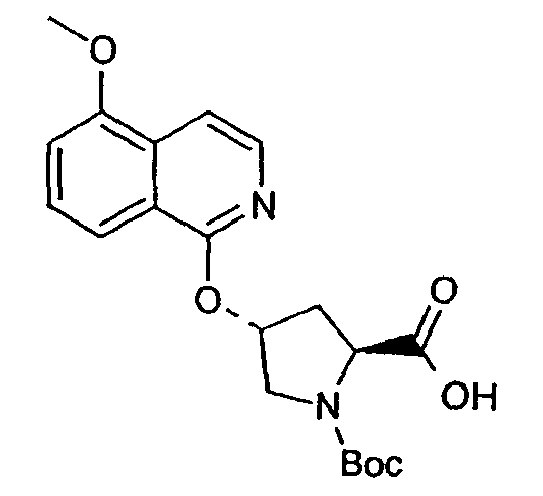

- Modifications: 25 g 2-chlorocinnamic acid used, 14.6 g product obtained (59% yield). Product:

- Modifications: 14.2 g 5-chloro-2H-isoquinolin-1-one used, 8.28 g product obtained (53% yield). Product:

- Modifications: 594 mg 1,5-dichloro-isoquinoline used, 1174 mg product obtained (100% yield). Product:


- Modifications: 16.6 g2-fluorocinnamic acid used, 8.55 g product obtained (51% yield). Product:

- Modifications: 8.4 g 5-fluoro-2H-isoquinolin-1-one used, 7.5 g product obtained (80% yield). Product:

- Modifications: 203 mg 1-chloro-5-fluoro-isoquinoline used, 384 mg product obtained (90% yield). Product:


- Modifications: 16.6 g 4-fluorocinnamic acid used, 8.2 g product obtained (49% yield). Product:

- Modifications: 8.15 g 7-fluoro-2H-isoquinolin-1-one used, 7.6 g product obtained (84% yield). Product:

- Modifications: 191 mg 1-chloro-7-fluoro-isoquinoline used, 350 mg product obtained (93% yield). Product:
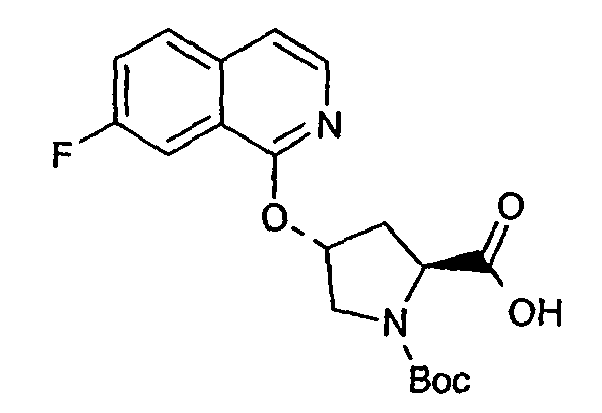

- Modifications: 9.13 g 4-chlorocinnamic acid used, 4 g product obtained (44% yield). Product:

- Modifications: 3.5 g 7-chloro-2H-isoquinolin-1-one used, 2.8 g product obtained (72% yield). Product:
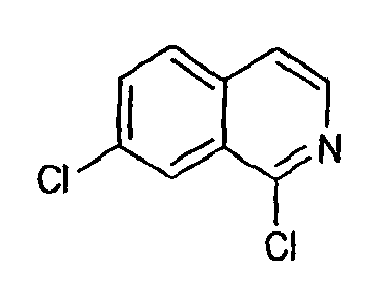
- Modifications: 208 mg1,7-dichloro-isoquinoline used, 350 mg product obtained (89% yield). Product:


- Modifications: 25 g 4-methylcinnamic acid used, 15.3 g product obtained (62% yield). Product:

- Modifications: 15.3 g 7-methyl-2H-isoquinolin-1-one used, 5.15 g product obtained ( 30% yield). Product:

- Modifications: 205 mg 1-chloro-7-methyl-isoquinoline used, 350 mg product obtained (89 % yield). Product:


- Modifications: 33 g using 4-methoxycinnamic acid used, 7 g product obtained (33% yield). Product:
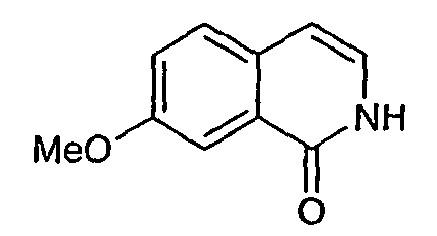
- Modifications: 4 g 7-methoxy-2H-isoquinolin-1-one used, 3 g product obtained (68 % yield). Product:

- Modifications: 533 mg 1-chloro-7-methoxy-isoquinoline used, 1115 mg product obtained (100 % yield). Product:


- Modifications: 19.6 g 4-fluoro-3-methoxycinnamic acid used, 9.5 g product obtained (48% yield). Product:

- Modifications: 9 g 7-fluoro-6-methoxy-2H-isoquinolin-1-one used, 7 g product obtained (70% yield). Product:

- Modifications: 222 mg 1-chloro-7-fluoro-6-methoxy-isoquinoline used, 406 mg products obtained. Products:


- Modifications: 3.8 g 3-(2,3-dihydro-benzofuran-7-yl)-acrylic acid used, 2 g product obtained (53% yield). Product:


- Modifications: 206 mg 6-chloro-2,3-dihydro-furo[2,3-f]isoquinoline used, 300 mg products mixture obtained. Products:


- Modifications: 1.14 g 3-(2,3-dihydro-benzofuran-4-yl)-acrylic acid used, 600 mg product obtained (52% yield). Product:

- Modifications: 560 mg 1,7-dihydro-2H-furo[3,2-f]isoquinolin-6-one used, 380 mg product obtained ( 48% yield). Product:

- Modifications: 105 mg 6-chloro-1,2-dihydro-furo[3,2-f]isoquinoline used, 390 mg products mixture obtained. Products:


- Modifications: A mixture of 6-methoxy-2H-isoquinolin-1-one (700 mg) and NCS (532 mg) in MeCN (10 mL) was refluxed for 3 h. Filtration gave 600 mg (72%) of the desired product as a solid. Product:
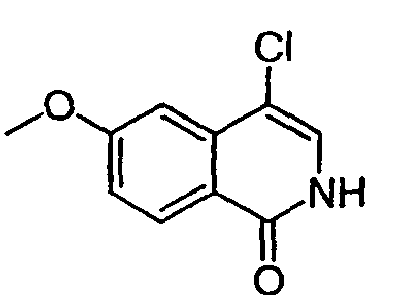
- Modifications: 500 mg 4-chloro-6-methoxy-2H-isoquinolin-1-one used, 400 mg product obtained. Product:

-

- A mixture of 4-methoxy-2-methyl-benzoic acid (5.00 g, 30.1 mmol) and thionyl chloride (20.0 g, 0.17 mol) was heated to reflux for 30 min. Removed the volatile in vacuo. After pumping overnight, the viscous oily acid chloride was used as crude for the next reaction without any purification.
- To a solution of 4-methoxy-2-methyl-benzoyl chloride in CH2Cl2 (60 mL) at 0°C was added diethylamine dropwise. The formed mixture was allowed to warm up to the ambient temperature for 2 h with stirring. Removed the volatiles in vacuo. The residue was triturated with EtOAc (100 mL) and filtered. The filtrate was washed with 1M HCl , 1M NaOH and brine, dried over MgSO4. Evaporation of the solvent yielded 6.51 g (98%) of the desired product as a viscous oil. LC-MS (retention time: 1.20 min, method B), MS m/z 222 (M++H).
- To a solution of N,N-diethyl-4-methoxy-2-methyl-benzamide (221 mg, 1.0 mmol) in THF (2 mL) at -78°C was added n-BuLi (0.84 mL of 2.5 M in hexane, 2.10 mmol) dropwise. The formed orange solution was kept at this temperature for additional 30 min before dropwise addition ofbenzonitrile (103 mg, 1.0 mmol). The final solution was allowed to warm up to the ambient temperature over night with stirring. Quenched with iced 5% citric acid. Filtered, washed with water, dried. Trituration with 2:1 hexane-EtOAc (5 mL) yielded 205 mg (82%) of the desired product as a white solid. 1H NMR (d6-DMSO) δ 3.89 (s, 3H), 6.84 (s, 1H), 7.05-7.07 (m, 1H), 7.18 (d, J=2.5 Hz, 1H), 7.44-7.51 (m, 3H), 7.78 (d, J=7.0 Hz, 1H), 8.11 (d, J=9.0 Hz, 1H); LC-MS (retention time: 1.20 min, method B), MS m/z 252 (M++H).
- This product, 1-chloro-6-methoxy-3-phenyl-isoquinoline, was prepared by the same method as described above except using 6-methoxy-3-phenyl-2H-isoquinolin-1-one instead. 1H NMR (CDCl3) δ 3.97 (s, 3H), 7.12 (d, J=2.5 Hz, 1H), 7.23-7.26 (m, 1H), 7.40-7.42 (m, 1H), 7.46-7.50 (m, 2H), 7.89 (s, 1H), 8.08 (d, J=7.0 Hz, 2H), 8.21 (d, J=9.0 Hz, 1H); LC-MS (retention time: 1.90 min, method B), MS m/z 270, 271 (M++H). The following intermediates were prepared as described herein and can be incorporated into compounds of Formula 1


-

- To a solution of N-BOC-3-(R)-hydroxy-L-proline (6.22 g, 26.9 mmol) in DMF (250 mL) at 0°C was added NaH (60%, 3.23 g, 80.8 mmol) by several portions. The formed suspension was stirred at this temperature for 30 min. 1,3-dichloro-isoquinoline (5.33 g, 26.9 mmol) was added as solid in one portion and the final mixture was stirred at the ambient temperature for 12 h. Quenched with iced 5% citric acid (aq), extracted with EtOAC (300 mL). The aqueous phase was extracted with EtOAC again. The combined organic layers were washed with 5% citric acid (aq) and brine respectively, dried over MgSO4, filtered. The filtrate was evaporated in vacuo to dryness to yield 10.53 g (99.8%) of 4-(6-methoxy-isoquinolin-1-yloxy)-pyrrolidine-1,2-dicarboxylic acid 1-tert-butyl ester as an off-white foam. This material was used in the next step reaction as crude without further purification. 1H NMR (CD3OD) δ 1.43, 1.44 (rotamers, 9H), 2.39-2.44 (m, 1H), 2.68-2.72 (m, 1H), 3.80-3.90 (m, 2H), 4.44-4.52 (m, 1H), 5.77 (b, 1H), 7.39 (s, 1H), 7.58 (t, J=7.3 Hz, 1H), 7.71-7.78 (m, 2H), 8.16 (d, J=7.5 Hz, 1H); LC-MS (retention time: 1.80 min, method B), MS m/z 392 (M++H).
- A mixture of of 4-(6-methoxy-isoquinolin-1-yloxy)-pyrrolidine-1,2-dicarboxylic acid 1-tert-butyl ester (39 mg, 0.10 mmol), phenylboronic acid (14.6 mg, 0.12 mmol), sodium tert-butoxide (38 mg, 0.40 mmol) and ((t-Bu)2POH)2PdCl2 (POPd) (5 mg, 0.01 mmol) in THF (2 mL) was heated to reflux for 4 h. After cooling down, the formed mixture was quenched with 5% citric acid (aq) and extracted with EtOAc (20 mL). The organic layer was washed with brine, dried over MgSO4, filtered, evaporated. The residue was purified by prep-HPLC to yield 36 mg (83%) of the desired product as an off-white foam. 1H NMR (CD3OD) δ 1.43, 1.45 (rotamers, 9H), 2.51-2.56 (m, 1H), 2.74-2.82 (m, 1H), 3.88-3.92 (m, 1H), 3.98-4.01 (m, 1H), 4.50-4.57 (m, 1H), 5.95 (b, 1H), 7.36-7.39 (m, 1H), 7.45-7.48 (m, 2H), 7.55 (t, J=7.3 Hz, 1H), 7.70 (t, J=7.5 Hz, 1H), 7.84-7.89 (m, 2H), 8.14-8.17 (m, 3H), 9.05 (b, 1H); LC-MS (retention time: 1.97 min, method B), MS m/z 435 (M++H). The following intermediates were prepared as described herein and can be incorporated into compounds of Formula 1

- 1H NMR (CD3OD) δ 1.40, 1.45 (rotamers, 9H), 2.50-2.55 (m, 1H), 2.73-2.81 (m, 1H), 3.81-3.89 (m, 4H), 3.98-4.01 (m, 1H), 4.50-4.57 (m, 1H), 5.93 (b, 1H), 7.02 (d, J=9.0 Hz, 2H), 7.50 (t, J=7.3 Hz, 1H), 7.67 (t, J=7.5 Hz, 1H), 7.73 (s, 1H), 7.83 (d, J=8.5 Hz, 1 H), 8.09 (d, J=8.5 Hz, 2H), 8.15 (d, J=8.0 Hz, 1H); LC-MS (retention time: 2.00 min, method B), MS mlz 465 (M++H).
-


- LC-MS (retention time: 1.64 min, method B), MS m/z 478 (M++H).
-

- To a solution of N,N-diethyl-4-methoxy-2-methyl-benzamide (633 mg, 2.9 mmol) in THF (15 mL) at -78°C was added n-BuLi (2.3 mL of 2.5 M in hexane, 5.74 mmol) dropwise. The formed red solution was kept at this temperature for additional 30 min before being cannulated to a solution of thiazole-2-carboxylic acid ethyl ester (A. Medici et al, Tetrahedron Lett. 1983, p2901) (450 mg, 2.9 mmol) in THF (5 mL) at -78°C. The final dark green solution was kept to this temperature for 2 h with stirring. Quenched with sat. NH4Cl (aq) and extracted with EtOAc (50 mL). The organic layer was washed with sat. NH4Cl (aq) and brine, dried, purified by flash column chromatography, eluting with 2:1 EtOAc:hexane to provide 405 mg (45%) of the desired product as an off-white viscous oil. 1H NMR (CDCl3) δ 1.08 (t, J=7.0 Hz, 6H), 3.22 (b, 2H), 3.44 (b, 2H), 3.79 (s, 3H), 4.59 (s, 2H), 6.79-6.81 (m, 1H), 6.86 (d, J=2.5 Hz, 1H), 7.16 (d, J=8.5 Hz, 1H), 7.66 (d, J=3.0 Hz, 1H), 8.00 (d, J=3.0 Hz, 1H); LC-MS (retention time: 1.30 min, method B), MS mlz 333 (M++H).
- A mixture ofN,N-diethyl-4-methoxy-2-(2-oxo-2-thiazol-2-yl-ethyl)-benzamide (405 mg, 1.22 mmol) and NH4OAc (3.0 g, 38.9 mmol) was heated to 140°C in a sealed tube for 1 h. The melted solution was poured into iced water, filtered, washed the cake thoroughly with water. The dried brownish solid (240 mg, 76%) was used as crude for the next reaction without further purification. LC-MS (retention time: 1.24 min, method B), MS mlz 259 (M++H).
- This product, 1-chloro-6-methoxy-3-thiazol-2-yl-isoquinoline, was prepared as described above except using 6-methoxy-3-thiazol-2-yl-2H-isoquinolin-1-one instead. 1H NMR (CDCl3) δ 3.97 (s, 3H), 7.16 (d, J=4.0 Hz, 1H), 7.27-7.31 (m, 1H), 7.46 (d, J=5.0 Hz, 1H), 7.93 (d, J=5.5 Hz, 1H), 8.22 (d, J=15.5 Hz, 1H), 8.39 (s, 1H); LC-MS (retention time: 1.66 min, method B), MS m/z 277 (M++H).
- This product was prepared by the same method as described above except using 1-chloro-6-methoxy-3-thiazol-2-yl-isoquinoline instead. 1H NMR (CD3OD) δ 0.97-1.09 (m, 12H), 1.24-1.29 (m, 10H), 1.44-1.46 (m, 1H), 1.87-1.90 (m, 1H), 2.20-2.26 (m, 1H), 2.30-2.36 (m. 1H), 2.65-2.71 (m, 1H), 2.93-2.96 (m, 1H), 3.96 (s, 3H), 4.12-4.27 (m, 2H), 4.38-4.52 (m, 2H), 5.12 (d, J=10.5 Hz, 1H), 5.29 (d, J=17.5 Hz, 1H), 5.69-5.74 (m, 1H), 5.99 (b, 1H), 7.14 (d, J=9.0 Hz, 1H), 7.33 (s, 1H), 7.66 (d, J=3.5 Hz, 1H), 7.93 (d, J=3.0 Hz, 1H), 8.05 (s, 1H), 8.11 (d, J=9.0 Hz, 1H), 9.14 (b, 1H); LC-MS (retention time: 1.89 min, method B), MS m/z 797 (M++H). The following intermediates were prepared as described herein and can be incorporated into compounds of Formula 1


-
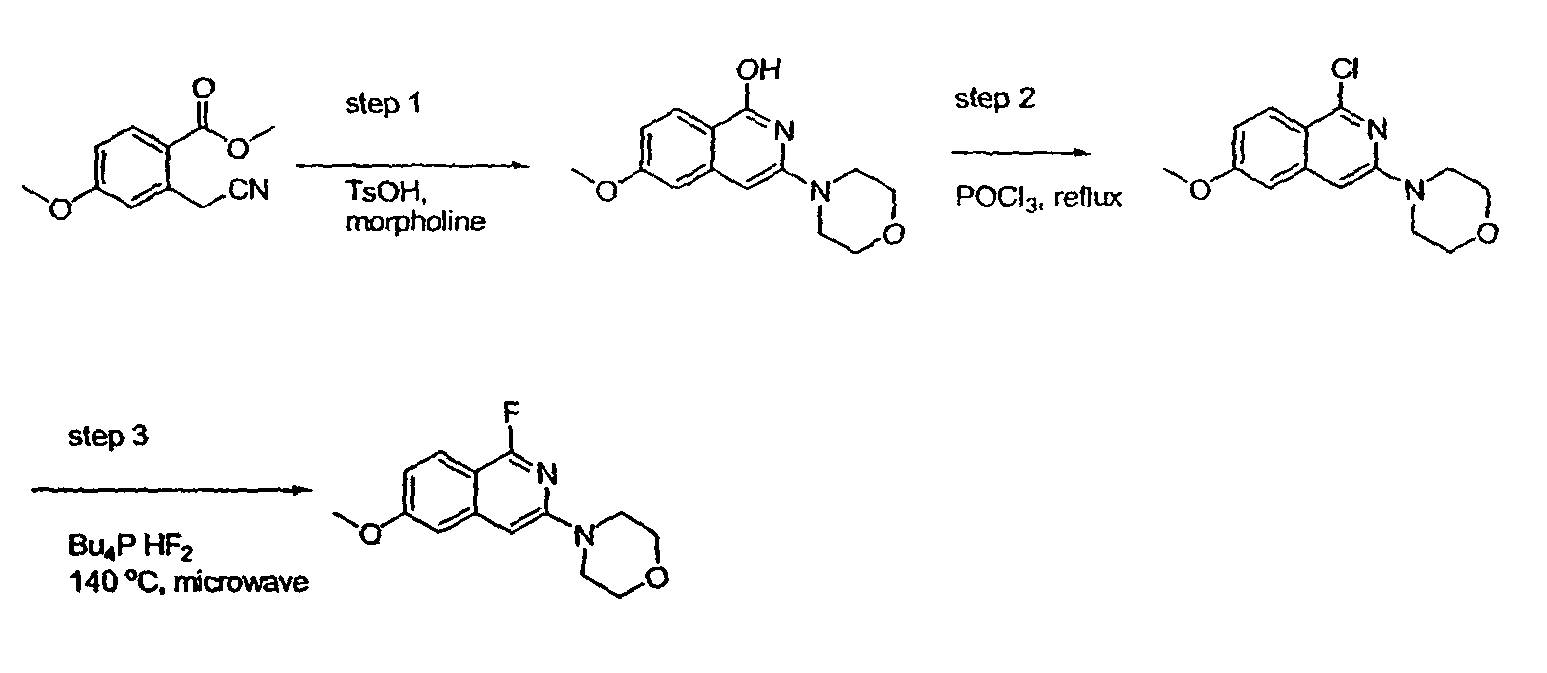
- A suspension of 2-cyanomethyl-4-methoxy-benzoic acid methyl ester (1.9g and TsOH. H2O ( 0.15 g, mmol) in morpholine 5 mL) was refluxed for 4 h and removed the solvent in vavuo. The residue was recrystalyzed from EtOAc/hexanes with drops of MeOH to provide the product (0.43 g, 17%): LC-MS retention time: 1.07 method H), MS m/z 266 (M++1).
- A mixture of 6-methoxy-3-morpholin-4-yl-isoquinolin-1-ol (0.298 g, 1.15 mmol) in POCl3 (20 mL) was refluxed for 2 h, removed the solvent in vacuo and cold water was added. The pH was adjustde to >11 by addition of 1.0 N NaOH. The aqueous layer was extracted with EtOAc. The extract was dried (MgSO4), removed the solvent in vacuo to provide the produt (0.299g, 94%): LC-MS retention time: 1.68 method H), MS m/z 279 (M++1).
- A mixture of 1-Chloro-6-methoxy-3-morpholin-4-yl-isoquinoline (0.050g, 0.18 mmol) and tetrabutyl phosphorium hydrgen difloride (0.8 g, 2.8 mmol) [Synlett 1992 , (4), 345-6] was heated at 140 °C in microwave for 10 min. the reaction mixture was diluted with EtOAc and filtered through an ISCO 25g precolumn with a layer of silicon gel on the top, removed the solvent to provide the product (0.037 mg, 77%): 1H NMR (CHLOROFORM-D) δ ppm 3.48 (m, 4 H), 3.84 (m, 4 H), 3.89 (s, 3 H), 6.46 (d, J=1.22 Hz, 1 H), 6.85 (s, 1 H), 6.90 (dd, J=9.16, 2.44 Hz, 1 H), 7.82 (d, J=8.85 Hz, 1 H). LC-MS retention time: 1.56 method H), MS m/z 263 (M++1).
- 6-fluoro and 6-alkyl isoquinolines used in the preparation of compounds of Formula 1 were prepared via a Pomeranz-Fritsch synthesis (Typical procedure: Preparation of optically active 8,8-disubstituted 1,1-biisoquinoline, K. Hirao, R. Tsuchiya, Y. Yano, H. Tsue, Heterocycles 42(1) 1996, 415-422) as outlined below. The products were converted into the 1-chloro derivatives via N-oxide intermediates.
-

R Isoquinoline, Yield 1-Chloride, combined yield F 20 43 Et 76 65 i-Pr 14 18 t-Bu 47 55 - Some 6-alkoxy-1-chloro isoquinolines were prepared by a direct, ipso displacement of the 6-fluoro-1-chloroisoquinoline with the corresponding alkoxide metal ions such as potassium tert-butoxide (53%) and sodium isopropoxide (54%).
-

-

- (1) Hojo, Masaru; Masuda, Ryoichi; Sakaguchi, Syuhei; Takagawa, Makoto, Synthesis (1986), (12), 1016-17
- (2) Rigby, James H.; Holsworth, Daniel D.; James, Kelly. Vinyl Isocyanates In Synthesis. [4 + 2] Cycloaddition Reactions With Benzyne Addends. Journal Of Organic Chemistry (1989), 54(17), 4019-20
- (3) Uchibori, Y.; Umeno, M.; Yoshiokai, H.; Heterocycles, 1992, 34 (8), 1507-1510 Step 1d: Preparation of racemic (1R,2S)/(1S,2R)-1-amino-2-vinylcyclopropane carboxylic acid ethyl ester hydrochloride (Method A and Method B)and chiral resolution of this racemate for the preparation of N- (1R, 2S)-1-amino-2-vinylcyclopropane carboxylic acid ethyl ester hydrochloride (Method C)

- The named compound was made (Step d) racemic by each of the following methods A and B. This racemate could also be resolved to afford chiral Boc-(1R, 2S)-1-amino-2-vinylcyclopropyl carboxylic acid ester which was deprotected under acid conditions to afford (1R, 2S)-1-amino-2-vinylcyclopropane carboxylic acid ester hydrochloride (Method C).
-

- Glycine ethyl ester hydrochloride (303.8 g, 2.16 mole) was suspended in tert-butylmethyl ether (1.6 L). Benzaldehyde (231 g, 2.16 mole) and anhydrous sodium sulfate (154.6 g, 1.09 mole) were added and the mixture cooled to 0 °C using an ice-water bath. Triethylamine (455 mL, 3.26 mole) was added dropwise over 30 min and the mixture stirred for 48 h at rt. The reaction was then quenched by addition of ice-cold water (1 L) and the organic layer was separated. The aqueous phase was extracted with tert-butylmethyl ether (0.5 L) and the combined organic phases washed with a mixture of saturated aqueous NaHCO3 (1 L) and brine (1 L). The solution was dried over MgSO4, concentrated in vacuo to afford 392.4 g of the N-benzyl imine product as a thick yellow oil that was used directly in the next step. 1H NMR (CDCl3, 300 MHz) δ 1.32 (t, J=7.1 Hz, 3H), 4.24 (q, J=7.1 Hz, 2H), 4.41 (d, J=1.1 Hz, 2H), 7.39-7.47 (m, 3H), 7.78-7.81 (m, 2H), 8.31 (s, 1H).
-

- To a suspension of lithium tert-butoxide (84.06 g, 1.05 mol) in dry toluene (1.2 L), was added dropwise a mixture of the N-benzyl imine of glycine ethyl ester (100.4 g, 0.526 mol) and trans-1,4-dibromo-2-butene (107.0 g, 0.500 mol) in dry toluene (0.6 L) over 60 min. After completion of the addition, the deep red mixture was quenched by addition of water (1 L) and tert-butylmethyl ether (TBME, 1 L). The aqueous phase was separated and extracted a second time with TBME (1 L). The organic phases were combined, 1 N HCl (1 L) was added and the mixture stirred at room temperature for 2 h. The organic phase was separated and extracted with water (0.8 L). The aqueous phases were then combined, saturated with salt (700 g), TBME (1 L) was added and the mixture cooled to 0 °C. The stirred mixture was then basified to pH 14 by the dropwise addition of 10 N NaOH, the organic layer separated, and the aqueous phase extracted with TBME (2 x 500 mL). The combined organic extracts were dried (MgSO4) and concentrated to a volume of 1L. To this solution of free amine, was added BOC2O or di-tert-butyldicarbonate (131.0 g, 0.6 mol) and the mixture stirred 4 days at rt. Additional di-tert-butyldicarbonate (50 g, 0.23 mol) was added to the reaction, the mixture refluxed for 3 h, and was then allowed cool to room temperature overnight The reaction mixture was dried over MgSO4 and concentrated in vacuo to afford 80 g of crude material. This residue was purified by flash chromatography (2.5 Kg of SiO2, eluted with 1% to 2% MeOH/CH2Cl2) to afford 57 g (53%) of racemic N-Boc-(1R,2S)/(1S,2R)-1-amino-2-vinylcyclopropane carboxylic acid ethyl ester as a yellow oil which solidified while sitting in the refrigerator: 1H NMR (CDCl3, 300 MHz) δ 1.26 (t, J=7.1 Hz, 3H), 1.46 (s, 9H), 1.43-1.49 (m, 1H), 1.76-1.82 (br m, 1H), 2.14 (q, J=8.6 Hz, 1H), 4.18 (q, J=7.2 Hz, 2H), 5.12 (dd J=10.3, 1.7 Hz, 1H), 5.25 (br s, 1H), 5.29 (dd, J=17.6, 1.7 Hz, 1H), 5.77 (ddd, J=17.6, 10.3, 8.9 Hz, 1H); MS m/z 254.16 (M-1)
-

-

- To a solution of potassium tert-butoxide (11.55 g, 102.9 mmol) in THF (450 mL) at -78 °C was added the commercially available N,N-dibenzyl imine of glycine ethyl ester (25.0 g, 93.53 mmol) in THF (112 mL). The reaction mixture was warmed to 0 °C, stirred for 40 min, and was then cooled back to -78 °C. To this solution was added trans-1,4-dibromo-2-butene (20.0 g, 93.50 mmol), the mixture stirred for 1 h at 0°C and was cooled back to -78°C. Potassium tert-butoxide (11.55 g, 102.9 mmol) was added, the mixture immediately warmed to 0°C, and was stirred one more hour before concentrating in vacuo. The crude product was taken up in Et2O (530 mL), 1N aq. HCl solution (106 mL, 106 mmol) added and the resulting biphasic mixture stirred for 3.5 h at rt. The layers were separated and the aqueous layer was washed with Et2O (2x) and basified with a saturated aq. NaHCO3 solution. The desired amine was extracted with Et2O (3x) and the combined organic extract was washed with brine, dried (MgSO4), and concentrated in vacuo to obtain the free amine. This material was treated with a 4N HCl solution in dioxane (100 mL, 400 mmol) and concentrated to afford (1R,2S)/(1S,2R)-1-amino-2-vinylcyclopropane carboxylic acid ethyl ester hydrochloride as a brown semisolid (5.3 g, 34% yield) identical to the material obtained from procedure A, except for the presence of a small unidentified aromatic impurity (8%).
-

- To an aqueous solution of sodium phosphate buffer (0.1 M, 4.25 liter ("L"), pH 8) housed in a 12 Liter jacked reactor, maintained at 39°C, and stirred at 300 rpm was added 511 grams of Alcalase 2.4L (about 425 mL) (Novozymes North America Inc.). When the temperature of the mixture reached 39°C, the pH was adjusted to 8.0 by the addition of a 50% NaOH in water. A solution of the racemic N-Boc-(1R,2S)/(1S,2R)-1-amino-2-vinylcyclopropane carboxylic acid ethyl ester (85g) in 850 mL of DMSO was then added over a period of 40 min. The reaction temperature was then maintained at 40°C for 24.5h during which time the pH of the mixture was adjusted to 8.0 at the 1.5h and 19.5h time points using 50% NaOH in water. After 24.5h, the enantio-excess of the ester was determined to be 97.2%, and the reaction was cooled to room temperature (26°C) and stirred overnight (16h) after which the enantio-excess of the ester was determined to be 100%. The pH of the reaction mixture was then adjusted to 8.5 with 50% NaOH and the resulting mixture was extracted with MTBE (2 x 2 L). The combined MTBE extract was then washed with 5% NaHCO3 (3 x 100 mL), water (3 x 100 mL), and evaporated in vacuo to give the enantiomerically pure N-Boc-(1R,2S)/-1-amino-2-vinylcyclopropane carboxylic acid ethyl ester as light yellow solid (42.55 g; purity: 97% @ 210 nm, containing no acid; 100% enantiomeric excess ("ee"). The aqueous layer from the extraction process was then acidified to pH 2 with 50% H2SO4 and extracted with MTBE (2 x 2 L). The MTBE extract was washed with water (3 x 100 mL) and evaporated to give the acid as light yellow solid (42.74 g; purity: 99% @ 210 nm, containing no ester).

ester acid High Resolutio nMass Spec (+) ESI, C13H22NO4, [M+H]+, cal. 256.1549, found 256.1542 (-) ESI, C11H16NO4, [M-H]-, cal. 226.1079, found 226.1089 NMR observed chemical shift Solvent: CDCl3 (proton δ 7.24 ppm, C-13 δ 77.0 ppm) Bruker DRX-500C: proton 500.032 MHz, carbon 125.746 MHz Position Proton (pattern) ppm C-13 ppm Proton (pattern) ppm C-13 ppm 1 ---- 40.9 ---- 40.7 2 2.10 (q, J = 9.0 Hz) 34.1 2.17 (q, J = 9.0 Hz) 35.0 3a 3b 1.76 (br) 1.46 (br) 23.2 1.79 (br) 23.4 1.51, (br) 4 ---- 170.8 ---- 175.8 5 5.74 (ddd, J = 9.0, 10.0, 17.0 Hz) 133.7 5.75 (m) 133.4 6a 6b 5.25 (d, J =17.0 Hz) 5.08 (dd, J =10.0, 1.5 Hz) 117.6 5.28 (d, J = 17.0 Hz) 118.1 5.12 (d, J = 10.5 Hz) 7 ---- 155.8 ---- 156.2 8 ---- 80.0 ---- 80.6 9 1.43 (s) 28.3 1.43 (s) 28.3 10 4.16 (m) 61.3 ---- ---- 11 1.23 (t, J = 7.5 Hz) 14.2 ---- ---- - To 0.5 mL 100 mM Heps•Na buffer (pH 8.5) in a well of a 24 well plate (capacity: 10 ml/well), 0.1 mL of Savinase 16.0L (protease from Bacillus clausii) (Novozymes North America Inc.) and a solution of the racemic N-Boc-(1R,2S)/(1S,2R)-1-amino-2-vinylcyclopropane carboxylic acid ethyl ester (10 mg) in 0.1 mL of DMSO were added. The plate was sealed and incubated at 250 rpm at 40°C. After 18h, enantio-excess of the ester was determined to be 44.3% as following: 0.1 mL of the reaction mixture was removed and mixed well with 1 mL ethanol; after centrifugation, 10 microliter ("µl") of the supernatant was analyzed with the chiral HPLC. To the remaining reaction mixture, 0.1 mL of DMSO was added, and the plate was incubated for additional 3 days at 250 rpm at 40°C, after which four mL of ethanol was added to the well. After centrifugation, 10 µl of the supernatant was analyzed with the chiral HPLC and enantio-excess of the ester was determined to be 100%.
- To 0.5 ml 100 mM Heps•Na buffer (pH 8.5) in a well of a 24 well plate (capacity: 10 mL/well), 0.1 ml of Esperase 8.0L, (protease from Bacillus halodurans) (Novozymes North America Inc.) and a solution of the racemic N-Boc-(1R,2S)/(1S,2R)-1-amino-2-vinylcyclopropane carboxylic acid ethyl ester (10 mg) in 0.1 mL of DMSO were added. The plate was sealed and incubated at 250 rpm at 40°C. After 18 hour, enantio-excess of the ester was determined to be 39.6% as following: 0.1 mL of the reaction mixture was removed and mixed well with 1 mL ethanol; after cenrifugation,10 µl of the supernatant was analyzed with the chiral HPLC. To the remaining reaction mixture, 0.1 mL of DMSO was added, and the plate was incubated for additional 3 days at 250 rpm at 40°C, after which four mL of ethanol was added to the well. After centrifugation, 10 µl of the supernatant was analyzed with the chiral HPLC and enantio-excess of the ester was determined to be 100%.
-
- 1) Sample preparation: About 0.5 ml of the reaction mixture was mixed well with 10 volume of EtOH. After centrifugation, 10 µl of the supernatant was injected onto HPLC column.
- 2) Conversion determination:
- Column: YMC ODS A, 4.6 x 50 mm, S-5 µm
- Solvent: A, 1 mM HCl in water; B, MeCN
- Gradient: 30% B for 1 min; 30% to 45% B over 0.5 min; 45% B for 1.5 min; 45% to 30% B over 0.5 min.
- Flow rate: 2 ml/min
- UV Detection: 210 nm
- Retention time: acid, 1.2 min; ester, 2.8 min.
- 3) Enantio-excess determination for the ester:
- Column: CHIRACEL OD-RH, 4.6 x 150 mm, S-5 µm
- Mobile phase: MeCN/50 mM HClO4 in water (67/33)
- Flow rate: 0.75 ml/min.
- UV Detection: 210 nm.
- Retention time:
- (1S,2R)-1-amino-2-vinylcyclopropane carboxylic acid 5.2 min; Racemate (1R,2S)/(1S,2R)-1-amino-2-vinylcyclopropane carboxylic acid ethyl ester 18.5 min and 20.0 min;
- (1R,2S)-1-amino-2-vinylcyclopropane carboxylic acid ethyl ester 18.5 min.
- 5 L of 0.3 M sodium phosphate buffer (pH 8) was maintained at 38°C in a 20 Liter jacked reactor, stirred at 130 rpm. Four liters of Alcalase 2.4L (Novozymes North America Inc.) and 1 liter of DI water were added to the reactor. When temperature of the mixture closed to 38°C, pH was adjusted to 7.8 with 10 N NaOH. A solution of the racemic N-Boc-(1R,2S)(1S,2R)-1-amino-2-vinylcyclopropane carboxylic acid ethyl ester (500 grams) in 5 liters DMSO was added to the reactor over a period of 1 hour via an addition funel. The reaction temperature was then adjusted to 48°C. After 21 hours, enantio-excess of the ester reached 99.3%. Heating was stopped at 24 hour and the reaction was slowly cooled down to room temperature (about 25°C) and stirred overnight. pH of the reaction mixture was adjusted to 8.5 with 10 N NaOH and the mixture was extracted with MTBE (2 x 4 L). The combined MTBE extract was washed with 5% NaHCO3 (3 x 400 ml) and water (3 x 400 ml), and evaporated to give enantiomerically pure N-Boc-(1R,2S)/-1-amino-2-vinylcyclopropane carboxylic acid ethyl ester as light yellow crystal (259 g; purity: 96.9% @ 210 nm, containing no acid; 100%ee).
- 10 L of 0.1 M sodium phosphate buffer (pH 8) was maintained at 40°C in a 20 Liter jacked reactor, stirred at 360 rpm. 1.5 liters of Alcalase 2.4L (Novozymes North America Inc.) was added to the reactor. When temperature of the mixture closed to 38°C, pH was adjusted to 8.0 with 10 N NaOH. A solution of the racemic N-Boc-(1R,2S)/(1S,2R)-1-amino-2-vinylcyclopropane carboxylic acid ethyl ester (200 grams) in 2 liters DMSO was added to the reactor over a period of 1 hour via an addition funel. The reaction temperature was then adjusted to 40°C. After 3 hours, pH was adjusted to 8.0 with 10 N NaOH. After 21 hours, the reaction was cooled down to 25°C. pH of the reaction mixture was adjusted to 8.5 with 10 N NaOH and the mixture was extracted with MTBE (2 x 5 L). The combined MTBE extract was washed with 5% NaHCO3 (3 x 500 ml) and water (3 x 200 ml), and evaporated to give 110 gram of yellow oil. The oil was set at room temperature under house vacuum and gave enantiomerically pure N-Boc-(1R,2S)/-1-amino-2-vinylcyclopropane carboxylic acid ethyl ester as colorless long rod crystal (101 g; purity: 97.9% @ 210 nm, containing no acid; 100%ee). The crystal structure enantiomerically pure N-Boc-(1R,2S)/-1-amino-2-vinylcyclopropane carboxylic acid ethyl ester has been characterized by single crystal analysis (X-ray NB#: 52795-093, refcode: 634592N1). The absolute configuration is not established for lack of a known chiral center or heavier atom(s). A chain structure along the crystallographic a-axis is formed via intermolecular hydrogen bonding between the amide group and the carbonyl oxygen atom (N...O 3.159 Å).
- Structure of N-Boc-(1S,2S)-1-amino-2-vinylcyclopropane carboxylic acid ethyl ester:

Crystal Data: Experimental: Chemical formula: C13H21N1O4 Crystallization Crystal system: Orthorhombic Crystal source: MTBE Space Group: P212121 Crystal description: Colorless rod a = 5.2902(1) Å α = 90° Crystal size (mm): 0.12 X 0.26 X 0.30 b = 13.8946(2) Å β = 90° Data Collection c = 19.9768(3) Å γ = 90° Temperature (K): 293 V = 1468.40(4) Å3 θmax(°): 65.2 (CuKα) Z = 4 dx = 1.155 g cm-3 No. of reflections measured: 7518 No. of reflections for lattice parameters: 6817 No. of independent reflections: 2390 (Rint = 0.0776) θ range for lattice parameters (°): 2.2-65.2 No. of observed reflections (I≥ 2σ): 2284 Absorption coefficient (mm-1): 0.700 Absorption correction (Tmin-Tmax ): 0.688-1.000 - 5 L of 0.2 M sodium borate buffer (pH 9) was maintained at 45°C in a 20 liter jacked reactor, stirred at 400 rpm. Three liter of DI water and four liters of Savinase 16L, type EX (Novozymes North America Inc.) were added to the reactor. When temperature of the mixture closed to 45°C, pH was adjusted to 8.5 with 10 N NaOH. A solution of the racemic N-Boc-(1R,2S)/(1S,2R)-1-amino-2-vinylcyclopropane carboxylic acid ethyl ester (200 grams) in 2 liters DMSO was added to the reactor over a period of 40 min, via an addition funel. The reaction temperature was then adjusted to 48°C. After 2 hours, pH was adjusted to pH 9.0 with 10 N NaOH. At 18 hour, enantio-excess of the ester reached 72%, pH was adjusted to 9.0 with 10 N NaOH. At 24 hour, temperature was lowered to 35°C. At 42 hour, temperature was raised to 48°C and pH was adjusted to 9.0 with 10 N NaOH. Heating was stopped at 48 hour and the reaction was slowly cooled down to room temperature (about 25°C) and stirred overnight. At 66 hour, pH of the reaction mixture was 8.6. The mixture was extracted with MTBE (2 x 4 L). The combined MTBE extract was washed with 5% NaHCO3 (6 x 300 ml) and water (3 x 300 ml), and evaporated to give give enantiomerically pure N-Boc-(1R,2S)/-1-amino-2-vinylcyclopropane carboxylic acid ethyl ester as light yellow crystal (101A g; purity: 95.9% @ 210 nm, containing no acid; 98.6%ee).
-

- N-BOC-(1R,2S)-1-amino-2-vinylcyclopropanecarboxylic acid ethyl ester (8.5 g, 33.3 mmol) was stirred under an N2 atmosphere with 200 mL of 4N HCl/dioxane (Aldrich) at rt for 3h. The solvent was removed under reduced pressure keeping the temperature below 40 C. This gave 6.57 g (∼100%) of (1R,2S)-1-ammo-2-vinylcyclopropanecarboxylic acid ethyl ester hydrochloride as a light tan solid. 1H NMR (300 MHz, CD3OD) δ 1.31 (t, J=7.0 Hz, 3 H), 1.69-1.82 (m, 2 H), 2.38 (q, J=8.8 Hz, 1 H), 4.29 (q, J=7.0 Hz, 2 H), 5.22 (d, J=10.3 Hz, 1 H), 5.40 (d, J=17.2 Hz, 1 H), 5.69-5.81 (m, 1 H). LC-MS (Method A, retention time: 0.58 min), MS m/z 156 (M++1).
-

-

- A stirred slurry of 4-(isoquinolin-1-yloxy)-pyrrolidine-1,2-dicarboxylic acid 1-tert-butyl ester (5.69 g, 15.9 mmol) in 200 mL of methylene chloride was treated sequentially with diisopropylethylamine (13.8 mL, 79.0 mmol), HBTU (7.10 g, 18.7 mmol), HOBT•H20 (2.86 g, 18.7 mmol), and 1R,2S-1-amino-2-vinylcyclopropane carboxylic acid ethyl ester hydrochloride (3.19 g, 16.7 mmol). The gold homogeneous solution was stirred at rt under N2 for 18h, and then concentrated in vacuo to give 10 g of a brown oil. This was partitioned between ethyl acetate and sat. aq. NaHCO3. The organic phase was washed with brine, dried (MgSO4), and concentrated in vacuo. Flash chromatography (2-5% MeOH in methylene chloride) gave 5.5 g (70%) of 2-(1-ethoxycarbonyl-2-vinyl-cyclopropylcarbamoyl)-4-(isoquinolin-1-yloxy)-pyrrolidine-1-carboxylic acid tert-butyl ester: LC-MS (Method A, retention time: 3.42 min), MS m/z 496 (M++1).
-

- A stirred slurry of 2-(1-ethoxycarbonyl-2-vinyl-cyclopropylcarbamoyl)-4-(isoquinolin-1-yloxy)-pyrrolidine-1-carboxylic acid tert-butyl ester (5.40 g, 10.9 mmol) was treated with 2N HCl/ether (Aldrich)(250 mL) for 24 h. The reaction mixture was concentrated in vacuo to give 5.3 g (∼100%)of 1-{[4-(isoquinolin-1-yloxy)-pyrrolidine-2-carbonyl]-amino}-2-vinyl-cyclopropanecarboxylic acid ethyl ester, bis hydrochloride as a white solid: LC-MS (Method A, retention time: 2.40 min), MS m/z 396 (M++1).
-

-

- A solution of 1-{[1-(2-tert-butoxycarbonylamino-non-8-enoyl)-4-(isoquinolin-1-yloxy)-pyrrolidine-2-carbonyl]-amino}-2-vinylcyclopropanecarboxylic acid ethyl ester (1.72 g, 2.65 mmol) and tricyclohexylphosphine[1,3- bis(2,4,6-trimethylphenyl)-4,5-dihydroimidazol-2-ylidene][benzylidene]ruthenium (IV) dichloride (Strem) (225 mg, 0.265 mmol) in 650 mL of methylene chloride was refluxed under N2. The light orange homogeneous solution was refluxed for 24 h to give a dark orange solution. The reaction mixture was cooled to rt and concentrated in vacuo to give 1.7 g of an orange oil. Flash chromatography (20-40% ethyl acetate/hexane) gave 1.4 g (85%) of 14-tert-butoxycarbonylamino-18-(isoquinolin-1-yloxy)-2,15-dioxo-3,16-diaza-tricyclo[14.3.0.04,6]-nonadec-7-ene-4-carboxylic acid ethyl ester as a white solid: 1H NMR (300 MHz, CD3Cl3) δ 1.29 (t, J=7.3 Hz, 3 H), 1.34 (s, 9 H), 1.35-1.71 (m, 9 H), 1.86-1.97 (m, 2 H), 2.08-2.27 (m, 2 H), 2.38-2.47 (m, 1 H), 2.96-3.04 (m, 1 H), 4.02-4.23 (m, 4 H), 4.55 (m, 1 H), 4.91 (dd, J=8.4 Hz, 4.0 Hz, 1 H), 5.25 (t, J=9.5 Hz, 1 H), 5.32 (d, J=8.8 Hz, 1 H), 5.50 (m, 1 H), 5.81 (m, 1 H), 6.96 (s, 1 H), 7.23 (m, 1 H), 7.51 (t, J=7.3 Hz, 1 H), 7.65 (t, J=8.4 Hz, 1 H), 7.73 (d, J=8.4 Hz, 1 H), 7.93 (d, J=5.9 Hz, 1 H), 8.17 (d, J=8.4 Hz, 1 H). LC-MS (Method A, retention time: 3.52 min), MS m/z 621 (M++1).
-

-
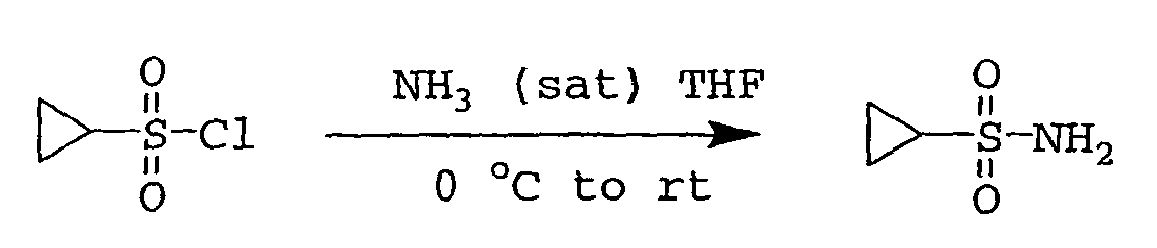
- To a solution of 100 mL of THF cooled to 0 °C was bubbled in gaseous ammonia until saturation was reached. To this solution was added a solution of 5 g (28.45 mmol) of cyclopropylsulfonyl chloride (purchased from Array Biopharma) in 50 mL of THF, the solution warmed to rt overnite and stirred one additional day.
- The mixture was concentrated until 1-2 mL of solvent remained, applied on to 30 g plug of SiO2 (eluted with 30% to 60% EtOAc/Hexanes) to afford 3.45g (100%) of cyclopropyl sulfonamide as a white solid. 1H NMR (Methanol-d4) δ 0.94-1.07 (m, 4H), 2.52-2.60 (m, 1H); 13C NMR (methanol-d4) δ 5.92, 33.01.
-

-


-

-

-

-

-

-

-

-


-

-

-

-

-

-

-

-

-

-
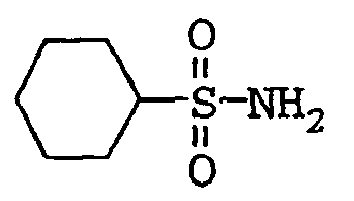
-

- Prepared from 14-tert-butoxycarbonylamino-18-(isoquinolin-1-yloxy)-2,15-dioxo-3,16-diaza-tricyclo[14.3.0.04,6]-nonadec-7-ene-4-carboxylic acid (50 mg, 0.075 mmol) and methane sulfonamide (9.3 mg, 0.098 mmol) as described in the general procedure above to give [18-(isoquinolin-1-yloxy)-4-methanesulfonylaminocarbonyl-2,15-dioxo-3,16-diaza-tricyclo[14.3.0.04,6]nonadec-7-en-14-yl]-carbamic acid tert-butyl ester as a white powder: 1H NMR (300 MHz, CD3Cl3) δ 1.18 (s, 9 H), 1.25-1.96 (m, 11 H), 2.26 (m, 1 H), 2.54 (m, 1 H), 2.71 (m, 2 H), 3.18 (s, 3 H), 4.08 (m, 1 H), 4.26 (m, 1 H), 4.64 (m, 2 H), 5.00 (m, 2 H), 5.73 (m, 1 H), 6.01 (s, 1 H), 6.73 (s, 1 H), 7.28 (d, J=5.5 Hz, 1 H), 7.50 (t, J=7.3 Hz, 1 H), 7.65-7.76 (m, 2 H), 7.98 (d, J=5.9 Hz, 1 H), 8.19 (d, J=7.7 Hz, 1 H), 10.28 (s, 1 H). LC-MS (Method A, retention time: 3.57 min), MS m/z 670 (M++1).
-

-

- Prepared from 14-tert-butoxycarbonylamino-18-(isoquinolin-1-yloxy)-2,15-dioxo-3,16-diaza-tricyclo[14.3.0.04,6]-nonadec-7-ene-4-carboxylic acid etherate (100 mg, 0.15 mmol) and cyclopropylsulfonamide (24 mg, 0.20 mmol) as described in the general procedure above. Flash chromatography (2% methanol/methylene chloride) gave 55 mg (53%) of [4-cyclopropanesulfonylaminocarbonyl-18-(isoquinolin-1-yloxy)-2,15-dioxo-3,16-diaza-tricyclo-[14.3.0.04,6]-nonadec-7-en-14-yl]-carbamic acid tert-butyl ester as a white powder: 1H NMR (500 MHz, CD3Cl3) δ 0.89-0.95 (m, 1 H), 1.03-1.16 (m, 3 H),1.22 (s, 9 H), 1.18-1.48 (m, 8 H), 1.78 (m, 1 H), 1.87 (m, 1 H), 1.94 (m, 1 H), 2.29 (q, J=9.0 Hz, 1 H), 2.56 (m, 1 H), 2.67 (dd, J=7.9 Hz, 2.7 Hz, 2 H), 2.90 (m, 1 H), 4.04 (dd, J=11.3 Hz, 4.0 Hz, 1 H), 4.29 (m, 1 H), 4.61 (m, 2 H), 4.97-5.03 (m, 2 H), 5.70 (m, 1 H), 5.94 (s, 1 H), 6.67 (s, 1 H), 7.25 (m, 1 H), 7.47 (t, J=7.3 Hz, 1 H), 7.64 (t, J=7.3 Hz, 1 H), 7.72 (d, J=7.9 Hz, 1 H), 7.97 (d, J=5.8 Hz, 1 H), 8.17 (d, J=8.5 Hz, 1 H), 10.20 (s, 1 H). LC-MS (Method A, retention time: 3.67 min), MS m/z 696 (M++1).
-

-

- Prepared from 14-tert-butoxycarbonylamino-18-(isoquinolin-1-yloxy)-2,15-dioxo-3,16-diaza-tricyclo[14.3.0.04,6]-nonadec-7-ene-4-carboxylic acid (50 mg, 0.075 mmol) and 1-propyl-cyclopropanesulfonic acid amide (16 mg, 0.098 mmol, prepared as described above) to give [18-(isoqumolin-1-yloxy)-2,15-dioxo-4-(1-propyl-cyclopropanesulfonylaminocarbonyl)-3,16-diaza-tricyclo[14.3.0.04,6]nonadec-7-en-14-yl]-carbamic acid tert-butyl ester as a white powder: 1H NMR (300 MHz, CD3Cl3) δ 0.82-0.93 (m, 5 H), 1.23 (s, 9 H), 1.30-1.94 (m, 17 H), 2.28 (m, 1 H ), 2.54 (m, 1 H), 2.68 (dd, J=8.1 Hz, 3.2 Hz, 2 H), 4.05 (m, 1 H), 4.30 (m, 1 H), 4.63-4.66 (m, 2 H), 4.96-5.09 (m, 2 H), 5.70 (m, 1 H), 5.92 (s, 1 H), 6.69 (s, 1 H), 7.23 (m, 1 H), 7.46 (t, J=8.1 Hz, 1 H), 7.63 (t, J=8.1 Hz, 1 H), 7.72 (d, J=8.1 Hz, 1 H), 7.97(d, J=5.9 Hz, 1 H), 8.17 (d, J=8.4 Hz, 1 H), 10.12 (s, 1 H). LC-MS (Method A, retention time: 3.77 min), MS m/z 738 (M++1).
-

- To a mixture of 73 mg (0.1 mmol) of [18-(Isoquinolin-1-yloxy)-2,15-dioxo-4-(1-propylcyclopropanesulfonylamino-carbonyl)-3,16-diaza-tricyclo[14.3.0.04,6]nonadec-7-en-14-yl]-carbamic acid tert-butyl ester in 3 mL of methanol was added 332 mg (2 mmol)of dipotassium azodicarboxylate. Glacial acetic acid (240 mg, 4 mmol) in 2 mL of methanol was added slowly by a syringe pump over 5 h. The mixture was stirred at rt. After 5 h, another 332 mg (2 mmol)of dipotassium azodicarboxylate and 240 mg (4 mmol) of glacial acetic acid was added over the course of 5 h and the stirring was continued overnight. This cycle was repeated twice. LC-MS showed about 40% starting material still remaining. The solvent was then removed on a rotary evaporator. Water was added to the residue and the mixture was extracted three times with ethyl acetate. It was then dried with magnesium sulfate, filtered and concentrated in vacuo. The resulting oil was dissolved in methanol and purified by preparative HPLC ( YMC ODS-A, S5, 20x100 mm, gradient:80% B to 85% B, 15 min, hold 2 min, flow rate 25 mL/min) to isolate the product as a white powder (25 mg, 34%). 1H NMR (500 MHz, CD3Cl3) δ 0.91 (m, 5 H), 1.30 (s, 9 H), 1.20-1.80 (m, 21 H), 1.86-1.93 (m, 2 H), 2.57 (m, 1 H), 2.67 (m, 1 H), 4.10 (m, 1 H), 4.36 (d, J=12.2 Hz, 1 H), 4.44 (t, J=8.2 Hz, 1 H), 4.61 (t, J=7.9 Hz, 1 H), 5.16 (d, J=8.2 Hz, 1 H), 5.92 (bs, 1 H), 6.58 (bs, 1 H), 7.25 (m, 1 H), 7.49 (t, J=7.3 Hz, 1 H), 7.65 (t, J=7.3 Hz, 1 H), 7.73 (d, J=8.2 Hz, 1 H), 7.97 (d, J=5.8 Hz, 1 H), 8.15 (d, J=8.2 Hz, 1 H), 10.09 (s, 1 H). LC-MS (Method A, retention time: 3.83 min), MS m/z 740(M++1).
-

-

-

- To a mixture of 140 mg (0.2 mmol) of [4-cyclopropanesulfonylaminocarbonyl-18-(isoquinolin-1-yloxy)-2,15-dioxo-3,16-diaza-tricyclo[14.3.0.04,6]nonadec-7-en-14-yl]-carbamic acid tert-butyl ester in 3 mL of methanol was added 656 mg (4 mmol)of dipotassium azodicarboxylate. Glacial acetic acid (480 mg, 8 mmol)in 2 mL of methanol was added slowly by a syringe pump over 5 h. The mixture was stirred at rt. After 5 h, another 656 mg (4 mmol)of dipotassium azodicarboxylate and 480 mg (8 mmol) of glacial acetic acid was added over the course of 5 h and the stirring was continued overnight. This cycle was repeated twice. LC-MS showed about 40% starting material still was remaining. The solvent was then removed on a rotary evaporator. Water was added to the residue and the mixture was extracted three times with ethyl acetate. It was then dried with magnesium sulfate, filtered and concentrated in vacuo. The resulting oil was dissolved in methanol and purified by preparative HPLC (YMC XTERRA, S5, 30x50 mm, gradient:72% B to 78% B, 15 min, hold 2 min, flow rate 40 ml/min) to isolate the product as a white powder (80 mg, 57%). LC-MS (Method A, retention time: 3.59 min), MS mlz 698 (M++1).
-

- A stirred slurry of [4-cyclopropane-sulfonylaminocarbonyl-18-(isoquinolin-1-yloxy)-2,15-dioxo-3,16-diaza-tricyclo[14.3.0.04,6]nonadec-7-en-14-yl]-carbamic acid tert-butyl ester (1.20 g, 1.7 mmol) was treated with 4N HCl/dioxane (Aldrich)(10 mL) for 4 h. The reaction mixture was concentrated in vacuo to give 1.10 g (92%) of cyclopropanesulfonic acid [14-amino-18-(isoquinolin-1-yloxy)-2,15-dioxo-3,16-diaza-tricyclo[14.3.0.04,6]nonadec-7-ene-4-carbonyl]-amide bis hydrochloride as a white solid: LC-MS (Method B, retention time: 1.39 min), MS m/z 596 (M++1-2 HCl).
-

- To a mixture of cyclopropanesulfonic acid [14-amino-18-(isoquinolin-1-yloxy)-2,15-dioxo-3,16-diaza-tricyclo[14.3.0.04,6]nonadec-7-ene-4-carbonyl]-amide bis hydrochloride (50 mg, 0.075 mmol) in 2 mL of DCM was added 44 µL (0.25 mmol)of DIPEA and 9 mg (0.10 mmol) of methyl chloroformate. The mixture was stirred at rt for 2 h. It was then diluted with EtOAc and washed with pH 4 buffer (2x) and brine (1x). The organic phase was dried (MgSO4) and concentrated in vacuo to give the crude product. Flash chromatography (2% MeOH/DCM) gave 40 mg (82%) of the desired product as a white solid: LC-MS (Method A, retention time: 3.05 min), MS m/z 654 (M++1).
-

- To a mixture of cyclopropanesulfonic acid [14-amino-18-(isoquinolin-1-yloxy)-2,15-dioxo-3,16-diaza-tricyclo[14.3.0.04,6]nonadec-7-ene-4-carbonyl]-amide bis hydrochloride (50 mg, 0.075 mmol) in 2 mL of DCM was added 44 µL (0.25 mmol) of DIPEA and 15 mg (0.1 mmol) of neopentyl chloroformate. The mixture was stirred at rt for 2 h. It was then diluted with EtOAc and washed with pH 4 buffer (2x) and brine (1x). The organic phase was dried (MgSO4) and concentrated in vacuo to give the crude product. The resulting oil was dissolved in methanol and purified by preparative HPLC (YMC XTERRA, S5, 30x50 mm, gradient: 65% B to 100% B, 15 min, hold 2 min, flow rate 40 mL/min) to isolate the product as a white powder (42 mg, 79%): LC-MS (Method A, retention time: 3.58 min), MS m/z 710 (M++1).
-

-
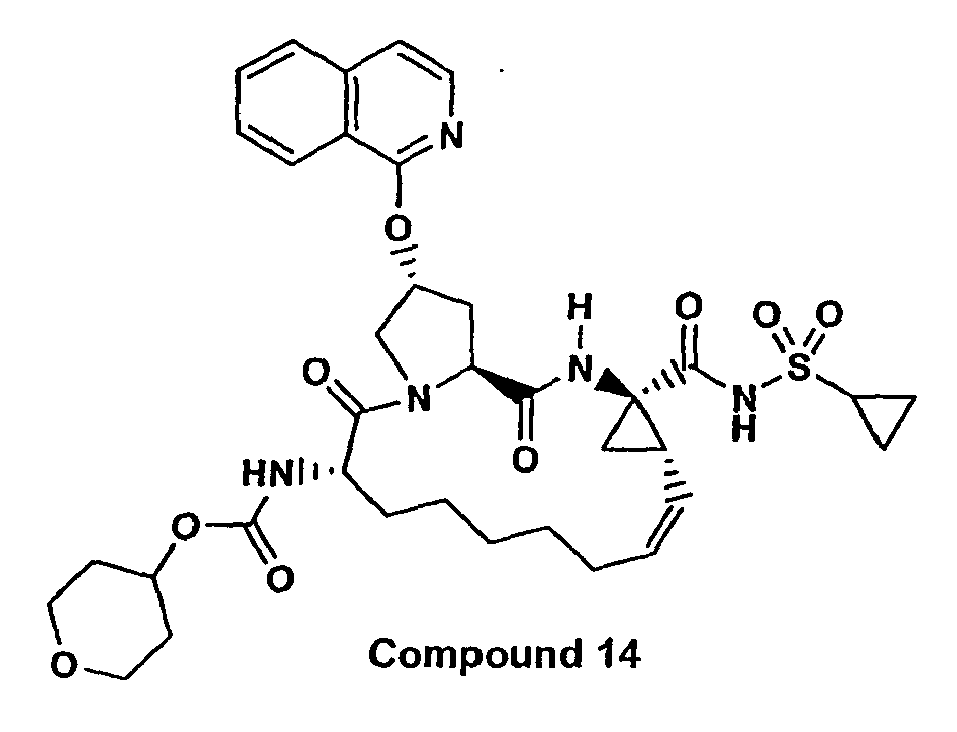
- Prepared from cyclopropanesulfonic acid [14-amino-18-(isoquinolin-1-yloxy)-2,15-dioxo-3,16-diaza-tricyclo[14.3.0.04,6]nonadec-7-ene-4-carbonyl]-amide bis hydrochloride (50 mg, 0.075 mmol, 44 µL (0.25 mmol) of DIPEA and 0.17 mL (0.1 mmol) of tetrahydropyran chloroformate (prepared by treating tetrahydro-pyran-4-ol with phosgene) in DCM as described in the procedure above to give 28 mg (52%) of a white solid. Preparative HPLC condition: YMC XTERRA, S5, 19x100 mm, gradient: 50% B to 100% B, 10 min, hold 2 min, flow rate 25 mL/min. LC-MS (Method A, retention time: 3.13 min), MS m/z 724 (M++1).
-

- Prepared from cyclopropanesulfonic acid [14-amino-18-(isoquinolin-1-yloxy)-2,15-dioxo-3,16-diaza-tricyclo[14.3.0.04,6]nonadec-7-ene-4-carbonyl]-amide bis hydrochloride (50 mg, 0.075 mmol), 44 µL (0.25 mmol) of DIPEA and 0.10 mL (0.1 mmol) of tetrahydro-furan-3-yl chloroformate (prepared by treating tetrahydrofuran-3-ol with phosgene) in DCM as described in the procedure above to give 28 mg (52%) of a white solid. Preparative HPLC condition: YMC ODS-A, S5, 30x50 mm, gradient: 50% B to 85% B, 8 min, hold 2 min, flow rate 45 ml/min. LC-MS (Method A, retention time: 3.05 min), MS m/z 710 (M++1).
-

-

-

-

- 1-(2(S)-tert-Butoxycarbonylamino-non-8-enoyl)-4(R)-hydroxy-pyrrolidine-2(S)-carboxylic acid methyl ester (4.7 g, 11.8 mmol) was dissolved in THF (80 mL), methanol (20 mL), and water (40 mL). Powdered lithium hydroxide(5.6 g, 233 mmol) was added. The light yellow slurry was stirred at rt under N2 for 16 h, and then concentrated in vacuo. The residue was partioned between ether and water. The ether phase was discarded, and the aqueous phase was treated with 1N HCl until the pH was 4. This acidic solution was extracted with EtOAc (3x). The combined EtOAc extracts were dried (MgSO4) and concentrated in vacuo to give 4.36 g (96%) of 1-(2(S)-tert-butoxycarbonylamino-8-nonenoyl)-4(R)-hydroxy-pyrrolidine-2(S)-carboxylic acid as a white solid. This acid was then dissolved in 150 mL of DMF and (1R,2S)-1-amino-2-vinylcyclopropane carboxylic acid ethyl ester hydrochloride (2.61 g, 13.6 mmol), N-methyl morpholine (2.5 mL, 22.6 mmol), and HATU (5.2 g, 13.7 mmol) was added. The reaction mixture was stirred at rt under N2 for 16 h, and then concentrated in vacuo. The residue was partitioned between ethyl acetate and pH 4 buffer (biphthalate). The organic phase was washed with sat. aq. NaHCO3, dried (MgSO4), and concentrated in vacuo to give the crude product. Flash chromatography (60%-80% ethyl acetate/hexane) gave 6.0 g (98%) of 1-{[1-(2(S)-tert-Butoxycarbonylamino-non-8-enoyl)4(R)-hydroxy-pyrrolidine-2(S)carbonyl]-(1R)-amino}-2(S)-vinyl-cyclopropanecarboxylic acid ethyl ester as a white solid: 1H NMR (500 MHz, CD3OD) δ 1.25 (t, J=7.2 Hz, 3 H), 1.33-1.80 (m, 10 H), 1.46 (s, 9 H), 2.09 (m, 3 H), 2.25 (m, 2 H), 3.76 (m, 2 H), 4.14 (m, 2 H), 4.27 (dd, J=8.5, 5.2 Hz, 1 H), 4.50 (m, 2 H), 4.94 (d, J=10.1 Hz, 1 H), 5.01 (dd, J=17.1, 1.8 Hz, 1 H), 5.11 (dd, J=10.4, 1.8 Hz, 1 H), 5.30 (d, J=15.6 Hz, 1 H), 5.80 (m, 2 H), 8.57 (s, 1 H). LC-MS (Method A, retention time: 3.21 min), MS m/z 522 (M++1).
-

- A solution of 1-{[1-(2(S)-tert-Butoxycarbonyl-amino-non-8-enoyl)-4(R)-hydroxy-pyrrolidine-2(S)carbonyl]-(1R)-amino}-2(S)-vinylcyclopropane-carboxylic acid ethyl ester (800 mg, 1.53 mmol) in 2 L of methylene chloride was flushed with N2 for 0.5 h. Then tricyclohexylphosphine[1,3-bis(2,4,6-trimethyl-phenyl)-4,5-dihydroimidazol-2-ylidene][benzylidene]-ruthenium (IV) dichloride (Strem) (64 mg, 0.075 mmol) was added, and the mixture was flushed with N2 for another 10 min. The light orange homogeneous solution was refluxed for 2 h to give a dark orange solution. The reaction mixture was cooled to rt and concentrated in vacuo to give an orange oil. Flash chromatography (ethyl acetate) gave 460 mg (61 %) of (1S,4R,6S,14S,18R)-7-cis-14-tert-butoxycarbonylamino-18-hydroxy-2,15-dioxo-3,16-diazatricyclo[14.3.0.04,6]-nonadec-7-ene-4-carboxylic acid ethyl ester as a gray solid. 1H NMR (500 MHz, CDCl3) δ 1.19 (t, J=7.2 Hz, 3 H), 1.42 (s, 9 H), 1.22-1.8 (m, 8 H), 1.87 (m, 2 H), 2.03-2.22 (m, 4 H), 2.63 (m, 1 H), 3.65 (m, 1 H), 4.09 (m, 3 H), 4.45 (m, 1 H), 4.56 (s, 1 H), 4.82 (m, 1 H), 5.23 (m, 1 H), 5.51 (s, 1 H), 7.16 (s, 1 H). LC-MS (Method A, retention time: 2.97 min), MS m/z 494 (M++1).
-

-

-

-

- Step 1: To a solution of N-Boc-cysteine methyl ester (3.36 g, 0.014 mol) in methanol (166 mL) at RT was added triethylamine (10.8 mL) and 1-bromopent-4-ene (3.19 g, 21 mmol, 1.5 equivalents) and the resulting solution was stirred at room temperature overnight. The mixture was then concentrated in vacuo and the resulting residual mixture was purified using flash chromatography (hexane, ethyl acetate gradient) to provide 1.76 g (41 %) of the desired thioether. 1H NMR (500 MHz, CDCl3) δ 1.43 (s, 9H), 1.64 (m, 2H), 2.11 (m, 2H), 2.51 (m, 2H), 2.95 (m, 2H), 3.75 (s, 3H), 4.51 (m, 1H), 4.95-5.03 (m, 2H), 5.34 (m, 1H), 5.80 (1H, m). LC-MS (Method B, except gradient time was 3 min., and flow rate was 4 ml/min, retention time: 2.29 min), MS m/z 304(M++1).
- Step 2: The thioether product of step 1 (9.51 g, 31.4 mmol) was added to a mixture of 1M LiOH in water (200mL) and THF (200mL) and the resulting mixture was stirred at room temperature overnight. The reaction mixture was then acidified using 1N hydrochloric acid and the resulting mixture was extracted several times with ethyl acetate. The extracts were combined, dried over magnesium sulfate, and concentrated in vacuo to provide the desired acid which was used as is in the next reaction.
-

-

-
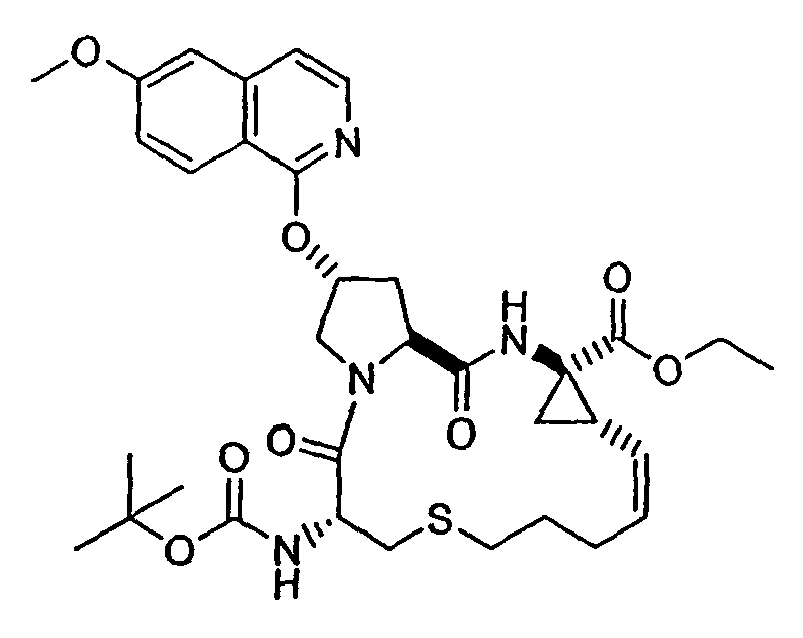
-

-

-
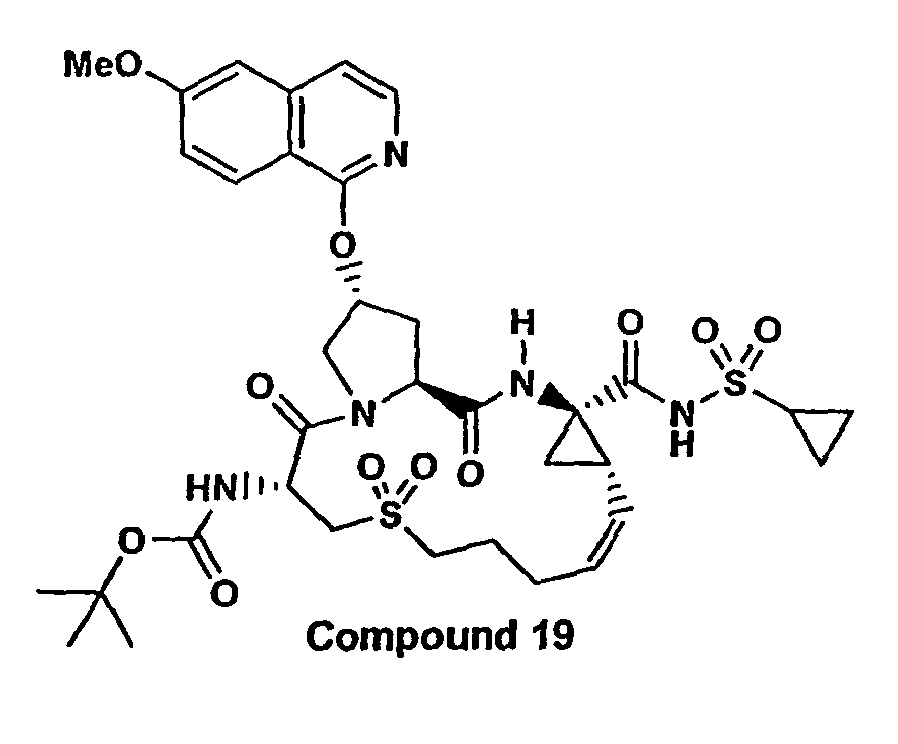
-
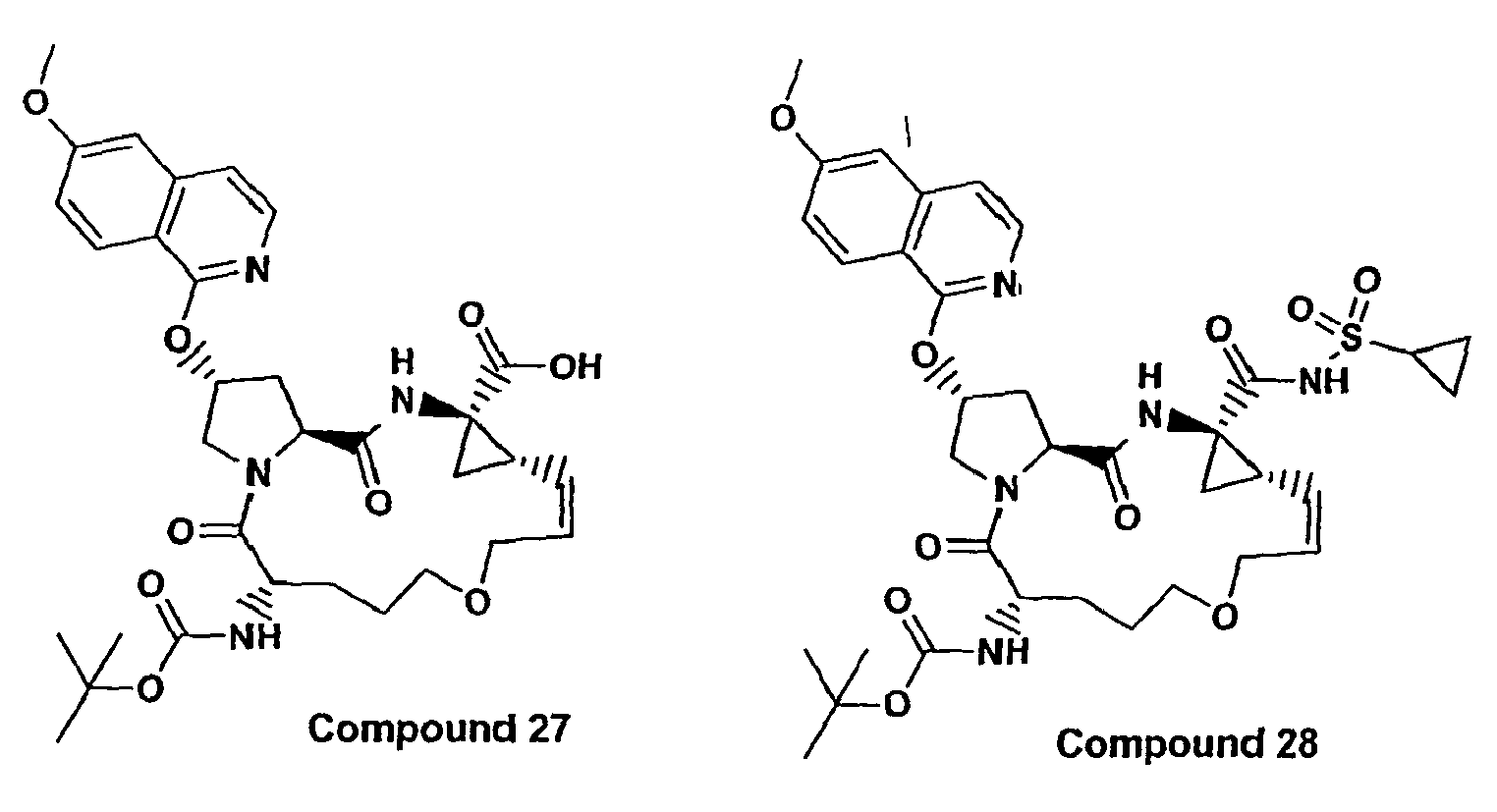
-

-

- A solution of isopropyl pyrrolidin-5-one-2(S)-carboxylate (product of step 26A, 31.9 g, 188 mmol), di-tert-butyl dicarbonate (48.6 g, 225 mmol) and DMAP (2.30 g, 8.8 mmol) in acetonitrile (300 mL) was stirred at room temperature under N2 for 30 minutes. The reaction was evaporated to about 100 mL, diluted with ether, washed with 1N HCl then saturated aqueous NaCl, dried (MgSO4) and evaporated to give isopropyl 1-(tert-butoxycarbonyl)pyrrolidin-5-one-2(S) carboxylate as a light yellow oil, 50.1 g (99%): 1H NMR (300 MHz, Chloroform-D) δ 5.06 (sept. 1 H, J = 6.2 Hz), 4.53 (dd, 1 H, J = 9.5, 2.9 Hz), 2.66-2.40 (m, 2H), 2.36-2.22 (m, 1 H), 2.03-1.93 (m, 1 H), 1.47 (s, 9 H), 1.26 (d, 3 H, J = 6.2 Hz), 1.24 (d, 3 H, J = 6.2 Hz). LCMS m/z 272 (M+H)+.
-

-

-

-

-

-

- To a solution of 14-tert-butoxycarbonylamino-18-(6-methoxy-isoquinolin-1-yloxy)-2,15-dioxo-10-oxa-3,16-diaza-tricyclo[14.3.0.04,6]nonadec-7-ene-4-carboxylic acid ethyl ester (the product of step 26G, 667 mg, 1.02 mmol) in 25.7 ml of THF was added 2.9 ml of water, 11.4 ml of methanol, and powdered lithium hydroxide (489 mg, 20.4 mmol). The reaction mixture was stirred at rt for 6 h, and then concentrated in vacuo. The residue was partitioned between ethyl acetate and 20.4 ml of 1 N aq. HCl. To the resulting solution was added pH 4 buffer (biphthalate). The organic phase was washed with water, sat. aq. NaCl, dried (MgSO4), and concentrated in vacuo to give the crude product. Flash chromatography (silica gel, 0-10% methanol/chloroform) gave 446 mg (∼70%) of 14-tert-butoxycarbonylamino-18-(6-methoxy-isoquinolin-1-yloxy)-2,15-dioxo-10-oxa-3,16-diaza-tricyclo[14.3.0.04,6]nonadec-7-ene-4-carboxylic acid as a slightly pink collapsed foam: 1H NMR (500 MHz, METHANOL-D4) δ 0.99-1.16 (m, 1 H), 1.22 (s, 9 H), 1.50-2.04 (m, 6 H), 2.40-2.73 (m, 3 H), 3.41-3.50 (m, 1 H), 3.51-3.62 (m, 1 H), 3.73-3.86 (m, 1 H), 3.90 (s, 3 H), 4.03 (d, J=10.52 Hz, 1 H), 4.21 (d, J=8.31 Hz, 1 H), 4.42-4.72 (m, 3 H), 5.65 (s, 2 H), 5.82 (s, 1 H), 7.06 (d, J=9.05 Hz, 1 H), 7.15 (s, 1 H), 7.22 (d, J=5.87 Hz, 1 H), 7.87 (m, J=9.29 Hz, 2 H), 8.14 (d, J=8.56 Hz, 1 H). LC-MS (Method B, retention time: 1.46 min), MS m/z 625 (M++1).
-

- A solution of 14-tert-butoxycarbonylamino-18-(6-methoxy-isoquinolin-1-yloxy)-2,15-dioxo-10-oxa-3,16-diaza-tricyclo[14.3.0.04,6]nonadec-7-ene-4-carboxylic acid (the product of step 26H, 146.5 mg, 0.235 mmol) and carbonyldiimidazole (76 mg, 0.47 mmol) in 5 ml of THF was stirred at reflux under N2 for 2 h, and then allowed to come to rt. To the reaction mixture was added cyclopropanesulfonic acid amide (86 mg, 0.71 mmol) and 1,8-diazabicyclo[5.4.0]undec-7-ene (81 µl, 0.54 mmol). The reaction mixture was stirred at rt under N2 for 4 h, and then quenched with pH 4 buffer (biphthalate). The resulting mixture was extracted with EtOAc. The organic phase was washed with sat. aq. NaCl, dried (MgSO4), and concentrated in vacuo to give the crude product. Flash chromatography (silica gel, 0-8% methanol/chloroform) gave 111.7 mg (∼65%) of [4-Cyclopropanesulfonylaminocarbonyl-18-(6-methoxy-isoquinolin-1-yloxy)-2,15-dioxo-10-oxa-3,16-diaza-tricyclo[14.3.0.04,6]nonadec-7-en-14-yl]-carbamic acid tert-butyl ester (compound 27) as a white powder: 1H NMR (500 MHz, METHANOL-D4) δ 0.96-1.17 (m, 6 H), 1.20 (s, 9 H), 1.24-1.32 (m, 1 H), 1.49-1.64 (m, 2 H), 1.65-1.79 (m, 2 H), 1.79-2.06 (m, 2 H), 2.45-2.60 (m, 1 H), 2.62-2.76 (m, 2 H), 2.86-2.98 (m, 1 H), 3.47-3.61 (m, 2 H), 3.62-3.73 (m, 1 H), 3.92 (s, 3 H), 4.00 (d, J=10.38 Hz, 1 H), 4.18 (d, J=10.99 Hz, 1 H), 4.55-4.72 (m, 3 H), 5.44 (t, J=9.92 Hz, 1 H), 5.69-5.78 (m, 1 H), 5.86 (s, 1 H), 7.07 (d, J=7.02 Hz, 1 H), 7.17 (s, 1 H), 7.24 (d, J=5.80 Hz, 1 H), 7.85-7.95 (m, 2 H), 8.18 (d, J=8.85 Hz, 1 H). LC-MS (Method B, retention time: 1.52 min), MS m/z 728 (M++1).
-

- Example 28 was prepared by adding a DMF solution of N-trityl protected threonine to a DMF solution of sodium hydride cooled to -15 C. The reaction mixture was stirred for 30 minutes at -15 C after which 5-bromo-1-pentene was added and the resulting mixture was warmed to -5 C. The reaction mixture was maintained at -5 C for 3 days after which time the reaction was quenched by the addition of 1N aqueous HCl and worked up using standard extraction procedures as described above. Example 28 was obtained in pure form by standard chromatography procedures.
- Example 29 was prepared by coupling Example 28 with Example 22 as shown in the scheme using the general procedure described above for the preparation of structurally related Compounds and Examples.
- Example 30 was prepared from Example 29 as shown in the scheme using procedures described above for the preparation of structurally related Compounds and Examples.
- Example 31 was prepared from Example 30 as shown in the scheme. In the event 100 mg of Example 30 was dissolved in 2 ml of DCM and the resulting solution was treated with 82 microliters of a 4:1 solution of water and trifluoroacetic acid. The resulting mixture was stirred at room temperature for several hours after which the reaction mixture was concentrated and the resulting crude product mixture was purified by chromatography to provide Example 31.
- Compound 61 was prepared from Example 31 as shown in the scheme and using procedures described above for the preparation of related Compounds and Examples.
-

-

-

-

- The crude product (12.20g) was dissolved in 120mL of anhydrous dimethylsulfoxide. To this solution was added 10.50g (76 mmol) of potassium carbonate and 4.70mL (76 mmol) of iodomethane, and the resulting mixture was stirred at room temperature for 24 hours. The reaction mixture was diluted with water and extracted with ethyl acetate. The combined extracts were washed with water (2X) and brine, dried over anhydrous sodium sulfate, filtered, and concentrated under vacuum. Column chromatography on silica gel (elution: 2 -10% ethyl acetate/hexane) provided 8.54g of N-tert-butoxycarbonyl-3-(4-pentenylthio)-L-valine, methyl ester as a colorless oil. NMR (300 MHz, CDCl3): δ 5.76 (d of d of t, 1 H, J =17.2, 10.3, 6.6 Hz), 5.35 (br d, 1 H, J = 9.0 Hz), 5.05-4.94 (m, 2 H), 4.27 (br d, 1 H, J = 9.0 Hz), 3.73 (s, 3 H), 2.52 (m, 2 H), 2.13 (quart., 2 H, J = 7.3 Hz), 1.61 (quint., 2 H, J = 7.3 Hz), 1.43 (s, 9 H), 1.35 (s, 3 H), 1.33 (s, 3 H).
-

-

- This compound was prepared from N-tert-butoxycarbonyl-3-(4-pentenylthio)-L-valine employing the procedures described in example 24. ESI-mass spectrum: m/e: 669 (M+H)+, 667 (M-H)-; high resolution mass spectrum: calc'd for C34H45N4O8S: 669.2958, found: 669.2975; NMR (500 MHz, CD3OD) δ 8.06 (d, 1 H, J = 8.8 Hz), 7.90 (d, 1 H, J = 5.8 Hz), 7.24 (d, 1 H, J = 5.8 Hz), 7.16 (s, 1 H), 7.09 (d, 1 H, J = 8.8 Hz), 6.69 (d, 1 H, J = 8.5 Hz), 5.80 (s, 1 H), 5.72 ( quart., 1 H, J = 8.5 Hz), 5.46 (t, 1 H, J = 8.5 Hz), 4.71 (t, 1 H, J = 8.5 Hz), 4.64 (d, 1 H, J = 9.1 Hz), 4.45 (d, 1 H, J = 11.6 Hz), 4.22 (m, 1 H), 3.91 (s, 3 H), 2.78 (m, 1 H), 2.74-2.68 (m, 2 H), 2.56 (m, 1 H), 2.36-2.28 (m, 2 H), 2.21 (m, 1 H), 1.75 (m, 1 H), 1.72-1.64 (m, 2 H), 1.60 (m, 1 H), 1.45 (s, 3 H), 1.39 (s, 3 H), 1.21 (s, 9 H).
-

- This compound was prepared from compound 79 employing the procedure described in example 24D. ESI-mass spectrum: m/e: 772 (M+H)+, 770 (M-H)-; high resolution mass spectrum: calc'd for C37H50N5O9S2: 772.3050, found: 772.3060; NMR (500 MHz, CD3OD) δ 8.06 (d, 1 H, J = 8.8 Hz), 7.90 (d, 1 H, J = 5.8 Hz), 7.24 (d, 1 H, J = 5.8 Hz), 7.17 (s 1 H), 7.08 (d, 1 H, J = 8.8 Hz), 6.62 (d, 1 H, J = 8.5 Hz), 5.83 (s, 1 H), 5.74 (quart., 1 H, J = 8.5 Hz), 5.26 (t, 1 H, J = 8.5 Hz), 4.67 (m, 1 H), 4.46 (m, 2H), 4.19 (m, 1 H), 3.92 (s, 3 H), 2.93 (m, 1 H), 2.74-2.67 (m, 3 H), 2.58-2.48 (m, 3 H), 2.11 (m, 1 H), 1.82-1.75 (m, 2 H), 1.61 (m, 1 H), 1.54 (m, 1 H), 1.45 (s, 3 H), 1.37 (s, 3 H), 1.27 (m, 1 H), 1.18 (s, 9 H), 1.09 (m, 1 H), 1.07-0.99 (m, 2 H).
-

-

-

-

- This compound was prepared from N-tert-butoxycarbonyl-3-(4-pentenylthio)-L-valine employing the procedures described in example 26. ESI-mass spectrum: m/e: 625 (M+H)+, 623 (M-H)-; high resolution mass spectrum: calc'd for C32H41N4O9: 625.2874, found: 625.2871; NMR (500 MHz, CD3OD) δ 8.12 (d, 1 H, J = 9.0 Hz), 7.89 (d, 1 H, J = 5.8 Hz), 7.24 (d, 1 H, J = 5.8 Hz), 7.17 (s, 1 H), 7.12 (d, 1 H, J = 9.0 Hz), 5.83 (s, 1 H), 5.63 (quart., 1 H, J = 8.8 Hz), 5.45 (t, 1 H, J = 8.8 Hz), 4.74 (m, 1 H), 4.60 (br s, 1 H), 4.36 (d, 1 H, J = 11.0 Hz), 4.16 (d, 1 H, J = 8.0 Hz), 3.91 (s, 3 H), 3.74 (m, 2 H), 3.62 (m, 1 H), 3.49 (m, 1 H), 2.66 (m, 1 H), 2.57 (m, 1 H), 2.47-2.33 (m, 2 H), 2.19 (m, 1 H), 1.78 (m, 2 H), 1.69 (m, 1 H), 1.48 (m, 1 H), 1.30 (s, 9 H).
-

- This compound was prepared from compound 84 employing the procedure described in example 26I. ESI-mass spectrum: m/e: 728 (M+H)+, 726 (M-H)-; high resolution mass spectrum: calc'd for C35H46N5O10S: 728.2966, found: 728.2972; NMR (500 MHz, CD3OD) δ 8.12 (m, 1 H), 7.89 (d, 1 H, J = 5.8 Hz), 7.25 (d, 1 H, J = 5.8 Hz), 7.18 (s, 1 H), 7.12 (d, 1 H, J = 8.0 Hz), 5.89 (s, 1 H), 5.66 (quart., 1 H, J = 8.8 Hz), 5.19 (t, 1 H, J = 8.8 Hz), 4.71 (m, 1 H), 4.52 (br s, 1 H), 4.36 (d, 1 H, J = 10.0 Hz), 4.12 (m, 1 H), 3.92 (s, 3 H), 3.65 (m, 2 H), 3.47 (m, 2 H), 2.92 (m, 1 H), 2.64 (m, 1 H), 2.56 (m, 1 H), 2.45 (m, 2 H), 2.19 (m, 1 H), 1.77 (m, 1 H), 1.70-1.60 (m, 2 H), 1.54 (m, 1 H), 1.28 (s, 9 H), 1.15-0.98 (m, 4 H).
-


-

-
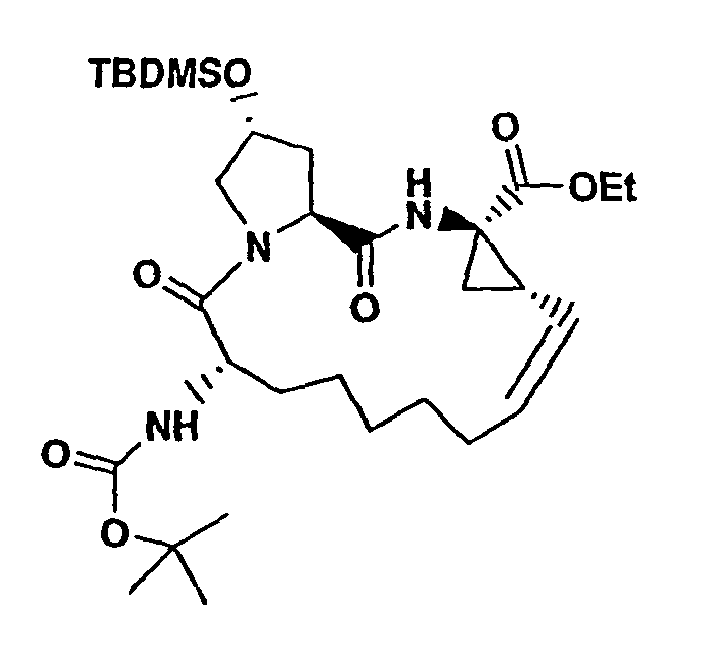
-

-

-

-

-
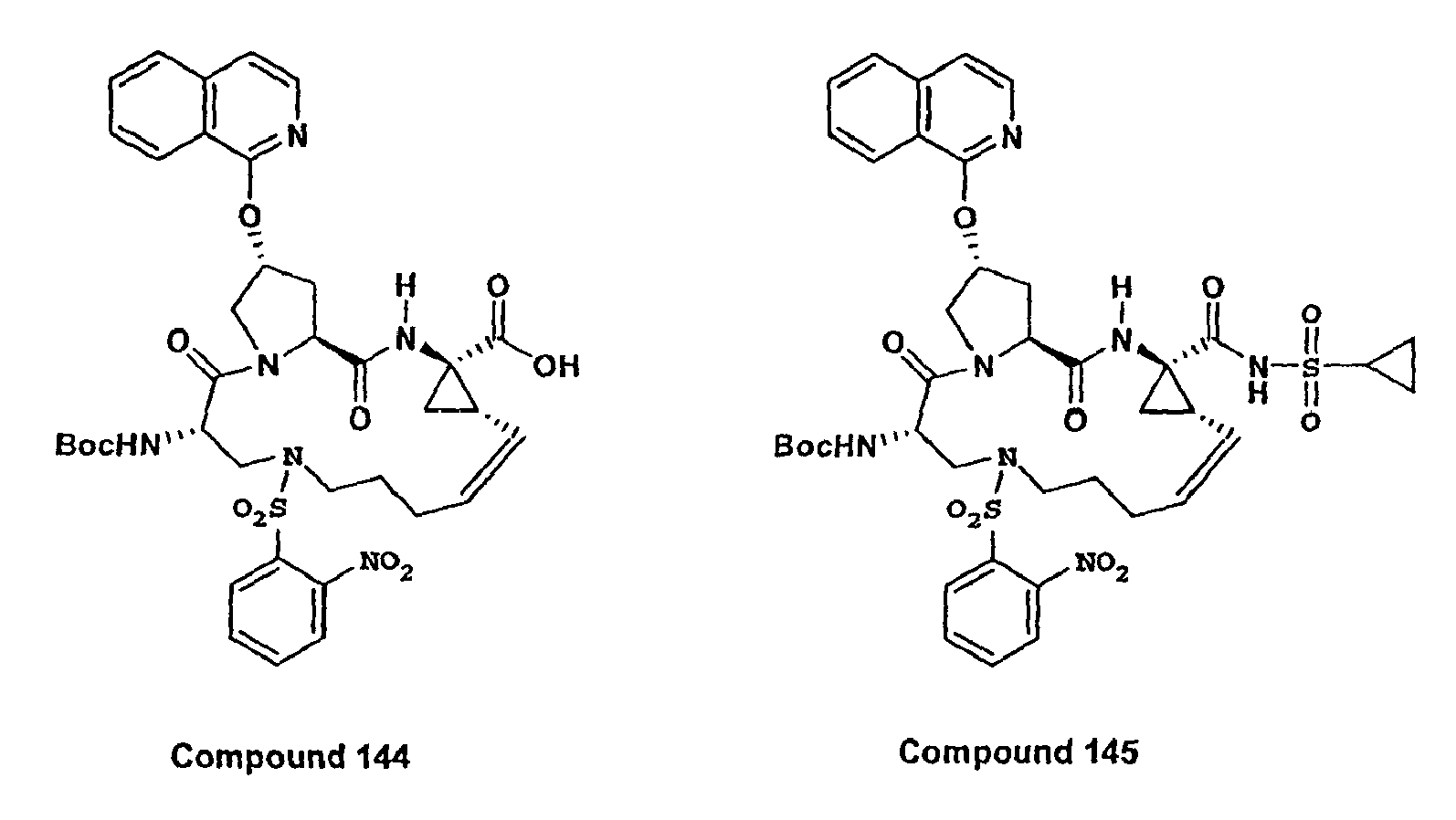
-


- To a mixture of i (Boc-DAP-OH)(3.0 g 14.7 mmol) in 50 mL of methylene chloride was added 5 mL of methanol. To this solution was slowly added (trimethylsilyl)diazomethane (2 M in ether, 7.9 mL, 15.8 mmoL). The mixture was stirred at rt for 2 h until all of the solid dissolved and the solution turned light yellow. It was then concentrated to yield 3.2 g (99%) of (S)-methyl 3-amino-2-(tert-butoxycarbonyl)propanoate ii as a colorless oil.
1H NMR (CD3OD, 300 MHz) δ 1.46 (s, 9 H), 2.82-3.00 (m, 2 H), 3.71 (s, 3 H), 4.14 (brs, 1 H). - To a mixture of (S)-methyl 3-amino-2-(tert-butoxycarbonyl)propanoate ii (1.6 g, 7.3 mmoL) in DCM (50 mL) was added DIPEA (1.64 mL, 9.4 mmoL) and 2-nitrobenzene sulfonyl chloride (1.62 g, 7.3 mmoL). The mixture was stirred at rt for 2 h. It was then concentrated, dissolved in ethyl acetate, which was then washed with sat. sodium bicarbonate, brine and dried over magnesium sulfate. It was then filtered, concentrated to yield 2.9 g (98%) of (S)-methyl 2-(tert-butoxycarbonyl)-3-(2-nitrophenylsulfonamido)propanoate iii as a yellow foam. 1H NMR (CD3OD, 300 MHz) δ 1.41 (s, 9 H), 3.36-3.51 (m, 2 H), 3.71 (s, 3 H), 4.22 (m, 1 H), 7.80-7.90 (m, 3 H), 8.07-8.10 (m, 1 H).
- To a mixture of (S)-methyl 2-(tert-butoxycarbonyl)-3-(2-nitrophenylsulfonamido)-propanoate iii (150 mg, 0.37 mmol) in 3 mL of DMF was added potassium carbonate (102 mg, 0.74 mmoL). This mixture was stirred at rt for 20 min followed by the addition of 5-bromo-1-pentene (65 µL, 0.55 mmoL). The reaction mixture was stirred at rt for 2 days. It was then filtered, concentrated and purified by silica gel chromatography (eluting with 25% ethyl acetate in hexane) to give 75 mg (43%) of (S)-methyl 2-(tert-butoxycarbonyl)-3-(2-nitro-N-(pent-4-enyl)phenylsulfonamido)propanoate iv as a yellow solid. 1H NMR (CD3OD, 300 MHz) δ 1.42 (s, 9 H), 1.54-1.64 (m, 2 H), 1.97 (q, J=7.20 Hz, 2 H), 3.37 (m, 2 H), 3.57-3.80 (m, 2 H), 3.72 (s, 3 H), 4.42 (dd, J=8.60, 5.31 Hz, 1 H), 4.91-5.01 (m, 2 H), 5.69-5.79 (m, 1 H), 7.75-7.85 (m, 3 H), 8.04 (m, 1 H). LC-MS (Method D, retention time: 2.68 min), MS m/z 372 (M++1-Boc).
- (S)-methyl 2-(tert-butoxycarbonyl)-3-(2-nitro-N-(pent-4-enyl)phenylsulfonamido)-propanoate iv (500 mg, 1.06 mmol) was dissolved in the mixed solvent system: THF (4mL), methanol (1 mL), and water (2 mL). Powdered lithium hydroxide (250mg, 10.4 mmol) was added. The light yellow slurry was stirred at rt for 15 h, and then concentrated in vacuo. The residue was partitioned between ether and water. The ether phase was discarded, and the aqueous phase was treated with 1 N HCl until the pH was 4. This acidic solution was extracted with ethyl acetate four times. The combined ethyl acetate extracts were dried (MgSO4) and concentrated in vacuo to give 430 mg (89%) of (S)-2-(tert-butoxycarbonyl)-3-(2-nitro-N-(pent-4-enyl)phenylsulfonamido)propanoic acid v as a yellow oil. 1H NMR (CD3OD, 300 MHz) δ 1.38 (s, 9 H), 1.51-1.60 (m, 2 H), 1.89-1.98 (m, 2 H), 3.28-3.32 (m, 2 H), 3.59-3.64 (dd, J=14.95, 9.46 Hz, 1 H), 3.71-3.74 (m, 1 H), 4.33 (dd, J=9.61, 4.43 Hz, 1 H), 4.87-4.94 (m, 2 H), 5.63-5.72 (m, 1 H), 7.71-7.77 (m, 3 H), 8.01 (dd, J=7.48, 1.37 Hz, 1 H). LC-MS (Method D, retention time: 2.04 min), MS m/z 358 (M++1-Boc).
-

-

-

-

-

-
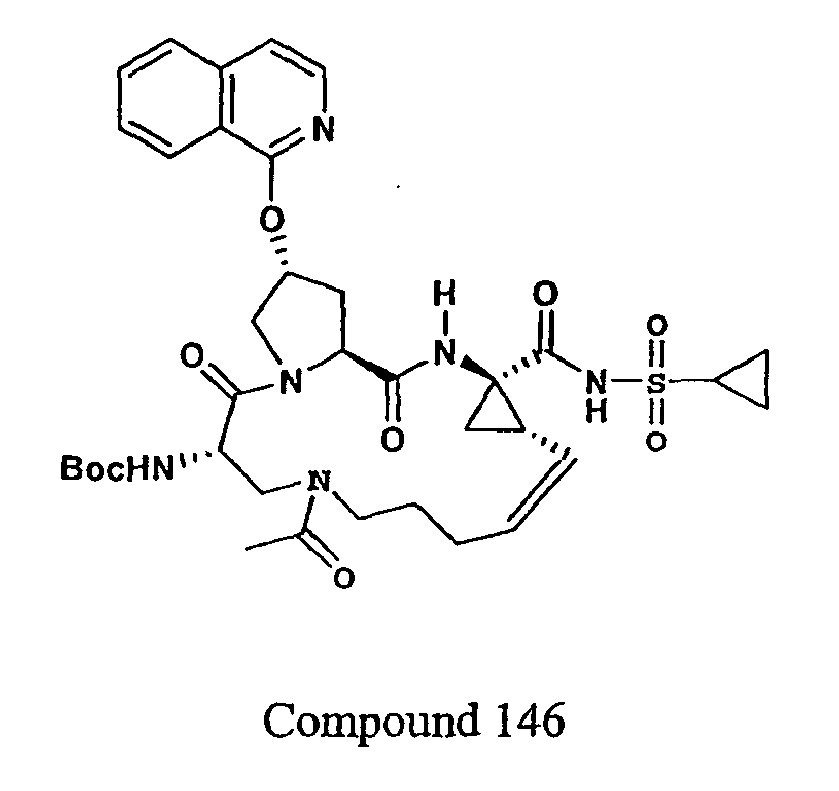
-

-

-

-

-

-

-

-

-

-

- To a slurry of KH (400mg, 35% in oil, 3.5 mmol) was added 5 mL of hexane. It was stirred for 5 min, and then the hexane was removed. This process was repeated three times. THF (5 mL) was added to this prewashed KH, and then 1-methylcyclobutanol (200 mg, 2.3 mmol) was added at 0°C. The mixture was stirred (0°C to rt) for 1 h, and then carbonic acid dipyridin-2-yl ester (753 mg, 3.5 mmol) was added. The mixture was stirred at rt for 4h, and the reaction was diluted with sat. aq. NH4Cl. The mixture was then extracted with EtOAc, and the solvent was removed in vacuo to obtain 200 mg of the crude carbonic acid 1-methyl-cyclobutyl ester pyridin-2-yl ester as an orange solid. It was used directly in the next step without further purification. To a suspension of 50 mg (0.073 mmol) of compound 11 [1-(2-Amino-3,3-dimethyl-butyryl)-4-(6-methoxy-isoquinolin-1-yloxy)-pyrrolidine-2-carboxylic acid (1-cyclopropanesulfonylaminocarbonyl-2-vinyl-cyclopropyl)-amide bis hydrochloride salt] in CH2Cl2 was added diisopropylethylamine (29 mg , 0.22 mmoL) and 70 mg ( 0.33 mmol) of the reagent above (carbonic acid 1-methyl-cyclobutyl ester pyridin-2-yl ester). This reaction mixture was stirred at rt overnight, and then concentrated in vacuo. The residue was purified by preparative HPLC to give 32 mg (62%) of compound 56 as a white solid. Preparative HPLC condition: YMC XTERRA, S5, 19x100 mm, gradient: 50% B to 90% B, 15 min, hold 2 min, flow rate 25 mL/min. LC-MS (Method A, retention time: 3.47 min), MS m/z 708 (M++1).
- Compound 59 was prepared by the general method used for compound 56 (example 47): 1-methylcyclopropanol was converted to the reagent carbonic acid 1-methyl-cyclopropyl ester pyridin-2-yl ester was prepared according to the method above (example 47). 1-Methyl-1-cyclopropanol was prepared by a slight modification of the procedure described by Kulinkovich, O.G.; Sviridov, S.V.; and Vasilevski, D.A. Synthesis, 1991, 234: To a stirred solution of methyl acetate (1.85 g, 25 mmol) and Ti(OPr-i)4 (744 µL, 2.5 mmol) in diethyl ether (80 mL) is added ethylmagnesium bromide (3M solution in diethyl ether) (18 mL, 53 mmol) in diethyl ether (60 mL) slowly over a period of 1h while maintaining the reaction temperature at 18-20 °C. Once the addition is complete, stirring is continued for 10 min. The mixture is poured into cooled (5 °C) 10% aq. H2SO4 (250 mL) and the product is extracted with diethyl ether (3 x 50 mL). The combined ether extracts are washed with water (50 mL), dried (MgSO4), and carefully concentrated by rotory evaporation (∼20 torr, rt) to give 1.7 g of 1-methyl-1-cyclopropanol (purity∼80%). 1H NMR (300 MHz, CDCl3) δ 0.42-0.45 (m, 2 H), 0.73-0.77 (m, 2 H), 1.44 (s, 3 H), 1.64 (br s, 1 H).
- The following compounds were also prepared using the general procedure above: compound 50 was prepared from 1-methylcyclopentanol; compounds 39 and 51 were prepared from 1,1,1-trifluoro-2-methylpropan-2-ol, compound 55 was prepared from 1,1-difluoro-2-methylpropan-2-ol (1,1-difluoro-2-methylpropan-2-ol was prepared according to the procedure described by
Dickey, J. B.and Towne, E. B. US2700686 ), compounds 40 and 52 were prepared from 1-chloro-2-methylpropan-2-ol, compound 124 was prepared from 1,1,1-trichloro-2-methylpropan-2-ol, compound 123 was prepared from 3-hydroxy-3-methylbutan-2-one, and compound 139 was prepared from S-tert-butyl O-4-nitrophenyl carbonothioate (shown below)(This reagent was prepared as discribed byE.M. Gordon, J.C. Barrish, G.S. Bisacchi, C-Q. Sun, J.A. Tino, G.D. Vite, and R. Zahler in US005559256A .).
-

-


-
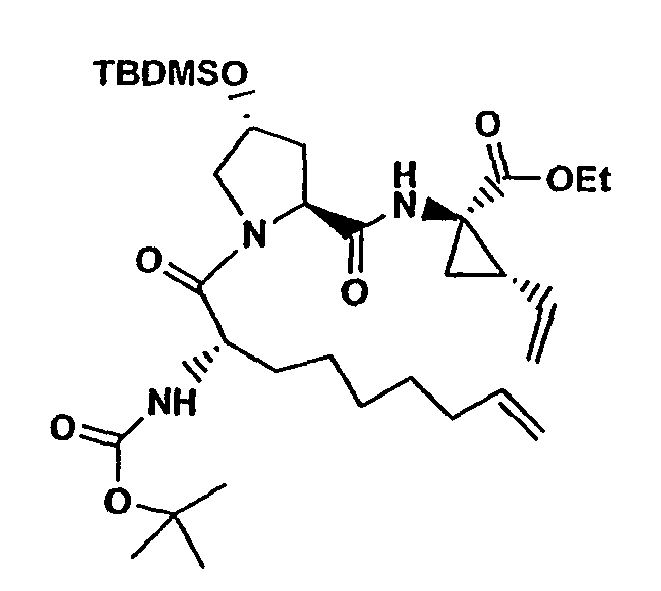
-

-

-
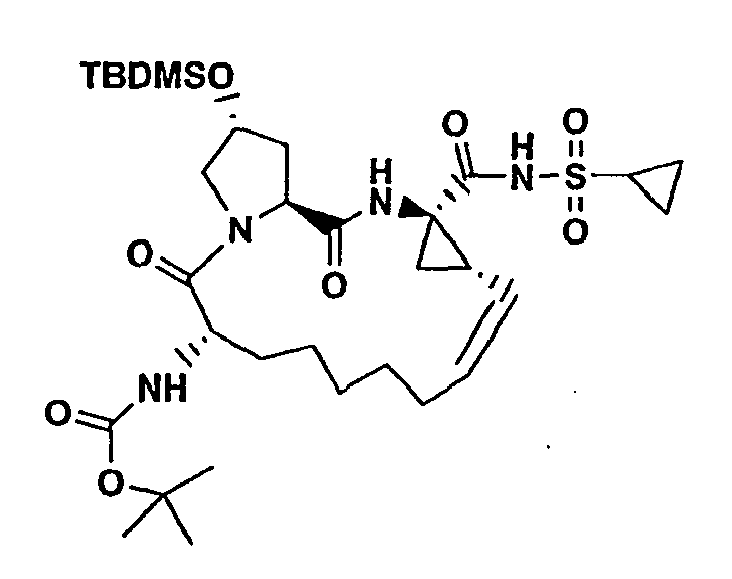
-

-


Table 2 Cmpd R1 R3 R7 R8 R9 Q Mass Spec. + (M+H) 1 


593 17A 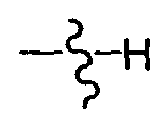


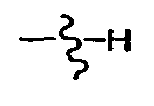
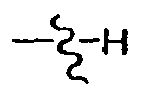

623 18A 


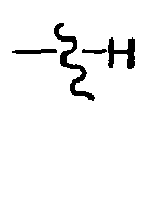

641 27 


625 61 


639 79 


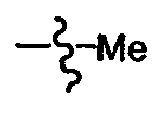

669 84 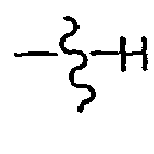


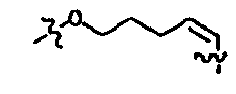
625 140 


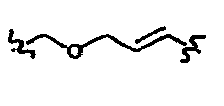
611 143 


609 144 


779 
Table 3 Cmpd R23 R1 R3, R4 R8 R9 R7 Q Mass Spec. + (M+H) 2 

H, H 


670 3 

H,H 


698 4 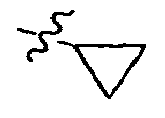

H,H 


696 5 

H,H 


786 6 

H,H 


738 7 

H,H 


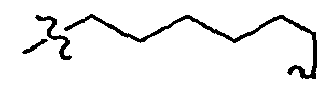
740 8 

H,H 


710 9 

H,H 


710 10 

H, H 


698 11 

H,H 


596 12 

H,H 


654 13 

H,H 


710 14 

H, H 


724 15 

H, H 


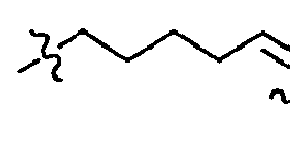
710 16 

H, H 


682 17B 

6-OMe, H 


726 18B 

6-OMe, H 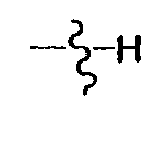


744 19 

6-OMe, H 


776 20 

H, H 


708 21 

H, H 


706 22 

H, H 


678 23 

H, H 


681 24 

H, H 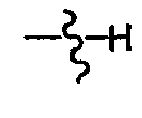


668 25 
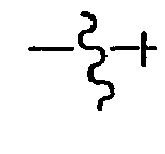
H, H 


674 26 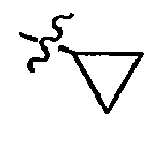

H, H 


638 28 

6-OMe, H 


728 29 

6-OMe, H 


742 30 

6-OMe, H 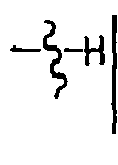


756 31 

6-OMe, H 


714 32 

6-OMe, H 


742 33 
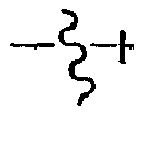
6-OMe, H 
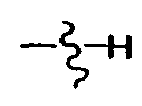


739 34 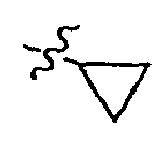

6-OMe, H 


727 35 

6-OMe, H 


728 36 

6-OMe, H 


753 37 

6-OMe, H 


742 38 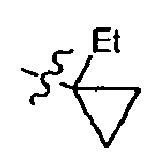

6-OMe, H 


767 39 

6-OMe, H 


782 40 

6-OMe, H 


762,764 41 

6-OMe, H 


744 42 

6-OMe, H 


772 43 

6-OMe, H 


769 44 

6-OMe, H 


758 45 

6-OMe, H 


786 46 

6-OMe, H 

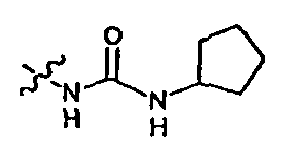

783 47 

6-OMe, H 

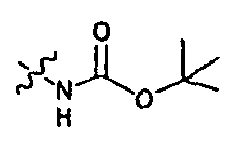

788 48 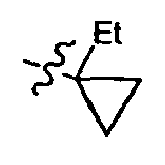

6-OMe, H 

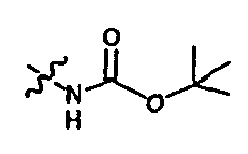
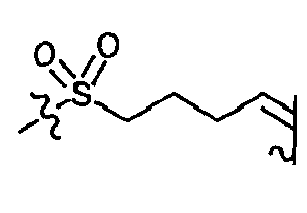
804 49 

6-OMe, H 


790 50 

H, H 

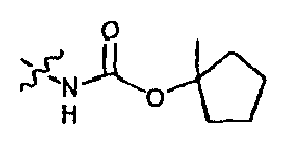

722 51 

H, H 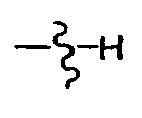
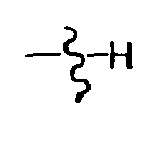


750 52 

H, H 


730 53 

6-OMe, H 


740 54 

6-OMe, H 


754 55 

H, H 


732 56 

H, H 


708 57 

H,H 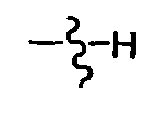

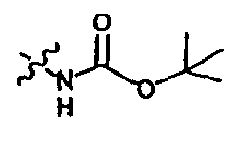

730 58 

H,H 


772 59 

H,H 


694 60 

6-OMe, H 


723 62 

6-OMe, H 


742 63 

6-OMe, H 


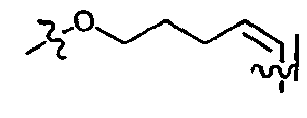
756 64 

6-OMe, H 


728 65 

6-OMe, H 


753 66 

6-OMe, H 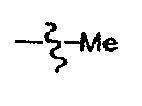
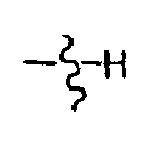


756 67 

6-OMe, H 


770 68 

6-OMe, H 
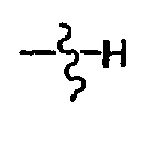

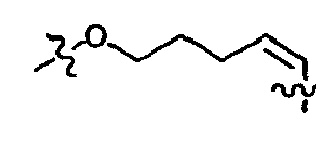
742 69 

6-OMe, H 


767 70 

6-OMe, H 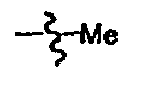


770 71 

6-OMe, H 


784 72 

6-OMe, H 


756 73 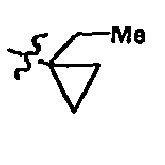

6-OMe, H 


781 74 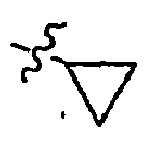

6-OMe, H 


730 75 

6-OMe, H 


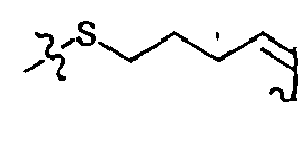
758 76 

6-OMe, 7-Cl 


778,780 77 

5-OMe, H 


774 78 

5-Cl, H 
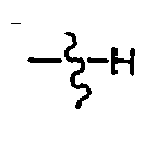


748,750 80 

6-OMe, H 


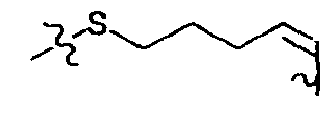
772 81 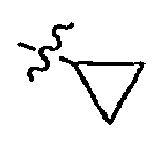

6-OMe, H 


771 82 

6-OMe, H 


783 83 

6-OMe, H 

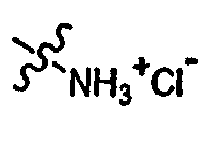

672 85 

6-OMe, H 


728 86 

6-OMe, H 


727 87 

6-OMe, H 

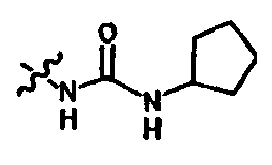

739 88 

6- OMe, H 

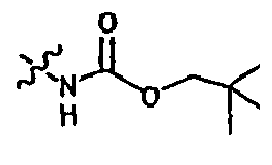

742 89 
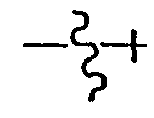
6-OMe, H 


714 90 
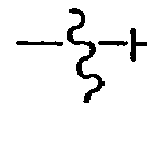
6-OMe, H 
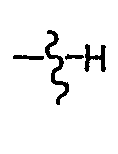


740 91 

6-OMe, H 


804 92 

6-OMe, H 


803 93 

6-OMe, H 


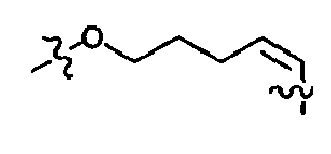
801 94 

6-OMe, H 


816 95 

6-OMe, H 


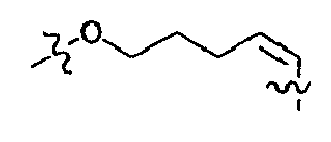
818 96 

6-OMe, H 


790 97 

6-OMe, H 


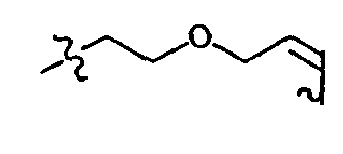
804 98 

6-OMe, H 


790 99 

6-OMe, H 

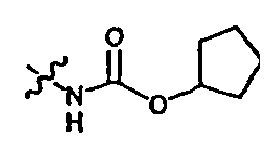

816 100 
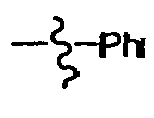
6-OMe, H 


801 101 

6-OMe, H 


815 102 

6-OMe, H 


803 103 

6-OMe, H 


818 104 

6-OMe, H 


803 105 

6-OMe, H 


848 106 

6-OMe, H 


816 107 

6-OMe, H 


847 108 

6-OMe, H 


846 109 

6-OMe, H 
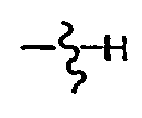


833 110 

6-OMe, H 


859 111 

OMe, H 


844 112 

6-OMe, H 


847 113 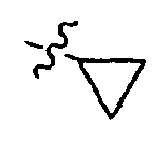

6-OMe, H 


833 114 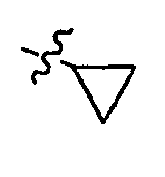

6-OMe, H 

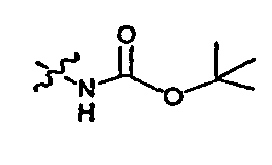

861 115 

6-OMe, H 


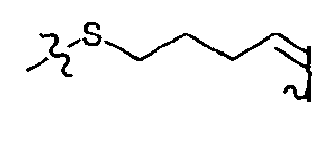
758 116 

H, H 
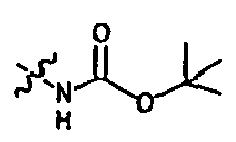

724 117 

6-OMe, H 


644 118 

H, H 


684 119 

H, H 


624 120 

H, H 


664 121 

OMe, H 


772 122 
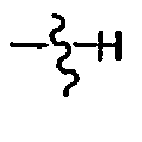
H,H 


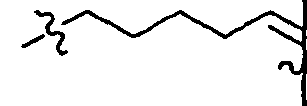
708 123 

H, H 


724 124 

H, H 


798, 800 125 

H, H 


710 126 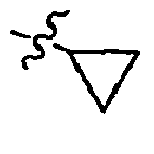

H,H 


695 127 

H, H 

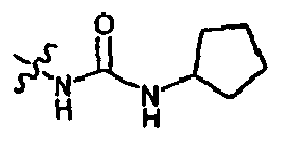

707 128 

H, H 


681 129 

H, H 


751 130 
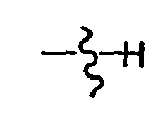
5-Cl, H 
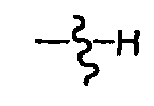


730 131 

6-OMe, 7-Cl 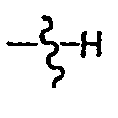


760 132 
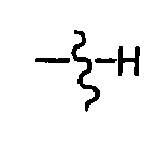
5-F, 6-OMe 


744 133 

5-OMe, H 


726 134 

5,6-dímethox y 


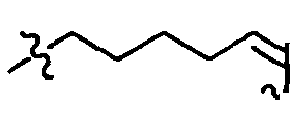
756 135 

6-OMe, H 

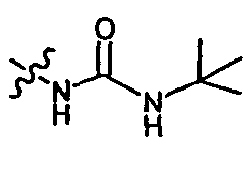

725 136 

6-OMe, H 


737 137 

6-OMe, H 
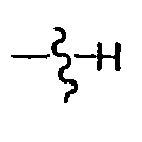
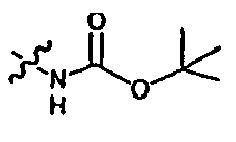

802 138 

H, H 


772 139 

H, H 


742 141 
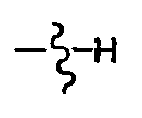
6-OMe, H 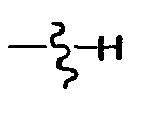


714 142 

6-OMe, H 


845 145 

H, H 

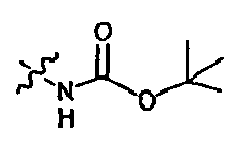

882 146 

H, H 


739 147 

H, H 


711 148 

H, H 

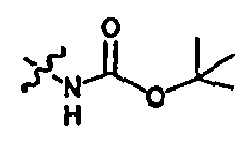

755 149 

H, H 


811 150 

H, H 


796 151 

H,H 


697 152 

H, H 


765 153 

H,H 


775 - The compounds of tables 4 and 5 could be prepared employing the procedures described in the above examples:

Table 4 Cmpd R23 R1 R3, R4 R8 R9 R7 I Q 201 

6-OMe, H 


202 

6-OMe, H 


203 

6-OMe, H 


204 

6-OMe, H 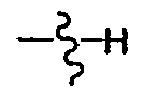


205 

H, H 


206 

H, H 


207 

6-OMe, H 


208 

6-OMe, H 


209 

6-OMe, H 


210 

6-OMe, H 


211 

6-OMe, H 


212 

H, H 


213 

6-OMe, H 


214 

6-OMe, H 


215 

6-OMe, H 


216 

6-OMe, H 


217 

6-OMe, H 


218 

H, H 


219 

6-OMe, H 
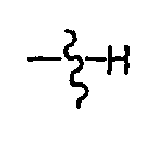


220 

6-OMe, H 
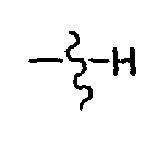

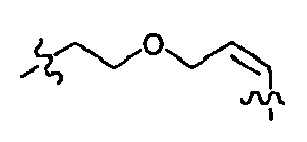
221 
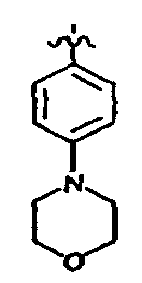
6-OMe, H 


222 

6-OMe, H 


223 

6-OMe, H 
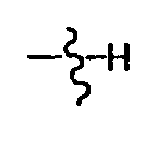


224 

6-OMe, H 


225 

6-OMe, H 
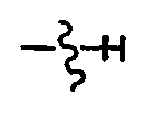


226 
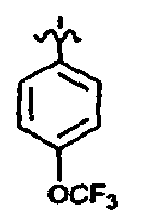
6-OMe, H 

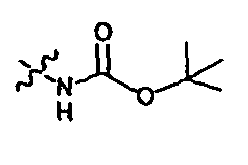

227 

6-OMe, H 

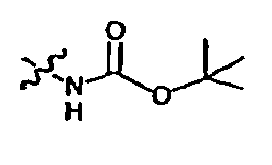

228 

6-OMe, H 


229 

H, H 


230 

6-OMe, H 


231 

6-OMe, H 


232 

6-OMe, H 


233 

6-OMe, H 


234 

6-OMe, H 


235 

H, H 


236 

6-OMe, H 


237 

6-OMe, H 


238 

6-OMe, H 


239 

6-OMe, H 


240 

H, H 


241 

6-OMe, H 


242 

6-OMe, H 


243 

6-OMe, H 


244 

6-OMe, H 


245 

6-OMe, H 


246 

6-OMe, H 


247 

6-OMe, H 


248 

6-OMe, H 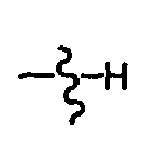


249 

H,H 
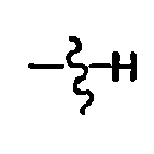


250 

H, H 


251 

6-OMe, H 


252 

6-OMe, H 


253 

6-OMe, H 


254 

6-OMe, H 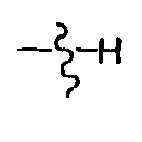


255 

6-OMe, H 


256 

H, H 


257 

6-OMe, H 


258 

6-OMe, H 


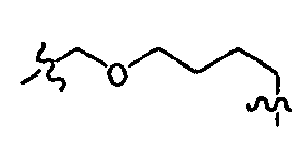
259 

6-OMe, H 


260 

6-OMe, H 


261 

6-OMe, H 

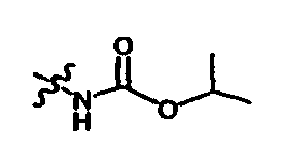

262 

H, H 


263 

6-OMe, H 


264 

6-OMe, H 


265 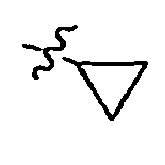

6-OMe, H 


266 

6-OMe, H 


267 

H, H 


268 

6-OMe, H 


269 

6-OMe, H 


270 

6-OMe, H 


271 

6-OMe, H 


272 
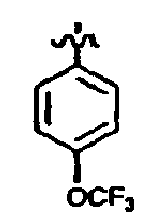
6-OMe, H 


273 

H, H 


274 

6-OMe, H 


275 

6-OMe, H 


276 

6-OMe, H 


277 

6-OMe, H 


278 

6-OMe, H 


279 

H, H 


280 

6-OMe, H 


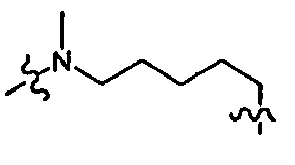
281 

6-OMe, H 

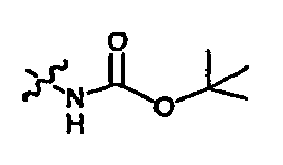

282 

6-OMe, H 


283 
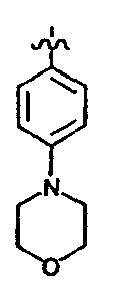
6-OMe, H 


284 

6-OMe, H 


285 

H, H 


286 

6-OMe, H 


287 

6-OMe, H 


288 

6-OMe, H 


289 

6-OMe, H 


290 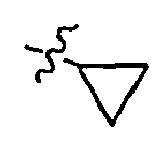

6-OMe, H 


291 

H,H 


292 

6-OMe, H 


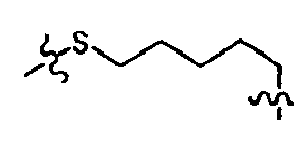
293 

6-OMe, H 


294 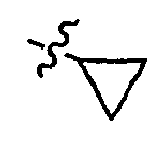

6-OMe, H 


295 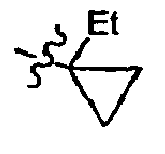

6-OMe, H 


296 

6-OMe, H 


297 

6-OMe, H 
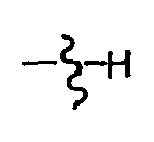
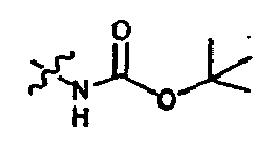

298 

6-OMe, H 


299 

6-OMe, H 


300 

6-OMe, H 


301 

6-OMe, H 


302 

6-OMe, H 


303 

6-OMe, H 


304 
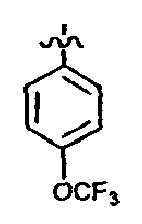
6-OMe, H 


305 

6-OMe, H 


306 

6-OMe, H 


307 

6-OMe, H 


308 

6-OMe, H 


309 

6-OMe, H 


310 

6-OMe, H 


311 

6-OMe, H 


312 

6-OMe, H 


313 

6-OMe, H 


314 

6-OMe, H 


315 

6-OMe, H 


316 

6-OMe, H 


317 

6-OMe, H 


318 

6-OMe, H 


319 

6-OMe, H 


320 

6-OMe, H 


321 

6-OMe, H 


322 

6-OMe, H 


323 

6-OMe, H 


324 

6-OMe, H 
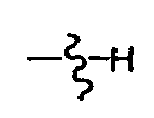


325 

6-OMe, H 


326 

6-OMe, H 


327 

6-OMe, H 


328 

6-OMe, H 


329 

6-OMe, H 


330 
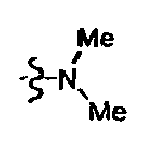
6-OMe, H 

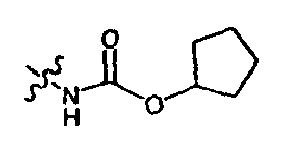

331 

6-OMe, H 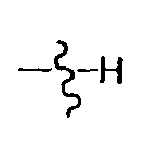
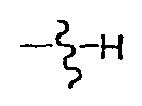


Table 5 Cmpd R1 R2 R3 R4 R5 R6 Q 401 H H H H Me H 
402 H H H H H Me 
403 H H Me H H H 
404 H H -CF3 H H H 
405 H H -CHF2 H H H 
406 H H H -OCF3 H H 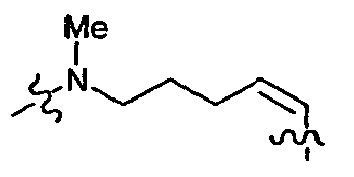
407 H H H -OH H H 
408 H H -OCH3 -OCH3 H H 
409 H H H H H -OCH3 
410 H -OCH3 H H H H 
411 H Me H H H H 
412 Cl -OCH3 H H H H 
413 H H H Et H H 
414 H H H -OEt H H 
415 H H H Br H H 
416 H H H -OCH3 F H 
417 H H F -OCH3 H H 
418 H H -SCH3 -OCH3 H H 
419 H H H 
H H 
420 H H 
-OCH3 H H 
421 H H H 
H H 
422 H H 
H H H 
423 
H H -OCH3 H H 
424 
H H -OCH3 H H 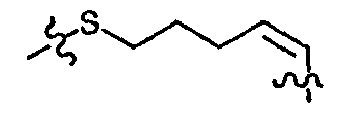
425 
H H -OCH3 H H 
426 
H H -OCH3 H H 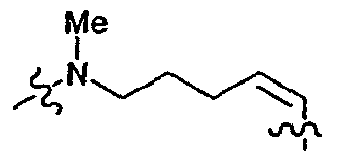
427 
H H -OCH3 H H 
428 
H H -OCH3 H H 
429 
H H -OCH3 H H 
430 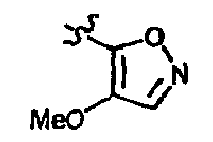
H H -OCH3 H H 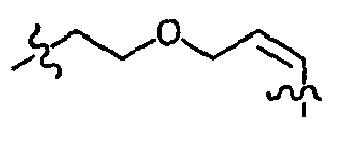
431 
H H -OCH3 H H 
432 
-OCH3 H H H H 
433 
-OCH3 H H H H 
434 
-OCH3 H H H H 
435 
H H H H H 
436 
H H H H H 
437 
H H -OCH3 H H 
438 
H -OCH3 H H H 
439 
H -OCH3 H H H 
440 
H H -OCH3 H H 
441 H 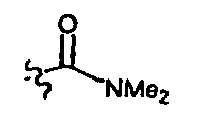
H H H H 
442 
H -OCH3 H H H 
443 
H H -OCH3 H H 
444 
H H -OCH3 H H 
445 
-OH H H H H 
446 
-OH H H H H 
447 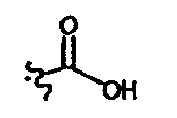
-OH H H H H 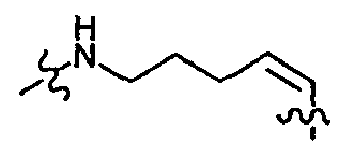
448 
-OH H H H H 
449 
H H H H H 
450 
H H -OCH3 H H 
451 
H H -OCH3 H H 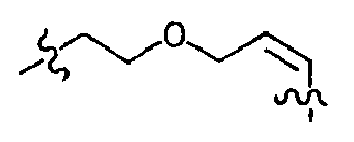
452 
H H -OCH3 H H 
453 
H H -OCH3 H H 
454 
H H -OCH3 H H 
455 
H -OCH3 H H H 
456 
H H -OCH3 H H 
- Recombinant HCV NS3/4A protease complex FRET peptide assay
- The purpose of this in vitro assay was to measure the inhibition of HCV NS3 protease complexes, derived from the BMS strain, H77C strain or J416S strain, as described below, by compounds of the present invention. This assay provides an indication of how effective compounds of the present invention would be in inhibiting HCV proteolytic activity.
- Serum from an HCV-infected patient was obtained from Dr. T. Wright, San Francisco Hospital. An engineered full-length cDNA (compliment deoxyribonucleic acid) template of the HCV genome (BMS strain) was constructed from DNA fragments obtained by reverse transcription-PCR (RT-PCR) of serum RNA (ribonucleic acid) and using primers selected on the basis of homology between other genotype 1a strains. From the determination of the entire genome sequence, a genotype 1a was assigned to the HCV isolate according to the classification of Simmonds et al. (See P Simmonds, KA Rose, S Graham, SW Chan, F McOmish, BC Dow, EA Follett, PL Yap and H Marsden, J. Clin. Microbiol., 31(6),1493-1503 (1993)). The amino acid sequence of the nonstructural region, NS2-5B, was shown to be >97% identical to HCV genotype 1a (H77C) and 87% identical to genotype 1b (J4L6S). The infectious clones, H77C (1a genotype) and J4L6S (1b genotype) were obtained from R. Purcell (NIH) and the sequences are published in Genbank (AAB67036, see Yanagi,M., Purcell,R.H., Emerson,S.U. and Bukh,J. Proc. Natl. Acad. Sci. U.S.A. 94(16),8738-8743 (1997); AF054247, see Yanagi,M., St Claire,M., Shapiro,M., Emerson,S.U., Purcell,R.H. and Bukh,J, Virology 244 (1), 161-172. (1998)).
- The H77C and J4L6S strains were used for production of recombinant NS3/4A protease complexes. DNA encoding the recombinant HCV NS3/4A protease complex (amino acids 1027 to 1711) for these strains were manipulated as described by P. Gallinari et al. (see Gallinari P, Paolini C, Brennan D, Nardi C, Steinkuhler C, De Francesco R. Biochemistry. 38(17):5620-32, (1999)). Briefly, a three-lysine solubilizing tail was added at the 3'-end of the NS4A coding region. The cysteine in the P1 position of the NS4A-NS4B cleavage site (amino acid 1711) was changed to a glycine to avoid the proteolytic cleavage of the lysine tag. Furthermore, a cysteine to serine mutation was introduced by PCR at amino acid position 1454 to prevent the autolytic cleavage in the NS3 helicase domain. The variant DNA fragment was cloned in the pET21b bacterial expression vector (Novagen)and the NS3/4A complex was expressed in Escherichia. coli strain BL21 (DE3) (Invitrogen) following the protocol described by P. Gallinari et al. (see Gallinari P, Brennan D, Nardi C, Brunetti M, Tomei L, Steinkuhler C, De Francesco R., J Virol. 72(8):6758-69 (1998)) with modifications. Briefly, NS3/4A expression was induced with 0.5mM Isopropyl β-D-1-thiogalactopyranoside (IPTG) for 22hr at 20°C. A typical fermentation (10L) yielded approximately 80g of wet cell paste. The cells were resuspended in lysis buffer (10mL/g) consisting of 25mM N-(2-Hydroxyethyl)Piperazine-N'-(2-Ethane Sulfonic acid) (HEPES), pH7.5, 20% glycerol, 500mM Sodium Chloride (NaCl), 0.5% Triton-X100, Imicrogram/milliliter ("µg/mL") lysozyme, 5mM Magnesium Chloride (MgCl2), lug/ml DnaseI, 5mM β-Mercaptoethanol (βME), Protease inhibitor - Ethylenediamine Tetraacetic acid (EDTA) free (Roche), homogenized and incubated for 20 mins at 4°C. The homogenate was sonicated and clarified by ultra-centrifugation at 235000g for 1hr at 4°C. Imidazole was added to the supernatant to a final concentration of 15mM and the pH adjusted to 8.0. The crude protein extract was loaded on a Nickel - Nitrilotriacetic acid (Ni-NTA) column pre-equilibrated with buffer B (25mM HEPES, pH8.0, 20% glycerol, 500mM NaCl, 0.5% Triton-X100, 15mM imidazole, 5mM βME). The sample was loaded at a flow rate of 1mL/min. The column was washed with 15 column volumes of buffer C (same as buffer B except with 0.2% Triton-X100). The protein was eluted with 5 column volumes of buffer D (same as buffer C except with 200mM Imidazole).
- NS3/4A protease complex-containing fractions were pooled and loaded on a desalting column Superdex-S200 pre-equilibrated with buffer D (25mM HEPES, pH7.5, 20% glycerol, 300mM NaCl, 0.2% Triton-X100, 10mM βME). Sample was loaded at a flow rate of 1mL/min. NS3/4A protease complex-containing fractions were pooled and concentrated to approximately 0.5mg/ml. The purity of the NS3/4A protease complexes, derived from the BMS, H77C and J4L6S strains, were judged to be greater than 90% by SDS-PAGE and mass spectrometry analyses.
- The enzyme was stored at -80°C, thawed on ice and diluted prior to use in assay buffer. The substrate used for the NS3/4A protease assay was RET S 1 (Resonance Energy Transfer Depsipeptide Substrate; AnaSpec, Inc. cat # 22991)(FRET peptide), described by Taliani et al. in Anal. Biochem. 240(2):60-67 (1996). The sequence of this peptide is loosely based on the NS4A/NS4B natural cleavage site except there is an ester linkage rather than an amide bond at the cleavage site. The peptide substrate was incubated with one of the three recombinant NS3/4A complexes, in the absence or presence of a compound of the present invention, and the formation of fluorescent reaction product was followed in real time using a Cytofluor Series 4000.
- The reagents were as follow: HEPES and Glycerol (Ultrapure) were obtained from GIBCO-BRL. Dimethyl Sulfoxide (DMSO) was obtained from Sigma. β-Mercaptoethanol was obtained from Bio Rad. Assay buffer: 50mM HEPES, pH7.5; 0.15M NaCl; 0.1% Triton; 15% Glycerol; 10mM βME. Substrate: 2 µM final concentration (from a 2mM stock solution in DMSO stored at -20°C). HCV NS3/4A type 1a (1b), 2-3 nM final concentration (from a 5µM stock solution in 25mM HEPES, pH7.5, 20% glycerol, 300mM NaCl, 0.2% Triton-X100, 10mM βME). For compounds with potencies approaching the assay limit, the assay was made more sensitive by adding 50 µg/ml Bovine Serum Albumin (Sigma) to the assay buffer and reducing the end protease concentration to 300 pM.
- The assay was performed in a 96-well polystyrene black plate from Falcon. Each well contained 25 microliter ("µl") NS3/4A protease complex in assay buffer, 50µl of a compound of the present invention in 10% DMSO/assay buffer and 25µl substrate in assay buffer. A control (no compound) was also prepared on the same assay plate. The enzyme complex was mixed with compound or control solution for 1 min before initiating the enzymatic reaction by the addition of substrate. The assay plate was read immediately using the Cytofluor Series 4000 (Perspective Biosystems). The instrument was set to read an emission of 340nm and excitation of 490nm at 25°C. Reactions were generally followed for approximately 15 minutes.
-

where δF is the change in fluorescence over the linear range of the curve. A non-linear curve fit was applied to the inhibition-concentration data, and the 50% effective concentration (IC50) was calculated by the use of Excel X1-fit software using the equation, y=A+((B-A)/(1+((C/x)^D))). All of the compounds tested were found to have IC50s of 1.2 µM or less. Further, compounds of the present invention, which were tested against more than one type of NS3/4A complex, were found to have similar inhibitory properties though the compounds uniformly demonstrated greater potency against the 1b strains as compared to the 1a strains. - The specificity assays were performed to demonstrate the selectivity of the compounds of the present invention in inhibiting HCV NS3/4A protease as compared to other serine or cysteine proteases.
- The specificities of compounds of the present invention were determined against a variety of serine proteases: human neutrophil elastase (HNE), porcine pancreatic elastase (PPE) and human pancreatic chymotrypsin and one cysteine protease: human liver cathepsin B. In all cases a 96-well plate format protocol using colorimetric p-nitroaniline (pNA) substrate specific for each enzyme was used as described previously (
PCT Patent Application No. WO 00/09543 - Each assay included a 2hr enzyme-inhibitor pre-incubation at room temperature followed by addition of substrate and hydrolysis to ∼30% conversion as measured on a Spectramax Pro microplate reader. Compound concentrations varied from 100 to 0.4 micromolar ("µM") depending on their potency.
- The final conditions for each assay were as follows:
- 50 millimolar ("mM") Tris(hydroxymethyl)aminomethane hydrochloride (Tris-HCl) pH8, 0.5M Sodium Sulfate (Na2SO4), 50mM NaCl, 0.1mM EDTA, 3% DMSO, 0.01% Tween-20 with: 133 µM succ-AAA-pNA and 20nM HNE or 8nM PPE; 100 µM succ-AAPF-pNA and 250pM Chymotrypsin.
- 100mM NaHPO4 (Sodium Hydrogen Phosphate) pH 6, 0.1mM EDTA, 3% DMSO, 1mM TCEP (Tris(2-carboxyethyl)phosphine hydrochloride), 0.01% Tween-20, 30µM Z-FR-pNA and 5nM Cathepsin B (enzyme stock activated in buffer containing 20mM TCEP before use).
-

- A non-linear curve fit was applied to the inhibition-concentration data, and the 50% effective concentration (IC50) was calculated by the use of Excel X1-fit software.
- HCV Replion assays were utilized in the present invention, and were prepared, conducted and validated as follows:
- An HCV replicon whole cell system was established as described by Lohmann V, Komer F, Koch J, Herian U, Theilmann L, Bartenschlager R., Science 285(5424):110-3 (1999). This system enabled us to evaluate the effects of our HCV Protease compounds on HCV RNA replication. Briefly, using the HCV strain 1B sequence described in the Lohmann paper (Assession number:AJ238799), an HCV cDNA was synthesized by Operon Technologies, Inc. (Alameda, CA), and the full-length replicon was then assembled in plasmid pGem9zf(+) (Promega, Madison, WI) using standard molecular biology techniques. The replicon consists of (i) the HCV 5' UTR fused to the first 12 amino acids of the capsid protein, (ii) the neomycin phosphotransferase gene (neo), (iii) the IRES from encephalomyocarditis virus (EMCV), and (iv) HCV NS3 to NS5B genes and the HCV 3' UTR. Plasmid DNAs were linearized with ScaI and RNA transcripts were synthesized in vitro using the T7 MegaScript transcription kit (Ambion, Austin, TX) according to manufacturer's directions. To generate cell lines, 4 x 10⁶ Huh-7 cells (kindly provided by R. Bartenschlager and available from Health Science Research Resources Bank, Japan Health Sciences Foundation) were electroporated (GenePulser System, Bio-Rad) with 10 microgram("µg") of RNA transcript and plated into 100-mm dishes. After 24h, selective media containing 1.0 milligrams/milliliter ("mg/ml") G418 was added and media was changed every 3 to 5 days. Approximately 4 weeks after electroporation, small colonies were visible which were isolated and expanded for further analysis. These cell lines were maintained at 37°C, 5% CO2, 100% relative humidity in DMEM (Cat# 11965-084) Gibco-BRL, Rockville, MD, with 10% heat inactivated calf serum (Sigma), 10 ml of 100X penicillin/streptomycin (Cat# 15140-122) Gibco-BRL, Rockville, MD, Geneticin (Cat# 10131-027) Gibco-BRL, Rockville, MD at 1 mg/ml. One of the cell lines (deposited as ATCC Accession No. PTA-4583 in the American Type Culture Collection) which had approximately 3,000 copies of HCV replicon RNA/cell was used for development of the assay (HCV 1b-377-neo replicon cells).
- Huh7 cells, constitutively expressing the HCV replicon, were grown in Dulbecco's Modified Eagle Media (DMEM) containing 10% Fetal calf serum (FCS) and 1mg/ml G418 (Gibco-BRL). Cells were seeded the night before (1.5 x 10⁴ cells/well) in 96-well tissue-culture sterile plates. Compound and no compound controls were prepared in DMEM containing 4% FCS, 1:100 Penicillin /Streptomysin, 1:100 L-glutamine and 5% DMSO in the dilution plate (0.5% DMSO final concentration in the assay). Compound / DMSO mixes were added to the cells and incubated for 4 days at 37°C. After 4 days, cells were first assessed for cytotoxicity using alamar Blue (Trek Diagnotstic Systems) for a CC50 reading. The toxicity of compound (CC50) was determined by adding 1/10th volume of alamar Blue to the media incubating the cells. After 4hr, the fluorescence signal from each well was read, with an excitation wavelength at 530 nm and an emission wavelength of 580 nm, using the Cytofluor Series 4000 (Perspective Biosystems). Plates were then rinsed thoroughly with Phosphate-Buffered Saline (PBS) (3 times 150 µl). The cells were lysed with 25µl of a lysis assay reagent containing an HCV protease substrate (5X cell Luciferase cell culture lysis reagent (Promega #E153A) diluted to 1X with distilled water, NaCl added to 150 mM final, the FRET peptide diluted to 10 µM final from a 2 mM stock in 100% DMSO). The HCV protease substrate (FRET peptide; AnaSpec, Inc. cat # 22991, described by Taliani et al. in Anal. Biochem. 240(2):60-67 (1996)) contains a fluorescence donor, EDANS, near one end of the peptide and an acceptor, DABCYL, near the other end. The fluorescence of the peptide is quenched by intermolecular resonance energy transfer (RET) between the donor and the acceptor, but as the NS3 protease cleaves the peptide the products are released from RET quenching and the fluorescence of the donor becomes apparent. The plate was then placed into the Cytofluor 4000 instrument which had been set to 340 nm excitation / 490 nm emission, automatic mode for 21 cycles and the plate read in a kinetic mode at 25°C. Reactions were generally followed for approximately 15 minutes.
- The percent inhibition for both efficacy and cytotoxicity were calculated with the following equation:
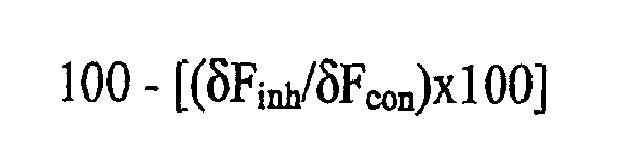
where δF is the change in fluorescence over the linear range of the curve. A non-linear curve fit was applied to the inhibition-concentration data, and the 50% effective concentration (EC50 and CC50) was calculated by the use of Excel X1-fit software using the equation, y=A+((B-A)/(1+((C/x)^D))). - As a secondary assay, EC50 determinations from the replicon FRET assay were confirmed in a luciferase reporter assay. Utilization of a replicon luciferase reporter assay was first described by Krieger et al (Krieger N, Lohmann V, and Bartenschlager R, J. Virol. 75(10):4614-4624 (2001)). The replicon construct described for our FRET assay was modified by replacing the resistance gene neomycin with a cassette containing Renilla Luciferase gene fused to a sequence representing an NS3 cleavage site (NS4A/B site), followed by the Blasicidin resistance gene (restriction sites Asc1 / Pme1 used for the subcloning). The adaptive mutation at position 1179 (serine to isoleucine) was also introduced (Blight KJ, Kolykhalov, AA, Rice, CM, Science 290(5498):1972-1974). A cell line containing the replicon was selected and maintained in 1.25 µg/ml Blasticidin. The luciferase reporter assay was set up by seeding the replicon cells the night before at a density of 7000 cells/well in 96-well plates. One day later, media was changed to fresh DMEM containing 4% FBS and compound dilutions were prepared and added to a final concentration of 0.5% DMSO (final media volume of 150 µl). Following an additional 4-day incubation in a 37°C / 5% C02 incubator, cells were analyzed for Renilla luciferase activity using the Promega Dual-Glo Luciferase Assay System. Media (100 µl) was removed from each well. To the remaining 50 µl of media, 50 µl of Dual-Glo Luciferase Reagent was added, and plates rocked for 10 minutes to 2 hours at room temperature. Dual-Glo Stop & Glo Reagent (50 µl) was then added to each well, and plates were rocked again for an additional 10 minutes to 2 hours at room temperature. Plates were read on a Packard TopCount NXT using a luminescence program.
-

- The values were graphed and analyzed using XLFit to obtain the EC50 value.
- Representative compounds of the invention were assessed in the HCV NS3/4A protease recombinant enzyme assay, the HCV replicon cell-based assay and/or in several of the outlined specificity assays. For example, Compound 2 was found to have an IC50 of 26 nM against the BMS strain NS3/4A protease in the enzyme assay. Similar potency values were obtained with the published H77C (IC50 of 4.2 nM) and J4L6S (IC50 of 1.9 nM) strains. The EC50 value in the replicon assay was 146 nM.
- In the specificity assays, the same compound was found to have the following activity: HNE > 100 µM; PPE > 100 µM; Chymotrypsin > 100 µM; Cathepsin B > 100 µM. These results indicate this family of compounds are highly specific for the NS3 protease and many of these members inhibit HCV replicon replication.
- The compounds tested were found to have activities in the ranges as follow:
- IC50 Activity Ranges (NS3/4A BMS Strain): A is <50µM; B is <5µM; C is <0.5µM; D is <0.05µM EC50 Activity Range (for compounds tested): A is <50µM; B is <5µM; C is <0.5µM; D is <0.05µM
-

Table 6 Cmpd R1 R3 R7 R8 R9 Q IC50 (nM) EC50 (nM) 1 

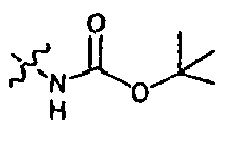


C B 17A 


D C 18A 


C B 27 


C B 61 

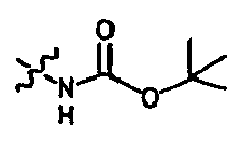

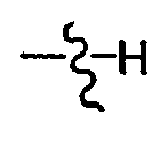

B A 79 

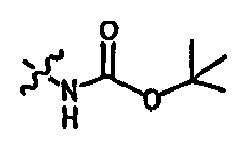


A A 84 
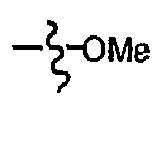


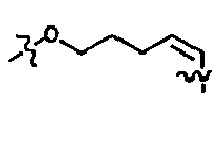
C B 140 


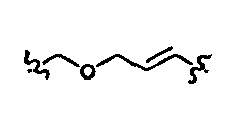
A NT 143 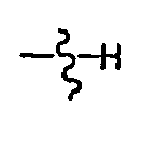


C B 144 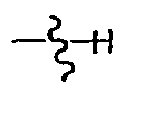


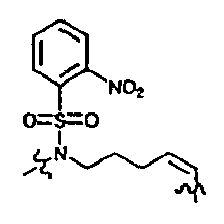
B A 
Table 7 Cmpd R23 R1 R3, R4 R8 R9 R7 Q IC 50 (n M) EC 50 (n M) 2 

H,H 

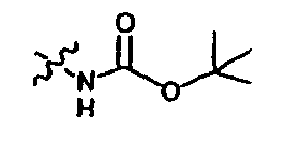

D C 3 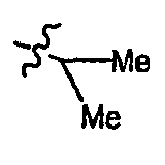

H,H 


D C 4 

H, H 


D D 5 

H,H 

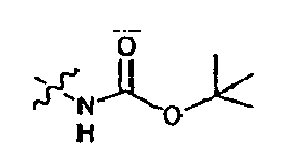

D C 6 

H,H 


D D 7 

H,H 


D D 8 

H,H 


D D 9 

H, H 


D D 10 

H, H 


D D 11 

H, H 


D C 12 

H,H 

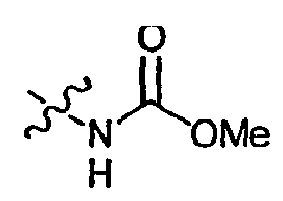

D D 13 

H, H 


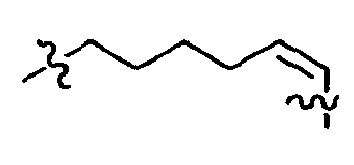
D D 14 
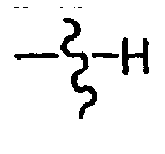
H, H 


D D 15 

H, H 
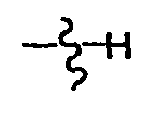


D D 16 

H, H 


D D 17B 

6-OMe, H 


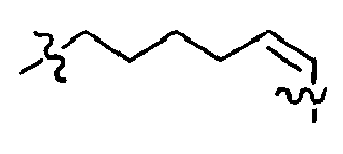
D D 18B 

6-OMe, H 
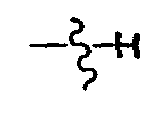


D D 19 

6-OMe, H 


D C 20 

H, H 


D D 21 
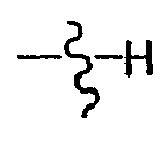
H, H 


D C 22 

H, H 
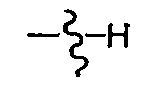


D D 23 
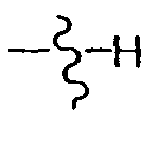
H, H 

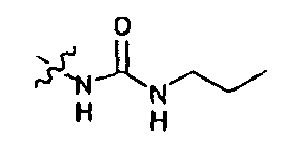

D D 24 

H, H 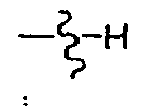
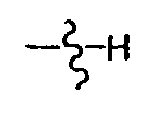


D C 25 

H, H 
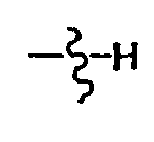


D B 26 

H, H 


D C 28 

6-OMe, H 


D D 29 

6-OMe, H 

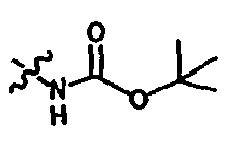

D D 30 

6-OMe, H 
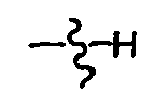


D D 31 

6-OMe, H 


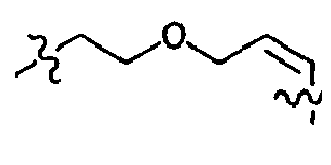
D D 32 
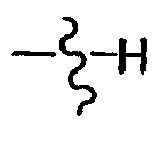
6-OMe, H 


D D 33 

6-OMe, H 


D D 34 

6-OMe, H 


D D 35 

6-OMe, H 


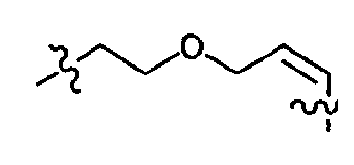
D D 36 

6-OMe, H 


D D 37 

6-OMe, H 


D D 38 

6-OMe, H 


D D 39 

6-OMe, H 


D D 40 

6-OMe, H 


D C 41 

6-OMe, H 


D D 42 

6-OMe, H 


D D 43 

6-OMe, H 


D D 44 

6-OMe, H 


D D 45 
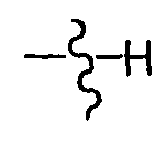
6-OMe, H 


D D 46 

6-OMe, H 


D D 47 

6-OMe, H 


D D 48 

6-OMe, H 


D C 49 

6-OMe, H 

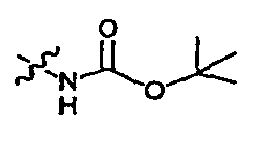

C B 50 

H, H 


D D 51 

H, H 


D D 52 
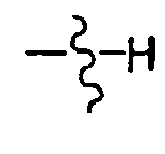
H, H 


D D 53 

6-OMe, H 


D D 54 

6-OMe, H 


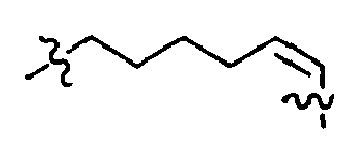
D D 55 

H, H 


D D 56 

H, H 


D D 57 

H, H 


D D 58 

H, H 


D D 59 

H,H 


D D 60 

6-OMe, H 


D D 62 

6-OMe, H 


D C 63 

6-OMe, H 


D C 64 
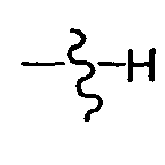
6-OMe, H 


D C 65 

6-OMe, H 


D D 66 

6-OMe, H 


D C 67 

6-OMe, H 

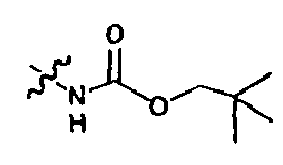

D C 68 

6-OMe, H 


D C 69 

6-OMe, H 
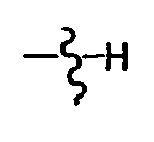


D D 70 

6-OMe, H 


D C 71 

6-OMe, H 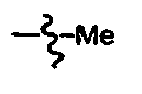


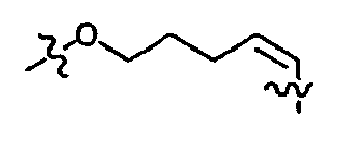
D C 72 

6-OMe, H 


D C 73 

6-OMe, H 
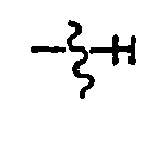


D C 74 

6-OMe, H 


D D 75 

6-OMe, H 


D D 76 

6-OMe, 7-Cl 


D D 77 

5-OMe, H 


D D 78 

5-Cl, H 


D D 80 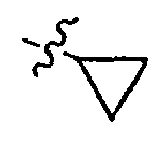

6-OMe, H 


D C 81 

6-OMe, H 


D C 82 

6-OMe, H 


D C 83 

6-OMe, H 


B A 85 

6-OMe, H 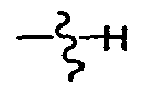


D D 86 
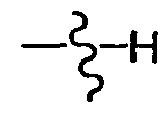
6-OMe, H 


D D 87 

6-OMe, H 


D D 88 

6-OMe, H 


D D 89 

6-OMe, H 


D D 90 

6-OMe, H 


D D 91 

6-OMe, H 


D D 92 

6-OMe, H 


D D 93 

6-OMe, H 


D D 94 

6-OMe, H 


D D 95 

6-OMe, H 


D D 96 

6-OMe, H 


D D 97 

6-OMe, H 


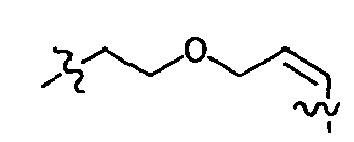
D D 98 

6-OMe, H 


D D 99 

6-OMe, H 


D D 100 

6-OMe, H 


D D 101 

6-OMe, H 


D D 102 

6-OMe, H 


D D 103 

6-OMe, H 


D D 104 

6-OMe, H 


D C 105 

6-OMe, H 


D C 106 

6-OMe, H 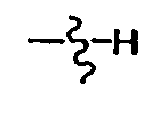

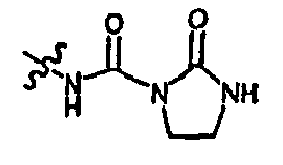

D B 107 

6-OMe, H 


D D 108 

6-OMe, H 


D D 109 

6-OMe, H 


D D 110 

6-OMe, H 


D D 111 
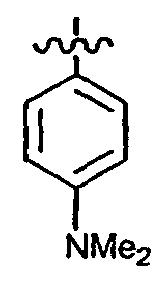
6-OMe, H 


D D 112 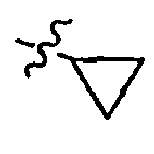

6-OMe, H 


D D 113 

6-OMe, H 


D D 114 

6-OMe, H 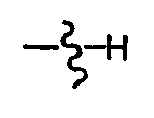


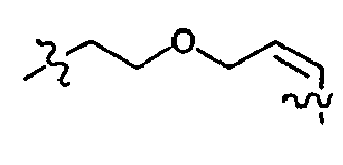
D D 115 

6-OMe, H 


D D 116 

H,H 


D D 117 

6-OMe, H 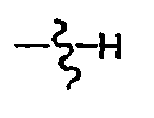


C C 118 

H, H 


D D 119 

H,H 


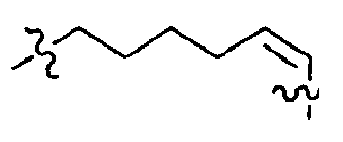
D C 120 

H, H 


D B 121 

6-OMe, H 


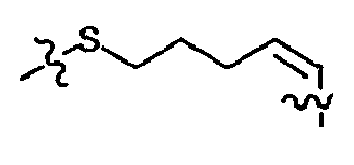
D D 122 

H,H 


D D 123 

H, H 


D C 124 

H, H 


D D 125 
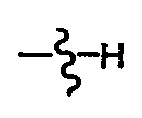
H, H 


D D 126 

H, H 


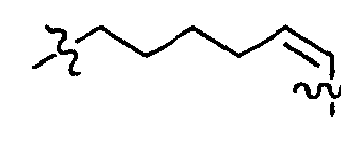
D D 127 
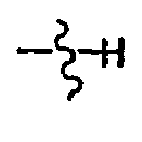
H, H 


D D 128 

H, H 


D D 129 

H, H 

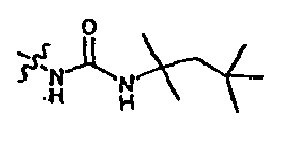

D D 130 

5-Cl, H 


D D 131 

6-OMe, 7-Cl 


D D 132 

5-F, 6-OMe 


D D 133 

5-OMe, H 


D D 134 

5,6-dimethoxy 


D D 135 

6-OMe, H 


D D 136 

6-OMe, H 


D D 137 

6-OMe, H 


D D 138 

H, H 


D D 139 

H, H 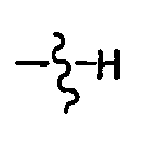


D D 141 

6-OMe, H 


C B 142 

6-OMe, H 


D D 145 

H,H 

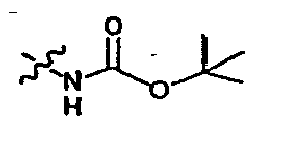

D C 146 
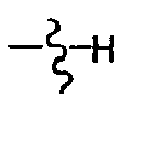
H, H 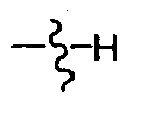


D B 147 

H,H 


D D 148 

H,H 


D C 149 

H, H 


D C 150 

H, H 


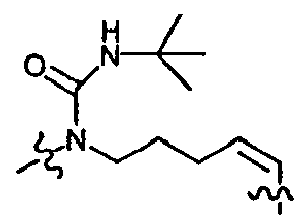
D C 151 

H,H 


D C 152 

H, H 


D C 153 

H, H 


D C - Since clinical drug resistance often develops in viral infections following single-agent therapies, there is a need to assess the additive, antagonistic, or synergistic properties of combination therapies. We used the HCV replicon system, as described above, to assess the potential use of our NS3 protease macrocyclic inhibitor in combination therapies with Intron A and inhibitors targeting other HCV proteins. Three HCV antivirals, Intron A (recombinant Interferon alfa-2b) an HCV NS5A inhibitor having the following structure:

WO 03/010141 - For the experiments shown in Tables 8 and 9, inhibitors were tested at eleven concentrations each. 200x stock solutions of each inhibitor concentration were prepared by 2- or 3-fold dilution in DMSO prior to addition to cells/media. The drugs were tested as monotherapies and in combination with the NS3 protease inhibitor at various concentration ratios. Cells were exposed to compounds for 4 days and the amount of HCV inhibition was then determined using the FRET assay. The potential cytotoxicities of these combined agents were also analyzed in parallel by Alamar Blue staining. The CC50 values for the compounds presented were greater than the highest tested inhibitor concentration. The degree of antagonism, additivity, or synergy was determined over a range of drug concentrations, and combination response curves were fit to assess the antiviral effects of the drug treatment combinations. The concentration ratios were analyzed using the method of Chou (Chou, Ting-Chao, and Rideout (Editors), (1991) Synergism and Antagonism in Chemotherapy, P. 61-101, Academic Press, New York). Tables 8 and 9 report the estimated EC50 values for the compounds tested, as well as the combination indices (CI). All estimates were computed using SAS Proc NLIN, and a two-parameter logistic. All combination indices were tested for departure from additivity using isobologram methods. Asymptotic confidence intervals were also calculated for each of the combination indices. These intervals are used to test for departure from additivity by comparing the bounds to one - a lower bound of the interval greater than 1 indicates antagonism, an upper bound of less than 1 indicates synergism, and a value of 1 contained in the interval indicates additivity.
In addition to the combination index approach, above, the Universal Response Surface Approach (URSA) was also used to assess the antiviral effects of combinations of NS5A or NS5B inhibitors with the NS3 protease inhibitor. The experiments were conducted in a matrixed format with 8 concentrations of NS3 protease inhibitor crossed against 10 concentrations of NS5A or NS5B inhibitor on each of three plates. 200x stock solutions of each inhibitor concentration were prepared by 3-fold dilution in DMSO. Effects on replication were assessed in the HCV replicon system as described above. The data was analyzed using the URSA as described in Greco, Park and Rustum (Greco, Park, Sook, and Rustum (1990) Application of a New Approach for the Quantitation of Drug Synergism to the Combination of cis-Diamminedichloroplatinum and 1-β-D-Arabinofuranosylcytosine, Cancer Research, 50, 5318-5327). The interaction of the two drugs was assessed by using non-linear regression with a bisection algorithm. Seven parameters were estimated. These include the minimal response or response in the absence of drug, the maximal response or response in the presence of infinite drug, EC50's for the two drugs, slope parameters for the two drugs, and the drug interaction parameter α which provides the assessment of synergism, antagonism or additivity. Tables 10 and 11 present key estimated parameters and standard errors. Additivity is implied when α is equal to zero, synergy if the interaction parameter is larger than zero, and antagonism when the interaction parameter is less than zero. The confidence interval for the interaction parameter is also presented. This interval is used to test for departure from additivity by comparing the bounds to zero - a lower bound of the interval greater than zero indicates synergy, an upper bound of less than zero indicates antagonism, and a value of zero contained in the interval indicates additivity.

- Table 8 summarizes data from combinations of compound 28 with Intron A. EC50 values for each monotherapy are also presented. In two experiments, combination of compound 28 with Intron-A yielded either synergistic or additivity effects at the 75%, 90, and 95% effective doses.
- The effects of compound 28 in combination with the HCV NS5A inhibitor are summarized in Table 9. Synergy or additivity was observed in two experiments at the 75, 90, and 95% effective doses of compound 28. Importantly, no drug antagonism was observed at the 75, 90, or 95% effective doses when compound 28 was combined with the HCV NS5A inhibitor, or Interferon alfa-2b. Follow-up experiments using these same inhibitor combinations in the matrix format (Table 10) yielded results similar to the combination index experiments; additivity for the combination of the NS5A inhibitor with compound 28.
- The matrix format was also used to examine the activity of combinations of the HCV NS5B inhibitor, with compound 28 (Table 11). In two experiments, overall additivity was observed.
- Compound 28 was also tested in 3-drug combination experiments with the NS5A inhibitor and the NS5B inhibitor (Table 12). The starting concentrations for the mono-therapies consisted of a 0.667 µM solution of the NS5A inhibitor, a 0.3 µM solution of compound 28, and a 2.5µM solution of the NS5B inhibitor. The starting concentration for the triple combination contained a mixture of 1/3 of each of the above concentrations. Dose response curves for all three mono-therapies and the triple combination therapy were obtained using 3-fold dilutions, and data analysis was carried out as described above for combination index experiments. Synergistic effects were observed using the triple combination. No drug antagonism was observed at the 75, 90, or 95% effective doses with the 3-drug combination.
These results demonstrate that combination treatment of replicon cells with the HCV NS3 protease inhibitor, compound 28 and Intron A, and/or inhibitors targeting HCV NS5A and/or NS5B, yield additive to synergistic antiviral effects. The ability to use these NS3 protease inhibitors in combination therapy can provide major advantages over single drug therapy for the treatment of HCV.TABLE 8: Two Drug Combinations with Interferon alfa-2b Expt NS3 protease inhibitor EC50, µM Interferon alfa-2b EC50, units per ml Molar ratio, NS3 protease inhibitor to Interferon alfa-2b Combination Indices (confidence interval) Overall Result 75% effective 90% effective 95% effective 1 0.008 20 2:5 0.67
(0.53,0.8)0.59
(0.4,0.77)0.56
(0.33,0.7 9)Synergy 1:1 0.57
(0.48,0.6 6)0.5
(0.38,0.6 2)0.46
(0.32,0.6 1)Synergy 4:25 1.02
(0.88,1.1 6)0.64
(0.5,0.78)0.5
(0.36,0.6 4)Additivity at 75%; Synergy at 90, 95% 2 0.01 51 2:5 0.59
(0.43,0.7 4)0.38
(0.22,0.5 4)0.28
(0.13,0.4 3)Synergy 1:1 0.50
(0.44,0.5 6)0.33
(0.27,0.3 9)0.25
(0.19,0.3 1)Synergy 4:25 1.03
(0.87,1.1 9)0.65
(0.50,0.8 1)0.48
(0.33,0.6 3)Additivity at 75%; Synergy at 90, 95% TABLE 9: Two Drug Combinations with an NS5A inhibitor Expt NS3 protease inhibitor EC50, µM NS5A inhibitor EC50, µM Molar ratio, NS3 protease inhibitor to NS5A inhibitor Combination Indices
(confidence interval)Overall Result 75% effective 90% effective 95% effective 1 0.009 0.043 3:100 0.66
(0.47,0.85)0.61
(0.35,0.88 )0.59
(0.27,0.91 )Synergy 3:250 0.57
(0.41,0.7 3)0.62
(0.36,0.89 )0.66
(0.3,1.02)Additivity at 95%; Synergy at 75, 90% 3:40 0.73
(0.55,0.9 )0.64
(0.43,0.85 )0.59
(0.34,0.83 )Synergy 2 0.011 0.005 1:5 1.1
(0.91,1.3 )1.15
(0.82,1.47 )1.18
(0.75,1.61 )Additivity 2:25 1.24(1.0, 1.49) 1.19
(0.81, 1.58)1.16
(0.67, 1.65)Additivity 1:2 1.0
(0.88,1.1 4)0.83
(0.67,1.0)0.73
(0.54,0.92 )Additivit at 75%; Synergy at 90, 95% TABLE 10: Two Drug Combinations with an NS5A inhibitor: matrix studies Standard Error Overall Result Compound 28 EC50, µM 0.009 0.52 NS5A inhibitor EC50, µM 0.008 0.46 Interaction parameter alpha
(confidence interval)0.63
(-0.09, 1.36)0.37 Additivity TABLE 11: Two Drug Combinations with an NS5B inhibitor: matrix studies Expt 1 Standard Error Overall Result Expt 2 Standard Error Overall Result Compound 28 EC50, µM 0.015 0.53 0.020 0.87 NS5B inhibitor EC50, µM 0.059 2.63 0.050 2.39 Interaction parameter alpha (confidence interval) 0.47
(-0.05, 1.0)0.27 Additivity 0.31
(-0.22, 0.83)0.27 Additivity TABLE 12: Three Drug Combination Studies Expt NS3 Pr inhibitor EC50, µM NS5A inhibitor EC50, µM NS5B inhibitor EC50, µM Molar ratio, NS3 protease inhibitor to NS5A inhibitor to NS5B inhibitor NS5B inhibito r EC50, µM Combination Indices (confidence interval) Overall Result 75% effective 90% effective 95% effective 1 0.008 0.005 0.052 9:20:75 0.052 0.78
(0.62,0.9 4)0.7
(0.47,0. 93)0.65
(0.37,0. 93)Synergy 2 0.009 0.009 0.064 9:20:75 0.064 0.71
(0.6,0.81 )0.58
(0.44,0. 72)0.52
(0.36,0. 67)Synegy - Those skilled in the art will recognize that although the invention has been described above with respect to specific aspects, other aspects are intended to be within the scope of the claims which follow. All documents referenced herein are hereby incorporated by reference as if set out in full.
- 1. A compound of formula I:
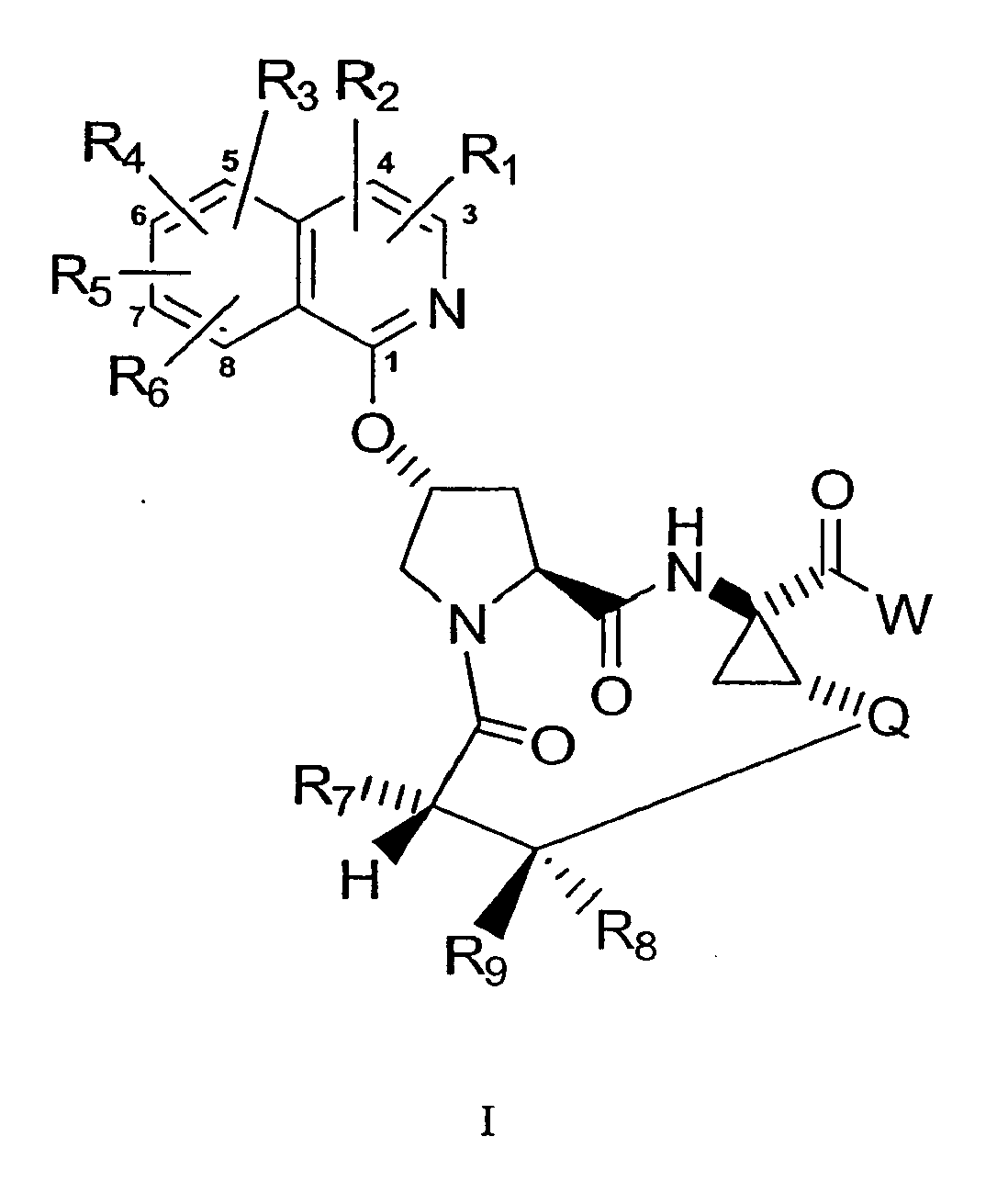
- (a) R1, R2, R3, R4, R5 and R6 are each independently H; C1-6 alkyl; C3-7 cycloalkyl; C1-6 alkoxy; C3-7 cycloalkcoxy; halo-C1-6 alkoxy; halo-C1-6 alkyl; cyano; halo; hydroxyl; C1-6 alkanoyl; nitro; amino; mono or di-(C1-6) alkyl amine; mono or di-(C3-7) cycloalkyl amine; mono or di-C1-6 alkylamide; mono or di-(C3-7) cycloalkyl amide; carboxyl; (C1-6) carboxyester; thiol; C1-6 thioalkyl; C1-6 alkylsulfoxide;C1-6 alkylsulfone; C1-6 alkylsulfonamide; C6-10 aryl optionally substituted with Het; C7-14 alkylaryl; C6-10 aryloxy; C7-14 alkylaryloxy; 4-7 membered monocyclic heteroaryloxy; or Het; said R1 to R6 optionally attached to the isoquinoline group by a C1-6 alkyl linking group;
- (b) R7 is NH2 or -NR10R11; wherein R10 is C1-6 alkyl, C1-6 haloalkyl, C(O)-NR12R13, C(O)-OR14, C(O)-SR15, or -C(O)-R16; R11 is H, C1-6 alkyl or C1-6 haloalkyl, provided that if either R12 or R13 is H then R11 is H; R12 and R13 are each independently H; C1-6 alkyl, C3-7 cycloalkyl or C4-10 alkylcycloalkyl, each optionally substituted with halo, C1-3 alkoxy, C1-3 haloalkoxy, C1-3 alkyl or C1-3 haloalkyl; or aryl; and wherein R12 and R13 together with the nitrogen to which they are bonded can form a 4-7 membered heterocycle; R14 and R15 are each independently C1-6 alkyl, C3-7 cycloalkyl or C4-10 alkylcycloalkyl, each optionally substituted with halo, C1-3 alkoxy, C1-3 haloalkoxy, C1-3 alkyl or C1-3 haloalkyl; aryl or Het; R16 is H; C1-6 alkyl, C3-7 cycloalkyl or C4-10 alkylcycloalkyl, each optionally substituted with halo, C1-3 alkoxy, C1-3 haloalkoxy, C1-3 alkyl or C1-3 haloalkyl; aryl or Het;
- (c) R8 and R9 are each independently H or C1-3 alkyl optionally substituted with halo, or C1-3 alkoxy, or C1-3 haloalkoxy;
- (d) Q is a C3-9 saturated or unsaturated chain optionally containing one to three heteroatoms independently selected from O, S(O)m; wherein m is 0, 1 or 2, or NR17, wherein R17 is H; C1-6 alkyl or C1-6 cycloalkyl, each optionally substituted with halo, C1-6 alkoxy, cyano or C1-6 haloalkoxy; -C(O)-R18, C(O)-OR19, C(O)-NR20R21 or -SO2R22; R18, R20,and R21 are each independently H; C1-6 alkyl or C1-6 cycloalkyl, each optionally substituted with halo, C1-6 alkoxy, cyano or C1-6 haloalkoxy; R19 is C1-6 alkyl or C1-6 cycloalkyl, each optionally substituted with halo, C1-6 alkoxy, cyano or C1-6 haloalkoxy; R22 is aryl, C1-6 alkyl or C1-6 cycloalkyl, each optionally substituted with halo, C1-6 alkoxy, cyano or C1-6 haloalkoxy; and
- (e) W is OH, - NH-SOn-R23, or NH-SOn- R24; wherein n is 1 or 2, R23 is C1-8 alkyl, C4-10 alkylcycloalkyl, unsubstituted C3-7 cycloalkyl, or cyclopropyl or cyclobutyl optionally substituted with C7-9 alkylaryl or C1-4 alkyl optionally substituted with halo, C1-3 alkoxy, cyano, amine, mono or di-C1-6 alkylamine, mono or di-C1-6 alkylamide or carboxylate; and R24 is C6-10 aryl or Het; or a pharmaceutically acceptable enantiomer, diastereomer, salt, solvate or prodrug thereof.
- 2. The compound of feature 1 wherein R1 is bonded to the C3 position and is selected from H; C1-6 alkyl; C3-7 cycloalkyl; C1-6 alkoxy; C3-7 cycloalkoxy; halo-C1-6 alkoxy; halo-C1-6 alkyl; cyano; halo; C1-6 alkanoyl; mono or di-(C1-6) alkyl amine; mono or di-C1-6 alkylamide; carboxyl; C6-10 aryl optionally substituted with Het; C7-14 alkylaryl; C6-10 aryloxy or Het.
- 3. The compound of feature wherein R2, R3, and R4 are bonded to the C4, C5 and C6 positions, respectively, and are each independently selected from H; C1-6 alkyl; C3-7 cycloalkyl; C1-6 alkoxy; C3-7 cycloalkoxy; halo-C1-6 alkoxy; halo-C1-6 alkyl; cyano; halo; hydroxyl; C1-6 alkanoyl; mono or di-(C1-6) alkyl amine; mono or di-(C3-7) cycloalkyl amine; mono or di-C1-6 alkylamide; mono or di-(C3-7) cycloalkyl amide; carboxyl; C6-10 aryl optionally substituted with Het; C7-14 alkylaryl; C6-10 aryloxy; or Het.
- 4. The compound of feature 1 wherein R5 and R6 are bonded to the C7 and C8 positions, respectively, and are each independently selected from H; C1-3 alkyl; C3-4 cycloalkyl; C1-3 alkoxy; C3-4 cycloalkoxy; halo-C1-3 alkoxy; halo-C1-3 alkyl; cyano; halo; hydroxyl; C1-3 alkanoyl; mono or di-(C1-3) alkyl amine; mono or di-(C3-4) cycloalkyl amine; mono or di-C1-3 alkylamide; mono or di-(C3-4) cycloalkyl amide; or carboxyl.
- 5. The compound of feature 1 wherein Q is a C3-9 saturated or unsaturated chain optionally containing one to three heteroatoms independently selected from O, S(O)m; wherein m is 0, 1 or 2, or NR17, wherein R17 is H; C1-6 alkyl, C1-6 cycloalkyl, - C(O)-R18, C(O)-OR19, C(O)-NR20R21 or -SO2R22.
- 6. The compound of feature 5 wherein R18, R20, and R21 are each independently H; C1-6 alkyl or C1-6 cycloalkyl; R19 is C1-6 alkyl or C1-6 cycloalkyl; and R22 is aryl, C1-6 alkyl or C1-6 cycloalkyl, each optionally substituted with halo.
- 7. The compound of feature 1 wherein W is OH, - NH-SOn-R23, or NH-SOn- R24 wherein n is 1 or 2, R23 is unsubstituted C3-7 cycloalkyl, or cyclopropyl or cyclobutyl optionally substituted with C7-9 alkylaryl or C1-4 alkyl; and R24 is C6-10 aryl or Het.
- 8. A compound of formula II:

- (a) R1 is H; C1-6 alkyl; C3-7 cycloalkyl; C1-6 alkoxy; C3-7 cycloalkoxy; halo-C1-6alkoxy; halo-C1-6 alkyl; cyano; halo; C1-6 alkanoyl; mono or di-(C1-6) alkyl amine; mono or di-C1-6 alkylamide; carboxyl; C6-10 aryl optionally substituted with Het; C7-14 alkylaryl; C6-10 aryloxy or Het; said R1 optionally attached to the isoquinoline group by a C1-6 alkyl linking group; R2, R3, and R4 are each independently H; C1-6 alkyl; C3-7 cycloalkyl; C1-6 alkoxy; C3-7 cycloalkoxy; halo-C1-6 alkoxy; halo-C1-6 alkyl; cyano; halo; hydroxyl; C1-6 alkanoyl; mono or di-(C1-6) alkyl amine; mono or di-(C3-7) cycloalkyl amine; mono or di-C1-6 alkylamide; mono or di-(C3-7) cycloalkyl amide; carboxyl; C6-10 aryl optionally substituted with Het; C7-14 alkylaryl; C6-10 aryloxy; or Het; said R2 to R4 optionally attached to the isoquinoline group by a C1-3 alkyl linking group; R5 and R6 are each independently H; C1-3 alkyl; C3-4 cycloalkyl; C1-3 alkoxy; C3-4 cycloalkoxy; halo-C1-3 alkoxy; halo-C1-3 alkyl; cyano; halo; hydroxyl; C1-3 alkanoyl; mono or di-(C1-3) alkyl amine; mono or di-(C3-4) cycloalkyl amine; mono or di-C1-3 alkylamide; mono or di-(C3-4) cycloalkyl amide; or carboxyl;
- (b) R7 is NH2 or -NR10R11; wherein R10 is C1-6 alkyl, C1-6 haloalkyl, C(O)-NR12R13, C(O)-OR14, or -C(O)-R16; R11 is H, C1-6 alkyl or C1-6 haloalkyl, provided that if either R12 or R13 is H then R11 is H; R12 and R13 are each independently H; C1-6 alkyl, C3-7 cycloalkyl or C4-10 alkylcycloalkyl, each optionally substituted with halo, C1-3 alkoxy, C1-3 haloalkoxy, C1-3 alkyl or C1-3 haloalkyl; and wherein R12 and R13 together with the nitrogen to which they are bonded can form a 4-7 membered heterocycle; R14 and R15 are each independently C1-6 alkyl, C3-7 cycloalkyl or C4-10 alkylcycloalkyl, each optionally substituted with halo, C1-3 alkoxy, C1-3 haloalkoxy, C1-3 alkyl or C1-3 haloalkyl; R16 is H; C1-6 alkyl, C3-7 cycloalkyl or C4-10 alkylcycloalkyl, each optionally substituted with halo, C1-3 alkoxy, C1-3 haloalkoxy, C1-3 alkyl or C1-3 haloalkyl; aryl or Het;
- (c) R8 and R9 are each independently H or C1-3 alkyl optionally substituted with halo, or C1-3 alkoxy, or C1-3 haloalkoxy;
- (d) Q is a C3-9 saturated or unsaturated chain optionally containing one to three heteroatoms independently selected from O, S(O)m; wherein m is 0, 1 or 2, or NR17, wherein R17 is H; C1-6 alkyl, C1-6 cycloalkyl, -C(O)-R18, C(O)-OR19, C(O)-NR20R21 or -SO2R22; R18, R20,and R21 are each independently H; C1-6 alkyl or C1-6 cycloalkyl; R19 is C1-6 alkyl or C1-6 cycloalkyl; R22 is aryl, C1-6 alkyl or C1-6 cycloalkyl, each optionally substituted with halo; and
- (e) W is OH, - NH-SOn-R23 or NH-SOn R24, wherein n is 1 or 2, R23 is unsubstituted C3-7 cycloalkyl, or cyclopropyl or cyclobutyl optionally substituted with C7-9 alkylaryl or C1-4 alkyl; and R24 is C6-10 aryl or Het; or a pharmaceutically acceptable enantiomer, diastereomer, salt, solvate or prodrug thereof.
- 9. The compound of feature 8 wherein R1 is H; C1-3 alkoxy; mono or di-(C1-6) alkyl amine; a 5 or 6 membered monocyclic heterocycle; or C6-10 aryl optionally substituted with a 5 or 6 membered monocyclic heterocycle.
- 10. The compound of feature 8 wherein R2, R3, R4 and R5 are each independently H; C1-6 alkoxy; halo-C1-6 alkoxy; hydroxyl; or mono or di-(C1-6) alkyl amine.
- 11. The compound of feature 8 wherein R7 is NH2 or NHR10; wherein R10 is C(O)-N R12R13,or C(O)-OR14; and R12 and R13 are C1-6 alkyl optionally substituted with halo; and R14 is C1-6 alkyl or C3-7 cycloalkyl optionally substituted with halo.
- 12. The compound of feature 8 wherein Q is a C5-7 membered chain having one double bond optionally containing one heteroatom independently selected from O, S(O)m; wherein in is 0, 1 or 2, or NR17, wherein R17 is H; C1-6 alkyl or C1-6 cycloalkyl.
- 13. The compound of feature 8 wherein Q has the following structure:

- 14. The compound of feature 8 wherein W is - NH-SOn-R23, wherein n is 1 or 2 and R23 is unsubstituted C3-7 cycloalkyl, or cyclopropyl or cyclobutyl optionally substituted with C7-9 alkylaryl or C1-4 alkyl.
- 15. The compound of feature 8 wherein W is NH-SOn- R24, wherein n is 1 or 2 and R24 is Het.
- 16. The compound of feature 15 wherein said Het is selected from the group consisting of


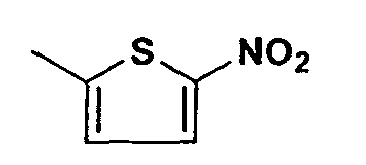

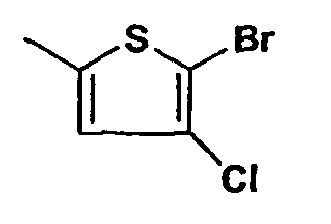


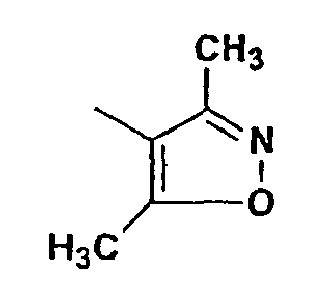


- 17. A compound of formula III:

- (a) R1 is H; C1-3 alkoxy; di-(C1-6) alkyl amine; a 5 or 6 membered monocyclic heterocycle; or C6-10 aryl optionally substituted with a 5 or 6 membered monocyclic heterocycle; R2, R3, R4 and R5 are each independently H; C1-3 alkoxy; halo; or di-(C1-6) alkyl amine;
- (b) R7 is NHR10; wherein R10 is C(O)-NHR13,or C(O)-OR14; R13 and R14 are C1-6 alkyl;
- (c) Q is a C5-7 membered chain having one double bond optionally containing one heteroatom independently selected from O, S(O)m; wherein m is 0, 1 or 2, or N17, wherein R17 is H; C1-6 alkyl or C1-6 cycloalkyl; and
- (d) R23 is unsubstituted C3-7 cycloalkyl, or cyclopropyl or cyclobutyl optionally substituted with C7-9 alkylaryl or C1-4 alkyl; or a pharmaceutically acceptable enantiomer, diastereomer, salt, solvate or prodrug thereof
- 18. The compound of feature 17 wherein R1 is selected from the group consisting of pyridine, morpholine, piperazine, oxazole, isoxazole, thiazole, imidazole, pyrrole and pyrazole.
- 19. The compound of feature 17 wherein R1 is phenyl optionally substituted with one or more members selected from the group consisting of selected from the group consisting of C1-3 alkoxy, halo, carboxyl, di-(C1-3) alkyl amine, C1-3 haloalkyl, trifluoromethyl, trifluoromethoxy and hydroxy.
- 20. The compound of feature 17 wherein R1 is di-(C1-3) alkyl amine.
- 21. The compound of feature 17 wherein R1 is piperazine substituted with one or more members selected from the group consisting of C1-3 alkyl, C5-7 cycloalkyl or pyridine.
- 22. The compound of feature 17 wherein R2 is chloro or fluoro.
- 23. The compound of feature 17 wherein R2 is di-(C1-3) alkyl amine or methoxy.
- 24. The compound of feature 17 wherein Q has a structure selected from the following:



- 25. The compound of feature 17 wherein Q has a structure selected from the following:


- 26. A compound selected from the group consisting of


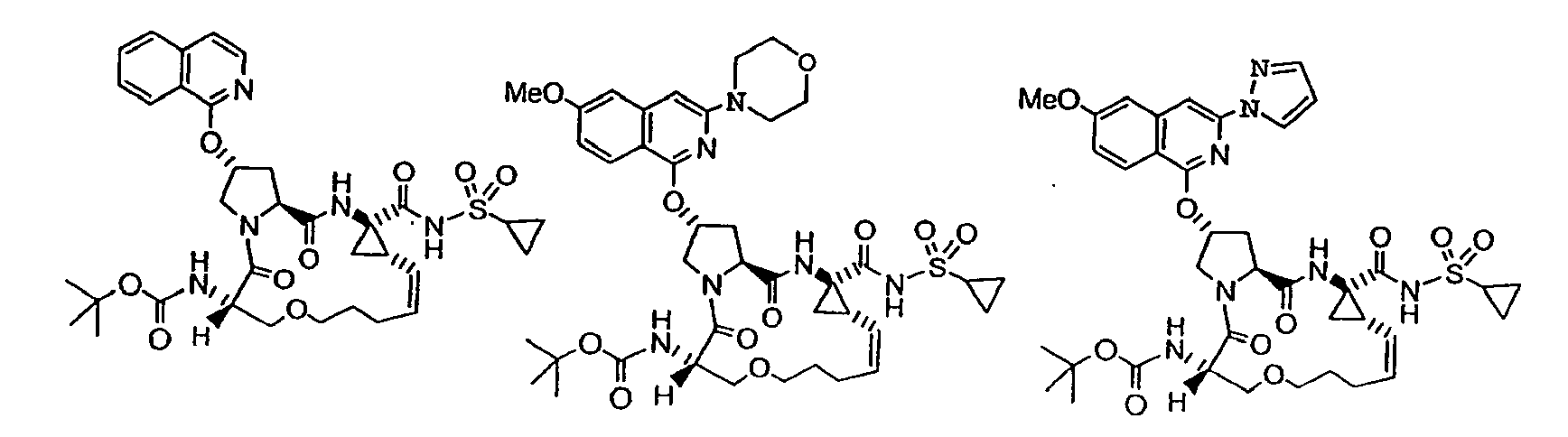


- 27. A composition comprising the compound of feature 1 and a pharmaceutically acceptable carrier.
- 28. The composition according to feature 27 further comprising a compound having anti-HCV activity.
- 29. The composition according to feature 28 wherein the compound having anti-HCV activity is an interferon.
- 30. The composition according to feature 29 wherein the interferon is selected from the group consisting of interferon alpha 2B, pegylated interferon alpha, consensus interferon, interferon alpha 2A, and lymphoblastiod interferon tau.
- 31. The composition according to feature 28 wherein the compound having anti-HCV activity is selected from the group consisting of interleukin 2, interleukin 6, interleukin 12, a compound that enhances the development of a type 1 helper T cell response, interfering RNA, anti-sense RNA, Imiqimod, ribavirin, an inosine 5'-monophospate dehydrogenase inhibitor, amantadine, and rimantadine.
- 32. The composition according to the feature 28 further comprising an interferon and ribavirin.
- 33. The composition according to feature 28 wherein the compound having anti-HCV activity is a small molecule compound.
- 34. The composition according to feature 28 wherein the compound having anti-HCV activity is effective to inhibit the function of a target selected from the group consisting of HCV metalloprotease, HCV serine protease, HCV polymerase, HCV helicase, HCV NS4B protein, HCV entry, HCV assembly, HCV egress, HCV NS5A protein, IMPDH and a nucleoside analog for the treatment of an HCV infection.
- 35. A method of inhibiting the function of the HCV serine protease comprising contacting the HCV serine protease with the compound of feature 1.
- 36. A method of treating an HCV infection in a patient, comprising administering to the patient a therapeutically effective amount of the compound of feature 1, or a pharmaceutically acceptable enantiomer, diastereomer, solvate, prodrug or salt thereof.
- 37. The method according to feature 36 wherein the compound is effective to inhibit the function of the HCV serine protease.
- 38. The method according to feature 36 further comprising administering another compound having anti-HCV activity prior to, after or simultaneously with the compound of Claim 1.
- 39. The method according to feature 38 wherein the other compound having anti-HCV activity is an interferon.
- 40. The method according to feature 39 wherein the interferon is selected from the group consisting of interferon alpha 2B, pegylated interferon alpha, consensus interferon, interferon alpha 2A, lymphoblastiod interferon tau.
- 41. The method according to feature 38 wherein the other compound having anti-HCV activity is selected from the group consisting of interleukin 2, interleukin 6, interleukin 12, a compound that enhances the development of a type 1 helper T cell response, interfering RNA, anti-sense RNA, Imiqimod, ribavirin, an inosine 5'-monophospate dehydrogenase inhibitor, amantadine, and rimantadine.
- 42. The method according to feature 38 wherein the compound having anti-HCV activity is a small molecule.
- 43. The method according to feature 42 wherein the compound having anti-HCV activity is effective to inhibit the function of a target selected from the group consisting of HCV metalloprotease, HCV serine protease, HCV polymerase, HCV helicase, HCV NS4B protein, HCV entry, HCV assembly, HCV egress, HCV NS5A protein, IMPDH and a nucleoside analog for the treatment of an HCV infection.
- 44. The method according to feature 38 wherein the other compound having anti-HCV activity is effective to inhibit the function of target in the HCV life cycle other than the HCV serine protease.
- 45. Use of the compound of feature 1 for the manufacture of a medicament for treating HCV infection in a patient
- 46. Use of the composition of feature 27 for the manufacture of a medicament for treating HCV infection in a patient.
Claims (10)
- A process for resolving a mixture of alkyl ester enantiomers comprising contacting the mixture with an enzyme effective to preferentially promote the hydrolysis of one of the enantiomers; characterized in that the contacting is conducted in the presence of a buffer.
- The process of claim 1 wherein the alkyl ester has the following formula:

R25 is an amino protecting group; and
R26 is selected from the group consisting of C1-10 alkyl, C6-14 aryl, C7-16 alkylaryl, C3-7 cyloalkyl or C3-10 alkyl cycloalkyl. - The process of claim 1 wherein the buffer is selected from the
group consisting of phosphates, borates and carbonates. - The process of claim 1 wherein the enzyme is a protease.
- The process of claim 1 wherein the enzyme is selected from the group consisting of Bacillus globigii, Bacillus licheniformis, Bacillus halodurans, Bacillus clausii, Aspergillus oryzase and mixtures thereof.
- The process of claim 5 wherein the enzyme is selected from the group
consisting of Alcalase® (subtilisin protease), Savinase® (subtilisin protease), Esperase® (subtilisn protease), Flavourzyme™ (fungal protease) and mixtures thereof. - The process of claim 1 wherein the contacting is conducted at pH of from about 7.0 to 11.
- The process of claim 1 wherein the contacting is conducted at a temperature of from about 30 to 60°C
- The process of claim 1 wherein the contacting is conducted for a time of less than about seven days.
- The process of claim 9 wherein the contacting is conducted for a time of from about two hours to three days.
Applications Claiming Priority (2)
| Application Number | Priority Date | Filing Date | Title |
|---|---|---|---|
| US46342303P | 2003-04-16 | 2003-04-16 | |
| EP04759941A EP1629000B1 (en) | 2003-04-16 | 2004-04-16 | Macrocyclic isoquinoline peptide inhibitors of hepatitis c virus |
Related Parent Applications (2)
| Application Number | Title | Priority Date | Filing Date |
|---|---|---|---|
| EP04759941.0 Division | 2004-04-16 | ||
| EP04759941A Division EP1629000B1 (en) | 2003-04-16 | 2004-04-16 | Macrocyclic isoquinoline peptide inhibitors of hepatitis c virus |
Publications (2)
| Publication Number | Publication Date |
|---|---|
| EP2033654A1 true EP2033654A1 (en) | 2009-03-11 |
| EP2033654B1 EP2033654B1 (en) | 2012-05-16 |
Family
ID=33310775
Family Applications (2)
| Application Number | Title | Priority Date | Filing Date |
|---|---|---|---|
| EP08075882A Expired - Lifetime EP2033654B1 (en) | 2003-04-16 | 2004-04-16 | Process for resolving a mixture of alkyl ester enantiomers using an enzyme |
| EP04759941A Expired - Lifetime EP1629000B1 (en) | 2003-04-16 | 2004-04-16 | Macrocyclic isoquinoline peptide inhibitors of hepatitis c virus |
Family Applications After (1)
| Application Number | Title | Priority Date | Filing Date |
|---|---|---|---|
| EP04759941A Expired - Lifetime EP1629000B1 (en) | 2003-04-16 | 2004-04-16 | Macrocyclic isoquinoline peptide inhibitors of hepatitis c virus |
Country Status (9)
| Country | Link |
|---|---|
| US (2) | US7173004B2 (en) |
| EP (2) | EP2033654B1 (en) |
| JP (2) | JP4733023B2 (en) |
| AT (1) | ATE422895T1 (en) |
| DE (1) | DE602004019518D1 (en) |
| ES (2) | ES2320771T3 (en) |
| IS (1) | IS8073A (en) |
| NO (2) | NO333049B1 (en) |
| WO (1) | WO2004094452A2 (en) |
Families Citing this family (198)
| Publication number | Priority date | Publication date | Assignee | Title |
|---|---|---|---|---|
| US7119072B2 (en) * | 2002-01-30 | 2006-10-10 | Boehringer Ingelheim (Canada) Ltd. | Macrocyclic peptides active against the hepatitis C virus |
| MY140680A (en) | 2002-05-20 | 2010-01-15 | Bristol Myers Squibb Co | Hepatitis c virus inhibitors |
| US20050075279A1 (en) * | 2002-10-25 | 2005-04-07 | Boehringer Ingelheim International Gmbh | Macrocyclic peptides active against the hepatitis C virus |
| US7176208B2 (en) | 2003-04-18 | 2007-02-13 | Enanta Pharmaceuticals, Inc. | Quinoxalinyl macrocyclic hepatitis C serine protease inhibitors |
| ES2361997T3 (en) * | 2003-09-22 | 2011-06-27 | Boehringer Ingelheim International Gmbh | ACTIVE MACROCYCLIC PEPTIDES AGAINST THE VIRUS OF HEPATITIS C. |
| US7491794B2 (en) * | 2003-10-14 | 2009-02-17 | Intermune, Inc. | Macrocyclic compounds as inhibitors of viral replication |
| US7132504B2 (en) * | 2003-11-12 | 2006-11-07 | Bristol-Myers Squibb Company | Hepatitis C virus inhibitors |
| ATE495185T1 (en) * | 2004-01-21 | 2011-01-15 | Boehringer Ingelheim Int | MACROCYCLIC PEPTIDES ACTIVE AGAINST HEPATITIS C VIRUS |
| JP4902361B2 (en) | 2004-01-30 | 2012-03-21 | メディヴィル・アクチエボラーグ | HCVNS-3 serine protease inhibitor |
| CN102911161A (en) | 2004-02-20 | 2013-02-06 | 贝林格尔.英格海姆国际有限公司 | Viral polymerase inhibitors |
| WO2006045010A2 (en) | 2004-10-20 | 2006-04-27 | Resverlogix Corp. | Stilbenes and chalcones for the prevention and treatment of cardiovascular diseases |
| US7323447B2 (en) | 2005-02-08 | 2008-01-29 | Bristol-Myers Squibb Company | Hepatitis C virus inhibitors |
| WO2006096652A2 (en) * | 2005-03-08 | 2006-09-14 | Boehringer Ingelheim International Gmbh | Process for preparing macrocyclic compounds |
| AU2006242475B2 (en) * | 2005-05-02 | 2011-07-07 | Merck Sharp & Dohme Corp. | HCV NS3 protease inhibitors |
| US7592336B2 (en) | 2005-05-10 | 2009-09-22 | Bristol-Myers Squibb Company | Hepatitis C virus inhibitors |
| US7601686B2 (en) | 2005-07-11 | 2009-10-13 | Bristol-Myers Squibb Company | Hepatitis C virus inhibitors |
| TWI387603B (en) * | 2005-07-20 | 2013-03-01 | Merck Sharp & Dohme | Hcv ns3 protease inhibitors |
| MX2008001166A (en) * | 2005-07-25 | 2008-03-18 | Intermune Inc | Novel macrocyclic inhibitors of hepatitis c virus replication. |
| ES2373685T3 (en) * | 2005-07-29 | 2012-02-07 | Tibotec Pharmaceuticals | MACROCYCLIC INHIBITORS OF HEPATITIS VIRUS C. |
| JO2768B1 (en) * | 2005-07-29 | 2014-03-15 | تيبوتيك فارماسيوتيكالز ليمتد | Macrocylic Inhibitors Hepatitis C Virus |
| TWI393723B (en) * | 2005-07-29 | 2013-04-21 | Tibotec Pharm Ltd | Macrocylic inhibitors of hepatitis c virus |
| US8410109B2 (en) | 2005-07-29 | 2013-04-02 | Resverlogix Corp. | Pharmaceutical compositions for the prevention and treatment of complex diseases and their delivery by insertable medical devices |
| PE20070211A1 (en) | 2005-07-29 | 2007-05-12 | Medivir Ab | MACROCYCLIC COMPOUNDS AS INHIBITORS OF HEPATITIS C VIRUS |
| CA2617099C (en) * | 2005-07-29 | 2014-03-25 | Tibotec Pharmaceuticals Ltd. | Macrocyclic inhibitors of hepatitis c virus |
| JP5230416B2 (en) * | 2005-07-29 | 2013-07-10 | テイボテク・フアーマシユーチカルズ | Macrocyclic inhibitor of hepatitis C virus |
| CN101273042B (en) * | 2005-07-29 | 2013-11-06 | 泰博特克药品有限公司 | Macrocyclic inhibitors of hepatitis C virus |
| WO2007014922A1 (en) * | 2005-07-29 | 2007-02-08 | Tibotec Pharmaceuticals Ltd. | Macrocyclic inhibitors of hepatitis c virus |
| PE20070210A1 (en) * | 2005-07-29 | 2007-04-16 | Tibotec Pharm Ltd | MACROCYCLIC COMPOUNDS AS INHIBITORS OF HEPATITIS C VIRUS |
| PE20070343A1 (en) * | 2005-07-29 | 2007-05-12 | Medivir Ab | MACRO CYCLIC INHIBITORS OF HEPATITIS C VIRUS |
| BRPI0614205A2 (en) * | 2005-08-01 | 2016-11-22 | Merck & Co Inc | compound, pharmaceutical composition and compound use |
| US8076365B2 (en) | 2005-08-12 | 2011-12-13 | Boehringer Ingelheim International Gmbh | Viral polymerase inhibitors |
| AR055395A1 (en) | 2005-08-26 | 2007-08-22 | Vertex Pharma | INHIBITING COMPOUNDS OF THE ACTIVITY OF SERINA PROTEASA NS3-NS4A OF HEPATITIS C VIRUS |
| AU2006301966A1 (en) | 2005-10-11 | 2007-04-19 | Array Biopharma, Inc. | Compounds and methods for inhibiting hepatitis C viral replication |
| US7772183B2 (en) | 2005-10-12 | 2010-08-10 | Bristol-Myers Squibb Company | Hepatitis C virus inhibitors |
| US7741281B2 (en) | 2005-11-03 | 2010-06-22 | Bristol-Myers Squibb Company | Hepatitis C virus inhibitors |
| US7816348B2 (en) | 2006-02-03 | 2010-10-19 | Boehringer Ingelheim International Gmbh | Viral polymerase inhibitors |
| GB0609492D0 (en) * | 2006-05-15 | 2006-06-21 | Angeletti P Ist Richerche Bio | Therapeutic agents |
| US9526769B2 (en) * | 2006-06-06 | 2016-12-27 | Enanta Pharmaceuticals, Inc. | Macrocylic oximyl hepatitis C protease inhibitors |
| US8268776B2 (en) | 2006-06-06 | 2012-09-18 | Enanta Pharmaceuticals, Inc. | Macrocylic oximyl hepatitis C protease inhibitors |
| GB0612423D0 (en) * | 2006-06-23 | 2006-08-02 | Angeletti P Ist Richerche Bio | Therapeutic agents |
| PE20080992A1 (en) * | 2006-06-26 | 2008-08-06 | Enanta Pharm Inc | QUINOXALINYL MACROCYCLIC SERINE PROTEASE INHIBITORS OF HEPATITIS C VIRUS |
| KR20090024834A (en) * | 2006-07-05 | 2009-03-09 | 인터뮨, 인크. | New Inhibitors of Hepatitis C Virus Replication |
| JP2009542698A (en) * | 2006-07-07 | 2009-12-03 | ギリアード サイエンシーズ, インコーポレイテッド | Antiviral phosphinate compounds |
| EP2049474B1 (en) | 2006-07-11 | 2015-11-04 | Bristol-Myers Squibb Company | Hepatitis c virus inhibitors |
| NZ574605A (en) | 2006-07-13 | 2011-11-25 | Achillion Pharmaceuticals Inc | 4-amino-4-oxobutanoyl peptides as inhibitors of viral replication |
| US7718612B2 (en) * | 2007-08-02 | 2010-05-18 | Enanta Pharmaceuticals, Inc. | Pyridazinonyl macrocyclic hepatitis C serine protease inhibitors |
| CA2656816A1 (en) * | 2006-08-04 | 2008-02-14 | Enanta Pharmaceuticals, Inc. | Tetrazolyl macrocyclic hepatitis c serine protease inhibitors |
| US20090035271A1 (en) * | 2007-08-01 | 2009-02-05 | Ying Sun | Tetrazolyl macrocyclic hepatitis c serine protease inhibitors |
| US7687459B2 (en) * | 2006-08-11 | 2010-03-30 | Enanta Pharmaceuticals, Inc. | Arylalkoxyl hepatitis C virus protease inhibitors |
| US20090098085A1 (en) * | 2006-08-11 | 2009-04-16 | Ying Sun | Tetrazolyl acyclic hepatitis c serine protease inhibitors |
| US7662779B2 (en) * | 2006-08-11 | 2010-02-16 | Enanta Pharmaceuticals, Inc. | Triazolyl macrocyclic hepatitis C serine protease inhibitors |
| JP2010500978A (en) | 2006-08-17 | 2010-01-14 | ベーリンガー インゲルハイム インターナショナル ゲゼルシャフト ミット ベシュレンクテル ハフツング | Viral polymerase inhibitor |
| BRPI0716733A2 (en) * | 2006-09-13 | 2015-08-11 | Novartis Ag | Organic compounds and their uses |
| US8138164B2 (en) * | 2006-10-24 | 2012-03-20 | Merck Sharp & Dohme Corp. | HCV NS3 protease inhibitors |
| CN101583372A (en) * | 2006-10-24 | 2009-11-18 | 默克公司 | HCV NS3 protease inhibitors |
| JP2010507656A (en) * | 2006-10-24 | 2010-03-11 | メルク エンド カムパニー インコーポレーテッド | HCV NS3 protease inhibitor |
| WO2008057209A1 (en) | 2006-10-27 | 2008-05-15 | Merck & Co., Inc. | Hcv ns3 protease inhibitors |
| AU2007318164B2 (en) * | 2006-10-27 | 2013-02-07 | Merck Sharp & Dohme Corp. | HCV NS3 protease inhibitors |
| US8343477B2 (en) | 2006-11-01 | 2013-01-01 | Bristol-Myers Squibb Company | Inhibitors of hepatitis C virus |
| US20080107625A1 (en) * | 2006-11-01 | 2008-05-08 | Bristol-Myers Squibb Company | Inhibitors of Hepatitis C Virus |
| US20080107623A1 (en) * | 2006-11-01 | 2008-05-08 | Bristol-Myers Squibb Company | Inhibitors of Hepatitis C Virus |
| US7772180B2 (en) | 2006-11-09 | 2010-08-10 | Bristol-Myers Squibb Company | Hepatitis C virus inhibitors |
| US7763584B2 (en) | 2006-11-16 | 2010-07-27 | Bristol-Myers Squibb Company | Hepatitis C virus inhibitors |
| US8003604B2 (en) | 2006-11-16 | 2011-08-23 | Bristol-Myers Squibb Company | Hepatitis C virus inhibitors |
| US7888464B2 (en) | 2006-11-16 | 2011-02-15 | Bristol-Myers Squibb Company | Hepatitis C virus inhibitors |
| CN103224506A (en) * | 2006-12-20 | 2013-07-31 | P.安杰莱蒂分子生物学研究所 | Antiviral indoles |
| GB0625345D0 (en) * | 2006-12-20 | 2007-01-31 | Angeletti P Ist Richerche Bio | Therapeutic compounds |
| GB0625349D0 (en) * | 2006-12-20 | 2007-01-31 | Angeletti P Ist Richerche Bio | Therapeutic compounds |
| PT2118074E (en) | 2007-02-01 | 2014-03-20 | Resverlogix Corp | Compounds for the prevention and treatment of cardiovascular diseases |
| WO2008106130A2 (en) | 2007-02-26 | 2008-09-04 | Achillion Pharmaceuticals, Inc. | Tertiary amine substituted peptides useful as inhibitors of hcv replication |
| JP2010520200A (en) | 2007-02-28 | 2010-06-10 | クオナトウス ファーマシューティカルズ,インコーポレイテッド | Method for treating liver disease using specific matrix metalloproteinase (MMP) inhibitors |
| US7964580B2 (en) | 2007-03-30 | 2011-06-21 | Pharmasset, Inc. | Nucleoside phosphoramidate prodrugs |
| US20090123423A1 (en) * | 2007-04-26 | 2009-05-14 | Yonghua Gai | Hydroxyamic analogs as hepatitis c virus serine protease inhibitor |
| US20080274080A1 (en) * | 2007-04-26 | 2008-11-06 | Yat Sun Or | Aza-peptide macrocyclic hepatitis c serine protease inhibitors |
| WO2008134397A1 (en) * | 2007-04-26 | 2008-11-06 | Enanta Pharmaceuticals, Inc. | Aza-tripeptide hepatitis c serine protease inhibitors |
| US20080274082A1 (en) * | 2007-04-26 | 2008-11-06 | Yonghua Gai | Oximyl hydroxyamic analogs as hepatitis c virus protease inhibitor |
| US20080279821A1 (en) * | 2007-04-26 | 2008-11-13 | Deqiang Niu | Arylpiperidinyl and arylpyrrolidinyl macrocyclic hepatitis c serine protease inhibitors |
| US7910587B2 (en) * | 2007-04-26 | 2011-03-22 | Enanta Pharmaceuticals, Inc. | Quinoxalinyl dipeptide hepatitis C virus inhibitors |
| US20080286233A1 (en) * | 2007-04-26 | 2008-11-20 | Ying Sun | Piperizinyl macrocyclic hepatitis c serine protease inhibitors |
| EP2160392A2 (en) | 2007-05-03 | 2010-03-10 | Intermune, Inc. | Novel macrocyclic inhibitors of hepatitis c virus replication |
| WO2008141227A1 (en) | 2007-05-10 | 2008-11-20 | Intermune, Inc. | Novel peptide inhibitors of hepatitis c virus replication |
| US20090005387A1 (en) * | 2007-06-26 | 2009-01-01 | Deqiang Niu | Quinoxalinyl macrocyclic hepatitis c virus serine protease inhibitors |
| EA019749B1 (en) * | 2007-06-29 | 2014-06-30 | Джилид Сайэнс, Инк. | Antiviral compounds |
| WO2009005677A2 (en) | 2007-06-29 | 2009-01-08 | Gilead Sciences, Inc. | Antiviral compounds |
| AR067180A1 (en) * | 2007-06-29 | 2009-09-30 | Gilead Sciences Inc | ANTIVIRAL COMPOUNDS |
| AU2008277440A1 (en) * | 2007-07-17 | 2009-01-22 | Istituto Di Ricerche Di Biologia Molecolare P. Angeletti Spa | Macrocyclic indole derivatives for the treatment of hepatitis C infections |
| AU2008277377B2 (en) * | 2007-07-19 | 2013-08-01 | Msd Italia S.R.L. | Macrocyclic compounds as antiviral agents |
| CA2693997C (en) | 2007-08-03 | 2013-01-15 | Pierre L. Beaulieu | Viral polymerase inhibitors |
| US8419332B2 (en) * | 2007-10-19 | 2013-04-16 | Atlas Bolt & Screw Company Llc | Non-dimpling fastener |
| US8383583B2 (en) | 2007-10-26 | 2013-02-26 | Enanta Pharmaceuticals, Inc. | Macrocyclic, pyridazinone-containing hepatitis C serine protease inhibitors |
| CN102026544A (en) | 2007-11-14 | 2011-04-20 | 益安药业 | Macrocyclic tetrazolyl hepatitis C virus serine protease inhibitor |
| WO2009070692A1 (en) * | 2007-11-29 | 2009-06-04 | Enanta Pharmaceuticals, Inc. | C5-substituted, proline-derived, macrocyclic hepatitis c serine protease inhibitors |
| WO2009070689A1 (en) * | 2007-11-29 | 2009-06-04 | Enanta Pharmaceuticals, Inc. | Bicyclic, c5-substituted proline derivatives as inhibitors of the hepatitis c virus ns3 protease |
| CN101932242A (en) | 2007-12-05 | 2010-12-29 | 益安药业 | Quinoxalinyl derivatives |
| MX2010006210A (en) | 2007-12-05 | 2010-08-10 | Enanta Pharm Inc | Fluorinated tripeptide hcv serine protease inhibitors. |
| US8268777B2 (en) * | 2007-12-05 | 2012-09-18 | Enanta Pharmaceuticals, Inc. | Oximyl macrocyclic derivatives |
| US8273709B2 (en) * | 2007-12-14 | 2012-09-25 | Enanta Pharmaceuticals, Inc. | Triazole-containing macrocyclic HCV serine protease inhibitors |
| CN101903351B (en) | 2007-12-19 | 2014-09-10 | 贝林格尔.英格海姆国际有限公司 | Viral polymerase inhibitors |
| US8309685B2 (en) | 2007-12-21 | 2012-11-13 | Celgene Avilomics Research, Inc. | HCV protease inhibitors and uses thereof |
| US8202996B2 (en) | 2007-12-21 | 2012-06-19 | Bristol-Myers Squibb Company | Crystalline forms of N-(tert-butoxycarbonyl)-3-methyl-L-valyl-(4R)-4-((7-chloro-4-methoxy-1-isoquinolinyl)oxy)-N- ((1R,2S)-1-((cyclopropylsulfonyl)carbamoyl)-2-vinylcyclopropyl)-L-prolinamide |
| US8293705B2 (en) | 2007-12-21 | 2012-10-23 | Avila Therapeutics, Inc. | HCV protease inhibitors and uses thereof |
| MX2010006736A (en) | 2007-12-21 | 2010-10-15 | Avila Therapeutics Inc | Hcv protease inhibitors and uses thereof. |
| CA2710144A1 (en) | 2007-12-21 | 2009-07-02 | Avila Therapeutics, Inc. | Hcv protease inhibitors and uses thereof |
| MX2010008108A (en) * | 2008-01-24 | 2010-09-22 | Enanta Pharm Inc | Heteroaryl-containing tripeptide hcv serine protease inhibitors. |
| RU2490272C2 (en) * | 2008-02-04 | 2013-08-20 | Айденикс Фармасьютикалз, Инк. | Macrocyclic serine protease inhibitors |
| AU2009217551B2 (en) * | 2008-02-25 | 2014-07-31 | Msd Italia S.R.L. | Therapeutic compounds |
| WO2009117594A1 (en) | 2008-03-20 | 2009-09-24 | Enanta Pharmaceuticals, Inc. | Fluorinated macrocyclic compounds as hepatitis c virus inhibitors |
| EP2276725B1 (en) | 2008-04-11 | 2012-07-04 | F. Hoffmann-La Roche AG | New ruthenium complexes as catalysts for metathesis reactions |
| EA201071034A1 (en) * | 2008-04-15 | 2011-06-30 | Интермьюн, Инк. | NEW MACROCYCLIC INHIBITORS OF HEPATITIS C VIRUS REPLICATIONS |
| US8163921B2 (en) | 2008-04-16 | 2012-04-24 | Bristol-Myers Squibb Company | Hepatitis C virus inhibitors |
| AU2009241445A1 (en) * | 2008-04-28 | 2009-11-05 | Merck Sharp & Dohme Corp. | HCV NS3 protease inhibitors |
| US20090285774A1 (en) * | 2008-05-15 | 2009-11-19 | Bristol-Myers Squibb Company | Hepatitis C Virus Inhibitors |
| US20090285773A1 (en) * | 2008-05-15 | 2009-11-19 | Bristol-Myers Squibb Company | Hepatitis C Virus Inhibitors |
| CN101580535B (en) * | 2008-05-16 | 2012-10-03 | 太景生物科技股份有限公司 | Hepatitis C virus protease inhibitors |
| US7964560B2 (en) | 2008-05-29 | 2011-06-21 | Bristol-Myers Squibb Company | Hepatitis C virus inhibitors |
| WO2009148923A1 (en) | 2008-05-29 | 2009-12-10 | Bristol-Myers Squibb Company | Hepatitis c virus inhibitors |
| SI2346837T1 (en) | 2008-06-26 | 2015-05-29 | Resverlogix Corporation | Methods of preparing quinazolinone derivatives |
| PT2540350E (en) * | 2008-07-22 | 2014-08-27 | Merck Sharp & Dohme | Combinations of a macrocyclic quinoxaline compound which is an hcv ns3 protease inhibitor with other hcv agents |
| US8207341B2 (en) | 2008-09-04 | 2012-06-26 | Bristol-Myers Squibb Company | Process or synthesizing substituted isoquinolines |
| UY32099A (en) | 2008-09-11 | 2010-04-30 | Enanta Pharm Inc | HEPATITIS C SERINA PROTEASAS MACROCYCLIC INHIBITORS |
| CA2737376A1 (en) | 2008-09-17 | 2010-03-25 | Boehringer Ingelheim International Gmbh | Combination of hcv ns3 protease inhibitor with interferon and ribavirin |
| US20100080770A1 (en) * | 2008-09-29 | 2010-04-01 | Bristol-Myers Squibb Company | Hepatitis C Virus Inhibitors |
| US8563505B2 (en) | 2008-09-29 | 2013-10-22 | Bristol-Myers Squibb Company | Hepatitis C virus inhibitors |
| US8044087B2 (en) | 2008-09-29 | 2011-10-25 | Bristol-Myers Squibb Company | Hepatitis C virus inhibitors |
| US20100272674A1 (en) * | 2008-12-04 | 2010-10-28 | Bristol-Myers Squibb Company | Hepatitis C Virus Inhibitors |
| JP5752601B2 (en) | 2008-12-08 | 2015-07-22 | ブイエム ファーマ エルエルシー | Composition of protein receptor tyrosine kinase inhibitor |
| EA022134B1 (en) | 2008-12-10 | 2015-11-30 | Ачиллион Фармасьютикалз, Инк. | 4-amino-4-oxobutanoyl peptides as inhibitors of viral replication |
| US8283310B2 (en) | 2008-12-15 | 2012-10-09 | Bristol-Myers Squibb Company | Hepatitis C virus inhibitors |
| NZ593649A (en) | 2008-12-23 | 2013-11-29 | Gilead Pharmasset Llc | Nucleoside analogs |
| PA8855601A1 (en) | 2008-12-23 | 2010-07-27 | NUCLEOSID FORFORMIDATES | |
| AU2009329872B2 (en) | 2008-12-23 | 2016-07-07 | Gilead Pharmasset Llc | Synthesis of purine nucleosides |
| JP2012514605A (en) | 2009-01-07 | 2012-06-28 | サイネクシス,インコーポレーテッド | Cyclosporine derivatives for use in the treatment of HCV and HIV infection |
| US8952021B2 (en) | 2009-01-08 | 2015-02-10 | Resverlogix Corp. | Compounds for the prevention and treatment of cardiovascular disease |
| AR075584A1 (en) * | 2009-02-27 | 2011-04-20 | Intermune Inc | THERAPEUTIC COMPOSITIONS THAT INCLUDE beta-D-2'-DESOXI-2'-FLUORO-2'-C-METHYLYCTIDINE AND A CARDIEX ISOINDOL ACID DERIVATIVE AND ITS USES. COMPOUND. |
| KR101913109B1 (en) | 2009-03-18 | 2018-10-31 | 리스버로직스 코퍼레이션 | Novel anti-inflammatory agents |
| WO2010118078A1 (en) | 2009-04-08 | 2010-10-14 | Idenix Pharmaceuticals, Inc. | Macrocyclic serine protease inhibitors |
| US9757368B2 (en) | 2009-04-22 | 2017-09-12 | Resverlogix Corp. | Anti-inflammatory agents |
| EP2429568B1 (en) | 2009-05-13 | 2016-08-17 | Enanta Pharmaceuticals, Inc. | Macrocyclic compounds as hepatitis c virus inhibitors |
| TWI583692B (en) | 2009-05-20 | 2017-05-21 | 基利法瑪席特有限責任公司 | Nucleoside phosphoramidates |
| US8618076B2 (en) | 2009-05-20 | 2013-12-31 | Gilead Pharmasset Llc | Nucleoside phosphoramidates |
| IT1394407B1 (en) * | 2009-05-25 | 2012-06-15 | Dipharma Francis Srl | PROCEDURE FOR THE PREPARATION OF FOSINOPRIL AND ITS INTERMEDIATES |
| US8232246B2 (en) * | 2009-06-30 | 2012-07-31 | Abbott Laboratories | Anti-viral compounds |
| US8828930B2 (en) | 2009-07-30 | 2014-09-09 | Merck Sharp & Dohme Corp. | Hepatitis C virus NS3 protease inhibitors |
| TW201117812A (en) | 2009-08-05 | 2011-06-01 | Idenix Pharmaceuticals Inc | Macrocyclic serine protease inhibitors |
| HUE030402T2 (en) | 2009-09-15 | 2017-05-29 | Taigen Biotechnology Co Ltd | Hcv protease inhibitors |
| CN102020698B (en) * | 2009-09-15 | 2012-08-29 | 太景生物科技股份有限公司 | Hepatitis C virus protease inhibitors |
| IN2012DN02693A (en) * | 2009-09-28 | 2015-09-04 | Intermune Inc | |
| US9193740B2 (en) * | 2009-10-19 | 2015-11-24 | Enanta Pharmaceuticals, Inc. | Bismacrocyclic compounds as hepatitis C virus inhibitors |
| EA201200650A1 (en) | 2009-10-30 | 2012-12-28 | Бёрингер Ингельхайм Интернациональ Гмбх | COMBINED TREATMENTS OF HEPATITIS C VIRUS, INCLUDING BI201335, INTERFERON-ALPHA AND RIBAVIRIN COURSES |
| PH12012501216A1 (en) * | 2009-12-18 | 2012-11-05 | Boehringer Ingelheim Int | Hcv combination therapy |
| CN102834370B (en) | 2010-02-16 | 2016-11-23 | 株式会社Api | The preparation method of 1-amino-1-alkoxy carbonyl-2-vinylcyclopropane |
| US8563530B2 (en) | 2010-03-31 | 2013-10-22 | Gilead Pharmassel LLC | Purine nucleoside phosphoramidate |
| SG184324A1 (en) | 2010-03-31 | 2012-11-29 | Gilead Pharmasset Llc | Nucleoside phosphoramidates |
| UY33310A (en) | 2010-03-31 | 2011-10-31 | Pharmasset Inc | ESTEREOSELECTIVE SYNTHESIS OF ASSETS CONTAINING PHOSPHORUS |
| EP2593565A4 (en) * | 2010-07-16 | 2013-12-04 | Bristol Myers Squibb Co | Methods to identify combinations of ns5a targeting compounds that act synergistically to inhibit hepatitis c virus replication |
| JP5857053B2 (en) | 2010-09-21 | 2016-02-10 | エナンタ ファーマシューティカルズ インコーポレイテッド | Macrocyclic proline-derived HCV serine protease inhibitor |
| CA2813093A1 (en) * | 2010-09-30 | 2012-04-05 | Boehringer Ingelheim International Gmbh | Combination therapy for treating hcv infection |
| CA2818853A1 (en) | 2010-11-30 | 2012-06-07 | Gilead Pharmasset Llc | 2'-spirocyclo-nucleosides for use in therapy of hcv or dengue virus |
| EA201390988A1 (en) | 2010-12-30 | 2014-04-30 | Энанта Фармасьютикалз, Инк. | PHENANTRIDINE MACROCYCLIC INHIBITORS OF THE HYPATITIS C VIRUS SERIN PROTEASE |
| CA2822556A1 (en) | 2010-12-30 | 2012-07-05 | Enanta Pharmaceuticals, Inc | Macrocyclic hepatitis c serine protease inhibitors |
| US9353100B2 (en) | 2011-02-10 | 2016-05-31 | Idenix Pharmaceuticals Llc | Macrocyclic serine protease inhibitors, pharmaceutical compositions thereof, and their use for treating HCV infections |
| US8957203B2 (en) * | 2011-05-05 | 2015-02-17 | Bristol-Myers Squibb Company | Hepatitis C virus inhibitors |
| US10201584B1 (en) | 2011-05-17 | 2019-02-12 | Abbvie Inc. | Compositions and methods for treating HCV |
| US8691757B2 (en) | 2011-06-15 | 2014-04-08 | Bristol-Myers Squibb Company | Hepatitis C virus inhibitors |
| EP2709613B2 (en) | 2011-09-16 | 2020-08-12 | Gilead Pharmasset LLC | Methods for treating hcv |
| US8466159B2 (en) | 2011-10-21 | 2013-06-18 | Abbvie Inc. | Methods for treating HCV |
| EP2583677A3 (en) | 2011-10-21 | 2013-07-03 | Abbvie Inc. | Methods for treating HCV comprising at least two direct acting antiviral agent, ribavirin but not interferon. |
| US8492386B2 (en) | 2011-10-21 | 2013-07-23 | Abbvie Inc. | Methods for treating HCV |
| DE202012012955U1 (en) | 2011-10-21 | 2014-07-14 | Abbvie Inc. | A combination of at least two direct-acting antiviral agents (DAAs) for use in the treatment of HCV |
| CA2851996C (en) | 2011-11-01 | 2020-01-07 | Resverlogix Corp. | Pharmaceutical compositions for substituted quinazolinones |
| US8889159B2 (en) | 2011-11-29 | 2014-11-18 | Gilead Pharmasset Llc | Compositions and methods for treating hepatitis C virus |
| WO2013106631A1 (en) | 2012-01-11 | 2013-07-18 | Abbvie Inc. | Processes for making hcv protease inhibitors |
| WO2013132253A1 (en) | 2012-03-07 | 2013-09-12 | Institute Of Cancer Research: Royal Cancer Hospital (The) | 3-aryl-5-substituted-isoquinolin-1-one compounds and their therapeutic use |
| UA119315C2 (en) | 2012-07-03 | 2019-06-10 | Гіліад Фармассет Елелсі | HEPATITIS VIRUS INHIBITORS C |
| US20140100364A1 (en) | 2012-10-08 | 2014-04-10 | Abbvie Inc. | Compounds Useful For Making HCV Protease Inhibitors |
| EA025560B1 (en) | 2012-10-19 | 2017-01-30 | Бристол-Майерс Сквибб Компани | Hepatitis c virus inhibitors |
| US9334279B2 (en) | 2012-11-02 | 2016-05-10 | Bristol-Myers Squibb Company | Hepatitis C virus inhibitors |
| EP2914613B1 (en) | 2012-11-02 | 2017-11-22 | Bristol-Myers Squibb Company | Hepatitis c virus inhibitors |
| US9643999B2 (en) | 2012-11-02 | 2017-05-09 | Bristol-Myers Squibb Company | Hepatitis C virus inhibitors |
| US9409943B2 (en) | 2012-11-05 | 2016-08-09 | Bristol-Myers Squibb Company | Hepatitis C virus inhibitors |
| US9073878B2 (en) | 2012-11-21 | 2015-07-07 | Zenith Epigenetics Corp. | Cyclic amines as bromodomain inhibitors |
| US9765039B2 (en) | 2012-11-21 | 2017-09-19 | Zenith Epigenetics Ltd. | Biaryl derivatives as bromodomain inhibitors |
| JP2016507496A (en) | 2012-12-21 | 2016-03-10 | ゼニス・エピジェネティクス・コーポレイションZenith Epigenetics Corp. | Novel heterocyclic compounds as bromodomain inhibitors |
| EP2950786B1 (en) | 2013-01-31 | 2019-11-27 | Gilead Pharmasset LLC | Combination formulation of two antiviral compounds |
| JP6342922B2 (en) | 2013-03-07 | 2018-06-13 | ブリストル−マイヤーズ スクイブ カンパニーBristol−Myers Squibb Company | Hepatitis C virus inhibitor |
| WO2014152928A2 (en) | 2013-03-14 | 2014-09-25 | Achillion Pharmaceuticals, Inc. | Novel processes for producing sovaprevir |
| US9085607B2 (en) | 2013-03-15 | 2015-07-21 | Achillion Pharmaceuticals, Inc. | ACH-0142684 sodium salt polymorph, composition including the same, and method of manufacture thereof |
| WO2014145507A1 (en) | 2013-03-15 | 2014-09-18 | Achillion Pharmaceuticals, Inc. | A process for making a 4-amino-4-oxobutanoyl peptide cyclic analogue, an inhibitor of viral replication, and intermediates thereof |
| WO2014145095A1 (en) | 2013-03-15 | 2014-09-18 | Gilead Sciences, Inc. | Macrocyclic and bicyclic inhibitors of hepatitis c virus |
| US8999992B2 (en) | 2013-03-15 | 2015-04-07 | Vm Pharma Llc | Crystalline forms of tryosine kinase inhibitors and their salts |
| AU2014227849A1 (en) | 2013-03-15 | 2015-10-01 | Achillion Pharmaceuticals, Inc. | Sovaprevir polymorphs and methods of manufacture thereof |
| PT3038601T (en) | 2013-08-27 | 2020-06-30 | Gilead Pharmasset Llc | Combination formulation of two antiviral compounds |
| EP3044221B1 (en) | 2013-09-11 | 2018-02-21 | Institute of Cancer Research: Royal Cancer Hospital (The) | 3-aryl-5-substituted-isoquinolin-1-one compounds and their therapeutic use |
| WO2015103490A1 (en) | 2014-01-03 | 2015-07-09 | Abbvie, Inc. | Solid antiviral dosage forms |
| AU2015318324A1 (en) | 2014-09-17 | 2017-04-06 | Mundipharma International Corporation Limited | Crystalline forms of tyrosine kinase inhibitors and their salts |
| US10111885B2 (en) | 2015-03-13 | 2018-10-30 | Resverlogix Corp. | Compositions and therapeutic methods for the treatment of complement-associated diseases |
| EA201892448A1 (en) | 2016-04-28 | 2019-06-28 | Эмори Юниверсити | ALKYN-CONTAINING NUCLEOTIDE AND NUCLEOSIDE THERAPEUTIC COMPOSITIONS AND RELATED APPLICATION METHODS |
| WO2017222935A1 (en) * | 2016-06-20 | 2017-12-28 | Kansas State University Research Foundation | Small molecule therapeutic inhibitors against picornaviruses, caliciviruses, and coronaviruses |
Citations (25)
| Publication number | Priority date | Publication date | Assignee | Title |
|---|---|---|---|---|
| US2700686A (en) | 1951-02-15 | 1955-01-25 | Eastman Kodak Co | Hydroxy substituted polyfluorinated compounds |
| US5223432A (en) * | 1990-09-12 | 1993-06-29 | Hoffmann-La Roche Inc. | Process for preparing optically pure (S)-α-((tert-butylsulfonyl)methyl)hydrocinnamic acid using protease |
| US5559256A (en) | 1992-07-20 | 1996-09-24 | E. R. Squibb & Sons, Inc. | Aminediol protease inhibitors |
| WO1999001582A1 (en) | 1997-07-02 | 1999-01-14 | Smithkline Beecham Corporation | Screening methods using an atpase protein from a virus of the flaviviridae family |
| WO2000006529A1 (en) | 1998-07-27 | 2000-02-10 | Istituto Di Ricerche Di Biologia Molecolare P Angeletti S.P.A. | Diketoacid-derivatives as inhibitors of polymerases |
| WO2000009543A2 (en) | 1998-08-10 | 2000-02-24 | Boehringer Ingelheim (Canada) Ltd. | Hepatitis c inhibitor tri-peptides |
| WO2000010573A1 (en) | 1998-08-21 | 2000-03-02 | Viropharma Incorporated | Compounds, compositions and methods for treating or preventing viral infections and associated diseases |
| WO2000013708A1 (en) | 1998-09-04 | 2000-03-16 | Viropharma Incorporated | Methods for treating or preventing viral infections and associated diseases |
| WO2000018231A1 (en) | 1998-09-25 | 2000-04-06 | Viropharma Incorporated | Methods for treating or preventing viral infections and associated diseases |
| WO2000059929A1 (en) | 1999-04-06 | 2000-10-12 | Boehringer Ingelheim (Canada) Ltd. | Macrocyclic peptides active against the hepatitis c virus |
| WO2001032153A2 (en) | 1999-11-04 | 2001-05-10 | Shire Biochem Inc. | Method for the treatment or prevention of flaviviridae viral infection using nucleoside analogues |
| WO2001085172A1 (en) | 2000-05-10 | 2001-11-15 | Smithkline Beecham Corporation | Novel anti-infectives |
| WO2002004425A2 (en) | 2000-07-06 | 2002-01-17 | Boehringer Ingelheim (Canada) Ltd. | Viral polymerase inhibitors |
| WO2002060926A2 (en) | 2000-11-20 | 2002-08-08 | Bristol-Myers Squibb Company | Hepatitis c tripeptide inhibitors |
| EP1256628A2 (en) | 2001-05-10 | 2002-11-13 | Agouron Pharmaceuticals, Inc. | Hepatitis c virus (hcv) ns5b rna polymerase and mutants thereof |
| WO2002100846A1 (en) | 2001-06-11 | 2002-12-19 | Shire Biochem Inc. | Compounds and methods for the treatment or prevention of flavivirus infections |
| WO2002100851A2 (en) | 2001-06-11 | 2002-12-19 | Shire Biochem Inc. | Thiophene derivatives as antiviral agents for flavivirus infection |
| WO2003000254A1 (en) | 2001-06-26 | 2003-01-03 | Japan Tobacco Inc. | Fused cyclic compounds and medicinal use thereof |
| WO2003007945A1 (en) | 2001-07-20 | 2003-01-30 | Boehringer Ingelheim (Canada) Ltd. | Viral polymerase inhibitors |
| WO2003010143A1 (en) | 2001-07-26 | 2003-02-06 | Samsung Electronics Co., Ltd. | Dialkylhydroxybenzoic acid derivatives containing metal chelating groups and their therapeutic uses |
| WO2003010142A2 (en) | 2001-07-24 | 2003-02-06 | Adir | A process for the preparation of perindopril, its analgous compounds and salts thereof using 2,5 -dioxo-oxazolidine intermediate compounds |
| WO2003010141A2 (en) | 2001-07-25 | 2003-02-06 | Boehringer Ingelheim (Canada) Ltd. | Hepatitis c virus polymerase inhibitors with a heterobicyclic structure |
| WO2003037894A1 (en) | 2001-11-02 | 2003-05-08 | Glaxo Group Limited | 4-(5-membered)-heteroaryl acyl pyrrolidine derivatives as hcv inhibitors |
| WO2003037895A1 (en) | 2001-11-02 | 2003-05-08 | Glaxo Group Limited | 4-(6-membered)-heteroaryl acyl pyrrolidine derivatives as hcv inhibitors |
| WO2003037893A1 (en) | 2001-11-02 | 2003-05-08 | Glaxo Group Limited | Acyl dihydro pyrrole derivatives as hcv inhibitors |
Family Cites Families (7)
| Publication number | Priority date | Publication date | Assignee | Title |
|---|---|---|---|---|
| US5523432A (en) * | 1994-04-07 | 1996-06-04 | Henkel Kommanditgesellschaft Auf Aktien | Process for the production of quaternary ammonium salts of fatty acid hydroxyalkanesulfonic acids |
| US6461849B1 (en) * | 1998-10-13 | 2002-10-08 | Novozymes, A/S | Modified polypeptide |
| US6608027B1 (en) * | 1999-04-06 | 2003-08-19 | Boehringer Ingelheim (Canada) Ltd | Macrocyclic peptides active against the hepatitis C virus |
| US6867185B2 (en) | 2001-12-20 | 2005-03-15 | Bristol-Myers Squibb Company | Inhibitors of hepatitis C virus |
| MY140680A (en) * | 2002-05-20 | 2010-01-15 | Bristol Myers Squibb Co | Hepatitis c virus inhibitors |
| US20060199773A1 (en) * | 2002-05-20 | 2006-09-07 | Sausker Justin B | Crystalline forms of (1R,2S)-N-[(1,1-dimethylethoxy)carbonyl]-3-methyl-L-valyl-(4R)-4-[(6-methoxy-1-isoquinolinyl)oxy]-L-prolyl-1-amino-N-(cyclopropylsulfonyl)-2-ethenyl-cyclopropanecarboxamide, monopotassium salt |
| US7601709B2 (en) * | 2003-02-07 | 2009-10-13 | Enanta Pharmaceuticals, Inc. | Macrocyclic hepatitis C serine protease inhibitors |
-
2004
- 2004-04-16 JP JP2006513076A patent/JP4733023B2/en not_active Expired - Fee Related
- 2004-04-16 DE DE602004019518T patent/DE602004019518D1/en not_active Expired - Lifetime
- 2004-04-16 ES ES04759941T patent/ES2320771T3/en not_active Expired - Lifetime
- 2004-04-16 EP EP08075882A patent/EP2033654B1/en not_active Expired - Lifetime
- 2004-04-16 WO PCT/US2004/011824 patent/WO2004094452A2/en not_active Ceased
- 2004-04-16 US US10/825,693 patent/US7173004B2/en not_active Expired - Lifetime
- 2004-04-16 EP EP04759941A patent/EP1629000B1/en not_active Expired - Lifetime
- 2004-04-16 ES ES08075882T patent/ES2386161T3/en not_active Expired - Lifetime
- 2004-04-16 AT AT04759941T patent/ATE422895T1/en not_active IP Right Cessation
-
2005
- 2005-10-14 IS IS8073A patent/IS8073A/en unknown
- 2005-10-19 NO NO20054841A patent/NO333049B1/en not_active IP Right Cessation
-
2006
- 2006-05-02 US US11/415,722 patent/US20060257980A1/en not_active Abandoned
-
2010
- 2010-06-09 JP JP2010131885A patent/JP5399320B2/en not_active Expired - Fee Related
-
2011
- 2011-06-30 NO NO20110945A patent/NO337510B1/en not_active IP Right Cessation
Patent Citations (26)
| Publication number | Priority date | Publication date | Assignee | Title |
|---|---|---|---|---|
| US2700686A (en) | 1951-02-15 | 1955-01-25 | Eastman Kodak Co | Hydroxy substituted polyfluorinated compounds |
| US5223432A (en) * | 1990-09-12 | 1993-06-29 | Hoffmann-La Roche Inc. | Process for preparing optically pure (S)-α-((tert-butylsulfonyl)methyl)hydrocinnamic acid using protease |
| US5559256A (en) | 1992-07-20 | 1996-09-24 | E. R. Squibb & Sons, Inc. | Aminediol protease inhibitors |
| WO1999001582A1 (en) | 1997-07-02 | 1999-01-14 | Smithkline Beecham Corporation | Screening methods using an atpase protein from a virus of the flaviviridae family |
| WO2000006529A1 (en) | 1998-07-27 | 2000-02-10 | Istituto Di Ricerche Di Biologia Molecolare P Angeletti S.P.A. | Diketoacid-derivatives as inhibitors of polymerases |
| US6323180B1 (en) | 1998-08-10 | 2001-11-27 | Boehringer Ingelheim (Canada) Ltd | Hepatitis C inhibitor tri-peptides |
| WO2000009543A2 (en) | 1998-08-10 | 2000-02-24 | Boehringer Ingelheim (Canada) Ltd. | Hepatitis c inhibitor tri-peptides |
| WO2000010573A1 (en) | 1998-08-21 | 2000-03-02 | Viropharma Incorporated | Compounds, compositions and methods for treating or preventing viral infections and associated diseases |
| WO2000013708A1 (en) | 1998-09-04 | 2000-03-16 | Viropharma Incorporated | Methods for treating or preventing viral infections and associated diseases |
| WO2000018231A1 (en) | 1998-09-25 | 2000-04-06 | Viropharma Incorporated | Methods for treating or preventing viral infections and associated diseases |
| WO2000059929A1 (en) | 1999-04-06 | 2000-10-12 | Boehringer Ingelheim (Canada) Ltd. | Macrocyclic peptides active against the hepatitis c virus |
| WO2001032153A2 (en) | 1999-11-04 | 2001-05-10 | Shire Biochem Inc. | Method for the treatment or prevention of flaviviridae viral infection using nucleoside analogues |
| WO2001085172A1 (en) | 2000-05-10 | 2001-11-15 | Smithkline Beecham Corporation | Novel anti-infectives |
| WO2002004425A2 (en) | 2000-07-06 | 2002-01-17 | Boehringer Ingelheim (Canada) Ltd. | Viral polymerase inhibitors |
| WO2002060926A2 (en) | 2000-11-20 | 2002-08-08 | Bristol-Myers Squibb Company | Hepatitis c tripeptide inhibitors |
| EP1256628A2 (en) | 2001-05-10 | 2002-11-13 | Agouron Pharmaceuticals, Inc. | Hepatitis c virus (hcv) ns5b rna polymerase and mutants thereof |
| WO2002100846A1 (en) | 2001-06-11 | 2002-12-19 | Shire Biochem Inc. | Compounds and methods for the treatment or prevention of flavivirus infections |
| WO2002100851A2 (en) | 2001-06-11 | 2002-12-19 | Shire Biochem Inc. | Thiophene derivatives as antiviral agents for flavivirus infection |
| WO2003000254A1 (en) | 2001-06-26 | 2003-01-03 | Japan Tobacco Inc. | Fused cyclic compounds and medicinal use thereof |
| WO2003007945A1 (en) | 2001-07-20 | 2003-01-30 | Boehringer Ingelheim (Canada) Ltd. | Viral polymerase inhibitors |
| WO2003010142A2 (en) | 2001-07-24 | 2003-02-06 | Adir | A process for the preparation of perindopril, its analgous compounds and salts thereof using 2,5 -dioxo-oxazolidine intermediate compounds |
| WO2003010141A2 (en) | 2001-07-25 | 2003-02-06 | Boehringer Ingelheim (Canada) Ltd. | Hepatitis c virus polymerase inhibitors with a heterobicyclic structure |
| WO2003010143A1 (en) | 2001-07-26 | 2003-02-06 | Samsung Electronics Co., Ltd. | Dialkylhydroxybenzoic acid derivatives containing metal chelating groups and their therapeutic uses |
| WO2003037894A1 (en) | 2001-11-02 | 2003-05-08 | Glaxo Group Limited | 4-(5-membered)-heteroaryl acyl pyrrolidine derivatives as hcv inhibitors |
| WO2003037895A1 (en) | 2001-11-02 | 2003-05-08 | Glaxo Group Limited | 4-(6-membered)-heteroaryl acyl pyrrolidine derivatives as hcv inhibitors |
| WO2003037893A1 (en) | 2001-11-02 | 2003-05-08 | Glaxo Group Limited | Acyl dihydro pyrrole derivatives as hcv inhibitors |
Non-Patent Citations (30)
| Title |
|---|
| "McGraw-Hill Dictionary of chemical Terms", 1984, MCGRAW-HILL BOOK COMPANY |
| "Remington 's Pharmaceutical Sciences", 1990, MACK PUBLISHING COMPANY, pages: 1445 |
| "Remington's Pharmaceutical Sciences", 1995, MACK PUBLISHING COMPANY |
| "Remington's Pharmaceutical Sciences", 1999, MACK PUBLISHING COMPANY |
| "Synergism aizd Antagonism in Chemotherapy", 1991, ACADEMIC PRESS, pages: 61 - 101 |
| BERGER A.; SCHECHTER I., TRANSACTIONS OF THE ROYAL SOCIETY LONDON SERIES, vol. B257, 1970, pages 249 - 264 |
| BLIGHT KJ; KOLYKHALOV, AA; RICE, CM, SCIENCE, vol. 290, no. 5498, pages 1972 - 1974 |
| BUNDGARD, H.: "Design of Prodrugs", 1985, ELSEVIER, pages: 7 - 9 |
| ELIEL, E.; WILEN, S.: "Stereochemistry of Organic Compounds", 1994, JOHN WILEY & SONS, INC. |
| GALLINARI P ET AL., BIOCHEMISTRY, vol. 38, no. 17, 1999, pages 5620 - 32 |
| GALLINARI P ET AL., J VIROL., vol. 72, no. 8, 1998, pages 6758 - 69 |
| GRECO ET AL.: "Application of a New Approach for the Quantitation of Drug Synergism to the Combination of cis-Diammitzedichloroplatinum and I-P-D-Arabinofuranosylcytosine", CANCER RESEARCH, vol. 50, 1990, pages 5318 - 5327, XP001207322 |
| HOJO, MASARU ET AL., SYNTHESIS, no. 12, 1986, pages 1016 - 17 |
| K. HIRAO ET AL.: "Typical procedure: Preparation of optically active 8,8-disubstituted 1,1-biisoquinoline", HETEROCYCLES, vol. 42, no. 1, 1996, pages 415 - 422 |
| KRIEGER N; LOHMANN V; BARTENSCHLAGER R, J. VIROL., vol. 75, no. 10, 2001, pages 4614 - 4624 |
| LAUER, G. M.; WALKER, B. D., N. ENGL. J. MED., vol. L45, 2001, pages 41 - 52 |
| LOHMANN V ET AL., SCIENCE, vol. 285, no. 5424, 1999, pages 110 - 3 |
| NICOLAS BRIET, TETRAHEDRON, 2002, pages 5761 - 5766 |
| OTTESEN M ET AL: "THE SUBTILISINS", METHODS IN ENZYMOLOGY, ACADEMIC PRESS INC, SAN DIEGO, CA, US, vol. 19, 1970, pages 199 - 215, XP000674349, ISSN: 0076-6879 * |
| P SIMMONDS ET AL., J. CLIN. MICROBIOL., vol. 31, no. 6, 1993, pages 1493 - 1503 |
| POYNARD, T. ET AL., LANCET, vol. 352, 1998, pages 1426 - 1432 |
| RIBEIRO C M R ET AL: "Ultrasound in enzymatic resolution of ethyl 3-hydroxy-3-phenylpropanoate", TETRAHEDRON LETTERS, ELSEVIER, AMSTERDAM, NL, vol. 42, no. 37, 10 September 2001 (2001-09-10), pages 6477 - 6479, XP004299710, ISSN: 0040-4039 * |
| RIGBY, JAMES H.; HOLSWORTH, DANIEL D.; JAMES, KELLY.: "Vinyl Isocyanates In Synthesis. [4 + 2] Cycloaddition Reactions With Benzyne Addends", JOUNZAL OF ORGANIC CHEMISHY, vol. 54, no. 17, 1989, pages 4019 - 20 |
| TALIANI ET AL., ANAL. BIOCHEM., vol. 240, no. 2, 1996, pages 60 - 67 |
| UCHIBORI, Y.; UMENO, M.; YOSHIOKAI, H., HETEROCYCLES, vol. 34, no. 8, 1992, pages 1507 - 1510 |
| WIRZ B ET AL: "Enzymatic preparation of homochiral 2-isobutyl succinic acid derivatives", TETRAHEDRON: ASYMMETRY, ELSEVIER SCIENCE PUBLISHERS, AMSTERDAM, NL, vol. 8, no. 2, 23 January 1997 (1997-01-23), pages 187 - 189, XP004091848, ISSN: 0957-4166 * |
| YANAGI,M. ET AL., PROC. NATL. ACAD. SCI. U.S.A., vol. 94, no. 16, 1997, pages 8738 - 8743 |
| YANAGI,M. ET AL., VIROLOGY, vol. 244, no. 1, 1998, pages 161 - 172 |
| YANG S; HAYDEN W; FABER K; GRIENGL H: "Chemoenzymatic synthesis of (R)-(-)-citramalic acid", SYNTHESIS, no. 4, April 1992 (1992-04-01), pages 365 - 366, XP002400338 * |
| ZEUZEM, S. ET AL., N. EIIGL. J. MED., vol. 343, 2000, pages 1666 - 1672 |
Also Published As
| Publication number | Publication date |
|---|---|
| NO20054841L (en) | 2006-01-11 |
| EP1629000A4 (en) | 2006-11-29 |
| WO2004094452A3 (en) | 2005-05-19 |
| ES2320771T3 (en) | 2009-05-28 |
| US7173004B2 (en) | 2007-02-06 |
| JP2010263896A (en) | 2010-11-25 |
| NO20054841D0 (en) | 2005-10-19 |
| DE602004019518D1 (en) | 2009-04-02 |
| EP1629000B1 (en) | 2009-02-18 |
| ATE422895T1 (en) | 2009-03-15 |
| NO20110945L (en) | 2006-01-11 |
| JP5399320B2 (en) | 2014-01-29 |
| EP2033654B1 (en) | 2012-05-16 |
| EP1629000A2 (en) | 2006-03-01 |
| JP4733023B2 (en) | 2011-07-27 |
| NO333049B1 (en) | 2013-02-18 |
| IS8073A (en) | 2005-10-14 |
| US20060257980A1 (en) | 2006-11-16 |
| WO2004094452A2 (en) | 2004-11-04 |
| NO337510B1 (en) | 2016-05-02 |
| US20050090432A1 (en) | 2005-04-28 |
| ES2386161T3 (en) | 2012-08-10 |
| JP2006523714A (en) | 2006-10-19 |
Similar Documents
| Publication | Publication Date | Title |
|---|---|---|
| EP1629000B1 (en) | Macrocyclic isoquinoline peptide inhibitors of hepatitis c virus | |
| EP2089385B1 (en) | Inhibitors of hepatitis c virus | |
| EP1951743B1 (en) | Hepatitis c virus inhibitors | |
| EP2086994B1 (en) | Inhibitors of hepatitis c virus | |
| EP1506172B1 (en) | Hepatitis c virus inhibitors | |
| EP1687018B1 (en) | Hepatitis c virus inhibitors | |
| US7772183B2 (en) | Hepatitis C virus inhibitors | |
| EP1684787B1 (en) | Hepatitis c virus inhibitors | |
| US20080107625A1 (en) | Inhibitors of Hepatitis C Virus |
Legal Events
| Date | Code | Title | Description |
|---|---|---|---|
| PUAI | Public reference made under article 153(3) epc to a published international application that has entered the european phase |
Free format text: ORIGINAL CODE: 0009012 |
|
| AC | Divisional application: reference to earlier application |
Ref document number: 1629000 Country of ref document: EP Kind code of ref document: P |
|
| AK | Designated contracting states |
Kind code of ref document: A1 Designated state(s): AT BE BG CH CY CZ DE DK EE ES FI FR GB GR HU IE IT LI LU MC NL PL PT RO SE SI SK TR |
|
| AX | Request for extension of the european patent |
Extension state: AL HR LT LV MK |
|
| RTI1 | Title (correction) |
Free format text: PROCESS FOR RESOLVING A MIXTURE OF ALKYL ESTER ENANTIOMERS USING AN ENZYME |
|
| RIN1 | Information on inventor provided before grant (corrected) |
Inventor name: CARINI, DAVID J. Inventor name: JOHNSON, BARRY L. Inventor name: LI, WENYING Inventor name: CAMPBELL, JEFFREY ALLEN Inventor name: SCOLA, PAUL MICHAEL Inventor name: GOOD, ANDREW CHARLES Inventor name: MCPHEE, FIONA Inventor name: ZHENG, ZHIZHEN BARBARA Inventor name: BOY, KENNETH M. Inventor name: D'ANDREA, STANLEY |
|
| 17Q | First examination report despatched |
Effective date: 20091009 |
|
| AKX | Designation fees paid |
Designated state(s): AT BE BG CH CY CZ DE DK EE ES FI FR GB GR HU IE IT LI LU MC NL PL PT RO SE SI SK TR |
|
| AXX | Extension fees paid |
Extension state: AL Payment date: 20090824 Extension state: LV Payment date: 20090824 Extension state: LT Payment date: 20090824 Extension state: HR Payment date: 20090824 Extension state: MK Payment date: 20090824 |
|
| GRAP | Despatch of communication of intention to grant a patent |
Free format text: ORIGINAL CODE: EPIDOSNIGR1 |
|
| RIN1 | Information on inventor provided before grant (corrected) |
Inventor name: JOHNSON, BARRY L. Inventor name: BOY, KENNETH M. Inventor name: LI, WENYING Inventor name: CAMPBELL, JEFFREY ALLEN Inventor name: GOOD, ANDREW CHARLES Inventor name: CARINI, DAVID J. Inventor name: ZHENG, ZHIZHEN BARBARA Inventor name: MCPHEE, FIONA Inventor name: SCOLA, PAUL MICHAEL Inventor name: D'ANDREA, STANLEY |
|
| GRAS | Grant fee paid |
Free format text: ORIGINAL CODE: EPIDOSNIGR3 |
|
| GRAA | (expected) grant |
Free format text: ORIGINAL CODE: 0009210 |
|
| AC | Divisional application: reference to earlier application |
Ref document number: 1629000 Country of ref document: EP Kind code of ref document: P |
|
| AK | Designated contracting states |
Kind code of ref document: B1 Designated state(s): AT BE BG CH CY CZ DE DK EE ES FI FR GB GR HU IE IT LI LU MC NL PL PT RO SE SI SK TR |
|
| AX | Request for extension of the european patent |
Extension state: AL HR LT LV MK |
|
| REG | Reference to a national code |
Ref country code: GB Ref legal event code: FG4D |
|
| REG | Reference to a national code |
Ref country code: CH Ref legal event code: EP |
|
| REG | Reference to a national code |
Ref country code: AT Ref legal event code: REF Ref document number: 557720 Country of ref document: AT Kind code of ref document: T Effective date: 20120615 |
|
| REG | Reference to a national code |
Ref country code: IE Ref legal event code: FG4D |
|
| REG | Reference to a national code |
Ref country code: DE Ref legal event code: R096 Ref document number: 602004037854 Country of ref document: DE Effective date: 20120719 |
|
| REG | Reference to a national code |
Ref country code: ES Ref legal event code: FG2A Ref document number: 2386161 Country of ref document: ES Kind code of ref document: T3 Effective date: 20120810 |
|
| REG | Reference to a national code |
Ref country code: NL Ref legal event code: VDEP Effective date: 20120516 |
|
| REG | Reference to a national code |
Ref country code: LT Ref legal event code: MG9D Effective date: 20120516 |
|
| PG25 | Lapsed in a contracting state [announced via postgrant information from national office to epo] |
Ref country code: CY Free format text: LAPSE BECAUSE OF FAILURE TO SUBMIT A TRANSLATION OF THE DESCRIPTION OR TO PAY THE FEE WITHIN THE PRESCRIBED TIME-LIMIT Effective date: 20120516 Ref country code: PL Free format text: LAPSE BECAUSE OF FAILURE TO SUBMIT A TRANSLATION OF THE DESCRIPTION OR TO PAY THE FEE WITHIN THE PRESCRIBED TIME-LIMIT Effective date: 20120516 Ref country code: SE Free format text: LAPSE BECAUSE OF FAILURE TO SUBMIT A TRANSLATION OF THE DESCRIPTION OR TO PAY THE FEE WITHIN THE PRESCRIBED TIME-LIMIT Effective date: 20120516 Ref country code: FI Free format text: LAPSE BECAUSE OF FAILURE TO SUBMIT A TRANSLATION OF THE DESCRIPTION OR TO PAY THE FEE WITHIN THE PRESCRIBED TIME-LIMIT Effective date: 20120516 |
|
| REG | Reference to a national code |
Ref country code: AT Ref legal event code: MK05 Ref document number: 557720 Country of ref document: AT Kind code of ref document: T Effective date: 20120516 |
|
| PG25 | Lapsed in a contracting state [announced via postgrant information from national office to epo] |
Ref country code: GR Free format text: LAPSE BECAUSE OF FAILURE TO SUBMIT A TRANSLATION OF THE DESCRIPTION OR TO PAY THE FEE WITHIN THE PRESCRIBED TIME-LIMIT Effective date: 20120817 Ref country code: SI Free format text: LAPSE BECAUSE OF FAILURE TO SUBMIT A TRANSLATION OF THE DESCRIPTION OR TO PAY THE FEE WITHIN THE PRESCRIBED TIME-LIMIT Effective date: 20120516 Ref country code: PT Free format text: LAPSE BECAUSE OF FAILURE TO SUBMIT A TRANSLATION OF THE DESCRIPTION OR TO PAY THE FEE WITHIN THE PRESCRIBED TIME-LIMIT Effective date: 20120917 |
|
| PG25 | Lapsed in a contracting state [announced via postgrant information from national office to epo] |
Ref country code: BE Free format text: LAPSE BECAUSE OF FAILURE TO SUBMIT A TRANSLATION OF THE DESCRIPTION OR TO PAY THE FEE WITHIN THE PRESCRIBED TIME-LIMIT Effective date: 20120516 |
|
| PG25 | Lapsed in a contracting state [announced via postgrant information from national office to epo] |
Ref country code: EE Free format text: LAPSE BECAUSE OF FAILURE TO SUBMIT A TRANSLATION OF THE DESCRIPTION OR TO PAY THE FEE WITHIN THE PRESCRIBED TIME-LIMIT Effective date: 20120516 Ref country code: RO Free format text: LAPSE BECAUSE OF FAILURE TO SUBMIT A TRANSLATION OF THE DESCRIPTION OR TO PAY THE FEE WITHIN THE PRESCRIBED TIME-LIMIT Effective date: 20120516 Ref country code: AT Free format text: LAPSE BECAUSE OF FAILURE TO SUBMIT A TRANSLATION OF THE DESCRIPTION OR TO PAY THE FEE WITHIN THE PRESCRIBED TIME-LIMIT Effective date: 20120516 Ref country code: NL Free format text: LAPSE BECAUSE OF FAILURE TO SUBMIT A TRANSLATION OF THE DESCRIPTION OR TO PAY THE FEE WITHIN THE PRESCRIBED TIME-LIMIT Effective date: 20120516 Ref country code: SK Free format text: LAPSE BECAUSE OF FAILURE TO SUBMIT A TRANSLATION OF THE DESCRIPTION OR TO PAY THE FEE WITHIN THE PRESCRIBED TIME-LIMIT Effective date: 20120516 Ref country code: CZ Free format text: LAPSE BECAUSE OF FAILURE TO SUBMIT A TRANSLATION OF THE DESCRIPTION OR TO PAY THE FEE WITHIN THE PRESCRIBED TIME-LIMIT Effective date: 20120516 Ref country code: DK Free format text: LAPSE BECAUSE OF FAILURE TO SUBMIT A TRANSLATION OF THE DESCRIPTION OR TO PAY THE FEE WITHIN THE PRESCRIBED TIME-LIMIT Effective date: 20120516 |
|
| PLBE | No opposition filed within time limit |
Free format text: ORIGINAL CODE: 0009261 |
|
| STAA | Information on the status of an ep patent application or granted ep patent |
Free format text: STATUS: NO OPPOSITION FILED WITHIN TIME LIMIT |
|
| 26N | No opposition filed |
Effective date: 20130219 |
|
| REG | Reference to a national code |
Ref country code: DE Ref legal event code: R097 Ref document number: 602004037854 Country of ref document: DE Effective date: 20130219 |
|
| PG25 | Lapsed in a contracting state [announced via postgrant information from national office to epo] |
Ref country code: BG Free format text: LAPSE BECAUSE OF FAILURE TO SUBMIT A TRANSLATION OF THE DESCRIPTION OR TO PAY THE FEE WITHIN THE PRESCRIBED TIME-LIMIT Effective date: 20120816 |
|
| PG25 | Lapsed in a contracting state [announced via postgrant information from national office to epo] |
Ref country code: MC Free format text: LAPSE BECAUSE OF FAILURE TO SUBMIT A TRANSLATION OF THE DESCRIPTION OR TO PAY THE FEE WITHIN THE PRESCRIBED TIME-LIMIT Effective date: 20120516 |
|
| REG | Reference to a national code |
Ref country code: CH Ref legal event code: PL |
|
| REG | Reference to a national code |
Ref country code: IE Ref legal event code: MM4A |
|
| PG25 | Lapsed in a contracting state [announced via postgrant information from national office to epo] |
Ref country code: CH Free format text: LAPSE BECAUSE OF NON-PAYMENT OF DUE FEES Effective date: 20130430 Ref country code: LI Free format text: LAPSE BECAUSE OF NON-PAYMENT OF DUE FEES Effective date: 20130430 |
|
| PG25 | Lapsed in a contracting state [announced via postgrant information from national office to epo] |
Ref country code: IE Free format text: LAPSE BECAUSE OF NON-PAYMENT OF DUE FEES Effective date: 20130416 |
|
| PG25 | Lapsed in a contracting state [announced via postgrant information from national office to epo] |
Ref country code: TR Free format text: LAPSE BECAUSE OF FAILURE TO SUBMIT A TRANSLATION OF THE DESCRIPTION OR TO PAY THE FEE WITHIN THE PRESCRIBED TIME-LIMIT Effective date: 20120516 |
|
| PG25 | Lapsed in a contracting state [announced via postgrant information from national office to epo] |
Ref country code: LU Free format text: LAPSE BECAUSE OF NON-PAYMENT OF DUE FEES Effective date: 20130416 Ref country code: HU Free format text: LAPSE BECAUSE OF FAILURE TO SUBMIT A TRANSLATION OF THE DESCRIPTION OR TO PAY THE FEE WITHIN THE PRESCRIBED TIME-LIMIT; INVALID AB INITIO Effective date: 20040416 |
|
| REG | Reference to a national code |
Ref country code: FR Ref legal event code: PLFP Year of fee payment: 13 |
|
| REG | Reference to a national code |
Ref country code: FR Ref legal event code: PLFP Year of fee payment: 14 |
|
| REG | Reference to a national code |
Ref country code: FR Ref legal event code: PLFP Year of fee payment: 15 |
|
| PGFP | Annual fee paid to national office [announced via postgrant information from national office to epo] |
Ref country code: GB Payment date: 20180329 Year of fee payment: 15 |
|
| PGFP | Annual fee paid to national office [announced via postgrant information from national office to epo] |
Ref country code: FR Payment date: 20180315 Year of fee payment: 15 |
|
| PGFP | Annual fee paid to national office [announced via postgrant information from national office to epo] |
Ref country code: ES Payment date: 20180503 Year of fee payment: 15 Ref country code: DE Payment date: 20180404 Year of fee payment: 15 |
|
| PGFP | Annual fee paid to national office [announced via postgrant information from national office to epo] |
Ref country code: IT Payment date: 20180420 Year of fee payment: 15 |
|
| REG | Reference to a national code |
Ref country code: DE Ref legal event code: R119 Ref document number: 602004037854 Country of ref document: DE |
|
| GBPC | Gb: european patent ceased through non-payment of renewal fee |
Effective date: 20190416 |
|
| PG25 | Lapsed in a contracting state [announced via postgrant information from national office to epo] |
Ref country code: DE Free format text: LAPSE BECAUSE OF NON-PAYMENT OF DUE FEES Effective date: 20191101 Ref country code: GB Free format text: LAPSE BECAUSE OF NON-PAYMENT OF DUE FEES Effective date: 20190416 |
|
| PG25 | Lapsed in a contracting state [announced via postgrant information from national office to epo] |
Ref country code: FR Free format text: LAPSE BECAUSE OF NON-PAYMENT OF DUE FEES Effective date: 20190430 |
|
| PG25 | Lapsed in a contracting state [announced via postgrant information from national office to epo] |
Ref country code: IT Free format text: LAPSE BECAUSE OF NON-PAYMENT OF DUE FEES Effective date: 20190416 |
|
| REG | Reference to a national code |
Ref country code: ES Ref legal event code: FD2A Effective date: 20200831 |
|
| PG25 | Lapsed in a contracting state [announced via postgrant information from national office to epo] |
Ref country code: ES Free format text: LAPSE BECAUSE OF NON-PAYMENT OF DUE FEES Effective date: 20190417 |