EP2031820A1 - Method for enriching content of a web page with presence information - Google Patents
Method for enriching content of a web page with presence information Download PDFInfo
- Publication number
- EP2031820A1 EP2031820A1 EP07291053A EP07291053A EP2031820A1 EP 2031820 A1 EP2031820 A1 EP 2031820A1 EP 07291053 A EP07291053 A EP 07291053A EP 07291053 A EP07291053 A EP 07291053A EP 2031820 A1 EP2031820 A1 EP 2031820A1
- Authority
- EP
- European Patent Office
- Prior art keywords
- web
- web page
- server
- information
- presence information
- Prior art date
- Legal status (The legal status is an assumption and is not a legal conclusion. Google has not performed a legal analysis and makes no representation as to the accuracy of the status listed.)
- Granted
Links
Images

Classifications
-
- G—PHYSICS
- G06—COMPUTING OR CALCULATING; COUNTING
- G06F—ELECTRIC DIGITAL DATA PROCESSING
- G06F16/00—Information retrieval; Database structures therefor; File system structures therefor
- G06F16/90—Details of database functions independent of the retrieved data types
- G06F16/95—Retrieval from the web
- G06F16/955—Retrieval from the web using information identifiers, e.g. uniform resource locators [URL]
- G06F16/9566—URL specific, e.g. using aliases, detecting broken or misspelled links
-
- G—PHYSICS
- G06—COMPUTING OR CALCULATING; COUNTING
- G06F—ELECTRIC DIGITAL DATA PROCESSING
- G06F16/00—Information retrieval; Database structures therefor; File system structures therefor
- G06F16/90—Details of database functions independent of the retrieved data types
- G06F16/95—Retrieval from the web
- G06F16/958—Organisation or management of web site content, e.g. publishing, maintaining pages or automatic linking
- G06F16/972—Access to data in other repository systems, e.g. legacy data or dynamic Web page generation
-
- H—ELECTRICITY
- H04—ELECTRIC COMMUNICATION TECHNIQUE
- H04L—TRANSMISSION OF DIGITAL INFORMATION, e.g. TELEGRAPHIC COMMUNICATION
- H04L67/00—Network arrangements or protocols for supporting network services or applications
- H04L67/01—Protocols
- H04L67/02—Protocols based on web technology, e.g. hypertext transfer protocol [HTTP]
-
- H—ELECTRICITY
- H04—ELECTRIC COMMUNICATION TECHNIQUE
- H04L—TRANSMISSION OF DIGITAL INFORMATION, e.g. TELEGRAPHIC COMMUNICATION
- H04L67/00—Network arrangements or protocols for supporting network services or applications
- H04L67/50—Network services
- H04L67/54—Presence management, e.g. monitoring or registration for receipt of user log-on information, or the connection status of the users
-
- H—ELECTRICITY
- H04—ELECTRIC COMMUNICATION TECHNIQUE
- H04L—TRANSMISSION OF DIGITAL INFORMATION, e.g. TELEGRAPHIC COMMUNICATION
- H04L65/00—Network arrangements, protocols or services for supporting real-time applications in data packet communication
- H04L65/10—Architectures or entities
- H04L65/1016—IP multimedia subsystem [IMS]
Definitions
- the invention relates to a method for enriching content of a web page displayed for a user on a computer connected to a computerized network.
- HTTP HyperText Transfer Protocol
- the user inputs the address (or activates a corresponding hyperlink), called Uniform Resource Locator (URL), of the web page he wishes to access to, like http: // www.websitename.com / webpage, http: // meaning that HTTP is the protocol to be used by the web browser, www.websitename.com being the name of the web server where the web page is hosted and / webpage the location of the targeted web page within the web server.
- URL Uniform Resource Locator
- the web browser sends the request for the web page to the web server, which upon reception of the request retrieves the web page, generally under the form of a text file written in a web browser-readable language such as the HyperText Markup Language (HTML), and returns it to the web browser.
- the web browser then displays the web page, according to the page layout defined in the HTML file.
- URIs Uniform Resource Identifiers
- RFC3986 provides the following examples to illustrate several URI schemes and variations in their syntax components:
- tel URIs are peculiar with respect of other URIs, for they generally point to resources (which are generally human, although tel may point to a contact center and mailto to an automatic email system) whom the user may wish to contact directly in a peer-to-peer (P2P) communication session.
- P2P peer-to-peer
- IMS Internet Protocol Multimedia Subsystem
- SIP Session Initiation Protocol
- IP Internet Protocol
- SIP Voice over IP
- UA user agent
- SIP URI Session Initiation Protocol
- Syntax of SIP URIs is provided by IETF in RFC3261 standard of June 2002.
- RFC3261 provides the following example to illustrate a SIP URI:
- the invention includes a method for enriching content of a web page displayed for a user on a computer connected to a computerized network and provided with a web browser, said method comprising the steps of:
- the communication system includes a computer device 3 , i.e. an electronic device (such as a personal computer (PC) - which may be a laptop, as disclosed -, a Personal Digital Assistant (PDA), a Smartphone, a game station, etc.), provided with a screen and including a web browser 4 such as Microsoft Internet Explorer or Mozilla Firefox.
- Computer 3 is connected, for example through an (X)DSL link, to a network 5 which may be a Local Area Network (LAN), a Metropolitan Area Network (MAN), or (preferably) a Wide Area Network (WAN) such as the Internet.
- LAN Local Area Network
- MAN Metropolitan Area Network
- WAN Wide Area Network
- the web browser 4 is compatible with HTML and preferably supports other Asynchronous Javascript And XML (AJAX) technologies, including Cascading Style Sheets (CCS) language, Document Object Model (DOM) and Javascript formats, XMLHttpRequest (XHR) interface, eXtensible Markup Language (XML) and eXtended Stylesheet Language Transformation (XSLT).
- AJAX Asynchronous Javascript And XML
- CCS Cascading Style Sheets
- DOM Document Object Model
- Javascript formats XMLHttpRequest (XHR) interface
- XML eXtensible Markup Language
- XSLT eXtended Stylesheet Language Transformation
- the communication system 1 also includes at least one distant web server 6 , also connected to the network 5 , including at least one web page 2 which the web server 6 can retrieve upon receipt of a suitable request from the web browser 4 .
- the web server 6 may be a legacy server, meaning it does not necessarily include the latest web technologies.
- the communication system 1 further includes at least one distant presence server 7 including presence information 8 associated with contact information within the web page 2 . Presence information 8 may be memorized in a database 9 .
- the presence server 7 is preferably part of an IMS server, configured for exchanging and managing SIP messages from and to the network 5 .
- the communication system 1 also preferably includes an AJAX server 10 to which the Javascript-enabled web browser 4 may connect through the network 5 for sending thereto a request for AJAX components enabling dynamic display of presence information within the web page 2 downloaded from the web server 6 , as will be further disclosed hereinafter.
- the web browser 4 (practically a computer program implemented on a processing unit of the computer 3 ) is configured for undertaking the following actions:
- Such configuration of the web browser 4 may be implemented either in a native way, i.e. as an original component of the web browser program, or as a program plugin 11 which might be downloaded from a web site or executed from a computer-readable memory support such as a CD-ROM inserted in the computer 3 after the web browser 4 has already been installed, and comprising executable instructions corresponding to the actions disclosed hereabove.
- Presence servers are generally programmed to recognize URIs. Therefore, in case the contact information within the web page 2 is not presented under the form of URI(s), the web browser 4 is preferably configured for forming URI(s) based upon the detected contact information, for inclusion in the request for presence information to be sent to the presence server(s) ( 7 ).
- presence information 8 may be displayed to the user as a written presence message in a popup window 12 activated by a mouse effect such as OnMouseOver or Onclick on the text or image providing contact information within the web page 2 .
- the presence message may provide simple information as "available now” or “presently unavailable”. It may provide more complex information which may be time-related, e.g. giving an estimated time before the recipient terminal will be available, such as "available in X minutes”.
- the presence message may also be enriched with hyperlinks allowing the user to undertake an action upon reading the message. For example, the presence message may propose to initiate a call right away if the computer 3 is equipped with VoIP applications such as Skype®.
- presence information 8 may be displayed in many other ways. For example, it may be displayed with a smiley code (a happy smiley meaning e.g. that the recipient terminal corresponding to the displayed URI is available, an unhappy smiley meaning, on the contrary, that it is not), or a color code (green color meaning e.g. that the recipient terminal is available, red color meaning, on the contrary, that it is not).
- a smiley code a happy smiley meaning e.g. that the recipient terminal corresponding to the displayed URI is available, an unhappy smiley meaning, on the contrary, that it is not
- a color code green color meaning e.g. that the recipient terminal is available, red color meaning, on the contrary, that it is not.
- the web browser 4 After the user has inputted the URL of the web page 2 he wishes to access to (or clicked to a hyperlink pointing thereto), the web browser 4 sends (100) a request for the web page 2 to the web server 6 .
- the web server 6 Upon receipt of the request from the web browser 4 , the web server 6 retrieves (200) the requested web page 2 and sends it back (300) to the web browser 4 .
- the web browser 4 parses (400) the web page 2 for contact information, e.g. in the form of URIs.
- the web browser 4 simply displays (500) the downloaded web page 2 .
- the web browser 4 upon detection of contact information within the web page 2 , such as at least one URI, the web browser 4 sends (600) a request for presence information associated with the detected contact information, to the corresponding presence server 7 .
- the web browser 4 sends a request for presence information to each of the presence servers 7 .
- the or each presence server 7 retrieves (700) the requested presence information 8, which may have been previously implemented on the database 9 by the users of the recipient terminals corresponding to the detected contact information.
- the or each presence server 7 may first check identity and/or authorization of the user associated with the computer 3 .
- Identity may be simply checked by reading the IP address of the computer 3 sent by the web browser 4 when requesting the presence information, and comparing it with a memorized list of IP address.
- Authentication i.e. checking that the user is authorized to access the presence information 8 may be achieved through a classic login/password procedure, which may be either repeated each time presence information 8 is requested, whereby the user is requested to input login and password in a popup window, or programmed within the web browser 4 so that login and password are inputted once and for all at installation or first use of the web browser 4 .
- login and password are provided automatically by the web browser 4 to the presence server(s) 7 when requested.
- the presence server 7 retrieves (700) the presence information and sends it (800) to the web browser 4 .
- the web browser 4 may connect to the AJAX server 10 , requesting (900) for suitable AJAX components, in order to allow dynamic display of the presence information 8 within the web page 2 , as disclosed hereabove in reference to FIG.2 .
- the AJAX server 10 retrieves (1000) the requested AJAX components and sends them (1100) to the web browser 4 .
- the web browser 4 Upon receipt of the presence information 8 from the presence server(s) 7 , and provided that the user has been positively authenticated, the web browser 4 displays (1200) the web page 2 on the computer 3 together with the presence information 8 . If on the contrary the user was not authenticated (e.g. the login and/or password are erroneous), the web browser 4 may display within the web page 2 a notification that the presence information is not accessible and/or that the user is not authorized.
Landscapes
- Engineering & Computer Science (AREA)
- Databases & Information Systems (AREA)
- Theoretical Computer Science (AREA)
- Computer Networks & Wireless Communication (AREA)
- Signal Processing (AREA)
- Data Mining & Analysis (AREA)
- Physics & Mathematics (AREA)
- General Engineering & Computer Science (AREA)
- General Physics & Mathematics (AREA)
- Information Transfer Between Computers (AREA)
Abstract
- the web browser (4) sending a request for a web page (2) to a distant web server (6),
- upon receipt of the web page (2) from the web server (6), the web browser (4) parsing the web page (2) for contact information,
- upon detection of contact information within the web page (2), the web browser (4) sending a request for presence information (8) associated with said contact information to at least one presence server (7),
- upon receipt of the presence information (8) from the presence server(s) (7), the web browser (4) displaying the web page (2) on the computer (3) together with the presence information (8).
Description
- The invention relates to a method for enriching content of a web page displayed for a user on a computer connected to a computerized network.
- Since its commercial beginnings in the early 1990s, the Internet has quickly spread throughout the world and is nowadays widely used as an everyday tool in the most advanced regions.
- Almost everyone is now familiar with the World Wide Web, one of the most popular services provided in the Internet, allowing the user to download and display web pages on his computer, provided that the latter is connected to the Web and equipped with a suitable software application called a web browser using the HyperText Transfer Protocol (HTTP), some of the most known being Microsoft Internet Explorer® or Mozilla Firefox®.
- Basically, the user inputs the address (or activates a corresponding hyperlink), called Uniform Resource Locator (URL), of the web page he wishes to access to, like http://www.websitename.com/webpage, http:// meaning that HTTP is the protocol to be used by the web browser, www.websitename.com being the name of the web server where the web page is hosted and /webpage the location of the targeted web page within the web server.
- The web browser sends the request for the web page to the web server, which upon reception of the request retrieves the web page, generally under the form of a text file written in a web browser-readable language such as the HyperText Markup Language (HTML), and returns it to the web browser. The web browser then displays the web page, according to the page layout defined in the HTML file.
- Most web pages include contact information such as email addresses, telephone or fax numbers, allowing the user to get information about possible correspondents he may contact in order to access further information or services. Such contact information may be presented in the form of Uniform Resource Identifiers (URIs). A URI, as defined by the Internet Engineering Task Force (IETF) in RFC3986 standard of January 2005, is a "compact sequence of characters that identifies an abstract or physical resource".
- RFC3986 provides the following examples to illustrate several URI schemes and variations in their syntax components:
- ftp://ftp.is.co.za/rfc/rfc1808.txt
- http://www.ietf.org/rfc/rfc2396. txt
- Idap://[2001:db8::7]/c=GB?objectClass?one
- mailto:John.Doe@example.com
- news:comp.infosystems.www.servers.unix
- tel:+1-816-555-1212
- telnet://192.0.2.16:80/
- urn:oasis:names:specification:docbook:dtd:xml:4.1.2
- The mailto and tel URIs are peculiar with respect of other URIs, for they generally point to resources (which are generally human, although tel may point to a contact center and mailto to an automatic email system) whom the user may wish to contact directly in a peer-to-peer (P2P) communication session.
- A new network architecture recently appeared, called the Internet Protocol Multimedia Subsystem (IMS), allowing the merging of data and speech within same communication sessions. IMS is based on the specification of Session Initiation Protocol (SIP) as an application layer protocol that is used for establishing, modifying and terminating multimedia sessions in an Internet Protocol (IP) network (see e.g. Poikselkä et al, The IMS, IP Multimedia Concepts and Services, Wiley, 2nd edition, 2006).
- SIP is becoming the standard for establishing Voice over IP (VoIP) communication sessions. It requires that a user agent (UA) of a caller terminal (such as a computer implemented with a VolP application) be informed of a specific URI, called SIP URI, of a recipient terminal. SIP URI, like mailto and tel URIs, is to be used in peer-to-peer communication session.
- Syntax of SIP URIs is provided by IETF in RFC3261 standard of June 2002. RFC3261 provides the following example to illustrate a SIP URI:
- sip:+658-555-1234567;postd=pp22@foo.com;user=phone
- There is evidence that most industrial efforts are being made to facilitate the merging of voice and data in common networks. However the question of how the users will apprehend and leverage the new functionalities is still pending. It will certainly depend upon how the information will be provided and made available.
- An attempt has been made for optimizing delivery and deployment of web services to consumers by providing presence information in addition to business/technical information about different web service providers to the consumers so they can select a web service provider: see
US patent application No. 2007/0083627 (Mohammed ). - Another attempt has been made for enhancing customer assistance to Internet users, whereby a web server provides content to a web site, which includes presence information provided by an enterprise server, allowing online users to see in the current availability of real time customer support, see e.g. US patent application No.
US 2005/0114159 (Ozugur ). - Although these attempts enhance web services, they require important modifications of the network architecture on the server side, thereby preventing the new functionalities to be extended to any kind of web service on the client side.
- It is one object of the invention to enrich content of web pages whereby the user is allowed to fully leverage the information he is provided with, at a large scale.
- The invention includes a method for enriching content of a web page displayed for a user on a computer connected to a computerized network and provided with a web browser, said method comprising the steps of:
- the web browser sending a request for a web page to a distant web server,
- upon receipt of the web page from the web server, the web browser parsing the web page for contact information,
- upon detection of contact information within the web page, the web browser sending a request for presence information associated with said contact information to at least one presence server,
- upon receipt of the presence information from the presence server(s), the web browser displaying the web page on the computer together with the presence information.
- The above and other objects and advantages of the invention will become apparent from the detailed description of preferred embodiments, considered in conjunction with the accompanying drawings.
-
-
FIG. 1 is a diagram illustrating a computerized system configured for displaying enriched web pages. -
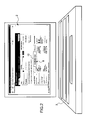
FIG. 2 is a diagrammatic view of a computer including a web browser configured for displaying enriched web pages. -
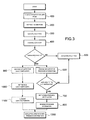
FIG. 3 is a flowchart illustrating a method for enriching content of a web page. - Referring to
FIG.1 , there is shown acommunication system 1 configured for displaying enrichedweb pages 2. The communication system includes acomputer device 3, i.e. an electronic device (such as a personal computer (PC) - which may be a laptop, as disclosed -, a Personal Digital Assistant (PDA), a Smartphone, a game station, etc.), provided with a screen and including a web browser 4 such as Microsoft Internet Explorer or Mozilla Firefox.Computer 3 is connected, for example through an (X)DSL link, to a network 5 which may be a Local Area Network (LAN), a Metropolitan Area Network (MAN), or (preferably) a Wide Area Network (WAN) such as the Internet. - The web browser 4 is compatible with HTML and preferably supports other Asynchronous Javascript And XML (AJAX) technologies, including Cascading Style Sheets (CCS) language, Document Object Model (DOM) and Javascript formats, XMLHttpRequest (XHR) interface, eXtensible Markup Language (XML) and eXtended Stylesheet Language Transformation (XSLT).
- The
communication system 1 also includes at least one distant web server 6, also connected to the network 5, including at least oneweb page 2 which the web server 6 can retrieve upon receipt of a suitable request from the web browser 4. The web server 6 may be a legacy server, meaning it does not necessarily include the latest web technologies. - The
communication system 1 further includes at least one distant presence server 7 includingpresence information 8 associated with contact information within theweb page 2.Presence information 8 may be memorized in adatabase 9. The presence server 7 is preferably part of an IMS server, configured for exchanging and managing SIP messages from and to the network 5. - The
communication system 1 also preferably includes an AJAXserver 10 to which the Javascript-enabled web browser 4 may connect through the network 5 for sending thereto a request for AJAX components enabling dynamic display of presence information within theweb page 2 downloaded from the web server 6, as will be further disclosed hereinafter. - The web browser 4 (practically a computer program implemented on a processing unit of the computer 3) is configured for undertaking the following actions:
- sending a request for a
web page 2 to the web server 6, - upon receipt of the
web page 2 from the web server 6, parsing theweb page 2 for contact information, preferably under the form of URIs such as mailto (email address), tel (telephone and/or fax number) or SIP URI, - upon detection of contact information within the
web page 2, sending a request for presence information associated with said contact information to the corresponding presence server(s) 7, - upon receipt of the
presence information 8 from the presence server(s) 7, displaying theweb page 2 on thecomputer 3 together with thepresence information 8. - Such configuration of the web browser 4 may be implemented either in a native way, i.e. as an original component of the web browser program, or as a program plugin 11 which might be downloaded from a web site or executed from a computer-readable memory support such as a CD-ROM inserted in the
computer 3 after the web browser 4 has already been installed, and comprising executable instructions corresponding to the actions disclosed hereabove. - Presence servers are generally programmed to recognize URIs. Therefore, in case the contact information within the
web page 2 is not presented under the form of URI(s), the web browser 4 is preferably configured for forming URI(s) based upon the detected contact information, for inclusion in the request for presence information to be sent to the presence server(s) (7). - As disclosed on
FIG.2 ,presence information 8 may be displayed to the user as a written presence message in apopup window 12 activated by a mouse effect such as OnMouseOver or Onclick on the text or image providing contact information within theweb page 2. The presence message may provide simple information as "available now" or "presently unavailable". It may provide more complex information which may be time-related, e.g. giving an estimated time before the recipient terminal will be available, such as "available in X minutes". The presence message may also be enriched with hyperlinks allowing the user to undertake an action upon reading the message. For example, the presence message may propose to initiate a call right away if thecomputer 3 is equipped with VoIP applications such as Skype®. - Alternately,
presence information 8 may be displayed in many other ways. For example, it may be displayed with a smiley code (a happy smiley meaning e.g. that the recipient terminal corresponding to the displayed URI is available, an unhappy smiley meaning, on the contrary, that it is not), or a color code (green color meaning e.g. that the recipient terminal is available, red color meaning, on the contrary, that it is not). - The method for enriching content of a web page displayed for a user on the
computer 3 through the web browser 4 andcommunication system 1 is now disclosed with reference toFIG.3 . - After the user has inputted the URL of the
web page 2 he wishes to access to (or clicked to a hyperlink pointing thereto), the web browser 4 sends (100) a request for theweb page 2 to the web server 6. - Upon receipt of the request from the web browser 4, the web server 6 retrieves (200) the requested
web page 2 and sends it back (300) to the web browser 4. - Upon receipt of the
web page 2 from the web server 6, the web browser 4 parses (400) theweb page 2 for contact information, e.g. in the form of URIs. - If the
web page 2 contains no contact information, the web browser 4 simply displays (500) the downloadedweb page 2. - On the contrary, upon detection of contact information within the
web page 2, such as at least one URI, the web browser 4 sends (600) a request for presence information associated with the detected contact information, to the corresponding presence server 7. Of course, if several contact information elements (e.g. several URIs) are present in theweb page 2, pointing to different presence servers 7, the web browser 4 sends a request for presence information to each of the presence servers 7. - The or each presence server 7 retrieves (700) the requested
presence information 8, which may have been previously implemented on thedatabase 9 by the users of the recipient terminals corresponding to the detected contact information. - However, before undertaking such action, the or each presence server 7 may first check identity and/or authorization of the user associated with the
computer 3. - Identity may be simply checked by reading the IP address of the
computer 3 sent by the web browser 4 when requesting the presence information, and comparing it with a memorized list of IP address. - Authentication, i.e. checking that the user is authorized to access the
presence information 8, may be achieved through a classic login/password procedure, which may be either repeated eachtime presence information 8 is requested, whereby the user is requested to input login and password in a popup window, or programmed within the web browser 4 so that login and password are inputted once and for all at installation or first use of the web browser 4. In such a configuration, login and password are provided automatically by the web browser 4 to the presence server(s) 7 when requested. - If the user has been positively authenticated, the presence server 7 retrieves (700) the presence information and sends it (800) to the web browser 4.
- By the time the web browser 4 sends the presence server 7 the request for presence information, the web browser 4 may connect to the
AJAX server 10, requesting (900) for suitable AJAX components, in order to allow dynamic display of thepresence information 8 within theweb page 2, as disclosed hereabove in reference toFIG.2 . TheAJAX server 10 retrieves (1000) the requested AJAX components and sends them (1100) to the web browser 4. - Upon receipt of the
presence information 8 from the presence server(s) 7, and provided that the user has been positively authenticated, the web browser 4 displays (1200) theweb page 2 on thecomputer 3 together with thepresence information 8. If on the contrary the user was not authenticated (e.g. the login and/or password are erroneous), the web browser 4 may display within the web page 2 a notification that the presence information is not accessible and/or that the user is not authorized. - As a result of all described features, users are allowed to access presence information (when available) in
ordinary web pages 2 memorized on ordinary (or legacy) web servers 6. Accordingly, there is no need for changing the structure of existing networks, provided thatpresence information 8 are accessible in servers connected thereto, such as in IMS presence servers as disclosed hereinbefore.
Claims (10)
- Method for enriching content of a web page (2) displayed for a user on a computer (3) connected to a computerized network (5) and provided with a web browser (4), said method comprising the steps of:- the web browser (4) sending a request for a web page (2) to a distant web server (6),- upon receipt of the web page (2) from the web server (6), the web browser (4) parsing the web page (2) for contact information,- upon detection of contact information within the web page (2), the web browser (4) sending a request for presence information (8) associated with said contact information to at least one presence server (7),- upon receipt of the presence information (8) from the presence server(s) (7), the web browser (4) displaying the web page (2) on the computer (3) together with the presence information (8).
- Method according to claim 1, wherein the contact information within the web page is in the form of at least one URI.
- Method according to claim 1, further comprising, if the contact information in the web page (2) is not in the form of URI(s), a step of the web browser (4) forming URI(s) based upon said contact information, for inclusion in the request for presence information to be sent to the presence server(s) (7).
- Method according to claim 2 or 3, wherein the URI is selected from the group consisting of SIP URI, email address (mailto) and telephone number (tel).
- Method according to any of claims 1-4, further including the step of the presence server(s) (7) identifying the user before sending the presence information (8).
- Method according to any of claims 1-5, further including the step of the presence server(s) (7) authenticating the user before sending the presence information (8).
- Method according to claim 6, including, if the user is not authenticated, the step of the web browser (4) displaying within the web page (2) a notification that the presence information is not accessible.
- Computer program implemented on a processing unit of a computer, said program including computer executable instructions comprising:- sending a request for a web page (2) to a distant web server (6),- upon receipt of the web page (2) from the web server (6), parsing the web page (2) for Uniform Resource Identifiers (URIs),- upon detection of contact information within the web page (2), sending a request for presence information associated with said contact information to at least one presence server (7),- upon receipt of the presence information (8) from the presence server(s) (7), displaying the web page (2) on the computer (3) together with the presence information (8).
- A communication system (1) configured for displaying enriched web pages (2), said system including:- a computer (3) provided with a web browser (4),- a distant web server (6) including at least one web page (2),- at least one distant presence server (7) including presence information (8),wherein the web browser (4) is configured for:- sending a request for a web page (2) to the web server (6),- upon receipt of the web page (2) from the web server (6), parsing the web page (2) for contact information,- upon detection of contact information within the web page (2), sending a request for presence information associated with said contact information to at least one presence server (7),- upon receipt of the presence information (8) from the presence server(s) (7), displaying the web page (2) on the computer (3) together with the presence information (8).
- A communication system (1) according to claim 9, further including an AJAX server (10), and wherein said web browser (4) is Javascript-enabled and configured for sending the AJAX server (10) a request for AJAX components enabling dynamic display of the presence information (8) within the web page (2).
Priority Applications (6)
| Application Number | Priority Date | Filing Date | Title |
|---|---|---|---|
| EP07291053.2A EP2031820B1 (en) | 2007-08-31 | 2007-08-31 | Method for enriching content of a web page with presence information |
| US12/675,251 US9390187B2 (en) | 2007-08-31 | 2008-08-20 | Method for enriching content of a web page with presence information |
| JP2010522321A JP5373795B2 (en) | 2007-08-31 | 2008-08-20 | A method for enriching web page content with presence information |
| PCT/EP2008/060890 WO2009027287A1 (en) | 2007-08-31 | 2008-08-20 | Method for enriching content of a web page with presence information |
| KR1020107004385A KR101455625B1 (en) | 2007-08-31 | 2008-08-20 | Method for enriching content of a web page with presence information |
| CN200880104644.8A CN101790727B (en) | 2007-08-31 | 2008-08-20 | Method for enriching web page content with presence information |
Applications Claiming Priority (1)
| Application Number | Priority Date | Filing Date | Title |
|---|---|---|---|
| EP07291053.2A EP2031820B1 (en) | 2007-08-31 | 2007-08-31 | Method for enriching content of a web page with presence information |
Publications (2)
| Publication Number | Publication Date |
|---|---|
| EP2031820A1 true EP2031820A1 (en) | 2009-03-04 |
| EP2031820B1 EP2031820B1 (en) | 2014-07-30 |
Family
ID=38752484
Family Applications (1)
| Application Number | Title | Priority Date | Filing Date |
|---|---|---|---|
| EP07291053.2A Active EP2031820B1 (en) | 2007-08-31 | 2007-08-31 | Method for enriching content of a web page with presence information |
Country Status (6)
| Country | Link |
|---|---|
| US (1) | US9390187B2 (en) |
| EP (1) | EP2031820B1 (en) |
| JP (1) | JP5373795B2 (en) |
| KR (1) | KR101455625B1 (en) |
| CN (1) | CN101790727B (en) |
| WO (1) | WO2009027287A1 (en) |
Cited By (2)
| Publication number | Priority date | Publication date | Assignee | Title |
|---|---|---|---|---|
| FR2993071A1 (en) * | 2012-07-03 | 2014-01-10 | Videodesk | SYSTEM FOR DISPLAYING A WEB PAGE |
| US12417253B2 (en) | 2016-05-17 | 2025-09-16 | Netskope, Inc. | Image based secure access to web page |
Families Citing this family (8)
| Publication number | Priority date | Publication date | Assignee | Title |
|---|---|---|---|---|
| EP2061212B1 (en) * | 2007-11-13 | 2018-06-20 | Cellular Communications Equipment Llc | Method, apparatus and program product for merging communication sessions in an IMS |
| US20100284396A1 (en) * | 2009-05-08 | 2010-11-11 | Kalmstrom Peter A | Communication system and method |
| WO2011072993A1 (en) * | 2009-12-17 | 2011-06-23 | International Business Machines Corporation | Managed channel for asynchronous requests |
| US20110252150A1 (en) * | 2010-04-09 | 2011-10-13 | Bank Of America Corporation | System and Method for Processing User Information |
| US20120254407A1 (en) * | 2011-04-04 | 2012-10-04 | Avaya Inc. | System and method to monitor and transfer hyperlink presence |
| US9654817B2 (en) | 2012-01-27 | 2017-05-16 | Avaya Inc. | System and method to synchronize video playback on mobile devices |
| JP5662507B2 (en) * | 2013-03-28 | 2015-01-28 | 株式会社 ディー・エヌ・エー | Authentication method, authentication system, and service providing server |
| CN103618791B (en) * | 2013-11-29 | 2016-07-13 | 北京神州绿盟信息安全科技股份有限公司 | A kind of WEB reverse proxy methods, devices and systems supporting XSLT file |
Citations (4)
| Publication number | Priority date | Publication date | Assignee | Title |
|---|---|---|---|---|
| GB2329046A (en) * | 1997-09-04 | 1999-03-10 | Mitel Corp | Web based help desk |
| EP1536361A1 (en) * | 2003-11-25 | 2005-06-01 | Alcatel | Web based CRM service using on-line presence information |
| US20060018272A1 (en) * | 2004-07-20 | 2006-01-26 | Nokia Corporation | Instance identification |
| EP1773019A1 (en) * | 2005-10-07 | 2007-04-11 | Alcatel Lucent | Leveraging presence service system and method for distributed web service delivery and deployment |
Family Cites Families (18)
| Publication number | Priority date | Publication date | Assignee | Title |
|---|---|---|---|---|
| US6415319B1 (en) * | 1997-02-07 | 2002-07-02 | Sun Microsystems, Inc. | Intelligent network browser using incremental conceptual indexer |
| US6208995B1 (en) * | 1997-11-24 | 2001-03-27 | International Business Machines Corporation | Web browser download of bookmark set |
| US6405192B1 (en) * | 1999-07-30 | 2002-06-11 | International Business Machines Corporation | Navigation assistant-method and apparatus for providing user configured complementary information for data browsing in a viewer context |
| US20020120714A1 (en) * | 2001-02-26 | 2002-08-29 | Borislav Agapiev | Distributed-code, custom-generated dynamic internet inclusion agent |
| JP2002279141A (en) | 2001-03-19 | 2002-09-27 | Ricoh Co Ltd | Information display system, information display method, information display server and information display program |
| JP2003274047A (en) | 2002-03-14 | 2003-09-26 | Oas Kk | Phone call transmission system and telephone number information conversion program |
| US20050071428A1 (en) | 2003-09-26 | 2005-03-31 | Khakoo Shabbir A. | Method and apparatus for delivering an electronic mail message with an indication of the presence of the sender |
| JP4641148B2 (en) | 2004-01-19 | 2011-03-02 | 日本電信電話株式会社 | Personal information disclosure system, personal information disclosure method, and personal information disclosure program |
| US20060098624A1 (en) * | 2004-11-10 | 2006-05-11 | Morgan David P | Using session initiation protocol |
| US7487214B2 (en) * | 2004-11-10 | 2009-02-03 | Microsoft Corporation | Integrated electronic mail and instant messaging application |
| US20070244900A1 (en) * | 2005-02-22 | 2007-10-18 | Kevin Hopkins | Internet-based search system and method of use |
| US7593925B2 (en) | 2005-02-25 | 2009-09-22 | Microsoft Corporation | Method and system for locating contact information collected from contact sources |
| JP2006311034A (en) * | 2005-04-27 | 2006-11-09 | Hitachi Communication Technologies Ltd | Telephone exchange system |
| US20090019367A1 (en) * | 2006-05-12 | 2009-01-15 | Convenos, Llc | Apparatus, system, method, and computer program product for collaboration via one or more networks |
| WO2007147151A2 (en) * | 2006-06-16 | 2007-12-21 | Neltura Technology, Inc. | Using online community identities of users to establish mobile communication sessions |
| US8291484B2 (en) * | 2007-02-16 | 2012-10-16 | Envysion, Inc. | System and method for video recording, management and access |
| US20080205625A1 (en) * | 2007-02-28 | 2008-08-28 | International Business Machines Corporation | Extending a standardized presence document to include contact center specific elements |
| WO2009126941A1 (en) * | 2008-04-10 | 2009-10-15 | Content Directions, Inc. | Apparatuses, methods and systems for portable universal profile (hereinafter "pup") |
-
2007
- 2007-08-31 EP EP07291053.2A patent/EP2031820B1/en active Active
-
2008
- 2008-08-20 WO PCT/EP2008/060890 patent/WO2009027287A1/en not_active Ceased
- 2008-08-20 US US12/675,251 patent/US9390187B2/en active Active
- 2008-08-20 CN CN200880104644.8A patent/CN101790727B/en active Active
- 2008-08-20 KR KR1020107004385A patent/KR101455625B1/en active Active
- 2008-08-20 JP JP2010522321A patent/JP5373795B2/en active Active
Patent Citations (4)
| Publication number | Priority date | Publication date | Assignee | Title |
|---|---|---|---|---|
| GB2329046A (en) * | 1997-09-04 | 1999-03-10 | Mitel Corp | Web based help desk |
| EP1536361A1 (en) * | 2003-11-25 | 2005-06-01 | Alcatel | Web based CRM service using on-line presence information |
| US20060018272A1 (en) * | 2004-07-20 | 2006-01-26 | Nokia Corporation | Instance identification |
| EP1773019A1 (en) * | 2005-10-07 | 2007-04-11 | Alcatel Lucent | Leveraging presence service system and method for distributed web service delivery and deployment |
Non-Patent Citations (2)
| Title |
|---|
| MARK SCHIEFELBEIN: "A Backbase Ajax Front-end for J2EE Applications", INTERNET CITATION, 29 August 2005 (2005-08-29), XP002442353, Retrieved from the Internet <URL:http://dev2dev.bea.com/lpt/a/433> [retrieved on 20050829] * |
| ROSENBERG CISCO SYSTEMS J: "Obtaining and Using Globally Routable User Agent (UA) URIs (GRUU) in the Session Initiation Protocol (SIP); draft-ietf-sip-gruu-06.txt", IETF STANDARD-WORKING-DRAFT, INTERNET ENGINEERING TASK FORCE, IETF, CH, vol. sip, no. 6, 20 October 2005 (2005-10-20), XP015042701, ISSN: 0000-0004 * |
Cited By (2)
| Publication number | Priority date | Publication date | Assignee | Title |
|---|---|---|---|---|
| FR2993071A1 (en) * | 2012-07-03 | 2014-01-10 | Videodesk | SYSTEM FOR DISPLAYING A WEB PAGE |
| US12417253B2 (en) | 2016-05-17 | 2025-09-16 | Netskope, Inc. | Image based secure access to web page |
Also Published As
| Publication number | Publication date |
|---|---|
| WO2009027287A1 (en) | 2009-03-05 |
| EP2031820B1 (en) | 2014-07-30 |
| US20110208799A1 (en) | 2011-08-25 |
| JP2010539559A (en) | 2010-12-16 |
| KR101455625B1 (en) | 2014-10-28 |
| JP5373795B2 (en) | 2013-12-18 |
| CN101790727B (en) | 2016-03-02 |
| US9390187B2 (en) | 2016-07-12 |
| CN101790727A (en) | 2010-07-28 |
| KR20100059823A (en) | 2010-06-04 |
Similar Documents
| Publication | Publication Date | Title |
|---|---|---|
| US9390187B2 (en) | Method for enriching content of a web page with presence information | |
| US8250082B2 (en) | Cross domain communication | |
| US9912809B2 (en) | System and method for enhancing user experience during interactive audio visual communication | |
| US10447633B2 (en) | Method and system for optimizing and preventing failure of sender policy framework (SPF) lookups | |
| Burger et al. | Basic network media services with SIP | |
| US20130227662A1 (en) | Method of Generating a Token to be Used in a Uniform Resource Identifier | |
| US20120023247A1 (en) | Anonymous communication system, anonymous communication method, communication control apparatus, terminal apparatus and communication control program | |
| US10587561B2 (en) | Method and system for optimizing and preventing failure of Sender Policy Framework (SPF) lookups by dynamically generating and returning flattened SPF records | |
| WO2014118548A1 (en) | Tracking system | |
| AU2012290738B2 (en) | System and method for activating a mobile device to initiate a communication | |
| Stout et al. | An extensible messaging and presence protocol (xmpp) subprotocol for websocket | |
| US20080033961A1 (en) | Electronic Document Browsing | |
| JP5036744B2 (en) | Address conversion server, information providing system, and information providing method | |
| WO2008142212A1 (en) | Access to service | |
| JP2015064721A (en) | Page site server, program, and method for introducing application | |
| JP2013145533A (en) | Authentication system | |
| Kataoka et al. | Web contents collaborative method in call-to-web session linkage system | |
| Moffitt et al. | RFC 7395: An Extensible Messaging and Presence Protocol (XMPP) Subprotocol for WebSocket | |
| KR20050077882A (en) | Method for using electronic mail address to internet address and apparatus therefor |
Legal Events
| Date | Code | Title | Description |
|---|---|---|---|
| PUAI | Public reference made under article 153(3) epc to a published international application that has entered the european phase |
Free format text: ORIGINAL CODE: 0009012 |
|
| AK | Designated contracting states |
Kind code of ref document: A1 Designated state(s): AT BE BG CH CY CZ DE DK EE ES FI FR GB GR HU IE IS IT LI LT LU LV MC MT NL PL PT RO SE SI SK TR |
|
| AX | Request for extension of the european patent |
Extension state: AL BA HR MK RS |
|
| 17P | Request for examination filed |
Effective date: 20090904 |
|
| AKX | Designation fees paid |
Designated state(s): AT BE BG CH CY CZ DE DK EE ES FI FR GB GR HU IE IS IT LI LT LU LV MC MT NL PL PT RO SE SI SK TR |
|
| 17Q | First examination report despatched |
Effective date: 20110202 |
|
| RAP1 | Party data changed (applicant data changed or rights of an application transferred) |
Owner name: ALCATEL LUCENT |
|
| 111Z | Information provided on other rights and legal means of execution |
Free format text: AT BE BG CH CY CZ DE DK EE ES FI FR GB GR HU IE IS IT LI LT LU LV MC MT NL PL PT RO SE SI SK TR Effective date: 20130410 |
|
| REG | Reference to a national code |
Ref country code: DE Ref legal event code: R079 Ref document number: 602007037859 Country of ref document: DE Free format text: PREVIOUS MAIN CLASS: H04L0029060000 Ipc: H04L0029080000 |
|
| GRAP | Despatch of communication of intention to grant a patent |
Free format text: ORIGINAL CODE: EPIDOSNIGR1 |
|
| RIC1 | Information provided on ipc code assigned before grant |
Ipc: H04L 29/06 20060101ALI20140211BHEP Ipc: H04L 29/08 20060101AFI20140211BHEP Ipc: G06F 17/30 20060101ALI20140211BHEP |
|
| INTG | Intention to grant announced |
Effective date: 20140311 |
|
| GRAS | Grant fee paid |
Free format text: ORIGINAL CODE: EPIDOSNIGR3 |
|
| GRAA | (expected) grant |
Free format text: ORIGINAL CODE: 0009210 |
|
| AK | Designated contracting states |
Kind code of ref document: B1 Designated state(s): AT BE BG CH CY CZ DE DK EE ES FI FR GB GR HU IE IS IT LI LT LU LV MC MT NL PL PT RO SE SI SK TR |
|
| REG | Reference to a national code |
Ref country code: GB Ref legal event code: FG4D |
|
| REG | Reference to a national code |
Ref country code: CH Ref legal event code: EP |
|
| REG | Reference to a national code |
Ref country code: DE Ref legal event code: R081 Ref document number: 602007037859 Country of ref document: DE Owner name: ALCATEL LUCENT, FR Free format text: FORMER OWNER: ALCATEL LUCENT, PARIS, FR |
|
| REG | Reference to a national code |
Ref country code: AT Ref legal event code: REF Ref document number: 680428 Country of ref document: AT Kind code of ref document: T Effective date: 20140815 |
|
| RAP2 | Party data changed (patent owner data changed or rights of a patent transferred) |
Owner name: ALCATEL LUCENT |
|
| REG | Reference to a national code |
Ref country code: IE Ref legal event code: FG4D |
|
| REG | Reference to a national code |
Ref country code: DE Ref legal event code: R096 Ref document number: 602007037859 Country of ref document: DE Effective date: 20140911 |
|
| REG | Reference to a national code |
Ref country code: AT Ref legal event code: MK05 Ref document number: 680428 Country of ref document: AT Kind code of ref document: T Effective date: 20140730 |
|
| REG | Reference to a national code |
Ref country code: NL Ref legal event code: VDEP Effective date: 20140730 |
|
| REG | Reference to a national code |
Ref country code: LT Ref legal event code: MG4D |
|
| PG25 | Lapsed in a contracting state [announced via postgrant information from national office to epo] |
Ref country code: SE Free format text: LAPSE BECAUSE OF FAILURE TO SUBMIT A TRANSLATION OF THE DESCRIPTION OR TO PAY THE FEE WITHIN THE PRESCRIBED TIME-LIMIT Effective date: 20140730 Ref country code: FI Free format text: LAPSE BECAUSE OF FAILURE TO SUBMIT A TRANSLATION OF THE DESCRIPTION OR TO PAY THE FEE WITHIN THE PRESCRIBED TIME-LIMIT Effective date: 20140730 Ref country code: BG Free format text: LAPSE BECAUSE OF FAILURE TO SUBMIT A TRANSLATION OF THE DESCRIPTION OR TO PAY THE FEE WITHIN THE PRESCRIBED TIME-LIMIT Effective date: 20141030 Ref country code: LT Free format text: LAPSE BECAUSE OF FAILURE TO SUBMIT A TRANSLATION OF THE DESCRIPTION OR TO PAY THE FEE WITHIN THE PRESCRIBED TIME-LIMIT Effective date: 20140730 Ref country code: ES Free format text: LAPSE BECAUSE OF FAILURE TO SUBMIT A TRANSLATION OF THE DESCRIPTION OR TO PAY THE FEE WITHIN THE PRESCRIBED TIME-LIMIT Effective date: 20140730 Ref country code: GR Free format text: LAPSE BECAUSE OF FAILURE TO SUBMIT A TRANSLATION OF THE DESCRIPTION OR TO PAY THE FEE WITHIN THE PRESCRIBED TIME-LIMIT Effective date: 20141031 Ref country code: PT Free format text: LAPSE BECAUSE OF FAILURE TO SUBMIT A TRANSLATION OF THE DESCRIPTION OR TO PAY THE FEE WITHIN THE PRESCRIBED TIME-LIMIT Effective date: 20141202 |
|
| PG25 | Lapsed in a contracting state [announced via postgrant information from national office to epo] |
Ref country code: PL Free format text: LAPSE BECAUSE OF FAILURE TO SUBMIT A TRANSLATION OF THE DESCRIPTION OR TO PAY THE FEE WITHIN THE PRESCRIBED TIME-LIMIT Effective date: 20140730 Ref country code: LV Free format text: LAPSE BECAUSE OF FAILURE TO SUBMIT A TRANSLATION OF THE DESCRIPTION OR TO PAY THE FEE WITHIN THE PRESCRIBED TIME-LIMIT Effective date: 20140730 Ref country code: CY Free format text: LAPSE BECAUSE OF FAILURE TO SUBMIT A TRANSLATION OF THE DESCRIPTION OR TO PAY THE FEE WITHIN THE PRESCRIBED TIME-LIMIT Effective date: 20140730 Ref country code: NL Free format text: LAPSE BECAUSE OF FAILURE TO SUBMIT A TRANSLATION OF THE DESCRIPTION OR TO PAY THE FEE WITHIN THE PRESCRIBED TIME-LIMIT Effective date: 20140730 Ref country code: AT Free format text: LAPSE BECAUSE OF FAILURE TO SUBMIT A TRANSLATION OF THE DESCRIPTION OR TO PAY THE FEE WITHIN THE PRESCRIBED TIME-LIMIT Effective date: 20140730 Ref country code: IS Free format text: LAPSE BECAUSE OF FAILURE TO SUBMIT A TRANSLATION OF THE DESCRIPTION OR TO PAY THE FEE WITHIN THE PRESCRIBED TIME-LIMIT Effective date: 20141130 |
|
| REG | Reference to a national code |
Ref country code: CH Ref legal event code: PL |
|
| PG25 | Lapsed in a contracting state [announced via postgrant information from national office to epo] |
Ref country code: CH Free format text: LAPSE BECAUSE OF NON-PAYMENT OF DUE FEES Effective date: 20140831 Ref country code: EE Free format text: LAPSE BECAUSE OF FAILURE TO SUBMIT A TRANSLATION OF THE DESCRIPTION OR TO PAY THE FEE WITHIN THE PRESCRIBED TIME-LIMIT Effective date: 20140730 Ref country code: IT Free format text: LAPSE BECAUSE OF FAILURE TO SUBMIT A TRANSLATION OF THE DESCRIPTION OR TO PAY THE FEE WITHIN THE PRESCRIBED TIME-LIMIT Effective date: 20140730 Ref country code: RO Free format text: LAPSE BECAUSE OF FAILURE TO SUBMIT A TRANSLATION OF THE DESCRIPTION OR TO PAY THE FEE WITHIN THE PRESCRIBED TIME-LIMIT Effective date: 20140730 Ref country code: SK Free format text: LAPSE BECAUSE OF FAILURE TO SUBMIT A TRANSLATION OF THE DESCRIPTION OR TO PAY THE FEE WITHIN THE PRESCRIBED TIME-LIMIT Effective date: 20140730 Ref country code: LI Free format text: LAPSE BECAUSE OF NON-PAYMENT OF DUE FEES Effective date: 20140831 Ref country code: MC Free format text: LAPSE BECAUSE OF FAILURE TO SUBMIT A TRANSLATION OF THE DESCRIPTION OR TO PAY THE FEE WITHIN THE PRESCRIBED TIME-LIMIT Effective date: 20140730 Ref country code: BE Free format text: LAPSE BECAUSE OF NON-PAYMENT OF DUE FEES Effective date: 20140831 Ref country code: CZ Free format text: LAPSE BECAUSE OF FAILURE TO SUBMIT A TRANSLATION OF THE DESCRIPTION OR TO PAY THE FEE WITHIN THE PRESCRIBED TIME-LIMIT Effective date: 20140730 Ref country code: DK Free format text: LAPSE BECAUSE OF FAILURE TO SUBMIT A TRANSLATION OF THE DESCRIPTION OR TO PAY THE FEE WITHIN THE PRESCRIBED TIME-LIMIT Effective date: 20140730 |
|
| REG | Reference to a national code |
Ref country code: DE Ref legal event code: R097 Ref document number: 602007037859 Country of ref document: DE |
|
| REG | Reference to a national code |
Ref country code: IE Ref legal event code: MM4A |
|
| PLBE | No opposition filed within time limit |
Free format text: ORIGINAL CODE: 0009261 |
|
| STAA | Information on the status of an ep patent application or granted ep patent |
Free format text: STATUS: NO OPPOSITION FILED WITHIN TIME LIMIT |
|
| 26N | No opposition filed |
Effective date: 20150504 |
|
| REG | Reference to a national code |
Ref country code: FR Ref legal event code: PLFP Year of fee payment: 9 |
|
| PG25 | Lapsed in a contracting state [announced via postgrant information from national office to epo] |
Ref country code: IE Free format text: LAPSE BECAUSE OF NON-PAYMENT OF DUE FEES Effective date: 20140831 |
|
| PG25 | Lapsed in a contracting state [announced via postgrant information from national office to epo] |
Ref country code: SI Free format text: LAPSE BECAUSE OF FAILURE TO SUBMIT A TRANSLATION OF THE DESCRIPTION OR TO PAY THE FEE WITHIN THE PRESCRIBED TIME-LIMIT Effective date: 20140730 |
|
| PG25 | Lapsed in a contracting state [announced via postgrant information from national office to epo] |
Ref country code: MT Free format text: LAPSE BECAUSE OF FAILURE TO SUBMIT A TRANSLATION OF THE DESCRIPTION OR TO PAY THE FEE WITHIN THE PRESCRIBED TIME-LIMIT Effective date: 20140730 |
|
| PG25 | Lapsed in a contracting state [announced via postgrant information from national office to epo] |
Ref country code: LU Free format text: LAPSE BECAUSE OF NON-PAYMENT OF DUE FEES Effective date: 20140831 Ref country code: TR Free format text: LAPSE BECAUSE OF FAILURE TO SUBMIT A TRANSLATION OF THE DESCRIPTION OR TO PAY THE FEE WITHIN THE PRESCRIBED TIME-LIMIT Effective date: 20140730 Ref country code: HU Free format text: LAPSE BECAUSE OF FAILURE TO SUBMIT A TRANSLATION OF THE DESCRIPTION OR TO PAY THE FEE WITHIN THE PRESCRIBED TIME-LIMIT; INVALID AB INITIO Effective date: 20070831 Ref country code: BE Free format text: LAPSE BECAUSE OF FAILURE TO SUBMIT A TRANSLATION OF THE DESCRIPTION OR TO PAY THE FEE WITHIN THE PRESCRIBED TIME-LIMIT Effective date: 20140730 |
|
| REG | Reference to a national code |
Ref country code: FR Ref legal event code: PLFP Year of fee payment: 10 |
|
| REG | Reference to a national code |
Ref country code: FR Ref legal event code: PLFP Year of fee payment: 11 |
|
| REG | Reference to a national code |
Ref country code: FR Ref legal event code: PLFP Year of fee payment: 12 |
|
| REG | Reference to a national code |
Ref country code: DE Ref legal event code: R079 Ref document number: 602007037859 Country of ref document: DE Free format text: PREVIOUS MAIN CLASS: H04L0029080000 Ipc: H04L0065000000 |
|
| PGFP | Annual fee paid to national office [announced via postgrant information from national office to epo] |
Ref country code: DE Payment date: 20250702 Year of fee payment: 19 |
|
| PGFP | Annual fee paid to national office [announced via postgrant information from national office to epo] |
Ref country code: GB Payment date: 20250703 Year of fee payment: 19 |
|
| PGFP | Annual fee paid to national office [announced via postgrant information from national office to epo] |
Ref country code: FR Payment date: 20250703 Year of fee payment: 19 |