EP2031680A1 - High strength support for solid oxide fuel cell - Google Patents
High strength support for solid oxide fuel cell Download PDFInfo
- Publication number
- EP2031680A1 EP2031680A1 EP08161392A EP08161392A EP2031680A1 EP 2031680 A1 EP2031680 A1 EP 2031680A1 EP 08161392 A EP08161392 A EP 08161392A EP 08161392 A EP08161392 A EP 08161392A EP 2031680 A1 EP2031680 A1 EP 2031680A1
- Authority
- EP
- European Patent Office
- Prior art keywords
- anode
- sintering aid
- ysz
- layer
- fuel cell
- Prior art date
- Legal status (The legal status is an assumption and is not a legal conclusion. Google has not performed a legal analysis and makes no representation as to the accuracy of the status listed.)
- Withdrawn
Links
- 239000000446 fuel Substances 0.000 title claims abstract description 18
- 239000007787 solid Substances 0.000 title claims abstract description 10
- 239000000203 mixture Substances 0.000 claims abstract description 33
- 238000005245 sintering Methods 0.000 claims abstract description 29
- 229910002119 nickel–yttria stabilized zirconia Inorganic materials 0.000 claims abstract description 14
- 239000011195 cermet Substances 0.000 claims abstract description 12
- 239000002184 metal Substances 0.000 claims abstract description 7
- 229910052751 metal Inorganic materials 0.000 claims abstract description 7
- BVKZGUZCCUSVTD-UHFFFAOYSA-L Carbonate Chemical compound [O-]C([O-])=O BVKZGUZCCUSVTD-UHFFFAOYSA-L 0.000 claims abstract description 5
- 230000000737 periodic effect Effects 0.000 claims abstract description 5
- 229910000514 dolomite Inorganic materials 0.000 claims description 24
- 239000010459 dolomite Substances 0.000 claims description 24
- 239000003792 electrolyte Substances 0.000 claims description 14
- 229910001233 yttria-stabilized zirconia Inorganic materials 0.000 claims description 9
- 239000011230 binding agent Substances 0.000 claims description 5
- 229910052791 calcium Inorganic materials 0.000 claims description 5
- 229910052749 magnesium Inorganic materials 0.000 claims description 5
- 229910052788 barium Inorganic materials 0.000 claims description 2
- 229910052712 strontium Inorganic materials 0.000 claims description 2
- 239000000126 substance Substances 0.000 claims description 2
- 210000004027 cell Anatomy 0.000 description 19
- PXHVJJICTQNCMI-UHFFFAOYSA-N nickel Substances [Ni] PXHVJJICTQNCMI-UHFFFAOYSA-N 0.000 description 13
- VYPSYNLAJGMNEJ-UHFFFAOYSA-N Silicium dioxide Chemical compound O=[Si]=O VYPSYNLAJGMNEJ-UHFFFAOYSA-N 0.000 description 6
- 229910052739 hydrogen Inorganic materials 0.000 description 5
- 239000001257 hydrogen Substances 0.000 description 5
- 239000000463 material Substances 0.000 description 5
- 229910052759 nickel Inorganic materials 0.000 description 4
- UFHFLCQGNIYNRP-UHFFFAOYSA-N Hydrogen Chemical compound [H][H] UFHFLCQGNIYNRP-UHFFFAOYSA-N 0.000 description 3
- -1 O-2 anions Chemical class 0.000 description 3
- 238000002441 X-ray diffraction Methods 0.000 description 3
- 230000000694 effects Effects 0.000 description 3
- 229910052760 oxygen Inorganic materials 0.000 description 3
- 239000001301 oxygen Substances 0.000 description 3
- 238000002360 preparation method Methods 0.000 description 3
- 239000000377 silicon dioxide Substances 0.000 description 3
- 239000002028 Biomass Substances 0.000 description 2
- VTYYLEPIZMXCLO-UHFFFAOYSA-L Calcium carbonate Chemical compound [Ca+2].[O-]C([O-])=O VTYYLEPIZMXCLO-UHFFFAOYSA-L 0.000 description 2
- MCMNRKCIXSYSNV-UHFFFAOYSA-N Zirconium dioxide Chemical compound O=[Zr]=O MCMNRKCIXSYSNV-UHFFFAOYSA-N 0.000 description 2
- QVGXLLKOCUKJST-UHFFFAOYSA-N atomic oxygen Chemical compound [O] QVGXLLKOCUKJST-UHFFFAOYSA-N 0.000 description 2
- 239000003054 catalyst Substances 0.000 description 2
- 229910052681 coesite Inorganic materials 0.000 description 2
- 229910052906 cristobalite Inorganic materials 0.000 description 2
- 238000000354 decomposition reaction Methods 0.000 description 2
- 238000002149 energy-dispersive X-ray emission spectroscopy Methods 0.000 description 2
- 239000007789 gas Substances 0.000 description 2
- 229930195733 hydrocarbon Natural products 0.000 description 2
- 150000002430 hydrocarbons Chemical class 0.000 description 2
- 229910052500 inorganic mineral Inorganic materials 0.000 description 2
- 239000011707 mineral Substances 0.000 description 2
- 229910052682 stishovite Inorganic materials 0.000 description 2
- 229910052905 tridymite Inorganic materials 0.000 description 2
- OKTJSMMVPCPJKN-UHFFFAOYSA-N Carbon Chemical compound [C] OKTJSMMVPCPJKN-UHFFFAOYSA-N 0.000 description 1
- KKCBUQHMOMHUOY-UHFFFAOYSA-N Na2O Inorganic materials [O-2].[Na+].[Na+] KKCBUQHMOMHUOY-UHFFFAOYSA-N 0.000 description 1
- NINIDFKCEFEMDL-UHFFFAOYSA-N Sulfur Chemical compound [S] NINIDFKCEFEMDL-UHFFFAOYSA-N 0.000 description 1
- PNEYBMLMFCGWSK-UHFFFAOYSA-N aluminium oxide Inorganic materials [O-2].[O-2].[O-2].[Al+3].[Al+3] PNEYBMLMFCGWSK-UHFFFAOYSA-N 0.000 description 1
- 230000015572 biosynthetic process Effects 0.000 description 1
- 229910000019 calcium carbonate Inorganic materials 0.000 description 1
- 238000004364 calculation method Methods 0.000 description 1
- 229910052799 carbon Inorganic materials 0.000 description 1
- 150000004649 carbonic acid derivatives Chemical class 0.000 description 1
- 230000003197 catalytic effect Effects 0.000 description 1
- 239000000919 ceramic Substances 0.000 description 1
- 239000003795 chemical substances by application Substances 0.000 description 1
- 238000004939 coking Methods 0.000 description 1
- 150000001875 compounds Chemical class 0.000 description 1
- 229910052593 corundum Inorganic materials 0.000 description 1
- 238000000280 densification Methods 0.000 description 1
- 238000002309 gasification Methods 0.000 description 1
- 238000010438 heat treatment Methods 0.000 description 1
- 150000002431 hydrogen Chemical class 0.000 description 1
- 239000012535 impurity Substances 0.000 description 1
- JEIPFZHSYJVQDO-UHFFFAOYSA-N iron(III) oxide Inorganic materials O=[Fe]O[Fe]=O JEIPFZHSYJVQDO-UHFFFAOYSA-N 0.000 description 1
- 239000001095 magnesium carbonate Substances 0.000 description 1
- ZLNQQNXFFQJAID-UHFFFAOYSA-L magnesium carbonate Chemical compound [Mg+2].[O-]C([O-])=O ZLNQQNXFFQJAID-UHFFFAOYSA-L 0.000 description 1
- 229910000021 magnesium carbonate Inorganic materials 0.000 description 1
- 238000004519 manufacturing process Methods 0.000 description 1
- 150000002739 metals Chemical class 0.000 description 1
- 238000000034 method Methods 0.000 description 1
- 230000003647 oxidation Effects 0.000 description 1
- 238000007254 oxidation reaction Methods 0.000 description 1
- 238000012545 processing Methods 0.000 description 1
- 238000000197 pyrolysis Methods 0.000 description 1
- 239000011435 rock Substances 0.000 description 1
- 238000004626 scanning electron microscopy Methods 0.000 description 1
- 238000004611 spectroscopical analysis Methods 0.000 description 1
- 238000001228 spectrum Methods 0.000 description 1
- 229910052717 sulfur Inorganic materials 0.000 description 1
- 239000011593 sulfur Substances 0.000 description 1
- 238000012360 testing method Methods 0.000 description 1
- XLYOFNOQVPJJNP-UHFFFAOYSA-N water Substances O XLYOFNOQVPJJNP-UHFFFAOYSA-N 0.000 description 1
- 229910001845 yogo sapphire Inorganic materials 0.000 description 1
- RUDFQVOCFDJEEF-UHFFFAOYSA-N yttrium(III) oxide Inorganic materials [O-2].[O-2].[O-2].[Y+3].[Y+3] RUDFQVOCFDJEEF-UHFFFAOYSA-N 0.000 description 1
Images
Classifications
-
- H—ELECTRICITY
- H01—ELECTRIC ELEMENTS
- H01M—PROCESSES OR MEANS, e.g. BATTERIES, FOR THE DIRECT CONVERSION OF CHEMICAL ENERGY INTO ELECTRICAL ENERGY
- H01M8/00—Fuel cells; Manufacture thereof
- H01M8/10—Fuel cells with solid electrolytes
- H01M8/12—Fuel cells with solid electrolytes operating at high temperature, e.g. with stabilised ZrO2 electrolyte
- H01M8/124—Fuel cells with solid electrolytes operating at high temperature, e.g. with stabilised ZrO2 electrolyte characterised by the process of manufacturing or by the material of the electrolyte
- H01M8/1246—Fuel cells with solid electrolytes operating at high temperature, e.g. with stabilised ZrO2 electrolyte characterised by the process of manufacturing or by the material of the electrolyte the electrolyte consisting of oxides
- H01M8/1253—Fuel cells with solid electrolytes operating at high temperature, e.g. with stabilised ZrO2 electrolyte characterised by the process of manufacturing or by the material of the electrolyte the electrolyte consisting of oxides the electrolyte containing zirconium oxide
-
- H—ELECTRICITY
- H01—ELECTRIC ELEMENTS
- H01M—PROCESSES OR MEANS, e.g. BATTERIES, FOR THE DIRECT CONVERSION OF CHEMICAL ENERGY INTO ELECTRICAL ENERGY
- H01M4/00—Electrodes
- H01M4/86—Inert electrodes with catalytic activity, e.g. for fuel cells
- H01M4/8647—Inert electrodes with catalytic activity, e.g. for fuel cells consisting of more than one material, e.g. consisting of composites
- H01M4/8657—Inert electrodes with catalytic activity, e.g. for fuel cells consisting of more than one material, e.g. consisting of composites layered
-
- H—ELECTRICITY
- H01—ELECTRIC ELEMENTS
- H01M—PROCESSES OR MEANS, e.g. BATTERIES, FOR THE DIRECT CONVERSION OF CHEMICAL ENERGY INTO ELECTRICAL ENERGY
- H01M4/00—Electrodes
- H01M4/86—Inert electrodes with catalytic activity, e.g. for fuel cells
- H01M4/88—Processes of manufacture
- H01M4/8878—Treatment steps after deposition of the catalytic active composition or after shaping of the electrode being free-standing body
- H01M4/8882—Heat treatment, e.g. drying, baking
- H01M4/8885—Sintering or firing
-
- H—ELECTRICITY
- H01—ELECTRIC ELEMENTS
- H01M—PROCESSES OR MEANS, e.g. BATTERIES, FOR THE DIRECT CONVERSION OF CHEMICAL ENERGY INTO ELECTRICAL ENERGY
- H01M8/00—Fuel cells; Manufacture thereof
- H01M8/10—Fuel cells with solid electrolytes
- H01M8/12—Fuel cells with solid electrolytes operating at high temperature, e.g. with stabilised ZrO2 electrolyte
- H01M8/1213—Fuel cells with solid electrolytes operating at high temperature, e.g. with stabilised ZrO2 electrolyte characterised by the electrode/electrolyte combination or the supporting material
- H01M8/1226—Fuel cells with solid electrolytes operating at high temperature, e.g. with stabilised ZrO2 electrolyte characterised by the electrode/electrolyte combination or the supporting material characterised by the supporting layer
-
- Y—GENERAL TAGGING OF NEW TECHNOLOGICAL DEVELOPMENTS; GENERAL TAGGING OF CROSS-SECTIONAL TECHNOLOGIES SPANNING OVER SEVERAL SECTIONS OF THE IPC; TECHNICAL SUBJECTS COVERED BY FORMER USPC CROSS-REFERENCE ART COLLECTIONS [XRACs] AND DIGESTS
- Y02—TECHNOLOGIES OR APPLICATIONS FOR MITIGATION OR ADAPTATION AGAINST CLIMATE CHANGE
- Y02E—REDUCTION OF GREENHOUSE GAS [GHG] EMISSIONS, RELATED TO ENERGY GENERATION, TRANSMISSION OR DISTRIBUTION
- Y02E60/00—Enabling technologies; Technologies with a potential or indirect contribution to GHG emissions mitigation
- Y02E60/30—Hydrogen technology
- Y02E60/50—Fuel cells
-
- Y—GENERAL TAGGING OF NEW TECHNOLOGICAL DEVELOPMENTS; GENERAL TAGGING OF CROSS-SECTIONAL TECHNOLOGIES SPANNING OVER SEVERAL SECTIONS OF THE IPC; TECHNICAL SUBJECTS COVERED BY FORMER USPC CROSS-REFERENCE ART COLLECTIONS [XRACs] AND DIGESTS
- Y02—TECHNOLOGIES OR APPLICATIONS FOR MITIGATION OR ADAPTATION AGAINST CLIMATE CHANGE
- Y02P—CLIMATE CHANGE MITIGATION TECHNOLOGIES IN THE PRODUCTION OR PROCESSING OF GOODS
- Y02P70/00—Climate change mitigation technologies in the production process for final industrial or consumer products
- Y02P70/50—Manufacturing or production processes characterised by the final manufactured product
Definitions
- the present invention relates to solid oxide fuel cells (SOFC) and, more particularly, to anode compositions that are useful in anode-supported planar solid oxide fuel cells and include a sintering aid.
- SOFC solid oxide fuel cells
- Fuel cells that generate electric current by the electrochemical combination of hydrogen and oxygen are well known.
- an anodic layer and a cathodic layer are separated by an electrolyte formed of a ceramic solid oxide.
- Such a fuel cell is known in the art as a "solid oxide fuel cell” (SOFC).
- Hydrogen either pure or reformed from hydrocarbons, is flowed along the outer surface of the anode and diffuses into the anode.
- Oxygen typically from air, is flowed along the outer surface of the cathode and diffuses into the cathode.
- Each O 2 molecule is split and reduced to two O -2 anions catalytically by the cathode.
- the oxygen anions transport through the electrolyte and combine at the anode/electrolyte interface with four hydrogen ions to form two molecules of water.
- the anode and the cathode are connected externally through a load to complete a circuit whereby four electrons are transferred from the anode to the cathode.
- the "reformate” gas includes CO, which is converted to CO 2 at the anode via an oxidation process similar to that performed on the hydrogen.
- Reformed gasoline is a commonly used fuel in automotive fuel cell applications.
- a single cell is capable of generating a relatively small voltage and wattage, typically between about 0.5 volt and about 1.0 volt, depending upon load, and less than about 2 watts per cm 2 of cell surface. Therefore, in practice it is usual to stack together, in electrical series, a plurality of cells.
- the anode In an "anode-supported" fuel cell, the anode is typically a bilayer structural element having the electrolyte and cathode deposited upon it. Each anode and cathode is in direct chemical contact with its respective surface of the interposed electrolyte.
- Planar solid oxide fuel cells typically use a thin electrolyte such as, for example, zirconia doped with yttria (YSZ), which is supported by a Ni-YSZ cermet that also acts as the anode [cf. A. Atkinson, S. Barnett, R.J. Gorte, J.T.S. Irvine, A.J. McEvoy, M. Mogensen, S.C. Singhal, and J. Vohs, "Advanced anodes for high-temperature fuel cells," Nature Materials, vol. 3 pp. 17-27 2004 .].
- Ni-YSZ cermet has many desirable properties, as described in U.S. Pat. No.
- Ni-YSZ anode support material whose characteristics are suitable for the production of robust bilayer plates. It would be especially desirable that a new Ni-YSZ support material be about 50% stronger, with similar electrochemical performance, i.e., power generating capability, when compared to current state-of-the-art material. Such a material would allow a substantial reduction in the thickness of the anode, resulting in cost savings, higher scaling capability, and improved performance.
- the present invention is directed to an anode for use in an anode-supported planar solid oxide fuel cell (SOFC).
- SOFC planar solid oxide fuel cell
- the anode comprises a Ni-YSZ cermet composition that includes a sintering aid selected from the group consisting of an oxide, a carbonate, and mixtures thereof of at least one metal of Group 2 of the Periodic Table.
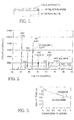
- FIG. 1 schematically depicts a bilayer anode and supported electrolyte layer for a planar SOFC.
- FIG.2 depicts X-ray diffraction patterns of Ni-YSZ anode compositions with and without added dolomite.
- FIG. 3 depicts the power density performance of button cells with and without added dolomite as an anode sintering aid.
- the sintering aid included in the Ni-YSZ cermet comprising the anode of the present invention enables the sintering temperature to be lowered, resulting in less Ni loss from the anode. Inclusion of the sintering aid also beneficially increases the flexural strength of the anode, allowing for a reduction in its thickness.
- the sintering aid is selected from the group consisting of an oxide, a carbonate, and mixtures thereof of at least one metal of Group 2 of the Periodic Table.
- the oxides, carbonates, and mixtures thereof are derived from metals of Group 2 of the Periodic Table, preferably Ca, Mg, Sr, and Ba, more preferably, Ca, Mg, and mixtures thereof.
- the sintering aid comprises CaO, MgO, and mixtures thereof.
- Preferred mixtures of CaO and MgO range from about 2:1 CaO:MgO to about 1:10 CaO:MgO by weight.
- a particularly preferred sintering aid is dolomite, a well known mineral that is commonly used as a catalyst for tar decomposition [cf. C. Myren, C. Hornell, E. Bjornbom, K.Sjostrom, "Catalytic tar decomposition of biomass pyrolysis gas with a combination of dolomite and silica” Biomass Bioenergy, vol. 23, pp. 217-227, 2002 ; J. Srinakruang, K. Sato, T. Vitidsant, and K. Fujimoto, "Highly efficient sulfur and coking resistance catalysts for tar gasification with steam," Fuel, vol. 85, pp. 2419-2426, 2006 ; P.A. Simell, J.K. Leppalahti, and E.A. Kurkela, "Tar-decomposing activity of carbonate rocks under high CO2 partial pressure, "Fuel, vol. 74, pp. 938-945, 1995 ].
- dolomite a well known mineral
- Dolomite mineral is characterized by the general formula CaCO 3 ⁇ MgCO 3 , with trace amounts of other impurities (Ca, Mg, Fe, Si, Al, Ti, Mn) 2 (CO 3 ) 2 .
- the dolomite is preferably calcined by heating at a temperature of about 1200°C.
- FIG. 1 schematically depicts a bilayer anode for a planar SOFC that comprises a Ni-YSZ active anode and a Ni-YSZ bulk anode, on which is supported a YSZ electrolyte and a cathode (not shown).
- the YSZ electrolyte and Ni-YSZ active anode layers each has a thickness of about 5-15 ⁇ m.
- Prior art bulk Ni-YSZ anodes have thicknesses on the order of about 450 ⁇ m. Inclusion of a sintering agent in the anode composition enables a reduction in the thickness of a bilayer anode to a thickness in the range of about 250-350 ⁇ m, even while providing a robust support structure with high flexural strength.
- NiO-YSZ cermet samples were prepared from green tapes that were subsequently cut to size and sintered. NiO and YSZ can be mixed in specified ratios to achieve an amount of Ni necessary for a desired electronic conductivity in the anode.
- a composition suitable for the preparation of an active anode layer preferably contains about 5- 20 vol.% YSZ, about 30-45 vol.% NiO, and about 50 vol.% binder.
- carbon in the amount of about15-20 vol% may be added to the NiO-YSZ-binder active anode composition.
- Varying amounts of sintering aid from about 0.1 wt.% to about 30 wt.%, more preferably about 1 wt.% to about 2 wt.%, are added to the anode compositions.
- the tapes were cast and laminated to achieve desired thicknesses, and samples were sintered at 1325°C and 1425°C.
- Layers of the NiO-YSZ-binder active anode composition were subjected to X-ray diffraction analysis. As shown by the X-ray diffraction patterns depicted in FIG. 2 , inclusion of 2 wt.% dolomite in the anode composition layer sintered at 1325°C produces sharp and narrow peaks, as compared to the layer containing no dolomite that was sintered at 1425°C. Further, the spectrum of the dolomite-containing material contained no additional peaks that would indicate formation of new phases. Inclusion of 5 wt.% dolomite in the anode composition enables the sintering temperature to be beneficially further reduced to 1200°C.
- Test structures were prepared in which the component layers had the following thicknesses: electrolyte layer, 10-14 ⁇ m; active anode layer, 10-12 ⁇ m; bulk anode layer, 260 ⁇ m.
- electrolyte layer 10-14 ⁇ m
- active anode layer 10-12 ⁇ m
- bulk anode layer 260 ⁇ m.
- FIG. 3 A comparison of the power output performance of cells containing anode bilayers with and without sintering aid in the active anode is shown in FIG. 3 .
- Button cells having an area of 2.5 cm 2 , constructed with and without the inclusion of 2 wt.% dolomite in the active anode layer were tested at 750°C in 50% H 2 in N 2 .
- the slightly lower performance of the dolomite-containing cell may be attributed to the high sintering temperature required to sinter the electrolyte layer included in the cells, which produced excessive grain growth and densification in the active anode layer. This lowered performance may be remediated by using an electrolyte requiring a lower sintering temperature or by adjusting the level or the composition of the included sintering aid.
Landscapes
- Chemical & Material Sciences (AREA)
- Manufacturing & Machinery (AREA)
- Chemical Kinetics & Catalysis (AREA)
- Electrochemistry (AREA)
- General Chemical & Material Sciences (AREA)
- Engineering & Computer Science (AREA)
- Life Sciences & Earth Sciences (AREA)
- Sustainable Development (AREA)
- Sustainable Energy (AREA)
- Composite Materials (AREA)
- Physics & Mathematics (AREA)
- Thermal Sciences (AREA)
- Inert Electrodes (AREA)
Abstract
Description
- The present invention relates to solid oxide fuel cells (SOFC) and, more particularly, to anode compositions that are useful in anode-supported planar solid oxide fuel cells and include a sintering aid.
- Fuel cells that generate electric current by the electrochemical combination of hydrogen and oxygen are well known. In one form of such a fuel cell, an anodic layer and a cathodic layer are separated by an electrolyte formed of a ceramic solid oxide. Such a fuel cell is known in the art as a "solid oxide fuel cell" (SOFC). Hydrogen, either pure or reformed from hydrocarbons, is flowed along the outer surface of the anode and diffuses into the anode. Oxygen, typically from air, is flowed along the outer surface of the cathode and diffuses into the cathode. Each O2 molecule is split and reduced to two O-2 anions catalytically by the cathode. The oxygen anions transport through the electrolyte and combine at the anode/electrolyte interface with four hydrogen ions to form two molecules of water. The anode and the cathode are connected externally through a load to complete a circuit whereby four electrons are transferred from the anode to the cathode. When hydrogen is derived from "reformed" hydrocarbons, the "reformate" gas includes CO, which is converted to CO2 at the anode via an oxidation process similar to that performed on the hydrogen. Reformed gasoline is a commonly used fuel in automotive fuel cell applications.
- A single cell is capable of generating a relatively small voltage and wattage, typically between about 0.5 volt and about 1.0 volt, depending upon load, and less than about 2 watts per cm2 of cell surface. Therefore, in practice it is usual to stack together, in electrical series, a plurality of cells.
- In an "anode-supported" fuel cell, the anode is typically a bilayer structural element having the electrolyte and cathode deposited upon it. Each anode and cathode is in direct chemical contact with its respective surface of the interposed electrolyte.
- Planar solid oxide fuel cells (SOFC) typically use a thin electrolyte such as, for example, zirconia doped with yttria (YSZ), which is supported by a Ni-YSZ cermet that also acts as the anode [cf. A. Atkinson, S. Barnett, R.J. Gorte, J.T.S. Irvine, A.J. McEvoy, M. Mogensen, S.C. Singhal, and J. Vohs, "Advanced anodes for high-temperature fuel cells," Nature Materials, vol. 3 pp. 17-27 2004.]. Although Ni-YSZ cermet has many desirable properties, as described in
U.S. Pat. No. 3,558,360 , the disclosure of which is incorporated herein by reference, it exhibits poor mechanical strength and is prone to significant loss of Ni during high temperature (1400°C -1450°C) sintering [cf. D. Waldbillig, A. Wood, and D.G. Ivey, "Thermal analysis of the cyclic reduction and oxidation behaviour of SOFC anodes," Solid State Ionics, 176, pp. 847-859, 2005]. This limits the minimum thickness of the anode to about 0.5 mm for safe handling. Even at 0.5 mm thickness, the mechanical and flexural strength is marginal, being prone to breakage during handling and having a low tolerance to thermal cycling [cf. G. Robert, A. Kaiser, E. Batawi, "Anode Substrate Design for RedOx-stable ASE cell," 6th Eur. SOFC Forum, Lucerne, Vol. 1, pp. 193-200, 2004. B. Liu, Y. Zhang, B. Tu, Y. Dong, and M. Cheng, "Electrochemical impedance investigation of the redox behaviour of a Ni-YSZ anode," Journal of Power Sources, vol. 165, pp. 114-119, 2007]. - In order to reduce anode support-related problems such as poison resistance, redox tolerance and electrolyte anode interface integrity, it would be desirable to reduce the thickness of the anode bilayer. Thinner bilayers would also enable a reduction in the size of the fuel cell stack. Thus, there is a need for Ni-YSZ anode support material whose characteristics are suitable for the production of robust bilayer plates. It would be especially desirable that a new Ni-YSZ support material be about 50% stronger, with similar electrochemical performance, i.e., power generating capability, when compared to current state-of-the-art material. Such a material would allow a substantial reduction in the thickness of the anode, resulting in cost savings, higher scaling capability, and improved performance.
- The present invention is directed to an anode for use in an anode-supported planar solid oxide fuel cell (SOFC). The anode comprises a Ni-YSZ cermet composition that includes a sintering aid selected from the group consisting of an oxide, a carbonate, and mixtures thereof of at least one metal of
Group 2 of the Periodic Table. - The present invention will now be described, by way of example, with reference to the accompanying drawings.
-
FIG. 1 schematically depicts a bilayer anode and supported electrolyte layer for a planar SOFC. -
FIG.2 depicts X-ray diffraction patterns of Ni-YSZ anode compositions with and without added dolomite. -
FIG. 3 depicts the power density performance of button cells with and without added dolomite as an anode sintering aid. - The sintering aid included in the Ni-YSZ cermet comprising the anode of the present invention enables the sintering temperature to be lowered, resulting in less Ni loss from the anode. Inclusion of the sintering aid also beneficially increases the flexural strength of the anode, allowing for a reduction in its thickness.
- As noted above, the sintering aid is selected from the group consisting of an oxide, a carbonate, and mixtures thereof of at least one metal of
Group 2 of the Periodic Table. The oxides, carbonates, and mixtures thereof are derived from metals ofGroup 2 of the Periodic Table, preferably Ca, Mg, Sr, and Ba, more preferably, Ca, Mg, and mixtures thereof. More preferably, the sintering aid comprises CaO, MgO, and mixtures thereof. Preferred mixtures of CaO and MgO range from about 2:1 CaO:MgO to about 1:10 CaO:MgO by weight. - A particularly preferred sintering aid is dolomite, a well known mineral that is commonly used as a catalyst for tar decomposition [cf. C. Myren, C. Hornell, E. Bjornbom, K.Sjostrom, "Catalytic tar decomposition of biomass pyrolysis gas with a combination of dolomite and silica" Biomass Bioenergy, vol. 23, pp. 217-227, 2002; J. Srinakruang, K. Sato, T. Vitidsant, and K. Fujimoto, "Highly efficient sulfur and coking resistance catalysts for tar gasification with steam," Fuel, vol. 85, pp. 2419-2426, 2006; P.A. Simell, J.K. Leppalahti, and E.A. Kurkela, "Tar-decomposing activity of carbonate rocks under high CO2 partial pressure, "Fuel, vol. 74, pp. 938-945, 1995].
- Dolomite mineral is characterized by the general formula CaCO3·MgCO3, with trace amounts of other impurities (Ca, Mg, Fe, Si, Al, Ti, Mn)2 (CO3)2. For use in the present invention, the dolomite is preferably calcined by heating at a temperature of about 1200°C.
-
FIG. 1 schematically depicts a bilayer anode for a planar SOFC that comprises a Ni-YSZ active anode and a Ni-YSZ bulk anode, on which is supported a YSZ electrolyte and a cathode (not shown). Typically, the YSZ electrolyte and Ni-YSZ active anode layers each has a thickness of about 5-15 µm. Prior art bulk Ni-YSZ anodes have thicknesses on the order of about 450 µm. Inclusion of a sintering agent in the anode composition enables a reduction in the thickness of a bilayer anode to a thickness in the range of about 250-350 µm, even while providing a robust support structure with high flexural strength. - The composition of calcined dolomite employed in the preparation of the anodes as described below was analyzed by Energy Dispersive X-ray Fluorescence (EDXRF) spectrometry. The analytical results are summarized in TABLE 1 following:
TABLE 1 Compound/Element % ppm CaO 66.2 MgO 32.3 Al2O3 0.37 Na2O 0.34 SiO2 0.26 Fe2O3 0.24 MnO 630 K2O 595 Ni 591 Zr 294 SiO2 209 Sr 136 Cl 97 Sub-Totals 99.71 2552 Total 99.97% - To demonstrate the effect of dolomite as a sintering aid, NiO-YSZ cermet samples were prepared from green tapes that were subsequently cut to size and sintered. NiO and YSZ can be mixed in specified ratios to achieve an amount of Ni necessary for a desired electronic conductivity in the anode. A composition suitable for the preparation of an active anode layer preferably contains about 5- 20 vol.% YSZ, about 30-45 vol.% NiO, and about 50 vol.% binder. For the preparation of the bulk anode layer, carbon in the amount of about15-20 vol% may be added to the NiO-YSZ-binder active anode composition. Varying amounts of sintering aid, from about 0.1 wt.% to about 30 wt.%, more preferably about 1 wt.% to about 2 wt.%, are added to the anode compositions.
- The tapes were cast and laminated to achieve desired thicknesses, and samples were sintered at 1325°C and 1425°C. Layers of the NiO-YSZ-binder active anode composition were subjected to X-ray diffraction analysis. As shown by the X-ray diffraction patterns depicted in
FIG. 2 , inclusion of 2 wt.% dolomite in the anode composition layer sintered at 1325°C produces sharp and narrow peaks, as compared to the layer containing no dolomite that was sintered at 1425°C. Further, the spectrum of the dolomite-containing material contained no additional peaks that would indicate formation of new phases. Inclusion of 5 wt.% dolomite in the anode composition enables the sintering temperature to be beneficially further reduced to 1200°C. - A substantial loss of Ni from the surface of the anode would require additional processing to restore anode surface conductivity. TABLE 2 shows that the inclusion of dolomite in the anode composition is also effective for preventing the loss of nickel from the surface of a Ni-YSZ cermet during sintering. The concentrations of Ni at the center and at the surface of sintered 2-mm thick layers of Ni-YSZ compositions containing varying amounts of dolomite were determined using scanning electron microscopy in the energy dispersive mode, and the results were normalized to a concentration of 32 wt.% in the middle of the layer.
- As the data in TABLE 2 indicate, inclusion of as little as1.0 wt.% of dolomite in the anode composition very substantially reduces the loss of Ni from the surface of the cermet layer to its surroundings, enabling an effective and economic utilization of nickel that avoids the need for an additional conductive surface Ni layer.
TABLE 2 Dolomite wt.% Ni concentration in center, wt. % Ni concentration on surface, wt. % 0 32 15 1 32 25 2 32 26 - Improved mechanical strength of the anode bilayer is key to making a compact, light, and low cost fuel cell. The effect of the sintering aid of the present invention on flexural strengths on various layers is shown in TABLE 3 below.
- Test structures were prepared in which the component layers had the following thicknesses: electrolyte layer, 10-14 µm; active anode layer, 10-12 µm; bulk anode layer, 260 µm. The results summarized in TABLE 3 below were obtained with samples having a total thickness (S) of about 283 µm.
- The flexural strength (σ) of a sample with thickness (S) is determined by applying a load (P, expressed in Newtons) to failure, followed by calculation using the formula σ = 1.08 P/S2.
- As shown by the data in TABLE 3, addition of 1 wt.% dolomite in both the active and bulk anode layers resulted in a >70% increase in flexural strength, which may allow for a reduction in bilayer thickness down to as low as about 0.3 mm while maintaining adequate mechanical strength.
TABLE 3 Dolomite wt. % Dolomite in active anode layer Dolomite in bulk anode layer Flexural strength MPa 0 118 1 Yes No 136 1 Yes Yes 203 2 Yes No 147 5 No Yes 187 - A comparison of the power output performance of cells containing anode bilayers with and without sintering aid in the active anode is shown in
FIG. 3 . Button cells having an area of 2.5 cm2, constructed with and without the inclusion of 2 wt.% dolomite in the active anode layer were tested at 750°C in 50% H2 in N2. The slightly lower performance of the dolomite-containing cell may be attributed to the high sintering temperature required to sinter the electrolyte layer included in the cells, which produced excessive grain growth and densification in the active anode layer. This lowered performance may be remediated by using an electrolyte requiring a lower sintering temperature or by adjusting the level or the composition of the included sintering aid. - While the invention has been described by reference to various specific embodiments, it should be understood that numerous changes may be made within the spirit and scope of the inventive concepts described. Accordingly, it is intended that the invention not be limited to the described embodiments, but will have full scope defined by the language of the following claims.
Claims (17)
- An anode for use in an anode-supported planar solid oxide fuel cell (SOFC), said anode comprising a Ni-YSZ cermet composition and a sintering aid selected from the group consisting of an oxide, a carbonate, and mixtures thereof of at least one metal of Group 2 of the Periodic Table.
- The anode of claim 1 wherein said metal is selected from the group consisting of Ca, Mg, Sr, Ba, and mixtures thereof.
- The anode of claim 2 wherein said metal is selected from the group consisting of Ca, Mg, and mixtures thereof.
- The anode of claim 1 wherein said sintering aid comprises dolomite.
- The anode of claim 1 wherein said sintering aid comprises calcined dolomite.
- The anode of claim 1 wherein said sintering aid comprises CaO, MgO, and mixtures thereof.
- The anode of claim 6 wherein said sintering aid comprises a mixture of CaO and MgO in the range of about 2:1 CaO:MgO to about 1:10 CaO:MgO by weight.
- The anode of claim 1 comprising an active anode layer and a bulk anode layer, said sintering aid being disposed in either or both of said active anode and bulk anode layers.
- The anode of claim 8 wherein said sintering aid is disposed in both anode layers.
- The anode of claim 8 wherein said active anode layer and said bulk anode layer have a combined thickness of about 250 µm to about 350 µm.
- The anode of claim 8 further comprising a YSZ electrolyte layer in direct contact with said active anode layer.
- The anode of claim 8 sintered at a temperature in the range of about 1200°C to about 1425°C.
- The anode of claim 1 where said cermet composition comprises about 0.1 wt.% to about to about 30 wt.% of said sintering aid.
- The anode of claim 13 where said cermet composition comprises about 1 wt.% to about to about 2 wt.% of said sintering aid.
- The anode of claim 1 wherein said cermet composition further comprises a binder.
- The anode of claim 15 wherein said cermet composition comprises about 5- 20 vol.% YSZ, about 30-45 vol.% NiO, and about 50 vol.% binder.
- A solid oxide fuel cell comprising a YSZ electrolyte layer interposed between and in direct chemical contact with a cathode and with an anode of claim 1.
Applications Claiming Priority (1)
| Application Number | Priority Date | Filing Date | Title |
|---|---|---|---|
| US11/891,931 US20090047569A1 (en) | 2007-08-14 | 2007-08-14 | High strength support for solid oxide fuel cell |
Publications (1)
| Publication Number | Publication Date |
|---|---|
| EP2031680A1 true EP2031680A1 (en) | 2009-03-04 |
Family
ID=39760879
Family Applications (1)
| Application Number | Title | Priority Date | Filing Date |
|---|---|---|---|
| EP08161392A Withdrawn EP2031680A1 (en) | 2007-08-14 | 2008-07-29 | High strength support for solid oxide fuel cell |
Country Status (2)
| Country | Link |
|---|---|
| US (1) | US20090047569A1 (en) |
| EP (1) | EP2031680A1 (en) |
Cited By (2)
| Publication number | Priority date | Publication date | Assignee | Title |
|---|---|---|---|---|
| WO2014117263A1 (en) * | 2013-02-01 | 2014-08-07 | Uti Limited Partnership | Chemical compositions suitable for use as solid oxide fuel cell anodes, and processes for making same |
| KR20170020698A (en) * | 2015-08-13 | 2017-02-23 | 한양대학교 산학협력단 | Fuel cell and method for manufacturing same |
Families Citing this family (2)
| Publication number | Priority date | Publication date | Assignee | Title |
|---|---|---|---|---|
| US20100183948A1 (en) * | 2008-12-05 | 2010-07-22 | Cheng-Chieh Chao | Closed-end nanotube arrays as an electrolyte of a solid oxide fuel cell |
| US10326157B2 (en) * | 2015-04-22 | 2019-06-18 | Phillips 66 Company | Modified solid oxide fuel cell |
Citations (4)
| Publication number | Priority date | Publication date | Assignee | Title |
|---|---|---|---|---|
| US3558360A (en) | 1968-01-08 | 1971-01-26 | Westinghouse Electric Corp | Fuel cell comprising a stabilized zirconium oxide electrolyte and a doped indium or tin oxide cathode |
| JPH0729574A (en) * | 1991-03-07 | 1995-01-31 | Mitsubishi Heavy Ind Ltd | Fuel electrode material |
| JP2004259594A (en) * | 2003-02-26 | 2004-09-16 | Tokyo Electric Power Co Inc:The | Electrode, method for manufacturing the same, and fuel cell |
| US20050095369A1 (en) * | 2003-11-04 | 2005-05-05 | Selman Jan R. | Method and apparatus for electrostatic spray deposition for a solid oxide fuel cell |
Family Cites Families (8)
| Publication number | Priority date | Publication date | Assignee | Title |
|---|---|---|---|---|
| JPS57184296A (en) * | 1981-05-09 | 1982-11-12 | Hitachi Ltd | Ceramic circuit board |
| US5143801A (en) * | 1990-10-22 | 1992-09-01 | Battelle Memorial Institute | Solid oxide fuel cells, and air electrode and electrical interconnection materials therefor |
| TW362053B (en) * | 1996-07-09 | 1999-06-21 | Baker Refractories | Nozzle co-molded with slagline sleeve, method for marking the same, and slagline sleeve composition |
| AU2001274926A1 (en) * | 2000-05-22 | 2001-12-03 | Acumentrics Corporation | Electrode-supported solid state electrochemical cell |
| US7125624B2 (en) * | 2002-04-08 | 2006-10-24 | Nisshinbo Industries, Inc. | Fuel cell separator and method of manufacture |
| US6744235B2 (en) * | 2002-06-24 | 2004-06-01 | Delphi Technologies, Inc. | Oxygen isolation and collection for anode protection in a solid-oxide fuel cell stack |
| US6998187B2 (en) * | 2003-08-07 | 2006-02-14 | Nanodynamics, Inc. | Solid oxide fuel cells with novel internal geometry |
| FR2861067B1 (en) * | 2003-10-15 | 2006-03-10 | Europ De Conception Et D Etude | PROCESS FOR PREPARING A SEMICONDUCTOR CERAMIC, SEMICONDUCTOR CERAMIC AND IGNITION CANDLE USING THE CERAMIC |
-
2007
- 2007-08-14 US US11/891,931 patent/US20090047569A1/en not_active Abandoned
-
2008
- 2008-07-29 EP EP08161392A patent/EP2031680A1/en not_active Withdrawn
Patent Citations (4)
| Publication number | Priority date | Publication date | Assignee | Title |
|---|---|---|---|---|
| US3558360A (en) | 1968-01-08 | 1971-01-26 | Westinghouse Electric Corp | Fuel cell comprising a stabilized zirconium oxide electrolyte and a doped indium or tin oxide cathode |
| JPH0729574A (en) * | 1991-03-07 | 1995-01-31 | Mitsubishi Heavy Ind Ltd | Fuel electrode material |
| JP2004259594A (en) * | 2003-02-26 | 2004-09-16 | Tokyo Electric Power Co Inc:The | Electrode, method for manufacturing the same, and fuel cell |
| US20050095369A1 (en) * | 2003-11-04 | 2005-05-05 | Selman Jan R. | Method and apparatus for electrostatic spray deposition for a solid oxide fuel cell |
Non-Patent Citations (10)
| Title |
|---|
| A. ATKINSON ET AL.: "Advanced anodes for high-temperature fuel cells", NATURE MATERIALS, vol. 3, 2004, pages 17 - 27, XP002497460, DOI: doi:10.1038/nmat1040 |
| ATKINSON A ET AL: "Advanced anodes for high-temperature fuel cells.", NATURE MATERIALS JAN 2004, vol. 3, no. 1, January 2004 (2004-01-01), pages 17 - 27, XP002497460, ISSN: 1476-1122 * |
| B. LIU ET AL.: "Electrochemical impedance investigation of the redox behaviour of a Ni-YSZ anode", JOURNAL OF POWER SOURCES, vol. 165, 2007, pages 114 - 119, XP005883208, DOI: doi:10.1016/j.jpowsour.2006.11.052 |
| C. MYREN ET AL.: "Catalytic tar decomposition of biomass pyrolysis gas with a combination of dolomite and silica", BIOMASS BIOENERGY, vol. 23, 2002, pages 217 - 227 |
| D. WALDBILLIG; A. WOOD; D.G. IVEY: "Thermal analysis of the cyclic reduction and oxidation behaviour of SOFC anodes", SOLID STATE LONICS, vol. 176, 2005, pages 847 - 859, XP025255294, DOI: doi:10.1016/j.ssi.2004.12.002 |
| G. ROBERT; A. KAISER; E. BATAWI: "Anode Substrate Design for RedOx-stable ASE cell", 6TH EUR. SOFC FORUM, LUCERNE, vol. 1, 2004, pages 193 - 200 |
| J. SRINAKRUANG ET AL.: "Highly efficient sulfur and coking resistance catalysts for tar gasification with steam", FUEL, vol. 85, 2006, pages 2419 - 2426, XP028064673, DOI: doi:10.1016/j.fuel.2006.04.026 |
| LIU ET AL: "Electrochemical impedance investigation of the redox behaviour of a Ni-YSZ anode", JOURNAL OF POWER SOURCES, ELSEVIER, AMSTERDAM, NL, vol. 165, no. 1, 10 February 2007 (2007-02-10), pages 114 - 119, XP005883208, ISSN: 0378-7753 * |
| P.A. SIMELL; J.K. LEPPALAHTI; E.A. KURKELA: "Tar-decomposing activity of carbonate rocks under high C02 partial pressure", FUEL, vol. 74, 1995, pages 938 - 945 |
| WALDBILLIG D ET AL: "Thermal analysis of the cyclic reduction and oxidation behaviour of SOFC anodes", SOLID STATE IONICS, NORTH HOLLAND PUB. COMPANY. AMSTERDAM, NL, vol. 176, no. 9-10, 15 March 2005 (2005-03-15), pages 847 - 859, XP004749242, ISSN: 0167-2738 * |
Cited By (2)
| Publication number | Priority date | Publication date | Assignee | Title |
|---|---|---|---|---|
| WO2014117263A1 (en) * | 2013-02-01 | 2014-08-07 | Uti Limited Partnership | Chemical compositions suitable for use as solid oxide fuel cell anodes, and processes for making same |
| KR20170020698A (en) * | 2015-08-13 | 2017-02-23 | 한양대학교 산학협력단 | Fuel cell and method for manufacturing same |
Also Published As
| Publication number | Publication date |
|---|---|
| US20090047569A1 (en) | 2009-02-19 |
Similar Documents
| Publication | Publication Date | Title |
|---|---|---|
| Park et al. | Tape cast solid-oxide fuel cells for the direct oxidation of hydrocarbons | |
| Chen et al. | Materials degradation of solid oxide electrolysis cells | |
| Wang et al. | High-performance lanthanum-ferrite-based cathode for SOFC | |
| Nikolla et al. | Direct electrochemical oxidation of hydrocarbon fuels on SOFCs: improved carbon tolerance of Ni alloy anodes | |
| US8518605B2 (en) | Ceramic material combination for an anode of a high-temperature fuel cell | |
| KR20160095096A (en) | Electrochemical energy conversion devices and cells, and negative electrode-side materials for them | |
| US20080248395A1 (en) | Electrolyte-Electrode Joined Assembly and Method for Producing the Same | |
| Li et al. | Probing novel triple phase conducting composite cathode for high performance protonic ceramic fuel cells | |
| Zhang et al. | Material design and performance of carbon monoxide‐fueled solid oxide fuel cells: A review | |
| Zurlo et al. | Copper-based electrodes for IT-SOFC | |
| Tomita et al. | Comparative performance of anode-supported SOFCs using a thin Ce0. 9Gd0. 1O1. 95 electrolyte with an incorporated BaCe0. 8Y0. 2O3− α layer in hydrogen and methane | |
| Lysik et al. | Silver coated cathode for molten carbonate fuel cells | |
| Tomita et al. | Chemical and redox stabilities of a solid oxide fuel cell with BaCe0. 8Y0. 2O3− α functioning as an electrolyte and as an anode | |
| US10326157B2 (en) | Modified solid oxide fuel cell | |
| US20140287341A1 (en) | Modified anode/electrolyte structure for a solid oxide electrochemical cell and a method for making said structure | |
| JP2000133280A (en) | Anode for high performance solid oxide fuel cells | |
| US20090047569A1 (en) | High strength support for solid oxide fuel cell | |
| Yue et al. | Evolution of PrBa0. 5Sr0. 5Co1. 5Fe0. 5O5+ δ cathode/BaZr0. 1Ce0. 7Y0. 1Yb0. 1O3− δ electrolyte interface of protonic ceramic fuel cells | |
| Navarrete et al. | Tailoring electrocatalytic properties of solid oxide fuel cell composite cathodes based on (La0. 8Sr0. 2) 0.95 MnO3+ δ and doped cerias Ce1–xLnxO2–δ (Ln= Gd, La, Er, Pr, Tb and x= 0.1–0.2) | |
| JP7609164B2 (en) | Proton conductive cell structure, proton conductor, electrochemical device, and method for producing proton conductor | |
| Pillai et al. | Solid oxide fuel cell with oxide anode-side support | |
| US20090181274A1 (en) | Electrodes for Lanthanum Gallate Electrolyte-Based Electrochemical Systems | |
| EP2693545B1 (en) | Fuel cell | |
| JP7324168B2 (en) | electrode | |
| US20240396052A1 (en) | Cathode composite, manufacturing method of the same and electrochemical cell comprising the same |
Legal Events
| Date | Code | Title | Description |
|---|---|---|---|
| PUAI | Public reference made under article 153(3) epc to a published international application that has entered the european phase |
Free format text: ORIGINAL CODE: 0009012 |
|
| AK | Designated contracting states |
Kind code of ref document: A1 Designated state(s): AT BE BG CH CY CZ DE DK EE ES FI FR GB GR HR HU IE IS IT LI LT LU LV MC MT NL NO PL PT RO SE SI SK TR |
|
| AX | Request for extension of the european patent |
Extension state: AL BA MK RS |
|
| 17Q | First examination report despatched |
Effective date: 20001002 |
|
| 17P | Request for examination filed |
Effective date: 20090904 |
|
| AKX | Designation fees paid |
Designated state(s): AT BE BG CH CY CZ DE DK EE ES FI FR GB GR HR HU IE IS IT LI LT LU LV MC MT NL NO PL PT RO SE SI SK TR |
|
| R17C | First examination report despatched (corrected) |
Effective date: 20091002 |
|
| STAA | Information on the status of an ep patent application or granted ep patent |
Free format text: STATUS: THE APPLICATION IS DEEMED TO BE WITHDRAWN |
|
| 18D | Application deemed to be withdrawn |
Effective date: 20101228 |