EP2031124A1 - Coating having low friction characteristics - Google Patents
Coating having low friction characteristics Download PDFInfo
- Publication number
- EP2031124A1 EP2031124A1 EP07115000A EP07115000A EP2031124A1 EP 2031124 A1 EP2031124 A1 EP 2031124A1 EP 07115000 A EP07115000 A EP 07115000A EP 07115000 A EP07115000 A EP 07115000A EP 2031124 A1 EP2031124 A1 EP 2031124A1
- Authority
- EP
- European Patent Office
- Prior art keywords
- coating according
- chemical compound
- lubricant
- coating
- carrier
- Prior art date
- Legal status (The legal status is an assumption and is not a legal conclusion. Google has not performed a legal analysis and makes no representation as to the accuracy of the status listed.)
- Withdrawn
Links
- 238000000576 coating method Methods 0.000 title claims abstract description 39
- 239000011248 coating agent Substances 0.000 title claims abstract description 38
- 239000000314 lubricant Substances 0.000 claims abstract description 27
- 150000001875 compounds Chemical class 0.000 claims abstract description 22
- -1 polyethylene Polymers 0.000 claims description 23
- 229920002125 Sokalan® Polymers 0.000 claims description 19
- 239000004584 polyacrylic acid Substances 0.000 claims description 15
- 229920000642 polymer Polymers 0.000 claims description 14
- XLYOFNOQVPJJNP-UHFFFAOYSA-N water Substances O XLYOFNOQVPJJNP-UHFFFAOYSA-N 0.000 claims description 14
- 229920001223 polyethylene glycol Polymers 0.000 claims description 11
- 229920001577 copolymer Polymers 0.000 claims description 9
- 230000002209 hydrophobic effect Effects 0.000 claims description 7
- 239000002202 Polyethylene glycol Substances 0.000 claims description 6
- 229920001451 polypropylene glycol Polymers 0.000 claims description 6
- 239000000463 material Substances 0.000 claims description 5
- 229920002818 (Hydroxyethyl)methacrylate Polymers 0.000 claims description 4
- WOBHKFSMXKNTIM-UHFFFAOYSA-N Hydroxyethyl methacrylate Chemical compound CC(=C)C(=O)OCCO WOBHKFSMXKNTIM-UHFFFAOYSA-N 0.000 claims description 4
- 239000004698 Polyethylene Substances 0.000 claims description 4
- 229920001477 hydrophilic polymer Polymers 0.000 claims description 4
- 229920000767 polyaniline Polymers 0.000 claims description 4
- 229920000573 polyethylene Polymers 0.000 claims description 4
- 229920001400 block copolymer Polymers 0.000 claims description 3
- 229920001600 hydrophobic polymer Polymers 0.000 claims description 3
- 239000000203 mixture Substances 0.000 claims description 3
- OMIGHNLMNHATMP-UHFFFAOYSA-N 2-hydroxyethyl prop-2-enoate Chemical compound OCCOC(=O)C=C OMIGHNLMNHATMP-UHFFFAOYSA-N 0.000 claims description 2
- QZPSOSOOLFHYRR-UHFFFAOYSA-N 3-hydroxypropyl prop-2-enoate Chemical compound OCCCOC(=O)C=C QZPSOSOOLFHYRR-UHFFFAOYSA-N 0.000 claims description 2
- 229920003171 Poly (ethylene oxide) Polymers 0.000 claims description 2
- 229920002845 Poly(methacrylic acid) Polymers 0.000 claims description 2
- 239000005062 Polybutadiene Substances 0.000 claims description 2
- 229920002873 Polyethylenimine Polymers 0.000 claims description 2
- 239000004743 Polypropylene Substances 0.000 claims description 2
- 239000004793 Polystyrene Substances 0.000 claims description 2
- 239000004372 Polyvinyl alcohol Substances 0.000 claims description 2
- 125000003277 amino group Chemical group 0.000 claims description 2
- 229920002313 fluoropolymer Polymers 0.000 claims description 2
- 239000004811 fluoropolymer Substances 0.000 claims description 2
- 150000004676 glycans Chemical class 0.000 claims description 2
- 229930195733 hydrocarbon Natural products 0.000 claims description 2
- 150000002430 hydrocarbons Chemical class 0.000 claims description 2
- 229920000831 ionic polymer Polymers 0.000 claims description 2
- 229920005615 natural polymer Polymers 0.000 claims description 2
- 239000010702 perfluoropolyether Substances 0.000 claims description 2
- 229920000765 poly(2-oxazolines) Polymers 0.000 claims description 2
- 229920000172 poly(styrenesulfonic acid) Polymers 0.000 claims description 2
- 229920002492 poly(sulfone) Polymers 0.000 claims description 2
- 229920002401 polyacrylamide Polymers 0.000 claims description 2
- 229920000058 polyacrylate Polymers 0.000 claims description 2
- 229920002239 polyacrylonitrile Polymers 0.000 claims description 2
- 229920002857 polybutadiene Polymers 0.000 claims description 2
- 229920000867 polyelectrolyte Polymers 0.000 claims description 2
- 229920001195 polyisoprene Polymers 0.000 claims description 2
- 229920000193 polymethacrylate Polymers 0.000 claims description 2
- 229920005862 polyol Polymers 0.000 claims description 2
- 150000003077 polyols Chemical class 0.000 claims description 2
- 229920001184 polypeptide Polymers 0.000 claims description 2
- 229920001155 polypropylene Polymers 0.000 claims description 2
- 229920000128 polypyrrole Polymers 0.000 claims description 2
- 229920001282 polysaccharide Polymers 0.000 claims description 2
- 239000005017 polysaccharide Substances 0.000 claims description 2
- 229920001296 polysiloxane Polymers 0.000 claims description 2
- 229920002223 polystyrene Polymers 0.000 claims description 2
- 229920000909 polytetrahydrofuran Polymers 0.000 claims description 2
- 229920002689 polyvinyl acetate Polymers 0.000 claims description 2
- 239000011118 polyvinyl acetate Substances 0.000 claims description 2
- 229920002451 polyvinyl alcohol Polymers 0.000 claims description 2
- 235000019422 polyvinyl alcohol Nutrition 0.000 claims description 2
- 229920000915 polyvinyl chloride Polymers 0.000 claims description 2
- 239000004800 polyvinyl chloride Substances 0.000 claims description 2
- 229920001289 polyvinyl ether Polymers 0.000 claims description 2
- 229920000036 polyvinylpyrrolidone Polymers 0.000 claims description 2
- 239000001267 polyvinylpyrrolidone Substances 0.000 claims description 2
- 235000013855 polyvinylpyrrolidone Nutrition 0.000 claims description 2
- 102000004196 processed proteins & peptides Human genes 0.000 claims description 2
- 108090000765 processed proteins & peptides Proteins 0.000 claims description 2
- 150000003839 salts Chemical class 0.000 claims description 2
- 239000004753 textile Substances 0.000 claims description 2
- 239000004215 Carbon black (E152) Substances 0.000 claims 1
- 235000014113 dietary fatty acids Nutrition 0.000 claims 1
- 239000000194 fatty acid Substances 0.000 claims 1
- 229930195729 fatty acid Natural products 0.000 claims 1
- 150000004665 fatty acids Chemical class 0.000 claims 1
- 239000011521 glass Substances 0.000 description 12
- 239000000758 substrate Substances 0.000 description 11
- 238000000034 method Methods 0.000 description 4
- KFZMGEQAYNKOFK-UHFFFAOYSA-N Isopropanol Chemical compound CC(C)O KFZMGEQAYNKOFK-UHFFFAOYSA-N 0.000 description 3
- 238000002474 experimental method Methods 0.000 description 3
- 239000010410 layer Substances 0.000 description 3
- 238000005259 measurement Methods 0.000 description 3
- 230000002035 prolonged effect Effects 0.000 description 3
- 206010011985 Decubitus ulcer Diseases 0.000 description 2
- 239000000654 additive Substances 0.000 description 2
- 238000001311 chemical methods and process Methods 0.000 description 2
- 238000005229 chemical vapour deposition Methods 0.000 description 2
- 230000002195 synergetic effect Effects 0.000 description 2
- WYTZZXDRDKSJID-UHFFFAOYSA-N (3-aminopropyl)triethoxysilane Chemical compound CCO[Si](OCC)(OCC)CCCN WYTZZXDRDKSJID-UHFFFAOYSA-N 0.000 description 1
- SJECZPVISLOESU-UHFFFAOYSA-N 3-trimethoxysilylpropan-1-amine Chemical compound CO[Si](OC)(OC)CCCN SJECZPVISLOESU-UHFFFAOYSA-N 0.000 description 1
- XUIMIQQOPSSXEZ-UHFFFAOYSA-N Silicon Chemical compound [Si] XUIMIQQOPSSXEZ-UHFFFAOYSA-N 0.000 description 1
- 239000007866 anti-wear additive Substances 0.000 description 1
- 150000001720 carbohydrates Chemical class 0.000 description 1
- 235000014633 carbohydrates Nutrition 0.000 description 1
- 125000003178 carboxy group Chemical group [H]OC(*)=O 0.000 description 1
- 238000006243 chemical reaction Methods 0.000 description 1
- 239000003795 chemical substances by application Substances 0.000 description 1
- 238000004140 cleaning Methods 0.000 description 1
- 239000011247 coating layer Substances 0.000 description 1
- 229920001688 coating polymer Polymers 0.000 description 1
- 238000000151 deposition Methods 0.000 description 1
- 230000008021 deposition Effects 0.000 description 1
- 238000001035 drying Methods 0.000 description 1
- 238000001704 evaporation Methods 0.000 description 1
- 230000008020 evaporation Effects 0.000 description 1
- 239000004744 fabric Substances 0.000 description 1
- 229920001519 homopolymer Polymers 0.000 description 1
- 229960004592 isopropanol Drugs 0.000 description 1
- 239000003607 modifier Substances 0.000 description 1
- 239000000178 monomer Substances 0.000 description 1
- 239000002861 polymer material Substances 0.000 description 1
- 150000003141 primary amines Chemical class 0.000 description 1
- 125000002924 primary amino group Chemical group [H]N([H])* 0.000 description 1
- 230000002441 reversible effect Effects 0.000 description 1
- 125000000467 secondary amino group Chemical group [H]N([*:1])[*:2] 0.000 description 1
- 239000010703 silicon Substances 0.000 description 1
- 229910052710 silicon Inorganic materials 0.000 description 1
- 229920002379 silicone rubber Polymers 0.000 description 1
- 239000004945 silicone rubber Substances 0.000 description 1
- 238000000638 solvent extraction Methods 0.000 description 1
- 238000001179 sorption measurement Methods 0.000 description 1
- 239000000126 substance Substances 0.000 description 1
- 238000010998 test method Methods 0.000 description 1
Images
Classifications
-
- D—TEXTILES; PAPER
- D06—TREATMENT OF TEXTILES OR THE LIKE; LAUNDERING; FLEXIBLE MATERIALS NOT OTHERWISE PROVIDED FOR
- D06M—TREATMENT, NOT PROVIDED FOR ELSEWHERE IN CLASS D06, OF FIBRES, THREADS, YARNS, FABRICS, FEATHERS OR FIBROUS GOODS MADE FROM SUCH MATERIALS
- D06M15/00—Treating fibres, threads, yarns, fabrics, or fibrous goods made from such materials, with macromolecular compounds; Such treatment combined with mechanical treatment
- D06M15/19—Treating fibres, threads, yarns, fabrics, or fibrous goods made from such materials, with macromolecular compounds; Such treatment combined with mechanical treatment with synthetic macromolecular compounds
- D06M15/21—Macromolecular compounds obtained by reactions only involving carbon-to-carbon unsaturated bonds
- D06M15/263—Macromolecular compounds obtained by reactions only involving carbon-to-carbon unsaturated bonds of unsaturated carboxylic acids; Salts or esters thereof
-
- C—CHEMISTRY; METALLURGY
- C03—GLASS; MINERAL OR SLAG WOOL
- C03C—CHEMICAL COMPOSITION OF GLASSES, GLAZES OR VITREOUS ENAMELS; SURFACE TREATMENT OF GLASS; SURFACE TREATMENT OF FIBRES OR FILAMENTS MADE FROM GLASS, MINERALS OR SLAGS; JOINING GLASS TO GLASS OR OTHER MATERIALS
- C03C17/00—Surface treatment of glass, not in the form of fibres or filaments, by coating
- C03C17/34—Surface treatment of glass, not in the form of fibres or filaments, by coating with at least two coatings having different compositions
- C03C17/3405—Surface treatment of glass, not in the form of fibres or filaments, by coating with at least two coatings having different compositions with at least two coatings of organic materials
-
- C—CHEMISTRY; METALLURGY
- C10—PETROLEUM, GAS OR COKE INDUSTRIES; TECHNICAL GASES CONTAINING CARBON MONOXIDE; FUELS; LUBRICANTS; PEAT
- C10M—LUBRICATING COMPOSITIONS; USE OF CHEMICAL SUBSTANCES EITHER ALONE OR AS LUBRICATING INGREDIENTS IN A LUBRICATING COMPOSITION
- C10M107/00—Lubricating compositions characterised by the base-material being a macromolecular compound
-
- D—TEXTILES; PAPER
- D06—TREATMENT OF TEXTILES OR THE LIKE; LAUNDERING; FLEXIBLE MATERIALS NOT OTHERWISE PROVIDED FOR
- D06M—TREATMENT, NOT PROVIDED FOR ELSEWHERE IN CLASS D06, OF FIBRES, THREADS, YARNS, FABRICS, FEATHERS OR FIBROUS GOODS MADE FROM SUCH MATERIALS
- D06M15/00—Treating fibres, threads, yarns, fabrics, or fibrous goods made from such materials, with macromolecular compounds; Such treatment combined with mechanical treatment
- D06M15/19—Treating fibres, threads, yarns, fabrics, or fibrous goods made from such materials, with macromolecular compounds; Such treatment combined with mechanical treatment with synthetic macromolecular compounds
- D06M15/37—Macromolecular compounds obtained otherwise than by reactions only involving carbon-to-carbon unsaturated bonds
- D06M15/53—Polyethers
-
- D—TEXTILES; PAPER
- D06—TREATMENT OF TEXTILES OR THE LIKE; LAUNDERING; FLEXIBLE MATERIALS NOT OTHERWISE PROVIDED FOR
- D06M—TREATMENT, NOT PROVIDED FOR ELSEWHERE IN CLASS D06, OF FIBRES, THREADS, YARNS, FABRICS, FEATHERS OR FIBROUS GOODS MADE FROM SUCH MATERIALS
- D06M23/00—Treatment of fibres, threads, yarns, fabrics or fibrous goods made from such materials, characterised by the process
- D06M23/005—Applying monomolecular films on textile products like fibres, threads or fabrics
-
- C—CHEMISTRY; METALLURGY
- C03—GLASS; MINERAL OR SLAG WOOL
- C03C—CHEMICAL COMPOSITION OF GLASSES, GLAZES OR VITREOUS ENAMELS; SURFACE TREATMENT OF GLASS; SURFACE TREATMENT OF FIBRES OR FILAMENTS MADE FROM GLASS, MINERALS OR SLAGS; JOINING GLASS TO GLASS OR OTHER MATERIALS
- C03C2217/00—Coatings on glass
- C03C2217/70—Properties of coatings
- C03C2217/75—Hydrophilic and oleophilic coatings
-
- C—CHEMISTRY; METALLURGY
- C03—GLASS; MINERAL OR SLAG WOOL
- C03C—CHEMICAL COMPOSITION OF GLASSES, GLAZES OR VITREOUS ENAMELS; SURFACE TREATMENT OF GLASS; SURFACE TREATMENT OF FIBRES OR FILAMENTS MADE FROM GLASS, MINERALS OR SLAGS; JOINING GLASS TO GLASS OR OTHER MATERIALS
- C03C2217/00—Coatings on glass
- C03C2217/70—Properties of coatings
- C03C2217/76—Hydrophobic and oleophobic coatings
-
- C—CHEMISTRY; METALLURGY
- C10—PETROLEUM, GAS OR COKE INDUSTRIES; TECHNICAL GASES CONTAINING CARBON MONOXIDE; FUELS; LUBRICANTS; PEAT
- C10M—LUBRICATING COMPOSITIONS; USE OF CHEMICAL SUBSTANCES EITHER ALONE OR AS LUBRICATING INGREDIENTS IN A LUBRICATING COMPOSITION
- C10M2205/00—Organic macromolecular hydrocarbon compounds or fractions, whether or not modified by oxidation as ingredients in lubricant compositions
- C10M2205/02—Organic macromolecular hydrocarbon compounds or fractions, whether or not modified by oxidation as ingredients in lubricant compositions containing acyclic monomers
- C10M2205/022—Ethene
-
- C—CHEMISTRY; METALLURGY
- C10—PETROLEUM, GAS OR COKE INDUSTRIES; TECHNICAL GASES CONTAINING CARBON MONOXIDE; FUELS; LUBRICANTS; PEAT
- C10M—LUBRICATING COMPOSITIONS; USE OF CHEMICAL SUBSTANCES EITHER ALONE OR AS LUBRICATING INGREDIENTS IN A LUBRICATING COMPOSITION
- C10M2205/00—Organic macromolecular hydrocarbon compounds or fractions, whether or not modified by oxidation as ingredients in lubricant compositions
- C10M2205/02—Organic macromolecular hydrocarbon compounds or fractions, whether or not modified by oxidation as ingredients in lubricant compositions containing acyclic monomers
- C10M2205/024—Propene
-
- C—CHEMISTRY; METALLURGY
- C10—PETROLEUM, GAS OR COKE INDUSTRIES; TECHNICAL GASES CONTAINING CARBON MONOXIDE; FUELS; LUBRICANTS; PEAT
- C10M—LUBRICATING COMPOSITIONS; USE OF CHEMICAL SUBSTANCES EITHER ALONE OR AS LUBRICATING INGREDIENTS IN A LUBRICATING COMPOSITION
- C10M2205/00—Organic macromolecular hydrocarbon compounds or fractions, whether or not modified by oxidation as ingredients in lubricant compositions
- C10M2205/02—Organic macromolecular hydrocarbon compounds or fractions, whether or not modified by oxidation as ingredients in lubricant compositions containing acyclic monomers
- C10M2205/026—Butene
-
- C—CHEMISTRY; METALLURGY
- C10—PETROLEUM, GAS OR COKE INDUSTRIES; TECHNICAL GASES CONTAINING CARBON MONOXIDE; FUELS; LUBRICANTS; PEAT
- C10M—LUBRICATING COMPOSITIONS; USE OF CHEMICAL SUBSTANCES EITHER ALONE OR AS LUBRICATING INGREDIENTS IN A LUBRICATING COMPOSITION
- C10M2205/00—Organic macromolecular hydrocarbon compounds or fractions, whether or not modified by oxidation as ingredients in lubricant compositions
- C10M2205/04—Organic macromolecular hydrocarbon compounds or fractions, whether or not modified by oxidation as ingredients in lubricant compositions containing aromatic monomers, e.g. styrene
-
- C—CHEMISTRY; METALLURGY
- C10—PETROLEUM, GAS OR COKE INDUSTRIES; TECHNICAL GASES CONTAINING CARBON MONOXIDE; FUELS; LUBRICANTS; PEAT
- C10M—LUBRICATING COMPOSITIONS; USE OF CHEMICAL SUBSTANCES EITHER ALONE OR AS LUBRICATING INGREDIENTS IN A LUBRICATING COMPOSITION
- C10M2209/00—Organic macromolecular compounds containing oxygen as ingredients in lubricant compositions
- C10M2209/02—Macromolecular compounds obtained by reactions only involving carbon-to-carbon unsaturated bonds
- C10M2209/06—Macromolecular compounds obtained by reactions only involving carbon-to-carbon unsaturated bonds containing monomers having an unsaturated radical bound to an acyloxy radical of saturated carboxylic or carbonic acid
- C10M2209/062—Vinyl esters of saturated carboxylic or carbonic acids, e.g. vinyl acetate
-
- C—CHEMISTRY; METALLURGY
- C10—PETROLEUM, GAS OR COKE INDUSTRIES; TECHNICAL GASES CONTAINING CARBON MONOXIDE; FUELS; LUBRICANTS; PEAT
- C10M—LUBRICATING COMPOSITIONS; USE OF CHEMICAL SUBSTANCES EITHER ALONE OR AS LUBRICATING INGREDIENTS IN A LUBRICATING COMPOSITION
- C10M2209/00—Organic macromolecular compounds containing oxygen as ingredients in lubricant compositions
- C10M2209/02—Macromolecular compounds obtained by reactions only involving carbon-to-carbon unsaturated bonds
- C10M2209/08—Macromolecular compounds obtained by reactions only involving carbon-to-carbon unsaturated bonds containing monomers having an unsaturated radical bound to a carboxyl radical, e.g. acrylate type
- C10M2209/084—Acrylate; Methacrylate
-
- C—CHEMISTRY; METALLURGY
- C10—PETROLEUM, GAS OR COKE INDUSTRIES; TECHNICAL GASES CONTAINING CARBON MONOXIDE; FUELS; LUBRICANTS; PEAT
- C10M—LUBRICATING COMPOSITIONS; USE OF CHEMICAL SUBSTANCES EITHER ALONE OR AS LUBRICATING INGREDIENTS IN A LUBRICATING COMPOSITION
- C10M2209/00—Organic macromolecular compounds containing oxygen as ingredients in lubricant compositions
- C10M2209/10—Macromolecular compoundss obtained otherwise than by reactions only involving carbon-to-carbon unsaturated bonds
- C10M2209/103—Polyethers, i.e. containing di- or higher polyoxyalkylene groups
- C10M2209/104—Polyethers, i.e. containing di- or higher polyoxyalkylene groups of alkylene oxides containing two carbon atoms only
-
- C—CHEMISTRY; METALLURGY
- C10—PETROLEUM, GAS OR COKE INDUSTRIES; TECHNICAL GASES CONTAINING CARBON MONOXIDE; FUELS; LUBRICANTS; PEAT
- C10M—LUBRICATING COMPOSITIONS; USE OF CHEMICAL SUBSTANCES EITHER ALONE OR AS LUBRICATING INGREDIENTS IN A LUBRICATING COMPOSITION
- C10M2209/00—Organic macromolecular compounds containing oxygen as ingredients in lubricant compositions
- C10M2209/10—Macromolecular compoundss obtained otherwise than by reactions only involving carbon-to-carbon unsaturated bonds
- C10M2209/103—Polyethers, i.e. containing di- or higher polyoxyalkylene groups
- C10M2209/105—Polyethers, i.e. containing di- or higher polyoxyalkylene groups of alkylene oxides containing three carbon atoms only
-
- C—CHEMISTRY; METALLURGY
- C10—PETROLEUM, GAS OR COKE INDUSTRIES; TECHNICAL GASES CONTAINING CARBON MONOXIDE; FUELS; LUBRICANTS; PEAT
- C10M—LUBRICATING COMPOSITIONS; USE OF CHEMICAL SUBSTANCES EITHER ALONE OR AS LUBRICATING INGREDIENTS IN A LUBRICATING COMPOSITION
- C10M2209/00—Organic macromolecular compounds containing oxygen as ingredients in lubricant compositions
- C10M2209/10—Macromolecular compoundss obtained otherwise than by reactions only involving carbon-to-carbon unsaturated bonds
- C10M2209/103—Polyethers, i.e. containing di- or higher polyoxyalkylene groups
- C10M2209/107—Polyethers, i.e. containing di- or higher polyoxyalkylene groups of two or more specified different alkylene oxides covered by groups C10M2209/104 - C10M2209/106
-
- C—CHEMISTRY; METALLURGY
- C10—PETROLEUM, GAS OR COKE INDUSTRIES; TECHNICAL GASES CONTAINING CARBON MONOXIDE; FUELS; LUBRICANTS; PEAT
- C10M—LUBRICATING COMPOSITIONS; USE OF CHEMICAL SUBSTANCES EITHER ALONE OR AS LUBRICATING INGREDIENTS IN A LUBRICATING COMPOSITION
- C10M2209/00—Organic macromolecular compounds containing oxygen as ingredients in lubricant compositions
- C10M2209/12—Polysaccharides, e.g. cellulose, biopolymers
-
- C—CHEMISTRY; METALLURGY
- C10—PETROLEUM, GAS OR COKE INDUSTRIES; TECHNICAL GASES CONTAINING CARBON MONOXIDE; FUELS; LUBRICANTS; PEAT
- C10M—LUBRICATING COMPOSITIONS; USE OF CHEMICAL SUBSTANCES EITHER ALONE OR AS LUBRICATING INGREDIENTS IN A LUBRICATING COMPOSITION
- C10M2213/00—Organic macromolecular compounds containing halogen as ingredients in lubricant compositions
- C10M2213/06—Perfluoro polymers
-
- C—CHEMISTRY; METALLURGY
- C10—PETROLEUM, GAS OR COKE INDUSTRIES; TECHNICAL GASES CONTAINING CARBON MONOXIDE; FUELS; LUBRICANTS; PEAT
- C10M—LUBRICATING COMPOSITIONS; USE OF CHEMICAL SUBSTANCES EITHER ALONE OR AS LUBRICATING INGREDIENTS IN A LUBRICATING COMPOSITION
- C10M2217/00—Organic macromolecular compounds containing nitrogen as ingredients in lubricant compositions
- C10M2217/02—Macromolecular compounds obtained from nitrogen containing monomers by reactions only involving carbon-to-carbon unsaturated bonds
- C10M2217/028—Macromolecular compounds obtained from nitrogen containing monomers by reactions only involving carbon-to-carbon unsaturated bonds containing monomers having an unsaturated radical bound to a nitrogen-containing hetero ring
-
- C—CHEMISTRY; METALLURGY
- C10—PETROLEUM, GAS OR COKE INDUSTRIES; TECHNICAL GASES CONTAINING CARBON MONOXIDE; FUELS; LUBRICANTS; PEAT
- C10M—LUBRICATING COMPOSITIONS; USE OF CHEMICAL SUBSTANCES EITHER ALONE OR AS LUBRICATING INGREDIENTS IN A LUBRICATING COMPOSITION
- C10M2217/00—Organic macromolecular compounds containing nitrogen as ingredients in lubricant compositions
- C10M2217/04—Macromolecular compounds from nitrogen-containing monomers obtained otherwise than by reactions only involving carbon-to-carbon unsaturated bonds
- C10M2217/046—Polyamines, i.e. macromoleculars obtained by condensation of more than eleven amine monomers
-
- C—CHEMISTRY; METALLURGY
- C10—PETROLEUM, GAS OR COKE INDUSTRIES; TECHNICAL GASES CONTAINING CARBON MONOXIDE; FUELS; LUBRICANTS; PEAT
- C10M—LUBRICATING COMPOSITIONS; USE OF CHEMICAL SUBSTANCES EITHER ALONE OR AS LUBRICATING INGREDIENTS IN A LUBRICATING COMPOSITION
- C10M2229/00—Organic macromolecular compounds containing atoms of elements not provided for in groups C10M2205/00, C10M2209/00, C10M2213/00, C10M2217/00, C10M2221/00 or C10M2225/00 as ingredients in lubricant compositions
- C10M2229/02—Unspecified siloxanes; Silicones
-
- C—CHEMISTRY; METALLURGY
- C10—PETROLEUM, GAS OR COKE INDUSTRIES; TECHNICAL GASES CONTAINING CARBON MONOXIDE; FUELS; LUBRICANTS; PEAT
- C10N—INDEXING SCHEME ASSOCIATED WITH SUBCLASS C10M RELATING TO LUBRICATING COMPOSITIONS
- C10N2030/00—Specified physical or chemical properties which is improved by the additive characterising the lubricating composition, e.g. multifunctional additives
- C10N2030/06—Oiliness; Film-strength; Anti-wear; Resistance to extreme pressure
-
- C—CHEMISTRY; METALLURGY
- C10—PETROLEUM, GAS OR COKE INDUSTRIES; TECHNICAL GASES CONTAINING CARBON MONOXIDE; FUELS; LUBRICANTS; PEAT
- C10N—INDEXING SCHEME ASSOCIATED WITH SUBCLASS C10M RELATING TO LUBRICATING COMPOSITIONS
- C10N2050/00—Form in which the lubricant is applied to the material being lubricated
- C10N2050/023—Multi-layer lubricant coatings
- C10N2050/025—Multi-layer lubricant coatings in the form of films or sheets
-
- D—TEXTILES; PAPER
- D06—TREATMENT OF TEXTILES OR THE LIKE; LAUNDERING; FLEXIBLE MATERIALS NOT OTHERWISE PROVIDED FOR
- D06M—TREATMENT, NOT PROVIDED FOR ELSEWHERE IN CLASS D06, OF FIBRES, THREADS, YARNS, FABRICS, FEATHERS OR FIBROUS GOODS MADE FROM SUCH MATERIALS
- D06M2200/00—Functionality of the treatment composition and/or properties imparted to the textile material
- D06M2200/40—Reduced friction resistance, lubricant properties; Sizing compositions
-
- D—TEXTILES; PAPER
- D06—TREATMENT OF TEXTILES OR THE LIKE; LAUNDERING; FLEXIBLE MATERIALS NOT OTHERWISE PROVIDED FOR
- D06M—TREATMENT, NOT PROVIDED FOR ELSEWHERE IN CLASS D06, OF FIBRES, THREADS, YARNS, FABRICS, FEATHERS OR FIBROUS GOODS MADE FROM SUCH MATERIALS
- D06M2400/00—Specific information on the treatment or the process itself not provided in D06M23/00-D06M23/18
- D06M2400/01—Creating covalent bondings between the treating agent and the fibre
Definitions
- the invention refers to a coating for several applications, having low friction characteristics.
- the level of friction depends on the operational conditions, the interacting surfaces (e.g. roughness, composition) of both objects and the environment.
- Lubricants may typically be applied to lower the friction between interacting surfaces while preventing wear at the same time. Such behavior is typically based on additives, frequently referred to as anti-wear additives or friction modifiers. In some cases, however, additives cannot form the required boundary layers and lubricant failure will occur.
- One aspect of the present invention is to bind lubricants to a surface in a durable way, thus maintaining a lowered friction coefficient and prolonged friction conditions.
- Another aspect of the invention is to induce low friction properties of such a coated object in a durable way at any desired time by adding the relevant lubricant to the object's surface interacting with the object's coating layer and thus realizing prolonged low friction characteristics. Additionally, reversible possibilities may be aimed by removing the lubricant (e.g. by evaporation, solvent extraction etc.) at any desired time.
- a coating on any object surface applying low friction characteristics to the object when such coating is uploaded with a suitable lubricant at the time such low friction characteristics are required.
- such coating may contain a chemical compound which has the ability to bind such suitable lubricant in a prolonged way under circumstances wherein the object is transferred while in contact with another object.
- a coating is preferred which has the characteristic to bind an agent which reduces friction when the coated carrier is in moving contact with another body.
- the chemical compound which has the ability to bind such suitable lubricant preferably may be either covalently or non-covalently bound to the object. In a preferred embodiment, this chemical compound is a polymer covalently bound to the object.
- the polymer may be a homopolymer or a copolymer such as a block copolymer. Moreover, combinations of polymers may be used in the coating.
- the chemical compound may be of a hydrophilic or hydrophobic nature, depending on the lubricant to be used to reduce the friction level.
- a hydrophobic lubricant e.g. a wax or certain hydrocarbons or carbohydrates
- the chemical compound may be an alkanoate or other chemical with hydrophobic nature by preference. Any of a large variety of hydrophobic and hydrophilic polymers can be used as said chemical compound.
- Suitable hydrophobic polymers are polymers such as, but not limited to polysiloxane, perfluoropolyether and other fluoropolymers, polystyrene, polyoxypropylene, polyvinylacetate, polyoxybutylene, polyisoprene, polybutadiene, polyvinylchloride, polyalkylacrylate, polyalkylmethacrylate,polyacrylonitrile, polypropylene, polyethylene, PTHF, polymethacrylates, polyacrylates, polysulfones, polyvinylethers, and poly(propylene oxide), and copolymers thereof.
- Suitable hydrophilic polymers are polymers such as, but not limited to, polyoxazoline, polyethylene glycol, polyethylene oxide, polyvinylalcohol, polyvinylpyrrolidone, polyacrylamide, poly(meth)acrylic acid, polyethylene oxide-co-polypropyleneoxide block copolymers, poly(vinylether), poly(N,N-dialkylacrylamide), polyacrylic acid and other polyelectrolytes, polyacyl alkylene imine, polyhydroxyalkylacrylates such as (homo)polymers of hydroxyethyl methacrylate (HEMA), hydroxyethyl acrylate, and hydroxypropyl acrylate, polyols, and copolymeric mixtures of two or more of the above mentioned polymers, natural polymers such as polysaccharides and polypeptides, and copolymers thereof, and polyionic molecules such as polyallylammonium, polyethyleneimine, polyvinylbenzyltrimethylammonium, poly
- Covalent bonding of the polymer to the material surface may be realized as described in applicant's earlier patent application WO 2007/021180 .
- conventional wet-chemical techniques as well as techniques like chemical vapor deposition (CVD), plasma deposition, plasma assisted grafting or plasma polymerisation can be used.
- CVD chemical vapor deposition
- plasma deposition plasma assisted grafting or plasma polymerisation
- wet-chemical technique wherein the polymer material comprises at least one pendant reactive moiety per monomer.
- the pendant reactive moieties are carboxyl moieties, and said material surface is functionalised with one or more amine groups.
- the polymeric material is a polyacrylic acid or a derivative thereof, and said material surface is functionalised with 3-aminopropyltriethoxysilane.
- the lubricant binding capacity of said polyacrylic acid may be boosted by connecting an additional polymer layer (either covalently or non-covalently).
- said polyacrylic acid polymer is modified by reaction with either a hydrophobic or a hydrophilic polymer containing either primary or secondary amine moieties.
- an amino-functionalised polyethylene glycol may be used for this purpose.
- a coating may be preferred which is suitable to be applied on a carrier surface, having low friction characteristics when uploaded with lubricant, wherein the coating e.g. may comprise polyacrylic acid (PAA) or one of the chemical compounds mentioned before.
- PAA polyacrylic acid
- PAA etc. surprisingly meets the requirements of the desired coating, viz. it is capable, due to adsorption, to retain a lubricant like water at its surface and neither does it moisten its user nor does it feel wet.
- Those two characteristics - remaining wet without feeling wet - make the coating very attractive for several purposes.
- a fabric which has been coated with PAA could be used for sportswear, for ski runs with artificial snow, blankets for decubitus patients and other applications.
- the coating according to the invention may be applied in the areas of textiles, e.g. in hospitals, care houses etc. (anti-decubitus), coatings in the industrial, leisure and transport sector, shoes, sportswear etc.
- the precleaned glass substrates were submerged in a fresh coating solution of 5% 3-aminopropyltrimethoxysilane in IsoPropylAlcohol and sonicated for 20 min in an ultrasonic bath.
- the substrates were thoroughly washed (3x) with water followed by drying for 1 hr in an oven at 60 °C.
- the thus functionalised substrates were dipped in a solution of polyacrylic acid (Mw 1080.000; Mn 135.000) in water (0.5 wt%) and dried in an oven at 100 °C under reduced pressure ( ⁇ 100 mbar) for 4 hours.
- the substrates were thoroughly washed (3x) with water to remove the physical-sorbed and not chemically bonded polyacrylic acid. Contact angle measurements of water on the coating surface showed an advancing contact angle of 70-80 degrees, whereas that of the pre-cleaned glass substrate is found to be in between 20 and 40 degrees depending on the cleaning method.
- the glass substrate was further dipped in a solution of 1% of monofunctionalised amino-PEG 5000 in water and dried in an oven at 120 °C under reduced pressure ( ⁇ 100 mbar) for 1 hour.
- the substrates were thoroughly washed (3x) with water to remove the physical-sorbed and not chemically bonded PEG 5000.
- Contact angle measurements of water on the coating surface showed an advancing contact angle of less than 20 degrees.
- the tribological assessment is done using the coated glass surfaces from examples 1 and 2.
- Tribological assessment is done using a reciprocating pin-on-plate test setup. This configuration was realized on the commercially available tribometer PLINT TE67, for which a dedicated glass suppport unit was constructed.
- Tests were performed both with and without demi-water as bonded lubricant.
- the first condition is referred to as with water, the second to dry conditions.
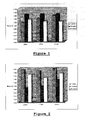
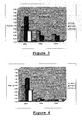
- the results are shown in figures 1 and 2 for the dry condition and figures 3 and 4 for the "with water” condition.
- glass means the pre-cleaned glass substrate without coating whereas the terms +PAA and +PEG stands for the glass substrate with a coating of PAA (example 1) and PAA plus a second layer of PEG 5000 (example 2) respectively.
Landscapes
- Chemical & Material Sciences (AREA)
- Engineering & Computer Science (AREA)
- Chemical Kinetics & Catalysis (AREA)
- Textile Engineering (AREA)
- Organic Chemistry (AREA)
- General Chemical & Material Sciences (AREA)
- Life Sciences & Earth Sciences (AREA)
- Oil, Petroleum & Natural Gas (AREA)
- Geochemistry & Mineralogy (AREA)
- Materials Engineering (AREA)
- Application Of Or Painting With Fluid Materials (AREA)
- Lubricants (AREA)
- Manufacture Of Macromolecular Shaped Articles (AREA)
Abstract
Coating to be applied on a carrier surface having low friction characteristics when uploaded with lubricant, comprising a chemical compound being arranged to bind a lubricant which reduces friction when coated carrier is in moving contact with another body.
Description
- The invention refers to a coating for several applications, having low friction characteristics.
- When an object is transferred while being in contact with another object, friction will occur. The level of friction, or the calculated friction coefficient upon measurement, depends on the operational conditions, the interacting surfaces (e.g. roughness, composition) of both objects and the environment. Lubricants may typically be applied to lower the friction between interacting surfaces while preventing wear at the same time. Such behavior is typically based on additives, frequently referred to as anti-wear additives or friction modifiers. In some cases, however, additives cannot form the required boundary layers and lubricant failure will occur.
- One aspect of the present invention is to bind lubricants to a surface in a durable way, thus maintaining a lowered friction coefficient and prolonged friction conditions.
- Another aspect of the invention is to induce low friction properties of such a coated object in a durable way at any desired time by adding the relevant lubricant to the object's surface interacting with the object's coating layer and thus realizing prolonged low friction characteristics. Additionally, reversible possibilities may be aimed by removing the lubricant (e.g. by evaporation, solvent extraction etc.) at any desired time.
- It may be preferred to apply a coating on any object surface applying low friction characteristics to the object when such coating is uploaded with a suitable lubricant at the time such low friction characteristics are required. Preferably such coating may contain a chemical compound which has the ability to bind such suitable lubricant in a prolonged way under circumstances wherein the object is transferred while in contact with another object. A coating is preferred which has the characteristic to bind an agent which reduces friction when the coated carrier is in moving contact with another body. The chemical compound which has the ability to bind such suitable lubricant preferably may be either covalently or non-covalently bound to the object. In a preferred embodiment, this chemical compound is a polymer covalently bound to the object. The polymer may be a homopolymer or a copolymer such as a block copolymer. Moreover, combinations of polymers may be used in the coating.
- The chemical compound may be of a hydrophilic or hydrophobic nature, depending on the lubricant to be used to reduce the friction level. As an example, when a more hydrophobic lubricant is used, e.g. a wax or certain hydrocarbons or carbohydrates, the chemical compound may be an alkanoate or other chemical with hydrophobic nature by preference. Any of a large variety of hydrophobic and hydrophilic polymers can be used as said chemical compound.
- Suitable hydrophobic polymers are polymers such as, but not limited to polysiloxane, perfluoropolyether and other fluoropolymers, polystyrene, polyoxypropylene, polyvinylacetate, polyoxybutylene, polyisoprene, polybutadiene, polyvinylchloride, polyalkylacrylate, polyalkylmethacrylate,polyacrylonitrile, polypropylene, polyethylene, PTHF, polymethacrylates, polyacrylates, polysulfones, polyvinylethers, and poly(propylene oxide), and copolymers thereof.
- Suitable hydrophilic polymers are polymers such as, but not limited to, polyoxazoline, polyethylene glycol, polyethylene oxide, polyvinylalcohol, polyvinylpyrrolidone, polyacrylamide, poly(meth)acrylic acid, polyethylene oxide-co-polypropyleneoxide block copolymers, poly(vinylether), poly(N,N-dialkylacrylamide), polyacrylic acid and other polyelectrolytes, polyacyl alkylene imine, polyhydroxyalkylacrylates such as (homo)polymers of hydroxyethyl methacrylate (HEMA), hydroxyethyl acrylate, and hydroxypropyl acrylate, polyols, and copolymeric mixtures of two or more of the above mentioned polymers, natural polymers such as polysaccharides and polypeptides, and copolymers thereof, and polyionic molecules such as polyallylammonium, polyethyleneimine, polyvinylbenzyltrimethylammonium, polyaniline, sulfonated polyaniline, polypyrrole, and polypyridinium, polythiophene-acetic acids, polystyrenesulfonic acids, polymers and copolymers of zwitterionic molecules, and salts.
- Covalent bonding of the polymer to the material surface may be realized as described in applicant's earlier patent application
WO 2007/021180 . Thus, conventional wet-chemical techniques as well as techniques like chemical vapor deposition (CVD), plasma deposition, plasma assisted grafting or plasma polymerisation can be used. - In one preferred embodiment wet-chemical technique is used wherein the polymer material comprises at least one pendant reactive moiety per monomer. In another preferred embodiment, the pendant reactive moieties are carboxyl moieties, and said material surface is functionalised with one or more amine groups. Even more preferably, the polymeric material is a polyacrylic acid or a derivative thereof, and said material surface is functionalised with 3-aminopropyltriethoxysilane.
- To enlarge the lubricant binding properties of said coating, the lubricant binding capacity of said polyacrylic acid may be boosted by connecting an additional polymer layer (either covalently or non-covalently). In a preferred embodiment said polyacrylic acid polymer is modified by reaction with either a hydrophobic or a hydrophilic polymer containing either primary or secondary amine moieties. As an example, but not limiting to, an amino-functionalised polyethylene glycol may be used for this purpose.
- A coating may be preferred which is suitable to be applied on a carrier surface, having low friction characteristics when uploaded with lubricant, wherein the coating e.g. may comprise polyacrylic acid (PAA) or one of the chemical compounds mentioned before. PAA etc. surprisingly meets the requirements of the desired coating, viz. it is capable, due to adsorption, to retain a lubricant like water at its surface and neither does it moisten its user nor does it feel wet. Those two characteristics - remaining wet without feeling wet - make the coating very attractive for several purposes. Amongst others a fabric which has been coated with PAA could be used for sportswear, for ski runs with artificial snow, blankets for decubitus patients and other applications.
- The coating according to the invention may be applied in the areas of textiles, e.g. in hospitals, care houses etc. (anti-decubitus), coatings in the industrial, leisure and transport sector, shoes, sportswear etc.
- In this example, a method of modifying a glass surface by covalent bonding thereto of, subsequently, an aminopropyltrimethoxysilane linker and a polyacrylic acid polymer is described.
- The precleaned glass substrates were submerged in a fresh coating solution of 5% 3-aminopropyltrimethoxysilane in IsoPropylAlcohol and sonicated for 20 min in an ultrasonic bath. The substrates were thoroughly washed (3x) with water followed by drying for 1 hr in an oven at 60 °C. The thus functionalised substrates were dipped in a solution of polyacrylic acid (Mw 1080.000; Mn 135.000) in water (0.5 wt%) and dried in an oven at 100 °C under reduced pressure (<100 mbar) for 4 hours. The substrates were thoroughly washed (3x) with water to remove the physical-sorbed and not chemically bonded polyacrylic acid. Contact angle measurements of water on the coating surface showed an advancing contact angle of 70-80 degrees, whereas that of the pre-cleaned glass substrate is found to be in between 20 and 40 degrees depending on the cleaning method.
- In this example, a method of modifying a glass surface by covalent bonding thereto of, subsequently, an aminopropyltrimethoxysilane linker, a polyacrylic acid polymer and amino functionalised polyethylene glycol (PEG 5000; Mw 5400; Mn 5000) is described.
- Using the polyacrylic acid modified glass substrate prepared as described in example 1, the glass substrate was further dipped in a solution of 1% of monofunctionalised amino-PEG 5000 in water and dried in an oven at 120 °C under reduced pressure (<100 mbar) for 1 hour. The substrates were thoroughly washed (3x) with water to remove the physical-sorbed and not chemically bonded PEG 5000. Contact angle measurements of water on the coating surface showed an advancing contact angle of less than 20 degrees.
- In this example the tribological assessment is done using the coated glass surfaces from examples 1 and 2.
- Tribological assessment is done using a reciprocating pin-on-plate test setup. This configuration was realized on the commercially available tribometer PLINT TE67, for which a dedicated glass suppport unit was constructed.
- Operational conditions:
- All experiments were done at room temperature and in air. The humidity and the temperature of the laboratory varied between 20-40% RH and 19-22 °C respectively. Following the FIFA 08/05 - 01 test method "Determination of Skin/Surface Friction", in which Silicon Skin L7350 is selected as best skin substitute, this Silicone rubber is used for the tribological assessment.
- Other conditions:
- Track length was set to 40 mm for all experiments. Ten strokes were done per experiment (five from left to right and five from right to left). The maximum velocity during the track was 1, 10 or 62 mm/s. The normal load was applied by the mass of the specimen holder or by an additional dead weight to a resulting normal force of 29 and 98 kPa respectively.
- Tests were performed both with and without demi-water as bonded lubricant. The first condition is referred to as with water, the second to dry conditions. The results are shown in
figures 1 and 2 for the dry condition andfigures 3 and 4 for the "with water" condition. The used term glass means the pre-cleaned glass substrate without coating whereas the terms +PAA and +PEG stands for the glass substrate with a coating of PAA (example 1) and PAA plus a second layer of PEG 5000 (example 2) respectively. - The coefficient of friction is calculated based on the friction force measured and normal force applied: µ = Fw/Fn
-
Figure 1 shows the maximum coefficient of friction, fmax, as a function of the sliding velocity and plate surface, at 98 kPa contact pressure and at dry condition. -
Figure 2 shows the maximum coefficient of friction, fmax, as a function of the sliding velocity and plate surface, at 29 kPa contact pressure and at dry condition. -
Figure 3 shows the maximum coefficient of friction, fmax, as a function of the sliding velocity and plate surface, at 98 kPa contact pressure with water. -
Figure 4 shows the maximum coefficient of friction, fmax, as a function of the sliding velocity and plate surface, at 29 kPa contact pressure with water - From the
figures 1-4 it can be observed that in the absence of lubricant the calculated maximum coefficients of friction are all above 0.7 no matter the diverse circumstances. On the contrary, in the presence of lubricant, there is a clear impact of the presence of the lubricant for the uncoated glass substrate and the synergistic performance of the coating polymer in cooperation with the lubricant. Especially in the situation wherein a normal pressure of 29 kPa is applied, a maximal synergistic performance is obtained, no matter the maximum velocity during the track.
Claims (20)
- Coating to be applied on a carrier surface having low friction characteristics when uploaded with lubricant, comprising a chemical compound being arranged to bind a lubricant which reduces friction when the coated carrier is in moving contact with another body.
- Coating according to claim 1, wherein the chemical compound is covalently bound to a carrier surface.
- Coating according to claim 2, wherein the chemical compound is a polymer.
- Coating according to claim 3, wherein the chemical compound comprises two covalently bound layers on top of each other.
- Coating according to claim 3, wherein the chemical compound comprises a hydrophilic polymer which is selected from the group consisting of polyoxazoline, polyethylene glycol, polyethylene oxide, polyvinylalcohol, polyvinylpyrrolidone, polyacrylamide, poly(meth)acrylic acid, polyethylene oxide-co-polypropyleneoxide block copolymers, poly(vinylether), poly(N,N-dialkylacrylamide), polyacrylic acid and other polyelectrolytes, polyacyl alkylene imine, polyhydroxyalkylacrylates such as (homo)polymers of hydroxyethyl methacrylate (HEMA), hydroxyethyl acrylate, and hydroxypropyl acrylate, polyols, and copolymeric mixtures of two or more of the above mentioned polymers, natural polymers such as polysaccharides and polypeptides, and copolymers thereof, and polyionic molecules such as polyallylammonium, polyethyleneimine, polyvinylbenzyltrimethylammonium, polyaniline, sulfonated polyaniline, polypyrrole, and polypyridinium, polythiophene-acetic acids, polystyrenesulfonic acids, polymers and copolymers of zwitterionic molecules, and salts.
- Coating according to claim 5, comprising any combination of two or more of said chemical compounds.
- Coating according to claim 5, wherein the chemical compound comprises a polyacrylic acid.
- Coating according to claim 7, wherein the chemical compound comprises a polyacrylic acid and an amine-group containing polyethylene glycol.
- Coating according to claim 7, wherein the chemical compound comprises a polyacrylic acid and aminolated polyethylene glycol 5000.
- Coating according to claim 2, wherein the chemical compound is a fatty acid and wherein the chain length varies from C3 to C25.
- A coating according to claim 3, wherein the chemical compound comprises a hydrophobic polymer which is selected from the group consisting of polysiloxane, perfluoropolyether and other fluoropolymers, polystyrene, polyoxypropylene, polyvinylacetate, polyoxybutylene, polyisoprene, polybutadiene, polyvinylchloride, polyalkylacrylate, polyalkylmethacrylate,polyacrylonitrile, polypropylene, polyethylene, PTHF, polymethacrylates, polyacrylates, polysulfones, polyvinylethers, poly(propylene oxide), and copolymers thereof.
- Coating according to claim 11, comprising any combination of two or more of said chemical compounds.
- Coating according to claims 5 and 11, comprising any combination of two or more of said hydrophilic and/or hydrophobic chemical compounds.
- Coating according to any of claims 5 or 6, wherein the bound lubricant is water.
- Coating according to any of claims 10 or 11, wherein the bound lubricant is a hydrophobic compound.
- Coating according to any of claims 10 or 11, wherein the bound lubricant has a hydrocarbon as backbone.
- Coating according to any of claims 10 or 11, wherein the bound lubricant is a wax.
- Carrier, comprising the coating according to any one of the preceding claims.
- Use of the carrier according to claim 18 to reduce friction between the carrier and another object upon transfer of the carrier while in contact with the other object.
- Textile material or products thereof comprising a carrier according to claim 18 and/or a coating according to any of claims 1 - 17.
Priority Applications (5)
| Application Number | Priority Date | Filing Date | Title |
|---|---|---|---|
| EP07115000A EP2031124A1 (en) | 2007-08-27 | 2007-08-27 | Coating having low friction characteristics |
| PCT/NL2008/050569 WO2009028939A2 (en) | 2007-08-27 | 2008-08-27 | Method for reducing friction |
| JP2010522837A JP2010538106A (en) | 2007-08-27 | 2008-08-27 | How to reduce friction |
| EP08793861A EP2188439A2 (en) | 2007-08-27 | 2008-08-27 | Method for reducing friction |
| US12/675,104 US20110177987A1 (en) | 2007-08-27 | 2008-08-27 | Method for reducing friction |
Applications Claiming Priority (1)
| Application Number | Priority Date | Filing Date | Title |
|---|---|---|---|
| EP07115000A EP2031124A1 (en) | 2007-08-27 | 2007-08-27 | Coating having low friction characteristics |
Publications (1)
| Publication Number | Publication Date |
|---|---|
| EP2031124A1 true EP2031124A1 (en) | 2009-03-04 |
Family
ID=39110887
Family Applications (2)
| Application Number | Title | Priority Date | Filing Date |
|---|---|---|---|
| EP07115000A Withdrawn EP2031124A1 (en) | 2007-08-27 | 2007-08-27 | Coating having low friction characteristics |
| EP08793861A Withdrawn EP2188439A2 (en) | 2007-08-27 | 2008-08-27 | Method for reducing friction |
Family Applications After (1)
| Application Number | Title | Priority Date | Filing Date |
|---|---|---|---|
| EP08793861A Withdrawn EP2188439A2 (en) | 2007-08-27 | 2008-08-27 | Method for reducing friction |
Country Status (4)
| Country | Link |
|---|---|
| US (1) | US20110177987A1 (en) |
| EP (2) | EP2031124A1 (en) |
| JP (1) | JP2010538106A (en) |
| WO (1) | WO2009028939A2 (en) |
Cited By (27)
| Publication number | Priority date | Publication date | Assignee | Title |
|---|---|---|---|---|
| WO2013130724A3 (en) * | 2012-02-28 | 2013-12-19 | Corning Incorporated | Glass articles with low-friction coatings |
| WO2014005030A1 (en) * | 2012-06-28 | 2014-01-03 | Corning Incorporated | Delamination resistant glass containers with heat-tolerant coatings |
| WO2014084990A1 (en) * | 2012-11-30 | 2014-06-05 | Corning Incorporated | Strengthened borosilicate glass containers with improved damage tolerance |
| WO2014085249A1 (en) * | 2012-11-30 | 2014-06-05 | Corning Incorporated | Strengthened glass containers resistant to delamination and damage |
| US9186295B2 (en) | 2011-10-25 | 2015-11-17 | Corning Incorporated | Delamination resistant pharmaceutical glass containers containing active pharmaceutical ingredients |
| US9603775B2 (en) | 2013-04-24 | 2017-03-28 | Corning Incorporated | Delamination resistant pharmaceutical glass containers containing active pharmaceutical ingredients |
| US9700485B2 (en) | 2013-04-24 | 2017-07-11 | Corning Incorporated | Delamination resistant pharmaceutical glass containers containing active pharmaceutical ingredients |
| US9700486B2 (en) | 2013-04-24 | 2017-07-11 | Corning Incorporated | Delamination resistant pharmaceutical glass containers containing active pharmaceutical ingredients |
| US9707155B2 (en) | 2013-04-24 | 2017-07-18 | Corning Incorporated | Delamination resistant pharmaceutical glass containers containing active pharmaceutical ingredients |
| US9707154B2 (en) | 2013-04-24 | 2017-07-18 | Corning Incorporated | Delamination resistant pharmaceutical glass containers containing active pharmaceutical ingredients |
| US9707153B2 (en) | 2013-04-24 | 2017-07-18 | Corning Incorporated | Delamination resistant pharmaceutical glass containers containing active pharmaceutical ingredients |
| US9713572B2 (en) | 2013-04-24 | 2017-07-25 | Corning Incorporated | Delamination resistant pharmaceutical glass containers containing active pharmaceutical ingredients |
| US9717649B2 (en) | 2013-04-24 | 2017-08-01 | Corning Incorporated | Delamination resistant pharmaceutical glass containers containing active pharmaceutical ingredients |
| US9717648B2 (en) | 2013-04-24 | 2017-08-01 | Corning Incorporated | Delamination resistant pharmaceutical glass containers containing active pharmaceutical ingredients |
| US9839579B2 (en) | 2013-04-24 | 2017-12-12 | Corning Incorporated | Delamination resistant pharmaceutical glass containers containing active pharmaceutical ingredients |
| US9849066B2 (en) | 2013-04-24 | 2017-12-26 | Corning Incorporated | Delamination resistant pharmaceutical glass containers containing active pharmaceutical ingredients |
| US9988174B2 (en) | 2012-06-07 | 2018-06-05 | Corning Incorporated | Delamination resistant glass containers |
| US10065884B2 (en) | 2014-11-26 | 2018-09-04 | Corning Incorporated | Methods for producing strengthened and durable glass containers |
| US10196298B2 (en) | 2011-10-25 | 2019-02-05 | Corning Incorporated | Glass compositions with improved chemical and mechanical durability |
| CN109837130A (en) * | 2017-11-29 | 2019-06-04 | 英菲诺姆国际有限公司 | Lubricant oil composite |
| US10350139B2 (en) | 2011-10-25 | 2019-07-16 | Corning Incorporated | Pharmaceutical glass packaging assuring pharmaceutical sterility |
| US10737973B2 (en) | 2012-02-28 | 2020-08-11 | Corning Incorporated | Pharmaceutical glass coating for achieving particle reduction |
| US10899659B2 (en) | 2014-09-05 | 2021-01-26 | Corning Incorporated | Glass articles and methods for improving the reliability of glass articles |
| US11208348B2 (en) | 2015-09-30 | 2021-12-28 | Corning Incorporated | Halogenated polyimide siloxane chemical compositions and glass articles with halogenated polyimide siloxane low-friction coatings |
| US11497681B2 (en) | 2012-02-28 | 2022-11-15 | Corning Incorporated | Glass articles with low-friction coatings |
| US11772846B2 (en) | 2015-10-30 | 2023-10-03 | Corning Incorporated | Glass articles with mixed polymer and metal oxide coatings |
| US12365528B2 (en) | 2020-09-04 | 2025-07-22 | Corning Incorporated | Ultraviolet light-blocking coated pharmaceutical packages |
Families Citing this family (30)
| Publication number | Priority date | Publication date | Assignee | Title |
|---|---|---|---|---|
| WO2010070118A1 (en) * | 2008-12-19 | 2010-06-24 | Aktiebolaget Skf | A machine part comprising a physical component coated with a polyelectrolyte layer |
| EP2470501A2 (en) * | 2009-08-28 | 2012-07-04 | ExxonMobil Chemical Patents Inc. | Oxidation of hydrocarbons |
| US9517966B2 (en) | 2011-10-25 | 2016-12-13 | Corning Incorporated | Glass compositions with improved chemical and mechanical durability |
| EP3546433A1 (en) | 2011-10-25 | 2019-10-02 | Corning Incorporated | Alkaline earth alumino-silicate glass compositions with improved chemical and mechanical durability |
| US11034846B2 (en) | 2014-03-14 | 2021-06-15 | Hrl Laboratories, Llc | Polymer-liquid composites for improved anti-fouling performance |
| US10836974B2 (en) | 2014-03-14 | 2020-11-17 | Hrl Laboratories, Llc | Low-adhesion coatings with solid-state lubricants |
| US11072713B2 (en) | 2014-03-14 | 2021-07-27 | Hrl Laboratories, Llc | Bugphobic and icephobic compositions with fluid additives |
| US10876025B2 (en) | 2014-03-14 | 2020-12-29 | Hrl Laboratories, Llc | Bugphobic and icephobic compositions with liquid additives |
| US10619057B2 (en) | 2015-08-19 | 2020-04-14 | Hrl Laboratories, Llc | Compositions and methods for fabricating durable, low-ice-adhesion coatings |
| US11247228B2 (en) | 2014-08-19 | 2022-02-15 | Hrl Laboratories, Llc | Methods for fabricating transparent icephobic coatings, and transparent icephobic coatings obtained therefrom |
| US10865267B2 (en) | 2014-08-19 | 2020-12-15 | Hrl Laboratories, Llc | Compositions for fabricating durable, low-ice-adhesion coatings |
| ES2895849T3 (en) * | 2014-08-26 | 2022-02-22 | Bard Inc C R | Urinary catheter |
| JP6507943B2 (en) * | 2015-08-28 | 2019-05-08 | Agc株式会社 | Lubricant solution, method of making a lubricant coated article, and lubricant coated article. |
| KR102652843B1 (en) | 2015-09-07 | 2024-04-01 | 이케아 서플라이 아게 | Drawers, and drawer sliding systems for such drawers |
| US11578754B2 (en) | 2015-09-07 | 2023-02-14 | Ikea Supply Ag | Low friction slide member |
| CN108135378B (en) * | 2015-09-07 | 2021-08-10 | 宜家供应有限公司 | Sliding system of sliding screen |
| EP3346880B1 (en) | 2015-09-07 | 2021-08-18 | IKEA Supply AG | A sofa bed, and a sofa bed sliding system for such sofa bed |
| US10442935B2 (en) | 2016-08-06 | 2019-10-15 | Hrl Laboratories, Llc | Coatings combining oil-absorbing and oil-repelling components for increased smudge resistance |
| WO2018148482A1 (en) * | 2017-02-09 | 2018-08-16 | Board Of Regents, The University Of Texas System | Atmospheric water harvesting system |
| SE540465C2 (en) | 2017-03-03 | 2018-09-18 | Ikea Supply Ag | Furniture lubricant comprising a C10 to C28 alkane and a triglyceride |
| SE540785C2 (en) | 2017-03-03 | 2018-11-13 | Ikea Supply Ag | A furniture rotary system having reduced friction, and a piece of furniture comprising such system |
| US11369109B2 (en) | 2020-06-11 | 2022-06-28 | Hrl Laboratories, Llc | Fast-acting antimicrobial surfaces, and methods of making and using the same |
| US11859098B2 (en) | 2017-08-10 | 2024-01-02 | Hrl Laboratories, Llc | Formulas and methods for making shelf-stable antimicrobial biphasic polymers |
| EP4025664A4 (en) | 2019-06-03 | 2023-06-21 | Dow Global Technologies LLC | METHOD FOR REDUCING THE COEFFICIENT OF FRICTION OF A LAMINATE COMPRISING A POLYURETHANE ADHESIVE |
| US11499116B2 (en) | 2019-12-17 | 2022-11-15 | Raytheon Technologies Corporation | Friction reducing polyelectrolyte coating |
| WO2022031550A1 (en) | 2020-08-03 | 2022-02-10 | C.R.Bard, Inc. | Intermittent-catheter assemblies |
| US12589218B2 (en) | 2020-08-03 | 2026-03-31 | C. R. Bard, Inc. | Intermittent-catheter assembly and methods thereof |
| EP4192563A2 (en) | 2020-09-11 | 2023-06-14 | C. R. Bard, Inc. | Intermittent catheter assemblies |
| US11891538B1 (en) | 2021-08-25 | 2024-02-06 | Hrl Laboratories, Llc | Gradient-responsive corrosion-resistant coatings |
| US12741783B2 (en) | 2024-03-13 | 2026-09-22 | C. R. Bard, Inc. | Labeling and packaging system and methods |
Citations (4)
| Publication number | Priority date | Publication date | Assignee | Title |
|---|---|---|---|---|
| US5836827A (en) * | 1991-02-27 | 1998-11-17 | Matsushita Electric Industrial Co., Ltd. | Self-lubricating device |
| WO2002053664A2 (en) * | 2000-12-29 | 2002-07-11 | Kimberly-Clark Worldwide, Inc. | Absorbent, lubricious coating and articles coated therewith |
| WO2006037022A2 (en) * | 2004-09-24 | 2006-04-06 | Massachusetts Institute Of Technology | Microbioreactor for continuous cell culture |
| WO2007021180A1 (en) * | 2005-08-16 | 2007-02-22 | Nederlandse Organisatie Voor Toegepast-Natuurwetenschappelijk Onderzoek Tno | Method of modifying materials surfaces |
Family Cites Families (9)
| Publication number | Priority date | Publication date | Assignee | Title |
|---|---|---|---|---|
| BE477645A (en) * | 1967-06-16 | |||
| US3842194A (en) * | 1971-03-22 | 1974-10-15 | Rca Corp | Information records and recording/playback systems therefor |
| US3833408A (en) * | 1972-04-19 | 1974-09-03 | Rca Corp | Video discs having a methyl alkyl silicone coating |
| SE430696B (en) * | 1982-04-22 | 1983-12-05 | Astra Meditec Ab | PROCEDURE FOR THE PREPARATION OF A HYDROPHILIC COATING AND ANY PROCEDURE MANUFACTURED MEDICAL ARTICLE |
| JPS5932513B2 (en) * | 1982-05-14 | 1984-08-09 | ダイキン工業株式会社 | Release agent |
| JP2501250B2 (en) * | 1991-02-27 | 1996-05-29 | 松下電器産業株式会社 | Low friction resistance machine parts |
| US5558900A (en) * | 1994-09-22 | 1996-09-24 | Fan; You-Ling | One-step thromboresistant, lubricious coating |
| US5702754A (en) * | 1995-02-22 | 1997-12-30 | Meadox Medicals, Inc. | Method of providing a substrate with a hydrophilic coating and substrates, particularly medical devices, provided with such coatings |
| US5914182A (en) * | 1996-06-03 | 1999-06-22 | Gore Hybrid Technologies, Inc. | Materials and methods for the immobilization of bioactive species onto polymeric substrates |
-
2007
- 2007-08-27 EP EP07115000A patent/EP2031124A1/en not_active Withdrawn
-
2008
- 2008-08-27 EP EP08793861A patent/EP2188439A2/en not_active Withdrawn
- 2008-08-27 JP JP2010522837A patent/JP2010538106A/en active Pending
- 2008-08-27 WO PCT/NL2008/050569 patent/WO2009028939A2/en not_active Ceased
- 2008-08-27 US US12/675,104 patent/US20110177987A1/en not_active Abandoned
Patent Citations (4)
| Publication number | Priority date | Publication date | Assignee | Title |
|---|---|---|---|---|
| US5836827A (en) * | 1991-02-27 | 1998-11-17 | Matsushita Electric Industrial Co., Ltd. | Self-lubricating device |
| WO2002053664A2 (en) * | 2000-12-29 | 2002-07-11 | Kimberly-Clark Worldwide, Inc. | Absorbent, lubricious coating and articles coated therewith |
| WO2006037022A2 (en) * | 2004-09-24 | 2006-04-06 | Massachusetts Institute Of Technology | Microbioreactor for continuous cell culture |
| WO2007021180A1 (en) * | 2005-08-16 | 2007-02-22 | Nederlandse Organisatie Voor Toegepast-Natuurwetenschappelijk Onderzoek Tno | Method of modifying materials surfaces |
Cited By (84)
| Publication number | Priority date | Publication date | Assignee | Title |
|---|---|---|---|---|
| US10196298B2 (en) | 2011-10-25 | 2019-02-05 | Corning Incorporated | Glass compositions with improved chemical and mechanical durability |
| US12275671B2 (en) | 2011-10-25 | 2025-04-15 | Corning Incorporated | Glass compositions with improved chemical and mechanical durability |
| US10350139B2 (en) | 2011-10-25 | 2019-07-16 | Corning Incorporated | Pharmaceutical glass packaging assuring pharmaceutical sterility |
| US10413481B2 (en) | 2011-10-25 | 2019-09-17 | Corning Incorporated | Delamination resistant pharmaceutical glass containers containing active pharmaceutical ingredients |
| US10413483B2 (en) | 2011-10-25 | 2019-09-17 | Corning Incorporated | Delamination resistant pharmaceutical glass containers containing active pharmaceutical ingredients |
| US10413482B2 (en) | 2011-10-25 | 2019-09-17 | Corning Incorporated | Delamination resistant pharmaceutical glass containers containing active pharmaceutical ingredients |
| US11707409B2 (en) | 2011-10-25 | 2023-07-25 | Corning Incorporated | Delamination resistant pharmaceutical glass containers containing active pharmaceutical ingredients |
| US11707410B2 (en) | 2011-10-25 | 2023-07-25 | Corning Incorporated | Delamination resistant pharmaceutical glass containers containing active pharmaceutical ingredients |
| US9186295B2 (en) | 2011-10-25 | 2015-11-17 | Corning Incorporated | Delamination resistant pharmaceutical glass containers containing active pharmaceutical ingredients |
| US9198829B2 (en) | 2011-10-25 | 2015-12-01 | Corning Incorporated | Delamination resistant pharmaceutical glass containers containing active pharmaceutical ingredients |
| US9241869B2 (en) | 2011-10-25 | 2016-01-26 | Corning Incorporated | Delamination resistant pharmaceutical glass containers containing active pharmaceutical ingredients |
| US11707408B2 (en) | 2011-10-25 | 2023-07-25 | Corning Incorporated | Delamination resistant pharmaceutical glass containers containing active pharmaceutical ingredients |
| US10441505B2 (en) | 2011-10-25 | 2019-10-15 | Corning Incorporated | Delamination resistant pharmaceutical glass containers containing active pharmaceutical ingredients |
| US9474689B2 (en) | 2011-10-25 | 2016-10-25 | Corning Incorporated | Delamination resistant pharmaceutical glass containers containing active pharmaceutical ingredients |
| US9474688B2 (en) | 2011-10-25 | 2016-10-25 | Corning Incorporated | Delamination resistant pharmaceutical glass containers containing active pharmaceutical ingredients |
| US11325855B2 (en) | 2011-10-25 | 2022-05-10 | Corning Incorporated | Glass compositions with improved chemical and mechanical durability |
| US10597322B2 (en) | 2011-10-25 | 2020-03-24 | Corning Incorporated | Glass compositions with improved chemical and mechanical durability |
| EP3919457A1 (en) * | 2012-02-28 | 2021-12-08 | Corning Incorporated | Glass articles with low-friction coatings |
| US9744099B2 (en) | 2012-02-28 | 2017-08-29 | Corning Incorporated | Glass articles with low-friction coatings |
| US11939259B2 (en) | 2012-02-28 | 2024-03-26 | Corning Incorporated | Pharmaceutical glass coating for achieving particle reduction |
| US11071689B2 (en) | 2012-02-28 | 2021-07-27 | Corning Incorporated | Glass articles with low-friction coatings |
| US11020317B2 (en) | 2012-02-28 | 2021-06-01 | Corning Incorporated | Glass articles with low-friction coatings |
| US11007117B2 (en) | 2012-02-28 | 2021-05-18 | Corning Incorporated | Glass articles with low-friction coatings |
| RU2733518C1 (en) * | 2012-02-28 | 2020-10-02 | Корнинг Инкорпорейтед | Method for manufacturing pharmaceutical container |
| US10737973B2 (en) | 2012-02-28 | 2020-08-11 | Corning Incorporated | Pharmaceutical glass coating for achieving particle reduction |
| WO2013130724A3 (en) * | 2012-02-28 | 2013-12-19 | Corning Incorporated | Glass articles with low-friction coatings |
| EP3919458A1 (en) * | 2012-02-28 | 2021-12-08 | Corning Incorporated | Glass articles with low-friction coatings |
| RU2708594C1 (en) * | 2012-02-28 | 2019-12-09 | Корнинг Инкорпорейтед | Coated pharmaceutical package (versions) |
| US11497681B2 (en) | 2012-02-28 | 2022-11-15 | Corning Incorporated | Glass articles with low-friction coatings |
| US11737951B2 (en) | 2012-02-28 | 2023-08-29 | Corning Incorporated | Glass articles with low-friction coatings |
| RU2671328C2 (en) * | 2012-02-28 | 2018-10-30 | Корнинг Инкорпорейтед | Coated pharmaceutical packaging (options) |
| US11786441B2 (en) | 2012-02-28 | 2023-10-17 | Corning Incorporated | Glass articles with low-friction coatings |
| US10034816B2 (en) | 2012-02-28 | 2018-07-31 | Corning Incorporated | Glass articles with low-friction coatings |
| US11872189B2 (en) | 2012-02-28 | 2024-01-16 | Corning Incorporated | Glass articles with low-friction coatings |
| US9988174B2 (en) | 2012-06-07 | 2018-06-05 | Corning Incorporated | Delamination resistant glass containers |
| US11124328B2 (en) | 2012-06-07 | 2021-09-21 | Corning Incorporated | Delamination resistant glass containers |
| EP3950623A1 (en) * | 2012-06-28 | 2022-02-09 | Corning Incorporated | Delamination resistant glass containers with heat-tolerant coatings |
| US10787292B2 (en) | 2012-06-28 | 2020-09-29 | Corning Incorporated | Delamination resistant glass containers with heat-tolerant coatings |
| AU2013282411C1 (en) * | 2012-06-28 | 2017-02-09 | Corning Incorporated | Delamination resistant glass containers with heat-tolerant coatings |
| US12391600B2 (en) | 2012-06-28 | 2025-08-19 | Corning Incorporated | Delamination resistant glass containers with heat-tolerant coatings |
| AU2013282411B2 (en) * | 2012-06-28 | 2016-08-04 | Corning Incorporated | Delamination resistant glass containers with heat-tolerant coatings |
| US11608290B2 (en) | 2012-06-28 | 2023-03-21 | Corning Incorporated | Delamination resistant glass containers with heat-tolerant coatings |
| WO2014005030A1 (en) * | 2012-06-28 | 2014-01-03 | Corning Incorporated | Delamination resistant glass containers with heat-tolerant coatings |
| EP3722267A1 (en) * | 2012-06-28 | 2020-10-14 | Corning Incorporated | Delamination resistant glass containers with heat-tolerant coatings |
| AU2016247214B2 (en) * | 2012-06-28 | 2018-03-22 | Corning Incorporated | Delamination resistant glass containers with heat-tolerant coatings |
| WO2014084990A1 (en) * | 2012-11-30 | 2014-06-05 | Corning Incorporated | Strengthened borosilicate glass containers with improved damage tolerance |
| US10813835B2 (en) | 2012-11-30 | 2020-10-27 | Corning Incorporated | Glass containers with improved strength and improved damage tolerance |
| US10507164B2 (en) | 2012-11-30 | 2019-12-17 | Corning Incorporated | Glass containers with improved strength and improved damage tolerance |
| EP3406578A1 (en) * | 2012-11-30 | 2018-11-28 | Corning Incorporated | Glass containers with delamination resistance and improved damage tolerance |
| AU2013352514B2 (en) * | 2012-11-30 | 2017-03-16 | Corning Incorporated | Glass containers with delamination resistance and improved damage tolerance |
| US11963927B2 (en) | 2012-11-30 | 2024-04-23 | Corning Incorporated | Glass containers with delamination resistance and improved damage tolerance |
| US10786431B2 (en) | 2012-11-30 | 2020-09-29 | Corning Incorporated | Glass containers with delamination resistance and improved damage tolerance |
| WO2014085242A1 (en) * | 2012-11-30 | 2014-06-05 | Corning Incorporated | Glass containers with delamination resistance and improved strength |
| US10023495B2 (en) | 2012-11-30 | 2018-07-17 | Corning Incorporated | Glass containers with improved strength and improved damage tolerance |
| US11951072B2 (en) | 2012-11-30 | 2024-04-09 | Corning Incorporated | Glass containers with improved strength and improved damage tolerance |
| WO2014085244A1 (en) * | 2012-11-30 | 2014-06-05 | Corning Incorporated | Glass containers with improved strength and improved damage tolerance |
| WO2014085249A1 (en) * | 2012-11-30 | 2014-06-05 | Corning Incorporated | Strengthened glass containers resistant to delamination and damage |
| WO2014085246A1 (en) * | 2012-11-30 | 2014-06-05 | Corning Incorporated | Glass containers with delamination resistance and improved damage tolerance |
| CN104968625A (en) * | 2012-11-30 | 2015-10-07 | 康宁股份有限公司 | Strengthened borosilicate glass containers with improved damage tolerance |
| US9346707B2 (en) | 2012-11-30 | 2016-05-24 | Corning Incorporated | Methods for forming delamination resistant glass containers |
| US10117806B2 (en) | 2012-11-30 | 2018-11-06 | Corning Incorporated | Strengthened glass containers resistant to delamination and damage |
| US10307334B2 (en) | 2012-11-30 | 2019-06-04 | Corning Incorporated | Glass containers with delamination resistance and improved damage tolerance |
| EP3403998A1 (en) * | 2012-11-30 | 2018-11-21 | Corning Incorporated | Glass containers with improved strength and improved damage tolerance |
| US9717648B2 (en) | 2013-04-24 | 2017-08-01 | Corning Incorporated | Delamination resistant pharmaceutical glass containers containing active pharmaceutical ingredients |
| US9713572B2 (en) | 2013-04-24 | 2017-07-25 | Corning Incorporated | Delamination resistant pharmaceutical glass containers containing active pharmaceutical ingredients |
| US9849066B2 (en) | 2013-04-24 | 2017-12-26 | Corning Incorporated | Delamination resistant pharmaceutical glass containers containing active pharmaceutical ingredients |
| US9603775B2 (en) | 2013-04-24 | 2017-03-28 | Corning Incorporated | Delamination resistant pharmaceutical glass containers containing active pharmaceutical ingredients |
| US9700485B2 (en) | 2013-04-24 | 2017-07-11 | Corning Incorporated | Delamination resistant pharmaceutical glass containers containing active pharmaceutical ingredients |
| US9700486B2 (en) | 2013-04-24 | 2017-07-11 | Corning Incorporated | Delamination resistant pharmaceutical glass containers containing active pharmaceutical ingredients |
| US9707155B2 (en) | 2013-04-24 | 2017-07-18 | Corning Incorporated | Delamination resistant pharmaceutical glass containers containing active pharmaceutical ingredients |
| US9707154B2 (en) | 2013-04-24 | 2017-07-18 | Corning Incorporated | Delamination resistant pharmaceutical glass containers containing active pharmaceutical ingredients |
| US9707153B2 (en) | 2013-04-24 | 2017-07-18 | Corning Incorporated | Delamination resistant pharmaceutical glass containers containing active pharmaceutical ingredients |
| US9839579B2 (en) | 2013-04-24 | 2017-12-12 | Corning Incorporated | Delamination resistant pharmaceutical glass containers containing active pharmaceutical ingredients |
| US9717649B2 (en) | 2013-04-24 | 2017-08-01 | Corning Incorporated | Delamination resistant pharmaceutical glass containers containing active pharmaceutical ingredients |
| US11807570B2 (en) | 2014-09-05 | 2023-11-07 | Corning Incorporated | Glass articles and methods for improving the reliability of glass articles |
| US10899659B2 (en) | 2014-09-05 | 2021-01-26 | Corning Incorporated | Glass articles and methods for improving the reliability of glass articles |
| US10065884B2 (en) | 2014-11-26 | 2018-09-04 | Corning Incorporated | Methods for producing strengthened and durable glass containers |
| US11208348B2 (en) | 2015-09-30 | 2021-12-28 | Corning Incorporated | Halogenated polyimide siloxane chemical compositions and glass articles with halogenated polyimide siloxane low-friction coatings |
| US11772846B2 (en) | 2015-10-30 | 2023-10-03 | Corning Incorporated | Glass articles with mixed polymer and metal oxide coatings |
| US12103734B2 (en) | 2015-10-30 | 2024-10-01 | Corning Incorporated | Glass articles with mixed polymer and metal oxide coatings |
| US12110151B2 (en) | 2015-10-30 | 2024-10-08 | Corning Incorporated | Glass articles with mixed polymer and metal oxide coatings |
| CN109837130B (en) * | 2017-11-29 | 2022-06-03 | 英菲诺姆国际有限公司 | Lubricating oil composition |
| CN109837130A (en) * | 2017-11-29 | 2019-06-04 | 英菲诺姆国际有限公司 | Lubricant oil composite |
| US12365528B2 (en) | 2020-09-04 | 2025-07-22 | Corning Incorporated | Ultraviolet light-blocking coated pharmaceutical packages |
Also Published As
| Publication number | Publication date |
|---|---|
| JP2010538106A (en) | 2010-12-09 |
| EP2188439A2 (en) | 2010-05-26 |
| WO2009028939A2 (en) | 2009-03-05 |
| US20110177987A1 (en) | 2011-07-21 |
| WO2009028939A3 (en) | 2009-08-06 |
Similar Documents
| Publication | Publication Date | Title |
|---|---|---|
| US20110177987A1 (en) | Method for reducing friction | |
| Chawla et al. | A novel low‐friction surface for biomedical applications: Modification of poly (dimethylsiloxane)(PDMS) with polyethylene glycol (PEG)‐DOPA‐lysine | |
| Liu et al. | Tuning surface functions by hydrophilic/hydrophobic polymer brushes | |
| Zhang et al. | Anti-fouling coatings of poly (dimethylsiloxane) devices for biological and biomedical applications | |
| JP5130446B2 (en) | Surface modified substrate and polymer coated substrate | |
| Chen et al. | Preparation and properties of PDMS surface coating for ultra-low friction characteristics | |
| US20090280157A1 (en) | Method of Modifying Materials Surfaces | |
| JP2003027009A5 (en) | ||
| Ma et al. | “Brush-like” amphiphilic polymer for environmental adaptive coating | |
| CN101605838B (en) | Method for treating surfaces containing Si-H groups | |
| WO2012032283A1 (en) | Lubricious coatings for medical devices | |
| Spencer | Aqueous lubrication with poly (ethylene glycol) brushes | |
| Esteves | Self‐healing functional surfaces | |
| Serrano et al. | Imparting nonfouling properties to chemically distinct surfaces with a single adsorbing polymer: a multimodal binding approach | |
| US12258467B2 (en) | Lubricious structures, methods of making them, and methods of use | |
| Perrino et al. | End-grafted sugar chains as aqueous lubricant additives: synthesis and macrotribological tests of poly (L-lysine)-graft-dextran (PLL-g-dex) copolymers | |
| Demirci et al. | Novel pH‐responsive mixed‐charge copolymer brushes based on carboxylic acid and quaternary amine monomers | |
| WO2011124715A1 (en) | Silane copolymers and uses thereof | |
| Zhu et al. | Surface properties and protein adsorption performance of fluorinated amphiphilic polymers | |
| CA2482842C (en) | Environmentally compatible additives for aqueous lubricants | |
| EP3277762B1 (en) | Composition containing oligomer | |
| CN108699381A (en) | Amphipathic copolymer with mixing functional group | |
| WO2025137592A2 (en) | Diazirine monomers and polymer compositions derived therefrom | |
| JP7856010B2 (en) | Water-repellent and oil-repellent compositions, fiber treatment agents, fiber treatment methods, fiber processed products, and coating agents | |
| Wang et al. | Roles of polymer brushes in biological applications |
Legal Events
| Date | Code | Title | Description |
|---|---|---|---|
| PUAI | Public reference made under article 153(3) epc to a published international application that has entered the european phase |
Free format text: ORIGINAL CODE: 0009012 |
|
| AK | Designated contracting states |
Kind code of ref document: A1 Designated state(s): AT BE BG CH CY CZ DE DK EE ES FI FR GB GR HU IE IS IT LI LT LU LV MC MT NL PL PT RO SE SI SK TR |
|
| AX | Request for extension of the european patent |
Extension state: AL BA HR MK RS |
|
| AKX | Designation fees paid | ||
| REG | Reference to a national code |
Ref country code: DE Ref legal event code: 8566 |
|
| STAA | Information on the status of an ep patent application or granted ep patent |
Free format text: STATUS: THE APPLICATION IS DEEMED TO BE WITHDRAWN |
|
| 18D | Application deemed to be withdrawn |
Effective date: 20090905 |