EP2029569B1 - Process for the preparation of dispiro 1,2,4-trioxolane antimalarials (oz277 salts) - Google Patents
Process for the preparation of dispiro 1,2,4-trioxolane antimalarials (oz277 salts) Download PDFInfo
- Publication number
- EP2029569B1 EP2029569B1 EP07734676A EP07734676A EP2029569B1 EP 2029569 B1 EP2029569 B1 EP 2029569B1 EP 07734676 A EP07734676 A EP 07734676A EP 07734676 A EP07734676 A EP 07734676A EP 2029569 B1 EP2029569 B1 EP 2029569B1
- Authority
- EP
- European Patent Office
- Prior art keywords
- formula
- compound
- process according
- mixture
- give
- Prior art date
- Legal status (The legal status is an assumption and is not a legal conclusion. Google has not performed a legal analysis and makes no representation as to the accuracy of the status listed.)
- Active
Links
- VXYZBLXGCYNIHP-JRGWQGMZSA-N CC(C)(CNC(CC(CC1)CC[C@]11OO[C@@]2(C3C[C@H](C4)C[C@@H]2C[C@H]4C3)O1)=O)N Chemical compound CC(C)(CNC(CC(CC1)CC[C@]11OO[C@@]2(C3C[C@H](C4)C[C@@H]2C[C@H]4C3)O1)=O)N VXYZBLXGCYNIHP-JRGWQGMZSA-N 0.000 description 1
- CGBHVMTYRAOPRM-ZZVKKANSSA-N CC(C)(C[NH+](CC[C@H](CC1)CC[C@H]1OO[C@]1([C@H]2C[C@H](C3)C3CCC1CCC2)OC)[O-])N Chemical compound CC(C)(C[NH+](CC[C@H](CC1)CC[C@H]1OO[C@]1([C@H]2C[C@H](C3)C3CCC1CCC2)OC)[O-])N CGBHVMTYRAOPRM-ZZVKKANSSA-N 0.000 description 1
- 0 COC1CCC(CC(O*)=O)CC1 Chemical compound COC1CCC(CC(O*)=O)CC1 0.000 description 1
- ODKGGAKOCGCWDI-UITNTSJFSA-N OC(CC(CC1)CC[C@]11OO[C@]2([C@@H]3C[C@@H](C4)C[C@H]2C[C@@H]4C3)O1)=O Chemical compound OC(CC(CC1)CC[C@]11OO[C@]2([C@@H]3C[C@@H](C4)C[C@H]2C[C@@H]4C3)O1)=O ODKGGAKOCGCWDI-UITNTSJFSA-N 0.000 description 1
Classifications
-
- C—CHEMISTRY; METALLURGY
- C07—ORGANIC CHEMISTRY
- C07D—HETEROCYCLIC COMPOUNDS
- C07D323/00—Heterocyclic compounds containing more than two oxygen atoms as the only ring hetero atoms
- C07D323/02—Five-membered rings
Definitions
- This invention relates to an improved process for the preparation of compounds of Formula I, salts of the free base cis -adamantane-2-spiro-3'-8'-[[[(2'-amino-2'-methyl propyl) amino] carbonyl] methyl]-1', 2', 4'-trioxaspiro [4.5] decane, which has antimalarial activity, wherein X is an anion.
- Malaria is an acute and often chronic infectious disease resulting from the presence of protozoan parasites within red blood cells.
- malaria is transmitted from person to person by the bite of female mosquitoes.
- the invention provides a process for the preparation of compounds of Formula I resulting in high yields, reduced reaction times and easy isolation of the products.
- the process is economically attractive, avoids the use of costly chemicals and involves less reaction steps in the reaction sequence.
- X is an anion selected from acetate, adipate, alginate, citrate, aspartate, benzoate, benzene sulfonate, bisulfate, butyrate, camphorate, camphor sulfonate, digluconate, glycerophosphate, glycolate, malonate, hemisulfate, heptanoate, hexanoate, fumarate, hydrochloride, hydrobromide, hydroiodide, isethionate, lactate, maleate, methane sulfonate, nicotinate, 2-naphthalen
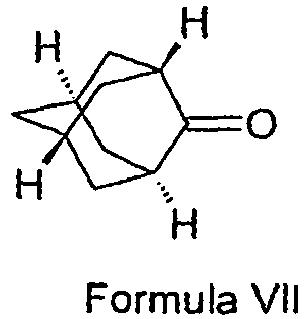
- the preparation of intermediates of Formula 11 can comprise reacting a compound of Formula VII with alkoxylamine hydrochloride to give intermediates of Formula II.
- the process avoids the use of pyridine, which is flammable, difficult to remove and toxic. Also, the work-up in the process of this invention does not involve the use of any solvent.
- the products are directly isolated by filtration. The short reaction time - about 2 hours- and high yield of about 90% make the process for the preparation of the intermediates is simple, as well as cost effective.
- the preparation of intermediates of Formula III can comprise the oxidation of a compound of Formula VIII in one step, to give intermediates of Formula III.
- the process can be carried out at about 110 to about 115 psi of hydrogen pressure.
- a compound of Formula 11 (wherein R is alkyl) is reacted with a compound of Formula III (wherein R is alkyl) to obtain a compound of Formula IV; followed by hydrolysis of the compounds of Formula IV to give a compound of Formula V; followed by the reaction of the compound of Formula V with an activating agent, for example, methyl chloroformate, ethyl chloroformate, propyl chloroformate, n-butyl chloroformate, isobutyl chloroformate or pivaloyl chloride, that forms a mixed anhydride, which is reacted in situ reaction with 1,2-diaimino-2-methyl propane to give a compound of Formula VI; and reacting the compound of Formula VI with an acid of Formula HX (wherein X can be the same as defined earlier) to give compounds of Formula I.
- an activating agent for example, methyl chloroformate, ethyl chloroformate, propyl chloroformate, n-butyl chloroformate
- reaction of a compound of Formula VII with alkoxylamine hydrochloride to give intermediates of Formula II can be carried out in a solvent, for example, an alcoholic solvent, for example, methanol, ethanol or isopropanol, water or mixture(s) thereof.
- a solvent for example, an alcoholic solvent, for example, methanol, ethanol or isopropanol, water or mixture(s) thereof.
- reaction of a compound of Formula VII with alkoxylamine hydrochloride can be carried out in the presence of an inorganic base, for example, sodium hydroxide, potassium hydroxide or mixture(s) thereof.
- an inorganic base for example, sodium hydroxide, potassium hydroxide or mixture(s) thereof.
- the oxidation of a compound of Formula VIII to give intermediates of Formula III can be carried out in a hydrocarbon solvent, for example, O-xylene, toluene, benzene or mixture(s) thereof.
- the oxidation step can be carried out in the presence of a catalyst, for example, palladium on carbon at a temperature of 80-200°C.
- reaction of a compound of Formula II with a compound of Formula III to give a compound of Formula IV can be carried out in a hydrocarbon solvent, for example, hexane or cyclohexane, chlorinated hydrocarbon solvent, for example, dichloromethane or dichloroethane or mixture(s) thereof.
- a hydrocarbon solvent for example, hexane or cyclohexane
- chlorinated hydrocarbon solvent for example, dichloromethane or dichloroethane or mixture(s) thereof.
- hydrolysis of compounds of Formula IV to give a compound of Formula V can be carried out in a solvent, for example, an alcoholic solvent, for example, methanol, ethanol or isopropanol, water or mixture(s) thereof.
- a solvent for example, an alcoholic solvent, for example, methanol, ethanol or isopropanol, water or mixture(s) thereof.
- the hydrolysis of a compound of Formula IV can be carried out in the presence of an inorganic base, for example, sodium hydroxide, potassium hydroxide or mixture(s) thereof.
- an inorganic base for example, sodium hydroxide, potassium hydroxide or mixture(s) thereof.
- reaction of a compound of Formula V with an activating agent and 1,2-diamino-2-methyl propane to give a compound of Formula VI can be carried out in a chlorinated hydrocarbon solvent, for example, dichloromethane or dichloroethane, polar aprotic solvent, for example, dimethylformamide or dimethylsulfoxide or mixture(s) thereof.
- a chlorinated hydrocarbon solvent for example, dichloromethane or dichloroethane
- polar aprotic solvent for example, dimethylformamide or dimethylsulfoxide or mixture(s) thereof.
- reaction of a compound of Formula V with an activating agent and 1,2-diamino-2-methyl propane can be carried out in the presence of an organic base, for example, trimethyl amine, triethyl amine, isopropyl amine or mixture(s) thereof.
- organic base for example, trimethyl amine, triethyl amine, isopropyl amine or mixture(s) thereof.
- reaction of a compound of Formula VI with an acid of Formula HX to give a compound of Formula I can be carried out in a solvent, for example, an alcoholic solvent, for example, methanol, ethanol or isopropanol, hydrocarbon solvent, for example, hexane or heptane or mixture(s) thereof.
- a solvent for example, an alcoholic solvent, for example, methanol, ethanol or isopropanol, hydrocarbon solvent, for example, hexane or heptane or mixture(s) thereof.
- a high pressure autoclave was charged with a mixture of methyl (4-hydroxyphenyl)acetate (50 g, 0.30 mol), palladium (5g) (10 %) on carbon (50 % wet) and O-xylene (250 mL).
- the reaction mixture was stirred under 110 to 115 psi of hydrogen pressure for 7 to 8 h at 140°C.
- the reaction was monitored by HPLC.
- the reaction mixture was then cooled to room temperature, and the catalyst was filtered off. Filtrate was concentrated under reduced pressure to get 4-(methoxycarbonylmethyl)cyclohexanone as light yellow to colorless oily liquid (48.7 g, 97.4 %).
- Reaction monitoring was done by thin layer chromatography using 5 to 10% methanol in dichloromethane. The reaction was complete within 2 h. Nitrogen atmosphere was maintained throughout the reaction. Water (50 mL) was charged, organic layer was separated and washed with 10% sodium bicarbonate solution (50 mL) and water (50 mL) at room temperature. The organic layer was dried over sodium sulphate and the solvent was removed at 25 to 40°C under reduced pressure. Hexane (50ml) was added to obtain residue under stirring at room temperature. The mixture was filtered and washed with 5 mL of chilled hexane. The solid was dried under reduced pressure at room temperature.
Landscapes
- Chemical & Material Sciences (AREA)
- Organic Chemistry (AREA)
- Heterocyclic Carbon Compounds Containing A Hetero Ring Having Oxygen Or Sulfur (AREA)
- Organic Low-Molecular-Weight Compounds And Preparation Thereof (AREA)
- Nitrogen Condensed Heterocyclic Rings (AREA)
- Pharmaceuticals Containing Other Organic And Inorganic Compounds (AREA)
- Nitrogen And Oxygen Or Sulfur-Condensed Heterocyclic Ring Systems (AREA)
Description
- This invention relates to an improved process for the preparation of compounds of Formula I, salts of the free base cis-adamantane-2-spiro-3'-8'-[[[(2'-amino-2'-methyl propyl) amino] carbonyl] methyl]-1', 2', 4'-trioxaspiro [4.5] decane, which has antimalarial activity,

- Malaria is an acute and often chronic infectious disease resulting from the presence of protozoan parasites within red blood cells. Caused by single-celled parasites of the genus Plasmodium, malaria is transmitted from person to person by the bite of female mosquitoes.
- The discovery of artemisinin (qinghaosu), a naturally occurring endoperoxide sesquiterpene lactone (Meshnick et al., Microbiol. Rev. 60, 301-315, 1996; Vroman et al., Curr. Pharm. Design 5,101-183, 1999; Dhingra et al., Life Sci. 66, 279-300, 2000) initiated a substantial effort to elucidate its molecular mechanism of action (Jefford, Adv. Drugs Res. 29, 271-325, 1997; Cumming et al., Adv. Pharmacol. 37, 254-297, 1997) and to identify novel antimalarial peroxides (Dong and Vennerstrom, Expert Opin. Ther. Patents 11, 1753-1760, 2001). Many synthetic 1,2,4-trioxanes, 1,2,4,5-tetraoxanes, and other endoperoxides have been prepared.
- Although the clinically useful semisynthetic artemisinin derivatives are rapid acting and potent antimalarial drugs, they have several disadvantages including recrudescence, neurotoxicity, (Wesche et al., Antimicrob. Agents. Chemother.38,1813-1819,1994) and metabolic instability. (White, Trans. R. Soc. Trop. Med. Hyg. 88,41-43,1994). A fair number of these compounds are quite active in vitro, but most suffer from low oral activity. (White, Trans. R. Soc. Trop. Med. Hyg. 88,41-43,1994; van Agtmael et al., Trends Pharmacol. Sci. 20, 199-205,1999). Although many synthetic antimalarial 1,2,4-trioxanes have since been prepared (Jefford, Adv. Drug Res. 29, 271-325, 1997; Cumming et al., Adv. Pharmacol. 37, 254-297, 1997), there exists a need to identify new antimalarial agents, especially those which are easily synthesized, are devoid of neurotoxicity.
- A synthetic procedure for preparing compounds of Formula I, salts of the free base cis-adamantane-2-spiro-3'-8'-[[[(2'-amino-2'-methyl propyl) amino] carbonyl] methyl]-1', 2', 4'-trioxaspiro [4.5] decane, has been disclosed in
U.S. 6,906,205 . - The invention provides a process for the preparation of compounds of Formula I resulting in high yields, reduced reaction times and easy isolation of the products. The process is economically attractive, avoids the use of costly chemicals and involves less reaction steps in the reaction sequence.
- More particularly, there is provided a process for the preparation of compounds of Formula I, salts of the free base cis-adamantane-2-spiro-3'-8'-[[[(2'-amino-2'-methyl propyl) amino] carbonyl] methyl]-1',2',4'-trioxaspiro [4.5] decane,

- The process according to the invention involves the use of intermediates of Formula II and Formula III which can be prepared as follows.
- The preparation of intermediates of Formula 11 (wherein R is alkyl),

- The preparation of intermediates of Formula III (wherein R is alkyl),


- In the process according to the invention for the preparation of compounds of Formula I, a compound of Formula 11 (wherein R is alkyl) is reacted with a compound of Formula III (wherein R is alkyl) to obtain a compound of Formula IV;


- The reaction of a compound of Formula VII with alkoxylamine hydrochloride to give intermediates of Formula II can be carried out in a solvent, for example, an alcoholic solvent, for example, methanol, ethanol or isopropanol, water or mixture(s) thereof.
- The reaction of a compound of Formula VII with alkoxylamine hydrochloride can be carried out in the presence of an inorganic base, for example, sodium hydroxide, potassium hydroxide or mixture(s) thereof.
- The oxidation of a compound of Formula VIII to give intermediates of Formula III can be carried out in a hydrocarbon solvent, for example, O-xylene, toluene, benzene or mixture(s) thereof. The oxidation step can be carried out in the presence of a catalyst, for example, palladium on carbon at a temperature of 80-200°C.
- The reaction of a compound of Formula II with a compound of Formula III to give a compound of Formula IV can be carried out in a hydrocarbon solvent, for example, hexane or cyclohexane, chlorinated hydrocarbon solvent, for example, dichloromethane or dichloroethane or mixture(s) thereof.
- The hydrolysis of compounds of Formula IV to give a compound of Formula V can be carried out in a solvent, for example, an alcoholic solvent, for example, methanol, ethanol or isopropanol, water or mixture(s) thereof.
- The hydrolysis of a compound of Formula IV can be carried out in the presence of an inorganic base, for example, sodium hydroxide, potassium hydroxide or mixture(s) thereof.
- The reaction of a compound of Formula V with an activating agent and 1,2-diamino-2-methyl propane to give a compound of Formula VI can be carried out in a chlorinated hydrocarbon solvent, for example, dichloromethane or dichloroethane, polar aprotic solvent, for example, dimethylformamide or dimethylsulfoxide or mixture(s) thereof.
- The reaction of a compound of Formula V with an activating agent and 1,2-diamino-2-methyl propane can be carried out in the presence of an organic base, for example, trimethyl amine, triethyl amine, isopropyl amine or mixture(s) thereof.
- The reaction of a compound of Formula VI with an acid of Formula HX to give a compound of Formula I can be carried out in a solvent, for example, an alcoholic solvent, for example, methanol, ethanol or isopropanol, hydrocarbon solvent, for example, hexane or heptane or mixture(s) thereof.
- To a solution of 2-adamantanone (50 g, 0.3328 mol, 1 equiv.) in methanol (0.25 lit), sodium hydroxide solution (15 g, 0.3761 mol, 1.13 equiv, in 50 mL water) was added followed by methoxylamine hydrochloride (37.5 g x 81.59% Purity= 30.596 g, 0.366 mol, 1.1 equiv) at room temperature under stirring. The reaction mixture was stirred at room temperature for 1 to 2 h. The reaction was monitored by HPLC. The reaction mixture was concentrated at 40-45°C under vacuum to get a thick residue. Water (250 mL) was added at room temperature and the reaction mixture was stirred for half an hour. The white solid was filtered, washed with water (50 mL), and dried at 40 to 45°C under reduced pressure. O-methyl 2-adamantanone oxime (57 g, 95 % yield) was obtained as a white solid.
(M++1) 180, 1HNMR (400 MHz, CDCl3): δ 1.98 - 1.79 (m, 12H), 2.53 (s, 1H), 3.46 (s, 1H), 3.81 (s, 3H). - A high pressure autoclave was charged with a mixture of methyl (4-hydroxyphenyl)acetate (50 g, 0.30 mol), palladium (5g) (10 %) on carbon (50 % wet) and O-xylene (250 mL). The reaction mixture was stirred under 110 to 115 psi of hydrogen pressure for 7 to 8 h at 140°C. The reaction was monitored by HPLC. The reaction mixture was then cooled to room temperature, and the catalyst was filtered off. Filtrate was concentrated under reduced pressure to get 4-(methoxycarbonylmethyl)cyclohexanone as light yellow to colorless oily liquid (48.7 g, 97.4 %).
(M++1) 171, 1HNMR (400 MHz, CDCl3): δ 1.48 - 1.51 (m, 2H), 2.11-2.07 (m, 2H), 2.4-2.23 (m, 7H), 3.7 (s, 3H). - A solution of O-methyl-2-adamantanone oxime (example 1) (11.06 g, 61.7 mmol, 1.5 equiv.) and 4-(methoxycarbonymethyl)cyclohexanone (example 2) (7.0 g, 41.1 mmol, 1 equiv.) in cyclohexane (200ml) and dichloromethane (40 mL) was treated with ozone (ozone was produced with an OREC ozone generator [0.6 L/min. O2, 60 V] passed through an empty gas washing bottle that was cooled to -78°C). The solvent was removed after the reaction was complete. After removal of solvents, the crude product was purified by crystallization from 80% aqueous ethanol (200 mL) to afford the title compound as a colorless solid. Yield: 10.83 g, 78%, mp: 96-98°C; 1HNMR (500 Hz, CDCl3): δ 1.20-1.33 (m, 2H), 1.61-2.09 (m, 21H), 2.22 (d, J = 6.8Hz, 2H), 3.67(s,3H).
- Sodium hydroxide (3.86 g, 96.57 mmol, 3 equiv.) in water (80 mL) was added to a solution of methyl (1s, 4s)-dispiro [cyclohexane-1, 3'-[1,2,4] trioxolane-5', 2"-tricyclo [3.3.1.13,7] decan]-4-ylacetate (example 3) (10.83 g, 32.19 mmol, 1 equiv.) in 95% ethanol (150 mL). The mixture was stirred at 50°C for about 4 h, cooled to 0°C, and treated with 1M hydrochloric acid (129ml, 4 equiv). The precipitate was collected by filtration, washed with 50 % aqueous ethanol (150 mL) and dried in vacuum at 40 °C to give the title compound as colorless solid. Yield: 9.952 g, 96%, mp: 146-148°C (95% ethanol), 1HNMR (500 Hz, CDCl3): δ 1.19-1.41 (m,2H), 1.60-2.05 (m,21H), 2.27 (d, J=6.8 Hz,2H).
- (1s, 4s)-dispiro[cyclohexane-1,3'-[1,2,4]trioxolane-5',2"-tricyclo[3.3.1.13,7]decan]-4-ylacetic acid (example 4) (5 g ,15.5mmol, 1 equiv) was mixed with triethylamine (2.5 g , 24.8 mmol,1.6 equiv) in 100ml of dichloromethane. The reaction mixture was cooled to - 10°C to 0°C. Ethyl chloroformate (1.68 g, 17 mmol, 1.0 equiv) in 15 mL dichloromethane was charged to the above reaction mixture at - 10°C to 0°C. The reaction mixture was stirred at the same temperature for 10 to 30 minutes. The resulting mixed anhydride reaction mixture was added dropwise to a previously prepared solution of 1,2-diamino-2-methylpropane (1.64 g, 18.6 mmol, 1.2 equiv), in 100 mL dichloromethane at -10°C to 0°C. The temperature of reaction mixture was raised to room temperature. The reaction mixture was stirred at the same temperature till the reaction was complete. Reaction monitoring was done by thin layer chromatography using 5 to 10% methanol in dichloromethane. The reaction was complete within 2 h. Nitrogen atmosphere was maintained throughout the reaction. Water (50 mL) was charged, organic layer was separated and washed with 10% sodium bicarbonate solution (50 mL) and water (50 mL) at room temperature. The organic layer was dried over sodium sulphate and the solvent was removed at 25 to 40°C under reduced pressure. Hexane (50ml) was added to obtain residue under stirring at room temperature. The mixture was filtered and washed with 5 mL of chilled hexane. The solid was dried under reduced pressure at room temperature.
- Yield: 5.2 g (85.4 %), (M++1) 393, 1HNMR (400 MHz, DMSO-d6 ): δ 0.929 (s, 6H), 1.105 - 1.079 (m, 2H), 1.887-1.641 (m, 21H), 2.030-2.017 (d, 2H), 2.928 (d, 2H).
- (1s, 4s)-dispiro [cyclohexane-1,3'-[1,2,4] trioxolane-5', 2"-tricyclo [3.3.1.13,7] decan]-4-ylacetic acid (example 4) (10 g, 31mmol, 1 equiv) was treated with isobutyl chloroformate (4.5 g, 33mmol, 1.1 equiv) in presence of organic base like triethyl amine (5 g, 49.6mmol, 1.6 equiv) at 0°C to 7°C in 250ml of dichloromethane. The solution was stirred at 0°C to 7°C for about 10 to 30 minutes. To the above reaction mixture, previously prepared solution of 1,2-diamino-2-methylpropane (3.27 g, 37 mmol, 1.2 equiv), in 50 mL of dichloromethane was added at 0°C to 7°C in one lot. The temperature of reaction mixture was raised to room temperature. The reaction mixture was stirred at the room temperature till reaction was over. Reaction monitoring was done by thin layer chromatography using 5 to 10% methanol in dichloromethane. Reaction was complete within 2 h. The reaction nitrogen atmosphere was maintained throughout the reaction. Water (250 mL) was charged, organic layer was separated and washed with 10% sodium bicarbonate solution (200 mL) and water (100 mL) at room temperature and the solvent was removed at 25 to 40°C under reduced pressure. Hexane (100ml) was added to the residue, under stirring, at room temperature. The mixture was filtered and washed with chilled hexane (10 mL). The resultant solid was dried under reduced pressure at room temperature. Yield: 10.63 g (87%), (M++1) 393, 1HNMR (400 MHz, DMSO-d6 ):δ 0.928 (s, 6H), 1.102 - 1.074 (m, 2H), 1.859-1.616 (m, 21H), 2.031-2.013 (d, 2H), 2.94-2.925 (d, 2H).
- (1s, 4s)-dispiro[cyclohexane-1,3'-[1,2,4]trioxolane-5',2"-tricyclo[3.3.1.13,7]decan]-4-ylacetic acid (example 4) (5 g, 15.5mmol, 1 equiv) was treated with pivaloyl chloride (1.87 g, 15.5 mmol, 1 equiv) and triethylamine (2.5gm, 24.8mmol, 1.6 equiv) at -15°C to -10°C in dichloromethane (125 mL). The solution was stirred at -15°C to -10°C for about 10 to 30 minutes. It resulted in the formation of mixed anydride. To the above reaction mixture, previously prepared solution of 1,2-diamino-2-methylpropane (1.64 g, 18.6 mmol, 1.2 equiv) in 25 mL dichloromethane was added at -15°C to -10°C. The temperature of reaction mixture was raised to room temperature. The reaction mixture was stirred at the room temperature till reaction was over. Reaction monitoring was done by thin layer chromatography using 5 to 10% methanol in dichloromethane. The reaction was complete within 2 h. Nitrogen atmosphere was maintained throughout the reaction. Water (125 mL) was charged, organic layer was separated and washed with 50 mL of 10% sodium bicarbonate solution and 125 mL of water, respectively at room temperature. Finally solvent was removed at 25 to 40°C under reduced pressure. 50 mL of 5% Ethyl acetate - hexane solvent mixture was added to the residue under stirring at room temperature. The mixture was filtered and washed with 5 mL of chilled hexane. Solid was dried under reduced pressure at room temperature. Yield: 5.03 g (83 %), (M++1) 393, 1HNMR (400 MHz, DMSO-d6 ):δ 0.93 (s, 6H), 1.113 - 1.069 (m, 2H), 1.861-1.644 (m, 21H), 2.033-2.015 (d, 2H), 2.948-2.933 (d, 2H).
- To a solution of cis-adamantane-2-spiro-3'-8'-[[[(2'-amino-2'-methyl propyl) amino] carbonyl] methyl]-1', 2', 4'-trioxaspiro [4.5] decane (example 5) (60 g, 0.153 moles) in ethanol (150 mL) was added a solution of maleic acid (17.3 g, 0.15 moles, 0.98 equiv. in ethanol 90 mL) and the reaction mixture was stirred for about 1 h. To this clear solution, n-heptane (720 mL) was added at room temperature in 1 h and the reaction mixture was stirred for 3 h. It was then cooled to 0 to 10°C and filtered. The cake was washed with n-heptane (60 mL) and dried under vacuum at 40-45°C.
- Yield: 67 g, 77.4%, mp: 149°C (decomp), (M++1) 393.5, 1HNMR (300 MHz, DMSO-d6 ): δ 1.05-1.11 (2H,m), 1.18 (6H,s), 1.64-1.89 (21H,m), 2.07(2H,d), 3.21 (2H,d), 6.06 (2H,d), 7.797 (2H, bs), 8.07 (1H, t).
Claims (18)
- A process for the preparation of a compound of Formula 1, salt of the free base cis-adamantane-2-spiro-3'-8'-[[[(2'-amino-2'-methyl propyl) amino] carbonyl] methyl]-1', 2', 4'-trioxaspiro [4.5] decane,

the process comprisinga) reacting a compound of Formula II (wherein R is alkyl) with a compound of Formula III (wherein R is alkyl)
 b) hydrolyzing the compound of Formula IV to give a compound of Formula V;
 c) reacting the compound of Formula V with an activating agent that forms a mixed anhydride with the compound of formula V and 1,2-diamino-2-methyl propane to give a compound of Formula VI; and
 d) reacting the compound of Formula VI with an acid of Formula HX (wherein X is the same as defined earlier) to give a compound of Formula I.
 - The process according to claim 1, wherein the activating agent is selected from methyl chloroformate, ethyl chloroformate, propyl chloroformate, n-butyl chloroformate, isobutyl chloroformate and pivaloyl chloride.
- The process according to claim 1, wherein the reaction of a compound of Formula II with a compound of Formula III to give a compound of Formula IV is carried out in a hydrocarbon solvent, chlorinated hydrocarbon solvent or mixture(s) thereof.
- The process according to claim 3, wherein the hydrocarbon solvent is hexane, cyclohexane or mixture(s) thereof.
- The process according to claim 3, wherein the chlorinated hydrocarbon solvent is dichloromethane, dichloroethane or mixture(s) thereof.
- The process according to claim 1, wherein the hydrolysis of a compound of Formula IV to give a compound of Formula V is carried out in an alcoholic solvent, water or mixture(s) thereof.
- The process according to claim 6, wherein the alcoholic solvent is methanol, ethanol, isopropanol or mixture(s) thereof.
- The process according to claim 1, wherein the hydrolysis of a compound of Formula IV to give a compound of Formula V is carried out in the presence of an inorganic base.
- The process according to claim 8, wherein the inorganic base is sodium hydroxide, potassium hydroxide or mixture(s) thereof.
- The process according to claim 1, wherein the reaction of a compound of Formula V with an activating agent and 1,2-diamino-2-methyl propane to give a compound of Formula VI is carried out in a chlorinated hydrocarbon solvent, polar aprotic solvent or mixture(s) thereof.
- The process according to claim 10, wherein the chlorinated hydrocarbon solvent is dichloromethane, dichloroethane or mixture(s) thereof.
- The process according to claim 10, wherein the polar aprotic solvent is dimethylformamide, dimethylsulfoxide or mixture(s) thereof.
- The process according to claim 10, wherein the reaction of a compound of Formula V with an activating agent and 1,2-diamino-2-methyl propane to give a compound of Formula VI is carried out in the presence of an organic base.
- The process according to claim 13, wherein the organic base is trimethylamine, triethylamine, isopropylamine or mixture(s) thereof.
- The process according to claim 1, wherein the compound of Formula VI is isolated.
- The process according to claim 1, wherein the reaction of a compound of Formula VI with an acid of Formula HX to give a compound of Formula I is carried out in an alcoholic solvent, hydrocarbon solvent or mixture(s) thereof.
- The process according to claim 16, wherein the alcoholic solvent is methanol, ethanol, isopropanol or mixture(s) thereof.
- The process according to claim 16, wherein the hydrocarbon solvent is hexane, heptane or mixture(s) thereof.
Priority Applications (3)
| Application Number | Priority Date | Filing Date | Title |
|---|---|---|---|
| PL07734676T PL2029569T3 (en) | 2006-05-24 | 2007-05-24 | Process for the preparation of dispiro 1,2,4-trioxolane antimalarials (oz277 salts) |
| SI200731141T SI2029569T1 (en) | 2006-05-24 | 2007-05-24 | Process for the preparation of dispiro 1,2,4-trioxolane antimalarials (oz277 salts) |
| CY20131100112T CY1113644T1 (en) | 2006-05-24 | 2013-02-07 | METHOD FOR PREPARATION OF ANTELONOSSIAN DISPERSEOUS 1,2,4-TRIOXOLANIUM (SALT OF OZ 277) |
Applications Claiming Priority (2)
| Application Number | Priority Date | Filing Date | Title |
|---|---|---|---|
| IN1252DE2006 | 2006-05-24 | ||
| PCT/IB2007/001374 WO2007138435A2 (en) | 2006-05-24 | 2007-05-24 | A process for the preparation of dispiro 1,2,4-trioxolane antimalarials (oz277) |
Publications (2)
| Publication Number | Publication Date |
|---|---|
| EP2029569A2 EP2029569A2 (en) | 2009-03-04 |
| EP2029569B1 true EP2029569B1 (en) | 2012-12-05 |
Family
ID=38650060
Family Applications (1)
| Application Number | Title | Priority Date | Filing Date |
|---|---|---|---|
| EP07734676A Active EP2029569B1 (en) | 2006-05-24 | 2007-05-24 | Process for the preparation of dispiro 1,2,4-trioxolane antimalarials (oz277 salts) |
Country Status (13)
| Country | Link |
|---|---|
| US (1) | US8569519B2 (en) |
| EP (1) | EP2029569B1 (en) |
| CN (1) | CN101490032B (en) |
| AP (1) | AP2440A (en) |
| BR (1) | BRPI0712208A2 (en) |
| CY (1) | CY1113644T1 (en) |
| DK (1) | DK2029569T3 (en) |
| ES (1) | ES2400682T3 (en) |
| PL (1) | PL2029569T3 (en) |
| PT (1) | PT2029569E (en) |
| SI (1) | SI2029569T1 (en) |
| WO (1) | WO2007138435A2 (en) |
| ZA (1) | ZA200810218B (en) |
Families Citing this family (2)
| Publication number | Priority date | Publication date | Assignee | Title |
|---|---|---|---|---|
| WO2010119425A1 (en) * | 2009-04-17 | 2010-10-21 | Ranbaxy Laboratories Limited | A process for the preparation of 1, 2, 4-trioxolane antimalarials |
| WO2019005977A1 (en) | 2017-06-27 | 2019-01-03 | The Regents Of The University Of California | TRIOXOLANE AGENTS |
Family Cites Families (3)
| Publication number | Priority date | Publication date | Assignee | Title |
|---|---|---|---|---|
| US6486199B1 (en) * | 2001-06-21 | 2002-11-26 | Medicines For Malaria Venture Mmv International Centre Cointrin | Spiro and dispiro 1,2,4-trioxolane antimalarials |
| US6906205B2 (en) * | 2002-06-21 | 2005-06-14 | Medicines For Malaria Venture Mmv | Spiro and dispiro 1,2,4-trioxolane antimalarials |
| US6825230B2 (en) | 2002-06-21 | 2004-11-30 | Medicines For Malaria Venture Mmv | Spiro and dispiro 1,2,4-trixolane antimalarials |
-
2007
- 2007-05-24 BR BRPI0712208-0A patent/BRPI0712208A2/en not_active IP Right Cessation
- 2007-05-24 AP AP2008004703A patent/AP2440A/en active
- 2007-05-24 ES ES07734676T patent/ES2400682T3/en active Active
- 2007-05-24 SI SI200731141T patent/SI2029569T1/en unknown
- 2007-05-24 WO PCT/IB2007/001374 patent/WO2007138435A2/en not_active Ceased
- 2007-05-24 US US12/301,823 patent/US8569519B2/en active Active
- 2007-05-24 PL PL07734676T patent/PL2029569T3/en unknown
- 2007-05-24 PT PT77346765T patent/PT2029569E/en unknown
- 2007-05-24 CN CN200780027429.8A patent/CN101490032B/en active Active
- 2007-05-24 EP EP07734676A patent/EP2029569B1/en active Active
- 2007-05-24 DK DK07734676.5T patent/DK2029569T3/en active
-
2008
- 2008-12-02 ZA ZA2008/10218A patent/ZA200810218B/en unknown
-
2013
- 2013-02-07 CY CY20131100112T patent/CY1113644T1/en unknown
Also Published As
| Publication number | Publication date |
|---|---|
| CN101490032A (en) | 2009-07-22 |
| CY1113644T1 (en) | 2016-06-22 |
| PT2029569E (en) | 2013-02-13 |
| BRPI0712208A2 (en) | 2012-03-13 |
| HK1137018A1 (en) | 2010-07-16 |
| WO2007138435A2 (en) | 2007-12-06 |
| ES2400682T3 (en) | 2013-04-11 |
| AP2008004703A0 (en) | 2008-12-31 |
| US8569519B2 (en) | 2013-10-29 |
| CN101490032B (en) | 2014-12-17 |
| ZA200810218B (en) | 2009-12-30 |
| SI2029569T1 (en) | 2013-03-29 |
| EP2029569A2 (en) | 2009-03-04 |
| WO2007138435A3 (en) | 2008-02-07 |
| US20110124886A1 (en) | 2011-05-26 |
| DK2029569T3 (en) | 2013-02-11 |
| AP2440A (en) | 2012-08-31 |
| PL2029569T3 (en) | 2013-06-28 |
Similar Documents
| Publication | Publication Date | Title |
|---|---|---|
| RU2009132673A (en) | METHODS AND INTERMEDIATE PRODUCTS FOR PRODUCING A MACROCYCLIC HEPATITIS C VIRUS PROTEASE INHIBITOR | |
| US8569519B2 (en) | Process for the preparation of dispiro 1,2,4-trioxolane antimalarials (OZ277) | |
| KR100980379B1 (en) | Method for preparing 5-hydroxy-3-oxoheptanoate derivative having optical activity | |
| HK1137018B (en) | A process for the preparation of spiro and dispiro 1,2,4-trioxolane antimalarials | |
| CN115124583A (en) | Method for synthesizing ganoderic acid through selective reduction or oxidation reaction | |
| CN108602758B (en) | Process for preparing trans-4-amino-1-cyclohexanecarboxylic acids and derivatives thereof | |
| CN105330671A (en) | Synthetic method of novel hexahydrofuro [2,3-b ] furan nicotinoid insecticide | |
| JP4598917B2 (en) | Method for producing lactone | |
| CN114213398B (en) | Preparation method of polysubstituted furan derivative, bactericide and application | |
| CN105646431B (en) | Method for synthesizing marine natural product Puupehenone | |
| KR100985251B1 (en) | Novel Synthesis Intermediates for DL-Muscone and Method for Separation and Purification of Di-Muscon and L-Muscon | |
| US8754243B2 (en) | Process for the preparation of 1, 2, 4-trioxolane antimalarials | |
| CN105541779A (en) | Synthetic method for ocean natural product Haterumadienone | |
| EP1700853A1 (en) | Processes for producing tetrahydropyran-4-one and pyran-4-one | |
| CN106565644A (en) | 3- alkyl-5-hydroxy-4-aryl furanone derivative and preparation method thereof | |
| CN101575287B (en) | A kind of synthetic method of simvastatin ammonium salt and used intermediate and preparation method thereof | |
| JPS58103379A (en) | Preparation of alpha-acetyl lactone | |
| KR20240151228A (en) | 7-Ketoritocholic acid intermediate and its synthetic method and application | |
| JPS6241233B2 (en) | ||
| US10633314B2 (en) | Method for the conversion of Abienol to Sclarediol | |
| CN104803853A (en) | Anti-Vibrio vulnificus monoterpene derivative, and preparation method and application thereof | |
| CN118994180A (en) | Pranoprofen impurity and synthesis method and application thereof | |
| Nakatsuka et al. | DERIVATIVES SIMILAR TO THE ACTIVATED FORMS OF MIMMYCIN' | |
| ZA200609677B (en) | Chiral heptyne derivatives for the preparation of epothilones and processes for their preparation | |
| CN102690201A (en) | Simvastatin intermediate and preparation method thereof |
Legal Events
| Date | Code | Title | Description |
|---|---|---|---|
| PUAI | Public reference made under article 153(3) epc to a published international application that has entered the european phase |
Free format text: ORIGINAL CODE: 0009012 |
|
| 17P | Request for examination filed |
Effective date: 20081229 |
|
| AK | Designated contracting states |
Kind code of ref document: A2 Designated state(s): AT BE BG CH CY CZ DE DK EE ES FI FR GB GR HU IE IS IT LI LT LU LV MC MT NL PL PT RO SE SI SK TR |
|
| AX | Request for extension of the european patent |
Extension state: AL BA HR MK RS |
|
| 17Q | First examination report despatched |
Effective date: 20090326 |
|
| DAX | Request for extension of the european patent (deleted) | ||
| GRAP | Despatch of communication of intention to grant a patent |
Free format text: ORIGINAL CODE: EPIDOSNIGR1 |
|
| GRAS | Grant fee paid |
Free format text: ORIGINAL CODE: EPIDOSNIGR3 |
|
| GRAA | (expected) grant |
Free format text: ORIGINAL CODE: 0009210 |
|
| AK | Designated contracting states |
Kind code of ref document: B1 Designated state(s): AT BE BG CH CY CZ DE DK EE ES FI FR GB GR HU IE IS IT LI LT LU LV MC MT NL PL PT RO SE SI SK TR |
|
| REG | Reference to a national code |
Ref country code: GB Ref legal event code: FG4D |
|
| REG | Reference to a national code |
Ref country code: CH Ref legal event code: EP |
|
| REG | Reference to a national code |
Ref country code: AT Ref legal event code: REF Ref document number: 587223 Country of ref document: AT Kind code of ref document: T Effective date: 20121215 |
|
| BECA | Be: change of holder's address |
Owner name: RANBAXY LABORATORIES LTD Effective date: 20121205 Owner name: 12TH FLOOR DEVIKA TOWER,06 NEHRU PLACE,NEW DELHI Effective date: 20121205 |
|
| REG | Reference to a national code |
Ref country code: IE Ref legal event code: FG4D |
|
| REG | Reference to a national code |
Ref country code: DE Ref legal event code: R096 Ref document number: 602007027140 Country of ref document: DE Effective date: 20130131 Ref country code: CH Ref legal event code: NV Representative=s name: CRONIN INTELLECTUAL PROPERTY, CH Ref country code: RO Ref legal event code: EPE |
|
| REG | Reference to a national code |
Ref country code: DK Ref legal event code: T3 |
|
| REG | Reference to a national code |
Ref country code: PT Ref legal event code: SC4A Free format text: AVAILABILITY OF NATIONAL TRANSLATION Effective date: 20130204 |
|
| REG | Reference to a national code |
Ref country code: CH Ref legal event code: NV Representative=s name: CRONIN INTELLECTUAL PROPERTY, CH |
|
| RAP2 | Party data changed (patent owner data changed or rights of a patent transferred) |
Owner name: RANBAXY LABORATORIES LIMITED |
|
| REG | Reference to a national code |
Ref country code: SE Ref legal event code: TRGR |
|
| REG | Reference to a national code |
Ref country code: NL Ref legal event code: T3 |
|
| REG | Reference to a national code |
Ref country code: ES Ref legal event code: FG2A Ref document number: 2400682 Country of ref document: ES Kind code of ref document: T3 Effective date: 20130411 |
|
| REG | Reference to a national code |
Ref country code: EE Ref legal event code: FG4A Ref document number: E007619 Country of ref document: EE Effective date: 20130129 |
|
| REG | Reference to a national code |
Ref country code: GR Ref legal event code: EP Ref document number: 20130400253 Country of ref document: GR Effective date: 20130327 |
|
| REG | Reference to a national code |
Ref country code: SK Ref legal event code: T3 Ref document number: E 13724 Country of ref document: SK |
|
| REG | Reference to a national code |
Ref country code: PL Ref legal event code: T3 |
|
| PLBE | No opposition filed within time limit |
Free format text: ORIGINAL CODE: 0009261 |
|
| STAA | Information on the status of an ep patent application or granted ep patent |
Free format text: STATUS: NO OPPOSITION FILED WITHIN TIME LIMIT |
|
| 26N | No opposition filed |
Effective date: 20130906 |
|
| REG | Reference to a national code |
Ref country code: HU Ref legal event code: AG4A Ref document number: E017302 Country of ref document: HU |
|
| REG | Reference to a national code |
Ref country code: DE Ref legal event code: R097 Ref document number: 602007027140 Country of ref document: DE Effective date: 20130906 |
|
| REG | Reference to a national code |
Ref country code: FR Ref legal event code: PLFP Year of fee payment: 9 |
|
| REG | Reference to a national code |
Ref country code: PT Ref legal event code: PC4A Owner name: SUN PHARMACEUTICAL INDUSTRIES LIMITED, IN Effective date: 20160120 |
|
| REG | Reference to a national code |
Ref country code: CH Ref legal event code: PFUS Owner name: SUN PHARMACEUTICAL INDUSTRIES LIMITED, IN Free format text: FORMER OWNER: RANBAXY LABORATORIES LIMITED, IN |
|
| REG | Reference to a national code |
Ref country code: DE Ref legal event code: R082 Ref document number: 602007027140 Country of ref document: DE Representative=s name: LIPPERT STACHOW PATENTANWAELTE RECHTSANWAELTE , DE Ref country code: DE Ref legal event code: R082 Ref document number: 602007027140 Country of ref document: DE Representative=s name: PATENTANWAELTE LIPPERT, STACHOW & PARTNER, DE Ref country code: DE Ref legal event code: R081 Ref document number: 602007027140 Country of ref document: DE Owner name: SUN PHARMACEUTICAL INDUSTRIES LIMITED, IN Free format text: FORMER OWNER: RANBAXY LABORATORIES LIMITED, GURGAON, HARYANA, IN |
|
| REG | Reference to a national code |
Ref country code: HU Ref legal event code: GB9C Owner name: SUN PHARMACEUTICAL INDUSTRIES LTD., IN Free format text: FORMER OWNER(S): RANBAXY LABORATORIES LIMITED, IN Ref country code: HU Ref legal event code: FH1C Free format text: FORMER REPRESENTATIVE(S): DR. TOEROEK FERENC, DANUBIA SZABADALMI ES JOGI IRODA KFT., HU Representative=s name: DANUBIA SZABADALMI ES JOGI IRODA KFT., HU |
|
| REG | Reference to a national code |
Ref country code: SI Ref legal event code: SP73 Owner name: SUN PHARMACEUTICAL INDUSTRIES LIMITED; IN Effective date: 20160212 |
|
| REG | Reference to a national code |
Ref country code: EE Ref legal event code: GB1A Ref document number: E007619 Country of ref document: EE |
|
| REG | Reference to a national code |
Ref country code: FR Ref legal event code: PLFP Year of fee payment: 10 |
|
| REG | Reference to a national code |
Ref country code: AT Ref legal event code: PC Ref document number: 587223 Country of ref document: AT Kind code of ref document: T Owner name: SUN PHARMACEUTICAL INDUSTRIES LIMITED, IN Effective date: 20160601 |
|
| REG | Reference to a national code |
Ref country code: NL Ref legal event code: PD Owner name: SUN PHARMACEUTICAL INDUSTRIES LIMITED; IN Free format text: DETAILS ASSIGNMENT: VERANDERING VAN EIGENAAR(S), SAMENVOEGEN; FORMER OWNER NAME: RANBAXY LABORATORIES LIMITED Effective date: 20160318 |
|
| PG25 | Lapsed in a contracting state [announced via postgrant information from national office to epo] |
Ref country code: CY Free format text: THE PATENT HAS BEEN ANNULLED BY A DECISION OF A NATIONAL AUTHORITY Effective date: 20121205 |
|
| REG | Reference to a national code |
Ref country code: SK Ref legal event code: PC4A Ref document number: E 13724 Country of ref document: SK Owner name: SUN PHARMACEUTICAL INDUSTRIES LIMITED, MUMBAI,, IN Free format text: FORMER OWNER: RANBAXY LABORATORIES LIMITED, NEW DELHI, DELHI, IN Effective date: 20160629 |
|
| REG | Reference to a national code |
Ref country code: GB Ref legal event code: 732E Free format text: REGISTERED BETWEEN 20161110 AND 20161116 |
|
| REG | Reference to a national code |
Ref country code: FR Ref legal event code: TP Owner name: SUN PHARMACEUTICAL INDUSTRIES LIMITED, IN Effective date: 20170202 |
|
| REG | Reference to a national code |
Ref country code: ES Ref legal event code: PC2A Owner name: SUN PHARMACEUTICAL INDUSTRIES LIMITED Effective date: 20170428 |
|
| REG | Reference to a national code |
Ref country code: FR Ref legal event code: PLFP Year of fee payment: 11 |
|
| REG | Reference to a national code |
Ref country code: CH Ref legal event code: PCAR Free format text: NEW ADDRESS: CHEMIN DE LA VUARPILLIERE 29, 1260 NYON (CH) |
|
| REG | Reference to a national code |
Ref country code: FR Ref legal event code: PLFP Year of fee payment: 12 |
|
| P01 | Opt-out of the competence of the unified patent court (upc) registered |
Effective date: 20230519 |
|
| REG | Reference to a national code |
Ref country code: EE Ref legal event code: HC1A Ref document number: E007619 Country of ref document: EE |
|
| PGFP | Annual fee paid to national office [announced via postgrant information from national office to epo] |
Ref country code: NL Payment date: 20250526 Year of fee payment: 19 |
|
| PGFP | Annual fee paid to national office [announced via postgrant information from national office to epo] |
Ref country code: MC Payment date: 20250508 Year of fee payment: 19 |
|
| PGFP | Annual fee paid to national office [announced via postgrant information from national office to epo] |
Ref country code: FI Payment date: 20250526 Year of fee payment: 19 |
|
| PGFP | Annual fee paid to national office [announced via postgrant information from national office to epo] |
Ref country code: DE Payment date: 20250529 Year of fee payment: 19 Ref country code: PL Payment date: 20250502 Year of fee payment: 19 |
|
| PGFP | Annual fee paid to national office [announced via postgrant information from national office to epo] |
Ref country code: GB Payment date: 20250527 Year of fee payment: 19 Ref country code: ES Payment date: 20250602 Year of fee payment: 19 Ref country code: DK Payment date: 20250526 Year of fee payment: 19 |
|
| PGFP | Annual fee paid to national office [announced via postgrant information from national office to epo] |
Ref country code: LT Payment date: 20250505 Year of fee payment: 19 |
|
| PGFP | Annual fee paid to national office [announced via postgrant information from national office to epo] |
Ref country code: IS Payment date: 20250516 Year of fee payment: 19 Ref country code: HU Payment date: 20250515 Year of fee payment: 19 |
|
| PGFP | Annual fee paid to national office [announced via postgrant information from national office to epo] |
Ref country code: IT Payment date: 20250521 Year of fee payment: 19 Ref country code: BE Payment date: 20250527 Year of fee payment: 19 Ref country code: LU Payment date: 20250527 Year of fee payment: 19 |
|
| PGFP | Annual fee paid to national office [announced via postgrant information from national office to epo] |
Ref country code: PT Payment date: 20250506 Year of fee payment: 19 Ref country code: LV Payment date: 20250506 Year of fee payment: 19 |
|
| PGFP | Annual fee paid to national office [announced via postgrant information from national office to epo] |
Ref country code: EE Payment date: 20250512 Year of fee payment: 19 Ref country code: FR Payment date: 20250526 Year of fee payment: 19 |
|
| PGFP | Annual fee paid to national office [announced via postgrant information from national office to epo] |
Ref country code: MT Payment date: 20250506 Year of fee payment: 19 Ref country code: BG Payment date: 20250514 Year of fee payment: 19 Ref country code: GR Payment date: 20250528 Year of fee payment: 19 |
|
| PGFP | Annual fee paid to national office [announced via postgrant information from national office to epo] |
Ref country code: CH Payment date: 20250601 Year of fee payment: 19 |
|
| PGFP | Annual fee paid to national office [announced via postgrant information from national office to epo] |
Ref country code: AT Payment date: 20250505 Year of fee payment: 19 Ref country code: RO Payment date: 20250506 Year of fee payment: 19 |
|
| PGFP | Annual fee paid to national office [announced via postgrant information from national office to epo] |
Ref country code: TR Payment date: 20250515 Year of fee payment: 19 Ref country code: SK Payment date: 20250505 Year of fee payment: 19 |
|
| PGFP | Annual fee paid to national office [announced via postgrant information from national office to epo] |
Ref country code: CZ Payment date: 20250507 Year of fee payment: 19 |
|
| PGFP | Annual fee paid to national office [announced via postgrant information from national office to epo] |
Ref country code: IE Payment date: 20250527 Year of fee payment: 19 |
|
| PGFP | Annual fee paid to national office [announced via postgrant information from national office to epo] |
Ref country code: SE Payment date: 20250527 Year of fee payment: 19 Ref country code: SI Payment date: 20250430 Year of fee payment: 19 |
|
| PGFP | Annual fee paid to national office [announced via postgrant information from national office to epo] |
Ref country code: CY Payment date: 20250509 Year of fee payment: 19 |