EP2024867B1 - Apparatus and method for querying databases via a web service - Google Patents
Apparatus and method for querying databases via a web service Download PDFInfo
- Publication number
- EP2024867B1 EP2024867B1 EP07797765.0A EP07797765A EP2024867B1 EP 2024867 B1 EP2024867 B1 EP 2024867B1 EP 07797765 A EP07797765 A EP 07797765A EP 2024867 B1 EP2024867 B1 EP 2024867B1
- Authority
- EP
- European Patent Office
- Prior art keywords
- query
- qaaws
- data set
- semantic layer
- web service
- Prior art date
- Legal status (The legal status is an assumption and is not a legal conclusion. Google has not performed a legal analysis and makes no representation as to the accuracy of the status listed.)
- Active
Links
Images






Classifications
-
- G—PHYSICS
- G06—COMPUTING OR CALCULATING; COUNTING
- G06F—ELECTRIC DIGITAL DATA PROCESSING
- G06F16/00—Information retrieval; Database structures therefor; File system structures therefor
- G06F16/90—Details of database functions independent of the retrieved data types
- G06F16/95—Retrieval from the web
- G06F16/953—Querying, e.g. by the use of web search engines
- G06F16/9538—Presentation of query results
-
- G—PHYSICS
- G06—COMPUTING OR CALCULATING; COUNTING
- G06F—ELECTRIC DIGITAL DATA PROCESSING
- G06F16/00—Information retrieval; Database structures therefor; File system structures therefor
- G06F16/90—Details of database functions independent of the retrieved data types
- G06F16/95—Retrieval from the web
- G06F16/951—Indexing; Web crawling techniques
Definitions
- This invention relates generally to database access techniques. More particularly, this invention relates to a web service based technique for querying databases.
- the Business Objects of San Jose, California has developed a widely deployed relational database access system that uses semantically dynamic objects.
- the technology is known as the Business Objects semantic layer.
- the technology is described in U.S. Patent 5,555,403 .
- the Business Objects semantic layer obviates the need for a user to master the various subtleties of existing query languages when writing database queries.
- a web service is a software system designed to support interoperable machine-to-machine interaction over a network.
- a web service has an interface that is specified in a format such as the Web Service Description Language (WSDL).
- WSDL Web Service Description Language
- Other systems interact with the web service in a manner prescribed by the interface using messages, which may be enclosed in a container, such as Simple Object Access Protocol (SOAP), which is a protocol for exchanging extensible Markup Language (XML) messages over a computer network.
- SOAP forms the foundation layer of the web service stack, providing a basic messaging framework that more abstract layers can build on.
- Web service messages are typically conveyed using the Hyper Text Transport Protocol (HTTP) and normally comprise XML in conjunction with other Web-related standards.
- HTTP Hyper Text Transport Protocol
- Software applications written in various programming languages and running on various platforms can use web services to exchange data over computer networks, such as the Internet.
- the invention includes a computer readable storage medium according to claim 1 with executable instructions to receive an input message specifying a query identifier and query parameters.
- a query definition specified by the query identifier is retrieved.
- the query parameters are mapped in accordance with the query definition to form a query.
- the query is passed to a semantic layer with semantically dynamic objects.
- Query results are received from the semantic layer.
- the query results are mapped to a specified web service interface to form an output message.
- a web service interface is built for the web service query, which specifies a query method, a query identifier, a query input definition and a query output definition.
- the invention includes a tool, which is termed "Query as a Web Service” (hereinafter QaaWS), which allows users to create Web Services based on semantic layer universes associated with a data source. These Web Services can be used by other users as input to their applications.
- QaaWS is based on standard W3C specification such as SOAP, WSDL and XML.
- FIG. 1A illustrates a system 100 configured in accordance with an embodiment of the invention.
- the system 100 includes a client or user side 102 and a server side 104.
- the server side 104 includes a generic web service 106, which accesses a repository 108.
- the web service 106 also communicates with a semantic query module 110, which accesses a semantic layer 112.
- the semantic layer 112 subsequently applies a query to the database 114.
- the semantic layer 112 transports the query result 116 back to the web service 106.
- a user application 120 includes a query definition module 122.
- the query definition module 122 is configured to directly access the semantic layer 112 in a conventional manner.
- the query definition module 122 is also configured to generate Query as a Web Service (QaaWS) content in accordance with a web service description language (WSDL) 124.
- the content is applied to a QaaWS integration module 126.
- a QaaWS data set 123 is also applied to a repository 108.
- a QaaWS integration module 126 receives the QaaWS WSDL content 124 and communicates with a user application 128, which includes a query consumer module 130, which generates a SOAP input message 132, which is applied to the web service 106.
- Figure 1B illustrates that the query definition module 122 may be implemented with a user interface 140 and a QaaWS builder module 142 to build the QaaWS data set 123 and QaaWS WSDL 124.
- the query definition module 122 accesses a semantic layer communication application program interface (API) 144, which generates global parameter queries 146, which are applied to the semantic layer 112 and ultimately the database 114. This processing produces query semantic parameters 148.
- API application program interface
- Each QaaWS data set has a query identifier and a QaaWS definition from which a QaaWS WSDL file may be inferred.
- the QaaWS WSDL file (QWF) is a general definition of the elements to be considered for building an application which will consume the QaaWS at the user side.
- the QaaWS WSDL file 124 comprises a query method, a query identifier, a query input/output definition, and SOAP methods, which correspond to the ports and methods for connection to the web service.
- the Query Definition User Interface 140 first connects to the Semantic Layer 112 to get the universe list as well as business objects associated with the database 114. The user may then make on-screen selections of database elements and filters in order to describe the intended query in the form of a query specification.
- the QaaWS Builder sends the query specification to the Semantic Layer 112 by means of a Semantic Layer Communication API 144.
- the Semantic Layer 112 resolves the query semantic parameters (QSP) for defining the query definition stored in the QaaWS Data Set 123.
- the QaaWS Builder 142 further generates the QaaWS WSDL file 124 from the query definition, as well as the query identifier in order to complete the QaaWS Data Set 123.
- the QaaWS WSDL file 124 may be stored within the QaaWS Data Set 123 within the repository 108, or it may be stored elsewhere on the user side. Either way, the QaaWS WSDL file 124 may be accessed by a QaaWS Integration Module 126 on the user side, for implementing the QaaWS in a user application as a Query Consumer Module 130.
- the Query Consumer Module 130 communicates with a Generic Web Service 106 on the server side by means of SOAP input messages 132 formatted according to the QaaWS WSDL file 124.
- the Generic Web Service 106 insures the communication with the Semantic Layer 110 for the processing of a Semantic Query (SQ), which returns a Query Result 116.
- SQL Semantic Query
- the Generic Web Service 106 accesses the QaaWS Definition 160 in the Query Data Set (QDS) within the Repository 108 by means of the query identifier contained in the SOAP input message.
- QDS Query Data Set
- the Generic Web Service 106 maps the query parameters (within the SOAP input message) to the QaaWS Definition and parameters 162 in a Semantic Layer Communication API 164, which submits the Semantic Query 166 to the Semantic Layer 110.
- the Semantic Layer Communication API 164 is implemented as a Report Engine software developer kit (SDK), which selectively submits the QaaWS Definition to the Semantic Layer 110.
- SDK Report Engine software developer kit
- the Semantic Query may not be directly processed by the Semantic Layer, which returns a message to the Report Engine SDK asking for the missing prompt parameters.
- the Report Engine SDK maps the query parameters in the Semantic Query, which is processed by the Semantic Layer 110.
- This implementation of the Semantic Layer Communication API constitutes a Query Resolution Function, which is further discussed in connection with Figure 4 .
- the Semantic Layer Communication API 164 could be implemented differently, by mapping the query parameters to the QaaWS definition 162 prior to sending the Semantic Query 166, so that it may be processed directly by the Semantic Layer 110.
- the Semantic Layer Communication API 164 receives a Result Data Set 168, which is transmitted to the Generic Web Service 106 in the form of an Output Data Set formatted according to the QaaWS WSDL file.
- the Generic Web Service 106 then transmits the Output Data Set to the Query Consumer Module 130 by means of a SOAP output message 134.
- the Query Result (QR) is then accessible to an interface at the user side, which may be a user, or another application.
- the "Query as a Web Service” includes at least two components:
- logging into the application 200 includes defining a system host from a pre-existing list or by adding a new host 202.
- Figure 5 illustrates a GUI 500 that may be used to add a new host, by selecting button 502.
- the system host may be defined through a service URL, as shown in Figure 6 .
- the service URL should be associated with a correct port identifier.
- the list of system hosts is updated, as shown in Figure 7 .
- a credentials dialog box such as shown in Figure 8 , may thereafter be used for password checking, if appropriate. This completes the login process 206.
- Figure 3 illustrates the creation of a QaaWS 300.
- the operator may then be supplied a field to enter a name for the Query as a Web Service 302.
- the GUI of Figure 9 may be used to implement this operation. Character restrictions may apply.
- the Web Service Description box permits to enter text in natural language that will help operators to reuse the query.
- Figure 10 illustrates a GUI to implement this operation. The operator selects a universe 304.
- Figure 11 illustrates a Business Objects Query Panel to implement this operation.
- the operator may drag and drop objects from the left pane 1100 into the Result Objects pane 1102 and the Filter Objects pane 1104 to create a query, which corresponds to block 306 of Figure 3 .
- the filter may be selected either as a "Condition” or as a "Prompt".
- a condition is an expression based on operators and constants.
- a prompt is an expression using a variable, which the user will define later, e.g. at runtime.
- Figure 12 illustrates an Answer prompts dialog box. This dialog box allows one to select prompts to redefine. The modified values may be confirmed by clicking the OK button.
- Figure 13 illustrates a sample of the values the Web Services will send back.
- a preview of the Query as a Web Services may appear, which corresponds to block 310 of Figure 3 .
- the preview includes a Sample of data plus the Web Services input and output parameters :
- Metadata is created, which corresponds to the operator's selections in the query panel of Figure 11 .
- the metadata is configured to be directly understood by the semantic layer.
- the semantic layer responds by:
- a query comprises result objects and a logical tree of conditions.
- the Prompt() function corresponds to prompting the user to define a value (or more) for a variable. Upon usage of the query, the operator will have to define value(s) for that variable ("resolve that variable") before the query results can be obtained.
- the invention includes modelling input parameter definitions.
- the correspondence between the query and the input parameters may be mapped as follows:
- Output parameter definitions may also be modelled.
- the correspondence between the query and the output parameters is mapped as follows :
- the Web service may be "consumed", i.e., used in an application program that is WSDL aware. This may be done simply by copying the URL and pasting it in the application.
- Figure 4 illustrates an initial operation of consuming a QaaWS 400. These operations include:
- the designer may manage the created QaaWS.
- the Query Catalogue List appears in the left pane. This includes all the queries the operator has created. Queries as a Web Service may be managed from the Query Catalogue list by performing one or more of the following actions:
- the properties of a Query as a Web Service may be viewed by clicking on that Query as a Web Service in the Query as a Web Services Catalog, as shown in Figure 14 .
- clicking the WSDL URL one opens the WSDL in Internet Explorer. More precisely, to view the properties of a Query as a Web Service, click on the name of the Query. Its properties appear in the right pane.
- the invention is implemented in software code accessible on any appropriate computer-readable medium.
- computer-readable medium includes a storage medium such as magnetic or optic.
- Embodiments of the invention includes:
- Exhibit 1 contains exemplary WSDL methods and corresponding code and query definitions according to an embodiment of the invention, as well as exemplary SOAP input and output messages.
- An embodiment of the present invention relates to a computer storage product with a computer-readable medium having computer code thereon for performing various computer-implemented operations.
- the media and computer code may be those specially designed and constructed for the purposes of the present invention, or they may be of the kind well known and available to those having skill in the computer software arts.
- Examples of computer-readable media include, but are not limited to: magnetic media such as hard disks, floppy disks, and magnetic tape; optical media such as CD-ROMs, DVDs and holographic devices; magneto-optical media; and hardware devices that are specially configured to store and execute program code, such as application-specific integrated circuits ("ASICs"), programmable logic devices ("PLDs”) and ROM and RAM devices.
- ASICs application-specific integrated circuits
- PLDs programmable logic devices
- Examples of computer code include machine code, such as produced by a compiler, and files containing higher-level code that are executed by a computer using an interpreter.
- machine code such as produced by a compiler
- files containing higher-level code that are executed by a computer using an interpreter.
- an embodiment of the invention may be implemented using Java, C++, or other object-oriented programming language and development tools.
- Another embodiment of the invention may be implemented in hardwired circuitry in place of, or in combination with, machine-executable software instructions.
- the executable instructions to associate may include executable instructions to route the web service query to a semantic layer supporting the semantically dynamic objects.
- the computerreadable storage medium may further comprise executable instructions to invoke the semantic layer via a semantic layer communication application program interface.
- the computer readable storage medium of may further comprise executable instructions to receive global parameter queries from the semantic layer communication application program interface.
- the web service interface may be a web service description language file.
- the web service description language file may be invoked to form an input message.
- the web service description language file may be invoked to form a Simple Object Access Protocol (SOAP) input message.
- SOAP Simple Object Access Protocol
- the web service description language file may be invoked to process an output message.
- the web service description language file may be invoked to process a Simple Object Access Protocol (SOAP) output message.
- SOAP Simple Object Access Protocol
- the web service description language file may form a portion of a web service data set.
- the web service data set may be stored in a repository accessible by a web service.
- the computer readable storage medium may further comprise executable instructions to send query global parameters to the semantic layer and receive query semantic parameters from the semantic layer.
Landscapes
- Engineering & Computer Science (AREA)
- Databases & Information Systems (AREA)
- Theoretical Computer Science (AREA)
- Data Mining & Analysis (AREA)
- Physics & Mathematics (AREA)
- General Engineering & Computer Science (AREA)
- General Physics & Mathematics (AREA)
- Information Retrieval, Db Structures And Fs Structures Therefor (AREA)
Description
- This application claims the benefit
U.S. Provisional Patent Application 60/808,860, filed May 26, 2006 - This invention relates generally to database access techniques. More particularly, this invention relates to a web service based technique for querying databases.
- Business Objects of San Jose, California has developed a widely deployed relational database access system that uses semantically dynamic objects. The technology is known as the Business Objects semantic layer. The technology is described in
U.S. Patent 5,555,403 . The Business Objects semantic layer obviates the need for a user to master the various subtleties of existing query languages when writing database queries. - A web service is a software system designed to support interoperable machine-to-machine interaction over a network. A web service has an interface that is specified in a format such as the Web Service Description Language (WSDL). Other systems interact with the web service in a manner prescribed by the interface using messages, which may be enclosed in a container, such as Simple Object Access Protocol (SOAP), which is a protocol for exchanging extensible Markup Language (XML) messages over a computer network. SOAP forms the foundation layer of the web service stack, providing a basic messaging framework that more abstract layers can build on.
- Web service messages are typically conveyed using the Hyper Text Transport Protocol (HTTP) and normally comprise XML in conjunction with other Web-related standards. Software applications written in various programming languages and running on various platforms can use web services to exchange data over computer networks, such as the Internet.
- It would be desirable to expand access to database semantic layers through web services.
- Document Y. PETINOV ET AL.: "A service-oriented architecture for digital libraries" ICSOC'04, Nov. 15-19, 2004, relates to enabling CiteSeer on the Semantic Web to use its meta-data through the Semantic Web. An intuitive API is introduced to CiteSeer. AN efficient integration of CiteSeer into the Semantic Web is achieved by independently integrating the services that comprise it.
- Document S.MALAIKA ET AL: "DB2 and Web services", IBM Systems Journal, vol. 41, no. 4, January 01, 2002, p. 666-685, relates to W3C SOAP based on XML, which is a lightweight protocol that provides a service-oriented architecture for applications on the Web. Clients compose requests and send SOAP envelopes to providers, who reply through SOAP responses. In particular, DB2 and Web services are described with techniques for integrating information from multiple Web service providers and exposing the collective information through Web services.
- Document CARL LAGOZE ET AL: "Fedora: and architecture for complex objects and their relationships", INTERNATIONAL JOURNAL ON DIGITAL LIBRARIES, SPRINGER, BERLIN, DE, vol. 6, no. 2, April 01, 2006, p. 124-138, discloses the Fedora architecture, which is an extensible framework for the storage, management, and dissemination of complex objects and the relationships among them. Fedora accommodated the aggregation of local and distributed content into digital objects and the association of services with objects. This allows an object to have several accessible representations, some of them dynamically produced. The architecture includes a generic RDF-based relationship model that represents relationships among objects and their components. Queries against these relationships are supported by an RDF triple store. The architecture is implemented as a web service, with all aspects of the complex object architecture and related management functions exposed through REST and SOAP interfaces.
- The invention includes a computer readable storage medium according to
claim 1 with executable instructions to receive an input message specifying a query identifier and query parameters. A query definition specified by the query identifier is retrieved. The query parameters are mapped in accordance with the query definition to form a query. The query is passed to a semantic layer with semantically dynamic objects. Query results are received from the semantic layer. The query results are mapped to a specified web service interface to form an output message. - Further, a computer readable storage medium with executable instructions to specify a web service query and associate semantically dynamic objects with the web service query is described. A web service interface is built for the web service query, which specifies a query method, a query identifier, a query input definition and a query output definition.
- The invention is more fully appreciated in connection with the following detailed description taken in conjunction with the accompanying drawings, in which:
-
FIGURE 1 illustrates a system configured in accordance with an embodiment of the invention. -
FIGURE 1a is a more detailed view of components ofFigure 1 . -
FIGURE 1b is a more detailed view of components ofFigure 1 . -
FIGURE 2 illustrates login operations that may be utilized in accordance with an embodiment of the invention. -
FIGURE 3 illustrates Query as a web service (QaaWS) processing performed in accordance with an embodiment of the invention. -
FIGURE 4 illustrates QaaWS consumption processing performed in accordance with an embodiment of the invention. -
FIGURES 5-14 illustrates Graphical User Interfaces (GUIs) that may be utilized to implement operations of the invention. - Like reference numerals refer to corresponding parts throughout the several views of the drawings.
- The invention includes a tool, which is termed "Query as a Web Service" (hereinafter QaaWS), which allows users to create Web Services based on semantic layer universes associated with a data source. These Web Services can be used by other users as input to their applications. QaaWS is based on standard W3C specification such as SOAP, WSDL and XML.
-
Figure 1A illustrates asystem 100 configured in accordance with an embodiment of the invention. Thesystem 100 includes a client oruser side 102 and aserver side 104. Theserver side 104 includes ageneric web service 106, which accesses arepository 108. Theweb service 106 also communicates with asemantic query module 110, which accesses asemantic layer 112. Thesemantic layer 112 subsequently applies a query to thedatabase 114. Thesemantic layer 112 transports the query result 116 back to theweb service 106. - On the
user side 102, auser application 120 includes aquery definition module 122. In one embodiment, thequery definition module 122 is configured to directly access thesemantic layer 112 in a conventional manner. In accordance with an embodiment of the invention, thequery definition module 122 is also configured to generate Query as a Web Service (QaaWS) content in accordance with a web service description language (WSDL) 124. The content is applied to a QaaWSintegration module 126. AQaaWS data set 123 is also applied to arepository 108. AQaaWS integration module 126 receives theQaaWS WSDL content 124 and communicates with auser application 128, which includes aquery consumer module 130, which generates aSOAP input message 132, which is applied to theweb service 106. -
Figure 1B illustrates that thequery definition module 122 may be implemented with a user interface 140 and aQaaWS builder module 142 to build theQaaWS data set 123 andQaaWS WSDL 124. In one embodiment, thequery definition module 122 accesses a semantic layer communication application program interface (API) 144, which generates global parameter queries 146, which are applied to thesemantic layer 112 and ultimately thedatabase 114. This processing produces querysemantic parameters 148. - Each QaaWS data set has a query identifier and a QaaWS definition from which a QaaWS WSDL file may be inferred. The QaaWS WSDL file (QWF) is a general definition of the elements to be considered for building an application which will consume the QaaWS at the user side.
- The
QaaWS WSDL file 124 comprises a query method, a query identifier, a query input/output definition, and SOAP methods, which correspond to the ports and methods for connection to the web service. - In order to create a QaaWS, the Query Definition User Interface 140 first connects to the
Semantic Layer 112 to get the universe list as well as business objects associated with thedatabase 114. The user may then make on-screen selections of database elements and filters in order to describe the intended query in the form of a query specification. - The QaaWS Builder sends the query specification to the
Semantic Layer 112 by means of a Semantic Layer Communication API 144. TheSemantic Layer 112 resolves the query semantic parameters (QSP) for defining the query definition stored in theQaaWS Data Set 123. TheQaaWS Builder 142 further generates the QaaWS WSDL file 124 from the query definition, as well as the query identifier in order to complete theQaaWS Data Set 123. - The QaaWS WSDL file 124 may be stored within the
QaaWS Data Set 123 within therepository 108, or it may be stored elsewhere on the user side. Either way, the QaaWS WSDL file 124 may be accessed by aQaaWS Integration Module 126 on the user side, for implementing the QaaWS in a user application as aQuery Consumer Module 130. - The
Query Consumer Module 130 communicates with aGeneric Web Service 106 on the server side by means ofSOAP input messages 132 formatted according to theQaaWS WSDL file 124. TheGeneric Web Service 106 insures the communication with theSemantic Layer 110 for the processing of a Semantic Query (SQ), which returns aQuery Result 116. - As shown on
Figure 1C , upon reception of aSOAP input message 132, theGeneric Web Service 106 accesses theQaaWS Definition 160 in the Query Data Set (QDS) within theRepository 108 by means of the query identifier contained in the SOAP input message. - The
Generic Web Service 106 then maps the query parameters (within the SOAP input message) to the QaaWS Definition andparameters 162 in a SemanticLayer Communication API 164, which submits theSemantic Query 166 to theSemantic Layer 110. - In one embodiment, the Semantic
Layer Communication API 164 is implemented as a Report Engine software developer kit (SDK), which selectively submits the QaaWS Definition to theSemantic Layer 110. - As such, the Semantic Query may not be directly processed by the Semantic Layer, which returns a message to the Report Engine SDK asking for the missing prompt parameters. The Report Engine SDK maps the query parameters in the Semantic Query, which is processed by the
Semantic Layer 110. This implementation of the Semantic Layer Communication API constitutes a Query Resolution Function, which is further discussed in connection withFigure 4 . However, the SemanticLayer Communication API 164 could be implemented differently, by mapping the query parameters to theQaaWS definition 162 prior to sending theSemantic Query 166, so that it may be processed directly by theSemantic Layer 110. - The Semantic
Layer Communication API 164 receives aResult Data Set 168, which is transmitted to theGeneric Web Service 106 in the form of an Output Data Set formatted according to the QaaWS WSDL file. - The
Generic Web Service 106 then transmits the Output Data Set to theQuery Consumer Module 130 by means of aSOAP output message 134. The Query Result (QR) is then accessible to an interface at the user side, which may be a user, or another application. - The "Query as a Web Service" includes at least two components:
- A client component, where users may create and publish QaaWS. The client component may be installed on several machines that can access and share the same Query as a Web Service catalog stored on the server.
- A server component that stores the Query as a Web Service catalog and hosts the published Web Services. The client component communicates with the server components via Web Services.
- Three procedures may be used to create and publish a Query as a Web Service:
- 1. Login to the application (
Figure 2 ), - 2. Create the query (
Figure 3 ), - 3. Publish the query (
Figure 3 ) - With reference to
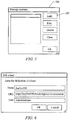
Figure 2 , logging into theapplication 200 includes defining a system host from a pre-existing list or by adding anew host 202.Figure 5 illustrates aGUI 500 that may be used to add a new host, by selectingbutton 502. The system host may be defined through a service URL, as shown inFigure 6 . The service URL should be associated with a correct port identifier. Then, the list of system hosts is updated, as shown inFigure 7 . - Returning to
Figure 2 , user credentials are then selected 204. A credentials dialog box, such as shown inFigure 8 , may thereafter be used for password checking, if appropriate. This completes the login process 206. -
Figure 3 illustrates the creation of aQaaWS 300. The operator may then be supplied a field to enter a name for the Query as aWeb Service 302. The GUI ofFigure 9 may be used to implement this operation. Character restrictions may apply. The Web Service Description box permits to enter text in natural language that will help operators to reuse the query. Next, a list of system universes may be supplied.Figure 10 illustrates a GUI to implement this operation. The operator selects auniverse 304. - A query panel may then appear.
Figure 11 illustrates a Business Objects Query Panel to implement this operation. The operator may drag and drop objects from theleft pane 1100 into the Result Objectspane 1102 and the Filter Objectspane 1104 to create a query, which corresponds to block 306 ofFigure 3 . - In the filter objects pane, the filter may be selected either as a "Condition" or as a "Prompt". A condition is an expression based on operators and constants. A prompt is an expression using a variable, which the user will define later, e.g. at runtime.
-
Figure 12 illustrates an Answer prompts dialog box. This dialog box allows one to select prompts to redefine. The modified values may be confirmed by clicking the OK button.Figure 13 illustrates a sample of the values the Web Services will send back. - This results in metadata forming a QaaWS definition, which is submitted to a semantic layer, which is
operation 308 ofFigure 3 . The semantic layer checks that the metadata defines a valid query and identifies the prompts existing therein. - As also shown in
Figure 13 , a preview of the Query as a Web Services may appear, which corresponds to block 310 ofFigure 3 . In one embodiment, the preview includes a Sample of data plus the Web Services input and output parameters : - the Web Services Input Parameters represent the input parameters of the created Web Services. The input parameters are linked to the query panel prompts.
- the Web Services Output Parameters represent the output parameters of the created Web Services. The output parameters are linked to Result Objects the operator has put in the query panel and they are expressed as a result set.
- Clicking the "Publish" button within
Figure 13 results in the publishing of the QaaWS, which corresponds to block 312 ofFigure 3 . A WSDL for the QaaWS definition is then built 312. The creation of the Query as a Web Service is now completed 316. It is stored on the Server and may now be used to create reports. - In short, metadata is created, which corresponds to the operator's selections in the query panel of
Figure 11 . Basically, the metadata is configured to be directly understood by the semantic layer. The semantic layer responds by: - identifying the variables or "prompts" in the query Input Parameters, returning the types of the query Output Parameters.
- In the case of a variable or prompt, a portion of XML language is established.
- This may be viewed as modeling the query. The model corresponds to a mapping of the query as entered into suitable query data for the semantic layer. A query comprises result objects and a logical tree of conditions. For example, the result object may be Year, Quarter, Product Line, Revenue and the logical tree of conditions may be (Country = « France »).
- The Prompt() function corresponds to prompting the user to define a value (or more) for a variable. Upon usage of the query, the operator will have to define value(s) for that variable ("resolve that variable") before the query results can be obtained.
- The invention includes modelling input parameter definitions. The correspondence between the query and the input parameters may be mapped as follows:
- 1- Each prompt is mapped to an XSD element. An XSD is an XML schema instance.
- 2- The cardinality of that XSD element is calculated using the «prompt» properties. If the prompt accepts one or more values, the cardinality will be « unbounded ». By contrast, if the prompt accepts a single value only, the cardinality will be 1.
- 3- The name of the XSD element corresponds to the name of the prompt to be encoded, substituting reserved characters with '_' (underscore), as appropriate.
- 4- The XSD type of the XSD element corresponds to the type of the prompt, as returned by the semantic layer. In the example (B.O. Semantic Layer), the current type may be Numeric, AlphaNumeric and Date, which will be mapped to XSD type string, double or data time.
- 5- The XML namespace corresponds to the unique ID of the Web Service under creation.
- Output parameter definitions may also be modelled. The correspondence between the query and the output parameters is mapped as follows :
- 1- Each output object is mapped to an XSD element having a given cardinality.
- 2- The name of the element corresponds to the name of the output object to be encoded, substituting reserved characters with '_' (underscore), as appropriate.
- 3- The XSD type of the XSD element corresponds to the type of the output object, as returned by the semantic layer. In the example (B.O. semantic layer), the type may be Numeric, AlphaNumeric and Date, which will be mapped to XSD type string, double or data time.
- 4- The XML namespace corresponds to the unique ID of the Web Service under creation.
- The Web service may be "consumed", i.e., used in an application program that is WSDL aware. This may be done simply by copying the URL and pasting it in the application.
-
Figure 4 illustrates an initial operation of consuming a QaaWS 400. These operations include: - the Consumer Sends a SOAP Input message with Query identifier and
Query Parameters 402; - the Generic Web Service or GWS gets the Query Definition from Repository R, according to the Query identifier of the
QaaWS 404; - the Generic Web Service or GWS maps the parameters of the Query, using the
Query Definition 406; - the Generic Web Service or GWS calls the Query Resolution Function (QRF) with mapped Query Definition and Query Parameters to
Semantic Layer 408; - the Semantic Layer processes the Query with the database DB and outputs corresponding
Query Results 410; - the Generic Web Service or GWS maps the Query Results into a XML format defined by the WSDL for the results and then returns it to the Consumer as a
SOAP output message 412. This forms theend 414. - On the user side, the designer may manage the created QaaWS. When launching the Query as a Web Service, the Query Catalogue List appears in the left pane. This includes all the queries the operator has created. Queries as a Web Service may be managed from the Query Catalogue list by performing one or more of the following actions:
- Viewing Query as a Web Service properties,
- Modifying a Query as a Web Service, and
- Deleting a Query as a Web Service.
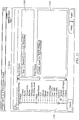
- Later, the properties of a Query as a Web Service may be viewed by clicking on that Query as a Web Service in the Query as a Web Services Catalog, as shown in
Figure 14 . By clicking the WSDL URL, one opens the WSDL in Internet Explorer. More precisely, to view the properties of a Query as a Web Service, click on the name of the Query. Its properties appear in the right pane. - To modify a Query as a Web Service
- 1. In the Query Catalog, click on the Query as a Web Service Name
- 2. Click the Edit button
- To delete a Query as a Web Service
- 1. In the Query Catalog, click on the Query as a Web Service name.
- 2. Click Delete.
- The invention is implemented in software code accessible on any appropriate computer-readable medium. The expression "computer-readable medium" includes a storage medium such as magnetic or optic. Embodiments of the invention includes:
- the software code for creating and publishing a QaaWS;
- the software code for consuming a QaaWS; and
- the software code for the Generic Web Server and the Semantic Layer APIs.
-
Exhibit 1 contains exemplary WSDL methods and corresponding code and query definitions according to an embodiment of the invention, as well as exemplary SOAP input and output messages. - An embodiment of the present invention relates to a computer storage product with a computer-readable medium having computer code thereon for performing various computer-implemented operations. The media and computer code may be those specially designed and constructed for the purposes of the present invention, or they may be of the kind well known and available to those having skill in the computer software arts. Examples of computer-readable media include, but are not limited to: magnetic media such as hard disks, floppy disks, and magnetic tape; optical media such as CD-ROMs, DVDs and holographic devices; magneto-optical media; and hardware devices that are specially configured to store and execute program code, such as application-specific integrated circuits ("ASICs"), programmable logic devices ("PLDs") and ROM and RAM devices. Examples of computer code include machine code, such as produced by a compiler, and files containing higher-level code that are executed by a computer using an interpreter. For example, an embodiment of the invention may be implemented using Java, C++, or other object-oriented programming language and development tools. Another embodiment of the invention may be implemented in hardwired circuitry in place of, or in combination with, machine-executable software instructions.
- The foregoing description, for purposes of explanation, used specific nomenclature to provide a thorough understanding of the invention. However, it will be apparent to one skilled in the art that specific details are not required in order to practice the invention. Thus, the foregoing descriptions of specific embodiments of the invention are presented for purposes of illustration and description. They are not intended to be exhaustive or to limit the invention to the precise forms disclosed; obviously, many modifications and variations are possible in view of the above teachings. The embodiments were chosen and described in order to best explain the principles of the invention and its practical applications. is intended that the following claims and their equivalents define the scope of the invention.
- According to another aspect of the computer readable storage medium of claim 9, the executable instructions to associate may include executable instructions to route the web service query to a semantic layer supporting the semantically dynamic objects.
- According to another aspect, the computerreadable storage medium may further comprise executable instructions to invoke the semantic layer via a semantic layer communication application program interface.
- According to yet another aspect, the computer readable storage medium of may further comprise executable instructions to receive global parameter queries from the semantic layer communication application program interface.
- According to yet another aspect of the computer readable storage medium, the web service interface may be a web service description language file.
- According to yet another aspect of the computer readable storage medium, the web service description language file may be invoked to form an input message.
- According to yet another aspect of the computer readable medium, the web service description language file may be invoked to form a Simple Object Access Protocol (SOAP) input message.
- According to yet another aspect of the computer readable medium, the web service description language file may be invoked to process an output message.
- According to yet another aspect of the computer readable medium, the web service description language file may be invoked to process a Simple Object Access Protocol (SOAP) output message.
- According to yet another aspect of the computer readable medium, the web service description language file may form a portion of a web service data set.
- According to yet another aspect of the computer readable medium, the web service data set may be stored in a repository accessible by a web service.
- According to yet another aspect, the computer readable storage medium may further comprise executable instructions to send query global parameters to the semantic layer and receive query semantic parameters from the semantic layer.
type="s:string"/> <s:element name="creatorname" type="s:string"/> <s:element name="creationdate" type="s:dateTime"/> <s:element name="creationdateformated" type="s:string"/> <s:element name="description" type="s:string"/> <s:element name="universe" type="s:string"/> <s:element name="queryruntime" type="s:long"/> <s:element name="fetchedrows" type="s:long"/> <s:element name="numberofexecution" type="s:long"/> <s:element name="maxfetchedrows" type="s:long"/> <s:element name="avgqueryruntime" type="s:long"/> <s:element name="avgfetchedrows" type="s:long"/> <s:element name="table" type="s0:Table"/> </s:sequence> </s:complexType> </s:element> </s:schema> </types> E1.6 <!-- - - - - - - - - - - --> <!-- Operations messages --> <!-- - - - - - - - - - - --> <message name="runQueryAsAServiceSoapIn"> <part name="parameters" element="s0:runQueryAsAService"/> </message> <message name="runQueryAsAServiceSoapOut"> <part name="parameters" element="s0:runQueryAsAServiceResponse"/> </message> E1.7 <!-- - - - - - - - - - - --> <!-- port Type messages --> <!-- - _ _ - - _ - _ - _ --> <portType name="QueryAsAServiceSoap"> <operation name="runQueryAsAService"> <documentation>Get Web Service Provider server info</documentation> <input message="s0:runQueryAsAServiceSoapIn"/> <output message="s0:runQueryAsAServiceSoapOut"/> </operation> </portType> E1.8 <!-- - - - - - - - - - - --> <!-- Binding --> <!-- - - - - - - - - - - --> <binding name="QueryAsAServiceSoap" type="s0:QueryAsAServiceSoap"> <soap:binding transport="http://schemas.xmlsoap.org/soap/http" style="document"/> <operation name="runQueryAsAService"> <soap:operation soapAction="MyQueryID/runQueryAsAService" style="document"/> <input> <soap:body use="literal"/> </input> <output> <soap:body use="literal"/> </output> </operation> </binding> E1.9 <!-- - - - - - - - - - - --> <!-- Service --> <!-- - - - - - - - - - - --> <service name="MyQueryID"> <documentation>Description of MyQueryID Web Services</documentation> <port name="QueryAsAServiceSoap" binding="s0:QueryAsAServiceSoap"> <soap:address iocation="http://2as3rx100:9080/dswsbobje/services/queryasas ervice"/> </port> </service> </definitions> E2.1 <?xml version="1.0" encoding="ISO-8859-1" ?> - <QueryList> - <QueryWS> <ServiceName>MyQueryID</ServiceName> <QueryServiceName>MyQueryID</QueryServiceName> <OutputGenerateMode>2</OutputGenerateMode> <CreatorName>Administrator</CreatorName> <CreationDate>1147B07193250</CreationDate> <Description>Descirption of MyQueryID Web Services</Description> <UniverseID>UnivCUID=AcWR_AmyPJtKpaAvWXV7vA0</UniverseID> <UniverseName>Island Resorts Marketing</UniverseName> E2.2 <QuerySpec> <QuerySpecification xmlns:xsd="http://www.w3.org/2001/XMLSchema" xmlns:xsi="http://www.w3.org/2001/XMLSchema-instance"> <QueryBase xsi:type="Query" xmlns="http://query.businessobjects.com/2005"> <QueryResult Key="UnivCUID=AcWR_AmyPJtKpaAvWXV7vA0.D018"> <Name>Year</Name> </QueryResult> <QueryResult Key="UnivCUID=AcWR AmyPJtKpaAvWXV7vA0.DO1a"> <Name>Quarter</Name> </QueryResult> <QueryResult Key="UnivCUID=AcWR_AmyPJtKpaAvWXV7vA0.DO4"> <Name>Service Line</Name> </QueryResult> <QueryResult Key="UnivCUID=AcWR_AmyPJtKpaAvWXV7vA0.DO7"> <Name>Revenue</Name> </QueryResult> <QueryCondition QueryConditionOperator="And"> <Item xsi:type="Filter" FilterOperator="Equal"> <FilteredObject Key="UnivCUID=AcWR_AmyPJtKpaAvWXV7vA0.DO6"> <Name>Country</Name> </FilteredObject> <Operand xsi:type="Prompt" KeepLastValues="false" Constrained="false" HasLov="true" Order="0"> <Question>Which_Country_</Question> </Operand> </Item> </QueryCondition> </QueryBase> </QuerySpecification> </QuerySpec> E2.3 <WSDLUrl>http://2as3rx100:9080/dswsbobje/MyQueryID.wsdl</WSD LUrl> <AvgRunningTime>1453</AvgRunningTime> <AvgFetchedRows>72</AvgFetchedRows> <MaxFetchedRows>36</MaxFetchedRows> <nbExecution>2</nbExecution> <InputParams ID="ROOT.0" Name="Which_Country_" PromptType="Mono" Type="String" /> <OutputParams ID="Year" Name="Year" Type="String" /> <OutputParams ID="Quarter" Name="Quarter" Type="String" /> <OutputParams ID="Service_Line" Name="ServiceLine" _ Type="String" /> <OutputParams ID="Revenue" Name="Revenue" Type="Numeric"/> </QueryWS> <endlist /> </QueryList> E3 <?xml version="1.0" encoding="utf-8"?><soap:Envelope xmlns:soap="http://schemas.xmlsoap.org/soap/envelope/" xmlns:xsi="http://www.w3.org/2001/XMLSchema-instance" xmlns:xsd="http://www.w3.org/2001/XMLSchema"> <soap:Body> <runQueryAsAService xmlns="MyQueryID"> <login>Administrator</login> <password /> <Which_Country_>US</Which_Country_> </runQueryAsAService> </soap:Body> </soap:Envelope> E4 <?xml version="1.0" encoding="UTF-8"?> <soapenv:Envelope xmlns:soapenv="http://schemas.xmlsoap.org/soap/envelope/" xmlns:xsd="http://www.w3.org/2001/XMLSchema" xmlns:xsi="http://www.w3.org/2001/XMLSchema-instance"> <soapenv:Body> <runQueryAsAServiceResponse xmlns="MyQueryID"> <message/> <creatornameAdministrator</creatorname> <creationdate>2006-05 16T12:19:53.250Z</creationdate> <creationdateformated>05/16/2006 0:19:53 PM </creationdateformated> <description>Descirption of MyQueryID Web Services</description> <universe>Island Resorts Marketing</universe> <queryruntime>641</queryruntime> <fetchedrows>36</fetchedrows> <numberofexecution>2</numberofexecution> <maxfetchedrows>36</maxfetchedrows> <avgqueryruntime>726</avgqueryruntime> <avgfetchedrows>36</avgfetchedrows> <table> <row> <Year>FY1998</Year> <Quarter>Q1</Quarter> <Service_Line>Accommodation</Service_Line> <Revenue>127455</Revenue> </row> <row> <Year>FY1998</Year> <Quarter>Q1</Quarter> <Service _Line>Food &Drinks</Service_Line> <Revenue>24935</Revenue> </row> <row> <Year>FY1998</Year> <Quarter>Q1</Quarter> <Service_Line>Recreation</Service_Line> <Revenue>28200</Revenue> </row> (...) </table> </runQueryAsAServiceResponse> </soapenv:Body> </soapenv:Envelope>
Claims (11)
- A computer readable storage medium for creating and publishing a Query as a Web Service, QaaWS, wherein the QaaWS is a web service based on semantic layer universes associated with a data source and can be used by user applications as input, the medium comprising executable instructions to:retrieve, from a user, a query specification, wherein the query specification comprises on-screen selections of database elements and filters corresponding to a database (114);send, via a semantic layer communication API (144), the query specification to a semantic layer (112);resolve, at the semantic layer (112), query semantic parameters, QSPs, of the query specification for defining a query definition (160) to be stored in a QaaWS data set (123) in a repository (108), wherein the QSPs are generated by- accessing, via a query definition module (122), the semantic layer API that generates global parameter queries (116);- applying the global parameter queries (116) to the semantic layer (112) and to the database (114);generate a QaaWS WSDL file (124) and a query identifier from the query definition in order to complete the QaaWS data set (123), wherein the QaaWS WSDL file (124) is a general definition of elements to be considered for building a user application which take the QaaWS as input and comprises:- a query method;- the query identifier,- a query input/output; and- methods corresponding to ports and methods for connection to the QaaWS; andstore the generated QaaWS WSDL file (124) within the QaaWS data set (123) in the repository (108);receive, at a generic web service (106), an input message (132) comprising the query identifier and query parameters, from a user application via an interface at a user site;access the query definition (160) in the QaaWS data set (123) within the repository (108) by means of the query identifier;map the query parameters to QaaWS definition and parameters (162) in a semantic layer communication API (164) to form a semantic query (166);pass the semantic query (166) to the semantic layer (112);receive, at the semantic layer communication API (164), a result data set (168) from the semantic layer (112);transmit the result data set (168) in the form of an output data set formatted according to the QaaWS WSDL file (124) to the generic web service (106); andtransmit the output data set to a specified web service interface by means of an output message (134).
- The computer readable storage medium of claim 1 wherein the input message (132) is a Simple Object Access Protocol (SOAP) message.
- The computer readable storage medium of claim 1 wherein the executable instructions to map the query parameters include executable instructions to map the query parameters to query prompts for the semantic layer.
- The computer readable storage medium of claim 1 wherein the executable instructions to map the query parameters include executable instructions to call a query resolution function.
- The computer readable storage medium of claim 4 wherein the query resolution function is a report engine software developer kit.
- The computer readable storage medium of claim 1 wherein the executable instructions to transmit the output data set include executable instructions to map the output data set into a web service interface with an extensible Markup Language (XML) format defined by a Web Service Description Language.
- The computer readable storage medium of claim 6 wherein the executable instructions to transmit the output data set include executable instructions to form a Simple Object Access Protocol (SOAP) output message (134).
- Computer-implemented method for creating and publishing a Query as a Web Service, QaaWS, wherein the QaaWS is a web service based on semantic layer universes associated with a data source and can be used by user applications as input, the method comprising:retrieving, from a user, a query specification, wherein the query specification comprises on-screen selections of database elements and filters corresponding to a database (114);sending, via a semantic layer communication API (144), the query specification to a semantic layer (112);resolving, at the semantic layer (112), query semantic parameters, QSPs, of the query specification for defining a query definition (160) to be stored in a QaaWS data set (123) in a repository (108), wherein the QSPs are generated by- accessing, via a query definition module (122), the semantic layer API that generates global parameter queries (116);- applying the global parameter queries (116) to the semantic layer (112) and to the database (114);generating a QaaWS WSDL file (124) and a query identifier from the query definition in order to complete the QaaWS data set (123) wherein the QaaWS WSDL file (124) is a general definition of elements to be considered for building a user application which take the QaaWS as input and comprises:- a query method;- the query identifier,- a query input/output; and- methods corresponding to ports and methods for connection to the QaaWS; andstore the generated QaaWS WSDL file (124) within the QaaWS data set (123) in the repository (108);receiving, at a generic web service (106), an input message (132) comprising the query identifier and query parameters, from a user application via an interface at a user site;accessing the query definition (160) in the QaaWS data set (123) within the repository (108) by means of the query identifier;mapping the query parameters to QaaWS definition and parameters (162) in a semantic layer communication API (164) to form a semantic query (166);passing the semantic query (166) to the semantic layer (112);receiving, at the semantic layer communication API (164), a result data set (168) from the semantic layer (112);transmitting the result data set (168) in the form of an output data set formatted according to the QaaWS WSDL file (124) to the generic web service (106); andtransmitting the output data set to a specified web service interface by means of an output message (134).
- Computer-implemented method according to claim 8, wherein the method performs any one of the operations according to claims 2 to 7.
- Computer system for creating and publishing a Query as a Web Service, QaaWS, wherein the QaaWS is a web service based on semantic layer universes associated with a data source and can be used by user applications as input, the system comprising at least one system component operable to:retrieve, from a user, a query specification, wherein the query specification comprises on-screen selections of database elements and filters corresponding to a database (114);send, via a semantic layer communication API (144), the query specification to a semantic layer (112);resolve, at the semantic layer (112), query semantic parameters, QSPs, of the query specification for defining a query definition (160) to be stored in a QaaWS data set (123) in a repository (108), wherein the QSPs are generated by- accessing, via a query definition module (122), the semantic layer API that generates global parameter queries (116);- applying the global parameter queries (116) to the semantic layer (112) and to the database (114);generate a QaaWS WSDL file (124) and a query identifier from the query definition in order to complete the QaaWS data set (123) wherein the QaaWS WSDL file (124) is a general definition of elements to be considered for building a user application which take the QaaWS as input and comprises:- a query method;- the query identifier,- a query input/output; and- methods corresponding to ports and methods for connection to the QaaWS; andstore the generated QaaWS WSDL file (124) within the QaaWS data set (123) in the repository (108);receive, at a generic web service (106), an input message (132) comprising the query identifier and query parameters, from a user application via an interface at a user site;access the query definition (160) in the QaaWS data set (123) within the repository (108) by means of the query identifier;map the query parameters to QaaWS definition and parameters (162) in a semantic layer communication API (164) to form a semantic query (166);pass the semantic query (166) to the semantic layer (112);receive, at the semantic layer communication API (164), a result data set (168) from the semantic layer (112);transmit the result data set (168) in the form of an output data set formatted according to the QaaWS WSDL file (124) to the generic web service (106); andtransmit the output data set to a specified web service interface by means of an output message (134).
- System according to claim 10, wherein the at least one system component is further operable to perform any one of the operations according to claims 2 to 7.
Applications Claiming Priority (2)
| Application Number | Priority Date | Filing Date | Title |
|---|---|---|---|
| US80886006P | 2006-05-26 | 2006-05-26 | |
| PCT/US2007/069722 WO2007140290A2 (en) | 2006-05-26 | 2007-05-25 | Apparatus and method for querying databases via a web service |
Publications (3)
| Publication Number | Publication Date |
|---|---|
| EP2024867A2 EP2024867A2 (en) | 2009-02-18 |
| EP2024867A4 EP2024867A4 (en) | 2011-11-30 |
| EP2024867B1 true EP2024867B1 (en) | 2018-11-21 |
Family
ID=38779367
Family Applications (1)
| Application Number | Title | Priority Date | Filing Date |
|---|---|---|---|
| EP07797765.0A Active EP2024867B1 (en) | 2006-05-26 | 2007-05-25 | Apparatus and method for querying databases via a web service |
Country Status (3)
| Country | Link |
|---|---|
| US (1) | US7716234B2 (en) |
| EP (1) | EP2024867B1 (en) |
| WO (1) | WO2007140290A2 (en) |
Cited By (1)
| Publication number | Priority date | Publication date | Assignee | Title |
|---|---|---|---|---|
| US20210073244A1 (en) * | 2018-03-02 | 2021-03-11 | Amazon Technologies, Inc. | Replication event ordering using an external data store |
Families Citing this family (47)
| Publication number | Priority date | Publication date | Assignee | Title |
|---|---|---|---|---|
| US8484663B2 (en) * | 2007-04-27 | 2013-07-09 | Microsoft Corporation | Method of deriving web service interfaces from form and table metadata |
| US8527577B2 (en) * | 2007-05-22 | 2013-09-03 | Oracle International Corporation | System and method for configuration-driven deployment |
| US8146110B2 (en) * | 2007-12-10 | 2012-03-27 | Microsoft Corporation | Service platform for in-context results |
| US20090228804A1 (en) * | 2008-03-05 | 2009-09-10 | Microsoft Corporation | Service Preview And Access From an Application Page |
| US20100088325A1 (en) | 2008-10-07 | 2010-04-08 | Microsoft Corporation | Streaming Queries |
| US8712956B2 (en) * | 2009-03-30 | 2014-04-29 | Sap Ag | Systems and methods to provide report part via a web service |
| US9158816B2 (en) * | 2009-10-21 | 2015-10-13 | Microsoft Technology Licensing, Llc | Event processing with XML query based on reusable XML query template |
| US8812962B2 (en) | 2009-11-12 | 2014-08-19 | Microsoft Corporation | Web service interface and querying |
| US8892601B2 (en) | 2011-10-25 | 2014-11-18 | Microsoft Corporation | Creating web applications using cloud-based friction-free databases without requiring web hosting knowledge |
| CN103678341A (en) * | 2012-09-07 | 2014-03-26 | 鸿富锦精密工业(深圳)有限公司 | Database interaction system and method |
| US10394862B2 (en) * | 2013-02-18 | 2019-08-27 | Nec Corporation | Method and system for semantically querying a database by a machine-to-machine application |
| US9384236B2 (en) * | 2013-06-14 | 2016-07-05 | Sap Se | Method and system for operating on database queries |
| US10417225B2 (en) | 2015-09-18 | 2019-09-17 | Splunk Inc. | Entity detail monitoring console |
| US10536353B2 (en) | 2014-10-09 | 2020-01-14 | Splunk Inc. | Control interface for dynamic substitution of service monitoring dashboard source data |
| US9130832B1 (en) | 2014-10-09 | 2015-09-08 | Splunk, Inc. | Creating entity definition from a file |
| US9760240B2 (en) | 2014-10-09 | 2017-09-12 | Splunk Inc. | Graphical user interface for static and adaptive thresholds |
| US10417108B2 (en) | 2015-09-18 | 2019-09-17 | Splunk Inc. | Portable control modules in a machine data driven service monitoring system |
| US11455590B2 (en) | 2014-10-09 | 2022-09-27 | Splunk Inc. | Service monitoring adaptation for maintenance downtime |
| US11200130B2 (en) | 2015-09-18 | 2021-12-14 | Splunk Inc. | Automatic entity control in a machine data driven service monitoring system |
| US10474680B2 (en) | 2014-10-09 | 2019-11-12 | Splunk Inc. | Automatic entity definitions |
| US10209956B2 (en) | 2014-10-09 | 2019-02-19 | Splunk Inc. | Automatic event group actions |
| US11755559B1 (en) | 2014-10-09 | 2023-09-12 | Splunk Inc. | Automatic entity control in a machine data driven service monitoring system |
| US9208463B1 (en) | 2014-10-09 | 2015-12-08 | Splunk Inc. | Thresholds for key performance indicators derived from machine data |
| US9158811B1 (en) | 2014-10-09 | 2015-10-13 | Splunk, Inc. | Incident review interface |
| US11087263B2 (en) | 2014-10-09 | 2021-08-10 | Splunk Inc. | System monitoring with key performance indicators from shared base search of machine data |
| US10235638B2 (en) | 2014-10-09 | 2019-03-19 | Splunk Inc. | Adaptive key performance indicator thresholds |
| US9210056B1 (en) | 2014-10-09 | 2015-12-08 | Splunk Inc. | Service monitoring interface |
| US10193775B2 (en) | 2014-10-09 | 2019-01-29 | Splunk Inc. | Automatic event group action interface |
| US10505825B1 (en) | 2014-10-09 | 2019-12-10 | Splunk Inc. | Automatic creation of related event groups for IT service monitoring |
| US9146954B1 (en) | 2014-10-09 | 2015-09-29 | Splunk, Inc. | Creating entity definition from a search result set |
| US9491059B2 (en) | 2014-10-09 | 2016-11-08 | Splunk Inc. | Topology navigator for IT services |
| US9146962B1 (en) | 2014-10-09 | 2015-09-29 | Splunk, Inc. | Identifying events using informational fields |
| US11671312B2 (en) | 2014-10-09 | 2023-06-06 | Splunk Inc. | Service detail monitoring console |
| US11501238B2 (en) | 2014-10-09 | 2022-11-15 | Splunk Inc. | Per-entity breakdown of key performance indicators |
| US10305758B1 (en) | 2014-10-09 | 2019-05-28 | Splunk Inc. | Service monitoring interface reflecting by-service mode |
| US9967351B2 (en) | 2015-01-31 | 2018-05-08 | Splunk Inc. | Automated service discovery in I.T. environments |
| US10198155B2 (en) | 2015-01-31 | 2019-02-05 | Splunk Inc. | Interface for automated service discovery in I.T. environments |
| US10262006B2 (en) | 2016-04-29 | 2019-04-16 | Microsoft Technology Licensing, Llc | Contextually triggered entry point |
| KR102169930B1 (en) * | 2016-05-05 | 2020-10-26 | 한국전자기술연구원 | Semantic Information Management Method for a M2M/IoT platform |
| US10942960B2 (en) | 2016-09-26 | 2021-03-09 | Splunk Inc. | Automatic triage model execution in machine data driven monitoring automation apparatus with visualization |
| US10942946B2 (en) | 2016-09-26 | 2021-03-09 | Splunk, Inc. | Automatic triage model execution in machine data driven monitoring automation apparatus |
| US11093518B1 (en) | 2017-09-23 | 2021-08-17 | Splunk Inc. | Information technology networked entity monitoring with dynamic metric and threshold selection |
| US11106442B1 (en) | 2017-09-23 | 2021-08-31 | Splunk Inc. | Information technology networked entity monitoring with metric selection prior to deployment |
| US11159397B2 (en) | 2017-09-25 | 2021-10-26 | Splunk Inc. | Lower-tier application deployment for higher-tier system data monitoring |
| US11625436B2 (en) * | 2020-08-14 | 2023-04-11 | Salesforce.Com, Inc. | Systems and methods for query autocompletion |
| US11394803B2 (en) | 2020-12-11 | 2022-07-19 | Fidelity Information Services, Llc | Systems and methods for providing cloud computing semantic layer operations |
| US11676072B1 (en) | 2021-01-29 | 2023-06-13 | Splunk Inc. | Interface for incorporating user feedback into training of clustering model |
Family Cites Families (5)
| Publication number | Priority date | Publication date | Assignee | Title |
|---|---|---|---|---|
| US5555403A (en) * | 1991-11-27 | 1996-09-10 | Business Objects, S.A. | Relational database access system using semantically dynamic objects |
| US20030163450A1 (en) * | 2001-05-25 | 2003-08-28 | Joram Borenstein | Brokering semantics between web services |
| US7222121B2 (en) * | 2002-11-21 | 2007-05-22 | Hewlett-Packard Development Company, L.P. | Platform and method for monitoring and analyzing data |
| US7478419B2 (en) * | 2005-03-09 | 2009-01-13 | Sun Microsystems, Inc. | Automated policy constraint matching for computing resources |
| US20070106664A1 (en) * | 2005-11-04 | 2007-05-10 | Minfo, Inc. | Input/query methods and apparatuses |
-
2007
- 2007-05-23 US US11/752,803 patent/US7716234B2/en active Active
- 2007-05-25 EP EP07797765.0A patent/EP2024867B1/en active Active
- 2007-05-25 WO PCT/US2007/069722 patent/WO2007140290A2/en not_active Ceased
Non-Patent Citations (2)
| Title |
|---|
| CARL LAGOZE ET AL: "Fedora: an architecture for complex objects and their relationships", INTERNATIONAL JOURNAL ON DIGITAL LIBRARIES, SPRINGER, BERLIN, DE, vol. 6, no. 2, 1 April 2006 (2006-04-01), pages 124 - 138, XP019352152, ISSN: 1432-1300, DOI: 10.1007/S00799-005-0130-3 * |
| S. MALAIKA ET AL: "DB2 and Web services", IBM SYSTEMS JOURNAL, vol. 41, no. 4, 1 January 2002 (2002-01-01), pages 666 - 685, XP055212145, ISSN: 0018-8670, DOI: 10.1147/sj.414.0666 * |
Cited By (2)
| Publication number | Priority date | Publication date | Assignee | Title |
|---|---|---|---|---|
| US20210073244A1 (en) * | 2018-03-02 | 2021-03-11 | Amazon Technologies, Inc. | Replication event ordering using an external data store |
| US11514077B2 (en) * | 2018-03-02 | 2022-11-29 | Amazon Technologies, Inc. | Replication event ordering using an external data store |
Also Published As
| Publication number | Publication date |
|---|---|
| US20070276815A1 (en) | 2007-11-29 |
| WO2007140290A3 (en) | 2008-09-25 |
| US7716234B2 (en) | 2010-05-11 |
| WO2007140290A2 (en) | 2007-12-06 |
| EP2024867A2 (en) | 2009-02-18 |
| EP2024867A4 (en) | 2011-11-30 |
Similar Documents
| Publication | Publication Date | Title |
|---|---|---|
| US7716234B2 (en) | Apparatus and method for querying databases via a web service | |
| US10708380B2 (en) | Templating data service responses | |
| US7660805B2 (en) | Method of generating data servers for heterogeneous data sources | |
| AU2002258640B2 (en) | Method and apparatus for intelligent data assimilation | |
| US8914807B2 (en) | Method, system, and program for generating a program capable of invoking a flow of operations | |
| US8626803B2 (en) | Method and apparatus for automatically providing network services | |
| US7774485B2 (en) | Dynamic service composition and orchestration | |
| US8924408B2 (en) | Automatic generation of database invocation mechanism for external web services | |
| US8595287B2 (en) | Method and apparatus for metadata driven web service mediation | |
| JP4993876B2 (en) | Web service application protocol and SOAP processing model | |
| CN103392170B (en) | Data syn-chronization between system | |
| US20060080120A1 (en) | Publish/subscribe mechanism for web services | |
| US20020116454A1 (en) | System and method for providing communication among legacy systems using web objects for legacy functions | |
| US8312285B2 (en) | Global profile management method and system | |
| US9747353B2 (en) | Database content publisher | |
| US20170270157A1 (en) | TCP/IP Network Automation and Orchestration Tools | |
| US8712956B2 (en) | Systems and methods to provide report part via a web service | |
| US20040167905A1 (en) | Content management portal and method for managing digital assets | |
| US10313421B2 (en) | Providing Odata service based on service operation execution flow | |
| US20240036830A1 (en) | Event consumption for high-level programing language platform | |
| Misbah et al. | Towards a standard WSDL implementation of Multiview web services | |
| US12598238B2 (en) | Open resource discovery of entity types | |
| US20250138924A1 (en) | Common artifact modeler | |
| US20240036946A1 (en) | Event provisioning for high-level programing language platform | |
| Cridlig et al. | A NetConf network management suite: ENSUITE |
Legal Events
| Date | Code | Title | Description |
|---|---|---|---|
| PUAI | Public reference made under article 153(3) epc to a published international application that has entered the european phase |
Free format text: ORIGINAL CODE: 0009012 |
|
| 17P | Request for examination filed |
Effective date: 20081211 |
|
| AK | Designated contracting states |
Kind code of ref document: A2 Designated state(s): AT BE BG CH CY CZ DE DK EE ES FI FR GB GR HU IE IS IT LI LT LU LV MC MT NL PL PT RO SE SI SK TR |
|
| AX | Request for extension of the european patent |
Extension state: AL BA HR MK RS |
|
| DAX | Request for extension of the european patent (deleted) | ||
| A4 | Supplementary search report drawn up and despatched |
Effective date: 20111028 |
|
| RIC1 | Information provided on ipc code assigned before grant |
Ipc: G06F 17/30 20060101AFI20111024BHEP |
|
| 17Q | First examination report despatched |
Effective date: 20150916 |
|
| GRAP | Despatch of communication of intention to grant a patent |
Free format text: ORIGINAL CODE: EPIDOSNIGR1 |
|
| STAA | Information on the status of an ep patent application or granted ep patent |
Free format text: STATUS: GRANT OF PATENT IS INTENDED |
|
| INTG | Intention to grant announced |
Effective date: 20180625 |
|
| GRAS | Grant fee paid |
Free format text: ORIGINAL CODE: EPIDOSNIGR3 |
|
| GRAA | (expected) grant |
Free format text: ORIGINAL CODE: 0009210 |
|
| STAA | Information on the status of an ep patent application or granted ep patent |
Free format text: STATUS: THE PATENT HAS BEEN GRANTED |
|
| AK | Designated contracting states |
Kind code of ref document: B1 Designated state(s): AT BE BG CH CY CZ DE DK EE ES FI FR GB GR HU IE IS IT LI LT LU LV MC MT NL PL PT RO SE SI SK TR |
|
| REG | Reference to a national code |
Ref country code: DE Ref legal event code: R079 Ref document number: 602007056911 Country of ref document: DE Free format text: PREVIOUS MAIN CLASS: G06F0017300000 Ipc: G06F0016000000 |
|
| REG | Reference to a national code |
Ref country code: CH Ref legal event code: EP |
|
| REG | Reference to a national code |
Ref country code: IE Ref legal event code: FG4D |
|
| REG | Reference to a national code |
Ref country code: DE Ref legal event code: R096 Ref document number: 602007056911 Country of ref document: DE |
|
| REG | Reference to a national code |
Ref country code: AT Ref legal event code: REF Ref document number: 1068369 Country of ref document: AT Kind code of ref document: T Effective date: 20181215 |
|
| REG | Reference to a national code |
Ref country code: NL Ref legal event code: MP Effective date: 20181121 |
|
| REG | Reference to a national code |
Ref country code: AT Ref legal event code: MK05 Ref document number: 1068369 Country of ref document: AT Kind code of ref document: T Effective date: 20181121 |
|
| PG25 | Lapsed in a contracting state [announced via postgrant information from national office to epo] |
Ref country code: LT Free format text: LAPSE BECAUSE OF FAILURE TO SUBMIT A TRANSLATION OF THE DESCRIPTION OR TO PAY THE FEE WITHIN THE PRESCRIBED TIME-LIMIT Effective date: 20181121 Ref country code: FI Free format text: LAPSE BECAUSE OF FAILURE TO SUBMIT A TRANSLATION OF THE DESCRIPTION OR TO PAY THE FEE WITHIN THE PRESCRIBED TIME-LIMIT Effective date: 20181121 Ref country code: IS Free format text: LAPSE BECAUSE OF FAILURE TO SUBMIT A TRANSLATION OF THE DESCRIPTION OR TO PAY THE FEE WITHIN THE PRESCRIBED TIME-LIMIT Effective date: 20190321 Ref country code: AT Free format text: LAPSE BECAUSE OF FAILURE TO SUBMIT A TRANSLATION OF THE DESCRIPTION OR TO PAY THE FEE WITHIN THE PRESCRIBED TIME-LIMIT Effective date: 20181121 Ref country code: LV Free format text: LAPSE BECAUSE OF FAILURE TO SUBMIT A TRANSLATION OF THE DESCRIPTION OR TO PAY THE FEE WITHIN THE PRESCRIBED TIME-LIMIT Effective date: 20181121 Ref country code: ES Free format text: LAPSE BECAUSE OF FAILURE TO SUBMIT A TRANSLATION OF THE DESCRIPTION OR TO PAY THE FEE WITHIN THE PRESCRIBED TIME-LIMIT Effective date: 20181121 Ref country code: BG Free format text: LAPSE BECAUSE OF FAILURE TO SUBMIT A TRANSLATION OF THE DESCRIPTION OR TO PAY THE FEE WITHIN THE PRESCRIBED TIME-LIMIT Effective date: 20190221 |
|
| PG25 | Lapsed in a contracting state [announced via postgrant information from national office to epo] |
Ref country code: PT Free format text: LAPSE BECAUSE OF FAILURE TO SUBMIT A TRANSLATION OF THE DESCRIPTION OR TO PAY THE FEE WITHIN THE PRESCRIBED TIME-LIMIT Effective date: 20190321 Ref country code: NL Free format text: LAPSE BECAUSE OF FAILURE TO SUBMIT A TRANSLATION OF THE DESCRIPTION OR TO PAY THE FEE WITHIN THE PRESCRIBED TIME-LIMIT Effective date: 20181121 Ref country code: SE Free format text: LAPSE BECAUSE OF FAILURE TO SUBMIT A TRANSLATION OF THE DESCRIPTION OR TO PAY THE FEE WITHIN THE PRESCRIBED TIME-LIMIT Effective date: 20181121 Ref country code: GR Free format text: LAPSE BECAUSE OF FAILURE TO SUBMIT A TRANSLATION OF THE DESCRIPTION OR TO PAY THE FEE WITHIN THE PRESCRIBED TIME-LIMIT Effective date: 20190222 |
|
| PG25 | Lapsed in a contracting state [announced via postgrant information from national office to epo] |
Ref country code: CZ Free format text: LAPSE BECAUSE OF FAILURE TO SUBMIT A TRANSLATION OF THE DESCRIPTION OR TO PAY THE FEE WITHIN THE PRESCRIBED TIME-LIMIT Effective date: 20181121 Ref country code: PL Free format text: LAPSE BECAUSE OF FAILURE TO SUBMIT A TRANSLATION OF THE DESCRIPTION OR TO PAY THE FEE WITHIN THE PRESCRIBED TIME-LIMIT Effective date: 20181121 Ref country code: DK Free format text: LAPSE BECAUSE OF FAILURE TO SUBMIT A TRANSLATION OF THE DESCRIPTION OR TO PAY THE FEE WITHIN THE PRESCRIBED TIME-LIMIT Effective date: 20181121 Ref country code: IT Free format text: LAPSE BECAUSE OF FAILURE TO SUBMIT A TRANSLATION OF THE DESCRIPTION OR TO PAY THE FEE WITHIN THE PRESCRIBED TIME-LIMIT Effective date: 20181121 |
|
| REG | Reference to a national code |
Ref country code: DE Ref legal event code: R097 Ref document number: 602007056911 Country of ref document: DE |
|
| PG25 | Lapsed in a contracting state [announced via postgrant information from national office to epo] |
Ref country code: EE Free format text: LAPSE BECAUSE OF FAILURE TO SUBMIT A TRANSLATION OF THE DESCRIPTION OR TO PAY THE FEE WITHIN THE PRESCRIBED TIME-LIMIT Effective date: 20181121 Ref country code: RO Free format text: LAPSE BECAUSE OF FAILURE TO SUBMIT A TRANSLATION OF THE DESCRIPTION OR TO PAY THE FEE WITHIN THE PRESCRIBED TIME-LIMIT Effective date: 20181121 Ref country code: SK Free format text: LAPSE BECAUSE OF FAILURE TO SUBMIT A TRANSLATION OF THE DESCRIPTION OR TO PAY THE FEE WITHIN THE PRESCRIBED TIME-LIMIT Effective date: 20181121 |
|
| PLBE | No opposition filed within time limit |
Free format text: ORIGINAL CODE: 0009261 |
|
| STAA | Information on the status of an ep patent application or granted ep patent |
Free format text: STATUS: NO OPPOSITION FILED WITHIN TIME LIMIT |
|
| 26N | No opposition filed |
Effective date: 20190822 |
|
| PG25 | Lapsed in a contracting state [announced via postgrant information from national office to epo] |
Ref country code: SI Free format text: LAPSE BECAUSE OF FAILURE TO SUBMIT A TRANSLATION OF THE DESCRIPTION OR TO PAY THE FEE WITHIN THE PRESCRIBED TIME-LIMIT Effective date: 20181121 |
|
| REG | Reference to a national code |
Ref country code: CH Ref legal event code: PL |
|
| PG25 | Lapsed in a contracting state [announced via postgrant information from national office to epo] |
Ref country code: MC Free format text: LAPSE BECAUSE OF FAILURE TO SUBMIT A TRANSLATION OF THE DESCRIPTION OR TO PAY THE FEE WITHIN THE PRESCRIBED TIME-LIMIT Effective date: 20181121 Ref country code: CH Free format text: LAPSE BECAUSE OF NON-PAYMENT OF DUE FEES Effective date: 20190531 Ref country code: LI Free format text: LAPSE BECAUSE OF NON-PAYMENT OF DUE FEES Effective date: 20190531 |
|
| REG | Reference to a national code |
Ref country code: BE Ref legal event code: MM Effective date: 20190531 |
|
| PG25 | Lapsed in a contracting state [announced via postgrant information from national office to epo] |
Ref country code: LU Free format text: LAPSE BECAUSE OF NON-PAYMENT OF DUE FEES Effective date: 20190525 |
|
| PG25 | Lapsed in a contracting state [announced via postgrant information from national office to epo] |
Ref country code: TR Free format text: LAPSE BECAUSE OF FAILURE TO SUBMIT A TRANSLATION OF THE DESCRIPTION OR TO PAY THE FEE WITHIN THE PRESCRIBED TIME-LIMIT Effective date: 20181121 |
|
| PG25 | Lapsed in a contracting state [announced via postgrant information from national office to epo] |
Ref country code: IE Free format text: LAPSE BECAUSE OF NON-PAYMENT OF DUE FEES Effective date: 20190525 |
|
| PG25 | Lapsed in a contracting state [announced via postgrant information from national office to epo] |
Ref country code: BE Free format text: LAPSE BECAUSE OF NON-PAYMENT OF DUE FEES Effective date: 20190531 |
|
| PG25 | Lapsed in a contracting state [announced via postgrant information from national office to epo] |
Ref country code: CY Free format text: LAPSE BECAUSE OF FAILURE TO SUBMIT A TRANSLATION OF THE DESCRIPTION OR TO PAY THE FEE WITHIN THE PRESCRIBED TIME-LIMIT Effective date: 20181121 |
|
| PG25 | Lapsed in a contracting state [announced via postgrant information from national office to epo] |
Ref country code: MT Free format text: LAPSE BECAUSE OF FAILURE TO SUBMIT A TRANSLATION OF THE DESCRIPTION OR TO PAY THE FEE WITHIN THE PRESCRIBED TIME-LIMIT Effective date: 20181121 Ref country code: HU Free format text: LAPSE BECAUSE OF FAILURE TO SUBMIT A TRANSLATION OF THE DESCRIPTION OR TO PAY THE FEE WITHIN THE PRESCRIBED TIME-LIMIT; INVALID AB INITIO Effective date: 20070525 |
|
| PGFP | Annual fee paid to national office [announced via postgrant information from national office to epo] |
Ref country code: DE Payment date: 20250521 Year of fee payment: 19 |
|
| PGFP | Annual fee paid to national office [announced via postgrant information from national office to epo] |
Ref country code: GB Payment date: 20250521 Year of fee payment: 19 |
|
| PGFP | Annual fee paid to national office [announced via postgrant information from national office to epo] |
Ref country code: FR Payment date: 20250528 Year of fee payment: 19 |