EP2024501B1 - Improved production of sphingoid bases using genetically engineered microbial strains - Google Patents
Improved production of sphingoid bases using genetically engineered microbial strains Download PDFInfo
- Publication number
- EP2024501B1 EP2024501B1 EP07725112.2A EP07725112A EP2024501B1 EP 2024501 B1 EP2024501 B1 EP 2024501B1 EP 07725112 A EP07725112 A EP 07725112A EP 2024501 B1 EP2024501 B1 EP 2024501B1
- Authority
- EP
- European Patent Office
- Prior art keywords
- seq
- amino acid
- sequence
- acid sequence
- gene
- Prior art date
- Legal status (The legal status is an assumption and is not a legal conclusion. Google has not performed a legal analysis and makes no representation as to the accuracy of the status listed.)
- Active
Links
- 0 *C=C[C@@](C(CO)N)O Chemical compound *C=C[C@@](C(CO)N)O 0.000 description 2
Images


Classifications
-
- C—CHEMISTRY; METALLURGY
- C12—BIOCHEMISTRY; BEER; SPIRITS; WINE; VINEGAR; MICROBIOLOGY; ENZYMOLOGY; MUTATION OR GENETIC ENGINEERING
- C12N—MICROORGANISMS OR ENZYMES; COMPOSITIONS THEREOF; PROPAGATING, PRESERVING, OR MAINTAINING MICROORGANISMS; MUTATION OR GENETIC ENGINEERING; CULTURE MEDIA
- C12N9/00—Enzymes; Proenzymes; Compositions thereof; Processes for preparing, activating, inhibiting, separating or purifying enzymes
- C12N9/14—Hydrolases (3)
- C12N9/78—Hydrolases (3) acting on carbon to nitrogen bonds other than peptide bonds (3.5)
- C12N9/80—Hydrolases (3) acting on carbon to nitrogen bonds other than peptide bonds (3.5) acting on amide bonds in linear amides (3.5.1)
-
- A—HUMAN NECESSITIES
- A61—MEDICAL OR VETERINARY SCIENCE; HYGIENE
- A61K—PREPARATIONS FOR MEDICAL, DENTAL OR TOILETRY PURPOSES
- A61K8/00—Cosmetics or similar toiletry preparations
- A61K8/18—Cosmetics or similar toiletry preparations characterised by the composition
- A61K8/30—Cosmetics or similar toiletry preparations characterised by the composition containing organic compounds
- A61K8/68—Sphingolipids, e.g. ceramides, cerebrosides, gangliosides
-
- A—HUMAN NECESSITIES
- A61—MEDICAL OR VETERINARY SCIENCE; HYGIENE
- A61Q—SPECIFIC USE OF COSMETICS OR SIMILAR TOILETRY PREPARATIONS
- A61Q19/00—Preparations for care of the skin
-
- C—CHEMISTRY; METALLURGY
- C12—BIOCHEMISTRY; BEER; SPIRITS; WINE; VINEGAR; MICROBIOLOGY; ENZYMOLOGY; MUTATION OR GENETIC ENGINEERING
- C12N—MICROORGANISMS OR ENZYMES; COMPOSITIONS THEREOF; PROPAGATING, PRESERVING, OR MAINTAINING MICROORGANISMS; MUTATION OR GENETIC ENGINEERING; CULTURE MEDIA
- C12N9/00—Enzymes; Proenzymes; Compositions thereof; Processes for preparing, activating, inhibiting, separating or purifying enzymes
- C12N9/0004—Oxidoreductases (1.)
- C12N9/0071—Oxidoreductases (1.) acting on paired donors with incorporation of molecular oxygen (1.14)
-
- C—CHEMISTRY; METALLURGY
- C12—BIOCHEMISTRY; BEER; SPIRITS; WINE; VINEGAR; MICROBIOLOGY; ENZYMOLOGY; MUTATION OR GENETIC ENGINEERING
- C12N—MICROORGANISMS OR ENZYMES; COMPOSITIONS THEREOF; PROPAGATING, PRESERVING, OR MAINTAINING MICROORGANISMS; MUTATION OR GENETIC ENGINEERING; CULTURE MEDIA
- C12N9/00—Enzymes; Proenzymes; Compositions thereof; Processes for preparing, activating, inhibiting, separating or purifying enzymes
- C12N9/10—Transferases (2.)
- C12N9/1025—Acyltransferases (2.3)
- C12N9/1029—Acyltransferases (2.3) transferring groups other than amino-acyl groups (2.3.1)
-
- A—HUMAN NECESSITIES
- A61—MEDICAL OR VETERINARY SCIENCE; HYGIENE
- A61K—PREPARATIONS FOR MEDICAL, DENTAL OR TOILETRY PURPOSES
- A61K2800/00—Properties of cosmetic compositions or active ingredients thereof or formulation aids used therein and process related aspects
- A61K2800/80—Process related aspects concerning the preparation of the cosmetic composition or the storage or application thereof
- A61K2800/86—Products or compounds obtained by genetic engineering
Definitions
- Sphingolipids are a group of lipids whose members all have the common characteristic of being derived from sphingoid bases, such as phytosphingosine or sphingosine. Sphingolipids occur frequently in cellular membranes of animals, plants and fungi, even in some bacteria.
- Ceramides are a specific group of sphingolipids which contain the sphingoid base in amide linkage with a fatty acid.
- ceramides together with cholesterol, cholesterol sulphate and free fatty acids, form a permeability barrier essential for water retardation and protection of the skin from physical and chemical noxas.
- these ceramides are mostly found in the stratum corneum, the upper layer of the skin, and they contain sphingosine, phytosphingosine, dihydrosphingosine (sphinganine) or 6-hydroxysphingosine as sphingoid base.
- compositions comprising sphingolipids, such as ceramides, improves the barrier function and moisture-retaining properties of the skin ( Curratolo, 1987. Pharm. Res. 4:271-277 ; Kerscher et al., 1991. Eur. J. Dermatol. 1:39-43 ). Furthermore, sphingoid bases as such are known to mediate several physiological effects as inhibiting the activity of protein kinase C and are therefore included in cosmetic or dermatological compositions for their anti-inflammatory and antimicrobial activity.
- sphingolipids such as ceramides
- sphingosine is the major sphingoid base component of sphingolipids in human, it is of considerable commercial interest to produce sphingosine and sphingosine-containing sphingolipids for food, pharmaceutical and cosmetic applications.
- Microorganisms as the yeast Pichia ciferrii were shown to produce high levels of sphingoid bases and derivatives thereof, but mainly C18-phytosphingosine and acetylated derivatives thereof. These can be extracted and chemically converted into corresponding ceramides, thereby obtaining pure cosmetic ingredients (see e.g. WO 93/20038 ). However, these strains produce sphingoid bases other than phytosphingosine or its derivatives only in very low amounts.
- sphingoid base according to Formula I produced are very low and they can only be found in the glucosylceramide fraction of lipids, i.e. not in free form but bound to long chain N-acyl groups and sugars.
- Glucosylceramides make up 0 to 1.2 mg per g cell dry weight (CDW) in yeasts (Saito et al ., 2005). Even if all sphingoid bases present in these glucosylceramides would be sphingoid bases according to Formula I, only 0.5 mg per g CDW would be found, taking the contribution of the sphingoid bases mass (40%; Kaufman et al., 1971) to the total mass into account.
- Saccharomyces cerevisiae ⁇ syr2 cells overexpressing dihydroceramide desaturases from Candida albicans ( Ternes et al., 2002. J. Biol. Chem. 277:25512-25518 ) and Schizosaccharomyces pombe ( Garton et al., 2003. FEBS Lett. 538192-538196 ) less than 20% of the dihydrosphingosine pools were transformed into sphingosine.
- Saccharomyces cerevisiae ⁇ syr2 cells contain 346 pmol dihydrosphingosine per mg protein (Bae et al., 2004).
- Biosynthesis of free sphingosine from dihydrosphingosine requires the consecutive action of three enzymes, ceramide synthase, dihydroceramide desaturase and ceramidase.
- Ceramide synthase uses free sphingoid bases and fatty acyl-CoA thioesters as substrates and forms sphingoid base N-acyl esters. Ceramide synthase may consists of one (in mouse; Lahiri and Futerman, 2005. J. Biol. Chem. 280:33735-33738 ) or two subunits (in yeasts; Schorling et al., 2001. Mol. Biol. Cell 12:3417-3427 ). Schorling et al., 2001 (Mol. Biol.
- Cell 12:3417-3427 describe the overproduction of ceramide synthase in Saccharomyces cerevisiae in order to increase ceramide synthase activity and thereby cellular ceramide content. Even though both subunits were overproduced no increase in ceramide synthase activity nor cellular ceramide content could be observed. Also, the heterologous overexpression of mammalian ceramide synthases in Saccharomyces cerevisiae did not result in increased amounts of ceramides though alterations in sphingolipid composition could be observed ( Guillas et al., 2003. J. Biol. Chem. 278:37083-37091 ).
- the present invention now surprisingly shows that strains with improved productivity of the sphingoid base according to Formula I can be generated by modifying expression and/or enzyme activity level of ceramide synthase and/or ceramidase and/or sphingolipid ⁇ 8 desaturase. It is preferred that these modifications are accompanied by modifying expression and/or enzyme activity level of dihydroceramide desaturase.
- the present invention enables the preparation of genetically engineered yeast strains that are capable of producing sphingoid bases other than phytosphingosine and dihydrosphingosine, in particular sphingosine.
- the present invention also facilitates the preparation of genetically engineered yeast strains that are capable of producing complex sphingolipids containing those sphingoid bases, in particular ceramides, cerebrosides, gangliosides and inositol phosphorylceramides, more efficiently than those yeast strains known in the art.
- genetically engineered yeast strains that are modified to display an increased ceramide synthase and an increased dihydroceramide desaturase, may be used for production of such complex sphingolipids.
- the present invention provides a method according to claim 1 to obtain a yeast strain, in particular a yeast strain, that produces at least 0.5 mg per g CDW of a sphingoid base according to Formula I: or a salt or ester thereof, wherein R is X-(CH 2 ) m -Y-(CH 2 ) n -CH 3 , with
- the yeast strain of the invention produces at least 5 mg per g CDW of a sphingoid base according to Formula I, more preferred produces at least 50 mg per g CDW, even more preferred at least 500 mg per g CDW.
- the sphingoid base productivity and composition of the yeast strain of the invention is preferably measured when the sphingoid base-producing yeast strain is cultured under the following conditions, resulting in a stationary phase culture.
- Yeast cells are inoculated from an agar plate in 100 ml YEPD medium in a 500 ml baffled shake flask and incubated for 72 hours at 30 °C and 280 rpm. Subsequently, 1% of this culture is transferred to a new 500 ml baffled shake flask filled with 100 ml LCBNB production medium and incubated for 24-96 hours at 30 °C and 280 rpm. Alternatively, the main culture is done in 500 ml baffled shake flasks filled with 100 ml MM medium and incubated for 24-96 hours at 30 °C and 120 rpm.
- acetylated sphingoid bases e.g. long chain bases like phytosphingosine, sphingosine and sphinganine
- 1 ml of total culture broth was mixed with 4 ml of acetone in a falcon tube.
- the tube was mixed for 10 minutes at 250 rotations per minute to extract the lipids.
- the solution was centrifuged at 5.300 g for 10 minutes.
- 10 ⁇ l was injected onto a C18 reversed-phase HPLC column.
- the samples were analysed at a column temperature of 30°C.
- the mobile phase consisted of Water/Acetonitrile (10:90) with 0.05% TFA.
- the flow was 1 ml/min with UV detection at 200 nm.
- the sphingoid base according to Formula I is in the form of an acyl ester.
- the acyl group may be attached to the sphingoid base via a hydroxyl group, i.e. a "real" ester linkage.
- the acyl group linked to the sphingoid base via an ester linkage is a straight short-chain acyl group of 1-4 carbon atoms, more preferably an acetyl group.
- the acyl group may be attached to the sphingoid base via an amino group, i.e. an amide linkage.
- the acyl group linked to the sphingoid base via an amide linkage is a straight short-chain acyl group of 1-4 carbon atoms, more preferably an acetyl group.
- the sphingoid base according to Formula I has the D- erythro- (2R, 3S)-configuration according to Formula II: wherein R is as defined for Formula I.
- R is (CH 2 ) 12 -CH 3 , CHOH-(CH 2 ) 11 -CH 3 , (CH 2 ) 14 -CH 3 or CHOH-(CH 2 ) 13 -CH 3 .
- the yeast strain preferably is a yeast from the genera Pichia or Ashbya, most preferably from the species Pichia ciferrii or Ashbya gossypii.
- the present invention provides a method for the construction of a yeast strain according to claim 1 by genetic engineering.
- Engineering the sphingolipid metabolic pathway by genetic engineering in a parent organism can be done in various ways. For instance by modifying, i.e. increasing or decreasing, the cellular levels of one or more enzymes from the metabolic pathway. Decreasing the cellular level may thereby be effectuated, for instance, by targeted inactivation of the gene encoding the enzyme of interest. Additionally or alternatively, by increasing the concentration of a sphingolipid biosynthetic enzyme naturally present in the host organism. Finally, by introducing sphingolipid biosynthetic enzymes differing in amino acid sequence and/or substrate specificity from those naturally found in the parent organism.
- the present invention envisages the modification of the activity of ceramide synthase in combination with the modification of dihydroceramide desaturase, optionally in combination with the modification of ceramidase, optionally in combination with the modification of sphingolipid ⁇ 8 desaturase, in such a way that an increased flux from intracellular dihydrosphingosine towards free sphingosine, optionally towards acetylated sphingosine, is obtained.
- the present invention envisages the modification of the activity of ceramidase in combination with the modification of dihydroceramide desaturase and ceramide synthase, optionally in combination with the modification of sphingolipid ⁇ 8 desaturase, in such a way that an increased flux from intracellular dihydrosphingosine towards free sphingosine, optionally towards acetylated sphingosine, is obtained.
- the present invention envisages the modification of the activity of sphingolipid ⁇ 8 desaturase in combination with the modification of dihydroceramide desaturase and ceramide synthase, optionally in combination with the modification of ceramidase, in such a way that an increased flux from intracellular dihydrosphingosine towards free sphingosine, optionally towards acetylated sphingosine, is obtained.
- genetic engineering is used to generate yeast strains that display, as compared to a parent strain, an improved productivity of the sphingoid base according to Formula I, i.e. a productivity of at least 0.5 mg per g CDW, caused by an increase in expression and/or enzyme activity level of ceramide synthase and/ dihydroceramide desaturase, and, optionally,ceramidase.
- these strains display an increase in expression of a polynucleotide encoding ceramide synthase and dihydroceramide desaturase.
- the yeast strains may further be modified to display an increase in expression of a polynucleotide encoding ceramidase.
- the ceramide synthase to be used in such genetic engineering should be capable of synthesizing ceramides from its constituents, e.g. a sphingoid base constituent, in particular dihydrosphingosine, and a long chain acyl group constituent, in particular a fatty acid or a fatty acyl-coenzyme A thioester, and is selected from the group consisting of:
- sequence identity to the amino acid sequence of SEQ ID NO:2, SEQ ID NO:4, SEQ ID NO:9 and/or SEQ ID NO:10 is 50%, more preferably 60%, 70%, 80%, 90%.
- ceramide synthases having a sequence identity of at least 45% to the amino acid sequence of SEQ ID NO:2 or at least 45% to the amino acid sequence of SEQ ID NO:4 are the ceramide synthases having an amino acid sequence of SEQ ID NO: 12 or SEQ ID NO: 14.
- Ceramide synthases are represented by polypeptides with a greatly divergent amino acid sequence, displaying a degree of identity of as less as 15%.
- a ceramide synthase suitable for use in the present invention may be obtainable from divergent sources like viruses, fungi, plants or animals, more preferably from algal viruses, yeasts or mammals, most preferably from Coccolithovirus, Saccharomyces, Schizosaccharomyces, Debaryomyces, Kluyveromyces, Pichia, Yarrowia, Candida, Ashbya, mouse, rat or human.
- the ceramide synthase encoded by the Coccolithovirus infecting the microalga Emiliana huxleyi was surprisingly found to be especially suitable for fermentative production of sphingoid bases according to Formula 1.
- the ceramidase in question should be capable of preferentially, or even specifically, hydrolyzing ceramides containing a sphingoid base according to Formula I and is selected from the group consisting of:
- Such a ceramidase preferably is obtainable from an animal source, more preferably from a mammal, like a mouse, rat or human.
- the dihydroceramide desaturase to be used in such genetic engineering should be capable of desaturating the bond between C-4 and C-5 of the sphingoid base, in particular dihydrosphingosine, as present in ceramide, in particular in dihydroceramide.
- Such a dihydroceramide desaturase is also known as sphingolipid ⁇ 4 desaturase.
- the dihydroceramide desaturase that is capable of desaturating the bond between C-4 and C-5 of the sphingoid base is selected from the group consisting of:
- dihydroceramide desaturases having a sequence identity of at least 30% to the amino acid sequence of SEQ ID NO:17 are the dihydroceramide desaturases having an amino acid sequence of SEQ ID NO: 16, SEQ ID NO: 18 or SEQ ID NO: 19.
- Such a dihydroceramide desaturase may be obtainable from viruses, fungi, plants or animals, preferably from algal viruses, yeasts or mammals, more preferably from Coccolithovirus, Saccharomyces, Schizosaccharomyces, Debaryomyces, Kluyveromyces, Pichia, Yarrowia, Candida, Ashbya, mouse, rat or human.
- genetic engineering is used to generate yeast strains according to claim 1 that display, as compared to a parent strain, an improved productivity of the sphingoid base according to Formula I caused by a decrease in expression and/or enzyme activity level and/or a change in intracellular localisation of sphingolipid ⁇ 8 desaturase and/or ceramidase, in particular by a decrease in expression of a polynucleotide encoding sphingolipid ⁇ 8 desaturase and/or ceramidase.
- the sphingolipid ⁇ 8 desaturase to be used in such genetic engineering should be capable of desaturating the bond between C-8 and C-9 of the sphingoid base.
- the sphingolipid ⁇ 8 desaturase is selected from the group consisting of:
- sphingolipid ⁇ 8 desaturase having a sequence identity of at least 30% to the amino acid sequence of SEQ ID NO:6 is the sphingolipid ⁇ 8 desaturase having an amino acid sequence of SEQ ID NO: 21.
- Such a sphingolipid ⁇ 8 desaturase may be obtainable from fungi, preferably from yeasts, more preferably from the yeasts Saccharomyces cerevisiae, Kluyveromyces lactis, Hansenula polymorpha, Pichia pastoris, Pichia ciferrii, Yarrowia lipolytica, Candida albicans, Candida utilis or Ashbya gossypii, most preferably from the yeasts Pichia ciferrii, Ashbya gossypii or Yarrowia lipolytica.
- the ceramidase in question should be capable of preferentially, or even specifically, hydrolyzing ceramides containing phytosphingosine or dihydrosphingosine as sphingoid base, and is selected from the group consisting of:
- Such a ceramidase may be obtainable from fungi, preferably from yeasts, more preferably from the yeasts Saccharomyces cerevisiae, Kluyveromyces lactis, Hansenula polymorpha, Pichia pastoris, Pichia ciferrii, Yarrowia lipolytica, Candida albicans, Candida utilis or Ashbya gossypii, most preferably from the yeasts Pichia ciferrii, Ashbya gossypii or Yarrowia lipolytica.
- yeast strains are constructed wherein an increase in expression level of relevant enzymes, as specified above, is combined with a decrease in expression level of other relevant enzymes, as specified above.
- the percentage identity of a particular amino acid sequence to a reference amino acid sequence is determined by subjecting the reference sequence to the analysis as mentioned below.
- an improved sphingoid base productivity of a genetically engineered strain thereby includes an increase in productivity of a sphingoid base as compared to the productivity of the parent strain from which the genetically engineered strain is derived and/or the production of a sphingoid base that is not substantially produced or not produced at all by the parent strain.
- polypeptides with amino acid sequences fulfilling the required identity percentage may conveniently be identified by screening appropriate sequence databases with the reference amino acid sequence in question.
- homologous polypeptides may also be derived from a reference polypeptide by subjecting this polypeptide to mutagenesis. Suitable mutagenesis techniques to be applied to the gene encoding the polypeptide in question include random mutagenesis (e.g. error-prone PCR), site-specific mutagenesis and/or gene shuffling.
- mutagenesis can be used to obtain ceramide synthase polypeptides, ceramidase polypeptides hydrolyzing ceramides containing a sphingoid base according to Formula I or dihydroceramide desaturase polypeptides with a higher affinity for their substrates than the wildtype polypeptides, and/or with higher specific enzyme activities and/or with altered substrate specificities, for instance with respect to the length of the alkyl chain of the sphingoid base or with respect to the sphingoid base itself.
- mutagenesis can be used to obtain ceramidases polypeptides capable of preferentially, or even specifically, hydrolyzing ceramides containing phytosphingosine or dihydrosphingosine as sphingoid base or sphingolipid ⁇ 8 desaturase polypeptides with a lower affinity for their substrates than the wildtype polypeptides, and/or with lower specific enzyme activities.
- Genetic engineering of a yeast strain according to the invention to obtain an increase in expression of an enzyme of interest may be done by overexpressing endogenous genes encoding said enzyme, i.e. natively encoded already in the parent strain (homologous overexpression) or expressing genes that are not naturally present in the parent strain (heterologous (over)expression).
- Both homologous and heterologous (over)expression of a gene encoding an enzyme of interest can be obtained by integration of one copy or several copies of the gene(s) into the chromosome(s) of the parent strain or by providing one copy or several copies of the gene(s) on a DNA element capable of autonomous replication independent from replication of the chromosome(s) of the parent strain.
- Such an autonomously replicating DNA element could be a plasmid, an artificial chromosome or a virus.
- a decrease in activity of an enzyme of interest in the context of the present invention includes a reduced expression of a gene naturally present in the parent strain and encoding the enzyme of interest. Reduced expression of such a gene could be brought about by targeted inactivation of the gene by genetic means, including deletion of portions of the nucleotide sequence and/or deletion of the entire nucleotide sequence and/or disruption of the nucleotide sequence of the gene encoding the enzyme(s) of interest.
- nucleotide sequences responsible for regulation of expression of genes encoding enzyme(s) nucleotide sequences responsible for processing, transport to specific cellular compartments and translation of messenger RNA may be disrupted, deleted or altered in order to decrease the activity of the enzyme of interest.
- anti-sense RNAs can be expressed from nucleotide sequences which represent portions of gene(s) or the entire gene(s) encoding enzyme(s) of interest in order to induce degradation of hybrids of mRNA and anti-sense RNA derived from nucleotide sequences encoding these enzymes or to block translation of mRNA derived from nucleotide sequences encoding these enzymes.
- a parent strain may be a yeast strain that does not produce the sphingoid base according to Formula I.
- a parent strain may also be a yeast strain producing the sphingoid base according to Formula I, but less than 0.5 mg per g CDW.
- a parent strain may also be a yeast strain that produces a substantial amount of a sphingoid base that is excluded from the sphingoid base according to Formula I, such as, preferably, Pichia ciferrii NRRL Y-1031 F-60-10 and/or any of the Pichia ciferrii strains disclosed in WO 95/12683 , all producing predominantly C18-phytosphingosine.
- a yeast strain that produces a substantial amount of a sphingoid base that is excluded from the sphingoid base according to Formula I, such as, preferably, Pichia ciferrii NRRL Y-1031 F-60-10 and/or any of the Pichia ciferrii strains disclosed in WO 95/12683 , all producing predominantly C18-phytosphingosine.
- a yeast strain that is especially suitable to be used as a parent strain in the present invention is a yeast strain that is defective in the gene encoding dihydrosphingosine C-4 hydroxylase, the enzyme that converts dihydrosphingosine into phytosphingosine, in particular a dihydrosphingosine C-4 hydroxylase-defective yeast strain that is derived from a strain producing high amounts of the sphingoid base phytosphingosine.
- Dihydrosphingosine C-4 hydroxylase-defective yeast strains may be obtained by exposing a yeast strain of interest to the toxin syringomycinE and selecting syringomycinE-resistant yeast strains ( Grilley et al. (1998). J.
- yeast strains are strains defective in sphinganine hydroxylase ( ⁇ syr2 strains).
- yeast strains lacking dihydrosphingosine C-4 hydroxylase can be obtained by targeted inactivation of the SYR2 gene by deletion or disruption using genetic methods.
- suitable for use as a parent strain are syr2 mutants of Pichia ciferrii, obtainable by subjecting Pichia ciferrii to syringomycinE selection (see non prepublished WO 2006/048458 ).
- polynucleotides encoding the polypeptides as described herein may be adapted to codon usage of the yeast strain in which they are to be expressed. Codon usage tables conveniently can be found in a database, for instance a database like http://www.kazusa.or.jp/codon/ .
- the vector into which the polynucleotides as described herein are inserted may be any vector that may conveniently be subjected to recombinant DNA procedures, and the choice of the vector will often depend on the host cell into which it is to be introduced.
- the vector may be an autonomously replicating vector, i.e. a vector which exists as an extra-chromosomal entity, the replication of which is independent of chromosomal replication, e.g. a plasmid, cosmid, virus or phage vector, usually provided with an origin of replication.
- the vector may be one which, when introduced into a host cell, is integrated into the host cell genome and replicated together with the chromosome(s) into which it has been integrated.
- the vector may be a circular, e.g. a plasmid, or a linear, e.g. an expression cassette.
- An integrative vector may integrate at random or at a predetermined target locus in the chromosomes of the host cell.
- the integrative vector comprises a DNA fragment that is homologous to a DNA sequence in a predetermined target locus in the genome of the host cell.
- the vector is preferably linearized prior to transformation of the host cell. Linearization is preferably performed such that at least one but preferably either end of the cloning vector is flanked by sequences homologous to the target locus.
- the length of the homologous sequences flanking the target locus is preferably at least 0.1 kb, more preferably at least 0.2 kb, even more preferably at least 0.5 kb, even more preferably at least 1 kb, most preferably at least 2 kb.
- a homologous sequence does not need to be strictly identical to the target locus. The degree of required identity may thereby depend on the length of the homologous sequence. Typically, the identity percentage is at least about 80%.
- the polynucleotide may be inserted into an expression cassette, if expression of a gene is aimed at, or in a inactivation cassette, if inactivation of a gene is aimed at.
- a coding sequence is operably linked to a regulatory sequence that is capable of providing for the expression of a polypeptide from the coding sequence by the host cell.
- operably linked refers to a juxtaposition wherein the components described are in a relationship permitting them to function in their intended manner.
- a regulatory sequence such as a promoter, an enhancer or another expression regulatory signal "operably linked" to a coding sequence is positioned in such a way that expression of a polypeptide from its coding sequence is achieved under conditions compatible with the regulatory sequences.
- An inactivation cassette is constructed in such a way that it is capable of targeted integration into a gene to be inactivated.
- the inactivation cassette typically comprises a non-functional counterpart of the gene to be inactivated.
- a non-functional counterpart may be a polynucleotide wherein part or all of the coding sequence of the gene in question are deleted, such that targeted integration will result in replacement of the native coding sequence with a defective coding sequence.
- the polynucleotide sequence used for gene inactivation should at least be about 80% identical to the target sequence comprising the gene to be inactivated.
- novel polypeptides are provided that display ceramide synthase activity, sphingolipid ⁇ 8 desaturase activity or ceramidase activity.
- a polypeptide is provided displaying ceramide synthase activity selected from the group consisting of a polypeptide with an amino acid sequence of SEQ ID NO: 2 and a polypeptide with an amino acid sequence having a sequence identity of at least 70%, preferably at least 80%, more preferably at least 90%, to the amino acid sequence of SEQ ID NO: 2; and/or selected from the group consisting of a polypeptide with an amino acid sequence of SEQ ID NO: 4 and a polypeptide with an amino acid sequence having a sequence identity of at least 55%, preferably at least 60%, more preferably at least 70%, more preferably at least 80%, most preferably at least 90%, to the amino acid sequence of SEQ ID NO: 4.
- the polypeptide is preferably obtainable from Pichia, more preferably form Pichia ciferrii.
- a polypeptide is provided displaying sphingolipid ⁇ 8 desaturase activity selected from the group consisting of a polypeptide with an amino acid sequence of SEQ ID NO: 6 and a polypeptide with an amino acid sequence having a sequence identity of at least 65%, preferably at least 70%, more preferably at least 80%, most preferably at least 90%, to the amino acid sequence of SEQ ID NO: 6.
- the polypeptide is preferably obtainable from Pichia, more preferably form Pichia ciferrii.
- a polypeptide is provided displaying ceramidase activity, said ceramidase preferentially, or even specifically, hydrolyzing ceramides with phytosphingosine or dihydrosphingosine as sphingoid base, selected from the group consisting of a polypeptide with an amino acid sequence of SEQ ID NO: 8 and a polypeptide with an amino acid sequence having a sequence identity of at least 60%, preferably at least 70%, more preferably at least 80%, most preferably at least 90%, to the amino acid sequence of SEQ ID NO: 8.
- the polypeptide is preferably obtainable from Pichia, more preferably form Pichia ciferrii.
- the terms "homology” or "percent identity” are used interchangeably herein.
- the sequences are aligned for optimal comparison purposes (e.g., gaps can be introduced in each sequence for optimal alignment).
- the amino acid residues at corresponding amino acid positions are then compared.
- a position in the first sequence is occupied by the same amino acid residue as the corresponding position in the second sequence, then the molecules are identical at that position.
- the two sequences are the same length.
- the skilled person will be aware of the fact that several different computer programs are available to determine the homology between two sequences. For instance, a comparison of sequences and determination of percent identity between two sequences can be accomplished using a mathematical algorithm. In a preferred embodiment, the percent identity between two amino acid sequences is determined using the Needleman and Wunsch (J. Mol. Biol. (48): 444-453 (1970 )) algorithm which has been incorporated into the GAP program in the Accelrys GCG software package (available at http://www.accelrys.com/products/aca/ ), using either a Blossom 62 matrix or a PAM250 matrix, and a gap weight of 16, 14, 12, 10, 8, 6, or 4 and a length weight of 0.5, 1, 2, 3, 4, 5, or 6.
- the matrix is a Blossom 62 matrix with a gap weight of 10.0 and a length weight of 0.5.
- the protein sequences of the present invention can further be used as a "query sequence" to perform a search against public databases to, for example, identify other family members or related sequences.
- search can be performed using the NBLAST and XBLAST programs (version 2.0) of Altschul, et al. (1990) J. Mol. Biol. 215:403-10 .
- Gapped BLAST can be utilized as described in Altschul et al., (1997) Nucleic Acids Res. 25(17): 3389-3402 .
- the default parameters of the respective programs can be used. See the homepage of the National Center for Biotechnology Information at http://www.ncbi.nlm.nih.gov/ .
- homologous polypeptides The polypeptides with an amino acid sequence displaying a percentage identity to a reference amino acid sequence are called homologous polypeptides.
- homologous polypeptides may be naturally occurring variants obtainable from other organisms, in particular yeasts or animals, or may be engineered variants.
- polynucleotides are provided that comprise nucleotide sequences encoding the polypeptides of the second aspect.
- the polynucleotide may comprise a nucleotide sequence encoding the amino acid sequence of SEQ ID NO: 2, SEQ ID NO: 4, SEQ ID NO: 6 and/or SEQ ID NO: 8.
- the nucleotide sequences encoding the amino acid sequences of SEQ ID NO: 2, SEQ ID NO: 4, SEQ ID NO: 6 and SEQ ID NO: 8, respectively are SEQ ID NO: 1, SEQ ID NO: 3, SEQ ID NO: 5 and SEQ ID NO: 7, respectively. It may be advantageous to optimize the nucleotide sequence with respect to the codon usage of the host organism.
- SEQ ID NO: 32 encoding an alkaline ceramidase having the amino acid sequence of SEQ ID NO: 15, SEQ ID NO: 33, encoding a ceramide synthase having the amino acid sequence of SEQ ID NO: 9, and SEQ ID NO: 34, encoding a ceramide synthase having the amino acid sequence of SEQ ID NO: 10.
- the invention provides a process for preparing a sphingoid base of Formula I by cultivating a yeast cell obtainable by the method of the first aspect of the invention and/or a host cell transformed with a polynucleotide according to the third aspect of the invention (e.g. cloned in an expression and/or inactivation cassette as described above) under conditions to provide for expression of the sphingoid base and, if necessary, of the polypeptide to be used according to the invention, and optionally recovering the sphingoid base.
- a yeast cell obtainable by the method of the first aspect of the invention and/or a host cell transformed with a polynucleotide according to the third aspect of the invention (e.g. cloned in an expression and/or inactivation cassette as described above) under conditions to provide for expression of the sphingoid base and, if necessary, of the polypeptide to be used according to the invention, and optionally recovering the sphingoid base.
- the yeast cells according to the invention may be cultured using procedures known in the art. For each combination of a promoter and a host cell, culture conditions are available which are conducive to expression of the polypeptides of the invention. After reaching the desired cell density the culture is stopped and the polypeptides or the sphingoid base of the invention is recovered using known procedures.
- the fermentation medium may comprise a known culture medium containing a carbon source (e.g. glucose, maltose, molasses), a nitrogen source (e.g. ammonia, ammonium sulphate, ammonium nitrate, ammonium chloride, organic nitrogen sources e.g. yeast extract, malt extract, peptone), and other inorganic nutrient sources (e.g. phosphate, magnesium, potassium, zinc, iron, etc.).
- a carbon source e.g. glucose, maltose, molasses
- a nitrogen source e.g. ammonia, ammonium sulphate, ammonium nitrate, ammonium chloride
- organic nitrogen sources e.g. yeast extract, malt extract, peptone
- other inorganic nutrient sources e.g. phosphate, magnesium, potassium, zinc, iron, etc.
- an inducer may be included.
- the selection of the appropriate medium may be based on the choice of expression host and/or based on the regulatory requirements of the expression construct and/or based on requirements associated with optimal production of the sphingoid base according to the invention. Such media are known to those skilled in the art.
- the fermentation can be performed over a period of 0.5-30 days. It may be a batch, continuous or fed-batch process, suitably at a temperature in the range of between 0 and 45°C and, for example, at a pH between 2 and 10.
- Preferred fermentation conditions are a temperature in the range of between 20 and 37°C and/or a pH between 3 and 9. The appropriate conditions are usually selected based on the choice of the expression host and the protein to be expressed.
- the cells can be removed from the fermentation broth by means of centrifugation or filtration.
- the sphingoid base of the invention may then be recovered from the cells and/or the fermentation broth and, if desired, purified and isolated by conventional means.
- the present invention advantageously shows that the fully fermentative production of a sphingoid base according to Formula I or a salt or ester thereof can be significantly improved by increasing the intracellular concentration of active ceramide synthase polypeptide during the fermentation process.
- fermentative production of sphingosine or a salt or ester thereof is significantly improved by either increasing the intracellular concentration of active ceramide synthase polypeptide or by producing enzymes with ceramide synthase activity novel (with respect to amino acid sequence) to the host during the fermentation process.
- the sphingoid base of the invention may be combined with suitable excipients to produce a sphingoid base composition.
- the sphingoid base of the invention may be used as starting material to prepare other sphingoid bases, or sphingolipids, like ceramides, gangliosides or cerebrosides.
- Ashbya gossypii syr2 mutants simultaneously overproducing the Ashbya gossypii enzymes Laf1p and Des1p or Lag1p and Des1p, respectively
- the plasmid pUG6-AgSUR2::kanMX was designed to replace the Ashbya gossypii SYR2 gene by the kanMX resistance gene, thereby inactivating it , and the plasmid pAG-LAG1-1 or pAG-LAF1-1 in order to simultaneously overexpress the Ashbya gossypii DES1 and LAG1 or LAF1, respectively.
- Ashbya gossypii SYR2 sequence was obtained by performing a BLASTP search using the functionally characterized sphinganine C4-hydroxylase of Saccharomyces cerevisiae named SUR2 / SYR2 (Grilley et al., 1998; NCBI accession number NC_001136.7) as template against the Ashbya Genome Database (http://ashbya.genome.duke.edu/blast.html/), resulting in a significant match to the Ashbya gossypii gene AAL066W (GenBank accession # AAS50300; located on chromosome I at position 232310 - 233326, with a score of 409 bits (62 % and 78 % positional identity and similarity, respectively).
- oligonucleotides were synthesized by MWG Biotech (Ebersberg, Germany) to amplify the downstream region of the Ashbya gossypii SYR2 coding sequence by colony PCR using Ashbya gossypii ATCC19895 cells as template, afterwards to be cloned into pUG6 (EUROSCARF, Oberursel, GERMANY):
- oligonucleotides were used to set up a PCR reaction according to Innis et al., (PCR protocols. A guide to methods and applications, 1990, Academic Press ) with PhusionTM High Fidelity PCR Master Mix (Finnzymes, cat.# F-531 L) according to the manufacturers' instructions.
- a 815 bp fragment could be obtained by applying this method.
- the fragment was purified using the MinElute Gel Extraction Kit (QIAGEN, cat.# 28606) according to the instructions of the manufacturer.
- the oligonucleotides were used to set up a colony PCR reaction with PhusionTM High Fidelity PCR Master Mix and Ashbya gossypii ATCC19895 cells as template.
- a 840 bp fragment could be obtained by applying this method.
- the fragment was purified using the MinElute Gel Extraction Kit. It was then digested for 2 hours with Sal I (New England Biolabs, cat.# R0138L) and Pvu II (New England Biolabs, cat.# R0151 S) and ligated with Sall and PvuII cut pUG6-AgSUR2-T as described above, creating plasmid pUG6-AgSUR2::kanMX (5537 bp) shown in Fig. 1 .
- This plasmid is suitable to Ashbya gossypii SYR2 by kanMX after being transformed into Ashbya gossypii, thereby inactivating SYR2.
- the Ashbya gossypii DES1 sequence was obtained by performing a BLASTP search using the functionally characterized dihydroceramide ⁇ 4-desaturase of Candida albicans (Ternes et al ., 2002; NCBI accession number NW_139432.1) as template against the Ashbya Genome Database (http://ashbya.genome.duke.edu/blast.html/), resulting in a significant match to the Ashbya gossypii gene AGR025W (GenBank accession # AAS54514; located on chromosome VII at position 761515 - 762654 bp) with a score of 378 bits (52 % and 65% positional amino acid identity and similarity, respectively).
- the following oligonucleotides were synthesized to amplify the DNA region upstream of the Ashbya gossypii DES1 coding sequence:
- the oligonucleotides were used to set up a colony PCR reaction with PhusionTM High Fidelity PCR Master Mix and Ashbya gossypii ATCC19895 cells as template. A 874 bp fragment could be obtained by applying this method. The fragment was purified using the MinElute Gel Extraction Kit.
- the oligonucleotides were used to set up a colony PCR reaction with PhusionTM High Fidelity PCR Master Mix and Ashbya gossypii ATCC19895 cells as template. A 783 bp fragment could be obtained by applying this method. The fragment was purified using the MinElute Gel Extraction Kit.
- the Ashbya gossypii promoter of the glyceraldehyde-3-phosphate dehydrogenase (SEQ ID NO: 24) was fused to the start codon of the previously amplified 5'-end of the Ashbya gossypii DES1 coding sequence by performing a crossover PCR with PhusionTM High Fidelity PCR Master Mix.
- the promoter sequence was obtained by performing a BLASTP search using the functionally characterized glyceraldehyde-3-phosphate dehydrogenase of Saccharomyces cerevisiae (Holland et al ., 1979; NCBI accession number NC_001142.6) as template against the Ashbya Genome Database (http://ashbya.genome.duke.edu/blast.html/), resulting in a significant match to the Ashbya gossypii gene AER031C (GenBank accession # AAS52715; located on chromosome V at position 695233 - 696228 bp) with a score of 530 bits (78 % and 89 % positional amino acid identity and similarity, respectively).
- oligonucleotides were synthesized to amplify the promoter region upstream of the start codon of Ashbya gossypii glyceraldehyde-3-phosphate dehydrogenase coding sequence:
- the oligonucleotides were used to set up a colony PCR reaction with PhusionTM High Fidelity PCR Master Mix and Ashbya gossypii ATCC19895 cells as template. A 550 bp fragment could be obtained by applying this method. The fragment was purified using the MinElute Gel Extraction Kit.
- the crossover PCR was carried out using the oligonucleotides PGAP-fw and AgDES1-DS-rv as well as 1 ⁇ l of the previously amplified and purified promoter of the Ashbya gossypii glyceraldehyde-3-phosphate dehydrogenase encoding gene and the 5'-end of the Ashbya gossypii DES1 coding sequence.
- the 1310 bp fragment obtained by applying this method was purified using the MinElute Gel Extraction Kit.
- Nucleotide 382, 489 and 405 of the published DES1 coding sequence (GenBank accession # AAS50300; AGR025W in the Ashbya Genome Database: http://ashbya.genome.duke.edu/blast.html/) were absent in the corresponding cloned DNA sequence of plasmid pAG32-hyg-PAgGAP-AgDES1 resulting in a change of the published protein sequence at amino acid positions 29 to 34 to ANLPI, which is identical to the corresponding region in all other yeast Des1p. Consequently, the published Ashbya gossypii DES1 DNA sequence probably does contain sequencing errors.
- the Ashbya gossypii LAG1 sequence was obtained by performing a BLASTP search using the functionally characterized ceramide synthase component of Saccharomyces cerevisiae named LAC1 (Schorling et al ., 2001; NCBI accession number NC_001143.7) as template against the Ashbya Genome Database (http://ashbya.genome.duke.edu/blast.html/), resulting in a significant match to the Ashbya gossypii gene ABR009W (NP_982955; located on chromosome II at position 408463 - 409704 bp) with a score of 531 bits (64 % and 79 % positional amino acid identity and similarity, respectively).
- the Ashbya gossypii LAG1 sequence was obtained by performing a BLASTP search using the functionally characterized ceramide synthase component of Saccharomyces cerevisiae named LAF1 (Schorling et al ., 2001; NCBI accession number NC_001140.5) as template against the Ashbya Genome Database (http://ashbya.genome.duke.edu/blast.html/), resulting in a significant match to the Ashbya gossypii gene ADL206W (GenBank accession # AAS51714; located on chromosome IV at position 340556 - 341674 bp) with a score of 117 bits (32 % and 48 % positional amino acid identity and similarity, respectively).
- LAF1 functionally characterized ceramide synthase component of Saccharomyces cerevisiae
- ADL206W GenBank accession # AAS51714; located on chromosome IV at position 340556 - 3416
- the oligonucleotides were used to set up a colony PCR reaction with PhusionTM High Fidelity PCR Master Mix and Ashbya gossypii ATCC19895 cells as template. A 1241 bp fragment could be obtained by applying this method. The fragment was purified using the MinElute Gel Extraction Kit. A crossover PCR was applied to fuse promoter in front of the Ashbya gossypii enolase-encoding gene to the LAG1 coding sequence as described above.
- the promoter sequence of the Ashbya gossypii enolase-encoding gene was obtained by performing a BLASTP search using the functionally characterized enolase isoenzymes designated ENO1 and ENO2 of Saccharomyces cerevisiae (McAlister et al ., 1982; NCBI accession number NC_001139.7 and NC_001140.5) as template against the Ashbya Genome Database (http://ashbya.genome.duke.edu/blast.html/), resulting in a significant match to the Ashbya gossypii gene AER294C (GenBank accession # AAS52975; located on chromosome V at position 1176724 - 1178037 bp) with a score of 734 bits (83 % and 91 % positional amino acid identity and similarity, respectively) for Saccharomyces cerevisiae ENO1 and a score of 709 bits (80 % and 87 % positional amino
- the oligonucleotides were used to set up a colony PCR reaction with PhusionTM High Fidelity PCR Master Mix and Ashbya gossypii ATCC19895 cells as template. A 475 bp fragment was obtained by applying this method. The fragment was purified using the MinElute Gel Extraction Kit.
- the oligonucleotides P-ENO-Pacl-fw and AgLAC1-Pacl-rv as well as 1 ⁇ l of the previously amplified and purified PCR products representing the promoter of the Ashbya gossypii enolase-encoding gene and the Ashbya gossypii LAG1 coding sequence were used to set up a crossover PCR with PhusionTM High Fidelity PCR Master Mix.
- a 1716 bp fragment could be obtained by applying this method.
- the fragment was purified using the MinElute Gel Extraction Kit.
- the oligonucleotides were used to set up a colony PCR reaction with PhusionTM High Fidelity PCR Master Mix and Ashbya gossypii ATCC19895 cells as template. A 1118 bp fragment could be obtained by applying this method. The fragment was purified using the MinElute Gel Extraction Kit. A crossover PCR was applied to fuse the promoter of the Ashbya gossypii enolase-encoding gene to the LAF1 coding sequence as described above.
- the oligonucleotides P-ENO-Pacl-fw and AgLAG1-Pacl-rv as well as 1 ⁇ l of the previously amplified and purified PCR products representing the promoter of the Ashbya gossypii enolase-encoding gene and the Ashbya gossypii LAF1 coding sequence were used to set up a crossover PCR with PhusionTM High Fidelity PCR Master Mix. A 1593 bp fragment could be obtained by applying this method. The fragment was purified using the MinElute Gel Extraction Kit.
- plasmid pAG-LAF1-1 (7976 bp) shown in Fig. 4 .
- This plasmid is suitable to simultaneously overexpress Ashbya gossypii DES1 and LAF1 after being transformed into Ashbya gossypii.
- the solution was treated on a minishaker (IKA, Staufen, GERMANY) for 2 min at full speed.
- the homogenized mycelium suspension was removed with a syringe and transferred into a 250 ml shaking flask with baffles containing 70ml of liquid complex medium (1 g/l yeast extract, 10 g/l peptone, 10 g/l glucose and 0,3 g/l myo -inositol).
- the transforming plasmid DNA pUG6-AgSUR2::kanMX, pAG-LAG1-1 or pAG-LAF1-1, was linearized with Hpa I (New England Biolabs, cat.# R0105S) according to the manufacturers' instructions.
- the DNA was purified using a standard phenol:chloroform extraction and ethanol precipitation protocol.
- top agar (1 g/l yeast extract, 10 g/l peptone, 10 g/l glucose and 0,3 g/l myo-inositol with 1 % agarose (w/v) plus 750 ⁇ g/ml Geneticin G418 and/or 750 ⁇ g/ml Hygromycin B) was subsequently added to the regenerated cells, mixed and poured onto non-selective complex medium agar plates (1 g/l yeast extract, 10 g/l peptone, 10 g/l glucose, 0,3 g/l myo-inosit and 20g/l agar-agar). Transformants were obtained after 2-3 days incubation at 30 °C.
- a dilution series of the paraffin phase in 0.9 % (w/v) NaCl was plated onto selective medium 800 30 (1 g/l yeast extract, 10 g/l peptone, 10 g/l glucose, 0,3 g/l myo-inosit and 20g/l agar-agar containing 750 ⁇ g/ml Geneticin and/or 750 ⁇ g/ml Hygromycin) and incubated for 2-3 days at 30 °C. Arising colonies were selected and cultivated for quantification and characterization of sphingoid bases by reversed phase HPLC as described in Example 3.
- the plasmid pSSTH-LAF1-2 was designed to replace the Ashbya gossypii SYR2 gene by the kanMX resistance gene, thereby inactivating the Ashbya gossypii SYR2 gene and to simultaneously overexpress the Ashbya gossypii DES1 and LAF1 genes.
- the Ashbya gossypii SYR2, DES1 and LAF1 coding sequences as well as the sequence of the promoter of the Ashbya gossypii enolase-encoding gene were obtained as described in Example 1.
- the following oligonucleotides were synthesized by MWG Biotech (Ebersberg, Germany) to amplify the coding sequence of DES1 from Ashbya gossypii ATCC19895:
- the oligonucleotides were used to set up a colony PCR reaction using Ashbya gossypii ATCC19895 cells as template and according to Innis et al., (PCR protocols. A guide to methods and applications, 1990, Academic Press ) with PhusionTM High Fidelity PCR Master Mix (Finnzymes, cat.# F-531 L) according to the instructions of the manufacturer. A 1372 bp fragment could be obtained by applying this method. The fragment was purified using the MinElute Gel Extraction Kit (QIAGEN, cat.# 28606) according to the instructions of the manufacturer. The following oligonucleotides were synthesized to amplify the promoter of the Ashbya gossypii enolase-encoding gene:
- the oligonucleotides were used to set up a colony PCR reaction with PhusionTM High Fidelity PCR Master Mix and using Ashbya gossypii ATCC19895 cells as template. A 496 bp fragment could be obtained by applying this method. The fragment was purified using the MinElute Gel Extraction Kit.
- the oligonucleotides AgPENO-fw-Xbal and AgDES1-rv-Sall as well as 1 ⁇ l of the previously amplified and purified PCR products representing the promoter of the Ashbya gossypii enolase-encoding gene and the Ashbya gossypii DES1 coding sequence were used to set up a crossover PCR with PhusionTM High Fidelity PCR Master Mix. A 1846 bp fragment could be obtained by applying this method. The fragment was purified using the MinElute Gel Extraction Kit.
- the oligonucleotides were used to set up a colony PCR reaction with PhusionTM High Fidelity PCR Master Mix and using Ashbya gossypii ATCC19895 cells as template. A 1118 bp fragment could be obtained by applying this method. The fragment was purified using the MinElute Gel Extraction Kit. The following oligonucleotides were synthesized to amplify the promoter of the Ashbya gossypii enolase-encoding gene:
- the oligonucleotides were used to set up a colony PCR reaction with PhusionTM High Fidelity PCR Master Mix and using Ashbya gossypii ATCC19895 cells as template. A 475 bp fragment could be obtained by applying this method. The fragment was purified using the MinElute Gel Extraction Kit.
- the oligonucleotides P-ENO-Pacl-fw and AgLAG1-Pacl-rv as well as 1 ⁇ l of the previously amplified and purified PCR products representing the promoter of the Ashbya gossypii enolase-encoding gene and the Ashbya gossypii LAF1 coding sequence were used to set up a crossover PCR with PhusionTM High Fidelity PCR Master Mix. A 1593 bp fragment could be obtained by applying this method. The fragment was purified using the MinElute Gel Extraction Kit.
- plasmid pSSTH-LAF1-2 9117 bp
- This plasmid is suitable to replace Ashbya gossypii SYR2 by kanMX, thereby inactivating Ashbya gossypii SYR2, and simultaneously overexpressing Ashbya gossypii DES1 and LAF1 after being transformed into Ashbya gossypii.
- the plasmid pAG32-D8D was designed to disrupt the Ashbya gossypii 8DES gene.
- the 8DES coding sequence was obtained by performing a BLASTP search using the functionally characterized delta(8)-sphingolipid desaturase of Kluyveromyces lactis (Takakuwa et al., 2002; EMBL accession number AB085690) as template against the Ashbya Genome Database (http://ashbya.genome.duke.edu/blast.html/) resulting in a significant match to the Ashbya gossypii gene AFL079W (Genbank accession # AAS53293; located on chromosome VI at position 290134 - 291750 bp) with a score of 616 bits (56% and 69% positional amino acid identity and similarity, respectively).
- the following oligonucleotides were synthesized to amplify an internal region of the 8DES coding sequence:
- the oligonucleotides were used to set up a colony PCR reaction with PhusionTM High Fidelity PCR Master Mix and using Ashbya gossypii ATCC19895 cells as template. A 824 bp fragment could be obtained by applying this method. The fragment was purified using the MinElute Gel Extraction Kit.
- Example 1 Transformation of Ashbya gossypii was performed as described in Example 1.
- the plasmid pSSTH-LAF1-2 was linearized with Hpa I (New England Biolabs, cat.# R0105S), the plasmid pAG32-D8D was linearized with Mf eI (New England Biolabs, cat.# R0589S) and purified analogously to Example 1.
- mycelium of Ashbya gossypii mutant strains grown on YEPD plates containing appropriate antibiotics was homogenized as described in Example 1, inoculated in 20ml YEPD medium (peptone 2 % (w/v), yeast extract 1 % (w/v) and glucose 2 % (w/v) in 100 ml Erlenmeyer flasks with baffles and grown at 30 °C and 250 rpm for 3 days. At that time cells were in stationary phase. 1 ml of mycelium suspension was transferred into a 1.5 ml reaction tube, centrifuged for 1 min at 13200 rpm and the liquid medium removed with a pipette.
- YEPD medium peptone 2 % (w/v)
- yeast extract 1 % (w/v) yeast extract 1 % (w/v)
- glucose 2 % w/v
- the sample was filled up to 1.5 ml with 1 M HCl and incubated for 16 h at 80 °C.
- the sample was mixed briefly and 500 ⁇ l of the suspension transferred to a new 1.5 ml reaction tube.
- 1 ml chloroform:methanol (2:1) (v/v) was added and the lipids extracted with a mixer mill (Retsch, Hahn, Germany) by shaking for 30 min at 30 Hz.
- the sample was centrifuged for 5 min at 13200 rpm and 500 ⁇ l of the lower chloroform phase transferred to a new 1.5 ml reaction tube.
- the solvent was evaporated by vacuum centrifugation (Christ Vakuumzentrifuge, Christ AG, Osterode) for 20 min at 60 °C, the pellet resuspended in an appropriate volume of 2-propanol:H 2 O (1:1) (v/v) and dissolved for 10 min in an ultra sonic water bath at 40 °C.
- Sphingoid base concentrations were determined using reverse phase high pressure liquid chromatography (RP-HPLC). Quantification was performed by calibration with commercially available reference substances in case of C18 phytosphingosine, C18 sphinganine and C18 sphingosine. In case of C18 sphingadiene a reference substances is not commercially available. Therefore, the concentration of C18 sphingadiene was determined using C18 sphingosine as calibrant.
- Fig. 19 The results of these analyses are shown in Fig. 19 . While the Ashbya gossypii wildtype strain produced only negligible amounts of sphingosine, all strains overexpressing DES1 and lacking a functional SYR2 gene produced 0.5 mg sphingosine per g cellular dry weight. Additional overexpression of LAF1 alone or in combination with insertional inactivation of 8DES resulted in a drastic decrease in formation of the unwanted side products sphinganine and sphingadienine.
- Pichia ciferrii F-60-10A NRRL 1031 was grown in 50 ml YEPD medium (peptone 2% (w/v), yeast extract 1% (w/v) and glucose 2% (w/v) in 250 ml Erlenmeyer flasks at 200 rpm and 30°C and harvested after 18 h at an OD 600 of 1.5. Chromosomal DNA was isolated using the PUREGENE ® DNA Purification Kit for Yeast and Gram-positive bacteria (Gentra Systems Inc., cat.# D-6000A) according to the instructions of the manufacturer. A quality check of the isolated DNA by agarose gel electrophoresis demonstrated its high molecular weight (> 16 kbp).
- the amino acid sequences of putative ceramide synthases from Saccharomycotina species were extracted from NCBI's database of completed and unfinished eukaryotic genomes (www.ncbi.nlm.nih.gov/sutils/genom_table.cgi) by performing a TBLASTN search with the Ashbya gossypii Lag1p (GenBank acc.# NP_982955) as template. This protein is very similar to the characterized S.
- Suitable oligonucleotides for amplification of an internal part of the Pichia ciferrii LAG1 gene were derived by back-translating highly conserved stretches of amino acids within the Lag1p sequence taking into account the highly biased Pichia ciferrii codon usage. The following oligonucleotides were then synthesized by MWG Biotech (Ebersberg, Germany):
- oligonucleotides were used to set up a PCR reaction according to Innis et al., (PCR protocols. A guide to methods and applications, 1990, Academic Press ) with PhusionTM High Fidelity PCR Master Mix (Finnzymes, cat.# F-531 L) according to the instructions of the manufacturer.
- a 662 bp fragment could be obtained by applying this method.
- the fragment was purified using the QIAquick Gel Extraction Kit (Qiagen, cat.# 28706) according to the instructions of the manufacturer.
- the DNA sequence of the purified PCR product was determined using the dideoxy chain termination method developed by Sanger et al. (Proceedings of the National Academy of Sciences, U.S.A., 74:5463-5467 ). As sequencing primers those used for PCR amplification were used. DNA sequencing was performed by Sequiserve (Vaterstetten, Germany). The generated sequence information (662 bp, corresponding to nt 1636-2297 in SEQ ID NO: 1; Fig.
- the eluted DNA (50 ⁇ l) was subjected to overnight ligation using the T4 DNA Ligase (New England Biolabs, cat.# M0202L) according to the instructions of the manufacturer in a total volume of 200 ⁇ l with 800 U of T4 DNA Ligase.
- the ligated DNA was purified using the QIAquick PCR Purification Kit according to the instructions of the manufacturer. 2,5 ⁇ l of the eluate was used as template for a inverse PCR reaction according to Innis et al., (PCR protocols. A guide to methods and applications, 1990, Academic Press ). For this two oligonucleotides targeted on the already known portion of the Pichia ciferrii LAG1 gene were applied:
- Pichia ciferrii LAG1 locus as depicted in Fig. 7C encodes the Pichia ciferrii Lag1p protein of 429 amino acids in length (SEQ ID NO: 2).
- Pichia ciferrii Lag1p has 64% (80%) and 62% (75%) positional amino acid identity (similarity) to predicted ceramide synthases from Kluyveromyces lactis (GenBank acc.# XP_452132) and Saccharomyces cerevisiae (GenBank acc.# NC_001143), respectively.
- Lac1p protein from Saccharomyces cerevisiae has been characterized biochemically and been shown to display ceramide synthase activity in vivo ( Schorling et al., Molecular Biology of the Cell, 12: 3417-3427 ).
- Pichia ciferrii LAF1 As amplification of an internal portion of the Pichia ciferrii LAF1 gene (The gene name was chosen in analogy to the gene names LAC1 and LAG1 encoding two ceramidase synthase subunits in Saccharomyces cerevisiae. They are the result of a duplication of the LAG1 gene also present in all other yeasts, including Pichia ciferrii. The second ceramidase synthase subunit in other yeasts, including Pichia ciferrii is an paralogue rather than an orthologue of LAC1 and LAG1 apparently absent in Saccharomyces cerevisiae.
- LAF1 was chosen.
- degenerate oligonucleotides derived from a multiple sequence alignment of Laf1p proteins from various Saccharomycotina failed, we made use of the fact, that in most Saccharomycotina species the SSN8 gene encoding cyclin C is located upstream of the LAF1 gene.
- amino acid sequences of cyclin C from Saccharomycotina species were extracted from NCBI's database of completed and unfinished eukaryotic genomes (www.ncbi.nlm.nih.gov/sutils/genom_table.cgi) by performing a TBLASTN search with the Ashbya gossypii Ssn8p (GenBank acc.# AAS51713) as template.
- the extracted sequences (all entries with E-values ⁇ 2 x 10 -52 ) were aligned using the ClustalW program (www.ebi.ac.uk/clustalw).
- Suitable oligonucleotides for amplification of an internal part of the Pichia ciferrii SSN8 gene were derived by back-translating highly conserved stretches of amino acids within the Ssn8p sequence taking into account the highly biased Pichia ciferrii codon usage. The following oligonucleotides were then synthesized by MWG Biotech (Ebersberg, Germany):
- oligonucleotides were used to set up a PCR reaction according to Innis et al., (PCR protocols. A guide to methods and applications, 1990, Academic Press ) with PhusionTM High Fidelity PCR Master Mix (Finnzymes, cat.# F-531 L) according to the instructions of the manufacturer. A 393 bp fragment could be obtained by applying this method. The fragment was purified using the MinElute Gel Extra Needles Kit (Qiagen, cat.# 28606) according to the instructions of the manufacturer.
- the DNA sequence of the purified PCR product was determined using the dideoxy chain termination method developed by Sanger et al. (Proceedings of the National Academy of Sciences, U.S.A., 74:5463-5467 ). As sequencing primers those used for PCR amplification were used. DNA sequencing was performed by Sequiserve (Vaterstetten, Germany). The generated sequence information (339 bp, corresponding to nt 1-339 in SEQ ID NO: 3; Fig.
- the eluted DNA (50 ⁇ l) was subjected to overnight ligation using the T4 DNA Ligase (New England Biolabs, cat.# M0202L) according to the instructions of the manufacturer in a total volume of 200 ⁇ l with 800 U of T4 DNA Ligase.
- the ligated DNA was purified using the QIAquick PCR Purification Kit according to the instructions of the manufacturer. 2,5 ⁇ l of the eluate was used as template for a inverse PCR reaction according to Innis et al., (PCR protocols. A guide to methods and applications, 1990, Academic Press ). For this two oligonucleotides targeted on the already known portion of the Pichia ciferrii SSN8 gene were applied:
- Pichia ciferrii LAF1 locus as depicted in Fig. 8C encodes the Pichia ciferrii Laf1p protein of 385 amino acids in length (SEQ ID NO: 4).
- Pichia ciferrii Laf1p has 64% (80%) and 65% (79%) positional amino acid identity (similarity) to predicted ceramide synthases from Kluyveromyces lactis (GenBank acc.# XP_452132) and Ashbya gossypii (GenBank acc.# AAS51714), respectively.
- amino acid sequences of putative ceramidases from Saccharomycotina species were extracted from NCBI's database of completed and unfinished eukaryotic genomes (www.ncbi.nlm.nih.gov/sutils/genom_table.cgi) by performing a TBLASTN search with the Ashbya gossypii YXC1 gene (GenBank acc.# NP_986865) as template.
- This protein is very similar to the characterized ceramidases Ypc1p and Ydc1p from Saccharomyces cerevisiae (43% and 44% positional amino acid identity, respectively) (Mao et al., 2000 a, b) and therefore is very likely to have ceramidase activity.
- the extracted sequences (all entries with E-values ⁇ 1 x 10 -43 ) were aligned using the ClustalW program (www.ebi.ac.uk/clustalw).
- Suitable oligonucleotides for amplification of an internal part of the Pichia ciferrii YXC1 (The gene name was chosen in analogy to the gene names YPC1 and YDC1 encoding two ceramidases in Saccharomyces cerevisiae, where the second letter indicates the preferred substrates of the corresponding enzymes, Phytoceramide and Dihydroceramide.
- the following oligonucleotides were then synthesized by MWG Biotech (Ebersberg, Germany):
- oligonucleotides were used to set up a PCR reaction according to Innis et al., (PCR protocols. A guide to methods and applications, 1990, Academic Press ) with PhusionTM High Fidelity PCR Master Mix (Finnzymes, cat.# F-531 L) according to the instructions of the manufacturer.
- a 639 bp fragment could be obtained by applying this method.
- the fragment was purified using the QIAquick Gel Extratement Kit (Qiagen, cat.# 28706) according to the instructions of the manufacturer.
- the DNA sequence of the purified PCR product was determined using the dideoxy chain termination method developed by Sanger et al. (Proceedings of the National Academy of Sciences, U.S.A., 74:5463-5467 ). As sequencing primers those used for PCR amplification were used. DNA sequencing was performed by Sequiserve (Vaterstetten, Germany). The generated sequence information (639 bp, corresponding to nt 995-1633 in SEQ ID NO: 7; Fig.
- the eluted DNA (50 ⁇ l) was subjected to overnight ligation using the T4 DNA Ligase (New England Biolabs, cat.# M0202L) according to the instructions of the manufacturer in a total volume of 200 ⁇ l with 800 U of T4 DNA Ligase.
- the ligated DNA was purified using the QIAquick PCR Purification Kit according to the instructions of the manufacturer. 2,5 ⁇ l of the eluate was used as template for a inverse PCR reaction according to Innis et al., (PCR protocols. A guide to methods and applications, 1990, Academic Press ). For this two oligonucleotides targeted on the already known portion of the Pichia ciferrii YXC1 gene were applied:
- Amplification was performed with PhusionTM High Fidelity PCR Master Mix according to the instructions of the manufacturer. Using this procedure a 0.3 kbp PCR product could be obtained.
- the fragment was purified using the Min Elute PCR Purification Kit (Qiagen, cat.# 28006) according to the instructions of the manufacturer.
- the DNA sequence of this fragment was determined as described previously, using oligonucleotides YPC1-IPCR-1-fw and YPC1-IPCR-1-rv as sequencing primers.
- the newly obtained sequence information covered nt 795-994 in SEQ ID NO: 7. No new sequence information downstream of the DNA sequence could be obtained as the 3' Dra I site is located immediately downstream of this portion ( Fig. 9A ).
- Bse MI MMI Fermentas, cat.# ER1261
- MWG Biotech Ebersberg, Germany
- a 1.6 kbp PCR product could be obtained.
- the fragment was purified using the Min Elute PCR Purification Kit according to the instructions of the manufacturer.
- the DNA sequence of this fragment was determined as described previously with the oligonucleotides PcYXC1-ds-fw and PcYXC1-ds-rv as sequencing primers.
- 684 bp of new sequence information (nt 1788-2466 in SEQ ID NO: 7) could be obtained which stretches to the next Bse MI restriction site downstream of the 3' Sau 3AI site ( Fig. 9C ).
- another round of inverse PCR had to be performed.
- Pag I MMI Fermentas, cat.# #ER1281
- MWG Biotech Engelbreviations:
- Pichia ciferrii YXC1 locus as depicted in Fig. 9F encodes the Pichia ciferrii Yxc1p protein of 284 amino acids in length (SEQ ID NO: 8).
- Pichia ciferrii Yxc1 p has 61% (75%) and 46% (66%) positional amino acid identity (similarity) to predicted ceramidases from Debaryomyces hansenii (GenBank acc.# XP_457637) and Saccharomyces cerevisiae (GenBank acc.# NP_015238), respectively.
- the Ydc1p protein from Saccharomyces cerevisiae has been characterized biochemically and been shown to display ceramidase activity in vivo ( Mao et al., The Journal of Biological Chemistry, 275: 31369-31378 ).
- amino acid sequences of putative sphingolipid ⁇ 8-desaturases from Saccharomycotina species were extracted from NCBI's database of completed and unfinished eukaryotic genomes (www.ncbi.nlm.nih.gov/sutils/genom_table.cgi) by performing a TBLASTN search with the Ashbya gossypii sphingolipid ⁇ 8-desaturase (GenBank acc.# AAS53293) as template.
- This protein is very similar to the characterized sphingolipid ⁇ 8-desaturase from Klyuveromyces lactis (65% and 59% positional amino acid identity, respectively) (Takakuwa et al., 2002) and therefore is very likely to have sphingolipid ⁇ 8-desaturase activity.
- the extracted sequences (all entries with E-values ⁇ 7 x 10 -121 ) were aligned using the ClustalW program (www.ebi.ac.uk/clustalw).
- Suitable oligonucleotides for amplification of an internal part of the Pichia ciferrii sphingolipid ⁇ 8-desaturase gene were derived by back-translating highly conserved stretches of amino acids within the sphingolipid ⁇ 8-desaturase sequence taking into account the highly biased Pichia ciferrii codon usage. The following oligonucleotides were then synthesized by MWG Biotech (Ebersberg, Germany):
- oligonucleotides were used to set up a PCR reaction according to Innis et al., (PCR protocols. A guide to methods and applications, 1990, Academic Press ) with PhusionTM High Fidelity PCR Master Mix (Finnzymes, cat.# F-531 L) according to the instructions of the manufacturer.
- a 1401 bp fragment could be obtained by applying this method.
- the fragment was purified using the QIAquick Gel Extratement Kit (Qiagen, cat.# 28706) according to the instructions of the manufacturer.
- the DNA sequence of the purified PCR product was determined using the dideoxy chain termination method developed by Sanger et al. (Proceedings of the National Academy of Sciences, U.S.A., 74:5463-5467 ). As sequencing primers those used for PCR amplification were used. DNA sequencing was performed by Sequiserve (Vaterstetten, Germany). The generated sequence information (1401 bp, corresponding to nt 2439-3839 in SEQ ID NO: 5; Fig.
- the eluted DNA (50 ⁇ l) was subjected to overnight ligation using the T4 DNA Ligase (New England Biolabs, cat.# M0202L) according to the instructions of the manufacturer in a total volume of 200 ⁇ l with 800 U of T4 DNA Ligase.
- the ligated DNA was purified using the QIAquick PCR Purification Kit according to the instructions of the manufacturer. 2,5 ⁇ l of the eluate was used as template for a inverse PCR reaction according to Innis et al., (PCR protocols. A guide to methods and applications, 1990, Academic Press ). For this two oligonucleotides targeted on the already known portion of the Pichia ciferrii sphingolipid ⁇ 8-desaturase gene were applied:
- Amplification was performed with PhusionTM High Fidelity PCR Master Mix according to the instructions of the manufacturer. Using this procedure a 0.6 kbp PCR product could be obtained.
- the fragment was purified using the Min Elute PCR Purification Kit (Qiagen, cat.# 28006) according to the instructions of the manufacturer.
- the DNA sequence of this fragment was determined as described previously, using oligonucleotides D8DES-IPCR-1-fw, D8DES-IPCR-1-rv as sequencing primers.
- the newly obtained sequence information covered nt 2142-2438 in SEQ ID NO: 5.
- a 1.8 kbp PCR product could be obtained.
- the fragment was purified using the Min Elute PCR Purification Kit according to the instructions of the manufacturer.
- the DNA sequence of this fragment was determined as described previously with the oligonucleotides PcD8D-ds-fw and PcD8D-ds-rv as sequencing primers. 1312 bp of new sequence information (nt 3840-5106 in SEQ ID NO: 5) could be obtained which stretches to the next Pag I restriction site downstream of the 3' Vsp I site ( Fig. 10C ).
- the Pichia ciferrii locus as depicted in Fig. 10D encodes the Pichia ciferrii sphingolipid ⁇ 8-desaturase Pc8Desp protein of 597 amino acids in length (SEQ ID NO: 6).
- Pc8Desp Pichia ciferrii sphingolipid ⁇ 8-desaturase has 62% (74%) and 57% (70%) positional amino acid identity (similarity) to sphingolipid ⁇ 8-desaturases from Kluyveromyces lactis (GenBank acc.# XP_454832) and Debaryomyces hansenii (GenBank acc.# XP_461611), respectively.
- the sphingolipid ⁇ 8-desaturase8Desp protein from Kluyveromyces lactis has been characterized biochemically and been shown to display sphingolipid ⁇ 8-Delta(8)-sphingolipid desaturase activity in vivo ( Takakuwa et al., Current Microbiology, 45: 459-461 ).
- the fragment was purified using the QIAquick PCR Purification Kit according to the instructions of the manufacturer. Then digestion of the PCR product with Bg /II and Nco l (according to the instructions of the manufacturer of the restriction endonuclease: New England Biolabs, Schwalbach, Germany) yielded a 575 bp fragment, which was ligated into respectively cut pAG25 ( Goldstein et al., Three new dominant gene disruption cassettes for gene disruption in Saccharomyces cerevisiae, 1999, Yeast ) creating vector pTH-GAP-nat1 (3892 bp) with the promoter region of glyceraldehyde-3-phospate dehydrogenase gene ( TDH3 ) of P. ciferrii fused to nat1. The orientation and authenticity of the insert was determined by DNA sequencing. Ligation, preparation and transformation of chemically competent Escherichia coli cells was performed by methods known to the skilled person.
- the 5S-26S rDNA intergenic spacer (IS) of a Pichia ciferrii ribosomal RNA operon was amplified by PCR using 200 ng of chromosomal DNA of Pichia ciferrii F-60-10A NRRL 1031 as template and following oligonucleotides:
- the fragment was purified using the QIAquick PCR Purification Kit according to the instructions of the manufacturer.
- Vector pTH-GAP-nat1 and the PCR product were digested with Nde I (according to the instructions of the manufacturer of the restriction endonuclease: New England Biolabs, Schwalbach, Germany) followed by ligation, creating vector pTH-GAP-nat1-IS2 (4864 bp).
- the orientation and authenticity of the insert was determined by DNA sequencing. Ligation, preparation and transformation of chemically competent Escherichia coli cells was performed by methods known to the skilled person.
- Fragment 2 was amplified using oligonucleotides:
- fragments 1 and 2 were purified using the QIAquick PCR Purification Kit according to the instructions of the manufacturer. Finally, a fusion of fragments 1 and 2 was obtained by setting up a PCR with 10 ng of each of the two primary PCR products as templates with oligonucleotides:
- the fragment was purified using the QIAquick PCR Purification Kit according to the instructions of the manufacturer.
- PCR product and vector pTH-GAP-nat1-IS2 were cut with Nde I (according to the instructions of the manufacturer of the restriction endonuclease: New England Biolabs, Schwalbach, Germany). Ligation was performed to generate vector pTH-GAP-nat1-IS2-PmeI (4879 bp).
- the orientation and authenticity of the insert was determined by DNA sequencing.
- the vector pTH/DB-002a.1 was subjected to digest by Sacl and Sal I (according to the instructions of the manufacturer of the restriction endonuclease: New England Biolabs, Schwalbach, Germany).
- Sacl and Sal I according to the instructions of the manufacturer of the restriction endonuclease: New England Biolabs, Schwalbach, Germany.
- the 5667 bp vector backbone without nourseothricin-resistance cassette was gel purified using the QIAquick Gel Extraction Kit according to the instructions of the manufacturer.
- fragment 1 was amplified using oligonucleotides:
- Fragment 2 was amplified using oligonucleotides:
- the fragments were purified using the QIAquick PCR Purification Kit according to the instructions of the manufacturer. Finally, a fusion of the two fragments was obtained by setting up a PCR with 10 ng of each of the two PCR products with oligonucleotides:
- Resulting 1.9 kbp fragment was purified using the QIAquick PCR Purification Kit according to the instructions of the manufacturer. Then the PCR product was subjected to digest with the restriction endonuclease Sa/I and Sacl (according to the instructions of the manufacturer of the restriction endonuclease: New England Biolabs, Schwalbach, Germany) and ligated into 5667 bp vector backbone of vector pTH/DB-002a.1 (see above) to generate vector pDB007. The orientation and authenticity of the insert was determined by DNA sequencing. Ligation, preparation and transformation of chemically competent Escherichia coli cells was performed by methods known to the skilled person.
- a 2.2 kbp PCR product could be obtained.
- the fragment was purified using the QIAquick PCR Purification Kit according to the instructions of the manufacturer.
- the PCR product was subjected to digest with the restriction endonudease Bsi WI (according to the instructions of the manufacturer of the restriction endonuclease: New England Biolabs, Schwalbach, Germany) and ligated into Bsi WI cut vector pPC-DES1-PcLAF1 to generate vector pPC-DES1-PcLAF1-PcLAG1, which is shown in Fig. 12 .
- the orientation and authenticity of the insert was determined by DNA sequencing. Ligation, preparation and transformation of chemically competent Escherichia coli cells was performed by methods known to the skilled person.
- the vector pPC-DES1-PcLAF1-PcLAG1 was linearized with Pme I (according to the instructions of the manufacturer of the restriction endonuclease: New England Biolabs, Schwalbach, Germany) and then purified using the QIAquick PCR Purification Kit according to the instructions of the manufacturer.
- the fragment was purified using the QIAquick PCR Purification Kit according to the instructions of the manufacturer. Then digestion of the PCR product with Bgl II and Nco I (according to the instructions of the manufacturer of the restriction endonuclease: New England Biolabs, Schwalbach, Germany) yielded a 575 bp fragment, which was ligated into respectively cut pAG25 ( Goldstein et al., Three new dominant gene disruption cassettes for gene disruption in Saccharomyces cerevisiae, 1999, Yeast ) creating vector pTH-GAP-nat1 (3892 bp) with the promoter region of glyceraldehyde-3-phospate dehydrogenase gene ( TDH3 ) of P. ciferrii fused to nat1. The orientation and authenticity of the insert was determined by DNA sequencing. Ligation, preparation and transformation of chemically competent Escherichia coli cells were performed by methods known to the skilled person.
- the 5S-26S rDNA intergenic spacer (IS) of a Pichia ciferrii ribosomal RNA operon (GenBank accession # AF053301) was amplified by PCR using 200 ng of chromosomal DNA of Pichia ciferrii F-60-10A NRRL 1031 as template and following oligonucleotides:
- the fragment was purified using the QIAquick PCR Purification Kit according to the instructions of the manufacturer.
- Vector pTH-GAP-nat1 and the PCR product were digested with Nde I (according to the instructions of the manufacturer of the restriction endonuclease: New England Biolabs, Schwalbach, Germany) followed by ligation, creating vector pTH-GAP-nat1-IS2 (4864 bp).
- the orientation and authenticity of the insert was determined by DNA sequencing. Ligation, preparation and transformation of chemically competent Escherichia coli cells were performed by methods known to the skilled person.
- Fragment 2 was amplified using oligonucleotides:
- fragments 1 and 2 were purified using the QIAquick PCR Purification Kit according to the instructions of the manufacturer. Finally, a fusion of fragments 1 and 2 was obtained by setting up a PCR reaction with 10 ng of each of the two primary PCR products as templates with oligonucleotides:
- the fragment was purified using the QIAquick PCR Purification Kit according to the instructions of the manufacturer.
- PCR product and vector pTH-GAP-nat1-IS2 were cut with Nde I (according to the instructions of the manufacturer of the restriction endonuclease: New England Biolabs, Schwalbach, Germany).
- Ligation was performed to generate vector pTH-GAP-nat1-IS2-Pmel (4879 bp).
- the orientation and authenticity of the insert was determined by DNA sequencing. Ligation, preparation and transformation of chemically competent Escherichia coli cells were performed by methods known to the skilled person.
- the DES1 gene of Pichia ciferrii (SEQ ID NO:26) under control of the promoter region of the pyruvate dehydrogenase subunit A gene ( PDA1 ) of Pichia ciferrii (SEQ ID NO:27) the DES1 gene (SEQ ID NO:26) was amplified using 200 ng of chromosomal DNA of Pichia ciferrii F-60-10A NRRL 1031 as template for a PCR reaction with the following oligonucleotides:
- a 2.2 kbp PCR product could be obtained.
- the fragment was purified using the QIAquick PCR Purification Kit according to the instructions of the manufacturer.
- the PCR product was subjected to digestion with the restriction endonuclease Pst I (according to the instructions of the manufacturer of the restriction endonuclease: New England Biolabs, Schwalbach, Germany) and ligated into Pst I cut vector pTH-GAP-nat1-IS2-Pmel to generate vector pTH/DB-002a.1.
- the orientation and authenticity of the insert was determined by DNA sequencing. Ligation, preparation and transformation of chemically competent Escherichia coli cells were performed by methods known to the skilled person.
- the vector pTH/DB-002a.1 was subjected to digestion with Sacl and Sal I (according to the instructions of the manufacturer of the restriction endonuclease: New England Biolabs, Schwalbach, Germany).
- Sacl and Sal I according to the instructions of the manufacturer of the restriction endonuclease: New England Biolabs, Schwalbach, Germany.
- the 5667 bp vector backbone without the nourseothricin-resistance cassette was gel-purified using the QIAquick Gel Extraction Kit according to the instructions of the manufacturer.
- Fragment 2 was amplified using oligonucleotides:
- the fragments were purified using the QIAquick PCR Purification Kit according to the instructions of the manufacturer. Finally, a fusion of the two fragments was obtained by setting up a PCR reaction with 10 ng of each of the two PCR products with oligonucleotides:
- the resulting 1.9 kbp fragment was purified using the QIAquick PCR Purification Kit according to the instructions of the manufacturer. Then the PCR product was subjected to digestion with the restriction endonucleases Sal I and Sacl (according to the instructions of the manufacturer of the restriction endonuclease: New England Biolabs, Schwalbach, Germany) and ligated into the 5667 bp vector backbone of vector pTH/DB-002a.1 (see above) to generate vector pDB007. The orientation and authenticity of the insert was determined by DNA sequencing. Ligation, preparation and transformation of chemically competent Escherichia coli cells were performed by methods known to the skilled person.
- the LAF1 gene of Ashbya gossypii (SEQ ID NO:13) under control of the promoter region of the glyceraldehyde-3-phosphate dehydrogenase isozyme 1 ( TDH1 ) of Pichia ciferrii (GenBank accession # AF053300)
- TDH1 glyceraldehyde-3-phosphate dehydrogenase isozyme 1
- the LAF1 gene was amplified using 200 ng of chromosomal DNA of Ashbya gossypii ATCC 19895 as template for a PCR reaction with the following oligonucleotides:
- a 1.8 kbp PCR product could be obtained.
- the fragment was purified using the QIAquick PCR Purification Kit according to the instructions of the manufacturer.
- the PCR product was subjected to digestion with the restriction endonuclease Sbf I (according to the instructions of the manufacturer of the restriction endonuclease: New England Biolabs, Schwalbach, Germany) and ligated into vector pDB007 digested with Sa/I (according to the instructions of the manufacturer of the restriction endonuclease: New England Biolabs, Schwalbach, Germany), followed by Klenow fill-in with Klenow fragment of DNA Polymerase I (according to the instructions of the manufacturer: New England Biolabs, Schwalbach, Germany) and digestion with Sbf I (according to the instructions of the manufacturer of the restriction endonuclease: New England Biolabs, Schwalbach, Germany), creating vector pPC-DES1-AgLAF1.
- the orientation and authenticity of the insert was determined by
- the LAG1 gene of Ashbya gossypii (SEQ ID NO:11) under control of the promoter region of the pyruvate dehydrogenase subunit A gene ( PDA1 ) of Pichia ciferrii (SEQ ID NO:27)
- the LAG1 (SEQ ID NO:11) gene was amplified using 200 ng of chromosomal DNA of Ashbya gossypii ATCC 19895 as template for a PCR reaction with the following oligonucleotides:
- a 2.1 kbp PCR product could be obtained.
- the fragment was purified using the QIAquick PCR Purification Kit according to the instructions of the manufacturer.
- the PCR product was subjected to digestion with the restriction endonuclease Bsi WI (according to the instructions of the manufacturer of the restriction endonuclease: New England Biolabs, Schwalbach, Germany) and ligated into Bsi WI cut vector pPC-DES1-AgLAF1 to generate vector pPC-DES1-AgLAF1-AgLAG1, which is shown in Fig. 11 .
- the orientation and authenticity of the insert was determined by DNA sequencing. Ligation, preparation and transformation of chemically competent Escherichia coli cells were performed by methods known to the skilled person.
- the vector pPC-DES1-AgLAF1-AgLAG1 was linearized with Pme I (according to the instructions of the manufacturer of the restriction endonuclease: New England Biolabs, Schwalbach, Germany) and then purified using the QIAquick PCR Purification Kit according to the instructions of the manufacturer prior to transformation.
- ENO1 the terminator region of the enolase gene of Pichia ciferrii (SEQ ID NO:28) with the previously amplified construct
- ENO1 the terminator region of ENO1 was amplified first using the following oligonucleotides:
- the fragment was purified using the QIAquick PCR Purification Kit according to the instructions of the manufacturer. Finally, a fusion of the mCER gene under control of TDH1 promoter and the ENO1 terminator region was obtained by setting up a PCR reaction with 10 ng of each of the two PCR products with oligonucleotides:
- a 1.8 kbp PCR product could be obtained.
- the fragment was purified using the QIAquick PCR Purification Kit according to the instructions of the manufacturer.
- the PCR product was subjected to digestion with the restriction endonuclease Sbf I (according to the instructions of the manufacturer of the restriction endonuclease: New England Biolabs, Schwalbach, Germany) and ligated into Sbf I cut vector pDB007 to generate vector pPC-DES1-mCER.
- the orientation and authenticity of the insert was determined by DNA sequencing. Ligation, preparation and transformation of chemically competent Escherichia coli cells were performed by methods known to the skilled person.
- the vector pPC-DES1-mCER was subjected to digest by Sacl and Sal I (according to the instructions of the manufacturer of the restriction endonuclease: New England Biolabs, Schwalbach, Germany).
- Sacl and Sal I according to the instructions of the manufacturer of the restriction endonuclease: New England Biolabs, Schwalbach, Germany.
- the 7403 bp vector backbone without the cycloheximide-resistance cassette was gel-purified using the QIAquick Gel Extraction Kit according to the instructions of the manufacturer.
- the Ashbya gossypii TEF terminator region (GenBank accession # A29820) was amplified using 200 ng of chromosomal DNA of Ashbya gossypii ATCC 19895 as template using the following oligonucleotides:
- the fragment was purified using the QIAquick PCR Purification Kit according to the instructions of the manufacturer. Finally, a fusion of the nat1 gene under control of the Pichia ciferrii PDA1 promoter and the Ashbya gossypii TEF terminator region was obtained by setting up a PCR reaction with 10 ng of each of the two PCR products with oligonucleotides:
- the resulting 1.5 kbp fragment was purified using the QIAquick PCR Purification Kit according to the instructions of the manufacturer. Then the PCR product was subjected to digestion with the restriction endonucleases Sa/I and Sacl (according to the instructions of the manufacturer of the restriction endonuclease: New England Biolabs, Schwalbach, Germany) and ligated into the 7403 bp vector backbone of vector pPC-DES1-mCER (see above) to generate vector p-PC-DES1-mCER-nat1. The orientation and authenticity of the insert was determined by DNA sequencing. Ligation, preparation and transformation of chemically competent Escherichia coli cells were performed by methods known to the skilled person.
- the vector pPC-DES1-mCER-nat1 was subjected to digestion with Pac I and Bsi WI (according to the instructions of the manufacturer of the restriction endonuclease: New England Biolabs, Schwalbach, Germany).
- Pac I and Bsi WI according to the instructions of the manufacturer of the restriction endonuclease: New England Biolabs, Schwalbach, Germany.
- the 5514 bp vector backbone without the mCER and DES1 genes was gel-purified using the QIAquick Gel Extraction Kit according to the instructions of the manufacturer.
- omCER gene of Mus musculus with the terminator region of the ENO1 gene of Pichia ciferrii the omCER gene (SEQ ID NO:30) was amplified using vector pUC-kana-mCER, supplied by Geneart GmbH (Regensburg, Germany) as template for a PCR reaction with the following oligonucleotides:
- a 1.2 kbp PCR product could be obtained.
- the fragment was purified using the QIAquick PCR Purification Kit according to the instructions of the manufacturer.
- the PCR product was subjected to digestion with the restriction endonucleases Pac I and Bsi WI (according to the instructions of the manufacturer of the restriction endonuclease: New England Biolabs, Schwalbach, Germany) and ligated into the 5514 bp backbone of vector pPC-DES1-mCER-nat1 (see above) to generate vector p-mCER-nat1.
- the orientation and authenticity of the insert was determined by DNA sequencing. Ligation, preparation and transformation of chemically competent Escherichia coli cells were performed by methods known to the skilled person.
- TDH1 promoter For the construction of a vector overexpressing omCER and a second gene under control of the TDH1 promoter (GenBank accession # AF053300) and ENO1 (SEQ ID NO:28) terminator region of Pichia ciferrii, the TDH1 promoter was amplified first with chromosomal DNA of Pichia ciferrii F-60-10A NRRL 1031 as template using oligonucleotides:
- the terminator region of the ENO1 gene of Pichia ciferrii was amplified with the following oligonucleotides:
- the fragments were purified using the QIAquick PCR Purification Kit according to the instructions of the manufacturer. Finally, a fusion of the two fragments was obtained by setting up a PCR reaction with 10 ng of each of the two PCR products with oligonucleotides:
- a 0.9 kbp PCR product could be obtained herewith.
- the fragment was purified using the QIAquick PCR Purification Kit according to the instructions of the manufacturer.
- the PCR product was subjected to digestion with the restriction endonuclease Spe I (according to the instructions of the manufacturer of the restriction endonuclease: New England Biolabs, Schwalbach, Germany) and ligated into Spe I cut vector p-mCER-nat1 to generate vector p-mCER-nat1-X-B, where the Pichia ciferrii TDH1 promoter is divergently oriented to the nat1 expression cassette.
- the orientation and authenticity of the insert was determined by DNA sequencing. Ligation, preparation and transformation of chemically competent Escherichia coli cells were performed by methods known to the skilled person.
- the LAF1 gene of Pichia ciferri (SEQ ID NO:3) was amplified with chromosomal DNA of Pichia ciferrii F-60-10A NRRL 1031 as template using oligonucleotides:
- the fragment was purified using the QIAquick PCR Purification Kit according to the instructions of the manufacturer. Then the PCR product was subjected to digestion with the restriction endonucleases Hpa I and Xma I (according to the instructions of the manufacturer of the restriction endonuclease: New England Biolabs, Schwalbach, Germany) and ligated into vector p-mCER-nat1-X-B cut with Asc I (according to the instructions of the manufacturer of the restriction endonuclease: New England Biolabs, Schwalbach, Germany), followed by Klenow fill-in with Klenow fragment of DNA Polymerase I (according to the instructions of the manufacturer: New England Biolabs, Schwalbach, Germany) and digestion with Xma I (according to the instructions of the manufacturer of the restriction endonuclease: New England Biolabs, Schwalbach, Germany), creating vector p-mCER-nat1-PcLAF1, which is shown in Fig. 12 .
- the vector p-mCER-nat1-PcLAF1 was linearized with Pme I (according to the instructions of the manufacturer of the restriction endonuclease: New England Biolabs, Schwalbach, Germany) and then purified using the QIAquick PCR Purification Kit according to the instructions of the manufacturer prior to transformation in syringomycinE-resistant Pichia ciferrii mutants.
- the LAG1 gene of Pichia ciferrii (SEQ ID NO:1) was inserted into the omCER carrying vector p-mCER-nat1-X-B (see example 11).
- the LAG1 (SEQ ID NO:1) gene was amplified with chromosomal DNA of Pichia ciferrii F-60-10A NRRL 1031 as template using oligonucleotides:
- the fragment was purified using the QIAquick PCR Purification Kit according to the instructions of the manufacturer. Then the PCR product was subjected to digestion with the restriction endonucleases Eco RV and Xma I (according to the instructions of the manufacturer of the restriction endonuclease: New England Biolabs, Schwalbach, Germany) and ligated into vector p-mCER-nat1-X-B cut with Asc I (according to the instructions of the manufacturer of the restriction endonuclease: New England Biolabs, Schwalbach, Germany), followed by Klenow fill-in with Klenow fragment of DNA Polymerase I (according to the instructions of the manufacturer: New England Biolabs, Schwalbach, Germany) and digestion with Xma I (according to the instructions of the manufacturer of the restriction endonuclease: New England Biolabs, Schwalbach, Germany), creating vector p-mCER-nat1-PcLAG1, which is shown in Fig. 13 .
- the vector p-mCER-nat1-PcLAG1 was linearized with Pme I (according to the instructions of the manufacturer of the restriction endonuclease: New England Biolabs, Schwalbach, Germany) and then purified using the QIAquick PCR Purification Kit according to the instructions of the manufacturer prior to transformation in syringomycinE-resistant Pichia ciferrii mutants.
- the o CvLAG1 gene of Coccolithovirus was inserted into the omCER carrying vector p-mCER-nat1-X-B (see example 11).
- the o CvLAG1 gene (SEQ ID NO:31) was cut out of the vector pGA4-CVLAG1, supplied by Geneart GmbH (Regensburg, Germany) with restriction endonucleases Hpa I and Xma I (according to the instructions of the manufacturer of the restriction endonuclease: New England Biolabs, Schwalbach, Germany) and ligated into vector p-mCER-nat1-X-B cut with Swa I and Xma I (according to the instructions of the manufacturer of the restriction endonuclease: New England Biolabs, Schwalbach, Germany), creating vector p-mCER-nat1-oCvLAG1, which is shown in Fig. 14 .
- the orientation and authenticity of the insert was determined
- the vector p-mCER-nat1-oCvLAG1 was linearized with Pme I (according to the instructions of the manufacturer of the restriction endonuclease: New England Biolabs, Schwalbach, Germany) and then purified using the QIAquick PCR Purification Kit according to the instructions of the manufacturer prior to transformation in syringomycinE-resistant Pichia ciferrii mutants.
- the o mLASS5 gene of mouse was inserted into the omCER carrying vector p-mCER-nat1-X-B (see example 11).
- the o mLASS5 gene was cut out of the vector pUK-kana-omLASS5, supplied by Geneart GmbH (Regensburg, Germany) with restriction endonucleases Hpa I and Xma I (according to the instructions of the manufacturer of the restriction endonuclease: New England Biolabs, Schwalbach, Germany) and ligated into vector p-mCER-nat1-X-B cut with Asc I (according to the instructions of the manufacturer of the restriction endonuclease: New England Biolabs, Schwalbach, Germany), followed by Klenow fill-in with Klenow fragment of DNA Polymerase I (according to the instructions of the manufacturer: New England Biolabs, Schwalbach, Germany) and digestion with Xm
- the vector p-mCER-nat1-omLASS5 was linearized with Pme I (according to the instructions of the manufacturer of the restriction endonuclease: New England Biolabs, Schwalbach, Germany) and then purified using the QIAquick PCR Purification Kit according to the instructions of the manufacturer prior to transformation in syringomycinE-resistant Pichia ciferrii mutants.
- Transformation of syringomycinE-resistant Pichia ciferrii mutants was performed as described recently (Bae et al ., Integrative transformation system for the metabolic engineering of the sphingoid base-producing yeast Pichia ciferrii. 2003. Appl Environ Microbiol.; United States Patent 6,638,735 ).
- a syringomycinE-resistant Pichia ciferrii strain (SYR2 1-2C from WO2006/048458 , Fig. 4 ) was grown in YPD medium to an optical density at 600 nm of 1 to 1.5. The cells were harvested by centrifugation and resuspended in 0.1 culture volume of 50 mM phosphate buffer (pH 7.5) to which 25 mM dithiothreitol had been added prior to use.
- the cells were washed twice with one culture volume of ice-cold stabilization solution [270 mM sucrose, 10 mM Tris-HCI (pH 7.5), 1 mM MgCl 2 ] and resuspended in 0.01 culture volume of stabilization solution.
- Electroporation was performed with a GenePulser Xcell (Bio-Rad Laboratories, Munchen, Germany) at 500 V, 50 ⁇ F and 700 ⁇ according to the instructions of the manufacturer. After electroporation the cells were resuspended in 500 ⁇ l of stabilization solution and transferred to a culture tube containing 2 ml YPD medium.
- GenePulser Xcell Bio-Rad Laboratories, Munchen, Germany
- the strains was inoculated as a pre-culture in 5 ml YPD medium (in a test tube) at 30°C and 250 rotations per minute for 3 days. Subsequently, 1% of the preculture was used to inoculate 20 ml TAPS-Medium (in a 100 ml Erlenmeyer flask with baffles) and grown at 30°C and 250 rotations per minute for 4 days.
- Table 1 Composition of TAPS medium Component Formula per liter Yeast extract - 1.0 g Dextrose C 6 H 12 O 6 .1aq 33 g Magnesium sulfate.7aq MgSO 4 .7H 2 O 0.88 g Calcium chloride.
- composition of trace element and vitamins stock solutions Trace elements Solution A (g/L) (NH 4 ) 2 Fe(SO 4 ) 2 0.027 g ZnSO 4 .7H 2 O 0.005 g CuSO 4 .5H 2 O 0.0075 g MnSO 4 .1H 2 O 0.0006 g H 3 BO 3 0.0006 g NaMoO 4 .2H 2 O 0.0006 g KI 0.0015 g Vitamine solution Solution B Nicotinic acid 0.003 g Calcium-D-pantothenaat 0.003 g Thiamin (vitamin B1) 0.003 g p-aminobenzoic acid 0.002 g Pyridoxin (vitamin B6) 0.0003 g d-Biotin 0.00001 g
- Pichia ciferrii harbours a gene encoding an enzyme with high similarity to a sphingolipid ⁇ 8-desaturase from Kluyveromyces lactis (see Example 8) known to introduce a double bond between C-8 and C-9 of sphingoid bases ( Takakuwa et al., Current Microbiology, 45:459-61 ). Therefore, the activity of this enzyme might be counterproductive for sphingosine production, as introduction of such a double bond into dihydrosphingosine, be it as free sphingoid base or as a component of dihydroceramide, would result in competion with (a) common precursor(s) for sphingosine formation.
- vector pTH-GAP-nat1-IS2-Pme1 was digested with the restriction endonucleases Sacl and Sal I, and the 3448 bp fragment gel-purified using the QIAGEN QIAquick Gel Extraction Kit.
- PcL41 gene GenBank accession # AF053457
- Fragment 1 was amplified using the following oligonucleotides:
- the plasmid p-mCER-nat1-oCvLAG1 was digested with the restriction endonucleases Pst I and Sacl (according to the instructions of the manufacturer: New England Biolabs, Schwalbach, Germany), and the 6997 bp fragment gel-purified using the QIAGEN QIAquick Gel Extraction Kit.
- the insert PcL41 was obtained by digestion of pDB006 with Pst I and Sacl, the 1918 bp fragment gel-purified analogously, and then ligated into the vector. Ligation, preparation and transformation of chemically competent Escherichia coli cells as well as verifying the presence of the desired plasmid was performed by methods known to the skilled person.
- the 855 bp fragment was gel-purified using the QIAGEN MinElute Gel Extraction Kit, and then digested with the restriction endonucleases Psh AI and Bsi WI according to the instructions given by the manufacturer (New England Biolabs, Schwalbach, Germany). It was then purified using the QIAGEN MinElute PCR Purification Kit.
- the vector pTH-LP-1 was digested likewise, and the 9662 bp fragment gel-purified using the QIAGEN QIAquick Gel Extraction Kit. Ligation, preparation and transformation of chemically competent Escherichia coli cells as well as verifying the presence of the desired plasmid was performed by methods known to the skilled person.
- the plasmid obtained by applying this method was named pTH-deltaD8D, which is shown in Fig. 17 .
- the orientation and authenticity of the insert was determined by DNA sequencing.
- Pichia ciferrii harbours a gene encoding an enzyme with high similarity to an alkaline ceramidase from S. cerevisiae (see Example 7) known to preferentially hydrolyzing ceramides containing phytosphingosine or dihydrosphingosine, but not sphingosine, as sphingoid base ( Mao et al., The Journal of Biological Chemistry, 275:31369-31378 ). Therefore, the activity of this enzyme might be counterproductive for sphingosine production, as ceramide containing dihydrosphingosine as sphingoid base is a precursor for sphingosine formation.
- the intergenic spacer (IS)-region on plasmid pTH-deltaD8D was replaced by an internal region of the Pichia ciferrii ceramidase-encoding gene (SEQ ID NO: 8).
- the two partially overlapping fragments (239 and 236 bp, respectively) were gel-purified using the QIAGEN QIAquick Gel Extraction Kit.
- a crossover PCR was performed with 2 ⁇ l of each fragment as template, as well as the oligonucleotides OTKD284 and OTKD287 (see above).
- a 439 bp DNA fragment with single PshA I and BsiW I sites at its ends and a central Ale I site was obtained.
- the fragment was digested with PshA I and BsiW I according to the instructions given by the manufacturer (New England Biolabs, Schwalbach, Germany). It was then purified using the QIAGEN PCR Purification Kit.
- the vector pTH-LP-1 was digested likewise, and the 9662 bp fragment gel-purified using the QIAGEN QIAquick Gel Extraction Kit. Ligation of the two fragments, preparation and transformation of chemically competent Escherichia coli cells as well as verifying the presence of the desired plasmid was performed by methods known to the skilled person.
- the plasmid obtained by applying this method was named pSo-5, which is shown in Fig. 18 .
- the orientation and authenticity of the insert was determined by DNA sequencing.
- TriASo triacetylated sphingosine
- TriASo/TriASa ratio were markedly increased when a fragment of the Pichia ciferrii YXC1 alkaline ceramidase-encoding gene was used as targeting sequence (pSo-5) instead of the rDNA intergenic spacer (pTH-LP-1), which resulted in inactivation of Pichia ciferrii YXC1 upon homologous integration of the plasmid pSo-5 into the chromosome.
- Table 4 Influence of plasmid-integration site on triacetylated sphingoid base-levels in genetically engineered Pichia ciferrii strains.
Landscapes
- Health & Medical Sciences (AREA)
- Life Sciences & Earth Sciences (AREA)
- Chemical & Material Sciences (AREA)
- Zoology (AREA)
- Wood Science & Technology (AREA)
- Engineering & Computer Science (AREA)
- Bioinformatics & Cheminformatics (AREA)
- Organic Chemistry (AREA)
- Genetics & Genomics (AREA)
- General Health & Medical Sciences (AREA)
- Molecular Biology (AREA)
- General Engineering & Computer Science (AREA)
- Medicinal Chemistry (AREA)
- Biochemistry (AREA)
- Microbiology (AREA)
- Biotechnology (AREA)
- Biomedical Technology (AREA)
- Animal Behavior & Ethology (AREA)
- Public Health (AREA)
- Veterinary Medicine (AREA)
- Dermatology (AREA)
- Biophysics (AREA)
- Birds (AREA)
- Epidemiology (AREA)
- Micro-Organisms Or Cultivation Processes Thereof (AREA)
- Preparation Of Compounds By Using Micro-Organisms (AREA)
- Enzymes And Modification Thereof (AREA)
Description
- Sphingolipids are a group of lipids whose members all have the common characteristic of being derived from sphingoid bases, such as phytosphingosine or sphingosine. Sphingolipids occur frequently in cellular membranes of animals, plants and fungi, even in some bacteria.
- Ceramides are a specific group of sphingolipids which contain the sphingoid base in amide linkage with a fatty acid. In human skin ceramides, together with cholesterol, cholesterol sulphate and free fatty acids, form a permeability barrier essential for water retardation and protection of the skin from physical and chemical noxas. As component of the permeability barrier these ceramides are mostly found in the stratum corneum, the upper layer of the skin, and they contain sphingosine, phytosphingosine, dihydrosphingosine (sphinganine) or 6-hydroxysphingosine as sphingoid base. Topical application of compositions comprising sphingolipids, such as ceramides, improves the barrier function and moisture-retaining properties of the skin (Curratolo, 1987. Pharm. Res. 4:271-277; Kerscher et al., 1991. Eur. J. Dermatol. 1:39-43). Furthermore, sphingoid bases as such are known to mediate several physiological effects as inhibiting the activity of protein kinase C and are therefore included in cosmetic or dermatological compositions for their anti-inflammatory and antimicrobial activity.
- As sphingosine is the major sphingoid base component of sphingolipids in human, it is of considerable commercial interest to produce sphingosine and sphingosine-containing sphingolipids for food, pharmaceutical and cosmetic applications.
- Currently, several routes for the chemical synthesis of sphingosine have been developed. However, due to the presence of two stereocenters chemical synthesis results in a racemic mixture with only 25% representing the naturally occurring D-erythro-(2R,3S)-configuration. Moreover, extensive protection chemistry has to be applied due to the presence of three functional groups within the molecule. Consequently, sphingosine produced via chemical synthesis is extremely expensive not allowing for its incorporation into food and cosmetic formulations. This is also true for pure sphingosine isolated from natural sources, such as brain or chicken eggs. Heterogeneous sphingolipids preparations, which have been extracted from animal sources, are also available. Though cheaper than the pure compounds, they suffer from compositional heterogeneity and are potentially unsafe as they might contain pathogenic agents.
- Microorganisms as the yeast Pichia ciferrii (Wickerham and Stodola, 1960, J. Bacteriol. 80:484-491) were shown to produce high levels of sphingoid bases and derivatives thereof, but mainly C18-phytosphingosine and acetylated derivatives thereof. These can be extracted and chemically converted into corresponding ceramides, thereby obtaining pure cosmetic ingredients (see e.g.
WO 93/20038 - Also in other yeasts the amounts of sphingoid base according to Formula I produced are very low and they can only be found in the glucosylceramide fraction of lipids, i.e. not in free form but bound to long chain N-acyl groups and sugars. Glucosylceramides make up 0 to 1.2 mg per g cell dry weight (CDW) in yeasts (Saito et al., 2005). Even if all sphingoid bases present in these glucosylceramides would be sphingoid bases according to Formula I, only 0.5 mg per g CDW would be found, taking the contribution of the sphingoid bases mass (40%; Kaufman et al., 1971) to the total mass into account. However, only 25% of the sphingoid bases present in the glucosylceramides of Yarrowia lipolytica (Rupcic et al., 1998. Appl Microbiol. Biotechnol. 50:583-588) are sphingoid base according to Formula I, corresponding to 0.13 mg per g CDW in that yeast species.
- In recombinant Saccharomyces cerevisiae Δsyr2 cells overexpressing dihydroceramide desaturases from Candida albicans (Ternes et al., 2002. J. Biol. Chem. 277:25512-25518) and Schizosaccharomyces pombe (Garton et al., 2003. FEBS Lett. 538192-538196) less than 20% of the dihydrosphingosine pools were transformed into sphingosine. Saccharomyces cerevisiae Δsyr2 cells contain 346 pmol dihydrosphingosine per mg protein (Bae et al., 2004). This corresponds to 0.2 mg dihydrosphingosine per g cell dry weight (CDW), assuming that 60% of CDW is protein. Less than 0.04 mg sphingosine per g cell dry weight are thus found in the described recombinant Saccharomyces cerevisiae Δsyr2 cells. Though this was not analyzed, this minute amount of sphingosine is most probable also not found as free sphingoid base but rather bound to long chain N-acyl groups, i.e. ceramides, as the enzyme synthesizing sphingosine from dihydrosphingosine, dihydroceramide desaturase, does not act on the free sphingoid base but on its N-acylated form.
- Biosynthesis of free sphingosine from dihydrosphingosine requires the consecutive action of three enzymes, ceramide synthase, dihydroceramide desaturase and ceramidase.
- Ceramide synthase uses free sphingoid bases and fatty acyl-CoA thioesters as substrates and forms sphingoid base N-acyl esters. Ceramide synthase may consists of one (in mouse; Lahiri and Futerman, 2005. J. Biol. Chem. 280:33735-33738) or two subunits (in yeasts; Schorling et al., 2001. Mol. Biol. Cell 12:3417-3427). Schorling et al., 2001 (Mol. Biol. Cell 12:3417-3427) describe the overproduction of ceramide synthase in Saccharomyces cerevisiae in order to increase ceramide synthase activity and thereby cellular ceramide content. Even though both subunits were overproduced no increase in ceramide synthase activity nor cellular ceramide content could be observed. Also, the heterologous overexpression of mammalian ceramide synthases in Saccharomyces cerevisiae did not result in increased amounts of ceramides though alterations in sphingolipid composition could be observed (Guillas et al., 2003. J. Biol. Chem. 278:37083-37091).
- Heterologous overproduction of the enzyme dihydroceramide desaturase from several organisms in Saccharomyces cerevisiae (Ternes et al., 2002. J. Biol. Chem. 277:25512-25518; Garton et al., 2003. FEBS Lett. 538192-538196) resulted in formation of trace amounts of sphingosine. However, most of the precursor molecule (>80%), the sphingoid base dihydrosphingosine, was not transformed.
- Overexpression of the two ceramidases Ypc1 and Ydc1 of Saccharomyces cerevisiae (Mao et al., 2000. J. Biol. Chem. 275:6876-6884, and Mao et al., 2000. J. Biol. Chem. 275:31369-31378) did also not result in increased production of sphingosine. Increased expression and/or enzyme activity level of a mouse ceramidase specifically or preferentially hydrolyzing ceramides with a sphingoid base according to Formula I in a human cell line led to sphingosine levels increased by only 1.5fold (Mao et al., 2003. J. Biol. Chem. 278:31184-31191). The substrate specificity of this ceramidase was further investigated by contacting microsomes of a yeast mutant expressing this mouse ceramidase with various exogenously added substrates. Thus, the data concerning increased sphingosine levels upon overproduction of the ceramidase are exclusively from human cell line experiments. In contrast to Saccharomyces cerevisiae most other yeast species such as Kluyveromyces lactis, Hansenula polymorpha, Pichia pastoris, Pichia ciferrii, Yarrowia lipolytica, Candida albicans, Candida utilis, Debaryomyces hansenii and Ashbya gossypii do contain only a single ceramidase. The characteristics and physiological role of this enzyme is not known.
- The present invention now surprisingly shows that strains with improved productivity of the sphingoid base according to Formula I can be generated by modifying expression and/or enzyme activity level of ceramide synthase and/or ceramidase and/or sphingolipid Δ8 desaturase. It is preferred that these modifications are accompanied by modifying expression and/or enzyme activity level of dihydroceramide desaturase. The present invention enables the preparation of genetically engineered yeast strains that are capable of producing sphingoid bases other than phytosphingosine and dihydrosphingosine, in particular sphingosine.
- The present invention also facilitates the preparation of genetically engineered yeast strains that are capable of producing complex sphingolipids containing those sphingoid bases, in particular ceramides, cerebrosides, gangliosides and inositol phosphorylceramides, more efficiently than those yeast strains known in the art. For instance, genetically engineered yeast strains that are modified to display an increased ceramide synthase and an increased dihydroceramide desaturase, may be used for production of such complex sphingolipids.
- Thus, in a first aspect, the present invention provides a method according to
claim 1 to obtain a yeast strain, in particular a yeast strain, that produces at least 0.5 mg per g CDW of a sphingoid base according to Formula I:
wherein R is X-(CH2)m-Y-(CH2)n-CH3, with - a) X is CH2 or CHOH and
- b) m is between 0 and 4, most preferably m is 1, and
- c) Y is CH2-CH2, CH=CH or CH=CCH3 and
- d) n is between 4 and 14, preferably n is 8 or 10.
- Preferably, the yeast strain of the invention produces at least 5 mg per g CDW of a sphingoid base according to Formula I, more preferred produces at least 50 mg per g CDW, even more preferred at least 500 mg per g CDW.
- The sphingoid base productivity and composition of the yeast strain of the invention is preferably measured when the sphingoid base-producing yeast strain is cultured under the following conditions, resulting in a stationary phase culture. Yeast cells are inoculated from an agar plate in 100 ml YEPD medium in a 500 ml baffled shake flask and incubated for 72 hours at 30 °C and 280 rpm. Subsequently, 1% of this culture is transferred to a new 500 ml baffled shake flask filled with 100 ml LCBNB production medium and incubated for 24-96 hours at 30 °C and 280 rpm. Alternatively, the main culture is done in 500 ml baffled shake flasks filled with 100 ml MM medium and incubated for 24-96 hours at 30 °C and 120 rpm.
- For the determination of acetylated sphingoid bases (e.g. long chain bases like phytosphingosine, sphingosine and sphinganine) using HPLC, 1 ml of total culture broth was mixed with 4 ml of acetone in a falcon tube. The tube was mixed for 10 minutes at 250 rotations per minute to extract the lipids. The solution was centrifuged at 5.300 g for 10 minutes. 10 µl was injected onto a C18 reversed-phase HPLC column. The samples were analysed at a column temperature of 30°C. The mobile phase consisted of Water/Acetonitrile (10:90) with 0.05% TFA. The flow was 1 ml/min with UV detection at 200 nm.
- In another embodiment, the sphingoid base according to Formula I is in the form of an acyl ester. The acyl group may be attached to the sphingoid base via a hydroxyl group, i.e. a "real" ester linkage. Preferably, the acyl group linked to the sphingoid base via an ester linkage is a straight short-chain acyl group of 1-4 carbon atoms, more preferably an acetyl group. Alternatively, the acyl group may be attached to the sphingoid base via an amino group, i.e. an amide linkage. Preferably, the acyl group linked to the sphingoid base via an amide linkage is a straight short-chain acyl group of 1-4 carbon atoms, more preferably an acetyl group.
- In a preferred embodiment, the sphingoid base according to Formula I has the D- erythro-(2R, 3S)-configuration according to Formula II:

- Especially preferred are compounds according to Formula II, wherein R is (CH2)12-CH3, CHOH-(CH2)11-CH3, (CH2)14-CH3 or CHOH-(CH2)13-CH3.
- The yeast strain preferably is a yeast from the genera Pichia or Ashbya, most preferably from the species Pichia ciferrii or Ashbya gossypii.
- The present invention provides a method for the construction of a yeast strain according to
claim 1 by genetic engineering. - Engineering the sphingolipid metabolic pathway by genetic engineering in a parent organism can be done in various ways. For instance by modifying, i.e. increasing or decreasing, the cellular levels of one or more enzymes from the metabolic pathway. Decreasing the cellular level may thereby be effectuated, for instance, by targeted inactivation of the gene encoding the enzyme of interest. Additionally or alternatively, by increasing the concentration of a sphingolipid biosynthetic enzyme naturally present in the host organism. Finally, by introducing sphingolipid biosynthetic enzymes differing in amino acid sequence and/or substrate specificity from those naturally found in the parent organism.
- More precisely, the present invention envisages the modification of the activity of ceramide synthase in combination with the modification of dihydroceramide desaturase, optionally in combination with the modification of ceramidase, optionally in combination with the modification of sphingolipid Δ8 desaturase, in such a way that an increased flux from intracellular dihydrosphingosine towards free sphingosine, optionally towards acetylated sphingosine, is obtained.
- Moreover, the present invention envisages the modification of the activity of ceramidase in combination with the modification of dihydroceramide desaturase and ceramide synthase, optionally in combination with the modification of sphingolipid Δ8 desaturase, in such a way that an increased flux from intracellular dihydrosphingosine towards free sphingosine, optionally towards acetylated sphingosine, is obtained.
- Also, the present invention envisages the modification of the activity of sphingolipid Δ8 desaturase in combination with the modification of dihydroceramide desaturase and ceramide synthase, optionally in combination with the modification of ceramidase, in such a way that an increased flux from intracellular dihydrosphingosine towards free sphingosine, optionally towards acetylated sphingosine, is obtained.
- In one embodiment, genetic engineering is used to generate yeast strains that display, as compared to a parent strain, an improved productivity of the sphingoid base according to Formula I, i.e. a productivity of at least 0.5 mg per g CDW, caused by an increase in expression and/or enzyme activity level of ceramide synthase and/ dihydroceramide desaturase, and, optionally,ceramidase. In particular, these strains display an increase in expression of a polynucleotide encoding ceramide synthase and dihydroceramide desaturase. The yeast strains may further be modified to display an increase in expression of a polynucleotide encoding ceramidase.
- The ceramide synthase to be used in such genetic engineering should be capable of synthesizing ceramides from its constituents, e.g. a sphingoid base constituent, in particular dihydrosphingosine, and a long chain acyl group constituent, in particular a fatty acid or a fatty acyl-coenzyme A thioester, and is selected from the group consisting of:
- a. a polypeptide with an amino acid sequence of SEQ ID NO:2 and/or SEQ ID NO:4,
- b. a polypeptide with an amino acid sequence having a sequence identity of at least 45% to the amino acid sequence of SEQ ID NO:2 and/or at least 45% to the amino acid sequence of SEQ ID NO:4,
- c. a polypeptide with an amino acid sequence of SEQ ID NO:9,
- d. a polypeptide with an amino acid sequence having a sequence identity of at least 45% to the amino acid sequence of SEQ ID NO:9,
- e. a polypeptide with an amino acid sequence of SEQ ID NO:10, and
- f. a polypeptide with an amino acid sequence having a sequence identity of at least 45% to the amino acid sequence of SEQ ID NO:10.
- Preferably, the sequence identity to the amino acid sequence of SEQ ID NO:2, SEQ ID NO:4, SEQ ID NO:9 and/or SEQ ID NO:10 is 50%, more preferably 60%, 70%, 80%, 90%.
- Examples of ceramide synthases having a sequence identity of at least 45% to the amino acid sequence of SEQ ID NO:2 or at least 45% to the amino acid sequence of SEQ ID NO:4 are the ceramide synthases having an amino acid sequence of SEQ ID NO: 12 or SEQ ID NO: 14.
- Ceramide synthases are represented by polypeptides with a greatly divergent amino acid sequence, displaying a degree of identity of as less as 15%. Thus, a ceramide synthase suitable for use in the present invention may be obtainable from divergent sources like viruses, fungi, plants or animals, more preferably from algal viruses, yeasts or mammals, most preferably from Coccolithovirus, Saccharomyces, Schizosaccharomyces, Debaryomyces, Kluyveromyces, Pichia, Yarrowia, Candida, Ashbya, mouse, rat or human.
- The ceramide synthase encoded by the Coccolithovirus infecting the microalga Emiliana huxleyi was surprisingly found to be especially suitable for fermentative production of sphingoid bases according to
Formula 1. - In those embodiments wherein an increase in expression and/or enzyme activity level of ceramidase is provided, the ceramidase in question should be capable of preferentially, or even specifically, hydrolyzing ceramides containing a sphingoid base according to Formula I and is selected from the group consisting of:
- 1. a polypeptide with an amino acid sequence of SEQ ID NO: 15, and
- 2. a polypeptide with an amino acid sequence having a sequence identity of at least 70%, preferably at least 80%, more preferably at least 90%, to the amino acid sequence of SEQ ID NO: 15.
- Such a ceramidase preferably is obtainable from an animal source, more preferably from a mammal, like a mouse, rat or human.
- The dihydroceramide desaturase to be used in such genetic engineering should be capable of desaturating the bond between C-4 and C-5 of the sphingoid base, in particular dihydrosphingosine, as present in ceramide, in particular in dihydroceramide. Such a dihydroceramide desaturase is also known as sphingolipid Δ4 desaturase.
- The dihydroceramide desaturase that is capable of desaturating the bond between C-4 and C-5 of the sphingoid base is selected from the group consisting of:
- a. a polypeptide with an amino acid sequence of SEQ ID NO:17,
- b. a polypeptide with an amino acid sequence having a sequence identity of at least 30%, preferably at least 40%, more preferably at least 50%, 60%, 70%, 80%, 90%, to the amino acid sequence of SEQ ID NO:17.
- Examples of dihydroceramide desaturases having a sequence identity of at least 30% to the amino acid sequence of SEQ ID NO:17 are the dihydroceramide desaturases having an amino acid sequence of SEQ ID NO: 16, SEQ ID NO: 18 or SEQ ID NO: 19.
- Such a dihydroceramide desaturase may be obtainable from viruses, fungi, plants or animals, preferably from algal viruses, yeasts or mammals, more preferably from Coccolithovirus, Saccharomyces, Schizosaccharomyces, Debaryomyces, Kluyveromyces, Pichia, Yarrowia, Candida, Ashbya, mouse, rat or human.
- In another embodiment of the invention, genetic engineering is used to generate yeast strains according to
claim 1 that display, as compared to a parent strain, an improved productivity of the sphingoid base according to Formula I caused by a decrease in expression and/or enzyme activity level and/or a change in intracellular localisation of sphingolipid Δ8 desaturase and/or ceramidase, in particular by a decrease in expression of a polynucleotide encoding sphingolipid Δ8 desaturase and/or ceramidase. - The sphingolipid Δ8 desaturase to be used in such genetic engineering should be capable of desaturating the bond between C-8 and C-9 of the sphingoid base.
- The sphingolipid Δ8 desaturase is selected from the group consisting of:
- a. a polypeptide with an amino acid sequence of SEQ ID NO:6, and
- b. a polypeptide with an amino acid sequence having a sequence identity of at least 30%, preferably at least 40%, more preferably at least 50%, 60%, 70%, 80%, 90%, to the amino acid sequence of SEQ ID NO:6.
- An example of a sphingolipid Δ8 desaturase having a sequence identity of at least 30% to the amino acid sequence of SEQ ID NO:6 is the sphingolipid Δ8 desaturase having an amino acid sequence of SEQ ID NO: 21.
- Such a sphingolipid Δ8 desaturase may be obtainable from fungi, preferably from yeasts, more preferably from the yeasts Saccharomyces cerevisiae, Kluyveromyces lactis, Hansenula polymorpha, Pichia pastoris, Pichia ciferrii, Yarrowia lipolytica, Candida albicans, Candida utilis or Ashbya gossypii, most preferably from the yeasts Pichia ciferrii, Ashbya gossypii or Yarrowia lipolytica.
- In those embodiments wherein a decrease in expression and/or enzyme activity level of ceramidase is provided, the ceramidase in question should be capable of preferentially, or even specifically, hydrolyzing ceramides containing phytosphingosine or dihydrosphingosine as sphingoid base, and is selected from the group consisting of:
- a. a polypeptide with an amino acid sequence of SEQ ID NO: 8, and
- b. a polypeptide with an amino acid sequence having a sequence identity of at least 50%, preferably at least 60%, more preferably at least 70%, 80%, 90%, to the amino acid sequence of SEQ ID NO: 8..
- Such a ceramidase may be obtainable from fungi, preferably from yeasts, more preferably from the yeasts Saccharomyces cerevisiae, Kluyveromyces lactis, Hansenula polymorpha, Pichia pastoris, Pichia ciferrii, Yarrowia lipolytica, Candida albicans, Candida utilis or Ashbya gossypii, most preferably from the yeasts Pichia ciferrii, Ashbya gossypii or Yarrowia lipolytica.
- In a preferred embodiment, yeast strains are constructed wherein an increase in expression level of relevant enzymes, as specified above, is combined with a decrease in expression level of other relevant enzymes, as specified above.
- In the above embodiments, the percentage identity of a particular amino acid sequence to a reference amino acid sequence is determined by subjecting the reference sequence to the analysis as mentioned below.
- In the context of the invention, an improved sphingoid base productivity of a genetically engineered strain thereby includes an increase in productivity of a sphingoid base as compared to the productivity of the parent strain from which the genetically engineered strain is derived and/or the production of a sphingoid base that is not substantially produced or not produced at all by the parent strain.
- In the context of the invention, polypeptides with amino acid sequences fulfilling the required identity percentage, so called homologous polypeptides, may conveniently be identified by screening appropriate sequence databases with the reference amino acid sequence in question. Homologous polypeptides may also be derived from a reference polypeptide by subjecting this polypeptide to mutagenesis. Suitable mutagenesis techniques to be applied to the gene encoding the polypeptide in question include random mutagenesis (e.g. error-prone PCR), site-specific mutagenesis and/or gene shuffling. For instance, mutagenesis can be used to obtain ceramide synthase polypeptides, ceramidase polypeptides hydrolyzing ceramides containing a sphingoid base according to Formula I or dihydroceramide desaturase polypeptides with a higher affinity for their substrates than the wildtype polypeptides, and/or with higher specific enzyme activities and/or with altered substrate specificities, for instance with respect to the length of the alkyl chain of the sphingoid base or with respect to the sphingoid base itself. Also, mutagenesis can be used to obtain ceramidases polypeptides capable of preferentially, or even specifically, hydrolyzing ceramides containing phytosphingosine or dihydrosphingosine as sphingoid base or sphingolipid Δ8 desaturase polypeptides with a lower affinity for their substrates than the wildtype polypeptides, and/or with lower specific enzyme activities.
- Genetic engineering of a yeast strain according to the invention to obtain an increase in expression of an enzyme of interest may be done by overexpressing endogenous genes encoding said enzyme, i.e. natively encoded already in the parent strain (homologous overexpression) or expressing genes that are not naturally present in the parent strain (heterologous (over)expression). Both homologous and heterologous (over)expression of a gene encoding an enzyme of interest can be obtained by integration of one copy or several copies of the gene(s) into the chromosome(s) of the parent strain or by providing one copy or several copies of the gene(s) on a DNA element capable of autonomous replication independent from replication of the chromosome(s) of the parent strain. Such an autonomously replicating DNA element could be a plasmid, an artificial chromosome or a virus.
- A decrease in activity of an enzyme of interest in the context of the present invention includes a reduced expression of a gene naturally present in the parent strain and encoding the enzyme of interest. Reduced expression of such a gene could be brought about by targeted inactivation of the gene by genetic means, including deletion of portions of the nucleotide sequence and/or deletion of the entire nucleotide sequence and/or disruption of the nucleotide sequence of the gene encoding the enzyme(s) of interest. Alternatively or additionally, nucleotide sequences responsible for regulation of expression of genes encoding enzyme(s), nucleotide sequences responsible for processing, transport to specific cellular compartments and translation of messenger RNA may be disrupted, deleted or altered in order to decrease the activity of the enzyme of interest. In yet another embodiment, anti-sense RNAs can be expressed from nucleotide sequences which represent portions of gene(s) or the entire gene(s) encoding enzyme(s) of interest in order to induce degradation of hybrids of mRNA and anti-sense RNA derived from nucleotide sequences encoding these enzymes or to block translation of mRNA derived from nucleotide sequences encoding these enzymes.
- In the context of the present invention, a parent strain may be a yeast strain that does not produce the sphingoid base according to Formula I. A parent strain may also be a yeast strain producing the sphingoid base according to Formula I, but less than 0.5 mg per g CDW.
- A parent strain may also be a yeast strain that produces a substantial amount of a sphingoid base that is excluded from the sphingoid base according to Formula I, such as, preferably, Pichia ciferrii NRRL Y-1031 F-60-10 and/or any of the Pichia ciferrii strains disclosed in
WO 95/12683 - A yeast strain that is especially suitable to be used as a parent strain in the present invention is a yeast strain that is defective in the gene encoding dihydrosphingosine C-4 hydroxylase, the enzyme that converts dihydrosphingosine into phytosphingosine, in particular a dihydrosphingosine C-4 hydroxylase-defective yeast strain that is derived from a strain producing high amounts of the sphingoid base phytosphingosine. Dihydrosphingosine C-4 hydroxylase-defective yeast strains may be obtained by exposing a yeast strain of interest to the toxin syringomycinE and selecting syringomycinE-resistant yeast strains (Grilley et al. (1998). J. Biol. Chem. 273, 11062-11068). Among these yeast strains are strains defective in sphinganine hydroxylase (Δsyr2 strains). Alternatively, yeast strains lacking dihydrosphingosine C-4 hydroxylase can be obtained by targeted inactivation of the SYR2 gene by deletion or disruption using genetic methods.
- For instance, suitable for use as a parent strain are syr2 mutants of Pichia ciferrii, obtainable by subjecting Pichia ciferrii to syringomycinE selection (see non prepublished
WO 2006/048458 ). - The polynucleotides encoding the polypeptides as described herein may be adapted to codon usage of the yeast strain in which they are to be expressed. Codon usage tables conveniently can be found in a database, for instance a database like http://www.kazusa.or.jp/codon/.
- The vector into which the polynucleotides as described herein are inserted may be any vector that may conveniently be subjected to recombinant DNA procedures, and the choice of the vector will often depend on the host cell into which it is to be introduced. Thus, the vector may be an autonomously replicating vector, i.e. a vector which exists as an extra-chromosomal entity, the replication of which is independent of chromosomal replication, e.g. a plasmid, cosmid, virus or phage vector, usually provided with an origin of replication. Alternatively, the vector may be one which, when introduced into a host cell, is integrated into the host cell genome and replicated together with the chromosome(s) into which it has been integrated. The vector may be a circular, e.g. a plasmid, or a linear, e.g. an expression cassette.
- An integrative vector may integrate at random or at a predetermined target locus in the chromosomes of the host cell. For targeted integration, the integrative vector comprises a DNA fragment that is homologous to a DNA sequence in a predetermined target locus in the genome of the host cell. In order to promote targeted integration, the vector is preferably linearized prior to transformation of the host cell. Linearization is preferably performed such that at least one but preferably either end of the cloning vector is flanked by sequences homologous to the target locus. The length of the homologous sequences flanking the target locus is preferably at least 0.1 kb, more preferably at least 0.2 kb, even more preferably at least 0.5 kb, even more preferably at least 1 kb, most preferably at least 2 kb. A homologous sequence does not need to be strictly identical to the target locus. The degree of required identity may thereby depend on the length of the homologous sequence. Typically, the identity percentage is at least about 80%.
- Depending on the intended use of the polynucleotide to be used in the genetic engineering according to the invention, the polynucleotide may be inserted into an expression cassette, if expression of a gene is aimed at, or in a inactivation cassette, if inactivation of a gene is aimed at.
- In an expression cassette, a coding sequence is operably linked to a regulatory sequence that is capable of providing for the expression of a polypeptide from the coding sequence by the host cell. The term "operably linked" refers to a juxtaposition wherein the components described are in a relationship permitting them to function in their intended manner. A regulatory sequence such as a promoter, an enhancer or another expression regulatory signal "operably linked" to a coding sequence is positioned in such a way that expression of a polypeptide from its coding sequence is achieved under conditions compatible with the regulatory sequences.
- An inactivation cassette is constructed in such a way that it is capable of targeted integration into a gene to be inactivated. The inactivation cassette typically comprises a non-functional counterpart of the gene to be inactivated. Such a non-functional counterpart may be a polynucleotide wherein part or all of the coding sequence of the gene in question are deleted, such that targeted integration will result in replacement of the native coding sequence with a defective coding sequence. The polynucleotide sequence used for gene inactivation should at least be about 80% identical to the target sequence comprising the gene to be inactivated.
- In a second aspect, novel polypeptides are provided that display ceramide synthase activity, sphingolipid Δ8 desaturase activity or ceramidase activity.
- In one embodiment, a polypeptide is provided displaying ceramide synthase activity selected from the group consisting of a polypeptide with an amino acid sequence of SEQ ID NO: 2 and a polypeptide with an amino acid sequence having a sequence identity of at least 70%, preferably at least 80%, more preferably at least 90%, to the amino acid sequence of SEQ ID NO: 2; and/or selected from the group consisting of a polypeptide with an amino acid sequence of SEQ ID NO: 4 and a polypeptide with an amino acid sequence having a sequence identity of at least 55%, preferably at least 60%, more preferably at least 70%, more preferably at least 80%, most preferably at least 90%, to the amino acid sequence of SEQ ID NO: 4. The polypeptide is preferably obtainable from Pichia, more preferably form Pichia ciferrii.
- In a further embodiment, a polypeptide is provided displaying sphingolipid Δ8 desaturase activity selected from the group consisting of a polypeptide with an amino acid sequence of SEQ ID NO: 6 and a polypeptide with an amino acid sequence having a sequence identity of at least 65%, preferably at least 70%, more preferably at least 80%, most preferably at least 90%, to the amino acid sequence of SEQ ID NO: 6. The polypeptide is preferably obtainable from Pichia, more preferably form Pichia ciferrii.
- In a further embodiment, a polypeptide is provided displaying ceramidase activity, said ceramidase preferentially, or even specifically, hydrolyzing ceramides with phytosphingosine or dihydrosphingosine as sphingoid base, selected from the group consisting of a polypeptide with an amino acid sequence of SEQ ID NO: 8 and a polypeptide with an amino acid sequence having a sequence identity of at least 60%, preferably at least 70%, more preferably at least 80%, most preferably at least 90%, to the amino acid sequence of SEQ ID NO: 8. The polypeptide is preferably obtainable from Pichia, more preferably form Pichia ciferrii.
- The terms "homology" or "percent identity" are used interchangeably herein. For the purpose of this invention, it is defined here that in order to determine the percent identity of two amino acid sequences, the sequences are aligned for optimal comparison purposes (e.g., gaps can be introduced in each sequence for optimal alignment). The amino acid residues at corresponding amino acid positions are then compared. When a position in the first sequence is occupied by the same amino acid residue as the corresponding position in the second sequence, then the molecules are identical at that position. The percent identity between the two sequences is a function of the number of identical positions shared by the sequences (i.e., % identity = number of identical positions/total number of positions (i.e. overlapping positions including gaps) x 100). Preferably, the two sequences are the same length.
- The skilled person will be aware of the fact that several different computer programs are available to determine the homology between two sequences. For instance, a comparison of sequences and determination of percent identity between two sequences can be accomplished using a mathematical algorithm. In a preferred embodiment, the percent identity between two amino acid sequences is determined using the Needleman and Wunsch (J. Mol. Biol. (48): 444-453 (1970)) algorithm which has been incorporated into the GAP program in the Accelrys GCG software package (available at http://www.accelrys.com/products/aca/), using either a Blossom 62 matrix or a PAM250 matrix, and a gap weight of 16, 14, 12, 10, 8, 6, or 4 and a length weight of 0.5, 1, 2, 3, 4, 5, or 6. The skilled person will appreciate that all these different parameters will yield slightly different results but that the overall percentage identity of two sequences is not significantly altered when using different algorithms. Preferably, the matrix is a Blossom 62 matrix with a gap weight of 10.0 and a length weight of 0.5.
- The protein sequences of the present invention can further be used as a "query sequence" to perform a search against public databases to, for example, identify other family members or related sequences. Such searches can be performed using the NBLAST and XBLAST programs (version 2.0) of Altschul, et al. (1990) J. Mol. Biol. 215:403-10. BLAST protein searches can be performed with the XBLAST program, score = 50, wordlength = 3 to obtain amino acid sequences homologous to the polypeptide(s) of the invention. To obtain gapped alignments for comparison purposes, Gapped BLAST can be utilized as described in Altschul et al., (1997) Nucleic Acids Res. 25(17): 3389-3402. When utilizing BLAST and Gapped BLAST programs, the default parameters of the respective programs (e.g., XBLAST and NBLAST) can be used. See the homepage of the National Center for Biotechnology Information at http://www.ncbi.nlm.nih.gov/.
- The polypeptides with an amino acid sequence displaying a percentage identity to a reference amino acid sequence are called homologous polypeptides. Homologous polypeptides may be naturally occurring variants obtainable from other organisms, in particular yeasts or animals, or may be engineered variants.
- In a third aspect, polynucleotides are provided that comprise nucleotide sequences encoding the polypeptides of the second aspect. The polynucleotide may comprise a nucleotide sequence encoding the amino acid sequence of SEQ ID NO: 2, SEQ ID NO: 4, SEQ ID NO: 6 and/or SEQ ID NO: 8. For example, the nucleotide sequences encoding the amino acid sequences of SEQ ID NO: 2, SEQ ID NO: 4, SEQ ID NO: 6 and SEQ ID NO: 8, respectively, are SEQ ID NO: 1, SEQ ID NO: 3, SEQ ID NO: 5 and SEQ ID NO: 7, respectively. It may be advantageous to optimize the nucleotide sequence with respect to the codon usage of the host organism. Examples of such optimized nucleotide sequences are provided by SEQ ID NO: 32, encoding an alkaline ceramidase having the amino acid sequence of SEQ ID NO: 15, SEQ ID NO: 33, encoding a ceramide synthase having the amino acid sequence of SEQ ID NO: 9, and SEQ ID NO: 34, encoding a ceramide synthase having the amino acid sequence of SEQ ID NO: 10.
- In a further aspect the invention provides a process for preparing a sphingoid base of Formula I by cultivating a yeast cell obtainable by the method of the first aspect of the invention and/or a host cell transformed with a polynucleotide according to the third aspect of the invention (e.g. cloned in an expression and/or inactivation cassette as described above) under conditions to provide for expression of the sphingoid base and, if necessary, of the polypeptide to be used according to the invention, and optionally recovering the sphingoid base.
- The yeast cells according to the invention may be cultured using procedures known in the art. For each combination of a promoter and a host cell, culture conditions are available which are conducive to expression of the polypeptides of the invention. After reaching the desired cell density the culture is stopped and the polypeptides or the sphingoid base of the invention is recovered using known procedures.
- The fermentation medium may comprise a known culture medium containing a carbon source (e.g. glucose, maltose, molasses), a nitrogen source (e.g. ammonia, ammonium sulphate, ammonium nitrate, ammonium chloride, organic nitrogen sources e.g. yeast extract, malt extract, peptone), and other inorganic nutrient sources (e.g. phosphate, magnesium, potassium, zinc, iron, etc.). Optionally, an inducer may be included.
- The selection of the appropriate medium may be based on the choice of expression host and/or based on the regulatory requirements of the expression construct and/or based on requirements associated with optimal production of the sphingoid base according to the invention. Such media are known to those skilled in the art.
- The fermentation can be performed over a period of 0.5-30 days. It may be a batch, continuous or fed-batch process, suitably at a temperature in the range of between 0 and 45°C and, for example, at a pH between 2 and 10. Preferred fermentation conditions are a temperature in the range of between 20 and 37°C and/or a pH between 3 and 9. The appropriate conditions are usually selected based on the choice of the expression host and the protein to be expressed.
- After fermentation, if necessary, the cells can be removed from the fermentation broth by means of centrifugation or filtration. The sphingoid base of the invention may then be recovered from the cells and/or the fermentation broth and, if desired, purified and isolated by conventional means.
- The present invention advantageously shows that the fully fermentative production of a sphingoid base according to Formula I or a salt or ester thereof can be significantly improved by increasing the intracellular concentration of active ceramide synthase polypeptide during the fermentation process. In particular, it is shown that fermentative production of sphingosine or a salt or ester thereof is significantly improved by either increasing the intracellular concentration of active ceramide synthase polypeptide or by producing enzymes with ceramide synthase activity novel (with respect to amino acid sequence) to the host during the fermentation process.
- Conveniently, the sphingoid base of the invention may be combined with suitable excipients to produce a sphingoid base composition.
- The sphingoid base of the invention may be used as starting material to prepare other sphingoid bases, or sphingolipids, like ceramides, gangliosides or cerebrosides.
-
-
Fig. 1 shows a graphical representation of the plasmid pUG6-AgSUR2::kanMX for targeted inactivation of SYR2 in Ashbya gossypii. The Ashbya gossypii TEF promoter (horizontally hatched), the Ashbya gossypii TEF terminator (diagonally hatched), the loxP sites (black), the kanamycin resistance gene (dark grey), the regions upstream (US) and downstream (DS) of Ashbya gossypii SYR2 which were used for homologous recombination (gridded) and the ampicillin resistance gene (bla; light grey) are shown. Restriction sites relevant for the cloning procedures are also indicated. -
Fig. 2 shows a graphical representation of the plasmid pAG32-hyg-PAgGAP-AgDES1 for targeted replacement of the native promoter in front of DES1 by the GAP promoter in Ashbya gossypii. The Ashbya gossypii TEF promoter (horizontally hatched), the Ashbya gossypii TEF terminator (diagonally hatched), the hygromycin resistance gene (dark grey), the region upstream (US) of Ashbya gossypii DES1 (gridded) and the 5'-region of Ashbya gossypii DES1 (black) which were used for homologous recombination and the ampicillin resistance gene (bla; light grey) are shown. Restriction sites relevant for the cloning procedures and transformation are also indicated. -
Fig. 3 shows a graphical representation of the plasmid pAG-LAG1-1 for targeted replacement of the native promoter in front of DES1 by the GAP promoter in Ashbya gossypii and overexpression of Ashbya gossypii LAG1 under control of the Ashbya gossypii ENO promotor. The Ashbya gossypii TEF promoter (horizontally hatched), the Ashbya gossypii TEF terminator (diagonally hatched), the hygromycin resistance gene (dark grey), the region upstream (US) of Ashbya gossypii DES1 (gridded) and the 5'-region of Ashbya gossypii DES1 (black) which were used for homologous recombination, the Ashbya gossypii LAG1 (black) and the ampicillin resistance gene (bla; light grey) are shown. Restriction sites relevant for the cloning procedures and transformation are also indicated. -
Fig. 4 shows a graphical representation of the plasmid pAG-LAF1-1 for targeted replacement of the native promoter in front of DES1 by the GAP promoter in Ashbya gossypii and overexpression of Ashbya gossypii LAF1 under control of the Ashbya gossypii ENO promotor. The Ashbya gossypii TEF promoter (horizontally hatched), the Ashbya gossypii TEF terminator (diagonally hatched), the hygromycin resistance gene (dark grey), the region upstream (US) of Ashbya gossypii DES1 (gridded) and the 5'-region of Ashbya gossypii DES1 (black) which were used for homologous recombination, the Ashbya gossypii LAF1 (black) and the ampicillin resistance gene (bla; light grey) are shown. Restriction sites relevant for the cloning procedures and transformation are also indicated. -
Fig. 5 shows a graphical representation of the plasmid pSSTH-LAF1-2 for targeted replacement of Ashbya gossypii SYR2 and overexpression of Ashbya gossypii DES1 and LAF1 under control of the Ashbya gossypii ENO promotor, respectively. The Ashbya gossypii TEF promoter (horizontally hatched), the Ashbya gossypii TEF terminator (diagonally hatched), the kanMX resistance gene (dark grey), the promotor region (AgSUR2-P) and terminator region (AgSUR2-T) of Ashbya gossypii SYR2 (gridded), the Ashbya gossypii DES1 (black), the Ashbya gossypii LAF1 (black) and the ampicillin resistance gene (bla; light grey) are shown. Restriction sites relevant for the cloning procedures and transformation are also indicated. -
Fig. 6 shows a graphical representation of the plasmid pAG32-D8D for targeted disruption of Ashbya gossypii 8DES. The Ashbya gossypii TEF promoter (horizontally hatched), the Ashbya gossypii TEF terminator (diagonally hatched), the hygromycin resistance gene (dark grey) and the ampicillin resistance gene (bla; light grey) are shown. Restriction sites relevant for the cloning procedures and transformation are also indicated. -
Fig. 7 schematically describes the three-step procedure resulting in the isolation of the entire Pichia ciferrii LAG1 locus.
Amplification of an internal part of PcLAG1 (I.) was followed by two rounds of inverse PCR (II. and III.) Oligonucleotides used in the individual steps are indicated and sequence representations in different shadings show the portions of the PcLAG1 locus whose DNA sequence were determined in the individual steps. Restriction sites relevant for the experimental procedures are also indicated. -
Fig. 8 schematically describes the three-step procedure resulting in the isolation of the entire Pichia ciferrii LAF1 locus.
Amplification of an internal part of PcLAF1 (I.) was followed by two rounds of inverse PCR (II. and III.) Oligonucleotides used in the individual steps are indicated and sequence representations in different shadings show the portions of the PcLAF1 locus whose DNA sequence were determined in the individual steps. Restriction sites relevant for the experimental procedures are also indicated. -
Fig. 9 schematically describes the six-step procedure resulting in the isolation of the entire Pichia ciferrii YXC1 locus.
Amplification of an internal part of PcYXC1 (I.) was followed by five rounds of inverse PCR (II. - V.) Oligonucleotides used in the individual steps are indicated and sequence representations in different shadings show the portions of the PcYXC1 locus whose DNA sequence were determined in the individual steps. Restriction sites relevant for the experimental procedures are also indicated. -
Fig. 10 schematically describes the four-step procedure resulting in the isolation of the entire Pichia ciferrii 8DES locus.
Amplification of an internal part of Pc8DES (I.) was followed by three rounds of inverse PCR (II. - IV.) Oligonucleotides used in the individual steps are indicated and sequence representations in different shadings show the portions of the Pc8DES locus whose DNA sequence were determined in the individual steps. Restriction sites relevant for the experimental procedures are also indicated. -
Fig. 11 shows a graphical representation of the plasmid pPC-DES1-AgLAF1-AgLAG1 for overexpression of PcDES1, AgLAF1 and AgLAG1 in Pichia ciferrii. The Pichia ciferrii TDH1 (diagonally hatched) and PDA1 promoters (either horizontally hatched or white), the Ashbya gossypii LAF1 and LAG1 gene (both dark grey), the Pichia ciferrii DES1 (diagonally hatched) and L41 gene (dark grey), the 5S-26S rDNA intergenic region which is used for homologous recombination (gridded) and the ampicillin resistance gene (bla; light grey) are shown. Restriction sites relevant for the cloning procedures are also indicated. -
Fig. 12 shows a graphical representation of the plasmid p-mCER-nat1-PcLAF1 for overexpression of PcLAF1 and omCER in Pichia ciferrii. The Pichia ciferrii TDH1 promoters (white) and the PDA1 promoter (horizontally hatched), the Pichia ciferrii LAF1 (diagonally hatched), the codon-optimized omCER (vertically hatched) and the codon-optimized nat1 gene (dark grey), the 5S-26S rDNA intergenic region which is used for homologous recombination (gridded) and the ampicillin resistance gene (bla; light grey) are shown. Restriction sites relevant for the cloning procedures are also indicated. -
Fig. 13 shows a graphical representation of the plasmid p-mCER-nat1-PcLAG1 for overexpression of PcLAG1 and omCER in Pichia ciferrii. The Pichia ciferrii TDH1 promoters (white) and the PDA1 promoter (horizontally hatched), the Pichia ciferrii ENO1 terminators (dark grey), the TEF terminator (diagonally hatched), the Pichia ciferrii LAG1 (diagonally hatched), the codon-optimized omCER (vertically hatched) and the codon-optimized nat1 gene (dark grey), the 5S-26S rDNA intergenic region which is used for homologous recombination (gridded) and the ampicillin resistance gene (bla; light grey) are shown. Restriction sites relevant for the cloning procedures are also indicated. -
Fig. 14 shows a graphical representation of the plasmid p-mCER-nat1-oCvLAG1 for overexpression of oCvLAG1 and omCER in Pichia ciferrii. The Pichia ciferrii TDH1 promoters (white) and the PDA1 promoter (horizontally hatched), the Pichia ciferrii ENO1 terminators (dark grey), the TEF terminator (diagonally hatched), the codon optimized oCvLAG1 (diagonally hatched), the codon-optimized omCER (vertically hatched) and the codon-optimized nat1 gene (dark grey), the 5S-26S rDNA intergenic region which is used for homologous recombination (gridded) and the ampicillin resistance gene (bla; light grey) are shown. Restriction sites relevant for the cloning procedures are also indicated. -
Fig. 15 shows a graphical representation of the plasmid p-mCER-nat1-omLASS5 for overexpression of omLASS5 and omCER in Pichia ciferrii. The Pichia ciferrii TDH1 promoters (white) and the PDA1 promoter (horizontally hatched), the Pichia ciferrii ENO1 terminators (dark grey), the TEF terminator (diagonally hatched), the codon optimized omLASS5 (diagonally hatched), the codon-optimized omCER (vertically hatched) and the codon-optimized nat1 gene (dark grey), the 5S-26S rDNA intergenic region which is used for homologous recombination (gridded) and the ampicillin resistance gene (bla; light grey) are shown. Restriction sites relevant for the cloning procedures are also indicated. -
Fig. 16 shows a graphical representation of the plasmid pTH-LP-1 for targeted integration into the Pichia ciferrii 5S-26S rDNA intergenic region and overexpression of Pichia ciferrii DES1, overexpression of codon-optimized omCER and overexpression of codon-optimized oCvLAG1, each of the genes under control of the Pichia ciferrii TDH1 promoter. The Pichia ciferrii TDH1 promoter (white), the Pichia ciferrii ENO1 terminator (black), the Pichia ciferrii DES1 (vertically hatched), the codon-optimized omCER (vertically hatched), the codon-optimized oCvLAG1 (vertically hatched), the Pichia ciferrii PcL41 cycloheximide resistance gene (black), the 5S-26S rDNA intergenic region integration site (IS; dotted) and the ampicillin resistance gene (bla; light grey) are shown. Restriction sites relevant for the cloning procedures and transformation are also indicated. -
Fig. 17 shows a graphical representation of the plasmid pTH-deltaD8D for targeted disruption of the Pichia ciferrii sphingolipid Δ8-desaturase-encoding gene 8DES and overexpression of Pichia ciferrii DES1, overexpression of codon-optimized omCER and overexpression of codon-optimized oCvLAG1, each of the genes under control of the Pichia ciferrii TDH1 promoter. The Pichia ciferrii TDH1 promoter (white), the Pichia ciferrii ENO1 terminator (black), the Pichia ciferrii DES1 (vertically hatched), the codon-optimized omCER (vertically hatched), the codon-optimized oCvLAG1 (vertically hatched), the Pichia ciferrii PcL41 cycloheximide resistance gene (black), the chromosomal integration site 8DES (dotted) and the ampicillin resistance gene (bla; light grey) are shown. Restriction sites relevant for the cloning procedures and transformation are also indicated. -
Fig. 18 shows a graphical representation of plasmid pSo-5 used for targeted inactivation of Pichia ciferrii alkaline ceramidase gene (PcYXC1) and simultaneous overexpression of oCvLAG1, PcDES1, and omCER in Pichia ciferrii. The Pichia ciferrii TDH1 promoters (PTDH1 , white), the Pichia ciferrii ENO1 terminators (TENO1, black), the Pichia ciferrii DES1 (diagonally hatched), the codon-optimized omCER (vertically hatched) and the codon-optimized oCvLAG1 gene (horizontally hatched), the internal Pichia ciferrii YXC1 alkaline ceramidase fragment which is used for targeted integration (gridded), and the ampicillin resistance gene (bla; light grey) are shown. Restriction sites relevant for the cloning procedures are also indicated. -
Fig. 19 shows the results of RP-HPLC analysis of sphingoid base composition in Ashbya gossypii strains. The strains analyzed were the wildtype ATCC19895 (WT) and derivatives of it with the following genotypes: Δsyr2 (Δsyr2), Δsyr2 PTDH3-DES1 (Δsyr2 OP Des1p), Δsyr2 PTDH3-DES1 PENO1-LAF1 (Δsyr2 OP Des1 p OP Laf1p) und Δsyr2 PENO1-DES1 PENO1-LAF1 8DES::pAG32-D8D (Δsyr2 Δ8DES OP Des1 p OP Laf1p). - The plasmid pUG6-AgSUR2::kanMX was designed to replace the Ashbya gossypii SYR2 gene by the kanMX resistance gene, thereby inactivating it , and the plasmid pAG-LAG1-1 or pAG-LAF1-1 in order to simultaneously overexpress the Ashbya gossypii DES1 and LAG1 or LAF1, respectively. The Ashbya gossypii SYR2 sequence was obtained by performing a BLASTP search using the functionally characterized sphinganine C4-hydroxylase of Saccharomyces cerevisiae named SUR2/SYR2 (Grilley et al., 1998; NCBI accession number NC_001136.7) as template against the Ashbya Genome Database (http://ashbya.genome.duke.edu/blast.html/), resulting in a significant match to the Ashbya gossypii gene AAL066W (GenBank accession # AAS50300; located on chromosome I at position 232310 - 233326, with a score of 409 bits (62 % and 78 % positional identity and similarity, respectively). The following oligonucleotides were synthesized by MWG Biotech (Ebersberg, Germany) to amplify the downstream region of the Ashbya gossypii SYR2 coding sequence by colony PCR using Ashbya gossypii ATCC19895 cells as template, afterwards to be cloned into pUG6 (EUROSCARF, Oberursel, GERMANY):
- AgSUR2T-fw:
- TAT ATA GTT AAC AGG CAA AGC TGA CGC TGC TCT CC (nt 1719-1741 in SEQ ID NO: 23; including a HpaI recognition site)
- AgSUR2T-rv:
- TAT ATA ACT AGT ATG GAC GCT GCA GTG CAG AAC C (nt 2500-2521 in SEQ ID NO: 23; including a SpeI recognition site)
- The oligonucleotides were used to set up a PCR reaction according to Innis et al., (PCR protocols. A guide to methods and applications, 1990, Academic Press) with Phusion™ High Fidelity PCR Master Mix (Finnzymes, cat.# F-531 L) according to the manufacturers' instructions. A 815 bp fragment could be obtained by applying this method. The fragment was purified using the MinElute Gel Extraction Kit (QIAGEN, cat.# 28606) according to the instructions of the manufacturer. It was then digested for 2 hours with HpaI (New England Biolabs, cat.# R0138L) and SpeI (New England Biolabs, cat.# R0151S) and ligated with EcoRV (New England Biolabs, cat.# R0195L) and SpeI cut pUG6 using T4 DNA Ligase (New England Biolabs, cat.# M0202L) according to the manufacturers' instructions. 2.5 µl of the ligation product was used to transform chemically competent E.coli (Invitrogen One Shot® TOP10, cat.# C4040-03) as described in the manufacturers' protocol. The plasmid pUG6-AgSUR2-T (4806 bp) was obtained herewith. The following oligonucleotides were synthesized to amplify the upstream region to be cloned likewise into pUG6:
- AgSUR2P-fw2:
- TAT ATA CAG CTG CGT CTG TAC CAG AAC CTG TGC (nt 1-21 in SEQ ID NO: 23; including a PvuII recognition site)
- AgSUR2P-rv2:
- TAT ATA GTC GAC CTA CGT CAT CCA TGA ACG ACA CT (nt 800-821 in SEQ ID NO: 23; including a SalI recognition site)
- The oligonucleotides were used to set up a colony PCR reaction with Phusion™ High Fidelity PCR Master Mix and Ashbya gossypii ATCC19895 cells as template. A 840 bp fragment could be obtained by applying this method. The fragment was purified using the MinElute Gel Extraction Kit. It was then digested for 2 hours with SalI (New England Biolabs, cat.# R0138L) and PvuII (New England Biolabs, cat.# R0151 S) and ligated with Sall and PvuII cut pUG6-AgSUR2-T as described above, creating plasmid pUG6-AgSUR2::kanMX (5537 bp) shown in
Fig. 1 . This plasmid is suitable to Ashbya gossypii SYR2 by kanMX after being transformed into Ashbya gossypii, thereby inactivating SYR2. - The Ashbya gossypii DES1 sequence was obtained by performing a BLASTP search using the functionally characterized dihydroceramide Δ4-desaturase of Candida albicans (Ternes et al., 2002; NCBI accession number NW_139432.1) as template against the Ashbya Genome Database (http://ashbya.genome.duke.edu/blast.html/), resulting in a significant match to the Ashbya gossypii gene AGR025W (GenBank accession # AAS54514; located on chromosome VII at position 761515 - 762654 bp) with a score of 378 bits (52 % and 65% positional amino acid identity and similarity, respectively). The following oligonucleotides were synthesized to amplify the DNA region upstream of the Ashbya gossypii DES1 coding sequence:
- AgDES1-US-fw:
- TAT ATA GTT AAC TCC ATC AGC GCG ACA ACA GG (nt 1-20 in SEQ ID NO: 22; including a HpaI recognition site)
- AgDES1-US-rv:
- TAT ATA GAG CTC TCC GAA TCG AGG CGT GTG TAG (nt 830-850 in SEQ ID NO: 22; including a SacI recognition site)
- The oligonucleotides were used to set up a colony PCR reaction with Phusion™ High Fidelity PCR Master Mix and Ashbya gossypii ATCC19895 cells as template. A 874 bp fragment could be obtained by applying this method. The fragment was purified using the MinElute Gel Extraction Kit. It was then digested for 2 hours with HpaI (New England Biolabs, cat.# R0105S) and SacI (New England Biolabs, cat.# R0156S) and ligated with respectively cut vector pAG32 (EUROSCARF, Oberursel, GERMANY), resulting in plasmid pAG32-AgDES1-US (4916 bp), an intermediate plasmid for further cloning procedures. The following oligonucleotides were subsequently synthesized to amplify the 5'-end of the Ashbya gossypii DES1 coding sequence:
- AgDES1-DS-fw:
- ATG AAC CAA CGG GGT ATA GCG AC (nt 905-927 in SEQ ID NO: 22) AgDES1-DS-rv:
- TAT ATA AAG CTT CTC TTC AAT GCT GAA GAG GTA GTG (nt 1652-1675 in SEQ ID NO: 22; including a HindIII recognition site)
- The oligonucleotides were used to set up a colony PCR reaction with Phusion™ High Fidelity PCR Master Mix and Ashbya gossypii ATCC19895 cells as template. A 783 bp fragment could be obtained by applying this method. The fragment was purified using the MinElute Gel Extraction Kit. The Ashbya gossypii promoter of the glyceraldehyde-3-phosphate dehydrogenase (SEQ ID NO: 24) was fused to the start codon of the previously amplified 5'-end of the Ashbya gossypii DES1 coding sequence by performing a crossover PCR with Phusion™ High Fidelity PCR Master Mix. The promoter sequence was obtained by performing a BLASTP search using the functionally characterized glyceraldehyde-3-phosphate dehydrogenase of Saccharomyces cerevisiae (Holland et al., 1979; NCBI accession number NC_001142.6) as template against the Ashbya Genome Database (http://ashbya.genome.duke.edu/blast.html/), resulting in a significant match to the Ashbya gossypii gene AER031C (GenBank accession # AAS52715; located on chromosome V at position 695233 - 696228 bp) with a score of 530 bits (78 % and 89 % positional amino acid identity and similarity, respectively). The following oligonucleotides were synthesized to amplify the promoter region upstream of the start codon of Ashbya gossypii glyceraldehyde-3-phosphate dehydrogenase coding sequence:
- PGAP-fw:
- TAT ATA GTC GAC GGC TCT CCT CGC TCT GCT CAA G (nt 1-23 in SEQ ID NO: 24; including a SalI recognition site)
- PGAP-rv:
- GTC GCT ATA CCC CGT TGG TTC ATT GTG CGG TGT GTA TGT GTG GAC (nt 497-518 in SEQ ID NO: 24 and nt 1-23 in SEQ ID NO: 22)
- The oligonucleotides were used to set up a colony PCR reaction with Phusion™ High Fidelity PCR Master Mix and Ashbya gossypii ATCC19895 cells as template. A 550 bp fragment could be obtained by applying this method. The fragment was purified using the MinElute Gel Extraction Kit. The crossover PCR was carried out using the oligonucleotides PGAP-fw and AgDES1-DS-rv as well as 1 µl of the previously amplified and purified promoter of the Ashbya gossypii glyceraldehyde-3-phosphate dehydrogenase encoding gene and the 5'-end of the Ashbya gossypii DES1 coding sequence. The 1310 bp fragment obtained by applying this method was purified using the MinElute Gel Extraction Kit. It was then digested with SalI (New England Biolabs, cat.# R0138S) and HindIII (New England Biolabs, cat.# R0104S) and ligated with respectively cut vector pAG32-AgDES1-US as described above, creating plasmid pAG32-hyg-PAgGAP-AgDES1 (6192 bp) shown in
Fig. 2 . This plasmid is suitable to replace the native Ashbya gossypii DES1 promoter by the promoter of the Ashbya gossypii glyceraldehyde-3-phosphate dehydrogenase encoding gene in order to obtain an increased Des1p activity. The authenticity of the cloned DNA region upstream of the Ashbya gossypii DES1 gene, the cloned 5'-end of the Ashbya gossypii DES1 gene and the cloned promoter of the Ashbya gossypii glyceraldehyde-3-phosphate dehydrogenase encoding gene was confirmed by DNA sequencing done by Sequiserve (Vaterstetten, GERMANY), using the dideoxy chain termination method developed by Sanger et al. (Proceedings of the National Academy of Sciences, U.S.A., 74:5463-5467). Nucleotide 382, 489 and 405 of the published DES1 coding sequence (GenBank accession # AAS50300; AGR025W in the Ashbya Genome Database: http://ashbya.genome.duke.edu/blast.html/) were absent in the corresponding cloned DNA sequence of plasmid pAG32-hyg-PAgGAP-AgDES1 resulting in a change of the published protein sequence at amino acid positions 29 to 34 to ANLPI, which is identical to the corresponding region in all other yeast Des1p. Consequently, the published Ashbya gossypii DES1 DNA sequence probably does contain sequencing errors. - The Ashbya gossypii LAG1 sequence was obtained by performing a BLASTP search using the functionally characterized ceramide synthase component of Saccharomyces cerevisiae named LAC1 (Schorling et al., 2001; NCBI accession number NC_001143.7) as template against the Ashbya Genome Database (http://ashbya.genome.duke.edu/blast.html/), resulting in a significant match to the Ashbya gossypii gene ABR009W (NP_982955; located on chromosome II at position 408463 - 409704 bp) with a score of 531 bits (64 % and 79 % positional amino acid identity and similarity, respectively). The Ashbya gossypii LAG1 sequence was obtained by performing a BLASTP search using the functionally characterized ceramide synthase component of Saccharomyces cerevisiae named LAF1 (Schorling et al., 2001; NCBI accession number NC_001140.5) as template against the Ashbya Genome Database (http://ashbya.genome.duke.edu/blast.html/), resulting in a significant match to the Ashbya gossypii gene ADL206W (GenBank accession # AAS51714; located on chromosome IV at position 340556 - 341674 bp) with a score of 117 bits (32 % and 48 % positional amino acid identity and similarity, respectively). The following oligonucleotides were synthesized to amplify the LAG1 coding sequence:
- AgLAC1-fw:
- ATG GCT GAA AAT TCG TTA TTG AAG C (nt 1-25 in SEQ ID NO: 11) AgLAC1-Pacl-rv:
- TAT ATA TTA ATT AAG ACC TGT ATA TAT TCT AGT AGT G (nt 1388-1410 in SEQ ID NO: 11; including a PacI recognition site)
- The oligonucleotides were used to set up a colony PCR reaction with Phusion™ High Fidelity PCR Master Mix and Ashbya gossypii ATCC19895 cells as template. A 1241 bp fragment could be obtained by applying this method. The fragment was purified using the MinElute Gel Extraction Kit. A crossover PCR was applied to fuse promoter in front of the Ashbya gossypii enolase-encoding gene to the LAG1 coding sequence as described above. The promoter sequence of the Ashbya gossypii enolase-encoding gene was obtained by performing a BLASTP search using the functionally characterized enolase isoenzymes designated ENO1 and ENO2 of Saccharomyces cerevisiae (McAlister et al., 1982; NCBI accession number NC_001139.7 and NC_001140.5) as template against the Ashbya Genome Database (http://ashbya.genome.duke.edu/blast.html/), resulting in a significant match to the Ashbya gossypii gene AER294C (GenBank accession # AAS52975; located on chromosome V at position 1176724 - 1178037 bp) with a score of 734 bits (83 % and 91 % positional amino acid identity and similarity, respectively) for Saccharomyces cerevisiae ENO1 and a score of 709 bits (80 % and 87 % positional amino acid identity and similarity, respectively) for Saccharomyces cerevisiae ENO2. A region of approximately 455 bp upstream the start codon of ENO1 was chosen and amplified using the following oligonucleotides:
- P-ENO-Pacl-fw:
- TAT ATA TTA ATT AAC TGT TCA CAG CCT TCT GAG AC (nt 1-21 in SEQ ID NO: 25; including a PacI recognition site)
- P-ENO-CO-LAG1-rv:
- CCT GAC TTG GCC CGA CAT TTT GAA TTA TTT GAG TTT CGG AGG TGT TAA TC (nt 436-467 in SEQ ID NO: 25 and nt 1-18 in SEQ ID NO: 13)
- The oligonucleotides were used to set up a colony PCR reaction with Phusion™ High Fidelity PCR Master Mix and Ashbya gossypii ATCC19895 cells as template. A 475 bp fragment was obtained by applying this method. The fragment was purified using the MinElute Gel Extraction Kit. The oligonucleotides P-ENO-Pacl-fw and AgLAC1-Pacl-rv as well as 1 µl of the previously amplified and purified PCR products representing the promoter of the Ashbya gossypii enolase-encoding gene and the Ashbya gossypii LAG1 coding sequence were used to set up a crossover PCR with Phusion™ High Fidelity PCR Master Mix. A 1716 bp fragment could be obtained by applying this method. The fragment was purified using the MinElute Gel Extraction Kit. It was then digested for 2 hours with Pacl (New England Biolabs, cat.# R0547S), and ligated with Pacl cut and dephosphorylated (New England Biolabs, alkaline phosphatase, calf intestinal, cat.# M0290S) vector pAG32-hyg-PAgGAP-AgDES1 as described in the manufacturers' protocol, resulting in plasmid pAG-LAG1-1 (8077 bp) shown in
Fig. 3 . This plasmid is suitable to simultaneously overexpress Ashbya gossypii DES1 and LAG1 after being transformed into Ashbya gossypii. The authenticity of the cloned promoter of the Ashbya gossypii enolase-encoding gene and the Ashbya gossypii LAG1 coding sequence was confirmed by DNA sequencing done by Sequiserve (Vaterstetten, GERMANY Subsequently, the following oligonucleotides were synthesized to amplify the LAF1 coding sequence: - AgLAG1-fw:
- ATG TCG GGC CAA GTC AGG C (nt 1-20 in SEQ ID NO: 13)
- AgLAG1-Pacl-rv:
- TAT ATA TTA ATT AAC TGC ATG CGC TGT CTG GCG (nt 1291-1309 in SEQ ID NO: 13; including a PacI recognition site)
- The oligonucleotides were used to set up a colony PCR reaction with Phusion™ High Fidelity PCR Master Mix and Ashbya gossypii ATCC19895 cells as template. A 1118 bp fragment could be obtained by applying this method. The fragment was purified using the MinElute Gel Extraction Kit. A crossover PCR was applied to fuse the promoter of the Ashbya gossypii enolase-encoding gene to the LAF1 coding sequence as described above. The oligonucleotides P-ENO-Pacl-fw and AgLAG1-Pacl-rv as well as 1 µl of the previously amplified and purified PCR products representing the promoter of the Ashbya gossypii enolase-encoding gene and the Ashbya gossypii LAF1coding sequence were used to set up a crossover PCR with Phusion™ High Fidelity PCR Master Mix. A 1593 bp fragment could be obtained by applying this method. The fragment was purified using the MinElute Gel Extraction Kit. It was then digested for 2 hours with PacI, and ligated with Pacl cut and dephosphorylated vector pAG32-hyg-PAgGAP-AgDES1 as described above, resulting in plasmid pAG-LAF1-1 (7976 bp) shown in
Fig. 4 . This plasmid is suitable to simultaneously overexpress Ashbya gossypii DES1 and LAF1 after being transformed into Ashbya gossypii. The authenticity of the cloned promoter of the Ashbya gossypii enolase-encoding gene and the Ashbya gossypii LAF1 coding sequence was confirmed by DNA sequencing done by Sequiserve (Vaterstetten, GERMANY). - Transformation of Ashbya gossypii ATCC19895 was done by an electroporation method. To prevent clotting of the fungal mycelium during cultivation in liquid medium, it was homogenized as follows: One full loop of mycelium grown for 24 h at 30 °C on an agar plate (1 g/l yeast extract, 10 g/l peptone, 10 g/l glucose, 0,3 g/l myo-inositol and 20g/l agar-agar) was taken and resuspended in 2 ml of sterile water in a 15 ml reaction tube. Sterile glass beads with a diameter of 3 mm were added up to the meniscus. The solution was treated on a minishaker (IKA, Staufen, GERMANY) for 2 min at full speed. The homogenized mycelium suspension was removed with a syringe and transferred into a 250 ml shaking flask with baffles containing 70ml of liquid complex medium (1 g/l yeast extract, 10 g/l peptone, 10 g/l glucose and 0,3 g/l myo-inositol). It was grown overnight at 30 °C and 250 rounds per minute and harvested by vacuum filtration (Schleicher & Schuell Vacuflo PV 050/2 vacuum filtration units), washed with 50 mM phosphate buffer containing 25 mM dithiothreitol (DTT), incubated in the same solution for 30 min at 28°C, and collected by vacuum filtration again. The cells were subsequently washed with 10 mM Tris-HCl (pH 7.5) containing 270 mM sucrose and 1 mM MgCl2, resuspended in 1 ml of the same solution and splitted into 200 µl aliquots. The transforming plasmid DNA, pUG6-AgSUR2::kanMX, pAG-LAG1-1 or pAG-LAF1-1, was linearized with HpaI (New England Biolabs, cat.# R0105S) according to the manufacturers' instructions. The DNA was purified using a standard phenol:chloroform extraction and ethanol precipitation protocol. Up to 20 µg of the purified DNA was added to a 200 µl aliquot of the mycelium suspension, not exceeding 10 % of the volume, dispensed into a chilled 2 mm electroporation cuvette and pulsed with a Gene Pulser (Bio-Rad, Munich, Germany) set at 1.5 kV/cm, 100 Ω, and 25 µF. After electroporation, the mycelium was removed from the electroporation cuvette with a pipette and transferred into 10 ml of liquid complex medium as described above and incubated in a 100 ml shaking flask without baffles for 4-6 h at 30 °C and 200 rounds per minute to allow regeneration of the cells. To apply selection pressure, 10 ml of top agar (1 g/l yeast extract, 10 g/l peptone, 10 g/l glucose and 0,3 g/l myo-inositol with 1 % agarose (w/v) plus 750 µg/ml Geneticin G418 and/or 750 µg/ml Hygromycin B) was subsequently added to the regenerated cells, mixed and poured onto non-selective complex medium agar plates (1 g/l yeast extract, 10 g/l peptone, 10 g/l glucose, 0,3 g/l myo-inosit and 20g/l agar-agar). Transformants were obtained after 2-3 days incubation at 30 °C. Clonal purification of Ashbya gossypii transformants was carried out by the selection of Geneticin- and/or Hygromycin-resistant spores. To that end, transformants were streaked out on sporulation plates (10 g/l yeast extract, 10 g/l glucose and 20 g/l agar-agar) and incubated for 5 days at 30°C. Subsequently, a full loop of fungal mycelium was resuspended in 1ml of 0.9 % (w/v) NaCl containing 10 mg/ml Lysing Enzymes from Trichoderma harzianum (Sigma-Aldrich, Taufkirchen, Germany) and incubated for 1 h at room temperature. Released pores and cell debris sedimented by centrifugation (30 s, 13.200 rpm) and washed twice with 1 ml of 0.9 % NaCl solution and finally extracted with an equal volume of paraffin to enrich the spores by thorough mixing of the two phases in a mixer mill (Retsch, Hahn, Germany) by shaking for 30 s at 30 Hz. Phases were separated by centrifugation (30 s, 800 rpm). A dilution series of the paraffin phase in 0.9 % (w/v) NaCl was plated onto selective medium 800 30 (1 g/l yeast extract, 10 g/l peptone, 10 g/l glucose, 0,3 g/l myo-inosit and 20g/l agar-agar containing 750 µg/ml Geneticin and/or 750 µg/ml Hygromycin) and incubated for 2-3 days at 30 °C. Arising colonies were selected and cultivated for quantification and characterization of sphingoid bases by reversed phase HPLC as described in Example 3.
- The plasmid pSSTH-LAF1-2 was designed to replace the Ashbya gossypii SYR2 gene by the kanMX resistance gene, thereby inactivating the Ashbya gossypii SYR2 gene and to simultaneously overexpress the Ashbya gossypii DES1 and LAF1 genes. The Ashbya gossypii SYR2, DES1 and LAF1 coding sequences as well as the sequence of the promoter of the Ashbya gossypii enolase-encoding gene were obtained as described in Example 1. The following oligonucleotides were synthesized by MWG Biotech (Ebersberg, Germany) to amplify the coding sequence of DES1 from Ashbya gossypii ATCC19895:
- AgDES1-DS-fw:
- ATG AAC CAA CGG GGT ATA GCG AC (nt 905-927 in SEQ ID NO: 22) AgDES1-rv-Sall:
- TAT ATA GTC GAC GAG TTT TGA CTC CTT CTG TCT C (nt 2246-2267 in SEQ ID NO: 22; including a SalI recognition site)
- The oligonucleotides were used to set up a colony PCR reaction using Ashbya gossypii ATCC19895 cells as template and according to Innis et al., (PCR protocols. A guide to methods and applications, 1990, Academic Press) with Phusion™ High Fidelity PCR Master Mix (Finnzymes, cat.# F-531 L) according to the instructions of the manufacturer. A 1372 bp fragment could be obtained by applying this method. The fragment was purified using the MinElute Gel Extraction Kit (QIAGEN, cat.# 28606) according to the instructions of the manufacturer. The following oligonucleotides were synthesized to amplify the promoter of the Ashbya gossypii enolase-encoding gene:
- AgPENO-fw-Xbal:
- TAT ATA TCT AGA CTG TTC ACA GCC TTC TGA GAC (nt 1-21 in SEQ ID NO: 25; including a XbaI recognition site)
- AgPENO-OEPCR-rv:
- GTC GCT ATA CCC CGT TGG TTC ATT TTG AAT TAT TTG AGT TTC GGA GGT GTT AAT C (nt 436-467 in SEQ ID NO: 25 and nt 905-927 in SEQ ID NO: 22)
- The oligonucleotides were used to set up a colony PCR reaction with Phusion™ High Fidelity PCR Master Mix and using Ashbya gossypii ATCC19895 cells as template. A 496 bp fragment could be obtained by applying this method. The fragment was purified using the MinElute Gel Extraction Kit. The oligonucleotides AgPENO-fw-Xbal and AgDES1-rv-Sall as well as 1 µl of the previously amplified and purified PCR products representing the promoter of the Ashbya gossypii enolase-encoding gene and the Ashbya gossypii DES1 coding sequence were used to set up a crossover PCR with Phusion™ High Fidelity PCR Master Mix. A 1846 bp fragment could be obtained by applying this method. The fragment was purified using the MinElute Gel Extraction Kit. It was then digested for 2 hours with SalI (New England Biolabs, cat.# R0138S) and XbaI (New England Biolabs, cat.# R0145S), and ligated with SalI and XbaI cut vector pUG6-AgSUR2::kanMX (see Example 1) as described in the manufacturers' protocol. 2.5 µl of the ligation product was used to transform chemically competent E.coli (Invitrogen One Shot® TOP10, cat.# C4040-03) according to the manufacturers' instructions. The plasmid pSSTH (7323 bp) was obtained herewith. The authenticity of the DNA sequence the cloned fragments representing the Ashbya gossypii enolase-encoding gene and the Ashbya gossypii DES1 coding sequence sequence was confirmed by DNA sequencing done by Sequiserve (Vaterstetten, GERMANY). The following oligonucleotides were subsequently synthesized to amplify the Ashbya gossypii LAF1 coding sequence:
- AgLAG1-fw:
- ATG TCG GGC CAA GTC AGG C (nt 1-19 in SEQ ID NO: 13)
- AgLAG1-Pacl-rv:
- TAT ATA TTA ATT AAC TGC ATG CGC TGT CTG GCG (nt 1291-1309 in SEQ ID NO: 13; including a PacI recognition site)
- The oligonucleotides were used to set up a colony PCR reaction with Phusion™ High Fidelity PCR Master Mix and using Ashbya gossypii ATCC19895 cells as template. A 1118 bp fragment could be obtained by applying this method. The fragment was purified using the MinElute Gel Extraction Kit. The following oligonucleotides were synthesized to amplify the promoter of the Ashbya gossypii enolase-encoding gene:
- P-ENO-Pacl-fw:
- TAT ATA TTA ATT AAC TGT TCA CAG CCT TCT GAG AC (nt 1-21 in SEQ ID NO: 25; including a PacI recognition site)
- P-ENO-CO-LAG1-rv:
- CCT GAC TTG GCC CGA CAT TTT GAA TTA TTT GAG TTT CGG AGG TGT TAA TC (nt 436-467 in SEQ ID NO: 25 and nt 1-18 in SEQ ID NO: 13)
- The oligonucleotides were used to set up a colony PCR reaction with Phusion™ High Fidelity PCR Master Mix and using Ashbya gossypii ATCC19895 cells as template. A 475 bp fragment could be obtained by applying this method. The fragment was purified using the MinElute Gel Extraction Kit. The oligonucleotides P-ENO-Pacl-fw and AgLAG1-Pacl-rv as well as 1 µl of the previously amplified and purified PCR products representing the promoter of the Ashbya gossypii enolase-encoding gene and the Ashbya gossypii LAF1 coding sequence were used to set up a crossover PCR with Phusion™ High Fidelity PCR Master Mix. A 1593 bp fragment could be obtained by applying this method. The fragment was purified using the MinElute Gel Extraction Kit. It was then digested for 2 hours with PacI (New England Biolabs, cat.# R0547S), and ligated with PacI cut and dephosphorylated (New England Biolabs, alkaline phosphatase, calf intestinal, cat.# M0290S) vector pSSTH as described above, resulting in plasmid pSSTH-LAF1-2 (9117 bp) shown in
Fig. 5 . This plasmid is suitable to replace Ashbya gossypii SYR2 by kanMX, thereby inactivating Ashbya gossypii SYR2, and simultaneously overexpressing Ashbya gossypii DES1 and LAF1 after being transformed into Ashbya gossypii. The authenticity of the DNA sequence the cloned fragments representing the Ashbya gossypii enolase-encoding gene and the Ashbya gossypii LAF1 coding sequence was confirmed by DNA sequencing done by Sequiserve (Vaterstetten, GERMANY). - The plasmid pAG32-D8D was designed to disrupt the Ashbya gossypii 8DES gene. The 8DES coding sequence was obtained by performing a BLASTP search using the functionally characterized delta(8)-sphingolipid desaturase of Kluyveromyces lactis (Takakuwa et al., 2002; EMBL accession number AB085690) as template against the Ashbya Genome Database (http://ashbya.genome.duke.edu/blast.html/) resulting in a significant match to the Ashbya gossypii gene AFL079W (Genbank accession # AAS53293; located on chromosome VI at position 290134 - 291750 bp) with a score of 616 bits (56% and 69% positional amino acid identity and similarity, respectively). The following oligonucleotides were synthesized to amplify an internal region of the 8DES coding sequence:
- AgD8D-HindIII-fw:
- TAT ATA AAG CTT GCG CTG GAA GAT TGG GCA TGT G (nt 204-225 in SEQ ID NO: 20; including a HindIII recognition site)
- AgD8D-BamHI-rv:
- TAT ATA GGA TCC GAG TCC AGC TTA ACA CGT AGA G (nt 1000-1021 in SEQ ID NO: 20; including a BamHI recognition site)
- The oligonucleotides were used to set up a colony PCR reaction with Phusion™ High Fidelity PCR Master Mix and using Ashbya gossypii ATCC19895 cells as template. A 824 bp fragment could be obtained by applying this method. The fragment was purified using the MinElute Gel Extraction Kit. It was then digested for 2 hours with BamHI (New England Biolabs, cat.# R0136S) and HindIII (New England Biolabs, cat.# R0104S), and BamHI and HindIII cut vector pAG32 (EUROSCARF, Oberursel, GERMANY) as described above, resulting in plasmid pAG32-D8D (4960 bp) shown in
Fig. 6 . This plasmid is suitable for disruption of the Ashbya gossypii 8DES gene after being transformed into Ashbya gossypii. The authenticity of the DNA sequence of the cloned internal Ashbya gossypii 8DES sequence was confirmed by DNA sequencing done by Sequiserve (Vaterstetten, GERMANY). - Transformation of Ashbya gossypii was performed as described in Example 1. The plasmid pSSTH-LAF1-2 was linearized with HpaI (New England Biolabs, cat.# R0105S), the plasmid pAG32-D8D was linearized with MfeI (New England Biolabs, cat.# R0589S) and purified analogously to Example 1.
- For HPLC analysis, mycelium of Ashbya gossypii mutant strains grown on YEPD plates containing appropriate antibiotics was homogenized as described in Example 1, inoculated in 20ml YEPD medium (peptone 2 % (w/v),
yeast extract 1 % (w/v) and glucose 2 % (w/v) in 100 ml Erlenmeyer flasks with baffles and grown at 30 °C and 250 rpm for 3 days. At that time cells were in stationary phase. 1 ml of mycelium suspension was transferred into a 1.5 ml reaction tube, centrifuged for 1 min at 13200 rpm and the liquid medium removed with a pipette. The sample was filled up to 1.5 ml with 1 M HCl and incubated for 16 h at 80 °C. The sample was mixed briefly and 500 µl of the suspension transferred to a new 1.5 ml reaction tube. 1 ml chloroform:methanol (2:1) (v/v) was added and the lipids extracted with a mixer mill (Retsch, Hahn, Germany) by shaking for 30 min at 30 Hz. The sample was centrifuged for 5 min at 13200 rpm and 500 µl of the lower chloroform phase transferred to a new 1.5 ml reaction tube. The solvent was evaporated by vacuum centrifugation (Christ Vakuumzentrifuge, Christ AG, Osterode) for 20 min at 60 °C, the pellet resuspended in an appropriate volume of 2-propanol:H2O (1:1) (v/v) and dissolved for 10 min in an ultra sonic water bath at 40 °C. - For determination of mycelial dry weight, samples were taken from the liquid cultures and filtered through paper filters as described in Example 1. The collected mycelium was dried overnight at 110°C and weighed.
- Sphingoid base concentrations were determined using reverse phase high pressure liquid chromatography (RP-HPLC). Quantification was performed by calibration with commercially available reference substances in case of C18 phytosphingosine, C18 sphinganine and C18 sphingosine. In case of C18 sphingadiene a reference substances is not commercially available. Therefore, the concentration of C18 sphingadiene was determined using C18 sphingosine as calibrant.
RP-HPLC details: Instrument Jasco; pump PU-2080, autosampler AS-2055, fluorescence detector FP-2020 Column Kromasil C18, 250 mm x 4.6 mm RP-HPLC conditions: Flow 2.00 ml per min Sample volume 10 µl Pre-column derivatization 2 min with an equal volume of o-phtaldialdehyde (OPA) Injection volume 10 µl Column temperature 40 °C Tray temperature ambient temperature Mobile phase methanol : water (92 : 8) (w/v) Run time 8 min Detection method fluorescence Excitation wavelength 340 nm Emission wavelength 455 nm Retention times: C18 phytosphingosine 4.00 min C18 sphingadiene 4.40 min C18 sphingosine 5.50 min C18 sphinganine 7.00 min - The results of these analyses are shown in
Fig. 19 . While the Ashbya gossypii wildtype strain produced only negligible amounts of sphingosine, all strains overexpressing DES1 and lacking a functional SYR2 gene produced 0.5 mg sphingosine per g cellular dry weight. Additional overexpression of LAF1 alone or in combination with insertional inactivation of 8DES resulted in a drastic decrease in formation of the unwanted side products sphinganine and sphingadienine. - Pichia ciferrii F-60-10A NRRL 1031 was grown in 50 ml YEPD medium (peptone 2% (w/v),
yeast extract 1% (w/v) and glucose 2% (w/v) in 250 ml Erlenmeyer flasks at 200 rpm and 30°C and harvested after 18 h at an OD600 of 1.5. Chromosomal DNA was isolated using the PUREGENE® DNA Purification Kit for Yeast and Gram-positive bacteria (Gentra Systems Inc., cat.# D-6000A) according to the instructions of the manufacturer. A quality check of the isolated DNA by agarose gel electrophoresis demonstrated its high molecular weight (> 16 kbp). - First, the amino acid sequences of putative ceramide synthases from Saccharomycotina species were extracted from NCBI's database of completed and unfinished eukaryotic genomes (www.ncbi.nlm.nih.gov/sutils/genom_table.cgi) by performing a TBLASTN search with the Ashbya gossypii Lag1p (GenBank acc.# NP_982955) as template. This protein is very similar to the characterized S. cerevisiae Lac1p and Lag1p proteins (65% and 69% positional amino acid identity, respectively) (Schorling et al., 2001; Guillas et al., 2003) and therefore is very likely to have ceramide synthase activity. The extracted sequences (all entries with E-values < 2 x 10-123) were aligned using the ClustalW program (www.ebi.ac.uk/clustalw). Suitable oligonucleotides for amplification of an internal part of the Pichia ciferrii LAG1 gene were derived by back-translating highly conserved stretches of amino acids within the Lag1p sequence taking into account the highly biased Pichia ciferrii codon usage. The following oligonucleotides were then synthesized by MWG Biotech (Ebersberg, Germany):
- LAC1-deg-fw:
- TTY GTY GGT TTY TAY GCW ATH TTY TTY ACW TTY TTR MGW GAA TT (nt 1636-1679 in SEQ ID NO: 1)
- LAC1-deg-rv:
- GGT TGW SWD ATC CAA CAT TTR TAT TGT TGW GT (nt 2297-2266 in SEQ ID NO: 1)
- These oligonucleotides were used to set up a PCR reaction according to Innis et al., (PCR protocols. A guide to methods and applications, 1990, Academic Press) with Phusion™ High Fidelity PCR Master Mix (Finnzymes, cat.# F-531 L) according to the instructions of the manufacturer. A 662 bp fragment could be obtained by applying this method. The fragment was purified using the QIAquick Gel Extraction Kit (Qiagen, cat.# 28706) according to the instructions of the manufacturer.
- The DNA sequence of the purified PCR product was determined using the dideoxy chain termination method developed by Sanger et al. (Proceedings of the National Academy of Sciences, U.S.A., 74:5463-5467). As sequencing primers those used for PCR amplification were used. DNA sequencing was performed by Sequiserve (Vaterstetten, Germany). The generated sequence information (662 bp, corresponding to nt 1636-2297 in SEQ ID NO: 1;
Fig. 7A ) was translated into protein using the Clone Manager 7 software (Scientific & Educational Software) and the resulting amino acid sequence used as template for a BLASTP search with NCBI's non-redundant protein database (www.ncbi.nlm.nih.gov/BLAST/). The search resulted in the identification of a Kluyveromyces lactis protein (NCBI acc.# XP_452132) highly similar to Saccharomyces cerevisiae Lac1p, a ceramide desaturase subunit, as being the protein in the database most similar to the new sequence, confirming that in fact portions of the Pichia ciferrii LAG1 ortholog had been amplified. - In order to determine the DNA sequence of the entire Pichia ciferrii LAG1 gene (coding sequence, promoter region and 3'-untranslated region) an inverse PCR approach was followed. Chromosomal DNA (300 ng) from Pichia ciferrii F-60-10A NRRL 1031 (isolated as described in Example 4) was digested overnight with VspI (MBI Fermentas, cat.# ER0911) according to the instructions of the manufacturer in a total volume of 50 µl. The digested DNA was purified using the QIAquick PCR Purification Kit (Qiagen, cat.# 28106) according to the instructions of the manufacturer. The eluted DNA (50 µl) was subjected to overnight ligation using the T4 DNA Ligase (New England Biolabs, cat.# M0202L) according to the instructions of the manufacturer in a total volume of 200 µl with 800 U of T4 DNA Ligase. The ligated DNA was purified using the QIAquick PCR Purification Kit according to the instructions of the manufacturer. 2,5 µl of the eluate was used as template for a inverse PCR reaction according to Innis et al., (PCR protocols. A guide to methods and applications, 1990, Academic Press). For this two oligonucleotides targeted on the already known portion of the Pichia ciferrii LAG1 gene were applied:
- PcLAC1-us-fw:
- CCT TCT AAA ATC AAG AGA TTT ATG GAA CAA TC (nt 1732-1763 in SEQ ID NO: 1)
- PcLAC1-us-rv:
- CCA ACA ATT GGT GCA AGG GGA C (nt 1721-1700 in SEQ ID NO: 1)
- Amplification was performed with Phusion™ High Fidelity PCR Master Mix according to the instructions of the manufacturer. Using this procedure a 2.2 kbp PCR product could be obtained. The fragment was purified using the Min Elute PCR Purification Kit (Qiagen, cat.# 28006) according to the instructions of the manufacturer. The DNA sequence of this fragment was determined as described previously, using oligonucleotides PcLAC1-us-fw, PcLAC1-us-rv,
- DBöPcLAC1-us-rv2:
- TTA GAC AGA AGC TCA ACA GG (nt 1032-1013 in SEQ ID NO: 1), DBö-PcLAC1intfw:
- TTC AGC TGG TTA TTT GTC TC (nt 1240-1259 in SEQ ID NO: 1) and DBö-PcLAC1intrv:
- TAA CCC AGA ATC AAG GTC (nt 94-77 in SEQ ID NO: 1)
- PcLAC1-ds-fw:
- GGG AGA TTT TAA ATT AAA TTT TGC AAC TCA AC (nt 2241-2272 in SEQ ID NO: 1)
- PcLAC1-ds-rv:
- CTG TTC TAA ATT CTG TTA AAA CTG ACC (nt 2239-2213 in SEQ ID NO: 1)
- Using this procedure a 4.5 kbp PCR product could be obtained. The fragment was purified using the Min Elute PCR Purification Kit according to the instructions of the manufacturer. The DNA sequence of this fragment was determined as described previously with the oligonucleotides PcLAC1-ds-fw; PcLAC1-ds-rv;
- DBö-PcLAC1dsfw2:
- AAA TCA GGT TTA ACA ATG GC (nt 3152-3171 in SEQ ID NO: 1)
- DBö-PcLAC1dsfw3:
- AGT TGA TAA ATG ACG AAT GG (nt 4060-4079 in SEQ ID NO: 1) and
- DBö-PcLAC1dsrv2:
- GAA CGT ACT CTT GTA TCA CCC (nt 1343-1323 in SEQ ID NO: 1)
- The Pichia ciferrii LAG1 locus as depicted in
Fig. 7C encodes the Pichia ciferrii Lag1p protein of 429 amino acids in length (SEQ ID NO: 2). Pichia ciferrii Lag1p has 64% (80%) and 62% (75%) positional amino acid identity (similarity) to predicted ceramide synthases from Kluyveromyces lactis (GenBank acc.# XP_452132) and Saccharomyces cerevisiae (GenBank acc.# NC_001143), respectively. The Lac1p protein from Saccharomyces cerevisiae has been characterized biochemically and been shown to display ceramide synthase activity in vivo (Schorling et al., Molecular Biology of the Cell, 12: 3417-3427). - As amplification of an internal portion of the Pichia ciferrii LAF1 gene (The gene name was chosen in analogy to the gene names LAC1 and LAG1 encoding two ceramidase synthase subunits in Saccharomyces cerevisiae. They are the result of a duplication of the LAG1 gene also present in all other yeasts, including Pichia ciferrii. The second ceramidase synthase subunit in other yeasts, including Pichia ciferrii is an paralogue rather than an orthologue of LAC1 and LAG1 apparently absent in Saccharomyces cerevisiae. Therefore, the designation LAF1 was chosen.) with degenerate oligonucleotides derived from a multiple sequence alignment of Laf1p proteins from various Saccharomycotina failed, we made use of the fact, that in most Saccharomycotina species the SSN8 gene encoding cyclin C is located upstream of the LAF1 gene. First, the amino acid sequences of cyclin C from Saccharomycotina species were extracted from NCBI's database of completed and unfinished eukaryotic genomes (www.ncbi.nlm.nih.gov/sutils/genom_table.cgi) by performing a TBLASTN search with the Ashbya gossypii Ssn8p (GenBank acc.# AAS51713) as template. The extracted sequences (all entries with E-values < 2 x 10-52) were aligned using the ClustalW program (www.ebi.ac.uk/clustalw). Suitable oligonucleotides for amplification of an internal part of the Pichia ciferrii SSN8 gene were derived by back-translating highly conserved stretches of amino acids within the Ssn8p sequence taking into account the highly biased Pichia ciferrii codon usage. The following oligonucleotides were then synthesized by MWG Biotech (Ebersberg, Germany):
- PcSSN8-deg-fw3:
- GAA GAA TGT CCW CAA CAT ATH MGW (nt 1-24 in SEQ ID NO: 3)
- PcSSN8-deg-rv2:
- YAA YAA CTG YAA ATC WGT DAT (nt 628-608 in SEQ ID NO: 3)
- These oligonucleotides were used to set up a PCR reaction according to Innis et al., (PCR protocols. A guide to methods and applications, 1990, Academic Press) with Phusion™ High Fidelity PCR Master Mix (Finnzymes, cat.# F-531 L) according to the instructions of the manufacturer. A 393 bp fragment could be obtained by applying this method. The fragment was purified using the MinElute Gel Extraktion Kit (Qiagen, cat.# 28606) according to the instructions of the manufacturer.
- The DNA sequence of the purified PCR product was determined using the dideoxy chain termination method developed by Sanger et al. (Proceedings of the National Academy of Sciences, U.S.A., 74:5463-5467). As sequencing primers those used for PCR amplification were used. DNA sequencing was performed by Sequiserve (Vaterstetten, Germany). The generated sequence information (339 bp, corresponding to nt 1-339 in SEQ ID NO: 3;
Fig. 8A ) was translated into protein using the Clone Manager 7 software (Scientific & Educational Software) and the resulting amino acid sequence used as template for a BLASTP search with NCBI's non-redundant protein database (www.ncbi.nlm.nih.gov/BLAST/). The search resulted in the identification of Candida albicans Ssn8p (NCBI acc.# EAK97601), as being the protein in the database most similar to the new sequence, confirming that in fact portions of the Pichia ciferrii SSN8 ortholog had been amplified. - In order to determine the DNA sequence of the Pichia ciferrii LAF1 gene (coding sequence, promoter region and 3'-untranslated region), which should in case of conserved organization be located downstream of the SSN8 gene, an inverse PCR approach was followed. Chromosomal DNA (300 ng) from Pichia ciferrii F-60-10A NRRL 1031 (isolated as described in Example 4) was digested overnight with HaeIII (New England Biolabs, cat.# R0108S) according to the instructions of the manufacturer in a total volume of 50 µl. The digested DNA was purified using the QIAquick PCR Purification Kit (Qiagen, cat.# 28106) according to the instructions of the manufacturer. The eluted DNA (50 µl) was subjected to overnight ligation using the T4 DNA Ligase (New England Biolabs, cat.# M0202L) according to the instructions of the manufacturer in a total volume of 200 µl with 800 U of T4 DNA Ligase. The ligated DNA was purified using the QIAquick PCR Purification Kit according to the instructions of the manufacturer. 2,5 µl of the eluate was used as template for a inverse PCR reaction according to Innis et al., (PCR protocols. A guide to methods and applications, 1990, Academic Press). For this two oligonucleotides targeted on the already known portion of the Pichia ciferrii SSN8 gene were applied:
- PcSSN8-ds-fw:
- GCT GGT CAA TTA TAA ATG ATA GTT ATG (nt 293-319 in SEQ ID NO: 3)
- PcSSN8-ds-rv:
- GTT ATT GCT ATT ATT ATT ATG ATT ATG ACC (nt 240-211 in SEQ ID NO: 3)
- Amplification was performed with Phusion™ High Fidelity PCR Master Mix according to the instructions of the manufacturer. Using this procedure a 1.8 kbp PCR product could be obtained. The fragment was purified using the MinElute Gel Extraktion Kit (Qiagen, cat.# 28606) according to the instructions of the manufacturer. The DNA sequence of this fragment was determined as described previously, using oligonucleotides PcSSN8-ds-fw and PcSSN8-ds-rv as sequencing primers. The newly obtained sequence information covered nt 340-1800 in SEQ ID NO: 3. The LAF1 gene could not be amplified completely as the 3' HaeIII site is located within the LAF1 gene (
Fig. 8A ). In order to obtain the DNA sequence of the 3'-end of the coding region of the Pichia ciferrii LAF1 gene and its 3'-untranslated region another round of inverse PCR had to be performed. Therefore, the above described experimental protocol was repeated, except that Mph1103I (MBI Fermentas, cat.# ER0731) was used for digesting Pichia ciferrii chromosomal DNA and the following oligonucleotides, synthesized by MWG Biotech (Ebersberg, Germany), were employed during inverse PCR: - PcLAG1-ds-fw:
- GTT GGA TCT TGG TTA TAT TAT CAT TCA TC (nt 1738-1766 in SEQ ID NO: 3)
- PcLAG1-ds-rv:
- TGT TCC ATA AAT CTT TGT TTA TCC TTT TGT G (nt 1700-1670 in SEQ ID NO: 3)
- Using this procedure a 2.5 kbp PCR product could be obtained. The fragment was purified using the Min Elute PCR Purification Kit according to the instructions of the manufacturer. The DNA sequence of this fragment was determined as described in Example 5 with the oligonucleotides PcLAg1-ds-fw, PcLAg1-ds-rv and
- DBö-PcLAG1dsfw2:
- TTA AAC CCA AAT AAA CCT GG (nt 2620-2639 in SEQ ID NO: 3)
- The Pichia ciferrii LAF1 locus as depicted in
Fig. 8C encodes the Pichia ciferrii Laf1p protein of 385 amino acids in length (SEQ ID NO: 4). Pichia ciferrii Laf1p has 64% (80%) and 65% (79%) positional amino acid identity (similarity) to predicted ceramide synthases from Kluyveromyces lactis (GenBank acc.# XP_452132) and Ashbya gossypii (GenBank acc.# AAS51714), respectively. - First, the amino acid sequences of putative ceramidases from Saccharomycotina species were extracted from NCBI's database of completed and unfinished eukaryotic genomes (www.ncbi.nlm.nih.gov/sutils/genom_table.cgi) by performing a TBLASTN search with the Ashbya gossypii YXC1 gene (GenBank acc.# NP_986865) as template. This protein is very similar to the characterized ceramidases Ypc1p and Ydc1p from Saccharomyces cerevisiae (43% and 44% positional amino acid identity, respectively) (Mao et al., 2000 a, b) and therefore is very likely to have ceramidase activity. The extracted sequences (all entries with E-values < 1 x 10-43) were aligned using the ClustalW program (www.ebi.ac.uk/clustalw). Suitable oligonucleotides for amplification of an internal part of the Pichia ciferrii YXC1 (The gene name was chosen in analogy to the gene names YPC1 and YDC1 encoding two ceramidases in Saccharomyces cerevisiae, where the second letter indicates the preferred substrates of the corresponding enzymes, Phytoceramide and Dihydroceramide. The substrate preference of the single ceramidase present in other yeast species, such as Pichia ciferrii, is not known, therefore YXC1) gene were derived by back-translating highly conserved stretches of amino acids within the Yxc1p sequence taking into account the highly biased Pichia ciferrii codon usage. The following oligonucleotides were then synthesized by MWG Biotech (Ebersberg, Germany):
- ACER-deg-fw:
- ATY GAT TGG TGT GAA GAA AAY TAY GT (nt 995-1020 in SEQ ID NO: 7)
- ACER-deg-rv-L2:
- ACC DGT YAA NAH ATG CCA CCA ACC ATG (nt 1633-1607 in SEQ ID NO: 7)
- These oligonucleotides were used to set up a PCR reaction according to Innis et al., (PCR protocols. A guide to methods and applications, 1990, Academic Press) with Phusion™ High Fidelity PCR Master Mix (Finnzymes, cat.# F-531 L) according to the instructions of the manufacturer. A 639 bp fragment could be obtained by applying this method. The fragment was purified using the QIAquick Gel Extraktion Kit (Qiagen, cat.# 28706) according to the instructions of the manufacturer.
- The DNA sequence of the purified PCR product was determined using the dideoxy chain termination method developed by Sanger et al. (Proceedings of the National Academy of Sciences, U.S.A., 74:5463-5467). As sequencing primers those used for PCR amplification were used. DNA sequencing was performed by Sequiserve (Vaterstetten, Germany). The generated sequence information (639 bp, corresponding to nt 995-1633 in SEQ ID NO: 7;
Fig. 9A ) was translated into protein using the Clone Manager 7 software (Scientific & Educational Software) and the resulting amino acid sequence used as template for a BLASTP search with NCBI's non-redundant protein database (www.ncbi.nlm.nih.gov/BLAST/). The search resulted in the identification of Debaryomyces hansenii Yxc1p (NCBI acc.# XP_457637), as being the protein in the database most similar to the new sequence, confirming that in fact portions of the Pichia ciferrii YXC1 ortholog had been amplified. - In order to determine the DNA sequence of the entire Pichia ciferrii YXC1 gene (coding sequence, promoter region and 3'-untranslated region) an inverse PCR approach was followed. Chromosomal DNA (300 ng) from Pichia ciferrii F-60-10A NRRL 1031 (isolated as described in Example 4) was digested overnight with DraI (MBI Fermentas, cat.# ER0221) according to the instructions of the manufacturer in a total volume of 50 µl. The digested DNA was purified using the QIAquick PCR Purification Kit (Qiagen, cat.# 28106) according to the instructions of the manufacturer. The eluted DNA (50 µl) was subjected to overnight ligation using the T4 DNA Ligase (New England Biolabs, cat.# M0202L) according to the instructions of the manufacturer in a total volume of 200 µl with 800 U of T4 DNA Ligase. The ligated DNA was purified using the QIAquick PCR Purification Kit according to the instructions of the manufacturer. 2,5 µl of the eluate was used as template for a inverse PCR reaction according to Innis et al., (PCR protocols. A guide to methods and applications, 1990, Academic Press). For this two oligonucleotides targeted on the already known portion of the Pichia ciferrii YXC1 gene were applied:
- YPC1-IPCR-1-fw:
- GCT GGA TTT GCC ATG TTT TCT GC (nt 1082-1104 in SEQ ID NO: 7)
- YPC1-IPCR-1-rv:
- GCT TCT GCA ATA TAT GGA GTC ACA AC (nt 1044-1020 in SEQ ID NO: 7)
- Amplification was performed with Phusion™ High Fidelity PCR Master Mix according to the instructions of the manufacturer. Using this procedure a 0.3 kbp PCR product could be obtained. The fragment was purified using the Min Elute PCR Purification Kit (Qiagen, cat.# 28006) according to the instructions of the manufacturer. The DNA sequence of this fragment was determined as described previously, using oligonucleotides YPC1-IPCR-1-fw and YPC1-IPCR-1-rv as sequencing primers. The newly obtained sequence information covered nt 795-994 in SEQ ID NO: 7. No new sequence information downstream of the DNA sequence could be obtained as the 3' DraI site is located immediately downstream of this portion (
Fig. 9A ). In order to obtain the DNA sequence of the 3'-end of the coding region of the Pichia ciferrii YXC1 gene and its 3'-untranslated region another round of inverse PCR had to be performed. Therefore, the above described experimental protocol was repeated, except that Sau3AI (New England Biolabs, cat.# R0169S) was used for digesting Pichia ciferrii chromosomal DNA and the following oligonucleotides, synthesized by MWG Biotech (Ebersberg, Germany), were employed during inverse PCR: - PcYPC1-IP-3-fw:
- CAT GGT TGG TGG CAT DTN TTY ACH GG (nt 1607-1632 in SEQ ID NO: 7)
- PcYPC1-IP-3-rv:
- CCA GAA AGG AAA ATA CCA ATT CCT TTA ATC ATT G (nt 1512-1479 in SEQ ID NO: 7)
- Using this procedure a 0.4 kbp PCR product could be obtained. The fragment was purified using the Min Elute PCR Purification Kit according to the instructions of the manufacturer. The DNA sequence of this fragment was determined as described previously with the oligonucleotides PcYPC1-IP-3-fw and PcYPC1-IP-3-rv as sequencing primers. 153 bp of new sequence information (nt 1634-1787 in SEQ ID NO: 7) could be obtained which stretches to the next Sau3AI restriction site downstream of the 3' DraI site (
Fig. 9B ). In order to obtain further information about the upstream region of the Pichia ciferrii YXC1 another round of inverse PCR had to be performed. Therefore, the above described experimental protocol was repeated, except that BseMI (MBI Fermentas, cat.# ER1261) was used for digesting Pichia ciferrii chromosomal DNA and the following oligonucleotides, synthesized by MWG Biotech (Ebersberg, Germany), were employed during inverse PCR: - PcYXC1-ds-fw:
- GGG GAA ACA AGA TGA TTA TGA ATT G (nt 1687-1711 in SEQ ID NO: 7)
- PcYXC1-ds-rv:
- CTA AAC CAG TTA AAA CAT GCC AC (nt 1637-1615 in SEQ ID NO: 7)
- Using this procedure a 1.6 kbp PCR product could be obtained. The fragment was purified using the Min Elute PCR Purification Kit according to the instructions of the manufacturer. The DNA sequence of this fragment was determined as described previously with the oligonucleotides PcYXC1-ds-fw and PcYXC1-ds-rv as sequencing primers. 684 bp of new sequence information (nt 1788-2466 in SEQ ID NO: 7) could be obtained which stretches to the next BseMI restriction site downstream of the 3' Sau3AI site (
Fig. 9C ). In order to obtain further information about the upstream region of the Pichia ciferrii YXC1 another round of inverse PCR had to be performed. Therefore, the above described experimental protocol was repeated, except that AvrII (New England Biolabs, cat.# R0174S) was used for digesting Pichia ciferrii chromosomal DNA and the following oligonucleotides, synthesized by MWG Biotech (Ebersberg, Germany), were employed during inverse PCR: - PcYXC1-ds-fw2:
- GGA GAG TTC ACG TAG TTT AGG AG (nt 2417-2439 in SEQ ID NO: 7)
- PcYXC1-ds-rv2:
- GGA GTA TGA ATA CAT TGA TCC GAT AAT G (nt 2358-2331 in SEQ ID NO: 7)
- Using this procedure a approximately 5.5 kbp PCR product could be obtained. The fragment was purified using the PCR Purification Kit according to the instructions of the manufacturer. The DNA sequence of this fragment was determined in parts as described previously with the oligonucleotide PcYXC1-ds-fw2 as sequencing primer. 937 bp of new sequence information (nt 2467-3402 in SEQ ID NO: 7) could be obtained (
Fig. 9D ). In order to obtain further information about the downstream region of the Pichia ciferrii YXC1 another round of inverse PCR had to be performed. Therefore, the above described experimental protocol was repeated, except that PagI (MBI Fermentas, cat.# #ER1281) was used for digesting Pichia ciferrii chromosomal DNA and the following oligonucleotides, synthesized by MWG Biotech (Ebersberg, Germany), were employed during inverse PCR: - PcYXC1-us-fw:
- GGA TAA TCA GTT TAC CAT CAA AAG (nt 831-854 in SEQ ID NO: 7)
- PcYXC1-us-rv:
- TAT TGA TAA ACA ATT GAT ATT AGA TTA G (nt 830-803 in SEQ ID NO: 7)
- Using this procedure an approximately 4.0 kbp PCR product could be obtained. The fragment was purified using the Min Elute PCR Purification Kit according to the instructions of the manufacturer. The DNA sequence of this fragment was determined in parts as described previously with the oligonucleotide PcYXC1-us-rv as sequencing primer. 794 bp of new sequence information (nt 1-794 in SEQ ID NO: 7) could be obtained (
Fig. 9E ). - Using the described six-step procedure, a total of 3402 bp of the Pichia ciferrii YXC1 locus could be isolated and its DNA sequence be determined (see SEQ ID NO: 7 and
Fig. 9 ). - The Pichia ciferrii YXC1 locus as depicted in
Fig. 9F encodes the Pichia ciferrii Yxc1p protein of 284 amino acids in length (SEQ ID NO: 8). Pichia ciferrii Yxc1 p has 61% (75%) and 46% (66%) positional amino acid identity (similarity) to predicted ceramidases from Debaryomyces hansenii (GenBank acc.# XP_457637) and Saccharomyces cerevisiae (GenBank acc.# NP_015238), respectively. The Ydc1p protein from Saccharomyces cerevisiae has been characterized biochemically and been shown to display ceramidase activity in vivo (Mao et al., The Journal of Biological Chemistry, 275: 31369-31378). - First, the amino acid sequences of putative sphingolipid Δ8-desaturases from Saccharomycotina species were extracted from NCBI's database of completed and unfinished eukaryotic genomes (www.ncbi.nlm.nih.gov/sutils/genom_table.cgi) by performing a TBLASTN search with the Ashbya gossypii sphingolipid Δ8-desaturase (GenBank acc.# AAS53293) as template. This protein is very similar to the characterized sphingolipid Δ8-desaturase from Klyuveromyces lactis (65% and 59% positional amino acid identity, respectively) (Takakuwa et al., 2002) and therefore is very likely to have sphingolipid Δ8-desaturase activity. The extracted sequences (all entries with E-values < 7 x 10-121) were aligned using the ClustalW program (www.ebi.ac.uk/clustalw). Suitable oligonucleotides for amplification of an internal part of the Pichia ciferrii sphingolipid Δ8-desaturase gene were derived by back-translating highly conserved stretches of amino acids within the sphingolipid Δ8-desaturase sequence taking into account the highly biased Pichia ciferrii codon usage. The following oligonucleotides were then synthesized by MWG Biotech (Ebersberg, Germany):
- D8DES-fw:
- 5'-GAT GCW ACH GAT GAA ATG MAY GCW TAY C-3' (nt 2439-2466 in SEQ ID NO: 5)
- D8DES-rv:
- 5'-TTG RAA TTG YAA ACC ACC RTG NAA RAA ATC YAA CC-3' (nt 3839-3805 in SEQ ID NO: 5)
- These oligonucleotides were used to set up a PCR reaction according to Innis et al., (PCR protocols. A guide to methods and applications, 1990, Academic Press) with Phusion™ High Fidelity PCR Master Mix (Finnzymes, cat.# F-531 L) according to the instructions of the manufacturer. A 1401 bp fragment could be obtained by applying this method. The fragment was purified using the QIAquick Gel Extraktion Kit (Qiagen, cat.# 28706) according to the instructions of the manufacturer.
- The DNA sequence of the purified PCR product was determined using the dideoxy chain termination method developed by Sanger et al. (Proceedings of the National Academy of Sciences, U.S.A., 74:5463-5467). As sequencing primers those used for PCR amplification were used. DNA sequencing was performed by Sequiserve (Vaterstetten, Germany). The generated sequence information (1401 bp, corresponding to nt 2439-3839 in SEQ ID NO: 5;
Fig. 10A ) was translated into protein using the Clone Manager 7 software (Scientific & Educational Software) and the resulting amino acid sequence used as template for a BLASTP search with NCBI's non-redundant protein database (www.ncbi.nlm.nih.gov/BLAST/). The search resulted in the identification of Kluyveromyces lactis sphingolipid Δ8-desaturase (NCBI acc.# XP_454832), as being the protein in the database most similar to the new sequence, confirming that in fact portions of the Pichia ciferrii ortholog encoding sphingolipid Δ8-desaturase had been amplified. - In order to determine the DNA sequence of the entire Pichia ciferrii sphingolipid Δ8-desaturase gene (coding sequence, promoter region and 3'-untranslated region) an inverse PCR approach was followed. Chromosomal DNA (300 ng) from Pichia ciferrii F-60-10A NRRL 1031 (isolated as described in Example 4) was digested overnight with HpyCH4V (New England Biolabs, cat.# R0620S) according to the instructions of the manufacturer in a total volume of 50 µl. The digested DNA was purified using the QIAquick PCR Purification Kit (Qiagen, cat.# 28106) according to the instructions of the manufacturer. The eluted DNA (50 µl) was subjected to overnight ligation using the T4 DNA Ligase (New England Biolabs, cat.# M0202L) according to the instructions of the manufacturer in a total volume of 200 µl with 800 U of T4 DNA Ligase. The ligated DNA was purified using the QIAquick PCR Purification Kit according to the instructions of the manufacturer. 2,5 µl of the eluate was used as template for a inverse PCR reaction according to Innis et al., (PCR protocols. A guide to methods and applications, 1990, Academic Press). For this two oligonucleotides targeted on the already known portion of the Pichia ciferrii sphingolipid Δ8-desaturase gene were applied:
- D8DES-IPCR-1-fw:
- GGT GGG AAG TTC AGA ACT TTA GAA G (nt 2553-2577 in SEQ ID NO: 5)
- D8DES-IPCR-1-rv:
- TTG AAT AGG CGG CAC AAA ATT GAT CC (nt 2552-2527 in SEQ ID NO: 5)
- Amplification was performed with Phusion™ High Fidelity PCR Master Mix according to the instructions of the manufacturer. Using this procedure a 0.6 kbp PCR product could be obtained. The fragment was purified using the Min Elute PCR Purification Kit (Qiagen, cat.# 28006) according to the instructions of the manufacturer. The DNA sequence of this fragment was determined as described previously, using oligonucleotides D8DES-IPCR-1-fw, D8DES-IPCR-1-rv as sequencing primers. The newly obtained sequence information covered nt 2142-2438 in SEQ ID NO: 5. In order to obtain further information about the upstream region of the gene encoding Pichia ciferrii sphingolipid Δ8-desaturase another round of inverse PCR had to be performed. Therefore, the above described experimental protocol was repeated, except that VspI (MBI Fermentas, cat.# ER0911) was used for digesting Pichia ciferrii chromosomal DNA and the following oligonucleotides, synthesized by MWG Biotech (Ebersberg, Germany), were employed during inverse PCR:
- PcD8DIPCR-US-fw:
- GGG TCC TGT TGA AAA AAG CTA GG (nt 2229-2251 in SEQ ID NO: 5)
- PcD8DIPCR-US-rv:
- CCA ACT GCT GGT TCA CCA AAA TAG (nt 2211-2188 in SEQ ID NO: 5)
- Using this procedure a 3.4 kbp PCR product could be obtained. The fragment was purified using the Min Elute PCR Purification Kit according to the instructions of the manufacturer. The DNA sequence of this fragment was determined as described previously with the oligonucleotides PcD8DIPCR-US-fw; PcD8DIPCR-US-rv;
- DBö-PcD8D-us-fw2:
- TTA AAT GGT ATT TCC TTA GTG C (nt 3109-3130 in SEQ ID NO: 5) and
- DBö-PcD8D-us-rv2:
- GAT TCA TCT TCC ATT ATC ATC TC (nt 1343-1321 in SEQ ID NO: 5)
- PcD8D-ds-fw:
- AAA TAA GAA CAA CAA TGG AAT GTT G (nt 3769-3793 in SEQ ID NO: 5)
- PcD8D-ds-rv:
- CTT TCT GAA GTT CCT AAA TCT G (nt 3754-3733 in SEQ ID NO: 5)
- Using this procedure a 1.8 kbp PCR product could be obtained. The fragment was purified using the Min Elute PCR Purification Kit according to the instructions of the manufacturer. The DNA sequence of this fragment was determined as described previously with the oligonucleotides PcD8D-ds-fw and PcD8D-ds-rv as sequencing primers. 1312 bp of new sequence information (nt 3840-5106 in SEQ ID NO: 5) could be obtained which stretches to the next PagI restriction site downstream of the 3' VspI site (
Fig. 10C ). Using the described four-step procedure, a total of 5106 bp of the Pichia ciferrii sphingolipid Δ8-desaturase encoding locus could be isolated and its DNA sequence be determined (see SEQ ID NO: 5 andFig. 10 ). - The Pichia ciferrii locus as depicted in
Fig. 10D encodes the Pichia ciferrii sphingolipid Δ8-desaturase Pc8Desp protein of 597 amino acids in length (SEQ ID NO: 6). Pc8Desp Pichia ciferrii sphingolipid Δ8-desaturase has 62% (74%) and 57% (70%) positional amino acid identity (similarity) to sphingolipid Δ8-desaturases from Kluyveromyces lactis (GenBank acc.# XP_454832) and Debaryomyces hansenii (GenBank acc.# XP_461611), respectively. The sphingolipid Δ8-desaturase8Desp protein from Kluyveromyces lactis has been characterized biochemically and been shown to display sphingolipid Δ8-Delta(8)-sphingolipid desaturase activity in vivo (Takakuwa et al., Current Microbiology, 45: 459-461). - In order to construct a syringomycinE-resistant mutant overexpressing the Pichia ciferrii enzymes Lag1p, Laf1p and Des1p we first constructed an integrative DES1 expression vector.
- To that end 200 ng of chromosomal DNA of Pichia ciferrii F-60-10A NRRL 1031 (isolated as described in Example 4) was used as template for a PCR according to Innis et al. (PCR protocols. A guide to methods and applications, 1990, Academic Press) to amplify the promoter region of glyceraldehyde-3-phospate dehydrogenase P. ciferrii (TDH1). For this the following oligonucleotides were applied:
- pGAP-Bglll-for:
- 5'-TAT ATA AGA TCT GTG GTA CCT ACA TAC AAT TGA CCC-3' (including a Bg/II-recognition sequence at the 5' end)
- pGAP-Ncol-rev:
- 5'-TAT ATA CCA TGG TTA ATT AAT TAT TTG TTT GTT TG-3' (including a Ncol-recognition sequence at the 5' end)
- The fragment was purified using the QIAquick PCR Purification Kit according to the instructions of the manufacturer. Then digestion of the PCR product with Bg/II and Ncol (according to the instructions of the manufacturer of the restriction endonuclease: New England Biolabs, Schwalbach, Germany) yielded a 575 bp fragment, which was ligated into respectively cut pAG25 (Goldstein et al., Three new dominant gene disruption cassettes for gene disruption in Saccharomyces cerevisiae, 1999, Yeast) creating vector pTH-GAP-nat1 (3892 bp) with the promoter region of glyceraldehyde-3-phospate dehydrogenase gene (TDH3) of P. ciferrii fused to nat1. The orientation and authenticity of the insert was determined by DNA sequencing. Ligation, preparation and transformation of chemically competent Escherichia coli cells was performed by methods known to the skilled person.
- For insertion of intergenic spacer as an integration site into the vector, the 5S-26S rDNA intergenic spacer (IS) of a Pichia ciferrii ribosomal RNA operon was amplified by PCR using 200 ng of chromosomal DNA of Pichia ciferrii F-60-10A NRRL 1031 as template and following oligonucleotides:
- pIS-NdeI-for:
- 5'-TAT ATA CAT ATG CTA ATC ACA ACA GAA CAT TCT CTA ACG-3' (including a Ndel- recognition sequence at the 5' end)
- pIS-NdeI-rev:
- 5'-TAT ATA CAT ATG GCT AGA TTG ACA GAA GTC GAT CAG-3' (including a Ndel- recognition sequence at the 5' end)
- The fragment was purified using the QIAquick PCR Purification Kit according to the instructions of the manufacturer. Vector pTH-GAP-nat1 and the PCR product were digested with NdeI (according to the instructions of the manufacturer of the restriction endonuclease: New England Biolabs, Schwalbach, Germany) followed by ligation, creating vector pTH-GAP-nat1-IS2 (4864 bp). The orientation and authenticity of the insert was determined by DNA sequencing. Ligation, preparation and transformation of chemically competent Escherichia coli cells was performed by methods known to the skilled person.
- To insert a single PmeI-recognition sequence for linearization of vector pTH-GAP-nat1-IS2, two fragments of the 5S-26S rDNA intergenic spacer (IS) of a Pichia ciferrii ribosomal RNA operon integrated into pTH-GAP-nat1-IS2 were amplified by PCR using vector pTH-GAP-nat1-IS2 as template.
Fragment 1 was amplified using oligonucleotides: - pIS-NdeI-rev:
- 5'-TAT ATA CAT ATG GCT AGA TTG ACA GAA GTC GAT CAG-3' (including a Ndel- recognition sequence at the 5' end)
- PmeI-rv:
- 5'-CCC ATC CAC TAA GTT TAA ACA CCC ATA CAA AAT CGA GCT TCA AAT C-3' (including a 21 bp complementary sequence at the 5' end to the Pmel-fw-oligonucleotide and a Pmel-recognition sequence)
- Fragment 2 was amplified using oligonucleotides:
- p-IS-NdeI-for:
- 5'-TAT ATA CAT ATG CTA ATC ACA ACA GAA CAT TCT CTA ACG-3' (including a NdeI-recognition sequence at the 5' end)
- Pmel-fw:

- The fragments were purified using the QIAquick PCR Purification Kit according to the instructions of the manufacturer. Finally, a fusion of
fragments 1 and 2 was obtained by setting up a PCR with 10 ng of each of the two primary PCR products as templates with oligonucleotides: - p-IS-NdeI-for:
- 5'-TAT ATA CAT ATG CTA ATC ACA ACA GAA CAT TCT CTA ACG-3' (including a NdeI-recognition sequence at the 5' end)
- pIS-NdeI-rev:
- 5'-TAT ATA CAT ATG GCT AGA TTG ACA GAA GTC GAT CAG-3' (including a Ndel- recognition sequence at the 5' end)
- The fragment was purified using the QIAquick PCR Purification Kit according to the instructions of the manufacturer. PCR product and vector pTH-GAP-nat1-IS2 were cut with NdeI (according to the instructions of the manufacturer of the restriction endonuclease: New England Biolabs, Schwalbach, Germany). Ligation was performed to generate vector pTH-GAP-nat1-IS2-PmeI (4879 bp). The orientation and authenticity of the insert was determined by DNA sequencing. Ligation, preparation and transformation of chemically competent Escherichia coli cells was performed by methods known to the skilled person.To introduce the DES1-gene of Pichia ciferrii under control of the promoter region of the pyruvate dehydrogenase subunit A gene (PDA1) of Pichia ciferrii the DES1 gene was amplified using 200 ng of chromosomal DNA of Pichia ciferrii F-60-10A NRRL 1031 as template for a PCR with the following oligonucleotides:
- DES1-fw:
- 5'-TAG AAG TTC CAG AAA CTA CTT TCC AAA CTT CAA AAT CAA CTT TAT TAT CAA TGG CTA CAA TTA CAC ATA GAA AAA ACC CTT CAC AAC-3' (including a 50 base complementary sequence at the 5' end to the PDA1-rv oligonucleotide)
- DES1-rv:
- 5'-TAT ACT GCA GGC ATA TTG TCA ATT CTA TTG TAC TTG AGT ATT AAT GAT TA-3' (including a PstI-recognition sequence at the 5' end)
- Accordingly the promoter region of the pyruvate dehydrogenase subunit A gene of Pichia ciferrii (PDA1) was amplified with the following oligonucleotides:
- PDA1-fw:
- 5'-TAT ACT GCA GTG TGC TCT AAA TTT GCC CGG TTC GCG ACG-3' (including a PstI-recognition sequence at the 5' end)
- PDA1-rv:

- The fragments were purified using the QIAquick PCR Purification Kit according to the instructions of the manufacturer. Finally, a fusion of the DES1 gene and the PDA1 promoter region was obtained by setting up a PCR with 10 ng of each of the two PCR products comprising the Pichia ciferrii DES1 gene and the PDA1 promoter region with oligonucleotides:
- PDA1-fw:
- 5'-TAT ACT GCA GTG TGC TCT AAA TTT GCC CGG TTC GCG ACG-3' (including a PstI-recognition sequence at the 5' end)
- DES1-rv:
- 5'-TAT ACT GCA GGC ATA TTG TCA ATT CTA TTG TAC TTG AGT ATT AAT GAT TA-3' (including a PstI-recognition sequence at the 5' end)
- Using this procedure a 2.2 kbp PCR product could be obtained. The fragment was purified using the QIAquick PCR Purification Kit according to the instructions of the manufacturer. Then the PCR product was subjected to digestion with the restriction endonuclease PstI (according to the instructions of the manufacturer of the restriction endonuclease: New England Biolabs, Schwalbach, Germany) and ligated into PstI cut vector pTH-GAP-nat1-IS2-Pmel to generate vector pTH/DB-002a.1. The orientation and authenticity of the insert was determined by DNA sequencing. Ligation, preparation and transformation of chemically competent Escherichia coli cells was performed by methods known to the skilled person.
- To replace the nourseothricin resistance cassette by cycloheximide conferring resistance cassette the vector pTH/DB-002a.1 was subjected to digest by Sacl and SalI (according to the instructions of the manufacturer of the restriction endonuclease: New England Biolabs, Schwalbach, Germany). The 5667 bp vector backbone without nourseothricin-resistance cassette was gel purified using the QIAquick Gel Extraction Kit according to the instructions of the manufacturer.
- To generate the cycloheximide conferring resistance cassette, two fragments were amplified by PCR using genomic DNA of Pichia ciferrii F-60-10A NRRL 1031 as a template:
fragment 1 was amplified using oligonucleotides: - PcL41-SalI-fw:
- 5'-TAT ACT CGA CGA ATT CTC TTA AAT GAT GTT GG-3' (including a SalI-recognition sequence at the 5' end)
- PcL41-internal-rv:
- 5'-GTT TTA GCT TTT TTA TGG AAA ACT tGT TTG GTT TGA CCA CCG TAA CCG G-3' (including a 49 base complementary sequence at the 5' end to the PcL41-internal-fw-oligonucleotide inserting a point mutation mutation (C to A) replacing aa 56 of L41 p from proline to glutamine to confer cycloheximide resistance)
- Fragment 2 was amplified using oligonucleotides:
- PcL41-internal-fw:

- PcL41-SacI-rv:
- 5'-TAT AGA GCT CAA TTC CAA TGT TTT GAT CTG TC-3' (including a SacI-recognition sequence at the 5' end)
- The fragments were purified using the QIAquick PCR Purification Kit according to the instructions of the manufacturer. Finally, a fusion of the two fragments was obtained by setting up a PCR with 10 ng of each of the two PCR products with oligonucleotides:
- PcL41-SalI-fw:
- 5'-TAT AGT CGA CGA ATT CTC TTA AAT GAT GTT GG-3' (including a SalI-recognition sequence at the 5' end)
- PcL41-SacI-rv:
- 5'-TAT AGA GCT CAA TTC CAA TGT TTT GAT CTG TC-3' (including a SacI-recognition sequence at the 5' end)
- Resulting 1.9 kbp fragment was purified using the QIAquick PCR Purification Kit according to the instructions of the manufacturer. Then the PCR product was subjected to digest with the restriction endonuclease Sa/I and Sacl (according to the instructions of the manufacturer of the restriction endonuclease: New England Biolabs, Schwalbach, Germany) and ligated into 5667 bp vector backbone of vector pTH/DB-002a.1 (see above) to generate vector pDB007. The orientation and authenticity of the insert was determined by DNA sequencing. Ligation, preparation and transformation of chemically competent Escherichia coli cells was performed by methods known to the skilled person.
- To introduce the LAF1-gene of Pichia ciferrii under control of the promoter region of the glyceraldehyde-3-phosphate dehydrogenase isozyme 1 (TDH1) of Pichia ciferrii the LAF1 gene was amplified using 200 ng of chromosomal DNA of Pichia ciferrii F-60-10A NRRL 1031 as template for a PCR with the following oligonucleotides:
- PcLAG1-fw:
- 5'-CAA ACA AAC AAA CAA ATA ATT AAT TAA CAA TGA TTT CAA CTT CAA CAA ATT CAT CAT C-3' (including a 29 base complementary sequence at the 5' end to the PGAP-rv-oligonucleotide)
- PcLAG1-rv:
- 5'-CAG ACA AGT TTA ATA TAG ATA CTT AAA C-3'
- Accordingly the promoter region of the glyceraldehyde-3-
phosphate dehydrogenase isozyme 1 gene of Pichia ciferrii (TDH1) was amplified with the following oligonucleotides: - PGAP-SbfI:
- 5'-TAT ATA CCT GCA GGT TAC CCA GTG GTA CCT ACA TAC-3' (including a SbfI-recognition sequence at the 5' end)
- PGAP-rv:
- 5'-CAT TGT TAA TTA ATT ATT TGT TTG TTT GTT TG-3'
- The fragments were purified using the QIAquick PCR Purification Kit according to the instructions of the manufacturer. Finally, a fusion of the LAF1 gene and the TDH1 promoter region was obtained by setting up a PCR with 10 ng of each of the two PCR products comprising the Pichia ciferrii LAF1 gene and the TDH1 promoter region with oligonucleotides:
- PGAP-SbfI:
- 5'-TAT ATA CCT GCA GGT TAC CCA GTG GTA CCT ACA TAC-3' (including a SbfI-recognition sequence at the 5' end)
- PcLAG1-rv:
- 5'-CAG ACA AGT TTA ATA TAG ATA CTT AAA C-3'
- Using this procedure a 1.9 kbp PCR product could be obtained. The fragment was purified using the QIAquick PCR Purification Kit according to the instructions of the manufacturer. Then the PCR product was subjected to digest with the restriction endonuclease SbfI (according to the instructions of the manufacturer of the restriction endonuclease: New England Biolabs, Schwalbach, Germany) and ligated into vector pDB007 digested with SalI (according to the instructions of the manufacturer of the restriction endonuclease: New England Biolabs, Schwalbach, Germany), followed by Klenow fill-in with DNA Polymerase I (according to the instructions of the manufacturer: New England Biolabs, Schwalbach, Germany) and digestion with SbfI (according to the instructions of the manufacturer of the restriction endonuclease: New England Biolabs, Schwalbach, Germany), creating vector pPC-DES1-PcLAF1. The orientation and authenticity of the insert was determined by DNA sequencing. Ligation, preparation and transformation of chemically competent Escherichia coli cells was performed by methods known to the skilled person.
- To introduce the LAG1-gene of Pichia ciferrii under control of the promoter region of the pyruvate dehydrogenase subunit A gene (PDA1) of Pichia ciferrii the LAG1 gene was amplified using 200 ng of chromosomal DNA of Pichia ciferrii F-60-10A NRRL 1031 as template for a PCR with the following oligonucleotides:
- PcLAC1-fw:
- 5'-GAA ACT ACT TTC CAA ACT TCA AAA TCA ACT TTA TTA TCA ATG TCC ACT TCC AGA CCA CAG-3' (including a 39 base complementary sequence at the 5' end to the PPDA-rv-oligonucleotide)
- PcLAC1-BsiWI-rv:
- 5'-TAT ACG TAC GTG GTA CAT ACG ATA TAA TCC ATG TAG-3' (including a BsiWI-recognition sequence at the 5' end)
- Accordingly the promoter region of the pyruvate dehydrogenase subunit A gene of Pichia ciferrii (PDA1) was amplified with the following oligonucleotides:
- PPDA-BsiWI-fw-new:
- 5'-TAT ACG TAC GGA CGC ACC GGC CAT TTT CAA AC-3' (including a BsiWI-recognition sequence at the 5' end)
- PPDA-rv:
- 5'- CAT TGA TAA TAA AGT TGA TTT TGA AGT TTG GAA AGT AGT TTC-3'
- The fragments were purified using the QIAquick PCR Purification Kit according to the instructions of the manufacturer. Finally, a fusion of the LAG1 gene and the PDA1 promoter region was obtained by setting up a PCR with 10 ng of each of the two PCR products comprising the Pichia ciferrii LAG1 gene and the PDA1 promoter region with oligonucleotides:
- PPDA-BsiWI-fw-new:
- 5'-TAT ACG TAC GGA CGC ACC GGC CAT TTT CAA AC-3' (including a BsiWI-recognition sequence at the 5' end)
- PcLAC1-BsiWI-rv:
- 5'-TAT ACG TAC GTG GTA CAT ACG ATA TAA TCC ATG TAG-3' (including a BsiWI-recognition sequence at the 5' end)
- Using this procedure a 2.2 kbp PCR product could be obtained. The fragment was purified using the QIAquick PCR Purification Kit according to the instructions of the manufacturer. Then the PCR product was subjected to digest with the restriction endonudease BsiWI (according to the instructions of the manufacturer of the restriction endonuclease: New England Biolabs, Schwalbach, Germany) and ligated into BsiWI cut vector pPC-DES1-PcLAF1 to generate vector pPC-DES1-PcLAF1-PcLAG1, which is shown in
Fig. 12 . The orientation and authenticity of the insert was determined by DNA sequencing. Ligation, preparation and transformation of chemically competent Escherichia coli cells was performed by methods known to the skilled person. - The vector pPC-DES1-PcLAF1-PcLAG1 was linearized with PmeI (according to the instructions of the manufacturer of the restriction endonuclease: New England Biolabs, Schwalbach, Germany) and then purified using the QIAquick PCR Purification Kit according to the instructions of the manufacturer.
- In order to construct a syringomycinE-resistant mutant overexpressing the enzymes Des1p and Laf1p of Pichia ciferrii, Laf1p and Lag1p of Ashbya gossypii, as well as a codon-optimized form of an alkaline ceramidase of mouse, first an integrative DES1 expression vector was designed.
- To that end, 200 ng of chromosomal DNA of Pichia ciferrii F-60-10A NRRL 1031 was used as template for a PCR according to Innis et al. (PCR protocols. A guide to methods and applications, 1990, Academic Press) to amplify the promoter region of glyceraldehyde-3-phospate dehydrogenase P. ciferrii (TDH1) (GenBank accession # AF053300). For this the following oligonucleotides were applied:
- pGAP-BglII-for:
- 5'-TAT ATA AGA TCT GTG GTA CCT ACA TAC AAT TGA CCC-3' (including a BglII-recognition sequence at the 5' end)
- pGAP-NcoI-rev:
- 5'-TAT ATA CCA TGG TTA ATT AAT TAT TTG TTT GTT TG-3' (including a NcoI-recognition sequence at the 5' end).
- The fragment was purified using the QIAquick PCR Purification Kit according to the instructions of the manufacturer. Then digestion of the PCR product with BglII and NcoI (according to the instructions of the manufacturer of the restriction endonuclease: New England Biolabs, Schwalbach, Germany) yielded a 575 bp fragment, which was ligated into respectively cut pAG25 (Goldstein et al., Three new dominant gene disruption cassettes for gene disruption in Saccharomyces cerevisiae, 1999, Yeast) creating vector pTH-GAP-nat1 (3892 bp) with the promoter region of glyceraldehyde-3-phospate dehydrogenase gene (TDH3) of P. ciferrii fused to nat1. The orientation and authenticity of the insert was determined by DNA sequencing. Ligation, preparation and transformation of chemically competent Escherichia coli cells were performed by methods known to the skilled person.
- For insertion of a ribosomal rDNA intergenic spacer as an integration site into the vector, the 5S-26S rDNA intergenic spacer (IS) of a Pichia ciferrii ribosomal RNA operon (GenBank accession # AF053301) was amplified by PCR using 200 ng of chromosomal DNA of Pichia ciferrii F-60-10A NRRL 1031 as template and following oligonucleotides:
- pIS-NdeI-for:
- 5'-TAT ATA CAT ATG CTA ATC ACA ACA GAA CAT TCT CTA ACG-3' (including a Ndel- recognition sequence at the 5' end)
- pIS-NdeI-rev:
- 5'-TAT ATA CAT ATG GCT AGA TTG ACA GAA GTC GAT CAG-3' (including a Ndel- recognition sequence at the 5' end).
- The fragment was purified using the QIAquick PCR Purification Kit according to the instructions of the manufacturer. Vector pTH-GAP-nat1 and the PCR product were digested with NdeI (according to the instructions of the manufacturer of the restriction endonuclease: New England Biolabs, Schwalbach, Germany) followed by ligation, creating vector pTH-GAP-nat1-IS2 (4864 bp). The orientation and authenticity of the insert was determined by DNA sequencing. Ligation, preparation and transformation of chemically competent Escherichia coli cells were performed by methods known to the skilled person.
- To insert a single PmeI-recognition sequence for linearization of vector pTH-GAP-nat1-IS2, two fragments of the 5S-26S rDNA intergenic spacer (IS) of a Pichia ciferrii ribosomal RNA operon (GenBank accession # AF053301) integrated into pTH-GAP-nat1-IS2 were amplified by PCR using vector pTH-GAP-nat1-IS2 as template.
Fragment 1 was amplified using oligonucleotides: - pIS-NdeI-rev:
- 5'-TAT ATA CAT ATG GCT AGA TTG ACA GAA GTC GAT CAG-3' (including a NdeI- recognition sequence at the 5' end)
- PmeI-rv:
- 5'-CCC ATC CAC TAA GTT TAA ACA CCC ATA CAA AAT CGA GCT TCA AAT C-3' (including a 21 bp complementary sequence at the 5' end to the PmeI-fw-oligonucleotide and a PmeI-recognition sequence).
- Fragment 2 was amplified using oligonucleotides:
- p-IS-NdeI-for:
- 5'-TAT ATA CAT ATG CTA ATC ACA ACA GAA CAT TCT CTA ACG-3' (including a NdeI-recognition sequence at the 5' end)
- Pmel-fw:

- The fragments were purified using the QIAquick PCR Purification Kit according to the instructions of the manufacturer. Finally, a fusion of
fragments 1 and 2 was obtained by setting up a PCR reaction with 10 ng of each of the two primary PCR products as templates with oligonucleotides: - p-IS-NdeI-for:
- 5'-TAT ATA CAT ATG CTA ATC ACA ACA GAA CAT TCT CTA ACG-3' (including a NdeI-recognition sequence at the 5' end)
- pIS-Ndel-rev:
- 5'-TAT ATA CAT ATG GCT AGA TTG ACA GAA GTC GAT CAG-3' (including a Ndel- recognition sequence at the 5' end)
- The fragment was purified using the QIAquick PCR Purification Kit according to the instructions of the manufacturer. PCR product and vector pTH-GAP-nat1-IS2 were cut with NdeI (according to the instructions of the manufacturer of the restriction endonuclease: New England Biolabs, Schwalbach, Germany). Ligation was performed to generate vector pTH-GAP-nat1-IS2-Pmel (4879 bp). The orientation and authenticity of the insert was determined by DNA sequencing. Ligation, preparation and transformation of chemically competent Escherichia coli cells were performed by methods known to the skilled person.
- To introduce the DES1 gene of Pichia ciferrii (SEQ ID NO:26) under control of the promoter region of the pyruvate dehydrogenase subunit A gene (PDA1) of Pichia ciferrii (SEQ ID NO:27) the DES1 gene (SEQ ID NO:26) was amplified using 200 ng of chromosomal DNA of Pichia ciferrii F-60-10A NRRL 1031 as template for a PCR reaction with the following oligonucleotides:
- DES1-fw:
- 5'-TAG AAG TTC CAG AAA CTA CTT TCC AAA CTT CAA AAT CAA CTT TAT TAT CAA TGG CTA CAA TTA CAC ATA GAA AAA ACC CTT CAC AAC-3' (including a 50 base complementary sequence at the 5' end to the PDA1-rv oligonucleotide)
- DES1-rv:
- 5'-TAT ACT GCA GGC ATA TTG TCA ATT CTA TTG TAC TTG AGT ATT AAT GAT TA-3' (including a PstI-recognition sequence at the 5' end).
- Accordingly the promoter region of the pyruvate dehydrogenase subunit A gene of Pichia ciferrii (PDA1) (SEQ ID NO:27) was amplified with the following oligonucleotides:
- PDA1-fw:
- 5'-TAT ACT GCA GTG TGC TCT AAA TTT GCC CGG TTC GCG ACG-3' (including a PstI-recognition sequence at the 5' end)
- PDA1-rv:

- The fragments were purified using the QIAquick PCR Purification Kit according to the instructions of the manufacturer. Finally, a fusion of the DES1 gene and the PDA1 promoter region was obtained by setting up a PCR reaction with 10 ng of each of the two PCR products comprising the Pichia ciferrii DES1 gene and the PDA1 promoter region with oligonucleotides:
- PDA1-fw:
- 5'-TAT ACT GCA GTG TGC TCT AAA TTT GCC CGG TTC GCG ACG-3' (including a PstI-recognition sequence at the 5' end)
- DES1-rv:
- 5'-TAT ACT GCA GGC ATA TTG TCA ATT CTA TTG TAC TTG AGT ATT AAT GAT TA-3' (including a PstI-recognition sequence at the 5' end).
- Using this procedure, a 2.2 kbp PCR product could be obtained. The fragment was purified using the QIAquick PCR Purification Kit according to the instructions of the manufacturer. Then the PCR product was subjected to digestion with the restriction endonuclease PstI (according to the instructions of the manufacturer of the restriction endonuclease: New England Biolabs, Schwalbach, Germany) and ligated into PstI cut vector pTH-GAP-nat1-IS2-Pmel to generate vector pTH/DB-002a.1. The orientation and authenticity of the insert was determined by DNA sequencing. Ligation, preparation and transformation of chemically competent Escherichia coli cells were performed by methods known to the skilled person.
- To replace the nourseothricin resistance cassette by a cycloheximide resistance cassette the vector pTH/DB-002a.1 was subjected to digestion with Sacl and SalI (according to the instructions of the manufacturer of the restriction endonuclease: New England Biolabs, Schwalbach, Germany). The 5667 bp vector backbone without the nourseothricin-resistance cassette was gel-purified using the QIAquick Gel Extraction Kit according to the instructions of the manufacturer.
- To generate the cycloheximide resistance cassette, two fragments of the Pichia ciferrii L41 gene (GenBank accession # AF053457) were amplified by PCR using genomic DNA of Pichia ciferrii F-60-10A NRRL 1031 as a template:
fragment 1 was amplified using oligonucleotides: - PcL41-SalI-fw:
- 5'-TAT AGT CGA CGA ATT CTC TTA AAT GAT GTT GG-3' (including a SalI-recognition sequence at the 5' end)
- PcL41-internal-rv:
- 5'-GTT TTA GCT TTT TTA TGG AAA ACT tGT TTG GTT TGA CCA CCG TAA CCG G-3' (including a 49 base complementary sequence at the 5' end to the PcL41-internal-fw-oligonucleotide inserting a point mutation mutation (C to A) replacing aa 56 of L41 p from proline to glutamine to confer cycloheximide resistance).
- Fragment 2 was amplified using oligonucleotides:
- PcL41-internal-fw:

- PcL41-SacI-rv:
- 5'-TAT AGA GCT CAA TTC CAA TGT TTT GAT CTG TC-3' (including a SacI-recognition sequence at the 5' end).
- The fragments were purified using the QIAquick PCR Purification Kit according to the instructions of the manufacturer. Finally, a fusion of the two fragments was obtained by setting up a PCR reaction with 10 ng of each of the two PCR products with oligonucleotides:
- PcL41-SalI-fw:
- 5'-TAT AGT CGA CGA ATT CTC TTA AAT GAT GTT GG-3' (including a SalI-recognition sequence at the 5' end)
- PcL41-SacI-rv:
- 5'-TAT AGA GCT CAA TTC CAA TGT TTT GAT CTG TC-3' (including a SacI-recognition sequence at the 5' end).
- The resulting 1.9 kbp fragment was purified using the QIAquick PCR Purification Kit according to the instructions of the manufacturer. Then the PCR product was subjected to digestion with the restriction endonucleases SalI and Sacl (according to the instructions of the manufacturer of the restriction endonuclease: New England Biolabs, Schwalbach, Germany) and ligated into the 5667 bp vector backbone of vector pTH/DB-002a.1 (see above) to generate vector pDB007. The orientation and authenticity of the insert was determined by DNA sequencing. Ligation, preparation and transformation of chemically competent Escherichia coli cells were performed by methods known to the skilled person.
- To introduce the LAF1 gene of Ashbya gossypii (SEQ ID NO:13) under control of the promoter region of the glyceraldehyde-3-phosphate dehydrogenase isozyme 1 (TDH1) of Pichia ciferrii (GenBank accession # AF053300) the LAF1 gene (SEQ ID NO:13) was amplified using 200 ng of chromosomal DNA of Ashbya gossypii ATCC 19895 as template for a PCR reaction with the following oligonucleotides:
- AgLAG1-fw:
- 5'-CAA ACA AAC AAA CAA ATA ATT AAT TAA CAA TGT CGG GCC AAG TCA GGC AG-3' (including a 32 base sequence at the 5' end complementary to the oligonucleotide PGAP-rv)
- AgLAG1-rv:
- 5'-CAT TAC CGA TCA CCA GGT AGG-3'.
- Accordingly the promoter region of the glyceraldehyde-3-
phosphate dehydrogenase isozyme 1 gene of Pichia ciferrii (TDH1) (GenBank accession # AF053300) was amplified with the following oligonucleotides: - PGAP-SbfI:
- 5'-TAT ATA CCT GCA GGT TAC CCA GTG GTA CCT ACA TAC-3' (including a SbfI-recognition sequence at the 5' end)
- PGAP-rv:
- 5'-CAT TGT TAA TTA ATT ATT TGT TTG TTT GTT TG-3'.
- The fragments were purified using the QIAquick PCR Purification Kit according to the instructions of the manufacturer. Finally, a fusion of the LAF1 gene and the TDH1 promoter region was obtained by setting up a PCR reaction with 10 ng of each of the two PCR products comprising the Ashbya gossypii LAF1 gene and the TDH1 promoter region of Pichia ciferrii with oligonucleotides:
- PGAP-SbfI:
- 5'-TAT ATA CCT GCA GGT TAC CCA GTG GTA CCT ACA TAC-3' (including a SbfI-recognition sequence at the 5' end)
- AgLAG1-rv:
- 5'-CAT TAC CGA TCA CCA GGT AGG-3'.
- Using this procedure, a 1.8 kbp PCR product could be obtained. The fragment was purified using the QIAquick PCR Purification Kit according to the instructions of the manufacturer. Then the PCR product was subjected to digestion with the restriction endonuclease SbfI (according to the instructions of the manufacturer of the restriction endonuclease: New England Biolabs, Schwalbach, Germany) and ligated into vector pDB007 digested with Sa/I (according to the instructions of the manufacturer of the restriction endonuclease: New England Biolabs, Schwalbach, Germany), followed by Klenow fill-in with Klenow fragment of DNA Polymerase I (according to the instructions of the manufacturer: New England Biolabs, Schwalbach, Germany) and digestion with SbfI (according to the instructions of the manufacturer of the restriction endonuclease: New England Biolabs, Schwalbach, Germany), creating vector pPC-DES1-AgLAF1. The orientation and authenticity of the insert was determined by DNA sequencing. Ligation, preparation and transformation of chemically competent Escherichia coli cells were performed by methods known to the skilled person.
- To introduce the LAG1 gene of Ashbya gossypii (SEQ ID NO:11) under control of the promoter region of the pyruvate dehydrogenase subunit A gene (PDA1) of Pichia ciferrii (SEQ ID NO:27) the LAG1 (SEQ ID NO:11) gene was amplified using 200 ng of chromosomal DNA of Ashbya gossypii ATCC 19895 as template for a PCR reaction with the following oligonucleotides:
- AgLAC1-fw:
- 5'-GAA ACT ACT TTC CAA ACT TCA AAA TCA ACT TTA TTA TCA ATG GCT GAA AAT TCG TTA TTG AAG CCA C-3' (including a 42 base sequence at the 5' end complementary to the oligonucleotide PPDA-rv)
- AgLAC1-BsiWI-rv:
- 5'-TAT ACG TAC GGT GTA ATG GCG GTG GAA CAC-3' (including a BsiWI-recognition sequence at the 5' end).
- Accordingly, the promoter region of the pyruvate dehydrogenase subunit A gene of Pichia ciferrii (PDA1) (SEQ ID NO:27) was amplified with the following oligonucleotides:
- PPDA-BsiWI-fw-new:
- 5'-TAT ACG TAC GGA CGC ACC GGC CAT TTT CAA AC-3' (including a BsiWI-recognition sequence at the 5' end)
- PPDA-rv:
- 5'-CAT TGA TAA TAA AGT TGA TTT TGA AGT TTG GAA AGT AGT TTC-3'.
- The fragments were purified using the QIAquick PCR Purification Kit according to the instructions of the manufacturer. Finally, a fusion of the LAG1 gene and the PDA1 promoter region was obtained by setting up a PCR reaction with 10 ng of each of the two PCR products comprising the Ashbya gossypii LAG1 gene and the PDA1 promoter region of Pichia ciferrii with oligonucleotides:
- PPDA-BsiWI-fw-new:
- 5'-TAT ACG TAC GGA CGC ACC GGC CAT TTT CAA AC-3' (including a BsiWI-recognition sequence at the 5' end)
- AgLAC1-BsiWI-rv:
- 5'-TAT ACG TAC GGT GTA ATG GCG GTG GAA CAC-3' (including a BsiWI-recognition sequence at the 5' end).
- Using this procedure a 2.1 kbp PCR product could be obtained. The fragment was purified using the QIAquick PCR Purification Kit according to the instructions of the manufacturer. Then the PCR product was subjected to digestion with the restriction endonuclease BsiWI (according to the instructions of the manufacturer of the restriction endonuclease: New England Biolabs, Schwalbach, Germany) and ligated into BsiWI cut vector pPC-DES1-AgLAF1 to generate vector pPC-DES1-AgLAF1-AgLAG1, which is shown in
Fig. 11 . The orientation and authenticity of the insert was determined by DNA sequencing. Ligation, preparation and transformation of chemically competent Escherichia coli cells were performed by methods known to the skilled person. - The vector pPC-DES1-AgLAF1-AgLAG1 was linearized with PmeI (according to the instructions of the manufacturer of the restriction endonuclease: New England Biolabs, Schwalbach, Germany) and then purified using the QIAquick PCR Purification Kit according to the instructions of the manufacturer prior to transformation.
- Moreover, a second vector harbouring the LAF1 gene of Pichia ciferrii and a codon-optimized form of an alkaline ceramidase of mouse optimized for expression in Pichia ciferrii was constructed.
- To that end, 100 ng of FirstChoice PCR-Ready mouse kidney cDNA (Ambion, Inc., Austin, TX, U.S.A.) was used as template for a PCR reaction to amplify the open reading frame of alkaline mouse ceramidase (mCER) (GenBank accession # AF347023). Therefore, the following oligonucleotides were used:
- mCER-fw:
- 5'-CAA ACA AAC AAA CAA ATA ATT AAT TAA CAA TGC ATG TAC CGG GCA CCA G-3' (including a 32 base sequence at the 5' end complementary to the oligonucleotide PGAP-rv)
- mCER-rv:
- 5'-CGT TAT ATA GGA AAG CAC CGA AGC TAA ATT CAG CAG TTC TTG TCA TTC TC-3' (including a 29 base sequence at the 5' end complementary to the oligonucleotide TENO-fw).
- Accordingly the promoter region of the glyceraldehyde-3-
phosphate dehydrogenase isozyme 1 gene of Pichia ciferrii (TDH1) (GenBank accession # AF053300) was amplified with the following oligonucleotides: - PGAP-SbfI:
- 5'-TAT ATA CCT GCA GGT TAC CCA GTG GTA CCT ACA TAC-3' (including a SbfI-recognition sequence at the 5' end)
- PGAP-rv:
- 5'-CAT TGT TAA TTA ATT ATT TGT TTG TTT GTT TG-3'.
- The fragments were purified using the QIAquick PCR Purification Kit according to the instructions of the manufacturer. Finally, a fusion of the mCER gene and the TDH1 promoter region was obtained by setting up a PCR reaction with 10 ng of each of the two PCR products comprising the Mus musculus CER gene and the TDH1 promoter region of Pichia ciferrii with oligonucleotides:
- PGAP-SbfI:
- 5'-TAT ATA CCT GCA GGT TAC CCA GTG GTA CCT ACA TAC-3' (including a SbtI-recognition sequence at the 5' end)
- mCER-rv:
- 5'-CGT TAT ATA GGA AAG CAC CGA AGC TAA ATT CAG CAG TTC TTG TCA TTC TC-3' (including a 29 base sequence at the 5' end complementary to the oligonucleotide TENO-fw).
- Using this procedure, a 1.4 kbp PCR product could be obtained. The fragment was purified using the QIAquick PCR Purification Kit according to the instructions of the manufacturer.
- To fuse the terminator region of the enolase gene of Pichia ciferrii (ENO1) (SEQ ID NO:28) with the previously amplified construct, the terminator region of ENO1 was amplified first using the following oligonucleotides:
- TENO-fw:
- 5'-ATT TAG CTT CGG TGC TTT CCT ATA TAA CG-3'
- TENO-fw-SbfI:
- 5'-TAT ATA CCT GCA GGT TAT AAC GGT TGG GCA ATG TTG AG-3' (including a SbtI-recognition sequence at the 5' end).
- The fragment was purified using the QIAquick PCR Purification Kit according to the instructions of the manufacturer. Finally, a fusion of the mCER gene under control of TDH1 promoter and the ENO1 terminator region was obtained by setting up a PCR reaction with 10 ng of each of the two PCR products with oligonucleotides:
- PGAP-SbfI:
- 5'-TAT ATA CCT GCA GGT TAC CCA GTG GTA CCT ACA TAC-3' (including a SbfI-recognition sequence at the 5' end)
- TENO-fw-SbfI:
- 5'-TAT ATA CCT GCA GGT TAT AAC GGT TGG GCA ATG TTG AG-3' (including a SbfI-recognition sequence at the 5' end).
- Using this procedure a 1.8 kbp PCR product could be obtained. The fragment was purified using the QIAquick PCR Purification Kit according to the instructions of the manufacturer. Then the PCR product was subjected to digestion with the restriction endonuclease SbfI (according to the instructions of the manufacturer of the restriction endonuclease: New England Biolabs, Schwalbach, Germany) and ligated into SbfI cut vector pDB007 to generate vector pPC-DES1-mCER. The orientation and authenticity of the insert was determined by DNA sequencing. Ligation, preparation and transformation of chemically competent Escherichia coli cells were performed by methods known to the skilled person.
- To replace the cycloheximide resistance cassette by a nourseothricin resistance cassette the vector pPC-DES1-mCER was subjected to digest by Sacl and SalI (according to the instructions of the manufacturer of the restriction endonuclease: New England Biolabs, Schwalbach, Germany). The 7403 bp vector backbone without the cycloheximide-resistance cassette was gel-purified using the QIAquick Gel Extraction Kit according to the instructions of the manufacturer.
- To generate the nourseothricin conferring resistance cassette, three fragments were amplified by PCR. First, a codon-optimized form of the nat1 gene conferring resistance to nourseothricin and optimized for expression in Pichia ciferrii (SEQ ID NO:29) was amplified with vector pPCR-Script-nat1 as template which was supplied by Geneart GmbH (Regensburg, Germany) using oligonucleotides:
- opt-nat1-fw:
- 5'-CAA AAT CAA CTT TAT TAT CAA TGG GTA CTA CTT TAG ATG ATA C-3' (including a 23 base sequence at the 5' end complementary to the oligonucleotide PPDA-rv)
- opt-nat1-rv:
- 5'-TCT TTT TAT TGT CAG TAC TGA TTA TTA TGG ACA TGG CAT TGA C-3' (including a 21 base sequence at the 5' end complementary to the oligonucleotide T-TEF-fw).
- Accordingly the promoter region of the pyruvate dehydrogenase subunit A gene of Pichia ciferrii (PDA1) (SEQ ID NO:27) was amplified with the following oligonucleotides:
- PPDA-SalI-fw:
- 5'-TAT GTC GAC TGT GCT CTA AAT TTG CCC GGT TC-3' (including a SalI-recognition sequence at the 5' end)
- PPDA-rv:
- 5'-CAT TGA TAA TAA AGT TGA TTT TGA AGT TTG GAA AGT AGT TTC-3'.
- The fragments were purified using the QIAquick PCR Purification Kit according to the instructions of the manufacturer. Finally, a fusion of the codon-optimized nat1 gene and the PDA1 promoter region was obtained by setting up a PCR reaction with 10 ng of each of the two PCR products comprising the nat1 gene and the PDA1 promoter region of Pichia ciferrii with oligonucleotides:
- PPDA-SalI-fw:
- 5'-TAT GTC GAC TGT GCT CTA AAT TTG CCC GGT TC-3' (including a SalI-recognition sequence at the 5' end)
- opt-nat1-rv:
- 5'-TCT TTT TAT TGT CAG TAC TGA TTA TTA TGG ACA TGG CAT TGA C-3' (including a 21 base sequence at the 5' end complementary to the oligonucleotide T-TEF-fw).
- Using this procedure a 1.3 kbp PCR product could be obtained. The fragment was purified using the QIAquick PCR Purification Kit according to the instructions of the manufacturer.
- To fuse the Ashbya gossypii TEF terminator region with the previously amplified construct, the Ashbya gossypii TEF terminator region (GenBank accession # A29820) was amplified using 200 ng of chromosomal DNA of Ashbya gossypii ATCC 19895 as template using the following oligonucleotides:
- T-TEF-fw:
- 5'-TCA GTA CTG ACA ATA AAA AGA TTC TTG-3'
- T-TEF-SacI-rv:
- 5'-TGA GCT CTC GAC ACT GGA TGG CGG CGT TAG-3' (including a SacI-recognition sequence at the 5' end).
- The fragment was purified using the QIAquick PCR Purification Kit according to the instructions of the manufacturer. Finally, a fusion of the nat1 gene under control of the Pichia ciferrii PDA1 promoter and the Ashbya gossypii TEF terminator region was obtained by setting up a PCR reaction with 10 ng of each of the two PCR products with oligonucleotides:
- PPDA-SalI-fw:
- 5'-TAT GTC GAC TGT GCT CTA AAT TTG CCC GGT TC-3' (including a SalI-recognition sequence at the 5' end)
- T-TEF-SacI-rv:
- 5'-TGA GCT CTC GAC ACT GGA TGG CGG CGT TAG-3' (including a SacI-recognition sequence at the 5' end).
- The resulting 1.5 kbp fragment was purified using the QIAquick PCR Purification Kit according to the instructions of the manufacturer. Then the PCR product was subjected to digestion with the restriction endonucleases Sa/I and Sacl (according to the instructions of the manufacturer of the restriction endonuclease: New England Biolabs, Schwalbach, Germany) and ligated into the 7403 bp vector backbone of vector pPC-DES1-mCER (see above) to generate vector p-PC-DES1-mCER-nat1. The orientation and authenticity of the insert was determined by DNA sequencing. Ligation, preparation and transformation of chemically competent Escherichia coli cells were performed by methods known to the skilled person.
- To replace the mCER gene by a codon-optimized form of the gene (omCER), optimized for expression in Pichia ciferrii, the vector pPC-DES1-mCER-nat1 was subjected to digestion with PacI and BsiWI (according to the instructions of the manufacturer of the restriction endonuclease: New England Biolabs, Schwalbach, Germany). The 5514 bp vector backbone without the mCER and DES1 genes was gel-purified using the QIAquick Gel Extraction Kit according to the instructions of the manufacturer.
- To introduce the omCER gene of Mus musculus with the terminator region of the ENO1 gene of Pichia ciferrii the omCER gene (SEQ ID NO:30) was amplified using vector pUC-kana-mCER, supplied by Geneart GmbH (Regensburg, Germany) as template for a PCR reaction with the following oligonucleotides:
- opt-mCER-PacI-fw:
- 5'-GGT ACC TTA ATT AAC AAT GCA TG-3' (including a PacI-recognition sequence at the 5' end)
- opt-mCER-rv:
- 5'-AGG AAA GCA CCG AAG CTA AAT TTA ACA ATT TTT ATC ATT TTC-3' (including a 21 base sequence at the 5' end complementary to the oligonucleotide TENO-fw-).
- Accordingly the terminator region of the Pichia ciferrii ENO1 (SEQ ID NO:28) gene was amplified with the following oligonucleotides:
- TENO-fw:
- 5'-ATT TAG CTT CGG TGC TTT CCT ATA TAA CG-3'
- T-ENO-BsiWI-rv:
- 5'-TAC GTA CGT TAT AAC GGT TGG GCA ATG TTG-3' (including a BsiWI-recognition sequence at the 5' end).
- The fragments were purified using the QIAquick PCR Purification Kit according to the instructions of the manufacturer. Finally, a fusion of the omCER gene and the ENO1 terminator region was obtained by setting up a PCR reaction with 10 ng of each of the two PCR products comprising the codon-optimized form of the Mus musculus CER gene and the ENO1 terminator region of Pichia ciferrii with oligonucleotides:
- opt-mCER-PacI-fw:
- 5'-GGT ACC TTA ATT AAC AAT GCA TG-3' (including a PacI-recognition sequence at the 5' end)
- T-ENO-BsiWI-rv:
- 5'-TAC GTA CGT TAT AAC GGT TGG GCA ATG TTG-3' (including a BsiWI-recognition sequence at the 5' end).
- Using this procedure a 1.2 kbp PCR product could be obtained. The fragment was purified using the QIAquick PCR Purification Kit according to the instructions of the manufacturer. Then the PCR product was subjected to digestion with the restriction endonucleases PacI and BsiWI (according to the instructions of the manufacturer of the restriction endonuclease: New England Biolabs, Schwalbach, Germany) and ligated into the 5514 bp backbone of vector pPC-DES1-mCER-nat1 (see above) to generate vector p-mCER-nat1. The orientation and authenticity of the insert was determined by DNA sequencing. Ligation, preparation and transformation of chemically competent Escherichia coli cells were performed by methods known to the skilled person.
- For the construction of a vector overexpressing omCER and a second gene under control of the TDH1 promoter (GenBank accession # AF053300) and ENO1 (SEQ ID NO:28) terminator region of Pichia ciferrii, the TDH1 promoter was amplified first with chromosomal DNA of Pichia ciferrii F-60-10A NRRL 1031 as template using oligonucleotides:
- GAPDH-SpeI-fw:
- 5'-TAT ATA ACT AGT TTA CCC AGT GGT ACC TAC ATA C-3' (including a SpeI-recognition sequence at the 5' end)
- GAPDH-CO-rv:
- 5'-CCC GGG ATT TAA ATG GCG CGC CGT TAA TTA ATT ATT TGT TTG TTT GTT TG-3' (including a 22 base sequence at the 5' end complementary to the oligonucleotide ENO-CO-fw-).
- Accordingly, the terminator region of the ENO1 gene of Pichia ciferrii was amplified with the following oligonucleotides:
- ENO-CO-fw:
- 5'-GGC GCG CCA TTT AAA TCC CGG GAT TTA GCT TCG GTG CTT TCC TA-3'
- ENO-SpeI-rv:
- 5'-TAT ATA CCG CGG TTA TAA CGG TTG GGC AAT GTT G-3' (including a SpeI-recognition sequence at the 5' end).
- The fragments were purified using the QIAquick PCR Purification Kit according to the instructions of the manufacturer. Finally, a fusion of the two fragments was obtained by setting up a PCR reaction with 10 ng of each of the two PCR products with oligonucleotides:
- GAPDH-SpeI-fw:
- 5'-TAT ATA ACT AGT TTA CCC AGT GGT ACC TAC ATA C-3' (including a SpeI-recognition sequence at the 5' end)
- ENO-SpeI-rv:
- 5'-TAT ATA CCG CGG TTA TAA CGG TTG GGC AAT GTT G-3' (including a SpeI-recognition sequence at the 5' end).
- A 0.9 kbp PCR product could be obtained herewith. The fragment was purified using the QIAquick PCR Purification Kit according to the instructions of the manufacturer. Then the PCR product was subjected to digestion with the restriction endonuclease SpeI (according to the instructions of the manufacturer of the restriction endonuclease: New England Biolabs, Schwalbach, Germany) and ligated into SpeI cut vector p-mCER-nat1 to generate vector p-mCER-nat1-X-B, where the Pichia ciferrii TDH1 promoter is divergently oriented to the nat1 expression cassette. The orientation and authenticity of the insert was determined by DNA sequencing. Ligation, preparation and transformation of chemically competent Escherichia coli cells were performed by methods known to the skilled person.
- To finally insert the LAF1 gene of Pichia ciferri (SEQ ID NO:3) into the omCER carrying vector p-mCER-nat1-X-B the LAF1 gene (SEQ ID NO:3) was amplified with chromosomal DNA of Pichia ciferrii F-60-10A NRRL 1031 as template using oligonucleotides:
- PcLAF1-HpaI-fw:
- 5'-TAT ATA GTT AAC ATG ATT TCA ACT TCA ACA AAT TC-3' (including a HpaI-recognition sequence at the 5' end)
- PcLAF1-XmaI-rv:
- 5'-TAT ATA CCC GGG CTA ATC ATC ATC TTC ATC ATC-3' (including a XmaI-recognition sequence at the 5' end).
- The fragment was purified using the QIAquick PCR Purification Kit according to the instructions of the manufacturer. Then the PCR product was subjected to digestion with the restriction endonucleases HpaI and XmaI (according to the instructions of the manufacturer of the restriction endonuclease: New England Biolabs, Schwalbach, Germany) and ligated into vector p-mCER-nat1-X-B cut with AscI (according to the instructions of the manufacturer of the restriction endonuclease: New England Biolabs, Schwalbach, Germany), followed by Klenow fill-in with Klenow fragment of DNA Polymerase I (according to the instructions of the manufacturer: New England Biolabs, Schwalbach, Germany) and digestion with XmaI (according to the instructions of the manufacturer of the restriction endonuclease: New England Biolabs, Schwalbach, Germany), creating vector p-mCER-nat1-PcLAF1, which is shown in
Fig. 12 . The orientation and authenticity of the insert was determined by DNA sequencing. Ligation, preparation and transformation of chemically competent Escherichia coli cells were performed by methods known to the skilled person. - The vector p-mCER-nat1-PcLAF1 was linearized with PmeI (according to the instructions of the manufacturer of the restriction endonuclease: New England Biolabs, Schwalbach, Germany) and then purified using the QIAquick PCR Purification Kit according to the instructions of the manufacturer prior to transformation in syringomycinE-resistant Pichia ciferrii mutants.
- For overexpression of Des1p of Pichia ciferrii and Laf1p and Lag1p of Ashbya gossypii vector pPC-DES1-AgLAF1-AgLAG1 was used (see example 11). Additionally, a vector for overexpression of the omCER gene and Lag1p of Pichia ciferrii was constructed.
- To that end, the LAG1 gene of Pichia ciferrii (SEQ ID NO:1) was inserted into the omCER carrying vector p-mCER-nat1-X-B (see example 11). First, the LAG1 (SEQ ID NO:1) gene was amplified with chromosomal DNA of Pichia ciferrii F-60-10A NRRL 1031 as template using oligonucleotides:
- PcLAG1-EcoRV-fw:
- 5'-TAT ATA GAT ATC ATG TCC ACT TCC AGA CCA CAG-3' (including a EcoRV-recognition sequence at the 5' end)
- PcLAG1-XmaI-rv:
- 5'-TAT ATA CCC GGG TTA TTC ACT CTT TTT TTC TTG-3' (including a XmaI-recognition sequence at the 5' end).
- The fragment was purified using the QIAquick PCR Purification Kit according to the instructions of the manufacturer. Then the PCR product was subjected to digestion with the restriction endonucleases EcoRV and XmaI (according to the instructions of the manufacturer of the restriction endonuclease: New England Biolabs, Schwalbach, Germany) and ligated into vector p-mCER-nat1-X-B cut with AscI (according to the instructions of the manufacturer of the restriction endonuclease: New England Biolabs, Schwalbach, Germany), followed by Klenow fill-in with Klenow fragment of DNA Polymerase I (according to the instructions of the manufacturer: New England Biolabs, Schwalbach, Germany) and digestion with XmaI (according to the instructions of the manufacturer of the restriction endonuclease: New England Biolabs, Schwalbach, Germany), creating vector p-mCER-nat1-PcLAG1, which is shown in
Fig. 13 . The orientation and authenticity of the insert was determined by DNA sequencing. Ligation, preparation and transformation of chemically competent Escherichia coli cells were performed by methods known to the skilled person. - The vector p-mCER-nat1-PcLAG1 was linearized with PmeI (according to the instructions of the manufacturer of the restriction endonuclease: New England Biolabs, Schwalbach, Germany) and then purified using the QIAquick PCR Purification Kit according to the instructions of the manufacturer prior to transformation in syringomycinE-resistant Pichia ciferrii mutants.
- For overexpression of Des1p of Pichia ciferrii and Laf1p and Lag1p of Ashbya gossypii vector pPC-DES1-AgLAF1-AgLAG1 was used (see example 10). Additionally, a vector for overexpression of the omCER gene and the codon-optimized gene encoding a ceramide synthase of Coccolithovirus (oCvLAG1) and optimized for expression in Pichia ciferrii was constructed.
- To that end, the oCvLAG1 gene of Coccolithovirus (SEQ ID NO:31) was inserted into the omCER carrying vector p-mCER-nat1-X-B (see example 11). First, the oCvLAG1 gene (SEQ ID NO:31) was cut out of the vector pGA4-CVLAG1, supplied by Geneart GmbH (Regensburg, Germany) with restriction endonucleases HpaI and XmaI (according to the instructions of the manufacturer of the restriction endonuclease: New England Biolabs, Schwalbach, Germany) and ligated into vector p-mCER-nat1-X-B cut with SwaI and XmaI (according to the instructions of the manufacturer of the restriction endonuclease: New England Biolabs, Schwalbach, Germany), creating vector p-mCER-nat1-oCvLAG1, which is shown in
Fig. 14 . The orientation and authenticity of the insert was determined by DNA sequencing. Ligation, preparation and transformation of chemically competent Escherichia coli cells were performed by methods known to the skilled person. - The vector p-mCER-nat1-oCvLAG1 was linearized with PmeI (according to the instructions of the manufacturer of the restriction endonuclease: New England Biolabs, Schwalbach, Germany) and then purified using the QIAquick PCR Purification Kit according to the instructions of the manufacturer prior to transformation in syringomycinE-resistant Pichia ciferrii mutants.
- For overexpression of Des1p of Pichia ciferrii and Laf1p and Lag1p of Ashbya gossypii vector pPC-DES1-AgLAF1-AgLAG1 was used (see example 10). Additionally a vector for overexpression of omCER gene and codon-optimized ceramide synthase of mouse (omLASS5) was constructed.
- To that end, the omLASS5 gene of mouse (SEQ ID NO:32) was inserted into the omCER carrying vector p-mCER-nat1-X-B (see example 11). First, the omLASS5 gene (SEQ ID NO:32) was cut out of the vector pUK-kana-omLASS5, supplied by Geneart GmbH (Regensburg, Germany) with restriction endonucleases HpaI and XmaI (according to the instructions of the manufacturer of the restriction endonuclease: New England Biolabs, Schwalbach, Germany) and ligated into vector p-mCER-nat1-X-B cut with AscI (according to the instructions of the manufacturer of the restriction endonuclease: New England Biolabs, Schwalbach, Germany), followed by Klenow fill-in with Klenow fragment of DNA Polymerase I (according to the instructions of the manufacturer: New England Biolabs, Schwalbach, Germany) and digestion with XmaI (according to the instructions of the manufacturer of the restriction endonuclease: New England Biolabs, Schwalbach, Germany), creating vector p-mCER-nat1-omLASS5, which is shown in
Fig. 15 . The orientation and authenticity of the insert was determined by DNA sequencing. Ligation, preparation and transformation of chemically competent Escherichia coli cells were performed by methods known to the skilled person. - The vector p-mCER-nat1-omLASS5 was linearized with PmeI (according to the instructions of the manufacturer of the restriction endonuclease: New England Biolabs, Schwalbach, Germany) and then purified using the QIAquick PCR Purification Kit according to the instructions of the manufacturer prior to transformation in syringomycinE-resistant Pichia ciferrii mutants.
- Transformation of syringomycinE-resistant Pichia ciferrii mutants was performed as described recently (Bae et al., Integrative transformation system for the metabolic engineering of the sphingoid base-producing yeast Pichia ciferrii. 2003. Appl Environ Microbiol.; United States Patent
6,638,735 ). - A syringomycinE-resistant Pichia ciferrii strain (SYR2 1-2C from
WO2006/048458 ,Fig. 4 ) was grown in YPD medium to an optical density at 600 nm of 1 to 1.5. The cells were harvested by centrifugation and resuspended in 0.1 culture volume of 50 mM phosphate buffer (pH 7.5) to which 25 mM dithiothreitol had been added prior to use. After incubation at 37°C for 15 min, the cells were washed twice with one culture volume of ice-cold stabilization solution [270 mM sucrose, 10 mM Tris-HCI (pH 7.5), 1 mM MgCl2] and resuspended in 0.01 culture volume of stabilization solution. 5 µl of linearized vectors pPC-DES1-AgLAF1-AgLAG1, p-mCER-nat1-PcLAF1, p-mCER-nat1-PcLAG1, p-mCER-nat1-oCvLAG1 or p-mCER-nat1-omLASS5 (containing 1.6 µg DNA) were mixed with 50 µl of cells and incubated on ice for 10 min. Then the transformation mixture was transferred to a 2 mm electroporation cuvette. Electroporation was performed with a GenePulser Xcell (Bio-Rad Laboratories, Munchen, Germany) at 500 V, 50 µF and 700 Ω according to the instructions of the manufacturer. After electroporation the cells were resuspended in 500 µl of stabilization solution and transferred to a culture tube containing 2 ml YPD medium. After regeneration of cells overnight at 30°C and 250 rotations per minute, aliquots of the regeneration culture were plated on YPD plates with 0.5 µg cycloheximide per ml (pPC-DES1-AgLAF1-AgLAG1) or 0.5 µg cycloheximide per ml and 50 µg/ml nourseothricin (strains already containing pPC-DES1-AgLAF1-AgLAG1 and transformed with p-mCER-nat1-PcLAF1, p-mCER-nat1-PcLAG1, p-mCER-nat1-oCvLAG1 or p-mCER-nat1-omLASS5). After seven days of incubation at 30°C several dozen colonies appeared. - In order to test for increased production of acetylated sphingosine by syringomycinE-resistant mutants overexpressing the above mentioned genes (PcDES1, AgLAF1, AgLAG1 alone or in combination with omCER, moreover, in combination with PcLAF1, PcLAG1, oCvLAG1 or omLASS5) the corresponding strains were cultivated for shake flask production of acetylated sphingosine (see Table 3 for corresponding plasmids).
- To that end, the strains was inoculated as a pre-culture in 5 ml YPD medium (in a test tube) at 30°C and 250 rotations per minute for 3 days. Subsequently, 1% of the preculture was used to inoculate 20 ml TAPS-Medium (in a 100 ml Erlenmeyer flask with baffles) and grown at 30°C and 250 rotations per minute for 4 days.
Table 1. Composition of TAPS medium Component Formula per liter Yeast extract - 1.0 g Dextrose C6H12O6.1aq 33 g Magnesium sulfate.7aq MgSO4.7H2O 0.88 g Calcium chloride. 2aq CaCl2.2H2O 0.20 g Ammonium chloride NH4Cl 4.83 g Sodium chloride NaCl 0.06 g Potassium dihydrogen phosphate KH2PO4 1.0 g Potassium dihydrogen phthalate KH2C8H4O4 20 g myo-Inositol C6H12O6 0.059 g Trace elements Sol.A 0.30 ml Vitamin solution Sol.B 1.00 ml Table 2. Composition of trace element and vitamins stock solutions Trace elements Solution A (g/L) (NH4)2Fe(SO4)2 0.027 g ZnSO4.7H2O 0.005 g CuSO4.5H2O 0.0075 g MnSO4.1H2O 0.0006 g H3BO3 0.0006 g NaMoO4.2H2O 0.0006 g KI 0.0015 g Vitamine solution Solution B Nicotinic acid 0.003 g Calcium-D-pantothenaat 0.003 g Thiamin (vitamin B1) 0.003 g p-aminobenzoic acid 0.002 g Pyridoxin (vitamin B6) 0.0003 g d-Biotin 0.00001 g - In order to extract the lipids, 4 ml of acetone was added to 1 ml of unfractionated broth in a 15 ml falcon tube, and shaken horizontally for 10 minutes at room temperature and 250 rotations per minutes. The mixture was then centrifuged at 5.300 g for 10 minutes, and the supernatant analysed on a Jasco HPLC system (LC-2000 series). The following conditions were applied:
Mobile phase: acetonitrile/water 90:10 (v/v) with 0.05% (v/v) trifluoric acid (TFA) Flow rate: 1.0 ml/min Run time: 11 min Injection volume: 100 µl Column: Kromasil 100 C18 (250 x 4.6 mm, particle size 5 µm)Column temperature: 30°C Tray temperature: ambient UV detection wave length: 200 nm - Identification of acetylated bases was done by comparison of retention time and UV spectrum with defined reference substances (DSM, Delft), quantification accordingly by comparison of the peak area of the sample and the reference substance.
- The shake flask production of acetylated sphingoid bases by syringomycinE resistant Pichia ciferrii mutants overexpressing the above mentioned genes is summarized in Table 3. Concentrations are given in mg per g biomass dry weight.
Table 3. Triacetylated sphingoid base amounts of genetically engineered Pichia ciferrii strains. Concentrations are given in mg per g biomass dry weight. Plasmids Overexpressed genes TriASo TriASa total pPC-DES1-AgLAF1-AgLAG1 PcDES1, AgLAF1, AgLAG1 0.5 53.7 54.2 pPC-DES1-AgLAF1-AgLAG1 p-mCER-nat1 PcDES1, AgLAF1, AgLAG1, omCER 1.4 43.3 44.7 pPC-DES1-AgLAF1-AgLAG1 p-mCER-nat1-PcLAF1 PcDES1, AgLAF1, AgLAG1, omCER, PcLAF1 3.1 29.0 32.1 pPC-DES1-AgLAF1-AgLAG1 p-mCER-nat1-PcLAG1 PcDES1, AgLAF1, AgLAG1, omCER, PcLAG1 2.2 63.0 65.2 pPC-DES1-AgLAF1-AgLAG1 p-mCER-nat1-oCvLAG1 PcDES1, AgLAF1, AgLAG1, omCER, oCvLAF1 5.3 25.7 31.0 pPC-DES1-AgLAF1-AgLAG1 p-mCER-nat1-omLASS5 PcDES1, AgLAF1, AgLAG1, omCER, omLASS5 3.0 42.2 45.2 - Pichia ciferrii harbours a gene encoding an enzyme with high similarity to a sphingolipid Δ8-desaturase from Kluyveromyces lactis (see Example 8) known to introduce a double bond between C-8 and C-9 of sphingoid bases (Takakuwa et al., Current Microbiology, 45:459-61). Therefore, the activity of this enzyme might be counterproductive for sphingosine production, as introduction of such a double bond into dihydrosphingosine, be it as free sphingoid base or as a component of dihydroceramide, would result in competion with (a) common precursor(s) for sphingosine formation. To combine overexpression of the above-mentioned sphingolipid biosynthesis genes with inactivation of the Pichia ciferrii sphingolipid Δ8-desaturase-encoding gene 8DES, first, the nat1 gene in vector p-mCER-nat1-oCvLAG1 (see example 12) was replaced by the Pichia ciferrii PcL41 gene obtained from vector pDB006 containing a point mutation at aa position 56, that allows Pichia ciferrii to grow in presence of the antibiotic cycloheximide. To that end, vector pTH-GAP-nat1-IS2-Pme1 (see example 10) was digested with the restriction endonucleases Sacl and SalI, and the 3448 bp fragment gel-purified using the QIAGEN QIAquick Gel Extraction Kit. In order to obtain the PcL41 gene (GenBank accession # AF053457) and introduce the desired point mutation, two fragments were amplified with PCR using chromosomal DNA of Pichia ciferrii F-60-10A NRRL 1031 as template.
Fragment 1 was amplified using the following oligonucleotides: - PcL41-SalI-fw:
- 5'-TATAGTCGACGAATTCTCTTAAATGATGTTGG-3' (including a SalI recognition sequence at the 5'-end)
- PcL41-internal-rv:
- 5'-GTTTTAGCTTTTTTATGGAAAACTtGTTTGGTTTGACCACCGTAACCGG-3'
- PcL41-internal-fw:

- PcL41-Sacl-rv:
- 5'-TATAGAGCTCAATTCCAATGTTTTGATCTGTC-3' (including a Sacl recognition sequence at the 5'-end)
- The plasmid p-mCER-nat1-oCvLAG1 was digested with the restriction endonucleases PstI and Sacl (according to the instructions of the manufacturer: New England Biolabs, Schwalbach, Germany), and the 6997 bp fragment gel-purified using the QIAGEN QIAquick Gel Extraction Kit. The insert PcL41 was obtained by digestion of pDB006 with PstI and Sacl, the 1918 bp fragment gel-purified analogously, and then ligated into the vector. Ligation, preparation and transformation of chemically competent Escherichia coli cells as well as verifying the presence of the desired plasmid was performed by methods known to the skilled person. In the course of this verification it became obvious, that the Sacl restriction site used for the cloning procedure was no longer present in the resulting plasmid named p-mCER-LP-PcvL41-oCvLAG1. Therefore, the whole insert and the neighbouring regions were sequenced to verify the authenticity. It could be confirmed, that possibly due to star activity of Sacl the vector p-mCER-nat1-oCvLAG1 was not cut at the recognition sequence GAGCTC, but at the sequence GAGCTT instead, within the enolase terminator region that belongs to the gene oCvLAG1. Consequently, the Sacl recognition site was no longer present after ligation, and the termiator was shortened to 211 bp instead of 332 bp. The fact was considered as not relevant, and the vector used for the next step, the introduction of the Pichia ciferrii DES1 gene (SEQ ID NO:26). It was amplified via PCR using the following oligonucleotides:
- PcDES1-PstI-fw:
- 5'-TATATACTGCAGTTACCCAGTGGTACCTACATAC-3' (including a PstI recognition sequence at the 5'-end)
- PcDES1-Pst1-rv (5'-TATATACTGCAGTTATAACGGTTGGGCAATG-3' (including a PstI recognition sequence at the 5'-end)
- An internal region of the Pichia ciferrii sphingolipid Δ8-desaturase-encoding gene (SEQ ID NO:5) was amplified with PCR using chromosomal DNA of Pichia ciferrii F-60-10A NRRL 1031 as template and the following oligonucleotides:
- PcD8D-PshA1-fw:
- 5'-TATATAGACAAAAGTCCAGTTCCAAAGTGCTC-3' (including a PshAI recognition sequence at the 5'-end)
- PcD8D-BsiWI-rv:
- 5'-TATATACGTACGAAAATTGCACTAAGGAAATAC-3' (including a BsiWI recognition site at the 5'-end)
- The 855 bp fragment was gel-purified using the QIAGEN MinElute Gel Extraction Kit, and then digested with the restriction endonucleases PshAI and BsiWI according to the instructions given by the manufacturer (New England Biolabs, Schwalbach, Germany). It was then purified using the QIAGEN MinElute PCR Purification Kit. The vector pTH-LP-1 was digested likewise, and the 9662 bp fragment gel-purified using the QIAGEN QIAquick Gel Extraction Kit. Ligation, preparation and transformation of chemically competent Escherichia coli cells as well as verifying the presence of the desired plasmid was performed by methods known to the skilled person. The plasmid obtained by applying this method was named pTH-deltaD8D, which is shown in
Fig. 17 . The orientation and authenticity of the insert was determined by DNA sequencing. - Pichia ciferrii harbours a gene encoding an enzyme with high similarity to an alkaline ceramidase from S. cerevisiae (see Example 7) known to preferentially hydrolyzing ceramides containing phytosphingosine or dihydrosphingosine, but not sphingosine, as sphingoid base (Mao et al., The Journal of Biological Chemistry, 275:31369-31378). Therefore, the activity of this enzyme might be counterproductive for sphingosine production, as ceramide containing dihydrosphingosine as sphingoid base is a precursor for sphingosine formation. To combine overexpression of the above-mentioned sphingolipid biosynthesis genes with inactivation of the Pichia ciferrii endogenous alkaline ceramidase gene YXC1, the intergenic spacer (IS)-region on plasmid pTH-deltaD8D (see example 17 and
figure 17 ) was replaced by an internal region of the Pichia ciferrii ceramidase-encoding gene (SEQ ID NO: 8). - First, two internal, partially overlapping fragments of the Pichia ciferrii ceramidase-encoding gene (SEQ ID NO: 8) were amplified by PCR using chromosomal DNA of Pichia ciferrii F-60-10A NRRL 1031 as template and oligonucleotide pairs OTKD284/OTKD285 and OTKD286/OTKD287, respectively :
- OTKD284:
- 5'-TAT ATA GAC AGA AGT CCA TAT CAT TTA CCA TTT GCT AAA CC-3' (underlined: PshAI recognition sequence)
- OTKD285:
- 5'-TAA ATC TCA ATT CAC ACT GGT GCT AAA TTA TTT TTA AAT GCA GA -3' (underlined: AleI recognition sequence)
- OTKD286:
- 5'-TAAAAATAATTTAGCACCAGTGTGAATTGAGATTTATATTGATAAGTT-3' (underlined: AleI recognition sequence)
- OTKD287:
- 5'-TAT ATA CGT ACG CAA TAT TAT AGA AAT ACC AAT TGT-3' (underlined: BsiWI recognition sequence)
- The two partially overlapping fragments (239 and 236 bp, respectively) were gel-purified using the QIAGEN QIAquick Gel Extraction Kit. A crossover PCR was performed with 2 µl of each fragment as template, as well as the oligonucleotides OTKD284 and OTKD287 (see above). A 439 bp DNA fragment with single PshAI and BsiWI sites at its ends and a central AleI site was obtained. The fragment was digested with PshAI and BsiWI according to the instructions given by the manufacturer (New England Biolabs, Schwalbach, Germany). It was then purified using the QIAGEN PCR Purification Kit. The vector pTH-LP-1 was digested likewise, and the 9662 bp fragment gel-purified using the QIAGEN QIAquick Gel Extraction Kit. Ligation of the two fragments, preparation and transformation of chemically competent Escherichia coli cells as well as verifying the presence of the desired plasmid was performed by methods known to the skilled person. The plasmid obtained by applying this method was named pSo-5, which is shown in
Fig. 18 . The orientation and authenticity of the insert was determined by DNA sequencing. - Transformation of a syringomycinE-resistant Pichia ciferrii strains with the plasmids of Examples 17 and 18, after digestion of pSo-5 with AleI, was done as described in example 14. Shake flask production of acetylated sphingoid bases by syringomycinE resistant Pichia ciferrii mutants was done as described in example 15, detection and quantification of acetylated sphingoid bases with RP-HPLC was done accordingly example 16.
- The results are shown in Table 4. Strikingly, the amount of triacetylated sphingosine (TriASo) was markedly increased when a fragment of the Pichia ciferrii sphingolipid Δ8-desaturase-encoding gene was used as targeting sequence (pTH-deltaD8D) instead of the rDNA intergenic spacer (pTH-LP-1), which resulted in inactivation of Pichia ciferrii 8DES upon homologous integration of the plasmid pTH-deltaD8D into the chromosome. In addition, both the total amount of triacetylated sphingosine (TriASo) as well as the TriASo/TriASa ratio were markedly increased when a fragment of the Pichia ciferrii YXC1 alkaline ceramidase-encoding gene was used as targeting sequence (pSo-5) instead of the rDNA intergenic spacer (pTH-LP-1), which resulted in inactivation of Pichia ciferrii YXC1 upon homologous integration of the plasmid pSo-5 into the chromosome.
Table 4. Influence of plasmid-integration site on triacetylated sphingoid base-levels in genetically engineered Pichia ciferrii strains. Concentrations are given in mg per g biomass dry weight. Plasmid Integration site TriASo TriASa Total Ratio TriASo/TriASa pTH-LP-1 Intergenic spacer (IS) 21.66 59.47 81.13 0.36 pTH-deltaD8D Pc8DES 33.45 69.90 103.35 0.48 pSo-5 PcYXC1 28.47 52.76 81.23 0.53 -
- <110> Cosmoferm B.V.
- <120> Improved production of sphingoid bases using genetically engineered microbial strains
- <130> WO10498
- <160> 32
- <170> PatentIn version 3.3
- <210> 1
<211> 4952
<212> DNA
<213> Pichia ciferrii - <220>
<221> CDS
<222> (1261)..(2550)
<223> Product: Pichia ciferrii ceramide synthase Lag1p - <400> 1


- <210> 2
<211> 429
<212> PRT
<213> Pichia ciferrii - <400> 2
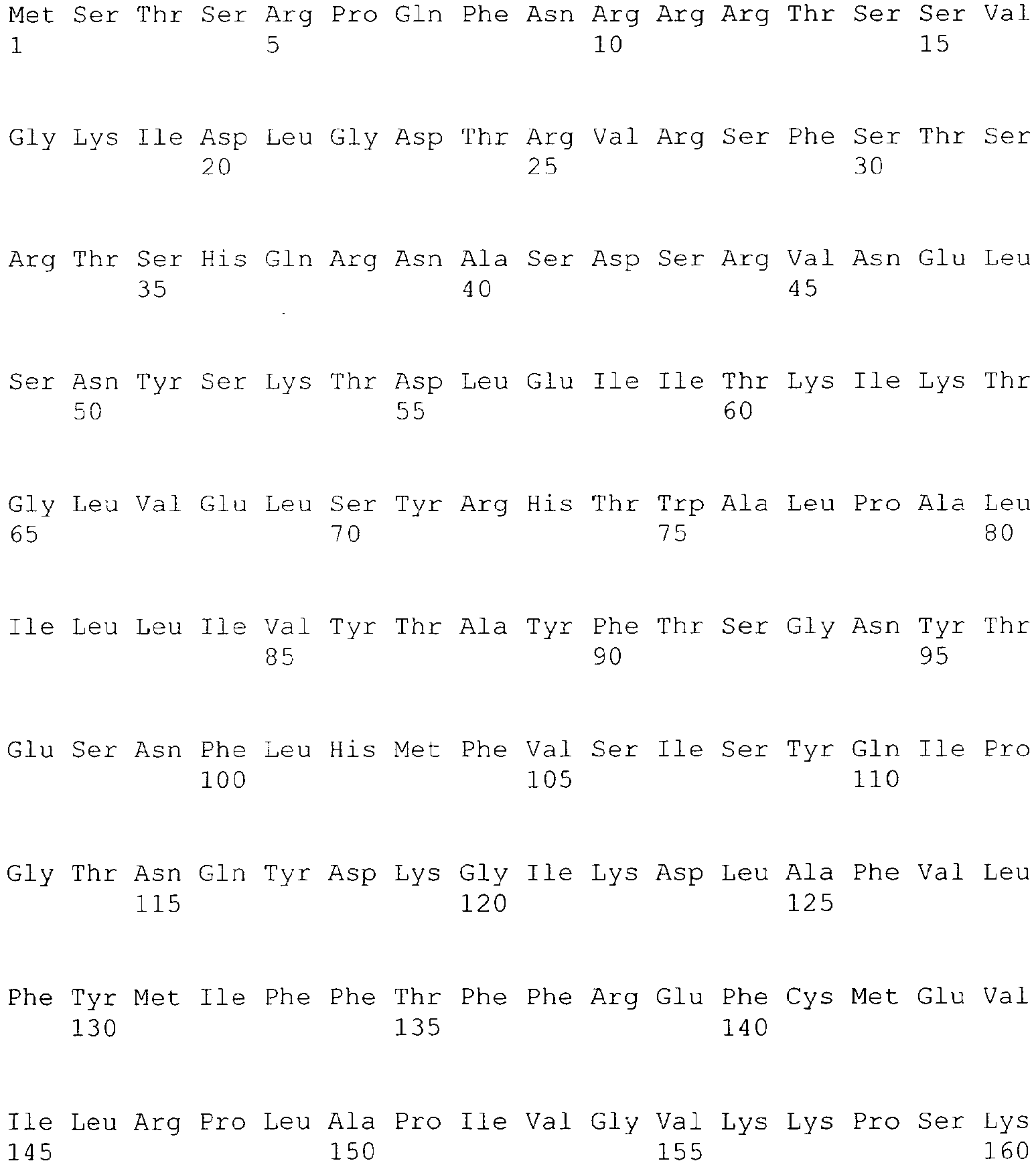


- <210> 3
<211> 4195
<212> DNA
<213> Pichia ciferrii - <220>
<221> CDS
<222> (1219)..(2376)
<223> Product: Pichia ciferrii ceramide synthase Laf1p - <400> 3


- <210> 4
<211> 385
<212> PRT
<213> Pichia ciferrii - <400> 4


- <210> 5
<211> 5106
<212> DNA
<213> Pichia ciferrii - <220>
<221> CDS
<222> (2283)..(4076)
<223> Product: Pichia ciferrii sphingolipid Delta8 desaturase - <400> 5


- <210> 6
<211> 597
<212> PRT
<213> Pichia ciferrii - <400> 6


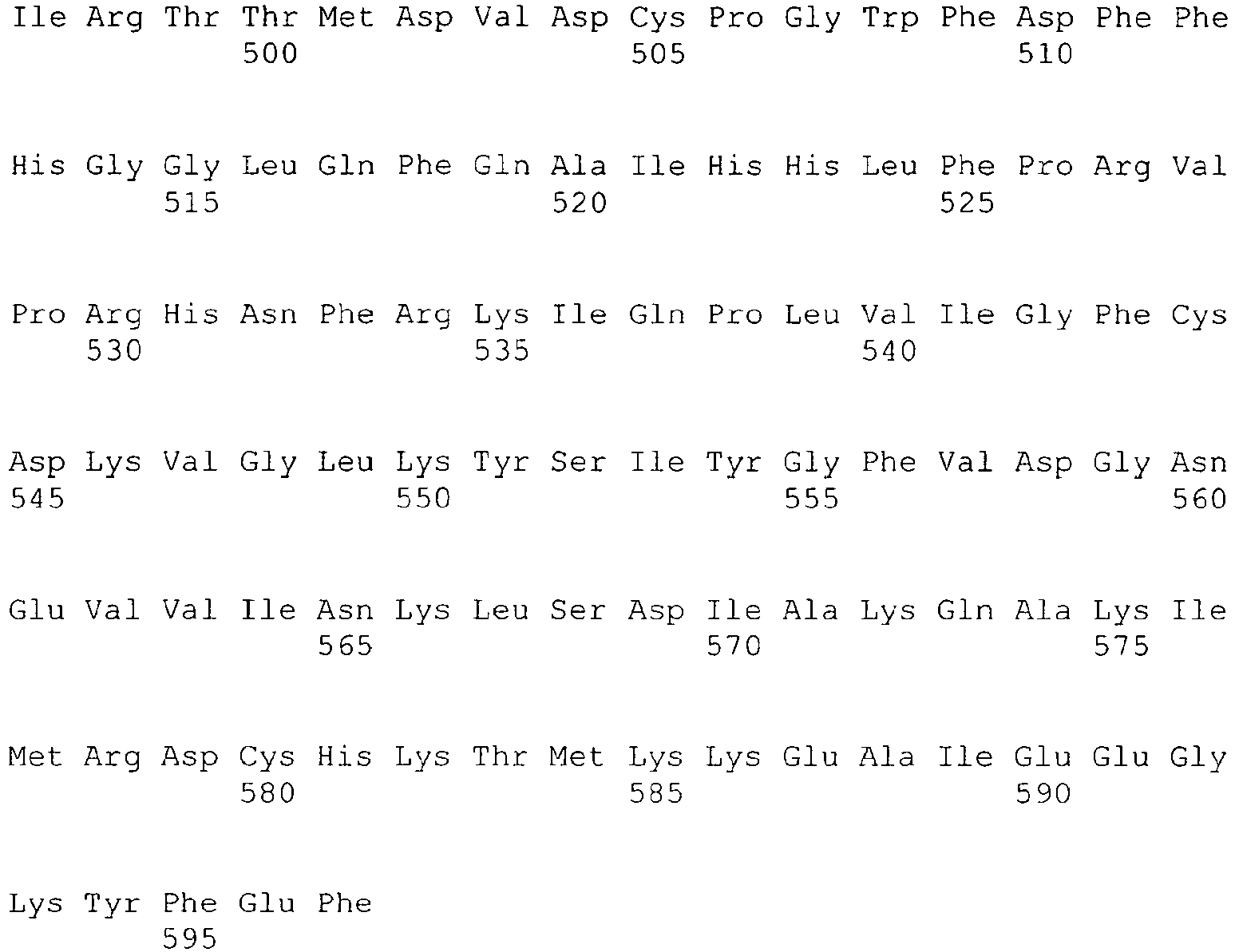
- <210> 7
<211> 3402
<212> DNA
<213> Pichia ciferrii - <220>
<221> CDS
<222> (917)..(1771)
<223> Product: Pichia ciferrii ceramidase Yxc1p - <400> 7


- <210> 8
<211> 284
<212> PRT
<213> Pichia ciferrii - <400> 8


- <210> 9
<211> 288
<212> PRT
<213> Coccolithovirus - <220>
<221> PEPTIDE
<222> (1)..(288)
<223> Coccolithovirus (Emiliana huxleyi virus 86) ceramide synthase (GenBank accession # YP_293768) - <400> 9


- <210> 10
<211> 414
<212> PRT
<213> Mus musculus - <220>
<221> PEPTIDE
<222> (1)..(414)
<223> Mouse ceramide synthase LASS5 (GenBank accession # AAH43059) - <400> 10


- <210> 11
<211> 1410
<212> DNA
<213> Ashbya gossypii - <220>
<221> CDS
<222> (1)..(1242)
<223> Product: Ashbya gossypii ceramide synthase Lag1p (NP_982955) - <400> 11


- <210> 12
<211> 413
<212> PRT
<213> Ashbya gossypii - <400> 12


- <210> 13
<211> 1309
<212> DNA
<213> Ashbya gossypii - <220>
<221> CDS
<222> (1)..(1119)
<223> Product: Ashbya gossypii ceramide synthase Laf1p (GenBank accession # AAS51714) - <400> 13

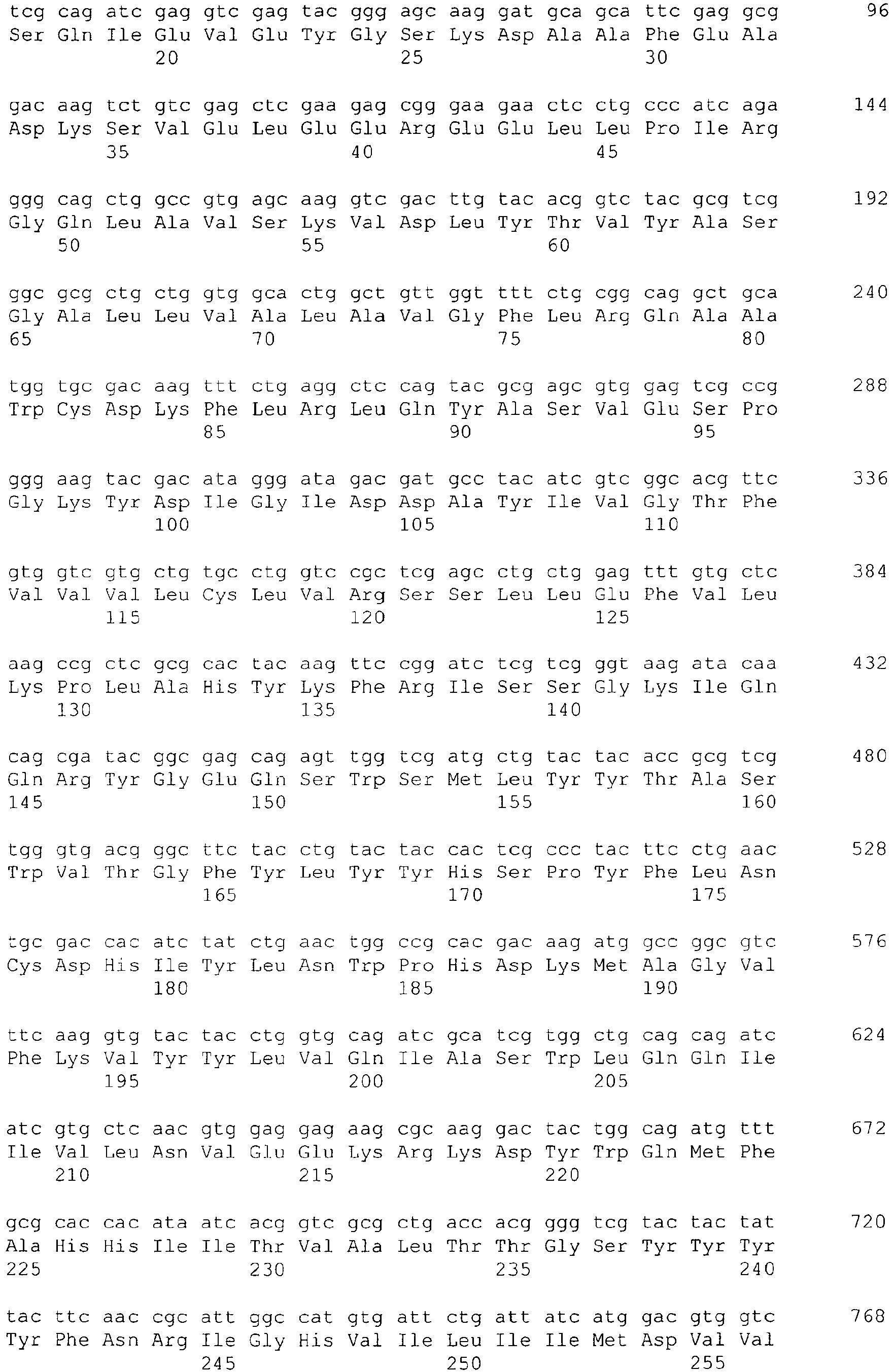

- <210> 14
<211> 372
<212> PRT
<213> Ashbya gossypii - <400> 14


- <210> 15
<211> 273
<212> PRT
<213> Mus musculus - <220>
<221> PEPTIDE
<222> (1)..(273)
<223> Mouse alkaline ceramidase (GenBank Accession # NP_783858) - <400> 15


- <210> 16
<211> 379
<212> PRT
<213> Ashbya gossypii - <220>
<221> PEPTIDE
<222> (1)..(379)
<223> Ashbya gossypii dihydroceramide desaturase Des1p (GenBank accession # AAS54514) - <400> 16


- <210> 17
<211> 351
<212> PRT
<213> Pichia ciferrii - <220>
<221> PEPTIDE
<222> (1)..(351)
<223> Pichia ciferrii dihydroceramide desaturase Des1p - <400> 17


- <210> 18
<211> 320
<212> PRT
<213> Coccolithovirus - <220>
<221> PEPTIDE
<222> (1)..(320)
<223> Coccolithovirus (Emiliana huxleyi virus 86) dihydroceramide desaturase Des1p (GenBank accession # YP_293815) - <400> 18


- <210> 19
<211> 323
<212> PRT
<213> Homo sapiens - <220>
<221> PEPTIDE
<222> (1)..(323)
<223> Human dihydroceramide desaturase Des1p (GenBank accession # AAM12531) - <400> 19


- <210> 20
<211> 1627
<212> DNA
<213> Ashbya gossypii - <220>
<221> CDS
<222> (1)..(1617)
<223> Product: Sphingolipid Delta8 desaturase (GenBank accession # AAS53293) - <400> 20


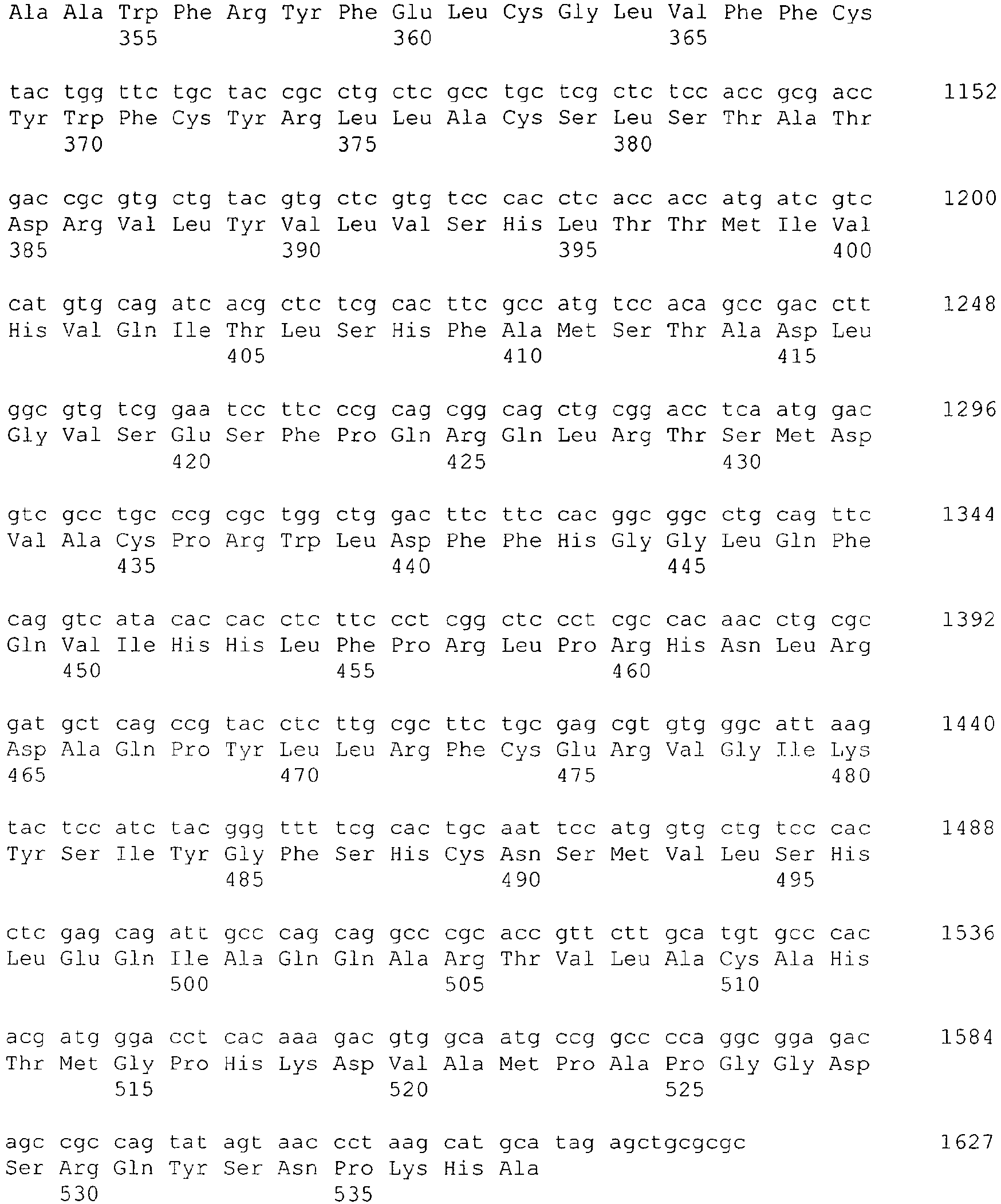
- <210> 21
<211> 538
<212> PRT
<213> Ashbya gossypii - <400> 21

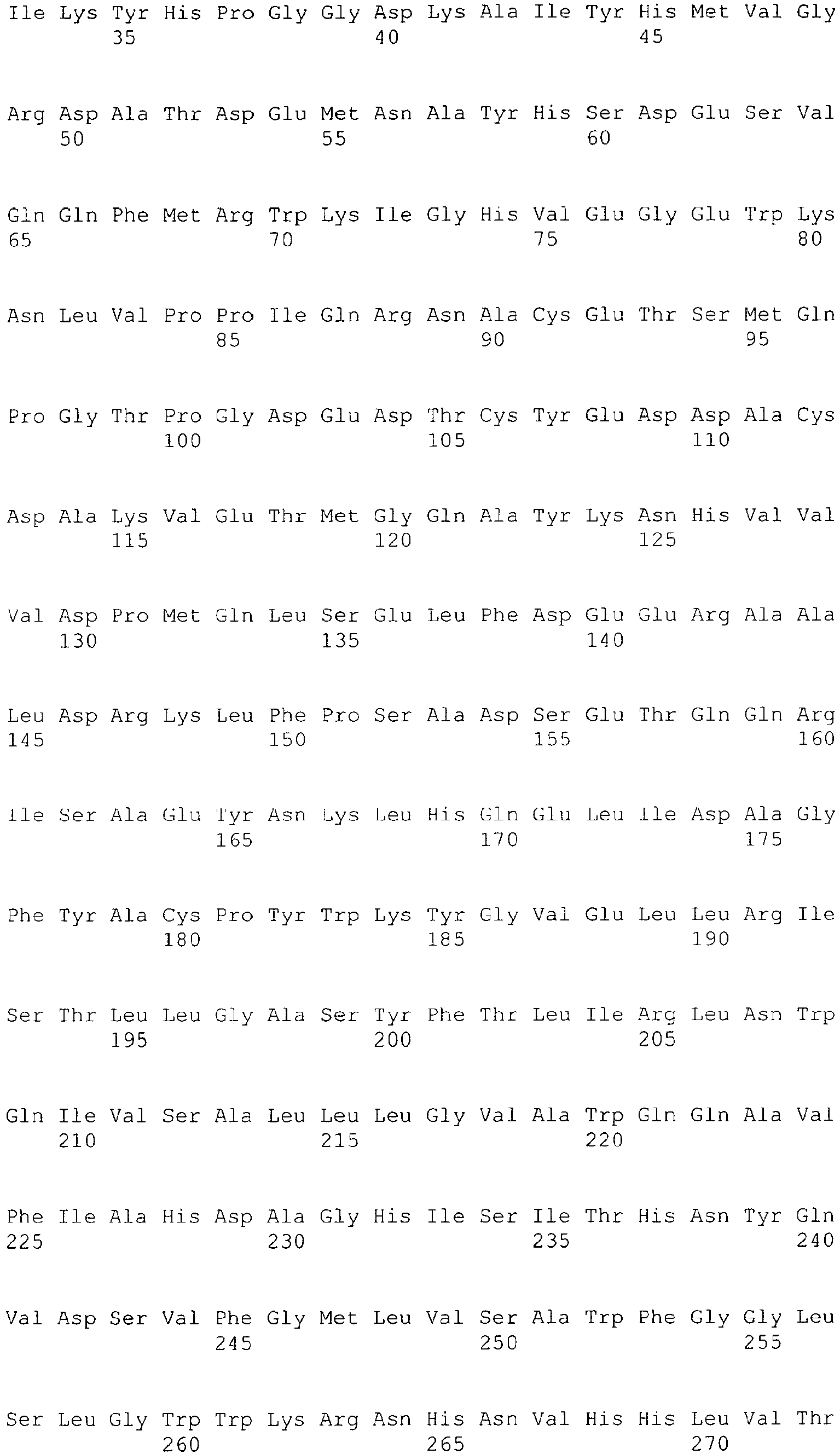


- <210> 22
<211> 2267
<212> DNA
<213> Ashbya gossypii - <400> 22


- <210> 23
<211> 2521
<212> DNA
<213> Ashbya gossypii - <400> 23
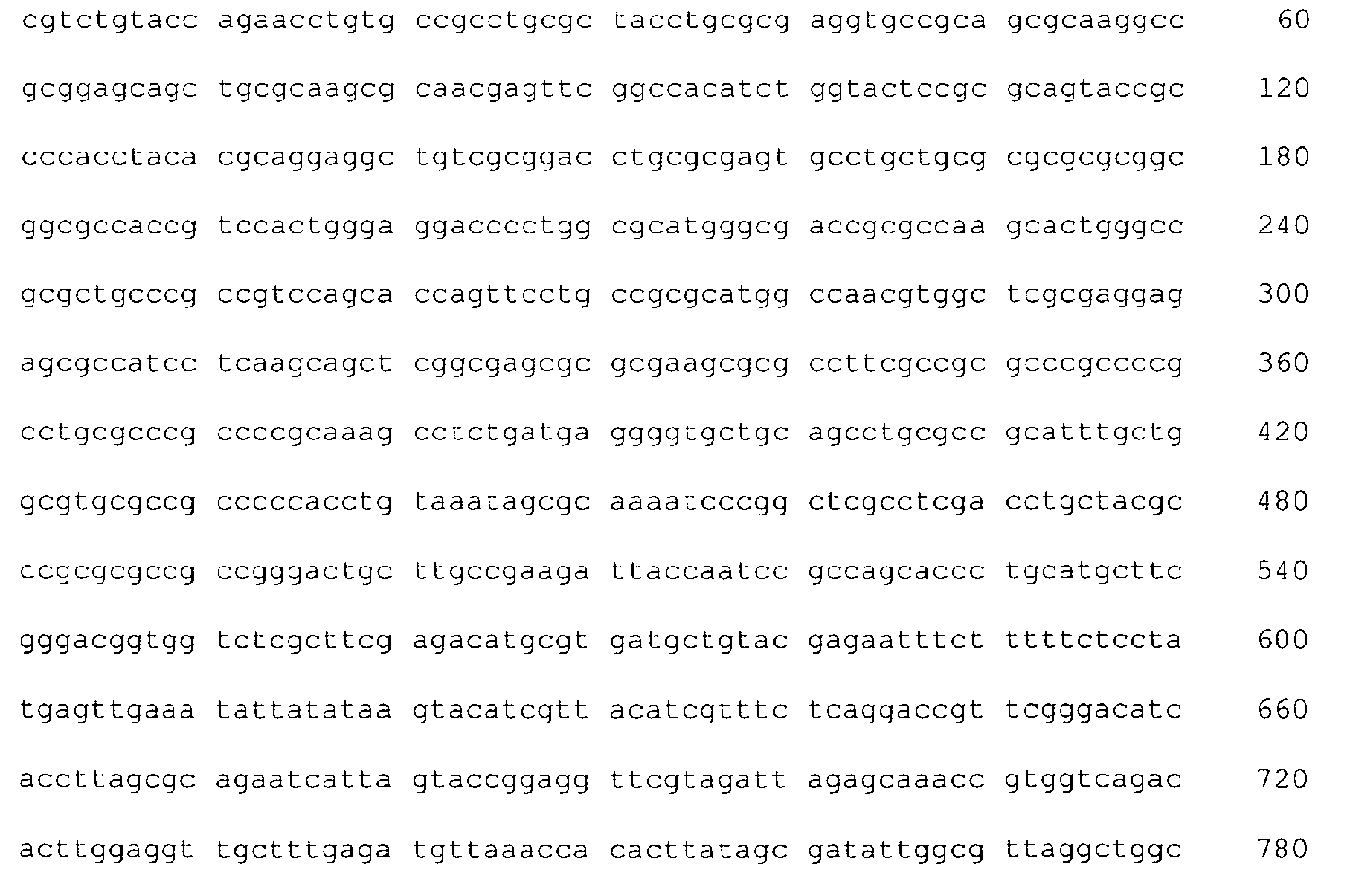

- <210> 24
<211> 518
<212> DNA
<213> Ashbya gossypii - <220>
<221> promoter
<222> (1)..(518)
<223> Promoter of the Ashbya gossypii TDH3 gene, encoding glyceraldehyde-3-phosphate dehydrogenase (GenBank accession # AAS52715) - <400> 24

- <210> 25
<211> 467
<212> DNA
<213> Ashbya gossypii - <220>
<221> promoter
<222> (1)..(467)
<223> Promoter of the Ashbya gossypii ENO gene, encoding enolase (GenBank accession # AAS52975) - <400> 25


- <210> 26
<211> 2534
<212> DNA
<213> Pichia ciferrii - <400> 26


- <210> 27
<211> 655
<212> DNA
<213> Pichia ciferrii - <220>
<221> promoter
<222> (1)..(655)
<223> Promoter of the Pichia ciferrii PDA1 gene, encoding the E1 alpha subunit of the pyruvate dehydrogenase complex - <400> 27


- <210> 28
<211> 332
<212> DNA
<213> Pichia ciferrii - <220>
<221> terminator
<222> (1)..(332)
<223> Terminator of the Pichia ciferrii ENO gene, encoding enolase - <400> 28

- <210> 29
<211> 576
<212> DNA
<213> Synthetic DNA encoding nourseothricin acetyltransferase Nat1 from
Streptomyces noursei - <400> 29

- <210> 30
<211> 847
<212> DNA
<213> Synthetic DNA encoding alkaline ceramidase mCER from mouse - <400> 30

- <210> 31
<211> 913
<212> DNA
<213> Synthetic DNA encoding dihydroceramide synthase Lag1p from
Coccolithovirus EhV-86 - <400> 31


- <210> 32
<211> 1293
<212> DNA
<213> Synthetic DNA encoding dihydroceramide synthase LASS5 from mouse - <400> 32


Claims (9)
- A method to obtain a yeast strain that produces at least 0.5 mg per g CDW of a sphingoid base according to Formula I

X is CH2 or CHOH and
m is between 0 and 4, preferably m is 1, and
Y is CH2-CH2, CH=CH or CH=CCH3 and
n is between 4 and 14, preferably n is 8 or 10,
by genetic engineering thereby increasing the expression of a polynucleotide encoding an enzyme having ceramide synthase activity, increasing the expression of a polynucleotide encoding an enzyme having dihydroceramide desaturase activity, and isolating strains with a productivity of at least 0.5 mg per g CDW of the sphingoid base according to Formula I,
wherein
the enzyme having ceramide synthase activity is selected from the group consisting of:a. a polypeptide with an amino acid sequence of SEQ ID NO:2 and/or SEQ ID NO:4,b. a polypeptide with an amino acid sequence having a sequence identity of at least 45% to the amino acid sequence of SEQ ID NO:2 and/or at least 45% to the amino acid sequence of SEQ ID NO:4,c. a polypeptide with an amino acid sequence of SEQ ID NO:9,d. a polypeptide with an amino acid sequence having a sequence identity of at least 45% to the amino acid of SEQ ID NO:9,e. a polypeptide with an amino acid sequence of SEQ ID NO:10, andf. a polypeptide with an amino acid sequence having a sequence identity of at least 45% to the amino acid sequence of SEQ ID NO:10;the enzyme having dihydroceramide desaturase activity is selected from the group consisting of:g. a polypeptide with an amino acid sequence of SEQ ID NO:17, andh. a polypeptide with an amino acid sequence having a sequence identity of at least 30% to the amino acid sequence of SEQ ID NO:17. - The method according to claim 1, the method further comprising decreasing the expression of a polynucleotide encoding at least an enzyme selected from the group consisting of an enzyme having sphingolipid D8-desaturase activity and an enzyme having ceramidase activity, the latter being capable of preferentially, or even specifically, hydrolysing ceramides containing phytosphingosine or dihydrosphingosine as sphingoid base, wherein
the enzyme having sphingolipid Δ8-desaturase activity is selected from the group consisting of:i. a polypeptide with an amino acid sequence of SEQ ID NO:6, andj. a polypeptide with an amino acid sequence having a sequence identity of at least 30% to the amino acid sequence of SEQ ID NO:6;the enzyme having ceramidase activity, said ceramidase being capable of preferentially, or even specifically, hydrolysing ceramides containing phytosphingosine or dihydrosphingosine as sphingoid base, is selected from the group consisting of:k. a polypeptide with an amino acid sequence of SEQ ID NO: 8, andI. a polypeptide with an amino acid sequence having a sequence identity of at least 50% to the amino acid sequence of SEQ ID NO: 8. - The method according to any one of claims 1-2, further comprising increasing the expression of a polynucleotide encoding an enzyme having ceramidase activity the latter being capable of preferentially, or even specifically, hydrolysing ceramides containing a sphingoid base according to Formula I, selected from the group consisting of:m. a polypeptide with an amino acid sequence of SEQ ID NO: 15, andn. a polypeptide with an amino acid sequence having a sequence identity of at least 70% to the amino acid sequence of SEQ ID NO: 15.
- The method according to any one of claims 1-3 comprising DNA-mediated transformation with one or more of the polynucleotide(s) encoding the enzyme(s) as defined in claim 1-3.
- The method according to any one of claims 1-4, wherein the polynucleotide encoding an enzyme having sphingolipid Δ8-desaturase activity or encoding an enzyme having ceramidase activity, said ceramidase being capable of preferentially, or even specifically, hydrolysing ceramides containing phytosphingosine or dihydrosphingosine as sphingoid base, is obtainable from fungi or yeasts, preferably from the yeasts Saccharomyces cerevisiae, Kluyveromyces lactis, Hansenula polymorpha, Pichia pastoris, Pichia ciferrii, Yarrowia lipolytica, Candida albicans, Candida utilis or Ashbya gossypii, more preferably from the yeasts Pichia ciferrii, Ashbya gossypii or Yarrowia lipolytica.
- The method according to any one of claims 1-4, wherein the polynucleotide encoding an enzyme having ceramide synthase activity or encoding an enzyme having dehydroceramide desaturase activity is obtainable from viruses, fungi, plants or animals, more preferably from algal viruses, yeasts or mammals, most preferably from Coccolithovirus, Saccharomyces, Schizosaccharomyces, Debaryomyces, Kluyveromyces, Pichia, Yarrowia, Candida, Ashbya, mouse, rat or human.
- The method according to any one of claims 1-4, wherein the polynucleotide encoding an enzyme having ceramidase activity, said ceramidase being capable of preferentially, or even specifically, hydrolysing ceramides containing a sphingoid base according to Formula I, is obtainable from an animal, preferably a mammal, more preferably a mouse, rat or human.
- The method according to any one of claims 1-7, wherein the yeast strain is a yeast from the genera Pichia or Ashbya, preferably from the species Pichia ciferrii or Ashbya gossypii.
- A method for the production of a sphingoid base according to Formula I or a salt or an ester thereof comprising obtaining a sphingoid base producing strain by the method of any one of claims 1-8, fermenting said yeast strain under conditions conducive to the production of the sphingoid base and recovering the sphingoid base from the fermentation broth.
Priority Applications (1)
| Application Number | Priority Date | Filing Date | Title |
|---|---|---|---|
| EP07725112.2A EP2024501B1 (en) | 2006-05-11 | 2007-05-11 | Improved production of sphingoid bases using genetically engineered microbial strains |
Applications Claiming Priority (3)
| Application Number | Priority Date | Filing Date | Title |
|---|---|---|---|
| EP06009809 | 2006-05-11 | ||
| PCT/EP2007/004192 WO2007131720A1 (en) | 2006-05-11 | 2007-05-11 | Improved production of sphingoid bases using genetically engineered microbial strains |
| EP07725112.2A EP2024501B1 (en) | 2006-05-11 | 2007-05-11 | Improved production of sphingoid bases using genetically engineered microbial strains |
Publications (2)
| Publication Number | Publication Date |
|---|---|
| EP2024501A1 EP2024501A1 (en) | 2009-02-18 |
| EP2024501B1 true EP2024501B1 (en) | 2016-11-16 |
Family
ID=37074827
Family Applications (1)
| Application Number | Title | Priority Date | Filing Date |
|---|---|---|---|
| EP07725112.2A Active EP2024501B1 (en) | 2006-05-11 | 2007-05-11 | Improved production of sphingoid bases using genetically engineered microbial strains |
Country Status (5)
| Country | Link |
|---|---|
| US (1) | US8372595B2 (en) |
| EP (1) | EP2024501B1 (en) |
| JP (1) | JP5357011B2 (en) |
| CN (1) | CN101490260B (en) |
| WO (1) | WO2007131720A1 (en) |
Families Citing this family (35)
| Publication number | Priority date | Publication date | Assignee | Title |
|---|---|---|---|---|
| DE102006025821A1 (en) * | 2006-06-02 | 2007-12-06 | Degussa Gmbh | An enzyme for the production of Mehylmalonatsemialdehyd or Malonatsemialdehyd |
| DE102007052463A1 (en) * | 2007-11-02 | 2009-05-07 | Evonik Degussa Gmbh | Fermentative recovery of acetone from renewable resources using a new metabolic pathway |
| DE102007060705A1 (en) * | 2007-12-17 | 2009-06-18 | Evonik Degussa Gmbh | ω-aminocarboxylic acids or their lactams, producing, recombinant cells |
| DE102008002715A1 (en) * | 2008-06-27 | 2009-12-31 | Evonik Röhm Gmbh | 2-hydroxyisobutyric acid producing recombinant cell |
| DE102009000592A1 (en) | 2009-02-04 | 2010-08-05 | Evonik Degussa Gmbh | Process for the preparation of amino-group-bearing, multicyclic ring systems |
| DE102009009580A1 (en) | 2009-02-19 | 2010-08-26 | Evonik Degussa Gmbh | Process for the preparation of free acids from their salts |
| KR20120079054A (en) | 2009-07-10 | 2012-07-11 | 에볼바 아게 | Diyne compositions |
| DE102009046626A1 (en) | 2009-11-11 | 2011-05-12 | Evonik Degussa Gmbh | Candida tropicalis cells and their use |
| DE102009046623A1 (en) | 2009-11-11 | 2011-05-12 | Evonik Röhm Gmbh | Use of a protein homologous to a MeaB protein to increase the enzymatic activity of a 3-hydroxycarboxylic acid CoA mutase |
| DE102010015807A1 (en) | 2010-04-20 | 2011-10-20 | Evonik Degussa Gmbh | Biocatalytic oxidation process with alkL gene product |
| MX350491B (en) * | 2010-06-24 | 2017-09-07 | Dow Agrosciences Llc | Lowering saturated fatty acid content of plant seeds. |
| DE102011004465A1 (en) | 2010-09-10 | 2012-03-15 | Evonik Degussa Gmbh | Process for direct amination of secondary alcohols with ammonia to primary amines |
| DE102011075162A1 (en) | 2010-12-08 | 2012-06-14 | Evonik Degussa Gmbh | A process for the homogeneous-catalyzed, highly selective direct amination of primary alcohols with ammonia to primary amines at high volume ratio of liquid to gas phase and / or high pressures |
| EP2678306B1 (en) | 2011-02-21 | 2017-06-21 | Evonik Degussa GmbH | Process for the direct amination of alcohols using ammonia to form primary amines by means of a xantphos catalyst system |
| JP6021892B2 (en) | 2011-04-12 | 2016-11-09 | エボニック デグサ ゲーエムベーハーEvonik Degussa GmbH | A continuously operable process for producing a carbonyl compound using a catalyst containing a nitroxyl radical |
| CN107217078A (en) | 2011-07-20 | 2017-09-29 | 赢创德固赛有限公司 | Oxidation and amination of primary alcohols |
| DE102011110959A1 (en) | 2011-08-18 | 2013-02-21 | Evonik Degussa Gmbh | Pichia ciferrii cells and their use |
| DE102011084518A1 (en) | 2011-10-14 | 2013-04-18 | Evonik Industries Ag | Use of a multilayer film with polyamide and polyester layers for the production of photovoltaic modules |
| EP2602328A1 (en) | 2011-12-05 | 2013-06-12 | Evonik Industries AG | Method of Oxidation of alkanes employing an AlkB alkane 1-monooxygenase |
| EP2607479A1 (en) | 2011-12-22 | 2013-06-26 | Evonik Industries AG | Biotechnological production of alcohols and derivatives thereof |
| EP2607490A1 (en) | 2011-12-22 | 2013-06-26 | Evonik Industries AG | Method for improved separation of a hydrophobic organic solution from an aqueous culture medium |
| EP2631298A1 (en) | 2012-02-22 | 2013-08-28 | Evonik Industries AG | Biotechnological method for producing butanol and butyric acid |
| EP2639308A1 (en) | 2012-03-12 | 2013-09-18 | Evonik Industries AG | Enzymatic omega-oxidation and -amination of fatty acids |
| EP2647696A1 (en) | 2012-04-02 | 2013-10-09 | Evonik Degussa GmbH | Method for aerobic production of alanine or a compound arising using alanine |
| DE102012007491A1 (en) | 2012-04-11 | 2013-10-17 | Evonik Industries Ag | New enzymes |
| EP2746400A1 (en) | 2012-12-21 | 2014-06-25 | Evonik Industries AG | Preparation of amines and diamines from a carboxylic acid or dicarboxylic acid or a monoester thereof |
| WO2017033463A1 (en) * | 2015-08-24 | 2017-03-02 | Ajinomoto Co., Inc. | Method for producing sphingoid base or sphingolipid |
| EP3173478A1 (en) | 2015-11-25 | 2017-05-31 | Evonik Degussa GmbH | Biotechnological production of omega-functionalised carboxylic acids and esters thereof |
| KR102388005B1 (en) | 2017-03-27 | 2022-04-18 | 에보닉 오퍼레이션스 게엠베하 | Methods and articles for preparing formulations containing ceramides |
| CN109777814B (en) * | 2019-02-21 | 2022-04-08 | 南京农业大学 | Application of ceramide synthase gene in regulating the biosynthesis of Ganoderma lucidum triterpenoids |
| KR102343479B1 (en) | 2020-06-23 | 2021-12-27 | 한국생명공학연구원 | Pichia ciferrii mutant strains Having Enhanced Spingoid Base and Sphingolipid Production And Preparation Method of the same |
| KR102866725B1 (en) * | 2021-07-22 | 2025-10-02 | 중앙대학교 산학협력단 | Oleaginous yeast Yarrowia lipolytica sur2 mutant strain and method for cell surface-associated secretory production of sphingoid-based precursors, sphingosine and sphingolipids using the same |
| WO2023003350A1 (en) * | 2021-07-22 | 2023-01-26 | 중앙대학교 산학협력단 | Oleaginous yeast yarrowia lipolytica sur2 mutant strain and method for producing and secreting, onto cell surfaces, sphingoid-based precursors, sphingosine and sphingolipids by using same |
| US20250354131A1 (en) * | 2021-12-21 | 2025-11-20 | Carbocode S.A. | Novel glycosynthase |
| CN117486736B (en) * | 2023-09-26 | 2025-08-08 | 青岛农业大学 | A sphingolipid compound and its preparation method and application |
Citations (1)
| Publication number | Priority date | Publication date | Assignee | Title |
|---|---|---|---|---|
| EP1959020A1 (en) * | 2005-12-05 | 2008-08-20 | Suntory Limited | Process for production of ceramide using transformed yeast |
Family Cites Families (5)
| Publication number | Priority date | Publication date | Assignee | Title |
|---|---|---|---|---|
| DK0726960T3 (en) | 1993-11-03 | 2003-04-22 | Cosmoferm Bv | Microbes that form sphingolipid bases |
| EP1093525A1 (en) * | 1998-07-03 | 2001-04-25 | Cosmoferm B.V. | Improved microbial strains producing sphingoid bases |
| US20030185814A1 (en) * | 2000-01-27 | 2003-10-02 | Kay Hofmann | Ceramidase |
| US20060099681A1 (en) * | 2004-08-12 | 2006-05-11 | U.S. Department Of Veterans Affairs | Human and mouse alkaline ceramidase 1 and skin diseases |
| CN101098968B (en) * | 2004-11-05 | 2013-09-18 | 科斯莫费尔姆有限公司 | Microbial strains producing sphingoid bases or derivatives thereof |
-
2007
- 2007-05-11 EP EP07725112.2A patent/EP2024501B1/en active Active
- 2007-05-11 JP JP2009508256A patent/JP5357011B2/en active Active
- 2007-05-11 US US12/300,397 patent/US8372595B2/en active Active
- 2007-05-11 WO PCT/EP2007/004192 patent/WO2007131720A1/en not_active Ceased
- 2007-05-11 CN CN200780026080.6A patent/CN101490260B/en active Active
Patent Citations (1)
| Publication number | Priority date | Publication date | Assignee | Title |
|---|---|---|---|---|
| EP1959020A1 (en) * | 2005-12-05 | 2008-08-20 | Suntory Limited | Process for production of ceramide using transformed yeast |
Also Published As
| Publication number | Publication date |
|---|---|
| JP5357011B2 (en) | 2013-12-04 |
| CN101490260B (en) | 2016-08-17 |
| US8372595B2 (en) | 2013-02-12 |
| US20100190219A1 (en) | 2010-07-29 |
| EP2024501A1 (en) | 2009-02-18 |
| CN101490260A (en) | 2009-07-22 |
| WO2007131720A1 (en) | 2007-11-22 |
| JP2009536521A (en) | 2009-10-15 |
Similar Documents
| Publication | Publication Date | Title |
|---|---|---|
| US8372595B2 (en) | Method for obtaining a microbial strain for production of sphingoid bases | |
| JP6389400B2 (en) | Method for producing acetylated sphingoid | |
| JP2000512151A (en) | Methods for increasing heme protein production in filamentous fungi | |
| JP6553963B2 (en) | Modified Star Melella microorganism | |
| KR20150069976A (en) | Recombinant microorganism having enhanced d(-) 2,3-butanediol producing ability and method for producing d(-) 2,3-butanediol using the same | |
| JP5156933B2 (en) | Microbial strains that produce sphingoid bases or derivatives thereof | |
| CN114585727A (en) | Yeast for producing polyamine analogs | |
| EP3205728B1 (en) | Process for producing 7-dehydrocholesterol and vitamin d3 | |
| US6632650B1 (en) | Genes involved in cyclododecanone degradation pathway | |
| CN101321874A (en) | Method for producing ceramide using transformed yeast | |
| CN102533896B (en) | Method for obtaining geldanamycin derivatives by knocking out o-methyl-transferase gene | |
| US20030215930A1 (en) | Genes involved in cyclododecanone degradation pathway | |
| US20070264716A1 (en) | Methods and materials for the transformation of the yeast Pichia ciferrii | |
| KR100267668B1 (en) | A gene coding for serine palmitoyl transferase of pichia ciferii and a method for producing taps | |
| JP6305735B2 (en) | Method for improving ceramide productivity and method for producing ceramide | |
| HK1116832A (en) | Microbial strains producing sphingoid bases or derivatives thereof | |
| HK40075554A (en) | Polyamine analog producing yeasts | |
| JP2005204595A (en) | Novel genes involved in ubiquinone biosynthesis, strains lacking ubiquinone biosynthesis, and methods for producing the same |
Legal Events
| Date | Code | Title | Description |
|---|---|---|---|
| PUAI | Public reference made under article 153(3) epc to a published international application that has entered the european phase |
Free format text: ORIGINAL CODE: 0009012 |
|
| 17P | Request for examination filed |
Effective date: 20081209 |
|
| AK | Designated contracting states |
Kind code of ref document: A1 Designated state(s): AT BE BG CH CY CZ DE DK EE ES FI FR GB GR HU IE IS IT LI LT LU LV MC MT NL PL PT RO SE SI SK TR |
|
| AX | Request for extension of the european patent |
Extension state: AL BA HR MK RS |
|
| 17Q | First examination report despatched |
Effective date: 20100302 |
|
| RIN1 | Information on inventor provided before grant (corrected) |
Inventor name: HUELLER, THOMAS Inventor name: SCHAFFER, STEFFEN Inventor name: VAN DEN BERG, MARCO, ALEXANDER Inventor name: BOERGEL, DANIEL |
|
| DAX | Request for extension of the european patent (deleted) | ||
| GRAP | Despatch of communication of intention to grant a patent |
Free format text: ORIGINAL CODE: EPIDOSNIGR1 |
|
| INTG | Intention to grant announced |
Effective date: 20160415 |
|
| GRAS | Grant fee paid |
Free format text: ORIGINAL CODE: EPIDOSNIGR3 |
|
| GRAA | (expected) grant |
Free format text: ORIGINAL CODE: 0009210 |
|
| RAP1 | Party data changed (applicant data changed or rights of an application transferred) |
Owner name: EVONIK DEGUSSA GMBH |
|
| AK | Designated contracting states |
Kind code of ref document: B1 Designated state(s): AT BE BG CH CY CZ DE DK EE ES FI FR GB GR HU IE IS IT LI LT LU LV MC MT NL PL PT RO SE SI SK TR |
|
| REG | Reference to a national code |
Ref country code: GB Ref legal event code: FG4D |
|
| REG | Reference to a national code |
Ref country code: CH Ref legal event code: EP |
|
| REG | Reference to a national code |
Ref country code: IE Ref legal event code: FG4D |
|
| REG | Reference to a national code |
Ref country code: AT Ref legal event code: REF Ref document number: 845974 Country of ref document: AT Kind code of ref document: T Effective date: 20161215 |
|
| REG | Reference to a national code |
Ref country code: DE Ref legal event code: R096 Ref document number: 602007048757 Country of ref document: DE |
|
| PG25 | Lapsed in a contracting state [announced via postgrant information from national office to epo] |
Ref country code: LV Free format text: LAPSE BECAUSE OF FAILURE TO SUBMIT A TRANSLATION OF THE DESCRIPTION OR TO PAY THE FEE WITHIN THE PRESCRIBED TIME-LIMIT Effective date: 20161116 |
|
| REG | Reference to a national code |
Ref country code: NL Ref legal event code: MP Effective date: 20161116 |
|
| REG | Reference to a national code |
Ref country code: LT Ref legal event code: MG4D |
|
| REG | Reference to a national code |
Ref country code: AT Ref legal event code: MK05 Ref document number: 845974 Country of ref document: AT Kind code of ref document: T Effective date: 20161116 |
|
| PG25 | Lapsed in a contracting state [announced via postgrant information from national office to epo] |
Ref country code: LT Free format text: LAPSE BECAUSE OF FAILURE TO SUBMIT A TRANSLATION OF THE DESCRIPTION OR TO PAY THE FEE WITHIN THE PRESCRIBED TIME-LIMIT Effective date: 20161116 Ref country code: NL Free format text: LAPSE BECAUSE OF FAILURE TO SUBMIT A TRANSLATION OF THE DESCRIPTION OR TO PAY THE FEE WITHIN THE PRESCRIBED TIME-LIMIT Effective date: 20161116 Ref country code: SE Free format text: LAPSE BECAUSE OF FAILURE TO SUBMIT A TRANSLATION OF THE DESCRIPTION OR TO PAY THE FEE WITHIN THE PRESCRIBED TIME-LIMIT Effective date: 20161116 Ref country code: GR Free format text: LAPSE BECAUSE OF FAILURE TO SUBMIT A TRANSLATION OF THE DESCRIPTION OR TO PAY THE FEE WITHIN THE PRESCRIBED TIME-LIMIT Effective date: 20170217 |
|
| REG | Reference to a national code |
Ref country code: FR Ref legal event code: PLFP Year of fee payment: 11 |
|
| PG25 | Lapsed in a contracting state [announced via postgrant information from national office to epo] |
Ref country code: AT Free format text: LAPSE BECAUSE OF FAILURE TO SUBMIT A TRANSLATION OF THE DESCRIPTION OR TO PAY THE FEE WITHIN THE PRESCRIBED TIME-LIMIT Effective date: 20161116 Ref country code: PT Free format text: LAPSE BECAUSE OF FAILURE TO SUBMIT A TRANSLATION OF THE DESCRIPTION OR TO PAY THE FEE WITHIN THE PRESCRIBED TIME-LIMIT Effective date: 20170316 Ref country code: ES Free format text: LAPSE BECAUSE OF FAILURE TO SUBMIT A TRANSLATION OF THE DESCRIPTION OR TO PAY THE FEE WITHIN THE PRESCRIBED TIME-LIMIT Effective date: 20161116 Ref country code: FI Free format text: LAPSE BECAUSE OF FAILURE TO SUBMIT A TRANSLATION OF THE DESCRIPTION OR TO PAY THE FEE WITHIN THE PRESCRIBED TIME-LIMIT Effective date: 20161116 Ref country code: PL Free format text: LAPSE BECAUSE OF FAILURE TO SUBMIT A TRANSLATION OF THE DESCRIPTION OR TO PAY THE FEE WITHIN THE PRESCRIBED TIME-LIMIT Effective date: 20161116 |
|
| PG25 | Lapsed in a contracting state [announced via postgrant information from national office to epo] |
Ref country code: DK Free format text: LAPSE BECAUSE OF FAILURE TO SUBMIT A TRANSLATION OF THE DESCRIPTION OR TO PAY THE FEE WITHIN THE PRESCRIBED TIME-LIMIT Effective date: 20161116 Ref country code: SK Free format text: LAPSE BECAUSE OF FAILURE TO SUBMIT A TRANSLATION OF THE DESCRIPTION OR TO PAY THE FEE WITHIN THE PRESCRIBED TIME-LIMIT Effective date: 20161116 Ref country code: EE Free format text: LAPSE BECAUSE OF FAILURE TO SUBMIT A TRANSLATION OF THE DESCRIPTION OR TO PAY THE FEE WITHIN THE PRESCRIBED TIME-LIMIT Effective date: 20161116 Ref country code: RO Free format text: LAPSE BECAUSE OF FAILURE TO SUBMIT A TRANSLATION OF THE DESCRIPTION OR TO PAY THE FEE WITHIN THE PRESCRIBED TIME-LIMIT Effective date: 20161116 Ref country code: CZ Free format text: LAPSE BECAUSE OF FAILURE TO SUBMIT A TRANSLATION OF THE DESCRIPTION OR TO PAY THE FEE WITHIN THE PRESCRIBED TIME-LIMIT Effective date: 20161116 |
|
| REG | Reference to a national code |
Ref country code: DE Ref legal event code: R097 Ref document number: 602007048757 Country of ref document: DE |
|
| PG25 | Lapsed in a contracting state [announced via postgrant information from national office to epo] |
Ref country code: LU Free format text: LAPSE BECAUSE OF NON-PAYMENT OF DUE FEES Effective date: 20170531 Ref country code: BE Free format text: LAPSE BECAUSE OF FAILURE TO SUBMIT A TRANSLATION OF THE DESCRIPTION OR TO PAY THE FEE WITHIN THE PRESCRIBED TIME-LIMIT Effective date: 20161116 |
|
| PLBE | No opposition filed within time limit |
Free format text: ORIGINAL CODE: 0009261 |
|
| STAA | Information on the status of an ep patent application or granted ep patent |
Free format text: STATUS: NO OPPOSITION FILED WITHIN TIME LIMIT |
|
| 26N | No opposition filed |
Effective date: 20170817 |
|
| PG25 | Lapsed in a contracting state [announced via postgrant information from national office to epo] |
Ref country code: SI Free format text: LAPSE BECAUSE OF FAILURE TO SUBMIT A TRANSLATION OF THE DESCRIPTION OR TO PAY THE FEE WITHIN THE PRESCRIBED TIME-LIMIT Effective date: 20161116 |
|
| REG | Reference to a national code |
Ref country code: CH Ref legal event code: PL |
|
| PG25 | Lapsed in a contracting state [announced via postgrant information from national office to epo] |
Ref country code: MC Free format text: LAPSE BECAUSE OF FAILURE TO SUBMIT A TRANSLATION OF THE DESCRIPTION OR TO PAY THE FEE WITHIN THE PRESCRIBED TIME-LIMIT Effective date: 20161116 |
|
| REG | Reference to a national code |
Ref country code: IE Ref legal event code: MM4A |
|
| PG25 | Lapsed in a contracting state [announced via postgrant information from national office to epo] |
Ref country code: CH Free format text: LAPSE BECAUSE OF NON-PAYMENT OF DUE FEES Effective date: 20170531 Ref country code: LI Free format text: LAPSE BECAUSE OF NON-PAYMENT OF DUE FEES Effective date: 20170531 |
|
| PG25 | Lapsed in a contracting state [announced via postgrant information from national office to epo] |
Ref country code: LU Free format text: LAPSE BECAUSE OF NON-PAYMENT OF DUE FEES Effective date: 20170511 |
|
| PG25 | Lapsed in a contracting state [announced via postgrant information from national office to epo] |
Ref country code: IE Free format text: LAPSE BECAUSE OF NON-PAYMENT OF DUE FEES Effective date: 20170511 |
|
| REG | Reference to a national code |
Ref country code: FR Ref legal event code: PLFP Year of fee payment: 12 |
|
| PG25 | Lapsed in a contracting state [announced via postgrant information from national office to epo] |
Ref country code: MT Free format text: LAPSE BECAUSE OF NON-PAYMENT OF DUE FEES Effective date: 20170511 |
|
| PG25 | Lapsed in a contracting state [announced via postgrant information from national office to epo] |
Ref country code: HU Free format text: LAPSE BECAUSE OF FAILURE TO SUBMIT A TRANSLATION OF THE DESCRIPTION OR TO PAY THE FEE WITHIN THE PRESCRIBED TIME-LIMIT; INVALID AB INITIO Effective date: 20070511 |
|
| PG25 | Lapsed in a contracting state [announced via postgrant information from national office to epo] |
Ref country code: CY Free format text: LAPSE BECAUSE OF NON-PAYMENT OF DUE FEES Effective date: 20161116 |
|
| REG | Reference to a national code |
Ref country code: DE Ref legal event code: R081 Ref document number: 602007048757 Country of ref document: DE Owner name: EVONIK OPERATIONS GMBH, DE Free format text: FORMER OWNER: EVONIK DEGUSSA GMBH, 45128 ESSEN, DE |
|
| PG25 | Lapsed in a contracting state [announced via postgrant information from national office to epo] |
Ref country code: TR Free format text: LAPSE BECAUSE OF FAILURE TO SUBMIT A TRANSLATION OF THE DESCRIPTION OR TO PAY THE FEE WITHIN THE PRESCRIBED TIME-LIMIT Effective date: 20161116 |
|
| PG25 | Lapsed in a contracting state [announced via postgrant information from national office to epo] |
Ref country code: IS Free format text: LAPSE BECAUSE OF FAILURE TO SUBMIT A TRANSLATION OF THE DESCRIPTION OR TO PAY THE FEE WITHIN THE PRESCRIBED TIME-LIMIT Effective date: 20170316 |
|
| PGFP | Annual fee paid to national office [announced via postgrant information from national office to epo] |
Ref country code: GB Payment date: 20200527 Year of fee payment: 14 Ref country code: IT Payment date: 20200528 Year of fee payment: 14 |
|
| GBPC | Gb: european patent ceased through non-payment of renewal fee |
Effective date: 20210511 |
|
| PG25 | Lapsed in a contracting state [announced via postgrant information from national office to epo] |
Ref country code: GB Free format text: LAPSE BECAUSE OF NON-PAYMENT OF DUE FEES Effective date: 20210511 |
|
| PG25 | Lapsed in a contracting state [announced via postgrant information from national office to epo] |
Ref country code: IT Free format text: LAPSE BECAUSE OF NON-PAYMENT OF DUE FEES Effective date: 20200511 |
|
| P01 | Opt-out of the competence of the unified patent court (upc) registered |
Effective date: 20230524 |
|
| PG25 | Lapsed in a contracting state [announced via postgrant information from national office to epo] |
Ref country code: IT Free format text: LAPSE BECAUSE OF NON-PAYMENT OF DUE FEES Effective date: 20210511 |
|
| PGFP | Annual fee paid to national office [announced via postgrant information from national office to epo] |
Ref country code: DE Payment date: 20260522 Year of fee payment: 20 |
|
| PGFP | Annual fee paid to national office [announced via postgrant information from national office to epo] |
Ref country code: FR Payment date: 20260526 Year of fee payment: 20 |
|
| PGFP | Annual fee paid to national office [announced via postgrant information from national office to epo] |
Ref country code: BG Payment date: 20260520 Year of fee payment: 20 |