EP2017004A1 - Catalyst for partial oxidation of olefin, method for producing the same and method for producing alkylene oxide - Google Patents
Catalyst for partial oxidation of olefin, method for producing the same and method for producing alkylene oxide Download PDFInfo
- Publication number
- EP2017004A1 EP2017004A1 EP07742770A EP07742770A EP2017004A1 EP 2017004 A1 EP2017004 A1 EP 2017004A1 EP 07742770 A EP07742770 A EP 07742770A EP 07742770 A EP07742770 A EP 07742770A EP 2017004 A1 EP2017004 A1 EP 2017004A1
- Authority
- EP
- European Patent Office
- Prior art keywords
- compound
- carrier
- catalyst
- alkali metal
- silicon
- Prior art date
- Legal status (The legal status is an assumption and is not a legal conclusion. Google has not performed a legal analysis and makes no representation as to the accuracy of the status listed.)
- Ceased
Links
Images
Classifications
-
- C—CHEMISTRY; METALLURGY
- C07—ORGANIC CHEMISTRY
- C07D—HETEROCYCLIC COMPOUNDS
- C07D301/00—Preparation of oxiranes
- C07D301/02—Synthesis of the oxirane ring
- C07D301/03—Synthesis of the oxirane ring by oxidation of unsaturated compounds, or of mixtures of unsaturated and saturated compounds
- C07D301/04—Synthesis of the oxirane ring by oxidation of unsaturated compounds, or of mixtures of unsaturated and saturated compounds with air or molecular oxygen
- C07D301/08—Synthesis of the oxirane ring by oxidation of unsaturated compounds, or of mixtures of unsaturated and saturated compounds with air or molecular oxygen in the gaseous phase
- C07D301/10—Synthesis of the oxirane ring by oxidation of unsaturated compounds, or of mixtures of unsaturated and saturated compounds with air or molecular oxygen in the gaseous phase with catalysts containing silver or gold
-
- B—PERFORMING OPERATIONS; TRANSPORTING
- B01—PHYSICAL OR CHEMICAL PROCESSES OR APPARATUS IN GENERAL
- B01J—CHEMICAL OR PHYSICAL PROCESSES, e.g. CATALYSIS OR COLLOID CHEMISTRY; THEIR RELEVANT APPARATUS
- B01J23/00—Catalysts comprising metals or metal oxides or hydroxides, not provided for in group B01J21/00
- B01J23/38—Catalysts comprising metals or metal oxides or hydroxides, not provided for in group B01J21/00 of noble metals
- B01J23/54—Catalysts comprising metals or metal oxides or hydroxides, not provided for in group B01J21/00 of noble metals combined with metals, oxides or hydroxides provided for in groups B01J23/02 - B01J23/36
- B01J23/66—Silver or gold
-
- B—PERFORMING OPERATIONS; TRANSPORTING
- B01—PHYSICAL OR CHEMICAL PROCESSES OR APPARATUS IN GENERAL
- B01J—CHEMICAL OR PHYSICAL PROCESSES, e.g. CATALYSIS OR COLLOID CHEMISTRY; THEIR RELEVANT APPARATUS
- B01J37/00—Processes, in general, for preparing catalysts; Processes, in general, for activation of catalysts
- B01J37/08—Heat treatment
-
- C—CHEMISTRY; METALLURGY
- C07—ORGANIC CHEMISTRY
- C07D—HETEROCYCLIC COMPOUNDS
- C07D301/00—Preparation of oxiranes
- C07D301/02—Synthesis of the oxirane ring
-
- C—CHEMISTRY; METALLURGY
- C07—ORGANIC CHEMISTRY
- C07D—HETEROCYCLIC COMPOUNDS
- C07D303/00—Compounds containing three-membered rings having one oxygen atom as the only ring hetero atom
- C07D303/02—Compounds containing oxirane rings
-
- C—CHEMISTRY; METALLURGY
- C07—ORGANIC CHEMISTRY
- C07D—HETEROCYCLIC COMPOUNDS
- C07D303/00—Compounds containing three-membered rings having one oxygen atom as the only ring hetero atom
- C07D303/02—Compounds containing oxirane rings
- C07D303/04—Compounds containing oxirane rings containing only hydrogen and carbon atoms in addition to the ring oxygen atoms
-
- B—PERFORMING OPERATIONS; TRANSPORTING
- B01—PHYSICAL OR CHEMICAL PROCESSES OR APPARATUS IN GENERAL
- B01J—CHEMICAL OR PHYSICAL PROCESSES, e.g. CATALYSIS OR COLLOID CHEMISTRY; THEIR RELEVANT APPARATUS
- B01J21/00—Catalysts comprising the elements, oxides, or hydroxides of magnesium, boron, aluminium, carbon, silicon, titanium, zirconium, or hafnium
- B01J21/02—Boron or aluminium; Oxides or hydroxides thereof
- B01J21/04—Alumina
-
- B—PERFORMING OPERATIONS; TRANSPORTING
- B01—PHYSICAL OR CHEMICAL PROCESSES OR APPARATUS IN GENERAL
- B01J—CHEMICAL OR PHYSICAL PROCESSES, e.g. CATALYSIS OR COLLOID CHEMISTRY; THEIR RELEVANT APPARATUS
- B01J21/00—Catalysts comprising the elements, oxides, or hydroxides of magnesium, boron, aluminium, carbon, silicon, titanium, zirconium, or hafnium
- B01J21/12—Silica and alumina
-
- B—PERFORMING OPERATIONS; TRANSPORTING
- B01—PHYSICAL OR CHEMICAL PROCESSES OR APPARATUS IN GENERAL
- B01J—CHEMICAL OR PHYSICAL PROCESSES, e.g. CATALYSIS OR COLLOID CHEMISTRY; THEIR RELEVANT APPARATUS
- B01J35/00—Catalysts, in general, characterised by their form or physical properties
- B01J35/19—Catalysts containing parts with different compositions
-
- B—PERFORMING OPERATIONS; TRANSPORTING
- B01—PHYSICAL OR CHEMICAL PROCESSES OR APPARATUS IN GENERAL
- B01J—CHEMICAL OR PHYSICAL PROCESSES, e.g. CATALYSIS OR COLLOID CHEMISTRY; THEIR RELEVANT APPARATUS
- B01J37/00—Processes, in general, for preparing catalysts; Processes, in general, for activation of catalysts
- B01J37/02—Impregnation, coating or precipitation
- B01J37/0201—Impregnation
-
- Y—GENERAL TAGGING OF NEW TECHNOLOGICAL DEVELOPMENTS; GENERAL TAGGING OF CROSS-SECTIONAL TECHNOLOGIES SPANNING OVER SEVERAL SECTIONS OF THE IPC; TECHNICAL SUBJECTS COVERED BY FORMER USPC CROSS-REFERENCE ART COLLECTIONS [XRACs] AND DIGESTS
- Y02—TECHNOLOGIES OR APPLICATIONS FOR MITIGATION OR ADAPTATION AGAINST CLIMATE CHANGE
- Y02P—CLIMATE CHANGE MITIGATION TECHNOLOGIES IN THE PRODUCTION OR PROCESSING OF GOODS
- Y02P20/00—Technologies relating to chemical industry
- Y02P20/50—Improvements relating to the production of bulk chemicals
- Y02P20/52—Improvements relating to the production of bulk chemicals using catalysts, e.g. selective catalysts
Definitions
- a catalyst according to the above USP 5, 077, 256 and USP 5,395,812 is satisfiable with catalyst performance on some level.
- production size of ethylene oxide is enormous, even only 1% improvement of selectivity can remarkably save ethylene of raw material, therefore, a catalyst for producing ethylene oxide which has more excellent catalyst performance, a preparation method thereof, and a process for preparing ethylene oxide using this catalyst are desired.
- Fig. 2 is a photograph showing distribution of the silicon, for an identical part similarly, wherein white parts indicate silicon.
- the aluminum in the carrier exists in a form of ⁇ -alumina, ⁇ -alumina, ⁇ -alumina, silica alumina, etc., and among them, ⁇ -alumina is suitable. However, an aluminum compound other than ⁇ -alumina may be added. There is no particular restriction of ⁇ -alumina itself, and any type of ⁇ -alumina can be used as long as it is generally used as ⁇ -alumina.
- the BET (Brunaer-Emett-Teller) specific surface area of the carrier is 0.03 to 10 m 2 /g, preferably 0.1 to 5 m 2 /g, and more preferably 0.3 to 2 m 2 /g. That is, when the specific surface area is less than the above lower limit, the sufficient water absorption rate can not be obtained, on the other hand, when the specific surface area exceeds the above upper limit, the pore size becomes small and sequential oxidization of ethylene oxide, the reaction product produced by use of the catalyst using the carrier, is accelerated, therefore it is not desirable.
- this method comprises, for example, preparing an aqueous solution only containing a silver compound for forming silver or that containing a silver compound, a complex agent for making a silver complex, and an alkali metal compound as a reaction promoter; impregnating a carrier with the solution; drying the impregnated carrier; and calcining the carrier.
- This drying is preferably carried out in an oxidizing gas such as air and oxygen gas, or an inert gas atmosphere such as nitrogen, preferably in an air atmosphere at a temperature of 80 to 100°C.
- a reaction regulator can also be blended in the raw material gas.
- a compound containing halogen is included, for example, chlorinated alkene with 1 to 6 carbons, such as chlorinated ethylene, vinyl chloride, methyl chloride, and t-butyl chloride, dichloromethane, dichloroethylene, trichloroethylene, chloroform, chlorinated benzene such as chlorinated biphenyl, monochlorobenzene, dichloropropane, dibromo propane, dichloropropene, dibromopropene, chrolobutane, bromobutane, dichlorobutane, dibromobutane, chlorobutene, brominated alkenes with 1 to 6 carbons, such as dibromoethylene, tribromoethylene, brominated ethylene, vinylbromide, methyl bromide, t-butylbromide, dibromomethane, tetrabromomethan
Landscapes
- Chemical & Material Sciences (AREA)
- Organic Chemistry (AREA)
- Chemical Kinetics & Catalysis (AREA)
- Engineering & Computer Science (AREA)
- Materials Engineering (AREA)
- Physics & Mathematics (AREA)
- Thermal Sciences (AREA)
- Catalysts (AREA)
- Epoxy Compounds (AREA)
- Low-Molecular Organic Synthesis Reactions Using Catalysts (AREA)
Abstract
Description
- The present invention relates to a catalyst for partial oxidation of olefin, and a preparation method thereof, and a process for preparing olefin oxide by vapor-phase oxidization of olefin with molecular oxygen-containing gas in the presence of the catalyst.
- In the past, a lot of literatures have been introduced about a catalyst for producing ethylene oxide by vapor-phase oxidation of ethylene with molecular oxygen-containing gas, and a carrier thereof. For example,
JP-A-55-145,677 USP 5, 077, 256USP 5,395,812 ), in which silver and cesium are supported as catalyst components onto an α-alumina carrier wherein covering layer of amorphous silica is provided on the surface of the carrier. - A catalyst according to the
above USP 5, 077, 256 andUSP 5,395,812 is satisfiable with catalyst performance on some level. However, since production size of ethylene oxide is enormous, even only 1% improvement of selectivity can remarkably save ethylene of raw material, therefore, a catalyst for producing ethylene oxide which has more excellent catalyst performance, a preparation method thereof, and a process for preparing ethylene oxide using this catalyst are desired. - The above purposes are attained by the following (1)-(11).
- (1) A catalyst for partial oxidation of olefin, which comprises silver or silver oxide and an alkali metal or a compound thereof supported on an α-alumina carrier containing silicon or a compound thereof, wherein the silicon or the compound thereof exists at a position substantially identical to that of a particle of the alkali metal or the compound thereof.
- (2) The catalyst according to (1) above, wherein a silver particle exists at a different position from that of (a) the silicon or the compound thereof and/or (b) the particle of the alkali metal or the compound thereof.
- (3) The catalyst according to (1) or (2) above , wherein content of (a) the silicon or the compound thereof converted to as SiO2 is 0.01 to 6% by mass relative to total amount of the carrier, and supported amount of (b) the alkali metal or the compound thereof (converted to as M2O, wherein M is an alkali metal) and supported amount of (c) the silver are 0.01 to 5% by mass and 1 to 45% by mass, respectively, relative to α-alumina.
- (4) The catalyst according to any one of (1) to (3) above, wherein content of (a) the silicon or the compound thereof converted to as SiO2 is 0.1 to 5% by mass relative to α-alumina, and supported amount of (b) the alkali metal or the compound thereof (converted to as M2O, wherein M is an alkali metal) and supported amount of (c) the silver are 0.1 to 1% by mass and 5 to 20% by mass, respectively, relative to α-alumina.
- (5) The catalyst according to any one of (1) to (4) above, wherein content of α-alumina in the carrier is 89 to 99.9% by mass.
- (6) The catalyst according to any one of (1) to (5) above, wherein the alkali metal is cesium.
- (7) A preparation method of a catalyst for partial oxidation of olefin which comprises impregnating an α-alumina, carrier containing silicon or a compound thereof with an aqueous solution containing a silver compound and an alkali metal compound, drying the impregnated carrier, calcining the carrier in an oxidizing atmosphere at a temperature of 150 to 250°C for 0.1 to 10 hours, further calcining the carrier in an oxidizing atmosphere at a temperature of 250 to 450°C for 0.1 to 10 hours, and heat-treating the carrier in an inert gas atmosphere at a temperature of 450 to 700°C for 0.1 to 10 hours.
- (8) The method according to (7) above, wherein α-alumina content in the carrier is 89 to 99.9% by mass and content of the silicon or the compound thereof, converted to as SiO2, is 0.01 to 6% by mass.
- (9) A process for preparing olefin oxide which comprises subjecting olefin to vapor-phase oxidization with a molecular oxygen-containing gas in the presence of the catalyst set forth in any one of (1) to (6) above.
- (10) The method according to (10) above, wherein the olefin is ethylene.
-
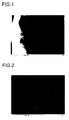
Fig. 1 is a photograph in which silver, silicon and cesium are measured by FE-TEM and EDS for an identical part of the catalyst of Example 1, showing distribution of the silver on the catalyst surface, wherein white parts indicate silver. -
Fig. 2 is a photograph showing distribution of the silicon, for an identical part similarly, wherein white parts indicate silicon. -
Fig. 3 is a photograph showing distribution of the cesium, for an identical part similarly, wherein white parts indicate cesium. -
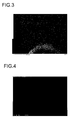
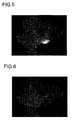
Fig. 4 is a photograph in which the catalyst of Comparative Example 1 is measured in a manner similar to Example 1, showing distribution of the silver on the catalyst surface, wherein white parts indicate silver. -
Fig. 5 is a photograph in which the catalyst of Comparative Example 1 is measured in a manner similar to Example 1, showing distribution of the silicon on the catalyst surface, wherein white parts indicate silicon. -
Fig. 6 is a photograph in which the catalyst of Comparative Example 1 is measured in a manner similar to Example 1, showing distribution of the cesium on the catalyst surface, wherein white parts indicate cesium. -
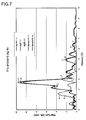
Fig. 7 is a graph showing the relation of distance between a catalyst of α-alumina carrier and a reference sample and absorption intensity, obtained as a result of the Fourier transformation of EXAFS. - The catalyst according to the present invention is, as described above, the catalyst for partial oxidation of olefin, wherein a silver or a silver oxide and an alkali metal or a compound thereof are supported on α-alumina carrier containing a silicon or a compound thereof, and an existing position of said silicon or compound thereof and an existing position of a particle of the alkali metal or compound thereof is almost the same.
- The carrier according to the present invention is an α-alumina carrier which essentially contain silicon. It can be suitably used an ingredient usually used for catalyst carrier, for example, aluminum, an alkali metal, an alkaline earth metal, etc. Usually, these elements exist in the state of an oxide, a composite oxide, etc.
- The aluminum in the carrier exists in a form of α-alumina, β-alumina, γ-alumina, silica alumina, etc., and among them, α-alumina is suitable. However, an aluminum compound other than α-alumina may be added. There is no particular restriction of α-alumina itself, and any type of α-alumina can be used as long as it is generally used as α-alumina. As to the α-alumina, although it can be obtained by heat-treating α-alumina precursors such as aluminum hydroxide, β-alumina and γ-alumina, in particular, α-alumina obtained by Bayer process calcination is used suitably, and Al2O3 content is suitably 89% by mass or more, preferably 97% by mass or more, and more preferably 99% by mass or more.
- As the silicon or the silicon compound according to the carrier used in the present invention, any type can be used as long as silicon itself or other silicon compound is included, for example, a compound which can form an amorphous layer of silica-calcium-potassium-iron by calcining silicon with a calcium compound, a potassium compound, an iron compound, etc. can be used. A typical example thereof includes silica, feldspar, clay, silicon nitride, silicon carbide, silane, and a silicate.
- In addition,an alumino-silicatesuch assilica-alumina, mullite can be included. They may be used singly or in combination with two or more members. In addition, they can be synthetic products or natural products. There is no particular restriction of forms of the silicon compounds, and they may be added by any forms such as powder, sol and solution, etc.
- When these silicon or silicon compound is powder, one having an average particle size of 1 to 300 nm, preferably 1 to 20 nm is used suitably. Among these silicon or silicon compounds, colloidal silica having an average particle size of 1 to 300 nm, preferably 1 to 20 nm is suitably used. This colloid-type silica is preferably used as an aqueous solution from the ease of dispersions. The colloidal silica can be obtained by a peptisation method comprising neutralizing a solution of sodium silicate with an acid to make a gel once, and then deflocculating the gel, or by an ion exchange method comprising removing sodium from the solution of sodium silicate, for example.
- Content of the silicon is 0.01 to 6% by mass, preferably 0.1 to 5% by mass, and more preferably 0.2 to 3% by mass, converted to as SiO2, relative to total amount of the carrier. That is, when the content of the silicon is less than the above range or exceeds the above range, selectivity to ethylene oxide and/or catalytic activity is lowered, therefore it is not desirable.
- Content of the alkali metal in the carrier used in the present invention is 0.01 to 5% by mass, preferably 0.05 to 3% by mass, and more preferably 0.1 to 1% by mass, converted to as a stable oxide, relative to the total amount of the carrier. That is, when the content of the alkali metal is less than the above lower limit or exceeds the above upper limit, the selectivity to ethylene oxide is lowered, therefore it is not desirable.
- Preparation method of the carrier to be used for the catalyst of the present invention, for example, is carried out by; adding a silicon compound, a calcium compound, a potassium compound, an iron compound and an organic binder to powdered α-alumina or powdered α-alumina precursor in water or an aqueous solution to obtain a sludge; molding the sludge to forming a molded component; drying the molded component; and then calcining the dried component at a temperature of 1000 to 2000°C.
- That is, specifically, for example, a predetermined quantity of the silicon compound, and if needed, a calcium compound, a potassium compound and an iron compound and an organic binder are added to powdered α-alumina, and further, water is added if needed, and mixed enough with using a kneading machine such as kneader, and then granulated by extrusion molding method or other method, and dried at a temperature of 80 to 900°C, preferably 90 to 200°C, for 0.01 to 100 hours, more preferably for 0.1 to 30 hours, and subsequently calcined at a temperature of 1000 to 2000°C, preferably 1200 to 1700°C, more preferably 1300 to 1700°C in an oxidizing atmosphere, for 0.1 to 100 hours, preferably 1 to 30 hours. Subsequently, the product is cooled with the cooling rates of 0.1 to 100°C/min, preferably 10 to 90°C/min under an air and/or N2 atmosphere, and after cooling to 900°C, it cools down to room temperature. It should be noted that the drying may be omitted in some cases.
- The carrier, which was thus subjected to calcining and cooling to room temperature, is subjected to washing.
As for the washing, boiling washing by deionized water is preferable and it is suitable to wash so that the specific resistance of the cleaning liquid after washing is 10,000 Ωcm (25°C) or more, preferably 5, 000 to 1, 000, 000 Ωcm (25°C), however, washing may be omitted in some cases. - As the organic binder, carboxy methylcellulose, methylcellulose, hydroxyethyl cellulose, Gum arabic, polyvinyl alcohol and cornstarch are included, and the organic binder is used in a content of 0.1 to 100% by mass, preferably 1 to 50% by mass, relative to the material forming the carrier. In addition, the material adjusted a hull such as peach, apricot, walnut and a seed etc. to uniform particle size, or the substance which has a uniform particle diameter and evanishes by calcining, may be used as a pore forming agent together with the organic binder.
- As the powdered α-alumina or α-alumina precursor, one having a particle size of 0.1 to 200 µm, preferably 1 to 100 µm is used.
- There is no special limitation in form of the carrier of the catalyst of the present invention, and usually it is used in a granular form such as spherical form, pellet form, and ring form. In addition, as for the size, the mean equivalent diameter of the carrier is usually 3 to 20 mm, preferably 5 to 10 mm.
- The BET (Brunaer-Emett-Teller) specific surface area of the carrier is 0.03 to 10 m2/g, preferably 0.1 to 5 m2/g, and more preferably 0.3 to 2 m2/g. That is, when the specific surface area is less than the above lower limit, the sufficient water absorption rate can not be obtained, on the other hand, when the specific surface area exceeds the above upper limit, the pore size becomes small and sequential oxidization of ethylene oxide, the reaction product produced by use of the catalyst using the carrier, is accelerated, therefore it is not desirable.
- The water absorption rate of the carrier is usually 10 to 70%, preferably 20 to 60% and more preferably 30 to 50%. That is, when the water absorption rate is less than the above lower limit, supporting of a catalyst component becomes difficult due to the low water absorption rate, and adversely when the water absorption rate exceeds the above upper limit, sufficient crushing strength will be hard to be obtained.
- The mean pore size of the carrier is usually 0.1 to 5 µm, preferably 0.2 to 3 µm, more preferably 0.3 to 0.9 µm. That is, when the mean pore size exceeds the above upper limit, the activity of the catalyst produced using the carrier is lowered, on the other hand, when it is less than the above lower limit, the serial oxidation reaction of the ethylene oxide, which is the product, is promoted due to gas retention. In addition, porosity of the carrier is usually 40 to 80%, preferably 50 to 70%. When the porosity is less than the above lower limit, specific gravity of the carrier becomes large too much, on the other hand, when the porosity exceeds the above upper limits, sufficient crushing strength of the carrier is hard to be obtained.
- The catalyst for partial oxidation of olefin according to the present invention can be prepared by subjecting silver and an alkali metal or an alkali metal compound to be supported by the carrier. The catalyst component supported by the carrier is silver, and an alkali metal or an alkali metal compound as reaction accelerator.
- Preferably, this method comprises, for example, preparing an aqueous solution only containing a silver compound for forming silver or that containing a silver compound, a complex agent for making a silver complex, and an alkali metal compound as a reaction promoter; impregnating a carrier with the solution; drying the impregnated carrier; and calcining the carrier. This drying is preferably carried out in an oxidizing gas such as air and oxygen gas, or an inert gas atmosphere such as nitrogen, preferably in an air atmosphere at a temperature of 80 to 100°C.
- It is preferable to carry out calcination in an oxidizing gas such as air and oxygen gas, or an inert gas atmosphere such as nitrogen at a temperature of 150 to 700°C. It should be noted that, this calcination may be carried out in one step or two steps or more. Especially, it is suitable that the first step is carried out in an oxidizing atmosphere at a temperature of 150 to 350°C, preferably 180 to 250°C for 0.01 to 10 hours, preferably 0.1 to 5 hours, and the second step is carried out in an oxidizing atmosphere containing oxygen gas at a temperature of 250 to 500°C, preferably 280 to 450°C for 0.01 to 10 hours, preferably 0.1 to 5 hours. Furthermore, it is preferable that the third step is carried out in an atmosphere of at least one inert gas selected from the group consisting of nitrogen, helium and argon, or in a reducing gas atmosphere such as hydrogen and carbonmonoxide, or in a mixture atmosphere of the inert gas and the reducing gas, preferably in the inert gas atmosphere, at a temperature of 450 to 700°C, preferably 500 to 650°C for 0.1 to 10 hours, preferably 0.5 to 8 hours.
- As a typical example of the above silver compound, silver nitrate, silver carbonate, silver oxalate, silver acetate, silver propionate, silver lactate, silver citrate, silver neodecanoate etc. can be included. As a typical example of the complexing agent, monoethanolamine, diethanolamine, triethanolamine, ethylenediamine, propylenediamine etc. can be included. A typical example of the reaction accelerator is alkali metal such as lithium, sodium, potassium, rubidium and cesium, and preferably cesium. In addition, thallium, sulfur, chromium, molybdenum, tungsten etc. can be used together if needed. These can be used singly or in combination of two or more members.
- Carrier amount of silver is 1 to 45% by mass, preferably 5 to 25% by mass, converted to as metallic silver, relative to the carrier. In addition, carrier amount of the alkali metal to be supported at catalyst preparation is 0.0001 to 3% by mass, preferably 0.001 to 2% by mass, more preferably 0.01 to 1% by mass, converted to as M2O (wherein M is an alkali metal), relative to the carrier.
- As the alkali metal, lithium, sodium, potassium, cesium, rubidium and the like are included. Cesium is preferable.
- In the catalyst of the present invention thus obtained, a particle of silicon or a compound thereof, for example, silicon oxide such as SiO2, which exists in fine pores or on the surface of other parts of the α-alumina carrier containing silicon or a compound thereof, does not always exist in uniform distribution but exists unevenly distributed in a certain region, and a particle of an alkali metal oxide [M2O (wherein M is an alkali metal)], for example, Cs2O exists at the vicinity of the existing position of the particle of silicon or a
- On the other hand, a particle of silver or oxide thereof does not exist in the site where the particle of the silicon compound and the particle of the alkali metal compound mainly exist, but mainly exists in the other regions, and the mean diameter thereof is 10 to 500 nm, preferably 30 to 300 nm.
- These phenomena become apparent by measuring silver, alkali metal and silicon by FE/TEM and XAFS on the same point of catalysts obtained by the present invention, and investigating distribution of each component. As the result, from the resulting photograph, distribution of the particle of the silver or the oxide thereof (
Fig. 1 ), distribution of the silicon or the compound thereof (Fig. 2 ), and distribution of alkali metal or oxide thereof (Fig. 3 ), become clear, showing that the silicon and the alkali metal exist at substantially identical position. In addition, a localization frequency of the alkali metal or the compound thereof relative to the silicon or the compound thereof is 60 to 99.9%, preferably 80 to 99%. It should be noted that, here, the localization frequency can be expressed with [((area in which Si and Cs overlap per unit area)/ (area of Si per unit area)) x100] in the EDS image of FE-TEM.
On the contrary, it turns out that the silver exists in a different region from that the silicon and the alkali metal exist. - On the other hand, in a conventional catalyst, as shown in
Fig.4 (silver particle),Fig.5 (silicon compound particle) andFig. 6 (alkali metal oxide particle), particle size of the silver or the silver oxide particle is large and is not independent, in addition, the particle of the silicon or the silicon compound (for example, silica) is not unevenly distributed, and the existing position of the particle of the alkali metal oxide is not identical to that of the silicon compound. - In addition, two samples; sample A (a catalyst of an α-alumina-SiO2 carrier (containing 2% by mass of SiO2) supporting Ag2O of 1% by mass) and sample B (a catalyst of an α-alumina-SiO2 carrier (containing 2% by mass of SiO2) supporting Ag2O of 1% by mass and Cs of 0.1% by mass) prepared by similar manner to the following Example 1 except for composition) ; were ground in an agate mortar. Then the ground samples were press molded, and sealed in a polyethylene film having a thickness of 80 µm, to prepare the catalyst. Ag, Ag2O and AgO were similarly prepared for reference.
- These were measured by the transmission methods with the ion chamber detector, with using Si (111) monochromator in the BL19 B-2 line of Spring-8.
- In addition, as shown in
Fig. 7 , both sample A and B showed the similar peak form to reference Ag, from the result of the Fourier transform of EXAFS (extended x-ray absorption fine structure). The trace of other elements was not observed in the circumference of Ag in the catalyst. It should be noted that, in this figure, curve A is derived from sample A, curve B is derived from sample B, curve C is derived from Ag foil, curve D is derived from AgO, and curve E is derived from Ag2O. - The information obtainable from EXAFS is described in 42 to 48 page of "Actual conditions of solid surface characterization" (February 10, 2005 / published from Kodansha Ltd.) edited by Yasuhiro Tanaka and Hiromi Yamashita. The vibrational structure observed in a range from an absorption edge to 1000eV is the structure called EXAFS. This vibrational structure fundamentally arises froman electronic transition of the same character as the complicated band just behind the absorption edge. However, since it is away from the absorption edge, the energy of the free electron emitted by excitation is high, the probability of front scattering passing a neighboring atom and the probability of back scattering repelled to 180 degree-direction become high overwhelmingly, and the probability that multiple scattering occurs decreases extremely. Therefore, EXAFS vibration arises from interference of wave made by the electron which returns to atomic nucleus position after the single scattering by a neighboring atom. If the single scattering is assumed, the amplitude of this vibration can be obtained as a simple formula, which has a coordination number of the neighboring atom and an interatomic distance as parameters to the momentum k of the scattered electron. From a spectrum, it is possible to estimate the coordination number of the neighboring atom and the interatomic distance.
- Measuring method of X-ray absorption spectroscopy includes general transmission method, fluorescence method (excitation-spectrum method) using fluorescence X-ray, electron yield method which monitors Auger electrons and secondary electrons relevant thereto, and the like. Since a hard X-ray having high transmittance is utilized for measurement of transition metals, rare earths, and the like, it is not necessary to set a measurement samples in a high vacuum, and it is possible to measure them under a gas atmosphere. Therefore in/situ measurement in a strict sense is possible. In addition, since X-ray absorption spectroscopy is a method for examining electronic transitions by X-ray absorption as mentioned above, it is unrelated to phase (solid, amorphous, liquid, gas) of the target sample.
- The catalyst thus obtained is used for production of the alkylene oxide by partial oxidation of olefin in a vapor phase using a molecular oxygen-containing gas. As such olefin, ethylene, propylene, butene, butadiene and the like are included. Particularly, the catalyst is used for production of ethylene oxide from ethylene, and for production of 3,4-epoxybutene from 1,3-butadiene.
- Here, as a molecular oxygen-containing gas, air, pure oxygen, a mixture of pure oxygen and an inert gas, oxygen enriched gas and the like are included.
- For the oxidation reaction, well-known reactors which can be used for conventional vapor phase oxidation reaction of olefin can be used. Specifically, the total pressure of the supplying raw materials including olefin, the molecular oxygen-containing gas, and a diluted gas or a reaction regulation agent described below is 0.01 to 10 MPa, preferably 0.01 to 4 MPa, more preferably 0.02 to 3 MPa.
- Into the reactor filled up with the catalyst of the present invention, in addition to a molecular oxygen-containing gas and olefin, one or two or more gas such as nitrogen, helium, argon, carbon dioxide and alkane can be mixed as a diluted gas and supplied together. The partial pressure of the gas needs to be such that it can be supplied into the reactor at the gas composition of outside an explosion limit.
- A reaction regulator can also be blended in the raw material gas. As such a reaction regulator, a compound containing halogen is included, for example, chlorinated alkene with 1 to 6 carbons, such as chlorinated ethylene, vinyl chloride, methyl chloride, and t-butyl chloride, dichloromethane, dichloroethylene, trichloroethylene, chloroform, chlorinated benzene such as chlorinated biphenyl, monochlorobenzene, dichloropropane, dibromo propane, dichloropropene, dibromopropene, chrolobutane, bromobutane, dichlorobutane, dibromobutane, chlorobutene, brominated alkenes with 1 to 6 carbons, such as dibromoethylene, tribromoethylene, brominated ethylene, vinylbromide, methyl bromide, t-butylbromide, dibromomethane, tetrabromomethane, brominated benzene such as brominated biphenyl, monobrombenzene and the like can be exemplified, and one, or two or more of these can be used together. Among these, it is preferable to use vinyl chloride, or chlorinated ethylene. The concentration of the reaction regulator is 0.01 to 1000 ppm by volume, more preferably 0.1 to 100 ppm by volume, and especially 1 to 50 ppm by volume, based on the volume of the raw material gas.
- As raw material gas composition, a mixed gas containing olefin of 0. 5 to 40% by volume, preferably 10 to 30% by volume; oxygen of 3 to 10% by volume, preferably 6 to 9% by volume; carbon dioxide of 1 to 30% by volume, preferably 2 to 7% by volume; and the rest being an inert gas such as nitrogen, argon and steam, lower hydrocarbons such as methane and ethane, and further, the reaction regulator.
- Although reaction temperature can be suitably selected according to the olefin to be used as the raw material, the reactor temperature at operation is 150 to 300°C, preferably 170 to 250°C.
- The space velocity of the raw material gas to be supplied into the reactor is 100 to 30,000 hr-1, more preferably 200 to 20,000 hr-1, and further more preferably 1,000 to 10,000 hr-1. In the reaction, conversion of 0.1 to 75% by mol, more preferably 1 to 60% by mol, and especially preferably 1 to 50% by mol of the olefin, the raw material, is enough and non-converted olefin may be re-circulated suitably into the reactor. That is, when supplying rate of the raw material is less than 100 hr-1, production efficiency is lowered. On the other hand, when the supplying rate of the raw material is more than 30,000 hr-1, the conversion rate is lowered and it is not desirable. It should be noted that actual contact time required to achieve desired conversion level can be varied within a wide range depending on factors such as kinds or ratio to oxygen of the raw material gas to be supplied, supporting amount of the co-catalyst or the reaction promoter, supporting amount of the silver of the catalyst, quantity of the reaction regulator exists in the reaction gas, reaction temperature and reaction pressure.
- Next, the present invention is explained in more detail using Examples and Comparative Examples.
- It should be noted that, conversion rate and selectivity, which are described in Examples and Comparative Examples, are calculated by the following formulae.
-

-

- 95 parts by weight of alumina powder on the market (α-alumina having 1 to 2 µm of average primary particle size, 50 to 60 µm of average secondary particle size and 2.3 m2/g of average BET specific surface area) and 10 parts by weight of organic binder (carboxymethyl cellulose) were put into a kneader, and sufficient mixed. Then, 4 parts by weight of alumina sol with the average particle size of 15 nm (as Al2O3 content), 1 part by weight of colloidal silica with the average particle size of 2 to 20 nm (as SiO2 content) and apricot hull powder of 0.5mm in average were added to the mixture, and 30 parts by weight of water was further charged into the kneader. After extrusion-molding the fully mixed alumina mixture, it was granulated to mean equivalent diameter of 8mm, and dried at a temperature of 120°C for 2 hours, and subsequently calcined at a temperature of 1500°C for 2 hours. Subsequently, the carrier after being calcined was cooled down to 900°C at a cooling rate of 10°C/min, and then it was cooled down to room temperature, to obtain carrier A. The obtained carrier was an α-alumina powder carrier having BET specific surface area of 2.0 m2/g, apparent porosity of 59%, pore volume of 39 cc/g, and water absorption rate of 39%.
- The carrier containing α-alumina as a main component thus obtained (54.4g) was impregnated with a silver containing liquid consisting of 15 g of silver oxalate, 0.2 g of cesium nitrate, 8 ml of ethylenediamine and 12 g of water. Then, it was dried at 120°C for 3 hours, to remove the liquid component. After heating this catalyst precursor supporting silver in an air flow preheated in advance at 250°C for 30 minutes and heating in an air flow preheated in advance at 450°C for 30 minutes, it was heated in a nitrogen flow preheated at 550°C for 8 hours, to obtain catalyst (a). As to the catalyst (a), it was confirmed that Cs was localized on SiO2 component of the carrier, from FE-TEM and EDS analysis, as shown in
Figs.1 to 3 . - The catalyst (a) was pulverized and sieved to be in the range between 600 and 850 meshes, and 1.2 g of the sieved catalyst was filled in the reaction tube made from the stainless steel having 3 mm of the inside diameter and 600 mm of tube length, and was subjected to vapor phase oxidization of ethylene under the following conditions. In the case where the conversion rate of ethylene is 10% relative to ethylene, the raw material, the selectivity of ethylene oxide after 120 hours was 82.2%, and the reaction temperature was 237°C.
-
- Space velocity: 5,500/hr
- Reaction pressure: 2.1 MPa
- Raw material gas: ethylene 20% by volume, oxygen 7.5% by volume,
carbon dioxide 6% by volume, methane 50% by volume, argon 14% by volume, nitrogen 2.2% by volume, ethane 0.3% by volume,ethyl chloride 6 ppm by volume. - After the carrier having α-alumina as a main component (54.4 g, specific surface area: 2.2 m2/g, water absorption rate: 46%), was impregnated with a silver containing liquid consisting of 15 g of silver oxalate, 0.4 g of cesium nitrate, 8 ml of ethylenediamine and 12 g of water, it was dried at 120°C for 3 hours to remove the liquid component. Catalyst (b) was obtained by heating this catalyst precursor supporting silver in an air flow at 280°C for 48 hours.
- As to the catalyst (b), it was confirmed that Cs was not localized on SiO2 component of the carrier, from FE-TEM and EDS analysis, as shown in
Figs.4 to 6 . The catalyst (b) in which Cs is highly dispersed on the SiO2 component of the carrier, was subjected to a reaction similar to that of Example 1. As a result, selectivity of ethylene oxide was 80.7%, and reaction temperature was 243°C. - The catalyst according to the present invention is useful for production of alkylene oxide by vapor phase oxidization of olefin with a molecular oxygen containing gas, particularly for production of ethylene oxide by oxidization of ethylene and for production of 3,4-epoxybutene by oxidization of 1,3-butadiene.
Claims (10)
- A catalyst for partial oxidation of olefin which comprises silver or silver oxide and an alkali metal or a compound thereof supported on an α-alumina carrier containing silicon or a compound thereof, wherein the silicon or the compound thereof exists at a position substantially identical to that of a particle of the alkali metal or the compound thereof.
- The catalyst according to claim 1, wherein a silver particle exists at a different position from that of (a) the silicon or the compound thereof and/or (b) the particle of the alkali metal or the compound thereof.
- The catalyst according to claim 1 or 2, wherein content of (a) the silicon or the compound thereof, converted to as SiO2, is 0.01 to 6% by mass relative to total amount of the carrier, and supported amount of (b) the alkali metal or the compound thereof (converted to as M2O, wherein M is an alkali metal) and supported amount of (c) the silver are 0.01 to 5% by mass and 1 to 30% by mass, respectively, relative to α-alumina.
- The catalyst according to any one of claims 1 to 3, wherein content of (a) the silicon or the compound thereof, converted to as SiO2, is 0.1 to 5% by mass relative to α-alumina, and supported amount of (b) the alkali metal or the compound thereof (converted to as M2O, wherein M is an alkalimetal) and supported amount (c) the silver are 0.01 to 5% by mass and 1 to 45% by mass, respectively, relative to α-alumina.
- The catalyst according to any one of claims 1 to 4, wherein content of α-alumina in the carrier is 89 to 99.9% by mass.
- The catalyst according to any one of claims 1 to 5, wherein the alkali metal is cesium.
- A preparation method of a catalyst for partial oxidation of olefin which comprises impregnating an α-alumina carrier containing silicon or a compound thereof with an aqueous solution containing a silver compound and an alkali metal compound, drying the impregnated carrier, calcining the carrier in an oxidizing atmosphere at a temperature of 150 to 250°C for 0.1 to 10 hours, further calcining the carrier in an oxidizing atmosphere at a temperature of 250 to 450°C for 0.1 to 10 hours, and heat-treating the carrier in an inert gas atmosphere at a temperature of 450 to 700°C for 0.1 to 10 hours.
- The method according to claim 7 or 8, wherein α-alumina content in the carrier is 89 to 99.9% by mass and content of the silicon or the compound thereof, converted to as SiO2, is 0.01 to 6% by mass.
- A process for preparing olefin oxide which comprises subjecting olefin to vapor-phase oxidization with a molecular oxygen-containing gas in the presence of the catalyst set forth in any one of claims 1 to 6.
- The method according to claim 10, wherein the olefin is ethylene.
Applications Claiming Priority (2)
| Application Number | Priority Date | Filing Date | Title |
|---|---|---|---|
| JP2006128104 | 2006-05-02 | ||
| PCT/JP2007/059335 WO2007129649A1 (en) | 2006-05-02 | 2007-05-01 | Catalyst for partial oxidation of olefin, method for producing the same and method for producing alkylene oxide |
Publications (2)
| Publication Number | Publication Date |
|---|---|
| EP2017004A1 true EP2017004A1 (en) | 2009-01-21 |
| EP2017004A4 EP2017004A4 (en) | 2011-06-22 |
Family
ID=38667758
Family Applications (1)
| Application Number | Title | Priority Date | Filing Date |
|---|---|---|---|
| EP07742770A Ceased EP2017004A4 (en) | 2006-05-02 | 2007-05-01 | Catalyst for partial oxidation of olefin, method for producing the same and method for producing alkylene oxide |
Country Status (4)
| Country | Link |
|---|---|
| US (1) | US8008515B2 (en) |
| EP (1) | EP2017004A4 (en) |
| JP (2) | JP5313665B2 (en) |
| WO (1) | WO2007129649A1 (en) |
Cited By (1)
| Publication number | Priority date | Publication date | Assignee | Title |
|---|---|---|---|---|
| US8349765B2 (en) | 2008-07-18 | 2013-01-08 | Scientific Design Company, Inc. | Mullite-containing carrier for ethylene oxide catalysts |
Families Citing this family (4)
| Publication number | Priority date | Publication date | Assignee | Title |
|---|---|---|---|---|
| TWI590867B (en) * | 2011-10-14 | 2017-07-11 | 聖高拜陶器塑膠公司 | Catalyst and catalyst carrier |
| US9073035B2 (en) | 2011-10-14 | 2015-07-07 | Saint-Gobain Ceramics & Plastics, Inc. | Catalyst and catalyst carrier |
| CN108025978B (en) | 2015-06-02 | 2021-08-27 | 科学设计有限公司 | Porous bodies with enhanced pore structure |
| US10449520B2 (en) * | 2017-05-15 | 2019-10-22 | Scientific Design Company, Inc. | Porous bodies with enhanced crush strength |
Family Cites Families (16)
| Publication number | Priority date | Publication date | Assignee | Title |
|---|---|---|---|---|
| GB1574426A (en) * | 1976-03-25 | 1980-09-10 | Shell Int Research | Process for preparing modified silver catalysts |
| JPS55145677A (en) | 1979-05-02 | 1980-11-13 | Mitsubishi Petrochem Co Ltd | Preparation of ethylene oxide |
| US4419276A (en) * | 1981-09-30 | 1983-12-06 | Union Carbide Corporation | Silver catalyst for the manufacture of ethylene oxide and a process for preparing the catalyst |
| ZA829384B (en) * | 1981-12-30 | 1983-10-26 | Ici Plc | Catalysts for the production of alkylene oxides |
| US4897376A (en) * | 1988-06-27 | 1990-01-30 | Scientific Design Company, Inc. | Process for preparing a catalyst for oxidation of ethylene to ethylene oxide |
| JP2637537B2 (en) | 1989-01-24 | 1997-08-06 | 株式会社日本触媒 | Silver catalyst for producing ethylene oxide and method for producing the same |
| JP3233652B2 (en) * | 1991-05-21 | 2001-11-26 | 株式会社日本触媒 | Silver catalyst for ethylene oxide production |
| CA2089510C (en) | 1992-02-27 | 1998-09-01 | Shinichi Nagase | Silver catalyst for production of ethylene oxide and method for production of the catalyst |
| JP3313164B2 (en) | 1992-02-27 | 2002-08-12 | 株式会社日本触媒 | Silver catalyst for producing ethylene oxide and method for producing the same |
| NL9420033A (en) * | 1994-08-09 | 1996-06-03 | Scient Design Co | Process for the preparation of a silver catalyst. |
| JPH0957064A (en) * | 1995-08-21 | 1997-03-04 | Riken Corp | Waste gas purifying material and waste gas purifying method |
| TW426545B (en) * | 1997-12-25 | 2001-03-21 | Nippon Catalytic Chem Ind | Silver catalyst for production of ethylene oxide, method for production thereof, and method for production of ethylene oxide |
| DE69919425T2 (en) * | 1998-02-20 | 2005-09-08 | Nippon Shokubai Co. Ltd. | Silver catalyst for the production of ethylene oxide, process for its preparation and process for the production of ethylene oxide |
| DE60030056T2 (en) | 1999-09-21 | 2007-02-15 | Nippon Shokubai Co., Ltd. | Catalyst for the production of epoxides and process for the preparation thereof and the production of epoxides |
| JP4050041B2 (en) * | 2001-11-06 | 2008-02-20 | 株式会社日本触媒 | Catalyst for producing ethylene oxide, method for producing the same, and method for producing ethylene oxide using the catalyst |
| SG177010A1 (en) | 2003-08-22 | 2012-01-30 | Dow Technology Investments Llc | Improved alumina carriers and silver-based catalysts for the production of alkylene oxides |
-
2007
- 2007-05-01 WO PCT/JP2007/059335 patent/WO2007129649A1/en not_active Ceased
- 2007-05-01 EP EP07742770A patent/EP2017004A4/en not_active Ceased
- 2007-05-01 US US12/298,978 patent/US8008515B2/en not_active Expired - Fee Related
- 2007-05-01 JP JP2008514471A patent/JP5313665B2/en active Active
-
2013
- 2013-05-01 JP JP2013096447A patent/JP5679364B2/en active Active
Cited By (2)
| Publication number | Priority date | Publication date | Assignee | Title |
|---|---|---|---|---|
| US8349765B2 (en) | 2008-07-18 | 2013-01-08 | Scientific Design Company, Inc. | Mullite-containing carrier for ethylene oxide catalysts |
| US8916495B2 (en) | 2008-07-18 | 2014-12-23 | Scientific Design Company, Inc. | Mullite-containing carrier for ethylene oxide catalysts |
Also Published As
| Publication number | Publication date |
|---|---|
| EP2017004A4 (en) | 2011-06-22 |
| JPWO2007129649A1 (en) | 2009-09-17 |
| JP5313665B2 (en) | 2013-10-09 |
| US8008515B2 (en) | 2011-08-30 |
| US20090299104A1 (en) | 2009-12-03 |
| WO2007129649A1 (en) | 2007-11-15 |
| JP2013215727A (en) | 2013-10-24 |
| JP5679364B2 (en) | 2015-03-04 |
Similar Documents
| Publication | Publication Date | Title |
|---|---|---|
| US11000835B2 (en) | Catalysts for natural gas processes | |
| JP3727653B2 (en) | Epoxidation catalyst and method | |
| AU2020215051B2 (en) | Catalysts for oxidative coupling of methane | |
| JP3953101B2 (en) | Alkylene oxide catalyst and production method | |
| US9713804B2 (en) | Catalyst composition for the dehydrogenation of alkanes | |
| US8008515B2 (en) | Catalyst for partial oxidation of olefin, preparation method thereof, and process for preparing alkylene oxide | |
| JP7091842B2 (en) | A catalyst for producing para-xylene, a method for producing a catalyst for producing para-xylene, and a method for producing para-xylene. | |
| SK279174B6 (en) | An ethylene oxide catalyst, a method of its production and a method of ethylene oxide production by using of a catalyst | |
| MXPA97005608A (en) | Alkylene oxide catalyst and proc | |
| KR20250155018A (en) | Preparation of catalysts for oxidative dehydrogenation | |
| EP2415518A1 (en) | Catalyst for ethylene oxide production and method for producing ethylene oxide | |
| JP2007531622A (en) | Method of preparing a silver catalyst, the catalyst, and use of the catalyst to oxidize olefins | |
| WO2004039790A1 (en) | Olefin oxide catalysts | |
| KR20250153799A (en) | Catalysts for oxidative dehydrogenation | |
| EP2258473A1 (en) | Catalyst for production of ethylene oxide, and process for production of ethylene oxide using the catalyst | |
| CN118719066A (en) | A core-shell boron-based catalyst for methane oxidative coupling and its preparation method and application | |
| EP3854476A1 (en) | Catalyst, and method for producing 1,3-butadiene using same | |
| KR102258560B1 (en) | Eggshell catalyst composites containing tungsten oxide or tungsten oxide hydrate | |
| WO2023159315A1 (en) | Method for the preparation of alkene oxides using ozone at room temperature | |
| WO2022122712A1 (en) | An ocm reactor system containing a multi component catalyst system | |
| JP6033124B2 (en) | Catalyst for producing ethylene oxide and method for producing ethylene oxide | |
| JP7437701B2 (en) | Partial oxidation coupling catalyst, olefin production device and olefin production method using this catalyst | |
| CN119972044A (en) | Lanthanum oxide with methane oxidative coupling function and preparation method and application thereof | |
| KR20190063914A (en) | Catalysts for production of hydrocarbon oxide using a support having a core-shell structure, preparation method thereof, and method for prepation of hydrocarbon oxide using the same |
Legal Events
| Date | Code | Title | Description |
|---|---|---|---|
| PUAI | Public reference made under article 153(3) epc to a published international application that has entered the european phase |
Free format text: ORIGINAL CODE: 0009012 |
|
| 17P | Request for examination filed |
Effective date: 20081029 |
|
| AK | Designated contracting states |
Kind code of ref document: A1 Designated state(s): AT BE BG CH CY CZ DE DK EE ES FI FR GB GR HU IE IS IT LI LT LU LV MC MT NL PL PT RO SE SI SK TR |
|
| AX | Request for extension of the european patent |
Extension state: AL BA HR MK RS |
|
| DAX | Request for extension of the european patent (deleted) | ||
| RBV | Designated contracting states (corrected) |
Designated state(s): BE DE SE |
|
| A4 | Supplementary search report drawn up and despatched |
Effective date: 20110520 |
|
| 17Q | First examination report despatched |
Effective date: 20120823 |
|
| REG | Reference to a national code |
Ref country code: DE Ref legal event code: R003 |
|
| STAA | Information on the status of an ep patent application or granted ep patent |
Free format text: STATUS: THE APPLICATION HAS BEEN REFUSED |
|
| 18R | Application refused |
Effective date: 20140520 |