EP2016937A1 - Formulation of liposomal vesicles in aqueous solutions with tear film characteristics - Google Patents
Formulation of liposomal vesicles in aqueous solutions with tear film characteristics Download PDFInfo
- Publication number
- EP2016937A1 EP2016937A1 EP06743460A EP06743460A EP2016937A1 EP 2016937 A1 EP2016937 A1 EP 2016937A1 EP 06743460 A EP06743460 A EP 06743460A EP 06743460 A EP06743460 A EP 06743460A EP 2016937 A1 EP2016937 A1 EP 2016937A1
- Authority
- EP
- European Patent Office
- Prior art keywords
- ophthalmic composition
- growth factor
- lipids
- formulation
- liposomes
- Prior art date
- Legal status (The legal status is an assumption and is not a legal conclusion. Google has not performed a legal analysis and makes no representation as to the accuracy of the status listed.)
- Granted
Links
Images



Classifications
-
- A—HUMAN NECESSITIES
- A61—MEDICAL OR VETERINARY SCIENCE; HYGIENE
- A61K—PREPARATIONS FOR MEDICAL, DENTAL OR TOILETRY PURPOSES
- A61K9/00—Medicinal preparations characterised by special physical form
- A61K9/0012—Galenical forms characterised by the site of application
- A61K9/0048—Eye, e.g. artificial tears
-
- A—HUMAN NECESSITIES
- A61—MEDICAL OR VETERINARY SCIENCE; HYGIENE
- A61K—PREPARATIONS FOR MEDICAL, DENTAL OR TOILETRY PURPOSES
- A61K31/00—Medicinal preparations containing organic active ingredients
- A61K31/045—Hydroxy compounds, e.g. alcohols; Salts thereof, e.g. alcoholates
- A61K31/07—Retinol compounds, e.g. vitamin A
-
- A—HUMAN NECESSITIES
- A61—MEDICAL OR VETERINARY SCIENCE; HYGIENE
- A61K—PREPARATIONS FOR MEDICAL, DENTAL OR TOILETRY PURPOSES
- A61K31/00—Medicinal preparations containing organic active ingredients
- A61K31/33—Heterocyclic compounds
- A61K31/335—Heterocyclic compounds having oxygen as the only ring hetero atom, e.g. fungichromin
- A61K31/365—Lactones
- A61K31/375—Ascorbic acid, i.e. vitamin C; Salts thereof
-
- A—HUMAN NECESSITIES
- A61—MEDICAL OR VETERINARY SCIENCE; HYGIENE
- A61K—PREPARATIONS FOR MEDICAL, DENTAL OR TOILETRY PURPOSES
- A61K33/00—Medicinal preparations containing inorganic active ingredients
-
- A—HUMAN NECESSITIES
- A61—MEDICAL OR VETERINARY SCIENCE; HYGIENE
- A61K—PREPARATIONS FOR MEDICAL, DENTAL OR TOILETRY PURPOSES
- A61K33/00—Medicinal preparations containing inorganic active ingredients
- A61K33/06—Aluminium, calcium or magnesium; Compounds thereof, e.g. clay
-
- A—HUMAN NECESSITIES
- A61—MEDICAL OR VETERINARY SCIENCE; HYGIENE
- A61K—PREPARATIONS FOR MEDICAL, DENTAL OR TOILETRY PURPOSES
- A61K33/00—Medicinal preparations containing inorganic active ingredients
- A61K33/14—Alkali metal chlorides; Alkaline earth metal chlorides
-
- A—HUMAN NECESSITIES
- A61—MEDICAL OR VETERINARY SCIENCE; HYGIENE
- A61K—PREPARATIONS FOR MEDICAL, DENTAL OR TOILETRY PURPOSES
- A61K38/00—Medicinal preparations containing peptides
- A61K38/04—Peptides having up to 20 amino acids in a fully defined sequence; Derivatives thereof
- A61K38/046—Tachykinins, e.g. eledoisins, substance P; Related peptides
-
- A—HUMAN NECESSITIES
- A61—MEDICAL OR VETERINARY SCIENCE; HYGIENE
- A61K—PREPARATIONS FOR MEDICAL, DENTAL OR TOILETRY PURPOSES
- A61K38/00—Medicinal preparations containing peptides
- A61K38/16—Peptides having more than 20 amino acids; Gastrins; Somatostatins; Melanotropins; Derivatives thereof
- A61K38/17—Peptides having more than 20 amino acids; Gastrins; Somatostatins; Melanotropins; Derivatives thereof from animals; from humans
- A61K38/1703—Peptides having more than 20 amino acids; Gastrins; Somatostatins; Melanotropins; Derivatives thereof from animals; from humans from vertebrates
- A61K38/1709—Peptides having more than 20 amino acids; Gastrins; Somatostatins; Melanotropins; Derivatives thereof from animals; from humans from vertebrates from mammals
- A61K38/1725—Complement proteins, e.g. anaphylatoxin, C3a or C5a
-
- A—HUMAN NECESSITIES
- A61—MEDICAL OR VETERINARY SCIENCE; HYGIENE
- A61K—PREPARATIONS FOR MEDICAL, DENTAL OR TOILETRY PURPOSES
- A61K38/00—Medicinal preparations containing peptides
- A61K38/16—Peptides having more than 20 amino acids; Gastrins; Somatostatins; Melanotropins; Derivatives thereof
- A61K38/17—Peptides having more than 20 amino acids; Gastrins; Somatostatins; Melanotropins; Derivatives thereof from animals; from humans
- A61K38/1703—Peptides having more than 20 amino acids; Gastrins; Somatostatins; Melanotropins; Derivatives thereof from animals; from humans from vertebrates
- A61K38/1709—Peptides having more than 20 amino acids; Gastrins; Somatostatins; Melanotropins; Derivatives thereof from animals; from humans from vertebrates from mammals
- A61K38/1735—Mucins, e.g. human intestinal mucin
-
- A—HUMAN NECESSITIES
- A61—MEDICAL OR VETERINARY SCIENCE; HYGIENE
- A61K—PREPARATIONS FOR MEDICAL, DENTAL OR TOILETRY PURPOSES
- A61K38/00—Medicinal preparations containing peptides
- A61K38/16—Peptides having more than 20 amino acids; Gastrins; Somatostatins; Melanotropins; Derivatives thereof
- A61K38/17—Peptides having more than 20 amino acids; Gastrins; Somatostatins; Melanotropins; Derivatives thereof from animals; from humans
- A61K38/177—Receptors; Cell surface antigens; Cell surface determinants
- A61K38/1774—Immunoglobulin superfamily (e.g. CD2, CD4, CD8, ICAM molecules, B7 molecules, Fc-receptors, MHC-molecules)
-
- A—HUMAN NECESSITIES
- A61—MEDICAL OR VETERINARY SCIENCE; HYGIENE
- A61K—PREPARATIONS FOR MEDICAL, DENTAL OR TOILETRY PURPOSES
- A61K38/00—Medicinal preparations containing peptides
- A61K38/16—Peptides having more than 20 amino acids; Gastrins; Somatostatins; Melanotropins; Derivatives thereof
- A61K38/17—Peptides having more than 20 amino acids; Gastrins; Somatostatins; Melanotropins; Derivatives thereof from animals; from humans
- A61K38/18—Growth factors; Growth regulators
- A61K38/1808—Epidermal growth factor [EGF] urogastrone
-
- A—HUMAN NECESSITIES
- A61—MEDICAL OR VETERINARY SCIENCE; HYGIENE
- A61K—PREPARATIONS FOR MEDICAL, DENTAL OR TOILETRY PURPOSES
- A61K38/00—Medicinal preparations containing peptides
- A61K38/16—Peptides having more than 20 amino acids; Gastrins; Somatostatins; Melanotropins; Derivatives thereof
- A61K38/17—Peptides having more than 20 amino acids; Gastrins; Somatostatins; Melanotropins; Derivatives thereof from animals; from humans
- A61K38/18—Growth factors; Growth regulators
- A61K38/1825—Fibroblast growth factor [FGF]
-
- A—HUMAN NECESSITIES
- A61—MEDICAL OR VETERINARY SCIENCE; HYGIENE
- A61K—PREPARATIONS FOR MEDICAL, DENTAL OR TOILETRY PURPOSES
- A61K38/00—Medicinal preparations containing peptides
- A61K38/16—Peptides having more than 20 amino acids; Gastrins; Somatostatins; Melanotropins; Derivatives thereof
- A61K38/17—Peptides having more than 20 amino acids; Gastrins; Somatostatins; Melanotropins; Derivatives thereof from animals; from humans
- A61K38/18—Growth factors; Growth regulators
- A61K38/1841—Transforming growth factor [TGF]
-
- A—HUMAN NECESSITIES
- A61—MEDICAL OR VETERINARY SCIENCE; HYGIENE
- A61K—PREPARATIONS FOR MEDICAL, DENTAL OR TOILETRY PURPOSES
- A61K38/00—Medicinal preparations containing peptides
- A61K38/16—Peptides having more than 20 amino acids; Gastrins; Somatostatins; Melanotropins; Derivatives thereof
- A61K38/17—Peptides having more than 20 amino acids; Gastrins; Somatostatins; Melanotropins; Derivatives thereof from animals; from humans
- A61K38/22—Hormones
- A61K38/30—Insulin-like growth factors, i.e. somatomedins, e.g. IGF-1, IGF-2
-
- A—HUMAN NECESSITIES
- A61—MEDICAL OR VETERINARY SCIENCE; HYGIENE
- A61K—PREPARATIONS FOR MEDICAL, DENTAL OR TOILETRY PURPOSES
- A61K38/00—Medicinal preparations containing peptides
- A61K38/16—Peptides having more than 20 amino acids; Gastrins; Somatostatins; Melanotropins; Derivatives thereof
- A61K38/17—Peptides having more than 20 amino acids; Gastrins; Somatostatins; Melanotropins; Derivatives thereof from animals; from humans
- A61K38/38—Albumins
-
- A—HUMAN NECESSITIES
- A61—MEDICAL OR VETERINARY SCIENCE; HYGIENE
- A61K—PREPARATIONS FOR MEDICAL, DENTAL OR TOILETRY PURPOSES
- A61K38/00—Medicinal preparations containing peptides
- A61K38/16—Peptides having more than 20 amino acids; Gastrins; Somatostatins; Melanotropins; Derivatives thereof
- A61K38/43—Enzymes; Proenzymes; Derivatives thereof
- A61K38/46—Hydrolases (3)
- A61K38/47—Hydrolases (3) acting on glycosyl compounds (3.2), e.g. cellulases, lactases
-
- A—HUMAN NECESSITIES
- A61—MEDICAL OR VETERINARY SCIENCE; HYGIENE
- A61K—PREPARATIONS FOR MEDICAL, DENTAL OR TOILETRY PURPOSES
- A61K38/00—Medicinal preparations containing peptides
- A61K38/16—Peptides having more than 20 amino acids; Gastrins; Somatostatins; Melanotropins; Derivatives thereof
- A61K38/55—Protease inhibitors
- A61K38/57—Protease inhibitors from animals; from humans
-
- A—HUMAN NECESSITIES
- A61—MEDICAL OR VETERINARY SCIENCE; HYGIENE
- A61K—PREPARATIONS FOR MEDICAL, DENTAL OR TOILETRY PURPOSES
- A61K9/00—Medicinal preparations characterised by special physical form
- A61K9/10—Dispersions; Emulsions
- A61K9/127—Synthetic bilayered vehicles, e.g. liposomes or liposomes with cholesterol as the only non-phosphatidyl surfactant
Definitions
- the present invention relates to the formulation of liposomal vesicles in aqueous solutions with tear film characteristics.
- the present invention describes a formulation of liposomes in aqueous vehicles which contain mucin or substances similar to mucin, mucomimetic substances or polymers with mucoadhesive properties which, at the temperature of the corneal surface, have characteristics similar to the precorneal film of the human eye.
- Said preparation can be used to replace the natural film and as medicinal preparation in some ocular pathologies such as the case of dry eye syndrome.
- This invention is applicable to the areas of pharmacy and medicine.
- the ocular surface is known to be formed by the conjunctival epithelium, the accessory lacrimal glands and the meibomian glands. Said surface is coated by a continuous film, with a thickness of approximately 10 ⁇ m, called precorneal film or tear film.
- precorneal film or tear film a continuous film, with a thickness of approximately 10 ⁇ m, called precorneal film or tear film.
- the precorneal film is a structure formed by the aqueous-protein and mucinous components combined to form a hydrated gel.
- this gel would be protected by a film of lipid character, whose components would be mainly produced by the meibomian glands and whose function would be to prevent the evaporation of the tear and improve the stability of the tear film ( Pflugfelder SC, Solomon A, Stern ME. Cornea 2000; 19 (5): 644-649 . McCulley JP, Shine W. Tr Am Ophth Soc 1997; 95: 79-93 ).
- the precorneal film would consist of two phases:
- the fraction of phospholipids represents approximately between 1-5% of the total of lipid secretion, the greatest concentration being phosphatidylcholine (PC) with a percentage close to 40% of the total phospholipids.
- Other phospholipids, such as phosphatidylethanolamine appear in a percentage of 18%, the remainder (a total of 10) being found in a range between 3 and 9%.
- this fraction produces a reduction in the surface tension of the aqueous phase, facilitating the extensibility of the precorneal film during the blinking movement.
- the usual treatment of dry eye consists of relieving the symptoms by applying tear replacements topically.
- the typical composition of these preparations includes polymeric solutions such as that included in US patent 4,973,580 (Babiole ) in which the ophthalmic formulation includes hyaluronic acid using hydrogen peroxide as preservative.
- Formulations are also disclosed wherein components similar to tear film are provided such as hypotonic lecithin solutions including viscosity agents derived from cellulose as appears in the US patent no. 4,421,748 (Trager ).
- hypotonic lecithin solutions including viscosity agents derived from cellulose as appears in the US patent no. 4,421,748 (Trager ).
- the use of phospholipids for the treatment of dry eye appear in various patents.
- Emulsion-type systems including positively-charged phospholipids such as those described in the following are disclosed: US patent 4,914,088 (1990) (Korb :); 5,278,151 (1994) (Korb :); 5,371,108 (1994) (Korb :); 5,294,607 (1994) (Korb :).
- positively-charged liposomes are disclosed ( US patent no. 4,804,539 (Guo) (1989 ) and US patent no.
- the method object of the invention described herein relates to the preparation of a pharmaceutical form which acts as replacement of the precorneal film.
- the formulation incorporates liposomal vesicles of phospholipids as hydrophilic polar phase and non-polar lipids, both vehiculized in aqueous solutions which contain mucin or substances with mucomimetic substances or mucoadhesive polymers.
- phosphatidylcholine whose transition temperature is lower than the temperature of the corneal surface and also incorporates mucoadhesive and/or mucomimetic polymers or substances (mucin or polymers such as hyaluronic acid, cellulose derivatives, chondroitin sulphate, chitosan, colominic acid, thiolic derivatives or other similar components).
- mucoadhesive and/or mucomimetic polymers or substances such as hyaluronic acid, cellulose derivatives, chondroitin sulphate, chitosan, colominic acid, thiolic derivatives or other similar components.
- the components of the formulation and specifically the phospholipids which compose the liposomes are going to permit the formation, on the corneal surface, after the destabilization of the liposomal vesicles, of a water soluble monomolecular film which acts by preventing the evaporation of the aqueous phase and, furthermore, the surface tension of the latter will decrease which favours its rapid extensibility.
- the liposomes are prepared with phosphatidylcholine obtained from soy lecithin as majority component, cholesterol and ⁇ -tocopherol.
- Phosphatidylcholine contains acyl residues of fatty acids having a transition temperature lower than the temperature of the corneal surface, which guarantees the rapid formation of the film on the aqueous phase, once applied to the corneal surface.
- Cholesterol for its part, stabilizes this film on reducing the fluidity of the matrix formed by the polyunsaturated residues of phosphatidylcholine.
- ⁇ -tocopherol ensures the chemical stability of the double bonds avoiding possible peroxidation.
- the liposomes are vehiculized in aqueous solution containing an isotonizing agent (trehalose, sodium chloride, glucose...) to achieve the suitable osmolarity according to its clinical use.
- the solutions can be isotonic, or hypotonic.
- the liposomes are incorporated in aqueous solutions which contain one or several substances or polymers with mucoadhesive or mucomimetic characteristics with the purpose of producing an increase in the permanence time of the formulation and of the components of the destabilizing components on the ocular surface.
- the maintenance of the new film is favoured once formed and the aqueous evaporation of the corneal surface is avoided.
- this last component will depend on the desired final viscosity in the formulation, of its interaction with the mucin, of its surface tension and of the expected rheological composition after its administration. Proteins are also included in the formulation in order to favour the stability of the film formed and improve its lubricating properties. These proteins are found in the natural tears and can be ⁇ -macroglobulin, lysozyme, lipocalin and lactoferrin.
- the present invention which relates to the formulation of liposomal vesicles in aqueous solutions with characteristics of tear film, is additionally illustrated by the following examples, which are not limitative of their scope, which is defined by the attached note of claims.
- the liposomal vesicles object of the invention were performed according to the classic Bangham method. To do this phosphatidylcholine, cholesterol and ⁇ -tocopherol (in different proportions) were dissolved in chloroform producing a final end concentration of phosphatidylcholine of 8 mg/ml. Once this solution is saturated with nitrogen it was introduced in the volumetric flask of the rotovapor at a temperature of 30-35oC with moderate vacuum. After evaporating the solvent, a fine lipid film was formed on the walls which was then hydrated.
- the hydration phase was carried out with an aqueous solution saturated with nitrogen which contained the isotonizing agent at a temperature of 37oC, using glass pearls which due to shear produced the formation of multilamellar vesicles.
- the final concentration of phosphatidylcholine was adjusted in accordance with the volume of the isotonizing vehicle.
- the mucin or mucoadhesive and/or mucomimetic substance was adding on diluting the liposomes to the desired final concentration.
- the final concentrations of the liposomes in the polymeric solution may range from 1 mg/ml to 40 mg/ml.
- the other possible components are added, in accordance with their physicochemical characteristics, with the isotonizing agent or with the mucomimetic substances.
- the base liposomes were prepared from phosphatidylcholine from soy, and cholesterol (8:1) and they were reconstituted with water and hypotonic solutions of sodium chloride.
- the influence of the sonication process on the end size of the vesicles was studied comparing the use of an ultrasound probe during 2.5 min and an ultrasound bath during 15 min ( Fig. 1 ).
- the dispersions of the liposomes in water at a PC concentration of 20 mg/ml had pH values between 6.9 and 7.2.
- the average particle diameters for the different batches prepared with ultrasound bath varied from 392 to 478 nm.
- the percentage of particles over 1 ⁇ m was, in all cases, under 2%.
Landscapes
- Health & Medical Sciences (AREA)
- Life Sciences & Earth Sciences (AREA)
- Chemical & Material Sciences (AREA)
- Epidemiology (AREA)
- Veterinary Medicine (AREA)
- Public Health (AREA)
- General Health & Medical Sciences (AREA)
- Medicinal Chemistry (AREA)
- Pharmacology & Pharmacy (AREA)
- Animal Behavior & Ethology (AREA)
- Gastroenterology & Hepatology (AREA)
- Bioinformatics & Cheminformatics (AREA)
- Immunology (AREA)
- Engineering & Computer Science (AREA)
- Proteomics, Peptides & Aminoacids (AREA)
- Zoology (AREA)
- Inorganic Chemistry (AREA)
- Dispersion Chemistry (AREA)
- Marine Sciences & Fisheries (AREA)
- Cell Biology (AREA)
- Molecular Biology (AREA)
- Endocrinology (AREA)
- Ophthalmology & Optometry (AREA)
- Diabetes (AREA)
- Medicinal Preparation (AREA)
Abstract
Description
- The present invention relates to the formulation of liposomal vesicles in aqueous solutions with tear film characteristics. The present invention describes a formulation of liposomes in aqueous vehicles which contain mucin or substances similar to mucin, mucomimetic substances or polymers with mucoadhesive properties which, at the temperature of the corneal surface, have characteristics similar to the precorneal film of the human eye. Said preparation can be used to replace the natural film and as medicinal preparation in some ocular pathologies such as the case of dry eye syndrome.
- This invention is applicable to the areas of pharmacy and medicine.
- The ocular surface is known to be formed by the conjunctival epithelium, the accessory lacrimal glands and the meibomian glands. Said surface is coated by a continuous film, with a thickness of approximately 10 µm, called precorneal film or tear film. Until a few years ago, the theoretical structure, generally accepted, included three types of components (lipid, serum-aqueous, mucinous) distributed in three layers: lipid, aqueous and mucinous (Ibrahim H, Buri P, Gurny R. Pharm Acta Helv 1988, 63: 146-53).
- Recent studies consider that the precorneal film is a structure formed by the aqueous-protein and mucinous components combined to form a hydrated gel. In turn, this gel would be protected by a film of lipid character, whose components would be mainly produced by the meibomian glands and whose function would be to prevent the evaporation of the tear and improve the stability of the tear film (Pflugfelder SC, Solomon A, Stern ME. Cornea 2000; 19 (5): 644-649. McCulley JP, Shine W. Tr Am Ophth Soc 1997; 95: 79-93).
- In accordance with the proposed model, the precorneal film would consist of two phases:
- Hydrophilic polar phase, in contact with the aqueous-mucinous layer which is composed of phospholipids, sphingomyelin, ceramides and cerebrosides.
- Hydrophobic non-polar phase in contact with the atmosphere and composed of non-polar lipids such as wax esters, cholesterol esters, triglycerides, free fatty acids and hydrocarbons.
- The fraction of phospholipids represents approximately between 1-5% of the total of lipid secretion, the greatest concentration being phosphatidylcholine (PC) with a percentage close to 40% of the total phospholipids. Other phospholipids, such as phosphatidylethanolamine appear in a percentage of 18%, the remainder (a total of 10) being found in a range between 3 and 9%. Probably, this fraction produces a reduction in the surface tension of the aqueous phase, facilitating the extensibility of the precorneal film during the blinking movement.
- The usual treatment of dry eye consists of relieving the symptoms by applying tear replacements topically. The typical composition of these preparations includes polymeric solutions such as that included in
US patent 4,973,580 (Babiole ) in which the ophthalmic formulation includes hyaluronic acid using hydrogen peroxide as preservative. Formulations are also disclosed wherein components similar to tear film are provided such as hypotonic lecithin solutions including viscosity agents derived from cellulose as appears in theUS patent no. 4,421,748 (Trager ). The use of phospholipids for the treatment of dry eye appear in various patents. Emulsion-type systems including positively-charged phospholipids such as those described in the following are disclosed:US patent 4,914,088 (1990) (Korb :);5,278,151 (1994) (Korb :);5,371,108 (1994) (Korb :);5,294,607 (1994) (Korb :). Likewise, positively-charged liposomes are disclosed (US patent no. 4,804,539 (Guo) (1989 ) andUS patent no. 4,818,537 (Guo ) wherein positively-charged liposomes are used which are suspended in aqueous solutions containing high-viscosity polymers such as hydroxyethyl cellulose, methylcellulose, hydroxypropyl cellulose and vinyl derivatives such as polyvinylpyrrolidone, polyvinyl alcohol and their mixtures. They also include emulsions containing phospholipids, non-polar oils and emulsifiers such asUS patent no. 6,656,460 (Benita ). - In none of these patents does there appear the use of neutral or negatively-charged liposomes that are destabilized at the temperature of the precorneal film nor are they associated with mucin or with mucoadhesive substances or similar to mucin or mucomimetic as is the case of the invention described below.
- The method object of the invention described herein relates to the preparation of a pharmaceutical form which acts as replacement of the precorneal film. The formulation incorporates liposomal vesicles of phospholipids as hydrophilic polar phase and non-polar lipids, both vehiculized in aqueous solutions which contain mucin or substances with mucomimetic substances or mucoadhesive polymers. The most relevant advantages of this invention consist of the use of phosphatidylcholine whose transition temperature is lower than the temperature of the corneal surface and also incorporates mucoadhesive and/or mucomimetic polymers or substances (mucin or polymers such as hyaluronic acid, cellulose derivatives, chondroitin sulphate, chitosan, colominic acid, thiolic derivatives or other similar components).
- The components of the formulation and specifically the phospholipids which compose the liposomes are going to permit the formation, on the corneal surface, after the destabilization of the liposomal vesicles, of a water soluble monomolecular film which acts by preventing the evaporation of the aqueous phase and, furthermore, the surface tension of the latter will decrease which favours its rapid extensibility. The liposomes are prepared with phosphatidylcholine obtained from soy lecithin as majority component, cholesterol and α-tocopherol. Phosphatidylcholine contains acyl residues of fatty acids having a transition temperature lower than the temperature of the corneal surface, which guarantees the rapid formation of the film on the aqueous phase, once applied to the corneal surface. Cholesterol, for its part, stabilizes this film on reducing the fluidity of the matrix formed by the polyunsaturated residues of phosphatidylcholine. Finally, α-tocopherol ensures the chemical stability of the double bonds avoiding possible peroxidation.
- The liposomes are vehiculized in aqueous solution containing an isotonizing agent (trehalose, sodium chloride, glucose...) to achieve the suitable osmolarity according to its clinical use. The solutions can be isotonic, or hypotonic. Once formed, the liposomes are incorporated in aqueous solutions which contain one or several substances or polymers with mucoadhesive or mucomimetic characteristics with the purpose of producing an increase in the permanence time of the formulation and of the components of the destabilizing components on the ocular surface. Thus, the maintenance of the new film is favoured once formed and the aqueous evaporation of the corneal surface is avoided. The concentrations of this last component will depend on the desired final viscosity in the formulation, of its interaction with the mucin, of its surface tension and of the expected rheological composition after its administration. Proteins are also included in the formulation in order to favour the stability of the film formed and improve its lubricating properties. These proteins are found in the natural tears and can be α-macroglobulin, lysozyme, lipocalin and lactoferrin.
- To this formulation it is possible to add different components, in their majority components of natural tear film, which improve the characteristics of the formation and permanence of the precorneal film and/or which act as re-ephithelizers, anti-inflammatory agents and antioxidants of the ocular surface, and/or favouring corneal and conjunctival epithelial differentiation. Within these substances we have:
- · Mucoadhesive polymers such as hyaluronic acid, cellulose derivatives, chondroitin sulphate, chitosan, colominic acid, thiolic derivatives (or another similar component).
- · Neutral lipids and low polarity lipids such as waxes, cholesterol esters, triglycerides, free fatty acids and hydrocarbons.
- · Vitamin A.
- · Sodium, potassium, calcium, chloride and bicarbonate ions.
- · Albumin or pre-albumin.
- · Immunoglobin A (IGA).
- · Epithelial growth factor (EGF).
- · Beta transforming growth factor (THF-β).
- · Acidic fibroblast growth factor (aFGF).
- · Basic fibroblast growth factor (bFGF).
- · Antiproteases such as macroglobulin.
- · Neural factors such as substance P and insulinlike growth factor.
- · Antibacterial agents such as Ig G, lysozyme and complement.
- · Long-chain fatty acids such as gadoleic, palmitic, palmitoleic, stearic, oleic, linoleic, arachidic, linolenic, eicosenoic, lignoceric, lactic and myristic acid.
- · Hydrophilic lipids such as phospholipids, sphingomyelin, ceramides and cerebrosides.
- The present invention, which relates to the formulation of liposomal vesicles in aqueous solutions with characteristics of tear film, is additionally illustrated by the following examples, which are not limitative of their scope, which is defined by the attached note of claims.
- The liposomal vesicles object of the invention were performed according to the classic Bangham method. To do this phosphatidylcholine, cholesterol and α-tocopherol (in different proportions) were dissolved in chloroform producing a final end concentration of phosphatidylcholine of 8 mg/ml. Once this solution is saturated with nitrogen it was introduced in the volumetric flask of the rotovapor at a temperature of 30-35ºC with moderate vacuum. After evaporating the solvent, a fine lipid film was formed on the walls which was then hydrated. The hydration phase was carried out with an aqueous solution saturated with nitrogen which contained the isotonizing agent at a temperature of 37ºC, using glass pearls which due to shear produced the formation of multilamellar vesicles. The final concentration of phosphatidylcholine was adjusted in accordance with the volume of the isotonizing vehicle.
- After two hours of rest and in the absence of light, sonication of the dispersion was performed maintaining the product temperature between 5 and 10ºC with crushed ice. The preparation finalized performing 5 runs of the dispersion through 0.8 µm filters.
- The mucin or mucoadhesive and/or mucomimetic substance was adding on diluting the liposomes to the desired final concentration. The final concentrations of the liposomes in the polymeric solution may range from 1 mg/ml to 40 mg/ml.
- The other possible components are added, in accordance with their physicochemical characteristics, with the isotonizing agent or with the mucomimetic substances.
- The base liposomes were prepared from phosphatidylcholine from soy, and cholesterol (8:1) and they were reconstituted with water and hypotonic solutions of sodium chloride. The influence of the sonication process on the end size of the vesicles was studied comparing the use of an ultrasound probe during 2.5 min and an ultrasound bath during 15 min (
Fig. 1 ). The yield of the preparation process of the lipid vesicles, in both cases, was over 90%. - The dispersions of the liposomes in water at a PC concentration of 20 mg/ml had pH values between 6.9 and 7.2. The average particle diameters for the different batches prepared with ultrasound bath varied from 392 to 478 nm. The percentage of particles over 1 µm was, in all cases, under 2%.
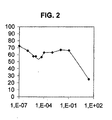
- Measurements of surface tension was carried out with solutions of different liposome concentrations, obtaining the date in
Figure 2 . - Cell viability tests were carried out with aqueous hypotonic solutions of base liposomes and base liposomes with vitamin E in cell cultures of macrophages. To study the cytotoxicity, the reduction technique was used, on a mitochondrial level, of the bromide salt of 3(4,5-dimethylthiazol-2-yl)-2,5-diphenyltetrazolium (MTT) to a coloured product (formazan) (Mossman T.J. Immum Methods 1983, 65:55-63). Peritoneal macrophages obtained from male Swiss mice were used. The cells were exposed to formulations which contained aqueous hypotonic solutions of base liposomes. As negative control, culture medium was used and as positive control 0.005% benzalkonium chloride. The solutions were incubated at 37ºC for 1 and 4 hours. The results obtained demonstrated an optimum tolerance for the base liposomes with and without vitamin E (
Figures 3 and4 ). -
- Figure 1:
- Influence of the sonication process on the final size of the vesicles comparing the use of an ultrasound probe during 2.5 minutes (-◆-) and an ultrasound bath during 15 minutes (-■-). The frequency of each class is represented, expressed in percentage, compared with the average size thereof in µm.
- Figure 2:
- Surface tension of the aqueous dispersion of liposomes (mN/m) in accordance with its concentration. The concentration of the liposomes in the solution is expressed in phosphatidylcholine concentration (mM).
- Figure 3:
- Cell viability (%) with aqueous hypotonic solutions of base liposomes with (■) and without (□) vitamin E incubated at 37ºC for 1 hour. Two concentrations of liposomes are studied (20 and 40 mg/ml) and two controls, one positive (0.005% benzalkonium chloride) and another negative (culture medium).
- Figure 4:
- Cell viability (%) with aqueous hypotonic solutions of base liposomes with (■) and without (□) vitamin E incubated at 37ºC for 4 hours. Two concentrations of liposomes are studied (20 and 40 mg/ml) and two controls, one positive (0.005% benzalkonium chloride) and another negative (culture medium).
Claims (21)
- Ophthalmic composition intended to act as replacement of the precorneal film, characterized in that it contains liposomal vesicles of neutral or negatively-charged phospholipids as hydrophilic polar phase and non-polar lipids, both vehiculized in aqueous solutions which contain mucin or substances with properties similar to mucin or mucoadhesive polymers.
- The ophthalmic composition of claim 1 which contains mucoadhesive polymers such as hyaluronic acid, cellulose derivatives, chondroitin sulphate, chitosan, colominic acid, thiolic derivatives (or another similar component).
- The ophthalmic composition of claim 1 which contains a substance with mucomimetic properties.
- The ophthalmic composition of claim 1 which contains neutral lipids and low-polarity lipids such as waxes, cholesterol esters, triglycerides, free fatty acids and hydrocarbons.
- The ophthalmic composition of claim 1 which contains lipocalins.
- The ophthalmic composition of claim 1 which contains vitamin A.
- The ophthalmic composition of claim 1 which contains sodium, potassium, calcium, chloride and bicarbonate ions
- The ophthalmic composition of claim 1 which contains vitamin C.
- The ophthalmic composition of claim 1 which contains lactoferrin.
- The ophthalmic composition of claim 1 which contains albumin or pre-albumin.
- The ophthalmic composition of claim 1 which contains immunoglobulin A (IGA).
- The ophthalmic composition of claim 1 which contains epithelial growth factor (EGF).
- The ophthalmic composition of claim 1 which contains beta transforming growth factor (TGF-β).
- The ophthalmic composition of claim 1 which contains acidic fibroblast growth factor (aFGF).
- The ophthalmic composition of claim 1 which contains basic fibroblast growth factor (bFGF).
- The ophthalmic composition of claim 1 which contains antiproteases such as macroglobulin.
- The ophthalmic composition of claim 1 which contains neural factors such as substance P and insulin like growth factor.
- The ophthalmic composition of claim 1 which contains antibacterial agents such as Ig G, lysozyme and complement.
- The ophthalmic composition of claim 1 which contains long-chain fatty acids such as gadoleic, palmitic, palmitoleic, stearic, oleic, linoleic, arachidic, linolenic, eicosenoic, lignoceric, lactic and myristic acid.
- The ophthalmic composition of claim 1 which contains hydrophilic lipids such as phospholipids, sphingomyelin, ceramides and cerebrosides.
- Use, in accordance with the preceding claims, of these medicinal preparations in determined pathologies such as the case of dry eye syndrome.
Priority Applications (1)
| Application Number | Priority Date | Filing Date | Title |
|---|---|---|---|
| PL06743460T PL2016937T3 (en) | 2006-04-27 | 2006-04-28 | Formulation of liposomal vesicles in aqueous solutions with tear film characteristics |
Applications Claiming Priority (2)
| Application Number | Priority Date | Filing Date | Title |
|---|---|---|---|
| ES200601078A ES2284398B2 (en) | 2006-04-27 | 2006-04-27 | FORMULATION OF LIPOSOMAL VESICLES IN WATER SOLUTIONS WITH CHARACTERISTICS OF LAGRIMAL FILM. |
| PCT/ES2006/000208 WO2007125134A1 (en) | 2006-04-27 | 2006-04-28 | Formulation of liposomal vesicles in aqueous solutions with tear film characteristics |
Publications (3)
| Publication Number | Publication Date |
|---|---|
| EP2016937A1 true EP2016937A1 (en) | 2009-01-21 |
| EP2016937A4 EP2016937A4 (en) | 2013-02-20 |
| EP2016937B1 EP2016937B1 (en) | 2015-01-21 |
Family
ID=38651107
Family Applications (1)
| Application Number | Title | Priority Date | Filing Date |
|---|---|---|---|
| EP06743460.5A Expired - Lifetime EP2016937B1 (en) | 2006-04-27 | 2006-04-28 | Formulation of liposomal vesicles in aqueous solutions with tear film characteristics |
Country Status (4)
| Country | Link |
|---|---|
| EP (1) | EP2016937B1 (en) |
| ES (2) | ES2284398B2 (en) |
| PL (1) | PL2016937T3 (en) |
| WO (1) | WO2007125134A1 (en) |
Cited By (3)
| Publication number | Priority date | Publication date | Assignee | Title |
|---|---|---|---|---|
| CN104546538A (en) * | 2013-12-26 | 2015-04-29 | 华东理工大学 | Chitosan-coated VC-VE liposome as well as preparation method and application thereof |
| IT201800007677A1 (en) * | 2018-07-31 | 2020-01-31 | Tdc Tech Dedicated To Care Srl | LIPOSOMES FOR THE TREATMENT OF OCULAR PATHOLOGIES |
| WO2024094759A1 (en) * | 2022-11-02 | 2024-05-10 | University Of Helsinki | Anti-evaporative lipid formulations |
Families Citing this family (1)
| Publication number | Priority date | Publication date | Assignee | Title |
|---|---|---|---|---|
| US12036329B2 (en) | 2018-09-11 | 2024-07-16 | Lead Biotherapeutics Ltd | Mucoadhesive dispersion nanoparticle system and method for production the same |
Family Cites Families (15)
| Publication number | Priority date | Publication date | Assignee | Title |
|---|---|---|---|---|
| US4421748A (en) | 1982-07-13 | 1983-12-20 | Trager Seymour F | Artificial tear aid |
| IT1214609B (en) | 1985-05-17 | 1990-01-18 | Opocrin Spa | HEXOSAMINOGLICANS DEPOLYMERIZED SULPHATES FOR ANTI-THROMBOTIC, FIBRINOLITHIC, ANTI-INFLAMMATORY ACTIVITIES, THEIR PREPARATION PROCEDURE AND PHARMACEUTICAL COMPOSITIONS CONTAINING THEM. |
| US4804539A (en) | 1986-07-28 | 1989-02-14 | Liposome Technology, Inc. | Ophthalmic liposomes |
| US4818537A (en) | 1986-10-21 | 1989-04-04 | Liposome Technology, Inc. | Liposome composition for treating dry eye |
| US5278151A (en) | 1987-04-02 | 1994-01-11 | Ocular Research Of Boston, Inc. | Dry eye treatment solution |
| US4914088A (en) | 1987-04-02 | 1990-04-03 | Thomas Glonek | Dry eye treatment solution and method |
| US5064655A (en) * | 1989-02-24 | 1991-11-12 | Liposome Technology, Inc. | Liposome gel composition and method |
| JPH04505319A (en) * | 1989-04-04 | 1992-09-17 | アルコン ラボラトリーズ インコーポレイテッド | Use of liposomes as delivery of therapeutic agents for wounds, cuts and abrasions |
| EP0459148B1 (en) | 1990-05-29 | 1996-01-03 | Ocular Research Of Boston Inc. | Dry eye treatment composition |
| ZA927277B (en) | 1991-10-02 | 1993-05-19 | Boston Ocular Res | Dry eye treatment process and solution. |
| WO1998043616A1 (en) * | 1997-03-31 | 1998-10-08 | University Of Iowa Research Foundation | Glycosylceramide-containing liposomes |
| JP2002538124A (en) * | 1999-03-01 | 2002-11-12 | ヴィスタ サイエンティフィック エルエルシー | Ophthalmic formulations containing mucin |
| US6656460B2 (en) | 2001-11-01 | 2003-12-02 | Yissum Research Development | Method and composition for dry eye treatment |
| GB0404693D0 (en) * | 2004-03-02 | 2004-04-07 | Univ London | Pharmaceutical preparations for the treatment of ocular surface and other disorders |
| US20050202097A1 (en) * | 2004-03-12 | 2005-09-15 | Melbj Holdings, Llc, Florida | Lubricant for the ocular surface |
-
2006
- 2006-04-27 ES ES200601078A patent/ES2284398B2/en not_active Expired - Fee Related
- 2006-04-28 ES ES06743460.5T patent/ES2535189T3/en not_active Expired - Lifetime
- 2006-04-28 WO PCT/ES2006/000208 patent/WO2007125134A1/en not_active Ceased
- 2006-04-28 EP EP06743460.5A patent/EP2016937B1/en not_active Expired - Lifetime
- 2006-04-28 PL PL06743460T patent/PL2016937T3/en unknown
Cited By (6)
| Publication number | Priority date | Publication date | Assignee | Title |
|---|---|---|---|---|
| CN104546538A (en) * | 2013-12-26 | 2015-04-29 | 华东理工大学 | Chitosan-coated VC-VE liposome as well as preparation method and application thereof |
| CN104546538B (en) * | 2013-12-26 | 2018-06-26 | 华东理工大学 | A kind of VC-VE liposomes of Chitosan-coated and its preparation method and application |
| IT201800007677A1 (en) * | 2018-07-31 | 2020-01-31 | Tdc Tech Dedicated To Care Srl | LIPOSOMES FOR THE TREATMENT OF OCULAR PATHOLOGIES |
| EP3603621A1 (en) * | 2018-07-31 | 2020-02-05 | TDC Technology Dedicated to Care S.r.l. | Liposomes for the treatment of ocular diseases |
| US10835494B2 (en) | 2018-07-31 | 2020-11-17 | TDC Technology Dedicated to Care srl | Liposomes for the treatment of ocular diseases |
| WO2024094759A1 (en) * | 2022-11-02 | 2024-05-10 | University Of Helsinki | Anti-evaporative lipid formulations |
Also Published As
| Publication number | Publication date |
|---|---|
| ES2535189T3 (en) | 2015-05-06 |
| EP2016937B1 (en) | 2015-01-21 |
| WO2007125134A1 (en) | 2007-11-08 |
| PL2016937T3 (en) | 2015-07-31 |
| ES2284398B2 (en) | 2008-12-16 |
| EP2016937A4 (en) | 2013-02-20 |
| ES2284398A1 (en) | 2007-11-01 |
Similar Documents
| Publication | Publication Date | Title |
|---|---|---|
| US9539202B2 (en) | Formulation of liposomal vesicles in aqueous solutions with lachrymal film characteristics | |
| Lopez-Cano et al. | Liposomes as vehicles for topical ophthalmic drug delivery and ocular surface protection | |
| EP1655021B1 (en) | Oil-in-water type emulsion with low concentration of cationic agent and positive zeta potential | |
| JP6253717B2 (en) | Composition comprising a mixture of semi-fluorinated alkanes | |
| KR101333923B1 (en) | Ophthalmic oil-in-water type emulsion with stable positive zeta potential | |
| RU2495661C2 (en) | Pharmaceutical formulations of non-polar and polar lipids for ophthalmological application | |
| JP5917490B2 (en) | Artificial tear emulsion | |
| US20210085603A1 (en) | Microemulsion for opthalmic drug delivery | |
| CA2810537A1 (en) | Compositions for a topical ophthalmic clear colloidal liquid which undergoes a liquid-gel phase transition in the eye | |
| EP2016937B1 (en) | Formulation of liposomal vesicles in aqueous solutions with tear film characteristics | |
| Benita et al. | Pilocarpine hydrochloride liposomes: characterization in vitro and preliminary evaluation in vivo in rabbit eye | |
| AU2022258754A1 (en) | Ophthalmic topical composition with ceria nanoparticles for treating diseases of posterior segment of the eye | |
| CN115212166A (en) | Nanometer lipid HPT eye drops and preparation method thereof | |
| HK1233187A1 (en) | Compositions comprising mixtures of semifluorinated alkanes |
Legal Events
| Date | Code | Title | Description |
|---|---|---|---|
| PUAI | Public reference made under article 153(3) epc to a published international application that has entered the european phase |
Free format text: ORIGINAL CODE: 0009012 |
|
| 17P | Request for examination filed |
Effective date: 20081127 |
|
| AK | Designated contracting states |
Kind code of ref document: A1 Designated state(s): AT BE BG CH CY CZ DE DK EE ES FI FR GB GR HU IE IS IT LI LT LU LV MC NL PL PT RO SE SI SK TR |
|
| AX | Request for extension of the european patent |
Extension state: AL BA HR MK YU |
|
| DAX | Request for extension of the european patent (deleted) | ||
| A4 | Supplementary search report drawn up and despatched |
Effective date: 20130123 |
|
| RIC1 | Information provided on ipc code assigned before grant |
Ipc: A61K 31/375 20060101ALI20130117BHEP Ipc: A61K 38/47 20060101ALI20130117BHEP Ipc: A61K 33/14 20060101ALI20130117BHEP Ipc: A61K 47/22 20060101ALI20130117BHEP Ipc: A61K 33/00 20060101ALI20130117BHEP Ipc: A61K 9/00 20060101ALI20130117BHEP Ipc: A61K 38/38 20060101ALI20130117BHEP Ipc: A61K 31/07 20060101ALI20130117BHEP Ipc: A61K 38/18 20060101ALI20130117BHEP Ipc: A61K 33/06 20060101ALI20130117BHEP Ipc: A61K 38/40 20060101ALI20130117BHEP Ipc: A61K 9/127 20060101AFI20130117BHEP |
|
| GRAP | Despatch of communication of intention to grant a patent |
Free format text: ORIGINAL CODE: EPIDOSNIGR1 |
|
| RIC1 | Information provided on ipc code assigned before grant |
Ipc: A61K 38/18 20060101ALI20140710BHEP Ipc: A61K 38/30 20060101ALI20140710BHEP Ipc: A61K 33/00 20060101ALI20140710BHEP Ipc: A61K 38/40 20060101ALI20140710BHEP Ipc: A61K 38/17 20060101ALI20140710BHEP Ipc: A61K 38/04 20060101ALI20140710BHEP Ipc: A61K 38/57 20060101ALI20140710BHEP Ipc: A61K 9/00 20060101ALI20140710BHEP Ipc: A61K 38/38 20060101ALI20140710BHEP Ipc: A61K 33/06 20060101ALI20140710BHEP Ipc: A61K 9/127 20060101AFI20140710BHEP Ipc: A61K 38/47 20060101ALI20140710BHEP Ipc: A61K 33/14 20060101ALI20140710BHEP Ipc: A61K 47/22 20060101ALI20140710BHEP Ipc: A61K 31/375 20060101ALI20140710BHEP Ipc: A61K 31/07 20060101ALI20140710BHEP |
|
| INTG | Intention to grant announced |
Effective date: 20140725 |
|
| GRAS | Grant fee paid |
Free format text: ORIGINAL CODE: EPIDOSNIGR3 |
|
| GRAP | Despatch of communication of intention to grant a patent |
Free format text: ORIGINAL CODE: EPIDOSNIGR1 |
|
| INTG | Intention to grant announced |
Effective date: 20141205 |
|
| GRAA | (expected) grant |
Free format text: ORIGINAL CODE: 0009210 |
|
| AK | Designated contracting states |
Kind code of ref document: B1 Designated state(s): AT BE BG CH CY CZ DE DK EE ES FI FR GB GR HU IE IS IT LI LT LU LV MC NL PL PT RO SE SI SK TR |
|
| REG | Reference to a national code |
Ref country code: GB Ref legal event code: FG4D |
|
| REG | Reference to a national code |
Ref country code: CH Ref legal event code: EP |
|
| REG | Reference to a national code |
Ref country code: IE Ref legal event code: FG4D |
|
| REG | Reference to a national code |
Ref country code: AT Ref legal event code: REF Ref document number: 707615 Country of ref document: AT Kind code of ref document: T Effective date: 20150215 |
|
| REG | Reference to a national code |
Ref country code: DE Ref legal event code: R096 Ref document number: 602006044372 Country of ref document: DE Effective date: 20150312 |
|
| REG | Reference to a national code |
Ref country code: ES Ref legal event code: FG2A Ref document number: 2535189 Country of ref document: ES Kind code of ref document: T3 Effective date: 20150506 |
|
| REG | Reference to a national code |
Ref country code: NL Ref legal event code: VDEP Effective date: 20150121 |
|
| REG | Reference to a national code |
Ref country code: AT Ref legal event code: MK05 Ref document number: 707615 Country of ref document: AT Kind code of ref document: T Effective date: 20150121 |
|
| REG | Reference to a national code |
Ref country code: LT Ref legal event code: MG4D |
|
| PG25 | Lapsed in a contracting state [announced via postgrant information from national office to epo] |
Ref country code: SE Free format text: LAPSE BECAUSE OF FAILURE TO SUBMIT A TRANSLATION OF THE DESCRIPTION OR TO PAY THE FEE WITHIN THE PRESCRIBED TIME-LIMIT Effective date: 20150121 Ref country code: BG Free format text: LAPSE BECAUSE OF FAILURE TO SUBMIT A TRANSLATION OF THE DESCRIPTION OR TO PAY THE FEE WITHIN THE PRESCRIBED TIME-LIMIT Effective date: 20150421 Ref country code: LT Free format text: LAPSE BECAUSE OF FAILURE TO SUBMIT A TRANSLATION OF THE DESCRIPTION OR TO PAY THE FEE WITHIN THE PRESCRIBED TIME-LIMIT Effective date: 20150121 Ref country code: FI Free format text: LAPSE BECAUSE OF FAILURE TO SUBMIT A TRANSLATION OF THE DESCRIPTION OR TO PAY THE FEE WITHIN THE PRESCRIBED TIME-LIMIT Effective date: 20150121 |
|
| REG | Reference to a national code |
Ref country code: PL Ref legal event code: T3 |
|
| PG25 | Lapsed in a contracting state [announced via postgrant information from national office to epo] |
Ref country code: GR Free format text: LAPSE BECAUSE OF FAILURE TO SUBMIT A TRANSLATION OF THE DESCRIPTION OR TO PAY THE FEE WITHIN THE PRESCRIBED TIME-LIMIT Effective date: 20150422 Ref country code: LV Free format text: LAPSE BECAUSE OF FAILURE TO SUBMIT A TRANSLATION OF THE DESCRIPTION OR TO PAY THE FEE WITHIN THE PRESCRIBED TIME-LIMIT Effective date: 20150121 Ref country code: IS Free format text: LAPSE BECAUSE OF FAILURE TO SUBMIT A TRANSLATION OF THE DESCRIPTION OR TO PAY THE FEE WITHIN THE PRESCRIBED TIME-LIMIT Effective date: 20150521 Ref country code: AT Free format text: LAPSE BECAUSE OF FAILURE TO SUBMIT A TRANSLATION OF THE DESCRIPTION OR TO PAY THE FEE WITHIN THE PRESCRIBED TIME-LIMIT Effective date: 20150121 Ref country code: NL Free format text: LAPSE BECAUSE OF FAILURE TO SUBMIT A TRANSLATION OF THE DESCRIPTION OR TO PAY THE FEE WITHIN THE PRESCRIBED TIME-LIMIT Effective date: 20150121 |
|
| REG | Reference to a national code |
Ref country code: DE Ref legal event code: R097 Ref document number: 602006044372 Country of ref document: DE |
|
| PG25 | Lapsed in a contracting state [announced via postgrant information from national office to epo] |
Ref country code: RO Free format text: LAPSE BECAUSE OF FAILURE TO SUBMIT A TRANSLATION OF THE DESCRIPTION OR TO PAY THE FEE WITHIN THE PRESCRIBED TIME-LIMIT Effective date: 20150121 Ref country code: SK Free format text: LAPSE BECAUSE OF FAILURE TO SUBMIT A TRANSLATION OF THE DESCRIPTION OR TO PAY THE FEE WITHIN THE PRESCRIBED TIME-LIMIT Effective date: 20150121 Ref country code: CZ Free format text: LAPSE BECAUSE OF FAILURE TO SUBMIT A TRANSLATION OF THE DESCRIPTION OR TO PAY THE FEE WITHIN THE PRESCRIBED TIME-LIMIT Effective date: 20150121 Ref country code: DK Free format text: LAPSE BECAUSE OF FAILURE TO SUBMIT A TRANSLATION OF THE DESCRIPTION OR TO PAY THE FEE WITHIN THE PRESCRIBED TIME-LIMIT Effective date: 20150121 Ref country code: EE Free format text: LAPSE BECAUSE OF FAILURE TO SUBMIT A TRANSLATION OF THE DESCRIPTION OR TO PAY THE FEE WITHIN THE PRESCRIBED TIME-LIMIT Effective date: 20150121 |
|
| PLBE | No opposition filed within time limit |
Free format text: ORIGINAL CODE: 0009261 |
|
| STAA | Information on the status of an ep patent application or granted ep patent |
Free format text: STATUS: NO OPPOSITION FILED WITHIN TIME LIMIT |
|
| PG25 | Lapsed in a contracting state [announced via postgrant information from national office to epo] |
Ref country code: MC Free format text: LAPSE BECAUSE OF FAILURE TO SUBMIT A TRANSLATION OF THE DESCRIPTION OR TO PAY THE FEE WITHIN THE PRESCRIBED TIME-LIMIT Effective date: 20150121 Ref country code: LU Free format text: LAPSE BECAUSE OF FAILURE TO SUBMIT A TRANSLATION OF THE DESCRIPTION OR TO PAY THE FEE WITHIN THE PRESCRIBED TIME-LIMIT Effective date: 20150428 |
|
| REG | Reference to a national code |
Ref country code: CH Ref legal event code: PL |
|
| 26N | No opposition filed |
Effective date: 20151022 |
|
| REG | Reference to a national code |
Ref country code: IE Ref legal event code: MM4A |
|
| PG25 | Lapsed in a contracting state [announced via postgrant information from national office to epo] |
Ref country code: LI Free format text: LAPSE BECAUSE OF NON-PAYMENT OF DUE FEES Effective date: 20150430 Ref country code: CH Free format text: LAPSE BECAUSE OF NON-PAYMENT OF DUE FEES Effective date: 20150430 |
|
| PG25 | Lapsed in a contracting state [announced via postgrant information from national office to epo] |
Ref country code: SI Free format text: LAPSE BECAUSE OF FAILURE TO SUBMIT A TRANSLATION OF THE DESCRIPTION OR TO PAY THE FEE WITHIN THE PRESCRIBED TIME-LIMIT Effective date: 20150121 |
|
| PG25 | Lapsed in a contracting state [announced via postgrant information from national office to epo] |
Ref country code: IE Free format text: LAPSE BECAUSE OF NON-PAYMENT OF DUE FEES Effective date: 20150428 |
|
| REG | Reference to a national code |
Ref country code: FR Ref legal event code: PLFP Year of fee payment: 11 |
|
| PG25 | Lapsed in a contracting state [announced via postgrant information from national office to epo] |
Ref country code: BE Free format text: LAPSE BECAUSE OF FAILURE TO SUBMIT A TRANSLATION OF THE DESCRIPTION OR TO PAY THE FEE WITHIN THE PRESCRIBED TIME-LIMIT Effective date: 20150121 |
|
| REG | Reference to a national code |
Ref country code: FR Ref legal event code: PLFP Year of fee payment: 12 |
|
| PG25 | Lapsed in a contracting state [announced via postgrant information from national office to epo] |
Ref country code: HU Free format text: LAPSE BECAUSE OF FAILURE TO SUBMIT A TRANSLATION OF THE DESCRIPTION OR TO PAY THE FEE WITHIN THE PRESCRIBED TIME-LIMIT; INVALID AB INITIO Effective date: 20060428 |
|
| PG25 | Lapsed in a contracting state [announced via postgrant information from national office to epo] |
Ref country code: CY Free format text: LAPSE BECAUSE OF FAILURE TO SUBMIT A TRANSLATION OF THE DESCRIPTION OR TO PAY THE FEE WITHIN THE PRESCRIBED TIME-LIMIT Effective date: 20150121 |
|
| PG25 | Lapsed in a contracting state [announced via postgrant information from national office to epo] |
Ref country code: PT Free format text: LAPSE BECAUSE OF FAILURE TO SUBMIT A TRANSLATION OF THE DESCRIPTION OR TO PAY THE FEE WITHIN THE PRESCRIBED TIME-LIMIT Effective date: 20150521 |
|
| PG25 | Lapsed in a contracting state [announced via postgrant information from national office to epo] |
Ref country code: TR Free format text: LAPSE BECAUSE OF FAILURE TO SUBMIT A TRANSLATION OF THE DESCRIPTION OR TO PAY THE FEE WITHIN THE PRESCRIBED TIME-LIMIT Effective date: 20150121 |
|
| REG | Reference to a national code |
Ref country code: FR Ref legal event code: PLFP Year of fee payment: 13 |
|
| PG25 | Lapsed in a contracting state [announced via postgrant information from national office to epo] |
Ref country code: ES Free format text: LAPSE BECAUSE OF NON-PAYMENT OF DUE FEES Effective date: 20160429 |
|
| PGFP | Annual fee paid to national office [announced via postgrant information from national office to epo] |
Ref country code: DE Payment date: 20200420 Year of fee payment: 15 Ref country code: FR Payment date: 20200429 Year of fee payment: 15 |
|
| PGFP | Annual fee paid to national office [announced via postgrant information from national office to epo] |
Ref country code: IT Payment date: 20200428 Year of fee payment: 15 Ref country code: GB Payment date: 20200429 Year of fee payment: 15 Ref country code: PL Payment date: 20200414 Year of fee payment: 15 |
|
| REG | Reference to a national code |
Ref country code: DE Ref legal event code: R119 Ref document number: 602006044372 Country of ref document: DE |
|
| GBPC | Gb: european patent ceased through non-payment of renewal fee |
Effective date: 20210428 |
|
| PG25 | Lapsed in a contracting state [announced via postgrant information from national office to epo] |
Ref country code: FR Free format text: LAPSE BECAUSE OF NON-PAYMENT OF DUE FEES Effective date: 20210430 Ref country code: GB Free format text: LAPSE BECAUSE OF NON-PAYMENT OF DUE FEES Effective date: 20210428 Ref country code: DE Free format text: LAPSE BECAUSE OF NON-PAYMENT OF DUE FEES Effective date: 20211103 |
|
| PG25 | Lapsed in a contracting state [announced via postgrant information from national office to epo] |
Ref country code: PL Free format text: LAPSE BECAUSE OF NON-PAYMENT OF DUE FEES Effective date: 20210428 |
|
| PG25 | Lapsed in a contracting state [announced via postgrant information from national office to epo] |
Ref country code: IT Free format text: LAPSE BECAUSE OF NON-PAYMENT OF DUE FEES Effective date: 20200428 |
|
| PGFP | Annual fee paid to national office [announced via postgrant information from national office to epo] |
Ref country code: ES Payment date: 20250430 Year of fee payment: 20 |
|
| PG25 | Lapsed in a contracting state [announced via postgrant information from national office to epo] |
Ref country code: IT Free format text: LAPSE BECAUSE OF NON-PAYMENT OF DUE FEES Effective date: 20210428 |
|
| REG | Reference to a national code |
Ref country code: ES Ref legal event code: FD2A Effective date: 20260506 |