EP2012307A1 - Sound source separation system - Google Patents
Sound source separation system Download PDFInfo
- Publication number
- EP2012307A1 EP2012307A1 EP08251991A EP08251991A EP2012307A1 EP 2012307 A1 EP2012307 A1 EP 2012307A1 EP 08251991 A EP08251991 A EP 08251991A EP 08251991 A EP08251991 A EP 08251991A EP 2012307 A1 EP2012307 A1 EP 2012307A1
- Authority
- EP
- European Patent Office
- Prior art keywords
- cost function
- separation matrix
- sound source
- separation
- matrix
- Prior art date
- Legal status (The legal status is an assumption and is not a legal conclusion. Google has not performed a legal analysis and makes no representation as to the accuracy of the status listed.)
- Granted
Links
Images




Classifications
-
- G—PHYSICS
- G10—MUSICAL INSTRUMENTS; ACOUSTICS
- G10L—SPEECH ANALYSIS TECHNIQUES OR SPEECH SYNTHESIS; SPEECH RECOGNITION; SPEECH OR VOICE PROCESSING TECHNIQUES; SPEECH OR AUDIO CODING OR DECODING
- G10L21/00—Speech or voice signal processing techniques to produce another audible or non-audible signal, e.g. visual or tactile, in order to modify its quality or its intelligibility
- G10L21/02—Speech enhancement, e.g. noise reduction or echo cancellation
- G10L21/0272—Voice signal separating
- G10L21/028—Voice signal separating using properties of sound source
-
- G—PHYSICS
- G06—COMPUTING OR CALCULATING; COUNTING
- G06F—ELECTRIC DIGITAL DATA PROCESSING
- G06F18/00—Pattern recognition
- G06F18/20—Analysing
- G06F18/21—Design or setup of recognition systems or techniques; Extraction of features in feature space; Blind source separation
- G06F18/213—Feature extraction, e.g. by transforming the feature space; Summarisation; Mappings, e.g. subspace methods
- G06F18/2134—Feature extraction, e.g. by transforming the feature space; Summarisation; Mappings, e.g. subspace methods based on separation criteria, e.g. independent component analysis
- G06F18/21342—Feature extraction, e.g. by transforming the feature space; Summarisation; Mappings, e.g. subspace methods based on separation criteria, e.g. independent component analysis using statistical independence, i.e. minimising mutual information or maximising non-gaussianity
-
- G—PHYSICS
- G06—COMPUTING OR CALCULATING; COUNTING
- G06F—ELECTRIC DIGITAL DATA PROCESSING
- G06F18/00—Pattern recognition
- G06F18/20—Analysing
- G06F18/21—Design or setup of recognition systems or techniques; Extraction of features in feature space; Blind source separation
- G06F18/213—Feature extraction, e.g. by transforming the feature space; Summarisation; Mappings, e.g. subspace methods
- G06F18/2134—Feature extraction, e.g. by transforming the feature space; Summarisation; Mappings, e.g. subspace methods based on separation criteria, e.g. independent component analysis
- G06F18/21347—Feature extraction, e.g. by transforming the feature space; Summarisation; Mappings, e.g. subspace methods based on separation criteria, e.g. independent component analysis using domain transformations
-
- G—PHYSICS
- G10—MUSICAL INSTRUMENTS; ACOUSTICS
- G10L—SPEECH ANALYSIS TECHNIQUES OR SPEECH SYNTHESIS; SPEECH RECOGNITION; SPEECH OR VOICE PROCESSING TECHNIQUES; SPEECH OR AUDIO CODING OR DECODING
- G10L21/00—Speech or voice signal processing techniques to produce another audible or non-audible signal, e.g. visual or tactile, in order to modify its quality or its intelligibility
- G10L21/02—Speech enhancement, e.g. noise reduction or echo cancellation
- G10L21/0208—Noise filtering
- G10L21/0216—Noise filtering characterised by the method used for estimating noise
- G10L2021/02161—Number of inputs available containing the signal or the noise to be suppressed
- G10L2021/02166—Microphone arrays; Beamforming
Definitions
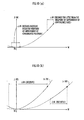
- Fig. 10(b) conceptually shows a variation in different cost functions J 1 (W) and J 2 (W) according to the separation matrix W.
- the update amount may become excessive from the viewpoint of the improvement of the convergence precision.
- the cost function J 2 (W) since a differential value J'(W) does not sensitively vary according to the separation matrix W, the update amount may become too little from the viewpoint of the improvement of the convergence rate.
- a process of updating the current separation matrix to the next separation matrix is iteratively performed such that the next value (the value of the current separation matrix) of the cost function becomes closer to the minimum value than the current value (the value of the previous separation matrix).
- the update amount of the separation matrix is adjusted to be increased as the current value of the cost function is increased and is adjusted to be decreased as the current gradient of the cost function is increased. Accordingly, in a "first state" in which the convergence of the current value of the cost function is insufficient and the current gradient of the cost function is shallow, the update amount of the separation matrix is adjusted to be properly increased from the viewpoint of the improvement of a convergence rate.
- an electronic control unit an electronic circuit such as a CPU, a ROM, a RAM, an I/O circuit or an A/D conversion circuit 10.
- HDSS-AS Adaptive step-size higher-order DSS
- a process of updating the current separation matrix W k to the next separation matrix W k+1 is iteratively performed such that the next value J(W k+1 ) of the cost function becomes closer to the minimum value than the current value J(W k ) ( Fig. 3 /S008, S010, S012 and S014, see the arrow of Fig. 4 ).
- the update amount ⁇ W k of the separation matrix W is adjusted to be increased as the current value J(W k ) of the cost function is increased and is adjusted to be decreased as the current gradient ⁇ J(W k )/ ⁇ W of the cost function is increased (see Fig. 4 ).
Landscapes
- Engineering & Computer Science (AREA)
- Computer Vision & Pattern Recognition (AREA)
- Data Mining & Analysis (AREA)
- Theoretical Computer Science (AREA)
- Physics & Mathematics (AREA)
- General Engineering & Computer Science (AREA)
- Bioinformatics & Computational Biology (AREA)
- Evolutionary Biology (AREA)
- Evolutionary Computation (AREA)
- Bioinformatics & Cheminformatics (AREA)
- Artificial Intelligence (AREA)
- General Physics & Mathematics (AREA)
- Life Sciences & Earth Sciences (AREA)
- Quality & Reliability (AREA)
- Computational Linguistics (AREA)
- Signal Processing (AREA)
- Health & Medical Sciences (AREA)
- Audiology, Speech & Language Pathology (AREA)
- Human Computer Interaction (AREA)
- Acoustics & Sound (AREA)
- Multimedia (AREA)
- Circuit For Audible Band Transducer (AREA)
Abstract
Description
- The present invention relates to a sound source separation system.
- As a method of separating a sound source without information of a transfer system according to a separation method based on an inverse filter, blind source separation (BSS) is suggested (see
Reference Documents 1 to 4). As the BSS, sound source separation based on a decoration based source separation (DSS), an independent component analysis (ICA) and a higher-order DSS (HDSS), geometric constrained source separation (GSS) obtained by adding geometric information to these methods, geometric constrained ICA (GICA) and a geometric constrained HDSS (GHDSS) are known. Hereinafter, the overview of the BSS will be described. - If the frequency characteristics of M sound source signals are s(ω)=[s1(ω), s2(ω), ..., SN(ω)]T (T denotes transposition), the characteristics of input signals of N (≤M) microphones x(ω)=[x1(ω), x2(ω), ..., xN(ω)]T are expressed by Equation (1) using a transfer function matrix H(ω). The element Hij of the transfer function H(ω) represents a transfer function from the sound source i to the microphone j.

- A sound source separation problem is expressed by Equation (2) using a separation matrix W(ω).

- A sound source separation process is formalized by obtaining the separation matrix W(ω) which becomes y(w)=s(w). If the transfer function matrix H(ω) is already known, the separation matrix W(ω) is computed using a pseudo-inverse matrix H+(ω). However, actually, the transfer function matrix H(ω) is hardly ever known. The BSS obtains W(ω) in a state in which H(w)is not known.
- The general method of the BSS is described by Equation (3) as a process of obtaining y which minimizes a cost function J(y) for evaluating a separation degree.

- The cost function J(y) is changed according to the method and is calculated by Equation (4) using Frobenius norm (representing the square sum of the absolute values of all elements of the matrix) on the basis of a correlation matrix Ryy=E[yyH] of y according to the DSS.

- According to the ICA using K-L information amount, the cost function J is calculated by Equation (5) on the basis of a simultaneous probability density function (PDF) p(y) of y and a peripheral PDF q(y)=IIkp(yk) of y (see Reference Document 5)..

- W satisfying Equation (3) is determined by iteration computation according to a gradient method expressed by Equation (6) on the basis of a matrix J'(Wk) representing the direction of W in which the gradient of J(W)decreases most rapidly in the vicinity of J(Wk) (k is the number of times of iteration) and a step-size parameter µ.

- The matrix J'(Wk) is calculated by a complex gradient calculating method (see Reference Document 6). According to the DSS, the matrix J'(W) is expressed by Equation (7).

- According to the ICA, the matrix J'(W) is expressed by Equation (8) according to the matrix Rφ(y)y=E[φ(y)yT] and the function φ(y) defined by Equations (9) and (10).



- According to the adaptive BSS, expectation calculation of a restarting process is omitted and immediate data is used. In more detail, E[yyH] is converted into yyH. The updated equation is equal to Equation (6) and the number of times of iteration "k" includes the meaning as expressing a time. In an offline process, in order to improve precision, the number of times of iteration may be increased by a small step size, but, if this method is employed in the adaptive process, an adaptive time is increased and the quality of performance deteriorates. Accordingly, the adjustment of a step-size parameter µ of the adaptive BSS is more important than the offline BSS. The DSS of the adaptive BSS and the matrix J' of the ICA are expressed by Equations (11) and (12), respectively. The ICA is described according to a method of using an updating method based on a natural gradient according to a method which focuses on only an off-diagonal element of a correlation matrix (see Reference Document 7)).


- A method of solving permutation problem and a scaling problem which occur in the ICA using geometric information (positions of the microphone and the sound source) is suggested (see
Reference Documents 8 to 11). According to the GSS, a value obtained by synthesizing a geometric constraint error and a separation error is used as a cost function. For example, the cost function J(W) is decided according to Equation (13) on the basis of a linear constraint error JLC(W) based on the geometric information, a separation system error JSS(W) and a normalization coefficient λ.
- As the linear constraint error JLC(W), a difference JLCDS(W) from a coefficient at a delay sum beamforming method expressed by Equation (14) or a difference JLCNULL(W) from a coefficient at a null beamforming method expressed by Equation (15).


- In the GSS, as the separation system error JSS(W), JDSS(W) of Equation (4) is employed (see Reference Document 12). In addition, as the separation system error JSS(W), JICA(W) of Equation (5) may be employed. In this case, an adaptive ICA (GICA) with linear constraint using the geometric information is obtained. This adaptive GICA is a weak-constraint method which permits a linear constraint error and is different from a strong-constraint method using linear constraint as an absolute condition described in
Reference Document 11. - [Reference Document 1] L.Parra and C.Spence, Convolutive blind source separation of non-stationary source, IEEE Trans. on Speech and Audio Proceeding, vol. 8, no. 3, 2000, pp. 320-327
- [Reference Document 2] F.Asano, S.Ikeda, M.Ogawa, H.Asoh and N.Kitawaki, Combined Approach of Array Processing and Independent Component Analysis for Blind Separation of Acoustic Signals, IEEE Trans. on Speech and Audio Processing, vol. 11, no. 3, 2003, pp. 204-215
- [Reference Document 3] M.Miyoshi and Y.Kaneda, Inverse Filtering of Room Acoustics, IEEE Trans. on Acoustic Speech and Signal Processing, vol.ASSP-36, no. 2, 1988, pp. 145-152
- [Reference Document 4] H.Nakajima, M.Miyoshi and M.Tohyama, Sound field control by Indefinite MINT Filters, IEICE Trans., Fundamentals, vol.E-80A, no. 5, 1997, pp. 821-824
- [Reference Document 5] S.Ikeda and M.Murata, A method of ICA in time-frequency domain, Proc.Workshop Indep. Compom. Anal. Signal. 1999, pp. 365-370
- [Reference Document 6] D.H.Brandwood, B.A, A complex gradient operator and its application in adaptive array theory, Proc. IEE Proc., vol. 130, Pts. Fand H, No. 1, 1983, pp. 11-16
- [Reference Document 7] S.Amari, Natural gradient works efficiently in learning, newral Compt., vol. 10, 1988, pp. 251-276
- [Reference Document 8] L.Parra and C.Alvino, Gepmetric Source Separation: Merging Convultive Source Separation with Geometric Beamforming, IEEE Trans. on Speech and Audio Processing, vol. 10, no. 6, 2002, pp. 352-362
- [Reference Document 9] R.Mukai, H.Sawada, S.Araki and S.Makino, Blind Source Separation of many signals in the frequency domain, in Proc. of ICASSP2006, vol.V, 2006, pp. 969-972
- [Reference Document 10] H. Saruwatari, T.Kawamura, T.Nishikawa, A.Lee and K.Shikano, Blind Source Separation Based on a Fast Convergence Algorithm Combining ICA and Beamforming, IEEE Trans. on Speech and Audio Processing, vol. 14, no. 2, 2006, pp. 666-678
- [Non-Patent Document 11] M.Knaak, S.Araki and S.Makino, Geometrically Constrained Independent Component Analysis, IEEE Trans. on Speech and Audio Processing, vol. 15, no. 2, 2007, pp. 715-726
- [Non-patent Document 12] J.Valin, J.Rouat and F.Michaud, Enhanced Robot Audition Based on Microphone Array Source Separation with Post-Filter, Proc. of 2004 IEE/RSJ IROS, 2004, pp. 2123-2128
- However, according to the conventional method, since the step-size parameter µ (see Equation (6)) is fixed, there are two problems from the viewpoint of the convergence of a minimum value J(W0)(W0: optimal separation matrix) of the cost function J(W).
- As a first problem, since the update amount ΔW(=µJ' (Wk)) of the separation matrix W is decided regardless of the current value J(Wk) of the cost function, the update amount ΔW is improper from the viewpoint of improvement of a convergence rate and convergence precision. For understanding of the first problem,
Fig. 10(a) conceptually shows a variation in cost function J(W) according to the separation matrix W. If the convergence is insufficient (that is, if the cost function J(W) is separated from the minimum value J(W0)), the update amount ΔW may become too little from the viewpoint of the improvement of the convergence rate. In contrast, if the convergence is sufficient (that is, if the cost function J(W) is close to the minimum value J(W0)), the update amount ΔW may become excessive from the viewpoint of the improvement of the convergence precision. - In a second problem, since the update amount ΔW is proportional to a differential value J'(W) of the cost function J(W), the update amount ΔW is improper from the viewpoint of the improvement of the convergence rate and the convergence precision. For understanding of the second problem,
Fig. 10(b) conceptually shows a variation in different cost functions J1(W) and J2(W) according to the separation matrix W. In the cost function J1(W), since a differential value J' (W) sensitively varies according to the separation matrix W, the update amount may become excessive from the viewpoint of the improvement of the convergence precision. In contrast, in the cost function J2(W), since a differential value J'(W) does not sensitively vary according to the separation matrix W, the update amount may become too little from the viewpoint of the improvement of the convergence rate. - Accordingly, it is an object of the present invention to provide a system which is capable of separating sound source signals with high precision while improving a convergence rate and convergence precision.
- According to a first aspect of the present invention, there is provided a sound source separation system which includes a plurality of microphones and separates a plurality of sound sources on the basis of input signals from the plurality of microphones, the system including: a first processing element which realizes a cost function for evaluating separation degrees of the sound source signals, the cost function being defined by a separation matrix representing independency between the input signals and the sound source signals; and a second processing element which realizes the separation matrix when the cost function becomes a minimum value as an optimal separation matrix by iteratively performing a process of updating a current separation matrix such that a next value of the cost function realized by the first processing element becomes closer to the minimum value than a current value so as to decide a next separation matrix, and adjusts an update amount from the current value of the separation matrix to the next value to be increased as the current value of the cost function is increased and to be decreased as a current gradient of the cost function is increased.
- According to the sound source separation system of the first aspect, a process of updating the current separation matrix to the next separation matrix is iteratively performed such that the next value (the value of the current separation matrix) of the cost function becomes closer to the minimum value than the current value (the value of the previous separation matrix). The update amount of the separation matrix is adjusted to be increased as the current value of the cost function is increased and is adjusted to be decreased as the current gradient of the cost function is increased. Accordingly, in a "first state" in which the convergence of the current value of the cost function is insufficient and the current gradient of the cost function is shallow, the update amount of the separation matrix is adjusted to be properly increased from the viewpoint of the improvement of a convergence rate. In addition, in a "second state" in which the convergence of the current value of the cost function is insufficient and the current gradient of the cost function is steep, the update amount of the separation matrix is adjusted to be properly increased from the viewpoint of the improvement of the convergence rate similar to the first state and the update amount of the separation matrix is adjusted to be further decreased than the first state from the viewpoint of the improvement of the convergence precision. In a "third state" in which the convergence of the current value of the cost function is sufficient and the current gradient of the cost function is steep, the update amount of the separation matrix is adjusted to be properly decreased from the viewpoint of the improvement of the convergence precision. In addition, in a "fourth state" in which the convergence of the current value of the cost function is sufficient and the current gradient of the cost function is shallow, the update amount of the separation matrix is adjusted to be properly decreased from the viewpoint of the improvement of the convergence precision similar to the third state and the update amount of the separation matrix is adjusted to be further increased than the third state from the viewpoint of the improvement of the convergence rate. In addition, the optimal separation matrix (the separation matrix in which the cost function is likely to become the minimum value) is realized by the iteration of the above-described process. Accordingly, on the basis of the input signals from the plurality of microphones and the optimal separation matrix, it is possible to separate the sound source signals with high precision, while improving the convergence rate and the convergence precision.
- The "realization" of information by the components of the sound source separation system indicates all information processes for preparing information in order to perform a calculating process requiring information such as reading of information from a memory, retrieving of information from a database, reception of information, calculation, estimation, setting or determination of information based on basic information, and storage of calculated information in a memory.
- According to a second aspect of the present invention, in the sound source separation system of the first aspect, the second processing element adjusts the update amount of the separation matrix according a multi-dimensional Newton's method.
- According to the sound source separation system of the second aspect, on the basis of input signals from the plurality of microphones and the optimal separation matrix, it is possible to separate the sound source signals according to the Newton's method with high precision while improving a convergence rate and convergence precision. Accordingly, on the basis of input signals from the plurality of microphones and the optimal separation matrix, it is possible to separate the sound source signals with high precision while improving a convergence rate and convergence precision.
- An embodiment of the invention will now be described, by way of example only, with reference to the accompanying drawings wherein:
-
Fig. 1 is a view showing the configuration of a sound source separation system according to an embodiment of the present invention. -
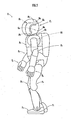
Fig. 2 is a view showing a robot in which the sound source separation system according to the illustrated embodiment of the present invention is mounted. -
Fig. 3 is a flowchart showing the function of the sound source separation system according to the illustrated embodiment of the present invention. -
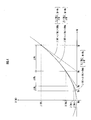
Fig. 4 is a view showing the improvement of a convergence rate and convergence precision according to a cost function. -
Fig. 5(a) is a view showing the waveform of a first sound source signal (male voice). -
Fig. 5(b) is a view showing the waveform of a second sound source signal (female voice). -
Fig. 5(c) is a view showing the waveform of background noise. -
Fig. 5(d) is a view showing the waveform of a synthesized input signal. -
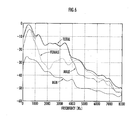
Fig. 6 is a view showing the frequency characteristics of signals. -
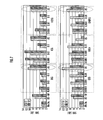
Fig. 7 is a view showing the comparison of a SNR according to various methods as a sound source separation experiment result. -
Fig. 8 is a view showing the comparison of a CC according to various methods as the sound source separation experiment result. -
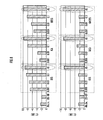
Fig. 9 is a view showing the waveform of a sound source signal separated according to a GSS-AS. -
Fig. 10 is a view explaining problems in a convergence rate and convergence precision according to a cost function. - A sound source separation system according to an embodiment of the present invention will be described with reference to the accompanying drawings.
- The sound source separation system shown in
Fig. 1 includes a plurality of microphones Mi (i=1, 2, ..., n) and an electronic control unit (an electronic circuit such as a CPU, a ROM, a RAM, an I/O circuit or an A/D conversion circuit) 10. - The
electronic control unit 10 separates a plurality of sound source signals on the basis of input signals from the plurality of microphones Mi. Theelectronic control unit 10 includes afirst processing element 11 and asecond processing element 12. Thefirst processing element 11 and thesecond processing element 12 may be composed of the same CPU or different CPUs. Thefirst processing element 11 is defined by a separation matrix W representing independency between the input signals from the microphones M1 and the sound source signals and realizes a cost function J(W) for evaluating the separation degree of the sound source signals. Thesecond processing element 12 performs a process of deciding a next separation matrix Wk+1 by updating a current separation matrix Wk such that a next value J(Wk+1) of the cost function realized by thefirst processing element 11 be closer to a minimum value J(W0) than a current value J(Wk). Thesecond processing element 12 iteratively performs this process so as to realize a separation matrix when the cost function becomes the minimum value, as an optimal separation matrix W0. Thesecond processing element 12 adjusts an update amount ΔWk from the current separation matrix Wk to the next separation matrix Wk+1 by the current value J(Wk) of the cost function and a current gradient ∂J(Wk)/∂W. - The microphones Mi are provided at the left and right sides of a head portion P1 of a robot R, in which the
electronic control unit 10 is mounted, four by four, as shown inFig. 2 . The microphones M1 to M4 are provided at a front upper part, a rear upper part, a front lower part, and a rear lower part of the right side of the head portion P1. The microphones M5 to M8 are provided at a front upper part, a rear upper part, a front lower part, and a rear lower part of the left side of the head portion P1. The sound source separation system may be mounted in any machine or device in an environment in which a plurality of sound sources exist, such as a vehicle (four-wheel vehicle), in addition to the robot R. The number and the arrangement of the microphones Mi may be arbitrarily changed. The robot R is a legged mobile robot and includes a base body P0, the head portion P1 provided above the base body P0, left and right arm portions P2 which extend from the both sides of the upper part of the base body P0, hand portions P3 connected to the front ends of the left and right arm portions P2, left and right leg portions P4 which extend downward from the lower part of the base body P0, and foot portions P5 connected to the left and right leg portions P4, similar to a human. The base body P0 is composed of an upper part and a lower part which are vertically connected so as to be rotated relative to each other by rotation of a yawing axis. The head portion P1 is rotated or moved by the rotation of the yawing axis with respect to the base body P0. Each of the arm portions P2 has a rotation freedom degree of uniaxial to triaxial rotation in a shoulder joint mechanism, an elbow joint mechanism and a carpus joint mechanism, and each of the hand portions P3 includes five finger mechanisms which extend from a hand palm portion and corresponds to a thumb, an index finger, a middle finger, a third finger and a little finger of the human and can perform an object holding action. Each of the leg portions P4 has a rotation freedom degree of uniaxial to triaxial rotation in a hip joint mechanism, a knee mechanism and an ankle joint mechanism. The robot R can perform a proper action, that is, the movement of the left and right leg portions P4, on the basis of the sound source separation result. - The function of the sound source separation system having the above-described configuration will be described. The index k representing the number of times of update of the separation matrix W is set to "1" (
Fig. 3 /S001) and the input signals from the microphones Mi are acquired by the electronic control unit 10 (Fig. 3 /S002). The cost function J(W) for evaluating the separation degree of the sound source signals are defined or realized by the first processing element 11 (Fig. 3 /S004 (see Equations (4) and (5)). A current update amount Wk of the separation matrix is adjusted by an adaptive step-size (AS) method (Fig. 3 /S008). In more detail, the cost function J(W) in the vicinity of the current value J(Wk) of the cost function is linearly approximated as expressed by Equation (16) according to the complex gradient calculating method.
- As conceptually shown in
Fig. 4 , if the cost function J(W) varies according to the separation matrix W, the cost function J(W) is approximated as a linear function (see an alternate long and short dashes line, an alternate long and two short dashed line, and an alternate long and three short dashes line) sloped by the current gradient ∂J(Wk)/∂W of the cost function J(W) via the current value J(Wk) of the cost function. - An optimal current step-size parameter µk is calculated according to a multi-dimensional Newton's method on the basis of a relational expression W=Wk-µJ'(Wk) such that an approximate cost function J(W) becomes 0 (=minimum value J(W0) of the cost function). The optimal current step-size parameter µk is expressed by Equation (17). The current update amount ΔWk of the separation matrix W is decided by µkJ'(Wk).

- The current separation matrix Wk is adjusted by the current update amount ΔWk by the
second processing element 12 such that the next separation matrix Wk+1(=Wk-ΔWk) is decided (Fig. 3 /S010). Accordingly, as denoted by an arrow ofFig. 4 , the separation matrix Wk is sequentially updated such that the value J(Wk) of the cost function is gradually close to the minimum value J(W0)(=0). - As described below, the AS method may be applied to various BSSs.
- An algorithm in which the present method is applied to the DSS is defined by Equations (101) to (105).


- An algorithm in which the present method is applied to the ICA is defined by Equations (201) to (208).


- An algorithm in which the present method is applied to the higher-order DSS is defined by Equations (301) to (305).



- An algorithm in which the present method is applied to the GSS is defined by Equations (401) to (408).







- An algorithm in which the present method is applied to the GICA is defined by Equations (501) to (509).



- An algorithm in which the present method is applied to the GHDDS is defined by replacing a cost function ESS expressed by Equation (402) of Equations (401) to (408) defining the GSS-AS with a cost function EICA expressed by Equation (502) defining the GICA-AS.
- It is determined whether a deviation norm (Frobenius norm) between the next separation matrix Wk+1 and the optimal separation matrix W0 is less than an allowable value eps (
Fig. 3 /S012). If the result of determination is No (Fig. 3 /S012 ... NO), the index k is increased by "1" by the second processing element 12 (Fig. 3 /S014), and the acquisition of the input signals from the microphones, the evaluation of the cost function J(W), the adjustment of the update amount ΔWk and the processing of the next separation matrix Wk+1 are performed again (Fig. 3 /see S002, S004, S008, S010 and S012). In contrast, if the result of determination is Yes (Fig. 3 /S012 ... YES), the next separation matrix W is decided as the optimal separation matrix W0 (Fig. 3 /S016). The sound source signals y(=W0·x) are separated on the basis of the optimal adaptive matrix W0 and the input signals x. - According to the sound source separation system having the above-described function, a process of updating the current separation matrix Wk to the next separation matrix Wk+1 is iteratively performed such that the next value J(Wk+1) of the cost function becomes closer to the minimum value than the current value J(Wk) (
Fig. 3 /S008, S010, S012 and S014, see the arrow ofFig. 4 ). The update amount ΔWk of the separation matrix W is adjusted to be increased as the current value J(Wk) of the cost function is increased and is adjusted to be decreased as the current gradient ∂J(Wk)/∂W of the cost function is increased (seeFig. 4 ). Accordingly, in a first state in which the convergence of the current value J(Wk) of the cost function is insufficient and the current gradient ∂J(Wk)/∂W of the cost function is shallow, the update amount ΔWk of the separation matrix is adjusted to be properly increased from the viewpoint of the improvement of a convergence rate. In addition, in a second state in which the convergence of the current value J(Wk) of the cost function is insufficient and the current gradient ∂(Wk)/∂W of the cost function is steep, the update amount ΔWk of the separation matrix is adjusted to be properly increased from the viewpoint of the improvement of the convergence rate similar to the first state and the update amount ΔWk of the separation matrix is adjusted to be further decreased than the first state from the viewpoint of the improvement of the convergence precision. In a third state in which the convergence of the current value J(Wk) of the cost function is sufficient and the current gradient ∂J(Wk)/∂W of the cost function is steep, the update amount ΔWk of the separation matrix is adjusted to be properly decreased from the viewpoint of the improvement of the convergence precision. In addition, in a fourth state in which the convergence of the current value J(Wk) of the cost function is sufficient and the current gradient ∂J(Wk)/∂W of the cost function is shallow, the update amount ΔWk of the separation matrix is adjusted to be properly decreased from the viewpoint of the improvement of the convergence precision similar to the third state and the update amount ΔWk of the separation matrix is adjusted to be further increased than the third state from the viewpoint of the improvement of the convergence rate. In addition, the optimal separation matrix (the separation matrix in which the cost function is likely to become the minimum value) W0 is recognized by the iteration of the above-described process. Accordingly, on the basis of the input signals x from the plurality of microphones Mi (seeFigs. 1 and2 ) and the optimal separation matrix W0, it is possible to separate the sound source signals y(=W0·x) with high precision, while improving the convergence rate and the convergence precision. - The performance experiment result of the sound source separation system will be described. The input signals xi(t) of the microphones Mi are synthesized as expressed by Equation (18) on the basis of an impulse response hji(t) from a jth sound source to the microphones Mi, a sound source signal sj(t) of the jth sound source, and the background noise ni(t) of the microphones Mi.

- In the experiment, two clean voices were used as the sound source signal sj(t). In more detail, a male voice as a first sound source signal shown in
Fig. 5(a) and a female voice as a second source signal shown inFig. 5(b) were used. As the impulse response hji(t), an actual measurement value of an experimental laboratory was adopted. The size of the experimental laboratory has a vertical length of 4.0 [m], a horizontal length of 7.0 [m] and a height of 3.0 [m], and an echo time is about 0.2 [s]. One surface of the walls of the experimental laboratory is made of glass and generates strong reflection. As the background noise ni(t), an actual measurement value shown inFig. 5(c) of the experimental laboratory was employed. InFig. 5(d) , the synthesized input signal xi(t) is shown.Fig. 6 shows the frequency characteristics of the signals. The background noise has a level lower than that of the sound source by about -10 to -20 dB. The separation result was evaluated on the basis of a separation result signal y, a noise signal n# included in the signal y, a separation result signal s# of the input signal when only a target sound source exists, and a SNR calculated according to Equation (19). This indicates that the sound source is separated at higher precision as the SNR is increased.

- The separation result was further evaluated on the basis of an average correlation coefficient CC calculated according to Equation (20) in a time-frequency domain. This indicates that the sound source is separated at higher precision as the average correlation coefficient CC is decreased.

- The separation matrix W was initiated according to Equation (21) using a transfer function matrix D having a transfer function of a direct sound component as an element.

- In addition, the separation matrix W may be initiated according to Equation (22) or (23) instead of Equation (21).


- WDS indicates that the coefficient of a minimum norm weighted delay sum BF is used as an initial value and WNULL indicates that the coefficient of a null BF is used as an initial value. Since WNULL has a higher initial separation degree than WDS but has low robustness for a variation, an initial value in which WDS has higher performance is given if echo is strong or a geometric information error is large.
- With respect to a method without geometric constraint, a scaling problem is solved by normalizing the sizes of row vectors of the separation matrix. A permutation problem is considered to be solved by the initial value and a supplementary process is omitted. A normalization coefficient λ necessary for the conventional geometric constrained BBS was "∥xHx∥-2" in the GSS and the GHDSS according to
Document 12 and was "1" because normalization is made in a natural gradient in the GICA. In addition, a non-linear function φ(yi) used in the methods other than the DSS was defined by Equation (24) on the basis of a scaling parameter η (which is "1" in the present experiment).
- In the BSSs of the DSS, the ICA, the HDSS, the GSS, the GICA and the GHDSS, the SNR of the separated sound source signal in the case where the step-size parameter µ is "0.001", "0.01" and "0.1" and the case where the AS method is applied is shown in
Fig. 7 , and the CC of the sound source signal is shown inFig. 8 . The waveforms separated according to the GSS-AS are shown inFig. 9 . As can be seen fromFig. 7 , in the DSS, the SNR was significantly improved by the AS. Even with respect to the ICA and the HDSS, an average SNR was improved. In the conventional method, the correlation coefficient CC is about -3 dB, but, according to the AS, is about -7 dB or more in all the BSSs. It can be seen that the AS is efficient in non-correlation. The cause that the SNR of the GSS and the HDSS is not significantly improved by the AS is a geometric constraint error. - Instead of the multidimensional Newton's method, the step-size parameter µ and the update amount ΔWk from the current value Wk of the separation matrix to the next value Wk+1 are increased as the current value J(Wk) of the cost function is increased. All methods of dynamically adjusting the step-size parameter and the update amount to be decreased as the current gradient ∂J(Wk)/∂W of the cost function is increased may be employed.
Claims (2)
- A sound source separation system which includes a plurality of microphones and separates a plurality of sound sources on the basis of input signals from the plurality of microphones, the system comprising:a first processing element which realizes a cost function for evaluating separation degrees of the sound source signals, the cost function being defined by a separation matrix representing independency between the input signals and the sound source signals; anda second processing element which realizes the separation matrix when the cost function becomes a minimum value as an optimal separation matrix by iteratively performing a process of updating a current separation matrix such that a next value of the cost function realized by the first processing element becomes closer to the minimum value than a current value so as to decide a next separation matrix, and adjusts an update amount from the current value of the separation matrix to the next value to be increased as the current value of the cost function is increased and to be decreased as a current gradient of the cost function is increased.
- The sound source separation system according to claim 1, wherein the second processing element adjusts the update amount of the separation matrix according a multi-dimensional Newton's method.
Applications Claiming Priority (2)
| Application Number | Priority Date | Filing Date | Title |
|---|---|---|---|
| US94279907P | 2007-06-08 | 2007-06-08 | |
| JP2008133175A JP4444345B2 (en) | 2007-06-08 | 2008-05-21 | Sound source separation system |
Publications (2)
| Publication Number | Publication Date |
|---|---|
| EP2012307A1 true EP2012307A1 (en) | 2009-01-07 |
| EP2012307B1 EP2012307B1 (en) | 2009-12-30 |
Family
ID=39684101
Family Applications (1)
| Application Number | Title | Priority Date | Filing Date |
|---|---|---|---|
| EP08251991A Active EP2012307B1 (en) | 2007-06-08 | 2008-06-09 | Sound source separation system |
Country Status (2)
| Country | Link |
|---|---|
| US (1) | US8131542B2 (en) |
| EP (1) | EP2012307B1 (en) |
Families Citing this family (9)
| Publication number | Priority date | Publication date | Assignee | Title |
|---|---|---|---|---|
| US8583428B2 (en) | 2010-06-15 | 2013-11-12 | Microsoft Corporation | Sound source separation using spatial filtering and regularization phases |
| JP5706782B2 (en) * | 2010-08-17 | 2015-04-22 | 本田技研工業株式会社 | Sound source separation device and sound source separation method |
| US9100734B2 (en) | 2010-10-22 | 2015-08-04 | Qualcomm Incorporated | Systems, methods, apparatus, and computer-readable media for far-field multi-source tracking and separation |
| KR101726737B1 (en) * | 2010-12-14 | 2017-04-13 | 삼성전자주식회사 | Apparatus for separating multi-channel sound source and method the same |
| EP2600343A1 (en) * | 2011-12-02 | 2013-06-05 | Fraunhofer-Gesellschaft zur Förderung der angewandten Forschung e.V. | Apparatus and method for merging geometry - based spatial audio coding streams |
| CN110088834B (en) * | 2016-12-23 | 2023-10-27 | 辛纳普蒂克斯公司 | Multiple-input multiple-output (MIMO) audio signal processing for speech dereverberation |
| JP6730177B2 (en) * | 2016-12-28 | 2020-07-29 | 株式会社デンソーテン | Image generating apparatus and image generating method |
| FR3067511A1 (en) * | 2017-06-09 | 2018-12-14 | Orange | SOUND DATA PROCESSING FOR SEPARATION OF SOUND SOURCES IN A MULTI-CHANNEL SIGNAL |
| JP7235534B6 (en) * | 2019-02-27 | 2024-02-08 | 本田技研工業株式会社 | Microphone array position estimation device, microphone array position estimation method, and program |
Citations (2)
| Publication number | Priority date | Publication date | Assignee | Title |
|---|---|---|---|---|
| US6898612B1 (en) * | 1998-11-12 | 2005-05-24 | Sarnoff Corporation | Method and system for on-line blind source separation |
| WO2005055201A1 (en) * | 2003-12-01 | 2005-06-16 | Aic | A highly optimized method for modelling a windowed signal |
Family Cites Families (5)
| Publication number | Priority date | Publication date | Assignee | Title |
|---|---|---|---|---|
| SE521024C2 (en) * | 1999-03-08 | 2003-09-23 | Ericsson Telefon Ab L M | Method and apparatus for separating a mixture of source signals |
| JP3725418B2 (en) * | 2000-11-01 | 2005-12-14 | インターナショナル・ビジネス・マシーンズ・コーポレーション | Signal separation method, image processing apparatus, and storage medium for restoring multidimensional signal from image data mixed with a plurality of signals |
| US7076433B2 (en) * | 2001-01-24 | 2006-07-11 | Honda Giken Kogyo Kabushiki Kaisha | Apparatus and program for separating a desired sound from a mixed input sound |
| JP3950930B2 (en) * | 2002-05-10 | 2007-08-01 | 財団法人北九州産業学術推進機構 | Reconstruction method of target speech based on split spectrum using sound source position information |
| US7496482B2 (en) * | 2003-09-02 | 2009-02-24 | Nippon Telegraph And Telephone Corporation | Signal separation method, signal separation device and recording medium |
-
2008
- 2008-06-05 US US12/133,691 patent/US8131542B2/en active Active
- 2008-06-09 EP EP08251991A patent/EP2012307B1/en active Active
Patent Citations (2)
| Publication number | Priority date | Publication date | Assignee | Title |
|---|---|---|---|---|
| US6898612B1 (en) * | 1998-11-12 | 2005-05-24 | Sarnoff Corporation | Method and system for on-line blind source separation |
| WO2005055201A1 (en) * | 2003-12-01 | 2005-06-16 | Aic | A highly optimized method for modelling a windowed signal |
Non-Patent Citations (14)
| Title |
|---|
| D.H.BRANDWOOD, B.A: "A complex gradient operator and its application in adaptive array theory", PROC. IEE PROC., vol. 130, no. 1, 1983, pages 11 - 16 |
| F.ASANO ET AL.: "Combined Approach of Array Processing and Independent Component Analysis for Blind Separation of Acoustic Signals", IEEE TRANS. ON SPEECH AND AUDIO PROCESSING, vol. 11, no. 3, 2003, pages 204 - 215 |
| H. SARUWATARI ET AL.: "Blind Source Separation Based on a Fast Convergence Algorithm Combining ICA and Beamforming", IEEE TRANS. ON SPEECH AND AUDIO PROCESSING, vol. 14, no. 2, 2006, pages 666 - 678, XP008131945, DOI: doi:10.1109/TSA.2005.855832 |
| H.NAKAJIMA; M.MIYOSHI; M.TOHYAMA: "Sound field control by Indefinite MINT Filters", IEICE TRANS., FUNDAMENTALS, vol. E-80A, no. 5, 1997, pages 821 - 824 |
| HIROFUMI NAKAJIMA ET AL: "Adaptive step-size parameter control for real-world blind source separation", ACOUSTICS, SPEECH AND SIGNAL PROCESSING, 2008. ICASSP 2008. IEEE INTERNATIONAL CONFERENCE ON, IEEE, PISCATAWAY, NJ, USA, 31 March 2008 (2008-03-31), pages 149 - 152, XP031250510, ISBN: 978-1-4244-1483-3 * |
| J.VALIN; J.ROUAT; F.MICHAUD: "Enhanced Robot Audition Based on Microphone Array Source Separation with Post-Filter", PROC. OF 2004 IEE/RSJ IROS, 2004, pages 2123 - 2128, XP010765983, DOI: doi:10.1109/IROS.2004.1389723 |
| L.PARRA; C.ALVINO: "Gepmetric Source Separation: Merging Convultive Source Separation with Geometric Beamforming", IEEE TRANS. ON SPEECH AND AUDIO PROCESSING, vol. 10, no. 6, 2002, pages 352 - 362 |
| L.PARRA; C.SPENCE: "Convolutive blind source separation of non-stationary source", IEEE TRANS. ON SPEECH AND AUDIO PROCEEDING, vol. 8, no. 3, 2000, pages 320 - 327 |
| M.KNAAK; S.ARAKI; S.MAKINO: "Geometrically Constrained Independent Component Analysis", IEEE TRANS. ON SPEECH AND AUDIO PROCESSING, vol. 15, no. 2, 2007, pages 715 - 726, XP011157511, DOI: doi:10.1109/TASL.2006.876730 |
| M.MIYOSHI; Y.KANEDA: "Inverse Filtering of Room Acoustics", IEEE TRANS. ON ACOUSTIC SPEECH AND SIGNAL PROCESSING, vol. ASSP-36, no. 2, 1988, pages 145 - 152, XP000005739, DOI: doi:10.1109/29.1509 |
| MANDIC D P ET AL: "An on-line algorithm for blind source extraction based on nonlinear prediction approach", NEURAL NETWORKS FOR SIGNAL PROCESSING, 2003. NNSP'03. 2003 IEEE 13TH W ORKSHOP ON TOULOUSE, FRANCE SEPT. 17-19, 2003, PISCATAWAY, NJ, USA,IEEE, 17 September 2003 (2003-09-17), pages 429 - 438, XP010712478, ISBN: 978-0-7803-8177-3 * |
| R.MUKAI ET AL.: "Blind Source Separation of many signals in the frequency domain", PROC. OF ICASSP2006, vol. V, 2006, pages 969 - 972, XP002433501, DOI: doi:10.1109/ICASSP.2006.1661439 |
| S.AMARI: "Natural gradient works efficiently in learning", NEWRAL COMPT., vol. 10, 1988, pages 251 - 276, XP008038011, DOI: doi:10.1162/089976698300017746 |
| S.IKEDA; M.MURATA: "A method of ICA in time-frequency domain, Proc.Workshop Indep", COMPOM. ANAL. SIGNAL., 1999, pages 365 - 370 |
Also Published As
| Publication number | Publication date |
|---|---|
| US20080306739A1 (en) | 2008-12-11 |
| EP2012307B1 (en) | 2009-12-30 |
| US8131542B2 (en) | 2012-03-06 |
Similar Documents
| Publication | Publication Date | Title |
|---|---|---|
| EP2012307B1 (en) | Sound source separation system | |
| CN100559472C (en) | Speech signal separation apparatus and method | |
| US6622117B2 (en) | EM algorithm for convolutive independent component analysis (CICA) | |
| US9668066B1 (en) | Blind source separation systems | |
| KR101197407B1 (en) | Apparatus and method for separating audio signals | |
| US5754681A (en) | Signal pattern recognition apparatus comprising parameter training controller for training feature conversion parameters and discriminant functions | |
| US8867755B2 (en) | Sound source separation apparatus and sound source separation method | |
| CN104737229A (en) | Method for transforming input signal | |
| CN104573738B (en) | Signal processing method and its device | |
| EP1719129A1 (en) | The methods andapparatus for blind separation of multichannel convolutive mixtures in the frequency domain | |
| JP5911101B2 (en) | Acoustic signal analyzing apparatus, method, and program | |
| EP2023343A1 (en) | Sound-source separation system | |
| Nakajima et al. | Adaptive step-size parameter control for real-world blind source separation | |
| JP4444345B2 (en) | Sound source separation system | |
| Kubo et al. | Efficient full-rank spatial covariance estimation using independent low-rank matrix analysis for blind source separation | |
| WO2015048070A1 (en) | Time-frequency directional processing of audio signals | |
| Das et al. | ICA methods for blind source separation of instantaneous mixtures: A case study | |
| JP6448567B2 (en) | Acoustic signal analyzing apparatus, acoustic signal analyzing method, and program | |
| Miao | Filtered Krylov-like sequence method for symmetric eigenvalue problems | |
| Sun et al. | A stable approach for model order selection in nonnegative matrix factorization | |
| Mitianoudis | Audio source separation using independent component analysis | |
| JP4946330B2 (en) | Signal separation apparatus and method | |
| Rufiner et al. | Statistical method for sparse coding of speech including a linear predictive model | |
| Wang et al. | Determined Blind Source Separation with Sinkhorn Divergence-based Optimal Allocation of the Source Power | |
| Balan et al. | Convolutive demixing with sparse discrete prior models for markov sources |
Legal Events
| Date | Code | Title | Description |
|---|---|---|---|
| PUAI | Public reference made under article 153(3) epc to a published international application that has entered the european phase |
Free format text: ORIGINAL CODE: 0009012 |
|
| 17P | Request for examination filed |
Effective date: 20080630 |
|
| AK | Designated contracting states |
Kind code of ref document: A1 Designated state(s): AT BE BG CH CY CZ DE DK EE ES FI FR GB GR HR HU IE IS IT LI LT LU LV MC MT NL NO PL PT RO SE SI SK TR |
|
| AX | Request for extension of the european patent |
Extension state: AL BA MK RS |
|
| GRAP | Despatch of communication of intention to grant a patent |
Free format text: ORIGINAL CODE: EPIDOSNIGR1 |
|
| GRAS | Grant fee paid |
Free format text: ORIGINAL CODE: EPIDOSNIGR3 |
|
| AKX | Designation fees paid |
Designated state(s): DE FR GB |
|
| GRAA | (expected) grant |
Free format text: ORIGINAL CODE: 0009210 |
|
| AK | Designated contracting states |
Kind code of ref document: B1 Designated state(s): DE FR GB |
|
| REG | Reference to a national code |
Ref country code: GB Ref legal event code: FG4D |
|
| REF | Corresponds to: |
Ref document number: 602008000475 Country of ref document: DE Date of ref document: 20100211 Kind code of ref document: P |
|
| PLBE | No opposition filed within time limit |
Free format text: ORIGINAL CODE: 0009261 |
|
| STAA | Information on the status of an ep patent application or granted ep patent |
Free format text: STATUS: NO OPPOSITION FILED WITHIN TIME LIMIT |
|
| 26N | No opposition filed |
Effective date: 20101001 |
|
| PGFP | Annual fee paid to national office [announced via postgrant information from national office to epo] |
Ref country code: FR Payment date: 20110621 Year of fee payment: 4 |
|
| GBPC | Gb: european patent ceased through non-payment of renewal fee |
Effective date: 20120609 |
|
| REG | Reference to a national code |
Ref country code: FR Ref legal event code: ST Effective date: 20130228 |
|
| PG25 | Lapsed in a contracting state [announced via postgrant information from national office to epo] |
Ref country code: FR Free format text: LAPSE BECAUSE OF NON-PAYMENT OF DUE FEES Effective date: 20120702 Ref country code: GB Free format text: LAPSE BECAUSE OF NON-PAYMENT OF DUE FEES Effective date: 20120609 |
|
| PGFP | Annual fee paid to national office [announced via postgrant information from national office to epo] |
Ref country code: DE Payment date: 20250520 Year of fee payment: 18 |