EP2009439A2 - Systems and methods for determining a total acid number associated with biodiesel in a mixture of biodiesel and petrodiesel - Google Patents
Systems and methods for determining a total acid number associated with biodiesel in a mixture of biodiesel and petrodiesel Download PDFInfo
- Publication number
- EP2009439A2 EP2009439A2 EP08158121A EP08158121A EP2009439A2 EP 2009439 A2 EP2009439 A2 EP 2009439A2 EP 08158121 A EP08158121 A EP 08158121A EP 08158121 A EP08158121 A EP 08158121A EP 2009439 A2 EP2009439 A2 EP 2009439A2
- Authority
- EP
- European Patent Office
- Prior art keywords
- biodiesel
- microprocessor
- mixture
- dielectric constant
- acid number
- Prior art date
- Legal status (The legal status is an assumption and is not a legal conclusion. Google has not performed a legal analysis and makes no representation as to the accuracy of the status listed.)
- Withdrawn
Links
- 239000003225 biodiesel Substances 0.000 title claims abstract description 188
- 239000000203 mixture Substances 0.000 title claims abstract description 90
- 239000002253 acid Substances 0.000 title claims abstract description 61
- 238000000034 method Methods 0.000 title claims abstract description 40
- 230000003534 oscillatory effect Effects 0.000 claims abstract description 38
- 235000012343 cottonseed oil Nutrition 0.000 description 8
- 244000144977 poultry Species 0.000 description 8
- 239000003990 capacitor Substances 0.000 description 6
- 235000014113 dietary fatty acids Nutrition 0.000 description 6
- 229930195729 fatty acid Natural products 0.000 description 6
- 239000000194 fatty acid Substances 0.000 description 6
- 150000004665 fatty acids Chemical class 0.000 description 6
- XLYOFNOQVPJJNP-UHFFFAOYSA-N water Substances O XLYOFNOQVPJJNP-UHFFFAOYSA-N 0.000 description 3
- 229910052799 carbon Inorganic materials 0.000 description 2
- 230000015556 catabolic process Effects 0.000 description 2
- 238000006731 degradation reaction Methods 0.000 description 2
- 230000001590 oxidative effect Effects 0.000 description 2
- 229910001369 Brass Inorganic materials 0.000 description 1
- RYGMFSIKBFXOCR-UHFFFAOYSA-N Copper Chemical compound [Cu] RYGMFSIKBFXOCR-UHFFFAOYSA-N 0.000 description 1
- BQCADISMDOOEFD-UHFFFAOYSA-N Silver Chemical compound [Ag] BQCADISMDOOEFD-UHFFFAOYSA-N 0.000 description 1
- 229910000831 Steel Inorganic materials 0.000 description 1
- RTAQQCXQSZGOHL-UHFFFAOYSA-N Titanium Chemical compound [Ti] RTAQQCXQSZGOHL-UHFFFAOYSA-N 0.000 description 1
- 150000001298 alcohols Chemical class 0.000 description 1
- 150000001299 aldehydes Chemical class 0.000 description 1
- 239000000956 alloy Substances 0.000 description 1
- 229910045601 alloy Inorganic materials 0.000 description 1
- QVGXLLKOCUKJST-UHFFFAOYSA-N atomic oxygen Chemical compound [O] QVGXLLKOCUKJST-UHFFFAOYSA-N 0.000 description 1
- 239000010951 brass Substances 0.000 description 1
- 125000004432 carbon atom Chemical group C* 0.000 description 1
- 150000001735 carboxylic acids Chemical class 0.000 description 1
- 239000004020 conductor Substances 0.000 description 1
- 229910052802 copper Inorganic materials 0.000 description 1
- 239000010949 copper Substances 0.000 description 1
- 230000000694 effects Effects 0.000 description 1
- PCHJSUWPFVWCPO-UHFFFAOYSA-N gold Chemical compound [Au] PCHJSUWPFVWCPO-UHFFFAOYSA-N 0.000 description 1
- 229910052737 gold Inorganic materials 0.000 description 1
- 239000010931 gold Substances 0.000 description 1
- 229930195733 hydrocarbon Natural products 0.000 description 1
- 150000002430 hydrocarbons Chemical class 0.000 description 1
- 239000012535 impurity Substances 0.000 description 1
- 239000003550 marker Substances 0.000 description 1
- 239000000463 material Substances 0.000 description 1
- 238000012986 modification Methods 0.000 description 1
- 230000004048 modification Effects 0.000 description 1
- 230000003647 oxidation Effects 0.000 description 1
- 238000007254 oxidation reaction Methods 0.000 description 1
- 229910052760 oxygen Inorganic materials 0.000 description 1
- 239000001301 oxygen Substances 0.000 description 1
- 230000000704 physical effect Effects 0.000 description 1
- 229920000642 polymer Polymers 0.000 description 1
- 229910052709 silver Inorganic materials 0.000 description 1
- 239000004332 silver Substances 0.000 description 1
- 239000010959 steel Substances 0.000 description 1
- 239000000126 substance Substances 0.000 description 1
- 239000010936 titanium Substances 0.000 description 1
- 229910052719 titanium Inorganic materials 0.000 description 1
Images


Classifications
-
- G—PHYSICS
- G01—MEASURING; TESTING
- G01N—INVESTIGATING OR ANALYSING MATERIALS BY DETERMINING THEIR CHEMICAL OR PHYSICAL PROPERTIES
- G01N27/00—Investigating or analysing materials by the use of electric, electrochemical, or magnetic means
- G01N27/02—Investigating or analysing materials by the use of electric, electrochemical, or magnetic means by investigating impedance
- G01N27/023—Investigating or analysing materials by the use of electric, electrochemical, or magnetic means by investigating impedance where the material is placed in the field of a coil
-
- G—PHYSICS
- G01—MEASURING; TESTING
- G01N—INVESTIGATING OR ANALYSING MATERIALS BY DETERMINING THEIR CHEMICAL OR PHYSICAL PROPERTIES
- G01N33/00—Investigating or analysing materials by specific methods not covered by groups G01N1/00 - G01N31/00
- G01N33/26—Oils; Viscous liquids; Paints; Inks
- G01N33/28—Oils, i.e. hydrocarbon liquids
- G01N33/2835—Specific substances contained in the oils or fuels
- G01N33/2876—Total acid number
Definitions
- the invention relates to systems and methods for determining a total acid number associated with biodiesel in a mixture of biodiesel and petrodiesel.
- Biodiesel is inherently prone to degradation in an oxidizing environment as compared to petrodiesel because of its chemical composition.
- Biodiesel has long-chain hydrocarbons (e.g., fatty acids) that vary widely depending on feedstock sources. In particular, both a number of total carbon atoms and a number of carbon-to-carbon double bonds vary in biodiesel depending on the feedstock sources.
- oxygen attaches to the carbon-to-carbon double bonds to undesirably form primary and secondary oxidation products including aldehydes, alcohols, shorter chain carboxylic acids (formic and acetic), and high weight molecular oligomers (polymers).
- One measure of the degradation of the biodiesel is a total acid number associated with the biodiesel.
- the inventors herein have recognized a need for a system and a method for determining a total acid number associated with biodiesel in a mixture of biodiesel and petrodiesel.
- a method for determining a total acid number associated with biodiesel in a mixture of biodiesel and petrodiesel in accordance with an exemplary embodiment includes receiving an oscillatory signal at an inductance-capacitance-resistance circuit.
- the circuit has a sensing element fluidly communicating with the mixture of biodiesel and petrodiesel.
- the method further includes generating a resonant current at a resonant frequency utilizing the circuit in response to the oscillatory signal.
- the method further includes determining a dielectric constant value indicating a dielectric constant associated with the biodiesel in the mixture based on the resonant frequency of the resonant current, utilizing a microprocessor.
- the method further includes determining a concentration value indicating a concentration of the biodiesel in the mixture based on an amplitude of the resonant current and the dielectric constant value, utilizing the microprocessor.
- the method further includes determining the total acid number associated with the biodiesel in the mixture based on the amplitude of the resonant current and the concentration value, utilizing the microprocessor.
- the method further includes storing the total acid number in a memory device, utilizing the microprocessor.
- a system for determining a total acid number associated with biodiesel in a mixture of biodiesel and petrodiesel in accordance with another exemplary embodiment includes an inductance-capacitance-resistance circuit configured to receive an oscillatory signal.
- the circuit has a sensing element fluidly communicating with the mixture of biodiesel and petrodiesel.
- the circuit is further configured to generate a resonant current at a resonant frequency in response to the oscillatory signal.
- the system further includes a microprocessor operatively associated with the circuit.
- the microprocessor is configured to determine a dielectric constant value indicating a dielectric constant associated with the biodiesel in the mixture based on the resonant frequency of the resonant current.
- the microprocessor is further configured to determine a concentration value indicating a concentration of the biodiesel in the mixture based on an amplitude of the resonant current and the dielectric constant value.
- the microprocessor is further configured to determine the total acid number associated with the biodiesel in the mixture based on the amplitude of the resonant current and the concentration value.
- the microprocessor is further configured to store the total acid number in a memory device.
- a method for determining a total acid number associated with biodiesel in a mixture of biodiesel and petrodiesel in accordance with another exemplary embodiment includes receiving an oscillatory signal at an inductance-capacitance-resistance circuit.
- the circuit has a sensing element fluidly communicating with the mixture of biodiesel and petrodiesel.
- the method further includes generating a resonant current at a resonant frequency utilizing the circuit in response to the oscillatory signal.
- the method further includes determining a dielectric constant value indicating a dielectric constant associated with the biodiesel in the mixture based on the resonant frequency of the resonant current, utilizing a microprocessor.
- the method further includes determining a concentration value indicating a concentration of the biodiesel in the mixture based on an amplitude of the resonant current and the dielectric constant value, utilizing the microprocessor.
- the method further includes determining the total acid number associated with the biodiesel in the mixture based on the dielectric constant value and the concentration value, utilizing the microprocessor.
- the method further includes storing the total acid number in a memory device, utilizing the microprocessor.
- a system for determining a total acid number associated with biodiesel in a mixture of biodiesel and petrodiesel in accordance with another exemplary embodiment includes an inductance-capacitance-resistance circuit configured to receive an oscillatory signal.
- the circuit has a sensing element fluidly communicating with the mixture of biodiesel and petrodiesel.
- the circuit is further configured to generate a resonant current at a resonant frequency in response to the oscillatory signal.
- the system further includes a microprocessor operatively associated with the circuit.
- the microprocessor is configured to determine a dielectric constant value indicating a dielectric constant associated with the biodiesel in the mixture based on the resonant frequency of the resonant current.
- the microprocessor is further configured to determine a concentration value indicating a concentration of the biodiesel in the mixture based on an amplitude of the resonant current and the dielectric constant value.
- the microprocessor is further configured to determine the total acid number associated with the biodiesel in the mixture based on the dielectric constant value and the concentration value.
- the microprocessor is further configured to store the total acid number in a memory device.
- Biodiesel can be obtained from several different source feedstocks.
- biodiesel can be obtained from soy feedstock, cottonseed feedstock, and poultry fat feedstock.
- biodiesel obtained from differing source feedstocks include several fatty acids in differing concentrations.
- the table 150 indicates that: (i) biodiesel obtained from soy feedstock has a 0% concentration by volume of the fatty acid C14:0, (ii) biodiesel obtained from a cottonseed feedstock has a 0.76% concentration by volume of the fatty acid C14:0, and (iii) biodiesel obtained from a poultry fat feedstock has a 1.04% concentration by volume of the fatty acid C14:0.
- the system 10 includes an inductance-capacitance-resistance (LCR) circuit 20, capacitors 21, 22, a current-to-voltage converter 23, a phase lock loop circuit 24, a resistor 25, an alternating current (AC)/direct current (DC) voltage converter 26, a DC amplifier 28, a microprocessor 30, and a memory device 32.
- LCR inductance-capacitance-resistance
- AC alternating current
- DC direct current
- L corresponds to inductance
- R corresponds to resistance
- C corresponds to capacitance herein.
- index value corresponds to any value which is indicative of a concentration of biodiesel.
- the LCR circuit 20 is provided to generate an oscillatory signal having an amplitude indicative of a concentration of biodiesel in a mixture of biodiesel and petrodiesel.
- the LCR circuit 20 includes an inductor 40 electrically coupled in series with a sensing element 42.
- the sensing element 42 includes electrodes 44 and 46.
- the electrodes 44, 46 are spaced apart from one another a distance (D) and are constructed of an electrically conductive material.
- the electrodes 44, 46 can be constructed from one or more of steel, copper, brass, gold, silver, titanium, or alloys thereof.
- a portion of a mixture of biodiesel and petrodiesel is received in a region (G) disposed between the electrodes 44, 46.
- the LCR circuit 20 When an oscillatory signal at a predetermined frequency is received by the LCR circuit 20, the LCR circuit 20 outputs a resonant current at a resonant frequency.
- the oscillatory signal received by the LCR circuit 20 is in a frequency range of 1-10 Mhz.
- the amplitude of the resonant current output by the LCR circuit 20 at the electrode 46 has an amplitude indicative of the concentration of biodiesel in the mixture of biodiesel and petrodiesel disposed between the electrodes 44, 46.
- the resonant current from the LCR circuit 20 is received by the current-to-voltage converter 23 via the capacitor 21.
- the LCR circuit 20 is electrically coupled in series between a node 27 and the capacitor 21.
- the LCR circuit 20 can be represented by an equivalent circuit having an inductance (L), a resistance (Rs), and a capacitance (Cs) electrically coupled in series with one another.
- the current-to-voltage converter 23 is provided to generate an output voltage signal in response to the resonant current from the LCR circuit 20, which is received by both the phase lock loop circuit 24 and the AC/DC voltage converter 26.
- the current-to-voltage converter 23 is electrically coupled in series between the capacitor 21 and a node 29.
- the phase lock loop circuit 24 is provided to generate an oscillatory signal that is received by the LCR circuit 20.
- the phase lock loop circuit 24 includes a phase lock loop microchip 60, a buffer 62, and a phase inverter 64.
- the phase lock loop circuit 24 receives signals from both the current-to-voltage converter 23 and a phase inverter 64.
- the phase lock loop circuit 24 outputs the oscillatory signal that is transmitted through the buffer 62 to a node 66. From the node 66, the oscillatory signal propagates through the capacitor 22 to the LCR circuit 20 to stimulate the LCR circuit 20. Further, from the node 66 the oscillatory signal propagates to the phase inverter 64.
- the phase inverter 64 modifies a phase of the oscillatory signal which is received by the phase lock loop microchip 60.
- the phase lock loop microchip 60 generates the oscillatory signal that is received by the LCR circuit 20 to induce the LCR circuit 20 to output a resonant current at a resonant frequency.
- the phase lock loop microchip 60 sends a message to the microprocessor 30 having data indicating a resonant frequency of the output oscillatory signal from the phase lock loop circuit 24, that is further indicative of a resonant frequency of the resonant current of the LCR circuit 20.
- phase lock loop circuit 24 could be replaced with a signal generator (not shown) that receives a signal from the current-to-voltage converter 23 and adjusts an output oscillatory signal is received by the LCR circuit 20 based on the signal from the current-to-voltage converter 23.
- a node 27 is electrically coupled to both the capacitor 22 and the LCR circuit 20.
- a resistor 25 is electrically coupled between the node 27 and electrical ground. The resistor 25 is provided to reset a mean value of the oscillatory signal from the phase lock loop circuit 24 to a ground level.
- the AC/DC voltage converter 26 is provided to receive the voltage signal from the current-to-voltage converter 23 and to generate a DC voltage signal indicative of an amplitude of the received voltage signal.
- the AC/DC voltage converter 26 is electrically coupled between the node 29 and the DC amplifier 28.
- the DC amplifier 28 is provided to amplify the DC voltage signal received from the AC/DC voltage converter 26 and to send the amplified DC voltage signal to the microprocessor 30.
- the DC amplifier 28 is electrically coupled between the AC/DC voltage converter 26 and the microprocessor 30.
- the microprocessor 30 is provided to determine a concentration value indicative of a concentration of biodiesel in a mixture of biodiesel and petrodiesel.
- the microprocessor 30 is configured to execute software algorithms to determine the concentration of biodiesel in the mixture based on (i) a dielectric constant associated with the mixture, (ii) an amplitude of the resonant current of the LCR circuit 20, or (iii) both the dielectric constant associated with the mixture and the amplitude of the resonant current of the LCR circuit 20, as will be explained in greater detail below.
- the microprocessor 30 is further configured to determine a total acid number associated with biodiesel within the mixture, as will be explained in greater detail below.
- the microprocessor 30 is further configured to store the total acid number in the memory device 32. As shown, the microprocessor 30 is electrically coupled to the DC amplifier 28, the memory device 32, and the phase lock loop microchip 60.
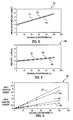
- a graph 70 having curves 72, 74, 76 is illustrated.
- the graph 70 has an x-axis corresponding to a biodiesel concentration and a y-axis corresponding to an amplitude of a resonant current from the LCR circuit 20 is illustrated.
- the curve 72 corresponds to fresh biodiesel obtained from a soy feedstock.
- the curve 74 (almost identical to curve 72) corresponds to fresh biodiesel obtained from a poultry fat feedstock.
- the curve 76 (almost identical to curves 72 and 74) corresponds to fresh biodiesel obtained from a cottonseed feedstock.
- the curves 72, 74, 76 illustrate a substantially linear relationship between the biodiesel concentration and an amplitude of the resonant current.
- concentration of biodiesel in the mixture of biodiesel and petrodiesel can be determined utilizing data corresponding to one or more of the curves 72, 74, 76.
- one or more of the curves 72, 74, 76 can be utilized to determine a concentration of biodiesel where the biodiesel is obtained from a soy feedstock, a poultry fat feedstock, or a cottonseed feedstock, for example.
- a graph 80 having curves 82, 84, 86 is illustrated.
- the graph 80 has an x-axis corresponding to a biodiesel concentration and a y-axis corresponding to a dielectric constant associated with the sensing element 42 and a mixture of biodiesel and petrodiesel is illustrated.
- the curve 82 corresponds to fresh biodiesel obtained from a soy feedstock.
- the curve 84 (almost identical to curve 82) corresponds to fresh biodiesel obtained from a poultry fat feedstock.
- the curve 86 (almost identical to curves 82 and 84) corresponds to fresh biodiesel obtained from a cottonseed feedstock.
- the curves 82, 84, 86 illustrate a substantially linear relationship between the biodiesel concentration and the dielectric constant.
- the concentration of biodiesel can be determined utilizing data corresponding to one or more of the curves 82, 84, 86.
- one or more of the curves 82, 84, 86 can be utilized to determine a concentration of biodiesel where the biodiesel is obtained from a soy feedstock, a poultry fat feedstock, or a cottonseed feedstock, for example.
- the curve 92 represents a delta resonant current associated with a mixture of fresh (e.g., non-oxidized) biodiesel and petrodiesel versus a biodiesel concentration.
- the delta resonant current is obtained by subtracting a resonant current amplitude associated with pure petrodiesel from a resonant current amplitude associated with a mixture of biodiesel and petrodiesel.
- the curve 94 represents a delta resonant current associated with a mixture of baked (e.g., oxidized) biodiesel and petrodiesel versus a biodiesel concentration.
- the relationship between the delta resonant current and the biodiesel concentration can vary based upon whether the biodiesel is oxidized or non-oxidized.
- the curve 96 represents a delta dielectric constant associated with a mixture of fresh (e.g., non-oxidized) biodiesel and petrodiesel versus a biodiesel concentration.
- the delta dielectric constant is obtained by subtracting a dielectric constant associated with pure petrodiesel from a dielectric constant associated with a mixture of biodiesel and petrodiesel.
- the curve 98 represents a delta dielectric constant associated with a mixture of baked (e.g., oxidized) biodiesel and petrodiesel versus a biodiesel concentration. As shown by curves 96, 98, the relationship between the delta dielectric constant and the biodiesel concentration can vary based upon whether the biodiesel is oxidized or non-oxidized.
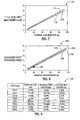
- the graph 110 has an x-axis corresponding to a biodiesel concentration and a y-axis corresponding to (delta resonant current) 2 / delta dielectric constant.
- the curve 114 corresponds to fresh biodiesel obtained from a soy feedstock.
- the curve 116 corresponds to fresh biodiesel obtained from a poultry fat feedstock.
- the curve 118 corresponds to fresh biodiesel obtained from a cottonseed feedstock.
- the linear characteristics including the slope of the curves 114, 116, 118 are a substantially similar to one another.
- the concentration of biodiesel in a mixture of biodiesel and petrodiesel can be determined utilizing data corresponding to one or more of the curves 114, 116, 118.
- the graph 130 has an x-axis corresponding to a biodiesel concentration and a y-axis corresponding to (delta resonant current) 2 / delta dielectric constant.
- the curve 138 corresponds to fresh biodiesel obtained from a soy feedstock.
- the curve 134 corresponds to biodiesel obtained from a soy feedstock that has been oxidized for 12 hours.
- the curve 136 corresponds to biodiesel obtained from a soy feedstock that has been oxidized five hours.
- the curve 132 corresponds to biodiesel with 1500 parts-per-million water by volume in biodiesel obtained from a soy feedstock.
- the single data point 140 (shown as a square marker at around 20% biodiesel concentration) corresponds to biodiesel with insoluble components therein.
- concentration of biodiesel in a mixture of biodiesel and petrodiesel can be determined utilizing data corresponding to one or more of the curves 132, 134, 136, 138, irrespective of water or insoluble components being in the mixture.
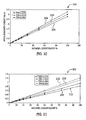
- the graph 200 has an x-axis corresponding to a biodiesel concentration and a y-axis corresponding to a delta resonant current value.
- the curve 204 corresponds to biodiesel having a total acid number of 2.044.
- the curve 206 corresponds to biodiesel having a total acid number of 1.006.
- the curve 208 corresponds to biodiesel having a total acid number of 0.218.
- a corresponding data point on the graph 200 can be determined. Thereafter, the data point can be utilized to select one of the curves 204, 206, 208 that is closest to the data point. Once the curve is selected, the total acid number associated with the curve is selected as the total acid number for the biodiesel.
- the graph 210 has an x-axis corresponding to a biodiesel concentration and a y-axis corresponding to a delta dielectric constant value.
- the curve 212 corresponds to biodiesel having a total acid number of 2.922.
- the curve 214 corresponds to biodiesel having a total acid number of 2.044.
- the curve 216 corresponds to biodiesel having a total acid number of 1.006.
- the curve 218 corresponds to biodiesel having a total acid number of 0.218.
- the total acid number of the biodiesel can be determined utilizing data corresponding to one or more of the curves 212, 214, 216, 218.
- a corresponding data point on the graph 210 can be determined. Thereafter, the data point can be utilized to select one of the curves 212, 214, 216, 218 that is closest to the data point. Once the curve is selected, the total acid number associated with the curve is selected as the total acid number for the biodiesel.
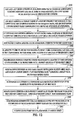
- FIG. 12 a flowchart of a method for determining a total acid number associated with biodiesel in a mixture of biodiesel and petrodiesel in accordance with another exemplary embodiment will now be explained.
- the method can be implemented in part utilizing software algorithms executed by the microprocessor 30.
- the phase lock loop circuit 24 generates an oscillatory signal that is received by the LCR circuit 20, based on a feedback signal, and a first voltage signal received from the current-to-voltage converter 23.
- the LCR circuit 20 generates a resonant current at a resonant frequency that is received by the current-to-voltage converter 23 in response to the oscillatory signal.
- the LCR circuit 20 has the sensing element 42 fluidly communicating with the mixture of biodiesel and petrodiesel.
- the current-to-voltage converter 23 generates the first voltage signal in response to the resonant current that is received by both the phase lock loop circuit 24 and the AC/DC voltage converter 26.
- the AC/DC voltage converter 26 generates a second voltage signal in response to the first voltage signal.
- the DC amplifier 28 amplifies the second voltage signal to obtain a third voltage signal that is received by the microprocessor 30.
- the third signal is indicative of an amplitude of the resonant current.
- the microprocessor 30 determines a dielectric constant value indicating a dielectric constant associated with the biodiesel in the mixture based on the resonant frequency of the resonant current.
- the microprocessor 30 can utilize a lookup table stored in the memory device 32 and access a dielectric constant value in the lookup table based on the resonant frequency of the resonant current.
- the microprocessor 30 determines a concentration value indicating a concentration of the biodiesel in the mixture based on the index value.
- the microprocessor 30 can utilize a lookup table stored in the memory device 32 and access a concentration value in the lookup table based on the index value.
- step 250 the microprocessor 30 stores the total acid number in the memory device 32. After step 250, the method is exited.
- the phase lock loop circuit 24 generates an oscillatory signal that is received by the LCR circuit 20, based on a feedback signal, and a first voltage signal received from the current-to-voltage converter 23.
- the LCR circuit 20 generates a resonant current at a resonant frequency that is received by the current-to-voltage converter 23 in response to the oscillatory signal.
- the LCR circuit 20 has the sensing element 42 fluidly communicating with the mixture of biodiesel and petrodiesel.
- the current-to-voltage converter 23 generates the first voltage signal in response to the resonant current that is received by both the phase lock loop circuit 24 and the AC/DC voltage converter 26.
- the AC/DC voltage converter 26 generates a second voltage signal in response to the first voltage signal.
- the DC amplifier 28 amplifies the second voltage signal to obtain a third voltage signal that is received by the microprocessor 30.
- the third signal is indicative of an amplitude of the resonant current.
- the microprocessor 30 determines a dielectric constant value indicating a dielectric constant associated with the biodiesel in the mixture based on the resonant frequency of the resonant current.
- the microprocessor 30 can utilize a lookup table stored in the memory device 32 and access a dielectric constant value in the lookup table based on the resonant frequency of the resonant current.
- the first predetermined value corresponds to amplitude of a resonant current when pure petrodiesel is being measured.
- the second predetermined value corresponds to a dielectric constant value when pure petrodiesel is being measured. It should be noted that the value (amplitude of resonant current - first predetermined value) corresponds to the delta resonant current discussed above. It should be further noted that the value (dielectric constant value - second predetermined value) corresponds to the delta dielectric constant discussed above.
- the microprocessor 30 determines a concentration value indicating a concentration of the biodiesel in the mixture based on the index value.
- the microprocessor 30 can utilize a lookup table stored in the memory device 32 and access a concentration value in the lookup table based on the index value.
- the microprocessor 30 determines the total acid number associated with the biodiesel in the mixture based on the delta dielectric constant value and the concentration value. For example, the microprocessor 30 can utilize a lookup table stored in the memory device 32 and access a total acid number in the lookup table based on the delta dielectric constant and the concentration value.
- step 290 the microprocessor 30 stores the total acid number in the memory device 32. After step 290, the method is exited.
- the systems and methods for determining a concentration of biodiesel in a mixture of biodiesel and petrodiesel represent a substantial advantage over other systems and methods.
- the systems and methods provide a technical effect of accurately measuring the total acid number associated with biodiesel in a mixture of biodiesel and petrodiesel, utilizing a relatively small inexpensive sensing element.
- the system and methods are able to accurately measure the total acid number in the mixture of biodiesel and petrodiesel irrespective of moisture impurities and insoluble components in the mixture.
Landscapes
- Chemical & Material Sciences (AREA)
- Health & Medical Sciences (AREA)
- Life Sciences & Earth Sciences (AREA)
- General Health & Medical Sciences (AREA)
- Immunology (AREA)
- Engineering & Computer Science (AREA)
- Analytical Chemistry (AREA)
- Biochemistry (AREA)
- Chemical Kinetics & Catalysis (AREA)
- General Physics & Mathematics (AREA)
- Physics & Mathematics (AREA)
- Pathology (AREA)
- Electrochemistry (AREA)
- General Chemical & Material Sciences (AREA)
- Oil, Petroleum & Natural Gas (AREA)
- Food Science & Technology (AREA)
- Medicinal Chemistry (AREA)
- Investigating Or Analyzing Materials By The Use Of Electric Means (AREA)
Abstract
Systems and methods for determining a total acid number associated with biodiesel in a mixture of biodiesel and petrodiesel are provided. The method includes receiving an oscillatory signal at an inductance-capacitance-resistance circuit (20). The circuit (20) has a sensing element (42) fluidly communicating with the mixture of biodiesel and petrodiesel. The method further includes generating a resonant current at a resonant frequency utilizing the circuit (20) in response to the oscillatory signal. The method further includes determining a dielectric constant value indicating a dielectric constant associated with the biodiesel in the mixture based on the resonant frequency of the resonant current, utilizing a microprocessor (30). The method further includes determining a concentration value indicating a concentration of the biodiesel in the mixture based on an amplitude of the resonant current and the dielectric constant value, utilizing the microprocessor (30). The method further includes determining the total acid number associated with the biodiesel in the mixture based on the amplitude of the resonant current or the resonant frequency, and the concentration value, utilizing the microprocessor (30).
Description
- The invention relates to systems and methods for determining a total acid number associated with biodiesel in a mixture of biodiesel and petrodiesel.
- Biodiesel is inherently prone to degradation in an oxidizing environment as compared to petrodiesel because of its chemical composition. Biodiesel has long-chain hydrocarbons (e.g., fatty acids) that vary widely depending on feedstock sources. In particular, both a number of total carbon atoms and a number of carbon-to-carbon double bonds vary in biodiesel depending on the feedstock sources. In an oxidizing environment, oxygen attaches to the carbon-to-carbon double bonds to undesirably form primary and secondary oxidation products including aldehydes, alcohols, shorter chain carboxylic acids (formic and acetic), and high weight molecular oligomers (polymers). One measure of the degradation of the biodiesel is a total acid number associated with the biodiesel.
- Accordingly, the inventors herein have recognized a need for a system and a method for determining a total acid number associated with biodiesel in a mixture of biodiesel and petrodiesel.
- A method for determining a total acid number associated with biodiesel in a mixture of biodiesel and petrodiesel in accordance with an exemplary embodiment is provided. The method includes receiving an oscillatory signal at an inductance-capacitance-resistance circuit. The circuit has a sensing element fluidly communicating with the mixture of biodiesel and petrodiesel. The method further includes generating a resonant current at a resonant frequency utilizing the circuit in response to the oscillatory signal. The method further includes determining a dielectric constant value indicating a dielectric constant associated with the biodiesel in the mixture based on the resonant frequency of the resonant current, utilizing a microprocessor. The method further includes determining a concentration value indicating a concentration of the biodiesel in the mixture based on an amplitude of the resonant current and the dielectric constant value, utilizing the microprocessor. The method further includes determining the total acid number associated with the biodiesel in the mixture based on the amplitude of the resonant current and the concentration value, utilizing the microprocessor. The method further includes storing the total acid number in a memory device, utilizing the microprocessor.
- A system for determining a total acid number associated with biodiesel in a mixture of biodiesel and petrodiesel in accordance with another exemplary embodiment is provided. The system includes an inductance-capacitance-resistance circuit configured to receive an oscillatory signal. The circuit has a sensing element fluidly communicating with the mixture of biodiesel and petrodiesel. The circuit is further configured to generate a resonant current at a resonant frequency in response to the oscillatory signal. The system further includes a microprocessor operatively associated with the circuit. The microprocessor is configured to determine a dielectric constant value indicating a dielectric constant associated with the biodiesel in the mixture based on the resonant frequency of the resonant current. The microprocessor is further configured to determine a concentration value indicating a concentration of the biodiesel in the mixture based on an amplitude of the resonant current and the dielectric constant value. The microprocessor is further configured to determine the total acid number associated with the biodiesel in the mixture based on the amplitude of the resonant current and the concentration value. The microprocessor is further configured to store the total acid number in a memory device.
- A method for determining a total acid number associated with biodiesel in a mixture of biodiesel and petrodiesel in accordance with another exemplary embodiment is provided. The method includes receiving an oscillatory signal at an inductance-capacitance-resistance circuit. The circuit has a sensing element fluidly communicating with the mixture of biodiesel and petrodiesel. The method further includes generating a resonant current at a resonant frequency utilizing the circuit in response to the oscillatory signal. The method further includes determining a dielectric constant value indicating a dielectric constant associated with the biodiesel in the mixture based on the resonant frequency of the resonant current, utilizing a microprocessor. The method further includes determining a concentration value indicating a concentration of the biodiesel in the mixture based on an amplitude of the resonant current and the dielectric constant value, utilizing the microprocessor. The method further includes determining the total acid number associated with the biodiesel in the mixture based on the dielectric constant value and the concentration value, utilizing the microprocessor. The method further includes storing the total acid number in a memory device, utilizing the microprocessor.
- A system for determining a total acid number associated with biodiesel in a mixture of biodiesel and petrodiesel in accordance with another exemplary embodiment is provided. The system includes an inductance-capacitance-resistance circuit configured to receive an oscillatory signal. The circuit has a sensing element fluidly communicating with the mixture of biodiesel and petrodiesel. The circuit is further configured to generate a resonant current at a resonant frequency in response to the oscillatory signal. The system further includes a microprocessor operatively associated with the circuit. The microprocessor is configured to determine a dielectric constant value indicating a dielectric constant associated with the biodiesel in the mixture based on the resonant frequency of the resonant current. The microprocessor is further configured to determine a concentration value indicating a concentration of the biodiesel in the mixture based on an amplitude of the resonant current and the dielectric constant value. The microprocessor is further configured to determine the total acid number associated with the biodiesel in the mixture based on the dielectric constant value and the concentration value. The microprocessor is further configured to store the total acid number in a memory device.
-
-
Figure 1 is a schematic of a system for determining a total acid number associated with biodiesel in a mixture of biodiesel and petrodiesel in accordance with an exemplary embodiment; -
Figure 2 is a schematic of a sensing element utilized in the system ofFigure 1 ; -
Figure 3 is an electrical schematic corresponding to the sensing element ofFigure 2 ; -
Figure 4 is a graph having curves illustrating a relationship between a biodiesel concentration and an amplitude of a resonant current in the sensing element ofFigure 2 wherein the graph has an x-axis corresponding to a biodiesel concentration and a y-axis corresponding to an amplitude of a resonant current; -
Figure 5 is a graph having curves illustrating a relationship between biodiesel concentration and a dielectric constant associated with the sensing element ofFigure 2 wherein the graph has an x-axis corresponding to a biodiesel concentration and a y-axis corresponding to a dielectric constant associated with the sensing element; -
Figure 6 is a graph having curves illustrating a delta resonant current and a delta dielectric constant associated the sensing element ofFigure 2 for biodiesel oxidized for a predetermined time wherein the graph has an x-axis corresponding to a biodiesel concentration and a y-axis corresponding to both the delta resonant current and the delta dielectric constant associated with the sensing element ofFigure 2 ; -
Figure 7 is a graph having curves wherein the graph has an x-axis corresponding to a biodiesel concentration and a y-axis corresponding to (delta resonant current)2 / delta dielectric constant; -
Figure 8 is a graph having curves wherein the graph has an x-axis corresponding to a biodiesel concentration and a y-axis corresponding to (delta resonant current)2 / delta dielectric constant; -
Figure 9 is a table indicating a concentration of fatty acids in biodiesel obtained from a soy feedstock, a cottonseed feedstock, and a poultry fat feedstock; -
Figure 10 is a graph having curves wherein the graph has an x-axis corresponding to a biodiesel concentration and a y-axis corresponding to a delta resonant current value; -
Figure 11 is a graph having curves wherein the graph has an x-axis corresponding to a biodiesel concentration and a y-axis corresponding to a delta dielectric constant value; -
Figure 12 is a flowchart of a method for determining a total acid number associated with biodiesel in a mixture of biodiesel and petrodiesel in accordance with another exemplary embodiment; and -
Figure 13 is a flowchart of a method for determining a total acid number associated with biodiesel in a mixture ofbiodiesel and petrodiesel in accordance with another exemplary embodiment. - Biodiesel can be obtained from several different source feedstocks. For example, biodiesel can be obtained from soy feedstock, cottonseed feedstock, and poultry fat feedstock. Further, referring to
Figure 9 , biodiesel obtained from differing source feedstocks include several fatty acids in differing concentrations. For example, the table 150 indicates that: (i) biodiesel obtained from soy feedstock has a 0% concentration by volume of the fatty acid C14:0, (ii) biodiesel obtained from a cottonseed feedstock has a 0.76% concentration by volume of the fatty acid C14:0, and (iii) biodiesel obtained from a poultry fat feedstock has a 1.04% concentration by volume of the fatty acid C14:0. - Referring to
Figure 1 , asystem 10 for determining a total acid number associated with biodiesel in a mixture of biodiesel and petrodiesel in accordance with an exemplary embodiment is illustrated. Thesystem 10 includes an inductance-capacitance-resistance (LCR)circuit 20,capacitors voltage converter 23, a phaselock loop circuit 24, aresistor 25, an alternating current (AC)/direct current (DC)voltage converter 26, aDC amplifier 28, amicroprocessor 30, and amemory device 32. An advantage of thesystem 10 is that the system can accurately determine a concentration of biodiesel in a mixture irrespective of the source feedstock used to obtain the biodiesel and irrespective of water and insoluble components being in the mixture. It should be noted that the term "L" corresponds to inductance, the term "R" corresponds to resistance, and the term "C" corresponds to capacitance herein. It should be further noted that the term "index value" corresponds to any value which is indicative of a concentration of biodiesel. - Referring to
Figures 1-3 , theLCR circuit 20 is provided to generate an oscillatory signal having an amplitude indicative of a concentration of biodiesel in a mixture of biodiesel and petrodiesel. TheLCR circuit 20 includes aninductor 40 electrically coupled in series with asensing element 42. Thesensing element 42 includeselectrodes electrodes electrodes electrodes LCR circuit 20, theLCR circuit 20 outputs a resonant current at a resonant frequency. In one exemplary embodiment, the oscillatory signal received by theLCR circuit 20 is in a frequency range of 1-10 Mhz. The amplitude of the resonant current output by theLCR circuit 20 at theelectrode 46 has an amplitude indicative of the concentration of biodiesel in the mixture of biodiesel and petrodiesel disposed between theelectrodes LCR circuit 20 is received by the current-to-voltage converter 23 via thecapacitor 21. As shown, theLCR circuit 20 is electrically coupled in series between anode 27 and thecapacitor 21. Referring toFigure 3 , theLCR circuit 20 can be represented by an equivalent circuit having an inductance (L), a resistance (Rs), and a capacitance (Cs) electrically coupled in series with one another. - Referring to
Figure 1 , the current-to-voltage converter 23 is provided to generate an output voltage signal in response to the resonant current from theLCR circuit 20, which is received by both the phaselock loop circuit 24 and the AC/DC voltage converter 26. The current-to-voltage converter 23 is electrically coupled in series between thecapacitor 21 and anode 29. - The phase
lock loop circuit 24 is provided to generate an oscillatory signal that is received by theLCR circuit 20. The phaselock loop circuit 24 includes a phaselock loop microchip 60, abuffer 62, and aphase inverter 64. The phaselock loop circuit 24 receives signals from both the current-to-voltage converter 23 and aphase inverter 64. The phaselock loop circuit 24 outputs the oscillatory signal that is transmitted through thebuffer 62 to anode 66. From thenode 66, the oscillatory signal propagates through thecapacitor 22 to theLCR circuit 20 to stimulate theLCR circuit 20. Further, from thenode 66 the oscillatory signal propagates to thephase inverter 64. Thephase inverter 64 modifies a phase of the oscillatory signal which is received by the phaselock loop microchip 60. During operation, the phaselock loop microchip 60 generates the oscillatory signal that is received by theLCR circuit 20 to induce theLCR circuit 20 to output a resonant current at a resonant frequency. Further, the phaselock loop microchip 60 sends a message to themicroprocessor 30 having data indicating a resonant frequency of the output oscillatory signal from the phaselock loop circuit 24, that is further indicative of a resonant frequency of the resonant current of theLCR circuit 20. - It should be noted that in an alternative embodiment of the
system 10, the phaselock loop circuit 24 could be replaced with a signal generator (not shown) that receives a signal from the current-to-voltage converter 23 and adjusts an output oscillatory signal is received by theLCR circuit 20 based on the signal from the current-to-voltage converter 23. - A
node 27 is electrically coupled to both thecapacitor 22 and theLCR circuit 20. Aresistor 25 is electrically coupled between thenode 27 and electrical ground. Theresistor 25 is provided to reset a mean value of the oscillatory signal from the phaselock loop circuit 24 to a ground level. - The AC/
DC voltage converter 26 is provided to receive the voltage signal from the current-to-voltage converter 23 and to generate a DC voltage signal indicative of an amplitude of the received voltage signal. The AC/DC voltage converter 26 is electrically coupled between thenode 29 and theDC amplifier 28. - The
DC amplifier 28 is provided to amplify the DC voltage signal received from the AC/DC voltage converter 26 and to send the amplified DC voltage signal to themicroprocessor 30. TheDC amplifier 28 is electrically coupled between the AC/DC voltage converter 26 and themicroprocessor 30. - The
microprocessor 30 is provided to determine a concentration value indicative of a concentration of biodiesel in a mixture of biodiesel and petrodiesel. In particular, themicroprocessor 30 is configured to execute software algorithms to determine the concentration of biodiesel in the mixture based on (i) a dielectric constant associated with the mixture, (ii) an amplitude of the resonant current of theLCR circuit 20, or (iii) both the dielectric constant associated with the mixture and the amplitude of the resonant current of theLCR circuit 20, as will be explained in greater detail below. Themicroprocessor 30 is further configured to determine a total acid number associated with biodiesel within the mixture, as will be explained in greater detail below. Themicroprocessor 30 is further configured to store the total acid number in thememory device 32. As shown, themicroprocessor 30 is electrically coupled to theDC amplifier 28, thememory device 32, and the phaselock loop microchip 60. - Before providing a detailed explanation of the methodology for determining a concentration of biodiesel in a mixture of biodiesel and petrodiesel and a total acid number associated with the biodiesel, an explanation of the physical properties that can be utilized to determine the biodiesel concentration and the total acid number will be discussed.
- Referring to
Figure 4 , agraph 70 havingcurves graph 70 has an x-axis corresponding to a biodiesel concentration and a y-axis corresponding to an amplitude of a resonant current from theLCR circuit 20 is illustrated. Thecurve 72 corresponds to fresh biodiesel obtained from a soy feedstock. The curve 74 (almost identical to curve 72) corresponds to fresh biodiesel obtained from a poultry fat feedstock. The curve 76 (almost identical tocurves 72 and 74) corresponds to fresh biodiesel obtained from a cottonseed feedstock. Thecurves LCR circuit 20, the concentration of biodiesel in the mixture of biodiesel and petrodiesel can be determined utilizing data corresponding to one or more of thecurves curves - Referring to
Figure 5 , agraph 80 havingcurves graph 80 has an x-axis corresponding to a biodiesel concentration and a y-axis corresponding to a dielectric constant associated with thesensing element 42 and a mixture of biodiesel and petrodiesel is illustrated. Thecurve 82 corresponds to fresh biodiesel obtained from a soy feedstock. The curve 84 (almost identical to curve 82) corresponds to fresh biodiesel obtained from a poultry fat feedstock. The curve 86 (almost identical tocurves 82 and 84) corresponds to fresh biodiesel obtained from a cottonseed feedstock. As shown, thecurves sensing element 42 and the mixture of biodiesel and petrodiesel, the concentration of biodiesel can be determined utilizing data corresponding to one or more of thecurves curves - Referring to
Figure 6 , agraph 90 havingcurves curve 92 represents a delta resonant current associated with a mixture of fresh (e.g., non-oxidized) biodiesel and petrodiesel versus a biodiesel concentration. The delta resonant current is obtained by subtracting a resonant current amplitude associated with pure petrodiesel from a resonant current amplitude associated with a mixture of biodiesel and petrodiesel. Thecurve 94 represents a delta resonant current associated with a mixture of baked (e.g., oxidized) biodiesel and petrodiesel versus a biodiesel concentration. As shown bycurves - The
curve 96 represents a delta dielectric constant associated with a mixture of fresh (e.g., non-oxidized) biodiesel and petrodiesel versus a biodiesel concentration. The delta dielectric constant is obtained by subtracting a dielectric constant associated with pure petrodiesel from a dielectric constant associated with a mixture of biodiesel and petrodiesel. Thecurve 98 represents a delta dielectric constant associated with a mixture of baked (e.g., oxidized) biodiesel and petrodiesel versus a biodiesel concentration. As shown bycurves - Referring to
Figure 7 , agraph 110 havingcurves graph 110 has an x-axis corresponding to a biodiesel concentration and a y-axis corresponding to (delta resonant current)2 / delta dielectric constant. Thecurve 114 corresponds to fresh biodiesel obtained from a soy feedstock. Thecurve 116 corresponds to fresh biodiesel obtained from a poultry fat feedstock. Thecurve 118 corresponds to fresh biodiesel obtained from a cottonseed feedstock. As shown, the linear characteristics including the slope of thecurves curves - Referring to
Figure 8 , agraph 130 havingcurves graph 130 has an x-axis corresponding to a biodiesel concentration and a y-axis corresponding to (delta resonant current)2 / delta dielectric constant. Thecurve 138 corresponds to fresh biodiesel obtained from a soy feedstock. Thecurve 134 corresponds to biodiesel obtained from a soy feedstock that has been oxidized for 12 hours. Thecurve 136 corresponds to biodiesel obtained from a soy feedstock that has been oxidized five hours. Thecurve 132 corresponds to biodiesel with 1500 parts-per-million water by volume in biodiesel obtained from a soy feedstock. The single data point 140 (shown as a square marker at around 20% biodiesel concentration) corresponds to biodiesel with insoluble components therein. Thus, by determining a value corresponding to (delta resonant current)2 / delta dielectric constant, the concentration of biodiesel in a mixture of biodiesel and petrodiesel can be determined utilizing data corresponding to one or more of thecurves - Referring to
Figure 10 , agraph 200 havingcurves graph 200 has an x-axis corresponding to a biodiesel concentration and a y-axis corresponding to a delta resonant current value. Thecurve 204 corresponds to biodiesel having a total acid number of 2.044. Thecurve 206 corresponds to biodiesel having a total acid number of 1.006. Thecurve 208 corresponds to biodiesel having a total acid number of 0.218. Thus, by determining values corresponding to a biodiesel concentration and a delta resonant current value, the total acid number of the biodiesel can be determined utilizing data corresponding to one or more of thecurves graph 200 can be determined. Thereafter, the data point can be utilized to select one of thecurves - Referring to
Figure 11 , a graph 210 havingcurves curve 212 corresponds to biodiesel having a total acid number of 2.922. Thecurve 214 corresponds to biodiesel having a total acid number of 2.044. Thecurve 216 corresponds to biodiesel having a total acid number of 1.006. Thecurve 218 corresponds to biodiesel having a total acid number of 0.218. Thus, by determining values corresponding to a biodiesel concentration and a delta dielectric constant value, the total acid number of the biodiesel can be determined utilizing data corresponding to one or more of thecurves curves - Referring to
Figure 12 , a flowchart of a method for determining a total acid number associated with biodiesel in a mixture of biodiesel and petrodiesel in accordance with another exemplary embodiment will now be explained. The method can be implemented in part utilizing software algorithms executed by themicroprocessor 30. - At
step 230, the phaselock loop circuit 24 generates an oscillatory signal that is received by theLCR circuit 20, based on a feedback signal, and a first voltage signal received from the current-to-voltage converter 23. - At
step 232, theLCR circuit 20 generates a resonant current at a resonant frequency that is received by the current-to-voltage converter 23 in response to the oscillatory signal. TheLCR circuit 20 has thesensing element 42 fluidly communicating with the mixture of biodiesel and petrodiesel. - At step 234, the current-to-
voltage converter 23 generates the first voltage signal in response to the resonant current that is received by both the phaselock loop circuit 24 and the AC/DC voltage converter 26. - At step 236, the AC/
DC voltage converter 26 generates a second voltage signal in response to the first voltage signal. - At step 238, the
DC amplifier 28 amplifies the second voltage signal to obtain a third voltage signal that is received by themicroprocessor 30. The third signal is indicative of an amplitude of the resonant current. - At step 240, the
microprocessor 30 determines a dielectric constant value indicating a dielectric constant associated with the biodiesel in the mixture based on the resonant frequency of the resonant current. For example, themicroprocessor 30 can utilize a lookup table stored in thememory device 32 and access a dielectric constant value in the lookup table based on the resonant frequency of the resonant current. - At step 242, the
microprocessor 30 determines an index value utilizing the following equation: index value = ((amplitude of resonant current - first predetermined value)2 / (dielectric constant value - second predetermined value)). The first predetermined value corresponds to amplitude of a resonant current when pure petrodiesel is being measured. The second predetermined value corresponds to a dielectric constant value when pure petrodiesel is being measured. It should be noted that the value (amplitude of resonant current - first predetermined value) corresponds to the delta resonant current discussed above. It should be further noted that the value (dielectric constant value - second predetermined value) corresponds to the delta dielectric constant discussed above. - At
step 244, themicroprocessor 30 determines a concentration value indicating a concentration of the biodiesel in the mixture based on the index value. For example, themicroprocessor 30 can utilize a lookup table stored in thememory device 32 and access a concentration value in the lookup table based on the index value. - At
step 246, themicroprocessor 30 determines a delta resonant current value utilizing the following equation: delta resonant current value = amplitude of resonant current - first predetermined value. - At
step 248, themicroprocessor 30 determines the total acid number associated with the biodiesel in the mixture based on the delta resonant current value and the concentration value. For example, themicroprocessor 30 can utilize a lookup table stored in thememory device 32 and access a total acid number in the lookup table based on the delta resonant current value and the concentration value. - At
step 250, themicroprocessor 30 stores the total acid number in thememory device 32. Afterstep 250, the method is exited. - Referring to
Figure 13 , a flowchart of a method for determining a total acid number associated with biodiesel in a mixture of biodiesel and petrodiesel in accordance with another exemplary embodiment will now be explained. The method can be implemented in part utilizing software algorithms executed by themicroprocessor 30. - At
step 270, the phaselock loop circuit 24 generates an oscillatory signal that is received by theLCR circuit 20, based on a feedback signal, and a first voltage signal received from the current-to-voltage converter 23. - At
step 272, theLCR circuit 20 generates a resonant current at a resonant frequency that is received by the current-to-voltage converter 23 in response to the oscillatory signal. TheLCR circuit 20 has thesensing element 42 fluidly communicating with the mixture of biodiesel and petrodiesel. - At step 274, the current-to-
voltage converter 23 generates the first voltage signal in response to the resonant current that is received by both the phaselock loop circuit 24 and the AC/DC voltage converter 26. - At step 276, the AC/
DC voltage converter 26 generates a second voltage signal in response to the first voltage signal. - At step 278, the
DC amplifier 28 amplifies the second voltage signal to obtain a third voltage signal that is received by themicroprocessor 30. The third signal is indicative of an amplitude of the resonant current. - At step 280, the
microprocessor 30 determines a dielectric constant value indicating a dielectric constant associated with the biodiesel in the mixture based on the resonant frequency of the resonant current. For example, themicroprocessor 30 can utilize a lookup table stored in thememory device 32 and access a dielectric constant value in the lookup table based on the resonant frequency of the resonant current. - At step 282, the
microprocessor 30 determines an index value utilizing the following equation: index value = ((amplitude of resonant current - first predetermined value)2 / (dielectric constant value - second predetermined value)). The first predetermined value corresponds to amplitude of a resonant current when pure petrodiesel is being measured. The second predetermined value corresponds to a dielectric constant value when pure petrodiesel is being measured. It should be noted that the value (amplitude of resonant current - first predetermined value) corresponds to the delta resonant current discussed above. It should be further noted that the value (dielectric constant value - second predetermined value) corresponds to the delta dielectric constant discussed above. - At
step 284, themicroprocessor 30 determines a concentration value indicating a concentration of the biodiesel in the mixture based on the index value. For example, themicroprocessor 30 can utilize a lookup table stored in thememory device 32 and access a concentration value in the lookup table based on the index value. - At
step 286, themicroprocessor 30 determines a delta dielectric constant value utilizing the following equation: delta dielectric constant value = dielectric constant value - second predetermined value. - At
step 288, themicroprocessor 30 determines the total acid number associated with the biodiesel in the mixture based on the delta dielectric constant value and the concentration value. For example, themicroprocessor 30 can utilize a lookup table stored in thememory device 32 and access a total acid number in the lookup table based on the delta dielectric constant and the concentration value. - At
step 290, themicroprocessor 30 stores the total acid number in thememory device 32. Afterstep 290, the method is exited. - The systems and methods for determining a concentration of biodiesel in a mixture of biodiesel and petrodiesel represent a substantial advantage over other systems and methods. In particular, the systems and methods provide a technical effect of accurately measuring the total acid number associated with biodiesel in a mixture of biodiesel and petrodiesel, utilizing a relatively small inexpensive sensing element. Further, the system and methods are able to accurately measure the total acid number in the mixture of biodiesel and petrodiesel irrespective of moisture impurities and insoluble components in the mixture.
- While the invention has been described with reference to exemplary embodiments, it will be understood by those skilled in the art that various changes may be made and equivalents may be substituted for elements thereof without departing from the scope of the invention. In addition, many modifications may be made to adapt a particular situation or material to the teachings of the invention without departing from the essential scope thereof. Therefore, it is intended that the invention not be limited to the particular embodiments disclosed for carrying this invention, but that the invention will include all embodiments falling within the scope of the appended claims. Moreover, the use of the terms, first, second, etc. are used to distinguish one element from another. Furthermore, the use of the terms a, an, etc. do not denote a limitation of quantity, but rather denote the presence of at least one of the referenced items.
Claims (8)
- A method for determining a total acid number associated with biodiesel in a mixture of biodiesel and petrodiesel, comprising:receiving an oscillatory signal at an inductance-capacitance-resistance circuit (20), the circuit (20) having a sensing element (42) fluidly communicating with the mixture of biodiesel and petrodiesel;generating a resonant current at a resonant frequency utilizing the circuit (20) in response to the oscillatory signal;determining a dielectric constant value indicating a dielectric constant associated with the biodiesel in the mixture based on the resonant frequency of the resonant current, utilizing a microprocessor (30);determining a concentration value indicating a concentration of the biodiesel in the mixture based on an amplitude of the resonant current and the dielectric constant value, utilizing the microprocessor (30);determining the total acid number associated with the biodiesel in the mixture based on the amplitude of the resonant current and the concentration value, utilizing the microprocessor (30); andstoring the total acid number in a memory device (32), utilizing the microprocessor (30).
- The method of claim 1, wherein the oscillatory signal has a frequency in a range of 1-10 Mhz.
- A system for determining a total acid number associated with biodiesel in a mixture of biodiesel and petrodiesel, comprising:an inductance-capacitance-resistance circuit (20) configured to receive an oscillatory signal, the circuit (20) having a sensing element (42) fluidly communicating with the mixture of biodiesel and petrodiesel, the circuit (20) further configured to generate a resonant current at a resonant frequency in response to the oscillatory signal; anda microprocessor (30) operatively associated with the circuit (20), the microprocessor (30) configured to determine a dielectric constant value indicating a dielectric constant associated with the biodiesel in the mixture based on the resonant frequency of the resonant current, the microprocessor (30) further configured to determine a concentration value indicating a concentration of the biodiesel in the mixture based on an amplitude of the resonant current and the dielectric constant value, the microprocessor (30) further configured to determine the total acid number associated with the biodiesel in the mixture based on the amplitude of the resonant current and the concentration value, the microprocessor (30) further configured to store the total acid number in a memory device (32).
- The system of claim 3, wherein the oscillatory signal has a frequency in a range of 1-10 Mhz.
- A method for determining a total acid number associated with biodiesel in a mixture of biodiesel and petrodiesel, comprising:receiving an oscillatory signal at an inductance-capacitance-resistance circuit (20), the circuit (20) having a sensing element (42) fluidly communicating with the mixture of biodiesel and petrodiesel;generating a resonant current at a resonant frequency utilizing the circuit (20) in response to the oscillatory signal;determining a dielectric constant value indicating a dielectric constant associated with the biodiesel in the mixture based on the resonant frequency of the resonant current, utilizing a microprocessor (30);determining a concentration value indicating a concentration of the biodiesel in the mixture based on an amplitude of the resonant current and the dielectric constant value, utilizing the microprocessor (30);determining the total acid number associated with the biodiesel in the mixture based on the dielectric constant value and the concentration value, utilizing the microprocessor (30); andstoring the total acid number in a memory device (32), utilizing the microprocessor (30).
- The method of claim 5, wherein the oscillatory signal has a frequency in a range of 1-10 Mhz.
- A system for determining a total acid number associated with biodiesel in a mixture of biodiesel and petrodiesel, comprising:an inductance-capacitance-resistance circuit (20) configured to receive an oscillatory signal, the circuit (20) having a sensing element (42) fluidly communicating with the mixture of biodiesel and petrodiesel, the circuit (20) further configured to generate a resonant current at a resonant frequency in response to the oscillatory signal; anda microprocessor (30) operatively associated with the circuit (20), the microprocessor (30) configured to determine a dielectric constant value indicating a dielectric constant associated with the biodiesel in the mixture based on the resonant frequency of the resonant current, the microprocessor (30) further configured to determine a concentration value indicating a concentration of the biodiesel in the mixture based on an amplitude of the resonant current and the dielectric constant value, the microprocessor (30) further configured to determine the total acid number associated with the biodiesel in the mixture based on the dielectric constant value and the concentration value, the microprocessor (30) further configured to store the total acid number in a memory device (32).
- The system of claim 7, wherein the oscillatory signal has a frequency in a range of 1-10 Mhz.
Applications Claiming Priority (1)
| Application Number | Priority Date | Filing Date | Title |
|---|---|---|---|
| US11/771,543 US20090001997A1 (en) | 2007-06-29 | 2007-06-29 | Systems and methods for determining a total acid number associated with biodiesel in a mixture of biodiesel and petrodiesel |
Publications (1)
| Publication Number | Publication Date |
|---|---|
| EP2009439A2 true EP2009439A2 (en) | 2008-12-31 |
Family
ID=39773147
Family Applications (1)
| Application Number | Title | Priority Date | Filing Date |
|---|---|---|---|
| EP08158121A Withdrawn EP2009439A2 (en) | 2007-06-29 | 2008-06-12 | Systems and methods for determining a total acid number associated with biodiesel in a mixture of biodiesel and petrodiesel |
Country Status (2)
| Country | Link |
|---|---|
| US (1) | US20090001997A1 (en) |
| EP (1) | EP2009439A2 (en) |
Cited By (1)
| Publication number | Priority date | Publication date | Assignee | Title |
|---|---|---|---|---|
| WO2010146041A3 (en) * | 2009-06-16 | 2011-03-03 | Aquafuel Research Limited | Method for determining the suitability of a renewable fuel for combustion in a compression ignition engine |
Families Citing this family (6)
| Publication number | Priority date | Publication date | Assignee | Title |
|---|---|---|---|---|
| US10539524B2 (en) * | 2006-11-16 | 2020-01-21 | General Electric Company | Resonant sensing system and method for monitoring properties of an industrial fluid |
| CA2911642A1 (en) * | 2010-03-14 | 2011-09-14 | Titan Logix Corp. | System and method for measuring and metering deicing fluid from a tank using a refractometer module |
| GB201011785D0 (en) * | 2010-07-13 | 2010-08-25 | Oxford Rf Sensors Ltd | Permittivity sensor |
| CN102507702B (en) * | 2011-11-17 | 2014-06-25 | 江南大学 | Method for determining acid value of oil product based on pH electrode and flow injection analysis combined technology |
| WO2017004694A1 (en) * | 2015-07-06 | 2017-01-12 | Sherritt International Corporation | Recovery of copper from arsenic-containing process feed |
| CN110658432B (en) * | 2019-11-03 | 2020-09-29 | 西南交通大学 | A method for evaluating the moisture level of cable terminals in distribution network |
Family Cites Families (2)
| Publication number | Priority date | Publication date | Assignee | Title |
|---|---|---|---|---|
| US6911830B2 (en) * | 2002-08-22 | 2005-06-28 | Delphi Technologies, Inc. | Diesel engine lubricating oil contaminant sensor method |
| US6867603B2 (en) * | 2002-12-04 | 2005-03-15 | Delphi Technologies, Inc. | Method for measuring high frequency resistance in diesel engine lubrication oil |
-
2007
- 2007-06-29 US US11/771,543 patent/US20090001997A1/en not_active Abandoned
-
2008
- 2008-06-12 EP EP08158121A patent/EP2009439A2/en not_active Withdrawn
Cited By (1)
| Publication number | Priority date | Publication date | Assignee | Title |
|---|---|---|---|---|
| WO2010146041A3 (en) * | 2009-06-16 | 2011-03-03 | Aquafuel Research Limited | Method for determining the suitability of a renewable fuel for combustion in a compression ignition engine |
Also Published As
| Publication number | Publication date |
|---|---|
| US20090001997A1 (en) | 2009-01-01 |
Similar Documents
| Publication | Publication Date | Title |
|---|---|---|
| US20090001997A1 (en) | Systems and methods for determining a total acid number associated with biodiesel in a mixture of biodiesel and petrodiesel | |
| US10281312B2 (en) | Method and apparatus for monitoring a predefined filling level of a medium in a container | |
| EP2009434A2 (en) | System and Methods for Determining a Concentration of Biodiesel in a mixture of Biodiesel and Petrodiesel | |
| UA127835C2 (en) | APPARATUS FOR AEROSOL GENERATING DEVICE | |
| UA127509C2 (en) | APPARATUS FOR AEROSOL GENERATING DEVICE AND AEROSOL GENERATING DEVICE | |
| US20160228063A1 (en) | Circuit for measuring a bioelectric signal | |
| CN102007424A (en) | Apparatus and method for improving the accuracy of measurements taken with a capacitance-type sensor | |
| CN103797359A (en) | Apparatus for measuring the electrical conductivity of a liquid medium | |
| JP2006527855A (en) | Method and apparatus for determining the concentration of a component in a fluid | |
| US6693444B2 (en) | Circuit design for liquid property sensor | |
| WO2006116667A3 (en) | Proximity sensor | |
| CN106687777A (en) | Method and device for monitoring the filling level of a medium in a container | |
| US20040036487A1 (en) | Diesel engine lubricating oil contaminant sensor method | |
| CN112292587B (en) | Fill level sensor or point level sensor with temperature compensation | |
| US7946148B2 (en) | Manufacturing-side calibration of a measuring device for capacitive fill level measurement, and corresponding measuring device | |
| JP2002323526A (en) | Method and apparatus for detecting insulation resistance deterioration | |
| US4497699A (en) | Method of treating foil for electrolytic capacitors | |
| JP2015087217A (en) | Leakage detection device | |
| CN106291119B (en) | A kind of conductivity measuring method, circuit and conductance instrument | |
| JP7646103B1 (en) | NON-CONTACT VOLTAGE SENSOR DEVICE AND VOLTAGE MEASURING METHOD THEREIN | |
| CN109196315A (en) | Condenser type limit switch | |
| JP2006526148A (en) | Method and circuit arrangement for detecting liquid level | |
| JP6808289B2 (en) | Quality condition measuring device | |
| US20180128800A1 (en) | Air-fuel ratio sensor control apparatus | |
| US20250102697A1 (en) | Fluid sensor |
Legal Events
| Date | Code | Title | Description |
|---|---|---|---|
| PUAI | Public reference made under article 153(3) epc to a published international application that has entered the european phase |
Free format text: ORIGINAL CODE: 0009012 |
|
| AK | Designated contracting states |
Kind code of ref document: A2 Designated state(s): AT BE BG CH CY CZ DE DK EE ES FI FR GB GR HR HU IE IS IT LI LT LU LV MC MT NL NO PL PT RO SE SI SK TR |
|
| AX | Request for extension of the european patent |
Extension state: AL BA MK RS |
|
| STAA | Information on the status of an ep patent application or granted ep patent |
Free format text: STATUS: THE APPLICATION IS DEEMED TO BE WITHDRAWN |
|
| 18D | Application deemed to be withdrawn |
Effective date: 20110104 |