EP2009007A1 - Plant-derived therapeutic agent for malignant tumor - Google Patents
Plant-derived therapeutic agent for malignant tumor Download PDFInfo
- Publication number
- EP2009007A1 EP2009007A1 EP07706338A EP07706338A EP2009007A1 EP 2009007 A1 EP2009007 A1 EP 2009007A1 EP 07706338 A EP07706338 A EP 07706338A EP 07706338 A EP07706338 A EP 07706338A EP 2009007 A1 EP2009007 A1 EP 2009007A1
- Authority
- EP
- European Patent Office
- Prior art keywords
- compound
- malignant tumor
- therapeutic agent
- group
- compound represented
- Prior art date
- Legal status (The legal status is an assumption and is not a legal conclusion. Google has not performed a legal analysis and makes no representation as to the accuracy of the status listed.)
- Withdrawn
Links
- UVDMRNDOXNATBL-SGTLLEGYSA-N C[C@H]([C@@H](c(cc1)cc2c1OCO2)Oc1c2OC)c1cc(OC)c2OCC=C Chemical compound C[C@H]([C@@H](c(cc1)cc2c1OCO2)Oc1c2OC)c1cc(OC)c2OCC=C UVDMRNDOXNATBL-SGTLLEGYSA-N 0.000 description 1
- 0 C[C@]1[C@@](CC=C)(CC=CC2=O)[C@]2(O)O[C@@]1c(cc1*)cc(O)c1O Chemical compound C[C@]1[C@@](CC=C)(CC=CC2=O)[C@]2(O)O[C@@]1c(cc1*)cc(O)c1O 0.000 description 1
Images



Classifications
-
- C—CHEMISTRY; METALLURGY
- C07—ORGANIC CHEMISTRY
- C07D—HETEROCYCLIC COMPOUNDS
- C07D307/00—Heterocyclic compounds containing five-membered rings having one oxygen atom as the only ring hetero atom
- C07D307/77—Heterocyclic compounds containing five-membered rings having one oxygen atom as the only ring hetero atom ortho- or peri-condensed with carbocyclic rings or ring systems
- C07D307/78—Benzo [b] furans; Hydrogenated benzo [b] furans
- C07D307/86—Benzo [b] furans; Hydrogenated benzo [b] furans with an oxygen atom directly attached in position 7
-
- A—HUMAN NECESSITIES
- A61—MEDICAL OR VETERINARY SCIENCE; HYGIENE
- A61K—PREPARATIONS FOR MEDICAL, DENTAL OR TOILETRY PURPOSES
- A61K36/00—Medicinal preparations of undetermined constitution containing material from algae, lichens, fungi or plants, or derivatives thereof, e.g. traditional herbal medicines
- A61K36/18—Magnoliophyta (angiosperms)
- A61K36/185—Magnoliopsida (dicotyledons)
- A61K36/54—Lauraceae (Laurel family), e.g. cinnamon or sassafras
-
- A—HUMAN NECESSITIES
- A61—MEDICAL OR VETERINARY SCIENCE; HYGIENE
- A61P—SPECIFIC THERAPEUTIC ACTIVITY OF CHEMICAL COMPOUNDS OR MEDICINAL PREPARATIONS
- A61P35/00—Antineoplastic agents
-
- A—HUMAN NECESSITIES
- A61—MEDICAL OR VETERINARY SCIENCE; HYGIENE
- A61P—SPECIFIC THERAPEUTIC ACTIVITY OF CHEMICAL COMPOUNDS OR MEDICINAL PREPARATIONS
- A61P43/00—Drugs for specific purposes, not provided for in groups A61P1/00-A61P41/00
-
- C—CHEMISTRY; METALLURGY
- C07—ORGANIC CHEMISTRY
- C07D—HETEROCYCLIC COMPOUNDS
- C07D407/00—Heterocyclic compounds containing two or more hetero rings, at least one ring having oxygen atoms as the only ring hetero atoms, not provided for by group C07D405/00
- C07D407/02—Heterocyclic compounds containing two or more hetero rings, at least one ring having oxygen atoms as the only ring hetero atoms, not provided for by group C07D405/00 containing two hetero rings
- C07D407/04—Heterocyclic compounds containing two or more hetero rings, at least one ring having oxygen atoms as the only ring hetero atoms, not provided for by group C07D405/00 containing two hetero rings directly linked by a ring-member-to-ring-member bond
Definitions
- the present invention relates to a therapeutic agent for a malignant tumor which contains a plant-derived ingredient.
- plants contain a variety of physiologically active substances, and drugs have long been produced from plant extracts.
- Hitherto known plant-derived therapeutic agents for a malignant tumor include Taxol, which is an extract obtained from a plant belonging to the family Taxaceae; camptothecine, which is an alkaloid contained in Nothapodytes Foetida (Icacinacea) or Camptotheca Acuminata (Nyssaceae); and vincristine and vinblastine, which are indole alkaloids contained in Catharanthus roseus (Apocynaceae).
- neolignans which are plant-derived ingredients
- cytotoxicity examples include Perseal F and Licarin A (Non-Patent Documents 1 and 2).
- An object of the present invention is to provide, through exploration of a variety of plants, a novel therapeutic agent for a malignant tumor.
- the present inventors have extracted components from seeds of Licaria puchury-major, which is a Brazilian medicinal plant, and carried out screening of a compound of interest from extraction fractions of a variety of solvents in terms of apoptosis induction activity and anti-tumor activity as indices. As a result, the inventors have found that an acetone fraction exhibits excellent apoptosis induction activity to tumor cells. Through a study on the effective ingredient, the inventors have found that the following compounds exhibit excellent anti-tumor activity. The present invention has been accomplished on the basis of these findings.
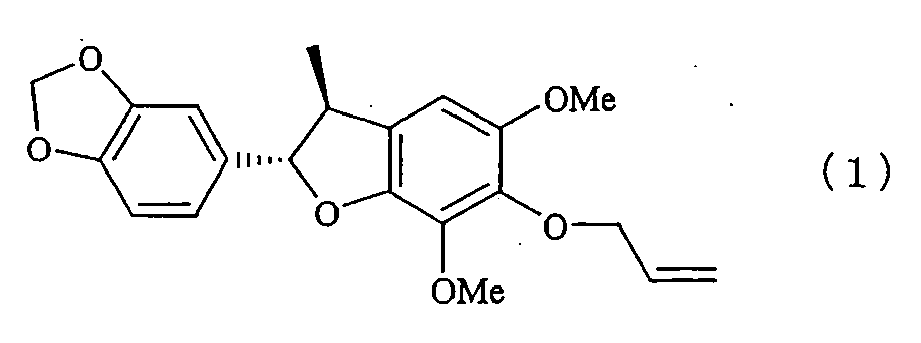
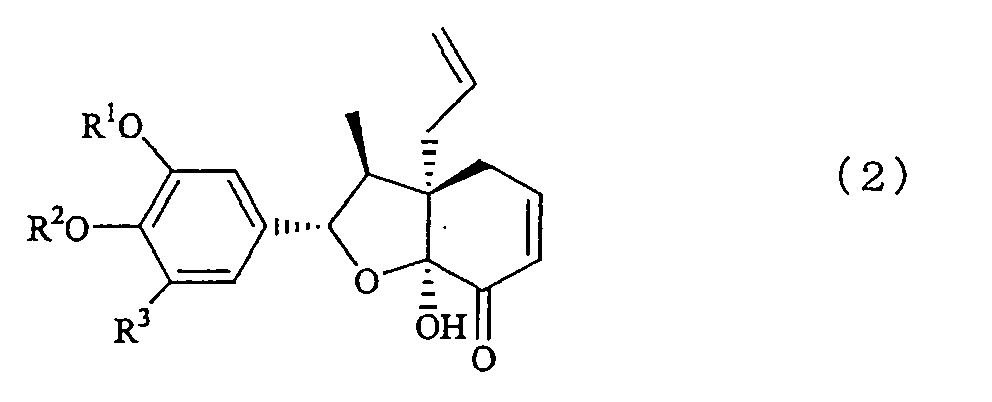
- the present invention provides a therapeutic agent for a malignant tumor and an apoptosis-inducing agent each containing a compound represented by the following formula (1) or (2):
- R 1 and R 2 represents a methyl group, or R 1 and R 2 may be linked together to form a methylene group; and R 3 represents a hydrogen atom or a methoxy group).
- the present invention also provides use of the compound for producing a therapeutic agent for a malignant tumor and an apoptosis-inducing agent.
- the present invention further provides a method for the treatment of a malignant tumor and for inducing apoptosis, comprising administering, to a subject in need thereof, the compound in an effective amount.
- the therapeutic agent for a malignant tumor according to the present invention exhibits excellent anti-tumor activity, which is considered to be attributed to inducing apoptosis in cancer cells.
- the agent of the invention is a new, useful therapeutic agent for a malignant tumor.
- the therapeutic agent for a malignant tumor and the apoptosis-inducing agent according to the present invention contain a compound represented by formula (1) or (2) as an effective ingredient.
- Specific examples of the compound (2) include the compounds represented by the following formulas (2a) to (2c).
- the aforementioned compounds (1) and (2) may be produced through extraction from seeds of Licaria puchury-major, which is a Brazilian medicinal plant.
- Licaria puchury-major is employed as apozem for dysentery, diarrhea, incontinence, stomach diseases, and leukorrhea, and as cataplasms and bath agents for the treatment of an injury inflicted by a poisonous insect and rheumatism (Goro HASHIMOTO, Encyclopedia of Brazilian medicinal plants).
- the seeds are pulverized and subjected to extraction with ethanol.
- these compounds are included in a 90% methanol fraction.
- the 90% methanol fraction is caused to be adsorbed by a synthetic adsorbent, and the adsorbed species are sequentially eluted with 40% methanol, 70% methanol, 100% methanol, and acetone.
- the compounds are mainly included in the 100% methanol fraction and the acetone fraction, particularly in the acetone fraction.
- the 100% methanol fraction and the acetone fraction per se may be employed as the therapeutic agent of the present invention for a malignant tumor and the like.
- the 100% methanol fraction or the acetone fraction is purified through column chromatography.
- Examples of the synthetic adsorbent include a styrene-divinylbenzene copolymer and a bromostyrene-divinylbenzene copolymer. Of these, a styrene-divinylbenzene copolymer is preferred.
- Examples of commercial products of the synthetic adsorbent include Daiaion HP20, Diaion HP21, Sepabeads SP825, and Sepabeads SP850.
- the compounds (1) and (2) exhibit excellent cytotoxicity to leukemia cells, neuroblastoma cells, etc.
- the cytotoxicity is attributed to apoptosis induction activity. Therefore, the compound represented by formula (1) or (2) or a Licaria puchury-major extract containing any of the compounds is a useful therapeutic agent for a malignant tumor of a human and other mammals.
- the malignant tumor to which the therapeutic agent of the present invention is applied include tumors and solid tumors of blood and hematopoietic tissue (e.g., leukemia and lymphoma).
- solid tumors examples include epithelial cell cancers such as skin cancer, lung cancer, colon cancer, stomach cancer, breast cancer, prostatic cancer, and thyroid gland cancer; and sarcomas such as leiomyosarcoma and osteosarcoma.
- the drug of the present invention may be produced in the following procedure. Specifically, to the compound represented by formula (1) or (2) or the aforementioned extract, one or more pharmaceutically acceptable carriers including vehicles, binders, lubricants, disintegrants, coating agents, emulsifying agents, suspending agents, solvents, stabilizers, sorbents, and ointment bases are added in accordance with needs.
- the thus-formed mixtures are processed through a known technique to form drug preparations (pharmaceutical compositions) suitable for oral administration, injection, intrarectal administration, external application, etc. Examples of preferred oral preparations include granules, tablets, sugar-coated tablets, capsules, pills, liquids, emulsions, and suspensions.
- Examples of preferred preparations for injection include such products for intravenous injection, intramuscular injection, subcutaneous injection, or drip infusion.
- Examples of preferred preparations for intrarectal administration include soft capsule type suppositories.
- the drug of the present invention may be administered, in the form of any of the aforementioned drug products, to a human and to other mammals.
- the daily dose of the drug of the present invention is preferably about 1 to 500 mg/kg as the compound (1) or (2), in a single administration or in 2-4-divided administrations.
- PI propidium iodide
- the cells at an initial stage of apoptosis emit fluorescence attributed to annexin V-FITC, whereas the cells at a later stage of apoptosis emit fluorescence attributed to both annexin V and PI.
- the first ethanol extract and the methanol extraction fraction exhibited apoptosis induction activity at a high concentration.
- the n-hexane fraction exhibited no apoptosis induction activity.
- the 70% methanol fraction, the 100% methanol fraction, and the acetone fraction exhibited intense apoptosis induction activity.
- FIG. 1 shows results of apoptosis induction by the acetone fraction (SN-001).
- the acetone fraction (SN-001) induced apoptosis to a later stage after incubation for 24 hours. This induction is earlier as compared with camptothecine.
- the anti-malignant-tumor effect of compounds (1), (2a), (2b), and (2c) on neuroblastoma cell strains IMR-32, SK-N-SH, and NB-39 was investigated using the MTT assay. Specifically, each type of cells was seeded onto a 96-well plate so that the cell density was adjusted to 1 ⁇ 10 4 cells/well, and each drug compound was added to the wells 24 hours after seeding, followed by incubation under 5%-CO 2 at 37°C for 48 hours. Subsequently, an MTT solution was added to the wells, and blue formazan formed three hours after addition was well-mixed through pipetting. The absorbance of each well was measured at 570 nm (top) and 655 nm (bottom), and the survival cell rate with respect to the control group was calculated. In this assay, formation of blue formazan caused by activity of mitochondria is observed only when cells survive.
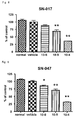
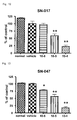
- Figs. 2 to 13 shows the results. As is clear from Figs. 2 to 13 , compound (1) (SN-028), compound (2a) (SN-020), compound (2b) (SN-017), and compound (2c) (SN-047) exhibited intense cytotoxicity to neuroblastoma cells.
Landscapes
- Health & Medical Sciences (AREA)
- Chemical & Material Sciences (AREA)
- Organic Chemistry (AREA)
- Natural Medicines & Medicinal Plants (AREA)
- Life Sciences & Earth Sciences (AREA)
- General Health & Medical Sciences (AREA)
- Veterinary Medicine (AREA)
- Medicinal Chemistry (AREA)
- Public Health (AREA)
- Pharmacology & Pharmacy (AREA)
- Animal Behavior & Ethology (AREA)
- Engineering & Computer Science (AREA)
- General Chemical & Material Sciences (AREA)
- Medical Informatics (AREA)
- Chemical Kinetics & Catalysis (AREA)
- Epidemiology (AREA)
- Alternative & Traditional Medicine (AREA)
- Biotechnology (AREA)
- Botany (AREA)
- Nuclear Medicine, Radiotherapy & Molecular Imaging (AREA)
- Microbiology (AREA)
- Mycology (AREA)
- Bioinformatics & Cheminformatics (AREA)
- Medicines Containing Plant Substances (AREA)
- Pharmaceuticals Containing Other Organic And Inorganic Compounds (AREA)
- Furan Compounds (AREA)
- Plural Heterocyclic Compounds (AREA)
Abstract
Description
- The present invention relates to a therapeutic agent for a malignant tumor which contains a plant-derived ingredient.
- Generally, plants contain a variety of physiologically active substances, and drugs have long been produced from plant extracts. Hitherto known plant-derived therapeutic agents for a malignant tumor include Taxol, which is an extract obtained from a plant belonging to the family Taxaceae; camptothecine, which is an alkaloid contained in Nothapodytes Foetida (Icacinacea) or Camptotheca Acuminata (Nyssaceae); and vincristine and vinblastine, which are indole alkaloids contained in Catharanthus roseus (Apocynaceae).
- Meanwhile, among neolignans, which are plant-derived ingredients, a variety of compounds are known to exhibit a pharmaceutical effect. Examples of neolignans known to exhibit cytotoxicity include Perseal F and Licarin A (Non-Patent Documents 1 and 2).
- Non-Patent Document 1:
Thai I. L., Chen J. H., Duh C. Y., Chen I.S., "Cytotoxic Neolignans and Butanolides from Machilus obovatifolia," Planta Medica 2001; 67: 559-561 - Non-Patent Document 2:
Thai I. L., Hsieh C. F., Duh C. Y., Chen I.S., "Further study on the chemical constituents and their cytotoxicity from the leaves of Persea obovatifolia," The Chinese Pharmaceutical Journal 1999; 51: 335-345 - An object of the present invention is to provide, through exploration of a variety of plants, a novel therapeutic agent for a malignant tumor.
- The present inventors have extracted components from seeds of Licaria puchury-major, which is a Brazilian medicinal plant, and carried out screening of a compound of interest from extraction fractions of a variety of solvents in terms of apoptosis induction activity and anti-tumor activity as indices. As a result, the inventors have found that an acetone fraction exhibits excellent apoptosis induction activity to tumor cells. Through a study on the effective ingredient, the inventors have found that the following compounds exhibit excellent anti-tumor activity. The present invention has been accomplished on the basis of these findings.
- Accordingly, the present invention provides a therapeutic agent for a malignant tumor and an apoptosis-inducing agent each containing a compound represented by the following formula (1) or (2):
-


- (wherein each of R1 and R2 represents a methyl group, or R1 and R2 may be linked together to form a methylene group; and R3 represents a hydrogen atom or a methoxy group).
- The present invention also provides use of the compound for producing a therapeutic agent for a malignant tumor and an apoptosis-inducing agent.
The present invention further provides a method for the treatment of a malignant tumor and for inducing apoptosis, comprising administering, to a subject in need thereof, the compound in an effective amount. - The therapeutic agent for a malignant tumor according to the present invention exhibits excellent anti-tumor activity, which is considered to be attributed to inducing apoptosis in cancer cells. The agent of the invention is a new, useful therapeutic agent for a malignant tumor.
-
-
Fig. 1 shows apoptosis induction activity of acetone fractions to Jurkat cells analyzed through flow cytometry; -
Fig. 2 is a graph showing cytotoxicity of compound (1) to IMR-32; -
Fig. 3 is a graph showing cytotoxicity of compound (2a) to IMR-32; -
Fig. 4 is a graph showing cytotoxicity of compound (2b) to IMR-32; -
Fig. 5 is a graph showing cytotoxicity of compound (2c) to IMR-32; -
Fig. 6 is a graph showing cytotoxicity of compound (1) to SK-N-SH; -
Fig. 7 is a graph showing cytotoxicity of compound (2a) to SK-N-SH; -
Fig. 8 is a graph showing cytotoxicity of compound (2b) to SK-N-SH; -
Fig. 9 is a graph showing cytotoxicity of compound (2c) to SK-N-SH; -
Fig. 10 is a graph showing cytotoxicity of compound (1) to NB-39; -
Fig. 11 is a graph showing cytotoxicity of compound (2a) to NB-39; -
Fig. 12 is a graph showing cytotoxicity of compound (2b) to NB-39; and -
Fig. 13 is a graph showing cytotoxicity of compound (2c) to NB-39. - The therapeutic agent for a malignant tumor and the apoptosis-inducing agent according to the present invention (hereinafter collectively referred to as "a therapeutic agent for a malignant tumor and the like") contain a compound represented by formula (1) or (2) as an effective ingredient. Specific examples of the compound (2) include the compounds represented by the following formulas (2a) to (2c).
-


- The aforementioned compounds (1) and (2) may be produced through extraction from seeds of Licaria puchury-major, which is a Brazilian medicinal plant. In Brazil, Licaria puchury-major is employed as apozem for dysentery, diarrhea, incontinence, stomach diseases, and leukorrhea, and as cataplasms and bath agents for the treatment of an injury inflicted by a poisonous insect and rheumatism (Goro HASHIMOTO, Encyclopedia of Brazilian medicinal plants).
- In one procedure of extraction of the aforementioned compounds from seeds of Licaria puchury-major, the seeds are pulverized and subjected to extraction with ethanol. When the obtained extract is subjected to fractional extraction by use of n-hexane-90% methanol, these compounds are included in a 90% methanol fraction. The 90% methanol fraction is caused to be adsorbed by a synthetic adsorbent, and the adsorbed species are sequentially eluted with 40% methanol, 70% methanol, 100% methanol, and acetone. In the elution procedure, the compounds are mainly included in the 100% methanol fraction and the acetone fraction, particularly in the acetone fraction. Thus, the 100% methanol fraction and the acetone fraction per se may be employed as the therapeutic agent of the present invention for a malignant tumor and the like. For further purification, the 100% methanol fraction or the acetone fraction is purified through column chromatography.
- Examples of the synthetic adsorbent include a styrene-divinylbenzene copolymer and a bromostyrene-divinylbenzene copolymer. Of these, a styrene-divinylbenzene copolymer is preferred. Examples of commercial products of the synthetic adsorbent include Daiaion HP20, Diaion HP21, Sepabeads SP825, and Sepabeads SP850.
- As is clear from Examples hereinbelow, the compounds (1) and (2) exhibit excellent cytotoxicity to leukemia cells, neuroblastoma cells, etc. The cytotoxicity is attributed to apoptosis induction activity. Therefore, the compound represented by formula (1) or (2) or a Licaria puchury-major extract containing any of the compounds is a useful therapeutic agent for a malignant tumor of a human and other mammals.
Examples of the malignant tumor to which the therapeutic agent of the present invention is applied include tumors and solid tumors of blood and hematopoietic tissue (e.g., leukemia and lymphoma). Examples of the solid tumors include epithelial cell cancers such as skin cancer, lung cancer, colon cancer, stomach cancer, breast cancer, prostatic cancer, and thyroid gland cancer; and sarcomas such as leiomyosarcoma and osteosarcoma. - The drug of the present invention may be produced in the following procedure. Specifically, to the compound represented by formula (1) or (2) or the aforementioned extract, one or more pharmaceutically acceptable carriers including vehicles, binders, lubricants, disintegrants, coating agents, emulsifying agents, suspending agents, solvents, stabilizers, sorbents, and ointment bases are added in accordance with needs. The thus-formed mixtures are processed through a known technique to form drug preparations (pharmaceutical compositions) suitable for oral administration, injection, intrarectal administration, external application, etc.
Examples of preferred oral preparations include granules, tablets, sugar-coated tablets, capsules, pills, liquids, emulsions, and suspensions. Examples of preferred preparations for injection include such products for intravenous injection, intramuscular injection, subcutaneous injection, or drip infusion. Examples of preferred preparations for intrarectal administration include soft capsule type suppositories.
The drug of the present invention may be administered, in the form of any of the aforementioned drug products, to a human and to other mammals.
The daily dose of the drug of the present invention is preferably about 1 to 500 mg/kg as the compound (1) or (2), in a single administration or in 2-4-divided administrations. - The present invention will next be described in more detail by way of examples, which should not be construed as limiting the invention thereto.
- Seeds of Licaria puchury-major were pulverized (product: 2.8 kg). The pulverized product was subjected to extraction with ethanol (2.5 L × 3) under ultrasonication. After filtration, the ethanol extract was condensed, to thereby yield a product (dry solid content: 276.8 g). Subsequently, the condensed ethanol extract was subjected to fractional extraction by use of n-hexane-90% methanol, and the 90% -methanol fraction was condensed, to thereby yield a product (dry solid content: 93.8 g).
The 90% methanol extract was applied to a column filled with Diaion HP20 for adsorption. The adsorbed matter was sequentially eluted with 40% methanol (4 L), 70% methanol (4 L), 100% methanol (4 L), and acetone (5 L). The acetone fraction (6.95 g) was purified through silica gel column chromatography (n-hexane-ethyl acetate) and reverse phase HPLC (water-methanol), to thereby isolate compound (1) (31.4 mg), compound (2a) (187.8 mg), compound (2b) (71.7 mg), and compound (2c) (7.5 mg). The structure of these compounds were determined through 1H-NMR, 13C-NMR, and EIMS. Note that compound (1), compound (2a), compound (2b), and compound (2c) are known as SN-028, SN-020, SN-017 (ferrearin C), and SN-047 (ferrearin G). - Apoptosis induction activity of fractions obtained through extraction with solvents in Example 1 to Jurkat cells, which are myelocytic leukemia cells, was determined through flow cytometry. Specifically, each extraction fraction (30 µg/mL) or camptothecine (positive control) (4 × 10⁻⁷ M) was added to Jurkat cells (5 × 10⁵ cells/2 mL-well), followed by incubation under 5% CO2 at 37°C for 24 hours or 48 hours. The incubated cells were washed with PBS, and annexin V-FITC and propidium iodide (PI) were added to each well for flow cytometry. Through this flow cytometry, the cells at an initial stage of apoptosis emit fluorescence attributed to annexin V-FITC, whereas the cells at a later stage of apoptosis emit fluorescence attributed to both annexin V and PI.
Actually, the first ethanol extract and the methanol extraction fraction exhibited apoptosis induction activity at a high concentration. The n-hexane fraction exhibited no apoptosis induction activity. Among fractions eluted through the synthetic adsorbent, the 70% methanol fraction, the 100% methanol fraction, and the acetone fraction exhibited intense apoptosis induction activity.Fig. 1 shows results of apoptosis induction by the acetone fraction (SN-001).
As is clear fromFig. 1 , the acetone fraction (SN-001) induced apoptosis to a later stage after incubation for 24 hours. This induction is earlier as compared with camptothecine. - The anti-malignant-tumor effect of compounds (1), (2a), (2b), and (2c) on neuroblastoma cell strains IMR-32, SK-N-SH, and NB-39 was investigated using the MTT assay.
Specifically, each type of cells was seeded onto a 96-well plate so that the cell density was adjusted to 1 × 10⁴ cells/well, and each drug compound was added to the wells 24 hours after seeding, followed by incubation under 5%-CO2 at 37°C for 48 hours. Subsequently, an MTT solution was added to the wells, and blue formazan formed three hours after addition was well-mixed through pipetting. The absorbance of each well was measured at 570 nm (top) and 655 nm (bottom), and the survival cell rate with respect to the control group was calculated. In this assay, formation of blue formazan caused by activity of mitochondria is observed only when cells survive. -
Figs. 2 to 13 shows the results. As is clear fromFigs. 2 to 13 , compound (1) (SN-028), compound (2a) (SN-020), compound (2b) (SN-017), and compound (2c) (SN-047) exhibited intense cytotoxicity to neuroblastoma cells.
Claims (6)
- A therapeutic agent for a malignant tumor comprising a compound represented by the following formula (1) or (2):[F1]


- An apoptosis-inducing agent comprising a compound represented by the following formula (1) or (2):[F2]


- Use of a compound represented by the following formula (1) or (2):[F3]


- Use of a compound represented by the following formula (1) or (2) :[F4]


- A method for treatment of a malignant tumor, comprising administering an effective amount of a compound represented by the following formula (1) or (2):[F5]


- A method for inducing apoptosis, comprising administering an effective amount of a compound represented by the following formula (1) or (2):[F6]


Applications Claiming Priority (2)
| Application Number | Priority Date | Filing Date | Title |
|---|---|---|---|
| JP2006056391 | 2006-03-02 | ||
| PCT/JP2007/000090 WO2007105353A1 (en) | 2006-03-02 | 2007-02-15 | Plant-derived therapeutic agent for malignant tumor |
Publications (2)
| Publication Number | Publication Date |
|---|---|
| EP2009007A1 true EP2009007A1 (en) | 2008-12-31 |
| EP2009007A4 EP2009007A4 (en) | 2010-02-10 |
Family
ID=38509195
Family Applications (1)
| Application Number | Title | Priority Date | Filing Date |
|---|---|---|---|
| EP07706338A Withdrawn EP2009007A4 (en) | 2006-03-02 | 2007-02-15 | VEGETABLE THERAPEUTIC AGENT FOR THE TREATMENT OF A MALIGNANT TUMOR |
Country Status (4)
| Country | Link |
|---|---|
| US (1) | US20090030073A1 (en) |
| EP (1) | EP2009007A4 (en) |
| JP (1) | JP5131855B2 (en) |
| WO (1) | WO2007105353A1 (en) |
Families Citing this family (3)
| Publication number | Priority date | Publication date | Assignee | Title |
|---|---|---|---|---|
| KR101404398B1 (en) * | 2007-06-20 | 2014-06-09 | (주)뉴트리 | Wrinkle-improving cosmetic composition |
| CN105243318B (en) * | 2015-08-28 | 2020-07-31 | 小米科技有限责任公司 | Method and device for determining control authority of user equipment and terminal equipment |
| CN117402196A (en) * | 2022-09-13 | 2024-01-16 | 中国科学院脑科学与智能技术卓越创新中心 | Antitumor active compounds and preparation methods and applications thereof |
Family Cites Families (2)
| Publication number | Priority date | Publication date | Assignee | Title |
|---|---|---|---|---|
| JPWO2003073870A1 (en) * | 2002-03-01 | 2005-06-23 | 学校法人日本大学 | Health food with antiallergic action |
| FR2851919A1 (en) * | 2003-03-03 | 2004-09-10 | Lmd | LIGNANES FOR USE AS CATHEPSIN INHIBITORS AND THEIR APPLICATIONS |
-
2007
- 2007-02-15 JP JP2008504981A patent/JP5131855B2/en not_active Expired - Fee Related
- 2007-02-15 WO PCT/JP2007/000090 patent/WO2007105353A1/en not_active Ceased
- 2007-02-15 US US12/281,414 patent/US20090030073A1/en not_active Abandoned
- 2007-02-15 EP EP07706338A patent/EP2009007A4/en not_active Withdrawn
Also Published As
| Publication number | Publication date |
|---|---|
| WO2007105353A1 (en) | 2007-09-20 |
| US20090030073A1 (en) | 2009-01-29 |
| JP5131855B2 (en) | 2013-01-30 |
| JPWO2007105353A1 (en) | 2009-07-30 |
| EP2009007A4 (en) | 2010-02-10 |
Similar Documents
| Publication | Publication Date | Title |
|---|---|---|
| Ye et al. | Brazilein, an important immunosuppressive component from Caesalpinia sappan L. | |
| Teng et al. | A review on the genus Melodinus: traditional uses, phytochemical diversity and pharmacological activities of indole alkaloids | |
| EP3077402A1 (en) | Anticancer maytansinoids with two fused macrocyclic rings | |
| Nair et al. | Cytotoxic agents in the minor alkaloid groups of the amaryllidaceae | |
| WO2021085232A1 (en) | Composition for treating and/or preventing neurodegenerative disorders | |
| KR20100026030A (en) | An extract of effective component for protection against other kinds of cancer, method for extracting the same and an anti-cancer medicine comprising it | |
| WO2008109717A1 (en) | Compositions and methods for treating cancer | |
| US20090030073A1 (en) | Plant-derived therapeutic agent for malignant | |
| US10493056B2 (en) | Method of use of diterpenoid derivatives as anticancer agents | |
| CN110343116A (en) | A kind of Flos Chrysanthemi Indici extract and preparation method thereof and the application in preparation treatment medicine for nasopharyngeal | |
| TW200538140A (en) | Compounds isolated from gamboge resin having activity in inhibiting the growth of tumor/cancer cells and pharmaceutical compositions comprising the same | |
| KR980008225A (en) | Anticancer drugs containing dexacinol angelate as an active ingredient | |
| JPS6355485B2 (en) | ||
| CN107286123B (en) | A kind of preparation method and application of dibenzofuran compound | |
| CN101480394A (en) | Anti-tumor pharmaceutical composition | |
| US20040072790A1 (en) | Safe natural pharmaceutical composition for treating cancer | |
| KR20090089187A (en) | Secoisorariciresin derivatives and anticancer agents using the same | |
| JPH0952899A (en) | Leukotriene antagonist | |
| US7094802B2 (en) | PKB-3564 substance with neovascularization inhibitory activity | |
| KR101376246B1 (en) | Pharmaceutical composition for anti-cancer comprising substance of hericium erinacium | |
| JP2850051B2 (en) | New anticancer substance | |
| US20020099086A1 (en) | Use of extracts from aristolochia in the treatment of AIDS | |
| KR20030016774A (en) | Compositions Comprising Antofine And The Use Thereof | |
| JP5201603B2 (en) | Ryokyo-derived malignant tumor therapeutic agent | |
| JPH0967360A (en) | Oncogene function inhibitor |
Legal Events
| Date | Code | Title | Description |
|---|---|---|---|
| PUAI | Public reference made under article 153(3) epc to a published international application that has entered the european phase |
Free format text: ORIGINAL CODE: 0009012 |
|
| 17P | Request for examination filed |
Effective date: 20080814 |
|
| AK | Designated contracting states |
Kind code of ref document: A1 Designated state(s): AT BE BG CH CY CZ DE DK EE ES FI FR GB GR HU IE IS IT LI LT LU LV MC NL PL PT RO SE SI SK TR |
|
| AX | Request for extension of the european patent |
Extension state: AL BA HR MK RS |
|
| A4 | Supplementary search report drawn up and despatched |
Effective date: 20100113 |
|
| RIC1 | Information provided on ipc code assigned before grant |
Ipc: C07D 407/04 20060101ALI20100105BHEP Ipc: C07D 307/86 20060101AFI20080821BHEP |
|
| 17Q | First examination report despatched |
Effective date: 20100401 |
|
| GRAP | Despatch of communication of intention to grant a patent |
Free format text: ORIGINAL CODE: EPIDOSNIGR1 |
|
| RIC1 | Information provided on ipc code assigned before grant |
Ipc: A61K 31/343 20060101ALI20110906BHEP Ipc: C07D 407/04 20060101ALI20110906BHEP Ipc: C07D 307/86 20060101AFI20110906BHEP |
|
| RTI1 | Title (correction) |
Free format text: PLANT-DERIVED THERAPEUTIC AGENT FOR MALIGNANT TUMOR |
|
| STAA | Information on the status of an ep patent application or granted ep patent |
Free format text: STATUS: THE APPLICATION IS DEEMED TO BE WITHDRAWN |
|
| 18D | Application deemed to be withdrawn |
Effective date: 20120125 |