EP2006838A1 - Apparatus and method for transmitting/receiving voice data to estimate voice data value corresponding to resynchronization period - Google Patents
Apparatus and method for transmitting/receiving voice data to estimate voice data value corresponding to resynchronization period Download PDFInfo
- Publication number
- EP2006838A1 EP2006838A1 EP08102518A EP08102518A EP2006838A1 EP 2006838 A1 EP2006838 A1 EP 2006838A1 EP 08102518 A EP08102518 A EP 08102518A EP 08102518 A EP08102518 A EP 08102518A EP 2006838 A1 EP2006838 A1 EP 2006838A1
- Authority
- EP
- European Patent Office
- Prior art keywords
- voice data
- frame
- key resynchronization
- information
- voice
- Prior art date
- Legal status (The legal status is an assumption and is not a legal conclusion. Google has not performed a legal analysis and makes no representation as to the accuracy of the status listed.)
- Granted
Links
Images

Classifications
-
- G—PHYSICS
- G10—MUSICAL INSTRUMENTS; ACOUSTICS
- G10L—SPEECH ANALYSIS TECHNIQUES OR SPEECH SYNTHESIS; SPEECH RECOGNITION; SPEECH OR VOICE PROCESSING TECHNIQUES; SPEECH OR AUDIO CODING OR DECODING
- G10L19/00—Speech or audio signals analysis-synthesis techniques for redundancy reduction, e.g. in vocoders; Coding or decoding of speech or audio signals, using source filter models or psychoacoustic analysis
- G10L19/04—Speech or audio signals analysis-synthesis techniques for redundancy reduction, e.g. in vocoders; Coding or decoding of speech or audio signals, using source filter models or psychoacoustic analysis using predictive techniques
-
- H—ELECTRICITY
- H04—ELECTRIC COMMUNICATION TECHNIQUE
- H04L—TRANSMISSION OF DIGITAL INFORMATION, e.g. TELEGRAPHIC COMMUNICATION
- H04L9/00—Cryptographic mechanisms or cryptographic arrangements for secret or secure communications; Network security protocols
- H04L9/08—Key distribution or management, e.g. generation, sharing or updating, of cryptographic keys or passwords
- H04L9/0891—Revocation or update of secret information, e.g. encryption key update or rekeying
-
- G—PHYSICS
- G10—MUSICAL INSTRUMENTS; ACOUSTICS
- G10L—SPEECH ANALYSIS TECHNIQUES OR SPEECH SYNTHESIS; SPEECH RECOGNITION; SPEECH OR VOICE PROCESSING TECHNIQUES; SPEECH OR AUDIO CODING OR DECODING
- G10L19/00—Speech or audio signals analysis-synthesis techniques for redundancy reduction, e.g. in vocoders; Coding or decoding of speech or audio signals, using source filter models or psychoacoustic analysis
-
- H—ELECTRICITY
- H04—ELECTRIC COMMUNICATION TECHNIQUE
- H04K—SECRET COMMUNICATION; JAMMING OF COMMUNICATION
- H04K1/00—Secret communication
-
- H—ELECTRICITY
- H04—ELECTRIC COMMUNICATION TECHNIQUE
- H04L—TRANSMISSION OF DIGITAL INFORMATION, e.g. TELEGRAPHIC COMMUNICATION
- H04L9/00—Cryptographic mechanisms or cryptographic arrangements for secret or secure communications; Network security protocols
- H04L9/12—Transmitting and receiving encryption devices synchronised or initially set up in a particular manner
-
- H—ELECTRICITY
- H04—ELECTRIC COMMUNICATION TECHNIQUE
- H04L—TRANSMISSION OF DIGITAL INFORMATION, e.g. TELEGRAPHIC COMMUNICATION
- H04L2209/00—Additional information or applications relating to cryptographic mechanisms or cryptographic arrangements for secret or secure communication H04L9/00
- H04L2209/80—Wireless
Definitions
- the present invention relates to an apparatus and method for transmitting/receiving voice data in order to estimate a voice data value corresponding to a silent period produced in a key resynchronization process while encrypted digital voice is transmitted in one-way wireless communication environment, and more particularly, to an apparatus and method for transmitting/receiving voice data in order to estimate a voice data value corresponding to a silent period produced in a key resynchronization process by inserting vector information into a key resynchronization frame, wherein the vector information relates to voice change direction based on the fact that voice has sine waveform with no sudden change.
- key data or preceding voice data is used as voice data corresponding to a key resynchronization period in a key resynchronization process.
- user clearly recognizes the degradation of voice quality in a key resynchronization period since the used voice data is quite different from corresponding original voice data.
- encryption communication in one-way wireless communication environment employs a key resynchronization method in which key information is periodically sent.
- key information is periodically sent.
- the key resynchronization method if data used in encryption communication is digitalized voice data, a silent period equal to a key resynchronization period is produced. The silent period is periodically produced, which degrades communication quality at the receiver.
- one-way wireless communication such as HAM
- Such techniques are used to estimate the value of lost voice frame in one-way wireless communication.
- the splicing technique that superposes two adjacent frames, blank due to frame loss is not produced but timing for streams becomes inconsistent.
- the silence substitution technique that replaces a period corresponding to frame loss with silence, the capability of a receiver is decreased when the length of a lost packet is long.
- the noise substitution technique that uses human phoneme restoration ability in which lost phoneme is restored using adjacent phonemes and surrounding circumstance, the noise substitution technique has different effect on each person.
- the repetition technique that replaces a lost frame with the nearest voice data, when the length of the lost frame is long, replayed voice is drawn out.
- the present invention is directed to an apparatus and method for estimating a voice data value corresponding to a silent period periodically produced due to a key resynchronization process in one-way wireless communication environment using voice change direction information and change ratio of slopes computed using voice data.
- an apparatus for transmitting/receiving voice data to estimate a voice data value corresponding to a key resynchronization period including: a transmitter for generating a key resynchronization frame containing key resynchronization information and vector information on voice data inserted thereinto and transmitting the key resynchronization frame; and a receiver for receiving the key resynchronization frame from the transmitter, extracting the vector information inserted in the key resynchronization frame, and estimating the voice data value corresponding to the key resynchronization period.
- the transmitter may include: an input unit for receiving voice data; a vocoder unit for encoding the voice data; a frame generating unit for generating the key resynchronization frame or a voice frame for the encoded voice data according to whether the key resynchronization information is needed, and including a vector information inserting unit inserting the vector information when the key resynchronization frame or the voice frame is generated; and a frame transmitting unit for transmitting the generated frame to the receiver.
- the receiver may include: a frame receiving unit for receiving the frame from the transmitter; a frame analyzing unit for determining a type of the received frame based on whether the received frame contains the key resynchronization information, and including a voice data estimating unit extracting the vector information when the received frame is a key resynchronization frame and estimating the voice data value corresponding to the key resynchronization period; a vocoder unit for decoding encoded voice data of the key resynchronization frame; and an output unit outputting the decoded voice data.
- the voice data estimating unit may estimate the voice data value corresponding to the key resynchronization period by comparing the extracted vector information with a difference between slopes obtained using voice data in preceding frames, wherein the voice data value corresponding to the key resynchronization period is chosen from values on a straight line having a slope obtained using the difference between the slopes when the extracted vector information is +, or the voice data value is chosen from values on a straight line having a slope opposite to the slope obtained using the difference between the slopes when the extracted vector information is -.
- a method for transmitting voice data to estimate a voice data value corresponding to a key resynchronization period including the steps of: encoding received voice data; generating a key resynchronization frame or a voice frame for the encoded voice data according to whether key resynchronization information is needed, and inserting vector information on the received voice data when the key resynchronization frame or the voice frame is generated; and transmitting the generated frame.
- a method for receiving voice data to estimate a voice data value corresponding to a key resynchronization period including the steps of: analyzing a header of a received frame to determine whether the frame contains key resynchronization information; recognizing the frame as a key resynchronization frame when the frame contains key resynchronization information, extracting vector information on voice data inserted in the key resynchronization frame, and estimating the voice data value corresponding to the key resynchronization period; and decoding encoded voice data of the key resynchronization frame and outputting the decoded voice data.
- the vector information on voice data may be voice change direction (+, -) information that is obtained from a difference between the current voice data and the preceding voice data.
- the estimating of the voice data value corresponding to the key resynchronization period may include estimating the voice data value by comparing the extracted vector information with a difference between slopes obtained using voice data in preceding frames
- the voice data value corresponding to the key resynchronization period may be chosen from values on a straight line having a slope obtained using the difference between the slopes when the extracted vector information is +, or the voice data value may be chosen from values on a straight line having a slope opposite to the slope obtained using the difference between the slopes when the extracted vector information is -.
- the determining of whether the received frame contains key resynchronization information may include recognizing the received frame as a voice frame when the received frame does not contain key resynchronization information, decoding encoded voice data of the voice frame, calculating slopes using voice data in a current received frame and preceding received frame and a difference between the calculated slopes, and storing the calculated slopes and the difference.
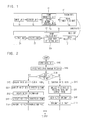
- FIG. 1 illustrates an apparatus for transmitting/receiving voice data, capable of estimating a voice data value corresponding to a key resynchronization period according to an embodiment of the present invention
- FIG. 2 illustrates a flowchart of a method for transmitting voice data to estimate voice data corresponding to a key resynchronization period according to an embodiment of the present invention
- FIG. 3 illustrates a flowchart of a method for receiving voice data to estimate a voice data value corresponding to a key resynchronization period according to an embodiment of the present invention
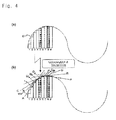
- FIGs. 4A and 4B illustrate schematic diagrams showing a calculation process of a voice data value corresponding to a key resynchronization period in the apparatus of FIG 1 .
- FIG. 1 illustrates an apparatus for transmitting/receiving voice data, capable of estimating a voice data value corresponding to a key resynchronization period according to an embodiment of the present invention.
- the apparatus is primarily comprised of a transmitter 10 and a receiver 20.
- the transmitter 10 In order to transmit voice data, the transmitter 10 generates a key resynchronization frame containing key resynchronization information and vector information on the voice data inserted thereinto, and transmits the key resynchronization frame.
- the transmitter 10 includes an input unit 11, a vocoder unit 12, a frame generating unit 13 and a frame transmitting unit 14.
- the input unit 11 such as a microphone receives voice data.
- the vocoder unit 12 encodes the voice data.
- the frame generating unit 13 determines whether the transmitting point of the encoded voice data is a key resynchronization point and generates a key resynchronization frame or a voice frame for the encoded voice data according to whether key resynchronization information is needed.
- the frame transmitting unit 14 transmits the generated frame.
- the frame generating unit 13 includes a vector information inserting unit 13a for insertion of the vector information on voice data when the key resynchronization frame or the voice frame is generated.
- the vector information on the voice data means voice change direction (+, -) information that is obtained from a difference between current voice data and preceding voice data.
- the frame generating unit 13 accumulates voice change direction (+, -) information, i.e., the vector information on voice data, which is derived from the difference between current voice data and immediately preceding voice data.
- voice change direction (+, -) information i.e., the vector information on voice data, which is derived from the difference between current voice data and immediately preceding voice data.
- the frame generating unit 13 In order to transmit the key synchronization information, the frame generating unit 13 generates the key resynchronization frame into which the key resynchronization information and the accumulated vector information are inserted. The vector information is also inserted into the voice frame and then the voice frame containing the accumulate vector information is transmitted.
- the frame generating unit 13 stores the vector information on the voice data.
- the frame generating unit 13 determines whether a transmitting point of the voice data corresponds to a key resynchronization point.
- the frame generating unit 13 generates a key resynchronization frame having the stored vector information inserted thereinto.
- the transmitting point is does not correspond to the key resynchronization point, it generates the voice frame for the voice data to be transmitted and inserts the stored vector information into the voice frame.
- the receiver 20 extracts the vector information on voice data from the key resynchronization frame and estimates a voice data value at the key resynchronization point.
- the receiver 20 includes a frame receiving unit 21, a frame analyzing unit 22, a vocoder unit 23, and an output unit 24.
- the frame receiving unit 21 receives frames from the transmitter 10.
- the frame analyzing unit 22 determines whether the received frame contains key resynchronization information and identifies the type of the received frame.
- the receiver 20 extracts vector information inserted into the key resynchronization frame and estimates a voice data value corresponding to the key resynchronization period, i.e., a silent period.
- the vocoder unit 23 decodes encoded voice data of the key resynchronization frame.
- the output unit 24 outputs the decoded voice data.
- the frame analyzing unit 22 determines the type of a received frame based on whether it contains key resynchronization information.
- the frame analyzing unit 22 includes a voice data estimating unit 22a.
- the voice data estimating unit 22a extracts vector information from the key resynchronization frame and estimates a voice date value corresponding to a key resynchronization period.
- the frame analyzing unit 22 analyzes a header of the received frame to determine whether the header contains the key resynchronization information. When the header contains the key resynchronization information, the received frame is a key resynchronization frame. Thus, the frame analyzing unit 22 extracts the inserted vector information.
- the voice data estimating unit 22a calculates slopes using voice data in preceding frames and estimates the voice data value corresponding to the key resynchronization period using the calculated slopes and the extracted vector information.
- the extracted vector information is +, a straight line having a less slope is obtained using the change ratio between the calculated slopes. Then, the voice data value corresponding to the key resynchronization period is chosen from among values on the obtained straight line.
- the extracted vector information is -, a straight line having a greater slope is obtained using the change ratio between the calculated slopes. Then, the voice data value is obtained on the obtained straight line.
- FIG. 2 illustrates a flowchart of a voice data transmitting method for estimating a voice data value corresponding to a key resynchronization period according to an embodiment of the present invention.
- step 100 the input unit 11 such as a microphone receives voice data.
- step 110 the vocoder unit 12 encodes the voice data.
- step 120 the frame generating unit 13 determines whether a transmitting point of the voice data corresponds to a key resynchronization point.
- step 130 the voice data of a corresponding current frame is deleted.
- step 131 it is performed to analyze voice data of a preceding frame with the voice data of the current frame.
- step 132 voice change direction (+, -) information, i.e., vector information, is calculated.
- the voice change direction (+, -) information is obtained using the characteristic of voice data. That is, voice data has sine waveform having no sudden change and thus vector information continuously increases when voice data values increase, and continuously decreases when voice data values decrease.
- the vector information is defined as increase direction when a difference between current voice data and immediately preceding voice data is +. On the contrary, the vector information is defined as decrease direction when the difference is -.
- a key resynchronization frame is generated by inserting the vector information and key resynchronization information thereinto instead of voice data.
- the generated key resynchronization frame is transmitted.
- a voice frame is generated by inserting voice data thereinto.
- voice data of a preceding frame and the current frame are analyzed to obtain vector information and the vector information is stored in an internal memory of the transmitter 10.
- the vector information is inserted into the voice frame.
- the voice frame is transmitted.
- FIG. 3 illustrates a flowchart of a voice data receiving method for estimating a voice data value corresponding to a key resynchronization period according to an embodiment of the present invention.
- step 200 the frame receiving unit 21 of the receiver 20 receives a frame transmitted from the transmitter 10.
- the frame analyzing unit 22 analyzes a header of the received frame to determine the type of the received frame.
- step 230 when the received frame is a key resynchronization frame, key resynchronization information and vector information of voice change direction (+, -) information are extracted from the received frame.
- step 231 a resynchronization process is performed using the extracted key resynchronization information.
- step 232 it is performed to analyze the extracted vector information and change ratio between slopes obtained using voice data of received preceding frames to determine voice change direction.
- step 233 when the change ratio and the extracted vector information have the same direction, i.e., increase direction or decrease direction, the voice data value corresponding to the key resynchronization period, i.e., a silent period, is chosen from among values on a straight line having a slope less than the slope obtained using the voice data of the received preceding frames stored in an internal memory (not shown) of the receiver 20.
- step 234 when the change ratio and the extracted vector information do not have the same direction, using the change ratio between slopes obtained using the voice data of the received preceding frames, a straight line having a slope greater than the slopes is obtained, and the voice data value corresponding to the silent period is chosen from among values on the straight line.
- step 235 the vocoder unit 23 decodes the chosen voice data value corresponding to the silent period.
- step 236 the decoded voice data is outputted.
- step 240 when the received frame is not a key resynchronization frame, the vocoder unit 23 decodes encoded voice data of the received frame.
- step 241 it is performed to calculate a straight line and the slope of the straight line.
- the straight line connects a voice data value of a preceding frame and a voice data value of a current frame, and the preceding and current frames are stored in the internal memory of the receiver 20.
- step 242 it is performed to calculate change ratio between the slopes obtained through the above-described process.
- step 243 the current frame is stored in the internal memory (not shown) for substantial use.
- decoded voice data by the vocoder 23 is outputted.
- the receiver 20 can estimate a voice data value corresponding to a silent period, which is produced due to a key resynchronization process in one-way wireless communication environment, similar to a corresponding original voice data value.
- FIGs. 4A and 4B illustrate schematic diagrams showing a calculation process of a voice data value corresponding to a key resynchronization period in the apparatus of FIG. 1 .
- FIG. 4A illustrates a schematic diagram showing a process for insertion of calculated vector information at the transmitter 10.
- FIG. 4B illustrates a schematic diagram showing a process for estimating a voice data value corresponding to a key resynchronization period by extracting the vector information at the receiver 10.
- the transmitter 10 deletes voice data of the 5 th and 8 th periods that are key resynchronization periods corresponding to the resynchronization points, and inserts key resynchronization information.
- the voice data of the 5 th period is replaced with voice change direction (+) information and key resynchronization information X.
- voice change direction (+) is obtained by subtracting the voice data value of the 4 th period from the voice data value of the 5 th period.
- the voice data of the 8 th period is replaced with voice change direction (-) information and key resynchronization information Y.
- voice change direction (-) is obtained by subtracting the voice data value of the 7 th period from the voice data value of the 8 th period.
- the replaced data are transmitted to the receiver 20.
- the receiver 20 determines a straight line C.
- the slope of the straight line C is calculated using a decrease ratio between the slope of a straight line A and the slope of a straight line B.
- the straight line A is determined using the voice data values of the 2 nd period L and 3 rd period M
- the straight line B is determined using the voice data values of the 3 rd period M and 4 th period N.
- the slope of the straight line C is equal to voice change direction (+) of the voice change direction information in a corresponding received frame, and thus the voice data value O of 5 th period is chosen from among values on the straight line C.
- Mx, Lx, Nx are x coordinate values of positions M, L, N in FIG. 4B , respectively.
- the receiver 20 determines a straight line E.
- the slope of the straight line E is calculated using an increase ratio between the slope of a straight line C and the slope of a straight line D.
- the straight line C is determined using the voice data values of the 5 th period O and 6 th period P
- the straight line D is determined using the voice data values of the 6 th period P and 7 th period Q. Since the slope of the straight line E is opposite to voice change direction (-) of the voice change direction information in a corresponding received frame, the voice data value R of the 8 th period is chosen from among values on a straight line F symmetrical with respect to the straight line E.
- the slope of the straight line E has a positive value (+) but the voice change direction of the 8 th period has a negative value (-), and thus the voice data value of the 8 th period is chosen from among values on the straight line F symmetrical with respect to the straight line E.
- the present invention can improve communication quality at the receiver by estimating a voice data value corresponding to a silent period due to periodic key resynchronization in one-way wireless communication environment using the gradually changing characteristic of voice data.
Landscapes
- Engineering & Computer Science (AREA)
- Signal Processing (AREA)
- Computer Networks & Wireless Communication (AREA)
- Computer Security & Cryptography (AREA)
- Audiology, Speech & Language Pathology (AREA)
- Health & Medical Sciences (AREA)
- Computational Linguistics (AREA)
- Human Computer Interaction (AREA)
- Physics & Mathematics (AREA)
- Acoustics & Sound (AREA)
- Multimedia (AREA)
- Mobile Radio Communication Systems (AREA)
- Compression, Expansion, Code Conversion, And Decoders (AREA)
- Telephonic Communication Services (AREA)
- Synchronisation In Digital Transmission Systems (AREA)
Abstract
Description
- The present invention relates to an apparatus and method for transmitting/receiving voice data in order to estimate a voice data value corresponding to a silent period produced in a key resynchronization process while encrypted digital voice is transmitted in one-way wireless communication environment, and more particularly, to an apparatus and method for transmitting/receiving voice data in order to estimate a voice data value corresponding to a silent period produced in a key resynchronization process by inserting vector information into a key resynchronization frame, wherein the vector information relates to voice change direction based on the fact that voice has sine waveform with no sudden change.
- In a related art communication system, key data or preceding voice data is used as voice data corresponding to a key resynchronization period in a key resynchronization process. In this case, user clearly recognizes the degradation of voice quality in a key resynchronization period since the used voice data is quite different from corresponding original voice data.
- Particularly, in one-way wireless communication environment, data is transmitted only in one direction and thus it is impossible to check correction reception of data. In case that encrypted data is transmitted, when a receiver does not receive initial key information, data of a corresponding period cannot be decoded.
- To solve the above-described restriction, encryption communication in one-way wireless communication environment employs a key resynchronization method in which key information is periodically sent. In the key resynchronization method, if data used in encryption communication is digitalized voice data, a silent period equal to a key resynchronization period is produced. The silent period is periodically produced, which degrades communication quality at the receiver.
- Therefore, it is required to compensate voice data value corresponding to a key resynchronization period in one-way wireless encryption communication.
- For instance, in one-way wireless communication such as HAM, there are splicing, silence substitution, noise substitution, repetition techniques, and the like for compensating frame loss produced in voice data transmission.
- Such techniques are used to estimate the value of lost voice frame in one-way wireless communication. According to the splicing technique that superposes two adjacent frames, blank due to frame loss is not produced but timing for streams becomes inconsistent. According to the silence substitution technique that replaces a period corresponding to frame loss with silence, the capability of a receiver is decreased when the length of a lost packet is long. According to the noise substitution technique that uses human phoneme restoration ability in which lost phoneme is restored using adjacent phonemes and surrounding circumstance, the noise substitution technique has different effect on each person. According to the repetition technique that replaces a lost frame with the nearest voice data, when the length of the lost frame is long, replayed voice is drawn out.
- In addition to the above-described techniques, there is a restoration technique that restores voice data corresponding to a lost frame using state information utilized by a voice compression codec, but this technique is dependent on the codec and computation amount is increased because each voice compression codec utilizes different state information.
- Accordingly, the present invention is directed to an apparatus and method for estimating a voice data value corresponding to a silent period periodically produced due to a key resynchronization process in one-way wireless communication environment using voice change direction information and change ratio of slopes computed using voice data.
- Additional advantages, objects, and features of the invention will be set forth in part in the description which follows and in part will become apparent to those having ordinary skill in the art upon examination of the following or may be learned from practice of the invention. The objectives and other advantages of the invention may be realized and attained by the structure particularly pointed out in the written description and claims hereof as well as the appended drawings.
- To achieve these objects and other advantages and in accordance with the purpose of the invention, as embodied and broadly described herein, there is provided an apparatus for transmitting/receiving voice data to estimate a voice data value corresponding to a key resynchronization period, the apparatus including: a transmitter for generating a key resynchronization frame containing key resynchronization information and vector information on voice data inserted thereinto and transmitting the key resynchronization frame; and a receiver for receiving the key resynchronization frame from the transmitter, extracting the vector information inserted in the key resynchronization frame, and estimating the voice data value corresponding to the key resynchronization period.
- The transmitter may include: an input unit for receiving voice data; a vocoder unit for encoding the voice data; a frame generating unit for generating the key resynchronization frame or a voice frame for the encoded voice data according to whether the key resynchronization information is needed, and including a vector information inserting unit inserting the vector information when the key resynchronization frame or the voice frame is generated; and a frame transmitting unit for transmitting the generated frame to the receiver.
- The receiver may include: a frame receiving unit for receiving the frame from the transmitter; a frame analyzing unit for determining a type of the received frame based on whether the received frame contains the key resynchronization information, and including a voice data estimating unit extracting the vector information when the received frame is a key resynchronization frame and estimating the voice data value corresponding to the key resynchronization period; a vocoder unit for decoding encoded voice data of the key resynchronization frame; and an output unit outputting the decoded voice data.
- The voice data estimating unit may estimate the voice data value corresponding to the key resynchronization period by comparing the extracted vector information with a difference between slopes obtained using voice data in preceding frames, wherein the voice data value corresponding to the key resynchronization period is chosen from values on a straight line having a slope obtained using the difference between the slopes when the extracted vector information is +, or the voice data value is chosen from values on a straight line having a slope opposite to the slope obtained using the difference between the slopes when the extracted vector information is -.
- In another aspect of the present invention, there is provided a method for transmitting voice data to estimate a voice data value corresponding to a key resynchronization period, the method including the steps of: encoding received voice data; generating a key resynchronization frame or a voice frame for the encoded voice data according to whether key resynchronization information is needed, and inserting vector information on the received voice data when the key resynchronization frame or the voice frame is generated; and transmitting the generated frame.
- In a further aspect of the present invention, there is provided a method for receiving voice data to estimate a voice data value corresponding to a key resynchronization period, the method including the steps of: analyzing a header of a received frame to determine whether the frame contains key resynchronization information; recognizing the frame as a key resynchronization frame when the frame contains key resynchronization information, extracting vector information on voice data inserted in the key resynchronization frame, and estimating the voice data value corresponding to the key resynchronization period; and decoding encoded voice data of the key resynchronization frame and outputting the decoded voice data.
- The vector information on voice data may be voice change direction (+, -) information that is obtained from a difference between the current voice data and the preceding voice data.
- The estimating of the voice data value corresponding to the key resynchronization period may include estimating the voice data value by comparing the extracted vector information with a difference between slopes obtained using voice data in preceding frames
- The voice data value corresponding to the key resynchronization period may be chosen from values on a straight line having a slope obtained using the difference between the slopes when the extracted vector information is +, or the voice data value may be chosen from values on a straight line having a slope opposite to the slope obtained using the difference between the slopes when the extracted vector information is -.
- The determining of whether the received frame contains key resynchronization information may include recognizing the received frame as a voice frame when the received frame does not contain key resynchronization information, decoding encoded voice data of the voice frame, calculating slopes using voice data in a current received frame and preceding received frame and a difference between the calculated slopes, and storing the calculated slopes and the difference.
- It is to be understood that both the foregoing general description and the following detailed description of the present invention are exemplary and explanatory and are intended to provide further explanation of the invention as claimed.
- The accompanying drawings, which are included to provide a further understanding of the invention, are incorporated in and constitute a part of this application, illustrate embodiments of the invention and together with the description serve to explain the principle of the invention. In the drawings:
-
FIG. 1 illustrates an apparatus for transmitting/receiving voice data, capable of estimating a voice data value corresponding to a key resynchronization period according to an embodiment of the present invention; -
FIG. 2 illustrates a flowchart of a method for transmitting voice data to estimate voice data corresponding to a key resynchronization period according to an embodiment of the present invention; -
FIG. 3 illustrates a flowchart of a method for receiving voice data to estimate a voice data value corresponding to a key resynchronization period according to an embodiment of the present invention; and -
FIGs. 4A and 4B illustrate schematic diagrams showing a calculation process of a voice data value corresponding to a key resynchronization period in the apparatus ofFIG 1 . - Reference will now be made in detail to the preferred embodiments of the present invention, examples of which are illustrated in the accompanying drawings. In the following description, well-known functions or constructions are not described in detail since they would obscure the invention in unnecessary detail.
-
FIG. 1 illustrates an apparatus for transmitting/receiving voice data, capable of estimating a voice data value corresponding to a key resynchronization period according to an embodiment of the present invention. The apparatus is primarily comprised of atransmitter 10 and areceiver 20. - In order to transmit voice data, the
transmitter 10 generates a key resynchronization frame containing key resynchronization information and vector information on the voice data inserted thereinto, and transmits the key resynchronization frame. - Specifically, the
transmitter 10 includes aninput unit 11, avocoder unit 12, aframe generating unit 13 and aframe transmitting unit 14. Theinput unit 11 such as a microphone receives voice data. Thevocoder unit 12 encodes the voice data. Theframe generating unit 13 determines whether the transmitting point of the encoded voice data is a key resynchronization point and generates a key resynchronization frame or a voice frame for the encoded voice data according to whether key resynchronization information is needed. Theframe transmitting unit 14 transmits the generated frame. - The
frame generating unit 13 includes a vectorinformation inserting unit 13a for insertion of the vector information on voice data when the key resynchronization frame or the voice frame is generated. The vector information on the voice data means voice change direction (+, -) information that is obtained from a difference between current voice data and preceding voice data. - In other words, the
frame generating unit 13 accumulates voice change direction (+, -) information, i.e., the vector information on voice data, which is derived from the difference between current voice data and immediately preceding voice data. In order to transmit the key synchronization information, theframe generating unit 13 generates the key resynchronization frame into which the key resynchronization information and the accumulated vector information are inserted. The vector information is also inserted into the voice frame and then the voice frame containing the accumulate vector information is transmitted. - In brief, the
frame generating unit 13 stores the vector information on the voice data. When voice data is transmitted, theframe generating unit 13 determines whether a transmitting point of the voice data corresponds to a key resynchronization point. When the transmitting point corresponds to the key resynchronization point, theframe generating unit 13 generates a key resynchronization frame having the stored vector information inserted thereinto. When the transmitting point is does not correspond to the key resynchronization point, it generates the voice frame for the voice data to be transmitted and inserts the stored vector information into the voice frame. - On the other hand, receiving the key resynchronization frame from the
transmitter 10, thereceiver 20 extracts the vector information on voice data from the key resynchronization frame and estimates a voice data value at the key resynchronization point. - Specifically, the
receiver 20 includes aframe receiving unit 21, aframe analyzing unit 22, avocoder unit 23, and anoutput unit 24. Theframe receiving unit 21 receives frames from thetransmitter 10. Theframe analyzing unit 22 determines whether the received frame contains key resynchronization information and identifies the type of the received frame. When the received frame is a key resynchronization frame, thereceiver 20 extracts vector information inserted into the key resynchronization frame and estimates a voice data value corresponding to the key resynchronization period, i.e., a silent period. Thevocoder unit 23 decodes encoded voice data of the key resynchronization frame. Theoutput unit 24 outputs the decoded voice data. - Particularly, the
frame analyzing unit 22 determines the type of a received frame based on whether it contains key resynchronization information. Theframe analyzing unit 22 includes a voicedata estimating unit 22a. When the received frame is a key resynchronization frame, the voicedata estimating unit 22a extracts vector information from the key resynchronization frame and estimates a voice date value corresponding to a key resynchronization period. - The
frame analyzing unit 22 analyzes a header of the received frame to determine whether the header contains the key resynchronization information. When the header contains the key resynchronization information, the received frame is a key resynchronization frame. Thus, theframe analyzing unit 22 extracts the inserted vector information. - The voice
data estimating unit 22a calculates slopes using voice data in preceding frames and estimates the voice data value corresponding to the key resynchronization period using the calculated slopes and the extracted vector information. - Specifically, when the extracted vector information is +, a straight line having a less slope is obtained using the change ratio between the calculated slopes. Then, the voice data value corresponding to the key resynchronization period is chosen from among values on the obtained straight line. On the other hand, when the extracted vector information is -, a straight line having a greater slope is obtained using the change ratio between the calculated slopes. Then, the voice data value is obtained on the obtained straight line.
-
FIG. 2 illustrates a flowchart of a voice data transmitting method for estimating a voice data value corresponding to a key resynchronization period according to an embodiment of the present invention. - Referring to
FIG. 2 , in step 100, theinput unit 11 such as a microphone receives voice data. Instep 110, thevocoder unit 12 encodes the voice data. - In
step 120, theframe generating unit 13 determines whether a transmitting point of the voice data corresponds to a key resynchronization point. - When the transmitting point of the voice data is a key resynchronization point, in
step 130, the voice data of a corresponding current frame is deleted. In step 131, it is performed to analyze voice data of a preceding frame with the voice data of the current frame. Instep 132, voice change direction (+, -) information, i.e., vector information, is calculated. - The voice change direction (+, -) information is obtained using the characteristic of voice data. That is, voice data has sine waveform having no sudden change and thus vector information continuously increases when voice data values increase, and continuously decreases when voice data values decrease. The vector information is defined as increase direction when a difference between current voice data and immediately preceding voice data is +. On the contrary, the vector information is defined as decrease direction when the difference is -.
- In
step 133, a key resynchronization frame is generated by inserting the vector information and key resynchronization information thereinto instead of voice data. Instep 134, the generated key resynchronization frame is transmitted. - When the transmitting point of the current frame does not correspond to a key resynchronization point, in
step 140, a voice frame is generated by inserting voice data thereinto. Instep 141, voice data of a preceding frame and the current frame are analyzed to obtain vector information and the vector information is stored in an internal memory of thetransmitter 10. Instep 142, the vector information is inserted into the voice frame. Instep 143, the voice frame is transmitted. -
FIG. 3 illustrates a flowchart of a voice data receiving method for estimating a voice data value corresponding to a key resynchronization period according to an embodiment of the present invention. - Referring to
FIG. 3 , instep 200, theframe receiving unit 21 of thereceiver 20 receives a frame transmitted from thetransmitter 10. Instep 210, theframe analyzing unit 22 analyzes a header of the received frame to determine the type of the received frame. - In
step 230, when the received frame is a key resynchronization frame, key resynchronization information and vector information of voice change direction (+, -) information are extracted from the received frame. - In
step 231, a resynchronization process is performed using the extracted key resynchronization information. In step 232, it is performed to analyze the extracted vector information and change ratio between slopes obtained using voice data of received preceding frames to determine voice change direction. - In
step 233, when the change ratio and the extracted vector information have the same direction, i.e., increase direction or decrease direction, the voice data value corresponding to the key resynchronization period, i.e., a silent period, is chosen from among values on a straight line having a slope less than the slope obtained using the voice data of the received preceding frames stored in an internal memory (not shown) of thereceiver 20. - In
step 234, when the change ratio and the extracted vector information do not have the same direction, using the change ratio between slopes obtained using the voice data of the received preceding frames, a straight line having a slope greater than the slopes is obtained, and the voice data value corresponding to the silent period is chosen from among values on the straight line. - In
step 235, thevocoder unit 23 decodes the chosen voice data value corresponding to the silent period. In step, 236, the decoded voice data is outputted. - In
step 240, when the received frame is not a key resynchronization frame, thevocoder unit 23 decodes encoded voice data of the received frame. - In
step 241, it is performed to calculate a straight line and the slope of the straight line. Here, the straight line connects a voice data value of a preceding frame and a voice data value of a current frame, and the preceding and current frames are stored in the internal memory of thereceiver 20. Instep 242, it is performed to calculate change ratio between the slopes obtained through the above-described process. Instep 243, the current frame is stored in the internal memory (not shown) for substantial use. Instep 244, decoded voice data by thevocoder 23 is outputted. - That is, using a slope serving as change ratio of voice data of received preceding voice frames, change ratio of slopes, and an extracted voice change direction information on voice data as vector information, the
receiver 20 can estimate a voice data value corresponding to a silent period, which is produced due to a key resynchronization process in one-way wireless communication environment, similar to a corresponding original voice data value. -
FIGs. 4A and 4B illustrate schematic diagrams showing a calculation process of a voice data value corresponding to a key resynchronization period in the apparatus ofFIG. 1 .FIG. 4A illustrates a schematic diagram showing a process for insertion of calculated vector information at thetransmitter 10.FIG. 4B illustrates a schematic diagram showing a process for estimating a voice data value corresponding to a key resynchronization period by extracting the vector information at thereceiver 10. - It is assumed that 5th and 8th periods indicate key resynchronization point periods.
- In an encoding process of voice with sine waveform, when it is a resynchronization point, the
transmitter 10 deletes voice data of the 5th and 8th periods that are key resynchronization periods corresponding to the resynchronization points, and inserts key resynchronization information. - The voice data of the 5th period is replaced with voice change direction (+) information and key resynchronization information X. Here, voice change direction (+) is obtained by subtracting the voice data value of the 4th period from the voice data value of the 5th period. Similarly, the voice data of the 8th period is replaced with voice change direction (-) information and key resynchronization information Y. Here, voice change direction (-) is obtained by subtracting the voice data value of the 7th period from the voice data value of the 8th period. The replaced data are transmitted to the
receiver 20. - Receiving key resynchronization data corresponding to the 5th period, the
receiver 20 determines a straight line C. The slope of the straight line C is calculated using a decrease ratio between the slope of a straight line A and the slope of a straight line B. The straight line A is determined using the voice data values of the 2nd period L and 3rd period M, and the straight line B is determined using the voice data values of the 3rd period M and 4th period N. The slope of the straight line C is equal to voice change direction (+) of the voice change direction information in a corresponding received frame, and thus the voice data value O of 5th period is chosen from among values on the straight line C. An example according to the above-described process is disclosed using following equations. -

-

-
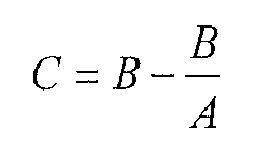
- wherein, My, Ly, Ny are y coordinate values of positions M, L, N in
FIG. 4B , respectively. Mx, Lx, Nx are x coordinate values of positions M, L, N inFIG. 4B , respectively. - Receiving key resynchronization data corresponding to the 8th period, the
receiver 20 determines a straight line E. The slope of the straight line E is calculated using an increase ratio between the slope of a straight line C and the slope of a straight line D. The straight line C is determined using the voice data values of the 5th period O and 6th period P, and the straight line D is determined using the voice data values of the 6th period P and 7th period Q. Since the slope of the straight line E is opposite to voice change direction (-) of the voice change direction information in a corresponding received frame, the voice data value R of the 8th period is chosen from among values on a straight line F symmetrical with respect to the straight line E. An example according to the above-described process is disclosed using following equations. -

-

-

-

wherein, Py, Oy, Qy are y coordinate values of positions P, O, Q inFIG. 4B , respectively. Px, Ox, Qx are x coordinate values of positions P, O, Q inFIG. 4B , respectively. - Specifically, in case of the 8th period, the slope of the straight line E has a positive value (+) but the voice change direction of the 8th period has a negative value (-), and thus the voice data value of the 8th period is chosen from among values on the straight line F symmetrical with respect to the straight line E.
- As described the above, the present invention can improve communication quality at the receiver by estimating a voice data value corresponding to a silent period due to periodic key resynchronization in one-way wireless communication environment using the gradually changing characteristic of voice data.
- In addition, in the present invention, there is no need to transmit a lot of additional information to estimate the voice data value and computation amount is reduced, and thus additional load is not applied to a corresponding communication system.
- It will be apparent to those skilled in the art that various modifications and variations can be made in the present invention. Thus, it is intended that the present invention covers the modifications and variations of this invention provided they come within the scope of the appended claims and their equivalents.
Claims (13)
- An apparatus for transmitting/receiving voice data in order to estimate a voice data value corresponding to a key resynchronization period, the apparatus comprising:a transmitter for generating a key resynchronization frame containing key resynchronization information and vector information on voice data inserted thereinto and transmitting the key resynchronization frame; anda receiver for receiving the key resynchronization frame from the transmitter, extracting the vector information inserted in the key resynchronization frame, and estimating the voice data value corresponding to the key resynchronization period.
- The apparatus of claim 1, wherein the vector information on voice data is voice change direction (+, -) information that is obtained from a difference between current voice data and preceding voice data.
- The apparatus of claim 1, wherein the transmitter comprises:an input unit for receiving voice data;a vocoder unit for encoding the voice data;a frame generating unit for generating the key resynchronization frame or a voice frame for the encoded voice data according to whether the key resynchronization information is needed, and including a vector information inserting unit inserting the vector information when the key resynchronization frame or the voice frame is generated; anda frame transmitting unit for transmitting the generated frame to the receiver.
- The apparatus of claim 1, wherein the receiver comprises:a frame receiving unit for receiving the frame from the transmitter;a frame analyzing unit for determining a type of the received frame based on whether the received frame contains the key resynchronization information, and including a voice data estimating unit extracting the vector information when the received frame is a key resynchronization frame and estimating the voice data value corresponding to the key resynchronization period;a vocoder unit for decoding encoded voice data of the key resynchronization frame; andan output unit for outputting the decoded voice data.
- The apparatus of claim 4, wherein the voice data estimating unit estimates the voice data value corresponding to the key resynchronization period by comparing the extracted vector information with a difference between slopes obtained using voice data in preceding frames.
- The apparatus of claim 5, wherein the voice data value corresponding to the key resynchronization period is chosen from values on a straight line having a slope obtained using the difference between the slopes when the extracted vector information is +, or the voice data value is chosen from values on a straight line having a slope opposite to the slope obtained using the difference between the slopes when the extracted vector information is -.
- A method for transmitting voice data to estimate a voice data value corresponding to a key resynchronization period, the method comprising:encoding received voice data;generating a key resynchronization frame or a voice frame for the encoded voice data according to whether key resynchronization information is needed, and inserting vector information on the received voice data when the key resynchronization frame or the voice frame is generated; andtransmitting the generated frame.
- The method of claim 7, wherein the vector information on the received voice data is a voice change direction (+, -) information that is obtained from a difference between a current voice data and a preceding voice data.
- A method for receiving voice data to estimate a voice data value corresponding to a key resynchronization period, the method comprising:analyzing a header of a received frame to determine whether the frame contains key resynchronization information;recognizing the frame as a key resynchronization frame when the frame contains key resynchronization information, extracting vector information on voice data inserted in the key resynchronization frame, and estimating the voice data value corresponding to the key resynchronization period; anddecoding encoded voice data of the key resynchronization frame and outputting the decoded voice data.
- The method of claim 9, wherein the vector information on voice data is voice change direction (+, -) information that is obtained from a difference between a current voice data and a preceding voice data.
- The method of claim 9, wherein the estimating of the voice data value corresponding to the key resynchronization period comprises estimating the voice data value by comparing the extracted vector information with a difference between slopes obtained using voice data in preceding frames.
- The method of claim 11, wherein the voice data value corresponding to the key resynchronization period is chosen from values on a straight line having a slope obtained using the difference between the slopes when the extracted vector information is +, or the voice data value is chosen from values on a straight line having a slope opposite to the slope obtained using the difference between the slopes when the extracted vector information is
- The method of claim 9, wherein the determining of whether the received frame contains key resynchronization information comprises:recognizing the received frame as a voice frame when the received frame does not contain key resynchronization information,decoding encoded voice data of the voice frame, calculating slopes using voice data in a current received frame and preceding received frame and a difference between the calculated slopes, and storing the calculated slopes and the difference.
Applications Claiming Priority (1)
| Application Number | Priority Date | Filing Date | Title |
|---|---|---|---|
| KR1020070059545A KR100906766B1 (en) | 2007-06-18 | 2007-06-18 | Voice data transmission and reception apparatus and method for voice data prediction in key resynchronization section |
Publications (2)
| Publication Number | Publication Date |
|---|---|
| EP2006838A1 true EP2006838A1 (en) | 2008-12-24 |
| EP2006838B1 EP2006838B1 (en) | 2009-12-16 |
Family
ID=39406129
Family Applications (1)
| Application Number | Title | Priority Date | Filing Date |
|---|---|---|---|
| EP08102518A Not-in-force EP2006838B1 (en) | 2007-06-18 | 2008-03-12 | Apparatus and method for transmitting/receiving voice data to estimate a voice data value corresponding to a resynchronization period |
Country Status (5)
| Country | Link |
|---|---|
| US (1) | US20080312936A1 (en) |
| EP (1) | EP2006838B1 (en) |
| KR (1) | KR100906766B1 (en) |
| AT (1) | ATE452400T1 (en) |
| DE (1) | DE602008000406D1 (en) |
Families Citing this family (4)
| Publication number | Priority date | Publication date | Assignee | Title |
|---|---|---|---|---|
| WO2013138633A1 (en) * | 2012-03-15 | 2013-09-19 | Regents Of The University Of Minnesota | Automated verbal fluency assessment |
| KR101383070B1 (en) * | 2012-11-19 | 2014-04-08 | 한국전자통신연구원 | Voice data protection apparatus and method in 3g mobile communication network |
| CN112802485B (en) * | 2021-04-12 | 2021-07-02 | 腾讯科技(深圳)有限公司 | Voice data processing method, device, computer equipment and storage medium |
| CN117131528B (en) * | 2023-09-04 | 2024-03-08 | 苏州派博思生物技术有限公司 | OEM information customization method and system |
Citations (3)
| Publication number | Priority date | Publication date | Assignee | Title |
|---|---|---|---|---|
| US20040010407A1 (en) * | 2000-09-05 | 2004-01-15 | Balazs Kovesi | Transmission error concealment in an audio signal |
| WO2007051124A1 (en) * | 2005-10-26 | 2007-05-03 | Qualcomm Incorporated | Encoder-assisted frame loss concealment techniques for audio coding |
| EP1921608A1 (en) * | 2006-11-13 | 2008-05-14 | Electronics And Telecommunications Research Institute | Method of inserting vector information for estimating voice data in key re-synchronization period, method of transmitting vector information, and method of estimating voice data in key re-synchronization using vector information |
Family Cites Families (15)
| Publication number | Priority date | Publication date | Assignee | Title |
|---|---|---|---|---|
| EP0245252A1 (en) | 1985-11-08 | 1987-11-19 | MARLEY, John | System and method for sound recognition with feature selection synchronized to voice pitch |
| DE4339464C2 (en) * | 1993-11-19 | 1995-11-16 | Litef Gmbh | Method for disguising and unveiling speech during voice transmission and device for carrying out the method |
| JP3585971B2 (en) * | 1994-12-21 | 2004-11-10 | 富士通株式会社 | Synchronizer for speech encoder and decoder |
| FI971959A7 (en) * | 1997-05-07 | 1998-11-08 | Nokia Corp | Method for eliminating synchronization error and radio system |
| KR100322015B1 (en) * | 1998-12-23 | 2002-03-08 | 윤종용 | Frame Structure Variable Method in Local Area Network |
| GB2364203B (en) * | 2000-06-27 | 2004-03-17 | Nokia Mobile Phones Ltd | Synchronisation |
| KR100391123B1 (en) * | 2001-01-30 | 2003-07-12 | 이태성 | speech recognition method and system using every single pitch-period data analysis |
| GB2388739B (en) * | 2001-11-03 | 2004-06-02 | Dremedia Ltd | Time ordered indexing of an information stream |
| CA2388439A1 (en) * | 2002-05-31 | 2003-11-30 | Voiceage Corporation | A method and device for efficient frame erasure concealment in linear predictive based speech codecs |
| US7394833B2 (en) * | 2003-02-11 | 2008-07-01 | Nokia Corporation | Method and apparatus for reducing synchronization delay in packet switched voice terminals using speech decoder modification |
| EP1557979B1 (en) | 2004-01-21 | 2007-01-31 | Tektronix International Sales GmbH | Method and device for determining the speech latency across a network element of a communication network |
| US8150684B2 (en) * | 2005-06-29 | 2012-04-03 | Panasonic Corporation | Scalable decoder preventing signal degradation and lost data interpolation method |
| US7457746B2 (en) * | 2006-03-20 | 2008-11-25 | Mindspeed Technologies, Inc. | Pitch prediction for packet loss concealment |
| US9083994B2 (en) * | 2006-09-26 | 2015-07-14 | Qualcomm Incorporated | Method and system for error robust audio playback time stamp reporting |
| US7912149B2 (en) * | 2007-05-03 | 2011-03-22 | General Motors Llc | Synchronization and segment type detection method for data transmission via an audio communication system |
-
2007
- 2007-06-18 KR KR1020070059545A patent/KR100906766B1/en not_active Expired - Fee Related
-
2008
- 2008-03-12 DE DE602008000406T patent/DE602008000406D1/en not_active Expired - Fee Related
- 2008-03-12 AT AT08102518T patent/ATE452400T1/en not_active IP Right Cessation
- 2008-03-12 EP EP08102518A patent/EP2006838B1/en not_active Not-in-force
- 2008-03-14 US US12/048,349 patent/US20080312936A1/en not_active Abandoned
Patent Citations (3)
| Publication number | Priority date | Publication date | Assignee | Title |
|---|---|---|---|---|
| US20040010407A1 (en) * | 2000-09-05 | 2004-01-15 | Balazs Kovesi | Transmission error concealment in an audio signal |
| WO2007051124A1 (en) * | 2005-10-26 | 2007-05-03 | Qualcomm Incorporated | Encoder-assisted frame loss concealment techniques for audio coding |
| EP1921608A1 (en) * | 2006-11-13 | 2008-05-14 | Electronics And Telecommunications Research Institute | Method of inserting vector information for estimating voice data in key re-synchronization period, method of transmitting vector information, and method of estimating voice data in key re-synchronization using vector information |
Also Published As
| Publication number | Publication date |
|---|---|
| DE602008000406D1 (en) | 2010-01-28 |
| EP2006838B1 (en) | 2009-12-16 |
| KR20080111311A (en) | 2008-12-23 |
| ATE452400T1 (en) | 2010-01-15 |
| US20080312936A1 (en) | 2008-12-18 |
| KR100906766B1 (en) | 2009-07-09 |
Similar Documents
| Publication | Publication Date | Title |
|---|---|---|
| JP6951536B2 (en) | Voice coding device and method | |
| US20110044324A1 (en) | Method and Apparatus for Voice Communication Based on Instant Messaging System | |
| CN101207468A (en) | Dropped frame concealment method, system and device | |
| US6389391B1 (en) | Voice coding and decoding in mobile communication equipment | |
| US20140088974A1 (en) | Apparatus and method for audio frame loss recovery | |
| KR20040005860A (en) | Method and system for comfort noise generation in speech communication | |
| JP2004177978A (en) | Method of generating comfortable noise of digital speech transmission system | |
| US6587817B1 (en) | Method and apparatus for determining speech coding parameters | |
| EP2006838B1 (en) | Apparatus and method for transmitting/receiving voice data to estimate a voice data value corresponding to a resynchronization period | |
| EP1746580B1 (en) | Acoustic signal packet communication method, transmission method, reception method, and device and program thereof | |
| US20030177011A1 (en) | Audio data interpolation apparatus and method, audio data-related information creation apparatus and method, audio data interpolation information transmission apparatus and method, program and recording medium thereof | |
| CN100580773C (en) | Voice packet transmission method and voice packet transmission device | |
| JP2004138756A (en) | Audio encoding device, audio decoding device, audio signal transmission method and program | |
| JP2003316670A (en) | Error concealment method, error concealment program, and error concealment device | |
| JP5123516B2 (en) | Decoding device, encoding device, decoding method, and encoding method | |
| CN107689226A (en) | A kind of low capacity Methods of Speech Information Hiding based on iLBC codings | |
| CN101383697B (en) | Apparatus and method for synchronizing time information using key re-synchronization frame in encryption communications | |
| EP1921608A1 (en) | Method of inserting vector information for estimating voice data in key re-synchronization period, method of transmitting vector information, and method of estimating voice data in key re-synchronization using vector information | |
| KR100792209B1 (en) | Method and apparatus for recovering digital audio packet loss | |
| EP2051243A1 (en) | Audio data decoding device | |
| US7061912B1 (en) | Method and apparatus of packet loss concealment for CVSD coders | |
| CN1929355B (en) | Restoring system and method for voice package losing | |
| US7962334B2 (en) | Receiving device and method | |
| KR20080043198A (en) | A vector information insertion method, a transmission method for predicting the speech data of the key resynchronization section, and a speech data prediction method between the key resynchronization mechanisms using the vector information | |
| KR20060002569A (en) | Receiver based packet loss recovery apparatus and method |
Legal Events
| Date | Code | Title | Description |
|---|---|---|---|
| PUAI | Public reference made under article 153(3) epc to a published international application that has entered the european phase |
Free format text: ORIGINAL CODE: 0009012 |
|
| AK | Designated contracting states |
Kind code of ref document: A1 Designated state(s): AT BE BG CH CY CZ DE DK EE ES FI FR GB GR HR HU IE IS IT LI LT LU LV MC MT NL NO PL PT RO SE SI SK TR |
|
| AX | Request for extension of the european patent |
Extension state: AL BA MK RS |
|
| 17P | Request for examination filed |
Effective date: 20090211 |
|
| 17Q | First examination report despatched |
Effective date: 20090313 |
|
| GRAP | Despatch of communication of intention to grant a patent |
Free format text: ORIGINAL CODE: EPIDOSNIGR1 |
|
| RTI1 | Title (correction) |
Free format text: APPARATUS AND METHOD FOR TRANSMITTING/RECEIVING VOICE DATA TO ESTIMATE A VOICE DATA VALUE CORRESPONDING TO A RESYNCHRONIZATION PERIOD |
|
| AKX | Designation fees paid |
Designated state(s): AT BE BG CH CY CZ DE DK EE ES FI FR GB GR HR HU IE IS IT LI LT LU LV MC MT NL NO PL PT RO SE SI SK TR |
|
| GRAS | Grant fee paid |
Free format text: ORIGINAL CODE: EPIDOSNIGR3 |
|
| GRAA | (expected) grant |
Free format text: ORIGINAL CODE: 0009210 |
|
| AK | Designated contracting states |
Kind code of ref document: B1 Designated state(s): AT BE BG CH CY CZ DE DK EE ES FI FR GB GR HR HU IE IS IT LI LT LU LV MC MT NL NO PL PT RO SE SI SK TR |
|
| REG | Reference to a national code |
Ref country code: GB Ref legal event code: FG4D |
|
| REG | Reference to a national code |
Ref country code: CH Ref legal event code: EP |
|
| REG | Reference to a national code |
Ref country code: IE Ref legal event code: FG4D |
|
| REF | Corresponds to: |
Ref document number: 602008000406 Country of ref document: DE Date of ref document: 20100128 Kind code of ref document: P |
|
| REG | Reference to a national code |
Ref country code: NL Ref legal event code: VDEP Effective date: 20091216 |
|
| PG25 | Lapsed in a contracting state [announced via postgrant information from national office to epo] |
Ref country code: NO Free format text: LAPSE BECAUSE OF FAILURE TO SUBMIT A TRANSLATION OF THE DESCRIPTION OR TO PAY THE FEE WITHIN THE PRESCRIBED TIME-LIMIT Effective date: 20100316 Ref country code: FI Free format text: LAPSE BECAUSE OF FAILURE TO SUBMIT A TRANSLATION OF THE DESCRIPTION OR TO PAY THE FEE WITHIN THE PRESCRIBED TIME-LIMIT Effective date: 20091216 Ref country code: SE Free format text: LAPSE BECAUSE OF FAILURE TO SUBMIT A TRANSLATION OF THE DESCRIPTION OR TO PAY THE FEE WITHIN THE PRESCRIBED TIME-LIMIT Effective date: 20091216 Ref country code: LT Free format text: LAPSE BECAUSE OF FAILURE TO SUBMIT A TRANSLATION OF THE DESCRIPTION OR TO PAY THE FEE WITHIN THE PRESCRIBED TIME-LIMIT Effective date: 20091216 |
|
| LTIE | Lt: invalidation of european patent or patent extension |
Effective date: 20091216 |
|
| PG25 | Lapsed in a contracting state [announced via postgrant information from national office to epo] |
Ref country code: HR Free format text: LAPSE BECAUSE OF FAILURE TO SUBMIT A TRANSLATION OF THE DESCRIPTION OR TO PAY THE FEE WITHIN THE PRESCRIBED TIME-LIMIT Effective date: 20091216 Ref country code: SI Free format text: LAPSE BECAUSE OF FAILURE TO SUBMIT A TRANSLATION OF THE DESCRIPTION OR TO PAY THE FEE WITHIN THE PRESCRIBED TIME-LIMIT Effective date: 20091216 Ref country code: PL Free format text: LAPSE BECAUSE OF FAILURE TO SUBMIT A TRANSLATION OF THE DESCRIPTION OR TO PAY THE FEE WITHIN THE PRESCRIBED TIME-LIMIT Effective date: 20091216 Ref country code: LV Free format text: LAPSE BECAUSE OF FAILURE TO SUBMIT A TRANSLATION OF THE DESCRIPTION OR TO PAY THE FEE WITHIN THE PRESCRIBED TIME-LIMIT Effective date: 20091216 |
|
| PG25 | Lapsed in a contracting state [announced via postgrant information from national office to epo] |
Ref country code: AT Free format text: LAPSE BECAUSE OF FAILURE TO SUBMIT A TRANSLATION OF THE DESCRIPTION OR TO PAY THE FEE WITHIN THE PRESCRIBED TIME-LIMIT Effective date: 20091216 |
|
| PG25 | Lapsed in a contracting state [announced via postgrant information from national office to epo] |
Ref country code: NL Free format text: LAPSE BECAUSE OF FAILURE TO SUBMIT A TRANSLATION OF THE DESCRIPTION OR TO PAY THE FEE WITHIN THE PRESCRIBED TIME-LIMIT Effective date: 20091216 Ref country code: EE Free format text: LAPSE BECAUSE OF FAILURE TO SUBMIT A TRANSLATION OF THE DESCRIPTION OR TO PAY THE FEE WITHIN THE PRESCRIBED TIME-LIMIT Effective date: 20091216 Ref country code: IS Free format text: LAPSE BECAUSE OF FAILURE TO SUBMIT A TRANSLATION OF THE DESCRIPTION OR TO PAY THE FEE WITHIN THE PRESCRIBED TIME-LIMIT Effective date: 20100416 Ref country code: ES Free format text: LAPSE BECAUSE OF FAILURE TO SUBMIT A TRANSLATION OF THE DESCRIPTION OR TO PAY THE FEE WITHIN THE PRESCRIBED TIME-LIMIT Effective date: 20100327 Ref country code: RO Free format text: LAPSE BECAUSE OF FAILURE TO SUBMIT A TRANSLATION OF THE DESCRIPTION OR TO PAY THE FEE WITHIN THE PRESCRIBED TIME-LIMIT Effective date: 20091216 Ref country code: BG Free format text: LAPSE BECAUSE OF FAILURE TO SUBMIT A TRANSLATION OF THE DESCRIPTION OR TO PAY THE FEE WITHIN THE PRESCRIBED TIME-LIMIT Effective date: 20100316 |
|
| PG25 | Lapsed in a contracting state [announced via postgrant information from national office to epo] |
Ref country code: SK Free format text: LAPSE BECAUSE OF FAILURE TO SUBMIT A TRANSLATION OF THE DESCRIPTION OR TO PAY THE FEE WITHIN THE PRESCRIBED TIME-LIMIT Effective date: 20091216 Ref country code: CZ Free format text: LAPSE BECAUSE OF FAILURE TO SUBMIT A TRANSLATION OF THE DESCRIPTION OR TO PAY THE FEE WITHIN THE PRESCRIBED TIME-LIMIT Effective date: 20091216 Ref country code: BE Free format text: LAPSE BECAUSE OF FAILURE TO SUBMIT A TRANSLATION OF THE DESCRIPTION OR TO PAY THE FEE WITHIN THE PRESCRIBED TIME-LIMIT Effective date: 20091216 |
|
| PLBE | No opposition filed within time limit |
Free format text: ORIGINAL CODE: 0009261 |
|
| STAA | Information on the status of an ep patent application or granted ep patent |
Free format text: STATUS: NO OPPOSITION FILED WITHIN TIME LIMIT |
|
| PG25 | Lapsed in a contracting state [announced via postgrant information from national office to epo] |
Ref country code: MC Free format text: LAPSE BECAUSE OF NON-PAYMENT OF DUE FEES Effective date: 20100331 Ref country code: CY Free format text: LAPSE BECAUSE OF FAILURE TO SUBMIT A TRANSLATION OF THE DESCRIPTION OR TO PAY THE FEE WITHIN THE PRESCRIBED TIME-LIMIT Effective date: 20091216 Ref country code: GR Free format text: LAPSE BECAUSE OF FAILURE TO SUBMIT A TRANSLATION OF THE DESCRIPTION OR TO PAY THE FEE WITHIN THE PRESCRIBED TIME-LIMIT Effective date: 20100317 |
|
| 26N | No opposition filed |
Effective date: 20100917 |
|
| PG25 | Lapsed in a contracting state [announced via postgrant information from national office to epo] |
Ref country code: IE Free format text: LAPSE BECAUSE OF NON-PAYMENT OF DUE FEES Effective date: 20100312 Ref country code: DK Free format text: LAPSE BECAUSE OF FAILURE TO SUBMIT A TRANSLATION OF THE DESCRIPTION OR TO PAY THE FEE WITHIN THE PRESCRIBED TIME-LIMIT Effective date: 20091216 |
|
| PG25 | Lapsed in a contracting state [announced via postgrant information from national office to epo] |
Ref country code: DE Free format text: LAPSE BECAUSE OF NON-PAYMENT OF DUE FEES Effective date: 20101001 |
|
| PG25 | Lapsed in a contracting state [announced via postgrant information from national office to epo] |
Ref country code: IT Free format text: LAPSE BECAUSE OF FAILURE TO SUBMIT A TRANSLATION OF THE DESCRIPTION OR TO PAY THE FEE WITHIN THE PRESCRIBED TIME-LIMIT Effective date: 20091216 |
|
| PG25 | Lapsed in a contracting state [announced via postgrant information from national office to epo] |
Ref country code: MT Free format text: LAPSE BECAUSE OF FAILURE TO SUBMIT A TRANSLATION OF THE DESCRIPTION OR TO PAY THE FEE WITHIN THE PRESCRIBED TIME-LIMIT Effective date: 20091216 |
|
| PG25 | Lapsed in a contracting state [announced via postgrant information from national office to epo] |
Ref country code: HU Free format text: LAPSE BECAUSE OF FAILURE TO SUBMIT A TRANSLATION OF THE DESCRIPTION OR TO PAY THE FEE WITHIN THE PRESCRIBED TIME-LIMIT Effective date: 20100617 Ref country code: PT Free format text: LAPSE BECAUSE OF FAILURE TO SUBMIT A TRANSLATION OF THE DESCRIPTION OR TO PAY THE FEE WITHIN THE PRESCRIBED TIME-LIMIT Effective date: 20100516 Ref country code: LU Free format text: LAPSE BECAUSE OF NON-PAYMENT OF DUE FEES Effective date: 20100312 |
|
| PG25 | Lapsed in a contracting state [announced via postgrant information from national office to epo] |
Ref country code: TR Free format text: LAPSE BECAUSE OF FAILURE TO SUBMIT A TRANSLATION OF THE DESCRIPTION OR TO PAY THE FEE WITHIN THE PRESCRIBED TIME-LIMIT Effective date: 20091216 |
|
| REG | Reference to a national code |
Ref country code: CH Ref legal event code: PL |
|
| GBPC | Gb: european patent ceased through non-payment of renewal fee |
Effective date: 20120312 |
|
| PG25 | Lapsed in a contracting state [announced via postgrant information from national office to epo] |
Ref country code: LI Free format text: LAPSE BECAUSE OF NON-PAYMENT OF DUE FEES Effective date: 20120331 Ref country code: CH Free format text: LAPSE BECAUSE OF NON-PAYMENT OF DUE FEES Effective date: 20120331 Ref country code: GB Free format text: LAPSE BECAUSE OF NON-PAYMENT OF DUE FEES Effective date: 20120312 |
|
| REG | Reference to a national code |
Ref country code: FR Ref legal event code: PLFP Year of fee payment: 9 |
|
| PGFP | Annual fee paid to national office [announced via postgrant information from national office to epo] |
Ref country code: FR Payment date: 20151229 Year of fee payment: 9 |
|
| REG | Reference to a national code |
Ref country code: FR Ref legal event code: ST Effective date: 20171130 |
|
| PG25 | Lapsed in a contracting state [announced via postgrant information from national office to epo] |
Ref country code: FR Free format text: LAPSE BECAUSE OF NON-PAYMENT OF DUE FEES Effective date: 20170331 |