EP2003824A1 - Method of performing multicast admission control in a communications network, central admission controller and communications network - Google Patents
Method of performing multicast admission control in a communications network, central admission controller and communications network Download PDFInfo
- Publication number
- EP2003824A1 EP2003824A1 EP07290738A EP07290738A EP2003824A1 EP 2003824 A1 EP2003824 A1 EP 2003824A1 EP 07290738 A EP07290738 A EP 07290738A EP 07290738 A EP07290738 A EP 07290738A EP 2003824 A1 EP2003824 A1 EP 2003824A1
- Authority
- EP
- European Patent Office
- Prior art keywords
- communications network
- node
- multicast channel
- nodes
- host system
- Prior art date
- Legal status (The legal status is an assumption and is not a legal conclusion. Google has not performed a legal analysis and makes no representation as to the accuracy of the status listed.)
- Granted
Links
Images

Classifications
-
- H—ELECTRICITY
- H04—ELECTRIC COMMUNICATION TECHNIQUE
- H04L—TRANSMISSION OF DIGITAL INFORMATION, e.g. TELEGRAPHIC COMMUNICATION
- H04L47/00—Traffic control in data switching networks
- H04L47/70—Admission control; Resource allocation
-
- H—ELECTRICITY
- H04—ELECTRIC COMMUNICATION TECHNIQUE
- H04L—TRANSMISSION OF DIGITAL INFORMATION, e.g. TELEGRAPHIC COMMUNICATION
- H04L12/00—Data switching networks
- H04L12/02—Details
- H04L12/16—Arrangements for providing special services to substations
- H04L12/18—Arrangements for providing special services to substations for broadcast or conference, e.g. multicast
-
- H—ELECTRICITY
- H04—ELECTRIC COMMUNICATION TECHNIQUE
- H04L—TRANSMISSION OF DIGITAL INFORMATION, e.g. TELEGRAPHIC COMMUNICATION
- H04L47/00—Traffic control in data switching networks
- H04L47/10—Flow control; Congestion control
Definitions
- the invention relates to a method of performing multicast admission control in a communications network, to a central admission controller for performing multicast admission control in a communications network, and to a communications network comprising such a central admission controller.
- a simplified representation of a portion of a communications network 1 comprising a multicast tree 2 is shown in Fig. 1a .
- the multicast tree 2 has a source 3 for providing a plurality of services, e.g. voice over IP, Broadcast TV, or Video on Demand (VoD), over a first and second multicast channel 4a, 4b (represented as a sequence of arrows) to a plurality of host systems, a first and second of which 5a, 5b are shown in Fig. 1a .
- a source 3 for providing a plurality of services, e.g. voice over IP, Broadcast TV, or Video on Demand (VoD), over a first and second multicast channel 4a, 4b (represented as a sequence of arrows) to a plurality of host systems, a first and second of which 5a, 5b are shown in Fig. 1a .
- VoD Video on Demand
- the first multicast channel 4a is established between the source 3 and the first host system 5a by replicating the first multicast channel 4a at each of three replication nodes 1-1 to 3-1 connecting the source 3 to the first host system 5a over corresponding interconnecting links 1.1 to 3.1 , T1.
- the first multicast channel 4a is also established on two further nodes 1-2, 2-2 being connected to the second and third nodes 2-1 and 3-1, respectively.
- the second multicast channel 4b is established between the source 3, the third node 3-1 and the second of the further nodes 2-2.
- the second host system 5b For establishing the second multicast channel 4b as a new multicast channel between the second host system 5b and the source 3, the second host system 5b generates a request 6 for a multicast channel which is transmitted to the first node 1-1 in the multicast tree 2 over a corresponding interconnecting link T2, the request being e.g. of the IGMP (Internet Group Management Protocol) type.
- IGMP Internet Group Management Protocol
- the first node 1-1 performs Local Admission Control, i.e. it checks local resources, and typically, the downstream interconnecting link T2 to the second host system 5b. If the Local Admission Control at the first node 1-1 succeeds, the first node 1-1 forwards the request 6 for a new multicast channel to the second node 2-1, being the upper node in the multicast tree 2. The same procedure is repeated by the second node 2-1 and the third node 3-1.
- Local Admission Control i.e. it checks local resources, and typically, the downstream interconnecting link T2 to the second host system 5b. If the Local Admission Control at the first node 1-1 succeeds, the first node 1-1 forwards the request 6 for a new multicast channel to the second node 2-1, being the upper node in the multicast tree 2. The same procedure is repeated by the second node 2-1 and the third node 3-1.
- the problem with the algorithm illustrated in Fig. 1a is that the total time it takes is a function of the number of IGMP hops from multicast node to multicast node in the multicast tree. As the number of hops increases, the time to perform the Local Admission Control on all replication nodes in the multicast tree also increases. Depending on the business success of Multicast Traffic (such as Broadcast TV), the number of multicast channels and the number of end users may increase in the near future. As a consequence, the probability that a given channel is available at a given node in the multicast tree will decrease. In other terms, the number of IGMP hops on which Local Admission Control needs to be performed will increase, thus the total time to perform the Multicast Admission Control will also increase.
- Multicast Traffic such as Broadcast TV
- the request 6 for a new multicast channel anyway has to cross several hops before the request is eventually denied, as illustrated in Fig. 1b : the Local Admission Control fails at the third node 3-1 (see the cross in Fig. 1b ), but the request 6 nevertheless needs to cross the first node 1-1 and the second node 2-1 and Local Admission Control needs to be performed on all of the three nodes 1-1 to 3-1.
- a module for negotiating multi-service admission control which distributes the admission process for multicast channels between a centralized decision function and a distributed, i.e. local admission function.
- the local admission function can be established in replication nodes of a communications network, allowing the multicast replication nodes to participate in the admission control process.
- a method comprising the steps of: a) receiving, at a first node of the communications network, a request for a multicast channel from a host system communicatively coupled to the first node; b) sending, by the first node, a request for the multicast channel to a central admission controller of the communications network, the sending of the request being triggered by receiving the request from the host system; c) determining, by the central admission controller, if sufficient resources exist on nodes and interconnecting links of the communications network to provide the requested multicast channel from a source to the host system; and d) in case that sufficient resources exist, installing on the nodes having sufficient resources to provide the requested multicast channel to the host system, a replication rule for the multicast channel.
- the first node in the multicast tree that receives the request for a new multicast channel delegates admission control to a central admission controller. This may be done by simply forwarding the request received from the host system to the central admission controller. Alternatively, the node may generate a new request being triggered by the request from the host system, the new request e.g. being of a protocol type which is different from the one it has received. In particular, a specific protocol type for communicating with the central admission controller may be used.
- the central admission controller performs admission control over all interconnecting links and nodes in the multicast tree: it has a global view of the multicast tree and is aware of the distribution of the multicast channels. In this way, the central admission controller is able to detect possible congestion with a single check. If the central admission control succeeds, the central admission controller installs the new rule for channel replication in the appropriate nodes in the multicast tree.
- step c) includes determining the nodes and interconnecting links in the communications network on which the requested multicast channel has to be established.
- the central admission controller first determines those multicast nodes and interconnecting links upon which the new channel needs to be established before determining if the new channel can be established on these nodes and interconnecting links, taking into account their available resources and limitations.
- the replication rule for the requested multicast channel is installed in parallel on the nodes, so as to speed up the process of multicast admission control.
- the method further comprises the step of transmitting a denial of service message from the central admission controller to the first node in case that in step c) it is determined that existing resources are insufficient.
- the central admission controller is able to detect potential problems which can be reported immediately to the end user of the host system requesting the new multicast channel. There is no need to propagate the request for the new multicast channel from node to node in the multicast tree.
- the host system generates a request for a multicast channel, in particular an IGMP request, to be received by the first node.
- a multicast channel in particular an IGMP request
- other protocols such as the PIM (protocol independent multicast) familiy of protocols may be used by the host system.
- the invention is also realized in a central admission controller for performing multicast admission control in a communications network, comprising: receiving means for receiving a request for a multicast channel sent from a first node of the communications network, resource determining means for determining if sufficient resources exist on nodes and interconnecting links of the communications network to provide the requested multicast channel from a source to a host system communicatively coupled to the first node, and replication rule installation means for installing a replication rule for the multicast channel on the nodes having sufficient resources to provide the requested multicast channel to the host system.
- the central admission controller has full knowledge of the resources both of the interconnecting links and the nodes of the multicast tree.
- the maximum number of multicast channels the node can handle is known to the central admission controller.
- the central admission controller also has knowledge, for each interconnecting link of the multicast tree, of the maximum number of multicast channels that can be transmitted over that link.
- the replication rule installation means are construed for parallel installation of the replication rule on the nodes, thus establishing the new multicast channel more rapidly.
- the resource determining means are construed to determine the nodes and interconnecting links in the communications network on which the requested multicast channel has to be established.
- the nodes and interconnecting links which may be used for establishing the new multicast channel between the source and the host system should be determined by the resource determining means before a check if sufficient resources exist on that specific nodes and interconnecting links can be made.
- the central admission controller further comprises a denial of service generating means for generating a denial of service message to be sent to the first node in case that the resource determining means determines that existing resources are insufficient.
- the denial of service message is sent from the central admission controller to the host system vial the first node, such that there is no need to propagate the request for the new multicast channel from multicast node to multicast node.
- the invention is further realized in a communications network, comprising: a source for providing a number of services, a plurality of nodes and interconnecting links distributed between the source and a host system communicatively coupled to a first node of the communications network, and a central admission controller as described above for performing multicast admission control in the communications network.
- the communications network having a central admission controller can use the admission control process as described above, enhancing the Quality of Service (QoS) of the network.
- QoS Quality of Service
- a session resource broker may serve as a central admission controller for performing the admission control function as described above.
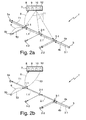
- Fig. 2a representing a communications network 1' comprising the multicast tree 2 as described above with reference to Figs. 1a ,b.
- the second host system 5b For establishing a new multicast channel between the source 3 and the second host system 5b of the multicast tree 2, the second host system 5b generates a request 6 for a new multicast channel of the IGMP type.
- IGMP type e.g. of the IGMP type
- the request 6 is received at the first node 1-1 of the multicast tree 2 and is forwarded to a central admission controller 7. Instead of forwarding the request 6, the first node 1-1 may generate a new request e.g. being of a different protocol type and send the new request to the central admission controller 7. In this way, a specific communication protocol type for communicating between the node 1-1 and the central admission controller 7 may be used.
- the central admission controller 7 comprises receiving means 8 for receiving the request 6.
- the central admission controller 7 uses resource determining means 9 for determining if sufficient resources for establishing a new multicast channel between the source 3 and the second host system 5b can be established.
- the resource determining means 9 first determine the nodes and interconnecting links in the communications network 1' on which the requested multicast channel has to be established. In the present case, there are the three nodes 1-1 to 3-1 and the corresponding communication links 1.1 to 3.1, T2 which need to be crossed by the new multicast channel 4b.
- the resource determining means 9 determines if sufficient resources exist on the nodes 1-1 to 3-1 and interconnecting links 1.1 to 3.1, T2 to provide the requested multicast channel to an end user at the second host system 5b.
- the central admission controller 7 has full knowledge of the resources both of the interconnecting links 1.1 to 3.1, T2 and the nodes 1-1 to 3-1 of the multicast tree 2, i.e. it has knowledge for any given node 1-1 to 3-1 of the maximum number of multicast channels which can be handled by that node.
- the central admission controller 7 has full knowledge of the maximum number of multicast channels which can be transmitted over the respective links 1.1 to 3.1, T2 between the source 3, the nodes 1-1 to 3-1, and the second host system 5b.
- a replication rule installation means 10 uses enforcement (see arrows 11 ) to install a replication rule for the new multicast channel 4b in parallel on each of the three nodes 1-1 to 3-1 in the path from the source 3 to the second host system 5b. As a result, the new multicast channel 4b will be established between the two of them, and the multicast admission control process is finished.
- the resource determination means 9 notifies this to a denial of service generating means 12 of the central admission controller 7 which generates a denial of service message 13 which is sent to the first node 1-1 which notifies the second host system 5b that the new multicast link 4b cannot be established.
- the request 6 for a new multicast channel does not need to be propagated from the first node 1-1 to the second node 2-1 and the third node 3-1 in the multicast tree 2. Furthermore, potential problems can be detected immediately and notification can be made to the host systems in the communications network 1' very quickly, thus enhancing quality of service of the communications network 1'.
- the solution described above makes use of Central Admission Control which is scalable, i.e. there is no considerable increase of the time for performing multicast admission control when the number of users in a communications network increases. Nevertheless, the first node 1-1 may also perform Local Admission Control, i.e. checking if the downstream link T2 to the host system 5b and the first node 1-1 itself have sufficient capacity to support the new multicast channel 4b. If this is the case, the request 6 to the central admission controller 7 will be sent, otherwise a denial of service message is sent directly to the second host system 5b.
- Local Admission Control i.e. checking if the downstream link T2 to the host system 5b and the first node 1-1 itself have sufficient capacity to support the new multicast channel 4b. If this is the case, the request 6 to the central admission controller 7 will be sent, otherwise a denial of service message is sent directly to the second host system 5b.
Landscapes
- Engineering & Computer Science (AREA)
- Computer Networks & Wireless Communication (AREA)
- Signal Processing (AREA)
- Data Exchanges In Wide-Area Networks (AREA)
Abstract
Description
- The invention relates to a method of performing multicast admission control in a communications network, to a central admission controller for performing multicast admission control in a communications network, and to a communications network comprising such a central admission controller.
- For illustrating current practice of multicast admission control, a simplified representation of a portion of a
communications network 1 comprising amulticast tree 2 is shown inFig. 1a . Themulticast tree 2 has asource 3 for providing a plurality of services, e.g. voice over IP, Broadcast TV, or Video on Demand (VoD), over a first andsecond multicast channel Fig. 1a . Thefirst multicast channel 4a is established between thesource 3 and thefirst host system 5a by replicating thefirst multicast channel 4a at each of three replication nodes 1-1 to 3-1 connecting thesource 3 to thefirst host system 5a over corresponding interconnecting links 1.1 to 3.1, T1. Thefirst multicast channel 4a is also established on two further nodes 1-2, 2-2 being connected to the second and third nodes 2-1 and 3-1, respectively. Thesecond multicast channel 4b is established between thesource 3, the third node 3-1 and the second of the further nodes 2-2. - For establishing the
second multicast channel 4b as a new multicast channel between thesecond host system 5b and thesource 3, thesecond host system 5b generates arequest 6 for a multicast channel which is transmitted to the first node 1-1 in themulticast tree 2 over a corresponding interconnecting link T2, the request being e.g. of the IGMP (Internet Group Management Protocol) type. - As the requested channel is not yet available at the first node 1-1, the first node 1-1 performs Local Admission Control, i.e. it checks local resources, and typically, the downstream interconnecting link T2 to the
second host system 5b. If the Local Admission Control at the first node 1-1 succeeds, the first node 1-1 forwards therequest 6 for a new multicast channel to the second node 2-1, being the upper node in themulticast tree 2. The same procedure is repeated by the second node 2-1 and the third node 3-1. - The problem with the algorithm illustrated in
Fig. 1a is that the total time it takes is a function of the number of IGMP hops from multicast node to multicast node in the multicast tree. As the number of hops increases, the time to perform the Local Admission Control on all replication nodes in the multicast tree also increases. Depending on the business success of Multicast Traffic (such as Broadcast TV), the number of multicast channels and the number of end users may increase in the near future. As a consequence, the probability that a given channel is available at a given node in the multicast tree will decrease. In other terms, the number of IGMP hops on which Local Admission Control needs to be performed will increase, thus the total time to perform the Multicast Admission Control will also increase. - Furthermore, in the algorithm illustrated in
Fig. 1a , in case an upper node in themulticast tree 2 is unable to add the new multicast channel, therequest 6 for a new multicast channel anyway has to cross several hops before the request is eventually denied, as illustrated inFig. 1b : the Local Admission Control fails at the third node 3-1 (see the cross inFig. 1b ), but therequest 6 nevertheless needs to cross the first node 1-1 and the second node 2-1 and Local Admission Control needs to be performed on all of the three nodes 1-1 to 3-1. - From
US 2007/0081459 A1 , a module for negotiating multi-service admission control is known which distributes the admission process for multicast channels between a centralized decision function and a distributed, i.e. local admission function. The local admission function can be established in replication nodes of a communications network, allowing the multicast replication nodes to participate in the admission control process. - It is the object of the invention to provide a method for performing multicast admission control in a communications network, to provide a central admission controller for performing multicast admission control, and to provide a communications network comprising such a central admission controller, all of which allow multicast admission control which can be performed more rapidly, and, in particular, with immediate detection of potential problems.
- This object is achieved by a method comprising the steps of: a) receiving, at a first node of the communications network, a request for a multicast channel from a host system communicatively coupled to the first node; b) sending, by the first node, a request for the multicast channel to a central admission controller of the communications network, the sending of the request being triggered by receiving the request from the host system; c) determining, by the central admission controller, if sufficient resources exist on nodes and interconnecting links of the communications network to provide the requested multicast channel from a source to the host system; and d) in case that sufficient resources exist, installing on the nodes having sufficient resources to provide the requested multicast channel to the host system, a replication rule for the multicast channel.
- In the solution proposed above, the first node in the multicast tree that receives the request for a new multicast channel delegates admission control to a central admission controller. This may be done by simply forwarding the request received from the host system to the central admission controller. Alternatively, the node may generate a new request being triggered by the request from the host system, the new request e.g. being of a protocol type which is different from the one it has received. In particular, a specific protocol type for communicating with the central admission controller may be used.
- The central admission controller performs admission control over all interconnecting links and nodes in the multicast tree: it has a global view of the multicast tree and is aware of the distribution of the multicast channels. In this way, the central admission controller is able to detect possible congestion with a single check. If the central admission control succeeds, the central admission controller installs the new rule for channel replication in the appropriate nodes in the multicast tree.
- In a preferred variant, step c) includes determining the nodes and interconnecting links in the communications network on which the requested multicast channel has to be established. In this case, the central admission controller first determines those multicast nodes and interconnecting links upon which the new channel needs to be established before determining if the new channel can be established on these nodes and interconnecting links, taking into account their available resources and limitations.
- In a highly preferred variant, the replication rule for the requested multicast channel is installed in parallel on the nodes, so as to speed up the process of multicast admission control.
- In another highly preferred variant, the method further comprises the step of transmitting a denial of service message from the central admission controller to the first node in case that in step c) it is determined that existing resources are insufficient. The central admission controller is able to detect potential problems which can be reported immediately to the end user of the host system requesting the new multicast channel. There is no need to propagate the request for the new multicast channel from node to node in the multicast tree.
- In a further variant, the host system generates a request for a multicast channel, in particular an IGMP request, to be received by the first node. Also, other protocols such as the PIM (protocol independent multicast) familiy of protocols may be used by the host system.
- The invention is also realized in a central admission controller for performing multicast admission control in a communications network, comprising: receiving means for receiving a request for a multicast channel sent from a first node of the communications network, resource determining means for determining if sufficient resources exist on nodes and interconnecting links of the communications network to provide the requested multicast channel from a source to a host system communicatively coupled to the first node, and replication rule installation means for installing a replication rule for the multicast channel on the nodes having sufficient resources to provide the requested multicast channel to the host system. The central admission controller has full knowledge of the resources both of the interconnecting links and the nodes of the multicast tree. For any given node of the multicast tree, the maximum number of multicast channels the node can handle, any local limitation, etc. is known to the central admission controller. The central admission controller also has knowledge, for each interconnecting link of the multicast tree, of the maximum number of multicast channels that can be transmitted over that link.
- In a highly preferred embodiment, the replication rule installation means are construed for parallel installation of the replication rule on the nodes, thus establishing the new multicast channel more rapidly.
- In a further preferred embodiment, the resource determining means are construed to determine the nodes and interconnecting links in the communications network on which the requested multicast channel has to be established. The nodes and interconnecting links which may be used for establishing the new multicast channel between the source and the host system should be determined by the resource determining means before a check if sufficient resources exist on that specific nodes and interconnecting links can be made.
- In a highly preferred embodiment, the central admission controller further comprises a denial of service generating means for generating a denial of service message to be sent to the first node in case that the resource determining means determines that existing resources are insufficient. The denial of service message is sent from the central admission controller to the host system vial the first node, such that there is no need to propagate the request for the new multicast channel from multicast node to multicast node.
- The invention is further realized in a communications network, comprising: a source for providing a number of services, a plurality of nodes and interconnecting links distributed between the source and a host system communicatively coupled to a first node of the communications network, and a central admission controller as described above for performing multicast admission control in the communications network. The communications network having a central admission controller can use the admission control process as described above, enhancing the Quality of Service (QoS) of the network. In a network access provider network, a session resource broker (SRB) may serve as a central admission controller for performing the admission control function as described above.
- Further characteristics and advantages of the invention are provided in the following description of exemplary embodiments of the invention, with reference to the figures of the drawing, which shows details that are significant in the context of the invention, and in the claims. The individual characteristics can be implemented individually by themselves, or several of them can be implemented in any desired combination in a variant of the invention.
- The invention is shown in the drawing.
- Figs. 1a,b
- show a communications network with a multicast tree for illustration of a session admission control method according to the state of the art, and
- Figs. 2a,b
- show an embodiment of a communications network according to the invention comprising a central admission controller according to the invention.
- In the following, an admission control process for a new multicast channel will be described with reference to
Fig. 2a , representing a communications network 1' comprising themulticast tree 2 as described above with reference toFigs. 1a ,b. For establishing a new multicast channel between thesource 3 and thesecond host system 5b of themulticast tree 2, thesecond host system 5b generates arequest 6 for a new multicast channel of the IGMP type. The person skilled in the art will appreciate that for this purpose other protocol types, e.g. of the PIM family, may be used as well. - The
request 6 is received at the first node 1-1 of themulticast tree 2 and is forwarded to a central admission controller 7. Instead of forwarding therequest 6, the first node 1-1 may generate a new request e.g. being of a different protocol type and send the new request to the central admission controller 7. In this way, a specific communication protocol type for communicating between the node 1-1 and the central admission controller 7 may be used. - The central admission controller 7 comprises receiving means 8 for receiving the
request 6. Upon reception of therequest 6, the central admission controller 7 usesresource determining means 9 for determining if sufficient resources for establishing a new multicast channel between thesource 3 and thesecond host system 5b can be established. For this purpose, theresource determining means 9 first determine the nodes and interconnecting links in the communications network 1' on which the requested multicast channel has to be established. In the present case, there are the three nodes 1-1 to 3-1 and the corresponding communication links 1.1 to 3.1, T2 which need to be crossed by thenew multicast channel 4b. - In a subsequent step, the
resource determining means 9 determines if sufficient resources exist on the nodes 1-1 to 3-1 and interconnecting links 1.1 to 3.1, T2 to provide the requested multicast channel to an end user at thesecond host system 5b. The central admission controller 7 has full knowledge of the resources both of the interconnecting links 1.1 to 3.1, T2 and the nodes 1-1 to 3-1 of themulticast tree 2, i.e. it has knowledge for any given node 1-1 to 3-1 of the maximum number of multicast channels which can be handled by that node. Moreover, the central admission controller 7 has full knowledge of the maximum number of multicast channels which can be transmitted over the respective links 1.1 to 3.1, T2 between thesource 3, the nodes 1-1 to 3-1, and thesecond host system 5b. - If the
resource determining means 9 determines that sufficient resources exist, a replication rule installation means 10 uses enforcement (see arrows 11) to install a replication rule for thenew multicast channel 4b in parallel on each of the three nodes 1-1 to 3-1 in the path from thesource 3 to thesecond host system 5b. As a result, thenew multicast channel 4b will be established between the two of them, and the multicast admission control process is finished. - In case that the existing resources are insufficient, e.g. in case that the interconnecting link 2.1 between the second node 2-1 and the third node 3-1 has just enough capacity for the
first multicast channel 4a (as shown inFig. 2b ), the resource determination means 9 notifies this to a denial of service generating means 12 of the central admission controller 7 which generates a denial ofservice message 13 which is sent to the first node 1-1 which notifies thesecond host system 5b that thenew multicast link 4b cannot be established. - Using the central admission controller 7, the
request 6 for a new multicast channel does not need to be propagated from the first node 1-1 to the second node 2-1 and the third node 3-1 in themulticast tree 2. Furthermore, potential problems can be detected immediately and notification can be made to the host systems in the communications network 1' very quickly, thus enhancing quality of service of the communications network 1'. - The solution described above makes use of Central Admission Control which is scalable, i.e. there is no considerable increase of the time for performing multicast admission control when the number of users in a communications network increases. Nevertheless, the first node 1-1 may also perform Local Admission Control, i.e. checking if the downstream link T2 to the
host system 5b and the first node 1-1 itself have sufficient capacity to support thenew multicast channel 4b. If this is the case, therequest 6 to the central admission controller 7 will be sent, otherwise a denial of service message is sent directly to thesecond host system 5b.
Claims (10)
- A method of performing multicast admission control in a communications network (1'), comprising the steps of:a) receiving, at a first node (1-1) of the communications network (1'), a request (6) for a multicast channel (4b) from a host system (5b) communicatively coupled to the first node (1-1);b) sending, by the first node (1-1), a request (6) for a multicast channel (4b) to a central admission controller (7) of the communications network (1'), sending of the request (6) being triggered by receiving the request (6) from the host system (5b);c) determining, by the central admission controller (7), if sufficient resources exist on nodes (1-1 to 3-1) and interconnecting links (1.1 to 3.1, 10) of the communications network (1') to provide the requested multicast channel (4b) from a source (3) to the host system (5b); andd) in case that sufficient resources exist, installing on the nodes (1-1 to 3-1) having sufficient resources to provide the requested multicast channel (4b) to the host system (5b), a replication rule for the multicast channel (4b).
- Method according to claim 1, wherein step c) includes determining the nodes (1-1 to 3-1) and interconnecting links (1.1 to 3.1) in the communications network (1') on which the requested multicast channel (4b) has to be established.
- Method according to claim 1, wherein the replication rule for the requested multicast channel (4b) is installed in parallel on the nodes (1-1 to 1-3).
- Method according to claim 1, further comprising the step of transmitting a denial of service message (13) from the central admission controller (7) to the first node (1-1) in case that in step c) it is determined that existing resources are insufficient.
- Method according to claim 1, wherein the host system (5b) generates a request (6) for a multicast channel, in particular an IGMP request, to be received by the first node (1-1).
- Central admission controller (7) for performing multicast admission control in a communications network (1'), comprising:receiving means (8) for receiving a request (6) for a multicast channel (4b) sent from a first node (1-1) of the communications network (1'), resource determining means (9) for determining if sufficient resources exist on nodes (1-1 to 3-1) and interconnecting links (1.1 to 3.1, 10) of the communications network (1') to provide the requested multicast channel from a source (3) to a host system (5b) communicatively coupled to the first node (1-1), andreplication rule installation means (11) for installing a replication rule for the multicast channel (4b) on the nodes (1-1 to 3-1) having sufficient resources to provide the requested multicast channel (4b) to the host system (5b).
- Central admission controller according to claim 6, wherein the replication rule installation means (11) are construed for parallel installation of the replication rule on the nodes (1-1 to 3-1).
- Central admission controller according to claim 6, wherein the resource determining means (9) are construed to determine the nodes () and interconnecting links (1.1 to 3.1) in the communications network (1') on which the requested multicast channel (4b) has to be established.
- Central admission controller according to claim 6, further comprising denial of service generating means (12) for generating a denial of service message (13) to be sent to the first node (1-1) in case that the resource determining means (9) determines that existing resources are insufficient.
- Communications network (1'), comprising:a source (3) for providing a number of services,a plurality of nodes (1-1 to 3-1) and interconnecting links (1.1 to 3.1) distributed between the source (3) and a host system (5b) communicatively coupled to a first node (1-1) of the communications network (1'), anda central admission controller (7) according to claim 6 for performing multicast admission control in the communications network (1').
Priority Applications (4)
| Application Number | Priority Date | Filing Date | Title |
|---|---|---|---|
| AT07290738T ATE542340T1 (en) | 2007-06-12 | 2007-06-12 | METHOD FOR PERFORMING MULTICAST ACCESS CONTROL IN A COMMUNICATIONS NETWORK, CENTRAL ACCESS CONTROL AND COMMUNICATIONS NETWORK |
| EP07290738A EP2003824B1 (en) | 2007-06-12 | 2007-06-12 | Method of performing multicast admission control in a communications network, central admission controller and communications network |
| US12/133,126 US8792346B2 (en) | 2007-06-12 | 2008-06-04 | Method of performing multicast admission control in a communications network, central admission controller and communications network |
| CN2008101096504A CN101325548B (en) | 2007-06-12 | 2008-06-11 | Method of performing multicast admission control in a communications network, and communications network |
Applications Claiming Priority (1)
| Application Number | Priority Date | Filing Date | Title |
|---|---|---|---|
| EP07290738A EP2003824B1 (en) | 2007-06-12 | 2007-06-12 | Method of performing multicast admission control in a communications network, central admission controller and communications network |
Publications (2)
| Publication Number | Publication Date |
|---|---|
| EP2003824A1 true EP2003824A1 (en) | 2008-12-17 |
| EP2003824B1 EP2003824B1 (en) | 2012-01-18 |
Family
ID=38462028
Family Applications (1)
| Application Number | Title | Priority Date | Filing Date |
|---|---|---|---|
| EP07290738A Not-in-force EP2003824B1 (en) | 2007-06-12 | 2007-06-12 | Method of performing multicast admission control in a communications network, central admission controller and communications network |
Country Status (4)
| Country | Link |
|---|---|
| US (1) | US8792346B2 (en) |
| EP (1) | EP2003824B1 (en) |
| CN (1) | CN101325548B (en) |
| AT (1) | ATE542340T1 (en) |
Families Citing this family (1)
| Publication number | Priority date | Publication date | Assignee | Title |
|---|---|---|---|---|
| US8904224B2 (en) * | 2012-07-20 | 2014-12-02 | International Business Machines Corporation | Providing replication and fail-over as a network service in data centers |
Citations (1)
| Publication number | Priority date | Publication date | Assignee | Title |
|---|---|---|---|---|
| US20070081459A1 (en) | 2005-10-11 | 2007-04-12 | Alcatel | Multi-service session admission control |
Family Cites Families (8)
| Publication number | Priority date | Publication date | Assignee | Title |
|---|---|---|---|---|
| US7277402B2 (en) * | 2000-01-27 | 2007-10-02 | Thomson Licensing | Method for isochronous resource management in a network based on hiperlan 2 technology |
| SE0004303D0 (en) * | 2000-11-23 | 2000-11-23 | Net Insight Ab | Switching apparatus |
| US7245614B1 (en) * | 2001-06-27 | 2007-07-17 | Cisco Technology, Inc. | Managing access to internet protocol (IP) multicast traffic |
| DE60129328T2 (en) * | 2001-09-28 | 2008-03-13 | Motorola, Inc., Schaumburg | Method and apparatus for IP multicast over a broadcast channel |
| US6763019B2 (en) * | 2002-03-05 | 2004-07-13 | Nokia Corporation | Method and system for authenticated fast channel change of media provided over a DSL connection |
| ATE512528T1 (en) * | 2004-01-22 | 2011-06-15 | Ericsson Telefon Ab L M | ACCESS CONTROL FOR MULTICAST CHANNEL REQUIREMENT |
| KR20060041673A (en) * | 2004-08-16 | 2006-05-12 | 엘지전자 주식회사 | Wireless communication system and method for broadcasting and multicast (MBS) service |
| US8135040B2 (en) * | 2005-11-30 | 2012-03-13 | Microsoft Corporation | Accelerated channel change |
-
2007
- 2007-06-12 EP EP07290738A patent/EP2003824B1/en not_active Not-in-force
- 2007-06-12 AT AT07290738T patent/ATE542340T1/en active
-
2008
- 2008-06-04 US US12/133,126 patent/US8792346B2/en not_active Expired - Fee Related
- 2008-06-11 CN CN2008101096504A patent/CN101325548B/en not_active Expired - Fee Related
Patent Citations (1)
| Publication number | Priority date | Publication date | Assignee | Title |
|---|---|---|---|---|
| US20070081459A1 (en) | 2005-10-11 | 2007-04-12 | Alcatel | Multi-service session admission control |
Non-Patent Citations (3)
| Title |
|---|
| A. BORELLA ET AL.: "Implementation schemes for multicast bandwidth brokers in multidomain networks", COMPUTER NETWORKS, vol. 37, no. 5, pages 519 - 540 |
| BORELLA A ET AL: "Implementation schemes for multicast bandwidth brokers in multidomain networks", COMPUTER NETWORKS, ELSEVIER SCIENCE PUBLISHERS B.V., AMSTERDAM, NL, vol. 37, no. 5, 22 November 2001 (2001-11-22), pages 519 - 540, XP004311259, ISSN: 1389-1286 * |
| ETSI: "draft ETSI TS 182 019 (v0.5.2) Telecommunications and Internet Converged Services and Protocols for Advanced Networking (TISPAN); Resource and Admission Control Sub-system (RACS); Functional Architecture; Release 2", ETSI, April 2007 (2007-04-01), European Telecommunications Standards Institute (ETSI) 650 Route des Lucioles, Sophia Antipolis CEDEX, F-06921, France, XP014037071 * |
Also Published As
| Publication number | Publication date |
|---|---|
| ATE542340T1 (en) | 2012-02-15 |
| EP2003824B1 (en) | 2012-01-18 |
| US8792346B2 (en) | 2014-07-29 |
| CN101325548B (en) | 2012-11-28 |
| US20080310413A1 (en) | 2008-12-18 |
| CN101325548A (en) | 2008-12-17 |
Similar Documents
| Publication | Publication Date | Title |
|---|---|---|
| US6556544B1 (en) | Method and system for provisioning network resources for dynamic multicast groups | |
| CN102088416B (en) | Packet repeating device | |
| CN101513004B (en) | A system for dynamic bandwidth adjustment and trading between peers | |
| US20040010617A1 (en) | Request routing network system, request router apparatus, router apparatus and a method for path setting in a network | |
| EP2012461A1 (en) | Multicast network system | |
| EP2232390B1 (en) | Method of forwarding messages over a network and system for implementing the method | |
| CN1937569A (en) | Message processing in local area network with redundancy path | |
| AU2010201246A1 (en) | Method and apparatus for implementing path-based traffic stream admission control in a wireless mesh network | |
| CN103843295A (en) | Centralized data plane flow control | |
| WO2005069562A1 (en) | Directed pppoe session initiation over a switched ethernet | |
| EP1903715B1 (en) | Method and system for processing multicast in unicast-based VoIP system | |
| CN101611589B (en) | Method and device for distributing a data segment of a data stream to a group of a plurality of users | |
| US8792346B2 (en) | Method of performing multicast admission control in a communications network, central admission controller and communications network | |
| WO2005062869A3 (en) | Path engine for optical network | |
| US20150195039A1 (en) | System and method for interchanging data in a hybrid ethernet-based passive optical network | |
| EP1430645B1 (en) | Implementing multicasting | |
| CN100466614C (en) | A Method for Realizing Multicast Service | |
| KR100453221B1 (en) | Method and system transmitting group cast by using unicast network | |
| KR100424651B1 (en) | Data communication method using resource reservation | |
| US7042882B2 (en) | Layer-structured path setup method and node apparatus for implementing same | |
| US20090193084A1 (en) | Method and apparatus for obtaining information from a plurality of network elements | |
| WO2011044729A1 (en) | Method and apparatus for checking anycast group configuration in communication network | |
| EP1742414B1 (en) | Peer-to-peer multicast gateway | |
| EP3131344A1 (en) | Method and system for discovery of access aggregation points for bonding approaches in a telecommunication network | |
| Sehgal et al. | A flexible concast-based grouping service |
Legal Events
| Date | Code | Title | Description |
|---|---|---|---|
| PUAI | Public reference made under article 153(3) epc to a published international application that has entered the european phase |
Free format text: ORIGINAL CODE: 0009012 |
|
| 17P | Request for examination filed |
Effective date: 20071127 |
|
| AK | Designated contracting states |
Kind code of ref document: A1 Designated state(s): AT BE BG CH CY CZ DE DK EE ES FI FR GB GR HU IE IS IT LI LT LU LV MC MT NL PL PT RO SE SI SK TR |
|
| AX | Request for extension of the european patent |
Extension state: AL BA HR MK RS |
|
| AKX | Designation fees paid |
Designated state(s): AT BE BG CH CY CZ DE DK EE ES FI FR GB GR HU IE IS IT LI LT LU LV MC MT NL PL PT RO SE SI SK TR |
|
| GRAP | Despatch of communication of intention to grant a patent |
Free format text: ORIGINAL CODE: EPIDOSNIGR1 |
|
| GRAS | Grant fee paid |
Free format text: ORIGINAL CODE: EPIDOSNIGR3 |
|
| GRAA | (expected) grant |
Free format text: ORIGINAL CODE: 0009210 |
|
| AK | Designated contracting states |
Kind code of ref document: B1 Designated state(s): AT BE BG CH CY CZ DE DK EE ES FI FR GB GR HU IE IS IT LI LT LU LV MC MT NL PL PT RO SE SI SK TR |
|
| REG | Reference to a national code |
Ref country code: GB Ref legal event code: FG4D |
|
| REG | Reference to a national code |
Ref country code: CH Ref legal event code: EP |
|
| REG | Reference to a national code |
Ref country code: AT Ref legal event code: REF Ref document number: 542340 Country of ref document: AT Kind code of ref document: T Effective date: 20120215 Ref country code: IE Ref legal event code: FG4D |
|
| RAP2 | Party data changed (patent owner data changed or rights of a patent transferred) |
Owner name: ALCATEL LUCENT |
|
| REG | Reference to a national code |
Ref country code: CH Ref legal event code: PCOW Free format text: ALCATEL LUCENT;3, AVENUE OCTAVE GREARD;75007 PARIS (FR) |
|
| REG | Reference to a national code |
Ref country code: DE Ref legal event code: R096 Ref document number: 602007020136 Country of ref document: DE Effective date: 20120315 |
|
| REG | Reference to a national code |
Ref country code: NL Ref legal event code: VDEP Effective date: 20120118 |
|
| LTIE | Lt: invalidation of european patent or patent extension |
Effective date: 20120118 |
|
| PG25 | Lapsed in a contracting state [announced via postgrant information from national office to epo] |
Ref country code: IS Free format text: LAPSE BECAUSE OF FAILURE TO SUBMIT A TRANSLATION OF THE DESCRIPTION OR TO PAY THE FEE WITHIN THE PRESCRIBED TIME-LIMIT Effective date: 20120518 Ref country code: BG Free format text: LAPSE BECAUSE OF FAILURE TO SUBMIT A TRANSLATION OF THE DESCRIPTION OR TO PAY THE FEE WITHIN THE PRESCRIBED TIME-LIMIT Effective date: 20120418 Ref country code: LT Free format text: LAPSE BECAUSE OF FAILURE TO SUBMIT A TRANSLATION OF THE DESCRIPTION OR TO PAY THE FEE WITHIN THE PRESCRIBED TIME-LIMIT Effective date: 20120118 Ref country code: BE Free format text: LAPSE BECAUSE OF FAILURE TO SUBMIT A TRANSLATION OF THE DESCRIPTION OR TO PAY THE FEE WITHIN THE PRESCRIBED TIME-LIMIT Effective date: 20120118 Ref country code: NL Free format text: LAPSE BECAUSE OF FAILURE TO SUBMIT A TRANSLATION OF THE DESCRIPTION OR TO PAY THE FEE WITHIN THE PRESCRIBED TIME-LIMIT Effective date: 20120118 |
|
| PG25 | Lapsed in a contracting state [announced via postgrant information from national office to epo] |
Ref country code: FI Free format text: LAPSE BECAUSE OF FAILURE TO SUBMIT A TRANSLATION OF THE DESCRIPTION OR TO PAY THE FEE WITHIN THE PRESCRIBED TIME-LIMIT Effective date: 20120118 Ref country code: PT Free format text: LAPSE BECAUSE OF FAILURE TO SUBMIT A TRANSLATION OF THE DESCRIPTION OR TO PAY THE FEE WITHIN THE PRESCRIBED TIME-LIMIT Effective date: 20120518 Ref country code: GR Free format text: LAPSE BECAUSE OF FAILURE TO SUBMIT A TRANSLATION OF THE DESCRIPTION OR TO PAY THE FEE WITHIN THE PRESCRIBED TIME-LIMIT Effective date: 20120419 Ref country code: PL Free format text: LAPSE BECAUSE OF FAILURE TO SUBMIT A TRANSLATION OF THE DESCRIPTION OR TO PAY THE FEE WITHIN THE PRESCRIBED TIME-LIMIT Effective date: 20120118 Ref country code: LV Free format text: LAPSE BECAUSE OF FAILURE TO SUBMIT A TRANSLATION OF THE DESCRIPTION OR TO PAY THE FEE WITHIN THE PRESCRIBED TIME-LIMIT Effective date: 20120118 |
|
| REG | Reference to a national code |
Ref country code: AT Ref legal event code: MK05 Ref document number: 542340 Country of ref document: AT Kind code of ref document: T Effective date: 20120118 |
|
| PG25 | Lapsed in a contracting state [announced via postgrant information from national office to epo] |
Ref country code: CY Free format text: LAPSE BECAUSE OF FAILURE TO SUBMIT A TRANSLATION OF THE DESCRIPTION OR TO PAY THE FEE WITHIN THE PRESCRIBED TIME-LIMIT Effective date: 20120118 |
|
| PG25 | Lapsed in a contracting state [announced via postgrant information from national office to epo] |
Ref country code: SI Free format text: LAPSE BECAUSE OF FAILURE TO SUBMIT A TRANSLATION OF THE DESCRIPTION OR TO PAY THE FEE WITHIN THE PRESCRIBED TIME-LIMIT Effective date: 20120118 Ref country code: CZ Free format text: LAPSE BECAUSE OF FAILURE TO SUBMIT A TRANSLATION OF THE DESCRIPTION OR TO PAY THE FEE WITHIN THE PRESCRIBED TIME-LIMIT Effective date: 20120118 Ref country code: RO Free format text: LAPSE BECAUSE OF FAILURE TO SUBMIT A TRANSLATION OF THE DESCRIPTION OR TO PAY THE FEE WITHIN THE PRESCRIBED TIME-LIMIT Effective date: 20120118 Ref country code: DK Free format text: LAPSE BECAUSE OF FAILURE TO SUBMIT A TRANSLATION OF THE DESCRIPTION OR TO PAY THE FEE WITHIN THE PRESCRIBED TIME-LIMIT Effective date: 20120118 Ref country code: SE Free format text: LAPSE BECAUSE OF FAILURE TO SUBMIT A TRANSLATION OF THE DESCRIPTION OR TO PAY THE FEE WITHIN THE PRESCRIBED TIME-LIMIT Effective date: 20120118 Ref country code: EE Free format text: LAPSE BECAUSE OF FAILURE TO SUBMIT A TRANSLATION OF THE DESCRIPTION OR TO PAY THE FEE WITHIN THE PRESCRIBED TIME-LIMIT Effective date: 20120118 |
|
| PLBE | No opposition filed within time limit |
Free format text: ORIGINAL CODE: 0009261 |
|
| STAA | Information on the status of an ep patent application or granted ep patent |
Free format text: STATUS: NO OPPOSITION FILED WITHIN TIME LIMIT |
|
| PG25 | Lapsed in a contracting state [announced via postgrant information from national office to epo] |
Ref country code: IT Free format text: LAPSE BECAUSE OF FAILURE TO SUBMIT A TRANSLATION OF THE DESCRIPTION OR TO PAY THE FEE WITHIN THE PRESCRIBED TIME-LIMIT Effective date: 20120118 Ref country code: SK Free format text: LAPSE BECAUSE OF FAILURE TO SUBMIT A TRANSLATION OF THE DESCRIPTION OR TO PAY THE FEE WITHIN THE PRESCRIBED TIME-LIMIT Effective date: 20120118 |
|
| 26N | No opposition filed |
Effective date: 20121019 |
|
| PG25 | Lapsed in a contracting state [announced via postgrant information from national office to epo] |
Ref country code: AT Free format text: LAPSE BECAUSE OF FAILURE TO SUBMIT A TRANSLATION OF THE DESCRIPTION OR TO PAY THE FEE WITHIN THE PRESCRIBED TIME-LIMIT Effective date: 20120118 Ref country code: MC Free format text: LAPSE BECAUSE OF NON-PAYMENT OF DUE FEES Effective date: 20120630 |
|
| REG | Reference to a national code |
Ref country code: CH Ref legal event code: PL |
|
| REG | Reference to a national code |
Ref country code: CH Ref legal event code: PL |
|
| REG | Reference to a national code |
Ref country code: DE Ref legal event code: R097 Ref document number: 602007020136 Country of ref document: DE Effective date: 20121019 |
|
| REG | Reference to a national code |
Ref country code: IE Ref legal event code: MM4A |
|
| PG25 | Lapsed in a contracting state [announced via postgrant information from national office to epo] |
Ref country code: IE Free format text: LAPSE BECAUSE OF NON-PAYMENT OF DUE FEES Effective date: 20120612 Ref country code: ES Free format text: LAPSE BECAUSE OF FAILURE TO SUBMIT A TRANSLATION OF THE DESCRIPTION OR TO PAY THE FEE WITHIN THE PRESCRIBED TIME-LIMIT Effective date: 20120429 Ref country code: CH Free format text: LAPSE BECAUSE OF NON-PAYMENT OF DUE FEES Effective date: 20120630 Ref country code: LI Free format text: LAPSE BECAUSE OF NON-PAYMENT OF DUE FEES Effective date: 20120630 |
|
| PG25 | Lapsed in a contracting state [announced via postgrant information from national office to epo] |
Ref country code: MT Free format text: LAPSE BECAUSE OF FAILURE TO SUBMIT A TRANSLATION OF THE DESCRIPTION OR TO PAY THE FEE WITHIN THE PRESCRIBED TIME-LIMIT Effective date: 20120118 |
|
| REG | Reference to a national code |
Ref country code: GB Ref legal event code: 732E Free format text: REGISTERED BETWEEN 20130926 AND 20131002 |
|
| REG | Reference to a national code |
Ref country code: FR Ref legal event code: GC Effective date: 20131018 |
|
| PG25 | Lapsed in a contracting state [announced via postgrant information from national office to epo] |
Ref country code: TR Free format text: LAPSE BECAUSE OF FAILURE TO SUBMIT A TRANSLATION OF THE DESCRIPTION OR TO PAY THE FEE WITHIN THE PRESCRIBED TIME-LIMIT Effective date: 20120118 |
|
| PG25 | Lapsed in a contracting state [announced via postgrant information from national office to epo] |
Ref country code: LU Free format text: LAPSE BECAUSE OF NON-PAYMENT OF DUE FEES Effective date: 20120612 |
|
| PG25 | Lapsed in a contracting state [announced via postgrant information from national office to epo] |
Ref country code: HU Free format text: LAPSE BECAUSE OF FAILURE TO SUBMIT A TRANSLATION OF THE DESCRIPTION OR TO PAY THE FEE WITHIN THE PRESCRIBED TIME-LIMIT Effective date: 20070612 |
|
| REG | Reference to a national code |
Ref country code: FR Ref legal event code: RG Effective date: 20141016 |
|
| REG | Reference to a national code |
Ref country code: FR Ref legal event code: PLFP Year of fee payment: 9 |
|
| REG | Reference to a national code |
Ref country code: FR Ref legal event code: PLFP Year of fee payment: 10 |
|
| REG | Reference to a national code |
Ref country code: FR Ref legal event code: PLFP Year of fee payment: 11 |
|
| PGFP | Annual fee paid to national office [announced via postgrant information from national office to epo] |
Ref country code: GB Payment date: 20170620 Year of fee payment: 11 Ref country code: FR Payment date: 20170621 Year of fee payment: 11 Ref country code: DE Payment date: 20170621 Year of fee payment: 11 |
|
| REG | Reference to a national code |
Ref country code: DE Ref legal event code: R119 Ref document number: 602007020136 Country of ref document: DE |
|
| GBPC | Gb: european patent ceased through non-payment of renewal fee |
Effective date: 20180612 |
|
| PG25 | Lapsed in a contracting state [announced via postgrant information from national office to epo] |
Ref country code: FR Free format text: LAPSE BECAUSE OF NON-PAYMENT OF DUE FEES Effective date: 20180630 Ref country code: GB Free format text: LAPSE BECAUSE OF NON-PAYMENT OF DUE FEES Effective date: 20180612 Ref country code: DE Free format text: LAPSE BECAUSE OF NON-PAYMENT OF DUE FEES Effective date: 20190101 |