EP2003725A2 - Fuel cell system - Google Patents
Fuel cell system Download PDFInfo
- Publication number
- EP2003725A2 EP2003725A2 EP08010825A EP08010825A EP2003725A2 EP 2003725 A2 EP2003725 A2 EP 2003725A2 EP 08010825 A EP08010825 A EP 08010825A EP 08010825 A EP08010825 A EP 08010825A EP 2003725 A2 EP2003725 A2 EP 2003725A2
- Authority
- EP
- European Patent Office
- Prior art keywords
- power source
- fuel cell
- secondary battery
- cooling water
- external power
- Prior art date
- Legal status (The legal status is an assumption and is not a legal conclusion. Google has not performed a legal analysis and makes no representation as to the accuracy of the status listed.)
- Withdrawn
Links
- 239000000446 fuel Substances 0.000 title claims abstract description 130
- 239000000498 cooling water Substances 0.000 claims abstract description 92
- XLYOFNOQVPJJNP-UHFFFAOYSA-N water Substances O XLYOFNOQVPJJNP-UHFFFAOYSA-N 0.000 claims abstract description 76
- 238000001816 cooling Methods 0.000 claims abstract description 22
- 230000007423 decrease Effects 0.000 claims description 26
- 230000005611 electricity Effects 0.000 claims description 11
- NWUYHJFMYQTDRP-UHFFFAOYSA-N 1,2-bis(ethenyl)benzene;1-ethenyl-2-ethylbenzene;styrene Chemical compound C=CC1=CC=CC=C1.CCC1=CC=CC=C1C=C.C=CC1=CC=CC=C1C=C NWUYHJFMYQTDRP-UHFFFAOYSA-N 0.000 claims description 9
- 239000003456 ion exchange resin Substances 0.000 claims description 9
- 229920003303 ion-exchange polymer Polymers 0.000 claims description 9
- 229910001285 shape-memory alloy Inorganic materials 0.000 claims description 5
- 150000002500 ions Chemical class 0.000 description 53
- UFHFLCQGNIYNRP-UHFFFAOYSA-N Hydrogen Chemical compound [H][H] UFHFLCQGNIYNRP-UHFFFAOYSA-N 0.000 description 6
- 230000003247 decreasing effect Effects 0.000 description 6
- 230000006870 function Effects 0.000 description 6
- 238000010586 diagram Methods 0.000 description 3
- 239000001257 hydrogen Substances 0.000 description 2
- 229910052739 hydrogen Inorganic materials 0.000 description 2
- 238000011144 upstream manufacturing Methods 0.000 description 2
- 239000003011 anion exchange membrane Substances 0.000 description 1
- 238000005341 cation exchange Methods 0.000 description 1
- 238000003487 electrochemical reaction Methods 0.000 description 1
- 238000001914 filtration Methods 0.000 description 1
- 239000012528 membrane Substances 0.000 description 1
- 238000010248 power generation Methods 0.000 description 1
- 239000000126 substance Substances 0.000 description 1
Images



Classifications
-
- H—ELECTRICITY
- H01—ELECTRIC ELEMENTS
- H01M—PROCESSES OR MEANS, e.g. BATTERIES, FOR THE DIRECT CONVERSION OF CHEMICAL ENERGY INTO ELECTRICAL ENERGY
- H01M8/00—Fuel cells; Manufacture thereof
- H01M8/04—Auxiliary arrangements, e.g. for control of pressure or for circulation of fluids
- H01M8/04007—Auxiliary arrangements, e.g. for control of pressure or for circulation of fluids related to heat exchange
- H01M8/04029—Heat exchange using liquids
-
- H—ELECTRICITY
- H01—ELECTRIC ELEMENTS
- H01M—PROCESSES OR MEANS, e.g. BATTERIES, FOR THE DIRECT CONVERSION OF CHEMICAL ENERGY INTO ELECTRICAL ENERGY
- H01M10/00—Secondary cells; Manufacture thereof
- H01M10/42—Methods or arrangements for servicing or maintenance of secondary cells or secondary half-cells
- H01M10/44—Methods for charging or discharging
-
- H—ELECTRICITY
- H01—ELECTRIC ELEMENTS
- H01M—PROCESSES OR MEANS, e.g. BATTERIES, FOR THE DIRECT CONVERSION OF CHEMICAL ENERGY INTO ELECTRICAL ENERGY
- H01M16/00—Structural combinations of different types of electrochemical generators
- H01M16/003—Structural combinations of different types of electrochemical generators of fuel cells with other electrochemical devices, e.g. capacitors, electrolysers
- H01M16/006—Structural combinations of different types of electrochemical generators of fuel cells with other electrochemical devices, e.g. capacitors, electrolysers of fuel cells with rechargeable batteries
-
- H—ELECTRICITY
- H01—ELECTRIC ELEMENTS
- H01M—PROCESSES OR MEANS, e.g. BATTERIES, FOR THE DIRECT CONVERSION OF CHEMICAL ENERGY INTO ELECTRICAL ENERGY
- H01M8/00—Fuel cells; Manufacture thereof
- H01M8/04—Auxiliary arrangements, e.g. for control of pressure or for circulation of fluids
- H01M8/04298—Processes for controlling fuel cells or fuel cell systems
- H01M8/04313—Processes for controlling fuel cells or fuel cell systems characterised by the detection or assessment of variables; characterised by the detection or assessment of failure or abnormal function
- H01M8/04537—Electric variables
- H01M8/04604—Power, energy, capacity or load
- H01M8/04626—Power, energy, capacity or load of auxiliary devices, e.g. batteries, capacitors
-
- H—ELECTRICITY
- H01—ELECTRIC ELEMENTS
- H01M—PROCESSES OR MEANS, e.g. BATTERIES, FOR THE DIRECT CONVERSION OF CHEMICAL ENERGY INTO ELECTRICAL ENERGY
- H01M8/00—Fuel cells; Manufacture thereof
- H01M8/04—Auxiliary arrangements, e.g. for control of pressure or for circulation of fluids
- H01M8/04298—Processes for controlling fuel cells or fuel cell systems
- H01M8/04694—Processes for controlling fuel cells or fuel cell systems characterised by variables to be controlled
- H01M8/04746—Pressure; Flow
- H01M8/04768—Pressure; Flow of the coolant
-
- H—ELECTRICITY
- H01—ELECTRIC ELEMENTS
- H01M—PROCESSES OR MEANS, e.g. BATTERIES, FOR THE DIRECT CONVERSION OF CHEMICAL ENERGY INTO ELECTRICAL ENERGY
- H01M8/00—Fuel cells; Manufacture thereof
- H01M8/04—Auxiliary arrangements, e.g. for control of pressure or for circulation of fluids
- H01M8/04298—Processes for controlling fuel cells or fuel cell systems
- H01M8/04694—Processes for controlling fuel cells or fuel cell systems characterised by variables to be controlled
- H01M8/04858—Electric variables
- H01M8/04925—Power, energy, capacity or load
- H01M8/04947—Power, energy, capacity or load of auxiliary devices, e.g. batteries, capacitors
-
- Y—GENERAL TAGGING OF NEW TECHNOLOGICAL DEVELOPMENTS; GENERAL TAGGING OF CROSS-SECTIONAL TECHNOLOGIES SPANNING OVER SEVERAL SECTIONS OF THE IPC; TECHNICAL SUBJECTS COVERED BY FORMER USPC CROSS-REFERENCE ART COLLECTIONS [XRACs] AND DIGESTS
- Y02—TECHNOLOGIES OR APPLICATIONS FOR MITIGATION OR ADAPTATION AGAINST CLIMATE CHANGE
- Y02E—REDUCTION OF GREENHOUSE GAS [GHG] EMISSIONS, RELATED TO ENERGY GENERATION, TRANSMISSION OR DISTRIBUTION
- Y02E60/00—Enabling technologies; Technologies with a potential or indirect contribution to GHG emissions mitigation
- Y02E60/10—Energy storage using batteries
-
- Y—GENERAL TAGGING OF NEW TECHNOLOGICAL DEVELOPMENTS; GENERAL TAGGING OF CROSS-SECTIONAL TECHNOLOGIES SPANNING OVER SEVERAL SECTIONS OF THE IPC; TECHNICAL SUBJECTS COVERED BY FORMER USPC CROSS-REFERENCE ART COLLECTIONS [XRACs] AND DIGESTS
- Y02—TECHNOLOGIES OR APPLICATIONS FOR MITIGATION OR ADAPTATION AGAINST CLIMATE CHANGE
- Y02E—REDUCTION OF GREENHOUSE GAS [GHG] EMISSIONS, RELATED TO ENERGY GENERATION, TRANSMISSION OR DISTRIBUTION
- Y02E60/00—Enabling technologies; Technologies with a potential or indirect contribution to GHG emissions mitigation
- Y02E60/30—Hydrogen technology
- Y02E60/50—Fuel cells
Definitions
- the present invention relates to a fuel cell system and, in particular, a fuel cell vehicle constituted to run by rotationally driving a wheel by an electric motor supplied with electricity at least by either one of a secondary battery and a fuel cell device.
- the fuel cell system and the fuel cell vehicle of this type is constituted to keep a fuel cell at a predetermined temperature by circulating highly pure cooling water via a circulation pipeline by a water pump while the fuel cell is generating electricity.
- an ion removing filter is interposed in the circulation pipeline to remove electroconductive ions solved in the cooling water.
- a secondary battery chargeable by an external power source is mounted on a recent fuel cell vehicle to reduce consumption of hydrogen gas fuel as much as possible.
- the secondary battery is mainly used as a power source during normal running, and a fuel cell device is operated in accordance with a state of discharge of the secondary battery or with a running condition of the vehicle.
- the cooling water for cooling the fuel cell is not circulated adequately. Accordingly, the cooling water may be deteriorated and corroded at an early stage, and the cooling water may be frozen while being left outside for a long time in a cold region.
- An objective of the present invention which was made in view of such situation described above, is to provide a fuel cell system which prevents the cooling water for cooling a fuel cell from being corroded or frozen when a secondary battery and the fuel cell are used together.
- a fuel cell system comprising a fuel cell device; a secondary battery chargeable by the fuel cell device; a cooling system including a water pump arranged to circulate cooling water for cooling the fuel cell device via a circulation pipeline; and pump operation control means configured to operate the water pump to circulate the cooling water via the circulation pipeline during a time period when the fuel cell device is not operated.
- the pump operation control means is further configured to operate the water pump to circulate the cooling water via the circulation pipeline during a time period when the fuel cell device is not operated and when an external power source is connected to the secondary battery in order to charge said secondary battery.
- the pump operation control means is configured to operate the water pump by electric power from the external power source during the aforesaid time period.
- the pump operation control means is configured to stop operation of the water pump when the connection of the external power source to the secondary battery is disabled.
- the pump operation control means is configured to operate the water pump with an output lower than that during operation of the fuel cell device.
- a conductivity decrease means configured to decrease conductivity of the cooling water flowing through the circulation pipeline is comprised.
- a power source control means is configured to supply electric power to the secondary battery from the external power source during the aforesaid time period are provided, and, preferably, the power source control means is configured to stop supplying electric power to the secondary battery from the external power source when an amount of a battery charge of the secondary battery exceeds a specified value during the aforesaid time period.
- the power source control means is configured to supply electric power to the secondary battery and the conductivity decrease means from the external power source during the aforesaid time period, and, preferably, the power source control means is configured to stop supplying electric power to the secondary battery from the external power source when an amount of a battery charge of the secondary battery exceeds a specified value during the aforesaid time period.
- the power source control means is configured to stop supplying electric power to the secondary battery and the conductivity decrease means from the external power source when the connection of the external power source to the secondary battery is disabled.
- the conductivity decrease means includes an electric ion removing device, and, preferably, a power source control means is configured to supply electric power to the secondary battery and the electric ion removing device from the external power source during the aforesaid time period.
- the conductivity decrease means includes an ion exchange resin type ion removing device interposed in a bypass pipeline bypassing the circulation pipeline and switch means configured to permit or restrict a flow of the cooling water to the bypass pipeline, and, preferably, a power source control means is configured to supply electric power to the secondary battery and the switch means from the external power source during the aforesaid time period.
- the switch means includes an electromotive three-way valve.
- the switch means is a three-way valve of an automatic temperature sensing type containing shape memory alloy and is configured to switch a route of the cooling water from the circulation pipeline to the bypass pipeline or from the bypass pipeline to the circulation pipeline when a temperature of the cooling water reaches a specified temperature.
- transportation equipment in particular a vehicle, comprising a fuel cell system according to the above embodiments.
- an electric motor is comprised, and at least either one of the secondary battery and the fuel cell device is configured to supply the electric motor with electricity in order to drive at least one wheel of the transportation equipment.
- Embodiments will be described hereinafter with reference to accompanying drawings.
- the embodiments are cases in which a fuel cell system 100 is provided in a vehicle.
- FIG. 1 and FIG. 2 are drawings for describing a fuel cell vehicle according to a first embodiment.
- FIG. 1 is a block diagram of the fuel cell vehicle
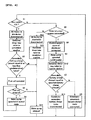
- FIG. 2 is a flow chart for describing an operation of the fuel cell vehicle.
- reference numeral 1 denotes a system configuration of the fuel cell vehicle including, a secondary battery 2 mounted on the vehicle (not shown), a fuel cell device 3, and an electric motor 5 supplied with electricity at least by either one of the secondary battery 2 and the fuel cell device 3 to rotatably drive a wheel 4.
- the fuel cell device 3 has a fuel cell 6, a hydrogen tank 7 for supplying hydrogen gas to the fuel cell 6, and an air supply section 8 for supplying compressed air to the fuel cell 6.
- the air supply section 8 has a compressor 9 for compressing air and an air element 10 for filtering air to the compressor 9.
- the fuel cell 6 causes an electrochemical reaction of the hydrogen gas supplied from the hydrogen tank 7 with the compressed air supplied from the compressor 9 and converts chemical energy into electric energy to generate electricity.
- the generated electric power is supplied to the secondary battery 2 via a voltage boosting converter 11 for boosting a voltage from the fuel cell 6 to a voltage for the secondary battery and charges the secondary battery 2.
- the fuel cell vehicle 1 is provided with a fuel cell cooling device 15 for cooling the fuel cell 6 during power generation to keep the fuel cell 6 at a predetermined temperature (for example 60 to 80°C).
- a fuel cell cooling device 15 for cooling the fuel cell 6 during power generation to keep the fuel cell 6 at a predetermined temperature (for example 60 to 80°C).
- the fuel cell cooling device 15 has a circulation pipeline 16 for circulating cooling water for cooling the fuel cell 6 between the fuel cell 6 and a radiator 18, a water pump 17 interposed in a middle of the circulation pipeline 16 for supplying the cooling water to the fuel cell 6, and the radiator 18 interposed on an upstream side of the water pump 17 of in the circulation pipeline 16 for cooling the cooling water having passed through the fuel cell 6.
- the fuel cell cooling device 15 functions as the cooling system.
- an electric ion removing device 20 which functions as conductivity decrease means for decreasing conductivity of the cooling water flowing in the circulation pipeline 16 is interposed between the fuel cell 6 and the radiator 18 of the circulation pipeline 16.
- the electric ion removing device 20 removes electroconductive ions in the cooling water by an anion exchange membrane 20a and a cation exchange membrane 20b.
- a converter 13 is connected to the secondary battery 2 via a distributor 14.
- the converter 13 converts an alternating current from an external power source "A” into a direct current and, in addition to this, converts external voltage from the external power source "A” into a voltage for the secondary battery.
- the secondary battery 2 is charged by connecting the converter 13, for example, to an outlet as an external power source for household appliances.
- the secondary battery 2 supplies electric power to the electric motor 5 via an inverter 12 which converts a direct current into an alternating current.
- the distributor 14 connects or disconnects the external power source "A" to or from the secondary battery 2, the water pump 17, and the electric ion removing device 20 respectively.
- the fuel cell vehicle 1 is provided with a controller 22 which operates and controls the electric motor 5, the fuel cell device 3, and the electric ion removing device 20 on the basis of an operating state of the vehicle 1.
- the controller 22 When a main switch 23 is turned on, the controller 22 rotatably drives the wheel 4 by the electric motor 5 mainly with the secondary battery 2 as a power source "A" according to an amount of an operation of an accelerator by a rider.
- the controller 22 When the amount of the battery charge of the secondary battery 2 becomes equal to or lower than a predetermined value during running, the controller 22 operates the fuel cell device 3. The secondary battery 2 is charged by electricity generated by the fuel cell device 3. When the amount of the battery charge of the secondary battery 2 exceeds the predetermined value, the fuel cell device 3 is stopped.
- the controller 22 When the fuel cell device 3 starts an operation, the controller 22 also operates the water pump 17.
- the cooling water is circulated by the water pump 17 through the circulation pipeline 16. As a result, the fuel cell 6 is cooled and kept at a predetermined temperature.
- the controller 22 operates the electric ion removing device 20. As a result, electroconductive ions in the cooling water are removed.
- the controller 22 supplies a battery charge power source "a”, a pump operation power source “b”, and an device operation power source “c” to the secondary battery 2, to the water pump 17, and to the electric ion removing device 20 respectively via the distributor 14 from the external power source "A".
- the controller 22 and distributor 14 function as power source control means.
- the controller 22 operates the water pump 17 to circulate the cooling water via the circulation pipeline 16 when the fuel cell device 3 is not operated and when the external power source "A" is connected to the secondary battery 2 for battery charge.
- the controller 22 and distributor 14 function as pump operation control means. Specifically, while the main switch 23 is off, if the external power source "A" is connected to the secondary battery 2, then the water pump 17 is operated, and the electric ion removing device 20 is operated.
- the controller 22 stops supplying the battery charge power source "a” to the secondary battery 2 via the distributor 14 and continues supplying the pump operation power source “b” to the water pump 17 and the device operation power source “c” to the electric ion removing device 20.
- the controller 22 operates the water pump 17 with an output lower than that for a normal operation during the battery charge. Specifically, the amount of electricity supplied to the water pump 17 is controlled so that an amount of discharge of the cooling water is less than that during an operation of the fuel cell device 3.
- the controller 22 stops operating the electric ion removing device 20 and also stops operating the water pump 17.
- step S1 when the main switch 23 is turned on, the amount of the battery charge of the secondary battery 2 is read (step S2). If the amount of the battery charge is equal to or lower than the predetermined value, the fuel cell device 3 is operated, and the water pump 17 is operated in a normal output mode (steps S3 and S4). As a result, the fuel cell 6 is cooled by the cooling water and generates electricity, charging the secondary battery 2.
- step S1 when the main switch 23 is off, if the external power source "A" is connected to the secondary battery 2 (step S5), a control system route of the distributor 14 is connected (step S6), and the battery charge power source “a” is supplied to the secondary battery 2. Then, the pump operation power source “b” is supplied to the water pump 17 via distributor 14, the device operation power source “c” is supplied to the electric ion removing device 20, the water pump 17 is operated in a LOW mode, and the electric ion removing device 20 is operated (steps S6, S9, and S10). Accordingly, the battery charge is continued until the amount of the battery charge of the secondary battery 2 reaches the specified value (steps S7 to S8).
- step S7 when the amount of the battery charge of the secondary battery 2 reaches the predetermined value, the supply of the battery charge power source "a" to the secondary battery 2 is stopped by the distributor 14 (step S11). In this case, the pump operation power source “b” to the water pump 17 and the device operation power source “c” to the electric ion removing device 20 are continued.
- step S5 when connection of the external power source “A” to the secondary battery 2 is disabled, the device operation power source “c” to the electric ion removing device 20 is stopped via the distributor 14, and the pump operation power source “b” to the water pump 17 is stopped (steps S12 to S14). Further, even if the external power source “A” is connected to the secondary battery 2, when the main switch 23 is turned on, the device operation power source “c” to the electric ion removing device 20 and the pump operation power source “b” to the water pump 17 are stopped.
- the water pump 17 is operated to circulate the cooling water via the circulation pipeline 16. Accordingly, it is possible to prevent the cooling water from being corroded due to the stagnant cooling water and to prevent the cooling water from being frozen in a cold region. As a result, even if there are frequent cases in which the secondary battery 2 is mainly used as a power source "A" and the fuel cell device 3 is not used very much during running, it is possible to prevent the cooling water from being deteriorated at an early stage, and it is also possible to prevent the fuel cell device 3 from being damaged due to freeze of the cooling water. In addition, consumption of the hydrogen gas can be reduced.
- the water pump 17 is operated, and the electric ion removing device 20 is also operated. Accordingly, it is possible to prevent the cooling water from being deteriorated, and it is also possible to remove electroconductive ions at the same time.
- the water pump 17 is automatically operated only by connecting the external power source "A" to the secondary battery 2. Accordingly, any special operation by man for circulating the cooling water is not necessary.
- the water pump 17 is operated with the output lower than that for a normal operation. Accordingly, the output lower than that for cooling the fuel cell 6, in other words, an output of minimum requirement for circulating the cooling water is only necessary. As a result, power consumption can be reduced.
- the electric ion removing device 20 which decreases conductivity of the cooling water flowing in the circulation pipeline 16 is interposed in the circulation pipeline 16. Accordingly, an operation for removing conductive ions from the cooling water can be performed at the same time when the cooling water is circulated. As a result, any special operation for decreasing conductivity of the cooling water is not necessary.
- the battery charge power source "a”, the pump operation power source “b”, and the device operation power source “c” are separately supplied to the secondary battery 2, to the water pump 17, and to the electric ion removing device 20 respectively via the distributor 14 from the external power source "A". Accordingly, when the amount of the battery charge of the secondary battery 2 exceeds the specified value and the battery charge is ended, only the supply of the battery charge power source “a” to the secondary battery 2 is ended, and the power sources "b” and “c” to the water pump 17 and the electric ion removing device 20 can be continued. As a result, circulation of the cooling water and the operation for removing ions can be continued.
- the power sources "b" and “c” for operating the water pump 17 and the electric ion removing device 20 respectively are supplied from the external power source "A". Accordingly, it is possible to avoid a case in which the amount of the battery charge of the secondary battery 2 is uselessly reduced as a case in which the secondary battery 2 is a power source.
- the battery charge of the secondary battery 2 when the battery charge of the secondary battery 2 is ended, only the supply of the battery charge power source "a" to the secondary battery 2 is ended.
- the device operation power source "c” to the electric ion removing device 20 may be stopped at the same time. In this case, only the operation of the water pump is continued. Consequently, it is possible to avoid a problem in which the electric power of the secondary battery 2 is uselessly reduced as a case in which the secondary battery 2 is a power source.
- the amount of power consumption of the external power source "A" can be reduced.
- the ion removing device when the external power source is connected to the secondary battery, the ion removing device is operated with the water pump.
- the water pump may be operated without operating the ion removing device. In this case, as the cooling water is circulated, it is possible to prevent the cooling water from being corroded or from being frozen in a cold region.
- FIG. 3 and FIG. 4 are drawings for describing the fuel cell vehicle according to a second embodiment.
- the parts indicated with the same reference numerals and symbols as those in FIG. 1 and FIG. 2 are the same as or similar to corresponding parts.
- a fuel cell vehicle 1 in the embodiment is provided with a secondary battery 2 mounted on a vehicle (not shown), fuel cell device 3, and an electric motor 5 supplied with electricity at least by either one of the secondary battery 2 and the fuel cell device 3 to rotatably drive the wheel 4.
- a basic structure is generally the same as that in the first embodiment, different parts will be described.
- the fuel cell vehicle 1 in the embodiment has a bypass pipeline 30 connected between the fuel cell device 3 and the radiator 18 of the circulation pipeline 16, bypassing the circulation pipeline 16, an ion exchange resin type ion removing device 31 interposed in the bypass pipeline 30, and an electromotive three-way valve 32 for permitting or restricting a flow of the cooling water to the bypass pipeline 30.
- the bypass pipeline 30 and the ion exchange resin type ion removing device 31 and the electromotive three-way valve 32 function as conductivity decrease means.
- the electromotive three-way valve 32 functions as switch means.
- the electromotive three-way valve 32 is interposed in a connecting section between an upstream end 30a of the bypass pipeline 30 and the circulation pipeline 16.
- the electromotive three-way valve 32 is switched to either a bypass position which leads the cooling water discharged from the fuel cell device 3 to a side of the bypass pipeline 30 or a circulation position which circulates the discharged cooling water from the circulation pipeline 16 to a side of the radiator 18.
- the electromotive three-way valve may be interposed in a connecting section between a downstream end 30b of the bypass pipeline 30 and the circulation pipeline 16.
- the controller 22 separately supplies the battery charge power source "a”, the operation power source "b”, and a switching power source “d” to the secondary battery 2, to the water pump 17, and to the electromotive three-way valve 32 respectively via the distributor 14 from the external power source "A".
- the amount of the battery charge of the secondary battery 2 exceeds a specified value, the supply of the battery charge power source "a" to the secondary battery 2 is stopped via the distributor 14.
- the cooling water discharged from the fuel cell device 3 flows through the side of the bypass pipeline 30 and, after electroconductive ions are removed by the ion removing device 31, the cooling water is returned to the circulation pipeline 16, being circulated by the route passing through the radiator 18 (steps S9 and S10').
- step S7 when the amount of the battery charge of the secondary battery 2 reaches the predetermined value, the supply of the battery charge power source "a" to the secondary battery 2 is stopped by the distributor 14 (step S11). In this case, the pump operation power source “b” to the water pump 17 and the switching power source “d” to the electromotive three-way valve 32 are continued.
- step S5 when connection of the external power source "A” to the secondary battery 2 is disabled, all routes to the distributor 14 are disconnected. Consequently, the supply of the switching power source “d” to the electromotive three-way valve 32 is stopped, and the pump operation power source “b” to the water pump 17 is stopped (steps S12, S13', S14). As a result, the flow of the cooling water of fuel cell device 3 is stopped.
- the ion exchange resin type ion removing device 31 and the electromotive three-way valve 32 are interposed in the bypass pipeline 30 bypassing the circulation pipeline 16, and the battery charge power source "a", the operation power source “b”, and the switching power source “d” are supplied to the secondary battery 2, to the water pump 17, and to the electromotive three-way valve 32 respectively via the distributor 14 from the external power source "A".
- the amount of the battery charge of the secondary battery 2 exceeds the specified value, the supply of the battery charge power source "a” to the secondary battery 2 is stopped. Accordingly, even when the battery charge of the secondary battery 2 is ended, the power source "d" for operating the electromotive three-way valve 32 can be supplied from the external power source "A". As a result, it is possible to avoid a case in which the amount of the battery charge of the secondary battery is uselessly reduced as a case in which the secondary battery 2 is a power source.
- the flow of the cooling water to the bypass pipeline is permitted or restricted by the electromotive three-way valve is described.
- a three-way valve of an automatic temperature sensing type may be adopted.
- the power source for operating the switch means is not necessary.
- the three-way valve of an automatic temperature sensing type contains shape memory alloy. When the temperature of the cooling water reaches a specified temperature, the route of the cooling water is switched from the circulation pipeline 16 to the bypass pipeline 30 or from the bypass pipeline 30 to the circulation pipeline 16.
- the specified temperature of the shape memory alloy is 50°C
- the cooling water reaches 50°C as a result of an operation of the fuel cell device, the route of the flow is automatically switched to the side of the circulation pipeline.
- the temperature of the cooling water is raised up to about 60°C in a short time.
- the cooling water When the temperature of the cooling water is 50°C or higher, the cooling water does not flow to the side of the ion removing device 31, which resists the flow. Accordingly, the fuel cell device 3 is efficiently cooled, and it is possible to avoid a problem in which the ion removing device 31 is damaged because of the temperature rise of the cooling water.
- the route of the cooling water is automatically switched to the side of the bypass pipeline 30. Consequently, the cooling water flows from the bypass pipeline 30 to the ion removing device 31.
- the fuel cell device 3 When the vehicle is stopped or parked, the fuel cell device 3 is not operated. Accordingly, the temperature of the cooling water becomes as low as an outside air temperature. Consequently, the cooling water passes through the ion removing device 31, and ions are removed.
- FIG. 5 is a flow chart illustrating an operation in a case in which the three-way valve of an automatic temperature sensing type is adopted in place of the electromotive three-way valve.
- the parts indicated with the same reference numerals and symbols as those in FIG. 4 are the same as or similar to corresponding parts.
- a fuel cell system comprising: a fuel cell device; a secondary battery chargeable by the fuel cell device; a cooling system including a water pump arranged to circulate cooling water for cooling the fuel cell device via a circulation pipeline; and pump operation control means for operating the water pump to circulate the cooling water via a circulation pipeline during a term when the fuel cell device is not operated and an external power source enabling a battery charge of the secondary battery is connected to the secondary battery.
- the water pump is operated to circulate the cooling water (an operation power source is supplied to the water pump). Accordingly, it is possible to prevent the cooling water from being corroded due to the stagnant cooling water and to prevent the cooling water from being frozen in a cold region. As a result, for example, even if there are frequent cases in which the secondary battery is mainly used as a power source and the fuel cell device is not used very often during running, it is possible to prevent the cooling water from being deteriorated at an early stage, and it is also possible to prevent the fuel cell device from being damaged due to freeze of the cooling water.
- the water pump is automatically operated. Accordingly, any special operation by man for circulating the cooling water is not necessary.
- the pump operation control means arranged to operate the water pump by electric power from the power source during the term.
- the power source for operating the water pump is supplied from the external power source accordingly, it is possible to avoid a problem in which the electric power of the secondary battery is uselessly reduced as a case in which the water pump is operated with the secondary battery as a power source.
- the pump operation control means stops an operation of the water pump when connection of the external power source to the secondary battery is disabled.
- the pump operation control means operates the water pump with an output lower than that for a normal operation during the term.
- the water pump is operated by an output lower than that for a normal operation during the term. Accordingly, an output lower than that for cooling the fuel cell device or, in other words, an output of minimum requirement for circulating the cooling water is only necessary. As a result, power consumption can be reduced.
- the fuel cell system further comprises: conductivity decrease means for decreasing conductivity of the cooling water flowing through the circulation pipeline.
- the fuel cell system further comprises: a power source control means for supplying electric power to the secondary battery from the external power source during the term, wherein the power source control means stops supplying electric power to the secondary battery from the external power source when an amount of a battery charge of the secondary battery exceeds a specified value and during the term.
- the battery charge power source and the operation power source are supplied to the secondary battery and to the water pump respectively via the distributor from the external power source and when an amount of the battery charge of the secondary battery exceeds the specified value, supply of the battery charge power source to the secondary battery is stopped. Accordingly, even when the battery charge of the secondary battery is ended, the operation power source is kept supplied to the water pump. Consequently, the cooling water can be kept circulated until connection of the external power source is disabled. As a result, it is possible to further prevent the cooling water from being corroded and frozen.
- the fuel cell system further comprises: a power source control means for supply electric power to the secondary battery and the conductivity decrease means from the external power source during the term; wherein the power source control means stops supplying electric power to the secondary battery from the external power source when an amount of a battery charge of the secondary battery exceeds a specified value and during the term.
- the battery charge power source, the operation power source and the device operation power source are supplied to the secondary battery, to the water pump, and to conductivity decrease means respectively via the distributor from the external power source.
- the supply of the battery charge power source to the secondary battery is stopped. Accordingly, even when the battery charge of the secondary battery is ended, the power source can be kept supplied to the water pump and conductivity decrease means. As a result, the circulation of the cooling water and the operation for removing ions can be continued.
- the power source for operating the water pump and the ion removing device is supplied from the external power source accordingly, it is possible to avoid a problem in which the electric power of the secondary battery is uselessly reduced as a case in which the secondary battery is a power source.
- the power source control means stops supplying electric power to the secondary battery and the conductivity decrease means from the external power source when connection of the external power source to the battery is disabled.
- the device operation power source to conductivity decrease means is also stopped.
- the electric power of the secondary battery is uselessly reduced as a case in which the secondary battery is a power source.
- the conductivity decrease means includes an electric ion removing device, the source control means supplies electric power to the secondary battery and the electric ion removing device from the external power source during the term.
- the switch means is the electric ion removing device, and the switching power source is supplied to the electric ion removing device via the distributor from the external power source accordingly, the switching power source can be supplied from the external power source as a result, it is possible to avoid a problem in which the electric power of the secondary battery is uselessly reduced as a case in which the switching power source is supplied from the secondary battery.
- the conductivity decrease means includes an ion exchange resin type ion removing device interposed in a bypass pipeline bypassing the circulation pipeline and switch means for permitting or restricting a flow of the cooling water to the bypass pipeline, the power source control means supplies electric power to the secondary battery and the switch means from the external power source during the term.
- the ion exchange resin type ion removing device and the switch means are interposed in the bypass pipeline bypassing the circulation pipeline, and the battery charge power source and the operation power source are supplied to the secondary battery and to the water pump respectively via the distributor from the external power source.
- the supply of the battery charge power source to the secondary battery is stopped. Accordingly, even when the battery charge of the secondary battery is ended, the operation power source can be supplied to the water pump from the external power source as a result, it is possible to avoid a problem in which the electric power of the secondary battery is uselessly reduced as a case in which the operation power source is supplied to the water pump from the secondary battery.
- the switch means includes an electromotive three-way valve.
- the switch means is the electromotive three-way valve, and the switching power source is supplied to the electromotive three-way valve via the distributor from the external power source accordingly, the switching power source can be supplied from the external power source as a result, it is possible to avoid a problem in which the electric power of the secondary battery is uselessly reduced as a case in which the switching power source is supplied from the secondary battery.
- the conductivity decrease means includes an ion exchange resin type ion removing device interposed in a bypass pipeline bypassing the circulation pipeline and switch means for permitting or restricting a flow of the cooling water to the bypass pipeline
- the switch means is a three-way valve of an automatic temperature sensing type containing shape memory alloy and switches a route of the cooling water from the circulation pipeline to the bypass pipeline or from the bypass pipeline to the circulation pipeline when a temperature of the cooling water reaches a specified temperature.
- the switch means is the electromotive three-way valve of an automatic temperature sensing type. Accordingly, the power source for operating the switch means is not necessary.
- a transportation equipment comprises: the fuel cell system according to one of the embodiments above; and an electric motor supplied with electricity at least by either one of the secondary battery and the fuel cell device to drive wheel.
- a controller 22 is provided to operate a water pump 17 to circulate the cooling water via a circulation pipeline 16.
Landscapes
- Engineering & Computer Science (AREA)
- Chemical & Material Sciences (AREA)
- Chemical Kinetics & Catalysis (AREA)
- Electrochemistry (AREA)
- General Chemical & Material Sciences (AREA)
- Life Sciences & Earth Sciences (AREA)
- Sustainable Development (AREA)
- Sustainable Energy (AREA)
- Manufacturing & Machinery (AREA)
- Fuel Cell (AREA)
- Electric Propulsion And Braking For Vehicles (AREA)
Abstract
Description
- The present invention relates to a fuel cell system and, in particular, a fuel cell vehicle constituted to run by rotationally driving a wheel by an electric motor supplied with electricity at least by either one of a secondary battery and a fuel cell device.
- The fuel cell system and the fuel cell vehicle of this type is constituted to keep a fuel cell at a predetermined temperature by circulating highly pure cooling water via a circulation pipeline by a water pump while the fuel cell is generating electricity. For example, in
JP-A-2005-235489 - On the other hand, a secondary battery chargeable by an external power source is mounted on a recent fuel cell vehicle to reduce consumption of hydrogen gas fuel as much as possible. The secondary battery is mainly used as a power source during normal running, and a fuel cell device is operated in accordance with a state of discharge of the secondary battery or with a running condition of the vehicle.
- When the conventional fuel cell vehicle is constituted to run with the secondary battery chargeable by an external power source as a main power source, there are frequent cases in which the vehicle does not use the fuel cell device very often during running. If such cases are repeated during running, the cooling water for cooling the fuel cell is not circulated adequately. Accordingly, the cooling water may be deteriorated and corroded at an early stage, and the cooling water may be frozen while being left outside for a long time in a cold region.
- An objective of the present invention, which was made in view of such situation described above, is to provide a fuel cell system which prevents the cooling water for cooling a fuel cell from being corroded or frozen when a secondary battery and the fuel cell are used together.
- According to the present invention, said objective is solved by a fuel cell system, comprising a fuel cell device; a secondary battery chargeable by the fuel cell device; a cooling system including a water pump arranged to circulate cooling water for cooling the fuel cell device via a circulation pipeline; and pump operation control means configured to operate the water pump to circulate the cooling water via the circulation pipeline during a time period when the fuel cell device is not operated.
- Preferably, the pump operation control means is further configured to operate the water pump to circulate the cooling water via the circulation pipeline during a time period when the fuel cell device is not operated and when an external power source is connected to the secondary battery in order to charge said secondary battery.
- Further, preferably the pump operation control means is configured to operate the water pump by electric power from the external power source during the aforesaid time period.
- Still further, preferably the pump operation control means is configured to stop operation of the water pump when the connection of the external power source to the secondary battery is disabled.
- Yet further still, preferably during the aforesaid time period the pump operation control means is configured to operate the water pump with an output lower than that during operation of the fuel cell device.
- Preferably, a conductivity decrease means configured to decrease conductivity of the cooling water flowing through the circulation pipeline is comprised.
- According to a preferred embodiment, a power source control means is configured to supply electric power to the secondary battery from the external power source during the aforesaid time period are provided, and, preferably, the power source control means is configured to stop supplying electric power to the secondary battery from the external power source when an amount of a battery charge of the secondary battery exceeds a specified value during the aforesaid time period.
- Preferably, the power source control means is configured to supply electric power to the secondary battery and the conductivity decrease means from the external power source during the aforesaid time period, and, preferably, the power source control means is configured to stop supplying electric power to the secondary battery from the external power source when an amount of a battery charge of the secondary battery exceeds a specified value during the aforesaid time period.
- Further, preferably the power source control means is configured to stop supplying electric power to the secondary battery and the conductivity decrease means from the external power source when the connection of the external power source to the secondary battery is disabled.
- Still further, preferably the conductivity decrease means includes an electric ion removing device, and, preferably, a power source control means is configured to supply electric power to the secondary battery and the electric ion removing device from the external power source during the aforesaid time period.
- Yet further still, preferably the conductivity decrease means includes an ion exchange resin type ion removing device interposed in a bypass pipeline bypassing the circulation pipeline and switch means configured to permit or restrict a flow of the cooling water to the bypass pipeline, and, preferably, a power source control means is configured to supply electric power to the secondary battery and the switch means from the external power source during the aforesaid time period.
- Preferably, the switch means includes an electromotive three-way valve.
- Further, preferably the switch means is a three-way valve of an automatic temperature sensing type containing shape memory alloy and is configured to switch a route of the cooling water from the circulation pipeline to the bypass pipeline or from the bypass pipeline to the circulation pipeline when a temperature of the cooling water reaches a specified temperature.
- According to another preferred embodiment, there is provided transportation equipment, in particular a vehicle, comprising a fuel cell system according to the above embodiments.
- Preferably, an electric motor is comprised, and at least either one of the secondary battery and the fuel cell device is configured to supply the electric motor with electricity in order to drive at least one wheel of the transportation equipment.
- In the following, the present invention is explained in greater detail by means of embodiments thereof in conjunction with the accompanying drawings, wherein:
- FIG. 1
- is a system configuration diagram of a fuel cell vehicle according to a first embodiment;
- FIG. 2
- is a flow chart illustrating an operation of the fuel cell vehicle;
- FIG. 3
- is a system configuration diagram of the fuel cell vehicle according to a second embodiment;
- FIG. 4
- is a flow chart illustrating an operation of the fuel cell vehicle; and
- FIG. 5
- is a flow chart illustrating an operation in a case in which a three-way valve of an automatic temperature sensing type is adopted according to a modified example of the second embodiment.
- Among others, the following reference signs are used in the figures:
- 1: fuel cell vehicle
- 2: secondary battery
- 3: fuel cell device
- 4: wheel
- 5: electric motor
- 14: distributor
- 15: fuel cell cooling device (cooling system)
- 16: circulation pipeline
- 17: water pump
- 20: electric ion removing device (conductivity decrease means)
- 22: controller (pump operation control means, power source control means)
- 30: bypass pipeline
- 31: ion exchange resin type ion removing device (conductivity decrease means)
- 32: electromotive three-way valve
- A: external power source
- a: battery charge power source
- b: pump operation power source
- c: device operation power source
- d: switching power source
- Embodiments will be described hereinafter with reference to accompanying drawings. The embodiments are cases in which a
fuel cell system 100 is provided in a vehicle. -
FIG. 1 andFIG. 2 are drawings for describing a fuel cell vehicle according to a first embodiment.FIG. 1 is a block diagram of the fuel cell vehicle, andFIG. 2 is a flow chart for describing an operation of the fuel cell vehicle. - In the
drawings reference numeral 1 denotes a system configuration of the fuel cell vehicle including, asecondary battery 2 mounted on the vehicle (not shown), afuel cell device 3, and anelectric motor 5 supplied with electricity at least by either one of thesecondary battery 2 and thefuel cell device 3 to rotatably drive awheel 4. - The
fuel cell device 3 has afuel cell 6, ahydrogen tank 7 for supplying hydrogen gas to thefuel cell 6, and anair supply section 8 for supplying compressed air to thefuel cell 6. Theair supply section 8 has acompressor 9 for compressing air and anair element 10 for filtering air to thecompressor 9. - The
fuel cell 6 causes an electrochemical reaction of the hydrogen gas supplied from thehydrogen tank 7 with the compressed air supplied from thecompressor 9 and converts chemical energy into electric energy to generate electricity. The generated electric power is supplied to thesecondary battery 2 via avoltage boosting converter 11 for boosting a voltage from thefuel cell 6 to a voltage for the secondary battery and charges thesecondary battery 2. - The
fuel cell vehicle 1 is provided with a fuelcell cooling device 15 for cooling thefuel cell 6 during power generation to keep thefuel cell 6 at a predetermined temperature (for example 60 to 80°C). - The fuel
cell cooling device 15 has acirculation pipeline 16 for circulating cooling water for cooling thefuel cell 6 between thefuel cell 6 and aradiator 18, awater pump 17 interposed in a middle of thecirculation pipeline 16 for supplying the cooling water to thefuel cell 6, and theradiator 18 interposed on an upstream side of thewater pump 17 of in thecirculation pipeline 16 for cooling the cooling water having passed through thefuel cell 6. In this case the fuelcell cooling device 15 functions as the cooling system. - Further, an electric
ion removing device 20 which functions as conductivity decrease means for decreasing conductivity of the cooling water flowing in thecirculation pipeline 16 is interposed between thefuel cell 6 and theradiator 18 of thecirculation pipeline 16. The electricion removing device 20 removes electroconductive ions in the cooling water by ananion exchange membrane 20a and acation exchange membrane 20b. - A
converter 13 is connected to thesecondary battery 2 via adistributor 14. Theconverter 13 converts an alternating current from an external power source "A" into a direct current and, in addition to this, converts external voltage from the external power source "A" into a voltage for the secondary battery. Thesecondary battery 2 is charged by connecting theconverter 13, for example, to an outlet as an external power source for household appliances. Thesecondary battery 2 supplies electric power to theelectric motor 5 via aninverter 12 which converts a direct current into an alternating current. - The
distributor 14 connects or disconnects the external power source "A" to or from thesecondary battery 2, thewater pump 17, and the electricion removing device 20 respectively. - The
fuel cell vehicle 1 is provided with acontroller 22 which operates and controls theelectric motor 5, thefuel cell device 3, and the electricion removing device 20 on the basis of an operating state of thevehicle 1. - When a
main switch 23 is turned on, thecontroller 22 rotatably drives thewheel 4 by theelectric motor 5 mainly with thesecondary battery 2 as a power source "A" according to an amount of an operation of an accelerator by a rider. - When the amount of the battery charge of the
secondary battery 2 becomes equal to or lower than a predetermined value during running, thecontroller 22 operates thefuel cell device 3. Thesecondary battery 2 is charged by electricity generated by thefuel cell device 3. When the amount of the battery charge of thesecondary battery 2 exceeds the predetermined value, thefuel cell device 3 is stopped. - When the
fuel cell device 3 starts an operation, thecontroller 22 also operates thewater pump 17. The cooling water is circulated by thewater pump 17 through thecirculation pipeline 16. As a result, thefuel cell 6 is cooled and kept at a predetermined temperature. - Further, when conductivity of the cooling water exceeds a predetermined value while the
fuel cell device 3 is operating, thecontroller 22 operates the electricion removing device 20. As a result, electroconductive ions in the cooling water are removed. - The
controller 22 supplies a battery charge power source "a", a pump operation power source "b", and an device operation power source "c" to thesecondary battery 2, to thewater pump 17, and to the electricion removing device 20 respectively via thedistributor 14 from the external power source "A". In this case thecontroller 22 anddistributor 14 function as power source control means. - The
controller 22 operates thewater pump 17 to circulate the cooling water via thecirculation pipeline 16 when thefuel cell device 3 is not operated and when the external power source "A" is connected to thesecondary battery 2 for battery charge. In this case thecontroller 22 anddistributor 14 function as pump operation control means. Specifically, while themain switch 23 is off, if the external power source "A" is connected to thesecondary battery 2, then thewater pump 17 is operated, and the electricion removing device 20 is operated. - When the amount of the battery charge of the
secondary battery 2 exceeds the predetermined value and, thus, the battery charge is ended, thecontroller 22 stops supplying the battery charge power source "a" to thesecondary battery 2 via thedistributor 14 and continues supplying the pump operation power source "b" to thewater pump 17 and the device operation power source "c" to the electricion removing device 20. - The
controller 22 operates thewater pump 17 with an output lower than that for a normal operation during the battery charge. Specifically, the amount of electricity supplied to thewater pump 17 is controlled so that an amount of discharge of the cooling water is less than that during an operation of thefuel cell device 3. - When connection of the external power source "A" to the
secondary battery 2 is disabled, thecontroller 22 stops operating the electricion removing device 20 and also stops operating thewater pump 17. - An operation of the
controller 22 will be described hereinafter with reference to the flow chart inFIG. 2 . - In step S1, when the
main switch 23 is turned on, the amount of the battery charge of thesecondary battery 2 is read (step S2). If the amount of the battery charge is equal to or lower than the predetermined value, thefuel cell device 3 is operated, and thewater pump 17 is operated in a normal output mode (steps S3 and S4). As a result, thefuel cell 6 is cooled by the cooling water and generates electricity, charging thesecondary battery 2. - In step S1, when the
main switch 23 is off, if the external power source "A" is connected to the secondary battery 2 (step S5), a control system route of thedistributor 14 is connected (step S6), and the battery charge power source "a" is supplied to thesecondary battery 2. Then, the pump operation power source "b" is supplied to thewater pump 17 viadistributor 14, the device operation power source "c" is supplied to the electricion removing device 20, thewater pump 17 is operated in a LOW mode, and the electricion removing device 20 is operated (steps S6, S9, and S10). Accordingly, the battery charge is continued until the amount of the battery charge of thesecondary battery 2 reaches the specified value (steps S7 to S8). - In step S7, when the amount of the battery charge of the
secondary battery 2 reaches the predetermined value, the supply of the battery charge power source "a" to thesecondary battery 2 is stopped by the distributor 14 (step S11). In this case, the pump operation power source "b" to thewater pump 17 and the device operation power source "c" to the electricion removing device 20 are continued. - In step S5, when connection of the external power source "A" to the
secondary battery 2 is disabled, the device operation power source "c" to the electricion removing device 20 is stopped via thedistributor 14, and the pump operation power source "b" to thewater pump 17 is stopped (steps S12 to S14). Further, even if the external power source "A" is connected to thesecondary battery 2, when themain switch 23 is turned on, the device operation power source "c" to the electricion removing device 20 and the pump operation power source "b" to thewater pump 17 are stopped. - According to the embodiment described above, while the
main switch 23 is off, and therefore when thefuel cell device 3 is not operated, if the external power source "A" is connected to thesecondary battery 2, thewater pump 17 is operated to circulate the cooling water via thecirculation pipeline 16. Accordingly, it is possible to prevent the cooling water from being corroded due to the stagnant cooling water and to prevent the cooling water from being frozen in a cold region. As a result, even if there are frequent cases in which thesecondary battery 2 is mainly used as a power source "A" and thefuel cell device 3 is not used very much during running, it is possible to prevent the cooling water from being deteriorated at an early stage, and it is also possible to prevent thefuel cell device 3 from being damaged due to freeze of the cooling water. In addition, consumption of the hydrogen gas can be reduced. - Further, the
water pump 17 is operated, and the electricion removing device 20 is also operated. Accordingly, it is possible to prevent the cooling water from being deteriorated, and it is also possible to remove electroconductive ions at the same time. - According to the embodiment, the
water pump 17 is automatically operated only by connecting the external power source "A" to thesecondary battery 2. Accordingly, any special operation by man for circulating the cooling water is not necessary. - According to the embodiment, when connection of the external power source "A" to the
secondary battery 2 is disabled, the operation of thewater pump 17 is stopped. Accordingly, any special operation by man for stopping thewater pump 17 is not necessary. - According to the embodiment, the
water pump 17 is operated with the output lower than that for a normal operation. Accordingly, the output lower than that for cooling thefuel cell 6, in other words, an output of minimum requirement for circulating the cooling water is only necessary. As a result, power consumption can be reduced. - According to the embodiment, the electric
ion removing device 20 which decreases conductivity of the cooling water flowing in thecirculation pipeline 16 is interposed in thecirculation pipeline 16. Accordingly, an operation for removing conductive ions from the cooling water can be performed at the same time when the cooling water is circulated. As a result, any special operation for decreasing conductivity of the cooling water is not necessary. - According to the embodiment, the battery charge power source "a", the pump operation power source "b", and the device operation power source "c" are separately supplied to the
secondary battery 2, to thewater pump 17, and to the electricion removing device 20 respectively via thedistributor 14 from the external power source "A". Accordingly, when the amount of the battery charge of thesecondary battery 2 exceeds the specified value and the battery charge is ended, only the supply of the battery charge power source "a" to thesecondary battery 2 is ended, and the power sources "b" and "c" to thewater pump 17 and the electricion removing device 20 can be continued. As a result, circulation of the cooling water and the operation for removing ions can be continued. - Further, the power sources "b" and "c" for operating the
water pump 17 and the electricion removing device 20 respectively are supplied from the external power source "A". Accordingly, it is possible to avoid a case in which the amount of the battery charge of thesecondary battery 2 is uselessly reduced as a case in which thesecondary battery 2 is a power source. - In the embodiment, when the battery charge of the
secondary battery 2 is ended, only the supply of the battery charge power source "a" to thesecondary battery 2 is ended. However, in the embodiment, when the battery charge power source "a" to thesecondary battery 2 is stopped, the device operation power source "c" to the electricion removing device 20 may be stopped at the same time. In this case, only the operation of the water pump is continued. Consequently, it is possible to avoid a problem in which the electric power of thesecondary battery 2 is uselessly reduced as a case in which thesecondary battery 2 is a power source. In addition, the amount of power consumption of the external power source "A" can be reduced. - Further, in the embodiment, when the external power source is connected to the secondary battery, the ion removing device is operated with the water pump. However, in the embodiment, only the water pump may be operated without operating the ion removing device. In this case, as the cooling water is circulated, it is possible to prevent the cooling water from being corroded or from being frozen in a cold region.
-
FIG. 3 andFIG. 4 are drawings for describing the fuel cell vehicle according to a second embodiment. In the drawings, the parts indicated with the same reference numerals and symbols as those inFIG. 1 andFIG. 2 are the same as or similar to corresponding parts. - A
fuel cell vehicle 1 in the embodiment is provided with asecondary battery 2 mounted on a vehicle (not shown),fuel cell device 3, and anelectric motor 5 supplied with electricity at least by either one of thesecondary battery 2 and thefuel cell device 3 to rotatably drive thewheel 4. In addition, as a basic structure is generally the same as that in the first embodiment, different parts will be described. - The
fuel cell vehicle 1 in the embodiment has abypass pipeline 30 connected between thefuel cell device 3 and theradiator 18 of thecirculation pipeline 16, bypassing thecirculation pipeline 16, an ion exchange resin typeion removing device 31 interposed in thebypass pipeline 30, and an electromotive three-way valve 32 for permitting or restricting a flow of the cooling water to thebypass pipeline 30. In this case thebypass pipeline 30 and the ion exchange resin typeion removing device 31 and the electromotive three-way valve 32 function as conductivity decrease means. Also, the electromotive three-way valve 32 functions as switch means. - The electromotive three-way valve 32 is interposed in a connecting section between an
upstream end 30a of thebypass pipeline 30 and thecirculation pipeline 16. The electromotive three-way valve 32 is switched to either a bypass position which leads the cooling water discharged from thefuel cell device 3 to a side of thebypass pipeline 30 or a circulation position which circulates the discharged cooling water from thecirculation pipeline 16 to a side of theradiator 18. The electromotive three-way valve may be interposed in a connecting section between adownstream end 30b of thebypass pipeline 30 and thecirculation pipeline 16. - The
controller 22 separately supplies the battery charge power source "a", the operation power source "b", and a switching power source "d" to thesecondary battery 2, to thewater pump 17, and to the electromotive three-way valve 32 respectively via thedistributor 14 from the external power source "A". When the amount of the battery charge of thesecondary battery 2 exceeds a specified value, the supply of the battery charge power source "a" to thesecondary battery 2 is stopped via thedistributor 14. - As illustrated in the flow chart in
FIG. 4 , while themain switch 23 is off, if the external power source "A" is connected to thesecondary battery 2, a control system route of thedistributor 14 is connected. Consequently, the battery charge power source "a" is supplied to thesecondary battery 2, and the switching power source "d" is supplied to the electromotive three-way valve 32. Moreover, the pump operation power source "b" is supplied to the water pump 17 (steps S5 and S6). As a result, the battery charge is continued until the amount of the battery charge of thesecondary battery 2 reaches the specified value (steps S7 to S8). At the same time with this, the electromotive three-way valve 32 is switched to the side of thebypass pipeline 30, and thewater pump 17 is operated in the LOW mode. The cooling water discharged from thefuel cell device 3 flows through the side of thebypass pipeline 30 and, after electroconductive ions are removed by theion removing device 31, the cooling water is returned to thecirculation pipeline 16, being circulated by the route passing through the radiator 18 (steps S9 and S10'). - In step S7, when the amount of the battery charge of the
secondary battery 2 reaches the predetermined value, the supply of the battery charge power source "a" to thesecondary battery 2 is stopped by the distributor 14 (step S11). In this case, the pump operation power source "b" to thewater pump 17 and the switching power source "d" to the electromotive three-way valve 32 are continued. - In step S5, when connection of the external power source "A" to the
secondary battery 2 is disabled, all routes to thedistributor 14 are disconnected. Consequently, the supply of the switching power source "d" to the electromotive three-way valve 32 is stopped, and the pump operation power source "b" to thewater pump 17 is stopped (steps S12, S13', S14). As a result, the flow of the cooling water offuel cell device 3 is stopped. - According to the embodiment, the ion exchange resin type
ion removing device 31 and the electromotive three-way valve 32 are interposed in thebypass pipeline 30 bypassing thecirculation pipeline 16, and the battery charge power source "a", the operation power source "b", and the switching power source "d" are supplied to thesecondary battery 2, to thewater pump 17, and to the electromotive three-way valve 32 respectively via thedistributor 14 from the external power source "A". When the amount of the battery charge of thesecondary battery 2 exceeds the specified value, the supply of the battery charge power source "a" to thesecondary battery 2 is stopped. Accordingly, even when the battery charge of thesecondary battery 2 is ended, the power source "d" for operating the electromotive three-way valve 32 can be supplied from the external power source "A". As a result, it is possible to avoid a case in which the amount of the battery charge of the secondary battery is uselessly reduced as a case in which thesecondary battery 2 is a power source. - In the second embodiment, a case in which the flow of the cooling water to the bypass pipeline is permitted or restricted by the electromotive three-way valve is described. However, in the embodiment, a three-way valve of an automatic temperature sensing type may be adopted. When the three-way valve of an automatic temperature sensing type is adopted, the power source for operating the switch means is not necessary.
- The three-way valve of an automatic temperature sensing type contains shape memory alloy. When the temperature of the cooling water reaches a specified temperature, the route of the cooling water is switched from the
circulation pipeline 16 to thebypass pipeline 30 or from thebypass pipeline 30 to thecirculation pipeline 16. - For example, when the specified temperature of the shape memory alloy is 50°C, if the cooling water reaches 50°C as a result of an operation of the fuel cell device, the route of the flow is automatically switched to the side of the circulation pipeline. When the fuel cell device is operated, the temperature of the cooling water is raised up to about 60°C in a short time.
- When the temperature of the cooling water is 50°C or higher, the cooling water does not flow to the side of the
ion removing device 31, which resists the flow. Accordingly, thefuel cell device 3 is efficiently cooled, and it is possible to avoid a problem in which theion removing device 31 is damaged because of the temperature rise of the cooling water. - On the other hand, if the temperature of the cooling water is lower than 50°C, the route of the cooling water is automatically switched to the side of the
bypass pipeline 30. Consequently, the cooling water flows from thebypass pipeline 30 to theion removing device 31. - When the vehicle is stopped or parked, the
fuel cell device 3 is not operated. Accordingly, the temperature of the cooling water becomes as low as an outside air temperature. Consequently, the cooling water passes through theion removing device 31, and ions are removed. -
FIG. 5 is a flow chart illustrating an operation in a case in which the three-way valve of an automatic temperature sensing type is adopted in place of the electromotive three-way valve. In the drawing, the parts indicated with the same reference numerals and symbols as those inFIG. 4 are the same as or similar to corresponding parts. - While the main switch is off, if the external power source "A" is connected to the
secondary battery 2, the battery charge power source "a" is supplied to thesecondary battery 2 via thedistributor 14. At the same time with this, the pump operation power source "b" is supplied to thewater pump 17 viadistributor 14. On the other hand, when connection of the external power source "A" to thesecondary battery 2 is disabled, the supply of the pump operation power source "b" to thewater pump 17 is stopped via thedistributor 14. - The description above discloses (among others) an embodiment of a fuel cell system, comprising: a fuel cell device; a secondary battery chargeable by the fuel cell device; a cooling system including a water pump arranged to circulate cooling water for cooling the fuel cell device via a circulation pipeline; and pump operation control means for operating the water pump to circulate the cooling water via a circulation pipeline during a term when the fuel cell device is not operated and an external power source enabling a battery charge of the secondary battery is connected to the secondary battery.
- Accordingly, during a term when the fuel cell device is not operated and when the external power source is connected to the secondary battery, the water pump is operated to circulate the cooling water (an operation power source is supplied to the water pump). Accordingly, it is possible to prevent the cooling water from being corroded due to the stagnant cooling water and to prevent the cooling water from being frozen in a cold region. As a result, for example, even if there are frequent cases in which the secondary battery is mainly used as a power source and the fuel cell device is not used very often during running, it is possible to prevent the cooling water from being deteriorated at an early stage, and it is also possible to prevent the fuel cell device from being damaged due to freeze of the cooling water.
- Further, when the external power source is connected to the secondary battery, the water pump is automatically operated. Accordingly, any special operation by man for circulating the cooling water is not necessary.
- Preferably, the pump operation control means arranged to operate the water pump by electric power from the power source during the term.
- Accordingly, the power source for operating the water pump is supplied from the external power source accordingly, it is possible to avoid a problem in which the electric power of the secondary battery is uselessly reduced as a case in which the water pump is operated with the secondary battery as a power source.
Preferably, the pump operation control means stops an operation of the water pump when connection of the external power source to the secondary battery is disabled. - Accordingly, when connection of the external power source to the secondary battery is disabled, an operation of the water pump is stopped. Accordingly, any special operation by man for stopping the water pump is not necessary.
- Preferably, the pump operation control means operates the water pump with an output lower than that for a normal operation during the term.
- Accordingly, the water pump is operated by an output lower than that for a normal operation during the term. Accordingly, an output lower than that for cooling the fuel cell device or, in other words, an output of minimum requirement for circulating the cooling water is only necessary. As a result, power consumption can be reduced.
- Preferably, the fuel cell system further comprises: conductivity decrease means for decreasing conductivity of the cooling water flowing through the circulation pipeline.
- Accordingly, conductivity of the cooling water flowing the circulation pipeline is decreased. Accordingly, an operation for decreasing conductivity of the cooling water can be performed at the same time when the cooling water is circulated. As a result, any special operation for decreasing conductivity of the cooling water is not necessary.
- Preferably, the fuel cell system further comprises: a power source control means for supplying electric power to the secondary battery from the external power source during the term, wherein the power source control means stops supplying electric power to the secondary battery from the external power source when an amount of a battery charge of the secondary battery exceeds a specified value and during the term.
- Accordingly, the battery charge power source and the operation power source are supplied to the secondary battery and to the water pump respectively via the distributor from the external power source and when an amount of the battery charge of the secondary battery exceeds the specified value, supply of the battery charge power source to the secondary battery is stopped. Accordingly, even when the battery charge of the secondary battery is ended, the operation power source is kept supplied to the water pump. Consequently, the cooling water can be kept circulated until connection of the external power source is disabled. As a result, it is possible to further prevent the cooling water from being corroded and frozen.
- Preferably, the fuel cell system further comprises: a power source control means for supply electric power to the secondary battery and the conductivity decrease means from the external power source during the term; wherein the power source control means stops supplying electric power to the secondary battery from the external power source when an amount of a battery charge of the secondary battery exceeds a specified value and during the term.
- Accordingly, the battery charge power source, the operation power source and the device operation power source are supplied to the secondary battery, to the water pump, and to conductivity decrease means respectively via the distributor from the external power source. In addition, when an amount of the battery charge of the secondary battery exceeds the specified value, the supply of the battery charge power source to the secondary battery is stopped. Accordingly, even when the battery charge of the secondary battery is ended, the power source can be kept supplied to the water pump and conductivity decrease means. As a result, the circulation of the cooling water and the operation for removing ions can be continued.
- Further, the power source for operating the water pump and the ion removing device is supplied from the external power source accordingly, it is possible to avoid a problem in which the electric power of the secondary battery is uselessly reduced as a case in which the secondary battery is a power source.
- Preferably, the power source control means stops supplying electric power to the secondary battery and the conductivity decrease means from the external power source when connection of the external power source to the battery is disabled.
- Accordingly, when connection of the external power source to the secondary battery is disabled, the device operation power source to conductivity decrease means is also stopped. As a result, it is possible to avoid a problem in which the electric power of the secondary battery is uselessly reduced as a case in which the secondary battery is a power source.
- Still further, preferably the conductivity decrease means includes an electric ion removing device, the source control means supplies electric power to the secondary battery and the electric ion removing device from the external power source during the term.
- Accordingly, the switch means is the electric ion removing device, and the switching power source is supplied to the electric ion removing device via the distributor from the external power source accordingly, the switching power source can be supplied from the external power source as a result, it is possible to avoid a problem in which the electric power of the secondary battery is uselessly reduced as a case in which the switching power source is supplied from the secondary battery.
- Preferably, the conductivity decrease means includes an ion exchange resin type ion removing device interposed in a bypass pipeline bypassing the circulation pipeline and switch means for permitting or restricting a flow of the cooling water to the bypass pipeline, the power source control means supplies electric power to the secondary battery and the switch means from the external power source during the term.
- Accordingly, the ion exchange resin type ion removing device and the switch means are interposed in the bypass pipeline bypassing the circulation pipeline, and the battery charge power source and the operation power source are supplied to the secondary battery and to the water pump respectively via the distributor from the external power source. In addition, when an amount of the battery charge of the second battery exceeds the specified value, the supply of the battery charge power source to the secondary battery is stopped. Accordingly, even when the battery charge of the secondary battery is ended, the operation power source can be supplied to the water pump from the external power source as a result, it is possible to avoid a problem in which the electric power of the secondary battery is uselessly reduced as a case in which the operation power source is supplied to the water pump from the secondary battery.
- Preferably to the above, the switch means includes an electromotive three-way valve.
- Accordingly, the switch means is the electromotive three-way valve, and the switching power source is supplied to the electromotive three-way valve via the distributor from the external power source accordingly, the switching power source can be supplied from the external power source as a result, it is possible to avoid a problem in which the electric power of the secondary battery is uselessly reduced as a case in which the switching power source is supplied from the secondary battery.
- Preferably, the conductivity decrease means includes an ion exchange resin type ion removing device interposed in a bypass pipeline bypassing the circulation pipeline and switch means for permitting or restricting a flow of the cooling water to the bypass pipeline, the switch means is a three-way valve of an automatic temperature sensing type containing shape memory alloy and switches a route of the cooling water from the circulation pipeline to the bypass pipeline or from the bypass pipeline to the circulation pipeline when a temperature of the cooling water reaches a specified temperature.
- Accordingly, the switch means is the electromotive three-way valve of an automatic temperature sensing type. Accordingly, the power source for operating the switch means is not necessary.
- Preferably, a transportation equipment comprises: the fuel cell system according to one of the embodiments above; and an electric motor supplied with electricity at least by either one of the secondary battery and the fuel cell device to drive wheel.
- Thus, in order to provide a fuel cell vehicle which prevents cooling water for cooling a fuel cell from being corroded or frozen while a secondary battery and the fuel cell are used together, the description suggests when a
fuel cell device 3 is not operated, if an external power source "A" enabling a battery charge of asecondary battery 2 is connected to thesecondary battery 2, a controller (pump operation control means) 22 is provided to operate awater pump 17 to circulate the cooling water via acirculation pipeline 16.
Claims (15)
- Fuel cell system, comprising:a fuel cell device (3);a secondary battery (2) chargeable by the fuel cell device (3);a cooling system (15) including a water pump (17) arranged to circulate coolingwater for cooling the fuel cell device (3) via a circulation pipeline (16); anda pump operation control means (22) configured to operate the water pump (17) to circulate the cooling water via the circulation pipeline (16) during a time period when the fuel cell device (3) is not operated.
- Fuel cell system according to claim 1, wherein the pump operation control means (22) is configured to operate the water pump (17) to circulate the cooling water via the circulation pipeline (16) during a time period when the fuel cell device (3) is not operated and when an external power source (A) is connected to the secondary battery (2) in order to charge said secondary battery (2).
- Fuel cell system according to claim 2, wherein the pump operation control means (22) is configured to operate the water pump (17) by electric power from the external power source (A) during the aforesaid time period.
- Fuel cell system according to claim 2 or 3, wherein the pump operation control means (22) is configured to stop operation of the water pump (17) when the connection of the external power source (A) to the secondary battery (2) is disabled.
- Fuel cell system according to one of the claims 1 to 4, wherein during the aforesaid time period the pump operation control means (22) is configured to operate the water pump (17) with an output lower than that during operation of the fuel cell device (3).
- Fuel cell system according to one of claims 1 to 5, wherein a conductivity decrease means (20, 31) configured to decrease conductivity of the cooling water flowing through the circulation pipeline (16) is comprised.
- Fuel cell system according to one of claims 1 to 6, wherein a power source control means (22) configured to supply electric power to the secondary battery (2) from an external power source (A) during the aforesaid time period is provided, and, preferably, the power source control means (22) is configured to stop supplying electric power to the secondary battery (2) from the external power source (A) when an amount of a battery charge of the secondary battery (2) exceeds a specified value during the aforesaid time period.
- Fuel cell system according to claim 7, wherein the power source control means (22) is configured to supply electric power to the secondary battery (22) and the conductivity decrease means (20, 31) from the external power source (A) during the aforesaid time period, and, preferably, the power source control means (22) is configured to stop supplying electric power to the secondary battery (2) from the external power source (A) when an amount of a battery charge of the secondary battery (2) exceeds a specified value during the aforesaid time period.
- Fuel cell system according to claim 8, wherein the power source control means (22) is configured to stop supplying electric power to the secondary battery (2) and the conductivity decrease means (20, 31) from the external power source (A) when the connection of the external power source (A) to the secondary battery (2) is disabled.
- Fuel cell system according to one of claims 6 to 9, wherein the conductivity decrease means (20, 31) includes an electric ion removing device (20), and, preferably, a power source control means (22) is configured to supply electric power to the secondary battery (2) and the electric ion removing device (20) from the external power source (A) during the aforesaid time period.
- Fuel cell system according to one of claims 6 to 10, wherein the conductivity decrease means (20, 31) includes an ion exchange resin type ion removing device (31) interposed in a bypass pipeline (30) bypassing the circulation pipeline (16) and a switch means (32) configured to permit or restrict a flow of the cooling water to the bypass pipeline (30), and, preferably, a power source control means (22) is configured to supply electric power to the secondary battery (2) and the switch means (32) from the external power source (A) during the aforesaid time period.
- Fuel cell system according to claim 11, wherein the switch means (32) includes an electromotive three-way valve.
- Fuel cell system according to claim 11, wherein the switch means (32) is a three-way valve of an automatic temperature sensing type containing shape memory alloy and is configured to switch a route of the cooling water from the circulation pipeline (16) to the bypass pipeline (30) or from the bypass pipeline (30) to the circulation pipeline (16) when a temperature of the cooling water reaches a specified temperature.
- Transportation equipment, in particular a vehicle, comprising the fuel cell system according to one of claims 1 to 13.
- Transportation equipment according to claim 14, wherein an electric motor (5) is comprised, and at least either one of the secondary battery (2) and the fuel cell device (3) is configured to supply the electric motor (5) with electricity in order to drive at least one wheel (4) of the transportation equipment.
Applications Claiming Priority (1)
| Application Number | Priority Date | Filing Date | Title |
|---|---|---|---|
| JP2007158895A JP2008311128A (en) | 2007-06-15 | 2007-06-15 | Vehicle with fuel cell |
Publications (2)
| Publication Number | Publication Date |
|---|---|
| EP2003725A2 true EP2003725A2 (en) | 2008-12-17 |
| EP2003725A3 EP2003725A3 (en) | 2009-07-01 |
Family
ID=39639531
Family Applications (1)
| Application Number | Title | Priority Date | Filing Date |
|---|---|---|---|
| EP08010825A Withdrawn EP2003725A3 (en) | 2007-06-15 | 2008-06-13 | Fuel cell system |
Country Status (4)
| Country | Link |
|---|---|
| US (1) | US20080311453A1 (en) |
| EP (1) | EP2003725A3 (en) |
| JP (1) | JP2008311128A (en) |
| TW (1) | TW200915651A (en) |
Cited By (1)
| Publication number | Priority date | Publication date | Assignee | Title |
|---|---|---|---|---|
| DE102015011897A1 (en) | 2015-09-11 | 2016-04-07 | Daimler Ag | Device for providing electrical energy for an electric drive unit of a motor vehicle |
Families Citing this family (4)
| Publication number | Priority date | Publication date | Assignee | Title |
|---|---|---|---|---|
| WO2010113519A1 (en) | 2009-04-01 | 2010-10-07 | パナソニック株式会社 | Fuel cell system |
| JP6050757B2 (en) | 2010-11-15 | 2016-12-21 | ブルーム エナジー コーポレーション | Fuel cell system capable of independent operation with DC microgrid function |
| JP6160983B2 (en) * | 2014-11-12 | 2017-07-12 | トヨタ自動車株式会社 | Fuel cell system |
| JP7159877B2 (en) * | 2019-01-08 | 2022-10-25 | トヨタ自動車株式会社 | battery cooling system |
Citations (3)
| Publication number | Priority date | Publication date | Assignee | Title |
|---|---|---|---|---|
| JP2005235489A (en) | 2004-02-18 | 2005-09-02 | Nissan Motor Co Ltd | Fuel cell system |
| US20050287403A1 (en) * | 2001-05-31 | 2005-12-29 | Ballantine Arne W | Method and apparatus for controlling a combined heat and power fuel cell system |
| US20060269807A1 (en) * | 2003-07-30 | 2006-11-30 | Nobuo Fujita | Fuel cell cooling system and method for controlling circulation of cooling liquid in fuel cell |
Family Cites Families (3)
| Publication number | Priority date | Publication date | Assignee | Title |
|---|---|---|---|---|
| US20050249989A1 (en) * | 2004-05-07 | 2005-11-10 | Pearson Martin T | Apparatus and method for hybrid power module systems |
| WO2005112175A1 (en) * | 2004-05-19 | 2005-11-24 | Matsushita Electric Industrial Co., Ltd. | Fuel cell system |
| JP4872195B2 (en) * | 2004-08-17 | 2012-02-08 | トヨタ自動車株式会社 | Fuel cell and air conditioning control system |
-
2007
- 2007-06-15 JP JP2007158895A patent/JP2008311128A/en not_active Withdrawn
-
2008
- 2008-06-04 TW TW097120814A patent/TW200915651A/en not_active IP Right Cessation
- 2008-06-13 EP EP08010825A patent/EP2003725A3/en not_active Withdrawn
- 2008-06-13 US US12/138,642 patent/US20080311453A1/en not_active Abandoned
Patent Citations (4)
| Publication number | Priority date | Publication date | Assignee | Title |
|---|---|---|---|---|
| US20050287403A1 (en) * | 2001-05-31 | 2005-12-29 | Ballantine Arne W | Method and apparatus for controlling a combined heat and power fuel cell system |
| US20060269807A1 (en) * | 2003-07-30 | 2006-11-30 | Nobuo Fujita | Fuel cell cooling system and method for controlling circulation of cooling liquid in fuel cell |
| US7662496B2 (en) * | 2003-07-30 | 2010-02-16 | Toyota Jidosha Kabushiki Kaisha | Fuel cell cooling system and method for controlling circulation of cooling liquid in fuel cell |
| JP2005235489A (en) | 2004-02-18 | 2005-09-02 | Nissan Motor Co Ltd | Fuel cell system |
Cited By (1)
| Publication number | Priority date | Publication date | Assignee | Title |
|---|---|---|---|---|
| DE102015011897A1 (en) | 2015-09-11 | 2016-04-07 | Daimler Ag | Device for providing electrical energy for an electric drive unit of a motor vehicle |
Also Published As
| Publication number | Publication date |
|---|---|
| TWI375349B (en) | 2012-10-21 |
| TW200915651A (en) | 2009-04-01 |
| JP2008311128A (en) | 2008-12-25 |
| EP2003725A3 (en) | 2009-07-01 |
| US20080311453A1 (en) | 2008-12-18 |
Similar Documents
| Publication | Publication Date | Title |
|---|---|---|
| JP4555136B2 (en) | Fuel cell electrical system, fuel cell vehicle and power supply method | |
| US8119300B2 (en) | Air conditioning control system | |
| US7662496B2 (en) | Fuel cell cooling system and method for controlling circulation of cooling liquid in fuel cell | |
| CN101663765B (en) | Solar cell system for vehicles and control method thereof | |
| US10960775B2 (en) | DC/DC conversion unit | |
| EP2112738A2 (en) | Power generation and battery management systems | |
| US20090229288A1 (en) | Hvac system | |
| JP6332120B2 (en) | Fuel cell system and control method thereof | |
| CN109910643B (en) | Power supply system for vehicle and control method of power supply system | |
| EP2003725A2 (en) | Fuel cell system | |
| JP7156890B2 (en) | fuel cell system | |
| US6002220A (en) | Electric power storage air-conditioning system | |
| CN112349925A (en) | Fuel cell vehicle | |
| JP2016225061A (en) | Fuel battery system | |
| CN219360864U (en) | All-in-one controller circuit for hydrogen fuel cell system | |
| KR20090032665A (en) | Automotive solar cell system | |
| KR100857654B1 (en) | Supercap Discharge Control Method for Fuel Cell Supercap Hybrid Electric Vehicle | |
| JP6582614B2 (en) | Air supply control device | |
| JP6191133B2 (en) | Fuel cell system | |
| JP2018022652A (en) | Radiator cleaning treatment method | |
| KR20230077495A (en) | Apparatus and method for controlling fuel cell system | |
| JP2014091426A (en) | Cooling device | |
| JP7757194B2 (en) | Fuel cell system and charging method | |
| KR20220074209A (en) | Operation control system and method of fuel cell | |
| JP5086941B2 (en) | Fuel cell system |
Legal Events
| Date | Code | Title | Description |
|---|---|---|---|
| PUAI | Public reference made under article 153(3) epc to a published international application that has entered the european phase |
Free format text: ORIGINAL CODE: 0009012 |
|
| AK | Designated contracting states |
Kind code of ref document: A2 Designated state(s): AT BE BG CH CY CZ DE DK EE ES FI FR GB GR HR HU IE IS IT LI LT LU LV MC MT NL NO PL PT RO SE SI SK TR |
|
| AX | Request for extension of the european patent |
Extension state: AL BA MK RS |
|
| PUAL | Search report despatched |
Free format text: ORIGINAL CODE: 0009013 |
|
| AK | Designated contracting states |
Kind code of ref document: A3 Designated state(s): AT BE BG CH CY CZ DE DK EE ES FI FR GB GR HR HU IE IS IT LI LT LU LV MC MT NL NO PL PT RO SE SI SK TR |
|
| AX | Request for extension of the european patent |
Extension state: AL BA MK RS |
|
| 17P | Request for examination filed |
Effective date: 20090727 |
|
| AKX | Designation fees paid |
Designated state(s): AT BE BG CH CY CZ DE DK EE ES FI FR GB GR HR HU IE IS IT LI LT LU LV MC MT NL NO PL PT RO SE SI SK TR |
|
| 17Q | First examination report despatched |
Effective date: 20150714 |
|
| STAA | Information on the status of an ep patent application or granted ep patent |
Free format text: STATUS: THE APPLICATION IS DEEMED TO BE WITHDRAWN |
|
| 18D | Application deemed to be withdrawn |
Effective date: 20160720 |