EP2001071A1 - Fuel cells used to supplement power sources for aircraft equipment - Google Patents
Fuel cells used to supplement power sources for aircraft equipment Download PDFInfo
- Publication number
- EP2001071A1 EP2001071A1 EP08103603A EP08103603A EP2001071A1 EP 2001071 A1 EP2001071 A1 EP 2001071A1 EP 08103603 A EP08103603 A EP 08103603A EP 08103603 A EP08103603 A EP 08103603A EP 2001071 A1 EP2001071 A1 EP 2001071A1
- Authority
- EP
- European Patent Office
- Prior art keywords
- fuel cell
- power
- replaceable
- fuel
- output
- Prior art date
- Legal status (The legal status is an assumption and is not a legal conclusion. Google has not performed a legal analysis and makes no representation as to the accuracy of the status listed.)
- Withdrawn
Links
- 239000000446 fuel Substances 0.000 title claims abstract description 117
- 239000013589 supplement Substances 0.000 title abstract description 11
- 239000006227 byproduct Substances 0.000 claims abstract description 21
- OKKJLVBELUTLKV-UHFFFAOYSA-N Methanol Chemical compound OC OKKJLVBELUTLKV-UHFFFAOYSA-N 0.000 claims description 18
- XLYOFNOQVPJJNP-UHFFFAOYSA-N water Substances O XLYOFNOQVPJJNP-UHFFFAOYSA-N 0.000 claims description 5
- 241000894006 Bacteria Species 0.000 claims 1
- 230000001502 supplementing effect Effects 0.000 abstract description 11
- 238000000034 method Methods 0.000 abstract description 5
- 239000001257 hydrogen Substances 0.000 description 7
- 229910052739 hydrogen Inorganic materials 0.000 description 7
- UFHFLCQGNIYNRP-UHFFFAOYSA-N Hydrogen Chemical compound [H][H] UFHFLCQGNIYNRP-UHFFFAOYSA-N 0.000 description 4
- QVGXLLKOCUKJST-UHFFFAOYSA-N atomic oxygen Chemical compound [O] QVGXLLKOCUKJST-UHFFFAOYSA-N 0.000 description 4
- 239000001301 oxygen Substances 0.000 description 4
- 229910052760 oxygen Inorganic materials 0.000 description 4
- 230000002745 absorbent Effects 0.000 description 3
- 239000002250 absorbent Substances 0.000 description 3
- -1 hydrogen ions Chemical class 0.000 description 3
- 239000000463 material Substances 0.000 description 3
- LFQSCWFLJHTTHZ-UHFFFAOYSA-N Ethanol Chemical compound CCO LFQSCWFLJHTTHZ-UHFFFAOYSA-N 0.000 description 2
- 230000001580 bacterial effect Effects 0.000 description 2
- 239000003990 capacitor Substances 0.000 description 2
- BDAGIHXWWSANSR-UHFFFAOYSA-N methanoic acid Natural products OC=O BDAGIHXWWSANSR-UHFFFAOYSA-N 0.000 description 2
- 125000004430 oxygen atom Chemical group O* 0.000 description 2
- OSWFIVFLDKOXQC-UHFFFAOYSA-N 4-(3-methoxyphenyl)aniline Chemical compound COC1=CC=CC(C=2C=CC(N)=CC=2)=C1 OSWFIVFLDKOXQC-UHFFFAOYSA-N 0.000 description 1
- 239000012080 ambient air Substances 0.000 description 1
- 230000005611 electricity Effects 0.000 description 1
- 235000019253 formic acid Nutrition 0.000 description 1
- 239000007789 gas Substances 0.000 description 1
- 239000012528 membrane Substances 0.000 description 1
- 238000012986 modification Methods 0.000 description 1
- 230000004048 modification Effects 0.000 description 1
- 230000000153 supplemental effect Effects 0.000 description 1
- 238000013022 venting Methods 0.000 description 1
Images


Classifications
-
- H—ELECTRICITY
- H01—ELECTRIC ELEMENTS
- H01M—PROCESSES OR MEANS, e.g. BATTERIES, FOR THE DIRECT CONVERSION OF CHEMICAL ENERGY INTO ELECTRICAL ENERGY
- H01M8/00—Fuel cells; Manufacture thereof
- H01M8/04—Auxiliary arrangements, e.g. for control of pressure or for circulation of fluids
- H01M8/04082—Arrangements for control of reactant parameters, e.g. pressure or concentration
- H01M8/04201—Reactant storage and supply, e.g. means for feeding, pipes
- H01M8/04208—Cartridges, cryogenic media or cryogenic reservoirs
-
- B—PERFORMING OPERATIONS; TRANSPORTING
- B64—AIRCRAFT; AVIATION; COSMONAUTICS
- B64D—EQUIPMENT FOR FITTING IN OR TO AIRCRAFT; FLIGHT SUITS; PARACHUTES; ARRANGEMENT OR MOUNTING OF POWER PLANTS OR PROPULSION TRANSMISSIONS IN AIRCRAFT
- B64D41/00—Power installations for auxiliary purposes
-
- H—ELECTRICITY
- H01—ELECTRIC ELEMENTS
- H01M—PROCESSES OR MEANS, e.g. BATTERIES, FOR THE DIRECT CONVERSION OF CHEMICAL ENERGY INTO ELECTRICAL ENERGY
- H01M8/00—Fuel cells; Manufacture thereof
- H01M8/04—Auxiliary arrangements, e.g. for control of pressure or for circulation of fluids
- H01M8/04082—Arrangements for control of reactant parameters, e.g. pressure or concentration
- H01M8/04201—Reactant storage and supply, e.g. means for feeding, pipes
- H01M8/04216—Reactant storage and supply, e.g. means for feeding, pipes characterised by the choice for a specific material, e.g. carbon, hydride, absorbent
-
- H—ELECTRICITY
- H01—ELECTRIC ELEMENTS
- H01M—PROCESSES OR MEANS, e.g. BATTERIES, FOR THE DIRECT CONVERSION OF CHEMICAL ENERGY INTO ELECTRICAL ENERGY
- H01M8/00—Fuel cells; Manufacture thereof
- H01M8/10—Fuel cells with solid electrolytes
- H01M8/1009—Fuel cells with solid electrolytes with one of the reactants being liquid, solid or liquid-charged
- H01M8/1011—Direct alcohol fuel cells [DAFC], e.g. direct methanol fuel cells [DMFC]
-
- H—ELECTRICITY
- H01—ELECTRIC ELEMENTS
- H01M—PROCESSES OR MEANS, e.g. BATTERIES, FOR THE DIRECT CONVERSION OF CHEMICAL ENERGY INTO ELECTRICAL ENERGY
- H01M8/00—Fuel cells; Manufacture thereof
- H01M8/16—Biochemical fuel cells, i.e. cells in which microorganisms function as catalysts
-
- B—PERFORMING OPERATIONS; TRANSPORTING
- B64—AIRCRAFT; AVIATION; COSMONAUTICS
- B64D—EQUIPMENT FOR FITTING IN OR TO AIRCRAFT; FLIGHT SUITS; PARACHUTES; ARRANGEMENT OR MOUNTING OF POWER PLANTS OR PROPULSION TRANSMISSIONS IN AIRCRAFT
- B64D41/00—Power installations for auxiliary purposes
- B64D2041/005—Fuel cells
-
- H—ELECTRICITY
- H01—ELECTRIC ELEMENTS
- H01M—PROCESSES OR MEANS, e.g. BATTERIES, FOR THE DIRECT CONVERSION OF CHEMICAL ENERGY INTO ELECTRICAL ENERGY
- H01M2250/00—Fuel cells for particular applications; Specific features of fuel cell system
- H01M2250/20—Fuel cells in motive systems, e.g. vehicle, ship, plane
-
- Y—GENERAL TAGGING OF NEW TECHNOLOGICAL DEVELOPMENTS; GENERAL TAGGING OF CROSS-SECTIONAL TECHNOLOGIES SPANNING OVER SEVERAL SECTIONS OF THE IPC; TECHNICAL SUBJECTS COVERED BY FORMER USPC CROSS-REFERENCE ART COLLECTIONS [XRACs] AND DIGESTS
- Y02—TECHNOLOGIES OR APPLICATIONS FOR MITIGATION OR ADAPTATION AGAINST CLIMATE CHANGE
- Y02E—REDUCTION OF GREENHOUSE GAS [GHG] EMISSIONS, RELATED TO ENERGY GENERATION, TRANSMISSION OR DISTRIBUTION
- Y02E60/00—Enabling technologies; Technologies with a potential or indirect contribution to GHG emissions mitigation
- Y02E60/30—Hydrogen technology
- Y02E60/50—Fuel cells
-
- Y—GENERAL TAGGING OF NEW TECHNOLOGICAL DEVELOPMENTS; GENERAL TAGGING OF CROSS-SECTIONAL TECHNOLOGIES SPANNING OVER SEVERAL SECTIONS OF THE IPC; TECHNICAL SUBJECTS COVERED BY FORMER USPC CROSS-REFERENCE ART COLLECTIONS [XRACs] AND DIGESTS
- Y02—TECHNOLOGIES OR APPLICATIONS FOR MITIGATION OR ADAPTATION AGAINST CLIMATE CHANGE
- Y02T—CLIMATE CHANGE MITIGATION TECHNOLOGIES RELATED TO TRANSPORTATION
- Y02T90/00—Enabling technologies or technologies with a potential or indirect contribution to GHG emissions mitigation
- Y02T90/40—Application of hydrogen technology to transportation, e.g. using fuel cells
Definitions
- the present invention relates generally to fuel cells and, more particularly, to fuel cells used to supplement power sources for aircraft equipment.
- Modern aircraft include a variety of electrical devices.
- One airplane may include navigational equipment, communications equipment such as a radio, and emergency equipment such as an emergency locator transmitter. These devices may be embodied in individual cases or boxes known as line-replaceable units (LRUs).
- LRUs line-replaceable units
- power may be provided to an LRU from a power system powered primarily by one or more generators, each of which may be coupled to an aircraft engine. Additionally, a power system may receive power from an auxiliary power unit, such as a gas turbine.
- a power system may receive power from an auxiliary power unit, such as a gas turbine.
- Battery power may be used as a backup power supply for an LRU in the event of a power system failure due to, for example, loss of engine power.
- capacitors may also be used to supply backup power to an LRU.
- Battery and capacitor backups both of which may be referred to as "battery”, “battery backup”, or “battery power” herein) may enable an LRU to continue to operate even though no power is being received from the power system.
- Battery power may provide backup power supply for a limited time. Increasing the number of batteries may increase the amount of time that backup power is available. However, an increased number of batteries means an increased amount of weight.
- an aircraft crew may begin shutting down non-essential electrical systems in order to prolong backup power.
- the order in which non-essential electrical systems are shut down may be suggested by, for example, guideline, regulation, or accepted practice. There may, however, be certain essential items that the crew may want to avoid shutting down. For example, due to the specifics of the particular situation, the crew may want to keep a radio operational for as long as possible so as to request emergency assistance. If the crew keeps the radio on, the battery backup may eventually run out of energy and the radio will no longer function.
- a fuel cell may include a replaceable fuel source, an information output, and a power output to output power from the fuel cell to a line replaceable unit of a vehicle.
- a fuel cell to supplement electrical power in aircraft may include a replaceable fuel cartridge, a replaceable by-product cartridge, an information output to output information, and a power output to output power to the aircraft.
- a method of supplementing electrical power in an aircraft may include providing a fuel cell in the aircraft, the fuel cell comprising a replaceable fuel cartridge and a replaceable by-product cartridge, and supplementing an electrical power system of the aircraft with power generated by the fuel cell by outputting power from the fuel cell to the electrical power system.
- FIG. 1 is a schematic representation of a fuel cell and LRU according to an embodiment of the present invention
- FIG. 2 is a schematic representation of a fuel cell, such as the fuel cell of FIG. 1 ;
- FIG. 3 is a schematic representation of a replaceable by-product cartridge, such as the replaceable by-product cartridge of FIG. 2 ;
- FIG. 4 is a schematic representation of the function of a fuel cell according to an embodiment of the present invention.
- FIG. 5 is a schematic representation of a fuel cell and LRU according to an embodiment of the present invention.
- FIG. 6 is a schematic representation of a one to one configuration of fuel cells and LRUs according to an embodiment of the present invention.
- FIG. 7 is a schematic representation of a one to multiple configuration of a fuel cell and multiple LRUs according to an embodiment of the present invention.
- FIG. 8 is a schematic representation of a multiple to one configuration of fuel cells and an LRU according to an embodiment of the present invention.
- FIG. 9 is a schematic representation of a method of supplementing electrical power in an aircraft according to an embodiment of the present invention.
- embodiments of the present invention may include a fuel cell to supplement power sources for aircraft equipment.
- Embodiments may be useful in a variety of applications, such as aircraft, ground vehicles or any situation in which supplemental power may be needed.
- a fuel cell may be used to supplement power to an aircraft LRU.
- a fuel cell supplementing power to an aircraft LRU may extend the functional duration of the LRU by a significant measure, such as by 6-8 hours or more.
- a fuel cell supplementing power to an aircraft LRU may be lightweight relative to an equivalent battery configuration.
- Embodiments of the present invention may differ from conventional vehicle power systems that lack fuel cells to provide power to an LRU at least by providing a fuel cell including a power output to output power to an LRU of a vehicle. Embodiments of the present invention may differ from conventional aircraft power systems that lack sufficient power backup at least by providing a fuel cell to supplement electrical power in an aircraft. Embodiments of the present invention may differ from conventional aircraft power systems that lack replaceable fuel cartridges at least by providing a fuel cell including a replaceable fuel cartridge. Embodiments of the present invention may differ from conventional aircraft power systems that lack replaceable by-product cartridges at least by providing a fuel cell including a replaceable by-product cartridge.
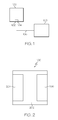
- FIG. 1 is a schematic representation of a fuel cell 100 and LRU 108 according to an embodiment of the present invention.
- the fuel cell 100 may include a power output 102 and an information output 104.
- the fuel cell 100 may be connected to an LRU 108 of an aircraft by a connection cable 106.
- the power output 102 may output power from the fuel cell 100 to the LRU 108.
- the power output 102 may be a post.
- the post may connect to the connection cable 106.
- Alternatives could be used and are considered to be within the scope of the present invention.
- the power output 102 may be a receptacle into which a plug from a cable may be received.
- the information output 104 may output information from the fuel cell 100 to the LRU 108.
- the outputted information may include one or more of a fuel cell on indicator, a remaining charge measure, or a remaining time measure. Outputted information may ultimately be provided to an aircraft crew display (such as a cockpit display).
- the outputted information may be ARING 429 bus data. Alternatives could be used and are considered to be within the scope of the present invention. Not by way of limitation, but by way of example, the outputted information may be Military Standard 1553 bus data, Ethernet bus data, or USB bus data.
- connection cable 106 may transmit outputted power from the power output 102 of the fuel cell 100 to the LRU 108.
- the connection cable 106 may transmit outputted information from the information output 104 of the fuel cell 100 to the LRU 108.
- the connection cable 106 may be a single cable and may include two logical connections, one for outputted power and the other for outputted information. Alternatives could be used and are considered to be within the scope of the present invention. Not by way of limitation, but by way of example, two connection cables could be used, each including one logical connection.
- the LRU 108 may be any suitable electrical device.
- the LRU 108 may be a navigational system, a communications system (such as a radio (an HF radio, a VHF radio, a SATCOM system, etc.), or an emergency system (such as an emergency locator transmitter). Additional alternatives could be used and are considered to be within the scope of the present invention.
- the LRU 108 may be a global positioning system, an enhanced ground proximity warning system, a primary flight display, a transponder, a flight data recorder, or a traffic collision advisory system.
- FIG. 2 is a schematic representation of a fuel cell, such as the fuel cell 100 of FIG. 1 .
- the fuel cell 100 may include a main body 202.
- the fuel cell 100 main body 202 may be similar in size to a notebook PC. Accordingly, depending on aircraft requirements, a fuel cell 100 may be located at a variety of locations in the aircraft, including with an LRU, such as the LRU 108 of FIG. 1 , or in a centralized location. Alternative sizes are possible and are considered to be within the scope of the invention. Not by way of limitation, but by way of example, a larger or a smaller fuel cell main body may be used.
- the fuel cell 100 may include a replaceable fuel cartridge 204 and a replaceable by-product cartridge 206.
- the replaceable fuel cartridge 204 and the replaceable by-product cartridge 206 may be replaced, for example, whenever an aircraft is in a hanger, or prior to flight.
- the fuel cell 100 may be a methanol fuel cell, such as a direct methanol fuel cell (DMFC).
- DMFC direct methanol fuel cell
- An exemplary methanol fuel cell is the UltraCell25TM available from UltraCell Corporation, Livermore, CA. Alternatives could be used and are considered to be within the scope of the invention. Not by way of limitation, but by way of example, a proton exchange membrane fuel cell (PEMFC) could be used, as could a bacterial fuel cell.
- PEMFC proton exchange membrane fuel cell
- the main body 202 may include the devices necessary to convert a fuel from the replaceable fuel cartridge 204 and, if necessary, any additional element (such as oxygen) into a by-product (such as water) to be outputted into the replaceable by-product cartridge 206 (such as a replaceable water cartridge), thereby creating electricity.
- the main body 202 may include holders (not shown) to receive and hold the replaceable fuel cartridge 204 and the replaceable by-product cartridge 206.
- the holders may be recesses into which the replaceable fuel cartridge 204 and the replaceable by-product cartridge 206 may be inserted.
- the fuel cartridge 204 may contain fuel.
- the fuel may be a solution comprising methanol.
- Alternatives could be used and are considered to be within the scope of the invention. Not by way of limitation, but by way of example, a bacterial fuel could be used.
- FIG. 3 is a schematic representation of a replaceable by-product cartridge, such as the replaceable by-product cartridge 206 of FIG. 2 .
- the replaceable by-product cartridge 206 may include a reservoir 300.
- the replaceable by-product cartridge 206 may include absorbent material 302 within the reservoir 300.
- the absorbent material 302 may be a synthetic lambskin. Alternatives could be used and are considered to be within the scope of the invention.
- the replaceable by-product cartridge 206 may include venting holes to allow water in an absorbent material to evaporate.
- FIG. 4 is a schematic representation of the function of a fuel cell 400 according to an embodiment of the present invention.
- a fuel cell 400 may include an anode 402 and a cathode 404.
- Oxygen and hydrogen may be inputted into the fuel cell 400.
- Oxygen may be supplied by ambient air.
- Hydrogen may be supplied by a fuel.
- the fuel may be a solution comprising methanol.
- Alternatives could be used and are considered to be within the scope of the invention. Not by way of limitation, but by way of example, ethanol, or formic acid may be used as fuel.
- Hydrogen may be inputted into the fuel cell 400 and directed near the anode 402. As a result, electrons and hydrogen ions may be split from hydrogen molecules. The electrons may be outputted from the fuel cell.
- Oxygen may be inputted into the fuel cell 400 and directed near the cathode 404. Negatively charged oxygen atoms may be formed attracting the hydrogen ions. The combination of the oxygen atoms and the hydrogen ions may result in water.
- FIG. 5 is a schematic representation of a fuel cell 500 and a LRU 508 according to an embodiment of the present invention.
- the LRU 508 may include an LRU power manager 510 (which is depicted in FIG. 5 as being a part of the LRU 508).
- the fuel cell 500 may be connected to the LRU 508 by a connection cable 506.
- the connection cable 506 may carry outputted power from the power output 502 to the LRU 508.
- the connection cable 506 may carry outputted information from the information output 504 to the LRU 508.
- the LRU power manager 510 may determine power drawn from the fuel cell 500.
- the LRU power manager 510 may use LRU battery power or power from an aircraft power system for low power applications (i.e. normal applications).
- the LRU power manager 510 may draw power from the fuel cell 500 for high power applications to "charge" or supplement LRU battery power or power from the aircraft power system while the LRU 508 is running. Such a scenario may occur while the aircraft is flying and power from the aircraft power system is discontinued to the LRU 508.
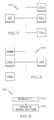
- FIG. 6 is a schematic representation of a one to one configuration 600 of fuel cells 602a,b,... n and LRUs 604a,b,... n according to an embodiment of the present invention.
- a number of fuel cells 602a,b,... n may be connected to an equal number of LRUs 604a,b,... n.
- two fuel cells may be connected to two LRUs.
- each LRU may be connected to one fuel cell providing power to that LRU.
- FIG. 7 is a schematic representation of a one to multiple configuration 700 of a fuel cell 702 to LRUs 704a,b,... n according to an embodiment of the present invention.
- a single fuel cell 702 may be connected to multiple LRUs 704a,b,... n.
- one fuel cell may be connected to two LRUs.
- multiple LRUs may be connected to one fuel cell providing power to those LRUs.
- FIG. 8 is a schematic representation of a multiple to one configuration 800 of fuel cells 802a,b,... n to an LRU 804 according to an embodiment of the present invention.
- a number of fuel cells 802a,b,... n may be connected to one LRU 804.
- two fuel cells may be connected to one LRU.
- a single LRU may be connected to multiple fuel cells providing power to that LRU.
- FIG. 9 is a schematic representation of a method 900 of supplementing electrical power in an aircraft according to an embodiment of the present invention.
- the method may include a step 902 of providing a fuel cell, such as the fuel cell 100 of FIGS 1-3 , and a step 904 of supplementing an electrical power system.
- the step 902 of providing a fuel cell 100 may include providing a fuel cell 100 including a replaceable fuel cartridge 204 and a replaceable by-product cartridge 206.
- the step 904 of supplementing the electrical system may include supplementing an electrical power system of the aircraft with power generated by the fuel cell 100 by outputting power. Power may be output to an LRU, such as the LRU 108 of FIG. 1 .
Landscapes
- Chemical & Material Sciences (AREA)
- Engineering & Computer Science (AREA)
- Life Sciences & Earth Sciences (AREA)
- Chemical Kinetics & Catalysis (AREA)
- Sustainable Energy (AREA)
- Sustainable Development (AREA)
- Manufacturing & Machinery (AREA)
- Electrochemistry (AREA)
- General Chemical & Material Sciences (AREA)
- Aviation & Aerospace Engineering (AREA)
- Biochemistry (AREA)
- Microbiology (AREA)
- Fuel Cell (AREA)
Abstract
Description
- The present invention relates generally to fuel cells and, more particularly, to fuel cells used to supplement power sources for aircraft equipment.
- Modern aircraft include a variety of electrical devices. One airplane may include navigational equipment, communications equipment such as a radio, and emergency equipment such as an emergency locator transmitter. These devices may be embodied in individual cases or boxes known as line-replaceable units (LRUs).
- Typically, power may be provided to an LRU from a power system powered primarily by one or more generators, each of which may be coupled to an aircraft engine. Additionally, a power system may receive power from an auxiliary power unit, such as a gas turbine.
- Battery power may be used as a backup power supply for an LRU in the event of a power system failure due to, for example, loss of engine power. Similarly, capacitors may also be used to supply backup power to an LRU. Battery and capacitor backups (both of which may be referred to as "battery", "battery backup", or "battery power" herein) may enable an LRU to continue to operate even though no power is being received from the power system. Battery power may provide backup power supply for a limited time. Increasing the number of batteries may increase the amount of time that backup power is available. However, an increased number of batteries means an increased amount of weight.
- In the event of a partial or complete power system failure, an aircraft crew may begin shutting down non-essential electrical systems in order to prolong backup power. The order in which non-essential electrical systems are shut down may be suggested by, for example, guideline, regulation, or accepted practice. There may, however, be certain essential items that the crew may want to avoid shutting down. For example, due to the specifics of the particular situation, the crew may want to keep a radio operational for as long as possible so as to request emergency assistance. If the crew keeps the radio on, the battery backup may eventually run out of energy and the radio will no longer function.
- As can be seen, there is a need for a way to provide or supplement the supply of power to an LRU when power is otherwise unavailable from a normal power system. There is a need for a way to provide or supplement the supply of power that weighs less than conventional batteries. There is a need for a way to efficiently and practically provide or supplement the supply of power.
- In one aspect of the present invention, a fuel cell may include a replaceable fuel source, an information output, and a power output to output power from the fuel cell to a line replaceable unit of a vehicle.
- In another aspect of the present invention, a fuel cell to supplement electrical power in aircraft may include a replaceable fuel cartridge, a replaceable by-product cartridge, an information output to output information, and a power output to output power to the aircraft.
- In another aspect of the present invention, a method of supplementing electrical power in an aircraft may include providing a fuel cell in the aircraft, the fuel cell comprising a replaceable fuel cartridge and a replaceable by-product cartridge, and supplementing an electrical power system of the aircraft with power generated by the fuel cell by outputting power from the fuel cell to the electrical power system.
- These and other features, aspects and advantages of the present invention will become better understood with reference to the following drawings, description and claims.
-
FIG. 1 is a schematic representation of a fuel cell and LRU according to an embodiment of the present invention; -
FIG. 2 is a schematic representation of a fuel cell, such as the fuel cell ofFIG. 1 ; -
FIG. 3 is a schematic representation of a replaceable by-product cartridge, such as the replaceable by-product cartridge ofFIG. 2 ; -
FIG. 4 is a schematic representation of the function of a fuel cell according to an embodiment of the present invention; -
FIG. 5 is a schematic representation of a fuel cell and LRU according to an embodiment of the present invention; -
FIG. 6 is a schematic representation of a one to one configuration of fuel cells and LRUs according to an embodiment of the present invention; -
FIG. 7 is a schematic representation of a one to multiple configuration of a fuel cell and multiple LRUs according to an embodiment of the present invention; -
FIG. 8 is a schematic representation of a multiple to one configuration of fuel cells and an LRU according to an embodiment of the present invention; and -
FIG. 9 is a schematic representation of a method of supplementing electrical power in an aircraft according to an embodiment of the present invention. - The following detailed description is of the best currently contemplated modes of carrying out the invention. The description is not to be taken in a limiting sense, but is made merely for the purpose of illustrating the general principles of the invention, since the scope of the invention is best defined by the appended claims.
- Broadly, embodiments of the present invention may include a fuel cell to supplement power sources for aircraft equipment. Embodiments may be useful in a variety of applications, such as aircraft, ground vehicles or any situation in which supplemental power may be needed. For example, a fuel cell may be used to supplement power to an aircraft LRU. A fuel cell supplementing power to an aircraft LRU may extend the functional duration of the LRU by a significant measure, such as by 6-8 hours or more. A fuel cell supplementing power to an aircraft LRU may be lightweight relative to an equivalent battery configuration.
- Embodiments of the present invention may differ from conventional vehicle power systems that lack fuel cells to provide power to an LRU at least by providing a fuel cell including a power output to output power to an LRU of a vehicle. Embodiments of the present invention may differ from conventional aircraft power systems that lack sufficient power backup at least by providing a fuel cell to supplement electrical power in an aircraft. Embodiments of the present invention may differ from conventional aircraft power systems that lack replaceable fuel cartridges at least by providing a fuel cell including a replaceable fuel cartridge. Embodiments of the present invention may differ from conventional aircraft power systems that lack replaceable by-product cartridges at least by providing a fuel cell including a replaceable by-product cartridge.
-
FIG. 1 is a schematic representation of afuel cell 100 andLRU 108 according to an embodiment of the present invention. Thefuel cell 100 may include apower output 102 and aninformation output 104. Thefuel cell 100 may be connected to an LRU 108 of an aircraft by aconnection cable 106. - The
power output 102 may output power from thefuel cell 100 to the LRU 108. Thepower output 102 may be a post. The post may connect to theconnection cable 106. Alternatives could be used and are considered to be within the scope of the present invention. Not by way of limitation, but by way of example, thepower output 102 may be a receptacle into which a plug from a cable may be received. - The
information output 104 may output information from thefuel cell 100 to the LRU 108. The outputted information may include one or more of a fuel cell on indicator, a remaining charge measure, or a remaining time measure. Outputted information may ultimately be provided to an aircraft crew display (such as a cockpit display). - The outputted information may be ARING 429 bus data. Alternatives could be used and are considered to be within the scope of the present invention. Not by way of limitation, but by way of example, the outputted information may be Military Standard 1553 bus data, Ethernet bus data, or USB bus data.
- The
connection cable 106 may transmit outputted power from thepower output 102 of thefuel cell 100 to the LRU 108. Theconnection cable 106 may transmit outputted information from theinformation output 104 of thefuel cell 100 to the LRU 108. Theconnection cable 106 may be a single cable and may include two logical connections, one for outputted power and the other for outputted information. Alternatives could be used and are considered to be within the scope of the present invention. Not by way of limitation, but by way of example, two connection cables could be used, each including one logical connection. - The
LRU 108 may be any suitable electrical device. TheLRU 108 may be a navigational system, a communications system (such as a radio (an HF radio, a VHF radio, a SATCOM system, etc.), or an emergency system (such as an emergency locator transmitter). Additional alternatives could be used and are considered to be within the scope of the present invention. Not by way of limitation, but by way of example, theLRU 108 may be a global positioning system, an enhanced ground proximity warning system, a primary flight display, a transponder, a flight data recorder, or a traffic collision advisory system. -
FIG. 2 is a schematic representation of a fuel cell, such as thefuel cell 100 ofFIG. 1 . Thefuel cell 100 may include amain body 202. Thefuel cell 100main body 202 may be similar in size to a notebook PC. Accordingly, depending on aircraft requirements, afuel cell 100 may be located at a variety of locations in the aircraft, including with an LRU, such as theLRU 108 ofFIG. 1 , or in a centralized location. Alternative sizes are possible and are considered to be within the scope of the invention. Not by way of limitation, but by way of example, a larger or a smaller fuel cell main body may be used. - The
fuel cell 100 may include areplaceable fuel cartridge 204 and a replaceable by-product cartridge 206. Thereplaceable fuel cartridge 204 and the replaceable by-product cartridge 206 may be replaced, for example, whenever an aircraft is in a hanger, or prior to flight. - The
fuel cell 100 may be a methanol fuel cell, such as a direct methanol fuel cell (DMFC). An exemplary methanol fuel cell is the UltraCell25™ available from UltraCell Corporation, Livermore, CA. Alternatives could be used and are considered to be within the scope of the invention. Not by way of limitation, but by way of example, a proton exchange membrane fuel cell (PEMFC) could be used, as could a bacterial fuel cell. - The
main body 202 may include the devices necessary to convert a fuel from thereplaceable fuel cartridge 204 and, if necessary, any additional element (such as oxygen) into a by-product (such as water) to be outputted into the replaceable by-product cartridge 206 (such as a replaceable water cartridge), thereby creating electricity. Themain body 202 may include holders (not shown) to receive and hold thereplaceable fuel cartridge 204 and the replaceable by-product cartridge 206. The holders may be recesses into which thereplaceable fuel cartridge 204 and the replaceable by-product cartridge 206 may be inserted. - The
fuel cartridge 204 may contain fuel. In an embodiment, the fuel may be a solution comprising methanol. Alternatives could be used and are considered to be within the scope of the invention. Not by way of limitation, but by way of example, a bacterial fuel could be used. -
FIG. 3 is a schematic representation of a replaceable by-product cartridge, such as the replaceable by-product cartridge 206 ofFIG. 2 . The replaceable by-product cartridge 206 may include areservoir 300. The replaceable by-product cartridge 206 may includeabsorbent material 302 within thereservoir 300. Theabsorbent material 302 may be a synthetic lambskin. Alternatives could be used and are considered to be within the scope of the invention. The replaceable by-product cartridge 206 may include venting holes to allow water in an absorbent material to evaporate. -
FIG. 4 is a schematic representation of the function of afuel cell 400 according to an embodiment of the present invention. Afuel cell 400 may include an anode 402 and acathode 404. - Oxygen and hydrogen may be inputted into the
fuel cell 400. Oxygen may be supplied by ambient air. Hydrogen may be supplied by a fuel. In an embodiment, the fuel may be a solution comprising methanol. Alternatives could be used and are considered to be within the scope of the invention. Not by way of limitation, but by way of example, ethanol, or formic acid may be used as fuel. - Hydrogen may be inputted into the
fuel cell 400 and directed near the anode 402. As a result, electrons and hydrogen ions may be split from hydrogen molecules. The electrons may be outputted from the fuel cell. Oxygen may be inputted into thefuel cell 400 and directed near thecathode 404. Negatively charged oxygen atoms may be formed attracting the hydrogen ions. The combination of the oxygen atoms and the hydrogen ions may result in water. -
FIG. 5 is a schematic representation of afuel cell 500 and aLRU 508 according to an embodiment of the present invention. TheLRU 508 may include an LRU power manager 510 (which is depicted inFIG. 5 as being a part of the LRU 508). Thefuel cell 500 may be connected to theLRU 508 by aconnection cable 506. Theconnection cable 506 may carry outputted power from thepower output 502 to theLRU 508. Theconnection cable 506 may carry outputted information from theinformation output 504 to theLRU 508. - The
LRU power manager 510 may determine power drawn from thefuel cell 500. TheLRU power manager 510 may use LRU battery power or power from an aircraft power system for low power applications (i.e. normal applications). TheLRU power manager 510 may draw power from thefuel cell 500 for high power applications to "charge" or supplement LRU battery power or power from the aircraft power system while theLRU 508 is running. Such a scenario may occur while the aircraft is flying and power from the aircraft power system is discontinued to theLRU 508. -
FIG. 6 is a schematic representation of a one to oneconfiguration 600 offuel cells 602a,b,...n andLRUs 604a,b,...n according to an embodiment of the present invention. In the one to oneconfiguration 600, a number offuel cells 602a,b,...n may be connected to an equal number of LRUs 604a,b,...n. For example, two fuel cells may be connected to two LRUs. Accordingly, each LRU may be connected to one fuel cell providing power to that LRU. -
FIG. 7 is a schematic representation of a one tomultiple configuration 700 of afuel cell 702 toLRUs 704a,b,...n according to an embodiment of the present invention. In the one to multiple configuration, asingle fuel cell 702 may be connected to multiple LRUs 704a,b,...n. For example, one fuel cell may be connected to two LRUs. Accordingly, multiple LRUs may be connected to one fuel cell providing power to those LRUs. -
FIG. 8 is a schematic representation of a multiple to oneconfiguration 800 offuel cells 802a,b,...n to anLRU 804 according to an embodiment of the present invention. In the multiple to oneconfiguration 800, a number offuel cells 802a,b,...n may be connected to oneLRU 804. For example, two fuel cells may be connected to one LRU. Accordingly, a single LRU may be connected to multiple fuel cells providing power to that LRU. -
FIG. 9 is a schematic representation of amethod 900 of supplementing electrical power in an aircraft according to an embodiment of the present invention. The method may include astep 902 of providing a fuel cell, such as thefuel cell 100 ofFIGS 1-3 , and astep 904 of supplementing an electrical power system. - The
step 902 of providing afuel cell 100 may include providing afuel cell 100 including areplaceable fuel cartridge 204 and a replaceable by-product cartridge 206. Thestep 904 of supplementing the electrical system may include supplementing an electrical power system of the aircraft with power generated by thefuel cell 100 by outputting power. Power may be output to an LRU, such as theLRU 108 ofFIG. 1 . - It should be understood, of course, that the foregoing relates to exemplary embodiments of the invention and that modifications may be made without departing from the spirit and scope of the invention as set forth in the following claims.
Claims (9)
- A fuel cell 100 comprising:a replaceable fuel source;an information output 104; anda power output 102 to output power from the fuel cell 100 to a line-replaceable unit 108 of a vehicle.
- The fuel cell 100 of claim 1, wherein the replaceable fuel source comprises a replaceable fuel cartridge 204.
- The fuel cell 100 of claims 1 or 2, further comprising a replaceable by-product cartridge 206.
- The fuel cell 100 of claim 3, wherein the replaceable by-product cartridge 206 comprises a replaceable water cartridge.
- The fuel cell 100 of claim 1, wherein the replaceable fuel source comprises a solution comprising at least one of methanol or bacteria.
- The fuel cell 100 of claims 1, 2, or 5, wherein the information output 104 comprises an information output to output at least one of a fuel cell on indicator, a remaining charge measure, or a remaining time measure.
- The fuel cell 100 of claim 1, 2, or 5, wherein the information output 104 comprises an information output to output at least one of ARING 429 bus data, Military Standard 1553 bus data, Ethernet bus data, or USB bus data.
- The fuel cell 100 of claim 1, 2, or 5, wherein the power output 102 to output power to the line-replaceable unit of the vehicle comprises a power output to output power to at least one of a navigational system, a communications system, or an emergency system.
- The fuel cell 100 of claim 1, 2, or 5, further comprising a main body 202 where the main body 202 receives the replaceable fuel source.
Applications Claiming Priority (1)
| Application Number | Priority Date | Filing Date | Title |
|---|---|---|---|
| US11/737,889 US8846255B2 (en) | 2007-04-20 | 2007-04-20 | Fuel cells used to supplement power sources for aircraft equipment |
Publications (1)
| Publication Number | Publication Date |
|---|---|
| EP2001071A1 true EP2001071A1 (en) | 2008-12-10 |
Family
ID=39791097
Family Applications (1)
| Application Number | Title | Priority Date | Filing Date |
|---|---|---|---|
| EP08103603A Withdrawn EP2001071A1 (en) | 2007-04-20 | 2008-04-17 | Fuel cells used to supplement power sources for aircraft equipment |
Country Status (3)
| Country | Link |
|---|---|
| US (1) | US8846255B2 (en) |
| EP (1) | EP2001071A1 (en) |
| CA (1) | CA2629505A1 (en) |
Cited By (1)
| Publication number | Priority date | Publication date | Assignee | Title |
|---|---|---|---|---|
| WO2011006791A1 (en) | 2009-07-15 | 2011-01-20 | Bundesdruckerei Gmbh | Method for reading attributes from an id token |
Families Citing this family (35)
| Publication number | Priority date | Publication date | Assignee | Title |
|---|---|---|---|---|
| US9941741B2 (en) * | 2013-03-20 | 2018-04-10 | Nokia Technologies Oy | Method, apparatus, and computer program product for powering electronics in smart covers |
| US9369008B2 (en) | 2013-03-20 | 2016-06-14 | Nokia Technologies Oy | Method, apparatus, and computer program product for powering electronic devices |
| CN105304919B (en) * | 2015-07-03 | 2017-07-18 | 北京科技大学 | A kind of use drop microflow control technique improves the experimental method of the power output of microbiological fuel cell |
| US12291348B2 (en) * | 2021-01-22 | 2025-05-06 | Blue Spirit Aero Sas | Aircraft propulsion module and aircraft |
| EP4032810A1 (en) * | 2021-01-22 | 2022-07-27 | Blue Spirit Aero SAS | Aircraft with electric propulsion module |
| US12202616B2 (en) | 2021-11-04 | 2025-01-21 | General Electric Company | Relight of a propulsion system with a fuel cell |
| US11794912B2 (en) | 2022-01-04 | 2023-10-24 | General Electric Company | Systems and methods for reducing emissions with a fuel cell |
| US12123361B2 (en) | 2022-01-04 | 2024-10-22 | General Electric Company | Systems and methods for providing output products to a combustion chamber of a gas turbine engine |
| US12037952B2 (en) | 2022-01-04 | 2024-07-16 | General Electric Company | Systems and methods for providing output products to a combustion chamber of a gas turbine engine |
| US11933216B2 (en) | 2022-01-04 | 2024-03-19 | General Electric Company | Systems and methods for providing output products to a combustion chamber of a gas turbine engine |
| US11719441B2 (en) | 2022-01-04 | 2023-08-08 | General Electric Company | Systems and methods for providing output products to a combustion chamber of a gas turbine engine |
| US11970282B2 (en) | 2022-01-05 | 2024-04-30 | General Electric Company | Aircraft thrust management with a fuel cell |
| US12034298B2 (en) | 2022-01-10 | 2024-07-09 | General Electric Company | Power source for an aircraft |
| US11804607B2 (en) | 2022-01-21 | 2023-10-31 | General Electric Company | Cooling of a fuel cell assembly |
| US12573647B2 (en) | 2022-01-21 | 2026-03-10 | General Electric Company | Solid oxide fuel cell assembly |
| US12037124B2 (en) | 2022-01-21 | 2024-07-16 | General Electric Company | Systems and method of operating a fuel cell assembly |
| US12074350B2 (en) | 2022-01-21 | 2024-08-27 | General Electric Company | Solid oxide fuel cell assembly |
| US12351329B2 (en) | 2022-01-21 | 2025-07-08 | General Electric Company | Systems and method of operating a fuel cell assembly |
| US12129789B2 (en) | 2022-02-21 | 2024-10-29 | General Electric Company | Systems and method of operating a fuel cell assembly, a gas turbine engine, or both |
| US11967743B2 (en) | 2022-02-21 | 2024-04-23 | General Electric Company | Modular fuel cell assembly |
| US12170390B2 (en) | 2022-02-21 | 2024-12-17 | General Electric Company | Systems and method of operating a fuel cell assembly, a gas turbine engine, or both |
| US12025061B2 (en) | 2022-04-04 | 2024-07-02 | General Electric Company | Gas turbine engine with fuel cell assembly |
| US12428164B2 (en) | 2022-05-16 | 2025-09-30 | General Electric Company | Environmental control system having a fuel cell assembly |
| US12412914B2 (en) | 2022-05-16 | 2025-09-09 | General Electric Company | Environmental control system having a fuel cell assembly |
| US12043406B2 (en) | 2022-05-27 | 2024-07-23 | General Electric Company | Method of operating a fuel cell assembly for an aircraft |
| US11817700B1 (en) | 2022-07-20 | 2023-11-14 | General Electric Company | Decentralized electrical power allocation system |
| US12301002B2 (en) | 2022-08-26 | 2025-05-13 | General Electric Company | Power dispatch control system for multiple power generation sources |
| US11859820B1 (en) | 2022-11-10 | 2024-01-02 | General Electric Company | Gas turbine combustion section having an integrated fuel cell assembly |
| US12078350B2 (en) | 2022-11-10 | 2024-09-03 | General Electric Company | Gas turbine combustion section having an integrated fuel cell assembly |
| US12567595B2 (en) | 2022-11-10 | 2026-03-03 | General Electric Company | Gas turbine combustion section having an integrated fuel cell assembly |
| US12240613B2 (en) | 2022-11-10 | 2025-03-04 | General Electric Company | Gas turbine combustion section having an integrated fuel cell assembly |
| US11923586B1 (en) | 2022-11-10 | 2024-03-05 | General Electric Company | Gas turbine combustion section having an integrated fuel cell assembly |
| CN118532263A (en) | 2023-02-23 | 2024-08-23 | 通用电气公司 | Gas turbine engine and fuel cell components |
| CN118532265A (en) | 2023-02-23 | 2024-08-23 | 通用电气公司 | Gas turbine engine and fuel cell components |
| CN118532266A (en) | 2023-02-23 | 2024-08-23 | 通用电气公司 | Gas turbine engine and fuel cell components |
Citations (3)
| Publication number | Priority date | Publication date | Assignee | Title |
|---|---|---|---|---|
| EP1434296A1 (en) * | 2001-10-02 | 2004-06-30 | Sony Corporation | Fuel fluid coupling |
| EP1455402A1 (en) * | 2003-03-04 | 2004-09-08 | Kabushiki Kaisha Toshiba | Fuel cell unit and operational state display control method |
| WO2005060019A2 (en) * | 2003-09-30 | 2005-06-30 | The Gillette Company | Fuel container and delivery apparatus for a liquid feed fuel cell system |
Family Cites Families (21)
| Publication number | Priority date | Publication date | Assignee | Title |
|---|---|---|---|---|
| US4709882A (en) | 1983-11-25 | 1987-12-01 | Lockheed Missiles & Space Company, Inc. | Electric propulsion system for aircraft |
| US4697761A (en) | 1985-09-16 | 1987-10-06 | Long David E | High altitude reconnaissance platform |
| US5106035A (en) | 1989-12-29 | 1992-04-21 | Aurora Flight Sciences Corporation | Aircraft propulsion system using air liquefaction and storage |
| DE19821952C2 (en) * | 1998-05-15 | 2000-07-27 | Dbb Fuel Cell Engines Gmbh | Power supply unit on board an aircraft |
| DE19911018C1 (en) | 1999-03-12 | 2000-08-31 | Daimler Chrysler Ag | Unit for supplying auxiliary power to aircraft includes a gas turbine with a combustion chamber, a blower, a turbine coupled to a compressor to generate compressed air and a fuel cell to generate electrical energy. |
| US6568633B2 (en) | 2000-08-24 | 2003-05-27 | James P. Dunn | Fuel cell powered electric aircraft |
| US20030096144A1 (en) * | 2001-11-20 | 2003-05-22 | Dunstan Robert A. | System to remove heat and water from a fuel cell powered device |
| US7049015B2 (en) * | 2002-04-12 | 2006-05-23 | Motorola, Inc. | Method of operating a fuel cell power source |
| US6854688B2 (en) | 2002-05-03 | 2005-02-15 | Ion America Corporation | Solid oxide regenerative fuel cell for airplane power generation and storage |
| FR2840110B1 (en) | 2002-05-27 | 2004-08-20 | Renault Sa | FUEL CELL TRACTION SYSTEM FOR VEHICLE |
| US6641084B1 (en) | 2002-06-21 | 2003-11-04 | The Boeing Company | Solid oxide fuel cell as auxiliary power source installation in transport aircraft |
| DE10229309B4 (en) | 2002-06-29 | 2006-06-01 | Airbus Deutschland Gmbh | Process for the use of black and / or gray water in the treatment of fuels for high temperature fuel cells |
| US6834831B2 (en) | 2002-12-31 | 2004-12-28 | The Boeing Company | Hybrid solid oxide fuel cell aircraft auxiliary power unit |
| US20040219398A1 (en) * | 2003-05-02 | 2004-11-04 | Calhoon John C. | Fuel cell control and data reporting |
| US20050008924A1 (en) * | 2003-06-20 | 2005-01-13 | Sanjiv Malhotra | Compact multi-functional modules for a direct methanol fuel cell system |
| US20050039287A1 (en) * | 2003-08-21 | 2005-02-24 | Moser Michelle M. | Mop head having a plurality of rectangular extensions |
| DE10356012A1 (en) | 2003-11-27 | 2005-06-30 | Airbus Deutschland Gmbh | Arrangement and method for producing water on board an aircraft |
| US7192666B2 (en) * | 2003-12-05 | 2007-03-20 | Microsoft Corporation | Apparatus and method for heating fuel cells |
| DE102004044646B4 (en) | 2004-09-15 | 2009-08-27 | Airbus Deutschland Gmbh | Fuel cell system as a primary electrical power supply for aircraft |
| DE102005012120A1 (en) | 2005-03-16 | 2006-09-21 | Liebherr-Aerospace Lindenberg Gmbh | Aircraft with a fuel cell |
| US7380749B2 (en) | 2005-04-21 | 2008-06-03 | The Boeing Company | Combined fuel cell aircraft auxiliary power unit and environmental control system |
-
2007
- 2007-04-20 US US11/737,889 patent/US8846255B2/en not_active Expired - Fee Related
-
2008
- 2008-04-17 EP EP08103603A patent/EP2001071A1/en not_active Withdrawn
- 2008-04-18 CA CA002629505A patent/CA2629505A1/en not_active Abandoned
Patent Citations (3)
| Publication number | Priority date | Publication date | Assignee | Title |
|---|---|---|---|---|
| EP1434296A1 (en) * | 2001-10-02 | 2004-06-30 | Sony Corporation | Fuel fluid coupling |
| EP1455402A1 (en) * | 2003-03-04 | 2004-09-08 | Kabushiki Kaisha Toshiba | Fuel cell unit and operational state display control method |
| WO2005060019A2 (en) * | 2003-09-30 | 2005-06-30 | The Gillette Company | Fuel container and delivery apparatus for a liquid feed fuel cell system |
Cited By (1)
| Publication number | Priority date | Publication date | Assignee | Title |
|---|---|---|---|---|
| WO2011006791A1 (en) | 2009-07-15 | 2011-01-20 | Bundesdruckerei Gmbh | Method for reading attributes from an id token |
Also Published As
| Publication number | Publication date |
|---|---|
| CA2629505A1 (en) | 2008-10-20 |
| US20080261084A1 (en) | 2008-10-23 |
| US8846255B2 (en) | 2014-09-30 |
Similar Documents
| Publication | Publication Date | Title |
|---|---|---|
| US8846255B2 (en) | Fuel cells used to supplement power sources for aircraft equipment | |
| JP6166184B2 (en) | Power management and distribution of transportation means | |
| US10913543B2 (en) | Power system for more electric aircraft | |
| Lee et al. | Active power management system for an unmanned aerial vehicle powered by solar cells, a fuel cell, and batteries | |
| US20220289379A1 (en) | Mobile emergency power generation and vehicle propulsion power system | |
| US20220052361A1 (en) | Fuel cell oxygen delivery system, method and apparatus for clean fuel electric aircraft | |
| KR101522544B1 (en) | Power supply system with active power management device | |
| US20130099560A1 (en) | Multiple source electrical power distribution in aircraft | |
| CN104884349B (en) | The management method of the electric power networks of aircraft | |
| Prater | Solid polymer fuel cell developments at Ballard | |
| US20080306637A1 (en) | Battery network system with life-optimal power management and operating methods thereof | |
| US20220315223A1 (en) | Mobile emergency communication and vehicle propulsion power system | |
| EP2538522A1 (en) | Power supply system and electric vehicle | |
| RU2007137018A (en) | FUEL ELEMENT SYSTEM FOR EMERGENCY POWER SUPPLY | |
| US20180273195A1 (en) | A vehicle comprising an engine restart system | |
| US20110037427A1 (en) | Plug And Play Battery System | |
| GB2542921A (en) | Electrical power supply on a vehicle | |
| Saleh et al. | Environmental impact of high altitudes on the operation of PEM fuel cell based UAS | |
| US20220177153A1 (en) | Conformal energy bay | |
| CN112478146A (en) | Design method for electrical system of unmanned helicopter | |
| Lapeña-Rey et al. | The boeing fuel cell demonstrator airplane | |
| US20220359900A1 (en) | Hybrid o2/h2 regenerative fuel cell system | |
| CN221614597U (en) | Aircraft power supply branching device, power supply system and aircraft | |
| Bounoua et al. | Development of an on-board energy optimization strategy for the air mobility of the future | |
| US20180319288A1 (en) | Ethanol-Fueled Fuel Cell Powered Aircraft |
Legal Events
| Date | Code | Title | Description |
|---|---|---|---|
| PUAI | Public reference made under article 153(3) epc to a published international application that has entered the european phase |
Free format text: ORIGINAL CODE: 0009012 |
|
| 17P | Request for examination filed |
Effective date: 20080417 |
|
| AK | Designated contracting states |
Kind code of ref document: A1 Designated state(s): AT BE BG CH CY CZ DE DK EE ES FI FR GB GR HR HU IE IS IT LI LT LU LV MC MT NL NO PL PT RO SE SI SK TR |
|
| AX | Request for extension of the european patent |
Extension state: AL BA MK RS |
|
| 17Q | First examination report despatched |
Effective date: 20090123 |
|
| AKX | Designation fees paid |
Designated state(s): FR GB |
|
| REG | Reference to a national code |
Ref country code: DE Ref legal event code: 8566 |
|
| STAA | Information on the status of an ep patent application or granted ep patent |
Free format text: STATUS: THE APPLICATION IS DEEMED TO BE WITHDRAWN |
|
| 18D | Application deemed to be withdrawn |
Effective date: 20091111 |