EP1998254A2 - Information processing apparatus and start-up control method - Google Patents
Information processing apparatus and start-up control method Download PDFInfo
- Publication number
- EP1998254A2 EP1998254A2 EP08156612A EP08156612A EP1998254A2 EP 1998254 A2 EP1998254 A2 EP 1998254A2 EP 08156612 A EP08156612 A EP 08156612A EP 08156612 A EP08156612 A EP 08156612A EP 1998254 A2 EP1998254 A2 EP 1998254A2
- Authority
- EP
- European Patent Office
- Prior art keywords
- completion signal
- basic program
- bios
- module
- started
- Prior art date
- Legal status (The legal status is an assumption and is not a legal conclusion. Google has not performed a legal analysis and makes no representation as to the accuracy of the status listed.)
- Withdrawn
Links
Images

Classifications
-
- G—PHYSICS
- G06—COMPUTING OR CALCULATING; COUNTING
- G06F—ELECTRIC DIGITAL DATA PROCESSING
- G06F11/00—Error detection; Error correction; Monitoring
- G06F11/07—Responding to the occurrence of a fault, e.g. fault tolerance
- G06F11/14—Error detection or correction of the data by redundancy in operations
- G06F11/1402—Saving, restoring, recovering or retrying
- G06F11/1415—Saving, restoring, recovering or retrying at system level
- G06F11/1417—Boot up procedures
-
- G—PHYSICS
- G06—COMPUTING OR CALCULATING; COUNTING
- G06F—ELECTRIC DIGITAL DATA PROCESSING
- G06F21/00—Security arrangements for protecting computers, components thereof, programs or data against unauthorised activity
- G06F21/50—Monitoring users, programs or devices to maintain the integrity of platforms, e.g. of processors, firmware or operating systems
- G06F21/57—Certifying or maintaining trusted computer platforms, e.g. secure boots or power-downs, version controls, system software checks, secure updates or assessing vulnerabilities
Definitions
- the present invention relates to an information processing apparatus, such as a personal computer. And more specifically, the invention relates to an information processing apparatus configured to report that a module has started up normally to a system and a start-up control method for use in the apparatus.
- a personal computer shifts control to an operating system on a hard disk drive (HDD), which is a boot medium, after starting up a basic input/output system (BIOS) of an operating system.
- HDD hard disk drive
- BIOS basic input/output system
- BIOS which is a system
- the technique given above produces the problem such that the BIOS, which is a system, may not grasp whether or not the application on the operating system has started up normally.
- an object of the invention is to provide an information processing apparatus and a start-up control method configured to restrict the use of the system on the BIOS side if the application has not started normally.
- an information processing apparatus equipped with a basic program and a boot medium, comprising start-up unit:
- a start-up control method which controls an information processing apparatus equipped with a basic program and a boot medium, comprising:
- the information processing apparatus is actualized, for example, as a notebook-type personal computer 10.
- FIG. 1 shows a perspective view depicting a state in which a display unit of the notebook-type personal computer 10 is opened.
- the computer 10 is composed of a computer main unit 11 and a display unit 12.
- the display unit 12 has a display device consisting of a thin film transistor liquid crystal display (TFT-LCD) 17 built-in, and the display screen of the TFT-LCD 17 is positioned almost at the chanter of the display unit 12.
- TFT-LCD thin film transistor liquid crystal display
- the display unit 12 is attached to the computer main unit 11 so as to freely rotate between an open position and the closed position.
- the computer main unit 11 has a thin-box-type housing, and a keyboard (KB) 13, a power button 14 for setting power on/power off the computer 10, an input operation panel 15, a touch pad 16, loud-speakers 18A, 18B, and an infra-red ray reception unit 20, etc., arranged on the upper surface of the main unit 11.
- the input operation panel 15 is an input device which inputs an event corresponding to the depressed button on the panel 15, and includes a plurality of buttons for starting up a plurality of functions.
- the system configuration of the computer 10 will be described by referring to FIG. 2 .
- the computer 10 includes a CPU 111, a north bridge 112, a main memory 113, a south bridge 115, a graphics controller 114, a BIOS-ROM 109, a network controller 117, a HDD 116, an embedded controller/keyboard controller IC (EC/KBC) 119, and a power source circuit 120.
- the CPU 111 is a processor for controlling an operation of the computer 10, and executes an operating system and a various applications which are loaded on the main memory 113 from the HDD 116.
- the CPU 111 also executes the BIOS stored in the BIOS-ROM 109.
- the BIOS is a program for controlling hardware.
- the north bridge 112 is a bridge device to connect between a local bus of the CPU 111 and the south bridge 115.
- the north bridge 112 also has a memory controller to control access of the built-in main memory 113.
- the north bridge 112 also has a function to execute communication with the graphic controller 114 via a serial bus in conformity with PCI EXPRESS standards.
- the graphics controller 114 is a display controller which controls the LCD 17 to be used as a display monitor of the computer 10.
- the display signal to be generated from the graphics controller 114 is transmitted to the LCD 17.
- the south bridge 115 controls each device on a low pin count (LPC) bus and each device on a peripheral component interconnect (PCI) bus.
- the south bridge 115 has an integrated drive electronics (IDE) controller to control the built-in HDD 116.
- IDE integrated drive electronics
- the IC (EC/KBC) 119 is a one-chip microcomputer with an embedded controller for power management and a keyboard controller for controlling the KB 13 and the touch pad 16 are integrated therein.
- the IC (EC/KBC) 119 has a function of performing power-on/power-off of the computer 10 in response to the operation of the power button 14 by a user.
- FIG. 3 shows the block diagram depicting the functional configuration regarding the embodiment of the information processing apparatus of the invention.
- the function regarding the embodiment of the invention includes a start-up control unit 201, a storage unit 202, an authentication unit 203, and a transmission and reception unit 204.
- the storage unit 201 is the BIOS-ROM 109 and controls the whole of the system.
- the storage unit 202 is a flash memory for storing authentication information (password information etc.), and for storing waiting time information of a start-up completion signal (hereinafter referred to as a work confirmation call) and the storage unit 202 may also store the information and the signal (call) in the BIOS-ROM 109.
- the authentication unit 203 is the BIOS-ROM 109 and authenticates the application.
- the transmission and reception unit 204 transmits and receives the work confirmation call and authentication information of applications between the BIOS/ROM 109 and the application (module).
- the BIOS-ROM (referred to as BIOS) 109 calls out waiting time information of the work confirmation call from the application (module) from the storage unit 202 and starts a timer in accordance with the waiting time information of the work confirmation call (Step S401).
- the operating system, on the HDD 111 that is a boot disk, is started up.
- the BIOS 109 shifts the control to the operating system on the HDD 111 (Step S402).
- the BIOS 109 starts, for example, an antivirus application (module) on the operation system.
- the BIOS 109 starts the process of waiting for the work confirmation call (start-up completion signal). If the timer that has started in Step S401 times out (YES in Step S403), the BIOS 109 locks a PC (system) (step S406).
- Step S401 determines whether or not the password information attached to the received work confirmation call and authenticates the password information (step S405).
- the BIOS 109 determines that the password information attached to the received work confirmation call received is correct (OK in authentication) (YES in Step 405), the BIOS 109 terminates the timer of the waiting process for the work confirmation call (Step S407).
- the BIOS 109 replies the authentication result to the antivirus application to end the processing (after this, normal operations of the operating system are performed).
- the antivirus application ends the transmission processing of the work confirmation call.
- the antivirus application continues the monitoring of viruses in a state in which the antivirus application has been started on the operating system.
- the case of lock of the PC represents the case such as a shut-down state, a pausing state and a standby state of the system.
- the security-related use by the user may be restricted by performing processing capable of being performed without having to borrow strength of the application on the operating system, for example, by sounding an alarm, making it impossible for a specific device to be used.
- the antivirus application as the application (module) by way of example
- various applications may be adapted for the information processing apparatus and the invention is not limited to the antivirus application as the application (module).
- the embodiment given above has described the HDD 111 as the boot disk by way of example, the invention is not limited to the HDD 111, and a flash memory or an optical disk, etc., can be used.
- BIOS may restrict the use of the system. That is, the BIOS may confirm whether the function required is in operation even after shifting the control to the boot medium such as a HDD. Therefore, BIOS processing may be changed by the operation of various applications on the boot medium. In other words, when the application etc., having a security function is not operated, the security of the information processing apparatus may be enhanced by forcibly locking or shutting down the device.
- the embodiments given above have started the timer in accordance with the waiting time information of the start-up completion signal (work confirmation call) and started the waiting process for the work confirmation call, the invention need not start the waiting process and need not also make the timer time out. In this case, until the work confirmation call from the application is received and until authentication is performed normally, there is a possibility that the BIOS 109 will lock the system. Thus, the information processing apparatus achieves higher security than that of the embodiments given above.
- a further modified example will be described. While the foregoing modified example has transmitted the password from the BIOS 109 in authenticating the foregoing work confirmation call to the antivirus application, the invention may use various authentication unit, such as a challenge response system or one time password without transmitting the password as it is.
- the BIOS 109 transmits random number information to the antivirus application.
- the antivirus application transmits both the received random number information and the pre-shared password information to the BIOS 109.
- the BIOS 109 may authenticate the work confirmation call by using both the received random number information and the pre-shared password information. Therefore, the security is further improved in comparison with the aforementioned embodiments.
Landscapes
- Engineering & Computer Science (AREA)
- Theoretical Computer Science (AREA)
- General Engineering & Computer Science (AREA)
- Physics & Mathematics (AREA)
- General Physics & Mathematics (AREA)
- Computer Hardware Design (AREA)
- Computer Security & Cryptography (AREA)
- Software Systems (AREA)
- Quality & Reliability (AREA)
- Stored Programmes (AREA)
Abstract
According to one embodiment, if start-up of an application (30) is abnormal after starting up the application (30), the information processing apparatus reports the fact to the basic input/output system (BIOS) (109), and the BIOS (109) locks a system.
Description
- The present invention relates to an information processing apparatus, such as a personal computer. And more specifically, the invention relates to an information processing apparatus configured to report that a module has started up normally to a system and a start-up control method for use in the apparatus.
- In general, a personal computer shifts control to an operating system on a hard disk drive (HDD), which is a boot medium, after starting up a basic input/output system (BIOS) of an operating system. A technique which starts up an application on the operating system, after this shift, is disclosed (refer to Jpn. Pat. Appln. KOKAI. Publication No.
2000-306761 - However, the technique given above produces the problem such that the BIOS, which is a system, may not grasp whether or not the application on the operating system has started up normally.
- The present invention has been achieved in consideration of the aforementioned circumstances; an object of the invention is to provide an information processing apparatus and a start-up control method configured to restrict the use of the system on the BIOS side if the application has not started normally.
- To achieve the foregoing object, according to an aspect of the invention, there is provided an information processing apparatus equipped with a basic program and a boot medium, comprising
start-up unit: - when the basic program is started, control is shifted from the basic program to the boot medium,
- the start-up unit configured to start up a module stored in the boot medium;
- a transmission unit configured to transmit a start-up completion signal to the basic program from the module which has been started up by the start-up unit; and
- a reception unit configured to receives the start-up completion signal which has been transmitted from the transmission unit by the basic program, and
- if the start-up completion signal which has been received by the reception unit is abnormal, a system of the information processing apparatus is locked.
- To achieve the foregoing object, according to another aspect of the invention, there is provided a start-up control method which controls an information processing apparatus equipped with a basic program and a boot medium, comprising:
- shifting control to the boot medium to start up a module on the boot medium when the basic program has started up;
- transmitting a start-up completion signal to the basic program by the module which has been started up;
- receiving the start-up completion signal transmitted through the transmission by the basic program, and
- if the start-up completion signal which has been received through the reception is abnormal, a system of the information processing apparatus is locked.
- According to the invention, it becomes possible to restrict the use of the system on the BIOS side if the application has not started up normally.
- The invention can be more fully understood from the following detailed description when taken in conjunction with the accompanying drawings, in which:
-
FIG. 1 is a perspective view depicting an exemplary example of a system configuration of a computer regarding an embodiment of the invention; -
FIG. 2 is a block diagram depicting an exemplary functional configuration of the computer regarding the embodiment of the invention; -
FIG. 3 is a block diagram depicting an exemplary functional configuration of the computer regarding the embodiment of the invention; and -
FIG. 4 is a flowchart for explaining an exemplary start up control method regarding the embodiment of the invention. - Hereinafter, the embodiments of the invention will be described with reference to the drawings.
- Firstly, a configuration of an information processing apparatus regarding an embodiment of the invention will be described by referring to
FIGS. 1 and2 . The information processing apparatus is actualized, for example, as a notebook-typepersonal computer 10. -
FIG. 1 shows a perspective view depicting a state in which a display unit of the notebook-typepersonal computer 10 is opened. Thecomputer 10 is composed of a computermain unit 11 and adisplay unit 12. Thedisplay unit 12 has a display device consisting of a thin film transistor liquid crystal display (TFT-LCD) 17 built-in, and the display screen of the TFT-LCD 17 is positioned almost at the chanter of thedisplay unit 12. - The
display unit 12 is attached to the computermain unit 11 so as to freely rotate between an open position and the closed position. The computermain unit 11 has a thin-box-type housing, and a keyboard (KB) 13, apower button 14 for setting power on/power off thecomputer 10, aninput operation panel 15, atouch pad 16, loud-speakers ray reception unit 20, etc., arranged on the upper surface of themain unit 11. - The
input operation panel 15 is an input device which inputs an event corresponding to the depressed button on thepanel 15, and includes a plurality of buttons for starting up a plurality of functions. - The system configuration of the
computer 10 will be described by referring toFIG. 2 . - The
computer 10 includes aCPU 111, anorth bridge 112, a main memory 113, a south bridge 115, a graphics controller 114, a BIOS-ROM 109, a network controller 117, aHDD 116, an embedded controller/keyboard controller IC (EC/KBC) 119, and a power source circuit 120. - The
CPU 111 is a processor for controlling an operation of thecomputer 10, and executes an operating system and a various applications which are loaded on the main memory 113 from theHDD 116. TheCPU 111 also executes the BIOS stored in the BIOS-ROM 109. The BIOS is a program for controlling hardware. - The
north bridge 112 is a bridge device to connect between a local bus of theCPU 111 and the south bridge 115. Thenorth bridge 112 also has a memory controller to control access of the built-in main memory 113. Thenorth bridge 112 also has a function to execute communication with the graphic controller 114 via a serial bus in conformity with PCI EXPRESS standards. - The graphics controller 114 is a display controller which controls the
LCD 17 to be used as a display monitor of thecomputer 10. The display signal to be generated from the graphics controller 114 is transmitted to theLCD 17. - The south bridge 115 controls each device on a low pin count (LPC) bus and each device on a peripheral component interconnect (PCI) bus. The south bridge 115 has an integrated drive electronics (IDE) controller to control the built-in
HDD 116. - The IC (EC/KBC) 119 is a one-chip microcomputer with an embedded controller for power management and a keyboard controller for controlling the
KB 13 and thetouch pad 16 are integrated therein. The IC (EC/KBC) 119 has a function of performing power-on/power-off of thecomputer 10 in response to the operation of thepower button 14 by a user. -
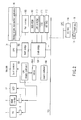
FIG. 3 shows the block diagram depicting the functional configuration regarding the embodiment of the information processing apparatus of the invention. - The function regarding the embodiment of the invention includes a start-
up control unit 201, astorage unit 202, anauthentication unit 203, and a transmission andreception unit 204. Thestorage unit 201 is the BIOS-ROM 109 and controls the whole of the system. Thestorage unit 202 is a flash memory for storing authentication information (password information etc.), and for storing waiting time information of a start-up completion signal (hereinafter referred to as a work confirmation call) and thestorage unit 202 may also store the information and the signal (call) in the BIOS-ROM 109. Theauthentication unit 203 is the BIOS-ROM 109 and authenticates the application. The transmission andreception unit 204 transmits and receives the work confirmation call and authentication information of applications between the BIOS/ROM 109 and the application (module). - A start-up control method, with which the information processing apparatus regarding the embodiment of the invention is applied, will be described with reference to the flowchart of
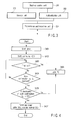
FIG. 4 . - The BIOS-ROM (referred to as BIOS) 109 calls out waiting time information of the work confirmation call from the application (module) from the
storage unit 202 and starts a timer in accordance with the waiting time information of the work confirmation call (Step S401). The operating system, on the HDD 111 that is a boot disk, is started up. TheBIOS 109 shifts the control to the operating system on the HDD 111 (Step S402). TheBIOS 109 starts, for example, an antivirus application (module) on the operation system. TheBIOS 109 starts the process of waiting for the work confirmation call (start-up completion signal). If the timer that has started in Step S401 times out (YES in Step S403), theBIOS 109 locks a PC (system) (step S406). - Conversely, if the timer that has started in Step S401 does not time out (NO in Step S403), and if the information processing apparatus has received the start-up completion signal (work confirmation call) indicating the normal start-up from an antivirus application (YES in Step S404), the
authentication unit 203 of theBIOS 109 reads password information, which has been shared in advance between the application and the BIOS, from thestorage unit 202 and transmits the password information as a parameter to the antivirus application. TheBIOS 109 determines whether or not the password information attached to the received work confirmation call and authenticates the password information (step S405). If theauthentication unit 203 of theBIOS 109 determines that the password information attached to the received work confirmation call received is correct (OK in authentication) (YES in Step 405), theBIOS 109 terminates the timer of the waiting process for the work confirmation call (Step S407). TheBIOS 109 replies the authentication result to the antivirus application to end the processing (after this, normal operations of the operating system are performed). When receiving a response signal of the work confirmation call, the antivirus application ends the transmission processing of the work confirmation call. The antivirus application continues the monitoring of viruses in a state in which the antivirus application has been started on the operating system. - The case of lock of the PC (system) represents the case such as a shut-down state, a pausing state and a standby state of the system. Further, the security-related use by the user may be restricted by performing processing capable of being performed without having to borrow strength of the application on the operating system, for example, by sounding an alarm, making it impossible for a specific device to be used.
- While the aforementioned embodiment has described, for example, the antivirus application as the application (module) by way of example, various applications may be adapted for the information processing apparatus and the invention is not limited to the antivirus application as the application (module). Further, while the embodiment given above has described the
HDD 111 as the boot disk by way of example, the invention is not limited to theHDD 111, and a flash memory or an optical disk, etc., can be used. - According to the invention, if the application has not started up normally, on the BIOS side may restrict the use of the system. That is, the BIOS may confirm whether the function required is in operation even after shifting the control to the boot medium such as a HDD. Therefore, BIOS processing may be changed by the operation of various applications on the boot medium. In other words, when the application etc., having a security function is not operated, the security of the information processing apparatus may be enhanced by forcibly locking or shutting down the device.
- A modified example of the aforementioned embodiments will be described.
- Although the embodiments given above have started the timer in accordance with the waiting time information of the start-up completion signal (work confirmation call) and started the waiting process for the work confirmation call, the invention need not start the waiting process and need not also make the timer time out. In this case, until the work confirmation call from the application is received and until authentication is performed normally, there is a possibility that the
BIOS 109 will lock the system. Thus, the information processing apparatus achieves higher security than that of the embodiments given above. - A further modified example will be described. While the foregoing modified example has transmitted the password from the
BIOS 109 in authenticating the foregoing work confirmation call to the antivirus application, the invention may use various authentication unit, such as a challenge response system or one time password without transmitting the password as it is. For example, in the case of use of the challenge response system, theBIOS 109 transmits random number information to the antivirus application. The antivirus application transmits both the received random number information and the pre-shared password information to theBIOS 109. TheBIOS 109 may authenticate the work confirmation call by using both the received random number information and the pre-shared password information. Therefore, the security is further improved in comparison with the aforementioned embodiments. - It is our intention that the invention be not limited to the specific details and representative embodiments shown and described herein, and in an implementation phase, this invention may be embodied in various forms without departing from the spirit or scope of the general inventive concept thereof. Various types of the invention can be formed by appropriately combining a plurality of constituent elements disclosed in the foregoing embodiments. Some of the elements, for example, may be omitted from the whole of the constituent elements shown in the embodiments mentioned above. Further, the constituent elements over different embodiments may be appropriately combined.
Claims (12)
- An information processing apparatus equipped with a basic program and a boot medium, characterized by comprising
a start-up unit (201):wherein, when the basic program is started, control is shifted from the basic program to the boot medium,the start-up unit (201) being configured to start up a module stored in the boot medium;a transmission unit (204) configured to transmit a start-up completion signal to the basic program from the module which has been started up by the start-up unit (201); anda reception unit (204) configured to receive the start-up completion signal which has been transmitted from the transmission unit (204) by the basic program, andif the start-up completion signal which has been received by the reception unit (204) is abnormal, a system of the information processing apparatus is locked. - The apparatus according to claim 1,
characterized in that
the basic program is a basic input/output system (BIOS). - The apparatus according to claim 1,
characterized in that
the module on the boot medium is an application on an operating system. - The apparatus according to claim 1,
characterized in that
the start-up completion signal is a signal which indicates that the module has started up normally. - The apparatus according to claim 1,
characterized in that
the transmission unit (204) is configured to encrypt and transmit the start-up completion signal. - The apparatus according to claim 1,
characterized in that
the transmission unit (204) is configured to authenticate the start-up completion signal. - A start-up control method which controls an information processing apparatus equipped with a basic program and a boot medium, characterized by comprising:shifting control to the boot medium to start up a module on the boot medium when the basic program has started up;transmitting a start-up completion signal to the basic program by the module which has been started up;receiving the start-up completion signal transmitted through the transmission by the basic program, andif the start-up completion signal which has been received through the reception is abnormal, a system of the information processing apparatus is locked.
- The method according to claim 7, characterized in that
the basic program is a basic input/output system (BIOS). - The method according to claim 7, characterized in that
the module on the boot medium is an application on an operating system. - The method according to claim 7,
characterized in that
the start-up completion signal is a signal indicating that the module has started up normally. - The method according to claim 7,
characterized in that
the transmitting encrypts the start-up completion signal and transmits the encrypted signal. - The method according to claim 7,
characterized in that
the transmitting authenticates the start-up completion signal.
Applications Claiming Priority (1)
| Application Number | Priority Date | Filing Date | Title |
|---|---|---|---|
| JP2007142203A JP2008299418A (en) | 2007-05-29 | 2007-05-29 | Information processing apparatus and activation control method |
Publications (1)
| Publication Number | Publication Date |
|---|---|
| EP1998254A2 true EP1998254A2 (en) | 2008-12-03 |
Family
ID=39791479
Family Applications (1)
| Application Number | Title | Priority Date | Filing Date |
|---|---|---|---|
| EP08156612A Withdrawn EP1998254A2 (en) | 2007-05-29 | 2008-05-21 | Information processing apparatus and start-up control method |
Country Status (3)
| Country | Link |
|---|---|
| US (2) | US8103864B2 (en) |
| EP (1) | EP1998254A2 (en) |
| JP (1) | JP2008299418A (en) |
Cited By (1)
| Publication number | Priority date | Publication date | Assignee | Title |
|---|---|---|---|---|
| CN103309769A (en) * | 2011-06-20 | 2013-09-18 | 北京奇虎科技有限公司 | Operation system starting protection method and device |
Families Citing this family (1)
| Publication number | Priority date | Publication date | Assignee | Title |
|---|---|---|---|---|
| US8484450B2 (en) * | 2009-12-02 | 2013-07-09 | Bally Gaming, Inc. | Authentication system for gaming machines and related methods |
Citations (1)
| Publication number | Priority date | Publication date | Assignee | Title |
|---|---|---|---|---|
| JP2000306761A (en) | 1999-02-16 | 2000-11-02 | Murata Mfg Co Ltd | Multilayer ceramic electronic component |
Family Cites Families (23)
| Publication number | Priority date | Publication date | Assignee | Title |
|---|---|---|---|---|
| JPH025165A (en) * | 1988-06-24 | 1990-01-10 | Nec Corp | Automatic restarting system |
| US5402492A (en) * | 1993-06-18 | 1995-03-28 | Ast Research, Inc. | Security system for a stand-alone computer |
| GB2303947A (en) * | 1995-07-31 | 1997-03-05 | Ibm | Boot sector virus protection in computer systems |
| US6161135A (en) * | 1997-03-07 | 2000-12-12 | Unisys Corporation | Method and apparatus for software features synchronization between software systems |
| JP4366746B2 (en) | 1999-01-28 | 2009-11-18 | ソニー株式会社 | Information processing apparatus and method, and recording medium |
| JP2000305761A (en) | 1999-02-17 | 2000-11-02 | Sony Corp | Information processing apparatus and method, and program storage medium |
| JP2002049487A (en) * | 2000-08-02 | 2002-02-15 | Ricoh Co Ltd | Boot drive switching method |
| US7797729B2 (en) * | 2000-10-26 | 2010-09-14 | O2Micro International Ltd. | Pre-boot authentication system |
| US7000249B2 (en) * | 2001-05-18 | 2006-02-14 | 02Micro | Pre-boot authentication system |
| US7127596B2 (en) * | 2002-06-28 | 2006-10-24 | Intel Corporation | Method and system for improving computer system boot reliability by executing an application specific test during a boot prior loading an operating system |
| US7607000B1 (en) * | 2003-05-13 | 2009-10-20 | Apple Inc. | Method for booting an operating system |
| US7549055B2 (en) * | 2003-05-19 | 2009-06-16 | Intel Corporation | Pre-boot firmware based virus scanner |
| US20050071624A1 (en) * | 2003-09-29 | 2005-03-31 | Rothman Michael A. | Providing a self-describing media for a computer system |
| US7293166B2 (en) * | 2004-03-05 | 2007-11-06 | Hewlett-Packard Development Company, L.P. | Method of indicating a format of accessing an operating system contained on a USB memory device |
| US7340594B2 (en) * | 2004-06-30 | 2008-03-04 | Intel Corporation | Bios-level incident response system and method |
| US20060020810A1 (en) * | 2004-07-24 | 2006-01-26 | International Business Machines Corporation | System and method for software load authentication |
| TWI264672B (en) * | 2004-09-21 | 2006-10-21 | Aimgene Technology Co Ltd | BIOS locking device, computer system with a BIOS locking device and control method thereof |
| JP2006236193A (en) * | 2005-02-28 | 2006-09-07 | Fujitsu Ltd | Start program execution method, device, storage medium, and program |
| TWI326427B (en) * | 2005-06-22 | 2010-06-21 | Egis Technology Inc | Biometrics signal input device, computer system having the biometrics signal input device, and control method thereof |
| US20070067539A1 (en) * | 2005-09-12 | 2007-03-22 | Neil Morrow | Enhanced CCID circuits and systems utilizing USB and PCI functions |
| JP2007102349A (en) * | 2005-09-30 | 2007-04-19 | Tokiko Techno Kk | Data processor |
| US8549236B2 (en) * | 2006-12-15 | 2013-10-01 | Siliconsystems, Inc. | Storage subsystem with multiple non-volatile memory arrays to protect against data losses |
| JP2008293442A (en) * | 2007-05-28 | 2008-12-04 | Toshiba Corp | Information processing device |
-
2007
- 2007-05-29 JP JP2007142203A patent/JP2008299418A/en active Pending
-
2008
- 2008-05-20 US US12/124,072 patent/US8103864B2/en not_active Expired - Fee Related
- 2008-05-21 EP EP08156612A patent/EP1998254A2/en not_active Withdrawn
-
2011
- 2011-12-16 US US13/328,947 patent/US20120159141A1/en not_active Abandoned
Patent Citations (1)
| Publication number | Priority date | Publication date | Assignee | Title |
|---|---|---|---|---|
| JP2000306761A (en) | 1999-02-16 | 2000-11-02 | Murata Mfg Co Ltd | Multilayer ceramic electronic component |
Cited By (1)
| Publication number | Priority date | Publication date | Assignee | Title |
|---|---|---|---|---|
| CN103309769A (en) * | 2011-06-20 | 2013-09-18 | 北京奇虎科技有限公司 | Operation system starting protection method and device |
Also Published As
| Publication number | Publication date |
|---|---|
| US20120159141A1 (en) | 2012-06-21 |
| US8103864B2 (en) | 2012-01-24 |
| JP2008299418A (en) | 2008-12-11 |
| US20080301428A1 (en) | 2008-12-04 |
Similar Documents
| Publication | Publication Date | Title |
|---|---|---|
| CN101432750B (en) | Selectively unlocking a core root of trust for measurement (CRTM) | |
| KR100547712B1 (en) | How to lock and unlock the camera on a portable device with a camera | |
| CN100375422C (en) | Method and system for authentication code and/or data | |
| US8141135B2 (en) | Information processing system, terminal, information processing apparatus, and management server | |
| US8924742B2 (en) | Multi-level data storage | |
| WO2018072215A1 (en) | Security verification method and apparatus | |
| EP3494482B1 (en) | Systems and methods for storing administrator secrets in management controller-owned cryptoprocessor | |
| JP4772291B2 (en) | Information processing device with security function | |
| EP2965195B1 (en) | User authorization and presence detection in isolation from interference from and control by host central processing unit and operating system | |
| EP3893133B1 (en) | Locking method and related electronic device | |
| KR102240181B1 (en) | Prevention of cable-swap security attack on storage devices | |
| JP2008047085A (en) | Data security system, apparatus and method using USB device | |
| TW201537386A (en) | Information handling system, method, and computer program product of access security | |
| US12045625B2 (en) | Method for operating an electronic data processing system and electronic data processing system | |
| US8103864B2 (en) | Information processing apparatus and start-up control method | |
| CN116033087B (en) | Information processing apparatus, image forming apparatus, and control method of information processing apparatus | |
| JP4970144B2 (en) | Information processing apparatus and activation control method | |
| CA2693318C (en) | Multi-level data storage | |
| EP1610199A1 (en) | Controlling access to a secure service by means of a removable security device | |
| WO2016193176A1 (en) | A remotely protected electronic device | |
| JP7660156B2 (en) | Electronic device and communication method | |
| CN113157323B (en) | Control method and device and electronic equipment | |
| CN121327835A (en) | A method of operating a device | |
| CN114978689A (en) | Storage device remote management method, system and storage device | |
| KR20130085466A (en) | Method and apparatus for authenticating password of user device using dummy key |
Legal Events
| Date | Code | Title | Description |
|---|---|---|---|
| PUAI | Public reference made under article 153(3) epc to a published international application that has entered the european phase |
Free format text: ORIGINAL CODE: 0009012 |
|
| 17P | Request for examination filed |
Effective date: 20080521 |
|
| AK | Designated contracting states |
Kind code of ref document: A2 Designated state(s): AT BE BG CH CY CZ DE DK EE ES FI FR GB GR HR HU IE IS IT LI LT LU LV MC MT NL NO PL PT RO SE SI SK TR |
|
| AX | Request for extension of the european patent |
Extension state: AL BA MK RS |
|
| STAA | Information on the status of an ep patent application or granted ep patent |
Free format text: STATUS: THE APPLICATION HAS BEEN WITHDRAWN |
|
| 18W | Application withdrawn |
Effective date: 20090603 |