EP1994929A1 - Use of derivatives of naphthalenesulphonic or quinolinesulphonic acid in the treatment of vasoproliferative ocular diseases - Google Patents
Use of derivatives of naphthalenesulphonic or quinolinesulphonic acid in the treatment of vasoproliferative ocular diseases Download PDFInfo
- Publication number
- EP1994929A1 EP1994929A1 EP07730324A EP07730324A EP1994929A1 EP 1994929 A1 EP1994929 A1 EP 1994929A1 EP 07730324 A EP07730324 A EP 07730324A EP 07730324 A EP07730324 A EP 07730324A EP 1994929 A1 EP1994929 A1 EP 1994929A1
- Authority
- EP
- European Patent Office
- Prior art keywords
- sodium
- alkyl
- amino
- naphthalene sulfonate
- represent
- Prior art date
- Legal status (The legal status is an assumption and is not a legal conclusion. Google has not performed a legal analysis and makes no representation as to the accuracy of the status listed.)
- Withdrawn
Links
Images

Classifications
-
- A—HUMAN NECESSITIES
- A61—MEDICAL OR VETERINARY SCIENCE; HYGIENE
- A61K—PREPARATIONS FOR MEDICAL, DENTAL OR TOILETRY PURPOSES
- A61K31/00—Medicinal preparations containing organic active ingredients
- A61K31/185—Acids; Anhydrides, halides or salts thereof, e.g. sulfur acids, imidic, hydrazonic or hydroximic acids
-
- A—HUMAN NECESSITIES
- A61—MEDICAL OR VETERINARY SCIENCE; HYGIENE
- A61K—PREPARATIONS FOR MEDICAL, DENTAL OR TOILETRY PURPOSES
- A61K31/00—Medicinal preparations containing organic active ingredients
- A61K31/33—Heterocyclic compounds
- A61K31/395—Heterocyclic compounds having nitrogen as a ring hetero atom, e.g. guanethidine or rifamycins
- A61K31/435—Heterocyclic compounds having nitrogen as a ring hetero atom, e.g. guanethidine or rifamycins having six-membered rings with one nitrogen as the only ring hetero atom
- A61K31/47—Quinolines; Isoquinolines
-
- A—HUMAN NECESSITIES
- A61—MEDICAL OR VETERINARY SCIENCE; HYGIENE
- A61P—SPECIFIC THERAPEUTIC ACTIVITY OF CHEMICAL COMPOUNDS OR MEDICINAL PREPARATIONS
- A61P27/00—Drugs for disorders of the senses
- A61P27/02—Ophthalmic agents
-
- A—HUMAN NECESSITIES
- A61—MEDICAL OR VETERINARY SCIENCE; HYGIENE
- A61P—SPECIFIC THERAPEUTIC ACTIVITY OF CHEMICAL COMPOUNDS OR MEDICINAL PREPARATIONS
- A61P35/00—Antineoplastic agents
Definitions
- This invention relates to the use of derivatives of naphthalenesulfonic or quinolinesulfonic acid in the treatment of vasoproliferative ocular diseases.
- Neovascularization within the eye primarily in the retina or in the choroidea, contributes to the loss of vision in various ocular diseases.
- These vasoproliferative pathologies affect people in various stages of life, from birth to old age, and are the cause of many cases of blindness.
- Retinal vasoproliferative diseases are the most common cause of severe loss of vision in the copulation under 60 years of age in developed countries.
- the patients with the highest risk are diabetics, premature children or patients with occlusion of the retinal vein.
- Diabetic retinopathy can take two forms: non-proliferative retinopathy, in which small capillaries of the retina rupture and begin to lose blood, forming small sacks in which the blood proteins are deposited in the area surrounding each rupture; and proliferative retinopathy, in which the damage in the retina stimulates the formation of abnormal blood vessels, hence causing scarring and, on occasions, detachment of the retina.
- the macular degeneration associated with ageing is one of the primary causes of loss of vision in people older than 65. Two forms are observed: atrophic (dry) macular degeneration, in which pigment alterations are observed in the macular region without raised scars or the presence of hemorrhages or exudates; and exudative (wet) macular degeneration, in which a choroideal subretinal network of neovascularization is formed, and the lesion finally contracts, leaving a raised and well-defined scar in the posterior pole.
- dry macular degeneration in which pigment alterations are observed in the macular region without raised scars or the presence of hemorrhages or exudates
- exudative (wet) macular degeneration in which a choroideal subretinal network of neovascularization is formed, and the lesion finally contracts, leaving a raised and well-defined scar in the posterior pole.
- Ocular neovascularization is fundamentally produced by hypoxic conditions which, in turn, trigger the synthesis and release of various growth factor, the activity of many of which promotes angiogenesis.
- various growth factor the activity of many of which promotes angiogenesis.
- FGF fibroblast growth factor
- EGF epidermal growth factor
- IGF insulin-like growth factor
- VEGF vascular endothelial growth factor
- FGF fibroblast growth factor
- EGF epidermal growth factor
- IGF insulin-like growth factor
- VEGF vascular endothelial growth factor
- Intravitreal sustained release of VEGF causes retinal neovascularization in rabbits and breakdown of the bloodretinal harrier in rabbits and primates.
- Exp Eye Res 1997, 64:505-17 Kim KJ et al.
- Inhibition of vascular endothelial growth factor-induced angiogenesis suppresses tumour growth in vivo. Nature 1993, 362:841-4 ;
- Blockade of vascular endothelial cell growth factor receptor signaling is sufficient to completely prevent retinal neovascularization.
- VEGF vascular endothelial growth factor
- oxoindolinone MAE 87 a compound inhibitor of certain VEGF, IGF, FGF and EGF receptors, has been tested ( Unsoeld, A.S. et al. Local injection of receptor tyrosine kinase inhibitor MAE 87 reduces retinal neovascularization in mice. Molecular Vision 2004; 10:468-75 ).
- naphthalenesulfonic or quinolinesulfonic acid of formula (I) which comprise an optionally substituted polar sulfonic/sulfonate group and are situated in certain positions in the aromatic ring inhibit the activity of the FGFs.
- naphthalenesulfonic or quinolinesulfonic acid of formula (I) which comprise an optionally substituted polar sulfonic/sulfonate group and are situated in certain positions in the aromatic ring inhibit the activity of the FGFs.
- vasoproliferative ocular diseases Until a few years ago, the only approved treatment for the vasoproliferative ocular diseases consisted in the destruction of the peripheral retina by laser or cryocoagulation with the purpose of diminishing the hypoxic tissue and hence reducing the neovascularization.
- the inventors of the present invention found that, surprisingly, the derivatives of sulfonic acid of formula (I), described in WO 2004/078704 only as FGF inhibitors, permit an inhibition of the neovascularization in the eye to a degree which is comparable to that obtained with VEGF inhibitors or unspecific inhibitors and, as a result, are useful in the treatment of vasoproliferative ocular diseases.
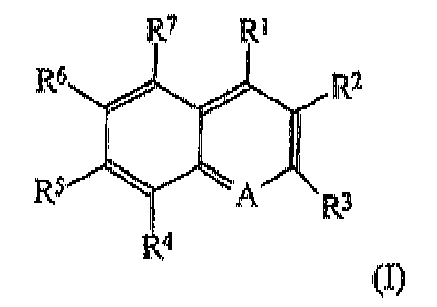
- a first aspect of the present invention relates to the use of derivatives of the sulfonic acid of formula (I): where A is N or a group of formula CR 8 ; R 1 , R 2 , R 3 , R 4 R 5 , R 6 , R 7 and R 8 , independently of each other, represent H, SO 3 R 9 , OR 10 , CO 2 R 10 , NR 10 R 11 , NH-CO-R 12 or alkyl C 1 -C 6 ; R 9 is H, ammonium or a cation of an alkaline or earth alkaline metal; R 10 and R 11 , independently of each other, represent H, alkyl C 1- C 6 or aryl C 6 -C 10 ; R 12 is OH, alkyl C 1 -C 6 or aryl C 6 -C 10 ; with the condition that (a) at least one of R 1 to R 8 is SO 3 R 9 , and (b) at least one of the remaining R 1 to R 8 is
- alkyl C 1 -C 6 refers to a radical derived from a saturated, linear or branched hydrocarbon having 1 to 6 carbon atoms, for example methyl, ethyl, isopropyl, etc.
- aryl C 6 -C 10 refers to a radical derived from an aromatic hydrocarbon having 6 to 10 carbon atoms, for example phenyl, naphthyl, etc.
- pharmaceutically acceptable salts of the compounds of formula (I) are within the scope of this invention.
- pharmaceutically acceptable salts includes the metallic salts or the addition salts which can be used in pharmaceutical forms.
- the compounds of formula (I) include derivatives of naphthalenesulfonic acid [compounds of formula (I) wherein A is CR 8 ] and derivatives of quinolinesulfonic acid [compounds of formula (I) wherein A is nitrogen].
- the compound of formula (I) is a derivative of naphthalenesulfonic acid belonging to the 2-NMS series (derivatives of 2-naphthalenesulfonic acid) wherein:
- Preferred compounds of the 2-NMS series include compounds of formula (I) wherein:
- Illustrative examples of compounds of the 2-NMS series include: sodium 5-amino-2-naphthalene sulfonate, sodium 5-acetyl amino-2 naphthalene sulfonate, sodium 5-benzoyl-amino-2-naphthalene sulfonate, sodium 8-amino-2-naphthalene sulfonate, sodium 8-acetyl amino-2-naphthalene sulfonate and sodium 4-hidroxy-6-amino-2-naphthalene sulfonate.
- the compounds sodium 5-amino-2-naphthalene sulfonate, sodium 5-acetyl amino-2 naphthalene sulfonate, sodium 8-amino-2-naphthalene sulfonate and sodium 4-hidroxy-6-amino-2-naphthalene sulfonate are especially preferred.
- sodium 5-amino-2-naphthalene sulfonate is very especially preferred.
- the compound of the formula (I) is a derivative of the naphthalenesulfonic acid belonging to the 1-NMS series (derivatives of 1-naphthalenesulfonic acid) wherein:
- Preferred compounds of the 1-NMS series include compounds of formula (I) wherein:
- Illustrative examples of compounds of the 1-NMS series include: sodium 4-amino-1-naphthalene sulfonate, sodium 4-acetyl amino-1-naphthalene sulfonate, sodium 4-benzoyl-amino-1-naphtalene sulfonate, sodium 5-dimethyl amino-1-naphtalene sulfonate and sodium 4-amino-3-hydroxy-1-naphthalene sulfonate.
- the compound sodium 4-amino-3-hydroxy-1-naphthalene sulfonate is especially preferred.
- the compound of formula (I) is a derivative of quinolinesulfonic acid wherein:
- the compounds of formula (I) or one of its pharmaceutically acceptable salts or prodrugs are known products which are commercially available or can be obtained by means of conventional methods.
- the nature of the salt is not critical as long as it is pharmaceutically acceptable.
- the salts of the compound of formula (I) can be obtained on the basis of organic or inorganic acids or bases by conventional methods well known by those skilled in the art by reacting the appropriate acid or base with the compound of formula (I).
- the prodrugs can be obtained, for example, starting from a free hydroxyl group which is converted into an ester or from an amino group which is converted into an amide, using conventional methods well known by those skilled in the art, by reacting a compound of formula (I) with a carboxylic acid, an anhydride or an acyl halide in the presence of a base or catalyst.
- the medication can be administered to a mammal, preferably a human being, by means of any formulation which permits contact between the compound of formula (I) and its site of action.
- This formulation will comprise a therapeutically effective quantity of at least one compound of formula (I) or one of its pharmaceutically acceptable salts or prodrugs, together with at least one pharmaceutically acceptable excipient.
- the formulation of the present invention will comprise at least one compound of formula (I) selected from among sodium 5-amino-2-naphthalene sulfonate, sodium 5-acetyl amino-2-naphthalene sulfonate, sodium 5-benzoyl amino-2-naphthalene sulfonate, sodium 8-amino-2-naphthalene sulfonate, sodium 8-acetyl amino-2-naphthalene sulfonate, sodium 4-hydroxy-6-amino-2-naphthalene sulfonate, sodium 4-amino-1-naphthalene sulfonate, sodium 4-acetyl amino-1-naphthalene sulfonate, sodium 4-benzoyl-amino-1-naphthalene sulfonate, sodium 5-dimethyl amino-1-naphthalene sulfonate and sodium 4-amino-3-hydroxy-1-naphthalene sulfonate and
- the formulation will comprise at least one compound selected from among sodium 5-amino-2-naphthalene sulfonate, sodium 5-acetyl amino-2-naphthalene sulfonate, sodium 8-amino-2-naphthalene sulfonate, sodium 4-hydroxy-6-amino-2-naphthalene sulfonate and sodium 4-amino-3-hydroxy-1-naphthalene sulfonate.
- the quantity of compound of formula (I) which must be administered in order to treat the vasoproliferative ocular disease in a safe and effective manner will depend on numerous factors, including age and condition of the patient, the severity of the disease, the mode and frequency of administration of the formulation, the compound of formula (I) used, etc.
- the formulation which contains the compound of formula (I) can be presented in any pharmaceutical form that is considered suitable -solid, semisolid or liquid, for example- and can be administered by any appropriate mode - orally, parenterally, topically or ocularly, for example.
- suitable -solid, semisolid or liquid for example- and can be administered by any appropriate mode - orally, parenterally, topically or ocularly, for example.
- the pharmaceutically acceptable excipients can be selected from among any of those known by an expert in the art and will depend on the pharmaceutical form to be prepared.
- the ocular diseases to be treated with the compounds of formula (I) include all of those in which there is neovascularization within the eye, for example proliferative diabetic retinopathy and wet senile macular degeneration.
- mice A total of thirty C57BL/6J mice were used in a model of retinopathy of prematurity. Seven days after birth, the mice (young) were transferred together with their mothers to a high-oxygen atmosphere (75%) obtained using a mixture of oxygen and air. After 5 days, the animals were transferred to a normal atmosphere. The relative hypoxia produced leads to the release of growth factors which, in turn, cause hypervascularization of the retina. 14-18 hours thereafter, an intravitreous injection of 2 ⁇ l of a sterile saline solution of sodium 5-amino-2-naphthalene sulfonate (25 mg/ml) into an eye was performed, and another injection of an equivalent volume of saline solution was performed in the contralateral eye.
- a sterile saline solution sodium 5-amino-2-naphthalene sulfonate
- mice Five days after the return to normal atmosphere, the mice were put down by means of an intracardiac injection of dextrane marked with fluorescein (50 mg/ml), the nuclei were removed from both eyes and were fixed for 2 to 6 hours in formaldehyde (4%) at room temperature.
- fluorescein 50 mg/ml
- the retina was cut and mounted for observation by fluorescent microscopy, with the vasculature of the retina being assessed.
- 12 equal radical segments are considered.
- the retina is divided into three concentric circles defining three zones: the interior zone around the optic disc, the middle and the exterior zone.
- the retinopathy is quantified using a system of multiple assessment in which various morphological parameters associated with retinopathy are assessed:
Landscapes
- Health & Medical Sciences (AREA)
- Life Sciences & Earth Sciences (AREA)
- Public Health (AREA)
- Medicinal Chemistry (AREA)
- Veterinary Medicine (AREA)
- Animal Behavior & Ethology (AREA)
- Pharmacology & Pharmacy (AREA)
- Chemical & Material Sciences (AREA)
- General Health & Medical Sciences (AREA)
- Epidemiology (AREA)
- Organic Chemistry (AREA)
- Chemical Kinetics & Catalysis (AREA)
- Nuclear Medicine, Radiotherapy & Molecular Imaging (AREA)
- General Chemical & Material Sciences (AREA)
- Ophthalmology & Optometry (AREA)
- Engineering & Computer Science (AREA)
- Bioinformatics & Cheminformatics (AREA)
- Pharmaceuticals Containing Other Organic And Inorganic Compounds (AREA)
- Organic Low-Molecular-Weight Compounds And Preparation Thereof (AREA)
Abstract
The invention relates to the use of derivatives of sulphonic acid (I) or one of the pharmaceutically- acceptable prodrugs or salts thereof in the preparation of a medicament for the treatment of vasoproliferative ocular diseases, said sulphonic acid having formula (I).
Description
- This invention relates to the use of derivatives of naphthalenesulfonic or quinolinesulfonic acid in the treatment of vasoproliferative ocular diseases.
- Neovascularization within the eye, primarily in the retina or in the choroidea, contributes to the loss of vision in various ocular diseases. These vasoproliferative pathologies affect people in various stages of life, from birth to old age, and are the cause of many cases of blindness.
- Retinal vasoproliferative diseases are the most common cause of severe loss of vision in the copulation under 60 years of age in developed countries. The patients with the highest risk are diabetics, premature children or patients with occlusion of the retinal vein. Diabetic retinopathy can take two forms: non-proliferative retinopathy, in which small capillaries of the retina rupture and begin to lose blood, forming small sacks in which the blood proteins are deposited in the area surrounding each rupture; and proliferative retinopathy, in which the damage in the retina stimulates the formation of abnormal blood vessels, hence causing scarring and, on occasions, detachment of the retina.
- The macular degeneration associated with ageing is one of the primary causes of loss of vision in people older than 65. Two forms are observed: atrophic (dry) macular degeneration, in which pigment alterations are observed in the macular region without raised scars or the presence of hemorrhages or exudates; and exudative (wet) macular degeneration, in which a choroideal subretinal network of neovascularization is formed, and the lesion finally contracts, leaving a raised and well-defined scar in the posterior pole.
- Ocular neovascularization is fundamentally produced by hypoxic conditions which, in turn, trigger the synthesis and release of various growth factor, the activity of many of which promotes angiogenesis. Among these factors are fibroblast growth factor (FGF), epidermal growth factor (EGF), insulin-like growth factor (IGF), and vascular endothelial growth factor (VEGF). Of these factors, VEGF is considered to be the primary culprit in retinal neovascularization, and various studies have been conducted with the aim of demonstrating that the inhibition of VEGF blocks neovascularization in the retina (Ozaki H et al. Intravitreal sustained release of VEGF causes retinal neovascularization in rabbits and breakdown of the bloodretinal harrier in rabbits and primates. Exp Eye Res 1997, 64:505-17; Kim KJ et al. Inhibition of vascular endothelial growth factor-induced angiogenesis suppresses tumour growth in vivo. Nature 1993, 362:841-4; Ozaki H et al. Blockade of vascular endothelial cell growth factor receptor signaling is sufficient to completely prevent retinal neovascularization. Am J Pathol 2000, 156:697-707; Aiello LP et al. Suppression of retinal neovascularization in vivo by inhibition of vascular endothelial growth factor (VEGF) using soluble VEGF-receptor chimeric proteins. Proc Natl Acad Sci USA 1995, 92:10457-61; Robinson GS et al. Oligodeoxynucleotides inhibit retinal neovascularization in a murine model of proliferative retinopathy. Proc Natl Acad Sci USA 1996, 93:4851-6; Sone H et al. Effects of intraocular or systemic administration of neutralizing antibody against vascular endothelial growth factor on the murine experimental model of retinopathy. Life Sci 1999, 65:2573-80; Boden KT et al. Therapy of angioproliferative retinopathy with soluble VEGF- and Tie-2-receptors in a mouse model. Ophthalmologe 2001, 98:S23).
- Other unspecific inhibitors have also been tested with the idea of blocking different mechanisms simultaneously. For example, oxoindolinone MAE 87, a compound inhibitor of certain VEGF, IGF, FGF and EGF receptors, has been tested (Unsoeld, A.S. et al. Local injection of receptor tyrosine kinase inhibitor MAE 87 reduces retinal neovascularization in mice. Molecular Vision 2004; 10:468-75).
- On the other hand, the role of FGF has not been considered to be as relevant, and there are no references to the inhibition thereof as a method for blocking neovascularization.
- According to
WO 2004/078704 , certain derivatives of naphthalenesulfonic or quinolinesulfonic acid of formula (I) which comprise an optionally substituted polar sulfonic/sulfonate group and are situated in certain positions in the aromatic ring inhibit the activity of the FGFs. There are studies on their inhibitory properties with respect to the mitogenic activity induced by aFGF on fibroblasts in culture, to angiogenesis in animals and to the formation of tumors in animals as well. It is concluded that said compounds could potentially be useful in the treatment of cancer, especially in the treatment of solid tumors, and in the treatment of non-tumoral, angiodependent cutaneous diseases, etc.; rheumatoid arthritis; endometriosis; obesity; arteriosclerosis, restenosis; etc. However, there is no mention of the idea of their being useful in the treatment of vasoproliferative ocular diseases, nor is proof provided thereof. - Until a few years ago, the only approved treatment for the vasoproliferative ocular diseases consisted in the destruction of the peripheral retina by laser or cryocoagulation with the purpose of diminishing the hypoxic tissue and hence reducing the neovascularization.
- The success of these treatments tends to be limited, achieving at best the halting of the progression of the disease or an improvement of vision for a limited time and in a smaller percentage. There is therefore the need for nondestructive and/or more effective treatments for these vasoproliferative diseases.
- The inventors of the present invention found that, surprisingly, the derivatives of sulfonic acid of formula (I), described in
WO 2004/078704 only as FGF inhibitors, permit an inhibition of the neovascularization in the eye to a degree which is comparable to that obtained with VEGF inhibitors or unspecific inhibitors and, as a result, are useful in the treatment of vasoproliferative ocular diseases. - As a consequence, a first aspect of the present invention relates to the use of derivatives of the sulfonic acid of formula (I):

A is N or a group of formula CR8;
R1, R2, R3, R4 R5, R6, R7 and R8, independently of each other, represent H, SO3R9, OR10, CO2R10, NR10R11, NH-CO-R12 or alkyl C1-C6;
R9 is H, ammonium or a cation of an alkaline or earth alkaline metal;
R10 and R11, independently of each other, represent H, alkyl C1-C6 or aryl C6-C10;
R12 is OH, alkyl C1-C6 or aryl C6-C10;
with the condition that (a) at least one of R1 to R8 is SO3R9, and (b) at least one of the remaining R1 to R8 is an OR10, CO2R10, NR10R11 or NH-CO-R12 group, with R9, R10, R11 and R12 having the previously-mentioned meanings,
or one of the pharmaceutically acceptable salts or prodrugs thereof, in the preparation of a medication for the treatment of vasoproliferative ocular diseases. - The term "alkyl C1-C6" as used in this specification refers to a radical derived from a saturated, linear or branched hydrocarbon having 1 to 6 carbon atoms, for example methyl, ethyl, isopropyl, etc.
- The term "aryl C6-C10" as used in this specification refers to a radical derived from an aromatic hydrocarbon having 6 to 10 carbon atoms, for example phenyl, naphthyl, etc.
- The pharmaceutically acceptable salts of the compounds of formula (I) are within the scope of this invention. The term "pharmaceutically acceptable salts" includes the metallic salts or the addition salts which can be used in pharmaceutical forms.
-
-
Figure 1 is a graphic showing the score obtained in the study of Example 1 by sodium 5-amino-2-naphthalene sulfonate compared to placebo and illustrates the inhibitory effect of the compound on neovascularization induced by hypoxia of the retina. - Figure 2 presents photographs of histological sections of an eye treated with sodium 5-amino-2-naphthalene sulfonate and its contralateral with placebo, illustrative of the antiangiogenic effect of the compound.
- The compounds of formula (I) include derivatives of naphthalenesulfonic acid [compounds of formula (I) wherein A is CR8] and derivatives of quinolinesulfonic acid [compounds of formula (I) wherein A is nitrogen].
- In one particular embodiment, the compound of formula (I) is a derivative of naphthalenesulfonic acid belonging to the 2-NMS series (derivatives of 2-naphthalenesulfonic acid) wherein:
- A is CR8;
- R1 is H or alkyl C1-C6;
- R2 is SO3R9;
- R3 is H, OH or alkyl C1-C6;
- R4, R5, R6, R7 and R8, independently of each other, represent H, OR10, CO2R10, NR10R11, NH-CO-R12 or alkyl C1-C6;
- R9 is H, ammonium or a cation of an alkaline or earth alkaline metal;
- R10 and R11, independently of each other, represent H, alkyl C1-C6 or aryl C6-C10;
- R12 is OH, alkyl C1-C6 or aryl C6-C10;
with the condition that at least one of R4, R5, R6 R7
or R8 is OR10, CO2R10, NR10R11 or NH-CO-R12, with R10, R11 and R12 having the previously-mentioned meanings. - Preferred compounds of the 2-NMS series include compounds of formula (I) wherein:
- A is CR8, with R8 being H or OH;
- R1 is H;
- R2 is SO3R9, with R9 being H or sodium;
- R3 is H;
- R4, R5, R6 and R7, independently of each other, represent H, OH, OCH3, COOH, NH2, NHCOCH3, NHCOC6H5, NHCH3 or N(CH3)2;
with the condition that at least one of R4, R5, R6 or R7 is OH, OCH3, COOH, NH2, NHCOCH3, NHCOC6H5, NHCH3 or N(CH3)2. - Illustrative examples of compounds of the 2-NMS series include: sodium 5-amino-2-naphthalene sulfonate, sodium 5-acetyl amino-2 naphthalene sulfonate, sodium 5-benzoyl-amino-2-naphthalene sulfonate, sodium 8-amino-2-naphthalene sulfonate, sodium 8-acetyl amino-2-naphthalene sulfonate and sodium 4-hidroxy-6-amino-2-naphthalene sulfonate.
- Within this 2-NMS series, the compounds sodium 5-amino-2-naphthalene sulfonate, sodium 5-acetyl amino-2 naphthalene sulfonate, sodium 8-amino-2-naphthalene sulfonate and sodium 4-hidroxy-6-amino-2-naphthalene sulfonate are especially preferred. In particular, sodium 5-amino-2-naphthalene sulfonate is very especially preferred.
- In another particular embodiment, the compound of the formula (I) is a derivative of the naphthalenesulfonic acid belonging to the 1-NMS series (derivatives of 1-naphthalenesulfonic acid) wherein:
- A is CR8;
- R1 is SO3R9;
- R2 is H or alkyl C1-C6;
- R3 is H, OH or alkyl C1-C6;
- R4, R5, R6, R7 and R8, independently of each other, represent H, OR10, CO2R10, NR10R11, NH-CO-R12 or alkyl C1-C6;
- R9 is H, ammonium or a cation of an alkaline or earth alkaline metal; R10 and R11, independently of each other, represent H, alkyl C1-C6 or aryl C6-C10;
- R12 is OH, alkyl C1-C6 or aryl C6-C10;
with the condition that at least one of R4, R5, R6, R7 or R8 is OR10, CO2R10, NR10R11 or NH-CO-R12, with R10, R11 and R12 having the previously-mentioned meanings. - Preferred compounds of the 1-NMS series include compounds of formula (I) wherein:
- A is CR8;
- R1 is SO3R9, with R9 being H or sodium;
- R2 is H;
- R3 is H or OH;
- R4, R5, R6, R7 and R8, independently of each other, represent H, OH, OCH3, COOH, NH2, NHCOCH3, NHCOC6H5, NHCH3 or N(CH3)2;
with the condition that at least one of R4, R5, R6, R7 or R8 is OH, OCH3, COOH, NH2, NHCOCH3, NHCOC6H5, NHCH3 or N(CH3)2. - Illustrative examples of compounds of the 1-NMS series include: sodium 4-amino-1-naphthalene sulfonate, sodium 4-acetyl amino-1-naphthalene sulfonate, sodium 4-benzoyl-amino-1-naphtalene sulfonate, sodium 5-dimethyl amino-1-naphtalene sulfonate and sodium 4-amino-3-hydroxy-1-naphthalene sulfonate.
- Within this 1-NMS series, the compound sodium 4-amino-3-hydroxy-1-naphthalene sulfonate is especially preferred.
- In another particular embodiment, the compound of formula (I) is a derivative of quinolinesulfonic acid wherein:
- A is N;
- R1, R2, R3, R4, R5, R6, R7 and R8, independently of each other, represent H, SO3R9, OR10, CO2R10, NR10R11, NH-CO-R12 or alkyl C1-C6;
- R9 is H, ammonium or a cation of an alkaline or earth alkaline metal;
- R10 and R11, independently of each other, represent H, alkyl C1-C6 or aryl C6-C10;
- R12 is OH, alkyl C1-C6 or aryl C6-C10;
with the condition that (a) at least one of R1 to R6 is SO3R9, and (b) at least one of the remaining R1 to P8 is an OR10, CO2R10, NR10R11 or NH-CO-R12 group, with R9, R10, R11 and R12 having the previously-mentioned meanings. - The compounds of formula (I) or one of its pharmaceutically acceptable salts or prodrugs are known products which are commercially available or can be obtained by means of conventional methods.
- The nature of the salt is not critical as long as it is pharmaceutically acceptable. The salts of the compound of formula (I) can be obtained on the basis of organic or inorganic acids or bases by conventional methods well known by those skilled in the art by reacting the appropriate acid or base with the compound of formula (I).
- The prodrugs can be obtained, for example, starting from a free hydroxyl group which is converted into an ester or from an amino group which is converted into an amide, using conventional methods well known by those skilled in the art, by reacting a compound of formula (I) with a carboxylic acid, an anhydride or an acyl halide in the presence of a base or catalyst.
- As has been stated, the use of the compounds of formula (I) in the preparation of a medication for the treatment of vasoproliferative ocular diseases constitutes the primary aspect of this invention.
- The medication can be administered to a mammal, preferably a human being, by means of any formulation which permits contact between the compound of formula (I) and its site of action. This formulation will comprise a therapeutically effective quantity of at least one compound of formula (I) or one of its pharmaceutically acceptable salts or prodrugs, together with at least one pharmaceutically acceptable excipient. Preferably, the formulation of the present invention will comprise at least one compound of formula (I) selected from among sodium 5-amino-2-naphthalene sulfonate, sodium 5-acetyl amino-2-naphthalene sulfonate, sodium 5-benzoyl amino-2-naphthalene sulfonate, sodium 8-amino-2-naphthalene sulfonate, sodium 8-acetyl amino-2-naphthalene sulfonate, sodium 4-hydroxy-6-amino-2-naphthalene sulfonate, sodium 4-amino-1-naphthalene sulfonate, sodium 4-acetyl amino-1-naphthalene sulfonate, sodium 4-benzoyl-amino-1-naphthalene sulfonate, sodium 5-dimethyl amino-1-naphthalene sulfonate and sodium 4-amino-3-hydroxy-1-naphthalene sulfonate and mixtures thereof. More preferably, the formulation will comprise at least one compound selected from among sodium 5-amino-2-naphthalene sulfonate, sodium 5-acetyl amino-2-naphthalene sulfonate, sodium 8-amino-2-naphthalene sulfonate, sodium 4-hydroxy-6-amino-2-naphthalene sulfonate and sodium 4-amino-3-hydroxy-1-naphthalene sulfonate.
- The quantity of compound of formula (I) which must be administered in order to treat the vasoproliferative ocular disease in a safe and effective manner will depend on numerous factors, including age and condition of the patient, the severity of the disease, the mode and frequency of administration of the formulation, the compound of formula (I) used, etc.
- The formulation which contains the compound of formula (I) can be presented in any pharmaceutical form that is considered suitable -solid, semisolid or liquid, for example- and can be administered by any appropriate mode - orally, parenterally, topically or ocularly, for example. The pharmaceutically acceptable excipients can be selected from among any of those known by an expert in the art and will depend on the pharmaceutical form to be prepared.
- The ocular diseases to be treated with the compounds of formula (I) include all of those in which there is neovascularization within the eye, for example proliferative diabetic retinopathy and wet senile macular degeneration.
- The following example illustrates the invention and must not be considered as limiting the scope of same.
- A total of thirty C57BL/6J mice were used in a model of retinopathy of prematurity. Seven days after birth, the mice (young) were transferred together with their mothers to a high-oxygen atmosphere (75%) obtained using a mixture of oxygen and air. After 5 days, the animals were transferred to a normal atmosphere. The relative hypoxia produced leads to the release of growth factors which, in turn, cause hypervascularization of the retina. 14-18 hours thereafter, an intravitreous injection of 2 µl of a sterile saline solution of sodium 5-amino-2-naphthalene sulfonate (25 mg/ml) into an eye was performed, and another injection of an equivalent volume of saline solution was performed in the contralateral eye.
- Five days after the return to normal atmosphere, the mice were put down by means of an intracardiac injection of dextrane marked with fluorescein (50 mg/ml), the nuclei were removed from both eyes and were fixed for 2 to 6 hours in formaldehyde (4%) at room temperature.
- Subsequently, the retina was cut and mounted for observation by fluorescent microscopy, with the vasculature of the retina being assessed. Given that the retina occupies a circular area, in order to perform the assessment, 12 equal radical segments are considered. For the assessment of the central vascularization, the retina is divided into three concentric circles defining three zones: the interior zone around the optic disc, the middle and the exterior zone.
- The retinopathy is quantified using a system of multiple assessment in which various morphological parameters associated with retinopathy are assessed:
- Presence of a "crest" in each radial segment. One point for each radial segment with the presence of crests. Scoring from 0 to 12.
- Presumed extraretinal vascularization, indicated by the presence of groupings of "crest-like" structures. One point for each radial segment with groupings. Scoring from 0 to 12.
- Size of the central avascular zone. Scoring from 0 to 3, with 0 meaning an occupation of less than 50% of the interior zone; 1 an occupation of less than 25% of the sum of the interior and middle zone; 2 an occupation of between 25-50% of said sum and 3 an occupation of greater than 50% of same.
- Tortuosity of the vessels, measured as a percentage of tortuous vessels with respect to the total. The scoring ranges from 0 to 3, with 0 meaning no tortuosity, 1 if less than 1/3 of the total are tortuous, 2 if between 1/3 and 2/3 are tortuous, and 3 if more than 2/3 are tortuous.
- For each eye, a global assessment was obtained consisting of the sum of the points obtained for each parameter.
- The statistical analysis of the data was performed subsequently using a Wilcoxon's test.
- The results obtained are as follows:
ACTIVE PLACEBO N 30 30 Median 10.5 14.0 Maximum 16 23 Minimum 3 2 - The difference between the two treatments is highly significant (p = 0.017).
- This test demonstrates the ability of the derivatives of sulfonic acid of formula (I) to inhibit hypoxia-induced angiogenesis and, consequently, ocular vascular proliferation.
Claims (9)
- Use of the derivatives of sulfonic acid of formula (I)
A is N or a group of formula CR8;
R1, R2, R3, R4, R5, R6, R7 and R8, independently of each other, represent H, SO3R9, OR10, CO2R10, NR10R11, NH-CO-R12 or alkyl C1-C6;
R9 is H, ammonium or a cation of an alkaline or earth alkaline metal;
R10 and R11, independently of each other, represent H, alkyl C1-C6 or aryl C6-C10;
R12 is OH, alkyl C1-C6 or aryl C6-C10;
with the condition that (a) at least one of R1 to R8 is SO3R9, and (b) at least one of the remaining R1 to R8 is an OR10, CO2R10, NR10R11 or NH-CO-R12 group, with R9, R10, R11 and R12 having the previously-mentioned meanings,
or one of the pharmaceutically acceptable salts or prodrugs thereof, in the preparation of a medication for the treatment of vasoproliferative ocular diseases. - Use as set forth in claim 1 of a compound of formula (I) according to claim 1 wherein:A is CR8;R1 is H or alkyl C1-C6;R2 is SO3R9;R3 is H, OH or alkyl C1-C6;R4, R5, R6, R7 and R8, independently of each other, represent H, OR10, CO2R10, NR10R11, NH-CO-R12 or alkyl C1-C6;R9 is H, ammonium or a cation of an alkaline or earth alkaline metal;R10 and R11, independently of each other, represent H, alkyl C1-C6 or aryl C6-C10;R12 is OH, alkyl C1-C6 or aryl C6-C10;
with the condition that at least one of R4, R5, R6, R7 or R8 is OR10, CO2R10, NR10R11 or NH-CO-R12, with R10, R11 and R12 having the previously-mentioned meanings. - Use as set forth in claim 2 of a compound of formula (I) wherein:A is CR8, with R8 being H or OH;R1 is H;R2 is SO3R9, with R9 being H or sodium;R3 is H;R4, R5, R6 and R7, independently of each other, represent H, OH, OCH3, COOH, NH2, NHCOCH3, NHCOC6H5, NHCH3 or N(CH3)2;
with the condition that at least one of R4, R5, R6 or R7 is OH, OCH3, COOH, NH2, NHCOCH3, NHCOC6H5, NHCH3 or N(CH3)2. - Use as set forth in claim 1 of a compound of formula (I) according to claim 1 wherein:A is CR8;R1 is SO3R9;R2 is H or alkyl C1-C6;R3 is H, OH or alkyl C1-C6;R4, R5, R6, R7 and R8, independently of each other, represent H, OR10, CO2R10, NR10R11, NR-CO-R12 or alkyl C1-C6;R9 is H, ammonium or a cation of an alkaline or earth alkaline metal;R10 and R11, independently of each other, represent H, alkyl C1-C6 or aryl C6-C10;R12 is OH, alkyl C1-C6 or aryl C6-C10;
with the condition that at least one of R4, R5, R6, R7 or R8 is OR10, CO2R10, NR10R11 or NR-CO-R12, with R10, R11 and R12 having the previously-mentioned meanings. - Use as set forth in claim 4 of a compound of formula (I) wherein:A is CR8;R1 is SO3R9, with R9 being H or sodium;R2 is H;R3 is H or OH;R4, R5, R6, R7 and R8, independently of each other, represent H, OH, OCH3, COOH, NH2, NHCOCH2, NHCOC6H5, NHCH3 or N(CH3)2;
with the condition that at least one of R4, R5, R6, R7 or R8 is OH, OCH3, COOH, NH2, NHCOCH3, NHCOC6H5, NHCH3 or N(CH3)2. - Use as set forth in anyone of claims 1, 2, 3, 4 or 5 of a compound selected from the group comprised by sodium 5-amino-2-naphthalene sulfonate, sodium 5-acetyl amino-2-naphthalene sulfonate, sodium 5-benzoyl amino-2-naphthalene sulfonate, sodium 8-amino-2-naphthalene sulfonate, sodium 8-acetyl amino-2-naphthalene sulfonate, sodium 4-hydroxy-6-amino-2-naphthalene sulfonate, sodium 4-amino-1-naphthalene sulfonate, sodium 4-acetyl amino-1-naphthaleene sulfonate, sodium 4-benzoyl-amino-1-naphthalene sulfonate, sodium 5-dimethyl amino-1-naphthalene sulfonate and sodium 4-amino-3-hydroxy-1-naphthalene sulfonate and mixtures thereof.
- Use as set forth in claim 1 of a compound of formula (I) according to claim 1 wherein:A is N;R1, R2, R3, R4, R5, R6, R7 and R8, independently of each other, represent H, SO3R9, OR10, CO2R10, NR10R11, NH-CO-R12 or alkyl C1-C6;R9 is H, ammonium or a cation of an alkaline or earth alkaline metal;R10 and R11, independently of each other, represent H, alkyl C1-C6 or aryl C6-C10;R12 is OH, alkyl C1-C6 or aryl C6-C10;
with the condition that (a) at least one of R1 to R8 is SO3R9, and (b) at least one of the remaining R1 to R8 is an OR10, CO2R10, NR10R11 or NH-CO-R12 group, with R9, R10, R11 and R12 having the previously-mentioned meanings. - Use as set forth in claim 1, wherein the vasoproliferative ocular disease is a proliferative diabetic retinopathy.
- Use as set forth in claim 1, wherein the vasoproliterative ocular disease is a wet macular degeneration.
Applications Claiming Priority (2)
| Application Number | Priority Date | Filing Date | Title |
|---|---|---|---|
| ES200600330A ES2279730B1 (en) | 2006-02-14 | 2006-02-14 | USE OF SULFONIC ACID DERIVATIVES IN THE TREATMENT OF OCULAR VASOPROLIFERATIVE DISEASES. |
| PCT/ES2007/000083 WO2007093656A1 (en) | 2006-02-14 | 2007-02-14 | Use of derivatives of naphthalenesulphonic or quinolinesulphonic acid in the treatment of vasoproliferative ocular diseases |
Publications (2)
| Publication Number | Publication Date |
|---|---|
| EP1994929A1 true EP1994929A1 (en) | 2008-11-26 |
| EP1994929A4 EP1994929A4 (en) | 2010-07-28 |
Family
ID=38371211
Family Applications (1)
| Application Number | Title | Priority Date | Filing Date |
|---|---|---|---|
| EP07730324A Withdrawn EP1994929A4 (en) | 2006-02-14 | 2007-02-14 | Use of derivatives of naphthalenesulphonic or quinolinesulphonic acid in the treatment of vasoproliferative ocular diseases |
Country Status (4)
| Country | Link |
|---|---|
| US (1) | US20090306132A1 (en) |
| EP (1) | EP1994929A4 (en) |
| ES (1) | ES2279730B1 (en) |
| WO (1) | WO2007093656A1 (en) |
Family Cites Families (5)
| Publication number | Priority date | Publication date | Assignee | Title |
|---|---|---|---|---|
| US20030176334A1 (en) * | 1994-03-18 | 2003-09-18 | The Scripps Research Institute | Methods and compositions useful for inhibition of angiogenesis |
| WO2003104178A1 (en) * | 2002-06-07 | 2003-12-18 | Cortical Pty Ltd | Napththalene derivatives which inhibit the cytokine or biological activity of macrophage migration inhibitory factor (mif) |
| ES2214968B1 (en) * | 2003-03-07 | 2005-12-16 | Consejo Sup. Investiga. Cientificas | PHARMACEUTICAL COMPOSITION THAT INCLUDES A DERIVATIVE OF A SULFONIC ACID. |
| US20050288333A1 (en) * | 2004-06-08 | 2005-12-29 | Kem William R | Controlling angiogenesis with anabaseine analogs |
| US20070254832A1 (en) * | 2006-02-17 | 2007-11-01 | Pressler Milton L | Methods for the treatment of macular degeneration and related eye conditions |
-
2006
- 2006-02-14 ES ES200600330A patent/ES2279730B1/en not_active Expired - Fee Related
-
2007
- 2007-02-14 EP EP07730324A patent/EP1994929A4/en not_active Withdrawn
- 2007-02-14 WO PCT/ES2007/000083 patent/WO2007093656A1/en not_active Ceased
- 2007-02-14 US US12/279,501 patent/US20090306132A1/en not_active Abandoned
Also Published As
| Publication number | Publication date |
|---|---|
| ES2279730A1 (en) | 2007-08-16 |
| EP1994929A4 (en) | 2010-07-28 |
| US20090306132A1 (en) | 2009-12-10 |
| ES2279730B1 (en) | 2008-08-01 |
| WO2007093656A1 (en) | 2007-08-23 |
Similar Documents
| Publication | Publication Date | Title |
|---|---|---|
| Wong et al. | Matrix metalloproteinase inhibition modulates postoperative scarring after experimental glaucoma filtration surgery | |
| TWI720582B (en) | Multi-kinase inhibitors of vegf and tgf beta and uses thereof | |
| JP2018521120A (en) | Compositions and methods for treating pterygium | |
| KR102307421B1 (en) | Multiple kinase inhibitors and use in ocular fibrosis | |
| US20220339148A1 (en) | Multi-kinase inhibitors of vegf and tgf beta and uses thereof | |
| JP2020518287A (en) | Recombinant modified fibroblast growth factor and therapeutic use thereof | |
| JP2022078298A (en) | Multi-target kinase inhibitor and use in genital and gastrointestinal fibrosis. | |
| KR20120018761A (en) | Methods and compositions of pi-3 kinase inhibitors for treating fibrosis | |
| US20180369172A1 (en) | Methods and compositions for promoting wound healing with decreased scar formation after glaucoma filtration surgery | |
| JP2001505219A (en) | Wound healing and treatment of fibrosis | |
| Park et al. | Effect of lovastatin on wound-healing modulation after glaucoma filtration surgery in a rabbit model | |
| CN105377258A (en) | Inhibitor for retinochoroidal disorders | |
| KR100698449B1 (en) | Use of Staurosporine Derivatives for Treating Ocular Neovascular Diseases | |
| US20090306132A1 (en) | Use of derivatives of naphthalenesulphonic or quinolinesulphonic acid in the treatment of vasoproliferative ocular diseases | |
| CN115867264A (en) | Topical ophthalmic compositions and methods of treating abnormal angiogenesis | |
| CN107771077A (en) | Parthenolide and its derivatives for the treatment of axonal damage | |
| US8283323B2 (en) | Withanolide compounds as inhibitors of fibrosis and identification of molecular targets for anti-fibrotic drug development | |
| JP2021511323A (en) | Suspension composition of multi-target inhibitor | |
| KR20200105874A (en) | Multikinase inhibitors and use in prostatic hyperplasia and urinary tract diseases | |
| CN108778263A (en) | Stabilizing pharmaceutical composition and application thereof for local application | |
| CN114380868B (en) | Metal iridium compound and preparation method and application thereof | |
| US11992469B2 (en) | Targeting mitochondrial dynamics by mitochondrial fusion promoter M1 as a treatment strategy for nervous system injury | |
| JP7580123B2 (en) | Pharmaceutical composition for preventing or treating angiogenesis-related diseases | |
| EP4687896A1 (en) | Lats kinase inhibitor to treat retinal degeneration | |
| Yang et al. | Repairing the retinal ischemic microenvironment with an engineered exosome-loaded dehydroepiandrosterone peptide hydrogel |
Legal Events
| Date | Code | Title | Description |
|---|---|---|---|
| PUAI | Public reference made under article 153(3) epc to a published international application that has entered the european phase |
Free format text: ORIGINAL CODE: 0009012 |
|
| 17P | Request for examination filed |
Effective date: 20080905 |
|
| AK | Designated contracting states |
Kind code of ref document: A1 Designated state(s): AT BE BG CH CY CZ DE DK EE ES FI FR GB GR HU IE IS IT LI LT LU LV MC NL PL PT RO SE SI SK TR |
|
| A4 | Supplementary search report drawn up and despatched |
Effective date: 20100628 |
|
| 17Q | First examination report despatched |
Effective date: 20101029 |
|
| STAA | Information on the status of an ep patent application or granted ep patent |
Free format text: STATUS: THE APPLICATION IS DEEMED TO BE WITHDRAWN |
|
| 18D | Application deemed to be withdrawn |
Effective date: 20110309 |