EP1992714A1 - Group 2 Metal Precursors for Depositing Multi-Component Metal Oxide Films - Google Patents
Group 2 Metal Precursors for Depositing Multi-Component Metal Oxide Films Download PDFInfo
- Publication number
- EP1992714A1 EP1992714A1 EP08156411A EP08156411A EP1992714A1 EP 1992714 A1 EP1992714 A1 EP 1992714A1 EP 08156411 A EP08156411 A EP 08156411A EP 08156411 A EP08156411 A EP 08156411A EP 1992714 A1 EP1992714 A1 EP 1992714A1
- Authority
- EP
- European Patent Office
- Prior art keywords
- carbon atoms
- metal containing
- containing complex
- linear
- branched alkyl
- Prior art date
- Legal status (The legal status is an assumption and is not a legal conclusion. Google has not performed a legal analysis and makes no representation as to the accuracy of the status listed.)
- Withdrawn
Links
- 229910052751 metal Inorganic materials 0.000 title claims description 69
- 239000002184 metal Substances 0.000 title claims description 69
- 229910044991 metal oxide Inorganic materials 0.000 title claims description 10
- 150000004706 metal oxides Chemical class 0.000 title claims description 10
- 239000002243 precursor Substances 0.000 title abstract description 16
- 238000000151 deposition Methods 0.000 title description 7
- SECXISVLQFMRJM-UHFFFAOYSA-N N-Methylpyrrolidone Chemical compound CN1CCCC1=O SECXISVLQFMRJM-UHFFFAOYSA-N 0.000 claims abstract description 80
- 229910052712 strontium Inorganic materials 0.000 claims abstract description 21
- 229910052788 barium Inorganic materials 0.000 claims abstract description 18
- 125000004432 carbon atom Chemical group C* 0.000 claims description 94
- 125000000217 alkyl group Chemical group 0.000 claims description 55
- -1 cycloaliphatic Chemical group 0.000 claims description 27
- 150000003857 carboxamides Chemical class 0.000 claims description 26
- 125000003118 aryl group Chemical group 0.000 claims description 24
- 125000003709 fluoroalkyl group Chemical group 0.000 claims description 24
- 239000010936 titanium Substances 0.000 claims description 24
- 229910052739 hydrogen Inorganic materials 0.000 claims description 23
- 239000001257 hydrogen Substances 0.000 claims description 23
- 125000004435 hydrogen atom Chemical class [H]* 0.000 claims description 23
- 125000004122 cyclic group Chemical group 0.000 claims description 19
- 125000004183 alkoxy alkyl group Chemical group 0.000 claims description 18
- 239000010408 film Substances 0.000 claims description 17
- 125000000753 cycloalkyl group Chemical group 0.000 claims description 14
- 125000000999 tert-butyl group Chemical group [H]C([H])([H])C(*)(C([H])([H])[H])C([H])([H])[H] 0.000 claims description 14
- 239000000203 mixture Chemical group 0.000 claims description 13
- CIOAGBVUUVVLOB-UHFFFAOYSA-N strontium atom Chemical group [Sr] CIOAGBVUUVVLOB-UHFFFAOYSA-N 0.000 claims description 13
- 239000002904 solvent Substances 0.000 claims description 12
- 229910052719 titanium Inorganic materials 0.000 claims description 12
- 150000002739 metals Chemical class 0.000 claims description 11
- SUAKHGWARZSWIH-UHFFFAOYSA-N N,N‐diethylformamide Chemical compound CCN(CC)C=O SUAKHGWARZSWIH-UHFFFAOYSA-N 0.000 claims description 10
- RTAQQCXQSZGOHL-UHFFFAOYSA-N Titanium Chemical group [Ti] RTAQQCXQSZGOHL-UHFFFAOYSA-N 0.000 claims description 10
- 125000003545 alkoxy group Chemical group 0.000 claims description 10
- DSAJWYNOEDNPEQ-UHFFFAOYSA-N barium atom Chemical group [Ba] DSAJWYNOEDNPEQ-UHFFFAOYSA-N 0.000 claims description 10
- AJFDBNQQDYLMJN-UHFFFAOYSA-N n,n-diethylacetamide Chemical compound CCN(CC)C(C)=O AJFDBNQQDYLMJN-UHFFFAOYSA-N 0.000 claims description 10
- 125000004430 oxygen atom Chemical group O* 0.000 claims description 10
- 229910052791 calcium Inorganic materials 0.000 claims description 8
- 239000011575 calcium Substances 0.000 claims description 8
- 238000000034 method Methods 0.000 claims description 8
- 125000001973 tert-pentyl group Chemical group [H]C([H])([H])C([H])([H])C(*)(C([H])([H])[H])C([H])([H])[H] 0.000 claims description 8
- QVGXLLKOCUKJST-UHFFFAOYSA-N atomic oxygen Chemical compound [O] QVGXLLKOCUKJST-UHFFFAOYSA-N 0.000 claims description 7
- 229910052760 oxygen Inorganic materials 0.000 claims description 7
- 239000001301 oxygen Substances 0.000 claims description 7
- 239000000758 substrate Substances 0.000 claims description 7
- 125000001495 ethyl group Chemical group [H]C([H])([H])C([H])([H])* 0.000 claims description 6
- 229910052749 magnesium Inorganic materials 0.000 claims description 6
- 125000002496 methyl group Chemical group [H]C([H])([H])* 0.000 claims description 6
- PZYDAVFRVJXFHS-UHFFFAOYSA-N n-cyclohexyl-2-pyrrolidone Chemical compound O=C1CCCN1C1CCCCC1 PZYDAVFRVJXFHS-UHFFFAOYSA-N 0.000 claims description 6
- FXHOOIRPVKKKFG-UHFFFAOYSA-N N,N-Dimethylacetamide Chemical compound CN(C)C(C)=O FXHOOIRPVKKKFG-UHFFFAOYSA-N 0.000 claims description 5
- MHABMANUFPZXEB-UHFFFAOYSA-N O-demethyl-aloesaponarin I Natural products O=C1C2=CC=CC(O)=C2C(=O)C2=C1C=C(O)C(C(O)=O)=C2C MHABMANUFPZXEB-UHFFFAOYSA-N 0.000 claims description 5
- 230000008021 deposition Effects 0.000 claims description 5
- 150000002170 ethers Chemical class 0.000 claims description 5
- 125000001449 isopropyl group Chemical group [H]C([H])([H])C([H])(*)C([H])([H])[H] 0.000 claims description 5
- MHAJPDPJQMAIIY-UHFFFAOYSA-N Hydrogen peroxide Chemical compound OO MHAJPDPJQMAIIY-UHFFFAOYSA-N 0.000 claims description 4
- 150000004945 aromatic hydrocarbons Chemical class 0.000 claims description 4
- 239000003795 chemical substances by application Substances 0.000 claims description 4
- XTHFKEDIFFGKHM-UHFFFAOYSA-N Dimethoxyethane Chemical compound COCCOC XTHFKEDIFFGKHM-UHFFFAOYSA-N 0.000 claims description 3
- CBENFWSGALASAD-UHFFFAOYSA-N Ozone Chemical compound [O-][O+]=O CBENFWSGALASAD-UHFFFAOYSA-N 0.000 claims description 3
- 150000001412 amines Chemical class 0.000 claims description 3
- 125000001301 ethoxy group Chemical group [H]C([H])([H])C([H])([H])O* 0.000 claims description 3
- 150000002895 organic esters Chemical class 0.000 claims description 3
- 229920000768 polyamine Polymers 0.000 claims description 3
- 239000010409 thin film Substances 0.000 claims description 3
- 238000005019 vapor deposition process Methods 0.000 claims description 3
- OYPRJOBELJOOCE-UHFFFAOYSA-N Calcium Chemical group [Ca] OYPRJOBELJOOCE-UHFFFAOYSA-N 0.000 claims description 2
- 150000004703 alkoxides Chemical class 0.000 claims description 2
- 150000001451 organic peroxides Chemical class 0.000 claims description 2
- 125000002914 sec-butyl group Chemical group [H]C([H])([H])C([H])([H])C([H])(*)C([H])([H])[H] 0.000 claims description 2
- 229910052454 barium strontium titanate Inorganic materials 0.000 abstract description 12
- VEALVRVVWBQVSL-UHFFFAOYSA-N strontium titanate Chemical compound [Sr+2].[O-][Ti]([O-])=O VEALVRVVWBQVSL-UHFFFAOYSA-N 0.000 abstract description 8
- 239000004065 semiconductor Substances 0.000 abstract description 4
- 238000004519 manufacturing process Methods 0.000 abstract description 3
- 238000002474 experimental method Methods 0.000 abstract description 2
- VLKZOEOYAKHREP-UHFFFAOYSA-N n-Hexane Chemical compound CCCCCC VLKZOEOYAKHREP-UHFFFAOYSA-N 0.000 description 49
- YXFVVABEGXRONW-UHFFFAOYSA-N Toluene Chemical compound CC1=CC=CC=C1 YXFVVABEGXRONW-UHFFFAOYSA-N 0.000 description 18
- 239000013078 crystal Substances 0.000 description 14
- 238000005229 chemical vapour deposition Methods 0.000 description 12
- 238000000231 atomic layer deposition Methods 0.000 description 11
- 239000003446 ligand Substances 0.000 description 11
- 229910001868 water Inorganic materials 0.000 description 11
- UHOVQNZJYSORNB-MZWXYZOWSA-N benzene-d6 Chemical compound [2H]C1=C([2H])C([2H])=C([2H])C([2H])=C1[2H] UHOVQNZJYSORNB-MZWXYZOWSA-N 0.000 description 10
- 230000015572 biosynthetic process Effects 0.000 description 10
- 239000007787 solid Substances 0.000 description 9
- 238000003786 synthesis reaction Methods 0.000 description 9
- 238000005160 1H NMR spectroscopy Methods 0.000 description 5
- YRAJNWYBUCUFBD-UHFFFAOYSA-N 2,2,6,6-tetramethylheptane-3,5-dione Chemical compound CC(C)(C)C(=O)CC(=O)C(C)(C)C YRAJNWYBUCUFBD-UHFFFAOYSA-N 0.000 description 5
- 230000005587 bubbling Effects 0.000 description 5
- GQPLMRYTRLFLPF-UHFFFAOYSA-N Nitrous Oxide Chemical compound [O-][N+]#N GQPLMRYTRLFLPF-UHFFFAOYSA-N 0.000 description 4
- OFBQJSOFQDEBGM-UHFFFAOYSA-N Pentane Chemical compound CCCCC OFBQJSOFQDEBGM-UHFFFAOYSA-N 0.000 description 4
- 238000004458 analytical method Methods 0.000 description 4
- 238000005137 deposition process Methods 0.000 description 4
- 239000003921 oil Substances 0.000 description 4
- 238000003756 stirring Methods 0.000 description 4
- 238000002411 thermogravimetry Methods 0.000 description 4
- ZGXKGXRGPBYEJN-UHFFFAOYSA-N 5-(butan-2-ylamino)-2,2-dimethylhexan-3-one Chemical compound CCC(C)NC(C)CC(=O)C(C)(C)C ZGXKGXRGPBYEJN-UHFFFAOYSA-N 0.000 description 3
- 239000000539 dimer Substances 0.000 description 3
- 239000007788 liquid Substances 0.000 description 3
- 239000007800 oxidant agent Substances 0.000 description 3
- BASFCYQUMIYNBI-UHFFFAOYSA-N platinum Chemical compound [Pt] BASFCYQUMIYNBI-UHFFFAOYSA-N 0.000 description 3
- 239000011541 reaction mixture Substances 0.000 description 3
- 239000000725 suspension Substances 0.000 description 3
- 125000004169 (C1-C6) alkyl group Chemical group 0.000 description 2
- HZITVRBQVLUAET-UHFFFAOYSA-N 2,2-dimethyl-5-(propan-2-ylamino)hexan-3-one Chemical compound CC(C)NC(C)CC(=O)C(C)(C)C HZITVRBQVLUAET-UHFFFAOYSA-N 0.000 description 2
- LCLCVVVHIPPHCG-UHFFFAOYSA-N 5,5-dimethylhexane-2,4-dione Chemical compound CC(=O)CC(=O)C(C)(C)C LCLCVVVHIPPHCG-UHFFFAOYSA-N 0.000 description 2
- VYPSYNLAJGMNEJ-UHFFFAOYSA-N Silicium dioxide Chemical compound O=[Si]=O VYPSYNLAJGMNEJ-UHFFFAOYSA-N 0.000 description 2
- PMZURENOXWZQFD-UHFFFAOYSA-L Sodium Sulfate Chemical compound [Na+].[Na+].[O-]S([O-])(=O)=O PMZURENOXWZQFD-UHFFFAOYSA-L 0.000 description 2
- 238000000137 annealing Methods 0.000 description 2
- 125000004429 atom Chemical group 0.000 description 2
- 239000003638 chemical reducing agent Substances 0.000 description 2
- 150000004292 cyclic ethers Chemical class 0.000 description 2
- 150000001983 dialkylethers Chemical class 0.000 description 2
- RTZKZFJDLAIYFH-UHFFFAOYSA-N ether Substances CCOCC RTZKZFJDLAIYFH-UHFFFAOYSA-N 0.000 description 2
- 230000008020 evaporation Effects 0.000 description 2
- 238000001704 evaporation Methods 0.000 description 2
- QAMFBRUWYYMMGJ-UHFFFAOYSA-N hexafluoroacetylacetone Chemical compound FC(F)(F)C(=O)CC(=O)C(F)(F)F QAMFBRUWYYMMGJ-UHFFFAOYSA-N 0.000 description 2
- 238000004518 low pressure chemical vapour deposition Methods 0.000 description 2
- 238000000623 plasma-assisted chemical vapour deposition Methods 0.000 description 2
- 238000001953 recrystallisation Methods 0.000 description 2
- WOCIAKWEIIZHES-UHFFFAOYSA-N ruthenium(iv) oxide Chemical compound O=[Ru]=O WOCIAKWEIIZHES-UHFFFAOYSA-N 0.000 description 2
- 229910052710 silicon Inorganic materials 0.000 description 2
- 239000010703 silicon Substances 0.000 description 2
- 229910052938 sodium sulfate Inorganic materials 0.000 description 2
- 235000011152 sodium sulphate Nutrition 0.000 description 2
- 239000012808 vapor phase Substances 0.000 description 2
- XLYOFNOQVPJJNP-UHFFFAOYSA-N water Chemical compound O XLYOFNOQVPJJNP-UHFFFAOYSA-N 0.000 description 2
- 238000005303 weighing Methods 0.000 description 2
- 0 CC1ON(*)N(C)N(*)OC2(C)C1*C*2 Chemical compound CC1ON(*)N(C)N(*)OC2(C)C1*C*2 0.000 description 1
- 229910052581 Si3N4 Inorganic materials 0.000 description 1
- XUIMIQQOPSSXEZ-UHFFFAOYSA-N Silicon Chemical compound [Si] XUIMIQQOPSSXEZ-UHFFFAOYSA-N 0.000 description 1
- 229910002353 SrRuO3 Inorganic materials 0.000 description 1
- WOIHABYNKOEWFG-UHFFFAOYSA-N [Sr].[Ba] Chemical compound [Sr].[Ba] WOIHABYNKOEWFG-UHFFFAOYSA-N 0.000 description 1
- 150000001298 alcohols Chemical class 0.000 description 1
- 150000001338 aliphatic hydrocarbons Chemical class 0.000 description 1
- 150000001552 barium Chemical class 0.000 description 1
- 229910052799 carbon Inorganic materials 0.000 description 1
- 238000006243 chemical reaction Methods 0.000 description 1
- 150000003983 crown ethers Chemical class 0.000 description 1
- JJCFRYNCJDLXIK-UHFFFAOYSA-N cyproheptadine Chemical compound C1CN(C)CCC1=C1C2=CC=CC=C2C=CC2=CC=CC=C21 JJCFRYNCJDLXIK-UHFFFAOYSA-N 0.000 description 1
- 238000000354 decomposition reaction Methods 0.000 description 1
- 238000002716 delivery method Methods 0.000 description 1
- 239000003989 dielectric material Substances 0.000 description 1
- 150000002148 esters Chemical class 0.000 description 1
- 239000007789 gas Substances 0.000 description 1
- JJWLVOIRVHMVIS-UHFFFAOYSA-N isopropylamine Chemical compound CC(C)N JJWLVOIRVHMVIS-UHFFFAOYSA-N 0.000 description 1
- 150000003951 lactams Chemical class 0.000 description 1
- 239000000463 material Substances 0.000 description 1
- 239000003863 metallic catalyst Substances 0.000 description 1
- 239000012046 mixed solvent Substances 0.000 description 1
- 230000007935 neutral effect Effects 0.000 description 1
- 150000004767 nitrides Chemical class 0.000 description 1
- 150000002826 nitrites Chemical class 0.000 description 1
- 229910052757 nitrogen Inorganic materials 0.000 description 1
- 239000001272 nitrous oxide Substances 0.000 description 1
- TVMXDCGIABBOFY-UHFFFAOYSA-N octane Chemical compound CCCCCCCC TVMXDCGIABBOFY-UHFFFAOYSA-N 0.000 description 1
- 230000003287 optical effect Effects 0.000 description 1
- 230000001590 oxidative effect Effects 0.000 description 1
- 239000012071 phase Substances 0.000 description 1
- 229910052697 platinum Inorganic materials 0.000 description 1
- 238000002360 preparation method Methods 0.000 description 1
- 239000000376 reactant Substances 0.000 description 1
- BHRZNVHARXXAHW-UHFFFAOYSA-N sec-butylamine Chemical compound CCC(C)N BHRZNVHARXXAHW-UHFFFAOYSA-N 0.000 description 1
- 239000000377 silicon dioxide Substances 0.000 description 1
- HQVNEWCFYHHQES-UHFFFAOYSA-N silicon nitride Chemical compound N12[Si]34N5[Si]62N3[Si]51N64 HQVNEWCFYHHQES-UHFFFAOYSA-N 0.000 description 1
- 239000002002 slurry Substances 0.000 description 1
- 230000003381 solubilizing effect Effects 0.000 description 1
- 239000011877 solvent mixture Substances 0.000 description 1
- 238000003860 storage Methods 0.000 description 1
- 238000012032 thrombin generation assay Methods 0.000 description 1
- 208000014903 transposition of the great arteries Diseases 0.000 description 1
- 239000003039 volatile agent Substances 0.000 description 1
- 238000010626 work up procedure Methods 0.000 description 1
Images


Classifications
-
- C—CHEMISTRY; METALLURGY
- C07—ORGANIC CHEMISTRY
- C07F—ACYCLIC, CARBOCYCLIC OR HETEROCYCLIC COMPOUNDS CONTAINING ELEMENTS OTHER THAN CARBON, HYDROGEN, HALOGEN, OXYGEN, NITROGEN, SULFUR, SELENIUM OR TELLURIUM
- C07F5/00—Compounds containing elements of Groups 3 or 13 of the Periodic Table
- C07F5/003—Compounds containing elements of Groups 3 or 13 of the Periodic Table without C-Metal linkages
-
- C—CHEMISTRY; METALLURGY
- C07—ORGANIC CHEMISTRY
- C07F—ACYCLIC, CARBOCYCLIC OR HETEROCYCLIC COMPOUNDS CONTAINING ELEMENTS OTHER THAN CARBON, HYDROGEN, HALOGEN, OXYGEN, NITROGEN, SULFUR, SELENIUM OR TELLURIUM
- C07F3/00—Compounds containing elements of Groups 2 or 12 of the Periodic Table
-
- C—CHEMISTRY; METALLURGY
- C07—ORGANIC CHEMISTRY
- C07C—ACYCLIC OR CARBOCYCLIC COMPOUNDS
- C07C225/00—Compounds containing amino groups and doubly—bound oxygen atoms bound to the same carbon skeleton, at least one of the doubly—bound oxygen atoms not being part of a —CHO group, e.g. amino ketones
- C07C225/02—Compounds containing amino groups and doubly—bound oxygen atoms bound to the same carbon skeleton, at least one of the doubly—bound oxygen atoms not being part of a —CHO group, e.g. amino ketones having amino groups bound to acyclic carbon atoms of the carbon skeleton
- C07C225/04—Compounds containing amino groups and doubly—bound oxygen atoms bound to the same carbon skeleton, at least one of the doubly—bound oxygen atoms not being part of a —CHO group, e.g. amino ketones having amino groups bound to acyclic carbon atoms of the carbon skeleton the carbon skeleton being saturated
- C07C225/06—Compounds containing amino groups and doubly—bound oxygen atoms bound to the same carbon skeleton, at least one of the doubly—bound oxygen atoms not being part of a —CHO group, e.g. amino ketones having amino groups bound to acyclic carbon atoms of the carbon skeleton the carbon skeleton being saturated and acyclic
-
- C—CHEMISTRY; METALLURGY
- C07—ORGANIC CHEMISTRY
- C07F—ACYCLIC, CARBOCYCLIC OR HETEROCYCLIC COMPOUNDS CONTAINING ELEMENTS OTHER THAN CARBON, HYDROGEN, HALOGEN, OXYGEN, NITROGEN, SULFUR, SELENIUM OR TELLURIUM
- C07F3/00—Compounds containing elements of Groups 2 or 12 of the Periodic Table
- C07F3/02—Magnesium compounds
-
- C—CHEMISTRY; METALLURGY
- C07—ORGANIC CHEMISTRY
- C07F—ACYCLIC, CARBOCYCLIC OR HETEROCYCLIC COMPOUNDS CONTAINING ELEMENTS OTHER THAN CARBON, HYDROGEN, HALOGEN, OXYGEN, NITROGEN, SULFUR, SELENIUM OR TELLURIUM
- C07F3/00—Compounds containing elements of Groups 2 or 12 of the Periodic Table
- C07F3/04—Calcium compounds
-
- C—CHEMISTRY; METALLURGY
- C23—COATING METALLIC MATERIAL; COATING MATERIAL WITH METALLIC MATERIAL; CHEMICAL SURFACE TREATMENT; DIFFUSION TREATMENT OF METALLIC MATERIAL; COATING BY VACUUM EVAPORATION, BY SPUTTERING, BY ION IMPLANTATION OR BY CHEMICAL VAPOUR DEPOSITION, IN GENERAL; INHIBITING CORROSION OF METALLIC MATERIAL OR INCRUSTATION IN GENERAL
- C23C—COATING METALLIC MATERIAL; COATING MATERIAL WITH METALLIC MATERIAL; SURFACE TREATMENT OF METALLIC MATERIAL BY DIFFUSION INTO THE SURFACE, BY CHEMICAL CONVERSION OR SUBSTITUTION; COATING BY VACUUM EVAPORATION, BY SPUTTERING, BY ION IMPLANTATION OR BY CHEMICAL VAPOUR DEPOSITION, IN GENERAL
- C23C16/00—Chemical coating by decomposition of gaseous compounds, without leaving reaction products of surface material in the coating, i.e. chemical vapour deposition [CVD] processes
- C23C16/22—Chemical coating by decomposition of gaseous compounds, without leaving reaction products of surface material in the coating, i.e. chemical vapour deposition [CVD] processes characterised by the deposition of inorganic material, other than metallic material
- C23C16/30—Deposition of compounds, mixtures or solid solutions, e.g. borides, carbides, nitrides
- C23C16/40—Oxides
- C23C16/404—Oxides of alkaline earth metals
-
- C—CHEMISTRY; METALLURGY
- C23—COATING METALLIC MATERIAL; COATING MATERIAL WITH METALLIC MATERIAL; CHEMICAL SURFACE TREATMENT; DIFFUSION TREATMENT OF METALLIC MATERIAL; COATING BY VACUUM EVAPORATION, BY SPUTTERING, BY ION IMPLANTATION OR BY CHEMICAL VAPOUR DEPOSITION, IN GENERAL; INHIBITING CORROSION OF METALLIC MATERIAL OR INCRUSTATION IN GENERAL
- C23C—COATING METALLIC MATERIAL; COATING MATERIAL WITH METALLIC MATERIAL; SURFACE TREATMENT OF METALLIC MATERIAL BY DIFFUSION INTO THE SURFACE, BY CHEMICAL CONVERSION OR SUBSTITUTION; COATING BY VACUUM EVAPORATION, BY SPUTTERING, BY ION IMPLANTATION OR BY CHEMICAL VAPOUR DEPOSITION, IN GENERAL
- C23C16/00—Chemical coating by decomposition of gaseous compounds, without leaving reaction products of surface material in the coating, i.e. chemical vapour deposition [CVD] processes
- C23C16/22—Chemical coating by decomposition of gaseous compounds, without leaving reaction products of surface material in the coating, i.e. chemical vapour deposition [CVD] processes characterised by the deposition of inorganic material, other than metallic material
- C23C16/30—Deposition of compounds, mixtures or solid solutions, e.g. borides, carbides, nitrides
- C23C16/40—Oxides
- C23C16/405—Oxides of refractory metals or yttrium
Definitions
- BST barium strontium titanate films
- precursors of barium strontium and titanium that are stable, liquid and readily decompose under standard deposition conditions leaving high purity BST films and removing in the vapor phase the remainder of the precursors of barium, strontium and titanium, typically in the form of ligands that reversibly bind the metals until the deposition conditions are provided wherein the metal is deposited from the ligand precursor resulting in essentially deposited metal and volatile, gas phase leaving groups constituting the ligand that bound the metal in the precursor form or decomposition components of the ligand which still exhibit the properties of being good leaving groups that do not contaminate the deposited BST film and typically leave as volatile, gaseous groups.
- the present invention is in a first aspect directed to a metal containing complex represented by a structure selected from: wherein M is selected from Mg, Ca, Sr, and Ba; R 1 and R 3 are independently selected from linear or branched alkyl, alkoxyalkyl, fluoroalkyl: having from 1 to 10 carbon atoms, cycloaliphatic, and aryl having from 4 to 12 carbon atoms; R 2 is independently selected from hydrogen, linear or branched alkyl, fluoroalkyl, alkoxy: having from 1 to 10 carbon atoms, cycloaliphatic, and aryl: having from 4 to 12 carbon atoms; L 1 is independently selected from the organic amide class RCONR'R" wherein R and R' are independently linear or branched alkyl having from 1-10 carbon atoms and they can be connected to form a cyclic group (CH 2 ) q , wherein q is from 4-6, and R" is selected from alkyl having from 1 to 4 carbon atom
- n+m 4 or less.
- n is a number selected from between 1 and 2
- m is a number selected from between 0 and 2.
- M is preferably selected from calcium, strontium, barium and mixtures thereof.
- L, L 1 and L 2 are preferably selected from organic amides such as N-methyl pyrrolidinone (NMP), N,N -Diethylformamide (DEF), N,N -Diethylacetamide (DEAC), N,N- Dimethylacetamide (DMAC), N-cyclohexyl 2-pyrrolidinone and, in the case of L 2 , H 2 O and ROH.
- NMP N-methyl pyrrolidinone
- DEF N,N -Diethylformamide
- DEAC N,N -Diethylacetamide
- DMAC N,N- Dimethylacetamide
- N-cyclohexyl 2-pyrrolidinone and, in the case of L 2 , H 2 O and ROH.
- other N-substituted lactams i.e.
- L 1 is preferably connected to both metals, M, via L 1 's oxygen atom.
- R 1 and R 3 are preferably selected from t-butyl and t-pentyl, and R 2 is preferably selected from hydrogen, methyl and ethyl.
- R 1 and R 3 are preferably independently selected from t-butyl and t-pentyl; R 2 is preferably selected from hydrogen, methyl and ethyl; and R 4 is preferably selected from iso-propyl, t-butyl, sec-butyl, t-pentyl and mixtures thereof.
- R 1 and R 3 are preferably independently selected from the t-butyl and t-pentyl; and R 2 is preferably selected from hydrogen, methyl and ethyl.
- Exemplary preferred metal containing complexes include:
- the metal containing complex is dissolved in a solvent selected from glyme solvents having from 1 to 20 ethoxy -(C 2 H 4 O)- repeat units; C 2 -C 12 alkanols; organic ethers; C 6 -C 12 aliphatic hydrocarbons; C 6 -C 18 aromatic hydrocarbons; organic esters; organic amines; and polyamines and organic amides.
- a solvent selected from glyme solvents having from 1 to 20 ethoxy -(C 2 H 4 O)- repeat units; C 2 -C 12 alkanols; organic ethers; C 6 -C 12 aliphatic hydrocarbons; C 6 -C 18 aromatic hydrocarbons; organic esters; organic amines; and polyamines and organic amides.
- Organic ethers selected from dialkyl ethers comprising C 1 -C 6 alkyl moieties, C 4 -C 8 cyclic ethers, and C 12 -C 60 crown O 4 -O 20 ethers (wherein C is the number of carbon atoms in the crown ether compound and O is the number of oxygen atoms in the crown ether), and organic amides selected from N-methyl pyrrolidinone ("NMP"), N,N- Diethylformamide (DEF), N,N- Diethylacetamide (DEAC), N,N- Dimethylacetamide (DMAC),and N-cyclohexyl 2-pyrrolidinone, are in particular preferred.
- NMP N-methyl pyrrolidinone
- DEF N,N- Diethylformamide
- DEAC N,N- Diethylacetamide
- DMAC Dimethylacetamide
- N-cyclohexyl 2-pyrrolidinone are in particular preferred.
- the present invention is directed to the use of a metal containing complex of the first aspect to form a conformal metal oxide thin film on a substrate.
- the present invention is directed to a vapor deposition process for forming a conformal multi-component metal oxide thin film on a substrate, wherein at least two metal containing complexes and an oxygen containing agent are introduced to a deposition chamber and a multi-component metal oxide film is deposited on a substrate, wherein the at least two metal containing complexes are each in accordance with the first aspect of the invention, and have different metals.
- the vapor deposition process is preferably selected from chemical vapor deposition, cyclic chemical vapor deposition and atomic layer deposition.
- the oxygen containing agent is preferably selected from N 2 O, O 2 , H 2 O 2 , H 2 O, ozone, O 2 plasma, organic peroxide, and mixtures thereof.
- the first metal containing complex is preferably selected from Sr 2 (tmhd) 4 (NMP) 4 , and Sr 2 (tmhd) 4 (DEAC) 3
- the second metal containing complex is preferably selected from Ba 2 (tmhd) 4 (NMP) 4 ⁇ (H 2 O) 2 , and Ba 2 (hfac) 4 (NMP) 5 .
- a third metal containing complex is preferably selected from titanium containing alkoxides and beta-ketonates and mixtures thereof.
- Novel Sr and Ba complexes containing both beta-diketonates and N-methyl-pyrrolidone have been synthesized and characterized.
- Thermogravimetric Analysis (TGA) experiments indicate these complexes are volatile, and that they can be employed as potential precursors for chemical vapor deposition (CVD), cyclic chemical vapor deposition (CCVD), or atomic layer deposition (ALD) of strontium titanate (STO) or barium strontium titanate films (BST) films in semiconductor fabrication.
- CVD chemical vapor deposition
- CCVD cyclic chemical vapor deposition
- ALD atomic layer deposition
- STO strontium titanate
- BST barium strontium titanate films
- These Group 2 metal complexes are precursors capable of depositing Group 2 metal-containing films for semiconductor applications.
- the metal complexes include:
- This invention is related to Group 2 metal-containing complexes having both beta-ketonate or beta-ketoiminate or amidinate and organic amides and their solutions, which are useful for fabricating conformal metal containing films on substrates such as silicon, metal nitride, metal oxide and other metal layers via deposition processes, e.g., chemical vapor deposition (CVD), plasma enhanced chemical vapor deposition (PECVD), low pressure chemical vapor deposition (LPCVD), plasma enhanced atomic layer deposition (PE ALD) and atomic layer deposition (ALD).
- CVD chemical vapor deposition
- PECVD plasma enhanced chemical vapor deposition
- LPCVD low pressure chemical vapor deposition
- PE ALD plasma enhanced atomic layer deposition
- ALD atomic layer deposition
- conformal metal containing films have applications ranging from computer chips, optical device, magnetic information storage, to metallic catalyst coated on a supporting material.
- the polydentate beta-ketoiminate ligands incorporate at least one amino organo imino functionality, which
- structure A One type of structure in the metal precursor is illustrated in structure A below having the formula: wherein M is selected from Mg, Ca, Sr, and Ba; R 1 and R 3 are independently selected from linear or branched alkyl, alkoxyalkyl, fluoroalkyl: having from 1 to 10 carbon atoms, cycloaliphatic, and aryl having from 4 to 12 carbon atoms (i.e.
- R 1 and/or R 3 are alkyl, alkoxyalkyl, or fluoroalkyl they may have from 1 to 10 carbon atoms, and where R 1 and/or R 3 are cycloaliphatic or aryl they may have from 4 to 12 carbon atoms);
- R 2 is independently selected from hydrogen, linear or branched alkyl, fluoroalkyl, alkoxy: having from 1 to 10 carbon atoms, cycloaliphatic, and aryl: having from 4 to 12 carbon atoms (i.e.
- R 2 is alkyl, alkoxyalkyl, or fluoroalkyl it may have from 1 to 10 carbon atoms, and where R 2 is cycloaliphatic or aryl it may have from 4 to 12 carbon atoms);
- L 1 is independently selected from the organic amide class RCONR'R" wherein R and R' are linear or branched alkyl having from 1-10 carbon atoms and they can be connected to form a cyclic group (CH 2 ) q , wherein q is from 4-6, and R" is selected from alkyl having from 1 to 4 carbon atoms and cycloalkyl having from 4 to 8 carbon atoms;
- L 2 is independently selected from H 2 O, ROH wherein R is linear or branched alkyl having from 1-10 carbon atoms or a cyclic group (CH 2 ) q wherein q is from 4-6, and an organic amide of the class RCONR'R" wherein R and R' are independently linear or branched alky
- structure B Another type of structure in the metal precursor is illustrated in structure B below having the formula: wherein M is selected from Mg, Ca, Sr, and Ba; R 1 and R 4 are independently selected from linear or branched alkyl, alkoxyalkyl, fluoroalkyl: having from 1 to 10 carbon atoms, cycloaliphatic, and aryl: having from 4 to 12 carbon atoms (i.e.
- R 1 and/or R 4 are alkyl, alkoxyalkyl, or fluoroalkyl they may have from 1 to 10 carbon atoms, and where they are cycloaliphatic or aryl they may have from 4 to 12 carbon atoms);
- R 2 and R 3 are independently selected from hydrogen, linear or branched alkyl, alkoxyalkyl, fluoroalkyl, alkoxy: having from 1 to 10 carbon atoms, cycloaliphatic, and aryl: having from 4 to 12 carbon atoms (i.e.
- R 2 and/or R 3 are alkyl, alkoxyalkyl, or fluoroalkyl they may have from 1 to 10 carbon atoms, and where they are cycloaliphatic or aryl they may have from 4 to 12 carbon atoms);
- L is independently selected from the organic amide class RCONR'R" wherein R and R' are independently linear or branched alkyl having from 1-10 carbon atoms and they can be connected to form a cyclic group (CH 2 ) q , wherein q is from 4-6, and R" is selected from alkyl having from 1 to 4 carbon atoms and cycloalkyl having from 4 to 8 carbon atoms; n is a number selected from between 0 and 4 and m is selected from a number between 1 to 4, or n is a number selected from between 1 and 4 and m is selected from a number between 0 to 4; p is selected from 1, 2; and ⁇ -L indicates L is connected to two metals, M, via ⁇ L
- the third type of structure in the metal precursor is illustrated in structure C below having the formula: wherein M is selected from Mg, Ca, Sr, and Ba; R 1 and R 3 are independently selected from linear or branched alkyl, alkoxyalkyl, fluoroalkyl: from 1 to 10 carbon atoms, cycloaliphatic, and aryl: having from 4 to 12 carbon atoms (i.e.
- R 1 and/or R 3 are alkyl, alkoxyalkyl, or fluoroalkyl they may have from 1 to 10 carbon atoms, and where they are cycloaliphatic or aryl they may have from 4 to 12 carbon atoms);
- R 2 is independently selected from hydrogen, linear or branched alkyl, fluoroalkyl, alkoxy: having from 1 to 10 carbon atoms, cycloaliphatic, and aryl: having from 4 to 12 carbon atoms (i.e.
- R 2 is alkyl, alkoxyalkyl, or fluoroalkyl it may have from 1 to 10 carbon atoms, and where it is cycloaliphatic or aryl it may have from 4 to 12 carbon atoms);
- L is independently selected from the organic amide class RCONR'R" wherein R and R' are independently linear or branched alkyl having from 1-10 carbon atoms and they can be connected to form a cyclic group (CH 2 ) q , wherein q is from 4-6, and R" is selected from alkyl having from 1 to 4 carbon atoms and cycloalkyl having from 4 to 8 carbon atoms; n is a number selected from between 0 and 4 and m is selected from a number between 1 to 4, or n is a number selected from between 1 and 4 and m is selected from a number between 0 to 4; p is selected from 1, 2; and ⁇ -L indicates L is connected to two metals, M, via ⁇ L's oxygen atom
- metal-containing complexes having both beta-ketonate or beta-ketoiminate ligands and organic amides can be employed as potential precursors to make thin metal or metal oxide films via either the chemical vapor deposition (CVD) or atomic layer deposition (ALD) method at temperatures less than 500 °C.
- CVD chemical vapor deposition
- ALD atomic layer deposition
- the CVD process can be carried out with or without reducing or oxidizing agents, whereas an ALD process usually involves the employment of another reactant, such as a reducing agent or oxidizing agent.
- these metal-containing complexes having beta-ketonate or beta-ketoiminate or amidinate ligands and organic amides, can be delivered in vapor phase into a CVD or ALD reactor via well-known bubbling or vapor draw techniques as strontium or barium sources.
- a direct liquid delivery method can also be employed by dissolving the titanium, strontium as well as barium complexes in a suitable solvent or a solvent mixture to prepare a solution with a molar concentration from 0.001 to 2 M, depending the solvent or mixed- solvents employed.
- Oxidizing agents for the deposition process include oxygen, water, hydrogen peroxide, oxygen plasma, nitrous oxide, and ozone.
- the multi-component metal oxide films are grown in the temperature range of 200 to 500°C, preferably 250 to 350°C whereby an amorphous STO or BST films are obtained. A thermal annealing is needed to convert the resulting films from amorphous into crystalline form.
- the annealing can be conducted at a higher temperature 500 to 1200°C under oxidizing conditions, preferably in the range of 500 to 700°C for high k dielectrics in DRAM applications.
- the thickness of the STO or BST film is in the range of 1 nm to 500nm, preferably 2nm to 10nm, deposited on compatible substrates including platinum(Pt), RuO 2 , SrRuO 3 , silica, silicon nitride, and silicon.
- the process chamber pressure may preferably be from about 0.1 Torr (13 Pa) to 100 Torr (13 kPa), and more preferably from about 0.1 Torr (13 Pa) to 5 Torr (670 Pa).
- the solvent employed in solubilizing the precursor for use in a deposition process may comprise any compatible solvent or their mixture, including: aliphatic hydrocarbons, aromatic hydrocarbons, ethers, esters, nitrites, and alcohols.
- the solvent component of the solution preferably comprises a solvent selected from: glyme solvents having from 1 to 20 ethoxy -(C 2 H 4 O)- repeat units; C 2 -C 12 alkanols, organic ethers selected from dialkyl ethers comprising C 1 -C 6 alkyl moieties, C 4 -C 8 cyclic ethers; C 12 -C 60 crown O 4 -O 20 ethers (wherein C is the number of carbon atoms in the ether compound and O is the number of oxygen atoms in the ether compound); C 6 -C 12 aliphatic hydrocarbons; C 6 -C 18 aromatic hydrocarbons; organic esters; organic amines, polyamines and organic amides.
- RCONR'R organic amide class of the form RCONR'R
- R and R' are independently linear or branched alkyl having from 1-10 carbon atoms, and they can be connected to form a cyclic group (CH 2 ) q , wherein q is from 4-6, preferably 5, and R" is selected from alkyl having from 1 to 4 carbon atoms and cycloalkyl having 4 to 8 carbon atoms.
- NMP N-methyl pyrrolidinone
- DEF Diethylformamide
- DEAC N,N -Diethylacetamide
- DMAC Dimethylacetamide
- N-cyclohexyl 2-pyrrolidinone are examples.
Landscapes
- Chemical & Material Sciences (AREA)
- Organic Chemistry (AREA)
- Inorganic Chemistry (AREA)
- General Chemical & Material Sciences (AREA)
- Chemical Kinetics & Catalysis (AREA)
- Engineering & Computer Science (AREA)
- Materials Engineering (AREA)
- Mechanical Engineering (AREA)
- Metallurgy (AREA)
- Chemical Vapour Deposition (AREA)
- Organic Low-Molecular-Weight Compounds And Preparation Thereof (AREA)
Abstract
Description
- The semiconductor fabrication industry has an interest in depositing barium strontium titanate films ("BST") for constructing various electronic devices in integrated circuits. The industry has sought precursors of barium strontium and titanium that are stable, liquid and readily decompose under standard deposition conditions leaving high purity BST films and removing in the vapor phase the remainder of the precursors of barium, strontium and titanium, typically in the form of ligands that reversibly bind the metals until the deposition conditions are provided wherein the metal is deposited from the ligand precursor resulting in essentially deposited metal and volatile, gas phase leaving groups constituting the ligand that bound the metal in the precursor form or decomposition components of the ligand which still exhibit the properties of being good leaving groups that do not contaminate the deposited BST film and typically leave as volatile, gaseous groups.
- Representative art to this field includes:
- Auld, J.; Jones, A. C.; Leese, A. B.; Cockayne, B.; Wright, P. J.; O'Brien, P.; Motevalli, M., "Vapor-phase transport of barium b-diketonates in the deposition of oxides and the isolation and structural characterization of a novel hexameric cluster of 2,2,6,6-tetramethylheptane-3,5-dionato-barium(II)", Journal of Materials Chemistry, 3, (12), 1203-8, (1993).
- Baum, T. H., "Alkane and polyamine solvent compositions for liquid delivery chemical vapor deposition", 99-454954 6344079, 19991203., (2002).
- Baum, T. H.; Paw, W., "Group IIA β-diketonate tetrahydrofuran-adduct complexes as source reagents for chemical vapor deposition", 99-321637 6218518,19990528.,(2001).
- Bedoya, C.; Condorelli, G. G.; Motta, A.; Mauro, A. D.; Anastasi, G.; Fragalà, I. L.; Lisoni, J. G.; Wouters, D., "MOCVD of Sr-Containing Oxides: Transport Properties and Deposition Mechanisms of the Sr(tmhd)2·pmdeta Precursor", Chemical Vapor Deposition, 11, 269 - 275, (2005).
- Brooks, J.; Davies, H. O.; Leedham, T. J.; Jones, A. C.; Steiner, A., "The crystal structure of unadducted strontium bis- tetramethylheptanedionate: The standard precursor for the MOCVD of strontium-containing oxides", Chemical Vapor Deposition, 6, (2), 66+, (2000).
- Cheol Seong, H.; Jaehoo, P.; Doo Sup, H.; Cha Young, Y., Compositional Variation of Metallorganic Chemically Vapor Deposited SrTiO3 Thin Films along the Capacitor Hole Having a Diameter of 0.15 mu m. In ECS: (2001); Vol. 148, pp G636-G639.
- Drake, S. R.; Miller, S. A. S.; Williams, D. J., "Monomeric Group IIA metal β - diketonates stabilized by multidentate glymes", Inorganic Chemistry, 32, (15), 3227-35, (1993).
- Drozdov, A. A.; Trojanov, S. I., "New oligomeric structures of barium dipivaloylmethanate, Ba4(tmhd)8, and its pivalate derivative Ba5(tmhd)9(piv)", Polyhedron 11, 2877-2882 (1992).
- Gardiner, R. A.; Gordon, D. C.; Stauf, G. T.; Vaartstra, B. A., "Mononuclear Barium Diketonate Polyamine Adducts - Synthesis, Structures, and Use in MOCVD of Barium-Titanate", Chemistry of Materials, 6, (11), 1967-1970, (1994).
- Ghandari, G.; Glassman, T. E.; Studebaker, D. B.; Stauf, G.; Baum, T. H., "Comparison of (L)M(tmhd)2(M = Mg, Ca, Sr, Ba; L = tetraglyme, pmdeta) precursors for high K dielectric MOCVD", Materials Research Society Symposium Proceedings, 446, (Amorphous and Crystalline Insulating Thin Films--1996), 327-332, (1997).
- Glassman, T. E.; Bhandari, G.; Baum, T. H., "Evidence for cooperative oxidation of MOCVD precursors used in BaxSr1-xTiO3 film growth", Materials Research Society Symposium Proceedings, 446, (Amorphous and Crystalline Insulating Thin Films--1996), 321-326, (1997).
- Hintermaier, F. S.; Baum, T. H., "Alkane and polyamine solvent compositions for liquid delivery chemical vapor deposition", 98-185374 6214105, 19981103., (2001).
- Hubertpfalzgraf, L. G.; Labrize, F., "Barium Beta-Diketonate Derivatives with Aminoalcohols - Synthesis, Molecular-Structure and Thermal-Behavior of Ba5(µ4-OH)(µ3,η2-OCH(Me)CH2NMe2)4(µ, η 2- tmhd)4(η2-tmhd) and of [Ba(µ,η2:η2-tmhd)(η2-tmhd)(η2-OHCH(Me)CH2NMe2)]2", Polyhedron, 13, (14), 2163-2172, (1994).
- Hwang, C. S.; No, S. Y.; Park, J.; Kim, H. J.; Cho, H. J.; Han, Y. K.; Oh, K. Y., "Cation Composition Control of MOCVD (Ba,Sr)TiO3 Thin Films along the Capacitor Hole", Journal of The Electrochemical Society, 149, (10), G585-G592, (2002).
- Kwon, O. S.; Kim, S. K.; Cho, M.; Hwang, C. S.; Jeong, J., "Chemically Conformal ALD of SrTiO3 Thin Films Using Conventional Metallorganic Precursors", Journal of The Electrochemical Society, 152, (4), C229-C236, (2005).
- Kwon, O. S.; Lee, S. W.; Han, J. H.; Hwang, C. S., "Atomic Layer Deposition and Electrical Properties of SrTiO3 Thin Films Grown Using Sr(C11H19O2)2, Ti(Oi-C3H7)4, and H2O", J. Electrochem. Soc., 154, G127-G133, (2007).
- Min, Y.-S.; Cho, Y. J.; Kim, D.; Lee, J.-H.; Kim, B. M.; Lim, S. K.; Lee, I. M.; Lee, W. I., "Liquid source-MOCVD of BaxSr1-xTiO3 (BST) thin films with a N-alkoxy-b-ketoiminato titanium complex", Chemical Vapor Deposition, 7, (4), 146-149, (2001).
- Ohkawa, A.; Tsutsumi, Y., "Deposition of thin films in fabrication of semiconductor devices by MOCVD process", 98-263702 2000100802, 19980917., (2000).
- Paw, W.; Baum, T. H., "Preparation of Group IIA metal b-diketonate Lewis base MOCVD source reagents, and method of forming Group IIA metal-containing films utilizing same", 6338873, Jul 6, 2000, (2002).
- Roeder, J. F.; Stauf, G. T., "Liquid delivery MOCVD process for deposition of high frequency dielectric materials", 99-
US29566 2000037712 19991213., (2000 - Rossetto, G.; Polo, A.; Benetollo, F.; Porchia, M.; Zanella, P., "Studies on Molecular Barium Precursors for Mocvd - Synthesis and Characterization of Barium 2,2,6,6-Tetramethyl-3,5- Heptanedionate - X-Ray Crystal-Structure of [Ba(tmhd)2.Et2O]2", Polyhedron, 11, (8), 979-985, (1992).
- Stauf, G. T.; Roeder, J. F.; Baum, T. H., "Liquid delivery MOCVD process for deposition of high frequency dielectric materials", 98-216673 6277436, 19981218., (2001).
- The present invention is in a first aspect directed to a metal containing complex represented by a structure selected from:


- In a preferred embodiment, n+m= 4 or less. Preferably, where p=2, n is a number selected from between 1 and 2, and m is a number selected from between 0 and 2.
- M is preferably selected from calcium, strontium, barium and mixtures thereof.
- L, L1 and L2 are preferably selected from organic amides such as N-methyl pyrrolidinone (NMP), N,N-Diethylformamide (DEF), N,N-Diethylacetamide (DEAC), N,N-Dimethylacetamide (DMAC), N-cyclohexyl 2-pyrrolidinone and, in the case of L2, H2O and ROH. In addition to NMP and N-cyclohexyl 2-pyrrolidinone, other N-substituted lactams (i.e. other organic amides of the class RCONR'R" wherein R and R' are alkyl and are connected to form with the C and N a 4-6 membered cyclic group, and R" is selected from alkyl having from 1 to 4 carbon atoms and cycloalkyl having from 4 to 8 carbon atoms) also constitute preferred organic amides.
- Where the metal containing complex is of structure A and_p=2, L1 is preferably connected to both metals, M, via L1's oxygen atom.
- Where the metal containing complex is of structure A, R1 and R3 are preferably selected from t-butyl and t-pentyl, and R2 is preferably selected from hydrogen, methyl and ethyl.
- In one embodiment, the metal containing complex is of structure A, M is strontium, R1 and R3 are each t-butyl, R2 is hydrogen, L1 and L2 are each N-methyl-pyrrolidone, n=1.5, m=0.5, and p=2.
- In another embodiment, the metal containing complex is of structure A, M is strontium, R1 and R3 are each t-butyl, R2 is hydrogen, L1 is N,N-Diethylacetamide (DEAC), n =1.5, m=0, and p=2.
- In another embodiment, the metal containing complex is of structure A, M is barium, R1 and R3 are each CF3, R2 is hydrogen, L1 and L2 are each N-methyl-pyrrolidone, n =1.5, m=2, and p=2.
- In another embodiment, the metal containing complex is of structure A, M is barium, R1 and R3 are each t-butyl, R2 is hydrogen, L1 is N N-methyl-pyrrolidone, n=2, L2=H2O, m=1, and p=2.
- Where the metal containing complex is of structure B, R1 and R3 are preferably independently selected from t-butyl and t-pentyl; R2 is preferably selected from hydrogen, methyl and ethyl; and R4 is preferably selected from iso-propyl, t-butyl, sec-butyl, t-pentyl and mixtures thereof.
- Where the metal containing complex is of structure C, R1 and R3 are preferably independently selected from the t-butyl and t-pentyl; and R2 is preferably selected from hydrogen, methyl and ethyl.
- Exemplary preferred metal containing complexes include:
- Ba2(1,1,1,5,5,5-hexafluoro-2,4-pentanedione)4(N-methyl pyrrolidinone)5;
- Sr2(2,2,6,6-tetramethyl-3,5-heptanedione)4(N-methyl pyrrolidinone)4;
- Sr2(2,2,6,6-tetramethyl-3,5-heptanedione)4(N,N-Diethylacetamide)3;
- Ba2(2,2,6,6-tetramethyl-3,5-heptanedione)4(N-methyl pyrrolidinone)4·(H2O)2;
- bis(2,2-dimethyl-5-(iso-propylamino)-3-hexanonato)barium(N-methyl pyrrolidinone);
- bis(2,2-dimethyl-5-(sec-butylamino)-3-hexanonato)strontium(N-methyl pyrrolidinone); and
- bis(2,2-dimethyl-5-(sec-butylamino)-3-hexanonato)strontium(N,N-Diethylacetamide).
- In a preferred embodiment, the metal containing complex is dissolved in a solvent selected from glyme solvents having from 1 to 20 ethoxy -(C2H4O)- repeat units; C2-C12 alkanols; organic ethers; C6-C12 aliphatic hydrocarbons; C6-C18 aromatic hydrocarbons; organic esters; organic amines; and polyamines and organic amides. Organic ethers selected from dialkyl ethers comprising C1-C6 alkyl moieties, C4-C8 cyclic ethers, and C12-C60 crown O4-O20 ethers (wherein C is the number of carbon atoms in the crown ether compound and O is the number of oxygen atoms in the crown ether), and organic amides selected from N-methyl pyrrolidinone ("NMP"), N,N-Diethylformamide (DEF), N,N-Diethylacetamide (DEAC), N,N-Dimethylacetamide (DMAC),and N-cyclohexyl 2-pyrrolidinone, are in particular preferred.
- According to a second aspect, the present invention is directed to the use of a metal containing complex of the first aspect to form a conformal metal oxide thin film on a substrate.
- According to a third aspect, the present invention is directed to a vapor deposition process for forming a conformal multi-component metal oxide thin film on a substrate, wherein at least two metal containing complexes and an oxygen containing agent are introduced to a deposition chamber and a multi-component metal oxide film is deposited on a substrate, wherein the at least two metal containing complexes are each in accordance with the first aspect of the invention, and have different metals.
- The vapor deposition process is preferably selected from chemical vapor deposition, cyclic chemical vapor deposition and atomic layer deposition.
- The oxygen containing agent is preferably selected from N2O, O2, H2O2, H2O, ozone, O2 plasma, organic peroxide, and mixtures thereof.
- The first metal containing complex is preferably selected from Sr2(tmhd)4(NMP)4, and Sr2(tmhd)4(DEAC)3, and the second metal containing complex is preferably selected from Ba2(tmhd)4(NMP)4·(H2O)2, and Ba2(hfac)4(NMP)5.
- A third metal containing complex is preferably selected from titanium containing alkoxides and beta-ketonates and mixtures thereof. Preferably, the third metal containing complex is selected from Ti(OPri)4, Ti(tmhd)2(OPri)2, where Pri = isopropyl and tmhd = 2,2,6,6-tetramethyl-3,5-heptanedionate, Ti(mpd)(tmhd)2, where mpd = 2-methyl-2,4-pentanedioxy, Ti(4-(2-methylethoxy)imino-2-pentanoate)2, and mixtures thereof.
-
-
Figure 1 is a drawing representative of the crystal structure of Sr2(tmhd)4(NMP)4. -
Figure 2 is a drawing representative of the crystal structure of Sr2(tmhd)4(DEAC)3. -
Figure 3 is TGAs of Sr2(tmhd)4(NMP)4 (dashed line) and Sr2(tmhd)4(DEAC)3 (solid line), showing both are volatile complexes. -
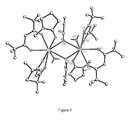
Figure 4 is a drawing representative of the crystal structure of [Ba(tmhd)2(NMP)2·H2O]2. -
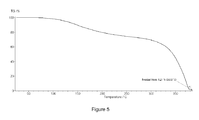
Figure 5 is TGA of [Ba(tmhd)2(NMP)2·H2O]2, indicating it is volatile. - Novel Sr and Ba complexes containing both beta-diketonates and N-methyl-pyrrolidone have been synthesized and characterized. Thermogravimetric Analysis (TGA) experiments indicate these complexes are volatile, and that they can be employed as potential precursors for chemical vapor deposition (CVD), cyclic chemical vapor deposition (CCVD), or atomic layer deposition (ALD) of strontium titanate (STO) or barium strontium titanate films (BST) films in semiconductor fabrication. In the deposition of STO and BST films, the titanium source is selected from titanium containing precursors exemplified by titanium alkoxides or beta-diketonates such as Ti(OPri)4, Ti(tmhd)2(OPri)2, where Pri = isopropyl, where tmhd = 2,2,6,6-tetramethyl-3,5-heptanedionate, Ti(mpd)(tmhd)2, where mpd = 2-methyl-2,4-pentanedioxy, Ti(4-(2-methylethoxy)imino-2-pentanoate)2, and analogous titanium ligands and derivatives.
- These Group 2 metal complexes are precursors capable of depositing Group 2 metal-containing films for semiconductor applications. The metal complexes include:
- (i) Group 2 beta-diketonate with organic amides as adducts with a formula of [M(R1C(O)CR2C(O)R3)2(L1)n(L2)m]p wherein R1 and R3 are independently selected from linear or branched alkyl, alkoxyalkyl, fluoroalkyl: having from 1 to 10 carbon atoms, cycloaliphatic, and aryl: having from 4 to 12 carbon atoms; R2 is independently selected from hydrogen, linear or branched alkyl, fluoroalkyl, alkoxy: having from 1 to 10 carbon atoms, cycloaliphatic, and aryl: having from 4 to 12 carbon atoms; L1 is independently selected from the organic amide class RCONR'R" wherein R and R' are independently linear or branched alkyl having from 1-10 carbon atoms and they can be connected to form a cyclic group (CH2)q, wherein q is from 4-6, and R" is selected from alkyl having from 1 to 4 carbon atoms and cycloalkyl having from 4 to 8 carbon atoms; L2 is independently selected from the H2O, ROH wherein R is linear or branched alkyl having from 1-10 carbon atoms or a cyclic group (CH2)q wherein q is from 4-6, and an organic amide of the class RCONR'R" wherein R and R' are independently linear or branched alkyl having from 1-10 carbon atoms and they can be connected to form a cyclic group (CH2)q wherein q is from 4-6, and R" is selected from alkyl having from 1 to 4 carbon atoms and cycloalkyl having from 4 to 8 carbon atoms; n is a number selected from between 1 and 4; m is selected from a number between 0 to 4; and p is selected from 1, 2; and,
- (ii) Group 2 beta-ketoiminate with organic amides as adducts with a formula of [M(R1C(O)CR2C(NR3)R4)2(µ-L)nLm]p wherein R1 and R4 are independently selected alkyl, alkoxyalkyl, fluoroalkyl: having from 1 to 10 carbon atoms, cycloaliphatic, and aryl: having from 4 to 12 carbon atoms; R2 and R3 are independently selected from hydrogen, alkyl, alkoxyalkyl, fluoroalkyl, alkoxy: having from 1 to 10 carbon atoms, cycloaliphatic, and aryl: having from 4 to 12 carbon atoms; L is independently selected from the organic amide class of the form RCONR'R" wherein R and R' are independently linear or branched alkyl having from 1-10 carbon atoms and they can be connected to form a cyclic group (CH2)q, wherein q is from 4-6, preferably 5, and R" is selected from alkyl having from 1 to 4 carbon atoms and cycloalkyl having from 4 to 8 carbon atoms; n is a number selected from between 1 and 10, preferably 3, 4; m is selected from a number between 0 to 4; and p is selected from 1, 2; µ-L indicates L is connected to two metals, M, via µL's oxygen atom when p=2.
- (iii) Group 2 amidinates with organic amides as adducts with a formula of [M(R1NC(R2)NR3)2(µ-L)nLm]p wherein R1 and R3 are independently selected from linear or branched alkyl, alkoxyalkyl, fluoroalkyl: from 1 to 10 carbon atoms, cycloaliphatic, and aryl: having from 4 to 12 carbon atoms; R2 is independently selected from hydrogen, linear or branched alkyl, fluoroalkyl, alkoxy: having from 1 to 10 carbon atoms, cycloaliphatic, and aryl: having from 4 to 12 carbon atoms; L either bridging between two metal atoms or coordinating to one metal atom and being independently selected from the organic amide class RCONR'R", wherein R and R' are independently linear or branched alkyl having from 1-10 carbon atoms and they can be connected to form a cyclic group (CH2)q, wherein q is from 4-6, and R" is selected from alkyl having from 1 to 4 carbon atoms and cycloalkyl having from 4 to 8 carbon atoms; n is a number selected from between 0 and 4; m is selected from a number between 1 to 4; and p is selected from 1, 2; and µ-L indicates L is connected to two metals, M, via µL's oxygen atom when p=2.
- This invention is related to Group 2 metal-containing complexes having both beta-ketonate or beta-ketoiminate or amidinate and organic amides and their solutions, which are useful for fabricating conformal metal containing films on substrates such as silicon, metal nitride, metal oxide and other metal layers via deposition processes, e.g., chemical vapor deposition (CVD), plasma enhanced chemical vapor deposition (PECVD), low pressure chemical vapor deposition (LPCVD), plasma enhanced atomic layer deposition (PE ALD) and atomic layer deposition (ALD). Such conformal metal containing films have applications ranging from computer chips, optical device, magnetic information storage, to metallic catalyst coated on a supporting material. In contrast to prior polydentate beta-ketoiminate precursors, the polydentate beta-ketoiminate ligands incorporate at least one amino organo imino functionality, which is in contrast to the literatures reported alkoxy group as the donating ligand.
- One type of structure in the metal precursor is illustrated in structure A below having the formula:

- Another type of structure in the metal precursor is illustrated in structure B below having the formula:

- The third type of structure in the metal precursor is illustrated in structure C below having the formula:

- These metal-containing complexes having both beta-ketonate or beta-ketoiminate ligands and organic amides can be employed as potential precursors to make thin metal or metal oxide films via either the chemical vapor deposition (CVD) or atomic layer deposition (ALD) method at temperatures less than 500 °C. The CVD process can be carried out with or without reducing or oxidizing agents, whereas an ALD process usually involves the employment of another reactant, such as a reducing agent or oxidizing agent.
- For multi-component metal oxides such as STO and BST, these metal-containing complexes, having beta-ketonate or beta-ketoiminate or amidinate ligands and organic amides, can be delivered in vapor phase into a CVD or ALD reactor via well-known bubbling or vapor draw techniques as strontium or barium sources. The titanium source is selected from titanium alkoxides or beta-diketonates such as Ti(OPri)4, Ti(tmhd)2(OPri)2, where Pri = isopropyl, where tmhd = 2,2,6,6-tetramethyl-3,5-heptanedionate, Ti(mpd)(tmhd)2, where mpd = 2-methyl-2,4-pentanedioxy, Ti(4-(2-methylethoxy)imino-2-pentanoate)2, and analogous titanium ligands and derivatives. A direct liquid delivery method can also be employed by dissolving the titanium, strontium as well as barium complexes in a suitable solvent or a solvent mixture to prepare a solution with a molar concentration from 0.001 to 2 M, depending the solvent or mixed- solvents employed. Oxidizing agents for the deposition process include oxygen, water, hydrogen peroxide, oxygen plasma, nitrous oxide, and ozone. In a preferred embodiment, the multi-component metal oxide films are grown in the temperature range of 200 to 500°C, preferably 250 to 350°C whereby an amorphous STO or BST films are obtained. A thermal annealing is needed to convert the resulting films from amorphous into crystalline form. The annealing can be conducted at a higher temperature 500 to 1200°C under oxidizing conditions, preferably in the range of 500 to 700°C for high k dielectrics in DRAM applications. The thickness of the STO or BST film is in the range of 1 nm to 500nm, preferably 2nm to 10nm, deposited on compatible substrates including platinum(Pt), RuO2, SrRuO3, silica, silicon nitride, and silicon. The process chamber pressure may preferably be from about 0.1 Torr (13 Pa) to 100 Torr (13 kPa), and more preferably from about 0.1 Torr (13 Pa) to 5 Torr (670 Pa).
- The solvent employed in solubilizing the precursor for use in a deposition process may comprise any compatible solvent or their mixture, including: aliphatic hydrocarbons, aromatic hydrocarbons, ethers, esters, nitrites, and alcohols. The solvent component of the solution preferably comprises a solvent selected from: glyme solvents having from 1 to 20 ethoxy -(C2H4O)- repeat units; C2-C12 alkanols, organic ethers selected from dialkyl ethers comprising C1-C6 alkyl moieties, C4-C8 cyclic ethers; C12-C60 crown O4-O20 ethers (wherein C is the number of carbon atoms in the ether compound and O is the number of oxygen atoms in the ether compound); C6-C12 aliphatic hydrocarbons; C6-C18 aromatic hydrocarbons; organic esters; organic amines, polyamines and organic amides.
- Another class of solvents that offers advantages is the organic amide class of the form RCONR'R", wherein R and R' are independently linear or branched alkyl having from 1-10 carbon atoms, and they can be connected to form a cyclic group (CH2)q, wherein q is from 4-6, preferably 5, and R" is selected from alkyl having from 1 to 4 carbon atoms and cycloalkyl having 4 to 8 carbon atoms. N-methyl pyrrolidinone (NMP), N,N-Diethylformamide (DEF), N,N-Diethylacetamide (DEAC), N,N-Dimethylacetamide (DMAC),and N-cyclohexyl 2-pyrrolidinone are examples.
- The following examples illustrate the preparation of the metal-containing complexes with beta-diketone or beta-ketoiminate ligands as well as their use as precursors in metal-containing film deposition processes.
- 0.52g (3.80 mmol) of BaH2 was loaded in flask with 15mL of toluene. To this flask was added 2.15g (21.70 mmol) NMP followed by addition of 1.57g (7.60 mmol) 1,1,1,5,5,5-hexafluoro-2,4-pentanedione ("hfac"). Stirred reaction mixture at room temperature until bubbling ceased after 5-10 minutes. Removed volatiles under vacuum and noticed the formation of a white solid. Upon completion of evaporation, a liquid was left which was taken up in hexane and recrystallized in -40°C freezer. Decanted out hexanes from recrystallized solid and solid taken up in toluene and recrystallized again in freezer. Decanted toluene from crystals. Crystals identified by crystal structure analysis as the dimer Ba2(hfac)4(NMP)5.
- 0.50g (5.58 mmol) of SrH2 was loaded into a 100mL Schlenk flask with 5g of NMP. To this flask was added 2.06g (11.16 mmol) 2,2,6,6-tetramethyl-3,5-heptanedione ("tmhd") in 5g of NMP and bubbling occurred. Left to stir over night at room temperature. Reaction mixture was subjected to vacuum transferred at 65-70°C leaving behind a grey solid weighing 2.86g. Recrystallized in a 1:1 solution of hexane to pentane in -40°C freezer to afford clear needle like crystals that were identified by crystal structure analysis as the dimer Sr2(tmhd)4(NMP)4.
- To a suspension of 0.50g (5.58 mmol) SrH2 in hexanes was added 2.10g (11.16 mmol) 2,2,6,6-tetramethyl-3,5-heptanedione ("tmhd") and 2.60g (22.32 mmol) N,N-diethylacetamide (DEAC) in hexanes at room temperature. Bubbling and heat were given off and the suspension turned to solution after approximately 10 minutes.. The reactin mixture was stirred for 16 hours and removal of hexanes to afford an oil that was set up for vacuum transfer and heated at 80°C under 300mTorr (40 Pa) for several hours. 2.38g of clear residual slurry (68% yield) was collected and recrystallization in pentane an -40°C gave rise to clear crystals. The crystals were identified by crystal structure analysis as Sr2(tmhd)4(DEAC)3.
- 0.50g (3.59 mmol) of BaH2 was loaded into a 100mL Schlenk flask with 15mL of hexane. To this flask was added a solution of 1.32g (7.18 mmol) tmhd and 1.42 (14.35 mmol) NMP in 5mL hexane and bubbling was witnessed. After approximately 6 hours, the hexane was evaporated under vacuum leaving behind a grey solid weighing 2.32g. Recrystallized in octane giving clear hexagonal-like crystals that were sent for crystal structure analysis and confirmed as the proposed dimer. A 90% yield was obtained based off of crude.
- To a solution of 15.00g (105.49mmol) 2,2-dimethyl-3,5-hexanedione in 50mL of toluene loaded with 30.00g sodium sulfate was added 12.47g (210.97mmol) isopropylamine. The mixture was refluxed for 4 days. Removal of toluene resulted in a yellow oil, which was subjected to vacuum transfer at 80°C under 125mTorr (17 Pa). 16.5 g of clear oil was obtained with a yield of 84%. 1H NMR (500 MHz, C6D6): δ= 11.50 (s, 1 H), 5.16 (s, 1 H), 3.11 (m, 1 H), 1.49 (s, 3H), 1.31 (s, 9H), 0.79 (d, 6H).
- To a solution of 5.00g (35.16mmol) 2,2-dimethyl-3,5-hexanedione in 20mL of toluene loaded with 10.00g of sodium sulfate was added 5.14g (70.32mmol) sec-butylamine. The mixture was refluxed 3 days. 4.90g of light yellow oil was obtained after work-up. The isolated yield was 71%. 1H NMR (500 MHz, C6D6): δ= 11.52 (s, 1H), 5.18 (s, 1 H), 2.95 (m, 1 H), 1.51 (s, 3H), 1.31 (s, 9H), 1.14 (s, 2H), 0.80 (d, 3H), 0.67 (t, 3H).
- To a suspension of 1g (1.66mmol) Ba(N(SiMe3)2)2(THF)2 in hexane was added 0.61g (3.32mmol) of 2,2-dimethyl-5-(iso-propylamino)-3-hexanone and 0.66g (6.64mmol) of NMP in hexane at room temperature. The reaction mixture turned to solution after approximately 30 minutes. After stirring for 16 hours, hexane was evaporated under vacuum to provide 0.95g of a white solid. The white solid was heated in hexane, filtered, and recrystallized an -40°C to give rise to foggy-white crystals. 1H NMR (500 MHz, C6D6): δ= 5.06 (s, 1H), 3.75 (m, 1 H), 2.42 (s, 3H), 2.40 (t, 2H), 1.98 (t, 2H), 1.83 (s, 3H), 1.44 (s, 9H), 1.34 (d, 6H), 1.17 (m, 2H).
- To a solution of 1 g (1.81 mmol) of Sr(N(SiMe3)2)2(THF)2 in hexanes was added 0.66g (3.62mmol) of 2,2-dimethyl-5-(sec-butylamino)-3-hexanone and 0.72g (7.24mmol) of NMP in hexanes at room temperature. After stirring for 16 hours, hexanes were evaporated under vacuum. Recrystallization in hexanes at -20°C resulted in a opaque white solid. 1H NMR (500 MHz, C6D6): δ= 5.06 (s, 1 H), 3.75 (m, 1 H), 2.46 (s, 3H), 2.42 (t, 2H), 2.07 (t, 2H), 1.90 (s, 3H), 1.47 (s, 9H), 1.47 (d, 6H), 1.21 (m, 2H).
- To a solution of 1g (1.81mmol) Sr(N(SiMe3)2)2(THF)2 in 10mL hexanes at room temperature was added 0.71 g (3.62mmol) of 2,2-dimethyl-5-(sec-butylamino)-3-hexanone and 0.83g (7.24mmol) DEAC in 10mL hexanes. Reaction was stirring for 16 hours. Evaporation of hexanes afforded a wet off-white solid. 1H NMR (500 MHz, C6D6): δ= 5.05 (s, 1 H), 3.59 (m, 1 H), 3.17 (q, 2H), 2.51 (q, 2H), 1.96 (s, 3H), 1.79 (s, 3H), 1.55 (s, 9H) 1.44 (m, 2H), 1.44 (d, 3H), 1.03 (t, 3H) 0.96 (t, 3H), 0.56 (t, 3H).
Claims (15)
- A metal containing complex represented by a structure selected from:


- The metal containing complex of Claim 1 wherein M is selected from calcium, strontium, barium and mixtures thereof.
- The metal containing complex of Claim 1 or 2, wherein the metal containing complex is of structure A, and L1 and L2 are selected from N-methyl pyrrolidinone (NMP), N,N-Diethylformamide (DEF), N,N-Diethylacetamide (DEAC), N,N-Dimethylacetamide (DMAC), N-cyclohexyl 2-pyrrolidinone, H2O, and ROH.
- The metal containing complex of Claim 1 or 2, wherein the metal containing complex is of structure A; R1 and R3 are selected from t-butyl and t-pentyl; and R2 is selected from hydrogen, methyl and ethyl.
- The metal containing complex of Claim 1 structure A wherein M is strontium, R1 and R3 are each t-butyl, R2 is hydrogen, L1 and L2 are each N-methyl-pyrrolidone, n=1.5, m=0.5, and p=2.
- The metal containing complex of Claim 1 structure A wherein M is strontium, R1 and R3 are each t-butyl, R2 is hydrogen, L1 is N,N-Diethylacetamide (DEAC), n =1.5, m=0, and p=2.
- The metal containing complex of Claim 1 structure A wherein M is barium, R1 and R3 are each CF3, R2 is hydrogen, L1 and L2 are each N-methyl-pyrrolidone, n =1.5, m=1, and p=2.
- The metal containing complex of Claim 1 structure A wherein M is barium, R1 and R3 are each t-butyl, R2 is hydrogen, L1 is N N-methyl-pyrrolidone, n=2, L2=H2O, m=1, and p=2.
- The metal containing complex of Claim 1 or 2, wherein the metal containing complex is of structure B; R1 and R3 are independently selected from t-butyl and t-pentyl; R2 is selected from hydrogen, methyl and ethyl; and R4 is selected from iso-propyl, t-butyl, sec-butyl, t-pentyl and mixtures thereof.
- The metal containing complex of Claim 1 or 2, wherein the metal containing complex is of structure C; R1 and R3 are independently selected from t-butyl and t-pentyl; and R2 is selected from hydrogen, methyl and ethyl.
- The metal containing complex of Claim 9 or 10, wherein L is selected from N-methyl pyrrolidinone ("NMP"), N,N-Diethylformamide (DEF), N,N-Diethylacetamide (DEAC), N,N-Dimethylacetamide (DMAC),and N-cyclohexyl 2-pyrrolidinone.
- The metal containing complex of any preceding claim dissolved in a solvent selected from glyme solvents having from 1 to 20 ethoxy -(C2H4O)- repeat units; C2-C12 alkanols, organic ethers; C6-C12 aliphatic hydrocarbons; C6-C18 aromatic hydrocarbons; organic esters; organic amines; and polyamines and organic amides.
- A vapor deposition process for forming a conformal multi-component metal oxide thin film on a substrate wherein at least two metal containing complexes and an oxygen containing agent are introduced to a deposition chamber and a multi-component metal oxide film is deposited on a substrate, which process comprises using at least two metal containing complexes according to any one of Claims 1 to 12, each having different metals.
- The process of Claim 13 wherein the oxygen containing agent is selected from N2O, O2, H2O2, H2O, ozone, O2 plasma, organic peroxide, and mixtures thereof.
- The process of Claim 13 or 14 wherein a third metal containing complex is selected from titanium containing alkoxides and beta-ketonates and mixtures thereof.
Applications Claiming Priority (2)
| Application Number | Priority Date | Filing Date | Title |
|---|---|---|---|
| US93823307P | 2007-05-16 | 2007-05-16 | |
| US12/113,397 US20080286464A1 (en) | 2007-05-16 | 2008-05-01 | Group 2 Metal Precursors For Depositing Multi-Component Metal Oxide Films |
Publications (1)
| Publication Number | Publication Date |
|---|---|
| EP1992714A1 true EP1992714A1 (en) | 2008-11-19 |
Family
ID=39717573
Family Applications (1)
| Application Number | Title | Priority Date | Filing Date |
|---|---|---|---|
| EP08156411A Withdrawn EP1992714A1 (en) | 2007-05-16 | 2008-05-16 | Group 2 Metal Precursors for Depositing Multi-Component Metal Oxide Films |
Country Status (5)
| Country | Link |
|---|---|
| US (1) | US20080286464A1 (en) |
| EP (1) | EP1992714A1 (en) |
| JP (1) | JP2009007333A (en) |
| KR (1) | KR20080101789A (en) |
| TW (1) | TW200904793A (en) |
Families Citing this family (9)
| Publication number | Priority date | Publication date | Assignee | Title |
|---|---|---|---|---|
| CN101838210B (en) * | 2009-03-11 | 2014-05-28 | 气体产品与化学公司 | Method for preparing metal complexes of polydentate beta-ketoiminates |
| US8722933B2 (en) | 2009-03-11 | 2014-05-13 | Air Products And Chemicals, Inc. | Method for preparing metal complexes of polydentate beta-ketoiminates |
| US8592058B2 (en) * | 2009-06-03 | 2013-11-26 | Intermolecular, Inc. | Methods of forming strontium titanate films |
| US20110020547A1 (en) * | 2009-07-21 | 2011-01-27 | Julien Gatineau | High dielectric constant films deposited at high temperature by atomic layer deposition |
| KR102590511B1 (en) * | 2021-12-01 | 2023-10-17 | 한국화학연구원 | Novel Organo-Barium Compounds, Preparation method thereof, and Method for deposition of thin film using the same |
| WO2023080505A1 (en) * | 2021-11-04 | 2023-05-11 | 한국화학연구원 | Novel organometallic compound, method for preparing same, and method for preparing thin film using same |
| KR102588453B1 (en) * | 2021-11-04 | 2023-10-12 | 한국화학연구원 | Novel Organo-Strontium Compounds, Preparation method thereof, and Method for deposition of thin film using the same |
| KR102846838B1 (en) * | 2023-08-18 | 2025-08-18 | 한국화학연구원 | Novel Organometallic Compounds, Preparation method thereof, and Method for deposition of thin film using the same |
| KR102861883B1 (en) * | 2023-08-23 | 2025-09-19 | 한국화학연구원 | Novel Organomagnesium Compounds, Preparation method thereof, and Method for deposition of thin film using the same |
Citations (7)
| Publication number | Priority date | Publication date | Assignee | Title |
|---|---|---|---|---|
| WO1993004072A1 (en) * | 1991-08-14 | 1993-03-04 | The Associated Octel Company Limited | METAL β-DIKETONATES |
| US5453494A (en) * | 1990-07-06 | 1995-09-26 | Advanced Technology Materials, Inc. | Metal complex source reagents for MOCVD |
| WO2000037712A1 (en) | 1998-12-18 | 2000-06-29 | Advanced Technology Materials, Inc. | Liquid delivery mocvd process for deposition of high frequency dielectric materials |
| US6214105B1 (en) | 1995-03-31 | 2001-04-10 | Advanced Technology Materials, Inc. | Alkane and polyamine solvent compositions for liquid delivery chemical vapor deposition |
| US6218518B1 (en) | 1990-07-06 | 2001-04-17 | Advanced Technology Materials, Inc. | Tetrahydrofuran-adducted group II β-diketonate complexes as source reagents for chemical vapor deposition |
| US6338873B1 (en) | 1998-04-28 | 2002-01-15 | Advanced Technology Materials, Inc. | Method of forming Group II metal-containing films utilizing Group II MOCVD source reagents |
| US6344079B1 (en) | 1995-03-31 | 2002-02-05 | Advanced Technology Materials, Inc. | Alkane and polyamine solvent compositions for liquid delivery chemical vapor deposition |
Family Cites Families (4)
| Publication number | Priority date | Publication date | Assignee | Title |
|---|---|---|---|---|
| NL8901507A (en) * | 1989-06-14 | 1991-01-02 | Tno | VOLATILE NATURAL POTASSIUM-ORGANIC COMPOUNDS AND METHOD FOR PREPARING LAYERED MATERIALS WITH NATURAL POTASSIUM OXIDES OR FLUORIDES FROM THESE COMPOUNDS. |
| US5139999A (en) * | 1990-03-08 | 1992-08-18 | President And Fellows Of Harvard College | Chemical vapor deposition process where an alkaline earth metal organic precursor material is volatilized in the presence of an amine or ammonia and deposited onto a substrate |
| US5252733A (en) * | 1990-06-05 | 1993-10-12 | Air Products And Chemicals, Inc. | Volatile crown ligand β-diketonate alkaline earth metal complexes |
| US7439338B2 (en) * | 2005-06-28 | 2008-10-21 | Micron Technology, Inc. | Beta-diketiminate ligand sources and metal-containing compounds thereof, and systems and methods including same |
-
2008
- 2008-05-01 US US12/113,397 patent/US20080286464A1/en not_active Abandoned
- 2008-05-12 TW TW097117473A patent/TW200904793A/en unknown
- 2008-05-15 JP JP2008127849A patent/JP2009007333A/en active Pending
- 2008-05-16 KR KR1020080045685A patent/KR20080101789A/en not_active Ceased
- 2008-05-16 EP EP08156411A patent/EP1992714A1/en not_active Withdrawn
Patent Citations (8)
| Publication number | Priority date | Publication date | Assignee | Title |
|---|---|---|---|---|
| US5453494A (en) * | 1990-07-06 | 1995-09-26 | Advanced Technology Materials, Inc. | Metal complex source reagents for MOCVD |
| US6218518B1 (en) | 1990-07-06 | 2001-04-17 | Advanced Technology Materials, Inc. | Tetrahydrofuran-adducted group II β-diketonate complexes as source reagents for chemical vapor deposition |
| WO1993004072A1 (en) * | 1991-08-14 | 1993-03-04 | The Associated Octel Company Limited | METAL β-DIKETONATES |
| US6214105B1 (en) | 1995-03-31 | 2001-04-10 | Advanced Technology Materials, Inc. | Alkane and polyamine solvent compositions for liquid delivery chemical vapor deposition |
| US6344079B1 (en) | 1995-03-31 | 2002-02-05 | Advanced Technology Materials, Inc. | Alkane and polyamine solvent compositions for liquid delivery chemical vapor deposition |
| US6277436B1 (en) | 1997-11-26 | 2001-08-21 | Advanced Technology Materials, Inc. | Liquid delivery MOCVD process for deposition of high frequency dielectric materials |
| US6338873B1 (en) | 1998-04-28 | 2002-01-15 | Advanced Technology Materials, Inc. | Method of forming Group II metal-containing films utilizing Group II MOCVD source reagents |
| WO2000037712A1 (en) | 1998-12-18 | 2000-06-29 | Advanced Technology Materials, Inc. | Liquid delivery mocvd process for deposition of high frequency dielectric materials |
Non-Patent Citations (16)
Also Published As
| Publication number | Publication date |
|---|---|
| KR20080101789A (en) | 2008-11-21 |
| US20080286464A1 (en) | 2008-11-20 |
| JP2009007333A (en) | 2009-01-15 |
| TW200904793A (en) | 2009-02-01 |
Similar Documents
| Publication | Publication Date | Title |
|---|---|---|
| EP1921061B1 (en) | Metal-containing compound, process for producing the same and method of forming a metal-containing thin film | |
| US7691984B2 (en) | Metal complexes of tridentate β-ketoiminates | |
| US20080286464A1 (en) | Group 2 Metal Precursors For Depositing Multi-Component Metal Oxide Films | |
| EP2322530B1 (en) | Group 4 metal precursors for metal-containing films | |
| US20100078601A1 (en) | Preparation of Lanthanide-Containing Precursors and Deposition of Lanthanide-Containing Films | |
| JP5181292B2 (en) | Asymmetric ligand source, low symmetry metal-containing compounds, and systems and methods comprising them | |
| JP2009007333A5 (en) | ||
| EP1068214B1 (en) | Lewis base adducts of anhydrous mononuclear tris(beta-diketonate) bismuth compositions for deposition of bismuth-containing films, and method of making the same | |
| JP2010513467A (en) | Method for depositing ruthenium-containing films | |
| WO2011020042A2 (en) | Hafnium- and zirconium-containing precursors and methods of using the same | |
| KR20120078025A (en) | Organometallic compounds with silylamine ligand, and method for deposition of a thin-film of metal oxide or silicon-containing metal oxide therefrom | |
| EP1911074A2 (en) | Beta-diketiminate ligand sources and metal-containing compounds thereof, and systems and methods including same | |
| US7956168B2 (en) | Organometallic compounds having sterically hindered amides | |
| JP2003501360A (en) | Tetrahydrofuran-added Group II .BETA.-diketonate complexes as starting reagents for chemical vapor deposition | |
| JP2019056133A (en) | Atomic layer deposition method for metal thin films | |
| US6689427B2 (en) | Group IV metal precursors and a method of chemical vapor deposition using the same | |
| EP2322690A2 (en) | Methods for deposition of group 4 metal containing films | |
| CN101328188A (en) | Group II metal precursors for depositing multi-component metal oxide films | |
| US8247617B2 (en) | Group 2 metal precursors for depositing multi-component metal oxide films | |
| KR20010078759A (en) | Precursors for growth of heterometal-oxide films by MOCVD | |
| KR100367346B1 (en) | Novel Group IV Metal Precursor and Chemical Vapor Deposition Method Using Thereof | |
| Paw et al. | Low-Melting, Mononuclear Tetrahydrofuran Complexes of M (2, 2, 6, 6-tetramethylheptane-3, 5-dionate) 2 (M= Ba, Sr) and Related Analogues | |
| KR102129055B1 (en) | Zirconium aminoalkoxide precursors, preparation method thereof and process for thin film formation using the same | |
| KR100508110B1 (en) | Organometallic complex and the preparation thereof | |
| JP4296756B2 (en) | Method for producing titanium-containing dielectric thin film from organic titanium compound and solution raw material containing the same |
Legal Events
| Date | Code | Title | Description |
|---|---|---|---|
| PUAI | Public reference made under article 153(3) epc to a published international application that has entered the european phase |
Free format text: ORIGINAL CODE: 0009012 |
|
| AK | Designated contracting states |
Kind code of ref document: A1 Designated state(s): AT BE BG CH CY CZ DE DK EE ES FI FR GB GR HR HU IE IS IT LI LT LU LV MC MT NL NO PL PT RO SE SI SK TR |
|
| AX | Request for extension of the european patent |
Extension state: AL BA MK RS |
|
| 17P | Request for examination filed |
Effective date: 20090108 |
|
| 17Q | First examination report despatched |
Effective date: 20090414 |
|
| AKX | Designation fees paid |
Designated state(s): AT BE BG CH CY CZ DE DK EE ES FI FR GB GR HR HU IE IS IT LI LT LU LV MC MT NL NO PL PT RO SE SI SK TR |
|
| STAA | Information on the status of an ep patent application or granted ep patent |
Free format text: STATUS: THE APPLICATION IS DEEMED TO BE WITHDRAWN |
|
| 18D | Application deemed to be withdrawn |
Effective date: 20111201 |