EP1992676A1 - Organomolybdenum additive, its preparation and lubricating composition containing the additive and uses thereof - Google Patents
Organomolybdenum additive, its preparation and lubricating composition containing the additive and uses thereof Download PDFInfo
- Publication number
- EP1992676A1 EP1992676A1 EP07720282A EP07720282A EP1992676A1 EP 1992676 A1 EP1992676 A1 EP 1992676A1 EP 07720282 A EP07720282 A EP 07720282A EP 07720282 A EP07720282 A EP 07720282A EP 1992676 A1 EP1992676 A1 EP 1992676A1
- Authority
- EP
- European Patent Office
- Prior art keywords
- acid
- butyl
- tert
- group
- additive
- Prior art date
- Legal status (The legal status is an assumption and is not a legal conclusion. Google has not performed a legal analysis and makes no representation as to the accuracy of the status listed.)
- Granted
Links
Images


Classifications
-
- C—CHEMISTRY; METALLURGY
- C10—PETROLEUM, GAS OR COKE INDUSTRIES; TECHNICAL GASES CONTAINING CARBON MONOXIDE; FUELS; LUBRICANTS; PEAT
- C10M—LUBRICATING COMPOSITIONS; USE OF CHEMICAL SUBSTANCES EITHER ALONE OR AS LUBRICATING INGREDIENTS IN A LUBRICATING COMPOSITION
- C10M159/00—Lubricating compositions characterised by the additive being of unknown or incompletely defined constitution
- C10M159/12—Reaction products
- C10M159/18—Complexes with metals
-
- C—CHEMISTRY; METALLURGY
- C10—PETROLEUM, GAS OR COKE INDUSTRIES; TECHNICAL GASES CONTAINING CARBON MONOXIDE; FUELS; LUBRICANTS; PEAT
- C10M—LUBRICATING COMPOSITIONS; USE OF CHEMICAL SUBSTANCES EITHER ALONE OR AS LUBRICATING INGREDIENTS IN A LUBRICATING COMPOSITION
- C10M169/00—Lubricating compositions characterised by containing as components a mixture of at least two types of ingredient selected from base-materials, thickeners or additives, covered by the preceding groups, each of these compounds being essential
- C10M169/04—Mixtures of base-materials and additives
-
- C—CHEMISTRY; METALLURGY
- C10—PETROLEUM, GAS OR COKE INDUSTRIES; TECHNICAL GASES CONTAINING CARBON MONOXIDE; FUELS; LUBRICANTS; PEAT
- C10M—LUBRICATING COMPOSITIONS; USE OF CHEMICAL SUBSTANCES EITHER ALONE OR AS LUBRICATING INGREDIENTS IN A LUBRICATING COMPOSITION
- C10M2201/00—Inorganic compounds or elements as ingredients in lubricant compositions
- C10M2201/08—Inorganic acids or salts thereof
-
- C—CHEMISTRY; METALLURGY
- C10—PETROLEUM, GAS OR COKE INDUSTRIES; TECHNICAL GASES CONTAINING CARBON MONOXIDE; FUELS; LUBRICANTS; PEAT
- C10M—LUBRICATING COMPOSITIONS; USE OF CHEMICAL SUBSTANCES EITHER ALONE OR AS LUBRICATING INGREDIENTS IN A LUBRICATING COMPOSITION
- C10M2203/00—Organic non-macromolecular hydrocarbon compounds and hydrocarbon fractions as ingredients in lubricant compositions
- C10M2203/10—Petroleum or coal fractions, e.g. tars, solvents, bitumen
- C10M2203/1006—Petroleum or coal fractions, e.g. tars, solvents, bitumen used as base material
-
- C—CHEMISTRY; METALLURGY
- C10—PETROLEUM, GAS OR COKE INDUSTRIES; TECHNICAL GASES CONTAINING CARBON MONOXIDE; FUELS; LUBRICANTS; PEAT
- C10M—LUBRICATING COMPOSITIONS; USE OF CHEMICAL SUBSTANCES EITHER ALONE OR AS LUBRICATING INGREDIENTS IN A LUBRICATING COMPOSITION
- C10M2205/00—Organic macromolecular hydrocarbon compounds or fractions, whether or not modified by oxidation as ingredients in lubricant compositions
- C10M2205/17—Fisher Tropsch reaction products
- C10M2205/173—Fisher Tropsch reaction products used as base material
-
- C—CHEMISTRY; METALLURGY
- C10—PETROLEUM, GAS OR COKE INDUSTRIES; TECHNICAL GASES CONTAINING CARBON MONOXIDE; FUELS; LUBRICANTS; PEAT
- C10M—LUBRICATING COMPOSITIONS; USE OF CHEMICAL SUBSTANCES EITHER ALONE OR AS LUBRICATING INGREDIENTS IN A LUBRICATING COMPOSITION
- C10M2207/00—Organic non-macromolecular hydrocarbon compounds containing hydrogen, carbon and oxygen as ingredients in lubricant compositions
- C10M2207/28—Esters
- C10M2207/287—Partial esters
- C10M2207/289—Partial esters containing free hydroxy groups
-
- C—CHEMISTRY; METALLURGY
- C10—PETROLEUM, GAS OR COKE INDUSTRIES; TECHNICAL GASES CONTAINING CARBON MONOXIDE; FUELS; LUBRICANTS; PEAT
- C10M—LUBRICATING COMPOSITIONS; USE OF CHEMICAL SUBSTANCES EITHER ALONE OR AS LUBRICATING INGREDIENTS IN A LUBRICATING COMPOSITION
- C10M2215/00—Organic non-macromolecular compounds containing nitrogen as ingredients in lubricant Compositions
- C10M2215/02—Amines, e.g. polyalkylene polyamines; Quaternary amines
- C10M2215/04—Amines, e.g. polyalkylene polyamines; Quaternary amines having amino groups bound to acyclic or cycloaliphatic carbon atoms
-
- C—CHEMISTRY; METALLURGY
- C10—PETROLEUM, GAS OR COKE INDUSTRIES; TECHNICAL GASES CONTAINING CARBON MONOXIDE; FUELS; LUBRICANTS; PEAT
- C10M—LUBRICATING COMPOSITIONS; USE OF CHEMICAL SUBSTANCES EITHER ALONE OR AS LUBRICATING INGREDIENTS IN A LUBRICATING COMPOSITION
- C10M2215/00—Organic non-macromolecular compounds containing nitrogen as ingredients in lubricant Compositions
- C10M2215/02—Amines, e.g. polyalkylene polyamines; Quaternary amines
- C10M2215/04—Amines, e.g. polyalkylene polyamines; Quaternary amines having amino groups bound to acyclic or cycloaliphatic carbon atoms
- C10M2215/042—Amines, e.g. polyalkylene polyamines; Quaternary amines having amino groups bound to acyclic or cycloaliphatic carbon atoms containing hydroxy groups; Alkoxylated derivatives thereof
-
- C—CHEMISTRY; METALLURGY
- C10—PETROLEUM, GAS OR COKE INDUSTRIES; TECHNICAL GASES CONTAINING CARBON MONOXIDE; FUELS; LUBRICANTS; PEAT
- C10M—LUBRICATING COMPOSITIONS; USE OF CHEMICAL SUBSTANCES EITHER ALONE OR AS LUBRICATING INGREDIENTS IN A LUBRICATING COMPOSITION
- C10M2215/00—Organic non-macromolecular compounds containing nitrogen as ingredients in lubricant Compositions
- C10M2215/02—Amines, e.g. polyalkylene polyamines; Quaternary amines
- C10M2215/06—Amines, e.g. polyalkylene polyamines; Quaternary amines having amino groups bound to carbon atoms of six-membered aromatic rings
- C10M2215/064—Di- and triaryl amines
-
- C—CHEMISTRY; METALLURGY
- C10—PETROLEUM, GAS OR COKE INDUSTRIES; TECHNICAL GASES CONTAINING CARBON MONOXIDE; FUELS; LUBRICANTS; PEAT
- C10M—LUBRICATING COMPOSITIONS; USE OF CHEMICAL SUBSTANCES EITHER ALONE OR AS LUBRICATING INGREDIENTS IN A LUBRICATING COMPOSITION
- C10M2215/00—Organic non-macromolecular compounds containing nitrogen as ingredients in lubricant Compositions
- C10M2215/02—Amines, e.g. polyalkylene polyamines; Quaternary amines
- C10M2215/06—Amines, e.g. polyalkylene polyamines; Quaternary amines having amino groups bound to carbon atoms of six-membered aromatic rings
- C10M2215/064—Di- and triaryl amines
- C10M2215/065—Phenyl-Naphthyl amines
-
- C—CHEMISTRY; METALLURGY
- C10—PETROLEUM, GAS OR COKE INDUSTRIES; TECHNICAL GASES CONTAINING CARBON MONOXIDE; FUELS; LUBRICANTS; PEAT
- C10M—LUBRICATING COMPOSITIONS; USE OF CHEMICAL SUBSTANCES EITHER ALONE OR AS LUBRICATING INGREDIENTS IN A LUBRICATING COMPOSITION
- C10M2215/00—Organic non-macromolecular compounds containing nitrogen as ingredients in lubricant Compositions
- C10M2215/08—Amides [having hydrocarbon substituents containing less than thirty carbon atoms]
-
- C—CHEMISTRY; METALLURGY
- C10—PETROLEUM, GAS OR COKE INDUSTRIES; TECHNICAL GASES CONTAINING CARBON MONOXIDE; FUELS; LUBRICANTS; PEAT
- C10M—LUBRICATING COMPOSITIONS; USE OF CHEMICAL SUBSTANCES EITHER ALONE OR AS LUBRICATING INGREDIENTS IN A LUBRICATING COMPOSITION
- C10M2215/00—Organic non-macromolecular compounds containing nitrogen as ingredients in lubricant Compositions
- C10M2215/08—Amides [having hydrocarbon substituents containing less than thirty carbon atoms]
- C10M2215/082—Amides [having hydrocarbon substituents containing less than thirty carbon atoms] containing hydroxyl groups; Alkoxylated derivatives
-
- C—CHEMISTRY; METALLURGY
- C10—PETROLEUM, GAS OR COKE INDUSTRIES; TECHNICAL GASES CONTAINING CARBON MONOXIDE; FUELS; LUBRICANTS; PEAT
- C10M—LUBRICATING COMPOSITIONS; USE OF CHEMICAL SUBSTANCES EITHER ALONE OR AS LUBRICATING INGREDIENTS IN A LUBRICATING COMPOSITION
- C10M2215/00—Organic non-macromolecular compounds containing nitrogen as ingredients in lubricant Compositions
- C10M2215/24—Organic non-macromolecular compounds containing nitrogen as ingredients in lubricant Compositions having hydrocarbon substituents containing thirty or more carbon atoms, e.g. nitrogen derivatives of substituted succinic acid
- C10M2215/28—Amides; Imides
-
- C—CHEMISTRY; METALLURGY
- C10—PETROLEUM, GAS OR COKE INDUSTRIES; TECHNICAL GASES CONTAINING CARBON MONOXIDE; FUELS; LUBRICANTS; PEAT
- C10M—LUBRICATING COMPOSITIONS; USE OF CHEMICAL SUBSTANCES EITHER ALONE OR AS LUBRICATING INGREDIENTS IN A LUBRICATING COMPOSITION
- C10M2219/00—Organic non-macromolecular compounds containing sulfur, selenium or tellurium as ingredients in lubricant compositions
- C10M2219/04—Organic non-macromolecular compounds containing sulfur, selenium or tellurium as ingredients in lubricant compositions containing sulfur-to-oxygen bonds, i.e. sulfones, sulfoxides
- C10M2219/044—Sulfonic acids, Derivatives thereof, e.g. neutral salts
-
- C—CHEMISTRY; METALLURGY
- C10—PETROLEUM, GAS OR COKE INDUSTRIES; TECHNICAL GASES CONTAINING CARBON MONOXIDE; FUELS; LUBRICANTS; PEAT
- C10M—LUBRICATING COMPOSITIONS; USE OF CHEMICAL SUBSTANCES EITHER ALONE OR AS LUBRICATING INGREDIENTS IN A LUBRICATING COMPOSITION
- C10M2219/00—Organic non-macromolecular compounds containing sulfur, selenium or tellurium as ingredients in lubricant compositions
- C10M2219/04—Organic non-macromolecular compounds containing sulfur, selenium or tellurium as ingredients in lubricant compositions containing sulfur-to-oxygen bonds, i.e. sulfones, sulfoxides
- C10M2219/046—Overbased sulfonic acid salts
-
- C—CHEMISTRY; METALLURGY
- C10—PETROLEUM, GAS OR COKE INDUSTRIES; TECHNICAL GASES CONTAINING CARBON MONOXIDE; FUELS; LUBRICANTS; PEAT
- C10M—LUBRICATING COMPOSITIONS; USE OF CHEMICAL SUBSTANCES EITHER ALONE OR AS LUBRICATING INGREDIENTS IN A LUBRICATING COMPOSITION
- C10M2223/00—Organic non-macromolecular compounds containing phosphorus as ingredients in lubricant compositions
- C10M2223/02—Organic non-macromolecular compounds containing phosphorus as ingredients in lubricant compositions having no phosphorus-to-carbon bonds
- C10M2223/04—Phosphate esters
-
- C—CHEMISTRY; METALLURGY
- C10—PETROLEUM, GAS OR COKE INDUSTRIES; TECHNICAL GASES CONTAINING CARBON MONOXIDE; FUELS; LUBRICANTS; PEAT
- C10M—LUBRICATING COMPOSITIONS; USE OF CHEMICAL SUBSTANCES EITHER ALONE OR AS LUBRICATING INGREDIENTS IN A LUBRICATING COMPOSITION
- C10M2227/00—Organic non-macromolecular compounds containing atoms of elements not provided for in groups C10M2203/00, C10M2207/00, C10M2211/00, C10M2215/00, C10M2219/00 or C10M2223/00 as ingredients in lubricant compositions
- C10M2227/06—Organic compounds derived from inorganic acids or metal salts
- C10M2227/066—Organic compounds derived from inorganic acids or metal salts derived from Mo or W
-
- C—CHEMISTRY; METALLURGY
- C10—PETROLEUM, GAS OR COKE INDUSTRIES; TECHNICAL GASES CONTAINING CARBON MONOXIDE; FUELS; LUBRICANTS; PEAT
- C10M—LUBRICATING COMPOSITIONS; USE OF CHEMICAL SUBSTANCES EITHER ALONE OR AS LUBRICATING INGREDIENTS IN A LUBRICATING COMPOSITION
- C10M2227/00—Organic non-macromolecular compounds containing atoms of elements not provided for in groups C10M2203/00, C10M2207/00, C10M2211/00, C10M2215/00, C10M2219/00 or C10M2223/00 as ingredients in lubricant compositions
- C10M2227/09—Complexes with metals
-
- C—CHEMISTRY; METALLURGY
- C10—PETROLEUM, GAS OR COKE INDUSTRIES; TECHNICAL GASES CONTAINING CARBON MONOXIDE; FUELS; LUBRICANTS; PEAT
- C10N—INDEXING SCHEME ASSOCIATED WITH SUBCLASS C10M RELATING TO LUBRICATING COMPOSITIONS
- C10N2010/00—Metal present as such or in compounds
- C10N2010/12—Groups 6 or 16
-
- C—CHEMISTRY; METALLURGY
- C10—PETROLEUM, GAS OR COKE INDUSTRIES; TECHNICAL GASES CONTAINING CARBON MONOXIDE; FUELS; LUBRICANTS; PEAT
- C10N—INDEXING SCHEME ASSOCIATED WITH SUBCLASS C10M RELATING TO LUBRICATING COMPOSITIONS
- C10N2030/00—Specified physical or chemical properties which is improved by the additive characterising the lubricating composition, e.g. multifunctional additives
- C10N2030/06—Oiliness; Film-strength; Anti-wear; Resistance to extreme pressure
Definitions
- the present invention relates to an organic molybdenum additive and the preparation method thereof, a lubricating composition containing said additive, and use of said additive or said lubricating composition containing said additive in the aspect of improving properties of antiwear and antifriction
- the lubricant oil is also required to have better properties of antiwear and antifriction. These all propose higher requirement of lubricants in properties of antiwear, antifriction and antioxidant.
- Phosphor contained in lubricant oil may shorten effective life of the catalyst in tail-gas converter of automobile, and sulfur contained in the lubricant oil is incompatible with an elastomer sealing element and corrosive. Therefore, an organic molybdenum additive having no sulfur and no phosphor can be applied to lubricant oils with high grade and high standard and has more broad applicability.
- US patent 4,692,256 discloses an organic molybdenum lubricant additive having properties of antiwear, antifriction and antioxidation.
- US patent 4,889,647 discloses an organic molybdenum lubricant additive prepared by reacting a fatty oil and diethanolamine with an inorganic molybdenum compound, said additive has properties of antiwear and antifriction, and is commercially avaiablein a name of model No. 855 by VANDERBILT.
- US patent 5,137,647 discloses an organic molybdenum lubricant additive prepared by reacting a fatty oil or acid and 2-(2-amino ethyl) aminoethanol with an inorganic molybdenum compound, said additive has properties of antiwear, antifriction and antioxidation and the like.
- US patent 5,412,130 discloses a process for preparing an organic molybdenum lubricant additive by reacting a diol, a diamine, a thiol and an aminoethanol with an inorganic molybdenum compound.
- US patent 6,046,263 discloses a multifunction lubricant additive having combined properties of antiwear, antifriction and antioxidation, commercially avaiable in a name of model No. F10A by CIBA Corp.
- no-sulfur and no-phosphor lubricant additive products are superior in antiwear property, but inferior in antifriction property; or superior in antifriction property, but inferior in antiwear property; Or some may mainly take effect under condition of mixed lubrication, and some may take effect under condition of boundary lubrication. Therefore tp develop a lubricant additive with even better properties of antiwear and antifriction still is an exertive direction for one skilled in the art.
- One object of the present invention is to provide an organic molybdenum additive different from that in the prior art with better properties of antiwear and antifriction, said organic molybdenum additive is prepared by reacting three kinds of materials as follows:
- Another object of the present invention is to provide a preparation method of aforementioned organic molybdenum additive, comprising reacting aforementioned reactants a, b and c.
- Another further object of the present invention is to provide a lubricant composition containing aforementioned organic molybdenum additive together with further lubrication base oil.
- Another object of the present invention is to provide the use of aforementioned organic molybdenum additive and the lubricating composition containing said additive in engine lubricating oil, gear oil, hydraulic oil or oils for metal working, and grease, in particular the use in said oil products and greases for improving property of antiwear and/or antifriction.
- the organic molybdenum additive of the present invention is prepared by reacting the three kinds of materials as follows:
- Said polylol ester of p-hydroxybenzene alkyl acid refers to a polylol ester of p-hydroxybenzene alkyl acid having shielded phenol antioxidant group, wherein the carbon atom number of the polylol is between 2-12 and the hydroxyl number is between 2-5.
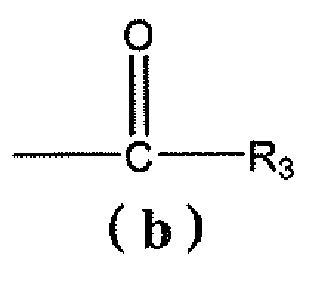
- Said polylol ester of p-hydroxybenzene alkyl acid has preferably a general formula as follows: Wherein at least one of X 1 , X 2 and X 3 is a group represented by structural formula (a), at least one of X 4 , X 5 , X 6 and X 7 is a group represented by structural formula (a), at least one of X 8 and X 9 is a group represented by structural formula (a), the remaining groups may be the same or different, and may be independently selected from H atom, group represented by structural formula (a) and group represented by structural formula (b), Wherein R 1 and R 2 may be the same or different, and independently selected from alkyl having a carbon atom number between 1 ⁇ 4, preferably tert-butyl; n is an integer number of 2 ⁇ 12, preferably 2 ⁇ 8, most preferably 2, 3 or 4; R 3 is H atom or a saturated or unsaturated hydrocarbyl group having a carbon atom number between 1 ⁇ 30, preferably 5 ⁇
- Preferred material with aforementioned general formula (I), (II) and (III) is one selected from the group consisting of: mono glyceride compound of 3,5-di-tert-butyl p-hydroxybenzene propionic acid (a compound of structural formula I, wherein, one of groups X 1 , X 2 and X 3 is selected from the group represented by structural formula (a) in which n is 2 and both R 1 and R 2 are tert-butyl, and each of the remaining groups in X 1 , X 2 and X 3 is independently selected from H), diglyceride of 3,5-di-tert-butyl p-hydroxybenzene propionic acid (a compound of structural formula I, wherein, two of groups X 1 , X 2 and X 3 are selected from the group represented by structural formula (a) in which n is 2 and are R 1 and R 2 are tert-butyl, and the remaining group in X 1 , X 2 and X 3 is selected from H),
- Said inorganic molybdenum compound is one selected from the group consisting of ammonium molybdate, ammonium paramolybdate, sodium molybdate, molybdenum trioxide and the mixture thereof.
- Said aliphatic amine is one selected from the group consisting of primary, secondary, tertiary amine or alkylene diamine having a carbon atom number of 4 ⁇ 30, an amino number between 1 ⁇ 5 and the mixture thereof.
- Preferred aliphatic amine is one selected from the group consisting of primary, secondary, tertiary aliphatic amine having a carbon atom number of 4 ⁇ 25 and an amino number between 1 ⁇ 4 and mono alkylated alkylene diamine derived from a fatty acid having a carbon atom number of 12 ⁇ 18, and the mixture thereof.
- the most preferred aliphatic amine is one selected from the group consisting of butylamine, hexylamine, octylamine, laurylamine, hexadecylamine, octadecyamine, dibutylamine, diamylamine, dihexylamine, dodecyl ethylene diamine, dodecyl trimethylene diamine, cetyl ethylene diamine, cetyl trimethylene diamine, octadecyl ethylene diamine, octadecyl trimethylene diamine, coco trimethylene diamine, tallow trimethylene diamine, oleyl trimethylene diamine, N,N-dimethyl lauryl amine, N,N-dimethyl cetylamine, N,N-dimethyl stearyl amine, and the mixture thereof.
- Said aromatic amine is one selected from the group consisting of aromatic amine in which aromatic ring has a side chain with a carbon atom number of 0 ⁇ 30 and an amino number of 1 ⁇ 5, or the mixture thereof.
- diphenylamines in which the aromatic ring has a side chain with a carbon atom number of 4 ⁇ 20 and an amino number of 1 ⁇ 4, alkylated diphenylamines and the mixture thereof.
- the most preferred is the alkylated diphenylamine in which the aromatic ring has a side chain with a carbon atom number of 4-8, the alkylated diphenylamine in which the aromatic ring has a side chain with a carbon atom number of 9-10, and the mixture thereof.
- Said amide is one selected from the group consisting of amide prepared by reacting a fatty acid having a carbon atom number between 1 ⁇ 30, especially between 12 ⁇ 18, with an organic amine having an amino number between 1 ⁇ 5 and a carbon atom number between 1 ⁇ 12 or aqua ammonia.
- Said amide is preferably one prepared by reacting a fatty acid having a carbon atom number between 1 ⁇ 30, especially between 12 ⁇ 18, with an organic amine having an amino number between 1 ⁇ 5 and ca arbon atom number between 1 ⁇ 12 in a molar ratio of 2:1 ⁇ 1:2, wherein the organic amine is preferably one selected from the group consisting of diethanolamine, hydroxyethyl ethylene diamine, diethylene triamine, triethylene tetramine, tetraethylene pentamine, dipropylene triamine, tripropylene tetramine, tetrapropylene pentamine and the mixture thereof.
- the most preferred amide is one selected from the group consisting of stearyl amide obtained by reacting stearic acid with diethanolamine, stearyl amide obtained by reacting stearic acid with hydroxyethyl ethylene diamine, stearyl amide obtained by reacting stearic acid with diethylene triamine, stearyl amide obtained by reacting stearic acid with triethylene tetramine, oleic acid amide obtained by reacting oleic acid with diethanolamine, oleic acid amide obtained by reacting oleic acid with hydroxyethyl ethylene diamine, oleic acid amide obtained by reacting oleic acid with diethylene triamine, oleic acid amide obtained by reacting oleic acid with triethylene tetramine, palmityl amide obtained by reacting palmitic acid with diethanolamine, palmityl amide obtained by reacting palmitic acid with hydroxyethyl ethylene diamine, palmityl amide obtained by reacting
- the organic molybdenum additive of the present invention is prepared through steps as follows:
- the organic molybdenum additive product is prepared by reacting the aforementioned reactants a, b and c in a weight-ratio of 49 ⁇ 99: 0.1 ⁇ 25: 0 ⁇ 50, preferably 50 ⁇ 90: 0.1 ⁇ 15: 0.1 ⁇ 50, and most preferably 50 ⁇ 90: 1 ⁇ 15: 1 ⁇ 30.
- the additive prepared according to the present invention has an infrared characteristic absorption peak between 1600 ⁇ 1610cm-1, different from the reactant.
- Solvent may be added or may not be added during the preparation of the organic molybdenum additive of the present invention.
- the selected solvent to be added includes toluene, xylene, gasoline, water and/or the mixture thereof. If a solvent is added, the solvent may be removed out in a mode commonly known for one skilled in the art, for example, under condition of atmospheric pressure or reduced pressure after end of the reaction.
- Said reaction temperature is between 60 ⁇ 160°C, preferably 100 ⁇ 130°C.
- Said reaction time is between 1 ⁇ 10 hrs, preferably 2 ⁇ 6 hrs.
- Said reaction is preferably carried out in an inert gas atmosphere, more preferably under nitrogen gas atmosphere.
- molybdenum content is 0.1 ⁇ 8.0% based on the total weight of said additive, preferably 2.0 ⁇ 7.0%.
- the present invention further provides a lubricating composition containing aforementioned organic molybdenum additive together with further lubricating base oil.
- Said base oil may be mineral oil, vegetable oil or synthetic oil.
- the synthetic oil is Fisch-Tropsch synthetic oil, poly ⁇ -olefin synthetic oil or esters oil.
- compositions may also contain other lubricant additives, such as, one or more specifies selected from the group consisting of antioxidant, detergent agent, dispersant agent, antirusting agent, antiwear additive, viscosity index improver, freezing point depressant.
- the antioxidant may be one selected from the group consisting of 2,6-di-tert-butyl p-cresol, benzotriazole derivatives, thiadiazole derivatives;
- the detergent agent may be one selected from the group consisting of petroleum sulfonate, synthetic sulfonate, alkyl salicylate, naphthenate or alkylphenolate sulfide;
- the dispersant agent may be one selected from the group consisting of succinimide, hydrocarbyl amines, multi-hydroxy succinates, hydrocarbyl substituted Mannich bases or hydrocarbyl substituted triazoles;
- the antirusting agent may be one selected from the group consisting of petroleum sulfonate, synthetic sulfonate,
- composition may also contain other additive that may be used as lubricant additive.
- the organic molybdenum additive according to the present invention has excellent properties of antiwear and antifriction.
- the organic molybdenum lubricant additive M-02 was obtained by evaporating out toluene and filtering slag off from the reacted mixture, wherein the molybdenum content was 3.04% based on the total weight of said organic molybdenum additive.
- the organic molybdenum lubricant additive N-03 was obtained by evaporating out toluene and not forming slag till the reaction was ended, wherein the molybdenum content was 6.42% based on the total weight of said organic molybdenum lubricant additive.
- the organic molybdenum lubricant additive M-05 of the present invention was obtained by evaporating out toluene and filtering slag off from the reacted mixture, wherein the molybdenum content was 1.03% based on the total weight of said organic molybdenum lubricant additive.
- the organic molybdenum lubricant additive N-08 was obtained by filtering slag off from the reacted mixture, wherein the molybdenum content was 5.09% based on the total weight of said organic molybdenum lubricant additive.
- the organic molybdenum lubricant M-01 was obtained by evaporating out toluene and filtering slag off from the reacted mixture, wherein the molybdenum content was 2.93% based on the total weight of said organic molybdenum lubricant additive.
- the organic molybdenum lubricant additive N-10 was obtained by evaporating out toluene and filtering slag off from the reacted mixture, wherein the molybdenum content was of 5.53% based on the total weight of said organic molybdenum lubricant additive.
- the organic molybdenum additive M-03 was obtained by evaporating out moisture remained in the oil phase and filtering slag off from the reacted mixture, wherein the molybdenum content was 2.67% based on the total weight of said organic molybdenum additive.
- the organic molybdenum additive M-04 was obtained by evaporating out toluene and filtering slag off from the reacted mixture, wherein the molybdenum content was 3.17% based on the total weight of said organic molybdenum additive.
- Example 2 To a 250ml four-neck flask identical to that in Example 1, 40g F10A lubricant additive and 80ml toluene were added and the temperature was raised to 70 ⁇ 80°C under nitrogen gas atmosphere. 3g molybdenum trioxide was added and the resulting mixture was reacted under refluxing at 120°C for 2 hrs.
- the organic molybdenum additive M-06 was obtained by evaporating out toluene and filtering slag off from the reacted mixture, wherein the molybdenum content was 0.24% based on the total weight of said organic molybdenum additive.
- the organic molybdenum additive M-08 was obtained by evaporating out toluene and no slag was formed during the reaction process, wherein the molybdenum content was 6.42% based on the total weight of said organic molybdenum lubricant additive.
- the organic molybdenum additive M-09 was obtained by evaporating out toluene and filtering slag off from the reacted mixture, wherein the molybdenum content was 5.66% based on the total weight of said organic molybdenum additive.
- F10A lubricant additive manufactured by CIBA Corp
- Van 855 lubricant additive manufactured by VANDERBILT Corp, with an actually measured molybdenum content of 6.62%
- a composition compounded of F10A lubricant additive and Van 855 lubricant additive in an equal-weight ratio were added respectively into
- each of the organic molybdenum additives of the present invention and the control additives was added in the same quantity of 0.5%, and each of compounded lubrication systems was further added with 4.5% of SF gasoline engine oil as a composite agent (manufactured by Wuxi Southern Additive Corp.) respectively.
- Antiwear and antifriction property of each compounded system obtained was measured respectively by using a four-ball apparatus for assessing test of the antiwear and antifriction property (Industry Standard SH/T 0189-92). Test conditions were: a temperature of 75°C, a rotation rate of 1200 rpm, a load of 40kg, and a testing time of 1 hr. Results are recorded in Table 1.
- the data given by the test with the four-ball apparatus for measuring antiwear and antifriction include friction coefficient and abraded spot diameter. The lower the abraded spot diameter and friction coefficient, the more excellent effect of antiwear and antifriction is.
- the properties of antiwear and antifriction for each compounded lubrication system said below were measured according to the method as follows.
- Said method comprises using a SRV high frequency linear vibration tester to measure the properties of antiwear and antifriction under test conditions: a temperature of 80, a load of 300N, a testing time of 1 hr, a stroke of 1mm and a frequency of 50Hz. Friction pairs are in sphere contacting. Test results are given in friction coefficient and abraded spot diameter. The lower the value of the abraded spot diameter and friction coefficient, the more excellent result of correspondent antiwear and antifriction property is.
Landscapes
- Chemical & Material Sciences (AREA)
- Chemical Kinetics & Catalysis (AREA)
- General Chemical & Material Sciences (AREA)
- Oil, Petroleum & Natural Gas (AREA)
- Organic Chemistry (AREA)
- Lubricants (AREA)
Abstract
Description
- The present invention relates to an organic molybdenum additive and the preparation method thereof, a lubricating composition containing said additive, and use of said additive or said lubricating composition containing said additive in the aspect of improving properties of antiwear and antifriction
- Along with environmental protection laws being increasingly rigorous and requirement of saving energy being higher and higher, engine manufacturers make continuously engine size reduced, compression ratio increased and motor operation temperature elevated, and thus fuel utilization improved, energy resource saved and waste gas emission reduced. In the meanwhile, the lubricant oil is also required to have better properties of antiwear and antifriction. These all propose higher requirement of lubricants in properties of antiwear, antifriction and antioxidant.
- Phosphor contained in lubricant oil may shorten effective life of the catalyst in tail-gas converter of automobile, and sulfur contained in the lubricant oil is incompatible with an elastomer sealing element and corrosive. Therefore, an organic molybdenum additive having no sulfur and no phosphor can be applied to lubricant oils with high grade and high standard and has more broad applicability.
-
US patent 4,692,256 discloses an organic molybdenum lubricant additive having properties of antiwear, antifriction and antioxidation. -
US patent 4,889,647 discloses an organic molybdenum lubricant additive prepared by reacting a fatty oil and diethanolamine with an inorganic molybdenum compound, said additive has properties of antiwear and antifriction, and is commercially avaiablein a name of model No. 855 by VANDERBILT. -
US patent 5,137,647 discloses an organic molybdenum lubricant additive prepared by reacting a fatty oil or acid and 2-(2-amino ethyl) aminoethanol with an inorganic molybdenum compound, said additive has properties of antiwear, antifriction and antioxidation and the like. -
US patent 5,412,130 discloses a process for preparing an organic molybdenum lubricant additive by reacting a diol, a diamine, a thiol and an aminoethanol with an inorganic molybdenum compound. -
US patent 6,046,263 discloses a multifunction lubricant additive having combined properties of antiwear, antifriction and antioxidation, commercially avaiable in a name of model No. F10A by CIBA Corp. - However, in the prior art, some no-sulfur and no-phosphor lubricant additive products are superior in antiwear property, but inferior in antifriction property; or superior in antifriction property, but inferior in antiwear property; Or some may mainly take effect under condition of mixed lubrication, and some may take effect under condition of boundary lubrication. Therefore tp develop a lubricant additive with even better properties of antiwear and antifriction still is an exertive direction for one skilled in the art.
- One object of the present invention is to provide an organic molybdenum additive different from that in the prior art with better properties of antiwear and antifriction, said organic molybdenum additive is prepared by reacting three kinds of materials as follows:
- a. A polylol ester of p-hydroxybenzene alkyl acid ;
- b. An inorganic molybdenum compound; and
- c. An aliphatic amine, an aromatic amine, an amide or the mixture thereof.
- Another object of the present invention is to provide a preparation method of aforementioned organic molybdenum additive, comprising reacting aforementioned reactants a, b and c.
- Another further object of the present invention is to provide a lubricant composition containing aforementioned organic molybdenum additive together with further lubrication base oil.
- Again additional object of the present invention is to provide the use of aforementioned organic molybdenum additive and the lubricating composition containing said additive in engine lubricating oil, gear oil, hydraulic oil or oils for metal working, and grease, in particular the use in said oil products and greases for improving property of antiwear and/or antifriction.
-
-
Figure 1 : An infrared spectrum of the organic molybdenum additive M-02 prepared in Example 1 of the present invention is shown. -
Figure 2 : An infrared spectrum of the organic molybdenum additive M-05 prepared in Example 4 of the present invention is shown. -
Figure 3 : An infrared spectrum of the organic molybdenum additive M-07 prepared in Example 6 of the present invention is shown. - The singular forms "a", "an", and "the" include plural referents unless the context clearly dictates otherwise.
- The organic molybdenum additive of the present invention is prepared by reacting the three kinds of materials as follows:
- a. A polylol ester of p-hydroxybenzene alkyl acid;
- b. An inorganic molybdenum compound; and
- c. An aliphatic amine, an aromatic amine, an amide or the mixture thereof.
- Said polylol ester of p-hydroxybenzene alkyl acid refers to a polylol ester of p-hydroxybenzene alkyl acid having shielded phenol antioxidant group, wherein the carbon atom number of the polylol is between 2-12 and the hydroxyl number is between 2-5. Said polylol ester of p-hydroxybenzene alkyl acid has preferably a general formula as follows:


- Preferred material with aforementioned general formula (I), (II) and (III) is one selected from the group consisting of: mono glyceride compound of 3,5-di-tert-butyl p-hydroxybenzene propionic acid (a compound of structural formula I, wherein, one of groups X1, X2 and X3 is selected from the group represented by structural formula (a) in which n is 2 and both R1 and R2 are tert-butyl, and each of the remaining groups in X1, X2 and X3 is independently selected from H), diglyceride of 3,5-di-tert-butyl p-hydroxybenzene propionic acid (a compound of structural formula I, wherein, two of groups X1, X2 and X3 are selected from the group represented by structural formula (a) in which n is 2 and are R1 and R2 are tert-butyl, and the remaining group in X1, X2 and X3 is selected from H), triglyceride of 3,5-di-tert-butyl p-hydroxybenzene propionic acid (a compound of structural formula I, wherein X1, X2 and X3 are all selected from group represented by structural formula (a) in which n is 2 and both R1 and R2 are tert-butyl), mono pentaerythritol ester of 3,5-di-tert-butyl p-hydroxybenzene propionic acid (a compound of structural formula II, wherein, one of groups X4, X5, X6 and X7 is selected from the group represented by structural formula (a) in which n is 2 and both R1 and R2 are tert-butyl, and the remaining groups in X4, X5, X6 and X7 are selected from H), pentaerythritol diester of 3,5-di-tert-butyl p-hydroxybenzene propionic acid (a compound of structural formula II, wherein, two of groups X4, X5, X6 and X7 are selected from the group represented by structural formula (a) in which n is 2 and both R1 and R2 are tert-butyl, and the remaining groups in X4, X5, X6 and X7 are selected from H), pentaerythritol triester of 3,5-di-tert-butyl p-hydroxybenzene propionic acid (a compound of structural formula (II), wherein, three of groups X4, X5, X6 and X7 are selected from the group represented by structural formula (a) in which n is 2 and both R1 and R2 are tert-butyl, and the remained group in X4, X5, X6 and X7 is selected from H), pentaerythritol tetraester of 3,5-di-tert-butyl p-hydroxybenzene propionic acid (a compound of structural formula II , wherein all groups of X4, X5, X6 and X7 are the group represented by structural formula (a) in which n is 2 and both R1 and R2 are tert-butyl), monoethyleneglycol ester of 3,5-di-tert-butyl p-hydroxybenzene propionic acid (a compound of structural formula III, wherein one of groups X8 and X9 is selected from the group represented by structural formula (a) in which n is 2 and both R1 and R2 are tert-butyl, and the remained group in X8 and X9 is selected from H), ethylene glycol diester of 3,5-di-tert-butyl p-hydroxybenzene propionic acid (a compound of structural formula III, wherein both X8 and X9 are the group represented by structural formula (a) in which n is 2 and both R1 and R2 are tert-butyl), diglyceride of 3,5-di-tert-butyl p-hydroxybenzene propionic acid and oleic acid (a compound of structural formula I, wherein one of groups X1, X2 and X3 is selected from the group represented by structural formula (a) in which n is 2 and both R1 and R2 are tert-butyl, another group in X1, X2 and X3 is selected from oleoyl group represented by structural formula (b)), diglyceride of 3,5-di-tert-butyl p-hydroxybenzene propionic acid and stearic acid, diglyceride of 3,5-di-tert-butyl p-hydroxybenzene propionic acid and lauric acid, diglyceride of 3,5-di-tert-butyl p-hydroxybenzene propionic acid and myristic acid, diglyceride of lauric acid, diglyceride of 3,5-di-tert-butyl p-hydroxybenzene propionic acid and palmitic acid, triglyceride of 3,5-di-tert-butyl p-hydroxybenzene propionic acid and oleic acid and stearic acid (a compound of structural formula I, wherein, X1, X2 and X3 are respectively selected from the group of structural formula (a) in which n is 2 and both R1 and R2 are tert-butyl, oleoyl group of structural formula (b) and stearyl group of structural formula (b)), triglyceride of 3,5-di-tert-butyl p-hydroxybenzene propionic acid and distearic acids (a compound of structural formula I, wherein one of groups X1, X2 and X3 is selected from the group of structural formula (a) in which n is 2 and both R1 and R2 are tert-butyl, and the other two groups in X1, X2 and X3 are selected from stearyl group of structural formula (b)), triglyceride of 3,5-di-tert-butyl p-hydroxybenzene propionic acid and dilauric acids, triglyceride of 3,5-di-tert-butyl p-hydroxybenzene propionic acid and dipalmitic acids, triglyceride of 3,5-di-tert-butyl p-hydroxybenzene propionic acid, lauric acid and stearic acid (a compound of structural formula I, wherein X1, X2 and X3 are selected respectively from the group of structural formula (a) in which n is 2 and both R1 and R2 are tert-butyl, lauroyl group of structural formula (b) and stearyl group of structural formula (b)), triglyceride of 3,5-di-tert-butyl p-hydroxybenzene propionic acid, palmitic acid and stearic acid, triglyceride of 3,5-di-tert-butyl p-hydroxybenzene propionic acid, myristic acid and stearic acid, pentaerythritol diester of 3,5-di-tert-butyl p-hydroxybenzene propionic acid and oleic acid (a compound of structural formula II, wherein, two of groups X4, X5, X6 and X7 are selected respectively from the group of structural formula (a) in which n is 2 and both R1 and R2 are tert-butyl, and oleoyl group of structural formula (b), and the other two of groups X4, X5, X6 and X7 are selected from H), pentaerythritol diester of 3,5-di-tert-butyl p-hydroxybenzene propionic acid and stearic acid, pentaerythritol diester of 3,5-di-tert-butyl p-hydroxybenzene propionic acid and lauric acid, pentaerythritol diester of 3,5-di-tert-butyl p-hydroxybenzene propionic acid and myristic acid, pentaerythritol diester of 3,5-di-tert-butyl p-hydroxybenzene propionic acid and palmitic acid, pentaerythritol triester of 3,5-di-tert-butyl p-hydroxybenzene propionic acid, lauric acid and stearic acid (a compound of structural formula II, wherein three of groups X4, X5, X6 and X7 are respectively selected from the group of structural formula (a) in which n is 2 and both R1 and R2 are tert-butyl group, lauroyl group of structural formula (b) and stearyl group of structural formula (b), and another group in X4, X5, X6 and X7 is selected from H), pentaerythritol triester of 3,5-di-tert-butyl p-hydroxybenzene propionic acid, oleic acid and stearic acid, pentaerythritol triester of 3,5-di-tert-butyl p-hydroxybenzene propionic acid, palmitic acid and stearic acid, pentaerythritol triester of 3,5-di-tert-butyl p-hydroxybenzene propionic acid and distearic acids (a compound of structural formula II, wherein one of groups X4, X5, X6 and X7 is selected from the group of structural formula (a) in which n is 2 and both R1 and R2 are tert-butyl group, other two groups in X4, X5, X6 and X7 are selected from stearyl group of structural formula (b), and another one of groups X4, X5, X6 and X7 is selected from H), pentaerythritol tetraester of 3,5-di-tert-butyl p-hydroxybenzene propionic acids, oleic acid and distearic acids (a compound of structural formula II, wherein one of groups X4, X5, X6 and X7 is selected from the group of structural formula (a) in which n is 2 and both R1 and R2 are tert-butyl, other two groups in X4, X5, X6 and X7 are selected from stearyl group of structural formula (b), and another group in X4, X5, X6 and X7 is oleoyl group of structural formula (b)), ethyleneglycol ester of 3,5-di-tert-butyl p-hydroxybenzene propionic acid and stearic acid (a compound of structural formula III, wherein one of groups X8 and X9 is selected from the group of structural formula (a) in which n is 2 and both R1 and R2 are the tert-butyl group and the other group in X8 and X9 is selected from stearyl group of structural formula (b), and the mixture thereof.
- Said inorganic molybdenum compound is one selected from the group consisting of ammonium molybdate, ammonium paramolybdate, sodium molybdate, molybdenum trioxide and the mixture thereof.
- Said aliphatic amine is one selected from the group consisting of primary, secondary, tertiary amine or alkylene diamine having a carbon atom number of 4 ~ 30, an amino number between 1 ∼ 5 and the mixture thereof. Preferred aliphatic amine is one selected from the group consisting of primary, secondary, tertiary aliphatic amine having a carbon atom number of 4 ∼ 25 and an amino number between 1 ∼ 4 and mono alkylated alkylene diamine derived from a fatty acid having a carbon atom number of 12∼18, and the mixture thereof. The most preferred aliphatic amine is one selected from the group consisting of butylamine, hexylamine, octylamine, laurylamine, hexadecylamine, octadecyamine, dibutylamine, diamylamine, dihexylamine, dodecyl ethylene diamine, dodecyl trimethylene diamine, cetyl ethylene diamine, cetyl trimethylene diamine, octadecyl ethylene diamine, octadecyl trimethylene diamine, coco trimethylene diamine, tallow trimethylene diamine, oleyl trimethylene diamine, N,N-dimethyl lauryl amine, N,N-dimethyl cetylamine, N,N-dimethyl stearyl amine, and the mixture thereof.
- Said aromatic amine is one selected from the group consisting of aromatic amine in which aromatic ring has a side chain with a carbon atom number of 0 ∼ 30 and an amino number of 1 ∼ 5, or the mixture thereof. Preferred is diphenylamines, in which the aromatic ring has a side chain with a carbon atom number of 4 ∼ 20 and an amino number of 1 ∼ 4, alkylated diphenylamines and the mixture thereof. The most preferred is the alkylated diphenylamine in which the aromatic ring has a side chain with a carbon atom number of 4-8, the alkylated diphenylamine in which the aromatic ring has a side chain with a carbon atom number of 9-10, and the mixture thereof.
- Said amide is one selected from the group consisting of amide prepared by reacting a fatty acid having a carbon atom number between 1 ∼ 30, especially between 12 ∼ 18, with an organic amine having an amino number between 1 ∼ 5 and a carbon atom number between 1 ∼ 12 or aqua ammonia. Said amide is preferably one prepared by reacting a fatty acid having a carbon atom number between 1 ∼ 30, especially between 12 ∼ 18, with an organic amine having an amino number between 1 ∼ 5 and ca arbon atom number between 1 ∼ 12 in a molar ratio of 2:1 ∼ 1:2, wherein the organic amine is preferably one selected from the group consisting of diethanolamine, hydroxyethyl ethylene diamine, diethylene triamine, triethylene tetramine, tetraethylene pentamine, dipropylene triamine, tripropylene tetramine, tetrapropylene pentamine and the mixture thereof. The most preferred amide is one selected from the group consisting of stearyl amide obtained by reacting stearic acid with diethanolamine, stearyl amide obtained by reacting stearic acid with hydroxyethyl ethylene diamine, stearyl amide obtained by reacting stearic acid with diethylene triamine, stearyl amide obtained by reacting stearic acid with triethylene tetramine, oleic acid amide obtained by reacting oleic acid with diethanolamine, oleic acid amide obtained by reacting oleic acid with hydroxyethyl ethylene diamine, oleic acid amide obtained by reacting oleic acid with diethylene triamine, oleic acid amide obtained by reacting oleic acid with triethylene tetramine, palmityl amide obtained by reacting palmitic acid with diethanolamine, palmityl amide obtained by reacting palmitic acid with hydroxyethyl ethylene diamine, palmityl amide obtained by reacting palmitic acid with diethylene triamine, palmityl amide obtained by reacting palmitic acid with triethylene tetramine, myristyl amide obtained by reacting myristic acid with diethanolamine, myristyl amide obtained by reacting myristic acid with hydroxyethyl ethylene diamine, myristyl amide obtained by reacting myristic acid with diethylene triamine, myristyl amide obtained by reacting myristic acid with triethylene tetramine, lauryl amide obtained by reacting lauric acid with diethanolamine, lauryl amide obtained by reacting lauric acid with hydroxyethyl ethylene diamine, lauryl amide obtained by reacting lauric acid with diethylene triamine, lauryl amide obtained by reacting lauric acid with triethylene tetramine, caprylamide obtained by reacting capric acid with diethanolamine, octylamide obtained by reacting octanoic acid with hydroxyethyl ethylene diamine, and N,N-dimethyl formamide, and the mixture thereof.
- Preferably, the organic molybdenum additive of the present invention is prepared through steps as follows:
- The organic molybdenum additive product is prepared by reacting the aforementioned reactants a, b and c in a weight-ratio of 49 ∼ 99: 0.1 ∼ 25: 0 ∼ 50, preferably 50 ∼ 90: 0.1 ∼ 15: 0.1 ∼ 50, and most preferably 50 ∼ 90: 1 ∼ 15: 1 ∼ 30.
- The additive prepared according to the present invention has an infrared characteristic absorption peak between 1600 ~ 1610cm-1, different from the reactant.
- Solvent may be added or may not be added during the preparation of the organic molybdenum additive of the present invention. When a solvent is added, the selected solvent to be added includes toluene, xylene, gasoline, water and/or the mixture thereof. If a solvent is added, the solvent may be removed out in a mode commonly known for one skilled in the art, for example, under condition of atmospheric pressure or reduced pressure after end of the reaction.
- Said reaction temperature is between 60 ∼ 160°C, preferably 100 ∼ 130°C.
- Said reaction time is between 1 ∼ 10 hrs, preferably 2 ∼ 6 hrs.
- Said reaction is preferably carried out in an inert gas atmosphere, more preferably under nitrogen gas atmosphere.
- In the organic molybdenum additive prepared according to the process according to the present invention, molybdenum content is 0.1 ∼ 8.0% based on the total weight of said additive, preferably 2.0 ∼ 7.0%.
- The present invention further provides a lubricating composition containing aforementioned organic molybdenum additive together with further lubricating base oil. Said base oil may be mineral oil, vegetable oil or synthetic oil. Wherein the synthetic oil is Fisch-Tropsch synthetic oil, poly α-olefin synthetic oil or esters oil.
- Aforementioned compositions may also contain other lubricant additives, such as, one or more specifies selected from the group consisting of antioxidant, detergent agent, dispersant agent, antirusting agent, antiwear additive, viscosity index improver, freezing point depressant. The antioxidant may be one selected from the group consisting of 2,6-di-tert-butyl p-cresol, benzotriazole derivatives, thiadiazole derivatives; the detergent agent may be one selected from the group consisting of petroleum sulfonate, synthetic sulfonate, alkyl salicylate, naphthenate or alkylphenolate sulfide; the dispersant agent may be one selected from the group consisting of succinimide, hydrocarbyl amines, multi-hydroxy succinates, hydrocarbyl substituted Mannich bases or hydrocarbyl substituted triazoles; the antirusting agent may be one selected from the group consisting of petroleum sulfonate, synthetic sulfonate, benzotriazole or alkyl imidazoline phosphate; the antiwear additive may be one selected from the group consisting of dialkyl dithiophosphate/ester, dithiocarbamate/ester, thiadiazole, tritolylphosphate, terpene sulfide or sulfurized fat oil; the viscosity index improver may be one selected from the group consisting of polymethacrylate, polyisobutylene, ethylene-propene copolymer or styrene-isoprene polymer; the freezing point depressant may be one selected from the group consisting of alkyl naphthalene, polymethacrylate, poly α-olefin, polyethylene-co-fumarate or vinyl acetate-co-fumarate polymer.
- As it is required, aforementioned composition may also contain other additive that may be used as lubricant additive.
- The organic molybdenum additive according to the present invention has excellent properties of antiwear and antifriction.
- Obviously, various modifications and variations may be made by persons of skill in the art without violating the key concept and scope of the present invention. The technical solutions from these modifications and variations are all within the scope of the present invention. Examples of the present invention are used only as an illustrating example, and the real scope and concept of the present invention are pointed out in claims of the present application.
- Following examples are intended to illustrate further the process of the present invention.
- To a 250ml four-neck flask equipped with a stirrer, a thermometer, a reflex condenser and a feeder, 1g dibutylamine (chemical pure), 40g F10A lubricant additive (manufactured by CIBA Corp, with main constituent of glyceride of 3,5-di-tert-butyl p-hydroxybenzene propionic acid) and 80ml of toluene were added and the temperature was raised to 70 ∼ 80°C under nitrogen gas atmosphere. An aqueous solution prepared from 6g ammonium paramolybdate (chemical pure) and 20ml distilled water was added in droplet and the resulting mixture was reacted under refluxing at 100°C for 6 hrs. The organic molybdenum lubricant additive M-02 was obtained by evaporating out toluene and filtering slag off from the reacted mixture, wherein the molybdenum content was 3.04% based on the total weight of said organic molybdenum additive.
- To a 250ml three-neck flask equipped with a stirrer and a thermometer, 40g F10A lubricant additive, 15g of coco trimethylene diamine (industrial grade, Jiangsu Feixiang Corp.) were added and the temperature was raised to 70 ∼ 80°C under nitrogen gas atmosphere. 6g molybdenum trioxide (reagent in chemical pure) was added and then the resulting mixture was reacted at 120°C for 6 hrs, with the water formed being removed. The organic molybdenum lubricant additive N-02 was obtained, wherein the molybdenum content was 6.82% based on the total weight of said organic molybdenum additive.
- To a 250ml four-neck flask identical to that in Example 1, 35g diglyceride of 3,5-di-tert-butyl p-hydroxybenzene propionic acid and oleic acid, which was synthesized according to
US 6046263 , 80ml toluene and 12g N-oleyl di(trimethylene) triamine, (industrial grade, Jiangsu Feixiang Corp) were added and the temperature was raised to 70 ~ 80 °C under nitrogen gas atmosphere. An aqueous solution prepared from 6g ammonium paramolybdate (chemical pure) with 20ml distilled water was added in droplet and the resulting mixture was reacted under refluxing at 110°C for 3 hrs. The organic molybdenum lubricant additive N-03 was obtained by evaporating out toluene and not forming slag till the reaction was ended, wherein the molybdenum content was 6.42% based on the total weight of said organic molybdenum lubricant additive. - To a 250ml four-neck flask identical to that in Example 1, 40g pentaerythritol diester of 3,5-di-tert-butyl p-hydroxybenzene propionic acid and oleic acid, which was synthesized according to
US 6046263 , 80ml toluene and 1g diphenylamine having a side chain with a carbon atom number of 8 on aromatic ring were added and the temperature was raised to 70 ∼ 80°C under nitrogen gas atmosphere. An aqueous solution prepared from 4g ammonium molybdate (chemical pure) and 10ml distilled water was added in droplet and the resulting mixture was reacted under refluxing at 120°C for 2 hrs. The organic molybdenum lubricant additive M-05 of the present invention was obtained by evaporating out toluene and filtering slag off from the reacted mixture, wherein the molybdenum content was 1.03% based on the total weight of said organic molybdenum lubricant additive. - To a 250ml four-neck flask identical to that in Example 1, 75g of F10A, 20g of stearyl amide prepared by reacting stearic acid with triethylene tetramine in a molar ratio 1:1 were added and the temperature was raised to 70 ∼ 80 °C under nitrogen gas atmosphere. An aqueous solution prepared from adding 9.3g ammonium paramolybdate with 20ml distilled water was added in droplet and the resulting mixture was reacted at 130°C for 4 hrs and no slag was formed till the reaction was ended. The organic molybdenum lubricant additive N-05 was obtained, wherein the molybdenum content was 5.41% based on the total weight of said organic molybdenum lubricant additive.
- To a 250ml of the four-neck flask identical to that in Example 1, 40g diglyceride of 3,5-di-tert-butyl p-hydroxybenzene propionic acid and oleic acid, which was synthesized according to
US 6046263 , 10g oleoyl amide obtained by reacting oleic acid with hydroxyethyl ethylene diamine in a molar ratio 1:1 were added and the temperature was raised to 70 ∼ 80 °C under nitrogen gas atmosphere. An aqueous solution prepared from 10g ammonium molybdate and 20ml distilled water was added in droplet and the resulting mixture was reacted at 110°C for 4 hrs. The organic molybdenum additive M-07 was obtained by filtering slag off from the reacted mixture, wherein the molybdenum content was 5.35% based on the total weight of said organic molybdenum additive. - To a 250ml four-neck flask identical to that in Example 1, 80g F10A, 10g laury amide obtained by reacting lauric acid with diethanolamine in a molar ratio 2:1 were added, and the temperature was raised to 70 ∼ 80°C under nitrogen gas atmosphere. The aqueous solution prepared from 10g ammonium molybdate and 20ml distilled water was added in droplet and the resulting mixture was reacted at 130°C for 2 hrs. The organic molybdenum lubricant additive N-07 was obtained by filtering slag off from the reacted mixture, wherein the molybdenum content was 5.28% based on the total weight of said organic molybdenum lubricant additive.
- To a 250ml four-neck flask identical to that in Example 1, 40g diglyceride of 3,5-di-tert-butyl p-hydroxybenzene propionic acid and stearic acid, which was synthesized according to
US 6046263 , and 10g octylamide obtained by reacting octanoic acid with diethylene triamine in a molar ratio 1:2 were added and the temperature was raised to 70 ∼ 80 °C under nitrogen gas atmosphere. The aqueous solution prepared from 10g ammonium molybdate and 20ml distilled water was added in droplet and the resulting mixture was reacted at 110°C for 4 hrs. The organic molybdenum lubricant additive N-08 was obtained by filtering slag off from the reacted mixture, wherein the molybdenum content was 5.09% based on the total weight of said organic molybdenum lubricant additive. - To a 250ml four-neck flask identical to that in Example 1, 40g mono glyceride of 3-tert-butyl-5-methyl p-hydroxybenzene propionic acid, which was synthesized according to
US 6046263 , 80ml toluene and 10g N,N-dimethyl formamide (a reagent in chemical pure) were added and the temperature was raised to 70 ∼ 80°C under nitrogen gas atmosphere. An aqueous solution prepared from 5g ammonium molybdate and 20ml distilled water was added in droplet and the resulting mixture was reacted under refluxing at 120°C for 4 hrs. The organic molybdenum lubricant M-01 was obtained by evaporating out toluene and filtering slag off from the reacted mixture, wherein the molybdenum content was 2.93% based on the total weight of said organic molybdenum lubricant additive. - To a 250ml four-neck flask identical to that in Example 1, 40g diglyceride of 3,5-di-tert-butyl p-hydroxybenzene propionic acid and oleic acid, which was synthesized according to
US 6046263 , 80ml toluene, 10g coco trimethylene diamine, 2g N,N-dimethyl formamide were added and the temperature was raised to 70 ∼ 80°C under nitrogen gas atmosphere. The aqueous solution prepared from 6g ammonium molybdate and 20ml distilled water was added in droplet and the resulting mixture was reacted under refluxing at 150°C for 2 hrs. The organic molybdenum lubricant additive N-10 was obtained by evaporating out toluene and filtering slag off from the reacted mixture, wherein the molybdenum content was of 5.53% based on the total weight of said organic molybdenum lubricant additive. - To a 250ml four-neck flask identical to that in Example 1, 6g ammonium molybdate and 80g distilled water were added, then 40g F10A lubricant additive (manufactured by CIBA Corp, with main constituent of glyceride of 3,5-di-tert-butyl p-hydroxybenzene propionic acid) and 5g N,N-dimethyl formamide were added, and the resulting mixture was reacted under refluxing under nitrogen gas atmosphere at 100°C for 6 hrs. After the reaction was ended, the resultant product was deposited for layering to remove water phase. The organic molybdenum additive M-03 was obtained by evaporating out moisture remained in the oil phase and filtering slag off from the reacted mixture, wherein the molybdenum content was 2.67% based on the total weight of said organic molybdenum additive.
- To a 250ml four-neck flask identical to that in Example 1, 40g diglyceride of 3,5-di-tert-butyl p-hydroxybenzene propionic acid and oleic acid, which was synthesized according to
US 6046263 , 80ml toluene, 10g N,N-dimethyl formamide and 2g dibutylamine were added and the temperature was raised to 70 ∼ 80 °C under nitrogen gas atmosphere. An aqueous solution prepared from 8g ammonium molybdate and 20ml distilled water was added in droplet and the resulting mixture was reacted under refluxing at 110°C for 2 hrs. The organic molybdenum additive M-04 was obtained by evaporating out toluene and filtering slag off from the reacted mixture, wherein the molybdenum content was 3.17% based on the total weight of said organic molybdenum additive. - To a 250ml four-neck flask identical to that in Example 1, 40g F10A lubricant additive and 80ml toluene were added and the temperature was raised to 70 ∼ 80°C under nitrogen gas atmosphere. 3g molybdenum trioxide was added and the resulting mixture was reacted under refluxing at 120°C for 2 hrs. The organic molybdenum additive M-06 was obtained by evaporating out toluene and filtering slag off from the reacted mixture, wherein the molybdenum content was 0.24% based on the total weight of said organic molybdenum additive.
- To a 250ml four-neck flask identical to that in Example 1, 25g diglyceride of 3,5-di-tert-butyl p-hydroxybenzene propionic acid and oleic acid, which was synthesized according to
US 6046263 , 80ml toluene, 20g N,N-dimethyl formamide and 2g dibutylamine were added and the temperature was raised to 70 ∼ 80°C under nitrogen gas atmosphere. The aqueous solution prepared from 6g ammonium molybdate and 20ml distilled water was added in droplet and the resulting mixture was reacted under refluxing at 110°C for 3 hrs. The organic molybdenum additive M-08 was obtained by evaporating out toluene and no slag was formed during the reaction process, wherein the molybdenum content was 6.42% based on the total weight of said organic molybdenum lubricant additive. - To a 250ml four-neck flask identical to that in Example 1, 20g diglyceride of 3,5-di-tert-butyl p-hydroxybenzene propionic acid and stearic acid, which was synthesized according to
US 6046263 , and 80ml toluene and 15g lauryl amide obtained by reacting lauric acid with diethanolamine in a molar ratio of 1:1 and 2g dibutylamine were added and the temperature was raised to 70 ∼ 80 °C under nitrogen gas atmosphere. The aqueous solution prepared from 10g ammonium molybdate and 20ml distilled water was added in droplet and the resulting mixture was reacted under refluxing at 130°C for 4 hrs. The organic molybdenum additive M-09 was obtained by evaporating out toluene and filtering slag off from the reacted mixture, wherein the molybdenum content was 5.66% based on the total weight of said organic molybdenum additive. - Aforementioned organic molybdenum lubricant additives M-01, M-02, M-04 and M-08, and the additives used as control, i.e. F10A lubricant additive (manufactured by CIBA Corp), Van 855 lubricant additive (manufactured by VANDERBILT Corp, with an actually measured molybdenum content of 6.62%), and a composition compounded of F10A lubricant additive and Van 855 lubricant additive in an equal-weight ratio were added respectively into a 150SN base oil (I kind of oil) with the same dose according to the same formulation (ratio) as that of normal lubricant complex additive. Each of the organic molybdenum additives of the present invention and the control additives was added in the same quantity of 0.5%, and each of compounded lubrication systems was further added with 4.5% of SF gasoline engine oil as a composite agent (manufactured by Wuxi Southern Additive Corp.) respectively. Antiwear and antifriction property of each compounded system obtained was measured respectively by using a four-ball apparatus for assessing test of the antiwear and antifriction property (Industry Standard SH/T 0189-92). Test conditions were: a temperature of 75°C, a rotation rate of 1200 rpm, a load of 40kg, and a testing time of 1 hr. Results are recorded in Table 1. The data given by the test with the four-ball apparatus for measuring antiwear and antifriction include friction coefficient and abraded spot diameter. The lower the abraded spot diameter and friction coefficient, the more excellent effect of antiwear and antifriction is.

- It can be seen from the results shown in Table 1 that the compounded systems containing the organic molybdenum additive of the present invention have less friction coefficientss and less abraded spot diameters than the systems of Comparative Examples, showing that the organic molybdenum lubricant additives according to the present invention are superior to the prior additives in terms of the properties of antiwear and antifriction.
- The properties of antiwear and antifriction for each compounded lubrication system said below were measured according to the method as follows. Said method comprises using a SRV high frequency linear vibration tester to measure the properties of antiwear and antifriction under test conditions: a temperature of 80, a load of 300N, a testing time of 1 hr, a stroke of 1mm and a frequency of 50Hz. Friction pairs are in sphere contacting. Test results are given in friction coefficient and abraded spot diameter. The lower the value of the abraded spot diameter and friction coefficient, the more excellent result of correspondent antiwear and antifriction property is.
- 1. The compounded lubrication system was prepared as follows: hydrogenated base oils (100N and 150N hydrogenated base oil were blended in a weight-ratio of 2:3) was added respectively with 0.67% (as calculated according to the total weight of said compounded lubrication system) of aforementioned organic molybdenum additive M-02, N-03, M-05, M-07 and additives used as control including: lubricant additive F10A (manufactured by CIBA Corp.), Van 855 lubricant additive (manufactured by VANDERBILT Corp. with 6.62% of molybdenum content that was measured really), F10A compounded with Van 855 in an equal-weight ratio. Each of mixtures obtained above was added with 3% (as calculated on the total weight of said compounded lubrication system) of succinimide dispersant agent 152 (manufactured by Wuxi Southern Additive Corp), 0.5% (as calculated on the total weight of said compounded lubrication system) of 7169 (zinc dialkyl dithiophosphate, manufactured by Ethyl Corp), 0.3% (as calculated on the total weight of said compounded lubrication system) of L67 antioxidant (manufactured by CIBA Corp) and 2% (as calculated on the total weight of said compounded lubrication system) of alkyl benzene calcium sulfonate detergent agent 106 (manufactured by Wuxi Southern Additive Corp), each compounded lubrication system was obtained.
Table 2 shows SRV results measured by using the above method for each compounded lubrication system obtained in aforementioned 1.
- 2. The compounded lubrication systems were prepared according to following method: Fisch-Tropsch lubricants (the viscosity at 100°C was 5.89 centipoises) was added respectively with 0.5% (as calculated according to total weight of said compounded lubrication system) of aforementioned organic molybdenum additive M-02, N-03, M-05, M-07 and additives usedas control, e.g. F10A lubricant additive (manufactured by CIBA Corp.), Van 866 (manufactured by VANDERBILT Corp, the molybdenum content measured was 6.62%), F10A compounded with Van 855 in an equal-weight ratio. Each of the mixtures obtained above was further added with 2% of succinimide dispersant agent 151 (manufactured by Wuxi Southern Additive Corp), 0.6% of 202 (zinc dialkyl dithiophosphate, manufactured by Liaoning Tianhe Fine Chemical Corporation) and 0.5% of L57 antioxidant (manufactured by CIBA Corp.) and 0.5% of alkyl benzene calcium sulfonate detergent agent 106 (manufactured by Wuxi Southern Additive Corp), each of the compounded lubrication system was obtained.
Table 3 shows SRV test results measured by the above method for each compounded lubrication system prepared in aforementioned 2.
- It can be seen from test results shown in Table 2 and Table 3 that in different lubricant oils or different additive formulation systems, the compounded systems containing the organic molybdenum additive of the present invention have less friction coefficients and abraded spot diameters than those of Comparative Examples, showing that the organic molybdenum additives according to the present invention have a superior antiwear and antifriction property than those in the prior art.
Claims (30)
- An organic molybdenum additive, said additive is prepared by reacting materials as follows:a. polylol ester of p-hydroxybenzene alkyl acid,b. an inorganic molybdenum compound, andc. an aliphatic amine, an aromatic amine, an amide, or the mixture thereof.
- The organic molybdenum additive accoding to claim 1, in which said polylol ester of p-hydroxybenzene alkyl acid has an alcohol with a carbon atom number between 2-12 and a hydroxyl number between 2∼5.
- The organic molybdenum additive accoding to claim 2, in which said polylol ester of p-hydroxybenzene alkyl acid has a general formula as follows:


- The organic molybdenum additive accoding to claim 3, in which n is an integer number of 2-8, R3 is a saturated or unsaturated hydrocarbyl group having a carbon atom number between 5-20.
- The organic molybdenum additive accoding to claim 4, in which both R1 and R2 are tert-butyl, n is 2, 3 or 4, and R3 is a saturated or unsaturated hydrocarbyl group having a carbon atom number between 10-18.
- The organic molybdenum additive accoding to claim 2, in which said polylol ester of p-hydroxybenzene alkyl acid is one selected from the group consisting of: monoglyceride of 3,5-di-tert-butyl p-hydroxybenzene propionic acid, diglyceride of 3,5-di-tert-butyl p-hydroxybenzene propionic acid, triglyceride of 3,5-di-tert-butyl p-hydroxybenzene propionic acid, monopentaerythritol ester of 3,5-di-tert-butyl p-hydroxybenzene propionic acid, pentaerythritol diester of 3,5-di-tert-butyl p-hydroxybenzene propionic acid, pentaerythritol triester of 3,5-tert-butyl p-hydroxybenzene propionic acid, pentaerythritol tetraester of 3,5-di-tert-butyl p-hydroxybenzene propionic acid, monoglycol ester of 3,5-di-tert-butyl p-hydroxybenzene propionic acid, ethylene glycol diester of 3,5-di-tert-butyl p-hydroxybenzene propionic acid (a compound of structural formula III, wherein, both X8 and X9 are groups selected from group represented by structural formula (a) in which n is 2 and both R1 and R2 are tert-butyl), diglyceride of 3,5-di-tert-butyl p-hydroxybenzene propionic acid and oleic acid, diglyceride of 3,5-di-tert-butyl p-hydroxybenzene propionic acid and stearic acid, diglyceride of 3,5-di-tert-butyl p-hydroxybenzene propionic acid and lauric acid, diglyceride of 3,5-di-tert-butyl p-hydroxybenzene propionic acid and myristic acid, diglyceride of lauric acid, diglyceride of 3,5-di-tert-butyl p-hydroxybenzene propionic acid and palmitic acid, triglyceride of 3,5-di-tert-butyl p-hydroxybenzene propionic acid, oleic acid and stearic acid, triglyceride of 3,5-di-tert-butyl p-hydroxybenzene propionic acid and distearic acids, triglyceride of 3,5-di-tert-butyl p-hydroxybenzene propionic acid and dilauric acids, triglyceride of 3,5-di-tert-butyl p-hydroxybenzene propionic acid and dipalmitic acids, triglyceride of 3,5-di-tert-butyl p-hydroxybenzene propionic acid, lauric acid and stearic acid, triglyceride of 3,5-di-tert-butyl p-hydroxybenzene propionic acid, palmitic acid and stearic acid, triglyceride of 3,5-di-tert-butyl p-hydroxybenzene propionic acid, myristic acid and stearic acid, pentaerythritol diester of 3,5-di-tert-butyl p-hydroxybenzene propionic acid and oleic acid, pentaerythritol diester of 3,5-di-tert-butyl p-hydroxybenzene propionic acid and stearic acid, pentaerythritol diester of 3,5-di-tert-butyl p-hydroxybenzene propionic acid and lauric acid, pentaerythritol diester of 3,5-di-tert-butyl p-hydroxybenzene propionic acid and myristic acid, pentaerythritol diester of 3,5-di-tert-butyl p-hydroxybenzene propionic acid and palmitic acid, pentaerythritol triester of 3,5-di-tert-butyl p-hydroxybenzene propionic acid, lauric acid and stearic acid, pentaerythritol triester of 3,5-di-tert-butyl p-hydroxybenzene propionic acid, oleic acid and stearic acid, pentaerythritol triester of 3,5-di-tert-butyl p-hydroxybenzene propionic acid and palmitic acid and stearic acid, pentaerythritol triester of 3,5-di-tert-butyl p-hydroxybenzene propionic acid and distearic acids, pentaerythritol tetraester of 3,5-di-tert-butyl p-hydroxybenzene propionic acid, oleic acid and distearic acids, glycol ester of 3,5-di-tert-butyl p-hydroxybenzene propionic acid and stearic acid, and the mixture thereof.
- The organic molybdenum additive accoding to claim 1, in which said inorganic molybdenum compound is one selected from the group consisting of ammonium molybdate, ammonium paramolybdate, sodium molybdate, molybdenum trioxide, and the mixture thereof.
- The organic molybdenum additive accoding to claim 1, in which said aliphatic amine is one selected from the group consisting of primary, secondary, tertiary amine or alkylene diamine having a carbon atom number from 4 to 30 and amino number between 1 ∼ 5, , and the mixture thereof; said aromatic amine is one selected from the group consisting of aromatic amine in which aromatic ring has a side chain with a carbon atom number of 0 ∼ 30 and an amino number of 1 ∼ 5, and the mixture thereof; said amide is one selected from the amide obtained by reacting a fatty acid having a carbon atom number between 1 ∼ 30 with an organic amine having an amino number between 1 ∼ 5 and a carbon atom number between 1 ~ 12 or aqua ammonia.
- The organic molybdenum additive accoding to claim 8, in which said aliphatic amine is one selected from the group consisting of primary, secondary and tertiary amines having a carbon atom number between 4 ∼ 25 and an amino number between 1 ∼ 4, and mono-alkylated alkylene diamine derived from a fatty acid with a carbon atom number of 12 ∼ 18, and the mixture thereof; said aromatic amine is one selected from the group consisting of diphenylamine, alkylated diphenylamine, in which the aromatic ring has a side chain with a carbon atom number of 4 ∼ 20 and an amino number between 1 ∼ 4, and the mixture thereof; said amide is one selected from the group consisting of amide obtained by reacting a fatty acid having a carbon atom number between 12 ~ 18 with an organic amine having an amino number between 1 ∼ 5 and a carbon atom number between 1 ∼ 12.
- The organic molybdenum additive accoding to claim 8, in which said aliphatic amine is one selected from the group consisting of butyl amine, hexyl amine, octyl amine, lauryl amine, cetyl amine, stearyl amine, dibutyl amine, diamyl amine, dihexyl amine, dodecyl ethylene diamine, dodecyl trimethylene diamine, hexadecyl ethylene diamine, hexadecyl trimethylene diamine, octadecyl ethylene diamine, octodecyl trimethylene diamine, coco trimethylene diamine, tallow trimethylene diamine, oleyl trimethylene diamine, N,N-dimethyl lauryl amine, N,N-dimethyl cetyl amine, N,N-dimethyl stearyl amine, and the mixture thereof; said aromatic amine is one selected from the group consisting of an alkylated diphenylamine in which the aromatic ring has a side chain with a carbon atom number of 4-8 and an alkylated diphenylamine in which aromatic ring has a side chain with a carbon atom number of 9-10, and the mixture thereof; said amide is one selected from the group consisting of amide prepared by reacting a fatty acid having a carbon atom between 12 ∼ 18 with an organic amine selected from diethanolamine, hydroxyethyl ethylene diamine, diethylene triamine, triethylene tetramine, tetraethylene pentamine, dipropylene triamine, tripropylene tetramine, tetrapropylene pentamine and the mixture thereof in a ratio of 2:1 ∼ 1:2.
- The organic molybdenum additive accoding to claim 8, in which said amide is one selected from the group consisting of stearyl amide obtained by reacting stearic acid with diethanolamine, stearyl amide obtained by reacting stearic acid with hydroxyethyl ethylene diamine, stearyl amide obtained by reacting stearic acid with diethylene triamine, stearyl amide obtained by reacting stearic acid with triethylene tetramine, oleic acid amide obtained by reacting oleic acid with diethanolamine, oleic acid amide obtained by reacting oleic acid with hydroxyethyl ethylene diamine, oleic acid amide obtained by oleic acid with diethylene triamine, oleic acid amide obtained by reacting oleic acid with triethylene tetramine, palmityl amide obtained by reacting palmitic acid with diethanolamine, palmityl amide obtained by reacting palmitic acid with hydroxyethyl ethylene diamine, palmityl amide obtained by reacting palmitic acid with diethylene triamine, palmityl amide obtained by reacting palmitic acid with triethylene tetramine, myristic acid amide obtained by reacting myristic acid with diethanolamine, myristyl amide obtained by reacting myristic acid with hydroxyethyl ethylene diamine, myristyl amide obtained by reacting myristic acid with diethylene triamine, myristyl amide obtained by reacting myristic acid with triethylene tetramine, lauryl amide obtained by reacting lauric acid with diethanolamine, lauryl amide obtained by reacting lauric acid with hydroxyethyl ethylene diamine, lauryl amide obtained by reacting lauric acid with diethylene triamine, lauryl amide obtained by reacting lauric acid with triethylene tetramine, capryl amide obtained by capric acid with diethanolamine, octyl amide obtained by reacting octanoic acid with hydroxyethyl ethylene diamine, and N,N-dimethyl formamide, and the mixture thereof.
- The organic molybdenum additive accoding to claim 1, in which the weight-ratio of reactant a, b and c is 49 ∼ 99: 0.1 ∼ 25: 0 ∼ 50.
- The organic molybdenum additive accoding to claim 12, in which the weight-ratio of reactant a, b and c is 50 ∼ 90: 0.1 ∼ 15: 0.1 ∼ 50.
- The organic molybdenum additive accoding to claim 12, in which the weight-ratio of reactants a, b and c is 50 ∼ 90: 1 ∼ 15: 1 ∼ 30.
- The organic molybdenum additive accoding to claim 1, in which the molybdenum content of the additive obtained is 0.1 ∼ 8.0% based on the total weight of said additive.
- The organic molybdenum additive accoding to claim 10, in which the molybdenum content of the additive obtained is 2.0 ∼ 7.0%.
- The organic molybdenum additive accoding to claim 1, in which said additive has an infrared characteristic absorption peak at 1600 ∼ 1610cm-1 different from those of reactants.
- A preparation method of the organic molybdenum additive, comprising reacting the following materials:a. polylol ester of p-hydroxybenzene alkyl acid,b. an inorganic molybdenum compound, andc. an aliphatic amine, an aromatic amine, a mixed amine, an amide, or the mixture thereof.
- The preparation method accoding to claim 18, in which a solvent selected from the group consisting of toluene, xylene, gasoline, water, and the mixture thereof may be used during the reaction.
- The preparation method accoding to claim 18, in which the reaction temperature is 60 ∼- 160°C and the reaction time is 1 ∼ 10 hrs.
- The preparation method accoding to claim 20, in which the reaction temperature is 100 ∼ 130°C and the reaction time is 2 ∼ 6 hrs.
- The preparation method accoding to claim 18, in which said reaction is carried out under an inert-gas atomosphere.
- The preparation method accoding to claim 22, in which said inert gas is nitrogen gas.
- A lubricant composition comprising an organic molybdenum additive accoding to claim 1.
- The lubricant composition accoding to claim 24, in which said composition further contains lubricating base oil selected from mineral oils, vegetable oils or synthetic oils.
- The lubricant composition accoding to claim 25, in which said synthetic oil is Fisch-Tropsch oil, polyα-olefin synthetic oils or ester oils.
- The lubricant composition accoding to claim 24, in which said composition further contains one or more other lubricant additives selected from antioxidant, detergent agent, dispersant agent, antirusting agent, antiwear additive, viscosity index improver and freezing point depressant.
- The lubricant composition accoding to claim 27, in which, the antioxidant may be one selected from the group consisting of 2,6-di-tert-butyl p-cresol, benzotriazole derivative or thiadiazole derivative; the detergent agent may be one selected from the group consisting of petroleum sulfonate, synthetic sulfonate, alkyl salicylate, naphthenate or alkyl-phenolate sulfide; the dispersant agent may be one selected from the group consisting of succinimide, hydrocarbyl amine, multi-hydroxy succinate, hydrocarbyl substituted Mannich base or hydrocarbyl substituted triazole; the antirusting agent may be one selected from the group consisting of petroleum sulfonate, synthetic sulfonate, benzotriazole or alkyl imidazoline phosphate; the antiwear additive may be one selected from the group consisting of dialkyl dithiophosphate(/ester), dithiocarbamate(/ester), thiadiazole, tritolyl phosphate, terpene sulfide or sulfurized fat oil; the viscosity index improver may be one selected from the group consisting of polymethacrylate, polyisobutylene, ethylene-propylene copolymer or styrene-isoprene polymer; the freezing point depressant may be one selected from the group consisting of alkyl naphthalene, polymethacrylate, polyα-olefine, polyethylene-fumaric acid copolymer or vinyl acetate-fumarate copolymer.
- Use of the organic molybdenum additive accoding to claim 1 in engine lubricating oil, gear oil, hydraulic oil or oils for metal working, and lubricant grease as a lubrication effective constituent.
- The use accoding to claim 29, in which said lubrication improves the properties of antiwear and/or antifriction of said oils and lubricant grease.
Applications Claiming Priority (2)
| Application Number | Priority Date | Filing Date | Title |
|---|---|---|---|
| CNB2006100080726A CN100510036C (en) | 2006-02-28 | 2006-02-28 | Organic molybdenum lube oil additive and production thereof |
| PCT/CN2007/000638 WO2007098695A1 (en) | 2006-02-28 | 2007-02-28 | Organomolybdenum additive, its preparation and lubricating composition containing the additive and uses thereof |
Publications (3)
| Publication Number | Publication Date |
|---|---|
| EP1992676A1 true EP1992676A1 (en) | 2008-11-19 |
| EP1992676A4 EP1992676A4 (en) | 2010-08-18 |
| EP1992676B1 EP1992676B1 (en) | 2011-12-14 |
Family
ID=38458665
Family Applications (1)
| Application Number | Title | Priority Date | Filing Date |
|---|---|---|---|
| EP07720282A Active EP1992676B1 (en) | 2006-02-28 | 2007-02-28 | Organomolybdenum additive, its preparation and lubricating composition containing the additive and uses thereof |
Country Status (4)
| Country | Link |
|---|---|
| US (1) | US8697616B2 (en) |
| EP (1) | EP1992676B1 (en) |
| CN (1) | CN100510036C (en) |
| WO (1) | WO2007098695A1 (en) |
Families Citing this family (28)
| Publication number | Priority date | Publication date | Assignee | Title |
|---|---|---|---|---|
| CN100510036C (en) * | 2006-02-28 | 2009-07-08 | 中国石油化工股份有限公司 | Organic molybdenum lube oil additive and production thereof |
| US8022022B2 (en) | 2008-06-30 | 2011-09-20 | Chevron Oronite Company Llc | Lubricating oil additive and lubricating oil composition containing same |
| US8022023B2 (en) * | 2008-06-30 | 2011-09-20 | Chevron Oronite Company Llc | Lubricating oil additive and lubricating oil composition containing same |
| CN102453589B (en) * | 2010-10-18 | 2013-10-02 | 王严绪 | Sulfur-phosphor-free oil-soluble organic molybdenum additive |
| US8426608B2 (en) * | 2011-01-21 | 2013-04-23 | Chevron Oronite Company Llc | Process for preparation of high molecular weight molybdenum succinimide complexes |
| CN102796592B (en) * | 2011-05-27 | 2016-06-22 | 中国石油化工股份有限公司 | A kind of organic molybdenum additive, its preparation method and the lubricant oil composite containing this additive |
| KR101114829B1 (en) * | 2011-07-21 | 2012-03-13 | (주)엔나노텍 | Lubricant additive composition having excellent wear resistance and method of the composition |
| CN103060058B (en) * | 2011-10-24 | 2014-07-02 | 中国石油化工股份有限公司 | Antioxidant corrosion inhibitor composition and lubricating oil composition |
| CN103060060B (en) * | 2011-10-24 | 2014-10-29 | 中国石油化工股份有限公司 | Clean anti-friction composition and lubricating oil composition |
| CN103060059B (en) * | 2011-10-24 | 2014-07-02 | 中国石油化工股份有限公司 | Antioxidant composition and lubricating oil composition |
| US20150232779A1 (en) * | 2012-08-20 | 2015-08-20 | Vantage Specialties, Inc. | Molybdenum-containing composition |
| CN103275801B (en) * | 2013-05-24 | 2015-07-22 | 上海金兆节能科技有限公司 | Molybdate water-soluble trace lubricant |
| CN103275795B (en) * | 2013-05-24 | 2016-08-31 | 上海金兆节能科技有限公司 | Organic molybdenum trace lubricant |
| US9534186B1 (en) * | 2015-06-17 | 2017-01-03 | Chevron Oronite Company Llc | Multifunctional molybdenum containing compounds, method of making and using, and lubricating oil compositions containing same |
| CN106867627B (en) * | 2015-12-11 | 2019-09-03 | 中国石油天然气股份有限公司 | Method for preparing soot dispersants |
| CN106957707A (en) * | 2017-03-27 | 2017-07-18 | 苏州金钼润成润滑科技有限公司 | A kind of oil-soluble molybdenum alkene lubricant and preparation method thereof |
| EP3839022A1 (en) * | 2019-12-20 | 2021-06-23 | Total Marketing Services | Lubricating composition for improving fuel eco and reducing friction |
| CN112724176A (en) * | 2021-01-07 | 2021-04-30 | 洛阳康纳森新能源科技有限公司 | Preparation method of oil-soluble molybdate |
| CN113293048A (en) * | 2021-03-01 | 2021-08-24 | 安徽联亚新材料有限公司 | High-oxidation-resistance wear-resistant lubricating oil and preparation process thereof |
| CN115806571B (en) * | 2021-09-16 | 2025-12-12 | 中国石油化工股份有限公司 | Organomolybdenum compounds, their preparation methods, and uses |
| CN115960660B (en) * | 2021-10-08 | 2024-07-09 | 中国石油化工股份有限公司 | Gasoline engine lubricating oil composition and preparation method thereof |
| CN115960662B (en) * | 2021-10-09 | 2024-07-09 | 中国石油化工股份有限公司 | Gas engine lubricating oil composition and preparation method thereof |
| CN115975696B (en) * | 2021-10-14 | 2024-08-09 | 中国石油化工股份有限公司 | Lubricating oil composition for diesel engine and preparation method thereof |
| CN115992022B (en) * | 2021-10-18 | 2024-08-09 | 中国石油化工股份有限公司 | Lubricating grease and preparation method thereof |
| CN115992023B (en) * | 2021-10-19 | 2024-08-09 | 中国石油化工股份有限公司 | Lubricating grease and preparation method thereof |
| CN114381314A (en) * | 2022-01-20 | 2022-04-22 | 新乡市瑞丰新材料股份有限公司 | Phosphate-sulfur-free lubricant additive molybdate complex and preparation method thereof |
| CN114874760B (en) * | 2022-01-27 | 2023-07-18 | 深圳市利特能源技术有限公司 | Antiwear drag reducer main agent, preparation method thereof, antiwear drag reducer, preparation method thereof and application thereof |
| CN115521817B (en) * | 2022-10-18 | 2023-06-02 | 中国石油化工股份有限公司 | Lubricating oil antiwear additive and preparation method and application thereof |
Family Cites Families (14)
| Publication number | Priority date | Publication date | Assignee | Title |
|---|---|---|---|---|
| US4201683A (en) * | 1978-04-21 | 1980-05-06 | Exxon Research & Engineering Co. | Alkanol solutions of organo molybdenum complexes as friction reducing antiwear additives |
| US4266945A (en) * | 1979-11-23 | 1981-05-12 | The Lubrizol Corporation | Molybdenum-containing compositions and lubricants and fuels containing them |
| US4692256A (en) | 1985-06-12 | 1987-09-08 | Asahi Denka Kogyo K.K. | Molybdenum-containing lubricant composition |
| US4889647A (en) * | 1985-11-14 | 1989-12-26 | R. T. Vanderbilt Company, Inc. | Organic molybdenum complexes |
| US5137647A (en) | 1991-12-09 | 1992-08-11 | R. T. Vanderbilt Company, Inc. | Organic molybdenum complexes |
| US5412130A (en) | 1994-06-08 | 1995-05-02 | R. T. Vanderbilt Company, Inc. | Method for preparation of organic molybdenum compounds |
| US6046263A (en) | 1997-05-26 | 2000-04-04 | Ciba Specialty Chemicals Corporation | Liquid antioxidants as stabilizers |
| EP0949319A3 (en) * | 1998-04-08 | 2001-03-21 | Nippon Mitsubishi Oil Corporation | Traction drive fluid |
| JP4376990B2 (en) | 1998-12-24 | 2009-12-02 | 株式会社Adeka | Lubricating composition |
| US6103674A (en) * | 1999-03-15 | 2000-08-15 | Uniroyal Chemical Company, Inc. | Oil-soluble molybdenum multifunctional friction modifier additives for lubricant compositions |
| US6509303B1 (en) | 2000-03-23 | 2003-01-21 | Ethyl Corporation | Oil soluble molybdenum additives from the reaction product of fatty oils and monosubstituted alkylene diamines |
| US6528463B1 (en) | 2000-03-23 | 2003-03-04 | Ethyl Corporation | Oil soluble molybdenum compositions |
| JP2004211006A (en) | 2003-01-07 | 2004-07-29 | Asahi Denka Kogyo Kk | Lubricating oil composition |
| CN100510036C (en) * | 2006-02-28 | 2009-07-08 | 中国石油化工股份有限公司 | Organic molybdenum lube oil additive and production thereof |
-
2006
- 2006-02-28 CN CNB2006100080726A patent/CN100510036C/en not_active Expired - Lifetime
-
2007
- 2007-02-28 WO PCT/CN2007/000638 patent/WO2007098695A1/en not_active Ceased
- 2007-02-28 EP EP07720282A patent/EP1992676B1/en active Active
- 2007-02-28 US US12/281,120 patent/US8697616B2/en active Active
Also Published As
| Publication number | Publication date |
|---|---|
| CN101029265A (en) | 2007-09-05 |
| US20090156443A1 (en) | 2009-06-18 |
| EP1992676B1 (en) | 2011-12-14 |
| EP1992676A4 (en) | 2010-08-18 |
| CN100510036C (en) | 2009-07-08 |
| WO2007098695A1 (en) | 2007-09-07 |
| US8697616B2 (en) | 2014-04-15 |
Similar Documents
| Publication | Publication Date | Title |
|---|---|---|
| EP1992676B1 (en) | Organomolybdenum additive, its preparation and lubricating composition containing the additive and uses thereof | |
| AU777392B2 (en) | Molybdenum containing compounds as additives for lubricant compositions | |
| EP0698657B1 (en) | Process for the production of a lubricating oil additive having anti-wear properties. | |
| CN101389636B (en) | Lubricating oil and fuel compositions | |
| JP4849656B2 (en) | Molybdenum-containing lubricating additive composition and method for its production and use | |
| JP5469690B2 (en) | Formulation of nanoparticle additives and lubricants containing nanoparticle additives | |
| JP5414649B2 (en) | Additives and lubricant formulations that provide friction adjustment | |
| US10227546B2 (en) | Multifunctional molybdenum containing compounds, method of making and using, and lubricating oil compositions containing same | |
| CN106459817B (en) | Lubricant agent | |
| EP0743354A1 (en) | Lubricating oil composition | |
| EP3470498B1 (en) | Lubricant base oil | |
| EP1820840A1 (en) | Lubricant composition | |
| JP2002538287A (en) | Cyclic thiourea additives for lubricants | |
| CN113512451B (en) | Internal combustion engine lubricating oil composition and preparation method thereof | |
| CN107216927B (en) | The transmission liquid composition of colour stable | |
| WO2020131603A1 (en) | Lubricating composition comprising a sulfur-containing carboxylic acid or ester additive | |
| EP4079830B1 (en) | Biodegradable lubricant composition | |
| JPH1150079A (en) | Lubricating oil composition | |
| RU2800545C2 (en) | Less corrosive organic compounds as lubricant additives | |
| CA2986823C (en) | Multifunctional molybdenum containing compounds, method of making and using, and lubricating oil compositions containing same | |
| CA1246539A (en) | Lubricating oil compositions containing hydroxyamide compounds as friction reducers | |
| MXPA01009284A (en) | Molybdenum containing compounds as additives for lubricant compositions |
Legal Events
| Date | Code | Title | Description |
|---|---|---|---|
| PUAI | Public reference made under article 153(3) epc to a published international application that has entered the european phase |
Free format text: ORIGINAL CODE: 0009012 |
|
| 17P | Request for examination filed |
Effective date: 20080923 |
|
| AK | Designated contracting states |
Kind code of ref document: A1 Designated state(s): DE FR GB |
|
| DAX | Request for extension of the european patent (deleted) | ||
| RBV | Designated contracting states (corrected) |
Designated state(s): DE FR GB |
|
| A4 | Supplementary search report drawn up and despatched |
Effective date: 20100721 |
|
| RIC1 | Information provided on ipc code assigned before grant |
Ipc: C10N 30/06 20060101ALI20110502BHEP Ipc: C10M 133/04 20060101ALI20110502BHEP Ipc: C10M 129/74 20060101ALI20110502BHEP Ipc: C10M 125/10 20060101AFI20110502BHEP Ipc: C10M 129/10 20060101ALI20110502BHEP |
|
| GRAP | Despatch of communication of intention to grant a patent |
Free format text: ORIGINAL CODE: EPIDOSNIGR1 |
|
| GRAS | Grant fee paid |
Free format text: ORIGINAL CODE: EPIDOSNIGR3 |
|
| GRAA | (expected) grant |
Free format text: ORIGINAL CODE: 0009210 |
|
| AK | Designated contracting states |
Kind code of ref document: B1 Designated state(s): DE FR GB |
|
| REG | Reference to a national code |
Ref country code: GB Ref legal event code: FG4D |
|
| REG | Reference to a national code |
Ref country code: DE Ref legal event code: R096 Ref document number: 602007019330 Country of ref document: DE Effective date: 20120308 |
|
| PLBE | No opposition filed within time limit |
Free format text: ORIGINAL CODE: 0009261 |
|
| STAA | Information on the status of an ep patent application or granted ep patent |
Free format text: STATUS: NO OPPOSITION FILED WITHIN TIME LIMIT |
|
| 26N | No opposition filed |
Effective date: 20120917 |
|
| REG | Reference to a national code |
Ref country code: DE Ref legal event code: R097 Ref document number: 602007019330 Country of ref document: DE Effective date: 20120917 |
|
| REG | Reference to a national code |
Ref country code: FR Ref legal event code: PLFP Year of fee payment: 9 |
|
| REG | Reference to a national code |
Ref country code: FR Ref legal event code: PLFP Year of fee payment: 10 |
|
| REG | Reference to a national code |
Ref country code: FR Ref legal event code: PLFP Year of fee payment: 11 |
|
| REG | Reference to a national code |
Ref country code: FR Ref legal event code: PLFP Year of fee payment: 12 |
|
| P01 | Opt-out of the competence of the unified patent court (upc) registered |
Effective date: 20230502 |
|
| PGFP | Annual fee paid to national office [announced via postgrant information from national office to epo] |
Ref country code: FR Payment date: 20251231 Year of fee payment: 20 |
|
| PGFP | Annual fee paid to national office [announced via postgrant information from national office to epo] |
Ref country code: GB Payment date: 20260106 Year of fee payment: 20 |
|
| PGFP | Annual fee paid to national office [announced via postgrant information from national office to epo] |
Ref country code: DE Payment date: 20260102 Year of fee payment: 20 |