EP1992626A1 - Process for the preparation of moxifloxacin hydrochloride - Google Patents
Process for the preparation of moxifloxacin hydrochloride Download PDFInfo
- Publication number
- EP1992626A1 EP1992626A1 EP07107963A EP07107963A EP1992626A1 EP 1992626 A1 EP1992626 A1 EP 1992626A1 EP 07107963 A EP07107963 A EP 07107963A EP 07107963 A EP07107963 A EP 07107963A EP 1992626 A1 EP1992626 A1 EP 1992626A1
- Authority
- EP
- European Patent Office
- Prior art keywords
- moxifloxacin
- acid
- solvent
- base
- addition salt
- Prior art date
- Legal status (The legal status is an assumption and is not a legal conclusion. Google has not performed a legal analysis and makes no representation as to the accuracy of the status listed.)
- Ceased
Links
- 238000000034 method Methods 0.000 title claims abstract description 50
- 238000002360 preparation method Methods 0.000 title claims abstract description 33
- 229960005112 moxifloxacin hydrochloride Drugs 0.000 title description 11
- IDIIJJHBXUESQI-DFIJPDEKSA-N moxifloxacin hydrochloride Chemical compound Cl.COC1=C(N2C[C@H]3NCCC[C@H]3C2)C(F)=CC(C(C(C(O)=O)=C2)=O)=C1N2C1CC1 IDIIJJHBXUESQI-DFIJPDEKSA-N 0.000 title 1
- SKZIMSDWAIZNDD-WJMOHVQJSA-N 7-[(4as,7as)-1,2,3,4,4a,5,7,7a-octahydropyrrolo[3,4-b]pyridin-6-yl]-1-cyclopropyl-6-fluoro-8-methoxy-4-oxoquinoline-3-carboxylic acid;hydrate;hydrochloride Chemical compound O.Cl.COC1=C(N2C[C@H]3NCCC[C@H]3C2)C(F)=CC(C(C(C(O)=O)=C2)=O)=C1N2C1CC1 SKZIMSDWAIZNDD-WJMOHVQJSA-N 0.000 claims abstract description 47
- FABPRXSRWADJSP-MEDUHNTESA-N moxifloxacin Chemical compound COC1=C(N2C[C@H]3NCCC[C@H]3C2)C(F)=CC(C(C(C(O)=O)=C2)=O)=C1N2C1CC1 FABPRXSRWADJSP-MEDUHNTESA-N 0.000 claims description 96
- 229960003702 moxifloxacin Drugs 0.000 claims description 83
- LFQSCWFLJHTTHZ-UHFFFAOYSA-N Ethanol Chemical compound CCO LFQSCWFLJHTTHZ-UHFFFAOYSA-N 0.000 claims description 59
- ZMXDDKWLCZADIW-UHFFFAOYSA-N N,N-Dimethylformamide Chemical compound CN(C)C=O ZMXDDKWLCZADIW-UHFFFAOYSA-N 0.000 claims description 40
- 239000002253 acid Substances 0.000 claims description 32
- VEXZGXHMUGYJMC-UHFFFAOYSA-N Hydrochloric acid Chemical compound Cl VEXZGXHMUGYJMC-UHFFFAOYSA-N 0.000 claims description 30
- 150000003839 salts Chemical class 0.000 claims description 30
- KFZMGEQAYNKOFK-UHFFFAOYSA-N Isopropanol Chemical compound CC(C)O KFZMGEQAYNKOFK-UHFFFAOYSA-N 0.000 claims description 27
- OKKJLVBELUTLKV-UHFFFAOYSA-N Methanol Chemical compound OC OKKJLVBELUTLKV-UHFFFAOYSA-N 0.000 claims description 27
- XLYOFNOQVPJJNP-UHFFFAOYSA-N water Substances O XLYOFNOQVPJJNP-UHFFFAOYSA-N 0.000 claims description 26
- 238000006243 chemical reaction Methods 0.000 claims description 25
- 239000002904 solvent Substances 0.000 claims description 23
- 239000000203 mixture Substances 0.000 claims description 21
- IAZDPXIOMUYVGZ-UHFFFAOYSA-N Dimethylsulphoxide Chemical compound CS(C)=O IAZDPXIOMUYVGZ-UHFFFAOYSA-N 0.000 claims description 20
- VZCYOOQTPOCHFL-OWOJBTEDSA-N Fumaric acid Chemical compound OC(=O)\C=C\C(O)=O VZCYOOQTPOCHFL-OWOJBTEDSA-N 0.000 claims description 20
- WQJZXSSAMGZVTM-UHFFFAOYSA-N 1-cyclopropyl-6,7-difluoro-8-methoxy-4-oxoquinoline-3-carboxylic acid Chemical compound COC1=C(F)C(F)=CC(C(C(C(O)=O)=C2)=O)=C1N2C1CC1 WQJZXSSAMGZVTM-UHFFFAOYSA-N 0.000 claims description 19
- 239000003960 organic solvent Substances 0.000 claims description 19
- 238000001035 drying Methods 0.000 claims description 16
- KSCPLKVBWDOSAI-NKWVEPMBSA-N (4as,7as)-2,3,4,4a,5,6,7,7a-octahydro-1h-pyrrolo[3,4-b]pyridine Chemical compound N1CCC[C@H]2CNC[C@H]21 KSCPLKVBWDOSAI-NKWVEPMBSA-N 0.000 claims description 14
- VZCYOOQTPOCHFL-UHFFFAOYSA-N trans-butenedioic acid Natural products OC(=O)C=CC(O)=O VZCYOOQTPOCHFL-UHFFFAOYSA-N 0.000 claims description 14
- 150000007524 organic acids Chemical class 0.000 claims description 13
- 238000003756 stirring Methods 0.000 claims description 13
- FEWJPZIEWOKRBE-JCYAYHJZSA-N Dextrotartaric acid Chemical compound OC(=O)[C@H](O)[C@@H](O)C(O)=O FEWJPZIEWOKRBE-JCYAYHJZSA-N 0.000 claims description 12
- DKGAVHZHDRPRBM-UHFFFAOYSA-N Tert-Butanol Chemical compound CC(C)(C)O DKGAVHZHDRPRBM-UHFFFAOYSA-N 0.000 claims description 10
- 239000001358 L(+)-tartaric acid Substances 0.000 claims description 9
- 235000011002 L(+)-tartaric acid Nutrition 0.000 claims description 8
- FEWJPZIEWOKRBE-LWMBPPNESA-N L-(+)-Tartaric acid Natural products OC(=O)[C@@H](O)[C@H](O)C(O)=O FEWJPZIEWOKRBE-LWMBPPNESA-N 0.000 claims description 8
- FEWJPZIEWOKRBE-UHFFFAOYSA-N Tartaric acid Natural products [H+].[H+].[O-]C(=O)C(O)C(O)C([O-])=O FEWJPZIEWOKRBE-UHFFFAOYSA-N 0.000 claims description 8
- FEWJPZIEWOKRBE-JCYAYHJZSA-L L-tartrate(2-) Chemical compound [O-]C(=O)[C@H](O)[C@@H](O)C([O-])=O FEWJPZIEWOKRBE-JCYAYHJZSA-L 0.000 claims description 7
- 229960001760 dimethyl sulfoxide Drugs 0.000 claims description 6
- 239000001530 fumaric acid Substances 0.000 claims description 6
- FXHOOIRPVKKKFG-UHFFFAOYSA-N N,N-Dimethylacetamide Chemical compound CN(C)C(C)=O FXHOOIRPVKKKFG-UHFFFAOYSA-N 0.000 claims description 4
- SECXISVLQFMRJM-UHFFFAOYSA-N N-Methylpyrrolidone Chemical compound CN1CCCC1=O SECXISVLQFMRJM-UHFFFAOYSA-N 0.000 claims description 4
- 238000000634 powder X-ray diffraction Methods 0.000 claims description 3
- FGUUSXIOTUKUDN-IBGZPJMESA-N C1(=CC=CC=C1)N1C2=C(NC([C@H](C1)NC=1OC(=NN=1)C1=CC=CC=C1)=O)C=CC=C2 Chemical compound C1(=CC=CC=C1)N1C2=C(NC([C@H](C1)NC=1OC(=NN=1)C1=CC=CC=C1)=O)C=CC=C2 FGUUSXIOTUKUDN-IBGZPJMESA-N 0.000 claims 2
- 239000007787 solid Substances 0.000 description 17
- 238000004128 high performance liquid chromatography Methods 0.000 description 13
- 239000012535 impurity Substances 0.000 description 13
- 150000001875 compounds Chemical class 0.000 description 10
- PLNWBJLFFNLAEJ-ADCAVHFUSA-N 7-[(4as,7as)-1,2,3,4,4a,5,7,7a-octahydropyrrolo[3,4-b]pyridin-6-yl]-1-cyclopropyl-6-fluoro-8-methoxy-4-oxoquinoline-3-carboxylic acid;(e)-but-2-enedioic acid Chemical compound OC(=O)\C=C\C(O)=O.COC1=C(N2C[C@H]3NCCC[C@H]3C2)C(F)=CC(C(C(C(O)=O)=C2)=O)=C1N2C1CC1 PLNWBJLFFNLAEJ-ADCAVHFUSA-N 0.000 description 6
- 238000000113 differential scanning calorimetry Methods 0.000 description 6
- -1 moxifloxacin L-(+)-tartarate salt Chemical class 0.000 description 6
- 150000004682 monohydrates Chemical class 0.000 description 5
- 238000001757 thermogravimetry curve Methods 0.000 description 5
- 238000005452 bending Methods 0.000 description 4
- 238000002955 isolation Methods 0.000 description 4
- WFDIJRYMOXRFFG-UHFFFAOYSA-N Acetic anhydride Chemical compound CC(=O)OC(C)=O WFDIJRYMOXRFFG-UHFFFAOYSA-N 0.000 description 3
- 239000013078 crystal Substances 0.000 description 3
- 238000010438 heat treatment Methods 0.000 description 3
- 238000001644 13C nuclear magnetic resonance spectroscopy Methods 0.000 description 2
- 238000005160 1H NMR spectroscopy Methods 0.000 description 2
- QCQCHGYLTSGIGX-GHXANHINSA-N 4-[[(3ar,5ar,5br,7ar,9s,11ar,11br,13as)-5a,5b,8,8,11a-pentamethyl-3a-[(5-methylpyridine-3-carbonyl)amino]-2-oxo-1-propan-2-yl-4,5,6,7,7a,9,10,11,11b,12,13,13a-dodecahydro-3h-cyclopenta[a]chrysen-9-yl]oxy]-2,2-dimethyl-4-oxobutanoic acid Chemical compound N([C@@]12CC[C@@]3(C)[C@]4(C)CC[C@H]5C(C)(C)[C@@H](OC(=O)CC(C)(C)C(O)=O)CC[C@]5(C)[C@H]4CC[C@@H]3C1=C(C(C2)=O)C(C)C)C(=O)C1=CN=CC(C)=C1 QCQCHGYLTSGIGX-GHXANHINSA-N 0.000 description 2
- 238000002441 X-ray diffraction Methods 0.000 description 2
- 125000001931 aliphatic group Chemical group 0.000 description 2
- MYSWGUAQZAJSOK-UHFFFAOYSA-N ciprofloxacin Chemical compound C12=CC(N3CCNCC3)=C(F)C=C2C(=O)C(C(=O)O)=CN1C1CC1 MYSWGUAQZAJSOK-UHFFFAOYSA-N 0.000 description 2
- 230000000694 effects Effects 0.000 description 2
- 238000005580 one pot reaction Methods 0.000 description 2
- 239000000843 powder Substances 0.000 description 2
- 238000000746 purification Methods 0.000 description 2
- JIAARYAFYJHUJI-UHFFFAOYSA-L zinc dichloride Chemical compound [Cl-].[Cl-].[Zn+2] JIAARYAFYJHUJI-UHFFFAOYSA-L 0.000 description 2
- GQYBNVXJQVIRGC-UHFFFAOYSA-N 1-cyclopropyl-6-fluoro-8-methoxy-7-(3-methylpiperazin-1-yl)-4-oxoquinoline-3-carboxylic acid;hydrochloride Chemical compound Cl.FC1=CC(C(C(C(O)=O)=CN2C3CC3)=O)=C2C(OC)=C1N1CCNC(C)C1 GQYBNVXJQVIRGC-UHFFFAOYSA-N 0.000 description 1
- 108020004256 Beta-lactamase Proteins 0.000 description 1
- BTBUEUYNUDRHOZ-UHFFFAOYSA-N Borate Chemical compound [O-]B([O-])[O-] BTBUEUYNUDRHOZ-UHFFFAOYSA-N 0.000 description 1
- FABPRXSRWADJSP-BZNIZROVSA-N COc(c(N1C[C@@H]2NCCC[C@@H]2C1)c(cc12)F)c1N(C1CC1)C=C(C(O)=O)C2=O Chemical compound COc(c(N1C[C@@H]2NCCC[C@@H]2C1)c(cc12)F)c1N(C1CC1)C=C(C(O)=O)C2=O FABPRXSRWADJSP-BZNIZROVSA-N 0.000 description 1
- 201000005019 Chlamydia pneumonia Diseases 0.000 description 1
- 241000192125 Firmicutes Species 0.000 description 1
- 238000001157 Fourier transform infrared spectrum Methods 0.000 description 1
- 241000187479 Mycobacterium tuberculosis Species 0.000 description 1
- 208000001572 Mycoplasma Pneumonia Diseases 0.000 description 1
- 201000008235 Mycoplasma pneumoniae pneumonia Diseases 0.000 description 1
- 241000589516 Pseudomonas Species 0.000 description 1
- 241000191967 Staphylococcus aureus Species 0.000 description 1
- 201000005010 Streptococcus pneumonia Diseases 0.000 description 1
- 241000193998 Streptococcus pneumoniae Species 0.000 description 1
- 230000000844 anti-bacterial effect Effects 0.000 description 1
- 102000006635 beta-lactamase Human genes 0.000 description 1
- 230000015572 biosynthetic process Effects 0.000 description 1
- KGBXLFKZBHKPEV-UHFFFAOYSA-N boric acid Chemical compound OB(O)O KGBXLFKZBHKPEV-UHFFFAOYSA-N 0.000 description 1
- 239000004327 boric acid Substances 0.000 description 1
- 238000011097 chromatography purification Methods 0.000 description 1
- 229960003405 ciprofloxacin Drugs 0.000 description 1
- 238000004440 column chromatography Methods 0.000 description 1
- 238000009833 condensation Methods 0.000 description 1
- 230000005494 condensation Effects 0.000 description 1
- 230000000779 depleting effect Effects 0.000 description 1
- 150000002148 esters Chemical class 0.000 description 1
- XPAOPAPDCRLMTR-UHFFFAOYSA-N ethyl 1-cyclopropyl-6,7-difluoro-8-methoxy-4-oxoquinoline-3-carboxylate Chemical compound C12=C(OC)C(F)=C(F)C=C2C(=O)C(C(=O)OCC)=CN1C1CC1 XPAOPAPDCRLMTR-UHFFFAOYSA-N 0.000 description 1
- 238000001704 evaporation Methods 0.000 description 1
- 230000008020 evaporation Effects 0.000 description 1
- 229940124307 fluoroquinolone Drugs 0.000 description 1
- 150000004677 hydrates Chemical class 0.000 description 1
- 238000004519 manufacturing process Methods 0.000 description 1
- 239000000463 material Substances 0.000 description 1
- 238000012986 modification Methods 0.000 description 1
- 230000004048 modification Effects 0.000 description 1
- 239000012299 nitrogen atmosphere Substances 0.000 description 1
- 230000020477 pH reduction Effects 0.000 description 1
- 244000052769 pathogen Species 0.000 description 1
- 239000008188 pellet Substances 0.000 description 1
- 208000030773 pneumonia caused by chlamydia Diseases 0.000 description 1
- 208000008128 pulmonary tuberculosis Diseases 0.000 description 1
- 208000023504 respiratory system disease Diseases 0.000 description 1
- 229960004954 sparfloxacin Drugs 0.000 description 1
- DZZWHBIBMUVIIW-DTORHVGOSA-N sparfloxacin Chemical compound C1[C@@H](C)N[C@@H](C)CN1C1=C(F)C(N)=C2C(=O)C(C(O)=O)=CN(C3CC3)C2=C1F DZZWHBIBMUVIIW-DTORHVGOSA-N 0.000 description 1
- 238000001228 spectrum Methods 0.000 description 1
- 239000007858 starting material Substances 0.000 description 1
- 239000011975 tartaric acid Substances 0.000 description 1
- 235000005074 zinc chloride Nutrition 0.000 description 1
- 239000011592 zinc chloride Substances 0.000 description 1
Images


Classifications
-
- C—CHEMISTRY; METALLURGY
- C07—ORGANIC CHEMISTRY
- C07D—HETEROCYCLIC COMPOUNDS
- C07D471/00—Heterocyclic compounds containing nitrogen atoms as the only ring hetero atoms in the condensed system, at least one ring being a six-membered ring with one nitrogen atom, not provided for by groups C07D451/00 - C07D463/00
- C07D471/02—Heterocyclic compounds containing nitrogen atoms as the only ring hetero atoms in the condensed system, at least one ring being a six-membered ring with one nitrogen atom, not provided for by groups C07D451/00 - C07D463/00 in which the condensed system contains two hetero rings
- C07D471/04—Ortho-condensed systems
Definitions
- the present invention relates to a process for the preparation of moxifloxacin hydrochloride using moxifloxacin acid addition salts.
- the present invention also relates to a process for the preparation of pure moxifloxacin hydrochloride monohydrate in the form of needles.
- Moxifloxacin hydrochloride 1-cyclopropyl-7-[S,S]-2,8-diazabicyclo [4.3.0]non-8-yl)-6-fluoro,1,4-dihydro-8-methoxy-4-oxo-3-quinoline carboxylic acid hydrochloride, has the following structure: Moxifloxacin hydrochloride is a broad-spectrum antibacterial fluoroquinolone. It is particularly effective against gram-positive bacteria and is significantly better than sparfloxacin and ciprofloxacin as disclosed in European Patent 350,733 and European Patent 550,903 .
- Moxifloxacin has activity against gram-negative and gram-positive organisms, including streptococcus pneumonia, staphylococcus aureus, pseudomonas aerugnosa, particularly against respiratory disease-causing pathogens like mycoplasma pneumonia, mycobacterium tuberculosis and chlamydia pneumonias, and the activity shown to be unaffected by ⁇ -lactamases.
- U.S. Patent 5,157,117 discloses (1-cyclopropyl-6,7-difluoro-8-methoxy-4-oxo-1,4-dihydro-3-quinoline carboxylic acid-0 3 ,0 4 )bis-(acyloxy-O) borate and a process for its preparation by reacting ethyl-1-cyclopropyl-6,7-difluoro-8-methoxy-4-oxo-1,4-dihydro-3-quinoline carboxylate with boric acid and acetic anhydride in the presence of zinc chloride, followed by its conversion to gatifloxacin hydrochloride.
- U.S. Patent 5,849,752 discloses the monohydrate of moxifloxacin hydrochloride and its preparation by treating the anhydrous crystalline form with ethanol/ water mixtures. Further, U.S. Patent 5,849,752 discloses chromatographic purification of crude moxifloxacin followed by the preparation of anhydrous moxifloxacin hydrochloride and its further conversion to monohydrate. The process of monohydrate formation is not simple and involves heating the anhydrous moxifloxacin hydrochloride in an ethanol/water mixture at 70°C, followed by evaporation of the solvent.
- European Patents 350733 , 550903 and 657,448 disclose the preparation of moxifloxacin hydrochloride involving the condensation of 1-cyclopropyl-6,7-difluoro-8-methoxy-4-oxo-1,4-dihydro-3-quinoline carboxylic acid or its esters with (S,S) 2,8-diaza bicyclo[4.3.0]nonane in the presence of a base and its conversion to hydrochloride salt at higher temperatures, affording moxifloxacin and its positional isomer, (4as-cis)-1-cyclopropyl-6-(2,8-diazabicyclo [4.3.0]non-8-yl)-7-fluoro-8-methoxy-4-oxo-1,4-dihydro-3-quinoline carboxylic acid as a major impurity.
- moxifloxacin and the impurity mentioned above are positional isomers, they are difficult to separate. Purification of moxifloxacin to remove this isomer results in lower yields, thereby increasing the product cost. Similarly, methods described in the prior art involves the preparation of moxifloxacin, followed by its conversion to the hydrochloride salt, thus incorporating an additional step in the manufacturing process and leading to low yields.
- the present invention provides a process for the preparation of pure moxifloxacin hydrochloride monohydrate comprising the steps of:
- the present invention also provides a process for the preparation of a moxifloxacin acid addition salt comprising the steps of:
- moxifloxacin hydrochloride monohydrate is prepared in the form of needles.
- the present invention provides a process for the preparation of moxifloxacin hydrochloride monohydrate that does not involve column chromatography, but rather the preparation of acid addition salts, such as L-(+)-tartarate, fumarate and di-p-toluoyl-L-tartarate, which upon acidification afford substantially pure moxifloxacin hydrochloride monohydrate.
- the L-(+)-tartaric acid salt and di-p-toluoyl-L-tartarate salts are effective in depleting the impurities and depletes the chiral impurity substantially.
- the R,R isomer content is reduced from 5% to below 0.1 % without any further purification by using the L-(+)-tartarate salt.
- a further advantage of the process of the present invention is that these acid addition salts can be easily converted to moxifloxacin hydrochloride monohydrate needles without isolation of moxifloxacin base.
- crystalline moxifloxacin L-(+)-tartarate salt is prepared.
- crystalline moxifloxacin fumarate salt is prepared.
- the present invention further provides a one-pot process for the preparation of moxifloxacin hydrochloride monohydrate using a moxifloxacin acid addition salt.
- the present invention provides a process for the preparation of a moxifloxacin acid addition salt comprising the steps of:
- a suitable organic solvent for step a) includes, for example, dimethylsulphoxide, N, N'-dimethylformamide, dimethylacetamide or N-methylpyrrolidone.
- a suitable organic solvent for step c) includes, for example, N, N'-dimethylformamide, methanol, ethanol, isopropyl alcohol or water, or a mixture thereof.
- the present invention also provides a process for the preparation of moxifloxacin hydrochloride monohydrate comprising the steps of:
- a suitable organic solvent for step a) includes, for example, dimethylsulphoxide, N, N'-dimethylformamide, dimethylacetamide or N-methylpyrrolidone.
- a suitable polar, organic solvent for step c) includes, for example, N, N'-dimethylformamide, methanol, ethanol, isopropyl alcohol or water, or a mixture thereof.
- Hydrochloric acid as an acid source for step d) is gaseous, aqueous or dissolved in a solvent.
- a suitable organic acid for step c) includes, for example, L-(+)-tartaric acid, fumaric acid or di-p-toluoyl-L-tartarate.
- a suitable organic solvent for step d) includes, for example, methanol, ethanol, t-butyl alcohol, isopropyl alcohol or water, or a mixture thereof.
- the present invention also provides moxifloxacin hydrochloride monohydrate is in the form of needles.
- the present invention further provides a process for the preparation of moxifloxacin hydrochloride monohydrate comprising the steps of:
- a suitable organic solvent for step a) includes, for example, N-N'-dimethylformamide.
- a suitable organic acid for step b) includes, for example, L(+)-tartaric acid, fumaric acid or p-ditoluoyl-tartaric acid.
- Hydrochloric acid as the acid source for step e) is gaseous, aqueous or dissolved in a solvent.
- a suitable organic solvent for step e) includes, for example, methanol, ethanol, t-butyl alcohol, isopropyl alcohol or water, or a mixture thereof.
- the present invention also provides moxifloxacin hydrochloride monohydrate in the form of needles wherein moxifloxacin base is not isolated.
- Dimethylsulfoxide was charged to a mixture of 1-cyclopropyl-6,7-difluoro-8-methoxy-4-oxo-1,4-dihydro-3-quinoline carboxylic acid [IV] and [S,S]-2,8-diaza-bicyclo[4.3.0]nonane [V], followed by stirring at 65-70° C for 6-8 hours. Completion of the reaction is monitored by HPLC. The reaction mass was cooled to 25-30° C and water was added, followed by stirring for 2 hours. The product was filtered and the wet cake washed with water.
- N, N'-Dimethylformamide was charged to 1-cyclopropyl-7-[(S,S)-2,8-diazabicyclo[4.3.0]non-8-yl]-6-fluoro-8-methoxy-4-oxo-1,4-dihydroquinoline-3-carboxylic acid, followed by the addition of L(+)-tartaric acid at 75-80°C while stirring at 75-80° C for 3-4 hours. The reaction mass was cooled to 25-30° C and stirred for 10 12 hours. The product was filtered and the wet cake washed with N, N'-dimethylformamide.
- N, N'-Dimethylformamide was charged to 1-cyclopropyl-7-[(S,S)-2,8-diazabicyclo[4.3.0]non-8-yl]-6-fluoro-8-methoxy-4-oxo-1,4-dihydroquinoline-3-carboxylic acid, followed by the addition of fumaric acid under at 75-80° C while stirring at 75-80°C for 3-4 hours.
- the reaction mass was cooled to 25-30° C and stirred for 10 12 hours.
- the product was filtered and the wet cake washed with N, N'-dimethylformamide.
- N, N'-Dimethylformamide was charged to 1-cyclopropyl-7-[(S,S)-2,8-diazabicyclo[4.3.0]non-8-yl]-6-fluoro-8-methoxy-4-oxo-1,4-dihydroquinoline-3-carboxylic acid, followed by the addition of di-p-toluoyl-L-tartaric at 75-80° C while stirring at 75-80°C for 3-4 hours. The reaction mass was cooled to 25-30° C and stirred for 10-12 hours. The product was filtered and the wet cake washed with N, N'-dimethylformamide.
- Crystalline 1-cyclopropyl-7-[(S,S)-2,8-diazabicyclo[4.3.0]non-8-yl]-6-fluoro-8-methoxy-4-oxo-1,4-dihydroquinoline-3-carboxylic acid-L-tartarate (II a) was stirred in a mixture of ethanol and water at 25-30° C to form a clear solution, followed by the addition of concentrated HCl at 25-30° C. The solution was stirred for about 1 hour at 25-30° C. Stirring was continued at 25-30° C for 1 hour. The product was filtered and the wet cake washed with ethanol.
- Crystalline 1-cyclopropyl-7-[(S,S)-2,8-diazabicyclo[4.3.0]non-8-yl]-6-fluoro-8-methoxy-4-oxo-1,4-dihydroquinoline-3-carboxylic acid fumarate (IIb) was stirred in a mixture of ethanol and water at 25-30° C to form a clear solution, followed by the addition of concentrated HCl at 25-30° C. The solution was stirred for about 1 hour at 25-30° C. Stirring was continued at 25-30° C for 1 hour. The product was filtered and the wet cake washed with ethanol.
- Crystalline1-cyclopropyl-7-[(S,S)-2,8-diazabicyclo[4.3.0]non-8-yl]-6-fluoro-8-methoxy-4-oxo-1,4-dihydroquinoline-3-carboxylic acid di-p-toluoyl-L-tartarate (II c) is stirred in a mixture of ethanol and water at 25-30°C to form a clear solution, followed by the addition of concentrated HCl at 25-30°C. The solution was stirred for about 1 hour at 25-30° C. Stirring is continued at 25-30° C for 1 hour. The product was filtered and the wet cake washed with ethanol.
- N, N'-Dimethylformamide was charged to a mixture of 1-cyclopropyl-6,7-difluoro-8-methoxy-4-oxo-1,4-dihydro-3-quinoline carboxylic acid [IV] and [S,S]-2,8-diaza-bicyclo[4.3.0]nonane [V], followed by stirring at 65-70°C for 6-8 hours. Completion of the reaction was monitored by HPLC. The reaction mass was cooled to 25-30° C and added L(+)-tartaric acid at 75-80° C while stirring 75-80° C for 3-4 hours. The reaction mass was cooled to 25-30° C and stirred for 10 12 hours.
- the X-ray diffractogram was recorded on Phillips XPERT -PRO (MPD/MRD).
- the X-ray tube was equipped with a Cu-target anode, having generator settings as 45kV, 40 mA.
- the setting for the divergence slits was 1/4°, antiscatter slit was 1/2 °.
- the soller slit were 0.02 rad.
- the scan range ( 2 ⁇ ) were from 2° - 40° with stepsize 0.01 ° time per step 16 sec.
- the process of the present produces moxifloxacin L-tartarate in crystalline form.
- This crystalline form of moxifloxacin tartarate was characterized by an X-ray powder diffraction pattern.
- An example of one X-ray diffraction analysis is shown in Figure 1 , and the characteristic 2-theta values (in degrees) in the X-ray diffractogram are shown in Table 1.
- the process of the present invention produces moxifloxacin fumarate in crystalline form.
- An example of one X-ray diffraction analysis of this crystalline form of was shown in Figure 2 , and the characteristic 2-theta values (in degrees) in the X-ray diffractogram are shown in Table 2.
- the differential scanning calorimetry (DSC) thermogram was recorded on TAQ1000 instrument with 10°/min heating rate in a nitrogen atmosphere, having empty pan as a reference with closed system.
- the differential scanning calorimetry (DSC) thermogram of crystalline form of moxifloxacin L-(+)-tartarate is shown in Figure 3 .
- the differential scanning calorimetry (DSC) thermogram of the crystalline form of moxifloxacin fumarate is shown in Figure 4 . It is known to one of skill in the art that the endothermic peak location may be affected by the heating rate in the DSC.
- the FTIR spectrum was recorded on Perkin Elmer spectrum 1, KBr pellet method with resolution 4.0 cm -1 .
- any use of words such as “including,” “containing,” “comprising,” “having” and the like, means “including without limitation” and shall not be construed to limit any general statement that it follows to the specific or similar items or matters immediately following it. Except where the context indicates to the contrary, all exemplary values are intended for purposes of illustration. Most of the foregoing alternative embodiments are not mutually exclusive, but may be implemented in various combinations. As these and other variations and combinations of the features discussed above can be utilized without departing from the invention as defined by the claims, the foregoing description of the embodiments should be taken by way of illustration rather than by way of limitation of the invention as defined by the appended claims.
Landscapes
- Chemical & Material Sciences (AREA)
- Organic Chemistry (AREA)
- Nitrogen Condensed Heterocyclic Rings (AREA)
- Pharmaceuticals Containing Other Organic And Inorganic Compounds (AREA)
Abstract
The present invention relates to a process for the preparation of Moxifloxacin hydrochloride monohydrate, of the formula
Description
- The present invention relates to a process for the preparation of moxifloxacin hydrochloride using moxifloxacin acid addition salts. The present invention also relates to a process for the preparation of pure moxifloxacin hydrochloride monohydrate in the form of needles.
- Moxifloxacin hydrochloride, 1-cyclopropyl-7-[S,S]-2,8-diazabicyclo [4.3.0]non-8-yl)-6-fluoro,1,4-dihydro-8-methoxy-4-oxo-3-quinoline carboxylic acid hydrochloride, has the following structure:

350,733 550,903 -
U.S. Patent 5,157,117 discloses (1-cyclopropyl-6,7-difluoro-8-methoxy-4-oxo-1,4-dihydro-3-quinoline carboxylic acid-03,04)bis-(acyloxy-O) borate and a process for its preparation by reacting ethyl-1-cyclopropyl-6,7-difluoro-8-methoxy-4-oxo-1,4-dihydro-3-quinoline carboxylate with boric acid and acetic anhydride in the presence of zinc chloride, followed by its conversion to gatifloxacin hydrochloride. - Hydrates of moxifloxacin hydrochloride known are the anhydrous and monohydrate.
U.S. Patent 5,849,752 discloses the monohydrate of moxifloxacin hydrochloride and its preparation by treating the anhydrous crystalline form with ethanol/ water mixtures. Further,U.S. Patent 5,849,752 discloses chromatographic purification of crude moxifloxacin followed by the preparation of anhydrous moxifloxacin hydrochloride and its further conversion to monohydrate. The process of monohydrate formation is not simple and involves heating the anhydrous moxifloxacin hydrochloride in an ethanol/water mixture at 70°C, followed by evaporation of the solvent. - European Patents
350733 550903 657,448 - Accordingly, there is a need for a process that overcomes the problems encountered in the prior art process while still affording the desired product in good yield in a cost-effective manner.
- The present invention provides a process for the preparation of pure moxifloxacin hydrochloride monohydrate comprising the steps of:
- a) reacting 1-cyclopropyl-6,7-difluoro-1,4-dihydro-8-methoxy-4-oxo-3-quinoline carboxylic acid with [S,S]-2,8-diazabicyclo-[4.3.0]-nonane in an organic solvent at a temperature above 50°C, in the absence of a base, to form moxifloxacin base;
- b) isolating and drying the moxifloxacin base of step a);
- c) treating the moxifloxacin base of step b) with an organic acid in a solvent, at a temperature of 75-80°C, to form a moxifloxacin acid addition salt;
- d) treating the moxifloxacin acid addition salt of step c) with hydrochloric acid in a solvent, at a temperature of20-30°C, to form moxifloxacin hydrochloride monohydrate; and
- e) isolating and drying the moxifloxacin hydrochloride monohydrate of step d) at 45-55°C, under a vacuum of 700-750 mm/Hg .
- The present invention also provides a process for the preparation of a moxifloxacin acid addition salt comprising the steps of:
- a) reacting 1-cyclopropyl-6,7-difluoro-1,4-dihydro-8-methoxy-4-oxo-3-quinoline carboxylic acid with [S,S]-2,8-diazabicyclo-[4.3.0]-nonane in a polar, organic solvent, at a temperature above 50°C, in the absence of a base, to form moxifloxacin base;
- b) isolating and drying the moxifloxacin base of step a);
- c) treating the moxifloxacin base of step b) with an organic acid in a solvent, at a temperature 75-80°C, to form a moxifloxacin acid addition salt; and
- d) isolating and drying the moxifloxacin acid addition salt of step c).
- According to the present invention, moxifloxacin hydrochloride monohydrate is prepared in the form of needles.
- The present invention provides a process for the preparation of moxifloxacin hydrochloride monohydrate that does not involve column chromatography, but rather the preparation of acid addition salts, such as L-(+)-tartarate, fumarate and di-p-toluoyl-L-tartarate, which upon acidification afford substantially pure moxifloxacin hydrochloride monohydrate.
- The L-(+)-tartaric acid salt and di-p-toluoyl-L-tartarate salts are effective in depleting the impurities and depletes the chiral impurity substantially. The R,R isomer content is reduced from 5% to below 0.1 % without any further purification by using the L-(+)-tartarate salt.
- A further advantage of the process of the present invention is that these acid addition salts can be easily converted to moxifloxacin hydrochloride monohydrate needles without isolation of moxifloxacin base.
- The acid addition salts of moxifloxacin are directly converted in a one-pot reaction, at room temperature, to moxifloxacin hydrochloride monohydrate needles of high purity. Thus isolation of pure moxifloxacin and anhydrous moxifloxacin hydrochloride is totally avoided. As the process of the present invention does not require isolation of pure moxifloxacin, followed by its conversion to anhydrous moxifloxacin hydrochloride, the overall yield is substantially higher than the yield obtained in the prior art process.
- In one aspect of the present invention, crystalline moxifloxacin L-(+)-tartarate salt is prepared.
- In a further aspect of the present invention, crystalline moxifloxacin fumarate salt is prepared.
- The present invention further provides a one-pot process for the preparation of moxifloxacin hydrochloride monohydrate using a moxifloxacin acid addition salt.
-
-
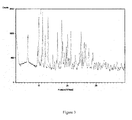
Figure 1 is the X-ray powder diffractogram of crystalline moxifloxacin L-(+)-tartarate salt. -
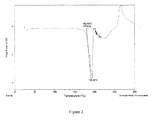
Figure 2 is the differential scanning calorimetry thermogram of crystalline moxifloxacin L-(+)-tartarate salt. -
Figure 3 is the X-ray powder diffractogram of crystalline moxifloxacin fumarate salt. -
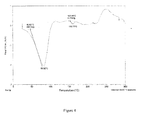
Figure 4 is the differential scanning calorimetry thermogram of crystalline moxifloxacin fumarate salt. -
Figure 5 shows the crystal structure of moxifloxacin hydrochloride monohydrate needles. - The present invention provides a process for the preparation of a moxifloxacin acid addition salt comprising the steps of:
- a) reacting 1-cyclopropyl-6,7-difluoro-1,4-dihydro-8-methoxy-4-oxo-3-quinoline carboxylic acid with [S,S]-2,8-diazabicyclo-[4.3.0]-nonane in an organic solvent, at a temperature above 50° C, in the absence of a base, to form moxifloxacin base;
- b) isolating and drying the moxifloxacin base of step a);
- c) treating the moxifloxacin base of step b) with an organic acid in a solvent, at a temperature of 75-80°C, to form a moxifloxacin acid addition salt; and
- d) isolating and drying the moxifloxacin acid addition salt of step c).
- A suitable organic solvent for step a) includes, for example, dimethylsulphoxide, N, N'-dimethylformamide, dimethylacetamide or N-methylpyrrolidone. A suitable organic solvent for step c) includes, for example, N, N'-dimethylformamide, methanol, ethanol, isopropyl alcohol or water, or a mixture thereof.
- The present invention also provides a process for the preparation of moxifloxacin hydrochloride monohydrate comprising the steps of:
- a) reacting 1-cyclopropyl-6,7-difluoro-1,4-dihydro-8-methoxy-4-oxo-3-quinoline carboxylic acid with [S,S]-2,8-diazabicyclo-[4.3.0]-nonane in a polar, organic solvent at a temperature above 50° C, in the absence of a base, to form moxifloxacin base;
- b) isolating and drying the moxifloxacin base of step a);
- c) treating the moxifloxacin base of step b) with an organic acid in a solvent, at a temperature of 75-80° C, to form moxifloxacin acid addition salt;
- d) treating the moxifloxacin acid addition salt of step c) with hydrochloric acid, in a solvent, at a temperature of 20-30°C, to form moxifloxacin hydrochloride monohydrate; and
- e) isolating and drying the moxifloxacin hydrochloride monohydrate of step d) at 45-55° C, under a vacuum of 700-750 mm/Hg.
- A suitable organic solvent for step a) includes, for example, dimethylsulphoxide, N, N'-dimethylformamide, dimethylacetamide or N-methylpyrrolidone.
- A suitable polar, organic solvent for step c) includes, for example, N, N'-dimethylformamide, methanol, ethanol, isopropyl alcohol or water, or a mixture thereof.
- Hydrochloric acid as an acid source for step d) is gaseous, aqueous or dissolved in a solvent.
- A suitable organic acid for step c) includes, for example, L-(+)-tartaric acid, fumaric acid or di-p-toluoyl-L-tartarate.
- A suitable organic solvent for step d) includes, for example, methanol, ethanol, t-butyl alcohol, isopropyl alcohol or water, or a mixture thereof.
- The present invention also provides moxifloxacin hydrochloride monohydrate is in the form of needles.
- The present invention further provides a process for the preparation of moxifloxacin hydrochloride monohydrate comprising the steps of:
- a) reacting 1-cyclopropyl-6,7-difluoro-1,4-dihydro-8-methoxy-4-oxo-3-quinoline carboxylic acid with [S,S]-2,8-diazabicyclo-[4.3.0]-nonane in an organic solvent at a temperature above 50°C, in the absence of a base, to form moxifloxacin base;
- b) adding an organic acid to the moxifloxacin base of step a);
- c) stirring the reaction mass of step b) at a temperature of 75-80°C, to form moxifloxacin acid addition salt;
- d) isolating and drying the moxifloxacin acid addition salt of step c);
- e) treating the moxifloxacin acid addition salt of step d) with hydrochloric acid, in a solvent, at a temperature of 20-30°C, to form moxifloxacin hydrochloride monohydrate; and
- f) isolating and drying the moxifloxacin hydrochloride monohydrate of step e) at 45-55° C, under a vacuum of 700-750 mm/Hg.
- A suitable organic solvent for step a) includes, for example, N-N'-dimethylformamide.
- A suitable organic acid for step b) includes, for example, L(+)-tartaric acid, fumaric acid or p-ditoluoyl-tartaric acid.
- Hydrochloric acid as the acid source for step e) is gaseous, aqueous or dissolved in a solvent.
- A suitable organic solvent for step e) includes, for example, methanol, ethanol, t-butyl alcohol, isopropyl alcohol or water, or a mixture thereof.
- The present invention also provides moxifloxacin hydrochloride monohydrate in the form of needles wherein moxifloxacin base is not isolated.
- Following is a reaction scheme showing the preparation of moxifloxacin acid addition salts and moxifloxacin hydrochloride monohydrate.
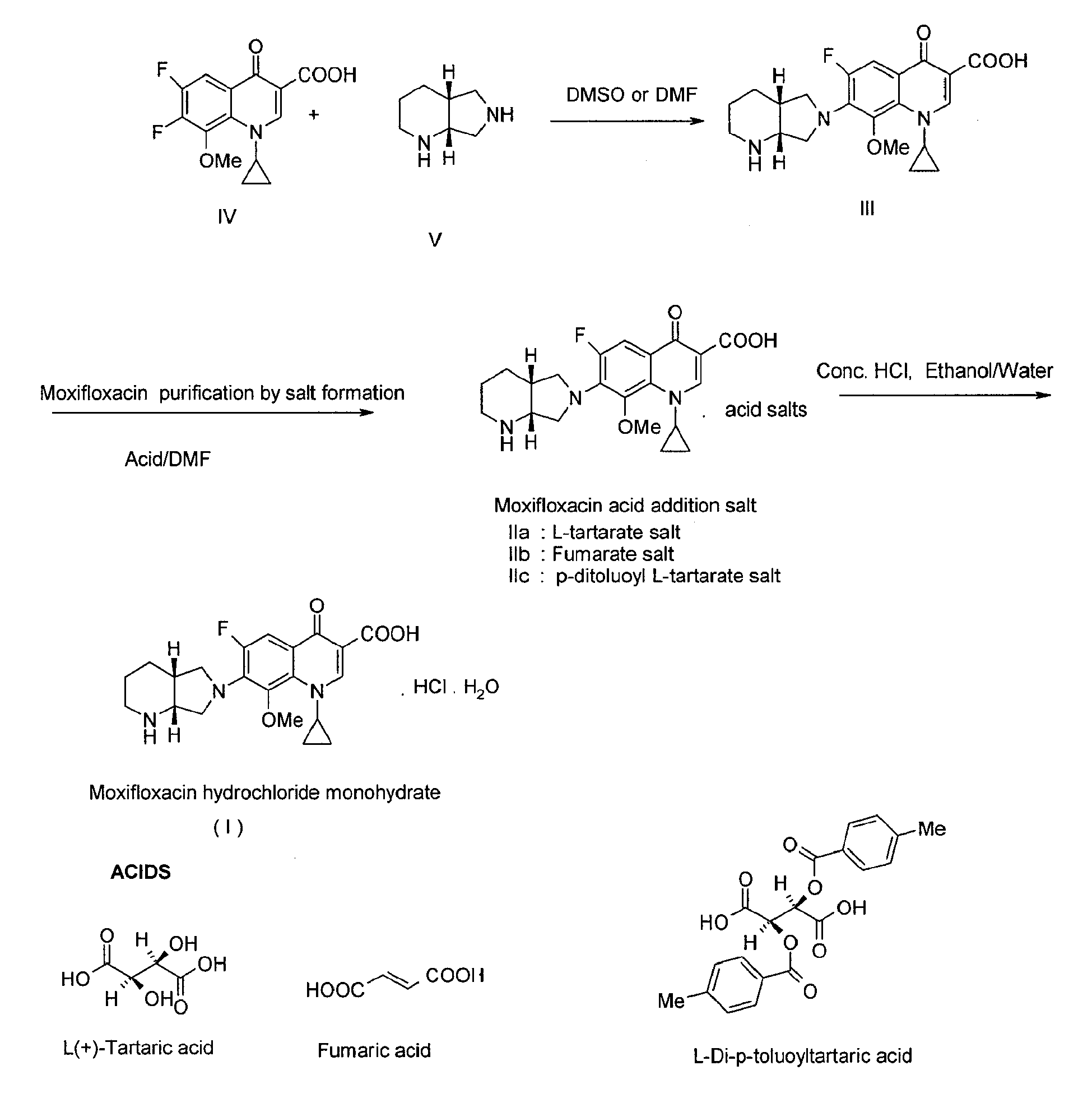
- The starting materials, 1-cyclopropyl-6,7-difluoro-8-methoxy-4-oxo-1,4-dihydro-3-quinoline carboxylic acid and [S,S]-2,8-diaza-bicyclo[4.3.0]nonane, were prepared by literature reported methods.
- Dimethylsulfoxide was charged to a mixture of 1-cyclopropyl-6,7-difluoro-8-methoxy-4-oxo-1,4-dihydro-3-quinoline carboxylic acid [IV] and [S,S]-2,8-diaza-bicyclo[4.3.0]nonane [V], followed by stirring at 65-70° C for 6-8 hours. Completion of the reaction is monitored by HPLC. The reaction mass was cooled to 25-30° C and water was added, followed by stirring for 2 hours. The product was filtered and the wet cake washed with water. The wet solid was dried under vacuum at 75° C till constant weight was obtained, affording 1-cyclopropyl-7-[(S,S)-2,8-diazabicyclo[4.3.0]non-8-yl]-6-fluoro-8-methoxy-4-oxo-1,4-dihydroquinoline-3-carboxylic acid (III).
- N, N'-Dimethylformamide was charged to 1-cyclopropyl-7-[(S,S)-2,8-diazabicyclo[4.3.0]non-8-yl]-6-fluoro-8-methoxy-4-oxo-1,4-dihydroquinoline-3-carboxylic acid, followed by the addition of L(+)-tartaric acid at 75-80°C while stirring at 75-80° C for 3-4 hours. The reaction mass was cooled to 25-30° C and stirred for 10 12 hours. The product was filtered and the wet cake washed with N, N'-dimethylformamide. The wet solid was dried at 75°C till constant weight is obtained, affording crystalline 1-cyclopropyl-7-[(S,S)-2,8-diazabicyclo[4.3.0]non-8-yl]-6-fluoro-8-methoxy-4-oxo-1,4-dihydroquinoline-3-carboxylic acid -L-tartarate (IIa).
- N, N'-Dimethylformamide was charged to 1-cyclopropyl-7-[(S,S)-2,8-diazabicyclo[4.3.0]non-8-yl]-6-fluoro-8-methoxy-4-oxo-1,4-dihydroquinoline-3-carboxylic acid, followed by the addition of fumaric acid under at 75-80° C while stirring at 75-80°C for 3-4 hours. The reaction mass was cooled to 25-30° C and stirred for 10 12 hours. The product was filtered and the wet cake washed with N, N'-dimethylformamide. The wet solid was dried at 75° C till constant weight is obtained, affording crystalline 1-cyclopropyl-7-[(S,S)-2,8-diazabicyclo[4.3.0]non-8-yl]-6-fluoro-8-methoxy-4-oxo-1,4-dihydroquinoline-3-carboxylic acid fumarate (II b).
- N, N'-Dimethylformamide was charged to 1-cyclopropyl-7-[(S,S)-2,8-diazabicyclo[4.3.0]non-8-yl]-6-fluoro-8-methoxy-4-oxo-1,4-dihydroquinoline-3-carboxylic acid, followed by the addition of di-p-toluoyl-L-tartaric at 75-80° C while stirring at 75-80°C for 3-4 hours. The reaction mass was cooled to 25-30° C and stirred for 10-12 hours. The product was filtered and the wet cake washed with N, N'-dimethylformamide. The wet solid was dried at 75° C till constant weight was obtained, affording crystalline 1-cyclopropyl-7-[(S,S)-2,8-diazabicyclo[4.3.0]non-8-yl]-6-fluoro-8-methoxy-4-oxo-1,4-dihydroquinoline-3-carboxylic acid di-p-toluoyl-L-tartarate (II c).
- Crystalline 1-cyclopropyl-7-[(S,S)-2,8-diazabicyclo[4.3.0]non-8-yl]-6-fluoro-8-methoxy-4-oxo-1,4-dihydroquinoline-3-carboxylic acid-L-tartarate (II a) was stirred in a mixture of ethanol and water at 25-30° C to form a clear solution, followed by the addition of concentrated HCl at 25-30° C. The solution was stirred for about 1 hour at 25-30° C. Stirring was continued at 25-30° C for 1 hour. The product was filtered and the wet cake washed with ethanol. The wet solid was dried under vacuum at 50 55° C for 3 hours, affording 1-cyclopropyl-7-[(S,S)-2,8-diazabicyclo[4.3.0]non-8-yl]-6-fluoro-8-methoxy-4-oxo-1,4-dihydroquinoline-3-carboxylic acid hydrochloride monohydrate in the form of needles.
- Crystalline 1-cyclopropyl-7-[(S,S)-2,8-diazabicyclo[4.3.0]non-8-yl]-6-fluoro-8-methoxy-4-oxo-1,4-dihydroquinoline-3-carboxylic acid fumarate (IIb) was stirred in a mixture of ethanol and water at 25-30° C to form a clear solution, followed by the addition of concentrated HCl at 25-30° C. The solution was stirred for about 1 hour at 25-30° C. Stirring was continued at 25-30° C for 1 hour. The product was filtered and the wet cake washed with ethanol. The wet solid was dried under vacuum at 50 55° C for 3 hours, affording 1-cyclopropyl-7-[(S,S)-2,8-diazabicyclo[4.3.0]non-8-yl]-6-fluoro-8-methoxy-4-oxo-1,4-dihydroquinoline-3-carboxylic acid hydrochloride monohydrate in the form of needles.
- Crystalline1-cyclopropyl-7-[(S,S)-2,8-diazabicyclo[4.3.0]non-8-yl]-6-fluoro-8-methoxy-4-oxo-1,4-dihydroquinoline-3-carboxylic acid di-p-toluoyl-L-tartarate (II c) is stirred in a mixture of ethanol and water at 25-30°C to form a clear solution, followed by the addition of concentrated HCl at 25-30°C. The solution was stirred for about 1 hour at 25-30° C. Stirring is continued at 25-30° C for 1 hour. The product was filtered and the wet cake washed with ethanol. The wet solid was dried under vacuum at 50 55° C for 3 hours, affording I -cyclopropyl-7-[(S,S)-2,8-diazabicyclo[4.3.0]non-8-yl]-6-fluoro-8-methoxy-4-oxo-1,4-dihydroquinoline-3-carboxylic acid hydrochloride in the form of monohydrate needles.
- N, N'-Dimethylformamide was charged to a mixture of 1-cyclopropyl-6,7-difluoro-8-methoxy-4-oxo-1,4-dihydro-3-quinoline carboxylic acid [IV] and [S,S]-2,8-diaza-bicyclo[4.3.0]nonane [V], followed by stirring at 65-70°C for 6-8 hours. Completion of the reaction was monitored by HPLC. The reaction mass was cooled to 25-30° C and added L(+)-tartaric acid at 75-80° C while stirring 75-80° C for 3-4 hours. The reaction mass was cooled to 25-30° C and stirred for 10 12 hours. The product was filtered and the wet cake washed with N, N'-dimethylformamide. The wet solid was dried at 75° C till constant weight was obtained, affording crystalline 1-cyclopropyl-7-[(S,S)-2,8-diazabicyclo[4.3.0]non-8-yl]-6-fluoro-8-methoxy-4-oxo-1,4-dihydroquinoline-3-carboxylic acid-L-(+)-tartarate (II a).
- The X-ray diffractogram was recorded on Phillips XPERT -PRO (MPD/MRD). The X-ray tube was equipped with a Cu-target anode, having generator settings as 45kV, 40 mA. The setting for the divergence slits was 1/4°, antiscatter slit was 1/2 °. The soller slit were 0.02 rad. The scan range (2θ) were from 2° - 40° with stepsize 0.01 ° time per step 16 sec.
- In one particular embodiment, the process of the present produces moxifloxacin L-tartarate in crystalline form. This crystalline form of moxifloxacin tartarate was characterized by an X-ray powder diffraction pattern. An example of one X-ray diffraction analysis is shown in
Figure 1 , and the characteristic 2-theta values (in degrees) in the X-ray diffractogram are shown in Table 1.Table 1 (Moxifloxacin L- (+)- tartarate) Diffraction angles (2θ,°) Intensity (I/Io) 6.1 39 9.5 22 10.0 84 10.9 8 11.3 100 12.2 46 13.2 89 14.9 13 16.5 52 18.0 82 18.4 31 18.9 15 19.6 23 20.1 46 20.7 7 21.2 38 24.2 13 24.8 53 25.3 17 25.9 30 26.4 25 27.4 20 28.8 13 - In another embodiment, the process of the present invention produces moxifloxacin fumarate in crystalline form. An example of one X-ray diffraction analysis of this crystalline form of was shown in
Figure 2 , and the characteristic 2-theta values (in degrees) in the X-ray diffractogram are shown in Table 2.Table 2 (Moxifloxacin Fumarate) Diffraction angles (2θ,°) Intensity(I/Io) 4.2 4 4.9 14 6.1 84 8.2 55 8.7 24 9.7 45 10.1 13 12.1 16 12.6 42 13.3 9 13.9 31 14.5 41 15.0 13 15.4 15 15.7 45 16.2 71 16.8 18 17.4 70 18.2 63 19.3 44 19.7 35 20.3 100 20.8 28 21.5 30 22.7 12 23.5 18 24.3 23 24.7 25 24.9 6 25.8 40 26.6 77 27.3 42 27.8 52 29.7 42 31.6 8 32.2 8 34.9 7 36.4 11 - The differential scanning calorimetry (DSC) thermogram was recorded on TAQ1000 instrument with 10°/min heating rate in a nitrogen atmosphere, having empty pan as a reference with closed system. The differential scanning calorimetry (DSC) thermogram of crystalline form of moxifloxacin L-(+)-tartarate is shown in
Figure 3 . The differential scanning calorimetry (DSC) thermogram of the crystalline form of moxifloxacin fumarate is shown inFigure 4 . It is known to one of skill in the art that the endothermic peak location may be affected by the heating rate in the DSC. - Microscopic studies were carried out using Leica DMLP with magnification (20X). The crystallides observed were needle shaped.
- The FTIR spectrum was recorded on Perkin Elmer spectrum 1, KBr pellet method with resolution 4.0 cm-1.
- Unless defined otherwise, technical and scientific terms used herein have the same meaning as commonly understood by one of ordinary skill in the art to which this invention belongs.
- The invention is further described by reference to the following examples which set forth in detail the preparation of compounds and compositions of the present invention. It will be apparent to those skilled in the art that many modifications, both to materials and methods, may be practiced without departing from the purpose and interest of this invention. The examples that follow illustrate the present invention and are not intended to limit the scope of the invention as described hereinabove or as claimed below.
- Dimethylsulfoxide (600 ml), 50 g of 1-cyclopropyl-6,7-difluoro-8-methoxy-4-oxo-1,4-dihydro-3-quinoline carboxylic acid (IV) and 25.70 ml of [S,S]-2,8-diazabicyclo [4.3.0] nonane (V) were stirred at 65 - 70 °C for 6 - 8 hours. Completion of the reaction was monitored by HPLC. The reaction mass was cooled to 25-30 °C, 100 ml of water was added and stirred for 2 hours. The solid was filtered off with suction, washed with 100 ml water and dried under vacuum at 75°C, affording 61.0 g of the title compound.
- Yield: 89.7 %
Purity: 98 % (HPLC)
Chiral impurity (R,R isomer content): 3 - 5 % - 750 ml of N, N'-Dimethylformamide, 50 g of 1-cyclopropyl-7-[(S,S)-2,8-diazabicyclo[4.3.0]non-8-yl]-6-fluoro-8-methoxy-4-oxo-1,4-dihydroquinoline-3-carboxylic acid (obtained from Example 1) and 18.7 g of L-(+)-tartaric acid were stirred at 75 - 80 °C for 3-4 hours. The reaction mass was cooled to 25 - 30°C and stirred for 10 12 hours. The solid was filtered off with suction, washed with 100 ml of N, N dimethylformamide and dried under vacuum at 75°C, affording 62.0 g of the title compound.
- Yield: 90.2 %
Purity: 99.80 % (HPLC)
Chiral impurity (R,R isomer content): 0.04 % - 1H NMR (400 MHz, DMSO)
δ 0.80-1.30(br,m, 2H), 0.80-1.30(br,m, 2H), 1.50-1.73 (br, 2H), 1.50-1.73 (br, 2H), 2.7(m,2H), 3.02(m, 1H), 3.52(m, 2H), 3.56(s,3H), 3.9 (m, 2H), 3.97 (m,1H), 4.12 (m, 1H), 7.66(d, 1H), 8.65(s, 1H) - 13C NMR(400 MHz, DMSO)
δ 21.80(CH2), 19.62(CH2), 8.22(CH2), 9.631(CH2), 35.25(CH), 39.51(CH), 39.92(CH), 40.65(CH), 43.04(CH2), 55.06(CH), 56.65(CH2), 56.70(CH2), 61.42(CH3), 106.49(CH), 106.2, 116.85, 136.92, 137.0, 140.25, 150.18(CH), 151.35 ,165.8, 174.43, 175.89, 175.92. - IR
3410 (N-H/O-H stretching), 2927, 2862 (aliphatic C-H stretching), 1716 (-C=O, stretching), 1623,1510( Ar C=C, stretching), 1443,1344 (aliphatic CH, bending), 1192 (C-F, stretching), 1045 (C-N, stretching), 805 (Aromatic C-H, bending)cm -1 - 500 ml of N, N-Dimethylformamide, 50 g of 1-cyclopropyl-7-[(S,S)-2,8-diazabicyclo[4.3.0]non-8-yl]-6-fluoro-8-methoxy-4-oxo-1,4-dihydroquinoline-3-carboxylic acid (obtained from Example 1) and 14.5 g of fumaric acid were stirred at 75 - 80 °C for 3-4 hours. The reaction mass was cooled to 25 - 30°C and stirred for 10-12 hours. The solid was filtered off with suction, washed with 100 ml of N, N dimethylformamide and dried under vacuum at 75°C, affording 57.50 g of the title compound.
- Yield: 89.2 %
Purity: 99.75 % (HPLC)
Chiral impurity (R,R isomer content): 3 - 5 % - 1H NMR (400 MHz, DMSO)
δ 0.80-1.30(br,m, 2H), 0.80-1.30(br,m, 2H), 1.50-1.73 (br, 2H), 1.50-1.73 (br, 2H), 2.65-2.67(m, 2H), 3.03(m, 1H), 3.52(m, 2H), 3.56(s,3H), 3.9 (m, 2H), 3.97 (m,1H), 4.12 (m, 1H), 7.55-7.59(d,J , 1H), 8.65(s, 1H) - 13C NMR(400 MHz, DMSO)
δ8.197(CH2),9.656(CH2),19.119(CH2),21.540(CH2),35.032(CH),40.606(CH),
51.935(CH2),56.334(CH2), 61.38(CH3), 42.51(CH2), 54.671(CH), 106.2(CH), 106.45(C), 116.64(C),137.05(C),136.95(C), 140.04(C),150.11(CH), 151.1(C), 165.92(C), 175.81(C). - IR
3428.8 (N-H/O-H stretching), 2935.58, 2862 (aliphatic C-H stretching), 1703 (-C=O, stretching), 1621.9,1576.7( Ar C=C, stretching), 1453.2,1355.9 (aliphatic CH, bending), 1189.8 (C-F, stretching), 1054.4 (C-N, stretching), 802.3 (Ar. C-H, bending) cm-1 - 150 ml of N, N-Dimethylformamide, 50 g of 1-cyclopropyl-7-[(S,S)-2,8-diazabicyclo[4.3.0]non-8-yl]-6-fluoro-8-methoxy-4-oxo-1,4-dihydroquinoline-3-carboxylic acid (obtained from Example 1) and 48.2 g of di-p-toluoyl -L-(+)- tartaric acid were stirred at 75 - 80 °C for 3-4 hours. The reaction mass was cooled to 25-30°C and stirred for 10-12 hours. The solid was filtered off with suction, washed with 100 ml of N,N-dimethylformamide and dried under vacuum at 75°C, affording 80.40 g of the title compound.
- Yield: 81.93%
Purity: 99.75 % (HPLC)
Chiral impurity (R,R isomer content): 0.1 % - 50 g of 1-cyclopropyl-7-[(S,S)-2,8-diazabicyclo[4.3.0]non-8-yl]-6-fluoro-8-methoxy-4-oxo-1,4-dihydroquinoline-3-carboxylic acid -L-(+)-tartarate (IIa) (obtained from Example 2) were stirred in a mixture of 250 ml of ethanol and 250 ml of water at 25-30°C. To this solution was added 16.6 ml of concentrated HCl at 25-30°C. The resulting solution was stirred at 25-30°C for about 1 hour. The solid was filtered off with suction, washed with 100 ml of ethanol and dried under vacuum at 50 55 °C for 3 hours, affording 35.10 g of the title compound as needles.
- Yield: 85 %
Purity: 99.90 % (HPLC)
Water content: 3.9 %
Chiral impurity (R,R isomer content): 0.04 %
Crystal nature (needle shape): refer toFigure 5 - 50 g of 1-cyclopropyl-7-[(S,S)-2,8-diazabicyclo[4.3.0]non-8-yl]-6-fluoro-8-methoxy-4-oxo-1,4-dihydroquinoline-3-carboxylic acid fumarate (II b) (obtained from Example 3) were stirred in a mixture of 250 ml of ethanol and 250 ml of water at 25-30°C. To this solution was added 16.6 ml of concentrated HCl at 25-30°C. The resulting solution was stirred at 25-30°C for about 1 hour. The solid was filtered off with suction, washed with 100 ml of ethanol and dried under vacuum at 50 55 °C for 3 hours, affording 36.0 g of the title compound as needles.
- Yield: 81.82%
Purity: 99.80 % (HPLC)
Water content: 4.0 %
Chiral impurity (R,R isomer content): 3-5 % - 50 g of 1-cyclopropyl-7-[(S,S)-2,8-diazabicyclo[4.3.0]non-8-yl]-6-fluoro-8-methoxy-4-oxo-1,4-dihydroquinoline-3-carboxylic acid di- p-toluoyl -L-(+)- tartarate (II c) (obtained from Example 4) were stirred in a mixture of 250 ml of ethanol and 250 ml of water at 25-30°C. To this solution was added 16.6 ml of concentrated HCl at 25-30°C. The resulting solution was stirred at 25-30°C for about 1 hour. The solid was filtered off with suction, washed with 150 ml of ethanol and dried under vacuum at 50 55°C for 3 hours, affording 20.1g of the title compound as needles.
- Yield: 69.2 %
Purity: 99.80 % (HPLC)
Water content: 3.8%
Chiral impurity (R,R isomer content): 0.1 % - 750 ml of N, N-dimethylformamide, 50 g of 1-cyclopropyl-6,7-difluoro-8-methoxy-4-oxo-1,4-dihydro-3-quinoline carboxylic acid (IV) and 25.70 ml of [S,S]-2,8-diazabicyclo [4.3.0] nonane (V) were stirred at 65 - 70 °C for 6-8 hours. Completion of the reaction was monitored by HPLC. The reaction mass was cooled to 25-30 °C, 50 g of L-(+)-tartaric acid was added, and the reaction mass was stirred at 75 - 80 °C for 3-4 hours. The reaction mass was cooled to 25-30°C and stirred for 10 12 hours. The solid was filtered off with suction, washed with 150 ml of N, N-dimethylformamide and dried under vacuum at 75°C, affording 84.5 g of the title compound.
Yield: 90.32 %
Purity: 99.80 % (HPLC)
Chiral impurity (R,R isomer content): 0.06 % - 50 g of 1-cyclopropyl-7-[(S,S)-2,8-diazabicyclo[4.3.0]non-8-yl]-6-fluoro-8-methoxy-4-oxo-1,4-dihydroquinoline-3-carboxylic acid -L-(+)-tartarate (IIa) (obtained from Example 8) were stirred in a mixture of 250 ml of ethanol and 250 ml of water at 25-30°C. To this solution was added 16.6 ml of concentrated HCl at 25-30°C and continued stirring for about 1 hour at 25-30°C. The solid was filtered off with suction, washed with 100 ml of ethanol and dried under vacuum at 50 55°C for 3 hours, affording 35.10 g of the title compound as needles.
- Yield: 85 %
Purity: 99.90 % (HPLC)
Water content: 3.9 %
Chiral impurity (R,R isomer content): 0.04 %
Crystal nature (needle shape): refer toFigure 5 - Unless stated to the contrary, any use of words such as "including," "containing," "comprising," "having" and the like, means "including without limitation" and shall not be construed to limit any general statement that it follows to the specific or similar items or matters immediately following it. Except where the context indicates to the contrary, all exemplary values are intended for purposes of illustration. Most of the foregoing alternative embodiments are not mutually exclusive, but may be implemented in various combinations. As these and other variations and combinations of the features discussed above can be utilized without departing from the invention as defined by the claims, the foregoing description of the embodiments should be taken by way of illustration rather than by way of limitation of the invention as defined by the appended claims.
Claims (31)
- A process for the preparation of moxifloxacin hydrochloride monohydrate comprising the steps of:a) reacting 1-cyclopropyl-6,7-difluoro-1,4-dihydro-8-methoxy-4-oxo-3-quinoline carboxylic acid with [S,S]-2,8-diazabicyclo-[4.3.0]-nonane in an organic solvent at a temperature above 50°C, in the absence of a base, to form moxifloxacin base;b) isolating and drying the moxifloxacin base of step a);c) treating the moxifloxacin base of step b) with an organic acid in a solvent, at a temperature of 75-80° C to form a moxifloxacin acid addition salt;d) treating the moxifloxacin acid addition salt of step c) with hydrochloric acid in a solvent, at a temperature of 20-30° C, to form moxifloxacin hydrochloride monohydrate; ande) isolating and drying the moxifloxacin hydrochloride monohydrate of step d) at 45-55° C , under a vacuum of 700-750 mm/Hg.
- The process of claim 1 wherein said moxifloxacin hydrochloride monohydrate is in the form of needles.
- The process of claim 1 wherein said organic solvent of step a) is dimethylsulphoxide, N, N'-dimethylformamide, dimethylacetamide or N-methylpyrrolidone.
- The process of claim 1 wherein said solvent of step c) is N, N'-dimethylformamide, methanol, ethanol, isopropyl alcohol or water, or a mixture thereof.
- The process of claim 1 wherein said solvent of step d) is methanol, ethanol, t-butyl alcohol, isopropyl alcohol or water, or a mixture thereof.
- The process of claim 1 wherein said hydrochloric acid of step d) is gaseous, aqueous or dissolved in a solvent.
- The process of claim 1 wherein said organic acid of step c) is L-(+)-tartaric acid or fumaric acid.
- The process of claim 1 wherein said moxifloxacin acid addition salt of step c) is moxifloxacin L-(+)-tartarate or moxifloxacin fumarate.
- The process of claim 1 wherein step e) is performed at 45-55° C.
- The process of claim 1 wherein step e) is performed at 50°C.
- Moxifloxacin L-(+)-tartarate in crystalline form.
- Moxifloxacin fumarate in crystalline form.
- Moxifloxacin L-(+)-tartarate characterized by a powder X-ray diffraction pattern comprising peaks at about 6.146, 9.535, 10.011,11.325, 12.230,13.224,14.88,16.534,18.028,19.621,20.060,21.181,24.757,25.904 and 27.449 (±)0.2 degrees two theta.
- Moxifloxacin fumarate characterized by a powder X-ray diffraction pattern comprising peaks at about
4.975,6.068,8.185,8.730,9.704,12.656,13.913,14.466,15.715,16.235,17.411,18.178,19.35 6,19.725,20.357,20.83 5,21.5 58,24.292,25.808,26.632,27.292,27.778,29.693,(t)0.2 degrees two theta. - A process for the preparation of a moxifloxacin acid addition salt comprising the steps of:a) reacting 1-cyclopropyl-6,7-difluoro-1,4-dihydro-8-methoxy-4-oxo-3-quinoline carboxylic acid with [S,S]-2,8-diazabicyclo-[4.3.0]-nonane in an organic solvent, at a temperature above 50° C, in the absence of a base, to form moxifloxacin base;b) isolating and drying the moxifloxacin base of step a);c) treating the moxifloxacin base of step b) with an organic acid in a solvent, at a temperature of 75-80° C, to form a moxifloxacin acid addition salt; andd) isolating and drying the moxifloxacin acid addition salt of step c).
- The process of claim 15 wherein said organic solvent of step a) is dimethylsulphoxide, N, N'-dimethylformamide, dimethylacetamide or N-methylpyrrolidone.
- The process of claim 15 wherein said organic solvent of step c) N, N'-dimethylformamide, methanol, ethanol, isopropyl alcohol or water, or a mixture thereof.
- A process for the preparation of moxifloxacin hydrochloride monohydrate comprising treating a moxifloxacin acid addition salt with hydrochloric acid, in a solvent, at a temperature of 20-30°C.
- The process of claim 18 wherein said moxifloxacin hydrochloride monohydrate is in the form of needles.
- The process of claim 18 wherein said solvent is methanol, ethanol, t-butyl alcohol, isopropyl alcohol or water, or a mixture thereof.
- The process of claim 18 wherein said hydrochloric acid is gaseous, aqueous or dissolved in a solvent.
- A process for the preparation of moxifloxacin hydrochloride monohydrate comprising the steps of:a) reacting 1-cyclopropyl-6,7-difluoro-1,4-dihydro-8-methoxy-4-oxo-3-quinoline carboxylic acid with [S,S]-2,8-diazabicyclo-[4.3.0]-nonane in an organic solvent at a temperature above 50° C, in the absence of a base, to form moxifloxacin base;b) adding an organic acid to the moxifloxacin base of step a);c) stirring the reaction mass of step b) with an organic acid in a solvent, at a temperature of 75-80° C, to form a moxifloxacin acid addition salt;d) isolating and drying the moxifloxacin acid addition salt of step c);e) treating the moxifloxacin acid addition salt of step d) with hydrochloric acid in a solvent, at a temperature of 20-30° C, to form moxifloxacin hydrochloride monohydrate; andf) isolating and drying the moxifloxacin hydrochloride monohydrate of step e) at 45-55° C, under a vacuum of 700-750 mm/Hg.
- The process of claim 22 wherein said moxifloxacin hydrochloride monohydrate is in the form of needles.
- The process of claim 22 wherein said organic solvent of step a) is N, N'-dimethylformamide.
- The process of claim 22 wherein said organic acid of step b) is L-(+)-tartaric acid or fumaric acid.
- The process of claim 22 wherein said moxifloxacin acid addition salt of step d) is moxifloxacin L-(+)-tartarate or moxifloxacin fumarate.
- The process of claim 22 wherein said hydrochloric acid of step e) is gaseous, aqueous or dissolved in a solvent.
- The process of claim 22 wherein said solvent of step e) is methanol, ethanol, t-butyl alcohol, isopropyl alcohol or water, or a mixture thereof.
- The process of claim 22 wherein step f) is performed at 45-55°C.
- The process of claim 22 wherein step f) is performed at 50°C.
- The process of claim 22 wherein moxifloxacin base is not isolated.
Priority Applications (2)
| Application Number | Priority Date | Filing Date | Title |
|---|---|---|---|
| EP07107963A EP1992626A1 (en) | 2007-05-10 | 2007-05-10 | Process for the preparation of moxifloxacin hydrochloride |
| PCT/EP2008/055300 WO2008138759A1 (en) | 2007-05-10 | 2008-04-30 | Process for the preparation of moxifloxacin hydrochloride |
Applications Claiming Priority (1)
| Application Number | Priority Date | Filing Date | Title |
|---|---|---|---|
| EP07107963A EP1992626A1 (en) | 2007-05-10 | 2007-05-10 | Process for the preparation of moxifloxacin hydrochloride |
Publications (1)
| Publication Number | Publication Date |
|---|---|
| EP1992626A1 true EP1992626A1 (en) | 2008-11-19 |
Family
ID=38535262
Family Applications (1)
| Application Number | Title | Priority Date | Filing Date |
|---|---|---|---|
| EP07107963A Ceased EP1992626A1 (en) | 2007-05-10 | 2007-05-10 | Process for the preparation of moxifloxacin hydrochloride |
Country Status (2)
| Country | Link |
|---|---|
| EP (1) | EP1992626A1 (en) |
| WO (1) | WO2008138759A1 (en) |
Cited By (13)
| Publication number | Priority date | Publication date | Assignee | Title |
|---|---|---|---|---|
| CN101941969A (en) * | 2010-09-30 | 2011-01-12 | 江苏正大丰海制药有限公司 | Preparation method of moxifloxacin hydrochloride |
| CN102675313A (en) * | 2011-10-12 | 2012-09-19 | 郭峰 | Preparation method of moxifloxacin hydrochloride |
| CN102675306A (en) * | 2011-03-17 | 2012-09-19 | 苏州中科天马肽工程中心有限公司 | Preparing method of moxifloxacin or slat thereof |
| EP2551268A1 (en) * | 2011-07-29 | 2013-01-30 | F.I.S. Fabbrica Italiana Sintetici S.p.A. | Process for the preparation of moxifloxacin hydrochloride and intermediates thereof |
| CN103869033A (en) * | 2012-12-14 | 2014-06-18 | 南京长澳医药科技有限公司 | Liquid chromatography method for separating and determining moxifloxacin hydrochloride and impurity thereof |
| CN103965189A (en) * | 2013-12-30 | 2014-08-06 | 西安万隆制药股份有限公司 | Novel moxifloxacin hydrochloride compound |
| CN104098561A (en) * | 2013-04-10 | 2014-10-15 | 山东省药学科学院 | High optical purity moxifloxacin hydrochloride production method suitable for industrialized production |
| CN105503864A (en) * | 2015-12-17 | 2016-04-20 | 江苏阿尔法药业有限公司 | Preparing method for moxifloxacin intermediate |
| CN110194767A (en) * | 2019-06-06 | 2019-09-03 | 浙江国邦药业有限公司 | A kind of preparation method of moxifloxacin hydrochloride and its intermediate |
| CN112759590A (en) * | 2020-11-19 | 2021-05-07 | 内蒙古源宏精细化工有限公司 | Preparation method of moxifloxacin |
| CN113533569A (en) * | 2021-07-15 | 2021-10-22 | 山东诺明康药物研究院有限公司 | Method for detecting related substances in antibacterial eye drops |
| WO2021227233A1 (en) * | 2020-05-15 | 2021-11-18 | 山东齐都药业有限公司 | Method for detecting two photodegradable impurities in moxifloxacin hydrochloride raw material and preparation |
| CN115322191A (en) * | 2022-07-25 | 2022-11-11 | 苏州汉德创宏生化科技有限公司 | Method for synthesizing moxifloxacin hydrochloride |
Families Citing this family (6)
| Publication number | Priority date | Publication date | Assignee | Title |
|---|---|---|---|---|
| EP2342204A1 (en) * | 2008-11-06 | 2011-07-13 | Hetero Research Foundation | Novel polymorph of moxifloxacin hydrochloride |
| CN102827161B (en) * | 2011-06-17 | 2016-03-02 | 重庆华邦胜凯制药有限公司 | A kind of method of purifying Moxifloxacin |
| CN104628720A (en) * | 2013-11-13 | 2015-05-20 | 北大方正集团有限公司 | Refining method of moxifloxacin hydrochloride |
| CN108840867A (en) * | 2018-07-26 | 2018-11-20 | 哈尔滨珍宝制药有限公司 | A kind of preparation method of new alkali Moxifloxacin |
| CN110981874A (en) * | 2020-03-05 | 2020-04-10 | 北京四环生物制药有限公司 | Preparation method of moxifloxacin hydrochloride |
| CN115536658B (en) * | 2022-09-09 | 2024-06-28 | 天方药业有限公司 | Preparation method of moxifloxacin hydrochloride monohydrate |
Citations (5)
| Publication number | Priority date | Publication date | Assignee | Title |
|---|---|---|---|---|
| EP0657448A1 (en) * | 1993-12-10 | 1995-06-14 | Bayer Ag | One pot process for the preparation of 3-quinolonecarboxylic acid derivatives |
| US5849752A (en) * | 1995-12-12 | 1998-12-15 | Bayer Aktiengesellschaft | Crystal modification of CDCH a process for its preparation and pharmaceutical formulations comprising this modification |
| WO2005012285A1 (en) * | 2003-08-05 | 2005-02-10 | Matrix Laboratories Ltd | An improved process for the preparation of moxifloxacin hydrochloride |
| CN1729977A (en) * | 2005-08-22 | 2006-02-08 | 吴祥根 | Freeze dry powdered injection of moxfloxacin or its salts and preparation process thereof |
| CN1729978A (en) * | 2005-08-30 | 2006-02-08 | 吴祥根 | Freeze dry powdered injection of moxlfloxacin or its salts and preparation process thereof |
-
2007
- 2007-05-10 EP EP07107963A patent/EP1992626A1/en not_active Ceased
-
2008
- 2008-04-30 WO PCT/EP2008/055300 patent/WO2008138759A1/en not_active Ceased
Patent Citations (5)
| Publication number | Priority date | Publication date | Assignee | Title |
|---|---|---|---|---|
| EP0657448A1 (en) * | 1993-12-10 | 1995-06-14 | Bayer Ag | One pot process for the preparation of 3-quinolonecarboxylic acid derivatives |
| US5849752A (en) * | 1995-12-12 | 1998-12-15 | Bayer Aktiengesellschaft | Crystal modification of CDCH a process for its preparation and pharmaceutical formulations comprising this modification |
| WO2005012285A1 (en) * | 2003-08-05 | 2005-02-10 | Matrix Laboratories Ltd | An improved process for the preparation of moxifloxacin hydrochloride |
| CN1729977A (en) * | 2005-08-22 | 2006-02-08 | 吴祥根 | Freeze dry powdered injection of moxfloxacin or its salts and preparation process thereof |
| CN1729978A (en) * | 2005-08-30 | 2006-02-08 | 吴祥根 | Freeze dry powdered injection of moxlfloxacin or its salts and preparation process thereof |
Non-Patent Citations (2)
| Title |
|---|
| DATABASE WPI Week 200650, Derwent World Patents Index; AN 2006-480420, XP002455067 * |
| DATABASE WPI Week 200650, Derwent World Patents Index; AN 2006-480421, XP002455068 * |
Cited By (20)
| Publication number | Priority date | Publication date | Assignee | Title |
|---|---|---|---|---|
| CN101941969B (en) * | 2010-09-30 | 2012-05-23 | 江苏正大丰海制药有限公司 | Preparation method of moxifloxacin hydrochloride |
| CN101941969A (en) * | 2010-09-30 | 2011-01-12 | 江苏正大丰海制药有限公司 | Preparation method of moxifloxacin hydrochloride |
| CN102675306A (en) * | 2011-03-17 | 2012-09-19 | 苏州中科天马肽工程中心有限公司 | Preparing method of moxifloxacin or slat thereof |
| US8975408B2 (en) | 2011-07-29 | 2015-03-10 | F.I.S.—Fabbrica Italiana Sintetici S.p.A. | Moxifloxacin hydrochloride compounds and intermediates and methods for making same |
| EP2551268A1 (en) * | 2011-07-29 | 2013-01-30 | F.I.S. Fabbrica Italiana Sintetici S.p.A. | Process for the preparation of moxifloxacin hydrochloride and intermediates thereof |
| ITTO20110705A1 (en) * | 2011-07-29 | 2013-01-30 | Italiana Sint Spa | PROCEDURE FOR THE PREPARATION OF MOXIFLOXACINE CHLORIDRATE AND RELATED INTERMEDIATES |
| US8664398B2 (en) | 2011-07-29 | 2014-03-04 | F.I.S.—Fabbrica Italiana Sintetici S.p.A. | Moxifloxacin hydrochloride compounds and intermediates and methods for making same |
| CN102675313A (en) * | 2011-10-12 | 2012-09-19 | 郭峰 | Preparation method of moxifloxacin hydrochloride |
| CN103869033A (en) * | 2012-12-14 | 2014-06-18 | 南京长澳医药科技有限公司 | Liquid chromatography method for separating and determining moxifloxacin hydrochloride and impurity thereof |
| CN104098561A (en) * | 2013-04-10 | 2014-10-15 | 山东省药学科学院 | High optical purity moxifloxacin hydrochloride production method suitable for industrialized production |
| CN103965189A (en) * | 2013-12-30 | 2014-08-06 | 西安万隆制药股份有限公司 | Novel moxifloxacin hydrochloride compound |
| CN103965189B (en) * | 2013-12-30 | 2015-09-09 | 西安万隆制药股份有限公司 | A kind of new moxifloxacin hydrochloride compound |
| CN105503864A (en) * | 2015-12-17 | 2016-04-20 | 江苏阿尔法药业有限公司 | Preparing method for moxifloxacin intermediate |
| CN105503864B (en) * | 2015-12-17 | 2017-03-22 | 江苏阿尔法药业有限公司 | Preparing method for moxifloxacin intermediate |
| CN110194767A (en) * | 2019-06-06 | 2019-09-03 | 浙江国邦药业有限公司 | A kind of preparation method of moxifloxacin hydrochloride and its intermediate |
| WO2021227233A1 (en) * | 2020-05-15 | 2021-11-18 | 山东齐都药业有限公司 | Method for detecting two photodegradable impurities in moxifloxacin hydrochloride raw material and preparation |
| CN112759590A (en) * | 2020-11-19 | 2021-05-07 | 内蒙古源宏精细化工有限公司 | Preparation method of moxifloxacin |
| CN113533569A (en) * | 2021-07-15 | 2021-10-22 | 山东诺明康药物研究院有限公司 | Method for detecting related substances in antibacterial eye drops |
| CN115322191A (en) * | 2022-07-25 | 2022-11-11 | 苏州汉德创宏生化科技有限公司 | Method for synthesizing moxifloxacin hydrochloride |
| CN115322191B (en) * | 2022-07-25 | 2023-12-26 | 苏州汉德创宏生化科技有限公司 | Synthetic method of moxifloxacin hydrochloride |
Also Published As
| Publication number | Publication date |
|---|---|
| WO2008138759A1 (en) | 2008-11-20 |
Similar Documents
| Publication | Publication Date | Title |
|---|---|---|
| EP1992626A1 (en) | Process for the preparation of moxifloxacin hydrochloride | |
| KR101539561B1 (en) | Process for the synthesis of moxifloxacin hydrochloride | |
| US20090259041A1 (en) | Quinoline carboxylic acid-o,o bis-acyloxy borate and process of making | |
| HU219488B (en) | A quinolone carboxylic acid derivative comprising a pharmaceutical composition and a process for their preparation | |
| AU732977B2 (en) | Method for producing 8-methoxy-quinolinecarboxylic acids | |
| US5770597A (en) | Quinolone derivatives and processes for preparing the same | |
| Cooper et al. | Preparation and in vitro and in vivo evaluation of quinolones with selective activity against Gram-positive organisms | |
| WO2014108919A2 (en) | NOVEL INTERMEDIATE AND POLYMORPHS OF 1-(4-METHOXYPHENYL)-7-OXO-6-[4-(2-OXOPIPERIDIN-1-YL)PHENYL]-4,5,6,7-TETRAHYDRO-1H-PYRAZOLO[3,4-c] PYRIDINE-3-CARBOXAMIDE AND PROCESS THEREOF | |
| US20040242556A1 (en) | Novel crystalline form of cefdinir | |
| EP0191451B1 (en) | Novel 1,8-naphthyridine derivatives and processes for preparation thereof | |
| WO2007010555A2 (en) | Novel crystalline forms of moxifloxacin hydrochloride and process for preparation thereof | |
| WO2006134491A2 (en) | New crystalline form of moxifloxacin hydrochloride and process for its preparation | |
| EP0622367A1 (en) | Novel quinolone carboxylic acid derivatives and process for preparing the same | |
| US9388178B2 (en) | Process for the preparation of moxifloxacin hydrochloride | |
| US5677456A (en) | Quinolone derivatives and processes for the preparation thereof | |
| EP2161269A1 (en) | Process for the preparation of amorphous gemifloxacin | |
| Li et al. | Syntheses of novel fluoroquinolone compounds | |
| KR0167486B1 (en) | 6-methyl-5-amino quinoline carboxylic acid derivative and preparation method thereof | |
| WO2020065668A1 (en) | Crystalline form of ozenoxacin and processes for preparation thereof | |
| CA2005015A1 (en) | Quinolonecarboxylic acid derivative, preparation thereof and pharmaceutical composition containing the derivative | |
| JPWO1999010351A1 (en) | Pyridonecarboxylic acid derivatives and their synthetic intermediates | |
| MXPA00004917A (en) | Method for producing 8-methoxy-quinoline carboxylic acids | |
| JPS62120371A (en) | Production of 2-methyl-3-carboxyamido-quinoxaline-1,4-di-n-oxide |
Legal Events
| Date | Code | Title | Description |
|---|---|---|---|
| PUAI | Public reference made under article 153(3) epc to a published international application that has entered the european phase |
Free format text: ORIGINAL CODE: 0009012 |
|
| AK | Designated contracting states |
Kind code of ref document: A1 Designated state(s): AT BE BG CH CY CZ DE DK EE ES FI FR GB GR HU IE IS IT LI LT LU LV MC MT NL PL PT RO SE SI SK TR |
|
| AX | Request for extension of the european patent |
Extension state: AL BA HR MK RS |
|
| AKX | Designation fees paid | ||
| STAA | Information on the status of an ep patent application or granted ep patent |
Free format text: STATUS: THE APPLICATION HAS BEEN REFUSED |
|
| 18R | Application refused |
Effective date: 20090508 |
|
| REG | Reference to a national code |
Ref country code: DE Ref legal event code: 8566 |