EP1990963A1 - Apparatus and method for adaptive wireless channel estimation - Google Patents
Apparatus and method for adaptive wireless channel estimation Download PDFInfo
- Publication number
- EP1990963A1 EP1990963A1 EP07251920A EP07251920A EP1990963A1 EP 1990963 A1 EP1990963 A1 EP 1990963A1 EP 07251920 A EP07251920 A EP 07251920A EP 07251920 A EP07251920 A EP 07251920A EP 1990963 A1 EP1990963 A1 EP 1990963A1
- Authority
- EP
- European Patent Office
- Prior art keywords
- channel
- information
- channel estimation
- pilot
- interpolation
- Prior art date
- Legal status (The legal status is an assumption and is not a legal conclusion. Google has not performed a legal analysis and makes no representation as to the accuracy of the status listed.)
- Ceased
Links
- 230000003044 adaptive effect Effects 0.000 title claims abstract description 36
- 238000000034 method Methods 0.000 title claims abstract description 24
- 230000007613 environmental effect Effects 0.000 claims description 8
- 238000004891 communication Methods 0.000 description 9
- 230000007246 mechanism Effects 0.000 description 4
- 238000005516 engineering process Methods 0.000 description 3
- 230000008569 process Effects 0.000 description 3
- 230000005540 biological transmission Effects 0.000 description 2
- 230000000694 effects Effects 0.000 description 2
- 239000000284 extract Substances 0.000 description 2
- 238000012986 modification Methods 0.000 description 2
- 230000004048 modification Effects 0.000 description 2
- 238000006467 substitution reaction Methods 0.000 description 2
- 230000006978 adaptation Effects 0.000 description 1
- 230000004888 barrier function Effects 0.000 description 1
- 238000001514 detection method Methods 0.000 description 1
- 238000012545 processing Methods 0.000 description 1
- 230000001737 promoting effect Effects 0.000 description 1
- 230000004044 response Effects 0.000 description 1
- 238000012549 training Methods 0.000 description 1
Images



Classifications
-
- H—ELECTRICITY
- H04—ELECTRIC COMMUNICATION TECHNIQUE
- H04L—TRANSMISSION OF DIGITAL INFORMATION, e.g. TELEGRAPHIC COMMUNICATION
- H04L25/00—Baseband systems
- H04L25/02—Details ; arrangements for supplying electrical power along data transmission lines
- H04L25/0202—Channel estimation
- H04L25/022—Channel estimation of frequency response
-
- H—ELECTRICITY
- H04—ELECTRIC COMMUNICATION TECHNIQUE
- H04L—TRANSMISSION OF DIGITAL INFORMATION, e.g. TELEGRAPHIC COMMUNICATION
- H04L25/00—Baseband systems
- H04L25/02—Details ; arrangements for supplying electrical power along data transmission lines
- H04L25/0202—Channel estimation
- H04L25/0224—Channel estimation using sounding signals
- H04L25/0228—Channel estimation using sounding signals with direct estimation from sounding signals
- H04L25/023—Channel estimation using sounding signals with direct estimation from sounding signals with extension to other symbols
- H04L25/0232—Channel estimation using sounding signals with direct estimation from sounding signals with extension to other symbols by interpolation between sounding signals
-
- H—ELECTRICITY
- H04—ELECTRIC COMMUNICATION TECHNIQUE
- H04L—TRANSMISSION OF DIGITAL INFORMATION, e.g. TELEGRAPHIC COMMUNICATION
- H04L25/00—Baseband systems
- H04L25/02—Details ; arrangements for supplying electrical power along data transmission lines
- H04L25/0202—Channel estimation
- H04L25/0224—Channel estimation using sounding signals
- H04L25/0228—Channel estimation using sounding signals with direct estimation from sounding signals
- H04L25/023—Channel estimation using sounding signals with direct estimation from sounding signals with extension to other symbols
- H04L25/0236—Channel estimation using sounding signals with direct estimation from sounding signals with extension to other symbols using estimation of the other symbols
-
- H—ELECTRICITY
- H04—ELECTRIC COMMUNICATION TECHNIQUE
- H04L—TRANSMISSION OF DIGITAL INFORMATION, e.g. TELEGRAPHIC COMMUNICATION
- H04L25/00—Baseband systems
- H04L25/02—Details ; arrangements for supplying electrical power along data transmission lines
- H04L25/0202—Channel estimation
- H04L25/024—Channel estimation channel estimation algorithms
- H04L25/025—Channel estimation channel estimation algorithms using least-mean-square [LMS] method
-
- H—ELECTRICITY
- H04—ELECTRIC COMMUNICATION TECHNIQUE
- H04L—TRANSMISSION OF DIGITAL INFORMATION, e.g. TELEGRAPHIC COMMUNICATION
- H04L25/00—Baseband systems
- H04L25/02—Details ; arrangements for supplying electrical power along data transmission lines
- H04L25/03—Shaping networks in transmitter or receiver, e.g. adaptive shaping networks
- H04L25/03006—Arrangements for removing intersymbol interference
- H04L2025/0335—Arrangements for removing intersymbol interference characterised by the type of transmission
- H04L2025/03375—Passband transmission
- H04L2025/03414—Multicarrier
-
- H—ELECTRICITY
- H04—ELECTRIC COMMUNICATION TECHNIQUE
- H04L—TRANSMISSION OF DIGITAL INFORMATION, e.g. TELEGRAPHIC COMMUNICATION
- H04L25/00—Baseband systems
- H04L25/02—Details ; arrangements for supplying electrical power along data transmission lines
- H04L25/03—Shaping networks in transmitter or receiver, e.g. adaptive shaping networks
- H04L25/03006—Arrangements for removing intersymbol interference
- H04L2025/03592—Adaptation methods
- H04L2025/03598—Algorithms
- H04L2025/03611—Iterative algorithms
- H04L2025/03617—Time recursive algorithms
-
- H—ELECTRICITY
- H04—ELECTRIC COMMUNICATION TECHNIQUE
- H04L—TRANSMISSION OF DIGITAL INFORMATION, e.g. TELEGRAPHIC COMMUNICATION
- H04L25/00—Baseband systems
- H04L25/02—Details ; arrangements for supplying electrical power along data transmission lines
- H04L25/03—Shaping networks in transmitter or receiver, e.g. adaptive shaping networks
- H04L25/03006—Arrangements for removing intersymbol interference
- H04L25/03159—Arrangements for removing intersymbol interference operating in the frequency domain
Definitions
- the present invention generally relates to an apparatus and method for adaptive wireless channel estimation, applicable to the wireless access on vehicle environment.
- the general communication environment is moving from the pedestrian towards the vehicles in three directions.
- the first is the telematics service, such as remote diagnostics, which requires the cart to be connected to the back-end server for transmitting and receiving information to access network resources.
- the second is the communication for connecting one car to another for exchanging the sensed data and information, and exchanging the information between a car and an infrastructure, such as electronic toll, and inter-vehicle warning communication.
- the third is to provide connection of portable devices with the vehicle so that the vehicle information can be easily transmitted to the portable devices.
- the global vehicle telematics service can be provided with the help of the wide-coverage 3G wireless communication or GPS.
- the stationary or low speed connection of portable devices to the network can be accomplished by the hotspot or the fixed WLAN access.
- FIG. 1 shows a schematic view of a channel estimation method of the receiver device. As shown in FIG. 1 , the receiver device uses four pilot signals for four-point channel estimation values. The linear interpolation is performed on the channel estimation values at these four points H(0,0)-H(0,3) to obtain the channel estimation values H'(1,0)-H'(47,0) of a full transmission path, and the equalizer parameter is updated in real time to improve the channel estimation performance.
- OFDM orthogonal frequency division multiplexing
- the linear interpolation on four-point channel estimation can cause the resolution to drop as the interpolation range is large, which further results in the large estimation error, and the time-variant compensation effect deteriorates.
- the stability of wireless network access for high speed vehicles is poor when applying this method.
- the major obstacle of the current wireless communication technology to overcome is how to apply the WLAN concept to the inter-vehicle communication and the communication for access points between vehicle and roadside, so that the vehicle has the inexpensive data communication functionality and can form a moving short-distance LAN for promoting driving safety and providing warning messages.
- the technology barrier is the signal detection and decoding at high speed because the estimation and decoding difficulty increase due to the time-variant channel effect caused by high Doppler frequency.
- the solution will require the synchronization, channel equalization and estimation, decoding mechanism to form an efficient combination to reduce the cost.
- the examples of the present invention may provide an apparatus and method for adaptive wireless channel estimation, applicable to a moving vehicle in a time-variant environment.
- the apparatus utilizes the existing basic structure and specification to provide a new adaptive channel tracking mechanism to estimate and compensate the time-variant channel.
- the adaptive wireless channel estimation apparatus comprises a decision feedback channel tracking unit, a pilot-aided channel tracking module, and an adaptive controller.
- the present invention performs the interpolation on the channel estimation information of the pilot signal and the channel estimation information of the feedback signal. Then, a recursive computation is performed and the equalizer parameter is updated.
- the decision feedback is further used for tracking time-variant channel, and the algorithm parameter can be adaptively adjusted for moving vehicle time-variant environment so as to achieve the adaptive wireless channel estimation.
- FIG. 1 shows a schematic view of a conventional channel estimation method of the receiver device.
- FIG. 2 shows a schematic view of an apparatus for adaptive wireless channel estimation according to the present invention.
- FIG. 3 shows a flowchart illustrating the operation of the apparatus for adaptive wireless channel estimation of FIG. 2 .
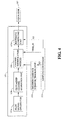
- FIG. 4 shows the detailed structure of each element of the pilot-aided channel tracking module and the operation process thereof.
- FIG. 5 shows an example illustrating the channel estimation method used by the apparatus of the present invention.
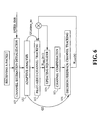
- FIG. 6 shows the operating for the adaptive channel estimation of the present invention cooperating with an equalizer after receiving a packet.
- FIG. 2 shows a schematic view of an apparatus for adaptive wireless channel estimation an apparatus for adaptive wireless channel estimation according to the present invention.
- an apparatus 200 for adaptive wireless channel estimation comprises a pilot-aided channel tracking module 201, a decision feedback channel tracking unit 203 and an adaptive controller 205.
- the pilot-aided channel tracking module 201 and the decision feedback channel tracking unit 203 are combined to connect to an equalizer 207.
- FIG. 3 shows a flowchart illustrating the operation of the apparatus for adaptive wireless channel estimation of FIG. 2 .
- the apparatus for wireless channel estimation is applicable to a moving vehicle in a time-variant environment, such as wireless access on a vehicle environment.
- a time-variant environment such as wireless access on a vehicle environment.
- an OFDM-based system can also use the adaptive channel estimate apparatus to improve the reliability of channel information.
- the first step is to initialize the channel estimation.
- the adaptive controller 205 performs an adaptive analysis and calculates a first recursive parameter G1, a second recursive parameter G2, and an interpolation number interp_no, as shown in step 301.
- the adaptive controller 205 targets the channel interference index, such as the environmental signal-to-noise ratio (SNR) and the speed of the moving vehicle, to perform adaptive analysis.
- the pilot-aided channel tracking module 201 Based on the first recursive parameter G1 and interpolation number interp_no, performs the channel tracking on an information symbol of the packet, and determines an optimal channel information, as shown in step 302.
- step 302 an interpolation is performed on a plurality of pilot-aided channel estimations and a plurality of feedback channel estimations at previous time to obtain a plurality of partially updated channel information, to adjust the optimal channel information through the first recursive parameter G1, and to update the parameter of the equalizer 207 in real time.
- the updated equalizer 207 performs channel compensation on the information symbol, as shown in step 303.
- the updated equalizer 207 refers to a plurality of partially updated channel information and a signal in frequency axis f obtained from the pilot-aided channel tracking to perform channel compensation.
- the signal in frequency axis f(n) can be signals transformed by a Fast Fourier Transform (FFT) processing unit.
- FFT Fast Fourier Transform
- the decision feedback tracking unit 203 performs decision feedback on the compensated information symbol, performs channel tracking according to the recursive parameter G2, and performs iterative update on the feedback channel estimation of previous time to provide for the next information symbol, as shown in step 304.
- step 305 The above steps are repeated until all the information symbols in the packet is processed, as shown in step 305, and the process proceed to the next received packet.
- step 302 if the information symbol in the packet is the first information symbol, the estimated channel information and pilot information obtained from the long preamble are used in the interpolation.
- the subsequent symbols use the channel estimation values of decision feedback and the pilot information for interpolation.
- pilot channel estimation values obtained by the symbols can be estimated in several ways, such as least mean square (LMS). Then, the adjustment of the optimal channel information can be performed according to the recursive parameter determined by the environmental quality.
- LMS least mean square
- the speed of moving vehicle and the environmental SNR are the indicators whether the transmitted signals are prone to channel interference. For example, when the moving vehicle moves at a higher speed, and the environmental SNR is lower, the channel changes more drastically. Therefore, the channel estimation error will increase. Hence, recursive parameters G1, G2 should be tuned down and the interpolation number should be reduced.
- FIG. 4 shows the detailed structure of each element of the pilot-aided channel tracking module and the operation process thereof.
- the pilot-aided channel tracking module 201 includes a pilot signal generator 401 a, a pilot-aided channel estimation unit 401b, a channel interpolation module 401c, and a recursive computing unit 401d.
- the operation of pilot-aided channel tracking module 201 is as follows.
- the pilot signal generator 401 a extracts a plurality of pilot signals from each information symbol to provide to pilot-aided channel estimation unit 401b. Based on the pilot signals, the pilot-aided channel estimation unit 401b performs a plurality of channel estimations.
- the channel interpolation module 401 c performs an interpolation to obtain a plurality of partially update channel information.
- the recursive computing unit 401d uses LMS to adjust the optimal channel information by using the pilot-aided channel estimation values from two successive information symbols and the recursive parameter G1 determined by the environmental quality.
- the adjusted optimal channel information is provided to the equalizer 207 for updating parameter in real time.
- the interpolation number interp_no can also be adjusted according to the environment.
- the updated equalizer 207 performs channel compensation on the information symbol.
- FIG. 5 shows an example illustrating the channel estimation method used by the apparatus of the present invention.
- the present invention uses a plurality of pilot signals for multi-point channel estimation, and uses the pilot-aided channel estimation values H PA (0,0)-H PA (0,n) and the feedback signal channel estimation values I(0,0)-I(0,m) for interpolation to obtain the channel estimation values of a full transmission path, including using an algorithm in channel estimation, adjusting algorithm parameter, updating equalizer parameter, channel compensation, and combining the channel estimation information from decision feedback.
- the present invention uses pilot-aided channel estimation values and feedback signal channel estimation values for interpolation, the interpolation range shrinks and resolution increases. Combining decision feedback channel estimation also increases the channel estimation precision. Furthermore, for the time-variant vehicle environment, the present invention adaptively adjusts the algorithm parameter to improve the time-variant channel tracking. The present invention is also stable when applied to the wireless network access in a high speed vehicle environment.
- the present invention has a smaller estimation error in multi-path time-variant channel estimation, the better frequency selection, and better adaptation to vehicle environment.
- FIG. 6 shows the adaptive channel estimation operation of the present invention cooperating with an equalizer after receiving a packet.
- step 601 is to perform channel estimation initialization after receiving a packet.
- the information symbol of the packet is the first information symbol
- the channel information and pilot-aided information obtained by long preamble are used for interpolation. This detail is omitted from FIG. 6 .
- the subsequent information symbols use decision feedback channel estimation and pilot-aided information for interpolation.
- the subsequent information symbols also cooperate with equalizer in adaptive channel estimation.
- the adaptive controller 205 performs an adaptive analysis 602 for the speed of moving vehicle and the environmental SNR.
- the adaptive analysis 602 calculates the first recursive parameter G1, the second recursive parameter G2, and the interpolation number interp_no.
- the first recursive parameter G1 and the interpolation number interp_no are provided to the pilot-ided channel tracking module 201 for pilot-aided channel tracking 603, and the second recursive parameter G2 is provided to the decision feedback channel tracking unit 203 for decision feedback channel tracking 606.
- the pilot signal generator 401a extracts pilot-signals from each information symbol, and the pilot signals are used for detailed channel estimation. Because pilot signals have certain characteristics, the channel estimation is accomplished with certain precision.
- the pilot-aided channel estimation unit 401b Based on the pilot signals, the pilot-aided channel estimation unit 401b performs channel estimations. Based on interpolation number interp_no, the pilot-aided channel estimations of the current information symbol from the pilot-aided channel estimation unit 401b, and the channel information of previous time from the decision feedback channel tracking unit 203, the channel interpolation module 401c performs an interpolation to obtain a plurality of partial update channel information H pA1 (n).
- the decision feedback tracking unit 203 uses decision feedback symbol as the training symbol to perform frequency domain response on channel, and uses LMS to iteratively update channel estimation values H new (n) and H new (n-1). Each information symbol is executed once.
- the recursive parameter G2 is generated by the adaptive controller 205.
- the present invention uses channel estimation H LMS2 (n) that is iteratively updated by the decision feedback channel tracking unit 203 and the optimal channel information H LMS1 (n) that is adjusted by the pilot-aided channel tracking module 201 to perform the equalizer update 604. That is, the parameter of equalizer 207 is updated in real time. The updated equalizer 207 performs channel compensation on information symbols.
- the decision feedback channel tracking unit 203 performs decision feedback on the compensated information symbol, and performs channel tracking based on the recursive parameter G2.
- the updated channel estimation H LMS2 (n) is provided to the next information symbol.
Landscapes
- Engineering & Computer Science (AREA)
- Power Engineering (AREA)
- Computer Networks & Wireless Communication (AREA)
- Signal Processing (AREA)
- Cable Transmission Systems, Equalization Of Radio And Reduction Of Echo (AREA)
Abstract
Description
- The present invention generally relates to an apparatus and method for adaptive wireless channel estimation, applicable to the wireless access on vehicle environment.
- The recent rapid growth in wireless communication adds the mobility to information services. However, for the vehicles traveling at high speed, such as cars and rapid railway, the service similar to wireless local area network (WLAN) is still not available. The transportation safety mechanism is one of the major issues in the car market. As more and more electronic technologies, such as global positioning system (GPS) and reverse radar, become the standard options for most vehicles, the safer and inexpensive collision prevent mechanism is becoming the next wave for market competition.
- The general communication environment is moving from the pedestrian towards the vehicles in three directions. The first is the telematics service, such as remote diagnostics, which requires the cart to be connected to the back-end server for transmitting and receiving information to access network resources. The second is the communication for connecting one car to another for exchanging the sensed data and information, and exchanging the information between a car and an infrastructure, such as electronic toll, and inter-vehicle warning communication. The third is to provide connection of portable devices with the vehicle so that the vehicle information can be easily transmitted to the portable devices.
- The global vehicle telematics service can be provided with the help of the wide-coverage 3G wireless communication or GPS. The stationary or low speed connection of portable devices to the network can be accomplished by the hotspot or the fixed WLAN access.
-
U.S. Patent No. 6,954, 421 disclosed an orthogonal frequency division multiplexing (OFDM) receiver device.FIG. 1 shows a schematic view of a channel estimation method of the receiver device. As shown inFIG. 1 , the receiver device uses four pilot signals for four-point channel estimation values. The linear interpolation is performed on the channel estimation values at these four points H(0,0)-H(0,3) to obtain the channel estimation values H'(1,0)-H'(47,0) of a full transmission path, and the equalizer parameter is updated in real time to improve the channel estimation performance. - In the multi-path time-variant channel, the linear interpolation on four-point channel estimation can cause the resolution to drop as the interpolation range is large, which further results in the large estimation error, and the time-variant compensation effect deteriorates. The stability of wireless network access for high speed vehicles is poor when applying this method.
- The major obstacle of the current wireless communication technology to overcome is how to apply the WLAN concept to the inter-vehicle communication and the communication for access points between vehicle and roadside, so that the vehicle has the inexpensive data communication functionality and can form a moving short-distance LAN for promoting driving safety and providing warning messages. The technology barrier is the signal detection and decoding at high speed because the estimation and decoding difficulty increase due to the time-variant channel effect caused by high Doppler frequency. The solution will require the synchronization, channel equalization and estimation, decoding mechanism to form an efficient combination to reduce the cost.
- The examples of the present invention may provide an apparatus and method for adaptive wireless channel estimation, applicable to a moving vehicle in a time-variant environment. The apparatus utilizes the existing basic structure and specification to provide a new adaptive channel tracking mechanism to estimate and compensate the time-variant channel.
- The adaptive wireless channel estimation apparatus comprises a decision feedback channel tracking unit, a pilot-aided channel tracking module, and an adaptive controller.
- The present invention performs the interpolation on the channel estimation information of the pilot signal and the channel estimation information of the feedback signal. Then, a recursive computation is performed and the equalizer parameter is updated. The decision feedback is further used for tracking time-variant channel, and the algorithm parameter can be adaptively adjusted for moving vehicle time-variant environment so as to achieve the adaptive wireless channel estimation.
- The foregoing and other objects, features, aspects and advantages of the present invention will become better understood from a careful reading of a detailed description provided herein below with appropriate reference to the accompanying drawings.
-
FIG. 1 shows a schematic view of a conventional channel estimation method of the receiver device. -
FIG. 2 shows a schematic view of an apparatus for adaptive wireless channel estimation according to the present invention. -
FIG. 3 shows a flowchart illustrating the operation of the apparatus for adaptive wireless channel estimation ofFIG. 2 . -
FIG. 4 shows the detailed structure of each element of the pilot-aided channel tracking module and the operation process thereof. -
FIG. 5 shows an example illustrating the channel estimation method used by the apparatus of the present invention. -
FIG. 6 shows the operating for the adaptive channel estimation of the present invention cooperating with an equalizer after receiving a packet. -
FIG. 2 shows a schematic view of an apparatus for adaptive wireless channel estimation an apparatus for adaptive wireless channel estimation according to the present invention. As shown inFIG. 2 , anapparatus 200 for adaptive wireless channel estimation comprises a pilot-aidedchannel tracking module 201, a decision feedbackchannel tracking unit 203 and anadaptive controller 205. The pilot-aidedchannel tracking module 201 and the decision feedbackchannel tracking unit 203 are combined to connect to anequalizer 207.FIG. 3 shows a flowchart illustrating the operation of the apparatus for adaptive wireless channel estimation ofFIG. 2 . - The apparatus for wireless channel estimation is applicable to a moving vehicle in a time-variant environment, such as wireless access on a vehicle environment. In other time-variant wireless access environment, an OFDM-based system can also use the adaptive channel estimate apparatus to improve the reliability of channel information.
- The following describes the operating flow of
FIG. 3 in conjunction withFIG. 2 . When a packet is received, the first step is to initialize the channel estimation. Then, theadaptive controller 205 performs an adaptive analysis and calculates a first recursive parameter G1, a second recursive parameter G2, and an interpolation number interp_no, as shown instep 301. Theadaptive controller 205 targets the channel interference index, such as the environmental signal-to-noise ratio (SNR) and the speed of the moving vehicle, to perform adaptive analysis. Based on the first recursive parameter G1 and interpolation number interp_no, the pilot-aidedchannel tracking module 201 performs the channel tracking on an information symbol of the packet, and determines an optimal channel information, as shown instep 302. - In
step 302, an interpolation is performed on a plurality of pilot-aided channel estimations and a plurality of feedback channel estimations at previous time to obtain a plurality of partially updated channel information, to adjust the optimal channel information through the first recursive parameter G1, and to update the parameter of theequalizer 207 in real time. - The
updated equalizer 207 performs channel compensation on the information symbol, as shown instep 303. Instep 303, theupdated equalizer 207 refers to a plurality of partially updated channel information and a signal in frequency axis f obtained from the pilot-aided channel tracking to perform channel compensation. The signal in frequency axis f(n) can be signals transformed by a Fast Fourier Transform (FFT) processing unit. - The decision
feedback tracking unit 203 performs decision feedback on the compensated information symbol, performs channel tracking according to the recursive parameter G2, and performs iterative update on the feedback channel estimation of previous time to provide for the next information symbol, as shown instep 304. - The above steps are repeated until all the information symbols in the packet is processed, as shown in
step 305, and the process proceed to the next received packet. - When the interpolation is performed in
step 302, if the information symbol in the packet is the first information symbol, the estimated channel information and pilot information obtained from the long preamble are used in the interpolation. The subsequent symbols use the channel estimation values of decision feedback and the pilot information for interpolation. - It is worth noting that the pilot channel estimation values obtained by the symbols can be estimated in several ways, such as least mean square (LMS).Then, the adjustment of the optimal channel information can be performed according to the recursive parameter determined by the environmental quality.
- In transmitting the packet, the speed of moving vehicle and the environmental SNR are the indicators whether the transmitted signals are prone to channel interference. For example, when the moving vehicle moves at a higher speed, and the environmental SNR is lower, the channel changes more drastically. Therefore, the channel estimation error will increase. Hence, recursive parameters G1, G2 should be tuned down and the interpolation number should be reduced.
-
FIG. 4 shows the detailed structure of each element of the pilot-aided channel tracking module and the operation process thereof. As shown inFIG. 4 , the pilot-aidedchannel tracking module 201 includes apilot signal generator 401 a, a pilot-aidedchannel estimation unit 401b, achannel interpolation module 401c, and arecursive computing unit 401d. The operation of pilot-aidedchannel tracking module 201 is as follows. Thepilot signal generator 401 a extracts a plurality of pilot signals from each information symbol to provide to pilot-aidedchannel estimation unit 401b. Based on the pilot signals, the pilot-aidedchannel estimation unit 401b performs a plurality of channel estimations. Then, based on interpolation number interp_no, the channel estimations by pilot-aidedchannel estimation unit 401b, and the channel information of previous time estimated by the decision feedbackchannel tracking unit 203, thechannel interpolation module 401 c performs an interpolation to obtain a plurality of partially update channel information. Finally, therecursive computing unit 401d uses LMS to adjust the optimal channel information by using the pilot-aided channel estimation values from two successive information symbols and the recursive parameter G1 determined by the environmental quality. - The adjusted optimal channel information is provided to the
equalizer 207 for updating parameter in real time. The interpolation number interp_no can also be adjusted according to the environment. The updatedequalizer 207 performs channel compensation on the information symbol. -
FIG. 5 shows an example illustrating the channel estimation method used by the apparatus of the present invention. As shown inFIG. 5 , the present invention uses a plurality of pilot signals for multi-point channel estimation, and uses the pilot-aided channel estimation values HPA(0,0)-HPA(0,n) and the feedback signal channel estimation values I(0,0)-I(0,m) for interpolation to obtain the channel estimation values of a full transmission path, including using an algorithm in channel estimation, adjusting algorithm parameter, updating equalizer parameter, channel compensation, and combining the channel estimation information from decision feedback. - Because the present invention uses pilot-aided channel estimation values and feedback signal channel estimation values for interpolation, the interpolation range shrinks and resolution increases. Combining decision feedback channel estimation also increases the channel estimation precision. Furthermore, for the time-variant vehicle environment, the present invention adaptively adjusts the algorithm parameter to improve the time-variant channel tracking. The present invention is also stable when applied to the wireless network access in a high speed vehicle environment.
- In comparison with the conventional channel estimation method of
FIG. 1 , the present invention has a smaller estimation error in multi-path time-variant channel estimation, the better frequency selection, and better adaptation to vehicle environment. - In summary,
FIG. 6 shows the adaptive channel estimation operation of the present invention cooperating with an equalizer after receiving a packet. As shown inFIG. 6 ,step 601 is to perform channel estimation initialization after receiving a packet. As aforementioned, when the information symbol of the packet is the first information symbol, the channel information and pilot-aided information obtained by long preamble are used for interpolation. This detail is omitted fromFIG. 6 . - The subsequent information symbols use decision feedback channel estimation and pilot-aided information for interpolation. The subsequent information symbols also cooperate with equalizer in adaptive channel estimation.
- The
adaptive controller 205 performs anadaptive analysis 602 for the speed of moving vehicle and the environmental SNR. Theadaptive analysis 602 calculates the first recursive parameter G1, the second recursive parameter G2, and the interpolation number interp_no. The first recursive parameter G1 and the interpolation number interp_no are provided to the pilot-idedchannel tracking module 201 for pilot-aided channel tracking 603, and the second recursive parameter G2 is provided to the decision feedbackchannel tracking unit 203 for decision feedback channel tracking 606. - In the pilot-aided channel tracking 603, the
pilot signal generator 401a extracts pilot-signals from each information symbol, and the pilot signals are used for detailed channel estimation. Because pilot signals have certain characteristics, the channel estimation is accomplished with certain precision. Based on the pilot signals, the pilot-aidedchannel estimation unit 401b performs channel estimations. Based on interpolation number interp_no, the pilot-aided channel estimations of the current information symbol from the pilot-aidedchannel estimation unit 401b, and the channel information of previous time from the decision feedbackchannel tracking unit 203, thechannel interpolation module 401c performs an interpolation to obtain a plurality of partial update channel information HpA1(n). As aforementioned, therecursive computing unit 401d uses LMS to adjust the optimal channel information HLMS1(n) by using the pilot-aided channel estimation from two successive information symbols and the recursive parameter G1 determined by the environmental quality. That is, HLMS1(n) = HpA1(n) * G1 + HPA1(n-1)*(1-G1). - In the decision feedback channel tracking 606, the decision
feedback tracking unit 203 uses decision feedback symbol as the training symbol to perform frequency domain response on channel, and uses LMS to iteratively update channel estimation values Hnew(n) and Hnew(n-1). Each information symbol is executed once. In LMS algorithm, the recursive parameter G2 is generated by theadaptive controller 205. In other words, after using LMS for iterative update of channel estimation values, the adjusted channel estimation value is HLMS2(n), where HLMS2(n) = Hnew(n)*G2+Hnew(n-1)*(1-G2). - The present invention uses channel estimation HLMS2(n) that is iteratively updated by the decision feedback
channel tracking unit 203 and the optimal channel information HLMS1(n) that is adjusted by the pilot-aidedchannel tracking module 201 to perform theequalizer update 604. That is, the parameter ofequalizer 207 is updated in real time. The updatedequalizer 207 performs channel compensation on information symbols. - The decision feedback
channel tracking unit 203 performs decision feedback on the compensated information symbol, and performs channel tracking based on the recursive parameter G2. The updated channel estimation HLMS2(n) is provided to the next information symbol. - Although the present invention has been described with reference to the preferred embodiments, it will be understood that the invention is not limited to the details described thereof. Various substitutions and modifications have been suggested in the foregoing description, and others will occur to those of ordinary skill in the art. Therefore, all such substitutions and modifications are intended to be embraced within the scope of the invention as defined in the appended claims.
Claims (16)
- An apparatus for adaptive wireless channel estimation, applicable to a moving vehicle time-variant environment, said apparatus comprising:an adaptive controller, for performing adaptive analysis when receiving a packet, and computing a first recursive parameter, a second recursive parameter, and an interpolation number;a pilot-aided channel tracking module, for performing an interpolation to obtain update channel information based on said first recursive parameter and said interpolation number, and for adjusting an optimal channel information through said first recursive parameter; anda decision feedback channel tracking unit, for performing decision feedback on a compensated information symbol, for performing channel tracking based on said second recursive parameter, for iteratively updating feedback information channel estimation information of previous time, and for providing said iteratively updated channel estimation information to a next information symbol.
- The apparatus as claimed in claim 1, wherein said moving vehicle time-variant environment is a vehicle time-variant wireless access environment.
- The apparatus as claimed in claim 1, wherein said apparatus is applicable to an orthogonal frequency division multiplexing (OFDM)-based system in a wireless access environment.
- The apparatus as claimed in claim 1, wherein said adaptive controller performs adaptive analysis for one or more channel interference indexes.
- The apparatus as claimed in claim 1, wherein said pilot-aided channel tracking module and said decision feedback channel tracking unit are connected to an equalizer.
- The apparatus as claimed in claim 5, wherein said equalizer updates equalizer parameter based on said adjusted optimal channel information and said iteratively updated channel estimation.
- The apparatus as claimed in claim 1, wherein said pilot-aided channel tracking module further comprises:a pilot signal generator, for extracting at least a pilot signal from each information symbol;a pilot-aided channel estimation unit, for performing multi-point channel estimation based on said at least a pilot signal;a channel interpolation module, for performing said interpolation to obtain said updated channel information based on said interpolation number, said channel estimations of current information symbol from said channel estimation, and said channel information of previous time from said decision feedback channel tracking unit; anda recursive computing unit, to adjust said optimal channel information based on said pilot-aided channel estimation information of two successive information symbols and said first recursive parameter.
- A method for adaptive wireless channel estimation, applicable to a moving vehicle time-variant environment, said method comprising the steps of:performing an adaptive analysis when receiving a packet, and computing a first recursive parameter, a second recursive parameter, and an interpolation number;performing an interpolation to obtain update channel information based on said first recursive parameter and said interpolation number, and determining an optimal channel information through said first recursive parameter;performing channel compensation on said information symbol;performing decision feedback on a compensated information symbol, performing channel tracking based on said second recursive parameter, for iteratively updating feedback information channel estimation of previous time, and providing said iteratively updated channel estimation to a next information symbol; andrepeating the above steps until finishing all said information symbols in said packet.
- The method as claimed in claim 8, wherein said interpolation is performed by using channel information and one or more pilot signals from long preamble of said packet.
- The method as claimed in claim 8, wherein the step of said performing pilot-aided channel tracking on said information symbol further includes the step of:performing an interpolation through a plurality of pilot-aided channel estimations and a plurality of feedback channel estimations at previous time, obtaining update channel information, and determining said optimal channel information through said first recursive parameter.
- The method as claimed in claim 8, prior to said step of performing decision feedback to compensated information symbol, further including the step of:providing said optimal channel information and said iteratively updated channel estimation to an equalizer, updating parameter of said equalizer in real time, and said updated equalizer performing channel compensation to said information symbol.
- The method as claimed in claim 8, wherein said first recursive parameter, said second recursive parameter, and said interpolation number are all adjustable.
- The method as claimed in claim 8, wherein said adaptive analysis is performed on one or more channel interference indexes.
- The method as claimed in claim 13, wherein said one ore more channel interference indexes are the speed and the environmental signal-to-noise ratio (SNR) of said moving vehicle.
- The method as claimed in claim 8, wherein said method iteratively updates said channel estimation through a least mean square (LMS) algorithm, and said iterative update is performed on each said information symbol once.
- The method as claimed in claim 8, wherein said optimal channel information is adjusted by using a least mean square algorithm.
Priority Applications (1)
| Application Number | Priority Date | Filing Date | Title |
|---|---|---|---|
| EP07251920A EP1990963A1 (en) | 2007-05-09 | 2007-05-09 | Apparatus and method for adaptive wireless channel estimation |
Applications Claiming Priority (1)
| Application Number | Priority Date | Filing Date | Title |
|---|---|---|---|
| EP07251920A EP1990963A1 (en) | 2007-05-09 | 2007-05-09 | Apparatus and method for adaptive wireless channel estimation |
Publications (1)
| Publication Number | Publication Date |
|---|---|
| EP1990963A1 true EP1990963A1 (en) | 2008-11-12 |
Family
ID=38514167
Family Applications (1)
| Application Number | Title | Priority Date | Filing Date |
|---|---|---|---|
| EP07251920A Ceased EP1990963A1 (en) | 2007-05-09 | 2007-05-09 | Apparatus and method for adaptive wireless channel estimation |
Country Status (1)
| Country | Link |
|---|---|
| EP (1) | EP1990963A1 (en) |
Cited By (3)
| Publication number | Priority date | Publication date | Assignee | Title |
|---|---|---|---|---|
| JP2008259189A (en) * | 2007-03-15 | 2008-10-23 | Mitsubishi Electric Information Technology Centre Europa Bv | Method and apparatus for determining a corrected estimated variance representative of signal reception and computer program |
| CN110190909A (en) * | 2019-06-06 | 2019-08-30 | 北京邮电大学 | A signal equalization method and device for optical communication |
| CN121644288A (en) * | 2026-02-03 | 2026-03-10 | 成都大学 | A channel equalization system and method with cyclic decision feedback, and improvements thereof. |
Citations (4)
| Publication number | Priority date | Publication date | Assignee | Title |
|---|---|---|---|---|
| DE19618561A1 (en) * | 1996-05-09 | 1997-11-13 | Iaf Inst Fuer Angewandte Funks | Continuous process method for multicarrier signal |
| US20010015954A1 (en) * | 2000-02-18 | 2001-08-23 | Masahiro Kuwabara | Orthogonal frequency division multiplexing receiver device |
| US20050135324A1 (en) | 2003-12-17 | 2005-06-23 | Yun-Hee Kim | Apparatus for OFDMA transmission and reception for coherent detection in uplink of wireless communication system and method thereof |
| EP1748610A1 (en) | 2005-07-27 | 2007-01-31 | NTT DoCoMo, Inc. | Apparatus, method and computer program for estimating a channel for an OFDM transmission system |
-
2007
- 2007-05-09 EP EP07251920A patent/EP1990963A1/en not_active Ceased
Patent Citations (5)
| Publication number | Priority date | Publication date | Assignee | Title |
|---|---|---|---|---|
| DE19618561A1 (en) * | 1996-05-09 | 1997-11-13 | Iaf Inst Fuer Angewandte Funks | Continuous process method for multicarrier signal |
| US20010015954A1 (en) * | 2000-02-18 | 2001-08-23 | Masahiro Kuwabara | Orthogonal frequency division multiplexing receiver device |
| US6954421B2 (en) | 2000-02-18 | 2005-10-11 | Denso Corporation | Orthogonal frequency division multiplexing receiver device |
| US20050135324A1 (en) | 2003-12-17 | 2005-06-23 | Yun-Hee Kim | Apparatus for OFDMA transmission and reception for coherent detection in uplink of wireless communication system and method thereof |
| EP1748610A1 (en) | 2005-07-27 | 2007-01-31 | NTT DoCoMo, Inc. | Apparatus, method and computer program for estimating a channel for an OFDM transmission system |
Cited By (3)
| Publication number | Priority date | Publication date | Assignee | Title |
|---|---|---|---|---|
| JP2008259189A (en) * | 2007-03-15 | 2008-10-23 | Mitsubishi Electric Information Technology Centre Europa Bv | Method and apparatus for determining a corrected estimated variance representative of signal reception and computer program |
| CN110190909A (en) * | 2019-06-06 | 2019-08-30 | 北京邮电大学 | A signal equalization method and device for optical communication |
| CN121644288A (en) * | 2026-02-03 | 2026-03-10 | 成都大学 | A channel equalization system and method with cyclic decision feedback, and improvements thereof. |
Similar Documents
| Publication | Publication Date | Title |
|---|---|---|
| US7764753B2 (en) | Apparatus and method for adaptive wireless channel estimation | |
| US8073393B2 (en) | Methods and systems for least squares block channel estimation | |
| US20060067420A1 (en) | Multiple input multiple output orthogonal frequency division multiplexing mobile comminication system and channel estimation method | |
| CN106911600B (en) | Method and device for improving V2V information transmission reliability | |
| CN102137049B (en) | Frequency offset estimation method and device for single time slot in long term evolution (LTE) system | |
| CN108566266B (en) | Reliable transmission method and device for broadband private network under high-speed mobile channel | |
| WO2013110225A1 (en) | Frequency offset compensation method and device | |
| CN112714086B (en) | Frequency offset estimation method and base station | |
| CN101116270B (en) | Digital broadcast receiving apparatus having transmission path estimating ability | |
| EP3373540B1 (en) | Frequency offset processing method and system | |
| EP1619846B1 (en) | Method for estimating the frequency offset in a communication system over a Rayleigh fading channel | |
| US20090252211A1 (en) | Method and device for estimating speed of wireless terminal | |
| CN110572337B (en) | A Channel Estimation and Equalization Method for Chirp Modulated Signals | |
| CN103346992B (en) | Doppler changing rate method of estimation in a kind of ofdm system and system | |
| EP1936901B1 (en) | Apparatus and method for estimating channel in broadband wireless access (BWA) communication system | |
| US20090180557A1 (en) | Channel estimation device and related method of an orthogonal frequency division multiplexing system | |
| CN118473546A (en) | Inter-carrier interference resistant perception target parameter estimation method | |
| CN110611629A (en) | Method, device and communication equipment for estimating frequency deviation | |
| Kuniyoshi et al. | Channel Transfer Function estimation based on Delay and Doppler Profiler for 5G System Receiver targeting 500km/h linear motor car | |
| KR102231906B1 (en) | A channel compensation apparatus for estimating time - varying channels and the method thereof | |
| CN101316116B (en) | Apparatus and method for adaptive wireless channel estimation | |
| KR101637838B1 (en) | Method and apparatus for estimating channel | |
| CN117156576A (en) | Perception auxiliary uplink communication method of ISAC system based on OTFS | |
| CN113949612A (en) | A method and system for capturing burst signal in helicopter and satellite communication | |
| WO2008069437A1 (en) | Apparatus and method for receiving orthogonal frequency division multiplexing-based digital signal |
Legal Events
| Date | Code | Title | Description |
|---|---|---|---|
| PUAI | Public reference made under article 153(3) epc to a published international application that has entered the european phase |
Free format text: ORIGINAL CODE: 0009012 |
|
| 17P | Request for examination filed |
Effective date: 20080304 |
|
| AK | Designated contracting states |
Kind code of ref document: A1 Designated state(s): AT BE BG CH CY CZ DE DK EE ES FI FR GB GR HU IE IS IT LI LT LU LV MC MT NL PL PT RO SE SI SK TR |
|
| AX | Request for extension of the european patent |
Extension state: AL BA HR MK RS |
|
| AKX | Designation fees paid |
Designated state(s): AT BE BG CH CY CZ DE DK EE ES FI FR GB GR HU IE IS IT LI LT LU LV MC MT NL PL PT RO SE SI SK TR |
|
| 17Q | First examination report despatched |
Effective date: 20100205 |
|
| STAA | Information on the status of an ep patent application or granted ep patent |
Free format text: STATUS: THE APPLICATION HAS BEEN REFUSED |
|
| 18R | Application refused |
Effective date: 20140407 |