EP1990808B1 - Flame retardant wire and cable - Google Patents
Flame retardant wire and cable Download PDFInfo
- Publication number
- EP1990808B1 EP1990808B1 EP08008376A EP08008376A EP1990808B1 EP 1990808 B1 EP1990808 B1 EP 1990808B1 EP 08008376 A EP08008376 A EP 08008376A EP 08008376 A EP08008376 A EP 08008376A EP 1990808 B1 EP1990808 B1 EP 1990808B1
- Authority
- EP
- European Patent Office
- Prior art keywords
- cable
- acid
- insulative wall
- group
- insulative
- Prior art date
- Legal status (The legal status is an assumption and is not a legal conclusion. Google has not performed a legal analysis and makes no representation as to the accuracy of the status listed.)
- Not-in-force
Links
- 239000003063 flame retardant Substances 0.000 title claims abstract description 18
- RNFJDJUURJAICM-UHFFFAOYSA-N 2,2,4,4,6,6-hexaphenoxy-1,3,5-triaza-2$l^{5},4$l^{5},6$l^{5}-triphosphacyclohexa-1,3,5-triene Chemical compound N=1P(OC=2C=CC=CC=2)(OC=2C=CC=CC=2)=NP(OC=2C=CC=CC=2)(OC=2C=CC=CC=2)=NP=1(OC=1C=CC=CC=1)OC1=CC=CC=C1 RNFJDJUURJAICM-UHFFFAOYSA-N 0.000 title abstract description 16
- 239000004020 conductor Substances 0.000 claims abstract description 18
- 229910052736 halogen Inorganic materials 0.000 claims abstract description 6
- 150000002367 halogens Chemical class 0.000 claims abstract description 6
- -1 polypropylene Polymers 0.000 claims description 38
- 239000000203 mixture Substances 0.000 claims description 34
- 239000000463 material Substances 0.000 claims description 23
- 150000001875 compounds Chemical class 0.000 claims description 21
- 239000003054 catalyst Substances 0.000 claims description 20
- 239000004743 Polypropylene Substances 0.000 claims description 18
- 229920001155 polypropylene Polymers 0.000 claims description 18
- 229920001577 copolymer Polymers 0.000 claims description 14
- QJGQUHMNIGDVPM-UHFFFAOYSA-N nitrogen group Chemical group [N] QJGQUHMNIGDVPM-UHFFFAOYSA-N 0.000 claims description 12
- 229920000098 polyolefin Polymers 0.000 claims description 11
- KKEYFWRCBNTPAC-UHFFFAOYSA-N Terephthalic acid Chemical class OC(=O)C1=CC=C(C(O)=O)C=C1 KKEYFWRCBNTPAC-UHFFFAOYSA-N 0.000 claims description 10
- QQVIHTHCMHWDBS-UHFFFAOYSA-N isophthalic acid Chemical class OC(=O)C1=CC=CC(C(O)=O)=C1 QQVIHTHCMHWDBS-UHFFFAOYSA-N 0.000 claims description 10
- 229920001169 thermoplastic Polymers 0.000 claims description 10
- 239000004416 thermosoftening plastic Substances 0.000 claims description 10
- BDHFUVZGWQCTTF-UHFFFAOYSA-M sulfonate Chemical compound [O-]S(=O)=O BDHFUVZGWQCTTF-UHFFFAOYSA-M 0.000 claims description 9
- 229910019142 PO4 Inorganic materials 0.000 claims description 8
- 239000004952 Polyamide Substances 0.000 claims description 8
- 229920002647 polyamide Polymers 0.000 claims description 8
- OFOBLEOULBTSOW-UHFFFAOYSA-N Malonic acid Chemical compound OC(=O)CC(O)=O OFOBLEOULBTSOW-UHFFFAOYSA-N 0.000 claims description 7
- PIICEJLVQHRZGT-UHFFFAOYSA-N Ethylenediamine Chemical compound NCCN PIICEJLVQHRZGT-UHFFFAOYSA-N 0.000 claims description 6
- 239000004698 Polyethylene Substances 0.000 claims description 6
- WNLRTRBMVRJNCN-UHFFFAOYSA-N adipic acid Chemical compound OC(=O)CCCCC(O)=O WNLRTRBMVRJNCN-UHFFFAOYSA-N 0.000 claims description 6
- NAQMVNRVTILPCV-UHFFFAOYSA-N hexane-1,6-diamine Chemical compound NCCCCCCN NAQMVNRVTILPCV-UHFFFAOYSA-N 0.000 claims description 6
- NBIIXXVUZAFLBC-UHFFFAOYSA-K phosphate Chemical compound [O-]P([O-])([O-])=O NBIIXXVUZAFLBC-UHFFFAOYSA-K 0.000 claims description 6
- 239000010452 phosphate Substances 0.000 claims description 6
- 229920000573 polyethylene Polymers 0.000 claims description 6
- 229920002725 thermoplastic elastomer Polymers 0.000 claims description 6
- VGGSQFUCUMXWEO-UHFFFAOYSA-N Ethene Chemical compound C=C VGGSQFUCUMXWEO-UHFFFAOYSA-N 0.000 claims description 5
- 239000005977 Ethylene Substances 0.000 claims description 5
- GDVKFRBCXAPAQJ-UHFFFAOYSA-A dialuminum;hexamagnesium;carbonate;hexadecahydroxide Chemical compound [OH-].[OH-].[OH-].[OH-].[OH-].[OH-].[OH-].[OH-].[OH-].[OH-].[OH-].[OH-].[OH-].[OH-].[OH-].[OH-].[Mg+2].[Mg+2].[Mg+2].[Mg+2].[Mg+2].[Mg+2].[Al+3].[Al+3].[O-]C([O-])=O GDVKFRBCXAPAQJ-UHFFFAOYSA-A 0.000 claims description 5
- 150000004985 diamines Chemical class 0.000 claims description 5
- 229910001701 hydrotalcite Inorganic materials 0.000 claims description 5
- 229960001545 hydrotalcite Drugs 0.000 claims description 5
- 229920000728 polyester Polymers 0.000 claims description 5
- HCILJBJJZALOAL-UHFFFAOYSA-N 3-(3,5-ditert-butyl-4-hydroxyphenyl)-n'-[3-(3,5-ditert-butyl-4-hydroxyphenyl)propanoyl]propanehydrazide Chemical compound CC(C)(C)C1=C(O)C(C(C)(C)C)=CC(CCC(=O)NNC(=O)CCC=2C=C(C(O)=C(C=2)C(C)(C)C)C(C)(C)C)=C1 HCILJBJJZALOAL-UHFFFAOYSA-N 0.000 claims description 4
- ZSFDBVJMDCMTBM-UHFFFAOYSA-N ethane-1,2-diamine;phosphoric acid Chemical compound NCCN.OP(O)(O)=O ZSFDBVJMDCMTBM-UHFFFAOYSA-N 0.000 claims description 4
- 239000006078 metal deactivator Substances 0.000 claims description 4
- 229920000747 poly(lactic acid) Polymers 0.000 claims description 4
- PXGZQGDTEZPERC-UHFFFAOYSA-N 1,4-cyclohexanedicarboxylic acid Chemical compound OC(=O)C1CCC(C(O)=O)CC1 PXGZQGDTEZPERC-UHFFFAOYSA-N 0.000 claims description 3
- ANOPCGQVRXJHHD-UHFFFAOYSA-N 3-[3-(3-aminopropyl)-2,4,8,10-tetraoxaspiro[5.5]undecan-9-yl]propan-1-amine Chemical compound C1OC(CCCN)OCC21COC(CCCN)OC2 ANOPCGQVRXJHHD-UHFFFAOYSA-N 0.000 claims description 3
- SLXKOJJOQWFEFD-UHFFFAOYSA-N 6-aminohexanoic acid Chemical compound NCCCCCC(O)=O SLXKOJJOQWFEFD-UHFFFAOYSA-N 0.000 claims description 3
- FDLQZKYLHJJBHD-UHFFFAOYSA-N [3-(aminomethyl)phenyl]methanamine Chemical compound NCC1=CC=CC(CN)=C1 FDLQZKYLHJJBHD-UHFFFAOYSA-N 0.000 claims description 3
- OXIKYYJDTWKERT-UHFFFAOYSA-N [4-(aminomethyl)cyclohexyl]methanamine Chemical compound NCC1CCC(CN)CC1 OXIKYYJDTWKERT-UHFFFAOYSA-N 0.000 claims description 3
- ISKQADXMHQSTHK-UHFFFAOYSA-N [4-(aminomethyl)phenyl]methanamine Chemical compound NCC1=CC=C(CN)C=C1 ISKQADXMHQSTHK-UHFFFAOYSA-N 0.000 claims description 3
- 239000001361 adipic acid Substances 0.000 claims description 3
- 235000011037 adipic acid Nutrition 0.000 claims description 3
- 229960002684 aminocaproic acid Drugs 0.000 claims description 3
- KYTZHLUVELPASH-UHFFFAOYSA-N naphthalene-1,2-dicarboxylic acid Chemical compound C1=CC=CC2=C(C(O)=O)C(C(=O)O)=CC=C21 KYTZHLUVELPASH-UHFFFAOYSA-N 0.000 claims description 3
- 150000002825 nitriles Chemical class 0.000 claims description 3
- 125000005487 naphthalate group Chemical group 0.000 claims description 2
- QQONPFPTGQHPMA-UHFFFAOYSA-N propylene Natural products CC=C QQONPFPTGQHPMA-UHFFFAOYSA-N 0.000 claims description 2
- 125000004805 propylene group Chemical group [H]C([H])([H])C([H])([*:1])C([H])([H])[*:2] 0.000 claims description 2
- 239000004711 α-olefin Substances 0.000 claims 3
- 229920005629 polypropylene homopolymer Polymers 0.000 claims 2
- 229920005638 polyethylene monopolymer Polymers 0.000 claims 1
- 229920005606 polypropylene copolymer Polymers 0.000 claims 1
- 229920002397 thermoplastic olefin Polymers 0.000 claims 1
- 239000000654 additive Substances 0.000 abstract description 2
- 230000000996 additive effect Effects 0.000 abstract 1
- 238000012360 testing method Methods 0.000 description 20
- 238000009413 insulation Methods 0.000 description 14
- 239000000376 reactant Substances 0.000 description 9
- 125000004432 carbon atom Chemical group C* 0.000 description 7
- 125000000623 heterocyclic group Chemical group 0.000 description 7
- 238000002156 mixing Methods 0.000 description 7
- 235000021317 phosphate Nutrition 0.000 description 7
- 229920003023 plastic Polymers 0.000 description 7
- 239000004033 plastic Substances 0.000 description 7
- BGCSUUSPRCDKBQ-UHFFFAOYSA-N 2,4,8,10-tetraoxaspiro[5.5]undecane Chemical class C1OCOCC21COCOC2 BGCSUUSPRCDKBQ-UHFFFAOYSA-N 0.000 description 5
- NLHHRLWOUZZQLW-UHFFFAOYSA-N Acrylonitrile Chemical compound C=CC#N NLHHRLWOUZZQLW-UHFFFAOYSA-N 0.000 description 5
- 238000002485 combustion reaction Methods 0.000 description 5
- 229940012017 ethylenediamine Drugs 0.000 description 5
- PCEBNPHEKQSKKT-UHFFFAOYSA-N 1,5,7,11-tetraoxaspiro[5.5]undecane Chemical class O1CCCOC21OCCCO2 PCEBNPHEKQSKKT-UHFFFAOYSA-N 0.000 description 4
- LFQSCWFLJHTTHZ-UHFFFAOYSA-N Ethanol Chemical compound CCO LFQSCWFLJHTTHZ-UHFFFAOYSA-N 0.000 description 4
- NBIIXXVUZAFLBC-UHFFFAOYSA-N Phosphoric acid Chemical compound OP(O)(O)=O NBIIXXVUZAFLBC-UHFFFAOYSA-N 0.000 description 4
- OAICVXFJPJFONN-UHFFFAOYSA-N Phosphorus Chemical compound [P] OAICVXFJPJFONN-UHFFFAOYSA-N 0.000 description 4
- NINIDFKCEFEMDL-UHFFFAOYSA-N Sulfur Chemical compound [S] NINIDFKCEFEMDL-UHFFFAOYSA-N 0.000 description 4
- 230000032683 aging Effects 0.000 description 4
- 150000001412 amines Chemical group 0.000 description 4
- MTHSVFCYNBDYFN-UHFFFAOYSA-N diethylene glycol Chemical compound OCCOCCO MTHSVFCYNBDYFN-UHFFFAOYSA-N 0.000 description 4
- 239000012530 fluid Substances 0.000 description 4
- 238000007373 indentation Methods 0.000 description 4
- JDSHMPZPIAZGSV-UHFFFAOYSA-N melamine Chemical compound NC1=NC(N)=NC(N)=N1 JDSHMPZPIAZGSV-UHFFFAOYSA-N 0.000 description 4
- 229910052698 phosphorus Inorganic materials 0.000 description 4
- 239000011574 phosphorus Substances 0.000 description 4
- 229910052717 sulfur Inorganic materials 0.000 description 4
- 239000011593 sulfur Substances 0.000 description 4
- 238000010998 test method Methods 0.000 description 4
- QGZKDVFQNNGYKY-UHFFFAOYSA-O Ammonium Chemical compound [NH4+] QGZKDVFQNNGYKY-UHFFFAOYSA-O 0.000 description 3
- 229920000877 Melamine resin Polymers 0.000 description 3
- 238000005299 abrasion Methods 0.000 description 3
- 239000002253 acid Substances 0.000 description 3
- 230000005540 biological transmission Effects 0.000 description 3
- 239000003795 chemical substances by application Substances 0.000 description 3
- 239000011248 coating agent Substances 0.000 description 3
- 238000000576 coating method Methods 0.000 description 3
- QGBSISYHAICWAH-UHFFFAOYSA-N dicyandiamide Chemical compound NC(N)=NC#N QGBSISYHAICWAH-UHFFFAOYSA-N 0.000 description 3
- 229920001971 elastomer Polymers 0.000 description 3
- 230000005611 electricity Effects 0.000 description 3
- 239000000835 fiber Substances 0.000 description 3
- 229920001903 high density polyethylene Polymers 0.000 description 3
- 239000004700 high-density polyethylene Substances 0.000 description 3
- 239000004615 ingredient Substances 0.000 description 3
- 230000007774 longterm Effects 0.000 description 3
- 229920001684 low density polyethylene Polymers 0.000 description 3
- 239000004702 low-density polyethylene Substances 0.000 description 3
- 229910052751 metal Inorganic materials 0.000 description 3
- 239000002184 metal Substances 0.000 description 3
- 238000000034 method Methods 0.000 description 3
- 239000003444 phase transfer catalyst Substances 0.000 description 3
- XFZRQAZGUOTJCS-UHFFFAOYSA-N phosphoric acid;1,3,5-triazine-2,4,6-triamine Chemical compound OP(O)(O)=O.NC1=NC(N)=NC(N)=N1 XFZRQAZGUOTJCS-UHFFFAOYSA-N 0.000 description 3
- 239000000047 product Substances 0.000 description 3
- 150000003413 spiro compounds Chemical class 0.000 description 3
- 239000000126 substance Substances 0.000 description 3
- WKBOTKDWSSQWDR-UHFFFAOYSA-N Bromine atom Chemical compound [Br] WKBOTKDWSSQWDR-UHFFFAOYSA-N 0.000 description 2
- 229920001081 Commodity plastic Polymers 0.000 description 2
- QIGBRXMKCJKVMJ-UHFFFAOYSA-N Hydroquinone Chemical compound OC1=CC=C(O)C=C1 QIGBRXMKCJKVMJ-UHFFFAOYSA-N 0.000 description 2
- QAOWNCQODCNURD-UHFFFAOYSA-N Sulfuric acid Chemical compound OS(O)(=O)=O QAOWNCQODCNURD-UHFFFAOYSA-N 0.000 description 2
- GWEVSGVZZGPLCZ-UHFFFAOYSA-N Titan oxide Chemical compound O=[Ti]=O GWEVSGVZZGPLCZ-UHFFFAOYSA-N 0.000 description 2
- BGYHLZZASRKEJE-UHFFFAOYSA-N [3-[3-(3,5-ditert-butyl-4-hydroxyphenyl)propanoyloxy]-2,2-bis[3-(3,5-ditert-butyl-4-hydroxyphenyl)propanoyloxymethyl]propyl] 3-(3,5-ditert-butyl-4-hydroxyphenyl)propanoate Chemical compound CC(C)(C)C1=C(O)C(C(C)(C)C)=CC(CCC(=O)OCC(COC(=O)CCC=2C=C(C(O)=C(C=2)C(C)(C)C)C(C)(C)C)(COC(=O)CCC=2C=C(C(O)=C(C=2)C(C)(C)C)C(C)(C)C)COC(=O)CCC=2C=C(C(O)=C(C=2)C(C)(C)C)C(C)(C)C)=C1 BGYHLZZASRKEJE-UHFFFAOYSA-N 0.000 description 2
- 239000012190 activator Substances 0.000 description 2
- 229910052782 aluminium Inorganic materials 0.000 description 2
- XAGFODPZIPBFFR-UHFFFAOYSA-N aluminium Chemical compound [Al] XAGFODPZIPBFFR-UHFFFAOYSA-N 0.000 description 2
- 229910000147 aluminium phosphate Inorganic materials 0.000 description 2
- 150000003863 ammonium salts Chemical class 0.000 description 2
- 239000003963 antioxidant agent Substances 0.000 description 2
- QVGXLLKOCUKJST-UHFFFAOYSA-N atomic oxygen Chemical compound [O] QVGXLLKOCUKJST-UHFFFAOYSA-N 0.000 description 2
- 230000008901 benefit Effects 0.000 description 2
- HTZCNXWZYVXIMZ-UHFFFAOYSA-M benzyl(triethyl)azanium;chloride Chemical compound [Cl-].CC[N+](CC)(CC)CC1=CC=CC=C1 HTZCNXWZYVXIMZ-UHFFFAOYSA-M 0.000 description 2
- 230000015572 biosynthetic process Effects 0.000 description 2
- GDTBXPJZTBHREO-UHFFFAOYSA-N bromine Substances BrBr GDTBXPJZTBHREO-UHFFFAOYSA-N 0.000 description 2
- 229910052794 bromium Inorganic materials 0.000 description 2
- 229910052799 carbon Inorganic materials 0.000 description 2
- 239000007795 chemical reaction product Substances 0.000 description 2
- 239000002826 coolant Substances 0.000 description 2
- 229920003020 cross-linked polyethylene Polymers 0.000 description 2
- 239000004703 cross-linked polyethylene Substances 0.000 description 2
- 230000002950 deficient Effects 0.000 description 2
- 239000002283 diesel fuel Substances 0.000 description 2
- 150000002009 diols Chemical class 0.000 description 2
- 238000001035 drying Methods 0.000 description 2
- 230000000694 effects Effects 0.000 description 2
- 150000002148 esters Chemical class 0.000 description 2
- 239000012467 final product Substances 0.000 description 2
- 125000005842 heteroatom Chemical group 0.000 description 2
- 229920001519 homopolymer Polymers 0.000 description 2
- SHFJWMWCIHQNCP-UHFFFAOYSA-M hydron;tetrabutylazanium;sulfate Chemical compound OS([O-])(=O)=O.CCCC[N+](CCCC)(CCCC)CCCC SHFJWMWCIHQNCP-UHFFFAOYSA-M 0.000 description 2
- 229910052500 inorganic mineral Inorganic materials 0.000 description 2
- 125000005647 linker group Chemical group 0.000 description 2
- 239000011777 magnesium Substances 0.000 description 2
- 238000005259 measurement Methods 0.000 description 2
- 229920001179 medium density polyethylene Polymers 0.000 description 2
- 239000004701 medium-density polyethylene Substances 0.000 description 2
- VNWKTOKETHGBQD-UHFFFAOYSA-N methane Chemical compound C VNWKTOKETHGBQD-UHFFFAOYSA-N 0.000 description 2
- 239000011707 mineral Substances 0.000 description 2
- 239000000178 monomer Substances 0.000 description 2
- 239000010705 motor oil Substances 0.000 description 2
- BDJRBEYXGGNYIS-UHFFFAOYSA-N nonanedioic acid Chemical compound OC(=O)CCCCCCCC(O)=O BDJRBEYXGGNYIS-UHFFFAOYSA-N 0.000 description 2
- 230000003287 optical effect Effects 0.000 description 2
- 229910052760 oxygen Inorganic materials 0.000 description 2
- 239000001301 oxygen Substances 0.000 description 2
- 150000003013 phosphoric acid derivatives Chemical class 0.000 description 2
- 229920001707 polybutylene terephthalate Polymers 0.000 description 2
- 229920000139 polyethylene terephthalate Polymers 0.000 description 2
- 239000005020 polyethylene terephthalate Substances 0.000 description 2
- 229920000642 polymer Polymers 0.000 description 2
- 238000002360 preparation method Methods 0.000 description 2
- YPFDHNVEDLHUCE-UHFFFAOYSA-N propane-1,3-diol Chemical compound OCCCO YPFDHNVEDLHUCE-UHFFFAOYSA-N 0.000 description 2
- 238000010791 quenching Methods 0.000 description 2
- 150000003254 radicals Chemical class 0.000 description 2
- GHMLBKRAJCXXBS-UHFFFAOYSA-N resorcinol Chemical compound OC1=CC=CC(O)=C1 GHMLBKRAJCXXBS-UHFFFAOYSA-N 0.000 description 2
- 239000005060 rubber Substances 0.000 description 2
- 229920006395 saturated elastomer Polymers 0.000 description 2
- CXMXRPHRNRROMY-UHFFFAOYSA-N sebacic acid Chemical compound OC(=O)CCCCCCCCC(O)=O CXMXRPHRNRROMY-UHFFFAOYSA-N 0.000 description 2
- 239000003381 stabilizer Substances 0.000 description 2
- 229920001935 styrene-ethylene-butadiene-styrene Polymers 0.000 description 2
- KDYFGRWQOYBRFD-UHFFFAOYSA-N succinic acid Chemical compound OC(=O)CCC(O)=O KDYFGRWQOYBRFD-UHFFFAOYSA-N 0.000 description 2
- VDZOOKBUILJEDG-UHFFFAOYSA-M tetrabutylammonium hydroxide Chemical compound [OH-].CCCC[N+](CCCC)(CCCC)CCCC VDZOOKBUILJEDG-UHFFFAOYSA-M 0.000 description 2
- 238000012546 transfer Methods 0.000 description 2
- RSJKGSCJYJTIGS-UHFFFAOYSA-N undecane Chemical compound CCCCCCCCCCC RSJKGSCJYJTIGS-UHFFFAOYSA-N 0.000 description 2
- 238000004804 winding Methods 0.000 description 2
- PUPZLCDOIYMWBV-UHFFFAOYSA-N (+/-)-1,3-Butanediol Chemical compound CC(O)CCO PUPZLCDOIYMWBV-UHFFFAOYSA-N 0.000 description 1
- CEHBSXXRJYIJGT-UHFFFAOYSA-N (2,4,6-triamino-1h-1,3,5-triazin-4-yl)urea Chemical compound NC(=O)NC1(N)NC(N)=NC(N)=N1 CEHBSXXRJYIJGT-UHFFFAOYSA-N 0.000 description 1
- 125000004169 (C1-C6) alkyl group Chemical group 0.000 description 1
- JYEUMXHLPRZUAT-UHFFFAOYSA-N 1,2,3-triazine Chemical compound C1=CN=NN=C1 JYEUMXHLPRZUAT-UHFFFAOYSA-N 0.000 description 1
- YSUQLAYJZDEMOT-UHFFFAOYSA-N 2-(butoxymethyl)oxirane Chemical compound CCCCOCC1CO1 YSUQLAYJZDEMOT-UHFFFAOYSA-N 0.000 description 1
- YZEZMSPGIPTEBA-UHFFFAOYSA-N 2-n-(4,6-diamino-1,3,5-triazin-2-yl)-1,3,5-triazine-2,4,6-triamine Chemical compound NC1=NC(N)=NC(NC=2N=C(N)N=C(N)N=2)=N1 YZEZMSPGIPTEBA-UHFFFAOYSA-N 0.000 description 1
- WPMYUUITDBHVQZ-UHFFFAOYSA-N 3-(3,5-ditert-butyl-4-hydroxyphenyl)propanoic acid Chemical compound CC(C)(C)C1=CC(CCC(O)=O)=CC(C(C)(C)C)=C1O WPMYUUITDBHVQZ-UHFFFAOYSA-N 0.000 description 1
- YUXBNNVWBUTOQZ-UHFFFAOYSA-N 4-phenyltriazine Chemical compound C1=CC=CC=C1C1=CC=NN=N1 YUXBNNVWBUTOQZ-UHFFFAOYSA-N 0.000 description 1
- GZVHEAJQGPRDLQ-UHFFFAOYSA-N 6-phenyl-1,3,5-triazine-2,4-diamine Chemical compound NC1=NC(N)=NC(C=2C=CC=CC=2)=N1 GZVHEAJQGPRDLQ-UHFFFAOYSA-N 0.000 description 1
- 239000004254 Ammonium phosphate Substances 0.000 description 1
- 239000004114 Ammonium polyphosphate Substances 0.000 description 1
- LSNNMFCWUKXFEE-UHFFFAOYSA-M Bisulfite Chemical compound OS([O-])=O LSNNMFCWUKXFEE-UHFFFAOYSA-M 0.000 description 1
- VEXZGXHMUGYJMC-UHFFFAOYSA-M Chloride anion Chemical compound [Cl-] VEXZGXHMUGYJMC-UHFFFAOYSA-M 0.000 description 1
- RYGMFSIKBFXOCR-UHFFFAOYSA-N Copper Chemical compound [Cu] RYGMFSIKBFXOCR-UHFFFAOYSA-N 0.000 description 1
- 241000219112 Cucumis Species 0.000 description 1
- 235000015510 Cucumis melo subsp melo Nutrition 0.000 description 1
- PQUCIEFHOVEZAU-UHFFFAOYSA-N Diammonium sulfite Chemical compound [NH4+].[NH4+].[O-]S([O-])=O PQUCIEFHOVEZAU-UHFFFAOYSA-N 0.000 description 1
- 101000576320 Homo sapiens Max-binding protein MNT Proteins 0.000 description 1
- 229920002633 Kraton (polymer) Polymers 0.000 description 1
- JHWNWJKBPDFINM-UHFFFAOYSA-N Laurolactam Chemical compound O=C1CCCCCCCCCCCN1 JHWNWJKBPDFINM-UHFFFAOYSA-N 0.000 description 1
- 229920010126 Linear Low Density Polyethylene (LLDPE) Polymers 0.000 description 1
- FYYHWMGAXLPEAU-UHFFFAOYSA-N Magnesium Chemical compound [Mg] FYYHWMGAXLPEAU-UHFFFAOYSA-N 0.000 description 1
- 229910020038 Mg6Al2 Inorganic materials 0.000 description 1
- 239000006057 Non-nutritive feed additive Substances 0.000 description 1
- 229920000299 Nylon 12 Polymers 0.000 description 1
- 229920003189 Nylon 4,6 Polymers 0.000 description 1
- 229920002292 Nylon 6 Polymers 0.000 description 1
- 229920002302 Nylon 6,6 Polymers 0.000 description 1
- 229920000954 Polyglycolide Polymers 0.000 description 1
- 229920006121 Polyxylylene adipamide Polymers 0.000 description 1
- BQCADISMDOOEFD-UHFFFAOYSA-N Silver Chemical compound [Ag] BQCADISMDOOEFD-UHFFFAOYSA-N 0.000 description 1
- 229920010346 Very Low Density Polyethylene (VLDPE) Polymers 0.000 description 1
- 208000015177 X-linked erythropoietic protoporphyria Diseases 0.000 description 1
- FJJCIZWZNKZHII-UHFFFAOYSA-N [4,6-bis(cyanoamino)-1,3,5-triazin-2-yl]cyanamide Chemical compound N#CNC1=NC(NC#N)=NC(NC#N)=N1 FJJCIZWZNKZHII-UHFFFAOYSA-N 0.000 description 1
- YIMQCDZDWXUDCA-UHFFFAOYSA-N [4-(hydroxymethyl)cyclohexyl]methanol Chemical compound OCC1CCC(CO)CC1 YIMQCDZDWXUDCA-UHFFFAOYSA-N 0.000 description 1
- 239000006096 absorbing agent Substances 0.000 description 1
- NJYZCEFQAIUHSD-UHFFFAOYSA-N acetoguanamine Chemical compound CC1=NC(N)=NC(N)=N1 NJYZCEFQAIUHSD-UHFFFAOYSA-N 0.000 description 1
- 150000007513 acids Chemical class 0.000 description 1
- 238000013019 agitation Methods 0.000 description 1
- 229920003232 aliphatic polyester Polymers 0.000 description 1
- 150000001336 alkenes Chemical class 0.000 description 1
- 125000000217 alkyl group Chemical group 0.000 description 1
- YSKUZVBSHIWEFK-UHFFFAOYSA-N ammelide Chemical compound NC1=NC(O)=NC(O)=N1 YSKUZVBSHIWEFK-UHFFFAOYSA-N 0.000 description 1
- MASBWURJQFFLOO-UHFFFAOYSA-N ammeline Chemical compound NC1=NC(N)=NC(O)=N1 MASBWURJQFFLOO-UHFFFAOYSA-N 0.000 description 1
- BIGPRXCJEDHCLP-UHFFFAOYSA-N ammonium bisulfate Chemical compound [NH4+].OS([O-])(=O)=O BIGPRXCJEDHCLP-UHFFFAOYSA-N 0.000 description 1
- 229910000148 ammonium phosphate Inorganic materials 0.000 description 1
- 235000019289 ammonium phosphates Nutrition 0.000 description 1
- 235000019826 ammonium polyphosphate Nutrition 0.000 description 1
- 229920001276 ammonium polyphosphate Polymers 0.000 description 1
- 125000004429 atom Chemical group 0.000 description 1
- RWCCWEUUXYIKHB-UHFFFAOYSA-N benzophenone Chemical compound C=1C=CC=CC=1C(=O)C1=CC=CC=C1 RWCCWEUUXYIKHB-UHFFFAOYSA-N 0.000 description 1
- 239000012965 benzophenone Substances 0.000 description 1
- 229920006167 biodegradable resin Polymers 0.000 description 1
- 150000001649 bromium compounds Chemical group 0.000 description 1
- OZCRKDNRAAKDAN-UHFFFAOYSA-N but-1-ene-1,4-diol Chemical compound O[CH][CH]CCO OZCRKDNRAAKDAN-UHFFFAOYSA-N 0.000 description 1
- 239000006227 byproduct Substances 0.000 description 1
- CEDDGDWODCGBFQ-UHFFFAOYSA-N carbamimidoylazanium;hydron;phosphate Chemical compound NC(N)=N.OP(O)(O)=O CEDDGDWODCGBFQ-UHFFFAOYSA-N 0.000 description 1
- 230000008859 change Effects 0.000 description 1
- 238000006243 chemical reaction Methods 0.000 description 1
- 238000013329 compounding Methods 0.000 description 1
- 238000007796 conventional method Methods 0.000 description 1
- 229910052802 copper Inorganic materials 0.000 description 1
- 239000010949 copper Substances 0.000 description 1
- 238000000354 decomposition reaction Methods 0.000 description 1
- 230000001419 dependent effect Effects 0.000 description 1
- 238000011161 development Methods 0.000 description 1
- 230000018109 developmental process Effects 0.000 description 1
- MNNHAPBLZZVQHP-UHFFFAOYSA-N diammonium hydrogen phosphate Chemical compound [NH4+].[NH4+].OP([O-])([O-])=O MNNHAPBLZZVQHP-UHFFFAOYSA-N 0.000 description 1
- 150000001991 dicarboxylic acids Chemical class 0.000 description 1
- 125000000118 dimethyl group Chemical group [H]C([H])([H])* 0.000 description 1
- 239000000806 elastomer Substances 0.000 description 1
- 230000007613 environmental effect Effects 0.000 description 1
- 238000001125 extrusion Methods 0.000 description 1
- 239000004744 fabric Substances 0.000 description 1
- 239000000945 filler Substances 0.000 description 1
- 238000009472 formulation Methods 0.000 description 1
- 230000009477 glass transition Effects 0.000 description 1
- 150000002334 glycols Chemical class 0.000 description 1
- PCHJSUWPFVWCPO-UHFFFAOYSA-N gold Chemical compound [Au] PCHJSUWPFVWCPO-UHFFFAOYSA-N 0.000 description 1
- 229910052737 gold Inorganic materials 0.000 description 1
- 239000010931 gold Substances 0.000 description 1
- 230000036541 health Effects 0.000 description 1
- XXMIOPMDWAUFGU-UHFFFAOYSA-N hexane-1,6-diol Chemical compound OCCCCCCO XXMIOPMDWAUFGU-UHFFFAOYSA-N 0.000 description 1
- 125000001183 hydrocarbyl group Chemical group 0.000 description 1
- XLYOFNOQVPJJNP-UHFFFAOYSA-M hydroxide Chemical compound [OH-] XLYOFNOQVPJJNP-UHFFFAOYSA-M 0.000 description 1
- 238000011068 loading method Methods 0.000 description 1
- 239000002932 luster Substances 0.000 description 1
- 229910052749 magnesium Inorganic materials 0.000 description 1
- VTHJTEIRLNZDEV-UHFFFAOYSA-L magnesium dihydroxide Chemical compound [OH-].[OH-].[Mg+2] VTHJTEIRLNZDEV-UHFFFAOYSA-L 0.000 description 1
- 239000000347 magnesium hydroxide Substances 0.000 description 1
- 229910001862 magnesium hydroxide Inorganic materials 0.000 description 1
- 238000004519 manufacturing process Methods 0.000 description 1
- YSRVJVDFHZYRPA-UHFFFAOYSA-N melem Chemical compound NC1=NC(N23)=NC(N)=NC2=NC(N)=NC3=N1 YSRVJVDFHZYRPA-UHFFFAOYSA-N 0.000 description 1
- 239000000155 melt Substances 0.000 description 1
- 238000002844 melting Methods 0.000 description 1
- 230000008018 melting Effects 0.000 description 1
- 125000001570 methylene group Chemical group [H]C([H])([*:1])[*:2] 0.000 description 1
- 231100000252 nontoxic Toxicity 0.000 description 1
- 230000003000 nontoxic effect Effects 0.000 description 1
- 229920001778 nylon Polymers 0.000 description 1
- 150000002924 oxiranes Chemical class 0.000 description 1
- NFHFRUOZVGFOOS-UHFFFAOYSA-N palladium;triphenylphosphane Chemical compound [Pd].C1=CC=CC=C1P(C=1C=CC=CC=1)C1=CC=CC=C1.C1=CC=CC=C1P(C=1C=CC=CC=1)C1=CC=CC=C1.C1=CC=CC=C1P(C=1C=CC=CC=1)C1=CC=CC=C1.C1=CC=CC=C1P(C=1C=CC=CC=1)C1=CC=CC=C1 NFHFRUOZVGFOOS-UHFFFAOYSA-N 0.000 description 1
- 239000008188 pellet Substances 0.000 description 1
- ISWSIDIOOBJBQZ-UHFFFAOYSA-N phenol group Chemical group C1(=CC=CC=C1)O ISWSIDIOOBJBQZ-UHFFFAOYSA-N 0.000 description 1
- XZTOTRSSGPPNTB-UHFFFAOYSA-N phosphono dihydrogen phosphate;1,3,5-triazine-2,4,6-triamine Chemical compound NC1=NC(N)=NC(N)=N1.OP(O)(=O)OP(O)(O)=O XZTOTRSSGPPNTB-UHFFFAOYSA-N 0.000 description 1
- MWFNQNPDUTULBC-UHFFFAOYSA-N phosphono dihydrogen phosphate;piperazine Chemical compound C1CNCCN1.OP(O)(=O)OP(O)(O)=O MWFNQNPDUTULBC-UHFFFAOYSA-N 0.000 description 1
- 150000003014 phosphoric acid esters Chemical class 0.000 description 1
- QVJYHZQHDMNONA-UHFFFAOYSA-N phosphoric acid;1,3,5-triazine-2,4,6-triamine Chemical compound OP(O)(O)=O.NC1=NC(N)=NC(N)=N1.NC1=NC(N)=NC(N)=N1 QVJYHZQHDMNONA-UHFFFAOYSA-N 0.000 description 1
- NQQWFVUVBGSGQN-UHFFFAOYSA-N phosphoric acid;piperazine Chemical compound OP(O)(O)=O.C1CNCCN1 NQQWFVUVBGSGQN-UHFFFAOYSA-N 0.000 description 1
- HTJJHCYTIXVRIK-UHFFFAOYSA-N phosphoric acid;urea Chemical compound NC(N)=O.OP(O)(O)=O.OP(O)(O)=O HTJJHCYTIXVRIK-UHFFFAOYSA-N 0.000 description 1
- 229960001954 piperazine phosphate Drugs 0.000 description 1
- 239000011112 polyethylene naphthalate Substances 0.000 description 1
- 239000004633 polyglycolic acid Substances 0.000 description 1
- 239000004626 polylactic acid Substances 0.000 description 1
- 229920002959 polymer blend Polymers 0.000 description 1
- 238000006116 polymerization reaction Methods 0.000 description 1
- 229920001296 polysiloxane Polymers 0.000 description 1
- 150000003141 primary amines Chemical class 0.000 description 1
- 230000008569 process Effects 0.000 description 1
- 238000012545 processing Methods 0.000 description 1
- 239000002516 radical scavenger Substances 0.000 description 1
- 229920005604 random copolymer Polymers 0.000 description 1
- 150000003839 salts Chemical class 0.000 description 1
- 229910052709 silver Inorganic materials 0.000 description 1
- 239000004332 silver Substances 0.000 description 1
- 125000003003 spiro group Chemical group 0.000 description 1
- 229920006132 styrene block copolymer Polymers 0.000 description 1
- 239000001384 succinic acid Substances 0.000 description 1
- VKFFEYLSKIYTSJ-UHFFFAOYSA-N tetraazanium;phosphonato phosphate Chemical compound [NH4+].[NH4+].[NH4+].[NH4+].[O-]P([O-])(=O)OP([O-])([O-])=O VKFFEYLSKIYTSJ-UHFFFAOYSA-N 0.000 description 1
- JRMUNVKIHCOMHV-UHFFFAOYSA-M tetrabutylammonium bromide Chemical compound [Br-].CCCC[N+](CCCC)(CCCC)CCCC JRMUNVKIHCOMHV-UHFFFAOYSA-M 0.000 description 1
- HWCKGOZZJDHMNC-UHFFFAOYSA-M tetraethylammonium bromide Chemical compound [Br-].CC[N+](CC)(CC)CC HWCKGOZZJDHMNC-UHFFFAOYSA-M 0.000 description 1
- 229940073455 tetraethylammonium hydroxide Drugs 0.000 description 1
- LRGJRHZIDJQFCL-UHFFFAOYSA-M tetraethylazanium;hydroxide Chemical compound [OH-].CC[N+](CC)(CC)CC LRGJRHZIDJQFCL-UHFFFAOYSA-M 0.000 description 1
- 125000003698 tetramethyl group Chemical group [H]C([H])([H])* 0.000 description 1
- BGQMOFGZRJUORO-UHFFFAOYSA-M tetrapropylammonium bromide Chemical compound [Br-].CCC[N+](CCC)(CCC)CCC BGQMOFGZRJUORO-UHFFFAOYSA-M 0.000 description 1
- 239000004753 textile Substances 0.000 description 1
- 229920001187 thermosetting polymer Polymers 0.000 description 1
- 238000004448 titration Methods 0.000 description 1
- 231100000331 toxic Toxicity 0.000 description 1
- 230000002588 toxic effect Effects 0.000 description 1
- BIKXLKXABVUSMH-UHFFFAOYSA-N trizinc;diborate Chemical compound [Zn+2].[Zn+2].[Zn+2].[O-]B([O-])[O-].[O-]B([O-])[O-] BIKXLKXABVUSMH-UHFFFAOYSA-N 0.000 description 1
- 229920006305 unsaturated polyester Polymers 0.000 description 1
- XLYOFNOQVPJJNP-UHFFFAOYSA-N water Substances O XLYOFNOQVPJJNP-UHFFFAOYSA-N 0.000 description 1
Images


Classifications
-
- H—ELECTRICITY
- H01—ELECTRIC ELEMENTS
- H01B—CABLES; CONDUCTORS; INSULATORS; SELECTION OF MATERIALS FOR THEIR CONDUCTIVE, INSULATING OR DIELECTRIC PROPERTIES
- H01B7/00—Insulated conductors or cables characterised by their form
- H01B7/17—Protection against damage caused by external factors, e.g. sheaths or armouring
- H01B7/29—Protection against damage caused by extremes of temperature or by flame
- H01B7/295—Protection against damage caused by extremes of temperature or by flame using material resistant to flame
-
- C—CHEMISTRY; METALLURGY
- C08—ORGANIC MACROMOLECULAR COMPOUNDS; THEIR PREPARATION OR CHEMICAL WORKING-UP; COMPOSITIONS BASED THEREON
- C08L—COMPOSITIONS OF MACROMOLECULAR COMPOUNDS
- C08L23/00—Compositions of homopolymers or copolymers of unsaturated aliphatic hydrocarbons having only one carbon-to-carbon double bond; Compositions of derivatives of such polymers
- C08L23/02—Compositions of homopolymers or copolymers of unsaturated aliphatic hydrocarbons having only one carbon-to-carbon double bond; Compositions of derivatives of such polymers not modified by chemical after-treatment
- C08L23/10—Homopolymers or copolymers of propene
-
- H—ELECTRICITY
- H01—ELECTRIC ELEMENTS
- H01B—CABLES; CONDUCTORS; INSULATORS; SELECTION OF MATERIALS FOR THEIR CONDUCTIVE, INSULATING OR DIELECTRIC PROPERTIES
- H01B3/00—Insulators or insulating bodies characterised by the insulating materials; Selection of materials for their insulating or dielectric properties
- H01B3/18—Insulators or insulating bodies characterised by the insulating materials; Selection of materials for their insulating or dielectric properties mainly consisting of organic substances
- H01B3/30—Insulators or insulating bodies characterised by the insulating materials; Selection of materials for their insulating or dielectric properties mainly consisting of organic substances plastics; resins; waxes
-
- C—CHEMISTRY; METALLURGY
- C08—ORGANIC MACROMOLECULAR COMPOUNDS; THEIR PREPARATION OR CHEMICAL WORKING-UP; COMPOSITIONS BASED THEREON
- C08K—Use of inorganic or non-macromolecular organic substances as compounding ingredients
- C08K5/00—Use of organic ingredients
- C08K5/0008—Organic ingredients according to more than one of the "one dot" groups of C08K5/01 - C08K5/59
- C08K5/005—Stabilisers against oxidation, heat, light, ozone
-
- C—CHEMISTRY; METALLURGY
- C08—ORGANIC MACROMOLECULAR COMPOUNDS; THEIR PREPARATION OR CHEMICAL WORKING-UP; COMPOSITIONS BASED THEREON
- C08K—Use of inorganic or non-macromolecular organic substances as compounding ingredients
- C08K5/00—Use of organic ingredients
- C08K5/16—Nitrogen-containing compounds
-
- C—CHEMISTRY; METALLURGY
- C08—ORGANIC MACROMOLECULAR COMPOUNDS; THEIR PREPARATION OR CHEMICAL WORKING-UP; COMPOSITIONS BASED THEREON
- C08K—Use of inorganic or non-macromolecular organic substances as compounding ingredients
- C08K5/00—Use of organic ingredients
- C08K5/49—Phosphorus-containing compounds
- C08K5/51—Phosphorus bound to oxygen
- C08K5/52—Phosphorus bound to oxygen only
- C08K5/5205—Salts of P-acids with N-bases
-
- C—CHEMISTRY; METALLURGY
- C08—ORGANIC MACROMOLECULAR COMPOUNDS; THEIR PREPARATION OR CHEMICAL WORKING-UP; COMPOSITIONS BASED THEREON
- C08L—COMPOSITIONS OF MACROMOLECULAR COMPOUNDS
- C08L2203/00—Applications
- C08L2203/20—Applications use in electrical or conductive gadgets
- C08L2203/202—Applications use in electrical or conductive gadgets use in electrical wires or wirecoating
-
- C—CHEMISTRY; METALLURGY
- C08—ORGANIC MACROMOLECULAR COMPOUNDS; THEIR PREPARATION OR CHEMICAL WORKING-UP; COMPOSITIONS BASED THEREON
- C08L—COMPOSITIONS OF MACROMOLECULAR COMPOUNDS
- C08L23/00—Compositions of homopolymers or copolymers of unsaturated aliphatic hydrocarbons having only one carbon-to-carbon double bond; Compositions of derivatives of such polymers
- C08L23/02—Compositions of homopolymers or copolymers of unsaturated aliphatic hydrocarbons having only one carbon-to-carbon double bond; Compositions of derivatives of such polymers not modified by chemical after-treatment
- C08L23/04—Homopolymers or copolymers of ethene
- C08L23/08—Copolymers of ethene
- C08L23/0807—Copolymers of ethene with unsaturated hydrocarbons only containing four or more carbon atoms
- C08L23/0815—Copolymers of ethene with unsaturated hydrocarbons only containing four or more carbon atoms with aliphatic 1-olefins containing one carbon-to-carbon double bond
Definitions
- This invention relates to cables and wiring.
- Cables for conducting electricity or fiber optic transmissions generally have insulative walls to protect the cable.
- This insulative wall is usually a non-conductive plastic material which is bendable and abrasion resistant Plastics can be deficient in that when they burn, they can emit harmful gasses or intensity the fire.
- Plastics can be made flame retardant with the use of halogenated materials, in particular, brominated compounds.
- halogenated materials in particular, brominated compounds.
- their use has come under increasing pressure due to health and environmental concerns.
- the use of non-halogenated flame retardants in plastics generally has been deficient in that they can require high loading amounts to be effective.
- Ultra-thin cable insulation can be difficult to make without using a halogenated compound. Therefore, a need exists for non-halogenated flame retardant commodity plastics, such as polyolefins. In particular, a need exits for insulated thin-walled wire and cable in which the insulation is made of a commodity plastic.
- the cable comprises a conductor core and an insulative wall as set forth in claim 1.
- the insulative wall has a thickness of from 0.10 mm to 0.44 mm.
- a combustion flame of the insulative wall extinguishes within about 70 seconds and a minimum of about 50 mm of insulative wall at a top of a test sample remains unburned.
- At least 20% by weight of the total composition of the insulative wall is a thermoplastic selected from the group consisting of polyesters, polyamides, polylactic acids and polyolefins.
- a cable comprises a conductor core and an insulative wall having a thickness of from 0.110 to 0.44 mm.
- a combustion flame of the insulative wall extinguishes within about 70 seconds and a minimum of about 50 mm of insulative wall at a top of a test sample remains unburned.
- At least 20% by weight of the total composition of the total composition of the insulative wall comprises a polyolefin.
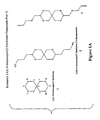
- Figure 1A is a series of structures representing exemplary 2,4,8,10-tetraoxaspiro[5.5]undecane compounds.
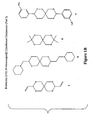
- Figure 1B is a series of structures representing other exemplary 2,4,8,10-tetraoxaspiro[5.5]undecane compounds.
- Figure 2 is a series of structures representing exemplary 1,5,7,11-tetraoxaspiro[5.5]undecane compounds.
- Figure 3 is a schematic perspective view from above of a wire coating operation.
- a cable is made from one or more wires.
- the wire is conductive and is called a conductor.
- the conductor can conduct heat, light or electricity.
- the conductor may be copper, aluminum, silver, gold, or some other conductive material. If the cable is for fiber optics, it can be a conductor of light.
- the cable has an insulative wall which surrounds the conductor, and the insulative wall may be a coating. This insulative wall isolates the electricity, optics or heat passing through the conductor from the surrounding environment.
- the insulative wall should possess advantageous properties depending upon the environment in which the cable is used. Flame retardancy is desirable. Because the material in the insulative wall is usually plastic, the material should not burn. If the material does burn, it should do so in a controlled manner and should have minimal combustion by-products. Any combustion products produced should be rendered nontoxic or minimally toxic.
- the first material for the wall can be a thermoplastic.
- the material may be selected from the group consisting of polyesters, polyamides, polylactic acids, and polyolefins.
- polyesters that can be used include those whose acid units are derived from terephthalic acid, isophthalic acid, 2,6 dicarboxylic acid and their respective dimethyl esters. These acids or esters are reacted with one or more glycols which are an aliphatic diol having from 2 to 10 carbon atoms, a cycloaliphatic diol having from 7 to 14 carbon atoms, an aromatic diol having from 6 to 15 carbon atoms, or a glycol ether having from 4 to 10 carbon atoms.
- glycols which are an aliphatic diol having from 2 to 10 carbon atoms, a cycloaliphatic diol having from 7 to 14 carbon atoms, an aromatic diol having from 6 to 15 carbon atoms, or a glycol ether having from 4 to 10 carbon atoms.
- Suitable diols include, but are not limited to, 1,4-butenediol, trimethylene glycol, 1,6-hexanediol, 1,4-cyclohexanedimethanol, diethylene glycol, resorcinol, and hydroquinone.
- PBT polybutylene terephthalate
- PET polyethylene terephthalate
- PEI polyethylene isophthalate
- PEN polyethylene naphthalate
- Unsaturated polyesters made from different dicarboxylic acids and esters can also be utilized, such as azelaic acid or sebacic acid.
- Non-limiting examples of polyamides that can be utilized include those that can be described as including the repeating unit of amino caproic acid or A-D, where A is the residue of a dicarboxylic acid that includes adipic acid, isophthalic acid, terephthalic acid, 1,4-cyclohexanedicarboxylic acid, rescorcinol dicarboxylic acid, or naphthalenedicarboxylic acid, or a mixture thereof, and D is a residue of a diamine that includes m-xylylene diamine, p-xylylene diamine, hexamethylene diamine, ethylene diamine, or 1,4 cyclohexanedimethylamine, or a mixture thereof.
- polyamides can range in number average molecular weight from 2000 to 60,000 as measured by end-group titration. These polyamides can also be described as the reaction product of amino caproic acid with itself and/or the reaction product of a residue of dicarboxylic acid comprising adipic acid, isophthalic acid, terephthalic acid, 1,4-cyclohexanedicarboxylic acid, rescorcinol dicarboxylic acid, or naphthalenedicarboxylic acid, or a mixture thereof with a residue of a diamine comprising m-xylylene diamine, p-xylylene diamine, hexamethylene diamine, ethylene diamine, or 1,4 cyclohexanedimethylamine, or a mixture thereof.
- nylons also called nylons, including, but not limited to, as MXD6, Nylon 6, Nylon 6,6, Nylon 4,6 and Nylon 12.
- Polylactic acid and succinic acid-based aliphatic polyesters are biodegradable and can be used in some embodiments to make cable.
- Polyglycolic acid can be utilized, and it is a crystalline biodegradable resin having a melting point of 180 °C or higher.
- Olefinic polymers or copolymers that can be used include, but not limited to, low density polyethylene, polypropylene, polyethylene, and high density polyethylene.
- Members of the polyolefin family are: polypropylene, thermoplastic elastomers (rubbers) and polyethylene.
- polypropylene there are homopolymer polypropylene, high impact co-polymer polypropylene, random co-polymer polypropylene, atactic polypropylene, crosslinked polypropylene (XLPP), and many others.
- Many members of the polyethylene family also exist.
- thermoplastic elastomers may be based on polypropylene or polyethylene backbones and may further contain dispersed rubber domains which are themselves either thermoplastic or thermoset (e.g. dynamically vulcanized).
- Copolymers of polypropylene can be particularly desirable. Copolymers of polypropylene are usually made from ethylene and propylene monomers in any of the isotactic, syndiotactic, or atactic forms. The copolymer could be random, as that produced by adding the co-monomer (usually ethylene) directly to the polymerization reactor, and they can be heterophasic, which are usually blends of homopolymer and bipolymers, which are mainly amorphous copolymers of ethylenelpropylene,
- melt flow is preferably in the range of 1.0 to 7.0.
- melt flows higher than 7 are utilized, e.g., 8 to -30 or 10 to 20.
- a polypropylene that is a copolymer having the following nominal properties be used: PROPERTY NOMINAL VALUE (Approximate) UNITS ASTM TEST METHOD Melt Flow Rate 2.0 g/10 min. C 1238 Density 0.9 g/cm 3 D 1505 Tensile Yield 24 MPa Ultimate Elongation >700 % D 638 Modulus 1170 MPa Flexural Modulus 1100 MPa D 790 Deflection Temperature at 66 psi 85 °C D 648 Rockwell Hardness 75 R D 785 Notched Izod @ 23°C NB J/m D 256 Gardner Impact @ -18°C >36 J D 5420
- Such a polypropylene material is available from HUNTSMAN (Woodlands, TX, USA) and is known as grade 18S2A.
- thermoplastic is present in at least 20% by weight of the total composition of the insulative wall. While 20% represents a minimum, the thermoplastic may be present as high as 90% by weight, with any amount in the range of 20 to 90% being generally satisfactory. Generally satisfactory results have been obtained when the polyolefin was present in the range of 30 to 60% and in the range of 35 to 55 weight percent.
- the flame retardant properties are achieved by incorporating a flame retardant compound.
- the flame retardant may be a halogenated compound or a non-halogenated compound, or combinations thereof. In some embodiments, the flame retardant is at least one non-halogenated compound.
- Brominated compounds are typical halogenated compounds. While phosphates may be known, phosphates with a char catalyst generally are not.
- the flame retardant is desired to be essentially halogen free, which for the purposes of this disclosure means that the composition has less than 500 ppm by weight of halogen in the total composition. Thus, if a brominated compound is to be used, in some embodiments, to be essentially halogen free, the compound has less than 500 ppm by weight bromine in the total composition.
- An often useful flame retardant material includes a nitrogenous phosphate or sulfonate component formed in the presence of a char catalyst.
- the nitrogenous phosphate or sulfonate component may be formed using any of the conventional techniques with the char catalyst being introduced at least in part prior to the formation of the final product.
- the char catalyst may be introduced at the formation of the final product .
- the char catalyst may be introduced either in total or in part with one or more of the nitrogen containing compounds and then the phosphorus or sulfur containing compound may be reacted.
- These nitrogenous phosphate or sulfonate components may also be formed by introducing parts of one or more of the reactants in steps.
- a portion of the total amount of the nitrogen containing reactant may be added to a portion of the activator followed by a portion of the phosphorus or sulfur containing reactant and then repeated in any order and in as many steps as desired to obtain the final activated flame retardant.
- nitrogen containing reactant and the phosphorus or sulfur containing reactant used can depend upon the application.
- Suitable reactants include those known for use in forming nitrogenous phosphate or sulfonate flame retardants, including, but not limited to, ammonium phosphate, ammonium pyrophosphate, ammonium polyphosphate, ethylene-diamine phosphate, piperazine phosphate, piperazine-pyrophosphate, melamine phosphate, dimelamine phosphate, melamine pyrophosphate, guanidine phosphate, dicyanodiamide phosphate urea phosphate, ammonium sulfonate, ammonium polysulfonate, ethylenediamine sulfonate, dimelamine suflonate, quanidine sulfonate, and dicyanodiamide sulfonate.
- Suitable nitrogen containing reactants include, but are not limited to, ammonium, alkyleneamines (including diamines), triazine, melamine, melam, melem, melon, ammeline, ammelide, 2-ureidomelamine, acetoguanamine, benzoguanamine, quanidine, dicyanodiamide, diamine phenyltriazine or mixtures hereof.
- Preferred nitrogen containing reactants include, but are not limited to, melamine, ammonium, and ethylene diamine.
- Suitable phosphorus or sulfur containing reactants include, but are not limited to, phosphoric acid and sulfonic acid.
- the char catalyst is a component that often enhances the performance of the nitrogenous phosphate and/or sulfonate component and preferably is a char forming catalyst or a phase transfer agent or a combination of both.
- the char catalyst can be present in the flame retardant in any amount that provides the acceptable enhanced flame retardancy.
- the flame retardant may be present in an amount up to 5, 8 or 10 wt % or as little as 0.01, 0.1 or 0.2 wt %.
- both a char forming catalyst and a phase transfer catalyst are used together, and they together may be present in the flame retardant in an amount between 0.1 to 3.0, and more preferably 0.3 to 2.5 wt %.
- amounts greater than 3.0 wt % may be used so long as the overall composition has the general characteristics described herein.
- char forming catalyst may act, at the time of decomposition of part of the system, to "grab onto" or react with decomposing molecules, thereby minimizing the production of low molecular weight components that can burn, this may enable the development of char rather than burn.
- Exemplary char forming catalysts include, but are not limited to, multi-cyclic compounds having at least one reactive group in each of at least two rings. Typically, the rings are joined together by atoms common to both rings. These may include spiro-compounds. The spiro compounds may define at least two heterocyclic ring structures, e.g., each ring structure includes oxygen, joined by at least one carbon atom common to both rings.
- the char forming catalyst may be one or more spiro compounds or a material that includes a spiro moiety, e.g., one or more tetraoxaspiro materials, such as one or more 2,4,8,10-tetraoxa-spiro[5.5]undecane compounds and/or one or more 1,5,7,11-tetraoxa-spiro[5.5]undecane compounds.
- tetraoxaspiro materials such as one or more 2,4,8,10-tetraoxa-spiro[5.5]undecane compounds and/or one or more 1,5,7,11-tetraoxa-spiro[5.5]undecane compounds.
- the char forming catalyst may be represented by the following formula I: R 2 R 1 -(R 0 )m-R 1 -R 2 where m represents a number between 1 and 8, in some embodiments less than 3 or less than 2; R 0 -independently represent a di- tri-, or quad-valent radical including, but not limited to, two independently substituted or unsubstituted, saturated or unsaturated heterocyclic ring structures joined by at least one common carbon atom and preferably no more than two, including, but not limited to, one, carbon atoms common to the heterocyclic ring structures; R 1 -independently represents a bond; or a substituted or unsubstituted, saturated or unsaturated hydrocarbyl or heterocarbyl linking group, preferably a C1-C6 alkyl linking group, including, but not limited to, a C3 alkyl; and R 2 --independently represents a terminal group, preferably a terminal amine, including, but not limited to,
- Exemplary compounds include those in which the heterocyclic ring structure comprises at least two heteroatoms in at least two heterocyclic ring structures, and/or R 0 independently represents a divalent radical, preferably with at least one, for example, two (including two adjacent), heterocyclic ring structures being 6-member. These compounds may also include those in which the heteroatom in the heterocyclic rings is predominately oxygen.
- the char catalyst may include those compounds having a molecular weight of at least 180, preferably at least 200 and/or a flash point of greater than 200 °C.
- Some embodiments include one or more tetraoxaspiro materials, such as derivatives of a tetraoxaspiro undecane (e.g., amine derivatives), such as one or more 2,4,8,10-tetraoxa-spiro[5.5]undecane compounds and/or one or more 1,5,7,11-tetraoxaspiro[5.5]undecane compounds.
- Figures 1A and 1B show exemplary 2,4,8,10-tetraoxaspiro[5.5]undecane compounds (compounds 1, 2, 3, 4, 5, 6, 7), while Figure 2 shows exemplary 1,5,7,11-tetraoxa-spiro[5.5]undecane compounds (compounds 10, 11 and 12).
- the char forming catalyst component may also include adducts, including, but not limited to, amine adducts, nitrile adducts (including 2-propenenitrile or acrylonitrile) and/or oxirane adducts (including butoxymethyl oxirane).
- adducts including, but not limited to, amine adducts, nitrile adducts (including 2-propenenitrile or acrylonitrile) and/or oxirane adducts (including butoxymethyl oxirane).
- 2,4,8,10-tetraoxaspiro[5.5]undecane-3,9-dipropanamine with an amine or nitrile adduct, such as acrylonitrile is a non-limiting example.
- phase transfer agent utilized can be or can include tetrahydrocarbyl ammonium salts, including, but not limited to, tetramethyl, tetraethyl, tetrapropyl, tetralkyl, and/or aryltrialkyl ammonium salt in which the salt is a bromide, chloride, hydroxide and/or hydrogen sulfate ammonium salt.
- tetrahydrocarbyl ammonium salts including, but not limited to, tetramethyl, tetraethyl, tetrapropyl, tetralkyl, and/or aryltrialkyl ammonium salt in which the salt is a bromide, chloride, hydroxide and/or hydrogen sulfate ammonium salt.
- the phase transfer catalyst includes phosphate esters, tetraethylammonium bromide, tetraethylammonium hydroxide, tetrapropylammonium bromide, tetrabutyl ammonium bromide, tetrabutyl ammonium hydroxide, tetrabutyl ammonium hydrogen sulfate and/or benzyltriethyl ammonium chloride.
- phosphate esters tetraethylammonium bromide, tetraethylammonium hydroxide, tetrapropylammonium bromide, tetrabutyl ammonium bromide, tetrabutyl ammonium hydroxide, tetrabutyl ammonium hydrogen sulfate and/or benzyltriethyl ammonium chloride.
- a retardant may be prepared as follows:
- One of ordinary skill can easily modify the above technique to achieve a preferred ratio of about 80:20 ethylene diamine phosphate to melamine phosphate.
- This flame retardant can be present in amounts ranging from 10 to 85% by weight of the total composition, e.g., from 10 to 50% by weight, from 25 to 35% by weight or from 10 to 25% by weight.
- the char forming catalyst will therefore be present in the insulative wall in amounts ranging from 0.15 weight percent to 8.5 weight percent.
- thermoplastic elastomer compound it is often preferable to add a thermoplastic elastomer compound to improve the elongation properties of the cable.
- PROPERTY NOMINAL VALUE Approximate
- UNITS ASTM TEST METHOD Melt Flow Rate 190 °C/2.16 kg 0.5 g/10 min.
- ENGAGE 8150 from The Dow Chemical Company, (Midland, Michigan, USA), which is also known as an ethylene octene copolymer.
- the presence of the elastomer may range from about 15 to about 85 percent by weight of the total composition of the insulative wall. Satisfactory results can be achieved, e.g., at amounts in the ranges of 15 to 45 percent by weight, and 20 to 35 percent by weight.
- ENGAGE 8180 also obtained by Dow, works as well.
- Styrenic block copolymers such as SEBS (Styrene-Ethylene-Butadiene-Styrene) and SBS (Styrene-Ethylene-Styrene) polymers work as well, which are available from KRATON and from GLS Corporation.
- antioxidants e.g., the Irganox family of antioxidants available from CIBA
- these other ingredients include, but are not limited to, hindered phenolic stabilizers like tetrakis((methylene (3,5-di-tert-butyl-4 hydroxyhydrocinnamate))methane (e.g., Ciba Specialty Chemicals Irganox 1010), acid scavengers and hydrotalcite-like materials (e.g., DHT 4A from Kyowa Chemicals), endothermic agents such as, but not limited to, magnesium hydroxide (e.g., FR-20 from Dead Sea Bromine Group), zinc borate and the like and UV absorbers from the benzophenone family.
- hindered phenolic stabilizers like tetrakis((methylene (3,5-di-tert-butyl-4 hydroxyhydrocinnamate))methane
- acid scavengers e.g., Ciba Special
- a metal deactivator can be added, e.g., to improve long term heat stability of the compositions.
- Hydrotalcite is a typical deactivator. Hydrotalcite is a natural mineral with a white collar in pearl-like luster. Hydrotalcite is a compound of magnesium and aluminum with a layer structure of the following formula composition's DHT-4A available from Mitsui, Japan, is a preferred metal deactivator.
- DHT-4A ⁇ Mg 4.3 Al 2 (OH) 12.6 CO 3 -mH 2 O ⁇ is a hydrotalcite-like compound used as a stabilizer (halogen scavenger) for polyolefin and other plastics.
- Hydrotalcite ⁇ Mg 6 Al 2 (OH) 16 CO 3 -4H 2 O ⁇ is a natural mineral that is mined.
- 1,2-bis(3,5-di-tert-butyl-4hydroxyhydrocinnamoyl)hydrazine is another metal de-activator.
- the role of the metal deactivator is, e.g., to quench the activity of the metal catalyst(s) often found in thermoplastics and to quench the activity of a metal conductor at the interface of the conductor and the insulative wall.
- Cable 8 can be manufactured using the process shown in Figure 3 .
- wire 10 (more generally, a conductor) is passed through a die 20 containing the material for the insulative wall.
- the materials may be pre-compounded and then fed to the die through an extruder 30 or the materials may be introduced into the extruder, with the compounding taking place in the extruder.
- drying may be necessary, such as drying in a desiccant-bed dryer 50, such as one having a dewpoint of less than about -40 °C.
- the composition used in the insulative coating is prepared by mixing the polymeric ingredients and optional additives by use of conventional masticating equipment, including, but not limited to, a thermoplastic elastomer meld, Brabender mixer, Banbury mixer, Buss-co kneader, Farrel continuous mixer, twin screw continuous mixer, or any other mixing apparatuses, such as an extruder.
- Mixing time should be sufficient to obtain homogeneous or substantially homogeneous blends and reaction between the thermoplastic, e.g., polypropylene, flame reatardant composition, and thermoplastic elastomer. Satisfactory mixing time is dependent upon the time of the mixing equipment (shear intensity and temperature). Typically, mixing times of about 3 to about 5 minutes are satisfactory on a batch mixer, while about 1 to about 2 minutes are satisfactory on a continuous mixer. If the polymer blend is obviously non-homogeneous or substantially non-homogeneous, additional mixing may be required.
- the insulative wall of the cable may be of varying thicknesses.
- the thickness is measured as taught in ISO 6722:2002 (E).
- the insulative wall of the cable may be of varying thicknesses.
- the thickness is measured as taught in ISO 6722:2002 (E). To measure the thickness, one prepares three test samples, each consisting of a thin cross section of insulation taken at 1 m intervals from a cable sample 3 m in length. The insulation is stripped from the cable, while taking care not to deform the test samples during the preparation process. If there is a cable marking causing an indentation, the first test sample should be taken through this indentation.
- test samples are each placed under a suitable measuring equipment that does not cause deformation.
- the plane of the cut is placed perpendicular to the optical axis.
- the accuracy of the measurement shall be +/- 0.01 mm.
- the insulative wall is categorized based upon its thickness. Thick wall insulation ranges from about 0.48 mm to about 1.60 mm. Thin wall insulation ranges from 0.20 mm to 0.65 mm. Ultra thin wall insulation ranges from 0.10 mm to 0.44 mm, with 0.12 mm to 0.32 mm being preferred, and 0.16 mm to 0.25 mm being more preferred.
- compositions disclosed herein are also useful when formed into fibers used in items such as carpets, fabrics, walls, clothing, and other textile products.
- the flame was applied at about 500 +/- 5 mm from the upper end of the insulation until the conductor became visible or else after about 15 s for cable with conductor sized ⁇ about 2.5 mm 2 and after about 30 s for cable with the conductor sizes > about 2.5 mm 2 .
- the time for the insulation to extinguish was measured as well as the amount of insulation at the top of the test sample.
Landscapes
- Chemical & Material Sciences (AREA)
- Health & Medical Sciences (AREA)
- Chemical Kinetics & Catalysis (AREA)
- Medicinal Chemistry (AREA)
- Polymers & Plastics (AREA)
- Organic Chemistry (AREA)
- Physics & Mathematics (AREA)
- Spectroscopy & Molecular Physics (AREA)
- Insulated Conductors (AREA)
- Compositions Of Macromolecular Compounds (AREA)
- Organic Insulating Materials (AREA)
- Communication Cables (AREA)
Abstract
Description
- This invention relates to cables and wiring.
- Cables for conducting electricity or fiber optic transmissions generally have insulative walls to protect the cable. This insulative wall is usually a non-conductive plastic material which is bendable and abrasion resistant Plastics can be deficient in that when they burn, they can emit harmful gasses or intensity the fire.
- Plastics can be made flame retardant with the use of halogenated materials, in particular, brominated compounds. However, their use has come under increasing pressure due to health and environmental concerns. The use of non-halogenated flame retardants in plastics generally has been deficient in that they can require high loading amounts to be effective.
- Ultra-thin cable insulation can be difficult to make without using a halogenated compound. Therefore, a need exists for non-halogenated flame retardant commodity plastics, such as polyolefins. In particular, a need exits for insulated thin-walled wire and cable in which the insulation is made of a commodity plastic.
- The cable comprises a conductor core and an insulative wall as set forth in
claim 1. The insulative wall has a thickness of from 0.10 mm to 0.44 mm. When the cable is tested using a flame propagation method described herein (the "Thin Insulative Wall Flame Propagation Test"), a combustion flame of the insulative wall extinguishes within about 70 seconds and a minimum of about 50 mm of insulative wall at a top of a test sample remains unburned. At least 20% by weight of the total composition of the insulative wall is a thermoplastic selected from the group consisting of polyesters, polyamides, polylactic acids and polyolefins. - In some embodiments, a cable comprises a conductor core and an insulative wall having a thickness of from 0.110 to 0.44 mm. When the cable is tested using the Thin Insulative Wall Flame Propagation Test, a combustion flame of the insulative wall extinguishes within about 70 seconds and a minimum of about 50 mm of insulative wall at a top of a test sample remains unburned. At least 20% by weight of the total composition of the total composition of the insulative wall comprises a polyolefin.
- Other features and advantages will be apparent from the description and drawings, and from the claims.
-
Figure 1A is a series of structures representing exemplary 2,4,8,10-tetraoxaspiro[5.5]undecane compounds. -
Figure 1B is a series of structures representing other exemplary 2,4,8,10-tetraoxaspiro[5.5]undecane compounds. -
Figure 2 is a series of structures representing exemplary 1,5,7,11-tetraoxaspiro[5.5]undecane compounds. -
Figure 3 is a schematic perspective view from above of a wire coating operation. - A cable is made from one or more wires. The wire is conductive and is called a conductor. As a non-limiting example, the conductor can conduct heat, light or electricity. The conductor may be copper, aluminum, silver, gold, or some other conductive material. If the cable is for fiber optics, it can be a conductor of light. The cable has an insulative wall which surrounds the conductor, and the insulative wall may be a coating. This insulative wall isolates the electricity, optics or heat passing through the conductor from the surrounding environment.
- The insulative wall should possess advantageous properties depending upon the environment in which the cable is used. Flame retardancy is desirable. Because the material in the insulative wall is usually plastic, the material should not burn. If the material does burn, it should do so in a controlled manner and should have minimal combustion by-products. Any combustion products produced should be rendered nontoxic or minimally toxic.
- It has been discovered that when the compounds described in this specification are used to make the insulative wall, the resulting cable meets the requirements of ISO 6722, entitled "Road Vehicles - 60 V and 600 V single-core cables - Dimensions, test methods and requirements," First edition, 2002-04-15, the disclosure of which is hereby incorporated by reference herein in its entirety.
- The first material for the wall can be a thermoplastic. The material may be selected from the group consisting of polyesters, polyamides, polylactic acids, and polyolefins.
- Although not limited to the following, examples of polyesters that can be used include those whose acid units are derived from terephthalic acid, isophthalic acid, 2,6 dicarboxylic acid and their respective dimethyl esters. These acids or esters are reacted with one or more glycols which are an aliphatic diol having from 2 to 10 carbon atoms, a cycloaliphatic diol having from 7 to 14 carbon atoms, an aromatic diol having from 6 to 15 carbon atoms, or a glycol ether having from 4 to 10 carbon atoms. Suitable diols include, but are not limited to, 1,4-butenediol, trimethylene glycol, 1,6-hexanediol, 1,4-cyclohexanedimethanol, diethylene glycol, resorcinol, and hydroquinone.
- One of ordinary skill will recognize these combinations as polybutylene terephthalate (PBT), polyethylene terephthalate (PET), polyethylene isophthalate (PEI), and polyethylene naphthalate (PEN). These are commonly referred to as terephthalates, isophthalates and naphthalates.
- Unsaturated polyesters made from different dicarboxylic acids and esters can also be utilized, such as azelaic acid or sebacic acid.
- Non-limiting examples of polyamides that can be utilized include those that can be described as including the repeating unit of amino caproic acid or A-D, where A is the residue of a dicarboxylic acid that includes adipic acid, isophthalic acid, terephthalic acid, 1,4-cyclohexanedicarboxylic acid, rescorcinol dicarboxylic acid, or naphthalenedicarboxylic acid, or a mixture thereof, and D is a residue of a diamine that includes m-xylylene diamine, p-xylylene diamine, hexamethylene diamine, ethylene diamine, or 1,4 cyclohexanedimethylamine, or a mixture thereof. These polyamides can range in number average molecular weight from 2000 to 60,000 as measured by end-group titration. These polyamides can also be described as the reaction product of amino caproic acid with itself and/or the reaction product of a residue of dicarboxylic acid comprising adipic acid, isophthalic acid, terephthalic acid, 1,4-cyclohexanedicarboxylic acid, rescorcinol dicarboxylic acid, or naphthalenedicarboxylic acid, or a mixture thereof with a residue of a diamine comprising m-xylylene diamine, p-xylylene diamine, hexamethylene diamine, ethylene diamine, or 1,4 cyclohexanedimethylamine, or a mixture thereof.
- One of ordinary skill will recognize these combinations as well known polyamides, also called nylons, including, but not limited to, as MXD6, Nylon 6, Nylon 6,6, Nylon 4,6 and Nylon 12.
- Polylactic acid and succinic acid-based aliphatic polyesters are biodegradable and can be used in some embodiments to make cable. Polyglycolic acid can be utilized, and it is a crystalline biodegradable resin having a melting point of 180 °C or higher.
- Olefinic polymers or copolymers that can be used include, but not limited to, low density polyethylene, polypropylene, polyethylene, and high density polyethylene. Members of the polyolefin family are: polypropylene, thermoplastic elastomers (rubbers) and polyethylene. Many subset plastic materials within each one of these members of the polyolefin family exist. As a non-limiting example, within polypropylene, there are homopolymer polypropylene, high impact co-polymer polypropylene, random co-polymer polypropylene, atactic polypropylene, crosslinked polypropylene (XLPP), and many others. Many members of the polyethylene family also exist. For example, within the polyethylene family are very low density polyethylene (VLDPE), low density polyethylene (LDPE), medium density polyethylene (MDPE), high density polyethylene (HDPE), linear low density polyethylene (LLDPE), crosslinked polyethylene (XLPE), and ethylene/vinyl acetate copolymer (EVA). Similarly, thermoplastic elastomers may be based on polypropylene or polyethylene backbones and may further contain dispersed rubber domains which are themselves either thermoplastic or thermoset (e.g. dynamically vulcanized).
- Copolymers of polypropylene can be particularly desirable. Copolymers of polypropylene are usually made from ethylene and propylene monomers in any of the isotactic, syndiotactic, or atactic forms. The copolymer could be random, as that produced by adding the co-monomer (usually ethylene) directly to the polymerization reactor, and they can be heterophasic, which are usually blends of homopolymer and bipolymers, which are mainly amorphous copolymers of ethylenelpropylene,
- In the case of the olefins, the melt flow is preferably in the range of 1.0 to 7.0. For processing considerations, higher melt flow polyolefins can be advantageous. In other embodiments, melt flows higher than 7 are utilized, e.g., 8 to -30 or 10 to 20.
- It is recommended, although not required, that a polypropylene that is a copolymer having the following nominal properties be used:
PROPERTY NOMINAL VALUE (Approximate) UNITS ASTM TEST METHOD Melt Flow Rate 2.0 g/10 min. C 1238 Density 0.9 g/cm3 D 1505 Tensile Yield 24 MPa Ultimate Elongation >700 % D 638 Modulus 1170 MPa Flexural Modulus 1100 MPa D 790 Deflection Temperature at 66 psi 85 °C D 648 Rockwell Hardness 75 R D 785 Notched Izod @ 23°C NB J/m D 256 Gardner Impact @ -18°C >36 J D 5420 - Such a polypropylene material is available from HUNTSMAN (Woodlands, TX, USA) and is known as grade 18S2A.
- The thermoplastic is present in at least 20% by weight of the total composition of the insulative wall. While 20% represents a minimum, the thermoplastic may be present as high as 90% by weight, with any amount in the range of 20 to 90% being generally satisfactory. Generally satisfactory results have been obtained when the polyolefin was present in the range of 30 to 60% and in the range of 35 to 55 weight percent.
- The flame retardant properties are achieved by incorporating a flame retardant compound. The flame retardant may be a halogenated compound or a non-halogenated compound, or combinations thereof. In some embodiments, the flame retardant is at least one non-halogenated compound.
- Brominated compounds are typical halogenated compounds. While phosphates may be known, phosphates with a char catalyst generally are not. In some embodiments, the flame retardant is desired to be essentially halogen free, which for the purposes of this disclosure means that the composition has less than 500 ppm by weight of halogen in the total composition. Thus, if a brominated compound is to be used, in some embodiments, to be essentially halogen free, the compound has less than 500 ppm by weight bromine in the total composition.
- An often useful flame retardant material includes a nitrogenous phosphate or sulfonate component formed in the presence of a char catalyst. The nitrogenous phosphate or sulfonate component may be formed using any of the conventional techniques with the char catalyst being introduced at least in part prior to the formation of the final product. Alternatively, the char catalyst may be introduced at the formation of the final product. In some embodiments, the char catalyst may be introduced either in total or in part with one or more of the nitrogen containing compounds and then the phosphorus or sulfur containing compound may be reacted. These nitrogenous phosphate or sulfonate components may also be formed by introducing parts of one or more of the reactants in steps. In some embodiments, a portion of the total amount of the nitrogen containing reactant may be added to a portion of the activator followed by a portion of the phosphorus or sulfur containing reactant and then repeated in any order and in as many steps as desired to obtain the final activated flame retardant.
- The selection of the nitrogen containing reactant and the phosphorus or sulfur containing reactant used can depend upon the application. Suitable reactants include those known for use in forming nitrogenous phosphate or sulfonate flame retardants, including, but not limited to, ammonium phosphate, ammonium pyrophosphate, ammonium polyphosphate, ethylene-diamine phosphate, piperazine phosphate, piperazine-pyrophosphate, melamine phosphate, dimelamine phosphate, melamine pyrophosphate, guanidine phosphate, dicyanodiamide phosphate urea phosphate, ammonium sulfonate, ammonium polysulfonate, ethylenediamine sulfonate, dimelamine suflonate, quanidine sulfonate, and dicyanodiamide sulfonate. Suitable nitrogen containing reactants include, but are not limited to, ammonium, alkyleneamines (including diamines), triazine, melamine, melam, melem, melon, ammeline, ammelide, 2-ureidomelamine, acetoguanamine, benzoguanamine, quanidine, dicyanodiamide, diamine phenyltriazine or mixtures hereof. Preferred nitrogen containing reactants include, but are not limited to, melamine, ammonium, and ethylene diamine. Suitable phosphorus or sulfur containing reactants include, but are not limited to, phosphoric acid and sulfonic acid.
- The char catalyst is a component that often enhances the performance of the nitrogenous phosphate and/or sulfonate component and preferably is a char forming catalyst or a phase transfer agent or a combination of both. The char catalyst can be present in the flame retardant in any amount that provides the acceptable enhanced flame retardancy. As non-limiting examples, the flame retardant may be present in an amount up to 5, 8 or 10 wt % or as little as 0.01, 0.1 or 0.2 wt %. In some embodiments, both a char forming catalyst and a phase transfer catalyst are used together, and they together may be present in the flame retardant in an amount between 0.1 to 3.0, and more preferably 0.3 to 2.5 wt %. Alternatively, amounts greater than 3.0 wt % may be used so long as the overall composition has the general characteristics described herein.
- Although not wishing to be bound by any particular theory, it is believed that the char forming catalyst may act, at the time of decomposition of part of the system, to "grab onto" or react with decomposing molecules, thereby minimizing the production of low molecular weight components that can burn, this may enable the development of char rather than burn. Exemplary char forming catalysts include, but are not limited to, multi-cyclic compounds having at least one reactive group in each of at least two rings. Typically, the rings are joined together by atoms common to both rings. These may include spiro-compounds. The spiro compounds may define at least two heterocyclic ring structures, e.g., each ring structure includes oxygen, joined by at least one carbon atom common to both rings. In some embodiments, the char forming catalyst may be one or more spiro compounds or a material that includes a spiro moiety, e.g., one or more tetraoxaspiro materials, such as one or more 2,4,8,10-tetraoxa-spiro[5.5]undecane compounds and/or one or more 1,5,7,11-tetraoxa-spiro[5.5]undecane compounds.
- In some embodiments, the char forming catalyst may be represented by the following formula I:
R2R1-(R0)m-R1-R2
where m represents a number between 1 and 8, in some embodiments less than 3 or less than 2; R0 -independently represent a di- tri-, or quad-valent radical including, but not limited to, two independently substituted or unsubstituted, saturated or unsaturated heterocyclic ring structures joined by at least one common carbon atom and preferably no more than two, including, but not limited to, one, carbon atoms common to the heterocyclic ring structures; R1 -independently represents a bond; or a substituted or unsubstituted, saturated or unsaturated hydrocarbyl or heterocarbyl linking group, preferably a C1-C6 alkyl linking group, including, but not limited to, a C3 alkyl; and R2--independently represents a terminal group, preferably a terminal amine, including, but not limited to, a primary amine. - Exemplary compounds include those in which the heterocyclic ring structure comprises at least two heteroatoms in at least two heterocyclic ring structures, and/or R0 independently represents a divalent radical, preferably with at least one, for example, two (including two adjacent), heterocyclic ring structures being 6-member. These compounds may also include those in which the heteroatom in the heterocyclic rings is predominately oxygen.
- The char catalyst may include those compounds having a molecular weight of at least 180, preferably at least 200 and/or a flash point of greater than 200 °C.
- Some embodiments include one or more tetraoxaspiro materials, such as derivatives of a tetraoxaspiro undecane (e.g., amine derivatives), such as one or more 2,4,8,10-tetraoxa-spiro[5.5]undecane compounds and/or one or more 1,5,7,11-tetraoxaspiro[5.5]undecane compounds.
Figures 1A and1B show exemplary 2,4,8,10-tetraoxaspiro[5.5]undecane compounds (compounds Figure 2 shows exemplary 1,5,7,11-tetraoxa-spiro[5.5]undecane compounds (compounds 10, 11 and 12). The char forming catalyst component may also include adducts, including, but not limited to, amine adducts, nitrile adducts (including 2-propenenitrile or acrylonitrile) and/or oxirane adducts (including butoxymethyl oxirane). 2,4,8,10-tetraoxaspiro[5.5]undecane-3,9-dipropanamine with an amine or nitrile adduct, such as acrylonitrile is a non-limiting example. - The phase transfer agent utilized can be or can include tetrahydrocarbyl ammonium salts, including, but not limited to, tetramethyl, tetraethyl, tetrapropyl, tetralkyl, and/or aryltrialkyl ammonium salt in which the salt is a bromide, chloride, hydroxide and/or hydrogen sulfate ammonium salt. Preferably, the phase transfer catalyst includes phosphate esters, tetraethylammonium bromide, tetraethylammonium hydroxide, tetrapropylammonium bromide, tetrabutyl ammonium bromide, tetrabutyl ammonium hydroxide, tetrabutyl ammonium hydrogen sulfate and/or benzyltriethyl ammonium chloride.
- In some embodiments, a retardant may be prepared as follows:
- To 900 grams of water, while under agitation, add 180 grams of ethylene diamine, 60 grams of melamine and 0.5 wt percent by finished recovered product of 2,4,8,10-tetraoxaspiro[5.5]undecane-3,9-dipropanamine adduct with 2-propenenitrile (acrylonitrile), which is commercially available from Ajinomoto, Inc. under the tradename YSE-CURE B-001. The mixture was warmed to about 170°F and, while maintaining temperature, phosphoric acid is slowly added until a pH of 7.0 was reached. The mixture is cooled, filtered, dried and ground to recover the flame retardant.
- One of ordinary skill can easily modify the above technique to achieve a preferred ratio of about 80:20 ethylene diamine phosphate to melamine phosphate.
- This flame retardant can be present in amounts ranging from 10 to 85% by weight of the total composition, e.g., from 10 to 50% by weight, from 25 to 35% by weight or from 10 to 25% by weight. The char forming catalyst will therefore be present in the insulative wall in amounts ranging from 0.15 weight percent to 8.5 weight percent.
- It is often preferable to add a thermoplastic elastomer compound to improve the elongation properties of the cable.
PROPERTY NOMINAL VALUE (Approximate) UNITS ASTM TEST METHOD Melt Flow Rate 190 °C/2.16 kg0.5 g/10 min. D 1238 Density 0.868 g/cm3 D 792 Mooney Viscosity 33 ML 1 +4 @ 121°CD 1646 Tensile Yield 9.5 MPa Ultimate Elongation 810 % D 638 100% Modulus 2.6 MPa Flexural Modulus MPa D 790 1% Secant 15.2 2% Secant 14.4 Tear Strength 37.3 kN/m 37.3 Vicat Softening Point 46 °C D 1525 Hardness D 2240 Shore A 15.2 Shore B 14.4 Glass Transition -52 °C Melt Point 55 °C - These typical properties can be found in a material known as ENGAGE 8150 from The Dow Chemical Company, (Midland, Michigan, USA), which is also known as an ethylene octene copolymer. The presence of the elastomer may range from about 15 to about 85 percent by weight of the total composition of the insulative wall. Satisfactory results can be achieved, e.g., at amounts in the ranges of 15 to 45 percent by weight, and 20 to 35 percent by weight. ENGAGE 8180, also obtained by Dow, works as well. Styrenic block copolymers, such as SEBS (Styrene-Ethylene-Butadiene-Styrene) and SBS (Styrene-Ethylene-Styrene) polymers work as well, which are available from KRATON and from GLS Corporation.
- Other ingredients, such as fillers, and other processing aids, such as antioxidants (e.g., the Irganox family of antioxidants available from CIBA) may be of benefit. These other ingredients include, but are not limited to, hindered phenolic stabilizers like tetrakis((methylene (3,5-di-tert-butyl-4 hydroxyhydrocinnamate))methane (e.g., Ciba Specialty Chemicals Irganox 1010), acid scavengers and hydrotalcite-like materials (e.g., DHT 4A from Kyowa Chemicals), endothermic agents such as, but not limited to, magnesium hydroxide (e.g., FR-20 from Dead Sea Bromine Group), zinc borate and the like and UV absorbers from the benzophenone family.
- A metal deactivator can be added, e.g., to improve long term heat stability of the compositions. Hydrotalcite is a typical deactivator. Hydrotalcite is a natural mineral with a white collar in pearl-like luster. Hydrotalcite is a compound of magnesium and aluminum with a layer structure of the following formula composition's DHT-4A available from Mitsui, Japan, is a preferred metal deactivator. DHT-4A {Mg4.3Al2(OH)12.6CO3-mH2O}is a hydrotalcite-like compound used as a stabilizer (halogen scavenger) for polyolefin and other plastics. Hydrotalcite {Mg6Al2(OH)16CO3-4H2O} is a natural mineral that is mined.
- 1,2-bis(3,5-di-tert-butyl-4hydroxyhydrocinnamoyl)hydrazine (available as Irganox MD1024 from CIBA-Giegy, Switzerland) is another metal de-activator. The role of the metal deactivator is, e.g., to quench the activity of the metal catalyst(s) often found in thermoplastics and to quench the activity of a metal conductor at the interface of the conductor and the insulative wall.
-
Cable 8 can be manufactured using the process shown inFigure 3 . InFigure 3 , wire 10 (more generally, a conductor) is passed through a die 20 containing the material for the insulative wall. If desired, the materials may be pre-compounded and then fed to the die through anextruder 30 or the materials may be introduced into the extruder, with the compounding taking place in the extruder. For some materials, drying may be necessary, such as drying in a desiccant-bed dryer 50, such as one having a dewpoint of less than about -40 °C. - In general, the composition used in the insulative coating is prepared by mixing the polymeric ingredients and optional additives by use of conventional masticating equipment, including, but not limited to, a thermoplastic elastomer meld, Brabender mixer, Banbury mixer, Buss-co kneader, Farrel continuous mixer, twin screw continuous mixer, or any other mixing apparatuses, such as an extruder. Mixing time should be sufficient to obtain homogeneous or substantially homogeneous blends and reaction between the thermoplastic, e.g., polypropylene, flame reatardant composition, and thermoplastic elastomer. Satisfactory mixing time is dependent upon the time of the mixing equipment (shear intensity and temperature). Typically, mixing times of about 3 to about 5 minutes are satisfactory on a batch mixer, while about 1 to about 2 minutes are satisfactory on a continuous mixer. If the polymer blend is obviously non-homogeneous or substantially non-homogeneous, additional mixing may be required.
- The insulative wall of the cable may be of varying thicknesses. The thickness is measured as taught in ISO 6722:2002 (E).
- The insulative wall of the cable may be of varying thicknesses. The thickness is measured as taught in ISO 6722:2002 (E). To measure the thickness, one prepares three test samples, each consisting of a thin cross section of insulation taken at 1 m intervals from a cable sample 3 m in length. The insulation is stripped from the cable, while taking care not to deform the test samples during the preparation process. If there is a cable marking causing an indentation, the first test sample should be taken through this indentation.
- The test samples are each placed under a suitable measuring equipment that does not cause deformation. The plane of the cut is placed perpendicular to the optical axis.
- The accuracy of the measurement shall be +/- 0.01 mm.
- Depending upon the conductor size, the insulative wall is categorized based upon its thickness. Thick wall insulation ranges from about 0.48 mm to about 1.60 mm. Thin wall insulation ranges from 0.20 mm to 0.65 mm. Ultra thin wall insulation ranges from 0.10 mm to 0.44 mm, with 0.12 mm to 0.32 mm being preferred, and 0.16 mm to 0.25 mm being more preferred.
- It is believed that the compositions disclosed herein are also useful when formed into fibers used in items such as carpets, fabrics, walls, clothing, and other textile products.
- The disclosure is further described in the following examples.
- Three pre-mixed lots of the composition in Table I were made in a Buss kneader and pelletized in the following proportions:
TABLE I Material Lot 1 Wt % (Approximate) Lot 2 Wt% (Approximate)Lot 3 Wt% (Approximate)Polypropylene (Huntsman 18S2A) 42.2 42.7 42.4 Ethylene Octene Copolymer (ENGAGE 8150) 24.0 24.0 24.0 Flame Retardant, including about 74.85% by weight ethylene diamine phosphate, about 24.85% by weight melamine phosphate with about 0.3% by weight char catalyst and about 0.1 % by weight phase transfer catalyst 31.0 31.0 31.0 Silicone 0.30 Irganox 1010 0.50 0.50 0.50 Mitsui DHT-4A 0.50 0.50 0.50 Irganox MD 1024 0.30 0.30 0.30 Acrawax C 0.50 TiO2 (Dupont Ti Pure R-1030) 1.0 1.0 1.0 - These pellets were then dried and the cable made as discussed above in reference to
Figure 3 . One will recognize that the temperatures and profile of the extrusion will change depending upon the formulation. - The cable was then tested according to ISO 6722:2002 (E). The results are shown in Tables IIA and IIB (below).
TABLE IIA - SAMPLE 1 TEST RESULT Withstand voltage of 1kv for 30 minutes Pressure test at high temperature at 125 °C for 4 hours (withstand voltage) Passed Strip force (lb) 7.95 Winding at -25 °C for 4 hours (mandrel 15 mm, 2 turns) Passed Resistance to abrasion sandpaper, minimum mm (Mass. 0.18 kg) Short-term aging at 150 °C for 240 hours (mandrel 15 mm, 2 turns) Passed Long-term aging at 125°C for 3000 hours (mandrel 15 mm, 2 turns) Passed Shrinkage by heat at 150° C. for 15 minutes (mm maximum) 0.72 Gasoline compatibility at 23 +/- 5 °C. for 20 hours (% maximum) 0.68 Diesel fuel compatibility at 23 +/- 5 °C. for 20 hours (% maximum) 7.17 Engine oil compatibility at 50 +/- 3 °C. for 20 hours (% maximum) 5.74 Ethanol compatibility at 50 +/- 3 °C. for 20 hours (% maximum) 1.09 Power steering fluid compatibility at50 +/- 3 °C for 20 hours (% maximum) 13.85 Automatic transmission fluid compatibility at 50 +/- 3 °C. for 20 hours (% maximum) 16.27 Engine coolant compatibility at 50 +/- 3 °C. for 20 hours (% maximum) 0.12 Battery acid compatibility at 23 +/- 5 °C. for 20 hours (% maximum) 0.00 Resistance to flame propagation 15 seconds Passed Outside cable diameter, (maximum mm) 2.478 Insulative wall thickness nominal (mm) 0.345 Insulative wall thickness minimum (mm) 0.292 TABLE IIB - Sample 2 TEST RESULT Withstand voltage of 1kv for 30 minutes Pressure test at high temperature and 125 °C for 4 hours (withstand voltage) From three samples, 1 pass Strip force (LB) 8.80 Winding at -25 °C for 4 hours (mandrel 15 mm, 2 turns) Passed Resistance to abrasion sandpaper, minimum mm (Mass. 0.18 kg) Short-term aging at 150 °C for 240 hours (mandrel 15 mm, 2 turns) Passed Long-term aging at 125°C for 3000 hours (mandrel 15 mm, 2 turns) Passed Shrinkage by heat at 150° C. for 15 minutes (mm maximum) 1.054 Gasoline compatibility at 23 +/- 5 °C. for 20 hours (% maximum) 0.85 Diesel fuel compatibility at 23 +/- 5 °C. for 20 hours (% maximum) 7.39 Engine oil compatibility at 50 +/- 3 °C. for 20 hours (% maximum) 8.42 Ethanol compatibility at 50 +/- 3 °C. for 20 hours (% maximum) 0.30 Power steering fluid compatibility at50 +/- 3 °C for 20 hours (% maximum) 13.62 Automatic transmission fluid compatibility at 50 +/- 3 °C. for 20 hours (% maximum) 14.96 Engine coolant compatibility at 50 +/- 3 °C. for 20 hours (% maximum) 0.43 Battery acid compatibility at 23 +/- 5 °C. for 20 hours (% maximum) 0.00 Resistance to flame propagation 15 seconds Passed Outside cable diameter, (maximum mm) 2.367 Insulative wall thickness nominal (mm) 0.294 Insulative wall thickness minimum (mm) 0.255 - The following insulative wall thickness test was used:
- Prepare three test samples, each having a thin cross-section of insulation, taken at about 1 m intervals from a cable sample 3 m in length. Strip the insulation from the cable. Take care not to deform the test samples during the preparation process. If cable marking causes indentation of the insulation, take the first test sample through this indentation. Use a measuring device that does not cause deformation. Place the test sample under the measuring equipment, with the plane of the cut perpendicular to the optical axis. The measurement accuracy shall be +/- 0.001 mm.
- The following flame propagation test was used. A sample of at least about 600 mm of insulation was obtained and suspended in a draft-free chamber and exposed to the tip of the inner cone of the flame of a Bunsen burner having a combustion tube of about 9mm internal diameter and flame height of about 100 mm with the length of the blue cone of the flame being about 50 mm.
- The flame was applied at about 500 +/- 5 mm from the upper end of the insulation until the conductor became visible or else after about 15 s for cable with conductor sized ≤about 2.5 mm2 and after about 30 s for cable with the conductor sizes > about 2.5 mm2. The time for the insulation to extinguish was measured as well as the amount of insulation at the top of the test sample.
Claims (12)
- A cable comprising:a conductor core; andan insulative wall, the insulative wall having a thickness of from 0.10 mm to 0.44 mm,and wherein at least 20% by weight of the total composition of the insulative wall is a thermoplastic selected from the group consisting of polyesters, polyamides, polylactic acids, polyolefins, and blends thereof, and wherein the insulative material comprises a compound selected from the group consisting of a nitrogenous phosphate and a nitrogenous sulfonate, and mixtures thereof, and a char forming catalyst, such as a tetraoxaspiro catalyst.
- The cable of claim 1, wherein a total halogen content of the insulative wall is less than 500 ppm by weight.
- The cable of claim 1 or 2, wherein the insulative wall further comprises a thermoplastic elastomer, such as an ethelyne octene copolymer.
- The cable of any one of claims 1 to 3, wherein the thermoplastic is a polyester selected from the group terephthalates, isophthalates, naphthalates and copolymers thereof
- The cable of any one of claims 1 to 3,
wherein the thermoplastic is a polyamide comprising a repeating
unit of amino caproic acid or A-D, wherein A is a residue of a dicarboxylic acid selected from the group consisting of adipic acid, isophthalic acid, terephthalic acid, 1,4-cyclohexanedicarboxylic acid, rescorcinol dicarboxylic acid, naphthalenedicarboxylic acid, and mixtures thereof, and wherein D is a residue of a diamine selected from the group consisting of m-xylylene diamine, p-xylylene diamine, hexamethylene diamine, ethylene diamine, or 1,4 cyclohexanedimethylamine, and mixtures thereof. - The cable of any one of claims 1 to 3,
wherein the thermoplastic polyolefin is selected from the group consisting of polypropylene homopolymer, polyethylene homopolymer, copolymers of ethylene and
propylene, copolymers of ethylene, copolymers of propylene and an alpha olefin, and blends thereof, such as a blend comprising a polypropylene and an alpha-olefin modified polyethylene. - The cable of claim 1, wherein the flame retardant compound is ethylene diamine phosphate.
- The cable of any one of claims 1 to 7,wherein the insulative wall further comprises a hydrotalcite or hydrotalcite-like compound or a metal deactivator, such as 1,2-bis(3,5-di-tert-butyl-4-hydroxyhydrocinnamoyl)hydrazine.
- The cable of any one of claims 1 to 8, wherein the thickness of the insulative wall is from 0.10 mm to 0.32 mm and preferably from 0.16 mm to 0.25 mm.
- The cable of claim 1, wherein the tetraoxaspiro material comprises a 2,4,8,10-tetraoxaspiro[5.5]undecane-3,9-dipropanamine or a nitrile adduct thereof.
- The cable of claim 1, wherein the polyolefin comprises a blend comprising a polypropylene and an alpha-olefin modified polyethylene.
- The cable of claim 11, wherein the polypropylene comprises a polypropylene homopolymer.
Applications Claiming Priority (1)
| Application Number | Priority Date | Filing Date | Title |
|---|---|---|---|
| US11/745,041 US7709740B2 (en) | 2007-05-07 | 2007-05-07 | Flame retardant wire and cable |
Publications (3)
| Publication Number | Publication Date |
|---|---|
| EP1990808A2 EP1990808A2 (en) | 2008-11-12 |
| EP1990808A3 EP1990808A3 (en) | 2009-04-15 |
| EP1990808B1 true EP1990808B1 (en) | 2011-07-06 |
Family
ID=39671947
Family Applications (1)
| Application Number | Title | Priority Date | Filing Date |
|---|---|---|---|
| EP08008376A Not-in-force EP1990808B1 (en) | 2007-05-07 | 2008-05-02 | Flame retardant wire and cable |
Country Status (6)
| Country | Link |
|---|---|
| US (1) | US7709740B2 (en) |
| EP (1) | EP1990808B1 (en) |
| CN (1) | CN101303919A (en) |
| AT (1) | ATE515779T1 (en) |
| CA (1) | CA2630210A1 (en) |
| MX (1) | MX2008005914A (en) |
Families Citing this family (18)
| Publication number | Priority date | Publication date | Assignee | Title |
|---|---|---|---|---|
| JP5481917B2 (en) * | 2008-06-27 | 2014-04-23 | 株式会社オートネットワーク技術研究所 | Flame retardant composition and insulated wire and wire harness using the same |
| JP5560541B2 (en) * | 2008-06-27 | 2014-07-30 | 株式会社オートネットワーク技術研究所 | Flame retardant composition, covered electric wire and wire harness |
| BRPI0823007B1 (en) * | 2008-08-05 | 2019-03-06 | Prysmian S.P.A. | FLAME RETARDANT CABLE AND FLAME RETARDANT COMPOSITION |
| CN101423654B (en) * | 2008-12-01 | 2012-01-25 | 江苏中超电缆股份有限公司 | Degradable plastic insulation and sheath material for cable, and cable |
| EP2194091A1 (en) * | 2008-12-03 | 2010-06-09 | DSM IP Assets B.V. | Flame retardant thermoplastic elastomers |
| CN102762653B (en) * | 2009-12-31 | 2015-11-25 | 陶氏环球技术有限责任公司 | For the halogen-free flame retardant thermoplastic compositions of electric wire and cable application |
| JP5468944B2 (en) * | 2010-03-12 | 2014-04-09 | 矢崎総業株式会社 | Extruded flexible flat cable |
| US8442257B2 (en) * | 2010-09-28 | 2013-05-14 | Apple Inc. | Cables with intertwined jackets |
| US9336927B2 (en) * | 2010-12-17 | 2016-05-10 | Dow Global Technologies Llc | Halogen-free, flame retardant composition for wire and cable applications |
| US9530537B2 (en) | 2011-09-30 | 2016-12-27 | Dow Global Technologies Llc | Halogen-free propylene-based insulation and conductor coated with same |
| MX348660B (en) | 2011-11-04 | 2017-05-29 | Servicios Condumex Sa | Composition for low smoke, flame retardant, halogen-free, thermoplastic insulation showing good electrical properties in water. |
| EP2605251A1 (en) * | 2011-12-15 | 2013-06-19 | Nexans | Temperature-resistant halogen-free cable |
| FR3000281B1 (en) * | 2012-12-21 | 2014-12-19 | Arkema France | ANTI-TERMITE CABLE SHEET COMPRISING AN X.Y ALIPHATIC POLYAMIDE WITH X + Y <18, UV ABSORBER AND / OR UV STABILIZER AND ANTIOXIDANT |
| EP2902113B1 (en) | 2014-02-02 | 2019-05-22 | Lapp Engineering & Co. | Method and device for coating electric leads |
| CN105504477A (en) * | 2016-01-11 | 2016-04-20 | 长园电子(东莞)有限公司 | Halogen-free and red-phosphorus-free flame-retardant thermal shrinkage identification tube and preparing method thereof |
| WO2018200318A1 (en) * | 2017-04-26 | 2018-11-01 | Union Carbide Chemicals & Plastics Technology Llc | Polyolefin blend with unique microphase structure |
| EP3689961A4 (en) * | 2017-09-28 | 2021-06-23 | Sumitomo Electric Industries, Ltd. | WEATHER RESISTANT FLAME RETARDANT RESIN COMPOSITION AND OPTICAL FIBER CABLE AND ELECTRIC WIRE |
| CN119959452B (en) * | 2025-02-13 | 2025-08-19 | 绵阳鑫瑞捷电气有限公司 | Flame-retardant testing machine for electric wire |
Family Cites Families (19)
| Publication number | Priority date | Publication date | Assignee | Title |
|---|---|---|---|---|
| US5356568A (en) | 1990-10-29 | 1994-10-18 | Levine Harvey S | Intumescent heat- and fire-resistant composition and substrate coated therewith |
| KR100190204B1 (en) | 1991-01-10 | 1999-06-01 | 고토 기치 | Process for producing finely divided particles of ii type ammonium polyphosphate |
| US5204393A (en) | 1991-09-05 | 1993-04-20 | Hoechst Celanese Corporation | Three-component intumescent flame retardant |
| JPH06275135A (en) | 1993-03-24 | 1994-09-30 | Hitachi Cable Ltd | Thin insulated electric wire |
| AT405288B (en) | 1994-09-21 | 1999-06-25 | Chemie Linz Gmbh | FLAME-RESISTANT, GLASS FIBER-REINFORCED POLYAMIDE RESIN WITH MELAMINE OR MELEM-PHOSPHORIC ACID CONVERSION PRODUCTS AS A FLAME-RETARDANT |
| US6025419A (en) | 1997-04-07 | 2000-02-15 | E. I. Du Pont De Nemours And Company | Flame retardant resin compositions |
| US6228914B1 (en) | 1998-01-02 | 2001-05-08 | Graftech Inc. | Intumescent composition and method |
| AT409045B (en) | 1999-02-03 | 2002-05-27 | Dsm Fine Chem Austria Gmbh | HALOGEN-FREE INTUMESCING SHEATHING OF WIRES AND LIGHT CABLES |
| CA2389611A1 (en) * | 1999-11-12 | 2001-05-25 | Hideyuki Takahashi | Polyolefin resin composition |
| AU5213301A (en) * | 2000-02-21 | 2001-08-27 | Pirelli Cavi E Sistemi Spa | Impact-resistant self-extinguishing cable |
| JP3394029B2 (en) * | 2000-03-21 | 2003-04-07 | 大塚化学株式会社 | Flame-retardant epoxy resin composition, molded product thereof, and electronic component |
| DE10044792A1 (en) * | 2000-09-11 | 2002-04-04 | Bayer Ag | Substituted phenylcyclohexane carboxamides and their use |
| US6852412B2 (en) | 2000-09-18 | 2005-02-08 | Michael John Keogh | Fire and thermal insulative wrap |
| JP2002356591A (en) * | 2001-05-30 | 2002-12-13 | Yazaki Corp | Wire protection tube |
| US6733697B2 (en) | 2002-07-22 | 2004-05-11 | Michael S. Rhodes | Activated flame retardants and their applications |
| US6890638B2 (en) | 2002-10-10 | 2005-05-10 | Honeywell International Inc. | Ballistic resistant and fire resistant composite articles |
| US20060151758A1 (en) | 2002-11-13 | 2006-07-13 | Jose Reyes | Fire resistant intumescent thermoplastic or thermoset compositions |
| ES2658343T3 (en) * | 2003-03-31 | 2018-03-09 | Nexans | Cable and article design with fire behavior |
| US7202418B2 (en) | 2004-01-07 | 2007-04-10 | Cable Components Group, Llc | Flame retardant and smoke suppressant composite high performance support-separators and conduit tubes |
-
2007
- 2007-05-07 US US11/745,041 patent/US7709740B2/en not_active Expired - Fee Related
-
2008
- 2008-05-01 CA CA002630210A patent/CA2630210A1/en not_active Abandoned
- 2008-05-02 AT AT08008376T patent/ATE515779T1/en not_active IP Right Cessation
- 2008-05-02 EP EP08008376A patent/EP1990808B1/en not_active Not-in-force
- 2008-05-06 CN CNA200810094157XA patent/CN101303919A/en active Pending
- 2008-05-07 MX MX2008005914A patent/MX2008005914A/en active IP Right Grant
Also Published As
| Publication number | Publication date |
|---|---|
| ATE515779T1 (en) | 2011-07-15 |
| CA2630210A1 (en) | 2008-11-07 |
| MX2008005914A (en) | 2009-03-03 |
| EP1990808A3 (en) | 2009-04-15 |
| US7709740B2 (en) | 2010-05-04 |
| CN101303919A (en) | 2008-11-12 |
| EP1990808A2 (en) | 2008-11-12 |
| US20080277136A1 (en) | 2008-11-13 |
Similar Documents
| Publication | Publication Date | Title |
|---|---|---|
| US7709740B2 (en) | Flame retardant wire and cable | |
| US4966931A (en) | Flame-retardant polypropylene resin composition | |
| US8536449B2 (en) | Insulated wires for use in electronic equipment | |
| KR920008525B1 (en) | Flame Retardant Polypropylene Resin Composition | |
| KR101466277B1 (en) | Thermoplastic resin composition and article including same | |
| JP7158389B2 (en) | Composition and flame-retardant resin composition | |
| KR20080049032A (en) | Flame Retardant Resin Composition And Wire And Insulation Tube Using The Same | |
| EP2805994A1 (en) | Flame-retardant resin composition, method for producing same, molded body of same, and electric wire | |
| KR20010050973A (en) | Flame-retardant polyolefin-type resin composition, method for the preparation thereof, and flame retardant cables | |
| US7541544B2 (en) | Polyester resin composition and insulated wire using same | |
| JPWO2019065479A1 (en) | Weather-resistant flame-retardant resin composition and optical fiber cables and electric wires | |
| KR101888817B1 (en) | Flame-retardant thermoplastic molding composition | |
| CN114746501A (en) | Halogen-free flame retardant polymer composition | |
| KR20080040758A (en) | Flame Retardant Resin Composition | |
| JP7479406B2 (en) | Flame-retardant resin composition and molded article thereof | |
| US5514743A (en) | Olefin or styrene (co)polymer, triazine polymer, ammonium phosphate and phosphorite | |
| KR100808721B1 (en) | Polypropylene resin composition excellent in flame retardancy and thermoplasticity | |
| KR20020000934A (en) | Frame-retardant polypropylene resin composotion | |
| KR100796730B1 (en) | Flame retardant polypropylene resin composition excellent in blooming resistance | |
| EP4025647A2 (en) | Halogen free flame retardant thermoplastic elastomer | |
| KR101466276B1 (en) | Thermoplastic resin composition and article including same | |
| JP2003246894A (en) | Flame-retardant resin composition and molded article thereof | |
| KR20030000462A (en) | Flame Retardant Polypropylene Resin Composition | |
| JPH06313069A (en) | Flame-retardant polyolefin resin composition suitable for extrusion molding | |
| KR20230150118A (en) | Preparation of polyolefin-based flame-retardant composite composition having flame-retardant and heat-shielding performance |
Legal Events
| Date | Code | Title | Description |
|---|---|---|---|
| PUAI | Public reference made under article 153(3) epc to a published international application that has entered the european phase |
Free format text: ORIGINAL CODE: 0009012 |
|
| PUAL | Search report despatched |
Free format text: ORIGINAL CODE: 0009013 |
|
| AK | Designated contracting states |
Kind code of ref document: A2 Designated state(s): AT BE BG CH CY CZ DE DK EE ES FI FR GB GR HR HU IE IS IT LI LT LU LV MC MT NL NO PL PT RO SE SI SK TR |
|
| AX | Request for extension of the european patent |
Extension state: AL BA MK RS |
|
| AK | Designated contracting states |
Kind code of ref document: A3 Designated state(s): AT BE BG CH CY CZ DE DK EE ES FI FR GB GR HR HU IE IS IT LI LT LU LV MC MT NL NO PL PT RO SE SI SK TR |
|
| AX | Request for extension of the european patent |
Extension state: AL BA MK RS |
|
| PUAF | Information related to the publication of a search report (a3 document) modified or deleted |
Free format text: ORIGINAL CODE: 0009199SEPU |
|
| PUAL | Search report despatched |
Free format text: ORIGINAL CODE: 0009013 |
|
| D17D | Deferred search report published (deleted) | ||
| AK | Designated contracting states |
Kind code of ref document: A3 Designated state(s): AT BE BG CH CY CZ DE DK EE ES FI FR GB GR HR HU IE IS IT LI LT LU LV MC MT NL NO PL PT RO SE SI SK TR |
|
| AX | Request for extension of the european patent |
Extension state: AL BA MK RS |
|
| PUAF | Information related to the publication of a search report (a3 document) modified or deleted |
Free format text: ORIGINAL CODE: 0009199SEPU |
|
| PUAL | Search report despatched |
Free format text: ORIGINAL CODE: 0009013 |
|
| 17P | Request for examination filed |
Effective date: 20090218 |
|
| D17D | Deferred search report published (deleted) | ||
| AK | Designated contracting states |
Kind code of ref document: A3 Designated state(s): AT BE BG CH CY CZ DE DK EE ES FI FR GB GR HR HU IE IS IT LI LT LU LV MC MT NL NO PL PT RO SE SI SK TR |
|
| AX | Request for extension of the european patent |
Extension state: AL BA MK RS |
|
| 17Q | First examination report despatched |
Effective date: 20090402 |
|
| AKX | Designation fees paid |
Designated state(s): AT BE BG CH CY CZ DE DK EE ES FI FR GB GR HR HU IE IS IT LI LT LU LV MC MT NL NO PL PT RO SE SI SK TR |
|
| GRAP | Despatch of communication of intention to grant a patent |
Free format text: ORIGINAL CODE: EPIDOSNIGR1 |
|
| GRAS | Grant fee paid |
Free format text: ORIGINAL CODE: EPIDOSNIGR3 |
|
| RAP1 | Party data changed (applicant data changed or rights of an application transferred) |
Owner name: JJI TECHNOLOGIES, LLC |
|
| GRAA | (expected) grant |
Free format text: ORIGINAL CODE: 0009210 |
|
| AK | Designated contracting states |
Kind code of ref document: B1 Designated state(s): AT BE BG CH CY CZ DE DK EE ES FI FR GB GR HR HU IE IS IT LI LT LU LV MC MT NL NO PL PT RO SE SI SK TR |
|
| REG | Reference to a national code |
Ref country code: GB Ref legal event code: FG4D |
|
| REG | Reference to a national code |
Ref country code: CH Ref legal event code: EP |
|
| REG | Reference to a national code |
Ref country code: IE Ref legal event code: FG4D |
|
| REG | Reference to a national code |
Ref country code: DE Ref legal event code: R096 Ref document number: 602008008032 Country of ref document: DE Effective date: 20110825 |
|
| REG | Reference to a national code |
Ref country code: NL Ref legal event code: T3 |
|
| PG25 | Lapsed in a contracting state [announced via postgrant information from national office to epo] |
Ref country code: SI Free format text: LAPSE BECAUSE OF FAILURE TO SUBMIT A TRANSLATION OF THE DESCRIPTION OR TO PAY THE FEE WITHIN THE PRESCRIBED TIME-LIMIT Effective date: 20110706 |
|
| REG | Reference to a national code |
Ref country code: AT Ref legal event code: MK05 Ref document number: 515779 Country of ref document: AT Kind code of ref document: T Effective date: 20110706 |
|
| PG25 | Lapsed in a contracting state [announced via postgrant information from national office to epo] |
Ref country code: FI Free format text: LAPSE BECAUSE OF FAILURE TO SUBMIT A TRANSLATION OF THE DESCRIPTION OR TO PAY THE FEE WITHIN THE PRESCRIBED TIME-LIMIT Effective date: 20110706 Ref country code: IS Free format text: LAPSE BECAUSE OF FAILURE TO SUBMIT A TRANSLATION OF THE DESCRIPTION OR TO PAY THE FEE WITHIN THE PRESCRIBED TIME-LIMIT Effective date: 20111106 Ref country code: HR Free format text: LAPSE BECAUSE OF FAILURE TO SUBMIT A TRANSLATION OF THE DESCRIPTION OR TO PAY THE FEE WITHIN THE PRESCRIBED TIME-LIMIT Effective date: 20110706 Ref country code: NO Free format text: LAPSE BECAUSE OF FAILURE TO SUBMIT A TRANSLATION OF THE DESCRIPTION OR TO PAY THE FEE WITHIN THE PRESCRIBED TIME-LIMIT Effective date: 20111006 Ref country code: SE Free format text: LAPSE BECAUSE OF FAILURE TO SUBMIT A TRANSLATION OF THE DESCRIPTION OR TO PAY THE FEE WITHIN THE PRESCRIBED TIME-LIMIT Effective date: 20110706 Ref country code: LT Free format text: LAPSE BECAUSE OF FAILURE TO SUBMIT A TRANSLATION OF THE DESCRIPTION OR TO PAY THE FEE WITHIN THE PRESCRIBED TIME-LIMIT Effective date: 20110706 Ref country code: PT Free format text: LAPSE BECAUSE OF FAILURE TO SUBMIT A TRANSLATION OF THE DESCRIPTION OR TO PAY THE FEE WITHIN THE PRESCRIBED TIME-LIMIT Effective date: 20111107 |
|
| PG25 | Lapsed in a contracting state [announced via postgrant information from national office to epo] |
Ref country code: AT Free format text: LAPSE BECAUSE OF FAILURE TO SUBMIT A TRANSLATION OF THE DESCRIPTION OR TO PAY THE FEE WITHIN THE PRESCRIBED TIME-LIMIT Effective date: 20110706 Ref country code: CY Free format text: LAPSE BECAUSE OF FAILURE TO SUBMIT A TRANSLATION OF THE DESCRIPTION OR TO PAY THE FEE WITHIN THE PRESCRIBED TIME-LIMIT Effective date: 20110706 Ref country code: GR Free format text: LAPSE BECAUSE OF FAILURE TO SUBMIT A TRANSLATION OF THE DESCRIPTION OR TO PAY THE FEE WITHIN THE PRESCRIBED TIME-LIMIT Effective date: 20111007 Ref country code: PL Free format text: LAPSE BECAUSE OF FAILURE TO SUBMIT A TRANSLATION OF THE DESCRIPTION OR TO PAY THE FEE WITHIN THE PRESCRIBED TIME-LIMIT Effective date: 20110706 Ref country code: LV Free format text: LAPSE BECAUSE OF FAILURE TO SUBMIT A TRANSLATION OF THE DESCRIPTION OR TO PAY THE FEE WITHIN THE PRESCRIBED TIME-LIMIT Effective date: 20110706 |
|
| PG25 | Lapsed in a contracting state [announced via postgrant information from national office to epo] |
Ref country code: CZ Free format text: LAPSE BECAUSE OF FAILURE TO SUBMIT A TRANSLATION OF THE DESCRIPTION OR TO PAY THE FEE WITHIN THE PRESCRIBED TIME-LIMIT Effective date: 20110706 Ref country code: SK Free format text: LAPSE BECAUSE OF FAILURE TO SUBMIT A TRANSLATION OF THE DESCRIPTION OR TO PAY THE FEE WITHIN THE PRESCRIBED TIME-LIMIT Effective date: 20110706 |
|
| PLBE | No opposition filed within time limit |
Free format text: ORIGINAL CODE: 0009261 |
|
| STAA | Information on the status of an ep patent application or granted ep patent |
Free format text: STATUS: NO OPPOSITION FILED WITHIN TIME LIMIT |
|
| PG25 | Lapsed in a contracting state [announced via postgrant information from national office to epo] |
Ref country code: EE Free format text: LAPSE BECAUSE OF FAILURE TO SUBMIT A TRANSLATION OF THE DESCRIPTION OR TO PAY THE FEE WITHIN THE PRESCRIBED TIME-LIMIT Effective date: 20110706 Ref country code: RO Free format text: LAPSE BECAUSE OF FAILURE TO SUBMIT A TRANSLATION OF THE DESCRIPTION OR TO PAY THE FEE WITHIN THE PRESCRIBED TIME-LIMIT Effective date: 20110706 |
|
| 26N | No opposition filed |
Effective date: 20120411 |
|
| PG25 | Lapsed in a contracting state [announced via postgrant information from national office to epo] |
Ref country code: DK Free format text: LAPSE BECAUSE OF FAILURE TO SUBMIT A TRANSLATION OF THE DESCRIPTION OR TO PAY THE FEE WITHIN THE PRESCRIBED TIME-LIMIT Effective date: 20110706 |
|
| REG | Reference to a national code |
Ref country code: DE Ref legal event code: R097 Ref document number: 602008008032 Country of ref document: DE Effective date: 20120411 |
|
| PG25 | Lapsed in a contracting state [announced via postgrant information from national office to epo] |
Ref country code: MC Free format text: LAPSE BECAUSE OF NON-PAYMENT OF DUE FEES Effective date: 20120531 |
|
| REG | Reference to a national code |
Ref country code: CH Ref legal event code: PL |
|
| PG25 | Lapsed in a contracting state [announced via postgrant information from national office to epo] |
Ref country code: LI Free format text: LAPSE BECAUSE OF NON-PAYMENT OF DUE FEES Effective date: 20120531 Ref country code: CH Free format text: LAPSE BECAUSE OF NON-PAYMENT OF DUE FEES Effective date: 20120531 |
|
| REG | Reference to a national code |
Ref country code: IE Ref legal event code: MM4A |
|
| PG25 | Lapsed in a contracting state [announced via postgrant information from national office to epo] |
Ref country code: IE Free format text: LAPSE BECAUSE OF NON-PAYMENT OF DUE FEES Effective date: 20120502 Ref country code: ES Free format text: LAPSE BECAUSE OF FAILURE TO SUBMIT A TRANSLATION OF THE DESCRIPTION OR TO PAY THE FEE WITHIN THE PRESCRIBED TIME-LIMIT Effective date: 20111017 |
|
| PG25 | Lapsed in a contracting state [announced via postgrant information from national office to epo] |
Ref country code: BG Free format text: LAPSE BECAUSE OF FAILURE TO SUBMIT A TRANSLATION OF THE DESCRIPTION OR TO PAY THE FEE WITHIN THE PRESCRIBED TIME-LIMIT Effective date: 20111006 |
|
| PG25 | Lapsed in a contracting state [announced via postgrant information from national office to epo] |
Ref country code: MT Free format text: LAPSE BECAUSE OF FAILURE TO SUBMIT A TRANSLATION OF THE DESCRIPTION OR TO PAY THE FEE WITHIN THE PRESCRIBED TIME-LIMIT Effective date: 20110706 |
|
| PG25 | Lapsed in a contracting state [announced via postgrant information from national office to epo] |
Ref country code: TR Free format text: LAPSE BECAUSE OF FAILURE TO SUBMIT A TRANSLATION OF THE DESCRIPTION OR TO PAY THE FEE WITHIN THE PRESCRIBED TIME-LIMIT Effective date: 20110706 |
|
| PG25 | Lapsed in a contracting state [announced via postgrant information from national office to epo] |
Ref country code: LU Free format text: LAPSE BECAUSE OF NON-PAYMENT OF DUE FEES Effective date: 20120502 |
|
| PG25 | Lapsed in a contracting state [announced via postgrant information from national office to epo] |
Ref country code: HU Free format text: LAPSE BECAUSE OF FAILURE TO SUBMIT A TRANSLATION OF THE DESCRIPTION OR TO PAY THE FEE WITHIN THE PRESCRIBED TIME-LIMIT Effective date: 20080502 |
|
| PGFP | Annual fee paid to national office [announced via postgrant information from national office to epo] |
Ref country code: GB Payment date: 20140425 Year of fee payment: 7 |
|
| PGFP | Annual fee paid to national office [announced via postgrant information from national office to epo] |
Ref country code: IT Payment date: 20140520 Year of fee payment: 7 Ref country code: DE Payment date: 20140520 Year of fee payment: 7 Ref country code: NL Payment date: 20140520 Year of fee payment: 7 Ref country code: FR Payment date: 20140513 Year of fee payment: 7 |
|
| PGFP | Annual fee paid to national office [announced via postgrant information from national office to epo] |
Ref country code: BE Payment date: 20140520 Year of fee payment: 7 |
|
| REG | Reference to a national code |
Ref country code: DE Ref legal event code: R119 Ref document number: 602008008032 Country of ref document: DE |
|
| GBPC | Gb: european patent ceased through non-payment of renewal fee |
Effective date: 20150502 |
|
| PG25 | Lapsed in a contracting state [announced via postgrant information from national office to epo] |
Ref country code: IT Free format text: LAPSE BECAUSE OF NON-PAYMENT OF DUE FEES Effective date: 20150502 |
|
| REG | Reference to a national code |
Ref country code: NL Ref legal event code: MM Effective date: 20150601 |
|
| REG | Reference to a national code |
Ref country code: FR Ref legal event code: ST Effective date: 20160129 |
|
| PG25 | Lapsed in a contracting state [announced via postgrant information from national office to epo] |
Ref country code: GB Free format text: LAPSE BECAUSE OF NON-PAYMENT OF DUE FEES Effective date: 20150502 Ref country code: NL Free format text: LAPSE BECAUSE OF NON-PAYMENT OF DUE FEES Effective date: 20150601 Ref country code: DE Free format text: LAPSE BECAUSE OF NON-PAYMENT OF DUE FEES Effective date: 20151201 |
|
| PG25 | Lapsed in a contracting state [announced via postgrant information from national office to epo] |
Ref country code: FR Free format text: LAPSE BECAUSE OF NON-PAYMENT OF DUE FEES Effective date: 20150601 |
|
| PG25 | Lapsed in a contracting state [announced via postgrant information from national office to epo] |
Ref country code: BE Free format text: LAPSE BECAUSE OF NON-PAYMENT OF DUE FEES Effective date: 20150531 |