EP1990347A1 - Quantification of hydrogen peroxyde by triggered reconstitution of horseradish peroxidase using a modified hemin - Google Patents
Quantification of hydrogen peroxyde by triggered reconstitution of horseradish peroxidase using a modified hemin Download PDFInfo
- Publication number
- EP1990347A1 EP1990347A1 EP07009168A EP07009168A EP1990347A1 EP 1990347 A1 EP1990347 A1 EP 1990347A1 EP 07009168 A EP07009168 A EP 07009168A EP 07009168 A EP07009168 A EP 07009168A EP 1990347 A1 EP1990347 A1 EP 1990347A1
- Authority
- EP
- European Patent Office
- Prior art keywords
- hemin
- apo
- horseradish peroxidase
- residue
- oxidase
- Prior art date
- Legal status (The legal status is an assumption and is not a legal conclusion. Google has not performed a legal analysis and makes no representation as to the accuracy of the status listed.)
- Withdrawn
Links
- BTIJJDXEELBZFS-QDUVMHSLSA-K hemin Chemical class CC1=C(CCC(O)=O)C(C=C2C(CCC(O)=O)=C(C)\C(N2[Fe](Cl)N23)=C\4)=N\C1=C/C2=C(C)C(C=C)=C3\C=C/1C(C)=C(C=C)C/4=N\1 BTIJJDXEELBZFS-QDUVMHSLSA-K 0.000 title claims abstract description 66
- 108010001336 Horseradish Peroxidase Proteins 0.000 title claims description 20
- 229910052739 hydrogen Inorganic materials 0.000 title claims description 8
- 239000001257 hydrogen Substances 0.000 title claims description 8
- 125000004435 hydrogen atom Chemical class [H]* 0.000 title claims description 6
- 230000001960 triggered effect Effects 0.000 title description 7
- 238000011002 quantification Methods 0.000 title description 4
- MHAJPDPJQMAIIY-UHFFFAOYSA-N Hydrogen peroxide Chemical compound OO MHAJPDPJQMAIIY-UHFFFAOYSA-N 0.000 claims abstract description 81
- 102000003992 Peroxidases Human genes 0.000 claims abstract description 61
- 108040007629 peroxidase activity proteins Proteins 0.000 claims abstract description 61
- 238000003556 assay Methods 0.000 claims abstract description 21
- 239000000523 sample Substances 0.000 claims abstract description 17
- 239000012491 analyte Substances 0.000 claims abstract description 11
- 239000012472 biological sample Substances 0.000 claims abstract description 5
- 239000000758 substrate Substances 0.000 claims description 19
- 102000004316 Oxidoreductases Human genes 0.000 claims description 14
- 108090000854 Oxidoreductases Proteins 0.000 claims description 14
- 125000000217 alkyl group Chemical group 0.000 claims description 8
- 238000000034 method Methods 0.000 claims description 7
- 125000000041 C6-C10 aryl group Chemical group 0.000 claims description 6
- 125000003710 aryl alkyl group Chemical group 0.000 claims description 6
- 125000001797 benzyl group Chemical group [H]C1=C([H])C([H])=C(C([H])=C1[H])C([H])([H])* 0.000 claims description 6
- 125000001997 phenyl group Chemical group [H]C1=C([H])C([H])=C(*)C([H])=C1[H] 0.000 claims description 6
- WQZGKKKJIJFFOK-GASJEMHNSA-N Glucose Natural products OC[C@H]1OC(O)[C@H](O)[C@@H](O)[C@@H]1O WQZGKKKJIJFFOK-GASJEMHNSA-N 0.000 claims description 5
- 230000009471 action Effects 0.000 claims description 4
- HVYWMOMLDIMFJA-DPAQBDIFSA-N cholesterol Chemical compound C1C=C2C[C@@H](O)CC[C@]2(C)[C@@H]2[C@@H]1[C@@H]1CC[C@H]([C@H](C)CCCC(C)C)[C@@]1(C)CC2 HVYWMOMLDIMFJA-DPAQBDIFSA-N 0.000 claims description 4
- 239000008103 glucose Substances 0.000 claims description 4
- NYNRGZULARUZCC-UHFFFAOYSA-N [4-(4-azaniumyl-3,5-dimethylphenyl)-2,6-dimethylphenyl]azanium;dichloride Chemical compound Cl.Cl.CC1=C(N)C(C)=CC(C=2C=C(C)C(N)=C(C)C=2)=C1 NYNRGZULARUZCC-UHFFFAOYSA-N 0.000 claims description 3
- 239000003593 chromogenic compound Substances 0.000 claims description 3
- 229910003827 NRaRb Inorganic materials 0.000 claims description 2
- 235000012000 cholesterol Nutrition 0.000 claims description 2
- 238000011065 in-situ storage Methods 0.000 claims description 2
- 125000002496 methyl group Chemical group [H]C([H])([H])* 0.000 claims description 2
- 125000003944 tolyl group Chemical group 0.000 claims description 2
- 125000002791 glucosyl group Chemical group C1([C@H](O)[C@@H](O)[C@H](O)[C@H](O1)CO)* 0.000 claims 1
- 229940025294 hemin Drugs 0.000 description 48
- 230000000694 effects Effects 0.000 description 26
- 238000001514 detection method Methods 0.000 description 17
- 239000000203 mixture Substances 0.000 description 14
- 239000000243 solution Substances 0.000 description 14
- 108010015776 Glucose oxidase Proteins 0.000 description 13
- 239000004366 Glucose oxidase Substances 0.000 description 13
- ZMXDDKWLCZADIW-UHFFFAOYSA-N N,N-Dimethylformamide Chemical compound CN(C)C=O ZMXDDKWLCZADIW-UHFFFAOYSA-N 0.000 description 13
- 229940116332 glucose oxidase Drugs 0.000 description 13
- 235000019420 glucose oxidase Nutrition 0.000 description 13
- 230000003647 oxidation Effects 0.000 description 13
- 238000007254 oxidation reaction Methods 0.000 description 13
- 239000000126 substance Substances 0.000 description 9
- 102000004190 Enzymes Human genes 0.000 description 8
- 108090000790 Enzymes Proteins 0.000 description 8
- FAPWRFPIFSIZLT-UHFFFAOYSA-M Sodium chloride Chemical compound [Na+].[Cl-] FAPWRFPIFSIZLT-UHFFFAOYSA-M 0.000 description 8
- 229940088598 enzyme Drugs 0.000 description 8
- 238000006243 chemical reaction Methods 0.000 description 7
- 230000001590 oxidative effect Effects 0.000 description 7
- OKKJLVBELUTLKV-UHFFFAOYSA-N Methanol Chemical compound OC OKKJLVBELUTLKV-UHFFFAOYSA-N 0.000 description 6
- 239000007983 Tris buffer Substances 0.000 description 6
- 238000010521 absorption reaction Methods 0.000 description 6
- 238000011534 incubation Methods 0.000 description 6
- LENZDBCJOHFCAS-UHFFFAOYSA-N tris Chemical compound OCC(N)(CO)CO LENZDBCJOHFCAS-UHFFFAOYSA-N 0.000 description 6
- 150000001875 compounds Chemical class 0.000 description 5
- 229940127121 immunoconjugate Drugs 0.000 description 5
- 238000011533 pre-incubation Methods 0.000 description 5
- PKYCWFICOKSIHZ-UHFFFAOYSA-N 1-(3,7-dihydroxyphenoxazin-10-yl)ethanone Chemical compound OC1=CC=C2N(C(=O)C)C3=CC=C(O)C=C3OC2=C1 PKYCWFICOKSIHZ-UHFFFAOYSA-N 0.000 description 4
- FPQQSJJWHUJYPU-UHFFFAOYSA-N 3-(dimethylamino)propyliminomethylidene-ethylazanium;chloride Chemical compound Cl.CCN=C=NCCCN(C)C FPQQSJJWHUJYPU-UHFFFAOYSA-N 0.000 description 4
- HEDRZPFGACZZDS-UHFFFAOYSA-N Chloroform Chemical compound ClC(Cl)Cl HEDRZPFGACZZDS-UHFFFAOYSA-N 0.000 description 4
- 238000002965 ELISA Methods 0.000 description 4
- 230000004913 activation Effects 0.000 description 4
- OHDRQQURAXLVGJ-HLVWOLMTSA-N azane;(2e)-3-ethyl-2-[(e)-(3-ethyl-6-sulfo-1,3-benzothiazol-2-ylidene)hydrazinylidene]-1,3-benzothiazole-6-sulfonic acid Chemical compound [NH4+].[NH4+].S/1C2=CC(S([O-])(=O)=O)=CC=C2N(CC)C\1=N/N=C1/SC2=CC(S([O-])(=O)=O)=CC=C2N1CC OHDRQQURAXLVGJ-HLVWOLMTSA-N 0.000 description 4
- -1 hemin amides Chemical class 0.000 description 4
- 238000002347 injection Methods 0.000 description 4
- 239000007924 injection Substances 0.000 description 4
- 230000007246 mechanism Effects 0.000 description 4
- 239000000047 product Substances 0.000 description 4
- 230000035945 sensitivity Effects 0.000 description 4
- 239000011780 sodium chloride Substances 0.000 description 4
- WEVYAHXRMPXWCK-UHFFFAOYSA-N Acetonitrile Chemical compound CC#N WEVYAHXRMPXWCK-UHFFFAOYSA-N 0.000 description 3
- KCXVZYZYPLLWCC-UHFFFAOYSA-N EDTA Chemical compound OC(=O)CN(CC(O)=O)CCN(CC(O)=O)CC(O)=O KCXVZYZYPLLWCC-UHFFFAOYSA-N 0.000 description 3
- 238000000862 absorption spectrum Methods 0.000 description 3
- 230000003321 amplification Effects 0.000 description 3
- 230000015572 biosynthetic process Effects 0.000 description 3
- 239000000872 buffer Substances 0.000 description 3
- 230000003197 catalytic effect Effects 0.000 description 3
- 239000003153 chemical reaction reagent Substances 0.000 description 3
- 238000011161 development Methods 0.000 description 3
- HWYHZTIRURJOHG-UHFFFAOYSA-N luminol Chemical compound O=C1NNC(=O)C2=C1C(N)=CC=C2 HWYHZTIRURJOHG-UHFFFAOYSA-N 0.000 description 3
- 239000000463 material Substances 0.000 description 3
- 238000003199 nucleic acid amplification method Methods 0.000 description 3
- 239000007800 oxidant agent Substances 0.000 description 3
- 239000001509 sodium citrate Substances 0.000 description 3
- NLJMYIDDQXHKNR-UHFFFAOYSA-K sodium citrate Chemical compound O.O.[Na+].[Na+].[Na+].[O-]C(=O)CC(O)(CC([O-])=O)C([O-])=O NLJMYIDDQXHKNR-UHFFFAOYSA-K 0.000 description 3
- 230000036962 time dependent Effects 0.000 description 3
- 238000012286 ELISA Assay Methods 0.000 description 2
- OFLXLNCGODUUOT-UHFFFAOYSA-N acetohydrazide Chemical compound C\C(O)=N\N OFLXLNCGODUUOT-UHFFFAOYSA-N 0.000 description 2
- 125000003178 carboxy group Chemical group [H]OC(*)=O 0.000 description 2
- 238000002330 electrospray ionisation mass spectrometry Methods 0.000 description 2
- 238000002474 experimental method Methods 0.000 description 2
- 239000007850 fluorescent dye Substances 0.000 description 2
- BTIJJDXEELBZFS-UHFFFAOYSA-K hemin Chemical compound [Cl-].[Fe+3].[N-]1C(C=C2C(=C(C)C(C=C3C(=C(C)C(=C4)[N-]3)C=C)=N2)C=C)=C(C)C(CCC(O)=O)=C1C=C1C(CCC(O)=O)=C(C)C4=N1 BTIJJDXEELBZFS-UHFFFAOYSA-K 0.000 description 2
- 150000002429 hydrazines Chemical class 0.000 description 2
- 150000002431 hydrogen Chemical class 0.000 description 2
- NUJOXMJBOLGQSY-UHFFFAOYSA-N manganese dioxide Chemical compound O=[Mn]=O NUJOXMJBOLGQSY-UHFFFAOYSA-N 0.000 description 2
- 238000005259 measurement Methods 0.000 description 2
- UPSFMJHZUCSEHU-JYGUBCOQSA-N n-[(2s,3r,4r,5s,6r)-2-[(2r,3s,4r,5r,6s)-5-acetamido-4-hydroxy-2-(hydroxymethyl)-6-(4-methyl-2-oxochromen-7-yl)oxyoxan-3-yl]oxy-4,5-dihydroxy-6-(hydroxymethyl)oxan-3-yl]acetamide Chemical compound CC(=O)N[C@@H]1[C@@H](O)[C@H](O)[C@@H](CO)O[C@H]1O[C@H]1[C@H](O)[C@@H](NC(C)=O)[C@H](OC=2C=C3OC(=O)C=C(C)C3=CC=2)O[C@@H]1CO UPSFMJHZUCSEHU-JYGUBCOQSA-N 0.000 description 2
- HKOOXMFOFWEVGF-UHFFFAOYSA-N phenylhydrazine Chemical compound NNC1=CC=CC=C1 HKOOXMFOFWEVGF-UHFFFAOYSA-N 0.000 description 2
- 238000002360 preparation method Methods 0.000 description 2
- 239000011541 reaction mixture Substances 0.000 description 2
- 238000000870 ultraviolet spectroscopy Methods 0.000 description 2
- 125000000391 vinyl group Chemical group [H]C([*])=C([H])[H] 0.000 description 2
- HQFLTUZKIRYQSP-UHFFFAOYSA-N 3-ethyl-2h-1,3-benzothiazole-6-sulfonic acid Chemical compound OS(=O)(=O)C1=CC=C2N(CC)CSC2=C1 HQFLTUZKIRYQSP-UHFFFAOYSA-N 0.000 description 1
- YRNWIFYIFSBPAU-UHFFFAOYSA-N 4-[4-(dimethylamino)phenyl]-n,n-dimethylaniline Chemical compound C1=CC(N(C)C)=CC=C1C1=CC=C(N(C)C)C=C1 YRNWIFYIFSBPAU-UHFFFAOYSA-N 0.000 description 1
- HUDPLKWXRLNSPC-UHFFFAOYSA-N 4-aminophthalhydrazide Chemical compound O=C1NNC(=O)C=2C1=CC(N)=CC=2 HUDPLKWXRLNSPC-UHFFFAOYSA-N 0.000 description 1
- KPXVMEHUAOLERT-UHFFFAOYSA-N 7-(dimethylamino)-1-(hydrazinecarbonyl)naphthalene-2-carboxylic acid Chemical compound C1=CC(C(O)=O)=C(C(=O)NN)C2=CC(N(C)C)=CC=C21 KPXVMEHUAOLERT-UHFFFAOYSA-N 0.000 description 1
- 108010006591 Apoenzymes Proteins 0.000 description 1
- 102100030802 Beta-2-glycoprotein 1 Human genes 0.000 description 1
- 108010089254 Cholesterol oxidase Proteins 0.000 description 1
- 108010000659 Choline oxidase Proteins 0.000 description 1
- 238000008157 ELISA kit Methods 0.000 description 1
- 206010016275 Fear Diseases 0.000 description 1
- 108010015133 Galactose oxidase Proteins 0.000 description 1
- UFHFLCQGNIYNRP-UHFFFAOYSA-N Hydrogen Chemical compound [H][H] UFHFLCQGNIYNRP-UHFFFAOYSA-N 0.000 description 1
- 229910021578 Iron(III) chloride Inorganic materials 0.000 description 1
- PCLIMKBDDGJMGD-UHFFFAOYSA-N N-bromosuccinimide Chemical compound BrN1C(=O)CCC1=O PCLIMKBDDGJMGD-UHFFFAOYSA-N 0.000 description 1
- VYPSYNLAJGMNEJ-UHFFFAOYSA-N Silicium dioxide Chemical compound O=[Si]=O VYPSYNLAJGMNEJ-UHFFFAOYSA-N 0.000 description 1
- QAOWNCQODCNURD-UHFFFAOYSA-N Sulfuric acid Chemical compound OS(O)(=O)=O QAOWNCQODCNURD-UHFFFAOYSA-N 0.000 description 1
- 108010092464 Urate Oxidase Proteins 0.000 description 1
- LRFVTYWOQMYALW-UHFFFAOYSA-N Xanthine Natural products O=C1NC(=O)NC2=C1NC=N2 LRFVTYWOQMYALW-UHFFFAOYSA-N 0.000 description 1
- 238000002835 absorbance Methods 0.000 description 1
- 125000002777 acetyl group Chemical group [H]C([H])([H])C(*)=O 0.000 description 1
- 239000008186 active pharmaceutical agent Substances 0.000 description 1
- 125000002252 acyl group Chemical group 0.000 description 1
- 150000001413 amino acids Chemical class 0.000 description 1
- 238000013459 approach Methods 0.000 description 1
- 239000007864 aqueous solution Substances 0.000 description 1
- QVGXLLKOCUKJST-UHFFFAOYSA-N atomic oxygen Chemical compound [O] QVGXLLKOCUKJST-UHFFFAOYSA-N 0.000 description 1
- 108010023562 beta 2-Glycoprotein I Proteins 0.000 description 1
- WQZGKKKJIJFFOK-VFUOTHLCSA-N beta-D-glucose Chemical compound OC[C@H]1O[C@@H](O)[C@H](O)[C@@H](O)[C@@H]1O WQZGKKKJIJFFOK-VFUOTHLCSA-N 0.000 description 1
- 150000001732 carboxylic acid derivatives Chemical class 0.000 description 1
- 125000002091 cationic group Chemical group 0.000 description 1
- 239000007795 chemical reaction product Substances 0.000 description 1
- 238000013375 chromatographic separation Methods 0.000 description 1
- 238000007398 colorimetric assay Methods 0.000 description 1
- 238000004440 column chromatography Methods 0.000 description 1
- 239000000470 constituent Substances 0.000 description 1
- OPQARKPSCNTWTJ-UHFFFAOYSA-L copper(ii) acetate Chemical class [Cu+2].CC([O-])=O.CC([O-])=O OPQARKPSCNTWTJ-UHFFFAOYSA-L 0.000 description 1
- 239000007822 coupling agent Substances 0.000 description 1
- 238000000354 decomposition reaction Methods 0.000 description 1
- 230000001419 dependent effect Effects 0.000 description 1
- 238000010511 deprotection reaction Methods 0.000 description 1
- 238000007865 diluting Methods 0.000 description 1
- 238000010790 dilution Methods 0.000 description 1
- 239000012895 dilution Substances 0.000 description 1
- 230000002255 enzymatic effect Effects 0.000 description 1
- 238000006911 enzymatic reaction Methods 0.000 description 1
- 150000002148 esters Chemical class 0.000 description 1
- 238000001704 evaporation Methods 0.000 description 1
- 230000008020 evaporation Effects 0.000 description 1
- OXZOLXJZTSUDOM-UHFFFAOYSA-N fluoro 2,2,2-trifluoroacetate Chemical compound FOC(=O)C(F)(F)F OXZOLXJZTSUDOM-UHFFFAOYSA-N 0.000 description 1
- 229930195712 glutamate Natural products 0.000 description 1
- 108010090622 glycerol oxidase Proteins 0.000 description 1
- LHGVFZTZFXWLCP-UHFFFAOYSA-N guaiacol Chemical compound COC1=CC=CC=C1O LHGVFZTZFXWLCP-UHFFFAOYSA-N 0.000 description 1
- 238000004128 high performance liquid chromatography Methods 0.000 description 1
- 230000007062 hydrolysis Effects 0.000 description 1
- 238000006460 hydrolysis reaction Methods 0.000 description 1
- 238000003018 immunoassay Methods 0.000 description 1
- 238000000338 in vitro Methods 0.000 description 1
- 238000001727 in vivo Methods 0.000 description 1
- 238000011835 investigation Methods 0.000 description 1
- PNDPGZBMCMUPRI-UHFFFAOYSA-N iodine Chemical compound II PNDPGZBMCMUPRI-UHFFFAOYSA-N 0.000 description 1
- RBTARNINKXHZNM-UHFFFAOYSA-K iron trichloride Chemical compound Cl[Fe](Cl)Cl RBTARNINKXHZNM-UHFFFAOYSA-K 0.000 description 1
- 230000002427 irreversible effect Effects 0.000 description 1
- QRXWMOHMRWLFEY-UHFFFAOYSA-N isoniazide Chemical compound NNC(=O)C1=CC=NC=C1 QRXWMOHMRWLFEY-UHFFFAOYSA-N 0.000 description 1
- 230000001404 mediated effect Effects 0.000 description 1
- OJURWUUOVGOHJZ-UHFFFAOYSA-N methyl 2-[(2-acetyloxyphenyl)methyl-[2-[(2-acetyloxyphenyl)methyl-(2-methoxy-2-oxoethyl)amino]ethyl]amino]acetate Chemical compound C=1C=CC=C(OC(C)=O)C=1CN(CC(=O)OC)CCN(CC(=O)OC)CC1=CC=CC=C1OC(C)=O OJURWUUOVGOHJZ-UHFFFAOYSA-N 0.000 description 1
- 238000012986 modification Methods 0.000 description 1
- 230000004048 modification Effects 0.000 description 1
- HDZGCSFEDULWCS-UHFFFAOYSA-N monomethylhydrazine Chemical compound CNN HDZGCSFEDULWCS-UHFFFAOYSA-N 0.000 description 1
- 229910052760 oxygen Inorganic materials 0.000 description 1
- 239000001301 oxygen Substances 0.000 description 1
- 238000010647 peptide synthesis reaction Methods 0.000 description 1
- 150000002978 peroxides Chemical class 0.000 description 1
- 229940067157 phenylhydrazine Drugs 0.000 description 1
- 238000005375 photometry Methods 0.000 description 1
- 230000004962 physiological condition Effects 0.000 description 1
- 229920003023 plastic Polymers 0.000 description 1
- 150000004032 porphyrins Chemical group 0.000 description 1
- 239000012286 potassium permanganate Substances 0.000 description 1
- 125000006239 protecting group Chemical group 0.000 description 1
- 230000009257 reactivity Effects 0.000 description 1
- 239000012898 sample dilution Substances 0.000 description 1
- 239000012488 sample solution Substances 0.000 description 1
- 239000000741 silica gel Substances 0.000 description 1
- 229910002027 silica gel Inorganic materials 0.000 description 1
- 239000002904 solvent Substances 0.000 description 1
- 238000001228 spectrum Methods 0.000 description 1
- 230000002269 spontaneous effect Effects 0.000 description 1
- 238000003756 stirring Methods 0.000 description 1
- 238000003860 storage Methods 0.000 description 1
- 239000001117 sulphuric acid Substances 0.000 description 1
- 235000011149 sulphuric acid Nutrition 0.000 description 1
- 238000003786 synthesis reaction Methods 0.000 description 1
- 238000012360 testing method Methods 0.000 description 1
- UEUXEKPTXMALOB-UHFFFAOYSA-J tetrasodium;2-[2-[bis(carboxylatomethyl)amino]ethyl-(carboxylatomethyl)amino]acetate Chemical compound [Na+].[Na+].[Na+].[Na+].[O-]C(=O)CN(CC([O-])=O)CCN(CC([O-])=O)CC([O-])=O UEUXEKPTXMALOB-UHFFFAOYSA-J 0.000 description 1
- 229920002554 vinyl polymer Polymers 0.000 description 1
- XLYOFNOQVPJJNP-UHFFFAOYSA-N water Substances O XLYOFNOQVPJJNP-UHFFFAOYSA-N 0.000 description 1
- 239000003643 water by type Substances 0.000 description 1
Images





Classifications
-
- C—CHEMISTRY; METALLURGY
- C07—ORGANIC CHEMISTRY
- C07F—ACYCLIC, CARBOCYCLIC OR HETEROCYCLIC COMPOUNDS CONTAINING ELEMENTS OTHER THAN CARBON, HYDROGEN, HALOGEN, OXYGEN, NITROGEN, SULFUR, SELENIUM OR TELLURIUM
- C07F15/00—Compounds containing elements of Groups 8, 9, 10 or 18 of the Periodic Table
- C07F15/02—Iron compounds
- C07F15/025—Iron compounds without a metal-carbon linkage
-
- C—CHEMISTRY; METALLURGY
- C12—BIOCHEMISTRY; BEER; SPIRITS; WINE; VINEGAR; MICROBIOLOGY; ENZYMOLOGY; MUTATION OR GENETIC ENGINEERING
- C12Q—MEASURING OR TESTING PROCESSES INVOLVING ENZYMES, NUCLEIC ACIDS OR MICROORGANISMS; COMPOSITIONS OR TEST PAPERS THEREFOR; PROCESSES OF PREPARING SUCH COMPOSITIONS; CONDITION-RESPONSIVE CONTROL IN MICROBIOLOGICAL OR ENZYMOLOGICAL PROCESSES
- C12Q1/00—Measuring or testing processes involving enzymes, nucleic acids or microorganisms; Compositions therefor; Processes of preparing such compositions
- C12Q1/26—Measuring or testing processes involving enzymes, nucleic acids or microorganisms; Compositions therefor; Processes of preparing such compositions involving oxidoreductase
- C12Q1/28—Measuring or testing processes involving enzymes, nucleic acids or microorganisms; Compositions therefor; Processes of preparing such compositions involving oxidoreductase involving peroxidase
Definitions
- H 2 O 2 The fast and sensitive quantification of H 2 O 2 is of significant interest in analytical chemistry and biochemistry as well as in diagnostic settings.
- the analyte is indirectly quantified by detecting the amount of H 2 O 2 which is produced by immmobilized GO during catalytic oxidation of glucose by O 2 .
- a fluorimetric assay using the HRP catalyzed oxidation of the relatively expensive fluorogenic substrate Amplex Red by H 2 O 2 has evolved as a standard detection method with a 50 nM sensitivity limit in microplate wells (i.e.
- the object underlying the present invention is to provide a new reagent or system being able to fastly and sensitively quantify H 2 O 2 where said H 2 O 2 is either present in a sample to be assayed or is generated in situ in a sample from a substance to be monitored/quantified by the action of an enzyme, preferably an oxidase, and the detected H 2 O 2 level is used as the measure for the amount of the substance to be quantified.
- an enzyme preferably an oxidase
- kit refers to a packaged set of related components.
- an assay method for detecting and/or quantifying an analyte in a biological sample which comprises detecting hydrogen peroxide generated in the presence as opposed to the absence of said analyte by bringing said sample into contact with such a kit.
- the present invention includes a method for determining the presence or absence of hydrogen peroxide in a sample, wherein the method comprises
- Said oxidase can be selected from the group consisting of glutamate oxidase, amine oxidase, choline oxidase, cholesterol oxidase, galactose oxidase, xanthin oxidase, uricase oxidase, pyruvate oxidase, glycerin-3-phosphate oxidase, acyl Co A oxidase, glycerol oxidase and glucose oxidase.
- the mixture of apo-horseradish peroxidase and di(N,N'-acetyl-hydrazide) after 10 min preincubation does not show any peroxidase activity in a colorimetric activity assay based on oxidation of a colorogenic substrate like 3,3',5,5'-tetramethylbenzidine dihydrochloride (TMB) by hydrogen peroxide (cf. Figure 4 , curve (a)).
- TMB 3,3',5,5'-tetramethylbenzidine dihydrochloride
- Figure 5 illustrates measurements of peroxidase activity after preincubation for 40 min. with varying concentrations of H 2 O 2 . Development of generated peroxidase activity with time for different concentrations of apo-horseradish peroxidase is presented in Figure 6 .
- Figure 7 gives the dependence of peroxidase activity, derived from slopes of lines in Figure 5 , on the concentration of H 2 O 2 .
- Activation rate was calculated by measuring initial rate of TMB oxidation for each concentration of H 2 O 2 in incubation mixtures every 10 min.
- the system can be applied for colorimetric detection of H 2 O 2 using for example TMB as substrate with detection limit not worse than 50 nM under physiological conditions.
- the sensitivity to hydrogen peroxide of such a colorimetric system according to the present invention is comparable with that of the commercially available fluorometric system based on the oxidation of fluorogenic substrate 10-acetyl-3,7-dihydroxyphenoxazine (Amplex Red).
- the oxidative reconstition approach as adopted by the present invention can be easily applied for detection of any enzyme generating hydrogen peroxide, for example glucose oxidase.
- the effect of glucose oxidase concentration in preincubation mixture on the resulting peroxidase activity is shown in Figure 8 .
- the detection limit was 40 ⁇ U/ml of glucose oxidase.
- Amplification cascade based on oxidative reconstitution of HRP triggered by glucose oxidase can find broad application in immuno assays relying on glucose oxidase immunoconjugates as labels of a recognition event.
- the majority of current ELISA systems are build on the basis of peroxidase labelled immunoconjugates and detection of peroxidase activity by colorogenic substrates such as TMB and ABTS.
- the introduction of the new concept for signal amplification based on triggered generation of peroxidase will allow to use existing equipment and well established peroxidase detection techniques to perform much more sensitive ELISA tests.
- Electrospray mass spectrometry was used to determine molecular weight of cationic form of the product (728.26 g/mole).
- Electrospray mass spectrometry was performed on Q-TOF Ultima API Masspectrometer (Waters, Milford, USA) using 10 -4 - 10 -5 M solutions of modified hemin in acetonitrile with addition of tetrafluoroacetic acid.
- Hemin di(N,N'-acetyl-hydrazide) was dissolved in DMF to obtain 6.5 mM solution. This DMF solution was added to a mixture containing 0.1 M Tris buffer (pH 7.5), 110 ⁇ M of EDTA, 0.26 M of sodium chloride, 0.86 ⁇ M of apo-horseradish peroxidase to obtain 2.33 ⁇ M of hemin di(N,N'-acetyl-hydrazide). Reconstitution was initiated by the addition of hydrogen peroxide solution of varying concentrations. Upon incubation during varying time intervals activity of resulting peroxidase was determined by UV spectroscopy.
- the mixture described in the previous section was prepared with 72 mM glucose in addition. Reconstitution was initiated by the addition of glucose oxidase solution of varying concentrations and resulting peroxidase activity was determined by UV spectroscopy.
- the assay was initiated by injecting a sample into a mixture containing 1 mM TMB and 2.3 mM hydrogen peroxide in 0.2 M sodium citrate buffer (pH 4.0) at room temperature.
- the factor of sample dilution in the assay mixture was 1:100.
- An increase in absorbance at 360 nm was followed.
Landscapes
- Chemical & Material Sciences (AREA)
- Organic Chemistry (AREA)
- Life Sciences & Earth Sciences (AREA)
- Zoology (AREA)
- Wood Science & Technology (AREA)
- Proteomics, Peptides & Aminoacids (AREA)
- Health & Medical Sciences (AREA)
- Engineering & Computer Science (AREA)
- Microbiology (AREA)
- Immunology (AREA)
- Physics & Mathematics (AREA)
- Molecular Biology (AREA)
- Biotechnology (AREA)
- Biophysics (AREA)
- Analytical Chemistry (AREA)
- Biochemistry (AREA)
- Bioinformatics & Cheminformatics (AREA)
- General Engineering & Computer Science (AREA)
- General Health & Medical Sciences (AREA)
- Genetics & Genomics (AREA)
- Measuring Or Testing Involving Enzymes Or Micro-Organisms (AREA)
Abstract
Description
- The present invention relates to specific hemin derivatives, a kit comprising these hemin derivatives in combination with apo-horseradish peroxidase (apo-HRP), and an assay method for detecting and/or quantifying an analyte in a biological sample which comprises detecting hydrogen peroxide generated in the presence as opposed to the absence of said analyte by providing said sample with such a kit.
- The fast and sensitive quantification of H2O2 is of significant interest in analytical chemistry and biochemistry as well as in diagnostic settings. In particular, in commercial ELISA kits using glucose oxidase (GO)- antibody conjugates, the analyte is indirectly quantified by detecting the amount of H2O2 which is produced by immmobilized GO during catalytic oxidation of glucose by O2. In this context, a fluorimetric assay using the HRP catalyzed oxidation of the relatively expensive fluorogenic substrate Amplex Red by H2O2 has evolved as a standard detection method with a 50 nM sensitivity limit in microplate wells (i.e. 5 pMol in 100 µL reaction solution), whereas the majority of current ELISA systems are built on peroxidase labelled immunoconjugates and detection of the peroxidase activity by chromogenic substrates such as TMB and ABTS.
- However, there is still a need for more sensitive assays concerning the quantification of H2O2. In particular, there is still a demand for a simple, rapid and sensitive method of quantifying the level of a certain kind of substance including glucose and cholesterol, etc., in clinical samples such as patient's plasma. If a highly sensitive assay method for hydrogen peroxide becomes available, it will be possible to conveniently quantify such a substance in a sample by way of detecting a trace amount of hydrogen peroxide generated by an enzyme such as an oxidase on said substance.
- Accordingly, the object underlying the present invention is to provide a new reagent or system being able to fastly and sensitively quantify H2O2 where said H2O2 is either present in a sample to be assayed or is generated in situ in a sample from a substance to be monitored/quantified by the action of an enzyme, preferably an oxidase, and the detected H2O2 level is used as the measure for the amount of the substance to be quantified.
- The solution to the above technical problem is achieved by providing the embodiments characterized in the claims.
- In particular, in a first aspect of the present invention there is provided a hemin derivative which has the following structure:

R1 represents hydrogen, -ORa, -SRa, -NRaRb, a C1-8 straight chain or branched chain alkyl residue, an unsubstituted or C1-8 alkyl- or C1-8 alkoxy-substituted C6-10 aryl residue, particularly phenyl or tolyl, or a C6-10 aralkyl residue, particularly benzyl, with Ra and Rb being independently from each other selected from hydrogen, a C1-8 straight chain or branched chain alkyl residue, a C6-10 aryl residue, particularly phenyl, or a C6-10 aralkyl residue, preferably benzyl, and
R2 and R3, independently from each other, represent hydrogen, a C1-8 straight chain or branched chain alkyl residue, a C6-10 aryl residue, particularly phenyl, or a C6-10 aralkyl residue, preferably benzyl. - Preferably, R1 represents a C1-8 straight chain alkyl residue, more preferably methyl. Preferably, R2 and R3 represent hydrogen.
- In a second aspect of the present invention there is provided a kit comprising
- (i) a hemin derivative as defined above, and
- (ii) apo-horseradish peroxidase (apo-HRP).
Preferably, such a kit further comprises: - (iii) a substrate selected from the group consisting of chromogenic, fluorogenic and luminescent substrates.
- The term "kit" as used refers to a packaged set of related components.
- In another aspect of the present invention there is provided an assay method for detecting and/or quantifying an analyte in a biological sample which comprises detecting hydrogen peroxide generated in the presence as opposed to the absence of said analyte by bringing said sample into contact with such a kit. Accordingly, the present invention includes a method for determining the presence or absence of hydrogen peroxide in a sample, wherein the method comprises
- contacting the sample with the above kit comprising constituents (i), (ii) and (iii),
- incubating the sample for a sufficient amount of time to prepare an incubated sample, wherein H2O2, if present, deprotects the chemically blocked hemin derivative according to the present invention and, thus, activates the enzyme horseradish peroxidase (HRP) which, in turn, catalyzes the conversion of the respectively selected substrate (iii), i.e. a horseradish peroxidase (HRP) substrate, into a detectable molecular compound,
- depending on the substrate chosen and its resulting detectable compound, optionally illuminating the incubated sample with an appropriate wavelength, and
- observing the thus treated sample whereby the presence or absence of hydrogen peroxide in the sample is determined.
- The present invention describes a new system for the colorometric quantification of H2O2 at a
detection limit 50 nM and 50 fMol, respectively, without the need of specialized instrumentation. The system or reagent, respectively, is a mixture of commercially available apo-horseradish peroxidase and a newly synthesized bis(N-acylhydrazido)hemin as given above. The present invention is based on newly synthesized hemin di(N,N'-acylhydrazide) derivatives and resides in that the reconstitution of these compounds with apo-horseradish peroxidase yields active enzyme only in the presence of hydrogen peroxide. H2O2 deprotects the chemically blocked hemin derivatives according to the present invention and, thus, activates the enzyme horseradish peroxidase (HRP) which, in turn, catalyzes the conversion of a respectively selected substrate into a detectable molecular compound. This oxidative reconstitution can advantageously be applied for the ultra-sensitive colorimetric detection of e.g. hydrogen peroxide and glucose oxidase. In particular, the present invention can suitably used in assays such as ELISA where in the detection step antibodies are conjugated with an oxidase. Accordingly, the hydrogen peroxide to be detected can be the product formed by an enzymatic reaction like the oxidation of a substrate using an oxidase. Said oxidase can be selected from the group consisting of glutamate oxidase, amine oxidase, choline oxidase, cholesterol oxidase, galactose oxidase, xanthin oxidase, uricase oxidase, pyruvate oxidase, glycerin-3-phosphate oxidase, acyl Co A oxidase, glycerol oxidase and glucose oxidase. - Advantageously, the present invention allows to use existing photometric equipment and well established peroxidase detection techniques to perform sensitive ELISA assays based on e.g. GO-antibody conjugates. Detection of H2O2 relies on the triggered generation of peroxidase activity from an enzymatically inactive mixture of anyone of the above specified hemin derivatives, particularly bis(N-acetylhydrazido)hemin and apo-horseradish peroxidase. Presumably, the peroxidase activity is triggered by H2O2-dependent oxidative conversion of bis(N-acetylhydrazido)hemin into hemin, followed by reconstitution with apo-HRP into active HRP.
- Subsequently, HRP can be detected by diluting the reaction solution with a standard ELISA assay solution, for example using the chromogenic substrate tetramethylbenzidine (TMB) and detecting the generation of yellow (blue, respectively) color of oxidized TMB by photometry or by naked eye. Assuming that the observed peroxidase activity origins from reconstituted HRP, 50 nM H2O2 trigger the formation of about 0.1 nM active HRP after 40 min incubation time, and HRP strongly amplifies the signal by conversion of TMB into its colored oxidation product (about 200 nM in 3 min). By native HRP alone, the limit of H2O2 detection using the substrate TMB is 1 µM, i.e. the bis(N-acetylhydrazido)hemin/apo-HRP reagent improves the sensitivity by a factor of 20.
- The present invention is not limited to the TMB assay but allows to improve significantly the sensitivity of H2O2 detection by any method based on HRP-catalyzed oxidation of chromogenic (for example TMB, ABTS, guajacol), fluorogenic (for example Amplex Red) or luminescent (luminol) substrates. In a more general context, the present invention describes the first example of analyte-triggered activation of the chemically blocked hemin cofactor, followed by large signal amplification using the catalytic power of reconstituted HRP. This reactivity-based detection principle should be applicable to development of simple but ultrasensitive chromogenic, fluorogenic and luminescent assays for any analyte which is capable of deblocking carboxy-protected hemin cofactor.
- Chemical derivatives of hemin have been an object of investigations for a long time. Numerous hemin derivatives were reported such as esters of hemin, hemin lacking carboxyl groups, hemin with acetyl groups instead of vinyl ones, hemin with hydrogen atoms substituting vinyl groups, proto-, hemato-, meso-, deutero-, diacetyldeutero-, dipropenyldeutero-, and dibutenyldeuterohematins, hemin amides with amino acids, 2-formyl-4-vinyl-deuterohemin- and 2-vinyl-4-formyl deuterohemin-substituted hemins, 2-formyl-4-vinyldeuterohemin, 2-vinyl-4-formyldeuterohemin, 2,4-dimethyldeuterohemin, and 2,4-diacetyldeuterohemin, deutero hemin, 2,4-diacetyldeuterohemin, 2-vinyl-4-deuterohemin. Studies of reconstitution of the above mentioned hemin derivatives with apo-horseradish peroxidase demonstrated that the side chains in
positions 2 and 4 of the porphyrin ring are not important for the catalytic activity of reconstituted peroxidase. At the same time the presence of carboxylic groups at positions 6 and 7 determines the enzymatic activity. For example, apo peroxidase reconstituted with monomethyl ester of hemin demonstrates only 20% activity of the native enzyme and dimethyl ester shows no activity at all. - Hydrazide derivatives of hemin have not been reported yet. It is known that chemical oxidation of hydrazide group yields carboxylic acid, therefore the phenylhydrazide group was extensively used as a protective group in peptide synthesis. The methods for the deprotection of carboxyl group rely on the chemical oxidation of phenylhydrazine to unstable phenyldiimide followed by a spontaneous decomposition of the latter. As respective oxidants potassium permanganate, ferric chloride, iodine, bromosuccinimide, manganese dioxide, lead and copper acetates were employed.
- The serious drawback of these oxidizing agents is the necessity to use harsh conditions for the deblocking reaction leading to undesirable oxidation of some residues. It was shown that horse radish peroxidase selectively removes phenylhydrazine protecting group under mild conditions. Previous reports demonstrated that peroxidase is able to use a number of hydrazine derivatives as substrates including isonicotinic acid hydrazide, phenylethyl-, ethyl-, and methylhydrazine, 3-aminophthalhydrazide (known as luminol), isoluminol, N-(6-aminobutyl)-N-ethyl isoluminol, and 7-dimethylaminonaphthalene-1,2-dicarboxylic acid hydrazide.
- The synthetic route to hemin di(N,N'-acyl-hydrazide) derivatives like hemin di(N,N'-acetyl-hydrazide) is outlined in
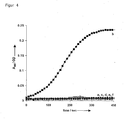
Figure 1 . Use of 1-(dimethylaminopropyl)-3-ethylcarbodiimide hydrochloride (EDC) as a coupling agent allows to synthesize the desired material with high yield of c.a. 90% under mild conditions. The compound shows high stability during chromatographic separation and storage contrary to fears that this material could be unstable due to possible oxidation by air oxygen mediated by the hemin moiety via intramolecular mechanism. In general, all 1,2-diacylated hydrazines demonstrate chemical inertness and are resistant to the action of strong oxidants. They can be oxidized only after a preliminary hydrolysis in 2 N sulphuric acid at 100°C. The UV/VIS absorption spectrum of hemin di(N,N'-acetyl-hydrazide) is different from that of hemin. The shape of absorption peaks is not changed upon addition of excessive amount of apo-horseradish peroxidase into a solution of hemin di(N,N'-acetyl-hydrazide). This behaviour is not similar to that of hemin, which in the presence of apo enzyme changes its UV/VIS absorption signature due to rapid reconstitution with the latter under equal experimental conditions (cf.Figure 3 ). This confirms that hemin di(N,N'-acetyl-hydrazide), like all other hemins with modified carboxylic groups at positions 6 and 7, does not form a stable complex with apo-horseradish peroxidase. In addition, the mixture of apo-horseradish peroxidase and di(N,N'-acetyl-hydrazide) after 10 min preincubation does not show any peroxidase activity in a colorimetric activity assay based on oxidation of a colorogenic substrate like 3,3',5,5'-tetramethylbenzidine dihydrochloride (TMB) by hydrogen peroxide (cf.Figure 4 , curve (a)). When preincubation is carried out in the presence of hydrogen peroxide a significant increase in peroxidase activity can be detected after 10 min starting from the moment of addition of H2O2 (cf.Figure 4 , curve (b)). It should be emphasized that this increase in peroxidase activity is not an artefact caused by the rise of peroxide concentration in the assay mixture containing TMB and 0.17 mM H2O2, because, firstly, peroxidase activity increases with time as one can see when comparing curves (b) and (c), secondly, injection of the sample solution into the assay solution leads to 100 fold dilution of pre-incubated mixture containing hemin di(N,N'-acetyl-hydrazide) and 0.17 mM H2O2. Control experiments performed with mixtures preincubated during 10 min containing only two components of three possible ones, i.e. hemin di(N,N'-acetyl-hydrazide) plus H2O2, apo-horseradish peroxidase plus H2O2, demonstrated the absence of peroxidase activity increase during incubation (cf.Figure 4 , curves (d), (e)). Another experiment in which hemin di(N,N'-acetyl-hydrazide) was preincubated for 10 min in the presence of H2O2 and apo peroxidase was added later, just before the peroxidase assay, showed no increase in peroxidase activity too (cf.Figure 4 , (f)). These experimental data prove that hemin di(N,N'-acetylhydrazide) cannot be oxidized by hydrogen peroxide in the absence of apo-horseradish peroxidase. All three components, i.e. apo-horseradish peroxidase, hemin di(N,N'-acetyl-hydrazide) and H2O2 are essential for generation of peroxidase activity in the system. - Without being bound thereto, the following mechanism outlined in
Figure 2 is proposed to explain said experimental results. The equilibrium between free hemin di(N,N'-acetyl-hydrazide) and free apo-H R P on the left side and the complex of hemin di(N,N'-acetyl-hydrazide) and apo-HRP (pro-HRP) is significantly shifted to the left side due to the modification of carboxylic groups at positions 6 and 7 by hydrazide moieties. Addition of H2O2 leads to irreversible oxidation of hydrazide groups in pro-H R P, catalyzed by the proteic shell, and formation of full functional peroxidase. Thus, the first example of oxidative reconstitution in vitro has been discovered. It can be speculated that in vivo similar redox reconstitutions also can play a role during self-assembling of enzymes and they constitute an important part of enzyme activation mechanism triggered by an enzyme substrate. - The influence of H2O2 concentration on the rate of peroxidase activation under optimized experimental conditions is presented in
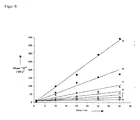
Figures 5 ,6 , and7 . -
Figure 5 illustrates measurements of peroxidase activity after preincubation for 40 min. with varying concentrations of H2O2. Development of generated peroxidase activity with time for different concentrations of apo-horseradish peroxidase is presented inFigure 6 . -
Figure 7 gives the dependence of peroxidase activity, derived from slopes of lines inFigure 5 , on the concentration of H2O2. Activation rate was calculated by measuring initial rate of TMB oxidation for each concentration of H2O2 in incubation mixtures every 10 min. - In the course of the present invention, it has been found that the system can be applied for colorimetric detection of H2O2 using for example TMB as substrate with detection limit not worse than 50 nM under physiological conditions. The sensitivity to hydrogen peroxide of such a colorimetric system according to the present invention is comparable with that of the commercially available fluorometric system based on the oxidation of fluorogenic substrate 10-acetyl-3,7-dihydroxyphenoxazine (Amplex Red). The oxidative reconstition approach as adopted by the present invention can be easily applied for detection of any enzyme generating hydrogen peroxide, for example glucose oxidase. The effect of glucose oxidase concentration in preincubation mixture on the resulting peroxidase activity is shown in
Figure 8 . The detection limit was 40 µU/ml of glucose oxidase. Amplification cascade based on oxidative reconstitution of HRP triggered by glucose oxidase can find broad application in immuno assays relying on glucose oxidase immunoconjugates as labels of a recognition event. The majority of current ELISA systems are build on the basis of peroxidase labelled immunoconjugates and detection of peroxidase activity by colorogenic substrates such as TMB and ABTS. The introduction of the new concept for signal amplification based on triggered generation of peroxidase will allow to use existing equipment and well established peroxidase detection techniques to perform much more sensitive ELISA tests. - The following examples are given by way of illustration only and are not limiting the scope of the invention.
- Hemin chloride, Tris buffer, 5 M sodium chloride solution, EDTA tetrasodium salt, dimethylformamide, acetylhydrazide, 1-(dimethylaminopropyl)-3-ethylcarbodiimide hydrochloride (EDC), 3,3',5,5'-tetramethylbenzidine dihydrochloride (TMB), 2,21-azino-bis(3-ethylbenzthiazoline-6-sulphonic acid) (ABTS) were obtained from Sigma-Aldrich-Fluka (München, Germany). Apo-horseradish peroxidase was acquired from Calzyme (San Luis Obispo, CA, USA). Hydrogen peroxide solution was purchased from Schuster (Germany). HPLC quality water used during this work for the preparation of all aqueous solutions was obtained from VWR international bvbq/spr (Leuven, Netherlands).
- Hemin chloride (50 mg, 76.7 µmol) and acetylhydrazide (47 mg, 0.634 mmol) were dissolved in 5 mL of dimethylformamide. Then, 1-(dimethylaminopropyl)-3-ethylcarbodiimide hydrochloride (67 mg, 0.35 mmol) was dissolved in 5 mL of dimethylformamide and added with stirring. The reaction mixture was left to stay at room temperature overnight. Then, 15 mL of methanol/chloroform (3:7) mixture was added to the reaction mixture and the products formed were separated by column chromatography (60x5 cm) on silica gel (Merck, 0.063-0.2 mm). The reaction products were eluted with 3:7 methanol/chloroform mixture. The second brown fraction was collected and evaporation of solvent in vacuum gave hemin di(N,N'-acetylhydrazide) with 90% yield.
- Electrospray mass spectrometry was used to determine molecular weight of cationic form of the product (728.26 g/mole).
- Electrospray mass spectrometry was performed on Q-TOF Ultima API Masspectrometer (Waters, Milford, USA) using 10-4 - 10-5 M solutions of modified hemin in acetonitrile with addition of tetrafluoroacetic acid.
- Hemin di(N,N'-acetyl-hydrazide) was dissolved in DMF to obtain 6.5 mM solution. This DMF solution was added to a mixture containing 0.1 M Tris buffer (pH 7.5), 110 µM of EDTA, 0.26 M of sodium chloride, 0.86 µM of apo-horseradish peroxidase to obtain 2.33 µM of hemin di(N,N'-acetyl-hydrazide). Reconstitution was initiated by the addition of hydrogen peroxide solution of varying concentrations. Upon incubation during varying time intervals activity of resulting peroxidase was determined by UV spectroscopy.
- The mixture described in the previous section was prepared with 72 mM glucose in addition. Reconstitution was initiated by the addition of glucose oxidase solution of varying concentrations and resulting peroxidase activity was determined by UV spectroscopy.
- The assay was initiated by injecting a sample into a mixture containing 1 mM TMB and 2.3 mM hydrogen peroxide in 0.2 M sodium citrate buffer (pH 4.0) at room temperature. The factor of sample dilution in the assay mixture was 1:100. An increase in absorbance at 360 nm was followed.
- Absorption measurements were recorded with UV/VIS spectrometer Spectra Fluor Plus integrated in Genesis Workstation (Tecan, Crailsheim, Germany) using standard 96 well plastic microplates Bio-One (Greiner,
- The figures show the the following:
-
Figure 1 shows the synthesis of hemin di(N,N'-acetyl-hydrazide). -
Figure 2 shows a proposed mechanism for the oxidative reconstitution of hemin di(N,N'-acetyl-hydrazide) with apo-HRP. -
Figure 3 shows (A) UV-visible absorption spectra of a) free hemin; b) hemin after 30 min incubation with apo-horseradish peroxidase; and (B) UV-visible absorption spectra of a) free hemin di(N,N'-acetyl-hydrazide); b) hemin di(N,N'-acetylhydrazide) after 30 min incubation with apo-horseradish peroxidase. -
Figure 4 shows the time dependent changes in absorption of assay solutions composed of 0.43 mM TMB and 0.17 mM hydrogen peroxide in 0.1 M Tris buffer (pH 8.8) upon injection of samples containing following components in 0.1 M Tris buffer: a) 1 mM apo-horseradish peroxidase, 32 mM hemin di(N,N'-acetyl-hydrazide) pre-incubated for 10 min; b) 1 mM apo peroxidase, 32 mM hemin di(N,N'-acetylhydrazide), 0.17 mM H2O2 pre-incubated for 10 min; c) 1 mM apo peroxidase, 32 mM hemin di(N,N'-acetyl-hydrazide), 0.17 mM H2O2 pre-incubated for 5 s; d) 32 mM hemin di(N,N'-acetyl-hydrazide), 0.17 mM H2O2 pre-incubated for 10 min; e) 1 mM apo peroxidase, 0.17 mM H2O2 pre-incubated for 10 min; f) 32µM hemin di(N,N'-acetyl-hydrazide, 0.17 mM H2O2 preincubated for 10 min, and 1 mM apo-horseradish peroxidase added just before the activity assay. -
Figure 5 shows the time dependent changes in absorption of assay solutions composed of 1 mM TMB and 2.3 mM hydrogen peroxide in 0.2 M sodium citrate buffer (pH 4.0) upon injection of samples containing 110 µM EDTA, 0.26 M NaCl, 0.86 µM apo-horseradish peroxidase, 2.33 µM hemin di(N,N'-acetyl-hydrazide) in 0.1 M Tris buffer (pH 7.5) and varying concentrations of H2O2: a) 1600 nM; b) 800 nM; c) 400 nM; d) 200 nM; e) 100 nM; f) 50 nM; g) 0 nM. -
Figure 6 shows the development of generated peroxidase activity with time for the following concentrations of apo-horseradish peroxidase: a) 1600 nM; b) 800 nM; c) 400 nM; d) 200 nM; e) 100 nM; f) 50 nM; g) 0 nM. Experimental conditions are the same as inFigure 5 . -
Figure 7 shows the effect of H2O2 concentration during pre-incubation with hemin di(N,N'-acetyl-hydrazide) and apo-horseradish peroxidase on the rate of peroxidase generation. Experimental conditions are the same as inFigure 5 . -
Figure 8 shows the time dependent changes in absorption of assay solutions composed of 1 mM TMB and 2.3 mM hydrogen peroxide in 0.2 M sodium citrate buffer (pH 4.0) upon injection of samples containing 110 µM EDTA, 0.26 M NaCl, 0.86 µM apo-horseradish peroxidase, 2.33 pM hemin di(N,N'-acetyl-hydrazide), 72 mM D-glucose in 0.1 M Tris buffer (pH 7.5) and varying concentrations of glucose oxidase: a) 3700 µU/mL; b) 377 µU/mL; c) 37 µU/mL; d) 0 µU/mL.
Claims (9)
- A hemin derivative which has the following structure:

R1 represents hydrogen, -ORa, -SRa, -NRaRb, a C1-8 straight chain or branched chain alkyl residue, an unsubstituted or C1-8 alkyl- or C1-8 alkoxy-substituted C6-10 aryl residue, particularly phenyl or tolyl, or a C6-10 aralkyl residue, particularly benzyl, with Ra and Rb being independently from each other selected from hydrogen, a C1-8 straight chain or branched chain alkyl residue, a C6-10 aryl residue, particularly phenyl, or a C6-10 aralkyl residue, preferably benzyl, and
R2 and R3, independently from each other, represent hydrogen, a C1-8 straight chain or branched chain alkyl residue, a C6-10 aryl residue, particularly phenyl, or a C6-10 aralkyl residue, preferably benzyl. - The hemin derivative according to claim 1, wherein R1 represents a C1-8 straight chain alkyl residue, preferably methyl.
- A kit comprising(i) a hemin derivative according to claim 1 or 2, and(ii) apo-horseradish peroxidase (apo-HRP).
- The kit according to claim 3, further comprising:(iii) a horseradish peroxidase substrate selected from the group consisting of chromogenic, fluorogenic and luminescent substrates.
- The kit according to claim 4, wherein the horseradish peroxidase substrate is a chromogenic substrate, particularly 3,3',5,5'-tetramethylbenzidine dihydrochloride (TMB).
- Use of the kit according to claim 4 or 5 for detecting and/or quantifying hydrogen peroxide in a biological sample.
- An assay method for detecting and/or quantifying an analyte in a biological sample which comprises detecting hydrogen peroxide generated in the presence as opposed to the absence of said analyte by bringing said sample into contact with the kit according to claim 4 or 5.
- The method according to claim 7, wherein the hydrogen peroxide to be detected is produced in situ in the sample by the action of an oxidase on an oxidase substrate contained in said sample.
- The method according to claim 8 wherein said oxidase substrate which is subjected to the action of the oxidase is selected from glucose and cholesterol.
Priority Applications (2)
| Application Number | Priority Date | Filing Date | Title |
|---|---|---|---|
| EP07009168A EP1990347A1 (en) | 2007-05-07 | 2007-05-07 | Quantification of hydrogen peroxyde by triggered reconstitution of horseradish peroxidase using a modified hemin |
| PCT/EP2008/003002 WO2008135139A1 (en) | 2007-05-07 | 2008-04-15 | Quantification of hydrogen peroxide by triggered reconstitution of horseradish peroxidase using a modified hemin |
Applications Claiming Priority (1)
| Application Number | Priority Date | Filing Date | Title |
|---|---|---|---|
| EP07009168A EP1990347A1 (en) | 2007-05-07 | 2007-05-07 | Quantification of hydrogen peroxyde by triggered reconstitution of horseradish peroxidase using a modified hemin |
Publications (1)
| Publication Number | Publication Date |
|---|---|
| EP1990347A1 true EP1990347A1 (en) | 2008-11-12 |
Family
ID=38179981
Family Applications (1)
| Application Number | Title | Priority Date | Filing Date |
|---|---|---|---|
| EP07009168A Withdrawn EP1990347A1 (en) | 2007-05-07 | 2007-05-07 | Quantification of hydrogen peroxyde by triggered reconstitution of horseradish peroxidase using a modified hemin |
Country Status (2)
| Country | Link |
|---|---|
| EP (1) | EP1990347A1 (en) |
| WO (1) | WO2008135139A1 (en) |
Families Citing this family (2)
| Publication number | Priority date | Publication date | Assignee | Title |
|---|---|---|---|---|
| EP3295962B1 (en) * | 2016-09-15 | 2021-01-27 | Nano4Imaging GmbH | Tetrapyrrole conjugates as mri contrast agents |
| CN110779914B (en) * | 2019-11-05 | 2022-05-20 | 湖南科技大学 | Preparation method of kit based on hemoglobin and four-carbon or five-carbon dicarboxylic acid compound |
Citations (1)
| Publication number | Priority date | Publication date | Assignee | Title |
|---|---|---|---|---|
| GB1105927A (en) * | 1964-06-15 | 1968-03-13 | Miles Lab | Diagnostic composition |
-
2007
- 2007-05-07 EP EP07009168A patent/EP1990347A1/en not_active Withdrawn
-
2008
- 2008-04-15 WO PCT/EP2008/003002 patent/WO2008135139A1/en not_active Ceased
Patent Citations (1)
| Publication number | Priority date | Publication date | Assignee | Title |
|---|---|---|---|---|
| GB1105927A (en) * | 1964-06-15 | 1968-03-13 | Miles Lab | Diagnostic composition |
Non-Patent Citations (2)
| Title |
|---|
| BIOKHIMIYA (MOSCOW) , 44(2), 240-4 CODEN: BIOHAO; ISSN: 0006-307X, 1979 * |
| DATABASE CA [online] CHEMICAL ABSTRACTS SERVICE, COLUMBUS, OHIO, US; BELOSTOTSKII, V. M. ET AL: "Peroxidase activity of hemoglobin, modified at the carboxyl groups of heme by amino acids", XP002453302, retrieved from STN Database accession no. 90:181824 * |
Also Published As
| Publication number | Publication date |
|---|---|
| WO2008135139A1 (en) | 2008-11-13 |
Similar Documents
| Publication | Publication Date | Title |
|---|---|---|
| Poole et al. | Fluorescent and affinity-based tools to detect cysteine sulfenic acid formation in proteins | |
| Bonini et al. | The oxidation of 2′, 7′-dichlorofluorescin to reactive oxygen species: a self-fulfilling prophesy? | |
| Welford et al. | The selectivity and inhibition of AlkB | |
| Rota et al. | Evidence for free radical formation during the oxidation of 2′-7′-dichlorofluorescin to the fluorescent dye 2′-7′-dichlorofluorescein by horseradish peroxidase:: Possible implications for oxidative stress measurements | |
| Poole et al. | Discovering mechanisms of signaling-mediated cysteine oxidation | |
| Sinha | Enzymatic activation of hydrazine derivatives. A spin-trapping study. | |
| Koenitzer et al. | Redox signaling in inflammation: interactions of endogenous electrophiles and mitochondria in cardiovascular disease | |
| Kirsch et al. | Reaction of peroxynitrite with reduced nicotinamide nucleotides, the formation of hydrogen peroxide | |
| Stocker et al. | A fluorescent homogeneous assay for myeloperoxidase measurement in biological samples. A positive correlation between myeloperoxidase-generated HOCl level and oxidative status in STZ-diabetic rats | |
| Berry et al. | Oxygen concentration determines regiospecificity in soybean lipoxygenase-1 reaction via a branched kinetic scheme | |
| EP2663648B1 (en) | Compounds and methods for detection of enzymes that remove succinyl groups from epsilon-amino lysine moieties | |
| Zhu et al. | Spectrophotometric determination of hydrogen peroxide by using the cleavage of Eriochrome black T in the presence of peroxidase | |
| US10125385B2 (en) | Electrochemiluminescence (ECL) detection reagents and related methods for measuring enzyme activity | |
| WO2008135139A1 (en) | Quantification of hydrogen peroxide by triggered reconstitution of horseradish peroxidase using a modified hemin | |
| CA2448370A1 (en) | Luciferin hydrazides | |
| JP2002315600A (en) | Method for quantifying N-terminal glycated protein | |
| Virel et al. | Ultrasensitive optical detection of hydrogen peroxide by triggered activation of horseradish peroxidase | |
| Netto et al. | Hemoglobin-mediated oxidation of the carcinogen 1, 2-dimethylhydrazine to methyl radicals | |
| JP6357779B2 (en) | Enzyme stabilization method | |
| JPH07155196A (en) | Measuring method of biological components | |
| JP2838866B2 (en) | Method for suppressing the activity of reducing substances in oxidative colorimetric analysis | |
| WO1998031829A1 (en) | Methods and reagents for quantitatively determining ascorbic acid | |
| CN111999349A (en) | Detection method or kit for hydrogen peroxide | |
| Cighetti et al. | β-ethoxyacrolein contamination increases malondialdehyde inhibition of milk xanthine oxidase activity | |
| Gąsowska et al. | Indirect oxidation of amino acid phenylhydrazides by mushroom tyrosinase |
Legal Events
| Date | Code | Title | Description |
|---|---|---|---|
| PUAI | Public reference made under article 153(3) epc to a published international application that has entered the european phase |
Free format text: ORIGINAL CODE: 0009012 |
|
| AK | Designated contracting states |
Kind code of ref document: A1 Designated state(s): AT BE BG CH CY CZ DE DK EE ES FI FR GB GR HU IE IS IT LI LT LU LV MC MT NL PL PT RO SE SI SK TR |
|
| AX | Request for extension of the european patent |
Extension state: AL BA HR MK RS |
|
| 17P | Request for examination filed |
Effective date: 20090416 |
|
| AKX | Designation fees paid |
Designated state(s): AT BE BG CH CY CZ DE DK EE ES FI FR GB GR HU IE IS IT LI LT LU LV MC MT NL PL PT RO SE SI SK TR |
|
| GRAP | Despatch of communication of intention to grant a patent |
Free format text: ORIGINAL CODE: EPIDOSNIGR1 |
|
| STAA | Information on the status of an ep patent application or granted ep patent |
Free format text: STATUS: THE APPLICATION IS DEEMED TO BE WITHDRAWN |
|
| 18D | Application deemed to be withdrawn |
Effective date: 20100108 |