EP1988175A1 - Predictive RNA profiles - Google Patents
Predictive RNA profiles Download PDFInfo
- Publication number
- EP1988175A1 EP1988175A1 EP07090093A EP07090093A EP1988175A1 EP 1988175 A1 EP1988175 A1 EP 1988175A1 EP 07090093 A EP07090093 A EP 07090093A EP 07090093 A EP07090093 A EP 07090093A EP 1988175 A1 EP1988175 A1 EP 1988175A1
- Authority
- EP
- European Patent Office
- Prior art keywords
- disease
- interferon
- genes
- ifnβ1b
- patient
- Prior art date
- Legal status (The legal status is an assumption and is not a legal conclusion. Google has not performed a legal analysis and makes no representation as to the accuracy of the status listed.)
- Withdrawn
Links
- 108090000623 proteins and genes Proteins 0.000 claims abstract description 35
- 201000010099 disease Diseases 0.000 claims abstract description 22
- 208000037265 diseases, disorders, signs and symptoms Diseases 0.000 claims abstract description 22
- 201000006417 multiple sclerosis Diseases 0.000 claims abstract description 21
- 108010005714 Interferon beta-1b Proteins 0.000 claims abstract description 9
- 229960003161 interferon beta-1b Drugs 0.000 claims abstract description 8
- 238000000034 method Methods 0.000 claims description 26
- 230000014509 gene expression Effects 0.000 claims description 23
- 208000007400 Relapsing-Remitting Multiple Sclerosis Diseases 0.000 claims description 21
- 238000012360 testing method Methods 0.000 claims description 13
- 238000011282 treatment Methods 0.000 claims description 10
- 238000002560 therapeutic procedure Methods 0.000 claims description 9
- 238000003745 diagnosis Methods 0.000 claims description 8
- 239000000463 material Substances 0.000 claims description 7
- 238000004458 analytical method Methods 0.000 claims description 6
- 239000012472 biological sample Substances 0.000 claims description 6
- 239000000523 sample Substances 0.000 claims description 5
- 210000004369 blood Anatomy 0.000 claims description 4
- 239000008280 blood Substances 0.000 claims description 4
- 239000000872 buffer Substances 0.000 claims description 4
- 150000001875 compounds Chemical class 0.000 claims description 4
- 238000000338 in vitro Methods 0.000 claims description 4
- 206010039073 rheumatoid arthritis Diseases 0.000 claims description 4
- 201000000596 systemic lupus erythematosus Diseases 0.000 claims description 4
- 102100032855 Sialoadhesin Human genes 0.000 claims description 3
- 238000010195 expression analysis Methods 0.000 claims description 3
- 102000004169 proteins and genes Human genes 0.000 claims description 3
- 210000002966 serum Anatomy 0.000 claims description 3
- 230000036962 time dependent Effects 0.000 claims description 3
- 230000003827 upregulation Effects 0.000 claims description 3
- 208000023328 Basedow disease Diseases 0.000 claims description 2
- 208000011231 Crohn disease Diseases 0.000 claims description 2
- 208000015023 Graves' disease Diseases 0.000 claims description 2
- 208000030836 Hashimoto thyroiditis Diseases 0.000 claims description 2
- 101000657037 Homo sapiens Radical S-adenosyl methionine domain-containing protein 2 Proteins 0.000 claims description 2
- 101000868472 Homo sapiens Sialoadhesin Proteins 0.000 claims description 2
- 102100033749 Radical S-adenosyl methionine domain-containing protein 2 Human genes 0.000 claims description 2
- 208000021386 Sjogren Syndrome Diseases 0.000 claims description 2
- 108700012411 TNFSF10 Proteins 0.000 claims description 2
- 206010067584 Type 1 diabetes mellitus Diseases 0.000 claims description 2
- 206010012601 diabetes mellitus Diseases 0.000 claims description 2
- 238000000684 flow cytometry Methods 0.000 claims description 2
- 239000011888 foil Substances 0.000 claims description 2
- 238000010208 microarray analysis Methods 0.000 claims description 2
- 238000003753 real-time PCR Methods 0.000 claims description 2
- 239000000126 substance Substances 0.000 claims description 2
- 101000840293 Homo sapiens Interferon-induced protein 44 Proteins 0.000 claims 2
- 102100029607 Interferon-induced protein 44 Human genes 0.000 claims 2
- 102100027302 Interferon-induced protein with tetratricopeptide repeats 3 Human genes 0.000 claims 2
- 101710166376 Interferon-induced protein with tetratricopeptide repeats 3 Proteins 0.000 claims 2
- 102100024598 Tumor necrosis factor ligand superfamily member 10 Human genes 0.000 claims 2
- GXAFMKJFWWBYNW-OWHBQTKESA-N 2-[3-[(1r)-1-[(2s)-1-[(2s)-3-cyclopropyl-2-(3,4,5-trimethoxyphenyl)propanoyl]piperidine-2-carbonyl]oxy-3-(3,4-dimethoxyphenyl)propyl]phenoxy]acetic acid Chemical compound C1=C(OC)C(OC)=CC=C1CC[C@H](C=1C=C(OCC(O)=O)C=CC=1)OC(=O)[C@H]1N(C(=O)[C@@H](CC2CC2)C=2C=C(OC)C(OC)=C(OC)C=2)CCCC1 GXAFMKJFWWBYNW-OWHBQTKESA-N 0.000 claims 1
- 102100030385 Granzyme B Human genes 0.000 claims 1
- 102100021455 Histone deacetylase 3 Human genes 0.000 claims 1
- 101001009603 Homo sapiens Granzyme B Proteins 0.000 claims 1
- 101000593378 Homo sapiens Interferon-induced GTP-binding protein Mx2 Proteins 0.000 claims 1
- 101001082058 Homo sapiens Interferon-induced protein with tetratricopeptide repeats 2 Proteins 0.000 claims 1
- 101001034844 Homo sapiens Interferon-induced transmembrane protein 1 Proteins 0.000 claims 1
- 101001034846 Homo sapiens Interferon-induced transmembrane protein 3 Proteins 0.000 claims 1
- 101001065568 Homo sapiens Lymphocyte antigen 6E Proteins 0.000 claims 1
- 101000701614 Homo sapiens Nuclear autoantigen Sp-100 Proteins 0.000 claims 1
- 101001067396 Homo sapiens Phospholipid scramblase 1 Proteins 0.000 claims 1
- 101000830565 Homo sapiens Tumor necrosis factor ligand superfamily member 10 Proteins 0.000 claims 1
- 102100034717 Interferon-induced GTP-binding protein Mx2 Human genes 0.000 claims 1
- 102100027303 Interferon-induced protein with tetratricopeptide repeats 2 Human genes 0.000 claims 1
- 102100040021 Interferon-induced transmembrane protein 1 Human genes 0.000 claims 1
- 102100040035 Interferon-induced transmembrane protein 3 Human genes 0.000 claims 1
- 102000014150 Interferons Human genes 0.000 claims 1
- 108010050904 Interferons Proteins 0.000 claims 1
- 102100032131 Lymphocyte antigen 6E Human genes 0.000 claims 1
- 102100034449 N-myc-interactor Human genes 0.000 claims 1
- 102100030436 Nuclear autoantigen Sp-100 Human genes 0.000 claims 1
- 102100034627 Phospholipid scramblase 1 Human genes 0.000 claims 1
- MEFKEPWMEQBLKI-AIRLBKTGSA-N S-adenosyl-L-methioninate Chemical compound O[C@@H]1[C@H](O)[C@@H](C[S+](CC[C@H](N)C([O-])=O)C)O[C@H]1N1C2=NC=NC(N)=C2N=C1 MEFKEPWMEQBLKI-AIRLBKTGSA-N 0.000 claims 1
- 108010029176 Sialic Acid Binding Ig-like Lectin 1 Proteins 0.000 claims 1
- 108060008682 Tumor Necrosis Factor Proteins 0.000 claims 1
- 229960001570 ademetionine Drugs 0.000 claims 1
- 108010074724 histone deacetylase 3 Proteins 0.000 claims 1
- 229940079322 interferon Drugs 0.000 claims 1
- 102000003390 tumor necrosis factor Human genes 0.000 claims 1
- 241000712461 unidentified influenza virus Species 0.000 claims 1
- 208000023275 Autoimmune disease Diseases 0.000 abstract description 4
- 210000003169 central nervous system Anatomy 0.000 abstract description 3
- 230000004044 response Effects 0.000 description 8
- 230000002596 correlated effect Effects 0.000 description 5
- 210000003819 peripheral blood mononuclear cell Anatomy 0.000 description 5
- 108091032973 (ribonucleotides)n+m Proteins 0.000 description 4
- 238000012544 monitoring process Methods 0.000 description 4
- 239000002299 complementary DNA Substances 0.000 description 3
- 238000003066 decision tree Methods 0.000 description 3
- 229940079593 drug Drugs 0.000 description 3
- 239000003814 drug Substances 0.000 description 3
- 238000002493 microarray Methods 0.000 description 3
- 238000010200 validation analysis Methods 0.000 description 3
- 239000000090 biomarker Substances 0.000 description 2
- 238000002790 cross-validation Methods 0.000 description 2
- 238000001514 detection method Methods 0.000 description 2
- 238000001914 filtration Methods 0.000 description 2
- 238000002347 injection Methods 0.000 description 2
- 239000007924 injection Substances 0.000 description 2
- 239000003550 marker Substances 0.000 description 2
- 238000012775 microarray technology Methods 0.000 description 2
- 230000037361 pathway Effects 0.000 description 2
- 238000000513 principal component analysis Methods 0.000 description 2
- 230000035945 sensitivity Effects 0.000 description 2
- 238000012549 training Methods 0.000 description 2
- 238000000018 DNA microarray Methods 0.000 description 1
- 229920001917 Ficoll Polymers 0.000 description 1
- 101100369992 Homo sapiens TNFSF10 gene Proteins 0.000 description 1
- 208000032234 No therapeutic response Diseases 0.000 description 1
- 102000046283 TNF-Related Apoptosis-Inducing Ligand Human genes 0.000 description 1
- 206010051083 Therapy responder Diseases 0.000 description 1
- 230000004913 activation Effects 0.000 description 1
- VREFGVBLTWBCJP-UHFFFAOYSA-N alprazolam Chemical compound C12=CC(Cl)=CC=C2N2C(C)=NN=C2CN=C1C1=CC=CC=C1 VREFGVBLTWBCJP-UHFFFAOYSA-N 0.000 description 1
- 230000003466 anti-cipated effect Effects 0.000 description 1
- 239000000427 antigen Substances 0.000 description 1
- 102000036639 antigens Human genes 0.000 description 1
- 108091007433 antigens Proteins 0.000 description 1
- 238000013459 approach Methods 0.000 description 1
- 238000003491 array Methods 0.000 description 1
- 230000001363 autoimmune Effects 0.000 description 1
- 230000008901 benefit Effects 0.000 description 1
- 210000004027 cell Anatomy 0.000 description 1
- 238000005119 centrifugation Methods 0.000 description 1
- 230000001684 chronic effect Effects 0.000 description 1
- 238000002648 combination therapy Methods 0.000 description 1
- 230000000875 corresponding effect Effects 0.000 description 1
- 230000003247 decreasing effect Effects 0.000 description 1
- 230000009266 disease activity Effects 0.000 description 1
- 230000000694 effects Effects 0.000 description 1
- 230000008030 elimination Effects 0.000 description 1
- 238000003379 elimination reaction Methods 0.000 description 1
- 230000005713 exacerbation Effects 0.000 description 1
- 230000002519 immonomodulatory effect Effects 0.000 description 1
- 238000009169 immunotherapy Methods 0.000 description 1
- 238000001727 in vivo Methods 0.000 description 1
- 208000015181 infectious disease Diseases 0.000 description 1
- 230000002458 infectious effect Effects 0.000 description 1
- 230000000977 initiatory effect Effects 0.000 description 1
- 108020004999 messenger RNA Proteins 0.000 description 1
- 208000015122 neurodegenerative disease Diseases 0.000 description 1
- 238000010606 normalization Methods 0.000 description 1
- 210000005259 peripheral blood Anatomy 0.000 description 1
- 239000011886 peripheral blood Substances 0.000 description 1
- 238000004393 prognosis Methods 0.000 description 1
- 238000003908 quality control method Methods 0.000 description 1
- 238000011160 research Methods 0.000 description 1
- 238000007619 statistical method Methods 0.000 description 1
- 230000009897 systematic effect Effects 0.000 description 1
- 230000017423 tissue regeneration Effects 0.000 description 1
- 230000002103 transcriptional effect Effects 0.000 description 1
Images
Classifications
-
- C—CHEMISTRY; METALLURGY
- C12—BIOCHEMISTRY; BEER; SPIRITS; WINE; VINEGAR; MICROBIOLOGY; ENZYMOLOGY; MUTATION OR GENETIC ENGINEERING
- C12Q—MEASURING OR TESTING PROCESSES INVOLVING ENZYMES, NUCLEIC ACIDS OR MICROORGANISMS; COMPOSITIONS OR TEST PAPERS THEREFOR; PROCESSES OF PREPARING SUCH COMPOSITIONS; CONDITION-RESPONSIVE CONTROL IN MICROBIOLOGICAL OR ENZYMOLOGICAL PROCESSES
- C12Q1/00—Measuring or testing processes involving enzymes, nucleic acids or microorganisms; Compositions therefor; Processes of preparing such compositions
- C12Q1/68—Measuring or testing processes involving enzymes, nucleic acids or microorganisms; Compositions therefor; Processes of preparing such compositions involving nucleic acids
- C12Q1/6809—Methods for determination or identification of nucleic acids involving differential detection
Definitions
- the present invention is directed to predictive RNA profiles and their use for predicting the success in modulation of a disease course ex vivo as well as to certain genes which are specifically expressed during the course of the disease.
- MS Multiple sclerosis
- CNS central nervous system
- cDNA microarray driven analyses facilitate medical research by documenting detailed responses of cells and tissues to both disease and the intended and unintended effects of drug treatments ( Goertsches R, Serrano-Fernandez P, Moller S, Koczan D, Zettl UK. Multiple sclerosis therapy monitoring based on gene expression. Curr Pharm Des. 2006;12(29):3761-79 ).
- Such a method for the diagnosis and prediction of the success in modulating of the disease course in a patient comprises a) providing a biological sample from an IFN ⁇ 1b treated RRMS patients, b) providing a biological sample from a healthy donor or a reference value indicative for a healthy donor or a non treated MS patient, c) determining the level of expression of one or more genes according to table 1, and d) whereby the upregulation of one or more selected genes of table 1 is indicative for the successful course of the treatment.
- the method used for gene selection in building the prognostic classifier is a simple decision (or prognostic) tree, adapted from classification trees ( Briemann L, Friedman JH, Olshen RA, Stone CJ. Classification and regression trees.
- the decision/prognostic trees contained in total a set of 17 genes (tab. 1) that performed reasonably well with a good outcome at 48h, 1 month or 1 year into therapy.
- the tree analysis provided a tree structure, with 2 branches at each step of the tree and new branches being formed until the data had no further important prognostic information, meaning that the data could not be further subdivided by any of the possible prognostic factors to be of any benefit in predicting a clinical response) ( fig. 1 ).
- the clinical parameters relapse rate, disability progression, clinical score
- Within each of these subgroups (time point) different sets of prognostic RNA factors were identified, although in three cases two probe sets coding each for TRAIL, SIGLEC1 and RSAD2 recurrently appeared.
- Supervised prediction uses both the outcome information and the expression data to develop and evaluate a classifier that can be used to predict outcome in new patients, based only on their expression profiles.
- Subject matter of the present invention is the use of the identified genes to predict the success in modulation of a disease course in a patient treated with Interferon beta 1b (IFN ⁇ 1b) ex vivo whereas the disease can be elected out of a group comprising multiple sclerosis (MS), diabetes mellitus type 1 (IDDM), systemic lupus erythematosus (SLE), Sjögren's syndrome, Hashimoto's thyroiditis, Graves' disease, Crohn's Disease, and rheumatoid arthritis (RA).
- MS multiple sclerosis
- IDDM diabetes mellitus type 1
- SLE systemic lupus erythematosus
- Sjögren's syndrome Hashimoto's thyroiditis
- Graves' disease Crohn's Disease
- RA rheumatoid arthritis
- Another embodiment of the present invention is a method for the diagnosis and prediction of the success in modulating of the disease course in a patient according to the present invention comprising a) providing a biological sample from an Interferon beta 1b (IFN ⁇ 1b) treated relapsing remitting Multiple sclerosis (RRMS) patients, b) providing a biological sample from a healthy donor or a reference value indicative for a healthy donor or a non treated MS patient, c) determining the level of expression of one or more genes according to table 1, and d) whereby the upregulation of one or more genes of table 1 is indicative for the successful course of the treatment.
- IFN ⁇ 1b Interferon beta 1b
- RRMS Multiple sclerosis
- the in vitro method for diagnosis and prediction of the success in modulating of the disease course in a patient as described above comprises determining the genes according to table 1, comprising microarray analysis, real-time PCR and/or flow cytometry analysis.
- Other methods for determining gene or protein expression are known of skill in the art and can be taken from the respective literature, these can also be applied, such as antigen-based tests.
- the in vitro method for the diagnosis and prediction of the success in modulating of the disease course in a patient as described above is characterized in that said method is performed at least one to four times at 48h, 1 month or 1 year into therapy depending on the particular status of the patient that will be diagnosed and/or monitored.
- the marker according to the present invention allows for an improved monitoring of the progression of the disease in patient which are treated with IFN ⁇ 1b by the attending physician.
- the expression of the marker can easily be measured based on the blood or serum of a patient followed by measuring of the expression levels by means of microarray technology.
- Another aspect of the present invention relates to the use of time-dependent gene expression analysis of the genes according to table 1 from Interferon beta 1b (IFN ⁇ 1b) treated relapsing remitting Multiple sclerosis (RRMS) patients for predicting the success in modulation of the disease course.
- IFN ⁇ 1b Interferon beta 1b
- RRMS Multiple sclerosis
- the in vitro methods for diagnosis and/or monitoring of multiple sclerosis in an RRMS patient treated with IFN ⁇ 1b herein are characterized in that said methods which are performed at least one to four times a year at 48h, 1 month or 1 year into therapy depending on the particular status of the patient that will be diagnosed and/or monitored.
- kits comprising suitable material and compounds for performing the methods described above.
- suitable material are generally known to a person of skill in the art and can be selected from chemicals, buffers, disposable test devices, foil packs, instructions for using said test kit, buffers, antibodies, color charts, reference blood or serum samples from healthy donors, and plastic materials such as dishes and tubes.
- kit as described above, wherein said kit comprises materials and compounds suitable for a point-of-care analysis.
- Point-of-care (POC) analysis is normally defined as testing that is performed outside physical facilities of the clinical laboratory, in proximity to the patient on whom the testing is performed. The central feature of POC testing is that it does not require permanent, dedicated space.
- Subject of the study was a group of 18 patients (female/male ratio 2:1) with diagnosed relapsing remitting MS (RRMS) according to Poser and McDonald criteria and ages ranging from 21 to 66 years (mean: 42).
- the patients were prescribed a first immunotherapy with IFN ⁇ 1b after the second exacerbation of the disease. 8 MIU of the drug were injected subcutaneously every second day.
- Peripheral blood of each patient was drawn before onset of therapy (t0; baseline) and subsequently two days (t1), one month (t2), one year (t3) and two years (t4) after initiation (Goertsches et al., 2006).
- PBMCs Peripheral blood mononuclear cells
- IFN ⁇ 1b IFN ⁇ 1b treated MS patients were isolated by centrifugation on a Ficoll density gradient and subsequently mRNA isolated (Qiagen kit). RNA was labeled and analyzed by microarray technology (GeneChip® U133 set, Affymetrix), thereby simultaneously measuring the expression levels of about 45 000 transcripts (probe sets). Quality control and normalization procedures were performed according to Affymetrix manual. The expression level and corresponding accuracy detection p-value of all transcripts were calculated applying the MAS 5 algorithm (Affymetrix).
- a fundamental rule is that the samples used for the validation step must not have been used for building the classifier.
- Two types of methods can be used to ensure that this principle is not violated: the cross-validation procedure and the split-sample procedure.
- the dual-validation procedure was applied in which the classifier and its validation was achieved both with a cross-validation procedure in the training set of 18 patients and by using an additional independent sample of seven RRMS patients.
- the method used for gene selection in building the prognostic classifier was simple decision (or prognostic) tree, adapted from classification trees ( Briemann L, Friedman JH, Olshen RA, Stone CJ. Classification and regression trees. Belmont, CA: Wadsworth International, 1984 ). It is based on filtering tools (principal component analysis, k-means) that preselect clustered genes from the set of differentially expressed genes (Increase, Decrease). These clustered genes were then tested for their clinically relevant value, if they correlated with the outcome classes "response” or "non-response” to IFN ⁇ -1b treatment.
- filtering tools principal component analysis, k-means
- Subcategoric binary variables were "relapse: Yes / No", "disability progression: Yes / No” and a combined variable, the "clinical score”.
- the discriminating variables were absolute gene expression value and the ratio between a certain time (t1, t2, t3, t4,) and t0, respectively.
- Attained decision trees were tested by evaluating specified classifiers on the test set, thereby estimating the prediction accuracy (sensitivity and specificity).
- Different classifiers yield different prediction accuracies in settings with different prevalence for the outcome categories such as "relapse” and "disability progression”.
- the performance of classifiers trained to predict the "response or non-response” binary outcome is presented in a contingency table of these two categories for both true and predicted status. All the computational steps were performed by the open source computer language software "R" (Bioconductor).
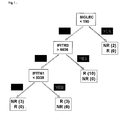
- Figure 1 Decision tree for variable "disability progression" for INF ⁇ -1b treated RRMS patients; R: Therapy Responder; NR: Therapy Non Responder.
- Table 1 Promising biomarker genes of prognostic value for INF ⁇ -1b therapy in RRMS patients.
Landscapes
- Chemical & Material Sciences (AREA)
- Life Sciences & Earth Sciences (AREA)
- Organic Chemistry (AREA)
- Analytical Chemistry (AREA)
- Zoology (AREA)
- Wood Science & Technology (AREA)
- Proteomics, Peptides & Aminoacids (AREA)
- Health & Medical Sciences (AREA)
- Engineering & Computer Science (AREA)
- Microbiology (AREA)
- Immunology (AREA)
- Molecular Biology (AREA)
- Biotechnology (AREA)
- Biophysics (AREA)
- Physics & Mathematics (AREA)
- Biochemistry (AREA)
- Bioinformatics & Cheminformatics (AREA)
- General Engineering & Computer Science (AREA)
- General Health & Medical Sciences (AREA)
- Genetics & Genomics (AREA)
- Measuring Or Testing Involving Enzymes Or Micro-Organisms (AREA)
Abstract
Multiple sclerosis (MS) is an autoimmune disease of the central nervous system. The present invention is directed to predictive RNA profiles and their use for predicting the success in modulation of a disease course in a patient treated with Interferon beta 1b (IFNβ1b) ex vivo as well as to certain genes which are specifically expressed during the course of the disease.
Description
- The present invention is directed to predictive RNA profiles and their use for predicting the success in modulation of a disease course ex vivo as well as to certain genes which are specifically expressed during the course of the disease.
- Multiple sclerosis (MS) is the most prevalent chronic autoimmune, neurodegenerative disorder of the central nervous system (CNS). Despite substantial progress, treatment of MS and other autoimmune diseases is only moderately effective. It is anticipated that the treatment of autoimmune diseases with single drugs or biological approaches will in the future be complemented, or even replaced, by combination therapies, which include immunomodulation, elimination of infectious triggers and tissue repair.
- In the attempt to identify a gene expression profile characteristic for MS, several expression studies have been published in the last years. In all these studies, the authors investigated the gene expression pattern of peripheral blood mononuclear cells (PBMC) from relapsing remitting Multiple sclerosis (RRMS) patients, generally using cDNA microarrays (Ramanathan M., Weinstock-Guttman B, Nguyen LT, et al. In vivo gene expression revealed by cDNA arrays: the pattern in relapsing-remitting multiple sclerosis patients compared with normal subjects. J Neuroimmunol. 2001; 116:213-219; Maas K, Chan S. Parker J, et al., Cutting edge: molecular portrait of human autoimmune disease. J Immunol. 2002;169:5-9; Bromprezzi R, Ringner M, Kim S, et al. Gene expression profile in multiple sclerosis patients and healthy controls: identifying pathways relevant to disease. Hum Mol Genet. 2003;12:2191-2199) or DNA microarrays (Achiron A, Gurevich M, Freidman N, Kaminski N, Mandel M. Blood transcriptional signatures of multiple sclerosis: unique gene expression of disease activity. Ann Neurol. 2004;55:410-417; Iglesias AH, Camelo S, Hwang D, Villanueva R, Stephanopoulos G, Dangong F. Microarray detection of E2F pathway activation and other targets in multiple sclerosis peripheral blood mononuclear cells. J Neuroimmunol. 2004;150:163-177).
- Especially cDNA microarray driven analyses facilitate medical research by documenting detailed responses of cells and tissues to both disease and the intended and unintended effects of drug treatments (Goertsches R, Serrano-Fernandez P, Moller S, Koczan D, Zettl UK. Multiple sclerosis therapy monitoring based on gene expression. Curr Pharm Des. 2006;12(29):3761-79).
- Despite the above mentioned attempts to provide markers that aid in the diagnosis, prognosis, and/or monitoring of MS, the set of presently available markers still is insufficient.
- Besides the need for reliable surrogate biomarkers the need for simple prognostic models, which help to predict the outcome of a disease modifying treatment is also extremely demanding.
- It is therefore an object of the present invention, to provide a simple prognostic model to predict the clinical outcome of treatment of a disease, in particular MS.
- The problem is solved by combination of several aspects of patient data. It was found that a systematic time-dependent gene expression analysis from Interferon beta 1b (IFNβ1b) treated relapsing remitting Multiple sclerosis (RRMS) patients delivers sets of genes (classifier) that provide a rational basis for predicting the success in modulation of the disease course.
Such a method for the diagnosis and prediction of the success in modulating of the disease course in a patient, comprises a) providing a biological sample from an IFNβ1b treated RRMS patients, b) providing a biological sample from a healthy donor or a reference value indicative for a healthy donor or a non treated MS patient, c) determining the level of expression of one or more genes according to table 1, and d) whereby the upregulation of one or more selected genes of table 1 is indicative for the successful course of the treatment.
The method used for gene selection in building the prognostic classifier is a simple decision (or prognostic) tree, adapted from classification trees (Briemann L, Friedman JH, Olshen RA, Stone CJ. Classification and regression trees. Belmont, CA: Wadsworth International, 1984). It is based on filtering tools (principal component analysis, k-means) that preselected clustered genes from the set of differentially expressed genes (increased/ decreased).
These clustered genes can then be tested for their clinically relevant value, if they correlated with the outcome classes "response" or "non-response" to IFNβ-1 b treatment.
Attained decision trees were tested by evaluating specified classifiers on the test set, thereby estimating the prediction accuracy (sensitivity and specificity).
Different classifiers yield different prediction accuracies in settings with different prevalence for the outcome categories such as "relapse" and "disability progression". - The decision/prognostic trees contained in total a set of 17 genes (tab. 1) that performed reasonably well with a good outcome at 48h, 1 month or 1 year into therapy.
For each time point and subcategory, the tree analysis provided a tree structure, with 2 branches at each step of the tree and new branches being formed until the data had no further important prognostic information, meaning that the data could not be further subdivided by any of the possible prognostic factors to be of any benefit in predicting a clinical response) (fig. 1 ). The clinical parameters (relapse rate, disability progression, clinical score) correlated differently well with attained molecular RNA profiles at different times. Best results were found for one month into therapy and the clinical parameter "disability progression".
Within each of these subgroups (time point) different sets of prognostic RNA factors were identified, although in three cases two probe sets coding each for TRAIL, SIGLEC1 and RSAD2 recurrently appeared. - Supervised prediction uses both the outcome information and the expression data to develop and evaluate a classifier that can be used to predict outcome in new patients, based only on their expression profiles.
- Subject matter of the present invention is the use of the identified genes to predict the success in modulation of a disease course in a patient treated with Interferon beta 1b (IFNβ1b) ex vivo whereas the disease can be elected out of a group comprising multiple sclerosis (MS), diabetes mellitus type 1 (IDDM), systemic lupus erythematosus (SLE), Sjögren's syndrome, Hashimoto's thyroiditis, Graves' disease, Crohn's Disease, and rheumatoid arthritis (RA).
- Another embodiment of the present invention is a method for the diagnosis and prediction of the success in modulating of the disease course in a patient according to the present invention comprising a) providing a biological sample from an Interferon beta 1b (IFNβ1b) treated relapsing remitting Multiple sclerosis (RRMS) patients, b) providing a biological sample from a healthy donor or a reference value indicative for a healthy donor or a non treated MS patient, c) determining the level of expression of one or more genes according to table 1, and d) whereby the upregulation of one or more genes of table 1 is indicative for the successful course of the treatment.
- In yet another preferred embodiment thereof, the in vitro method for diagnosis and prediction of the success in modulating of the disease course in a patient as described above comprises determining the genes according to table 1, comprising microarray analysis, real-time PCR and/or flow cytometry analysis. Other methods for determining gene or protein expression are known of skill in the art and can be taken from the respective literature, these can also be applied, such as antigen-based tests.
- In another embodiment thereof, the in vitro method for the diagnosis and prediction of the success in modulating of the disease course in a patient as described above is characterized in that said method is performed at least one to four times at 48h, 1 month or 1 year into therapy depending on the particular status of the patient that will be diagnosed and/or monitored.
- The marker according to the present invention allows for an improved monitoring of the progression of the disease in patient which are treated with IFNβ1b by the attending physician. For a diagnosis, the expression of the marker can easily be measured based on the blood or serum of a patient followed by measuring of the expression levels by means of microarray technology.
Another aspect of the present invention relates to the use of time-dependent gene expression analysis of the genes according to table 1 from Interferon beta 1b (IFNβ1b) treated relapsing remitting Multiple sclerosis (RRMS) patients for predicting the success in modulation of the disease course. In particular, the in vitro methods for diagnosis and/or monitoring of multiple sclerosis in an RRMS patient treated with IFNβ1b herein are characterized in that said methods which are performed at least one to four times a year at 48h, 1 month or 1 year into therapy depending on the particular status of the patient that will be diagnosed and/or monitored. - Another preferred embodiment is related to a kit, comprising suitable material and compounds for performing the methods described above. Such materials are generally known to a person of skill in the art and can be selected from chemicals, buffers, disposable test devices, foil packs, instructions for using said test kit, buffers, antibodies, color charts, reference blood or serum samples from healthy donors, and plastic materials such as dishes and tubes. More preferred is a kit as described above, wherein said kit comprises materials and compounds suitable for a point-of-care analysis. Point-of-care (POC) analysis is normally defined as testing that is performed outside physical facilities of the clinical laboratory, in proximity to the patient on whom the testing is performed. The central feature of POC testing is that it does not require permanent, dedicated space.
- Subject of the study was a group of 18 patients (female/male ratio 2:1) with diagnosed relapsing remitting MS (RRMS) according to Poser and McDonald criteria and ages ranging from 21 to 66 years (mean: 42). The patients were prescribed a first immunotherapy with IFNβ1b after the second exacerbation of the disease. 8 MIU of the drug were injected subcutaneously every second day. Peripheral blood of each patient was drawn before onset of therapy (t0; baseline) and subsequently two days (t1), one month (t2), one year (t3) and two years (t4) after initiation (Goertsches et al., 2006). Samples were taken and immediately processed at same time of the day; always 42h after the last injection of IFNβ1b and prior to upcoming IFNβ1b injection. A second independent cohort of RRMS patients (n=7) was included and treated as described. Both groups were classified by stringent clinical criteria as IFNβ-1b responders or non-responders after 2 years follow-up.
- Peripheral blood mononuclear cells (PBMCs) of IFNβ1b (Betaferon®) treated MS patients were isolated by centrifugation on a Ficoll density gradient and subsequently mRNA isolated (Qiagen kit). RNA was labeled and analyzed by microarray technology (GeneChip® U133 set, Affymetrix), thereby simultaneously measuring the expression levels of about 45 000 transcripts (probe sets). Quality control and normalization procedures were performed according to Affymetrix manual. The expression level and corresponding accuracy detection p-value of all transcripts were calculated applying the MAS 5 algorithm (Affymetrix). Signal values per individual were then compared with baseline levels in order to identify those transcripts, which were differentially expressed after therapy onset over the 95% significance threshold (Wilcoxon signed rank paired test; p<0.05). Transcripts which passed that threshold in at least one of the samples were considered for further analysis (e.g. receiving a "Present" call for at least one patient at a particular time point).
- In order to distinguish subgroups of treated patients based on generated RNA-profiles and clinical parameters, cluster selection and supervised learning algorithms were applied.
Supervised methods utilize the outcome data in developing a classifier. In many studies, most genes are not correlated with outcome. Consequently, the expression profiles as a whole are not effective in predicting outcome because the information in the informative genes is overloaded by the number of noninformative genes. Classifiers based on combining information from the informative genes that are correlated with outcome give more accurate predictions, and supervised methods can identify those genes (Radmacher MD, McShane LM, Simon R. A paradigm for class prediction using gene expression profiles. J Comput Biol. 2002;9(3):505-11).
The test of a classifier is whether it predicts accurately for independent data. Therefore, a fundamental rule is that the samples used for the validation step must not have been used for building the classifier. Two types of methods can be used to ensure that this principle is not violated: the cross-validation procedure and the split-sample procedure. The dual-validation procedure was applied in which the classifier and its validation was achieved both with a cross-validation procedure in the training set of 18 patients and by using an additional independent sample of seven RRMS patients. - The method used for gene selection in building the prognostic classifier was simple decision (or prognostic) tree, adapted from classification trees (Briemann L, Friedman JH, Olshen RA, Stone CJ. Classification and regression trees. Belmont, CA: Wadsworth International, 1984). It is based on filtering tools (principal component analysis, k-means) that preselect clustered genes from the set of differentially expressed genes (Increase, Decrease).
These clustered genes were then tested for their clinically relevant value, if they correlated with the outcome classes "response" or "non-response" to IFNβ-1b treatment. Subcategoric binary variables were "relapse: Yes / No", "disability progression: Yes / No" and a combined variable, the "clinical score". The discriminating variables were absolute gene expression value and the ratio between a certain time (t1, t2, t3, t4,) and t0, respectively. - 1.5 Methods used for validating the classifier performance (test set; n=7).
Attained decision trees were tested by evaluating specified classifiers on the test set, thereby estimating the prediction accuracy (sensitivity and specificity).
Different classifiers yield different prediction accuracies in settings with different prevalence for the outcome categories such as "relapse" and "disability progression".
The performance of classifiers trained to predict the "response or non-response" binary outcome is presented in a contingency table of these two categories for both true and predicted status.
All the computational steps were performed by the open source computer language software "R" (Bioconductor). -
Figure 1 : Decision tree for variable "disability progression" for INFβ-1b treated RRMS patients; R: Therapy Responder; NR: Therapy Non Responder. - Table 1: Promising biomarker genes of prognostic value for INFβ-1b therapy in RRMS patients.
Claims (7)
- Use of the genes according to table 1 to predict the success in modulation of a disease course in a patient treated with Interferon beta 1b (IFNβ1b) ex vivo whereas the disease can be elected out of a group comprising multiple sclerosis (MS), diabetes mellitus type 1 (IDDM), systemic lupus erythematosus (SLE), Sjögren's syndrome, Hashimoto's thyroiditis, Graves' disease, Crohn's Disease, and rheumatoid arthritis (RA).
- In vitro method for the diagnosis and prediction of the success in modulating of the disease course in a patient according to the present invention comprising a) providing a biological sample from an Interferon beta 1b (IFNβ1b) treated relapsing remitting Multiple sclerosis (RRMS) patients, b) providing a biological sample from a healthy donor or a reference value indicative for a healthy donor or a non treated MS patient, c) determining the level of expression of one or more genes according to table 1, and d) whereby the upregulation of one or more genes of table 1 is indicative for the successful course of the treatment.
- Method of claim 2 comprising determining the genes according to table 1, comprising microarray analysis, real-time PCR and/or flow cytometry analysis.
- Method of claim 2 whereby said method is performed at least one to four times at 48h, 1 month or 1 year into therapy.
- Use of time-dependent gene expression analysis of the genes according to table 1 from Interferon beta 1b (IFNβ1b) treated relapsing remitting Multiple sclerosis (RRMS) patients for predicting the success in modulation of the disease course.
- Kit, comprising suitable material and compounds for performing the methods described above, comprising chemicals, buffers, disposable test devices, foil packs, instructions for using said test kit, buffers, antibodies, color charts, reference blood or serum samples from healthy donors, and plastic materials such as dishes and tubes.
- Kit according to claim 6 wherein said kit comprises materials and compounds suitable for a point-of-care analysis (POC).
Table 1: probe ID Gene Gene name time reg 1 44673_at Sialoadhesin (2 probesets) SIGLEC1 d2, m1 m1 Up 219519_s_at 2 242625_at; Radical S-adenosyl methionine domain containin 2 (2 probesets) RSAD2 d2 m1 Up 213797 at 3 202086_at Myxovirus (influenza virus) resistance 1 Mx1 d2 Up 4 204994_at Myxovirus (influenza virus) resistance 2 (mouse) Mx2 d2 Up 5 202145_at Lymphocyte antigen 6 complex, locus E LY6E d2 Up 6 214453_s_at Interferon-induced protein 44 IFI44 d2 Up 7 229450_at Sequence located in IFIT-3 (Prom) or LIPA IFIT-3 Prom d2 Up 8 226757_at Interferon-induced protein w tetratricopeptide rep 2 IFIT2 d2 Up 9 212203_x_at Interferon induced transmembrane protein 3 (1-8U) IFITM3 d2, m1 Up 10 201601_x_at Interferon induced transmembrane protein 1 (9-27) IFITM1 m1 Up 11 203964_at N-myc (and STAT) interactor NMI m1 Up 12 202688_at Tumor necrosis factor (lig) superfamily, member 10 (2 probesets) TNFSF10 (TRAIL) m1 Up 202687_s_at m1 13 202864_s_at SP100 nuclear antigen SP100 m1 Up 14 210164_at Granzyme B GZMB m1 Up 15 214453_s_at Interferon-induced protein 44 IFI44 y1 Up 16 227510_x_at PRO1073 protein (histone deacetylase 3) PR01073 y1 Up/Do 17 202430_s_at Phospholipid scramblase 1 PLSCR1 y1 Up
Priority Applications (1)
| Application Number | Priority Date | Filing Date | Title |
|---|---|---|---|
| EP07090093A EP1988175A1 (en) | 2007-05-03 | 2007-05-03 | Predictive RNA profiles |
Applications Claiming Priority (1)
| Application Number | Priority Date | Filing Date | Title |
|---|---|---|---|
| EP07090093A EP1988175A1 (en) | 2007-05-03 | 2007-05-03 | Predictive RNA profiles |
Publications (1)
| Publication Number | Publication Date |
|---|---|
| EP1988175A1 true EP1988175A1 (en) | 2008-11-05 |
Family
ID=38511418
Family Applications (1)
| Application Number | Title | Priority Date | Filing Date |
|---|---|---|---|
| EP07090093A Withdrawn EP1988175A1 (en) | 2007-05-03 | 2007-05-03 | Predictive RNA profiles |
Country Status (1)
| Country | Link |
|---|---|
| EP (1) | EP1988175A1 (en) |
Cited By (1)
| Publication number | Priority date | Publication date | Assignee | Title |
|---|---|---|---|---|
| WO2015063604A3 (en) * | 2013-11-01 | 2015-09-24 | Imberti Luisa | BIOMARKERS PREDICTIVE OF THERAPEUTIC RESPONSIVENESS TO IFNβ AND USES THEREOF |
Citations (6)
| Publication number | Priority date | Publication date | Assignee | Title |
|---|---|---|---|---|
| WO2001014881A1 (en) * | 1999-08-23 | 2001-03-01 | Biocrystal Ltd. | Compositions, assay kits, and methods for use related to a disease condition comprising multiple sclerosis and/or a pro-ms immune response |
| EP1114998A2 (en) * | 1999-10-28 | 2001-07-11 | Nederlandse Organisatie Voor Toegepast-Natuurwetenschappelijk Onderzoek Tno | Method for determining the success rate of treatment of multiple sclerosis |
| EP1369695A1 (en) * | 2002-05-29 | 2003-12-10 | Universitätsklinikum Charité der Humboldt- Universität zu Berlin | Method for identifying type-I interferon responsive MS patients by determining TRAIL expression |
| US20040156826A1 (en) * | 2002-09-27 | 2004-08-12 | Fernando Dangond | Treatment of patients with multiple sclerosis based on gene expression changes in central nervous system tissues |
| US20050064483A1 (en) * | 2003-08-28 | 2005-03-24 | Baylor College Of Medicine | Gene expression profiling technology for treatment evaluation of multiple sclerosis |
| WO2007041245A2 (en) * | 2005-09-29 | 2007-04-12 | Biogen Idec Ma Inc. | Biomarkers for multiple sclerosis and methods of use thereof |
-
2007
- 2007-05-03 EP EP07090093A patent/EP1988175A1/en not_active Withdrawn
Patent Citations (6)
| Publication number | Priority date | Publication date | Assignee | Title |
|---|---|---|---|---|
| WO2001014881A1 (en) * | 1999-08-23 | 2001-03-01 | Biocrystal Ltd. | Compositions, assay kits, and methods for use related to a disease condition comprising multiple sclerosis and/or a pro-ms immune response |
| EP1114998A2 (en) * | 1999-10-28 | 2001-07-11 | Nederlandse Organisatie Voor Toegepast-Natuurwetenschappelijk Onderzoek Tno | Method for determining the success rate of treatment of multiple sclerosis |
| EP1369695A1 (en) * | 2002-05-29 | 2003-12-10 | Universitätsklinikum Charité der Humboldt- Universität zu Berlin | Method for identifying type-I interferon responsive MS patients by determining TRAIL expression |
| US20040156826A1 (en) * | 2002-09-27 | 2004-08-12 | Fernando Dangond | Treatment of patients with multiple sclerosis based on gene expression changes in central nervous system tissues |
| US20050064483A1 (en) * | 2003-08-28 | 2005-03-24 | Baylor College Of Medicine | Gene expression profiling technology for treatment evaluation of multiple sclerosis |
| WO2007041245A2 (en) * | 2005-09-29 | 2007-04-12 | Biogen Idec Ma Inc. | Biomarkers for multiple sclerosis and methods of use thereof |
Non-Patent Citations (2)
| Title |
|---|
| IP ET AL: "Sialoadhesin deficiency ameliorates myelin degeneration and axonopathic changes in the CNS of PLP overexpressing mice", NEUROBIOLOGY OF DISEASE, BLACKWELL SCIENCE, OXFORD, GB, vol. 25, no. 1, 21 November 2006 (2006-11-21), pages 105 - 111, XP005749155, ISSN: 0969-9961 * |
| OEZENCI V ET AL: "MULTIPLE SCLEROSIS: LEVELS OF INTERLEUKIN-10-SECRETING BLOOD MONONUCLEAR CELLS ARE LOW IN UNTREATED PATIENTS BUT AUGMENTED DURING INTERFERON-BETA-1B TREATMENT", SCANDINAVIAN JOURNAL OF IMMUNOLOGY, BLACKWELL SCIENCE PUBL., OXFORD, GB, vol. 49, no. 5, May 1999 (1999-05-01), pages 554 - 561, XP001000606, ISSN: 0300-9475 * |
Cited By (1)
| Publication number | Priority date | Publication date | Assignee | Title |
|---|---|---|---|---|
| WO2015063604A3 (en) * | 2013-11-01 | 2015-09-24 | Imberti Luisa | BIOMARKERS PREDICTIVE OF THERAPEUTIC RESPONSIVENESS TO IFNβ AND USES THEREOF |
Similar Documents
| Publication | Publication Date | Title |
|---|---|---|
| US10894984B2 (en) | Method for identifying the quantitative cellular composition in a biological sample | |
| Villanova et al. | Biomarkers in psoriasis and psoriatic arthritis | |
| CN108624650B (en) | Method for judging whether solid tumor is suitable for immunotherapy and detection kit | |
| US7198895B2 (en) | In vitro cell-based methods for biological validation and pharmacological screening of chemical entities and biologicals | |
| US20210139987A1 (en) | Methods, computer-readable media, and systems for assessing samples and wounds, predicting whether a wound will heal, and monitoring effectiveness of a treatment | |
| JP2017079772A (en) | Molecular diagnostic tests for cancer | |
| CN101378764A (en) | Diagnosis, prognosis and monitoring of disease progression of systemic lupus erythematosus through blood leukocyte microarray analysis | |
| US10246748B2 (en) | Biomarker combinations for colorectal tumors | |
| JP2019516406A (en) | Methods for subtyping lung squamous cell carcinoma | |
| US20160194709A1 (en) | DIAGNOSTIC METHOD FOR PREDICTING RESPONSE TO TNFalpha INHIBITOR | |
| Ascoli et al. | A circulating microRNA signature serves as a diagnostic and prognostic indicator in sarcoidosis | |
| WO2013138497A1 (en) | Early detection of tuberculosis treatment response | |
| Mesko et al. | Gene expression profiles in peripheral blood for the diagnosis of autoimmune diseases | |
| Serrano-Fernández et al. | Time course transcriptomics of IFNB1b drug therapy in multiple sclerosis | |
| Joachims et al. | Dysregulated long non-coding RNA in Sjögren’s disease impacts both interferon and adaptive immune responses | |
| KR20180007291A (en) | Method of detecting a risk of cancer | |
| Centola et al. | Genome‐scale assessment of molecular pathology in systemic autoimmune diseases using microarray technology: a potential breakthrough diagnostic and individualized therapy‐design tool | |
| Achiron et al. | Zinc-ion binding and cytokine activity regulation pathways predicts outcome in relapsing–remitting multiple sclerosis | |
| WO2020021028A1 (en) | Biomarkers for the diagnosis and/or prognosis of frailty | |
| Devlin et al. | Distinct features of human myeloid cell cytokine response profiles identify neutrophil activation by cytokines as a prognostic feature during tuberculosis and cancer | |
| EP1988175A1 (en) | Predictive RNA profiles | |
| Chang et al. | Deciphering the molecular landscape of rheumatoid arthritis offers new insights into the stratified treatment for the condition | |
| CN114324887B (en) | Immunoglobulin A T cell diagnostic marker for nephropathy | |
| Grandt et al. | Gene expression variability in long-term survivors of childhood cancer and cancer-free controls in response to ionizing irradiation | |
| Sundarrajan et al. | Study of immunological and inflammatory gene response in Indian cohort of COVID-19 patients by NanoString technology |
Legal Events
| Date | Code | Title | Description |
|---|---|---|---|
| PUAI | Public reference made under article 153(3) epc to a published international application that has entered the european phase |
Free format text: ORIGINAL CODE: 0009012 |
|
| AK | Designated contracting states |
Kind code of ref document: A1 Designated state(s): AT BE BG CH CY CZ DE DK EE ES FI FR GB GR HU IE IS IT LI LT LU LV MC MT NL PL PT RO SE SI SK TR |
|
| AX | Request for extension of the european patent |
Extension state: AL BA HR MK RS |
|
| AKX | Designation fees paid | ||
| REG | Reference to a national code |
Ref country code: DE Ref legal event code: 8566 |
|
| STAA | Information on the status of an ep patent application or granted ep patent |
Free format text: STATUS: THE APPLICATION IS DEEMED TO BE WITHDRAWN |
|
| 18D | Application deemed to be withdrawn |
Effective date: 20090507 |