EP1986388A1 - Dispatching method for allocating a server, a system, a server, and a computer software product - Google Patents
Dispatching method for allocating a server, a system, a server, and a computer software product Download PDFInfo
- Publication number
- EP1986388A1 EP1986388A1 EP07109183A EP07109183A EP1986388A1 EP 1986388 A1 EP1986388 A1 EP 1986388A1 EP 07109183 A EP07109183 A EP 07109183A EP 07109183 A EP07109183 A EP 07109183A EP 1986388 A1 EP1986388 A1 EP 1986388A1
- Authority
- EP
- European Patent Office
- Prior art keywords
- server
- proxy
- dispatching
- allocated
- message
- Prior art date
- Legal status (The legal status is an assumption and is not a legal conclusion. Google has not performed a legal analysis and makes no representation as to the accuracy of the status listed.)
- Granted
Links
- 238000000034 method Methods 0.000 title claims abstract description 20
- 230000001419 dependent effect Effects 0.000 claims abstract description 10
- 238000012545 processing Methods 0.000 claims abstract description 4
- 230000007246 mechanism Effects 0.000 description 12
- 230000006870 function Effects 0.000 description 9
- 230000011664 signaling Effects 0.000 description 4
- 230000008901 benefit Effects 0.000 description 3
- 238000004891 communication Methods 0.000 description 3
- 238000013459 approach Methods 0.000 description 2
- 238000010586 diagram Methods 0.000 description 2
- 230000000977 initiatory effect Effects 0.000 description 2
- 238000012546 transfer Methods 0.000 description 2
- 230000005540 biological transmission Effects 0.000 description 1
- 230000002950 deficient Effects 0.000 description 1
- 230000000694 effects Effects 0.000 description 1
- 239000000284 extract Substances 0.000 description 1
- 230000003993 interaction Effects 0.000 description 1
- 230000008569 process Effects 0.000 description 1
- 230000010076 replication Effects 0.000 description 1
- 230000004044 response Effects 0.000 description 1
- 230000007480 spreading Effects 0.000 description 1
- 230000009897 systematic effect Effects 0.000 description 1
Images


Classifications
-
- H—ELECTRICITY
- H04—ELECTRIC COMMUNICATION TECHNIQUE
- H04L—TRANSMISSION OF DIGITAL INFORMATION, e.g. TELEGRAPHIC COMMUNICATION
- H04L67/00—Network arrangements or protocols for supporting network services or applications
- H04L67/01—Protocols
- H04L67/10—Protocols in which an application is distributed across nodes in the network
- H04L67/1001—Protocols in which an application is distributed across nodes in the network for accessing one among a plurality of replicated servers
- H04L67/1034—Reaction to server failures by a load balancer
-
- H—ELECTRICITY
- H04—ELECTRIC COMMUNICATION TECHNIQUE
- H04L—TRANSMISSION OF DIGITAL INFORMATION, e.g. TELEGRAPHIC COMMUNICATION
- H04L65/00—Network arrangements, protocols or services for supporting real-time applications in data packet communication
- H04L65/10—Architectures or entities
- H04L65/1045—Proxies, e.g. for session initiation protocol [SIP]
-
- H—ELECTRICITY
- H04—ELECTRIC COMMUNICATION TECHNIQUE
- H04L—TRANSMISSION OF DIGITAL INFORMATION, e.g. TELEGRAPHIC COMMUNICATION
- H04L65/00—Network arrangements, protocols or services for supporting real-time applications in data packet communication
- H04L65/1066—Session management
- H04L65/1101—Session protocols
- H04L65/1104—Session initiation protocol [SIP]
-
- H—ELECTRICITY
- H04—ELECTRIC COMMUNICATION TECHNIQUE
- H04L—TRANSMISSION OF DIGITAL INFORMATION, e.g. TELEGRAPHIC COMMUNICATION
- H04L67/00—Network arrangements or protocols for supporting network services or applications
- H04L67/01—Protocols
- H04L67/10—Protocols in which an application is distributed across nodes in the network
- H04L67/1001—Protocols in which an application is distributed across nodes in the network for accessing one among a plurality of replicated servers
-
- H—ELECTRICITY
- H04—ELECTRIC COMMUNICATION TECHNIQUE
- H04L—TRANSMISSION OF DIGITAL INFORMATION, e.g. TELEGRAPHIC COMMUNICATION
- H04L67/00—Network arrangements or protocols for supporting network services or applications
- H04L67/01—Protocols
- H04L67/10—Protocols in which an application is distributed across nodes in the network
- H04L67/1001—Protocols in which an application is distributed across nodes in the network for accessing one among a plurality of replicated servers
- H04L67/1004—Server selection for load balancing
- H04L67/1019—Random or heuristic server selection
Definitions
- This application concerns a dispatching method for allocating a server, a system comprising such a server, the server and a corresponding computer software product.
- Session Initiation Protocol proxies play the role of routing engines and delivery platforms for telecommunication services. Many types of services require these proxies to retain call state. That is, these proxies know how to correlate SIP messages in order to reconstruct the state of calls that exist in the user agents. Unfortunately, maintaining call state presents problems. First, it introduces scalability problems when there are many user agents being served by a single proxy. Second, it makes failover and load balancing more complex, since once state is established in one proxy, subsequent signalling must return to the same proxy in order for proper service execution.
- SIP Session Initiation Protocol
- SIP proxies To achieve scalability when handling signalling messages from a large number of calls, SIP proxies must minimize the per-call information that is necessary to be maintained.
- One method of achieving this is to transfer the state associated with a call to entities where the state is relevant.
- the proxy should be able to retrieve and update the call state information if the characteristics of the active call are changed.
- proxies Several proposed SIP extensions allow proxies to encapsulate any state information they desire into a header, called state header, that is delivered to the user agents for a call. This information is reflected back in subsequent messages.
- a method of hiding the call state in a message header effectively allows proxies to store call states in user agents, behaving as SIP stateful proxies while the communication protocol and the proxies remain stateless.
- Such communicated distributed states have several disadvantages. Besides an agreed semantics that is necessary to interpret a header information, side effects caused by e.g. latency or misinterpretation of state information are troublesome.
- a stateless dispatcher providing certain redundancy is needed, usually provided by a redundant set of proxies that are allocated by a dispatcher.
- Such a dispatcher is disclosed in the International Patent Application W09854887 .
- This application discloses a method for an enhanced services system with load sharing and redundancy.
- the system comprises a switching platform and a plurality of caller's and called parties' telephones that are connected to the switching platform.
- a primary application server containing caller primary instance and call standby instance.
- a standby application server containing call standby instances, wherein both servers process and/or monitor calls placed within the system.
- a database storing and maintaining call specific information is being connected to both primary and standby application servers, thus explicitly maintaining a kind of consistency.
- Call tracking links are established between the primary and standby application servers and the switching platform to support the application server redundancy scheme. Links are established to transmit messages between the primary and standby application servers.
- the term datagram is generally used for packet based communication where the packets are not transmitted reliably as in the User Datagram Protocol (UDP). Reliable delivery is independent of whether or not the network can detect transmission errors in packets: in a datagram network, damaged packets could be discarded without notifying the sender or receiver. UDP does not provide the reliability and ordering guarantees that the Transfer Control Protocol (TCP) does. A datagram may arrive out of order or go missing without notice. Without the overhead of establishing a connection first and then checking if every packet actually arrived, UDP is faster and more efficient for many lightweight or time-sensitive purposes. Also, its stateless nature is useful for servers that answer small queries from huge numbers of clients. Compared to TCP, UDP is required for broadcast and multicast. This is the actual meaning of datagram, a communication means for information exchange from one to possibly many parties.
- UDP User Datagram Protocol
- Especially the dispatching mechanism is required to scale, i.e. to have the property that every entity added to the system increases the overall performance.
- a dispatching method for allocating a server out of a set of proxies or servers by determining dependent from the message whether the server becomes an allocated server, that is a responsible server. I.e. one server uniquely identify itself as the responsible allocated server.
- a server is understood as an application program that accepts connections in order to service requests by sending back responses. It is also understood as a server host, i.e. the underlying machine running the application program.
- a proxy is understood as a system or an application program which services the requests of its clients by making requests of other servers.
- a telecommunication system comprising distribution means (BM) for distributing messages and servers or proxies for processing messages, where the telecommunication system comprises dispatching means for allocating a message to a server or a proxy, where the server or the proxy comprising the dispatching means and the dispatching means are adapted to determine dependent from the message whether this server or proxy becomes an allocated server or proxy.
- distribution means BM
- the telecommunication system comprises dispatching means for allocating a message to a server or a proxy, where the server or the proxy comprising the dispatching means and the dispatching means are adapted to determine dependent from the message whether this server or proxy becomes an allocated server or proxy.
- a dispatching method for allocating a serving entity out of a set of proxies or servers (P1 ... Pn) of a telecommunication system where the serving entity determines itself as allocated dependent from a broadcasted message by means of an hashing function.
- a server or a proxy of a telecommunication system comprising dispatching means for allocating a message to the server, where the dispatching means are adapted to determining dependent from the message whether the server becomes an allocated server, solves the problem.
- the method is especially suited to operate an array of redundant call state proxies, where every connection is served by a primary proxy and a context, so called states, is additionally stored at a secondary proxy for insuring uninterrupted operation in case the primary proxy fails.
- primary and secondary proxies could assign themselves statistically using a stateless distribution mechanism by means of modulo arithmetic or hashing functions.
- Such a simple yet efficient dispatching algorithm yields to a decentralized selection of secondary (standby) servers with graceful fail-over in case of server outages, even in case of multiple subsequent failures.
- the advantage of the invention is a simple and efficient dispatching algorithm yielding a decentralized selection of secondary (standby) servers with graceful fail-over in case of server outages, even in case of multiple subsequent failures.
- the invention is only illustrated for a SIP proxy, the principle has a wide application in any kind of distributed fail-over scenario.
- a dispatching unit D receives all datagram packets sent to the virtual proxy's address. It will select one primary and one secondary proxy out of the available proxies P0 ... Pn, duplicate the datagram and forward one copy to each of them.
- the dispatching unit usually extracts the values of particular data fields of the packet. These extracted values identify or are associated with a particular connection (denominated "unambiguous reference” hereafter).
- Each of the proxies maintains its context, i.e. the states of the associated connections.
- the latter may look up the current state, e.g., via a bus or a shared memory SM.
- the secondary proxy could also emulate the call processing and compute a shadow state without interaction.
- the unambiguous reference could be serialized and fed into a linear feedback shift register (LFSR), yielding an output of several bit representing the number Y which is used for selecting the appropriate proxy.
- LFSR linear feedback shift register
- any kind of hashing function would also be applicable.
- hashing function it is e.g. referred to http://en.wikipedia.org/wiki/Hash-table.
- the result is interpreted as a number in the modulo ring suitable to the number of servers, i.e. the ordinal number of the identified primary server equals Y mod N where Y is the output of the LFSR and where N is the number of the servers.
- Suitable coefficient sets for LFSRs are known to any person skilled in the art from, e.g., pseudo noise (PN) generators or data scramblers, see Golomb, Solomon W.: Shift register sequences, Aegean Park Press, Laguna Hills, 1982 [precise excerpt].
- the dispatching unit itself could be parallelized, e.g. into sub units A and B.
- the secondary proxy could be determined simply by feeding an additional 1-bit into the linear feedback shift register. This way, the secondary proxy will be chosen pseudo-randomly. Whenever the algorithm yields the same primary and secondary servers, the above step should be repeated, i.e. another 1-bit shall be fed into the linear feedback shift register. As the result is pseudo-random again, this step may in fact be repeated until a different address is selected.
- a secondary hashing function for determining the secondary server would solve also the problem.
- a pair of hashing functions f and g say, form the packet domain into the domain of servers, determine a pair of primary and secondary server, i.e. for a packet P, the primary server f(P) is determined and the secondary server g(P).
- This dispatching mechanism is entirely stateless, i.e., it depends only on the incoming packet, and may thus be employed simultaneously in several parallel dispatching units A or B, etc., as already indicated in Fig. 1 .
- this mechanism may be used at several locations simultaneously, it may also constitute the control mechanism for a switched network connecting the inbound lines and the proxies.
- the proxies may pick up the datagram packets themselves from the broadcast medium BM connecting them, as shown in Fig. 2 .
- the mechanism proposed herein is not limited in its applicability to call state proxies, it may be used for many kinds of server clusters.
- the single servers may be addressed, e.g., by MAC or Internet protocol layer address.
- the protocols served by the virtual server may be UDP, TCP, etc.
- the virtual server may even be dispersed over a network, with the single entities connected over a wide area network.
- the first is the one-sided scenario, that is, e.g., an http server:
- the client's Internet protocol address and optionally other header fields like the port number may be used as unambiguous reference. These fields may be extracted easily from the IP packets.
- a SIP proxy handles a client server session relation:
- a transaction consists of two or more data flows, one between server and caller, further ones between server and callee(s).
- the SIP Call-ID see RFC3261 - which is included in each SIP message - may be used as appropriate unambiguous reference.
- a back-to-back user agent constitutes a termination point of SIP calls
- a simple two-party call is divided into two separate SIP calls: One between the caller and the B2BUA and another one between the B2BUA and the called party.
- These separate calls have to carry different Call-IDs, but need to be served by the same proxy nevertheless.
- the Call-ID is chosen by the originating side.
- Every SIP entity appends the fully qualified domain name to a self-generated value (separated by the @ symbol) which is unique with respect to this domain, e.g.: 12345@domain.com.
- a self-generated value e.g.: 12345@domain.com.
- the auxiliary and the LFSR-generated part have to be easily separable, e.g., by infixing a unique string or by defining a fixed length for either of them.
- the unambiguous reference for B2BUA-originating calls is only a part of the Call-ID, whereas for incoming calls the entire Call-ID may be used.
- Every proxy may easily implement its own entity. This enables it to decide whether it is the primary or the secondary proxy regarding a particular connection. This obsoletes the need for any additional signalling or tagging.
- a node determines that it acts as the primary node, it generates the respective reply and sends it to the intended recipient as well as towards the respective secondary proxy within the array.
- the primary server may even determine the secondary proxy's address by itself and send the datagram directly. This way, a meshed backplane connecting the proxies within the array may be employed, removing a potential bottleneck for the system's performance.
- the proxy recognizing that it is the secondary one with respect to a particular inbound datagram will generate a reply by himself. However, it shall not send it out immediately; rather store it for a certain - short - time interval for the reply generated by the primary proxy. If it does not receive a datagram identical to the one generated in time, it may assume that the primary proxy has probably failed and should send out this datagram itself. It then increments a failure counter for that particular other proxy.
- Fig. 3 shows a SDL flow diagram of the method according to the invention.
- systems with a fixed assignment of primary and secondary proxies may be unable to recover from a failure of the primary proxy and subsequent failure of the respective secondary proxy.
- a node When a node receives a datagram packet where it is the primary proxy, but does not have any state variables, it may deduce that it is rebooting after a crash. It may then start synchronizing the data from the secondary proxies. This may be done by silently listening to new connections and connection refresh messages. Once it is done with restoring and ready to resume regular operation, the primary proxy will notify the respective secondary and supplementary secondary proxies. For determining the correct timing windows in the case for SIP RFC4028 should be consulted.
Landscapes
- Engineering & Computer Science (AREA)
- Computer Networks & Wireless Communication (AREA)
- Signal Processing (AREA)
- Multimedia (AREA)
- Business, Economics & Management (AREA)
- General Business, Economics & Management (AREA)
- Data Exchanges In Wide-Area Networks (AREA)
- Multi Processors (AREA)
Abstract
Description
- This application concerns a dispatching method for allocating a server, a system comprising such a server, the server and a corresponding computer software product.
- Session Initiation Protocol (SIP) proxies play the role of routing engines and delivery platforms for telecommunication services. Many types of services require these proxies to retain call state. That is, these proxies know how to correlate SIP messages in order to reconstruct the state of calls that exist in the user agents. Unfortunately, maintaining call state presents problems. First, it introduces scalability problems when there are many user agents being served by a single proxy. Second, it makes failover and load balancing more complex, since once state is established in one proxy, subsequent signalling must return to the same proxy in order for proper service execution.
- To achieve scalability when handling signalling messages from a large number of calls, SIP proxies must minimize the per-call information that is necessary to be maintained. One method of achieving this is to transfer the state associated with a call to entities where the state is relevant. In addition, the proxy should be able to retrieve and update the call state information if the characteristics of the active call are changed.
- Several proposed SIP extensions allow proxies to encapsulate any state information they desire into a header, called state header, that is delivered to the user agents for a call. This information is reflected back in subsequent messages. A method of hiding the call state in a message header effectively allows proxies to store call states in user agents, behaving as SIP stateful proxies while the communication protocol and the proxies remain stateless.
- Such communicated distributed states have several disadvantages. Besides an agreed semantics that is necessary to interpret a header information, side effects caused by e.g. latency or misinterpretation of state information are troublesome.
- To be able to cope with fast re-allocation requirements, a stateless dispatcher providing certain redundancy is needed, usually provided by a redundant set of proxies that are allocated by a dispatcher.
- Such a dispatcher is disclosed in the International Patent Application
W09854887 - This causes tremendous load for synchronization and replication. Hence the solution does not scale well, especially for systems designed for surviving multiple link failures (n out of m entities may fail, n> 1).
- There are several distinct tasks associated with managing a set of redundant proxies: Dispatching a datagram to a primary and a secondary proxy using a stateless parallelizable mechanism for spreading the load evenly across all proxies, ensuring a single reply to the particular datagram, detecting failure of either proxy and reacting accordingly, and quickly restoring regular operation once the defective entity has been repaired.
- Here, the term datagram is generally used for packet based communication where the packets are not transmitted reliably as in the User Datagram Protocol (UDP). Reliable delivery is independent of whether or not the network can detect transmission errors in packets: in a datagram network, damaged packets could be discarded without notifying the sender or receiver. UDP does not provide the reliability and ordering guarantees that the Transfer Control Protocol (TCP) does. A datagram may arrive out of order or go missing without notice. Without the overhead of establishing a connection first and then checking if every packet actually arrived, UDP is faster and more efficient for many lightweight or time-sensitive purposes. Also, its stateless nature is useful for servers that answer small queries from huge numbers of clients. Compared to TCP, UDP is required for broadcast and multicast. This is the actual meaning of datagram, a communication means for information exchange from one to possibly many parties.
- Especially the dispatching mechanism is required to scale, i.e. to have the property that every entity added to the system increases the overall performance.
- The above stated set of constraints, in the following called problem, is fulfilled by a dispatching method for allocating a server out of a set of proxies or servers by determining dependent from the message whether the server becomes an allocated server, that is a responsible server. I.e. one server uniquely identify itself as the responsible allocated server.
- A server is understood as an application program that accepts connections in order to service requests by sending back responses. It is also understood as a server host, i.e. the underlying machine running the application program. A proxy is understood as a system or an application program which services the requests of its clients by making requests of other servers.
- The problem is solved by a telecommunication system comprising distribution means (BM) for distributing messages and servers or proxies for processing messages, where the telecommunication system comprises dispatching means for allocating a message to a server or a proxy, where the server or the proxy comprising the dispatching means and the dispatching means are adapted to determine dependent from the message whether this server or proxy becomes an allocated server or proxy.
- And the problem is solved inter alia by a dispatching method for allocating a serving entity out of a set of proxies or servers (P1 ... Pn) of a telecommunication system, where the serving entity determines itself as allocated dependent from a broadcasted message by means of an hashing function.
- Especially a server or a proxy of a telecommunication system, comprising dispatching means for allocating a message to the server, where the dispatching means are adapted to determining dependent from the message whether the server becomes an allocated server, solves the problem.
- And the invention is advantageously realized as a computer software product comprising program means for performing the above method.
- Abstractly the problem could be regarded as to provide a scalable dispatching mechanism for enhanced fault tolerance.
- Advantageously randomized allocation is used to spread the load statistically and avoid systematic concentration leading to worst case scenarios. This becomes applicable because of the distribution of the dispatching means.
- The method is especially suited to operate an array of redundant call state proxies, where every connection is served by a primary proxy and a context, so called states, is additionally stored at a secondary proxy for insuring uninterrupted operation in case the primary proxy fails. For simplicity primary and secondary proxies could assign themselves statistically using a stateless distribution mechanism by means of modulo arithmetic or hashing functions. Such a simple yet efficient dispatching algorithm yields to a decentralized selection of secondary (standby) servers with graceful fail-over in case of server outages, even in case of multiple subsequent failures.
- The advantage of the invention is a simple and efficient dispatching algorithm yielding a decentralized selection of secondary (standby) servers with graceful fail-over in case of server outages, even in case of multiple subsequent failures. Although the invention is only illustrated for a SIP proxy, the principle has a wide application in any kind of distributed fail-over scenario.
- The invention is described in detail using
-
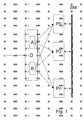
Fig. 1 showing a dispatching arrangement according to prior art -
Fig. 2 showing a system according to the invention -
Fig. 3 showing a simplified Specification and Description Language (SDL) flow diagram of an exemplary proxy's packet assignment algorithm according to the method according to the invention. - As shown in
Fig. 1 , a dispatching unit D receives all datagram packets sent to the virtual proxy's address. It will select one primary and one secondary proxy out of the available proxies P0 ... Pn, duplicate the datagram and forward one copy to each of them. - For the decision, which of the proxies will be used as the primary proxy, the dispatching unit usually extracts the values of particular data fields of the packet. These extracted values identify or are associated with a particular connection (denominated "unambiguous reference" hereafter). Each of the proxies maintains its context, i.e. the states of the associated connections. In case of a failover from a primary to a secondary proxy, the latter may look up the current state, e.g., via a bus or a shared memory SM. Alternatively the secondary proxy could also emulate the call processing and compute a shadow state without interaction.
- For carrying out a dispatch, the unambiguous reference could be serialized and fed into a linear feedback shift register (LFSR), yielding an output of several bit representing the number Y which is used for selecting the appropriate proxy. Alternatively any kind of hashing function would also be applicable. For a definition of hashing function it is e.g. referred to http://en.wikipedia.org/wiki/Hash-table.
- In order to limit the range usually the result is interpreted as a number in the modulo ring suitable to the number of servers, i.e. the ordinal number of the identified primary server equals Y mod N where Y is the output of the LFSR and where N is the number of the servers. Suitable coefficient sets for LFSRs are known to any person skilled in the art from, e.g., pseudo noise (PN) generators or data scramblers, see Golomb, Solomon W.: Shift register sequences, Aegean Park Press, Laguna Hills, 1982 [precise excerpt].
- The dispatching unit itself could be parallelized, e.g. into sub units A and B.
- It is more advantageous for extensibility and scalability, when virtual proxies are composed as an array of proxies with a dispatching unit.
- The secondary proxy could be determined simply by feeding an additional 1-bit into the linear feedback shift register. This way, the secondary proxy will be chosen pseudo-randomly. Whenever the algorithm yields the same primary and secondary servers, the above step should be repeated, i.e. another 1-bit shall be fed into the linear feedback shift register. As the result is pseudo-random again, this step may in fact be repeated until a different address is selected.
- Alternatively instead of simply feeding the bit into the shift register a secondary hashing function for determining the secondary server would solve also the problem. Thus a pair of hashing functions f and g, say, form the packet domain into the domain of servers, determine a pair of primary and secondary server, i.e. for a packet P, the primary server f(P) is determined and the secondary server g(P). The same iterative approach could by used in case of f(P)=g(P), e.g., by a similar procedure for collision handling.
- This dispatching mechanism is entirely stateless, i.e., it depends only on the incoming packet, and may thus be employed simultaneously in several parallel dispatching units A or B, etc., as already indicated in
Fig. 1 . - However, as this mechanism may be used at several locations simultaneously, it may also constitute the control mechanism for a switched network connecting the inbound lines and the proxies. In a simple setting without dispatching units, the proxies may pick up the datagram packets themselves from the broadcast medium BM connecting them, as shown in
Fig. 2 . - The mechanism proposed herein is not limited in its applicability to call state proxies, it may be used for many kinds of server clusters. The single servers may be addressed, e.g., by MAC or Internet protocol layer address. The protocols served by the virtual server may be UDP, TCP, etc.
- Finally, by choosing appropriate timer values for the secondary entity's time, the virtual server may even be dispersed over a network, with the single entities connected over a wide area network.
- There are three classes of deployment scenarios considered, each resulting in a special realization.
- The first is the one-sided scenario, that is, e.g., an http server: As each transaction consists only of the connection between client and server, the client's Internet protocol address and optionally other header fields like the port number may be used as unambiguous reference. These fields may be extracted easily from the IP packets.
- In the more complex double-sided coupled scenario, e.g. a SIP proxy handles a client server session relation: In such a scenario, a transaction consists of two or more data flows, one between server and caller, further ones between server and callee(s). Here, the SIP Call-ID, see RFC3261 - which is included in each SIP message - may be used as appropriate unambiguous reference.
- In a double-sided detached scenario, e.g. a back-to-back user agent (B2BUA) constitutes a termination point of SIP calls, even a simple two-party call is divided into two separate SIP calls: One between the caller and the B2BUA and another one between the B2BUA and the called party. These separate calls have to carry different Call-IDs, but need to be served by the same proxy nevertheless. In order to make the approach applicable to the B2BUA scenario as well, one can take advantage of the fact that the Call-ID is chosen by the originating side. For guaranteeing global uniqueness, every SIP entity appends the fully qualified domain name to a self-generated value (separated by the @ symbol) which is unique with respect to this domain, e.g.: 12345@domain.com. In the case of a B2BUA it is therefore suggested to determine the Call-ID of outgoing calls in such a way that it yields the same primary, secondary, etc. proxies as the initiating call. This may be for instance achieved by taking advantage of the reciprocity of LFSRs, i.e. an input value (the unambiguous reference) generating a particular output value (which then yields the primary proxy through a modulo operation) may be easily determined. As the state machine is entirely described by the output value, feeding additional "1"-bits will always yield the same values and thus the identical sequence of secondary, supplementary secondary, etc., proxy. Abstractly this is done by the inverse hashing function, which exists since hashing functions are injective. In order to guarantee the uniqueness required, the proxy generating the Call-ID has to append an auxiliary string. Otherwise, e.g., in the case of conference call setups where multiple Call-IDs are needed (as a B2BUA is being employed), uniqueness would not be assured. Furthermore, in the case of a proxy failure, the different secondary proxies might otherwise generate identical Call-IDs on behalf of the primary proxy, which would lead to a Call-ID collision once the primary proxy resumes its duty. Alternatively to the determination of the second Call-ID the cross-product could be taken as domain for the hashing functions.
- When applying shift registers, the auxiliary and the LFSR-generated part have to be easily separable, e.g., by infixing a unique string or by defining a fixed length for either of them. The unambiguous reference for B2BUA-originating calls is only a part of the Call-ID, whereas for incoming calls the entire Call-ID may be used.
- One sole reply to a datagram packet is assured. As the dispatching mechanism is stateless, every proxy may easily implement its own entity. This enables it to decide whether it is the primary or the secondary proxy regarding a particular connection. This obsoletes the need for any additional signalling or tagging.
- If a node determines that it acts as the primary node, it generates the respective reply and sends it to the intended recipient as well as towards the respective secondary proxy within the array. As the base address is known to each of the array's nodes, the primary server may even determine the secondary proxy's address by itself and send the datagram directly. This way, a meshed backplane connecting the proxies within the array may be employed, removing a potential bottleneck for the system's performance.
- The proxy recognizing that it is the secondary one with respect to a particular inbound datagram will generate a reply by himself. However, it shall not send it out immediately; rather store it for a certain - short - time interval for the reply generated by the primary proxy. If it does not receive a datagram identical to the one generated in time, it may assume that the primary proxy has probably failed and should send out this datagram itself. It then increments a failure counter for that particular other proxy.
-
Fig. 3 shows a SDL flow diagram of the method according to the invention. Once the counter 'ctr' exceeds a certain threshold, the proxy assumes that the particular proxy has failed. The proxy notifies the dispatching unit(s) about the failure, which will then modify their distribution mechanism as follows: Whenever the failed proxy is supposed to be either the primary or the secondary proxy, another "1" is fed into the linear feedback shift register and the datagram then delivered to the resulting proxy address as well. As that third proxy will also have noticed that the primary proxy has failed, it will start acting as the supplementary secondary proxy. This is due to the fact that each proxy within the array may be primary proxy for some and secondary proxy for other connections. Hence, the proxies check each other mutually for proper operation. Due to the peculiarities of the distribution mechanism, the load of the failed proxy is spread stochastically across all proxies again. - After a certain time, all connections that have been in place before the first failure, will either have terminated or have sent a signalling message refreshing the respective call states in the proxies. When these refresh messages are distributed to the new secondary servers, they will create a new workable set of state information. This way, the system is being prepared piece by piece for surviving yet another failure of any single proxy within the array. In case of absence of such a notification, the secondary proxy (acting as supplementary primary proxy) may deliver the necessary state information to the supplementary secondary proxy.
- In contrast, systems with a fixed assignment of primary and secondary proxies may be unable to recover from a failure of the primary proxy and subsequent failure of the respective secondary proxy.
- When a node receives a datagram packet where it is the primary proxy, but does not have any state variables, it may deduce that it is rebooting after a crash. It may then start synchronizing the data from the secondary proxies. This may be done by silently listening to new connections and connection refresh messages. Once it is done with restoring and ready to resume regular operation, the primary proxy will notify the respective secondary and supplementary secondary proxies. For determining the correct timing windows in the case for SIP RFC4028 should be consulted.
- It is noted in advance that this mechanism could be realized even in hardware for performance reasons and could be integrated tightly into servers of network entities that have to be dispatched.
Claims (10)
Priority Applications (1)
| Application Number | Priority Date | Filing Date | Title |
|---|---|---|---|
| EP07109183A EP1986388B1 (en) | 2007-04-27 | 2007-05-30 | Dispatching method for allocating a server, a system, a server, and a computer software product |
Applications Claiming Priority (2)
| Application Number | Priority Date | Filing Date | Title |
|---|---|---|---|
| EP07301003 | 2007-04-27 | ||
| EP07109183A EP1986388B1 (en) | 2007-04-27 | 2007-05-30 | Dispatching method for allocating a server, a system, a server, and a computer software product |
Publications (2)
| Publication Number | Publication Date |
|---|---|
| EP1986388A1 true EP1986388A1 (en) | 2008-10-29 |
| EP1986388B1 EP1986388B1 (en) | 2011-07-20 |
Family
ID=38515727
Family Applications (1)
| Application Number | Title | Priority Date | Filing Date |
|---|---|---|---|
| EP07109183A Active EP1986388B1 (en) | 2007-04-27 | 2007-05-30 | Dispatching method for allocating a server, a system, a server, and a computer software product |
Country Status (2)
| Country | Link |
|---|---|
| EP (1) | EP1986388B1 (en) |
| AT (1) | ATE517499T1 (en) |
Cited By (2)
| Publication number | Priority date | Publication date | Assignee | Title |
|---|---|---|---|---|
| US9037703B1 (en) * | 2012-02-29 | 2015-05-19 | Google Inc. | System and methods for managing system resources on distributed servers |
| GB2535798A (en) * | 2015-02-27 | 2016-08-31 | Metaswitch Networks Ltd | Network node |
Citations (1)
| Publication number | Priority date | Publication date | Assignee | Title |
|---|---|---|---|---|
| US20030023877A1 (en) * | 2001-07-30 | 2003-01-30 | Michael Luther | System and method of managing data transmission loads |
-
2007
- 2007-05-30 AT AT07109183T patent/ATE517499T1/en not_active IP Right Cessation
- 2007-05-30 EP EP07109183A patent/EP1986388B1/en active Active
Patent Citations (1)
| Publication number | Priority date | Publication date | Assignee | Title |
|---|---|---|---|---|
| US20030023877A1 (en) * | 2001-07-30 | 2003-01-30 | Michael Luther | System and method of managing data transmission loads |
Non-Patent Citations (1)
| Title |
|---|
| SINGH ET AL: "Failover, load sharing and server architecture in SIP telephony", COMPUTER COMMUNICATIONS, ELSEVIER SCIENCE PUBLISHERS BV, AMSTERDAM, NL, vol. 30, no. 5, 20 February 2007 (2007-02-20), pages 927 - 942, XP005895774, ISSN: 0140-3664 * |
Cited By (4)
| Publication number | Priority date | Publication date | Assignee | Title |
|---|---|---|---|---|
| US9037703B1 (en) * | 2012-02-29 | 2015-05-19 | Google Inc. | System and methods for managing system resources on distributed servers |
| GB2535798A (en) * | 2015-02-27 | 2016-08-31 | Metaswitch Networks Ltd | Network node |
| US10171512B2 (en) | 2015-02-27 | 2019-01-01 | Metaswitch Networks Ltd | Network node |
| GB2535798B (en) * | 2015-02-27 | 2022-01-26 | Metaswitch Networks Ltd | Network node |
Also Published As
| Publication number | Publication date |
|---|---|
| EP1986388B1 (en) | 2011-07-20 |
| ATE517499T1 (en) | 2011-08-15 |
Similar Documents
| Publication | Publication Date | Title |
|---|---|---|
| US7661027B2 (en) | SIP server architecture fault tolerance and failover | |
| US8001250B2 (en) | SIP and HTTP convergence in network computing environments | |
| US20080086567A1 (en) | SIP server architecture for improving latency in message processing | |
| CN101677320B (en) | Register endpoints with a sliding window of controllers in the controller list of the survivable network | |
| US9319431B2 (en) | Methods, systems, and computer readable media for providing sedation service in a telecommunications network | |
| EP2594049B1 (en) | Sip-based call session server and message-routing method | |
| US9948726B2 (en) | Reconstruction of states on controller failover | |
| EP1643406A2 (en) | Registration identifier reuse | |
| CA2743680C (en) | Method and system for fail-safe call survival | |
| US10601880B2 (en) | Conference reconstruction in SIP networks | |
| US7688804B2 (en) | Method of providing fault tolerance in a SIP based contact handling environment | |
| US8972586B2 (en) | Bypassing or redirecting a communication based on the failure of an inserted application | |
| US20140215031A1 (en) | Method and apparatus for interconnecting a user agent to a cluster of servers | |
| US8930768B2 (en) | System and method of failover for an initiated SIP session | |
| CN102821172B (en) | Method, device and system for obtaining SIP registration server address | |
| US8189764B2 (en) | Server for transferring a communication message | |
| EP1986388B1 (en) | Dispatching method for allocating a server, a system, a server, and a computer software product | |
| TWI397296B (en) | Server system and method for user registeration | |
| CN1960289A (en) | Method and device for implementing network call after network failure | |
| Leu et al. | Design and implementation of a low cost dns-based load balancing solution for the sip-based voip service | |
| CN101605150B (en) | Fault-tolerant mechanism optimised for peer to peer network | |
| Xu et al. | Enhancing the reliability of SIP service in large-scale P2P-SIP networks | |
| Farha | SIP Traffic Load Balancing | |
| Lahami et al. | Distributed Test Architecture for Load Balancing System | |
| HK1185194B (en) | Sip-based call session server and message-routing method |
Legal Events
| Date | Code | Title | Description |
|---|---|---|---|
| PUAI | Public reference made under article 153(3) epc to a published international application that has entered the european phase |
Free format text: ORIGINAL CODE: 0009012 |
|
| 17P | Request for examination filed |
Effective date: 20071217 |
|
| AK | Designated contracting states |
Kind code of ref document: A1 Designated state(s): AT BE BG CH CY CZ DE DK EE ES FI FR GB GR HU IE IS IT LI LT LU LV MC MT NL PL PT RO SE SI SK TR |
|
| AX | Request for extension of the european patent |
Extension state: AL BA HR MK RS |
|
| AKX | Designation fees paid |
Designated state(s): AT BE BG CH CY CZ DE DK EE ES FI FR GB GR HU IE IS IT LI LT LU LV MC MT NL PL PT RO SE SI SK TR |
|
| AXX | Extension fees paid |
Extension state: AL Payment date: 20090429 Extension state: RS Payment date: 20090429 Extension state: MK Payment date: 20090429 Extension state: HR Payment date: 20090429 Extension state: BA Payment date: 20090429 |
|
| 17Q | First examination report despatched |
Effective date: 20101011 |
|
| GRAP | Despatch of communication of intention to grant a patent |
Free format text: ORIGINAL CODE: EPIDOSNIGR1 |
|
| GRAS | Grant fee paid |
Free format text: ORIGINAL CODE: EPIDOSNIGR3 |
|
| GRAA | (expected) grant |
Free format text: ORIGINAL CODE: 0009210 |
|
| AK | Designated contracting states |
Kind code of ref document: B1 Designated state(s): AT BE BG CH CY CZ DE DK EE ES FI FR GB GR HU IE IS IT LI LT LU LV MC MT NL PL PT RO SE SI SK TR |
|
| AX | Request for extension of the european patent |
Extension state: AL BA HR MK RS |
|
| REG | Reference to a national code |
Ref country code: GB Ref legal event code: FG4D |
|
| REG | Reference to a national code |
Ref country code: CH Ref legal event code: EP |
|
| REG | Reference to a national code |
Ref country code: DE Ref legal event code: R096 Ref document number: 602007015879 Country of ref document: DE Effective date: 20110908 |
|
| REG | Reference to a national code |
Ref country code: NL Ref legal event code: VDEP Effective date: 20110720 |
|
| REG | Reference to a national code |
Ref country code: AT Ref legal event code: MK05 Ref document number: 517499 Country of ref document: AT Kind code of ref document: T Effective date: 20110720 |
|
| PG25 | Lapsed in a contracting state [announced via postgrant information from national office to epo] |
Ref country code: FI Free format text: LAPSE BECAUSE OF FAILURE TO SUBMIT A TRANSLATION OF THE DESCRIPTION OR TO PAY THE FEE WITHIN THE PRESCRIBED TIME-LIMIT Effective date: 20110720 Ref country code: SE Free format text: LAPSE BECAUSE OF FAILURE TO SUBMIT A TRANSLATION OF THE DESCRIPTION OR TO PAY THE FEE WITHIN THE PRESCRIBED TIME-LIMIT Effective date: 20110720 Ref country code: IS Free format text: LAPSE BECAUSE OF FAILURE TO SUBMIT A TRANSLATION OF THE DESCRIPTION OR TO PAY THE FEE WITHIN THE PRESCRIBED TIME-LIMIT Effective date: 20111120 Ref country code: BE Free format text: LAPSE BECAUSE OF FAILURE TO SUBMIT A TRANSLATION OF THE DESCRIPTION OR TO PAY THE FEE WITHIN THE PRESCRIBED TIME-LIMIT Effective date: 20110720 Ref country code: PT Free format text: LAPSE BECAUSE OF FAILURE TO SUBMIT A TRANSLATION OF THE DESCRIPTION OR TO PAY THE FEE WITHIN THE PRESCRIBED TIME-LIMIT Effective date: 20111121 Ref country code: LT Free format text: LAPSE BECAUSE OF FAILURE TO SUBMIT A TRANSLATION OF THE DESCRIPTION OR TO PAY THE FEE WITHIN THE PRESCRIBED TIME-LIMIT Effective date: 20110720 Ref country code: NL Free format text: LAPSE BECAUSE OF FAILURE TO SUBMIT A TRANSLATION OF THE DESCRIPTION OR TO PAY THE FEE WITHIN THE PRESCRIBED TIME-LIMIT Effective date: 20110720 |
|
| RAP2 | Party data changed (patent owner data changed or rights of a patent transferred) |
Owner name: ALCATEL LUCENT |
|
| PG25 | Lapsed in a contracting state [announced via postgrant information from national office to epo] |
Ref country code: PL Free format text: LAPSE BECAUSE OF FAILURE TO SUBMIT A TRANSLATION OF THE DESCRIPTION OR TO PAY THE FEE WITHIN THE PRESCRIBED TIME-LIMIT Effective date: 20110720 Ref country code: CY Free format text: LAPSE BECAUSE OF FAILURE TO SUBMIT A TRANSLATION OF THE DESCRIPTION OR TO PAY THE FEE WITHIN THE PRESCRIBED TIME-LIMIT Effective date: 20110720 Ref country code: LV Free format text: LAPSE BECAUSE OF FAILURE TO SUBMIT A TRANSLATION OF THE DESCRIPTION OR TO PAY THE FEE WITHIN THE PRESCRIBED TIME-LIMIT Effective date: 20110720 Ref country code: SI Free format text: LAPSE BECAUSE OF FAILURE TO SUBMIT A TRANSLATION OF THE DESCRIPTION OR TO PAY THE FEE WITHIN THE PRESCRIBED TIME-LIMIT Effective date: 20110720 Ref country code: AT Free format text: LAPSE BECAUSE OF FAILURE TO SUBMIT A TRANSLATION OF THE DESCRIPTION OR TO PAY THE FEE WITHIN THE PRESCRIBED TIME-LIMIT Effective date: 20110720 Ref country code: GR Free format text: LAPSE BECAUSE OF FAILURE TO SUBMIT A TRANSLATION OF THE DESCRIPTION OR TO PAY THE FEE WITHIN THE PRESCRIBED TIME-LIMIT Effective date: 20111021 |
|
| REG | Reference to a national code |
Ref country code: CH Ref legal event code: PCOW Free format text: ALCATEL LUCENT;3, AVENUE OCTAVE GREARD;75007 PARIS (FR) |
|
| PG25 | Lapsed in a contracting state [announced via postgrant information from national office to epo] |
Ref country code: SK Free format text: LAPSE BECAUSE OF FAILURE TO SUBMIT A TRANSLATION OF THE DESCRIPTION OR TO PAY THE FEE WITHIN THE PRESCRIBED TIME-LIMIT Effective date: 20110720 Ref country code: CZ Free format text: LAPSE BECAUSE OF FAILURE TO SUBMIT A TRANSLATION OF THE DESCRIPTION OR TO PAY THE FEE WITHIN THE PRESCRIBED TIME-LIMIT Effective date: 20110720 |
|
| PLBE | No opposition filed within time limit |
Free format text: ORIGINAL CODE: 0009261 |
|
| STAA | Information on the status of an ep patent application or granted ep patent |
Free format text: STATUS: NO OPPOSITION FILED WITHIN TIME LIMIT |
|
| PG25 | Lapsed in a contracting state [announced via postgrant information from national office to epo] |
Ref country code: RO Free format text: LAPSE BECAUSE OF FAILURE TO SUBMIT A TRANSLATION OF THE DESCRIPTION OR TO PAY THE FEE WITHIN THE PRESCRIBED TIME-LIMIT Effective date: 20110720 Ref country code: EE Free format text: LAPSE BECAUSE OF FAILURE TO SUBMIT A TRANSLATION OF THE DESCRIPTION OR TO PAY THE FEE WITHIN THE PRESCRIBED TIME-LIMIT Effective date: 20110720 Ref country code: IT Free format text: LAPSE BECAUSE OF FAILURE TO SUBMIT A TRANSLATION OF THE DESCRIPTION OR TO PAY THE FEE WITHIN THE PRESCRIBED TIME-LIMIT Effective date: 20110720 |
|
| 26N | No opposition filed |
Effective date: 20120423 |
|
| PG25 | Lapsed in a contracting state [announced via postgrant information from national office to epo] |
Ref country code: DK Free format text: LAPSE BECAUSE OF FAILURE TO SUBMIT A TRANSLATION OF THE DESCRIPTION OR TO PAY THE FEE WITHIN THE PRESCRIBED TIME-LIMIT Effective date: 20110720 |
|
| REG | Reference to a national code |
Ref country code: DE Ref legal event code: R097 Ref document number: 602007015879 Country of ref document: DE Effective date: 20120423 |
|
| PG25 | Lapsed in a contracting state [announced via postgrant information from national office to epo] |
Ref country code: MC Free format text: LAPSE BECAUSE OF NON-PAYMENT OF DUE FEES Effective date: 20120531 |
|
| REG | Reference to a national code |
Ref country code: CH Ref legal event code: PL |
|
| PG25 | Lapsed in a contracting state [announced via postgrant information from national office to epo] |
Ref country code: LI Free format text: LAPSE BECAUSE OF NON-PAYMENT OF DUE FEES Effective date: 20120531 Ref country code: CH Free format text: LAPSE BECAUSE OF NON-PAYMENT OF DUE FEES Effective date: 20120531 |
|
| REG | Reference to a national code |
Ref country code: IE Ref legal event code: MM4A |
|
| PG25 | Lapsed in a contracting state [announced via postgrant information from national office to epo] |
Ref country code: IE Free format text: LAPSE BECAUSE OF NON-PAYMENT OF DUE FEES Effective date: 20120530 Ref country code: ES Free format text: LAPSE BECAUSE OF FAILURE TO SUBMIT A TRANSLATION OF THE DESCRIPTION OR TO PAY THE FEE WITHIN THE PRESCRIBED TIME-LIMIT Effective date: 20111031 |
|
| PG25 | Lapsed in a contracting state [announced via postgrant information from national office to epo] |
Ref country code: BG Free format text: LAPSE BECAUSE OF FAILURE TO SUBMIT A TRANSLATION OF THE DESCRIPTION OR TO PAY THE FEE WITHIN THE PRESCRIBED TIME-LIMIT Effective date: 20111020 |
|
| PG25 | Lapsed in a contracting state [announced via postgrant information from national office to epo] |
Ref country code: MT Free format text: LAPSE BECAUSE OF FAILURE TO SUBMIT A TRANSLATION OF THE DESCRIPTION OR TO PAY THE FEE WITHIN THE PRESCRIBED TIME-LIMIT Effective date: 20110720 |
|
| REG | Reference to a national code |
Ref country code: FR Ref legal event code: GC Effective date: 20131018 |
|
| PG25 | Lapsed in a contracting state [announced via postgrant information from national office to epo] |
Ref country code: TR Free format text: LAPSE BECAUSE OF FAILURE TO SUBMIT A TRANSLATION OF THE DESCRIPTION OR TO PAY THE FEE WITHIN THE PRESCRIBED TIME-LIMIT Effective date: 20110720 |
|
| PG25 | Lapsed in a contracting state [announced via postgrant information from national office to epo] |
Ref country code: LU Free format text: LAPSE BECAUSE OF NON-PAYMENT OF DUE FEES Effective date: 20120530 |
|
| PG25 | Lapsed in a contracting state [announced via postgrant information from national office to epo] |
Ref country code: HU Free format text: LAPSE BECAUSE OF FAILURE TO SUBMIT A TRANSLATION OF THE DESCRIPTION OR TO PAY THE FEE WITHIN THE PRESCRIBED TIME-LIMIT Effective date: 20070530 |
|
| REG | Reference to a national code |
Ref country code: FR Ref legal event code: PLFP Year of fee payment: 9 |
|
| PGFP | Annual fee paid to national office [announced via postgrant information from national office to epo] |
Ref country code: DE Payment date: 20150521 Year of fee payment: 9 Ref country code: GB Payment date: 20150521 Year of fee payment: 9 |
|
| PGFP | Annual fee paid to national office [announced via postgrant information from national office to epo] |
Ref country code: FR Payment date: 20150521 Year of fee payment: 9 |
|
| REG | Reference to a national code |
Ref country code: DE Ref legal event code: R119 Ref document number: 602007015879 Country of ref document: DE |
|
| GBPC | Gb: european patent ceased through non-payment of renewal fee |
Effective date: 20160530 |
|
| REG | Reference to a national code |
Ref country code: FR Ref legal event code: ST Effective date: 20170131 |
|
| PG25 | Lapsed in a contracting state [announced via postgrant information from national office to epo] |
Ref country code: FR Free format text: LAPSE BECAUSE OF NON-PAYMENT OF DUE FEES Effective date: 20160531 Ref country code: DE Free format text: LAPSE BECAUSE OF NON-PAYMENT OF DUE FEES Effective date: 20161201 |
|
| PG25 | Lapsed in a contracting state [announced via postgrant information from national office to epo] |
Ref country code: GB Free format text: LAPSE BECAUSE OF NON-PAYMENT OF DUE FEES Effective date: 20160530 |