EP1986097A1 - Parallel processing device and exclusive access control - Google Patents
Parallel processing device and exclusive access control Download PDFInfo
- Publication number
- EP1986097A1 EP1986097A1 EP07714393A EP07714393A EP1986097A1 EP 1986097 A1 EP1986097 A1 EP 1986097A1 EP 07714393 A EP07714393 A EP 07714393A EP 07714393 A EP07714393 A EP 07714393A EP 1986097 A1 EP1986097 A1 EP 1986097A1
- Authority
- EP
- European Patent Office
- Prior art keywords
- unit
- interrupt
- processor
- task
- exclusive control
- Prior art date
- Legal status (The legal status is an assumption and is not a legal conclusion. Google has not performed a legal analysis and makes no representation as to the accuracy of the status listed.)
- Withdrawn
Links
Images



Classifications
-
- G—PHYSICS
- G06—COMPUTING OR CALCULATING; COUNTING
- G06F—ELECTRIC DIGITAL DATA PROCESSING
- G06F9/00—Arrangements for program control, e.g. control units
- G06F9/06—Arrangements for program control, e.g. control units using stored programs, i.e. using an internal store of processing equipment to receive or retain programs
- G06F9/46—Multiprogramming arrangements
- G06F9/52—Program synchronisation; Mutual exclusion, e.g. by means of semaphores
- G06F9/526—Mutual exclusion algorithms
-
- G—PHYSICS
- G06—COMPUTING OR CALCULATING; COUNTING
- G06F—ELECTRIC DIGITAL DATA PROCESSING
- G06F9/00—Arrangements for program control, e.g. control units
- G06F9/06—Arrangements for program control, e.g. control units using stored programs, i.e. using an internal store of processing equipment to receive or retain programs
- G06F9/46—Multiprogramming arrangements
- G06F9/48—Program initiating; Program switching, e.g. by interrupt
- G06F9/4806—Task transfer initiation or dispatching
- G06F9/4812—Task transfer initiation or dispatching by interrupt, e.g. masked
Definitions
- the present invention relates to a processor and, more particularly, to a processor that includes a plurality of unit processors so that tasks can be executed in parallel, and accepts and handles interrupt requests, and an interrupt control method of the processor.
- multiprocessor multitask processors
- the single processor has to be run at high clock frequencies, and power consumption increases accordingly.
- the use of a multiprocessor allows the clock frequency of the device to be lowered, thereby reducing power consumption. Additionally, since a plurality of tasks can be handled in parallel, the use of the multiprocessor is also useful from the viewpoint of real time response.
- requests for interrupt handling are relatively frequently made from peripheral devices connected to the embedded device.
- interrupt handling is performed: task processing that is being performed by the processor is suspended, and the requested processing is performed.
- exclusive control is implemented between the task processing and the interrupt handling in order to smoothly switch between the interrupt handling and the task processing.
- Patent Document 1 One example of the prior art of conventional exclusive control between task processing and interrupt handling is Patent Document 1.
- the invention described in Patent Document 1 is related to exclusive control in a single processor, wherein interrupt handling that does not issue any system call is accepted even during processing in which system calls for calling an OS are issued in the single processor.
- the invention of Patent Document 1 uses such behavior to reduce wait time of highly urgent interrupt handling.
- Patent Document 1 since the invention described in Patent Document 1 is based on the premise that a single processor is used, task processing cannot be performed during interrupt handling. Consequently, it has not been considered at all that while the interrupt handling is being performed, task processing is to be controlled to increase processing efficiency.
- the present invention is made in the light of the above respects, and an object of the present invention is to provide a processor that can perform exclusive control between task processing and interrupt handling properly even with a multiprocessor to achieve high processing efficiency, and an exclusive control method between the task processing and the interrupt handling in the processor.
- the parallel processing device of the present invention that includes a plurality of unit processors for executing a plurality of tasks in parallel, and achieves exclusive control between one task and another task, and between the task and external interrupt handling when at least one of the plurality of the unit processors receives a request for interrupt handling from the outside, is characterized by comprising, interrupt inhibit means for inhibiting the execution of the task from being interrupted in the unit processor on which the task is executing, exclusive control means for performing the exclusive control between the unit processor and the other unit processors by acquiring an inter-unit processor lock after the interrupt inhibit means creates a unit processor interrupt inhibit state, and external interrupt inhibit means for inhibiting the performance of interrupt handling requested from the outside after the exclusive control means performs the exclusive control between the unit processor and the other unit processors.
- the first unit processor can certainly handle the task without being affected by another task or the like.
- the interrupt handling by an interrupt processor is inhibited from being performed while the exclusive control is being performed, it is possible to eliminate the probability that the interrupt handling, which occurs independently of an OS, accesses the region in the memory in common with the first unit processor, and therefore the exclusive control of tasks can be performed properly to achieve high processing efficiency.
- the parallel processing device of the present invention is characterized by further comprising interrupt detection means for detecting whether interrupt handling is being performed or not in the parallel processing device, wherein the exclusive control means starts exclusive control after the interrupt detection means detects that the interrupt handling is not being performed in the parallel processing device.
- the parallel processing device of the present invention is characterized in that the exclusive control means performs the exclusive control of the other unit processors by acquiring a right to occupy an OS to handle the tasks.
- any of the tasks on the other unit processors cannot become the OS, thus it is possible to eliminate the occurrence of access conflict in the memory region accessed by the OS. Consequently, it is possible to perform the exclusive control of the OS to run smoothly.
- the exclusive control method of the present invention that includes a plurality of unit processors for executing a plurality of tasks in parallel, and achieves exclusive control between one task and another task, and between the task and external interrupt handling when at least one of the plurality of the unit processors receives a request for interrupt handling from the outside, is characterized by comprising, an interrupt inhibit step for inhibiting the execution of the task from being interrupted in the unit processor on which the task is executing, an exclusive control step for performing the exclusive control between the unit processor and the other unit processors by acquiring an inter-unit processor lock after the interrupt inhibit step causes a unit processor interrupt inhibit state, and an external interrupt inhibit step for inhibiting the performance of interrupt handling requested from the outside after the exclusive control step performs the exclusive control between the unit processor and the other unit processors.
- the first unit processor can certainly handle the task without being affected by another task or the like.
- the interrupt handling by an interrupt processor is inhibited from being performed while the exclusive control is being performed, it is possible to eliminate the probability that the interrupt handling, which occurs independently of an OS, accesses the region in the memory in common with the first unit processor, and therefore the exclusive control of tasks can be performed properly to achieve high processing efficiency.
- the exclusive control method of the present invention is characterized by comprising a step of waiting for the completion of the performance of the interrupt handling requested from the outside.
- the exclusive control method of the present invention that achieves exclusive control between task processing and external interrupt handling in a processor that includes a plurality of unit processors running in parallel, in which at least one of the plurality of unit processors is capable of performing interrupt handling requested from the outside, is characterized by comprising an external interrupt priority step for prioritizing the external interrupt handling by issuing a system call (loc_cpu) for exclusion only on the task side to wait for the completion of the interruption in the system call.
- a parallel processing device is configured as a processor in the specification
- a parallel processing device according to the present invention is hereinafter referred to as a processor.
- the processor according to the present invention processes programs in its run units, such as tasks, in parallel and has hardware configuration having substantially more than one processor therein, each of which executes tasks (hereinafter, referred to as "unit processor").
- the processor of the present invention will be described by taking a case as an example where the processor according to the present invention is embedded into a mobile telephone.
- the run unit of the program such as a thread is collectively called "task”.
- Figure 1 is a block diagram showing the functional configuration of a mobile telephone 1 according to the present invention.
- the mobile telephone 1 includes a central processing unit (CPU) 10, a flash ROM 20, memory 30, a buffer 40, a radio unit 50, an infrared data association (IrDA) unit 60, an audio unit 70, a timer 80, an universal serial bus (USB) interface unit 90, a key operation unit 100, an liquid crystal display (LCD) 110 and a camera unit 120, and the CPU 10, the flash ROM 20, the memory 30 and the buffer 40 are connected by a bus.
- the radio unit 50, the IrDA unit 60, the audio unit 70, the timer 80, the USB interface unit 90, the key operation unit 100, the LCD 110 and the camera unit 120 are directly connected to the CPU 10.
- the CPU 10 controls the entire mobile telephone 1 while handling a plurality of tasks in parallel: it reads out and executes operating system programs (OS) and various application programs that were stored in the flash ROM 30 in accordance with various instruction signals, which are entered from the key operation unit 100, or executes interrupt handlers in accordance with interrupt signals, which are entered from peripheral chips such as the radio unit 50, the audio unit 70 or the camera unit 120.
- OS operating system programs
- various application programs that were stored in the flash ROM 30 in accordance with various instruction signals, which are entered from the key operation unit 100, or executes interrupt handlers in accordance with interrupt signals, which are entered from peripheral chips such as the radio unit 50, the audio unit 70 or the camera unit 120.
- the CPU 10 handles tasks in parallel, which are generated by an application.
- an interrupt signal is entered from a peripheral chip, the CPU 10 executes an interrupt handler to execute a program corresponding to the interruption.
- processing by an application is performed as a task that is managed by the task scheduler of the OS, it is possible to invoke an OS service call, while interrupt handling is processing that is not managed by the task scheduler (non-task processing).
- the CPU 10 also stores various processing results in the flash ROM 20 or the memory 30.
- FIG. 2 is a block diagram showing the internal configuration of the CPU 10.
- the CPU 10 includes a plurality of unit processors P0 to P3, an interrupt control unit 11, a memory control unit 12 and a hardware semaphore unit 13.
- the hardware semaphore unit 13 is adapted to grant a semaphore (in the embodiment, referred to as hardware semaphore), which is a right to become an OS, to any of the unit processors.
- the unit processors P0 to P3 are processors, each of which is capable of handling tasks in parallel. Since the unit processors P0 to P3 have the same internal configuration, the internal configuration of the unit processor P0 will be described as a representative thereof. In the embodiment, all the unit processors P0 to P3 are interrupt processors capable of interrupt handling.
- the unit processor P0 further includes a fetch unit 101, a decoding unit 102, an arithmetic and logical unit (ALU) 103, a register file 104 and a program control unit 105.
- ALU arithmetic and logical unit
- the fetch unit 101 reads out an instruction code from a memory address indicated by the program counter of the program control unit 105 described later, and outputs the instruction code to the decoding unit 102.
- the decoding unit 102 decodes the instruction code that was entered by the fetch unit 101, and outputs a decoding result (such as the contents of the instruction and the addresses of source and destination registers) to the ALU 103.
- the ALU 103 carries out a predetermined operation according to the decoding result that was entered by the decoding unit 102, and writes an operation result into the register file 104, or outputs the address of a destination branch, which is the operation result of a branch instruction or the like, to the program control unit 105.
- the register file 104 is a group of registers, which store data that are read out by load instructions from the memory 30 and data that are operation results of the ALU 103.
- the program control unit 105 that controls the entire unit processor P0 includes a status register (PSR) for storing the status of the unit processor P0 (for example, a state indicating whether or not interrupt is enabled, and an overflow occurrence state in the unit processor P0) and a program counter (PC) for storing a memory address in which an instruction to be executed next by the unit processor P0 is stored.
- the program control unit 105 changes the value of the status register to a state in which interrupt handling is inhibited at the time when the unit processor P0 shifts to the interrupt handling, or changes the value of the program counter to the address of the destination branch when the branch instruction was executed.
- the processor control unit 105 when a running task outputs a request to acquire a hardware semaphore, the processor control unit 105 first receives the acquisition result of the hardware semaphore, and updates a flag indicating the success of the acquisition in a region in the status register (hereinafter, referred to as "semaphore acquisition result register") where the acquisition result of the hardware semaphore is indicated. On the other hand, if the acquisition of the semaphore is failed, the processor control unit 105 updates the flag to a state indicating of the failure of the acquisition.
- the processor control unit 105 also has a purge inhibit flag 106.
- the purge inhibit flag 106 is a mechanism to inhibit replacement of tasks or external interruption from occurring in the appointed unit processor, so as not to purge the task from the unit processor. By setting the purge inhibit flag 106 to 1, the task currently present in the unit processor is inhibited from being replaced by another task.
- a state that the purge of the task in the unit processor is being inhibited is also referred to as a lock state hereinafter.
- the interrupt control unit 11 When an interrupt signal was entered from a peripheral chip such as the radio unit 50, the interrupt control unit 11 outputs a predetermined interrupt signal to the unit processor P0 after conducting arbitration for the interrupt signal.
- the memory control unit 12 which is provided between the CPU 10 and the memory 30, controls the memory 30 to input/output data when the CPU 10 reads/writes data from/to the memory 30.
- the hardware semaphore unit 13 has a mechanism to achieve exclusive control, and, when a semaphore acquisition request is received from the unit processors P0 to P3, and if the semaphore has already been acquired, the hardware semaphore unit notifies of the failure of the semaphore acquisition in response to the new request. On the other hand, the hardware semaphore unit 13 has a mechanism to return the notification of the success of the semaphore acquisition to the unit processors, if a semaphore has not been acquired yet.
- the unit processor that acquires a hardware semaphore acquires a right to occupy the OS to handle the task. Consequently, since only one of the unit processors P0 to P3 can shift to the OS, it is possible to achieve exclusive control to prevent conflict among OSes. In addition, it is possible to prevent a problem that processing is interrupted due to concurrent access to a predetermined region in the memory 30 used by the OS.
- the purge inhibit flag 106 can inhibit the task from being purged from the running unit processor until the service call of the OS is completed.
- interrupt handling is inhibited from being executed.
- the interrupt control unit 11 that inhibits the execution of interrupt handling.
- the interrupt control unit 11 has a status register (not shown) into which the statuses of the unit processors P0 to P3 are written. By setting the status of the status register to "interrupt inhibited", the interrupt control unit 11 can inhibit the interrupt handling of a desired unit processor.
- FIG. 3 is a diagram illustrating the operation of a processor when the exclusive control method of the embodiment is performed, and shows exclusive control between interrupt handling (interrupt handler) and task processing that are performed between the unit processor P0 and the unit processor P1.
- a task that is executed on the unit processor P1 first invokes a service call loc_cpu.
- the invocation of the service call loc_cpu activates the loc_cpu.
- a service call unl_cpu is a service call for a task to bring the unit processor P1 into a lock state.
- the service call unl_cpu described later is a service call for releasing the lock state.
- Such service calls are defined according to ITRON 4.0TM Service Call
- the loc_cpu can have the unit processor operated, which handles the task that invoked the service call loc_cpu while keeping a external interrupt inhibit state, a hardware semaphore acquisition state and a purge inhibit state.
- the loc_cpu is issued, in order to release the loc_cpu, the only service call of the unl_cpu is accepted at the unit processor P1.
- interrupt handling is being performed or not in the unit processor is written into RAM or the like inside the device that the unit processors can share, and can be detected by the unit processors referring to the information written into the RAM.
- the task of the unit processor P1 inhibits interruption to start exclusive control after it is detected that interrupt handling is not being executed in any of unit processors.
- Figure 4 is a diagram more specifically showing the operation shown in Figure 3 .
- Figure 5 is a flowchart of the operation shown in Figure 4 . In the following, with reference to Figure 4 , the flowchart shown in Figure 5 will be described.
- the task present in the unit processor P1 sets the purge inhibit flag 106 to 1. By setting the purge inhibit flag, the task is not purged from the unit processor P1. In addition, temporarily, interrupt inhibit is set in regard to the unit processor P1 (S401).
- the task present in the unit processor P1 requests to acquire a hardware semaphore (S402).
- the task determines whether the acquisition of the hardware semaphore succeeded or failed based on the notification from the hardware semaphore unit 13 (S403).
- the task sets the purge inhibit flag 106 to zero to release the interrupt inhibit of its unit processor (S406).
- the task begins with the processing for setting the purge inhibit flag 106 to 1 again to attempt to acquire a hardware semaphore.
- the task detects whether any interrupt handling is being performed or not by the OS in any other unit processors than the unit processor P1 by referring to the shared region of RAM (S405). As a result, if an interrupt handler is running on any of the unit processors (S405: Yes), the task releases the external interrupt inhibit(S407). In addition, the task requests to release the acquired hardware semaphore unit 13 (S408), and sets the purge inhibit flag 106 to zero to release the interrupt inhibit of its unit processor (S409).
- the OS continues to monitor the interrupt handling in the other unit processors, and waits for completion of all the interrupt handling (S410). Upon the completion of the interrupt handling, the OS sets the purge inhibit flag 106 to 1 again to acquire a hardware semaphore.
- the service call loc_cpu of the task is also used for processing for prioritizing external interruption.
- the task running on the unit processor P1 issues a system call (loc_cpu) to wait for the completion of interruption in the system call, thereby prioritizing the external interrupt handling.
- the task issues lcc_cpu to wait for the completion of the interrupt handler, which is executing on the unit processor P0, while polling monitoring the completion of the interrupt handler. Consequently, after the preceding interrupt handler that was running is completed, the interrupt handling on the unit processor P0 is brought into a masked state such that the interrupt handling can be performed in preference to the task in the unit processor P1.
- processing that waits until the interrupt handling, which is executing on the other unit processor, is completed may be executed immediately before interrupt inhibit, so as not to activate processing to which the loc_cpu is subjected while the interrupt handler is being executed.
- Such processing is shown in the flowchart in Figure 6 .
- the task on the unit processor P0 waits for the completion of the execution of the interrupt handler on the other unit processor at the beginning of the processing (S601). Then, if the interrupt handler is being executed on any of the unit processors (S606: Yes), the external interruption is permitted (S608), and the hardware semaphore is released (S609). Then, the purge inhibit flag 16 is set to zero, and the completion of the execution of the interrupt handler is determined again (S601).
- the purge inhibit flag 106 is set to 1. By setting the purge inhibit flag 106 to 1, the task itself is not purged from the unit processor P0.
- the task acquires a hardware semaphore. If the task cannot acquire the hardware semaphore immediately (S604: No), the task sets the purge inhibit flag 106 to zero (S607), and begins with the processing for setting the purge inhibit flag 106 to 1 again (S602). On the other hand, if the task could acquire the hardware semaphore (S604: Yes), the task inhibits external interruption in regard to the other unit processors (S605).
- the processor of the embodiment also performs exclusive control between service calls among a plurality of unit processors.
- the exclusive control between respective service calls will be described below.
- Figure 7 is a diagram illustrating the operation of exclusive control performed between each service call and the loc_cpu.
- Figure 8 is a flowchart illustrating the operation shown in Figure 7 .
- the task on the unit processor P1 sets the purge inhibit flag 106 to 1 (S801) and allocates itself to the unit processor P0, the task successively requests to acquire a hardware semaphore (S802). Then, the task determines whether the acquisition of the hardware semaphore succeeded or failed (S803).
- step S803 if it is determined that the hardware semaphore cannot be acquired (S803: No), the task sets the purge inhibit flag 106 of the unit processor P1 to zero to release the interrupt inhibit (S807).
- the service call loc_cpu of a unit processor in order to execute the service call loc_cpu of a unit processor more safely, if the unit processor is in a lock state, the service call requested by a task that is being handled by another unit processor is targeted for exclusion. The task in the other unit processor is not targeted for exclusion as long as the task does not issue a service call.
- the unit processor P1 While the unit processor P1 is repeating the acquisition of hardware semaphores, the unit processor P2 issues unl_cpu. This allows the unit processor P1 to acquire a hardware semaphore (S803: Yes) and execute the necessary service call (S804).
- the above-described embodiment fixes a task to a unit processor to inhibit the unit processor and the other unit processors from accessing the common region in the memory. Consequently, the unit processor to which the task is fixed can certainly handle the task without being affected by another task or the like. Furthermore, since the interrupt handling by an interrupt processor is inhibited from being performed while the exclusive control is being performed, it is possible to eliminate the probability that the interrupt handling, which occurs independently of an OS, accesses the region in the memory in common with the unit processor.
- variable configuration of the interrupt processor has been described.
- present invention is not intended to be limited to such configuration, and may be applied to the invariable configuration of the interrupt processor.
- the present invention can be applied to various form of processors called a multithread processor or a multitask processor
- the present invention is especially useful in a multiprocessor (so-called tightly-coupled multitask processor) in which, for example, a plurality of processor cores are mounted on one chip, and a plurality of processor cores share at least some of the components of the processor.
- Figure 10 is a diagram showing the configuration of a multiprocessor to which the present invention may be applied.
- the multiprocessor shown in Figure 10 has a form in which a plurality of processor cores share a memory control unit and an ALU, each of the processor core having a program counter and a control register such as a status register, and a program control unit for controlling the entire multiprocessor, and a control register are also separately provided.
- a context cash or the like shared by each processor core may also be provided.
- each processor core achieves the function of the unit processor in the embodiment, and the function of the hardware semaphore 13 is achieved in the program control unit for controlling the entire multiprocessor.
- the present invention may be applied to the case where there is probability that a plurality of unit processors access the same hardware, such as the exclusive control between a CPU and a Direct Memory Access (DMA) controller, and the exclusive control between applications (access to shared memory and execution of common processing).
- DMA Direct Memory Access
Landscapes
- Engineering & Computer Science (AREA)
- Software Systems (AREA)
- Theoretical Computer Science (AREA)
- Physics & Mathematics (AREA)
- General Engineering & Computer Science (AREA)
- General Physics & Mathematics (AREA)
- Multi Processors (AREA)
- Memory System Of A Hierarchy Structure (AREA)
Abstract
Description
- The present invention relates to a processor and, more particularly, to a processor that includes a plurality of unit processors so that tasks can be executed in parallel, and accepts and handles interrupt requests, and an interrupt control method of the processor.
- In recent years, processors called multitask processors (hereinafter collectively referred to as "multiprocessor"), which can handle a plurality of tasks in parallel, are going into use in embedded devices or the like.
- In conventional portable devices, processing has been performed with a single processor. However, as the functionality of the portable devices is enhanced, processing is becoming more complicated, and processing with a single processor is becoming difficult.
- More specifically, if an attempt is made to achieve high-functionality using a single processor, the single processor has to be run at high clock frequencies, and power consumption increases accordingly. In addition, it would be difficult to deal with a case where a phone must be answered in real time, for example, in such a case where an incoming call is received while moving images are being played in a mobile telephone.
- On the other hand, the use of a multiprocessor allows the clock frequency of the device to be lowered, thereby reducing power consumption. Additionally, since a plurality of tasks can be handled in parallel, the use of the multiprocessor is also useful from the viewpoint of real time response.
- Incidentally, in some processors for such embedded devices, requests for interrupt handling are relatively frequently made from peripheral devices connected to the embedded device. When an interrupt request is made, interrupt handling is performed: task processing that is being performed by the processor is suspended, and the requested processing is performed. In the interrupt handling, exclusive control is implemented between the task processing and the interrupt handling in order to smoothly switch between the interrupt handling and the task processing.
- One example of the prior art of conventional exclusive control between task processing and interrupt handling is
Patent Document 1. The invention described inPatent Document 1 is related to exclusive control in a single processor, wherein interrupt handling that does not issue any system call is accepted even during processing in which system calls for calling an OS are issued in the single processor. The invention ofPatent Document 1 uses such behavior to reduce wait time of highly urgent interrupt handling. - [Patent Document 1]
JP-A-8-297581 - However, the above-described prior art is not for multiprocessors, but for single processors. If such an invention described in
Patent Document 1 is applied to a multiprocessor, possibility cannot be eliminated that one unit processor contained in the multiprocessor accesses the same region in external memory as that for the interrupt handling in another unit processor. - In addition, since the invention described in
Patent Document 1 is based on the premise that a single processor is used, task processing cannot be performed during interrupt handling. Consequently, it has not been considered at all that while the interrupt handling is being performed, task processing is to be controlled to increase processing efficiency. - Additionally, in the invention described in
Patent Document 1, information indicating whether the interrupt handling may issue a service call or not must be stored in managed interrupt storage means. Insuch Patent Document 1, when a new peripheral device is connected to the processor, information indicating whether the interrupt handling requested from the peripheral device involves a service call or not must be stored. Consequently, a problem arises that the addition of peripheral devices is difficult. - The present invention is made in the light of the above respects, and an object of the present invention is to provide a processor that can perform exclusive control between task processing and interrupt handling properly even with a multiprocessor to achieve high processing efficiency, and an exclusive control method between the task processing and the interrupt handling in the processor.
- To solve the above-described problems, the parallel processing device of the present invention that includes a plurality of unit processors for executing a plurality of tasks in parallel, and achieves exclusive control between one task and another task, and between the task and external interrupt handling when at least one of the plurality of the unit processors receives a request for interrupt handling from the outside, is characterized by comprising, interrupt inhibit means for inhibiting the execution of the task from being interrupted in the unit processor on which the task is executing, exclusive control means for performing the exclusive control between the unit processor and the other unit processors by acquiring an inter-unit processor lock after the interrupt inhibit means creates a unit processor interrupt inhibit state, and external interrupt inhibit means for inhibiting the performance of interrupt handling requested from the outside after the exclusive control means performs the exclusive control between the unit processor and the other unit processors.
- According to such an invention, it is possible to inhibit a first unit processor and the other unit processors from accessing a common region in memory after a task is inhibited from being purged from the first unit processor, and is fixed to the unit processor. Consequently, the first unit processor can certainly handle the task without being affected by another task or the like. In addition, since the interrupt handling by an interrupt processor is inhibited from being performed while the exclusive control is being performed, it is possible to eliminate the probability that the interrupt handling, which occurs independently of an OS, accesses the region in the memory in common with the first unit processor, and therefore the exclusive control of tasks can be performed properly to achieve high processing efficiency.
- Additionally, the parallel processing device of the present invention is characterized by further comprising interrupt detection means for detecting whether interrupt handling is being performed or not in the parallel processing device, wherein the exclusive control means starts exclusive control after the interrupt detection means detects that the interrupt handling is not being performed in the parallel processing device.
- According to such an invention, it is possible to eliminate obstruction to exclusive control in a unit processor due to interrupt handling being inserted after a lock state is entered, and betore the exclusive control is started.
- In addition, the parallel processing device of the present invention is characterized in that the exclusive control means performs the exclusive control of the other unit processors by acquiring a right to occupy an OS to handle the tasks.
- According to such an invention, any of the tasks on the other unit processors cannot become the OS, thus it is possible to eliminate the occurrence of access conflict in the memory region accessed by the OS. Consequently, it is possible to perform the exclusive control of the OS to run smoothly.
- Additionally, the exclusive control method of the present invention that includes a plurality of unit processors for executing a plurality of tasks in parallel, and achieves exclusive control between one task and another task, and between the task and external interrupt handling when at least one of the plurality of the unit processors receives a request for interrupt handling from the outside, is characterized by comprising, an interrupt inhibit step for inhibiting the execution of the task from being interrupted in the unit processor on which the task is executing, an exclusive control step for performing the exclusive control between the unit processor and the other unit processors by acquiring an inter-unit processor lock after the interrupt inhibit step causes a unit processor interrupt inhibit state, and an external interrupt inhibit step for inhibiting the performance of interrupt handling requested from the outside after the exclusive control step performs the exclusive control between the unit processor and the other unit processors.
- According to such an invention, it is possible to inhibit a first unit processor and the other unit processors from accessing a common region in memory after a task is inhibited from being purged from the first unit processor, and is fixed to the unit processor. Consequently, the first unit processor can certainly handle the task without being affected by another task or the like. In addition, since the interrupt handling by an interrupt processor is inhibited from being performed while the exclusive control is being performed, it is possible to eliminate the probability that the interrupt handling, which occurs independently of an OS, accesses the region in the memory in common with the first unit processor, and therefore the exclusive control of tasks can be performed properly to achieve high processing efficiency.
- Additionally, the exclusive control method of the present invention is characterized by comprising a step of waiting for the completion of the performance of the interrupt handling requested from the outside.
- According to such an invention, it is possible to eliminate obstruction to exclusive control in a unit processor due to external interrupt handling being inserted after a lock state is entered, and before the exclusive control is started.
- Furthermore, the exclusive control method of the present invention that achieves exclusive control between task processing and external interrupt handling in a processor that includes a plurality of unit processors running in parallel, in which at least one of the plurality of unit processors is capable of performing interrupt handling requested from the outside, is characterized by comprising an external interrupt priority step for prioritizing the external interrupt handling by issuing a system call (loc_cpu) for exclusion only on the task side to wait for the completion of the interruption in the system call.
- According to such an invention, it is possible to prevent the task processing and the external interrupt handling from interfering with each other, and achieve stable operation of the OS in the parallel processing device that uses already-developed task processing software together with already-developed external interrupt handling software.
- In the following, embodiments of a parallel processing device and an exclusive control method according to the present invention will be described with reference to drawings. Incidentally, as a parallel processing device is configured as a processor in the specification, a parallel processing device according to the present invention is hereinafter referred to as a processor.
- The processor according to the present invention processes programs in its run units, such as tasks, in parallel and has hardware configuration having substantially more than one processor therein, each of which executes tasks (hereinafter, referred to as "unit processor").
- In the embodiment, the processor of the present invention will be described by taking a case as an example where the processor according to the present invention is embedded into a mobile telephone. Incidentally, in the following description, the run unit of the program such as a thread is collectively called "task".
-
Figure 1 is a block diagram showing the functional configuration of amobile telephone 1 according to the present invention. - In
Figure 1 , themobile telephone 1 includes a central processing unit (CPU) 10, aflash ROM 20,memory 30, abuffer 40, aradio unit 50, an infrared data association (IrDA)unit 60, anaudio unit 70, atimer 80, an universal serial bus (USB)interface unit 90, akey operation unit 100, an liquid crystal display (LCD) 110 and acamera unit 120, and theCPU 10, theflash ROM 20, thememory 30 and thebuffer 40 are connected by a bus. Theradio unit 50, the IrDAunit 60, theaudio unit 70, thetimer 80, theUSB interface unit 90, thekey operation unit 100, theLCD 110 and thecamera unit 120 are directly connected to theCPU 10. - The
CPU 10 controls the entiremobile telephone 1 while handling a plurality of tasks in parallel: it reads out and executes operating system programs (OS) and various application programs that were stored in theflash ROM 30 in accordance with various instruction signals, which are entered from thekey operation unit 100, or executes interrupt handlers in accordance with interrupt signals, which are entered from peripheral chips such as theradio unit 50, theaudio unit 70 or thecamera unit 120. - For example, the
CPU 10 handles tasks in parallel, which are generated by an application. In addition, when an interrupt signal is entered from a peripheral chip, theCPU 10 executes an interrupt handler to execute a program corresponding to the interruption. Incidentally, since processing by an application is performed as a task that is managed by the task scheduler of the OS, it is possible to invoke an OS service call, while interrupt handling is processing that is not managed by the task scheduler (non-task processing). - The
CPU 10 also stores various processing results in theflash ROM 20 or thememory 30. -
Figure 2 is a block diagram showing the internal configuration of theCPU 10. InFigure 2 , theCPU 10 includes a plurality of unit processors P0 to P3, aninterrupt control unit 11, amemory control unit 12 and ahardware semaphore unit 13. Incidentally, thehardware semaphore unit 13 is adapted to grant a semaphore (in the embodiment, referred to as hardware semaphore), which is a right to become an OS, to any of the unit processors. - The unit processors P0 to P3 are processors, each of which is capable of handling tasks in parallel. Since the unit processors P0 to P3 have the same internal configuration, the internal configuration of the unit processor P0 will be described as a representative thereof. In the embodiment, all the unit processors P0 to P3 are interrupt processors capable of interrupt handling.
- The unit processor P0 further includes a
fetch unit 101, adecoding unit 102, an arithmetic and logical unit (ALU) 103, aregister file 104 and aprogram control unit 105. - The
fetch unit 101 reads out an instruction code from a memory address indicated by the program counter of theprogram control unit 105 described later, and outputs the instruction code to thedecoding unit 102. - The
decoding unit 102 decodes the instruction code that was entered by the fetchunit 101, and outputs a decoding result (such as the contents of the instruction and the addresses of source and destination registers) to theALU 103. - The
ALU 103 carries out a predetermined operation according to the decoding result that was entered by thedecoding unit 102, and writes an operation result into theregister file 104, or outputs the address of a destination branch, which is the operation result of a branch instruction or the like, to theprogram control unit 105. - The
register file 104 is a group of registers, which store data that are read out by load instructions from thememory 30 and data that are operation results of theALU 103. - The
program control unit 105 that controls the entire unit processor P0 includes a status register (PSR) for storing the status of the unit processor P0 (for example, a state indicating whether or not interrupt is enabled, and an overflow occurrence state in the unit processor P0) and a program counter (PC) for storing a memory address in which an instruction to be executed next by the unit processor P0 is stored. Theprogram control unit 105 changes the value of the status register to a state in which interrupt handling is inhibited at the time when the unit processor P0 shifts to the interrupt handling, or changes the value of the program counter to the address of the destination branch when the branch instruction was executed. - In addition, when a running task outputs a request to acquire a hardware semaphore, the
processor control unit 105 first receives the acquisition result of the hardware semaphore, and updates a flag indicating the success of the acquisition in a region in the status register (hereinafter, referred to as "semaphore acquisition result register") where the acquisition result of the hardware semaphore is indicated. On the other hand, if the acquisition of the semaphore is failed, theprocessor control unit 105 updates the flag to a state indicating of the failure of the acquisition. - The
processor control unit 105 also has a purge inhibitflag 106. The purge inhibitflag 106 is a mechanism to inhibit replacement of tasks or external interruption from occurring in the appointed unit processor, so as not to purge the task from the unit processor. By setting the purge inhibitflag 106 to 1, the task currently present in the unit processor is inhibited from being replaced by another task. A state that the purge of the task in the unit processor is being inhibited is also referred to as a lock state hereinafter. - When an interrupt signal was entered from a peripheral chip such as the
radio unit 50, the interruptcontrol unit 11 outputs a predetermined interrupt signal to the unit processor P0 after conducting arbitration for the interrupt signal. - The
memory control unit 12, which is provided between theCPU 10 and thememory 30, controls thememory 30 to input/output data when theCPU 10 reads/writes data from/to thememory 30. - The
hardware semaphore unit 13 has a mechanism to achieve exclusive control, and, when a semaphore acquisition request is received from the unit processors P0 to P3, and if the semaphore has already been acquired, the hardware semaphore unit notifies of the failure of the semaphore acquisition in response to the new request. On the other hand, thehardware semaphore unit 13 has a mechanism to return the notification of the success of the semaphore acquisition to the unit processors, if a semaphore has not been acquired yet. - More specifically, according to the embodiment, only the unit processor that acquires a hardware semaphore acquires a right to occupy the OS to handle the task. Consequently, since only one of the unit processors P0 to P3 can shift to the OS, it is possible to achieve exclusive control to prevent conflict among OSes. In addition, it is possible to prevent a problem that processing is interrupted due to concurrent access to a predetermined region in the
memory 30 used by the OS. - Additionally, according to the embodiment, the purge inhibit
flag 106 can inhibit the task from being purged from the running unit processor until the service call of the OS is completed. - Further, according to the embodiment, during the execution of exclusive control, interrupt handling is inhibited from being executed. In the embodiment, it is the interrupt
control unit 11 that inhibits the execution of interrupt handling. In other words, the interruptcontrol unit 11 has a status register (not shown) into which the statuses of the unit processors P0 to P3 are written. By setting the status of the status register to "interrupt inhibited", the interruptcontrol unit 11 can inhibit the interrupt handling of a desired unit processor. - Next, the above-described operation will be described.
-
Figure 3 is a diagram illustrating the operation of a processor when the exclusive control method of the embodiment is performed, and shows exclusive control between interrupt handling (interrupt handler) and task processing that are performed between the unit processor P0 and the unit processor P1. In the illustrated example, a task that is executed on the unit processor P1 first invokes a service call loc_cpu. The invocation of the service call loc_cpu activates the loc_cpu. Incidentally, a service call unl_cpu is a service call for a task to bring the unit processor P1 into a lock state. The service call unl_cpu described later is a service call for releasing the lock state. Such service calls are defined according to ITRON 4.0™ Service Call - Until the execution of the unl_cpu, the loc_cpu can have the unit processor operated, which handles the task that invoked the service call loc_cpu while keeping a external interrupt inhibit state, a hardware semaphore acquisition state and a purge inhibit state. However, even after the loc_cpu is issued, in order to release the loc_cpu, the only service call of the unl_cpu is accepted at the unit processor P1.
- Incidentally, whether interrupt handling is being performed or not in the unit processor is written into RAM or the like inside the device that the unit processors can share, and can be detected by the unit processors referring to the information written into the RAM. In the embodiment, since it is assumed that the interrupt processor is variable, the task of the unit processor P1 inhibits interruption to start exclusive control after it is detected that interrupt handling is not being executed in any of unit processors.
- According to such the embodiment, it is possible to prevent a deadlock from occurring at the unit processor P1 due to the occurrence of interrupt handling, which attempts to acquire a hardware semaphore, after the loc_cpu is activated, and before a hardware semaphore is acquired (nanoseconds).
- In the following, the exclusive control method performed by the processor of the embodiment will be described more specifically.
-
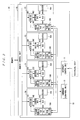
Figure 4 is a diagram more specifically showing the operation shown inFigure 3 .Figure 5 is a flowchart of the operation shown inFigure 4 . In the following, with reference toFigure 4 , the flowchart shown inFigure 5 will be described. - As shown in
Figure 4 , the task present in the unit processor P1 sets the purge inhibitflag 106 to 1. By setting the purge inhibit flag, the task is not purged from the unit processor P1. In addition, temporarily, interrupt inhibit is set in regard to the unit processor P1 (S401). - Next, the task present in the unit processor P1 requests to acquire a hardware semaphore (S402). The task determines whether the acquisition of the hardware semaphore succeeded or failed based on the notification from the hardware semaphore unit 13 (S403). As a result of the determination, when the acquisition of the hardware semaphore failed (S403: No), the task sets the purge inhibit
flag 106 to zero to release the interrupt inhibit of its unit processor (S406). Then, the task begins with the processing for setting the purge inhibitflag 106 to 1 again to attempt to acquire a hardware semaphore. - When the acquisition of the hardware semaphore succeeded (S403: Yes), the task detects whether any interrupt handling is being performed or not by the OS in any other unit processors than the unit processor P1 by referring to the shared region of RAM (S405). As a result, if an interrupt handler is running on any of the unit processors (S405: Yes), the task releases the external interrupt inhibit(S407). In addition, the task requests to release the acquired hardware semaphore unit 13 (S408), and sets the purge inhibit
flag 106 to zero to release the interrupt inhibit of its unit processor (S409). - The OS continues to monitor the interrupt handling in the other unit processors, and waits for completion of all the interrupt handling (S410). Upon the completion of the interrupt handling, the OS sets the purge inhibit
flag 106 to 1 again to acquire a hardware semaphore. - Additionally, in the above operation, the service call loc_cpu of the task is also used for processing for prioritizing external interruption. In other words, in the embodiment, the task running on the unit processor P1, for example, issues a system call (loc_cpu) to wait for the completion of interruption in the system call, thereby prioritizing the external interrupt handling.
- More specifically, as shown in
Figure 4 , the task issues lcc_cpu to wait for the completion of the interrupt handler, which is executing on the unit processor P0, while polling monitoring the completion of the interrupt handler. Consequently, after the preceding interrupt handler that was running is completed, the interrupt handling on the unit processor P0 is brought into a masked state such that the interrupt handling can be performed in preference to the task in the unit processor P1. - Incidentally, in the embodiment, processing that waits until the interrupt handling, which is executing on the other unit processor, is completed, may be executed immediately before interrupt inhibit, so as not to activate processing to which the loc_cpu is subjected while the interrupt handler is being executed. Such processing is shown in the flowchart in
Figure 6 . - In the processing shown in the flowchart in
Figure 6 , the task on the unit processor P0 waits for the completion of the execution of the interrupt handler on the other unit processor at the beginning of the processing (S601). Then, if the interrupt handler is being executed on any of the unit processors (S606: Yes), the external interruption is permitted (S608), and the hardware semaphore is released (S609). Then, the purge inhibit flag 16 is set to zero, and the completion of the execution of the interrupt handler is determined again (S601). - After the completion of the interrupt handler, the purge inhibit
flag 106 is set to 1. By setting the purge inhibitflag 106 to 1, the task itself is not purged from the unit processor P0. - Next, the task acquires a hardware semaphore. If the task cannot acquire the hardware semaphore immediately (S604: No), the task sets the purge inhibit
flag 106 to zero (S607), and begins with the processing for setting the purge inhibitflag 106 to 1 again (S602). On the other hand, if the task could acquire the hardware semaphore (S604: Yes), the task inhibits external interruption in regard to the other unit processors (S605). - According to the processing described above, since, if a request for interruption is made during a wait for the completion of the interruption handler, the interruption is executed before the loc_cpu, the probability increases that it is determined that interrupt handling is not being executed in step S405 in
Figure 5 . Thus, the processing shown inFigure 6 can achieve higher responsiveness to interrupt handlers than that of the processing shown inFigure 5 . - The processor of the embodiment also performs exclusive control between service calls among a plurality of unit processors. The exclusive control between respective service calls will be described below.
-
Figure 7 is a diagram illustrating the operation of exclusive control performed between each service call and the loc_cpu. In addition,Figure 8 is a flowchart illustrating the operation shown inFigure 7 . As shown inFigures 7 and8 , for example, if the task on the unit processor P1 sets the purge inhibitflag 106 to 1 (S801) and allocates itself to the unit processor P0, the task successively requests to acquire a hardware semaphore (S802). Then, the task determines whether the acquisition of the hardware semaphore succeeded or failed (S803). - In step S803, if it is determined that the hardware semaphore cannot be acquired (S803: No), the task sets the purge inhibit
flag 106 of the unit processor P1 to zero to release the interrupt inhibit (S807). Incidentally, in order to execute the service call loc_cpu of a unit processor more safely, if the unit processor is in a lock state, the service call requested by a task that is being handled by another unit processor is targeted for exclusion. The task in the other unit processor is not targeted for exclusion as long as the task does not issue a service call. - While the unit processor P1 is repeating the acquisition of hardware semaphores, the unit processor P2 issues unl_cpu. This allows the unit processor P1 to acquire a hardware semaphore (S803: Yes) and execute the necessary service call (S804).
- By the issue of unl_cpu by the
unit processor 2, as shown inFigure 9 , external interrupt inhibit is released (S901), the hardware semaphore is released (S902) and the interrupt inhibit of its unit processor is released (S903). - The above-described embodiment fixes a task to a unit processor to inhibit the unit processor and the other unit processors from accessing the common region in the memory. Consequently, the unit processor to which the task is fixed can certainly handle the task without being affected by another task or the like. Furthermore, since the interrupt handling by an interrupt processor is inhibited from being performed while the exclusive control is being performed, it is possible to eliminate the probability that the interrupt handling, which occurs independently of an OS, accesses the region in the memory in common with the unit processor.
- In addition, it is possible to prevent exclusive control from being deadlocked due to interrupt handling being inserted after the purge flag is set to 1, and before the exclusive control starts.
- Moreover, in the embodiment, the variable configuration of the interrupt processor has been described. However, the present invention is not intended to be limited to such configuration, and may be applied to the invariable configuration of the interrupt processor.
- Incidentally, although the present invention can be applied to various form of processors called a multithread processor or a multitask processor, the present invention is especially useful in a multiprocessor (so-called tightly-coupled multitask processor) in which, for example, a plurality of processor cores are mounted on one chip, and a plurality of processor cores share at least some of the components of the processor.
-
Figure 10 is a diagram showing the configuration of a multiprocessor to which the present invention may be applied. - The multiprocessor shown in
Figure 10 has a form in which a plurality of processor cores share a memory control unit and an ALU, each of the processor core having a program counter and a control register such as a status register, and a program control unit for controlling the entire multiprocessor, and a control register are also separately provided. As shown inFigure 10 , a context cash or the like shared by each processor core may also be provided. - In a multiprocessor having such configuration, each processor core achieves the function of the unit processor in the embodiment, and the function of the
hardware semaphore 13 is achieved in the program control unit for controlling the entire multiprocessor. - In addition, although, in the embodiment, in the light of the probability that access to the system region in the
memory 30 may conflict, an example of performing the exclusive control over the shift to the OS by a plurality of unit processors has been described, the present invention may be applied to the case where there is probability that a plurality of unit processors access the same hardware, such as the exclusive control between a CPU and a Direct Memory Access (DMA) controller, and the exclusive control between applications (access to shared memory and execution of common processing). -
-
Figure 1 is a block diagram showing the functional configuration of amobile telephone 1 according to the present invention; -
Figure 2 is a block diagram showing the internal configuration of aCPU 10; -
Figure 3 is a diagram illustrating the operation of theCPU 10 in themobile telephone 1; -
Figure 4 is a diagram illustrating an exclusive control method according to an embodiment of the present invention, and more specifically showing the operation shown inFigure 3 ; -
Figure 5 is a flowchart of the operation of theCPU 10 in themobile telephone 1 shown inFigure 4 ; -
Figure 6 is a flowchart illustrating a variation of processing presented by the flowchart shown inFigure 5 ; -
Figure 7 is a diagram illustrating the operation of the exclusive control between a service call and loc_cpu according to the embodiment of the present invention; -
Figure 8 is a flowchart of the operation shown inFigure 7 ; -
Figure 9 is a flowchart illustrating the processing of unl_cpu according to the embodiment of the present invention, and -
Figure 10 is a diagram showing the configuration of a multiprocessor to which the present invention may be applied. - 1 mobile telephone, 10 CPU, 11 interrupt control unit, 13 hardware semaphore unit, 20 flash ROM, 30 memory, 40 buffer, 50 radio unit, 60 IrDA unit, 70 audio unit, 80 timer, 90 USB interface unit, 100 key operation unit, 110 LCD, 120 camera unit, P0 to P3 unit processors, 101 fetch unit, 102 decoding unit, 103 ALU, 104 register file, 105 processor control unit, 106 purge inhibit flag
Claims (6)
- A parallel processing device that includes a plurality of unit processors for executing a plurality of tasks in parallel, and achieves exclusive control between one task and another task, and between the task and external interrupt handling when at least one of the plurality of the unit processors receives a request for interrupt handling from the outside, characterized by comprising,
interrupt inhibit means for inhibiting the execution of the task from being interrupted in the unit processor on which the task is executing,
exclusive control means for performing the exclusive control between the unit processor and the other unit processors by acquiring an inter-unit processor lock after the interrupt inhibit means creates a unit processor interrupt inhibit state, and
external interrupt inhibit means for inhibiting the performance of interrupt handling requested from the outside after the exclusive control means performs the exclusive control between the unit processor and the other unit processors. - The parallel processing device according to claim 1, characterized by further comprising
interrupt detection means for detecting whether interrupt handling is being performed or not in the parallel processing device,
wherein the exclusive control means starts exclusive control after the interrupt detection means detects that the interrupt handling is not being performed in the parallel processing device. - The parallel processing device according to claim 1 or 2, characterized in that the exclusive control means performs the exclusive control of the other unit processors by acquiring a right to occupy an OS to handle the tasks.
- An exclusive control method that includes a plurality of unit processors for executing a plurality of tasks in parallel, and achieves exclusive control between one task and another task, and between the task and an external interrupt handling when at least one of the plurality of the unit processors receives a request for interrupt handling from the outside, characterized by comprising,
an interrupt inhibit step for inhibiting the execution of the task from being interrupted in the unit processor on which the task is executing,
an exclusive control step for performing the exclusive control between the unit processor and the other unit processors by acquiring an inter-unit processor lock after the interrupt inhibit step causes a unit processor interrupt inhibit state, and
an external interrupt inhibit step for inhibiting the performance of interrupt handling requested from the outside after the exclusive control step performs the exclusive control between the unit processor and the other unit processors. - The exclusive control method according to claim 4, characterized by further comprising a step of waiting for the completion of the performance of the interrupt handling requested from the outside.
- An exclusive control method that achieves exclusive control between task processing and external interrupt handling in a processor that includes a plurality of unit processors running in parallel, in which at least one of the plurality of unit processors is capable of performing interrupt handling requested from the outside, characterized by comprising,
an external interrupt priority step for prioritizing the external interrupt handling by issuing a system call (loc_cpu) for exclusion only on the task side to wait for the completion of the interruption in the system call.
Applications Claiming Priority (2)
| Application Number | Priority Date | Filing Date | Title |
|---|---|---|---|
| JP2006039093A JP4441592B2 (en) | 2006-02-16 | 2006-02-16 | Parallel processing apparatus and exclusive control method |
| PCT/JP2007/052863 WO2007094460A1 (en) | 2006-02-16 | 2007-02-16 | Parallel processing device and exclusive access control |
Publications (2)
| Publication Number | Publication Date |
|---|---|
| EP1986097A1 true EP1986097A1 (en) | 2008-10-29 |
| EP1986097A4 EP1986097A4 (en) | 2010-01-27 |
Family
ID=38371636
Family Applications (1)
| Application Number | Title | Priority Date | Filing Date |
|---|---|---|---|
| EP07714393A Withdrawn EP1986097A4 (en) | 2006-02-16 | 2007-02-16 | PARALLEL PROCESSING DEVICE AND CONTROL OF EXCLUSIVE ACCESS |
Country Status (4)
| Country | Link |
|---|---|
| US (1) | US7702836B2 (en) |
| EP (1) | EP1986097A4 (en) |
| JP (1) | JP4441592B2 (en) |
| WO (1) | WO2007094460A1 (en) |
Families Citing this family (3)
| Publication number | Priority date | Publication date | Assignee | Title |
|---|---|---|---|---|
| US20080064045A1 (en) | 2006-09-07 | 2008-03-13 | Huaiqin Wu | Biomarker fragments for the detection of human BNP |
| JP2010039582A (en) | 2008-07-31 | 2010-02-18 | Panasonic Corp | Resource exclusive control system, device, method and program |
| US10740150B2 (en) * | 2018-07-11 | 2020-08-11 | X-Drive Technology, Inc. | Programmable state machine controller in a parallel processing system |
Family Cites Families (10)
| Publication number | Priority date | Publication date | Assignee | Title |
|---|---|---|---|---|
| US5161227A (en) * | 1989-11-13 | 1992-11-03 | International Business Machines Corporation | Multilevel locking system and method |
| US6038584A (en) * | 1989-11-17 | 2000-03-14 | Texas Instruments Incorporated | Synchronized MIMD multi-processing system and method of operation |
| JPH04308961A (en) * | 1991-01-18 | 1992-10-30 | Ncr Corp | Means and apparatus for notifying state of synchronous locking of occupied process |
| JPH04343159A (en) | 1991-05-20 | 1992-11-30 | Nec Corp | Exclusive control system for shared resources |
| JPH08297581A (en) | 1995-02-28 | 1996-11-12 | Nec Corp | Interrupt management method for real-time operating system |
| US6148361A (en) * | 1998-12-17 | 2000-11-14 | International Business Machines Corporation | Interrupt architecture for a non-uniform memory access (NUMA) data processing system |
| US6430643B1 (en) * | 1999-09-02 | 2002-08-06 | International Business Machines Corporation | Method and system for assigning interrupts among multiple interrupt presentation controllers |
| US6775730B2 (en) * | 2001-04-18 | 2004-08-10 | Sony Corporation | System and method for implementing a flexible interrupt mechanism |
| US7117285B2 (en) * | 2003-08-29 | 2006-10-03 | Sun Microsystems, Inc. | Method and system for efficiently directing interrupts |
| JP2006216042A (en) * | 2005-02-04 | 2006-08-17 | Sony Computer Entertainment Inc | System and method for interruption processing |
-
2006
- 2006-02-16 JP JP2006039093A patent/JP4441592B2/en not_active Expired - Fee Related
-
2007
- 2007-02-16 WO PCT/JP2007/052863 patent/WO2007094460A1/en not_active Ceased
- 2007-02-16 US US11/886,326 patent/US7702836B2/en not_active Expired - Fee Related
- 2007-02-16 EP EP07714393A patent/EP1986097A4/en not_active Withdrawn
Non-Patent Citations (5)
| Title |
|---|
| Jonathan Corbet, Alessandro Rubini, Greg Kroah-Hartman: "Linux Device Drivers, Third Edition" O'Reilly Media Inc. 1 January 2005 (2005-01-01), XP002558196 Retrieved from the Internet: URL:http://lwn.net/images/pdf/LDD3/ch10.pdf> [retrieved on 2009-11-27] & Jonathan Corbet, Alessandro Rubini, Greg Kroah-Hartman: "Copyright" Retrieved from the Internet: URL:http://lwn.net/images/pdf/LDD3/COPYRIGHT.pdf> [retrieved on 2009-11-27] * |
| Jonathan Corbet, Alessandro Rubini, Greg Kroah-Hartman: "Linux Device Drivers, Third Edition" O'Reilly Media Inc. INTERNET ARTICLE 1 January 2005 (2005-01-01), XP002558195 Retrieved from the Internet: URL:http://lwn.net/images/pdf/LDD3/ch05.pdf> [retrieved on 2009-11-27] & Jonathan Corbet, Alessandro Rubini, Greg Kroah-Hartman: "Copyright" Retrieved from the Internet: URL:http://lwn.net/images/pdf/LDD3/COPYRIGHT.pdf> [retrieved on 2009-11-27] * |
| See also references of WO2007094460A1 * |
| Srinivas Dharmasanam: "Multiprocessing with real-time operating systems" 21 May 2003 (2003-05-21), pages 1-7, XP002558194 Retrieved from the Internet: URL:http://www.embedded.com/story/OEG20030512S0080> [retrieved on 2009-11-27] * |
| TAKADA H ET AL: "Predictable spin lock algorithms with preemption" REAL-TIME OPERATING SYSTEMS AND SOFTWARE, 1994. RTOSS '94, PROCEEDINGS ., 11TH IEEE WORKSHOP ON SEATTLE, WA, USA 18-19 MAY 1994, LOS ALAMITOS, CA, USA,IEEE COMPUTER. SOC, 18 May 1994 (1994-05-18), pages 2-6, XP010099081 ISBN: 978-0-8186-5710-8 * |
Also Published As
| Publication number | Publication date |
|---|---|
| WO2007094460A1 (en) | 2007-08-23 |
| US7702836B2 (en) | 2010-04-20 |
| JP4441592B2 (en) | 2010-03-31 |
| EP1986097A4 (en) | 2010-01-27 |
| JP2007219800A (en) | 2007-08-30 |
| US20080288693A1 (en) | 2008-11-20 |
Similar Documents
| Publication | Publication Date | Title |
|---|---|---|
| US7877753B2 (en) | Multi-processor system and program for causing computer to execute controlling method of interruption of multi-processor system | |
| US7287135B2 (en) | Adapting RCU for real-time operating system usage | |
| CN1828563B (en) | Processor and information processing method | |
| US7853743B2 (en) | Processor and interrupt controlling method | |
| CN100380329C (en) | Processor and information processing method | |
| KR20070114020A (en) | Multiprocessor and multithreaded safety message queue with hardware support | |
| GB2453284A (en) | Mechanism for notifying a kernel of a thread entering a critical section. | |
| US10241829B2 (en) | Information processing device, information processing method, recording medium, calculation processing device, calculation processing method | |
| WO2006074027A2 (en) | Mechanism to schedule threads on os-sequestered without operating system intervention | |
| US7797515B2 (en) | System and method for limiting the number of unit processors for which suspension of processing is prohibited | |
| US20220035664A1 (en) | Reverse restartable sequences for lock polling scalability | |
| US7702836B2 (en) | Parallel processing device and exclusive control method | |
| JP2006243864A (en) | Processor and information processing method | |
| JP5376042B2 (en) | Multi-core processor system, thread switching control method, and thread switching control program | |
| KR100506254B1 (en) | Apparatus and method for handling interrupt in non-privileged of embedded system | |
| JP4797422B2 (en) | Processor and dispatch control method | |
| JP4389797B2 (en) | Processor and information processing method | |
| JP5582241B2 (en) | Multi-core processor system, multi-core processor system control method, and multi-core processor system control program |
Legal Events
| Date | Code | Title | Description |
|---|---|---|---|
| PUAI | Public reference made under article 153(3) epc to a published international application that has entered the european phase |
Free format text: ORIGINAL CODE: 0009012 |
|
| 17P | Request for examination filed |
Effective date: 20070924 |
|
| AK | Designated contracting states |
Kind code of ref document: A1 Designated state(s): AT BE BG CH CY CZ DE DK EE ES FI FR GB GR HU IE IS IT LI LT LU LV MC NL PL PT RO SE SI SK TR |
|
| RBV | Designated contracting states (corrected) |
Designated state(s): AT BE BG CH CY CZ DE DK EE ES FI FR GB GR HU IE IS IT LI LT LU LV MC NL PL PT RO SE SI SK TR |
|
| A4 | Supplementary search report drawn up and despatched |
Effective date: 20091228 |
|
| 17Q | First examination report despatched |
Effective date: 20100330 |
|
| STAA | Information on the status of an ep patent application or granted ep patent |
Free format text: STATUS: THE APPLICATION HAS BEEN WITHDRAWN |
|
| 18W | Application withdrawn |
Effective date: 20120615 |